
What’s on WhichCar TV this week?
Track Terror
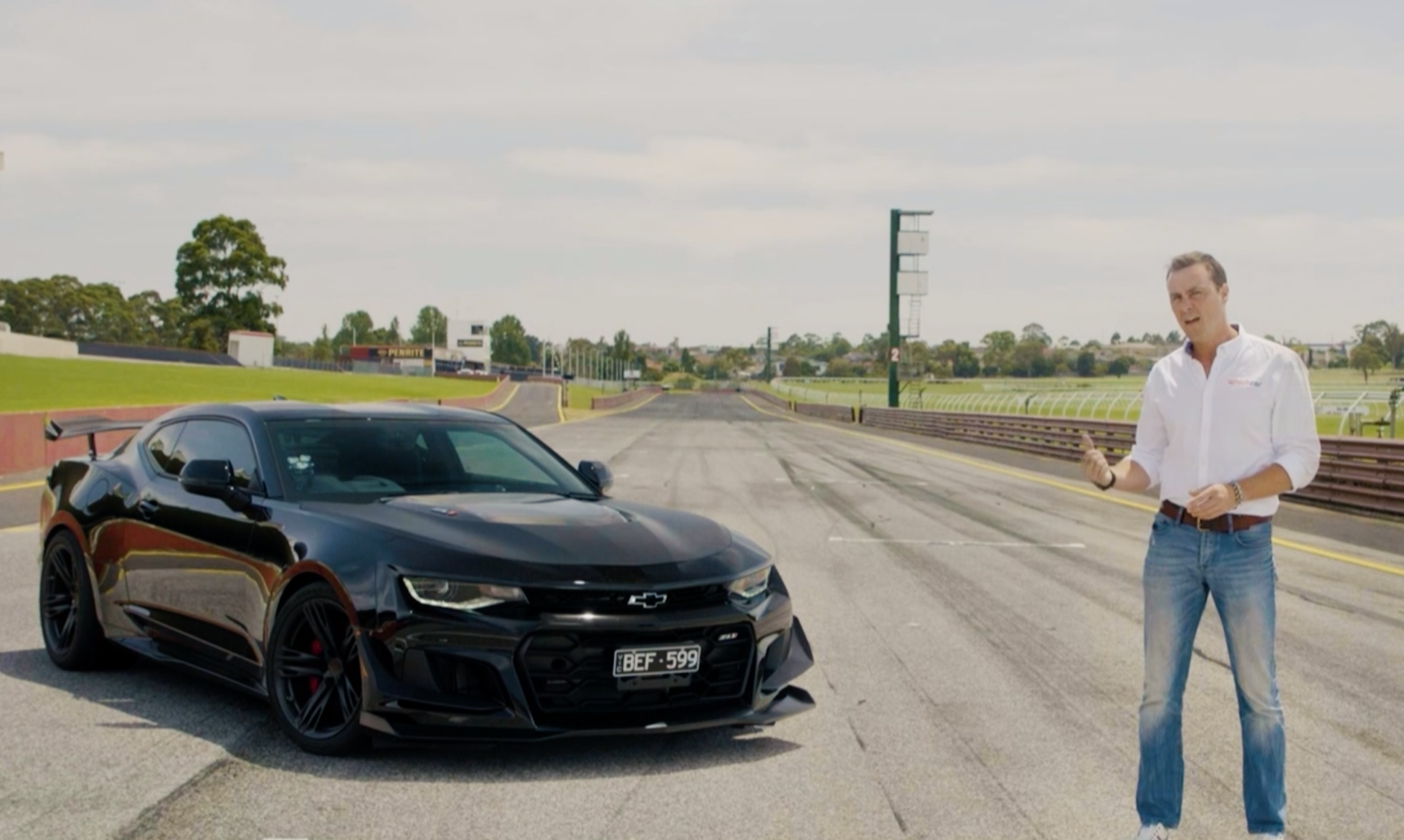
Dan Gardner pulls the short straw to drive the maddest, baddest Chevrolet Camaro to ever land on our shores.
Editor’s review – Toyota Camry
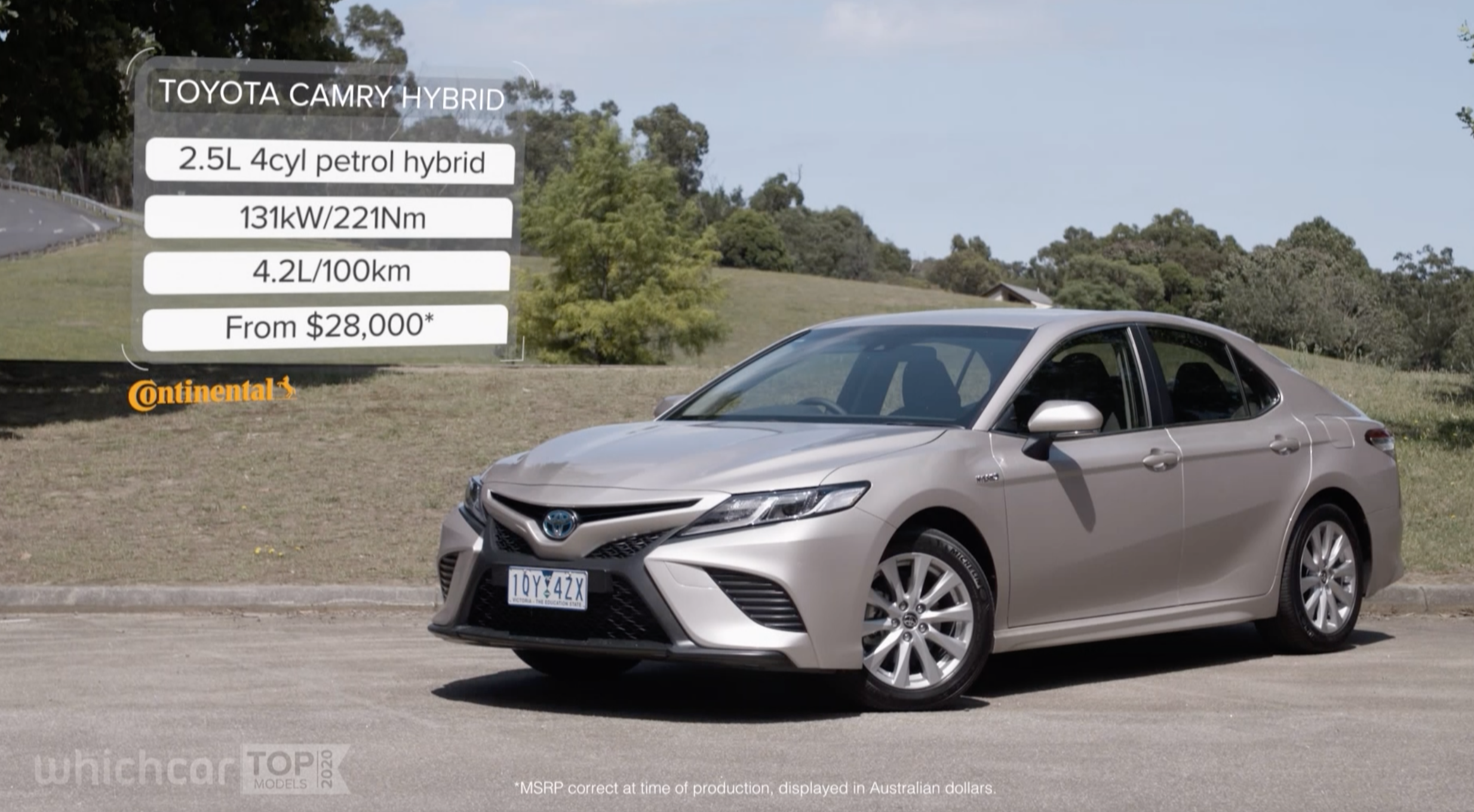
One of Toyota’s longest-serving sedans is also one of its best-ever – here’s the inside scoop on the Toyota Camry with Alex Inwood.
French Polish
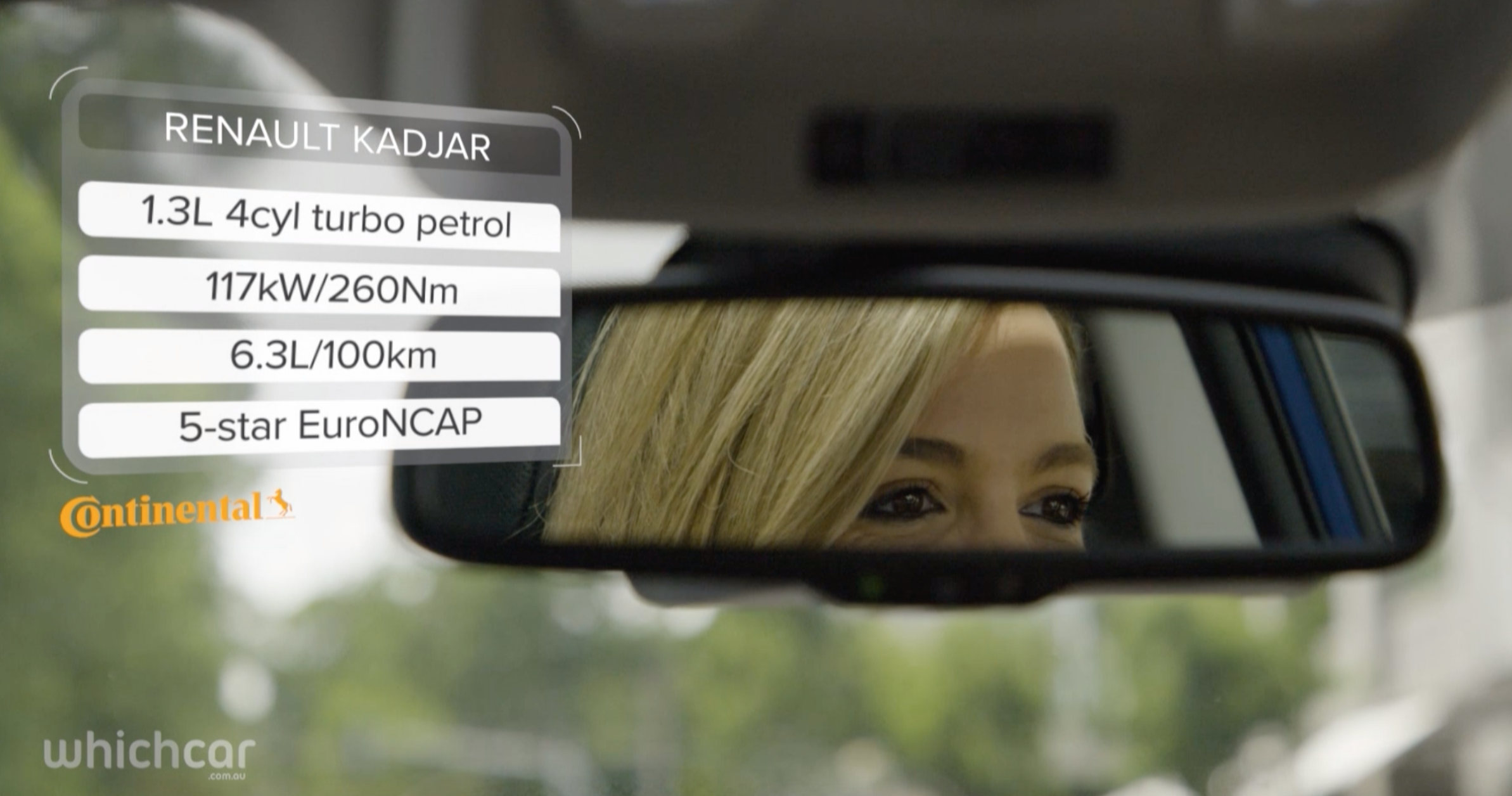
Emma Nortafrancesco takes the delightfully chic Renault Kadjar out for a run with a very special friend.
All aboard the Drift Bus
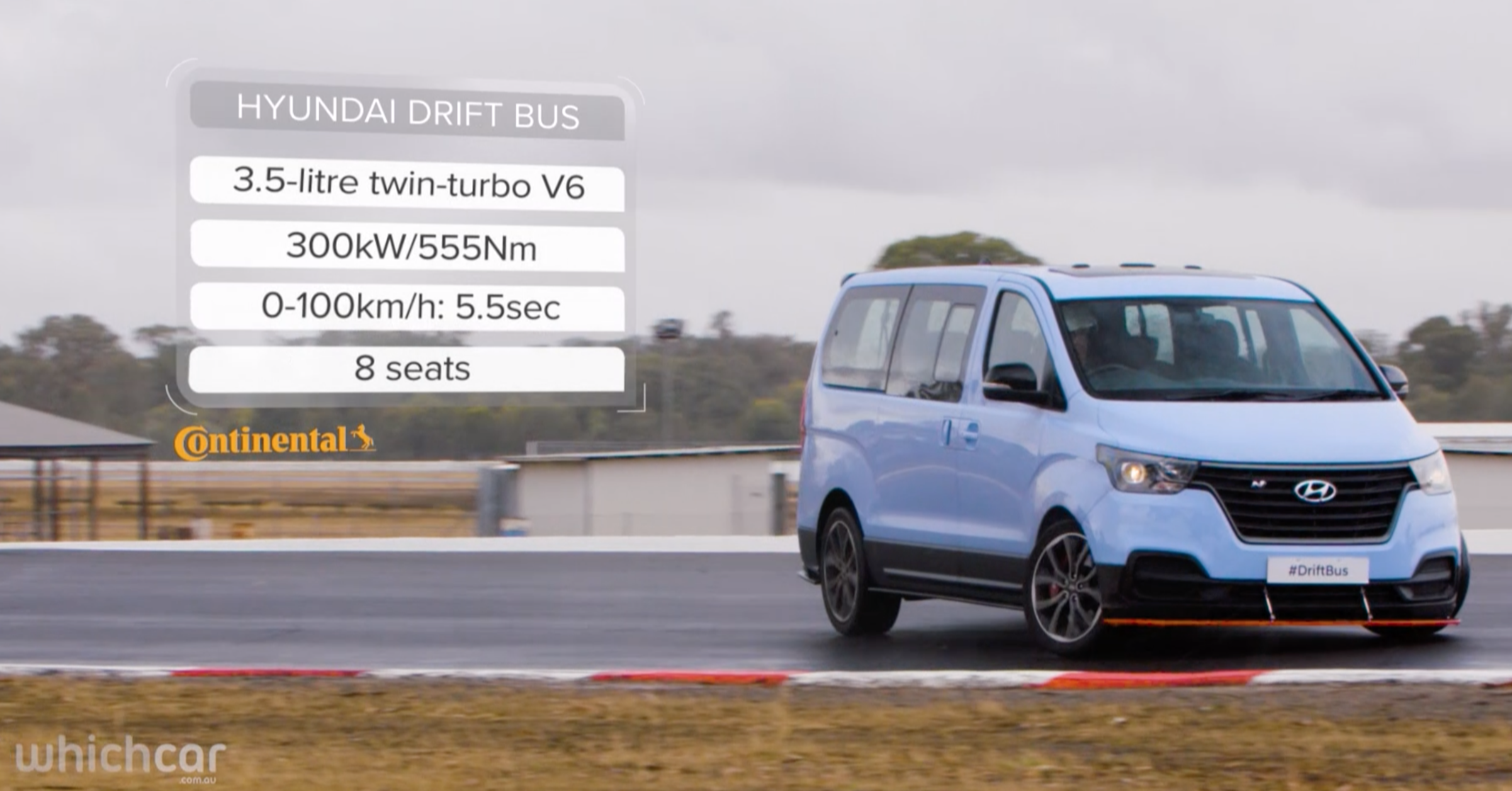
Scott Newman saddles up one of the wildest people movers ever conceived, the Hyundai iMac drift bus.
Continental Car Lab
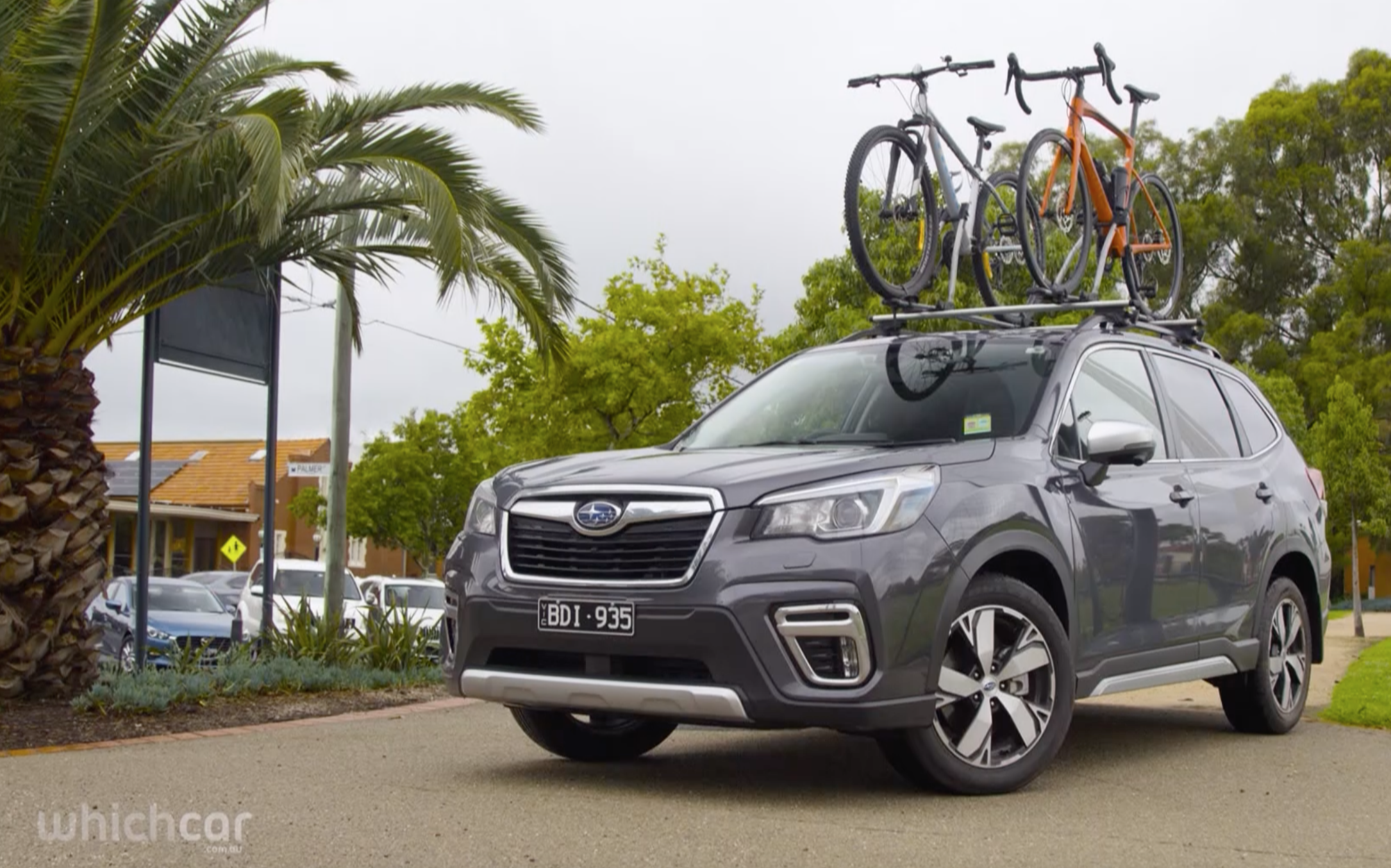
Tom Fraser’s WCTV debut sees him try to explode the myth that leaving bikes and racks on your car destroys your fuel economy.
For season two, we’re also offering an amazing prize for our viewers. How does a trip to the Maldives sound? Pretty awesome, right? The competition is open NOW so make sure you tune into WhichCar TV on Channel Ten at 4pm AEDT.
And, if for some reason you can’t (and it had better be a good reason!) then there’s a host of ways to catch up on the show, check out behind-the-scenes stuff and find out more about the cars Aussies want to buy.
For example, our weekly podcast, our Facebook page and our YouTube channel are standing by 24/7.
WhichCar TV Season Two Episode 11
4:00pm Sunday April 19, Channel 10
FIND THE HOSTS ON INSTAGRAM
Daniel Gardner @octanedan
Scott Newman @addictedtosliding
Emma Notarfrancesco @emmanotarfrancesco
Alex Inwood @thealexinwood
Tom Fraser @tommyfraser
MISSED THE SHOW? Catch up at Ten Play
The Ford Mustang started the Pony car movement that made compact sports cars affordable to the masses in the 1960s. Since then it has become the world’s most successful sports car, with 10 million sold globally. We chart the highs – and lows – of the mighty Mustang in Australia and around the world.
- First Generation: 1963 – 1973
- Second Generation: 1974 – 1978
- Third Generation: 1979 – 1993
- Fourth Generation: 1994 – 2004
- Fifth Generation: 2005 – 2014
- Sixth Generation: 2015 – present
First Generation: 1963 – 1973
1962 – In the beginning The Mustang I concept car had a mid-engine layout, yet it still established the classic “ponycar” proportions of long bonnet, short rear deck and sharply sculpted flanks.
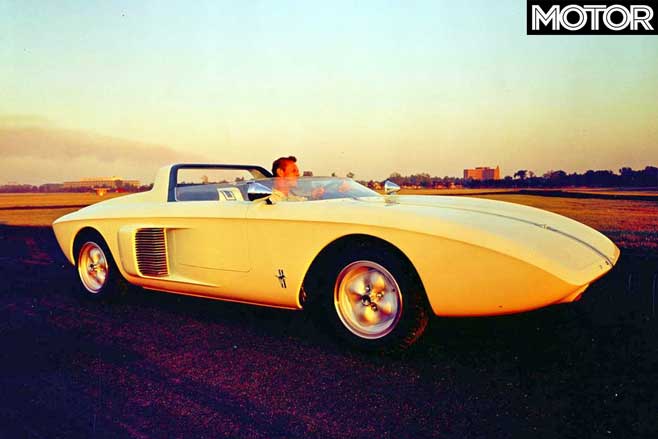
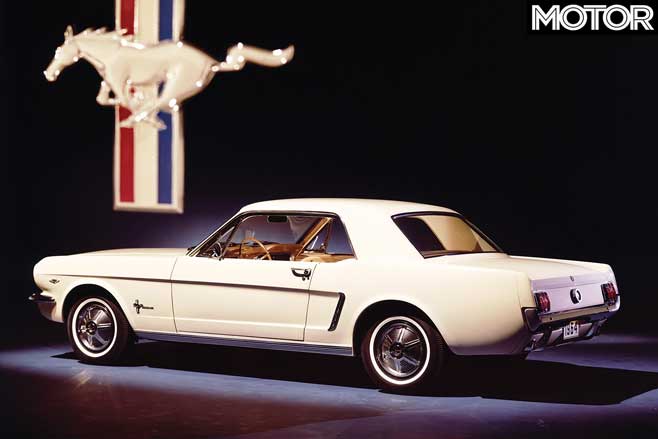
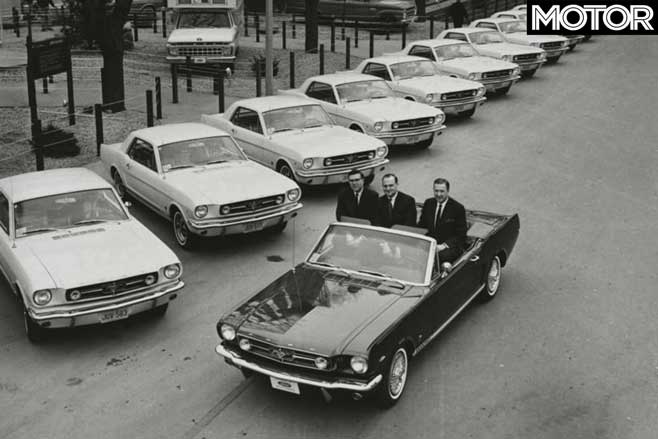
April 17, 1964 Ford introduces the Mustang production model at the World’s Fair in New York. It is named after the legendary P51 Mustang fighter plane from World War II. The price at launch is AUD$2114.
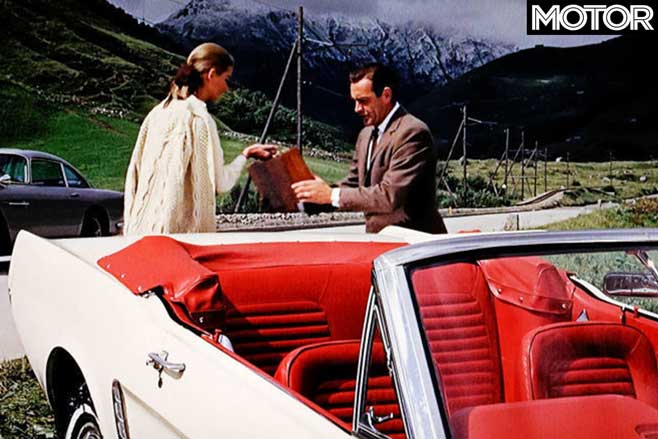
1964 Ford Mustang makes a surprise appearance in the new James Bond film Goldfinger.
1965 American racing legend Carroll Shelby begins modifying Mustangs for racing and creates the Shelby GT350, the first in a long line of high-performance variants.
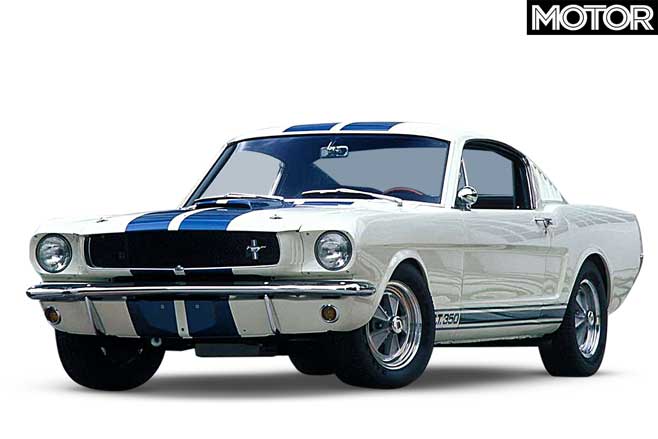
1965 Ford Oz imports and converts 161 Mustangs with 289ci (4.7L) V8, automatic transmission and heavy-duty suspension. The $2895 price is $750 more than the XM Falcon sedan.
1965 Norm Beechey wins the 1965 Australian Touring Car Championship in a 1964 Mustang, the first win by a V8-powered car and the first of five on the trot for Mustang.
1966 Mustang sales pass the 1 million mark in March.
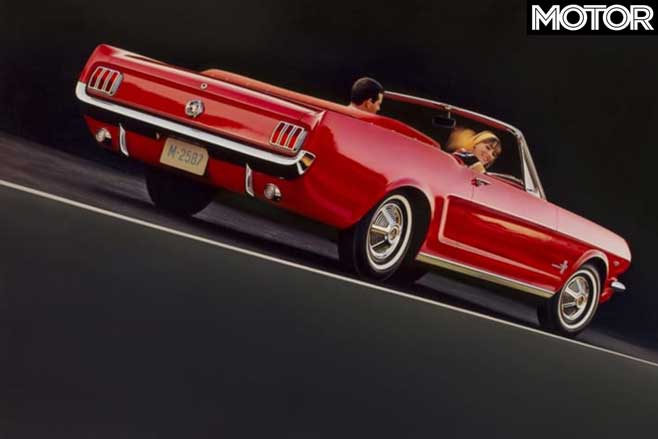
1966 American blues singer Wilson Pickett releases his hit song Mustang Sally, about a guy who buys his girl a 1965 Mustang only to lose her to the car.
1966 Shelby provides Hertz with a special line of GT350 rental cars. Some were rented by racers and returned with evidence of roll cages being installed and, in some cases, the Shelby-tuned engine removed and replaced with a standard V8.
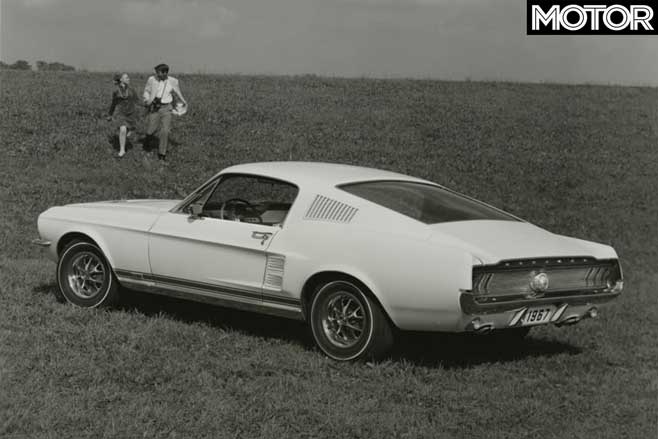
1967 The 2+2 Mustang goes from a semi-fastback to a sweeping fastback roofline. The Shelby GT500 is introduced, powered by a hefty 7.0L V8 that produces 265kW.
1968 Steve McQueen’s Bullitt movie immortalises the Mustang on-screen and takes Hollywood car stunts to the next level in a 10min epic chase on San Fransisco streets. Ford has since produced two modern limited edition Bullitt replicas and has a third planned for 2018.
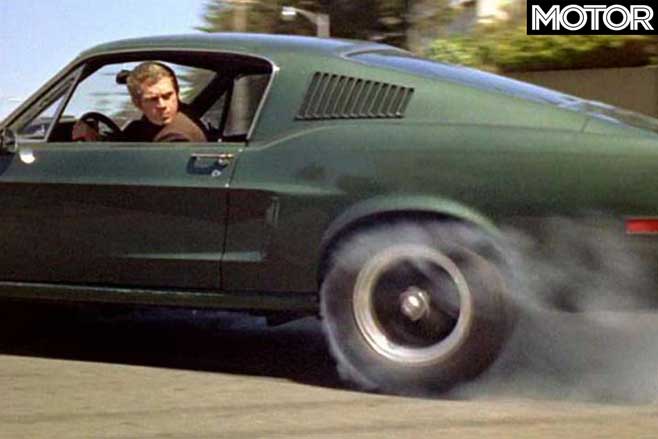
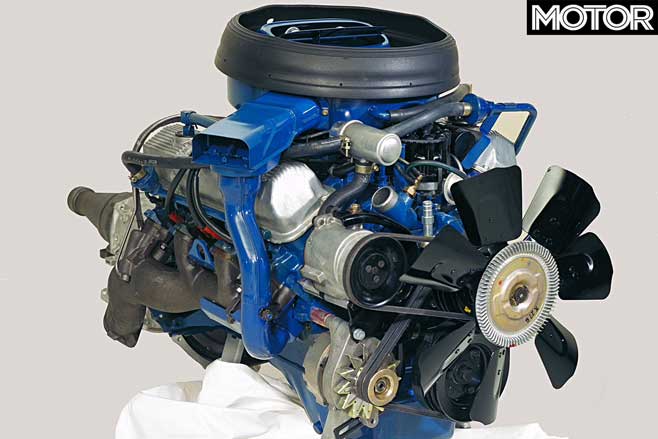
1968 The 302ci (5.0L) V8 replaces the 289. On April 1, the 428ci Cobra Jet engine debuts as part of an option package aimed at enthusiasts.
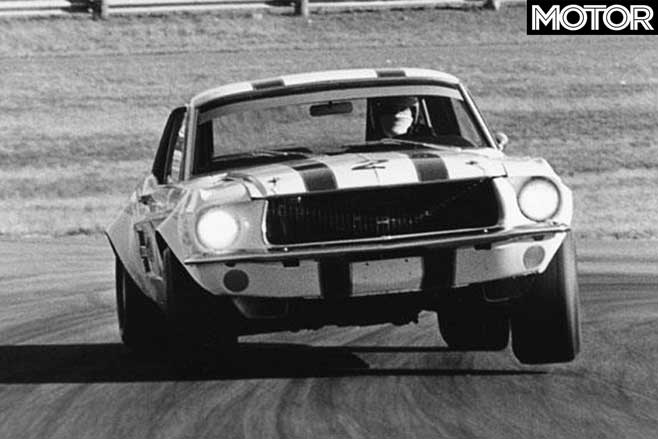
1969 Ian ‘Pete’ Geoghegan wins his fourth, and Mustang’s fifth, Australian Touring Car Championship in a row.
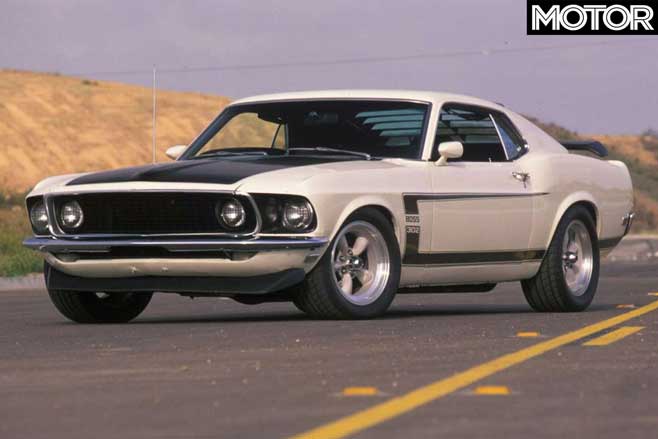
1969 A “steed for every need” update yields 11 different powertrain combinations. New models include the 216kW Boss 302, the 280kW Boss 429, plus the Mustang Mach 1 with an optional 428ci (7.0L) Cobra Jet V8, and the Grande premium model with luxury trim, woodgrain panelling and additional sound deadening.
1970 A ram air “shaker” bonnet scoop is offered on any Mustang with a 351ci (5.8L) or larger V8.
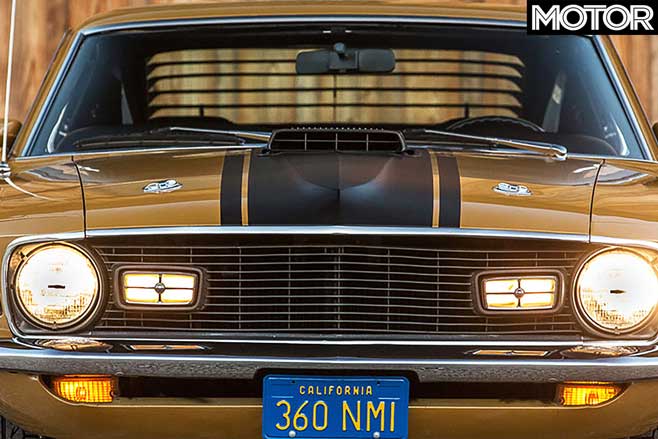
1971 The biggest Mustang ever – 30cm longer and 310kg heavier than the original – is introduced, prompting criticisms that Ford had become “fat and lazy”. The Boss 351 debuts, with its Cleveland block and Cobra Jet heads. The Mach 1 comes with a variety of powertrains, topped by the 429 Super Cobra Jet.
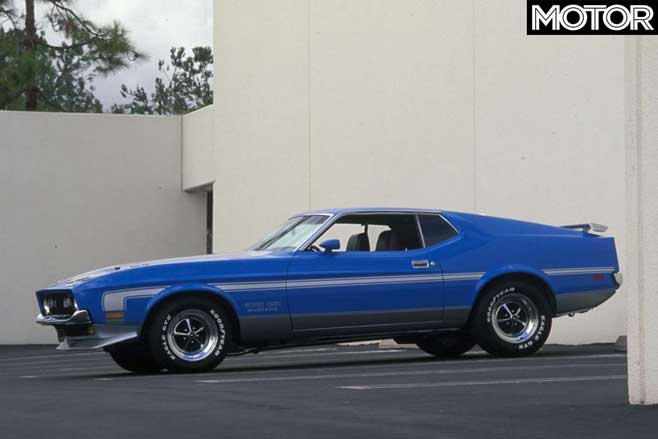
1973 Mustang sales plummet as the fuel crisis takes its toll and customers downsize. The 1973 model year is the last for the original Falcon-platform Mustang, and the last convertible for a decade.
Second Generation: 1974 – 1978
1974 Ford recognises the need for a smaller, more efficient, better quality Mustang to compete with imports like the Toyota Celica, Datsun 240Z and European Ford Capri. The Mustang II’s Ford Pinto underpinnings return it to the same dimensions as the 1964 original, and engines at launch include a 2.3L four-pot and 2.8L V6 – but no V8.
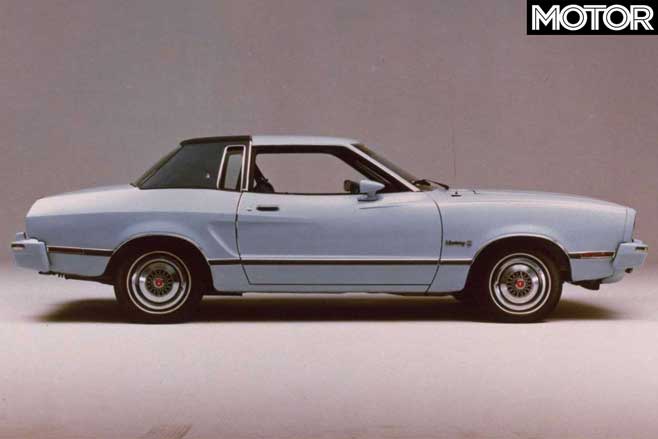
1975 V8 power returns to Mustang with a 302ci small-block. It’s the first Ford engine to be recognised by its 5.0L metric displacement. The four-cylinder Mustang gets a catalytic converter and taller fourth gear to meet tightening emissions standards.
1976 The Cobra II package joins the lineup, replete with non-functional bonnet scoop, racing stripes and front and rear spoilers.
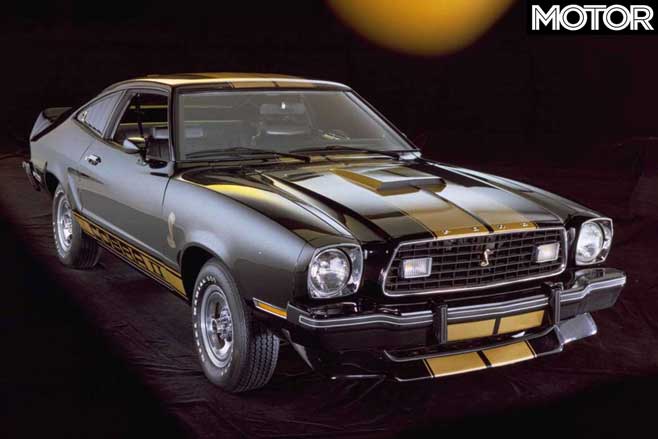
1977 To appeal to convertible fans, a fastback model is added with T-Top removable glass panels.
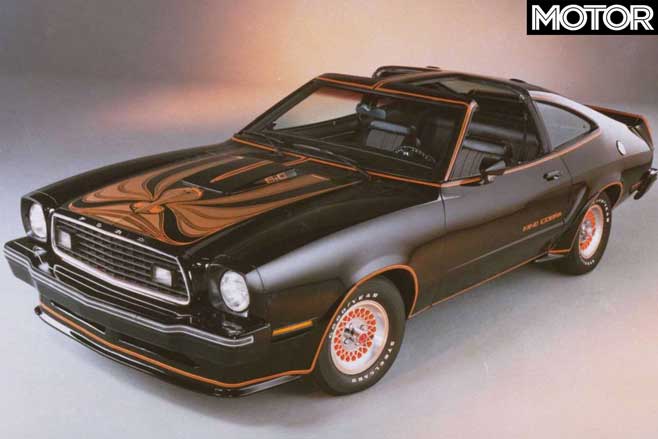
Third Generation: 1979 – 1993
1979 Mustang’s new “Fox” platform shared with the American Ford Fairmont and Mercury Zephyr sedans increases length, width and interior space, yet reduces weight by 90kg. Available in coupe and fastback body styles, the range was initially powered by carryover fours, sixes and V8 engines.
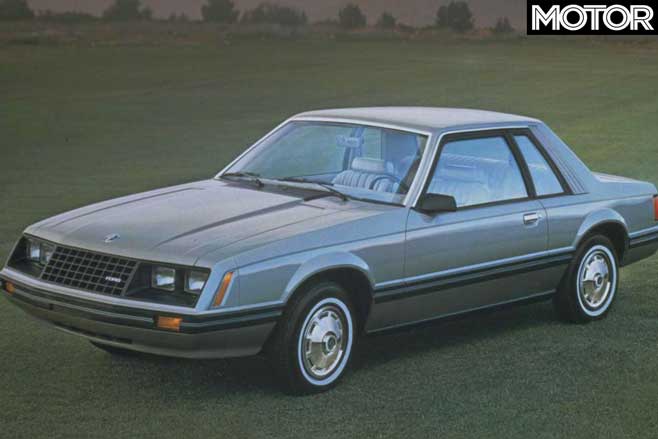
1980 The 5.0L V8 is dropped and replaced by an economy-minded 4.2L derivative of the Windsor V8 with just 89kW – the least ever for Mustang. In contrast, the 2.3L four gets a turbo and 98kW, but mechanical and reliability issues force Ford to drop it the following year.
1982 As petrol prices subside, the Mustang GT returns after a 12-year absence. Also back is the 5.0L V8, rated at 130kW. Optional T-Tops return.
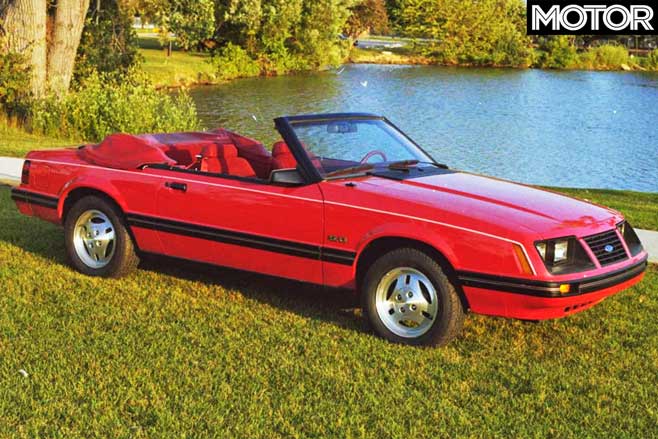
1983 After 10 years, Mustang again has a convertible model, complete with power roof and tempered glass rear window.
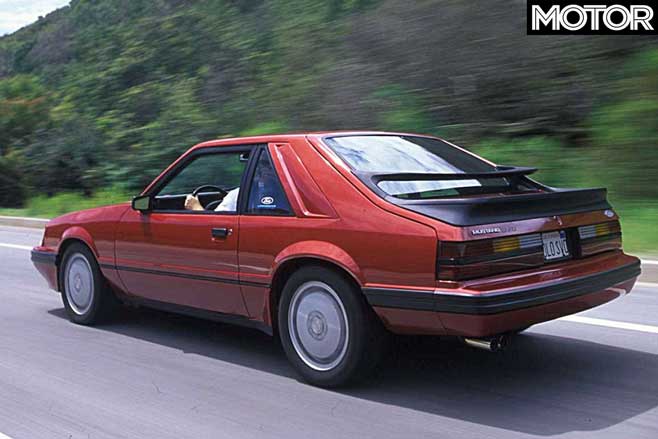
1984 Ford’s Special Vehicle Operations creates the Mustang SVO which features a turbocharged and intercooled 2.3L four-cylinder, bigger tyres and brakes and a double-decker rear spoiler.
1984 In Australia, nascent Group A touring car regulations prompt Ford racing legend Dick Johnson to import new Zakspeed-built Mustangs for Bathurst. They won’t actually race until 1985.
1985 Mustang gets a revised 5.0L high-output V8 with 157kW in manual transmission tune.
1987 Mustang undergoes a restyle and gains a new “Aero” body. SVO and V6 models are dropped.
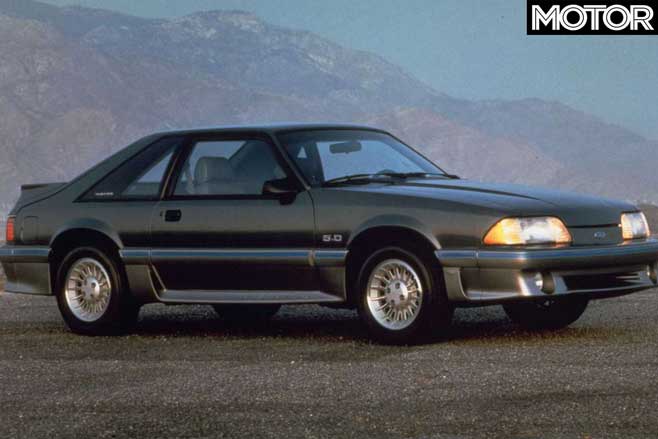
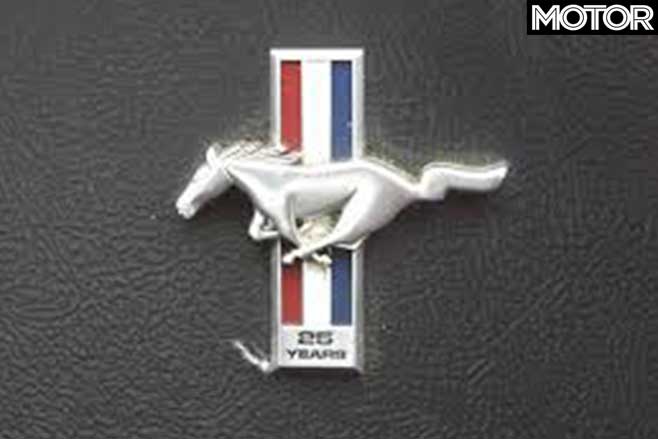
1989 For Mustang’s 25th anniversary, all cars produced between April 17, 1989, and April 17, 1990, sport the familiar running horse on the dashboard with “25 Years” inscribed underneath.
1990 Mustang gains a driver’s-side airbag as standard equipment.
1992 Wire-style wheel covers and whitewall tyres quietly disappear from the US options list.
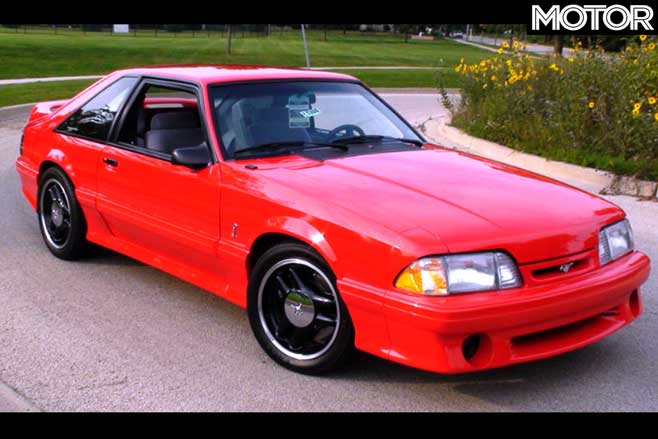
1993 Ford’s new Special Vehicle Team introduces the Mustang Cobra SVT limited edition with unique styling and performance upgrades. A “Cobra R” racing model adds Koni shocks, an engine oil and power steering fluid cooler, but has the radio, rear seats and air-conditioning removed. Ford requires all buyers to hold a racing licence to ensure the SVT is not seen as just a collector’s car.
Fourth Generation: 1994 – 2004
1994 For its 30th anniversary, Mustang is dramatically restyled to evoke the car’s heritage. Ford claims 1330 of the 1850 parts are new.
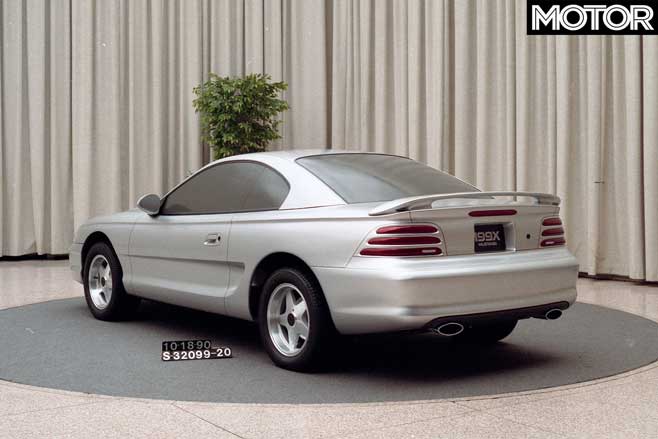
1995 The venerable 5.0L V8 spends its final model year in the Mustang. SVT produces 250 Cobra R models with a 224kW, 5.7L V8.
1996 Mustang GTs and SVT Mustang Cobras are equipped with Ford’s new modular 4.6L SOHC V8. It matches the 5.0L Windsor’s outputs but is criticised for lack of torque and responsiveness.
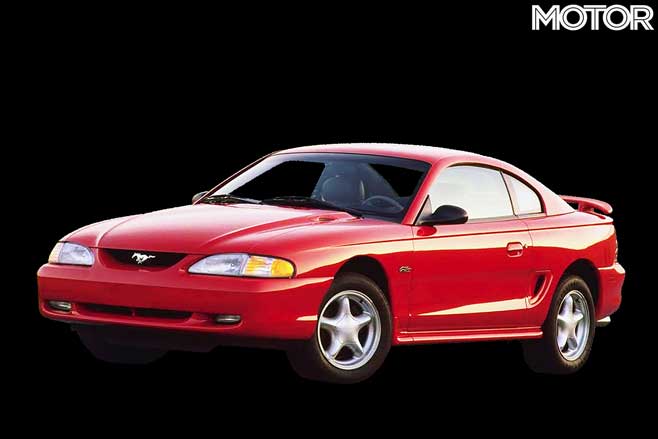
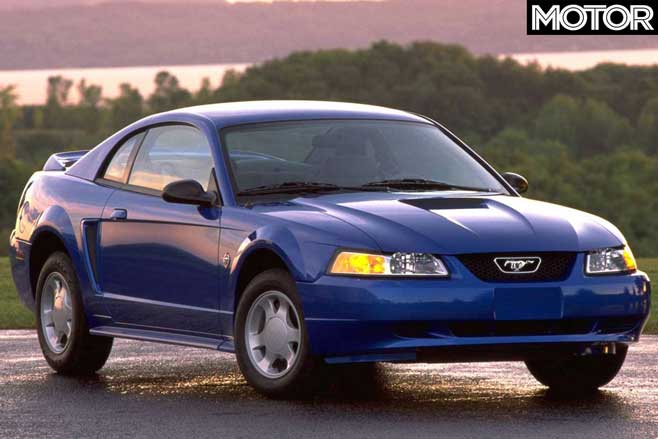
1999 A redesign gives Mustang the sharply creased lines of Ford’s New Edge global styling language, including pronounced wheelarches, a new bonnet, grille, fascias and lights.
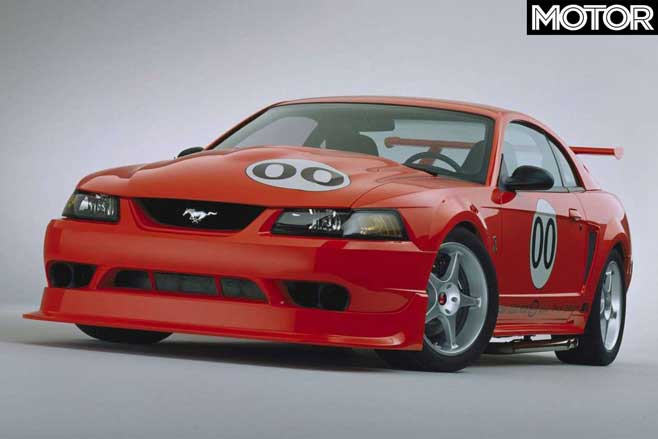
2000 The third SVT Mustang Cobra R has Eibach suspension, Brembo brakes, side exhausts and a 287kW, 5.4L DOHC V8 mated to Mustang’s first six-speed manual transmission.
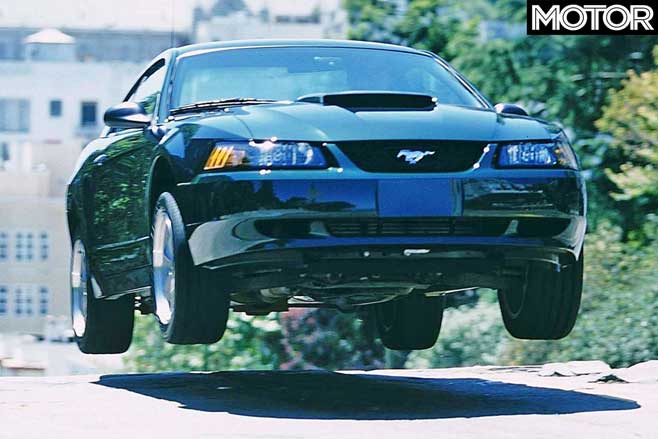
2001 The Mustang Bullitt GT makes its debut, inspired by the Mustang Steve McQueen drove in the 1968 movie. It has the same Highland dark green paint, side scoops, 17-inch Bullitt-style aluminium wheels and tuned suspension.
2001 Ford’s Tickford performance arm imports and converts 250 Mustang V8 coupes and convertibles to right hand drive for Australia. Prices start at $85,000 for the coupe and $89,000 for the convertible, but sales are sluggish because of poor conversion quality and the Mustang’s V8 trailed Australia’s Falcon V8 for power and performance.
2002 Mustang’s two closest US rivals, the Chevrolet Camaro and Pontiac Firebird, end production. The Camaro would eventually return in 2010.
2003 Following the success of the Bullitt edition Mustang, Ford revives the Mach 1 nameplate with a retro-inspired model that features a 227kW Cobra motor with a functional ‘shaker’ bonnet scoop, Magnum-style wheels and 1960s era comfort weave seats.
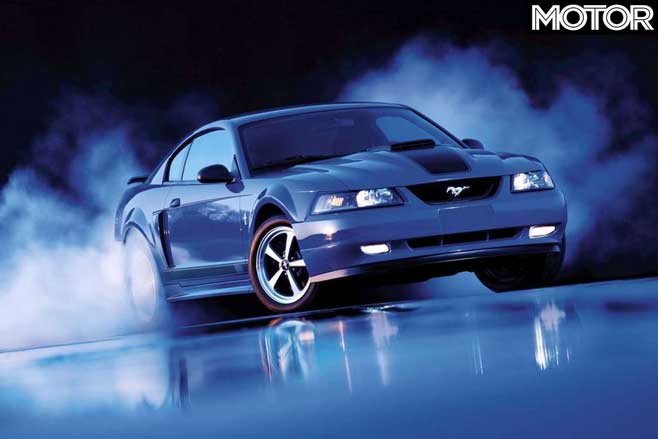
2004 Ford produces its 300 millionth car – a 2004 Mustang GT convertible 40th anniversary edition. 2004 Mustangs are the last built at Ford’s Dearborn Assembly Plant, which had produced every Mustang model since inception.
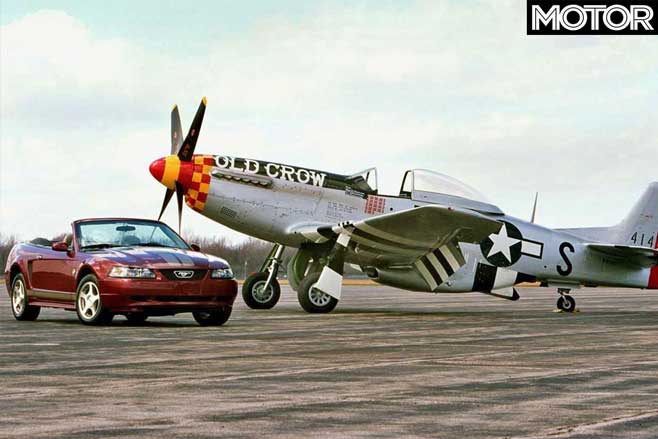
Fifth Generation: 2005 – 2014
2004 Ford reveals the fifth generation Mustang at the North American auto show, heavily influenced by the 1964-67 original. Ford design chief, J. Mays, calls it retro-futurism. Both fastback and convertible bodystyles are offered, powered by a new 157kW 4.0L V6 or 227kW 4.6L V8. Production moves to Flat Rock, Michigan.
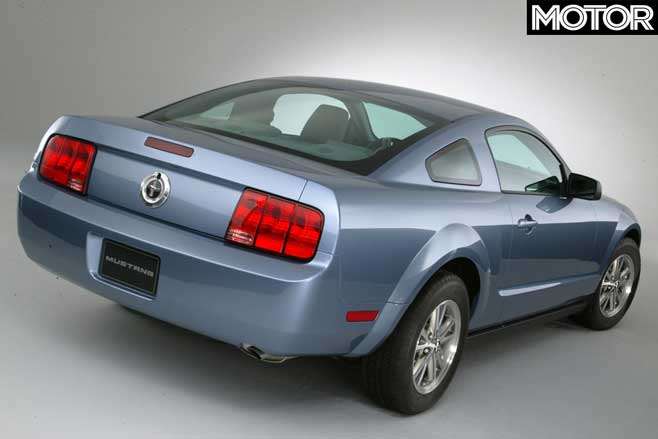
2006 Ford begins a series of retro-inspired limited editions with a new Shelby Hertz model and a Bullitt in 2008.
2007 Ford and Shelby reunite to create the Shelby GT500 with a 373kW supercharged 5.4L V8. The partnership continues with a 2008 Shelby King of the Road (KR) that produces 403kW and has a carbonfibre bonnet.
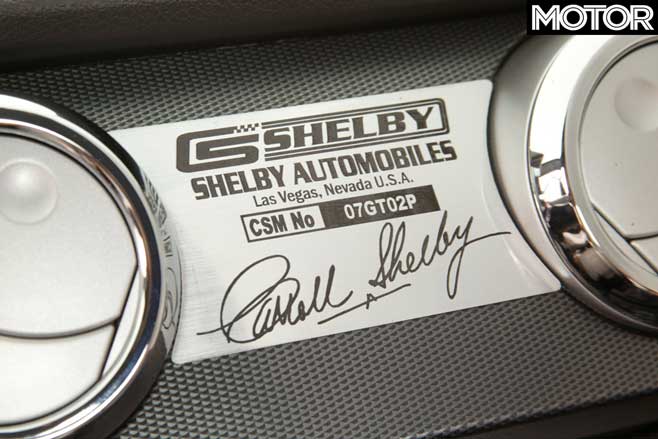
2008 Facelifted Mustang is revealed the Los Angeles auto show with restyled front and rear bumpers, slimmer headlights and three-bar taillights with sequential turn signals.
2011 The entire Mustang lineup gets updated powertrains, including a 227kW 3.7L V6 and 307kW 5.0L Coyote V8 that also forms the basis of the supercharged V8 used in Australian FPV Falcons.
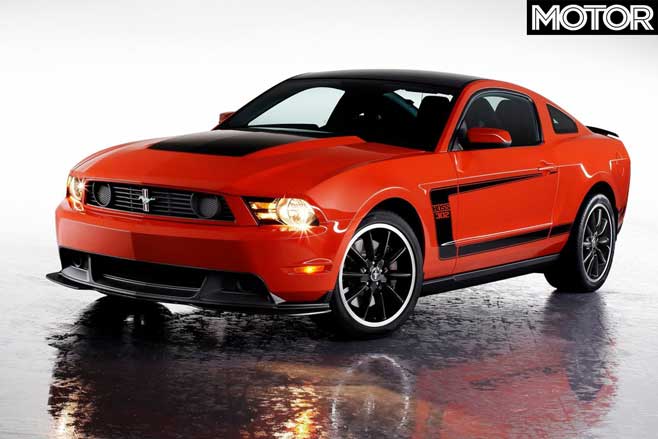
2012 Ford revives the Boss 302 nameplate with an upgraded, track-oriented Mustang that features retro-inspired C-stripes down its sides, more power from its 5.0L V8, adjustable suspension and a carbonfibre front splitter.
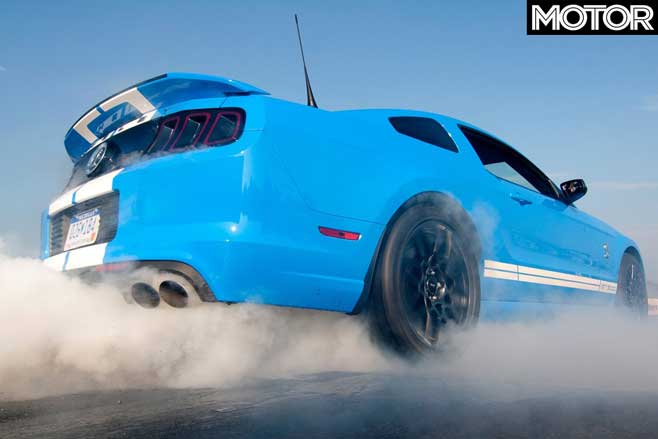
2013 The most powerful factory Mustang ever is revealed, the Shelby GT500 with a 494kW, 5.8L supercharged V8.
Sixth Generation: 2015 – present
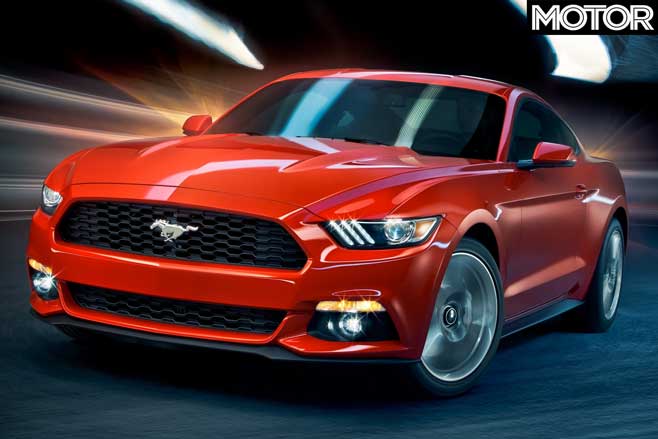
2013 Ford debuts the sixth-generation Mustang in six locations around the world simultaneously, including Sydney.
Right-hand-drive production is confirmed, signalling a return to Australia in 2016. Mustang’s wider and lower body increases interior space, and independent rear suspension improves dynamics. Two engines are confirmed for Australia, a 231kW 2.3L turbo four and 325kW 5.0L V8.
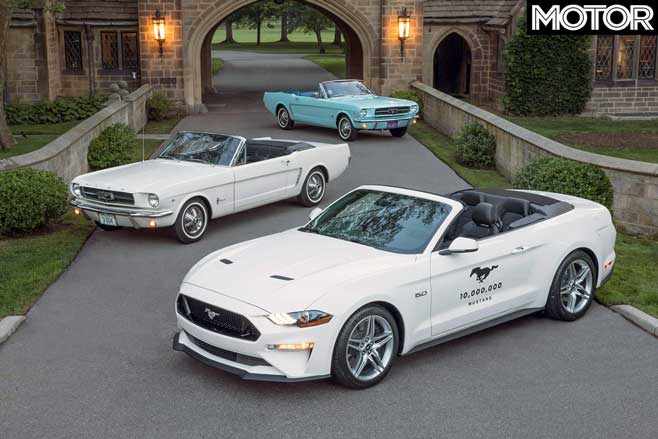
2014 Ten Millionth Mustang sold in the same year Mustang celebrates its 50th birthday.
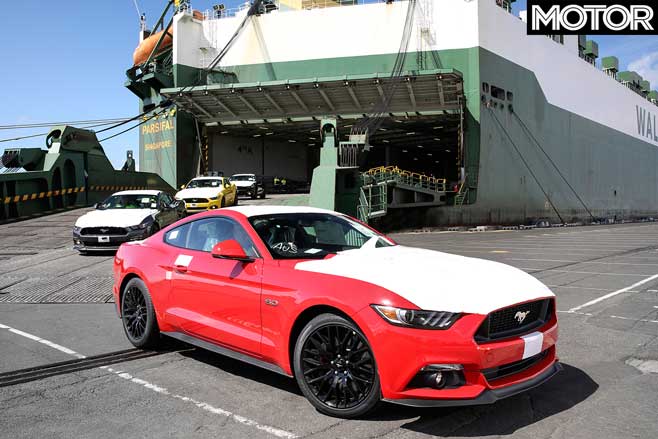
2016 Ford Mustang returns to Australia.
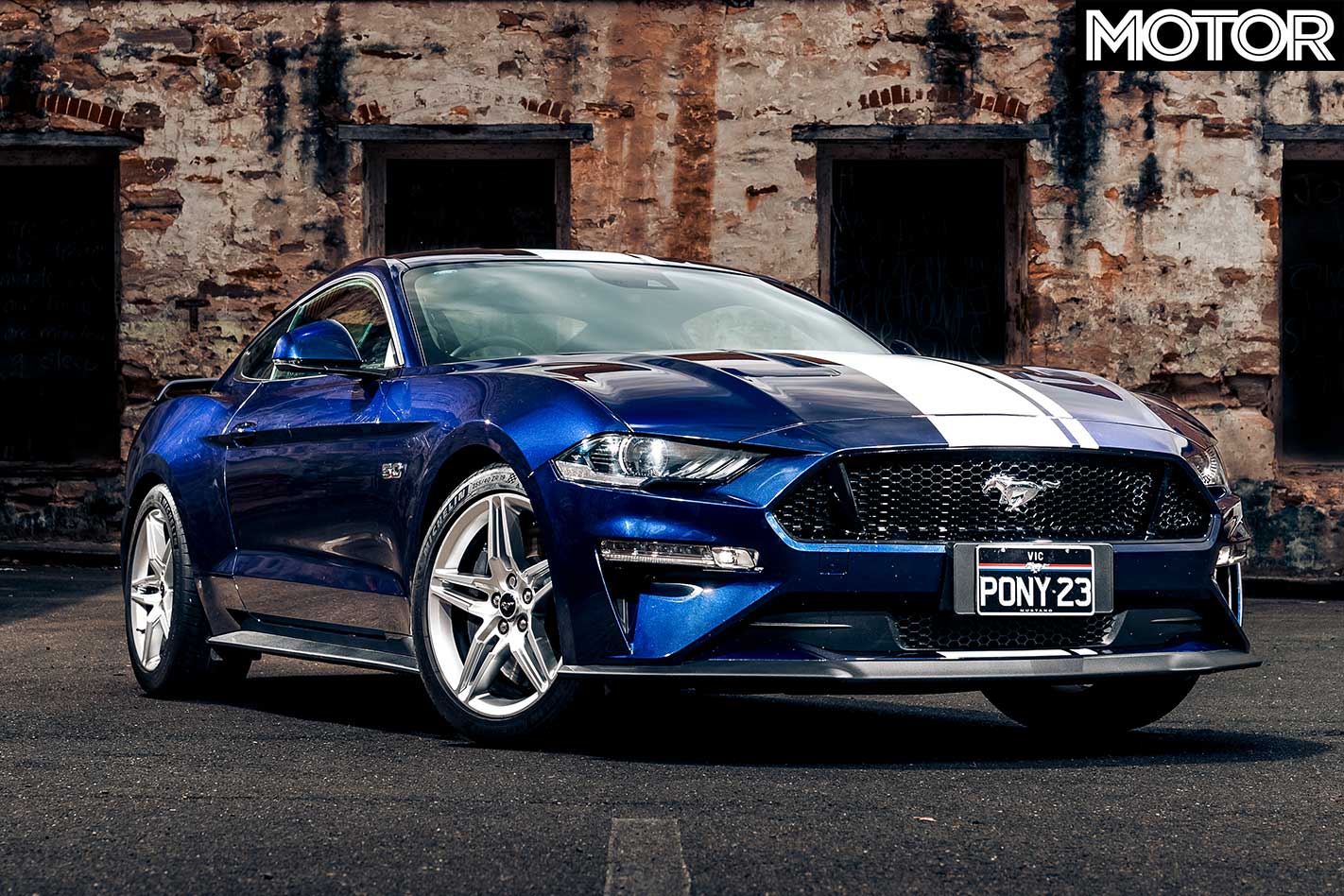
2017 The MY2018 update sees the 3.7L V6 dropped from the international lineup, along with power and torque increases for 2.3L and 5.0L engines. Both get a new 10-speed automatic co-developed by Ford and GM, and the option of MagneRide adjustable suspension and Recaro leather sports seats.
Purchasing decisions rarely have as much riding on them like this one. Your delicate, newborn, bundle of joy is about to hit the road for the first time, and for the majority of Aussie parents that means the nervous trip from hospital to home-sweet-home.
Yep, from minute one, choosing the right kind of restraint to protect your precious cargo in the event of a crash should sit at the top of the pre-flight checklist.
WhichCar is here to help, with a guide to the legalities and practicalities you need to consider before buckling up.
Thankfully, where once there was a minefield of state and territory-based regulations, guidelines relating to baby capsules, child car seats and boosters have been unified under a national code; a combination of age, weight, and size criteria being applied as follows …
Birth to six months
Babies up to 9kg must be in a rear-facing child restraint (better known as a capsule).
Typically, these are a two-piece design, with the base anchored to the seat and the capsule (complete with carry handles) detaching for maximum comfort and minimal fuss.
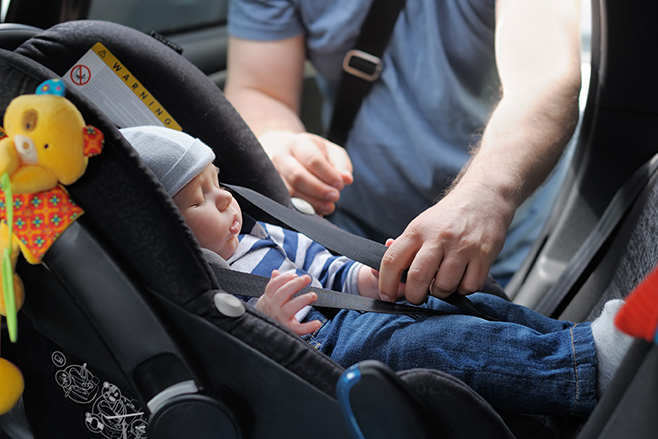
Multi-point straps in the capsule buckle at the centre to keep its tiny occupant secure. Tip: Make sure blankets only go on top once the harness is secured.
The base is held in place by either the seatbelt or ISOFIX location points (more on that system later) and once the capsule is clicked in place, a combined belt and tether strap locates to the car’s standard anchor point to button the whole thing down.
It’s important to note that it’s illegal to use a rearward-facing restraint in a position where it will be hit by an exploding airbag; most likely the front passenger seat. For kids in cars, the golden rule is: back seats are best.
If you’re on your way to a full-blown brood, by all means buy away. But if you’ll only need a capsule for a relatively short period, hiring one from a hospital, baby supplies store, or your local council may be a better way to go.
Six months to four years
Children up to 18kg must be in an approved rear- or forward-facing safety seat.
Here, you’re looking for several years’ worth of reliable, comfortable and practical performance – not to mention gold-standard safety credentials.
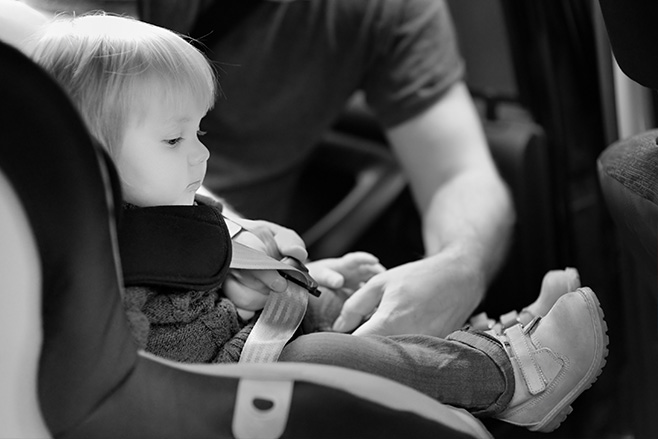
This is a more upright (sometimes convertible between rear- and forward-facing) unit, anchored to the seat and incorporating its own multi-point harness.
The range of products on the market for this category is immense, but the thing to primarily look out for is Australian Standards recognition. All child restraints must comply with the Australian/New Zealand Standard 1754, and should be branded accordingly.
The good news is that our standard is one of the toughest in the world. So restraints designed and manufactured to meet the AS1754 rating will deliver optimal protection in a crash.
But be careful when buying online. Purchase a restraint from overseas and you’re virtually guaranteed it won’t meet the Australian Standard. Not only will it be illegal to use it here, you’ll be risking your baby’s life for the sake of a saving few bucks.
Also, think carefully before choosing to accept the offer of a hand-me-down seat. With an AS1754 rating it will be perfectly legal to use, but a general rule of thumb is restraints have an expiry date of around 10 years, even if they’re exceptionally well looked after.
Dig into the seat’s history and politely decline if it’s been involved in any kind of impact. Check the belts aren’t frayed or otherwise worn and make sure the buckle connects and holds securely. And if you spot a single crack or stress mark, the only thing the device is good for is recycling.
It’s also worth noting that if your car has only one row of seats (a ute, for example) children can now travel in the front passenger seat, provided they use an approved child restraint or booster. The back seats are still the best mantra, though.
Four to seven years
Children up to 26 kg should be seated in a forward-facing safety seat or booster seat (restrained by the seat belt or a child safety harness).
Once a child hits four, he or she can enter the booster zone and start using the car’s adult lap-sash belt (or harness and lap belt in a second or third-row centre position). But first, make sure they have grown beyond the shoulder height markers (included on all compliant restraints) of their existing forward-facing seat.

As the name implies, a booster seat raises its occupant up, with an upper shell providing lateral head and shoulder crash protection.
Older style, base-only booster cushions can still be used if they comply with Australian Standards, but they haven’t been available to purchase new for several years, so we’d suggest you steer clear.
Remember, an adult seatbelt won’t fit a child properly until they’re around 145cm tall, so just because your child’s hit seven, it doesn’t mean it’s time to turf the booster.
But once they are big enough, congratulations, you’ve successfully passed the child restraint test.
ISOFIX
A key feature you should pay attention to is how the restraint is anchored to the seat it’s sitting on. That’s because until late 2014, pulling the seat belt through the base of the unit and locating it to the buckle on the other side was the only option.
This was not only fiddly and a pain in the neck, but it often lead to incorrect fitment and was inefficient in terms of holding the unit securely in place during a crash.
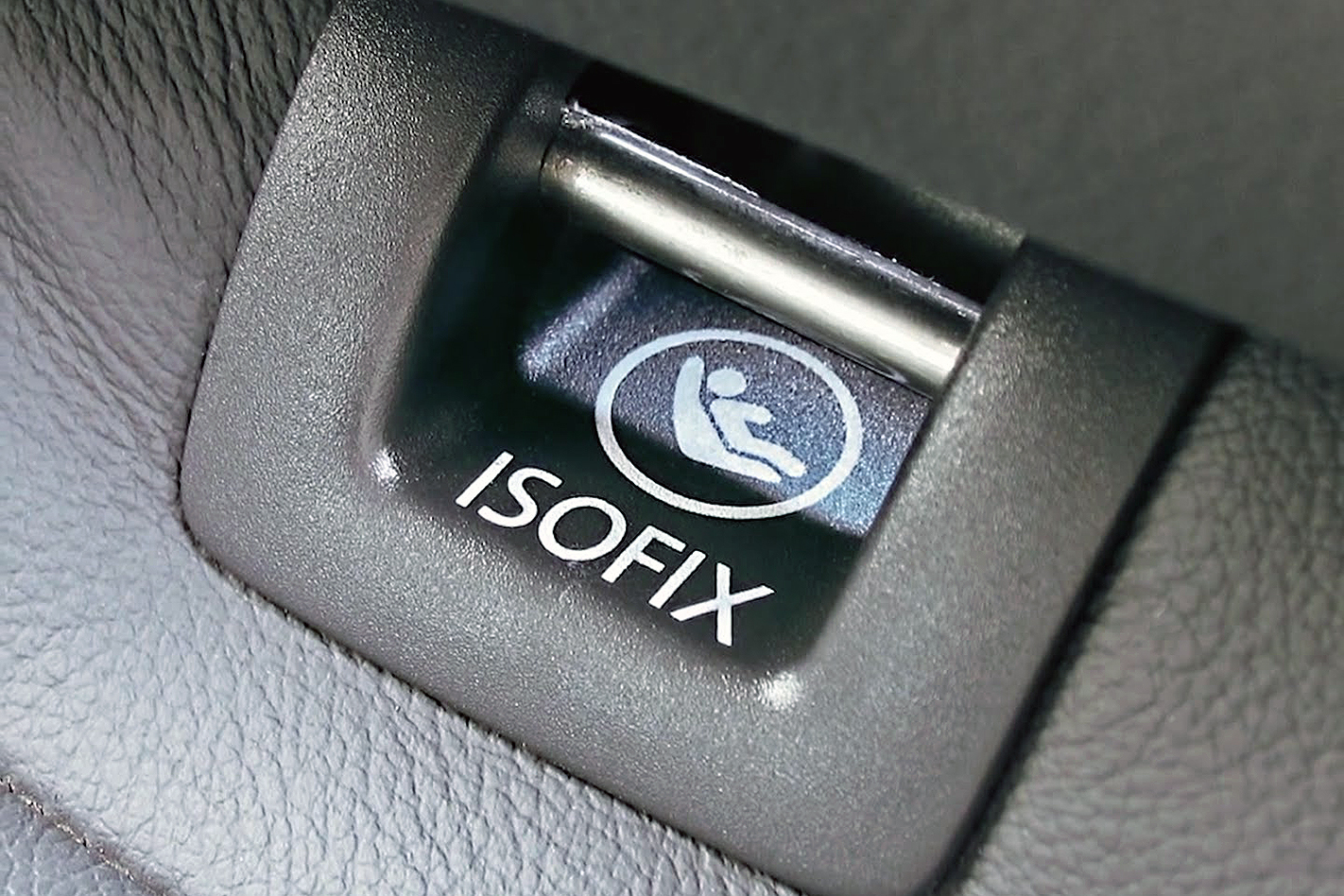
ISOFIX is a system built to a global standard (ISO 13216), and newer cars are equipped with fixed anchor points connected to the frame of the vehicle. The results in terms of crash safety are massively improved.
Be aware that Australian regulations still require the use of a ‘top tether’ strap connecting to the car’s high-level anchor point, and that it’s illegal to use an ISOFIX restraint from overseas (which will click in place, but won’t comply with local standards or incorporate a top tether).
For more information and to choose a safe child restraint, go to Childcarseats.com.au; a web resource provided by the Child Restraint Evaluation Program (CREP) that is backed by a consortium of Australian government agencies and motorist organisations.
Waiting on that V8 Ford Ranger Raptor but you’re getting itchy feet? Ford Performance in America has just proved their might be another way.
No, it’s not a tuneful bent eight or the punchy EcoBoost twin-turbo V6, but the Ranger is offered with a 2.3-litre four-cylinder turbo in North America.
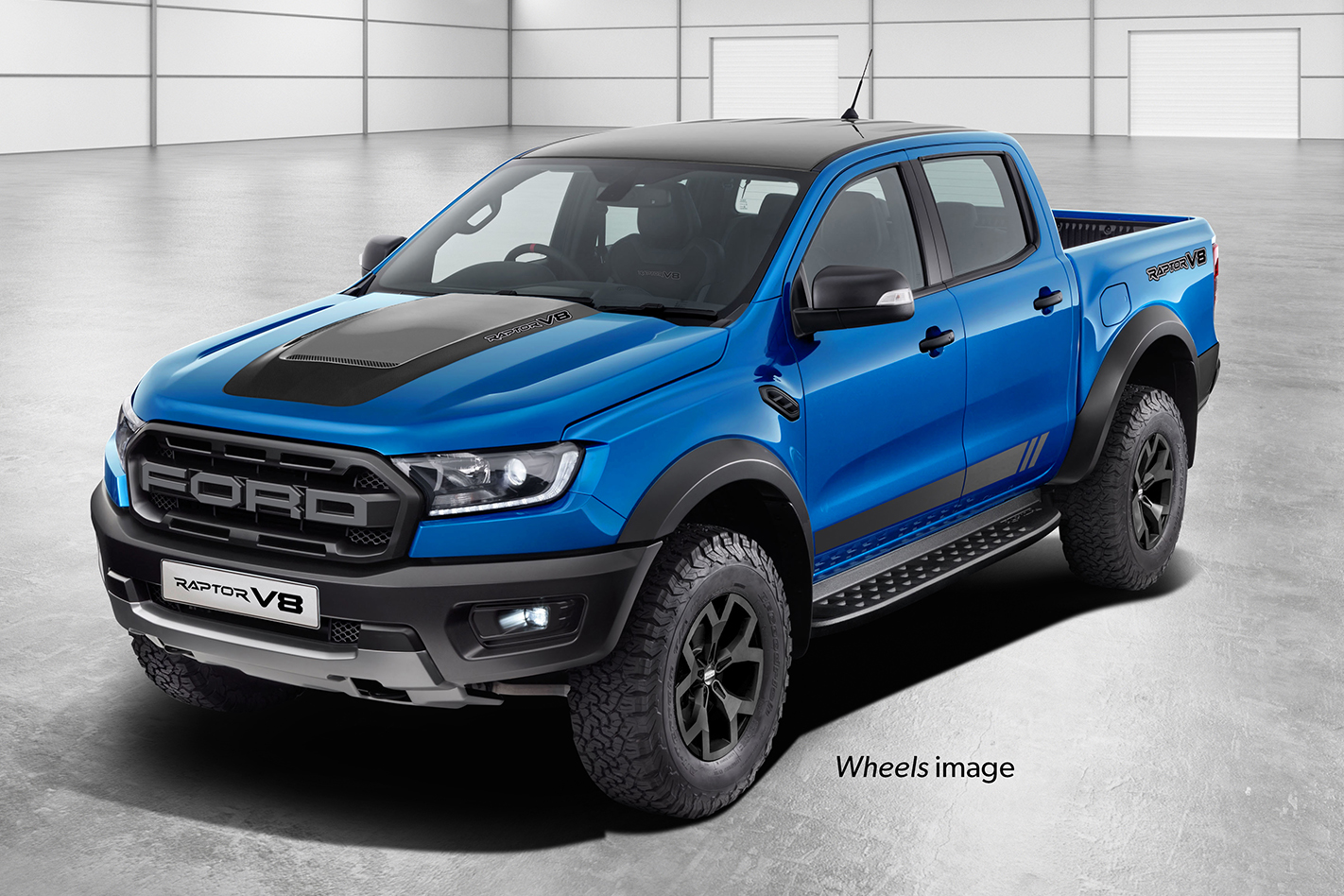
The engine is a variation of the unit used in the Ford Focus RS and Mustang 2.3L High Performance – got your attention? And Ford Performance has just given its base figures of 201kW/420Nm a boost thanks to a dealer-fit power-up pack that includes a free-breathing K&N air filter and the Pro Cal 4 tool used to install the recalibration – resulting in a peak increase of 36kW (4500rpm) and 81Nm (2500rpm). Not bad for a US$825 (A$1311).
The 10-speed auto is also accordingly recalibrated and it comes with a warranty.
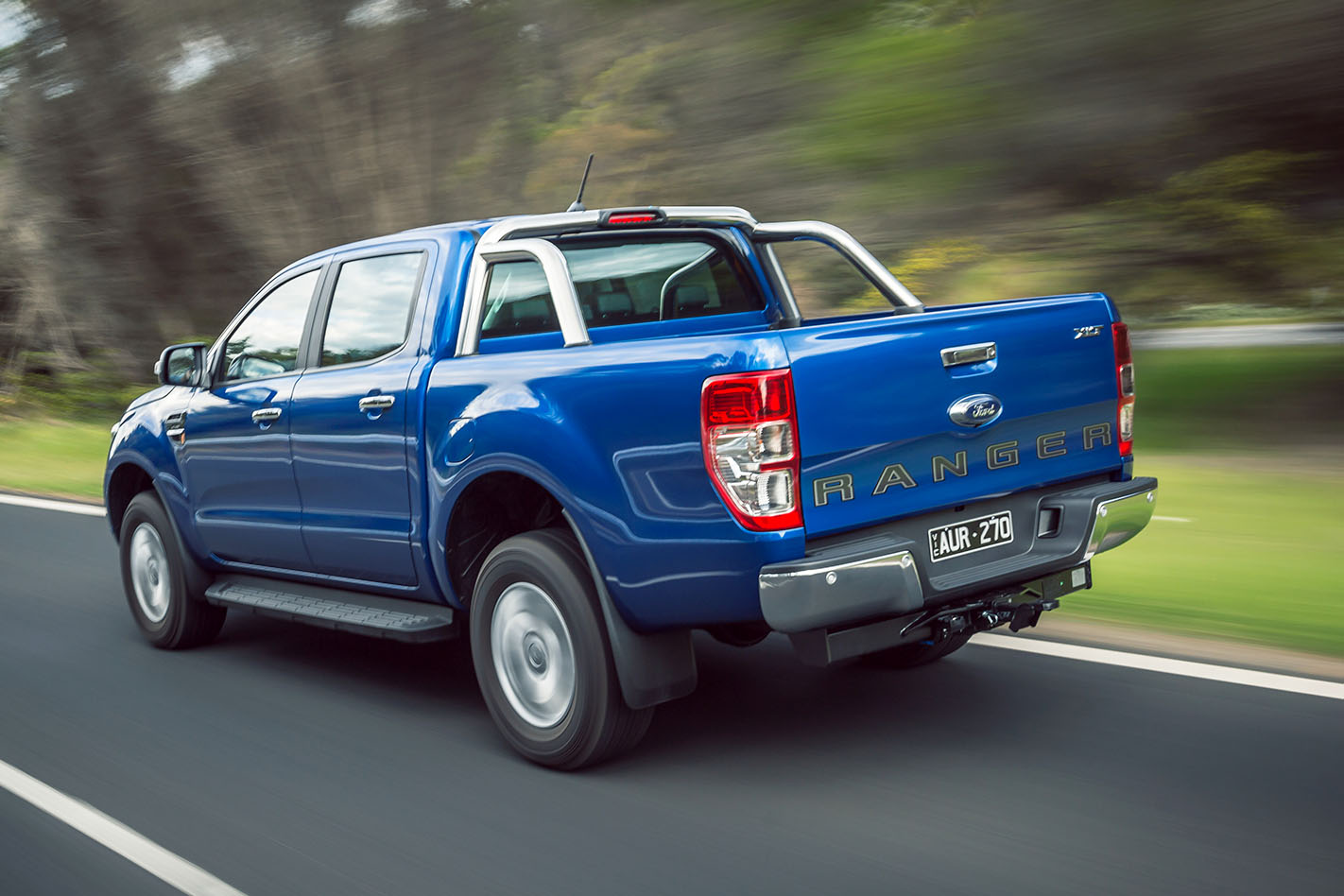
In a category dominated by inline-four and V6 turbo-diesel engines, a turbo four-pot with the wick turned up could generate a USP all of its own.
For those who don’t tow heavy loads or travel long distances, the detuned Focus RS engine might even inject an extra pep in the Raptor’s step that is desperately needs – it’d surely best the 10-second-plus 0-100km/h times of the current diesel line-up.
Presently the Ranger (including the hugely capable Raptor) makes do with between 118-157kW and 385-500Nm.
However, perspective is key, and the likelihood of this powertrain being offered here is virtually nil, as a Ford Australia spokesperson stated when contacted by Wheels.
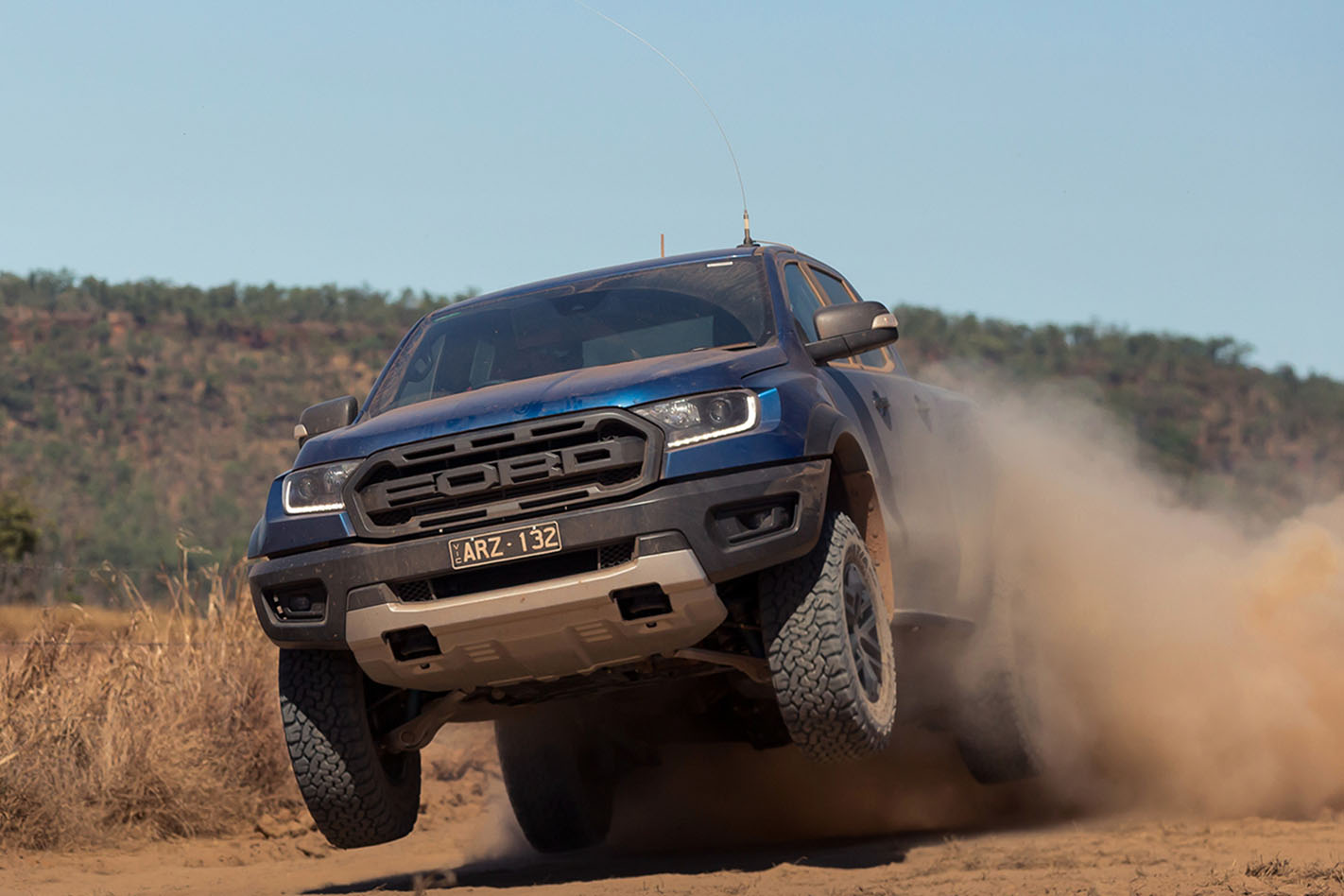
“The markets have significant differences; our preference is for diesel, with its load-carrying, towing and economy advantages that make it the natural choice for Australian customers.
“The US market doesn’t have the take-up for diesel, which means the 2.3-litre works there [but] isn’t something we think local customers here would choose for Ranger,” the spokesperson said.
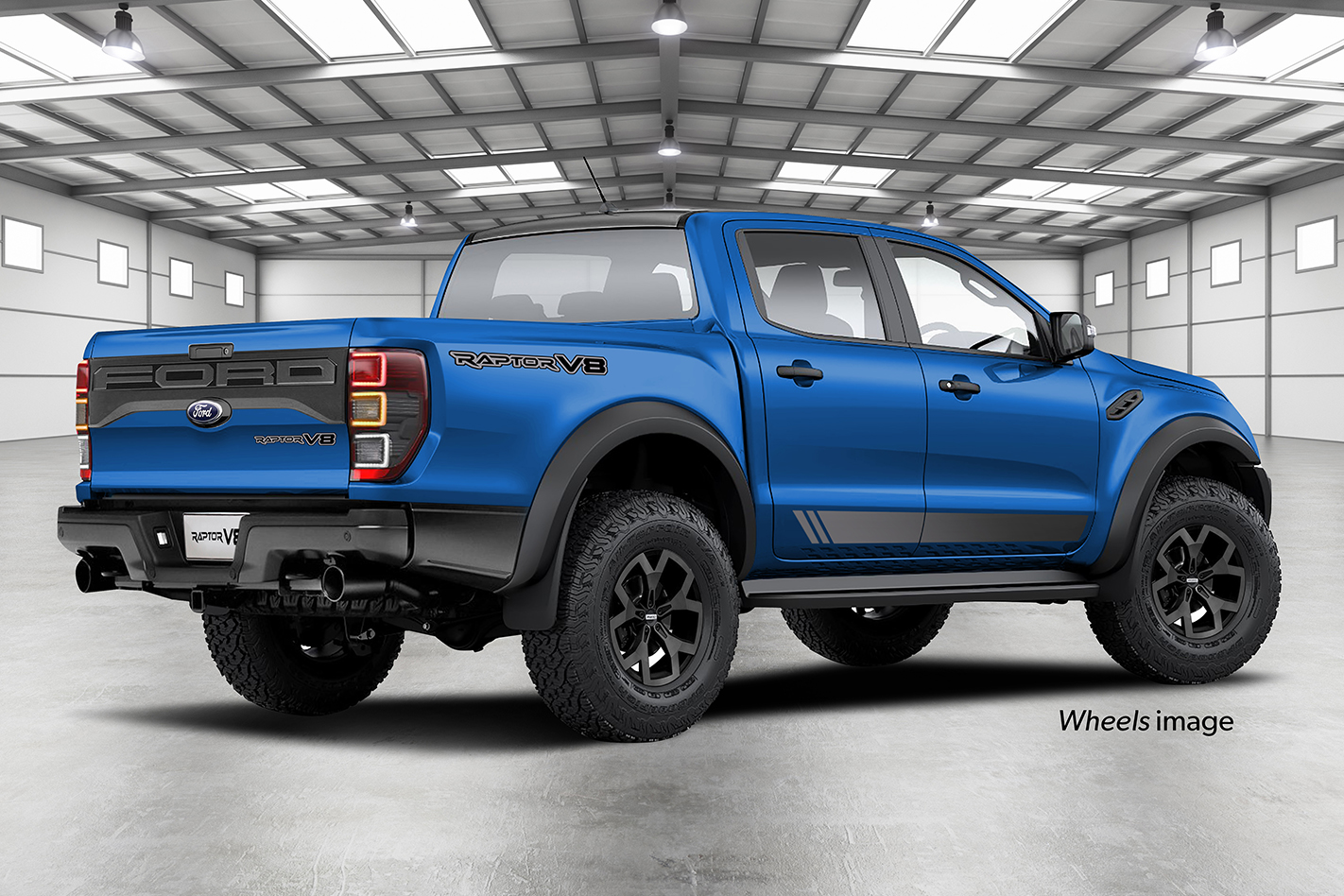
However, with strict Euro 6d emissions standards already in place, and more focus being placed on particulate emissions, offering a petrol-powered version in the future might become a more viable option.
Using downsized turbo-petrol engines is a trend that has paid dividends in terms of performance and efficiency in other categories, so it could make sense for the dual-cab segment.
What do you think, would you buy a turbocharged four-cylinder petrol Ranger?
Sometimes a member of the MOTOR team will send a photo of a car that’s so cool, it elicits a tirade of swears (out of admiration) and those heart-eye emoji. Gavin Bell’s FPV-spec BA Falcon wagon is one of those cars.
Now, obviously FPV had nothing to do with the build of this car, and when we tracked down Bell he freely admitted that to MOTOR, but why wouldn’t he? He’s done pretty much all the work himself.
“No one formerly involved with FPV have currently had any improvement,” Bell says.
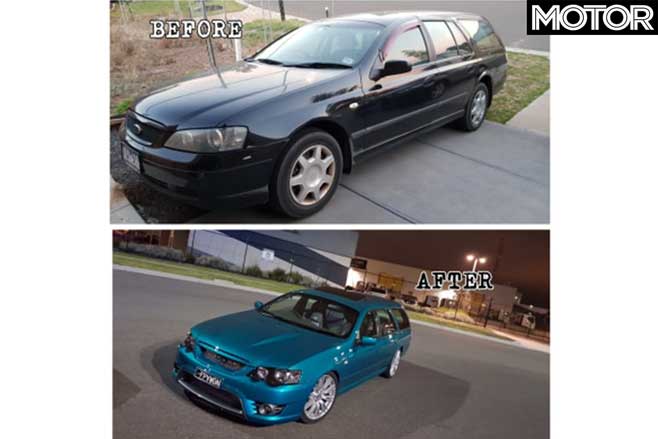
“All modifications, mechanicals, and fabrications have been carried out by myself at GW Auto Care in Bacchus Marsh.”
He says the only involvement from anyone to oversee the project has been with his engineer “to ensure it meets regulations.”
Under the hood of Bell’s wagon, for example, you’d normally find a Boss 260, Ford’s 5.4-litre V8 from the XR8, but with a Vortech side-mount supercharger. No more stock Barra.
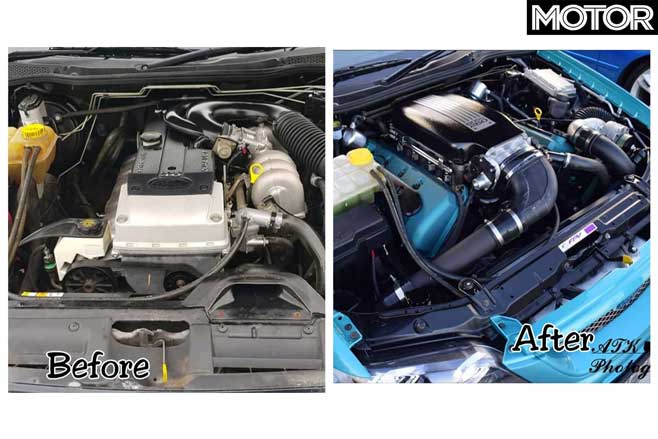
He says he’s got another engine on the way, a supercharged Boss 290 to be hooked up to the wagon’s 6-speed manual, which runs through to a read diff borrowed from a an FPV Pursuit.
When Gavin bought the wagon about 2.5 years ago, he says it only took him three weeks before there was a sunroof installed and the car was being torn apart to be painted in Breeze Green by Automaze in Sunshine, Melbourne. The engine bay is, however, satin black, with the new Boss 290’s heads painted to match the car’s exterior.
He says it’s running at 339rwkW, but there’s plenty more work to be done – including the upgraded V8.
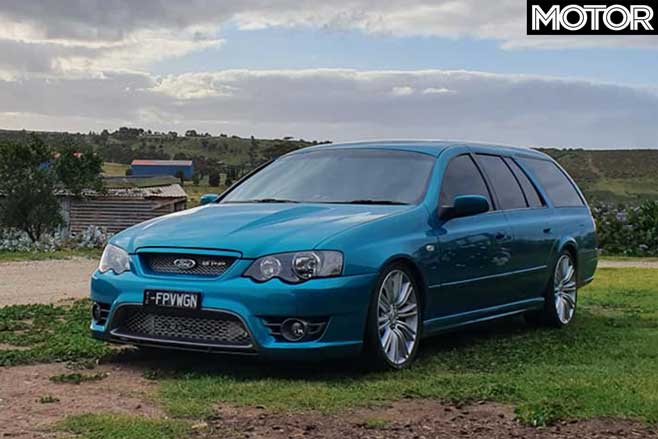
“It is 70 per cent complete, with custom rear seat upgrades to come, a stronger motor on the engine stand complete and ready to be installed, upgraded supercharger pulleys and fuel system, and genuine side skirts and a rear bumper to be modified to fit the wagon body.”
“I’d say 6-7 months of work to be completed, but due to current global situation it may be a little longer.”
Once it’s finished, we’d sure love to get a closer look.
March 29, 1974 marked the first day that the Volkswagen Golf rolled down the production line in VW’s adopted home town of Wolfsburg, in Germany.
Since then, VW reckons it’s sold a Golf every 41 seconds around the world, with the line-up set to expand to its most technologically advanced version ever next year in the form of the Golf Mk8.
It’s not all been sunshine and roses for the world’s second most popular car; no one really liked the Mk III all that much, and VW’s most famous model was swept up in the Dieselgate scandal of a few years back.
But the Golf has also proven time and again to be the benchmark mid-sized hatchback of its day against all comers. Here, then, is a list of Volkswagen Golf trivia guaranteed to win the meat tray at your next pub trivia night.*
*no responsibility inferred or accepted for your pub trivia skills or lack thereof
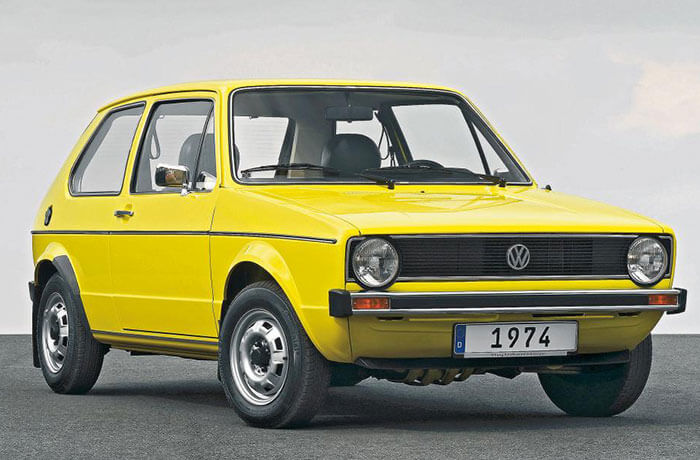
1 The VW Golf debuted in 1974, after a period where the company – which had grown dependant on the Beetle – was in a slump at home and in the US.
2 The Mk 1 was penned by renowned Italian designer Giorgetto Giugiaro, who also worked for Maserati and BMW, amongst many others.
3 The Mk1 was sold between 1974 and 1983, notching up around 3 million sales during its tenure.
4 It was the first VW product to use a front transverse engine layout and front-wheel-drive, and it introduced engine water cooling – and by dint, the first heater! – to a VW product.
5 The MkI GTI debuted with a 1.6-litre fuel-injected, watercooled four-cylinder engine making around 81kW.
6 As part of a publicity stunt, a Mk1 crossed the entire American continent from Alaska to Tierra del Fuego, a distance of 30,514km, in 94 days.
7 The Golf is the second best-selling car of all time, with around 35,000,000 sold to the end of 2016. The best seller? The Toyota Corolla, with more than 45,000,000.
8 Golf is German for Gulf, and was so named to keep it in the ‘trade winds’ car naming theme of the Scirocco, Passat and Bora.
9 The first Golf GTI was an after-hours skunkworks job; a group of engineers at VW’s Wolfsburg plant gathered to hot up the MkI version of the car. Management only reluctantly agreed to a run of 5000 cars in 1976… and the rest is history
10 The original tyre selected for the first GTI in 1976 was actually bigger than the standard rubber of the 911 of the day. The Golf was supposed to run 205/60 tyres, at a time when Porsche fitted 185/70s to the 911.
11 The Golf is directly related to more than 20 other cars, thanks to the use of the modular MQB chassis. From Audi to Spanish brand SEAT, multiple vehicles use the same MQB platform.
12 In 1974, Volkswagen started selling the Golf in the US, calling it the Rabbit; the Golf name was thought to be too aspirational. VW brought the Rabbit name back to a Golf GTI limited edition in September 2018.
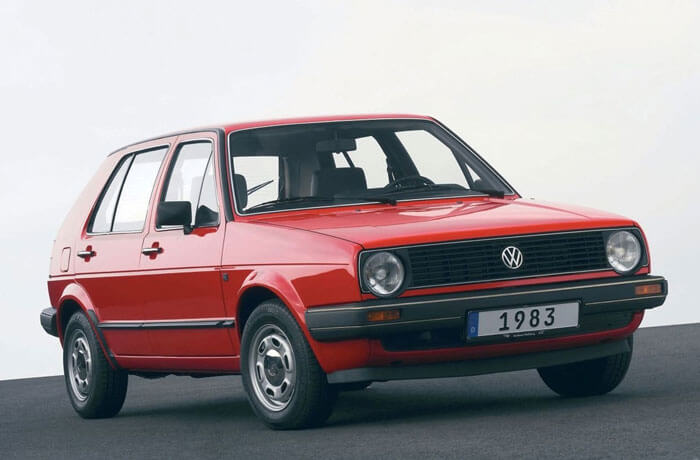
13 The Golf MkII sold between 1983 and 1991, and notched up more than seven million sales worldwide.
14 Volkswagen launched not one, but two Golf GTI Pirelli Editions; one in 1983 and the most recent in 2009, both in Pirelli-inspired yellow paint. The early version used Pirelli-made rims, while the later version used special $400-a-corner Pirelli tyres.
15 The Mk II was the first Golf to score tech like a catalytic converter and anti-lock brakes.
16 Bugatti’s W12 was dunked in a limited edition Golf (actually it was a Phaeton engine, but whatever).
17 The Golf overtook the Beetle in 2002 for title of world’s most popular car.
18 In 1988, VW sold 10m Golfs worldwide.
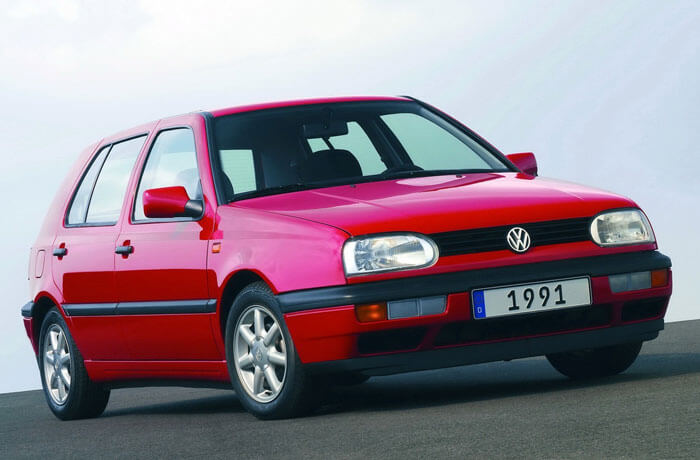
19 The MkIII sold between 1991 and 1997. It introduced tech like front airbags to the model for the first time.
20 VW also introduced the first-ever Golf wagon– or ‘estate’ in the UK – with the MkIII.
21 Former German chancellor Angela Merckl’s first car, a Golf Mk2, was auctioned in 2012 for $25,000
22 VW builds and sells 2000 Golfs a day around the world.
23 The driverless GTI 53+1 was developed in 2006 for dynamic research and testing. The computer-controlled 147kw GTI had grille-mounted radar and laser sensors and was named in honour of an earlier VW that could drive itself; Herbie the Love Bug wore number 53.
24 The millionth Golf was delivered in 730 days after its debut in 1974.
25 The six-cylinder Golf was introduced with the MkIII in 1995, and it continued through to the MkVI before making way for a 2.0-litre four-cylinder turbo.
26 The Golf is built in five countries, including Germany, Brazil, China and Mexico, and exported to 155 markets.
27 There will be no pure electric Golf; instead, the ID will fulfil the role of VW’s electric hatchback.
28 The diesel Golf first appeared in the Mk1 in 1980, while the TDI, short for Turbo Direct Injection, debuted in 1993.
29 At one time, the Golf was the only car in the world to offer electric, hybrid, diesel, petrol and LP gas powertrains, as well as front and all-wheel-drive.
30 A Golf special model was named after American rock band Bon Jovi in 1996 to coincide with the launch of the MkIV model in Europe The Golf Bon Jovi offered a better stereo and sports seats.

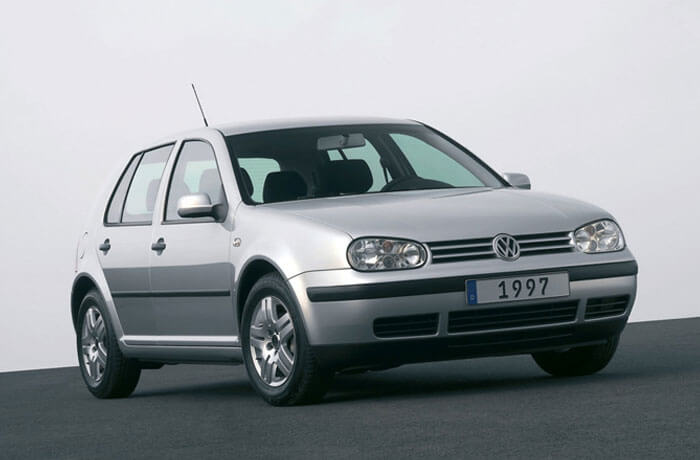
31 The MkIV sold between 1997 and 2003, and heralded the introduction of the first all-wheel-drive Golf.
32 It came in three-door, five-door, five-door wagon and three-door hatch guises.
33 The MkIV also introduced curtain airbags in 2002.
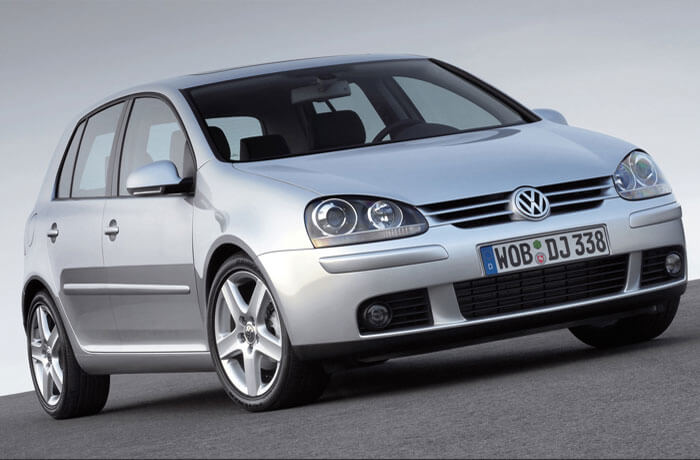
34 The MkV sold between 2003 and 2008, and heralded the return of the three-door GTI to Australia.
35 The wait for a new MkV Golf GTI in Australia stretched out to more than a year at one stage, and forced VW to import the five-door version to satisfy demand.
36 The MkV also saw the introduction of rear multi-link suspension, as well as a seven-speed dual-clutch gearbox.
37 The engine in the Golf R, though sharing the same EA888 engine code, features a stronger cylinder head, hollow exhaust valves and a bigger radiator.
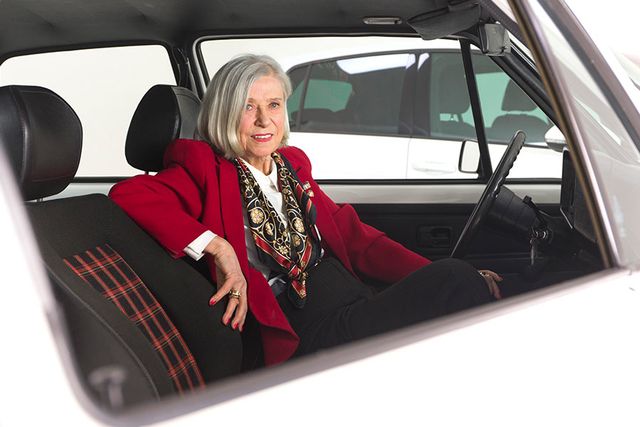
38 The tartan pattern on Golf GTI seats is called Clark Plaid and was introduced by VW’s first female interior designer, Gunhild Liljequist, who joined the company in 1964. Ms Liljequist also conceptualised the dimpled gear knob, which was reportedly ridiculed at the time.
39 The R was not the first 4WD Golf with a GTI engine, though. The 1989 Rallye Golf was a 5000-unit limited edition variant with a supercharged G60 four-cylinder engine with synchro 4WD. It was based on the Golf MK2 but came fitted with square headlamps, colour coded bumpers and semi-angular extended wheel arches.
40 Clark Plaid was re-introduced into the Golf GTI lineup from MkV onwards but was inexplicably renamed ‘Jacki’ for the 2016 MkVII Golf GTI.
41 The inside surface of the Golf MkV was supplied unpainted, to save on manufacturing costs.
42 The initials GTI possibly stand for Grand Turismo Iniezione (Grand Tourer Injection) but no one is 100 percent sure how or why the three letters were chosen.
43 The MkVI sold between 2008 and 2012 and was hailed as a manufacturing triumph for VW, whose cost-per-unit on the previous car was way above the industry average. However, the MkVI’s twin exhausts were, according to company sources, an expensive indulgence insisted upon by then-VW chief Martin Winterkorn.
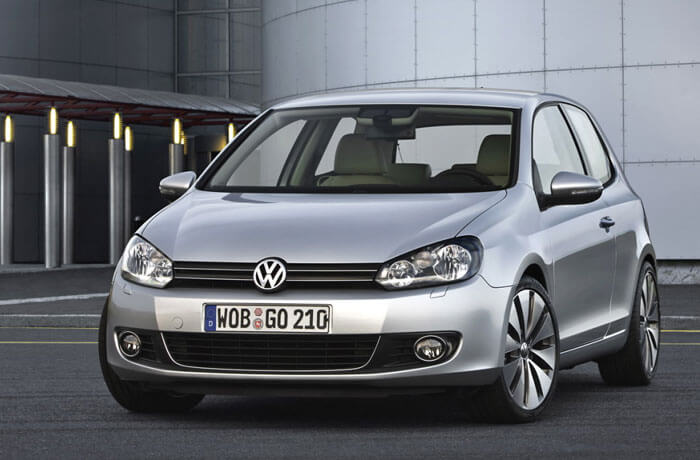
44 The MkVII debuted in 2012, and the 7.5 was unveiled in 2017. The MkVIII, meanwhile, is expected to go on sale in Australia in 2020.
45 The 19-inch Ruby rims on the Aussie spec Golf GTI 40 Years were voted for by Australian GTI owners and enthusiasts via an online poll.
46 The 2021 Golf R will not, in fact, score the five-cylinder Audi engine as has been predicted.

Retro-styled Toyota LandCruisers aren’t anything new. No, really. Last year we saw the US-market Heritage Edition and there’s a thriving cottage industry in making your new LandCruiser 200 look as old as possible. But the latest Heritage Edition bestowed upon the United Arab Emirates is all kinds of cool and has us a little green-eyed.
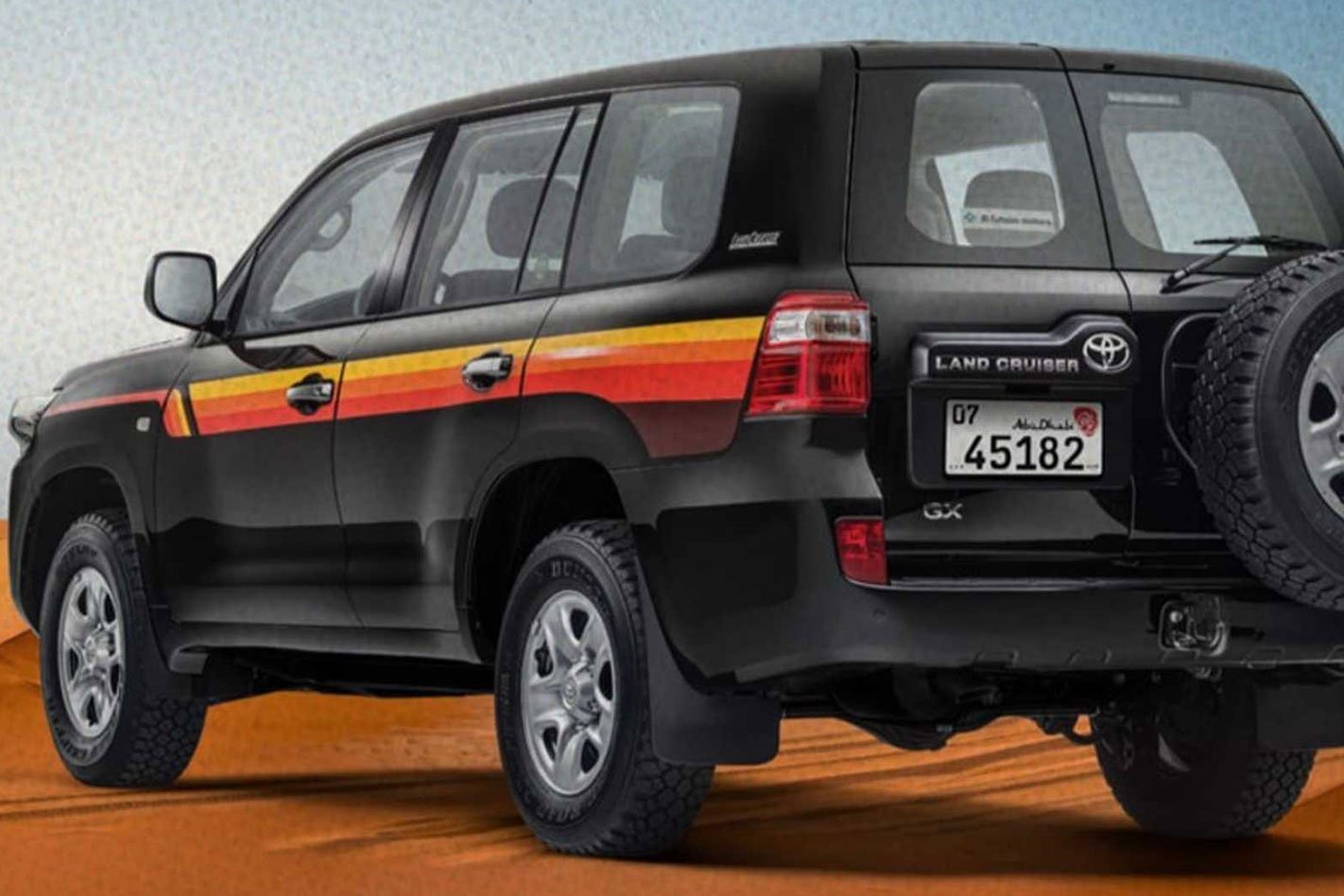
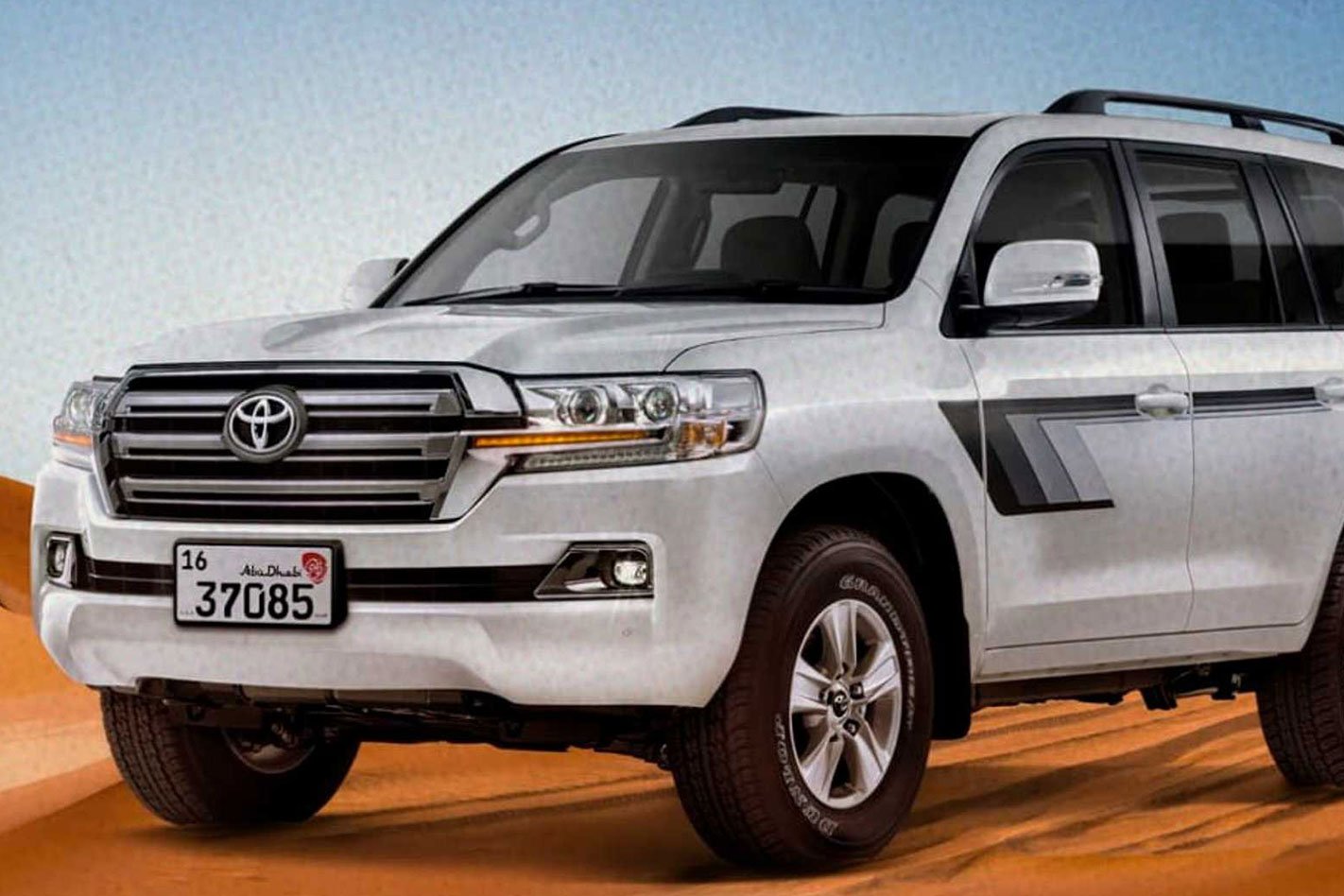
There are actually two flavours of Heritage edition for the UAE. The 4.0-litre V6 gets 17-inch steel wheels and a five-speed manual transmission while the 4.6-litre V8 gets alloys, a six-speed automatic ’box and roof rails. Billed as ‘the original search engine’ by Toyota, this go-anywhere 200 series is fitted with cloth seats because leather in the scorching UAE would probably have you in the burns unit.
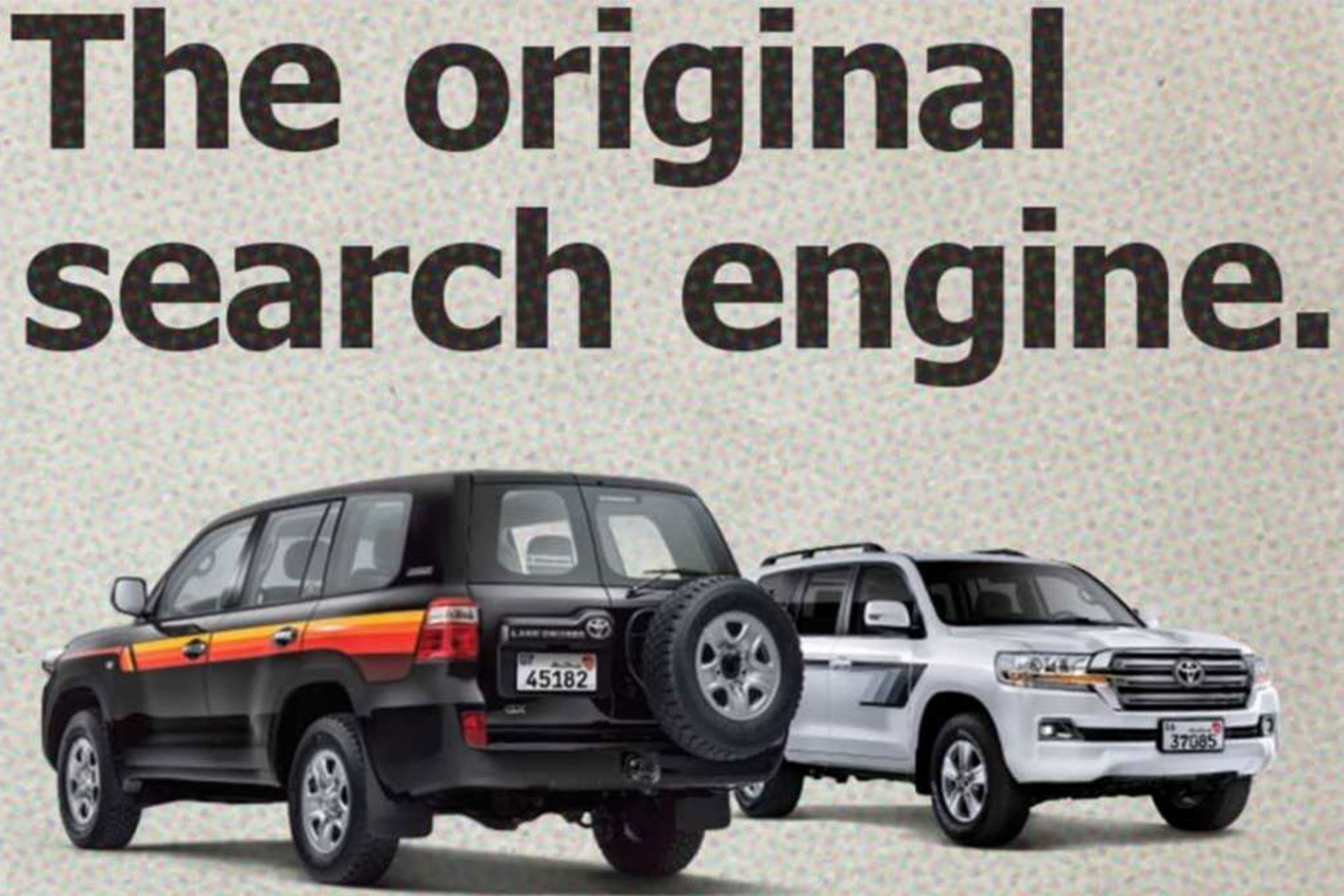
Both models are being offered in a range of colours with contrasting decal packs, including the ever popular white, silver and black. The perfect vehicle for extreme social isolation? This could well be it.
In the highly competitive and cut-throat world of man-cave adorning, it can be tough to get an edge over your rivals.
You put up a framed, signed photo of Alan Jones claiming his world title in 1980, the bloke down the road goes and makes a glass coffee table using a wheel off Senna’s McLaren MP4/4. And so it goes on.
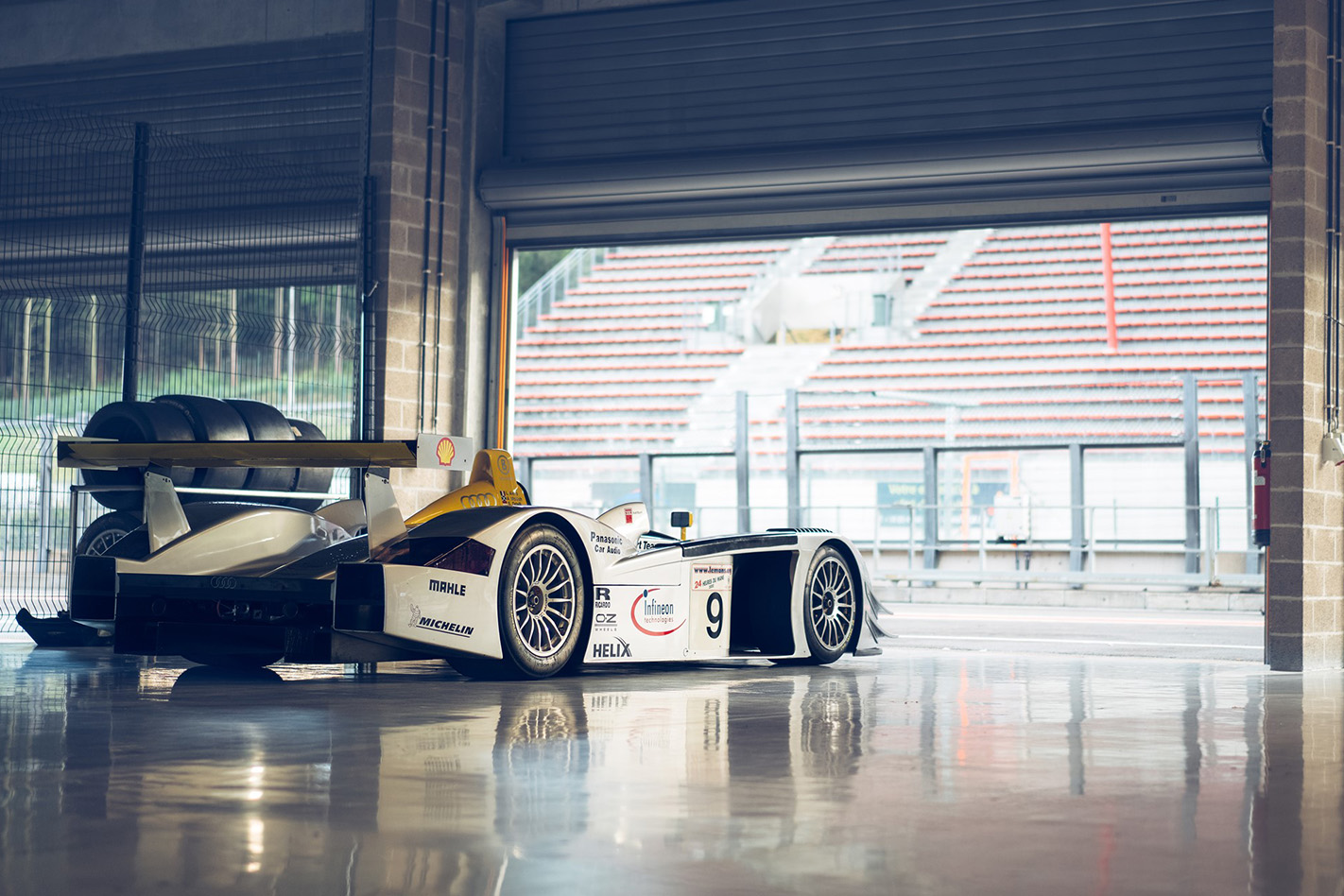
But here’s a chance to really take a stranglehold on your man-cave competition, by buying this 2000-built Audi R8 LMP 900, offered for sale by London-based specialist Fiskens.
It has everything the true man-cave enthusiast craves in a feature piece – exclusivity, providence, a fascinating development back story, and a rear spoiler at precisely the right height for you and your mates to rest your drinks.
For those in need of a quick refresher, the R8 LMP 900 was designed in-house by Wolfgang Appel and Michael Pfadenhauer, developed for the 2000 Le Mans 24 Hours. Construction was handled by Italy’s famed Dallara Automobili, with the 3.6-litre twin-turbo V8 producing around 450kW.
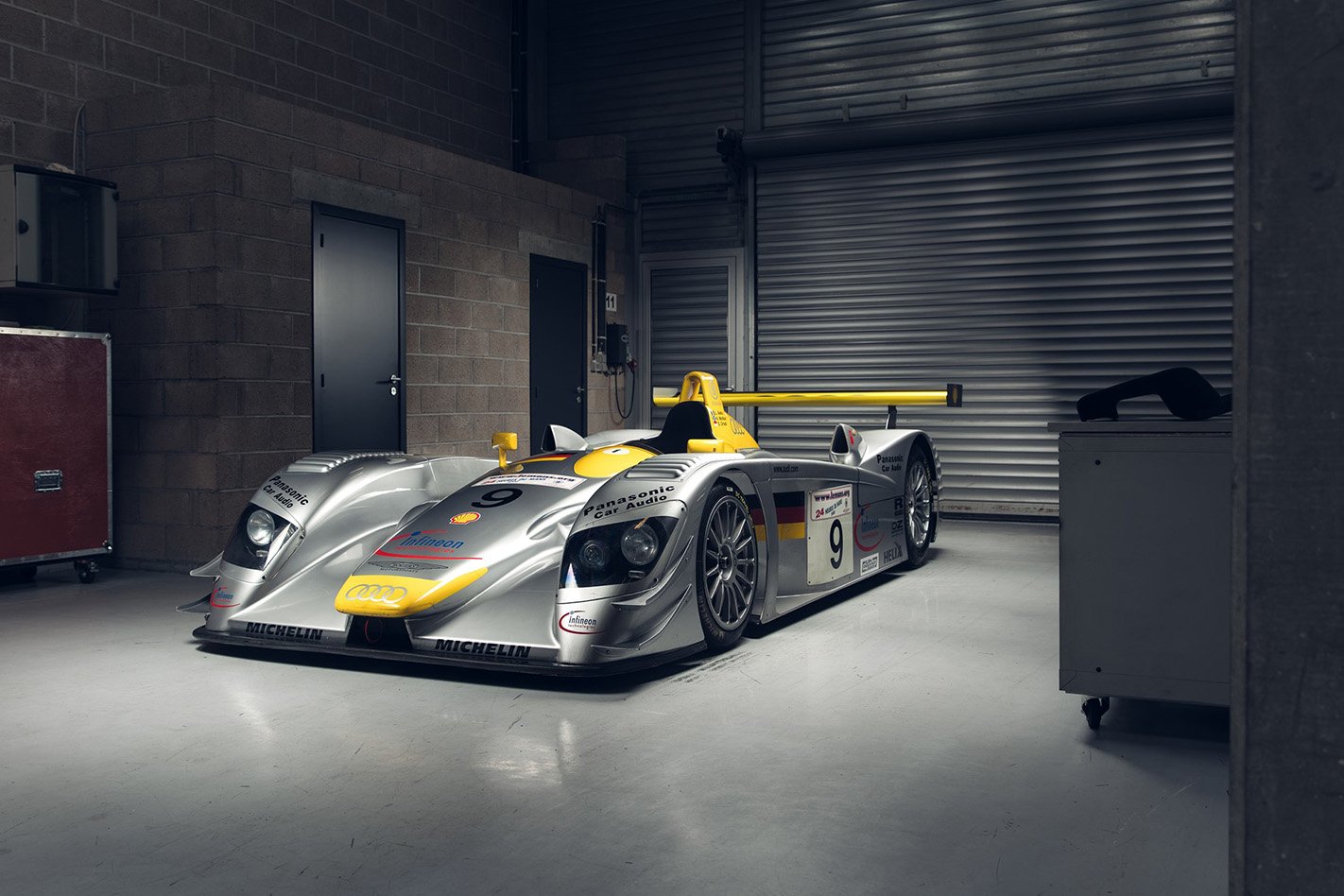
Straight out of the crate, the R8 LMP900 was a stunning car that succeeded where the previous R8R model had failed, scoring a first and second place in the opening race at Sebring, and going on to a podium clean-sweep at Le Mans.
This car, chassis 405, campaigned by Audi Sport Team Joest, and driven by Alan McNish, Stéphane Ortelli and Laurent Aiello, achieved pole position, fastest lap and second overall in that 2000 Le Mans 24 Hours classic.
After Le Mans, Frank Biela and Emanuelle Pirro co-piloted the car to third place in the gruelling Nürburgring 1000.
Subsequently, Audi Sport Team Joest handed 405 over to the other works team, Audi Sport North America.
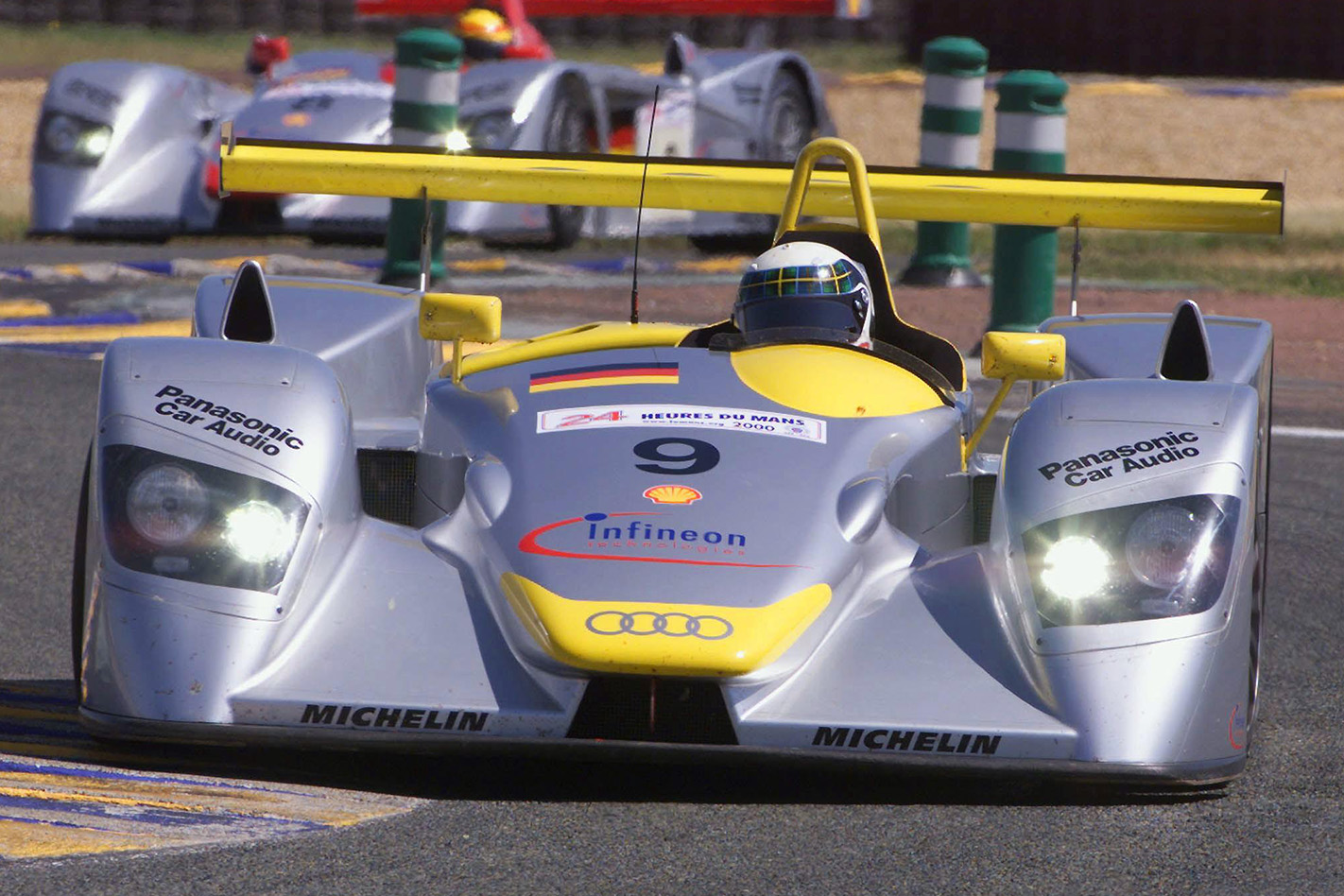
Once in the US and competing in the ALMS series, the car took numerous podiums in the hands of that pairing of Biela and Pirro. A guest appearance from Audi legend Tom Kristensen secured the car a second-place finish in the Petit Le Mans, the cherry on top of a spectacular year.
In 2001, 405 was campaigned in the 2001 ALMS series, driven by Andy Wallace, Johnny Herbert, Ralf Kelleners and Dorsey Schroeder, landing a third place at Sebring and numerous other podium finishes.
So, an amazing a roster of champion drivers have occupied this cockpit, and it’s had several litres of sprayed Moet wiped from the bodywork. What’s it worth? Price is by application, but based on the sale of other pedigree endurance racers, we’d expect little change from A$3m.
Of course, if you can afford that, you can probably afford to do a few track days in it, with an estimated budget of around $10K per outing needed for accumulated running costs.
Yeah, nah, probably just best to put it in the man cave and park a beer on that spoiler…
There are bad car accessories – plenty of them, in fact – but these are the ones that are truly cursed. More than just terrible ideas, there are darker undertones behind the concept of these products that their creators failed to consider… or perhaps simply didn’t care about in their pursuit of your hard-earned.
If you’ve made the mistake of buying any of these, beg to your chosen deity for forgiveness.
Handpresso 12V espresso machine
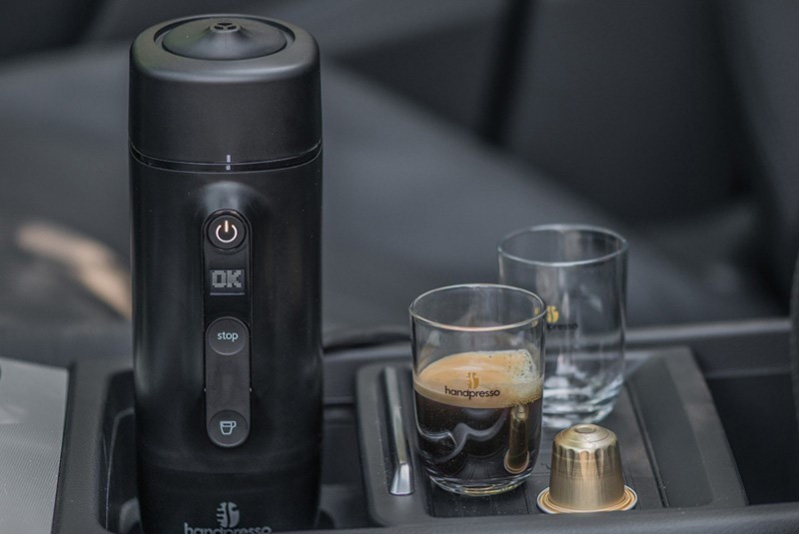
We question the sanity of anyone who thinks a pressurised vessel filled with scorching-hot liquid is a good thing to have sitting right next to your pelvic region, but that’s precisely what the Handpresso is.
Sure, the company would probably prefer that you only operate its portable espresso coffeemaker when the car is parked, but considering that human beings tend to do dumb things on a regular basis we’ve no doubt that some would be tempted to unleash their inner barista while doing 110km/h down the Hume highway.
“Why does everything smell like a macchiato?” the first responders will say.
Max Burton 12V Oven To Go
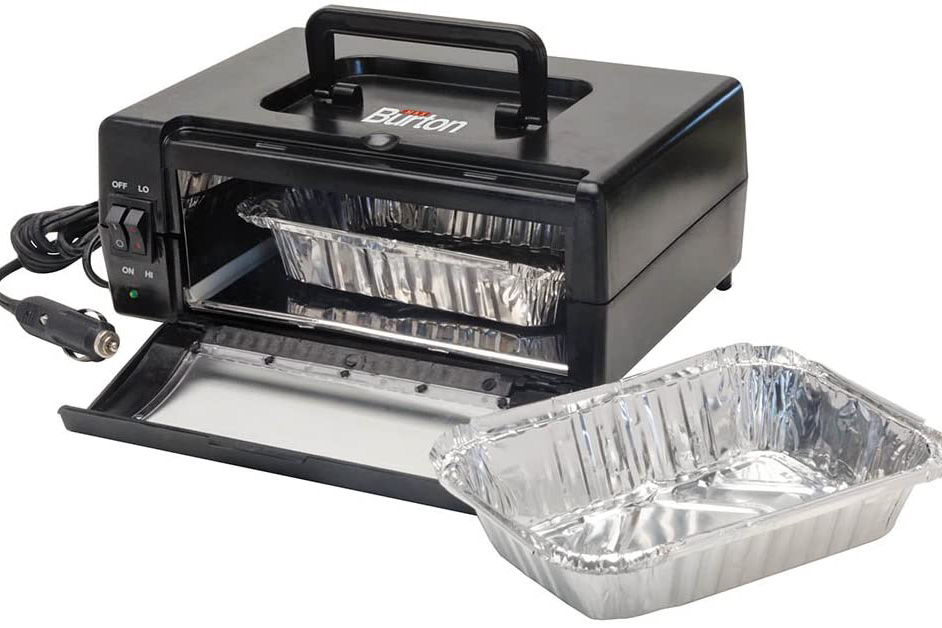
“Why does everything smell like lasagne?” the first responders will say.
Whistle tips

These are an old favourite of people who’ve just bought their first car. They also happen to be a pox upon humanity.
Essentially a small metal ring that you clamp to your exhaust tip, they’re sold on the premise that they impart a sporty turbo-like whistling note to your car as exhaust gas rushes over it.
In reality, they generate a cranium-splitting banshee screech that’s more suited to Guantanamo Bay interrogation rooms than public roads.
Carlashes
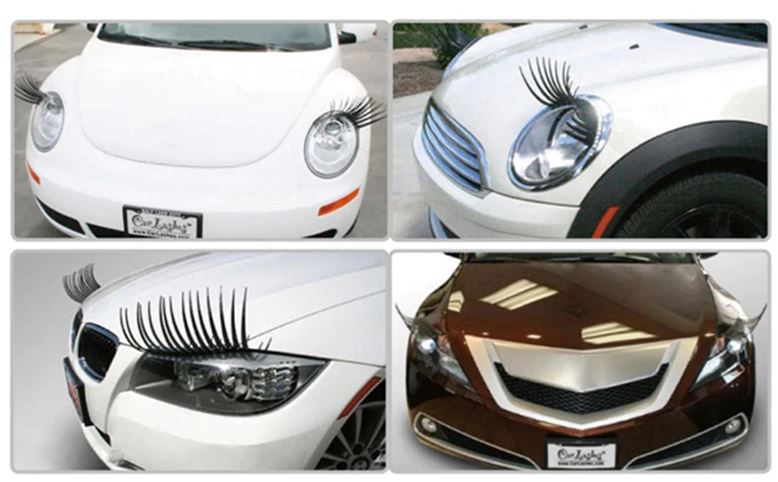
Just don’t.
Masochist’s car polisher
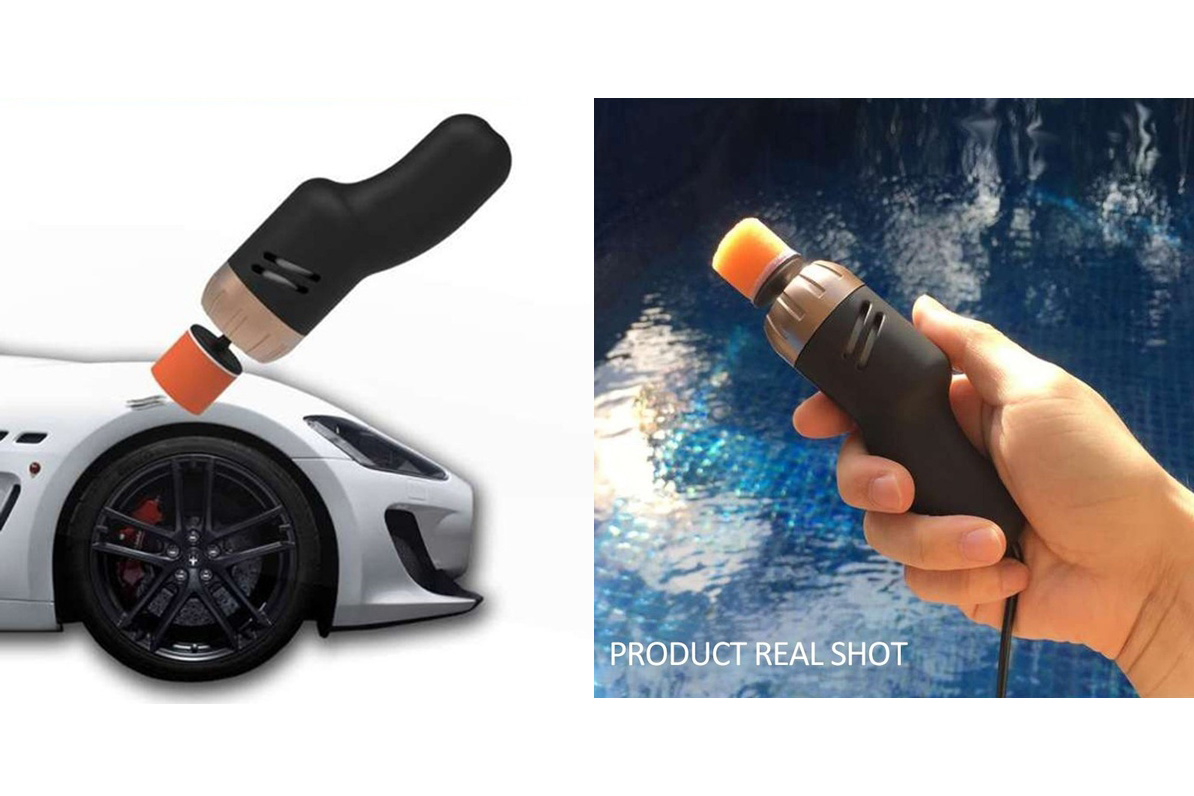
We’ll be honest, this one caught our eye because at first glance it looked more like a marital aid than anything automotive, but that’s not why it’s on this list.
Rather, this polishing tool – or to use its full name, the “12V 60W Electric Scratch Repair Tool Car Beauty Maintenance Equipment Auto Cleaning Polishing Machine Car Polisher” – belongs here because it is more ‘cruel joke’ than ‘useful appliance’.
Sure, it could be useful for fiddly detail work and small scratches, but the marketing artwork heavily implies you could use its microscopic head and 12 measly volts to polish an entire car. Technically possible, but likely to drive you insane.
Tiddy Bear
On the face of it, the Tiddy Bear seems wholesome. A soft, cuddly toy bear that’s designed to reduce seatbelt-related chafing on your chest and shoulders, it appears to be the pet project of a bored retiree.
But then you watch its infomercial (above). It’s depicted being used almost exclusively by women in low-cut tops, with enthusiastic testimonials about how thanks to Tiddy Bear they “REALLY enjoy driving again”. It’s made extra unsettling by the fact Tiddy Bear is oriented face-first into your cleavage by design, turning it from an ergonomic aid to something more akin to a lingering hug from a creepy uncle.
Monkey tissue box
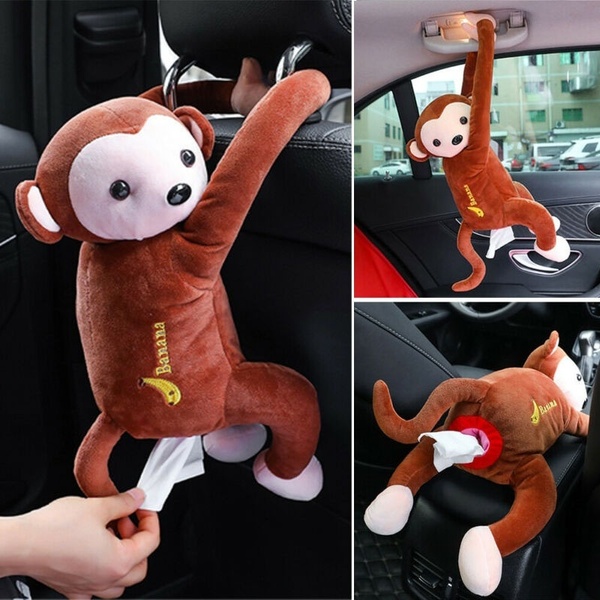
Nothing says “nawwww, cute” quite like pulling facial tissues from the plush butt of a toy monkey. If you need an explanation, we have none.
Hermetically-sealed anti-coronavirus screen
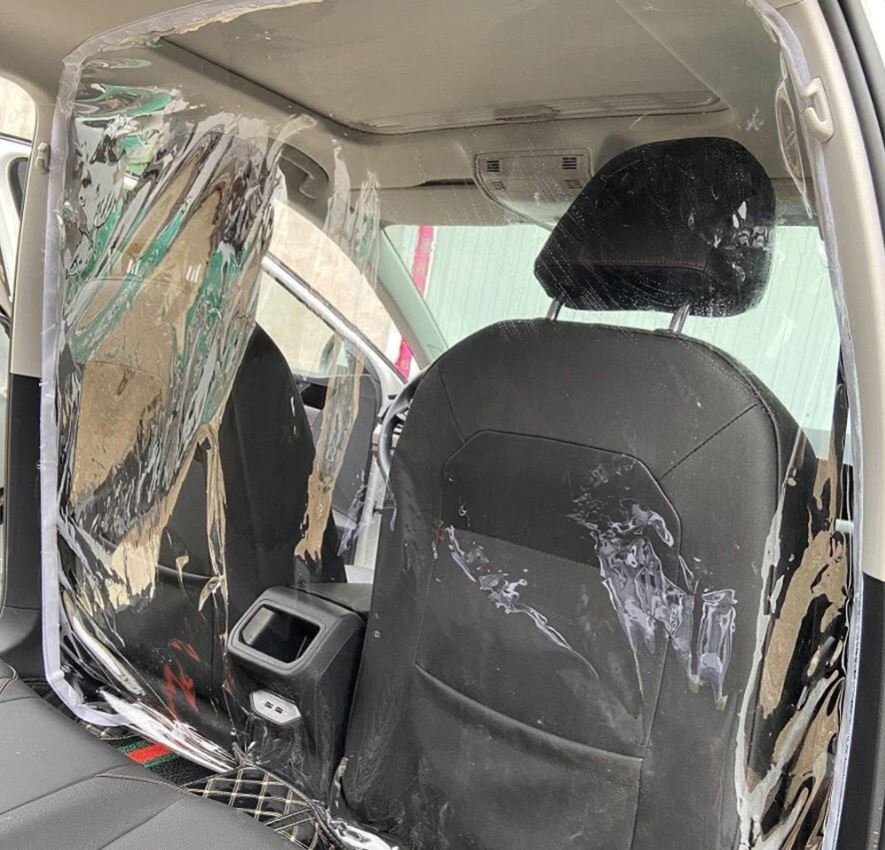
You know that scene in American Psycho where Patrick Bateman puts on the clear raincoat and murders his colleague? We reckon he would have appreciated this product and its anti-spatter, upholstery-protecting qualities.
Ostensibly created to protect drivers from potentially virus-riddled passengers, this product just makes you look like a late-stage Howard Hughes… or a serial killer.
Any form of in-car toilet
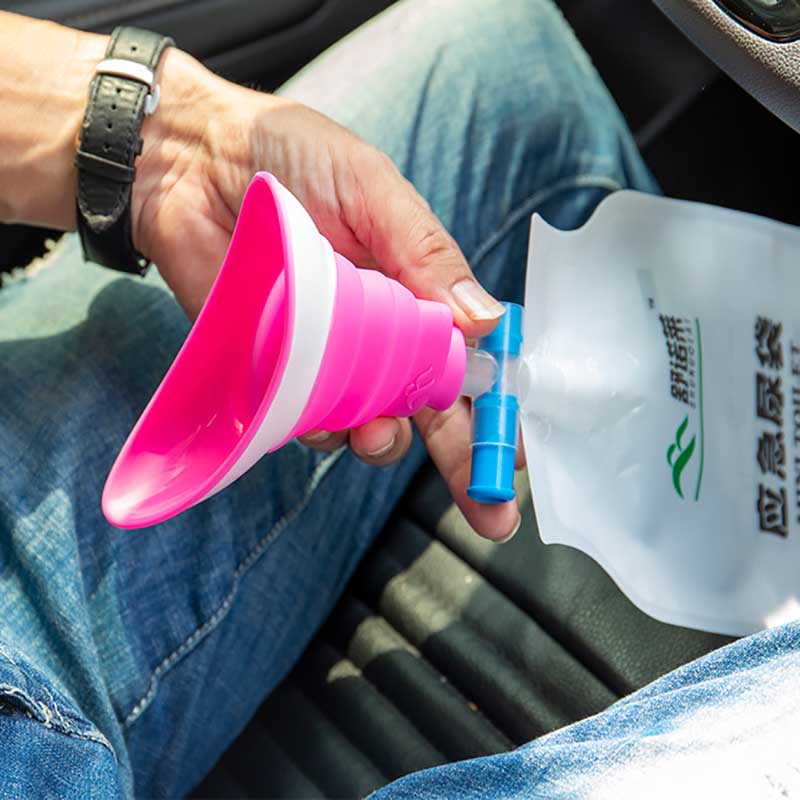
What’s worse than having to pull over on the freeway and take an emergency leak behind a bush? Whipping out a portable toilet made of thin plastic and praying you don’t get anything on your carpet or upholstery!
Granted, if you’re stuck in traffic then maybe, just maybe, these products might be useful. Some are filled with a gel that turns urine into a stable jelly-like substance to help minimise mess, but the issue here is being able to get that liquid inside it in the first place.
If you’re a slim-thighed Olympic gymnast you might be able to contort your body to the right position, but god help anyone else.
If you’re going to be interested in any performance SUV, it should be this one. This Porsche Cayenne mates a 404kW/770Nm 4.0-litre twin-turbo V8 to a 100kW/400Nm electric motor stashed inside the transmission housing. In doing so, a 500kW/900Nm monster is born, able to fling its lardy all-wheel drive 2535kg from 0-100km/h in a bitumen-excavating 3.8sec.
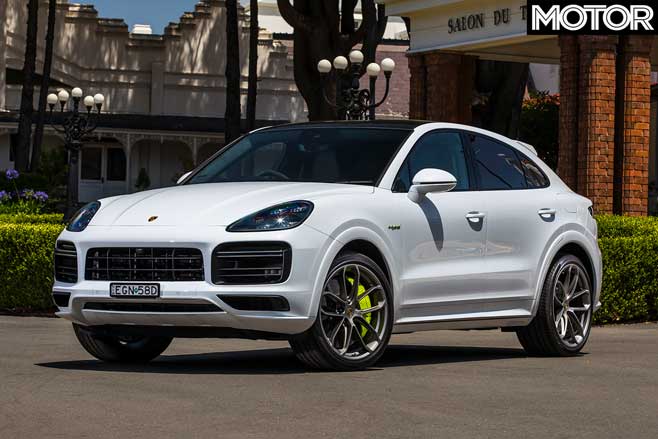
Indeed, the Porsche Cayenne Turbo S E-Hybrid ‘Coupe’ is the most equipped, most serious fast SUV Porsche, perhaps any brand, has yet concocted.
As the most powerful performance SUV on the market today, eclipsing even the 478kW Lamborghini Urus (with which it shares its MLBevo platform, along with the Audi RS Q8, Bentley Bentayga and VW Touareg), Porsche has held literally nothing back in equipping its King Cayenne for maximum performance.
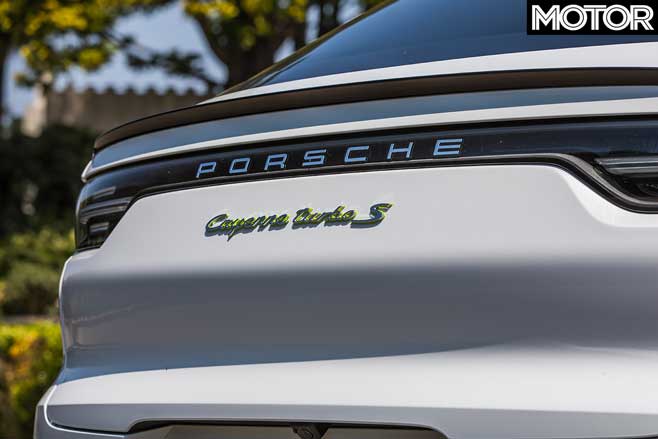
Huge 21-inch wheels measuring 9.5-inch wide front and 11.0-inch rear conceal massive carbon ceramic brakes, 440mm fore and 410mm aft, clamped by 10-piston and four-piston calipers respectively. Computer-controlled, 48v-powered anti-roll bars attempt to defeat the laws of physics, while fluoro Acid Green caliper paint – as seen on the badges – shows off that you’re in the hottest of Stuttgart’s jacked-up rally wannabes.
Visually you’ll notice this is one of those new ‘coupe’ SUVs too (though there is nothing two-door and low-slung about it). With its more aggressively raked, 20mm lower roofline (the rear seats are lowered 30mm to compensate) the Coupe also packs a 45kg penalty over its more convention wagon-shaped sibling.
Coupe or wagon, curiously Porsche is yet to fling either Turbo S E-Hybrid at the Nürburgring in an attempt to win back the ‘fastest SUV’ mantle held at one point by the previous Cayenne Turbo S. Presumably, against the likes of the lighter RS Q8s, Uruses, AMG GLC63s and Alfa Romeo Stelvios of the world, it’s just not fast enough.
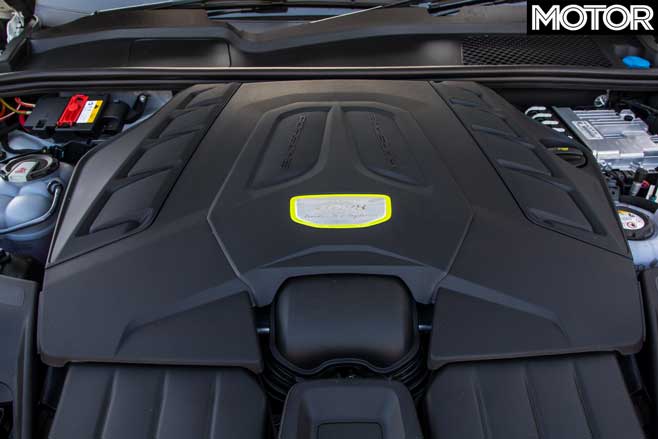
While able to charge to 295km/h (a possibly bemusing figure for the autobahn daredevils amongst us) the burly Turbo S does have one obvious party trick none of those aforementioned cars could boast: the ability to deliver, for those with a feather-light right foot, up to 40km of electric-only range.
A plug-in hybrid, the Turbo S fully charges its liquid-cooled lithium ion battery (under the boot floor) in six hours from a conventional wall outlet. Top EV-only speed is a respectable 135km/h (electric-only acceleration is 6.8sec 0-60km/h, for what it’s worth) while Porsche claims an impressive 3.9L/100km combined overall fuel consumption.
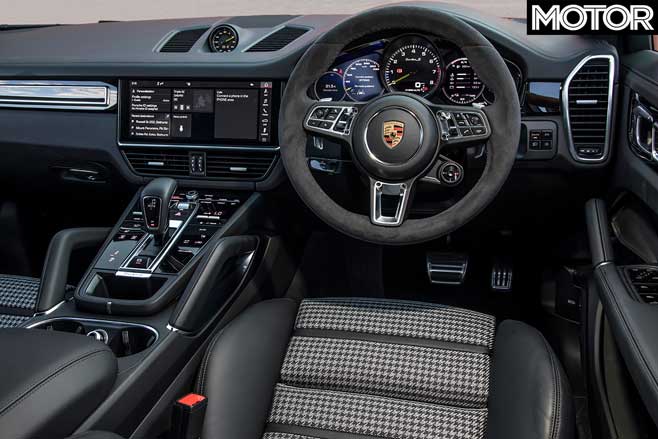
Climbing aboard, you sit high in the Turbo S with a commanding view. With light and responsive controls, at an urban amble this is a very easy and comfortable car to drive, quiet (too quiet almost – we want to hear that V8!) and riding with plenty of waft on its air suspension. Optional all-wheel steering also makes u-turns and car park navigation a breeze.
Find yourself on a twisty back road and yes, there’s plenty of bear to poke. Acceleration is as mighty as traction is clean, the Cayenne squatting hard as it powers past 100km/h as if with a middle finger raised, letting rip a racy if slightly subdued V8 note in the process. Can you feel the electric motor ‘torque-filling’? Not especially as the twin-turbo V8 is hardly known for its lag.
This is, however, an easy car in which to out-brake yourself, or into corners carry too much speed. It’s just a very heavy and high thing, needing every bit of those bigger brakes and tyres to overcome its extra 335kg over a ‘normal’ Cayenne Turbo.
With a not very discreet hatred for its outside front tyres, a slow-in, fast-out approach emerges as best as the E-Hybrid’s torque-vectoring rear diff helps it pivot as you bury the throttle, a wag of power oversteer even possible if you bury it even further again.
Owing to those anti-roll bars, body-roll is resisted as if it was a 500kg lighter car, but not to an excessive, artificially-flat degree (like other cars with these systems). But for all its clever systems the Turbo S feels to be trying to conceal its weight without quite succeeding. Here it falls down in the driving appeal stakes, yet while still being an incredibly impressive car capable of insane back-road speeds.
Not that any of these will really be doing that. With many likely bought for the electric motor (and green badges) more than for the epic V8, the E-Hybrid ultimately, and sensibly, chooses comfort over cornering ability, showing of all the brands Stuttgart understands the performance SUV better than any other. Nürburgring be damned.
2020 PORSCHE CAYENNE TURBO S E-HYBRID COUPE SPECS Engine: 3996cc V8, DOHC, twin-turbo, hybrid Power: 500kW @ 5750-6000rpm Torque: 900Nm @ 1500-5000rpm Weight: 2535kg 0-100km/h: 3.8sec (claimed) Price: $334,620 (as-tested)
Likes: Berserk acceleration; lovely interior; easy, comfortable daily driver; EV ability Dislikes: Height and weight blunt ability and driver appeal; V8 could be more omnipresent
Rating: 4 out of 5 stars
