
It’s WhichCar’s night of nights – the 2020 Australian Motoring Awards are being held tonight in Melbourne.
The AMAs is an annual event that celebrates the best motoring achievements of the year: Wheels Car of the Year, MOTOR Performance Car of the Year, the WhichCar Style award and 4X4 Australia’s 4X4OTY.
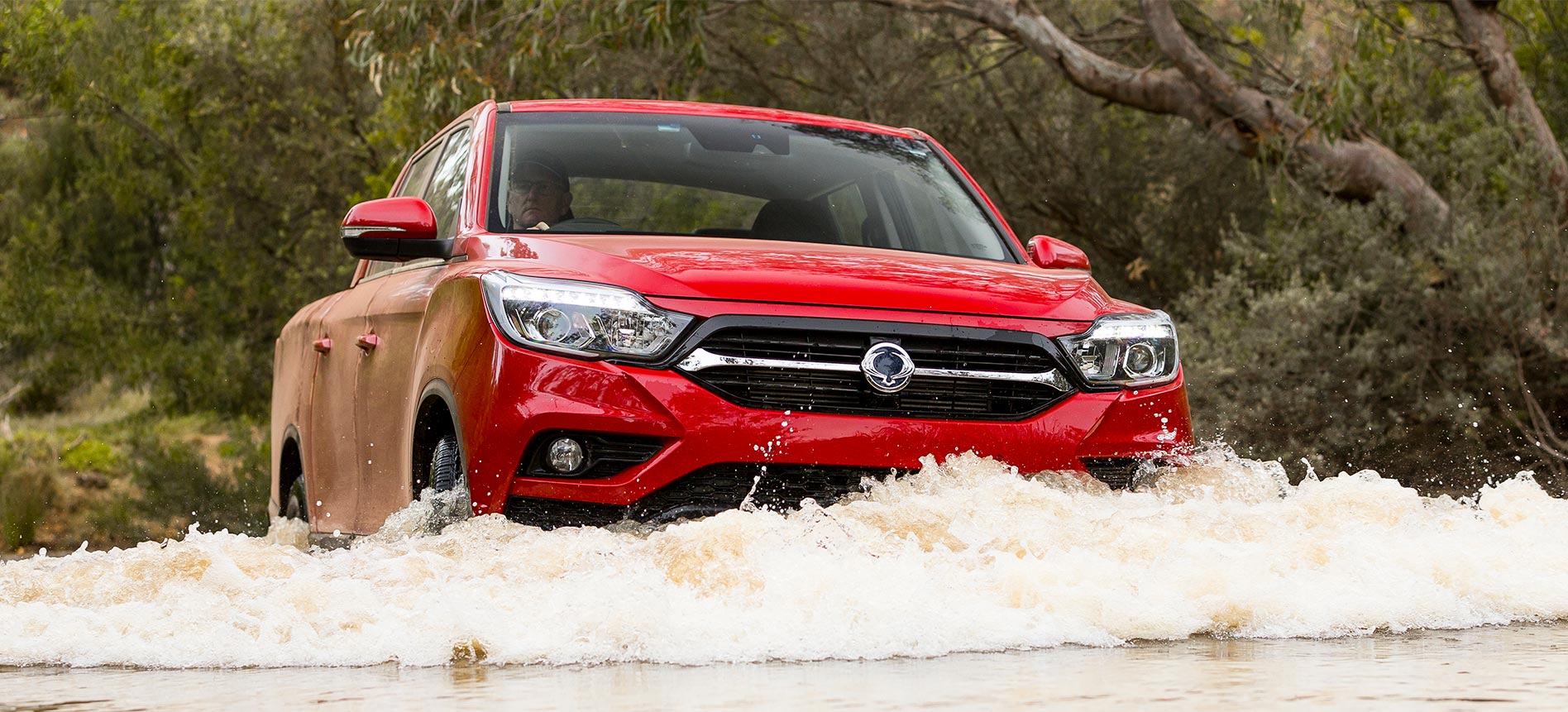
Hosted by WhichCar TV’s Elise Elliott and attended by the movers and shakers of the Australian automotive industry, the Australian Motoring Awards recognises the most amazing vehicles available in Australia with some of the longest-running awards in the game.
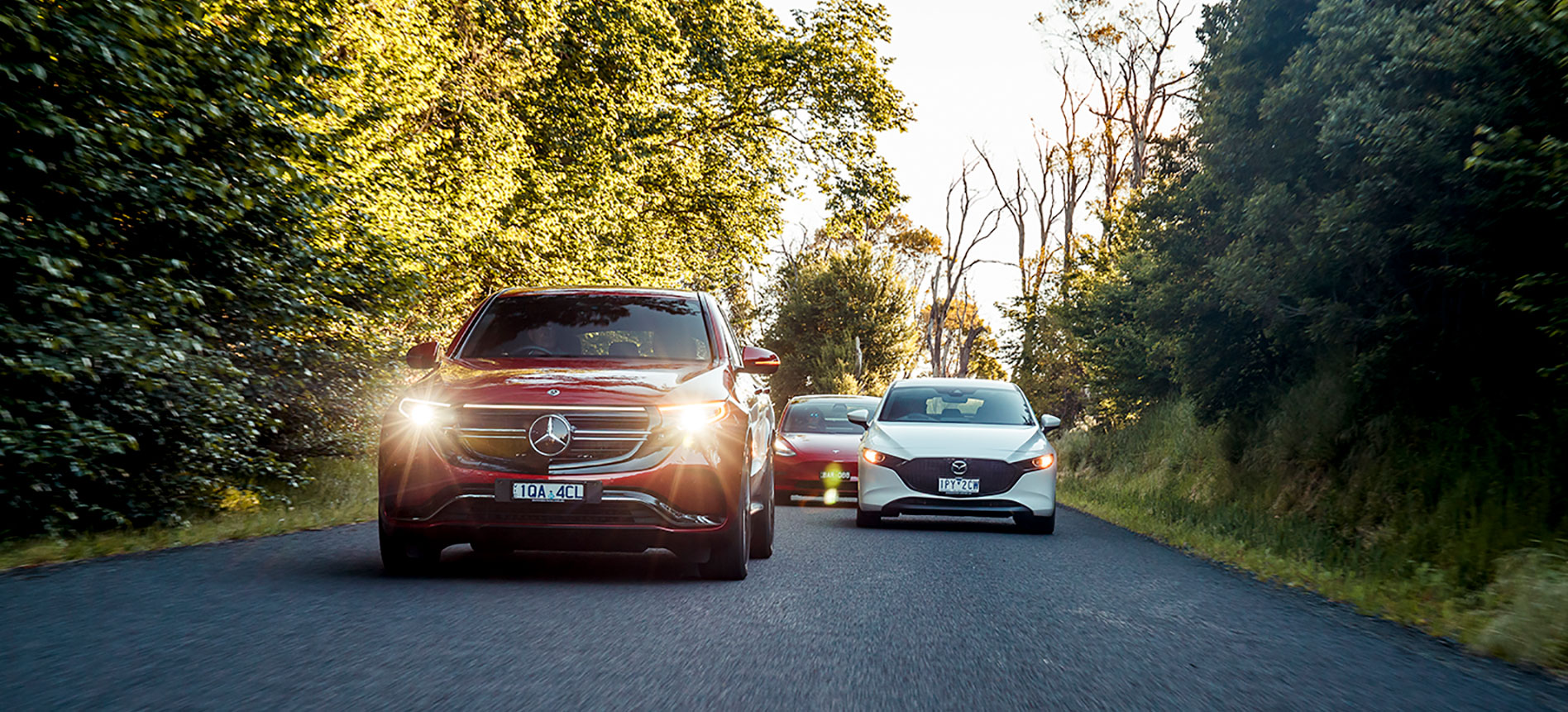
The Wheels Car of the Year prize, for example, is more than 50 years old, while the Motor Performance Car of the Year gong turns 24 this year.
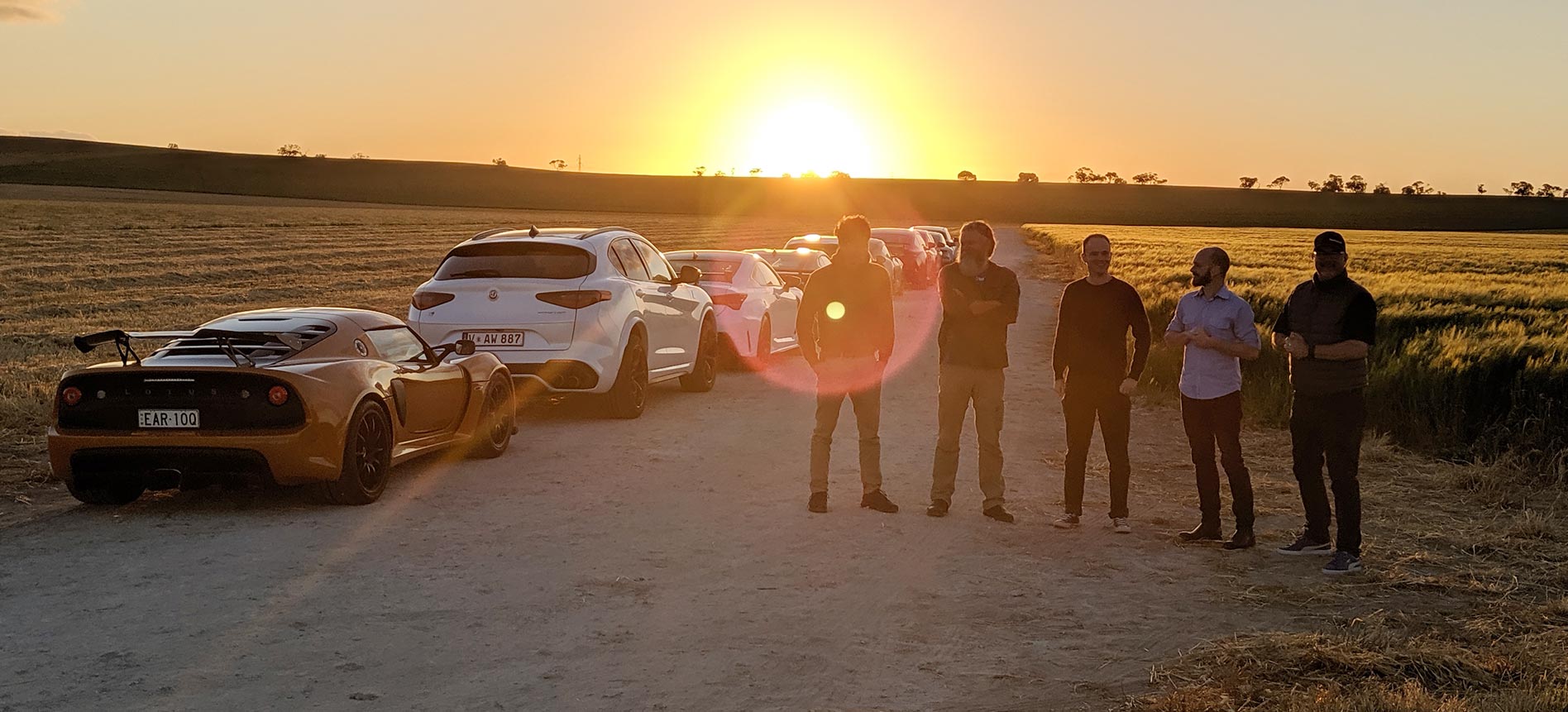
Brands like Mazda and Tesla are well represented across our titles, while vehicles from Mercedes-Benz, Jeep, Porsche, Suzuki, Land Rover, Toyota and Mercedes-AMG are also in the mix.
The awards will be handed out tonight before guests retire to the Continental after-party!
Stay tuned to WhichCar for all the glitz and glamour of the AMAs on your phone, laptop and TV screens in the coming days and weeks.
Last year’s winners…
2019 WhichCar Style Award winner
The 2019 4×4 Of The Year is…
Tune in to our social feeds to check out the party!
WhichCar Facebook, Instagram
Wheels Facebook, Instagram
Motor Facebook, Instagram
4×4 Australia Facebook, Instagram
They say three is a crowd, but this is a trio every car company wants to be a part of. This is the podium for the 2020 Wheels Car of the Year. And it seems electric rules the roost, with two of the top-three placegetters gaining life via a plug and not a conventional fuel bowser.
So, here are the cars left in contention for the most prestigious motoring award down under; the Mazda 3, Mercedes-Benz EQC and Tesla Model 3. Each of the contenders has its own unique USP which helped it reach the final stages of COTY in 2020.
MAZDA 3
It might be at the cheaper end of the COTY spectrum (in fact, it was the cheapest car on test), but the plucky Mazda 3 punches hard in a field full of premium brands. However, don’t let the 3’s small-car status fool you – the BP-generation is now more upmarket than ever. And our appreciation for the 3 has grown with the current car, the fourth iteration since dropping ‘23’ from its 323 badging.
That’s because the road noise and NVH issues of old are now gone. The Styling has been overhauled and the new interior is truly a class above in terms of quality and design. Yes, there’s a price to pay for this, and that’s by way of a significant bump to the entry point, but you do get a lot more kit. Sadly, the Aussie range is still sans SkyActiv X, too, with the current line-up powered by SkyActiv units released in 2014. However, the 3 didn’t get to this stage of COTY by chance – it’s a deeply pleasing performer with a dynamic talent that belies its small-car status.
MERCEDES-BENZ EQC
As far as first attempts go, Mercedes-Benz has pretty much nailed the lavish EV brief. And it doesn’t look too futuristic, instead drawing on the luxurious nature of the Three Pointed Star and eschewing the need to make an EV look like it’s out of The Jetsons.Being based on the GLC, this is an SUV that doesn’t compromise pragmatism or sumptuousness to accommodate its forward-thinking electric drivetrain.
Yet, the EQC is also a little hamstrung by those underpinnings given the GLC isn’t wholeheartedly EV-optimised. It’s heavy, too. However, beyond that it’s hard to fault the electrified Benz and its intended purpose. It has a more than acceptable range, making the switch to battery power less ‘scary’, and it’s probably one of the most significant cars released by the German marque. Does it equate to a COTY crown?
TESLA MODEL 3
If ever a brand had a passionate following, Tesla would have to be right up there. Those for the ground-breaking EV manufacturer are true diehard fans, while those against are just as vehement in their opposition. Then there’s the middle ground, full of customers ready to be convinced and/or converted.
Tesla has performed well at COTY in the past, but 2020 feels like it could be Elon’s watershed moment in regards to the illustrious Wheels gong. The Model 3 is the most accomplished, ahem, model from the brand yet, with a breadth of handling ability mixed in with a useable real-world range and market leading safety. Comparatively speaking, it’s also not exorbitantly expensive, meaning cross-shopping it with German sedans isn’t out of the question.
Well, there you have it, the final three. Now there’s only one more announcement left – the 2020 Wheels Car of the Year. Tune in tomorrow where all will be revealed at the Australian Motoring Awards.
In the privileged world of a motoring journalist, cars tend to blast through your life like comets; a brief flash, then gone. This is particularly the case for the exotic stuff, which burns twice as bright but for half as long, and few cars shone as brightly as the Porsche 911 GT2 RS.
When I returned the uber-911 at the end of PCOTY 2018, an event at which it was victorious, I paused to reflect on a remarkable week with a remarkable car.
After all, once the GT2 RS was no longer new and the press cars sold, I had more chance of seeing Halley’s Comet shoot across the night sky than of experiencing the twin-turbo thrust of the fastest ever 911 again.
This only makes the fact I’m currently wedged into the seat of a 911 GT2 RS more remarkable. Hello, old friend.
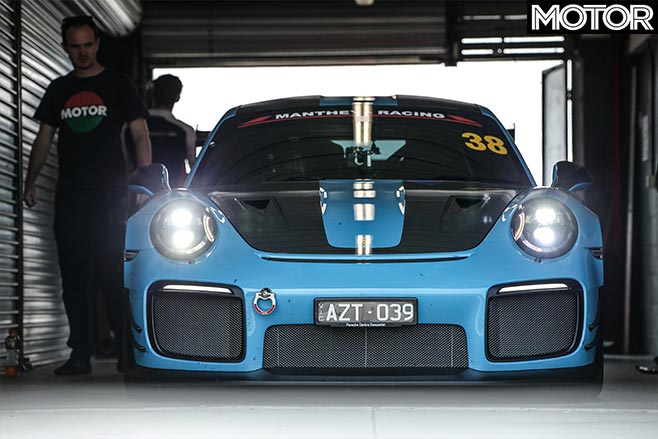
The reason for the re-acquaintance is the work of Manthey Racing. The one-time Porsche tuner turned factory-owned outfit has a long history of making fast 911s faster, but its name was thrust into the limelight on November 2, 2018, when a 911 GT2 RS MR (for Manthey Racing) lapped the Nurburgring in 6m40.33sec, lopping seven seconds off the mark set by the standard GT2 RS and poking the Lamborghini Aventador SVJ in the eye.
It’s the fastest street-legal car to ever lap the famous German racetrack, and the Manthey Racing kit is now available to purchase in Australia courtesy of Melbourne dealer Porsche Doncaster.
As you might expect, it’s not cheap, the MR pack costing ¤79,911 directly out of Germany, to which you need to add five per cent import tax, 10 per cent GST and shipping costs. Call it AUD$150,000 give or take, on top of the $650K-plus for a 991.2 GT2 RS in the first place. Serious money, but then this is a very serious car.
Manthey Racing offers Porsche 911 GT2 RS upgrade kits in Australia
Experience a GT2 RS and areas of improvement are difficult to identify, so Manthey Racing focuses on optimising an already amazing car with a firm focus on improving lap time. There are no powertrain modifications, but when you’re dealing with 515kW/750Nm as standard that’s no great hardship. It also ensures there are no cooling or durability issues.
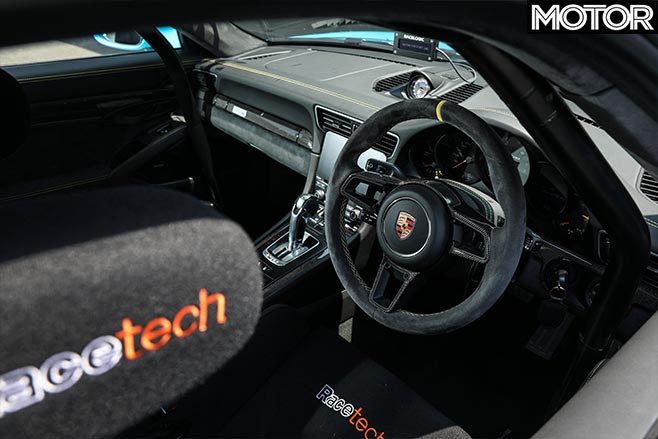
The one engine-related mod is the addition of an extra intercooler water spray tank, to ensure the water doesn’t run out before the fuel does on track (as it does in the standard car).
Manthey’s own brake pads are fitted, the standard lines are replaced with stainless braided items, and uprated fluid is added. Under the guards the standard dampers are replaced by remote-reservoir KW units, adjustable for compression and rebound, which use similar internals to the GT3 R racecar but upgraded for longer service life while retaining the front axle lift.
High-performance springs are stiffer than standard, but the addition of helper springs provide some initial compliance. Magnesium BBS wheels, like those included in the Weissach Pack but lighter, are wrapped in Michelin Cup 2 R tyres, with 10 per cent more contact patch than a ‘regular’ Cup 2 and a compound so soft they struggle to last a full track day.
Those wheels are aligned using Porsche Doncaster’s Manthey Racing wheel alignment machine, which is identical to that used to set up Porsche’s factory racecars, and the rears wear external discs that not only look awesome but perform a crucial aerodynamic role.
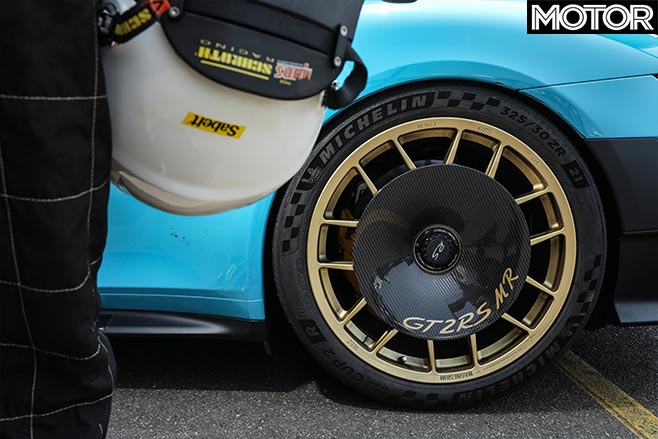
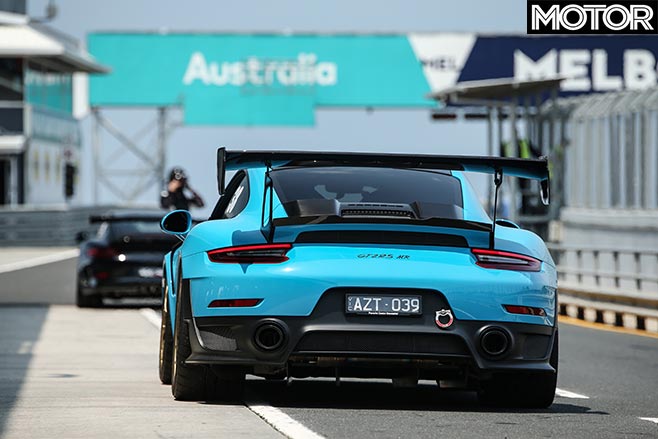
Aero is really where the MR sets itself apart from a standard GT2 RS. The new rear wing produces so much downforce it bends the standard engine cover, so the supports are now attached to the chassis, and the reinforced engine cover features a Gurney flap sitting over a larger diffuser.
Those wheel discs suck air from under the car, allowing the wing to use two degrees less rake to reduce drag and improve acceleration. These forces are balanced at the front by a splitter, new undertray, carbon floor, underbody aero curtains and a pair of canards on each side of the bumper.
Manthey Racing considers attempt at Bathurst lap record
The modifications are subtle yet comprehensive and I have four laps of Phillip Island to evaluate them during the lunch break of a Porsche Club Victoria track day.
It’s a daunting task made more so by the fact that this is the only GT2 RS MR to have been built outside Germany, it’s privately owned and that owner – the super-nice and extremely enthusiastic Mike – along with most of the club members, will be watching. Multiple nervous wees occur.
I’d forgotten how loud the GT2 RS is, its deep baritone muffled by my helmet but felt through my body as the six-point harness sucks me into the race seat. An official waves me forward onto a clear track. Mike has warned that the tyres will need at least half a lap to sort themselves out, so I use this time to gain my bearings.
MOTOR’s Porsche 911 GT2 RS lap record at The Bend
The GT2 RS gear ratios are very short, which combined with the immense torque makes higher gears very usable, while the steering is lighter than you might imagine but very communicative by modern standards.
Half a lap done, time to crack on.
The wide expanses of Phillip Island dull the full-throttle punch of the GT2 RS, but only slightly. This car is stupid-fast, only now it has the chassis to fully utilise its monster grunt.
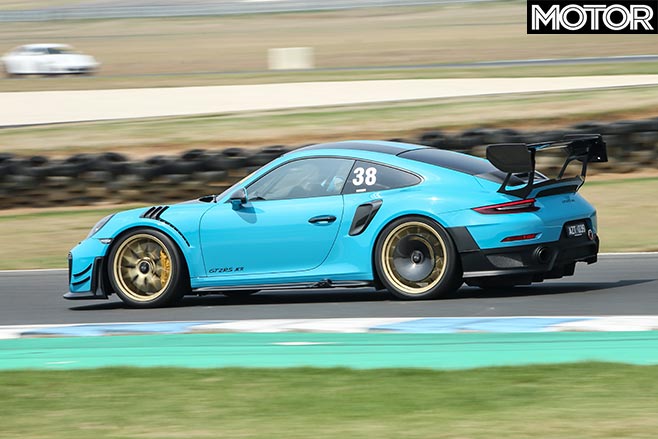
To be honest, the next three laps are a blur as I desperately try to probe the car’s limits while tackling Phillip Island’s turns at far higher speeds than I’ve ever experienced before while making sure, above all else, the car returns to the pits in the same condition as it left.
Porsche event draws 43 GT2 RSs to The Bend
The grip is insane, particularly at high speed. I’m way too conservative in Turn 1, dive into Turn 2 as hard as I dare and am rewarded with the tiniest rear-end wiggle for my efforts. Applying full throttle on the exit in fourth is like being shot out of a cannon: 120…160…200.
I lift early for Turn 3; it might be flat, but I’m already doing 220km/h and I don’t want to face the consequences of my hunch being wrong.
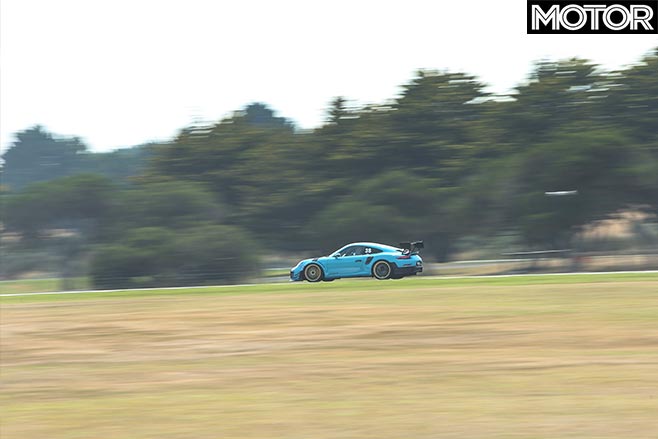
The theme continues: incredible traction out of slow turns and the feeling of being suctioned to the road in fast ones. At PCOTY, Rick Kelly described the GT2 RS as ‘like a racecar on a road tyre’, and the Manthey Racing upgrades move the needle even more in that direction, yet the Cup 2 Rs give it the support the Cup 2s lack.
After three flying laps the chequered flag appears and probably at the right time; I’m sweating, breathing heavily and my head is spinning.
Mike is extremely pleased with his new toy: “It’s phenomenal. It gives you much more confidence and it’s not squirming anywhere near as much. And it looks awesome.”
It’s easy to see why the 911 GT2 RS MR is the pinnacle of road-based track cars. It’s a money-no-object proposition, but short of an Aston Valkyrie I can’t imagine anything lapping Phillip Island quicker while still wearing number plates.
What a beast. Sure beats waiting for Halley’s Comet.
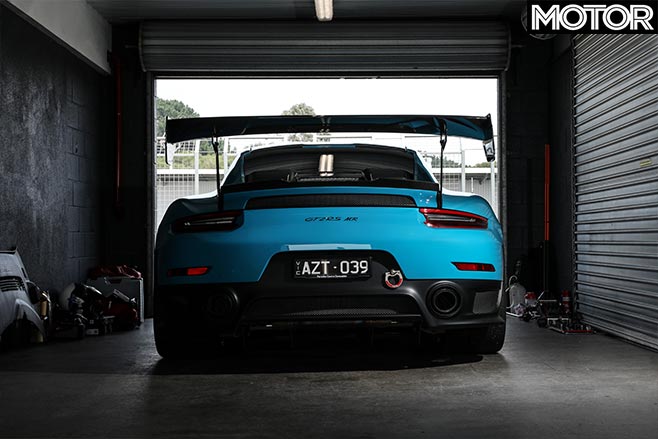
2020 PORSCHE 911 GT2 RS MR SPECS
Engine: 3800cc flat-6, DOHC, 24v, twin-turbo Power: 515kW @ 7000rpm Torque: 750Nm @ 2500-4500rpm Weight: 1470kg 0-100km/h: 2.8sec (claimed) Price: $800,000 (approx)
Like: Lifts greatness to a new level; insane circuit performance; grip, grip, grip Dislike: Terrifying price; tyre and fuel consumption; I’ll never drive one again
Rating: 5 out of 5 stars
Elon Musk is starting the year as a winner, with the Tesla Model 3 named as the reader’s choice Wheels Car of the Year.
A third of voters deemed the cheapest car to come from the American EV brand worthy of our biggest award.
It’s not hard to see why, either, with the Model 3 being one of the most anticipated vehicles of the year. It promises (relatively) cheap, yet engaging, fully electric driving. And it delivers.
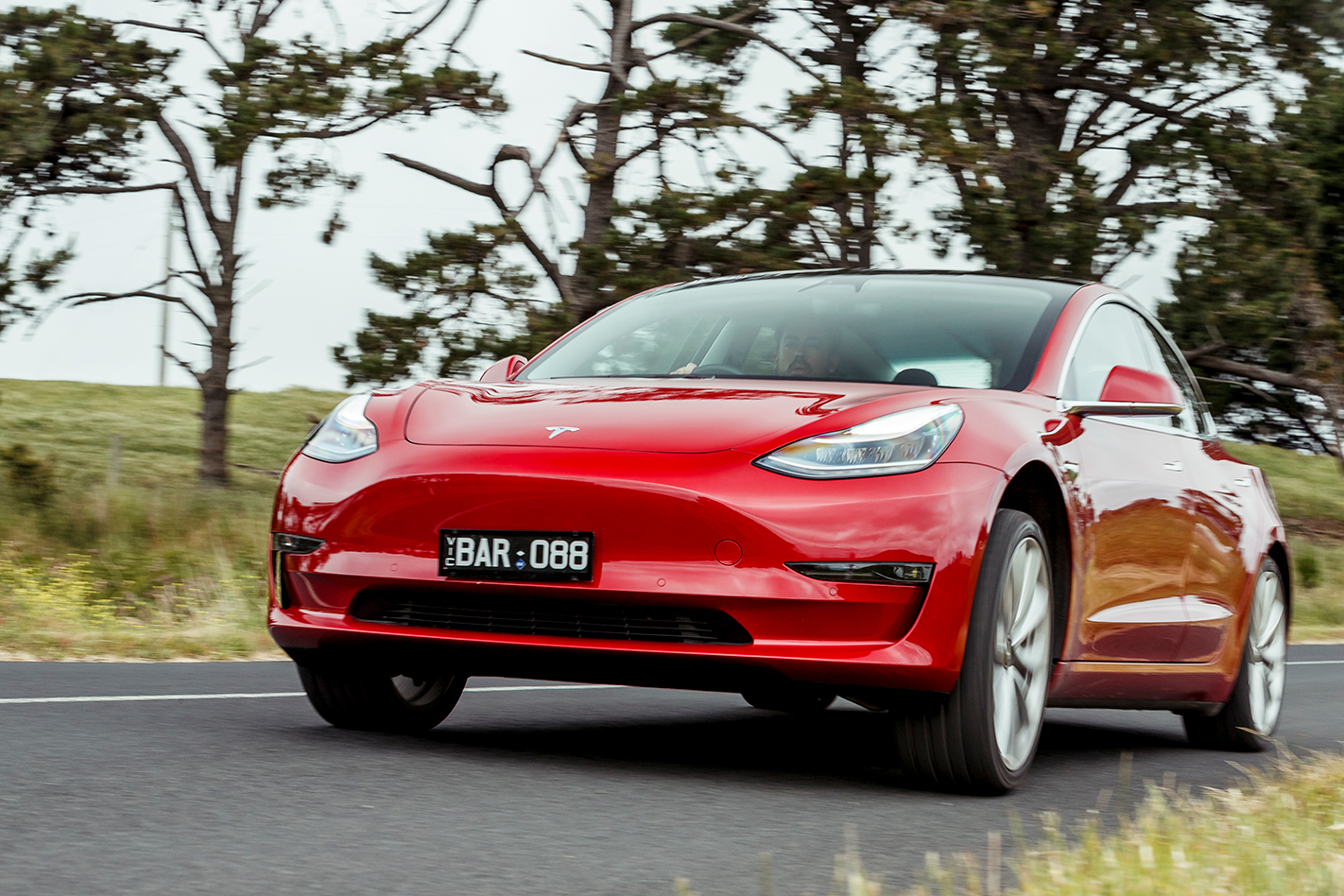
That’s just the Standard Range model, with the Performance variant doing exactly what it says on the tin, and outpacing cars with significantly bigger price tags when it comes to the 0-100km/h sprint.
Wheels doesn’t give runner-up awards, but it should be noted that in second place in the reader’s poll is the Toyota RAV4, nabbing 15 percent of the vote.
Next in the popular vote was the BMW 3 Series, edging out the Toyota Supra, with the Volvo S60/V60 rounding out the top five.
Of the 17 contenders for Wheels Car of the Year, the only vehicles that didn’t receive a vote were the Audi A1 and Q3, BMW X5 and Z4, as well as the Range Rover Evoque.
And it isn’t just you, our readers, who are impressed by the Model 3 – our judges share the sentiment. Tesla’s smallest model is one of the finalists for Wheels Car of the Year 2020.
Can it take the double victory? Find out January 30, when the winner is announced at the Australian Motoring Awards.
The dual-cab market in Australia is booming right now as more and more Aussies seek a vehicle that can satisfy the demands of both the working week and family weekends.
The latest entrant into the market is the Mercedes-Benz X-Class that, despite the badge, has all the ruggedness to take on old-firm pickups such as the Toyota Hilux and Ford Ranger.
The X-Class shares its bones with the Nissan Navara but has been re-engineered from the ground up resulting in a vastly different ute with enhanced suspension, powertrain, brakes and active safety equipment.
Mercedes-Benz has been talking about the lifestyle aspects of the X-Class which is great for the weekend, but what about the rest of the week as an everyday work vehicle?
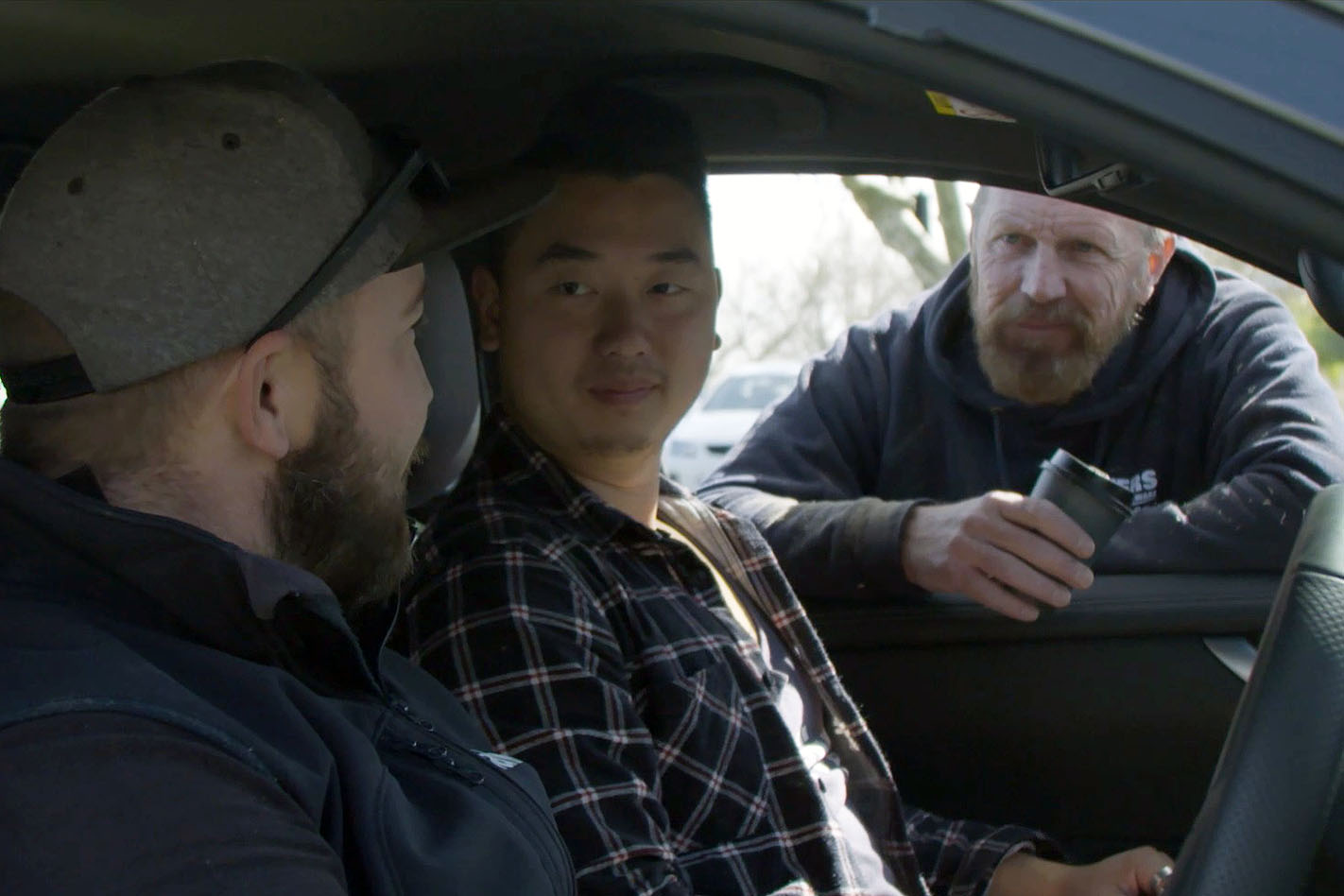
We took an upper-spec X-Class 250d Power to a Melbourne building site to ask some ute-driving tradies if the Mercedes-Badge is likely to find work on building sites around the country.
As the video shows, they came up with some interesting insights.
What stands out?
The Fiat 500 is all about style over substance, with cute-as-can-be looks and a cool and trendy interior – particularly when optioned with coloured leather seats. It is all wrapped around a little engine but it’s great fun to drive, thanks to diminutive dimensions and, especially as a manual, a willing gearbox. The Abarth 595 takes that driver enjoyment further, with significantly more power that gives the iconic Italian mini car warm-hatch performance.
What might bug me?
How much you paid for your Fiat 500, compared with what you might pay for something less cute.How paying more doesn’t bring the additional safety provided by autonomous emergency braking and other driver assistance featuresThat your warranty period will end at least two years before most other cars – Fiat only offers a three-year/150,000km warranty where most other brands offer at least five years.Catching yourself muttering “I think I can, I know I can” up steep hills. A 500 has to work hard on big climbs.Feeling like you’re sitting on a bar stool in the Abarth 595. The driver’s seat doesn’t adjust low enough to really enjoy the driving experience.
What body styles are there?
A three-door Hatch, which is more like a tiny coupe than a traditional hatch, and convertible (the 500C/595C).The Cabrio doesn’t offer your traditional cabriolet folding top: it has a roof reminiscent of a rollback tin on a sardine can. It does let the sun in, however, which can make this little fun box seem even more joyous on a warm day.It’s a front-wheel drive layout, and sits well and truly in the micro car class.
What features do all Fiat 500s have?
A 7.0-inch touchscreen from which you can run the six-speaker stereo system, via Fiat’s Uconnect. It comes with satellite navigation, digital radio, Bluetooth music streaming, voice command, aux and USB inputs, and iPod compatibility.Support for Apple CarPlay and Android Auto, which lets you display some smartphone apps on the touchscreen and control them from there (or by voice).Reversing camera, rear parking sensors and digital speedo.A leather wrapped steering wheel, with buttons to control all that audio from.Daytime running lights, which help other drivers see you, lit by efficient and long-lasting LEDs.Wheels made from aluminium alloy (which look better than steel wheels and usually are lighter). A space-saver spare wheel. Tyre pressure monitors, which warn you if a tyre is going flat.Patterned upholstery, and height adjustment for the driver’s seatPower-raising windows, and power-adjustable and heated exterior mirrors (which are also body coloured). Air-conditioning.Hill-holder, which helps you start from rest on uphills. (Even if you’re driving the manual you won’t roll back when starting from traffic lights or Stop signs.)Seven airbags. Electronic stability control, which helps prevent and control skids. (For the placement of airbags, and more on Fiat 500 safety features, please open the Safety section below.The Fiat 500 carries a three-year/150,000km warranty.
Which engine uses least fuel, and why wouldn’t I choose it?
Only one engine is available in a 500, 1.2-litre four-cylinder petrol, while the Abarth 595 comes with a choice of two 1.4-litre four-cylinder turbocharged petrols.The 500’s 51kW 1.2-litre engine is the most efficient and consumes as little as 4.8 litres/100km on the official test (city and country combined). In the real world, expect about 6.5 litres/100km.A five-speed manual transmission is standard, and a five-speed dual-clutch automatic that Fiat calls “Dualogic” is optional.The Abarth 595 has the same choice of gearboxes, coupled with a bigger 107kW 1.4-litre four-cylinder turbocharged petrol that’s twice as powerful as the 500’s.Fuel consumption for this engine is about 6.0-litres/100km, though if you drive it with the enthusiasm it demands, you’re more likely to average about 7.0-litres/100km.The Abarth 595 Competizione’s 1.4-litre turbo brings even more power, 132kW, that brings noticeably superior performance and a manic exhaust note from the Monza exhaust system.Despite the extra power, official fuel consumption is also 6.0-litres/100km.One reason you wouldn’t go for the more economical 1.2-litre engine is because you prefer the Abarth 595’s boosted performance and sporty look.
What key features do I get if I spend more?
The least costly Fiat 500, the Lounge, comes with a 5.0-inch touchscreen, 15-inch alloy wheels, two-tone cloth covered seats and the features in any 500. It comes with the five-speed manual gearbox as standard, with the five-speed automatic gearbox about $2000 extra.Spending more for a 500 Club gets you the automatic gearbox as standard, plus more chrome bits, sunroof (hatchback only), digital radio, climate control air-conditioning, premium chequer-pattern seat upholstery, automatic headlights, rain-sensing wipers and bigger 16-inch rims.Pastel or metallic paint, in a whole swirl of colours, is about $500.The other way you can spend more on either the Pop or the Lounge is to get it in Cabrio (or 500C) form, with the retractable roof – worth considering if you’re a sun worshipper. Roof aside, equipment matches the Lounge and Club hatches though there is no manual gearbox option.The Abarth 595 is sporty version of the Fiat 500 with a significantly more powerful 1.4-litre turbocharged petrol engine.The Abarth 595 builds in the Fiat 500 Lounge’s features and adds a bigger 7.0-inch touchscreen with Apple CarPlay/Android Auto smartphone pairing.The rest of the features give the Abarth 595 a much more athletic appearance and include bigger 16-inch alloy wheels, powered body coloured mirrors, satin chrome exterior trim and dual-tip chrome exhaust.Step up to the Abarth 595 Competizione and you get an even more powerful 1.4-litre turbocharged engine, dual-mode ‘Record Monza’ exhaust system, and 17-inch “Corsa” alloy wheels.The interior gains leather sports seating, while the exterior stands out over the standard 595 Abarth with Tar Cold Grey powered external mirrors and trim and Abarth side stickers.Stopping power is increased with four-piston Brembo performance brakes with distinctive red calipers.Both Abarth 595 variants are available with both manual and automatic transmissions, a convertible version, and an optional 440w BeatsAudio seven-speaker sound system.
Does any upgrade have a down side?
Paying extra for automatic transmission makes the car less fun to drive and gets you less joy out of the little engine. Changing gears yourself, as the Italian designers intended, is the best way to get the most from this city car, especially the Abarth versions.Upgrading to the 500/595C soft-top is also a questionable way to spend money. All it really offers is an oversized sunroof, because it’s not a proper convertible.The Abarth 595 Competizione has a back jarring ride on its stiffer suspension and bigger 17-inch, low-profile tyres.
How comfortable is the Fiat 500?
Perhaps the biggest surprise is that the Fiat 500 doesn’t feel tiny or cramped inside, or at least not unless you’re big enough to try out for the NBA. Headroom, in the front at least, is more than acceptable, and there’s a real feeling of space created by the design of the dash and the slope of the windscreen.It doesn’t feel like a Gold Class cinema, but it’s not claustrophobic as you might expect.The seats are reasonably comfortable without being exactly plush. The (optional) leather seats do have a quality feel to them, as if the raw materials might have been stolen from a handbag factory.The sports seats in the 595 Competizione can feel tight around the hips for people with bigger frames.The 500’s ride is not exactly plus Euro style, but it’s not overly jarring or sportily firm either. Overall you’d describe it as better than adequate. The 595 Abarth on the other hand has a more jarring ride because of its harder sports suspension, this is especially the case with the 595 Competizione which feels very jarring over bumps.The 500 is not a particularly quiet car, because the engine is always working quite hard, but it’s not annoyingly noisy in the cabin either. Overall, it’s a lot more comfortable than you’d expect by looking at it.The 595 is noisier but in a good way, especially the Competizione which makes some nice noises through its Monza exhaust.Out on the highway, the 500 can handle our national speed limit with ease, the 595 more so – possibly because everyone drives much faster than that in Italy.
What about safety in a Fiat 500?
Every 500 comes with anti-lock brakes, stability control, seven airbags, and LED daytime running lights. That is about what you get with most micro cars.The airbags are placed in front of the driver and front passenger; alongside those occupants at chest level; and alongside them at head level. The seventh is a knee airbag for the driver.Lounge and 595 models add rear parking sensors, which help you avoid reversing into something (or someone).No 500 or 595 offers a rear-view camera. Fiat might argue that with a car this small you don’t need one.Neither the 500 or 595 offers active safety aids such as autonomous emergency braking (which can brake automatically to prevent your ramming a car in front).You might want to consider the size of the crumple zones. If this car is hit by an SUV, or even a normally sized sedan, it’s probably going to come off second best.Despite being so tiny, the previous Fiat 500 was given a five-star safety rating – the maximum – by the Australasian New Car Assessment Program (ANCAP) in 2008. This car keeps that rating, though the lack of active safety features means it would be unlikely to receive five stars if tested today.
I like driving – will I enjoy this car?
Amazingly, yes. The Fiat 500 is one of those cars that proves you don’t have to be fast in a straight line to have fun. That said if you do like things a little quicker there is always the 595.There’s something about the design that just makes you smile when you look at it, or sit inside it, for a start. But there’s also something simply joyous about the way it handles – helped by a short wheelbase and tiny dimensions overall, which provide a Mini-like experience – and the puppy-like willingness with which it responds to your urgings.Particularly when combined with the slick and short-shifting manual gearbox, the engine is just zesty enough to keep you interested. Steering is also direct and go-kart like.The 500 is a car that surprises in many ways. On paper, and even in the flesh, it doesn’t look like much, but the driving experience really is more than the sum of its parts. As long as you’re not in a hurry, or climbing lots of hills.The Abarth 595 offers go-kart-like thrills, especially the more powerful Competizione.
How is life in the rear seats?
It’s probably quite pleasant if you’re a dust particle or a microbe, and very small children seem to enjoy it.But anyone larger than a teenager is going to be disappointed, and possibly enraged, by the lack of rear leg space.The two-door design and limited room for sliding the front seats forward also makes it painful to get into or out of. This is very much a car for two people, with a seat in the back for storing small items or placing your shopping on.The lack of comfort at the back of the Abarth 595 is compounded by the harsher ride.
How is it for carrying stuff?
The rear seat folds 50:50, but even with both of them down you won’t be carrying a lot of suitcases. The Fiat 500 has a boot, but at 135 litres it’s not particularly capacious. Storage space is what you’d expect from its dimensions, and that’s minimal. Even large grocery shops will be a challenge, and you can forget trips to Ikea for furniture.Use the back seats to carry extra things, as they’re not great for people.
Where does Fiat make the 500/595?
The Fiat 500 and Abarth 595 are built in Tychy, in Poland, which doesn’t seem to have affected the Italian look and feel at all.
What might I miss that similar cars have?
Autonomous emergency braking, which can apply the brakes automatically to prevent your crashing into a car in front. That is standard on the Kia Picanto.The price of a Fiat 500 takes you well into slightly bigger, light car, territory – Mazda2, Honda Jazz or Volkswagen Polo, for example. Here auto emergency braking is more widely available (it comes with every Mazda2), along with more space.More refined ride and handling that you get from similarly priced (or cheaper) but superior Abarth 595 rivals such as the Renault Clio RS or VW Polo GTI.
Are there plans to update the Fiat 500 soon?
The Fiat 500 was updated in March 2016, offering two engines – a 1.2 litre in the Pop and a more lively 1.4-litre in the Lounge. About the middle of 2017 Fiat discontinued the 1.4 engine, instead offering the 1.2-litre at Pop and Lounge trim levels but preserving other features.The Abarth 595 range was also trimmed in September 2017, to just the 595 and 595 Competizione. Fiat Australia added a bigger 7.0-inch touch screen and Apple CarPlay/Android Auto to both of these (but not the Fiat 500) in May 2018.In January 2020 the cheapest Fiat 500, the Pop, was deleted from the range which made the Lounge the new entry-level version which raised the base price. The Fiat 500 Club was also introduced as a new top-spec version above the Lounge.Fiat has not announced a significant future upgrade for the 500, but look out for equipment updates and special edition versions.
I like this car, but I can’t choose which version. Can you help?
The 500 Lounge, with a manual gearbox, gets you most of what a 500 offers.That leaves you the choice of Hatch or Cabrio. Considering the limitations of the roll-back roof system, the Hatch seems like the better value choice – and must, in engineering terms, be more solid as well.If you desire the extra pep and sporty appearance that the 595 offers go all the way with the Competizione, which offers a genuine step away from the 500 in terms of performance and equipment.
Remember when American pick-up trucks were considered nothing but oversized oddities in Australia? These lumbering giants loomed large on roads clogged with comparatively tiny car-based utes, and had usually been converted to right-hand drive in the kind of questionable backyard labs that wouldn’t look out of place on Breaking Bad.
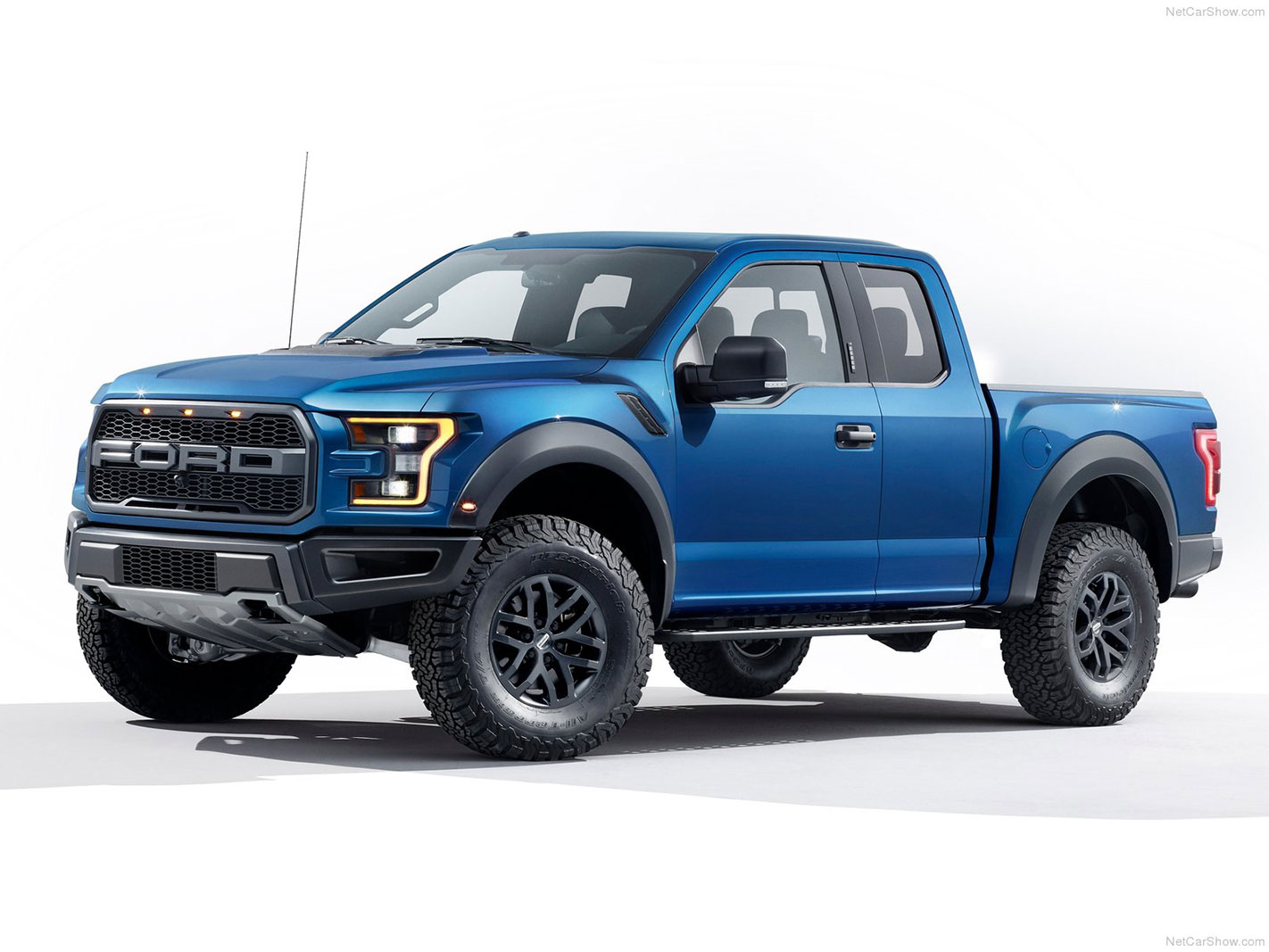
No longer. Any vacuum left by locally built workhorses has been comprehensively filled (and then some) by American-built pick-ups, with trailblazers from Ram and Chevrolet now set to be joined by a stream of new and gigantic metal – all with names so macho they’d get Rambo excited – from Nissan, Toyota and Ford.
These jumbo dual-cabs haven’t just grown a market segment, but uncovered a whole new one, somehow revitalising Australian automotive manufacturing along the way.
Cars aren’t made here anymore, sure. At least not from scratch. But someone has to convert these vehicles from American-spec left-hookers to right-hand drive, with the Victorian facility responsible for Ram and HSV now home to more than 160 Australian workers. That number is growing all the time, too, with the factory introducing 24-hour shifts to meet a backlog of almost 500 orders.
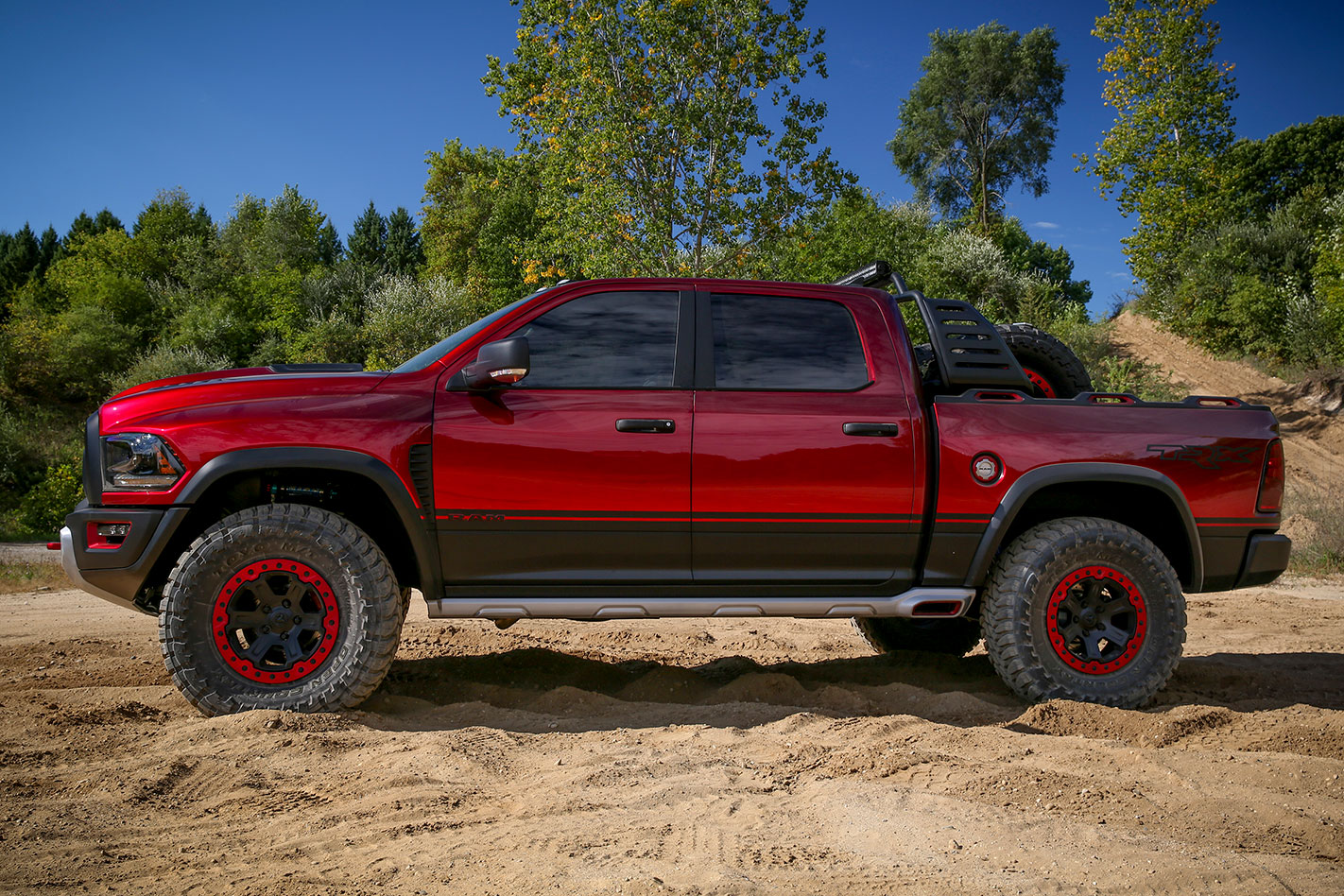
The point is that big utes suddenly mean big business, and this bubbling pool of buyers hasn’t gone unnoticed by other manufacturers, with as many as four new players either studying, or in the process of introducing, their own large dual-cabs in Australia.
And while they might all look a little different, and wear a different badge, they all subscribe to an identical formula: huge engine, huge dimensions, a huge thirst for petrol, and enough under-foot grunt to shift tectonic plates.
Nissan is one brand with its eye on the pick-up prize, with plans to launch the just-updated Titan in Australia “as soon as possible”. While local executives have been pushing for a factory-delivered right-hand-drive large ute, that window is understood to be closing, if it’s not already shut, and so a Ram-style conversion program is currently being investigated.
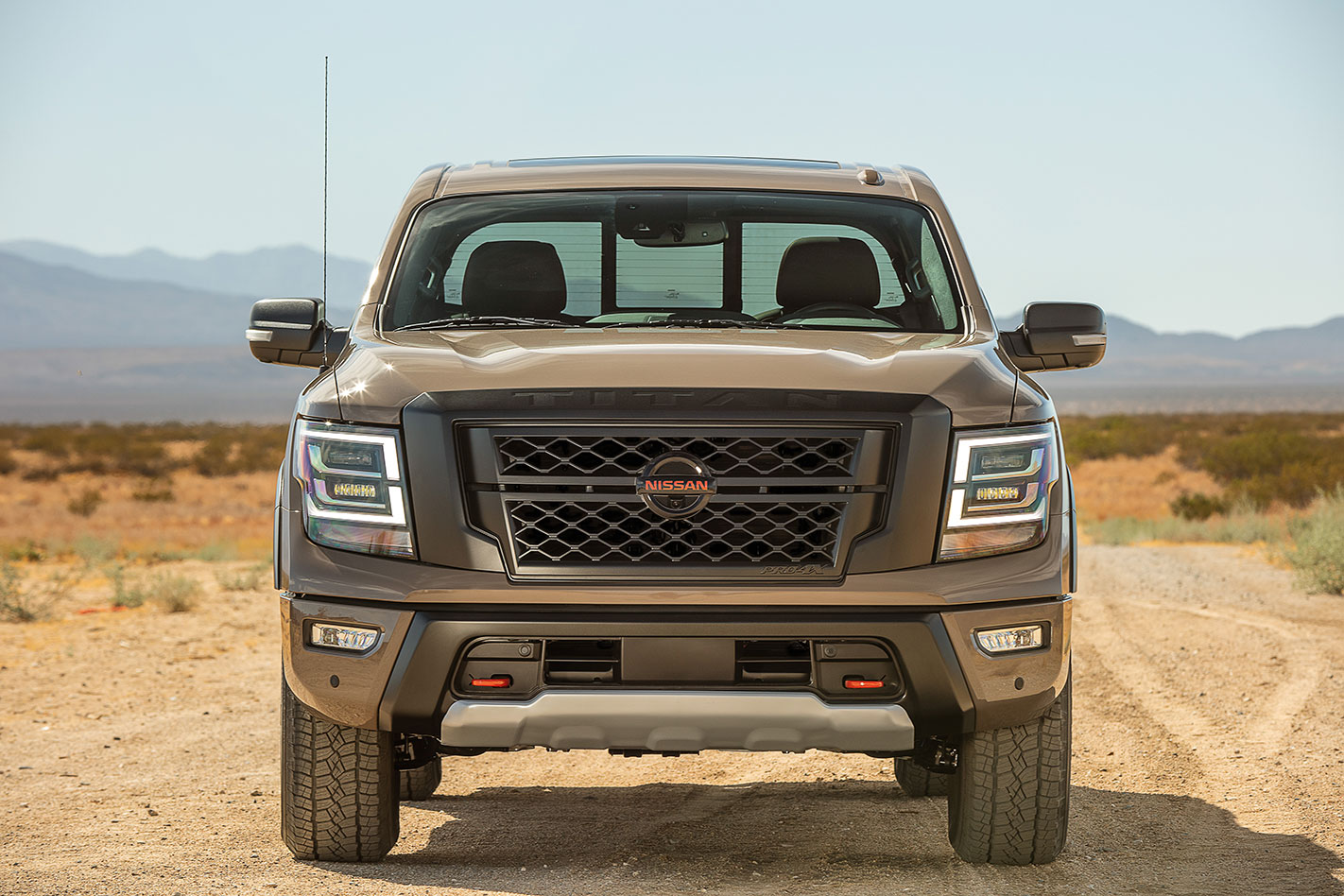
And given Nissan has just dipped a sizeable toe into those localisation waters, with the launch of the Premcar-tuned Navara Warrior, it’s something that will happen sooner rather than later.
“There are really two options for us. The first is that the factory would produce right-hand-drive vehicles for our market, but that’s not the case at the moment,” Nissan Australia boss Stephen Lester tells Wheels. “The second is that we work on local conversion and homologation.
“And if we can make Titan happen, it will more than likely happen with conversion. We’re already down the path of finding who can do that for us, and we’re working as fast as possible, because I’ve said before that I’d like the Titan here ASAP. Right now we’re working with Premcar on the Warrior. So if right-hand drive can’t happen we can look to conversion, provided the truck market is still growing.”
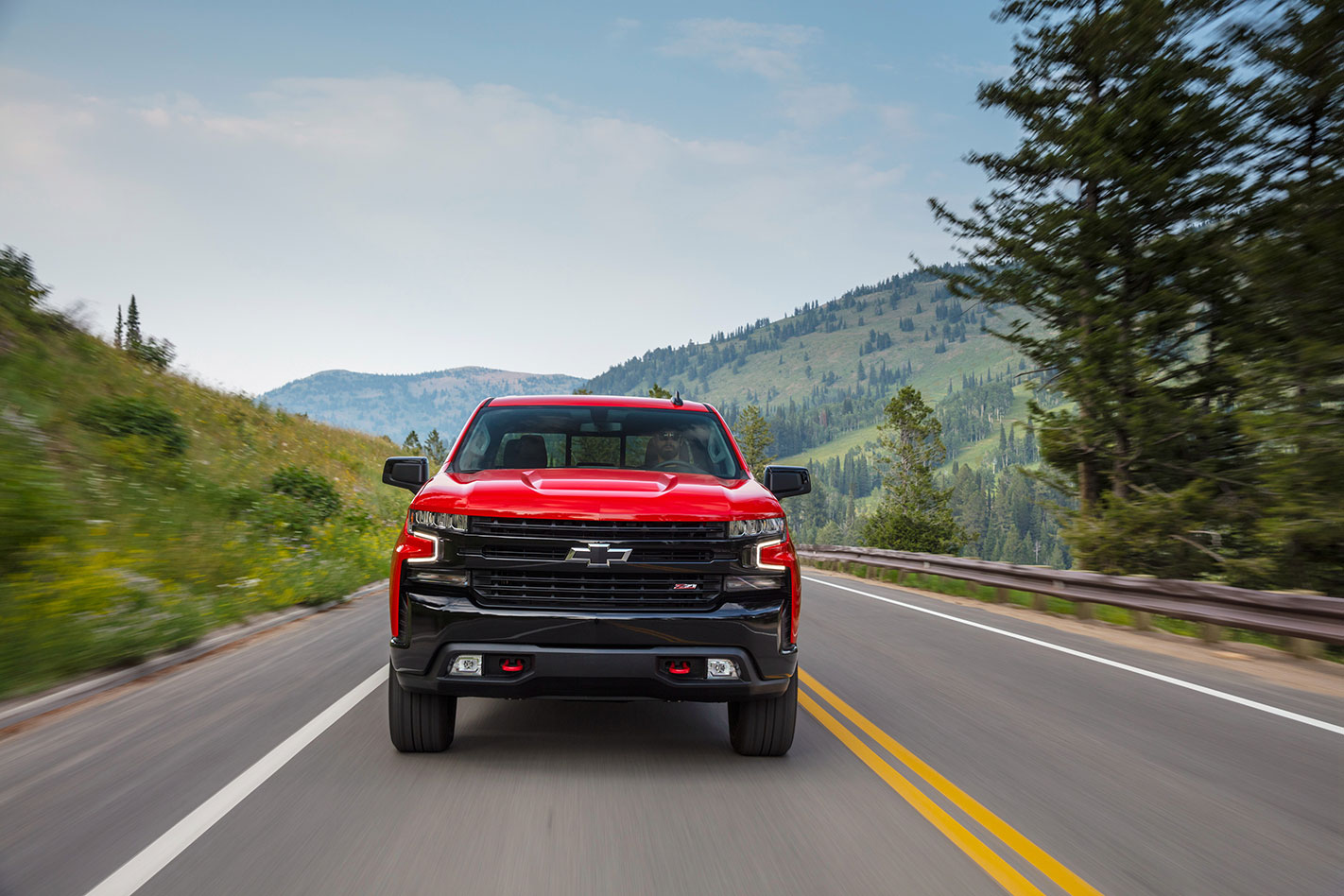
One company that knows plenty about local conversion is HSV, given Holden’s traditional tuning arm now has nothing in the way of homegrown product to work with. Instead, engineers there are already hard at work moving the steering wheel of the comparatively slow-selling Camaro and bigger Silverado pick-ups, the 2500 and 3500.
Yet in the same facility – though under a different company name and on a separate production line – Ram engineers have struck gold converting the smaller 1500 dual-cab, which is selling like a towering slab of American hotcakes. The brand had sold almost 2000 units to the end of September, with more than 80 percent of those sales represented by the V8-powered 1500.
If you think that would be a sore point for HSV – which has so far been limited to converting the bigger utes, despite a smaller Chevrolet Silverado 1500 being offered in the USA – you’d be exactly right.
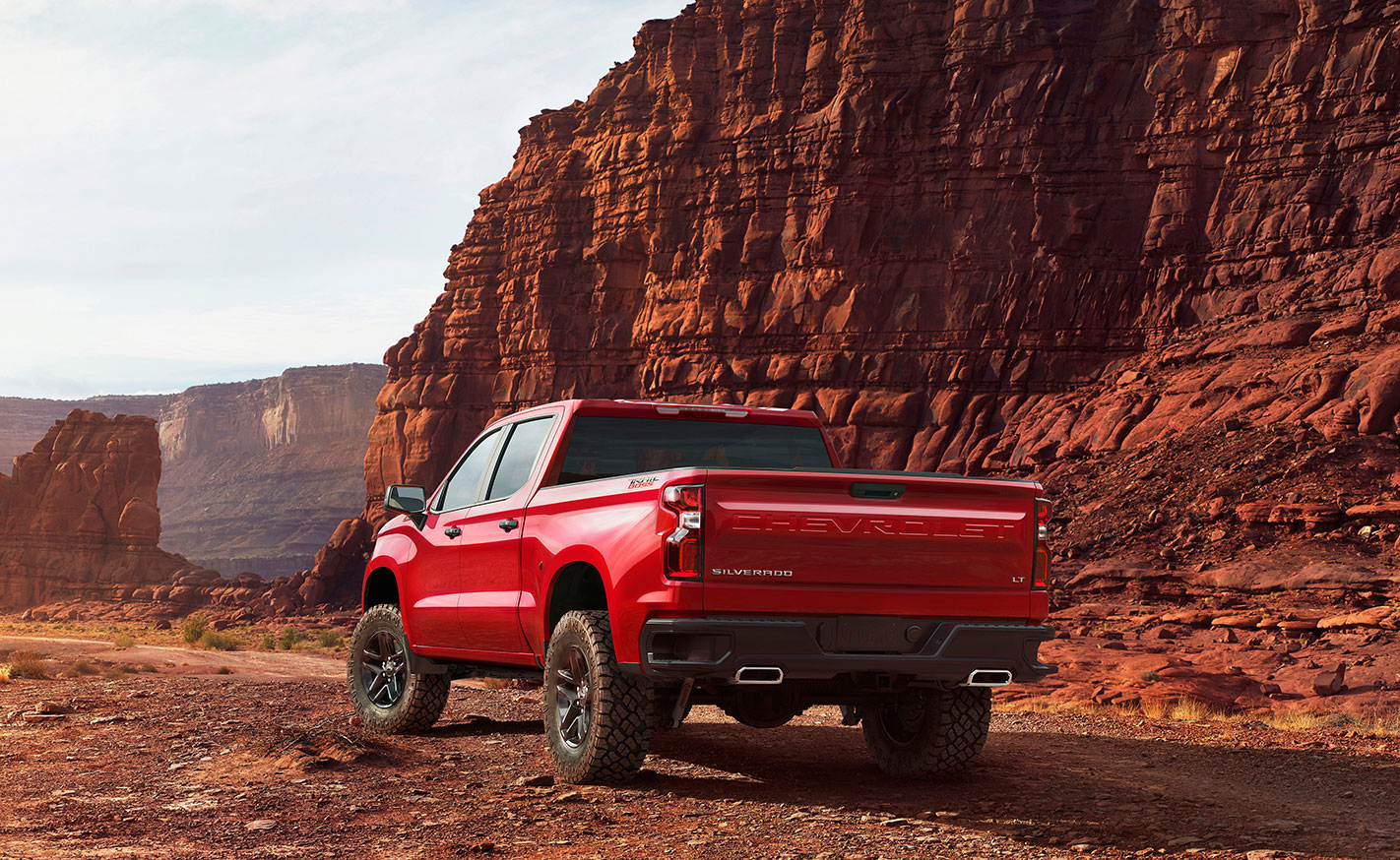
But while it’s yet to be officially confirmed, it’s a problem they’ll soon be solving. Wheels understands that the brand will next turn its attention to the Silverado 1500 – in fact, the team’s engineers have already made research trips to the States – with HSV keen to hit buyers where they’re shopping.
We know, too, that Toyota is desperate to fill what might be the only gap in its bulging Australian product portfolio, and could well be one of only two manufacturers to introduce its large dual-cab entrant – the giant Tundra – as a right-hand-drive vehicle direct from that car’s US manufacturing facility.
While technically still “under study” by Toyota’s Australian arm, its US cousins have made no secret of just how keen they are to see the next-generation Tundra, due around 2021, go global, with the brand’s entire dual-cab family to be built on a new and international-friendly platform.
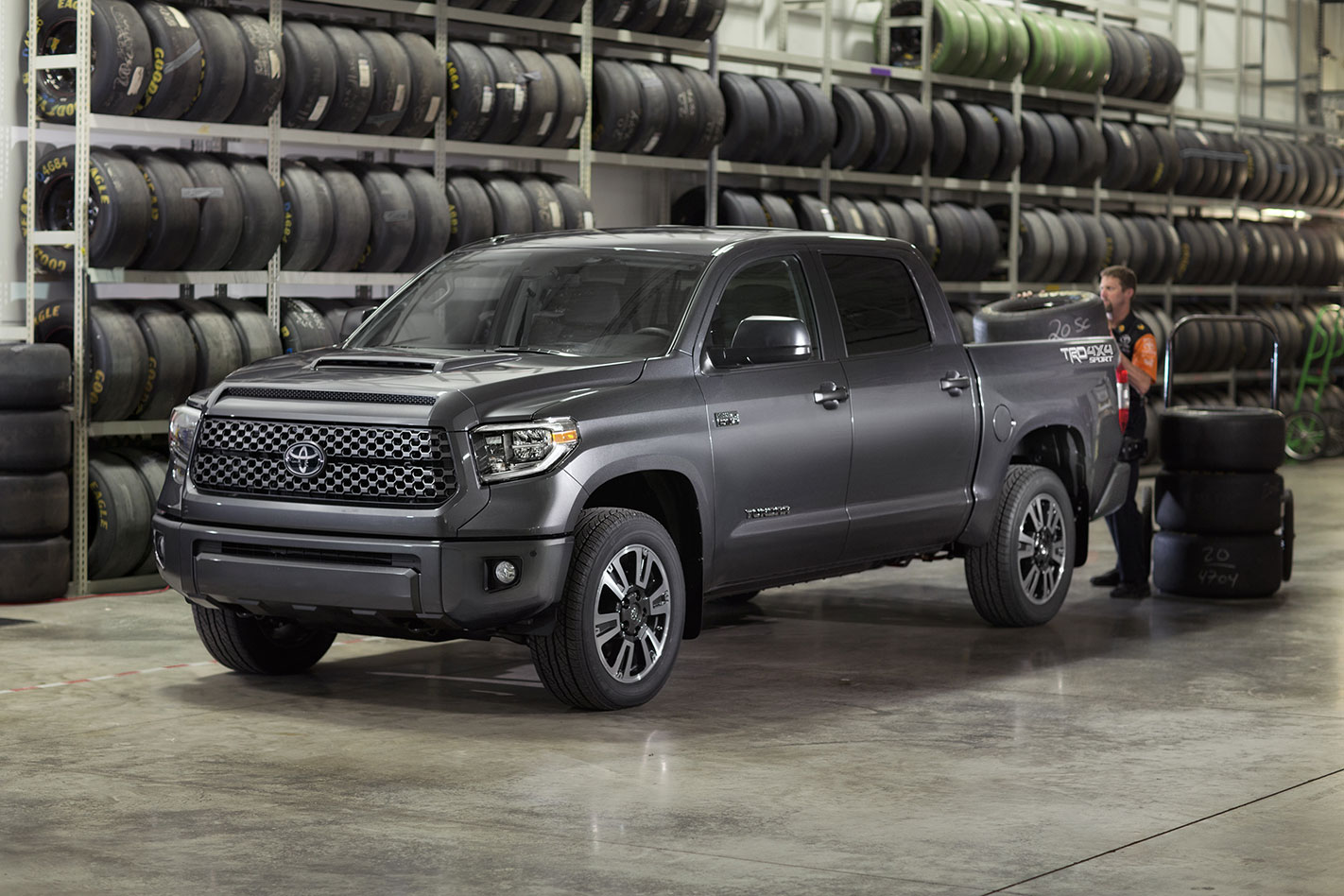
“We’re working on our next-generation Tundra, and I can’t wait to show it to you,” says Toyota’s North American group vice-president and general manager, Jack Hollis. “I would love to see that car go global. We have a great relationship with Australia – the company there does fantastic work.”
And finally there’s Ford, producer of not just the best-selling dual-cab in America, but the most popular vehicle on the planet, the F-Series pick-up. That, too, is ready for an update – expected to arrive next year – and key among the changes will be the capacity for it to be manufactured in both left- and right-hand drive, with executives holding up the global success of the Mustang as its case in point.
For its part, Ford in Australia says the Mustang’s success “blew our minds away”, and should the F-150 be offered with its steering on the right, then it would “absolutely bring one in”.
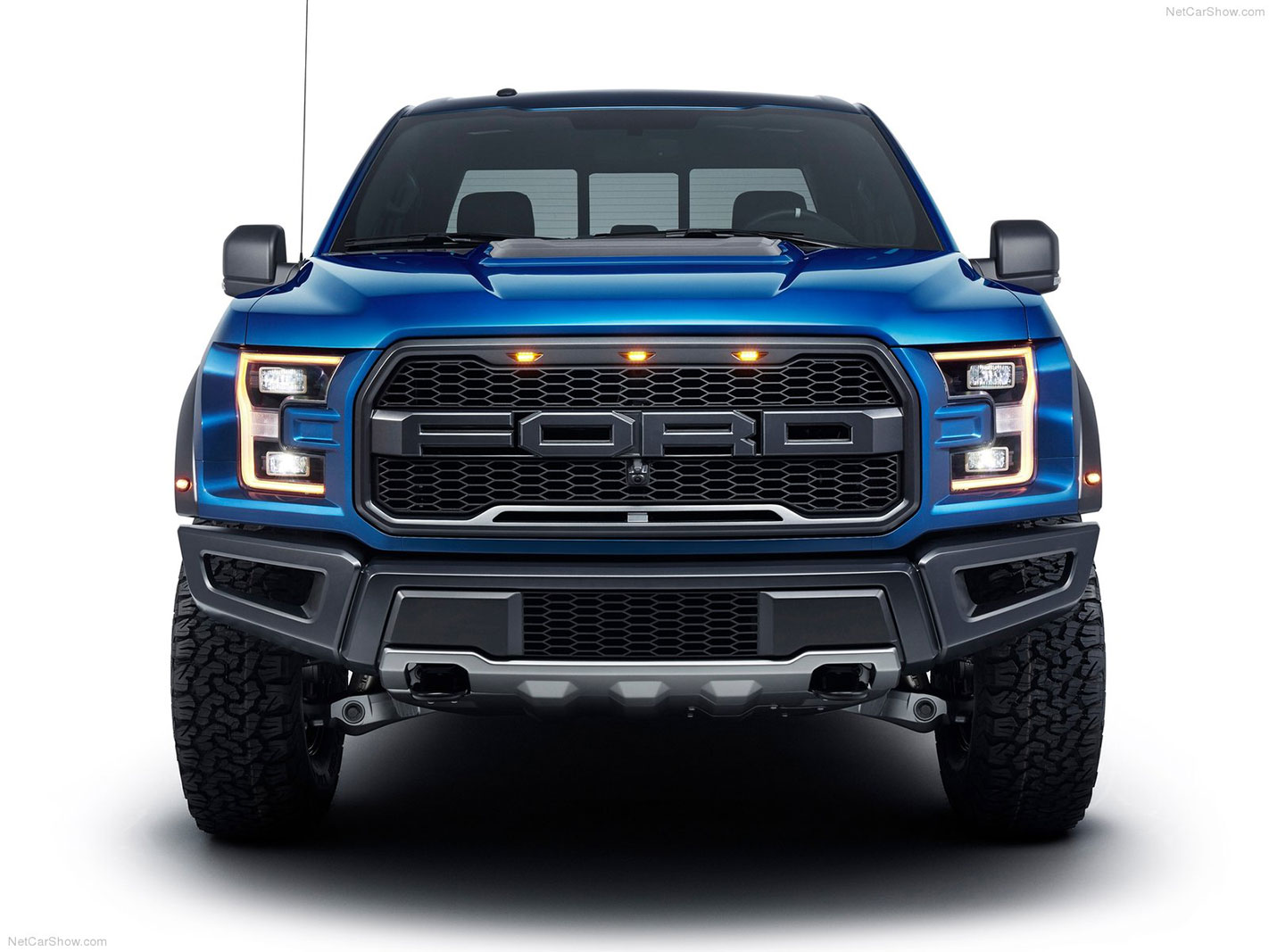
“If customers go that way, we’d absolutely bring one in. We’ve had full-size pick-ups here before, when they were available in right-hand drive,” says Ford Australia’s marketing manager, Danni Winter.
“We always research before we bring a product in. We did that with Mustang, and even though we researched it, it still blew our minds away, how much we were able to grow the sports segment overall.”
The American invasion, then, has only just begun.
The big Yank utes slated for Oz
Chevrolet Silverado 1500
- Engine: 6.2-litre V8
- Outputs: 313kW/623Nm
- Load capacity/Towing: 1021kg/4218kg
- Likelihood for Oz: All but confirmed. Expect in Q1
Ford F-150
- Engine: 5.0-litre V8
- Outputs: 295kW/542Nm
- Load capacity/Towing: 1483kg/5261kg
- Likelihood for Oz: 50:50. Next-gen due in 2020
Nissan Titan
- Engine: 5.6-litre V8
- Outputs: 298kW/560Nm
- Load capacity/Towing: 875kg/4381kg
- Likelihood for Oz: All but confirmed. Expect this year
Toyota Tundra
- Engine: 5.7-litre V8
- Outputs: 284kW/544Nm
- Load capacity/Towing: 784kg/4626kg
- Likelihood for Oz: 50:50. Next-gen due in 2020/21
In recent years the Toyota brand has become somewhat of an automotive punching bag, with new products sometimes referred to as white goods on wheels.
It seemed the Japanese giant had been phoning it in, building cars that ticked boxes on paper, instead of offering genuine class-benchmark products.
Then along came the all-new Toyota RAV4, which is such a massive improvement over the previous iteration that it feels like a double-generational leap.
The TNGA platform that underpins the new RAV4 is longer, wider, and stronger than the one it replaces, making this latest generation significantly larger in almost every dimension.
The mid-size SUV segment is crowded, and ultra-competitive, but Toyota has moved the game forward by introducing genuine and useable hybrid tech – the customer demand for these models alone speaks volumes.
Safety features are spread throughout the range generously, while the steering is revolutionary compared with previous models.
The judges were impressed by the RAV4’s compliant ride, which is in part thanks to the more rigid body and redesigned suspension set-up.
There are a wide range of variants in the model range, with spec and price levels that are competitive against key rivals.
What the Toyota RAV4 offers customers is great packaging, refined steering and ride quality, loads of safety kit, and game-changing electrification.
Our judging panel were so impressed with the improvements made to this generation RAV4 that they gave it a spot in our final five. Is it enough to win the big award though? Find out when Wheels Car of the Year 2020 is announced at the Australian Motoring Awards on January 30.
Former Ford Performance Vehicles general manager Rod Barrett has died, age 59, after a long battle with cancer.
Colleagues from his time at FPV say Barrett passed away on Monday, January 27 due to his illness, which had worsened in recent years.
Barrett joined the Blue Oval via Ford Performance Racing in the mid-2000s, before moving to FPV a couple of years later.
As the head of Ford Performance Vehicles, Barrett oversaw many projects now regarded as some of the best of the Blue Oval. The crowning achievement for Rod Barrett is his passion for the supercharged Miami V8 program, which former FPV engine guru Quinn (now director engineering firm Premcar) Bernie says wouldn’t have gone ahead if not for Barrett.

“He was very influential, powerful, and driven,” says Quinn.
“He was always pushing for freshness in the brand, bringing back the GS badge… that was Rod’s idea.”
Quinn recalls the excitement visible from Rod Barrett the first time they drove the first supercharged Falcon GT on a winding road loop just outside Melbourne.
Quinn says right up until recently, when Premcar created the Ford Falcon Holy Grail, Barrett had been in the loop and retained a keen interest in what was happening in the world of tuned Fords.
“The most important thing about him was the passion and drive he brought to FPV. He’ll very much be missed,” Quinn says.

Even aside from his time at FPV, Barrett was a proper ‘car guy’, having owned a Ford Sierra Cosworth he was apparently quite proud of.
MOTOR contributor David Morley recalls the black Sierra, which Barrett would drive and take to events.
“He was a good bloke,” Morley says, “I never had a bad meeting with him.”
Morley describes Barrett as someone who was easy to speak with, and who understood the need for good relationships between the motoring media and manufacturing industries.
“If you got a call from Rod, with him saying ‘come down and have a look at what we’re doing at the moment,’ you knew it’d be something good. It’d always be a good afternoon after one of those calls.”
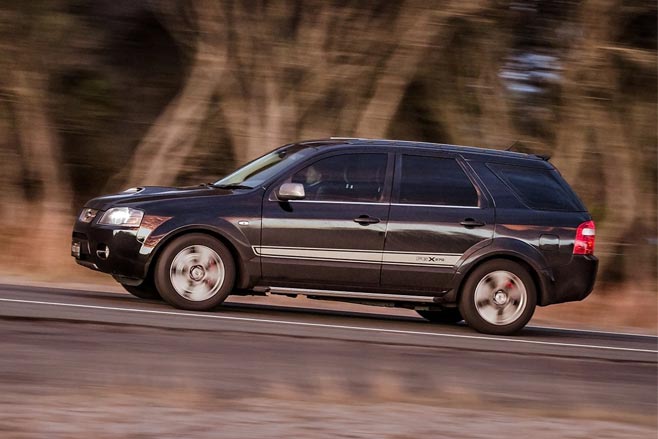
Some of Morley’s FPV highlights, the Territory-based FPV F6X, the Force 6, and Force 8, were all the work of Rod’s passion, and were part of what made him “quintessentially FPV.”
Barrett left FPV in 2012 when a Ford Australia restructure shrank the performance division, sparking disappointment from fans of fast Fords and the work Barrett had been involved in.
- Next LandCruiser series to be known as the LC300
- Venerable 200 Series nearing end of the road
- V8 engines will be phased out
- Next LandCruiser likely to be hybrid-only
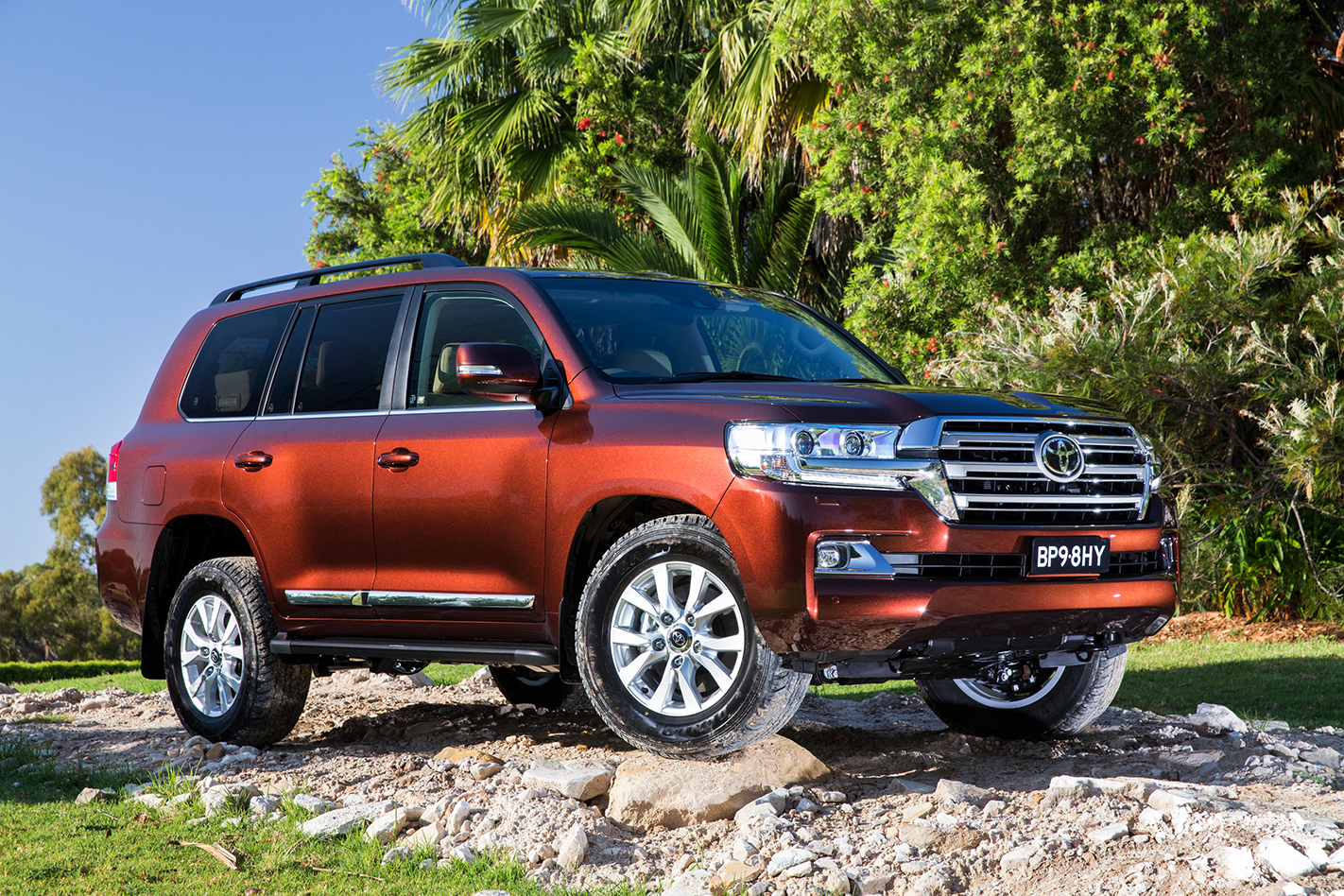
The next generation large 4×4, ostensibly known as the Toyota LandCruiser LC300, is likely to eschew the current 4.5-litre twin-turbo diesel bent eight in favour of a six-cylinder hybrid driveline.
Toyota has committed to offering a fully electric or electric hybrid version of every model in its range by 2025, so the developments that are in train for the LandCruiser are likely to be applied to vehicles like the Prado, HiLux and Fortuner.
While its specs are still a closely guarded secret, the engine will likely be based on a large-capacity six-cylinder turbocharged petrol engine, augmented with an electric motor and a battery pack.
Sources in Japan suggest that a 3.6-litre V6 engine will serve as the heart of driveline, with outputs estimated in the region of 220kW and 360Nm.
These numbers suggest that it will be a petrol-powered engine, and indeed the outputs are very close to those generated by the Camry’s 3.5-litre motor – which, of course, is fuelled by petrol.
It’s also available with a hybrid system, making it a simpler process for Toyota to apply the technology to the new ‘Cruiser.
However, Toyota hasn’t even confirmed what type of fuel the engine in the next generation LandCruiser might use.
“Next-gen LC, or LC300 as it is being called, is still in the early phases of development,” said Orlando Rodriguez, the senior public affairs specialist of commercial vehicles for Toyota Australia. “There has been a lot of speculation out there about this model, especially from Japanese media, but it is definitely way too early for us to confirm any details.”
This engine will reportedly be married to a brand new ladder-frame version of Toyota’s TNGA platform family, while the new 300 Series will sneak in under the 5000mm-long mark by 50mm. Width is estimated at 1980mm and height at 1870mm, which means it is set to retain its traditionally roomy interior dimensions.
While the new powertrain may not match the current 200kW and 650Nm outputs of the current 200 Series, it will allow Toyota to continue to sell the big LandCruiser almost unchallenged in the large 4×4 category here in Australia.
Jeep’s similarly ageing Grand Cherokee serves up some competition, as does the almost voting-age Mitsubishi Pajero.
Toyota parked its petrol V8-powered LandCruiser early in 2019, leaving that space to the Nissan Patrol.
The limited-edition model 200 Series, meanwhile, will likely be known as the Heritage, and is set to sport a more aggressive exterior treatment.
Based on the top-spec Sahara, the limited edition model will likely score blacked-out trim items where chrome currently exists, as well as a set of bronze 18-inch wheels, bespoke badging and blacked-out roof racks.
“We will be making an announcement on this in the next couple of weeks,” confirmed a Toyota Australia spokesperson. “It is in line with the previous SEs we have made for Landcruiser and has mainly aesthetic exterior changes and is nothing too radical, but will definitely have a unique look. More details will be revealed soon.”
MORE LANDCRUISER NEWS AND VIEWS
LandCruiser or Patrol – which is best for towing?
