
Top of the list of things I don’t want to hear at 4.15am is my alarm clock. Today, a very close second is the heavy patter of raindrops.
That was emphatically not in the forecast. Judging by the demeanour of our guesthouse owner, I’m guessing that a new entry at the top of her own list is the high-idle drone of five flat-plane-crank V8s warming up at 5am. Still, one person’s cacophony is another’s amazing, laugh-out-loud, close-harmony quintet.
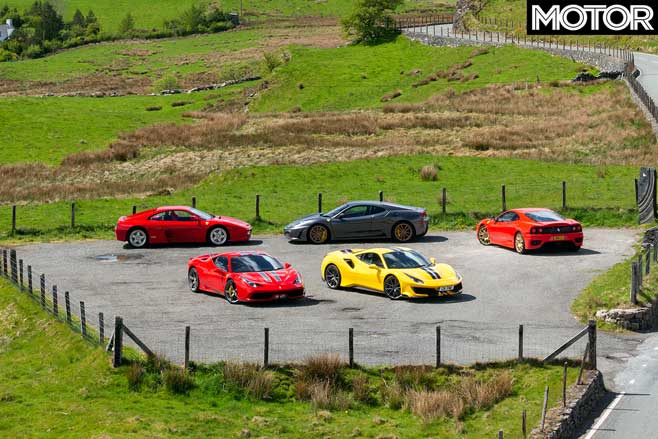
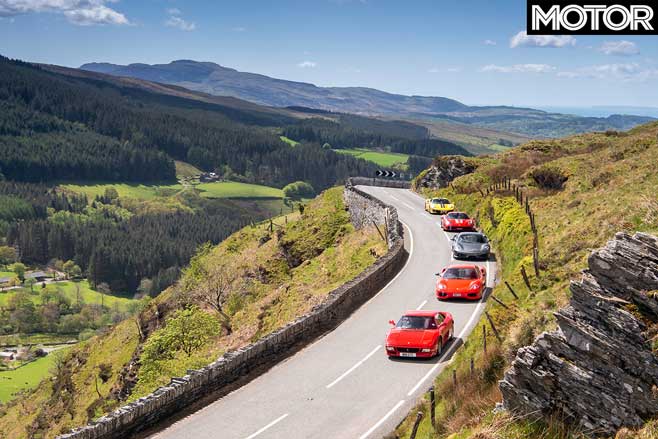
A gentle, warming trundle through the sleeping town pops us out onto the smooth, glistening sweep of a bypass. In the darkness, I’m tracking the glow of four pairs of round tail-lights, a constant of Ferrari’s mid-engined V8 model line – with the exception of the car I’m driving, a 348. This is no regular 348, though, because this is no gathering of regular V8 Ferraris.
Yowling along ahead are Ferrari’s feistiest and most focused production V8s – the 360 Challenge Stradale, 430 Scuderia, 458 Speciale and 488 Pista – and making up this full house of Maranello’s ‘special series’ V8s is the car I’m driving, the rarest of them all, the 348 GT Competizione. Just 50 were built and this is one of only eight right-hand drive examples.
So here we are, heading towards Denbigh in North Wales, in the UK, on shiny, black, empty roads. At least it has stopped raining. There are even tantalising glimmers of brightness in the dark sky, but as we drive further and climb higher, the temperature drops.
Soon there’s snow on the hills around us, bright in the headlamps. Happily, dropping down the other side, the snow vanishes and, almost miraculously, the clouds break as we approach our photo location and – ta-da! – we get a sunrise. Relief all round.
Ferrari 348 GT Competizione

I must confess the 348 GT Competizione wasn’t a car I’d been hankering to drive. How foolish of me. The GTC isn’t like other 348s; it doesn’t feel – and especially handle – like other 348s. Where the road dips and swerves invitingly, the GTC meets the challenge with poise to spare.
I’d never seen a GTC in the metal before collecting this immaculate example. It has a more purposeful stance than the standard model thanks to split-rim Speedlines, which are wider and an inch bigger in diameter. They wear plump Pirelli P Zeros and fill the arches so much better.
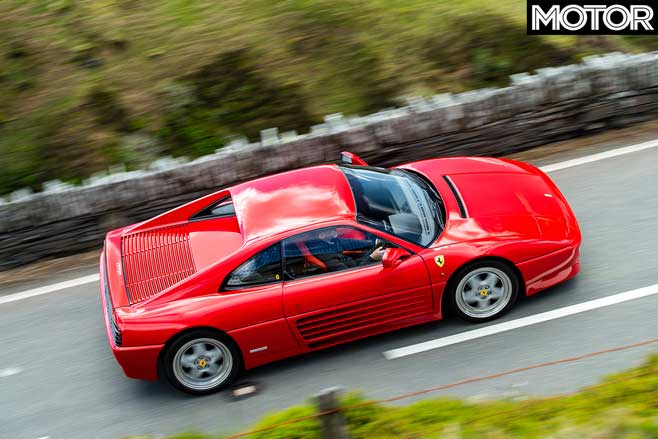
Swing open the lightweight carbon-skinned door and you see carbon-shelled F40 bucket seats. More carbon-kevlar is used for the front and rear bumpers and contributes to a claimed weight saving of almost 200kg, for a dry weight of 1180kg. This seemed rather optimistic, and when we popped it on the scales with half a tank of fuel, it came in at close to 1380kg. Still, there’s more to the GTC than weight reduction, and it drives beautifully.
Slot yourself into the driver’s bucket and the surroundings are familiar 348; all the regular fixtures and fittings are present, including carpets, door casings and Veglia dials. Compared with the others, it’s a small car, a feeling enhanced by the low scuttle and slightly raised driving position.
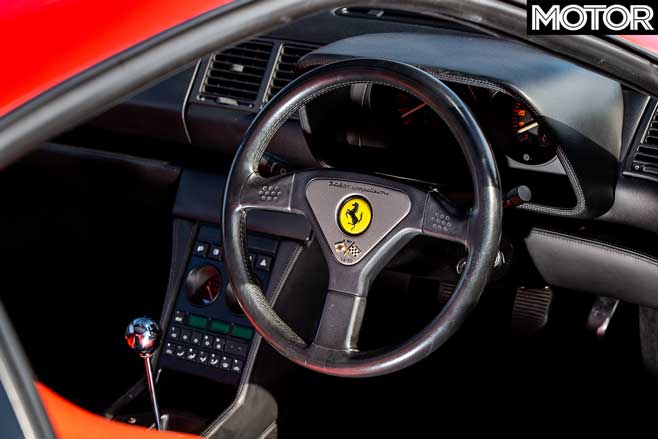
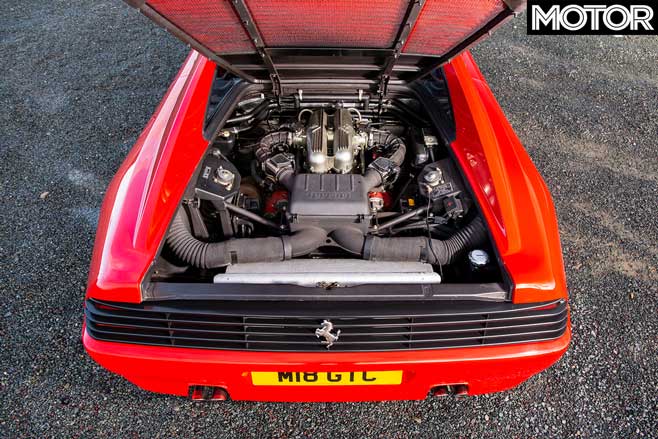
Plug the USB-like immobiliser tag into the steering column, hear the beep, twist the key and from over your shoulder comes a familiar, smooth, plain engine note. The GTC’s 3.4-litre V8 has the stock 239kW and, despite a different exhaust, initially doesn’t sound very different from stock either. Engagement is guaranteed, though, because sprouting from the open gate on the centre console is a tall gear lever topped with a shiny chrome ball.
The GTC is the only manual car here and is somewhat resistant to selecting second when cold. Adding to the challenge, initial throttle travel is rather sticky and the pedals are offset. Right away, though, the way it drives impresses; the ride is smooth and calm, though the sharp retort over cats’ eyes suggests it’s underpinned by some firm control.
With everything thoroughly warmed, the engine is an absolute gem. It spins up so sweetly and so eagerly, and the delivery and note build to a zingy, rewarding top end. Shorter gearing certainly helps, and the gearshift is snappy and satisfying, but unquestionably the stand-out feature is its dynamics. It never seems to put a wheel wrong, even at a good pace across challenging roads. Crucially, there’s absolutely no suggestion that the back end is going to be an issue.
The unassisted steering is full of feedback and, although it becomes rather vague around the centre at speed, the GTC is always wonderfully accurate once guided into curves. Grip is strong, but it’s the damping that’s really special, managing to be relaxed for comfort but catching the car effortlessly through tricky sequences for seemingly undefeatable composure; you rarely feel the mid-engined mass.
The GTC isn’t just the best 348 I’ve driven, it’s one of the best mid-engined cars of its era.
Ferrari 360 Challenge Stradale
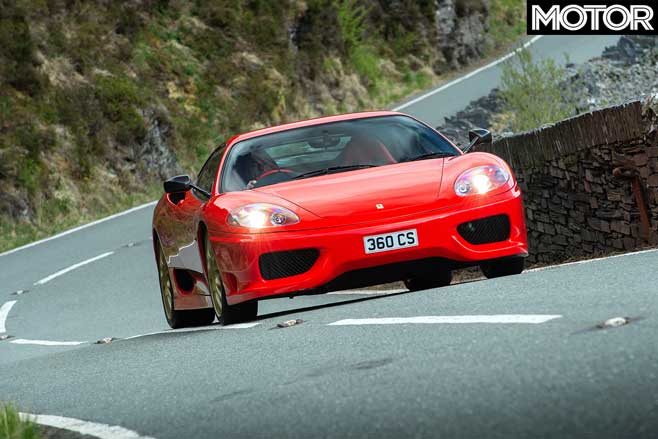
The step to the 360 Challenge Stradale is a big one for a few reasons, the first being that there was no stripped-down, toned-up version of the F355 that separates them. The second is that Ferrari completely reinvented the V8 model line with the 360 Modena in 1999, adopting aluminium monocoque construction and allowing the wind tunnel to dictate the proportions more than before.
There were race versions of the 360 before the Challenge Stradale came along in 2003 and, although it appeared to use racecar parts, particularly the carbon trim, it was in fact merely inspired by them. The Stradale was a bespoke, thoroughly engineered, dedicated road racer.
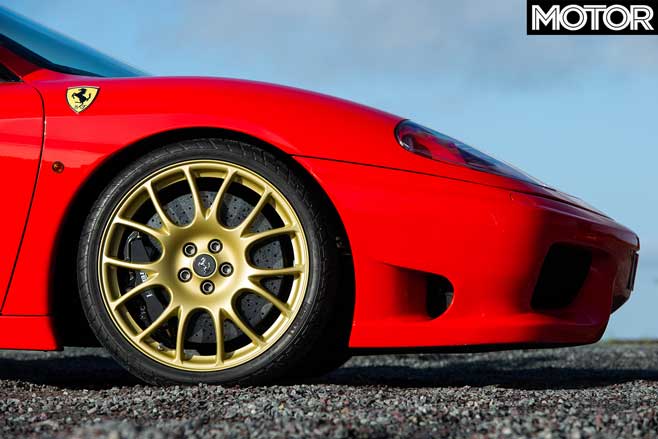
In effect, Ferrari blueprinted the 3.6-litre five-valve V8, lifting it just 15kW to 313kW, but there’s a lot more to the CS than that. There is a faster-shifting version of the single-clutch ‘F1’ automated manual, braking is by carbon discs and the interior is an exquisite confection of glossy carbonfibre, painted aluminium and Alcantara. The lack of soft furnishings gives a proper racecar feel and Ferrari claimed to have trimmed 110kg, which helped lop a massive 3.5sec off around Fiorano.
The Modena drove superbly but looked rather delicate on its slim front tyres. The Stradale sorts that out. Along with a lower ride height, wider tyres and gorgeous web-like alloys, its more sculpted front scoops look hungrier, and at the rear you can see the twin venturis bridged by the rear suspension arms. Proper stuff.
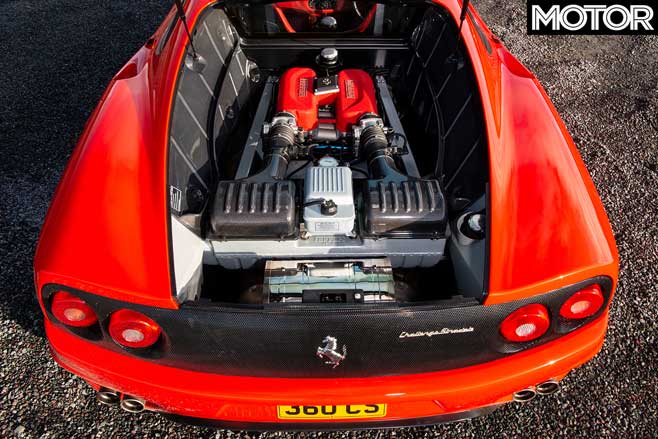
Drop inside and the beautiful leather-trimmed driver’s seat feels even better than it looks. The bucket is so comfortable, so cupping and laid-back that it feels like it has been moulded just for you, as does the steering wheel’s chunky, sculpted rim.
Through the vaguely quartic wheel you can see a large, central tacho, yellow-faced and redlined at 8500rpm but with numbers all the way up to 10, while in the mirror you can see the engine’s carbon airboxes, glossy in the light of the windowed engine bay.
Hit the big red start button and the Stradale’s V8 awakens. It has a deeper, more hollow bass tone than the 348’s, overlaid with a busy, lighter top note, and sends tremors through the floor and seat. Give the throttle a decent squeeze and it sounds like it’s in the cockpit with you. It thrives on revs, getting ever stronger as the needle climbs the dial, until you’re properly howling along.
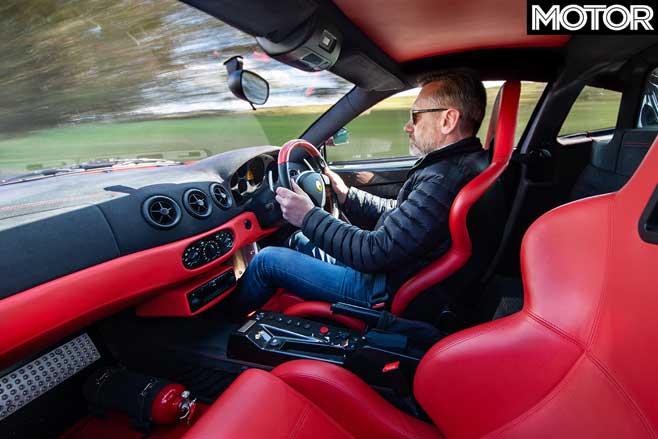
Even in this company it feels excitingly quick, though time has caught up with the gearbox. It’s great on downshifts, but you need to be positive with the throttle when manoeuvring to stop it dithering and give a mechanically sympathetic lift on upshifts to achieve the level of finesse we take for granted with modern DCTs.
You have to be mindful of the low nose on bumpy roads, but otherwise the Stradale’s dynamics deliver in spades. It’s firmly damped without being harsh and stays remarkably flat tacking into the corners, where you just know there will be huge grip from the Pirelli P Zero Corsas.
Initially, what’s most surprising after the 458 or 488 – or any recent Ferrari for that matter – is how relaxed the steering is, how slow the initial response, though you adapt quickly because everything else falls deliciously into place.
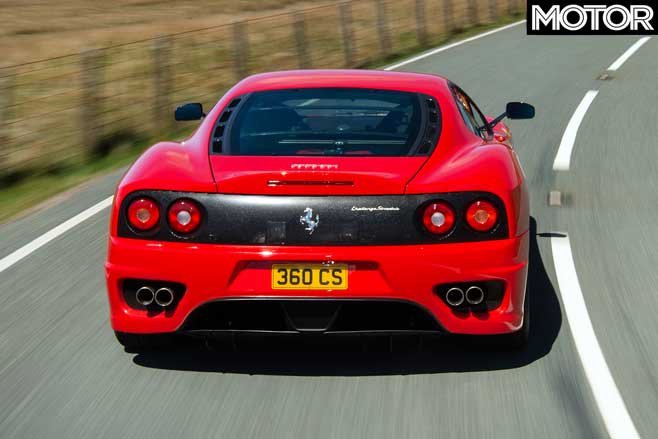
Up the pace, commit to a corner, and the nose locks onto the desired line and the Stradale settles deliciously into the apex. It’s a great feeling, and there’s such detailed feedback about the grip at either end that you know there’s more to be had, that it will be with you over the limit.
Lapping Fiorano years ago showed that the CS’s composure and control extend beyond the limit of grip, that it slips into power oversteer and back again cleanly, confidently, playfully. The only distraction is the howl of the V8; wrung out, the volume of noise is so great it feels like it’s about to burst at the seams.
Ferrari 430 Scuderia

As the last of the 1288 Stradales was being built, Ferrari was launching the 360 Modena’s replacement, complete with an all-new and much more powerful 32-valve 4.3-litre V8 delivering 360kW out of the box.
Though based on the 360, the F430 incorporated lots of new technology, developed with input from Michael Schumacher among others. It was the first Ferrari fitted with the manettino, allowing access to a number of pre-set dynamic characters. Another Ferrari first was the E-Diff, or electronic limited-slip differential, that could be finely manipulated – in conjunction with other adjustable features such as damping, throttle and gearbox response, and traction/stability control.
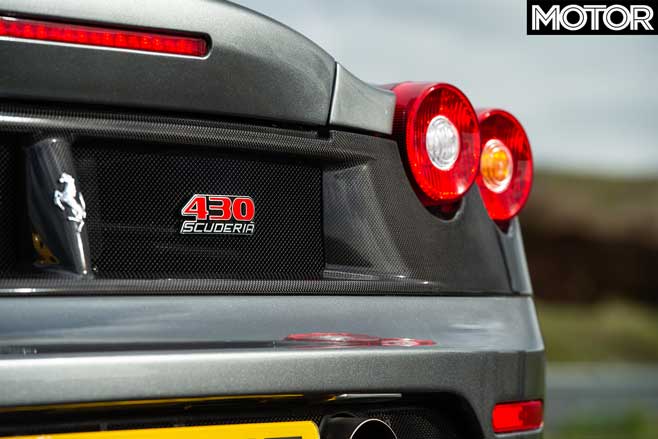
The Scuderia was launched in 2007 with 375kW, a gain of only 15kW, but a claimed weight saving of 100kg guaranteed blistering acceleration. Around Fiorano, the Scuderia matched the Enzo, by braking later and accelerating faster out of the turns. All the driver had to do was pin the throttle.
It sounds like a car that takes away all the skill and engagement. But, although there’s all this amazing on-limit ability, you don’t need to drive the Scuderia hard to enjoy and appreciate it. Indeed, evidence of its dynamic ability is the ‘Bumpy Road’ button on the steering wheel; this was the first Ferrari to have the separate damper switch, at Schumacher’s insistence.
It’s somehow not as racer-raw as the Stradale, despite having even more polished carbonfibre and exposed aluminium. Maybe it’s because the fascia – the whole interior, in fact – is a busier, more obviously fashioned fusion of shapes and materials. The Scud’s seats are just as well shaped as the Stradale’s, though, even if the ‘3D’ fabric of the centre panels looks like the breathable stuff you find on trainers.
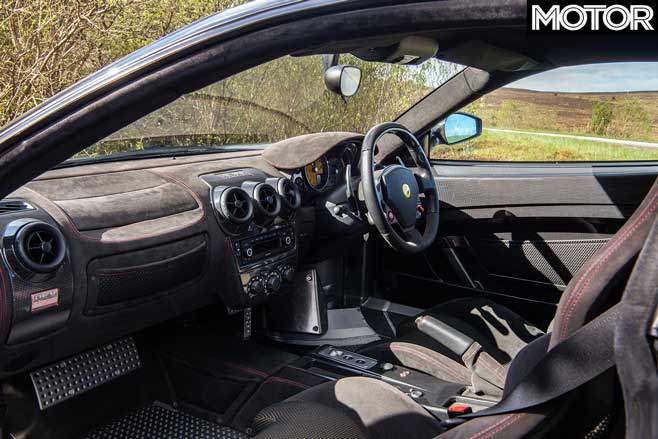
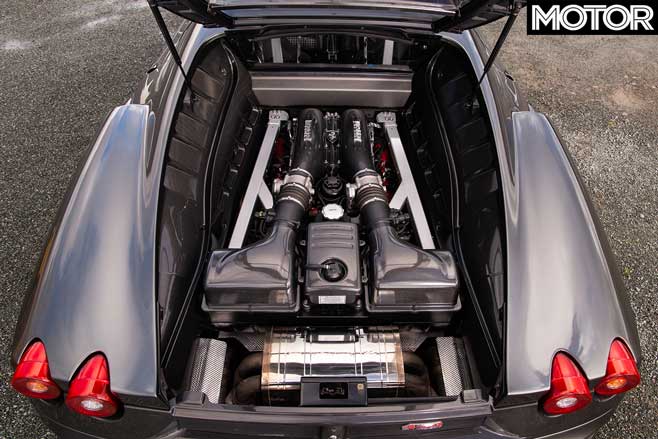
Twist the key, push the button and – boom! – the V8 lights up. The seat and floor zizz as they did in the Stradale, but the new F136 V8 has a smoother, tighter sound. It still blares like you’re too close to the speakers at a concert, but the volume matches throttle demand, so you can make relatively stealthy progress.
There’s a simmering energy suffusing the Scuderia, a pent-up urge to cut loose. It’s there in the ease with which the V8 revs and the keenness of the gearbox to shuffle down the gears. Ferrari really nailed the automated, single-plate manual gearbox with the Scuderia.
Dubbed F1 SuperFast2, at its swiftest this final iteration of the automated manual could change gear in just 60 milliseconds. But it’s not just the shift speed that impresses, its finesse is good too, its speed matched to throttle demand. Sure, the fastest upshifts still jolt, but most of the time the ’box does exactly what you expect and doesn’t draw attention to itself.
The same is true of the dynamics. There’s an awful lot the electronics can do to enhance its behaviour, but most of the time they’re not intervening because at its core the Scuderia is a beautifully sorted driver’s car. Its steering is feelsome and more instantly responsive than the Stradale’s and, while it’s still not super-sharp, it’s direct enough for me. The ride is taut, but Bumpy Road mode adds suppleness.
It feels slightly narrower than the Stradale, though this doesn’t affect its cornering ability. There’s the same sensation of endless grip at a decent pace, and when you let the engine have its head the pace is shockingly fast, but the chassis easily meets the challenge.
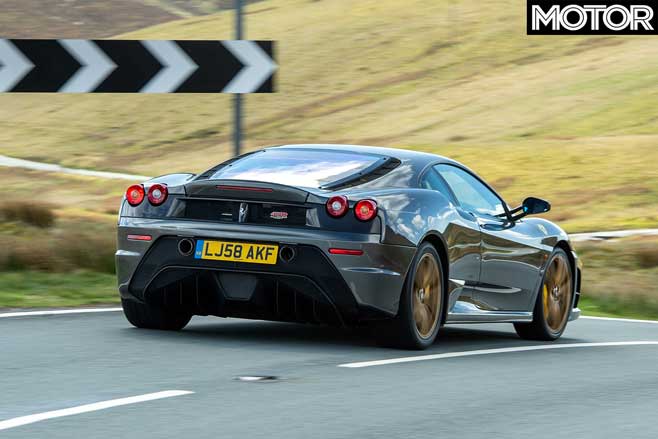
On a dry, warm road, the Scuderia’s poise, precision and control are astonishing. It might be pushing 12 years old now, but there’s absolutely nothing old-fashioned about the way it tackles a technical stretch of asphalt, without any obvious electronic interventions. It simply feels very positive, perfectly balanced and very effective, with terrific grip and corner exit traction. Best of all, you feel you’re at the heart of it, calling the shots. It’s sensational.
Ferrari 458 Speciale
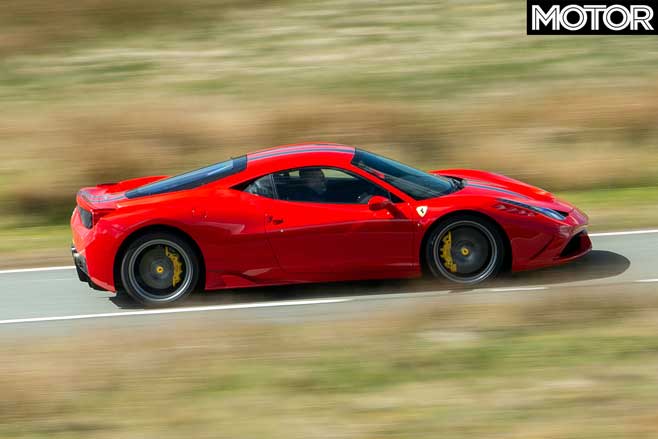
The 458 Speciale was extraordinary in 2013 and we now know it’s unlikely there will ever be anything quite like it again. The 458 Italia had already ramped things up, introducing a 4.5-litre, direct-injection evolution of the F430 engine that hiked power to a remarkable 419kW, but the Speciale took things even further.
With a host of refinements – including raising the compression ratio from 12.5:1 to 14.0:1, changing the cam profiles and redesigning the piston tops and intake system – power went up to an astonishing 445kW, giving this V8 the highest specific output (99kW per litre) of any naturally aspirated production engine.
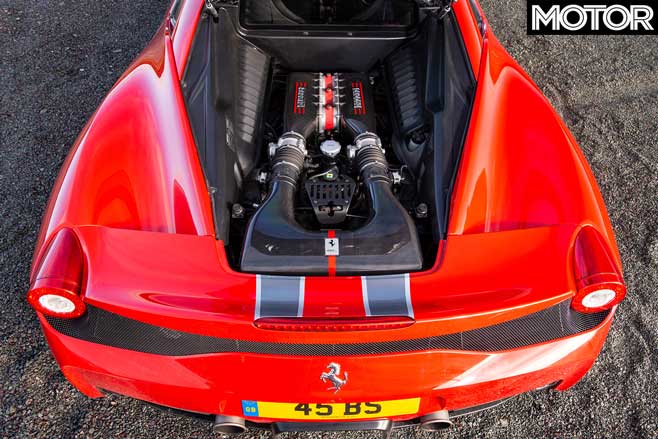
It’s an incredible powerplant. It revs to 9000rpm, and there’s a thrill when you get to 7000rpm. Most engines hit the buffers, but the Speciale’s V8 kicks on, its note mutating and becoming even more urgent as it surges for the redline. It’s a crazy, spine-tingling experience. Addictive too, especially as the 458 swapped the automated manual for the heavier but incredibly slick F1 DCT dual-clutch transmission, which gives almost seamless upshifts, even at 9000rpm.
Even more technology further refined the car’s behaviour generally, but especially in extreme situations. So there were magnetorheological dampers, faster control of the E-Diff and traction control, and a new feature called SSC – side slip control – that helps keep a slide in balance if you’re bold enough to twist the manettino round to Race or CT Off.

The steering rate was ramped up by about a third compared to the F430, and you might imagine this directness and the engine’s incredible power and appetite for revs would leave you frazzled after a fang. But you quickly adapt your steering inputs and realise that this incredible atmo engine can be finely controlled by your right foot.
I turn all the aids off and revel in its control, the way it settles into corners, the tactility of the steering. The feedback and feel as you energise the rear tyres with a squeeze of throttle ahead of the apex is absolutely glorious.
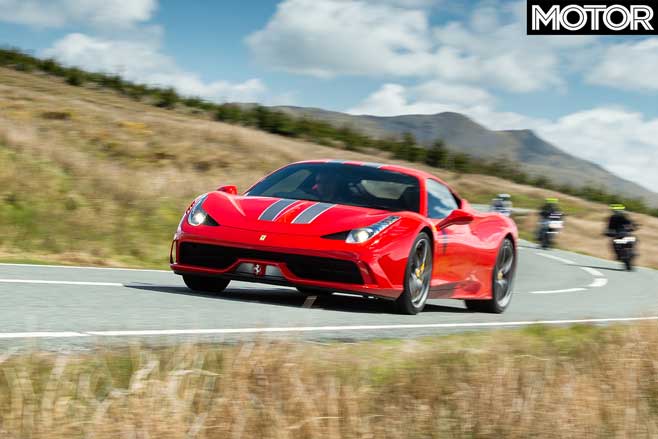
Passengers seemingly don’t cope well with it, feeling the escalating shove in the back, or the lateral g building, hearing the frantic, slightly hysterical howl of the engine and thus fearing that oblivion is but an ill-judged throttle squeeze or flick of steering away. Yet from the driver’s seat the Speciale feels unshakably composed, with an effortless poise at odds with the engine’s manic ebb and flow as the road alternately tightens and opens up.
It’s slightly surreal, feeling so calm as you wring out a 445kW V8 to 9000rpm. At one point I caught myself musing what it would be like with a little more mid-range torque…
Ferrari 488 Pista

The answer to that last musing is provided, partly, by the 488 Pista. Only partly because the adoption of twin turbos for the new 3.9-litre V8 doesn’t bring a little more mid-range torque, it brings a truckload. The Speciale’s peak is 540Nm at 6000rpm; the Pista delivers 770Nm at 3000rpm – that’s getting on for 50 per cent more at half the revs.
You’d think this would fundamentally change the way the Pista drives compared with its predecessors, but it doesn’t. It’s true to special-series values, not only by being 100kg lighter than the stock 488 GTB but by having the same intimate relationship with the road. The damping is fabulous, the whole car settling into an apex four-square, massive grip from the Cup 2s holding the exact line.

You would expect the readily available torque to make things different on exit, and it can if you want it to, but for a turbocharged machine the Pista has great throttle response. You can mete out the torque so that the exit is smooth and orderly, or you can twist the manettino, light up the rears and apply a twist of opposite lock.
All the aids are there, even further refined to cope with the torque uplift, so help is at hand when it’s required, though sometimes perhaps not quite as readily as you might hope.
It’s a phenomenally fast car, delivering its peak of 529kW at 8000rpm, but there are some things missing, particularly after the Speciale, the first being a thrilling engine note. After a promising, bassy start-up and idle, the sound seems to get lost in the plumbing for the two turbochargers.
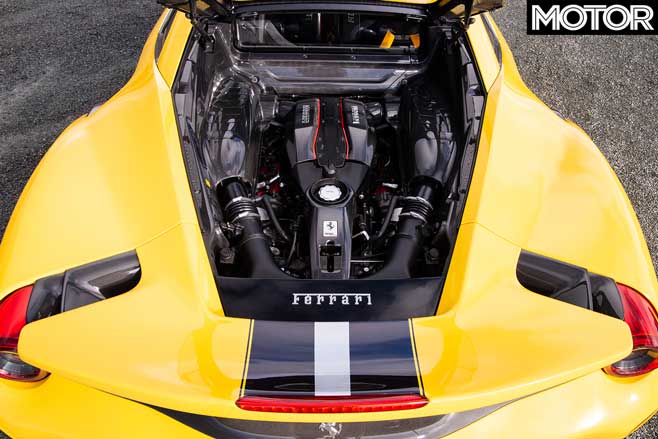
The second is throttle response; it’s very good, but after the vernier precision of the Speciale and Scuderia, you notice a momentary pause before getting what you asked for. And while the Speciale was unexpectedly, staggeringly driveable in poor conditions, you have to tread carefully in the Pista on a wet road, or even when the Cup 2s are just cold, because a thoughtless stab of throttle will momentarily unstick the rears, even with traction control.
In the right conditions, though, the Pista can cover the ground at a staggering pace – and engage and immerse you in the process, challenging and rewarding like any of these super-series cars. It takes a little longer to build up the confidence, to get the measure of how it will respond, but it’s a mighty buzz when you’re riding the throttle with a twist of opposite lock and still moving forwards at a rate. It’s pretty much how a modern-day F40 would feel.
Verdict – Which is the best track-focused V8 Ferrari?
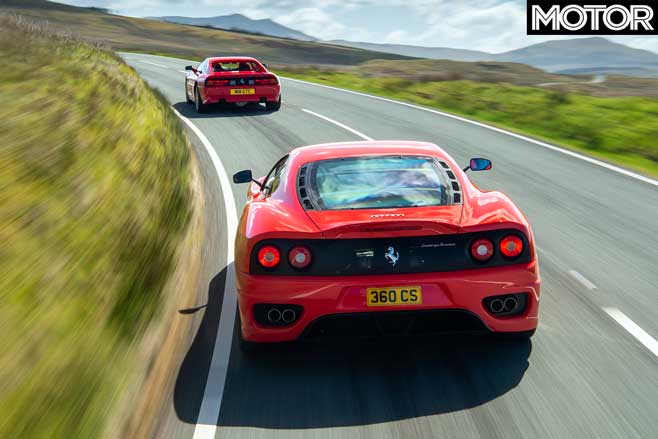
Is it possible to pick just one car from this five? Probably not, but in many respects the Challenge Stradale is the high point. With the barest trim and sportiest options – aluminium roll hoop, fabric seat covers, harness belts, sliding Lexan side windows – it really does look and feel like a road-going racecar. None of the others here evoke that in quite the same way. It lives up to its name.
The Speciale does too, not least by having the ultimate Ferrari aspirated V8. Awesome is an overused word, but it’s an apt description of the sound and fury of this engine revving flat-out to 9000rpm. Yet it’s a very easy supercar to exploit, being perfectly well mannered and having a sublime chassis. An amazingly usable car, already worthy of legendary status.

The 348 Competizione has little more than half the Speciale’s power, but what a sweet surprise. Unassisted steering, manual gearshift, no electronics for stability or traction… it’s tactile and capable and puts a smile on your face with its ability to flow over difficult roads, poised and precise. Underrated and overlooked. A 348 like no other.
The fact that the Pista – a 529kW, twin-turbo, mid-engined, rear-wheel drive supercar – can be driven with all aids off, dancing on the limit of grip, shows that Ferrari consistently nails the basics. Yet its throttle response and delivery make it a different sort of special series car.
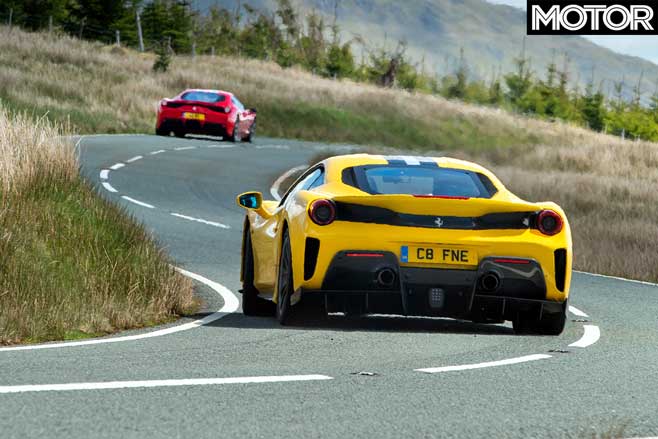
For me, the Scuderia is the absolute sweet spot. It’s not as futuristic-looking as the 458 or 488 and its gearbox isn’t as slick, but it doesn’t feel old. It is ferociously fast – as fast as you’ll ever need – and dynamically as engaging and rewarding as any car here. It also happens to be undervalued. Though not for long, I confidently predict.
Fast Facts
| u00a0 | Ferrari 348 GT Competizione | Ferrari 360 Challenge Stradale | Ferrari 430 Scuderia | Ferrari 458 Speciale | Ferrari 488 Pista |
| Body | 2-door, 2-seat coupe | ||||
| Drive | rear-wheel | ||||
| Engine | 3404cc V8, DOHC, 32v | 3586cc V8, DOHC, 40v | 4308cc V8, DOHC, 32v | 4497cc V8, DOHC, 32v | 3902cc V8, DOHC, 32v, twin turbo |
| Power | 239kW @ 7200rpm | 313kW @ 8500rpm | 375kW @ 8500rpm | 445kW @ 9000rpm | 529kW @ 8000rpm |
| Torque | 324Nm @ 5000rpm | 373Nm @ 4750rpm | 470Nm @ 5250rpm | 540Nm @ 6000rpm | 770Nm @ 3000rpm |
| Power/Weight | 203kW/tonne (dry) | 245kW/tonne | 278kW/tonne | 319kW/tonne | 382kW/tonne |
| Transmission | 5-speed manual | 6-speed automated manual | 7-speed dual-clutch automatic | ||
| Weight (dry) | 1180kg (dry) | 1280kg | 1350kg | 1395kg | 1385kg (w/ lightweight options) |
| Suspension (f) | double wishbones, coil springs, telescopic dampers, anti-roll bars | double wishbones, coil springs, adaptive dampers, anti-roll bar | |||
| Suspension (r) | double wishbones, coil springs, telescopic dampers, anti-roll bars | double wishbones, coil springs, adaptive dampers, anti-roll bars | multi-link, coils, adaptive dampers, anti-roll bar | ||
| Steering | unassisted rack-and-pinion | hydraulically assisted rack-and-pinion | |||
| Brakes (f) | 300mm ventilated discs | 380mm vented carbon-ceramic discs | 398mm vented carbon-ceramic discs | 398mm carbon-ceramic discs | |
| Brakes (r) | 305mm ventilated discs | 350mm vented carbon-ceramic discs | 351mm vented carbon-ceramic discs | 360mm carbon-ceramic discs | |
| Wheels | 18 x 8.0-inch (f); 18 x 10.0-inch (r) | 19 x 9.0-inch (f); 19 x 13.0-inch (r) | 19 x 7.5-inch (f); 19 x 10.0-inch (r) | 20 x 9.0-inch (f); 20 x 11.0-inch (r) | |
| Tyre Sizes | 225/40 ZR18 (f); 265/40 ZR18 (r) | 225/35 ZR19 (f); 285/35 ZR19 (r) | 235/35 ZR19 (f); 285/35 ZR19 (r) | 245/35 ZR20 (f); 305/30 ZR20 (r) | |
| 0-100km/h | 5.0sec (est) | 4.1sec (claimed) | 3.6sec (claimed) | 3.0sec (claimed) | 2.85sec (claimed) |
| Top Speed | 282km/h (est) | 299km/h (claimed) | 319km/h (claimed) | 325km/h (claimed) | 340km/h (claimed) |
| Value today | $280,000-plus | $400,000-$650,000 | $250,000-$400,000 | $450,000-$700,000 | $700,000-plus |
Five Fast Facts: Ferrari V8s

01 – It all started with Lancia Ferrari’s first V8 engine was a 2.5-litre unit derived from the Lancia engine used in the 1950s D50 Formula One car
02 – The engineer who made his mark Engineer Carlo Chiti worked only briefly for Ferrari, but designed the 1.5-litre V8 that won the world F1 title in 1964
03 – The Dino V8’s 30-year reign The 3.0-litre ‘Dino’ V8 ran for 30 years, from 1974 with the 308 until the 360 Modena in 2004, when it was 3.6 litres
04 – Italians unite for a new V8 Ferrari and Maserati jointly developed the F136 V8 series, which Ferrari put into the F430, California and 458 Italia
05 – Making V8s for Formula One From 2006 to 2013 the F1 regulations required 2.4-litre V8s. Ferrari won the 2007 and 2008 constructors’ titles
As New South Wales battles its biggest bushfire emergency ever, the state government has announced heavy penalties for anyone caught tossing a lit cigarette out of a vehicle.
And the penalties are indeed brutal. Five demerit points off your licence is the best-case scenario if you’re found flicking a burning cigarette out your car window, while your passengers won’t get off lightly either. For them, it’ll be a $660 fine.
However, if you’re foolish enough to do so during a total fire ban, the penalty for drivers jumps to 10 demerits and a fine of up to $11,000. Passengers will have to fork out $1320 if they commit the same offence.
And that’s all on top of the potential penalties you’d face if you end up actually igniting a fire – which not only includes hefty financial penalties, but possible jail time.
The NSW Rural Fire Service Association president Brian McDonough said the new fines should make smokers think twice before ejecting a cigarette from their car.
“This reckless behaviour puts the safety of firefighting volunteers at risk,” Mr McDonough said.
“I hope this move makes people think very carefully about the consequences of their actions next time they go to discard a lit cigarette.”
Seen someone throw out a cigarette from a car? Let the Rural Fire Service know on 1800 679 737.
In our penultimate casting of pods for 2019, Scott, Cam and Dan assemble in the Bauer chambers to look to the future and consider all the things that might be waiting around the corner.
First up we revisit the subject of Holden and the unenviable predicament it finds itself in. In an ongoing sales drought, spiralling staff turnover, and amid continued model culls, can anything reverse the fortunes of this once unstoppable brand?
While Holden’s future looks uncertain, another theory circulating this week predicts 2020 to be the year that initiates the decline of SUVs. Could the car-buying public once again start to favour more traditional passenger models, or is it simply a matter of semantics?
Finally, we explore the realm of really, really fast cars and why some companies set out to make them even more potent. Pointless exercise for people with more money than sense, or a genuinely compelling option for the very well-heeled?
If you’re on the go, you can find WhichCar Weekly on all manner of podcast apps including iTunes and Podbean. Please rate, subscribe and leave a review! You can also follow the day-to-day happenings of the WhichCar team on Facebook, Twitter and Instagram @whichcarau.
Listened to the show? Help us out:
- Leave a note in the comment section below.
- Leave a review on Apple Podcasts/iTunes
- Subscribe to our podcast
Licola: 37°37’40.18”S, 146°37’25.13”E. Permanent population: 2. Distance from nearest Maccas: 96km. Grid power: none. Mobile signal: none. Well-sighted, traffic-free, 100km/h-posted corners: countless.
YOU THINK you know the Toyota Supra, don’t you? Its development story is well documented. You know that there’s a heavy dose of Munich in its DNA and that it reincarnates a badge many thought had gone for good. Its interminable gestation has dulled the sheen of its novelty, tempering the excitement of Toyota’s breathless early promise. Get behind the wheel of the Supra, however, and it might just be the most surprising thing you’ll drive this year.
It would be a pointless exercise comparing the $94,900 Supra GTS with a BMW Z4 M40i. Although the Supra shares most of its underpinnings with the BMW, the convertible Z4 is 30 percent more expensive and competes in an entirely different category. To properly test the Toyota’s mettle, we chose a far tougher assignment.
The BMW M2 Competition is a known quantity. It managed to see off the beguiling Alpine A110 in the Wheels May 2019 edition and would have won sister title MOTOR’s Performance Car of the Year crown had their guest judge not nobbled it with an outlier downvote. This Pure model is priced at $99,900, a mere $5K more than the Supra GTS, and represents a succulent stretch target.
Offering an alternative to the rear-drive six-cylinder formula is the freshly updated Audi TT S coupe. A turbocharged 2.0-litre four-pot driving all four wheels represents a layout that has been honed to a fine art, and while the TT might well attract the side-eye from purists, we were keen to see whether agility could beat brute force. We’ve never quite understood the fundamental disconnect between the near-universal affection for the Golf GTI as a driver’s car compared to the disdain for the mechanically similar TT S.
The latest iteration takes the excellent recipe of the Golf R and sharpens it still further with a stack more standard equipment, including a behemoth of a 680W 12-speaker Bang & Olufsen stereo. More power, less weight, better aero and superior rubber: it’s a tantalising offering and we had the first one in Australia. At $99,990 the least powerful car here goes nose to nose with the most potent.
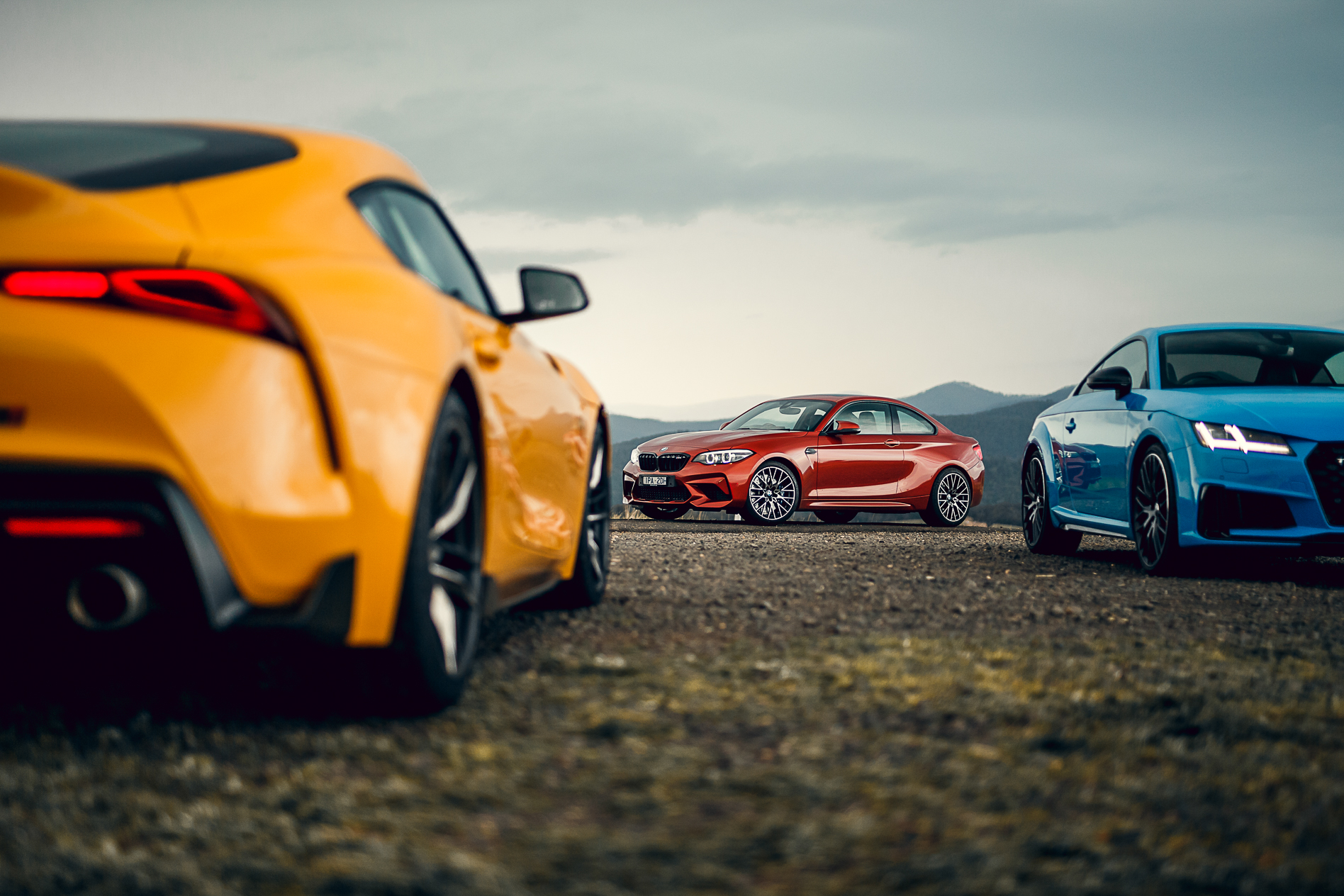
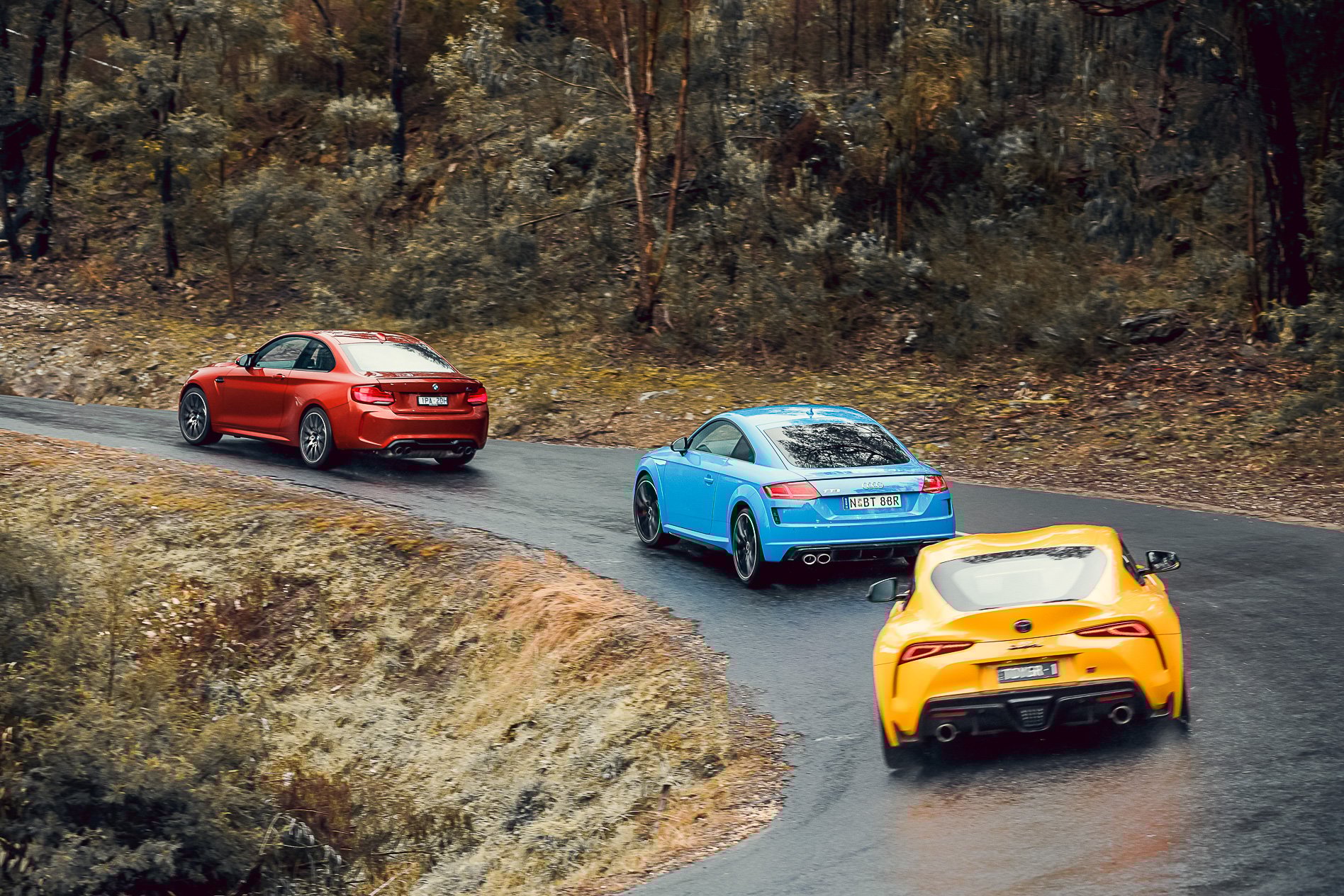
THE 58KM ROAD from Glenmaggie to Licola becomes unexpectedly wild for Southern Victoria. Mobile phone coverage blinks out after 15km and, after a while, even the power grid vanishes. Licola’s the only privately owned village in Victoria and also the only one not connected to the state electricity grid. The road skirts the lake at Glenmaggie before climbing steadily, scribing the rim of a vast cirque before dropping into forest where it contorts and writhes like a couple of rutting taipans.
From there it rises and falls along the route of the Macalister River, at one point vertigo-inducing vistas down to the river and then skirting the white water of the September snow melt. Beyond Licola, there’s even a 10km sting in the tail as the road contours in a series of rhythmic twists across the rills of a steep hill before eventually turning to dirt. It’s near perfect for these cars.
Supra first. Your initial impression of the Toyota is one of cultured power take-up, slurred automatic gearshifts and creamy damping. It feels far more like a GT car than a pugnacious street racer and that will represent either a relief or a disappointment, depending on your requirements. We know that BMW’s M2 Competition has all the easygoing geniality of a foot-faulted Nick Kyrgios, so the suspicion is that the Supra could find itself overmatched by Garching’s finest.
Despite its mellifluous dynamic handshake, start pressing on and there’s clearly some steel to the Toyota’s resolve. The front end feels vacuumed to the bitumen on turn-in. Try harder. Still laser-guided to the apex.
Wait to pour power to the rears and even when you think it has every chance, the stability control system takes a particular umbrage to being acquainted with 500Nm and intervenes brusquely. Switch the car into Sport mode and you can start nudging it about on the throttle but the key to driving the Supra quickly is to introduce your inputs gradually.
Try to jink it into a corner and the weight transfers clumsily, making it feel cumbersome. Slow your hands and feel it settle and lean onto its outside rear Pilot Super Sport. Then tickle on the throttle and it’s possible to maintain its fierce turn-in speed through the middle phase of a corner and then burst out with a small but satisfying degree of yaw.
The steering represents a refreshing change to the way that many manufacturers attempt to disguise weight by adding neuroses to the front end. Likewise, the purposeful brakes reward a measured application. The supple ride means that the Supra can carry fearsome speed even on poor surfaces.
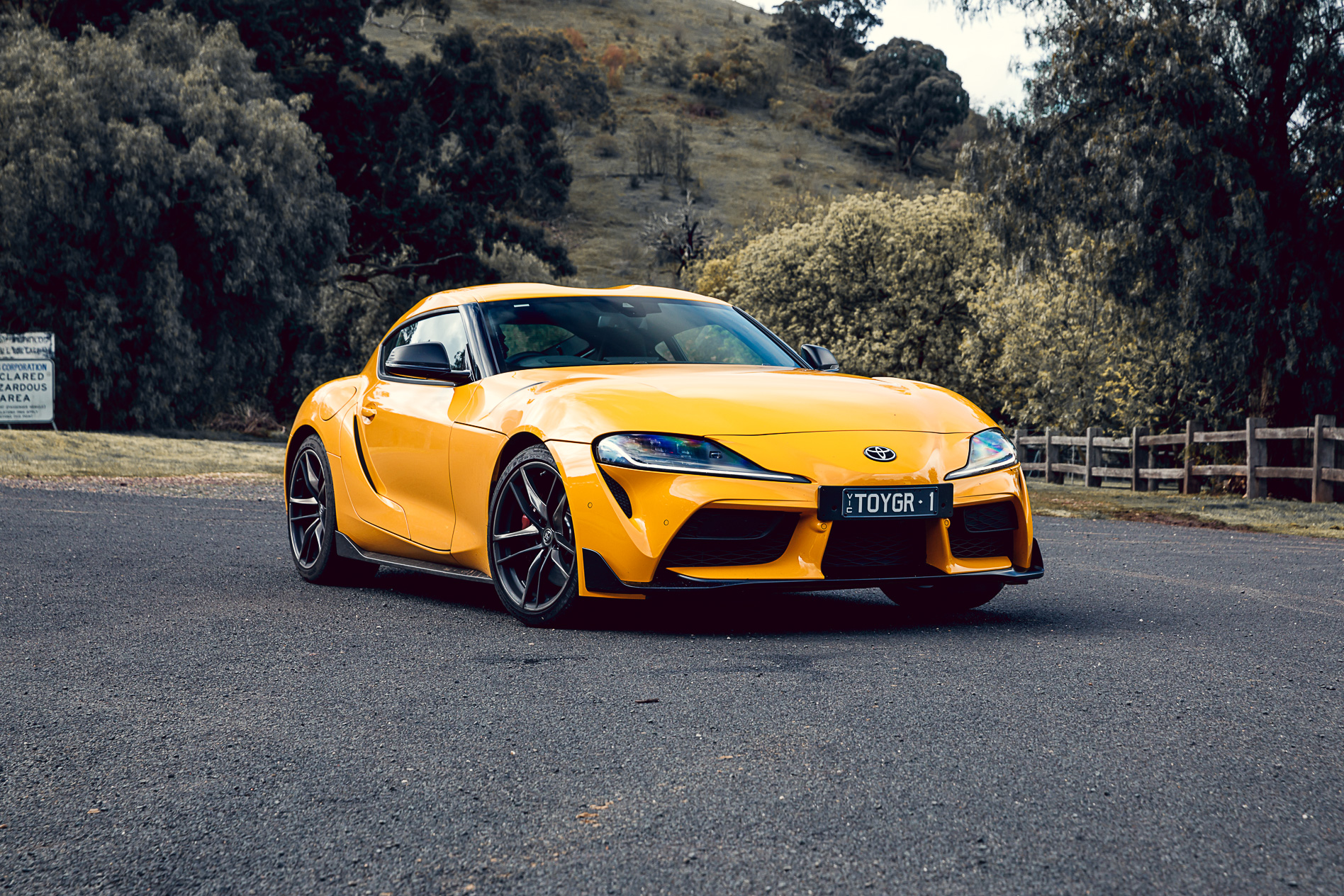
The eight-speed ZF auto is well calibrated and best left to its own devices. Try to shift by ear and the lack of top-end operatics means that you’re constantly trying to force inappropriate downshifts, the software denying your fruitless taps at the left-hand paddle.
The forthcoming manual transmission would be no quicker, but it would be fun to introduce a certain physicality into the Toyota’s DNA. It sounds fierce inside. There’s no bulkhead behind the driver, so all of the bass tones and crackles from the exhaust saturate the cabin, upshifts accompanied by a deep woofle.
It’s quick but the M2 Competition is quicker. Quicker, fiercer, more urgent, more everything, really. As accomplished as the Supra feels on roads like these, the M2 feels focused like a fully fledged M car versus the lite version. The razor-sharp dual-clutch ’box prefers you to bang home the shifts, the steering weights up more aggressively, the suspension bucks and patters on poor surfaces and the borderline-genius M Dynamic drive mode goads you into provoking the car into smoky slides.
Does that make it a better driver’s car than the Supra? That’s debatable. It certainly makes it a different one; more demanding, more hyperactive and more involving. Its S55 six-cylinder revs more cleanly than the BMW B58 in the Supra but despite a 50Nm peak torque advantage, it doesn’t feel significantly more muscular.
The Audi TT S is 40kW down on the Supra and a massive 92kW shy of the M2 Competition Pure. Logic would suggest that on these roads it would be exposed as a makeweight, a dilettante in this esteemed company. Yet even at full noise in the M2, it never managed to gap the TT S. Eventually it became amusing; this four-pot irritant that just wouldn’t let the other two conduct their serious head-to-head. Click the Drive Select switch over into Dynamic mode and it transforms into an eerily convincing facsimile of the five-cylinder 2.5-litre lump found in the TT RS. It’s uncanny.
The ride quality of the TT S has come in for some criticism but there’s an individual mode in the Drive Select system which allows you to set the adaptive dampers into their more comfortable setting and wick up the rest of the car’s responses. Thus configured, it corners flat and hard, the big 255/30 ZR20 Pirelli P Zeros finding plenty of purchase in the dry. The steering at first feels disappointingly light, but get used to the weighting and it’s a very high-quality electrically assisted set-up.
The Audi’s steering feels clean, despite the front wheels always being driven, and allows you to concentrate on the important job of positioning the front end. When you do overcook it and push the front into understeer, there’s enough early warning coming through the wheel rim to prompt you to trim the line a little.
The front end of the TT S turns in crisply, the four-cylinder engine making the nose latch onto a line far more adroitly than the weighty five-pot in the TT RS. In the wet, it’s an absolute weapon. Excite the balance by braking late, ride the split second of scrub and then just give the throttle the treatment as you sight the apex.
When the heavens opened, neither the BMW nor the Toyota stood a chance of hanging onto the Audi which would pivot the rear end neatly on the brakes, pointing the nose exactly where you want to go. The 338mm front brake discs lack the cooling required to stand up to some serious abuse. After one run down the hill into our test venue, the smoking brakes were registering over 300 degrees on an infra-red thermometer.

At the Heathcote drag strip, you could throw a hat over the three cars in the race to 100km/h. The BMW managed 4.4sec, the Audi 4.5sec and the Toyota 4.6sec. Given its power deficit, the TT S ran out of puff further down the strip, going through 400m in 13.2sec versus the 12.6sec of the Supra and 12.5sec of the M2 Competition.
Observations? The Toyota has a comically inept launch-control system which results in huge, flailing gouts of wheelspin and yaw. A flat-out launch-control run saw the car record 5.9sec to 100km/h. Never bother with it. The M2 did its best work with launch control engaged, but the most consistent performer was the TT S. In other words, we’d back the Audi every time in a race off the line.
The Audi’s cabin also found near-universal favour with the test team. We don’t need to wax lyrical here about Ingolstadt’s grasp of perceived quality, but recent updates to the TT S have seen it accumulate equipment that was previously the preserve of the options list. For 2020, the TT S now gets heated front seats, metallic paint, red brake calipers, Nappa upholstery and that myringa-mauling B&O sound system.
By comparison the Supra feels a little plain. The first time you jump in, you’ll look for the Toyota content and probably identify the steering wheel boss and rev counter. You’ll also likely be nursing a sore head as even the shorter members of the test team managed to clout their noggins getting into the slightly claustrophobic cabin.
The test car also suffered from a persistent rattle in the boot, and the body-coloured paint on display peeking round the Supra’s door cards would have had Ferdinand Piëch choking on his schnitzel.
Recompense comes with the best seats of the bunch and easily the coolest door mirror view, all pumped-up flanks and vents. On the subject of the latter, I’m not sure if we’ve ever encountered a car with more fake, blanked-off vents than the Supra. They’re everywhere and give the car a superficial appearance that its dynamic talents don’t deserve.
The M2 Competition is a familiar shape, replete with black exterior detailing and those curiously fussy multispoke alloys that, to this rheumy eye at least, don’t work as well as the deep-dished five-spoke wheels of the old vanilla M2. It’s a little ironic that the most conventional three-box silhouette houses the most authentically sporting car here, but when extended, the M2 Competition possesses a layer of talent beyond the others.
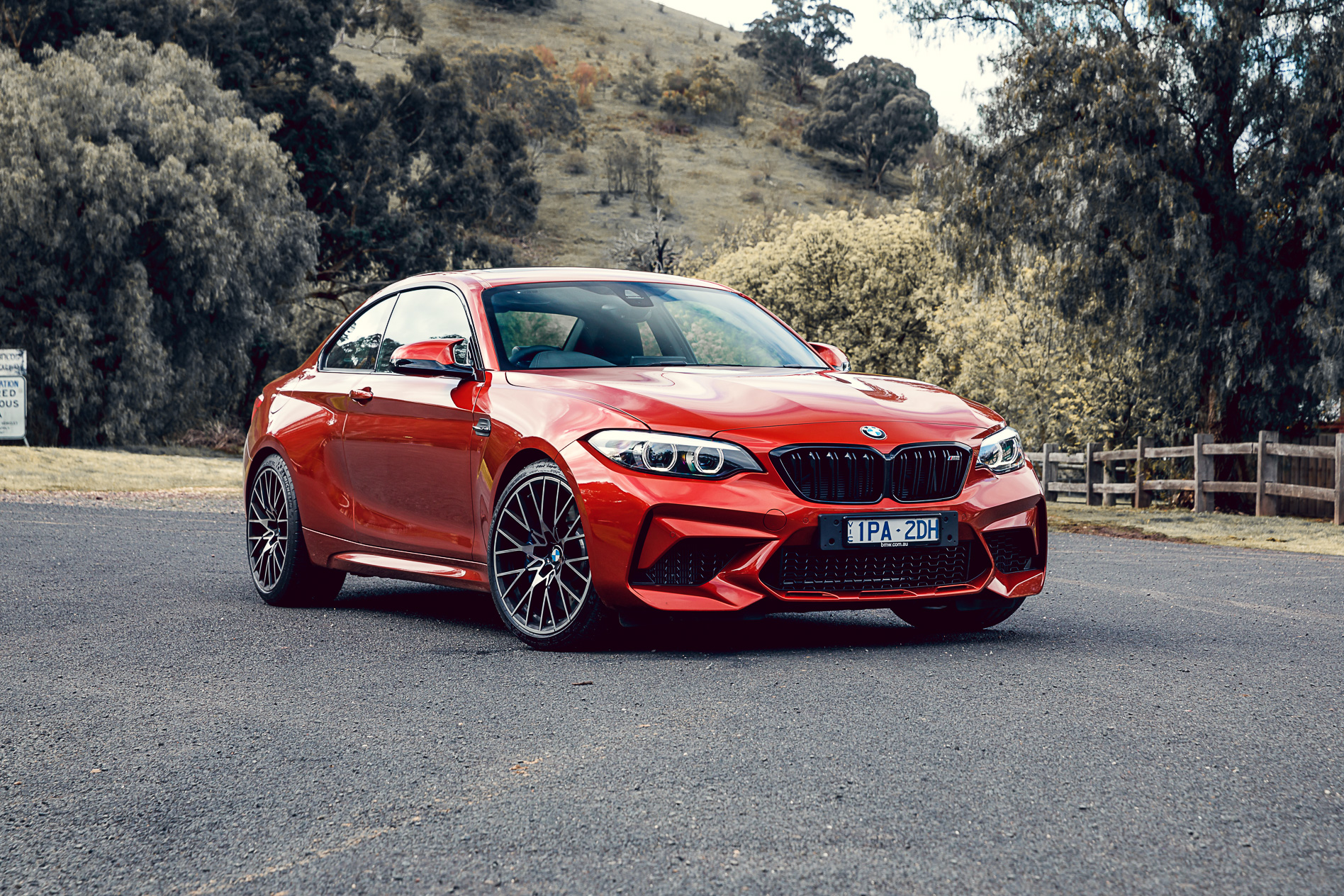
It’s a car that you feel you could grow with as a driver, and whatever skills you graduated to, you would feel confident that the BMW could respond in kind. The Supra never quite feels so multifaceted nor endowed with such a fathomless depth of know-how. Nevertheless, the fact remains that unless you’re driving it at ten-tenths, it often feels a friendlier, more pleasant thing to pedal than the M2.
The suppleness of the suspension, the butter-smooth transmission and inclusions like adaptive suspension, head-up display, adaptive cruise and power-adjustable seats can make the bare-bones M2 Pure feel a little overwrought.
Which leaves the Audi TT S. We wondered if it could be embarrassed in this company, but it more than held its own. With better brakes and slicker ride quality, it could have scored an upset but something has to come third. It emerges with significant credit. Easy to both underestimate and overlook, this might be Ingolstadt’s most convincing front-engined sports car.
Splitting the Toyota and the BMW isn’t easy because they feel so different, but Bavaria just squeaks Austria on this occasion. The M2 Competition has a layer of talent that sees it vying with the greatest M cars of all time.
Try as it might, the Supra can’t level with that depth of expertise. It delivers an alternative, compelling blend of dynamic qualities that are a credit to Tetsuya Tada and his engineering team. Park your prejudices about whether this is a Toyota or a BMW. It’s just an extremely good sports coupe. But, on this occasion at least, it has come up against something tinged with greatness.
Where’s the 718 Cayman?
Good question. We featured the cooking 718 Cayman coupe a couple of months back in our Porsche 992 test and, truth be told, it would have acquitted itself very well here.
Porsche wasn’t so confident. It suggested a 257kW 718 Cayman S might be better suited given the competition, but at $150,090 before options for a PDK-equipped car, we felt that this stretched the scope of the comparison a little too far. Still, nice try.
WhichCar will return to your televisions for a second season starting January 26, 2020, bringing an even bigger and better series that covers more of the latest and greatest from the motoring universe.
With 30 episodes now locked and loaded, season two will run for 50 percent longer than season one, serving up a whopping five more hours of cars, automotive culture and all of the adventures that happen along the way.
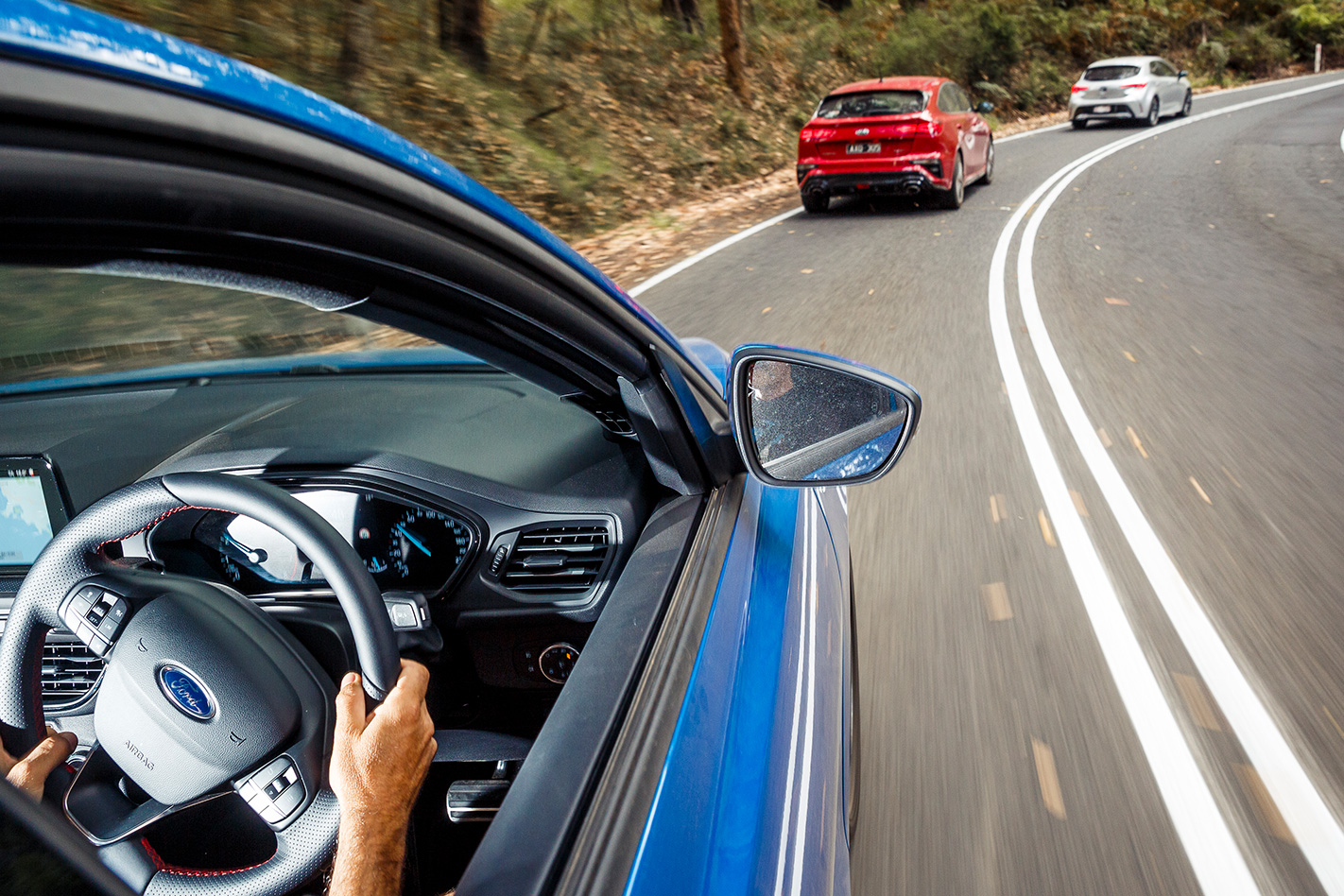
Airing on Channel 10 in Australia and New Zealand’s Prime early 2020, WhichCar TV will also be repeated throughout the week and be streamable online via TenPlay as well as right here on WhichCar.com.au.
We are already flat-chat planning, writing and shooting all the material we are going to pack into the next series, and we can’t wait for you to see what we have in store. If you thought the inaugural series was a blast, just wait for the sequel.
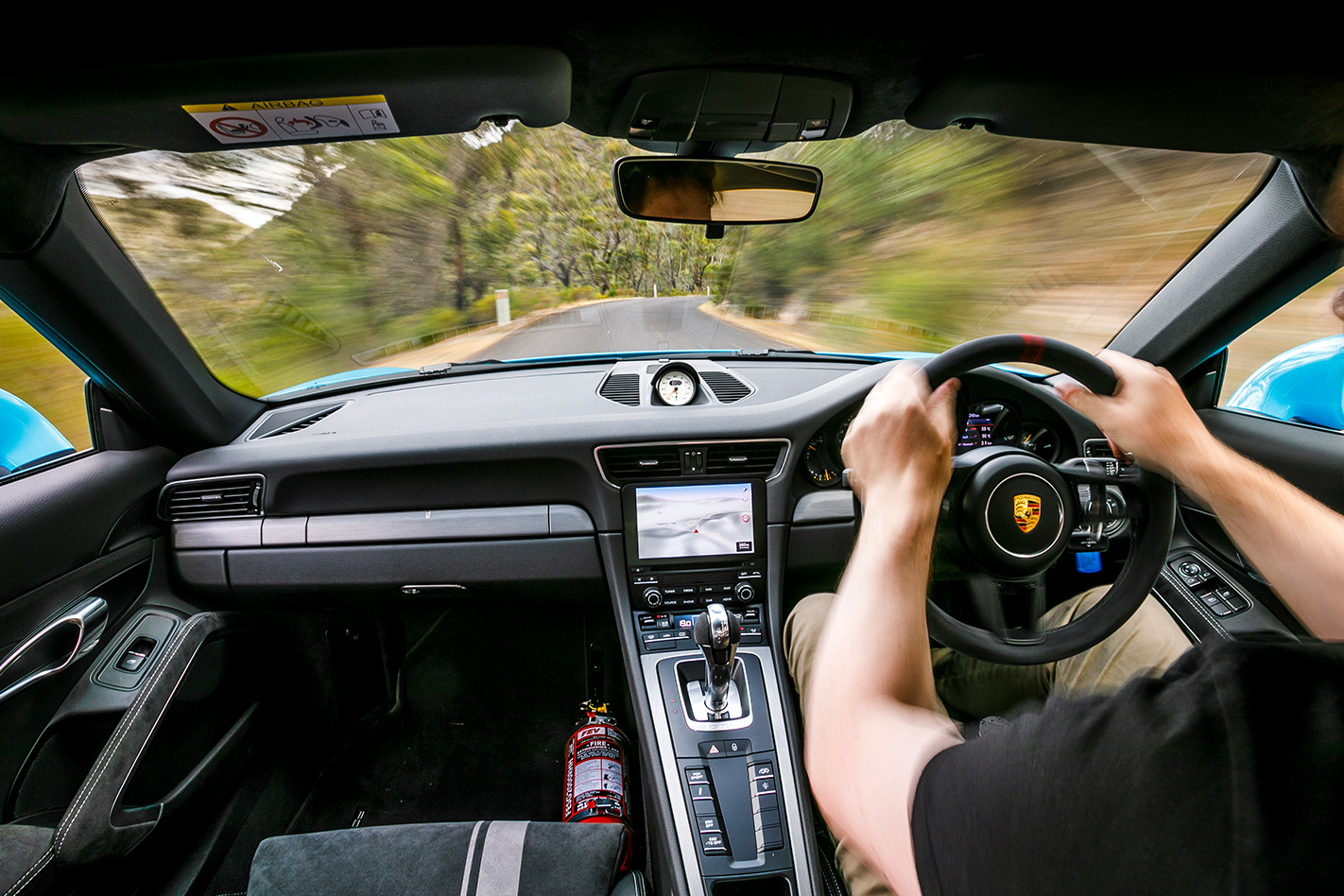
Expect more overseas adventures, more high-octane action, more off-road assaults, and more of the latest hardware fired up, on-track, and on your screens.
Join us again as the WhichCar team of journalists throws a different light on the car scene through left-field stories that are so much more than just a regular car review. And if you needed a reminder of what we do and the way we do it, have a glance back at all our previous episodes.
You’ll never get bored of Scotty rallying a Ford Ranger Raptor, Alex shattering the serenity of the Grampians with a Porsche, Dan breaking into an F1 circuit to drive a Lambo after dark, Andy sacrificing himself to the sun to conquer the Great Alpine Road, Tony escaping the rat race in a Suzuki Jimny or Matt discovering how to make a Ram 1500 seem small.
“We are thrilled to again be working with Network 10 to bring Australians a show highlighting the incredible variety of new cars in Australia today,” said Terry King, WhichCar’s Executive Director and General Manager of Publishing.
The decision to produce an even bigger second season was an easy one, said Mr King. “We loved making this uniquely Australian car show and Australians clearly loved watching it too.
“WhichCar TV reached more than 200,000 viewers each week on Network 10. A significant portion of that audience was female (41%), which is a reflection of the show’s broad appeal.”
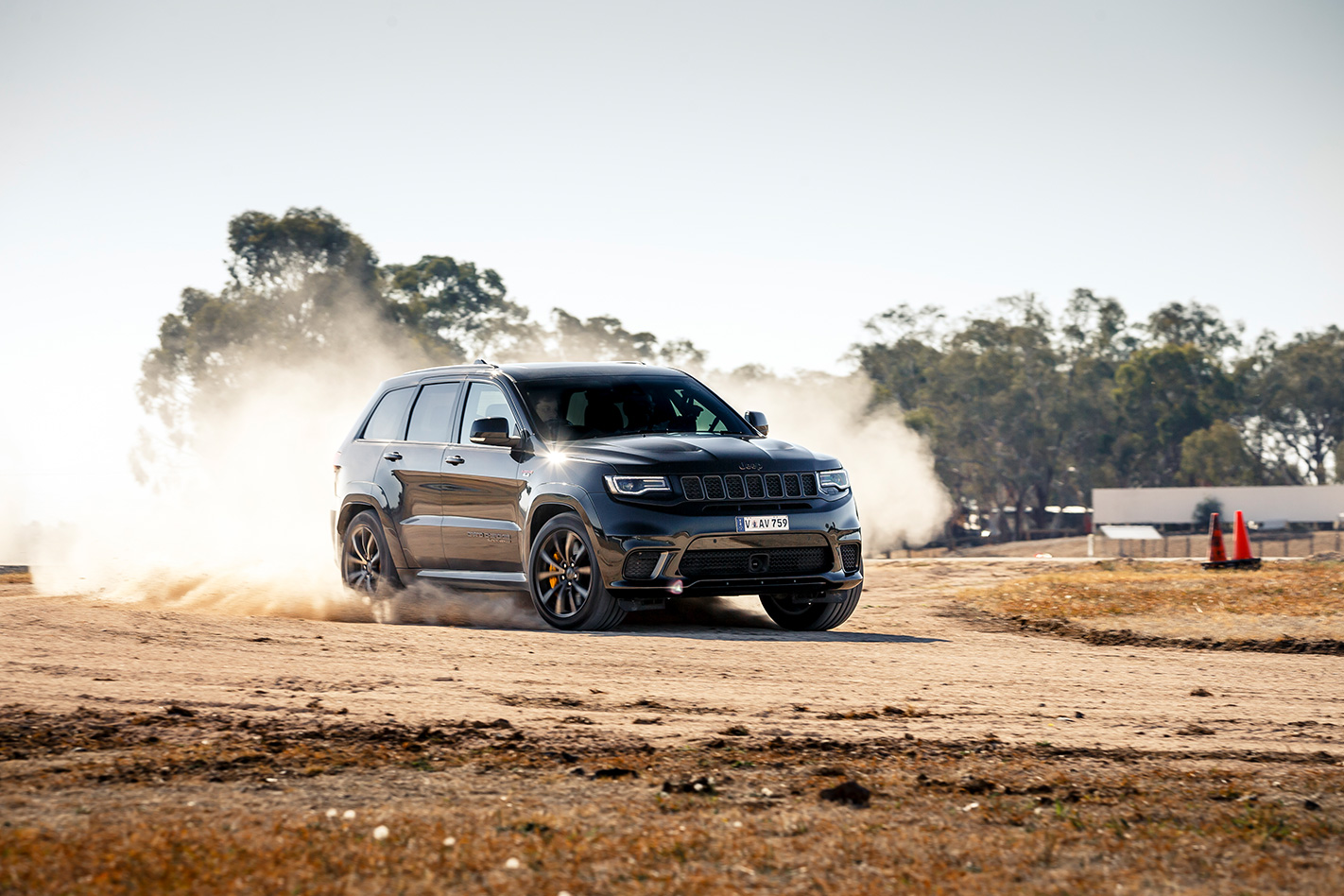
We’ll be giving you sneak peeks, teasers and some behind-the-scenes glimpses in the lead up across our social media network, live on the WhichCar Weekly podcast, all over these very web pages and hidden between the covers of our magazines.
With 50 percent more WhichCar TV accelerating your way, we promise it’s going to be worth the wait.
PCOTY is not all miles and smiles; it does involves what some of us can call work with a straight face. In fact, over the five days of car shuffling and testing this year, the Sydney crew put in more hours than George W Bush’s diction coach.
This feature was originally published in MOTOR’s April 2004 issue, and has been lightly edited for taste.
To give you an idea of the organisational effort involved, the arguments have already started over how next year’s PCOTY will be run – and which cars will get a guernsey.
Selecting the field of entrants should be simple enough, as the criteria can be explained in one sentence. To be a PCOTY contender, a car must have been launched, or significantly revised, in the year from January 1 to December 31, 2003.
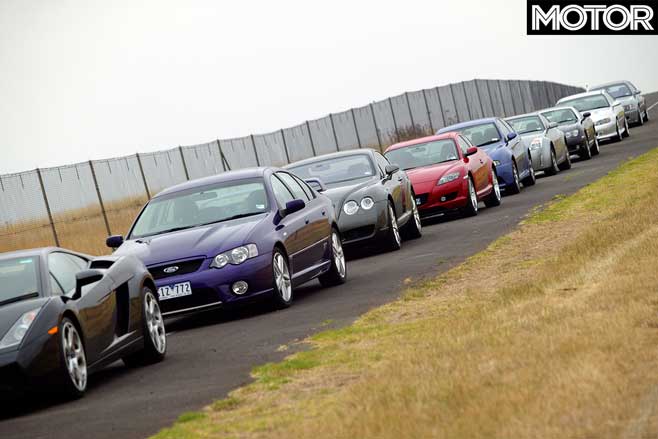
The problem is that so many cars launched in that period are not qualified to put the ‘P’ in PCOTY. In short, a contender for MOTOR’s prestigious award must set out to do more than just get you from A to B. It must put a smile on the driver’s face along the way – or at least attempt to.
So, after sparking more office debate than the spelling of Krusty the Clown’s real name, a long list of possibles was whittled down this year to a starting grid of 21. That list was further chopped to 19 by the no-show of both the Porsche 911 GT3 RS and the Peugeot 206 GTi 180. That still left us with 4890kW of power from a collection worth a cool $2,594,801.
It was clear from the start that things were going to be different this year. Last time out, the Lamborghini Murciélago failed to show and the Porsche Boxster S ran away with the award. This time Lambo surprised and delighted everyone by actually lending us a 367kW, $399,346 Gallardo – despite the risk of serious paint damage from the slobber dripped on it by all and sundry.
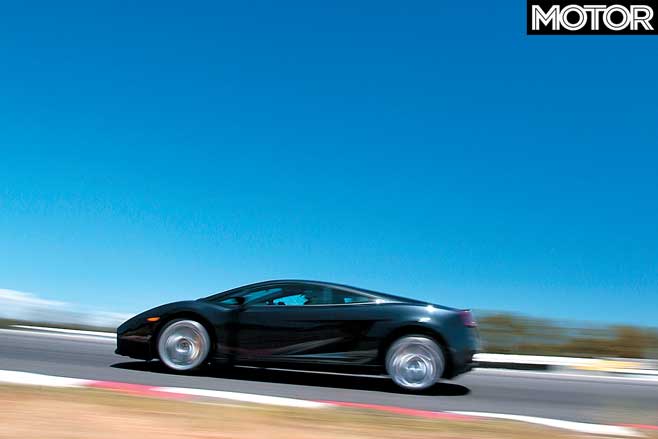
We could fairly safely predict that a Porsche wouldn’t be taking the 2004 award, because the absence of the 911 left the Stuttgart stormers with merely a contender for the UCOTY gong. Of course, the Cayenne would still have to beat the Chrysler Crossfire to be crowned Ugliest Car of the Year, in what would be a close contest.
Besides its luscious Lambo and the hall-on-wheels Bentley Continental GT, Audi appeared to be having a serious shot at the title. Could this be the year that finally pensioned off the old acronym joke: Always Underwhelming Despite Innovation?
‘Underwhelming’ is not a word that comes to mind after driving the wild wagon that is the 331kW twin-turbo V8 RS 6 – the fastest load carrier since the space shuttle. The same 4.2-litre V8, minus the turbochargers, had also been squeezed into the smaller, lighter S4 sedan. With 253kW and a six-speed manual, it certainly looks like a proper driver’s car on paper.
But just when you thought Audi could crawl out of the serious shadow cast by compatriot company BMW, along comes the track titan M3 CSL.
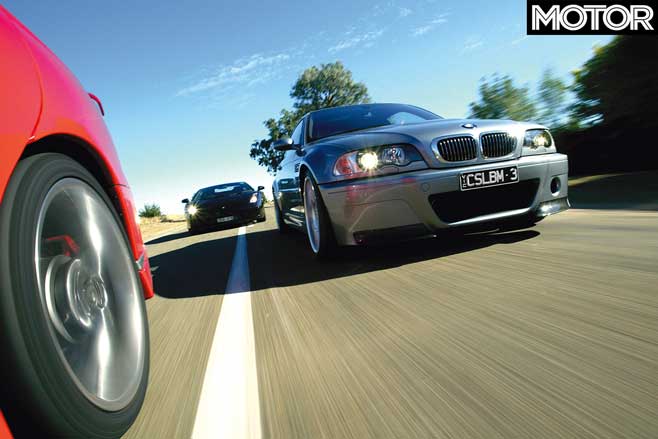
The 265kW CSL is a freak of machinature. It’s the equivalent of taking Ben Johnson at his pharmacologically pumped prime and replacing his bones with kevlar and his tendons with optic fibres.
Basically an already awesome M3 minus 110kg and wearing tyres so soft a supermodel could wash her face with them, the CSL feels slight, light and, with its suede steering wheel, just right. And it sounds like a Formula One car with a sore throat; must be the extra 13kW it gains over the boring old M3.
Somewhat lost in the head-shaking fuss over the CSL was BMW’s other entrant, the Z4, but there’s no rule that says a roadster can’t win PCOTY (does the Boxster ring a bell?), and it’s powered by the Munich men’s famously fabulous 3.0-litre six.
The Japanese would also mount a credible challenge, with Mazda’s 177kW rotary-powered RX-8 already proving to be a media darling and the 206kW 350Z Track from Nissan providing a very backable dark horse.
And what of the home team? Our Bang For Your Bucks winner, the Holden Astra SRi Turbo, would try its 2.0-litre heart out, as usual, and would be joined by its stablemate, the venerable Commodore SS.
But the serious Aussie muscle would be flexed by the FPV Falcon GT, with 290kW and a please-take-me-seriously starter button, the less powerful yet more aggressive 285kW HSV ClubSport R8 and the frankly frightening CSV Mondo GT370R, which registers high on the Richter scale when its 6.5-litre V8 unleashes 370kW of mumbo.
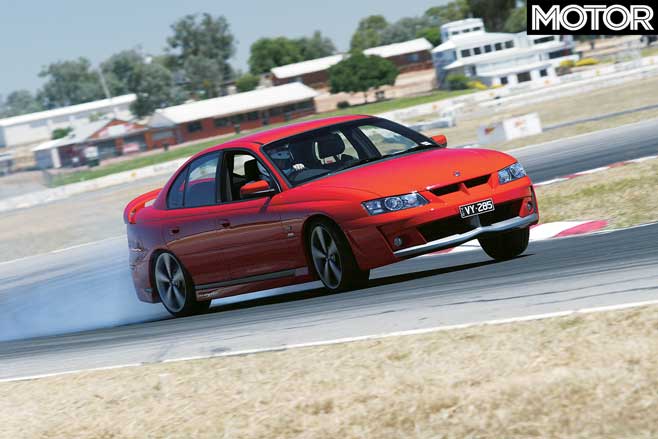
Careful observers might also notice a Volvo in this year’s PCOTY field. At first we all thought the driver had merely got lost on his way to a Grosby sale, but apparently this 220kW S60R is the most powerful export the Swedes have produced since ABBA.
The garish green Volvo certainly proved popular on the bum-numbing drive from Sydney to Melbourne on Australia Day, perhaps because no one felt out of place driving slowly in it. The following morning the full field and the seven PCOTY judges (including one very Lucky Bastard) were assembled at Avalon Airport for day one – a full menu of top-speed testing, 400m and 1000m runs and 0-100km/h sprints.
Traditionally, the airfield adventure seems to be held on the hottest day of the year, but this time Melbourne turned on its famous weather for us and we experienced every climatic condition short of raining frogs.
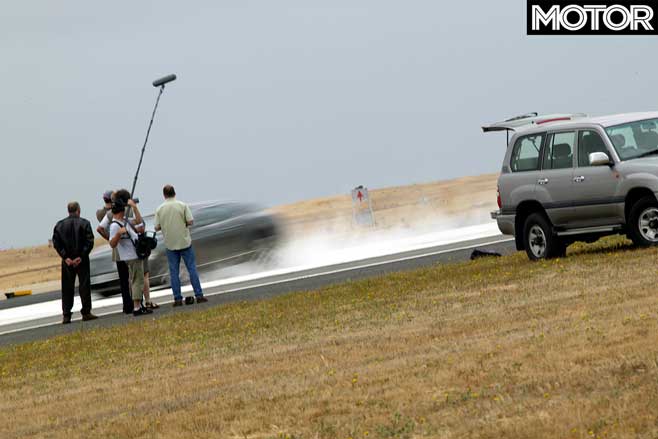
That evening the MOTOR convoy made the three-hour crawl to Benalla before an early start to day two at neighbouring Winton, where MOTOR columnist and V8 Supercar driver Cameron McConville went about setting a hot lap time in each of the 19 vehicles. At the same time, the other six judges also took each car for a spin on the track – literally in some cases.
From an observer’s point of view, Cam looks to be going as quickly as possible while the other judges seem to work on important questions like “How much tyre smoke is too much smoke?” and “How far sideways can the vehicle go while still progressing in a forward manner?”
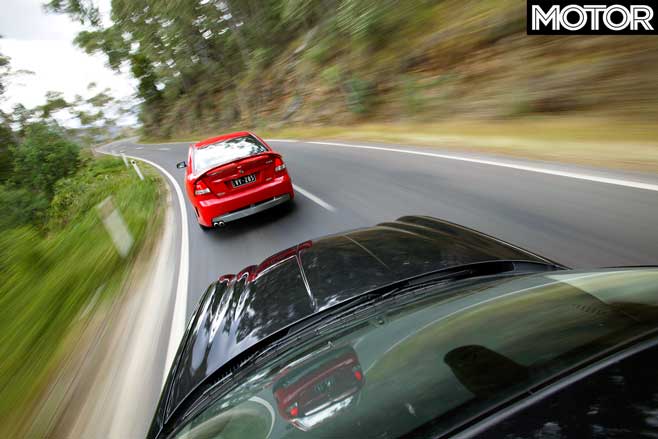
Day three saw the PCOTY crew going bush, deep into the King Valley for The Hillclimb – a 16km road loop that gives the judges a vital idea of what the cars are like on real roads, complete with hairpins, broken surfaces and occasional oncoming traffic.
It is at this stage that the various steeds jockeying for position can make a winning run. A car that posts a ballistic speed at Avalon and impresses McConville at Winton can be well and truly found out at The Hillclimb. And, after all, the real world is where the cars have to impress the most, because that’s where we all have to drive them.
Which brings us to the judging criteria. How do the judges compare vehicles as different as a Volvo and a Lamborghini?
Basically, they use a points system, with every car getting a mark out of 80. That 80 is broken down into a score out of 20 for performance (using data gathered from Avalon and Winton), a score out of 20 for dynamics (evaluating steering feel and response, agility, stability, braking feel and feedback, grip levels, ride quality and powerdown), another 20 for driveability (clutch and gearbox operation, smoothness and tractability, noise suppression, ergonomics, comfort and suitability for Australian roads), a mark out of 10 for design and function (styling, safety features, practicality and functionality) and a final score out of 10 for value (what you get for what you pay, as compared with other competitors in that market).
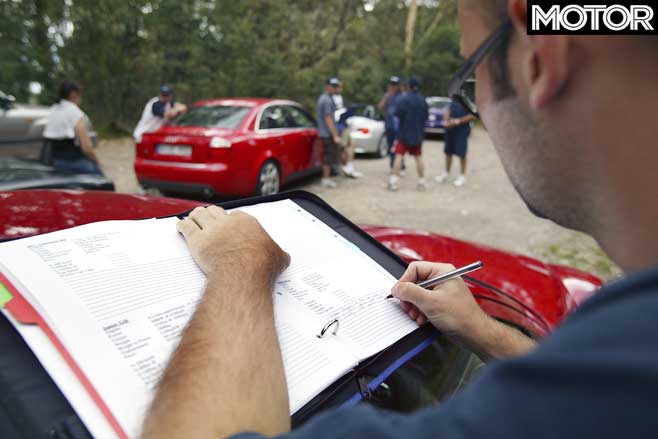
At the end of day three, the totals are added up and the top six point scorers go into the final voting stage. The judges are then sequestered in a room with padded walls to nut out the winner. Each judge votes for his personal first, second and third, and the car with the most votes is crowned MOTOR’s Performance Car of the Year 2004.
In the midst of all this, 19 cars are washed umpteen times and fuelled a dozen times, a lumbering army of helpers is somehow fed and accommodated and Marcus Hofmann, the unlucky bastard tasked with organising the whole thing, undergoes a small but memorable nervous breakdown. Oh, and somehow a Channel Nine crew films a PCOTY DVD.
Surely when the girlfriend sits through that, she’ll understand how much fun it all was.
PCOTY 2004 Contenders
Alfa Romeo 147 GTA – $59,950
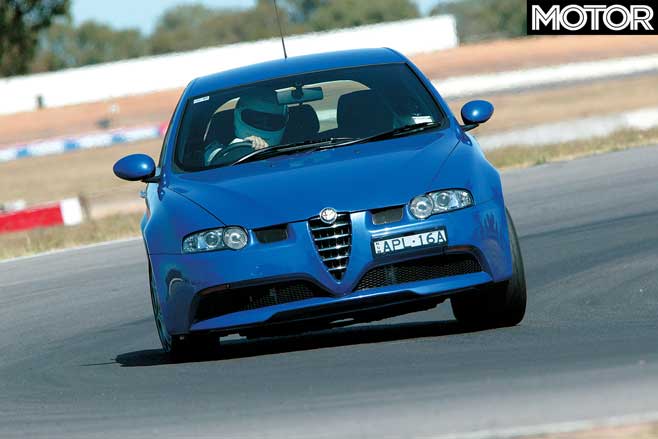
Last year the 156 GTA was a contender with its 184kW 3.2-litre V6. This year the same engine is back in the smaller, lighter 147. We’re fans of big engines in little bodies, but it had to come so we could laugh at people parking it. The baby Alfa has the biggest turning circle per inch of car ever.
Alfa Romeo 147 GTA Specifications Drive: Front-wheel Engine: 3.2-litre V6 DOHC 24v Power: 184kW @ 6200rpm Torque: 300Nm @ 4800rpm Bore x Stroke: 93.0mm x 78.0mm Weight: 1360kg Power/Weight: 135kW/tonne Transmission: Six-speed manual Suspension: double wishbones, coil springs, anti-roll bar (f);multi-link, coil springs, anti-roll bar (r) L/W/h: 4213/1764/1412mm Wheelbase: 2546mm Track: 1516mm/1504mm (f/r) Brakes: 305mm ventilated discs, two-piston calipers (f); 276mm solid discs, single-piston calipers (r) Wheels: 17 x 7.5in (f & r), alloy Tyres: Michelin Pilot Sport; 225/45 ZR17 (f & r) Fuel consumption: 17.48L/100km
Audi RS 6 – $225,100
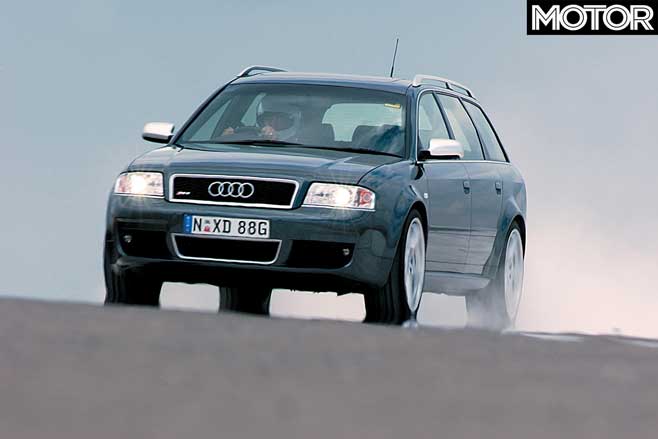
You don’t often see a station wagon lined up in the PCOTY field, but this 331kW twin-turbo 4.2-litre V8 shopping trolley paints faces with shock and awe as it leaves the traffic lights, and mere mortal cars, behind. It does it all so easily, and it also makes a sound like a caveful of bears snoring.
Audi RS6 Specifications Drive: All-wheel Engine: 4.2-litre V8 DOHC 40v twin-turbo Power: 331kW @ 5700rpm Torque: 560Nm @ 1950rpm Bore x Stroke: 84.5mm x 93.0mm Weight: 1865kg Power/Weight: 177kW/tonne Transmission: Five-speed automatic Suspension: Multi-link, coil springs, anti-roll bar (f); double wishbones, coil springs, anti-roll bar (r) L/W/h: 4852/1850/1452mm Wheelbase: 2759mm Track: 1578mm/1587mm (f/r) Brakes: 365mm ventilated discs, eight-piston calipers (f); 335mm ventilated discs, single-piston calipers (r) Wheels: 19 x 9.0in (f & r), alloy Tyres: Continental Sport Contact; 255/35 ZR19 (f & r) Fuel consumption: 24.36L/100km
Audi S4 – $129,500
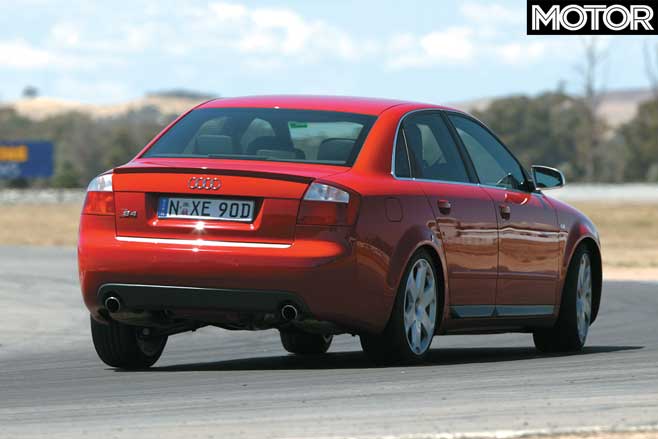
Audi has gone one up on BMW by shoehorning a 4.2-litre V8 into an A4 body, and with 253kW, all-wheel drive and a neat, sweet, petite body it should be a contender. The only problem it has is being so badly overshadowed by the RS 6. Well, that and Audi’s traditional love of understeer.
Audi S4 Specifications Drive: All-wheel Engine: 4.2-litre V8 DOHC 40v Power: 253kW @ 7000rpm Torque: 410Nm @ 3500rpm Bore x Stroke: 84.5mm x 93.0mm Weight: 1660kg Power/Weight: 158kW/tonne Transmission: Six-speed manual Suspension: Double wishbone, coil springs, anti-roll bar (f); multi-link, coil springs, anti-roll bar (r) L/W/h: 4575/1781/1415mm Wheelbase: 2651mm Track: 1516mm/1512mm (f/r) Brakes: 340mm ventilated discs, four-piston calipers (f); 300mm ventilated discs, two-piston calipers (r) Wheels: 18 x 8.0in (f & r), alloy Tyres: Bridgestone Potenza; 235/40 ZR18 (f & r) Fuel consumption: 19.66L/100km
Bentley Continental GT – $379,995
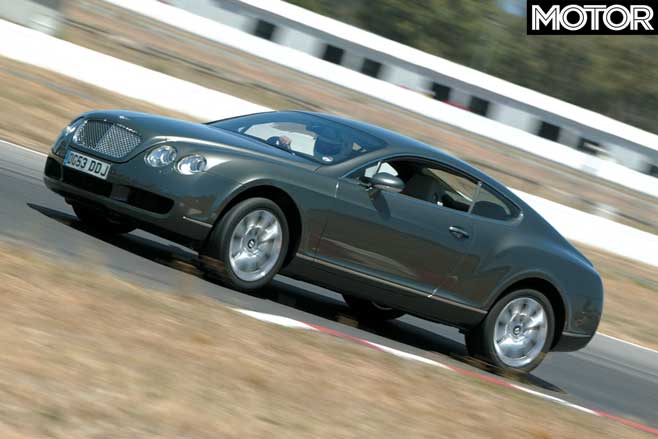
Speaking of Audis, the Bentley’s 411kW twin-turbo W12 engine is enough to mark it down as a genuine contender, but having to haul around 2410kg of felled forest and a whole slaughter yard of dead cow makes it a genuine engineering marvel. We knew it would go, but would it ever stop?
Bentley Continental GT Specifications Drive: All-wheel Engine: 6.0-litre W12 DOHC 48v twin-turbo Power: 411kW @ 6200rpm Torque: 650Nm @ 1600rpm Bore x Stroke: 84.0mm x 90.2mm Weight: 2410kg Power/Weight: 170kW/tonne Transmission: Six-speed automatic Suspension: Double wishbones, air springs, anti-roll bar (f); multi-link, air springs, anti-roll bar (r) L/W/h: 4807/1918/1390mm Wheelbase: 2745mm Track: 1623mm/1607mm (f/r) Brakes: 405mm ventilated discs, two-piston calipers (f); 365mm ventilated discs, single-piston calipers (r) Wheels: 19 x 9.0in (f & r), alloy Tyres: Pirelli P Zero Rosso; 275/40 ZR19 (f & r) Fuel consumption: 28.65L/100km
BMW M3 CSL – $210,000
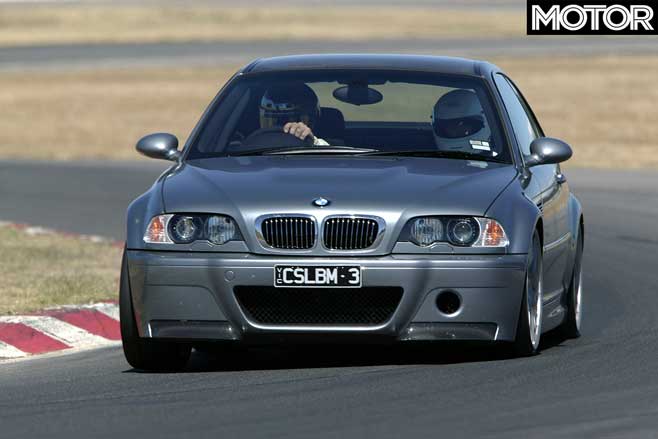
How do you make an M3 better? Replace its body parts with carbon fibre. Oh, and drag an extra 13kW from the 3.2-litre six. The M3 CSL has 265kW yet weighs just 1385kg. Its tyres are stickier than a donut-eating copper’s fingers. It was the pick to set the pace at Winton, but how would it go on the road?
BMW M3 CSL Specifications Drive: Rear-wheel Engine: 3.2-litre inline-six DOHC 24v Power: 265kW @ 7900rpm Torque: 370Nm @ 4900rpm Bore x Stroke: 91.0mm x 87.0mm Weight: 1385kg Power/Weight: 191kW/tonne Transmission: Six-speed automated manual Suspension: MacPherson struts, coil springs, anti-roll bar (f); multi-link, coil springs, anti-roll bar (r) L/W/h: 4492/1780/1369mm Wheelbase: 2729mm Track: 1518mm/1525mm (f/r) Brakes: 345mm ventilated & cross-drilled discs, single-piston calipers (f); 328mm ventilated & cross-drilled discs, single-piston calipers (r) Wheels: 19 x 8.5in (f), 19 x 9.5in (r); alloy Tyres: Michelin Pilot Sport Cup; 235/35 ZR19 (f), 265/30 ZR19 (r) Fuel consumption: 20.39L/100km
BMW Z4 – $92,000
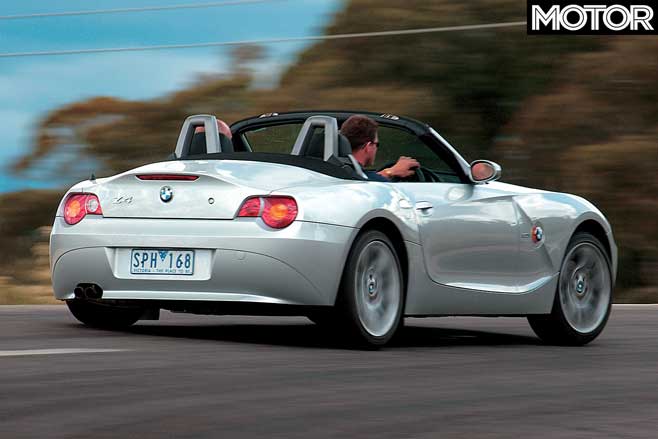
The Z3 was a hairdresser’s car. The Z4 seems to have been styled by a hairdresser and machined with a can opener, but its 170kW 3.0-litre six-cylinder powerplant has enough power to blow your hair back. And, as it proved on Bang For Your Bucks, it’s now got a proper chassis under it.
BMW Z4 Specifications Drive: Rear-wheel Engine: 3.0-litre inline-six DOHC 24v Power: 170kW @ 5900rpm Torque: 300Nm @ 3500rpm Bore x Stroke: 84.0mm x 89.6mm Weight: 1365kg Power/Weight: 125kW/tonne Transmission: Six-speed manual Suspension: coil over struts, coil springs, anti-roll bar (f); multi-link, coil springs, anti-roll bar (r) L/W/h: 4091/1781/1299mm Wheelbase: 2495mm Track: 1473mm/1523mm (f/r) Brakes: 300mm ventilated discs, single-piston calipers (f); 294mm ventilated discs, single-piston calipers (r) Wheels: 18 x 8.0in (f & r), alloy Tyres: Bridgestone Potenza RE040; 225/40 ZR18 (f), 255/35 ZR18 (r) Fuel consumption: 18.05L/100km
Chrysler Crossfire – $69,990
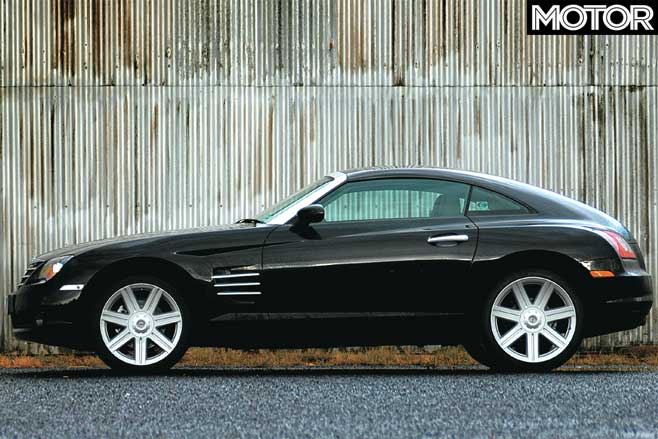
It’s the ugliest thing to come out of America since Michael Jackson’s last four noses. It’s got a 3.2-litre V6 that produces an un-American power figure of just 160kW. It’s got a lot of Benz SLK under it. If you did something to annoy Hermie, you got to drive the Crossfire, and we laughed at you.
Chrysler Crossfire Specifications Drive: Rear-wheel Engine: 3.2-litre V6 SOHC 18v Power: 160kW @ 5700rpm Torque: 310Nm @ 3000rpm Bore x Stroke: 89.9mm x 84.0mm Weight: 1388kg Power/Weight: 115kW/tonne Transmission: Six-speed manual Suspension: double wishbones, coil springs, anti-roll bar (f); multi-link, coil springs, anti-roll bar (r) L/W/h: 4059/1766/1305mm Wheelbase: 2400mm Track: 1482mm/1478mm (f/r) Brakes: 300mm ventilated discs, single-piston calipers (f); 278mm ventilated discs, single-piston calipers (r) Wheels: 18 x 7.5in (f), 19 x 9.0in (r), alloy Tyres: Michelin Pilot Sport 2; 225/40 ZR18 (f), 255/35 ZR19 (r) Fuel consumption: 13.38L/100km
CSV Mondo GT370R – $110,000
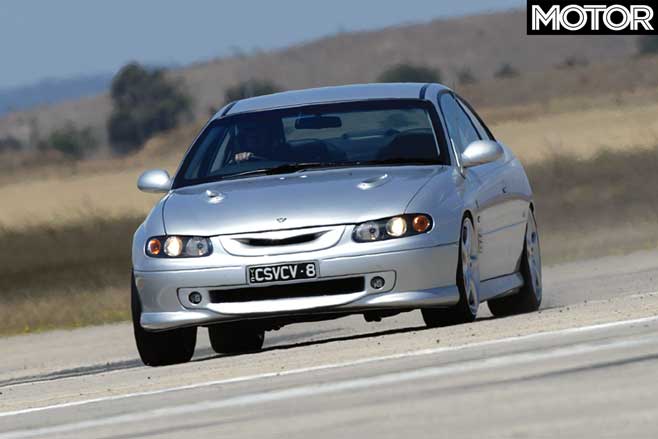
Some people go to horror movies to get scared; we prefer to drive the 370kW 6.5-litre V8 Mondo Rock. It sounds like a small-scale nuclear detonation at idle, and when given the boot it makes a noise like the end of the world. As McConkin succinctly put it, “it builds character”.
CSV Mondo GT370R Specifications Drive: Rear-wheel Engine: 6.5-litre V8 pushrod 16v Power: 370kW @ 5800rpm Torque: 580Nm @ 3500rpm Bore x Stroke: 99.1mm x 104.8mm Weight: 1660kg Power/Weight: 223kW/tonne Transmission: Six-speed manual Suspension: MacPherson struts, coil springs, anti-roll bar (f); semi-trailing arms, coil springs, anti-roll bar (r) L/W/h: 4877/1842/1400mm Wheelbase: 2788mm Track: 1558mm/1574mm (f/r) Brakes: 356mm ventilated & cross-drilled discs, six-piston calipers (f); 356mm ventilated & cross-drilled discs, four-piston calipers (r) Wheels: 19 x 9.0in (f & r), alloy Tyres: Pirelli P Zero Rosso; 255/30 ZR19 (f), 275/30 ZR19 (r) Fuel consumption: 22.49L/100km
FPV Falcon GT – $59,850
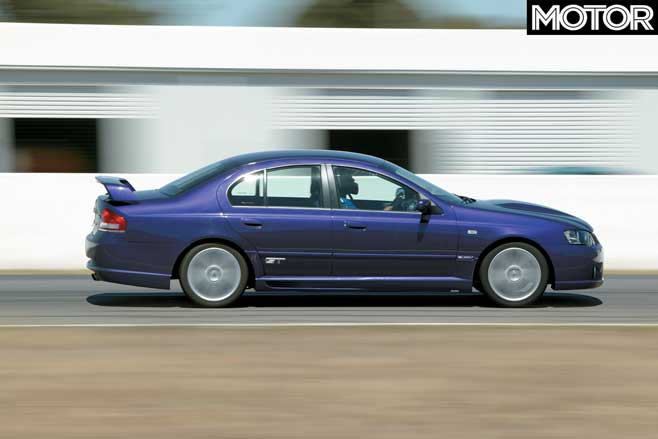
The legend returns, or something… with a 290kW, 520Nm 5.4-litre V8 and a starter button – just in case you didn’t know it was special from the size of the bonnet bulge. And it sounds sweet, inside and out. In this company it looks like a bargain, but can it keep up with the Euro monsters?
FPV Falcon GT Specifications Drive: Rear-wheel Engine: 5.4-litre V8 32v Power: 290kW @ 5500rpm Torque: 520Nm @ 4500rpm Bore x Stroke: 95.2mm x 105.8mm Weight: 1835kg Power/Weight: 158kW/tonne Transmission: Five-speed manual Suspension: Double wishbones, coil springs, anti-roll bar (f); multi-link, coil springs, anti-roll bar (r) L/W/h: 4920/1864/1435mm Wheelbase: 2829mm Track: 1560mm/1575mm (f/r) Brakes: 325mm grooved & ventilated discs, two-piston calipers (f); 303mm solid & grooved discs, single-piston calipers (r) Wheels: 18 x 8.0in (f & r), alloy Tyres: Dunlop SP Sport 9000; 245/40 ZR18 (f & r) Fuel consumption: 20.48L/100km
Holden Astra SRi Turbo – $36,990
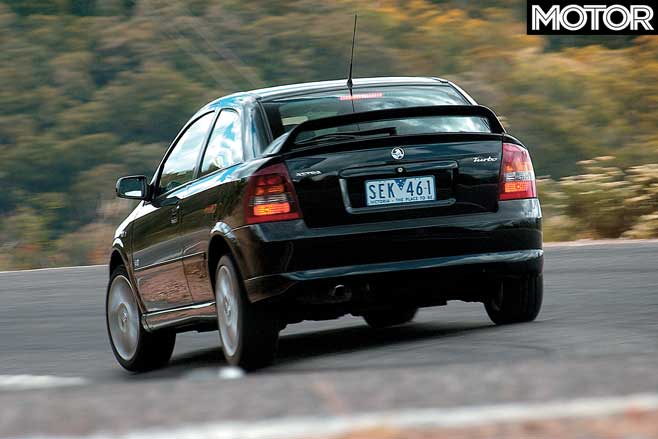
Our Bang For Your Bucks champ was always up against it down the strip at Avalon and around Winton. It’s a comparative popgun, with a 147kW 2.0-litre four-cylinder engine, but its twisty-road talent might just keep it in the hunt at the Hillclimb. It surprised ’em once; can it do it again?
Holden Astra SRi Turbo Specifications Drive: Front-wheel Engine: 2.0-litre inline-four DOHC 16v turbo Power: 147kW @ 5600rpm Torque: 250Nm @ 4650rpm Bore x Stroke: 86.0mm x 86.0mm Weight: 1282kg Power/Weight: 115kW/tonne Transmission: Five-speed manual Suspension: MacPherson struts, coil springs, anti-roll bar (f); torsion beam, coil springs, anti-roll bar (r) L/W/h: 4110/1709/1425mm Wheelbase: 2606mm Track: 1467mm/1456mm (f/r) Brakes: 308mm ventilated discs, single-piston calipers (f); 264mm solid discs, single-piston calipers (r) Wheels: 17 x 7.5in (f & r), alloy Tyres: Dunlop SP Sport 8000E; 215/40 ZR17 (f & r) Fuel consumption: 14.49L/100km
Holden Commodore SS – $49,990
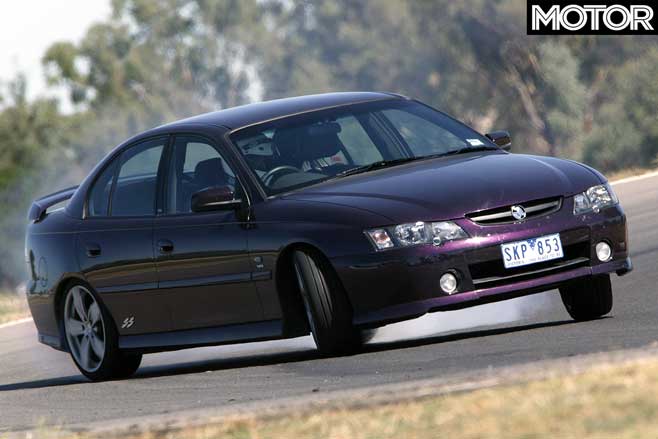
The car most people can actually afford deserves a PCOTY run on its numbers alone, with a 5.7-litre old-spec pushrod V8 pumping out a hefty 245kW for under $50,000. And we wanted to see if we could finally get one to the PCOTY finish without it feeling like a soggy, tired, steaming bucket of poo.
Holden Commodore SS Specifications Drive: Rear-wheel Engine: 5.7-litre V8 pushrod 16v Power: 245kW @ 5600rpm Torque: 465Nm @ 4000rpm Bore x Stroke: 99.0mm x 92.0mm Weight: 1658kg Power/Weight: 148kW/tonne Transmission: Six-speed manual Suspension: MacPherson struts, coil springs, anti-roll bar (f); semi-trailing arms, coil springs, anti-roll bar (r) L/W/h: 4965/1842/1450mm Wheelbase: 2788mm Track: 1569mm/1587mm (f/r) Brakes: 296mm ventilated discs, two-piston calipers (f); 286mm solid discs, single-piston calipers (r) Wheels: 18 x 8.0in (f & r), alloy Tyres: Bridgestone Potenza; 235/40 ZR18 (f & r) Fuel consumption: 19.25L/100km
HSV ClubSport R8 – $69,150
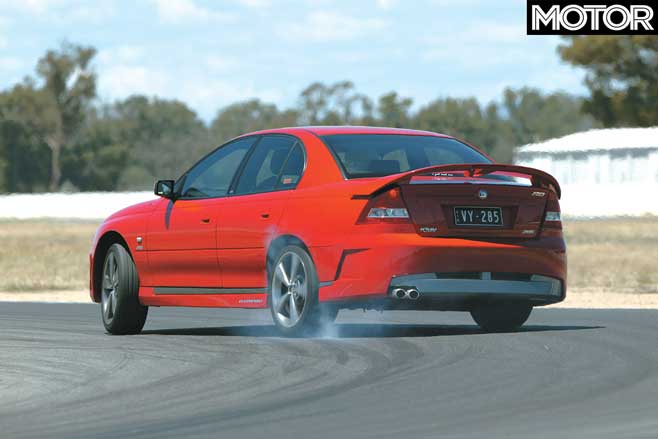
A local boy with a real chance of repelling the overseas invaders, the Clubbie R8’s 5.7-litre V8 is a little more refined than the SS and, at 285kW, a lot more powerful. And they say they’ve fixed it, so – who knows? – this year the power steering pump might survive a day at Winton.
HSV ClubSport R8 Specifications Drive: Rear-wheel Engine: 5.7-litre V8 pushrod 16v Power: 285kW @ 5800rpm Torque: 510Nm @ 4800rpm Bore x Stroke: 99.0mm x 92.0mm Weight: 1696kg Power/Weight: 168kW/tonne Transmission: Six-speed manual Suspension: MacPherson struts, coil springs, anti-roll bar (f); semi-trailing arms with toe-links, coil springs, anti-roll bar (r) L/W/h: 4890/1842/1450mm Wheelbase: 2788mm Track: 1558mm/1574mm (f/r) Brakes: 343mm ventilated & cross-drilled discs, four-piston calipers (f); 315mm ventilated & cross-drilled discs, four-piston calipers (r) Wheels: 19 x 9.0in (f & r), alloy Tyres: PIrelli P Zero; 245/35 ZR19 (f & r) Fuel consumption: 21.95L/100km
Jaguar XJR – $219,000
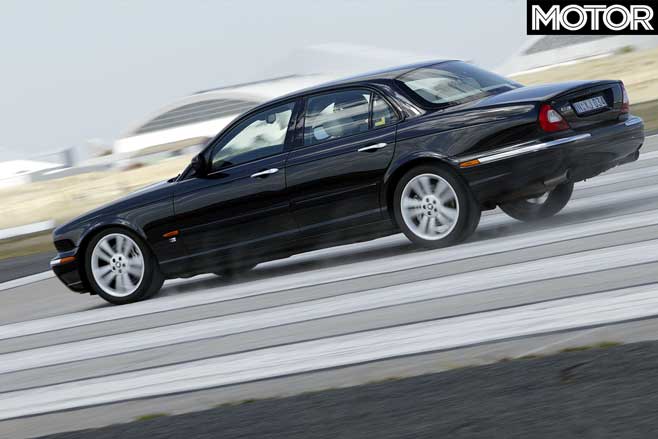
A car that looks and feels so much like a limo (it even has a ‘valet mode’) might seem out of place at PCOTY, until you look under the bonnet. The 4.2-litre supercharged V8 produces a thumping 298kW and makes the Jag a very quick car indeed – at least in a straight line.
Jaguar XJR Specifications Drive: Rear-wheel Engine: 4.2-litre V8 DOHC 32v supercharger Power: 298kW @ 6100rpm Torque: 553Nm @ 3500rpm Bore x Stroke: 86.0mm x 90.0mm Weight: 1665kg Power/Weight: 179kW/tonne Transmission: Six-speed automatic Suspension: Double wishbones, air springs, anti-roll bar (f); multi-link, air springs, anti-roll bar (r) L/W/h: 5024/1880/1448mm Wheelbase: 3034mm Track: 1557mm/1547mm (f/r) Brakes: 365mm ventilated discs, four-piston calipers (f); 330mm solid discs, four-piston calipers (r) Wheels: 19 x 8.5in (f & r), alloy Tyres: Michelin Pilot; 255/40 ZR19 (f & r) Fuel consumption: 16.99L/100km
Lamborghini Gallardo – $399,346
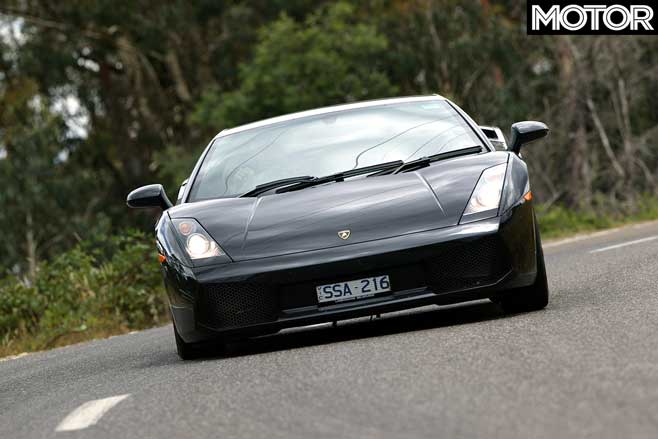
Why is it here? It starts with an ‘L’ and has a 5.0-litre V10 that makes 367kW and a noise like Satan’s rottweiler after it’s sat on a hot pitchfork. But frankly, the Gallardo is such a stunning beauty that it could have made PCOTY on looks alone. Turns both women and men weak at the knees.
Lamborghini Gallardo Specifications Drive: All-wheel Engine: 5.0-litre V10 DOHC 40v Power: 367kW @ 7800rpm Torque: 510Nm @ 4500rpm Bore x Stroke: 82.5mm x 92.8mm Weight: 1450kg Power/Weight: 253kW/tonne Transmission: Six-speed manual Suspension: Double wishbones, coil springs, anti-roll bar (f & r) L/W/h: 4300/1900/1165mm Wheelbase: 2560mm Track: 1622mm/1592mm (f/r) Brakes: 365mm ventilated & cross-drilled discs, eight-piston calipers (f); 335mm ventilated & cross-drilled discs, four-piston calipers (r) Wheels: 19 x 8.5in (f), 19 x 11.0in (r); alloy Tyres: Pirelli P Zero Rosso; 235/30 ZR19 (f), 295/30 ZR19 (r) Fuel consumption: 30.5L/100km
Mazda RX-8 – $62,610
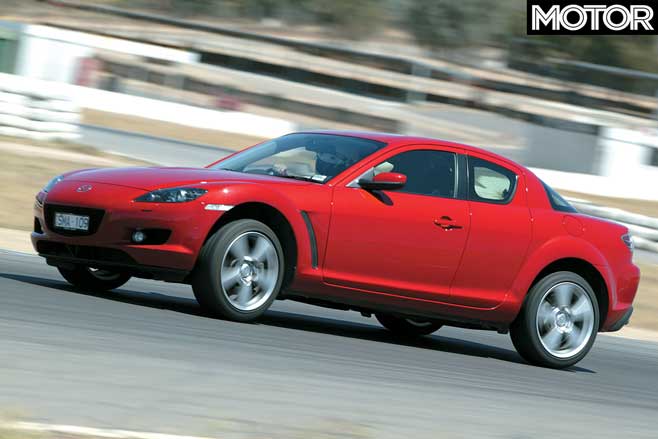
Performance without compromise, or so they say. A worthy successor to the RX-7 that has the added bonus of being able to carry three passengers in something resembling comfort. The 1.3-litre rotary rocket produces 177kW at a stratospheric 8200rpm. Just don’t buy the auto.
Mazda RX-8 Specifications Drive: Rear-wheel Engine: 1.3-litre twin-rotor Power: 177kW @ 8200rpm Torque: 211Nm @ 5500rpm Compression Ratio: 10.0:1 Weight: 1354kg Power/Weight: 131kW/tonne Transmission: Six-speed manual Suspension: Double wishbones, coil springs, anti-roll bar (f); multi-link, coil springs, anti-roll bar (r) L/W/h: 4435/1770/1340mm Wheelbase: 2700mm Track: 1500mm/1505mm (f/r) Brakes: 323mm ventilated discs, single-piston calipers (f); 302mm ventilated discs, single-piston calipers (r) Wheels: 18 x 8.0in (f & r), alloy Tyres: Bridgestone Potenza; 225/45 ZR18 (f & r) Fuel consumption: 17.7L/100km
Nissan 350Z Track – $65,990
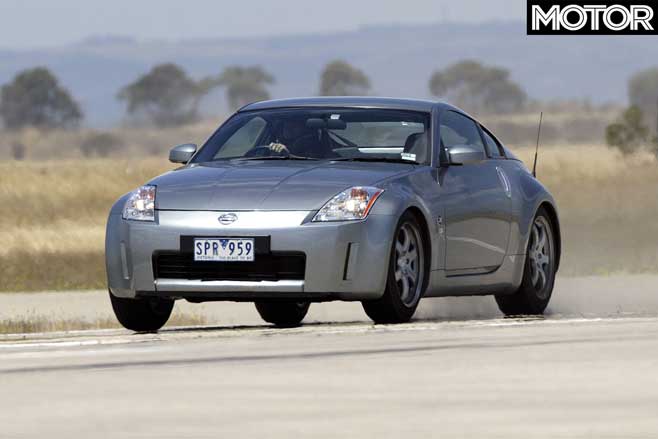
Nissan has an enviable record at PCOTY, having won in 2001 with the delectable 200SX. The 350Z is its spiritual successor. Its performance figures are impressive beyond the 206kW 3.5-litre V6’s outputs. It stunned us with BFYB lap times, so we know it’ll be quick at Winton.
Nissan 350Z Track Specifications Drive: Rear-wheel Engine: 3.5-litre V6 DOHC 24v Power: 206kW @ 6200rpm Torque: 363Nm @ 4800rpm Bore x Stroke: 95.5mm x 81.1mm Weight: 1453kg Power/Weight: 142kW/tonne Transmission: Six-speed manual Suspension: Multi-link, coil springs, anti-roll bar (f); multi-link, coil springs, anti-roll bar (r) L/W/h: 4298/1816/1318mm Wheelbase: 2649mm Track: 1534mm/1544mm (f/r) Brakes: 324mm ventilated discs, four-piston calipers (f); 322mm ventilated discs, two-piston calipers (r) Wheels: 18 x 8.0in (f & r), alloy Tyres: Bridgestone Potenza RE040; 225/45 R18 (f), 245/45 R18 (r) Fuel consumption: 17.41L/100km
Porsche Cayenne Turbo – $203,400
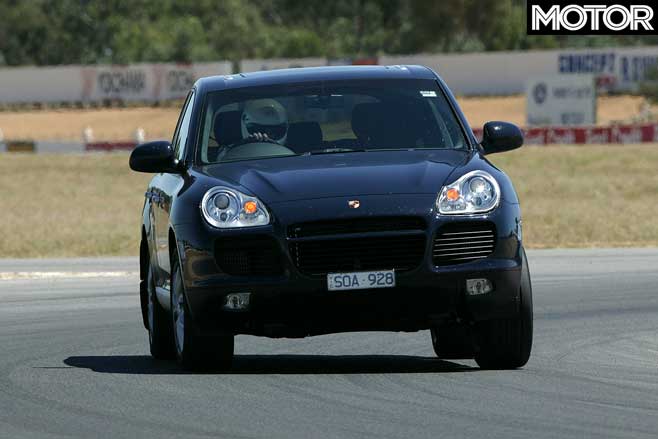
Well, it’s got the right badge, and a 331kW twin-turbo 4.5-litre V8 certainly looks good on paper, but this is one Porsche that’s never going to win a beauty contest, or a PCOTY for that matter. We figured that if the BMW X5 4.6iS was the best of the genre so far, surely Porsche should do it better?
Porsche Cayenne Turbo Specifications Drive: All-wheel Engine: 4.5-litre V8 DOHC 32v twin-turbo Power: 331kW @ 6000rpm Torque: 620Nm @ 2250-4750rpm Bore x Stroke: 93.0mm x 83.0mm Weight: 2355kg Power/Weight: 141kW/tonne Transmission: Six-speed automatic Suspension: Double wishbones, air springs, anti-roll bar (f); multi-link, air springs, anti-roll bar (r) L/W/h: 4786/1928/1699mm Wheelbase: 2855mm Track: 1647mm/1662mm (f/r) Brakes: 350mm ventilated discs, six-piston calipers (f); 320mm ventilated discs, four-piston calipers (r) Wheels: 18 x 8.0in (f & r), alloy Tyres: Pirelli P Zero; 255/55 ZR18 (f & r) Fuel consumption: 18.96L/100km
Subaru Liberty GT – $52,990
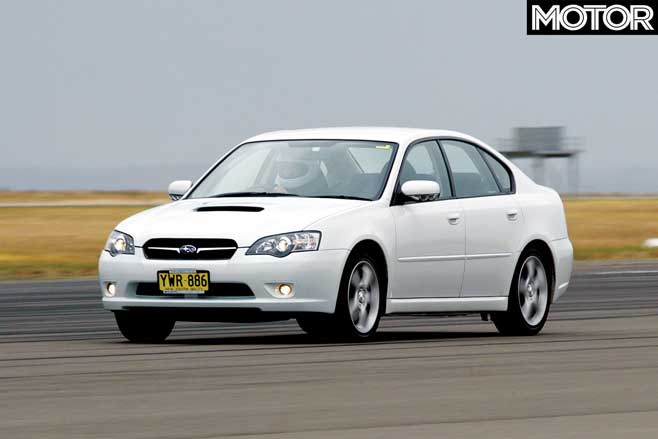
No Rex and no STi this year, but Subaru’s trusty 2.0-litre flat four turns up this time in the Liberty, producing 180kW. Shame about the five-speed auto. Bigger shame that it turned up with no dipstick and spat oil willy nilly. The GT is what the B4 used to be, so that’s got to be worth a fang.
Subaru Liberty GT Specifications Drive: All-wheel Engine: 2.0-litre flat-four DOHC 16v Power: 180kW @ 6400rpm Torque: 310Nm @ 2400rpm Bore x Stroke: 92.0mm x 75.0mm Weight: 1440kg Power/Weight: 125kW/tonne Transmission: Five-speed automatic Suspension: Coil over struts, lower alloy arm, anti-roll bar (f); longitudinal and transverse arms, coil springs, anti-roll bar (r) L/W/h: 4665/1730/1425mm Wheelbase: 2670mm Track: 1495mm/1490mm (f/r) Brakes: 316mm ventilated discs, two-piston calipers (f); 290mm ventilated discs, single-piston calipers (r) Wheels: 17 x 7.0in (f & r), alloy Tyres: Bridgestone Potenza RE050; 215/45 ZR17 (f & r) Fuel consumption: 12.06L/100km
Volvo S60 R – $98,950
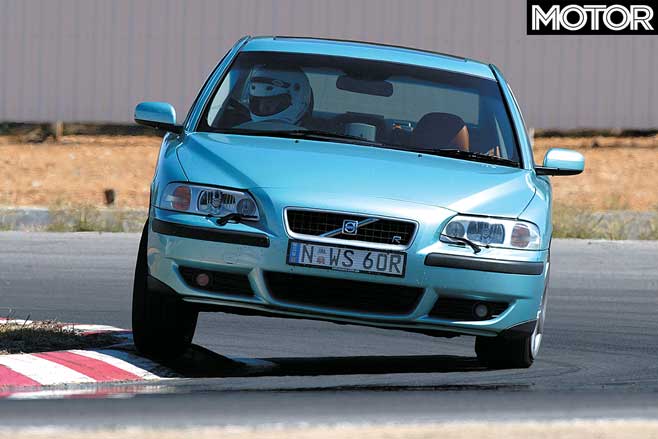
No, really. A Volvo. At PCOTY. With 220kW from a 2.5-litre turbocharged inline five, this is the most firebreathing engine Volvo has ever produced. Makes you wish you were a bloody Volvo driver, or a lobotomy patient – same difference. Power is one thing, but do they handle yet?
Volvo S60 R Specifications Drive: All-wheel Engine: 2.5-litre inline-5 DOHC 20v turbo Power: 220kW @ 525pm Torque: 400Nm @ 1950-5250rpm Bore x Stroke: 83.0mm x 93.2mm Weight: 1713kg Power/Weight: 128kW/tonne Transmission: Six-speed manual Suspension: Coil springs struts, lower link, anti-roll bar (f); multi-link, coil springs, anti-roll bar (r) L/W/h: 4606/1804/1431mm Wheelbase: 2715mm Track: 1557mm/1542mm (f/r) Brakes: 330mm ventilated discs, four-piston calipers (f & r) Wheels: 18 x 8.0in (f & r), alloy Tyres: Pirelli P Zero Rosso; 235/40 ZR18 (f & r) Fuel consumption: 17.58L/100km
PCOTY 2004 Judges panel
Michael Taylor
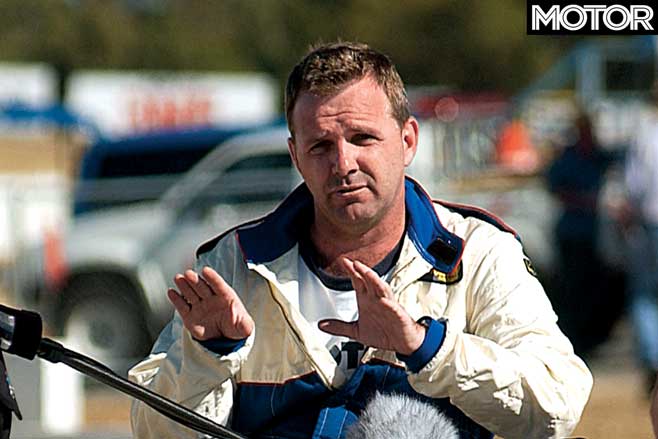
The editor, so he kept the keys to the Gallardo. Like any general, MT is expert at marshalling resources, which is why he didn’t write this. MT is from Goondiwindi, which is why he’s so sadly lacking in the PC gene. He’s had stints at The Chronicle, The Courier-Mail and Sydney’s Daily Telegraph. Of course, as editor he also signs our pay cheques. Did I mention how attractive he is?
Jesse Taylor
The deputy editor, which meant he got the keys to the CSL, or the RS 6. Jesse has a passionate love for both basketball shoes and BMW M3s. He has a large collection of just one of these things. An experienced motoring scribe and former magazine editor, Jesse is also famous for his volcanic ability to blow up, but he didn’t hit anyone this year. Not that the police ever heard about.
Dean Evans
The Brendon Julian of MOTOR. The Australians took Julian to the World Cup in 1999 as nightclub bait. But while Julian attracted women with his looks, Deano’s a race driver; he has a shiny helmet. He could race F1, but only if he could carry a woman in the car, as this gives him a second a lap. Still, Dean is a bit slow at maths, giving one car an impressive 81 out of a possible 80 this year.
David Morley
A mop of hair with a man attached. Renowned for his excoriating putdowns, “Fabio – The World’s Most Beautiful Man” strikes fear into car companies, as they know he can pull apart a car with his tongue, or his keyboard, or something. He’s also capable of mounting a convincing argument that Tiptronic-style gearboxes and speed cameras are both the work of the devil.
Greg Kable
Like Stuart Appleby – an Aussie who’s a success overseas, and returns occasionally to remind himself what he’s missing. In Greg’s case, his reminder was covered in hair and it hit the Pajero support vehicle he was driving. Greg rarely experiences roo strike in Stuttgart. MOTOR’s European correspondent, he’s from good stock; his father Mike was the doyen of the industry.
Cameron McConville
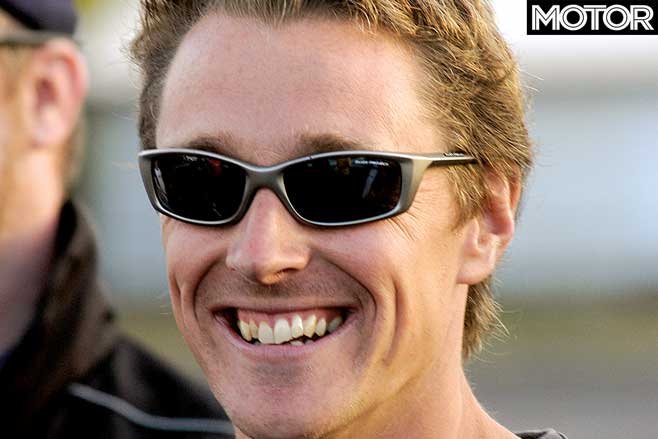
He’s something all the other judges want to be when they grow up: a professional racing driver. Despite being a Holden man, he avoids being one-eyed when asked to drive Ford product. McConkin gives superb, instant feedback, and also sets the official lap times at Winton, while the other judges are mucking around. He also fancies himself as a columnist. That’ll be the irony, then.
Strap-on
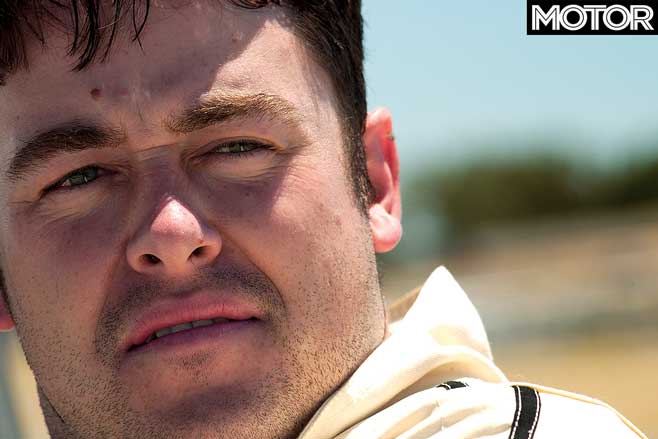
Wondering why you weren’t chosen as Lucky Bastard, right? Well, Mike Cass works for Lesbian Creations, or so he said. He also said his wife had left him for a woman, on their anniversary, and, worse than that, she’d taken his beloved TS50 with her. He was playing for sympathy, but he came to the wrong place. He is now called Strap-On – the bit lesbians play with when they’re bored…
Follow PCOTY 2004
– Drag Testing – Track Test – Road Test – Reader’s Take – Elimination Round – 6th Place – 5th Place – 4th Place – 3rd Place – 2nd Place – PCOTY 2004 WINNER – Behind the Scenes
The Australian Automotive Aftermarket Association (AAAA) has officially opened the first of two new state of the art Automotive Innovation Centres in Victoria.
That means local businesses who sign up as AIC members can gain access to a fleet of vehicles as well as a perpetually-increasing portfolio and catalogue of extensive 3D models and data from which they can design, prototype and test new components for the Australian market – all with the in-house assistance and expertise of the AIC.
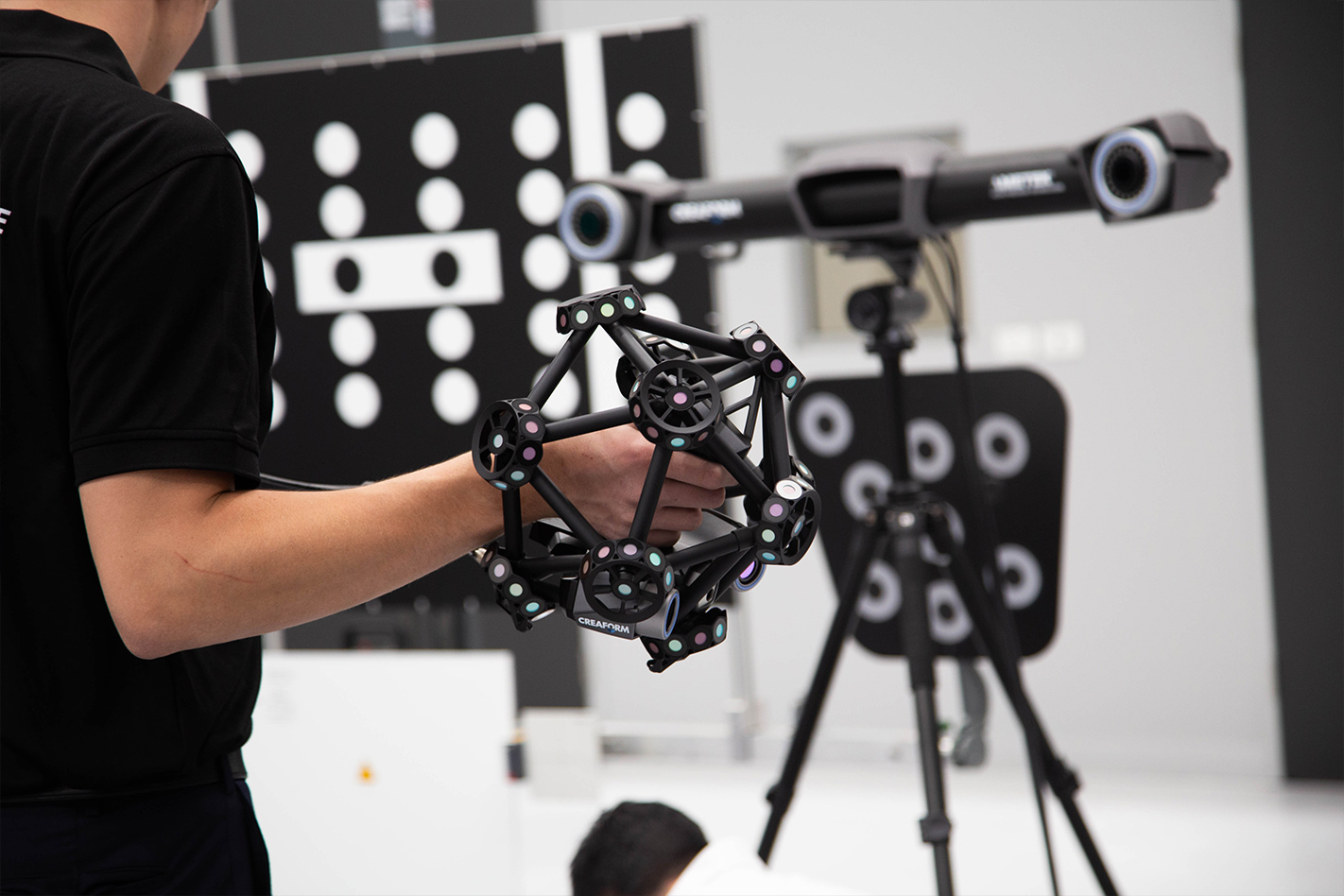
By having access to a huge library of digital design data, the goal of the AIC is to help speed up development of vehicle-specific aftermarket parts, be they bullbars, bodykits, or cupholders.
The Melbourne location (situated in Mulgrave, south-east of the city) was launched last week, and is the first of two intended AICs; the second of which will be based in South Australia with operations beginning in 2020. Heavily inspired by SEMA Garage in the United States, the AIC model seeks to mirror the success of its American counterpart.
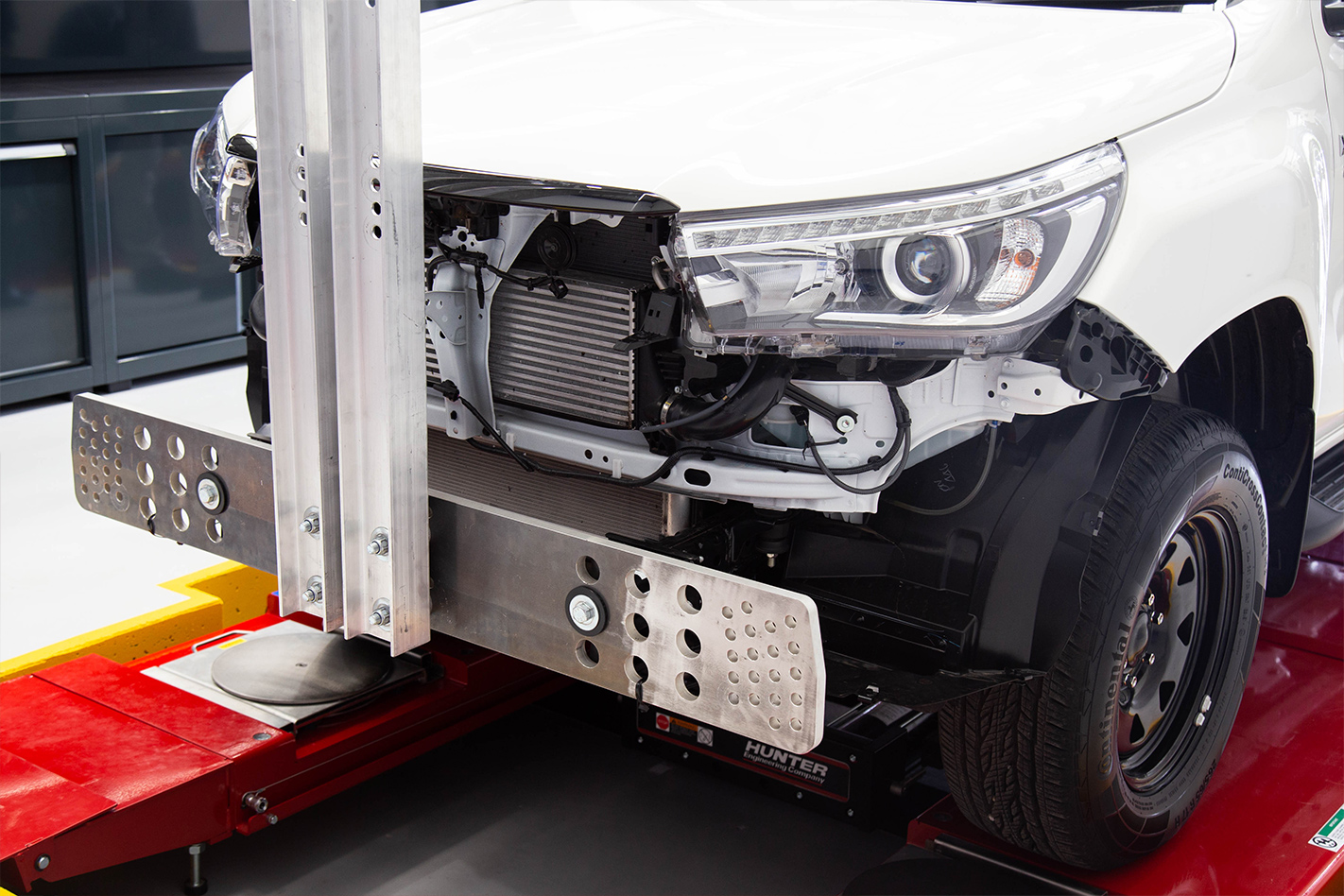
The AIC was originally conceived back in 2014 and is backed by $10 million in government funding, and seeks to maintain and elevate Australia’s aftermarket industry on the global stage in the current post-manufacturing era. And with seemingly every Toyota Hilux and Ford Mustang sporting at least one aftermarket modification these days, there’s plenty of potential business in Australia alone.
Beyond its cutting-edge 3D scanning technology and 3D printing capabilities, the Melbourne AIC boasts an extensive metal fabrication room, radar and sensor calibration, vibration testing; and the in-house ability to carry out dynamic testing of brakes, ESC and other advanced driver assists.
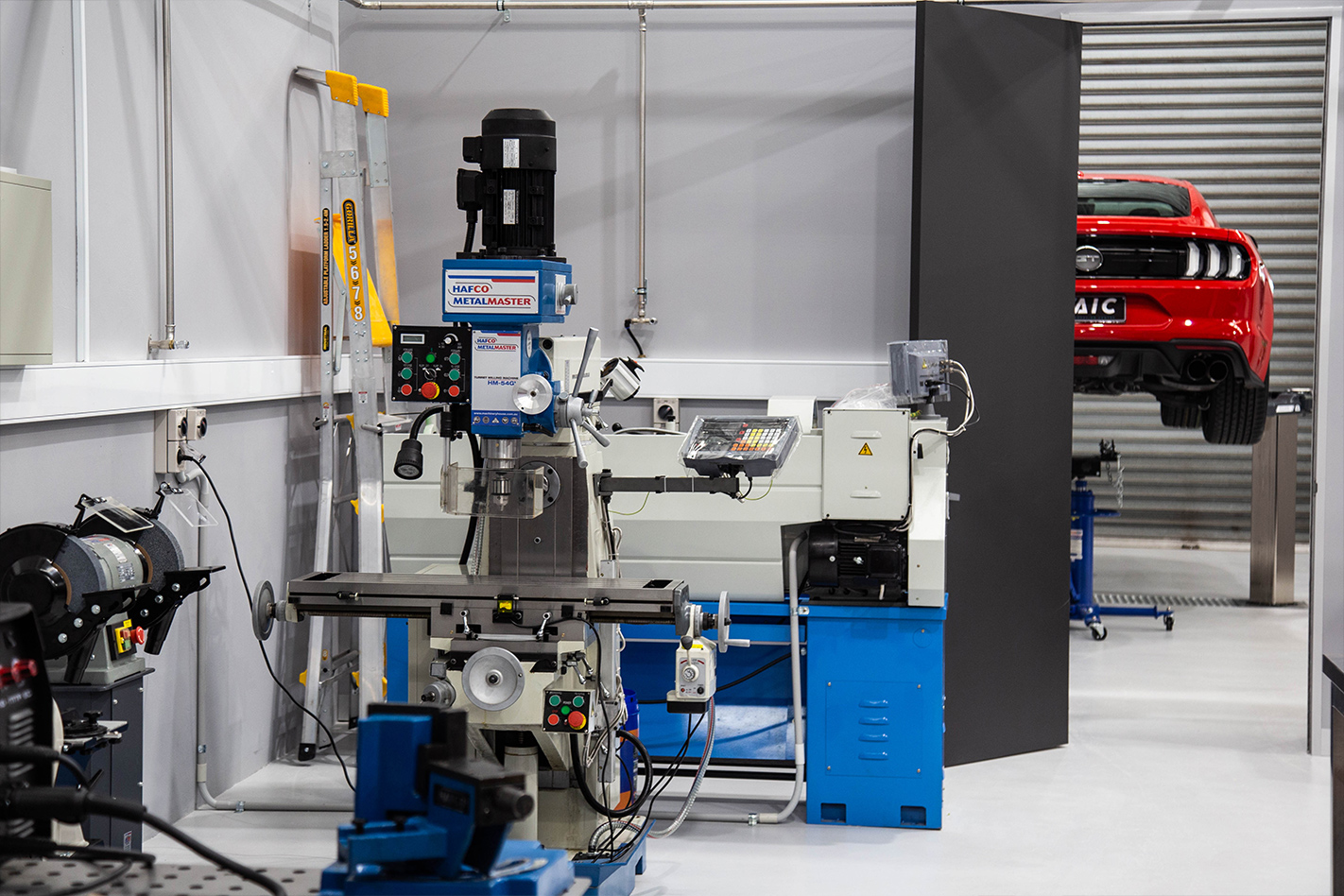
The facility is fully-outfitted with industry-leading equipment and ready for full operation. Complete with machinery, lifts, hoists and tools provided by many of the AIC’s sponsors. For small businesses who don’t have the capital to buy such equipment themselves – and hire the specialised workers to operate it – an AIC membership could be a game-changer.
Continental tyres is providing control tyres for all dynamic testing, and provides a unique partnership by supplyingextensive tyre data from their headquarters in Germany. It’s a symbiotic arrangement, with Continental using the AIC to help carry out conclusive dynamic testing via computer simulations, and ultimately saving the time intensive (not to mention costly) process of mobilising automated in-car tests at a closed race track.
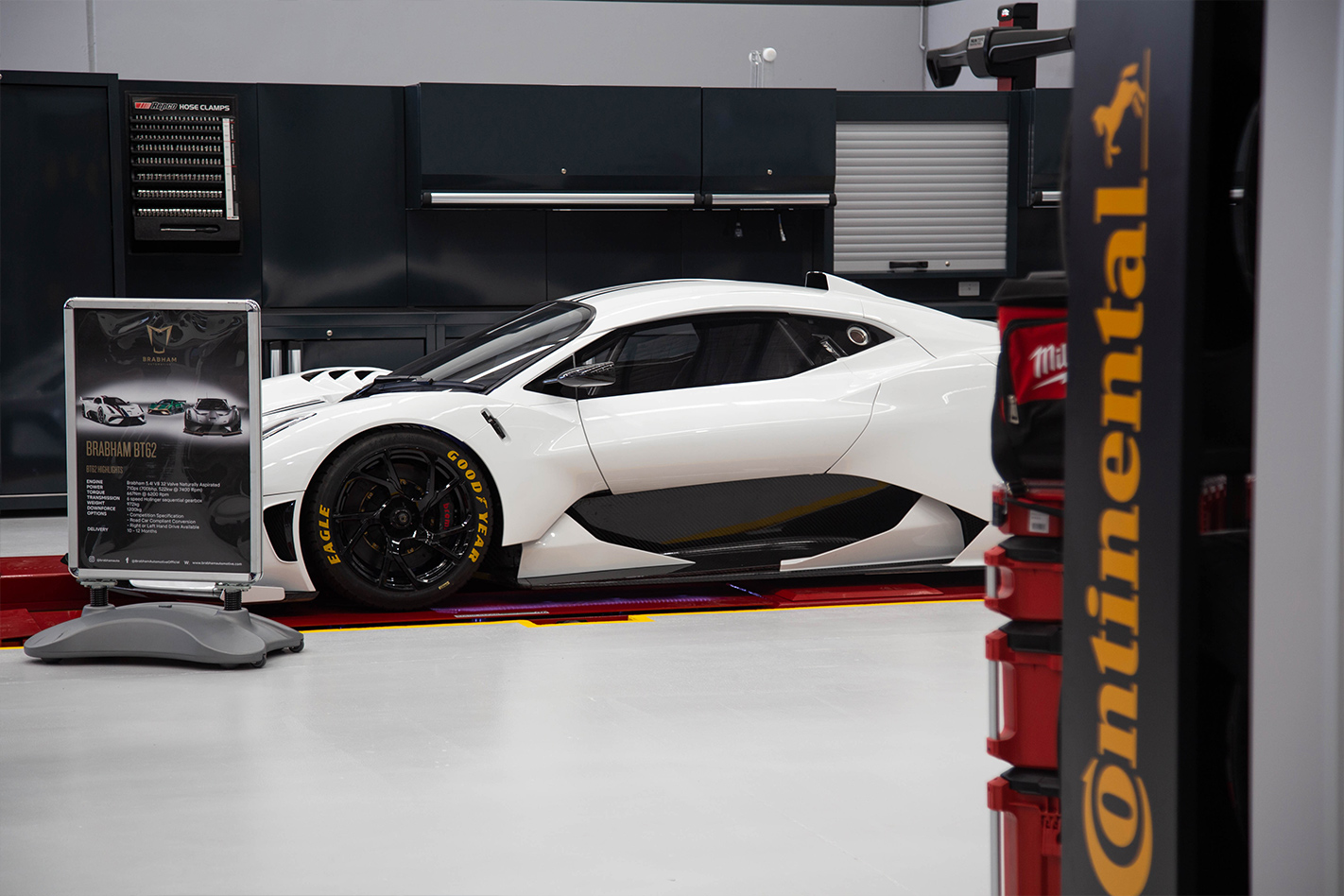
Beyond the technical facilities the AIC has to offer, it’s also positioned itself to provide a key role in automotive education and training for the next generation of industry workers, with a dedicated 100-person training room overlooking the workshop.
Not just influenced and inspired by the US SEMA Garage model, the two firms have engaged in a data-sharing partnership, with the AIC gaining access to CAD data of various US-domestic vehicles already gathered by SEMA Garage. For local aftermarket firms looking to produce accessories to cater for the increasing appetite for full-size American pickups such as Nissan’s Titan and RAM’s line of trucks, that data will be a godsend.
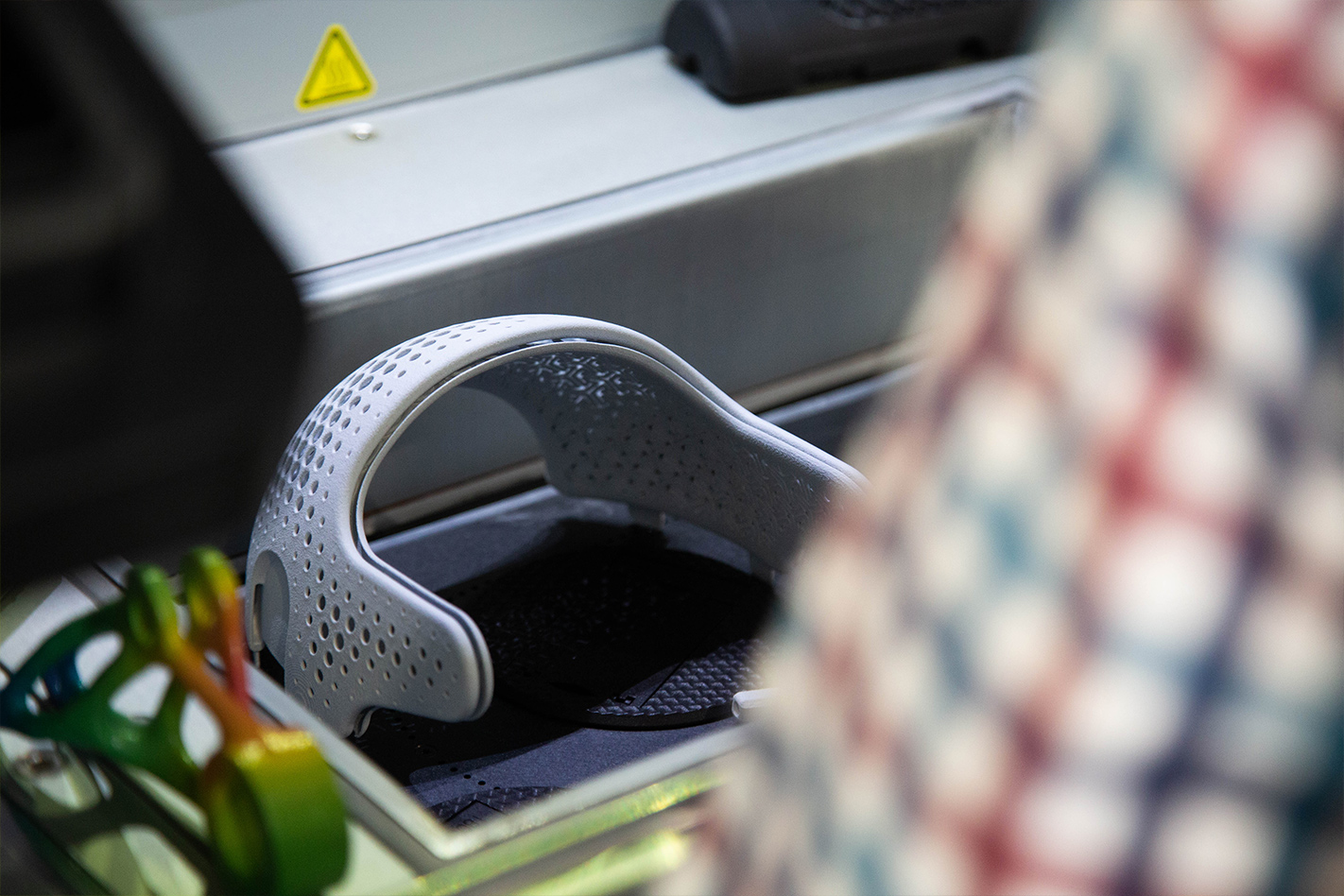
In the future, the AIC also aims to mirror SEMA Garage’s relationships with OEMs, who could provide pre-production vehicles to be scanned in advance of their market launch, allowing local aftermarket firms to have products and accessories on the shelf as soon as a car enters showrooms.
“This is a fantastic new facility for the industry, so we welcome companies contacting us to discuss how the centre can directly assist their business” said AIC Managing Director Luke Truskinger.
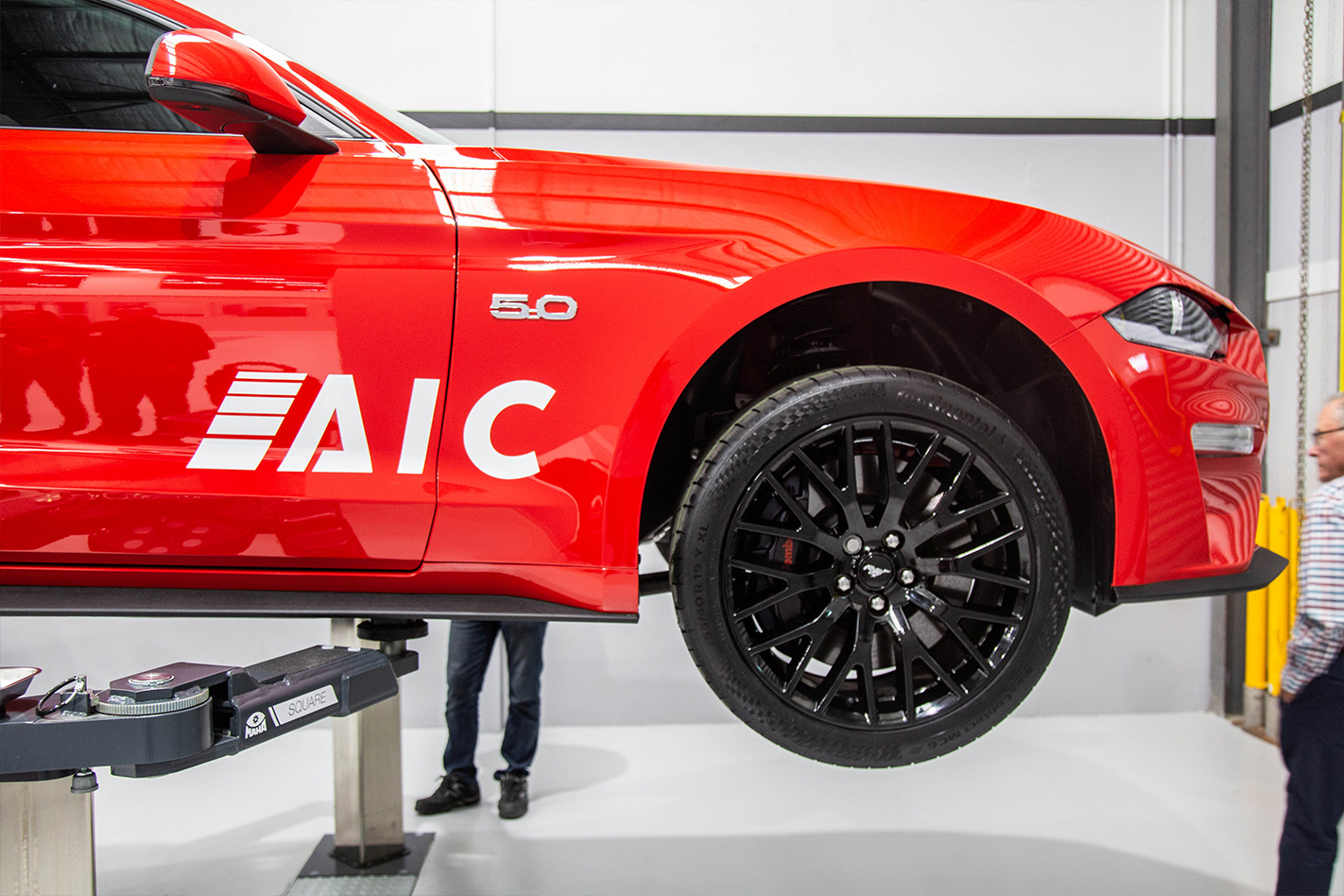
The AAAA has big ambitions for the AIC, but in the current post–car-manufacturing climate; should be a valuable asset in increasing the competitiveness of Australia’s inventive aftermarket industry on the global stage.
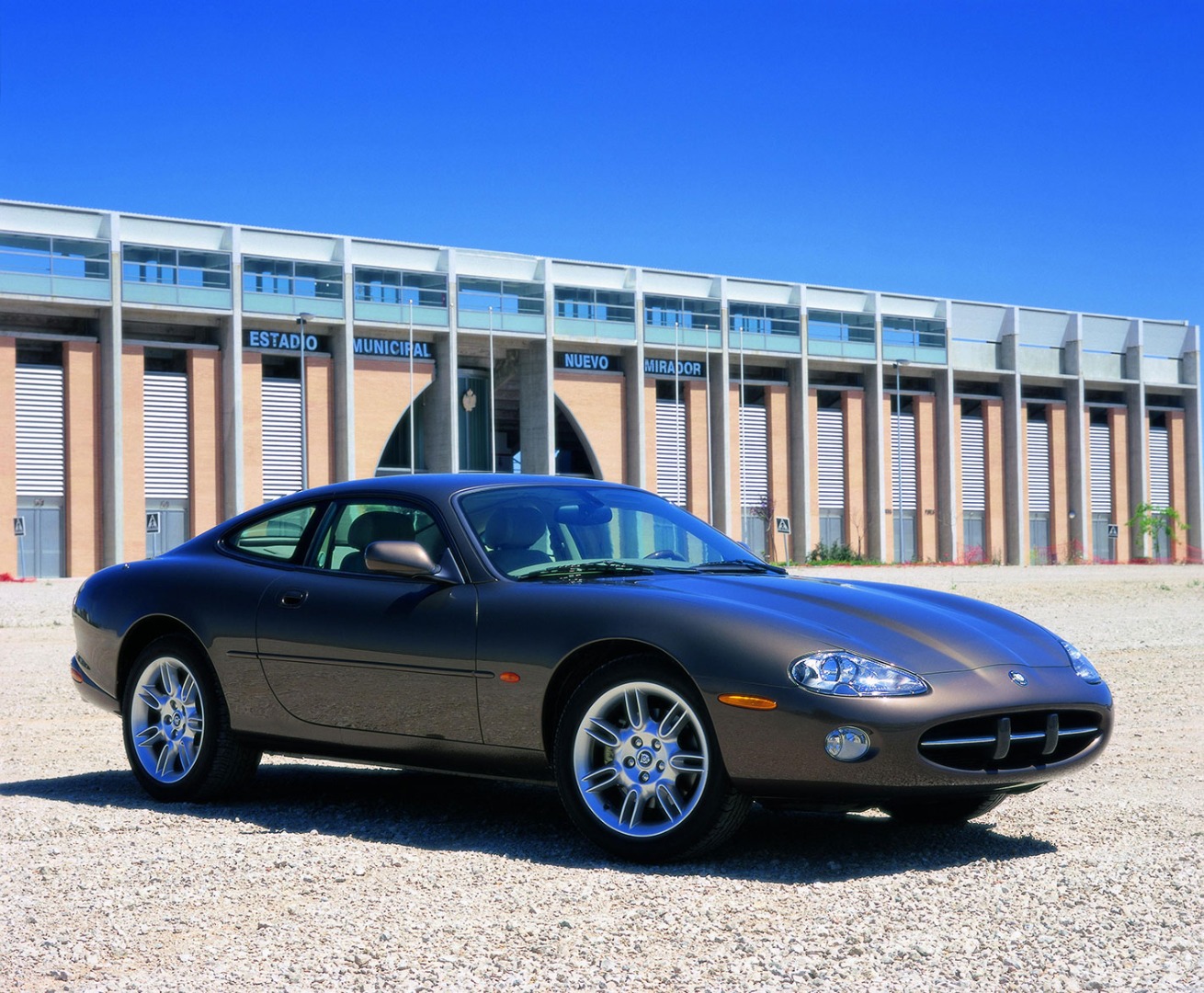
Jaguar XK8: form over function
The Jaguar XK8 of 1996 promised plenty via its expansive, svelte exterior, then delivered a very different reality when you actually climbed in. Designer Geoff Lawson had 4760mm with which to work, but delivered a claustrophobic 2+2 with a tiny boot. So the opposite of a tardis, then.
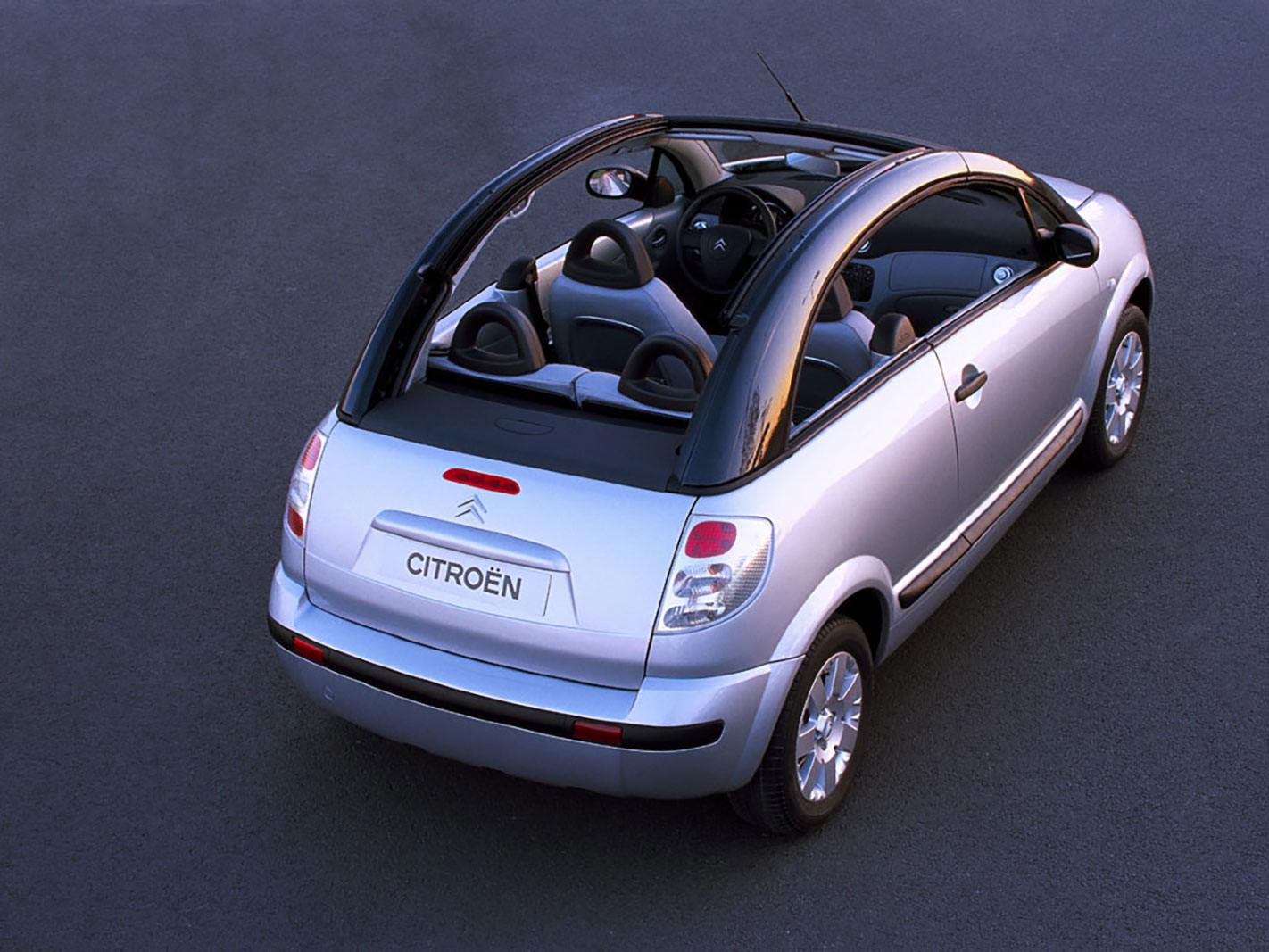
Citroen C3 Pluriel: a bad day at the office
Italian designer Donato Coco styled arguably the most beautiful production car of the last decade: the Ferrari 458 Italia. He also did one of the very worst of the modern era, the vile Citroen C3 Pluriel. Proof that some days are better than others, even for those with abundant talent and experience.
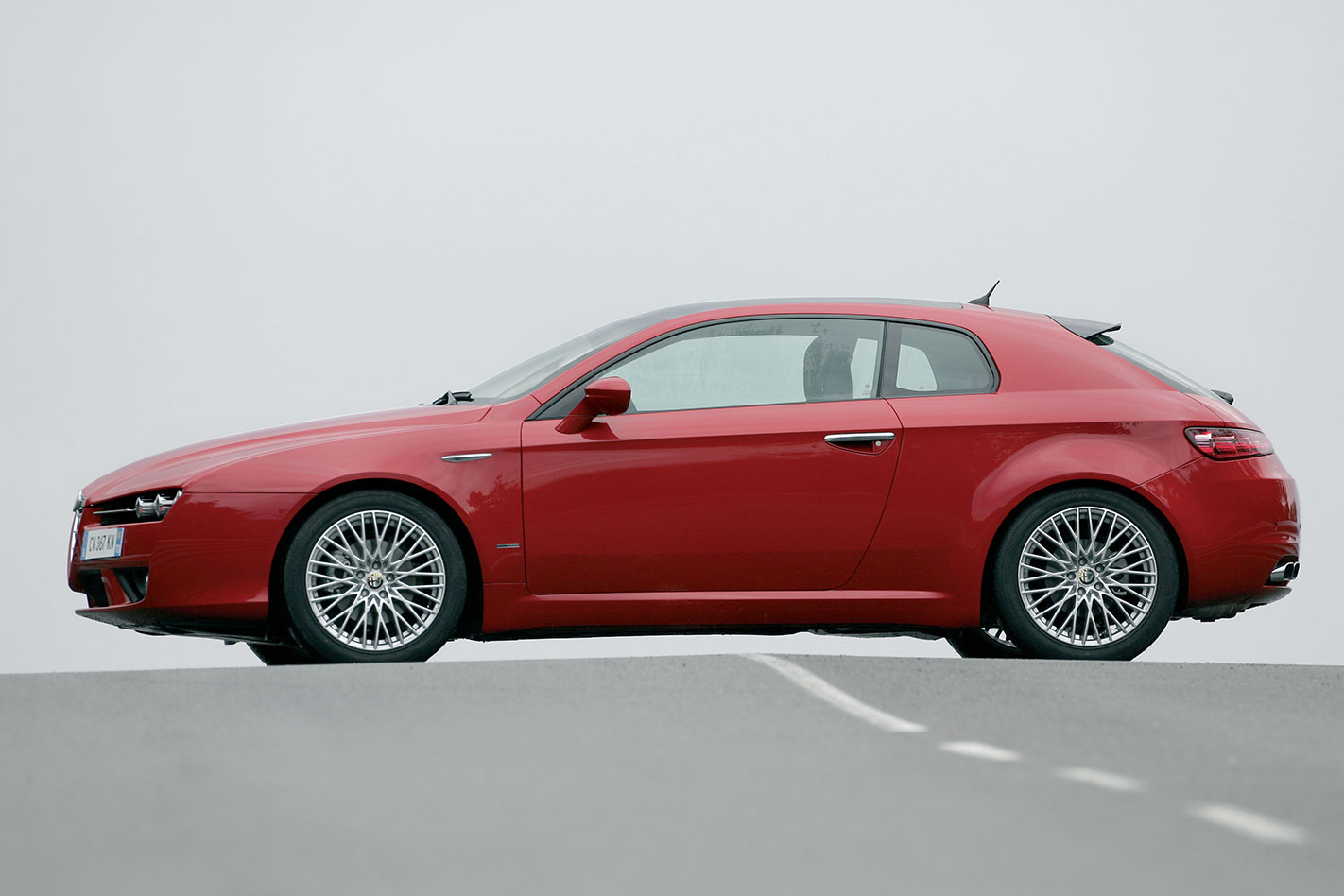
Alfa Romeo Brera: miss conceptions
The road from concept to production sometimes results in a stylistic cul de sac. We’re looking at you, Alfa Romeo Brera. Giorgetto Giugiaro’s sleek V8 concept of 2002 morphed into an ill-handling, chubby disappointment for production. Not even Prodrive’s mid-life intervention could redeem it.
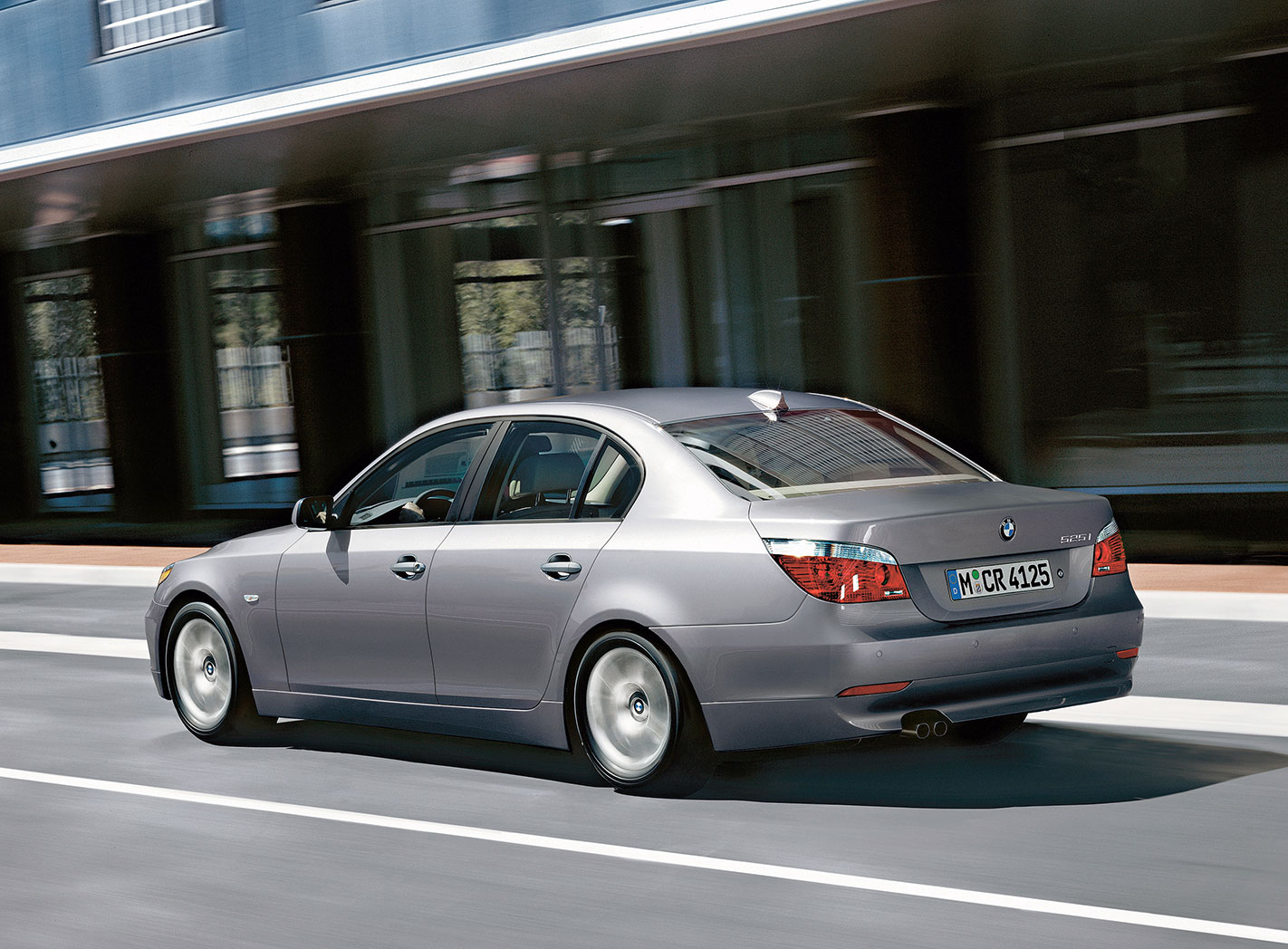
BMW E60 5 Series: ahead of its time?
‘The car Bangle spannered’ read one headline back in 2003 when the E60 5 Series was launched. Then-BMW design boss Chris Bangle copped a slagging for his ‘flame surfacing’ and the ‘Edna Everage glasses’ but surely we’re not the only ones who think the Bangle-era Five has matured with a degree of grace?
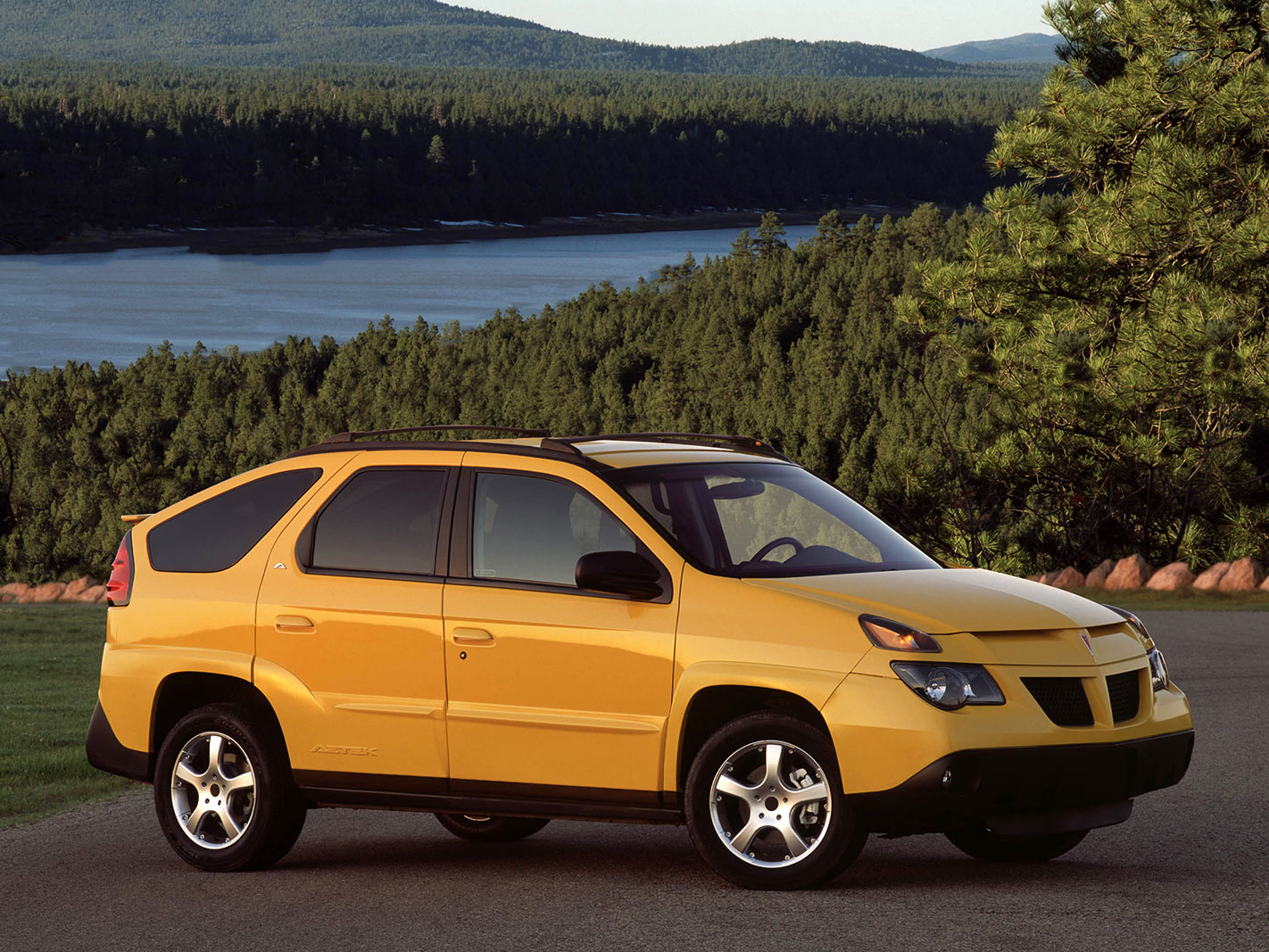
Pontiac Aztek: just a bit fugly
The Pontiac Aztek of 2000 was conceived with good intentions, foreseeing demand for compact crossovers. But built on a GM mini van platform, with ungainly overhangs and slab surfacing, it just ended up a munter. “Not for everyone,” said design leader Tom Peters at the time. Job done, then.
Toyota Gazoo Racing has officially confirmed rumours it will build a twin-turbo V8 for future Lexus performance cars within a statement on its 24 Hours of Nürburgring Endurance Race campaign next year.
The race, which will see Gazoo Racing race its Lexus LC SP Pro Class car for the third year, will be adopting a “newly-developed V8 twin-turbo engine destined for use on future road cars such as sports car”.
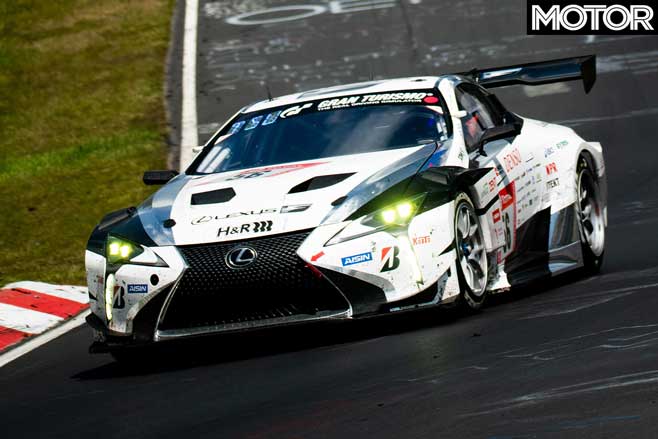
The LC race car will also be fitted with new low-weight high-rigidity body structure and suspension system, as well as new driver control systems, all of which are also planned for use in future models.
Rumours of a twin-turbo V8 first surfaced as far back as 2017, with speculation that it is destined for the hi-po Lexus LC F, though little has been heard of that engine since.
Further rumours speculate that Lexus would ditch V8’s altogether in favour of a tuned version of the 3.5-litre twin-turbo V6 used in the new LS500. Though it looks like that might not be entirely the case with this latest development.
The twin-turbo V8 is expected to be a fitting replacement for Lexus’ current performance V8, the Yamaha-developed 5-litre naturally-aspirated 2UR-GSE V8 engine that has been in service for nearly 12 years and is still being used in the RC F, GS F, and LC500.
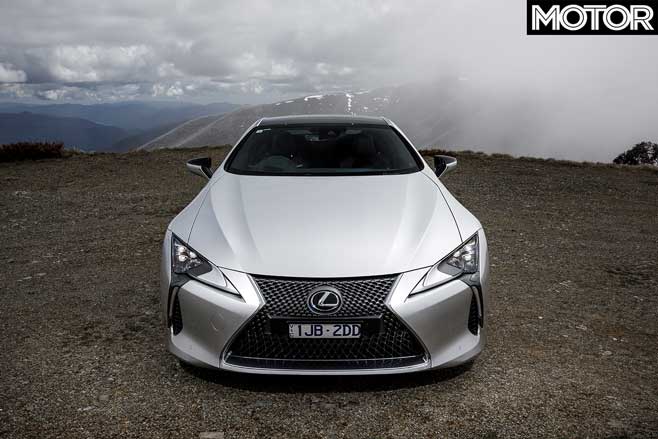
Toyota is yet to release any further technical information on the upcoming engine, though it should be producing the sort of numbers that would allow Lexus performance cars to mount a worthy challenge to its German counterparts, which are all boasting power levels in the 400kW region.
The Toyota Gazoo Racing team will take to the Nürburgring with the LC race car from May 21 to 24, 2020.
The sales battle between Toyota and Hyundai is heating up with the Corolla, a traditional fan favourite, coming under increasing heat from the strong-selling i30.
With a headline entry price of $19,990 for the Go variant, Hyundai’s most popular car is encroaching on the traditional Corolla versus Mazda 3 rivalry, but Toyota won’t be drawn into the sub-$20K battle of old.
It’s worth noting that Hyundai’s seven-year, unlimited-kilometre warranty only applies until the end of December 2019 and doesn’t include rental, corporate or government sales.
Toyota Australia vice president, sales and marketing, Sean Hanley, said the company wouldn’t be pressured into a price war with the South Korean marque, instead relying on the Corolla’s brand cachet and high levels of standard safety features.
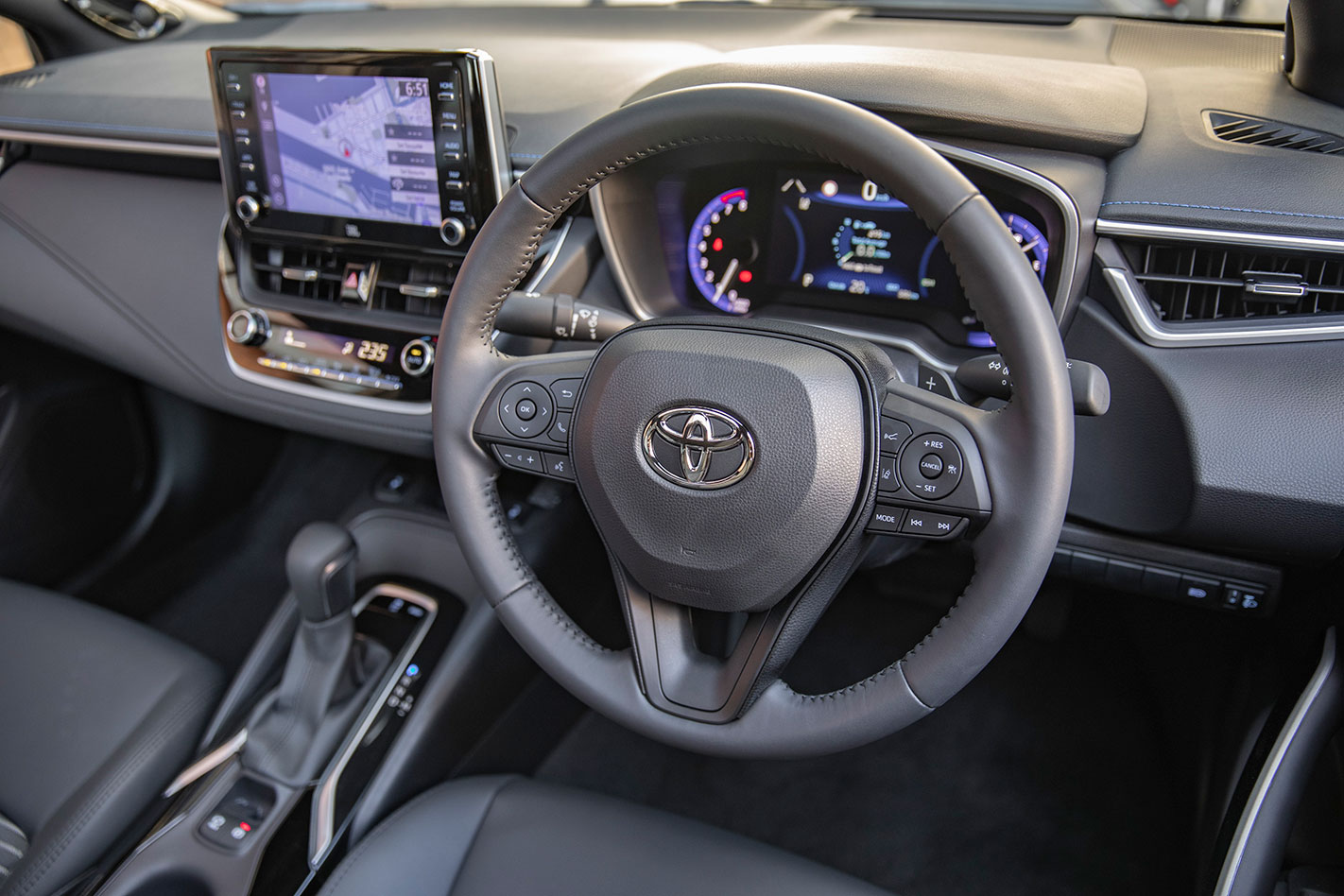
“I think our direction is that we want to bring the safest, most up-to-date spec car we can. People won’t compromise, I believe, on safety for dollars.
“I can’t really comment on what other competitors do. To me, we can only control what we do at Toyota and I’ve been more than happy with our direction on Corolla and with our customer’s response to it,” Hanley said.
The Corolla range, which now includes a sedan variant which is expected to account for 25 percent of sales, kicks off at $23,335 for the manual Ascent Sport.
Hanley is quick to point out that that grade is one above the traditional entry level Ascent of old, which reflects Mazda’s upmarket push and reaffirms his thoughts that “value and safety are both important”.
The family hatch segment has been interesting to monitor this year with the Mazda 3, a car that typically resonates well with private buyers, starting the year strong on the back of a new model.
Since then it has dropped off significantly with the i30 rising to the occasion and often usurping the Corolla and the 3 on the charts by month’s end.

So far this year Toyota has sold 27,691 Corollas, while Hyundai has offloaded 26,443 i30s for a gap of just 1248 cars.
While it’s unlikely the i30 will overtake the Corolla in December to claim the 2019 honours, Hyundai is proving to be Toyota’s toughest foe – especially when it comes to private sales, a statistic that Hanley is keen to correct.
“We are always concentrating on all segments and buyer types. Corolla plays a very big part in the rental and fleet market as well as with private buyers. I think that will continue.
“We always strive to be number one in the private market, and while we’re not quite there yet in the Corolla segment, we’re closing the gap,” Hanley said.
