
Alex Inwood (AI): I’m not exactly sure why, but I’ve always thought that ‘owning’ a supercar would bring certain social drawbacks. You know, the kind where people label you a ‘tosser’ and make funny hand signals with their pinkies. I once witnessed a previous editor of Wheels emerge from his house to find the Lamborghini he’d parked out front now covered in eggs. For some reason, however, this doesn’t apply to the McLaren. People absolutely adore it.
Cameron Kirby (CK): Look, I don’t doubt the Macca is a neck snapper, but I have been getting the same kind of reaction in the Jimny – and I didn’t even have to pretend I’ve got the GDP of a small nation hidden down the back of my couch. Blokes in dual-cab utes have stuck their heads out the window to catch a glimpse of the Tennis Ball in traffic, people slap their friends on the arm and point as I drive by – commuting is a truly conspicuous experience.

AI: Conspicuous? Try standing next to the McLaren on a fuel station forecourt when a burly truck driver starts charging towards you, shouting “Mate, are you kidding me!” At first I thought he was mounting some kind of attack. He was huuuuuge, heavily moustached and approaching at a speed that made escaping inside the car impossible. But then: “This thing is incredible! I can’t believe it. We never see McLarens. Quite a few Porsches and Ferraris but McLarens are rare. How’s it go?” That rarity, and the fact it looks otherworldly – is there a more visually dramatic car maker right now than McLaren? – seems to be the reason people are drawn to it.
CK: There doesn’t seem to be one single catalyst for the Jimny’s attention-hogging ways. For some, it’s the delightfully retro looks and Tennis Ball colour combo, but I suspect much of it is carried over from the cultural impact of the preceding three generations which had an enviable reputation for being infallible both out bush and in the high country. Oh, and it’s just about the antithesis to everything else you can buy today. It waves a pint-sized middle finger to making a sensible purchase, and people like that.
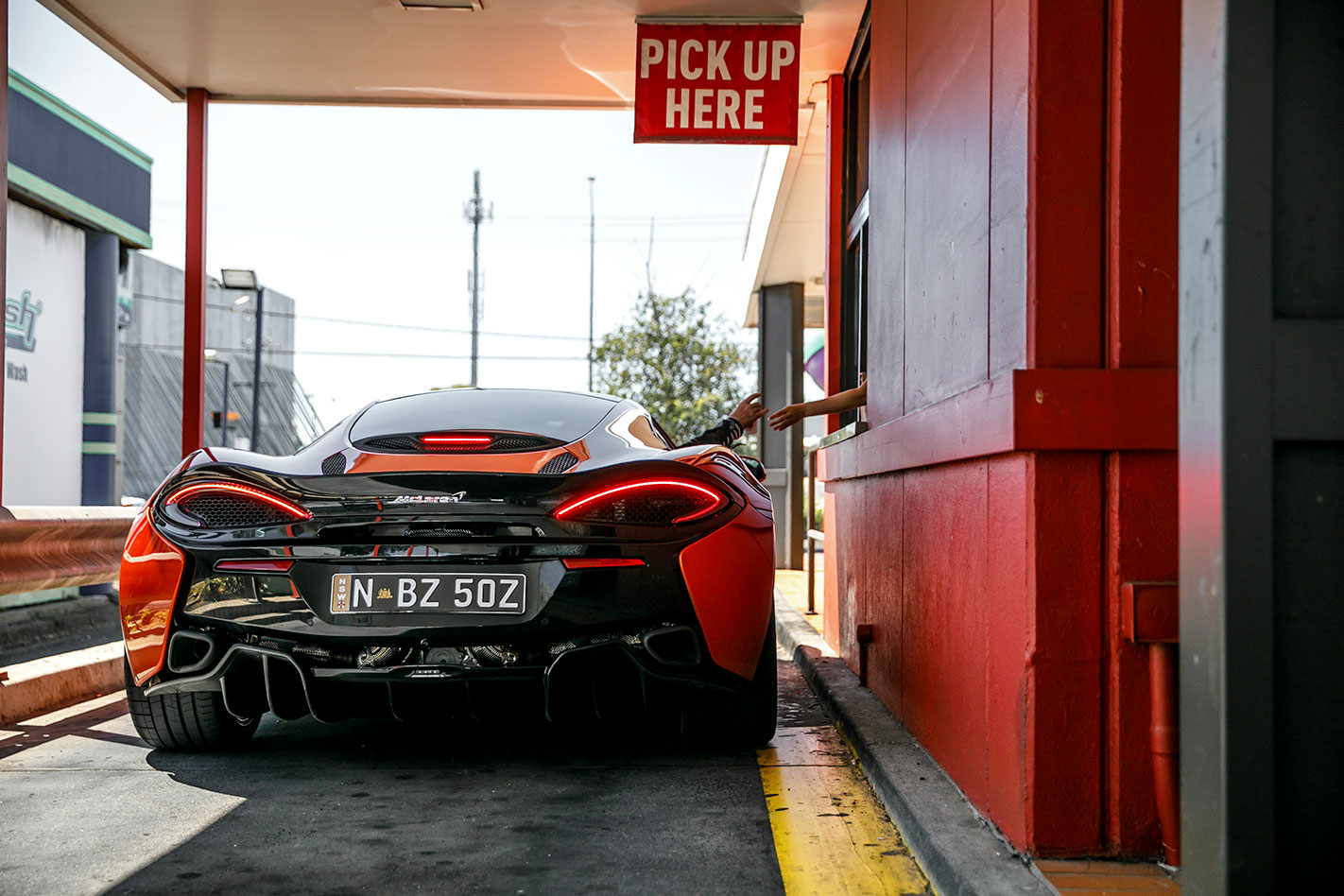
AI: One of the best things about driving cars like this is getting to share them. I once parked in a McDonald’s and couldn’t leave for 30 minutes because of the wave of prepubescence that descended upon it. Some of them knew it was a McLaren but most didn’t. They were drawn to its looks. Few supercars have this much drama sitting still.
CK: While the Jimny doesn’t have those bedroom poster looks that kids love, there doesn’t seem to be a gendered split in attention when it comes to the Jimny. Everyone just adores it. I was accosted in a car park by a trolley-pushing mother who wanted to know exactly what the new Jimny was like. Turns out she had owned one in her youth and had always regretted having to let it go. But the most exuberant reactions have been from other Jimny owners. A female third-gen Jimny owner looked like she had just won the lotto as we crossed paths one morning, flashing her lights and waving with so much enthusiasm I thought her hand might become detached. Two gentlemen in a fourth-gen lined up against me at the lights with windows down, and bellowed “JIMNY POWER!” in sheer delight. I bet you don’t get that in a McLaren 570.
AI: Final point on goodwill. Lots of it comes your way when you’re swanning about in the McLaren. People don’t resent you as a rich wanker. In my experience, they see you as someone to share in the thrill.
CK: So, any chance I can have a spin?
Brabham Automotive has revealed a cheaper way to Brabham BT62 supercar ownership.
If you weren’t keen on spending the full £1.2m (currently approximately AUD$2.25m) for a BT62 ‘with the lot’, the British-based company has another option for those on a budget, or what might look like a budget to those considering a $2 million track car.
For a ‘slim’ £750,000 (which is around $1.4 million), Brabham will offer customers a stripped-out version of the BT62 called the ‘Competition Spec’, which more closely mimics the car’s racing intent.
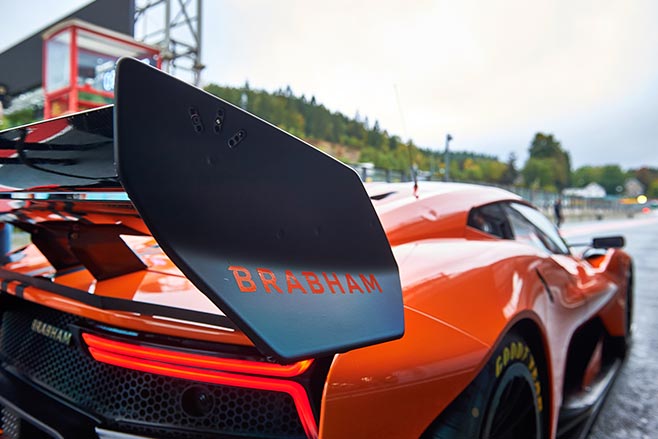
The Competition car still runs on a 5.4-litre V8 with 522kW peak power and a 6-speed sequential ‘box, but is lighter than the ‘Ultimate Spec’, and has the potential to produce 1200kg of downforce.
BT62 breaks Bathurst lap record
Features like centre-locking wheels, pneumatic jacking system, and the competition display also stay, but much of the interior has been shed. In fact, as well as a wrap instead of paint, Brabham says the BT62 has “no interior trim” in Competition form.
“The Competition specification is delivered without a passenger seat or an Initial Spares Pack (although they can be included as optioned extras), both of which are standard with the Ultimate Track version.”
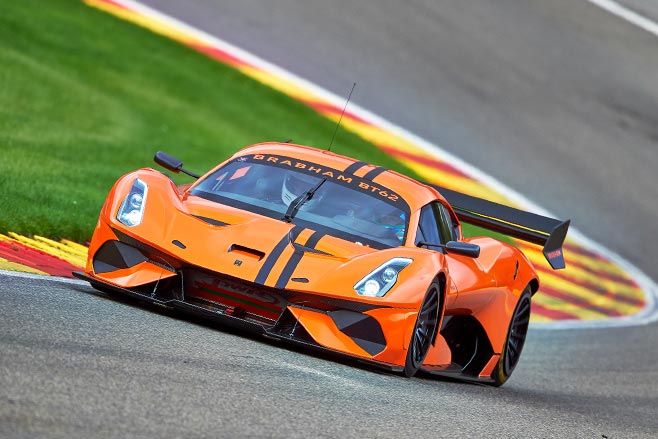
Brabham will still offer the Competition variant in both left or right-hand drive, and says customers are able to upgrade their Competition BT62 to either “Ultimate Track Car or Road Compliant specifications.”
Brabham says it will still only build 70 units of the BT62 for customers, so it’s unclear how many BT62s have already been sold – in either track-spec or with the road-legal conversion.
Knowing retirement was just weeks away, Dick Johnson was keen to hose down the hype when he talked to then Wheels editor Ewen Page at the Mount Panorama circuit in October 1999.
Still, the optimist in him reckoned that, with son Steve as co-driver, their AU Falcon stood a fair chance in that year’s Bathurst 1000. “We’re realistically aiming to finish,” the 54-year-old Johnson told Page during an interview that would be the basis of a feature for the November 1999 issue. “I feel that the AU’s going to be a bloody good car there – I really do.”
The dream final win didn’t materialise – the Johnsons finished fourth, on the same lap as the winning Gibson Motor Sport Richards/Murphy VT Commodore – but their AU was the first Falcon home.
That Sunday, November 14, 1999, marked the end of a stellar career that saw Dick Johnson’s name reign with those of Peter Brock and Allan Moffat as the great motor-racing stars of the era.
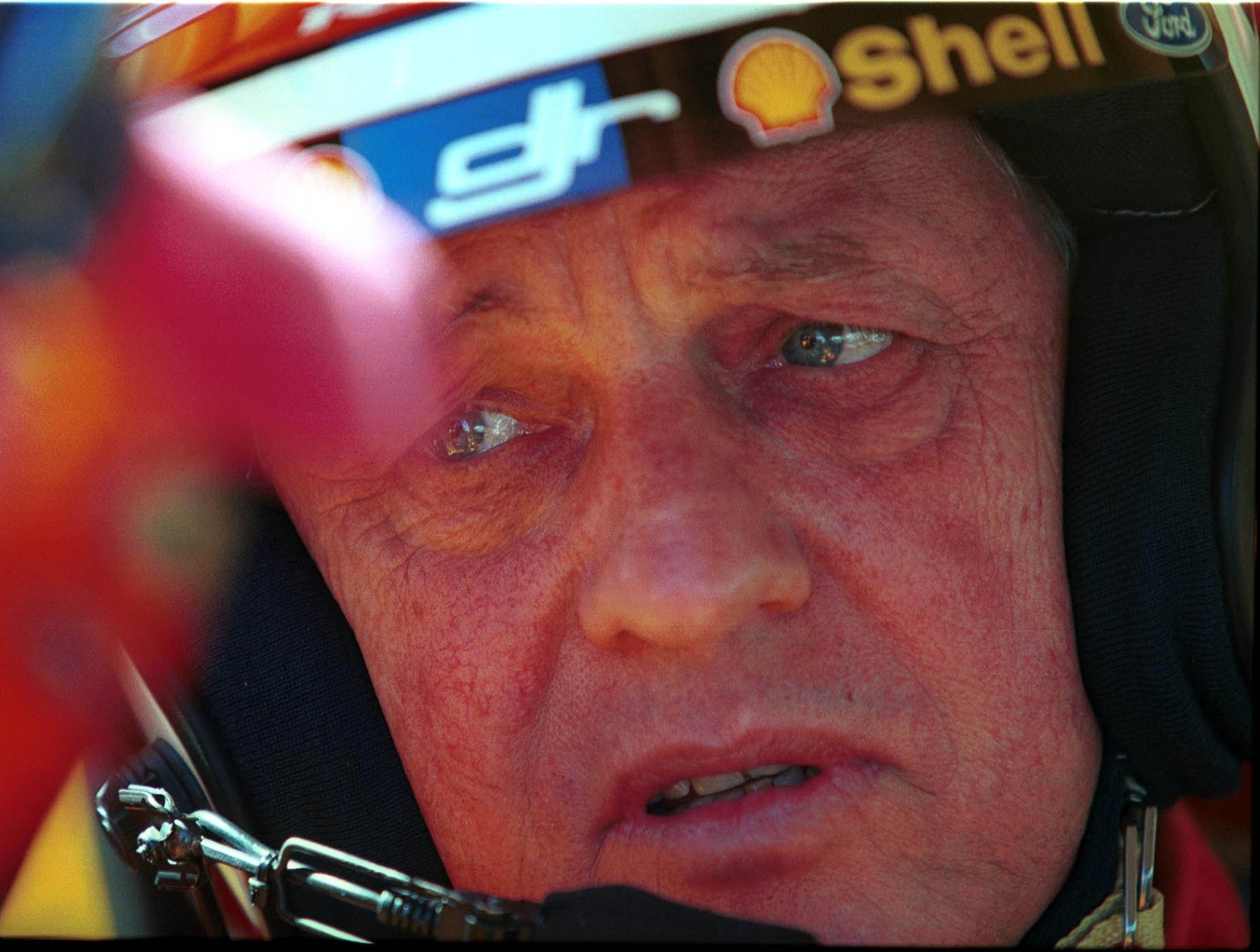
Between Wheels’ January 1979 and January 2004 issues, Johnson featured significantly in 27 stories in the magazine. Some were profiles, such as Phil Scott’s insightful 1982 story, “From has-been to hero”, others were reports of races where Johnson starred. Which, as a three-time Bathurst winner and five-time Australian Touring Car Championship winner, was frequently.
The laconic Johnson was always excellent copy. “Winton? It’s like running a marathon around your clothesline,” he told Channel Seven commentator Mike Raymond in 1990.
Of Johnson’s famous one-on-one rivalry with Peter Brock, he told Page, “Frankly, I see we were an asset to each other, because I don’t think either of us would have gone as far without the other.
“I’m a realist and he’s a fairy-tale man. I can see that tree there and I say, ‘it’s growing in the ground and it’s green’, where I think there’s a lot of rose colours coming out of it with him. To beat the guy was all it was about, because he was the benchmark, and if you beat him, you beat the best.”
Phil Scott accurately captured the down-to-Earth Queenslander in his May 1982 story: “He talks like a normal Aussie should, likes a beer, builds his own cars and knows what it’s like to be short of a quid. In fact, he’s the bloke next door who thumbed his nose at the big-dollar teams and quietly had a go. All these things are true – to a point.”
Johnson, as his opponents quickly realised, was also a real professional; well-funded and organised and yet somehow easy to underestimate, perhaps because the Queensland-battler image persisted, despite the success.
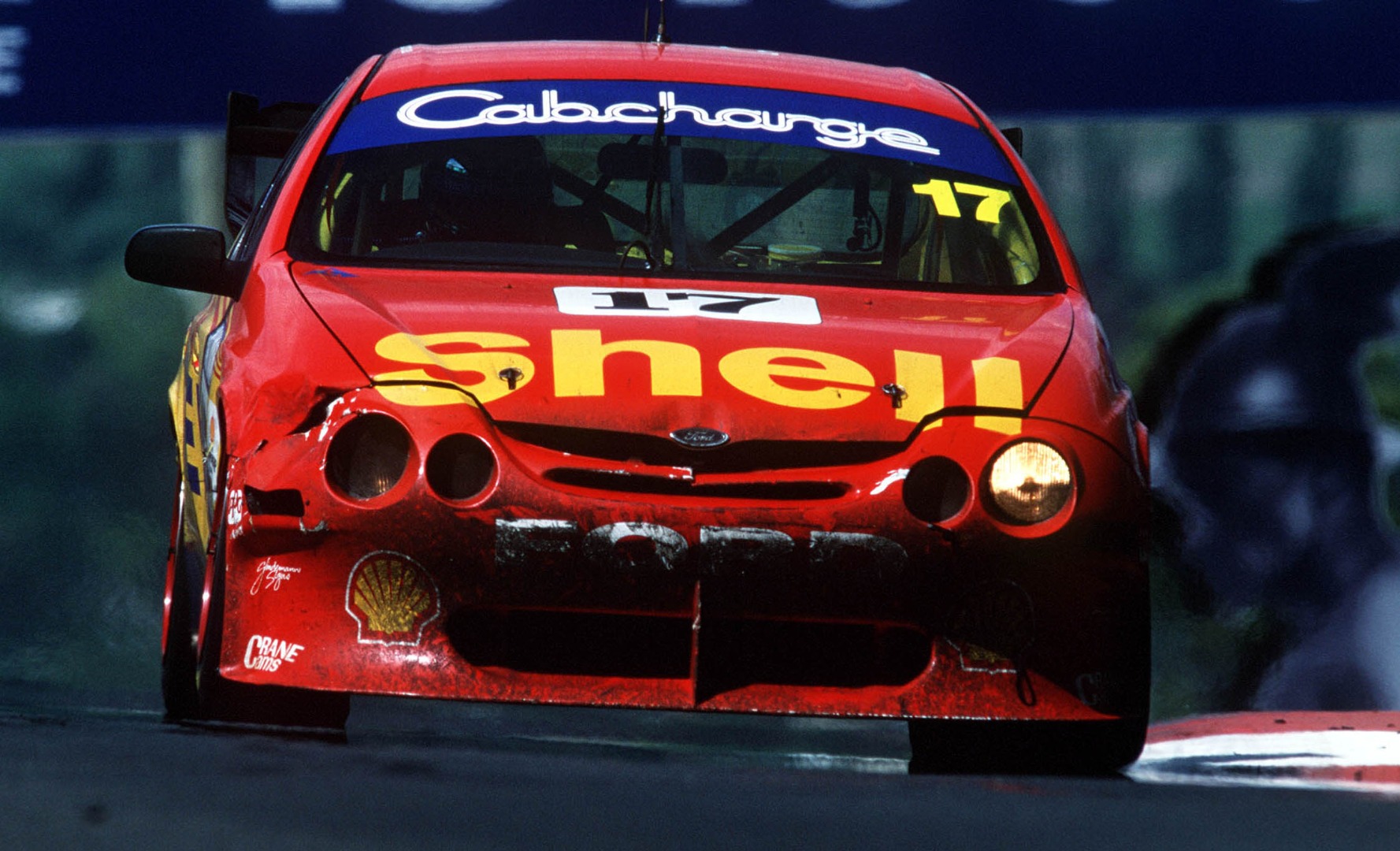
Almost uniquely, Page managed to write a major Johnson story without mentioning the infamous rock that wrecked his Bathurst in 1980. On lap 17, leading a field that included Brock, Bartlett and Co by 30 seconds, Johnson’s Falcon hit a rock the size of an overnight bag, causing instant retirement.
A gutted Johnson believed he was ruined. But a TV appeal, matched by a donation from Edsel Ford II, then deputy MD of Ford Australia, netted Johnson over $70,000, and helped get the team back on its feet. Johnson, of course, became a national hero, and beloved battler, overnight.
Fast forward to 2014, and Johnson sold 51 percent of Dick Johnson Racing to legendary American motor-racing-team owner Roger Penske, changing the name to DJR Team Penske.
It was the first time Team Penske had expanded outside the USA since its days in Formula 1 between 1974-76.
Johnson continues to play an important role in what remains a hugely successful team, with lead driver Scott McLaughlin taking out the 2018 Supercars Championship.
Talk to anyone from HSV’s marketing department and you’ll probably be told that six-cylinder performance cars don’t cut it in the local prestige/performance segment. The HSV XU6, even with its supercharger and evocative name, was a major flop. What started out as a fully fledged model soon wound up being a car built only to order. Except nobody did. Order one, that is.
This feature was originally published in MOTOR’s April 2004 issue
Of course, such a conclusion disregards the fact that the blown Holden V6 was a nail of a thing in the first place. It also conveniently sidesteps history. Hot sixes have been staple products in local performance line-ups since the first Valiant Pacer blatted into life back in the 1960s. There followed the legendary Torana XU1 and, since 1991, the Falcon XR6. And, most recently, Ford has been sticking with the notion of ripping inline sixes and treating us to the XR6 Turbo. And this has made us happy.
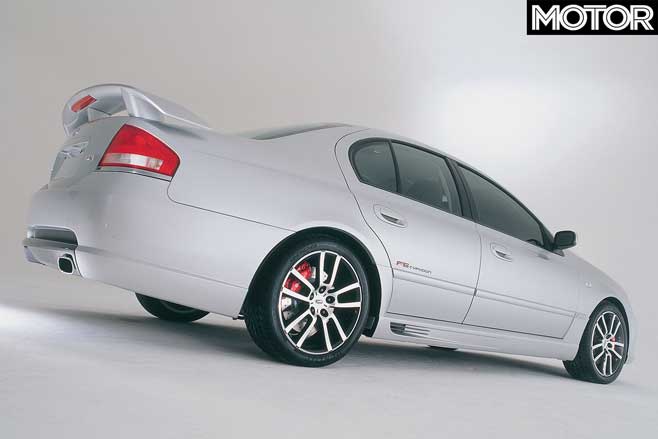
But more importantly, the thing is more of an FPV GT with a turbo six, rather than an XR6 with some more fruit. See, not only does it get some extra flash, but there’s also a good-sized extra dollop of dash courtesy of a reworked mill that bumps power considerably and torque very considerably.
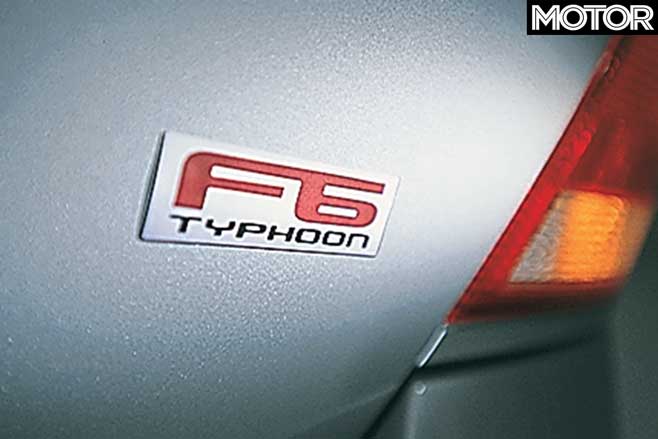
Mind you, that will be FPV’s biggest marketing hurdle: getting potential owners to recognise the F6 as a pukka FPV product and not a jumped-up XR. But a scan of the spec sheet suggests the task will not be an impossible one.
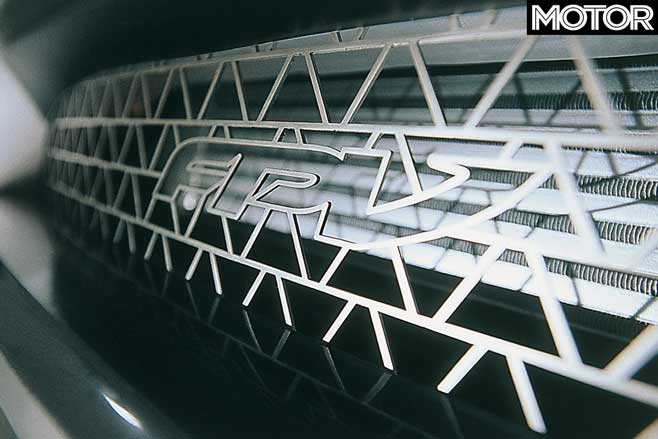
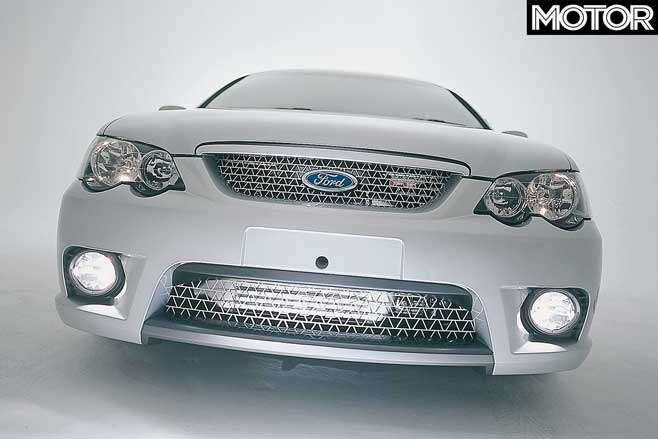
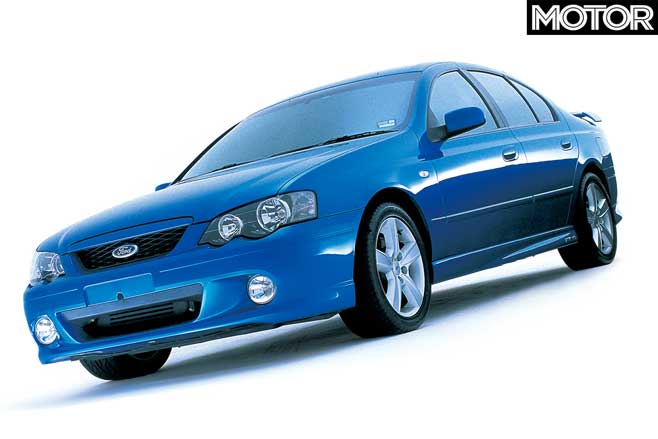
At the moment, the F6 Typhoon is a prototype that will do the rounds of Aussie motor shows to gauge reaction. Yeah, derr… But the single existing example looks so close to production ready that it’d be hard for FPV to pass it up. The unique F6 front and rear bumpers look as if they’ve come off production tooling, right down to the pewter (call it grey) highlights and mesh grille insert. The rear spoiler uses FPV’s three-legged signature and there are FPV side skirts as well. The intercooler is highlighted and plonked behind another mesh insert and there are new, aggressively styled 18-inch alloys.
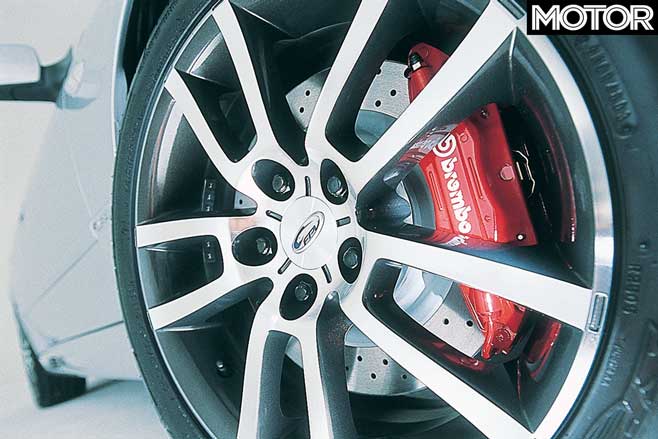
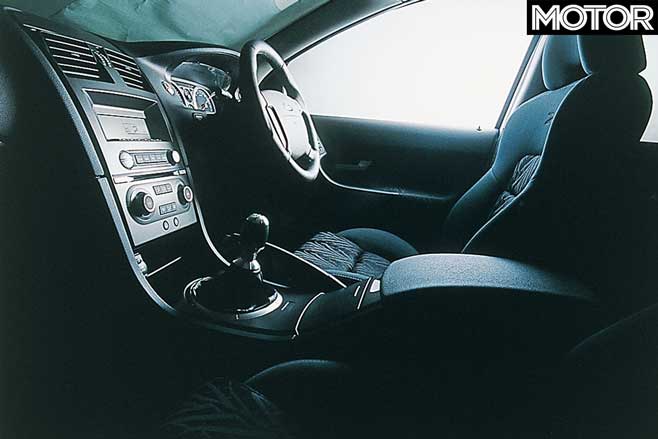
Inside, the F6 gets its own trim, with patterned cloth and suede and aluminium highlights on various bits and pieces, including the scuff plates. Suspension has been retuned to suit the F6’s role in life and the otherwise optional Brembo brake package with the four-spot front calipers, twin-spot rears and grooved rotors is standard fitment.
The engine, meanwhile, is the work of Pommy engineer Ian Downing. And he’s no stranger to the Ford inline six, beacause it was he who first XR6ed the engine back in 1991 and then helped to develop the VCT version for the AU. Most recently, he was also involved in the turbo six project, so he knows his way around the old girl.
But the one thing that was never going to happen was for FPV to build a temperamental, unreliable engine with any possible reduction in durability.
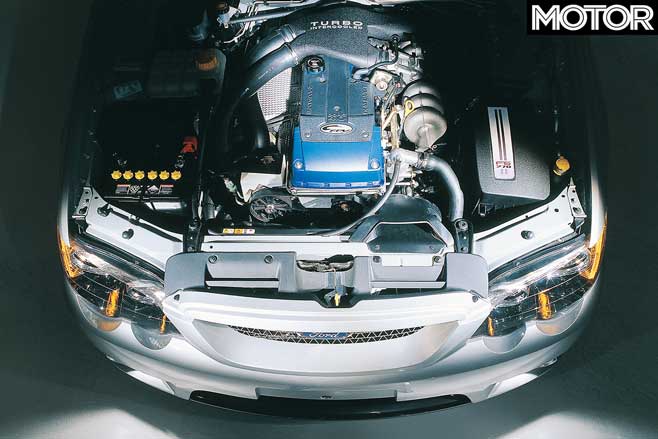
“We always aimed at minimising strain,” says Downing. “So, to get more out, we worked hard at reducing losses on the intake side, to get more intake manifold pressure without necessarily increasing the boost pressure.”
The move to a dual-entry airbox was a big part of the development, and that alone saw a 40 percent reduction in the pressure loss into the compressor. Oh yeah, there’s also a 50 percent bigger intercooler.
The result is that peak boost has jumped to about 0.6bar (0.3 in the XR6) and a tiny tweak to the wastegate has been the only turbo fiddle.
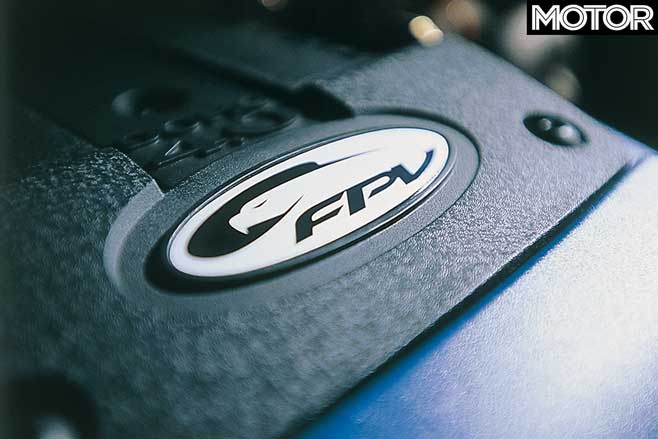
All up, you’re talking 270kW at 5250rpm and a whopping 550Nm of torque at 4250rpm, the bulk of which is available from about idle. Compared with the XR6T, those figures represent a 30kW power hike and a like-wow 100Nm torque jump.
But, says Downing, that’s about it for now. “We found that about 280kW is the effective limit right now. Beyond that point we get uncontrollable thermal output.”
Such thermal output is partly addressed by an engine oil cooler which slips in between the cylinder block and the oil filter and is plumbed into the engine’s water jacket.
The engine is tougher in some other important respects, too. Heavy-duty valve springs on both the intake and exhaust side are fitted and, more significantly, the conrods are now beefier in cross-section and have fully floating gudgeon pins. The motor now works best with 95RON fuel, too, although it’ll run on 91 with a fair chunk of ignition advance sheared off by the computer.
One of the worst-kept secrets in the biz is that Ford has some new gearboxes in the pipeline. For now, though, the prototype Typhoon is fitted with a T5, the very same spec T5 as fitted to XR6 TUrbos, so it runs the ‘old’ V8 cluster.
You get the feeling, though, that the T5 has only been bolted in to keep the tailshaft from dragging on the road and the sun off the cross-member. There is, however, a new AP Racing twin-plate clutch, and a new six-speed manual gearbox (the HSV XU6 was auto only, remember) of some sort in the F6’s future.
So what are the odds of the Typhoon reaching production? Apparently there are still some cost issues to be sorted out at an investment level, but you can pretty much bet the ranch that the Typhoon will be blowing into FPV dealerships around the end of this year.
And just to show that FPV is not your normal car company, the suits are happy to yap about possible pricing, normally the most closely guarded subject. Figure on between $56k and $59k, which puts it perilously close to the GT’s opening gambit of 60 grand. Then again, it’ll be as quick or quicker – the GT’s performance figures were the target for the F6 – and right on the money for equipment too.
Torque, for instance, outstrips the GT’s V8 up to 5000rpm, and the claim now is that the F6’s turbomill is the torquiest locally developed production engine of all time. Could be, too.
And will it pinch sales from V8-powered FPVs? Definitely not, says the marketing department.
You’ll always have a group of buyers who won’t drive anything but a V8. F6 buyers will come out of European cars and Japanese hot-rods, apparently.
And who knows? If the performance is anything like the specification suggests, the Typhoon might just be one hell of a way to move five people and their golf clubs. Even though it’s a fraction heaviers than an XR6T, with all that extra oomph it should go close to a neat six seconds to 100km/h and maybe even a high 13-second standing quarter. And if it can do that, it should stick it to the six-pot naysayers in 400 fairly explosive metres.
FAST FACTS 2004 FPV Falcon F6 Typhoon BODY: 4-door, 5-seat sedan DRIVE: rear-wheel ENGINE: 4.0-litre inline-six, DOHC, 24v, turbo BORE/STROKE: 92.3mm x 99.3mm COMPRESSION: 8.7:1 POWER: 270kW @ 5250rpm TORQUE: 550Nm @ 4250rpm WEIGHT: 1715kg (est) POWER-TO- WEIGHT: 157kW/tonne TRANSMISSION: 5-speed manual SUSPENSION: double wishbones, coil springs, anti-roll bar (f); Control Blade IRS, coil springs, anti-roll bar (r) L/W/h: 4944/18649/1435mm WHEELBASE: 2829mm TRACKS: 1560/1575mm (f/r) BRAKES: 325mm cross-drilled discs, four-piston calipers (f); 303mm solid discs, two-piston calipers (r) WHEELS: 18 x 8.0in (f/r) TYRES: Dunlop SP Sport 9000; 235/40ZR18 (f/r) PRICE: $56,000 – $59,000
Something borrowed
Retro-fitting bits from a new model to an old model is nothing new, but it’s a favourite pastime for folks who like to fiddle and don’t want to get locked in to buying the latest model every time the factory burps out a new one.
So what bits of the Typhoon will bolt to an XR6T? Well, you can forget the stronger conrods and tougher valve springs, but some of the rest of the package should be compatible. The dual-entry airbox, for instance, is a cinch for a retro-fit and should get an XR6T breathing a bit more freely.
Same goes for the intercooler, although whether you’d plump for a Typhoon cooler or just go for an aftermarket job is up to you. Either way, something with about 50 percent bigger lungs than the stock XR6 unit is going to make a big difference. Same goes for the engine oil cooler, which is a nice piece of engineering on FPV’s part.
But you’d probably get a more marked drop in oil temperature by going to a conventional air-to-air style cooler similar to a transmission cooler. The only catch there is that you’d need to regulate the oil flow through the unit so it wasn’t making cold oil on start-up even colder. A thermostat would sort it.
Six shooters
Yeah, yeah, so we’re Australians and we drive V8s, right? Well, some of us do, and some of us prefer a tough six. And when it comes to stout six-bangers, the F6’s 270kW and 550Nm put it up there with the world’s best. So how does it compare with some of the planet’s other dirty half-dozens?
BMW’s M3 is possibly the best six-potter made anywhere and it doesn’t even have a pump fitted. But at 3.2-litres, its 252kW and 365Nm mark it as one of the world’s most developed powerplants.
The Porsche 911 GT3 is likewise atmospheric, and it makes 280kW and 385Nm from its 3.6-litre boxer six – a power figure similar to the F6, although the latter creams it for torque.
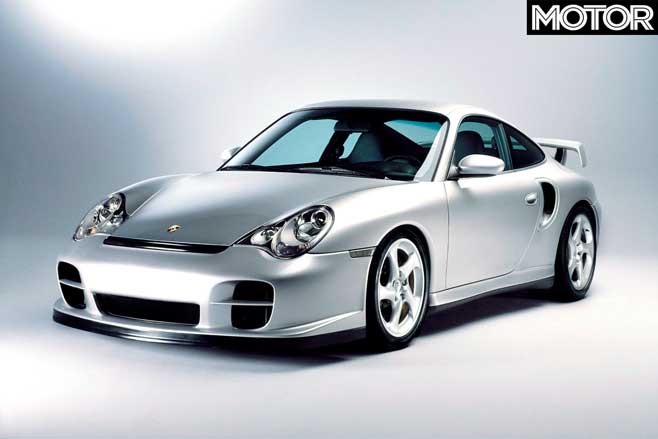
Speaking of six-cylinder torque, the king of them all is the 911 GT2 mill, which makes a scary 340kW and 620NM. Wrap it up in a 1440kg package and you’re talking a low 12-second quarter mile. Then again, it is 400 grand, which kind of brings things back into perspective and the Typhoon back into the running.
Toyota’s new Corolla sedan has followed its hatchback sibling in heading upmarket – with associated price rises.
Priced from $23,335 plus on-road costs for the manual or $24,835 for the CVT auto, the new Corolla sedan is about 10 percent more expensive than it was when it last sold in Australia in 2018.
While the sedan shares much of the hatchback’s rakish snout, the lower bumper is more conservative, as is its conventional boot.
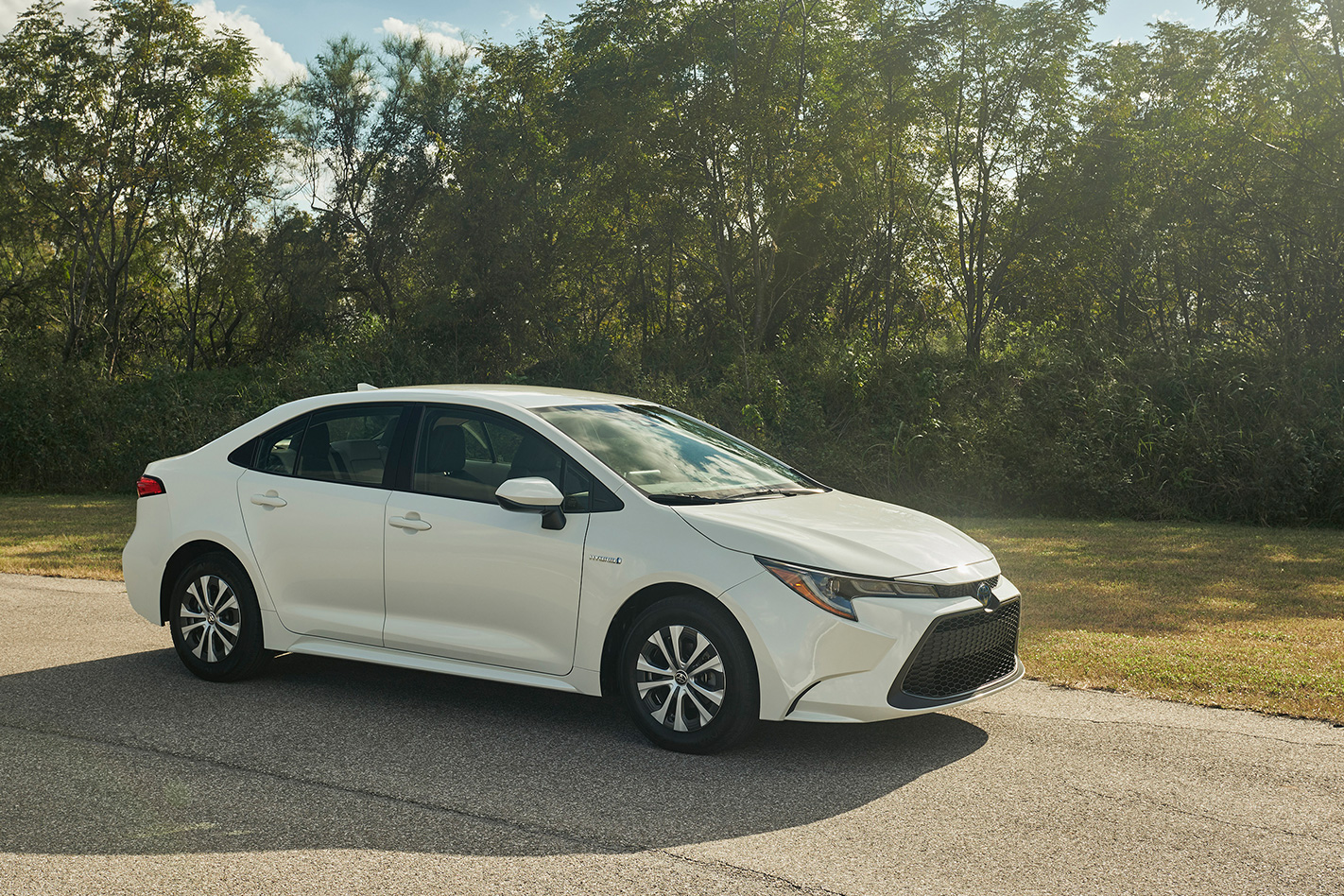
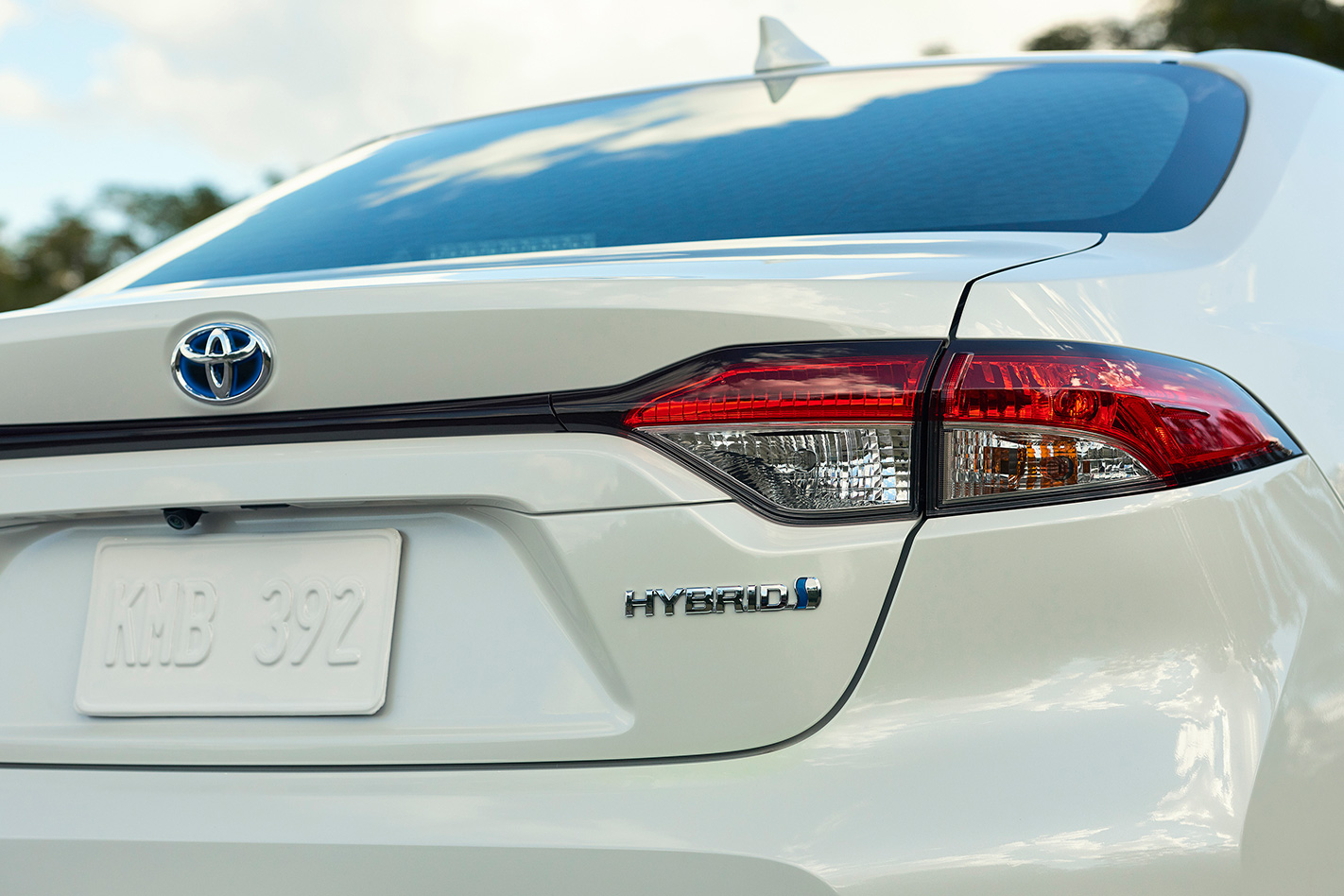
For the first time the Corolla sedan will be offered with a hybrid option, picking up the 1.8-litre four-cylinder petrol-electric system used in the Prius.
Combined, they produce 90kW and 142Nm, with claimed fuel use of 3.5 litres per 100km (just 0.1L/100km more than a Prius).
At $1500 more than the petrol-only models it should take only about two years of fuel savings to pay off the hybrid price premium, assuming petrol prices of $1.50 a litre and 15,000km travelled annually.
“The addition of hybrid plays a vital role too, and our ongoing commitment to this technology and the expansion of our offering is all with the aim of assisting consumers to gain a deeper understanding and appreciation of just how valuable this technology is to both their hip-pockets and the wellbeing of our planet,” said Toyota Australia vice president of sales and marketing Sean Hanley.
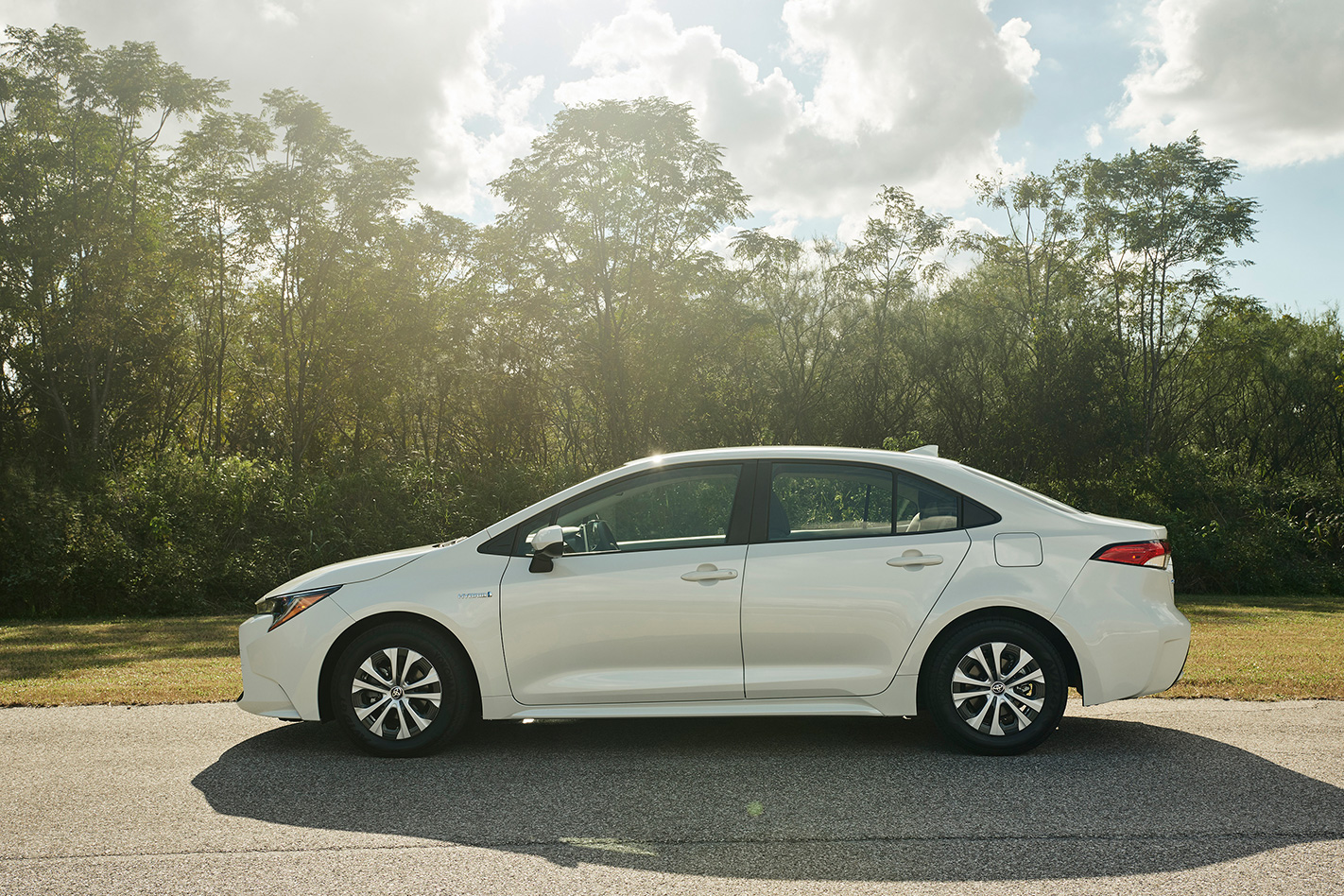
There’s also a 2.0-litre petrol engine option with 125kW and 200Nm, the same outputs of the Corolla hatch.
The Corolla sedan range largely mimics that of the hatch, although the hybrid drivetrain is only available in the Ascent Sport and SX trim levels, the flagship ZR powered only by the 2.0-litre four-cylinder.
Even the base Ascent Sport (like the hatch there’s no longer a regular Ascent) comes with Apple CarPlay and Android Auto pumped through an 8.0-inch touchscreen.
There’s also a reversing camera and Toyota Safety Sense active safety kit that includes autonomous emergency braking (AEB) and speed sign recognition.
However, it’s not until the CVT-auto-only SX (from $28,235) that blind spot warning is added. The SX also gets smart key entry, satellite-navigation, digital radio tuning and wireless phone charging.
The ZR ($33,635) pick up a mix of real and fake leather, a head-up display, nine-speaker JBL sound system, 18-inch alloy wheels and heated sports seats up front with electric operation for the driver.
The ZR sedan also comes standard with a sunroof, something that makes it $1500 more expensive than the equivalent Corolla ZR hatchback.
The new Corolla sedan is fractionally bigger than the one it replaces – 10mm longer and 5mm wider – but is 25mm lower, part of the “sport-like poise” that is hoped to appeal to more buyers.
Toyota says the Corolla sedan is “deceptively spacious”, so expect a big part of the sales pitch to be its additional rear legroom over the hatchback, courtesy of an additional 60mm between the front and rear wheels.
While the boot of the new car hasn’t grown, its 470-litre capacity trounces the luggage space in the hatch, which ranges from 217L to 333L, depending on the model.
While the previous Corolla sedan was sourced from Thailand, the new one comes from the same Japanese factory as the hatchback.
The sedan is expected to make up about 25 percent of Corolla sales, the remaining 75 percent going to the hatch.
2020 Toyota Corolla Sedan pricing
- Ascent Sport manual – $23,335
- Ascent Sport CVT – $24,835
- Ascent Sport hybrid – $26,335
- SX CVT – $28,235
- SX hybrid – $29,735
- ZR CVT – $33,635
Ladies and gentlemen, this is it. At long last Formula 1 has finally released its regulations for the 2021 season and beyond, with the punters and better racing at the heart of the overhaul.
Presented at the Circuit of The Americas in Austin, Texas, both F1 Chairman and CEO Chase Carey and FIA President Jean Todt detailed the ratifications made by the World Motor Sport Council. The changes focus on “promoting closer racing and more balanced competition, as well as bringing economic and sporting sustainability to Formula 1”.
Current issues with F1 include the disparity between the haves and have nots, a lack of close racing on-track due to aerodynamic turbulence created behind the cars and well, this is subjective, but ugly cars. From the outset it would seem that F1 is trying to address all three in one fell swoop.

The money problem – with reports of top teams spending as much as $500m a year just to go racing (not including engine development budgets), things are slightly out of hand, particularly when Williams would struggle to muster anything close to that budget. Hence, for the first time in the history of the sport, every team’s budget will be capped at a US$175m ($AUD250) per year to make it fairer across the board.
That funding figure applies to anything that equates to on-track performance, including restrictions to wind-tunnel testing and in-season development. However, it excludes marketing costs, driver salaries and the pay packet of the top three personnel at any given team. Here’s hoping the sport can spark more manufacturer interest with the lower cost of entry.
How will it be regulated, we hear you ask? Independent regulators will be appointed to make sure teams aren’t spending dollars they aren’t allowed. If teams break the rules, both financial and sporting penalties could be handed down. It’s anticipated that the competitive advantage some teams currently enjoy will be reduced.

The cars, which are expected to be around 25kg heavier, will feature a radical new design philosophy with “striking new looks”. Sweeping body work with 18-inch wheels and lower profile tyres are the most visual design cues that will change. However, more so than the aesthetics, the changes are to create closer racing. Both F1 and the FIA have spent years trying to come up with car designs and aero packages that allow cars to follow one another without losing downforce, therefore increasing racing and overtaking opportunities.
The current generation of F1 cars lose between 40-50 percent of downforce when following another car’s wake, otherwise known as dirty air. Yet, for 2021 this is hoped to lower to around 5-10 percent as the airflow will be directed higher once it leaves the car. To achieve this the front and rear wings will gain a new shape, the suspension will be simplified, the floor will be revised (including ground effects technology) and there’ll be an addition of wheel wake control devices to the front wheels.

Items like fuel pumps will now fall under a push for standardised parts and must be made to a prescribed design. Also, there will be a reduction in the number of times certain components can be replaced – like brake pads for example. Interestingly, one thing that isn’t evolving is the V6 Hybrid power unit, which the formula expected to remain unchanged.
To aid development of younger drivers, teams will be forced to run a driver who has completed two GPs or fewer in two session throughout the year, while race weekends will be condensed to counter the long season.

The regulation changes for 2021 were unanimously approved, however, further agreements are in an advanced stage with the teams. They centre on a new governance and prize-fund structure that will hopefully promote growth and improvement within the sport.
That’s a wrap for the key rule changes. All we hope is that from 2021 and beyond we’ll be talking about the awesome on-track action before the behind-the-scenes drama of the F1 paddock. What do you think – will the new F1 regulations spice up the racing?
The long-awaited rumours are true. PSA and FCA have announced a 50:50 merger. Plans will be finalised ‘in the coming weeks’ to create a binding Memorandum of Understanding, which will cement a giant conglomerate worth A$75bn.
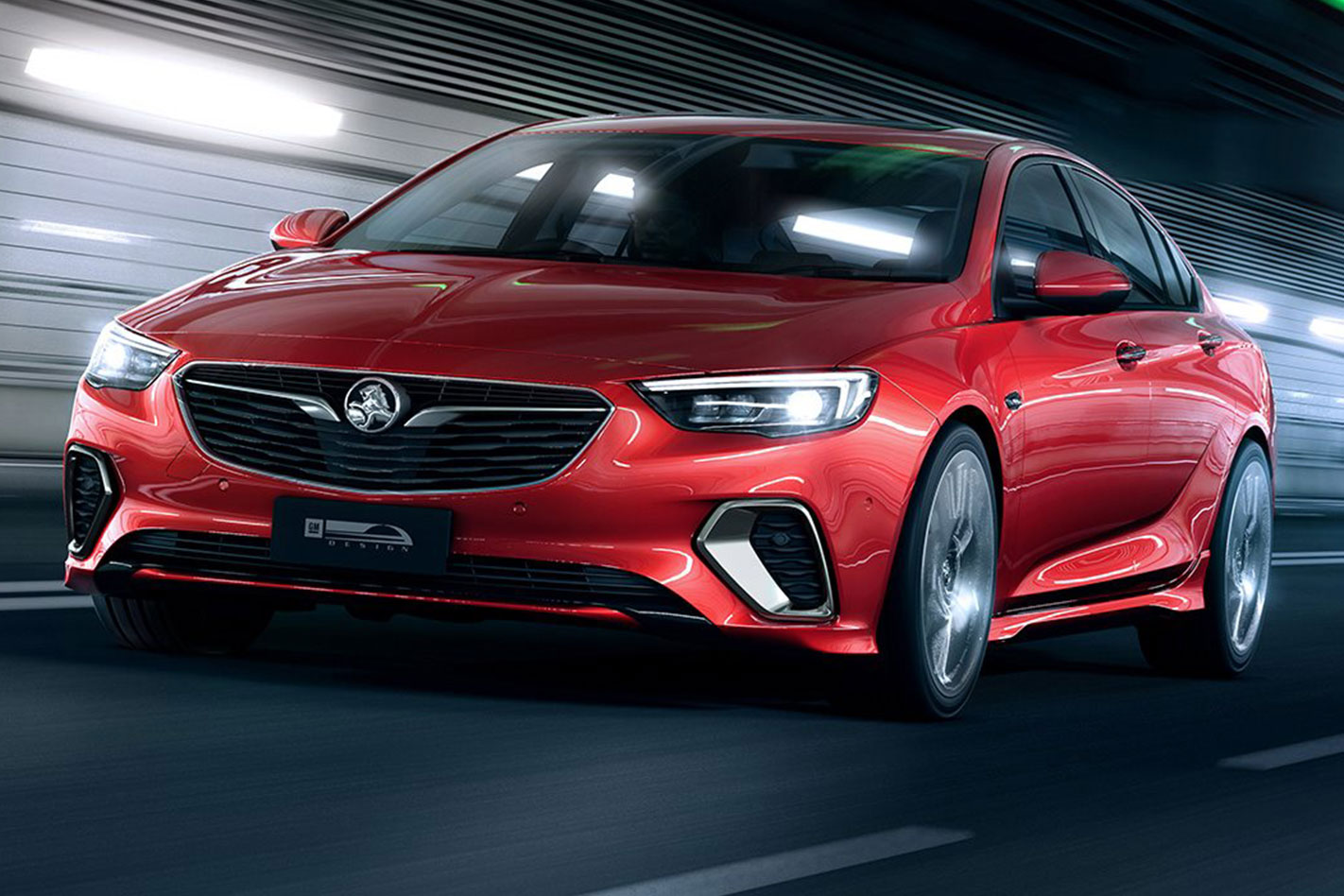
The list of brands coming under the umbrella of this new manufacturer would encompass FCA’s Fiat, Jeep, Alfa Romeo, Maserati, Ram, Lancia and Chrysler, with PSA pitching in with Peugeot, Citroen, DS and Vauxhall-Opel. I know what you’re thinking but no, we can’t actually say that the Commodore is built by Chrysler.
The fourth-largest car company in the world (in terms of annual sales) shifted 8.7m vehicles last year, and the new giant would look to dethrone one of the Volkswagen Group, Toyota or Renault-Nissan-Mitsubishi for a podium position.
The usual corporate waffle about fostering innovation and realising synergies hides some very specific numbers. The company believes it can save $5.9bn over four years without having to close any plants. This will come as a saving through shared vehicle platforms, powertrain technologies and the not inconsiderable benefit of added purchasing power.
PSA boss Carlos Tavares learned from one of the best in the business when it comes to cutting costs. A former protégé of Carlos Ghosn at Renault, Tavares has already achieved what many thought was an impossible task by turning a profit at Vauxhall within a calendar year of PSA taking the reins. Based on that track record, it was perhaps no surprise that Tavares has been nominated as CEO of the Dutch parent company, signing on for a five-year stint.
The current FCA chairman, John Elkann, will retain that role in the new company and then there would be five nominated FCA board members and five nominated by PSA. Those with longer memories may well be recalling Chrysler’s last attempt at a ‘merger of equals’, the disastrous marriage of Daimler and Chrysler, the former’s CEO Dieter Zetsche later admitting that “we learned a practical lesson about the limits of globalisation.”
The merger had been rumoured for some time, but had latterly been overshadowed by talk of PSA purchasing Jaguar Land Rover. The chief executive of FCA, Mike Manley, had been instrumental in pulling many of the strings to get the deal over the line. “I’m delighted by the opportunity to work with Carlos and his team on this potentially industry-changing combination,” said Manley. “We have a long history of successful cooperation with Groupe PSA and I am convinced that together with our great people we can create a world-class global mobility company.”

Fiat Chrysler posted better than expected operating earnings in the third quarter this Thursday, with record profitability in North America putting it on target for adjusted earnings before interest and tax (EBIT) of more than 6.7 billion euros ($A10.9 billion). It also expects an additional uptick in its financial performance in 2020.
Max Warburton, a vehicle industry analyst at Bernstein, nevertheless sounded a note of caution, highlighting the limits of this merger. “It’s obvious that PSA does not offer any synergies in the US, and very little in LatAm. Putting PSA and FCA together in China doesn’t solve much either: two wrongs don’t make a right. A deal does nothing to change Alfa and Maserati’s prospects.
“The focus will be Europe ‑ where subscale product lines, powertrains and future electric vehicle investments could be combined,” he noted.
If there’s one thing we’re happy to ‘waste’ our time with here at MOTOR HQ, it’s car videos. More specifically, those videos where it’s pure vision and noise, with an expert driver behind the wheel.
Take this video of the new Alpine A110 R-GT rally car, with the task of testing this new rally-spec A110 left up to French rally driver François Delecour.
The car was revealed by Alpine in September and has been homologating to meet the requirements for the intended category the car will be eligible for – the R-GT class.
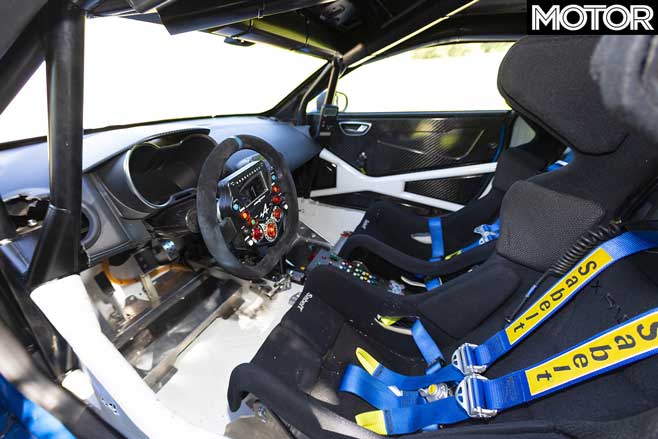
Even though it won’t be racing with the ‘big boys’ in WRC, it’s still an impressive thing. A steel rollcage, modified engine bay and suspension mounting points, three-way hydraulic dampers, race-spec Brembos, and inside are Sabelts with six-point harnesses.
While still meeting the FIA’s engine restrictions, the turbocharged 1.8-litre Renault engine in the A110 is said to make more than 221kW, with a six-speed sequential gearbox putting that through to the rear wheels. R-GT is a two-wheel drive class, and that makes for some cheeky oversteer in this case. Which brings us back to the video.
McRae’s WRC Impreza smashes Leadfoot record
Delecour is clearly not losing his touch. He’s nearing 60 and hasn’t raced consistently in the top level of rally since the early 2000s. It looks like he’s thoroughly putting the A110 through its paces, clipping harsh apexes and turning hairpins with precision. Or flicking the tail out a little.
Take a look at the video and let us know what you think of the A110 R-GT in the comments! Better than a WRC car?
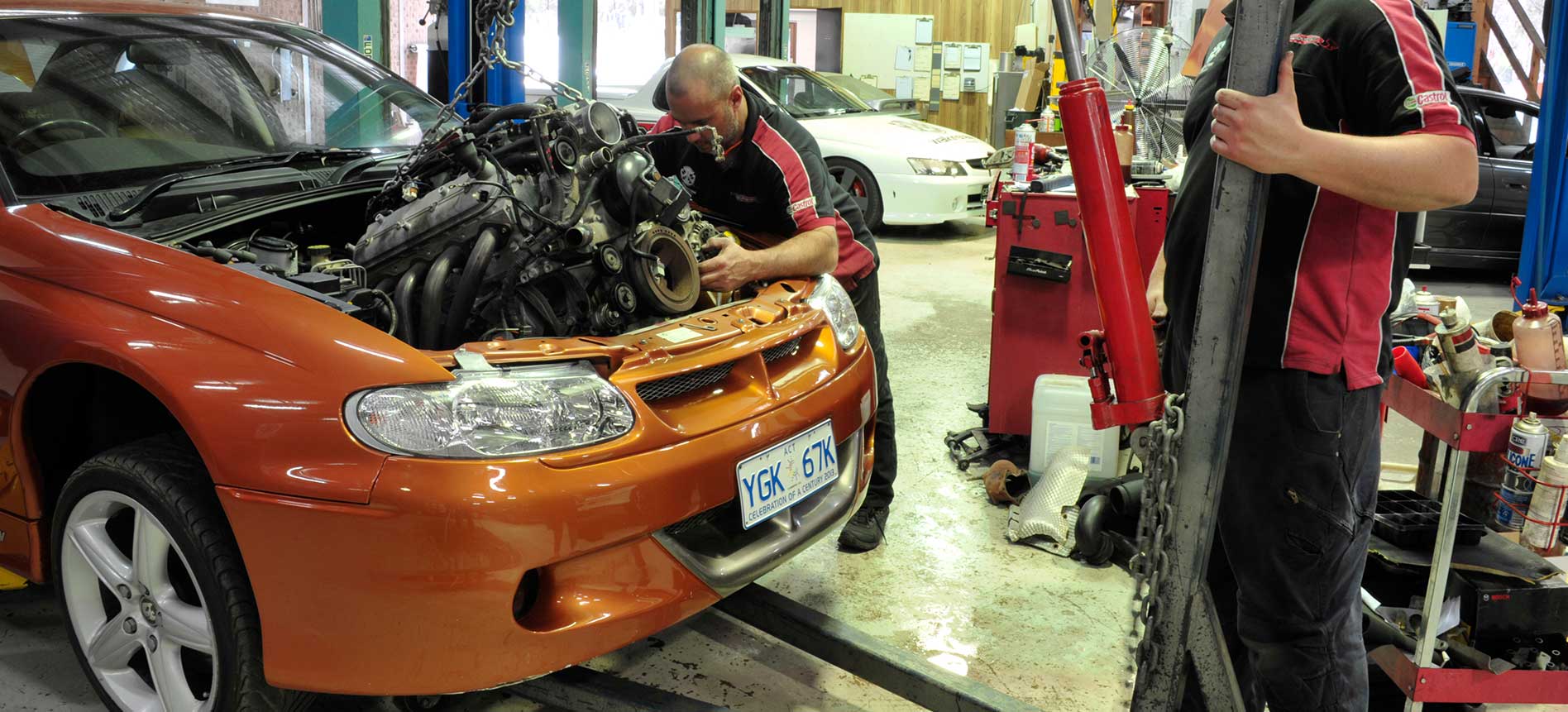
Car servicing could soon be easier and cheaper courtesy of an imminent new law that will force manufacturers to hand over servicing and repair software to independent mechanics at a reasonable cost.
Replacing the previously voluntary code that some in the industry were critical of, the “mandatory information-sharing scheme” means small workshops and repairers will be able to purchase software from manufacturers or data aggregators for a small fee.
“Our scheme will mandate that all service and repair information car manufacturers share with their dealership networks must be available for independent repairers to purchase,” said federal Assistant Treasurer Michael Sukkar in announcing the scheme.This will allow those independent repairers – seen a crucial cog in maintaining competitive service pricing – to perform updates and checks by plugging into the OBD (on-board diagnostics) outlet under the dashboard.
The Australian Automotive Aftermarket Association called the mandatory code an “important win for consumers” regarding an “important competition issue”.
The AAAA was critical of the voluntary code, with CEO Stuart Charity claiming that within 18 months of its implementation in late 2014 “it wasn’t working”.
“The only car manufacturer that complied with the provisions of the voluntary code was Holden,” said the AAAA’s Charity. “No other carmaker made data available on fair and reasonable terms.”
As the body that represents car importers in Australia, the Federal Chamber of Automotive Industries disputes those claims, arguing “nobody minds handing over the data” and “many manufacturers already provide that information”.
The AAAA also said there was “no official monitoring, no enforcement and no reporting” of issues with the voluntary code, prompting lobbying for new legislation modelled off that already in place in other parts of the world, such as Europe and America.
In an automotive world increasingly reliant on software, many car makers resisted attempts to hand over the software code that they spent big bucks engineering into a car.
For some issues, that meant owners were effectively forced back to a dealer for a solution.
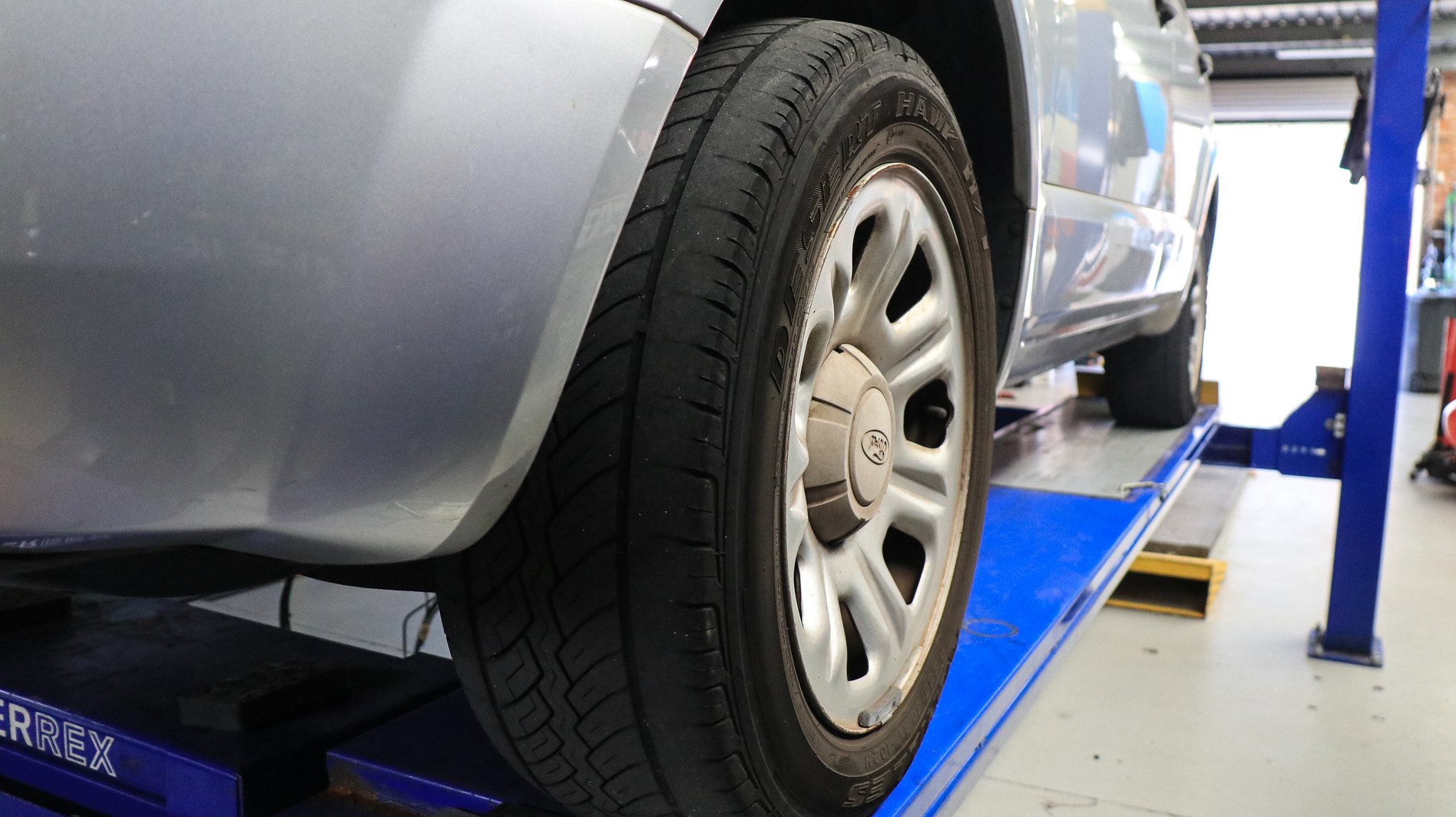
In recent years some manufacturers have onsold data or made it available overseas, but the AAAA maintains the voluntary code was ineffective.
“What our repairers were finding was that over the period of the voluntary agreement things were getting progressively worse,” said Charity.
In a 2017 report, the ACCC was critical of adherence to the voluntary code, saying there were “problems with the breadth, depth and timeliness of the technical information offered”.
Simple car maintenance you can do yourself
Minister Sukkar said the new scheme would clarify expectations.
“It will also remove grey areas in the current voluntary arrangements by explicitly setting out a list of safety, security and environmental information that must only be released to appropriate businesses as well as clear criteria for access.”
However, the FCAI points to concerns about cars increasingly reliant on electronics, sensors and software.
“We’re talking about very sophisticated vehicles here; you need very sophisticated tools,” said FCAI director of public affairs Lenore Fletcher, highlighting autonomous vehicles and hybrid and electric vehicles as creating additional potential dangers for technicians that may not have gone through the extensive training provided by manufacturers.
“We really need to ensure that everybody is protected in this situation,” she said.
Carmakers have long been trying to protect their patch on the servicing front, most introducing capped price servicing schemes that in some instances are subsidised by head office to tempt owners back to the dealership.
As well as an important revenue stream for dealers, servicing is a crucial touchpoint that allows dealers to give consumers access to the latest models through the use of loan cars.
Audi’s second go at the A1 hatchback is still the most affordable way into an Audi, and as the company’s ‘gateway’ model to lifelong Audi ownership, first impressions count a lot.
What is the Audi A1?
Nearly 10 years after the original Audi A1 made its debut, this new car arrives on the premium small hatchback scene to do battle with relatively few others. The Mini Cooper comes closest to the A1’s price, size and intent, while the Volkswagen Polo could be considered a rival on size and Euro heritage grounds – though definitely not on price.
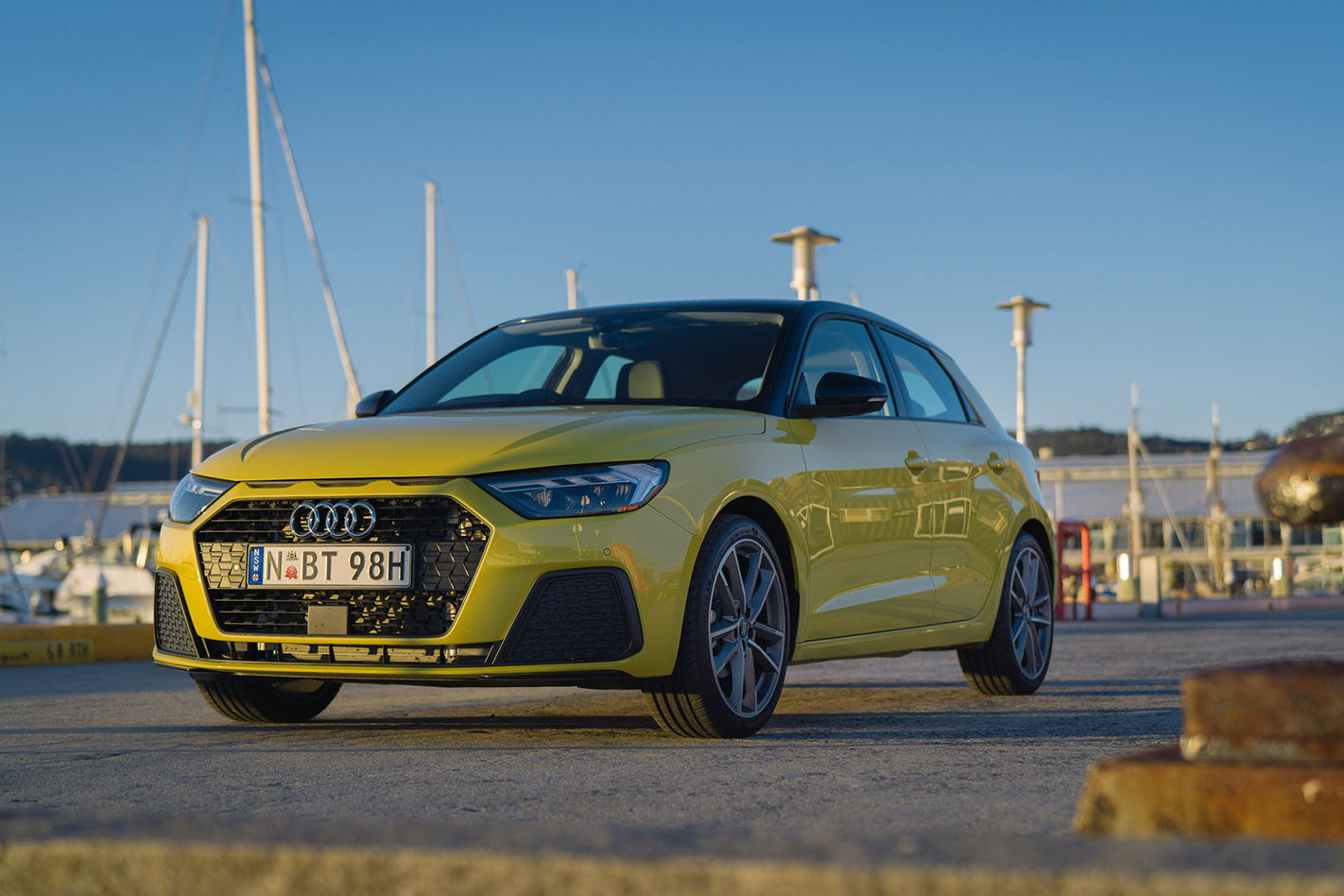
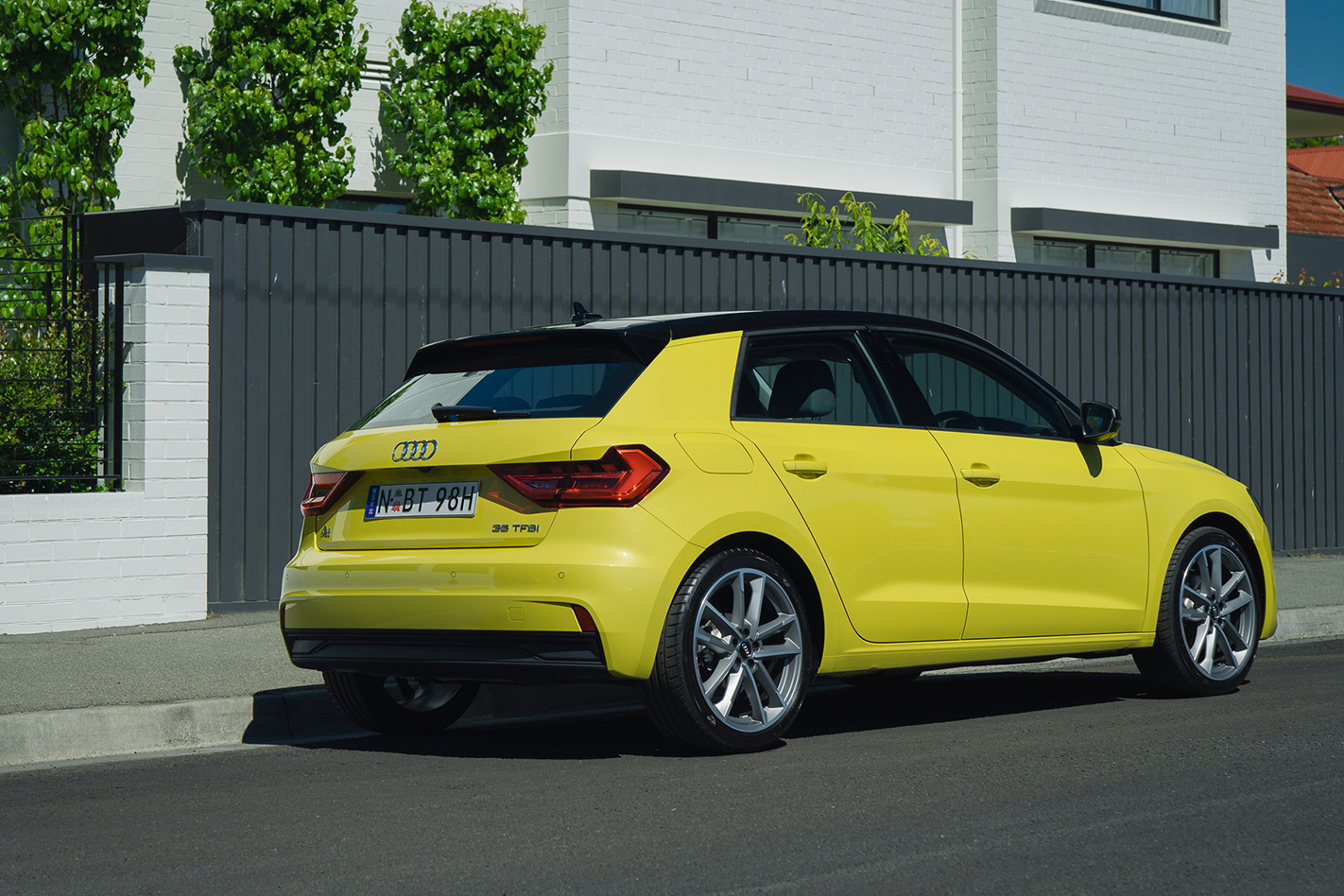
It may remain as Audi’s smallest car, but it’s been doing a lot of growing up since we last saw its predecessor. It’s now 56 millimetres longer overall but packs a 94mm longer wheelbase which has allowed Audi to increase the size of the interior through clever packaging.
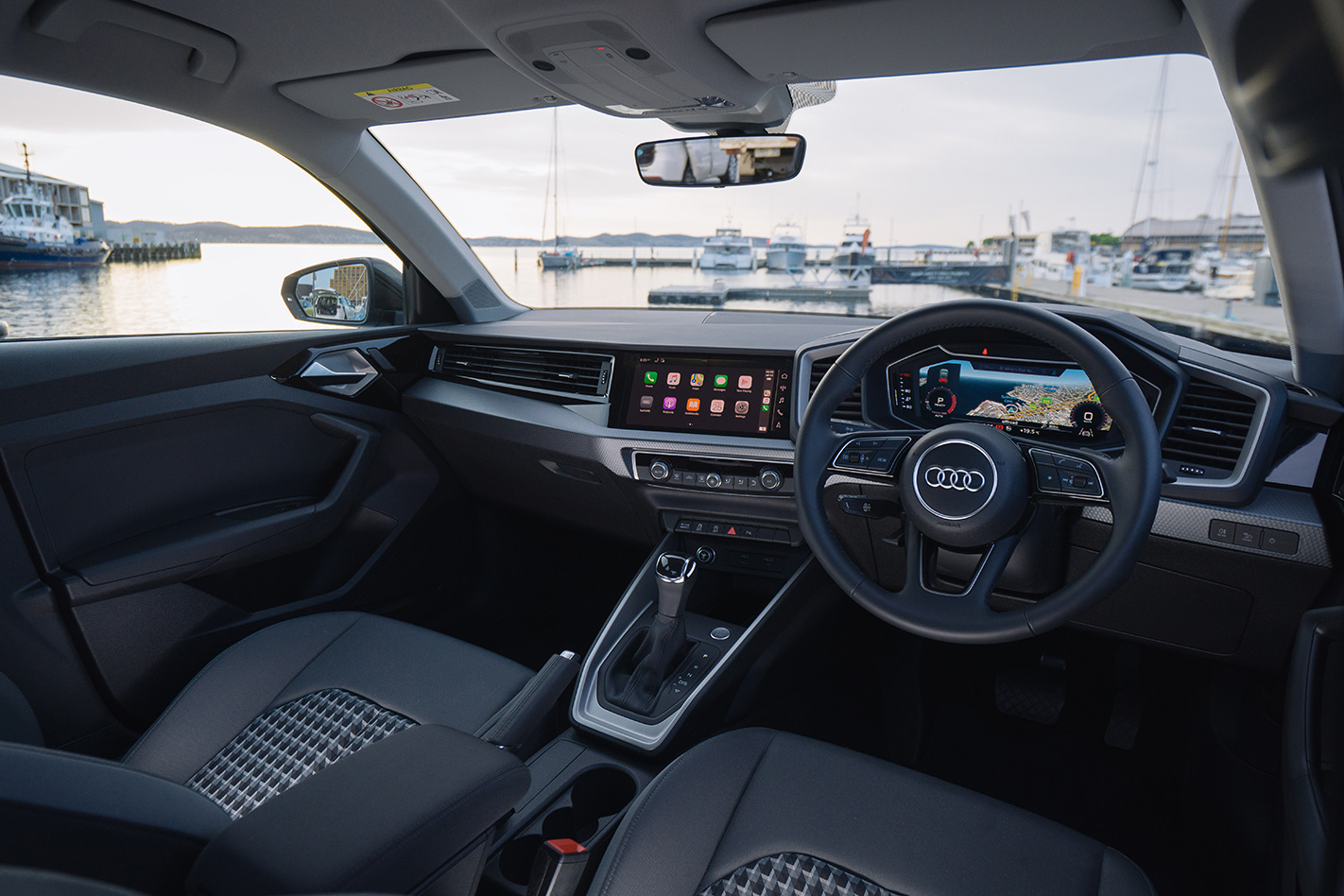
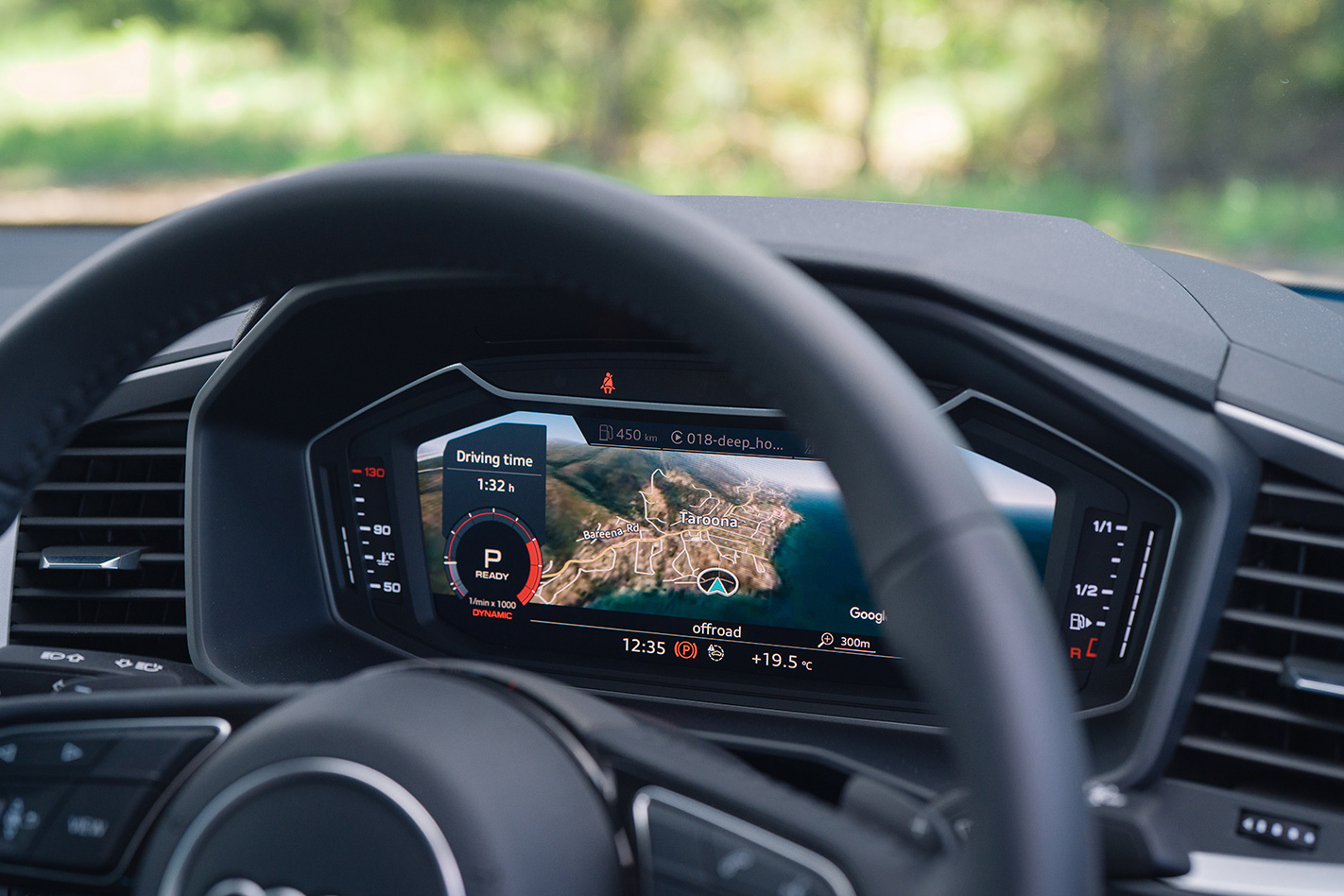
Not only is it larger than before, it also will feature more technology. Each A1 receives an 8.8-inch touchscreen controlling the a new infotainment system, but in addition will come equipped with a 10.25-inch digital instrument cluster.
Further to its physical enhancements, where the previous A1 earned its reputation for being cute and small, this car features distinctive sporty styling and far more angular lines making it look far meaner in its demeanour than before.
The new A1 range is more expensive at the entry level than previously, but it also comes better equipped. Unlike its predecessor it’ll only come in five-door guise, and manual transmissions are dropped from the range altogether.
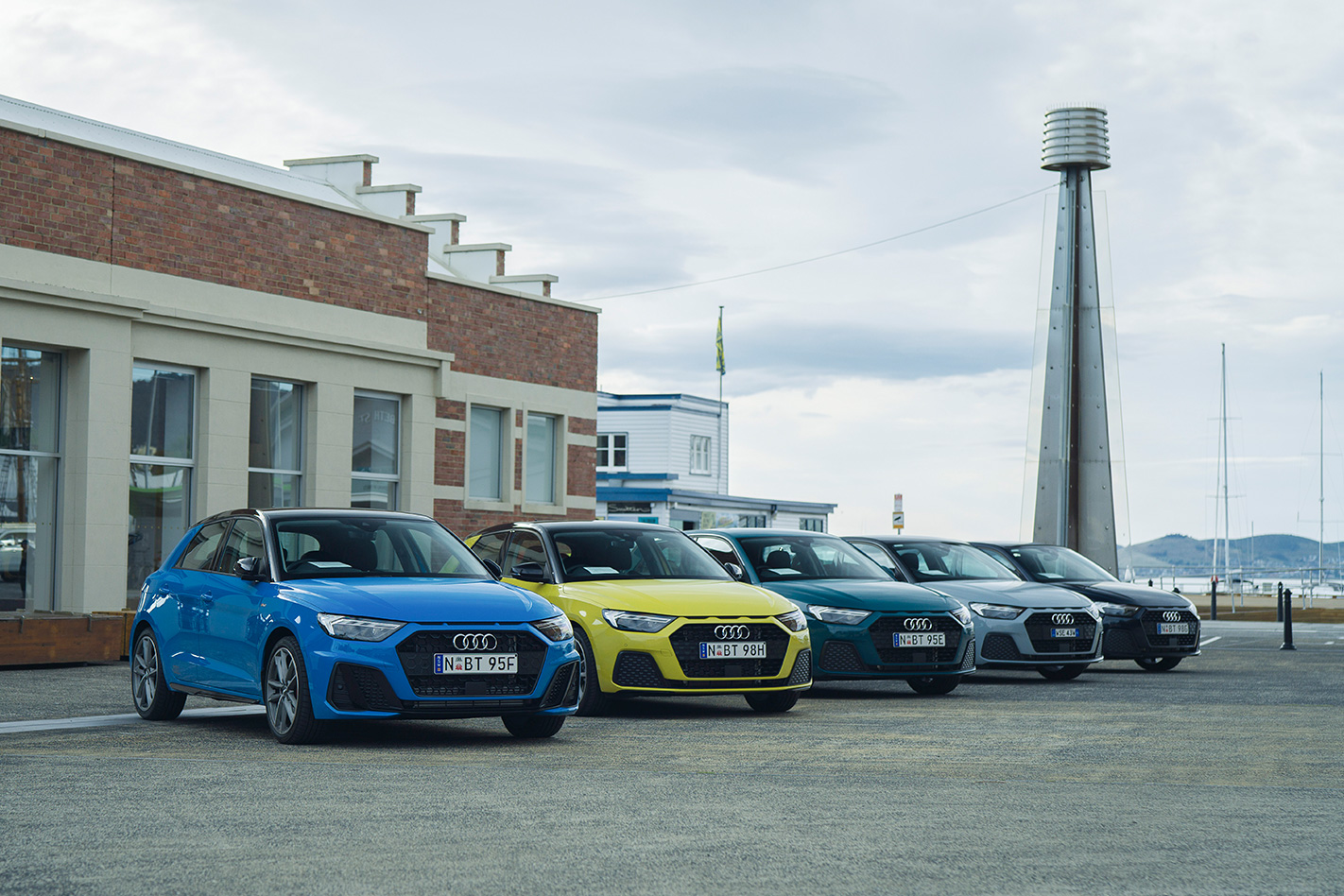
Kicking off a three-strong range, the 30 TFSI costs $32,350, jumping to the $35,290 35 TFSI mid-ranger and topping out with the $46,450 A1 40 TFSI performance halo.
At launch we spent time in all three variants, but let’s concentrate on the $35,350 35 TFSI which is expected to make up the bulk of A1 sales here.
Key highlights you can expect to find on the A1 35 TFSI are a comprehensive suite of safety equipment including autonomous emergency braking, lane departure warning, six airbags and front and rear sensors and a parking camera. The A1 has achieved a 5-star safety rating, thanks in part to these additions. Audi has also spruced up the looks and connectivity with a lighting package, wireless smartphone charging, smartphone mirroring for Android Auto/Apple CarPlay and digital radio.
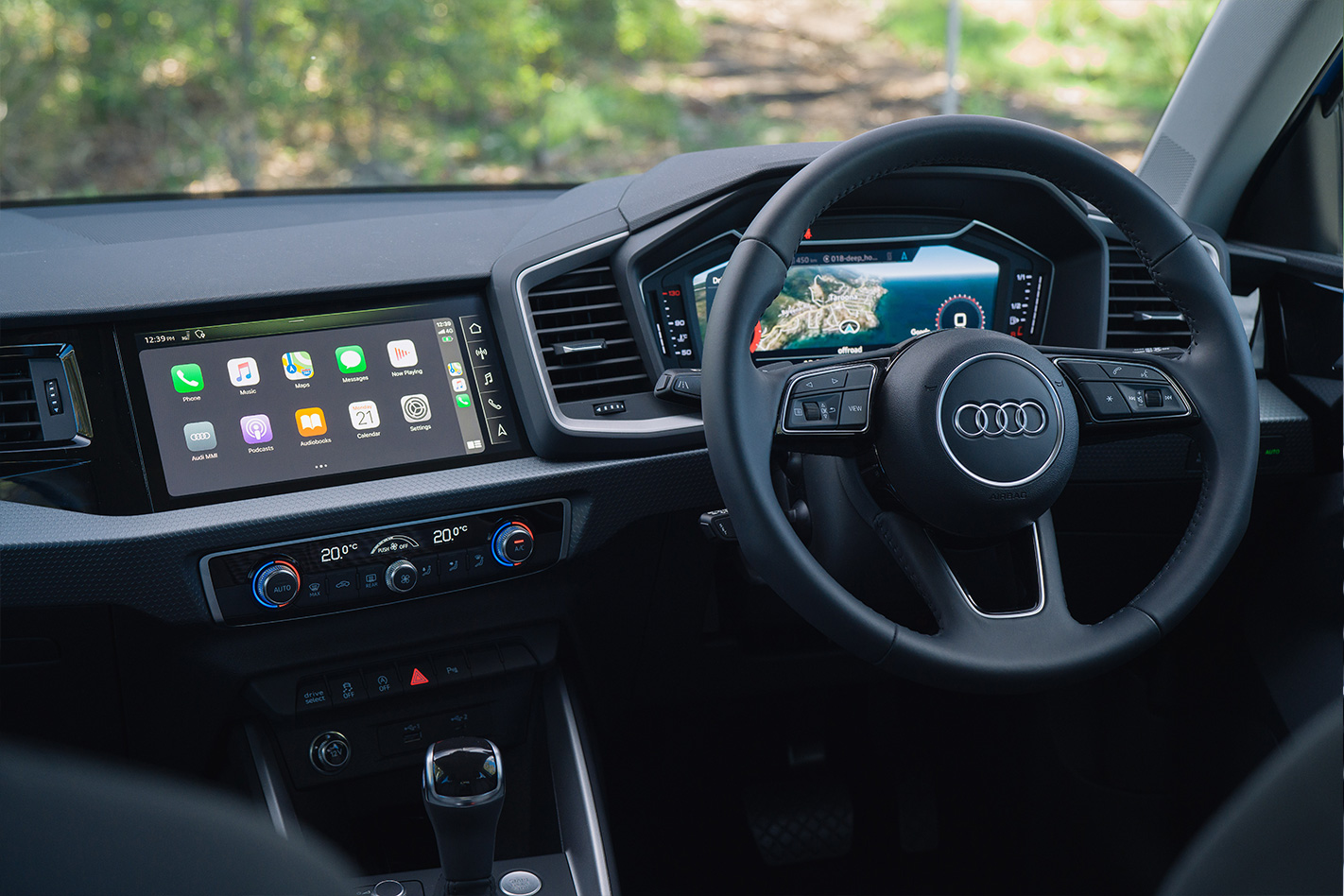
A few option packages exist for the A1 too, with the car we drove on launch featuring the $2990 Style package which brings LED headlights with rear dynamic indicators, colour LED interior lighting, and 18-inch Audi Sport alloy wheels, and it also had a $3200 Technik package which introduces Audi’s ‘virtual cockpit’ electronic instrument panel, an upgraded sound system and wireless Apple CarPlay.
What is it like to live with?
Much like the current-gen Volkswagen Polo that swelled to Mk5 Golf proportions when it made its debut last year, the Audi A1 has similarly expanded creating a much more comfortable, roomier interior environment.
Jumping into the front seat, it’s very easy to get comfortable even if you’re taller than most. The huge headroom on offer combines with a flexible steering wheel adjustment to provide a commanding driving position, even in such a diminutively sized car.
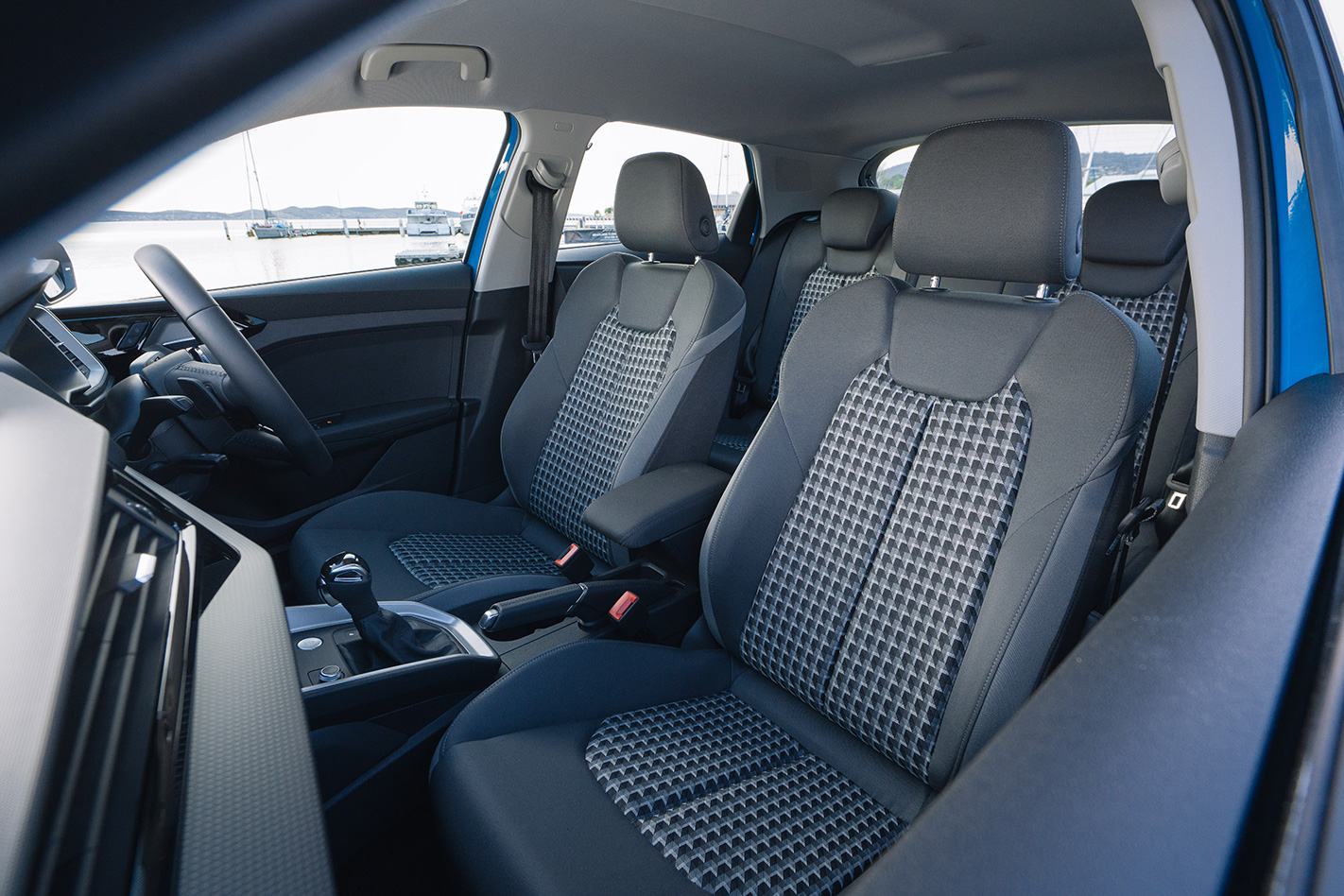
On first impression the interior shows that Audi still has it, in terms of interior dash design. Much of the infotainment is directed towards the driver and the clear crisp lines of the dash fit very well within Audi’s vision for this car to be a style icon.
Many of the materials are sturdy and feel of quality, which we’d expect to hold up well to years of use. Where things could be improved though, is the firm plastic door cards and glovebox lid which aren’t quite so nice to the touch. It’s the same story in the second row, though the harder plastics at least don’t feel especially scratchy or unpleasant.
Speaking of the back, there’s a decent amount of space on offer. Headroom is abundant, and you’ll have room for your legs in behind the front seats. We wouldn’t call legroom generous, but we do wonder just how Audi has been able to supply the space on offer – packaging genius!
Audi’s infotainment system is simple to use with quick shortcuts for the most common requests, and USB-A and USB-C ports and wireless charge tech in the centre console ensure it’s up to current technology trends.
Audi seems to have come a long way in cabin packaging and ambiance, with a definite improvement in both. Not only is the cabin larger, the light, interior lighting and comfort of the seats are greatly enhanced too.
Storage wise, the A1 gets two cupholders plus an additional small can holder, a cubby forward of the new-design shifter, a small centre console for valuables and sizeable plastic-lined door pockets.
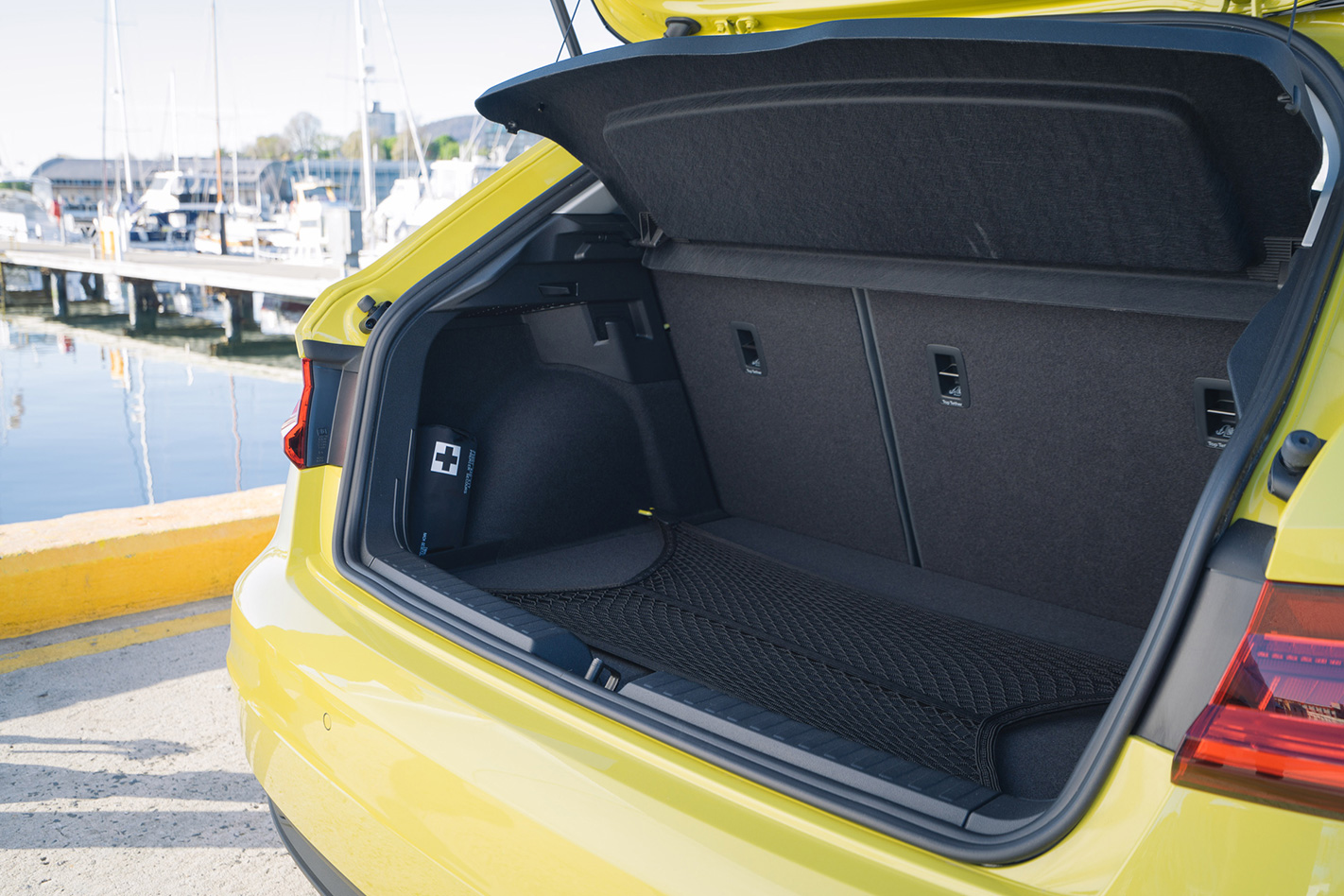
The boot is 65 litres larger than before, totalling 335 litres of space which was more than enough for a number of overnight bags and backpacks.
What is it like to drive?
Slide into the hot seat of the Audi A1 35 TFSI and you’ll quickly come to realise the experience on the whole is nice.
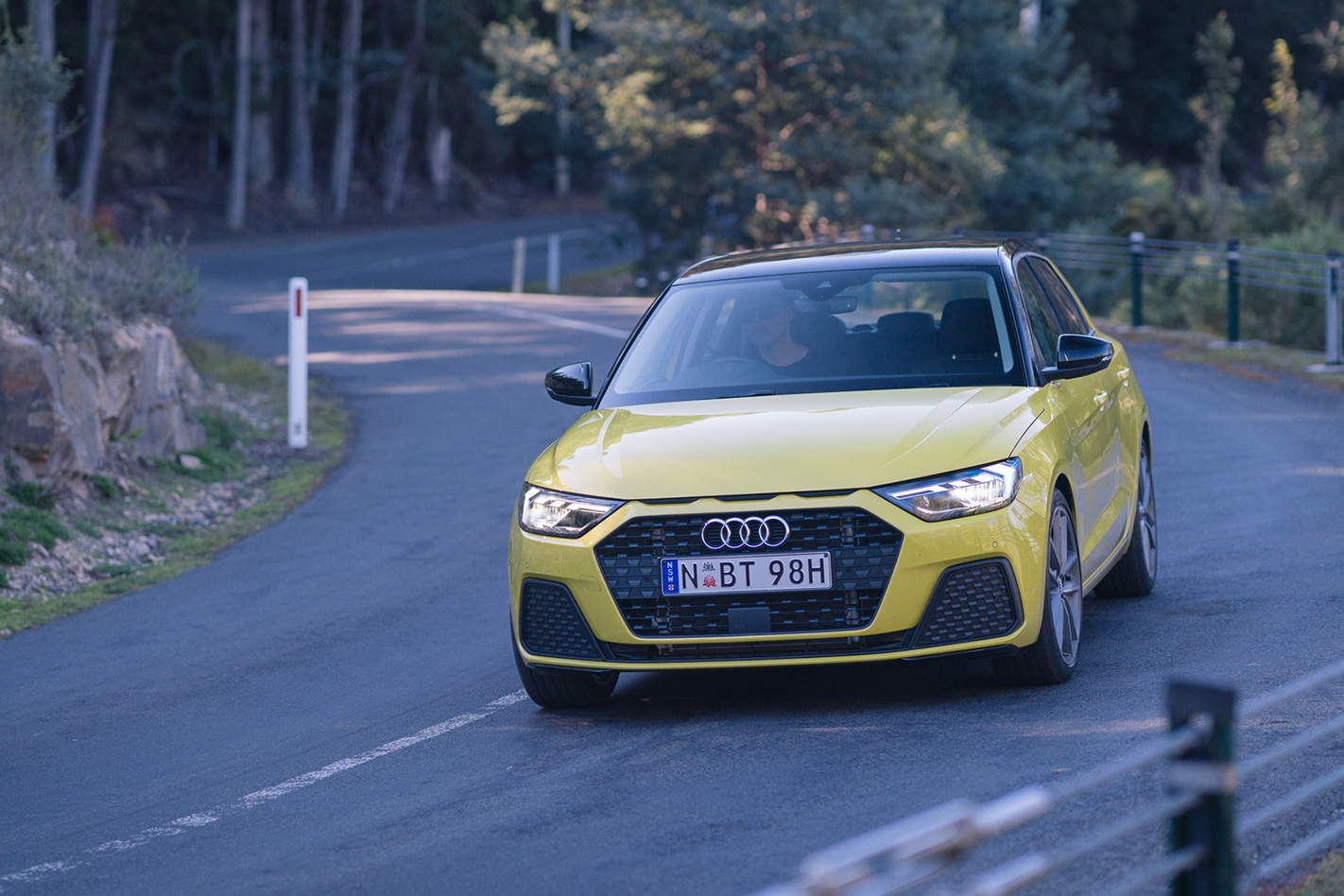
It’s not especially grin-inducing, but for ticking boxes, the A1 35 TFSI does the job very well.
It’s powered by a 1.5-litre four-cylinder engine that outputs 110kW and 250Nm, and the S tronic seven-speed gearbox is as smooth as we’ve come to expect from Volkswagen Group products. It’s ability to intuitively change gears leading up a hill and switch between gears imperceptibly is well noted.
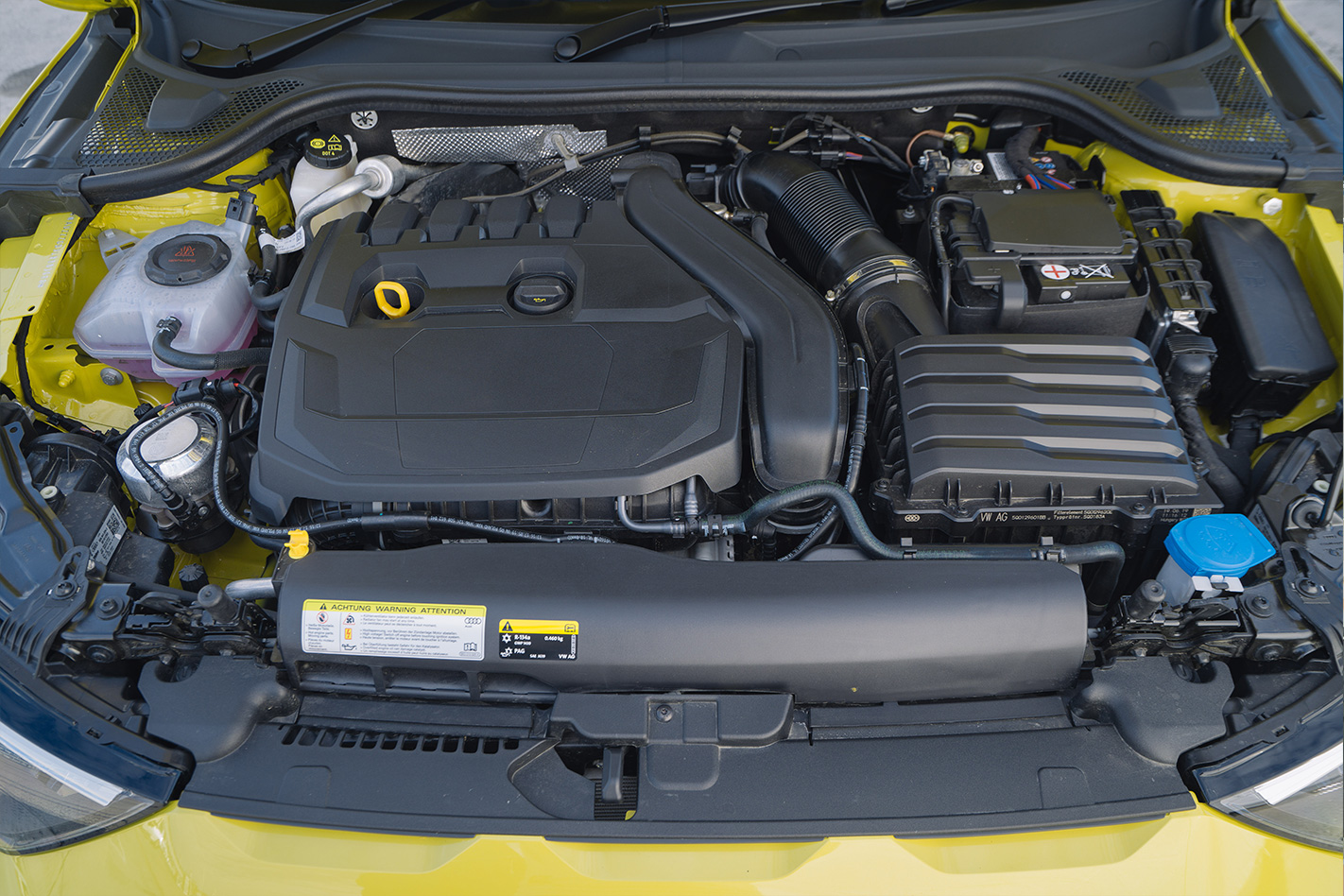
Power is modest, yet overtaking is no great challenge and the powertrain pulls smoothly throughout its rev range.
The ride experience is very comfortable over a number of bumpy country roads, and freeway imperfections were easily ironed out. That said, there’s a fair amount of road noise when travelling on coarse-chip surfaces that we didn’t expect from a premium car.
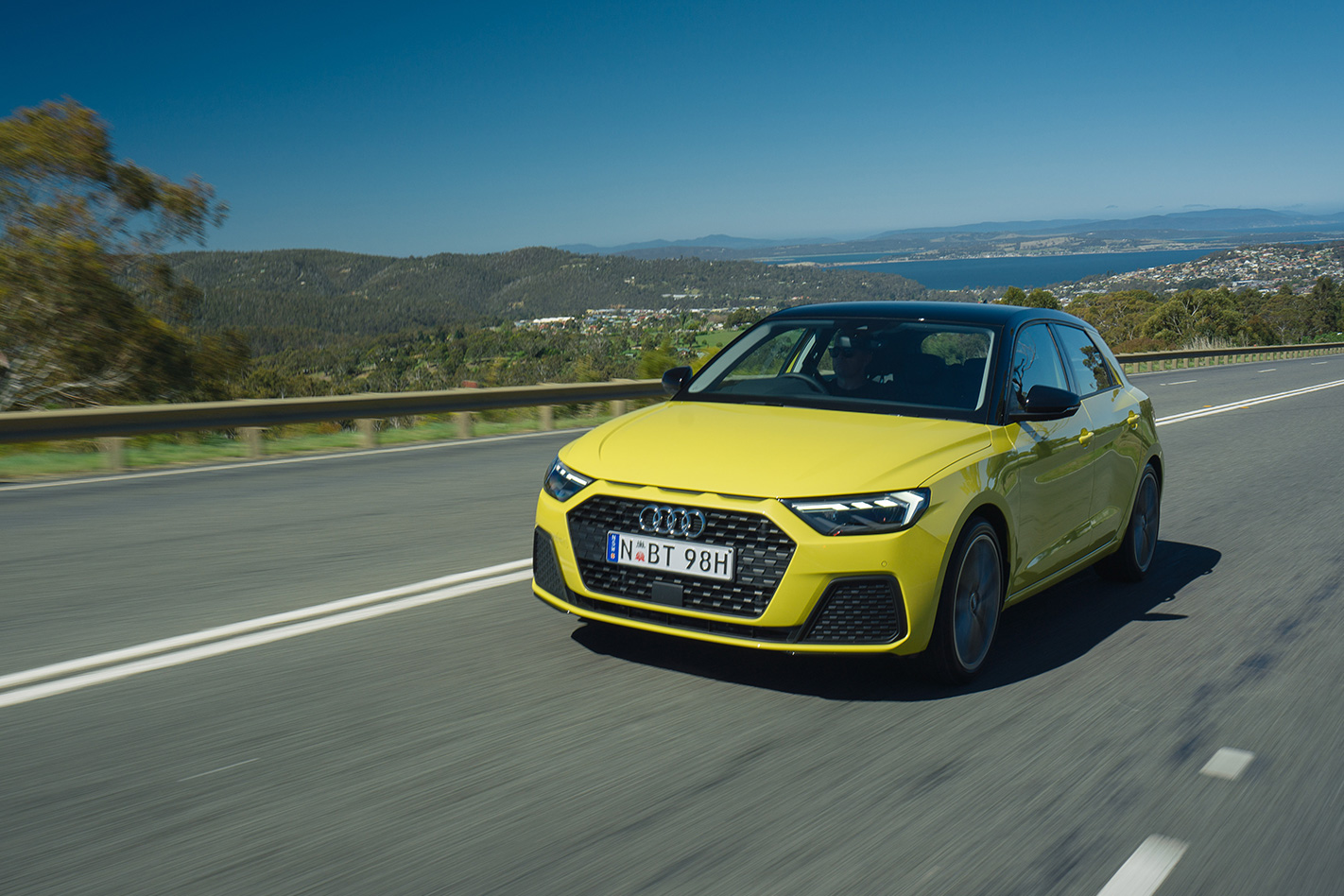
Steering is light and accurate, the car’s small stature is easy to place within a corner and the seats themselves are a comfortable place to spend extended periods of time.
Is it worth the money?
Although it’s more expensive than its predecessor, the new Audi A1 is a much more impressive car than it has ever been.
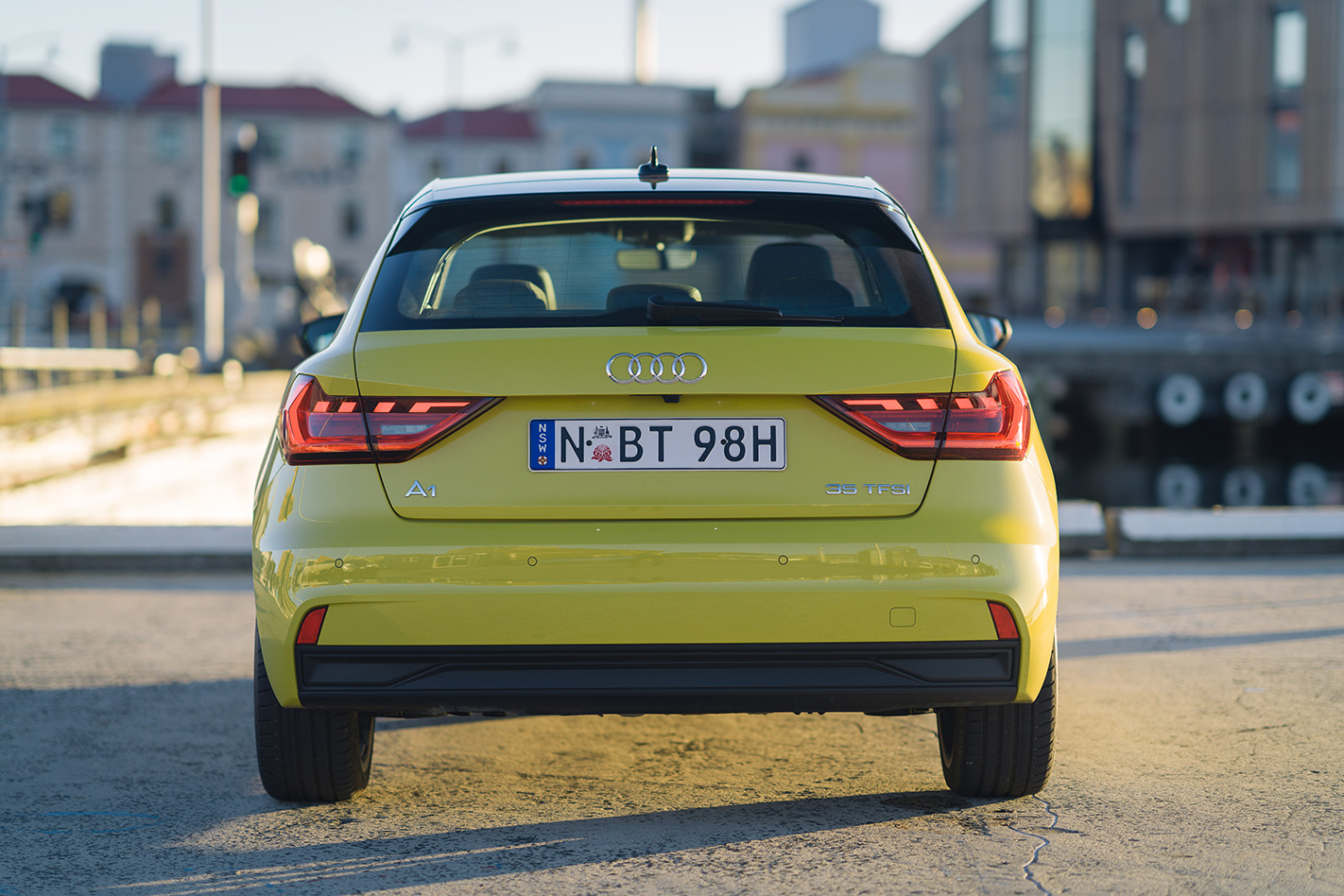
Everything from its updated technology, to its roomier size and much improved looks – which you can customise to your heart’s content – is a vast improvement and will please its intended customers.
Running an A1 will cost $1480 for servicing over three years, or $1990 for five years, both costs that are able to be financed. Audi’s standard warranty runs for three years with no kilometre limitation.
One thing to note though is the fact that it doesn’t feel like the more you spend, the better it gets. We’d much rather go for the more affordable 30 TFSI that gets an engine that is neither better or worse, and tick the option boxes that best apply.
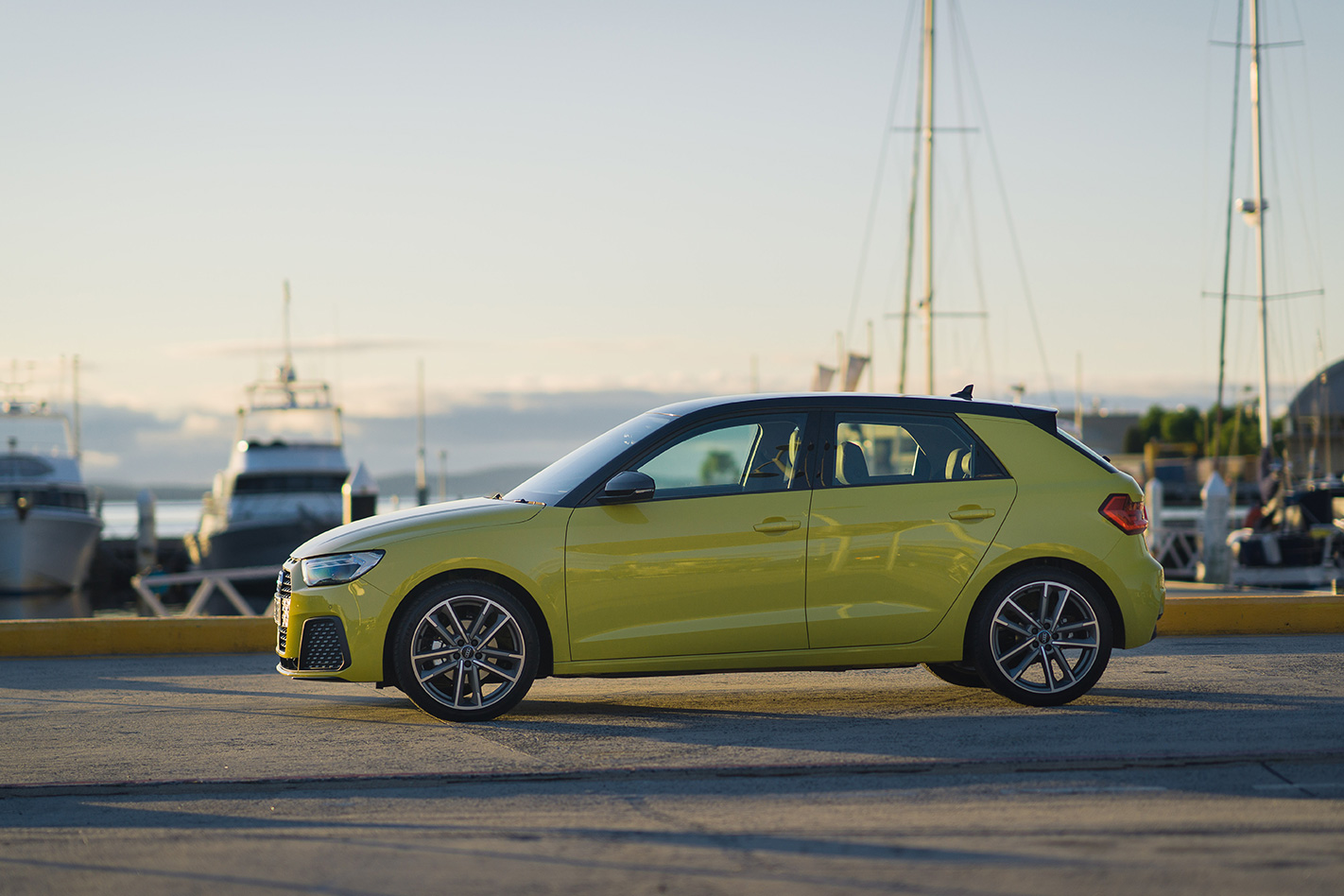
As its most affordable model, the Audi A1 is well representative of the brand and does its stablemates justice to kick off Audi’s range of vehicles.
