
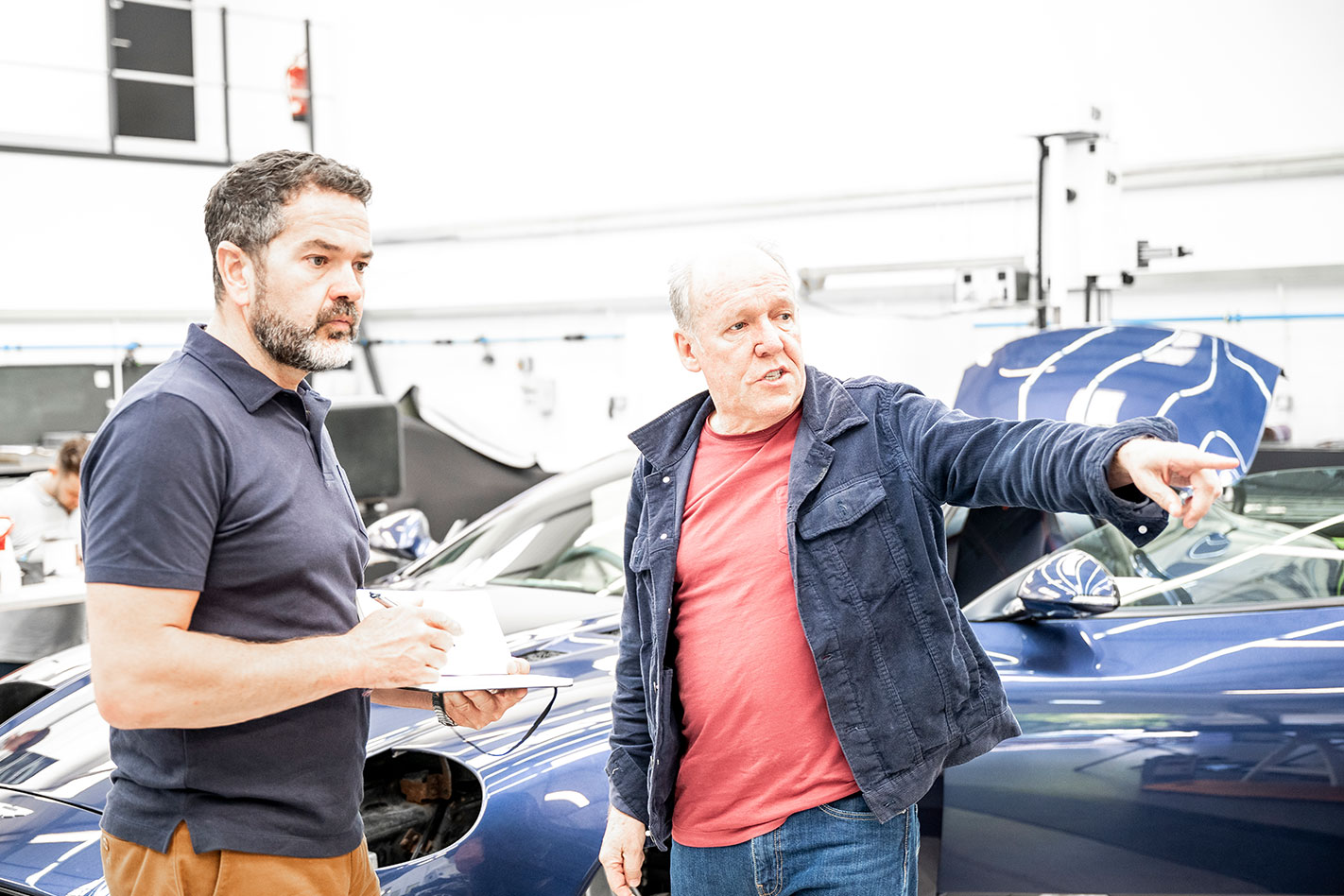
You know Ian Callum. He’s been responsible for shaping the face of modern car design through cars like the Aston Martin DB9 and the Vanquish. His F-Pace was Jaguar’s first SUV and was such an elegant fit that nobody raised a sniff of a complaint about it. The all-electric I-Pace, Ford’s bonkers RS200 Group B rally car, the Nissan R390 GT1 racer, even the detailing of HSV’s iconic 1996 GTSR all flowed from his pen. So we were understandably delighted when he agreed to guest edit the latest instalment of Wheels magazine: The Design Issue.
We have Callum at his most expansive, talking about the state of modern car design and the way forward. He helps us nominate the 10 most influential designers currently working in the industry, but we banned him from nominating himself. He’s a pretty modest guy, so I don’t think that was strictly necessary. Sorry, Ian.
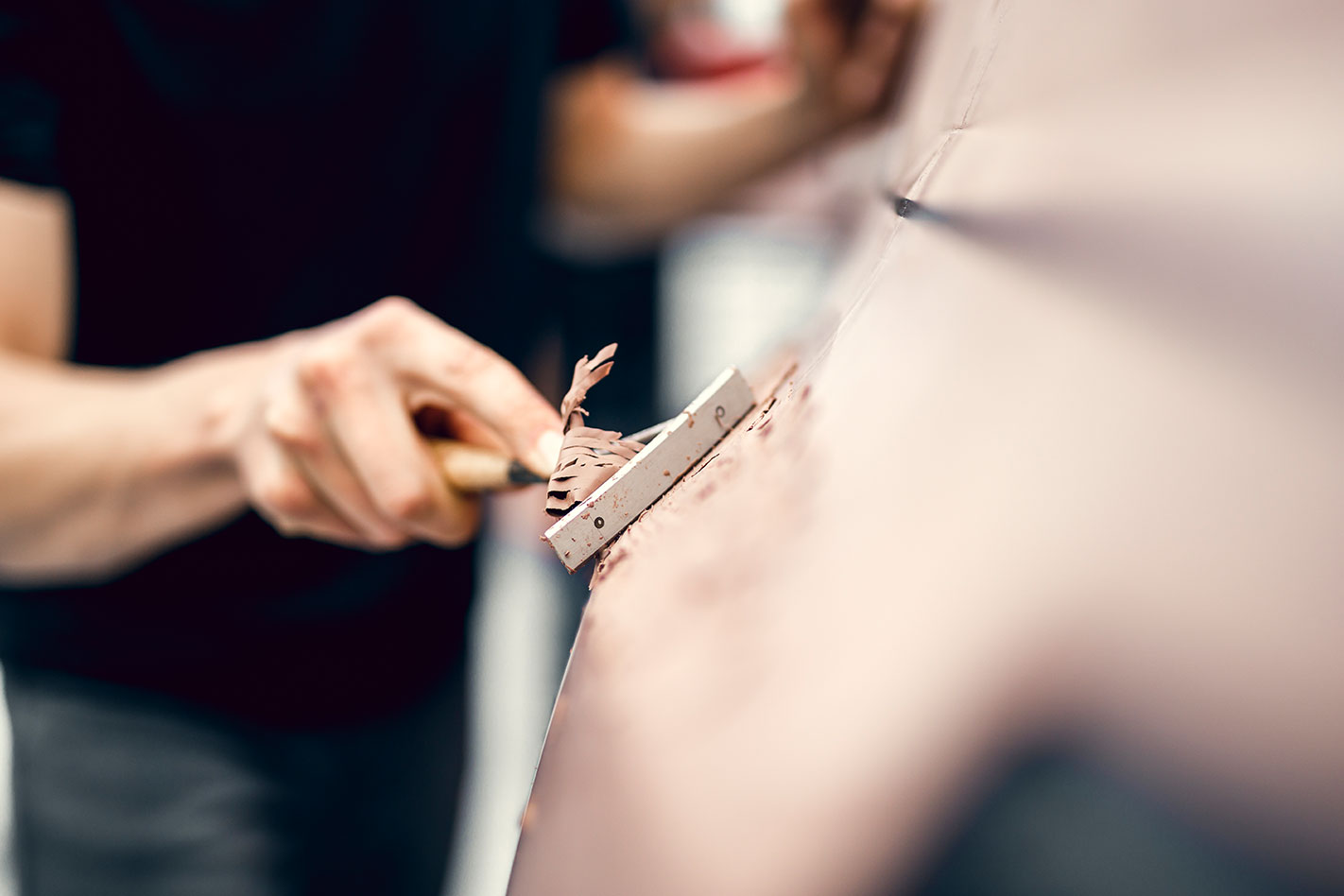
Alex Inwood gets access to GM’s secret design studio in Melbourne to document the art of clay modelling and talks to GM’s local design guru Richard Ferlazzo to understand why, in today’s virtual world, there’s still no substitute for sculpting two-tonne clods of clay.
Callum walks us through the steps in designing a car, and we sent Ash Westerman to Turin to visit one of the most outrageous design houses of them all, Zagato. His interview with Andrea Zagato as the company celebrates its centenary is well worth a look.
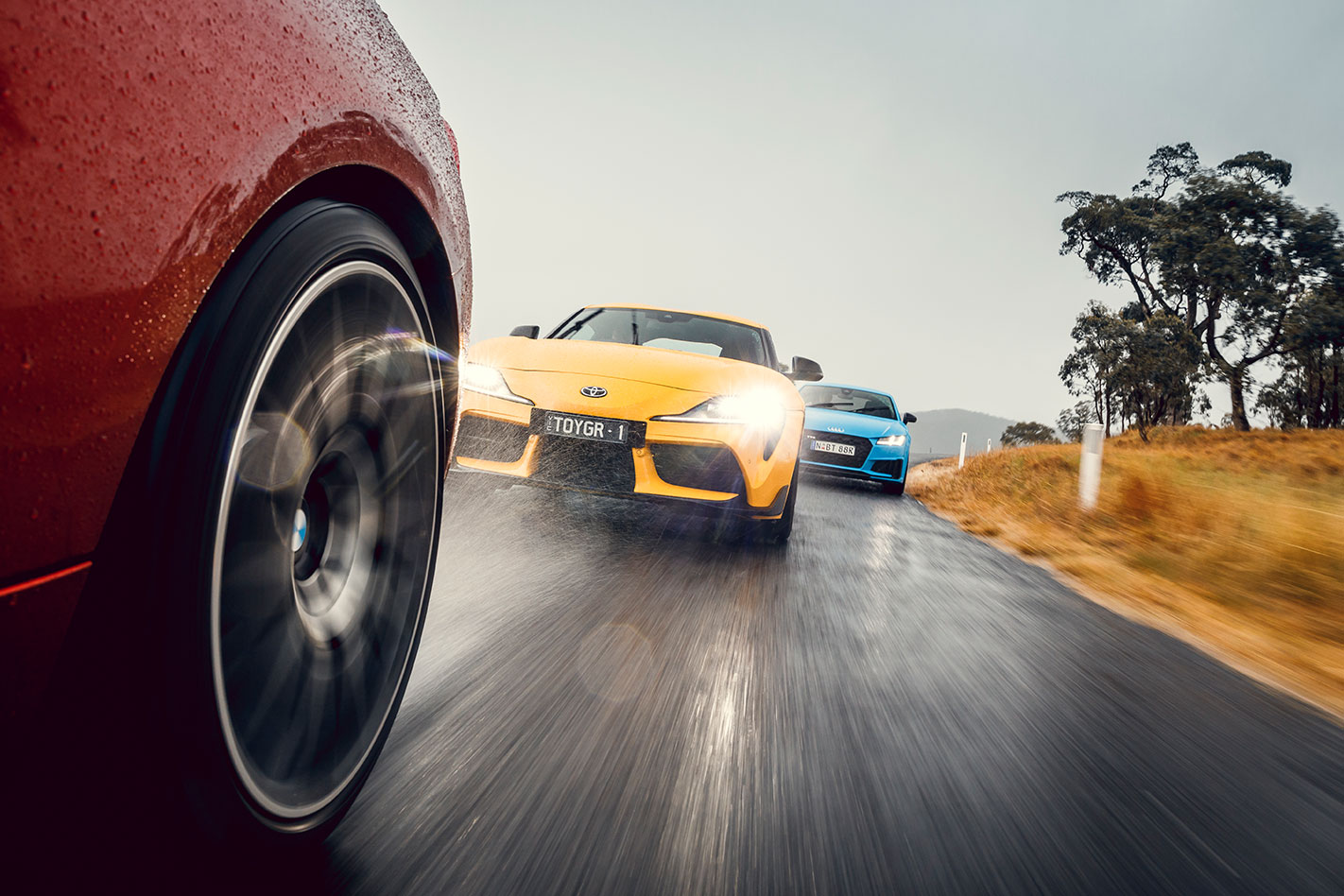
We’ve packed the issue with other features if wielding crayons isn’t your thing. The Supra finally fronts up to some of its fiercest rivals in the shape of the BMW M2 Competition Pure and the revitalised Audi TT S quattro.
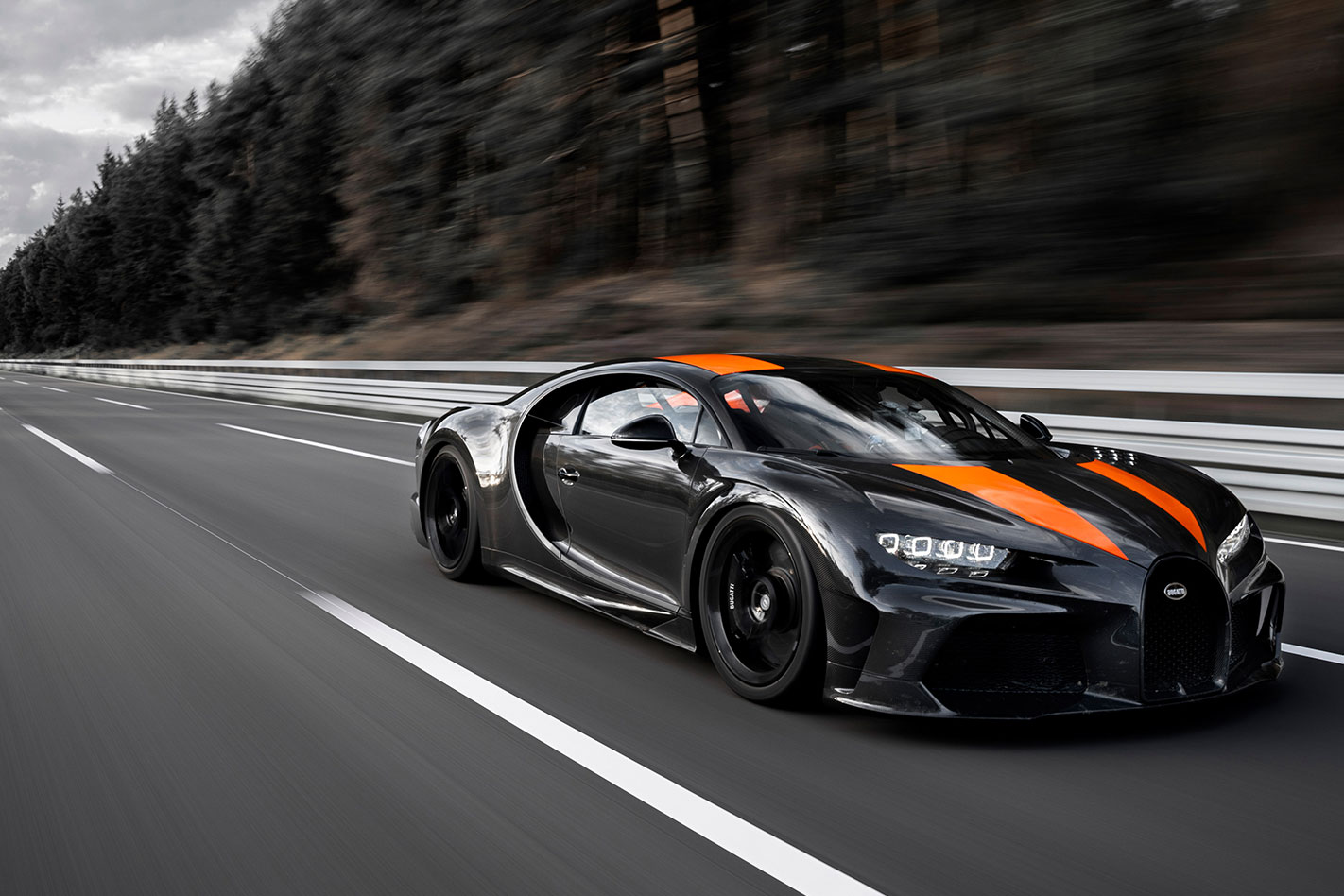
We sit down with Le Mans legend Andy Wallace to discover what it’s like getting air at nearly 500km/h in a Bugatti Chiron, and we run the rule over the forthcoming Volkswagen ID.3, Land Rover Defender, Lamborghini Sian FKP 37 and Mercedes-AMG GT Black Series. Our Modern Classic is the quirky but delightful Honda Insight Mk1.
We have drives of the new Hyundai Venue baby SUV, the lovely Peugeot 508, the refreshed Land Rover Discovery Sport, the Volvo S60 T5 and the ball-tearing Ferrari F8 Tributo. You’ll need to check the mag for a famous face from Wheels’ past in the Fez. But plugging the latest mag actually isn’t hard. It’s a cracker.
Anyway, that’s enough from me. There’s a whole lot more in Australia’s car magazine. Hell, just buy it for the cover, lovingly created by designer Felipe Ubilla with original sketchwork by artist Romeo Varga of the ID.3, Defender and the astonishing Lamborghini Sian. Get after it!
A report by the Grattan Institute is recommending Australia introduces a congestion charge within five years that would hit motorists with a hefty bill for using the busiest roads at the busiest times.
According to the public policy think tank, a system similar to existing global major capital cordon charging would slash travel times in Melbourne and Sydney’s CBD zones, while reducing the number of vehicles clogging city arteries.
Following in the footsteps of London, Stockholm, Singapore, Oslo and Milan, the new system would ping motorists entering a specific zone at certain times of the day, encouraging more commuters to leave their wheels at home and hop on public transport.
Ultimately, the one-off toll would evolve into a cost-per-kilometre charge across the restricted road network, discouraging non-essential travel into the CBD of both capitals, as well as raking in sizable revenue from those who decide to pay up.
How much? If overseas experience is anything to go by, it could be a lot. London asks for the equivalent of AU$22 for drivers to enter its congestion charge zone, while New York city will charge drivers between $15-22 to enter Manhattan south of 60th Street from 2021.
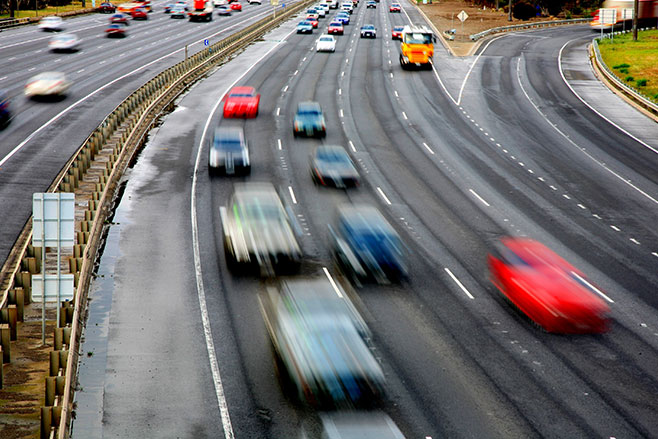
Knock-on effects would also include air-quality improvements and funding for new traffic projects including improved road networks and public transport infrastructure.
Up to 40 percent fewer cars could be found inside the cordon after implementation, says the report, along with increased traffic speed of 16 percent inside the CBD exclusion zone and up to 20 percent on roads leading to it.
It might sound insignificant, but those localised increases could result in an overall 1.0 percent acceleration of greater Melbourne and Sydney traffic speeds at the most frustrating times. That’s about the same improvement forecast for Melbourne’s North East Link, due for completion in 2027.
The report does not propose how much motorists should be charged to cross the CBD cordon if the report is acted on, but given the above examples we would hope that the example set by European cities would be followed, rather than the more extreme pricing used by London and New York.
Grattan Institute transport and cities program director Marion Terrill said congestion charging is a more targeted revenue-raising strategy, drawing funds from commuters that actually use the busiest roads, rather than taxing the broader community to pay for projects that some might not benefit from.
“Our plan tackles congestion without asking communities to pay billions of dollars for major new roads,” she said.
“In the end, if particular roads are in high demand, it’s fairer that people who use them a lot pay more than those who rarely or never use them”.
The report also disbands ‘myths’ that claim the charge would hit lower-income drivers and that a majority of commuters heading into the CBD during the working week have no choice to climb behind the wheel.
“The charges would mainly be paid by higher-income drivers, because people who drive to the city each day for work are more than twice as likely to earn a six-figure salary as other workers,” it said.
“CBDs are well-serviced by public transport, and most people already get to the city by train, tram, or bus”.
For many, an additional charge on top of increasing fuel prices and hefty CBD parking costs might just encourage them to switch to the bus, train or tram, but would you?
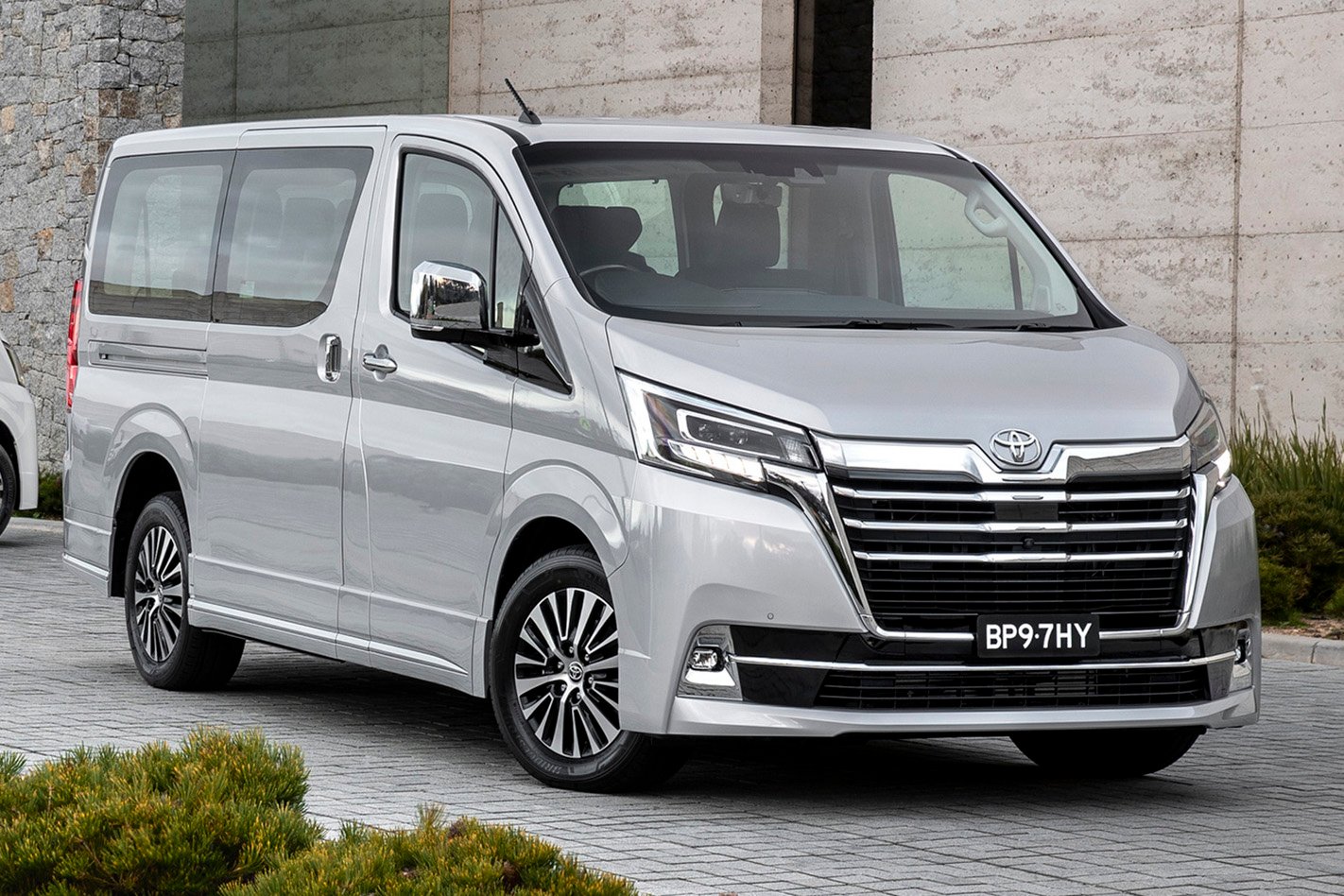
The Tarago is dead, may its name live forever in the hearts of Australia’s families. However while we’ll miss that car’s unnecessarily powerful V6 and futuristic egg-like styling, after having driven its replacement, we reckon the Tarago’s retirement is no bad thing.
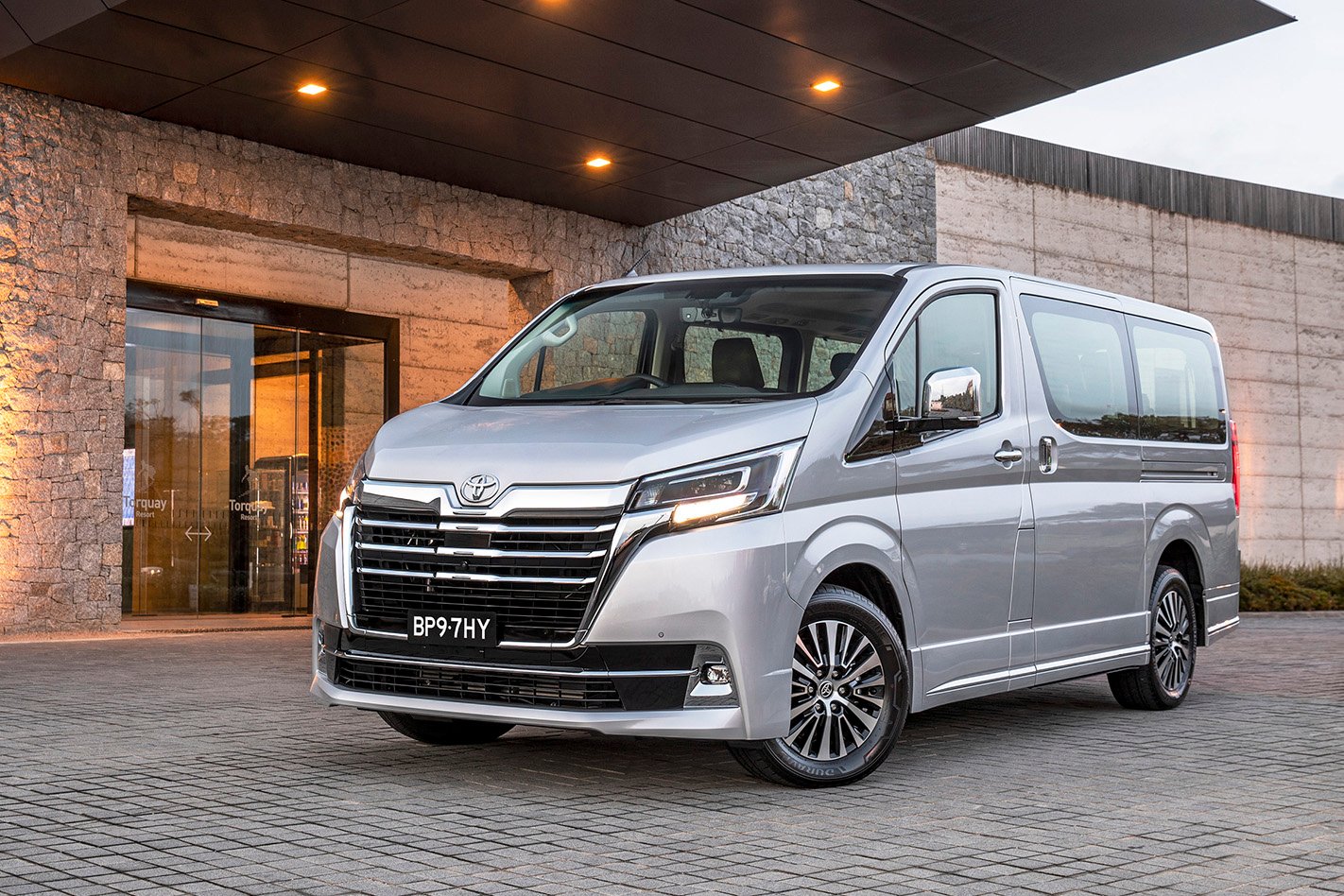
After all, the all-new Toyota Granvia takes the brand’s people mover product in a new direction. A more luxurious direction. No longer positioned to compete with the likes of Honda’s Odyssey or the Kia Carnival, with a price range extending from $62,990 to $74,990, the Granvia is instead a rival to the Volkswagen Multivan and Mercedes-Benz V-Class.
Does it succeed as a premium people mover?
What is it?
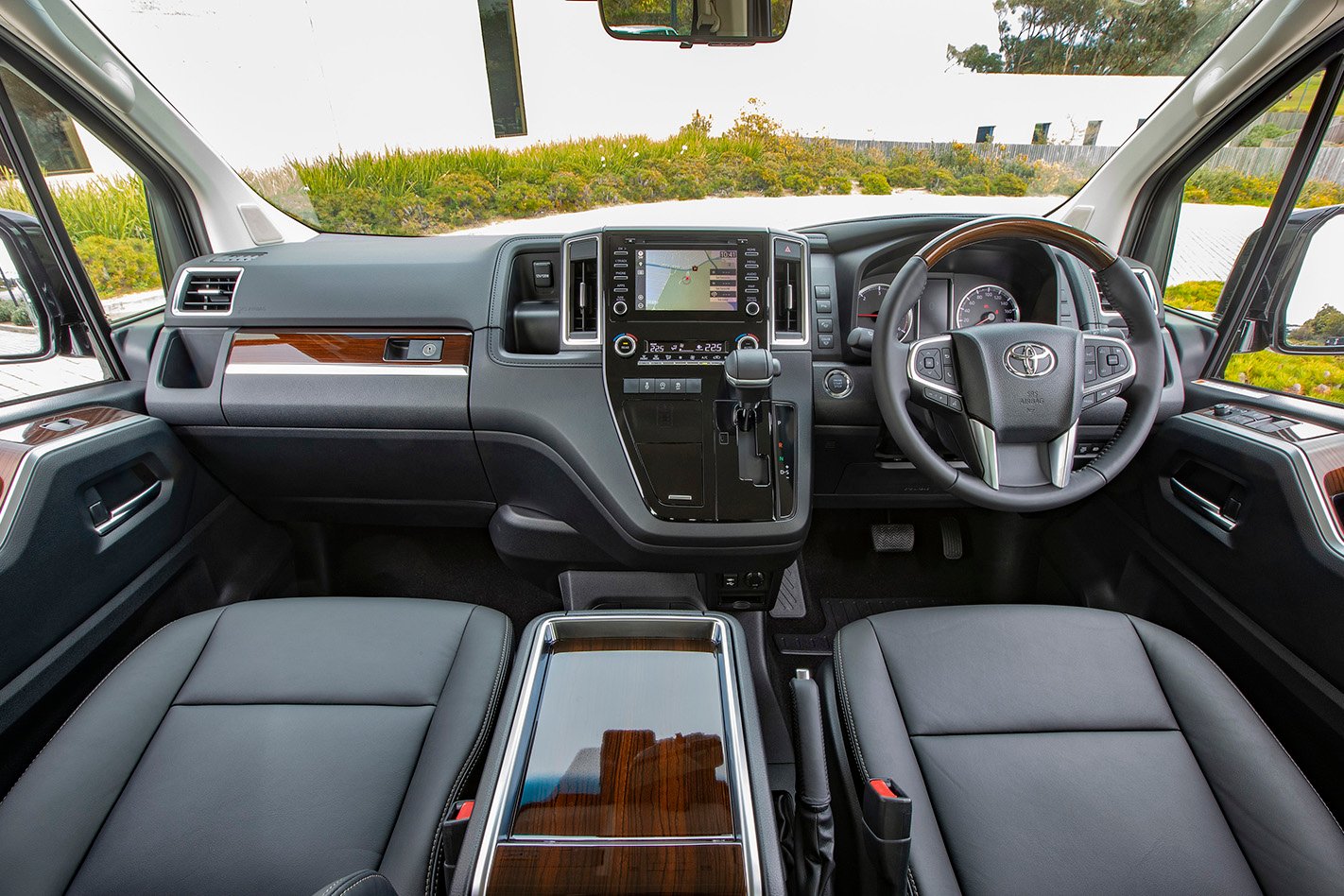
The Granvia is a very large people mover based on the Toyota Hiace commercial van. Don’t let those origins make you think that it offers an agricultural experience though, as the only hints of Hiace in the interior are the general shape of the dashboard, with everything else from the trim materials, the seats, steering wheel and basically every piece of cabin furniture from the B-pillar back being entirely unique to the Granvia.
There’s a significant lift in safety equipment too, with radar cruise control, lane keep assist, autonomous emergency braking, blind spot monitoring, rear cross-traffic alert, parking sensors, a top-down camera view and a full suite of front, side and curtain airbags stretching all the way back to the tailgate.
What’s it like to drive?
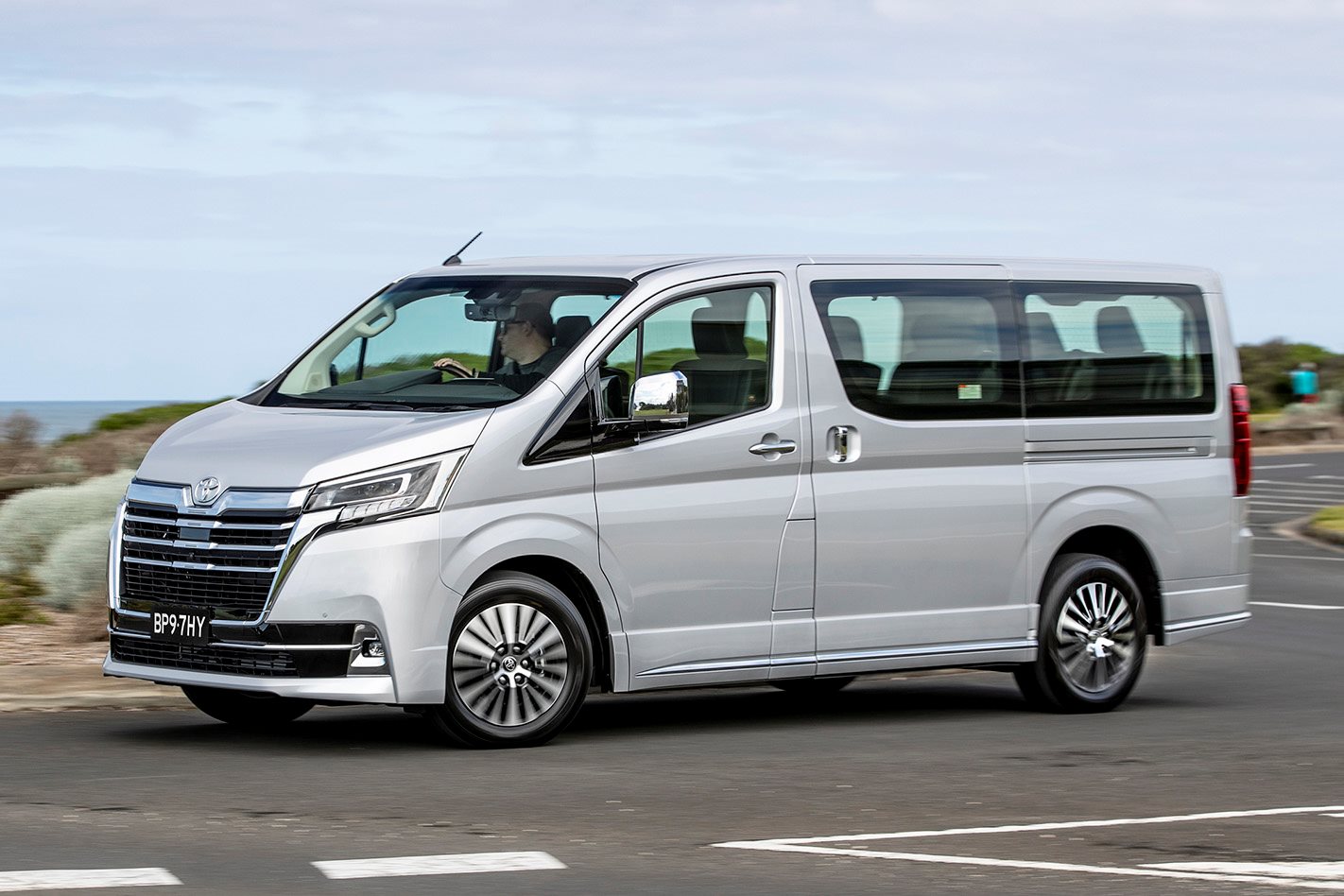
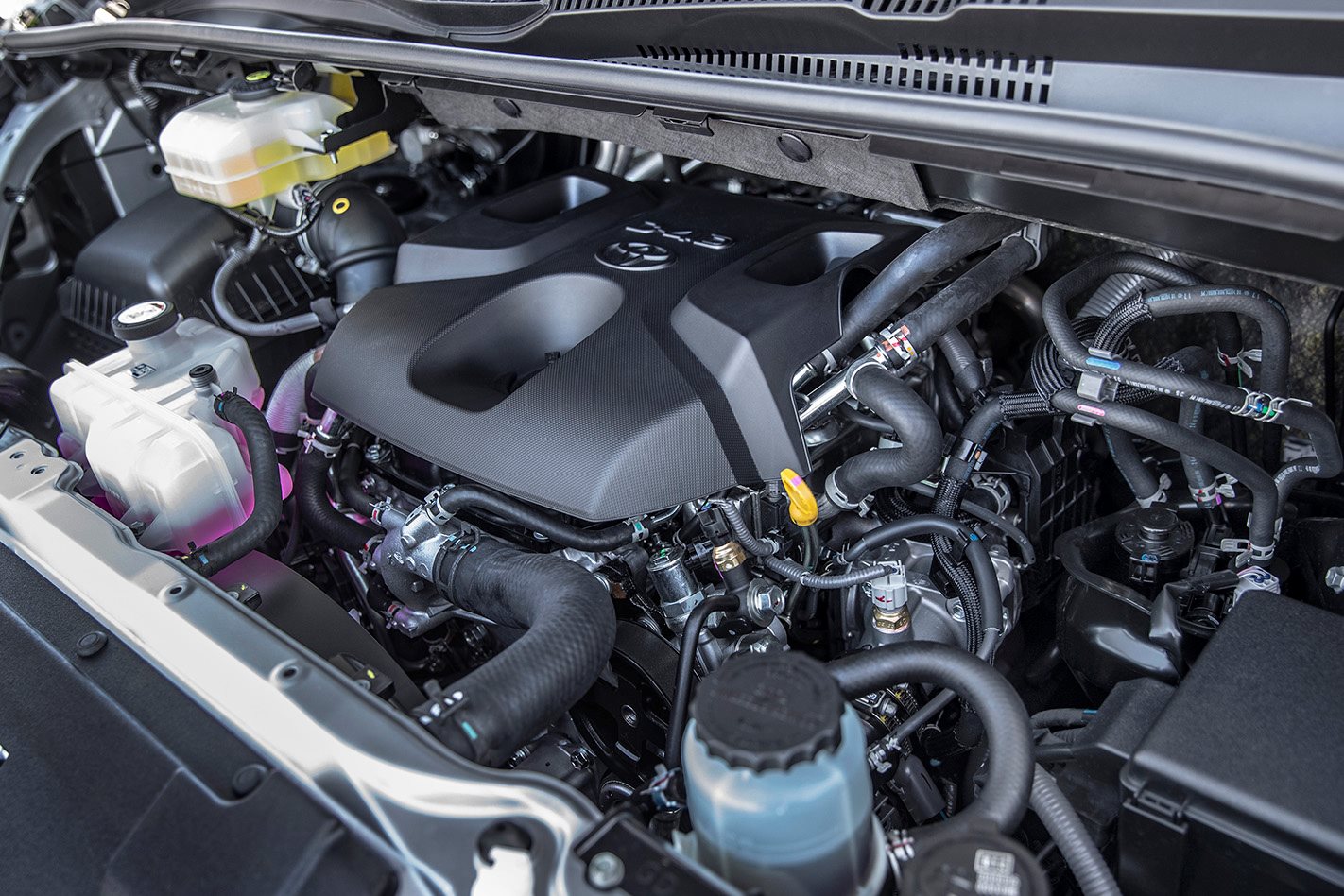
Unlike the Hiace it’s based upon, the Granvia is available with just one choice of powertrain – a turbo-diesel 2.8-litre with 130kW and 450Nm, connected to a six-speed auto driving the rear wheels. The Hiace’s 3.5-litre petrol V6 is nowhere to be found.
But while that may make you think the Granvia is gruff, noisy and agricultural, the reality is different. Many kilos of sound deadening, plush carpets and interior panels help muffle the engine’s gravelly note, and at a cruise it’s quite muted. That engine is also a strong performer, easily moving the Granvia’s monstrous 2.6-tonne bulk with little need for revs.
And for such a big bus, it’s easy to wield. Its turning circle is almost car-like at 12 metres from kerb to kerb, and the bevy of driver aid tech like blind spot monitoring and a top-down parking camera view means it’s easy to keep it scratch-free in both highway and parking garage environments.
Plus, if you think that driving an SUV gives you a great view over other cars, maybe try the Granvia on for size. Its forward vision is outstanding thanks to the elevated seating position, big windscreen and tall side glass.
Ride quality is important for a people mover that’s pitched at the premium end of the market, and the Granvia mostly hits the mark. Its coil-spring rear axle is its main mechanical point of difference to the Hiace (which uses leaf springs to help carry heavy payloads), and on long wavy highways it proves comfortable for all.
It is, however, a touch sensitive to finer road imperfections like corrugations and the like, especially when carrying a light load of passengers.
What’s it like to live with?
The Granvia comes in two grades – base and the range-topping Granvia VX we have here – and either can be optioned as a three-row six-seater, or a four-row eight-seater. While the eight-seat config costs an extra $2000 for the base $62,990 Granvia, it’s a no-cost option for the $74,990 Granvia VX. But don’t be tempted unless absolutely necessary: the eight-seat layout compromises the Granvia horribly.
Optioning the fourth row would be a grave mistake. If you really must have eight seats, select a different van.
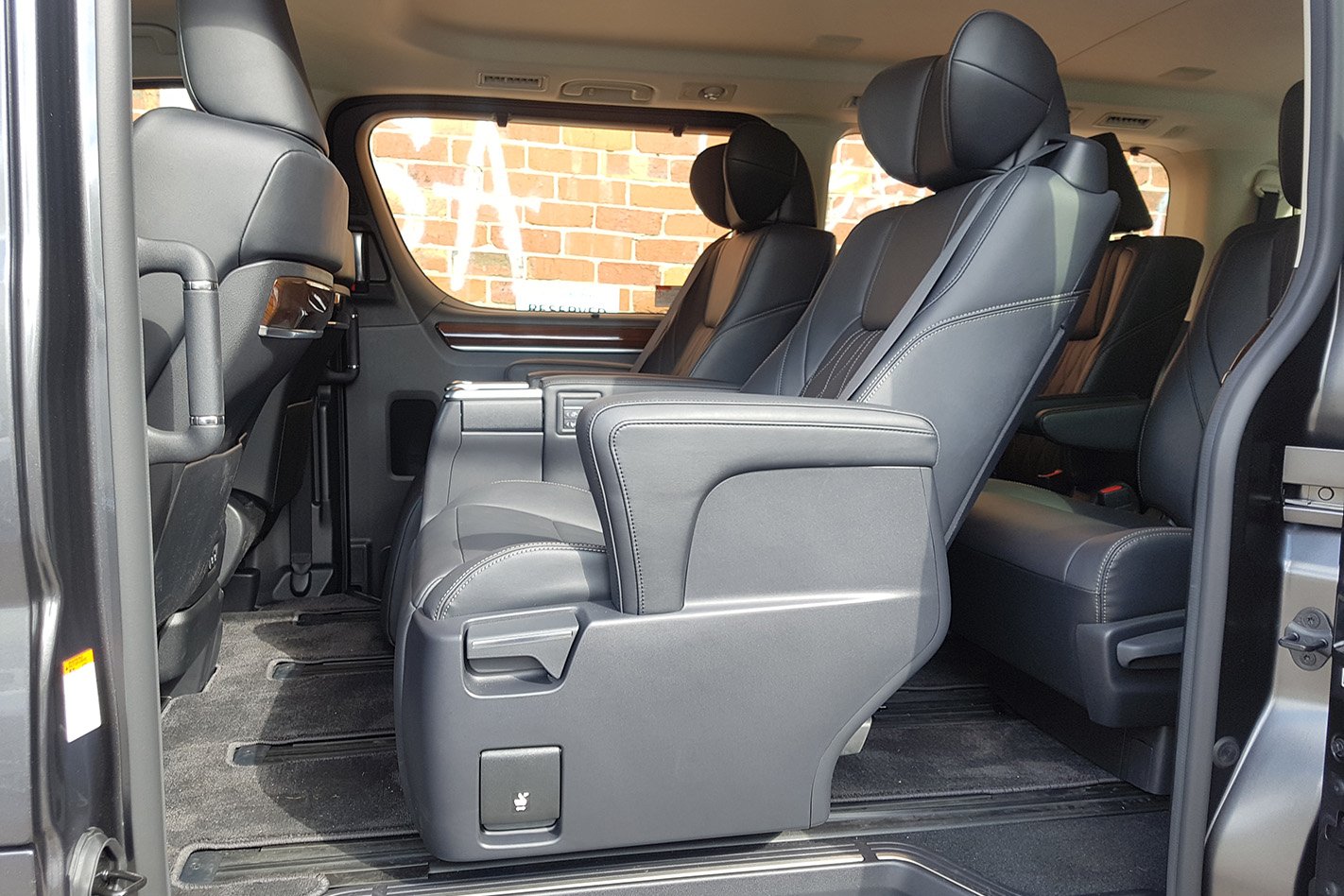
Why? Because jamming that fourth row of seats, which is a simple two-person bench rather than the captain’s chairs used in the second and third rows of the six-seater, means that everyone aft of the front seats won’t have enough legroom to actually enjoy the Granvia’s otherwise plush accommodations.
Nor will they have any space for their luggage. With all seats set to a somewhat-tolerable position, the fourth row ends up at the rearmost extreme of its travel, backrests hard up against the tailgate. Not great for an airport run, unless you’re towing a trailer for your passenger’s suitcases.
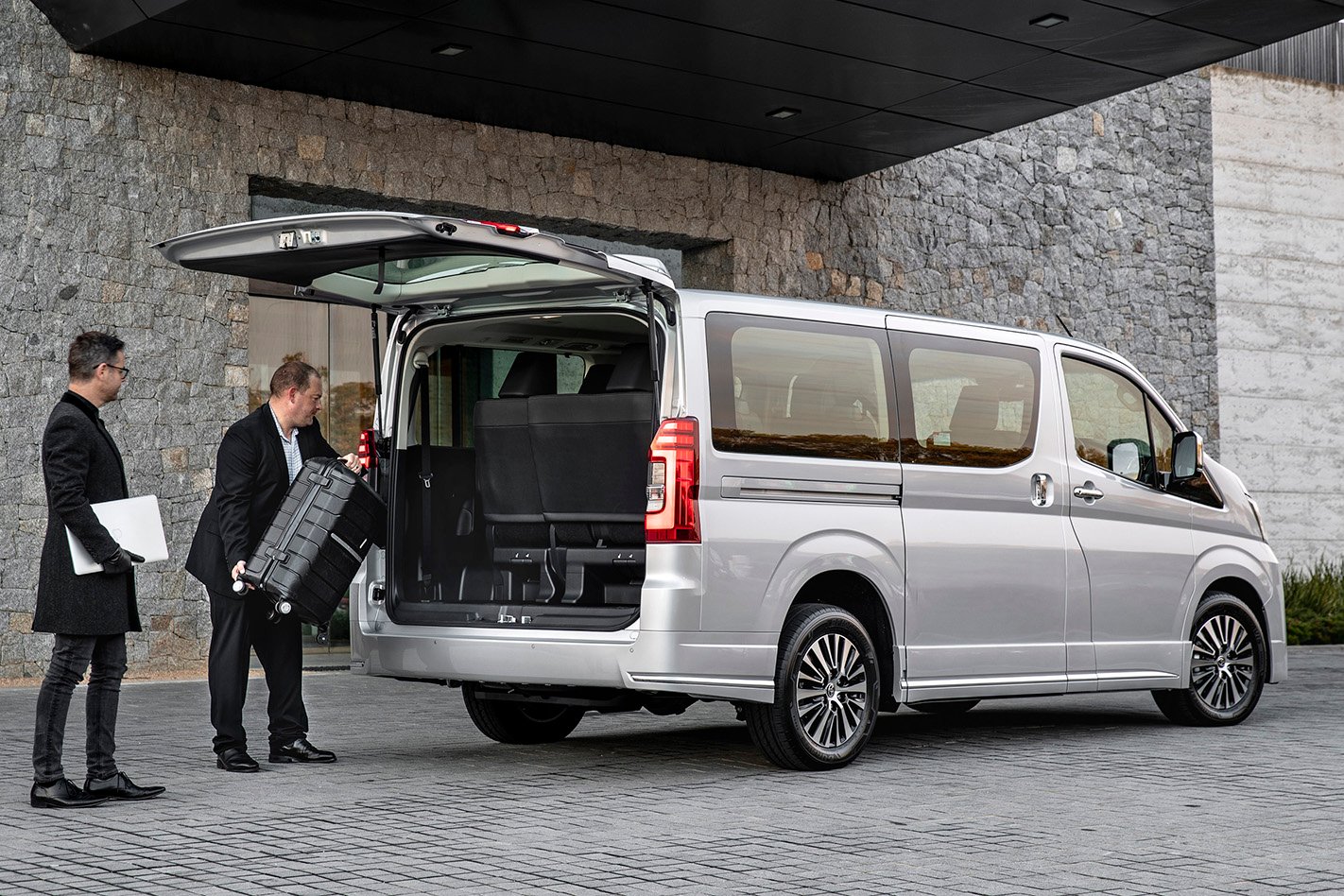
And that’s a bit of a shame, because the rest of the Granvia passenger experience is quite good. You get leather in the VX grade, along with somewhat convincing (but kind of old-fashioned) faux wood trim along the dashboard, steering wheel and side plastics.
A power-adjustable driver’s seat also comes with the VX, as do power sliding rear doors and a Pioneer 12-speaker premium audio system, but the real highlight is the second row (and third row, if you stick with the six-seater) power-reclining, power-ottoman captain’s chairs.
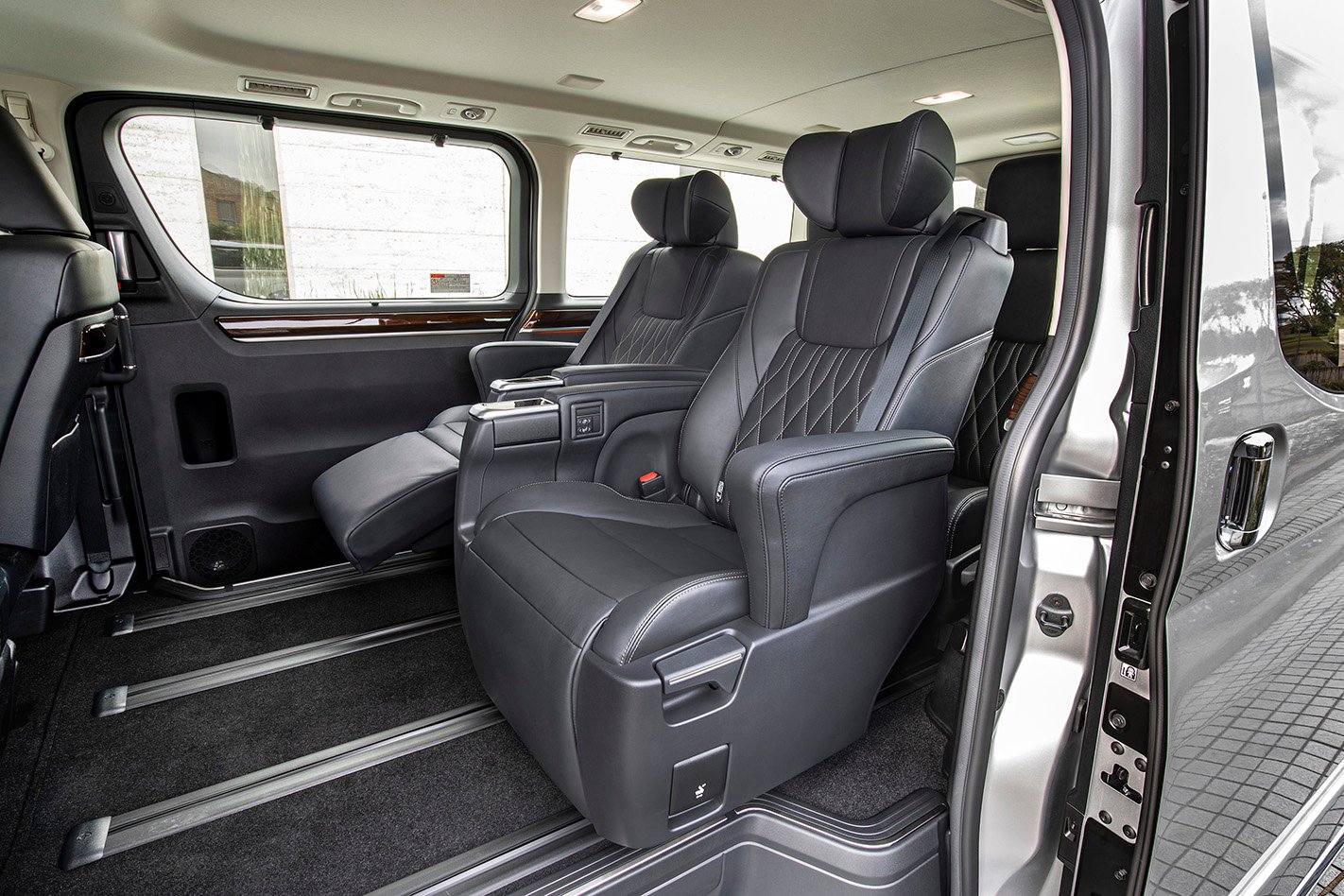
With deep wings on the headrests to keep your noggin from flopping off during a nap and LOADs of legroom, they offer business jet levels of long-distance comfort.
Tri-zone climate control with rear ventilation controls are standard on the Granvia, plus aircraft-style overhead vents and gimbal reading lights for every passenger. There are six high-amp USB charging points for your rear passengers too (plus another up front), so keeping devices going on long journeys will be easy.
Storage bins built into the rear doors and above the rear wheel arches give plenty of options for stashing food, books and other odds n’ ends, and there’s a flip-up tray between the second row seats for extra cupholders, should the ones built into the seats themselves not be sufficient.
In fact, the only majorly shortcoming is a lack of built-in entertainment screens. For something pitched as being akin to a business-class experience, the absence of screens for backseaters is notable.
Is it worth the money?
There are definitely cheaper ways of carting around a big family, but those options don’t quite equal the semi-luxurious experience of the Granvia. Is it worth the spend? Not as an eight-seater, but the six-seater makes a stronger case for itself as a roomy people-carrier for those who don’t appreciate being crammed cheek-by-jowl into the back of a van.
The VX is worth the extra spend considering the nicer upholstery and gains in standard equipment, but will people warm to it when the Toyota Prado VX has the same engine, costs a grand less and can carry seven people (though in a much squeezier cabin)? We’ll have to wait and see.
Pros: Huge cabin space, plenty of features for backseaters to enjoy, easy to drive for a big bus Cons: Eight-seat config is poorly packaged, pricey for a people-mover
Rating: 4/5
A bullish Ford Australia will look between its product lines to keep an even keel in the tumultuous waters of the local car market.
The managing director of Ford Australia and Ford New Zealand Kay Hart – in Bathurst to see the Mustang claim its first Bathurst 1000 win and the first for DJR Team Penske in 25 years – told WhichCar that pushing forward, cars that break the mould will be key to maintaining its position.
One of the plans is to continue to grow the Ford Performance brand, which Ms Kay said is linked to its support of the Supercars series.

Kay Hart sits with Roger Penske (L) and Dick Johnson (R) at a Supercars race in Perth
“It’s fantastic,” she said. “The Ford team here and the Ford Performance team in the US loves being in the sport. We have fantastic teams that we’ve developed such strong relationships with, and we are proud of what the guys are doing out there.”
And the support of the series, which looks likely to drop to just two manufacturers again from the start of the 2020 season, looks set to continue from Ford’s side.
“We’re still at the start of it,” said Ms Hart. “As we continue to bring more Ford Performance models to the market, that will help, and [the Supercars program] will have a much broader rub-off effect.”
The Ford Performance brand, meanwhile, will grow in 2020, with the addition of two new models next year.
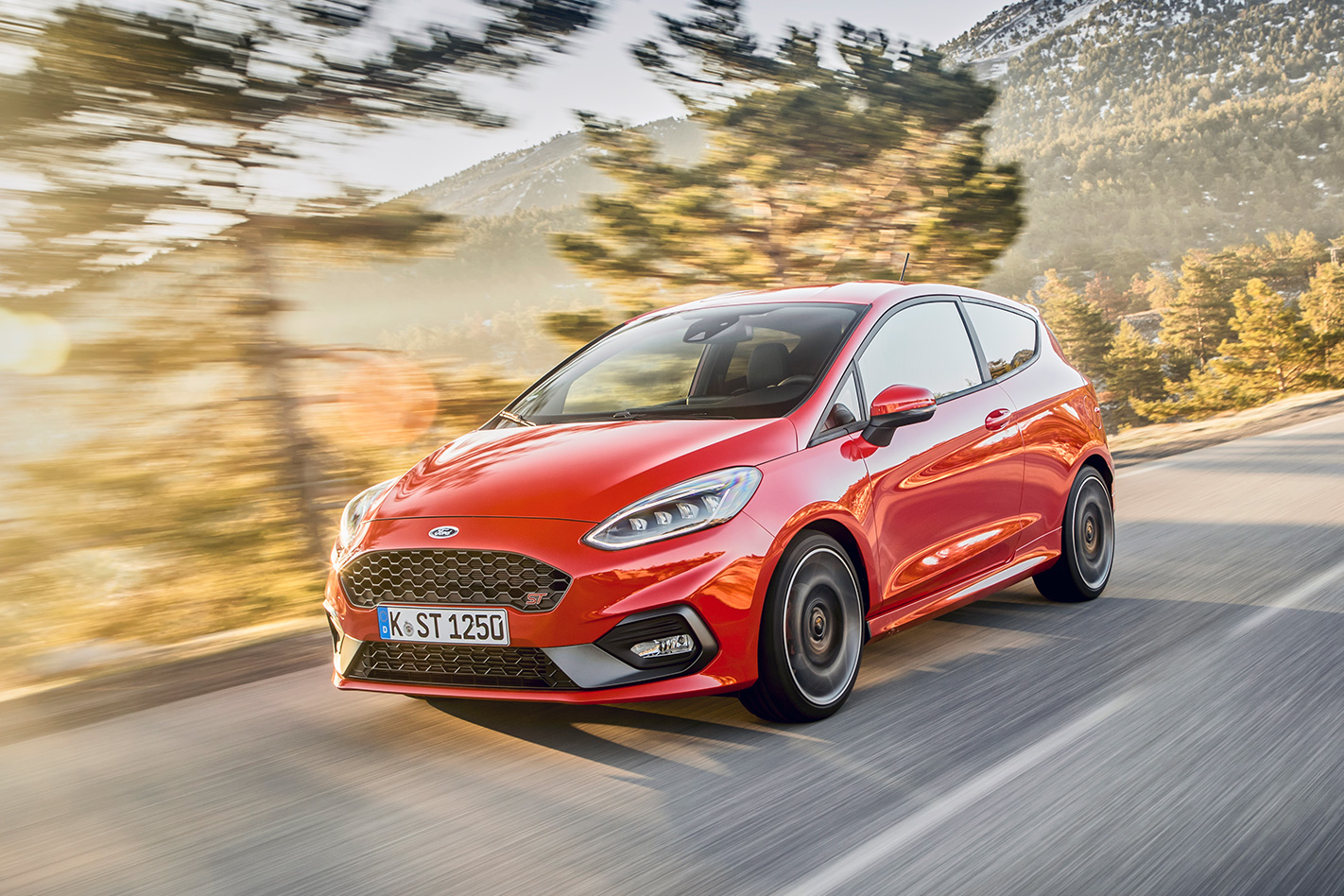
“At the moment we have the Raptor, and we’ll add Focus ST and Fiesta ST next year, so I think the continued growth of product we offer under the Ford Performance banner, even with the R-Spec, and Ford Performance parts,” she said. “The more we bring to market, the more we talk about outside of our racing involvement.”
As a company, Ford has suffered a less dramatic sales drop than some of its rivals, dropping almost 10 percent last month measured year on year where others fell much more sharply.
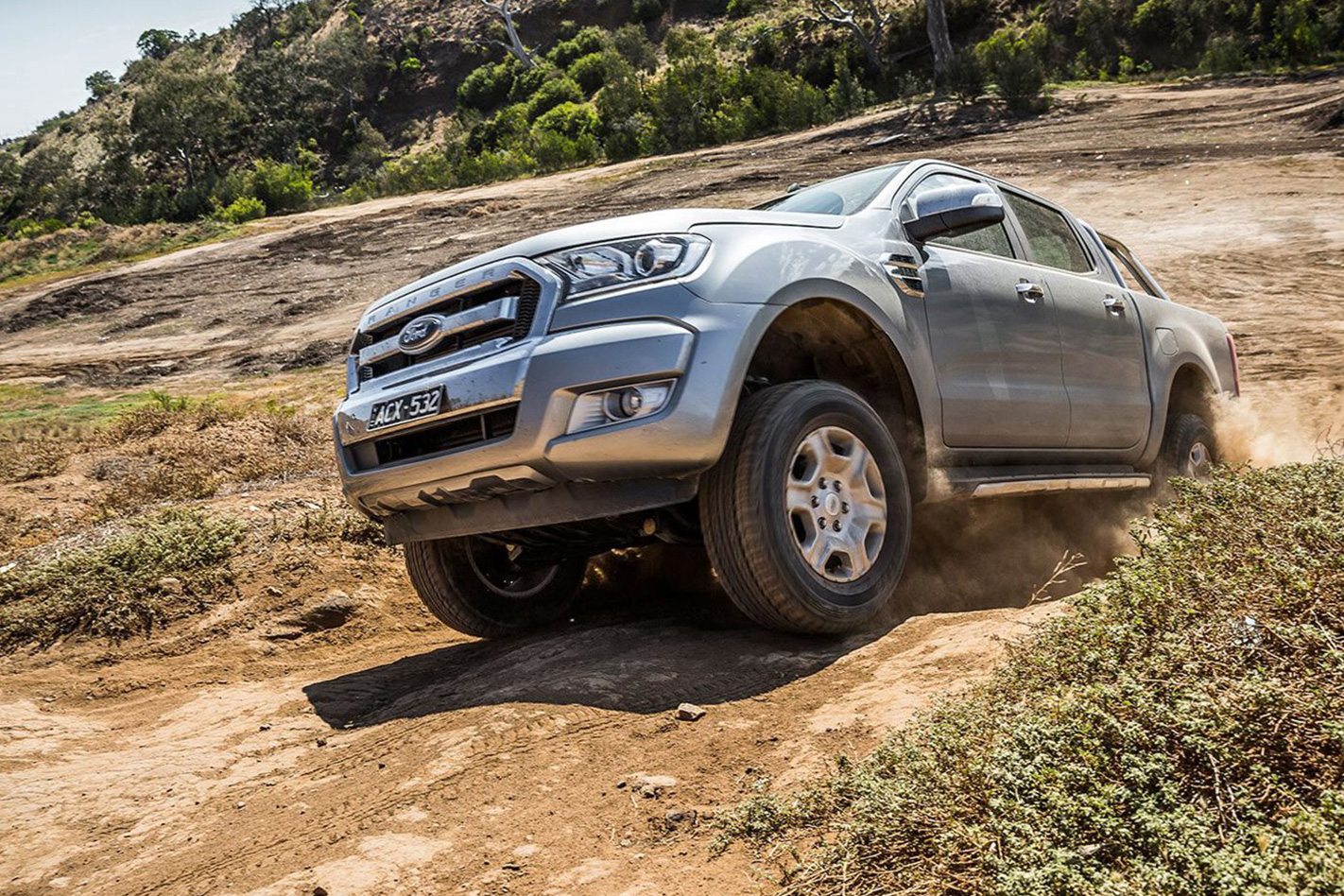
Ford’s fortunes are held up by the sales-leading Ranger, while the Mustang’s strong sales performance continues to defy conventional wisdom that sports cars sales taper off sharply over time.
However, the performance of the majority of its SUV line-up is far below that of rivals like Mazda, while its passenger car entrants like the Focus aren’t firing especially well, either.
“It’s an extremely tough industry in terms of absolute volume,” Ms Kay agreed. “At the same time we’re seeing a shift in segmentation as well. Some of that shift is very positive for us, given there’s a shift towards yes, so it’s good for us with Ranger, for example, and a skew towards SUVs and away from passenger vehicles.
“So while some of that is positive and we’re trying to take away as much advantage as we possibly can of that with Ranger and Everest –and even the performance category with Mustang is holding steady – so we’ll just continue to work in with where the consumer is heading.
“Mustang R-Spec is one example of things we’re trying to do differently to take advantage of that segment, and Wildtrak X is another one, because of that shift towards the premium 4×4 market. The Focus Active, too, is looking at a slightly different buyer in that C-segment, and whether they’re ready to make a jump to a full shift to an SUV or look at the intermediate step.
“It’s just about what vehicles are really going to resonate here, and we’re still learning as we bring in these new variants.”
The head of Ford Australia, who has just celebrated her first anniversary in the role, isn’t concerned about the potential of a softening ute market affecting sales.
“It doesn’t worry us at the moment,” she said. “Ranger is such a great success for us here and I think the biggest success is that this vehicle is designed, engineered and developed in Australia by Australians for Australians, and that’s one of the secrets of its success.
“We continue to monitor what the industry does and what that means for the vehicles we bring in.”
Ms Hart also talked about the growth in sales of the relatively new Transit and its importance to the local bottom line.
“Transit is great, Ranger is great, Mustang is great, and Everest is really taking off too. So you’ll see us continue to listen and react to where the market goes.”
The next Ranger is currently in development with Volkswagen, and won’t emerge for a couple of years yet, but Ms Kay says there’s still life in the old T6 yet.
“The future growth [for Ranger] will come in the mid-range, I think. There will still be a lot of demand in the top end as customers look for more from that truck. Wildtrak, Wildtrak X, Raptor is great for it,” she said.
“A good example is the XLS Sport that we just brought out, and the XLT Fully Loaded package, are our play about how you give the middle-to-high segment a little more content but not the full Wildtrak or X package. I think you’ll see a lot more room in that XLS and XLT range in growth.”
While its rivals are rolling out seven-year free servicing deals at an increasing pace, Ms Kay pointed to Ford’s Service Benefits program, which locks in the price of the first four services up to five years.
“I think it’s the total ownership experience that we offer – the loan car, the map updates, the total package that you get, as well as the five-year ownership that we’re really driving, along with unlimited warranty and the guarantee of what the cost is of that servicing is what’s more important to customers these days,” she said.
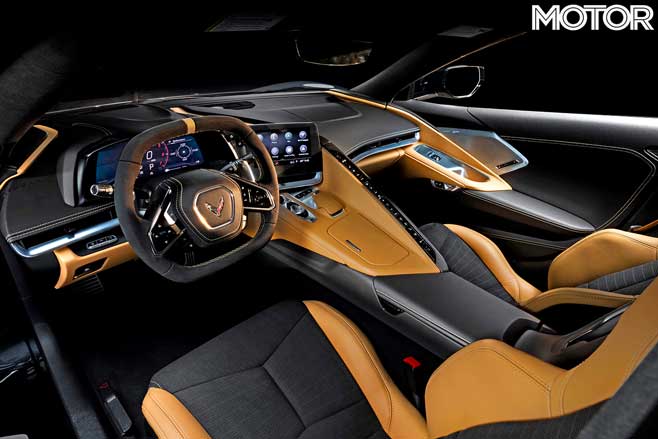
COME 2020, Chevrolet will build the most significantly changed Corvette in history and place the engine behind the driver. Unlike its superseded front-engine layout, though, the atmo V8 engine at its core will walk a path of evolution rather than revolution.
Dubbed the LT2 and powering the base Stingray variant, the new engine evolves from the LT1 small-block V8 that debuted in the C7 Stingray and currently powers the Camaro 2SS. So that means its 103.3mm bore and 92.0mm stroke remain, its 6162cc capacity carries over, the compression ratio is still 11.5:1 and its valves span the same 54mm diameter on the intake side and 40.4mm for the exhausts. Even the throttle body stays 87mm.
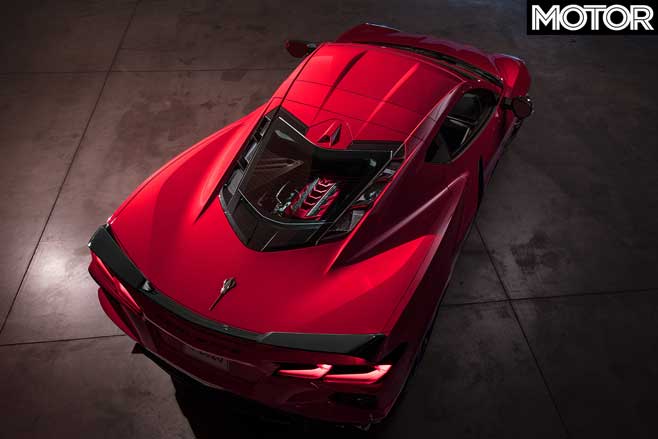
But thanks to redesigned intake and exhaust packages (it is, after all, placed at the other end of the car), dry-sump oil lubrication and an upgraded camshaft, it will unleash 369kW at 6450rpm and 637Nm at 5150rpm when equipped with the optional exhaust as part of a Z51 package. That’s 34kW and 27Nm more than the original C7 Corvette, while delivering those respective peaks 750rpm and 550rpm later.
For reference against other great atmo short-blocks, it’s only 6kW and 3Nm shy of the fearsome 7.0-litre LS7 that lurked within the 2006 C6 Corvette Z06 and HSV W427. Yet the new LT2-equipped C8 almost matches it with 846cc less.
Chevrolet will not offer the car with a manual transmission; the LT2 will be mated to an eight-speed dual-clutch transaxle, another first for a road-going Corvette. We hope GM changes its stance in the near future.
So, where does the LT2 sit in the family? It belongs to GM’s fifth small-block generation, joining the current LT1, supercharged LT4 (which powers the current Camaro ZL1 and Corvette Z06) and supercharged LT5 (used in the Corvette ZR1). That means it also packs variable cam timing, direct injection and an upgraded rotating assembly design. It also comes with cylinder deactivation, a necessary evil to help it pass emissions.
It still has the 4.4-inch bore centre spacing and pushrod concept as the original Chevrolet small-block V8 from 1956. But before you call it outdated, last year’s Belle Isle IndyCar Grand Prix illustrated that the last thing the brand needs to reinvent is the small-block’s fundamental engine design.
That was when GM president Mark Reuss, who happens to be skilled behind the wheel, drove the pace car – a then-new Corvette ZR1 – straight into a wall during a caution period. With 563kW and 968Nm, the ZR1 made considerably more power than the race cars it was entrusted to slow down.
The Corvette’s LT2 in detail
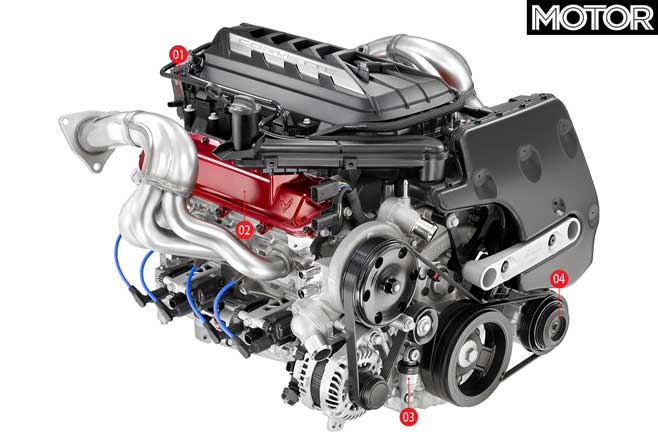
01 – SUCK AND BLOW Engineers reversed the intake plenum so the throttle body lies at the tail end of the Corvette between the exhaust collectors. Those collectors now complete a four-one manifold exhaust runner design, as opposed to the C7’s four-two-one manifold.
02 – TESTA ROSSA New ancillary placement was also necessary to improve engine appearance. For instance, the side-mounted coil packs better show off the red-painted valve covers, and the exhaust manifold is now stainless steel, rather than cast.
03 – OIL TANKER Chevrolet says the C8’s dry-sump system was a must to combat its higher cornering loads. Three scavenge pumps save 7.09 litres of 0W40 (stored in this black tank) from pooling in a sump, also allowing the LT2 to sit 25mm lower in the car.
04 – SPIN CLASS An upgraded camshaft increases exhaust valve lift, but leaves the phasing of exhaust and intake timing relatively untouched. The valvetrain is also carryover, meaning the LT2 will rev to 6600rpm.
Volkswagen AG appears to be assessing its options regarding Lamborghini, as a Bloomberg report suggests that the company is looking to focus future expansion on just three of its 12 brands – Volkswagen, Audi and Porsche.
The driver behind the divestment of Lamborghini is said to be Volkswagen’s aim to double its market value ahead of a predicted industry shakeout. A sale or stock listing are said to be the preferred options for Lamborghini, but no firm decision has been made and it’s more likely to be a medium-term goal.

German newspaper Suddeutsche Zeitung published an interview with VW’s CEO Herbert Diess last week appearing to confirm the business strategy.
“We shouldn’t spread ourselves too thin,” said Diess, “That might be hard in some cases, but it’s the only viable way.” Having completed an IPO of the Traton truck unit earlier this year, Diess, who took up the reins at VW in April 2018, has shown a willingness to spin off non-core businesses.
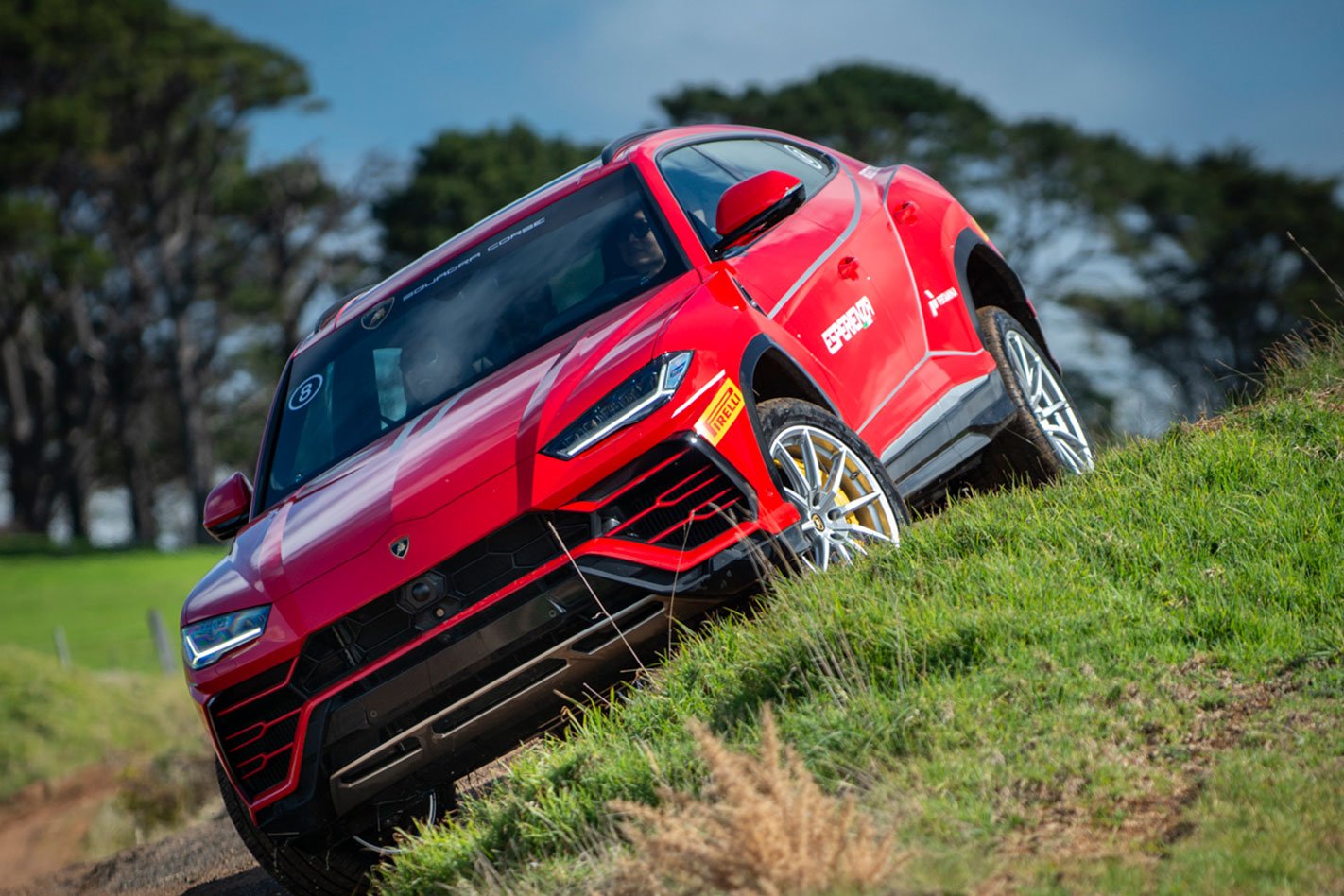
Lamborghini could well be a very attractive target. With the Urus doubling sales to around 7000 units per year, the Sant’Agata business is valued at around US$11 billion (A$16 billion), and with a replacement for Aventador on the way with a possible fourth model line in the works, the company’s in good shape. That’s relatively small beer compared to Ferrari’s US$30 billion valuation, but the way that Maranello calved from Fiat offers a template for Lamborghini to adopt.
Volkswagen has invested more than any other manufacturer in the transition to an electric future and Porsche-Piech family board members have expressed their support in maximising the company’s valuation to capitalise upon this switch.
Diess is targeting a market value of US$220 billion for Volkswagen, from a current base of US$81 billion. In other words, Volkswagen is sharpening its claws and going for the kill. Anything other than its core business units could well prove an unnecessary distraction.
Updated October 14, 2019
Even with one of Volkswagen’s own family members, the electrified ID.3, trying to cut its lunch, the eighth generation of the venerable Golf is big news. It’s why we tolerate the drip-feed reveal process.
The end is near, with Volkswagen locking in October 24 in Wolfsburg, Germany, as the date we finally get to see the finished product.
The decision to delay the reveal and sidestep the Frankfurt motor show in September afforded the new ID.3 all the limelight.
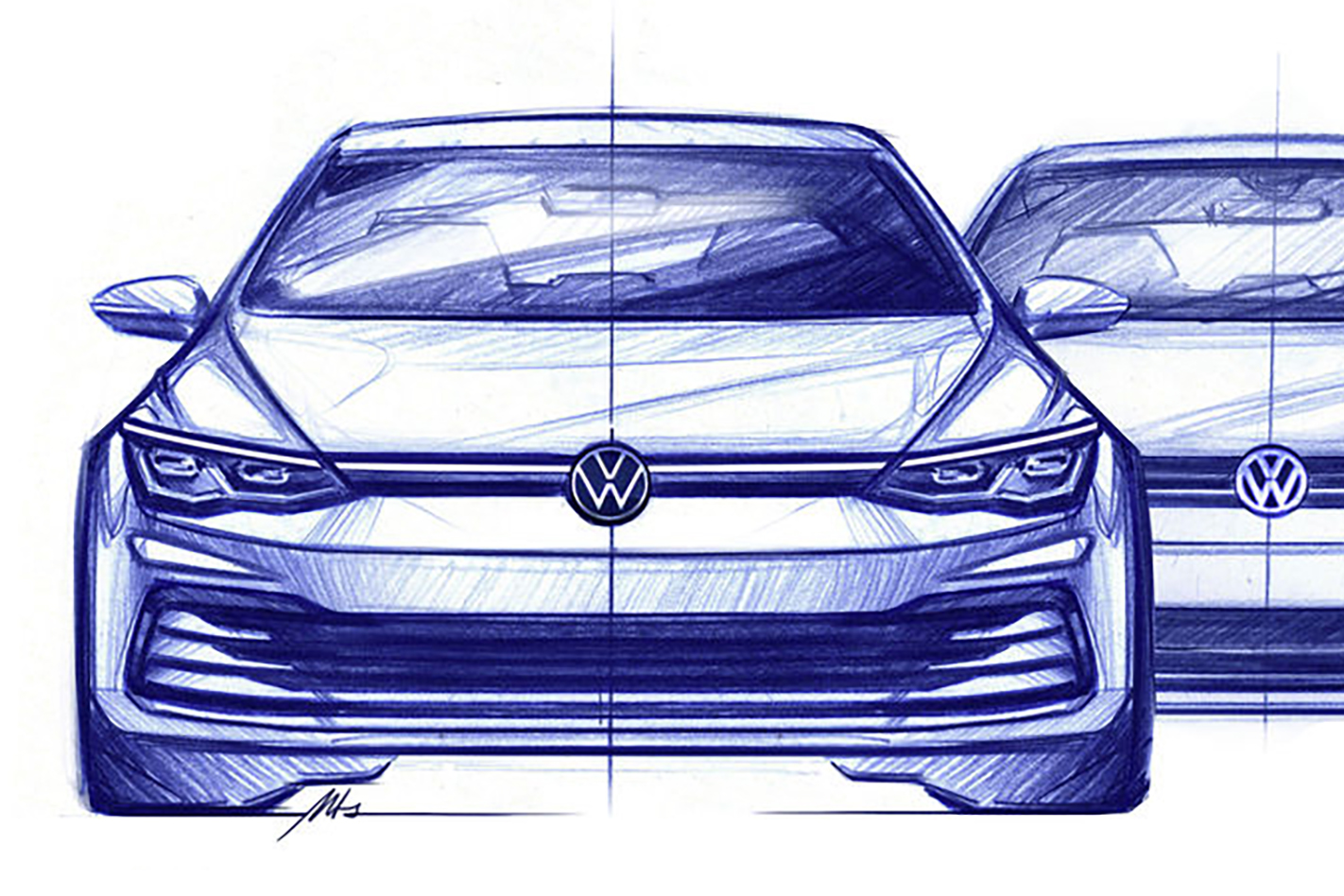
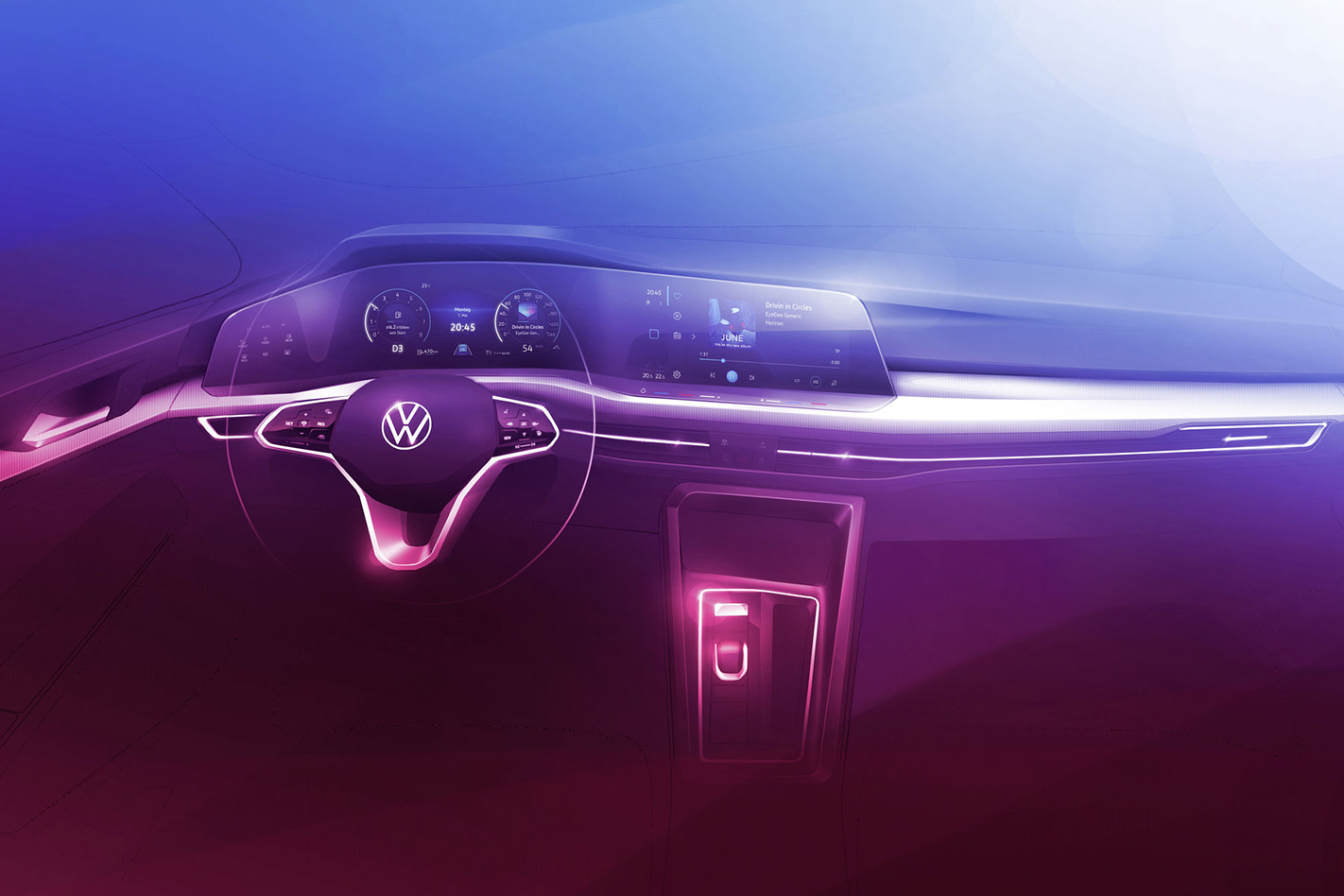
Volkswagen has released official renders and sketches of how the all-important hatch will look, alluding to the new design inside and out.
However, if you want to see the real deal, then scroll below as Wheels previously showcased undisguised pictures found on Instagram.
It’s an essential model for Volkswagen to get right, especially given its history and the fact that some 35 million units have been sold globally since its 1974 release.
According to Volkswagen, the Mk8 Golf will feature more “digitalisation and connectivity than ever before” and the five-door hatch will be “packed with innovations” with a “highly expressive design”.
It’s clearly an evolutionary, not revolutionary design, with cues taken and reshaped from the Mk7 Golf – and that isn’t a bad thing.
Where the most change will be seen is inside the cabin, which, if the drawings are to be believed, could do away with buttons for a screen-based layout.
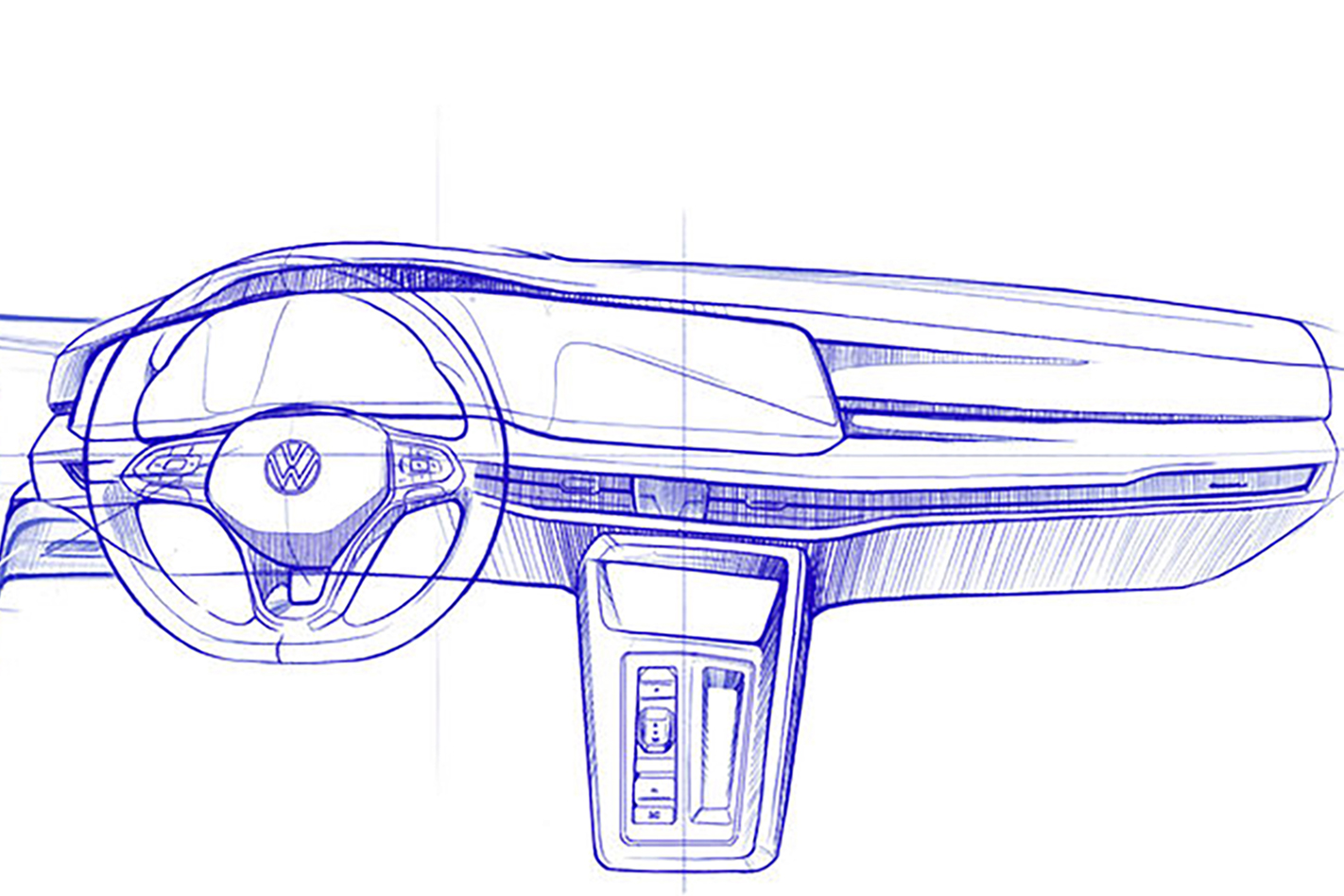
Digitisation and big touchscreens (think Touareg) now look set to be the norm. Volkswagen says it will be a “trendsetter”, with the Golf said to gain “assisted driving features and online-based functions and services”.
The Golf is expected to find its way to certain markets by December 2019, while we’ll have to wait a little longer for it to lob down under in the second half of 2020.
Do you like the design of the upcoming Mk8 Volkswagen Golf? Tell us what you think.
Original story posted August 8, 2019
Here are the first images of the new Volkswagen Golf Mark 8 that briefly popped up on Instagram before being pulled down.
The images were taken on the streets around Getafe in Madrid, Spain, and posted by users @mr_utanda and @getafenses who spotted the familiar yellow metallic vehicle that was apparently on set filming for an ad.
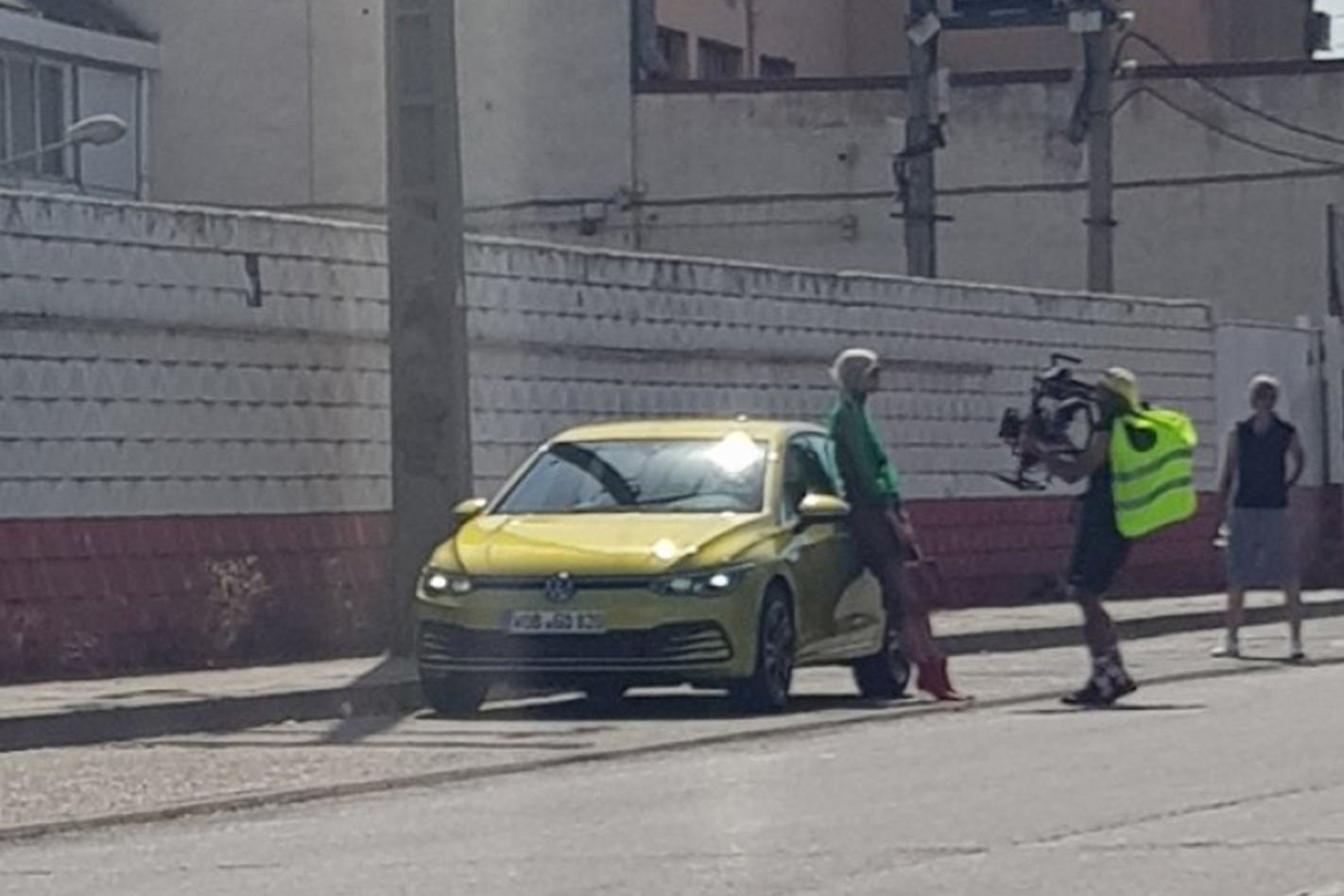
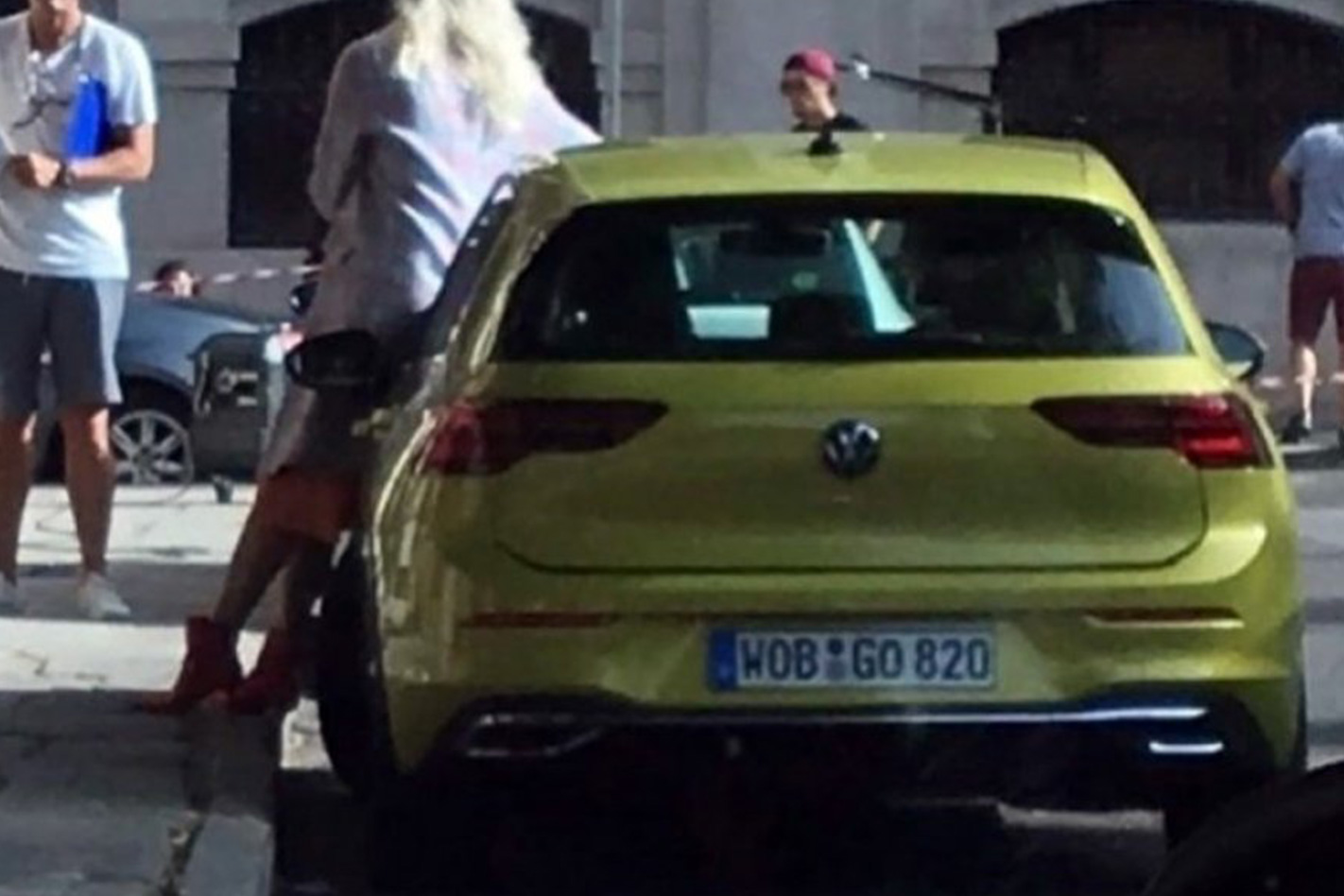
Unlike previous spy pics, this appears to be the final production trim vehicle, and while the images aren’t very clear, it’s not hard to distinguish the most visible change around the face and rear. But really, it isn’t far removed from the seventh-generation Golf currently on sale here.
Up front, the headlights look sharper and the grille gets a few tweaks. Thankfully, VW hasn’t caved in to the big-grille craze, keeping the aesthetic familiar and sleek, taking cues from the upcoming ID.3. At the back, the tail-lights see the biggest change, with a new lower diffuser and rectangular exhaust tips underneath.
The German maker was planning to unveil its new hatchback at the Frankfurt motor show next month but delays in production will likely see it revealed to the public in October.
As reported by Wheels earlier this year, local fans can look forward to the Golf arriving sometime in the third-quarter of 2020, and both the hot GTI and even hotter R are set to arrive before that year’s end.
“We’re still on track for early Q3 2020 at which time we’ll launch GTI together with the broader range with R to follow later in the year,” said a spokesperson at the time.
It is tipped to come loaded with all the company’s best tech, including new, larger digital screens and displays and an internet-connected software system for over-the-air updates.
This article was first published in Wheels magazine, December 1979
Street dragging is a part of Australian modern living -the racers know it, the cops know and now you know it. The country’s most famous illegal dragstrip is Brickies in Sydney’s western suburbs. Why should we never mention its name?
It’s 8.30 and the night’s still a pup but already there are a hundred spectator cars containing 300 super-keen street racing freaks lined up on the verges of Bennelong Street, Homebush, in Sydney. There’s an S&G soft drink truck a couple of hundred metres from the corner of Bennelong and Burroway and a perspiring fat man on the tray going great guns flogging gumrot to the troops.
Not far away is a Mr Whippy van which for the first time tonight is doing good business without the help of Greensleeves. On the other side of the street is a Radio 2UE night patrol Torana with the police roundsman and his mate helpfully monitoring police radio to get a fix on the local fuzz. It’s going to be a big night and the team’s all here.
The main knot of spectators is right down near the end of Bennelong where two grumbling cars – a “shaker” Falcon GT and an ordinary Torana XU-1 which just happens to run a 350 cube V8 sit side-by-side, bodies rocking with torque whenever the hyped drivers hit the throttles, which is frequently.
Running back behind the two lead cars are two lines of the same sort of cars. They stretch back to the corner and around into Burroway until they disappear from view behind the factory on the corner. Everyone’s brute is getting a blow tonight.
The lighting conditions would do credit to one of the used car stickup joints on nearby Parramatta Road even though clouds are obliterating what moonlight there is and headlights are doing the whole job, reflected in a hundred doorhandles, hubcaps, shiny side-panels and bouncing off the light-coloured concrete of the Bennelong 1320.
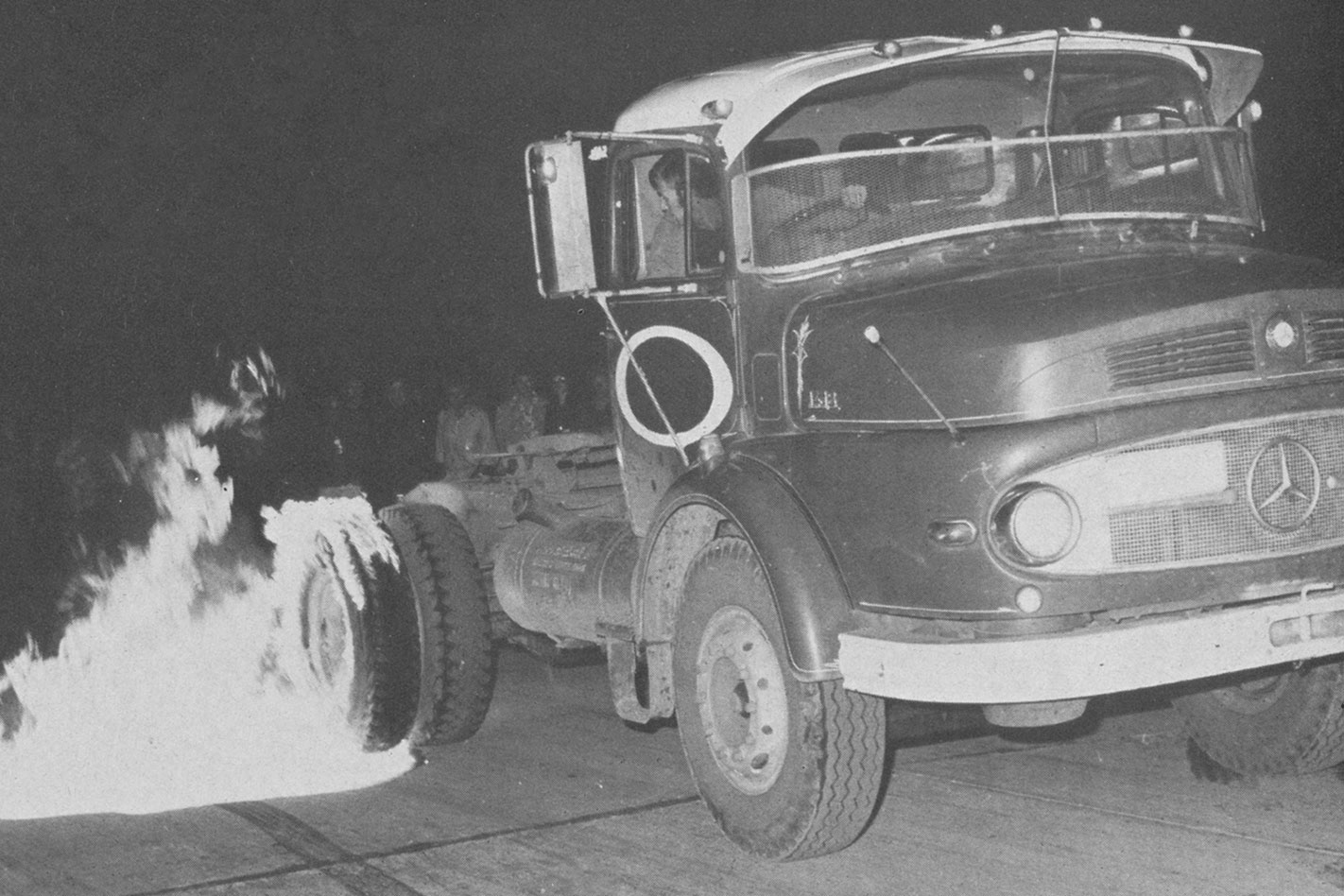
Dude in the Benz reckons traction was his problem so the lads help him out with a fire burnout. Unfortunately, fuzz arrived rather soon after this because they thought someone’s car was getting burnt.
Apprehension clutches everyone as a Big Man steps out of the crowd and goes to stand between the cars facing back at the drivers so they can see him. He’s the official starter and moves with a kind of massive ease to show that he’s been there a thousand times before.
He can see from the whites of the drivers’ eyes that they’re ready for anything so he lifts his hands out in front of his body (the same pose as a sleepwalker, only wide-awake), which everyone knows means “ONE!”. Then the· arms go up over his head for “TWO!”. The balls of two right feet quiver on two throttle pedals and there’s nothing else in the world for 300 people than a few square metres of concrete containing two straining, pulsating cars.
Down whip the Big Man’s hands like lightning but he says nothing because a “GO!” would be hopelessly puny competing with the mechanical clatter, exhaust blast and shredding rubber surround-sound as Henry meets the General wheel-to-wheel on a backstreet concrete launch pad. Like projectiles, the cars are gone.
This, friends, is Brickies – a 15-year-old street racer’s institution where the big noise, big balls, brute power freaks hang loose, where blacktop-chewing, axle twisting supertorque is the only rule in the game. It’s the only place in town where a 5.7-litre (350 cubic inch) V8 engine is called “small block” or “mouse motor” and the guys who aren’t kidding run “rats” – 396s, 427s and 454s.
Yes, Brickies is an institution – and it’s also illegal – but if you think we’re going to blow the whole thing off the planet with this story we should state here that the cops have been well aware of its existence since it began. But because Bennelong is a private road their style has been seriously cramped in stamping it out. Besides, though you could never get them to admit it, the fuzz would undoubtedly rather see street racing happening on a deserted Home bush backstreet than on open-all-night-for-exhaust-fumes Parramatta Road with its patchwork of parked cars, “Roadworks in Progress” and semi-trailers belching at midnight.
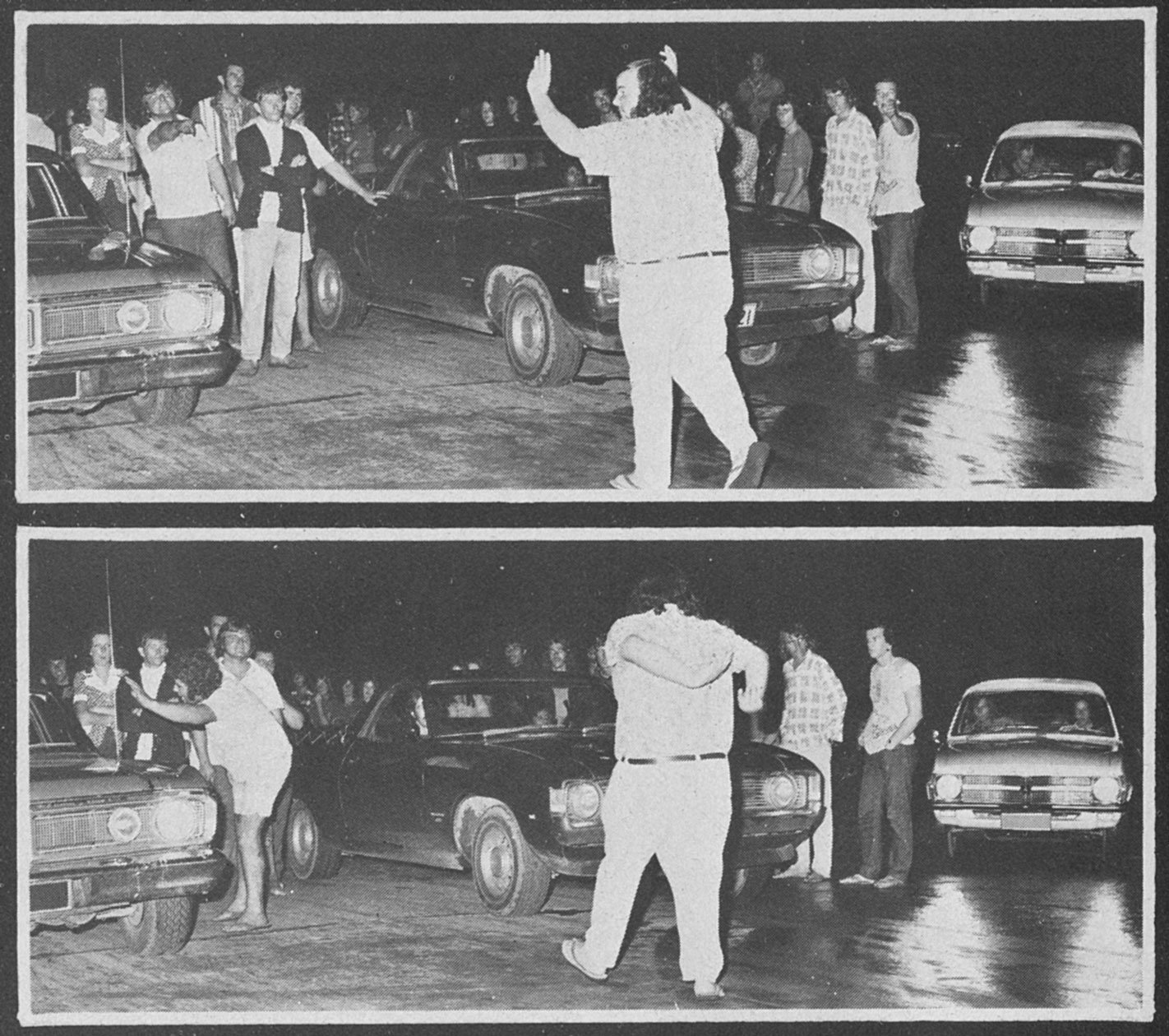
Ready… Blast off! Two Fords lay rubber on the Bennelong 1320 as the Big Man flags them off. Dude on extreme right seems a shade worried about our camera.
It started ‘way back in about ’60, no doubt because two groovers, one probably in a brand new 144 cube Ford Falcon and the other in an “old guard” Cusso, wanted to find out whose brute was Boss. Next day it was four cars, a week later it was nine and so on until a whole generation of the power-hungry were making it to Brickies on a regular basis.
Home for today’s street racers – and a whole heap of “hanger-on-type poser bastards” (as one hard-core runner put it) – is a Parramatta Road shake and burger joint called the Big Chief, which seems to rely on the street racers to keep it out of the red. When you drive past the·place in daylight it seems so forlornly empty that you feel you should slope for a Blue Heaven milkshake out of pity, but when you see it on a Sunday night with guys and chicks standing by the hundred in the car park and spilling out onto the footpath through lack of room you start to wonder if the proprietor has a daughter…
As even the most cretinous daily newspaper man knows, the racers of the Brickyard aren’t exactly dying to climb into print with an attack on the Minister for Transport or to immortalise themselves among the Mums of Mosman on the Channel Two News. That kind of exposure is a thing they reckon they can soldier on without.
But we were surprised how guys would make with the words as soon as they discovered we weren’t Mike Willesee in disguise. We teamed up with a big but unlovely guy (whose mates would call him Jughead if they were big enough) and he talked for a long time about how Brickies was and is – who was who and what was what.
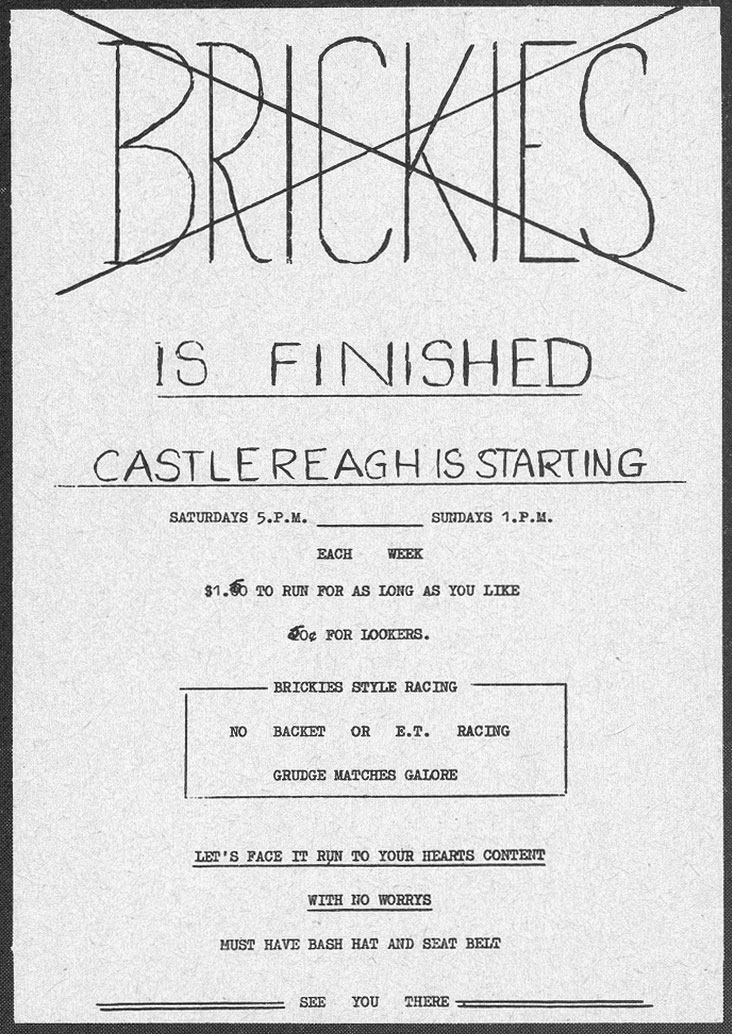
This is the leaflet rumored to have been distributed by the guys running the legal drags claiming the Brickies has been shut down (wrong!) but mainly showing what serious opposition the Brickies has been.
Don’t get the idea that Brickyard meets are regular in the way that church is every Sunday, or regular like All-Bran is supposed to make you. They just happen, baby, when there are enough hotshoes around to make them and when the idea is popular enough. What you need is a night – say at the end of a long weekend – when the heavies haven’t got much to do. They can’t go and see Aloha Bobby & Rose again because they’ve seen it twice already but they’re not looking forward to work tomorrow – so they go for a cruise in the trickmobile.
Next you need a bit of the Parramatta road-style aggro that occurs at a hundred traffic lights a night. You need some guy in a seedy-looking (but wild underneath) Holden sedan to blow the doors off a few later model 308s on the way to the Big Chief. Then you need a 308 man to put it on Mr Beatup Wheels for some action and suddenly, before you can say “verbal diarrhoea” it’s on and the word has spread like magic. The prospect of a good race can empty the Big Chief in five minutes, leaving the white-uniformed mums that take your money staring moodily at all the Parramatta Road traffic that passes but doesn’t stop.
Brickies has seen some historic sights. Like the time two guys – one of them now a top Australian pro-stock driver at the proper drags (Castlereagh, further out of town) raced for $300. It came about because one of the guys in the Monaro talked too big and too loud about what a dunce the guy with a rat in his Holden Statesman was. In a historic race, the Monaro was shut down for three-spot.
Then there was the time, a year or so ago, when an interstate truckie turned up one Sunday night in a Mercedes-Benz prime mover, on his way home for a sleep after ditching its loaded trailer at the depot.
Obviously he wasn’t going to do a lot of good running against cars whose engines had as much power or more than his diesel so the boys persuaded him to do a fire burnout, which is a technique (used in the best drag racing circles) of lighting up the rear skins with some inflammable fluid and spinning them for a few seconds to heat the rubber and get real, life TRACTION.
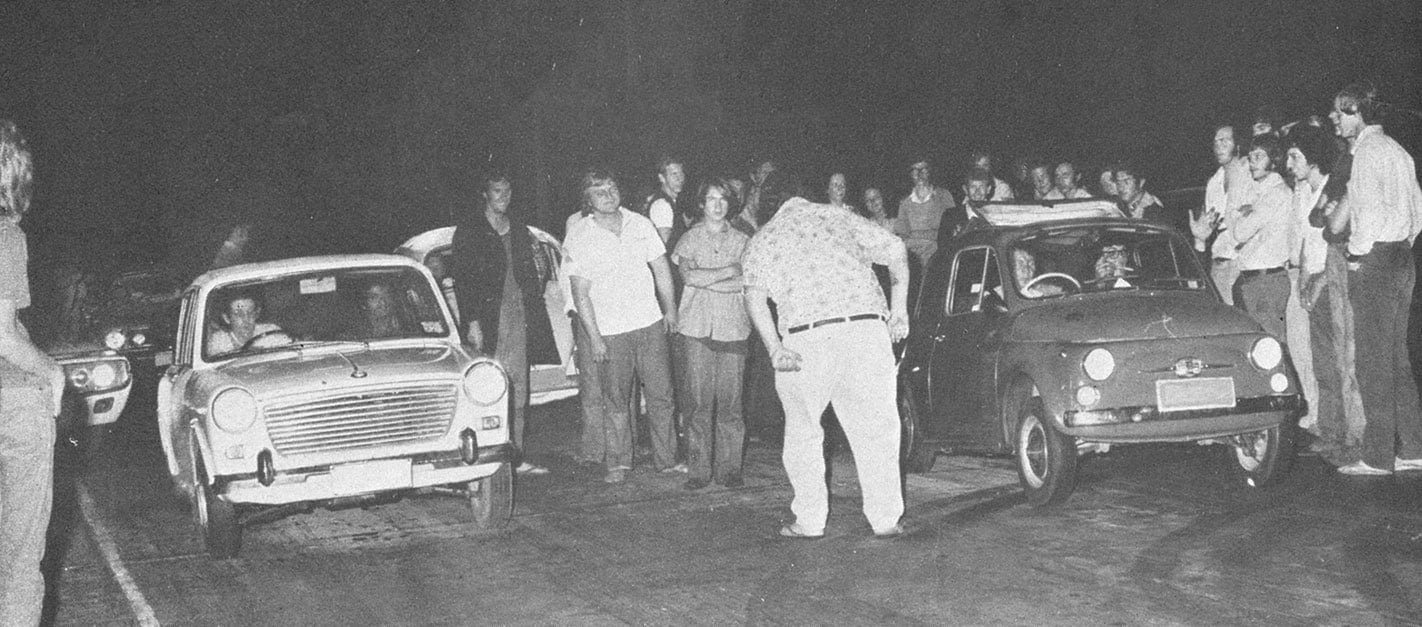
It’s not all guts and thunder, folks. Here Morris 1100 takes on Fiat 500 for the “Mr Weak-Knees” title. History doesn’t record which powerhouse won. Note Fiat’s roof-mounted aerodynamic aid.
“Soon as the crowd found out he was gonna do it,” says Jughead, “we were inundated with petrol to light the fire. I finished up with about 60 gallons of fuel in my lap. I poured the petrol on·the road, some other guy threw the match and the bloke in the Benz revved it to hell and dumped the clutch. Looked bloody lovely, though for a while we thought the rear tyres might catch fire. Still, what the hell, it wasn’t his truck.” Obviously.
Unfortunately the cops, who had been sitting concealed at the other end of the Bennelong 1320, arrived early that night because they saw the flames and thought the guys had decided to burn somebody’s car.
A lot of people complain about the noise when Brickies is running full chat because the noise of shredding Parnelli Jones 12-inch rubber and screaming Cleveland 351 V8s echoes clear across Homebush Bay to the·densely-housed· suburb of Strathfield, but just the same, says Jughead, everyone isn’t the street racers’ enemy,
“There used to be this little bloke who was caretaker of one of the factories fair in the middle of the 1320 and he had a ball when we raced own there – he liked the company.
“We’d buy: him a burger now and then and when the cops raided the place we’d get enough warning for him to open up the gates to the factory and let us drive all the trick machines – the ones running slicks and straight-through pipes – into the big shed. We’d shut the doors, get out the cards and suck on a tube till the fuzz went away.
“There used to be a crazy guy down there with a Norton motorbike who’d take on anyone and we never really knew who he was except he was a mad bastard. Judging by the way he used to ride he just might be dead by now.
“Anyway, one time he’s running this Mustang which was having some strife with clutch slip. They came off the line together and were still side-by-side at the one-two change when suddenly the ‘stang’s clutch let go like shrapnel and peppered the mad bastard on the Norton. He was lucky not to get his leg cut off…”
When you talk about the accidents everyone, but everyone, clams up. Over the years at least half-a-dozen people have been killed down there but the general impression the boys give you is that the whole scene is super-safe if you stick to straight drags and shut off at the green telephone junction box like you’re supposed to.
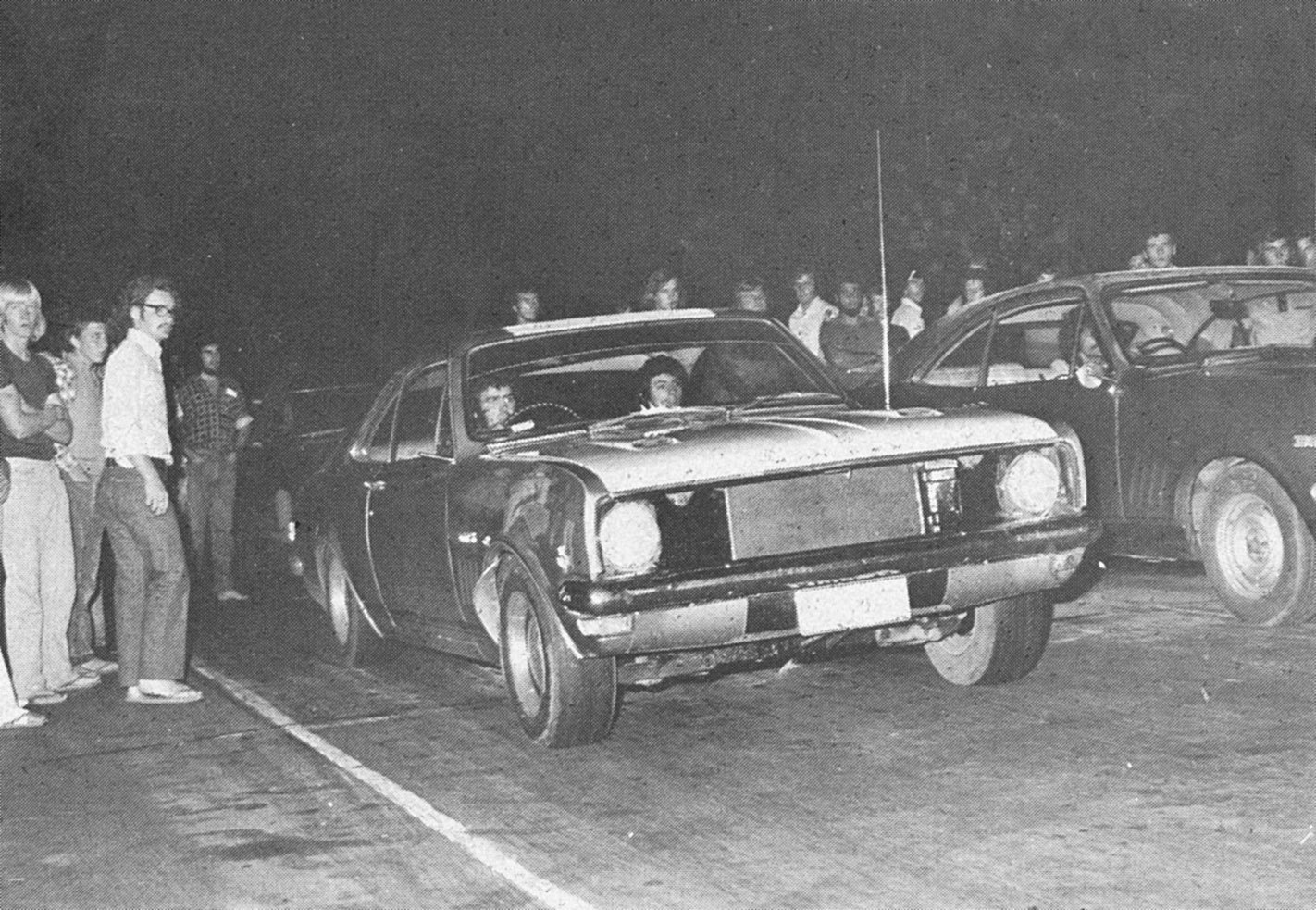
This Brickies competitor has made it to the big time in legal drags.
There’s a fair amount of resentment among the Brickies heavies against the people who have actually had the temerity to get themselves killed down there because they have brought the place the worst possible notoriety. The feeling is that the guys who bought it – to a man – were all racing ‘way past the end of the 1320 and were doing things like clocking a ton around the wrong side of a bend – or trying to fit two cars across a one-lane bridge flat knackered. No-one has actually come seriously unstuck on the dragstrip proper though there have been some anxious moments when cars have turned hard left in the wet, still under full power.
Like every other form of car competition, Brickies has got more and more sophisticated. In recent years there has been a home-made “Christmas Tree” starting light system there and worked by a human whom several Brickies say is “a tall Pommy guy”. There are four lights – three amber and one green at the bottom. The system works so that the lights flash “One, two, three, go” a simplified version of the system at “official” drags.
In the past few years there have been guys turning up at the strip occasionally with their cars on trailers or A-barred behind tow cars that are at least close to bog-standard. It’s not all that regular because if it were the cops would be onto the practice like a ton of bricks.
But there have been guys there with their cars wearing proper drag slicks, and equipped with spray cans of Trac-bite which they put on their rubber to make it sticky. Trac-bite is the stuff they buy by the 55-gailon drumful in the US and spray on entire dragstrips.
“Evolution is what it’s all about here,” says Jughead. “A bloke has a race one week, gets done for $20 so he goes away and tricks his car up with all kinds of bolt-on good gear to make it go like a cut cat. Some of these guys change cams like they change their underwear. They’re the ones who keep Edelbrock and Offenhauser’s export markets healthy, that’s for bloody sure.”
The machinery is super-trick these days. Bins are in – and most of the ones that operate are 308s or transplanted 350s – but you’re still king of the hill with some Yank big-iron, provided it’s made by the General. The boys like big Fords too, but it’s the Chevs and Pontiacs they really get off on.
“If I had the bread I’d have a 455 Pontiac TransAm with roller rockers and a cam, big carbs, a set of pipes, a set of the good bags and maybe some slicks for Sunday nights.” Jug is wanking again.
“They’d reckon a bloke was God,” or at least they’d make him Prime Minister on the spot…
Plenty of the Brickies regulars reckon the fuzz really doesn’t mind about backstreet racing – they’d rather it was there than in a more public place. But just the same, the Brickyard gets its share of aggro from the blue-boys. Their favourite little trick is to wait ‘till there’s a healthy gathering of guys down the bottom of Bennelong, then block it off at a narrow bridge back up towards Parramatta Road and check all the cars for roadworthiness as they come out.
Because Bennelong is a private road the cops can’t book guys for shattering the speed limit (which must be a cause of considerable frustration) but they can still do fairly good business at the bridge because a percentage of the cars are running illegal rubber or no mufflers.
Typical dialogue for a pulled-over spectator goes like this:
COP: Is this your first time here?
BRICKIES REGULAR: Yes.
COP: Make it your bloody last.
There is a story about a bloke in an XU-1 who actually answered “No” to the question, got himself booked for something or other because the cops more or less felt they had to do it, whereupon he burst into tears in front of 300 people. They don’t see him down Bennelong any more…
“Things are a bit slack at the moment because the cops are pretty hot and will be for a few months,” The Jug’s right foot is twitching. “But wait ‘till winter comes and it gets so cold you think your balls are gonna drop off out there. The fuzz will decide they’d rather be tucked up in a nice warm police station.”
The Brickyard – Bennelong Road, that is – has changed very little since street racing began there a dozen or so years ago. There was talk of a boom gate on it to stop the boys getting in there but that died because the road is in use 24 hours a day and it wouldn’t be too practical. All that has really changed is that there is now a median strip on the first left hander after the end of the 1320 to get the mad bastards who keep on racing at the end of the strip back on the right side of the road.
“It was a shade hectic before they put that there,” says Jughead, raking blackened fingernails through his wig. “You’d have to drive in dead slow, hugging the left-hand kerb to keep away from the cars that kept whistling past at the ton, lights on high beam, four feet from your elbow.”
Right now, with the Brickies under pressure, the street racers have shifted locations and two main ones stand out. There is Carter Street, near the Homebush abattoirs, running parallel to Parramatta Road and Devon Street – much closer to Parramatta proper. The beat – the rumble of eights – goes on.
But aggro or not, pressure or not, the Brickies is headquarters for the street racers of Sydney and will probably remain that way, because even the most shellbacked cop or local councillor realises that if Brickies is made unrunnable,, the action will surely happen somewhere else, perhaps closer to civilisation. The Bennelong 1320 has made Sydney street racing a fixture. Maybe Australia’s “brickyard” doesn’t have the kind of tradition of the one in the US – the Indianapolis Motor Speedway – but right now, as you read this, there are a few hundred potential Australian history-makers working on it.
Want the no-frills, straight-to-the-point info on the ten best selling cars in Australia* but don’t want to wade through pages of road tests? Look no further. Let’s count ‘em down
10. Mitsubishi ASX
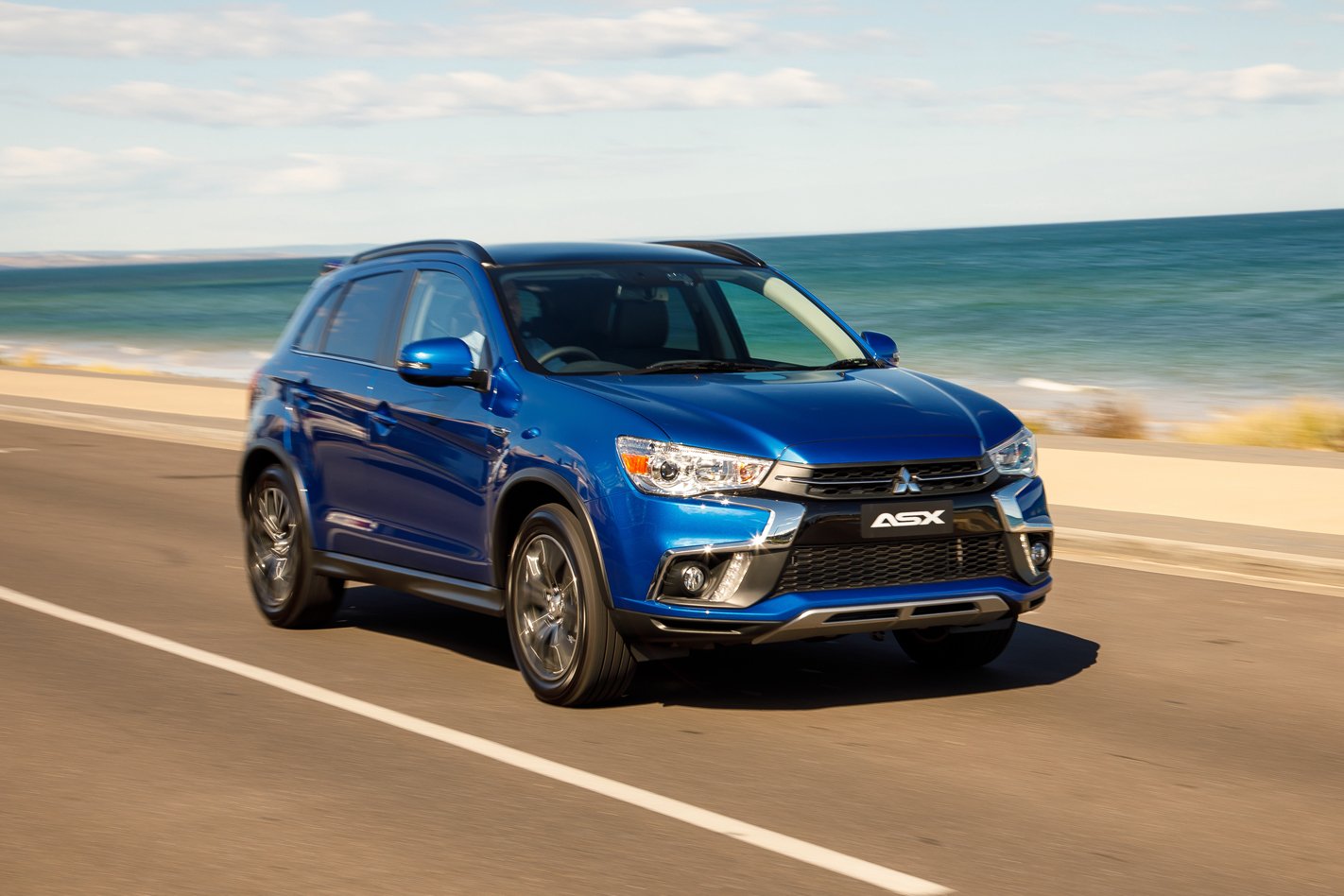
VERDICT: A compact SUV of decidedly modest talent, but don’t underestimate the pull of something that’s reliable, fairly spacious and extremely cheap. Walk into a Mitsubishi dealer with cash and you’ll get an outrageous deal. PICK OF THE RANGE: Going large on an upspec ASX defeats the point. The $25,490 CVT ES model is the go.
IN A WORD: Worthy
9. Nissan X-Trail
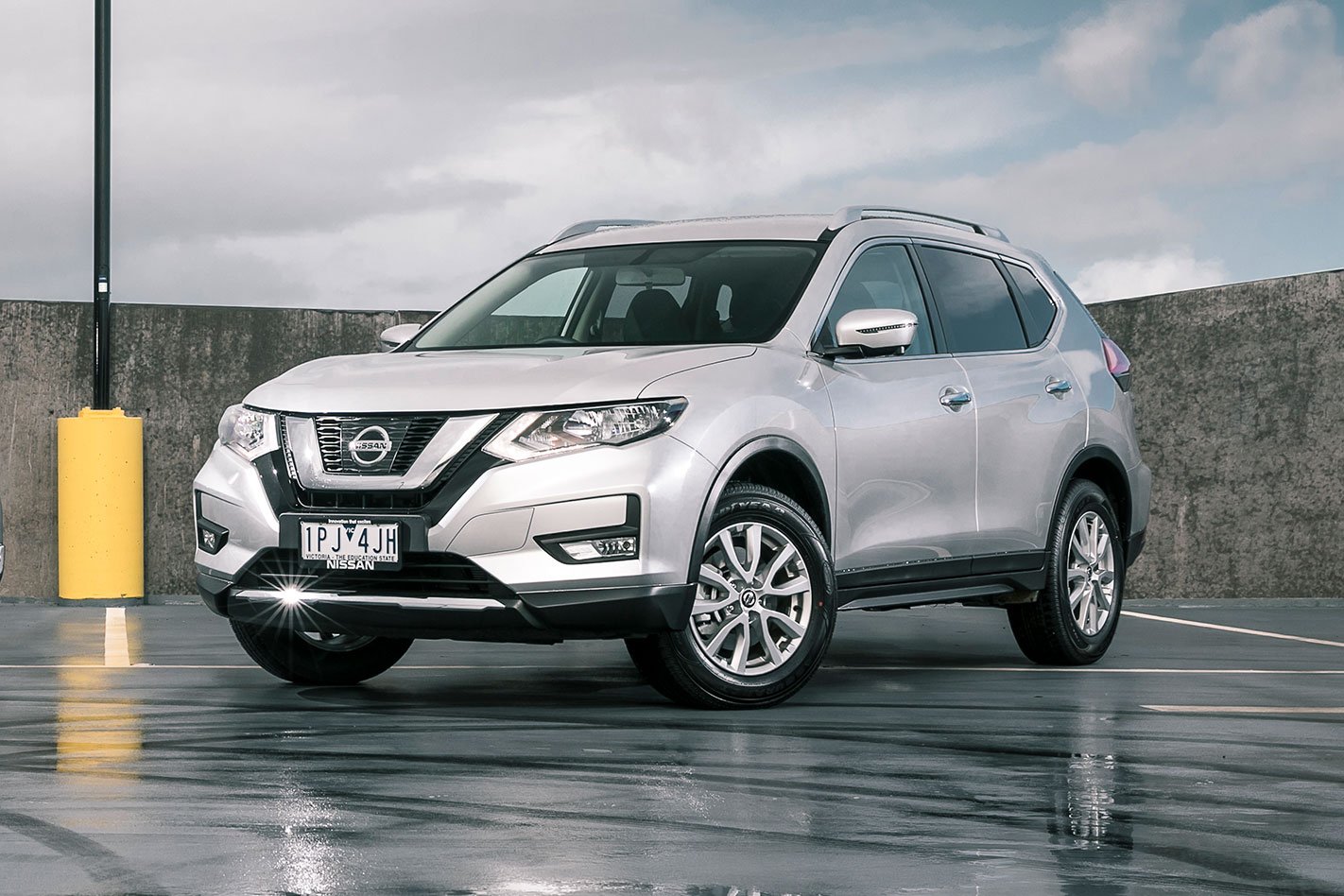
VERDICT: Big, clunky and almost bulletproof, this seven-seater isn’t the last word in slick detailing, but it does all of the basics well. Keen drivers or those who appreciate a modern interior aesthetic might want to look elsewhere. PICK OF THE RANGE: Avoid the base 106kW manual model. It’s just there to get footfall into dealers with its sticker price. Instead step up to the $32,490 ST 7-seat. Even if you don’t think you need seven seats, a lot of used buyers will.
IN A WORD: Competent
8. Mitsubishi Triton
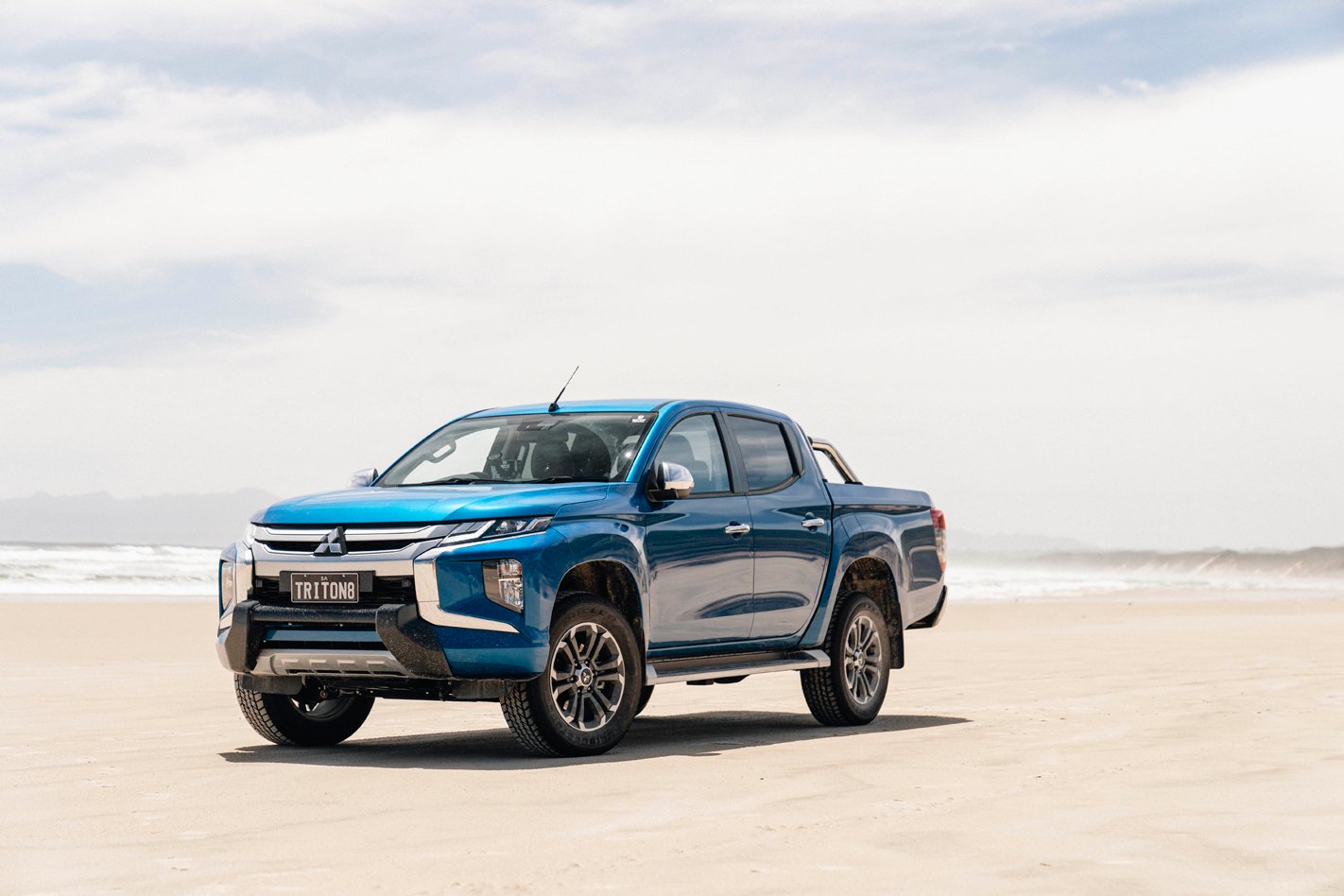
VERDICT: This one’s cheap for a reason. Driven back to back with something like a Ranger or an Amarok it feels a generation behind. Added safety a welcome inclusion and 2.4-litre diesel is tough as old boots. PICK OF THE RANGE: The $40,790 GLX ADAS is the one to pick. Just don’t even think about paying forty grand for one.
IN A WORD: Basic
7. Mazda CX-5
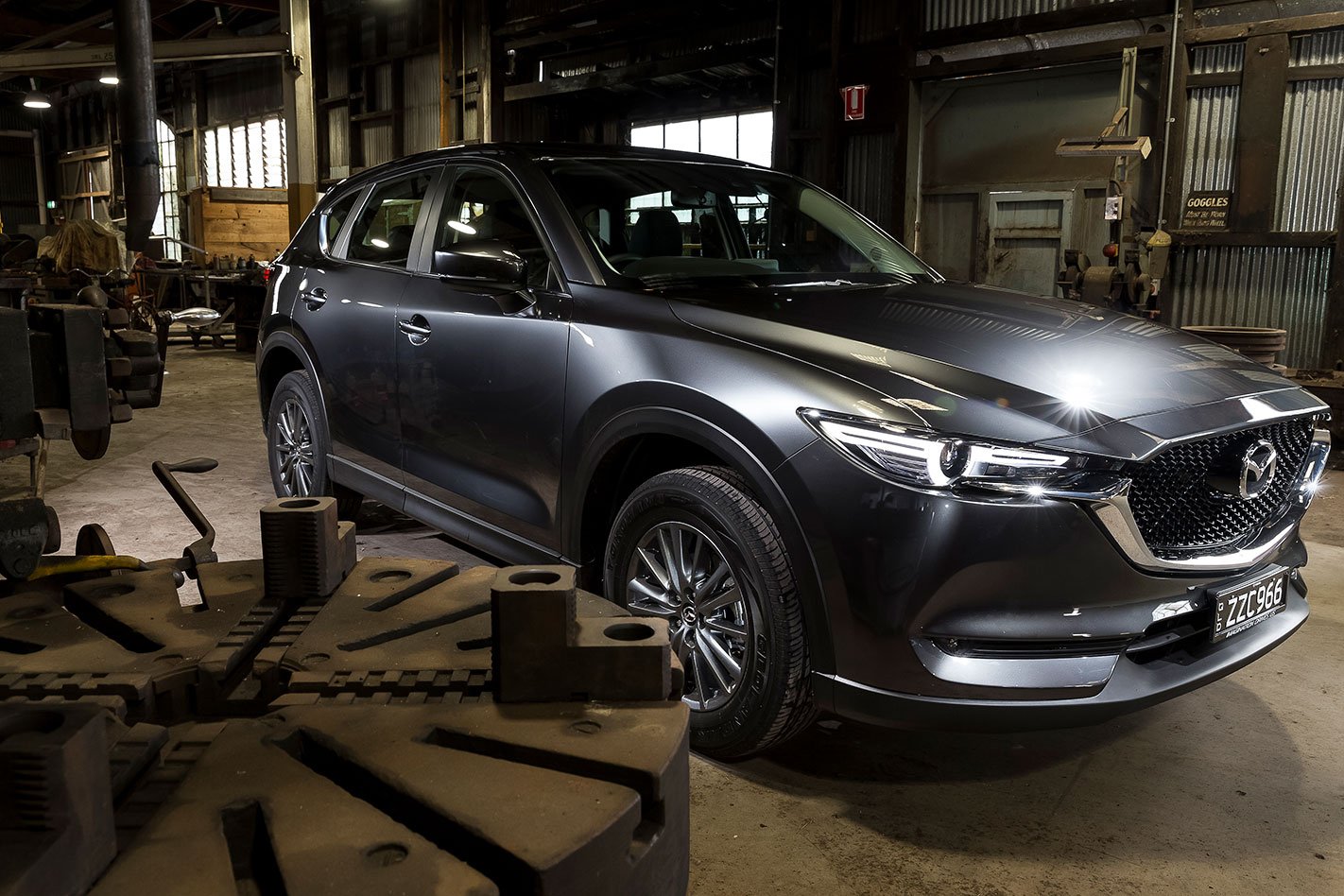
VERDICT: Finally, we come to the first car on this list that’s there or thereabouts for class honours. The CX-5 has long been a Wheels favourite and there’s not a bad one in the whole range. More space and gear with this generation car and the interior shames some vehicles at twice the price. PICK OF THE RANGE: The 2.5-litre Maxx Sport at $37,870 is a lot of car for the money. The 140kW turbo engine, all-wheel drive and a slick auto ‘box make a winning combo.
IN A WORD: Polished
6. Mazda 3
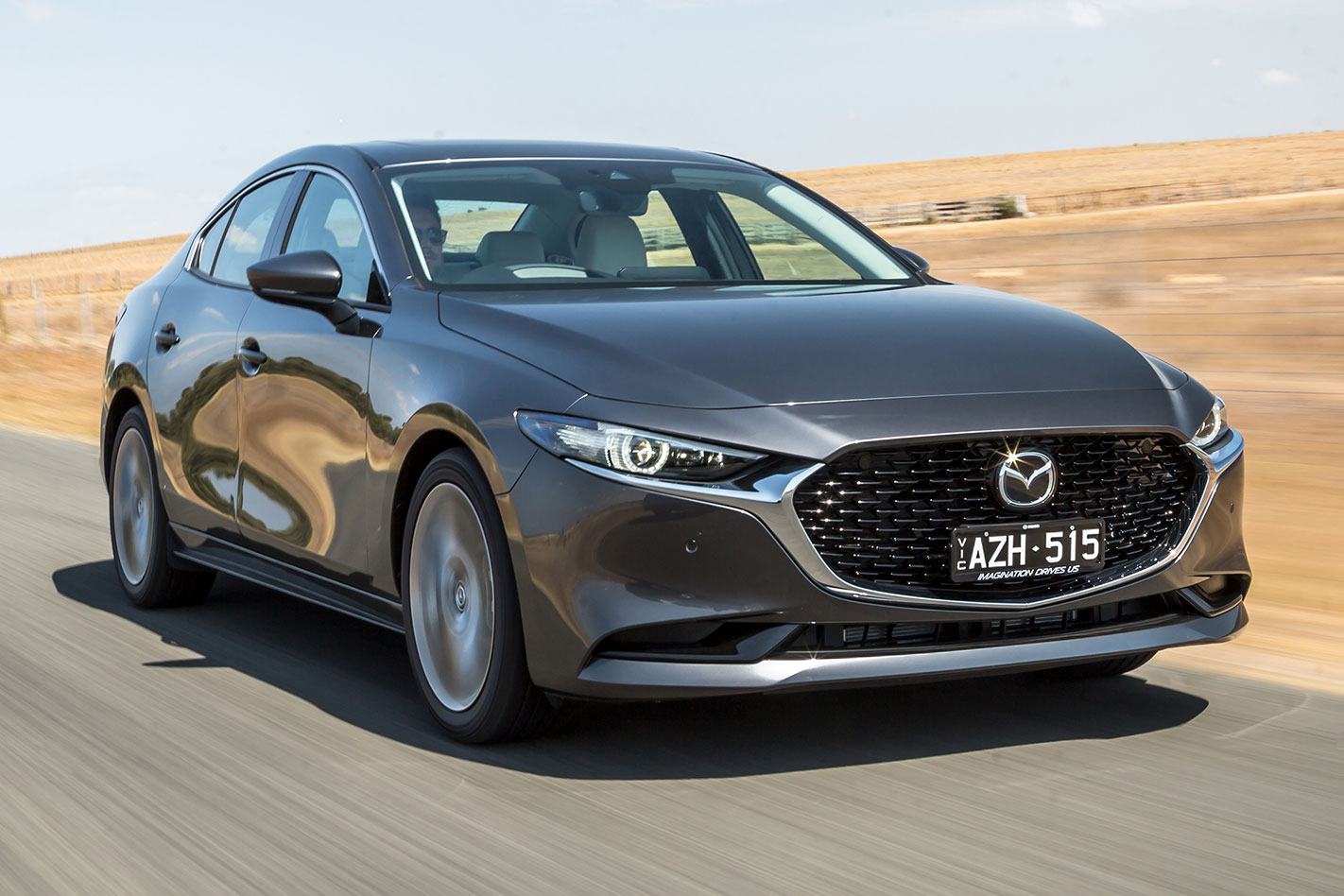
VERDICT: Mazda has pushed the 3 upmarket and sales are nosediving as a result. That doesn’t make it a bad car; it makes it a different car and will appeal to a more select crowd. The styling has proven surprisingly divisive though.
PICK OF THE RANGE: Sit on your cash and wait for the all-new SkyActiv-X engine to make its debut.
IN A WORD: Intriguing
5. Toyota RAV4
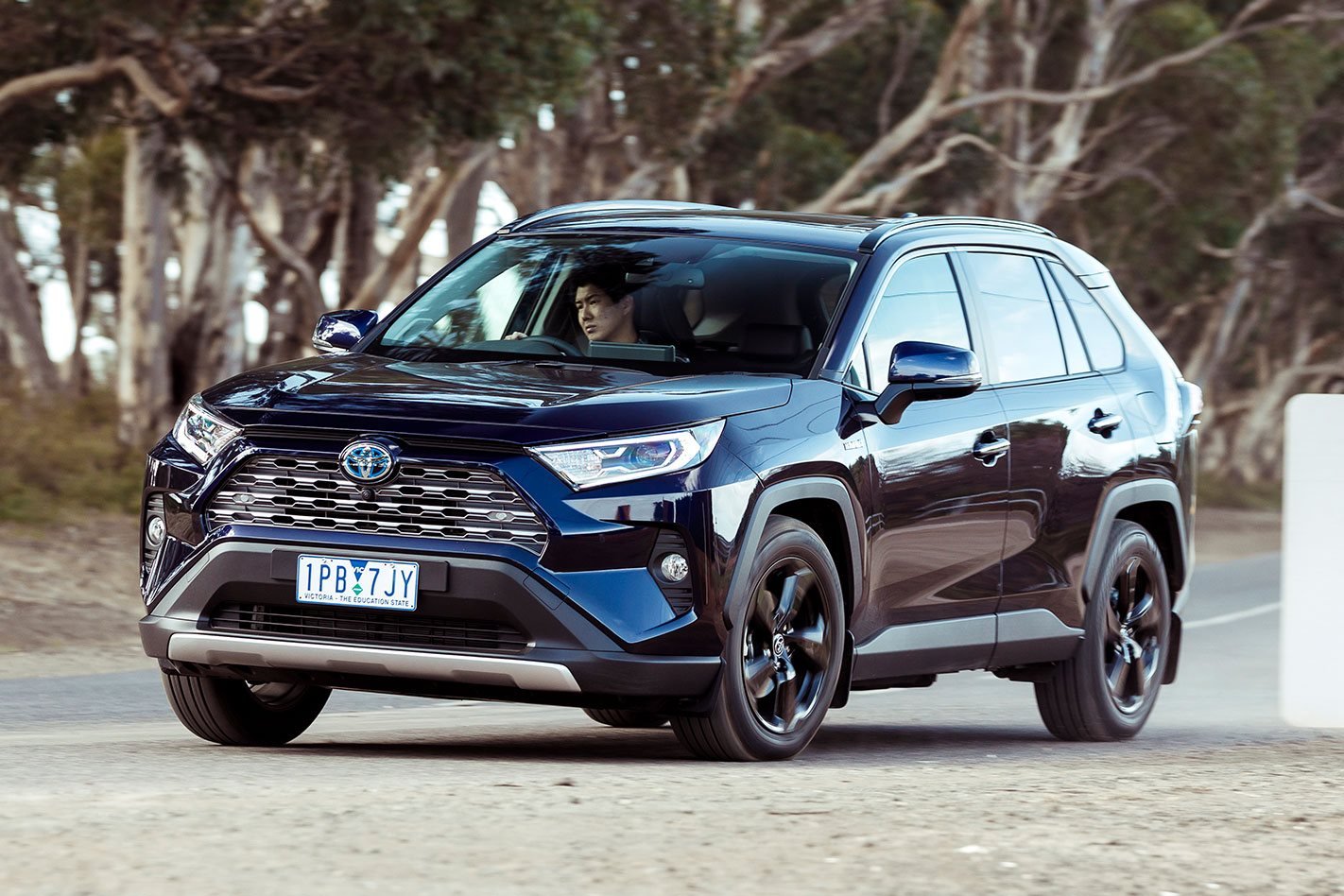
VERDICT: The RAV4 was, for a very long time, the exemplar of bland competence. This latest model is genuinely impressive and the Hybrid models earn a solid recommendation from us. A class act and more than deserving of the top-selling SUV spot.
PICK OF THE RANGE: $35,140 for the GX 2.5 hybrid is money very well spent. With 155kW on tap it’s almost hot hatch quick yet still returns 4.7L/100km. Champ.
IN A WORD: Resurgent
4. Hyundai i30
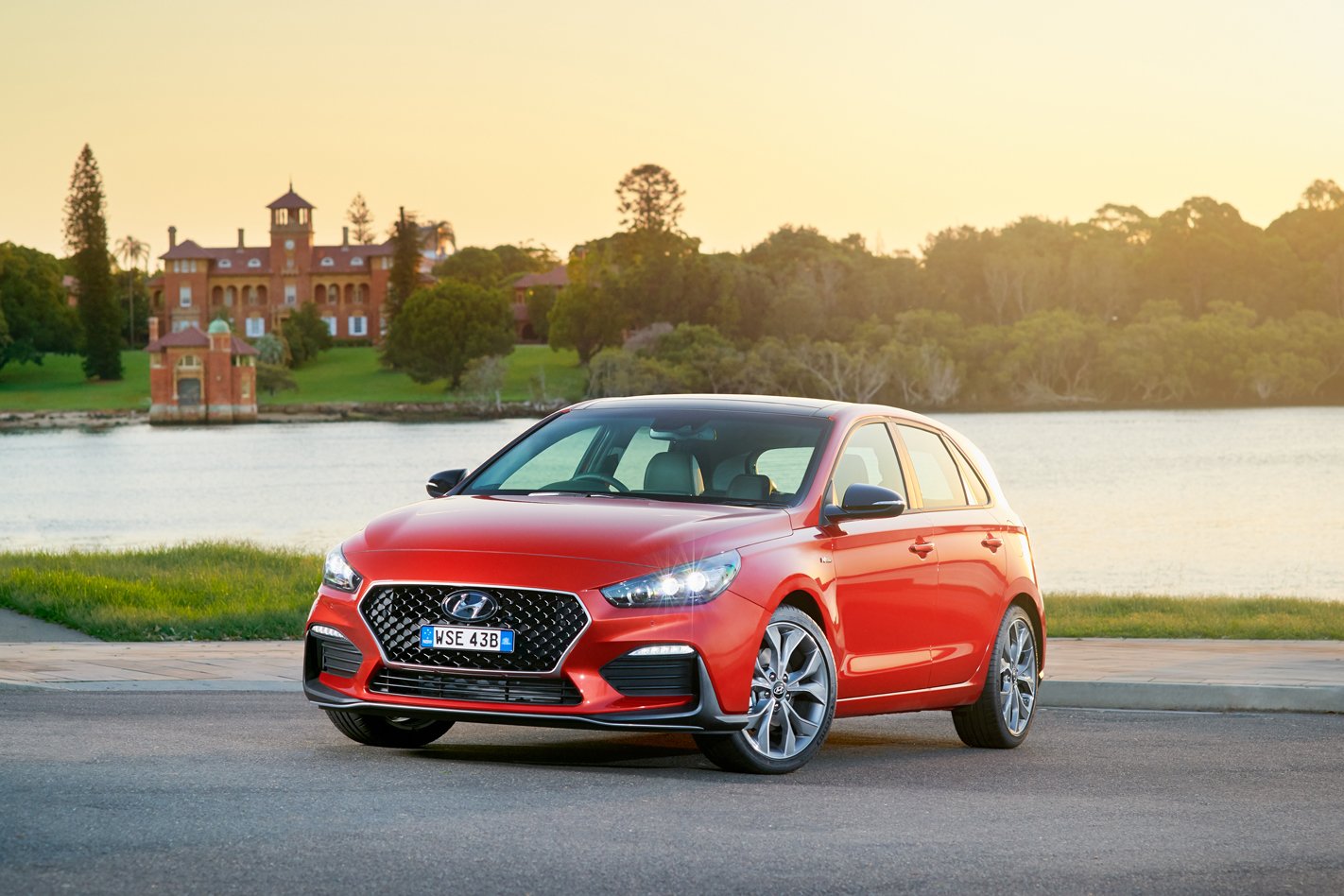
VERDICT: We’ve got a lot of time for the Hyundai i30. It barely puts a foot wrong, although only the rocketship i30 N is truly tinged with greatness. The i30 has a solid five-year warranty, is easy to drive, has a much bigger boot than a Corolla and, if reliability surveys are anything to go by, is right up there amongst the most well-built hatches sold in Australia.
PICK OF THE RANGE: The base models do a job as basic transport but the 150kW N Line auto at a nick under $30K is a genuinely delightful thing to drive.
IN A WORD: Foolproof
3. Toyota Corolla
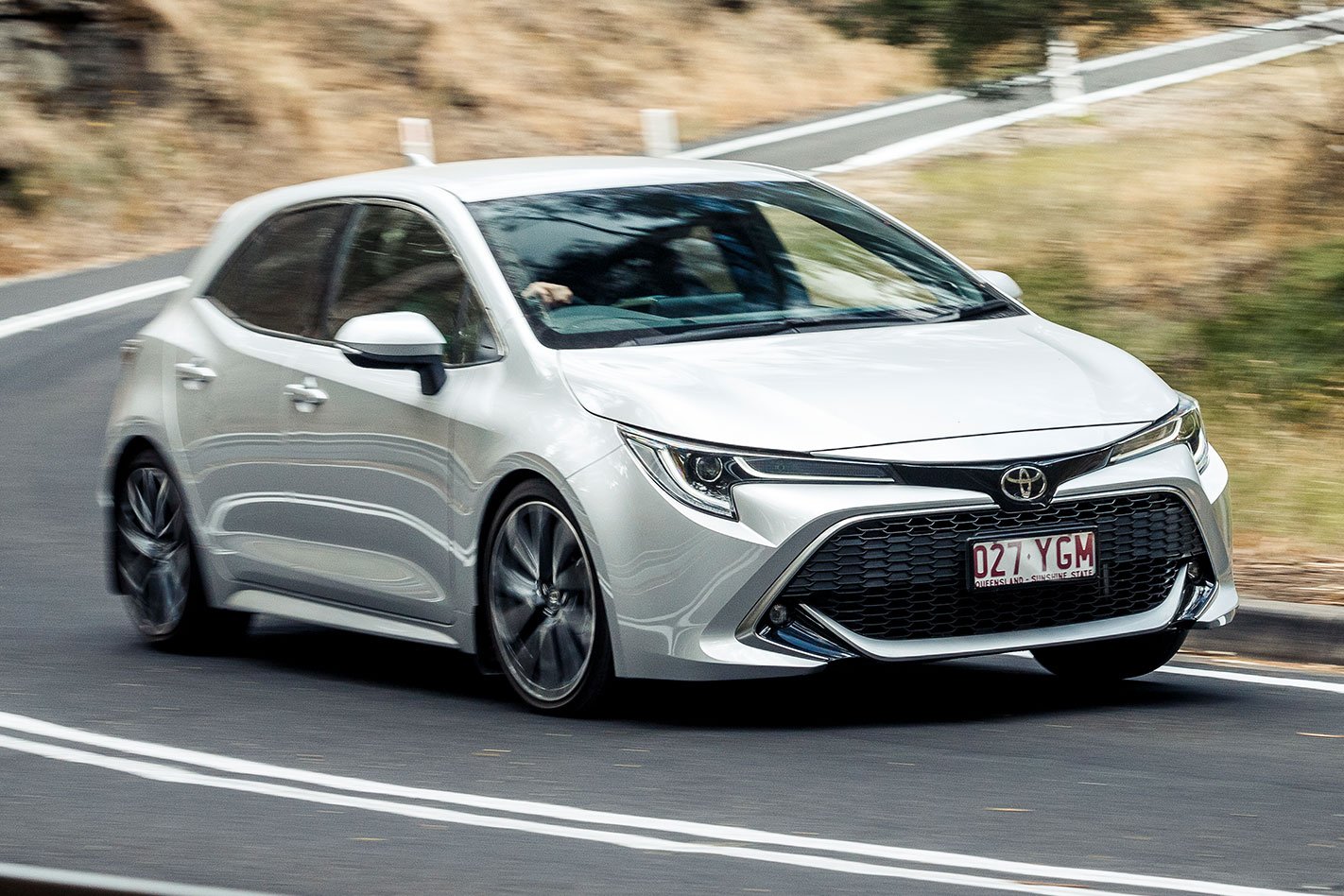
VERDICT: Further evidence of Toyota abandoning its lowest common denominator product development strategy. The latest Corolla is engaging to drive, looks great and is packed with safety gear. The boot is small though and the hybrids don’t really set our trousers on fire.
PICK OF THE RANGE: A $30,370 ZR-spec hatch features decent cabin appointments. Whatever you do, don’t let the dealer talk you into one of the previous-gen sedans.
IN A WORD: Sharp
2. Ford Ranger
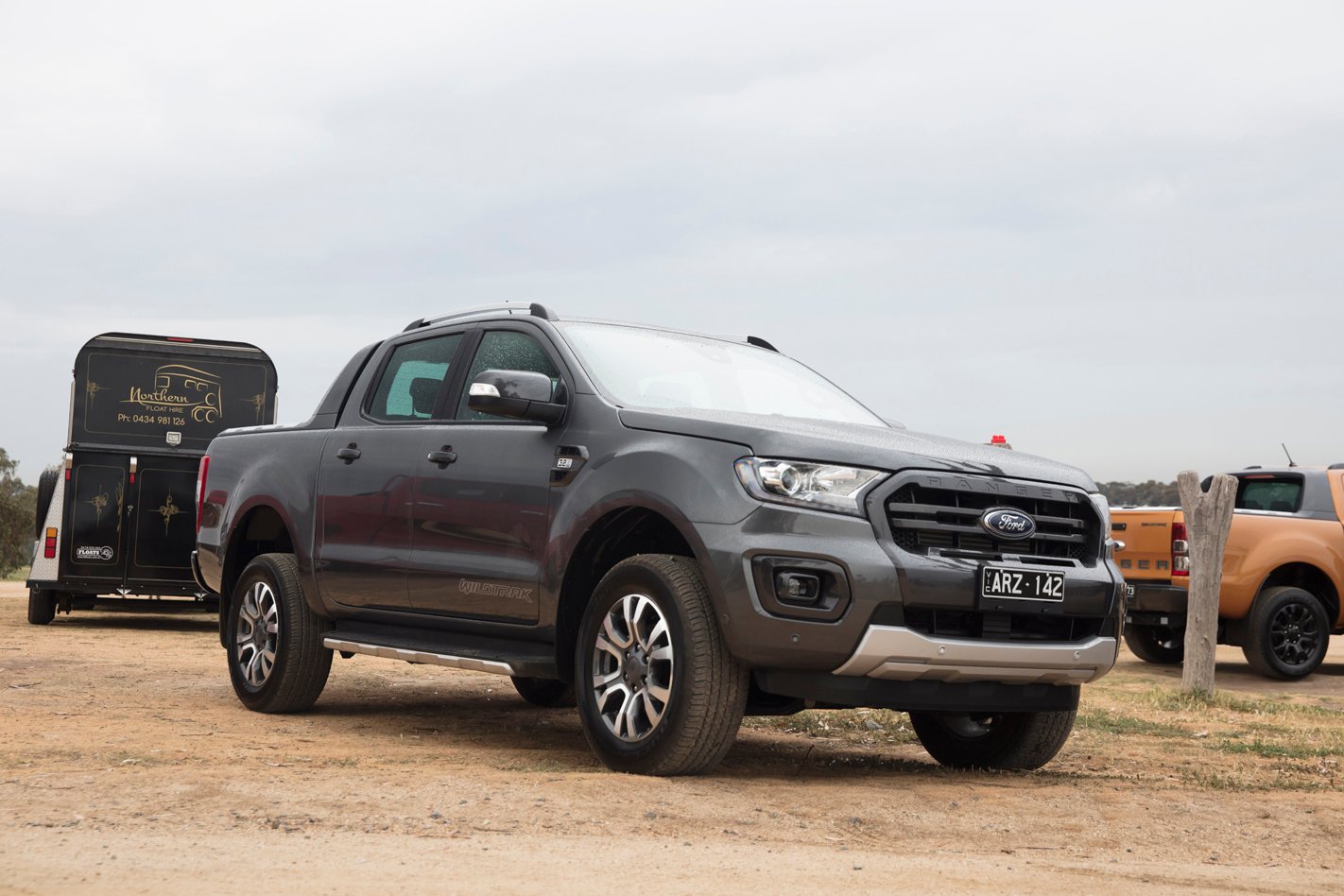
VERDICT: It’s hard to believe quite how good the latest Ranger is. The Raptor is a thing of genius but it’s seriously heavy. If you’re not willing to fork out over $70K for this Baja-buster, there’s a lot of talent elsewhere in the range. The interior is typical unsexy Ford, but it all works and works well. And don’t turn your nose up at the 2.0-litre diesel – it’s notably punchier than the old 3.2-litre five. PICK OF THE RANGE: A Raptor obviously. But in the real world, a 2.0 XLT at $59,390 would be our target.
IN A WORD: Underrated
1. Toyota Hilux
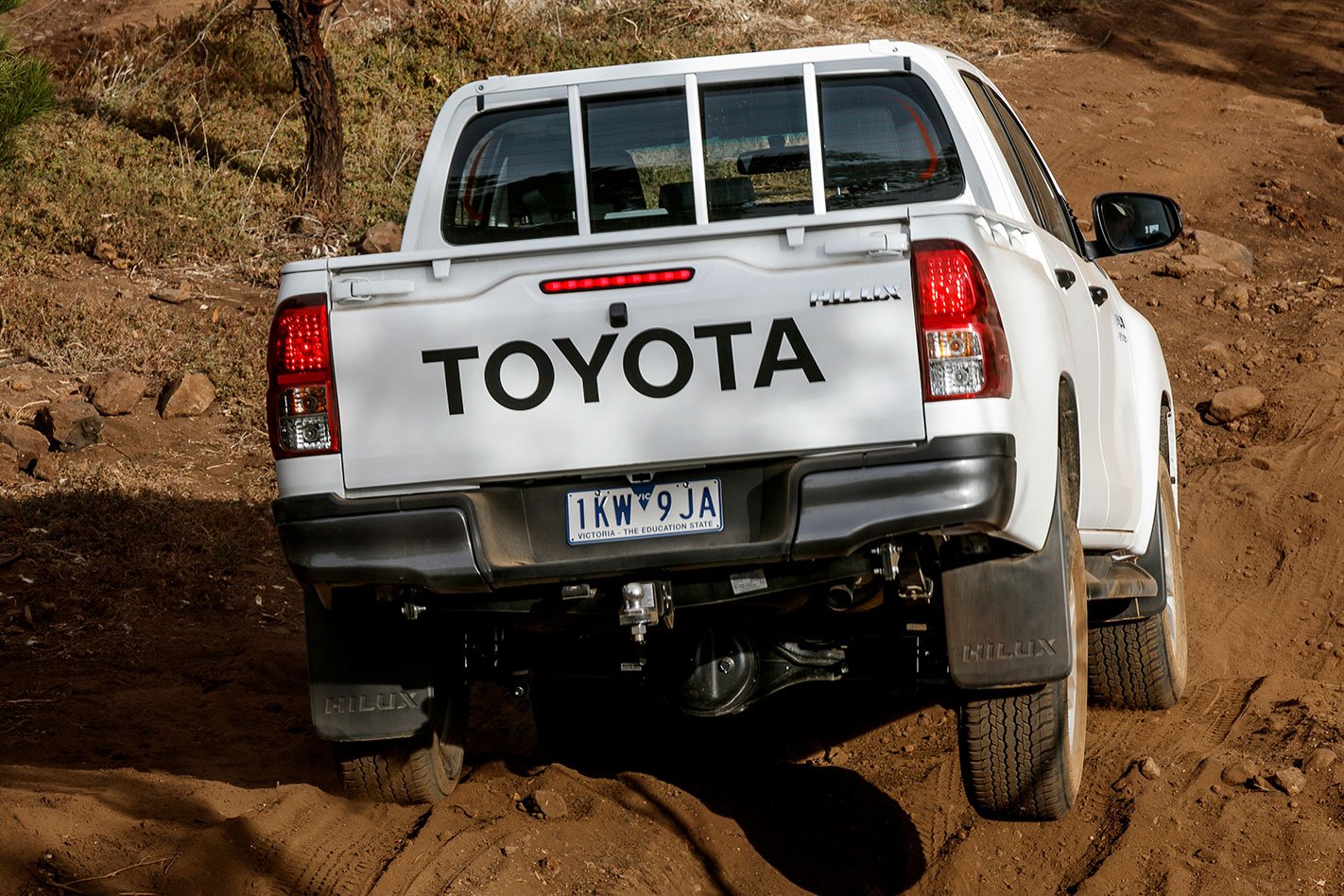
VERDICT: Toyota’s ‘unbreakable legend’ is doing something very right to hold a clear lead in the #1 spot in August’s figures. Put simply, this is a nameplate that people trust. If you’d never heard of a Hilux, however, you might wonder what the fuss was all about. The interior’s nothing special, the engines are ho-hum and the ride quality is vexing. It’s certainly not a bad ute, but it’s certainly wouldn’t make the podium if we were compiling a list of the best dual cab contenders. PICK OF THE RANGE: You’re not going to go too far wrong with an automatic SR at $48,640. But you’re certainly not going to be driving home with the best ute that $48,640 will buy.
IN A WORD: Resolute
*Based on VFACTS data for 08/19
When all-wheel drive made its cross-species transmission from off-road agricultural and military applications to the world of passenger cars, it first landed in the premium performance coupe market.
Audi gets most of the credit by creating the rally-revolutionising Ur-Quattro – and rightly so, to a degree – but 14 years before that, British company Jensen introduced the FF, a four-seat luxury GT that added a powered front axle to harness the 242kW/576Nm produced by its 6.3-litre V8. It was a complete flop – just 320-odd vehicles are believed to have been built between 1966-’71 – but the seeds were sown.
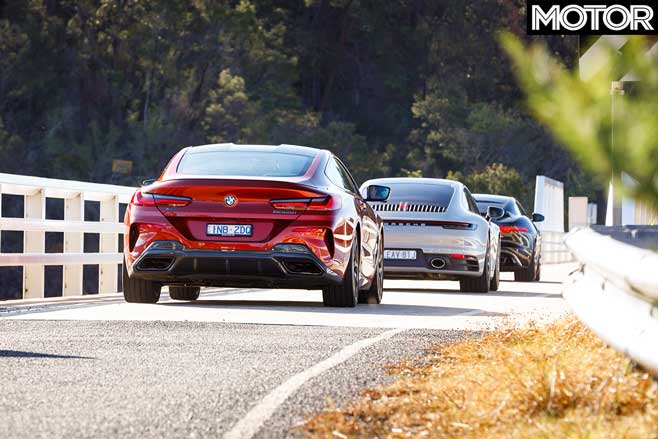
Five decades on, the BMW M850i proudly carries the torch first lit by the FF, a huge – and hugely expensive – four-seat grand tourer that deploys its massive V8 firepower to the ground through an automatic gearbox and all-wheel drive. If you need to travel long distances in comfort at high speed, the M850i, theoretically at least, is the car for you.
Despite the revival of the 8 Series badge that adorned BMW’s flagship coupe from 1990-1999, it’s essentially a successor to the F13 6 Series; the two cars are extremely similar in size, range and market positioning, though the M850i’s $272,900 starting price ($40K more than the previous 650i) vaults it into competition with the likes of the Mercedes S-Class Coupe and, yes, the Porsche 911.
All-wheel drive has been a staple of the 911 range since the 964-generation of 1989, which actually launched in Carrera 4 guise, the traditional rear-wheel drive Carrera arriving a year later.
The benefits of four driven wheels are less obvious in a car with the inherent traction advantage of a rear-mounted engine, but for the latest 992-generation, Porsche has revised the front-drive system with water-cooling for the front clutch and differential unit and reinforced clutch discs to handle extra torque.
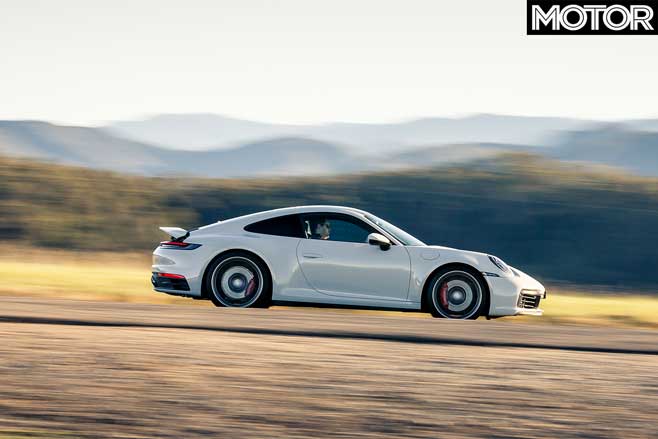
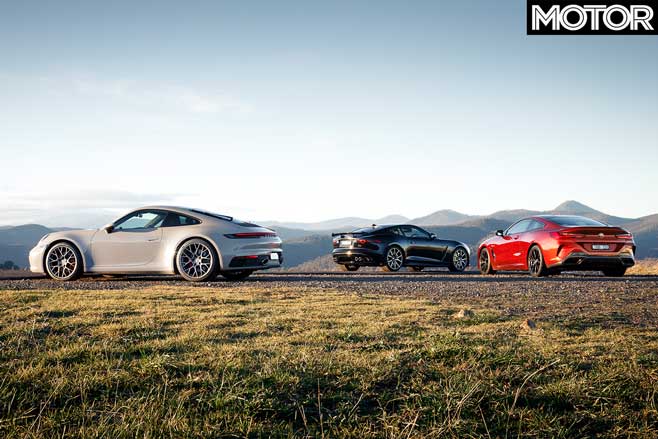
Parked side-by-side, the 911 and M850i might not leap out as natural rivals, but as their abilities have expanded the two have converged: the Porsche has the manners to be a legitimate grand tourer and the BMW’s performance gives it plenty of skin in the sports car game.
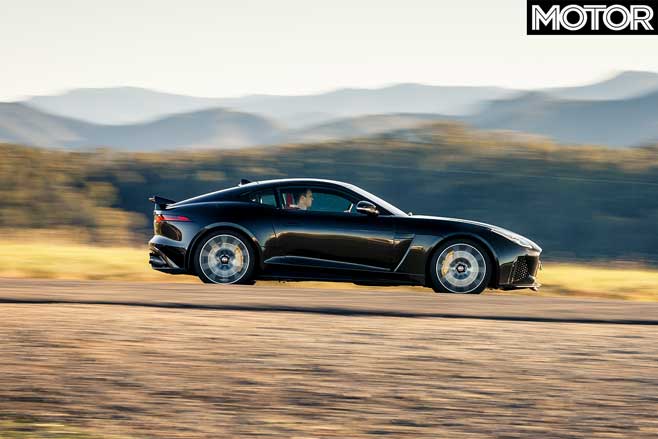
The outlier of this trio is the Jaguar F-Type SVR. Of the three, it’s the only one without back seats, the Ian Callum-penned bodywork pulled tightly over its mechanicals. The packaging eliminates any pretence of two-plus-two family friendliness, but it nevertheless inhabits a similar ecosystem to its German foes in price and performance, costing around $300,000 and using all-wheel drive to put its prodigious power to the ground, yet also offering sufficient comfort and convenience to make long-distance travel a pleasure, not a pain.
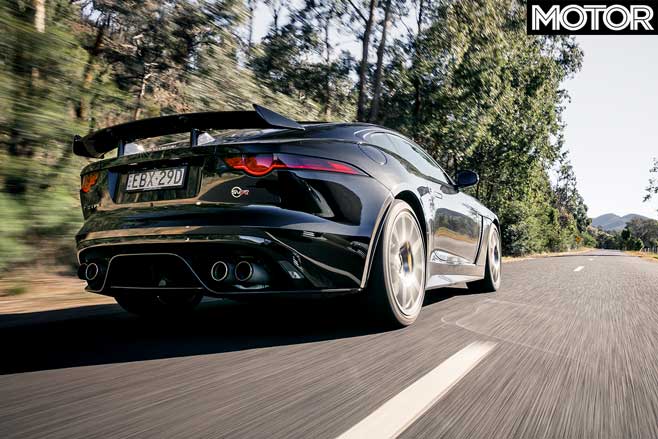
The F-Type furthers distances itself from its cross-channel competitors by eschewing new-age turbocharging for old-school supercharging. Combine forced induction with easily the largest engine here and it’s little wonder the Jaguar’s 423kW is the most on offer. In terms of power-to-weight, the SVR is head and shoulders clear of its rivals, offering 248kW/tonne to the Porsche’s 212kW/tonne and the BMW’s 206kW/tonne, though at 1705kg (25kg lighter than the regular F-Type V8) the Jaguar must be the densest all-aluminium two-seater going around.
Extracting its best in a straight line could not be simpler: load as many revs as possible against the torque converter before releasing the brakes and attempt to press the accelerator through the firewall.
The SVR lifts its nose and bolts away with zero wheelspin but a whole lot of noise, the 5.0-litre V8 producing a dry, crisp snarl, while each upshift sounds like the air is being ripped apart. Power continues to build right to the 6600rpm redline – the joy of a supercharged engine – and it’s fast. Really fast.
The sprint to 100km/h takes just 3.6sec, besting its claim by a tenth, and the entire quarter mile is completed in 11.55sec at a stonking 199.21km/h. Find a long enough road and you’ll hit 322km/h. Stopping is equally impressive, the monster optional carbon-ceramic brakes arresting the F-Type from 100km/h in 33.4m.
Launch the Beemer in the same manner as the Jag and it will clock 3.7sec to 100km/h, matching its claim, but activating the basic launch control system – it merely allows a few more revs to build prior to launch – shaves a few hundredths off for an incredible 3.63sec result.
Remember, this isn’t a full-on M-car and weighs two tonnes with driver and fluids, yet it will show a clean pair of heels to a first-generation Audi R8 V10 Plus. And not just to 100km/h, either. The M850i uses its 390kW/750Nm to good effect, continuing to pile on speed to cross 400m in 11.68sec at 194.24km/h.
The 4.4-litre twin-turbo V8 is an absolute monster, providing effortless, relentless acceleration, the thrust only tapering off over the last 500rpm or so. It sounds much angrier than you’d expect, too, the wet, gurgly growl a stark contrast to the Jag.
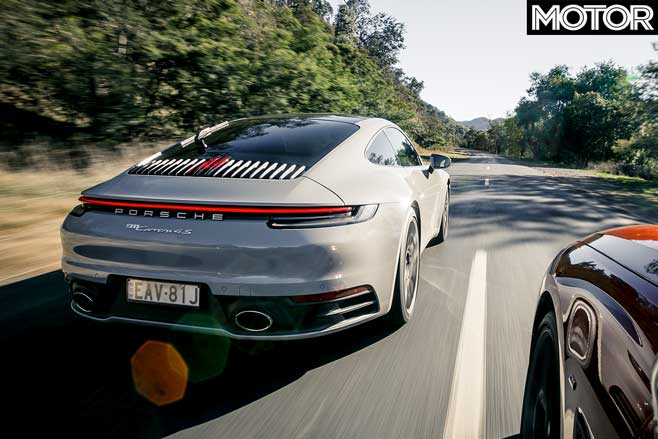
In the face of this V8 onslaught the 911 looks a little outgunned, offering just 331kW/530Nm from its 3.0-litre twin-turbo flat-six. Two things help the Porsche: its 1565kg undercuts the Jag by 140kg and the BMW by 325kg, and the kilowatts in Stuttgart tend to be particularly potent.
Launch control sets the tacho to 5000rpm before the clutches are dumped; the revs flare as the wheels scrabble for purchase, which suggests the 992 is struggling to get going. Apparently not, for 100km/h flashes by in 3.42sec and the quarter mile disappears in 11.43sec at 198.66km/h.
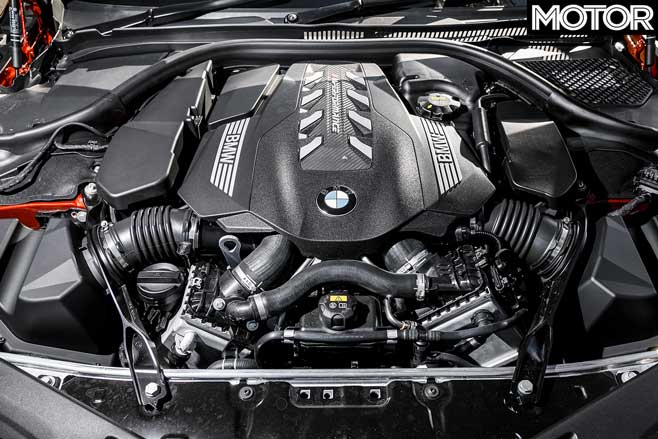
The Porsche and Jag are neck-and-neck all the way to 200km/h, the 911 holding a 0.08sec advantage over the SVR (11.66), the pair putting distance between themselves and the heavier BMW (12.45sec) as speeds increase. The 992 matches the F-Type for in-gear punch, bolting from 80-120km/h in just 2.1sec (the BMW a tenth slower), while it also stops the best, pulling up from 100km/h in just 31.19m.
Possibly the Porsche’s greatest trick is when you leave the drag strip and flick the new steering wheel-mounted drive mode dial – a retrograde step in style compared to the 991.2’s, if you ask me – from Sport Plus to Normal. Instantly, the suspension softens, the exhaust hushes and the engine relaxes, the 992 offering a greater level of comfort and refinement than any 911 before it.
Road noise is still a bugbear – it probably always will be – but the ride is outstanding for a sports car. There’s still an underlying firmness, but enough compliance to ensure most bumps are dealt with long before they reach the occupants.
This provides a moment to appreciate the new 911’s interior, which brings with it a huge step in technology and connectivity. In general, it’s excellent: there’s more room front and rear, the driving position is perfect, the infotainment touchscreen is easy to use, and the twin digital screens flanking the iconic central tacho is a nice melding of tradition and today.
However, some of the plastics feel a bit cheap and it’s unclear why Porsche abandoned its habit of locating buttons either side of the gearlever – as per Panamera and Cayenne – and moved them to the dash, leaving large expanses of blank black plastic.
The Jaguar is snug. Its dash faces the driver, a giant grab handle cordoning off the passenger. The InControl infotainment has its critics, but is easy enough to navigate and all major controls are located within easy reach, while having the central air vent rise out of the dash never fails to impress.
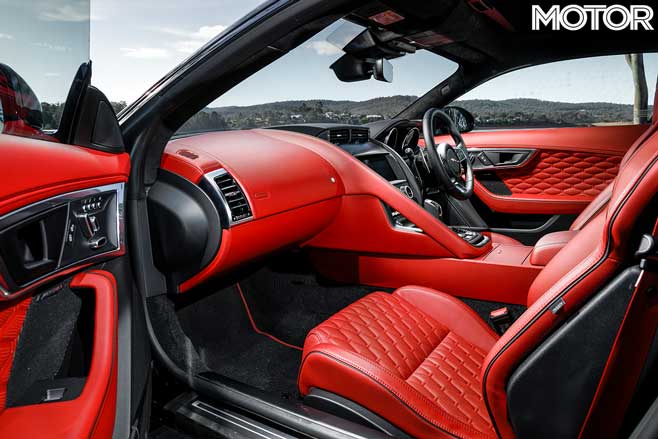
For an interior that’s six years old, it’s holding up well. Given the way it looks and sounds, you’d be forgiven for assuming the SVR chassis has all the subtlety of a Jason Statham fight scene, but it’s remarkably well judged.
Former JLR chassis engineer David Pook once explained that the SVR performed better in all ride metrics than the standard F-Type, and its ability to cushion bumps suggests he didn’t make this up. It gives the Jaguar a long-distance cruising ability that you might not expect from its vents-and-wings styling, but one that feels entirely fitting for the brand. Presumably, we can thank the fact that a lot of Britain’s roads are as crappy as Australia’s for this.
German roads, in general, are not, and you can feel this influence in the M850i. If you have a long distance to drive on smooth roads and the speed limit signs have black crosses on them, the BMW has a lot to commend it.
It has that special quality of making virtually all speeds feel the same; there’s little difference in its behaviour at 50km/h or two or three (or, presumably, four or five) times that. It remains extremely quiet and generally very comfortable. I’ll get to the qualifier in a moment, but first the interior. The materials are great, as is the design, befitting a premium grand tourer, but there are problems.
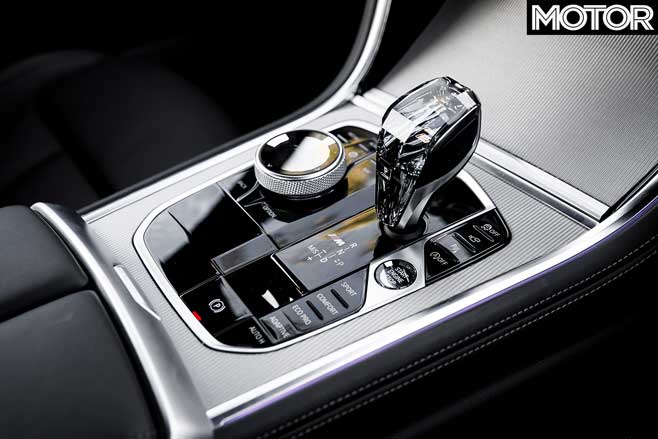
First is the packaging, a legacy from the 6 Series. It remains a mystery how a 4 Series Coupe can comfortably seat four adults yet the larger 8 Series struggles to qualify as a two-plus-two. Having virtually perfected iDrive, the latest version seems to be a step backwards in terms of intuitive use, likewise the drive mode selection buttons. On a more personal note, I deeply miss BMW’s old analogue instruments and would happily delete the Swarovski crystal gear lever, though others may disagree.
Returning to an earlier point, on a smooth, gently undulating road, the M850i is exceptionally comfortable, but introduce a few potholes and ridges and an element of choppiness appears, taking the shine off the grand touring experience.
Thankfully, BMW’s flagship two-door (at least until the M8 arrives) has the handling chops to somewhat justify the sportier ride. For a car of its size and weight, it’s truly remarkable what the M850i is capable of on a twisty road, aided as it is by a comprehensive suite of chassis technology: variable ratio steering, all-wheel steering, active anti-roll bars and all-wheel drive with an electronically controlled rear diff.
It proves its worth in tight bends, with sharp turn-in from the quick-ratio rack, the rear-wheel steer helping rotate the car; the active anti-roll bars prevent excessive weight transfer and the rear-biased all-wheel drive allows the throttle to be applied early and eagerly. There’s even power oversteer available if you’re prepared to find it.
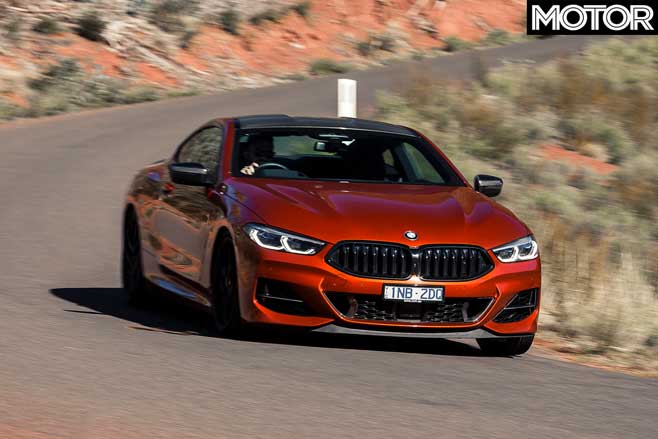
It’s undoubtedly effective, but the technology does feel to put another layer between the driver and the road. The driving position is quite high – at least compared to the other two – which only exacerbates the sensation, and it’s brought to the fore in faster turns. The absence of roll makes it difficult to feel how hard you’re pushing, while the quick steering offers accuracy but not a lot of communication.
Once you’re set in a long, quick corner it’s great, but getting there takes a small leap of faith. Make no mistake, the M850i is genuinely enjoyable to drive, for its beastly engine as well as its handling talents, but it does feel aloof – the technology no doubt enhances its abilities, but it diminishes the experience.
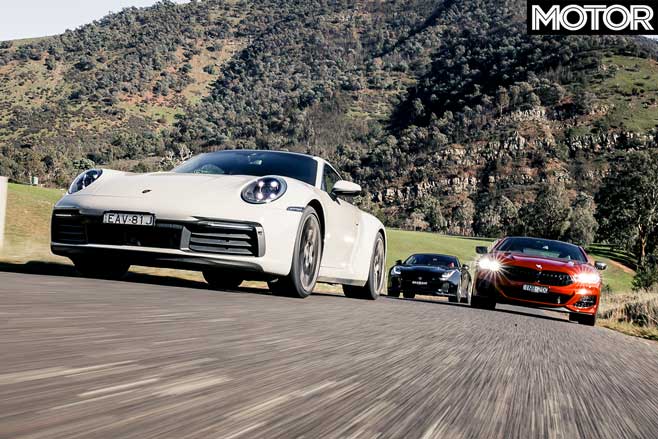
The Porsche can also be optioned with all manner of similar chassis gizmos, but none are fitted to our test 4S and it’s no worse off for it. To say the 992 911 does nothing wrong is accurate, yet also sells it short. It’s really only when you drive it in comparison with two other – extremely competent and capable – rivals that you realise what an incredibly high level it’s operating at.
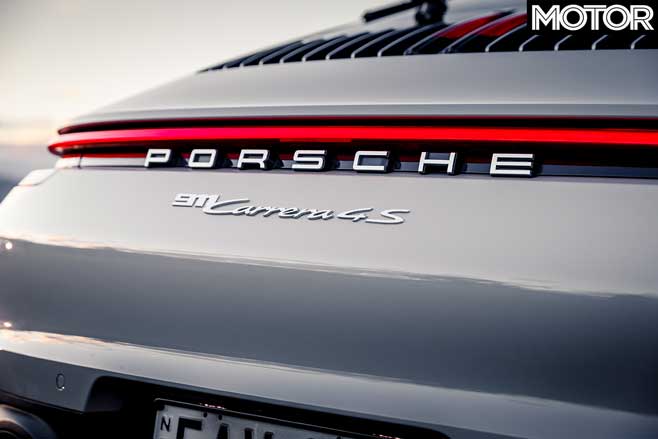
It goes without saying that it has outstanding grip and is capable of insane speeds, but it’s the details where the Porsche separates itself. There’s feedback from the steering and a connection to the chassis the BMW can only dream about, partly thanks to the 911’s new-generation adaptive dampers, which are actually softer in normal mode than their predecessors. It allows the 992 to soak up bumps, the body bobbling slightly and leaning in corners, sensations that give the driver a sense of what the car is up to at any given moment.
Consequently, it still feels like a 911. Yes, the quirks are nothing like what they used to be – driven in a conventional fashion, the 992 is outrageously quick – but understeer will punish impatient throttle applications. There’s too much grip to unload the rear under brakes on the road, but hit the accelerator at the right time and it neutralises beautifully under power.
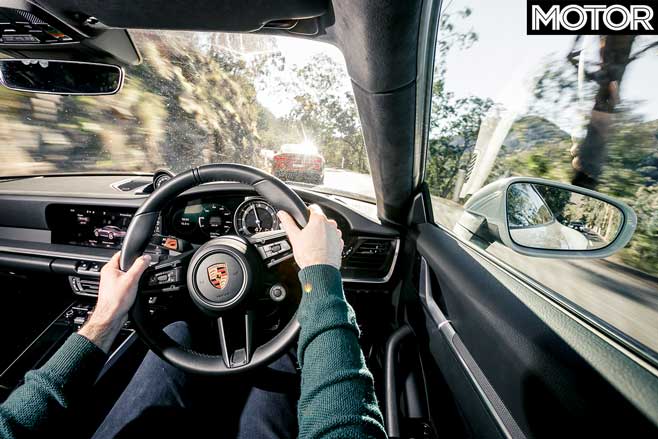
The brakes are brilliant, the transmission telepathic, and it never, ever feels like it’s getting tired, regardless of how hard you thrash it. It even sounds good, doing an uncanny air-cooled impression for bystanders under heavy load at low rpm, morphing in a more cultured howl with plenty of over-run histrionics.
But if it’s theatre you want, the F-Type SVR is the car for you. The supercharged V8’s throttle response is so sharp it makes the BMW feel flaccid and even the 911 a bit lazy. It’s matched by a hyper-responsive chassis that takes time to gel with.
Drive the Jaguar after the Porsche and it feels to be all over the place, constantly reacting to bumps and irregularities in the road, the darty steering then resulting in an over-correction. Inputs need to be small and carefully measured in order to use the F-Type’s agility to your advantage.
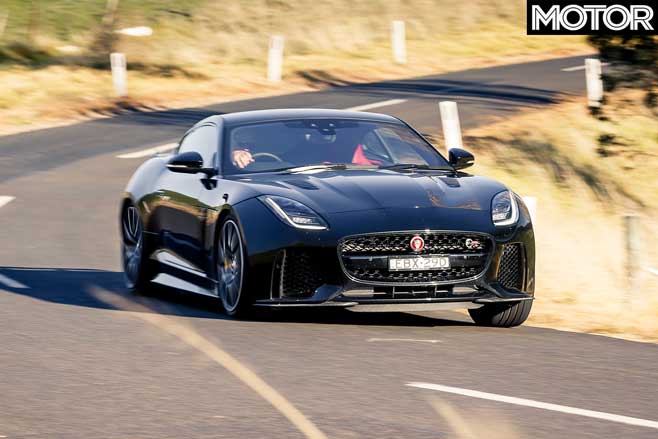
It pivots sharply around its middle; unlike the 911, it’s no trouble to unstick the Jag’s shapely posterior under brakes – excellent carbon-ceramic items, since you ask – and picking up the throttle holds it there. The all-wheel drive system is extremely well judged, offering enough power oversteer to entertain but total traction. As much as I miss the wonderfully mad (and now discontinued) rear-drive F-Type R, which had as much rear grip as wet soap, it is nice to be able to exploit the engine’s enormous reserves.
Sync with the Jaguar’s unique rhythm, give it a long enough leash to move around, and it can cover ground at an astonishing rate, inducing a face-splitting grin while doing so. It also looks amazing, sounds incredible and in some respects makes the Porsche feel a bit serious, like it hasn’t quite understood the joke.
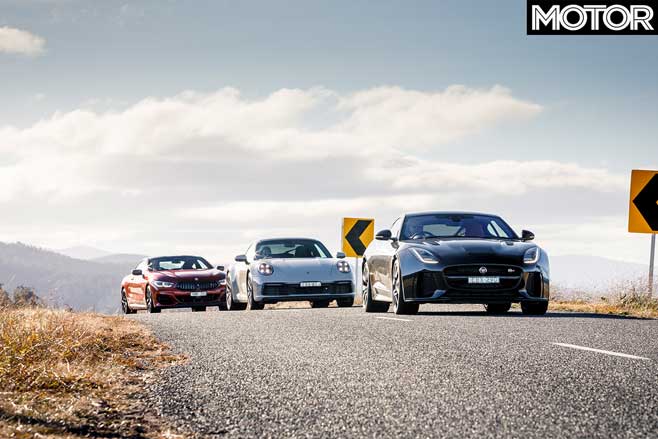
It would be interesting to drive a ‘true’ F-Type SVR: for instance, ditch the electric seats and solid glass roof and you’d save 100kg or more. The same could be said of the 911, but then the German doesn’t weigh more than 1700kg. Nevertheless, the Jag is an intoxicating machine that has the character to gloss over its flaws.
There’s much to commend the BMW: imposing looks (especially with the optional carbon pack fitted to our test car), incredible performance, surprisingly deft dynamics and a level of refinement beyond its sportier competitors. However, the M850i does feel a bit too clever for its own good. The chassis gizmos undoubtedly help defy physics, but I’d happily trade 10 per cent of its handling nous for more feedback and greater ride comfort; a week in a 740i following this test shows how plush BMW can make a car when it wants to.
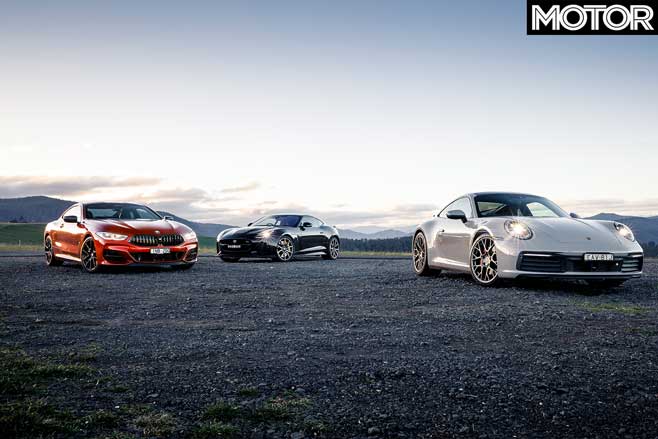
Which just leaves the Porsche. We realise a 911 victory is a boring verdict, but it’s an unavoidable one when they remain so damn good. It’s the quickest and most capable car here when driven hard and more than happy to tackle a racetrack, yet is the most comfortable and economical in day-to-day use. A kerb weight of 1565kg will shock the purists and an as-tested price of $326,020 seems a lot, but in real terms the C4S is cheaper than it was a decade ago. The 992 is a masterpiece, improving in areas we didn’t even realise needed improving. It’s a simply exceptional sports car.
Fast Facts
| u00a0 | Porsche 911 Carrera 4S | Jaguar F-Type SVR | BMW M850i |
| Body | 2-door, 4-seat coupe | 2-door, 2-seat coupe | 2-door, 4-seat coupe |
| Drive | all-wheel | ||
| Engine | 2981cc flat-6, DOHC, 24v, twin-turbo | 5000cc V8, DOHC, 32v, supercharger | 4395cc V8, DOHC, 32v, twin-turbo |
| Bore x Stroke | 91.0 x 76.4mm | 92.5 x 93.0mm | 89.0 x 88.3mm |
| Compression | 10.2:1 | 9.5:1 | 10.5:1 |
| Power | 331kW @ 6500rpm | 423kW @ 6500rpm | 390kW @ 5500-6000rpm |
| Torque | 530Nm @ 2300-5000rpm | 700Nm @ 3500-5000rpm | 750Nm @ 1800-4600rpm |
| Power/Weight | 212kW/tonne | 248kW/tonne | 206kW/tonne |
| Transmission | 8-speed dual-clutch | 8-speed automatic | |
| Weight | 1565kg | 1705kg | 1890kg |
| Suspension | struts, coil springs, adaptive dampers, anti-roll bar (f); multi-links, coils, adaptive dampers, anti-roll bar (r) | double wishbones, adaptive dampers, anti-roll bar (f/r) | struts, coil springs, adaptive dampers, anti-roll bar (f); multi-links, coils, adaptive dampers, anti-roll bar (r) |
| L/W/h | 4519/1852/1300mm | 4475/1923/1311mm | 4851/1902/1346mm |
| Wheelbase | 2450mm | 2622mm | 2822mm |
| Tracks | 1589/1557mm (f/r) | 1585/1611mm (f/r) | 1627/1642mm (f/r) |
| Steering | electrically assisted rack-and-pinion | ||
| Brakes (f) | 350mm ventilated/drilled discs, 6-piston calipers | 398mm ventilated/drilled carbon-ceramic discs, 6-piston calipers | 395mm ventilated discs, 4-piston calipers |
| Brakes (r) | 350mm ventilated/drilled discs, 4-piston calipers | 380mm ventilated/drilled carbon-ceramic discs, single-piston calipers | 398mm ventilated discs, single-piston calipers |
| Wheels | 20 x 8.5-inch (f); 21 x 11.5-inch (r) | 20 x 10.0-inch (f); 20 x 11.0-inch (r) | 20 x 8.0-inch (f); 20 x 9.0-inch (r) |
| Tyre Sizes | 245/35 ZR20 (f); 305/30 ZR21 (r) | 265/35 ZR20 (f); 305/30 ZR20 (r) | 245/35 ZR20 (f); 275/30 ZR20 (r) |
| Tyres | Goodyear Eagle F1 | Pirelli P-Zero | Michelin Pilot Super Sport |
| Price | $281,100 ($326,020 as-tested) | $297,242 ($329,012 as-tested) | $275,900 ($283,900 as-tested) |
| Pros | Speed; precision; brakes; stamina; almost everything | Supermodel looks; playful handling; V8 noise | Remarkable performance and handling; refinement |
| Cons | Some iffy interior details; weighs quite a lot for a 911 | Can feel darty and disturbed on poor roads | Tech overload; ride on poor surfaces; packaging |
| Rating | 5 out of 5 stars | 4 out of 5 stars | 4 out of 5 stars |
The Strip
| u00a0 | Porsche 911 Carrera 4S | Jaguar F-Type SVR | BMW M850i |
| 0-10km/h | 0.25sec | 0.23sec | 0.21sec |
| 0-20km/h | 0.54sec | 0.55sec | 0.53sec |
| 0-30km/h | 0.84sec | 0.85sec | 0.89sec |
| 0-40km/h | 1.15sec | 1.16sec | 1.21sec |
| 0-50km/h | 1.48sec | 1.52sec | 1.54sec |
| 0-60km/h | 1.81sec | 1.85sec | 1.89sec |
| 0-70km/h | 2.13sec | 2.27sec | 2.22sec |
| 0-80km/h | 2.54sec | 2.71sec | 2.67sec |
| 0-90km/h | 2.96sec | 3.15sec | 3.10sec |
| 0-100km/h | 3.42sec | 3.60sec | 3.63sec |
| 0-110km/h | 3.96sec | 4.22sec | 4.17sec |
| 0-120km/h | 4.56sec | 4.86sec | 4.78sec |
| 0-130km/h | 5.18sec | 5.49sec | 5.46sec |
| 0-140km/h | 5.88sec | 6.13sec | 6.25sec |
| 0-150km/h | 6.58sec | 6.79sec | 7.05sec |
| 0-160km/h | 7.48sec | 7.65sec | 7.90sec |
| 0-170km/h | 8.41sec | 8.52sec | 8.94sec |
| 0-180km/h | 9.38sec | 9.42sec | 10.02sec |
| 0-190km/h | 10.42sec | 10.38sec | 11.15sec |
| 0-200km/h | 11.58sec | 11.66sec | 12.45sec |
| 0-400m | 11.43sec @ 198.66km/h | 11.55sec @ 199.21km/h | 11.68sec @ 194.24km/h |
| 80-120km/h (Drive) | 2.1sec | 2.1sec | 2.2sec |
| 100-0km/h | 31.19m | 33.40m | 35.36m |
| Speed in Gears | |||
| 1st | 66km/h @ 7500rpm | 71km/h @ 7500rpm | 53km/h @ 6500rpm |
| 2nd | 102km/h @ 7500rpm | 107km/h @ 7500rpm | 83km/h @ 6500rpm |
| 3rd | 151km/h @ 7500rpm | 159km/h @ 7500rpm | 133km/h @ 6500rpm |
| 4th | 208km/h @ 7500rpm | 201km/h @ 7500rpm | 170km/h @ 6500rpm |
| 5th | 275km/h @ 7500rpm | 261km/h @ 7500rpm | 223km/h @ 6500rpm |
| 6th | 306km/h @ 6640rpm | 322km/h @ 6330rpm* | 250km/h @ 5540rpm* |
| 7th | 306km/h @ 5380rpm* | 322km/h @ 5310rpm* | 250km/h @ 4570rpm* |
| 8th | 306km/h @ 4310rpm* | 322km/h @ 4220rpm* | 250km/h @ 3550rpm* |
Heathcote Raceway, 15˚C, dry. Driver: Scott Newman *Manufacturer’s claim Official timing supplier: www.vboxaustralia.com.au
AWD Curiosities: 1988 BMW 325ix A winter wonder rather than street fighter
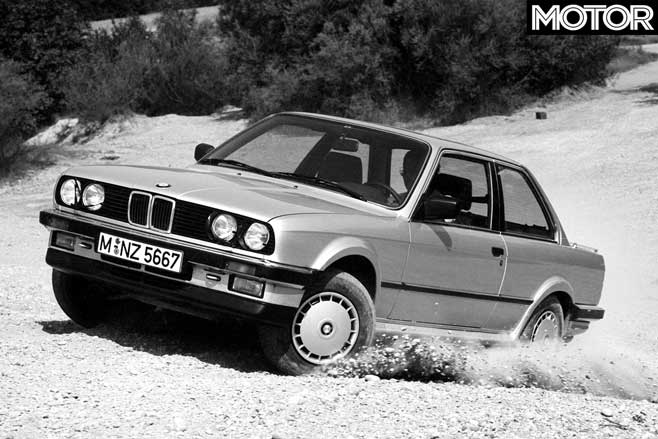
Missed under the (justified) furore of the E30 M3’s giant-killing race results, the four-wheel drive BMW 325ix also received FIA homologation, though in practice its system was more focused on year-round traction than increased performance.
Powered by the smooth 2.5-litre inline-six of the 325i, the 325ix was predominantly sold in Europe and North America and used a Ferguson transfer box and two viscous couplings – one each for the rear and centre differentials. Drive split was rear-biased to 63:37, the front drive using an open differential mounted in the engine’s sump.
Heavier and slower than the rear-drive 325i, the ix wasn’t popular among enthusiasts, though it paved the way for the modern, highly variable xDrive system seen today. – Adam Davis
AWD Curiosities: Porsche 953 Taking four to the fore in 1984
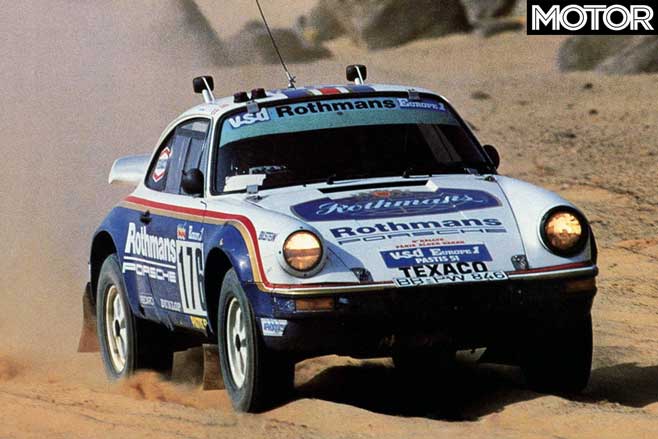
With all its on-track success, you could be forgiven for forgetting that the Porsche 911 also has a strong multi-surface motorsport history. Early 911s were as much about rallying as racing, with three successive Monte Carlo Rally wins to prove it.
Maximising the power of Group B regulations, Porsche then developed a four-wheel drive 911, coded 953, to tackle long-distance desert events, winning the Paris-Dakar outright in 1984 with the 911 SC-based machines. The 953 featured a ‘switchable’ mechanical four-wheel drive system that could be engaged via a cockpit-mounted switch as the driver required.
Learnings from the 953 program were adopted into the 959 supercar, and from the 964-series 911 in 1989, Porsche has always offered a four-wheel drive 911 variant – a trend that continues with the current Carrera 4S. – Adam Davis
AWD Curiosities: Jaguar XJ220 Concept When compromise overcomes purity of spirit
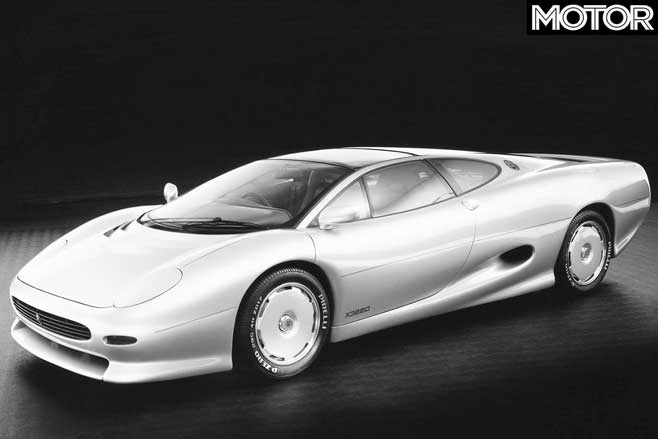
Even if the production Jaguar XJ220 was (briefly) the fastest car in the world, the public – not to mention the early depositors – were massively disappointed. But why?
The XJ220 Concept’s original specification included a Le Mans-bred atmo V12, as well as Jaguar’s first take on a four-wheel drive system.
With expert guidance from Tony Rolt’s FF Developments (think Jensen FF and the 1961 Ferguson P99 F1 car), the concept team developed a mid-engine-friendly drive system. Front wheels were driven off the rear transaxle via a shaft that was ingeniously mounted through the engine’s vee, finally being split between the fronts via an inverted differential.
Alas, complications, weight, time and cost were against the concept ever seeing the light of day… but its spirit is present in today’s F-Type SVR. – Adam Davis
