
The Toyota C-HR small SUV is the latest model in the automotive giant’s range to gain a hybrid powertrain.
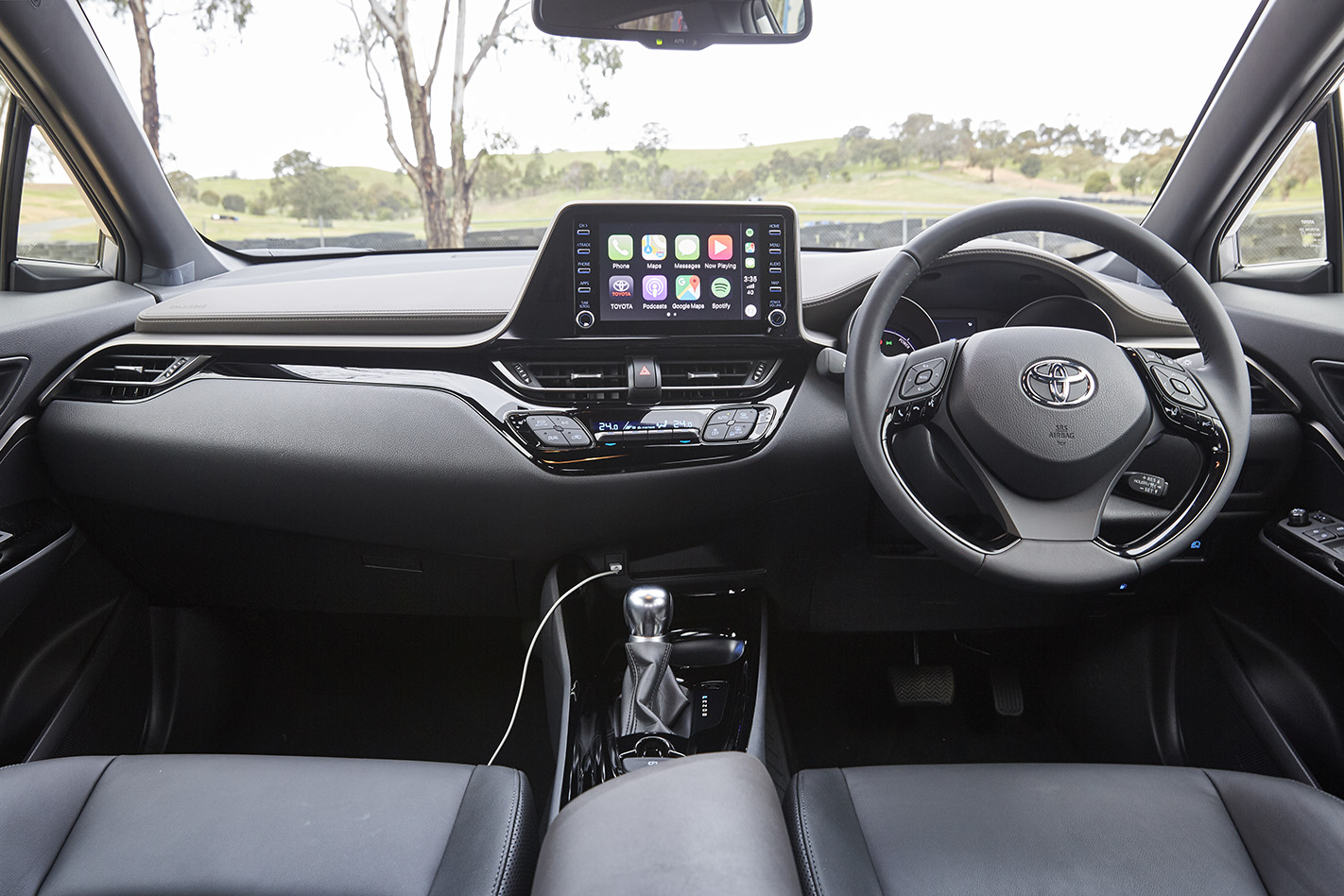
The hybrid option comes as part of the two-year-old C-HR’s first upgrade that includes a subtle facelift, and the addition of Apple CarPlay and Android Auto displayed on a larger 8.0-inch touchscreen.
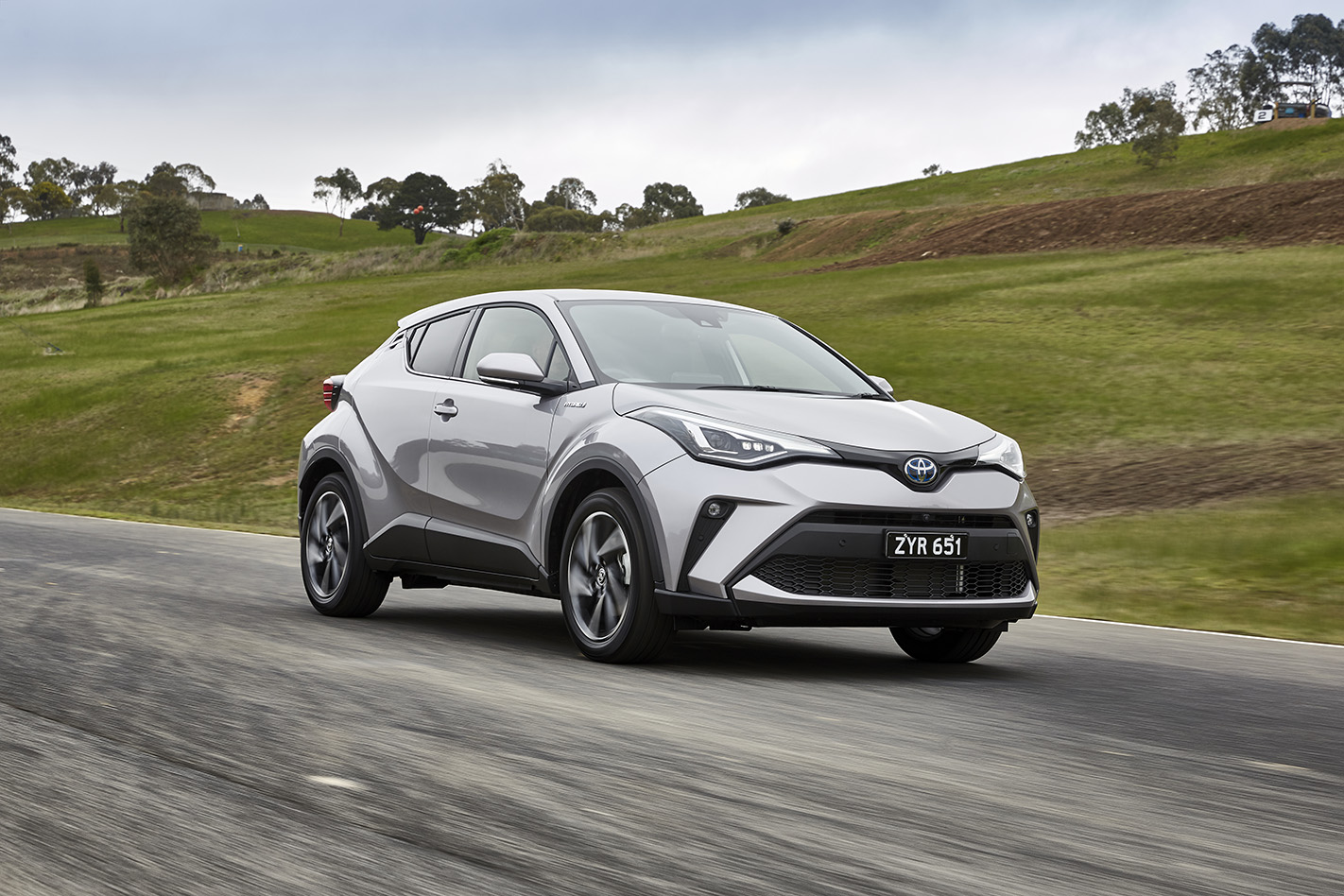
Revealed yesterday in Europe, the 2020 Toyota C-HR is slated to arrive in Australia in December with the new 1.8-litre hybrid powertrain taken from the Corolla hybrid.
This will initially be offered in only in the 2WD C-HR Koba spec, which currently accounts for more than half of all local C-HR sales.
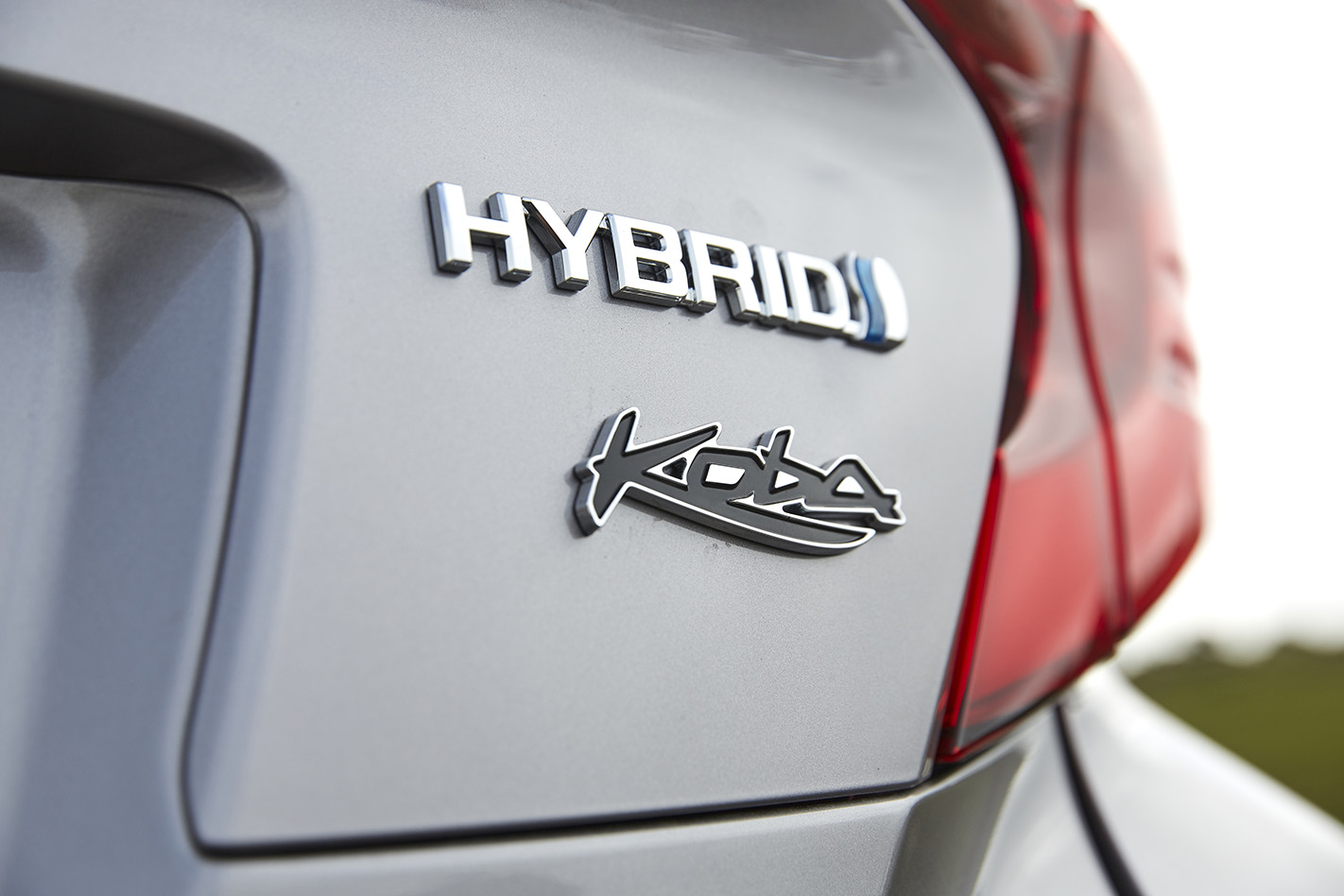
That spec will still be available with the 1.2-litre turbocharged petrol engine that will also continue to power the rest of the C-HR range.
Toyota claims the 2WD C-HR Koba hybrid delivers a combined-cycle fuel consumption of just 4.3L/100km, compared the petrol version’s 6.4L/100km.
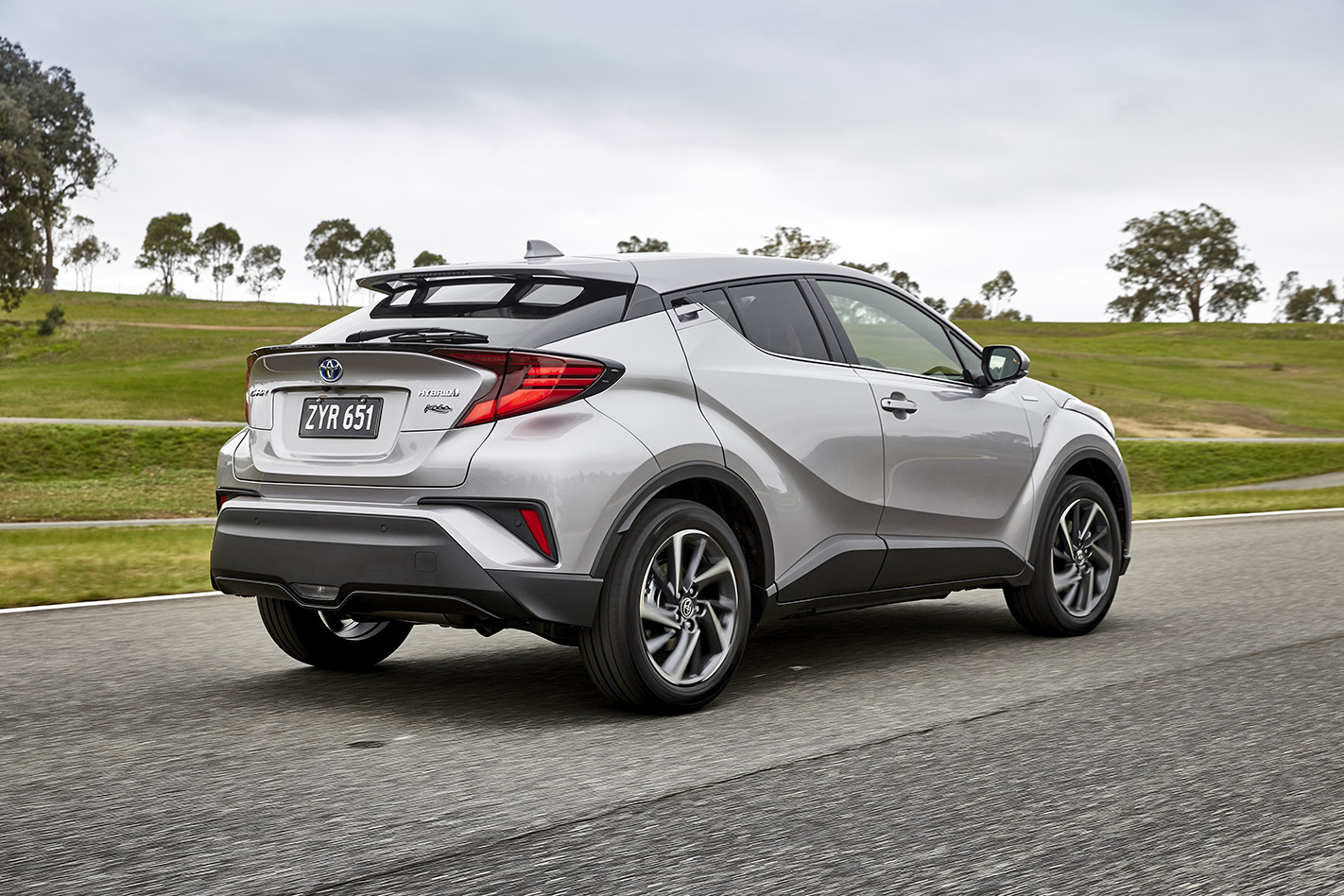
Along with the new powertrain option, the upgraded C-HR features a range of exterior design enhancements including a revised bumper treatment, new LED headlights and taillights and fresh alloy wheel designs.
Toyota Australia Vice President Sales and Marketing Sean Hanley said Toyota was committed to increasing the availability of its advanced hybrid drivetrain across a broader range of cars, to give as many customers as possible the option of a refined and fuel-efficient petrol-electric powertrain.
“We now offer hybrid power in some of our most popular models including Camry, Corolla hatch, Prius and RAV4, and its addition to C-HR will further broaden its appeal,” Hanley said.
“And clearly it’s something our customers appreciate with hybrid accounting for nearly 45 per cent of Camry sales, 40 per cent of Corolla hatch sales and nearly 40 per cent of new RAV4 sales over the past three months.”
The large three-row SUV segment is a crowded one, and the Holden Acadia is still a fairly fresh-faced arrival. We’ve reviewed the bulk of the range, but the entry-level LT has so far escaped our attention.
Does going for the budget end of the Acadia spectrum see buyers missing out on anything critical, or is it, in fact, a fair whack of metal for your money? I spent a week behind the wheel to discover if the base model Acadia is compatible with my family lifestyle.
What is it?
The Holden Acadia LT is a seven-seat, large SUV. Priced from $43,490 and boasting what Holden says are the most advanced safety and infotainment systems of any current Holden.
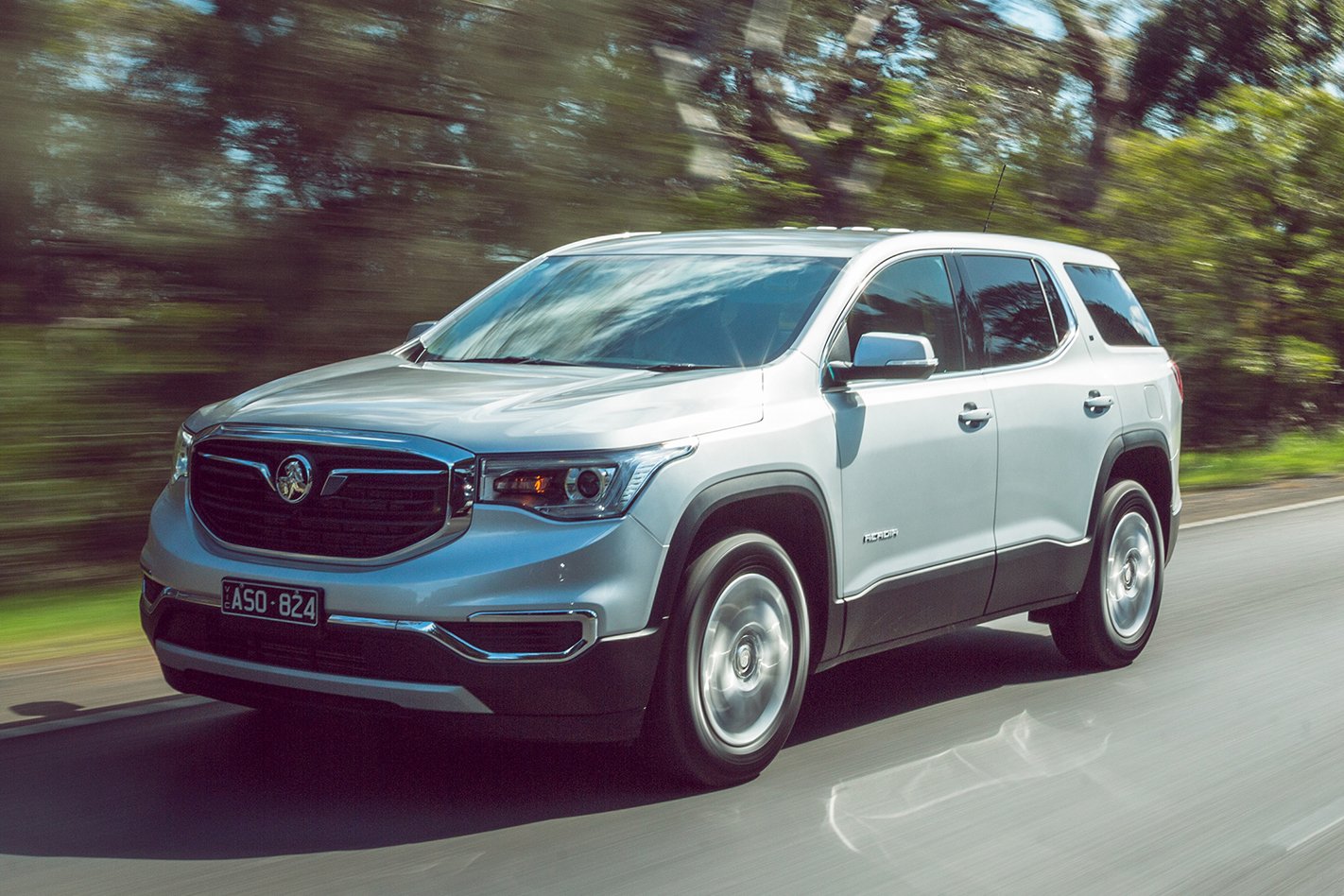
What’s it like to drive?
Let’s not pretend I drive cars for their torque or their on-road performance. For me, cars need to be easy to drive, have user-friendly features, and visually represent a version of how I like to see myself.
With that in mind, the Holden Acadia is an easy and comfortable cruiser. There were enough adjustable seating controls to get a good personal preference set, and the centre console sits at perfect arm resting/coffee holding height.
Size-wise, this large SUV is solid but not so wide that it is in any way uncomfortable to navigate through inner-city traffic. It also has enough grunt to take off quickly when I needed it to.
What’s it like to live with?
The infotainment system is a real winner. It is so easy to use; I just plugged in the USB cord and was instantly synced with my phone, music, podcasts and address book, thanks to the Apple CarPlay-equipped system.
The 8.0-inch touchscreen makes life easy, as does the text message read-back service. Multiple USB outlets throughout the car for device charging are an excellent addition and would be a godsend on a long family road trip.
The Acadia’s navigation system is simple to use, too, with ‘destination entry’ more straightforward than some luxury SUVs.
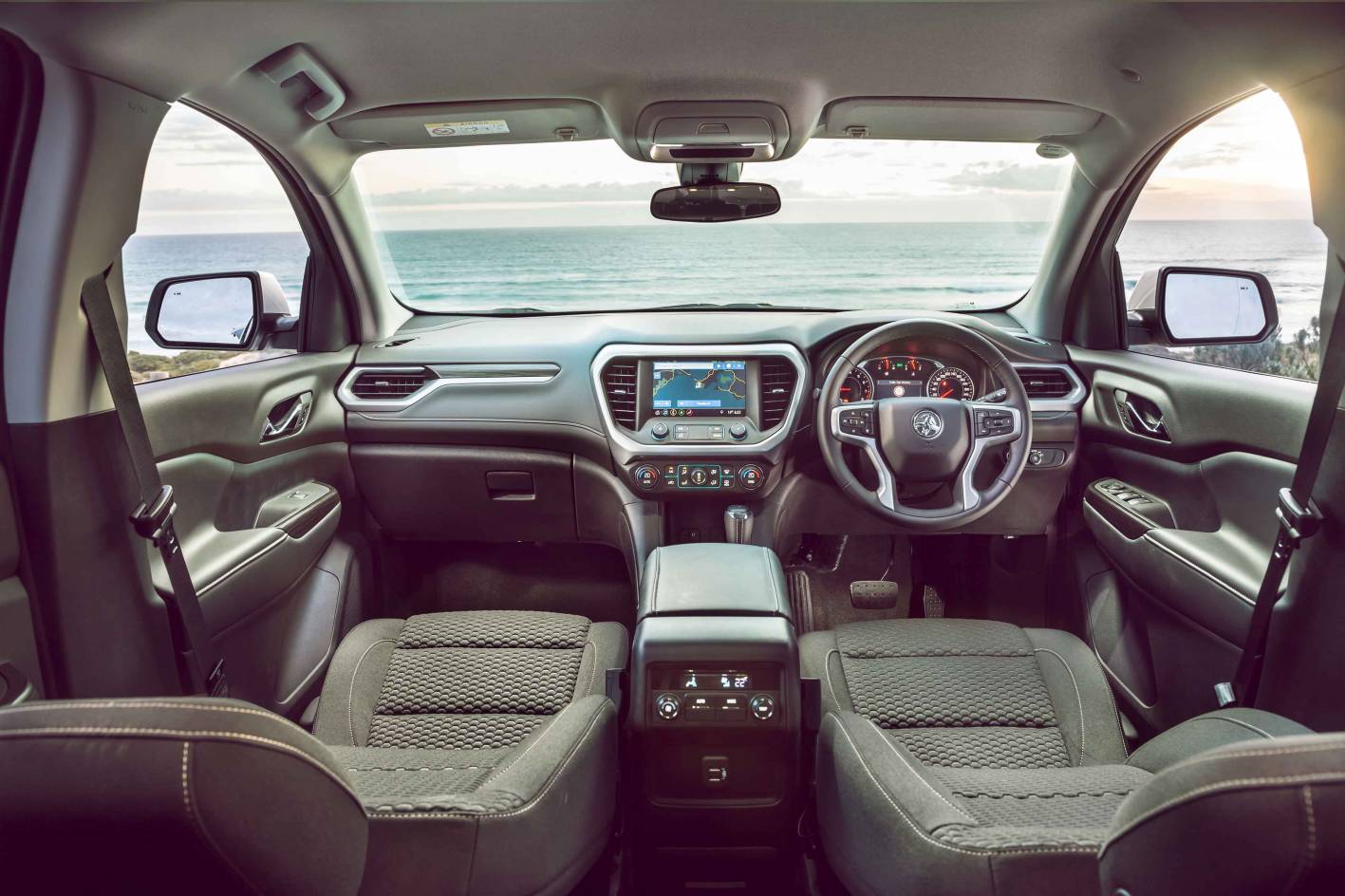
The very back two seats are surprisingly spacious. If you were looking for a seven-seater that could fit any age group in, not just the smallest ones, this would be a real win. Unfortunately, the compromise here is that it comes at the expense of the boot space.
If you were actually travelling with five kids, you would struggle to fit their bags in the back along with your groceries, dry cleaning, umbrella and ever-growing pile of reusable supermarket shopping bags. However, with the two back seats flat and not in use, the boot space is cavernous.
Front parking sensors are not available on the base LT model I tested (they are on the more expensive LTZ and LTZ-V models), but I think they should be. They would be helpful with a car of this size especially if you did have those five squawking kids distracting you from the back seats.
The vibrating seats, which activate in reverse, took a couple of trips to get used to. It essentially felt like I had sat on my phone and accidentally pocket-dialed someone.
Once I adjusted to the feeling, though, they were a helpful accompaniment to the reversing cameras especially given that visibility through the rear vision mirror is limited when the back seat headrests are up.
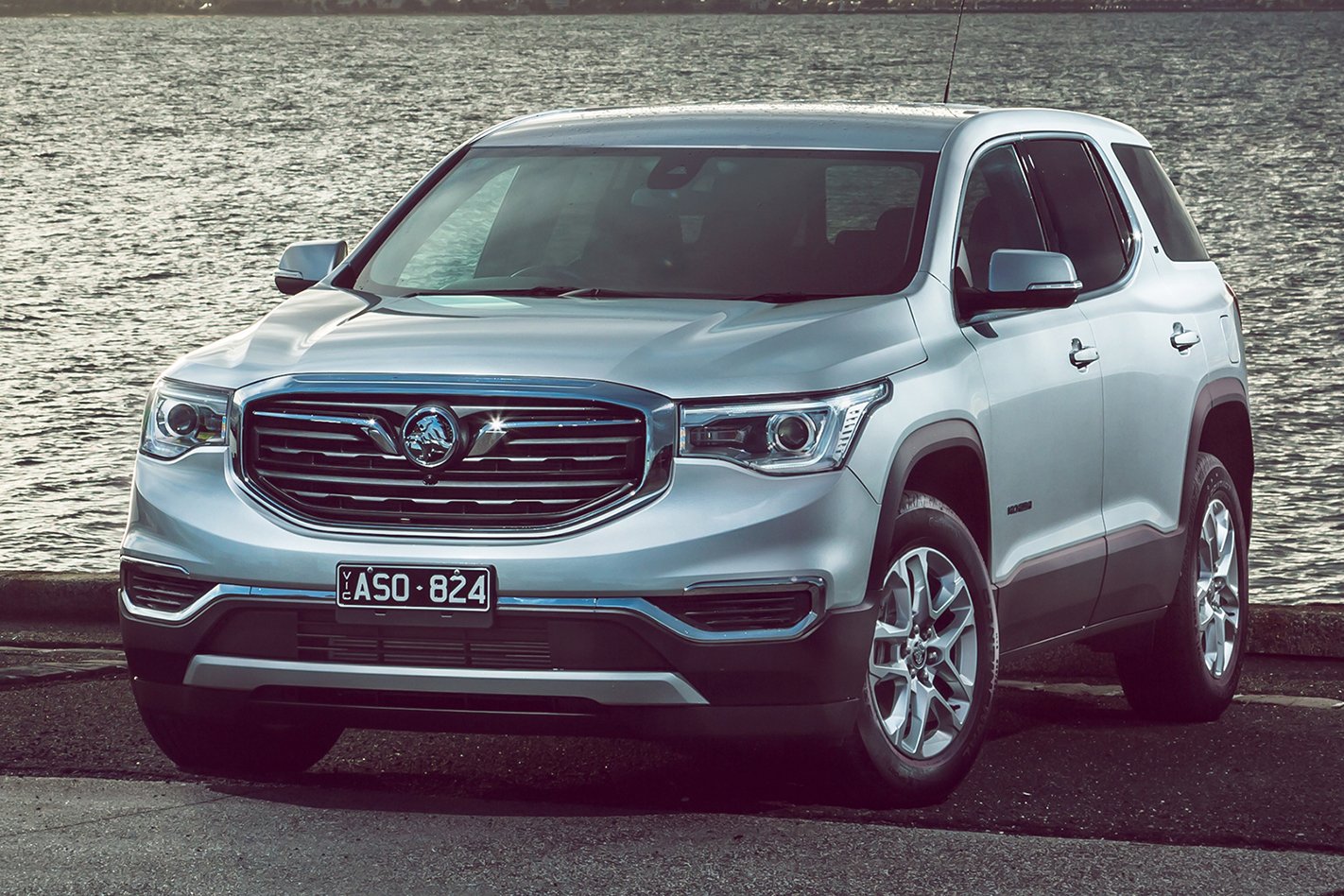
Styling-wise, the silver Acadia with a contrasting dark grey trim I drove, couldn’t be accused of being overtly sexy. It is very American looking and overall too masculine for me – kind of like the car equivalent of beige chinos and more like something my dad would drive.
The flat top gives it a chunkier looking body shape and also means the tailgate is quite low for an SUV (I’m 175cm and I had to duck to avoid hitting my head when I was putting things away).
Interior wise, it is simple and practical, with no particularly flashy finishes or lights to give it a luxurious finish.
But let’s not forget this is a $44,000 car which can carry seven people in relative comfort, so it’s all about priorities. There are other models in the Acadia range if you crave some bling.
Is it worth the money?
If you’re looking for a spacious, good value seven-seater that is easy to use, then yes. With solid safety and connectivity features, it’s worth taking a test drive, as long as you are comfortable with its rugged styling.
Pros: easy to drive, great infotainment system, comfortably fits seven people Cons: low roof height, no front parking sensors, ‘dad’ looking
Rating: 3/5
Rebecca Amos is a mother of two, wife, writer, filmmaker, wanderer and constant renovator.
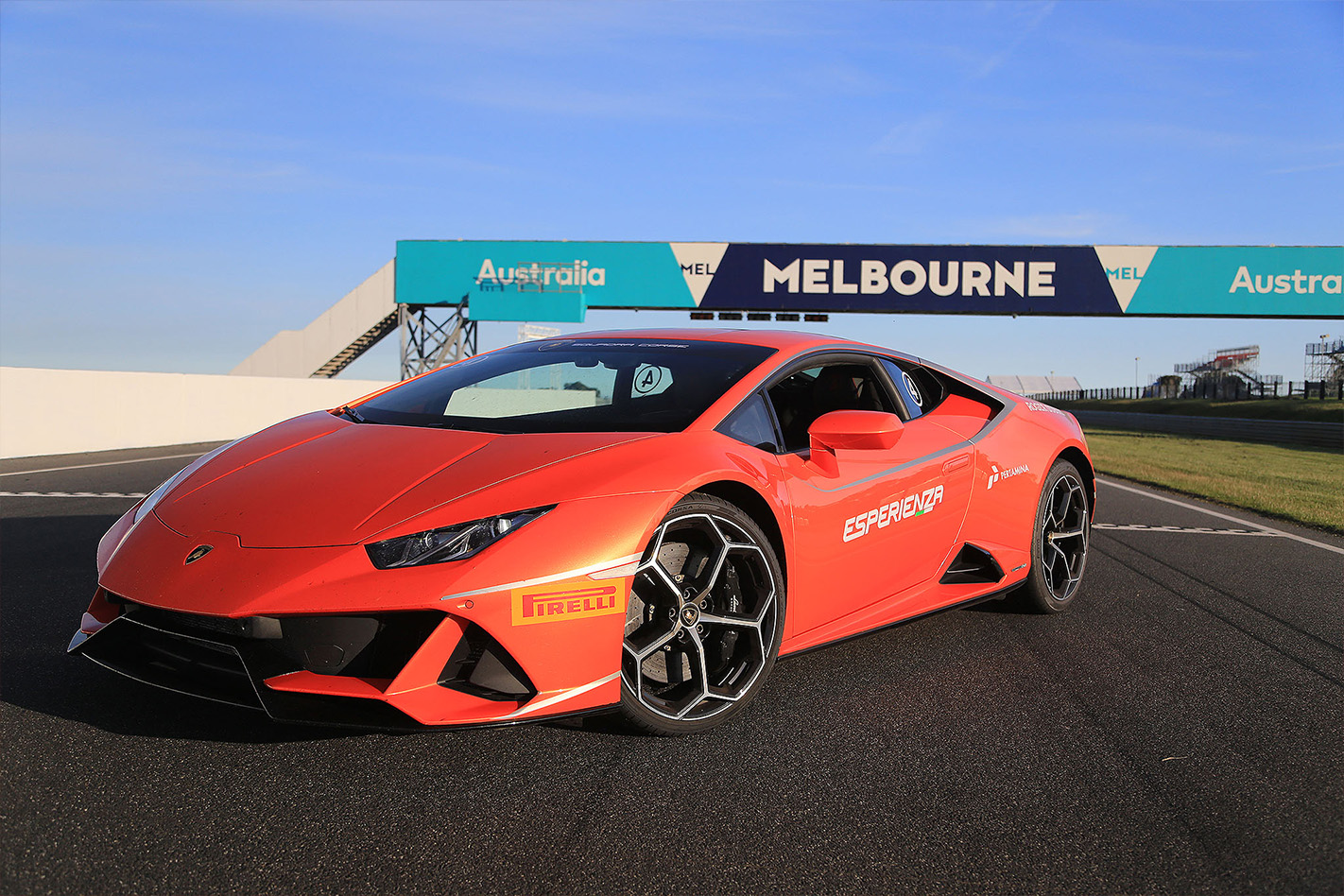
The Wheels Verdict: It’s hard to think of another car that has changed so much but looks so similar. The Lamborghini Huracán Evo’s continuity of shape undersells the massive step change that this vehicle represents. Finally, we have a Lamborghini that needs no excuses as a driver’s car. It feels a genuine landmark model that heralds a certain coming of age at Sant’Agata.
WHAT IS THE LAMBORGHINI HURACÁN EVO?
You’re probably familiar with the Lamborghini Huracán. The junior supercar has been around since 2014 and the Evo could probably be described as a very extensive facelift. Aside from the styling changes, the Evo carries forward a lot of technical know-how gleaned from the best of Lamborghini’s other models. The net effect of this raft of upgrades has been to polish and fettle the Huracán to devastating effect.
WHY WE’RE TESTING IT?
Our first Australian drive of the Huracán Evo was an invitation too good to turn down. A perfect day at Phillip Island GP Circuit where we could safely exploit the Lamborghini’s limits gave us a great opportunity to see whether the Evo could live up to the big billing.
THE WHEELS REVIEW
It seems quite remarkable that a 610hp Lamborghini could be described as dull. Yet read the reviews for the original Huracán and testers came away somewhat crestfallen. They’d moan about its understeer, its flaky electronics and the fact that that typically Lamborghini frisson of danger had been excised from its DNA. In short, they felt the Huracán had become sanitised, a supercar for the snowflake generation.
This didn’t sit to well with Sant’Agata. We saw a rawer rear drive version and then the perpetually furious Performante model, which grabbed Nurburgring record thanks in no small part to its fiendishly clever aero package. Most cars become more polished as the years progress. The Huracán was going the opposite way. Then, five years after the hanky was whipped off the Huracán at the 2014 Geneva Show, we were presented with the Huracán Evo.
I can understand if you’re a little underwhelmed by the Huracán Evo. Let’s face it, the Evo doesn’t look that different to the original 2014 Huracán. The silhouette is similar and it’s still powered by an atmo V10 engine. When the Huracán was launched, Ferrari’s junior supercar was the 458 Italia. Since then, Ferrari has first switched to the all-turbo 488 GTB and then replaced that model with the F8 Tributo, a 530kW monster. Has the 470kW Evo been left in Maranello’s wake?
A little perspective is key. Back in 2014, the Huracán was $98k cheaper than a 458 Italia and 24kW more powerful. In other words it was a bargain. Fast forward five years and the $459,441 Lambo isn’t too far away from the $484,888 F8 Tributo and is 60kW down on grunt. The fact is, it needs to work a lot harder in order to earn a recommendation.
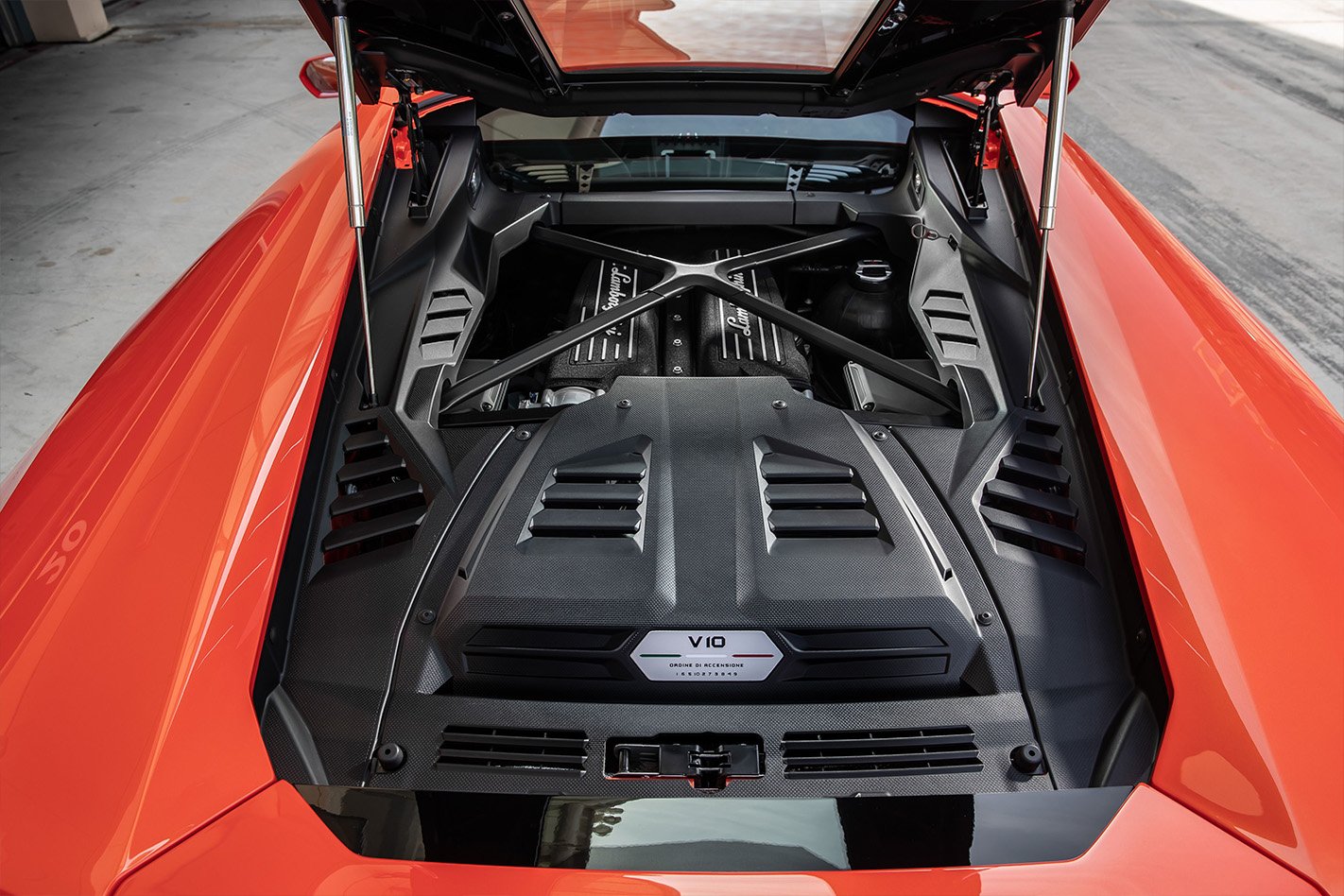
Then you drive it and realise that it might just mark the pinnacle of normally-aspirated supercar capability. That in itself will be enough for most. There are a number of key advantages the Evo enjoys over its predecessor, none of them related to horsepower. The first is its aero package.
While the Evo does without the track-focused Performante’s extrovert array of big wings and active aero elements, it nevertheless increases downforce sevenfold over its predecessor. The really clever part is that it manages this while at the same time reducing its overall drag coefficient. That’s the very embodiment of working smarter rather than harder.
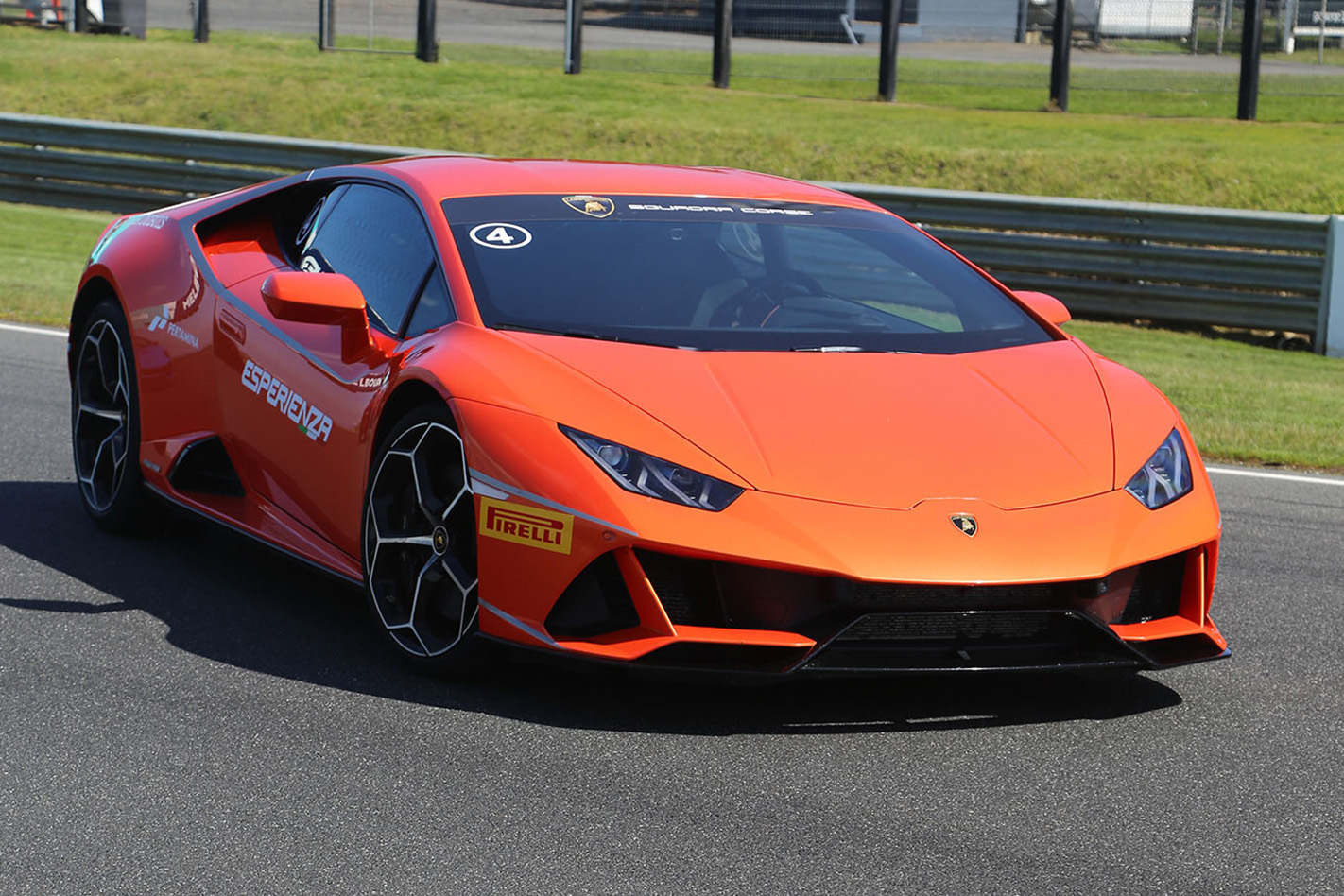
The entire nose cone of the Evo has come in for revision, now featuring a deeper front splitter with a suspended front wing integrated within. A pair of air curtains directs cooling air to the ceramic brakes and then depressurises the front wheel arches, before being directed to the engine intakes ahead of the rear wheels.
Shifting the exhausts upwards allows the rear end to work the air far more cleanly, the underfloor area and wall-to-wall rear diffuser combining with a subtle slotted rear spoiler that features a venturi to accelerate air across the planes.
It works too. In the old Huracán, you’d need to be very careful when trail braking into corners at high speed. The Evo feels a good deal more planted when you take liberties with it. Traction out of corners was never a Huracán shortcoming and the Evo’s mechanical limited-slip diff and MagneRide active dampers help ensure that all of those 600 Newton metres are put to effective use.
It’s helped in its deployment of torque by LDVI (Lamborghini Dynamic Vehicle Integration), a hugely powerful processor that monitors and marshals all the vital signs of the Huracán’s dynamics. The Evo gets a four-wheel steering system, with tech lifted from the Aventador S. There’s also a clever all-wheel torque vectoring setup, plus traction and stability control functions to juggle.
Lamborghini calls LDVI’s responses ‘Feed Forward’, in that it is a predictive rather than a traditionally reactive system. The ‘brain’ takes inputs fifty times per second from its dynamic sensors, monitoring throttle, gear change, steering and braking while assessing the amount of grip available.
The four-wheel steer system has been developed in-house at Lamborghini. There’s a remarkable degree of subtlety to the way that the rear wheels steer. In effect, it takes the front axle’s dynamic steering system and applies a ratio of ten percent to the rear wheels, up to a maximum rear steering angle of up to three degrees. On track, this gives the Huracán an agile, all-of-a-piece feel when turning in to sharper corners without the offputting transitional phase of many four-wheel steer setups.
What it doesn’t do is endow the steering with a whole lot of feel. Compared to a McLaren 600LT, the Huracán’s electrically-assisted helm feels distinctly taciturn. Loading the car up with a stack of lateral-G doesn’t offer the detailed feedback that a hydraulic steering system offers, but it’s nevertheless easy to feel where the limits reside and, unlike its predecessor, this Evo model responds playfully if you want to tuck the nose in and swing the tail wide by a few degrees. When you do break the Huracán Evo’s adhesion, you will need quick hands. The electronics can’t totally disguise the fact that this is a wide, short-wheelbase car with stiff tyre sidewalls.
It would have been nice to have a fully customisable drive mode. As it stands, you’re not able to separate the damper settings from the drivetrain settings. When you’re attacking a mountain road, it would be good to have Corsa or Sport mode for the drivetrain with the dampers set into their softest setting. Given that we were limited to a race circuit smoother than a Bruce McAvaney segue, we didn’t get to put the Evo’s bumpstops to the test.
Any notional shortcomings of steering or ride are offset to some degree by the soundtrack. The V10 was always an angry, urgent sounding thing, but the new exhaust on the Evo makes it sound even more aggressive. That’s because the engine is that of the ball-tearing Huracán Performante, trick titanium valves and all. Aided by all-wheel drive grip and gumball 305/30 ZR20 P-Zero Corsas, the Huracán Evo rips to 100km/h in 2.9 seconds and to 200km/h in 9.0 secs. That’s quick. A Tesla Model 3 Performance would take 14.1 seconds. A Porsche 911 GT2 RS (8.0sec) or a McLaren 720S (7.1sec) demonstrate the advantages of turbocharged grunt but neither sings like the Huracán Evo as it ramps into its demented lunge from 5500rpm to the 8500rpm redline. It’s one of modern motoring’s great events.
The cabin’s an event too. Some of the ergonomics are a bit old-school Lambo, but materials quality has improved considerably and the 8.4-inch capacitive touchscreen mounted in the centre console is surprisingly good. There’s no head-up display, which is a bit of a miss, but the steering wheel-mounted drive mode selector is cool and there’s even a decent amount of seat recline for taller drivers.
Where the Huracán Evo excels is in dragging a resolutely analogue formula into the here and now. By rights, this thing ought to feel like a bit of a dinosaur, but as Lamborghini’s technical director Maurizio Reggiani likes to proclaim, “I’m a hardware engineer… the software is always the slave to the hardware.” Get the fundamentals right and the rest is easy. We could well be driving the last great atmo Lamborghini sports car. If that is indeed the case, the Huracán Evo is a fitting send-off.
MAIN RIVALS
Audi R8 V10; Ferrari F8 Tributo; McLaren 600LT
Price and specs
- Model: Lamborghini Huracán Evo
- Engine: 5204cc V10, dohc, 40v
- Max power: 470kW @ 8000rpm
- Max torque: 600Nm @ 6500rpm
- Weight: 1422kg (dry)
- Economy: 13.7L/100km (claimed)
- 0-100km/h: 2.9sec (claimed)
- Price: $459,441
- On sale: Now
Toyota is an unapologetically Japanese company. Although it has a global presence, Toyota remains proud of its heritage, and its vehicles are imbued with the spirit of the Land of the Rising Sun.
There is one product, however, which is more ‘fair dinkum’ than ‘Samurai warrior’ – the LandCruiser.
While other Toyotas were built in Australia at the Altona manufacturing facility in Melbourne’s south-west, it could be argued that the LandCruiser was, and remains, the most Australian car to be sold by the Japanese company.
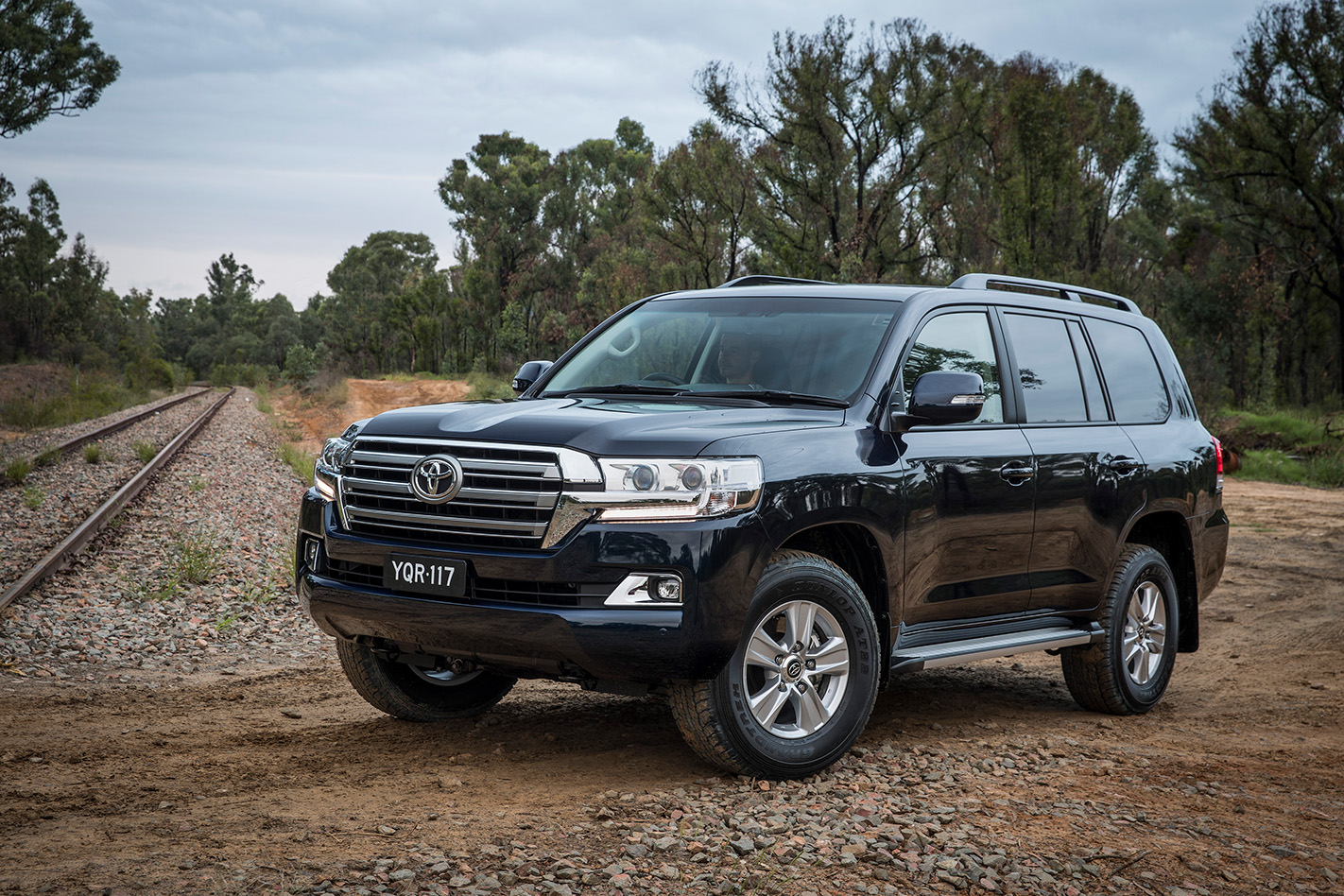
This year, the LandCruiser notched up an impressive 10 million global sales, with more than a million of those sales being in Australia – more than any other nation on earth.
Australia remains a key market for the LandCruiser, alongside the Middle East, and the model line’s heritage is inextricably linked with the land down under.
It all started in 1958, when a subcontractor for the Snowy Mountains hydro-electric scheme, Thiess Brothers, needed some vehicles.

Leslie Thiess, the company’s owner, had privately imported about a dozen LandCruisers for the job, and the story goes he was so impressed with the vehicle’s capability that he lobbied Toyota in Japan to become an official distributor.
The LandCruiser would become the first Japanese vehicle to regularly be exported to Australia, and it proved wildly popular.
By 1981, 100,000 LandCruisers had been sold in Australia, with both public and private enterprises using the 4×4 as a workhorse.
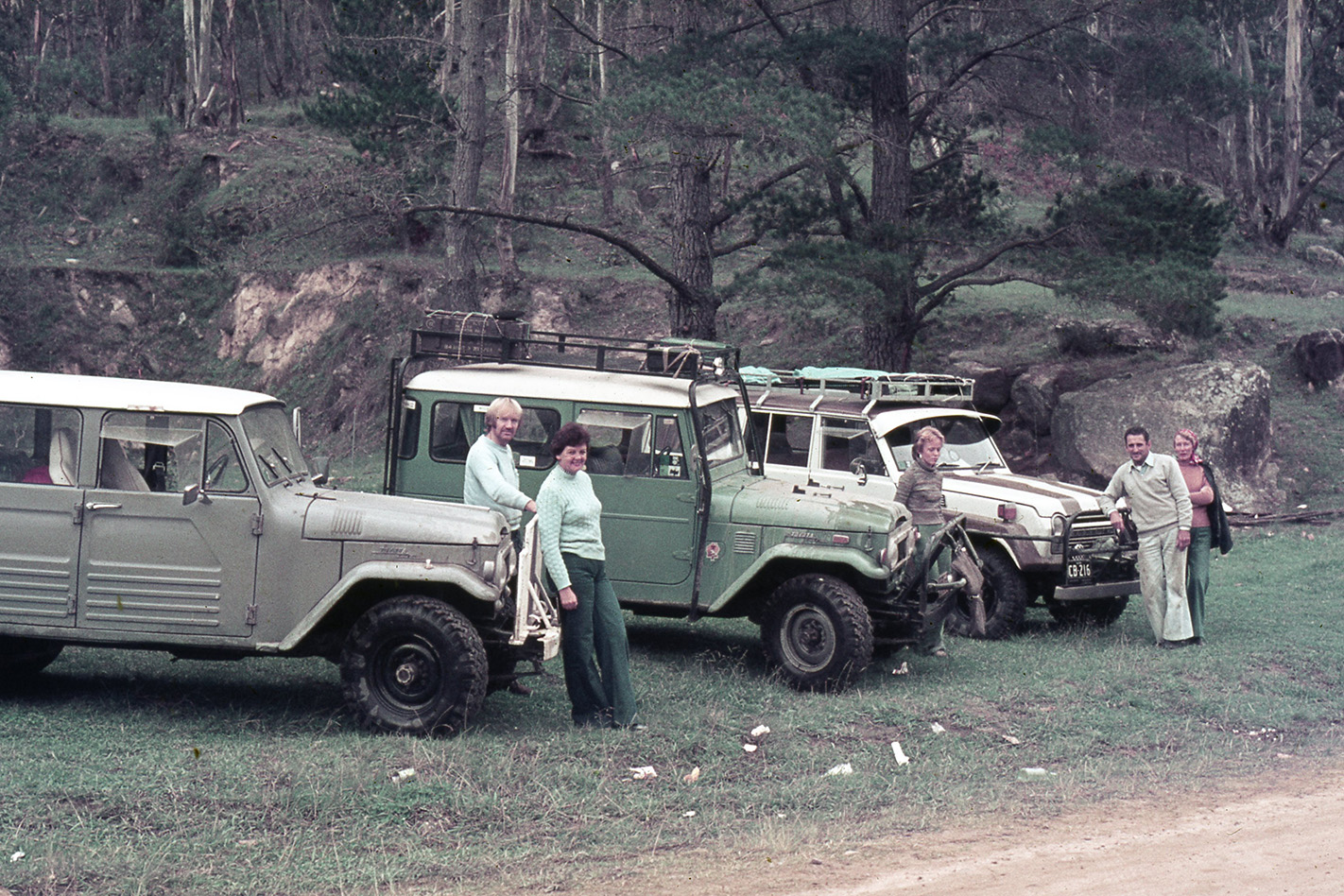
Its use in major projects such as the Bass Strait-Melbourne gas pipeline construction earned the LandCruiser a strong reputation for reliability. In the harsh Aussie outback, it was unmatched in its ability. Where other vehicles stumbled and succumbed to the unique challenges of our harsh terrain, the LandCruiser soldiered on.
In the ’70s, the CSIRO put the LandCruiser to use at the hands of Murray Upton, who headed the organisation’s Division of Entomology on long expeditions through rural Australia.
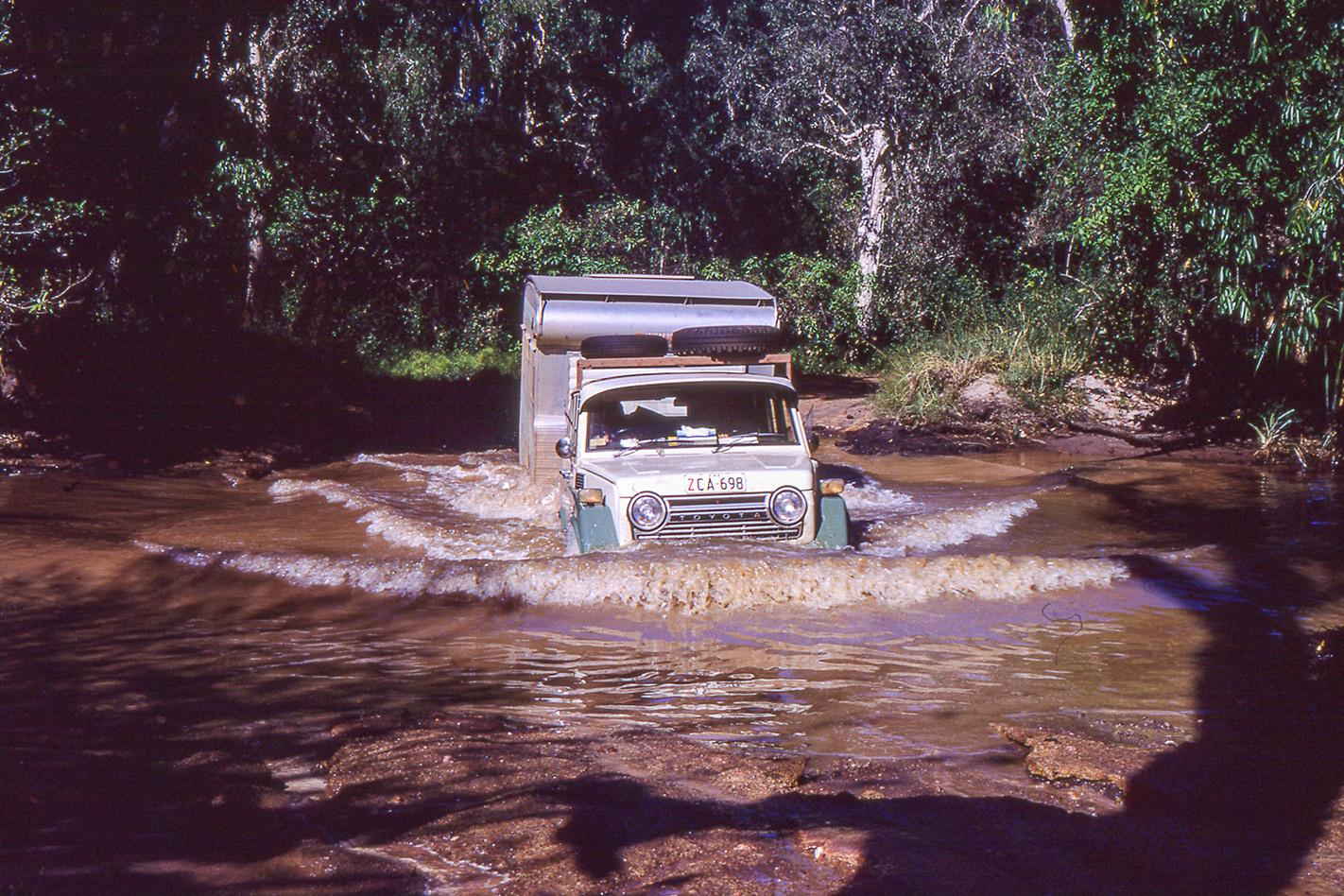
Upton used an FJ55 as his steed, and he explained why in March 1974.
“The trip to western Arnhem Land to study the insect fauna was a two-part survey carried out both before and after the wet in two Toyota FJ55 station wagons and an FJ45, with all three towing caravans. Conditions in this area were extremely hot and dusty before the wet with the only serious hazard the dry creek beds and bulldust,” he wrote.
“Getting into the area immediately after the wet was a different proposition altogether but with the Toyota vehicles, the party was still able to get the caravans to all the required sites.”
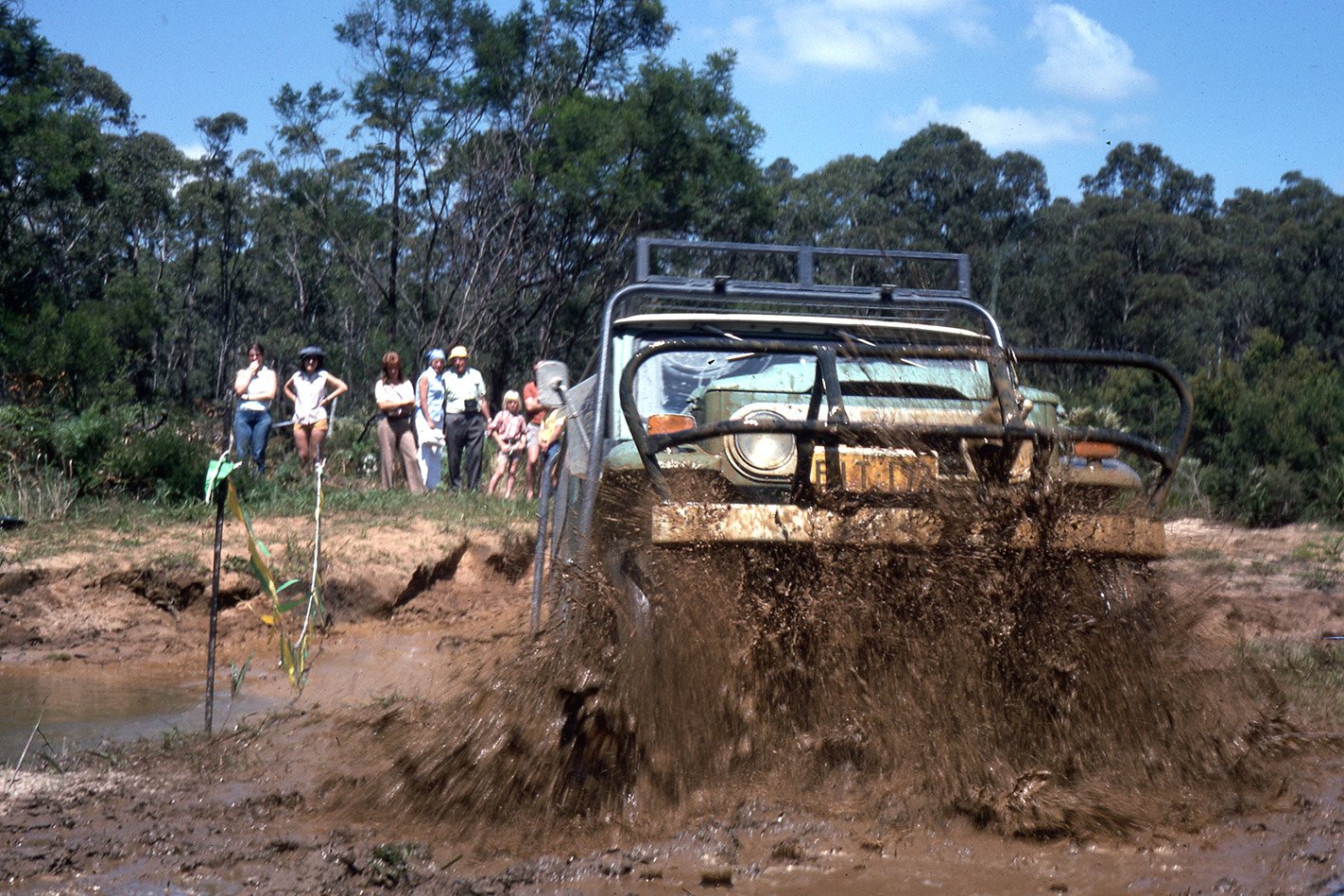
When Toyota Australia still built cars locally, a strong team of engineers worked on the development of the LandCruiser, along with other off-road vehicles such as the Hilux.
An Australian-developed Kinetic Dynamic Suspension System was introduced just over a decade ago and introduced in the current 200 Series.
With Australian production now ceased, that same Aussie touch has been reduced. However, Toyota Australia has retained 150 designers, planners and engineers, who are tasked with localising global products.
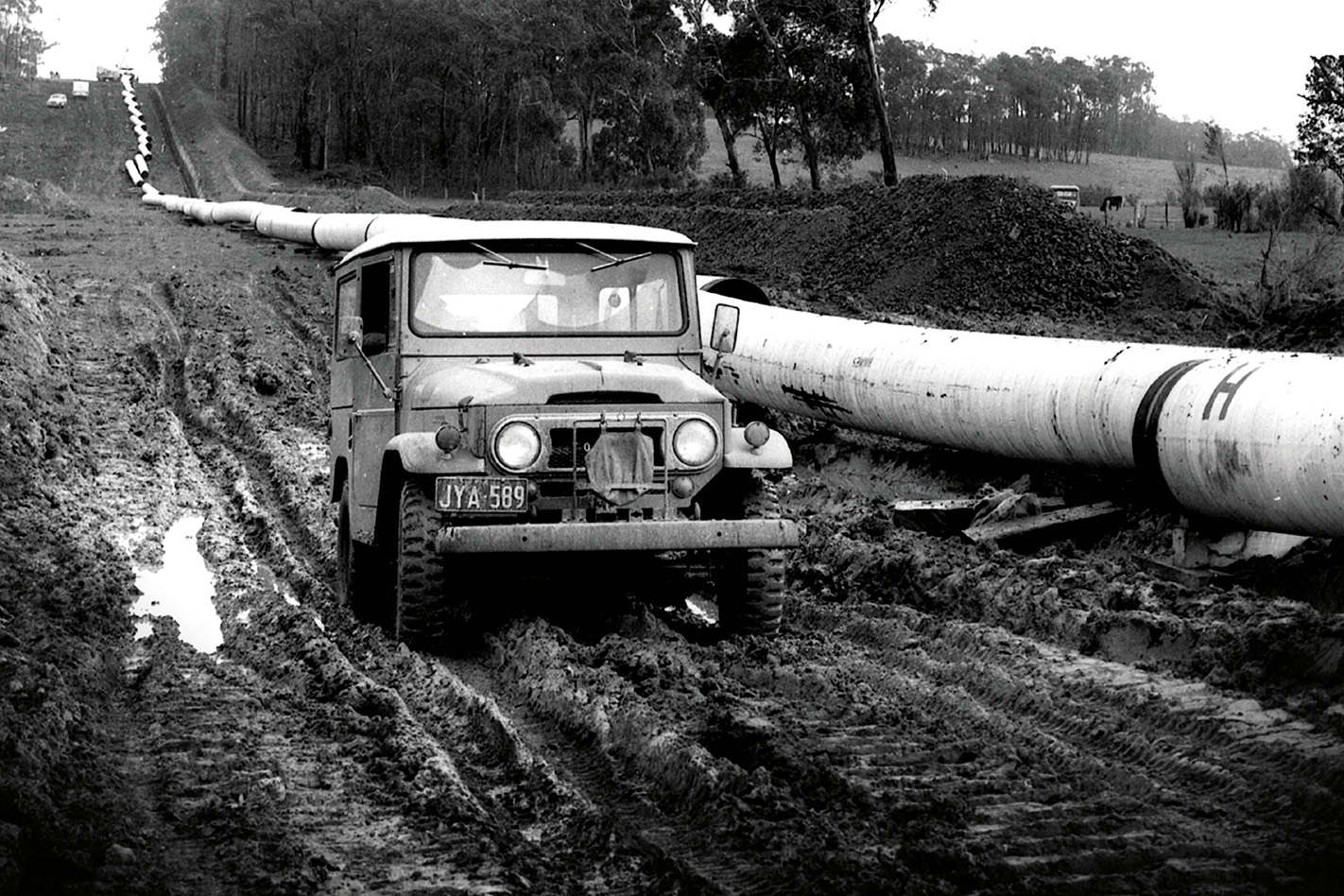
The current 200 Series LandCruiser is due to be replaced in coming years, and again, Australia will play a critical role in the development of a replacement.
Australia is home to more than 80 percent of the world’s road types, and Toyota has retained vehicle testing and evaluation departments locally. A spokesperson told Wheels that Australia remained one of the main off-road testing facilities for Toyota globally.
Development mules for the 300 Series have already had Aussie soil on their tyres, and will undergo extensive testing under our relentless sun.
While it is built overseas, the LandCruiser will remain intimately shaped by Australia.
Koenigsegg has strengthened its footing in the fight to become the fastest carmaker on earth, taking one of its hypercars from 0 to 400km/h and back to a stop in record time.
The Koenigsegg Regera was the weapon of choice, with its 0-400-0km/h run taking just 31.49 seconds, which is 1.8 seconds faster than the previous record… set by the Koenigsegg Agera RS in 2017.
Koenigsegg’s factory driver Sonny Persson was on hand for the attempt, with the Råda military airstrip as the location of choice – despite not being the ideal surface.
Celebrating Koenigsegg’s 25th anniversary
But what drew most intrigue from those taking to the internet to watch the Regera smash out the record was actually the sound of the Regera’s 820kW twin-turbo V8, assisted by three electric motors for a total of more than 1119kW/2000Nm.
The sound, most obvious in a BTS video posted to Facebook, has been mistaken for a CVT gearbox, when it is actually Koenigsegg’s ‘Direct Drive’ transmission (KDD).
The brand explains: “the KDD provides direct drive to the rear axle from the combustion engine without the need for a multitude of gears or a variable transmission, all of which have inherently high energy losses.”
While the electric motors provide most of the shove on take-off, the engine kicks in to provide the bulk of acceleration, putting its power directly to the ground via the rear wheels.
“As the Regera only has one gear we had to make use of it from standstill to the record top speed of 403km/h (or 250mph) limited by rpm,” Christian von Koenigsegg says.
“The car reaches its top speed like there is no tomorrow, but then there are no more gears. This actually suits the philosophy behind the Regera, which is ‘whoever gets to 400km/h first wins’.
“The proven numbers now show the greatness of the Regera. Having said that, we know we can improve these already impressive numbers on a track with better conditions.”
Koenigsegg’s belief that the car could be faster is based on the fact the Råda runway is actually disused, meaning there were “bumps” that had to be avoided, while the traction wasn’t ideal.
A ‘star-struck’ Arnold Schwarzenegger is lending a Tesla EV to 16-year-old Swedish climate activist Greta Thunberg to use during her time in the US.
A spokesperson for the 72-year-old Terminator star, himself a long-time environmental campaigner and EV aficionado, told Car and Driver that he has arranged a Tesla Model 3 for Thunberg to get to a series of public events across North America.
“Greta can travel fully electric through the United States and Canada,” the spokesperson said.
Unfortunately, we won’t be seeing Thunberg rocking up to climate demos in Arnie’s favourite EV, his Kreisel Electric H1 Hummer – which would be bad ass!
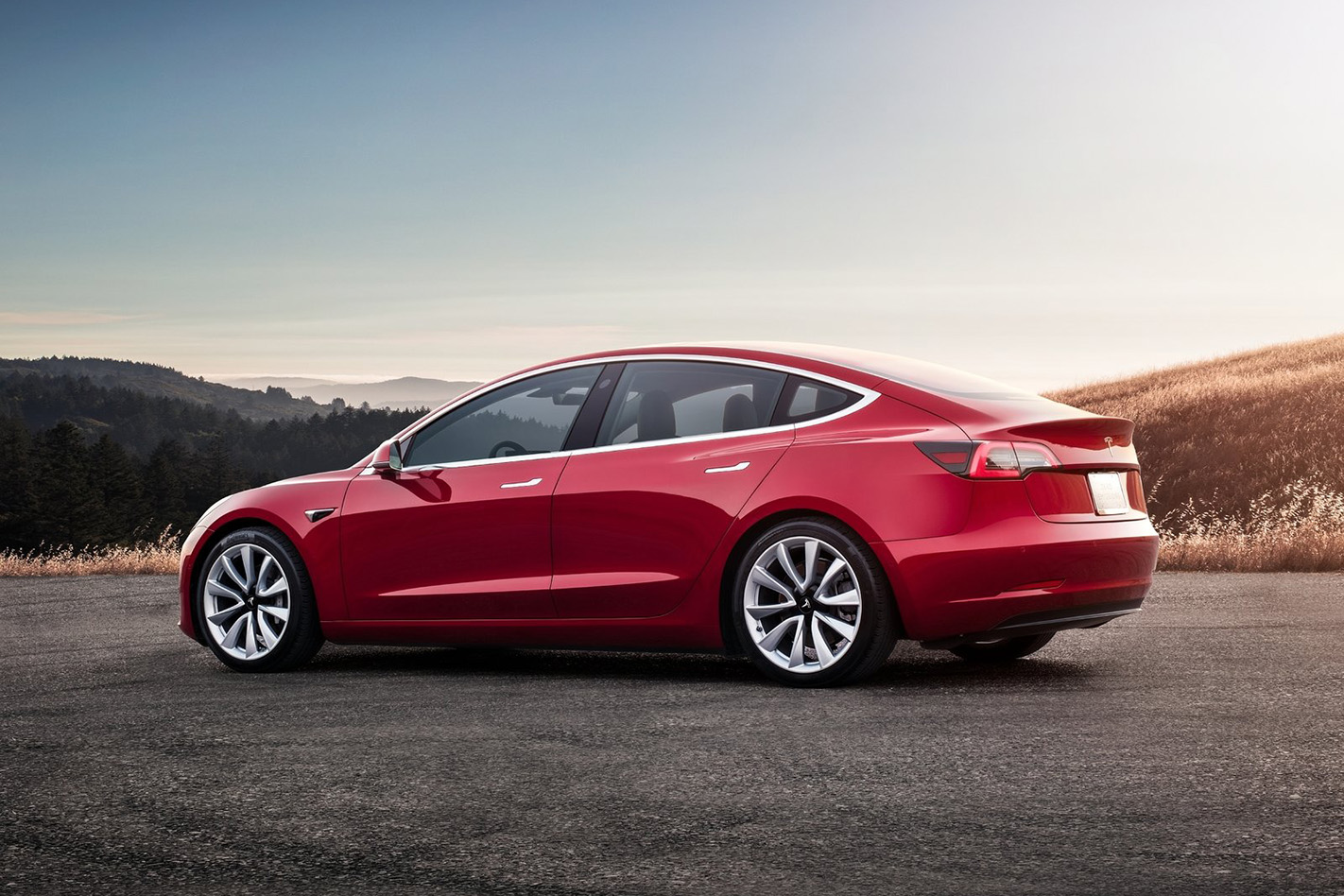
“Getting his electric Hummer across the country would be quite a challenge, so it isn’t his personal car… it’s a Tesla Model 3,” his spokesperson said.
The electric H1 Hummer in question is actually one of his own V8-powered Hummers, which he sent to Kreisel to convert to battery power.

He was so impressed with the conversion he got the Austrian performance battery maker to build him the world’s first ever all-electric Mercedes-Benz G-Wagen, which cost him a cool $1.6 million.
The former Californian Governor worked with the company on the 360kW “Electric G-Class” and the results were so good it is now available to all well-heeled environmentalists.
The age of the bargain basement Hyundai small car is all but over, but there’s talk that a hotted up version of the Hyundai i20 mini hatch could join the local N ranks to take on cars like the Ford Fiesta ST and Volkswagen Polo GTI.
Even though it’s not sold here yet, Hyundai’s product planning manager, Andrew Tuatahi, is keen to see a performance version of the i20 come to Australia.
“[It’s] definitely something we’re looking at,” he told MOTOR at the launch of the Veloster. “There’s still going to be a core set of people who are interested in that size, that type of car. If we can bring an N to market that speaks to hot hatch enthusiasts, we’ll definitely do it.”
The i20 slots in beneath the i30 in terms of size, and is also the most logical replacement for the popular but discontinued Accent small car. However, the i20 is unlikely to be added to the local roster as a full-line model, thanks to its European origins.
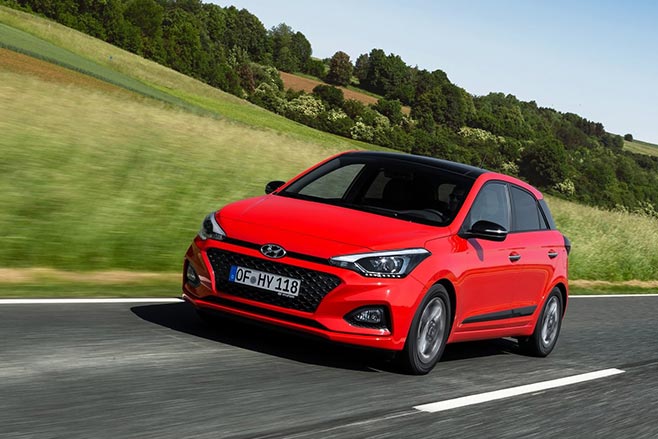
“The cost to get cars out of [Hyundai’s plant in] Turkey factoring in exchange rate, freight, and duties just renders them unsaleable for u, in terms of the [price] to the customer and the margin that we would make from the car,” said Tuahtahi. “So we just can’t go that route.”
The i20 is also made in India, but it’s unlikely to match Australia’s more stringent crash and emissions regulations. A new plant in Indonesia could provide a source of cars for Australia, but discussions around which models will be built there is still “pretty broad,” according to Tuatahi.
However, the notion of adding a single performance variant isn’t without precedent; Ford, for example, deleted all models in the 2019 Fiesta range save for the incoming ST.
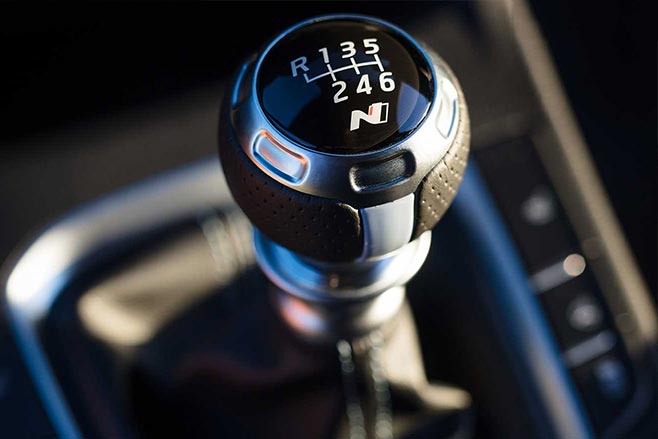
Hyundai’s biggest motorsport spend also means that a green light from Hyundai HQ is more likely than a flat refusal, according to Tuatahi.
“If the [Hyundai] World Rally Championship [team] continues with an i20 we definitely want an i20 N,” he said.
Currently, the only cars on the N roster are the i30 N hatch and Fastback, though the company is committed to adding more. Hyundai’s global R&D chief Albert Biermann has told reporters previously that he’d like to add “something a little bit smaller” to the N lineup.
If you thought die-hard Aussie car fans didn’t already have enough to argue about, just wait until the new edition of Ford Monopoly hits shelves in October.
And while there are a justifiable number of Aussie cars on the board, it’s more the value assigned to the cars that might fire up some who’ve got strong feelings about Ford’s most historically significant models.
Before we start on the list of cars present on the board, is should be noted that of the six game pieces, one is an Aussie. The metal playing tokens are a Model T Touring, an early F-Series truck, a ’55 Thunderbird, a ’64 GT40, a Mustang Cobra from 1976, and the mighty XY GT-HO Phase III.

At the beginning of the board, one of those sits with an Aussie. The 1948 F-Series is side-by side with an XD Sundowner in the first segment of the board, followed by Flat Rock Assembly Plant as the first of four ‘stations’.
Next up, the Capri GT, Galaxie, and Country Squire make up the light blue properties before Jail. After this, the Maverick, then the Dearborn Development Centre (the first of two ‘utilities’), the Pinto, and the Bronco.
After the Chicago Assembly Plant (station the second), the Torino and a ’53 Mercury Sport Coupe are joined by our very own 2016 Ford FGX Falcon.
Next, the Fairlane 500, followed by the 2019 Ranger Raptor, and then the Cougar Eliminator. You might, at this point, be noticing a heavy US bias, a lack of representation from Europe, and an odd hierarchy of ‘value’. That isn’t about to change as we pass the third ‘station’, the Ford River Rogue Complex.

Surprisingly early on the board is the legendary Ford GT40, leaving space for seven cars ahead of it that Ford has deemed more important. So, of course, the Lincoln Capri is next. Hang on a minute.
Admittedly, the ’55 Ford Thunderbird that follows (nestled between Ford’s HQ ‘utility property’ and ‘Go To Jail’), is a special one. But so far, no Focus RS, Escort, or anything from Europe bar the Capri GT.
The home straight is packed with big hitters, but it starts with what would probably be the top property in an Australian version of Ford Monopoly… or an Australian motoring Monopoly in general. The Phase III, the ’76 Mustang Cobra II, and the 2017 Ford GT make up the green set.
The two most valuable spots on the board are taken by the 1969 Ford Mustang Boss 429, which seems reasonable, and the Model T Touring, which is arguably one of the most important cars in the world. Fair enough, then.
So, do you think that’s really how the board should’ve looked? Let us know in the comments below.
Official press photography photoshoots are usually a top secret affair. Obviously a vehicle needs to be photographed ahead of its official global unveiling, sans-camouflage, so the world’s media has something to share upon the reveal.
Because of this, a global press photography shoot is usually something akin to a clandestine movie shoot, with entire city blocks shut down, and large barricades erected.
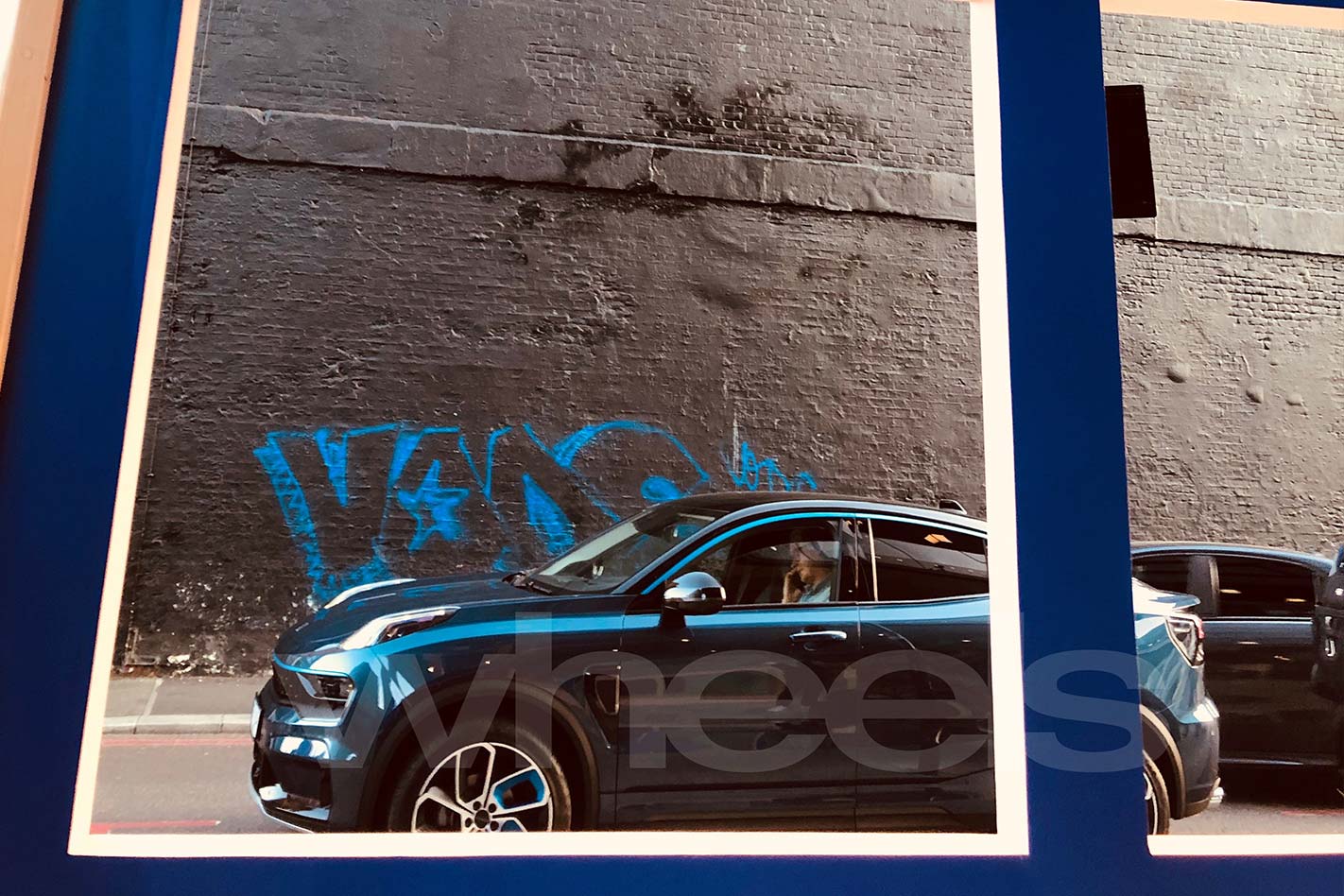
Chinese manufacturer Lynk & Co had something a little lower key planned for its upcoming 05 coupe SUV, hoping instead to fly under the radar. For the lesser-known brand, this could have been a clever play, but it clearly wasn’t expecting one of Australia’s leading automotive photographers to stumble into an active shoot.
Ellen Dewar heads up the photography department for Bauer Trader in Australia, with her photographs gracing the pages of Wheels, Motor, and Street Machine for decades. While taking a well-earned European holiday, she was doing some car spotting, and came across the 05, completely undisguised, on a public street.
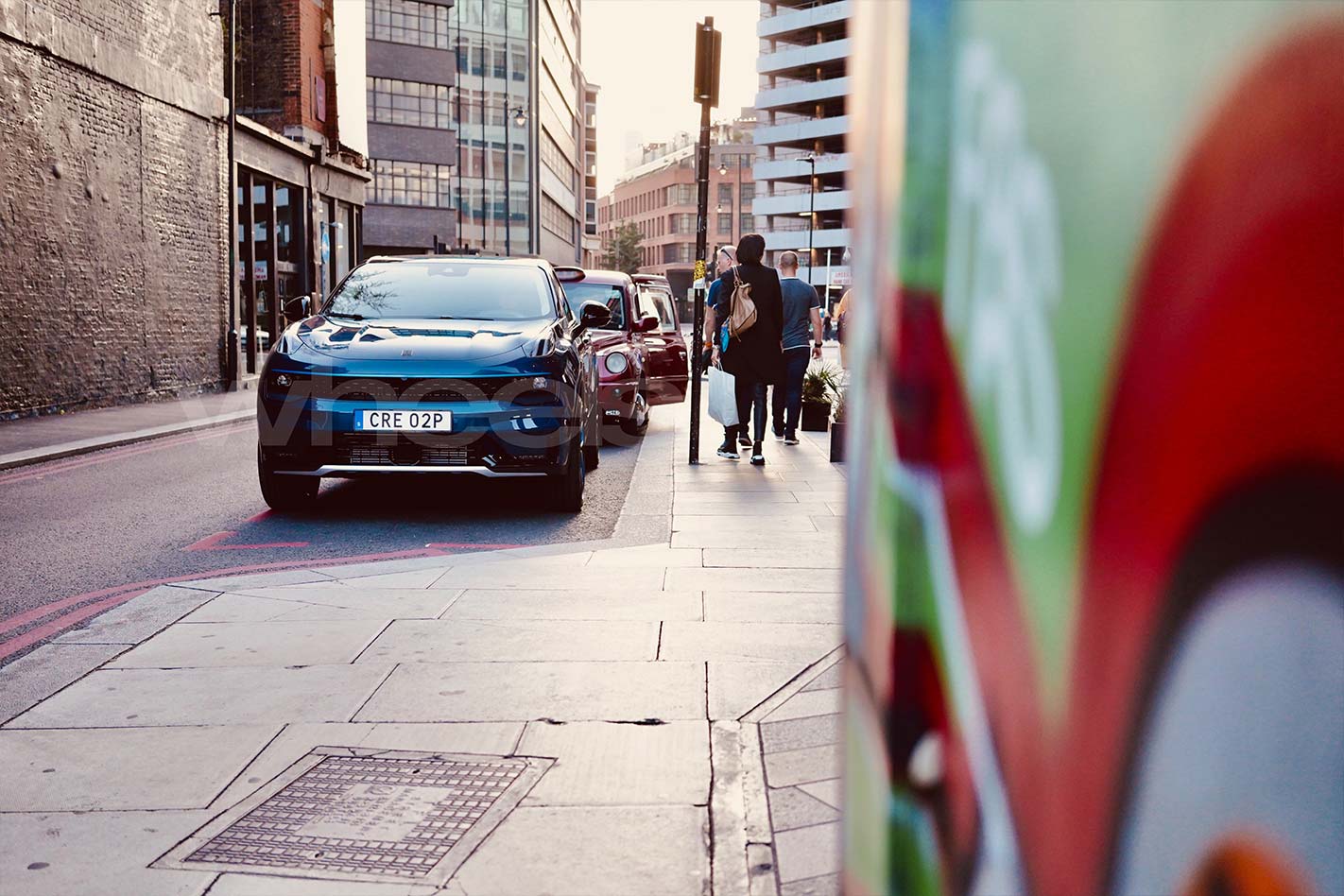
According to Dewar, the 05 was having some transmission issues during the photoshoot, and was unable to be moved, leaving it stranded and unprotected as she snapped away.
The 05 will, as the name suggests, be the fifth model from the Chinese manufacturer, and will likely be built at the company’s ‘Fashion Factory’ in Zhangjiakou. The 04 hatchback is also due to be released imminently.
The newly built manufacturing plant in Zhangjiakou has been designed to produce 200,000 vehicles each year.
As with all Lynk & Co products, the 05 will be underpinned by a chassis, and powered by engines, engineered by sister company Volvo.
The same CMA (Compact Modular Architecture) that is the backbone of the Wheels 2019 Car of the Year Volvo XC40 will be used for the 05.
Engines for the 05 are expected to be a combination of turbocharged petrol three and four-cylinder units, as well as a plug-in hybrid variant.
With Volvo announcing a full EV XC40 is coming, it’s also likely the 05 could do the same.
Lynk & Co only launched in 2016, and is currently only sold in its native China. However, a global expansion is in the company’s eventual plans, with Australian sales possibly in the long-term outlook.
European and North American sales would likely happen before Lynk & Co came Down Under, but that hasn’t stopped higher-ups from Volvo Australia expressing interest in having the Chinese vehicles being offered to customers.
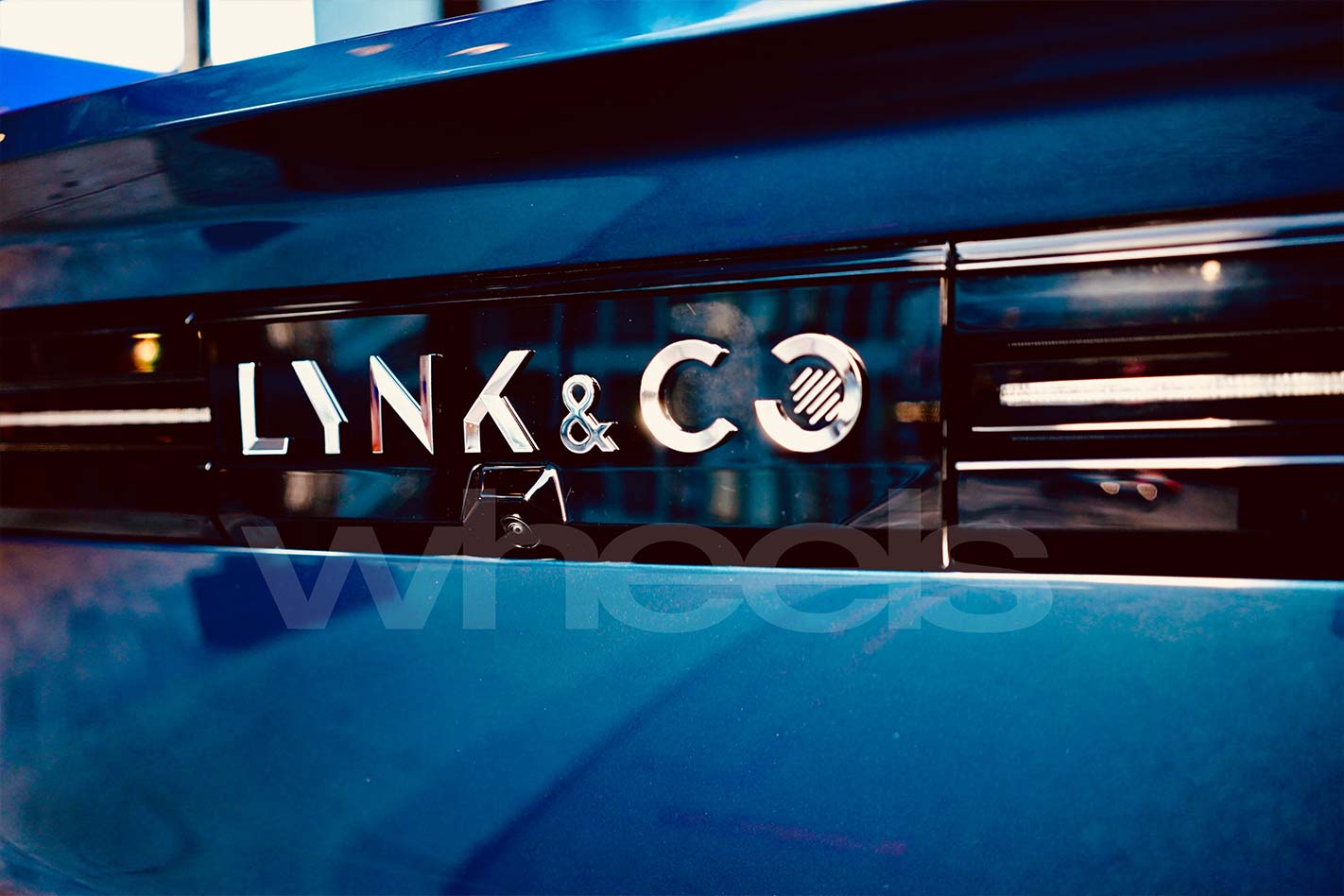
“Lynk & Co, Polestar, yes [we’d introduce them in Australia] in terms of supporting them for customer service at the very least,” Nick Connor, Volvo Australia managing director, recently told Wheels.
“I think because they have no infrastructure in Australia that’s something we’ll talk about.”
“It seems obvious to me that we have a network of very confident dealers and we’re servicing [Geely] SPA and CMA platform cars so if there are CMA platform cars from Lynk & Co it would make sense for us to look at supporting them, but nothing is nailed down yet,” he said.

“I think they’d [Lynk & Co] set up their own sales network. Their international supply model is one of direct supply over the internet so they’re not planning to setup sales here. Maybe it is direct supply and Volvo dealers look after the customer service aspect.”
The flagship of any future Lynk & Co expansion is set to be a production version of its 03 Cyan Concept.
Currently undergoing development for a limited production run, the 03 Cyan Concept is a four-door sedan, with a beefed-up engine and gearbox lifted from a TCR race car.
Tuned to 373kW and 504Nm, sent to the front wheels via a six-speed sequential gearbox and proper mechanical differential, the 03 Cyan Concept lapped the Nurburgring quicker than a supercharged V8-powered Jaguar XE SV Project 8 –making it the quickest four-door car in the Green Hell’s history.
Quicker than the Lynk & Co 05? Well, quicker than this one at least.
Estonian police will offer speeding motorists the choice of a timeout instead of a fine as part of a new approach to reducing the country’s rising road toll.
Rather than cop a hefty hit to the hip pocket, drivers exceeding the speed limit by 20km/h or less will be subjected to a 45-minute wait on the side of the road, while drivers exceeding the limit by between 21km/h and 40km/h will sit out for 60 minutes.
Drivers taking the cashless punishment will be directed to a parking zone by the side of the road to serve their on-the-spot sentence.
The new system is only a trial at the moment on the road between the Estonian cities of Talinn and Rapla, and the choice will only be given to motorists who have no prior traffic offences.
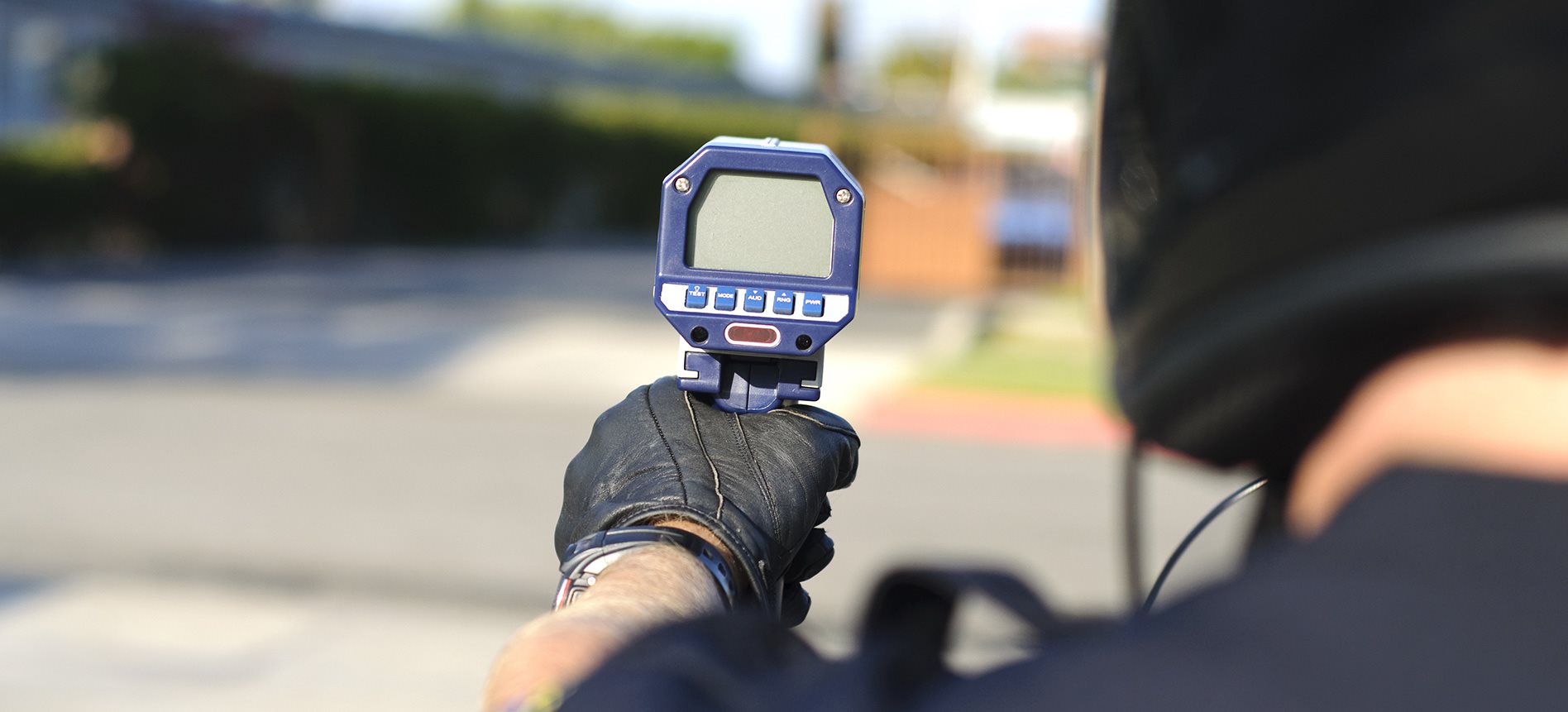
Speaking to Estonian public broadcaster ERR, police innovation advisor Elari Kasemets said “We are investigating how speeders perceive the fine and the impact of the lost time. We know from interviews with motorists that some people consider having a conversation with a police officer and the time they take to intervene [is] more effective than fines.
“The goal is for perpetrators to actually change their behaviour, not to punish them for the sake of punishment.”
Estonians rate highly in Europe’s speeding statistics with an unenviable toll, so the country is trying new ways to get motorists to take note of the damage speeding can cause. Last year, traffic police handed out organ donor cards as well as fines in order to shock drivers into slowing down.
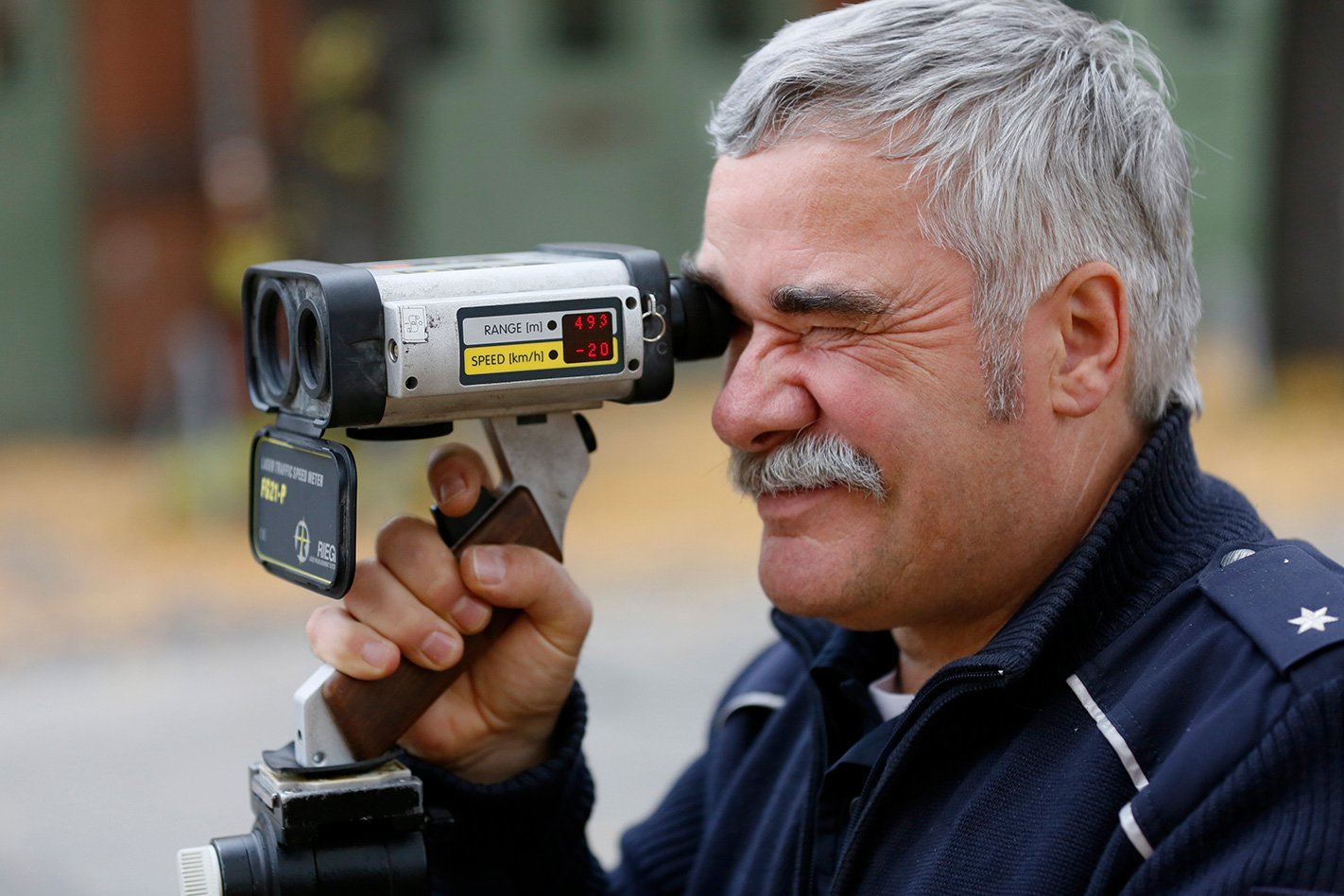
The trial will take place over the next two weeks before deciding whether it is an effective punishment and worthy of expansion. Whether motorists respond positively to the timeout approach or not, we’re curious to see how the trial turns out and at least it’s innovative.
Do you think Australian law enforcement would ever take on a similar form of punishment?
