
When metallic paint was first introduced for vehicles in the 1930s it revolutionised the appearance of cars, but since then, vehicle finish manufacturers have continued to develop products that last longer, cost less and have a reduced impact on the environment.
The first metallic paint was not made using the tiny flakes of metal that modern versions are, instead taking fish scales as the reflective ingredient. About 40,000 fish were required to produce a kilo of paint making it very expensive and not exactly sustainable.
Later car paint systems used lead, chromium and even cyanide but, thankfully, these have largely been succeeded by safer compounds and pigments, but not only are the car finishes of today safer, they’re also far more diverse and beautiful.
More on paint
- Should I buy paint protection?
- Nine putrid paint jobs you wish you’d never seen
- Diamond paint is the ultimate in car bling
*In 1909, Henry Ford famously told his management team that customers could order the Model T “in any colour as long as it’s black”. Here are the latest innovations in vehicle body finishes and some of the options available to you if want a little more choice than was offered with the world’s first mass-produced car.
The blackest black
Yes, your eyes really are deceiving you. This is the blackest car you will have ever seen thanks to an incredible new coating developed by Surrey Nano Systems, which reflects almost no light at all.
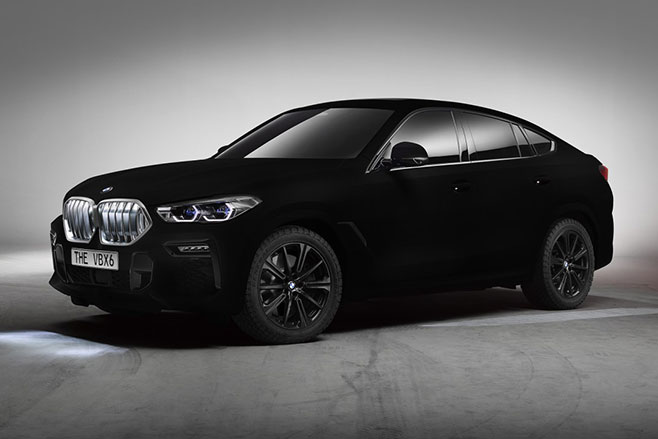
In its purest form, Vantablack absorbs 99.97 percent of visible light frequencies making it one of the most unreflective (darkest) surfaces known to mankind and can make three-dimensional objects appear completely flat to the human eye. But for its application to BMW’s new X6, the company reformulated it to reflect just 1.0 percent of light.
That allows just the slightest hint of the SUV’s shape to be revealed ahead of the car’s public debut at the Frankfurt motor show next week. If it were any darker, your brain would simply perceive it as a black hole.
The Vantablack VBx2 finish was ‘revealed’ in 2014, but it has taken until now for the specialist company to apply it to a car in conjunction with BMW’s clever marketing idea. But you’ll have to wait a little longer to tick the box in an X6 brochure.
Its fragile surface comprised of billions of carbon nanotubes is easily damaged and will need significant development to be used as a hardwearing car finish.
As well, its heat-dissipation and absorption properties, and ability to evade speed-detection devices are yet to be detailed. Our advice would be to watch this space, but you actually can’t.
Vehicle wraps
Increasingly popular and affordable car wrapping is proving itself as a great vehicle finish for a host of reasons.
Not only can this flexible vinyl wrap change the colour of your car for far less than the cost of a respray, you can get it in virtually any colour – not just the tones offered by the manufacturer – and it’s a reversible process!
Wrapping also provides a protective layer from minor stone damage and the sun’s rays. Peel the vinyl away when you sell the car and its paint will look as fresh as the day it emerged from the factory.
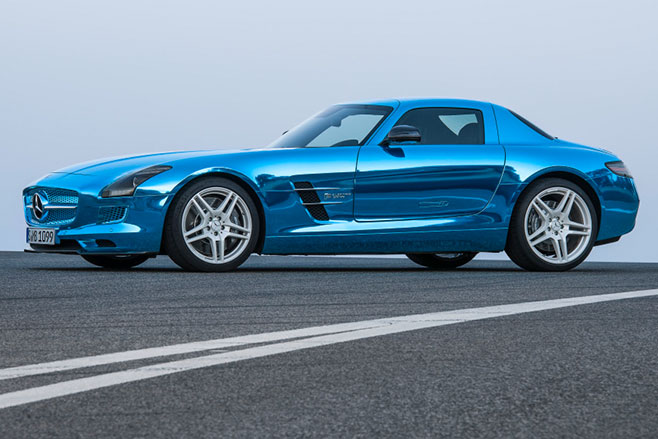
Finally, vinyl wraps are available in a range of colours that simply cannot be achieved using sprayed paint finishes. For example, metallic paints will always have a slightly frosted appearance thanks to their millions of tiny metal flecks, but wraps can provide a perfectly uniform reflective chromed appearance.
When Mercedes-Benz revealed its SLS AMG Coupe Electric Drive, the high-performance car’s stunning mirror blue wrap was every bit as electrifying as its powertrain.
Metallic or pearlescent?
Put simply, metallic paint creates a more lustrous finish by using tiny particles of aluminium that are sprayed onto the vehicle panels suspended in a clear liquid varnish which then hardens.
Millions of paint tones can be created by altering the size of the metal flakes, the colour of the clear coat they are suspended in, and the process by which they are layered.
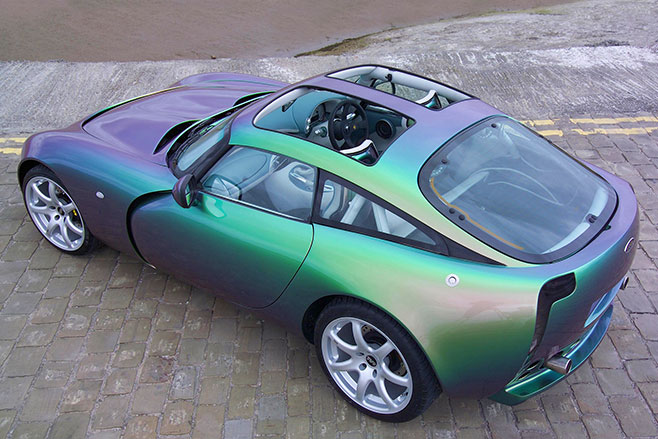
A pearlescent paint replaces the tiny pieces of metal trapped in the clear resin with ceramic crystals that don’t just reflect light but actually refract it too.
As light passes through the crystals it changes speed and direction for often incredible colour changing effects. Some pearl colours create a subtle colour shift from crème through white to light blue for example, while others have been developed for dramatic shifts to opposite ends of the visible spectrum.
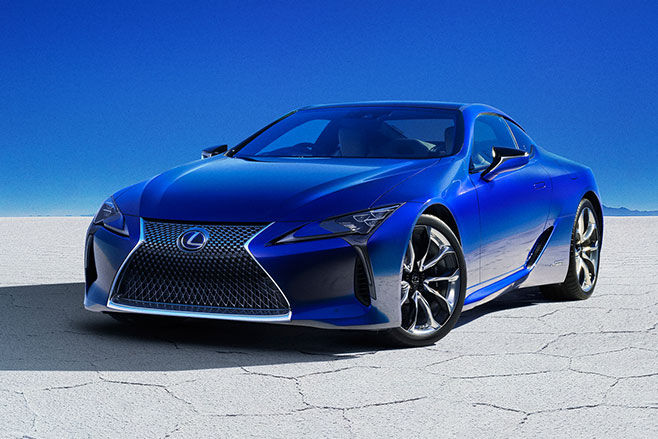
Lexus’ special Structural Blue paint has an intensely deep blue hue but actually has almost no blue pigment at all. Instead, a clever trick of the light used by the American Morpho butterfly’s wings is recreated with a 40-layer pigment that took 15 years to perfect.
Repairing bodywork finished with these more sophisticated paints and matching the colours is much harder than solid colours. Indeed, many repairers will not guarantee a perfect match.
Solid colour
Solid – or flat – colours are often offered as the no-cost paint finishes for more affordable vehicle models and a premium is asked for metallic or pearlescent options.
In addition to their more premium appearance, metallic colours used to offer a more durable finish thanks to a ‘clear coat’ that was applied over the metallic layers.
This glossy top layer is more resistant to oxidation – when the paint turns chalky or fades. However, many manufacturers now use the ‘clear-over-base’ method for solid colours too.
Despite this, flat colours are often the cheaper option and are available in some vibrant colours that are hard to match for brilliance in metallic paint systems.
Matte finishes
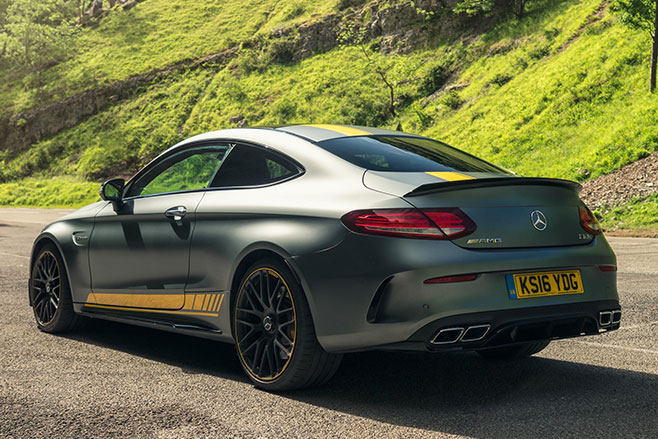
Matte or satin paint finishes are a relatively new innovation in paint. Rather than a high-gloss effect as is often the goal with metallic and solid colour paints, matte finishes create an even low-gloss effect that can be incredibly eye-catching.
The application process starts in exactly the same way as any other paint with the primer and base layers applied as normal (including metallic and pearlescent colours), but the difference lies in the top (final) coat, which dries without a polished-effect sheen.
Matte finishes scatter all light in random directions for a purely gloss-free finish, while satin finishes have a semi-polished surface that allows more reflection of light and a mid-sheen result.
Very shiny paint finishes resist the build-up of dirt and stay cleaner for longer. Low-gloss paint, however, holds dust and road grime more readily and needs cleaning more frequently. They are also more susceptible to damage and more care is required when cleaning to prevent scratching.
If the worst happens, they are also difficult to repair as two different layers of top coat cannot be polished to match, as is the case with any glossy paint.
You won’t be able to apply traditional car wax or polish to protect a matte finish, but there are some specially developed sealants that can help prevent damage.
Self-healing surfaces
This useful invention is available in limited forms as both a paint finish and a film and has the ability to repair minor scratches without any intervention. Depending on the product, sunlight or simply time causes the special coat to fill shallow scratches and hide damage completely.
One intriguing solution uses a synthetic form of chitin – the main component of crustacean’s shells – while others use a polymer semiliquid.
Some car-makers are already offering self-healing paint as proprietary technology such as Nissan’s Scratch Shield, while other brands are available as aftermarket options.
Paint protection
Considering applying a dealer-offered paint protection option to your new car’s conventional paint? Find out if it’s worth it here.
*The Ford Model T was actually available in blue, green, grey and red from the start of its production in 1908. Black was only introduced in 1914.
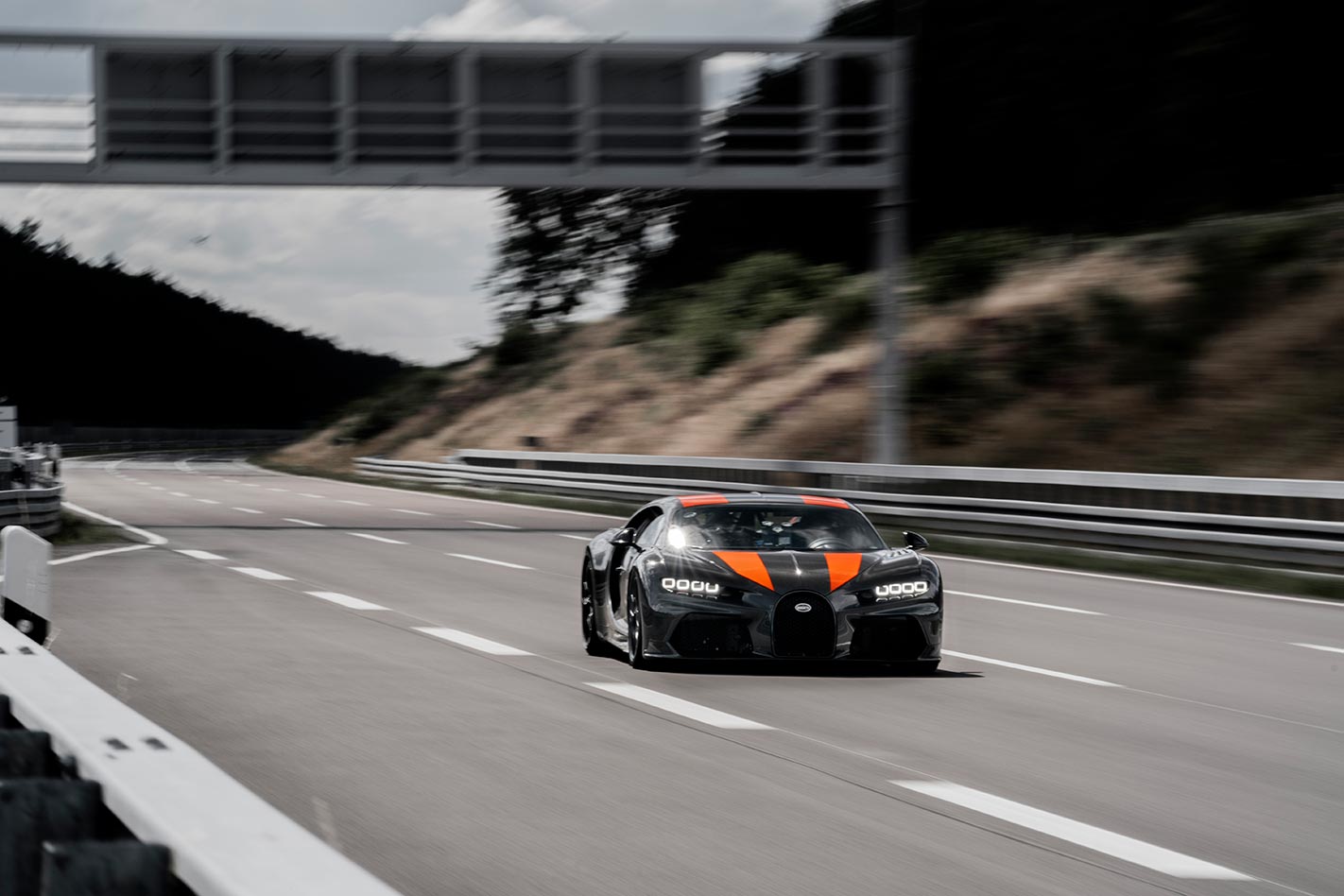
Bugatti has broken the elusive 300 miles per hour speed barrier and registered a 490km/h run during testing of a new prototype Chiron.
Top Gear exclusively broke this news about the high-speed run conducted at Volkswagen’s Ehra-Lessien one month ago. The published video shows former racing driver and former top-speed record holder Andy Wallace piloting the SuperBug to 304.77mph and 490.48km/h.
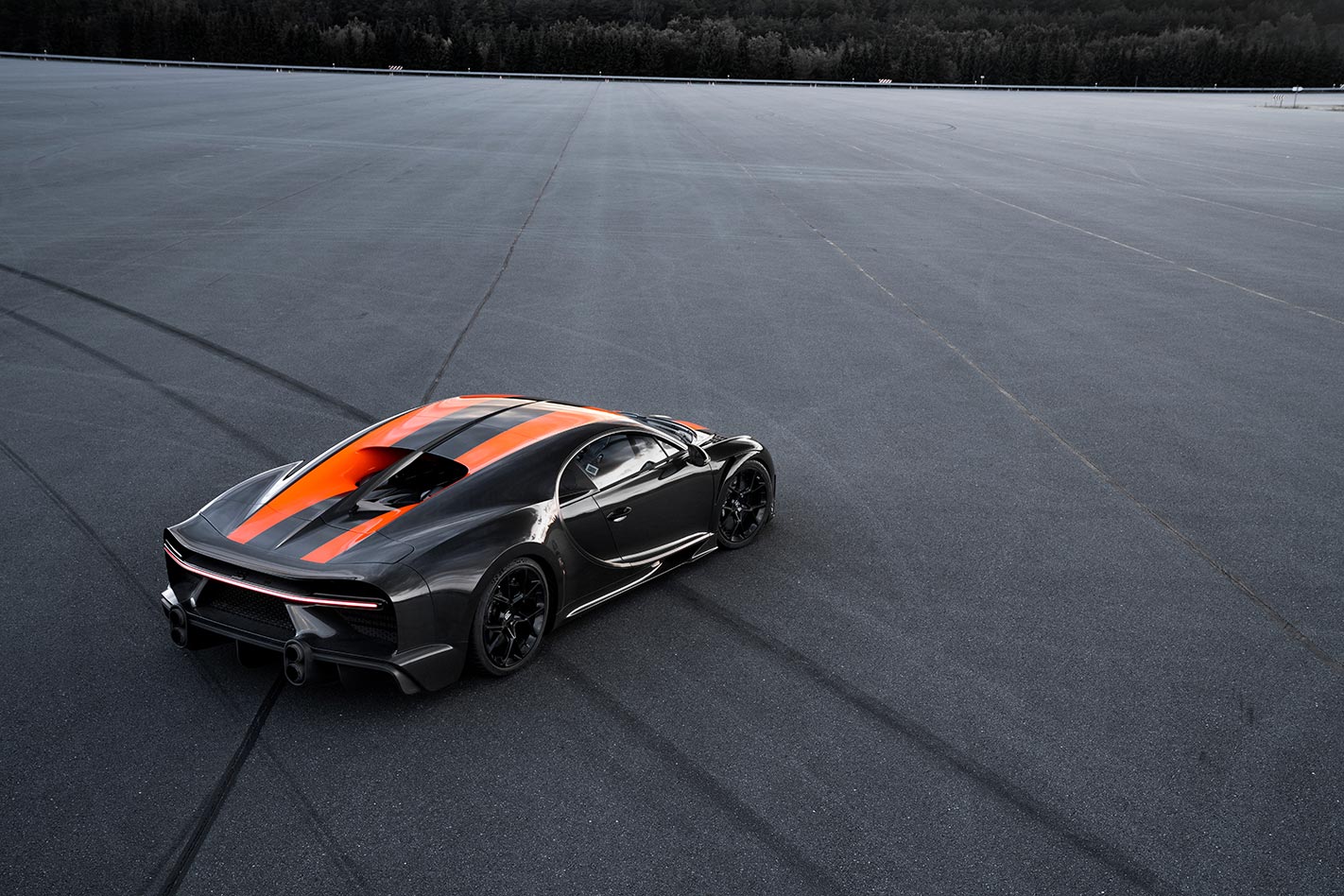
Germany’s Technical Inspection Association has verified the run and although it does not stand as a top-speed record, since it was registered in one direction, it easily trumps Koenigsegg’s 284.55mph (457.9km/h) one-way run with its Agera RS and Hennessey’s 270.49mph (435.3km/h) one-way run with the Venom GT.
The achievement reportedly is the result of six months work shared between Michelin, Bugatti and Dallara’s top engineers. They’ve reworked the Chiron in a number of ways, mainly by lengthening it from 4.54m to 4.79m. It’s basically a Chiron long tail.
The active rear wing’s been replaced with a static unit that helps the prototype split through the air. Meanwhile, the rear bumper’s been redesigned to stretch the rear diffuser. This should help the underbody contribute more downforce. It’s also got a new set of exhaust pipes. Four, in fact, split into pairs.
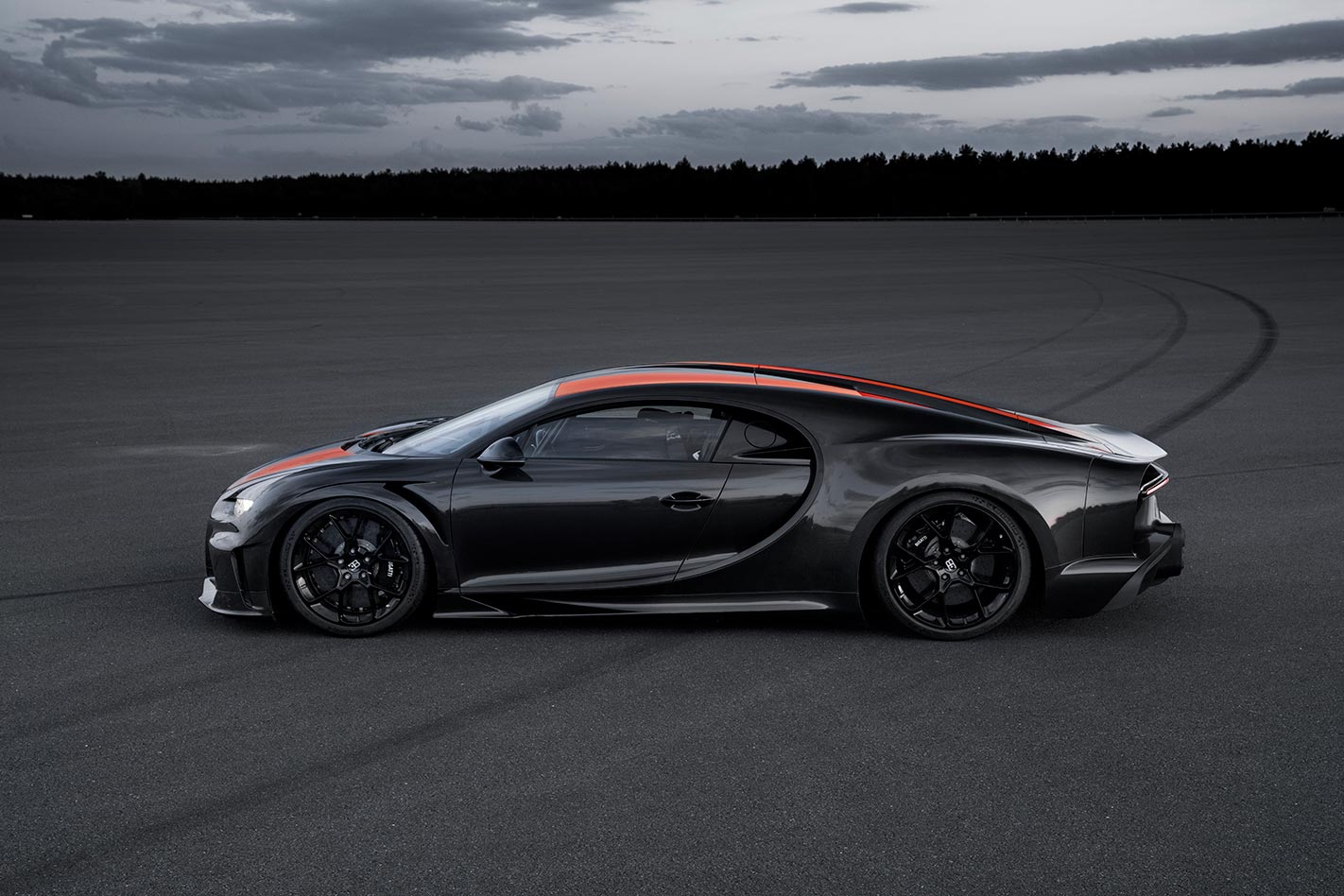
Clearly, the ride height’s been dropped. Photos reveal the longer Chiron hugs the ground to divert more air over the car. The car’s 8.0-litre W16 quad-turbo engine was also tuned to 1176kW to help it cleave through mounting air resistance.
The all-wheel drive system and driveline are reportedly left standard.
UPDATE 02/09/2019; 2146: Bugatti has told us the run was conducted only in one direction for ‘safety’, with more details due this Wednesday, and that the prototype will bear a series production vehicle — announced at a later date.
*This article first stated the Koenigsegg Agera RS peaked at 444.6km/h and the Chiron’s output was 1160kW. Both have been corrected.
Whether you’re a fan of Australian motorsport or not, you’ll know Bathurst is a big deal. But, what about owning a car that has won the prestigious event? Sound tempting? Well, Tickford Racing is offering its Bathurst-beating Ford Falcon V8 Supercar for sale. And it’ll cost you a cool $625,000.
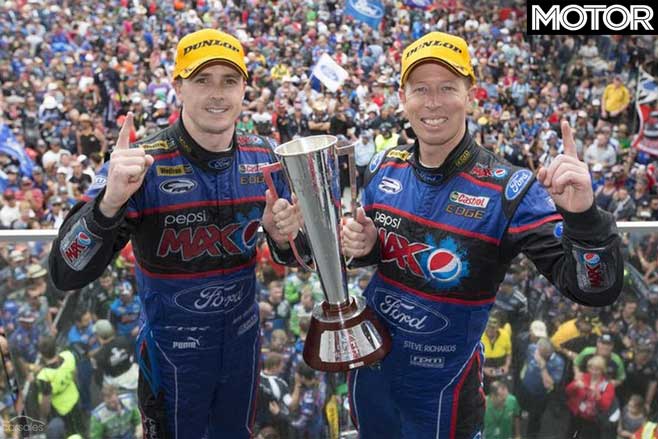
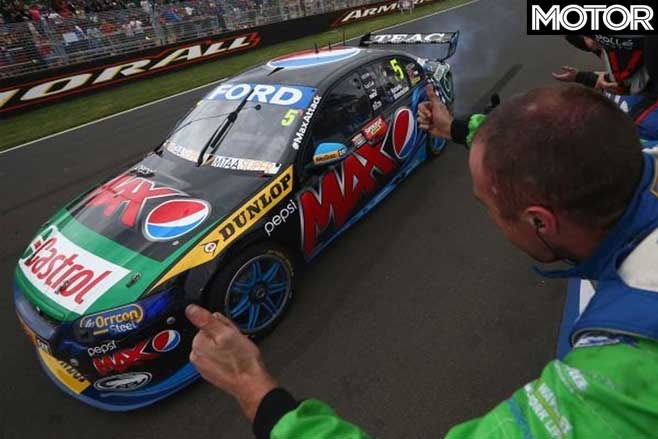
For that, you’ll score the 2013 Ford Performance Racing FG Falcon V8 Supercar which claimed the Bathurst 1000 for Mark Winterbottom and Steve Richards. It wears the number five and a Pepsi Max livery. Technically, it’s known as chassis number FPR 1214.
It’ll come with a 5.0-litre V8 race engine the team says bears “the same engine number Ford V8 that powered it on race day” while the rest of the car is being restored to its “2013 Bathurst winning state” with as many correct race-correct parts as possible.
Of course, as one of only 14 Falcons to win the enduro, of which apparently only 10 survive, the car comes with all supporting documentation like its CAMS log book, race setup sheets with driver notes and a hardcover book compiling its complete history.
Speaking of, as the first factory-entered Ford to win Bathurst since 1973, it’s pretty special. But there’s more than the Bathurst win on its resume. It’s fought in both the V8 Supercar championship from 2013 to 2015 and Dunlop Super 2 series.
Overall, it claims 77 championship races with three wins, 13 podium finishes, 20 top five finishes and 42 top 10 finishes. Its drivers have also included David Reynolds and Dean Canto.
Not sure how to start it? It’ll come with a 10-lap drive experience at Winton Raceway in the car along with suite access to the Tickford Racing hospitality suite. You’ll also be welcomed to Tickford Racing’s factory for a full tour.
It originally was offered for sale at the end of last year but has not yet found a buyer. If you’d like to change that, head to this page to know more.
Talk is cheap – and there have been a lot of whispers surrounding the C8 Chevrolet Corvette’s performance potential. However, now there’s video confirmation that the 369kW/637Nm Corvette is a bona fide supercar, hitting a top speed of 312km/h.
Chevrolet’s Corvette team, led by Executive Chief Engineer, Tadge Juechter, provided three presentations at the National Corvette Museum’s 25th anniversary. Yet it was the final offering that snuck in proof of the top-speed goodies.
Across the seminars Juechter provided myriad C8 details, and thanks to the wonders of the internet, an audience member posted a recording of the video to YouTube. The runs were completed on a non-banked track at Automotive Testing Papenburg in Germany.
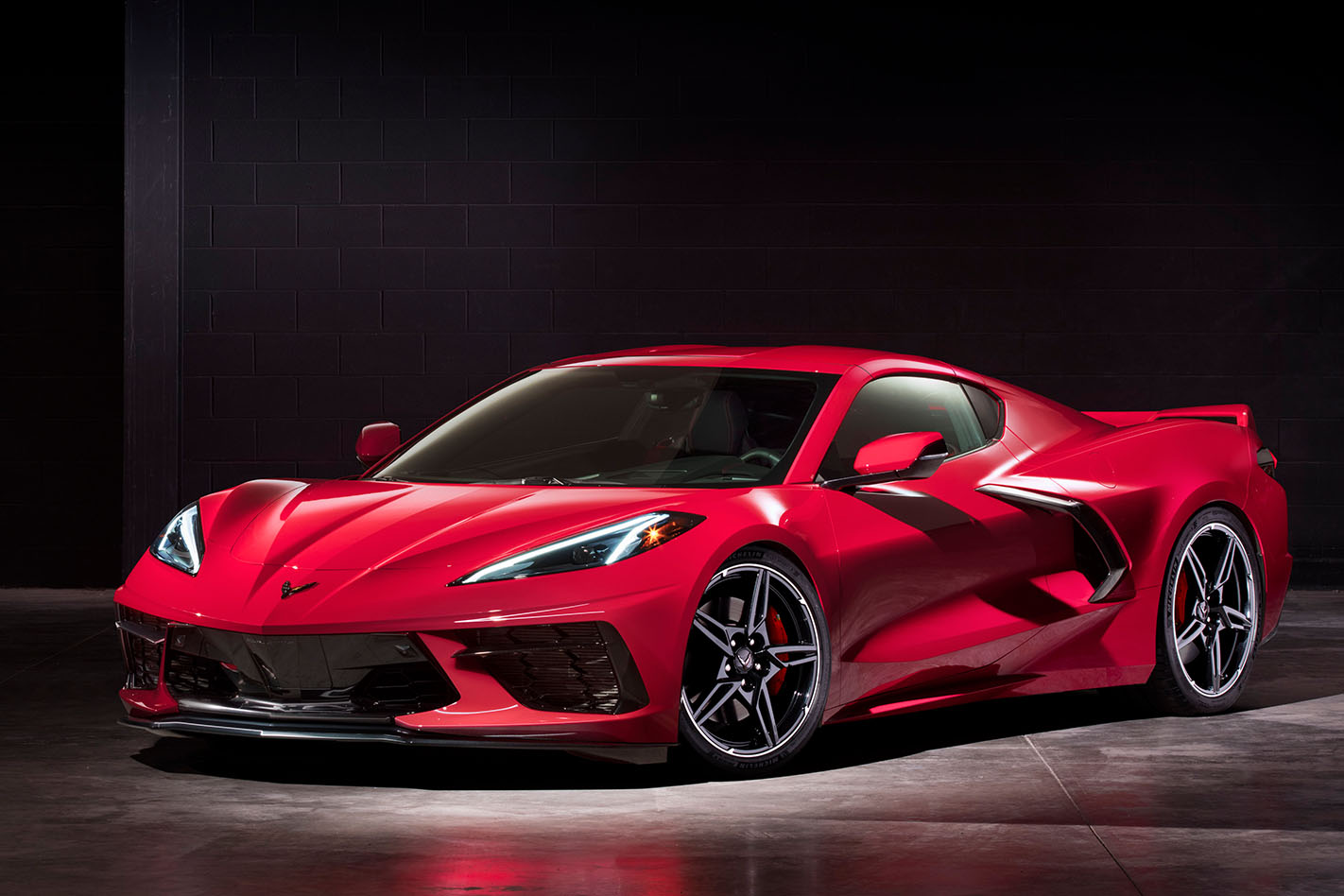
Juechter explains that the headline figure is an average of “flying-mile” runs in both directions of the test circuit to account for wind and weather conditions. Interestingly, the same 194mph (312km/h) number was attained in both directions in “dead still” conditions.
To capture the figure, Chevrolet used sophisticated and accurate GPS tracking, which was monitored by a passenger for the runs. As well as kilometres per hour, the metres per second were also recorded and highlighted throughout the short clip.
Interestingly, a ‘base’ Corvette was used for the run, one sans the high downforce offered with the Z51 Package. ’Vettes featuring that pack will have the top speed lowered to 296km/h (184mph) with the added aerodynamics cutting straight-line efficiency.
Australia is likely to receive the Z51 Package as standard. Information provided to Wheels suggests that the C8 Corvette will be available in Holden dealerships from around $150,000 to $170,000. However, you’ll have to wait, with Holden’s halo not expected to lob down under until at least the end of 2020.
Juechter goes on to say that the team are impressed by the high-speed stability of the mid-engine C8 and that the lack of steering-wheel movement in the video is vindication.
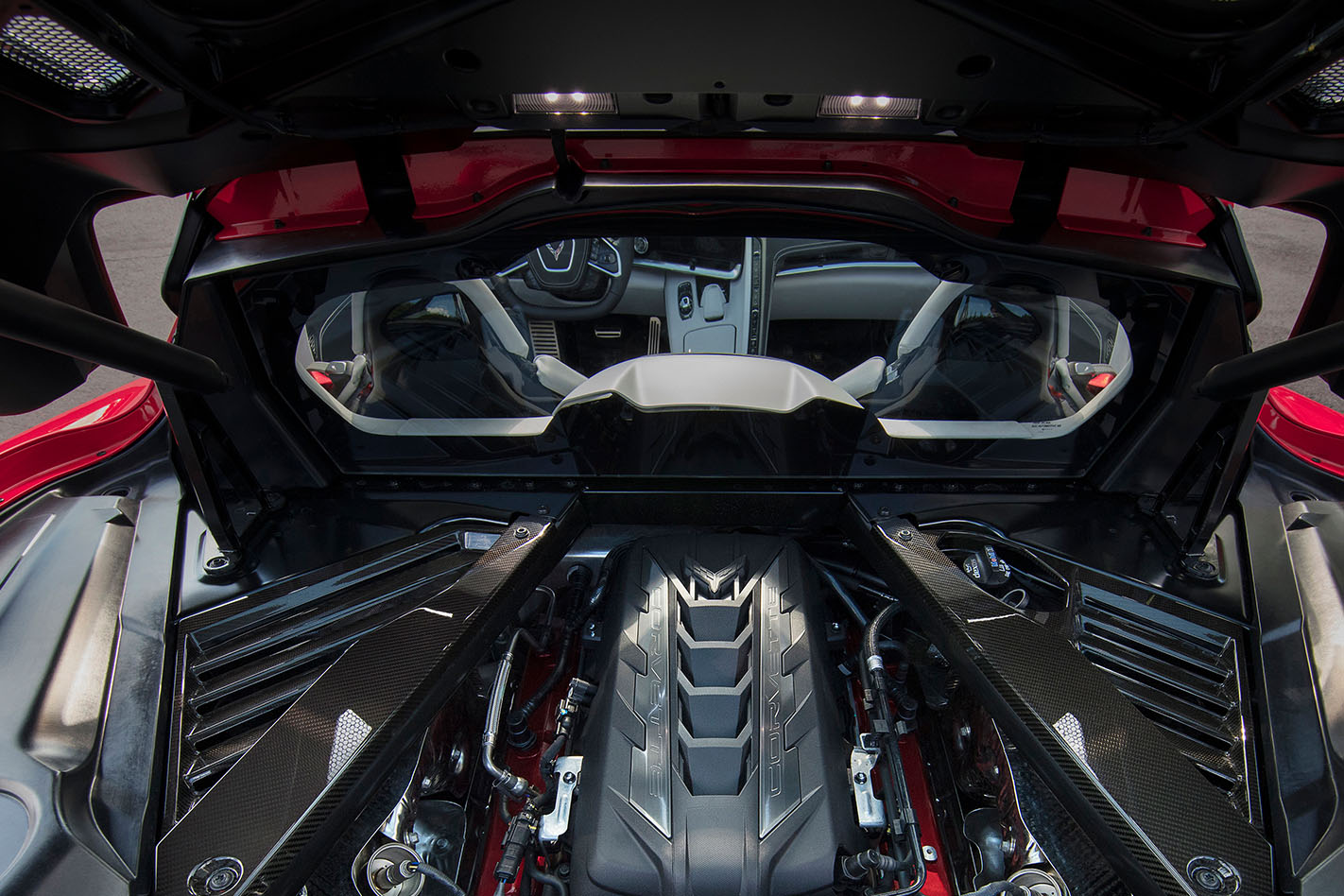
While they’re yet to be confirmed by Chevrolet, a member from corvetteforum.com posted a picture of the performance figures down the drag strip from the Corvette’s engineer’s booklet. According to the leaked image, the C8 reaches 100km/h in 2.9sec and covers the quarter in 11.3sec at 194.7km/h.
Ford is currently testing a facelifted version of the wide body Ranger Raptor in Australia.
Spotted by a keen-eyed Wheels reader in Mildura, the half-camouflaged mule indicates that Blue Oval engineers are currently working on a facelift for the Ranger’s halo model.
We were instantly able to recognise development vehicle as a Raptor, and not a regular Ranger, thanks to the flared arches, and visibly trick rear suspension.
The mule was travelling with a pair of unmarked Ford vehicles, with engineers hurriedly trying to cover the test vehicle from prying eyes.
The camouflaged bonnet and bumper indicates that work is currently being conducted on the front half of the vehicle.
Interestingly, the lower section of the front bumper seems to have a more pronounced cutaway compared to the current-gen Raptor that has the outer edge flush with the flared guards.
The next-generation of Ranger is currently deep in its development cycle, and is expected to be underpinned by an evolution of the T6 platform that was developed in by Ford Australia engineers for the current dual-cab ute and its Everest SUV sibling.
Wheels scooped the design of the next-generation Ford Ranger earlier this year, and we expect the new model to go on sale in 2021.
The test mule doesn’t appear to have the design study’s squared-off body, indicating that this is an engine or suspension evaluation vehicle.
Ford began selling the Ranger in North America this year; however that market missed out on the diesel-powered Ranger. Wheels understand that a petrol-powered version using the Ecoboost four-cylinder engine from the Mustang is on the wish list for the US market. This could be that vehicle.
Spotted something a manufacturer would prefer you hadn’t? Make sure to send us a message either on Facebook, or at [email protected].
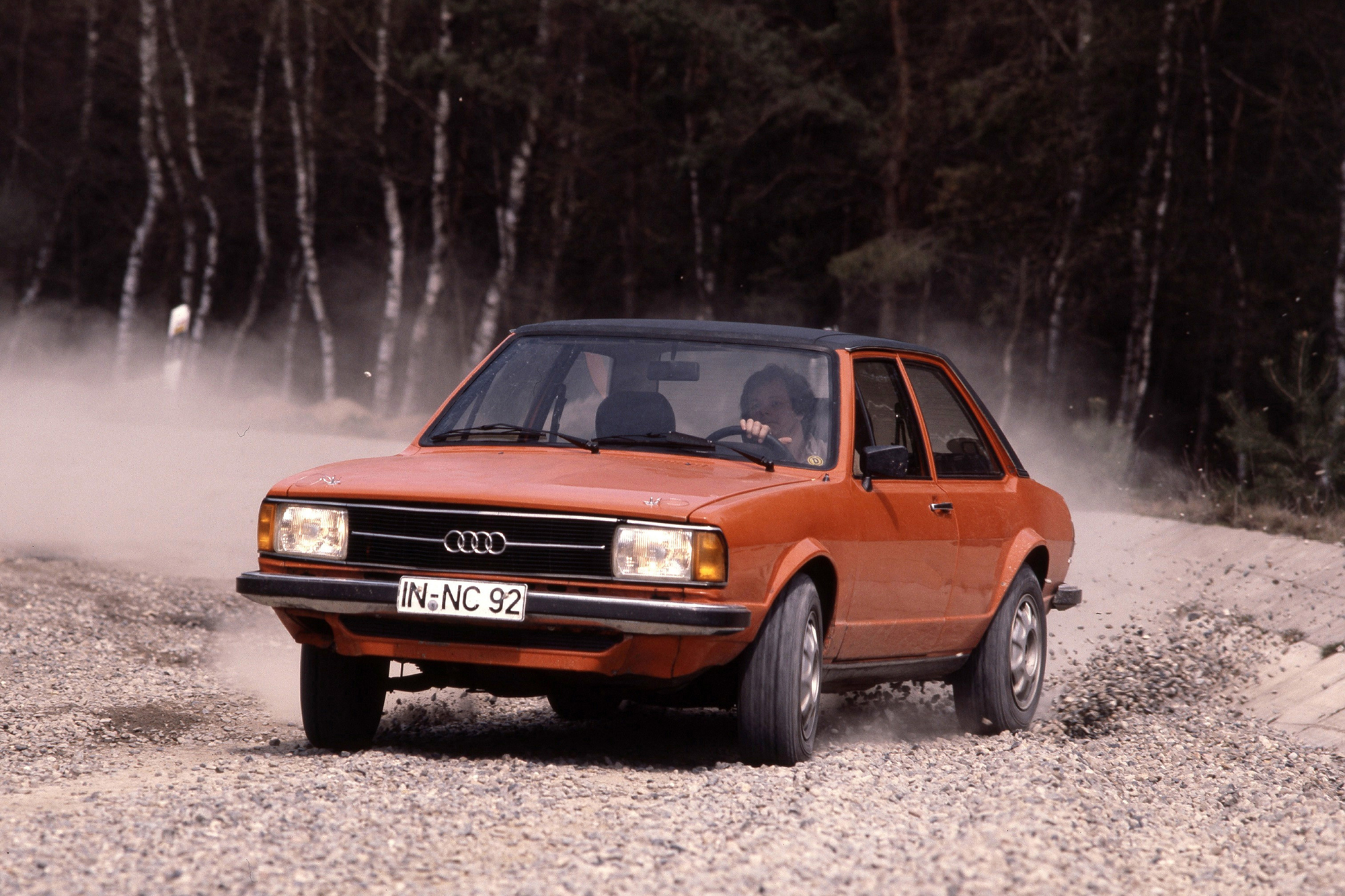
Only engineers Jörg Bensinger and Roland Gumbert, who sold the idea of a four-wheel-drive high-performance car to Piëch, ex-Mercedes racing car engineer Hans Nedvidek, and project leader Walter Treser, plus a few mechanics in the experimental department, were aware of Piëch’s ambitious plan. They had to be, since they were responsible for building the car.
Thinking long-term, Piëch (the grandson of VW Beetle engineer Ferdinand Porsche), knew what he had to do and saw the potential for a technology-led assault on its German rivals. This car would be the first … if Audi could convince the VW establishment of its potential as both a road car and, for added credibility, as a possible World Rally Championship contender.
Piëch’s improbable aspiration for Audi, then the maker of, “ordinary cars liked by butchers and farmers”, was to use the new model as the first step in a 25-year effort to challenge – and eventually match – Mercedes-Benz and then fast-rising BMW as the global automotive prestige powerhouse.
The autocratic, visionary Piëch, who took over Audi’s R&D in 1975, told designer Martin Smith in his job interview that he wanted, “Audi to become more than a small Bavarian car maker.”
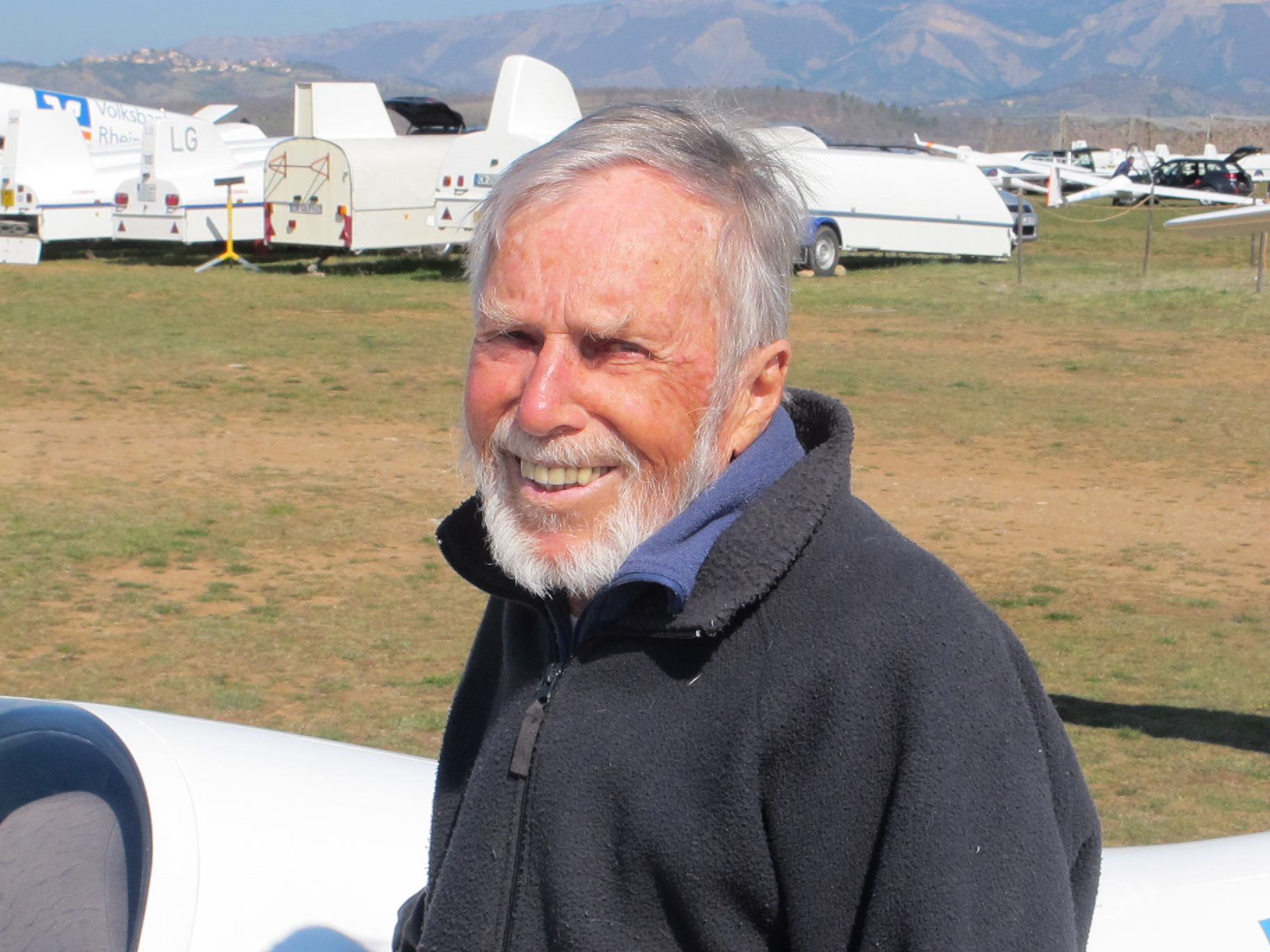
Eyes sparkling, a friendly smile partly hidden behind his white beard, and knowing we are delving into his remembered past, Bensinger wants the Quattro story to start at the beginning: in 1962 at Porsche, when he worked on the “very interesting” mid-engine, rear-drive, double wishbone-suspended 904. It was, he says, more interesting than the new 911 or the 356 handling “disaster”.
For the chassis engineer, the Porsche experience was the beginning of a fascination with disparate driving layouts. Head-hunted to BMW, he later joined Mercedes, which meant Jörg spent the next decade working on front-engine, rear-drive cars. But opportunities at Mercedes were rare, and the age-based hierarchy meant his career stalled. In 1971, Bensinger moved to Audi to join former Mercedes engineer Ludwig Kraus who had also moved to Audi. At Audi it was all front engine and front-wheel drive.
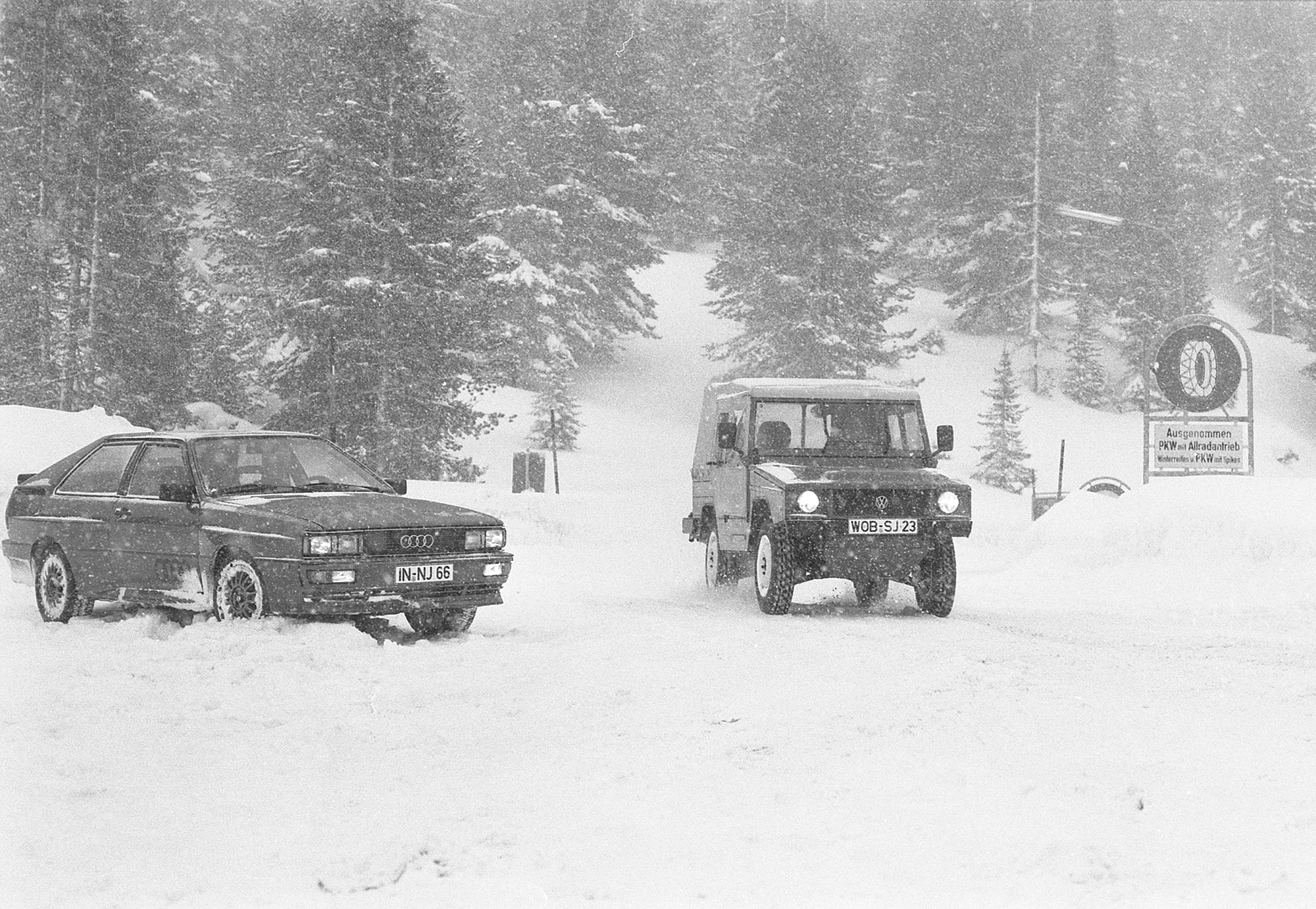
Bensinger quickly discovered that in Finland’s icy winter conditions the high-riding 56kW Iltis easily ran away from the more powerful 127kW two-wheel-drive Audi 80. What was the use of all that power if it couldn’t be applied? Surely, he thought, a sporty all-wheel-drive sedan with superior traction and cornering behaviour would be the perfect solution for a high-performance Audi. That was in 1976. Four years later, the Quattro was launched to acclaim at the Geneva show, and Audi was on its way.
In March 1977, Audi’s tiny team took a front-drive 80 and, raiding the VW and Audi parts bins, fitted the permanent four-wheel drive system from the military VW Iltis (a purely Audi development), the five-cylinder 118kW turbo engine from the 200 Turbo, and MacPherson struts front and rear (the rear being the 80’s front set-up rotated through 180-degrees). A new gearbox replaced the Iltis transfer cases with an ingenious hollow shaft through which power flowed in two directions to the front and rear wheels.
Now it was time to expose the prototype to the top people from Wolfsburg, the crucial step in obtaining formal production approval from VW management for a car unlike any other.
In January 1978, Bensinger took the A1 deep into the Austrian Alps. Driving the 1795-metre Turracher Höhe pass involved negotiating Europe’s steepest road; a gradient of a staggering 34 percent, too steep to walk. On hand to witness the test were VW’s senior sales and marketing people, including sales director Dr Werner Schmidt.
He tried a Mercedes 280E, a BMW 528i and an Audi 100, all on winter tyres, on the steep, snow-covered forest road. The rear-drive models stopped after about 100 metres, the Audi after another 30 metres. Ignoring winter tyres – forget chains – the ‘Quattro’ romped up the daunting, icy slope that had so easily defeated the conventional front- and rear-drive cars.
Even then, Schmidt wasn’t totally convinced. He wondered who would buy the 400 examples needed to homologate the car for rallying. Further testing showed it was almost as quick as a Porsche 928 on a dry Hockenheim race track. Finally, at Piëch’s direction, Volkswagen chairman Toni Schmücker drove across a saturated, sloping field outside Ingolstadt to discover how effortlessly the car delivered grip in conditions that overwhelmed front-drive models.
Schmücker, wildly impressed, gave the green light.
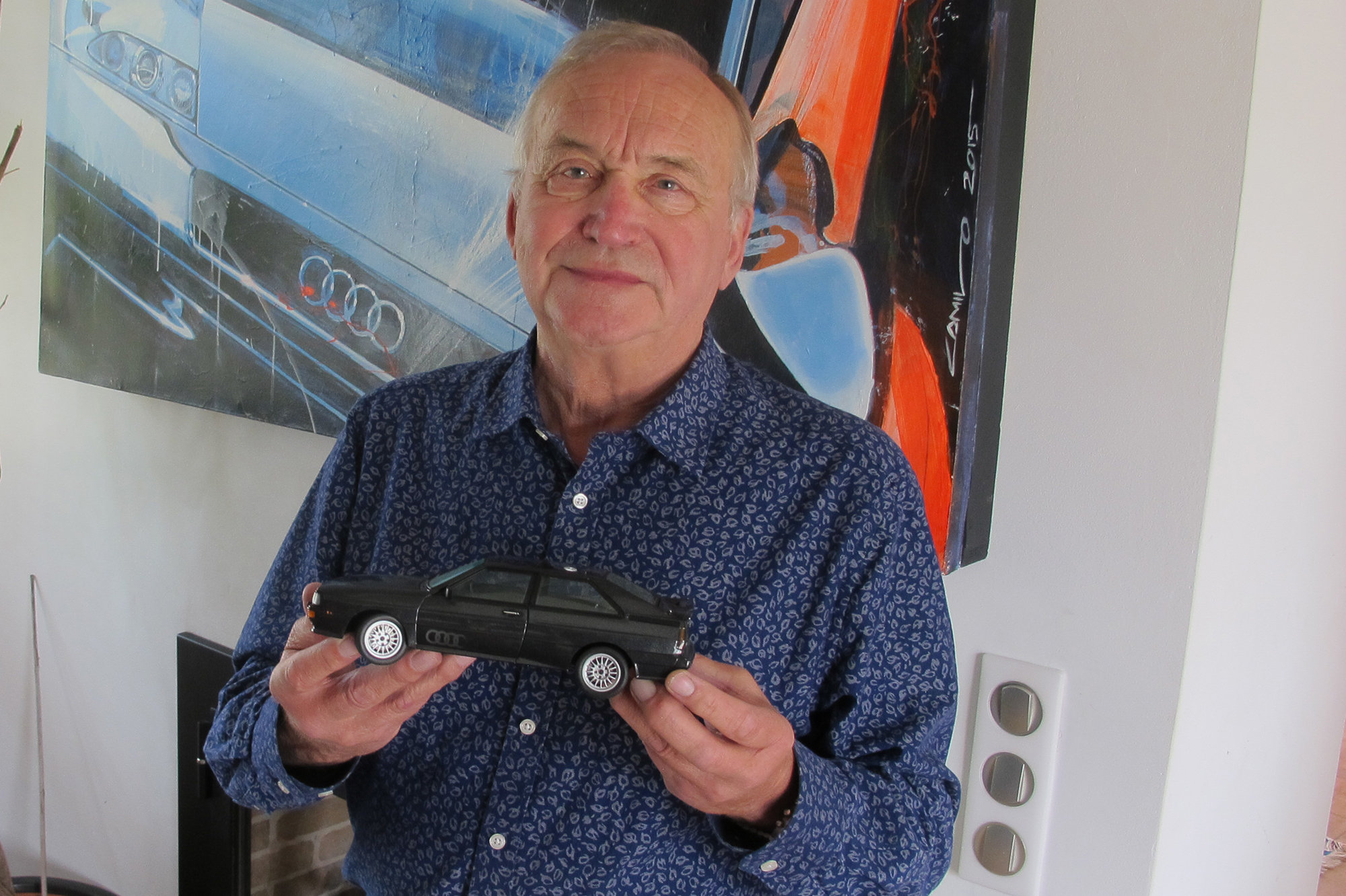
Smith, who has a house in the Luberon area of southern France (luckily for me, just 100km from Bensinger), joined Audi from Porsche and Ogle Design in 1977. Interviewed by Piëch, “very much a man in charge”, Smith was told Audi was on the move. His first task, as head of advanced design and special projects, was the creation of the Quattro.
“The 80 coupe was almost finished and it was my job to convert it into the Quattro,” Smith says. “My brief was to do something that visually transmitted the idea of the world’s first four-wheel-drive sports car.
“Piëch wanted the car to look sporty, technical and aggressive while, for budget reasons, to retain the steel body of the 80 Coupe. I worked with a clay design model and changed the fenders, the front end, rear bumper, and added the rear spoiler, after hours in the Wolfsburg wind tunnel working on the best shape. I also came up with the blister flared arches. They’d been seen on racing cars, but never on road cars. We tacked them on to the fenders by cutting and welding the bits. I wanted the tops to be a bit softer but that arched top gave the Quattro its character. You can still see the blister line has returned on the new A6.”
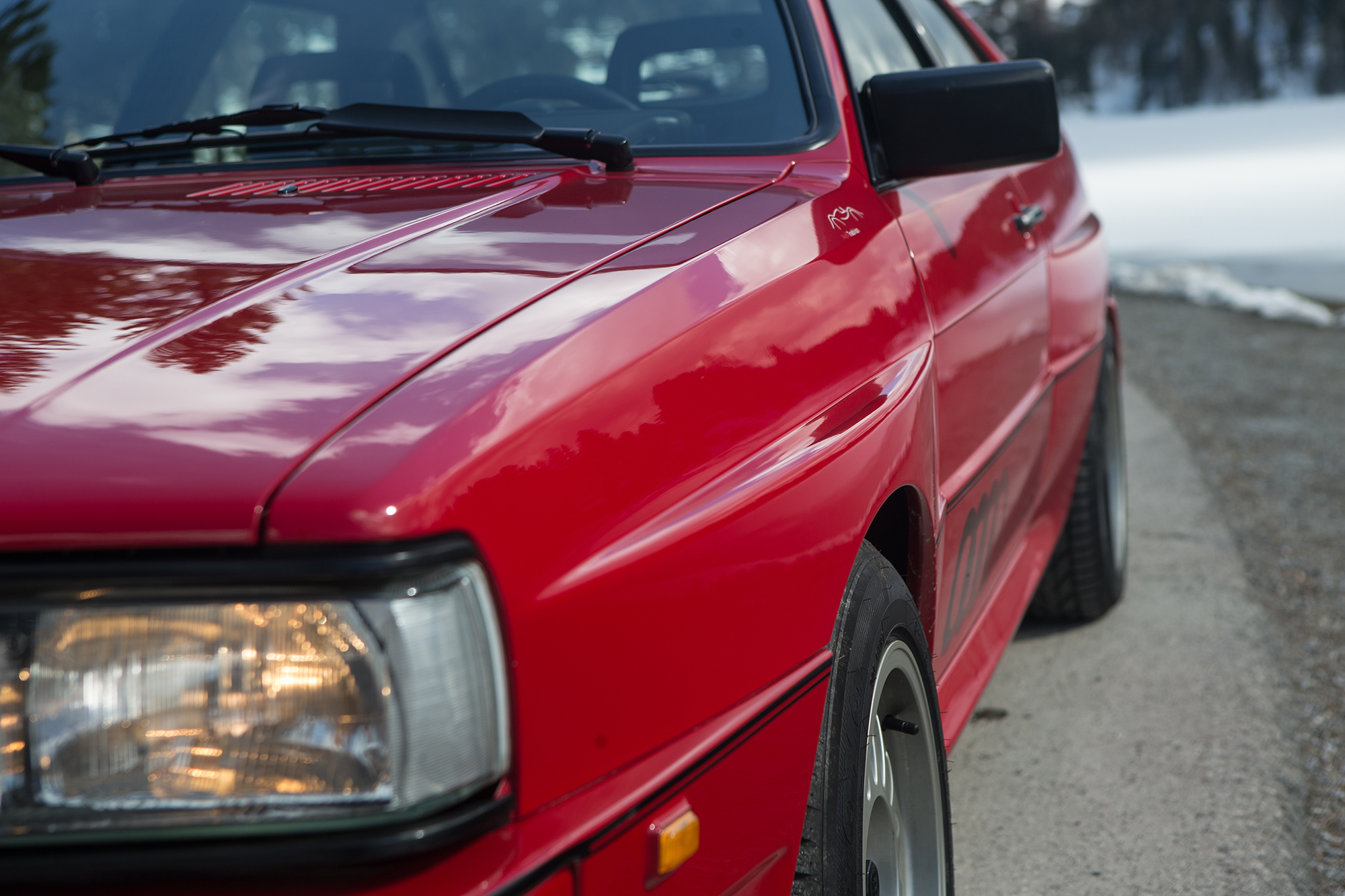
“You had to be very sure of yourself when talking to Piëch. He was very direct, but positive rather than intimidating. Until I moved to Opel, I’d never heard the term ‘business case’. It was Piëch’s genius that came up with and forced through four-wheel drive, turbocharging, direct-injection turbo-diesels, alloy construction and low aerodynamics.
“Whatever he dreamed up at the weekend, Audi would be doing on Monday. There was no marketing involvement, no business case, we didn’t have any of that. What he wanted he got.”
In May 1978, VW approved the plan to go into production with a model called Quattro, the name coming from Walter Treser. Revealed at the 1980 Geneva show, the Quattro seduced an enthusiastic press and instantly became the supercar of the 1980s.
“It was always in my mind that it would just be a road car,” says Bensinger. “But, at that point, Audi was not in the position – like BMW and Mercedes were – to introduce something like this without promotion and publicity behind it. It was a very, very important car for the company. Piëch and I both wanted to be better than the others; the four-wheel-drive car would make it possible.”
That meant using rallying to prove that the concept was not just quick in slippery conditions, but also in the dry. Drivers Walter Röhrl, Michèle Mouton, Stig Blomqvist and Hannu Mikkola were the marketing campaign. Audi won the WRC manufacturers’ title in 1982 and 1984 and the drivers’ title in 1983, and across an 11-year production run sold 11,452 Quattros.
The numbers prove the Quattro’s seismic impact: In 1975 Audi sold 205,218 cars globally, rising to 1,871,386 in 2018. Last year, all-wheel-drive Quattro versions of Audi’s range took 45 percent of production … and all its German rivals featured four-wheel-drive cars.
In 1988 Bensinger was headhunted by tier one supplier GKN to become product development director.
“Audi was my home, it was a hard decision,” says Bensinger. “Piëch asked me why I was leaving. I told him, ‘We have lost confidence in each other’.”
Still, he admits, “Without Piëch we could not do it. Nearly nobody at Audi was for the Quattro. He was strong, but the relationship was always difficult.”
Was the Quattro the highlight of his career? “For sure,” Jörg says, smiling.
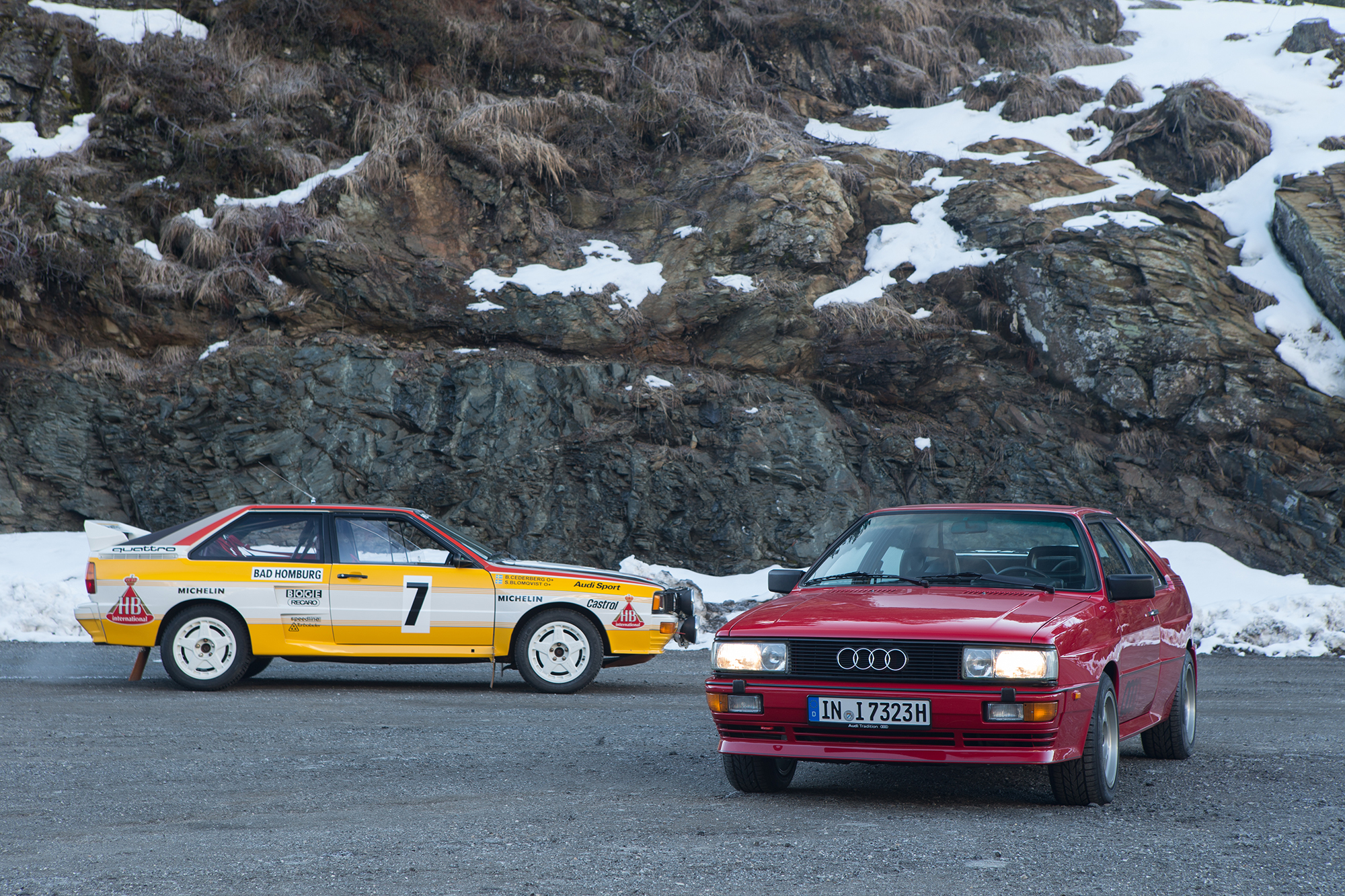
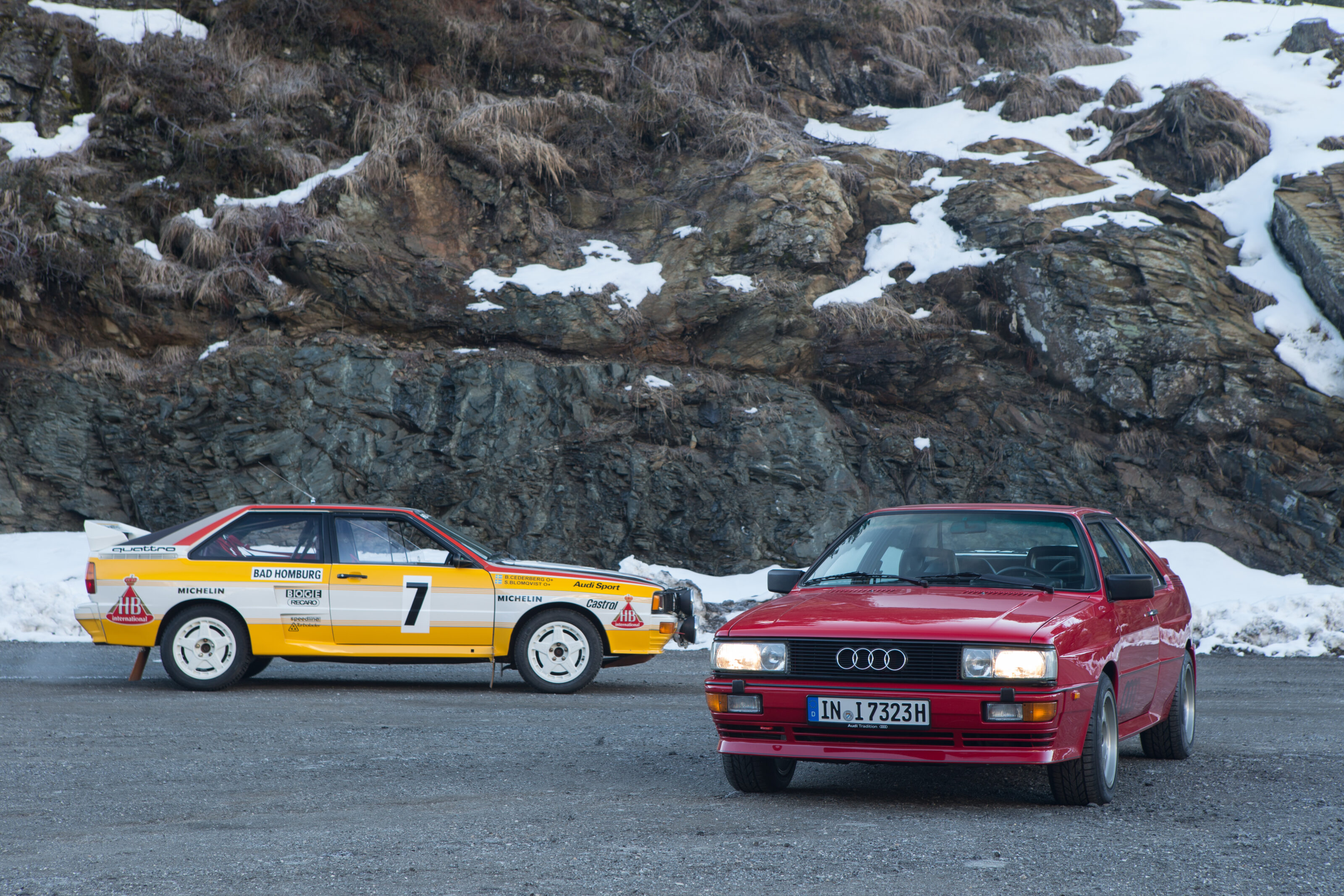
Unloaded from the truck, they sit together, two proud warriors. The setting is perfect: a quarry, the quintessential late 1970-early ‘80s automotive photographic location.
We all know the Quattro was designed before Audi discovered the wind tunnel with the 1982 100 and its 0.29cd. There is no denying the purposefulness of the design with its blatant, flared wheel arches and deep glass areas, but from every angle this is an old design, all vertical and upright, squared-off corners and boxy angular, with long overhangs and a 0.42 drag co-efficient that belongs in the ‘70s. Yet the styling remains determined, resolute and instantly recognisable: this is a much respected classic.
We’re in for one disappointment: research reveals that the old road, with its 34 percent gradient, is now closed to the public, replaced by a far safer two-lane route with a mere 23 percent slope. Still, this lone access road on either side of the pass provides plenty of driving thrills, climbing over 1200 metres across 51 km from one valley floor to the next, undulating one moment, meandering the next, flinging in a few hairpins and always flowing. It’s close to driving perfection. Turracher Höhe is now a popular snow resort but today, between the skiing and trekking seasons, traffic is minimal and the road surface dry.
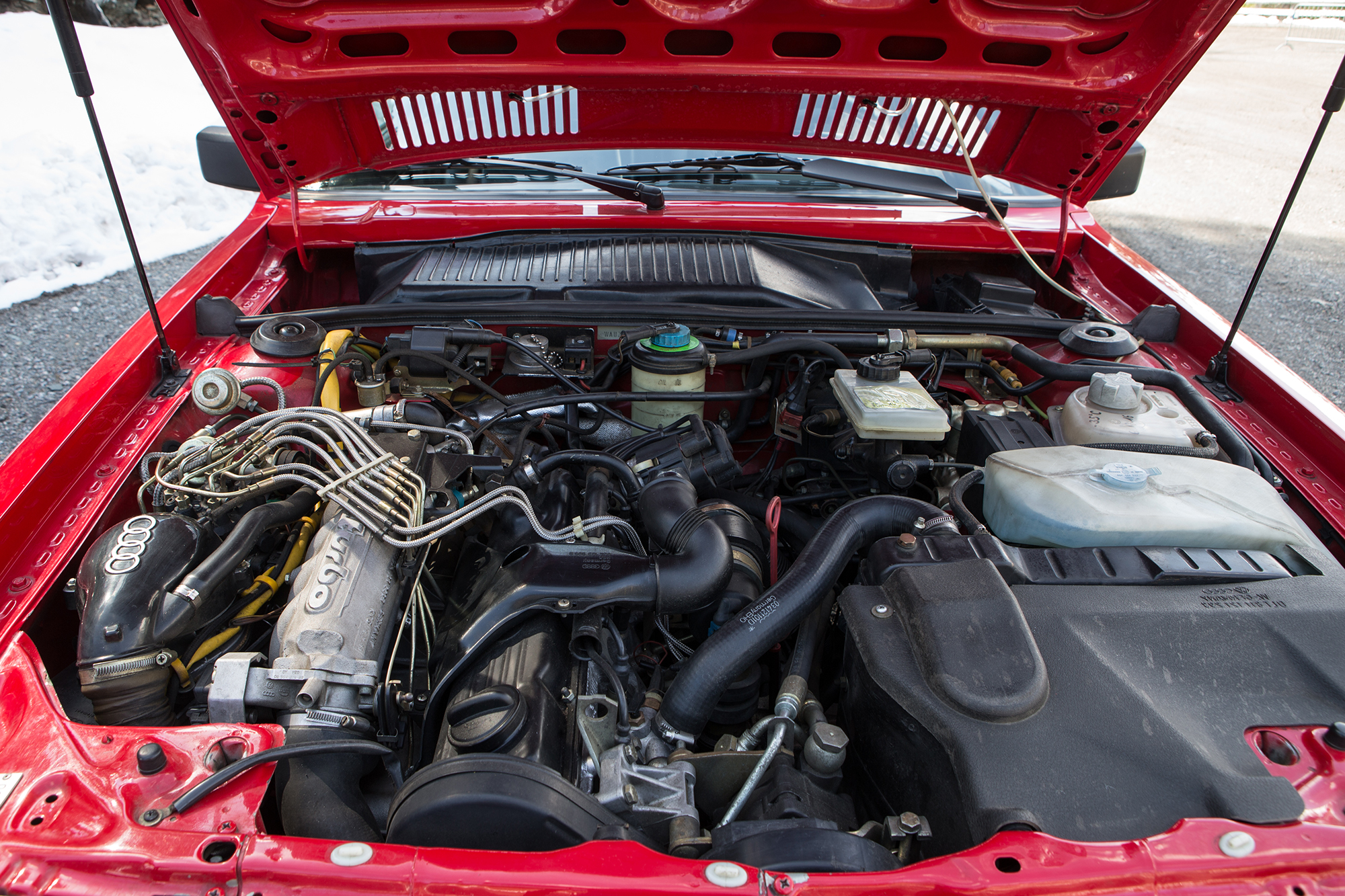
Even if it doesn’t feel all that fast, the basic quality of Bensinger’s concept means that the Quattro is easy to drive quickly. Once on boast, beyond 3000rpm, the thrumming turbo-five comes alive and delivers a sustained shove. The secret to its speed across the ground is the ability to maintain momentum. Even on the modest 205/55 R15 Toyo winter rubber – were tyres on performance cars really so small? – the Quattro is supremely composed, pushing gently into understeer on fast corners at the limit. There’s an immediate perception of immense stability and handling that remains fuss-free and secure, especially on wet roads. This car flatters the driver.
The Quattro’s age is also revealed by the slower-than-expected steering, especially around the straight ahead, and a thin steering wheel rim, the leather uncomfortably slippery from decades of use. The Quattro is easy enough to place on the road, but this is not modern-precise steering and it does dart and weave under heavy braking.
Our ‘second-generation’ Quattro eliminated the early car’s flawed gear ratios, closing the gap between second and third and permitting taller overall gearing. It remains low geared, to the benefit of flexibility, and the long-throw gear change, too, is faster and smoother than I remember. The car is also much noisier. What can’t be denied is the Audi’s traction. Point the Quattro at a ski-slope as we did and there is no wheelspin, no hesitation, just instant forward movement. It’s impossible not to be impressed.
Early cars lacked anti-lock brakes, and more than a few drivers discovered that four-wheel drive might solve adhesion issues, but can’t defeat physics when braking on slippery surfaces. Apparently, front-end accidents were plentiful.
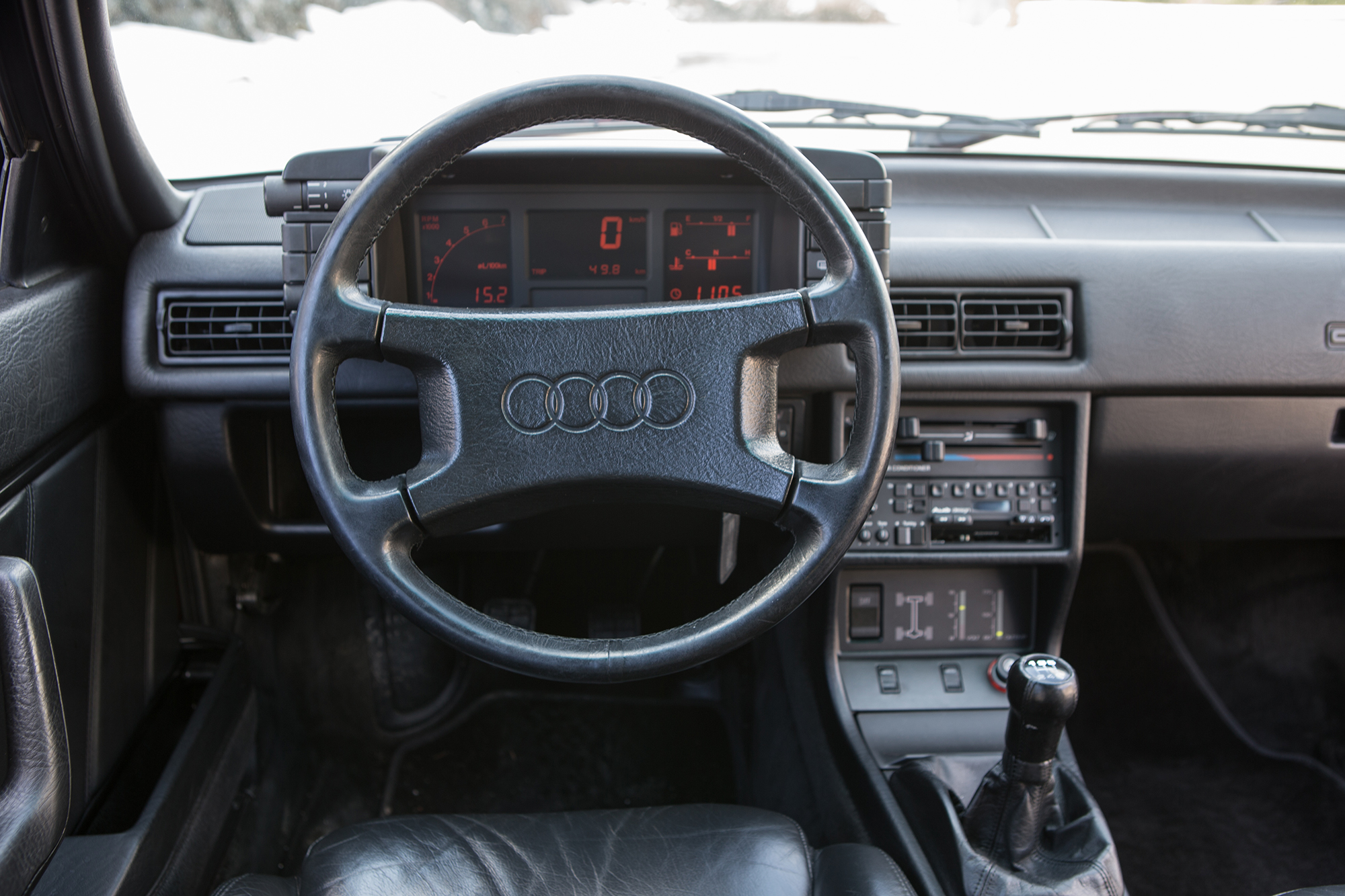
The cabin is airy, if black, the early, very 1980s tech attempt at digital instruments difficult to read. What works is the Audi’s excellent driving position, despite the fixed steering wheel, and the comfortable bucket seats. The rear chairs offer generous space for two adults, so this is a true four-seater.
From launch until 1982, the car was available only in left-hand drive, but a few came to Australia, though it was never officially imported. Kerry Packer, once the owner of Wheels, bought three. The first was converted to right-hand drive by Kevin Bartlett, the second was a later right-hand-drive car, and he kept a third in London, until all were replaced by Nissan Skyline GTRs in the early 1990s.
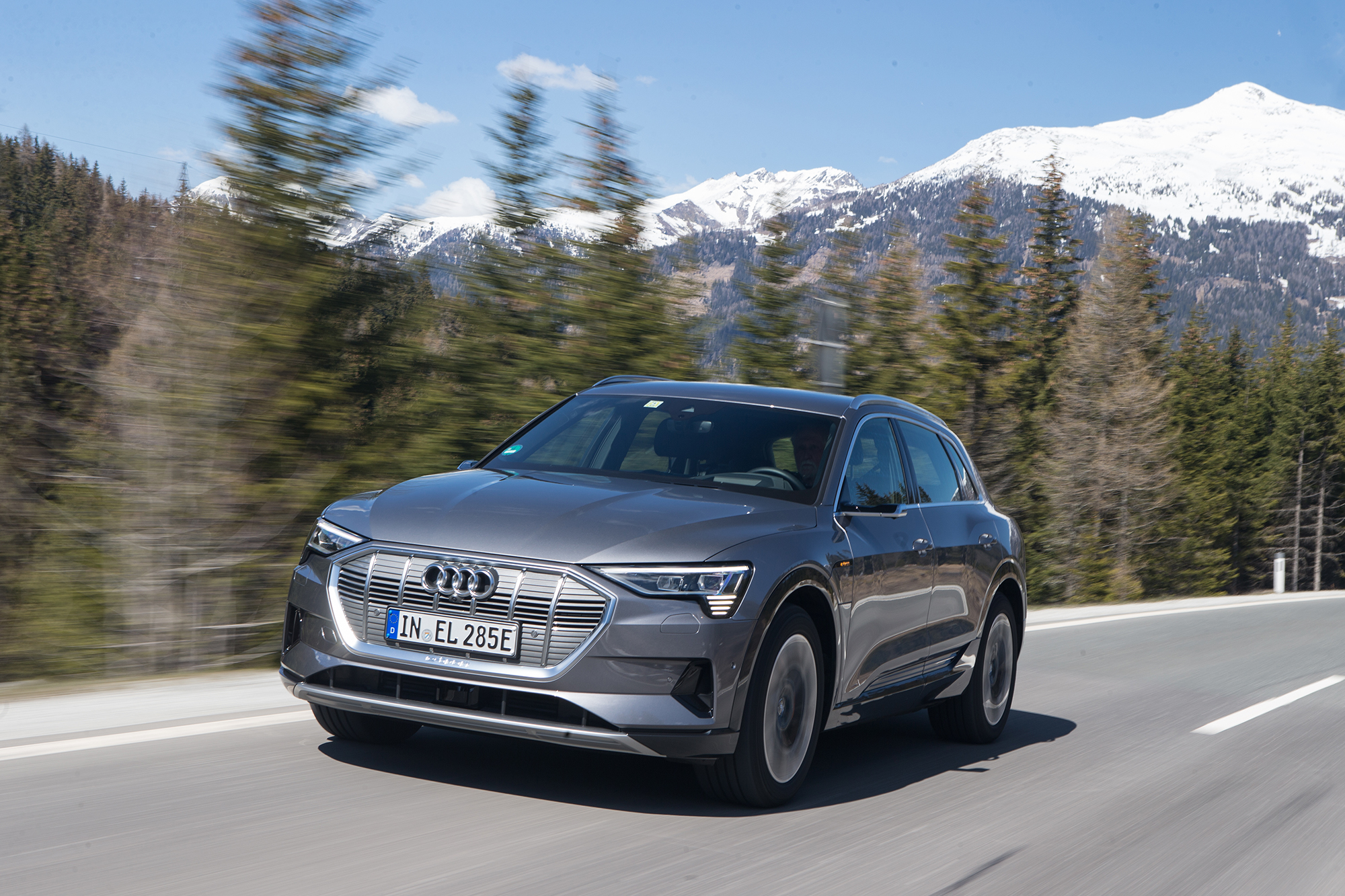
To get to Turracher Höhe, I’ve driven Audi’s new e-tron, the German manufacturer’s first fully electric production vehicle. Before we set out, I hoped to find a link between the Quattro and the e-tron. Beyond the fact that both are badged Audi and are four-wheel drive, there is none. The Quattro is the inspired result of an engineering genius intent on upsetting the status quo. Audi’s ‘Vorsprung durch Technik’ – ‘Progress through Technology’ – advertising campaign might have been written by Piëch specifically for the Quattro.
The e-tron belongs to a different world. Ingolstadt is now driven not by individual engineering brilliance but by the same marketing genius that created, among others, the hugely successful A5 range. The e-tron looks like any other Audi SUV. It ignores the potential packaging benefits of electric cars. I can’t imagine Ferdinand Piëch allowing such conservatism.
Audi design boss Marc Lichte admits Audi looked at more radical designs, but says marketing favoured a more familiar look. The thinking, apparently, was to ease the transition to electric cars. So no bat-wing doors, no glass dome roof, nothing weird, resulting in something that’s positioned close to the Q7 in size, but with better proportions and evolutionary styling. Still, we have to ask, does an electric car need a traditional radiator grille?
Audi’s familiar design language carries over to the interior that borrows most of its technology from the new A5/A6/A8. The only major exception is the new lovely-to-use new forward/reverse gear selector. The cabin is also a modern, high-tech wonder. With the same MMI Touch Response system now common to Audi’s bigger cars, a pair of pressure-sensitive haptic-feedback touchscreens control almost everything outside the steering, braking, and acceleration, which is effortless and swift without touching on ludicrous. The digital instrument cluster can even display Google Earth navigation. It’s now a cliché, but still the truth: nobody does interiors better than Audi.
Range? The best we saw was a predicted 327 km, a long way shy of Audi’s claimed 417 km. Our Turracher Höhe hotel provided free charging, and one of Germany’s 400-strong, 150kW charging stations give 80 percent charge in 30 minutes. By the time the e-tron goes on sale in Australia next year at around $140,000, Audi predicts range anxiety will not be an issue.
Audi planned a replacement for the Quattro, but after the sales failure of the 1991 S2 coupe, based on the B4 80, the idea of a standalone and authentic Quattro replacement RS2 coupe died. At the 2010 Paris show, Audi unveiled a Quattro concept to celebrate the 30th anniversary of the original. There was talk of a small production run of up to 500 cars, but the project was abandoned in 2012.
Despite a string of wonderfully innovative, technology-driven and beautifully styled Audis over the decades since, Ingolstadt seems to have decided it’s best to leave the original Quattro as a tribute to a team of dedicated engineers who created the car that shook the establishment to its core and set Audi on its path to greatness.
There were high hopes for Nissan’s luxury offshoot Infiniti in Australia, but since its launch in 2012, it has failed to make any impression on Australians.
With the brand finally admitting defeat, here’s what to expect from the impending closure of the Infiniti brand in Australia.
More
- Infiniti withdraws from Europe
- Depreciation heroes – deals on almost-new 2019 cars
- All of WhichCar’s Infiniti reviews
What does this mean for Infiniti owners?
The decision by Infiniti to pull out of Australia has come from its international head office. Infiniti Australia says that the brand will continue as normal until an unspecified date late in 2020.
The brand has five full dealerships and two service centres across the country.
“It is business as usual and we will continue to look after existing owners – along with future Infiniti owners,” company spokesman Tony Mee told WhichCar. “In the near future we will confirm our plans to support customers beyond late 2020.”
For owners of Infiniti cars, the reality isn’t that bad. The majority of its range, including the QX70 and QX80 large SUVs, its Q50 mid-size sedan and Q60 sports coupe, are based on Nissan products, while its Q30 and QX30 baby SUVs are derived from the Mercedes-Benz A-Class.
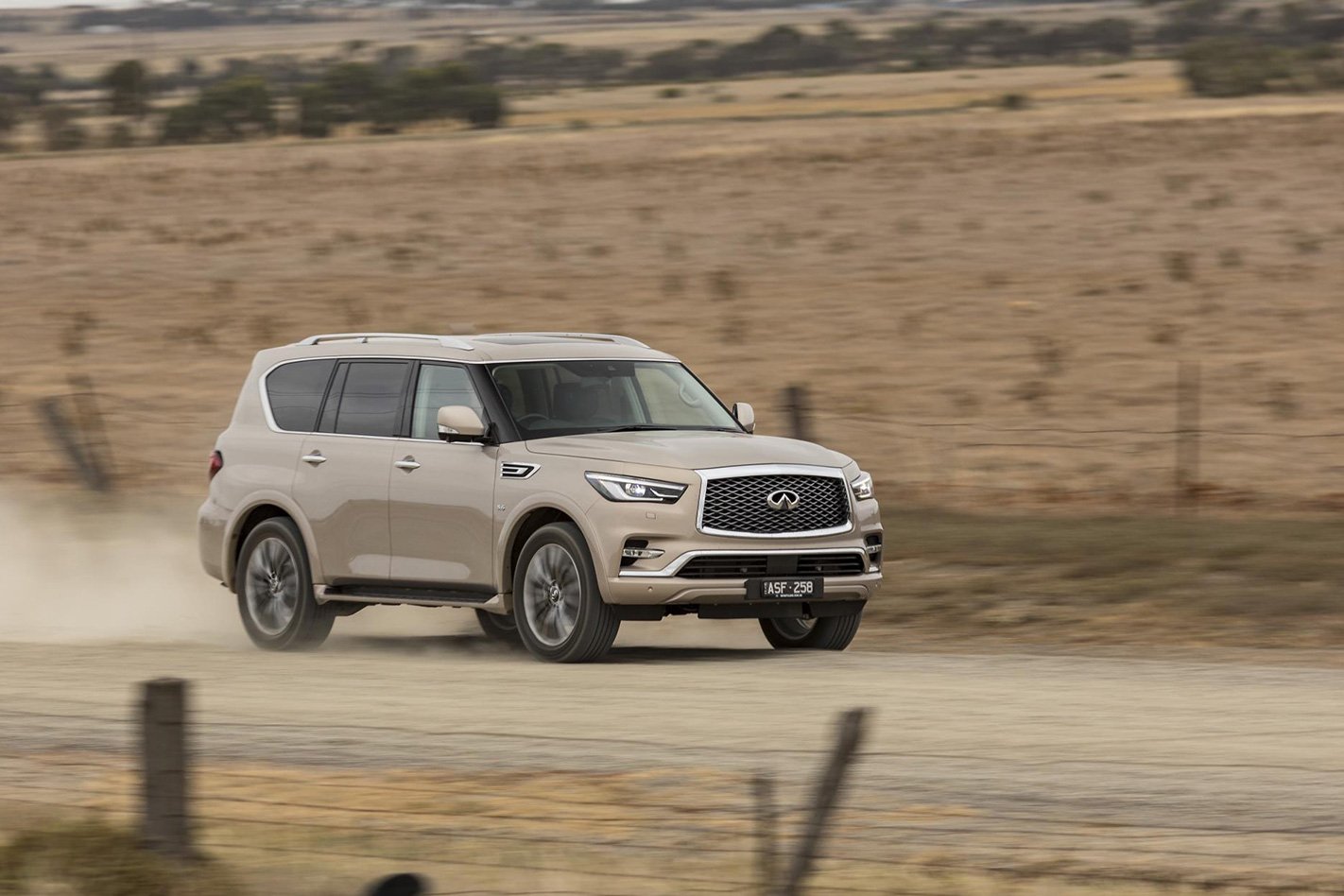
Infiniti QX80
This means that sourcing parts like oil filters, air filters and other consumable spares will be relatively unaffected.
It’s likely that sourcing parts for Infiniti crash repairs will be handed off to Nissan Australia in the first instance. Infiniti body panels are imported from overseas, so other than having to wait for supply, there should be no issue fixing a crashed Infiniti.
“Beyond 2020, the company is assessing the most effective and convenient way of providing full aftersales service for Infiniti owners in Australia, including service, maintenance and warranty repairs,” claims Infiniti in a statement. “The company will confirm these arrangements in the months to come.”
Why is Infiniti withdrawing from Australia?
The official line is Infiniti is looking to refocus on its two strongest markets: the US and China.
The reality is that Infiniti has sold just 3987 cars here to the end of July 2019 since its launch in 2012. By way of comparison, Nissan has sold close to 400,000 in Australia in that time.
Australia’s car market is one of the toughest on the planet, with more than 55 new car brands vying for consumer attention, and Infiniti simply didn’t have the product, the dealer network or the value to make an impact.
Interestingly, it’s actually the second time the brand has withdrawn from Australia. It debuted in 1993 with a single model, the Q45 sedan. A $140,000 price ticket ensured slow sales, and the brand disappeared in 1996.
What happens if I have an Infiniti on order?
“We ask that they speak to the Infiniti Centre where they placed their order,” Mr Mee told WhichCar. “They will be happy to give more information and talk through the options of progressing with or cancelling the order.”
Can you get a deal in a new Infiniti?
Yes, but that’s nothing new. The brand has sold a total of 351 cars so far in 2019, while Nissan has sold around 29,000… and it’s fair to say that it’s been possible to get a deal on a new Infiniti for some time.
For example, it moved its Q30 and QX30 range to drive-away pricing after reducing the number of variants, while the Q50 and Q60 are also available at drive-away prices.
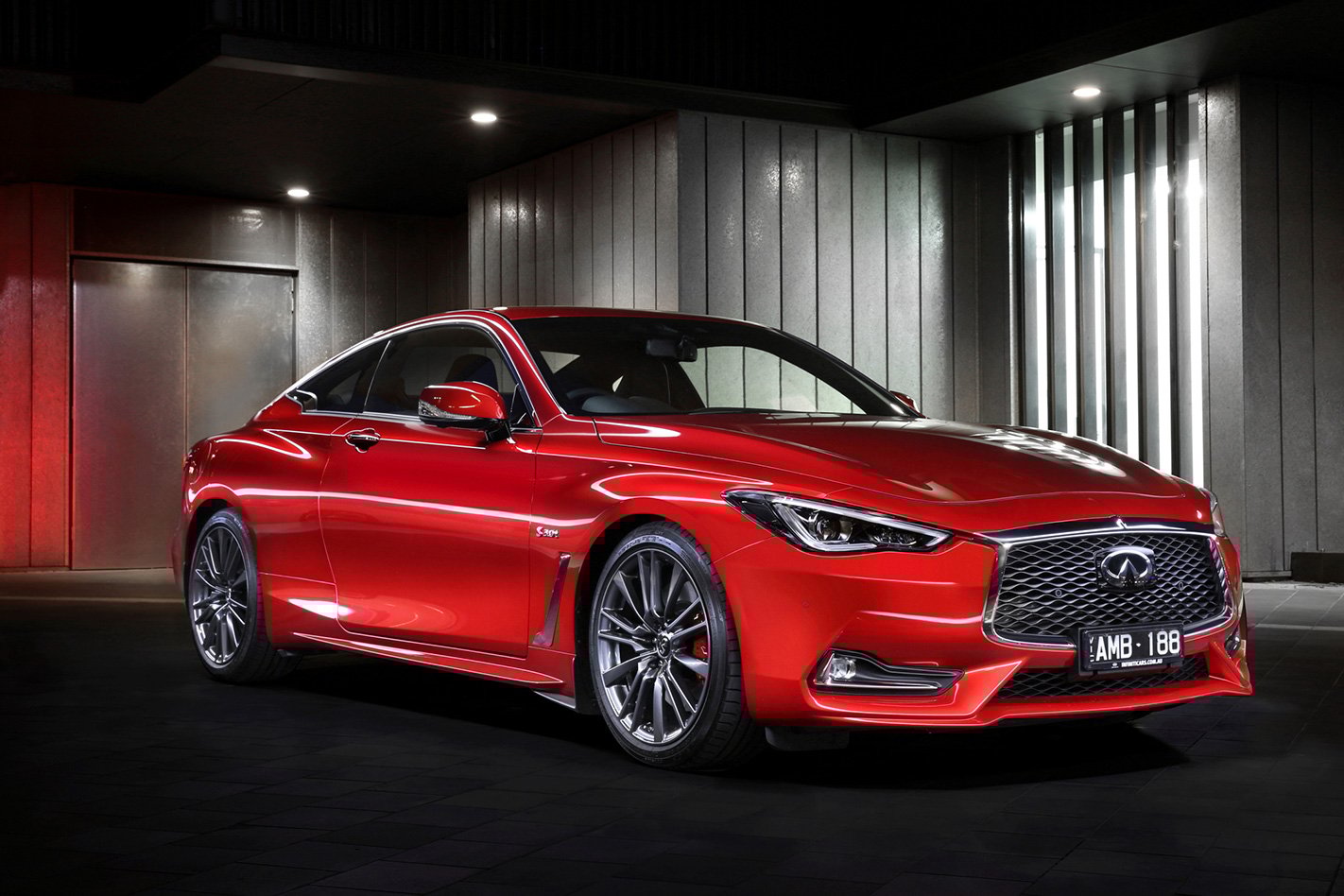
Infiniti Q60
Given the lack of demand and a small number of dealers, there won’t be too many Infinitis on sale on showroom floors around Australia.
So, if you don’t mind owning an orphan, now is a very good time to buy an Infiniti.
Does this mean the new QX50 mid-size SUV won’t arrive?
“QX50 will not be launched in Australia,” confirmed the spokesperson.
What about Infiniti resale value?
There’s no doubt that Infiniti resale prices will take a big hit in the wake of the news of the brand’s withdrawal from the Australian market.
When Opel withdrew from the Australian market in 2015, the majority of its cars continued to be sold here as Holdens – yet identical Opel-badged versions of those cars consistently sell for 20 percent less than the Holdens.
If you own an Infiniti and were planning to sell it, we would advise you to do it as soon as possible. Or simply run the car for a longer period to amortise the cost. As we’ve mentioned, there will be no issue with buying parts like spark plugs or brake pads for your Infiniti, so why not enjoy it a bit longer?
Will there be any job losses at Infiniti related to the closure?
This is unclear. ”We are working to find alternative opportunities for any employees who are affected,” said an Infiniti spokesperson.
What’s the biggest cost of owning a new car in Australia? Fuel? Servicing? Insurance? Car cleaning after your dog has barfed in the back seat?
Nope, it’s depreciation. For most cars in Australia the cost to the hip-pocket from depreciation alone far outweighs the cost of any other expense related to a new car.
So, what is it? Depreciation is how much value a car loses over its lifetime, due to age, wear and tear and the cost of maintenance.
It is often a significant figure as well: data garnered from Wheels’ Gold Star Value Awards shows the Kia Picanto, is estimated to lose 54 percent of its value over the first three years of ownership. Ouch.
That’s more than half of the cost of buying the vehicle vanishing within three years – and the Picanto’s depreciation is considered pretty good by city car class standards.
There are certain services that calculate a car’s depreciation, such as Glass’s Guide. What they calculate is not a fixed number either, with the figure varying between manufacturers and models – it’s important to do a bit of research on depreciation figures for any car you are keen to buy.
Using the used car market is a good guide to figure what you’ll lose after a certain period of time.
It might seem logical for a used product to be worth less than the new version, but buying a car is potentially the second-largest investment a person will ever make (behind home ownership), so it’s important to ensure you don’t end up burning money for no reason.
As a guide, a good depreciation rate is around 25-30 percent after three years, while the industry average is around 50 percent.
Base-model cars often depreciate more than their higher-cost equivalents, so factor this in before you head straight to the cheapest choice in the range. As a used-car buy, a sunroof and leather seats will do more to beef up the trade-in or resale value of a car than cloth trim and a powered driver’s door window.
But conversely, a higher-optioned car will have further to fall, in terms of price – so there’s that to consider as well.
The key to depreciation is the year in which the car is made, and not when it was first registered. At the start of each year new car showrooms will often have runouts offering discounts on the previous year’s models that factor in part of the depreciation hit a car has suffered from being built in the previous year. Factor that into whatever price you negotiate for your new ride.
Depreciation also affects car insurance, a long-term, ongoing cost. It may be cheaper in the long run to pay an extra couple of thousand dollars for a car with a more recent build date than one with last year’s.
Be wary of showrooms offering discounted new cars, as some may not be as fresh as the other cars they sit beside. A quick search of the internet shows some new cars that have sat around in showrooms for up to two years are priced almost the same as cars that were made this year – despite having lost at least a third of their value due to depreciation.
Infiniti will no longer sell cars in Australia following a shock announcement released today.
The luxury offshoot of Nissan has struggled with sales in recent years, and will wind down its operations before withdrawing from the Australian market completely in late 2020.
An official company press release states that withdrawal is “the next step in a strategic plan that will provide greater efficiencies”.
Infiniti will electrify its portfolio internationally, as well as stopping the production of diesel products. Instead, it will focus on selling SUVs in North America, and introducing five new models in China in the next half a decade.
The company will continue to have a local presence for existing owners, stating that dealers will remain operational for “full sales and aftersales service”.
“Infiniti is committed to fulfilling its obligations to customers in Australia,” a press release reads.
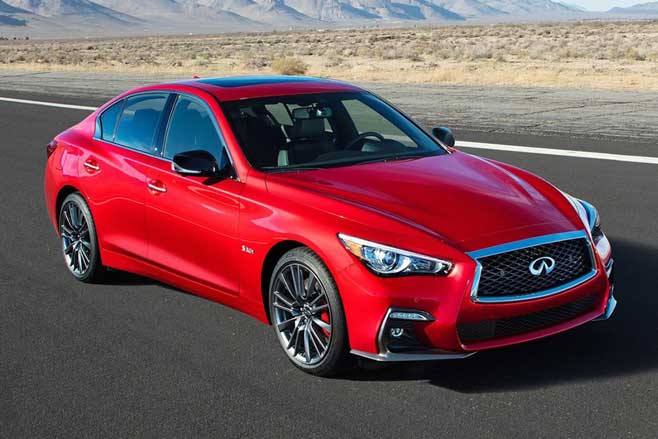
Full details of how Infiniti will provide support for customers have not been confirmed, with the company stating that more information will be provided in the coming months.
Australia isn’t the first market Infiniti is retreating from, with the Japanese brand announcing it would pull out from the UK and Western Europe in March this year.
During that announcement, the company stated that the restructuring would “have no impact on Infiniti’s ongoing operations in Eastern Europe, Middle East and Asia, which continue to grow” with an Australian spokesperson telling WhichCar that our market remained a part of the company’s global plans.
This car is proof that the more traditional parts of the motor industry still have some serious catching up to do if they want their new EVs to be able to match Tesla.
The Performance is the ultimate version of the Model 3, for now at least, based on the existing Dual Motor model and sharing the same 500km battery pack. The significant difference is a punchier rear motor, which increases the total system output to 340kW. Tesla claims that is good enough for about a 3.5sec 0-100km/h time, making it nearly as quick as the fastest version of the bigger Model S.
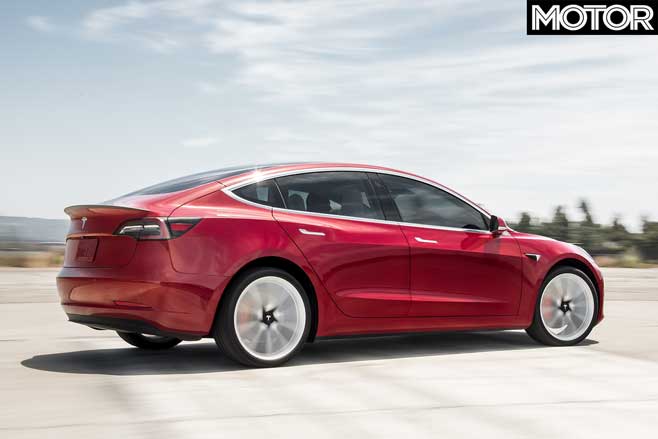
Our test car, driven in the US, was also fitted with the Performance Upgrade pack (normally USD$5000 but now fitted standard), bringing 20-inch wheels, Michelin Pilot Sport 4 tyres, lowered suspension and a 17km/h-higher top speed of 250km/h. The car now costs $65,200 in the US, compared with $49,000 for the standard Model 3.
This car is startling. I drove the Model 3 Performance just after experiencing the Dodge Challenger Hellcat Redeye for the first time and can honestly report that the acceleration of the Tesla is only fractionally less impressive than that of a supercharged 800-horsepower muscle car.
But while the Dodge does its thing to a furious soundtrack, the 3 delivers its organ-sloshing longitudinal G-forces without drama or apparent effort. The chassis can digest even stamped throttle starts without squeaking or slithering, and with no more noise than the whine of the electric motors.
Full-bore starts are huge fun – it is impossible to experience one for the first time without uttering expletives – but they are far from the Model 3 Performance’s only trick. As with the regular car, the quality of engineering in the 3’s powertrain and chassis runs much deeper than the brand’s detractors would have you believe. The Performance is as impressive being driven gently as it is giving it all.
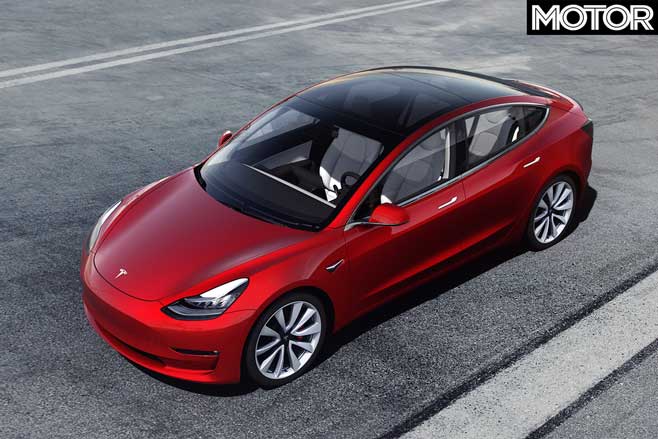
The speed of response is outstanding, illustrating the biggest difference between a brawny EV and an internal-combustion performance car. The Model 3’s throttle response is effectively instantaneous, and the lack of a gearbox means there is no delay in the drivetrain; every throttle input is translated into immediate effect, acceleration arriving as quickly as your toe can move. Even a conventional car capable of matching the Performance’s 0-100km/h time would never keep up on real-world acceleration.
On Michigan backroads, the Model 3 stayed impressively flat under hard cornering, although tighter sequences make its considerable mass feel obvious. Yet it always feels a measure more agile than the staid Model S when asked to change direction quickly, with some active torque management helping it to turn and hold a line effectively, if with little sense of driver involvement.
The only thing that unsettled it was the combination of a big bump and a loaded-up bend, with a brief moment of indiscipline as the wheels unloaded – the first time I’ve encountered power oversteer in a Tesla.
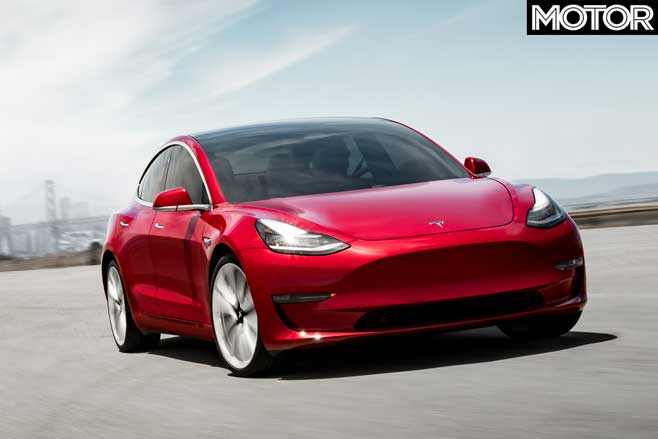
The rest of the Model 3 remains true to the brand’s established values. Arrive in the cabin straight from a similarly sized upmarket model and the interior will feel minimalistic to the point of being empty. It certainly takes a while to get used to the delegation of almost all functions to the vast central touchscreen; you even use it to open the glovebox.
The more traditionally minded would probably appreciate a few more conventional buttons, not least for the heating and ventilation. But this is Tesla’s way and – in the manner of the deliberate distinction that used to be made between Apple and Windows operating systems – customers seem to like it.
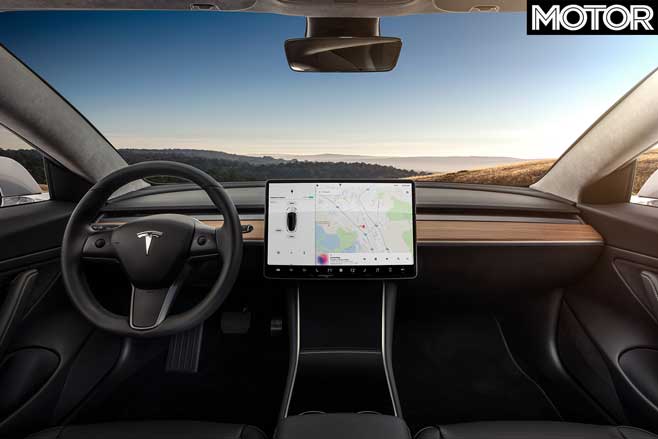
The Model 3 has yet to deliver on Elon Musk’s promise of genuine affordability and a USD$35,000 lead-in price. And, as the most expensive variant of what was meant to be the brand’s cheapest car, the Performance might seem to be heading in the wrong direction. But it’s also a timely reminder that, as long-established OEMs ready pure electric models, the world currently contains only one upmarket EV maker with a proven track record of selling a significant number of cars.
Any electric rival wanting to beat the Tesla Model 3 is going to have to be very good indeed.
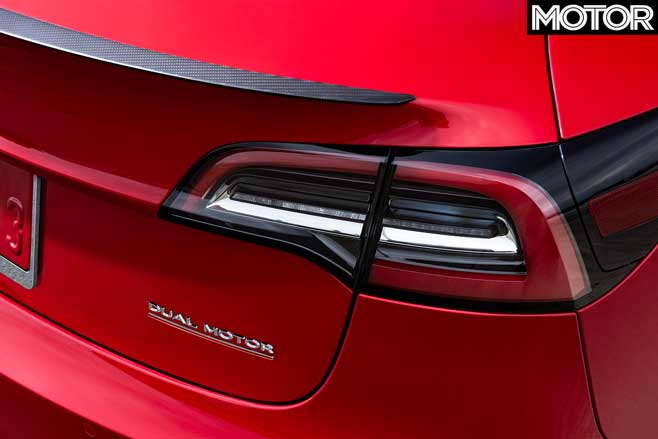
2019 TESLA MODEL 3 PERFORMANCE SPECS Engine: Twin DC electric motors Power: 340kW Torque: 639Nm Weight: 1850kg 0-100km/h: 3.5sec (claimed) Price: $125,000 (est)
Like: Instant, seamless, linear, breathtaking yet silently effortless acceleration Dislike: Having to access everything from the central touchscreen; considerable heft
Rating: 4.5 out of 5 stars
