
Introduction
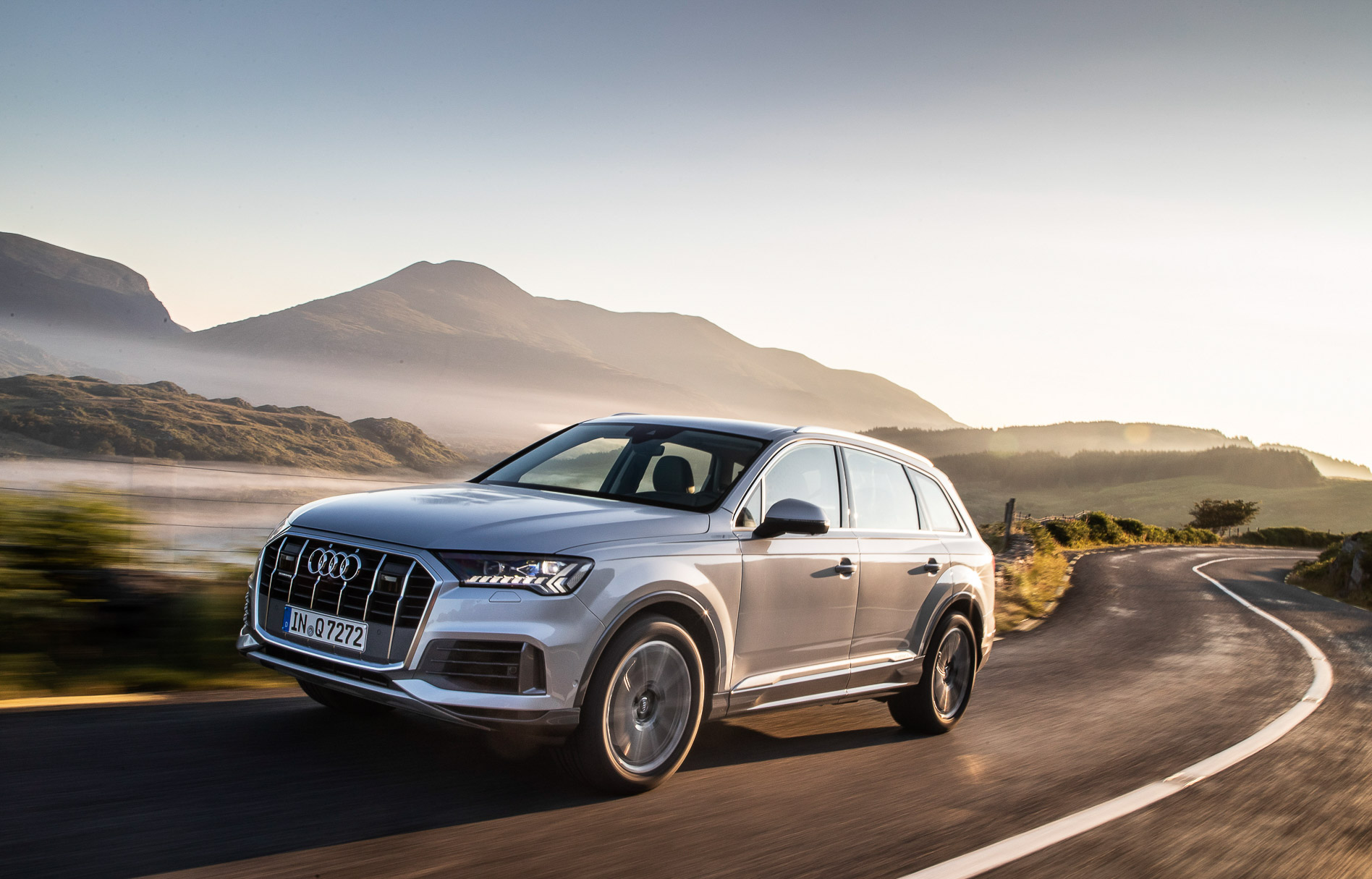
Audi’s update program continues to run at a million miles an hour, with its large-sized Q7 seven-seat SUV the next in the firing line.
The second-generation SUV made his debut in 2015, and it has scored solid numbers for Audi since then, despite costing the thick end of $100,000.
This mid-term facelift will surface down under early in 2020, and while prices aren’t locked down yet, it’ll certainly go north of its current position.
In return, though, the Audi Q7 will benefit from the best bits that the German luxury car maker currently offers, like electrically decoupling anti-roll bars, touchscreen multimedia and mild hybridisation.
Our drive in Kerry, Ireland was all too brief, but even from a tantalising first glimpse, we reckon the Q7 will continue to be popular.
So what’s new? It’s always hard to impart runway glamour to a large seven-seat wagon on stilts, but Audi’s stylists have combined the ruggedness of the Q7 with design cues from the urbane Q8.
Audi’s new frameless grille broadens the face of the Q7, though its sheer width reduces its impact. New, sharply angled LED headlights add authority to the front end, while a confident LED rear light structure adds distinction and character to the view at the back end.
Coloured lower rocker panels echo those used on the Q8 and the incoming e-tron, while new machined-face rims wrap up the exterior makeover.
Inside, the addition of a new, integrated multimedia touchscreen blends with the full-width horizontal vent slats, while a more conventional centre console treatment provides an interesting contrast.
Value
We’ll have to wait for early 2020 to get an idea of how much the Audi Q7 will cost in its updated guise but for reference, the current line-up ranges between $97,800 and $130,990. It sounds like a decent wedge of cash, sure, but it’s a lot of car for the money.
It competes with cars like the new BMW X5, the Range Rover Sport and Mercedes-Benz GLE, as well as sister SUVs like the Porsche Cayenne and the Volkswagen Touareg, which shares its basic bones and mechanical bits.
On its way to Australia for certain is the Q7 50 TDI (shown here), which uses a 3.0-litre turbocharged diesel engine that makes 210kW (ten more than previously) and 600Nm. It uses a traditional eight-speed automatic transmission linked to a permanent AWD drivetrain, all riding on air-sprung adaptive suspension.
Audi has added a 48-volt power system to the car, along with a belt alternator starter and a version of so-called hybridisation that uses a small lithium-ion battery to fire up the Q7 after up to 40 seconds of coasting (where the drivetrain and engine disconnect at highway speeds to save fuel).
Warranty-wise, Audi sticks with a three-year, unlimited-kilometre offering, despite the industry moving to a minimum of five years coverage outside the premium brands. Audi’s rivals including BMW and Mercedes area also persevering with three years.
Servicing is recommended at 15,000km or 12 months, and two plans are available; a three-year plan costs $2310, while a five-year plan costs $3120.
We really didn’t get much in the way of meaningful fuel burn data on our short, traffic-snarled jaunt around the Emerald Isle, but Audi claims a combined fuel economy figure of 6.9L/100km for the V6 diesel. It runs a 75-litre tank for a theoretical range of more than 1000km.
Standard Features
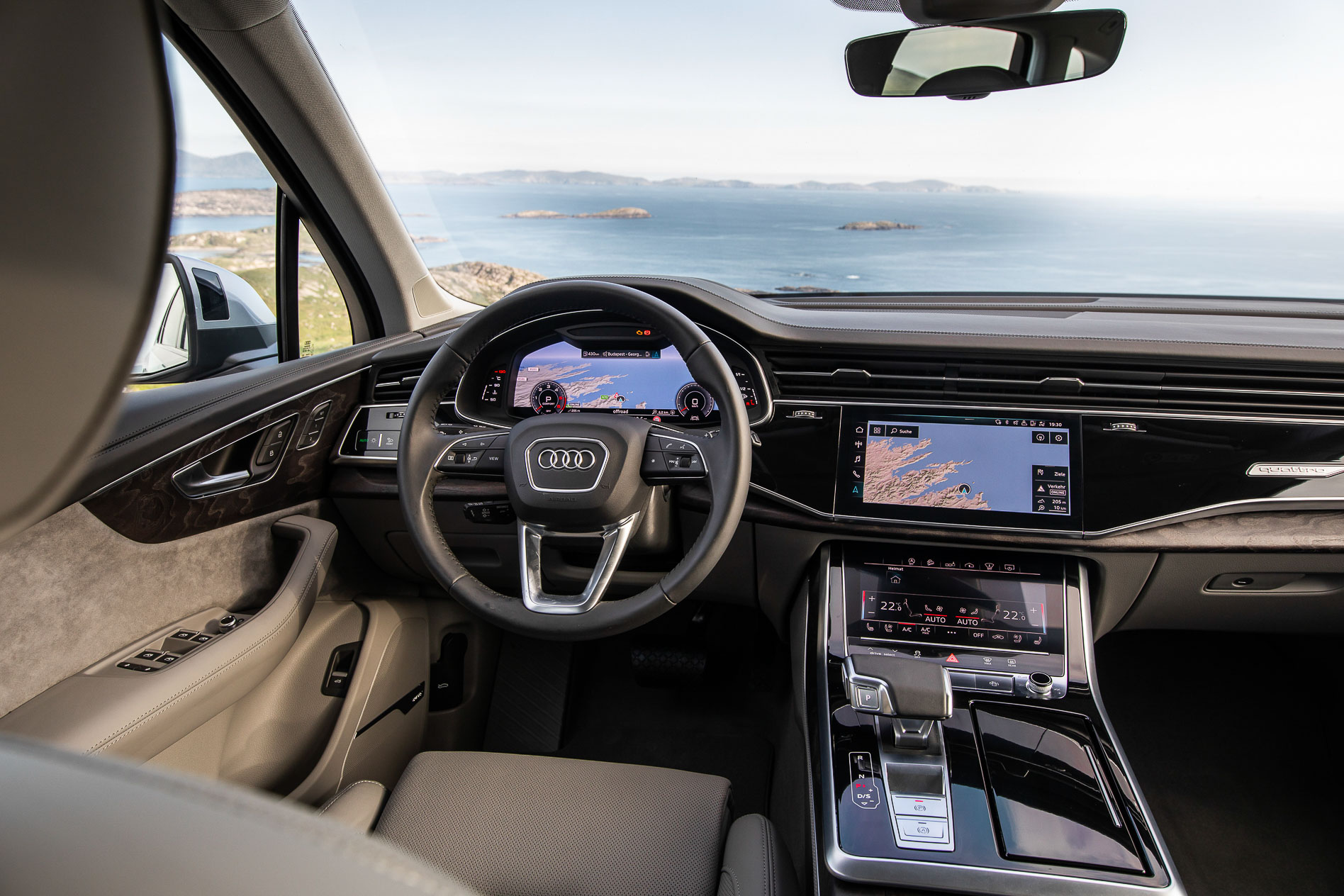
Basics specs are generous, and include LED headlights and tail-lights as a minimum, leather interior for all seven seats (a five-seat spec is available on a no-cost option order-only basis), leather-clad wheel, a digital dash and new multimedia system with wireless Apple CarPlay, smart sat-nav and digital radio, inductive charging mat, heads-up display, powered and heated front seats, rear climate controls and multiple vents, LED interior lighting and more.
New additions on the options list include the clever electro-magnetic decoupling anti-roll bars from the Audi S Q8, which allow the Q7 to tower up to 225mm above the ground. Those same anti-roll bars will then stiffen up under the car in more dynamic modes to minimise body roll, while the air springs lower the car to improve its aero figures and its centre of gravity.
Rear-wheel steering will also feature on the options list, along with sports air-sprung suspension.
Nineteen-inch alloys feature on our grey tester, but we bet that 20-inch rims will come standard on Australian cars.
Safety
Expect nothing less than an ANCAP maximum five-star rating when the updated Audi Q7 gets to Australia.
A full suite of active and passive safety features that include low- and high-speed AEB with pedestrian detection, smart adaptive cruise control with traffic jam management, front- and rear-cross traffic detection, trailer sway control and more is supplemented by up to seven airbags in all the right places.
Size
Even though the Q7 sells as a large SUV, the five-metre-long seven-seater looks much bigger. It’s nearly two metres wide, as well, giving it a firm hold on the earth.
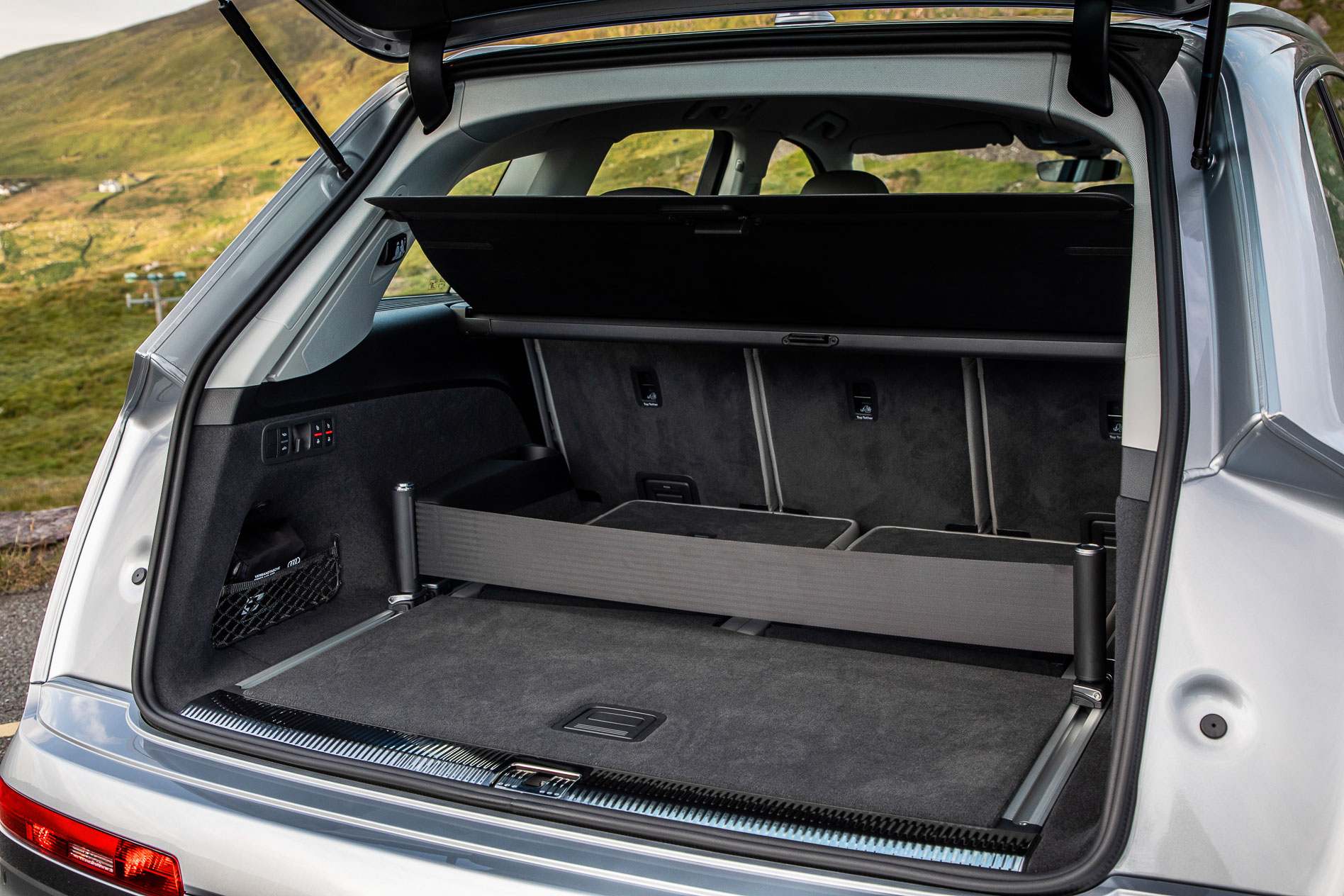
The rear cargo space can hold 865 litres of gear, which is a reduction in space over the current model thanks to the hybrid gubbins stashed under the boot floor. Full capacity with the seats lowered is 2050 litres.
Want to tow with the Q7? It’ll handle up to 3500kg of braked trailer.
Comfort
The front seats in our tester are a little on the narrow side, surprisingly (does my butt look big in these jeans, then?), but have long bases and supportive backs. There are countless variants and combinations on offer out of the factory for Europe and other continents though, so we reckon Audi may change spec before the Q7 lobs down under.
There is an absolute acre of room in the second row, which features sliding-rail seats with reclining backs and simply oodles of space in every direction. Multiple rear vents can be controlled via a rear air-con screen, while two USB ports supplement the two up front.
The third row folds out of sight into the floor of the boot; if you want a five-seater, you can order one ex-factory if you’re prepared to wait.
On the road
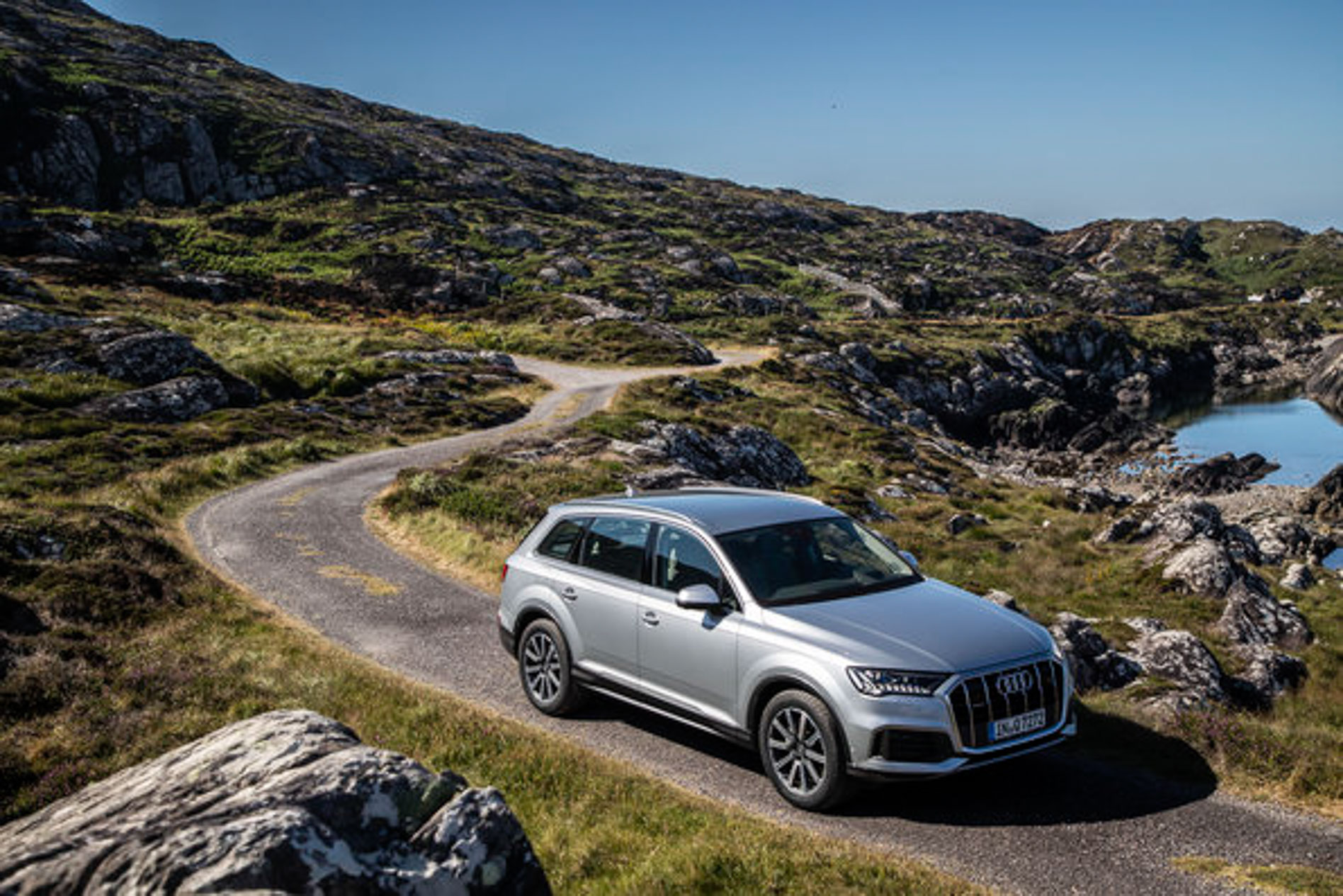
Unfortunately, we didn’t get a chance to sample the Q7’s off-road charms, but a 210km tour of the southern Irish district of Kerry and Killarney – on nerve-rackingly narrow roads for a five-metre long, almost two-metre wide SUV – showed off a confident, supple and capable large SUV whose handling prowess absolutely belies its size and 2.3-tonne weight.
It steers with aplomb and turns with confidence, while passenger comfort from the clever, compliant air suspension is exemplary.
Noise suppression is excellent, too, and visibility around the car is top-notch.
The three-litre V6 diesel has somewhat of a checkered history when it comes to its emissions tech, but remains a strong, tractable and faithful workhorse that seldom betrays its oiler origins, though it can feel a wee bit laggy when the drive mode selector is in normal mode.
Popping the transmission into Sport mode by simply pulling the shifter back once cures most of those ills.
With 210kW and – more importantly – 600Nm on duty, the Q7 never feels wanting, yet the engine hides its diesel origins well, with very little noise and vibration getting back into the car.
Verdict
We’ll need to test the substantially upgraded Q7 in its proper Australian spec when it lands early next year, but if this taster is anything to go by, the Q7 is set to retain its popularity with the luxury SUV set once it does arrive Down Under.
Specs
Model: Audi Q7 50 TDI quattro Engine: 2697cc 6-cyl, dohc, 24v, turbo Max power: 210kW @ 3500-4000rpm Max torque: 600Nm @ 2250-3250rpm Transmission: 8-speed automatic Kerb weight: 2165kg 0-100km/h: 6.6sec (claimed) Fuel economy: 6.9L/100km Price: $110,000 (estimated) On sale: 2020
After helping Volkswagen stash three BFYB gold medals in its trophy cabinet over the last decade, the Volkswagen Polo GTI has earned a reputation as a natural at this thing.
This track review was carried out in conjunction with MOTOR’s Bang For Your Bucks 2019
So this year you can imagine the dread among rivals who learnt it’s been rebuilt from the ground up. On a new platform the wheelbase has grown while the body is longer and wider, too. This means you now sit lower in the car and the larger shell can swallow the Golf GTI’s EA888 2.0-litre powertrain.
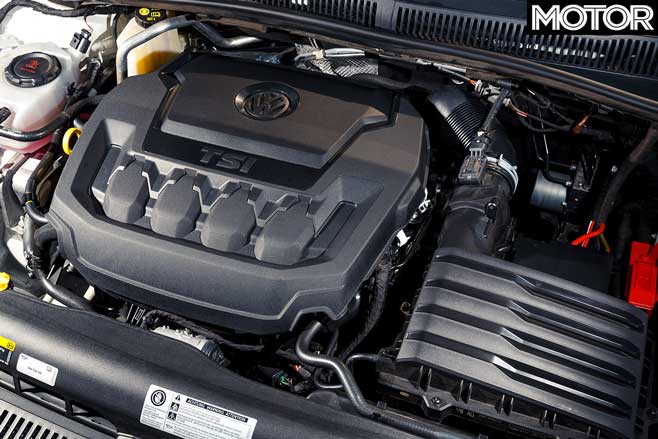
Its upgraded specification, all-new platform and mandatory six-speed dual clutch transmission could have priced it out of contention as well, but even though it’s $3400 more expensive (at $31,990) it shares the honour as being this field’s ‘cheapest’ with the Kia Cerato GT.
Credit where it’s due, the Polo is a much improved steer. Its steering feels more fluid than before and it wants to trace a more neutral line into and out of corners. That wider spread of grip also gives it a planted stance on the road that never feels like it’s going to surprise you.
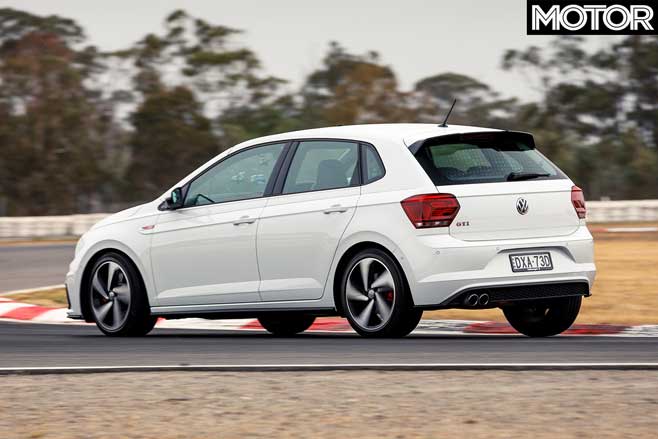
So it gives you confidence to wade through Winton’s drenched corners without it suddenly throwing you into the sandtraps backwards. Even on economy Michelins.
A case in point is a photo of DC, grinning like a mad man, chasing down Morley in the Mustang. Morley’s raised a white flag in the form of a finger, hoisted out the window and pointing across the roof, showing where DC can pass. And he wasn’t the only victim. There’s clearly some giant-killing DNA in its genetic make-up.
Its strategy in year’s past was in delivering consistent mid-field performances on top of a bargain basement price. But rather than blend in with the pack on our time-honed formula this year, it’s been left to convince the judges. And, frankly, as history has shown, it’s never found adoration.
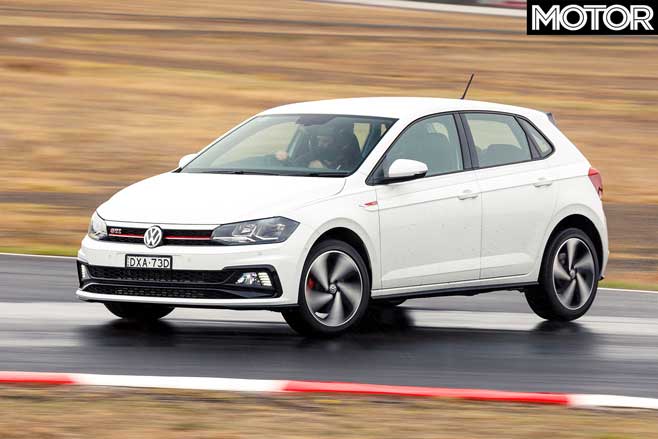
It all still feels a bit too grown up, especially for a shrunken hot hatch. For instance, it still won’t let you kill ESC and yet it’s fitted with a manual handbrake. Then there’s the gearbox, which is obviously nowhere as involving as a manual, which disobeyed downshifts in some instances.
That’s why if we were forced to collect wet performance data on this year’s field, we reckon it might have surfaced even higher than fourth place. But it was not to be. Fingers crossed it takes a crack at the crown in future with the manual.
Volkswagen Polo GTI BFYB 2019 Results – 4th place
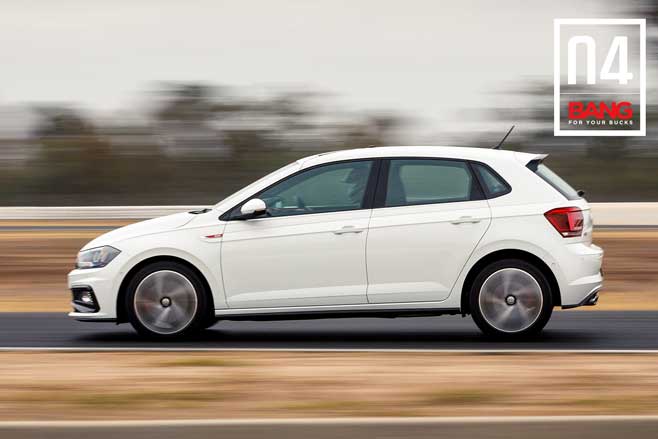
0-100km/h: 6.15sec 0-400m: 14.42sec @ 156.51km/h Price: $31,990 Bang Index: 62.4 Bucks Index: 162.9 BFYB Index: 112.7
Bang For Your Bucks 2019 Judges’ Comments
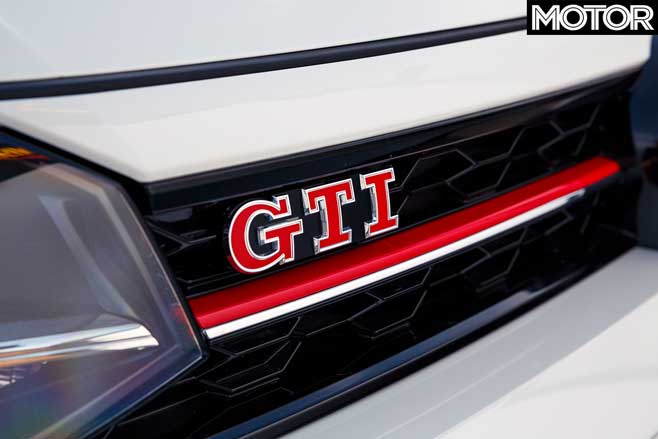
Campbell – 7th “Polished, to a slightly sterile degree.”
Cordony – 9th “Improved in most ways except the ones we want.”
Morley – 10th “I’m still a sucker for tartan seats. Gearbox annoyed me.”
Scott Newman – 7th “Feels sportier than Golf GTI but engine struggles at the top end.”
Luffy – 10th “Volkswagen has really got the spacing between the Polo GTI, Golf GTI and Golf R just right. The Polo GTI has that nimbleness and is fun to drive, but if you want a little bit more than the Polo you buy the Golf GTI, and if you want a little bit more than the Golf GTI offers you get the Golf R. But the Polo was good fun without being sterile and it definitely leaves you wanting more.”
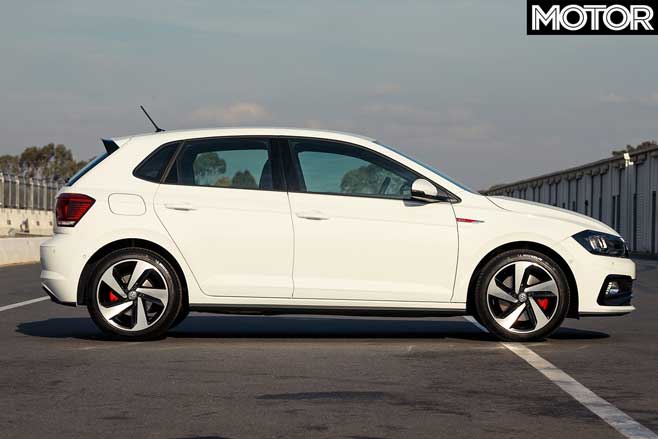
FAST FACTS 2019 VOLKSWAGEN POLO GTI SPECS BODY: 5-door, 5-seat hatch DRIVE: front-wheel ENGINE: 1984cc inline-4, DOHC, 16v, turbo BORE/STROKE: 82.5 x 92.8mm COMPRESSION RATIO: 9.6:1 POWER: 147kW @ 6000rpm TORQUE: 320Nm @ 1500rpm WEIGHT: 1285kg POWER-TO-WEIGHT: 108kW/tonne TRANSMISSION: 6-speed dual-clutch SUSPENSION: struts, coil springs, adaptive dampers, anti-roll bar (f); torsion beam, coil springs, adaptive dampers, anti-roll bar (r) BRAKES: 310mm ventilated discs, single-piston calipers (f); 272mm ventilated discs, single-piston calipers (r) WHEELS: 17.0 x 7.5-inch (f/r) TYRES: Michelin Primacy 3, 215/45 R17 89W (f/r) PRICE: $31,990
Bang For Your Bucks 2019
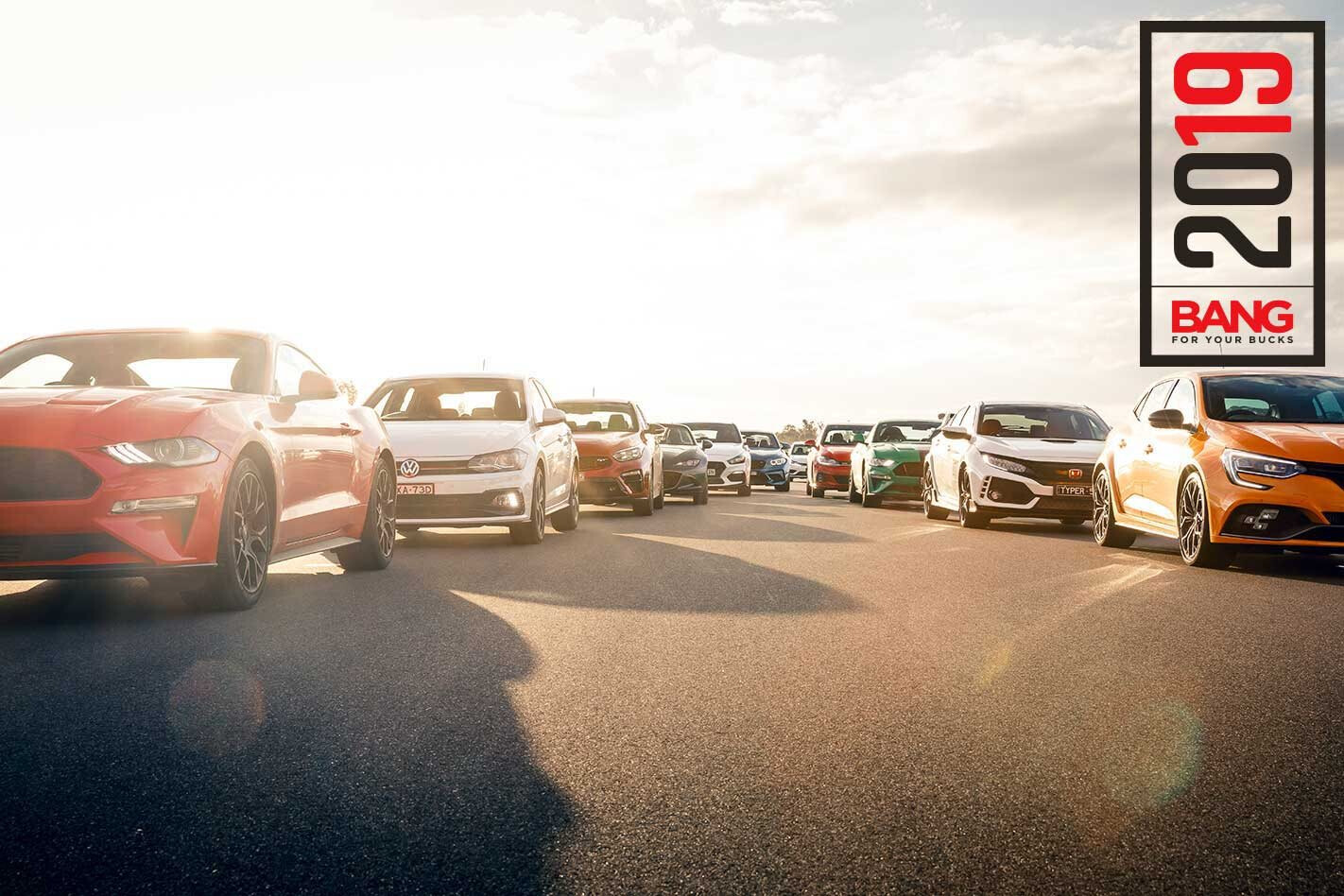 The Contenders, Judges & Criteria
11 of the hottest new fast cars under $100K roll up to take on our famous value-for-money formula. Which will be number 1?
Overall Rating

5 0 5
Plus & Minus
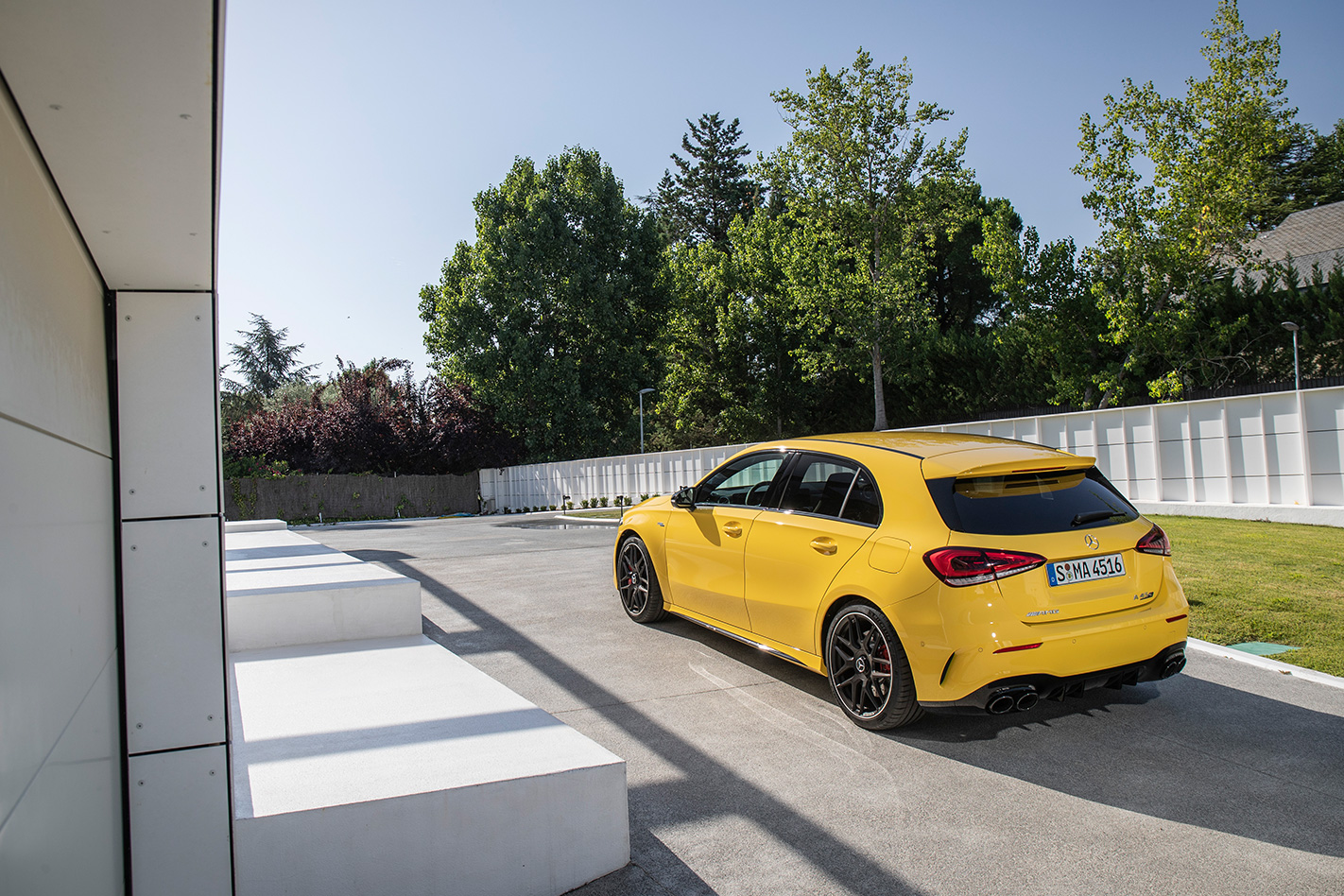
What is the Mercedes-AMG A45?
- Read next: BMW 1 Series won’t chase Mercedes-AMG’s A45
Why we’re testing it
It’s due in Australia early 2020, so we were hyped to see how it compares to its circa-$18,000 cheaper sibling, the AMG A35. Jarama racetrack near Madrid is also always worth a visit.
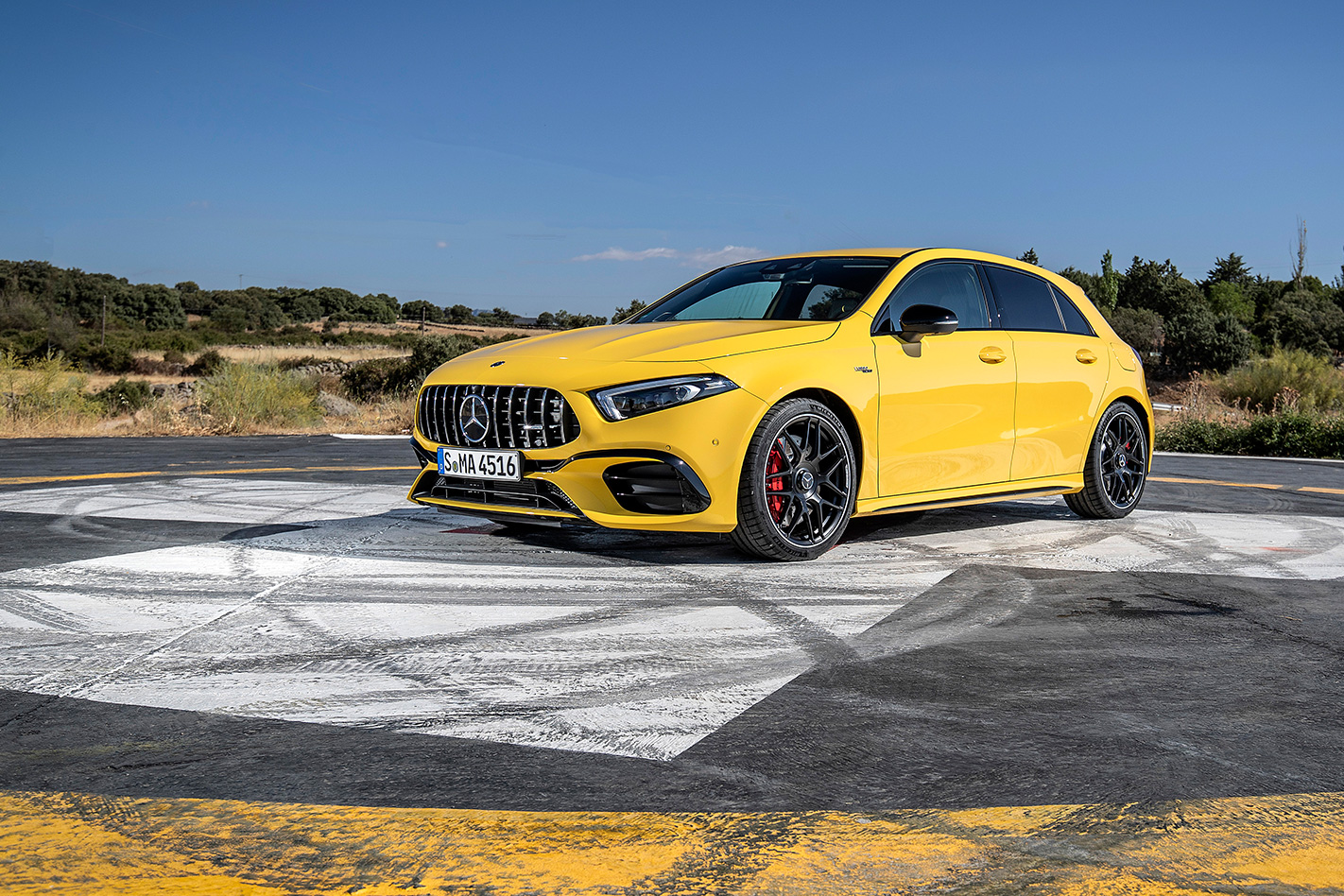
Mercedes-AMG A45 review
Numbers must be fascinating things if you’re a mathematician, and no doubt plenty of accountants find themselves richly stimulated by a really good-looking spreadsheet.
But for us car enthusiasts I can’t help wondering if the obsession with numbers has gone too far. Unlike yesteryear when it was all about seat-of-your-pants feel, today’s hi-po contenders ask the reviewer to take the Nürburgring lap time, divide it by the 0-200km/h figure, add the often meaningless ADR consumption number, minus the year your mum was born, and bingo, there’s your star rating out of 5 right there.
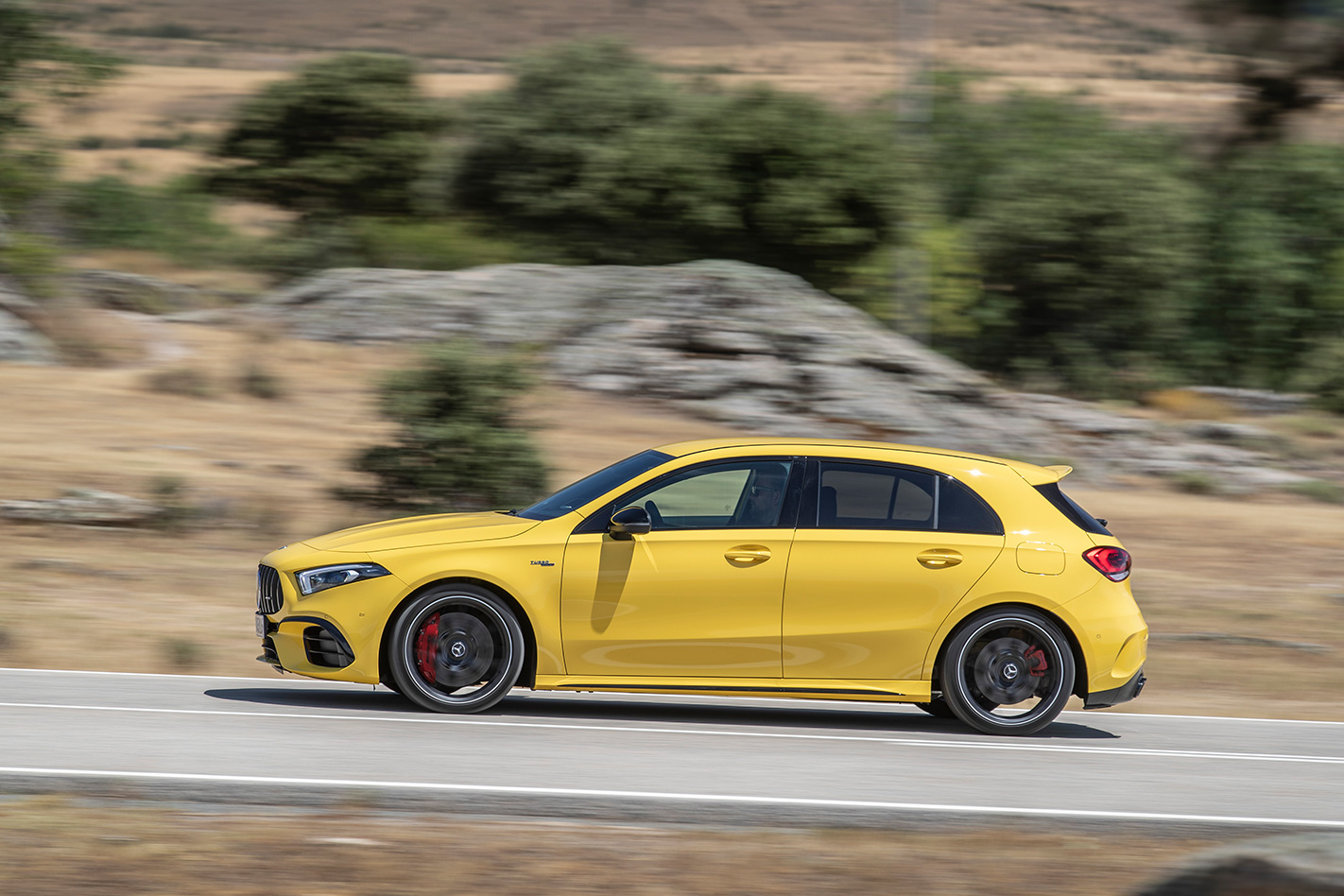
If you’re cheering in agreement, watch as I now perform a spectacular backflip with double-pike contradiction because no dissection of the new Mercedes-AMG A45 can begin without tossing around a few numbers.
I’ll try to be concise: this new W177 model, due in Australia in the first quarter of 2020, makes maximum power of 310kW – up 30kW on its predecessor (over 10 percent) – while torque is up 25Nm from 475 to 500Nm total. It does all this – still – from just 2.0 litres.
That makes its specific power per litre of 155kW higher than McLaren achieves from the Senna’s 597kW 4.0-litre V8 (149kW/litre), and leaves the Porsche GT2 RS, at 135kW/litre, looking like it’s fallen asleep at the gym.
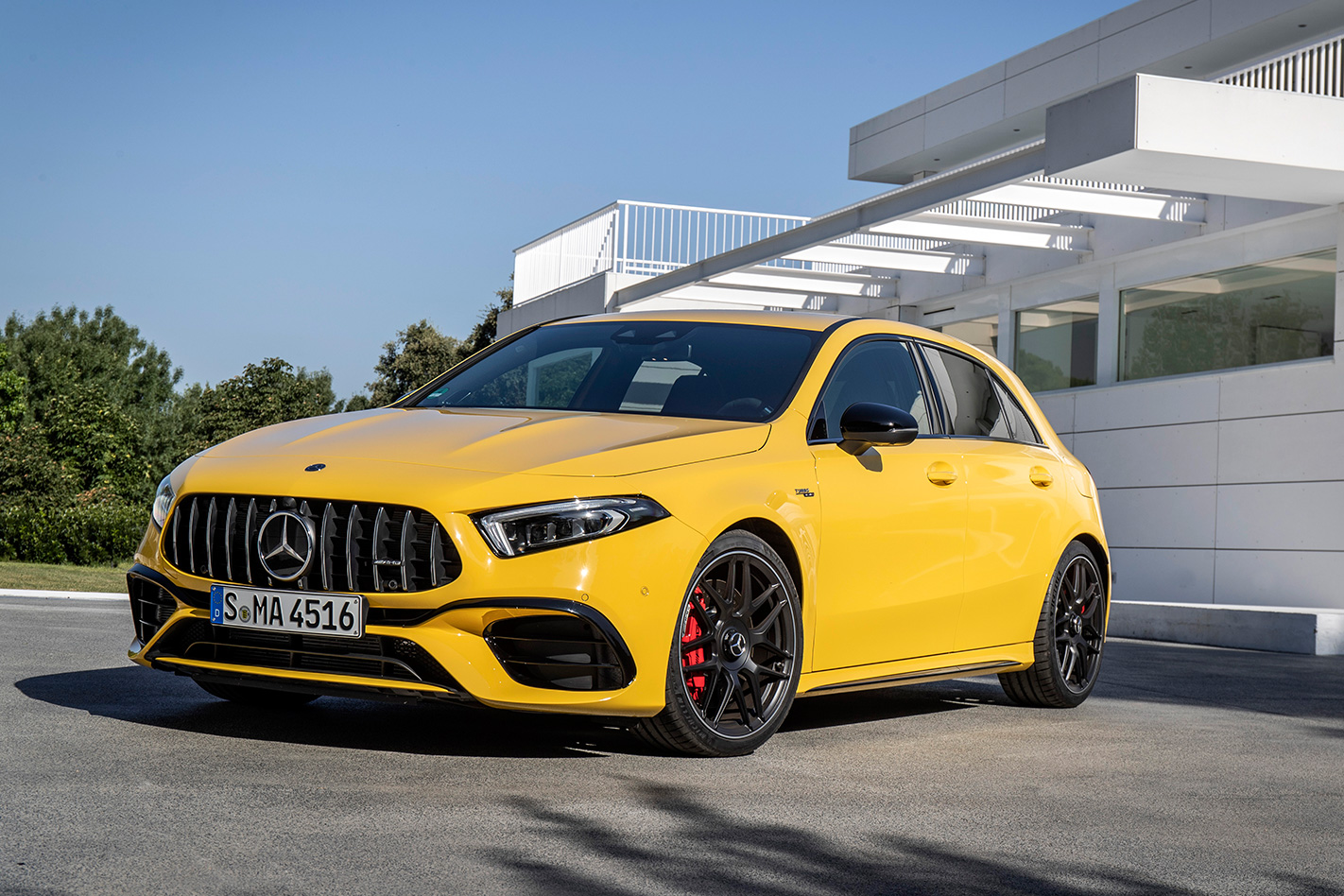
But more relevantly, in terms of a segment competitor, we should spare a thought for the powertrain team at Audi Sport who are responsible for the 2.5-litre five-cylinder turbo in the current RS3. They were all high-fiving each other when they delivered 294kW/480Nm in 2015. Now, they must be quietly weeping into their lunchtime steins.
But numbers can only give guidance to a car’s potential. What we really want to know is how the new A45 makes you feel; the real-world level of excitement and driver satisfaction it can provide. Also, in terms of positioning, what it delivers above the A35 that editor Alex Inwood drove most recently over some of Europe’s best Alpine passes (Wheels, August 2019).
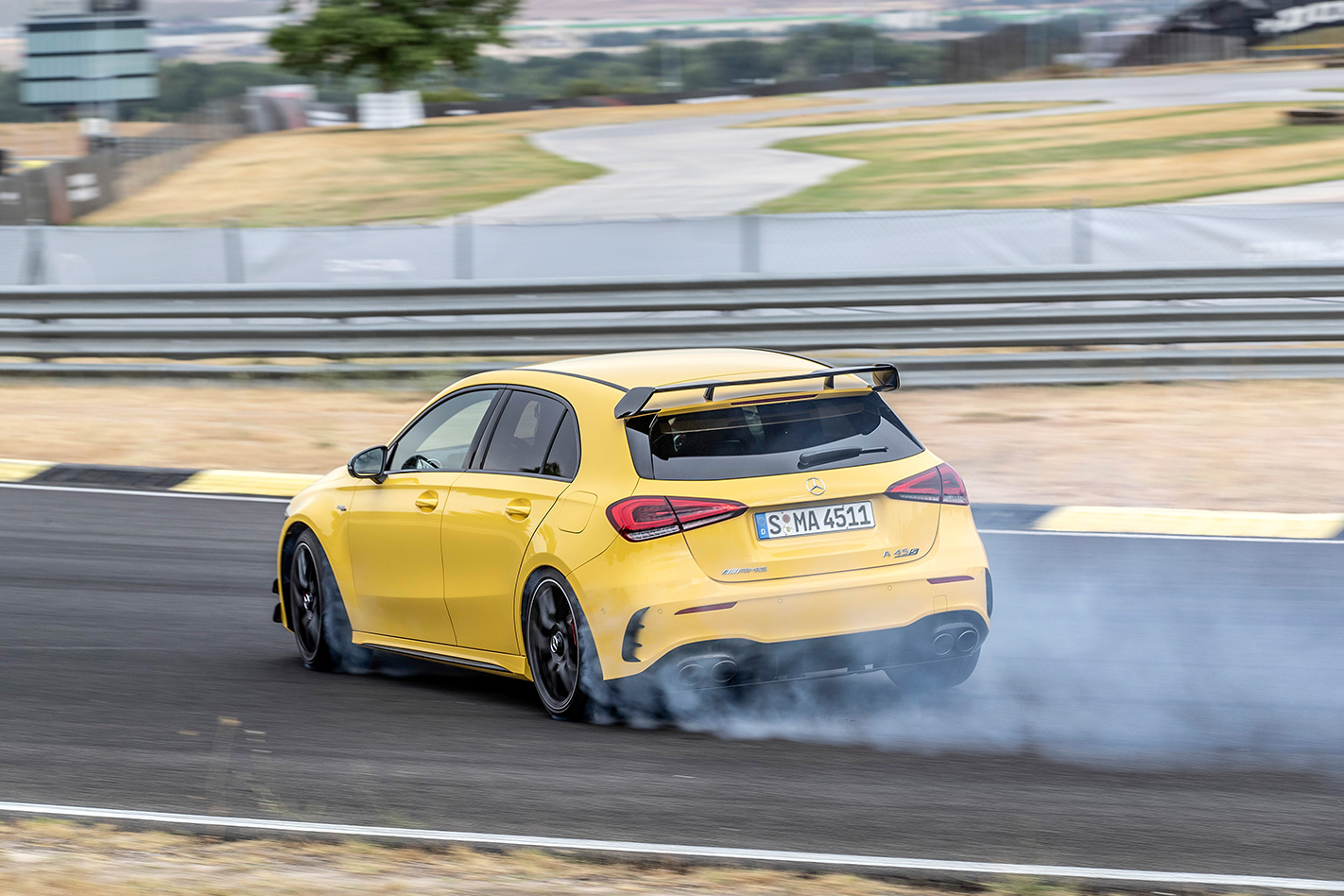
Point is, it’s a proper old-school circuit, with ample elevation change and limited run-off. It’s also hotter than Satan’s sauna during our visit, and a track temp in the mid-30s is not what turbo engines nor road tyres thrive on. And yet the A45 swats you straight between the eyes with its engine.
On paper, the point of peak torque – 5000-5250rpm – makes it appear that this M139 engine could be a bit peaky, and therefore lag-prone, but the opposite is true. The torque curve is like a flat-earther’s tilted diagram of our planet, and ensures there’s around 420Nm from 2500rpm, so it feels primed and interested from about then and quickly turns muscular, fizzy, and wickedly effervescent in the midrange. On the boil, it’s properly frenetic, yet retains linearity in the pull right through to peak power at 6750rpm, and there’s only a tiny tapering as the needle hits 7000rpm for the new eight-speed dual-clutcher’s change-up point. AMG engineers claimed they wanted an ‘atmo-style’ power delivery, and, thanks to the level of technical sophistication they’ve crammed into this donk, it feels as though they’ve nailed it.
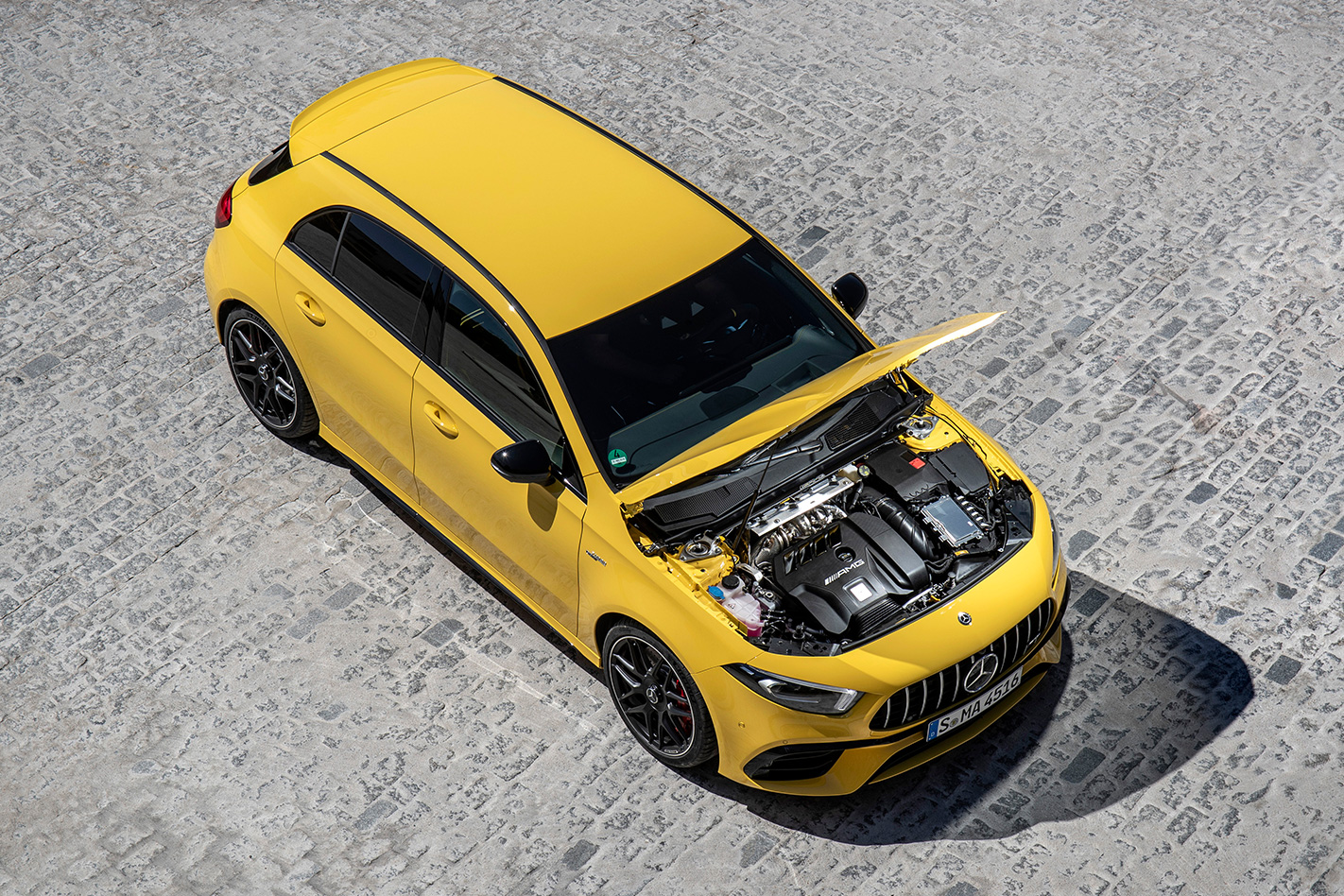
The 0-100km/h claim is a blistering 3.9sec; I’m a little doubtful, even with the Race Start system, that it’s achievable. Regardless, the way the car hooks up and bolts from a standstill will leave no new owner quibbling about a couple of tenths of a second.
It’s also very handy at decelerating. The brake discs are larger all round than those fitted to the A35, with the fronts (360mm) clamped by six-piston callipers. The pedal is on the long side in terms of travel, but all of it is useful, and there’s massive stopping power when you really hammer them on track, with barely any fade.
As for handling balance, the A45’s strongest inclination is to retain neutrality. Of course the front end will get pushy on track if you really bully it, but mostly the chassis responds to the throttle with calm docility, slightly at odds with the freneticism of the engine.
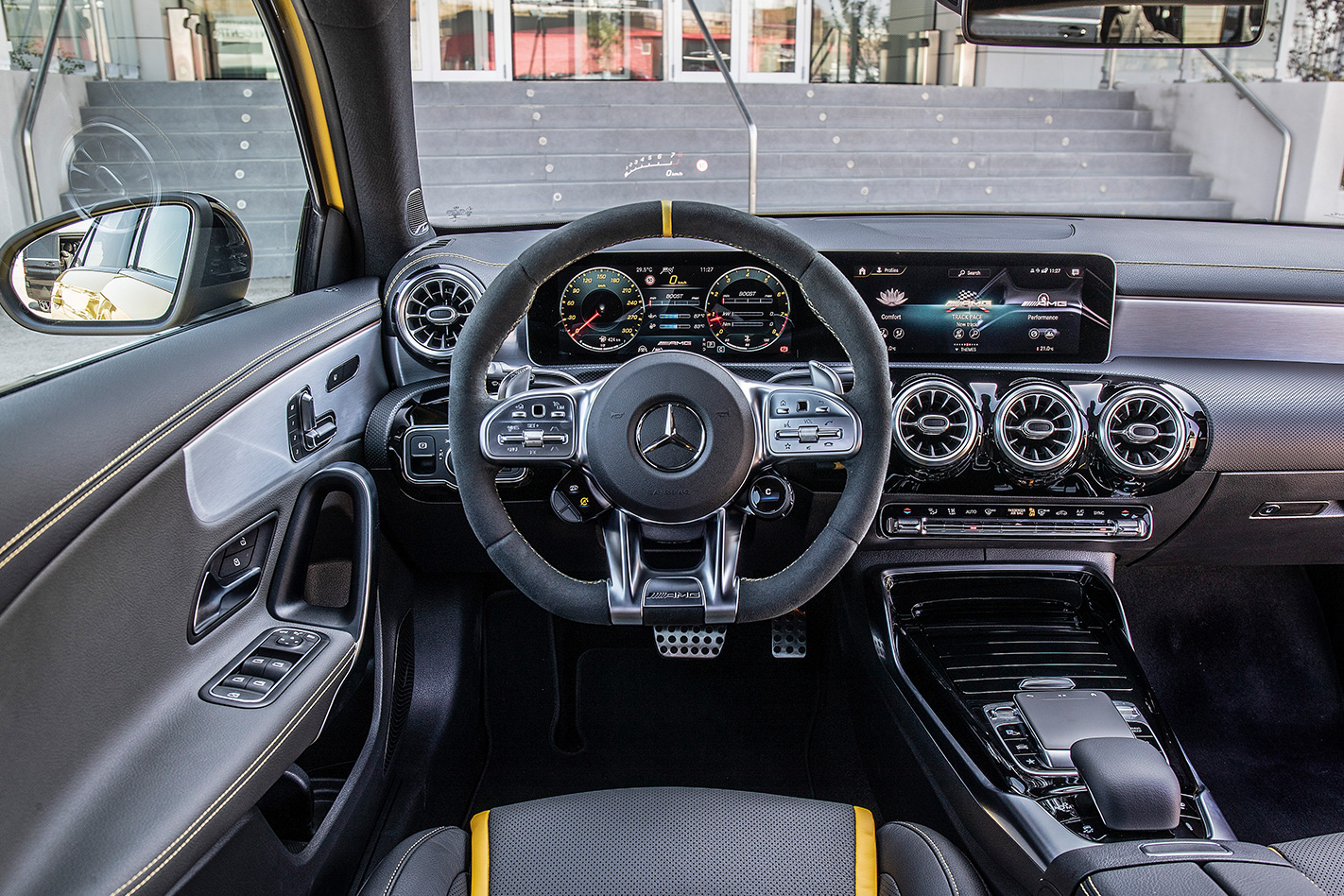
In fast road driving, it still feels predominately front-driven, due to that fact the steering wheel twitches as the front tyres are tasked with deploying torque. Concentrate hard on steering feedback and traction, and you can sense torque being sent rearward. The system is claimed to be able to channel 100 percent to either axle, but that’s very theoretical; it’s closer to 50-50 in road driving.
The big news is you don’t need the newly introduced Drift mode to enjoy power oversteer. Race mode, with ESC off, will do it, with the dynamic advantage of leaving the front end able to also assist with traction. The caveat is that you really need to tip the car into the corner hard and early, ideally on the brakes to initiate the rotation of the rear, otherwise there’s a medium-thickness layer of understeer to drive through. Once you’re through this, the torque split gets busy feeding the rear axle, and a dab hand can hold big smoking power slides from apex to exit.
Sure, we first saw the slightly incongruous sight of what’s clearly not a fundamentally rear-driven layout tearing the back treads apart in the Ford Focus RS, so maybe the A45’s ability to do just this shouldn’t be all that startling. But during the lunch break when I spot an AMG instructor chucking it in and lighting it up for a video crew, I just stare transfixed and spontaneously start applauding. The power-sliding hatchback! It’s like watching a dog that can bark Happy Birthday, only much more fun, and with less novelty factor.
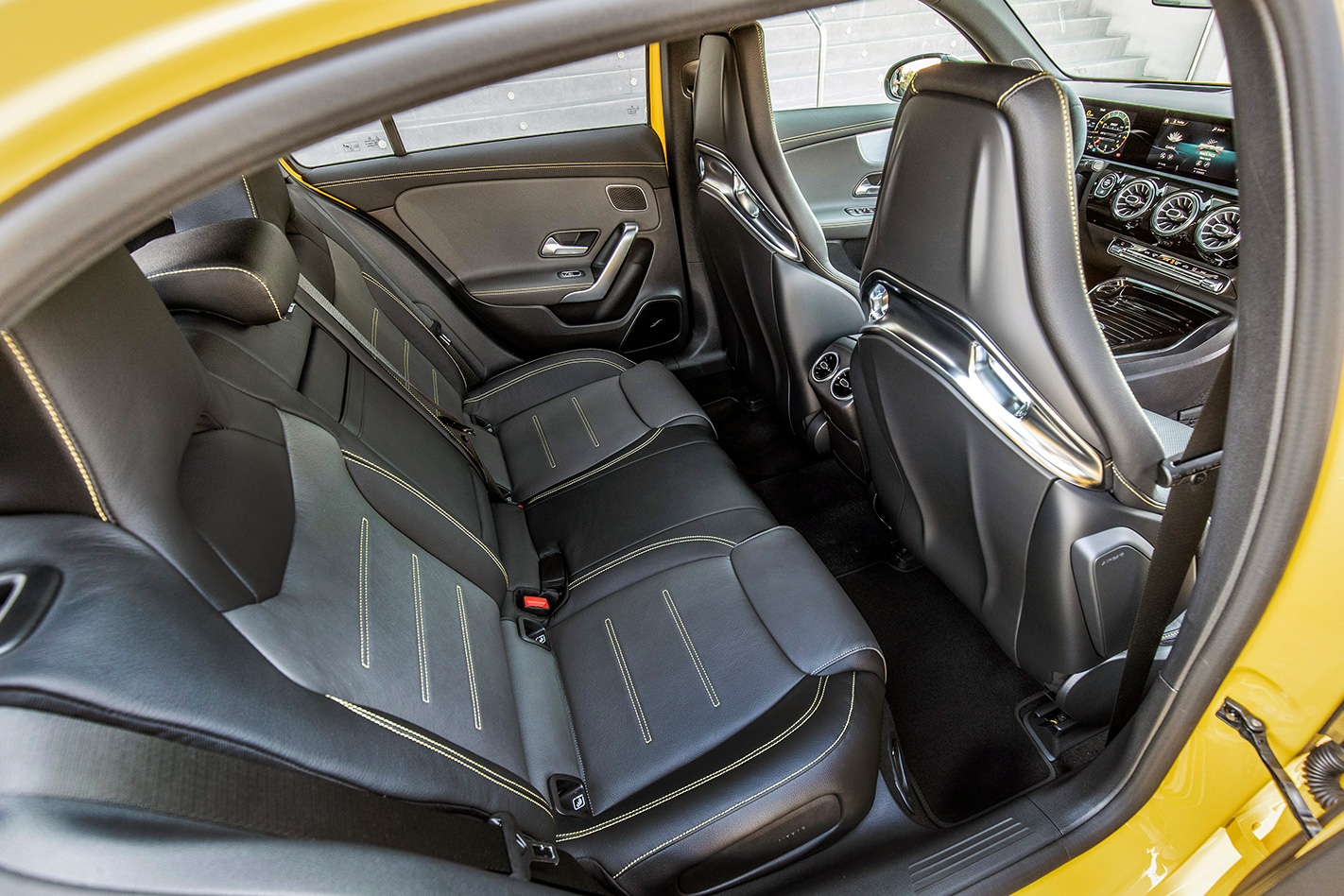
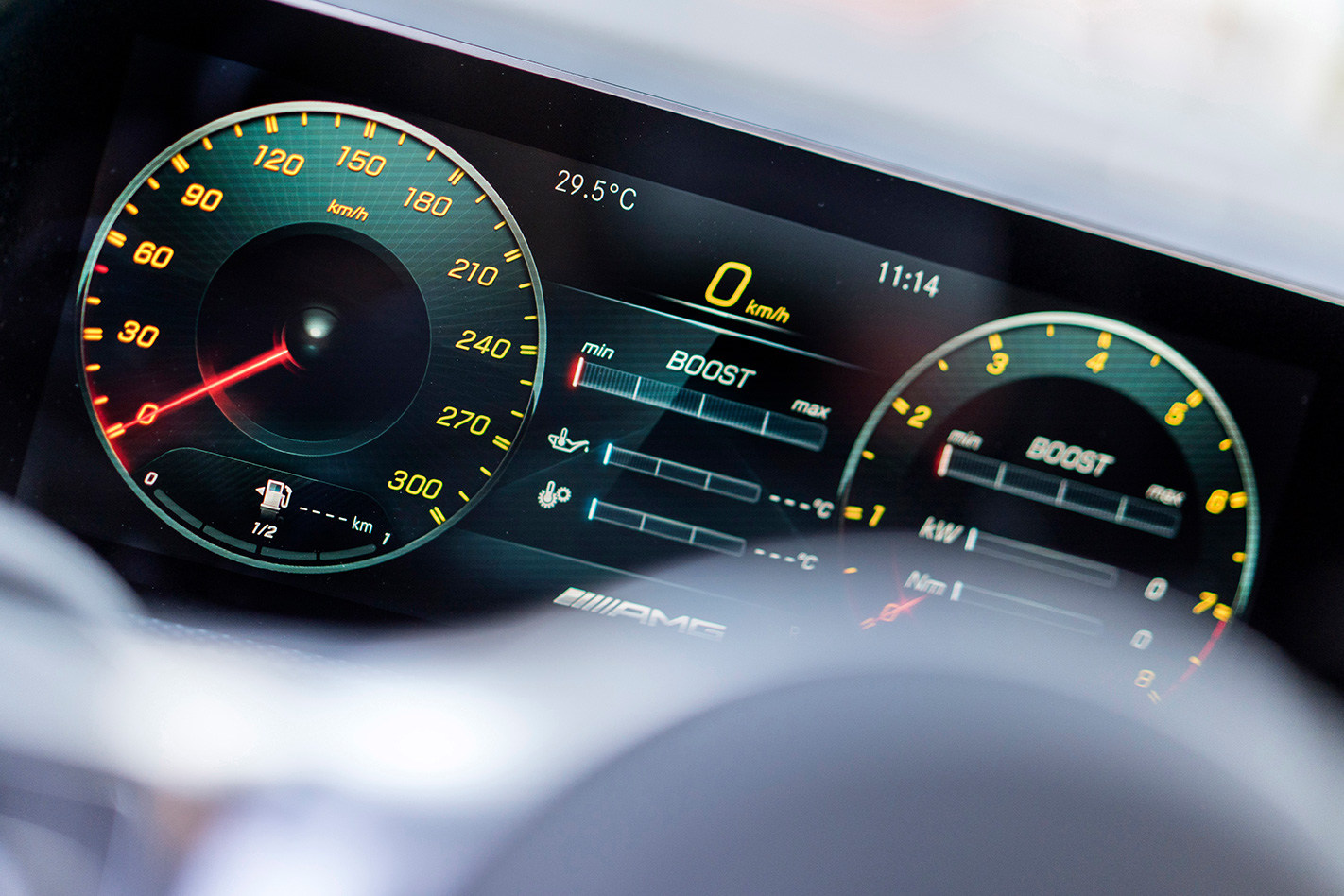
The gearbox is mostly excellent, just not quite as instantaneous with its shifts as the best dual-clutchers like Porsche’s PDK. There’s a few milliseconds’ delay when you’re really on it and manually plucking for downshifts, but otherwise it’s ultra quick-witted to respond in auto mode when mapped to Sport+. And moving to eight ratios from the previous A45’s seven means top gear is sufficiently tall to drop revs to 1550rpm when you’re pegged at a 110km/h cruise, benefiting economy.
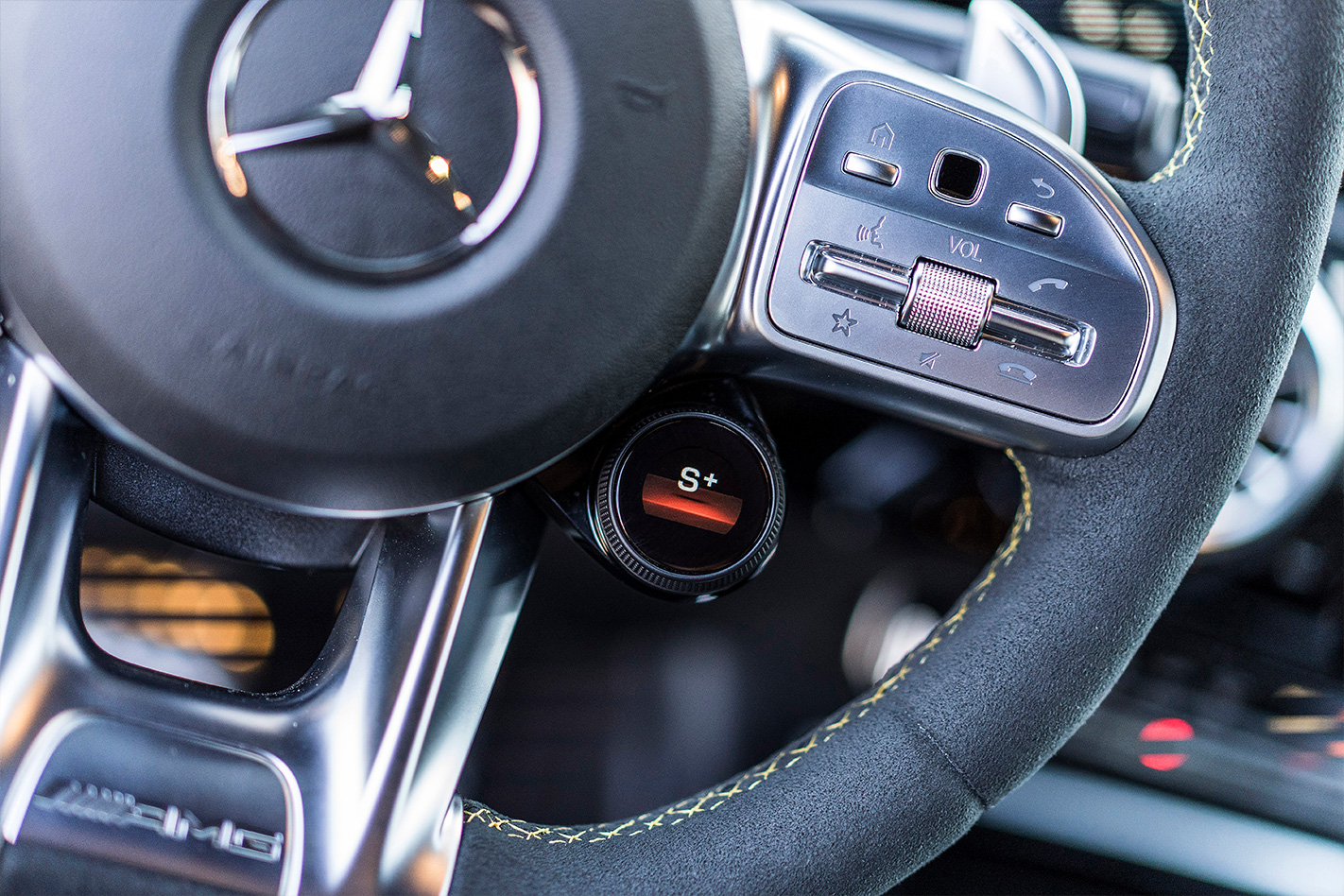
As for that cruising ability, the two-mode exhaust in Dynamic skilfully avoids the frequently encountered problem of droning. Its effects are relatively subtle at steady-throttle highway speeds, but it does add a rich timbre under load and really emphasise the manic engine character as the revs swing past 4500rpm. Snap the throttle shut as you jump on the brakes and there is a bit of percussion from the tailpipe, but it’s not the crazy-loud volley of pops and bangs I was expecting. Blame ever-tightening noise regs. To attempt to skirt around this, AMG has added a sound-symposer system that takes actual exhaust acoustics (not a simulation) and pipes them through the audio system. Bastian Bogenschutz, head of product planning for Mercedes-AMG compact cars, explains that stricter regulations mean the company has had to “employ other methods to deliver the emotive aural experience AMG customers are seeking.”
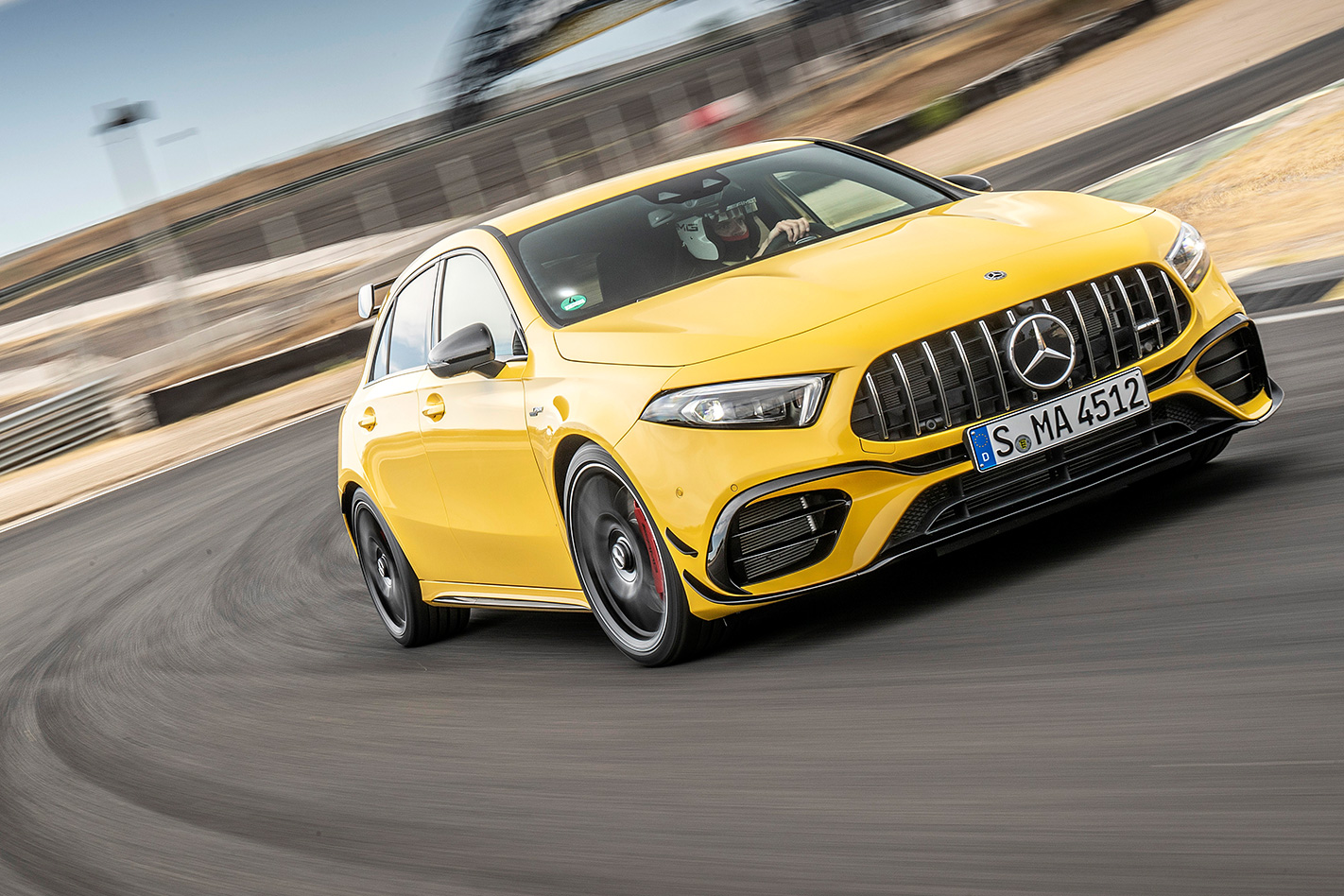
That’s not the end of the caveats, either. The steering is quick at 2.4 turns lock-to-lock, and its electro-mechanical assistance is controlled by one of two maps – light and, er, not light. Sadly, these can’t be separated from the suspension set-up, so if you select Sport or Sport+ for the extra body control they provide in hard driving, you get mandatory heavier steering. For me this is a shame, because I much prefer the lighter, more nuanced feel delivered in the Comfort mode. Plenty of drivers won’t agree and will like the more meaty connection; I’m just not one of them. At least we can all agree on how slack-free and direct the steering response is, and the intuitiveness and precision with which you can place the car when having a crack on narrow backroads.
As for the ride, the subframes are now bearing mounted, to reduce the squish of rubber bushings. Obviously this is great for enhancing the chassis responsiveness and driver connection, but it comes at a refinement cost. Sharp edges are prone to clanging into the cabin, and the tyres seem eager for you to know about every surface irregularity. On coarse-chip, the inherent range-wide A-Class issue of tyre noise is no different here in the A45, but it is very surface-dependent. In Spain it was less raucous, but unfortunately, Aussie roads seem to be mostly built from the stuff that makes the tyres so vocal.
Other niggles? The column-mounted gear sector is the same plastic as the indicator stalk, yet one is for an ancillary function, the other for the fundamental act of selecting the direction of travel. This seems all kinds of wrong. And the MBUX voice recognition can be flaky and doesn’t have the deep-menu smarts that would make it more useful.
But back to the involvement question. After Inwood ragged the A35 amid snow-capped peaks, he struggled to form a real emotional connection with that car. Fast, grippy and capable, sure, but did it make you want to give it a slow, loving session with the chamois even when it’s still mostly clean? Not quite.
So where does that leave its circa $18K more expensive big brother? For me, the A45 makes its central case both in the sheer poke of its engine, and the sophistication of its AWD system. Together, they give you a level of driver engagement that’s unlike any other hot hatch on the market (now-departed Ford Focus RS excepted), and, if you boil it down, actually not all that hot-hatch-like.
But we still need to resist the temptation, as power busts through the 300kW barrier, to get too caught up in the whole ‘hyper-hatch’ thing. Fact is, the new A45, despite being redesigned from scratch, doesn’t completely rewrite the formula. Instead, it takes the fundamentals established by its predecessor – traction, pace, and practicality of the bodystyle – and ratchets them up by several notches to reassert its superiority. Factor in its ‘advance from the rear’ dynamic bias, and it’s clear the most persuasive things about the angriest baby AMG are not really numerical at all.
Mercedes-AMG A45 vs rivals
Audi RS3, BMW M2
Mercedes-AMG A45 Specification
- Model: Mercedes-AMG A45 S Engine: 1991cc 4cyl, dohc, 16v, turbo Max power: 310kW @ 6750rpm Max torque: 500Nm @ 5000-5250rpm Transmission: 8-speed dual-clutch Weight: 1550kg 0-100km/h: 3.9sec (claimed) Economy: 8.3L/100km Price: $85,000 (estimated) On sale: Q1 2020
Volkswagen is yet to reveal its local electric vehicle strategy, but if the German car maker’s prediction is on the money, Australia’s EV market will soon surpass a defining tipping point.
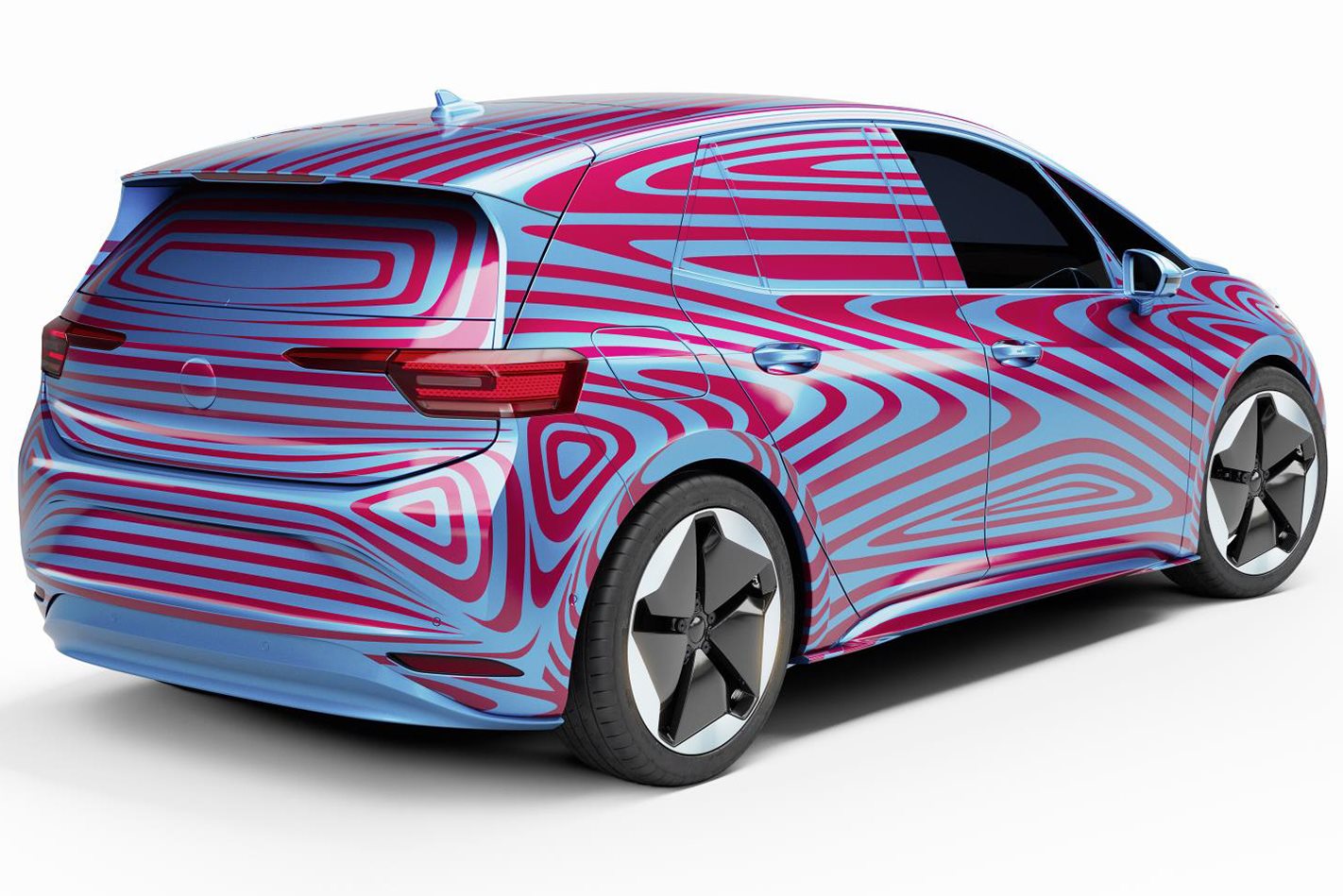
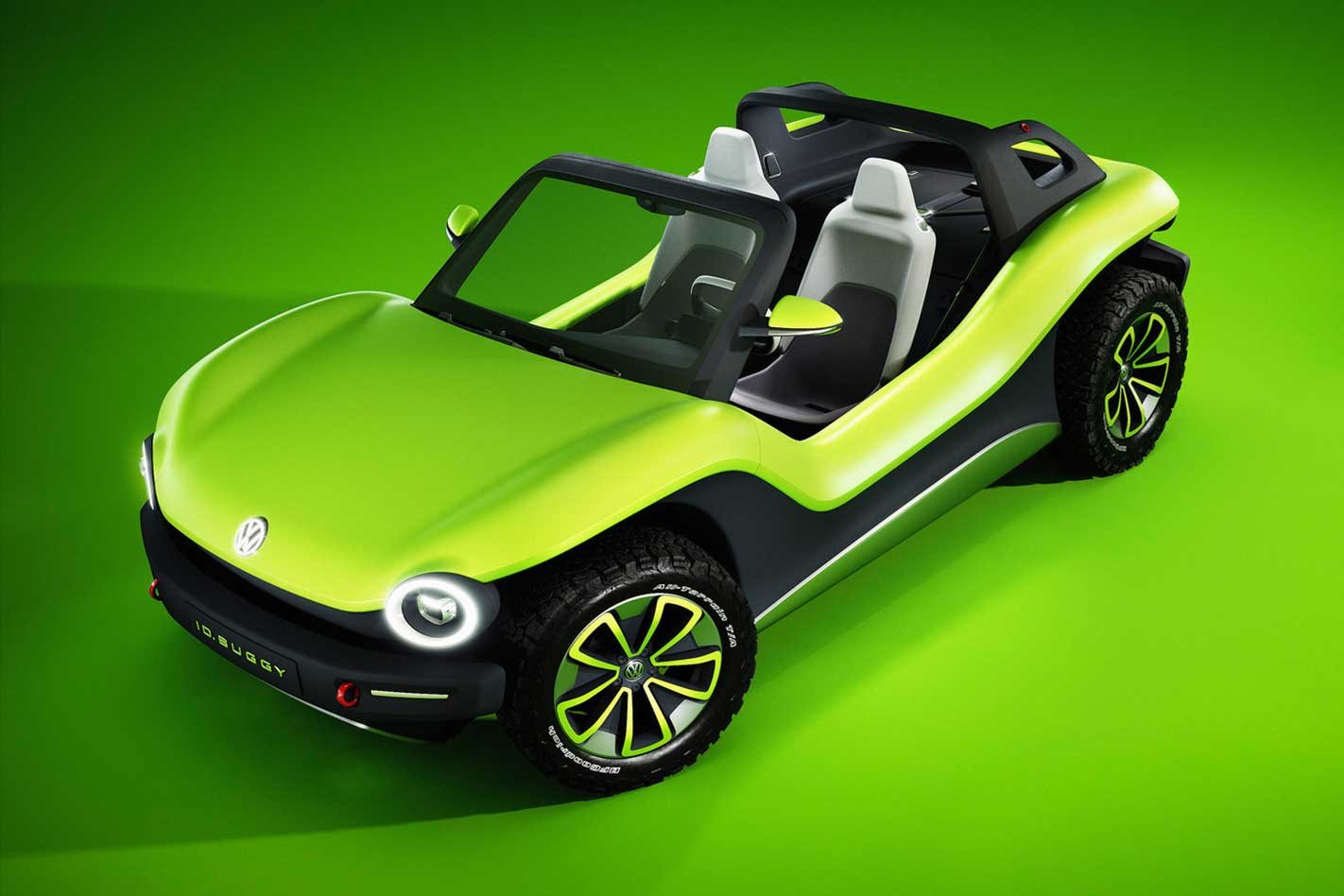
In 2022, Volkswagen’s ID.3 will mark the start of the company’s electric era overseas and it’s possible the model will appear in Australian showrooms soon after but, thanks to a highly scalable, purpose-built MEB platform, the small hatchback will be soon followed by a flurry of models in nearly all segments.
Combined with VW’s yet-to-be detailed electric line-up, Volkswagen Group Australia product marketing manager Jeff Shafer told WhichCar the overall EV market would enjoy exponential growth once consumers get a taste for clean motoring.
“When we look five to 10 years into the future, instead of seeing a very small percentage of sales we will see electric vehicle sales grow steadily over time to maybe … 40 or 50 percent of sales by 2030,” he said.
That sales explosion from today’s new vehicle share of less than 1.0 percent may seem ambitious and is in line with the Labor Party’s pre-election forecast, which was dependent on then-leader Bill Shorten’s pledge to stimulate the EV market.
According to Shafer however, the momentum of EV sales is not exclusively reliant on Government support and will instead be triggered in just a few years simply by more attractive pricetags for battery-electric cars.
“The price premium has to come down and it is,” he said. “Once the up-front premium becomes more like a diesel premium traditionally, I think people will make a rational choice. That’s upon us in the next few years.”
Current examples of diesel premiums over equivalent petrol variants include the Mazda CX-3 which costs $2400 extra, the BMW 3 Series for $3000 more, and the Toyota Landcruiser diesel which retails for $5100 over the petrol version.
Exactly what price premium Aussies are prepared to pay for a pure-electric small car will soon become apparent. For reference though, the cheapest electric car available is the $44,990 Ioniq Electric Elite – which costs around $20,000 more than a comparably specified small car.
As for the frequently debated chicken and egg – or vehicles vs infrastructure – argument, Shafer is confident the supporting network of chargers and perhaps even government incentives will be second to the growing choice of vehicles.
Until a charging network is established to support pure EV motoring for the masses, Shafer believes the initial uptake will be with two-car households on metropolitan fringes.
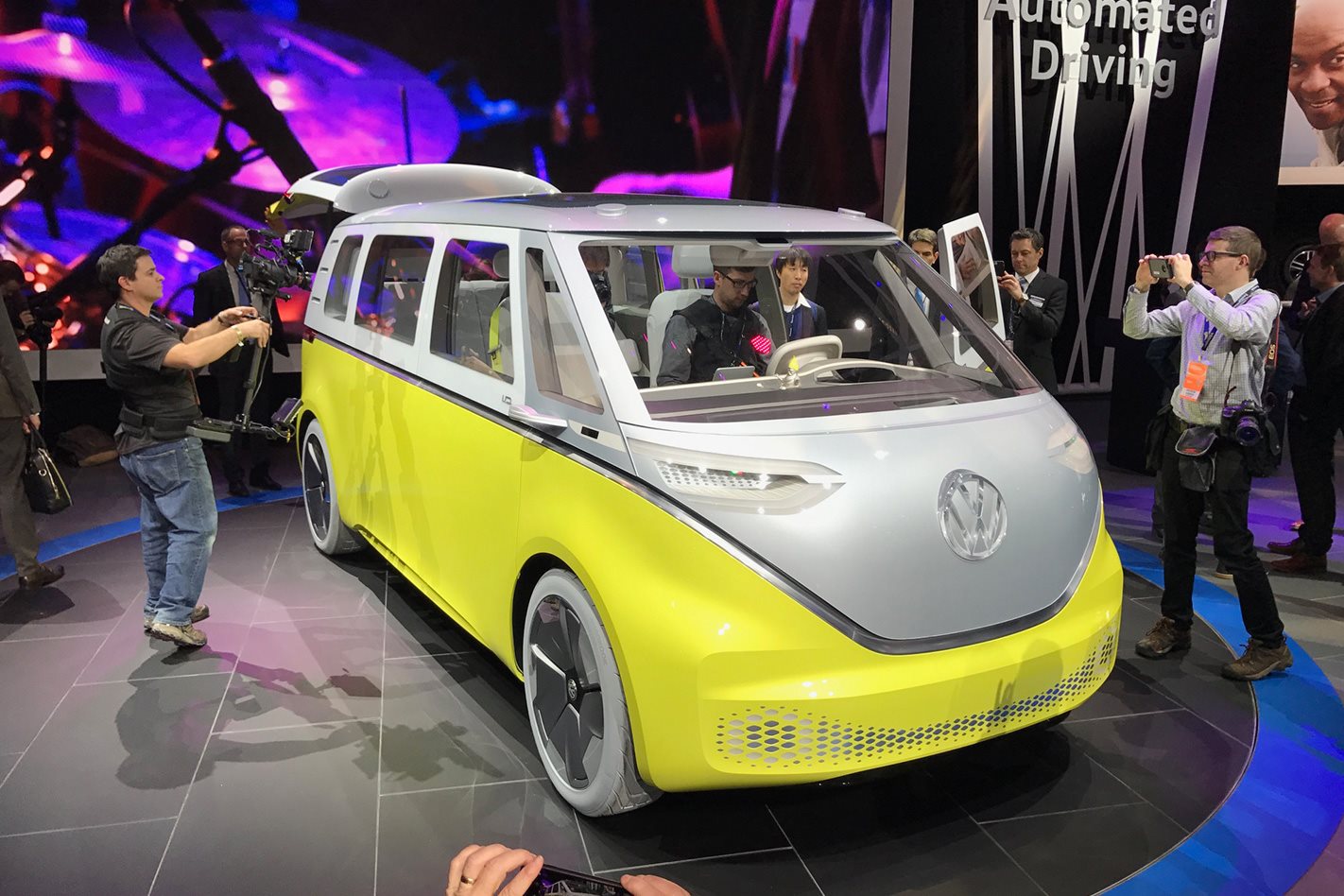
“I think electric vehicles will come and then we will see the infrastructure develop. A lot of the people buying an EV earlier, they will be two-car households with a combustion engine car as the second car.
“It’s one of those things that I think has been beaten up a bit about why people won’t (buy an EV). Those outer suburban dwellings are standalone with off-street parking. To me, that feels like the first wave.”
According to Shafer, reduced servicing costs will already appeal to savvy Australians but a government “big stick” would facilitate EV adoption faster with a CO2 regime or zero-emissions vehicle scheme, for example.
“There are things government could do to support it. Things like rules for new construction. Not necessarily forcing people to put in chargers but just having the wiring [in their homes to be] effective.”
If Volkswagen’s vision of an electric future is a success, the ID.3 will go down in company history as one of its most significant models, Shafer said – an intention signified by the number three in its moniker.
“It definitely is a car for the people and the company has positioned it as the successor to the Beetle more than the Golf. I think it can work well in Australia.
“Part of the reason for the name ID.3 is it’s the third generation of the people’s car. This is electric motoring for the masses.”
Whether the ID.3 makes it Down Under or not is yet to be confirmed, but if it is confined to Europe and other small-hatch-centric nations, an SUV based on the same platform is almost a certainty for Australia.
“Where Australia’s at the moment, you’d have to say that an electric SUV is the product that would be most relevant. SUV works well with electric as well – you can position two motors if you want to go all-wheel drive.
“ID is not just the one model, it’s about having a range of vehicles. It’s replicating the combustion engine range in electric”.
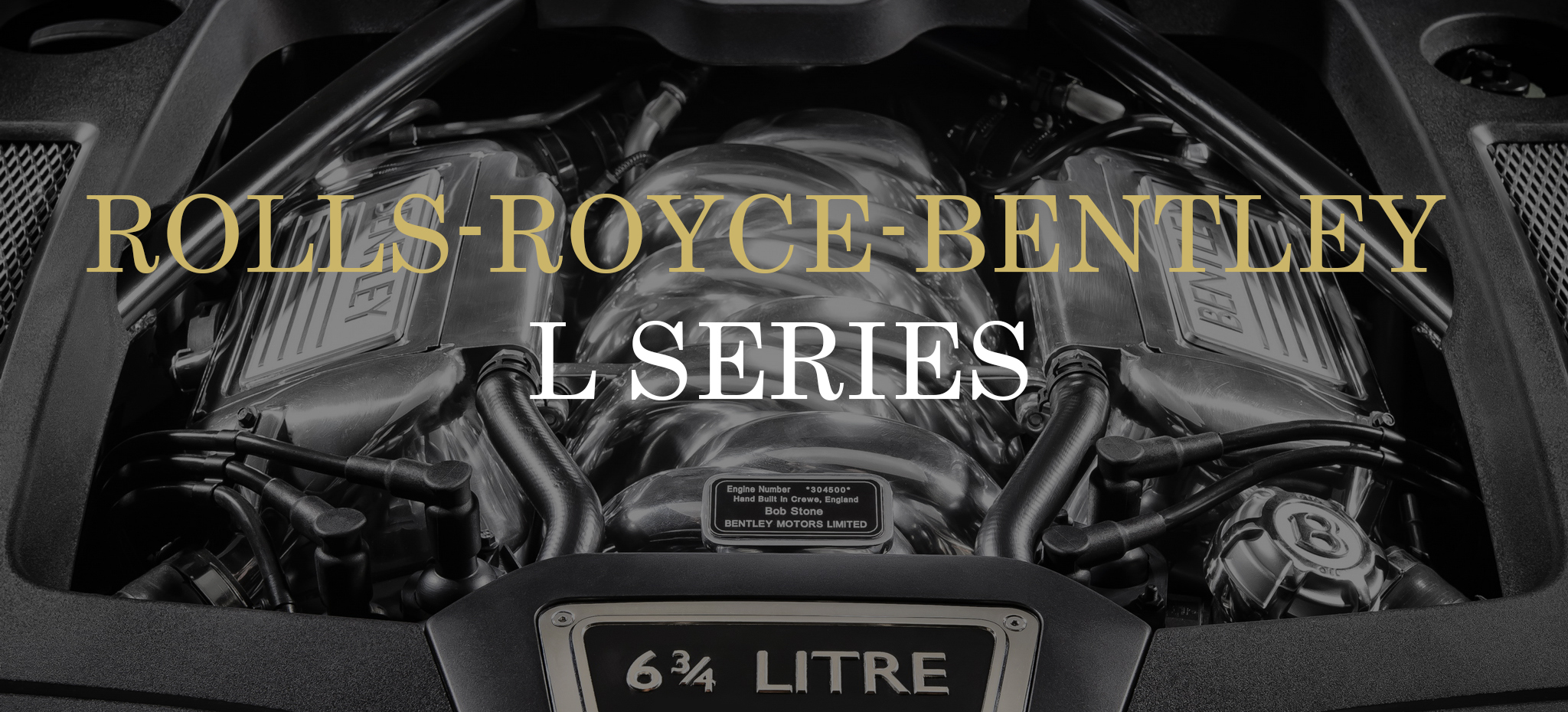
Sixty years is quite some time for an engine to be in continuous production, but the Rolls-Royce/Bentley L Series V8, latterly known affectionately as the Six And Three-Quarter for its 6750cc swept capacity, is still ticking.
Recognising the need for a bigger and more refined engine than the old Bentley B-Series units, development began in 1952 on a V8. The original 6.2-litre launched in 1959 was designed in the UK, contrary to some rumours that claimed it was based on an American design. The only American input was the original tappets, which were made by Chicago Screw. Rolls-Royce subsequently acquired the tooling to make these in-house.
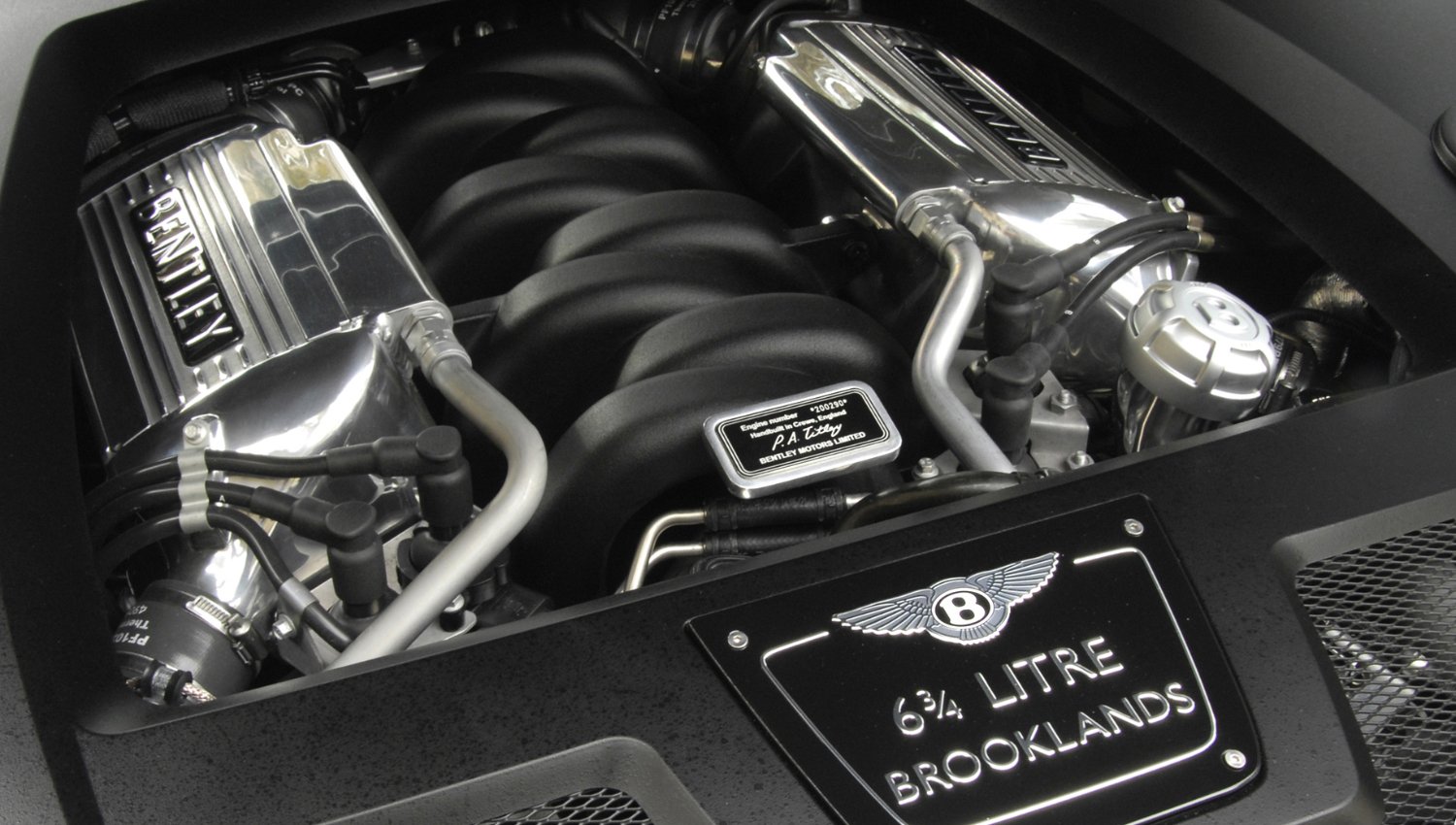
That engine had to fulfil five criteria. It required a power potential at least 50 percent greater than the 4.9-litre in-line six cylinder unit; there was to be no increase in weight, if possible; no increase in cost; the level of smoothness and silence as good as, or better than, the six; and finally, it needed to fit under the same bonnet as the six and use the same radiator.
That last demand informed many of the fundamental engineering principles. The engine was carefully designed to slot into the long, narrow Silver Cloud engine bay, which is why the timing chest is so deep. Ancillaries like alternators and power steering pumps were positioned in front of the heads, because there was no space beside them. This was a boon in the later (and more compact) Silver Shadow models.
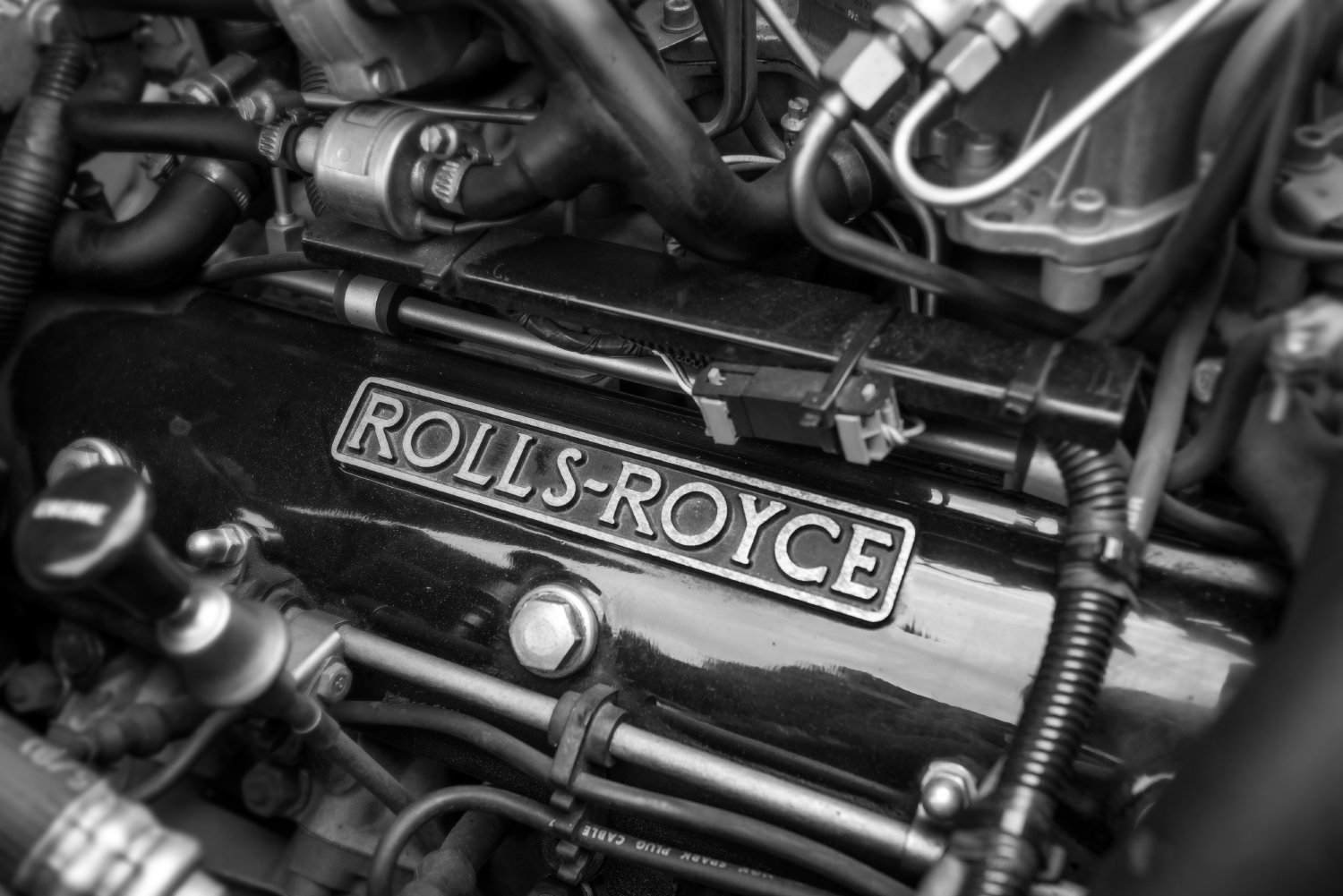
The first production engine was dubbed the L410 for its bore size of 4.1 inches (104.14mm), and the bore centre spacing of these dual-carburettor 6.2-litre aluminium block engines, as seen in the 1959 Bentley S2 and Rolls Royce Silver Cloud II, carried over into the stroked 6750cc unit, launched in 1970. This was the engine that built Rolls-Royce’s latter-day reputation, the powerplant that was so quiet all you could hear was the ticking of the quartz dash clock.
Over the generations, the bottom-end was stiffened and the pushrod valvetrain gained clever cam phasing and cylinder deactivation, but probably the biggest step-change came with the introduction of turbocharging on the 1983 Bentley Mulsanne.
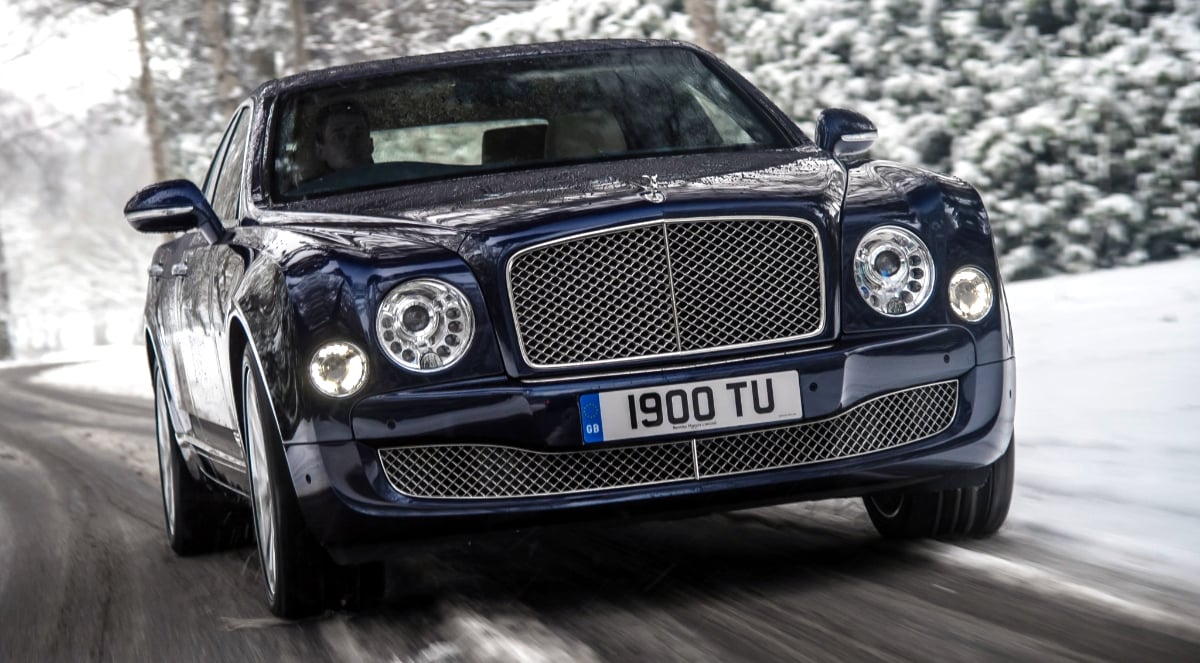
Back in 2016, the then boss of Bentley, Wolfgang Dürheimer, said that the L Series V8’s “final home” would be under the bonnet of the last of the line Mulsanne, confirming that the next generation of Bentley’s flagship would be powered by a 12-cylinder engine. If this is indeed the last of the L-Series V8s, it goes out with a bang. Fully Euro5 compliant, the current twin-turbo Mulsanne Speed makes 395kW and a monstrous 1100Nm at just 1750rpm. Sixty years on, there’s really nothing quite like it.
| Manufacturer | Rolls-Royce-Bentley |
| Production | 1959-present |
| Configuration | 90u00b0 V8 |
| Bore x Stroke | 104.14 x 99.06mm |
| Displacement | 6750 cc |
| Valvetrain | OVH two valves per cylinder |
| Power | 128-400kW |
| Torque | 400-1100Nm |
Click here to read more Wheels features on Great V8s.
IT’S BEEN said on more than one occasion that Australia loves V8s but buys sixes. We take issue with that. As long as the vehicle is targeted at enthusiasts, we’re probably going to buy the eight-pot version. Why? Because there’s an inherent rightness about a V8. Even when there’s a V12 option available – think old BMW 8 Series or, latterly, the Bentley Continental GT – the eight cylinder car is usually the smarter buy.
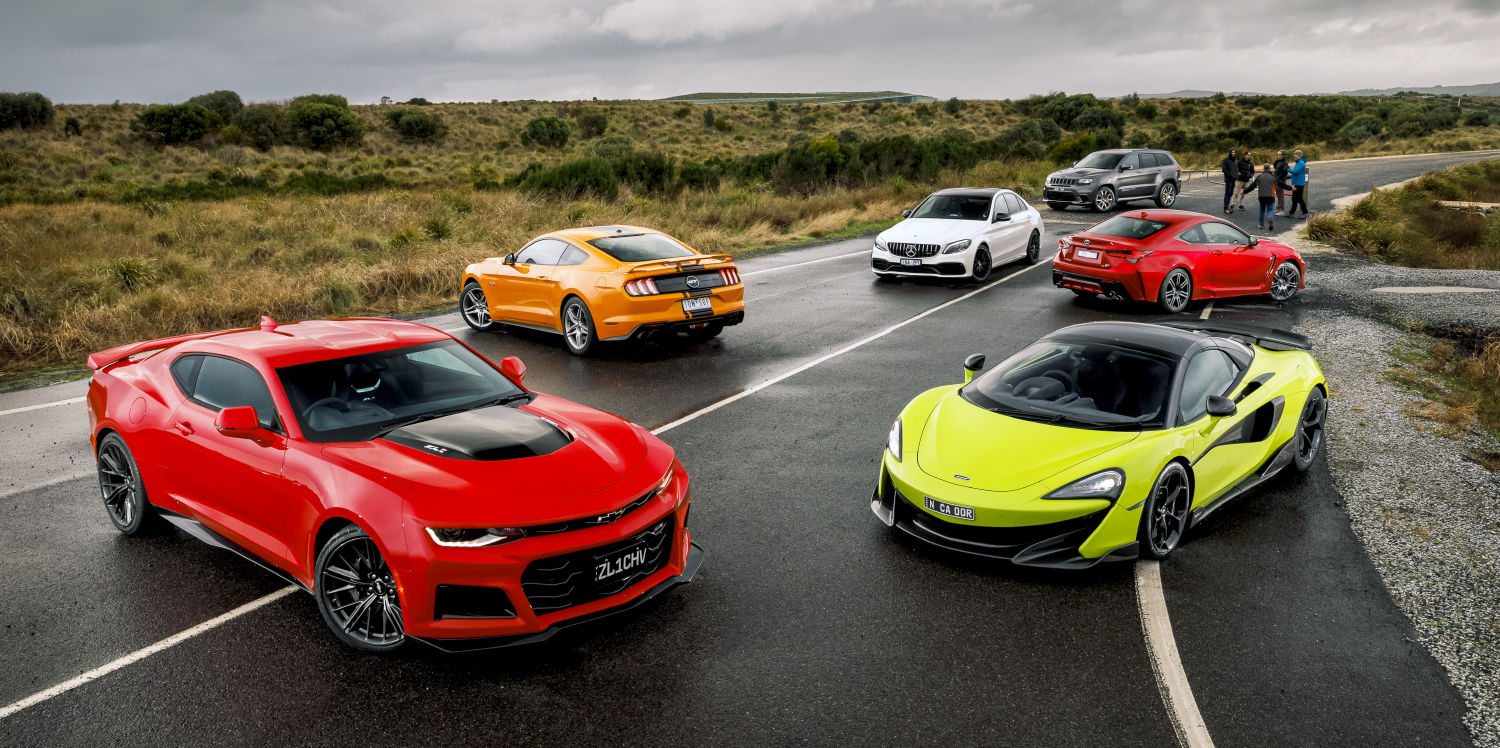
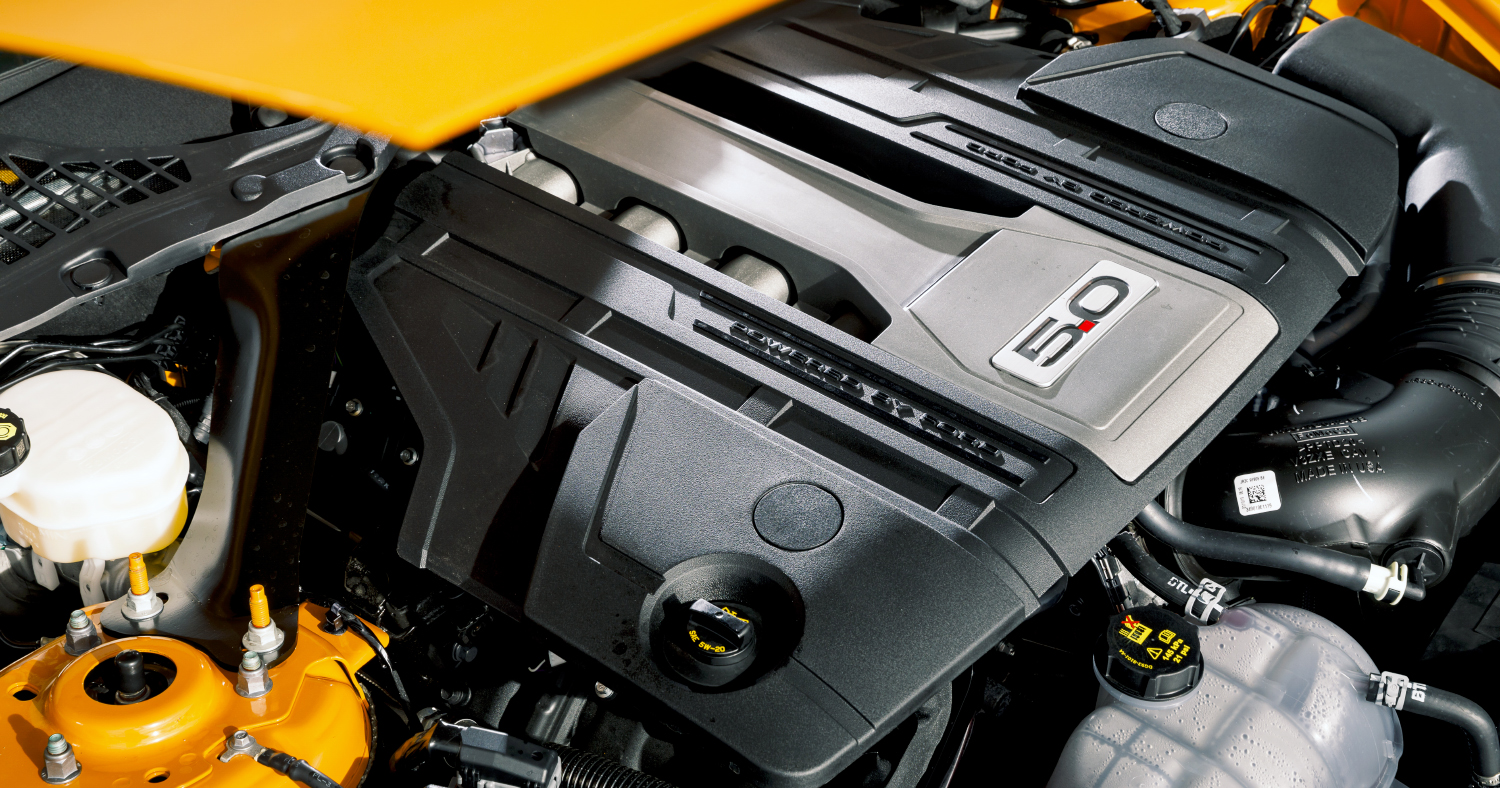
Ford’s Mustang GT has demonstrated that there’s still a ready market here for bent-eight petrol-engined enthusiast cars, with 84 percent of all Mustang sales being mopped up by the five-litre GT over the four-pot Ecoboost. In 2018, the Mustang V8 was Ford Australia’s second biggest selling passenger car behind the Focus. Elsewhere, that split holds true. The fantastic Lexus LC V8 claims 87.5 percent of all LC sales with its identically-priced six-cylinder hybrid sibling claiming the remainder.
The V8 genuinely became part of the Australian automotive fabric fifty years ago. The Holden HT carried over the 2.6 and 3.0-litre sixes from the HK but in May 1969, it also debuted the Aussie-built 4.2-litre and 5.0-litre V8s, replacing the imported Chevy 5.0-litre eight-pot.
Since then, the V8 has endured some tough times. Fuel crises and the imposition of luxury car tax gradually drove the average Australian into ever smaller cars. The Falcon and Commodore were the best-selling cars in 1982, still there a decade later and occupied the top two spots in 2002. Fast forward to 2012 and the Falcon had dropped out of view and the Commodore had been usurped by the likes of the Mazda 3, the Toyota Corolla and the Toyota Hilux. Ford raised a ruckus when it ditched the V8 in the 1984 XF, and didn’t offer a V8 until the S XR8 version of the EB Falcon appeared in 1991.
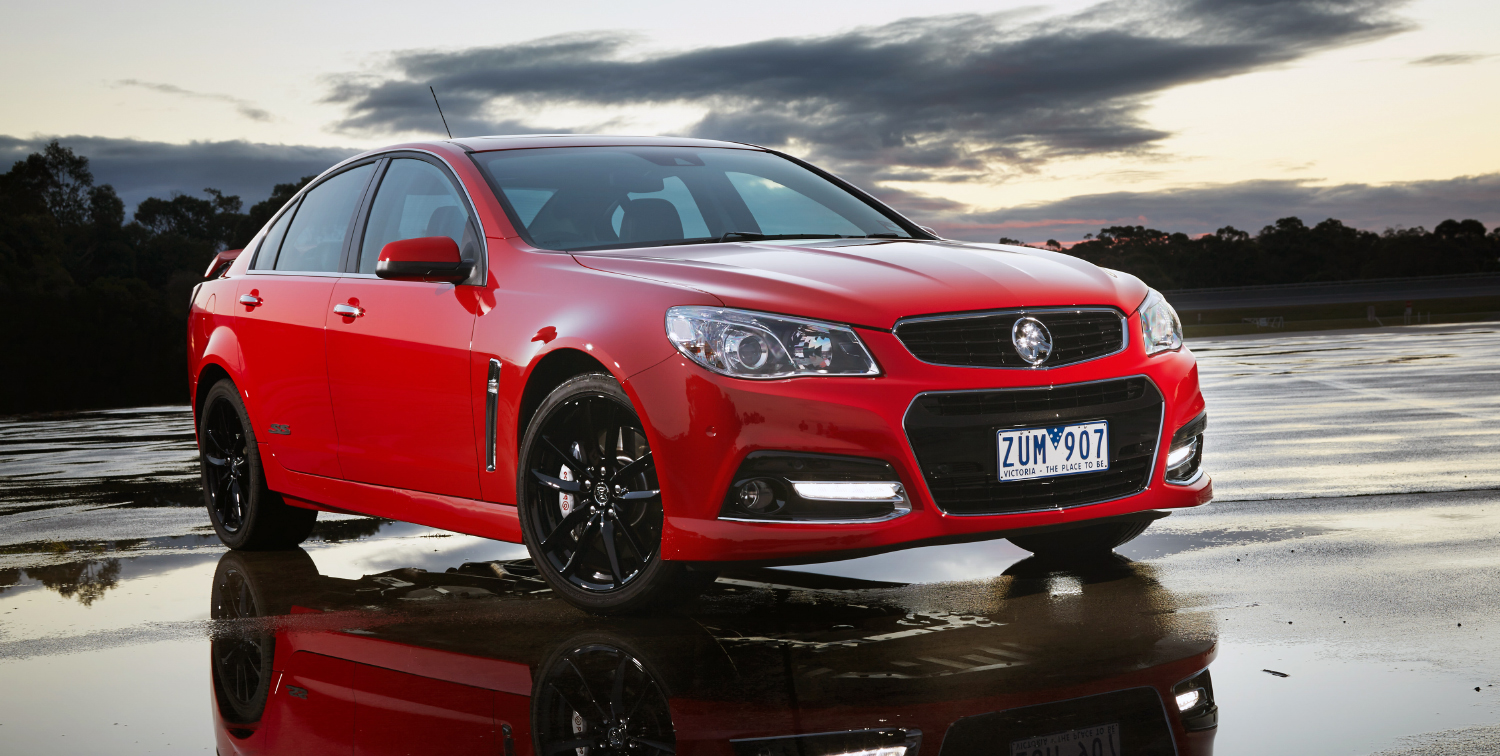
The reintroduction of the V8 came as a result of Ford realising that the sales gap which emerged between the Falcon and Commodore in the two years prior to the EB’s launch – about 12,400 cars in all – was entirely made up of Holden V8s. Australia truly did buy V8s.
These days? Not so much, but if you thought the V8 was a dinosaur and that only a handful were left on sale, think again. Alpina, Aston Martin, Audi, Bentley, BMW, Brabham, Chrysler, Ferrari, Ford, HSV, Infiniti, Jaguar, Jeep, Land Rover, Lexus, Maserati, McLaren, Mercedes-Benz, Morgan, Nissan, Porsche and Toyota all offer V8 powerplants. There’s life in the configuration yet.
To drive a good V8 is to understand why. Whether it’s an atmo V8 like the Lexus RC’s 5.0-litre Yamaha-developed unit or a twin-turbocharged screamer like that in the McLaren 600LT, there’s something definitive about the V8. It’s never the wrong choice. It’s compact and sounds great, whether you choose a cross-plane burbler or a flat-plane screecher. It’s tough, reliable and is always going to paint a big grin on your face. Honestly, there’s not a bad V8 on sale today.
Celebrating the very best is the sort of job we’ll gladly put our hands up for, so we put some of the very finest V8s through the wringer and examined history’s greatest engines.
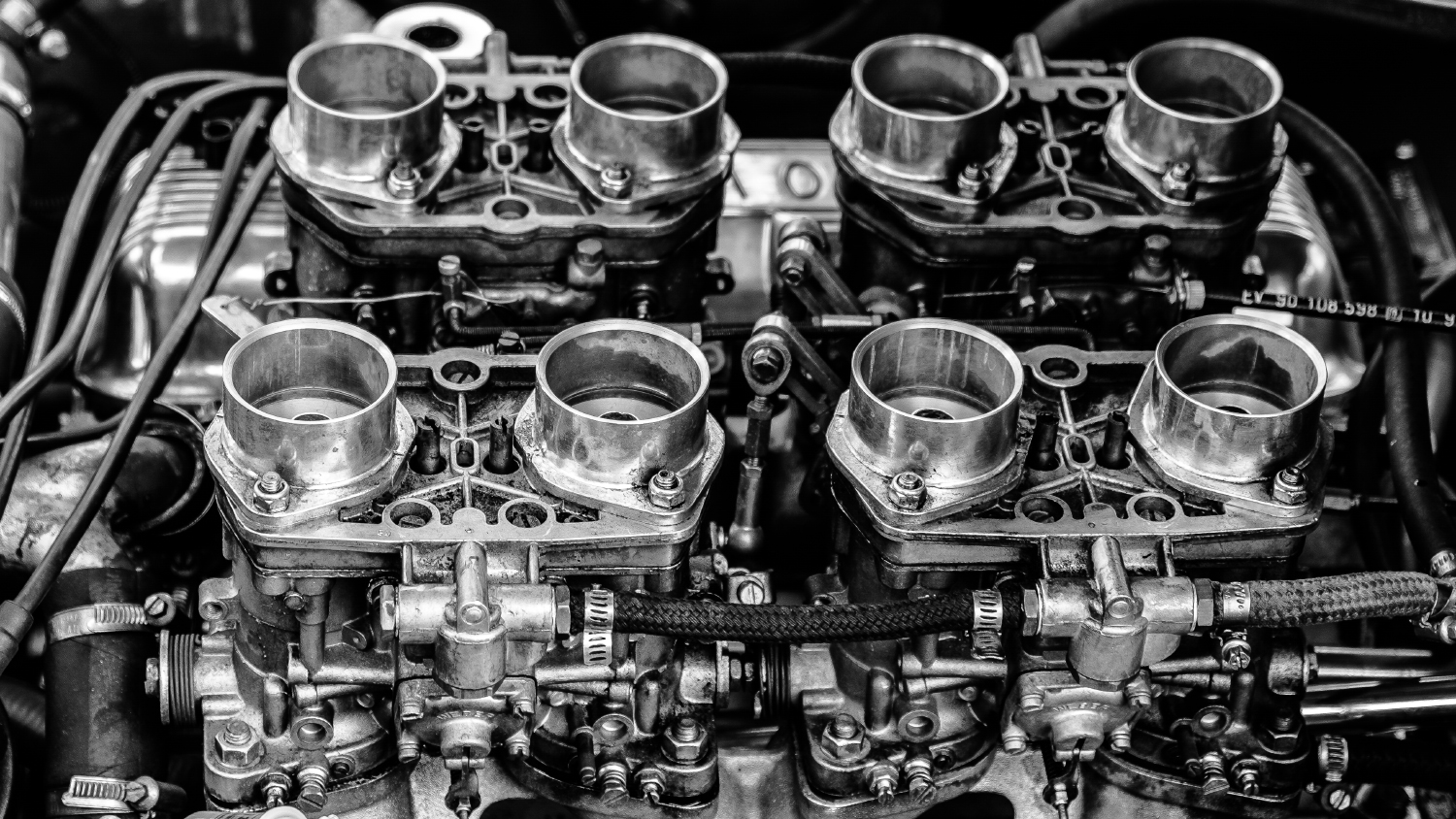
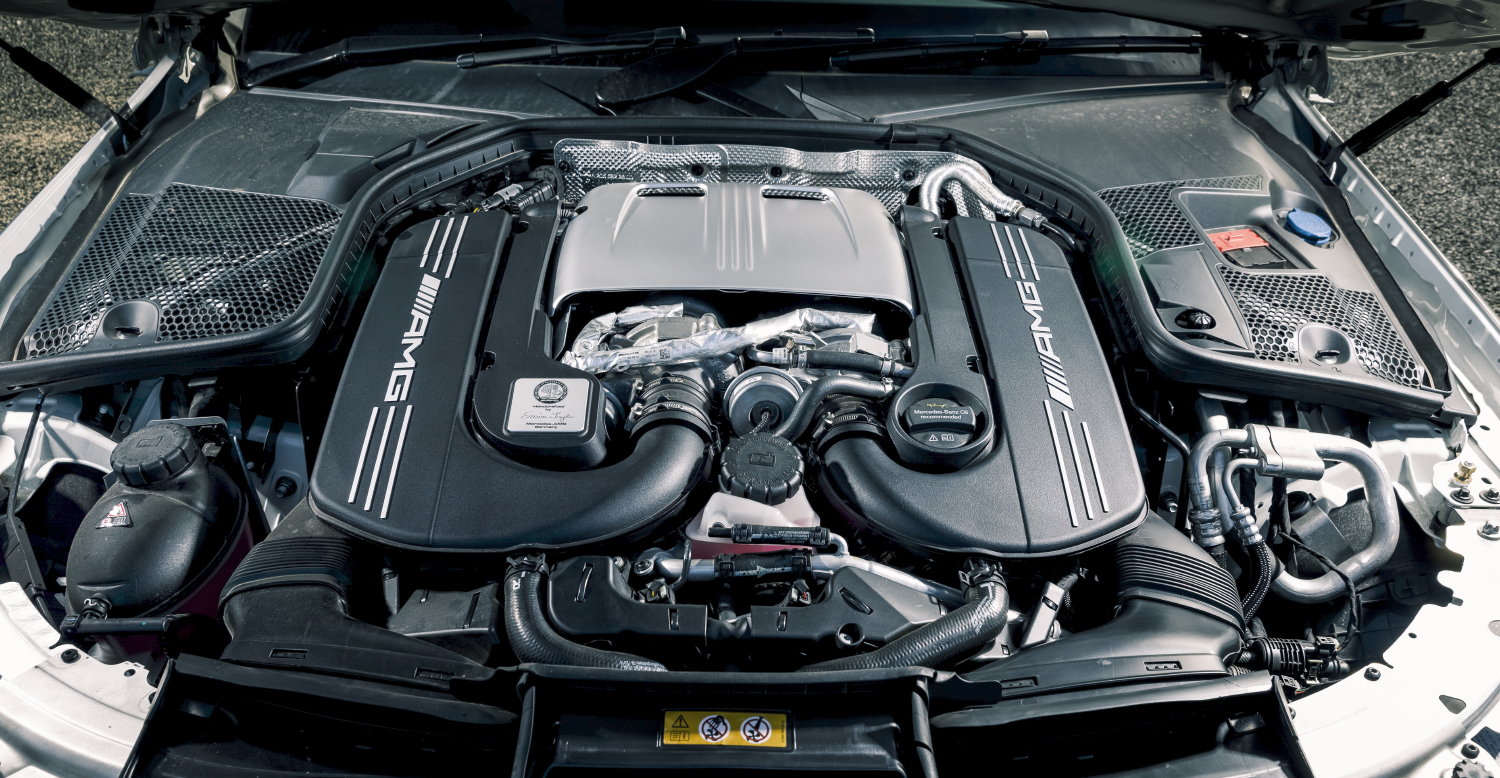
Over the coming week, Wheelswill examine some of the most compelling bent-eights ever created and conclude with a contemporary V8 party, celebrating the best V8s from Chevrolet, McLaren, Jeep, Ford, Lexus and Mercedes-Benz. Tune in to www.whichcar.com.au/Wheels every day for more.
Click to read about Great V8s:
Few car companies can boast more than 100 years of history, but in order to continue that legacy, car companies need to stay in touch with the times.
Citroen’s place in the motoring lexicon is well established but years of pitching products that, while interesting and able in their own right, have not hit a chord with the buying public means it’s under pressure to find some middle ground.

Following on from the C3 Aircross comes the larger five-seat C5 Aircross, a relatively conventional SUV that still manages to convey a sense of individuality that the company is renowned for.
Based on the bones of parent company Peugeot’s 3008, the C5 Aircross is instantly striking, thanks to its flowing lines, bold lighting cues and short overhangs.
The 19-inch rims on our tester match well with the C5, while splashes of black around the bottom of the car – including those lower side panels, or rocker panels, that pay homage to the Citroen air bumps of the Cactus range – draw it lower to the ground.

Brightwork is kept to a modernistic minimum, while colour highlights give the C5 some visual pop.
It’s still a strong, bold design that flies in the face of convention, but it’s not so outlandish as to scare punters away.
Value
The Citroen C5 Aircross will come in two variants that are separated only by a smattering of spec items, simplifying things for a company that only has a small footprint in the Australian market.

The entry-level Feel costs $39,990 and comes standard with a 121kW/240Nm 1.6-litre four-cylinder turbocharged petrol engine mated to a six-speed automatic transmission that drives the front wheels.
The Shine variant we have here sits at the top of the range and is priced at $43,990, adding 18-inch rims instead of 17s, acoustic windscreen and side glass, an inductive phone charger and half-leather quilted seat trim over the base C5 Aircross Feel’s standard specification, though it keeps the same basic mechanical package.
And while you might see a white car in the pics, it’s actually some sort of fancy multi-layered pearl white that costs $1050 extra, but does come with the red highlights as shown. A bog stock white one will cost no more, and offer black highlights instead of the red. Metallic paints including red, blue and black will add $690.
Yet despite the high volume of standard kit aboard the C5, including upmarket items like a digital dashboard, the fiercely fought medium SUV sector means it needs to be on its game money wise – and unfortunately the C5 is on the high side of the ledger, especially considering its FWD petrol-powered drivetrain.
For example, the front-drive Mazda CX-5 Maxx Sport comes in at $35,590, Volkswagen’s Tiguan Comfortline sits at $38,650, while the highly specced Toyota RAV4 Cruiser petrol-powered front driver comes in at $39,140.

Citroen offers a five-year, unlimited-kilometre warranty on the C5, and it wants to see your car back in for a service every 12 months or 20,000km. It’ll cost $3010 over five years, and Citroen insists that it includes items like brake fluid, cabin filters and the like, where others may not.
The plan can also be purchased to cover the car for up to 12 years or 180,000km!
Against a combined fuel economy claim of 7.9 litres per 100km, we recorded a real-world figure of 9.3L/100km over 500km, using 46 litres of the 53 litres total available in the tank.
Expect to see 650km or so of range from a single tank, and filling the C5 with minimum 95 octane petrol will cost about $85.

Standard features
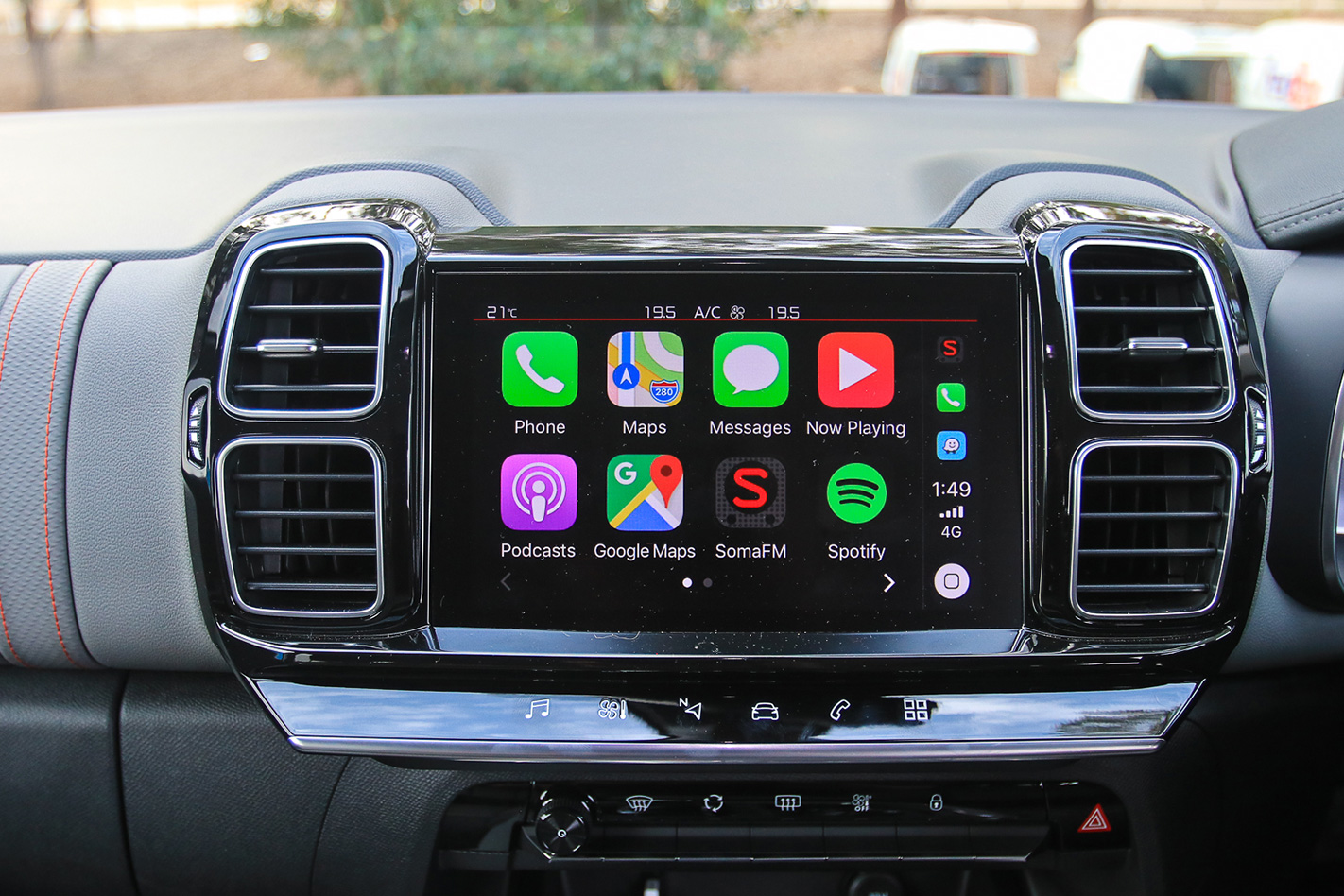
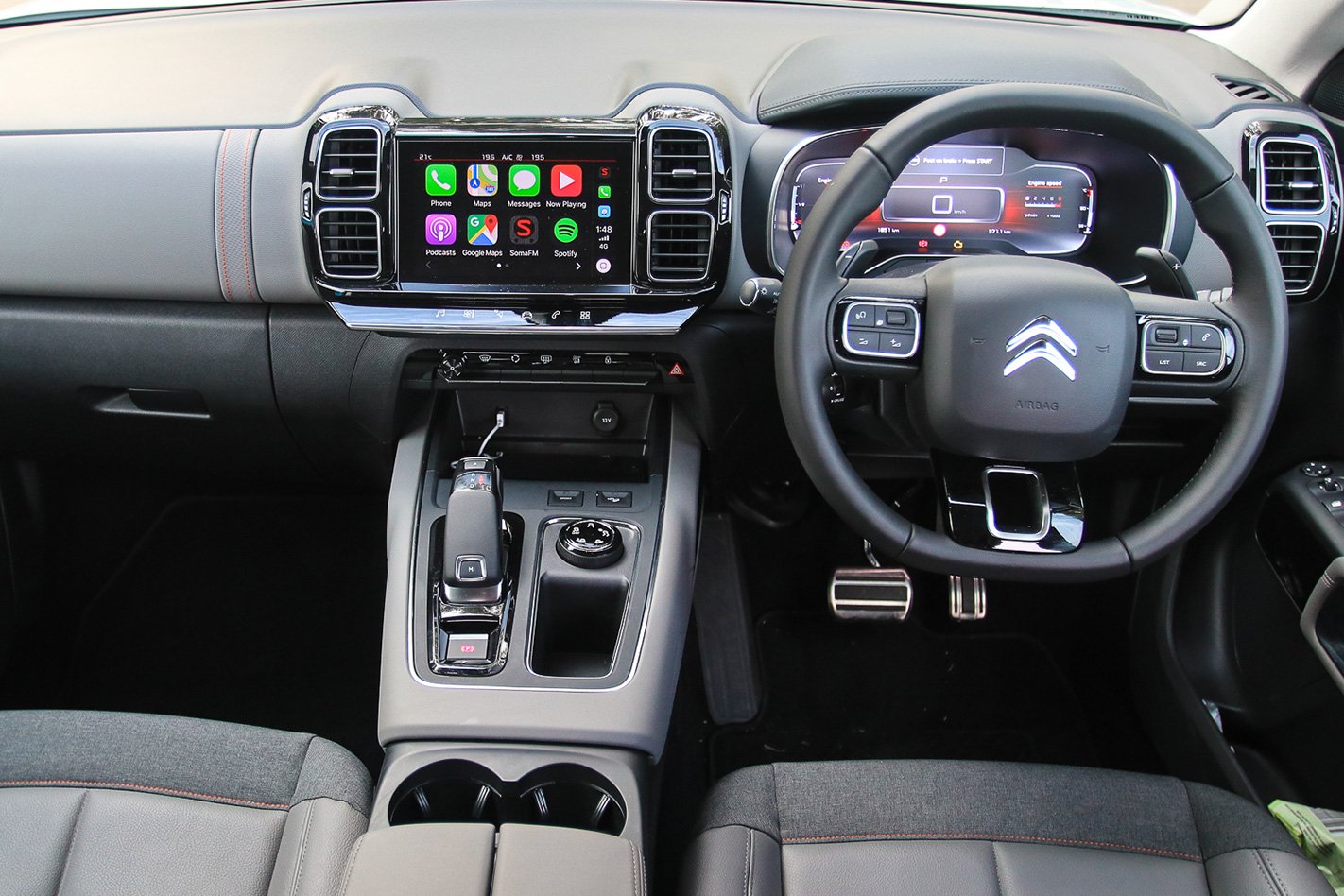
A 12.3-inch digital dashboard and 8.0-inch touchscreen multimedia system with Apple CarPlay, Android Auto and digital radio is standard, along with automatic lights and wipers, AEB that works between 5km/h and 85km/h, active lane keep assist with blind spot warning, multiple drive modes, a foot-activated electric tailgate and sliding second-row seats.
There’s a gear-by-wire shifter, paddles behind the steering wheel and alloy pedals, too.
The Shine as tested here scores 18-inch rims instead of 17s, acoustic windscreen and side glass, an inductive phone charger and half-leather quilted seat trim.
Size
More and more SUVs are coming with sliding second-row seats as standard, and the C5 joins that group. The seat backs can also be adjusted, which means you can grow rear cargo space to 720 litres by sliding them forward and setting the seat backs vertically.

A false floor also frees up space, with 580 litres available with the seats slid back. Drop all the seats to yield a capacious 1630 litres of space that can swallow a large mountain bike without fuss.
The CX-5, by way of comparison, offers up a relatively meagre 442L and 1342L with the seats down.
Space in the back seats is more than acceptable, though the curvature of the roof over the sides can make taller rear seat passengers feel hemmed in. The front seats are good, though the seat base could be a few millimetres longer.

Safety
The C5 comes well equipped with plenty of active and passive safety gear, including video-based AEB that works between 5km/h and 85km/h, lane departure warning and assistance, six airbags, surround-view reverse camera, front and rear parking sensors and traffic sign recognition.
It’s rated at a maximum of five Euro NCAP stars in the same specs that it arrives in Australia in, but it hasn’t been ratified by ANCAP yet.
Comfort
While the exterior stands out for all the right reasons, it’s a similar story for the C5 Aircross’ interior, where convention and coolness co-exist in harmony. A simple, airy cabin is dominated by unique seat trimming and some unique touches throughout.
A conventionally sized steering wheel sits in front of a digital dashboard that’s complemented by a moderately sized multimedia screen and a handful of capacitive buttons to control primary functions.

Like the exterior, the inside of the C5 is cheerful and practical, and unusual enough to pique interest without falling over into silliness for the sake of it.
Citroen has always done the comfort thing very well, and the C5 is no exception. For example, the top-spec Shine comes with upholstery that offer a soft quilted top layer over a firmer foam base, and after nearly 1000km of testing (including a non-stop 280km stint), we can attest to their comfort.
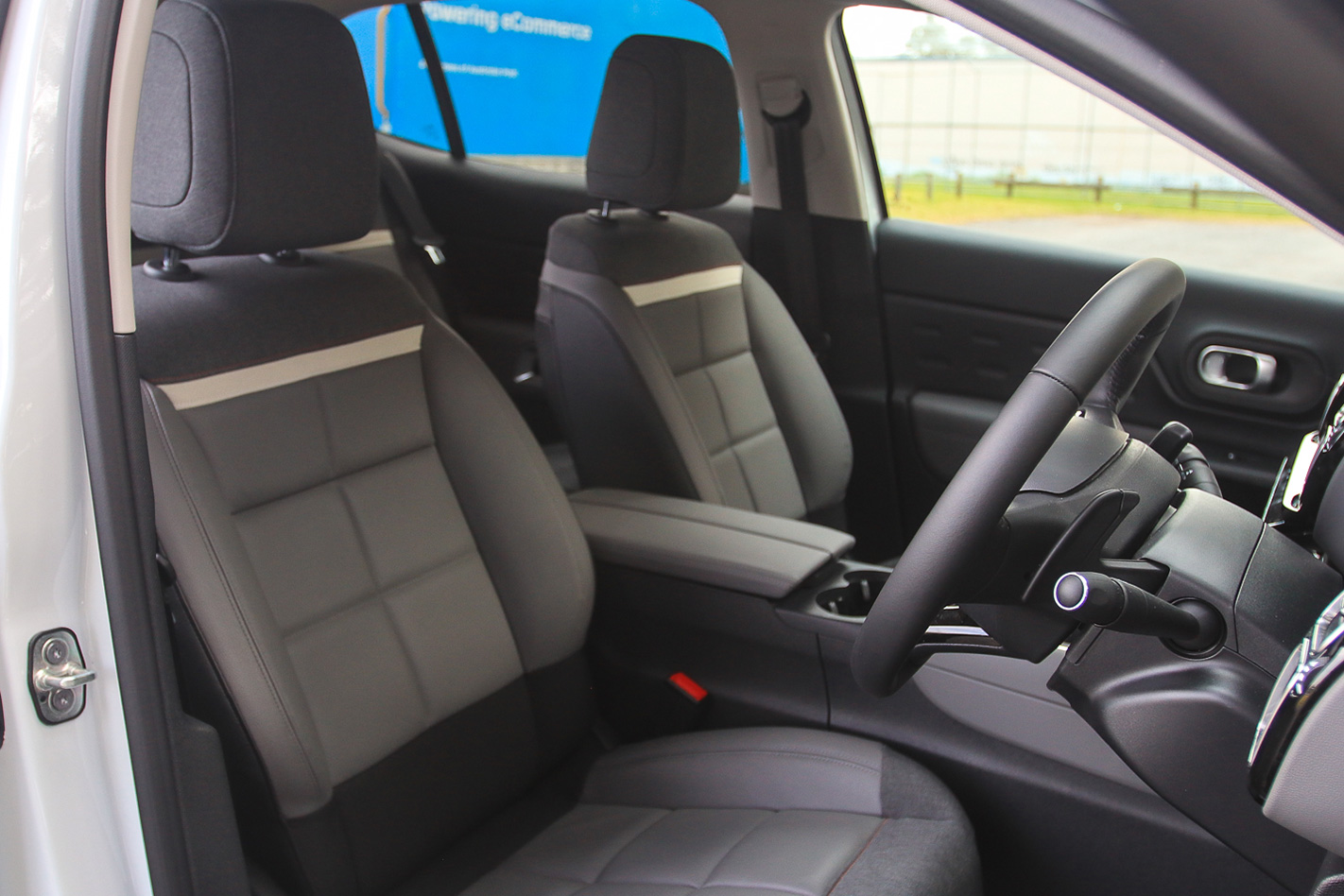
The digital dash is crystal clear, and offers a variety of configs to suit the driver. Slight markdown – it took me three days to find out how to dim the dash display, and yes, I even looked in the manual.
Key to its comfort, though, is its clever suspension set, which I’ll talk about in a second. Suffice to say, the C5 rides and handles like something twice its price.
On the road
That suspension is based not on a complex cross-linked arrangement of shocks, nor does it use internally adjustable adaptive dampers. Instead, Citroen tapped the expertise of its motorsport teams to build a shock for the C5 that works properly at all speeds.
And it really is as simple as that. Thanks to a clever – and patented – hydraulic upper bump stop system, the C5’s low-speed ride around town is plush and pillowy, while at highway speeds, its body roll is well controlled and its bump absorption is excellent. It tracks and corners well, too, though the steering feel is a little bit light and numb.

Its braking feel is a little weird, though, with a bit too much of a dead zone between initial application and actual slowing that needs careful modulation around town so as not to upset your passengers.
The 1.6-litre petrol engine does a fine job of hustling the 1400kg C5 around once up to speed, but it takes some prodding from a standstill to get cracking. This can be overcome by using the Sport mode, which simply sharpens the throttle’s response.
Equally, its 121kW and 240Nm will need to work hard if the C5 is laden and driving through hilly terrain.
I thought Citroen had missed a trick not using LED headlights, but the old-school halogens worked brilliantly well on country roads, and the C5’s traffic sign recognition system is one of the best in the game, especially at this price point.
The Shine’s 19-inch wheels are narrower than most others, using a 205mm wide Michelin tyre where others would offer 225mm or even 235mm wide rubber.
Citroen says that the narrower rubber improves comfort and lowers rolling resistance, and while the tyre won’t be as easy to find in more remote locations at short notice should you damage one, it works on the C5 as advertised. A space-saver spare lurks under the boot floor in any case.
Verdict
In a crowded, price-sensitive market like Australia, the prevailing winds blow right against companies like Citroen, which lacks both a strong dealer base and a deep user pool.
However, the C5 Aircross is a valid and competent competitor in the medium SUV class, combining good looks, smart spec, comfort and relative frugality in equal measure.

Stacked up against it, though, is its pricing position against a formidable and well established field, which will no doubt see it excluded from many people’s shopping lists.
Honestly, though, if you’re in the market for a mid-sized SUV, you could do worse than just try out the C5 for yourself. It’s good looking, it drives well, it carries five in comfort, it has loads of cargo room, and it won’t cost the earth to own and run.
Model: Citroen C5 Aircross Shine Engine: 1598cc 4-cyl, dohc, 16v, turbo Max power: 121kW @ 6000rpm Max torque: 240Nm @ 1400rpm Transmission: 6-speed automatic Kerb weight: 1400kg Fuel economy: 7.9L/100km Price: $43,990 On sale: Now
Renault’s Formula 1 team can’t seem to catch a break at the moment, with one of the team’s transporters being involved in a road accident following a horror German Grand Prix for the French outfit.
While en route to this weekend’s Hungarian Grand Prix, a Renault F1 team truck was pictured stranded on the side of the road on the M1 motorway near Gyor, Hungary.
The truck and trailer left the road, crossing the central divider, and breaking through the armco toward oncoming traffic. Renault said that the driver was not inspired by the team’s brief efforts on track.
“The driver, who was driving within the respected regulations, was extracted from the vehicle. He is conscious and has not suffered serious injury,” said a team statement.
“He has been transported to hospital in Hungary for further checks. No other vehicles were involved in the incident.”
Police confirmed that the reason for the crash remains a mystery.
“Unclear reasons and circumstances had led to a truck travelling towards Budapest, breaking through the barrier separating the track bodies, to the side leading to Hegyeshalom, where it had stopped in a drainage ditch,” local police said in a statement.
It is unclear what the truck was transporting. F1 teams having multiple, often dozens, of trucks in use during the European leg of the F1 season, moving everything from the corporate suite to transporting the racing cars themselves, and the numerous spares needed for a grand prix weekend.
This hiccup for the Renault F1 Team follows a dreadful showing at Hockenheim last weekend, with both drivers failing to finish a frantic and eventful grand prix.
Daniel Ricciardo was forced to retire early in the race with an expired engine, while Nico Hulkenberg crashed out after running in a podium place. He ran afoul of the final set of turns that also caught out Charles Leclerc and Lewis Hamilton.
The German Grand Prix was a prime opportunity for Renault to score well, and potentially even nab a podium position, as intermittent rain caused chaos with many front runners crashing out.
Ricciardo’s blown engine was the same unit he started the season with, Renault electing to save his more powerful turbocharged V6 for this weekend’s race in Hungary.
There are changes at the top level occurring for the Renault F1 team, with Renault’s CEO Thierry Bollore stepping down from the board of the racing squad, to be replaced by Alain Prost.
Generally speaking, Australia is a warm and dry nation with almost all regions of our vast land spared the chilly conditions that plunge other parts of the world deep into minus figures every year.
Therefore for almost all motoring on Australian roads, a straightforward high-quality ‘summer’ or all-season tyre is all the rubber that you’ll need year-round – even during the winter. But if you are a real snow bunny visiting our beautiful alpine zones multiple times through the cold season, or perhaps your source of income is above the snowline, winter-grade tyres fitted to your car are as essential as woollen socks and a beanie.
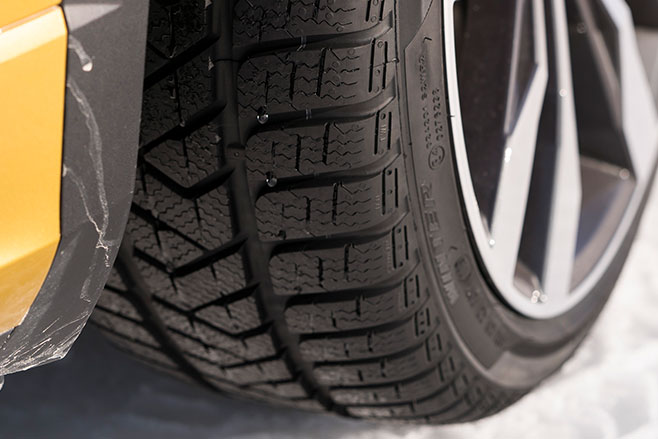
For the few times most drivers venture into the big freeze, a set of snow chains in the boot are all that’s required to satisfy both local stipulations and provide extra grip when the road gets very slippery, but a specialised winter tyre offers more than just convenience.
Winter tyres are designed to offer the very best grip during cold, wet and icy conditions with numerous design features that set them apart from virtually all other rubber.
Despite the specialised design and construction, there are only a few visual cues that differentiate a winter tyre from others.
Many tyres have ‘sipes’ in localised areas of the tread, which are fine slits in the surface that help clear water from the contact patch, but a winter tyre’s surface has sipes the entire treadface from shoulder to shoulder. The extra channels boost water-clearing efficiency but also provide hundreds of small ridges that grip very slippery surfaces.

The more obvious tread pattern also plays an important role. Winter tyres cleverly make use of snow’s ability to stick to more snow – if you’ve ever made a snowball, you’ll understand. As the tyre rolls on to soft snow, the wider channels in the tread close slightly, grabbing a ‘handful’ of snow. As the tyre continues to roll, the snow held in the tread sticks to the snow under the tyre providing traction.
If you watch a vehicle with snow tyres driving fast over fresh snow you’ll see a white spray behind each wheel as the tyre flexes back to its original shape and lets go of the snow.
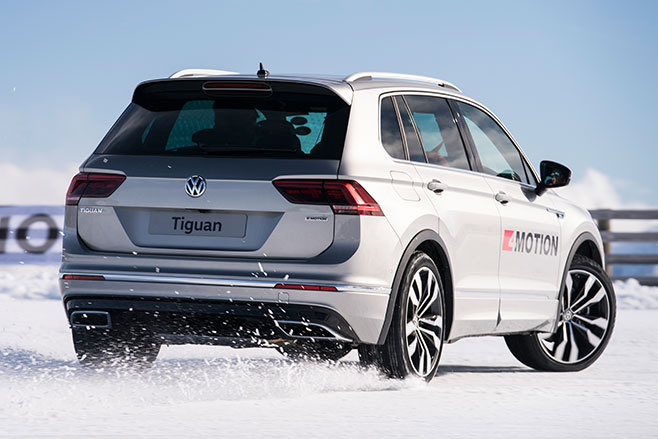
As with all tyres, the correct inflation pressure is essential but particularly so with a winter tyre that’s driving on snow. If the pressure is too high, the tyre won’t be able to flex and grab the snow.
Finally, winter tyres are made from a highly specialised compound that is formulated for operation in low temperatures. Around 7 degrees Celsius, the compound of a regular summer tyre becomes significantly stiffer and is unable to provide the same safety and dynamic characteristics as it does on warmer roads.
At this temperature however, the rubber molecules of a winter tyre are just getting going. In sub-zero conditions, a winter tyre remains supple and is able to provide superior grip even if the road is completely dry.
Winter tyres are so effective in cold and icy conditions that a two wheel drive wearing winter tyres is safer than an equivalent all-wheel drive shod in summer tyres.
Despite its impressive set of specialised skills, a winter tyre can be used during less severe weather conditions although it won’t perform as well as an all-season or summer tyre.
Thankfully, there is a much easier way to identify a winter tyre than studying its features. Moulded in to the side-wall of a winter tyre is the so-called 3PMSF symbol, or ‘three-peak mountain snow flake’. This badge of honour is only applied if the tyre has been proven to provide dramatically improved performance in wintry conditions through rigorous testing.

A proper winter tyre as marked with the 3PMSF symbol should not be confused with a ‘mud and snow’ tyre (M+S). While these tyres do provide better traction on loose surfaces including snow, they are intended for a majority of use in warmer temperatures and do not perform as well as a dedicated winter model. That said, some tyre models can be rated for both.
For even more extreme conditions such as sheet ice, winter tyres can also be equipped with small metal studs, which supplement the other winter tyre features and add traction like a footballer’s boots do when running on a slippery pitch.
The most important element in your vehicle’s winter weather safety and control is not the transmission system, nor is it its power, weight, ground clearance or braking system. While these components certainly all have a bearing, it is your tyres that are paramount when the mercury falls.
Make sure you have the correct rubber fitted to your vehicle and always drive to the conditions.
Another year, another Volvo SUV claiming the top spot. This time round, few saw it coming. After the Jaguar I-Pace’s range and reliability issues saw it fall from contention, prime position on the COTY podium became a fiercely contested tête-à-tête between the Volvo XC40 and the Subaru Forester. It wasn’t the done deal that many initially expected. Every year at COTY there’s an initially unfancied outsider that doesn’t draw much attention but which seems to sneak imperceptibly through the contest, and this year’s car was the Forester. Separating two very strong contenders for the COTY crown resulted in some of the most knotted brows we’ve seen in years in the judging room. Ultimately, however, the Volvo’s genre-busting ingenuity was enough to see it claim a second win in a row for the Swedish marque.
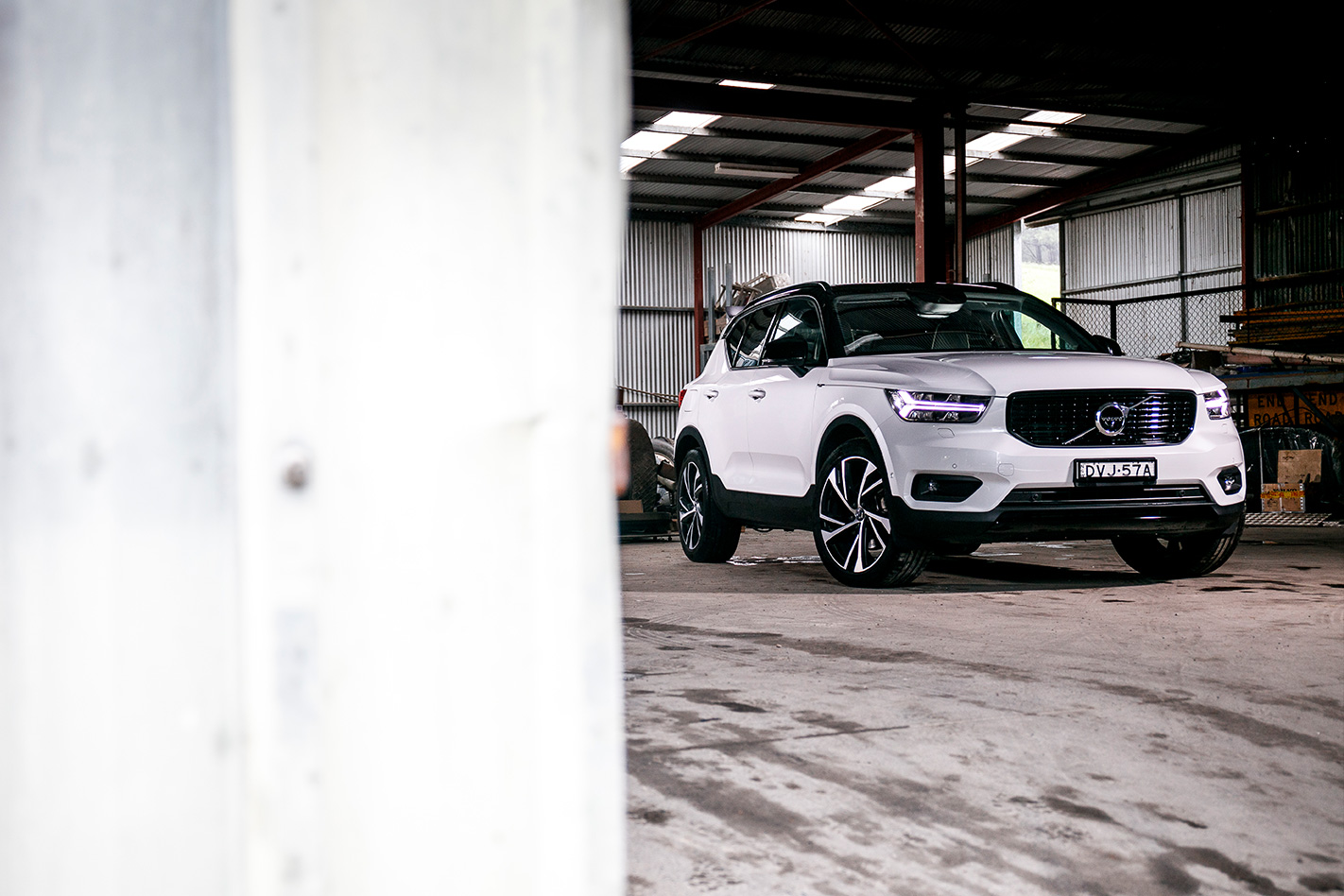
The XC40 is, in effect, half a size bigger than most of its direct competition without being significantly more expensive. Sit in an Audi Q2, a Jaguar E-Pace or a BMW X2 and they feel claustrophobic by comparison, the Volvo’s greater length, height and wheelbase doing enough to transform it from an urban bauble into genuinely credible family transport. There’s room for one six-footer to easily sit behind another, there’s stacks of interior storage, a decent 460-litre boot with an underfloor spare and a long list of thoughtful features like flip-down headrests on the rear bench, high quality touch points and 97 percent recycled carpeting. You won’t find a more spacious premium SUV in this particular category.
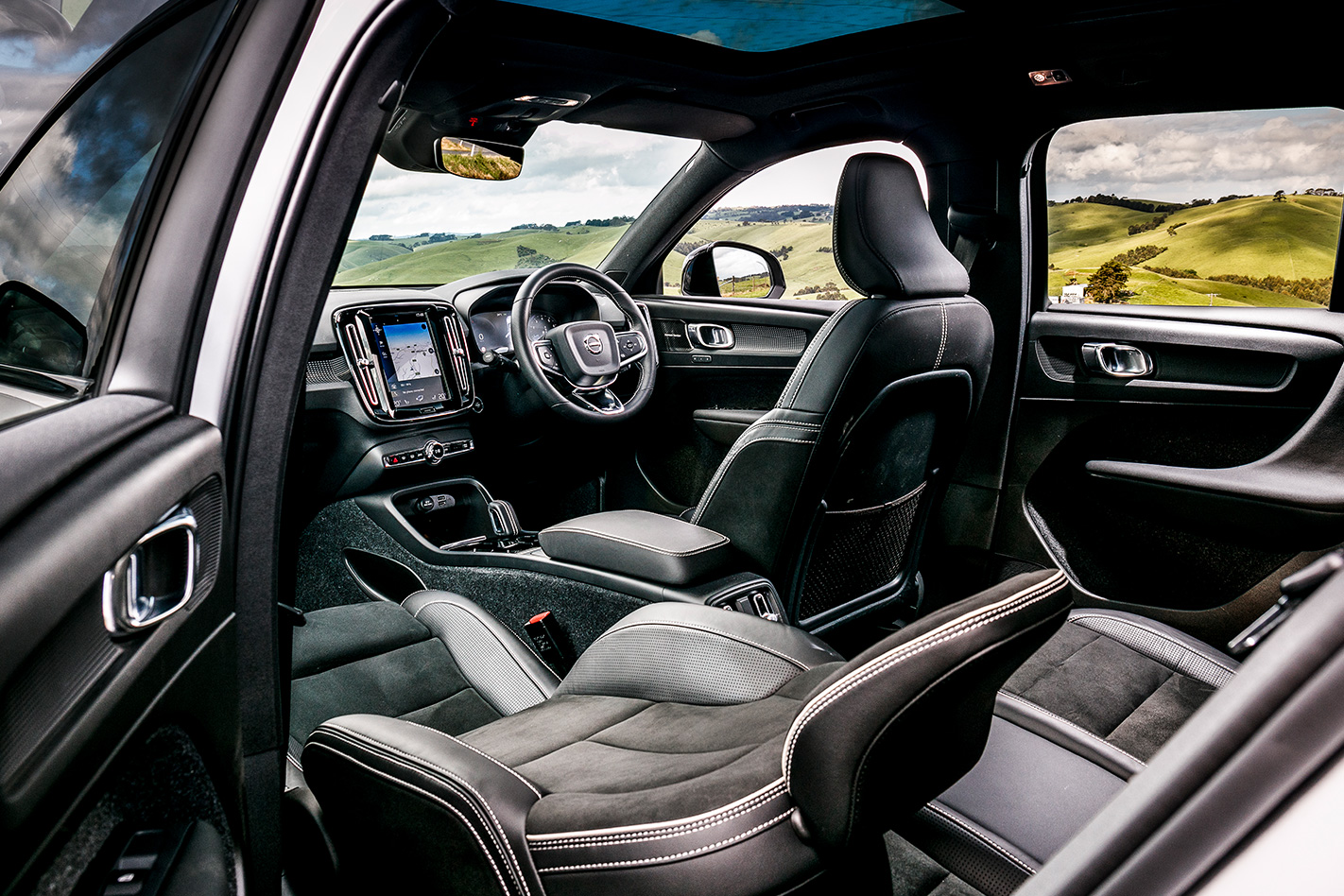
Judges were impressed by the XC40’s value proposition. Like the Forester, this was a car where you could conceivably buy an entry level model with no options and be completely happy with what was delivered. That’s rare these days, and acts as a key point of differentiation to the Volvo’s European rivals, most of whom need a big additional outlay to really shine. Our group test in August was indicative, the XC40 merely wearing $1150 worth of optional paint to win the comparo, while every other rival ladled on between $11k and $14k of residual-wilting extras.
Likewise, it’s hard to fault its safety provision. Even the base model gets seven airbags, AEB, blind spot monitoring and rear-cross traffic alert. Rear Collision Mitigation Support works when the car is at a standstill, signalling to cars approaching too fast from the rear and, if it thinks you are about to be rear-ended, it tensions the seatbelts and applies the brakes. Complementing that tech is Front Collision Mitigation Support that’ll automatically steer to avoid a head-on between at speeds between 60 and 140km/h. The all-wheel drive versions of the XC40 scored a full five safety stars on ANCAP’s new tougher testing protocol, while the front-drive T4 versions weren’t tested.
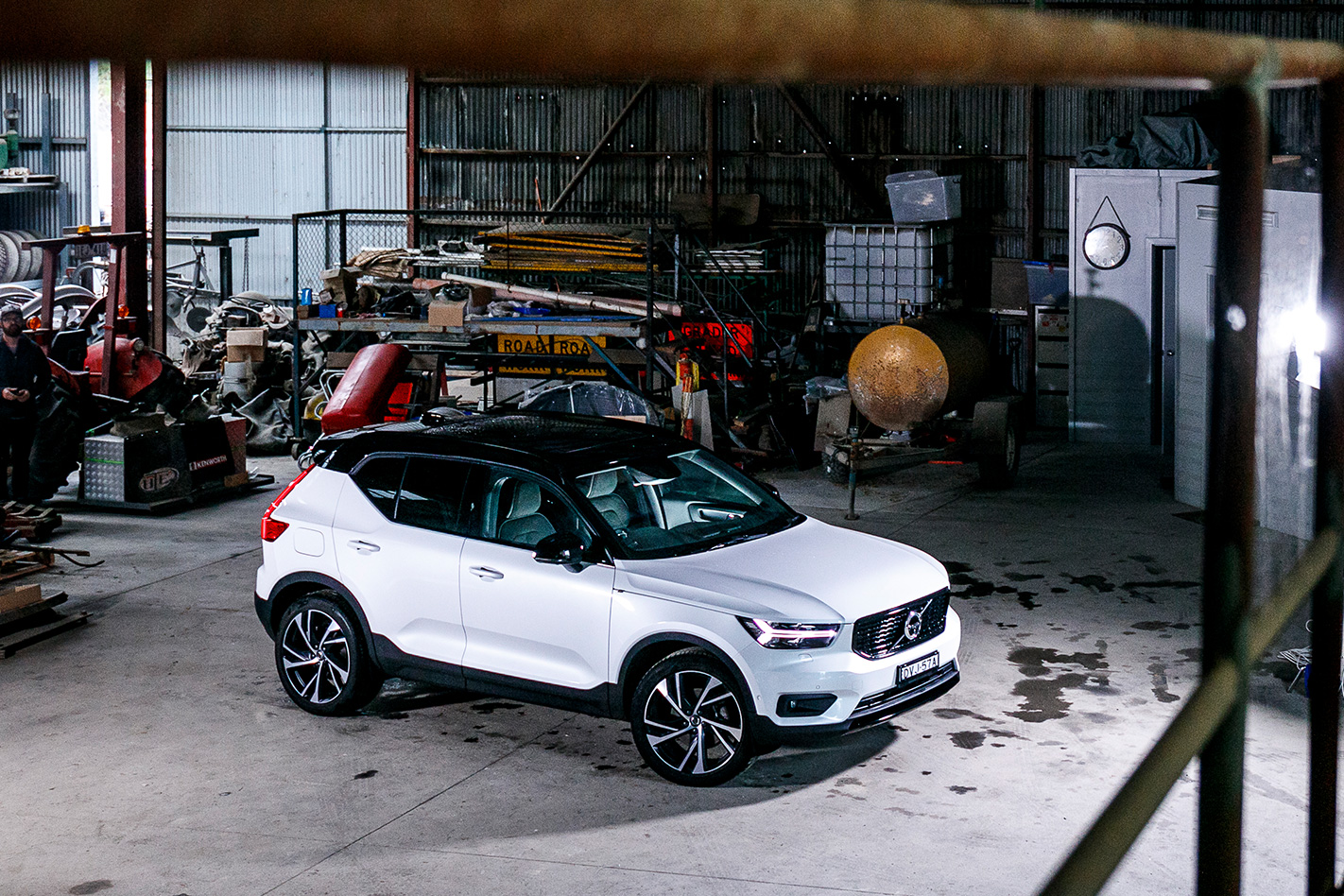
While the range-topping $56,740 T5 R-Design felt like a hot hatch on stilts, its 185kW 2.0-litre four pot and locked-down body control making it alert and edgy, but the more malleable T4 Momentum also impressed. You’ll sacrifice drive to the rear wheels, some equipment and a stack of kilowatts, which is why its likely XC40 sales will top-weight, but the $44,990 XC40 T4 is upspec Holden Equinox/Kia Sportage money and feels several leagues removed from that blue-collar company. It’s good to be able to offer that breadth of choice, but it did leave us wondering whether the pick of the bunch might have been the only one absent from COTY this year, the comfortable and well-equipped all-wheel drive $50,990 T4 Inscription.
While repetition is the key to accurate vehicle testing, driving the Volvo on this familiar test route made it hard to escape the notion that the XC40 wasn’t as polished as last year’s champ, the hugely impressive XC60. Driving a Volvo SUV on the same roads made thse sorts of comparisons inevitable. So was the class of ’19 a weaker cohort as a result? Not in any way. It’s unreasonable to expect a cheaper Volvo to ride with the panache of a more expensive one and, in its class, the gap between the XC40 and most of its key competitors is probably wider than that evident between and XC60 and, say, the BMW X3 or the Audi Q5. Part of the XC40’s appeal is that it purloins so many of its bigger sibling’s interior elements. There’s an easy familiarity to the big portrait-oriented centre screen, the wheel-mounted controls and the stereo functions.
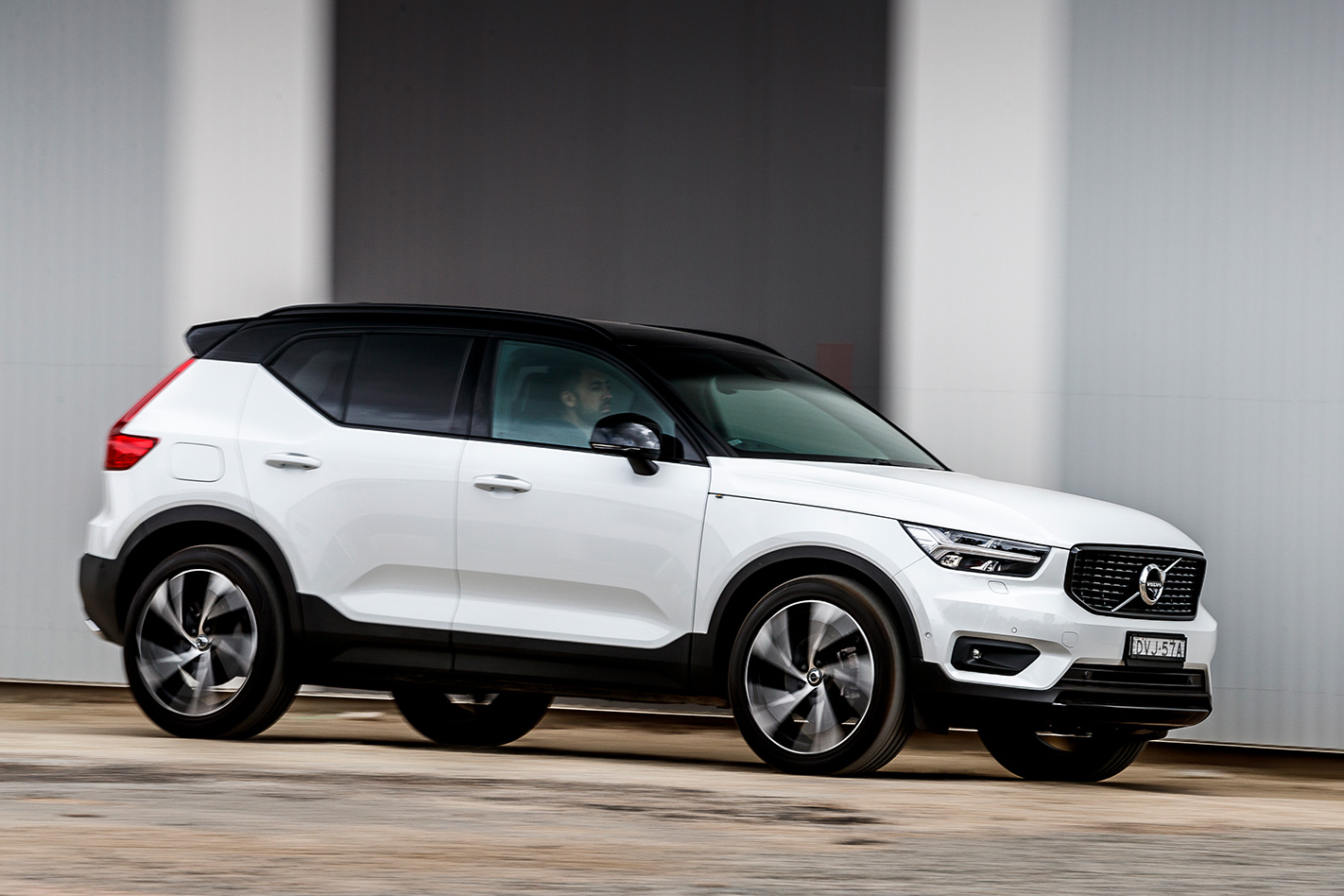
Bringing 90 percent of the XC60’s excellence to a considerably more affordable price point is the real story here and, in that regard at least, the XC40 is probably the bigger and more relevant achievement for Volvo. It forensically knocked over all comers when its scores against COTY’s five criteria were calculated. Editor Inwood’s notes summed up what everyone was thinking. “Has there ever been a more successful company turnaround than Volvo’s recent form?” The XC40’s well-deserved win demonstrates that revitalised Volvo’s story arc still has some intriguing chapters to come.
