
If you had to choose just one car that could lug your skis and a bag full of clothes and blast across the country comfortably at speeds of up to 326km/h, it’s unlikely you’d think of grabbing the keys to a McLaren.
In fact, it would be physically impossible. Until now.
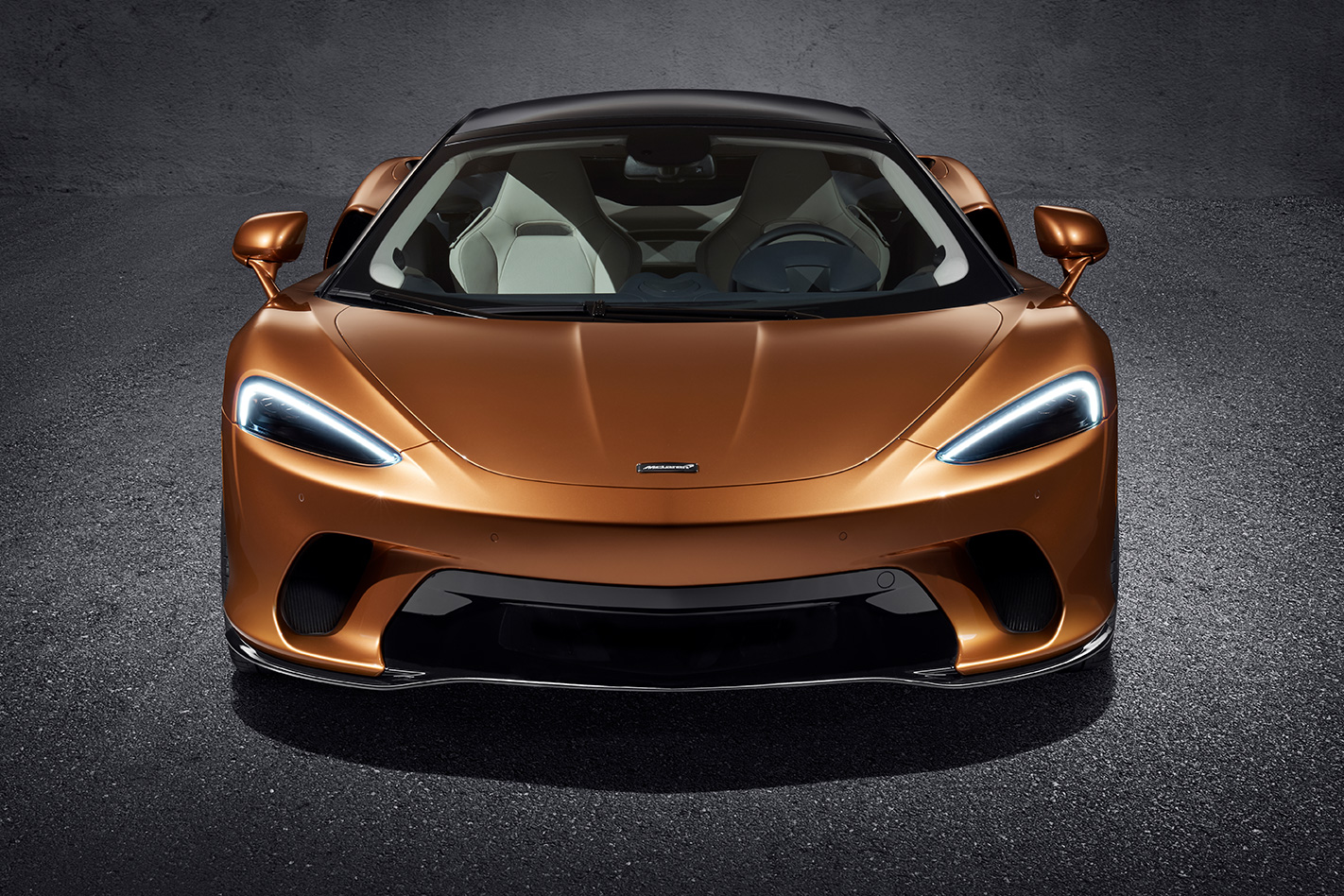
McLaren has confirmed the car that we all knew was coming, the GT.
It is the first Grand Tourer to come out of Woking, and McLaren proudly refers to its long, sleek creation as a ‘super lightweight.’
Built on a chassis derived from the carbonfibre frame used in its track-focused lineup called MonoCell II-T – the T denoting ‘Touring’ – the aluminium clad supercar records just a 1530kg kerb weight which is at least 130kg lighter than any GT rivals; cars like the Aston Martin DBS Superleggera and Ferrari 812 Superfast.
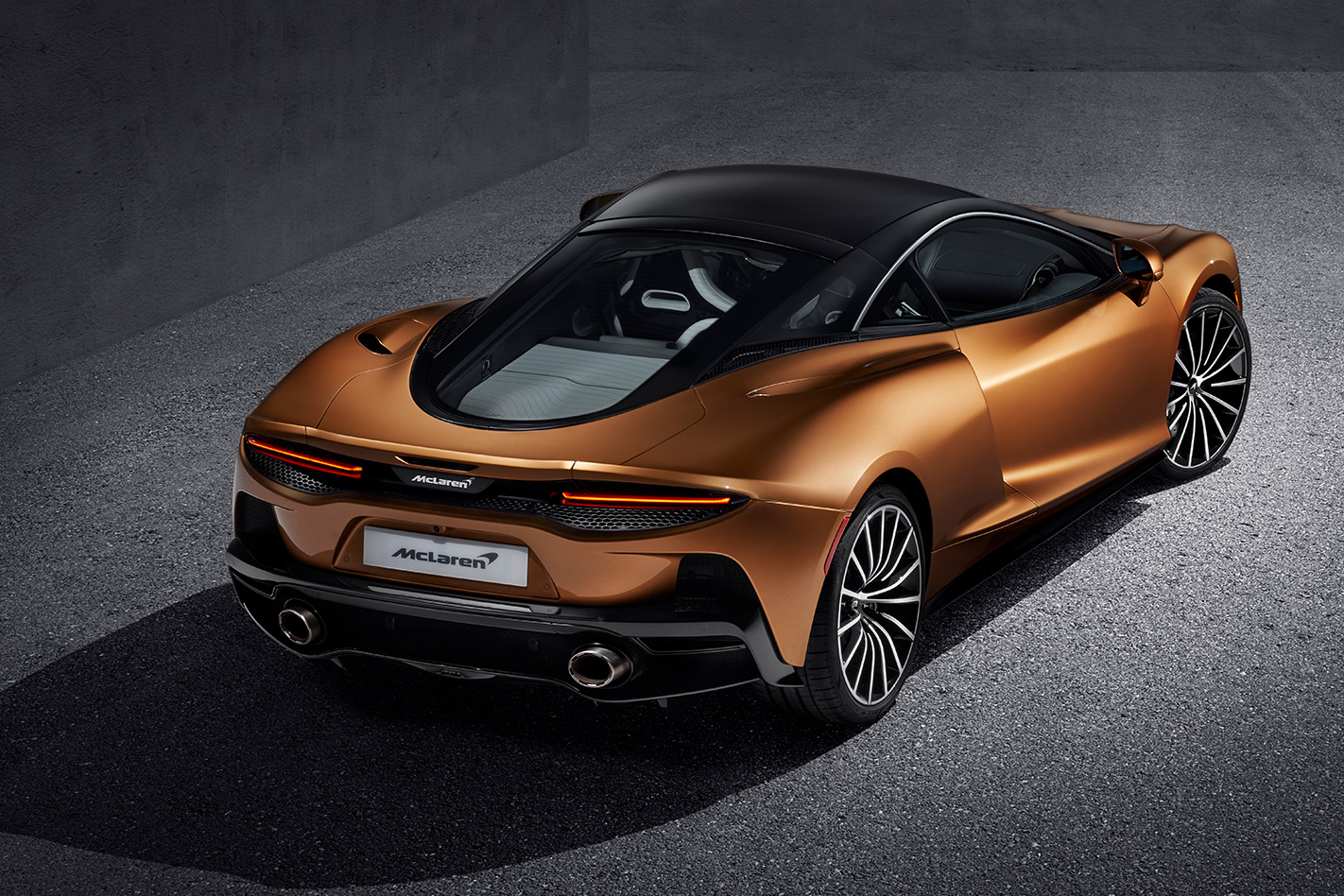
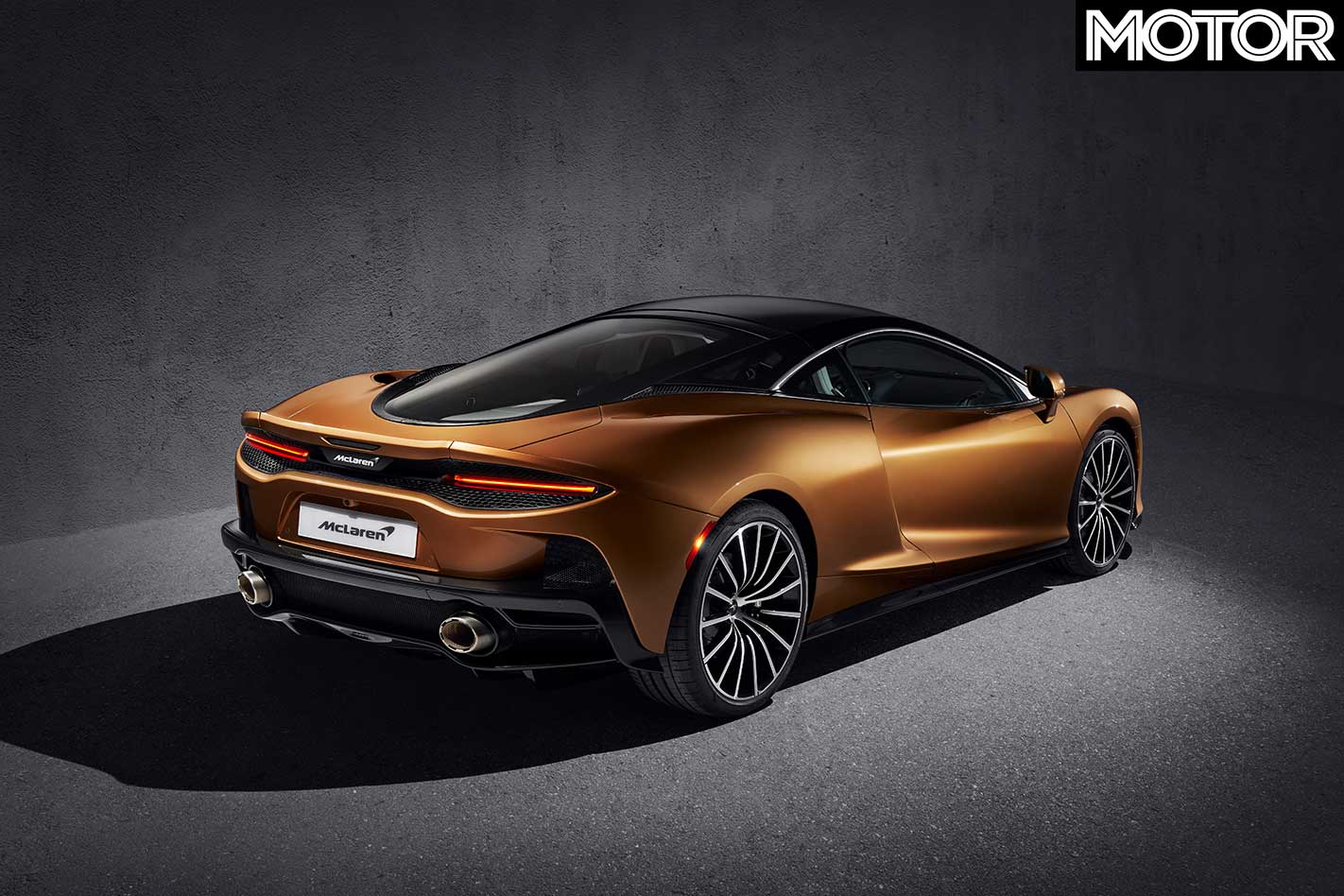
Born with DNA from McLaren’s stunning Longtail, the GT sits almost 4700mm long with a 2675mm wheelbase that is tailored toward comfort rather than outright performance. The 15- or 7-spoke alloy wheels are the largest ever fitted to a McLaren, measuring 21-inches at the rear and 20-inch in diameter at the front, and come wrapped in specially formulated Pirelli P Zero rubber.
The fourth new vehicle to arrive in McLaren’s Track25 business plan, the GT joins the existing Sports, Super and Ultimate Series lineups. Wanting to create something unique, and distinctly McLaren tasting, the British company says the GT is “lighter, faster, more engaging and more usable than a traditional Gran Tourer.” With 570-litres of cargo space, it is indeed one of the most practical supercars in existence.
The new chassis structure incorporates an upper carbonfibre rear cradle which provides a 420-litre luggage bay above the low-mounted V8 engine. Long enough to swallow skis, golf clubs and bags, it is a truly flexible Grand Tourer. The rear glazed tailgate is front-hinged for unhindered access and available electrically powered. Despite being out of sight, the boot is finished with the same detail you find in the cabin, incorporating a new mixed-material SuperFabric that is both luxurious yet resistant to stains and wear.
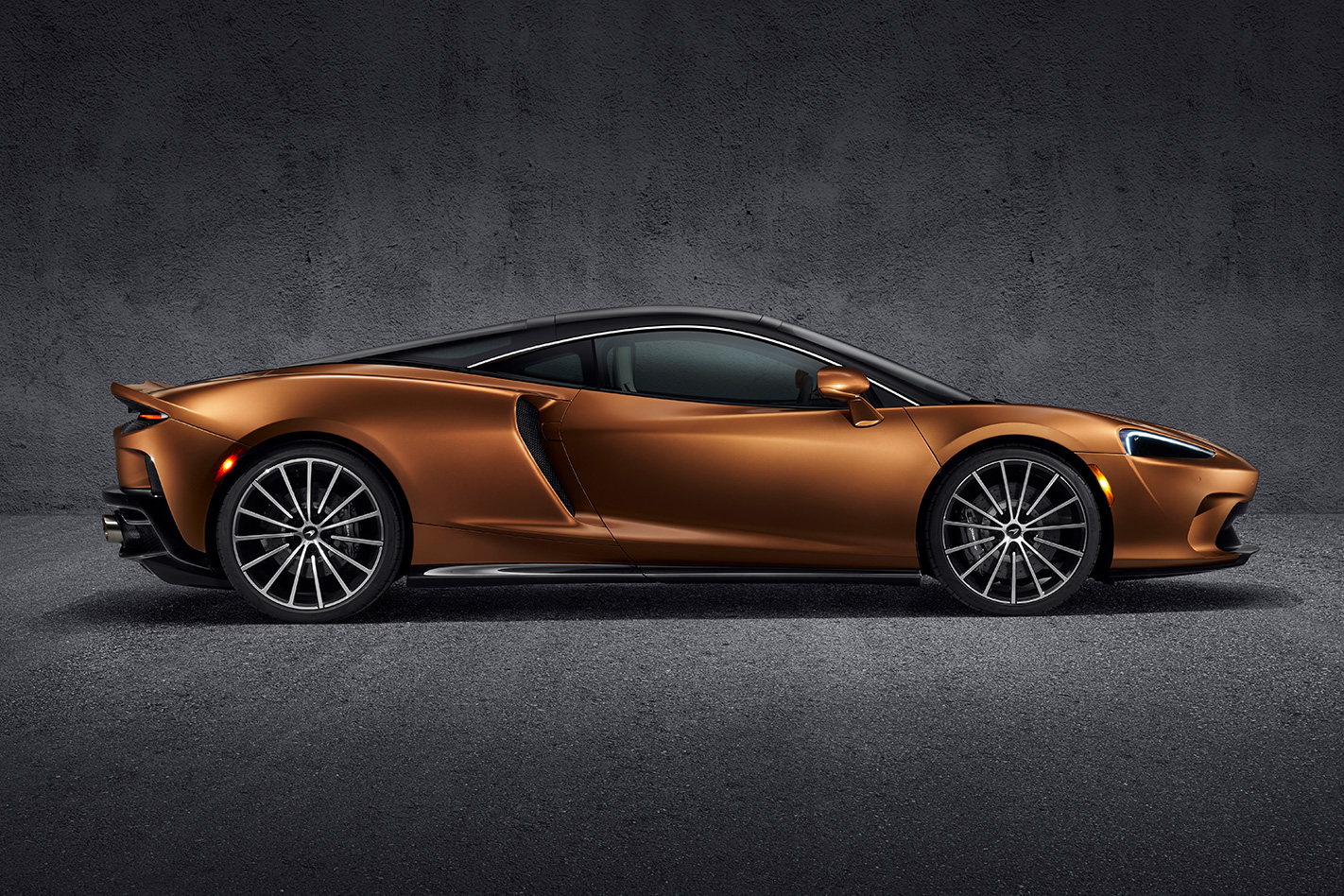
While touted as a “new McLaren for a new audience,” it retains many hallmarks of the brand’s supercars; namely, a thumping V8 engine with pounding performance figures. Powered by a new derivative of McLaren’s 4.0-litre twin-turbo V8 labeled the M840TE (itself based on a Nissan racing engine), the mill develops 456kW and 630Nm at 5500-6500rpm. Between 3000-7250rpm it produces 95 percent of its torque output, or almost 600Nm, through the seven-speed automatic. McLaren says the engine produces ‘relentless acceleration’, and the performance figures prove as much; 0-100km/h in 3.4sec, 0-200km/h in just 9.0sec and a top speed of 326km/h – presumably appreciated for touring types when the ski shop down the hill is about to close.
“The new McLaren GT combines competition levels of performance with continent-crossing capability, wrapped in a beautiful body and true to McLaren’s ethos of designing superlight cars with a clear weight advantage over rivals,” said CEO, Mike Flewitt.
“Designed for distance, it provides the comfort and space expected of a Grand Tourer, but with a level of agility never experienced before in this segment. In short, this is a car that redefines the notion of a Grand Tourer in a way that only a McLaren could.”
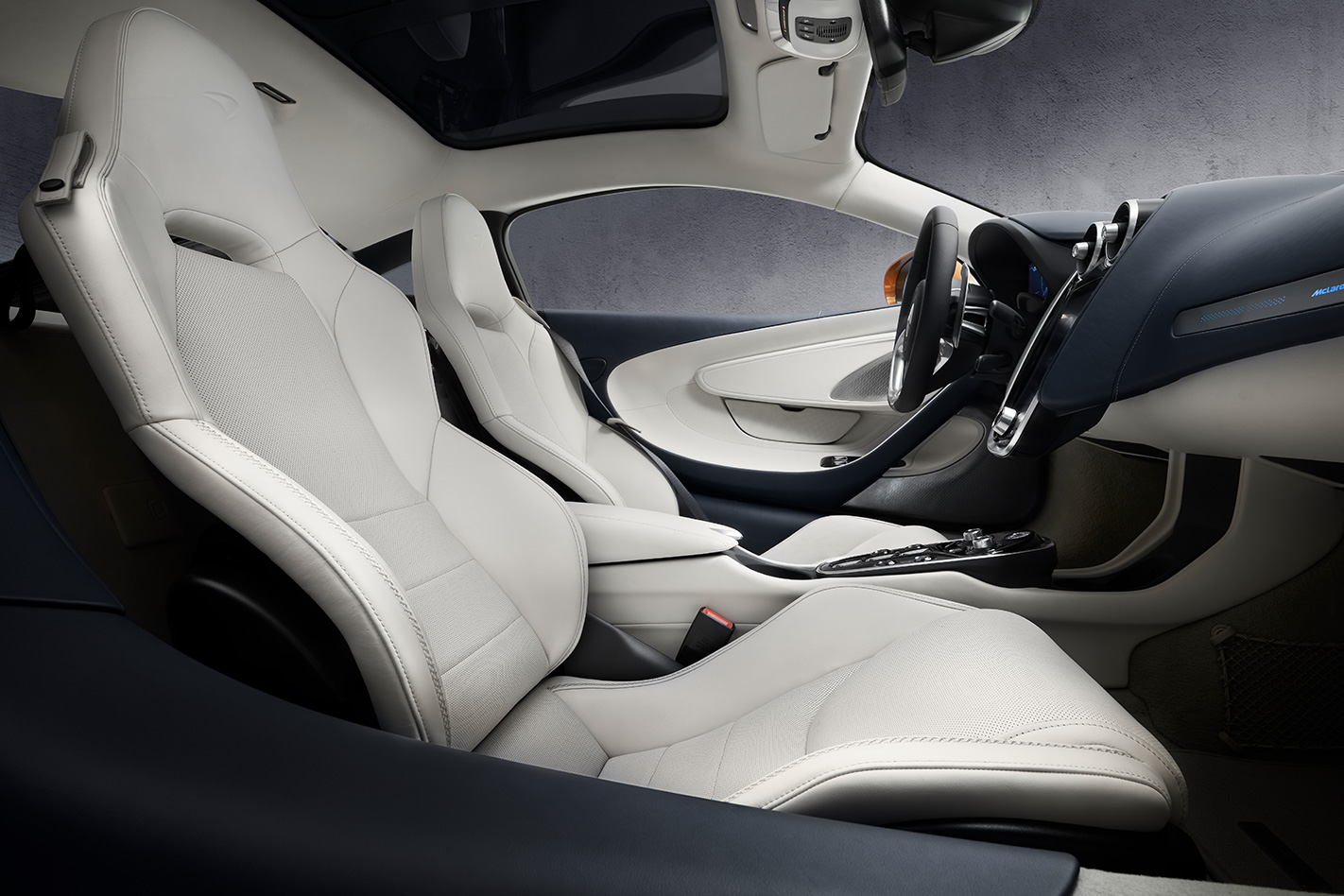
Despite a 0-200km/h sprint in under 10 seconds, it’s a plush cruiser. In fact, McLaren claims that in comfort mode it is its most refined car ever. Engine mounts used for the GT are half the stiffness of that used in the 600LT, which reduces noise inside the GT’s cabin, but point to a slightly less aggressive dynamic nature.
Aluminium double wishbone suspension is connected to a new Proactive Damping Control system which uses hydraulic dampers calibrated to three different settings – comfort, sport and track. Ground clearance is a ‘tall’ 110mm, or up to 130mm with optional electric lift, and the approach and departure angles have been designed so that speed humps don’t need to be tackled from obtuse angles.
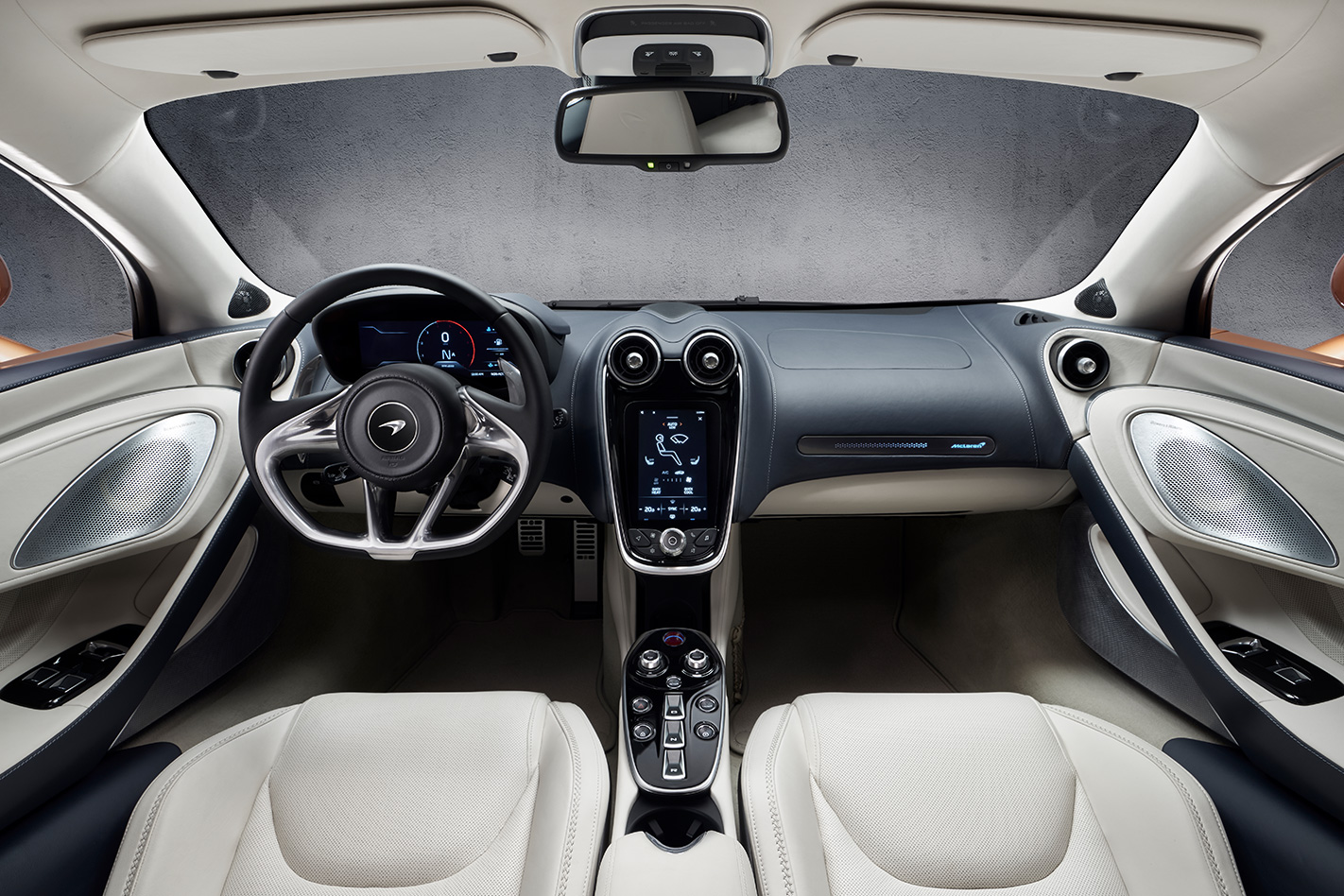
Dihedral doors swing towards the sky and reveal a more refined and luxurious cabin than you’d expect to see inside a McLaren. The seats are covered as standard with Nappa leather, and only get better (and more expensive) from there, with fine grain leather, Alcantara, and Cashmere cladding on the options list. Details such as the knobs and dials are made from machined and knurled aluminium, including steering wheel-mounted paddle shifters, and the 12-speaker sound system is produced by Bowers & Wilkins, including lightweight carbonfibre subwoofers. The infotainment is ‘McLaren’s most sophisticated yet’, consisting of a 7.0-inch infotainment system with HERE navigation and live traffic updates. For sky gazers, the solid roof can be optioned to fit a large electrochromatic glazed ceiling.
The McLaren GT is available to order now with deliveries from late-2019. No local pricing has been announced yet but it starts in the UK from £163,000.
Long trips in a McLaren just became a more realistic proposition with the reveal of the 2020 McLaren GT. At its announcement at the Geneva Motor Show this year, CEO Mike Flewitt said it would redefine the rules of grand tourers. McLaren even goes so far as to say it’s the first ‘true’ grand tourer Woking has produced. So where does that leave its other ‘GT’?
McLaren’s 570GT had, until now, been McLaren’s most ‘everyday supercar’, but being based on the 570S means it’s more of a compromise than the GT, which was intended to be comfort-focused from the get-go.
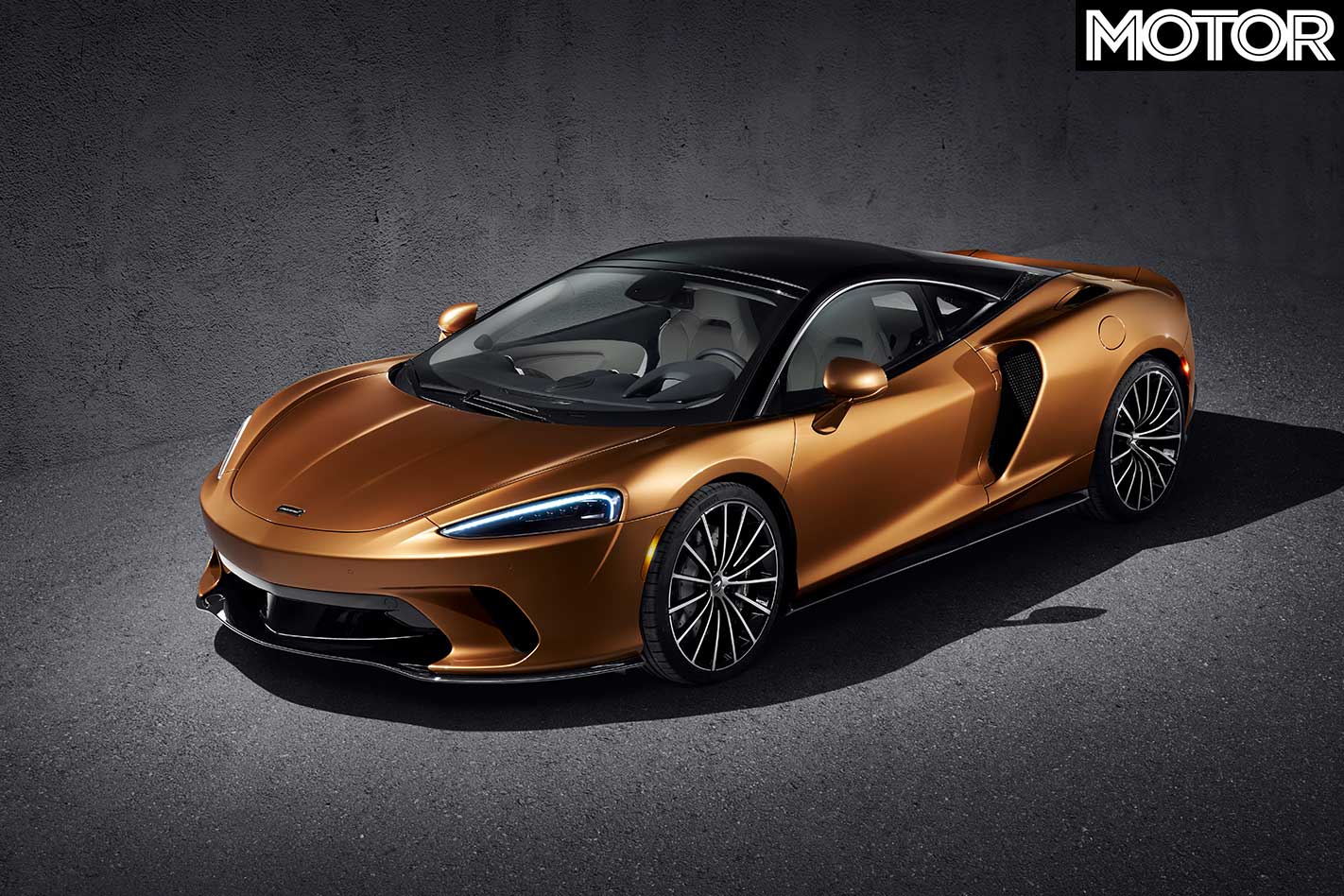
The GT, for example, features a new ‘Proactive’ damping system which McLaren says is a more sophisticated version of the software developed for the 720S. Sensors scan the road and ‘tell’ the dampers to react according to the approaching surface.
But the GT isn’t all soft and muted. It uses a hydraulic steering system, as does the rest of the McLaren range.
It’s also fast. In fact, for a grand tourer, it’s a bit of a weapon. A 4.0-litre version of the traditional McLaren twin-turbo V8 is tuned to 456kW and 630Nm, leaving the 570GT behind and even eclipsing the power figures of its fire-breathing 600LT sibling.
But, the GT is still, well, a GT. A kerb weight of 1530kg makes it heavier than any McLaren currently on sale in Australia, and more specifically 149kg portlier than the 570GT. It is 100kg lighter than Ferrari’s own ‘super GT’, the 812 Superfast, although the latter is admittedly more powerful and faster to the tonne. The GT’s light weight does go some way to explaining its 0-100km/h run of 3.2 seconds, even if it’s still faster than the 570 by two tenths.
Once it’s moving, the McLaren GT powers on rather quickly to 200km/h in just 9.0 seconds. Arguably more impressive is its unreachable-on-most-roads top speed of 326km/h. It’s no 402km/h, the apex velocity of its Speedtail brother, but it’s approaching 720S speeds, and even that’s not far away from the 349km/h top speed of the 673kW McLaren P1.
So, aside from its trademark use of carbon fibre chassis tubs (in this case the MonoCell II-T, for ‘touring’) and aluminium body panels, how does McLaren keep so much weight off a car that boasts 570 litres of luggage space all up? It turns out the MonoCell II-T uses a rear upper structure that leaves enough space for a luggage area below the GT’s “front-hinged, full-length glazed tailgate,” which is of course also electrically powered. At the front lies another 120 litres of storage in a ‘frunk’ style unit as per most rear-engined sports cars. The 570GT only has 220 litres of rear stowage, by the way.
Of course, trick suspension and luggage space aren’t the only things that make a grand tourer suitable for long hauls. The cabin must also suit extended stays, and McLaren has ‘plushed-up’ the interior of the GT to a level most McLaren owners would find alien.
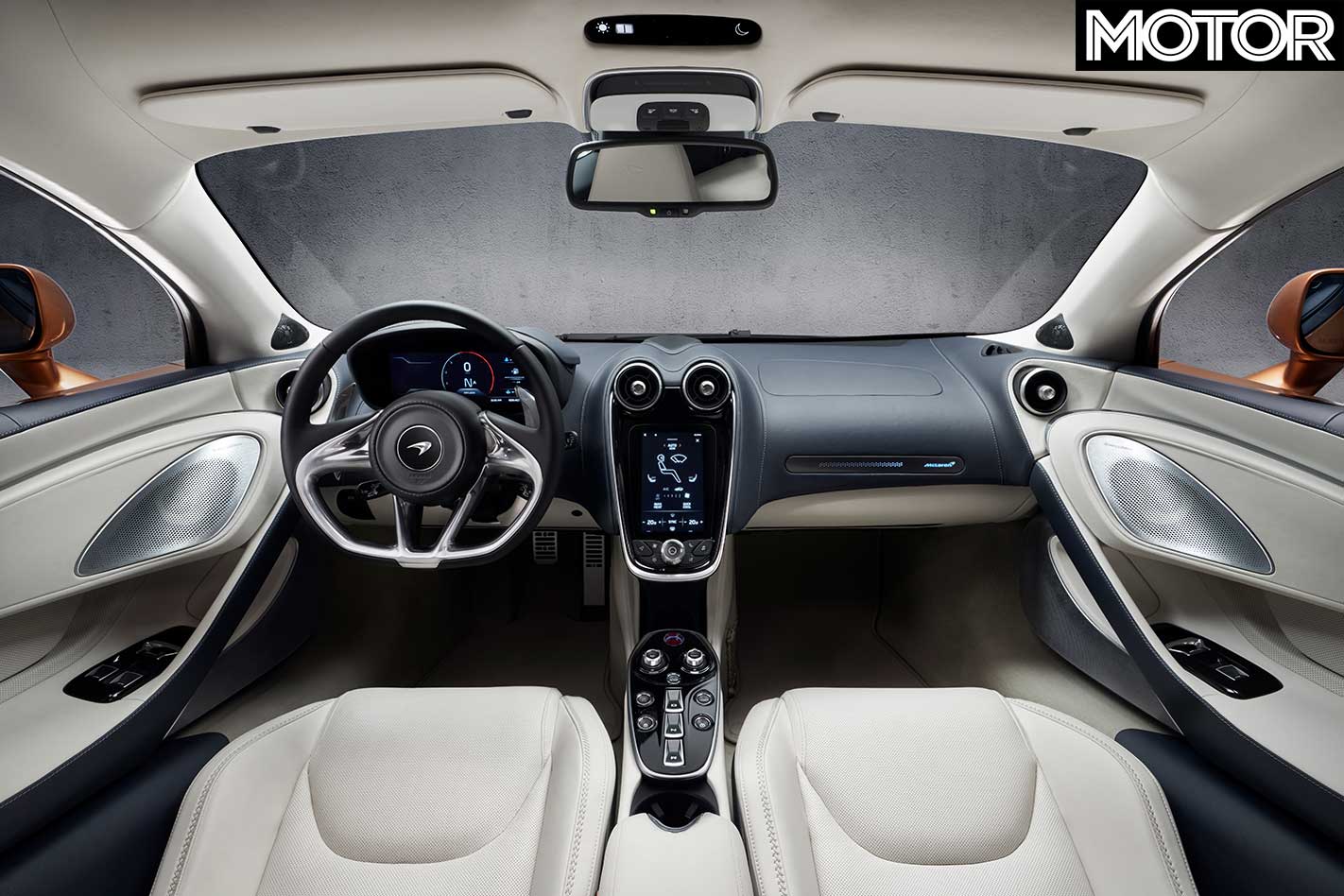
Gone is the spartan vibe of its ‘Series’ cars to make way for a Nappa leather-clad interior that can be upgraded to soft-grain leather or swapped for Alcantara, with cashmere (really!) on the cards as an option later on. Otherwise, the interactive element of the interior is focused on the 12.3-inch screen.
Finally, the price. Though an Australian price wasn’t available at the time of writing, McLaren revealed the GT would start from £163,000 (AUD$303K) in the UK, which over there is only very slightly more than the 570GT priced at £154,000 (AUD$287K). The 570GT costs $406,900 here, so expect the GT to slightly eclipse that. New target market? Say hello to McLaren.
HSV has finally confirmed the 2019 Chevrolet Camaro ZL1’s engine outputs.
After signing off on its local compliance program, it’s rated the 6.2-litre supercharged V8 engine at 477kW at 6400rpm and 881Nm at 3600rpm.
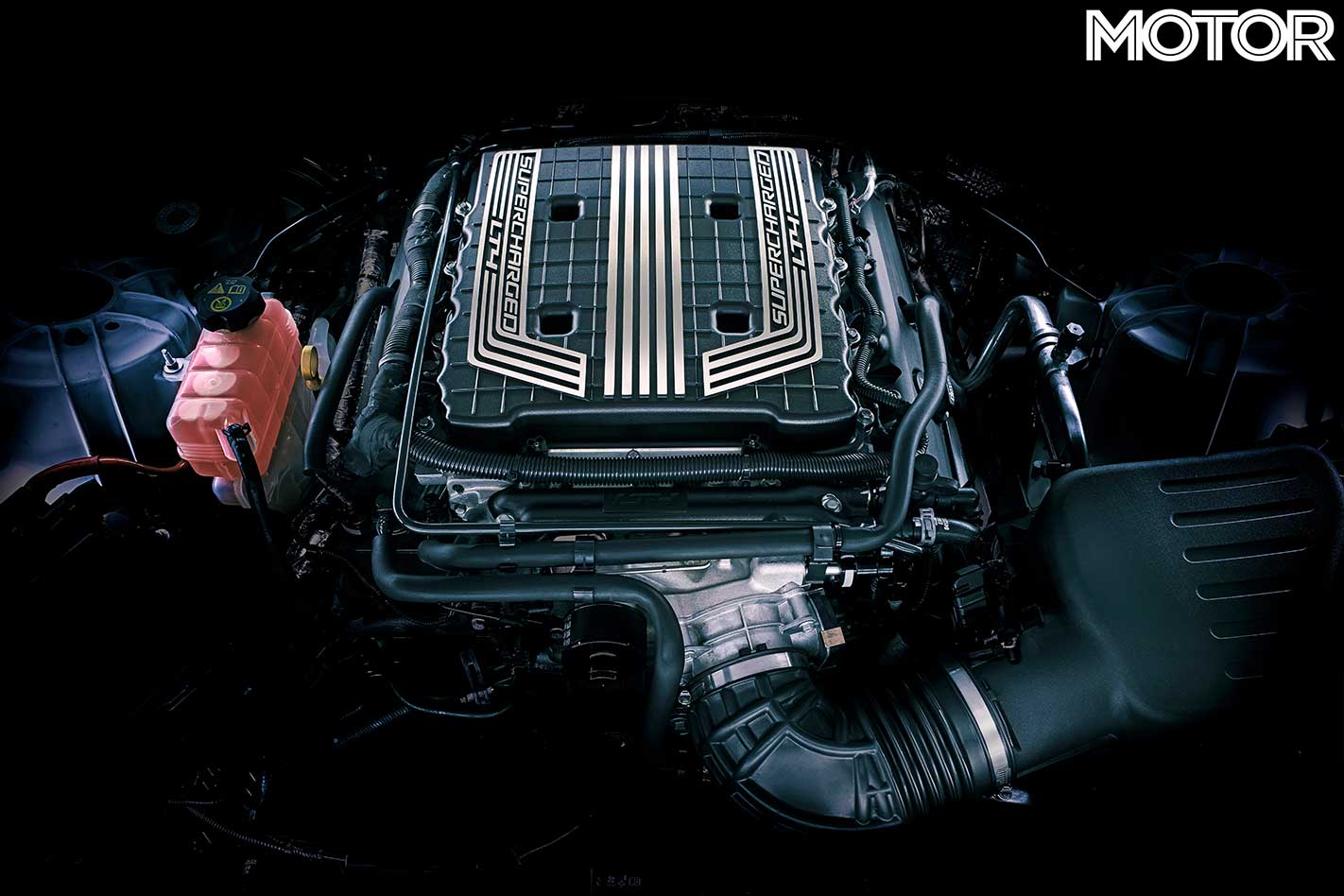
Comparatively, the figures are slightly different to the American-market ZL1 that produces 485kW and 868Nm, or 8kW less and 13Nm more. HSV has said this comes down to local testing guidelines, having made no changes to its US-spec powertrain. It also says the LT4 tolerates local 91RON fuel.
That’s also 138kW and 264Nm more than the 2SS atmo V8’s 339kW/617Nm, making it the most powerful HSV on sale by some margin.
Either way, the Camaro ZL1 should be as fast as intended when it launches locally this month. GM’s claimed acceleration figures state the rear-drive ZL1 can blast to 60mph (97km/h) from rest in 3.5 seconds and cross 400m in 11.4 seconds when equipped with a 10-speed automatic.
It’s also available with a six-speed transmission that adds two tenths to its 0-100km/h time and four tenths to the quoted 400m figure. Prices for the manual version start at $159,990 before on road costs, whereas the 10-speed adds another $2200.
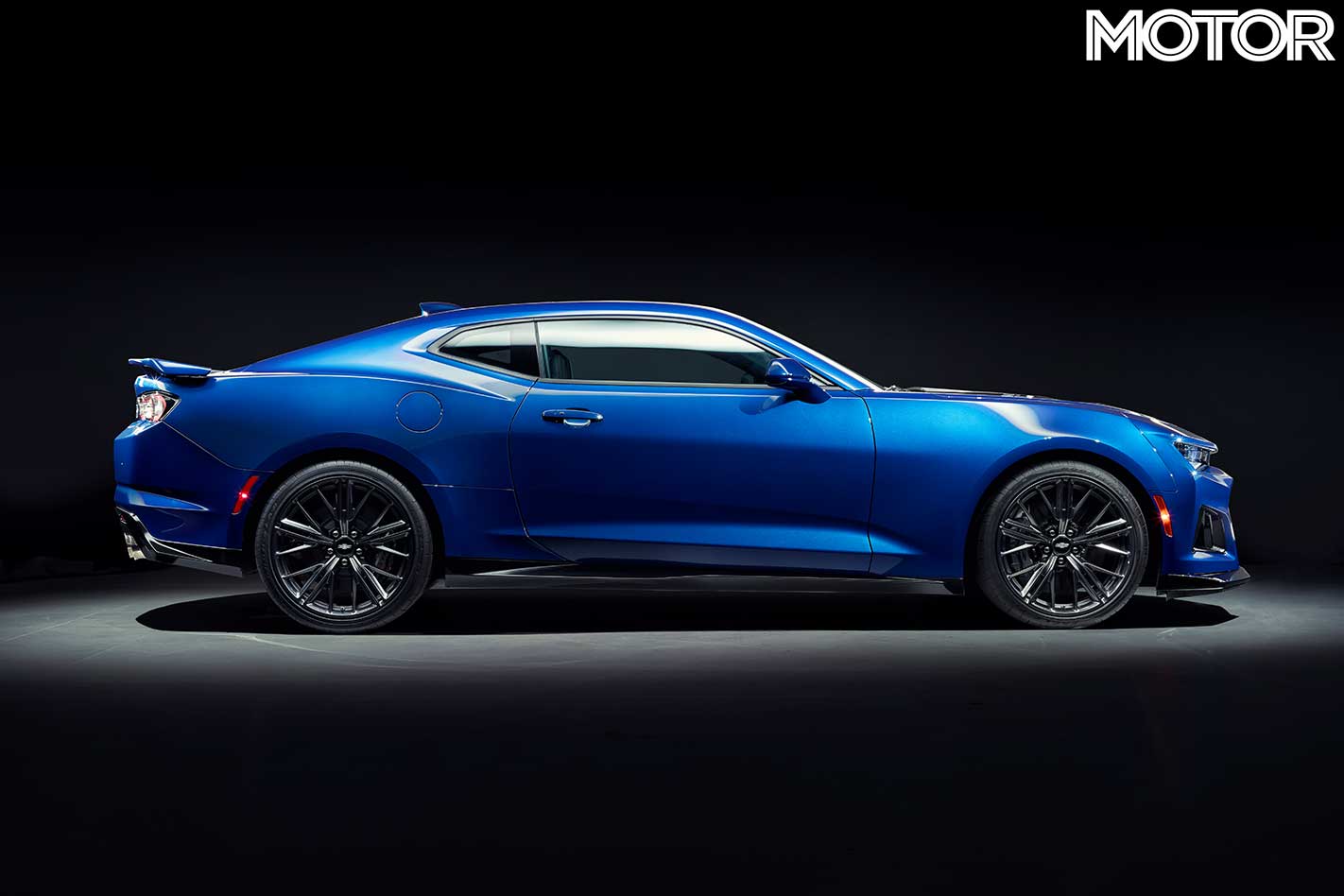
Construction on swapping it from left-hand drive to right-hook is underway. When finished, it’ll feature the best bits from the Camaro’s extensive options catalogue like magnetic dampers tuned to FE4-spec, an electronically controlled locking rear-differential and front six-piston Monobloc Brembos.
Along with that, it’ll score 2019-specific upgrades like Infotainment 3, forward collision alert and a rear-camera mirror. It’s not stated to feature the on-board Performance Data recorder standard on the US car.
Porsche has tuned-up its Cayenne Coupe to deliver a hotter S variant that will sit alongside the first batch of models to arrive in showrooms early next year.
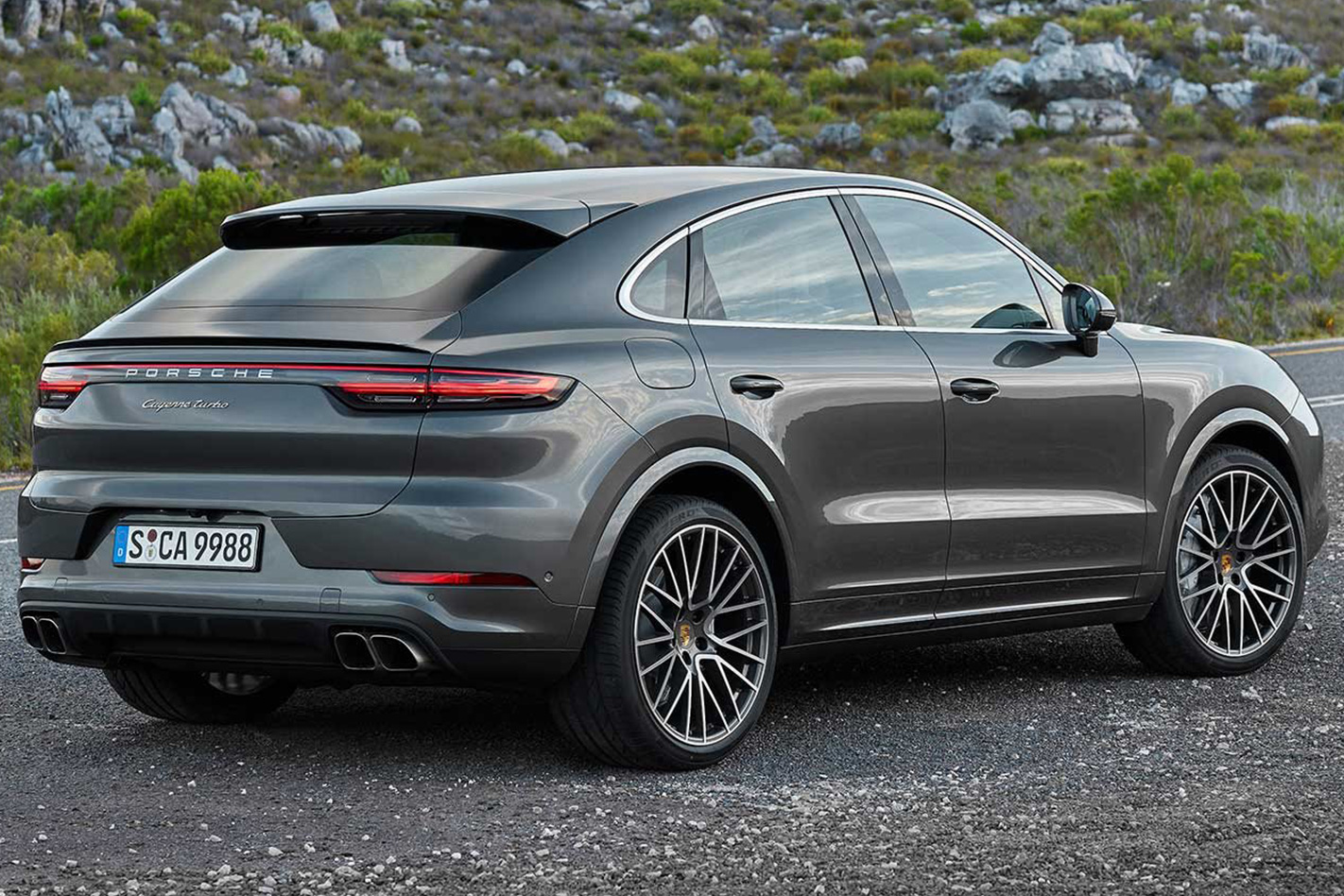
Positioned between the entry-level Coupe and top-spec Turbo, the S is priced from $166,600 – around $35,000 more than the regular Coupe.
Standard on all Cayenne Coupe models are Sport Chrono Package and Power Steering Plus (speed sensitive steering), with the former helping the S achieve a claimed 0-100km/h time of 5.0 seconds flat, before hitting a top speed of 263km/h. An optional lightweight sports package brings that number down to 4.9.
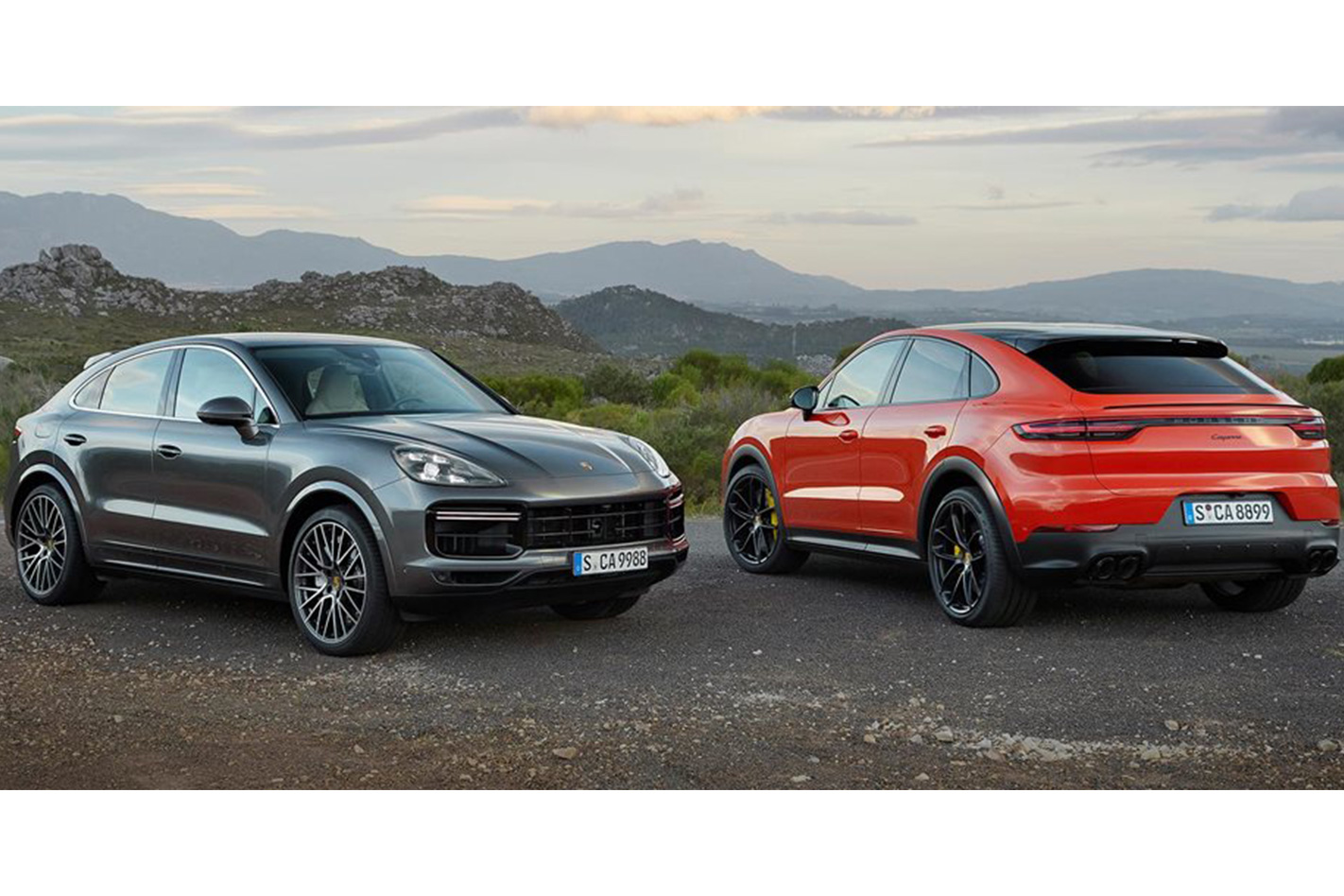
Additional to the S model over the regular Coupe are metallic paint, 21-inch alloys, 360-degree surround view cameras, Bose surround sound system, lane change assist and adaptive air suspension with Porsche Active Suspension Management (PASM). It also employs the swoopy model’s unique adaptive rear spoiler which activates when travelling over 90km/h.
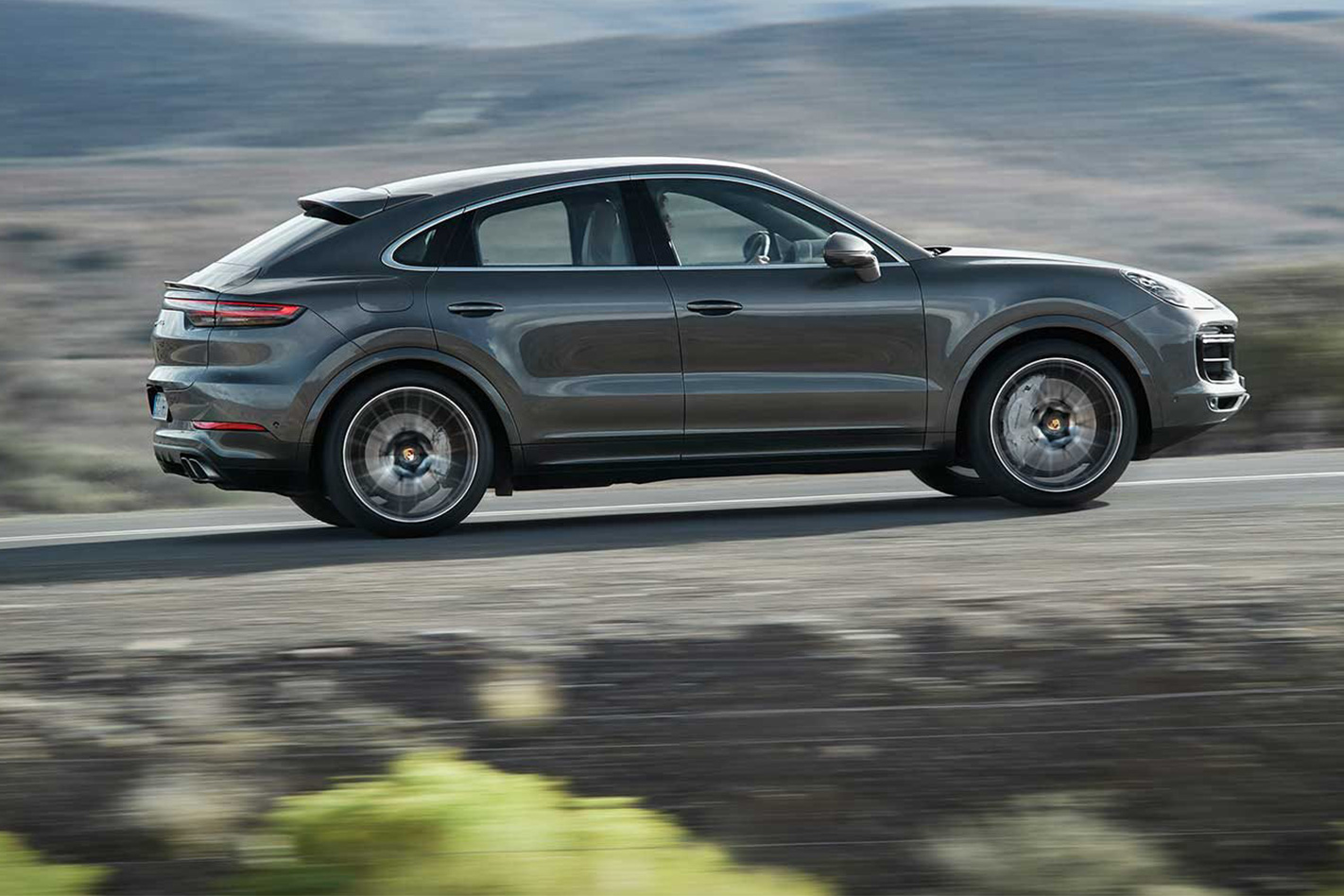
However, the important differentiating factor lies underneath the bonnet. Eschewing the regular Coupe’s 250kW/450Nm 3.0-litre turbocharched V6, the S employs a 2.9-litre twin-turbo derivative of the same configuration that produces a meatier 324kW and 550Nm through an eight-speed automatic transmission to all four wheels. The Turbo retains the crown for quickest model in the line-up, powered by a 4.0-litre twin-turbo V8 which develops 404kW and 770Nm.
The trio is expected to be joined later by the V8 Hybrid and Turbo S E-Hybrid variants already found in the regular Cayenne range.
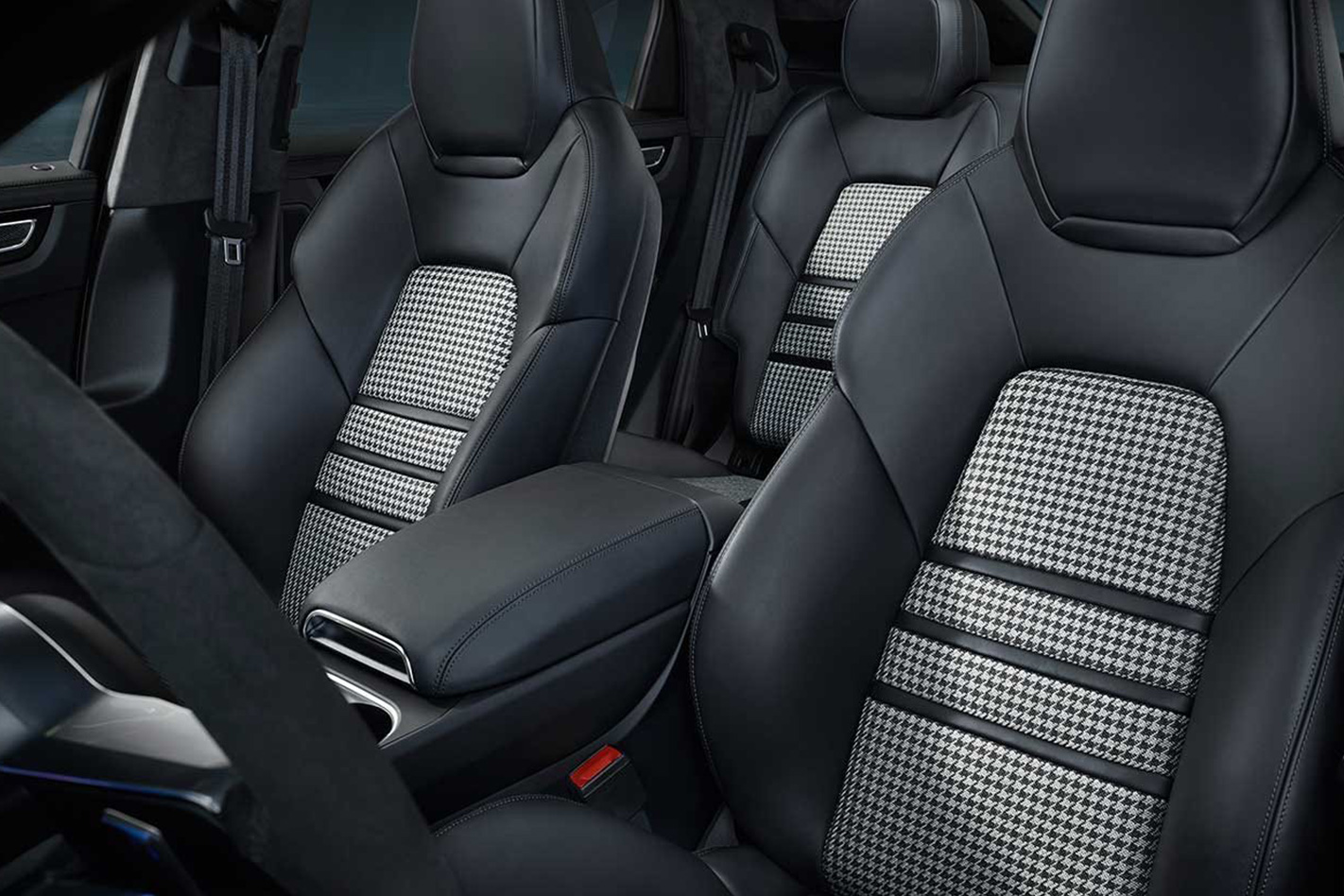
Porsche Australia says all three models will be available in showrooms from early 2020.
2020 Porsche Cayenne Coupe price Australia (plus on-road costs):
Cayenne Coupe – $128,400
Cayenne Coupe S – $166,600
Cayenne Coupe Turbo – $254,000
Those fortunate enough to drive a Bentley back in the 1920s were probably from a well-to-do family, had a lady-friend called Fleur, played tennis while wearing a boater hat and drank tea with the vicar. And for the rest of the time, they howled around the lanes of England, usually half fried on gin, always with a few likely lads in tow, terrorising all and sundry in a Bentley.
This feature was originally published in MOTOR’s January 2011 issue
The real Bentley Boys (as opposed to Bentley Bovvers) dodged the Gilbeys and raced their motor on weekends to help make the Bentley legend what it became via a string of competition successes. Blokes with names like Bertie Kensington Moir (and I’m not making that up).

Okay, I hadn’t been into the gin for elevenses, but there’s a fair chance that had I been born a century ago, into a family other than the tribe of under-achievers from which I sprang, there’s every chance I’d have wound up aspiring to a Bentley. Probably a Speed Six. Look out Fleur. And all your sisters.
There is, of course, a big question mark over my credentials as a modern Bentley Boy. Aside from that dubious genetic well-head I mentioned, there’s also the fact that times have changed. And, in good old Egalitarian Orstraylia, we don’t have the class divisions that made the Bentley lads so identifiably dashing compared with the rest of the peasants.
Then again, while Oman is one of the more liberal Arab countries, it’s still ruled by a Sultan who is revered and worshipped in equal parts. The other question that needs looking into is whether this latest Bentley is, indeed, the stuff of legend. If the whole Bentley Boy thing happened in 2010, for instance, would the Continental GT cut it? Or would a chap wind up being a CLK Cove or even a Panamera Ponce?
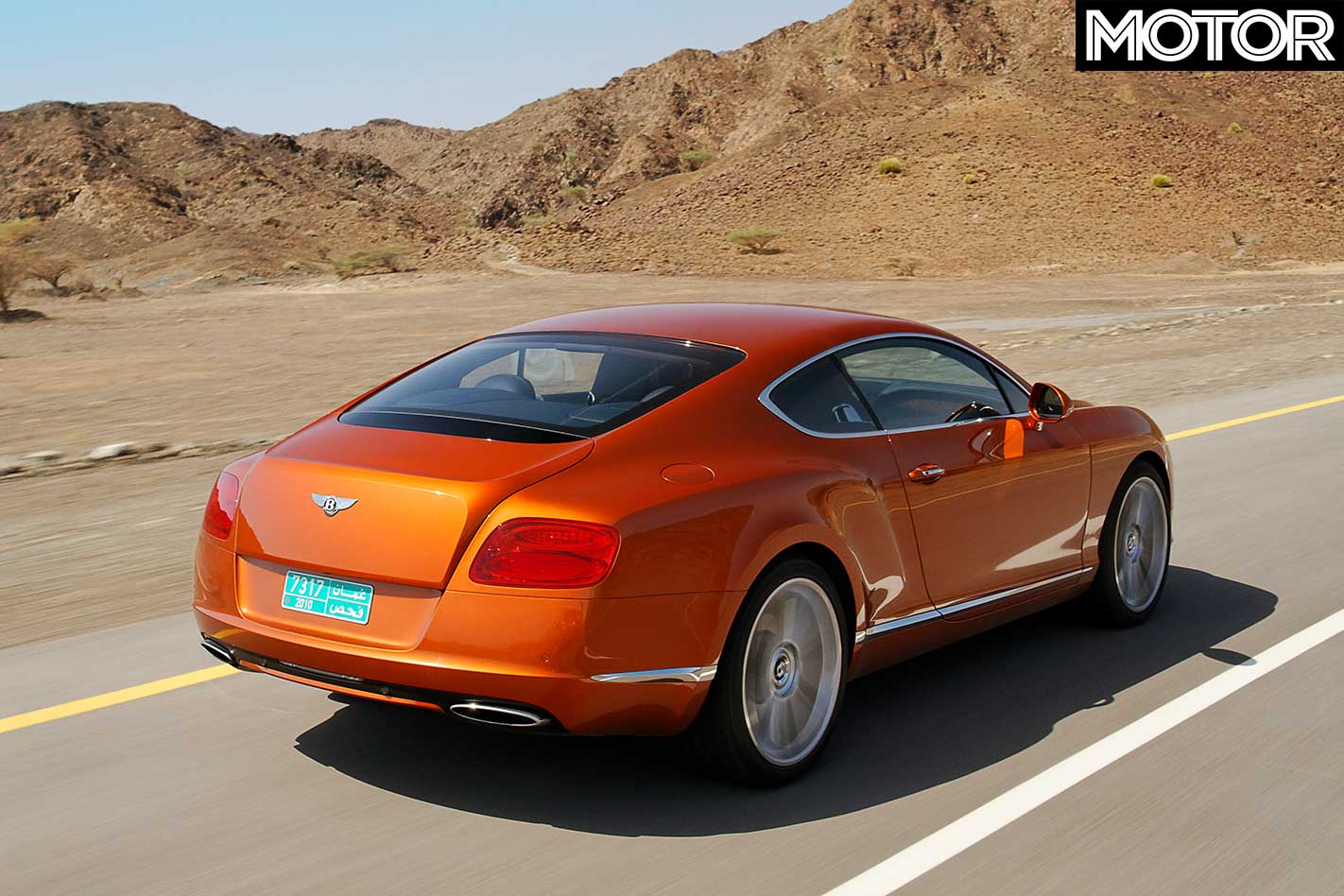
Well, one thing has definitely changed. Back in the 20s, a Bentley was just about the fastest, raciest car you could get our paws on. Hell, they won Le Mans in more or less the specification of the road-going version.
Nine decades on, though, the Conti GT bears about as much resemblance to a Le Mans racer as I do to Judge freaking Reinhold (thank you, Marge Simpson). Of course, Le Mans itself has changed as much as cars have, but even so, if you want to go fast and sporty, then there are alternatives to the GT. Lots of them.
On the other hand, the other absolutely defining elements of a ’20s Bentley – rarity and an imperious quality, not to mention crushing straight-line speed – appears to be still alive within the new GT.
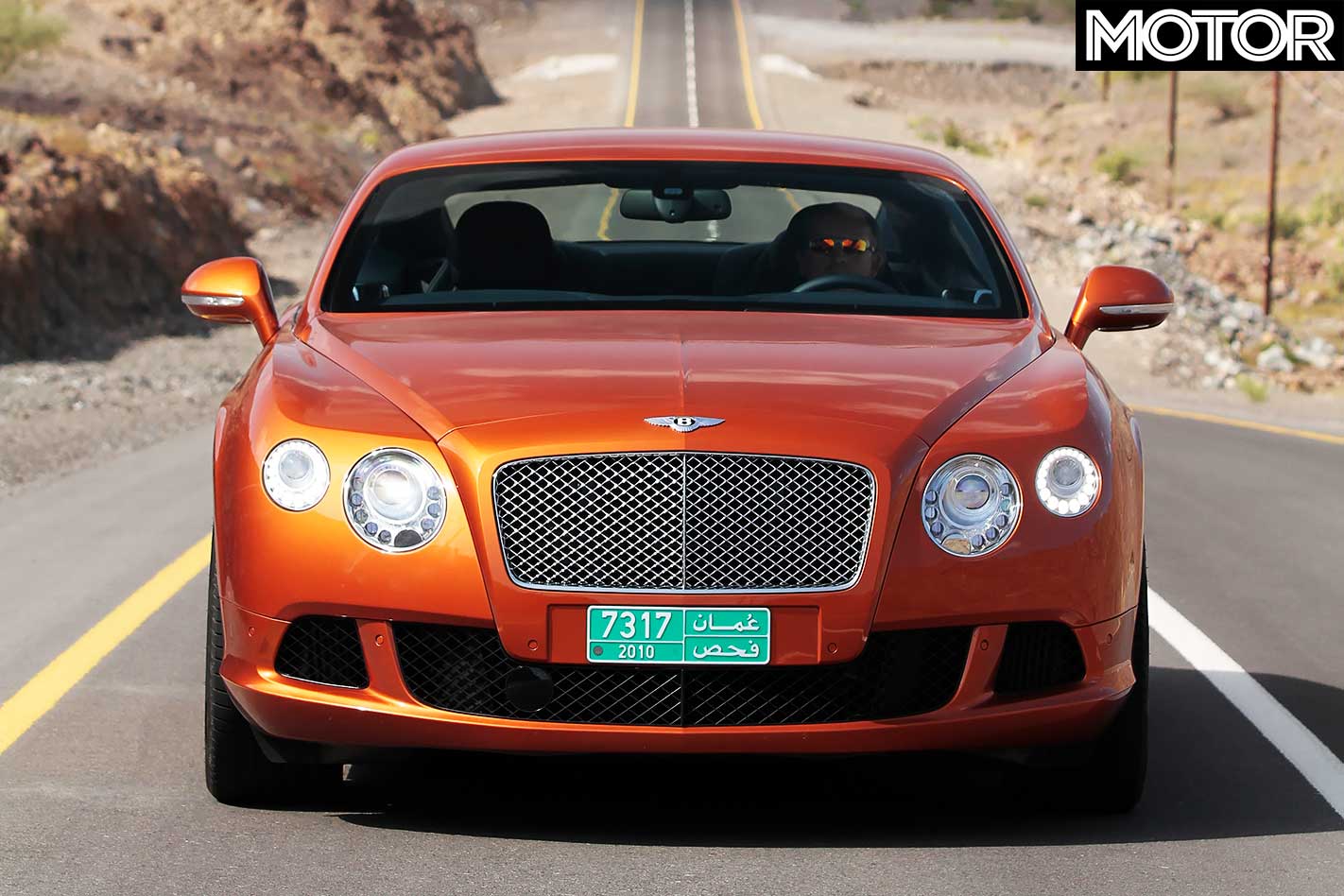
At 2.3 tonnes, maybe the GT is taking the ‘crushing’ thing too far, but it is 65kg lighter than the old model which was launched globally way back in 2002 (it arrived here in 2004). That’s down to a raft of small changes but includes the move to an aluminium bootlid and front guards which are heated to about 500-degrees and then formed by compressed air.
And despite the new car looking uncannily like the old, there’s not a single shared body panel, and only a couple of carryover underbody bits.
There’s more familiarity under the lid, though, and that fabulous twin-turbocharged W12 is alive and well. Weller than it’s ever been, with 423kW at 6000rpm and 700Nm of upper-crust grunt that peaks at just 1700rpm.
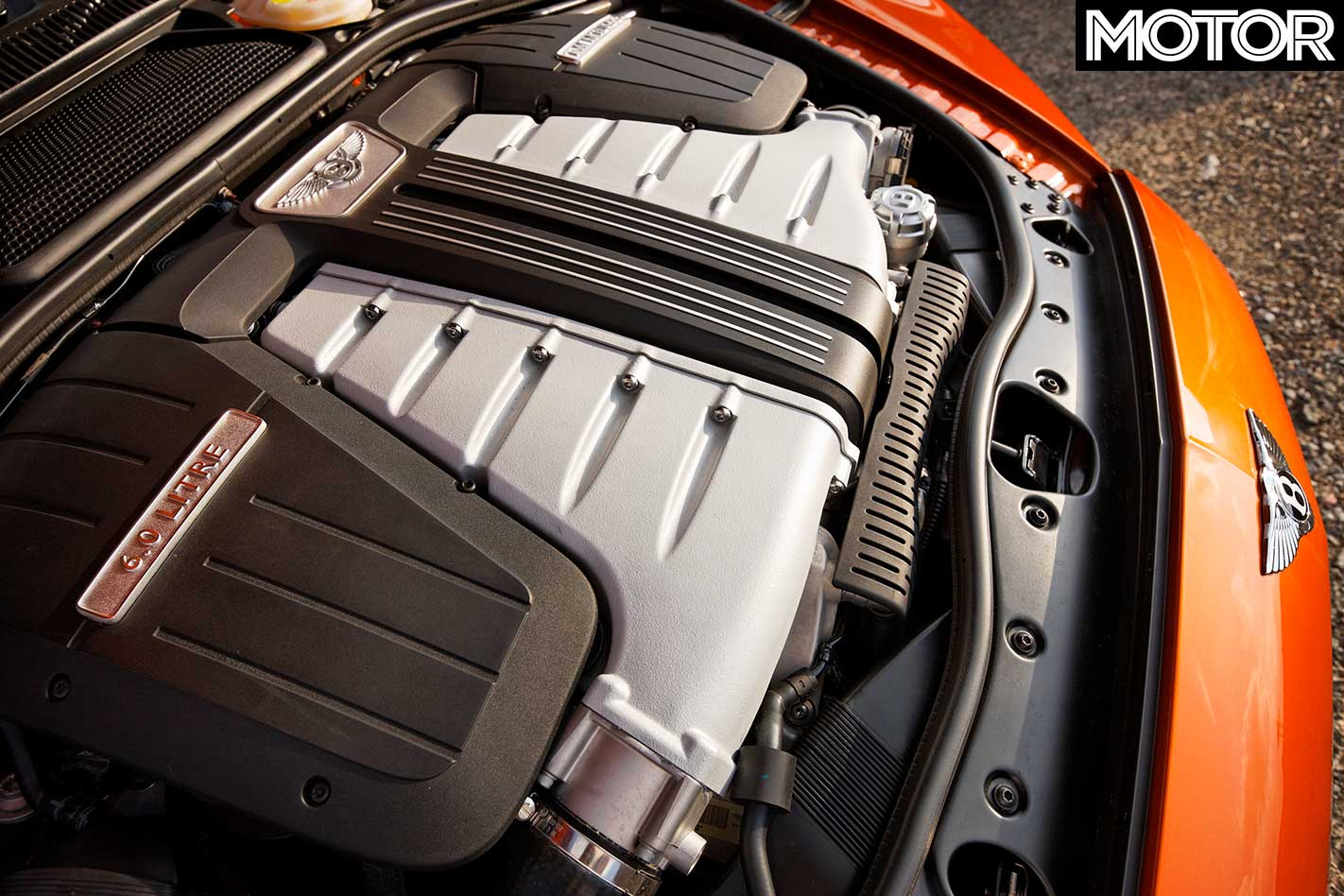
The ZF six-speed auto is a nice match (as it is with most things) and the GT continues with all-wheel-drive, but this time around splits things 40:60 front-rear rather than the previous model’s 50:50 arrangement.
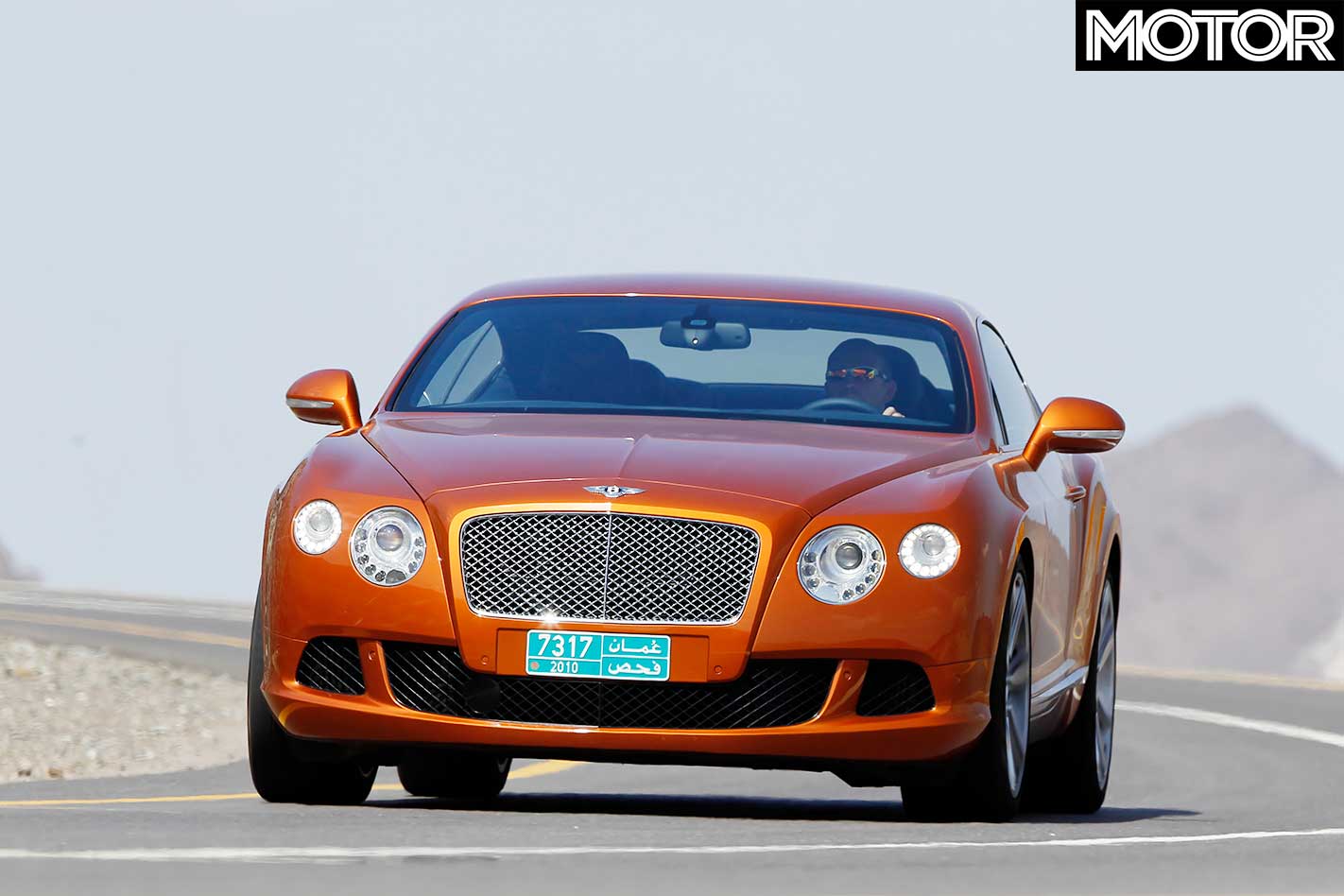
The broad idea is to give the car a more entertaining set of handling characteristics, but as we flashed along the craggy, rocky valleys, it soon became clear that there is a finite limit to what the GT will put up with.
Stuff it in too hard and it’ll start to wash wide; benignly at first, but you really wouldn’t want to try to arm wrestle it lest you wind up somewhere deep in what passes for the Omani mulga. Of course, complaining because it won’t turn in to a hairpin at close to its claimed 318km/h top whack is kind of missing the point.
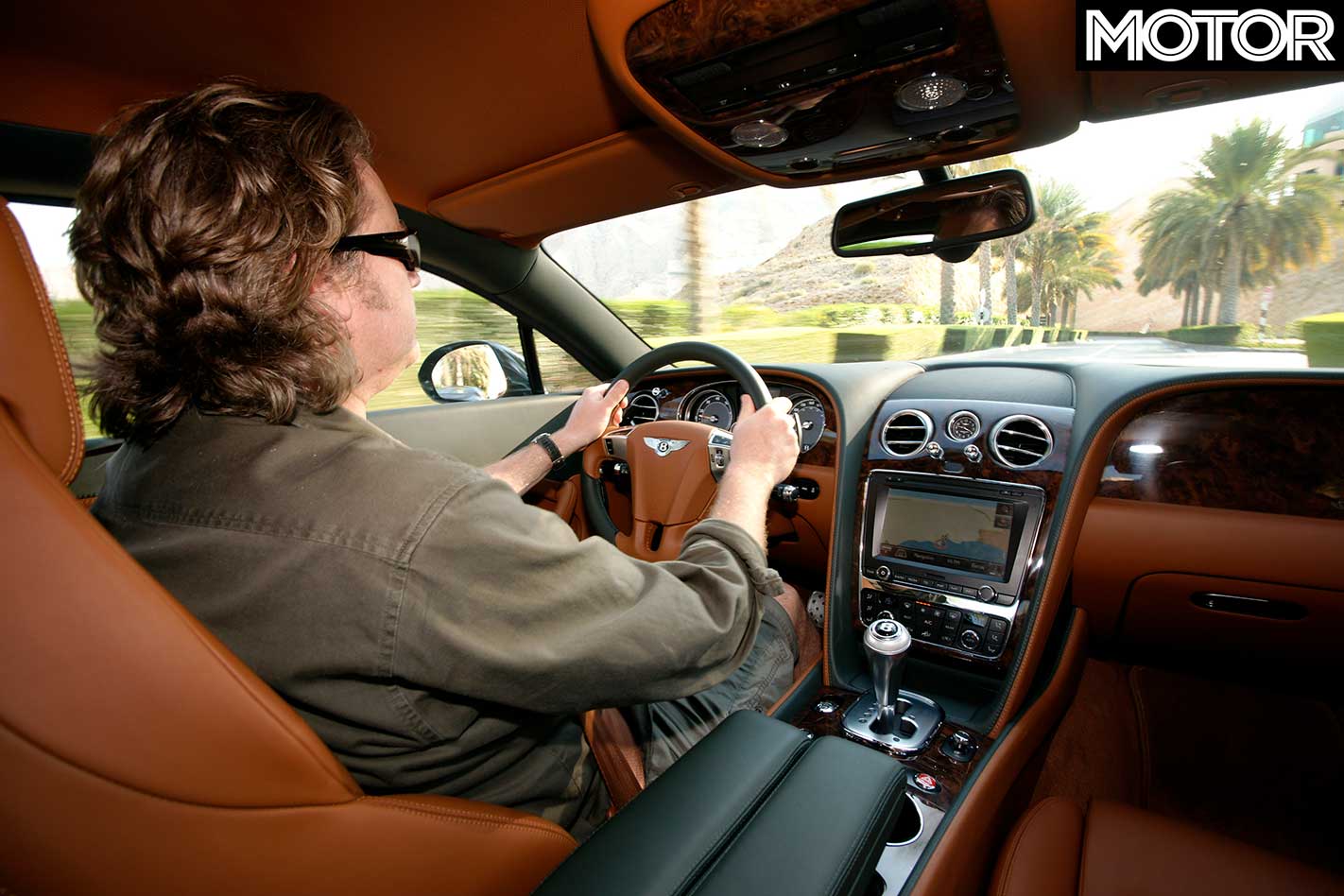
Because what we have here is one of the best ways of covering big distances in a short space of time that doesn’t involve tray-tables, safety cards and crap food. (Mind you, it does involve handing over 405-grand, which would buy a fair few discount air tickets.)
In fact, you almost forget you are in the middle east thanks to a superb climate control system (with controls and a touch-screen that look vaguely familiar to a MkVI VW Golf), and sound-proofing that would give an underground tomb a run for its mummy.
Finally, after 200km and about half a tank of 35-cents-a-litre unleaded, we arrive at Nizwa, the ancient capital of Oman (the crown of capital city now rests on the modern, high-rise melon of Muscat).
Being about lunchtime on a market day, the place is crawling with people and highly-visible police. But step into the old walled city and the fort, and you’re suddenly back in 1650. Or thereabouts, which is when the current fort was built, although people with little spades and khaki clothes reckon the original footings go back to about the twelfth century.
But even the circa 1650 stuff is brilliant with narrow winding staircases (good for defending the upper levels from marauding hordes), pitfalls (deep pits where a step should be in a darkened stairway), and murder holes (gaps in the ceiling above doorways through which could be poured boiling oil to put those same marauders off their game. Permanently).
It was clearly a crazy time when staying alive meant watching your back and a grizzly death was often just around the corner. Fascinating.
Just like Le Mans in the 1920s, you might say.
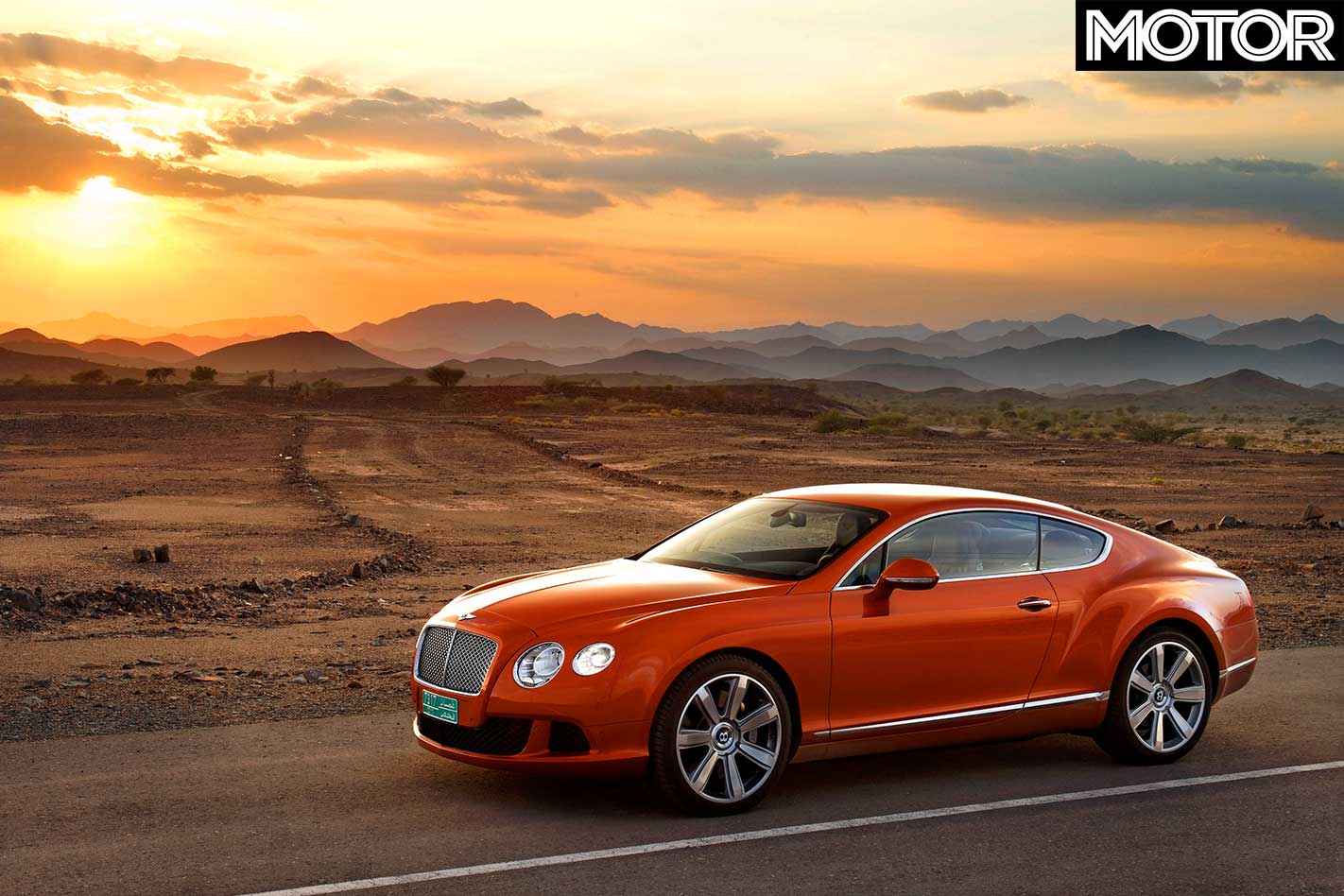
FAST FACTS 2011 Bentley Continental GT BODY: 2-door, 4-seat coupe DRIVE: all-wheel ENGINE: 5998cc W12, DOHC, 48v, twin-turbochargers BORE/STROKE: 84.0 x 90.2mm COMPRESSION: 9.0:1 POWER: 423kW @ 6000rpm TORQUE: 700Nm @ 1700rpm WEIGHT: 2320kg POWER-TO-WEIGHT: 182kW/tonne TRANSMISSION: 6-speed automatic SUSPENSION: double A-arms, air springs, adaptive dampers, anti-roll bar (f); multi-links, air springs, adaptive dampers, anti-roll bar (r) L/W/h: 4806/2227/1404mm WHEELBASE: 2746mm BRAKES: 405mm ventilated discs, six-piston calipers (f); 335mm ventilated discs, four-piston calipers (r) WHEELS: 20 x 9.5-inch (f/r) TYRES: Pirelli P-Zero; 275/40 ZR20 (f/r) PRICE: $419,664
PROS: Genuine GT performance that blends pure luxury with pace CONS: Still 2300kg of heft and it doesn’t look that different RATING: 4 out of 5 stars
In case you haven’t been paying attention, new car sales are on the decline. Last month, the Federal Chamber of Automotive Industries reported that new vehicle sales have dropped across the industry by 8.9 percent and that new vehicle registrations last month were at their lowest since April 2011 – largely fuelled by the crashing housing market (ah, the irony).
Couple this with the cost of living, interest rates and financial uncertainty for some people and their families, and car share services make sense.
But what if that kind of commitment-free ownership could not just help those who have troubles buying a car, but also directly help the car sales industry to stay afloat? That’s where a brand new car subscription service, recently launched in Sydney and Melbourne, Carly, comes in.
As explained by Carly CEO, Chris Noone, the difference between car subscription, share, rental and lease is time.
Where car share is borrowing a car for up to a day, car rental is taking one for a few days and a car lease is often a locked-in three-year or more term with an option to buy, a Carly car subscription involves a minimal commitment and an ongoing monthly payment – just like a gym membership.
A 2012 Toyota Corolla is currently on the site from $182 per week
Essentially, the car is yours until you cancel or change your subscription. It’s not a rent to own plan; you don’t need to save up for a deposit and things like insurance, registration and maintenance are covered. And depreciation? Furghetaboutit.
“What happens if you go on a holiday or change your career, where you live or what do you do with your car?” asks Noone. “It will sit there and cost you money. A subscription has all the benefits of ownership, but it can be paused. If you want to save some money, you can downgrade the subscription and get a cheaper car. If you want to splash out for the weekend, you can get a more expensive car.”
To make life even simpler, Carly’s subscription service is completely online and once you click ‘subscribe’, the car is delivered to you – so no long hours spent signing paperwork at a dealership.
Some of the current cars on the website include a 2008 Hyundai Tucson, a 2015 Mitsubishi ASX and a 2017 Volkswagen Polo, all for under $180 a week.
You do have some restrictions and liabilities; a typical insurance excess on a Carly lease car on the entry level lease program is $3000, while kilometre restrictions also apply. A 2012 Toyota Corolla offered 1200km with its $182/week cost, with extra mileage priced at 30c per km.
Insurance excesses reduce and mileage limits increase if you opt for a more expensive subscription plan.
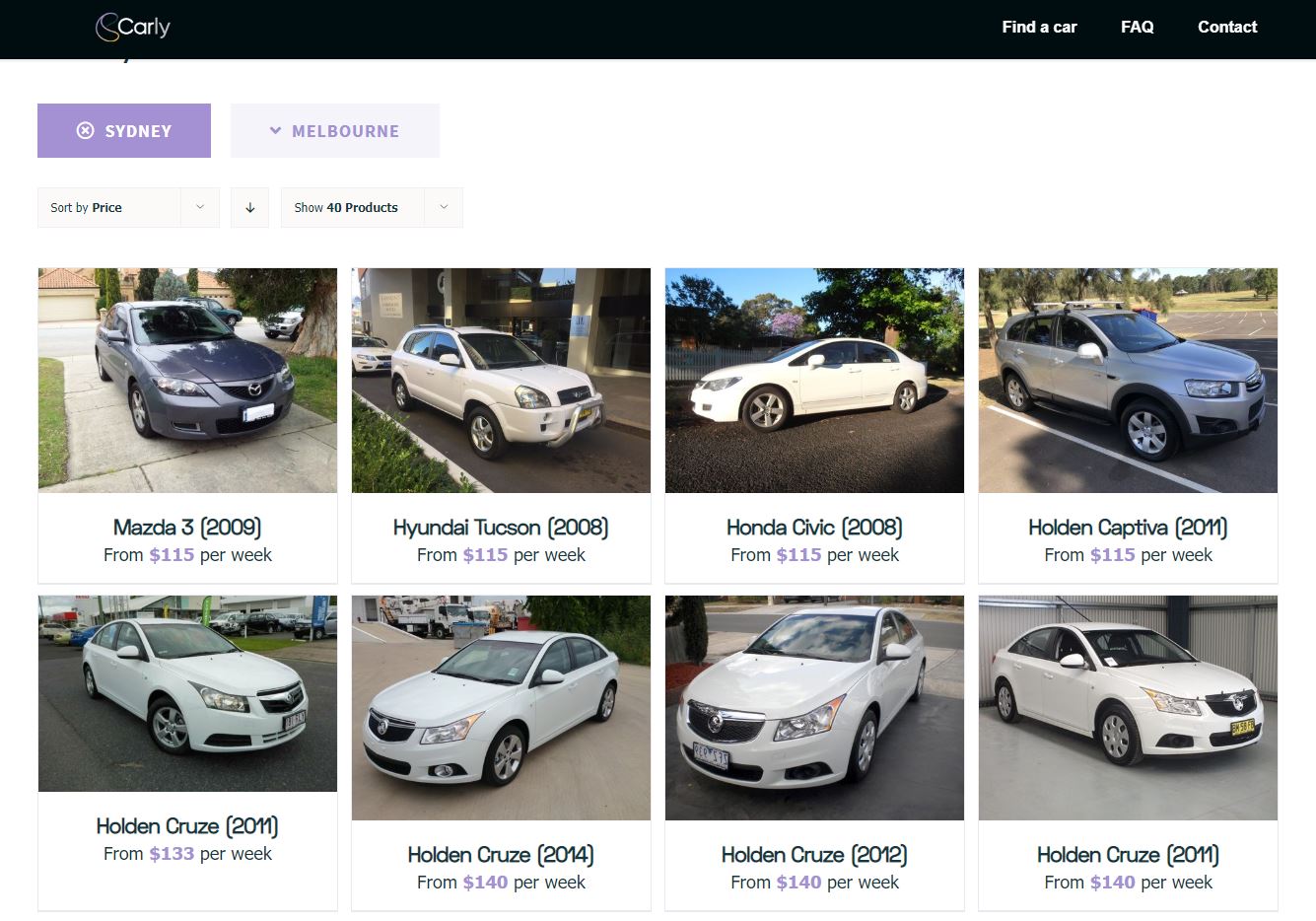
A typical Carly selection
A subscription provides new channels for revenue and monetisation within the industry too, according to Carly. The vehicles “on fleet” are not owned by Carly, and could potentially be manufacturer ‘cars on grass’, ex-lease or ex-fleet dealer stock, and other vehicles that would otherwise be sold through the auction channels as a last resort to make some cash. It also gives older cars a new upcycled lease on life.
“We’ve actually been doing a roadshow around the major dealer groups and manufacturers talking about subscription, and they’re very interested in this because they see that retail sales are declining,” says Noone.
With the industry making less money from new car sales and finance, subscription offers a way to get bums on seats – especially when it comes to those who will be refused long-term finance plans, can’t decide on the type of car they want, are wary of used cars or just don’t have a lifestyle that allows permanent car ownership.
“It allows people who don’t really know what’s happening in their future life to say, ‘There, I can get a car now’, and then have the security to change it if their needs change,” says Noone.
Will subscription put all of us at WhichCar out of a job and replace how we buy cars? Not really. “What we really say is if you expect no changes in your job, your lifestyle, where you live or your family size, you’re probably better off buying or leasing or taking a loan for a car,” admits Noone. “But if you do expect any changes the next three or four years, subscription is a very viable option to look at.”
Would you consider a car subscription? Tell us in the comments below!
Hyundai Motor Company has announced it will inject Rimac Automobili with 80 million Euro (AU$129m) to help it build an electric vehicle range that includes an electric version of its mid-engine Hyundai performance car.
There’s no mention of any stake holdings in HMC’s press release, but that the deal rather strikes a strategic partnership between the two companies.

Hyundai and Kia, respectively, have committed 64 million and 16 million Euro to Rimac that will help the group develop 44 “eco-friendly models” by 2025.
Within that, it says this will help it build an electric version of its N brand’s mid-engine concept car that debuted in 2014 as the RM14.
Since then, the car has evolved multiple times, ending with the RM16 that’s been spotted running around the Nürburgring Nordschleife as late as last year.
For Rimac, it says the deal bolsters the electric supercar maker’s plans to supply the car industry with “electrification components” at a “Tier-1” level.
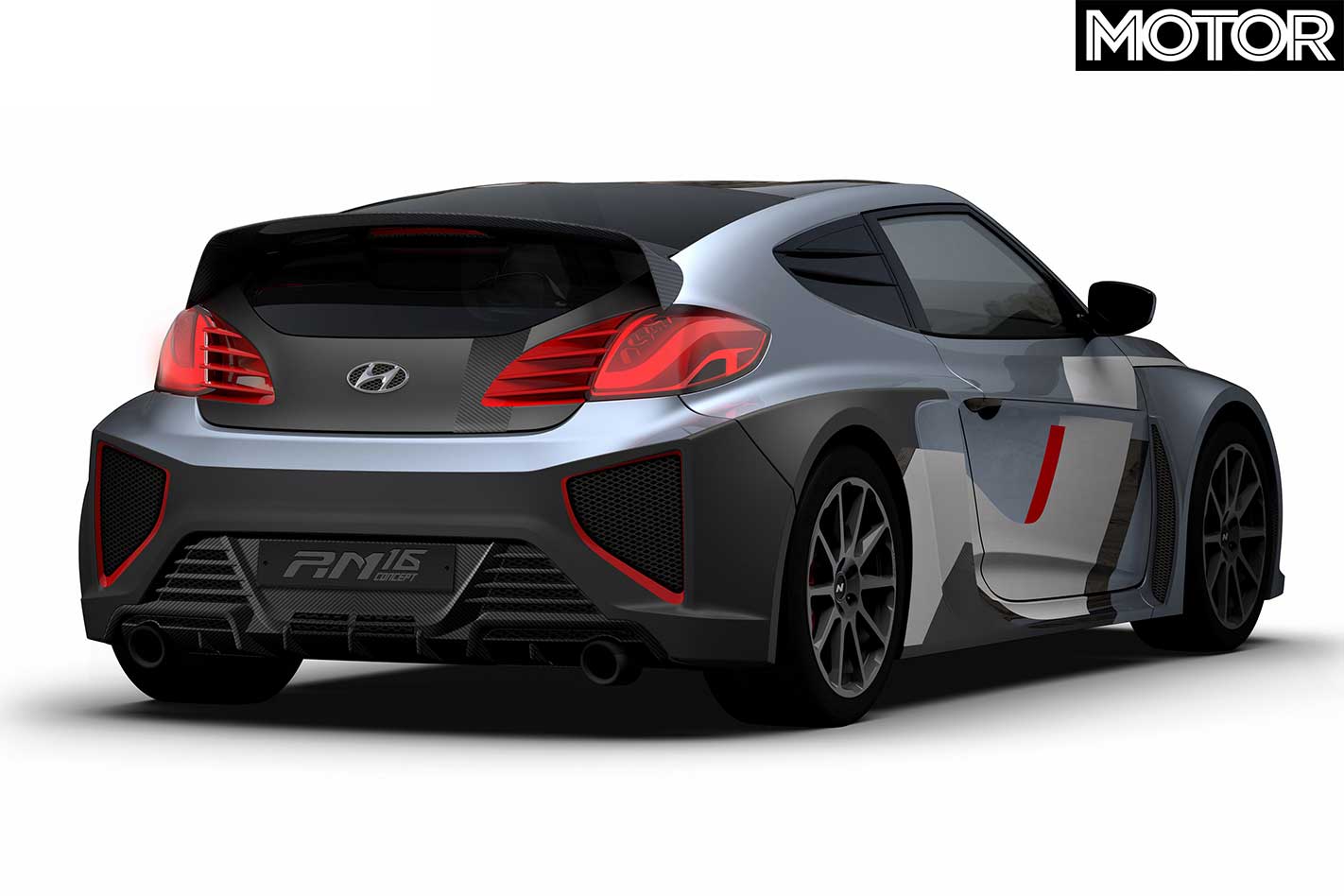
Rimac has grown from founder Mate Rimac’s garage in Croatia to 500-strong low-volume electric hypercar manufacturer that draws increasing attention and investment from mainstream companies who recognise its expertise.
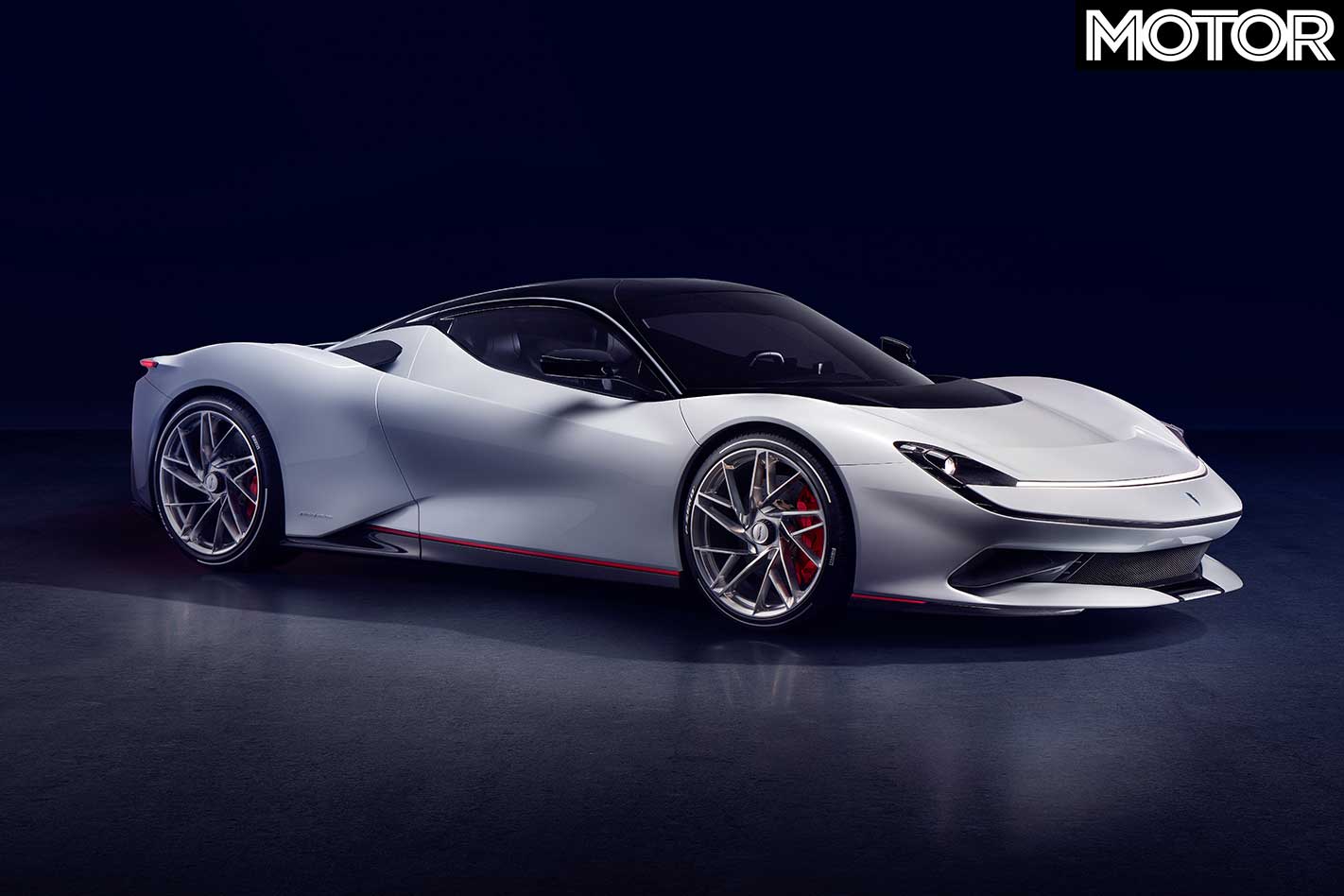
It started with its first hypercar, the 800kW Concept One, selling eight at US$1.2m, then began designing electric prototypes for manufacturers. It’s recently been enlisted to help Pininfarina build its the Battista, a Bugatti-beating electric hypercar with 1397kW.
Last June Porsche invested 18.7 million Euro in Rimac for a 10 per cent stake, essentially valuing it at 187 million Euro.
To grow with surging demand, it has plans for a new facility near its current plant in Zagreb, Rimac’s hometown, that will begin high volume production for “battery packs, powertrain systems” and, of course, its 2020 C_Two. Its next all-conquering exclusive, 1427kW hypercar.
While Holden’s Elizabeth car plant in Adelaide sits dormant since shuttering in 2017, just 20km down the road a new Australian electric vehicle startup will begin producing vehicles once more.
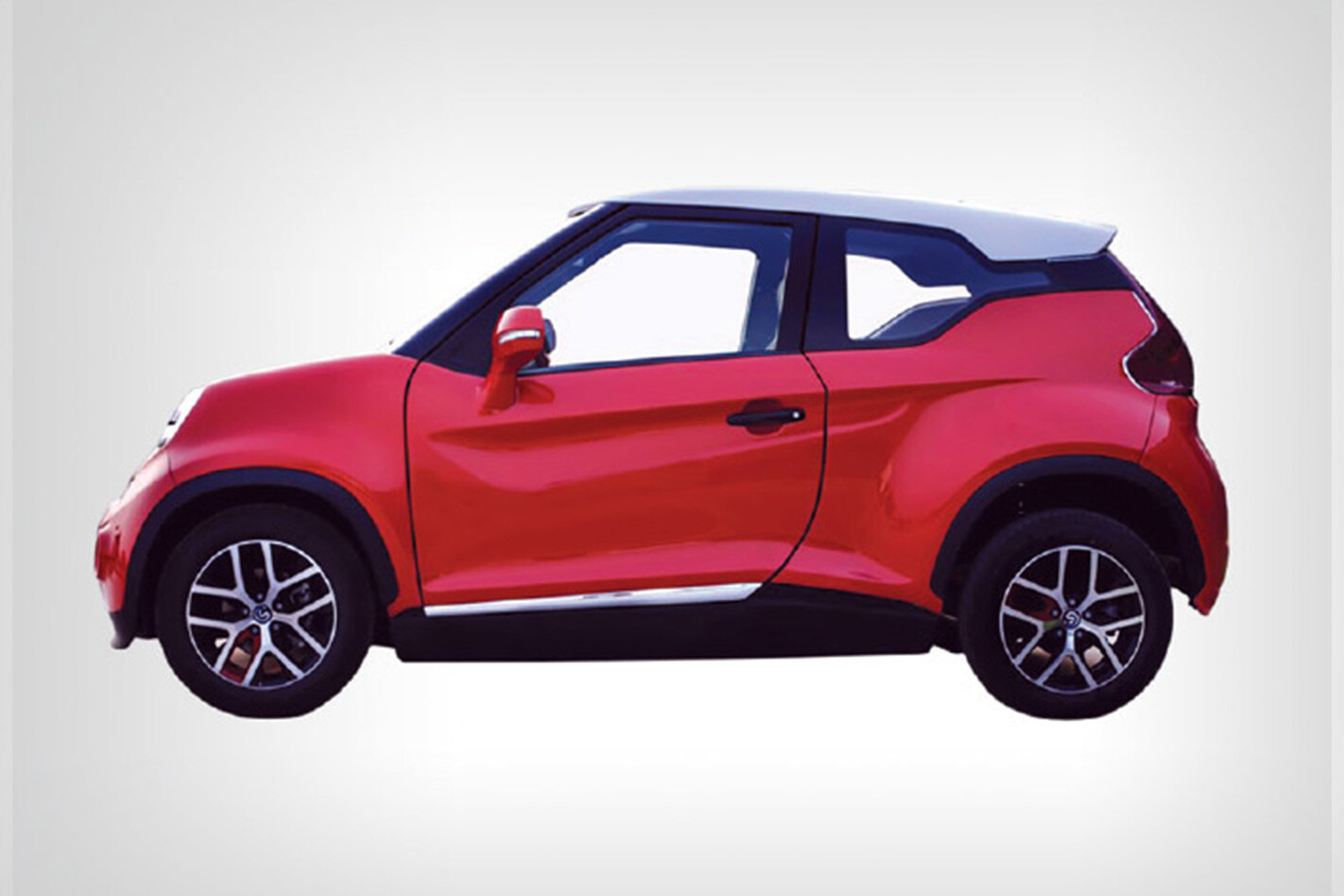
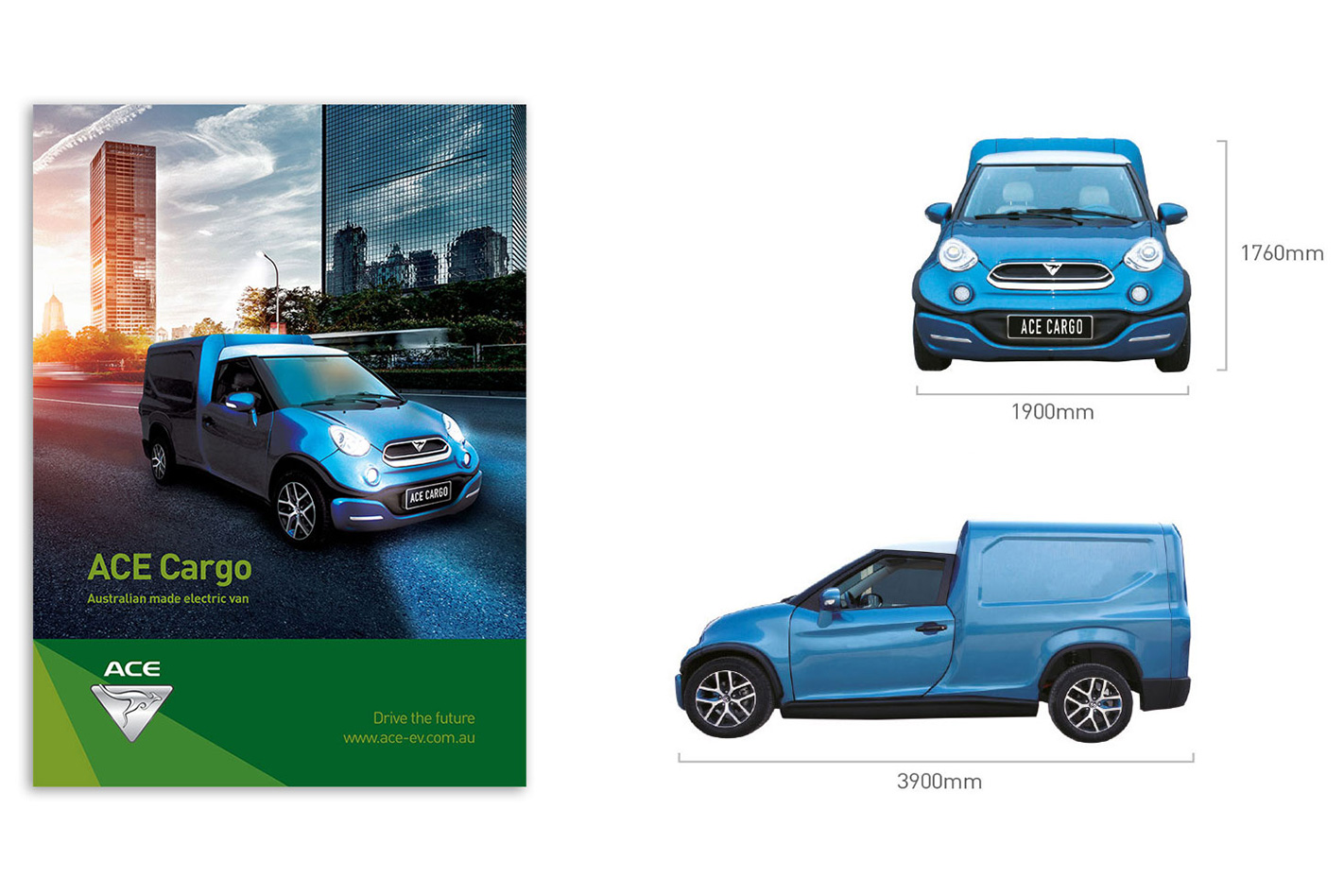
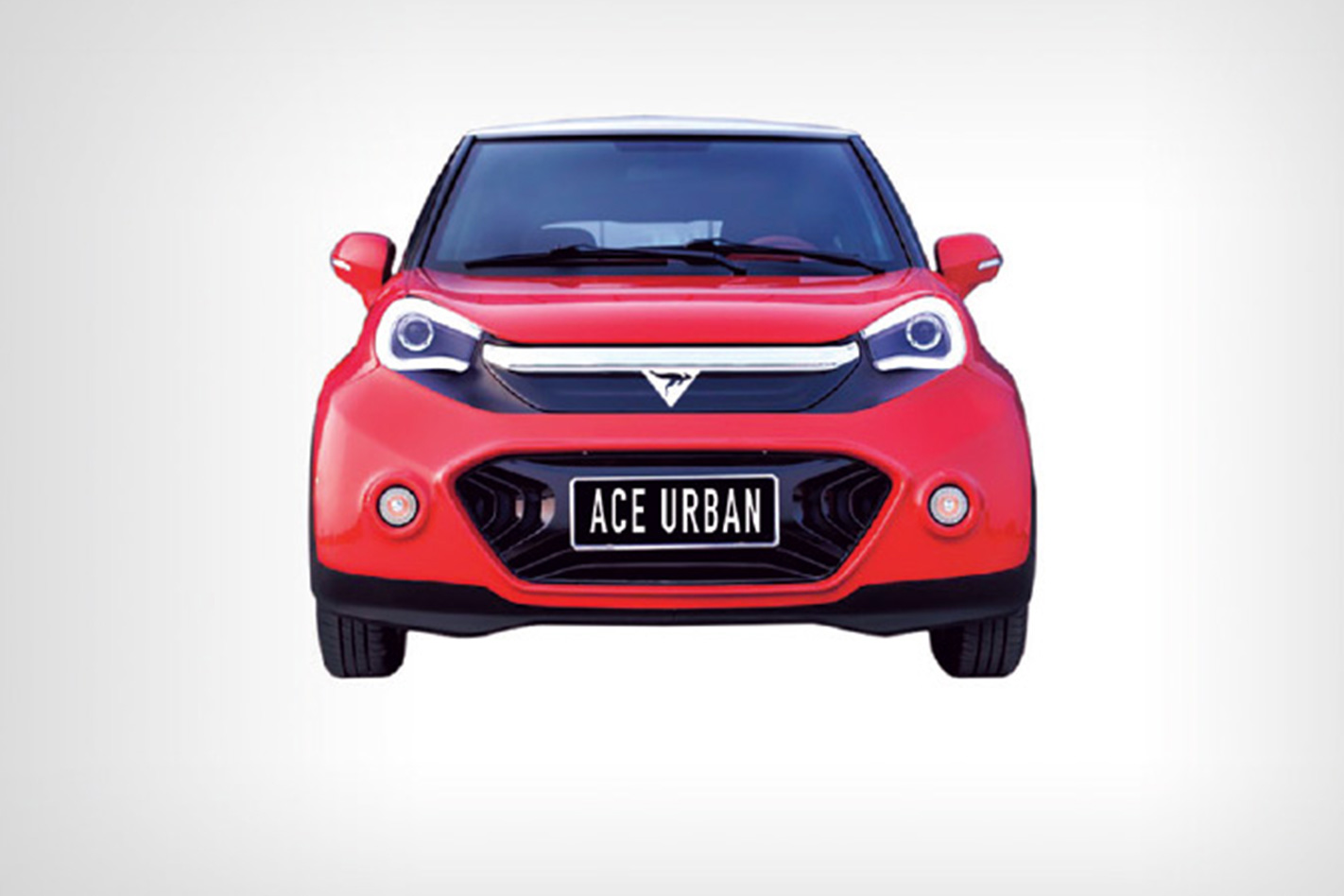
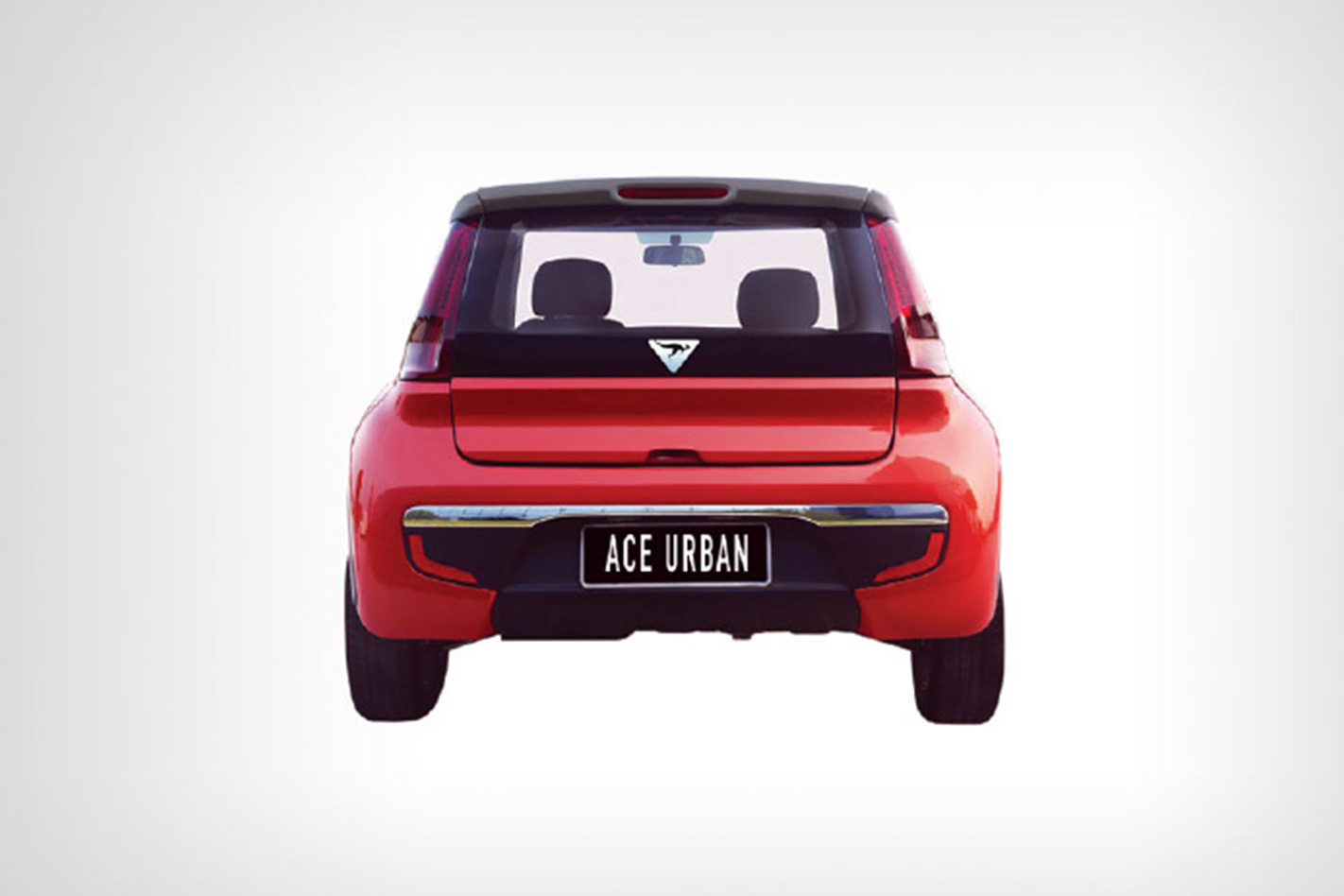
ACE EV is the first company to build electric commercial vehicles on Australian soil, and has set a target to build 15,000 EVs by 2025. Beyond its Cargo van and Yewt ute, it will also make a four-seat electric hatch called the ACE Urban.
The company, led by managing director Greg McGarvie, will partner with Adelaide commercial vehicle specialist Aldom Motor Body Builders based in Wingfield, South Australia.
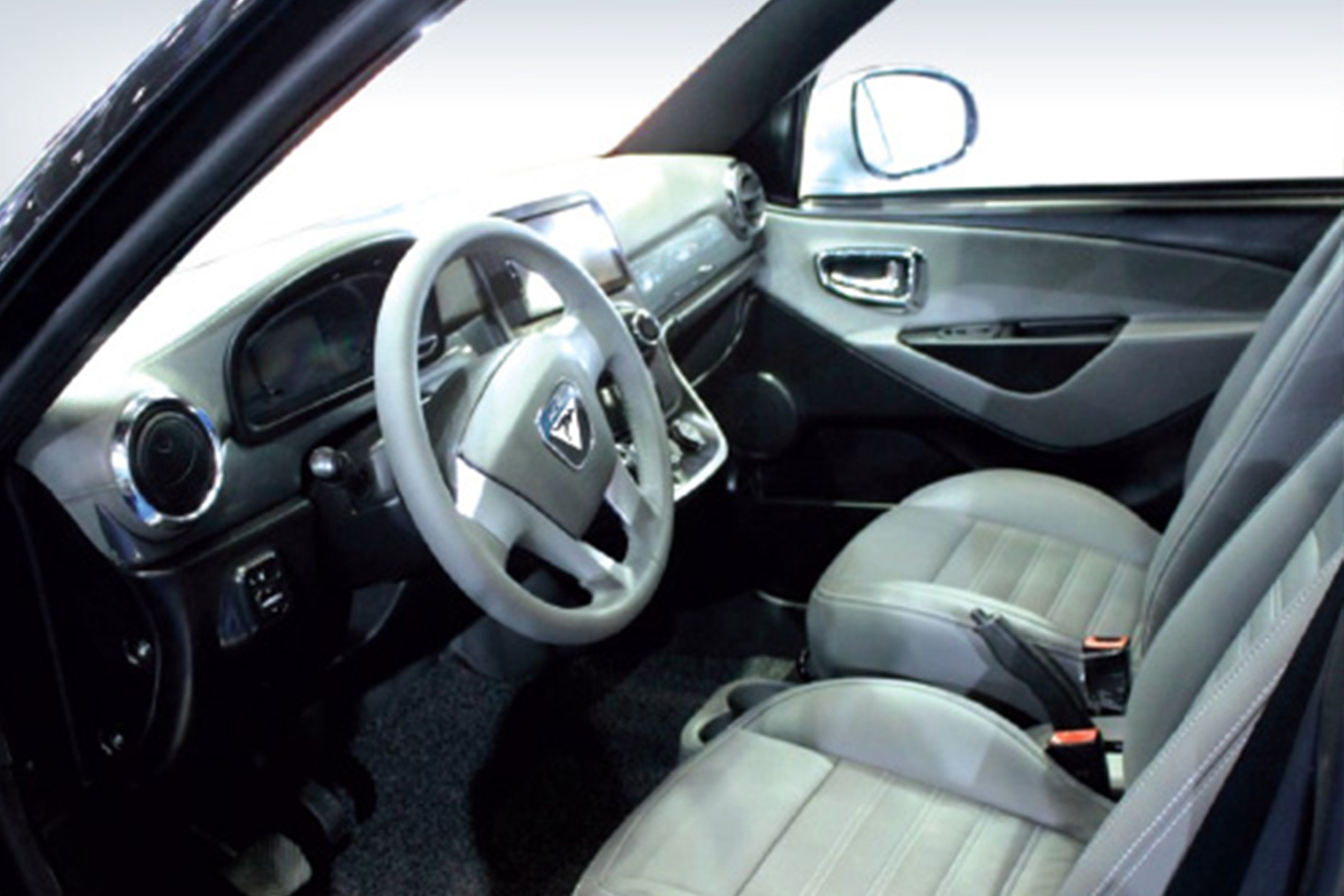
ACE built its first van in a warehouse south of Brisbane, but will utilise Aldom’s large-scale production expertise to ramp up production at a new facility nearby Holden’s old Elizabeth site.
McGarvie told ABC News that Adelaide was a perfect fit for electric vehicle production, and that he sees a “huge appetite” in Australia for EVs.
“Adelaide has got a history of auto and there are a lot of supply chain opportunities that will support our manufacturing of electric vehicles,” he said.
“The third vehicle ordered from our company is by an Adelaide lady and we’ll be presenting her with a Cargo badge which will go on the third vehicle in Australia next year when she collects it. Effectively, all she needs to do is drive the vehicle home, plug it into the garage and charge it up like an iPhone overnight.”
“We know for sure that there’s a huge appetite for electric vehicles in Australia,”
Though the four-year-old company plans to produce up to 15,000 vehicles in five years, around 80 percent of those will be exported to other right-hand drive markets.
The vehicles will be built from around 50 percent locally-produced parts, with the remainder imported from China. Despite ALP candidate Bill Shorten announcing a taxpayer-funded proposal to prop up local vehicle production if elected, ACE says it will be going ahead without any funding from the Government.
“We’re taking orders now, there’s only 100 vehicles available for 2019 and Aldom will be manufacturing the first quarter 2020, so next year,” McGarvie said.
“We’re hoping that we’ll get up to 15,000 [built] a year. Of that 15,000 we would expect around 80 per cent will be export. We’re very pleased to be in South Australia. It’s a state that seems to be embracing new technology and a focus on the future.”
Unfortunately with all Australian examples already spoken for, we reckon this is about as close as most of us will get to the uber-exclusive and ultra-expensive 911 Speedster ownership club.
Not to worry though as we’ve assembled a bunch of great pics of the “roofless” 911 GT3 for you to froth over.
Click the photo gallery above for a full suite of photos of the Porsche 911 Speedster and be sure to read the full review
As swan-songs go, this last example of a 991.2-bodied 911 is one hell of a way to go out with a bang.
PORSCHE 911 SPEEDSTER PRICE AND SPECS AUSTRALIA
Model: Porsche 911 Speedster Engine: 4.0-litre boxer six-cylinder Max power: 375kW at 8500rpm Max torque: 470Nm Transmission: Six-speed manual Weight: 1350kg 0-100km/h: 4.0sec Economy: 13.8L/100km Price: $604,800
If you feel like you’re blueing with your Bluetooth a lot, or that you’re always mad at your multimedia system, you’re not alone.
A recent study by global consumer insights and analysis firm JD Power has found that customers are reporting increasingly high numbers of issues with modern in-car technology systems.
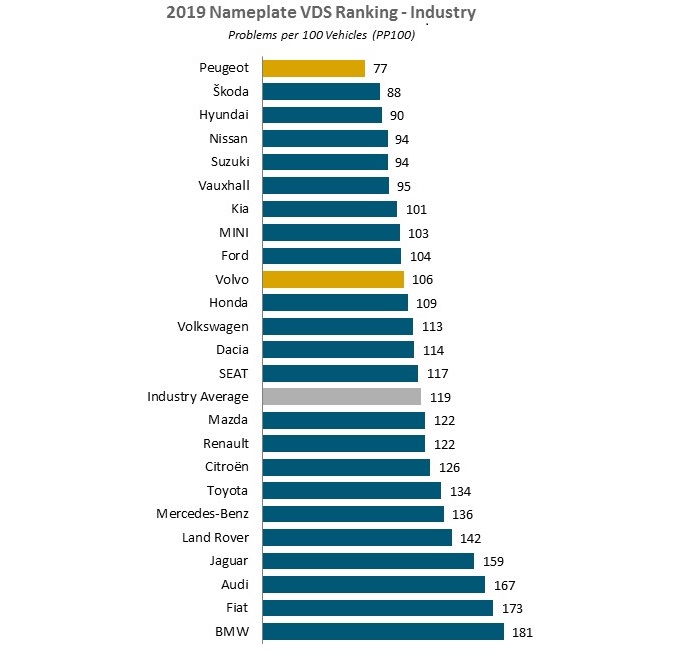
The study, conducted in Europe and the UK, reveals that luxury brands are the worst offenders, with four of the worst five scores coming from BMW, Jaguar, Land Rover and Audi.
Now in its fifth year, the study measures the number of problems experienced per 100 vehicles from a sample of more than 11,000 owners, with a lower score indicating better performance.
Specifically, it measures 177 problem symptoms in eight categories: vehicle exterior; driving experience; features/controls/displays (FCD); audio/communication/entertainment/navigation (ACEN); seats; heating, ventilation and air conditioning (HVAC); vehicle interior; and engine and transmission.
Peugeot scored the best with 77 problems per 100 vehicles, while BMW fared the worst with 188 issues per 100 cars.
Skoda’s Octavia topped the compact car ranks, the Volkswagen Tiguan scored best in the medium SUV field and the Mercedes-Benz E-Class topped the luxury car class.
Owners of premium vehicles reported more problems than owners of high-volume vehicles, mainly because a higher percentage of premium vehicles have built-in navigation systems.
Premium brand owners were also more unforgiving when it came to engine problems, being 12 percent more likely to switch brands after an issue when compared to mainstream buyers.
The average score for newer safety technology features like blind spot monitoring, collision avoidance and lane departure warning systems is 2.4 problems per 100 vehicles (1.8 PP100 for volume brands and 4.0 PP100 for premium brands).
This is higher than the 1.5 PP100 figure recorded for other optional systems like alarms, keyless entry, and adaptive cruise control systems.
Interestingly, problems with electric and hybrid vehicles are higher in total – mainly in the areas of ACEN, seats and (somewhat ironically) engines – than with vehicles with internal combustion engines. Electric and hybrid owners are, however, more likely to stay with the same brand in the future.
“It’s clear that manufacturers still have work to do to perfect those systems, particularly premium brands that use them as a major selling point,” said Josh Halliburton, Head of European Operations at J.D. Power. “It’s also going to be vital for vehicle makers to win customer trust in this technology if they are to convince potential buyers that fully automated vehicles in the future will be reliable.”
