
Overall Rating

5 0 5
Plus & Minus

WHAT IS THE MERCEDES-BENZ EQC?
It’s significant, that’s what. Like many car markers, Mercedes is betting heavily on an electrified future (it will launch 10 new EVs by the end of 2022, at a cost of 10 billion euros) and this mid-size SUV, dubbed EQC, is the brand’s first salvo.
WHY WE’RE TESTING IT
Because it’s our first taste of what we can expect from the world’s oldest car brand as it embarks on a journey to transition from conventionally powered vehicles to those propelled by electrons.

MERCEDES-BENZ EQC REVIEW
Yep, it’s another electric SUV. Getting quite popular now aren’t they? Though this one carries special significance. It’s the first model in an ambitious plan from Mercedes-Benz to launch 10 new EVs by the end of 2022 (three will be from Smart), at a cost of 10 billion euros. That’s billion, with a B.
By that measure, this SUV promises to be the most significant new Mercedes of the year. Hell, maybe even the next decade.
Dubbed EQC, this is our first chance to see what the world’s oldest car maker has in store for us as it squares up to take on Tesla and the growing hoard of similarly timed EV rivals from Jaguar, Audi and BMW.
First impressions? It’s all very familiar. Parked in front of our hotel in Oslo, Norway, its sleek proportions are hauntingly similar to Merc’s existing mid-size SUV, the GLC. Only the blacked out grille and the aero wheel design hint at the gravitas at play here.
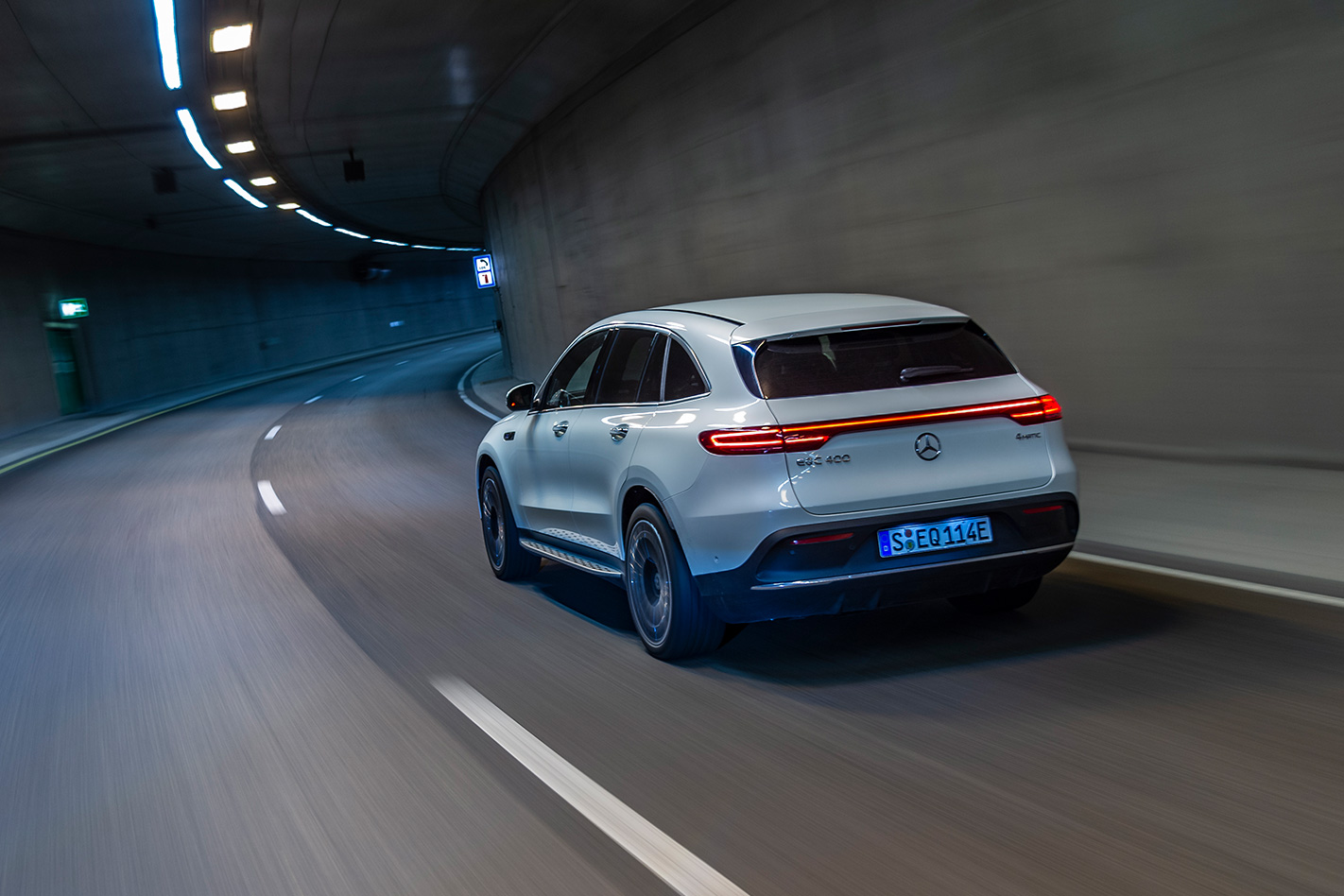
This is quite intentional. Unlike the radically styled Jaguar I-Pace and Tesla Model X, the EQC isn’t a ‘new from the ground up’ design. It shares much of its core DNA with the GLC, including its suspension hard points and 2873mm wheelbase. The two are even made in the same factory, on the same line, which gives Merc the freedom to scale EQC production up or down depending on demand. Clever, right?
Mercedes Australia isn’t talking exact pricing yet, though it does hint the sticker should be around $140,000 when it arrives Down Under in October this year. That’s about $20K more than an equivalent I-Pace or Model X, though the Benz is more powerful than both. Combining an 80kWh battery with twin electric motors (one for each axle) results in outputs of 300kW and 760Nm, which sounds ample.
“But it probably weighs more than moon!” I can hear you thinking. Battery packs are heavy (652kg in this case), so it’s true that the EQC hits the scales at a rather portly 2454kg. It hides its mass well, however.
Prod the throttle and the rate of acceleration is ferocious. In fact, so sharp off the mark is the EQC that it can nip into gaps in traffic that no conventionally powered SUV could manage. How could it, with its comparatively glacial throttle response and time sapping gearbox? Officially, Benz claims the EQC will hit 0-100km/h in 5.1sec, though it feels faster than that. This is real ‘push you into your seat’ kind of stuff.

It’s no sports car, however. Unusually, suspension is a combination of conventional coil springs up front and air suspension out back (there are no adaptive dampers) and the set-up is biased towards comfort. I can’t recall having driven a softer Mercedes this side of an S-Class, so supple is the ride quality, even on standard 20-inch wheels. Australia’s love of all things sporty means that our EQCs will arrive with the optional AMG Line styling pack as standard, and customers will have the chance to choose larger (and handsome) multi-spoke 21-inch hoops, but even here, the ride is relaxed and well controlled. Admittedly this was on very well maintained Norwegian roads, though this focus on comfort should hold the EQC in good stead for Australia’s gnarlier tarmac.
The trade off to this waftiness is that the EQC never feels as agile or as nimble as a Jaguar I-Pace, which is also some 362kg lighter. The Benz is more of a polished cruiser than apex hunter, which is a character trait only enhanced by steering that’s mute and remote.
There are five drive modes to play with (Eco, Comfort, Sport, Individual, Max Range), and switching to Sport does add heft to the helm, though it’s still lacking in feel. There’s no criticising the steering’s weight or its accuracy, however.
Perhaps the most engaging thing about the steering is found on the wheel itself. Traditional paddle shifters remain, but with no gears to cycle through, their task is to moderate the level of resistance from the regenerative braking. Again, there are five settings to play with: D auto, D+ (for coasting), D low, D medium (about 30-35 percent regen) and D high (75-80 percent regen), which Benz says offers one-pedal driving. It’s wonderfully intuitive to use, with noticeable step-changes between each of the settings.
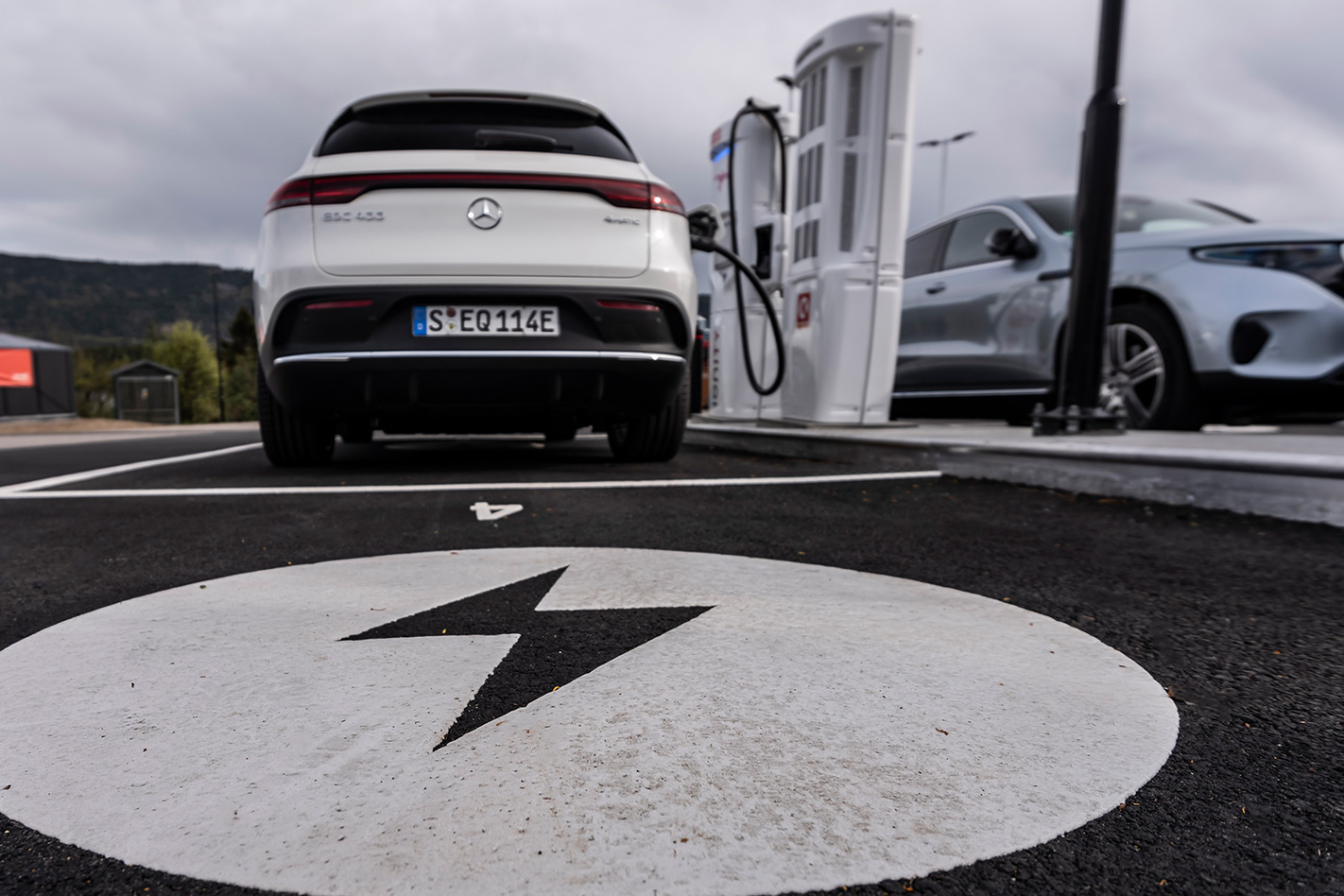
Range wise, the EQC is officially in the same ballpark as its rivals with a claim of between 374-417km on the WLTP cycle. And if you have access to a 100kW DC charger, you can juice it up from 10-85 percent capacity in 40 minutes. Fit an AC wallbox at home and a full charge will take around 11 hours.
During our drive route in Norway, our consumption hovered around 24kWh/100km, suggesting a real world range of around 340km.
And unlike our experience with the I-Pace, the EQC’s predictive range software is unwaveringly accurate, seeing us arrive at our destination with the prescribed amount of charge remaining, rather than sweating bullets as our battery capacity dropped at an alarming rate.

That Max Range driving mode I mentioned earlier is interesting. If you accidentally miss a charging point, or find your predicted range coming up short of your destination, activating the mode deploys a host of measures to eke out additional kms. The most obvious change is felt through the throttle pedal, where haptic feedback is used to limit your speed to a pace the car determines will help you reach your destination.
In fact, most of the EQC’s support systems are genuinely worthwhile. Owners can use an app on their smartphone to precondition the car, check vital charging information, and set their route in the sat-nav. The software for the navigation is particularly clever. Rather than simply choosing the shortest route, it takes into account how much battery you have, the availability of chargers and recharging times along the way, and even the weather and topography to determine the best compromise between time and convenience.
The cabin is a highlight. If the EQC’s exterior styling is slightly derivative, things are more radical inside thanks to an all-new dash design, square air vents with rose gold detailing, and the inclusion of Merc’s twin 12.3-inch screen digital display. It’s a luxurious place to sit and, as you’d expect, it’s eerily quiet too. Even with no combustion engine to disturb the peace, Merc’s engineers have been fastidious in their mission to find and eliminate NVH pathways.

A two-layer system of rubber bushings is used to isolate the twin-electric motors from the sub-frame and then the sub-frame to the vehicle, for example. And the wheel arches are lined with an acoustic shroud that cuts rolling noise by 7dB.
Some road and wind noise is still noticeable, as is some muted whining from the electric motors, though the EQC is nicely refined.
Rear seat passengers aren’t forgotten either. Space in the second row is comparable to a GLC, with ample knee and headroom and cushions that deliver decent under-thigh support and a natural backrest angle. Visibility for kiddies is useful thanks to a low window line and there are twin rear air-vents, dual USB ports, a 12V socket and two cup holders.
In fact, the rear-seat packaging is superior to what you get in the Jaguar I-Pace, which is interesting given the Jag’s bespoke platform. And it’s here that we get to something of an EQC compromise. While the decision to share its platform with existing cars like the GLC and C-Class is a smart one as it offers a degree of production flexibility, it also means Mercedes hasn’t been able to fully exploit the packaging freedoms that an EV powertrain offers. There’s no frunk, for example, and the cabin space, while good, is no better than a conventionally-powered GLC. In fact, the 500L boot is marginally smaller.

But there’s no escaping that the EQC is a convincing and remarkably polished first salvo for Benz’s burgeoning EQ brand. Cabin refinement and comfort are highlights, as is the neck-snapping acceleration, but perhaps its biggest strength is its familiarity. This isn’t an outlandish SUV that requires vast degrees of readjustment. Will that conservatism and the familiar looks disappoint some people? Possibly. But for the vast majority of wealthy Mercedes fans looking to embrace zero emissions, it’s likely to hit the sweet spot.
MERCEDES-BENZ EQC PRICE AND SPECS AUSTRALIA
Model: Mercedes-Benz EQC 400
Motor: 2 x asynchronous motors, 80kWh lithium-ion battery
Max power: 300kW
Max torque: 760Nm @ 0rpm
Transmission: Single-speed reduction gear
Weight: 2495kg
0-100km/h: 5.1sec (claimed)
Economy: 20.8-19.7kWh/100km
Price: $140,000 (estimated)
On sale: October 2019
Overall Rating

5 0 5
Plus & Minus
The Wheels Verdict: What a change a generation can bring. The new S60 is a far better proposition than it was before and the prospect of keen pricing, a five-year warranty and cheaper servicing could make this a credible threat to traditional German rivals.
WHAT IS THE VOLVO S60 T5?
Volvo says it’s become an SUV company, but it hasn’t completely ignored its roots either. A new generation mid-size sedan, the S60 is underpinned by the same Scalable Product Architecture that underpins its SUV-twin, the XC60. The T5 will represent the entry-level drivetrain choice in Australia, powered by a 2.0-litre turbocharged petrol engine.
WHY WE’RE TESTING IT
As the sedan spin-off to the 2018 Wheels Car of the Year winner (the XC60), we’d be mad not to see how good (or bad) the S60 is. It won’t land in Australia until August this year, so we went to test it on Scandinavian backroads in Sweden ahead of its arrival.
VOLVO S60 T5 REVIEW
With the launch of the S60 sedan and V60 wagon in Europe this year, Volvo’s XC90 becomes, incredibly, the oldest model in the line-up. Having launched as recently as 2015, it’s still relatively shiny, but the Swedish maker has subsequently released hit after SUV hit, recording back to back Wheels COTY wins with first XC60 and then XC40.
Historically, the S60 was never all that flash as a premium sedan. A sort-of rival to the German heavy hitters like the BMW 3-Series, Mercedes-Benz C-Class and Audi A4, the Swede’s blocky steering and average ride never did trouble that trio much. It somehow managed to both underpromise and underdeliver. But how times have changed.
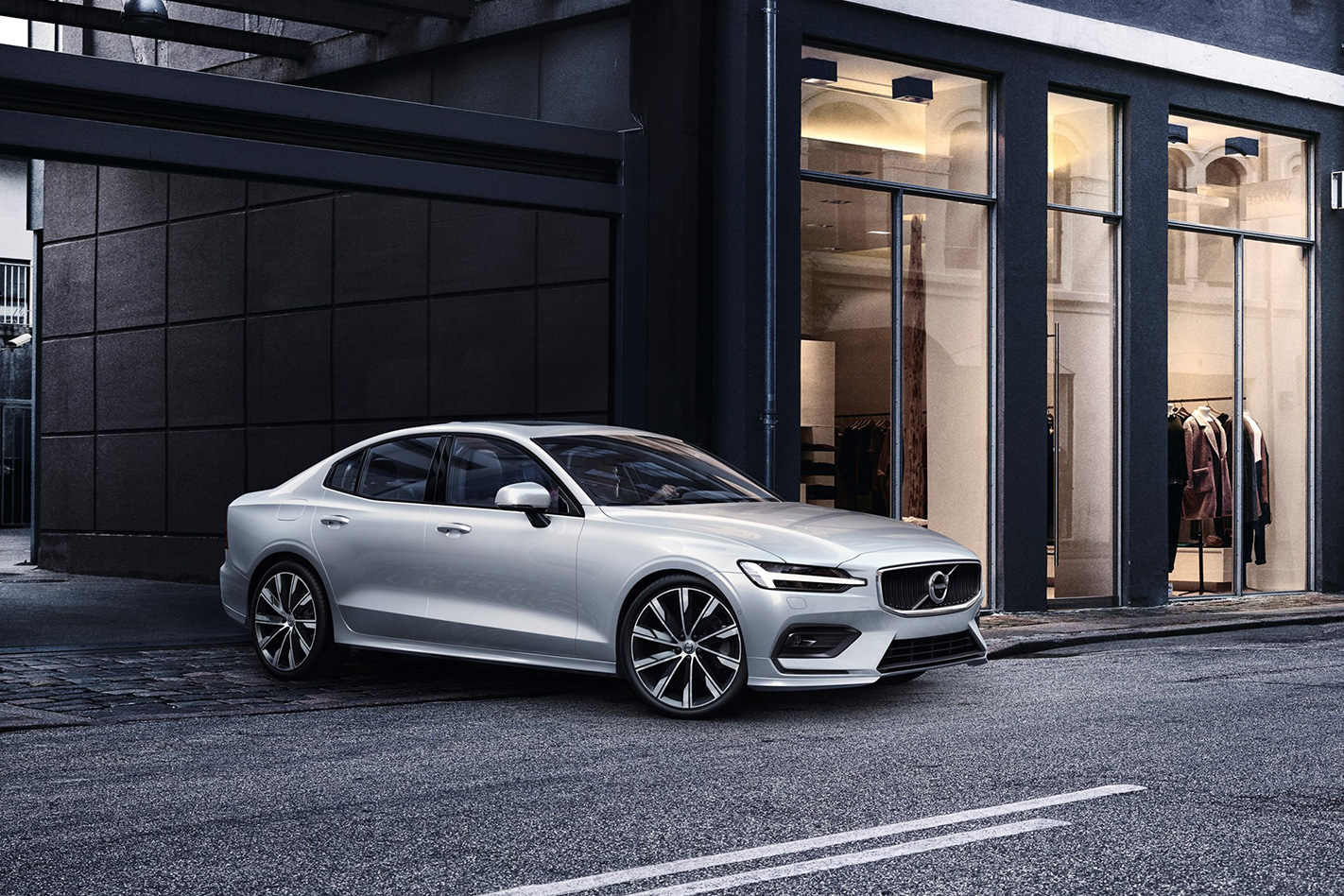
For starters, just look at the thing. Like the latest barrage of models led by a Thor’s hammer-inspired pair of headlights and slightly wider grille, the S60 is a sweet looking thing. Even up against the premium German triumvirate, or perhaps the Brit’s Jaguar XE, it will doubtless claim new fans. But it’ll also appease diehards, having all of the latest active driving assist tech. Volvo tends to be quite good at that sort of thing.
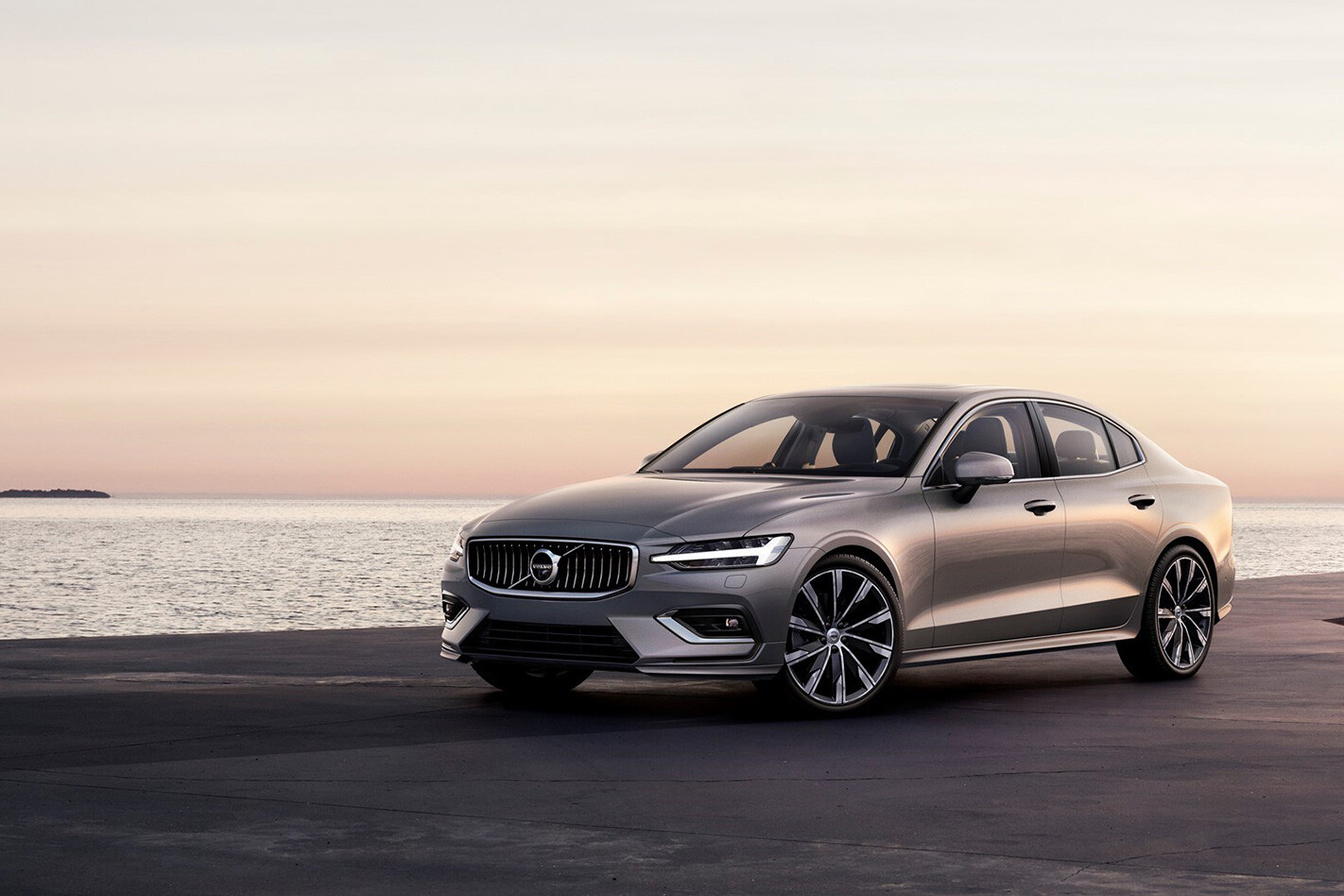
Newfound success for the maker is a result of Chinese owner Geely, which has entrusted Volvo with a bag of cash, and then taken a refreshingly hands-off approach. The result is a convincing suite of drivetrains, slick aesthetics and some of the latest technology across of its new models.
Step inside the new S60 and there’s a little more room from slightly teased-out dimensions, but unlike the new 3-Series which bust open its shirt as it grew, the Volvo is visually a bit gentler. The seats are comfortable and supportive, and the ergonomics are fine, except for the steering wheel which, though feeling nice in the hand, can put its buttons too close to the palms on turning. In the back is a 442L boot that’s on par with the segment and there’s plenty of storage and thoughtful touches around the cabin, much as you find in the XC60.

Dollar for dollar, Volvo Australia says it will target the equivalent German models but will add more gear, promising a suite of goodies for reasonable coin. We’d expect this T5 to enter the market at a little over $60,000, with inclusions such as the 9.0-inch infotainment system, 12.0-inch digital driver’s display, automated driving assists, heated seats front and rear and retractable rear window blinds as standard.
Underneath the T5’s bonnet is a 2.0-litre four-cylinder turbocharged engine, generating 184kW and 350Nm through an eight-speed automatic transmission. It lacks the punch of the turbo and supercharged T6, and certainly the mumbo of the plug-in hybrid electric ‘twin-engine’ T8, but it’s good for smooth acceleration and cruising along the highway. Volvo claims a 0-100km/h time of 6.5sec which might be possible in perfect conditions but was hampered for us by torrential Swedish rain. We were also driving the front-wheeler which hampered grip. The all-wheel-drive version that Australia is set to receive is a touch quicker and will be doubtless grippier.
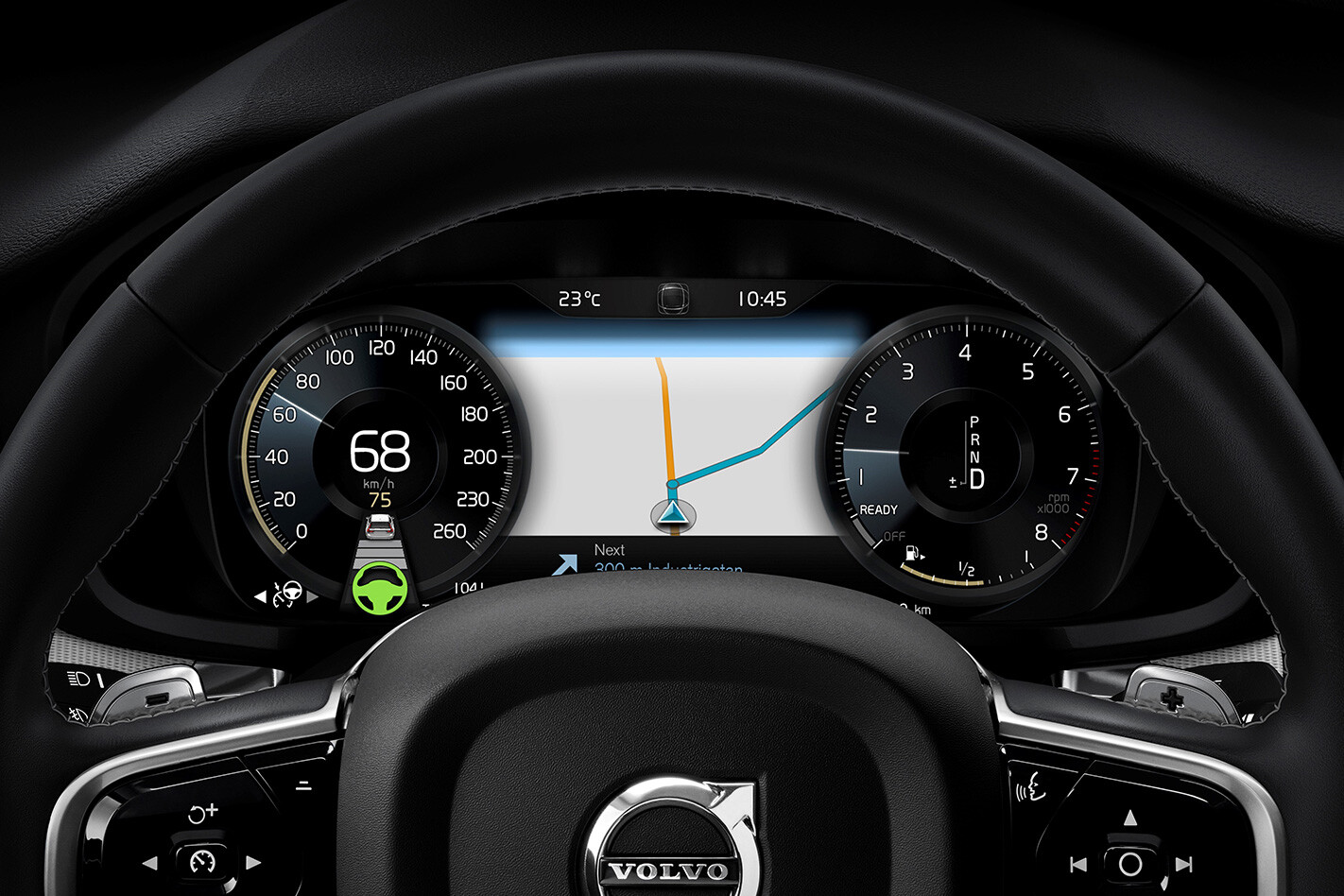
We were told Swedish roads – sealed ones in spring, at least – are pretty boring. Perfectly smooth, flat and lacking much in terms of change of direction, it was hard to gauge the S60’s complete road manners. The 20-inch alloys with low profile 245/35 Pirelli P Zero rubber were planted in corners but contributed to a slightly firm ride. While not edgy on smooth Scandi bitumen, they might not roll over rough Aussie roads as smoothly. The ride and handling has moved on leaps and bounds, the steering is well weighted and natural and exterior noise isolation is impressive. It feels like a much more settled sedan and one that’s easy to live with.
Volvo Australia expects stock to arrive in August which will likely be available to customers from September. A sweetener for curious shoppers is that Volvo Australia is considering a five-year warranty and cheaper servicing, which could well elevate this premium sedan offering up the ranks over other premium makers with a three-year guarantee. And if you need more space, the incoming V60 and V60 Cross Country will be well worth a look when they arrive in late-2019.
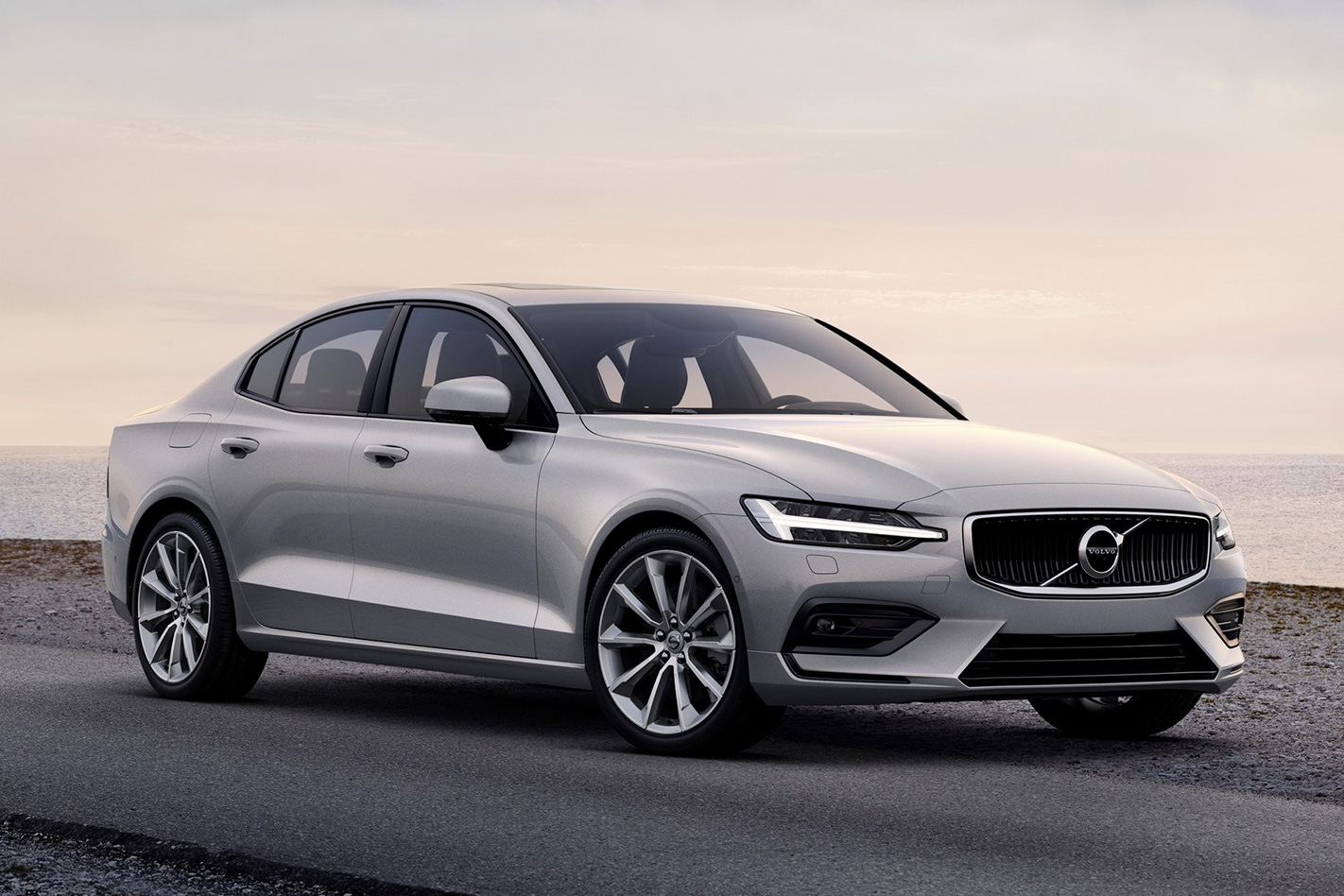
VOLVO S60 T5 VS RIVALS
Mercedes-Benz C-Class, BMW 3-Series, Audi A4, Jaguar XE
VOLVO S60 T5 PRICE AND SPECS AUSTRALIA
Model: S60 T5 R-Design Engine: 2.0-litre four-cylinder turbo petrol Max power: 184kW at 5500rpm Max torque: 350Nm at 1500-4800rpm Transmission: Eight-speed automatic 0-100km/h: 6.5sec Price: $65,000 (estimated) On sale: August 2019
I’m not one for the social pages, me. Kendall Jenner… didn’t he play at the Moscow Olympics? Ball sports also largely pass me by, as well, although I did play soccer (it’s not bloody football and that’s that) to a reasonably high level in my youth.
Maybe that’s why a small story about the former English soccer team captain David Beckham caught my eye recently. ‘Beckham out for six months’ crowed the headline. “Funny… I’m sure he doesn’t play any more,” I muse.
Of course, I’d been roped in by the classic SEO double bluff – Mr Beckham has, in fact, been banned from driving for a not-inconsiderable six months.
His crime? He was papped using a mobile phone while “moving slowly” (his lawyer’s words) in traffic, earning himself a court appointment and half a year away from the Bentleys and the Ferraris that populate his garage. Garages, probably.
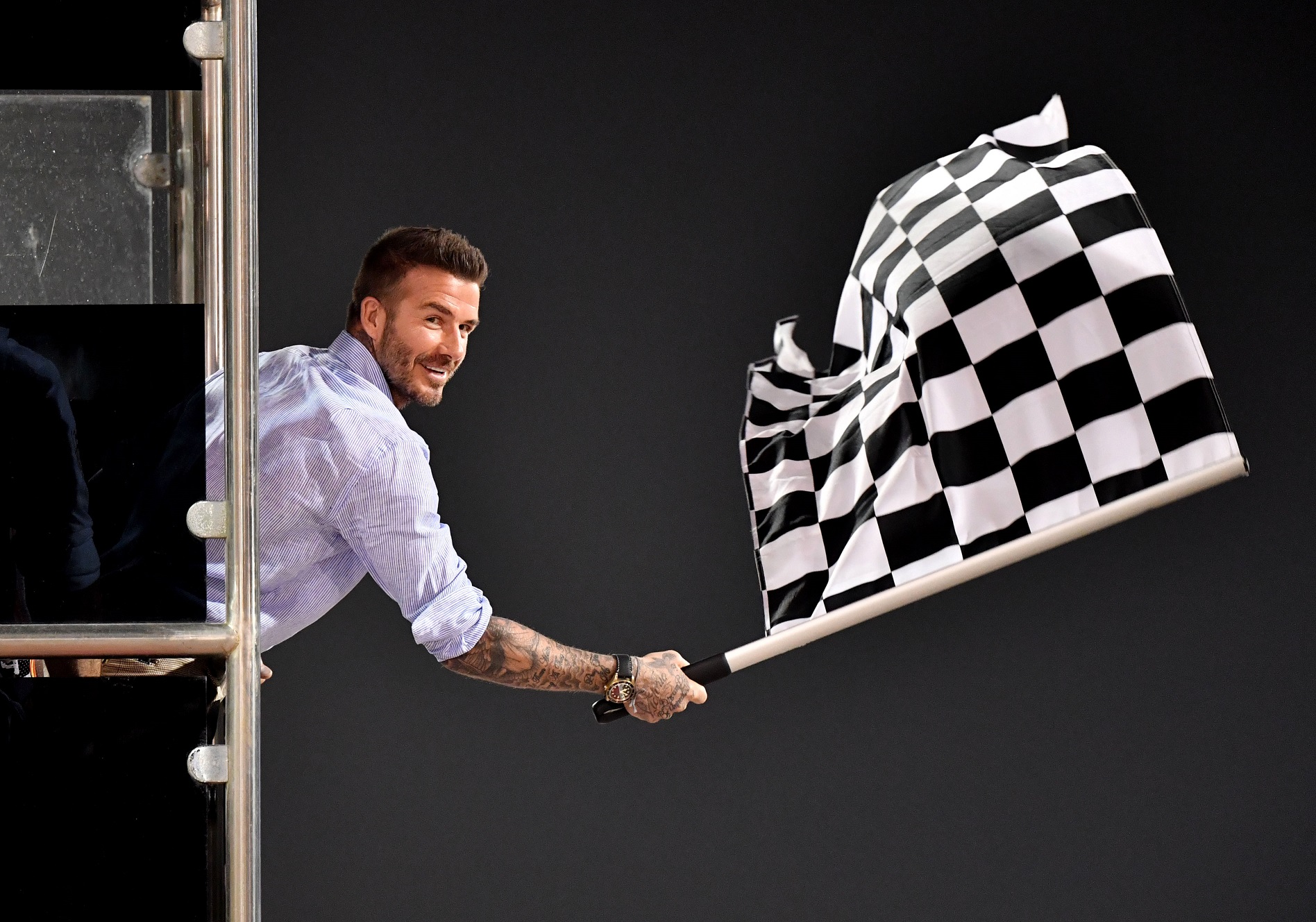
Beck’s race is run for six months (Getty)
Usually, I’d have harrumphed and moved on with my day, but the severity of the punishment for Becks – hey, do the crime, do the time – seems to contrast massively with the treatment of another very prominent societal figure.
About a month ago, an Instagram post from Dwayne ‘The Rock’ Johnson – 142 million fans and counting – showed him filming a school bus full of cheering kids (below) who’d recognised arguably the world’s most prominent Hollywood actor of the moment.

No problem with that at all; Mr Rock seems to be a pretty stand-up guy, and the kids were sure happy to see him. To me, though, the fact that Johnson openly filmed the post on his mobile while driving his SUV on what appears to be a pretty busy bloody freeway gave me pause.
I watched his account for a couple of days to see if he’d maybe post something like ‘Hey kids, don’t use your phone to film while driving on a busy freeway’ or similar. No dice.
What he did do, however, was repost a vid from one of the kids in the school bus (below), clearly IDing the actor, who was not only filming, but filming while DRIVING WITH NO HANDS ON THE WHEEL.

Here in Australia, that’s called ‘compelling evidence’. If he’d done that in the UK, Mr Rock would be walking- okay, having his driver collect him – for 12 months at best.
For that, he’d cop a fine here at the least, but his US residency would mean little else.
In the States, he got, well, nothing but a bunch of likes and comments. And think that’s a bit shit. A few people called him out on it in their posts, but there was no other reaction.
Distracted driving injuries and deaths are on the rise across the world, while despite the fact cars are safer than they’ve ever been, death tolls are either static or even increasing.
In Victoria, for example, road deaths in 2019 are already up nearly 40 per cent year on year. Nearly 40 bloody percent!
Part of this can be attributed to the growth of the nation’s car park, but equally, distracted driving is arguably a root cause of the stubbornly high rates of mortality caused by vehicles.
According to Victorian Police, more than 60 percent of drivers have admitted to picking up a phone while driving in the last 12 months.
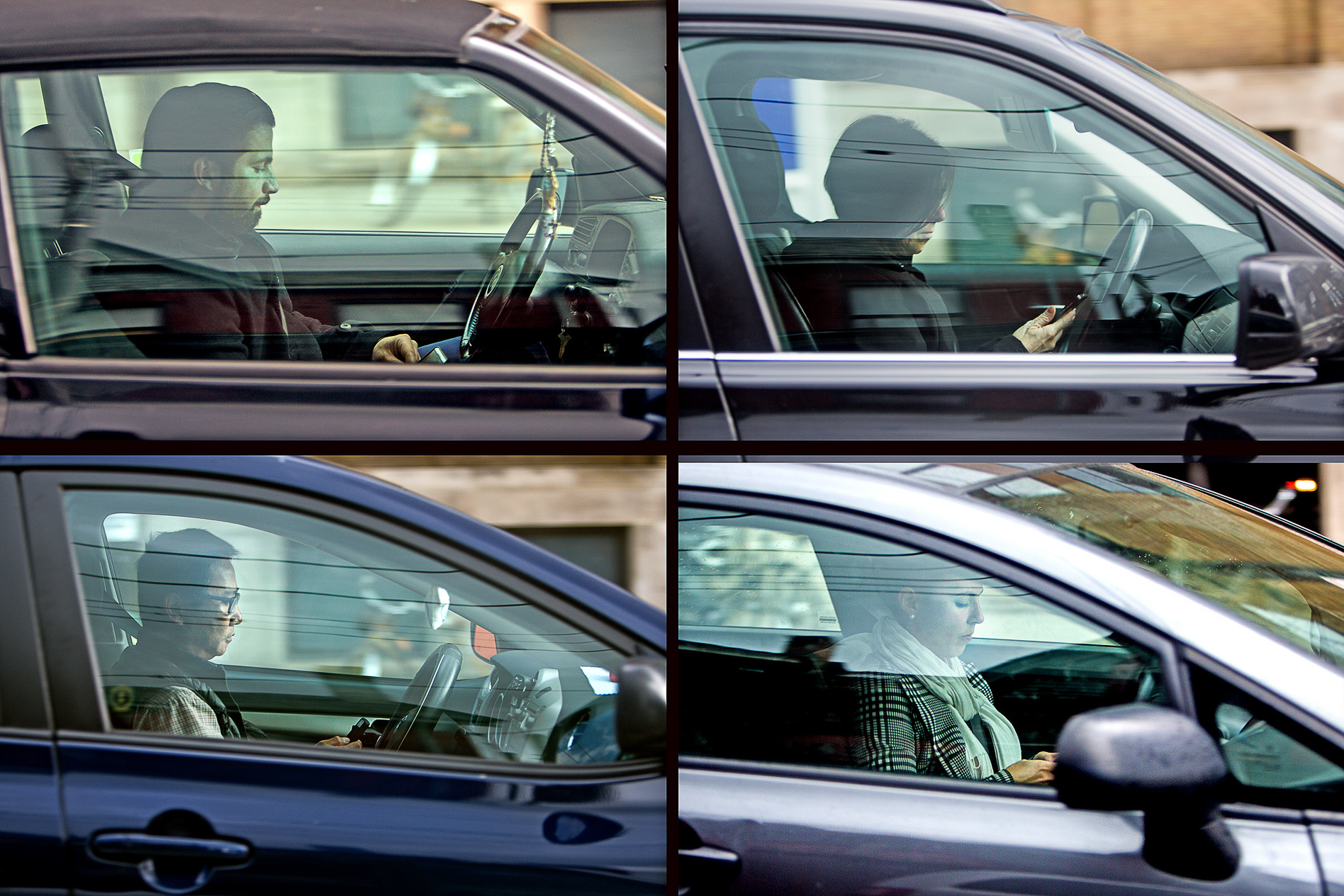
A blitz in Ontario. Canada, recently (Getty)
A trial of a specially-designed camera near Sydney’s CBD, meanwhile, detected 11,000 in one day touching a device. One camera. A single day.
That’s the best part of 100,000 drivers a week on one arterial in one city, all messaging or finding a song on Spotify or looking for the nearest dry cleaner, all while piloting a large, metal projectile at considerable speed.
It’s not like the cops aren’t trying to bust people. Police disguised as window washers. Plain-clothed cops on street corners and on motorbikes. Cameras on bridges. Increased fines and demerit points.
It hasn’t done crap, obviously, especially when you see the story of a young driver killed while being SnapChatted by her friends… who then posted selfies from their hospital beds.
Is it all over? Has the war on phone use been lost?
The Victorian Roads Minister Jaala Pulford agreed a couple of weeks ago that mobiles is the new ‘drink-driving’ of this generation.
“We’ve only had smartphones for 11 years and in that time they transformed how we live our lives in a whole lot of different ways,” she told journalists.
“What we need is for people to set the phone aside, put it on silent, pop it in the glove box, it can wait.”
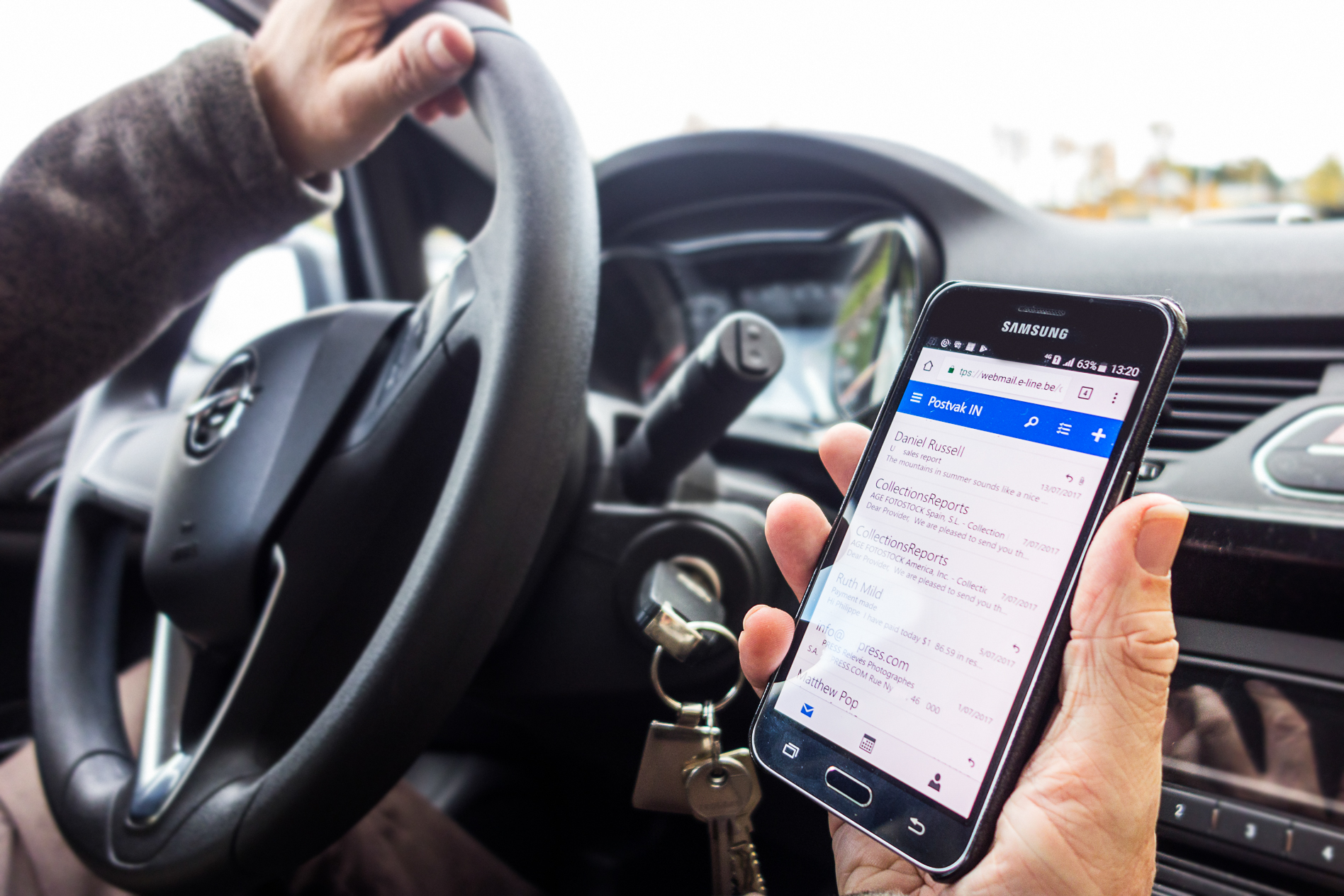
Imagine, though, if someone like Dwayne Johnson – or even that Jendall Kenner dude – got up on his Instagram horse and said “You know what? Driving with your phone in your hand is just about the stupidest thing you could do, and I regret doing it, and I curse you if you do it, and here’s $10 million to help the innocent victims of road trauma.” Wouldn’t that be a positive use of his amazing social reach?
I know my two learner drivers would listen to him/her a lot more than that they would a cop or a washed-up old automotive writer.
Sure, there are examples of celebs ganging together to tout the message that phone use while driving is bad… but the last one I could spot was in 2013, where the guy from Bondi Rescue said it was bad. No offence to Bondi Rescue, but The Rock might have more luck there.
In the meantime, we’ll continue to see awful examples like The Rock’s brain fade propagate across social media unchallenged, and the next generation of drivers will – even if they don’t use phones themselves – continue to be exposed to the real danger of dying behind the wheel because a WhatsApp couldn’t go unanswered.
Is it too late to stop phone use in cars? Let us know in the comments below.
A new hybrid Ferrari supercar is set to be revealed in Maranello before the month is up, with leadership from the Prancing Horse having already confirmed the car’s existence.
The new mid-engined model, codenamed F173 and nicknamed ‘Big Brother’, is expected to sit above the 812 Superfast as the brand’s halo series production car.

An invitation to the car’s private reveal at Maranello from May 29-31, leaked by well-informed forum FerrariChat, suggests a power figure of 735kW, which aligns with the assertion from Ferrari top brass that this new supercar will offer performance superior to that of the LaFerrari.
It will be Ferrari’s second major reveal of 2019 following the F8 Tributo, but unlike the 488 replacement this new supercar will be built on one of Ferrari’s all-new vehicle architectures, capable of accepting a variety of engines, wheelbases and, crucially, hybrid powertrains.
Concrete details are scarce, but F173 is expected to be powered by a development of the 488 Pista’s 3.9-litre twin-turbo V8, which currently produces 530kW/770Nm, with electrical assistance bringing the total to 735kW (a nice round 1000PS, or 987bhp).
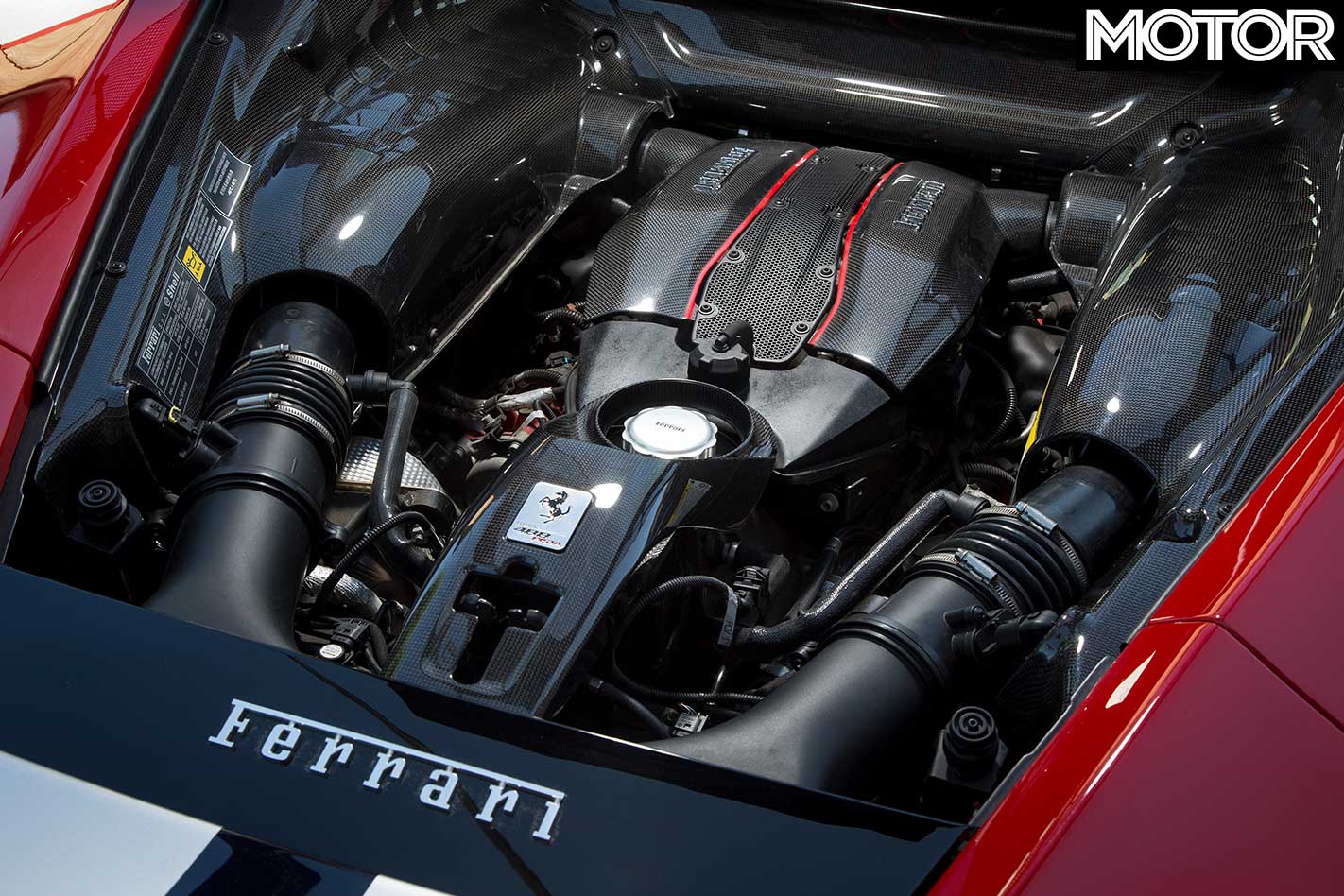
It’s unclear at this stage whether rear- or all-wheel drive will be used, but if Ferrari’s claim of LaFerrari-beating performance is to be upheld, ‘Big Brother’ will need to hit 100km/h in around 2.5sec, 200km/h in about 6sec and complete the quarter mile in less than 10sec.
However, while these numbers will decrease, another (the price) will increase markedly. Don’t be surprised if F173 moves into Lamborghini Aventador S territory, costing around AUD$1m by the time options and on-roads are added.
Stay tuned for the end of the month as we await the reveal of the new hybrid Ferrari supercar, and bring you all the most important details.
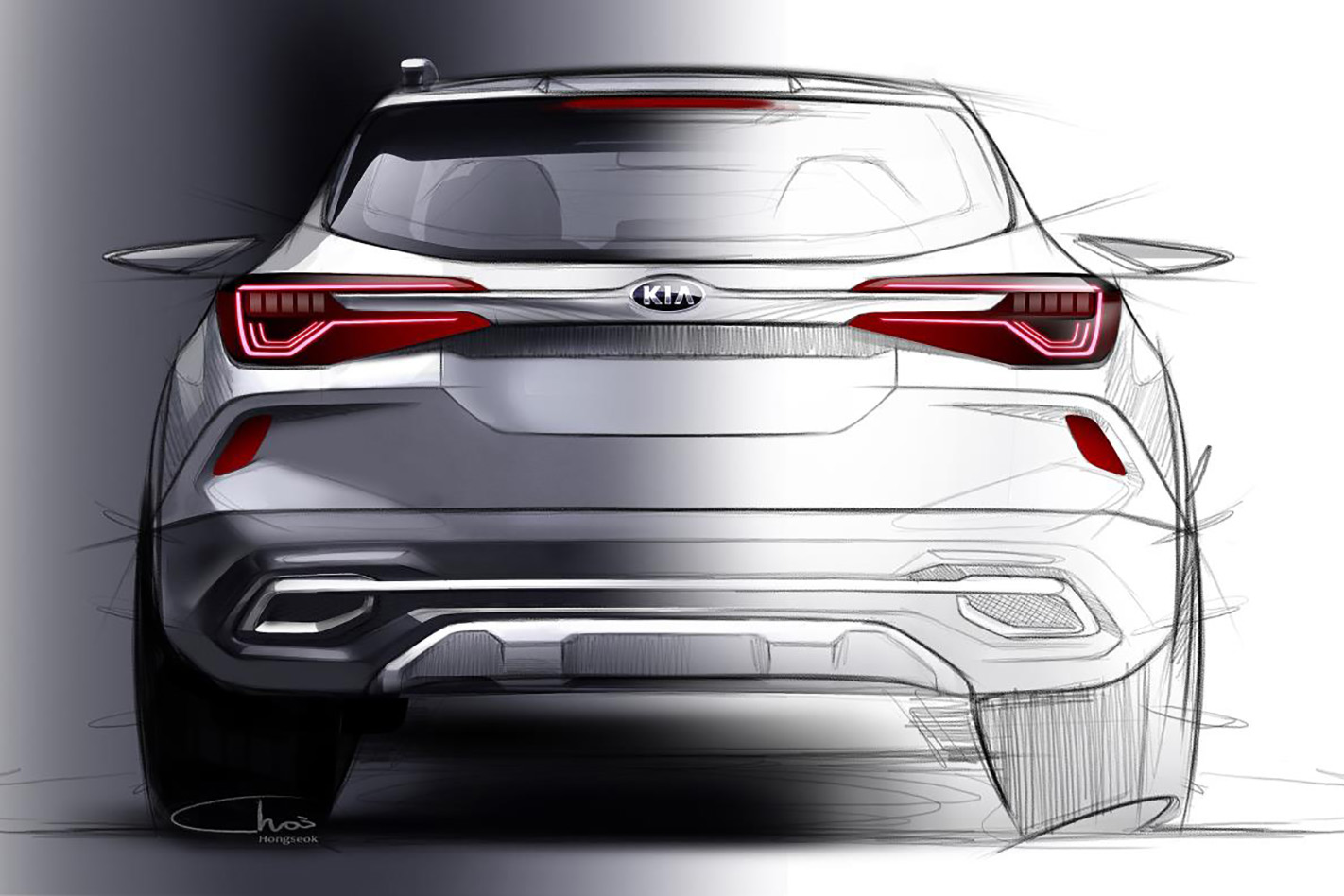
Kia has lifted the lid on its first global small SUV, revealing sketches of the car’s nose, tail and interior ahead of its Australian arrival later this year.
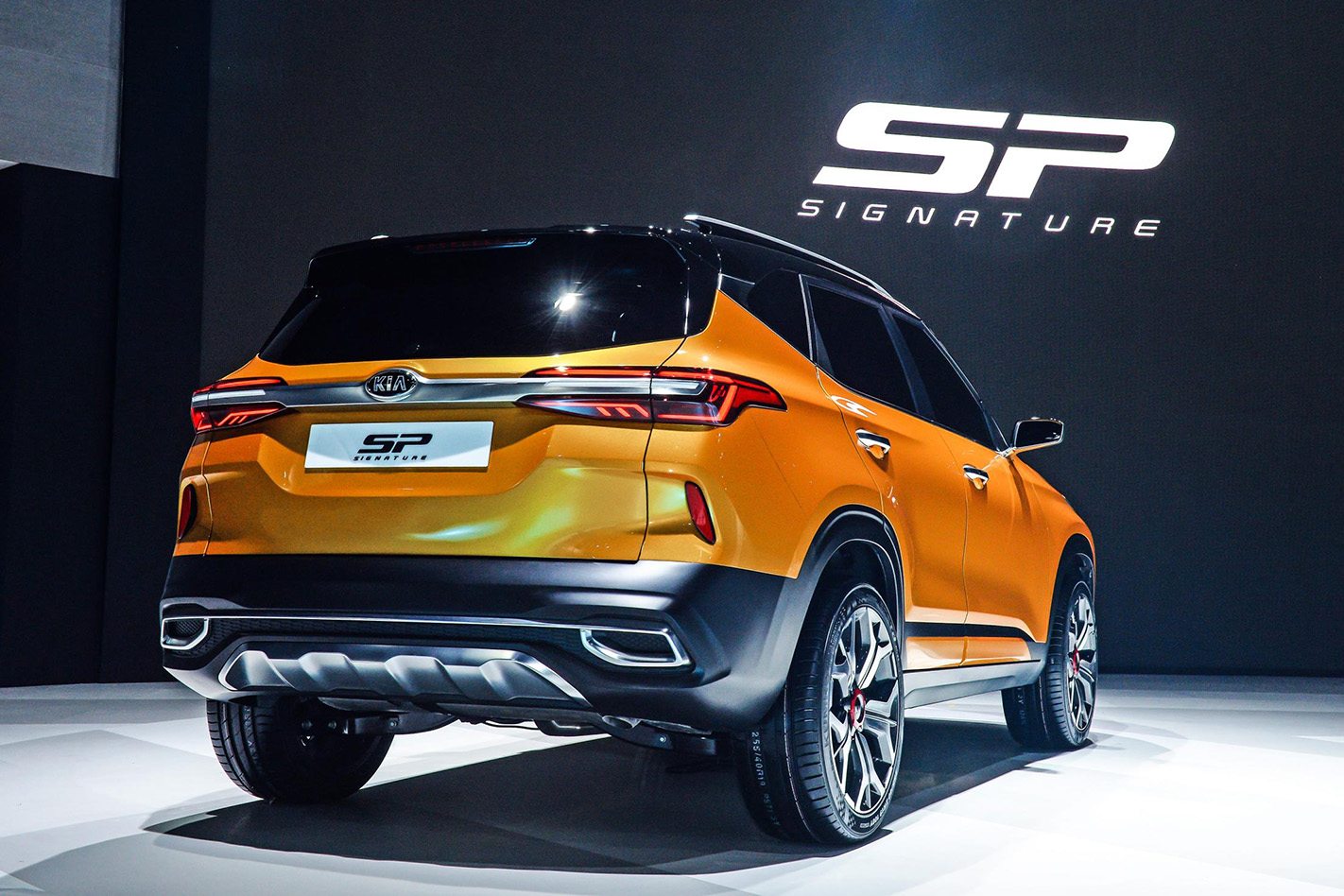
Though a name for the Korean automaker’s sub-Sportage offering has yet to be announced, the sketches confirm that the gateway SUV will closely follow the template set by the Kia SP Signature Concept that debuted at the Seoul motor show in March (below).
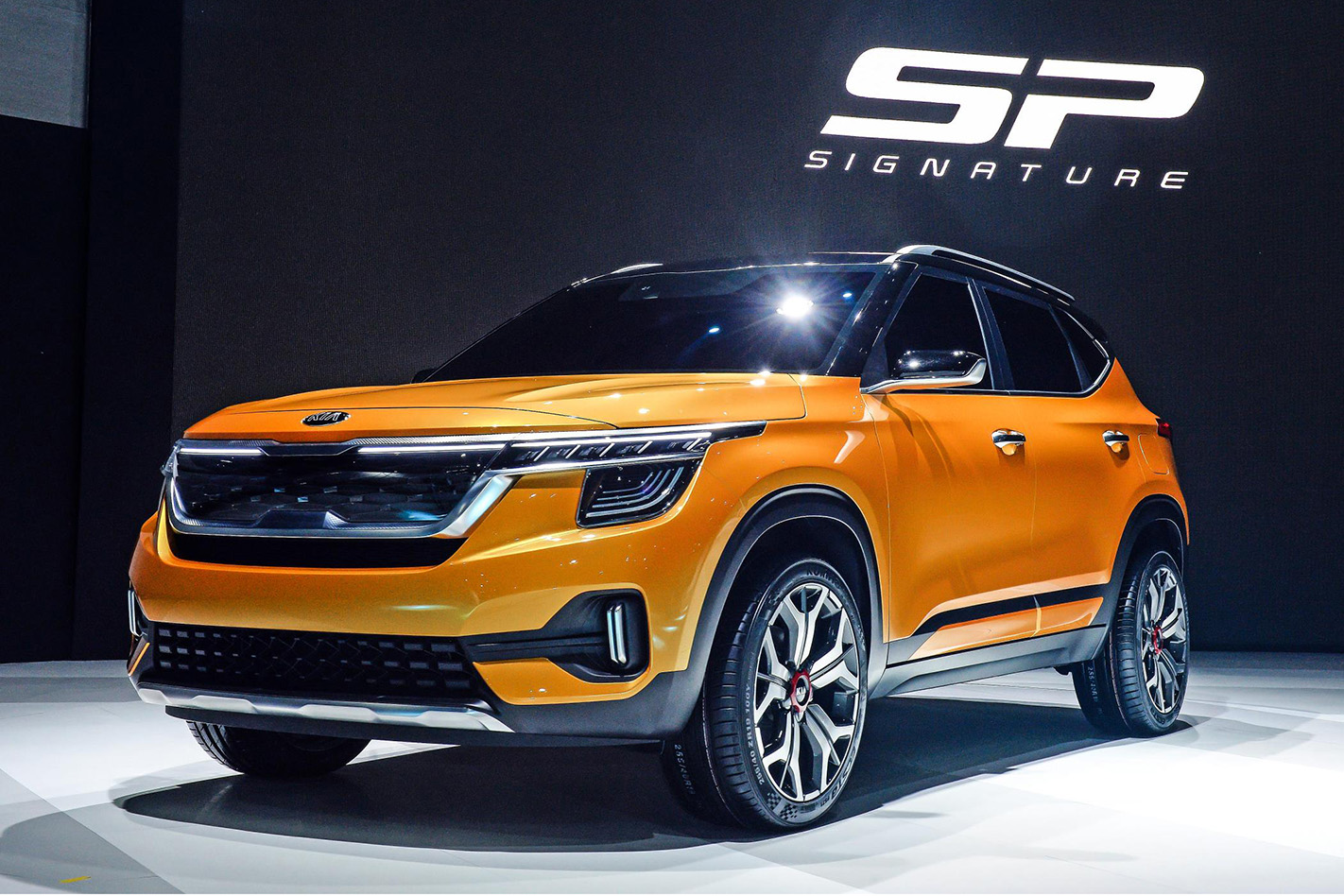
And by “closely follow”, we mean “will be nearly identical”. Key design elements shown in the sketches align almost perfectly with those on the SP Signature, showcasing the company’s next evolution in exterior design with a grille that now blends into the headlamps, along with an equally-bold rear lamp graphic across the tailgate.
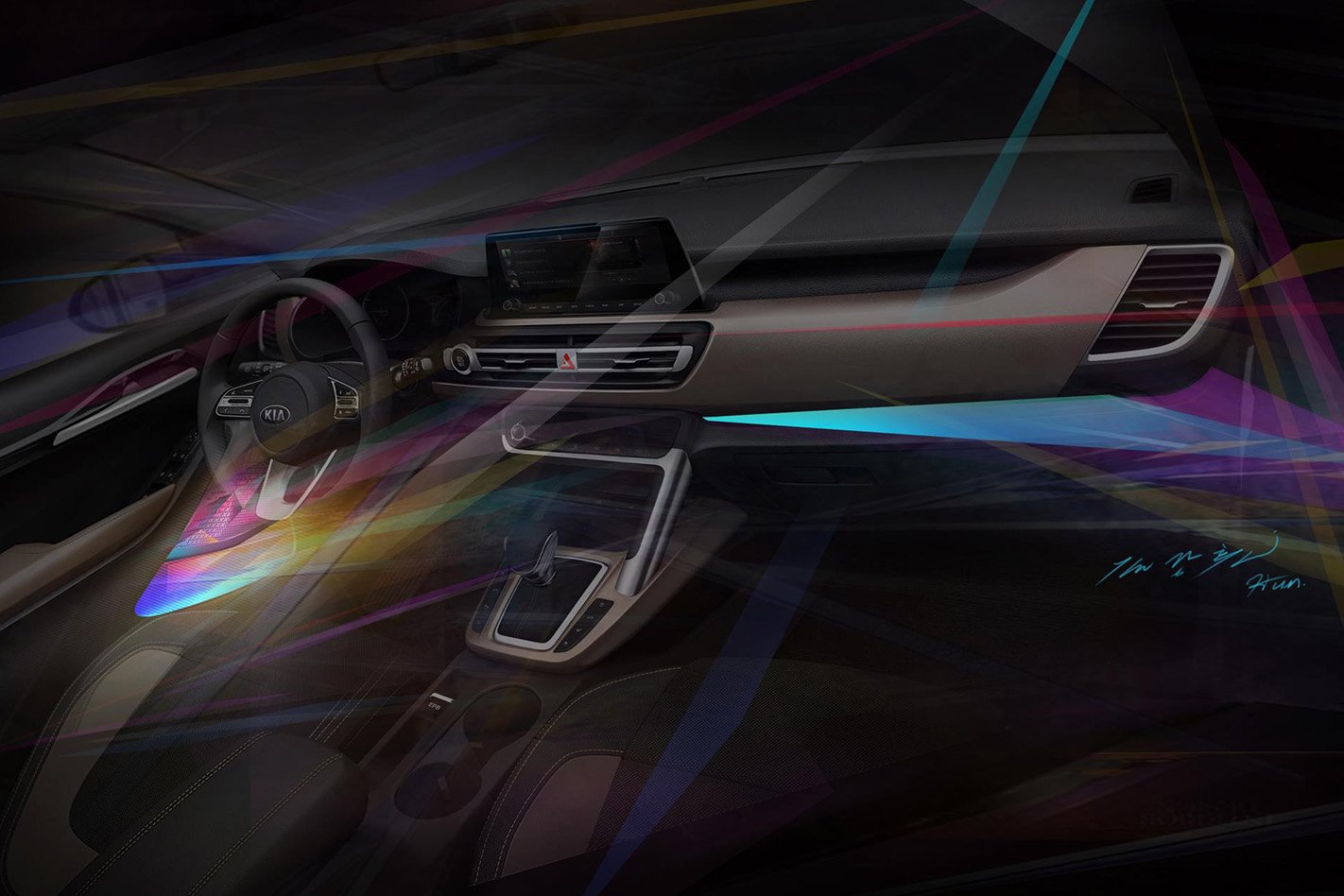
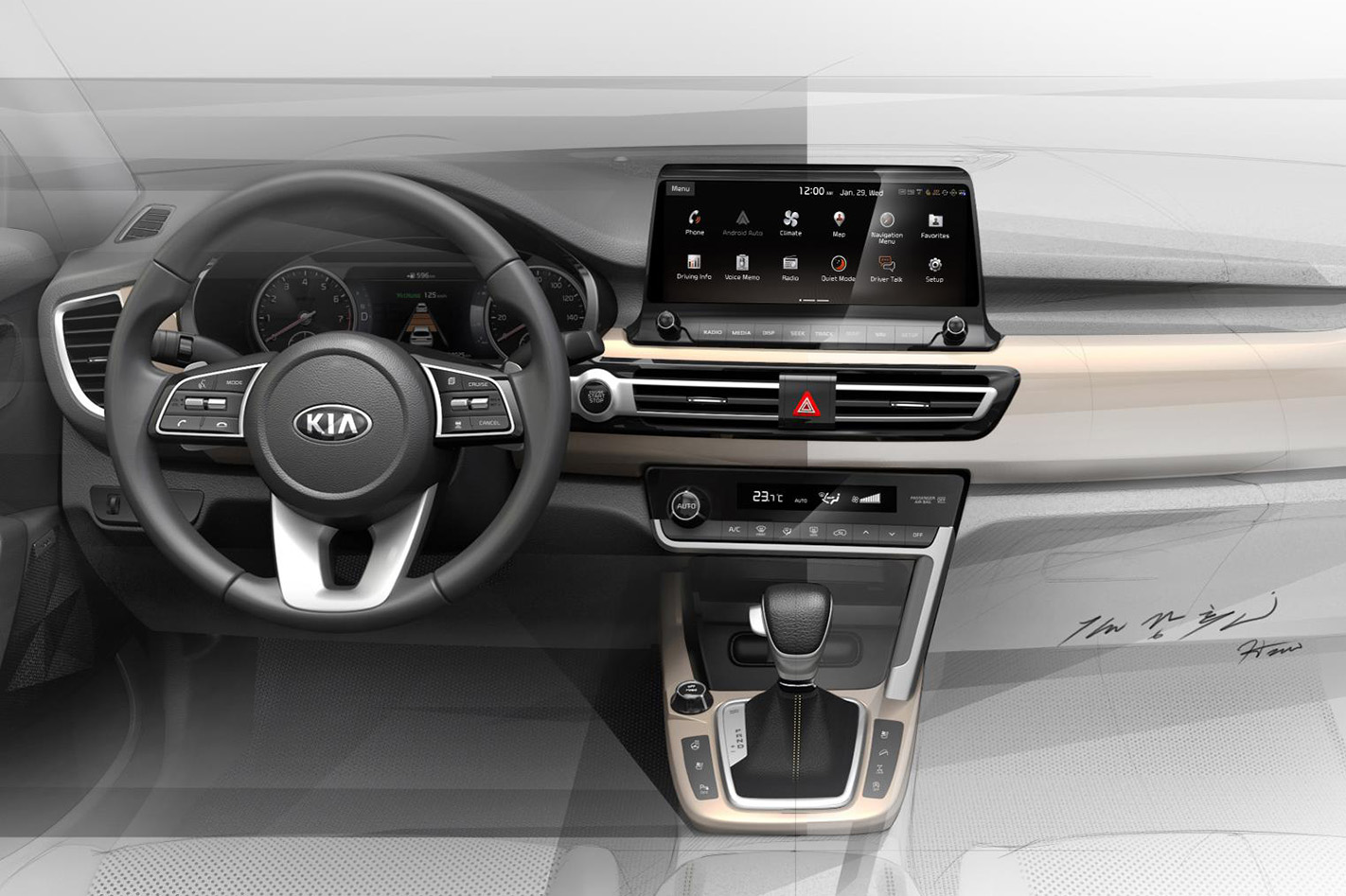
On the inside, a massive 10.25-inch infotainment screen dominates the dashboard while a two-tone colour scheme suggests Kia’s youth-targeted compact crossover might have a brighter and cheerier interior versus the usual ‘sea of black’ that’s the segment’s default.
What’s more, Kia says the model will feature the company’s “Sound Mood Lighting” tech, which will give the driver the ability to customise the cabin ambient lighting – as well as, it appears, blast light from the speaker grilles, in a similar fashion to the now-retired Kia Soul.
Technical details remain under wraps, but with the car sized to compete against rivals like the Mitsubishi ASX, Holden Trax, Mazda CX-3 and Honda HR-V – amongst many others – the arrival of a new SUV should at last give Kia a presence in the highly competitive small SUV category.
Unlike previous small SUVs from Kia like the Niro and Stonic, the vehicle shown in these sketches will go on sale around the world, rather than be limited to select regions.
Currently, with the mid-sized Sportage being the company’s smallest SUV offering, Kia Australia has had to sit and watch as rivals with broader product portfolios capitalised on booming demand for smaller SUVs and crossovers. The arrival of Kia’s first global small SUV will finally change that.
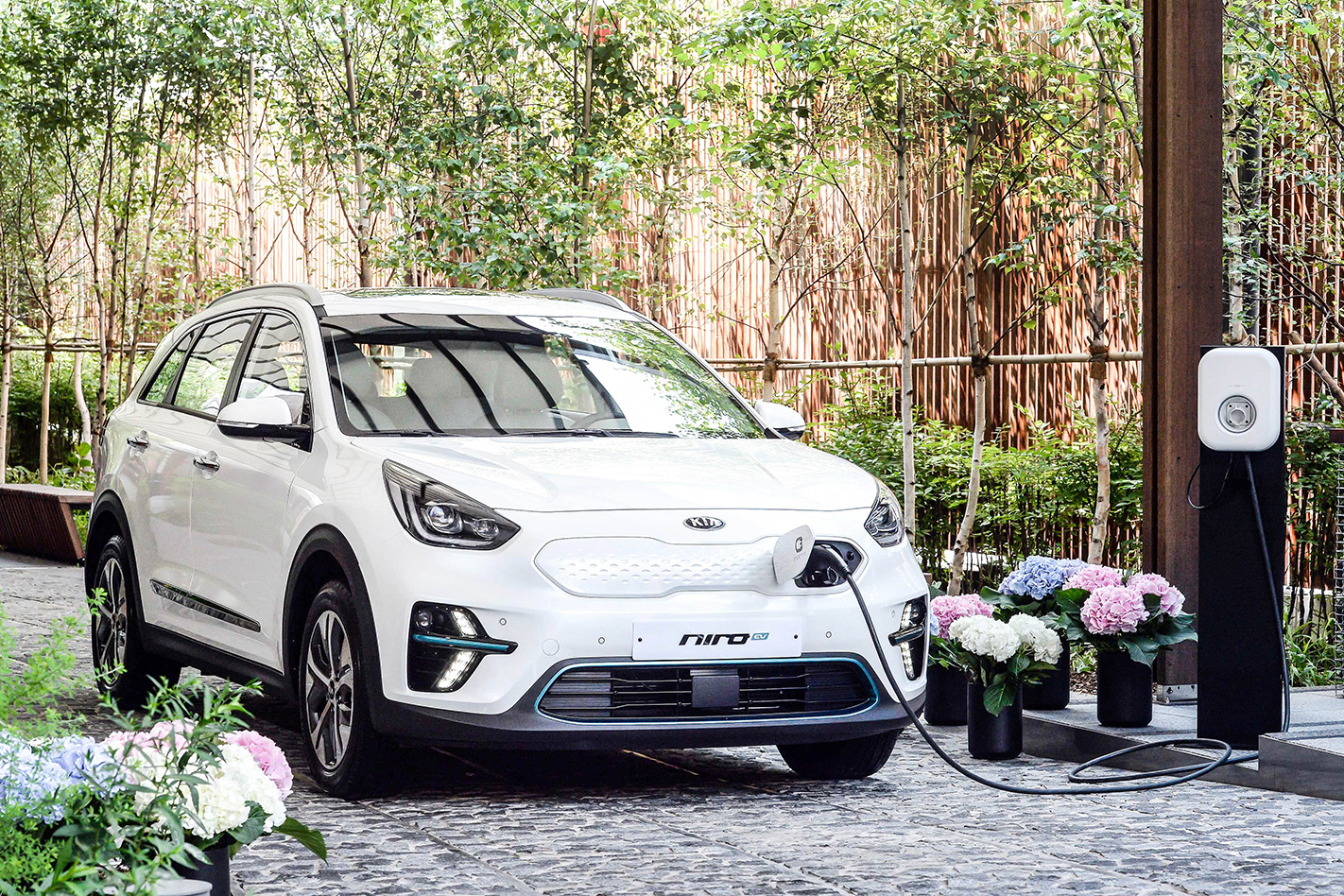
And it’s part of a greater SUV thrust by the automaker. Joining the small SUV in 2019 will be the Kia e-Niro, the company’s first tilt at the electric vehicle market in Australia and one that will boast a 400+ kilometre single-charge range.
Overseas, Kia will also be wheeling out a crossover hatchback based on the European-market Ceed, along with the towering Telluride large SUV in North America. Neither of those are slated for our market.
Kia Australia also has its heart set on adding a rugged ladder-framed 4×4 wagon to that mix as well, though a suitable product has yet to materialise to satisfy that urge.
Watch for Kia’s new global small SUV to go on sale in Korea in the second half of this year, with local sales commencing in the fourth quarter.
Type 64 #3. To the uninitiated, this seems like a simple, somewhat meaningless combination of letters and numbers. However, to Porsche fanatics, Type 64 #3 is everything.
You see, Type 64 #3 is the oldest surviving car ever built by Porsche, and now it is for sale.
Auction house RM Sotheby describes Type 64 #03 as “the most significant surviving piece of Porsche engineering and design history”, and frankly, we aren’t going to disagree. This particular Porsche is so old that it actually predates the sports car manufacturer as a company by a decade.
Built by Ferdinand Porsche himself for a 1500-kilometer race between Berlin and Rome planned for September 1939, the Type 64 was based on the Volkswagen Beetle (which was also designed by Mr Porsche). To increase the performance of the Type 64, it was fitted with streamlined aluminium bodywork and a more powerful engine. However, the race never took place, with Nazi Germany invading Poland earlier in the month.
Ferdinand had built a single chassis by that point, which became the property of the German government. His son, Ferry, built two more Type 64 chassis, with the second completed in December 1939, and the third in June 1940.
Type 64 #3, the car which is now for sale, is actually built from the bones of the first chassis, which was crashed by the then managing director of Volkswagen.
With chassis #2 not surviving the war, #3 was left as the sole Type 64 in the world.
The Porsche family kept the car when they relocated to Austria, with Ferry putting the family and company name on the car in 1946. The next year he commissioned ‘Pinin’ Farina – the founder of the Pininfarina design house – to restore the car.
Type 64 #3 has had an illustrious life since then, and was even shown alongside the 356 when it was revealed.
RM Sotheby expects Type 64 #3 to fetch circa US$20 million (A$28.7 million) at auction, which would easily exceed the current record for the most expensive Porsche ever sold, currently held by the 917K used to film Le Mans which changed hands for US$14 million (A$20.1 million) in 2017.
What’s in the garage?
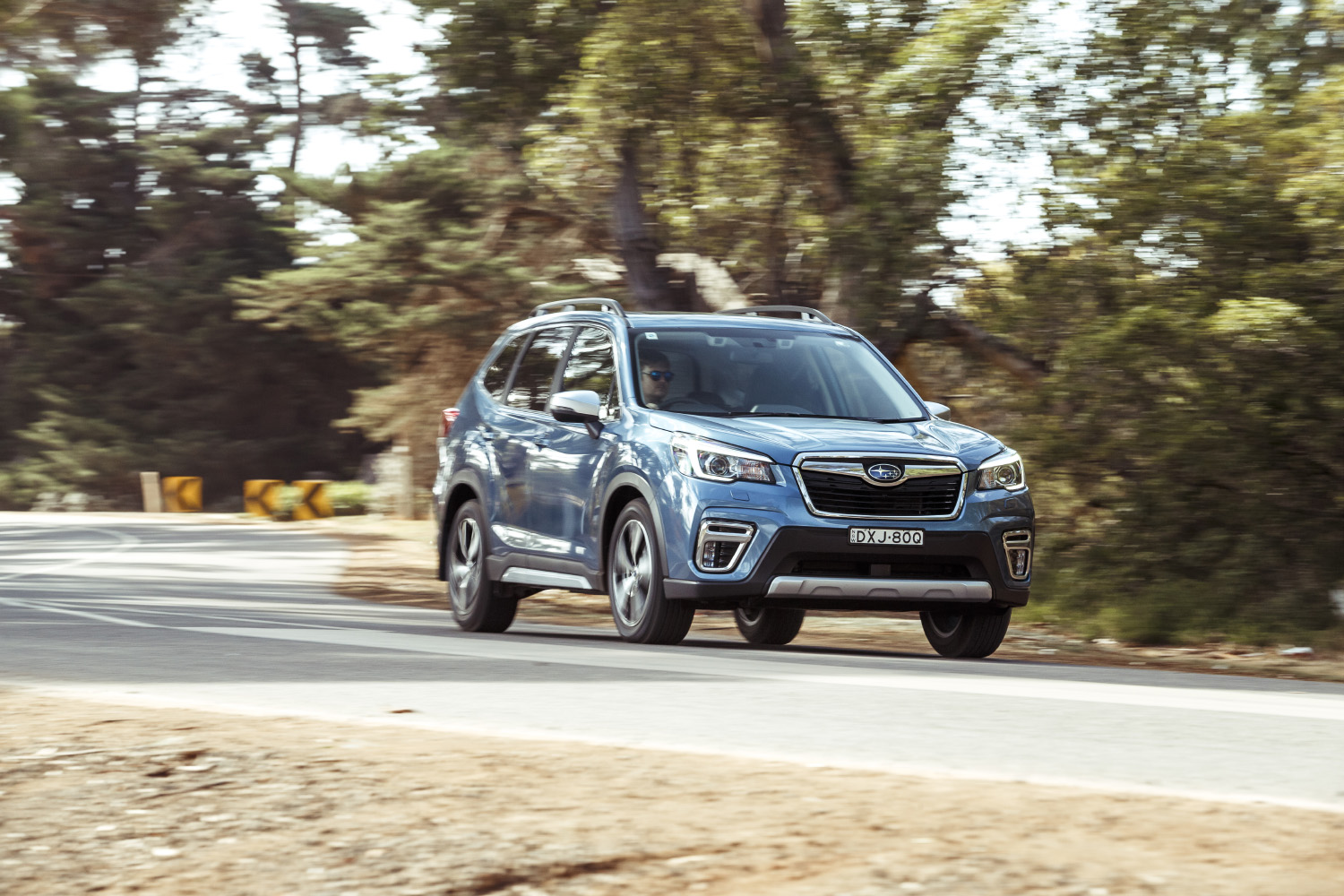
It’s as tough as old boots, about their aesthetic equal and, like a pair of well-worn Blundstones, soon becomes something you grow to love. Yes, we’re talking about the Subaru Forester, a car whose blend of talents has always found a ready reception here in Australia. It’s a favourite here at Wheelstoo and came within a sniff of deposing the Volvo XC40 for this year’s Car of the Year crown. There are a few on the judging team who still can’t quite come to terms with the Subaru failing to claim that particular win. We took the range-topping version of the all-wheel-drive Forester and have gathered the highlights for you right here in a quick and easy breakdown of why we rated it so highly.

We put the Subaru up against its key rivals in a comparison test that you can catch in the June issue. Subscribers and regular readers will be able to read how it did against the evergreen Mazda CX-5, the box-fresh Toyota RAV4, the polished Volkswagen Tiguan and the pin-sharp Hyundai Tucson, but in the meantime, here’s how it squares up against some other rivals. Rivals you’d turn to if you wanted more than a modicum of off-road ability.
What we reckon

Cameron Kirby
Staff Journalist
| The Forester’s has three aces up its sleeve that make it a brilliant everyday car. First is the interior space, while I’ll avoid the overworn Doctor Who cliché, the Subaru’s packaging of the cabin is truly remarkable, with ample space all around. Second is the glasshouse, which allows for excellent exterior vision, and fills the cabin with light. Lastly, is the ride, which is pillow-like in its suppleness. Combined, these make the Forester a truly fuss-free experience to drive. |

Andy Enright
Deputy Editor
| The great thing about the Forester is that, if you’re so inclined, you could buy the absolute base model for $33,490 and you wouldn’t actually feel as if you were missing out on too much. That’s what I’d do. That said, because this 2.5i-S is the flagship model, it does feel pretty well appointed against its key rivals. What really puts it into perspective is that the range-topping Kia Sportage is more than $6k more expensive. The top Mazda CX-5 is more than eight grand pricier. I reckon the Forester is more versatile than both because it offers an element of off-road capability too. It’s a really well-rounded package. |

Byron Mathioudakis
Contributor
| Pleasing details abound in the latest Forester, such as doors that open almost 90º, multitude storage choices, a chime reminding drivers the car stationary car ahead has moved, fast multimedia connectivity, theatre-style rear seating and a low beltline to aid kids’ vision out, unsexy but hard-wearing cabin trim, ‘X-Mode’ AWD system offering greater off-road traction capabilities in every variant, unpainted lower-body plastics to resist gravel-road stone chipping and a handy 220mm ground clearance. |
Specs and compared to rivals
u00a0 | Subaru Forester 2.5i-S | Toyota Fortuner GX | Jeep Cherokee Longitude |
Price | $41,490 | $44,590 | $41,950 |
Engine | 2.5L 4cyl | 2.8L turbo 4cyl | 3.2L 6cyl |
Output | 136kW/239Nm | 130kW/450Nm | 200kW/315Nm |
Transmission | CVT | 6spd AT | 9spd auto |
Fuel | Petrol | Diesel | Petrol |
Efficiency (combined) | 7.4L/100km | 8.6L/100km | 9.7L/100km |
Drivetrain | 4×4 | 4×4 | 4×4 |
ANCAP rating | 5 star | 5 star | 5 star |
Warranty | 5 years/unlimited | 5 years/unlimited | 5 years/100,000km |
Service Interval | 12 months/12,500km | 12 months/10,000km | 12 months/12,000km |
Seats | 5 | 7 | 5 |
Wheel size | 225/55 R18 | 265/65 R17 | 225/60 R17 |
Boot space | 498L | 200L | 570L |
Length | 4625mm | 4795mm | 4624mm |
Width | 1815mm | 1855mm | 1859mm |
Height | 1730mm | 1835mm | 1634mm |
Wheelbase | 2670mm | 2745mm | 2700mm |
Weight | 1617kg | 2110kg | 1834kg |
Towing capacity braked | 1500kg | 2800kg | 2200kg |
Front suspension | A-arms | A-arms | MacPherson strut |
Rear suspension | Multi-link | Multi-link | Multi-link |
Country of origin | Japan | Thailand | USA |
Review
Power and performance
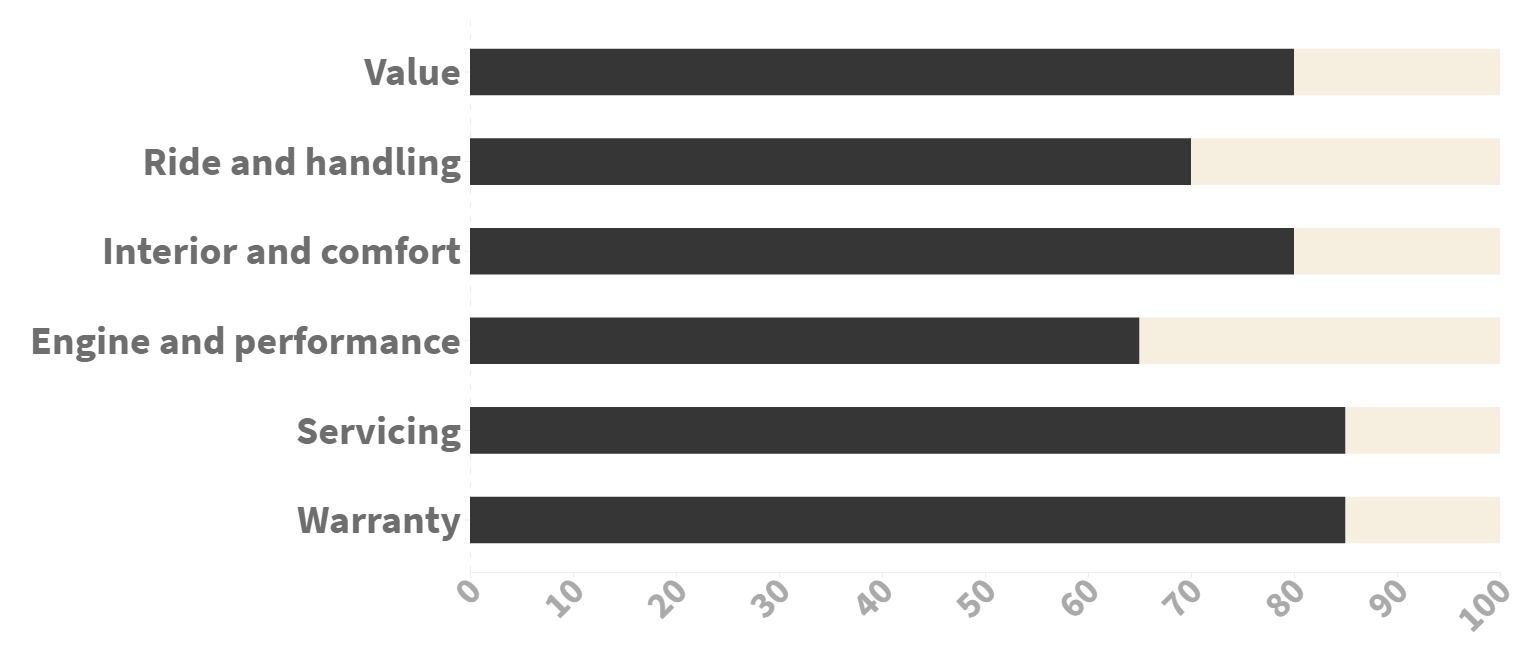
The Forester has a combination of a naturally aspirated engine (i.e no turbo) and a CVT transmission, which together would appear to be the recipe for an extremely dull steer. While it’s no hero at the stoplights Grand Prix, 100km/h appearing in 9.2 seconds in our instrumented test, the transmission calibration is pretty good. It’s certainly a long way removed from the screeching CVT ‘boxes of old.
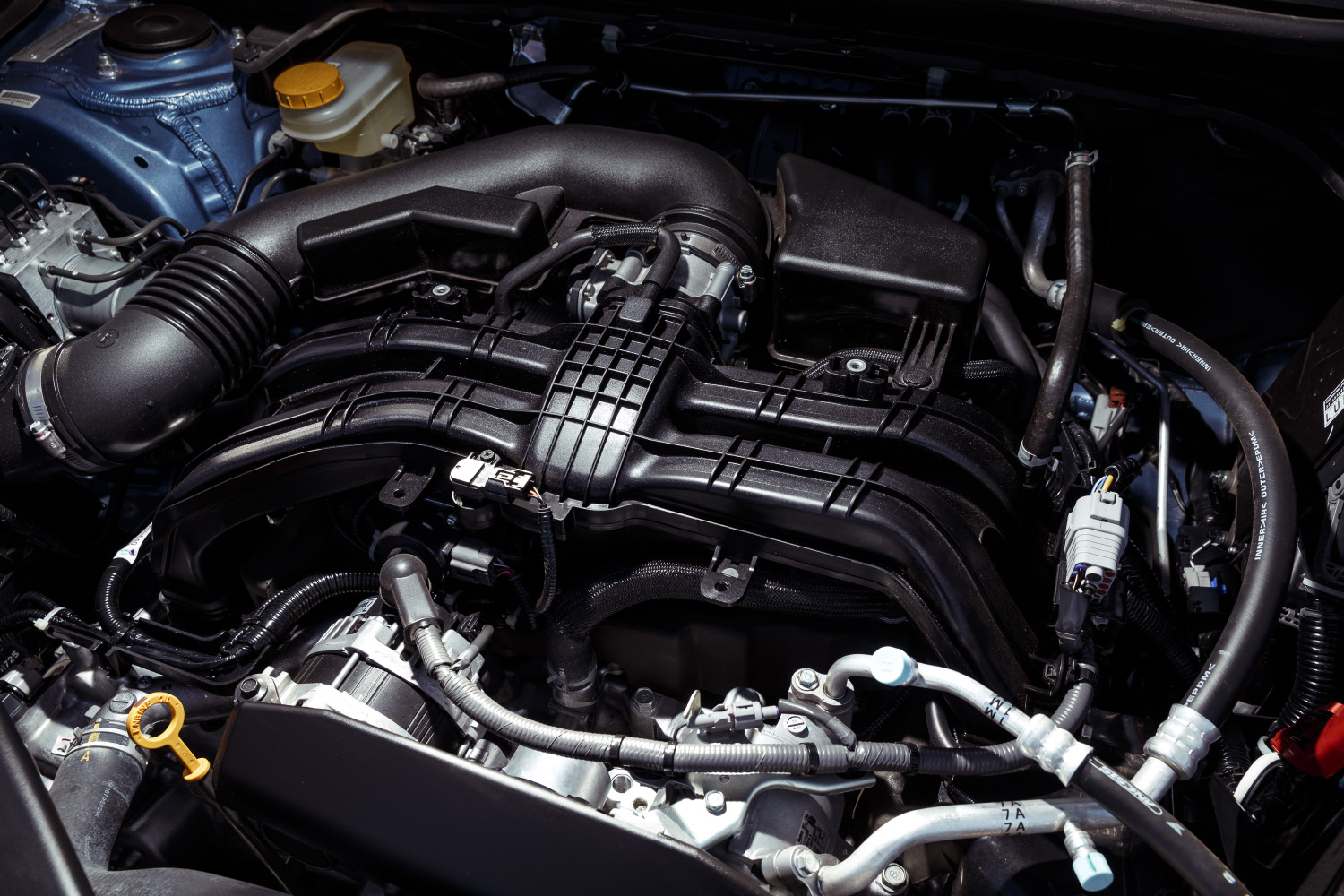
The upside of natural aspiration is that the Forester has beautiful throttle response, really connecting the driver to what’s going on under the bonnet. There’s no CVT drone and the longitudinally-mounted engine only gets loud when extended into the upper reaches of the rev range. Peak torque arrives at 4000rpm, so it does like a bit of toe to get going, but if you’re really worried about refinement, you might prefer to wait for the next generation of Forester ‘e-Boxer’ powerplants. These replace discredited diesel and marry a smaller 2.0-litre petrol engine with an electric motor, powered by a lithium-ion battery pack below the boot floor.
Ride and handling
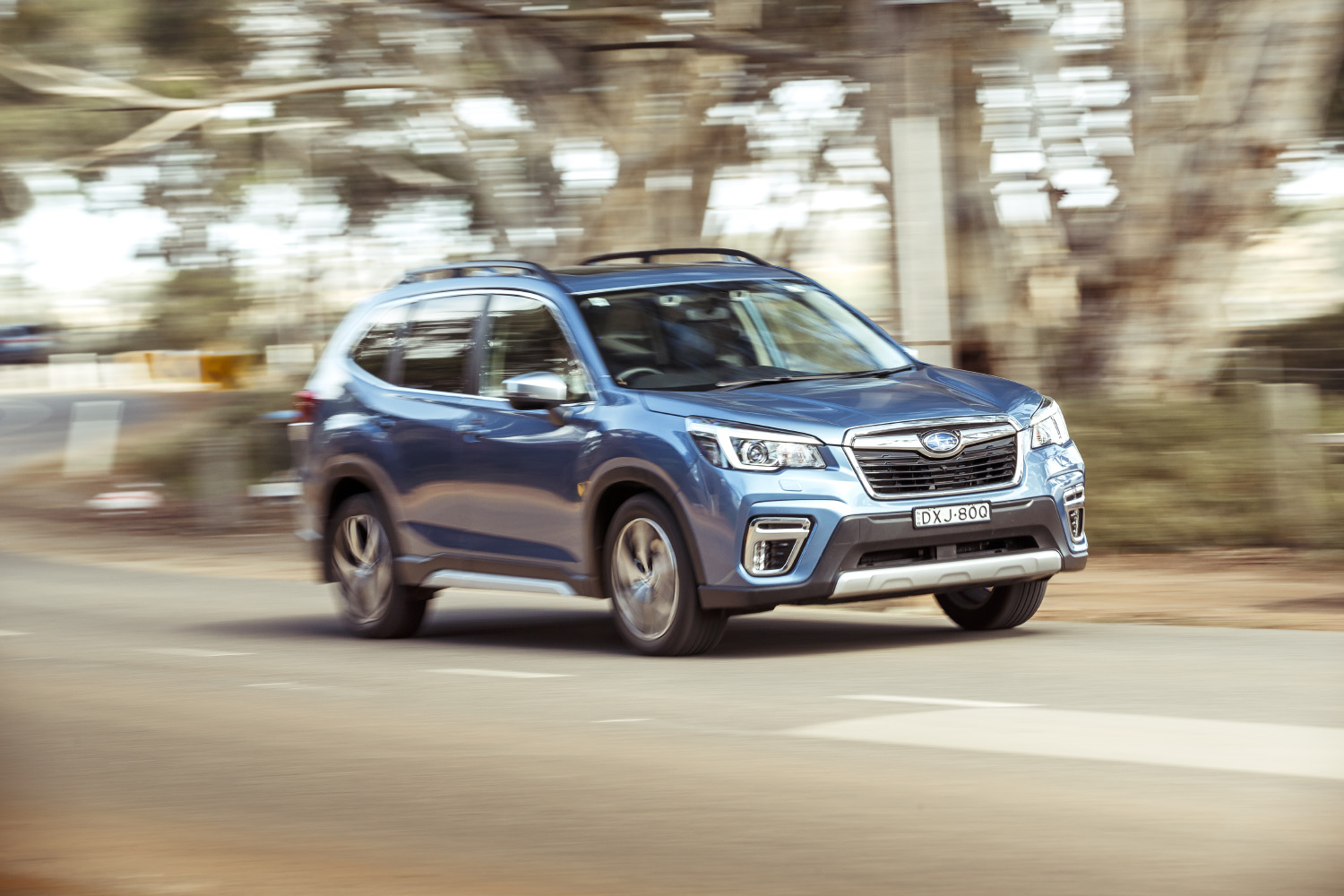
Context is everything here. Compared to the Fortuner and Cherokee in the specs box here, the Forester feels light and alert. Up against more road-oriented crossovers like the Hyundai Tucson or Volkswagen Tiguan, it doesn’t feel quite so adept. The way the dynamics have been finessed will nevertheless offer something to keen drivers. The steering does a good line in both accuracy and response, and the softly-sprung, long-travel suspension allows you to feel your way into a corner and grip hard at both ends in the process. It’s in the wet that the Forester really impresses, however, with huge purchase from the front instilling an enormous amount of confidence. It almost feels impervious to weather conditions.

Body control is well managed and we can’t stress enough the Forester’s fantastic visibility from the driver’s seat. The deep glass offers an excellent all-round view which is not only a safety benefit but also means that you quickly become confident placing the car in corners or when negotiating tight urban gaps. The mirrors are also exemplary; big, clear and with a great field of view.
Ground clearance of 220mm allows you to get a fair way off the beaten track without anything metallic coming into contact with terra firma. The permanent all-wheel-drive system is also a good deal better suited to pulling you out of a sticky spot than most rivals’ front-biased part-time setups. The Forester tyre choice also lends itself to dirt/gravel roads better than road-biased rivals.
Interior and comfort
The cabin feels big and spacious, helped by a high roof arcing overhead and that vast expanse of glazing. There’s a lot going on with the fascia and some of the functions take a bit of getting used to. The digital screen on the dash is shrouded from sun glare by a plastic peak, but taller drivers can easily find some features at the top of the display (such as the clock) obscured by the plastic peak.
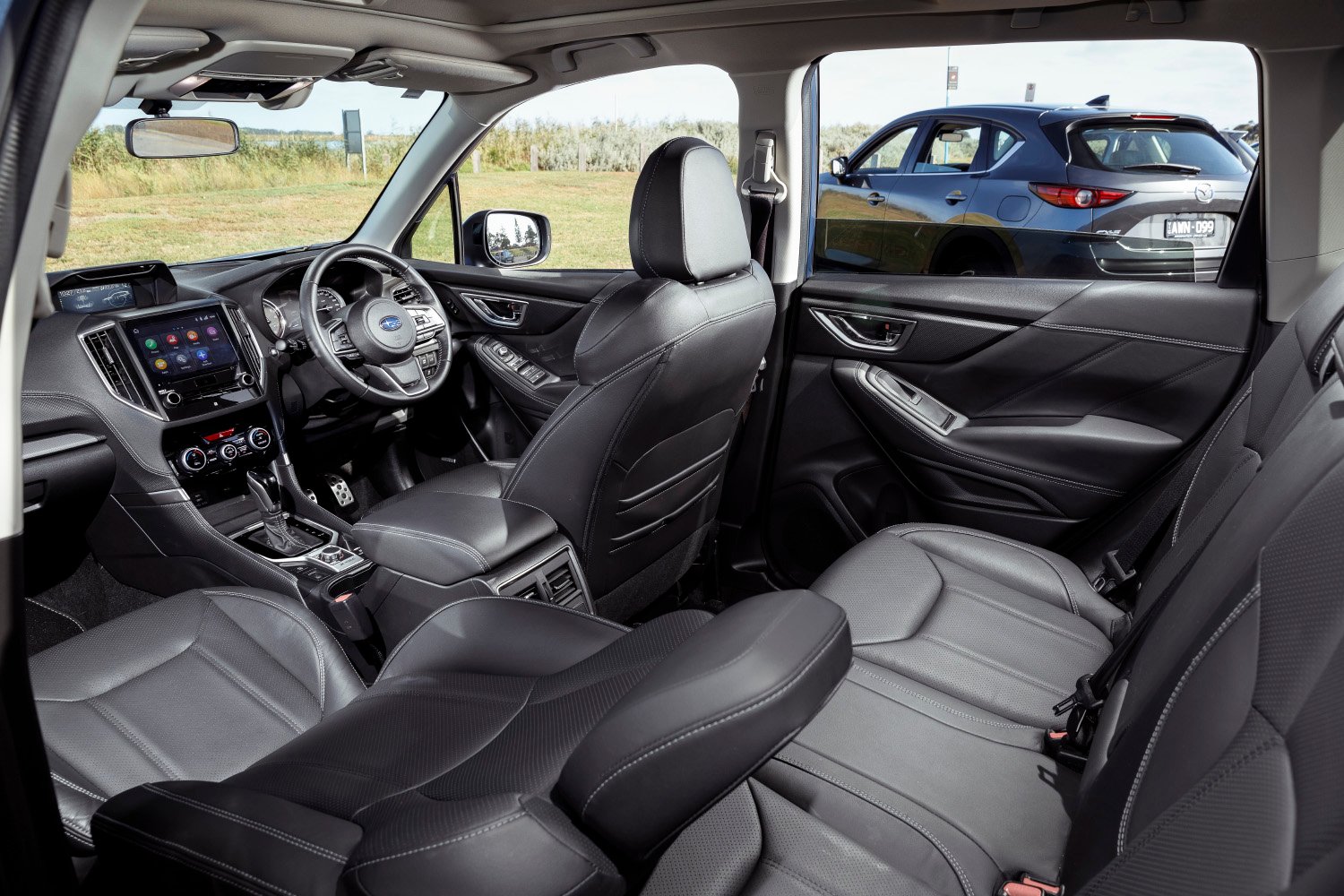
It’s hard to fault the supportive front seats or the extensive amount of oddments space about the cabin. Accommodation in the rear is also very good, despite a slight lack of under-thigh support. The 498-litre boot is a decent size and that doesn’t come at the expense of a full-sized spare wheel either – handy if you catch a flat somewhere out in the boonies.
Every Forester model above the entry-level car also features a Driver Monitoring System. You might think you know these things. They usually flash up a picture of a cup of coffee after you’ve been at the wheel for a couple of hours or, in more advanced guises, if the car thinks you’re driving lazily. The Subaru system is next level. It points a camera at the driver’s face, and its algorithm can figure out if you’ve taken eyes off the road or if you’re about to nod off. It’s spookily effective too.
Scoring
Verdict
Reacquaintance with the Subaru Forester has done nothing to dim our affection for it. We appreciate that its challenging styling, lack of outright grunt and modest towing capacity won’t endear it to everyone, but if you’re looking for that five-seat crossover that can shrug off all manner of ill-treatment and still come back for more, it’s hard to beat.
Were we shopping ourselves, the pick of the range might actually be the entry-level version, realising you a saving of $8000 and bringing it in at less than Chinese offerings like the MG ZS Essence or Haval H6 Lux. That has to be one of the most compelling value propositions in the entire SUV sector. Even the full-fruit 2.5i-S as tested here still looks a solid buy. It certainly acquitted itself well at Car of the Year.

It’s strange to watch a mostly-silent Chevrolet Camaro drift car attack the turns at a Formula Drift event, but spectators are going to have to get used to it.
A battery-powered Camaro has entered the renowned drifting competition under the Napoleon Motorsports banner, a Texas-based team familiar with Chevrolets and not afraid to shake up the status quo in the drift community.
For some, though, the shake-up was a little too much. Though the car (dubbed the EL1, by the way) showed up to the Long Beach round earlier in the year, it wasn’t permitted to compete. The Long Beach Fire Department claimed it was ill-equipped to fight fires from electric cars.
A little over a year ago the department was a little late to save a ‘regular’ car – Federico Sceriffo’s Ferrari 599 drift car – from being engulfed and destroyed.
Speaking of destroyed, that’s about the state the Camaro was in before it became the ‘EL1’. In an interview with Jalopnik, the eponymous owner of Napoleon Motorsports, Joe Napoleon, said the car had been offered to the team after being hit by a train.
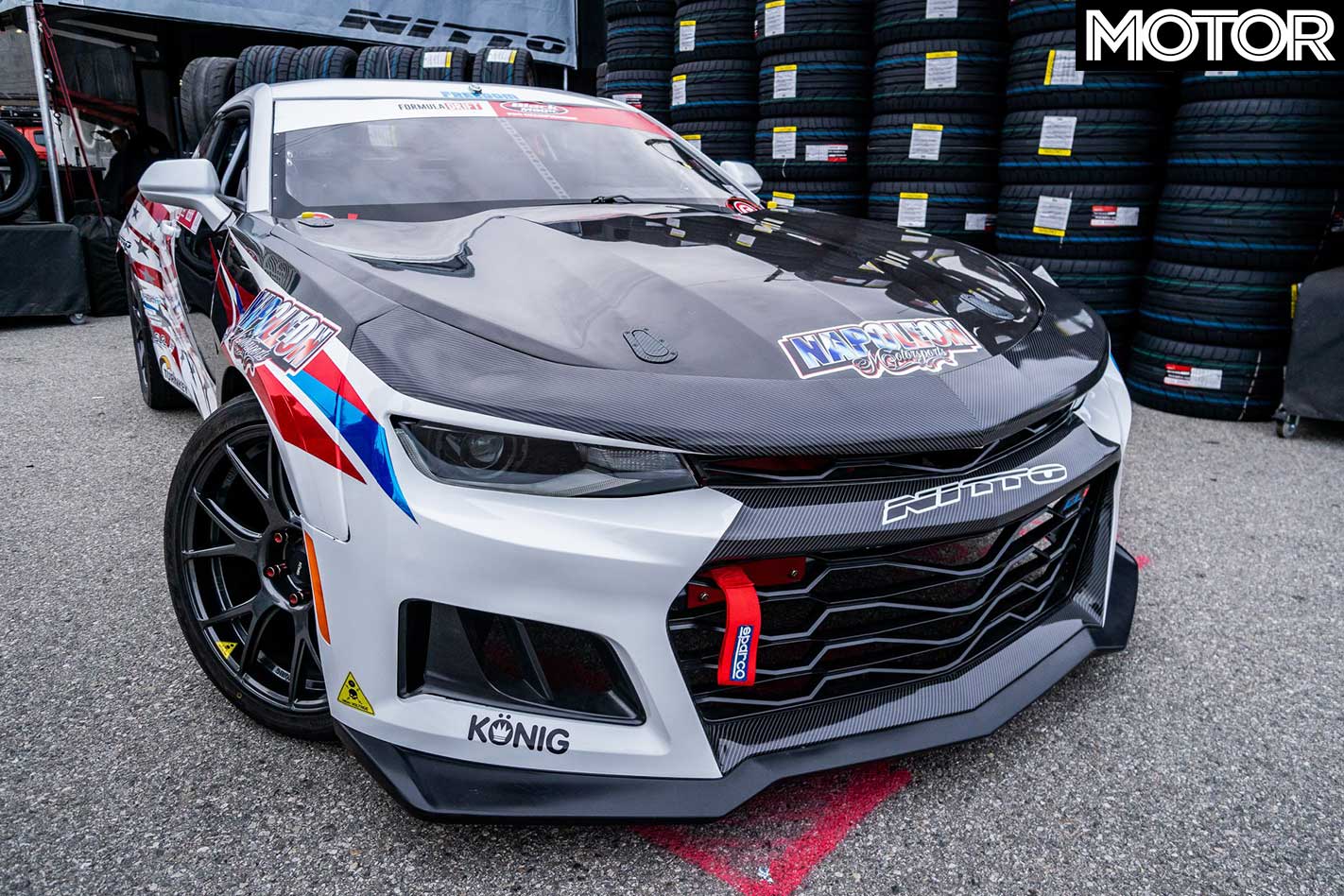
“We went and picked it up, and it was obviously an insurance job,” Napoleon told Jalopnik. “It got hit, and it was a relatively light hit in the right front by a freight train, of all things.”
But after being stripped and rebuilt from around October in 2018 as a fully-electric drifter, the EL1 makes 383kW. Though that’s down on its rivals by a long way, those cars don’t have access to full torque instantly.
They do make better sounds though, so they’ve got that going for them.
We love a hot hatch here at Wheels HQ, and every time the keys to something like the Hyundai i30 N is up for grabs in the office there is a mad rush from the journos to see who can get their grubby mitts on it first.
That’s why we were very pleased to see the specs for Volkswagen’s new fully-electric hatchback, the I.D 3.
Electric?! Hatch?! I can hear the indignant typing of Facebook commenters from here. But let me explain.
According to VW, the I.D 3 will be offered with three battery options initially. First is a 45kWh battery (offering a claimed 329km of range on the WLTP cycle), before stepping up to 58kWh (with 420km of claimed range), and finally a 77kWh unit (and 550km of claimed range).
It’s that last battery, the 77kWh unit, which we are most excited about, as with the right electric motors, it would allow for significant performance.
For comparison, Tesla’s Model 3 is available with a 75kWh battery, which in the Long Range AWD Performance spec has a WLTP-rated range of 530km.
Importantly, the most powerful variant of Tesla’s smallest product produces a combined system output of 353kW (211kW rear, 147kW front), and 639Nm, good for a claimed 0-100km/h sprint of 3.4 seconds.
That is enough power and acceleration to rival a Mercedes-AMG C63 S sedan.
Now imagine that level of performance crammed into a package that is slightly larger than the current seventh-generation Golf.
Tantalising, isn’t it?
And here’s the kicker; Volkswagen board member for sales and marketing Jurgen Stackmann says the MEB skateboard architecture that underpins the I.D 3 could accommodate much larger batteries than is initially available.
Additionally, by virtue of being an electric vehicle, a hypothetical I.D 3 R could be offered in both all-wheel- and rear-wheel-drive spec.
The I.D family already has a motorsport halo in the R prototype which obliterated the outright Pikes Peak Hillclimb record last year, and is currently hunting the Porsche 919 Evo’s Nordschleife benchmark.
If VW turns the heat up on the I.D 3 and creates an R variant, it’ll be something worthy of the badge.
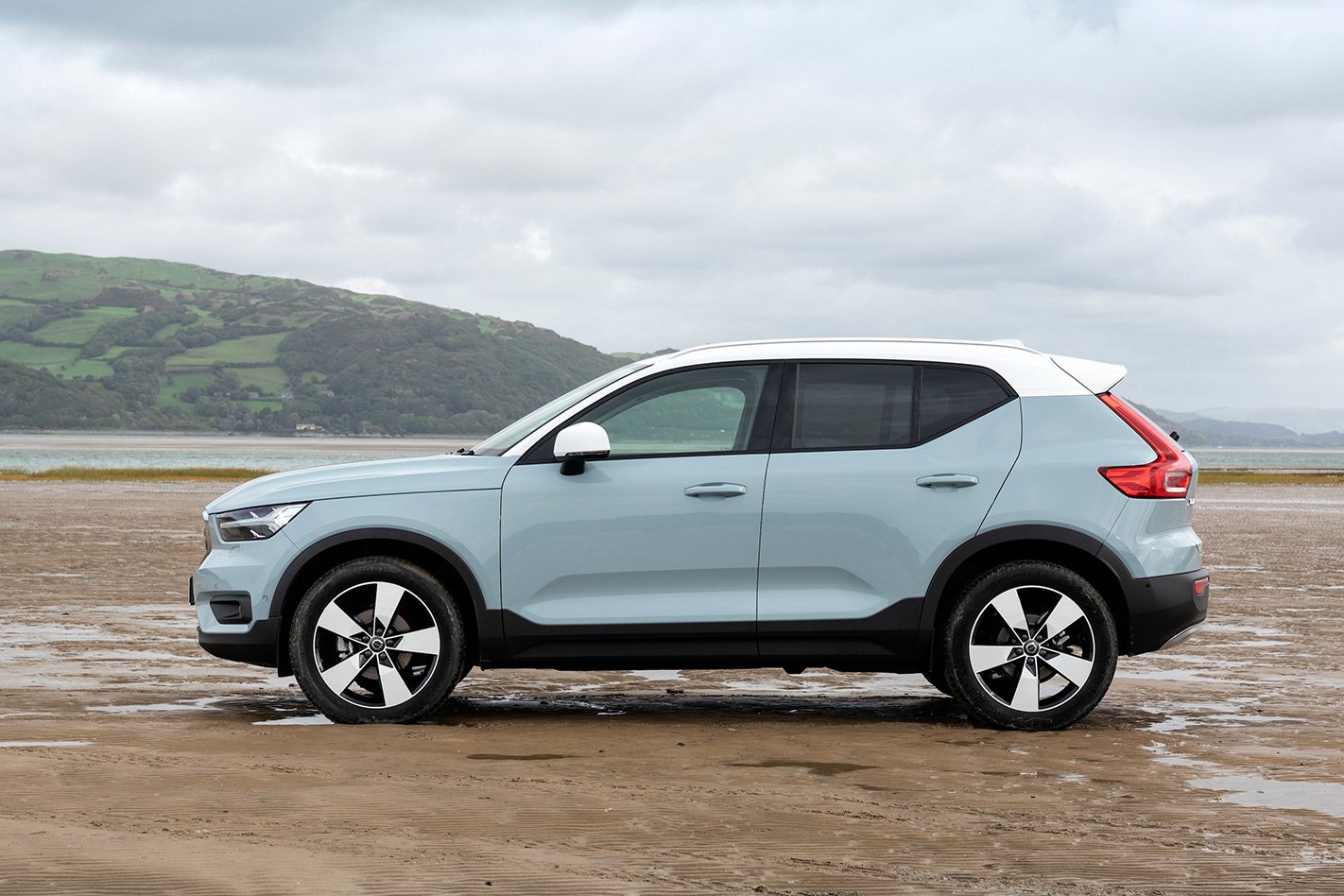
Volvo is adding another three-cylinder variant to its popular XC40 range to supplement the new T3, along with plug-in and mild hybrid variants.
Reducing power from the 115kW/265Nm 1.5-litre petrol turbo engine found in the T3, the T2, which has not yet been officially announced, will be a cut-price entrant to Volvo’s compact crossover range.
Speaking with Wheels at an event in Sweden last week, Volvo vice president of product and launch, Anders H. Gustavsson, said that the engine would arrive at a sub-€30,000 (A$48,300) price-point.
“The T3 manual and automatic launched in Europe three weeks ago, but here we expand also to T2 front-wheel-drive.” he said. “Yes, it is the same engine [1.5-litre turbo]. [The difference] is software, it has a different torque curve.”
“You will have a price range of say, starting on an XC40, from €28,000 (A$45,000) – a lot of the volume is happening in the C segment around here.”
Gustavsson added that there would be B5, B4, B3 and B2 mild hybrid variants of the XC40, following the same nomenclature as that for the announced XC90 hybrid series. Gustavsson added that such models would hit production early 2020, but later said it was “not decided yet.”

“Because the majority of what you see now on the streets and also for this model year is that they will not be mild hybrids, they will next year be converted into mild hybrids, and then there will be, you know, the B5, B4, B3 and B2… and twin-engines you will have T5 and T4.”
Though an aggressive strategy to electrify every model, it is on point with Volvo’s electrification target. Asked if the mild hybrids will be using Volvo’s 48-volt system, Gustavsson said a decision had not yet been made.
“Not decided yet I would say, because this is also a complication. The final call is not made for that one. If you look for the XC40s we’ll start to roll out at that date and it will be ready by something like [late-2019] and we get a three-cylinder, a very interesting three – you have the T3 of course and the T2. But what you also have is the T5 twin-engine and it is also three-cylinder basis.
“Right now we are evaluating that engine, the T2 and T5 [twin-engine] that goes out now if we don’t do any changes in the cycle plan – it will actually be going out in [June 2019].
“But yes, that is the intention that the [T3] should be converted into a mild hybrid.”
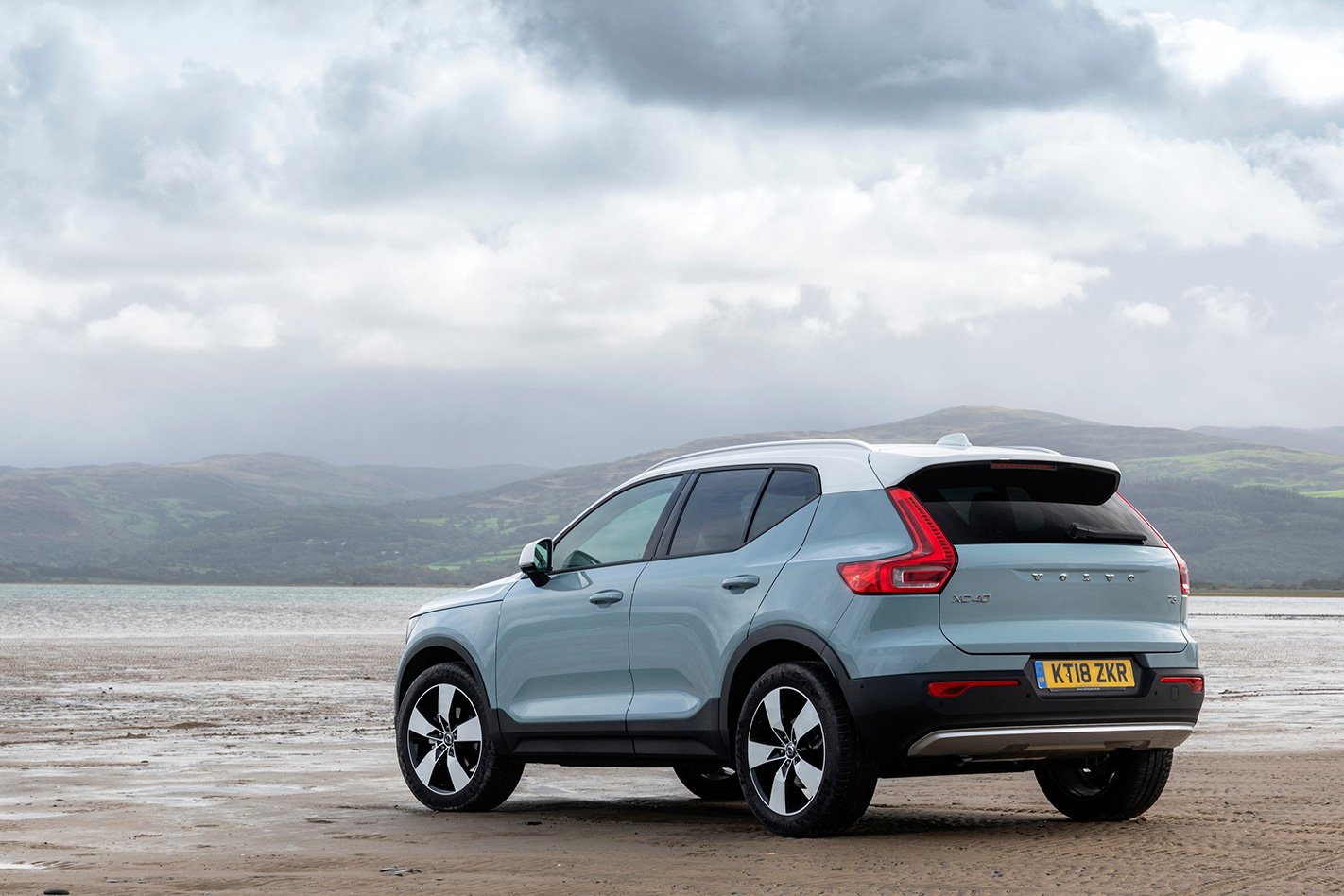
Volvo’s local managing director, Nick Connor, confirmed that the T3 is coming to Australia once an automatic version is available to our market (it is available in Europe with manual and auto) and likely as a replacement for the T4, but realistically won’t arrive here until next year.
“It gives us a lower price point and I think it’s a very fun little car. If you had a T3 would you have a T4 as well? I don’t know, it’s a debate but you’d definitely keep the T5. But I love the T3, we’ll definitely bring it in.
“It’s not going to be this year just because i don’t think we can get it this year. I guess it will probably be towards the back-end of next year.
“Would it be under 40 grand? That’d be a bit tight, but we could look at some of the spec and be pretty aggressive in the marketplace. Our growth is to bring people up from non-premium brands.”
