
See the video above for an explanation on how to choose a new set of tyres
Noelle saddles up the Jaguar I-Pace to see if its purported 400km-plus pure electric range is a realistic real-world figure. Is it enough to put an end to so-called range anxiety, or a fantasy that leaves her stranded on the side of the road.
Later, Dan gets behind the wheel of the muscular Hyundai i30 N to see if this hot-hatch newcomer is Golf R power for Golf GTI money and the high-performance car bargain of the decade.
In the ultimate test of strength and value, Dan then pitches the hottest Hyundai to date against not one, but eight of its closest rivals in an affordable performance car shoot out like nothing else.
Does the venerable Golf GTI reign supreme, can Honda’s incredibly sharp Civic Type R steal the show or perhaps a wildcard will come out of the blue?
On-air: Channel Ten, Apr 7 (AU) / Apr 14 (NZ)
Catch-up: Watch at tenplay.com.au (AU) or primetv.co.nz (NZ)
- All-new Ford Escape here in 2020
- First ever Ford hybrid for Australia confirmed
- Digital dashboards, wifi hotspots and smartphone keys will be offered
The mid-sized five-seat Ford Escape will be bigger and stronger than the current car, but will also manage to be lighter to the tune of up to 90kg. This is thanks to the Escape’s new modular underpinnings, which are shared with cars like the Ford Focus.
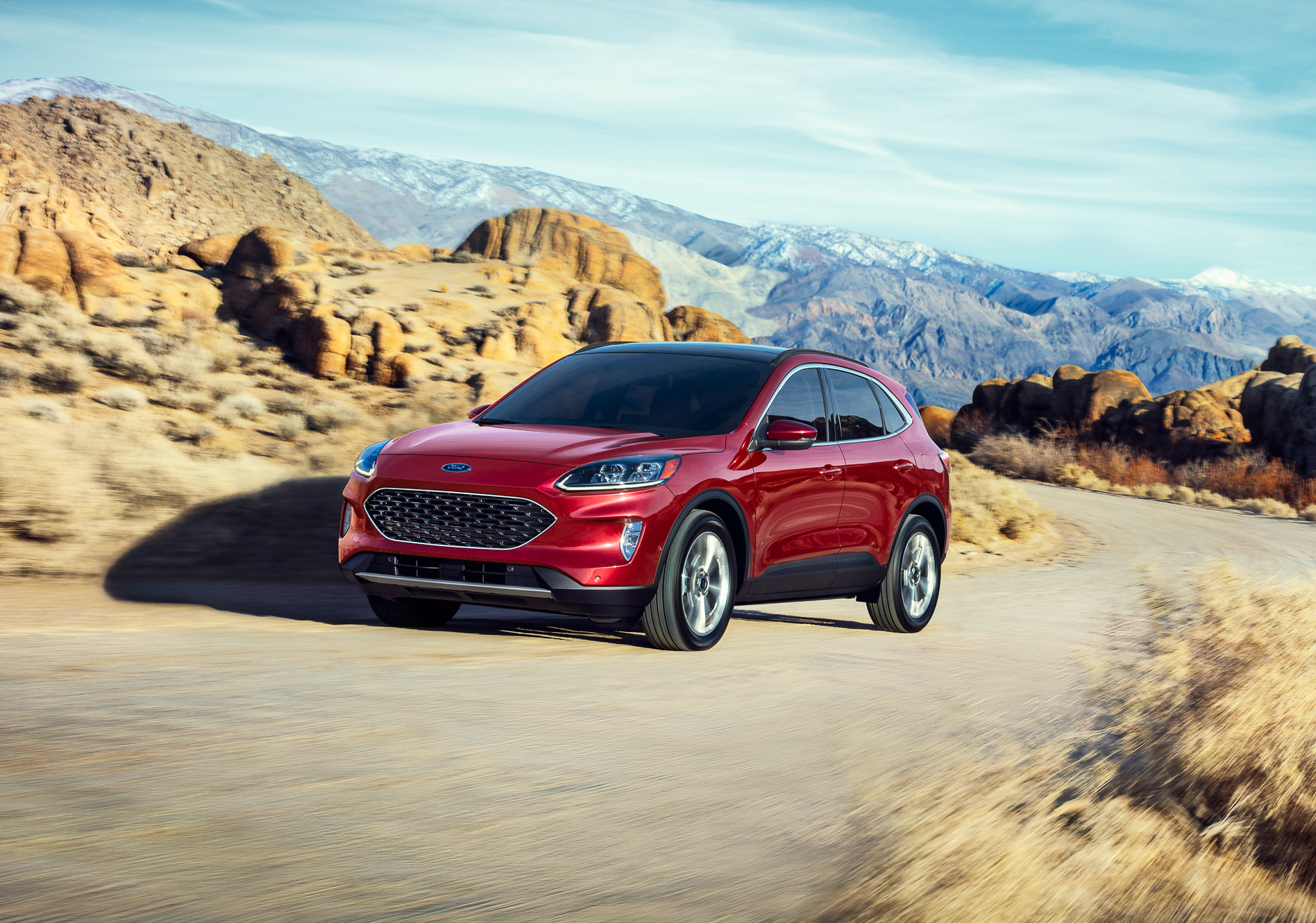
Design-wise, Ford says it’s taken inspiration from cars like the Mustang and the GT for the Escape’s front-end makeover, while its extra size – at 4613mm long and 1882mm wide, it’s 89mm longer than the current car, 44mm wider and has an extra 20mm in the wheelbase – gives it more presence in a sector whose occupants are all increasing in size.
To compare like with like, the new 2019 Toyota RAV4 is 4595mm long, while the current Mazda CX-5 is 4550mm long.
Inside, Ford says that translates to 43mm more shoulder room and 57mm more hip room in the front seats, and 20mm more shoulder room and 36mm more hip room for rear seaters. And even though it rides 20mm lower, the Escape also offers 13mm more headroom for front seat occupants and 35mm additional space in the rear.
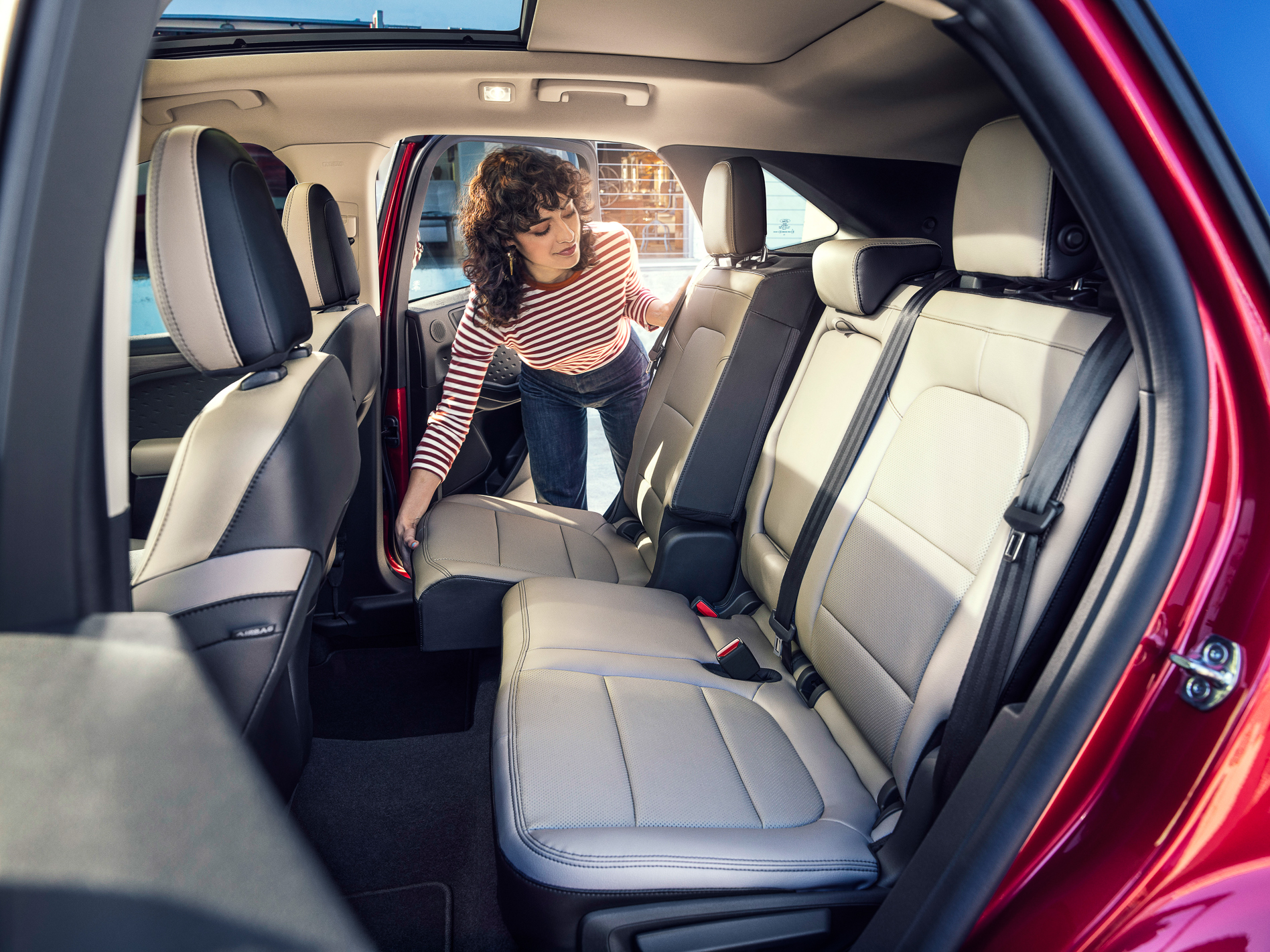
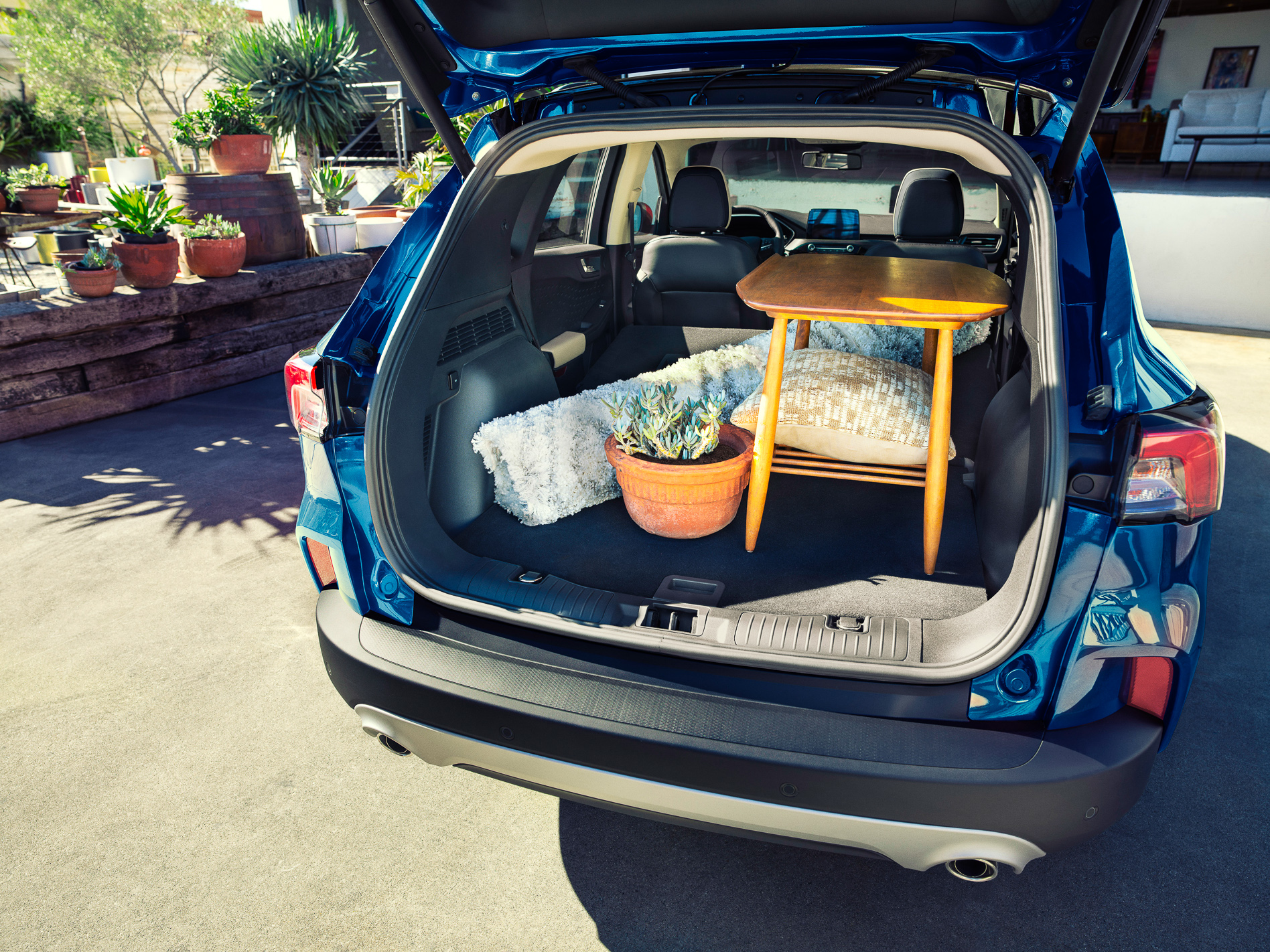
In addition, the second row of seats is mounted on rails to allow more adjustment depending on the load you’re carrying. Ford’s US office says the rear cargo space can carry about 1060 litres of cargo with the seats up – and, we assume, crammed up against the front seats.
The Escape – which was revealed overnight in the US – also marks the first time that Ford has offered a plug-in hybrid for Australia. Available from launch, according to the company, will be a 2.5-litre four-cylinder petrol engine version that combines with a small electric motor, a CVT gearbox and a 14.4kWh lithium-ion battery pack to produce a claimed 165kW.
The mild hybrid system uses a fuel-saving Atkinson-cycle engine – similar to the Toyota Prius – in conjunction with a small electric motor working to fill in the gaps in the performance curve left by the petrol engine.
Ford says the Escape hybrid can travel around 50km in full EV mode, and at speeds of up to 136km/h – though the small battery means that range will deplete pretty quickly if you run at highway speeds. The liquid-cooled battery array is stashed under the second row seats, preserving cabin space.
While Ford Australia hasn’t confirmed any other variants, the Escape will also come with the same 134kW 1.5-litre three-cylinder turbocharged engine as the Focus, while the US will get a 186kW 2.0-litre turbocharged four-cylinder engine as well.
Tech-wise, the Escape will be offered with stuff like heads-up displays for top-end Titanium models, while new driver aids include second-generation park assist, steer assist avoidance and adaptive cruise with stop/go and lane centring.
US variants will be also offered with an onboard wifi hotspot with the capability to connect ten devices, while a smartphone can also be used to lock and unlock the car, as well as pre-start it and check things like fuel level.
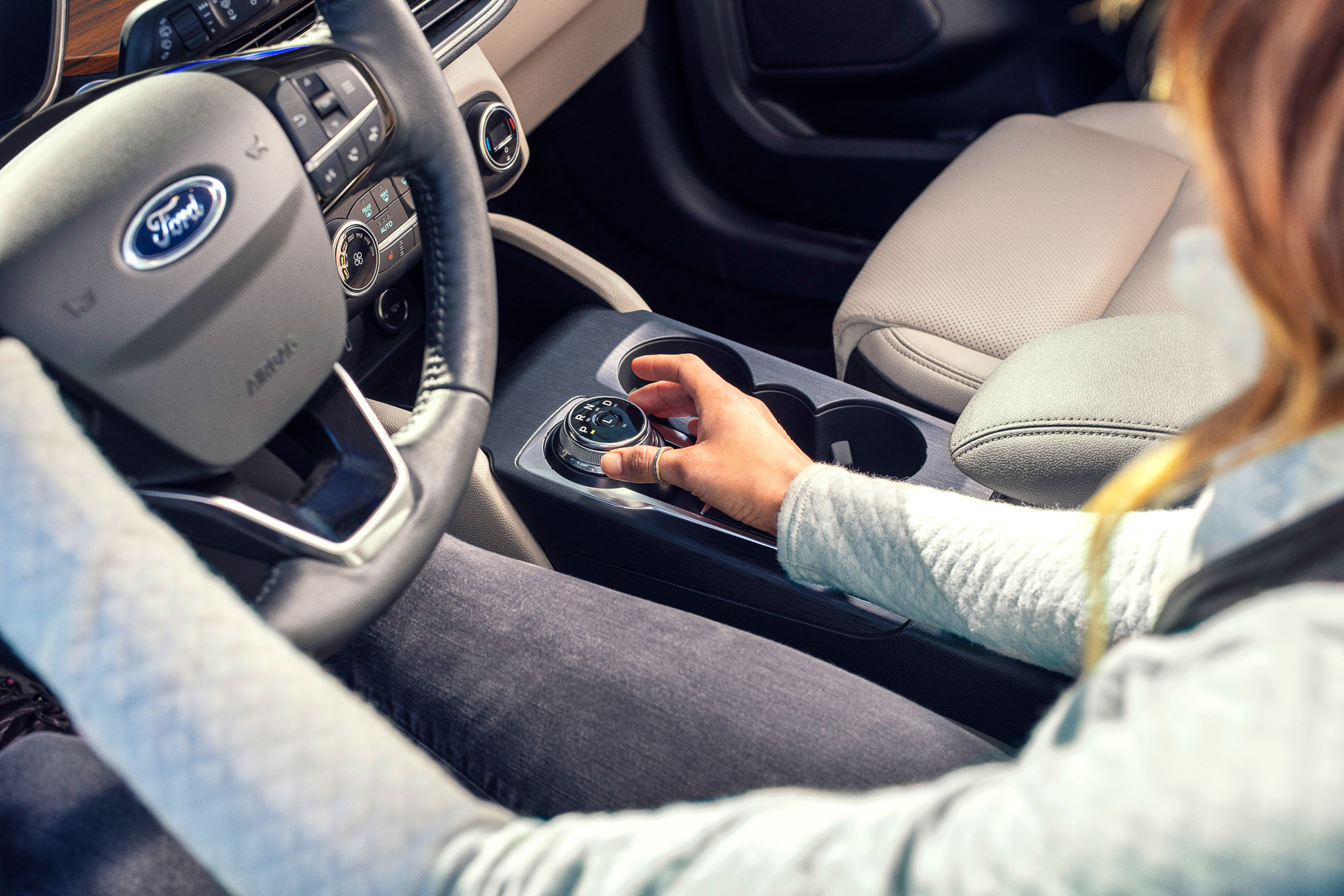
Digital dashboards, rotary dial shifters and hands-free tailgate openers also figure in the US spec sheets.
We reached out to the Australian office, who told us that all good things come to those that wait in terms of further specs. They did tell us our Escapes will be sourced from their factory in Spain, though.
“We’re proud to bring the first of our global electrified vehicles to Australian customers in the stylish and capable all-new Escape,” said Ford Australia and New Zealand President and CEO, Kay Hart, in a statement.
“Australians continue to embrace SUVs, which is why we are introducing our first plug-in hybrid powertrain with this vehicle.”
Preparation is the key to a relaxing and hassle-free overseas trip but there’s one item often omitted from even the most comprehensive travel check list – an International Driving Permit.
If you’re planning on getting behind the wheel abroad, an IDP is often a legal requirement – and even if it isn’t strictly required, it can give you some added peace of mind.
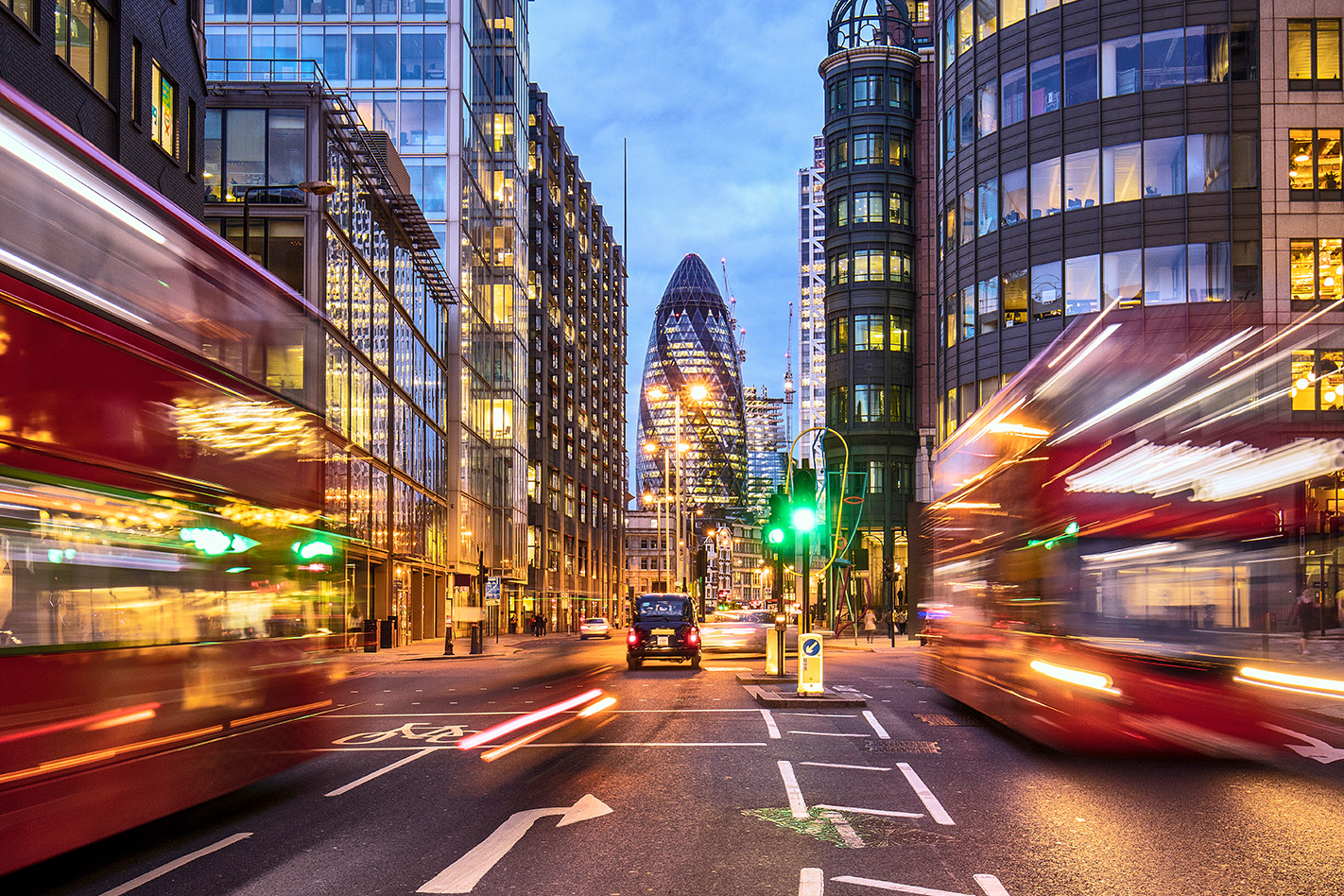
Not to be confused with an international driver’s licence, the IDP is an official document designed to accompany your current valid Australian licence with a translation in nine different languages. Present it with your Aussie licence and almost everyone should understand what they are looking at.
The IDP easily confirms that you are authorised to be on the road, and many car hire companies also require to physically sight your permit before handing over the keys to a car.
In Australia, only the Australian Automobile Association is authorised to issue IDPs, via the various state and territory motoring clubs. To find out if you need one for your next overseas trip, head to the AAA website and enter the country you intend to drive in.
If you do need an IDP, the application process is simple.
Applying online – also through the AAA or the various state-specific motoring club sites like the RACV, NRMA etc. – will require three to eight business days for your IDP to be processed and delivered, for $39 plus postage.
If you’re in more of a hurry and don’t mind doing a little leg work, you can visit one of the motoring club stores located in shopping centres around the country, where the permit can be arranged and finalised on the spot.
Before heading in, make sure you have a recent passport photo of yourself and your current diving licence on you. It’ll expedite the process greatly, and ensure you’ll leave the store with a freshly-minted IDP in your pocket. Make sure your Australian driver’s licence will be valid for the time period that you intend to be overseas too – your IDP is only valid as long as your actual licence is valid.
In addition to being a widely recognised driving permit, the IDP is also a handy identification document should you need it. No one wants to consider the possibility of misplacing your passport but the IDP can provide a useful back up if the unexpected happens.
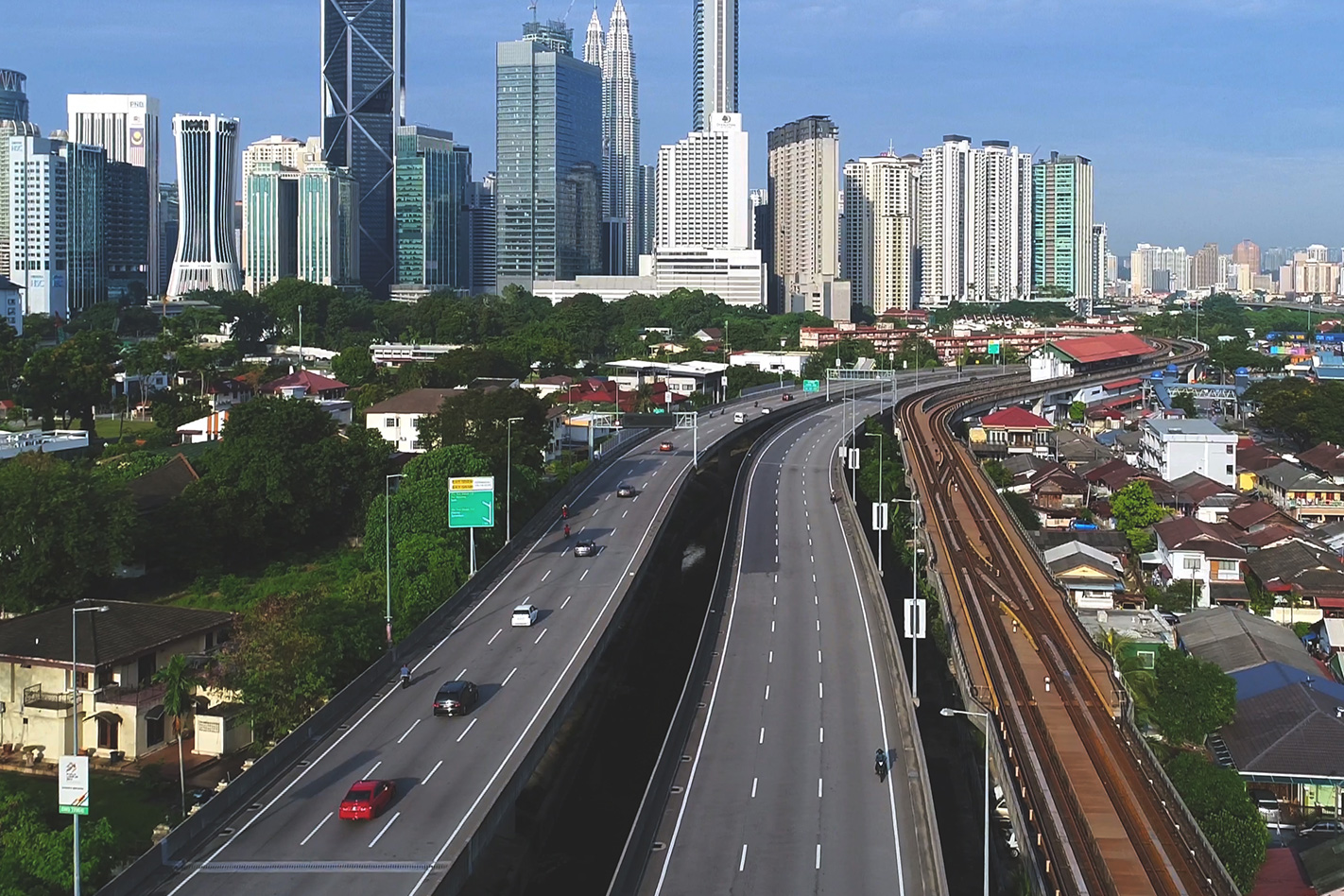
If you are planning a driving holiday or need to use a vehicle when working overseas, preparation is key. As well as arranging all the important documents, make sure you take time to familiarise yourself with any significant differences to Australian motoring that you might encounter.
As well as the basics such as which side of the road you must stick to, research the difficulties others have encountered. If you’re heading to the United States, it’s a good idea to brush up on stop signs and intersections – particularly their ability to turn right even if the light is red.
It’s certainly worth noting that Japan has a zero blood alcohol tolerance for driving and, if you’re in Germany, the locals will be seriously unimpressed if you don’t keep right on the famous unlimited speed Autobahn network. Americans and Europeans in general take a dim view of fast-lane hogs, so avoid tense moments by keeping to the slow lane unless overtaking.
If you’re not sure whether you need an IDP it’s better to get one to be on the safe side. That way you’ll be able to get on with enjoying the adventure of driving in a different country. They last for a full 12 months from their issue date as well, so if you’re a frequent traveller – whether for business or pleasure – they’re certainly a handy thing to have in your luggage.
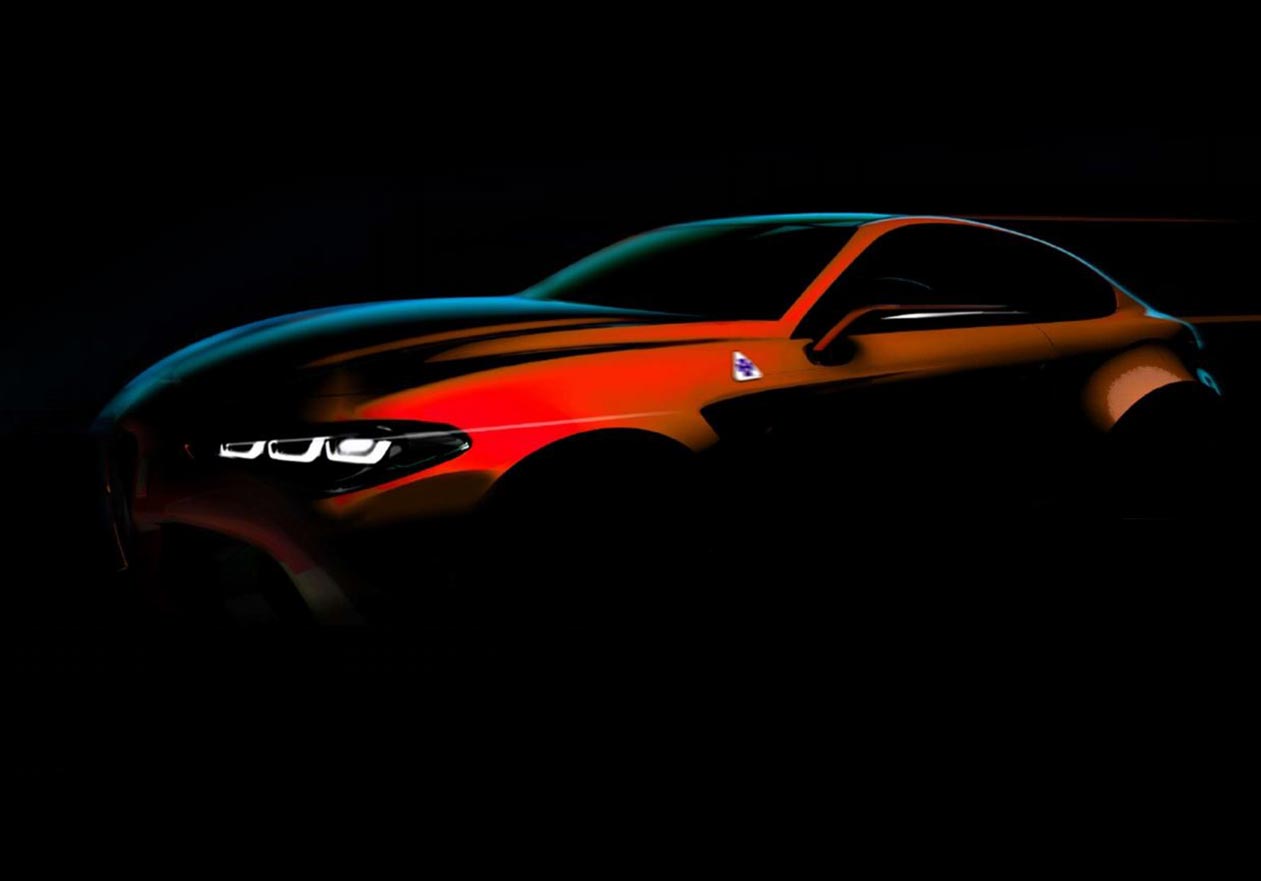
A leaked image of what is almost certainly the 2022 Alfa Romeo GTV has been circling the web after being picked up by an Italian Alfa site.
ClubAlfasays it first found the image on a ‘well-known Facebook page’, though we found no record of the image existing on the social media platform before the story published.
As per the Fiat Chrysler Automotive business update in June last year, Alfa Romeo intends to add a couple of new models to its range over the next few years.
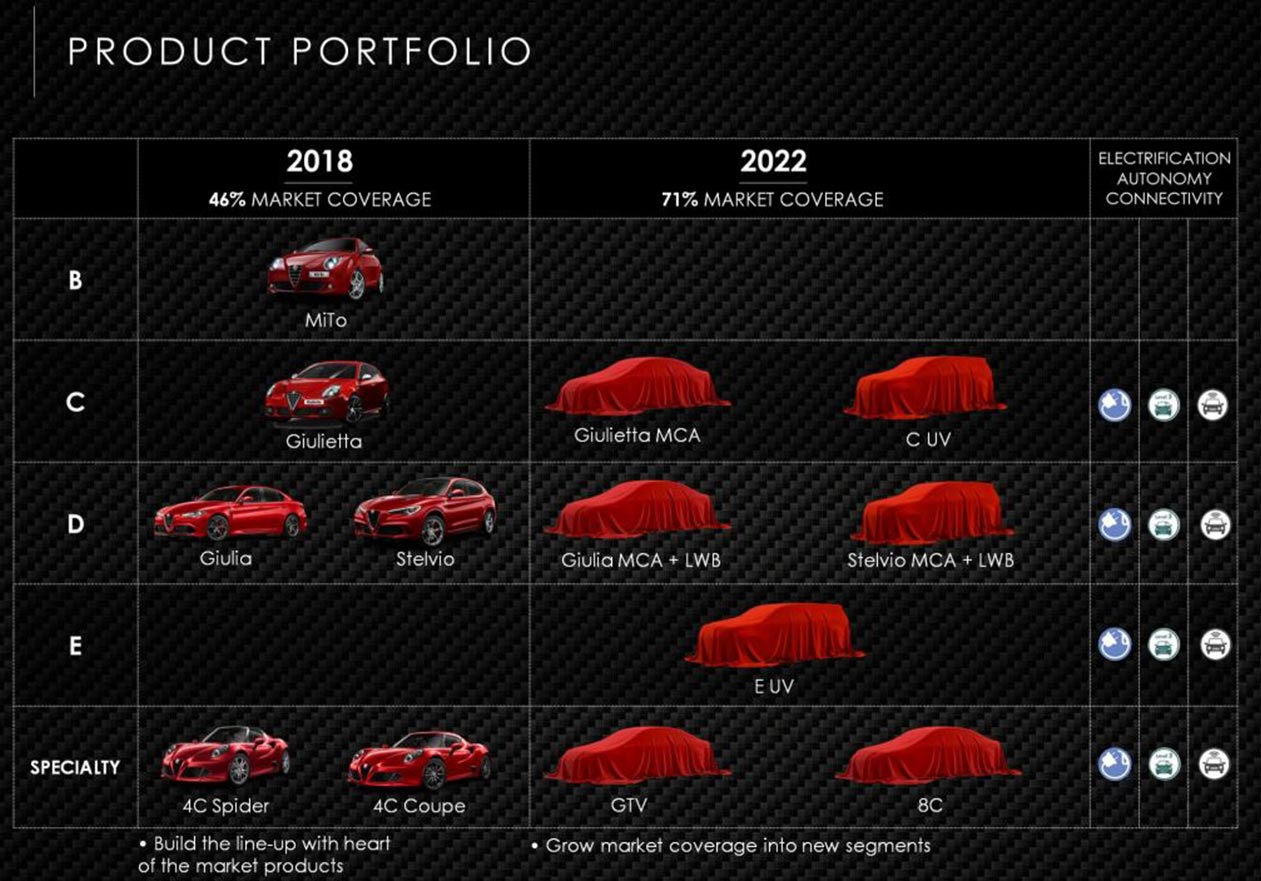
One such model is the Alfa Romeo GTV, essentially a two-door Giulia given it’s likely to be based on the same platform.
However, with a reported expectation of 450kW and a hybrid system alongside its twin-turbo V6, it’s set to outperform its sedan sibling’s current iteration.
Despite Alfa’s historical rear-drive tendency for its higher powered sports cars, the GTV will be an all-wheel drive model with torque vectoring, according to the presentation given by the brand at its last major update in June last year.
As Alfa Romeo says it intends to do with all its upcoming models, the GTV should boast 50:50 weight distribution, as well as having seats for four people.
With the GTV replacing the 4C in its ‘specialty’ segment (as FCA classes it) in a FR layout, the Alfa Romeo 8C is to fill the mid-engine hole that will be left by the 4C.
More than 500kW and a 0-100km/h time in under three seconds is the expectation for the 8C according to FCA, but details of that car are still scarce.
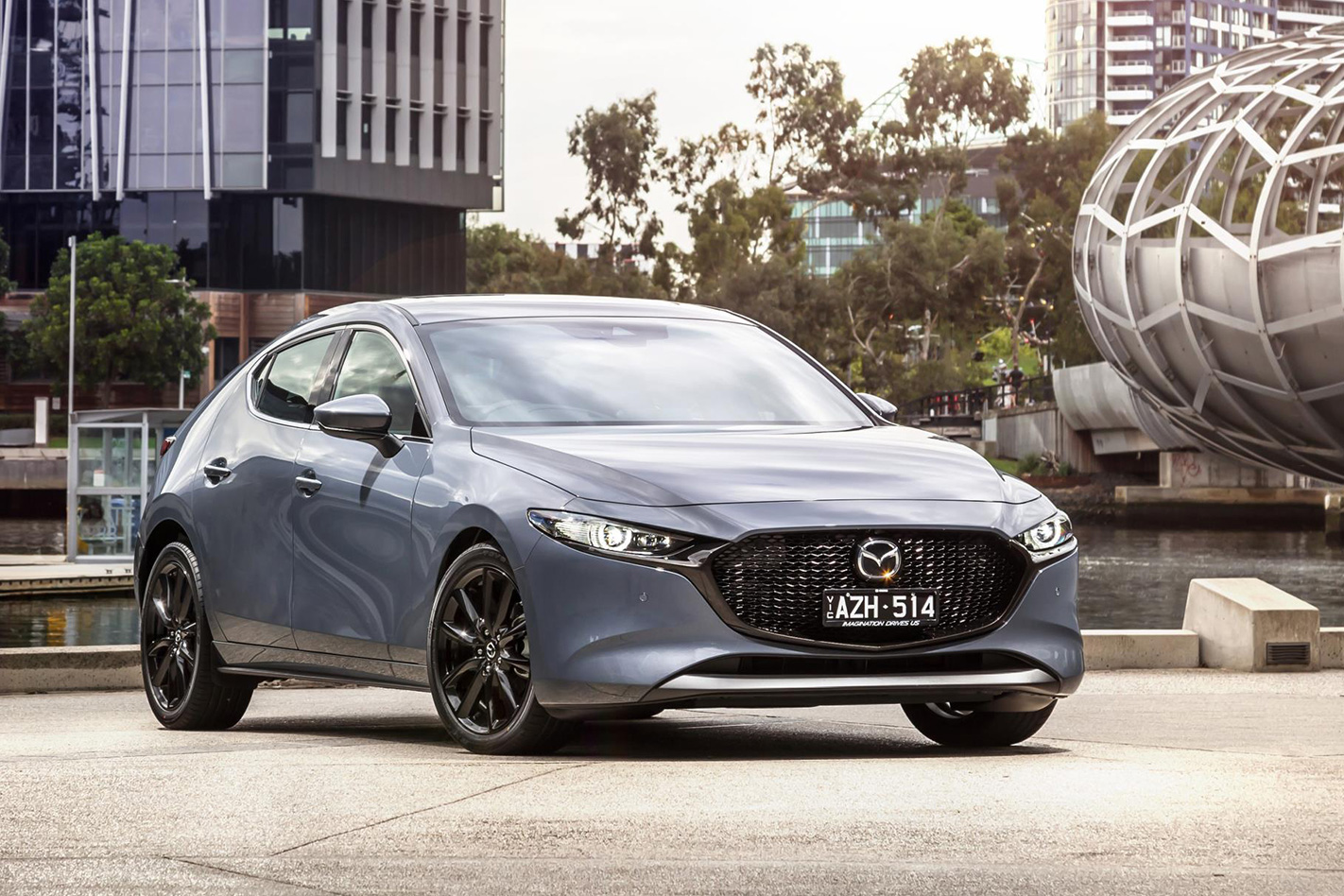
The Australian introduction of the new Mazda 3 is fast approaching, and Mazda has high hopes that this next-generation car will retake its position as one of Australia’s most popular vehicles. Here’s everything we can tell you before our first drive on local roads.
It’s more expensive
With a higher base price than before and an ever-growing collective of competition, its success might not be as easy as it was in the past.
Bringing radically-evolved Kodo design language in both hatch and sedan forms, the hatchback’s imminent Q2 launch is upon us while the sedan body style won’t arrive until later this year. Price parity of the two body styles will ensure both are priced equally, but an increase of $3500 on the entry model will have some customers scratching their heads.
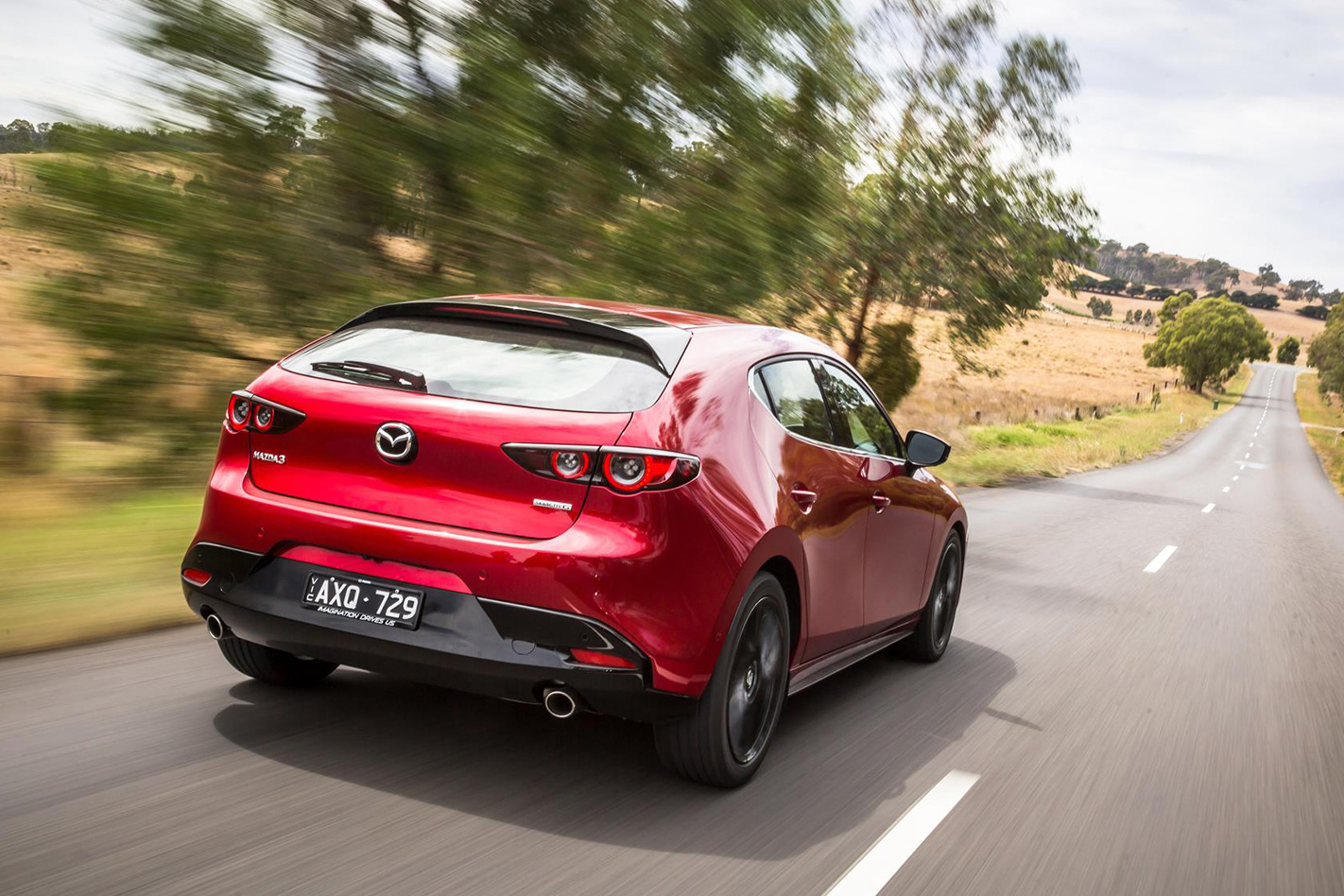
However, Mazda justifies that the price increase is fairly reflected by having more equipment as standard. With the inclusion of features like intelligent speed assistance, blind-spot monitoring, traffic sign recognition, lane-keep assist, lane departure warning, driver attention alert and radar cruise control all rolled into every Mazda 3 variant, buyers receive leading safety tech for a little extra money.
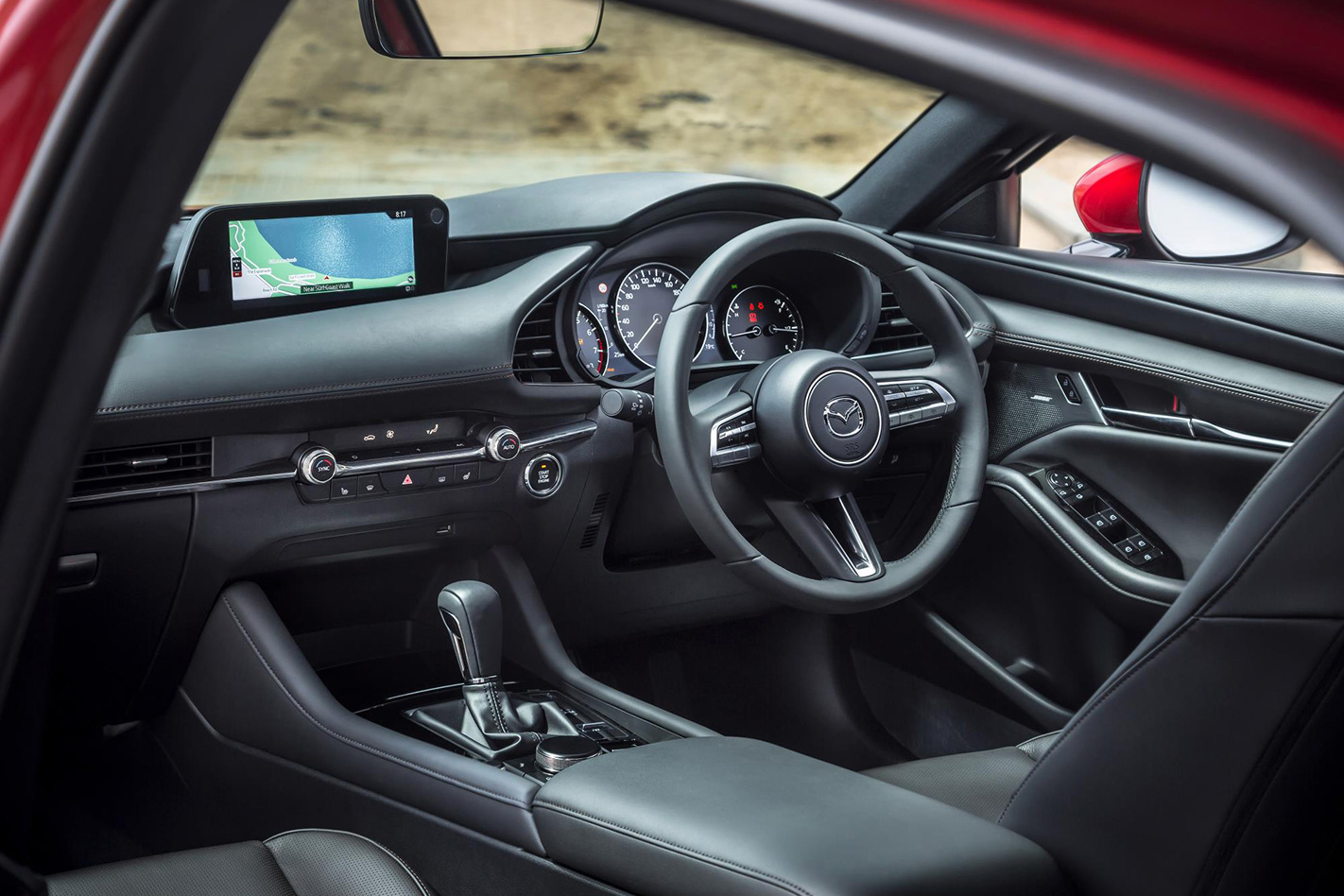
All cars will also receive a widescreen LCD infotainment system, head up display, keyless start, Apple Carplay and Android Auto, automatic LED headlights, reverse camera and tyre pressure monitoring as standard.
It’s the Mazda 3, but not as we know it
Something that might catch people unaware is the new naming convention. Variants will now be preceded by the ‘G’ prefix, meaning ‘G20’ for 2.0-litre engine (114kW/200Nm) and ‘G25’ for 2.5-litre engine (139kW and 252Nm). Both come with a manual transmission as standard with the option to move up to automatic for $1000.
Further to that, new Pure, Evolve, Touring, GT and Astina model grades are on offer with varying levels of equipment, representing a further departure to previous model designations. Only the Evolve will offer both G20 and G25 engines.
Wheels has driven it already
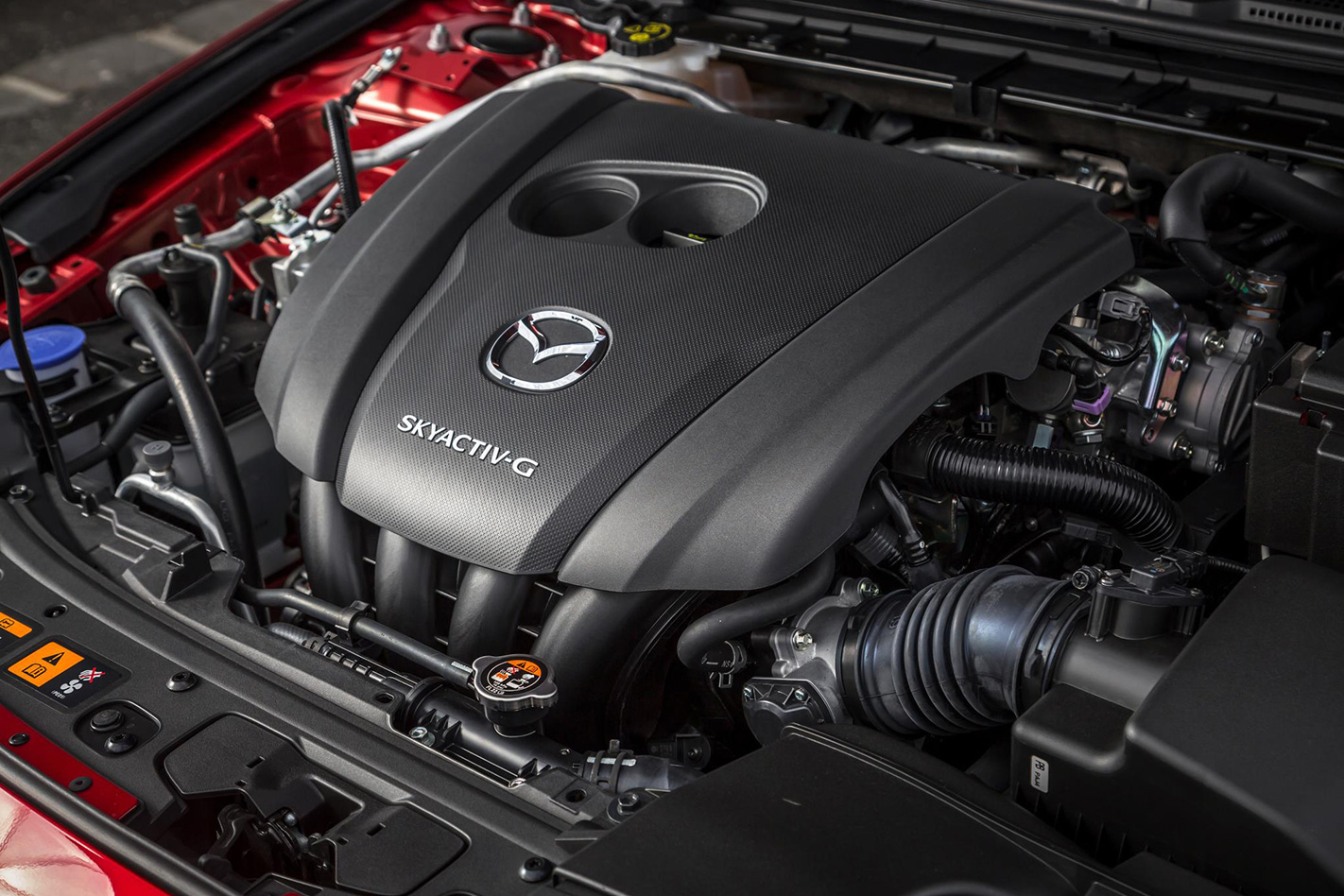
While the SkyActiv G petrol four-cylinder engines remain relatively unchanged, new levels of refinement and reduced road noise, vibration and harshness (NVH) are the hallmark qualities of the incoming car, said Wheels’ Ash Westerman when he first drove the new car in Los Angeles earlier this year.
“Vastly improved over the outgoing third-gen model, and now a deeply impressive, ultra-well-rounded small car.
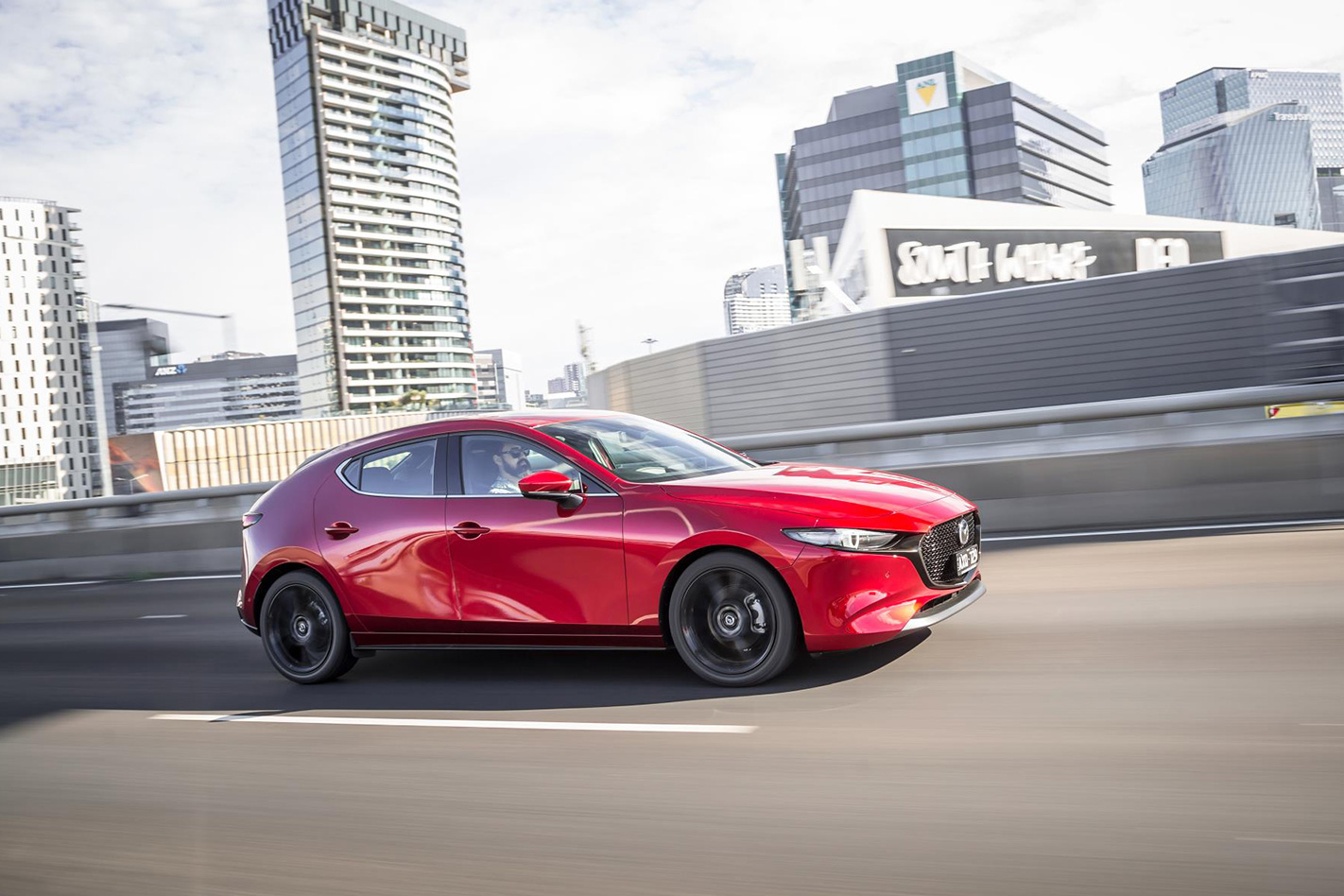
“Only the lack of packaging advantages from the bigger body and the question of engine strength stops it short of a clean sweep. The latter seems certain to be addressed when the new SkyActiv X petrol engine, with strong torque thanks to revolutionary combustion technology, is offered around October.”
Form over function?
Speaking of the change in dimensions, the new Mazda 3 is 25mm longer than before but hasn’t gained appreciably in cabin space.
Westerman said that “sitting behind the driver’s seat set for my six-foot frame, rear head- and legroom is adequate, nothing more” and “boot space in the hatch has actually dropped slightly (was 308 litres; now back to 295L).”
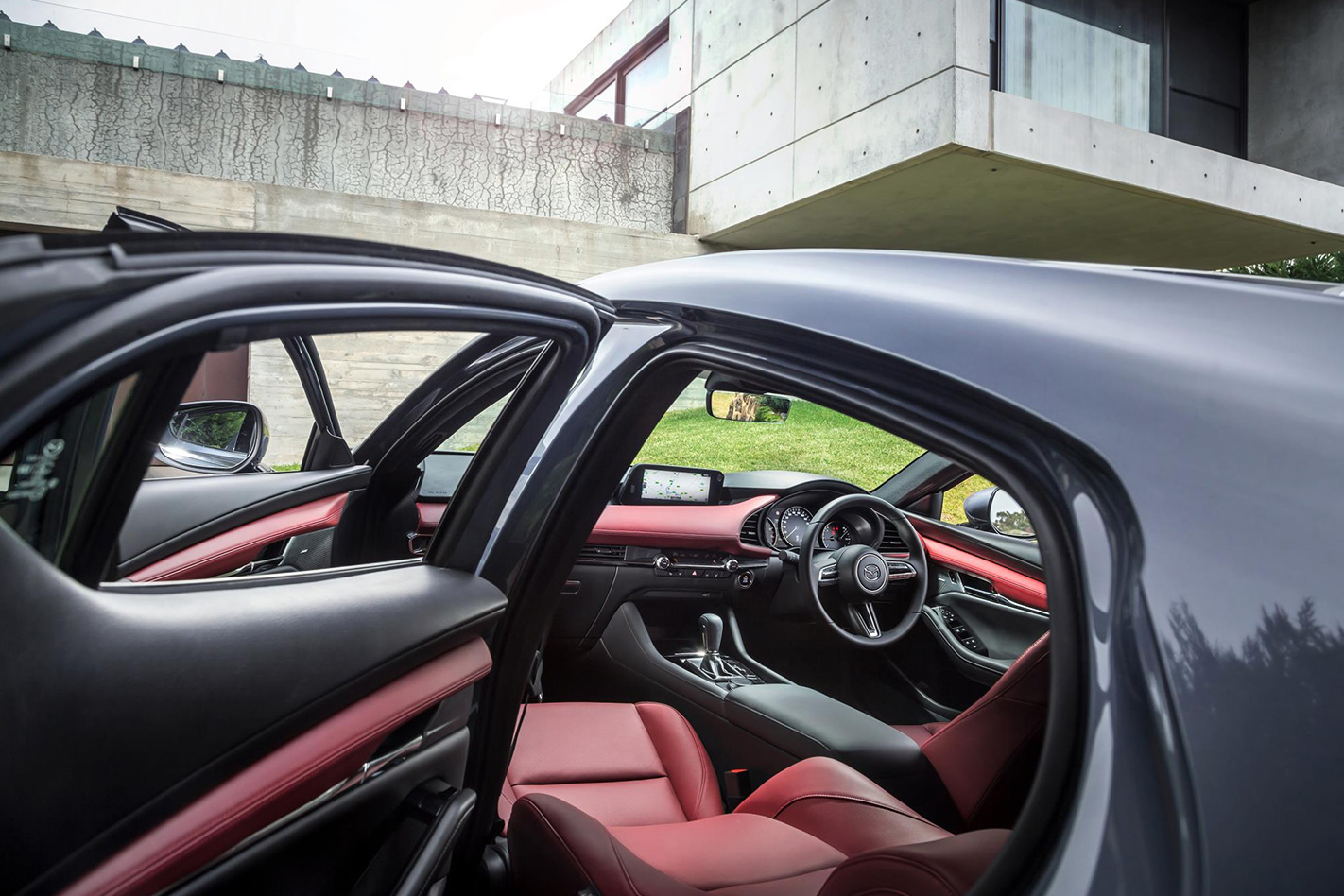
Where Mazda has focused its attention for this Mazda 3 is ergonomics. The way people sit, bend, see and function while in a Mazda has been a key design consideration for the reimagined small-sizer.
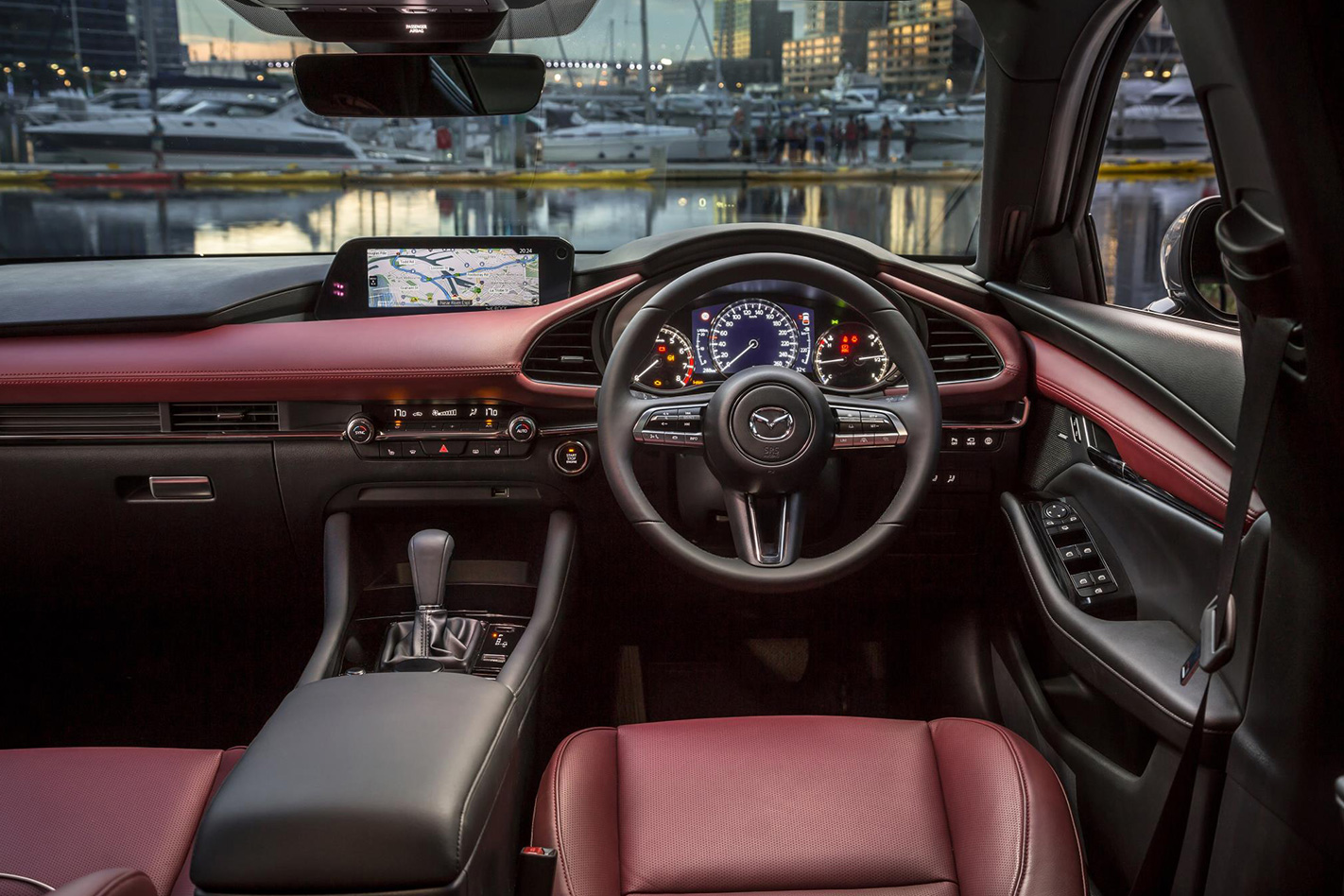
Westerman noted that the front seats are vastly more accommodating and supportive than a top-spec Mazda 6 Atenza, and the driving position is spot-on.
“The instrument panel, HVAC controls and centre console appear far less cluttered with greater practicality evident in things like the dual cup holders forward of the shifter, and a generous bin ahead of that for a phone or sunnies.
“The multimedia screen is larger – now 8.5 inches – and positioned slightly further away from the driver to reduce the eye-focusing time from the road ahead to the display.
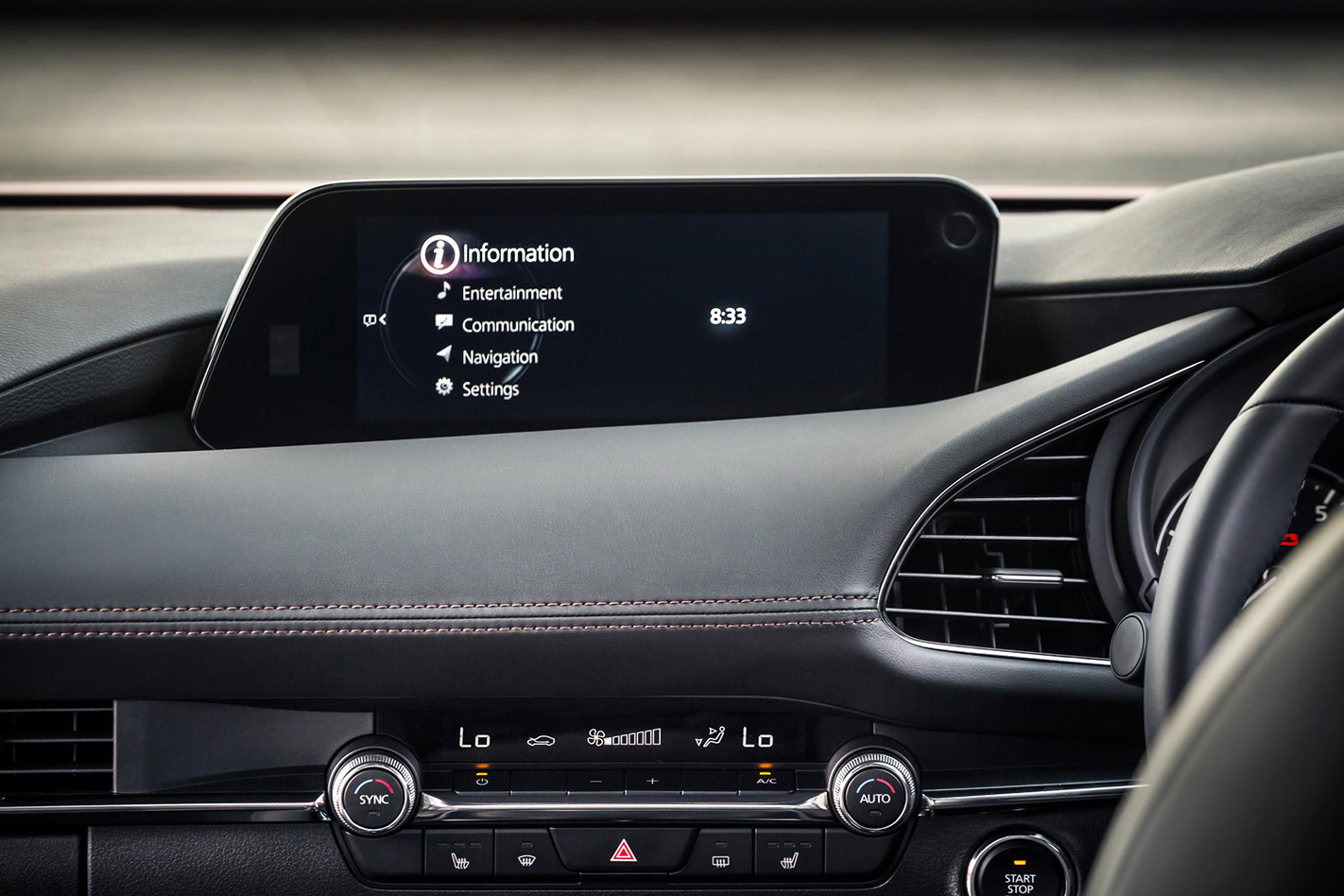
Conscious of the increased range of prices, physical quality has been upgraded too.
“You’ll instantly note the move to better quality materials pretty much everywhere, from the stitched dash top in upper-spec models, padded lid of the generous console box, as well as the uniform slickness and tactility of every button and switch.
“Even the warning chimes and the indicator’s ticking sound have been acoustically buffed in the quest for added premium-ness.”
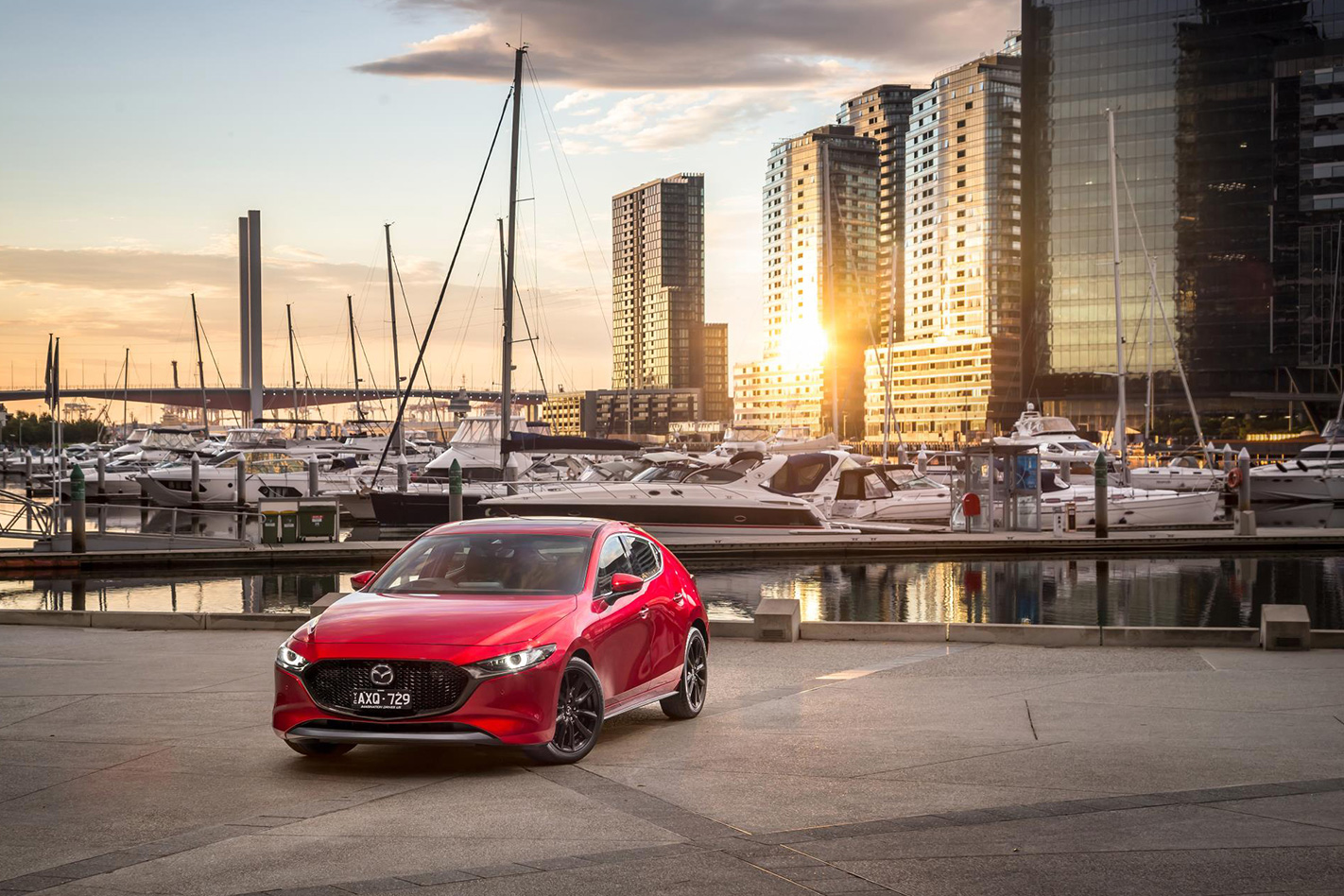
Is this the new best small car?
When it comes to on-road dynamics, Westerman praised the 3’s steering to the point of it potentially pipping the best in segment. We’ll have to see for sure when we compare it soon, but Westerman also commended the car’s precision and driver involvement when pushing on through corners.
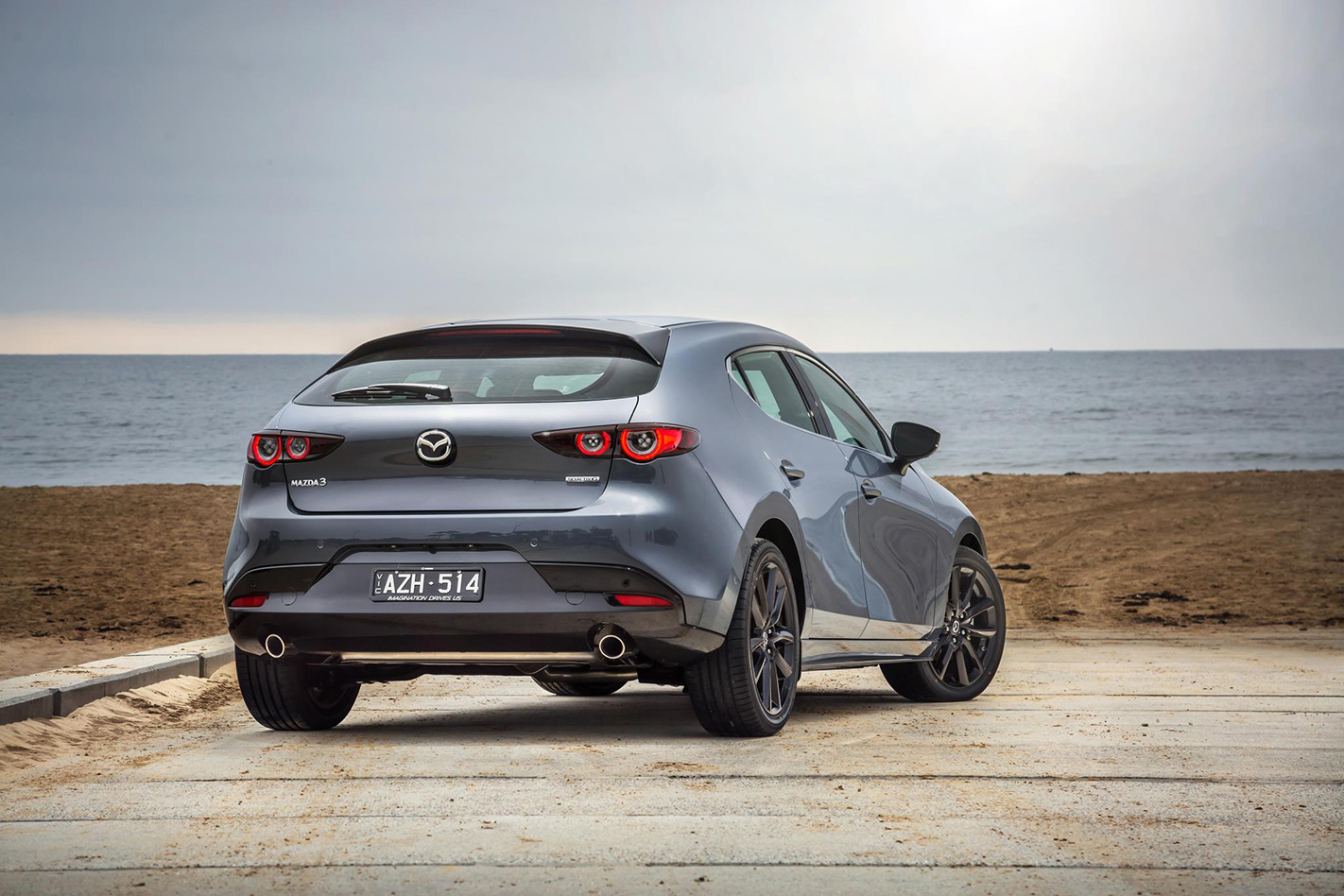
It’s no surprise that we can’t wait to get our hands on the new Mazda 3 to see how it fares down under and up against key rivals.
Stay tuned to Wheels to read our first drive verdict soon.
Mazda 3 2019 price Australia:
- G20 Pure Manual – $24,990
- G20 Pure Automatic – $25,990
- G20 Evolve Manual – $26,990
- G20 Evolve Automatic – $27,690
- G20 Touring Manual – $28,990
- G20 Touring Automatic – $29,990
- G25 Evolve Automatic – $30,490
- G25 GT Manual – $33,490
- G25 GT Automatic – $34,490
- G25 Astina Manual – $36,490
- G25 Astina Automatic – $37,990
Zagame Automotive has opened doors to its new Bespoke Division within its parts, storage and pre-delivery centre in Tullamarine, creating a high-end hospital for supercars.
The venture, located on the entire second floor of the old Fairfax printing press, is an OEM-approved repair shop for the cars sold through its Victorian dealership network.
These cars come from brands like Rolls-Royce, Audi, Lamborghini, Honda (NSX), Maserati and McLaren.
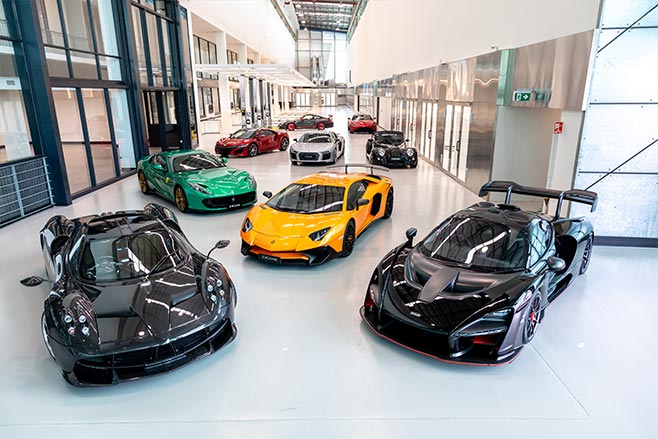
As we learned during a press tour this week, the group relies on incredible technology, care and expertise to fix these half-a-million dollar vehicles.
So here are five cool things you should know about Zagame’s new Bespoke division:
1. Some tools are pricier than regular cars
It’s not easy to repair a new Audi R8. At its core is a mesh of high-end materials, specifically its aluminium and carbon fibre reinforced plastic (CFRP) on the B-pillar and rear bulkhead.
If you damage that CFRP, say, in a bingle, it’d be very hard to tell unless it cracks. And because it takes a lot of force for that to happen, there’s a good chance you’ll never know it unless you have a DolphiCam.
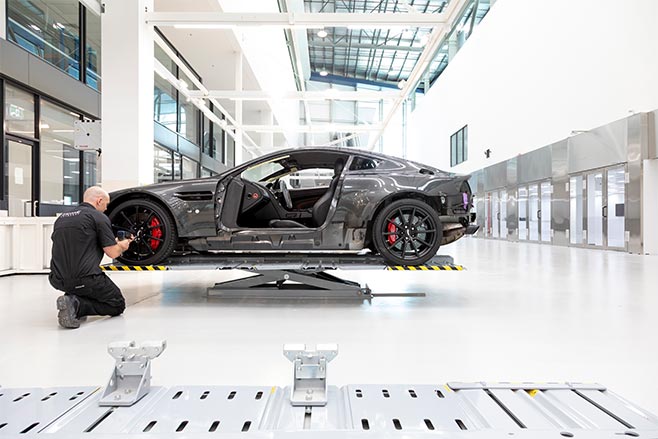
That’s an ultrasound tool that scans for any lurking fibre damage deep within the material and invisible to the eye. It costs $20K.
If something needs to be replaced, we’re told a VAS Heat-Pad system warms the structural glue that Audi uses to stick the carbon fibre to the chassis.
Why not just use a heat gun? You risk damaging the aluminium around the CFRP. The heat pads instead work on a specific temperature over hours to melt the expensive glue.
And even with all this technology, Zagame Bespoke’s technicians are only certified to replace the CFRP B-pillars on the R8. Anything deeper, or more crucial to its structural strength, is escalated to Ingolstadt.
2. The lights mimic the sun
There’s no point repainting a Rolls-Royce if you can’t match the colour across two body panels, so Bespoke relies on ultra-advanced lighting in its workshop bays.
While the German JUNG lighting system would never match the sun’s brightness, it is designed to provide the colour reference you would see in daylight.
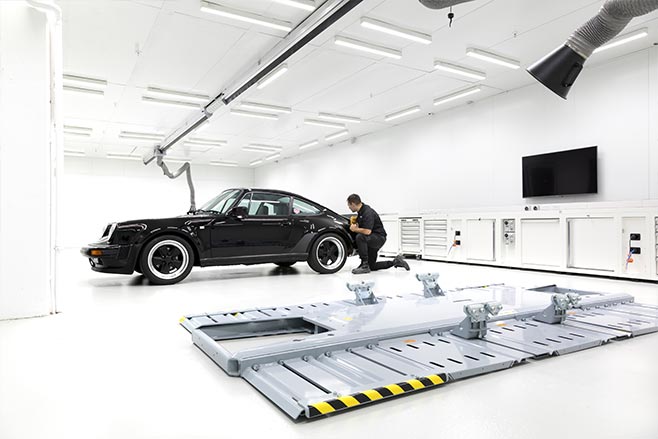
The lights also adjust automatically based on where you’re standing to banish shadows and light the appropriately.
After all, the human eye will be the ultimate judge of these cars once they reach their owners.
3. The roof span is larger than the MCG’s
If you’ve flown into Melbourne there’s a good chance you’ve seen the Zagame Autobody building. It’s the old printing press for The Age on the left hand side of the city-bound freeway, near the airport.
It’s hard to miss. The roof line is designed in the shape of a plane’s wing so it can reflect radar from the airport, and the huge glass structure out front resembles a rolled newspaper.

We learned the entire roof area spans over 25,000 metres squared, apparently larger than the MCG. Underneath it are 400 cars that await repair (either at Bespoke or the Autobody workshop down stairs) or distribution to dealers.
Then deep within its belly is its parts storage facility that distributes parts for Fiat, Audi, Alfa Romeo and Maserati.
4. It’ll restore old priceless beauties, including Ferraris
There are 31 work bays inside Bespoke Division, but it’s four that will be most special to the Tifosi.
Among the plethora of drool worthy metal lying around was a 1976 Ferrari Dino in the restoration workshop.
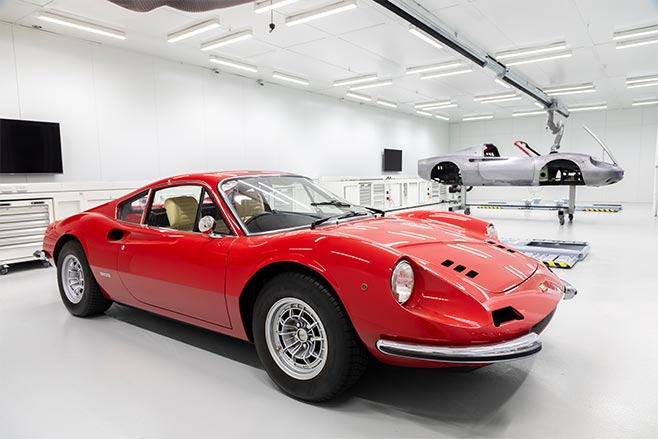
It’s had its entire front-end replaced by Damien, an extremely skilled body technician, over the course of eight months. It’ll be finished in May.
He’ll repair another three after this one, and then a Testarossa, but he’ll also be in charge of training younger staff to complete this special work.
Zagame has Ferrari’s blessing on mechanical repairs, but are seeking ‘Classiche’ certification for their body work.
5. You dream of workshops like these
Your own tinkering space will feel forever inadequate in comparison to these work bays.
Each has a huge flat-screen that can display factory instructions on each car. Where appropriate, they also have spark, dust, weld-fume and exhaust extraction systems.
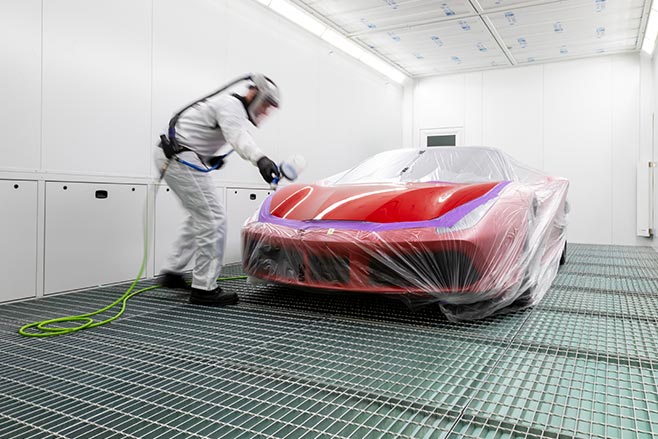
Cars lift on a Spanesi multibench that has no posts like a traditional hoist, but a platform instead, allowing full access to each car’s panels.
And if your car’s chassis needs realigning, it has the systems for that too, including long wheel base vehicles.
In just ten years, all of the one million vehicles currently sold per year (a figure likely to grow), will be electric; including hatchbacks, SUVs, four-wheel-drives, and dual-cab utes. That’s according to The Greens party, which proposed a ban on fossil fuel vehicle sales by 2030. Sure… it’ll never happen.
However, we might be forced to meet in the middle: the Australian Labor Party (ALP) has detailed its National Vehicle Electric policy that proposes 50 percent of all Australian vehicles sales will be electric by 2030. Before that, half of all government purchases and leases of passenger vehicles need to be electrified models by 2025.
Both the Australian Automotive Dealer Association and the Federal Chamber of Automotive Industries have commented on the proposal, suggesting it is good in theory but unrealistic.
“Achieving a target of 50 percent of new car sales is ambitious and will require a significant improvement in affordability of electric vehicles and related charging infrastructure,” said AADA CEO David Blackhall.
“However, this target is more constructive than a policy which seeks to ban the sale of new internal combustion engine vehicles,” he said, referring to The Greens blanket ban policy.
FCAI chief executive Tony Weber said that beyond being ambitious, a ‘considered and pragmatic’ approach is required to cater for Australia’s unique geography and automotive requirements.
“A well thought out introductory plan that includes tariff and tax relief, financial and non- financial incentives and the provision of comprehensive infrastructure will need to be implemented if the targets are to be achieved,” said Weber.
“We need to have a realistic and stepped approach to the implementation of emissions targets.”
It’s a proposal that requires electric vehicles that have just 0.2 percent market share to blossom to cover 50 percent of sales 11 years from now. Perhaps someone has gotten a bit too comfortable in the back of their chauffeur driven car.
As Wheels discovered during its enlightening Electric Vehicle Megatest – Australia’s most comprehensive EV comparison test – driving just four electric vehicles to recharge at one of the country’s best-equipped charging stations was about as simple as taking a bath with a cat.
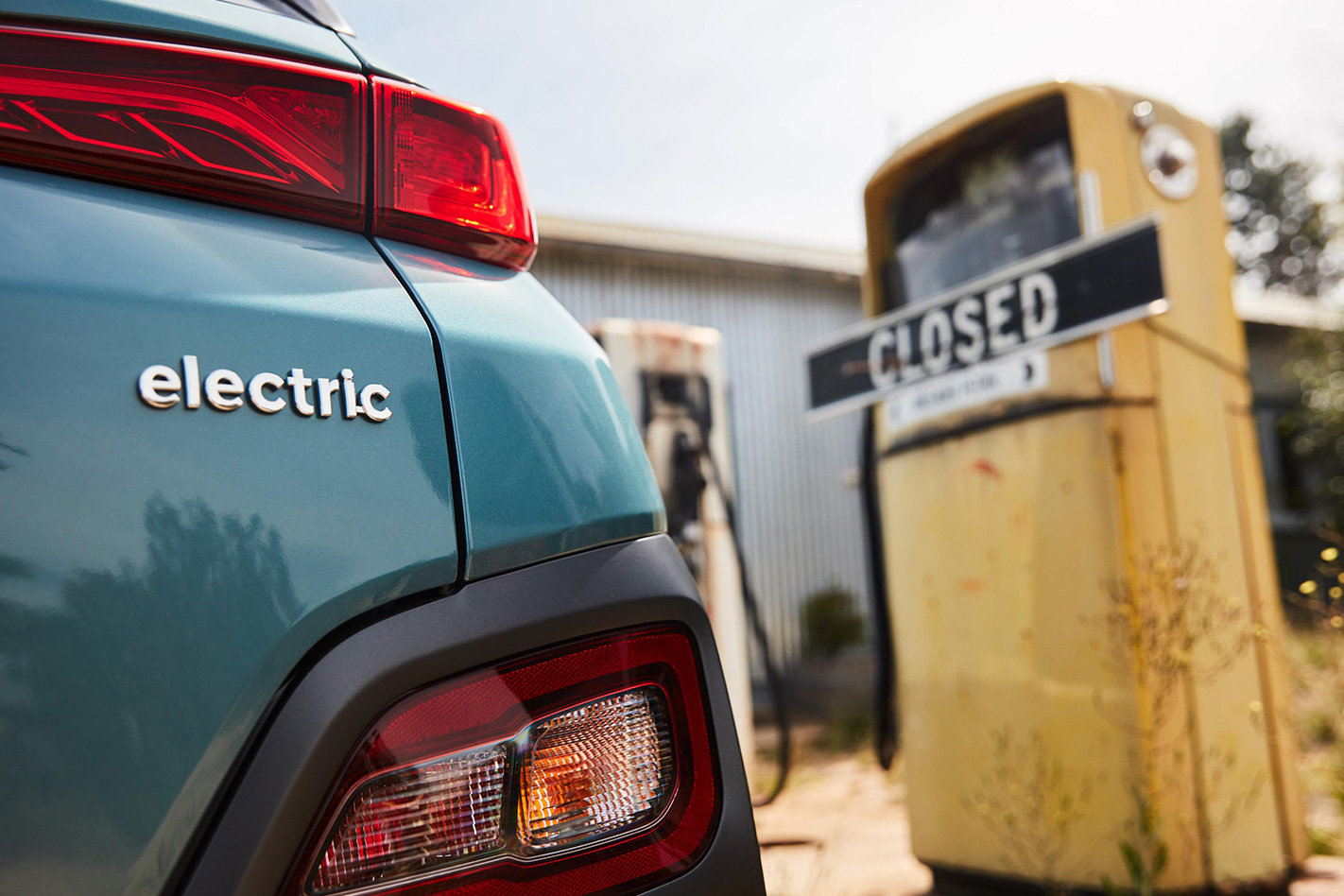
One of the cars couldn’t even plug in at the world-class station, requiring a slow 17 hour recharge from an up-rated 15 amp power point.
All this just to get back to Melbourne which was a little under 200km down the road. A short drive made all the more uncomfortable due to having the aircon switched off to save a few watts.
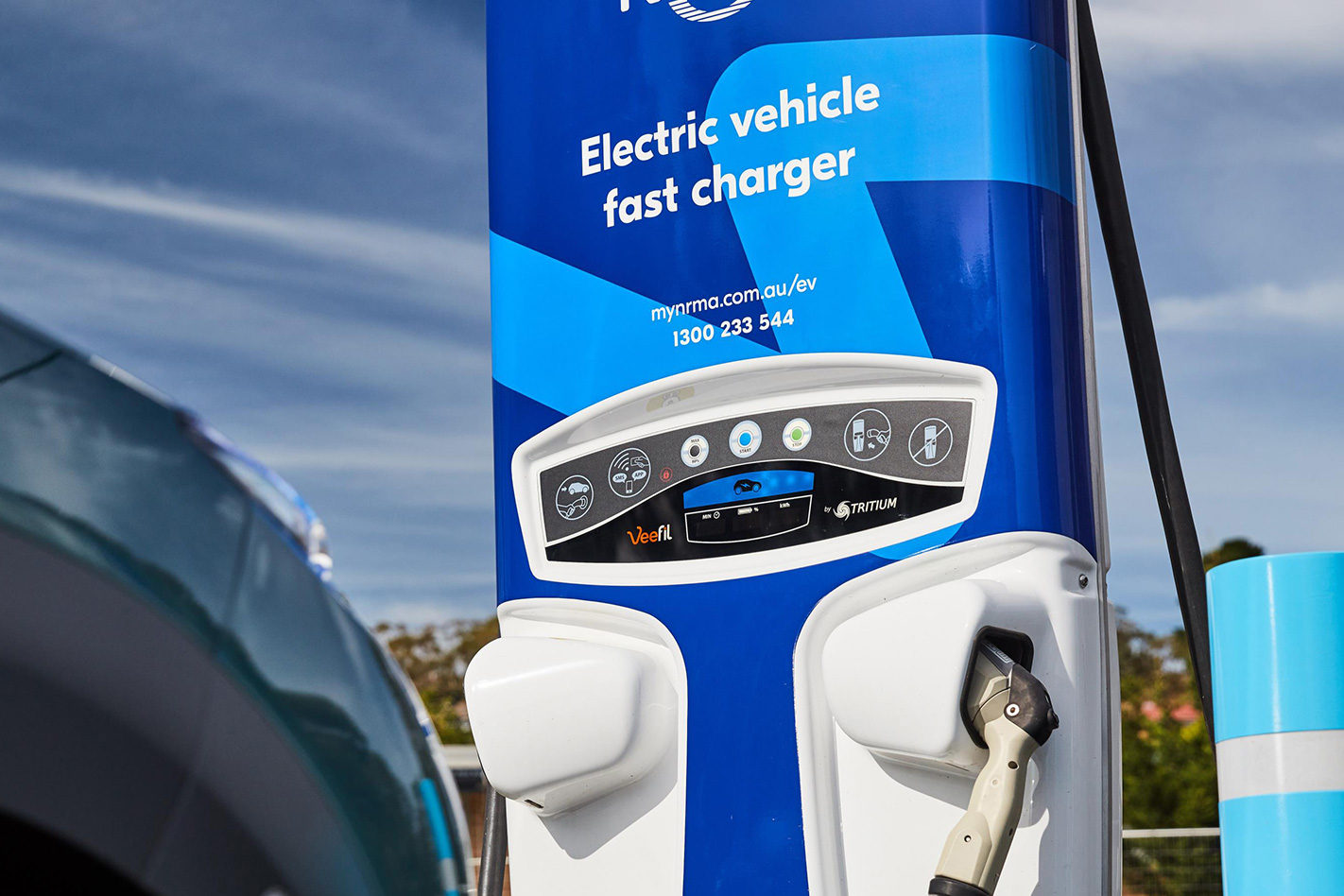
In terms of how long it currently takes to recharge an EV, we can look, at best, to the upcoming Porsche Taycan that is not yet on sale. It can recharge 100km of range in 4 minutes when connected to a special high-voltage charger that will be installed at Porsche dealerships. There are not many of those.
Plugged into a normal fast-charging socket, the time spent standing around is much longer. It’s not the ideal scenario when you consider how long it takes for a conga line to get through the local servo.
Obviously, Australia needs far greater electric vehicle infrastructure (without even considering manufacturer standardisation so you don’t get caught out) to support anything like the over 500,000 electric vehicles Labor suggests should be put on the road each year from 2030.
ALP leader, Bill Shorten, has confirmed there will be $200 million of funding for infrastructure, installing much-needed charging stations around Australia, but Queensland’s new superhighway – littered with 18 superchargers for the state’s 700 EV owners – was installed at a cost of around $200,000 a pop. Spread over the expanse of Australia’s huge road network, that $200 million isn’t going to go too far, particularly when the first round of chargers are likely to be slotted into the Government’s own backyard to support its 2025 proposal.
the ALP has also recommended a new emissions target for light vehicles of 105g CO2/km. The target, which does not have a date, is a more realistic goal towards reducing emission from vehicles. The new target is more than the current European standard but inline with the US, accounting for Australia’s taste for larger vehicles and work utes. But first,t we need to fix Australia’s filthy fuel quality.
But what of the diesel workforce, the biggest-selling segment that topped almost 150,000 sales (15 percent of the market) last year?
Energy Minister Angus Taylor spoke took aim at Labor’s optimistic plan, saying “I don’t know what tradies are going to do.”
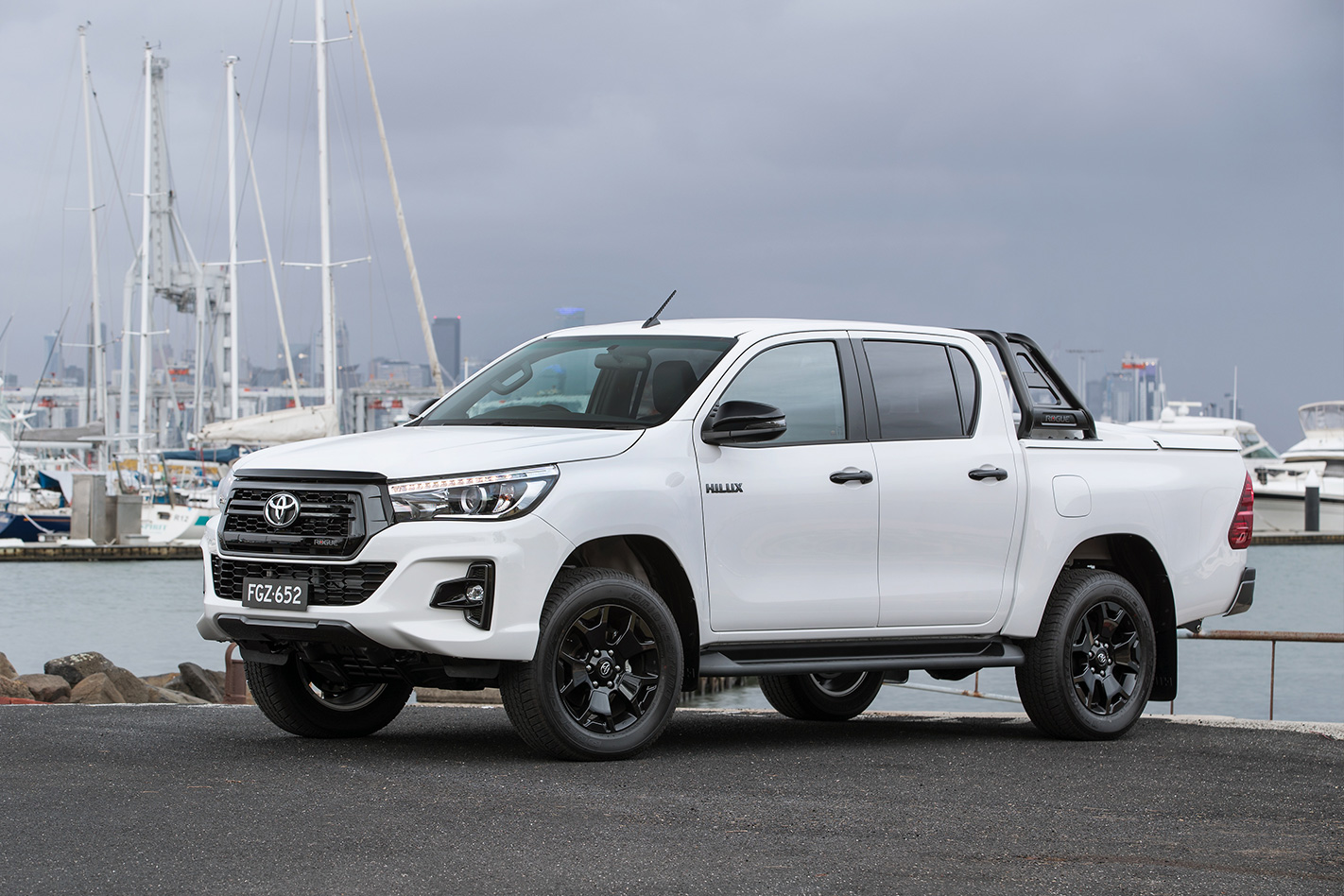
Indeed, the electric driving range is shrink-wrapped from the manufacturer claims when towing a load.
There’s also the problem of growth. It’s a nice idea that we’ll all plug into a household socket and recharge overnight, and in an ideal world we’d all have solar panel and battery packs installed in the house for fully sustainable recharging.
As it is, more and more of Australia’s growing population don’t even have a garage or a spot with a socket. We’ve also been shutting down our mega-watt producing coal plants that pump out electricity regardless of the time of day or what the weather is doing, so, actually producing reliable power, and at a reasonable price, is surely the more important priority. A horse for the carriage.
Of course, it is us that have to stump up for the things, too. As it stands, there’s not much variety and they’re all expensive. The latest Hyundai Kona Electric, a flag bearer of the affordable electric vehicle, is a small electric SUV spinoff from the same model with a petrol engine. In petrol-powered trim, it costs $29,500, as an electric, $59,990.
The Kona is no doubt one of the better offerings we’ve seen of an EV in Australia. That price is actually fairly sharp compared to an around-$50k EV hatchback, and it has a claimed ‘real world’ driving range of 449km. But it’s not the car you’d want to road trip in with the family. Beyond being a size too small, you’ll be waiting 54 minutes at a hard-to-find fast-charge station to get to 80 per cent battery capacity. No doubt, the queue will be longer than the entrance to a theme park in January.
The goal is positive; reducing emissions so the atmosphere is cleaner. But the government should have done more to help this long ago, like putting regulations on our terrible fuel quality. There are some incredibly clean petrol engines but we can’t run them because our fuel is so bad. Here’s hoping that at least one bright spark will realise we need to be better prepared before EV’s go full steam ahead.
If you’ve never been car sick, you’re one of the lucky few. Kinetosis, or travel sickness, can happen to anyone, and usually occurs when the visual movement doesn’t match the sense of movement.
You can sense your body is travelling, but your eyes can’t see why. Or visually, everything around you is flashing past, but your body doesn’t feel the same way.
Whether you’ve experienced it at sea, in the air or on a road trip, the symptoms are the same: dizziness, fatigue, sweats, headache, or nausea. It’s never fun and no one wants to taste their breakfast a second time.
While everyone is susceptible to Kinetosis, there are some groups who are at higher risk than others. For example, women generally experience it more often than men, as do children over adults. Those who experience hormonal factors, like pregnancy, are at risk as are some who have other diseases or suffer migraines.
Interestingly, in a mind-over-matter scenario, people who have been motion sick previously can also convince themselves they’re sick again through anticipation.
But not all hope is lost. There are some things you can do to prevent feeling sick on your next road trip and keep that eggs benedict safely tucked away in your belly.
Prevention
- Look at an object that’s fixed to the earth. This is why they suggest you stare at the horizon or landmass while on a boat. If you’re in a car, then shotgun the front seat and look straight ahead – your inner ear will then register you’re moving in the same direction as the visual cues.
- Don’t read or look at your phone. In fact, don’t do anything that requires you to look at something inside the car.
- Drive or sit in a position where there is less movement. Driving puts the movement in your control.
- Sleep. Or at least, close your eyes. This doesn’t always work, but some swear by it as a way to trick your brain. It’ll also help you to relax; stress and anxiety causes your body to tense and you’re more likely to feel the effects.
- Motion sickness tablets can help. Medications can help calm the nerves and the sooth the inner ear, so take a dosage about 15 minutes before you start your journey and be aware that some can cause drowsiness (two birds, one stone).
- Try a wristband. Putting pressure on the P6 acupressure point, located on your wrist, is meant to relieve nausea and vomiting. Your local chemist should have wristbands specially made for this, or just simply press on the area with your thumb.
- Watch what you eat and drink. Avoid alcohol (honestly, you know what a hangover feels like, right?) and greasy, spicy or big meals are also a no-no.
- Keep yourself distracted. The more you think about being sick, the more likely you will convince yourself you are sick. Anticipation is your enemy here.
If you start to feel sick, try this …
Prevention really is the best method for avoiding the car-sickness. But if none of that has worked and you find yourself suddenly desperate to stop the car and get grounded, the following treatment might help.
- Crank the aircon. Cool air and good ventilation can help alleviate symptoms. Try turn the vents to your face to ensure you’re breathing in fresh, cool air.
- Drink lots of water. You should always keep hydrated on road trips to avoid sickness and drowsiness. It might make you stop a few extra times but that’ll help settle your senses anyway.
- Eating small, frequent meals of dry foods can often help settle the belly. Bread or dry crackers are handy snacks to have close by.
- Herbs can also be a massive help in these situations. Ginger is a commonly used remedy for nausea so, if it works for you, carry some ginger ale with you. Peppermint and black horehound can also help, as can apple cider vinegar if you can stomach it. Check with your doctor before using these, however, as they can react with some medications.
INTRODUCTION
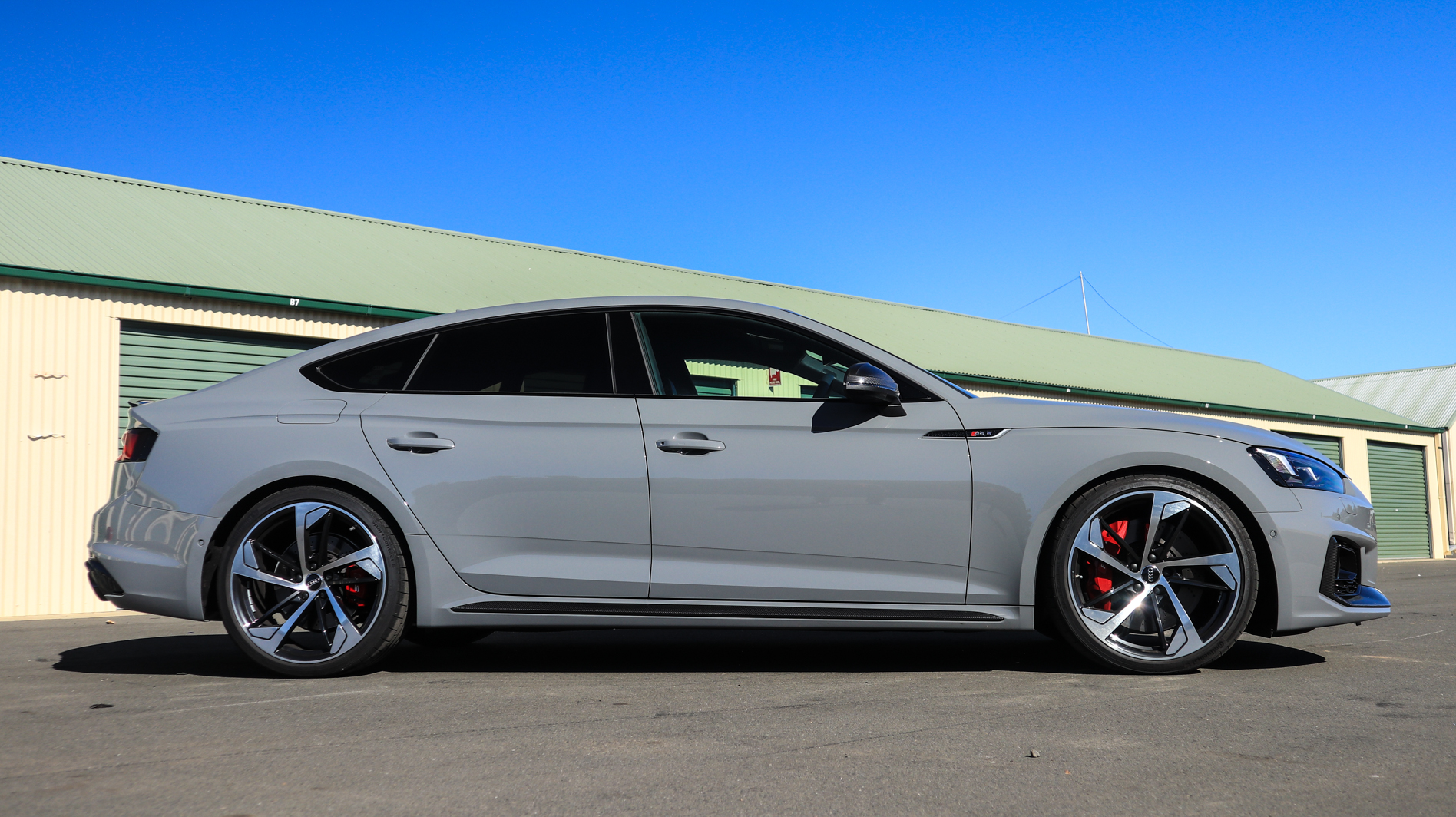
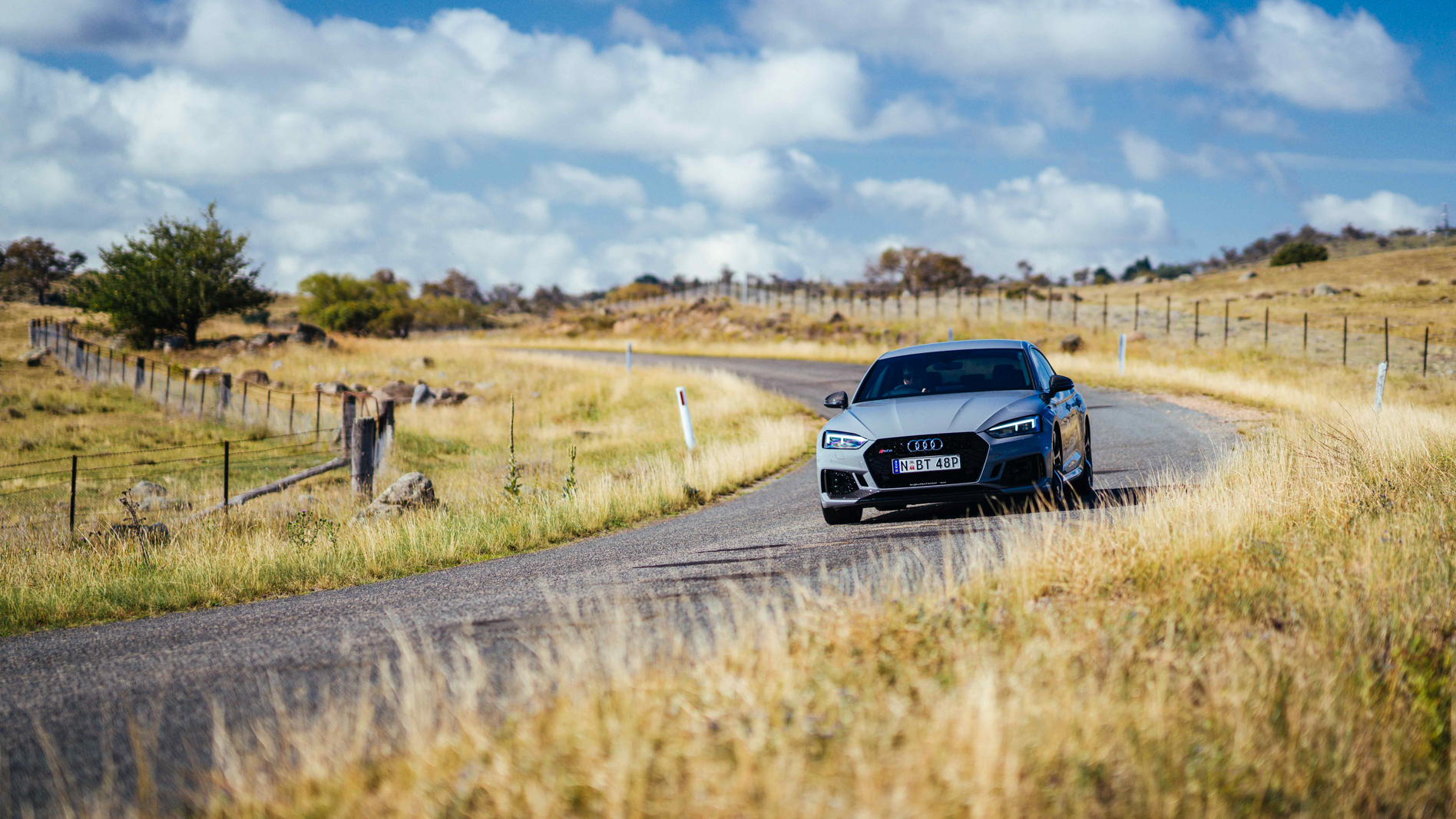
It’s not a sedan, and it’s not strictly a coupe. So what is the Audi RS5 Sportback, exactly? Well, it’s got the tailgate of a long hatchback, the four doors of a typical saloon and the heart of a sports car.
It’s related by blood to the hot dog RS4 Avant wagon and the shorter, wider and gnarlier RS5 two-door coupe, as well, so its performance chops are well known… but just how does this odd-bod fit into the RS lineage?
SPECS AND VALUE
At $157,700, the RS5 Sportback sits above the $152,529 Audi RS4 Avant wagon and the $156,229 three-door RS5 coupe, even though it shares all of the basics with its siblings.
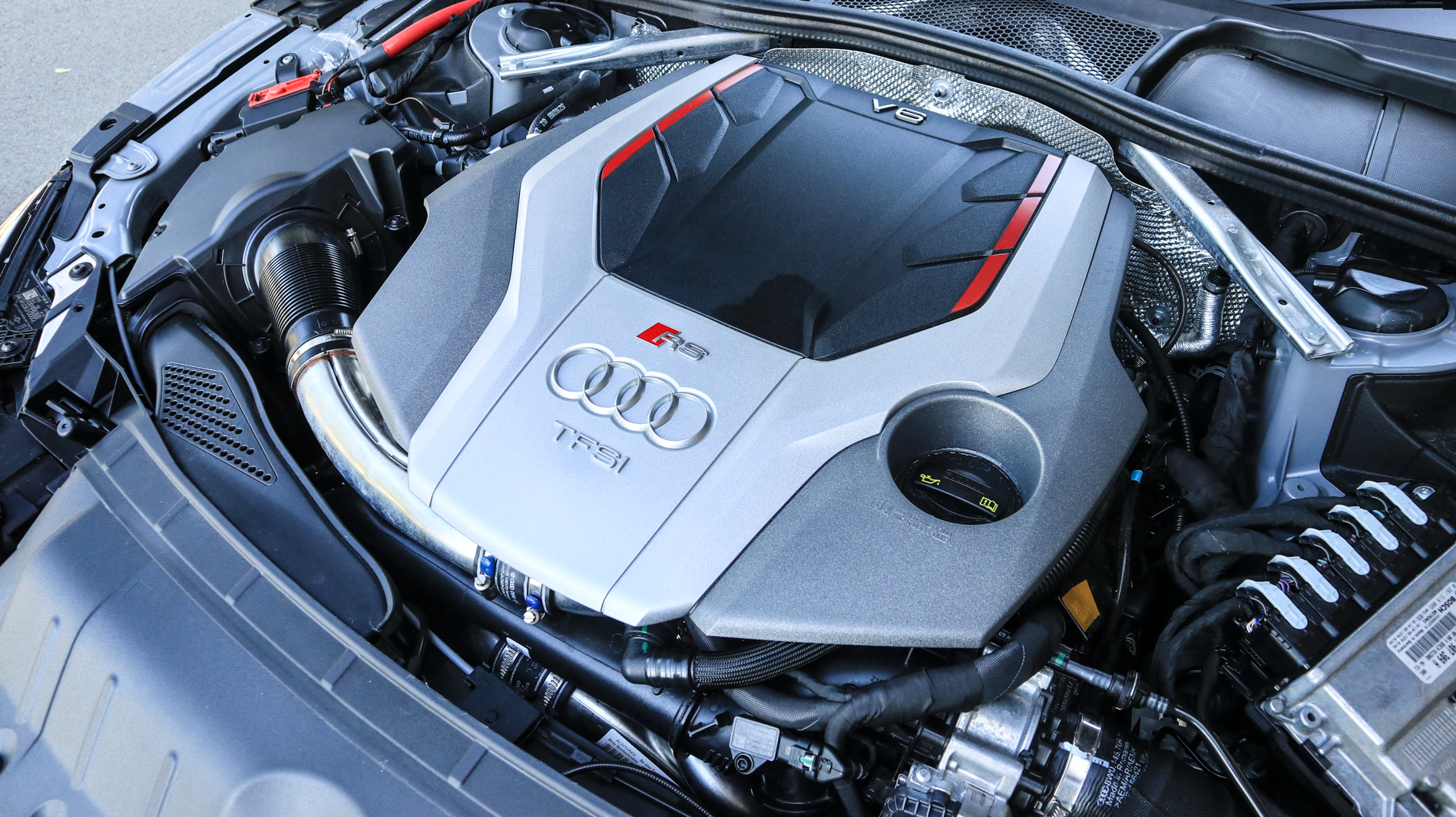
This includes its 331kW, 600Nm 2.9-litre twin-turbocharged V6 petrol engine, its eight-speed automatic gearbox, centre diff-equipped all-wheel-drivetrain, adaptive shocks, dual-mode exhaust and big brakes.
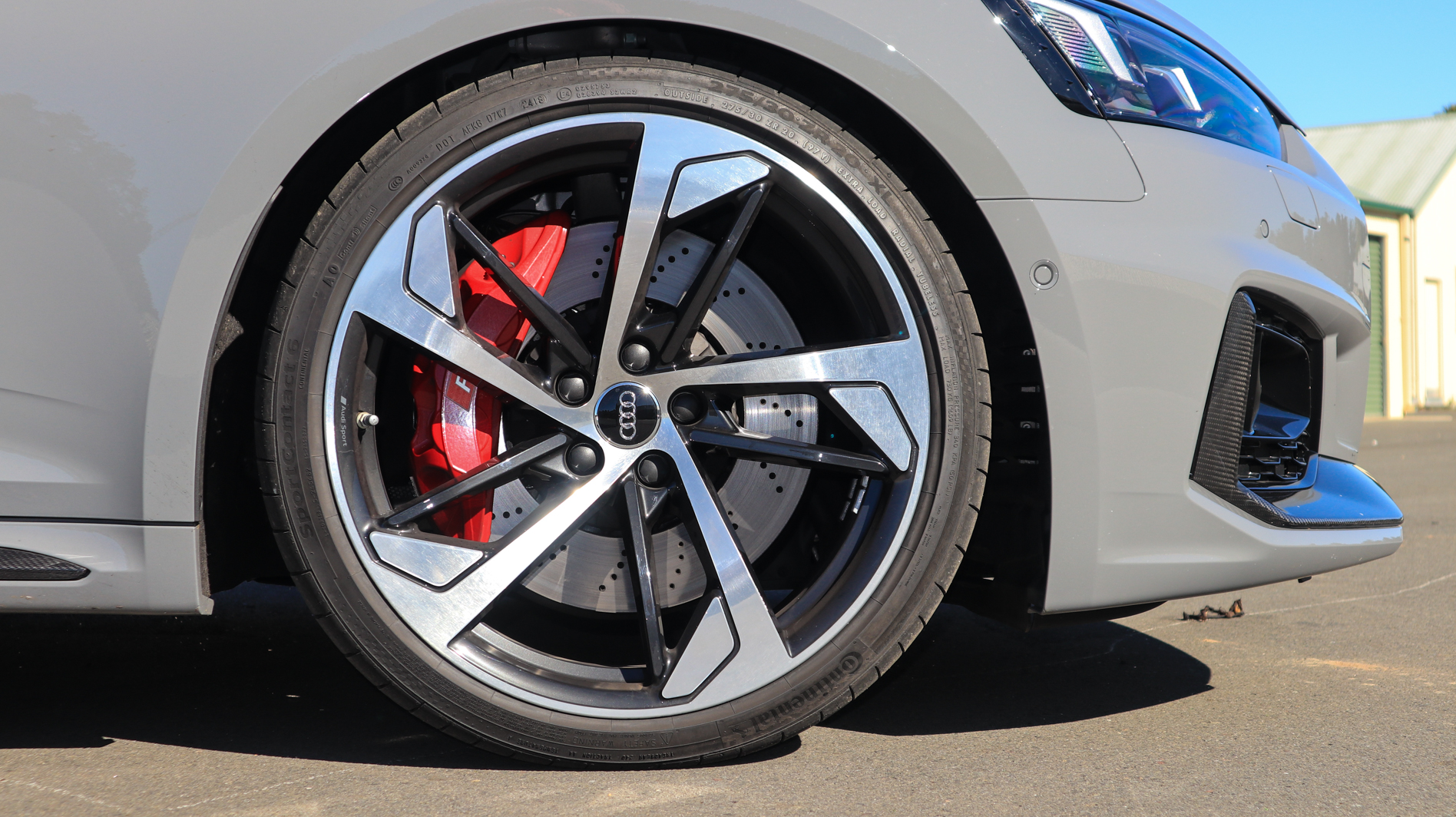
It also shares stuff like LED headlights and taillights, RS-specific sports seat and steering wheel, Audi’s digital dash with bespoke RS content, automatic lights and wipers, inductive phone charging and 20-inch rims.
Our Nardo Grey tester ups the ante with $13,800 of extras… of which I reckon $10,900 is pretty unnecessary. The Carbon and Black Pack simply adds carbon body kit parts along with some gloss black and satin silver plastic, and it seems like a silly way to drop more than ten grand.
The carbon interior inlays are, however, a nice touch despite the $1000 ask, while Audi’s $1900 Matrix LED headlights are pretty amazing, especially on high beam, and incorporate things like the cool-as-heck scrolling dynamic indicators.
The RS5 Sportback’s unique body style means it’s got no real direct competitor, but BMW’s M3 Competition ($156,529) and Mercedes-AMG’s $160,900 C63S four-door sedans are the closest.
The RS5 trumps both for driven wheels, with both its rivals rear-wheel-drive only, while the Merc’s interior is closest to – but not superior to – that of the Audi.
SIZE
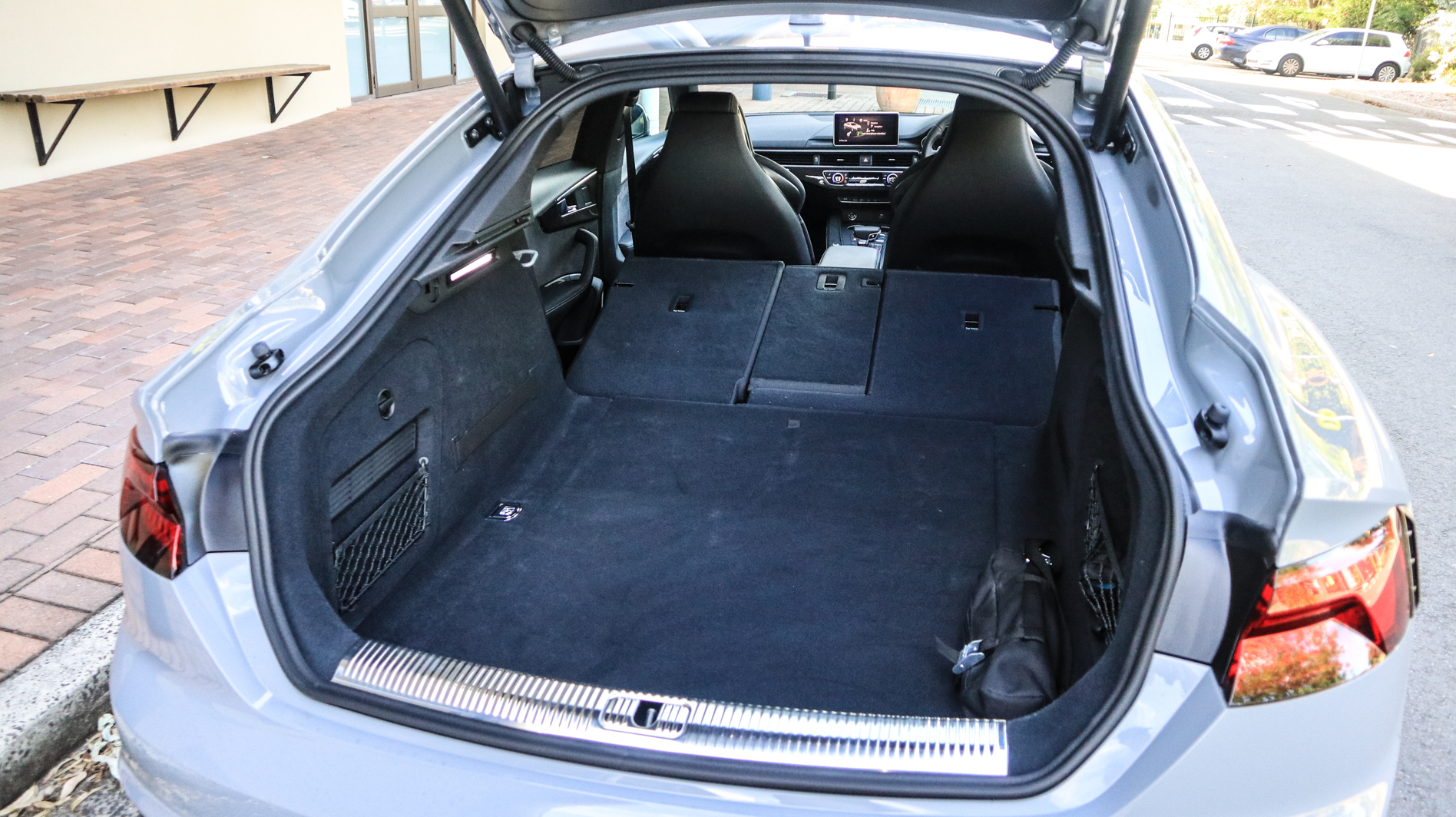
The RS5 Sportback is a truly unique high-performance car, if for no other reason than its large hatch area. Shared with cars like the Skoda Octavia and Holden Commodore, the tailgate lifts to reveal 480 litres of cargo space behind the seats (the C63S, for example, has 360 litres), and a massive 1400 litres when the 60-40 split/fold seats are dropped. It’s not a flat load space, but it does the trick.
SAFETY
Audi has equipped the RS5 with all of its safety tech, including a traffic-jam capable adaptive cruise control system, two ISOFIX baby seat mounts, high- and low-speed AEB with pedestrian detection.
Early-batch RS5 Sportbacks were, however, equipped with six airbags (front and side bags for driver and passenger, curtain bags first and second row). Later models were specced with an additional pair of second-row side airbags. Regardless, the RS5 Sportback still earns a maximum ANCAP five-star rating.
WARRANTY AND RUNNING COSTS
Audi – along with its premium competitors – still trails the industry when it comes to warranties, offering three years/unlimited kilometres, along with 12 month/15,000km service intervals. The RS range, though, doesn’t fall under a fixed-price service plan.
Against a combined fuel economy claim of 8.7 litres per 100km, we recorded a real-world figure over 510km of 9.3L/100km, which is pretty commendable, given my liberal use of the loud pedal wherever (mostly) appropriate.
COMFORT
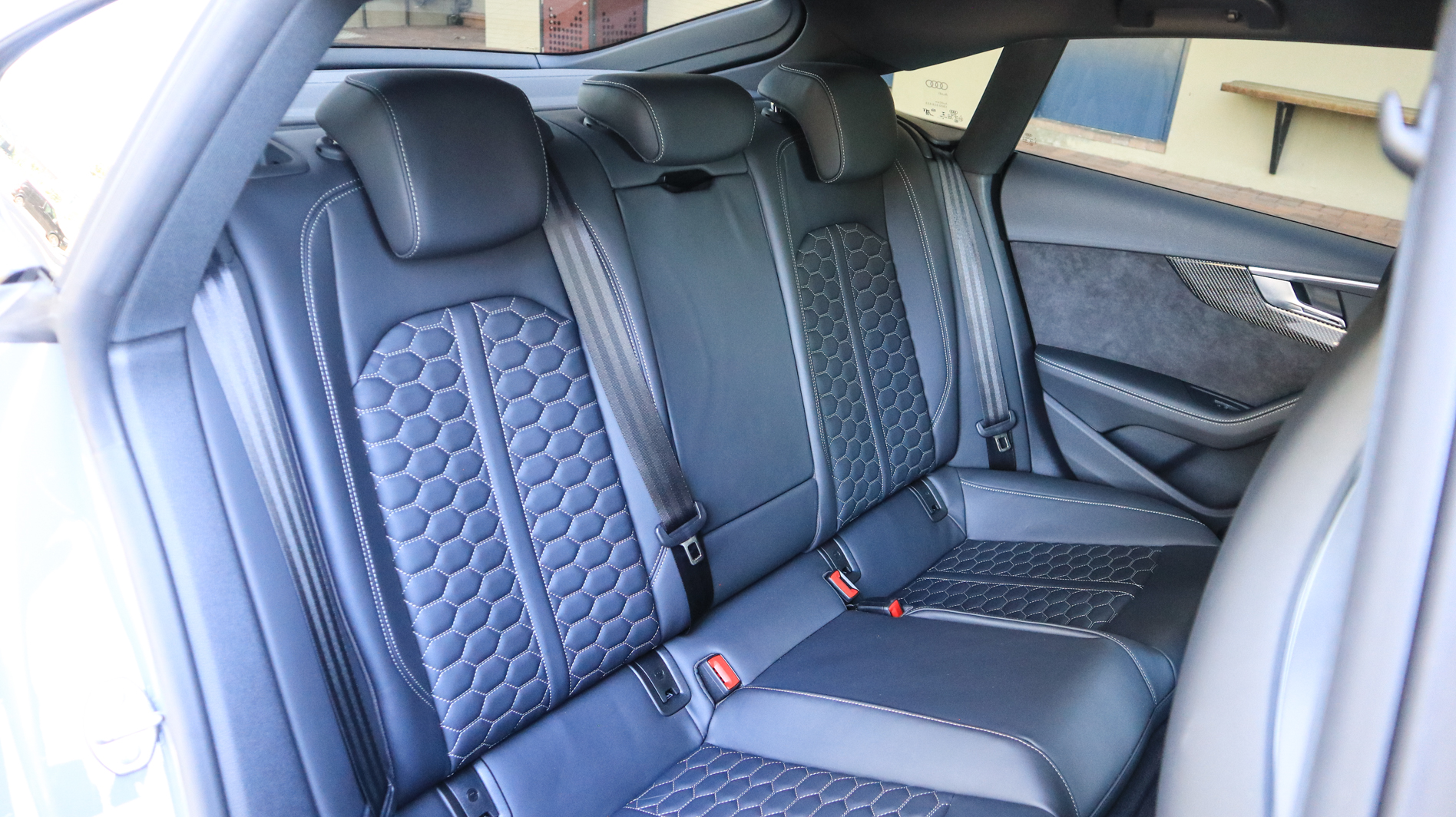
The wheelbase figures of the RS4 and RS5 Sportback are reasonably close (2832 v 2826mm), and the Sportback is the longest of the two – and 16mm narrower to boot. Back seat space is okay leg- and feet-wise, but the swept roofline gobbles up some headroom, as does the sunroof’s unique headliner.
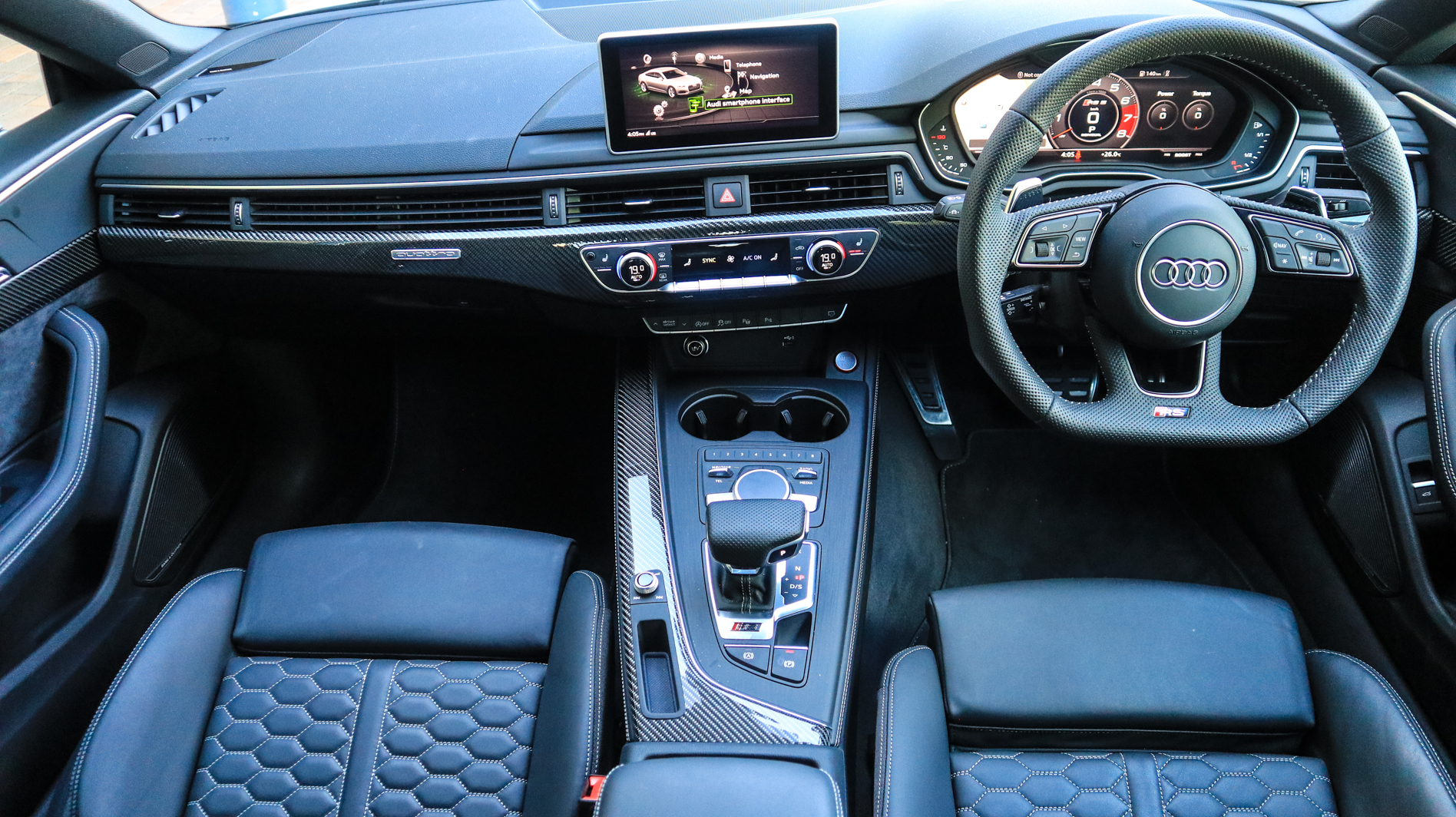
Upfront, though, the RS seats are low-slung, grippy and comfortable, with adjustable side bolsters and even an extension for the seat base on the driver’s side. The small, chunky steering wheel feels great underhand, though the paddles feel a little cheap and plasticky.
ON THE ROAD
It’s a strange one, this RS5 Sportback. On paper, anything with two turbos, all-wheel-drive and 331kW ought to be as fun as a barrel of monkeys at an Italian wedding… but it’s not quite all there for me.
The way it delivers its power is prodigious and impressive, but it really does its best work when the national speed limit has come and gone. The exhaust can be adjusted between sporty (read thrummy and droney at certain revs) and comfort (aurally read non-existent) noise levels, but it’s the suspension set-up, for me, that’s the least convincing part of the package.
In the softest of its three settings, the adaptive shocks are far too underdone for anything but sub-60km/h work, while the firmest setting creates a brittle ride that still feels underdamped.
The auto setting is the best of the three, but there’s artificiality, like a sense of disconnection, between what the driver feels, the steering wheel and what’s happening on the road when you’re leaning on it a bit. The RS5 tends towards understeer, which is safe and stable, but it dulls the RS message to the point where you wonder whether an S5 might be a better car overall.
Plug it into Comfort mode, and the beautifully appointed RS5 certainly doesn’t disappoint for interior comfort, ease of use and sheer presence, but excess road noise from the 20-inch tyres on coarser roads spoils the ambience at times, and the eight-speed auto can also be caught on the hop when it’s asked to schlep around town at dawdling speeds.
VERDICT
The RS5 Sportback is a deliberate step apart from more brawny, bruisy German rivals, but it also isn’t as cossetting and comfy as a like-minded Lexus.
It offers luggage versatility, excellent fuel economy and a broad performance envelope for the money… but it’s just not as convincing as its dynamic looks might suggest.
SPECS
Model: 2018 Audi RS5 Sportback Engine:2894cc V6, dohc, 24v, twin turbo Power: 331kW @ 5700-6700rpm Torque: 600Nm @ 1900-5000rpm Transmission: eight-speed automatic Weight: 1695kg 0-100km/h: 3.9sec (claimed) Fuel economy: 8.8L/100km Price: $157,700 On sale: Now
