
Rolls-Royce V12s are here to stay for some time, but its CEO has said it’s eventually going electric whether you like it or not.
Torsten Müller-Ötvös, CEO of Rolls-Royce Motor Cars, explained its plans for powertrains to us this morning while in Melbourne as part of a tour of the Asia-Pacific region.
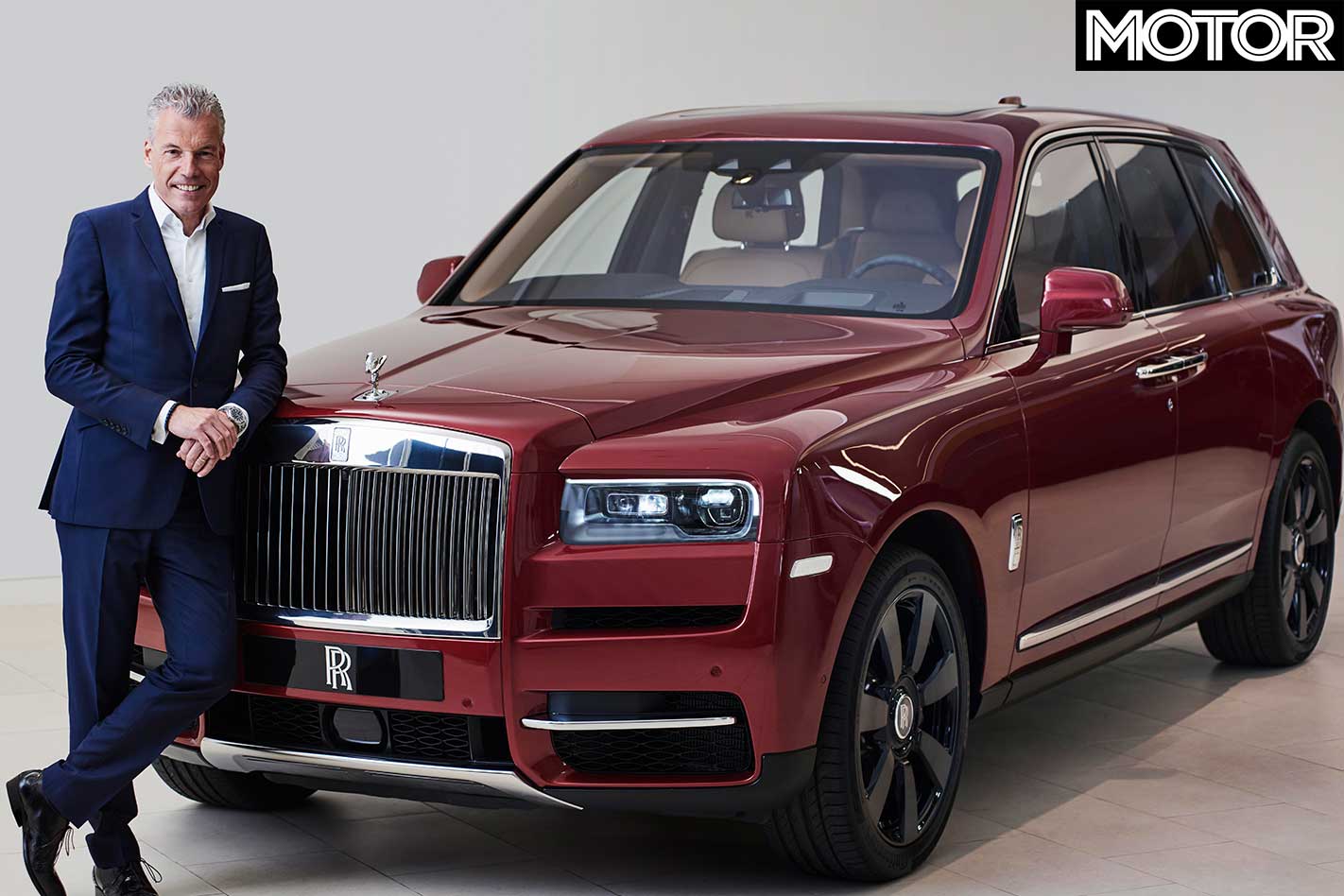
“It’s not like we shut down the 12-cylinder overnight and immediately the next day everything is electric, there is a transitional phase between combustion engines and electric engines.”
When asked by MOTOR how long that might be, he was firm in his reply.
“As long as possible. Let me say it that way, as long as the engines are legal on legislation, our customers love the 12 cylinder. It’s like a complicated wristwatch. The more complications the more precious they are.”
Rolls-Royce’s hand will be forced by legislation, but when electric power does find its way into the range, predicted to be in the next decade, it should suit the brand just fine.
“Power is not an issue for electric cars. Not an issue at all. It’s even easier than any combustion engine because the torque is substantial. And Rolls Royce is all about torque.”
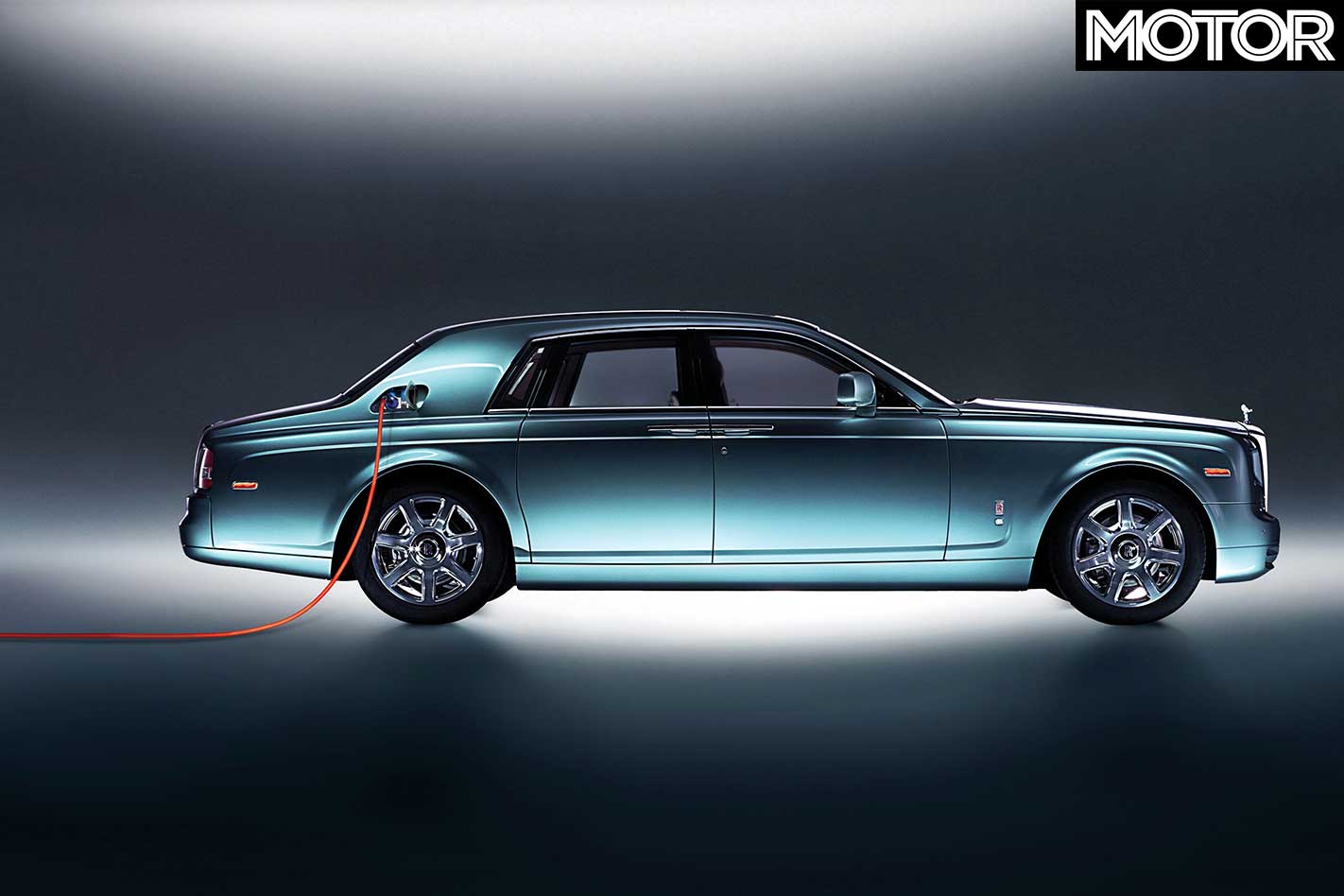
It is instead waiting for better and more seamless charging capabilities, along with better battery technology to carry Rolls-Royces, that weigh as little as 2360kg, the same distances as petrol powered engines.
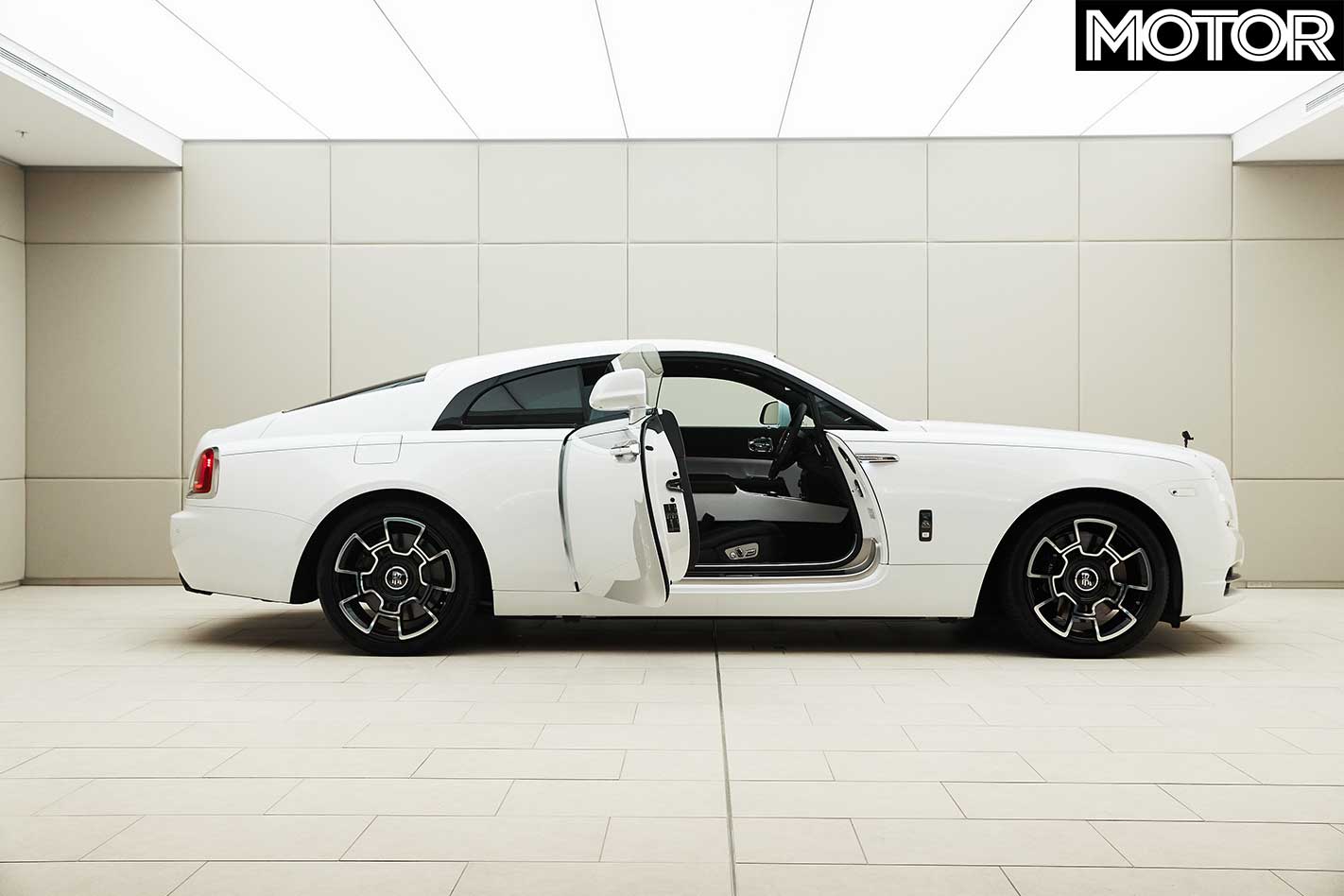
Even the Wraith, the ‘most powerful and dynamic Rolls-Royce in history’ and a car its clients boot out the chauffeur to drive themselves, is set for electrification.
When asked in what capacity that might be, he cited the brand’s reputation for whisper-quiet powertrains meant electrification will fit the coupe perfectly.
He could not confirm when Rolls-Royce will fully embrace electrification, but maintained it is not interested in either hybrid or V8 based powertrains in the meantime.
V8s or six-cylinder engines would lower its range’s price point and increase allocation, two things it obviously cares little for, even though it has just experienced its best-selling year ever in 2018 globally, selling 4107 cars.
As for hybrids, he sees their days marked when combustion engines are banned from city centres in important markets like China.
“China is very keen on promoting electric cars for their own industry, and that is what the future is. And if you want to participate in the Chinese market, everybody has to do that.”
Even though he denies its current V12 as a ‘BMW V12’, but rather a “very different” unit, he confirms it will look to its parent brand for its electric powertrains.
“Powertrain is something where you can take certain technology but you can make sure they are proper Rolls-Royce engines by the end of the day.”
*This article originally published Rolls-Royce Motor Cars sold 4017 cars in 2018, that was incorrect. It was 4107.
TWO of the companies dumped by General Motors in 2017 have reported their first profits in more than 20 years.
Vauxhall and Opel were sold by GM in early 2017, with PSA Group, which includes Peugeot and Citroen, taking over ownership.
Now, for the first time in more than two decades, Vauxhall and Opel are profitable, bringing in $2.7 billion of recurring operating profit to help boost PSA Group to one of its best years on record.
In total, PSA Group sold 3.88 million cars last year, an increase of 6.8 percent, with revenue jumping 18.9 percent to A$116.8 billion, of which Vauxhall/Opel accounted for $29 billion.
It’s not just revenue increasing, with PSA Group’s operating margin now a record 8.4 percent, with a target profit margin of 4.5 percent for the years 2019-2021.
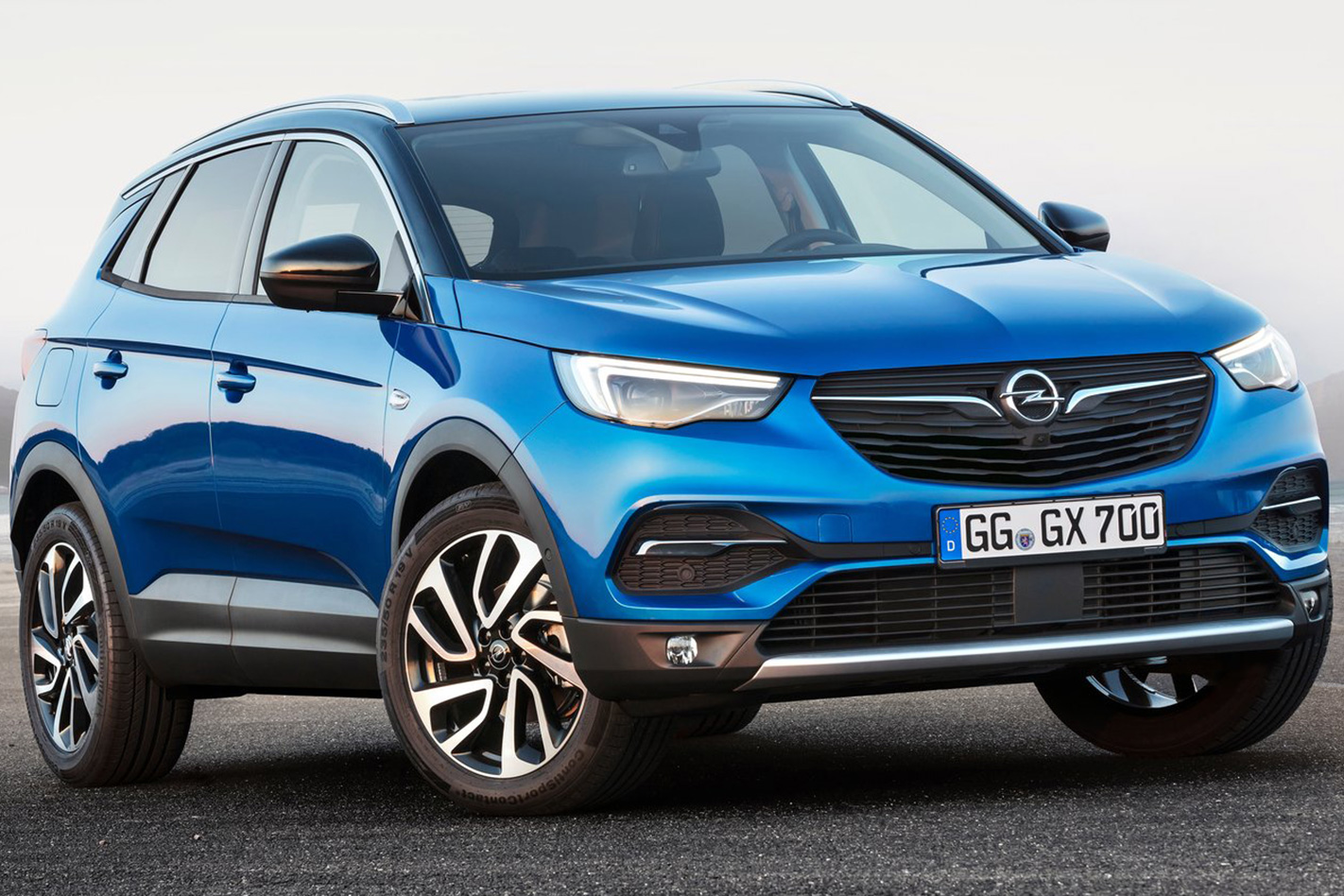
With PSA Group now “sustainably competitive” it has made plans for global expansion, with a target of increasing sales by 50 percent by 2021. This includes relaunching Opel in Russia, Citroen targeting India, and Peugeot restarting in the United States (probably in 2026 according to media reports).
There will also be an aggressive introduction of new models, with 116 new launches (including commercial vehicles) slated by 2021.
PSA Group has also committed to a quicker refresh rate for existing models, with the average lifespan being shortened to just 3.5 years, while 50 percent of models in the group’s portfolio will be electrified by 2021, with a fully electrified line-up expected by 2025.
GM sold Vauxhall and Opel in a $3.1 billion deal which included six assembly plants, the German-based engineering facility at Russelsheim and half of GM Financial’s European operations. PSA Group became the second largest manufacturer in Europe as a result.
Both the Holden Astra and Commodore are built atop Vauxhall/Opel platforms, which are now owned by PSA. However, the Aussie-badged duo’s future was secured as part of a five-year transition period that lasts until 2022.
Speculation is running rife that Holden could also be sold by GM, with UK-based company Inchcape alleged to be interested in taking over importing the brand locally.
However, Holden chairman and managing director David Buttner rubbished the rumours at a recent media day, telling outlets “we’re not for sale”.
Holden has been suffering the most dramatic sales downturn in its 70-year history, following a transition to a fully-imported line-up after local manufacturing ended in late 2017.
Peugeot has reached out to audiophiles with special edition versions of its 3008 and 5008s featuring a 515-watt premium sound system.
The 3008 and 5008 Crossway editions feature the premium 10-speaker sound system with 200mm sub-woofer by Focal, whose systems haven’t been available in Aussie-bound Peugeot models until now.
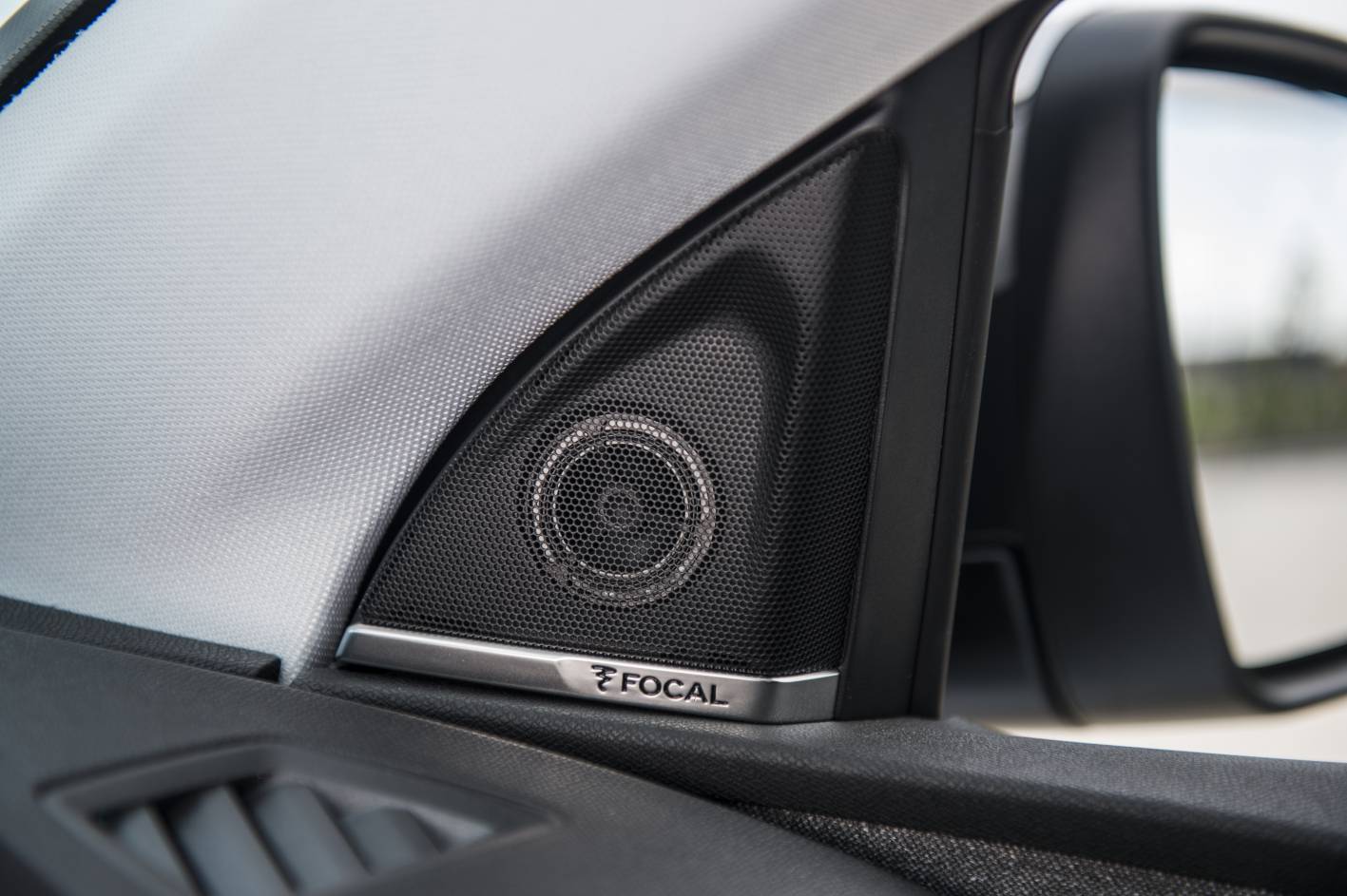
The system boosts the standard vehicles’ eight-speaker, 160-Watt system to a (audio geek-speak alert) 10-speaker, 12-way audio system developing 515 Watts of power delivered through four, inverted, 35mm tweeters, four 165mm mid-range woofers, a 80mm bespoke Polyglass membrane centre speaker and a 200mm woofer with Focal’s proprietary PowerFlower technology.
OK, we’re not exactly sure what that means either, though we reckon they’re saying you should be able to do anything, from listening to classical music as nature intended to pumping out some wicked doof doof.
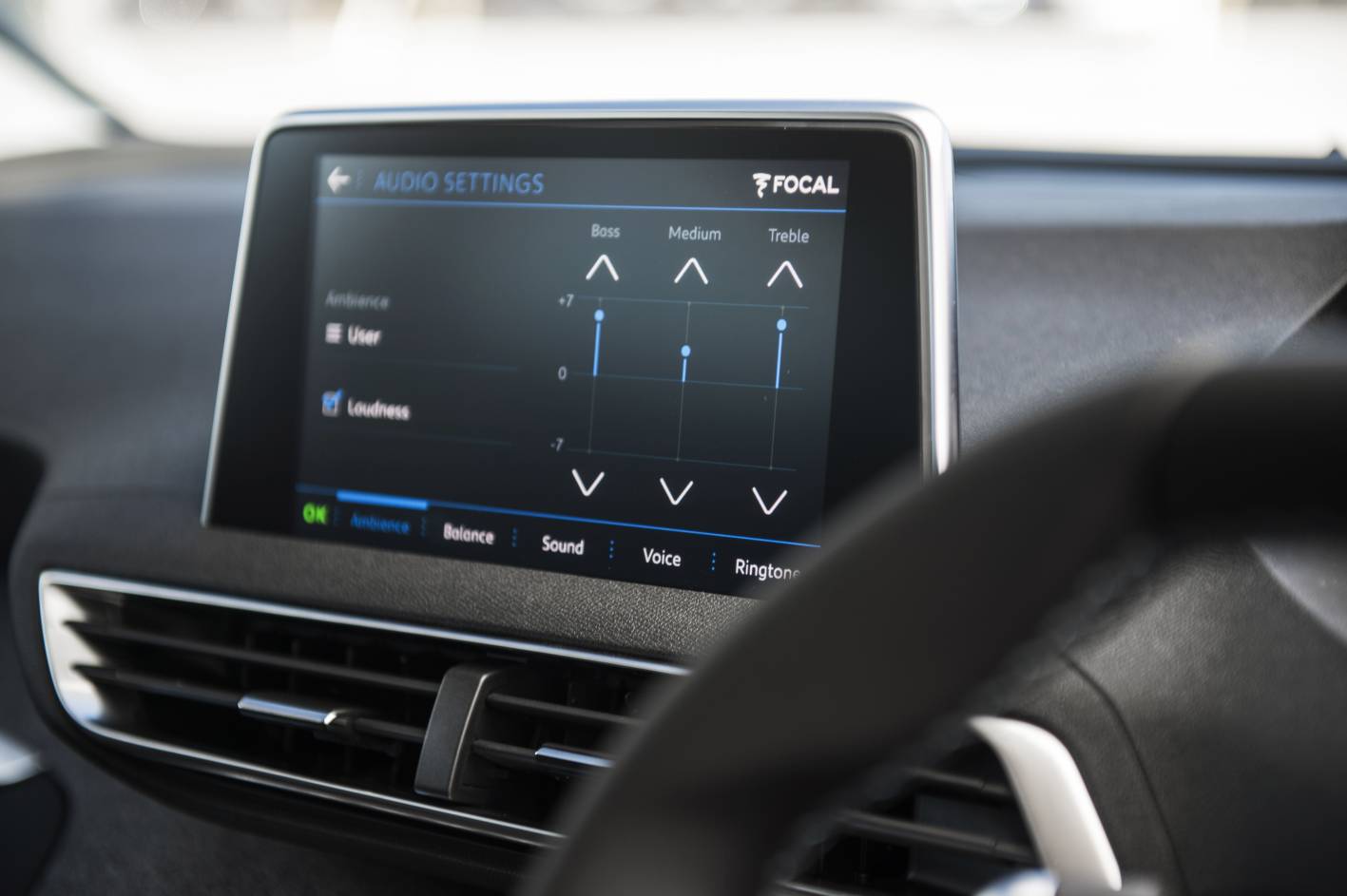
Focal, a French brand known for its high-end high-fidelity audio systems, worked with Peugeot engineers for three years to design the a system to produce optimum sound within the confines of the 3008 and 5008 cabins.
This involved installing cabin materials and features such as door mouldings, floor mats, cabin and floor construction around the sub-woofer. According to Peugeot, the system was extensively inside an anechoic (echo free) chamber, before 1600km worth of road testing to ensure the sound quality wasn’t degraded by real-world road conditions.
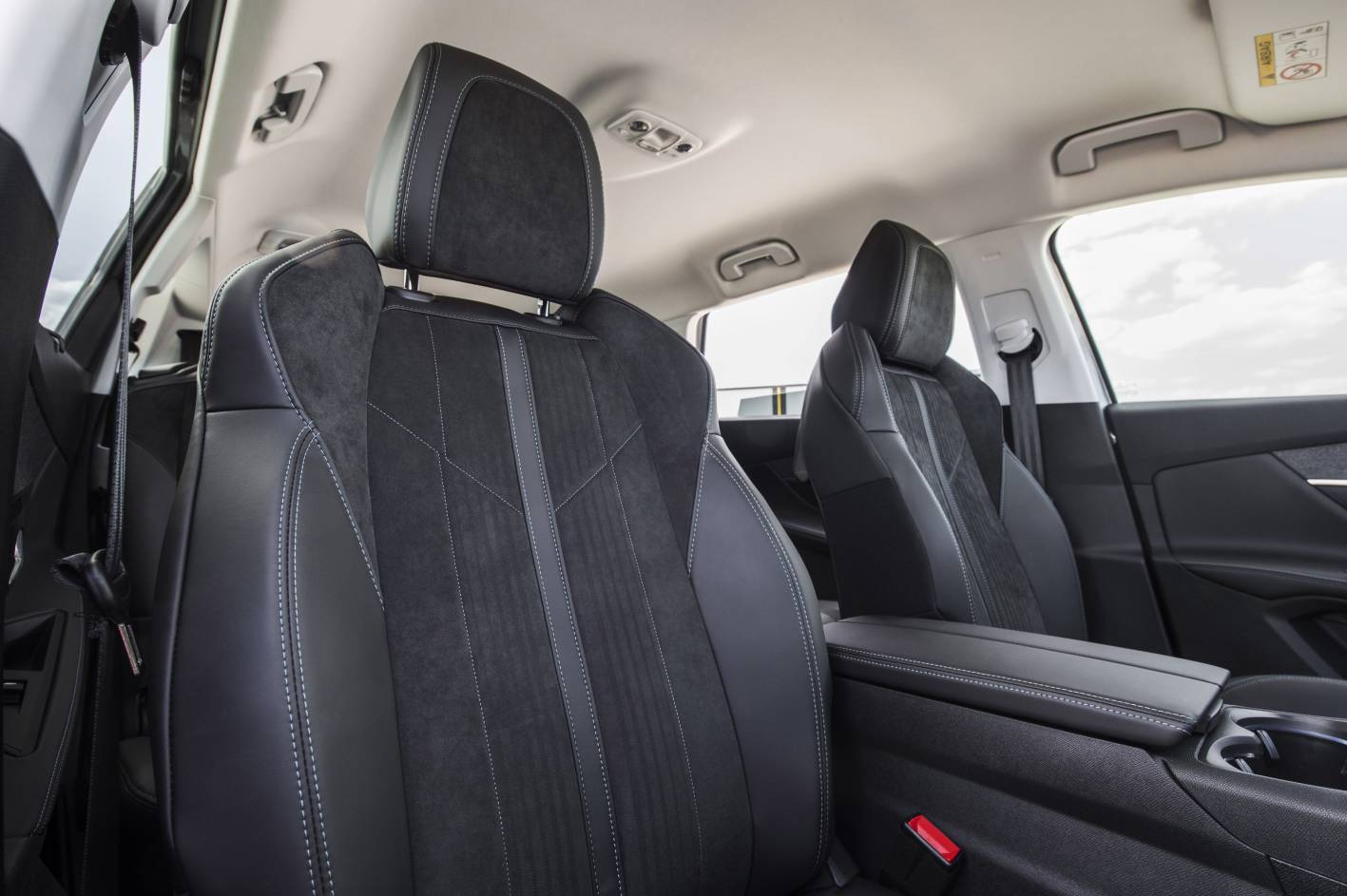
Based on the Peugeot 3008 and 5008 Allure variants, the Crossway editions also include bespoke Alcantara trim with blue stitching on seats, centre armrest, door trims and steering wheel, and branded floor mats.
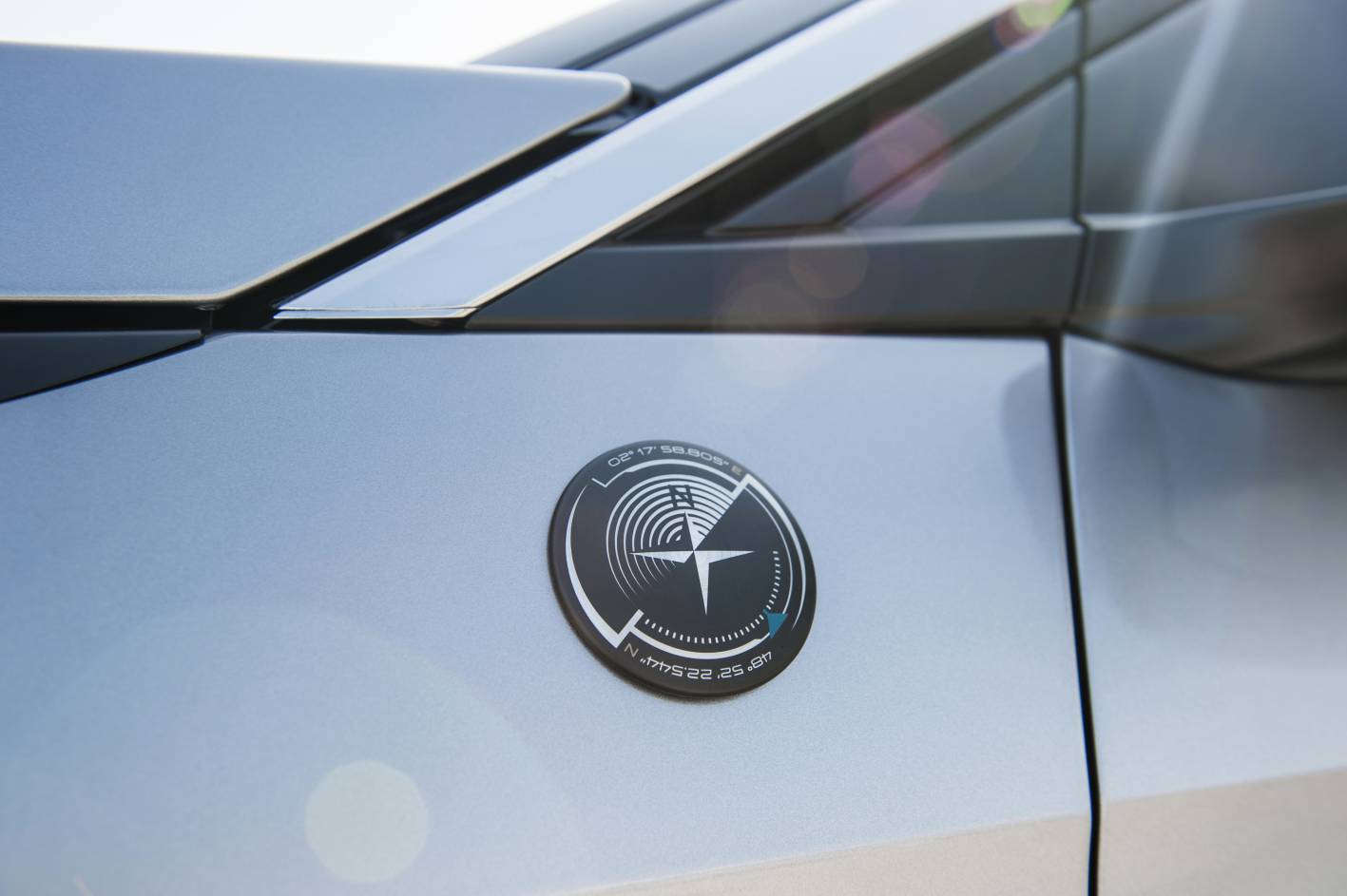
On the outside each model is distinguished by Crossway badging features a four-point compass along with latitude and longitude co-ordinates of the factory from which the vehicles originate (in case you were wondering).
They also come standard with diamond black roof and chrome pack contrasting with a choice of four colours including Emerald Green, Artense Grey, Platinum Silver and Gust Blue.
The extras add $3700 to the retail price of respective Allure versions, with the mid-sized 3008 Crossway priced at $43,490 and the seven-seat 5008 Crossway costing $46,990.
Just 100 Crossway editions are available, with a 60:40 split between the 3008 and 5008 respectively.
The 2019 Lamborghini Huracán Evo Spyder we all knew was coming has been officially unveiled ahead of the 2019 Geneva Motor Show.
With the same 470kW/600Nm naturally aspirated 5.2-litre V10 as its coupe sibling – first seen in the 2018 Lamborghini Huracán Performante – the Spyder is held back from keeping up with the slightly lighter roofed version of the Evo only by its extra weight.
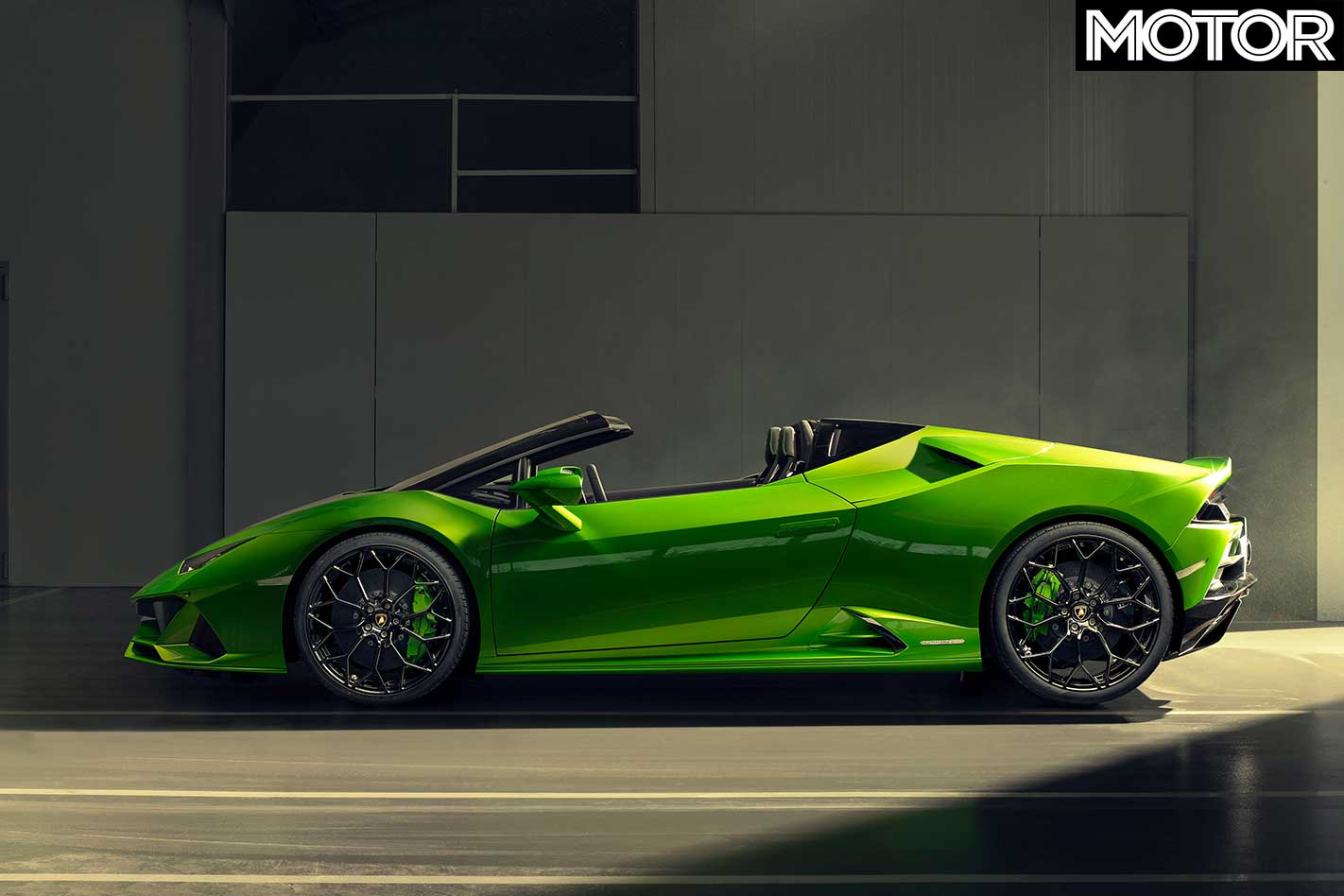
Weighing in at 1542kg dry, 120kg more than the coupe, the Spyder takes an extra two tenths to hit 100km/h for a run in 3.1 seconds.
Its top speed, however, remains the same as the coupe at 325km/h.
Rear-wheel steering, Lamborghini’s ‘Dinamica Veicolo Integrata’ driver assistance control program, and other new advances or addition are carried over from the Huracán Evo coupe to the Spyder.
The assistance program, called LDVI for short, is a system which monitors “external conditions through its active suspension and all-wheel drive.”
View the entire Lamborghini range
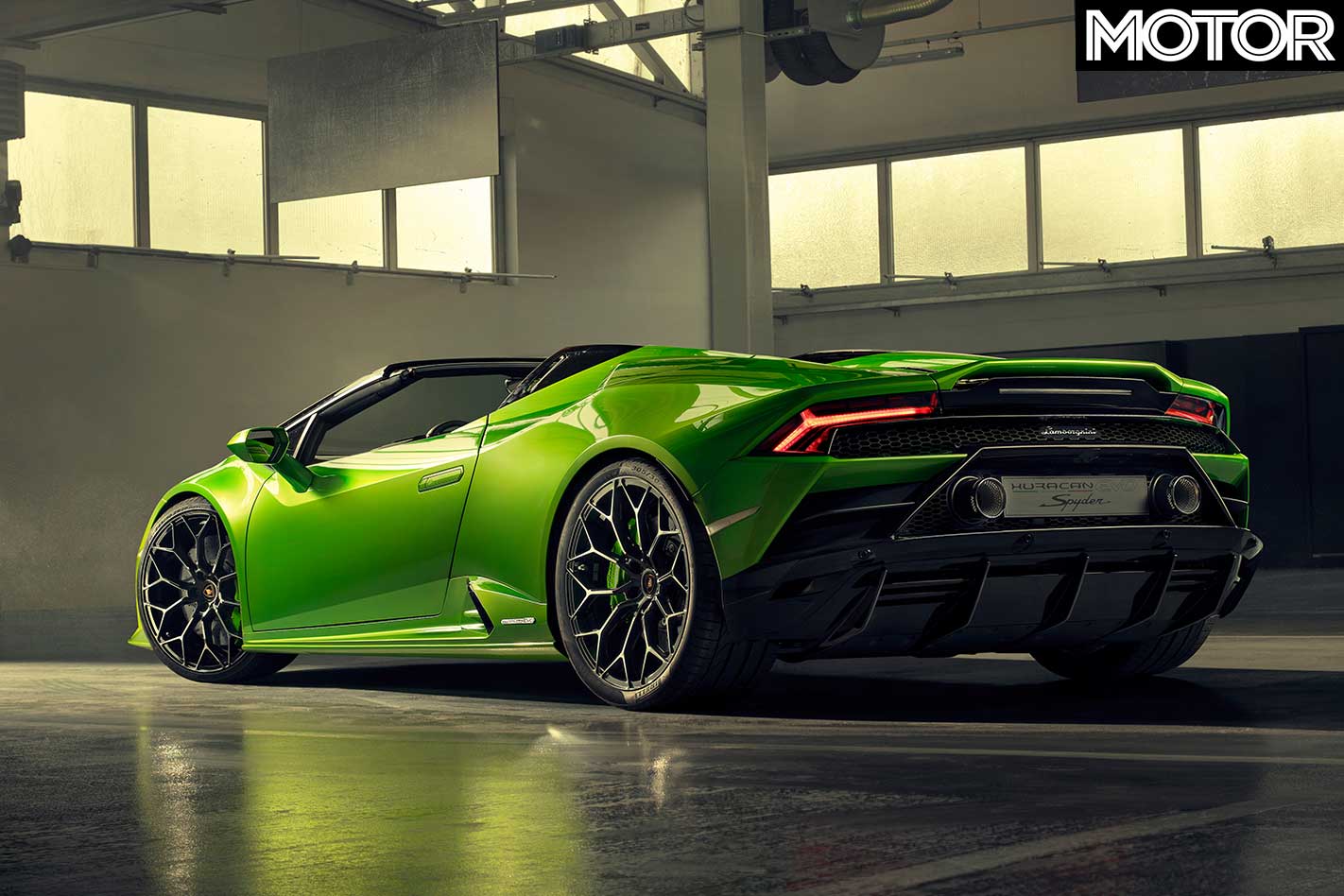
Lamborghini says it can react incredibly fast by predicting driver actions “through steering wheel, braking, acceleration, the gear and driving mode selected.”
“Precise inputs are given to the vehicle dynamic system, creating a super-agile and responsive car with unparalleled level of control: the car doesn’t just react, but predicts the best driving set-up for the next moment.”
The styling of the Spyder carries over from the coupe for the most part, except where the roof is involved of course. A new rear window is able to be opened independently of the roof, for example, meaning drivers can take in the sound of an N/A V10 at full noise, even in pouring rain.
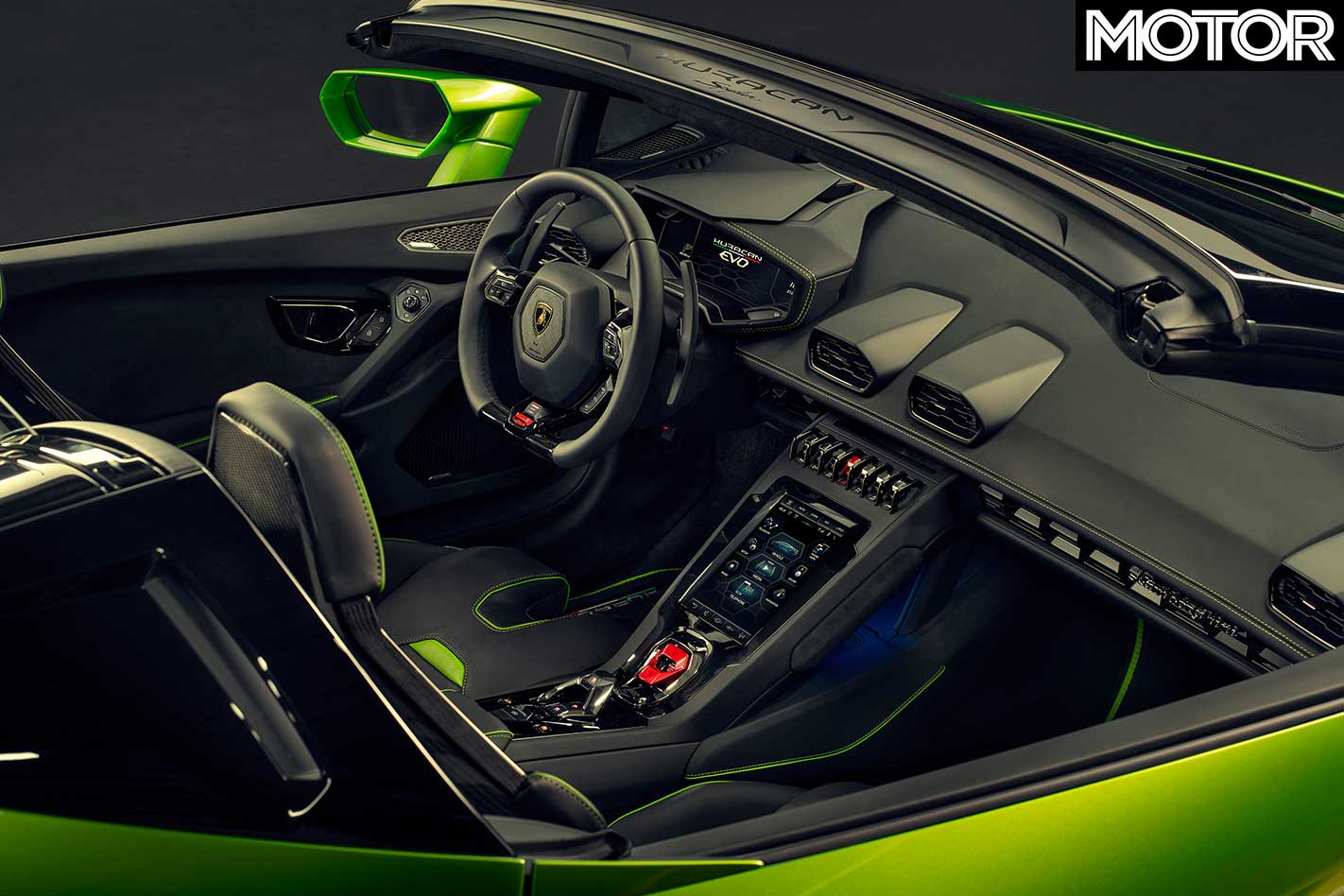
Lamborghini CEO Stefano Domenicalli says the topless Evo is “extremely easy to drive while excelling as a highly responsive, fun super sports car.”
Alarmingly, he also suggests the excitement of the Huracán Evo Spyder might make breathing difficult.
“The Huracán EVO Spyder’s design, performance and exhilarating open-air drive experience is literally breath-taking.”
We’ll take that ‘literally’ as a ‘figuratively’.
WHAT IS IT?
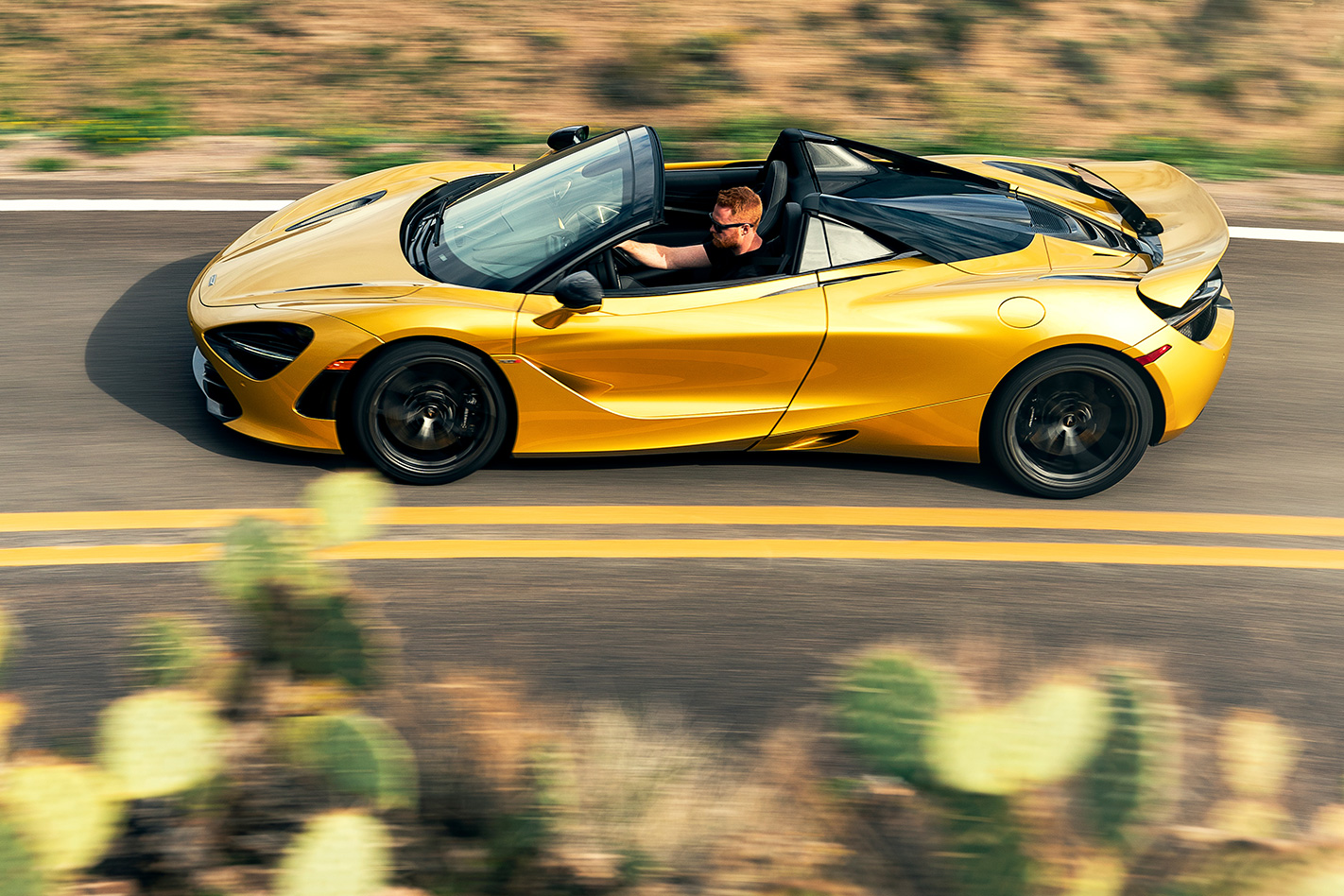
An open-top supercar with none of the open-top supercar pitfalls. That’s the pitch, anyway, and on paper at least, it seems McLaren has delivered. Sure, the 720S Spider is 49kg heavier than the coupe, but it’s no slower from 0-100km/h, only a tenth tardier to 200km/h and retains the same 324km/h top speed. And all with the additional promise of boosting the coupe’s sense of noise and drama.
WHY ARE WE DRIVING IT?
McLarens have long majored on speed and dynamic precision, yet so far, have struggled to match the emotional pull and sheer desirability of their established Italian rivals. That’s beginning to change. The 720S coupe is one of the most capable and exciting supercars Wheels has driven – is this Spider version the one to finally offer that final degree of personality and fun?
MAIN RIVALS
Ferrari 488 Spider; Lamborghini Huracan Spyder; Porsche 911 Turbo Cabriolet
THE WHEELS REVIEW
WHEN Wheels deputy editor Andy Enright drove the McLaren 720S late last year, at night, in a dusk-till-dawn blast on the deserted Great Ocean Road, he looked like a terrified Casper the Ghost in the resulting WhichCar TV segment.
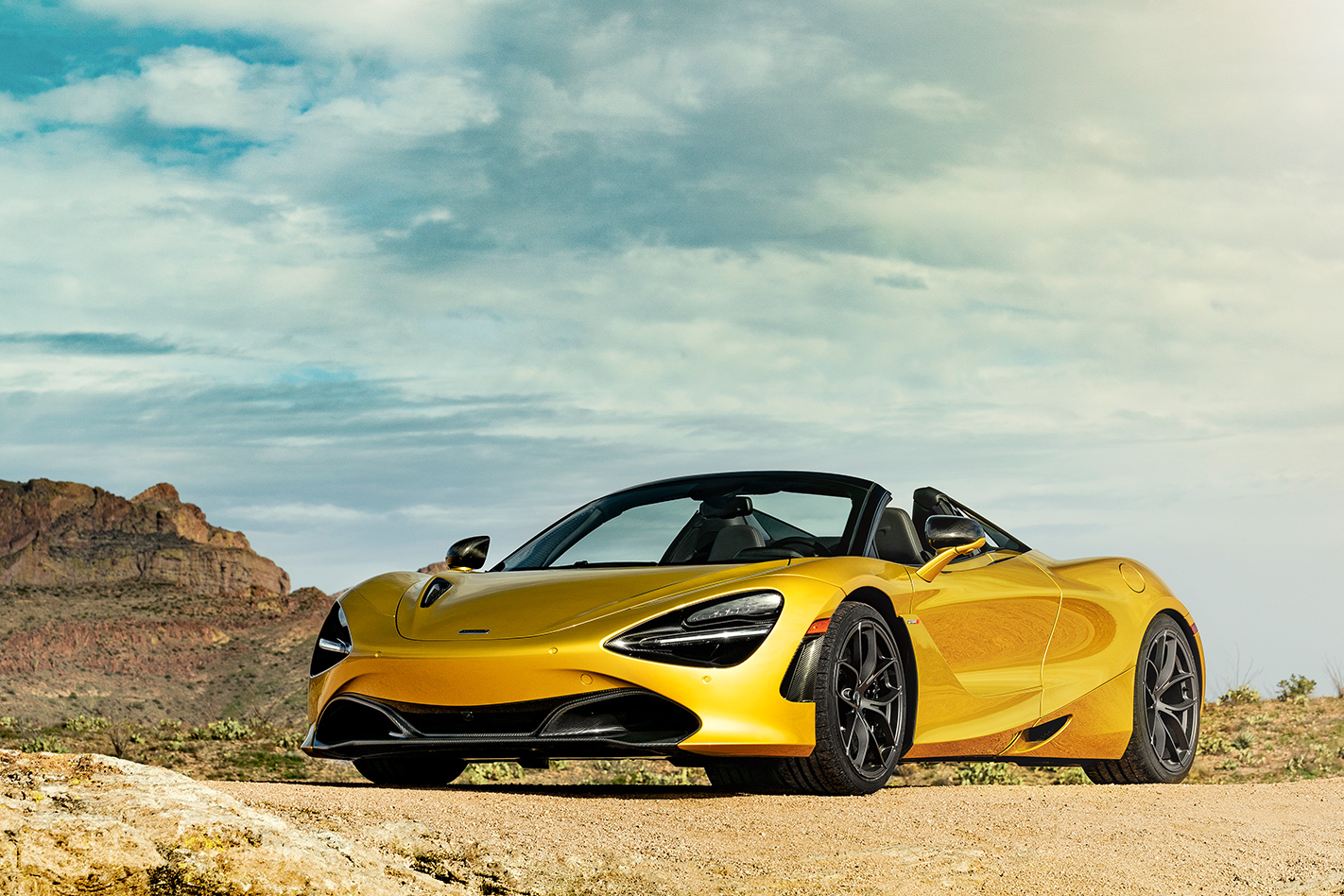
The harsh glow of the TV crew’s LED lights didn’t help, of course, (without them it was so dark you couldn’t see Andy at all), though Enright freely admits he was shaken by the ferocity of the malignant machine from Woking.
“It’s just … feral” is all he could muster on returning to the office.
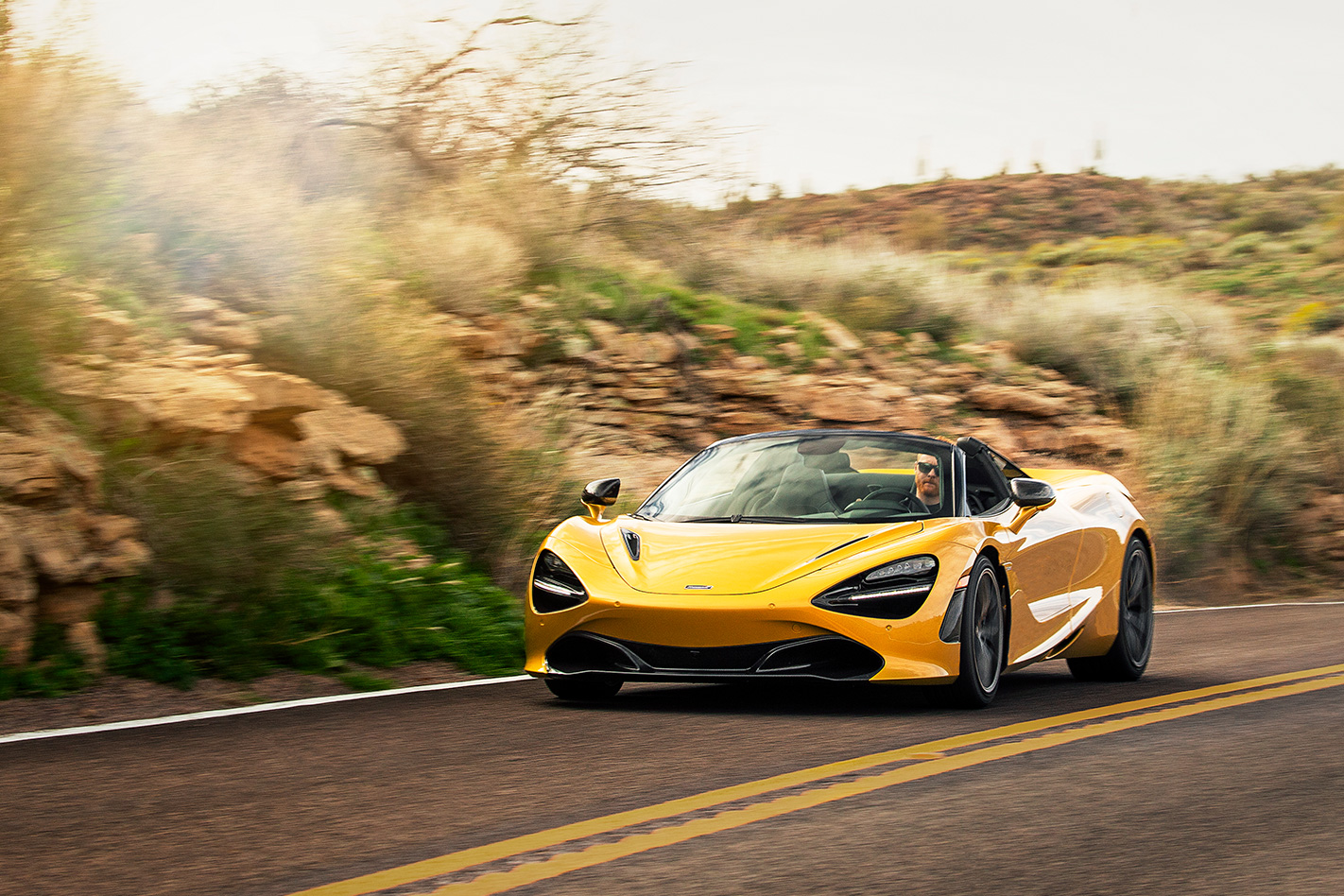
And now, some 13,231km away in the cacti-peppered desert of Phoenix, Arizona, I’m beginning to appreciate just how feral, albeit in a slightly different 720S.
This one’s the Spider version, and before you write it off as the softer, flabbier and floppier alternative, remember that the 720S’s carbonfibre tub construction should see it sidestep many of the traditional convertible pitfalls.
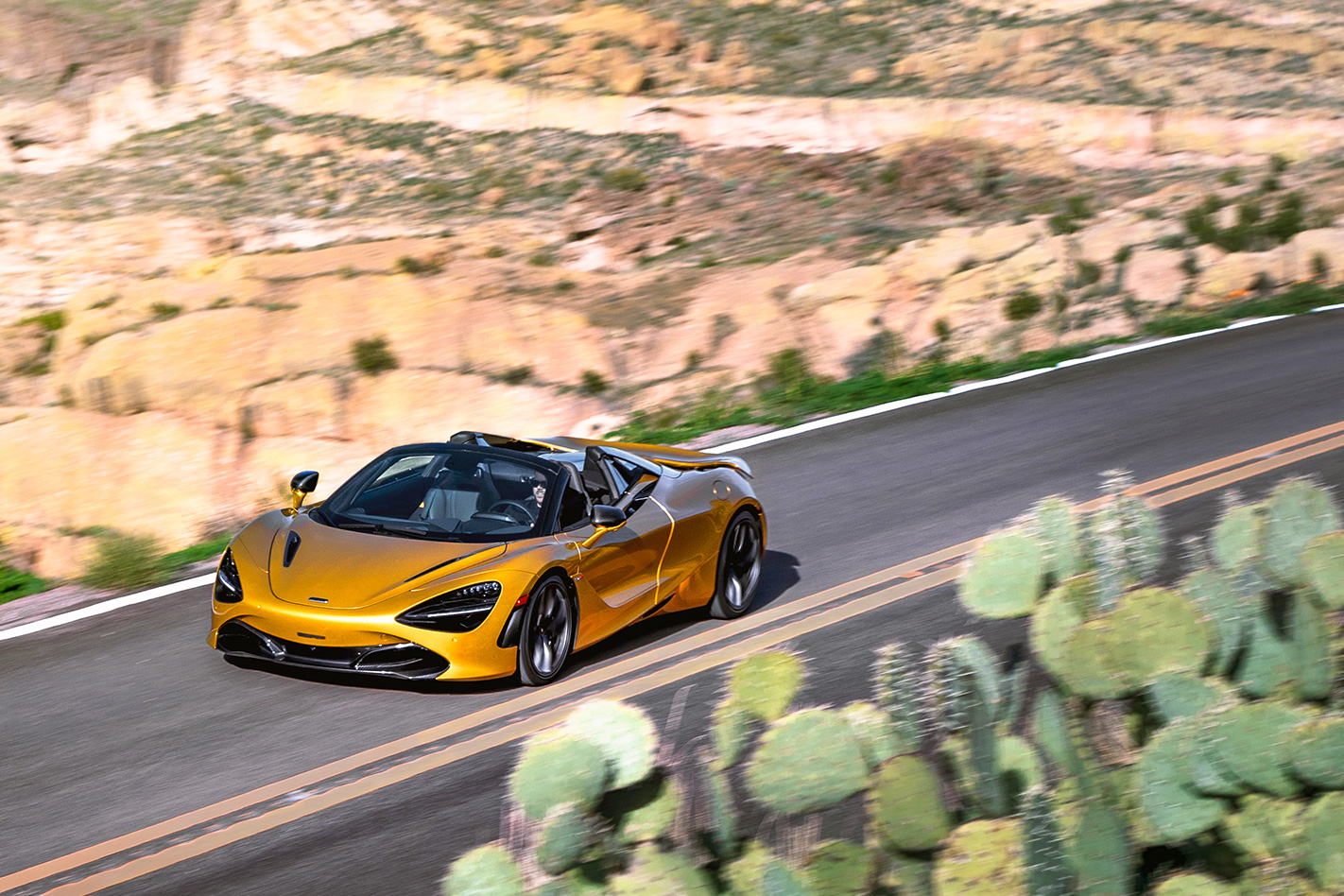
It certainly hasn’t diluted its potency in a straight line. In fact, flattening the throttle in any of the first four gears is an experience akin to lighting the afterburners. With the roof down and the drive select modes toggled to Sport (which activates ignition cut for faster shifts from the seven-speed dual-clutch ’box), it can verge on sensory overload as the rear axle bucks and the 305/30R20 P Zeros squirm and grip.
Gear shifts are brutal, both in their speed and decisiveness, and in the noise they produce. Ask for a downshift as you barrel into a bend and the resulting ‘crack’ sounds as though a rock has hit the windscreen. How does it compare to a 488 Spider or Huracan Spyder? Neither can match the 720S for sheer shock and awe.
And as for loses compared to the 720S coupe, the Spider’s 2.9sec 0-100km/h claim and 324km/h top speed (roof up) are identical. Only the 0-200km/h number blows out … by a tenth of a second.
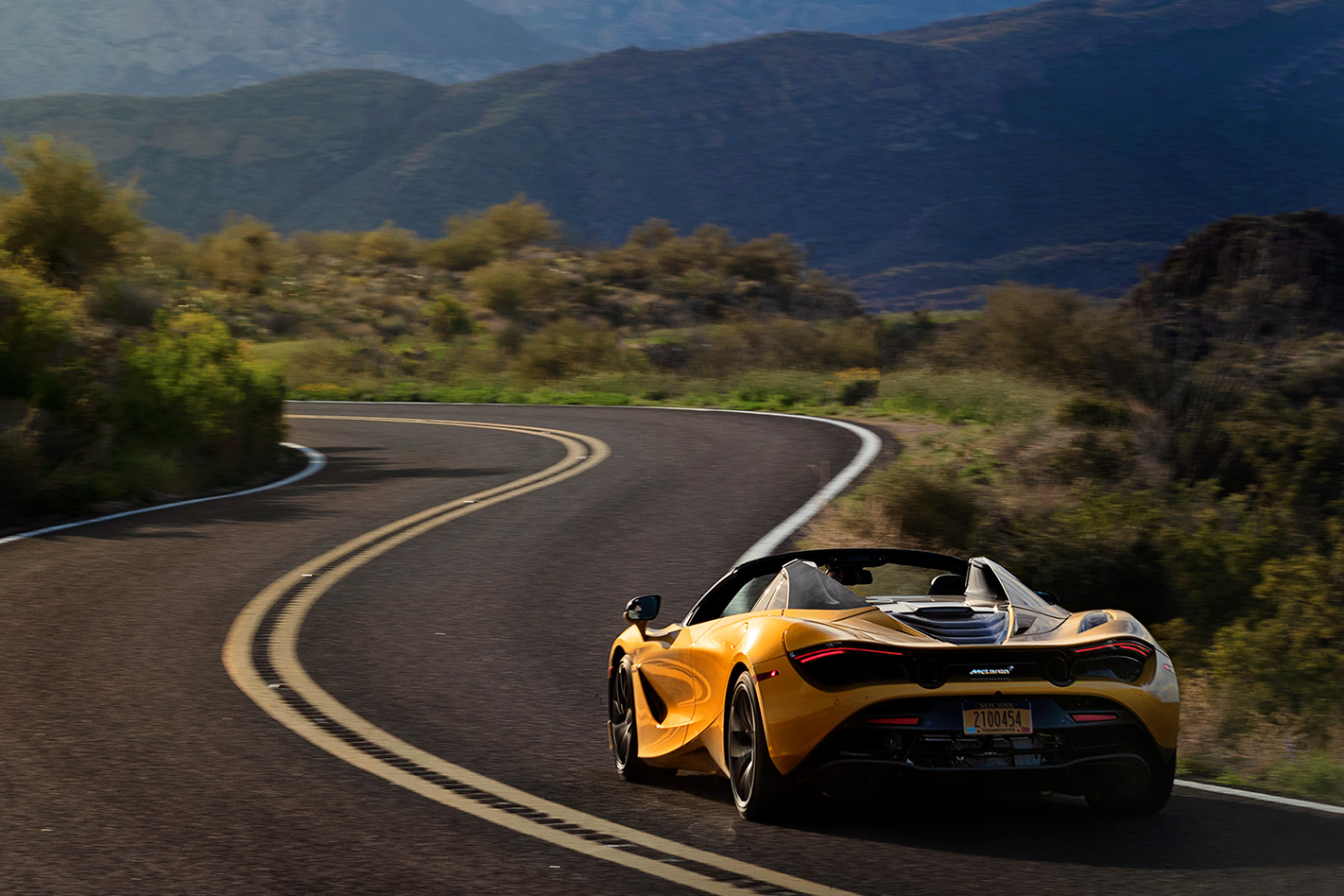
The culprit of this paltry loss is found lurking in the Spider’s roof mechanism. It adds 49kg for a kerb weight of 1468kg and has resulted in the single chassis tweak compared to the coupe – a minor recalibration of the dampers.
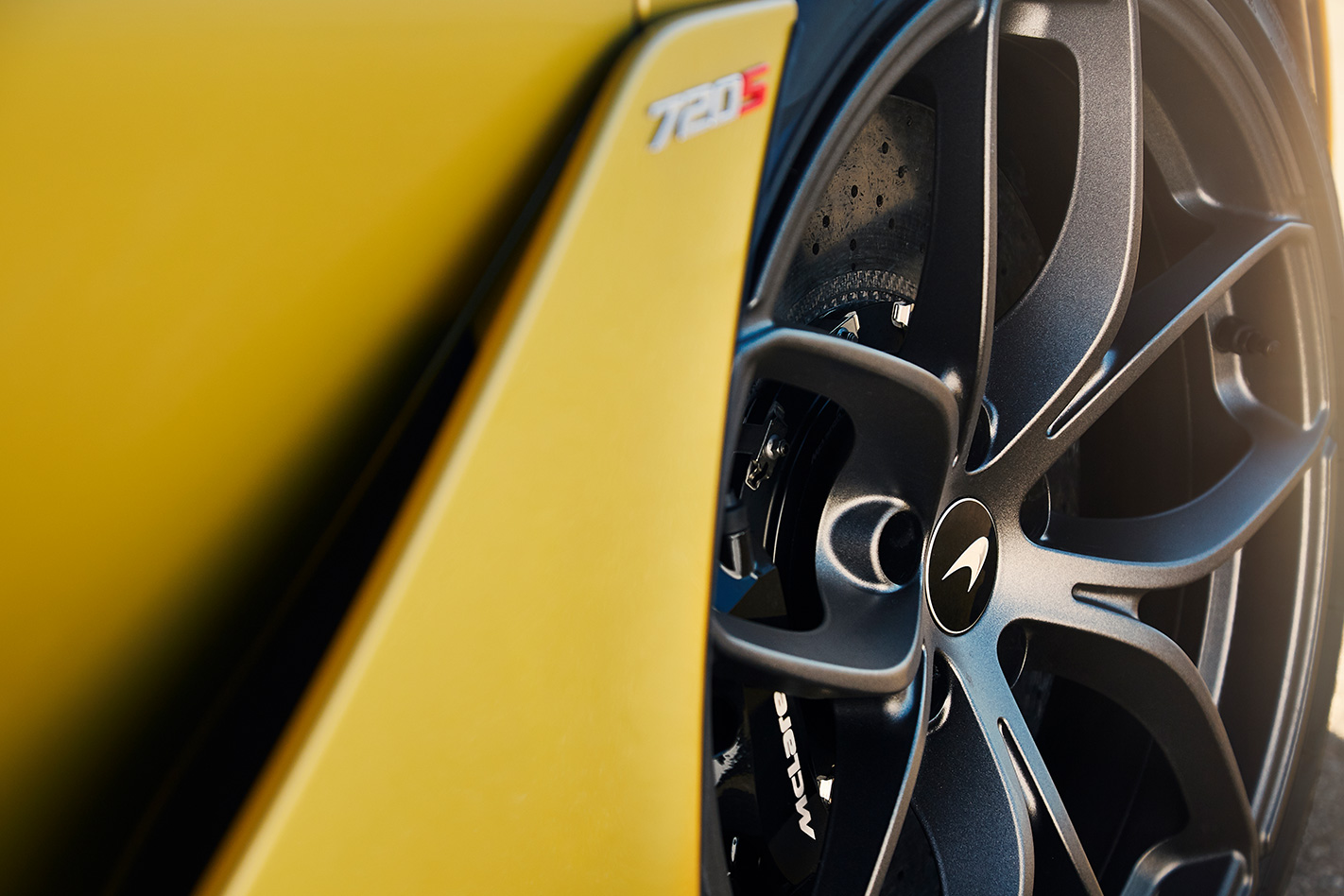
There have been extensive changes elsewhere, however. The roof itself is all new and ditches the existing hydraulic system of the 600LT Spider and old 650S Spider for an electric set-up that is both faster and lighter. Airflow over the rear deck is carefully managed via redesigned buttresses that are also clear to assist with rear vision, and the active rear wing and the air-con now have two maps to adjust for the differences in driving with the roof up, or with it down.
What you don’t expect is for the 720S to be such a doddle to drive slowly. Highly strung supercars can feel recalcitrant when performing the mundane duties of everyday driving, yet the 720S Spider offers no such resistance.
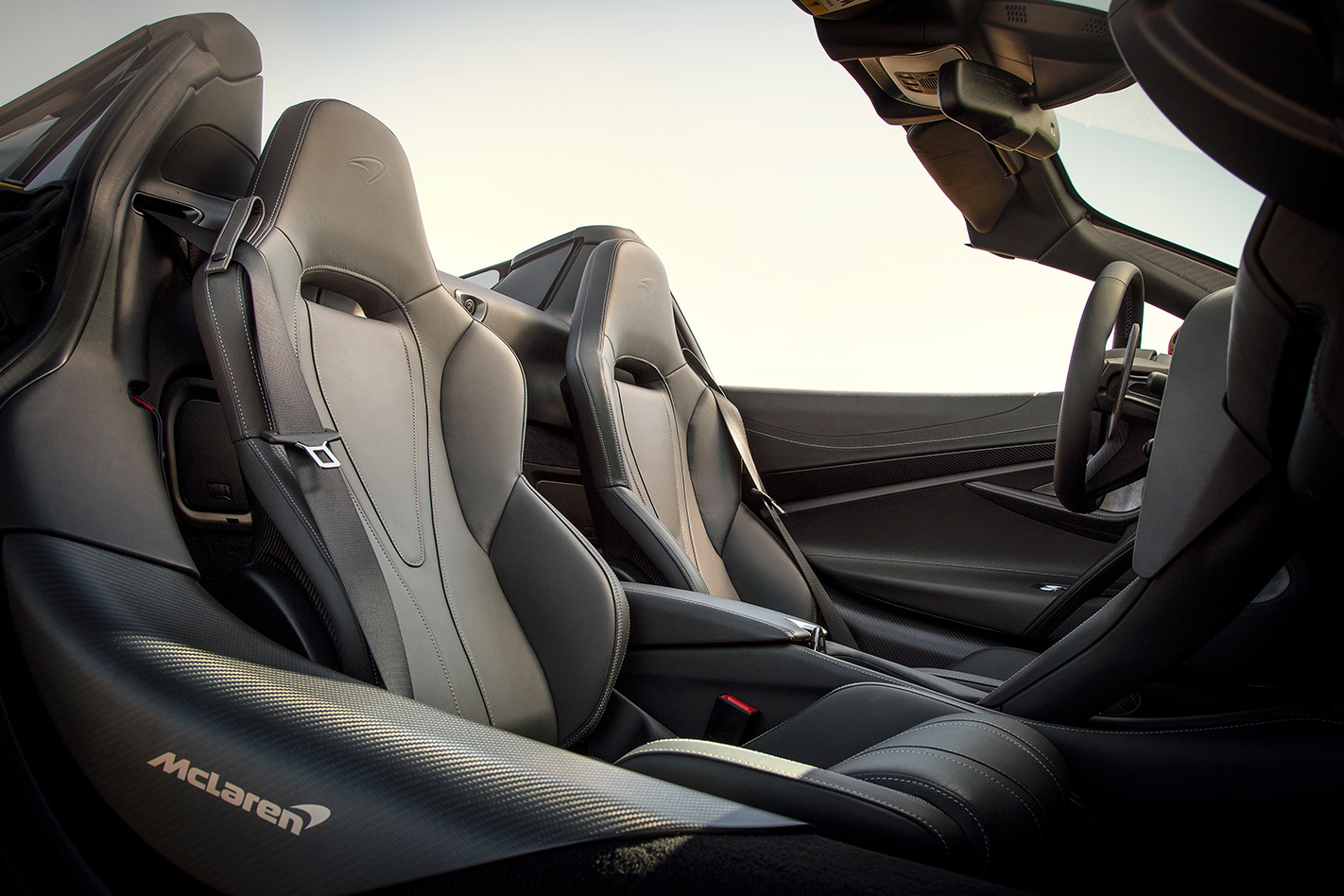
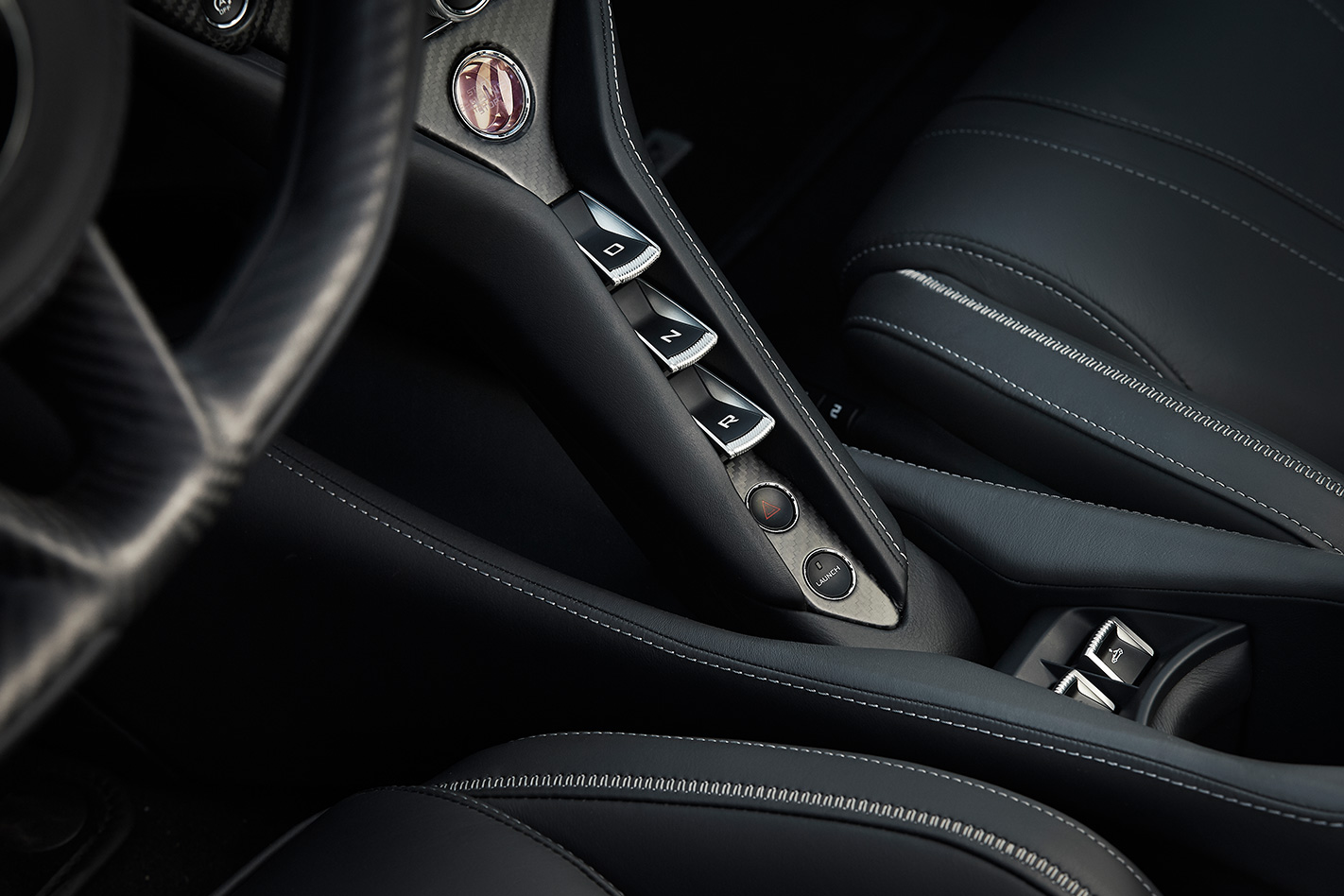
The cabin is beautiful, forward and side vision are superb and McLaren has nailed he fundamentals. The seating position is low and offers ample adjustment, the steering wheel is right-sized, sculpted and able to be pulled close to your chest, and the pedals are perfectly positioned for left- or right-foot braking.
It’s quiet inside, too. Roof up, there’s little difference between the coupe and Spider in terms of road and tyre noise. Only an occasional, and tiny, tremor of scuttle shake shows some concessions have been made in the move to open-top motoring, but even over very bumpy roads the stiffness of the chassis is impressive, and noticeably better than a 488 Spider.
Is it as capable and as exciting as the 720S coupe? If you plan to use your 720S exclusively at a circuit to extract lap times, then no, it isn’t. However the differences are so negligible that if you use the 720S Spider as a very fast road car, the answer is absolutely.
Few cars can destroy a road with such clinical precision or offer such an experience of barely contained aggression. Feral, indeed.
THE WHEELS VERDICT
History shows there’s no surer way of diluting a car’s performance than by lopping away a great section of its roof. That isn’t the case here. The 720S Spider delivers near identical dynamics to that of the coupe, making it easily the most capable car in its class and, thanks to its greater sense of drama and exuberance, arguably the 720S to buy.
PLUS: Savage acceleration; approachable dynamics; boosted sense of theatre; class-leading steering and chassis rigidity MINUS: There’s plenty of noise but it never sounds amazing; umm…
SPECS
Model: McLaren 720S Spider Engine: 3994cc V8 (90), dohc, 32v, twin turbo Max power: 530kW @ 7500rpm Max torque: 770Nm @ 5500rpm Transmission: 7-speed dual-clutch Kerb weight: 1468kg 0-100km/h: 2.9sec (claimed) Economy: 12.2L/100km Price: $556,000 On sale: Q3 2019
The 2019 Porsche Macan has landed in Australia, but it’s carrying more than just a new face and bum.
Its diesel engines are gone, leaving the base Macan with an updated four-cylinder petrol engine and the S with a new turbocharged 3.0-litre V6.
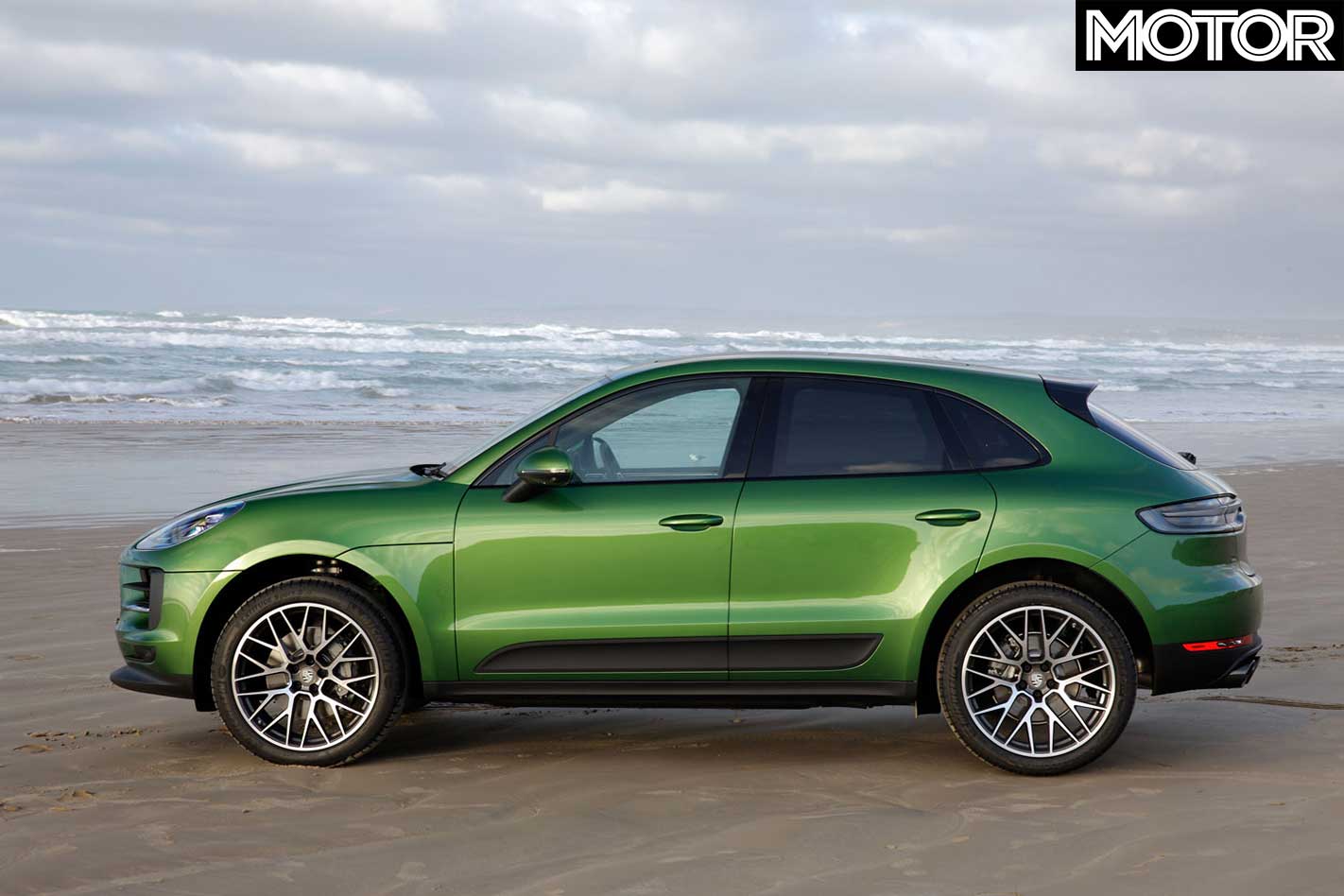
The S now comes with 260kW and 480Nm, up 10kW and 20Nm, using the engine from an Audi SQ5 fitted with a particulate filter. It accelerates from zero to 100km/h in 5.1 seconds (with Sport Plus or 5.3 seconds without it), a tenth quicker than before with a twin-turbo V6, and is quoted to reach a top speed of 254km/h.
Meanwhile, the 2.0-litre turbocharged four-cylinder variant forgoes a filter and carries over 185kW and 370Nm. It needs 6.7 seconds to hit 100km/h from rest and will reach 227km/h in top gear. Both engines slurp from a 75 litre fuel tank that is optional overseas.
They’re matched to retuned seven-speed dual clutch transmissions linked to a centre multi-plate clutch. A coasting function has been added to the optional Adaptive Cruise Control function and the Start-Stop system has also been looked at. Safety wise, AEB is an option with ACC.
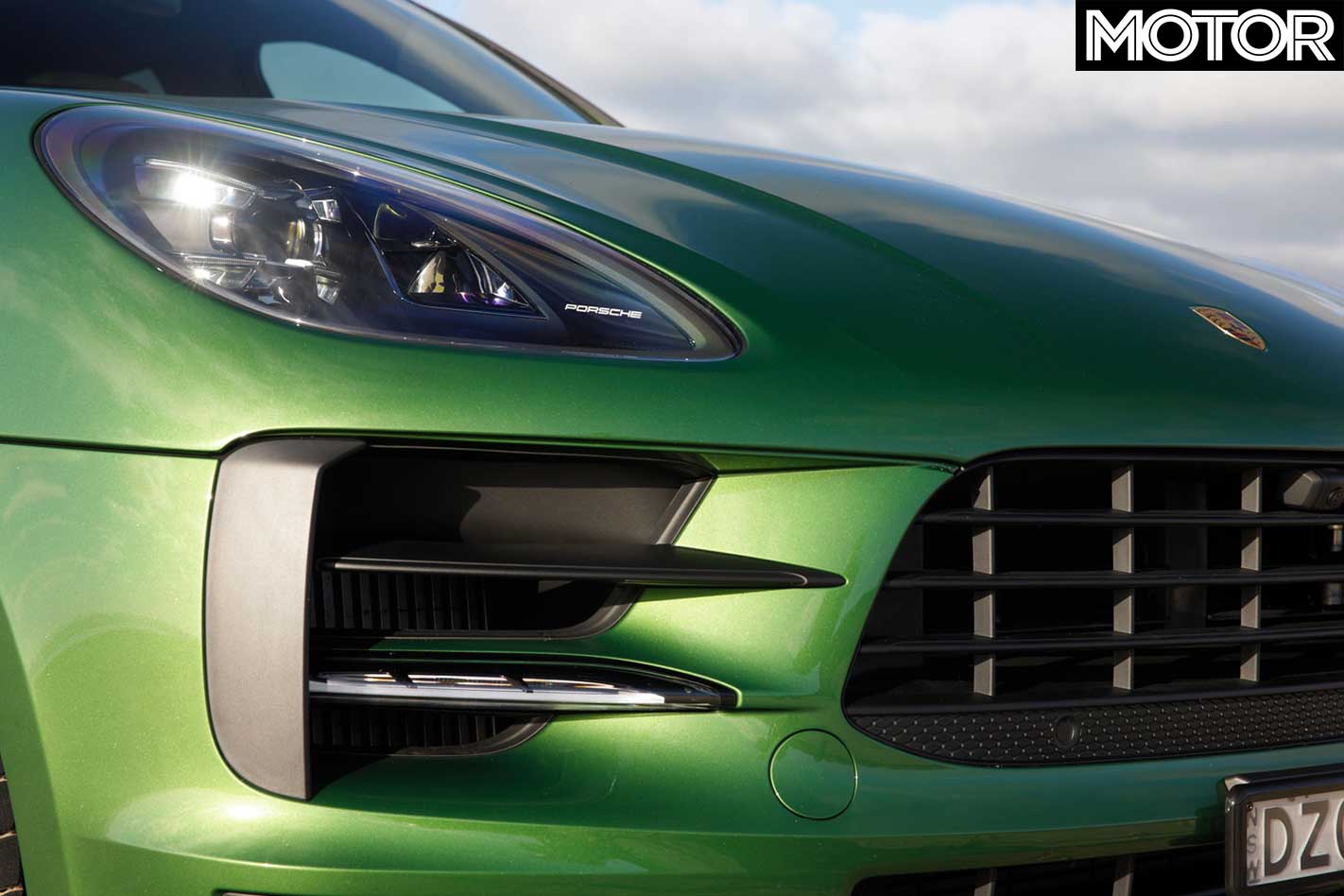
All models come with LED headlights and a cleaner front grille design that cages a radiator shutter that actively can open and close to aid warm-up. Meanwhile, at the rear, is a new light strip that spans its width and four-point LED brake lights that match the front LED daytime running lights design. Australian cars dodge European spec 18s and instead ride on 19-inch wheels as standard, hugged by 235/55 and 255/50 rubber front to rear.
Besides the engine, S models come with a fair bit above the standard car like 20-inch wheels, adaptive suspension and bigger brakes. Its wheels, otherwise a $5040 option for the base car, upgrade tyres to 265/45 and 295/40 respectively. S models can upgrade to 21-inch wheels with the same sized tyres. Three-mode adaptive suspension is a $2040 option on the base model and active air suspension is also available.
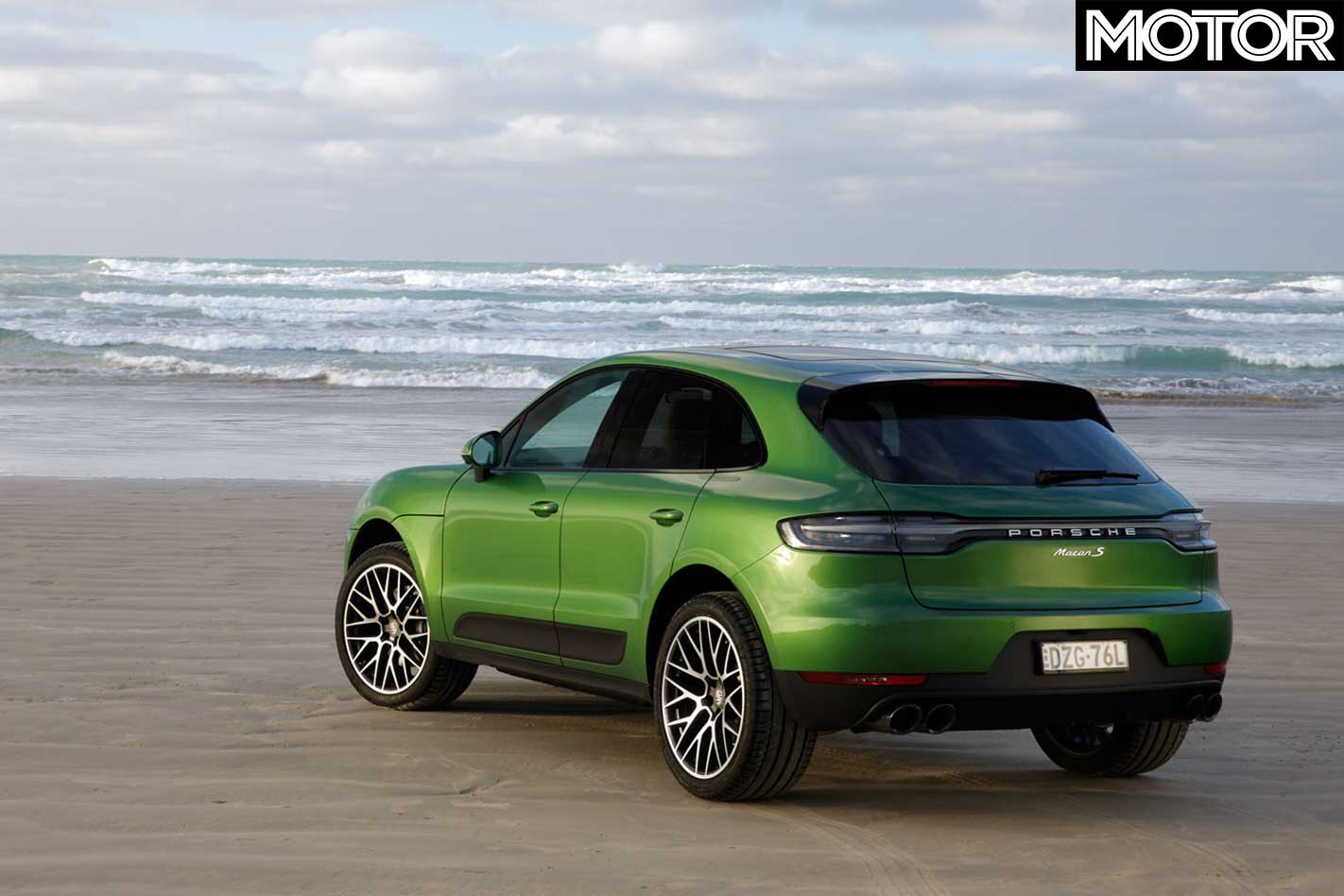
Bigger brakes, however, are exclusive to the S and are defined by 360mm x 36mm front discs, 10mm larger than before, that slice six-piston fixed calipers. Base models, with less grunt and mass to haul down, instead rely on four-piston front calipers and 345mm discs. Both cars share a 330mm rear disc and sliding piston caliper assembly.
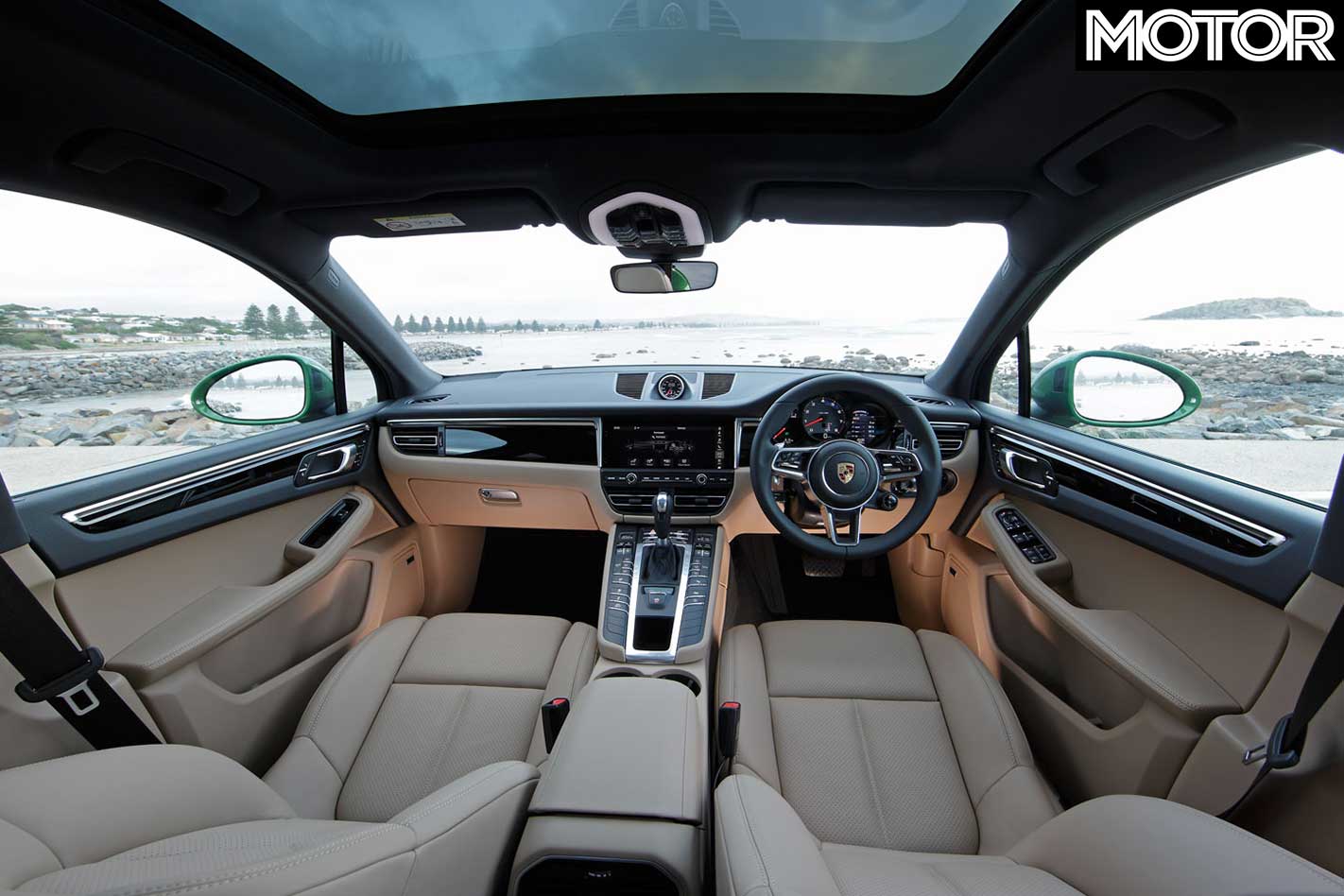
There are new treats inside as well, where a new larger 10.9-inch screen displays the latest Porsche Communication Management software. Sound blasts from a 10-speaker, 150-watt system that’s linked to Apple CarPlay and Digital Radio. You can also hotspot the car if it’s installed with a sim card.
Porsche says the new Macan S is available now and the base model arrives in dealers this weekend. Buyers will need $80,400 for the base or $97,500 for the S before on-road charges, representing a price increase of $1290 and $1600.
That’s the range until facelifted GTS and Turbo variants arrive in future. If you’re interested in reading on how these changes stack up, stay tuned for our on-road test that goes live this Thursday afternoon.
As one of the first German big guns to take on Tesla’s premium EV dominance with the well-hyped E-Tron, Audi will be adding more plug-in models to its line-up, including one of Australia’s most popular premium SUVs and what will likely rival the Volvo CX60 PHEV: the Audi Q5.
Set to be fully revealed at the Geneva Motor Show next month, the new range of plug-in hybrids will see the Q5, A6, A7 and A8 earn TSFI e badges (e-tron is reserved only for Audi’s fully electric models).
Depending on the model series, there will also be two variants to choose from – ‘A’ and the sportier ‘S’, the latter with tighter suspension, boosted performance and more dynamic handling.
The news of the new plug-in hybrid Q5 TFSIe comes just days after the new SQ5 diesel was revealed in Europe, proving that hot diesels and hybrid plug-ins can live in harmony. The hybrids will use a turbo-petrol engine, with the electric motor integrated into the transmission.
Switch to electric only and Audi claims a WLTP range of more than 40km. When it comes to charging, a 7.2kW wall box will fully charge the 14.1kWh-capacity battery in two hours.
In Europe, Audi says that the new models will be available for order later this year, but a spokesperson from Audi Australia said, it “certainly sees future opportunity with these models, in support of the overall Audi electrification strategy. Currently, we’re evaluating these models in the context of the current and possible future market conditions.”
Audi has said it plans to make one-third of its global production electrified by 2025.
What is it?
The Endura ST-Line is the mid-spec variant of Ford Australia’s newest large SUV.
It shares a sports body kit and interior trim with the powerful twin-turbo V6 ST version – which isn’t available here and is called the Edge ST overseas – and rides on a sports tuned suspension set up, but is powered by the standard 2.0-litre turbo-diesel engine.
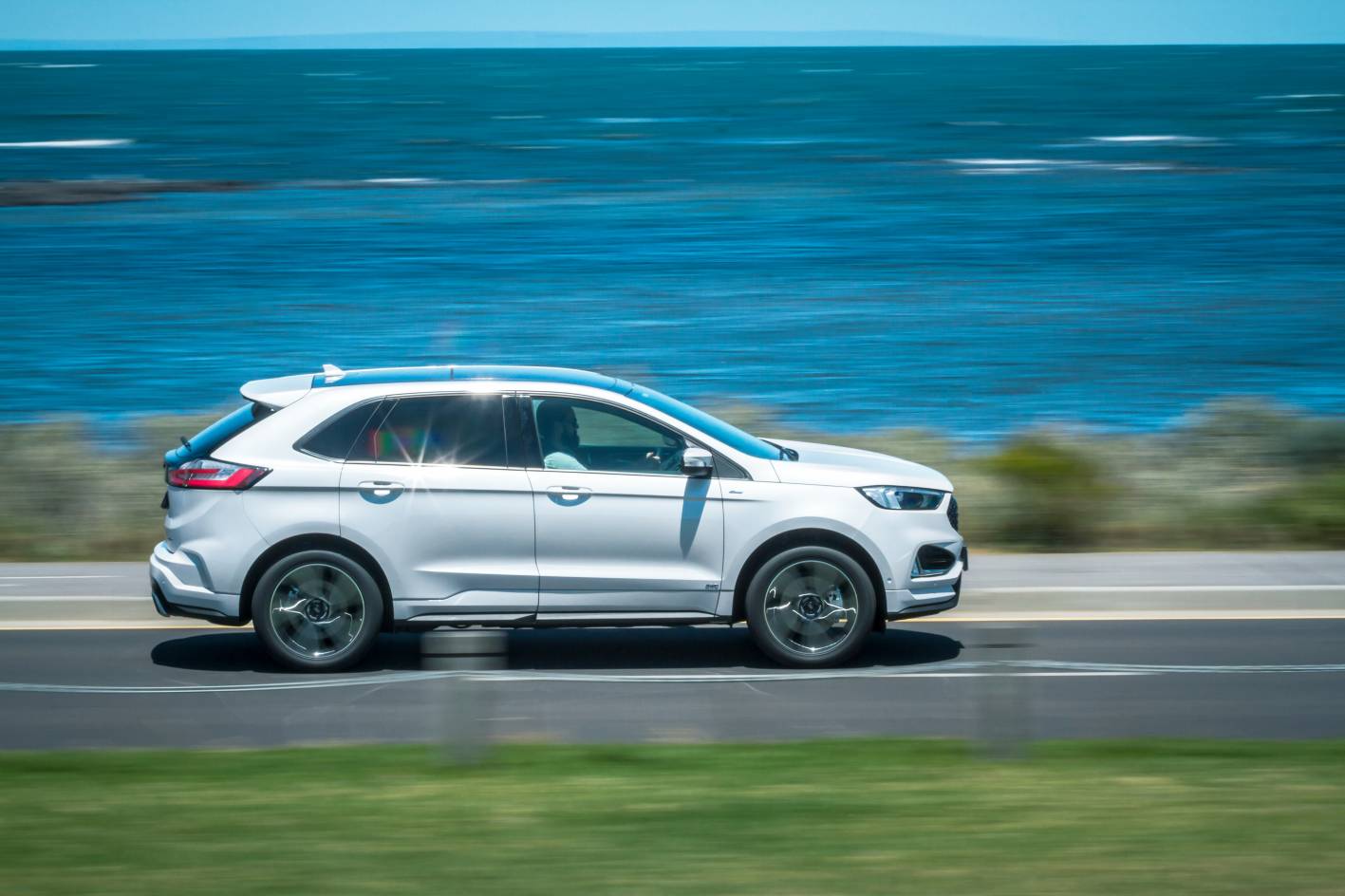
Like the rest of the Endura range, the ST-Line only has five seats, instead of seven like its main rivals including the Holden Acadia, Hyundai Santa Fe and Mazda CX-9.
How much does the Ford Endura ST-Line AWD cost?
The diesel-only Ford Endura range starts at $44,990 for the Endura Trend FWD, and capped off by the Endura Titanium AWD at $67,990.
The ST-Line sits in the middle, priced at $53,990 for the FWD and $57,990 for the AWD. That $4000 premium for all-wheel-drive traction applies across the Endura range.
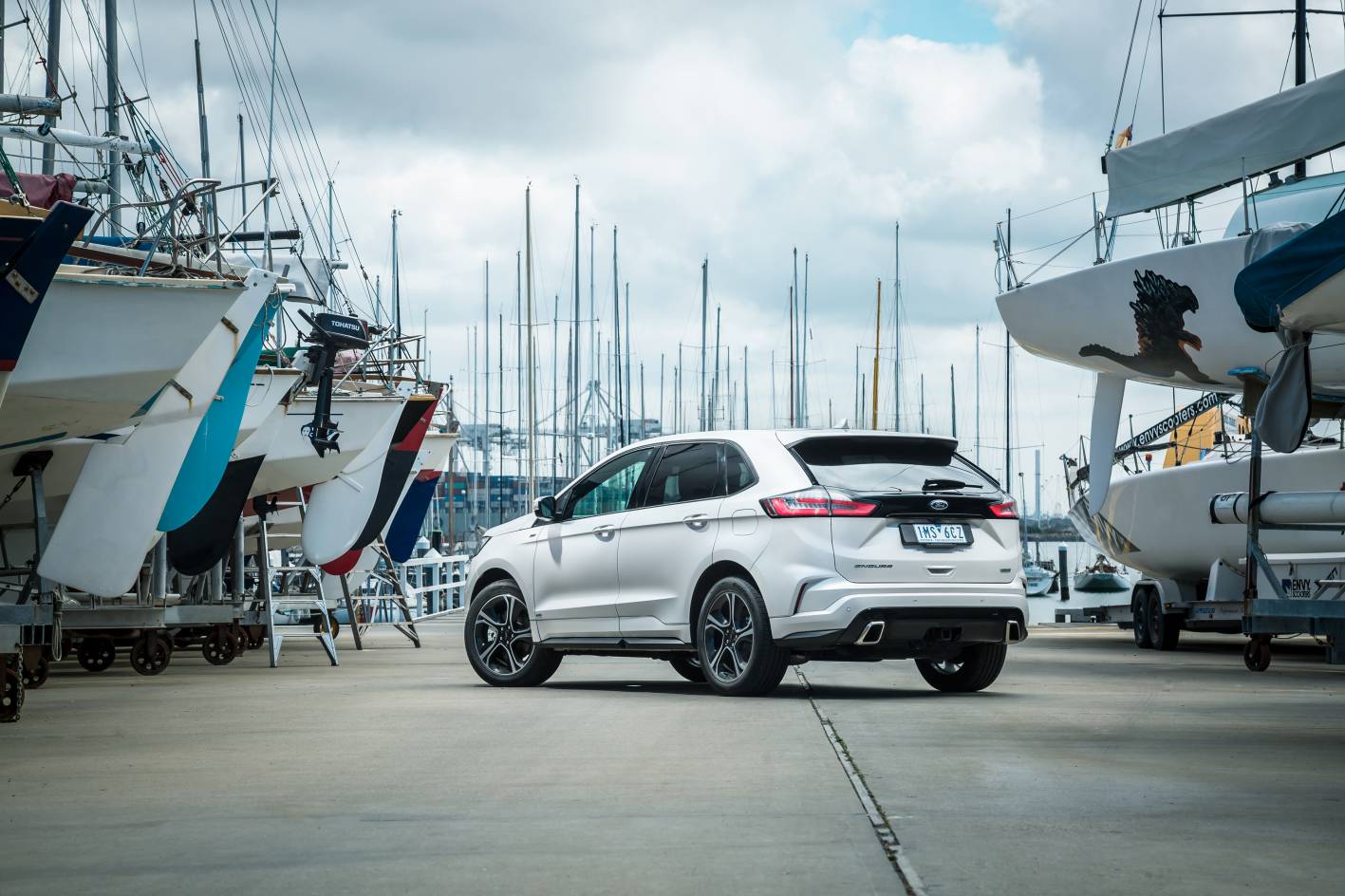
Highlights from the standard feature list include autonomous emergency braking, full-LED headlights, ambient interior lighting, sports seats with suede trim and leather accents, heated and cooled front seats, and a driver’s seat with 10-way power adjustment and memory settings.
Our Endura ST-Line AWD test car also featured an optional panoramic sunroof ($2500), 12-speaker B&O sound system with 180-degree split parking camera ($1000) and Blue Magnetic paint ($650), which pushed its retail price to $62,140.
Who is this car for?
The Endura ST-Line is great for someone seeking a well-appointed yet economical large five-seat SUV that can tow and carry a lot of stuff, while being enjoyable to drive.
Is the Ford Endura ST-Line AWD easy to live with?
While new to the Australian market, the Endura is actually a facelifted version of the 2015 Ford Edge meaning the dashboard is similar to older Ford models.
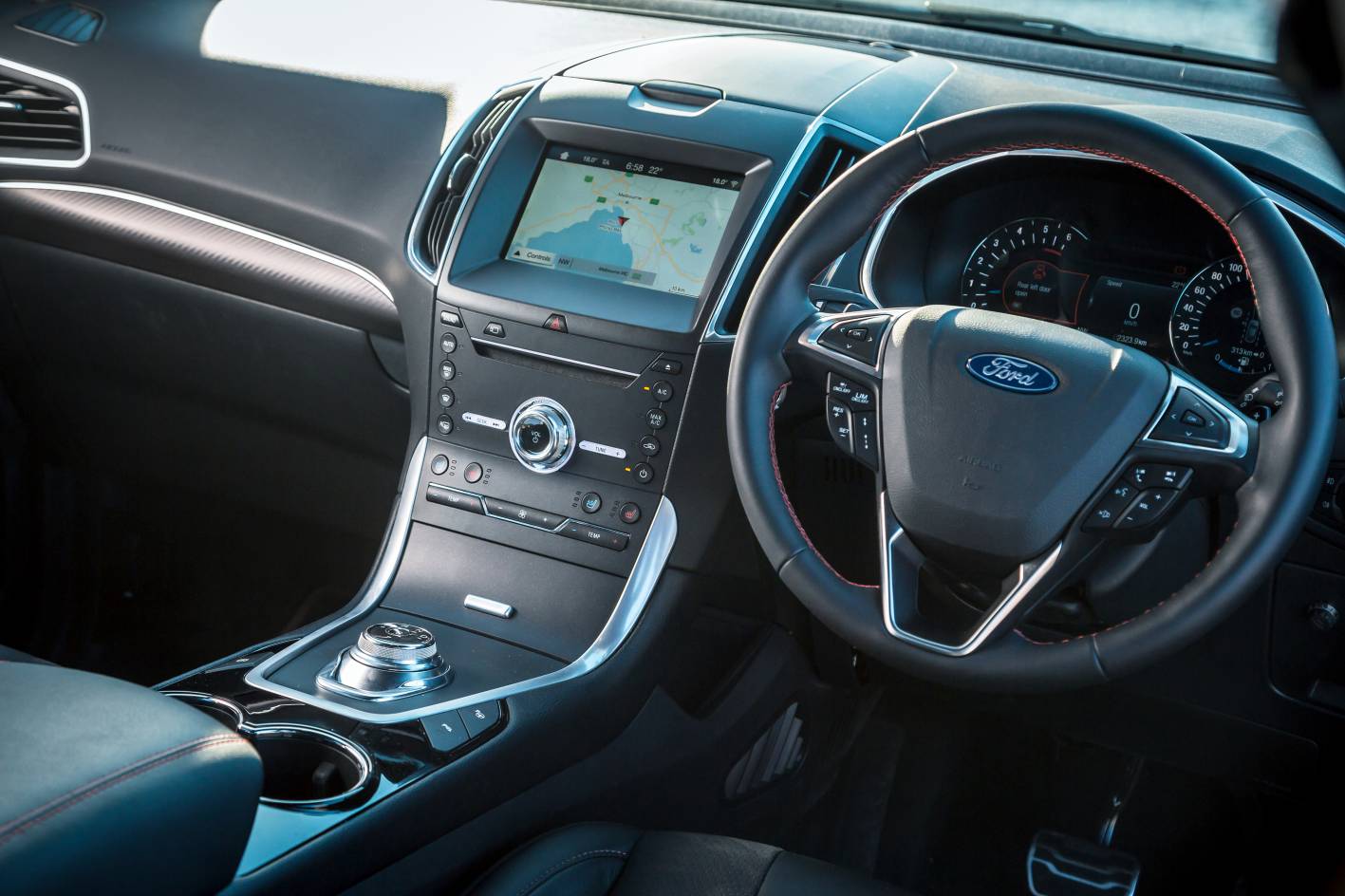
The 8.0-inch infotainment screen is located a little low within the dash, but it does use Ford’s latest Sync3 infotainment system with inbuilt sat-nav and Apple CarPlay/Android Auto smartphone pairing. You also get a CD player, which is becoming increasingly quaint these days.
The interior fit and finish has a quality feel to it, and the suede and leather trim sports seats look good and offer excellent back support and side bolstering. They’re also heated and ventilated.
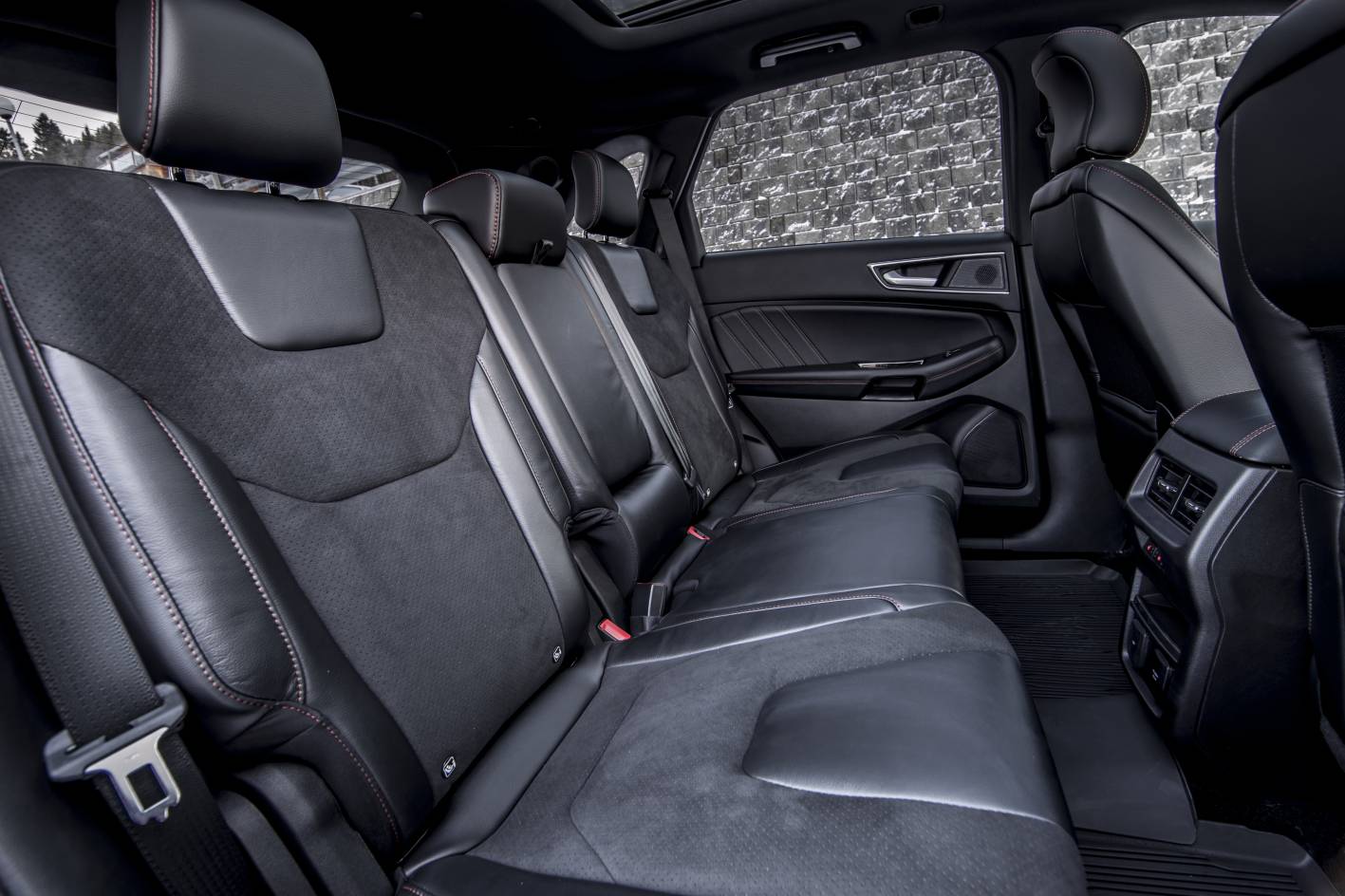
The rear seats have reclining backrests and will fit three adults, albeit a little snugly. Rear passengers get their own air vents, 12v and 240v sockets and heated outboard seats.
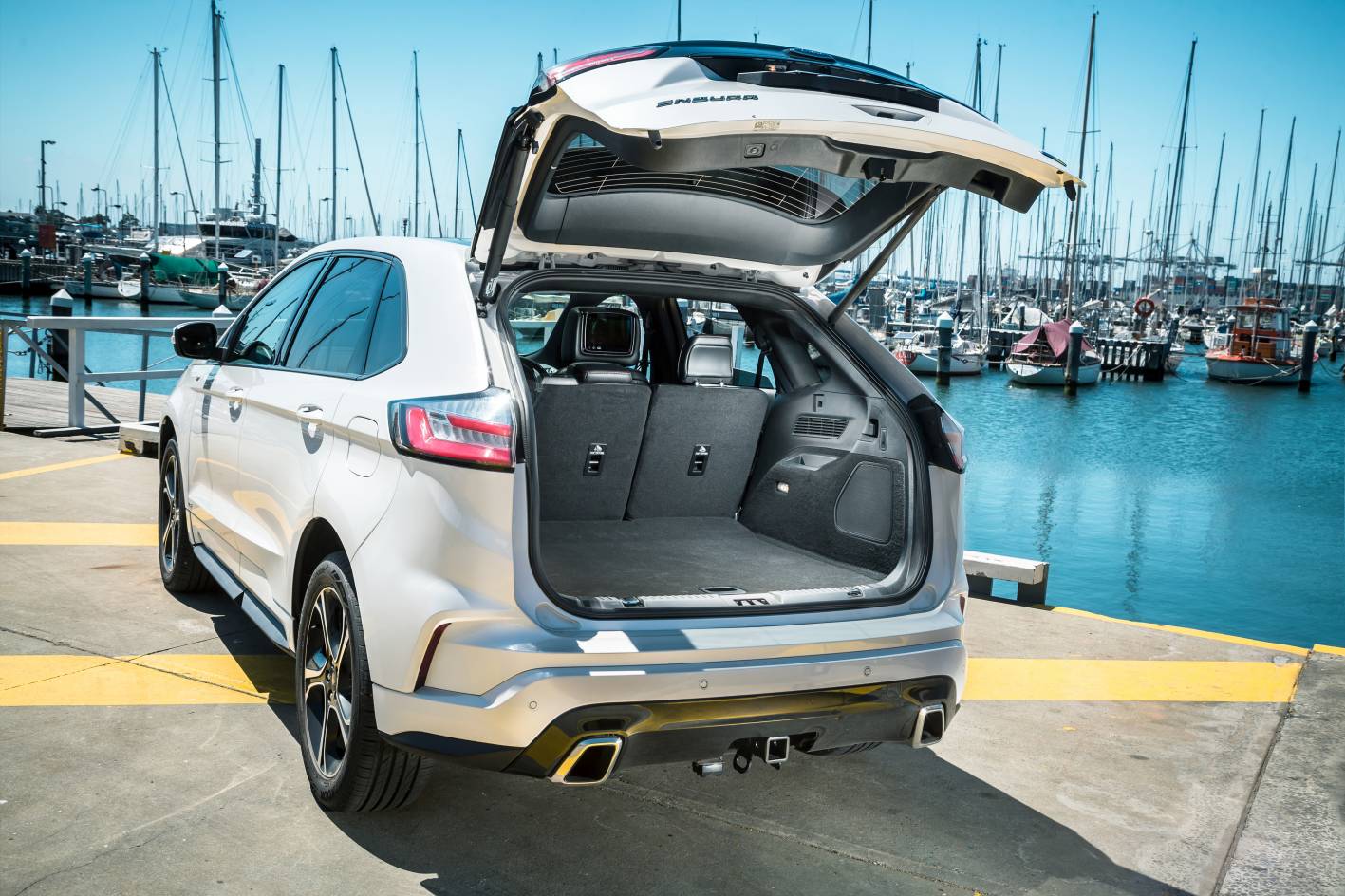
Boot space is a generous 800 litres, which is well above average for large SUVs, though you might have some trouble fitting taller, bulkier loads because of the raked-forward tailgate glass. The boot floor lifts to reveal a space-saver spare tyre and several storage compartments.
Does the Ford Endura ST-Line AWD drive well?
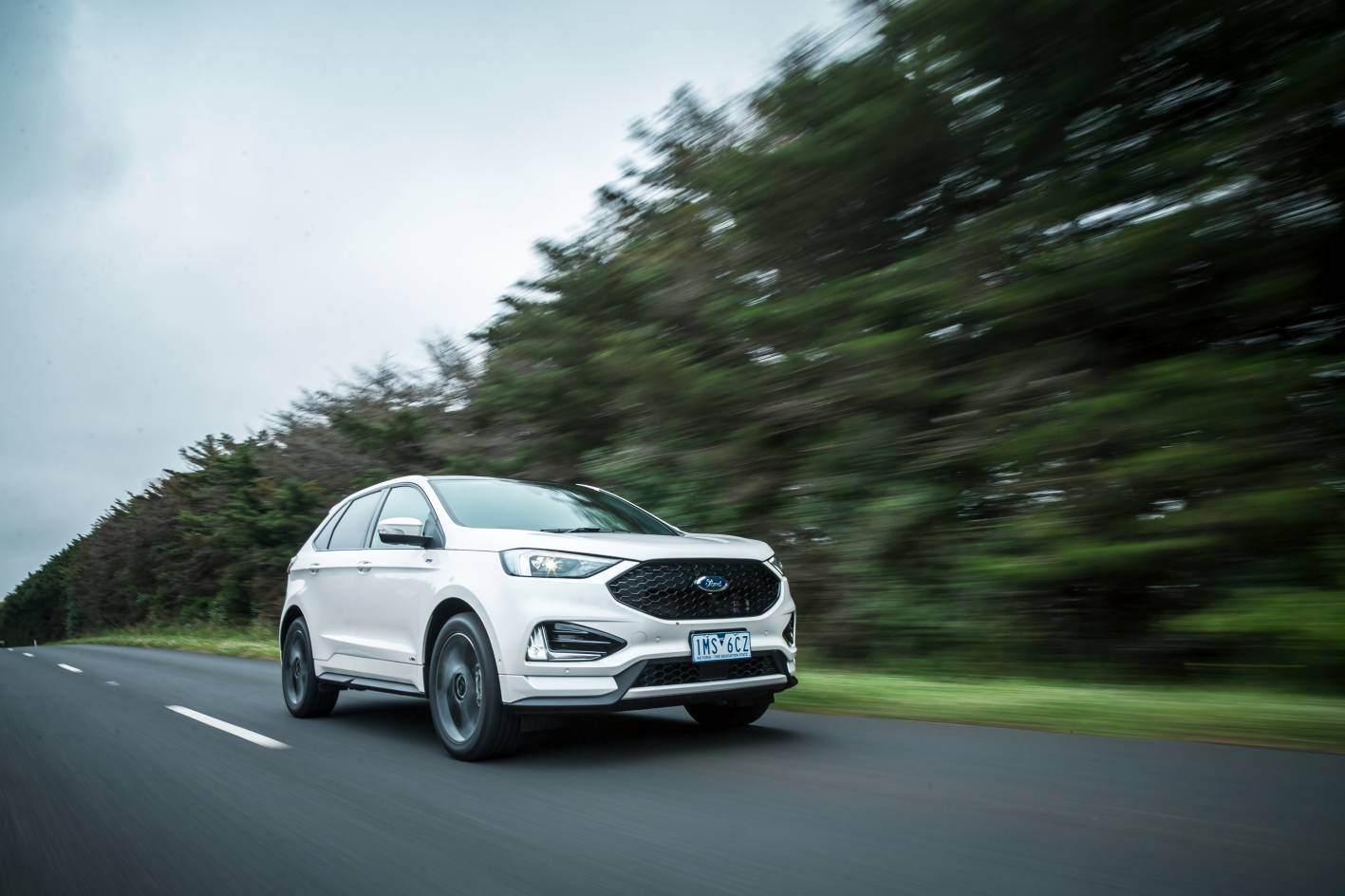
Like the rest of the Endura range, the ST-Line offers an excellent driving position and a quiet, smooth ride that makes it an excellent companion for long journeys. Despite its size, it feels relatively nimble around town with light, but nicely-weighted, steering.
The sports-tuned suspension and torque vectoring control improves handling over the Trend and Titanium variants without compromising ride comfort, even on the ST-Line’s huge 20-inch wheels and low-profile tyres. For a big SUV it feels surprisingly composed through bends, making you feel like you’re driving a low-riding wagon.
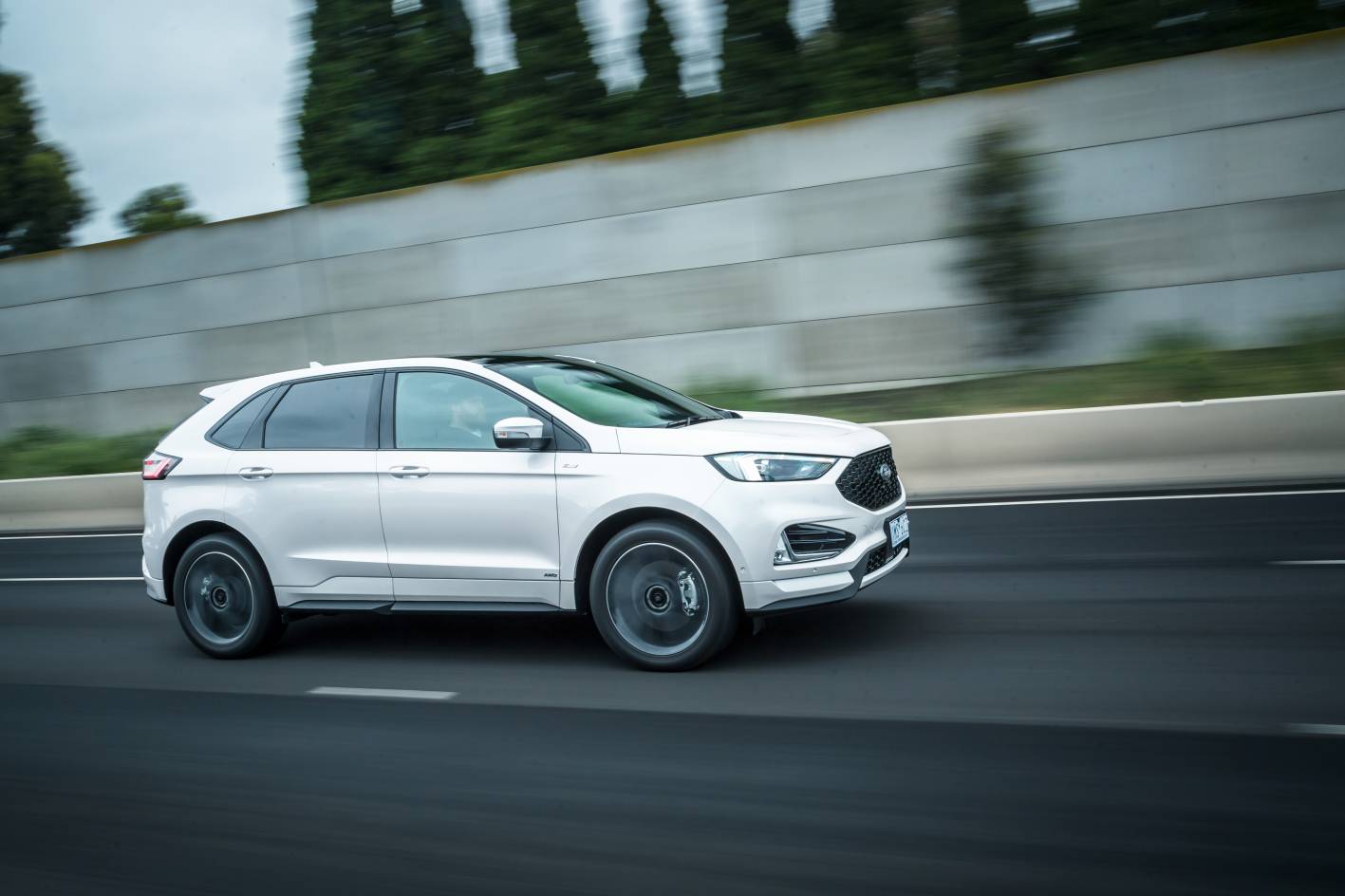
Despite its size, the Endura is still manageable in tight spots and easy to park. It’s quiet, too, with good soundproofing that’s enhanced by electronic active noise cancelling. Great for highway cruises, then, and that’s improved even further by the Endura’s semi-autonomous drive mode, with active cruise control and lane-keeping assist that’s easy to set up and operates smoothly.
The 140kW/400Nm 2.0-litre four-cylinder turbo diesel engine, matched with an eight-speed automatic gearbox, feels more than adequate, and features a sports mode that provides noticeable oomph for when you want to get up to speed a little quicker.
Fuel economy is claimed by Ford to be an ultra-low 6.7L/100km on the combined cycle. However, our real-world test saw it burn a more realistic 8.5L/100km on average.
Verdict
The Endura Trend might be the better value proposition of the range, but the ST-Line represents the sweet spot for anyone happy to spend a little more for a well-equipped, sharp-looking large SUV that’s fun to drive.
You won’t regret paying the $4000 extra for all-wheel-drive either, which makes better use of its 2000kg towing capacity and will take you on moderate dirt tracks and icy conditions with confidence. Capable and flexible, then, but the sportiest Endura is nevertheless best suited to long highway trips, where its admirable comfort and spacious cabin make it a likeable device for eating up kilometre after kilometre without fuss.
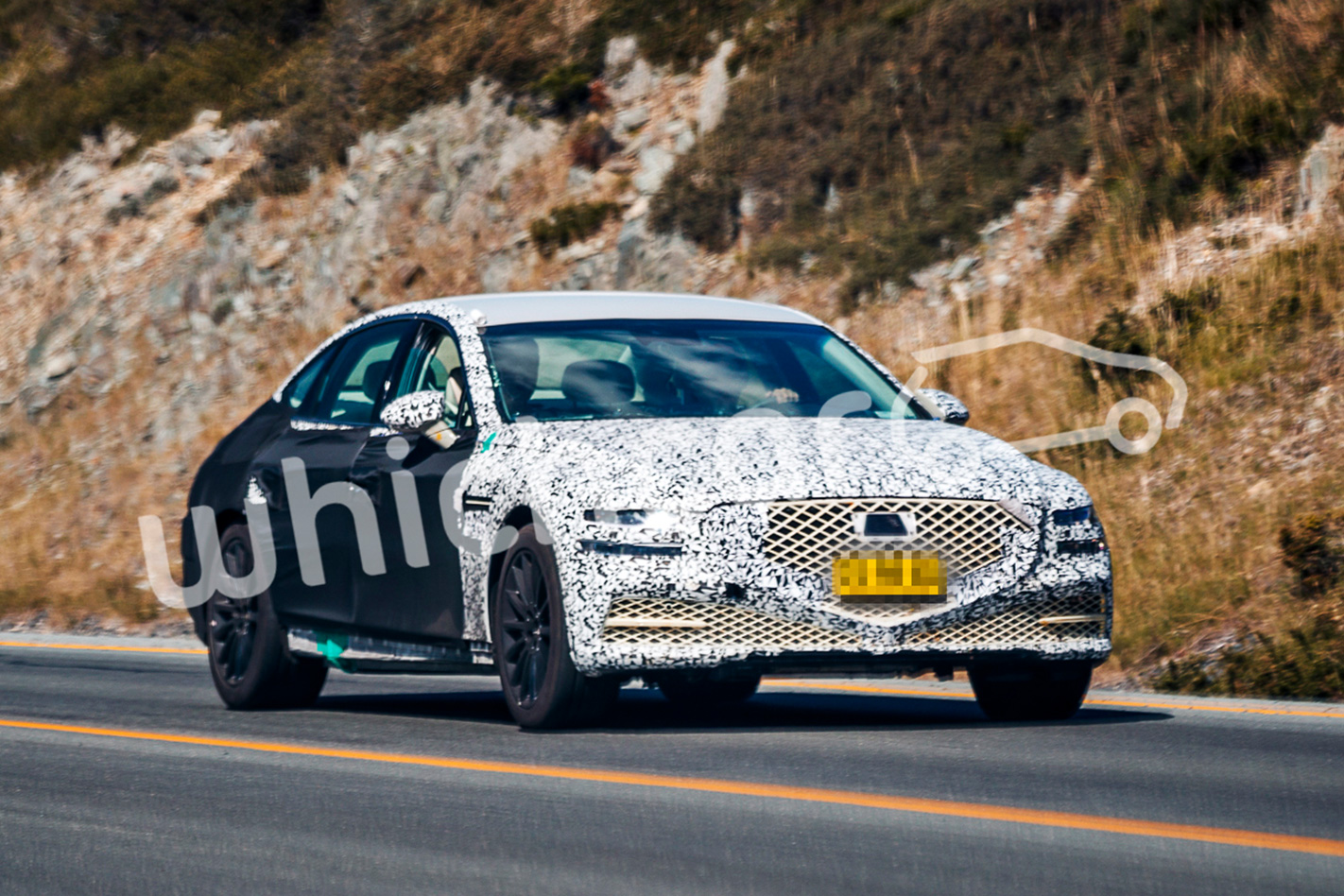
Genesis is busy developing at least two new models in the Australian sunshine, with a brace of heavily disguised vehicles spotted cruising Alpine roads in Victoria’s east.
A Genesis spokesperson confirmed the pair of mysterious models are the BMW 5 Series-fighting next-generation G80 sedan and the company’s first SUV to date, the GV80 – both due for launch in 2020.
The South Korean car maker was unable to confirm if either will be coming Down Under following their official reveal, but said both vehicles are under consideration for Australian showrooms.
In their current-generation, the G70 and G80 will form the arrival party when the Genesis brand relaunches locally next year, after an extraordinarily protracted gestation and multiple delays.
According to Genesis, the pair of development cars are on a vacation for ‘hot weather testing’ – part of a process that sends between 20 and 30 prototype Hyundai and Genesis vehicles to Australia each year, while its native South Korea freezes.
The 2020 G80 has been spotted only a handful of times in other global regions in the past six months, while the GV80 is an even rarer breed, making a public appearance just twice previously.
Our photographers weren’t quite quick enough to capture the large SUV negotiating tricky high country roads but, despite its similar level of concealment, the new large shield-shaped family grille is obvious along with imposing dimensions.
While it’s unlikely the production version will carry all of the design study features of the GV80 concept that broke cover at the 2017 New York motor show, a first sighting of the prototype in the flesh reveals it will maintain the overall proportions and scale of the show car.
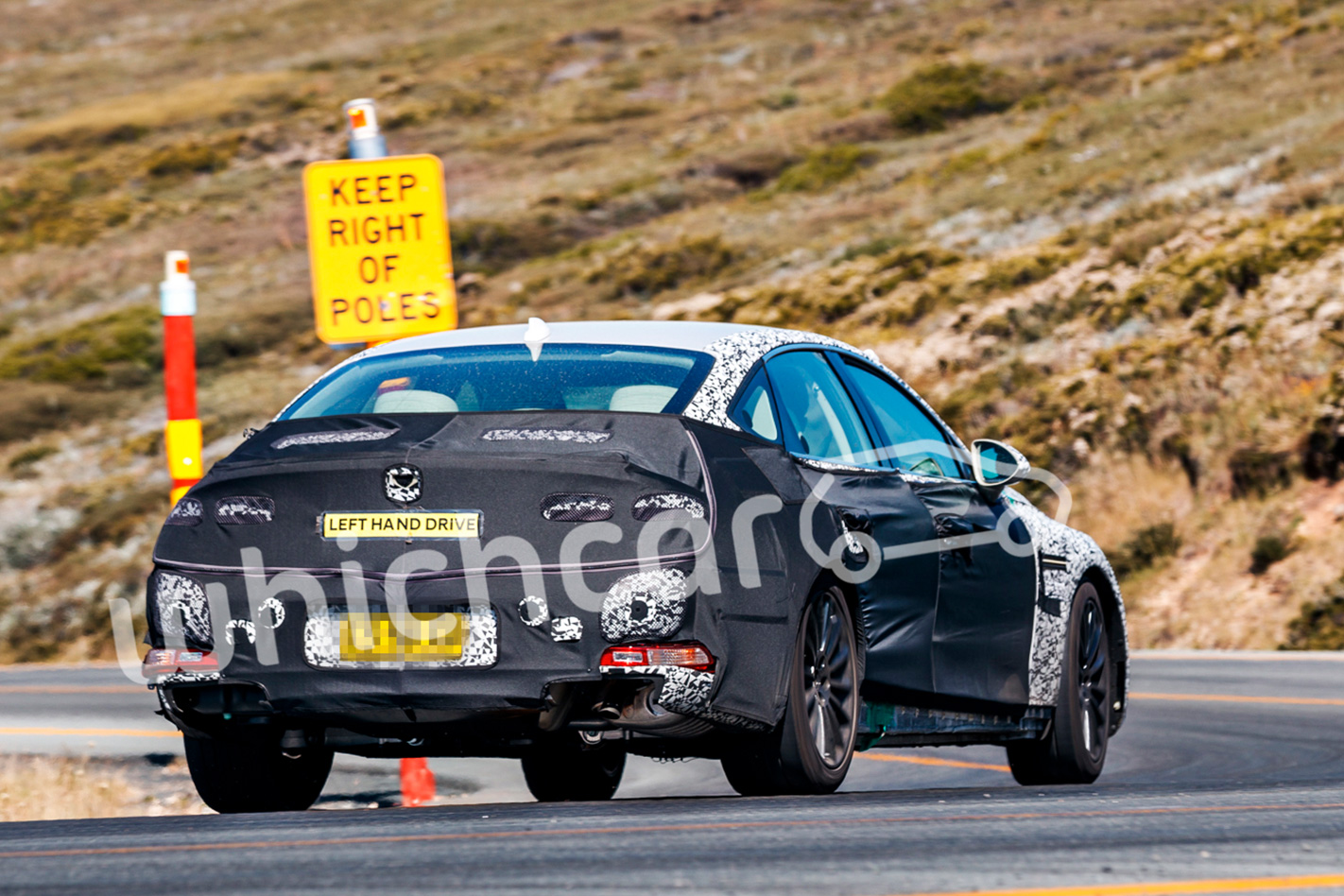
Beneath the G80’s mask, the large sedan appears to be a new variant not yet seen testing anywhere else, with down swept exhaust pipes and a different rear bumper design, while fewer front air vents might hint at a rumoured hybrid version.
The continued global roll-out of new Genesis models and a broadening portfolio is in stark contrast to the company’s activities in Australia. From an initial forecast re-launch date in late 2017, Genesis has repeatedly pushed the new-look company back and a new date is yet to be locked.
Throughout the delays and cancellations however, radical structural developments have been gradually revealed, including the decision to excise Genesis branding from its parent Hyundai, although it remains a trading arm of Hyundai Motor Company Australia.
As a standalone marque, Genesis will operate not from conventional dealerships but smaller boutique outlets in high-end metropolitan retail environments, staffed by sales consultants from luxury consumer brand backgrounds, not automotive.
The company line-up is also evolving from a single large sedan to a selection of sedans, coupes and SUVs, and we would be very surprised if the spied G80 and GV80 don’t form a part of it.
It seems like a simple question, but why are supercars catching fire and burning to the ground seemingly according to a schedule.
Hundreds of viral videos documenting hot rides getting, well, a little too hot, have prompted us to find the most common reasons for these costly blazes.

First, we asked Melbourne supercar workshop Euro Motorsport what makes a supercar catch fire, and it’s not the answer the YouTube comments would have you believe.
For the most part manufacturer fault is to blame, with owners’ sometimes enthusiastic driving not likely to turn a fault-free supercar into a flambé fireball.
If the car is built properly, drivers hitting redline occasionally and driving hard shouldn’t damage the car, as long as some mechanical sympathy is exercised. Keep in mind that bouncing any engine off its limiter isn’t going to do any good.
This means that, yes, supercars are prone to some rather major mechanical failings from the factory, with the Product Safety Australia website proving a veritable trove of recalls relating to Lamborghini fire hazards, Porsche power steering failings, and even Aston Martin seat safety issues.
Now, it’s worth noting that these recalls exist because manufacturers are taking responsibility for the issues in their products and are fixing them free of charge, but problems of extreme nature are still making their way into some rather pricey machines.
One recall issued in May 2010 details an issue with the MY07 and ’08 Lamborghini Murcielago LP640, which was likely to lead to potential fuel leaks. The fuel tank would develop a failure at a weld point is the liquid inside moved too much and caused the tank to shift in place.
The recall document says that, “in rare cases, stress generated by the back and forth movement of gasoline inside the fuel tank during lateral and longitudinal accelerations, accompanied by vertical vibration could cause detachment of one or more spot welds holding the fuel pump support inside the fuel tank.
“A slow fuel leak could develop at the detached spot weld.”
Also listed, from August 2011, is a recall for Audi R8 Spyders built between 2009 and 2011 due to fuel lines potentially coming into contact with the exhaust heat shield.
A 2004 recall regarding 2003 Porsche 911 GT3s claimed that the power steering plumbing could come loose and cause power steering fluid to start fires after coming into contact with hot engine elements.
Even recently, a 2012-2017 Lamborghini Aventador recall stressed that overfilling the fuel tank could prevent the evaporative emission control system (EVAP) from containing fuel vapours, thus allowing them to reach hot engine gasses and ignite.
This recall, however, also notes an interesting point echoed by Euro Motorsport. If a non-approved exhaust is fitted, the problem can be compounded due to manufacturer specifications no longer being followed.
While owners’ driving isn’t often a cause of supercar fires – at least not in Australia, where the occurrence is rare – owners deciding to use aftermarket parts or engine tunes can be.
If a tuner decides, for example, to make an engine run rich enough to shoot admittedly spectacular flames from the exhaust, fire risks are increased exponentially.
The problem becomes even more dangerous in dry, hot climates like the Middle East, where YouTube would have you believe supercars burning to the ground are a regular occurrence.
In a report by UAE outlet The National, road safety and technical expert Robert Hodges says he has seen drivers “not turn off their engines while the car is being refuelled,” so that the air conditioner can keep the cabin cool in summer.
In addition, he said importing cars from other regions with different climates can mean a car is literally out of its comfort zone.
“The manufacturers usually supply Gulf specification cars to [the UAE], however some purchasers import grey market cars that are not built to Gulf spec and which are more likely to overheat,” Hodges told The National.
“Any supercar owner should really realise that the summer climate in [the UAE] can present real problems if you use a supercar to its limits during summer daytime hours.”
So, if a manufacturer builds a car with an inherent mechanical fault, and then its owner skips costly maintenance or installs unsafe aftermarket parts… well, you’ve all seen the videos.
