
Twin-cam engine, 15-inch alloys, Recaros, body kit, spotties and a sub-$20k price. The bang for buck bottom-rung buyer has a new toy to consider, and it’s all strangely familiar.
This feature was originally published in MOTOR’s January 2004 issue
Welcome to 10 years ago – spiritually, at least. Suzuki’s Ignis Sport wants to regain the passion, enthusiasm and image-boosting appeal of what became its cult car of the early 1990s, the rorty Swift GTi. It was small, nimble, cheap, had all the herbs and spices in just the right areas and a buzzing 1.3-litre engine that revved like the proverbial bastard.
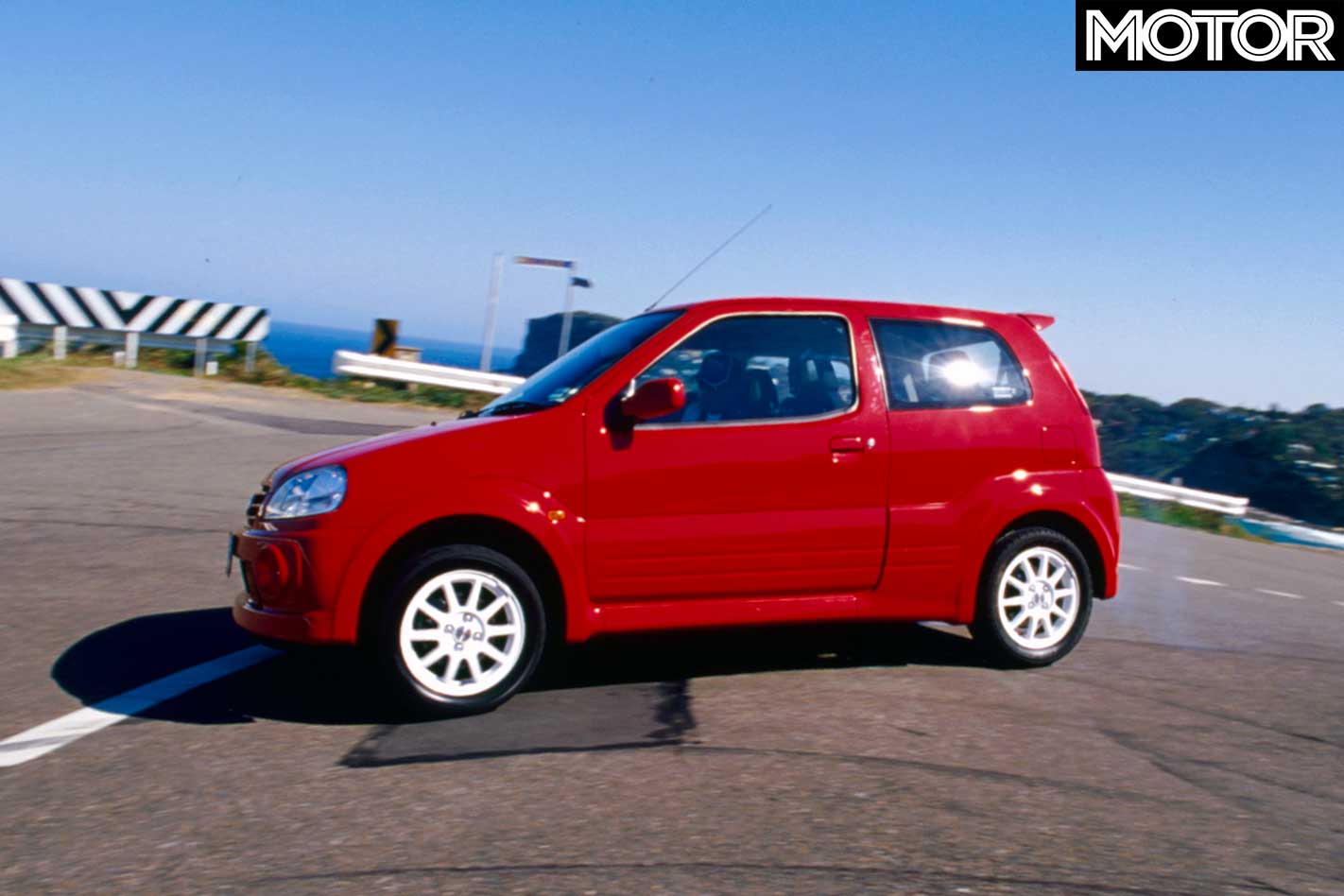
It’s the same philosophy as the Swift GTi: boldify the body, stuff in some brawn and, most important, keep it cheap. Suzuki manages the last part by exporting the Ignis all over the world, from Europe to New Zealand.
It toughens up the body with extended wheel arches, a deeper front spoiler and rear wing, paying homage to the cars competing in the Junior World Rally Championship. For an Ignis, it’s cool. The 15-inch white alloys contrast the red body for that Tommi Makinen EVO competition look, though keeping them dust-free is a full-time job.
And for mere 185/55 tyres, the mechanical grip from the Yokohama Advans is pretty special; with just 935kg to carry, the handling from the shortish 2360mm wheelbase, fat-tracked chassis offers quick, sharp direction changes like a cat on carpet, rolls less than you’d expect from a high-boxy hatch, and all this despite the beam rear end.
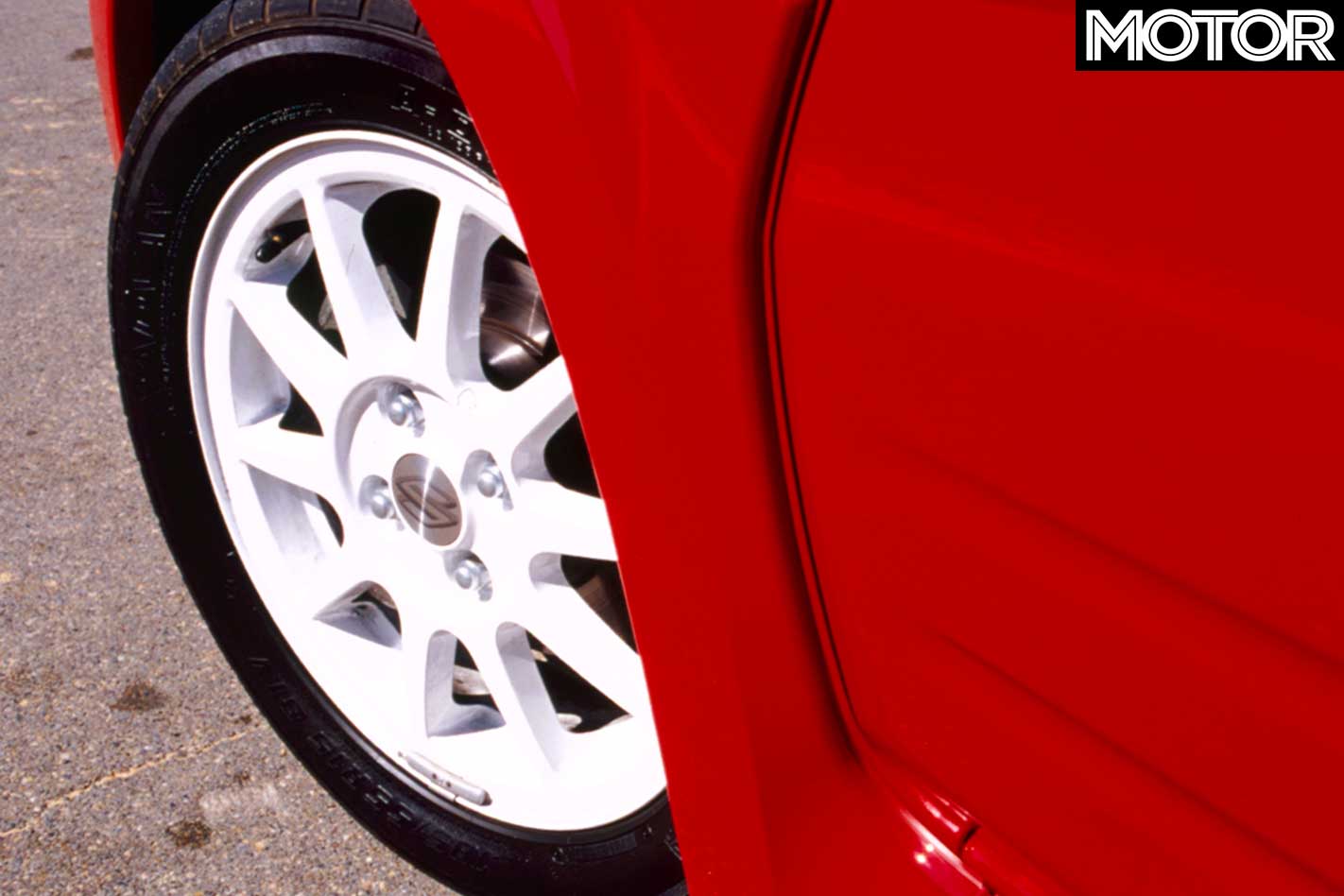
Four-wheel discs (vented front) have great pedal feel and stopping power with standard ABS, and though the ride is moderately firm and jittery over dimpled ground – this is a cheap, light car, after all – it’s perfectly acceptable if you’re in the proper mindset that this isn’t a BMW. And it has the kind of neutral chassis balance the understeery Swift could only dream about.
No ignited inside tyres, either! Unlike the Swift’s open diff, which left single black lines like a paint brush, the Ignis Sport puts its power through both front treads equally effectively, proving that decent chassis, suspension and tyre tuning can overcome a lack of LSD.
Not that there’s oodles of mumbo to keep the tyres blazing, anyway; with 143Nm happening at 4100rpm, its peak power of 83kW at 6400rpm is just enough to keep its head above water and ahead of the competition.
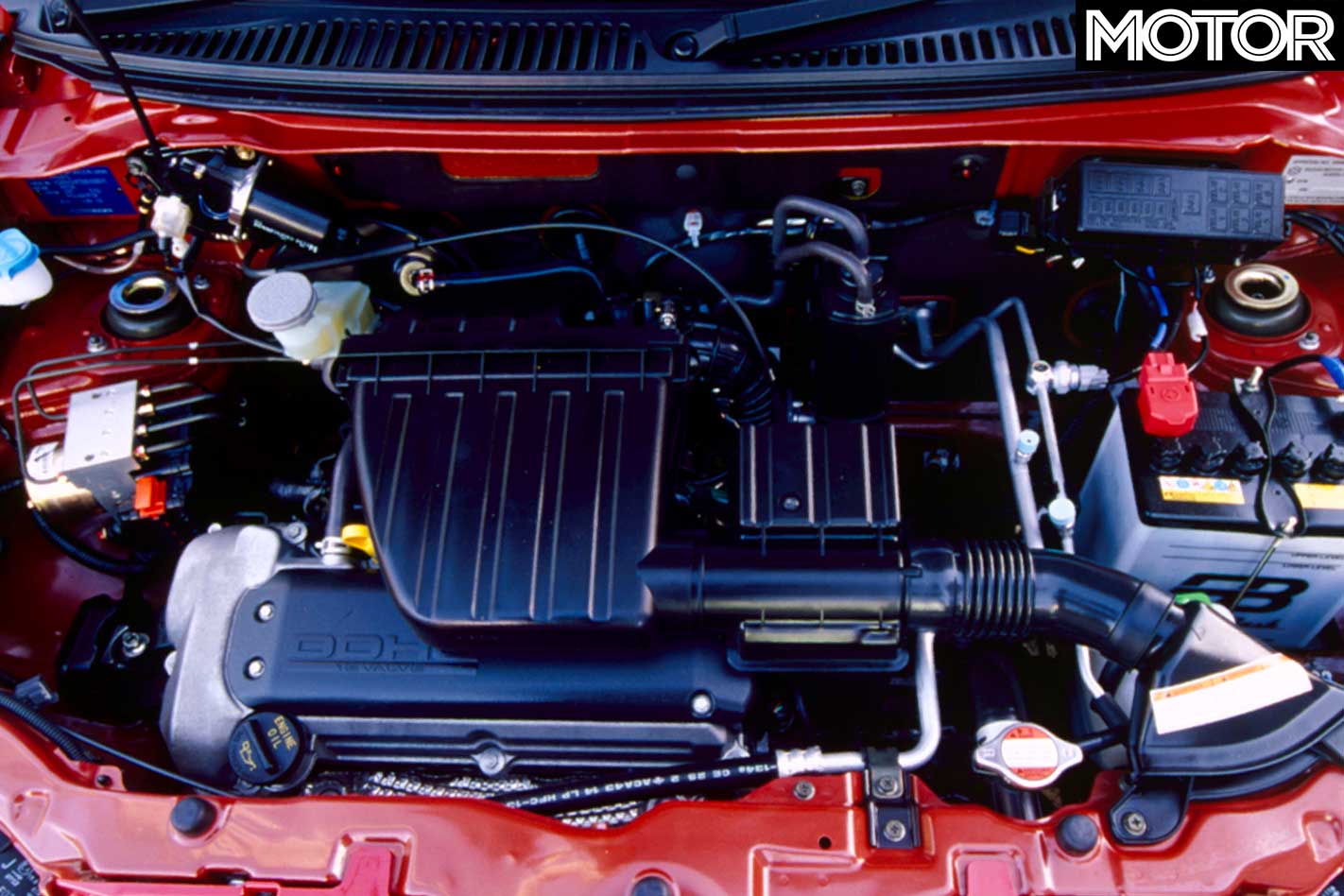
Lacking any kind of aural pleasure, with just a linear, flat drone that’s really devoid of a powerband from idle to the 6500rpm redline, the M15A 1490cc twin-cammer sports variable valve timing and a high, PULP-only 11.0:1 compression ratio.
Despite having 15 percent more capacity than the 1.3-litre Swift, it makes 12 percent more power – more a sign of how good the Swift GTi’s non-VVT engine really was. Shame the Ignis engine doesn’t look anywhere near as neat, the narrow cam cover and chunky, ugly air filter box not a visual patch of the Swift’s blue cam dressing.
The five-speed manual is light and clunky like a borrowed stapler, but its short gearing makes the most of its modest power; 50, 99 and 132km/h at 6650rpm in the first three gears do their best to keep the speed flowing. Fifth, though well overdriven, combines with a 3.9 diff and results in a high 3500rpm at 110km/h, prompting repeated reaches for a non-existent sixth. Sans cruise control, best to steer clear of motorways.
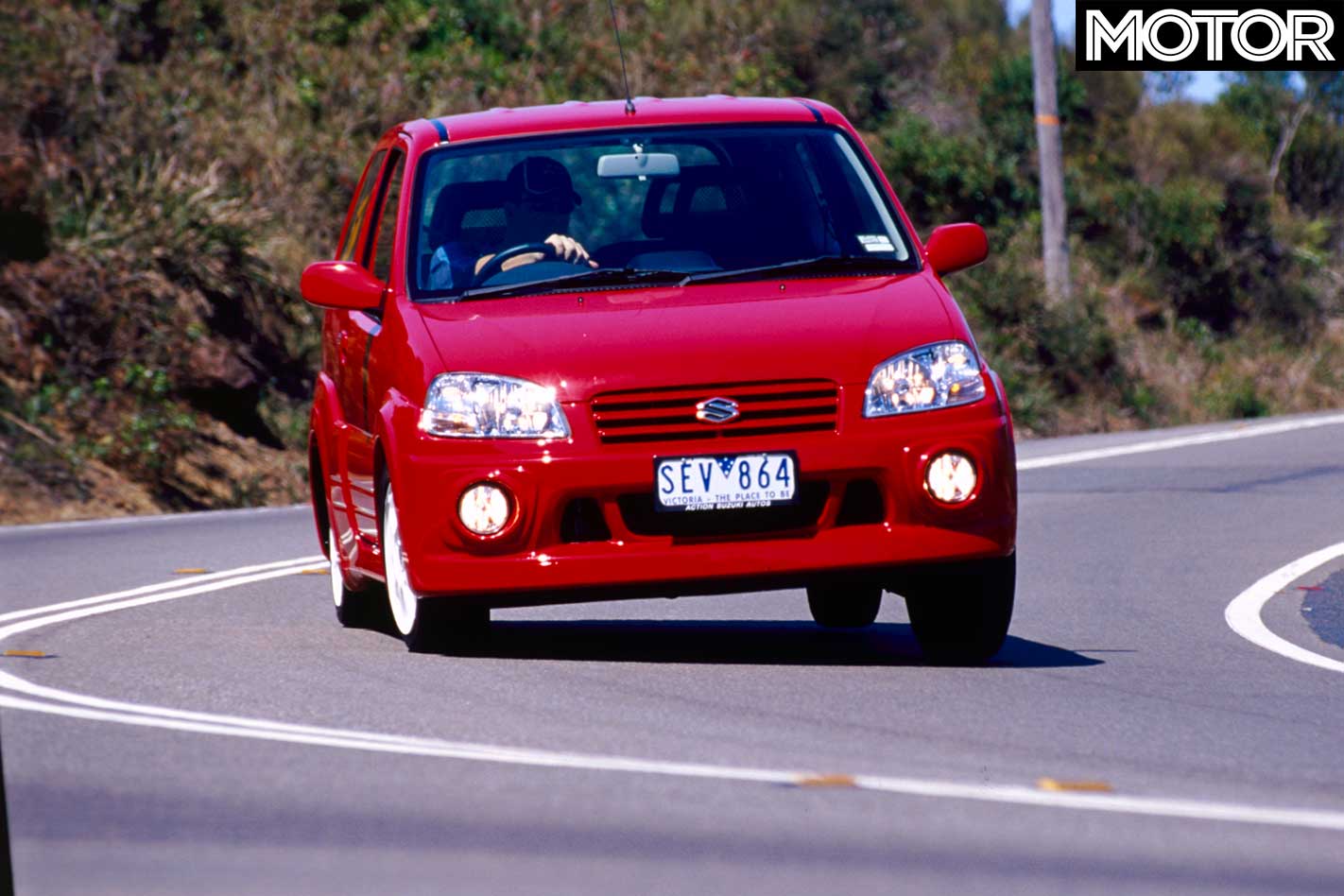
Off the line, the 1.5-litre engine is best spun up to six grand to take full advantage of the available grip. Spinning both tyres keeps the engine on the boil and it trips over triple speed figures in 9.6sec, on the way to a 16.75sec quarter mile at 133km/h. Not spoon-bendingly fast, granted, but as quick as the 100kg lighter Swift GTi and a chunk quicker than the Sirion, Echo and even the 2003 Bang For Your Bucks class champ, the Barina SRi.
Though the money’s not extravagant, it’s been well spent in the areas important to a young buyer. Like inside, where there’s a pair of Recaros built specifically for the Suzuki with great 1980s-flashback mesh headrests – and though they’re mounted high like a Corolla Sportivo (but not as bad), there’s still about 100mm of redundant headroom.
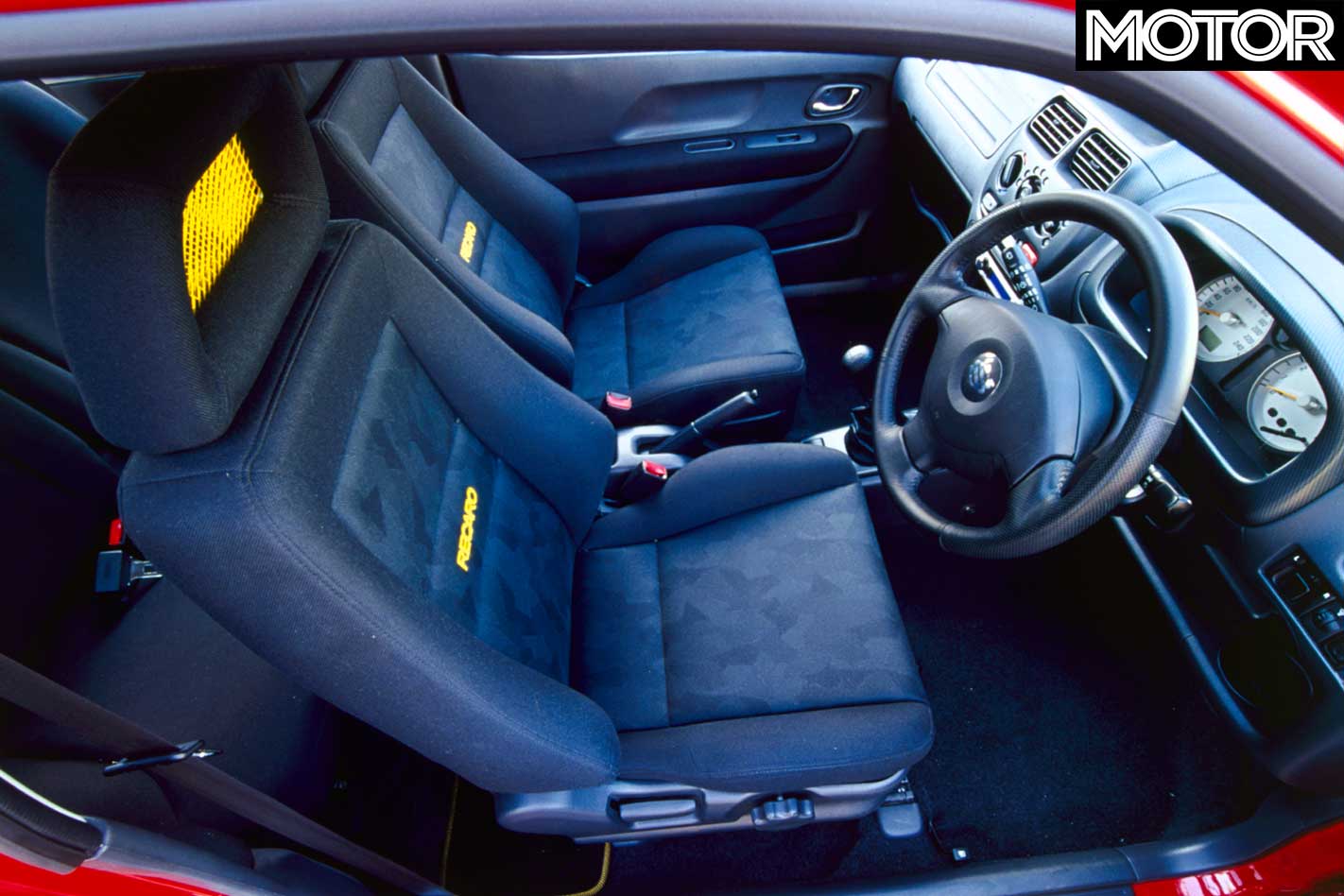
Suzuki Sport pedals and a well sized and placed leather-trimmed steering wheel and gearknob are pleasing touch points; there’s a set of basic white-faced (blue at night) speedo and tacho and fuel gauges, fake (but passable) carbon fibre trimming, a fiddly Clarion CD/MP3 player that offers great sound (though not huge bass), air-con, remote locking and a very basic trip computer.
In the budget market, it’s these frills that thrill. There’s no dead pedal, or any form of adjustability in the steering, but neither matters much.
Steering is probably its biggest flaw. An electric-assisted system, it loads up at wrong and inconsistent times, such as in U-turns or when needing quick changes, with the odd tug of torque steer. On the whole, though, they’re minor issues.
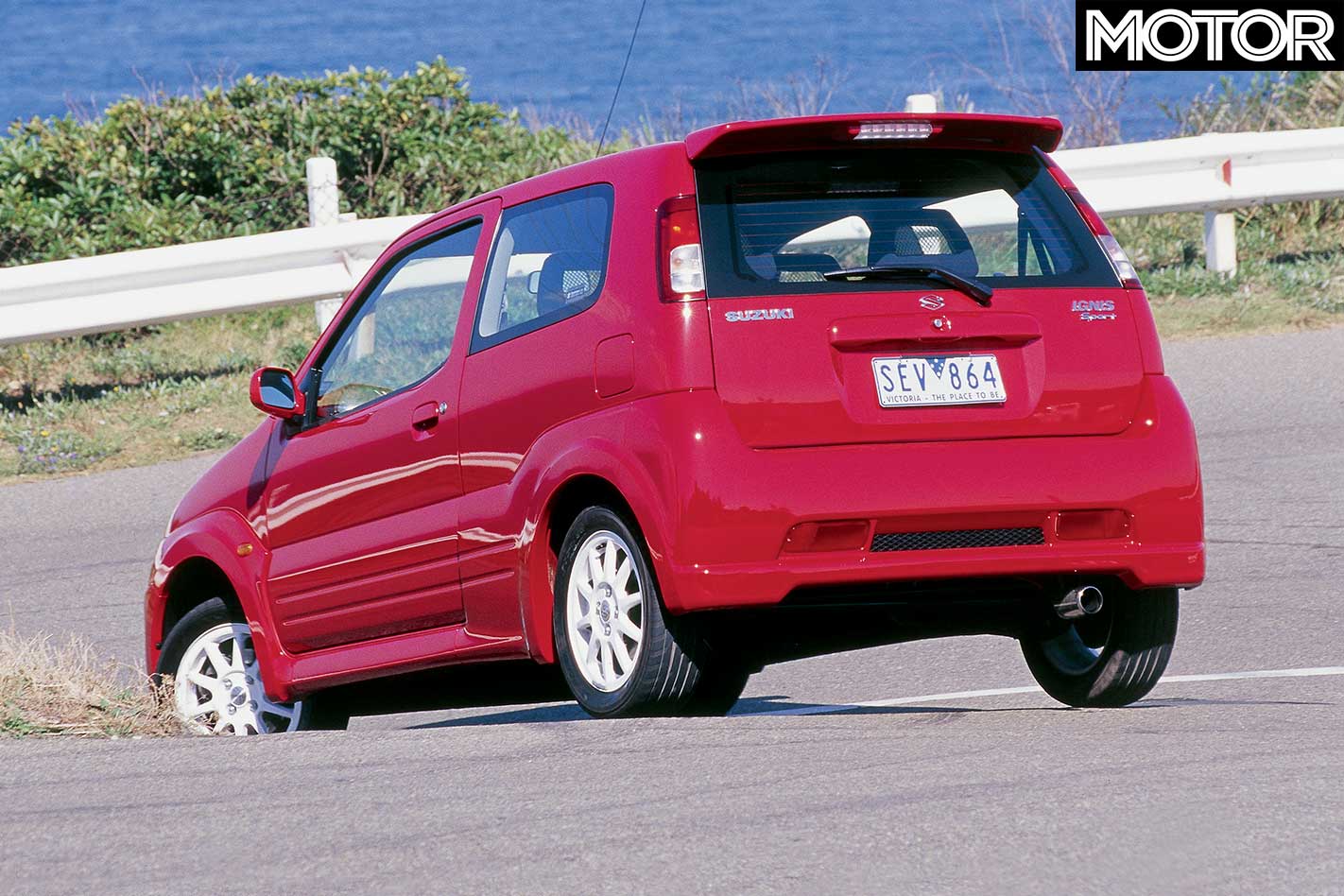
And that’s the big issue: there’s nothing really wrong with the Ignis Sport. Okay, there are minor quirks, like the rattly front seat, but it’s an easy fix and for its price you can forgive some imperfections like its aversion to rough roads.
While the progress over the Swift GTi isn’t huge, it’s definitely there. The Ignis Sport is a ballsy little budget banger which proves that there are some cheap hidden gems out there if you’re patient and look hard enough.
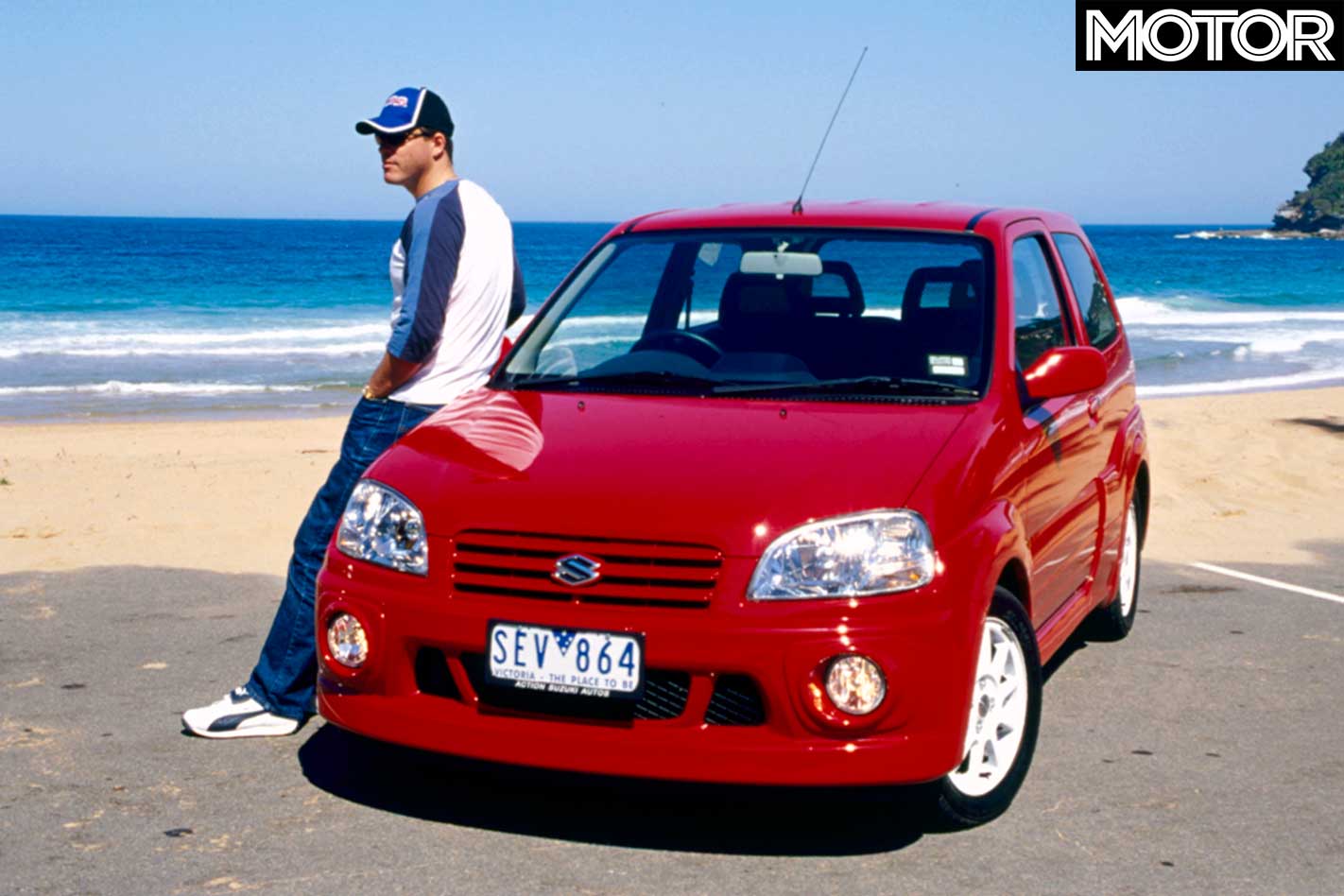
FAST FACTS 2004 Suzuki Ignis Sport
BODY: 3-door hatch DRIVE: front-wheel ENGINE: 1.5-litre inline-four, DOHC 16-valve VVT POWER: 83kW @ 6400rpm TORQUE: 143Nm @ 4100rpm COMPRESSION: 11.0:1 BORE/STROKE: 78.0mm x 78.0mm WEIGHT: 935kg POWER-TO-WEIGHT: 89kW/tonne TRANSMISSION: five-speed manual SUSPENSION: MacPherson struts, coil springs, anti-roll bar (f), three-link rigid beam, coil springs (r) L/W/h: 3620/1650/1525mm WHEELBASE: 2360mm TRACK: 1420mm (f), 1405mm (r) BRAKES: ventilated discs, single-piston calipers (f); solid discs, single-piston calipers (r); ABS WHEELS: 15 x 5.0-inch (f & r), alloy TYRES: Yokohama Advan A-043; 185/55 R15 (f & r) FUEL: 41 litres, PULP PRICE: $19,990
PERFORMANCE 0-100km/h: 9.68sec 0-400m: 16.77sec @ 133.1km/h
Swift in time
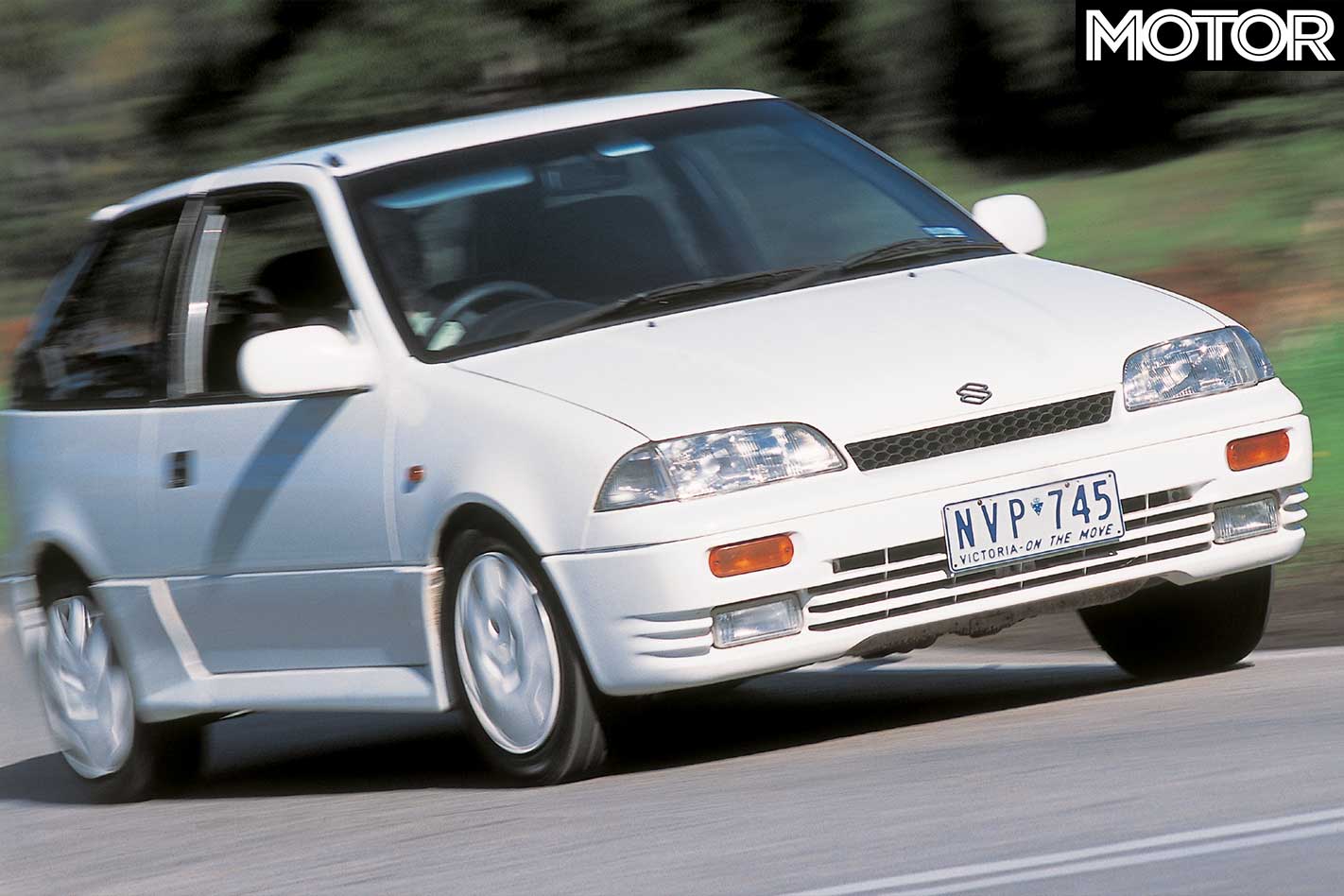
How time has progressed. Or has it? Ten years ago, 1994’s Suzuki Swift GTi was in the middle of its 10-year lifespan and retailed for $20,290 with power windows and mirrors, sporty seats, tape player, a mild body kit, neat 14-inch hubcaps hiding steel wheels and four-wheel non-ABS discs.
There were foglights (that actually instigated a law against using them), four-wheel MacPherson struts and the piece that held it all together: the rorty little G13B 1.3-litre twin-cam 16-valve four, good for 74kW/113Nm and a high 7800rpm. According to our July 1994 files, it managed 0-100km/h in 9.5sec and tripped the quarter mile in an eerily similar 16.74sec at 132km/h.
Dominant in production car racing (including four 12 Hour class victories), the Swift GTi was always going to be a hard act to follow. The Ignis Sport is as quick, cleaner, more economical, safer and better equipped. And, considering it’s cheaper, a worthy successor.
ASTON MARTIN’S first-ever SUV has hit the tarmac, or dirt rather, in prototype form in the first of a series of testing programmes which will see the newly-named DBX travel the world’s harshest terrains.
Although SUVs are a completely new venture for the British marque, Aston Martin’s teaser shots display a familiar face for the luxury crossover, while the rear end includes a duckbill-style lip spoiler that’s another visual link to the marque’s existing range of sports cars.
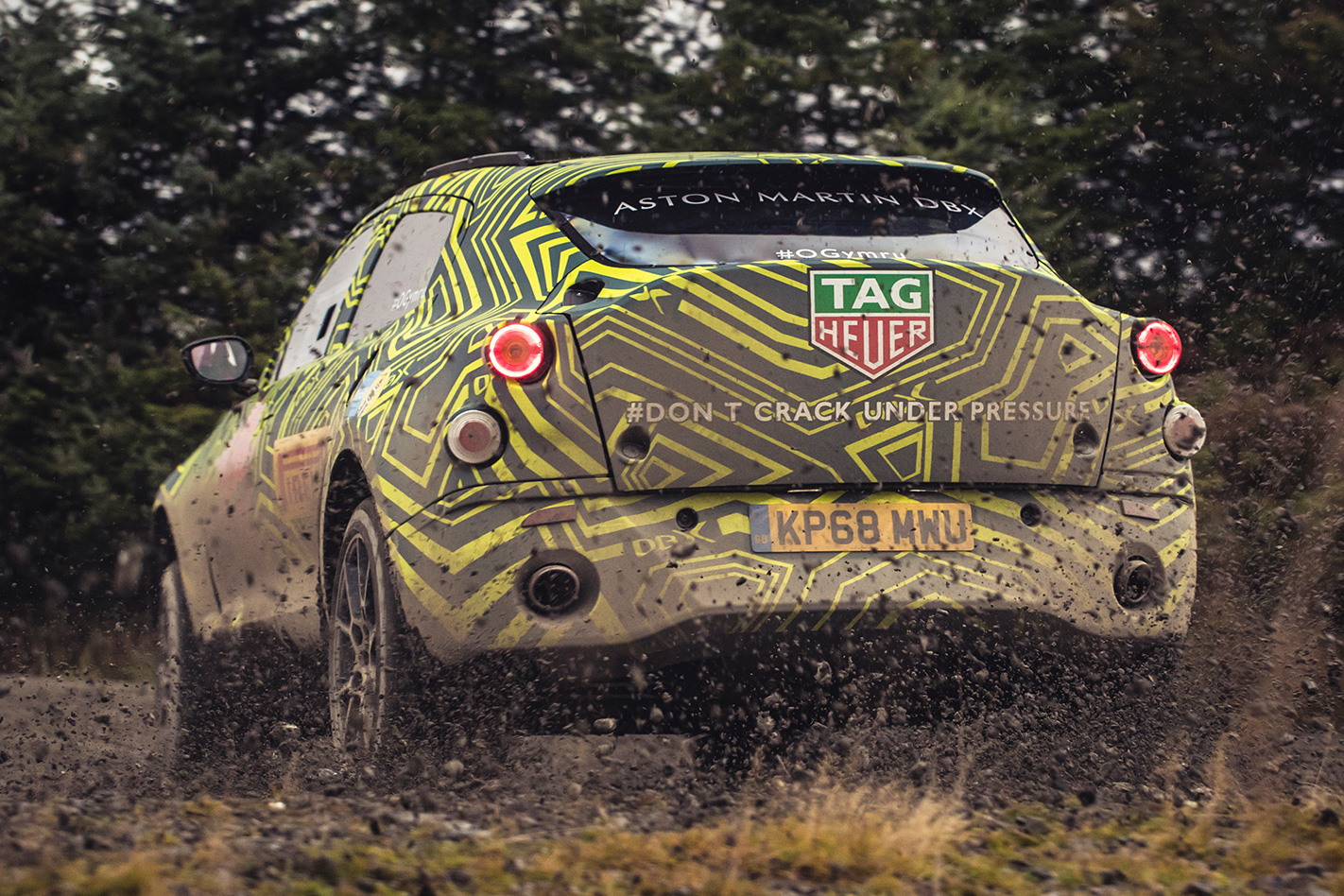
Unlike similar rivals like the Jaguar F-Pace and Maserati Levante, which leverage existing vehicular platforms from their respective brands, the DBX will debut a completely different architecture unrelated to its DB11 and Vantage sports cars.
As such, the DBX requires a bespoke test regime that will encompass new processes, procedures and standards that will ensure it lives up to its all-purpose intentions. Throughout the next year, Aston Martin will take the DBX from the frozen Arctic Circle to the scorching deserts of the Middle East, and then on to German autobahns and the famed Nurburgring Nordschleife.
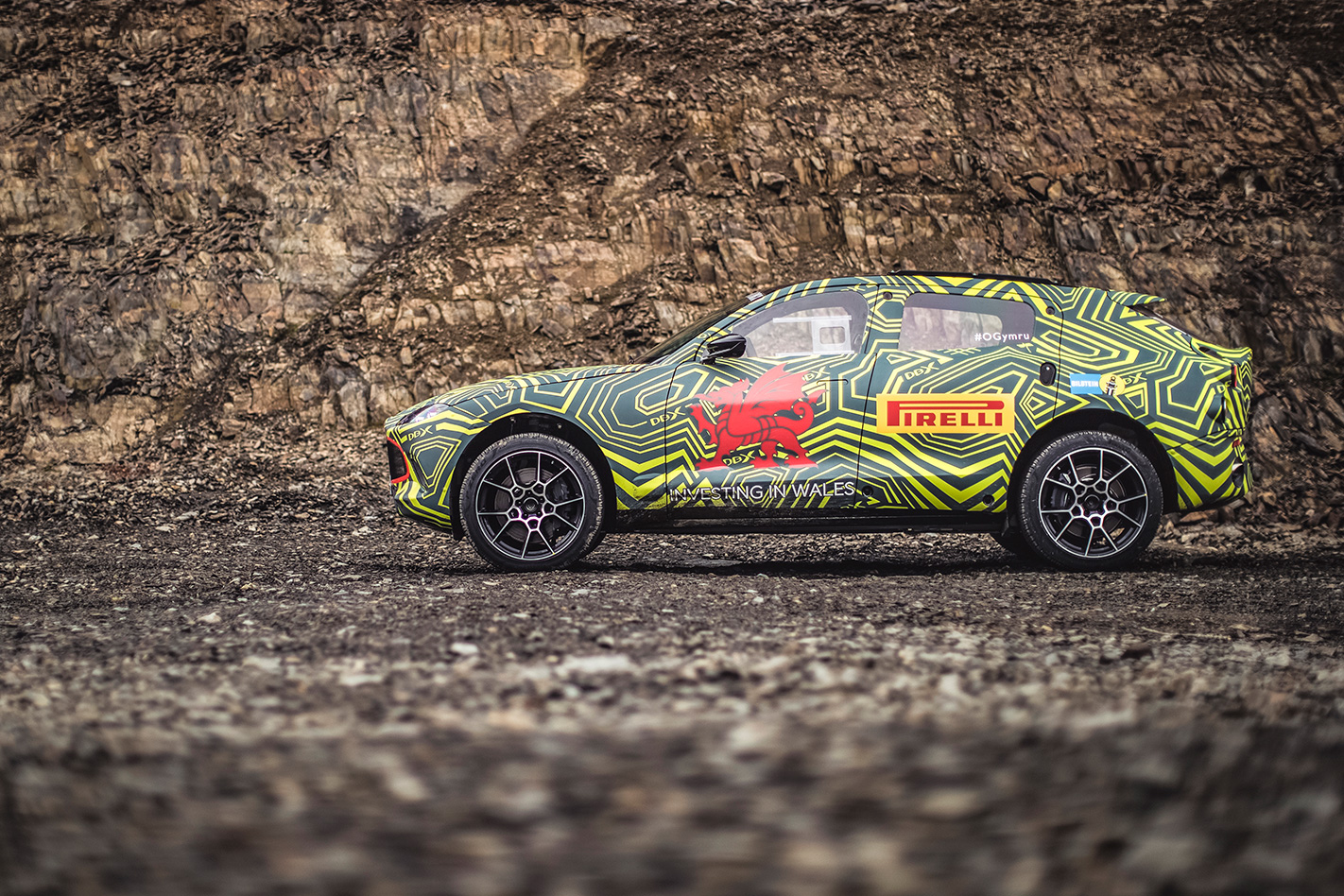
The development prototype can be seen on video, tackling a Welsh rally stage at the hands of Aston Martin’s Chief Engineer, Matt Becker.
Following his first drive of the DBX in the ‘real world’, Becker said: “We have already developed and tuned DBX in the driving simulator, which has enabled us to make excellent progress in advance of the first physical prototype cars being available.
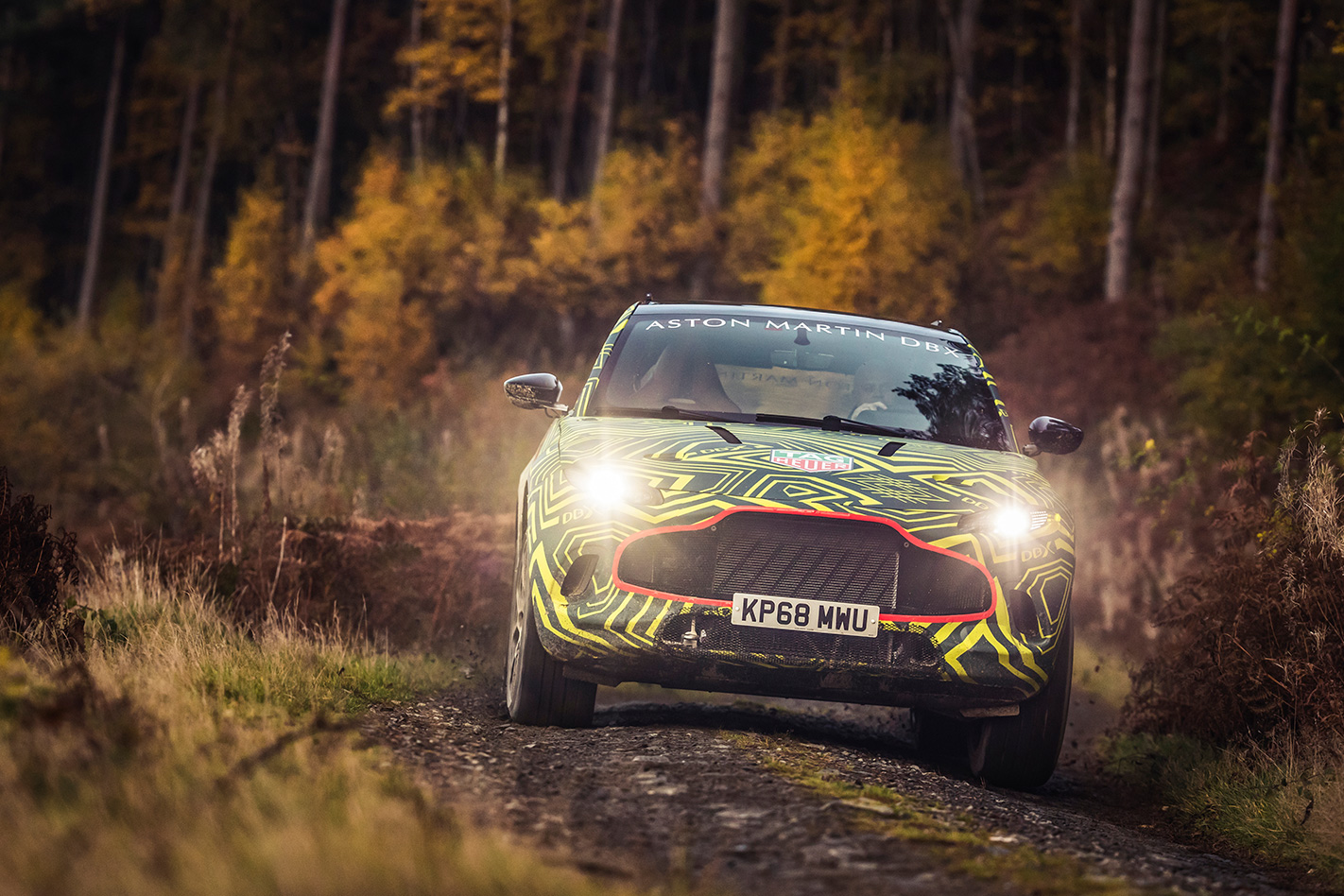
“It’s always a big day when you get to put the first actual miles on an early prototype and I’m delighted with the near perfect correlation between the simulator and this prototype.
“DBX is a very different kind of Aston Martin, but we will be testing it in all conditions and across all terrains to ensure it delivers a driving experience worthy of the wings badge.”
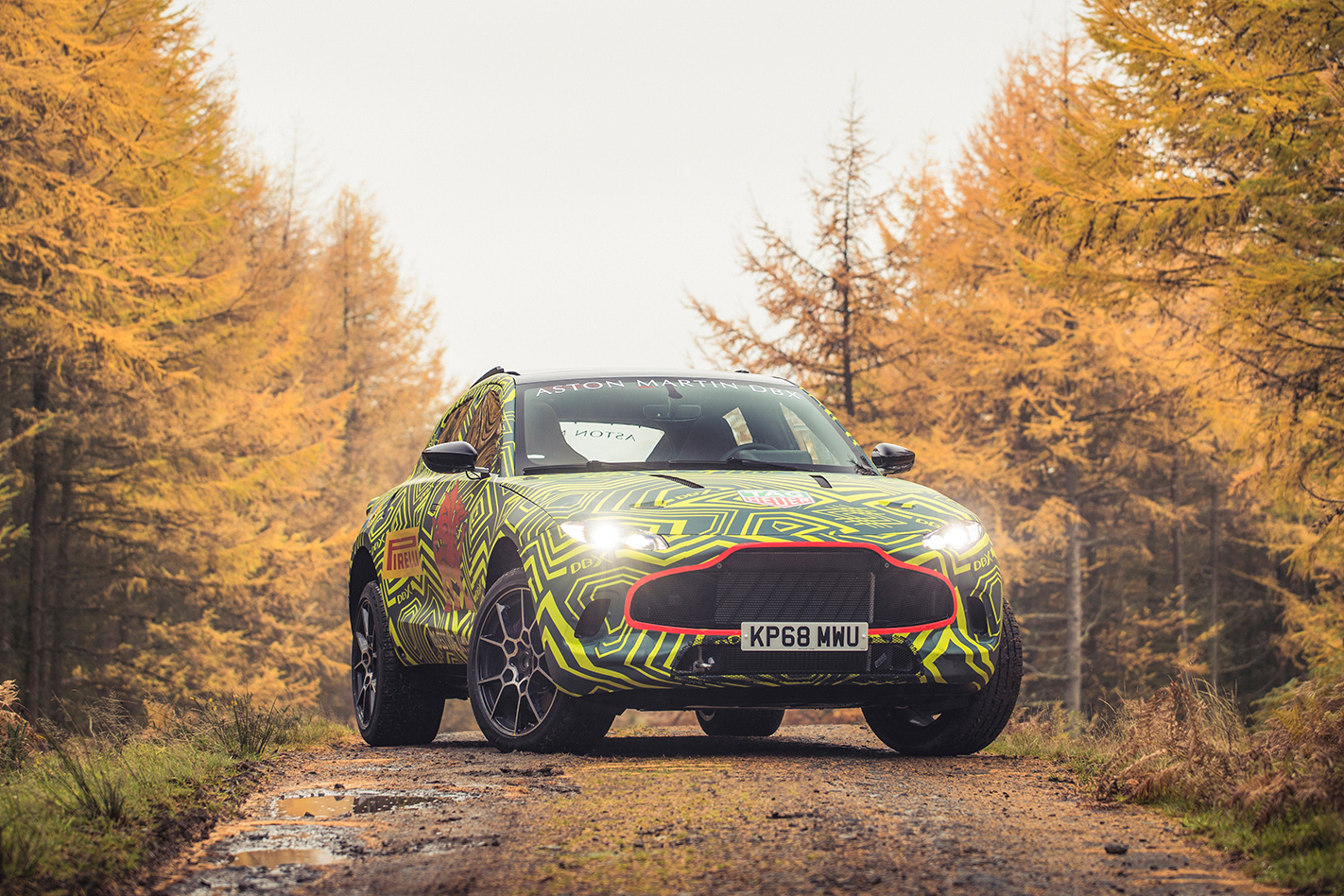
The DBX is on schedule to launch globally in Q4 2019, and will be built at Aston Martin’s St Athan production facility located in Wales – the same facility that will eventually build the brand’s full-EV models.
Yet another car advertisement has fallen afoul of Ad Standards Australia for displaying what a handful of complainants said was “dangerous”, “destructive” and “reckless” driving.
This time it’s Ford that has copped a slap from the advertising watchdog for its Ranger Raptor ad, which shows the pumped-up all-terrain truck in its natural habitat – off road.
But while most viewers would see the promotion as a reasonable representation of the Raptor’s capability in a controlled environment, Ad Standards says it encourages irresponsible driving and has killed the campaign.
Despite Ford’s disclaimer which confirms the ad was filmed using professional drivers in a safe environment, the complaints adjudicator said that wasn’t enough.
“The speed that the vehicle is seen travelling down the dirt road, dramatised by the sound of the engine and filming techniques, appeared reckless,” said Ad Standards. “The panel considered the speed of the vehicle appeared unsafe when the vehicle became airborne”.
As it stands, the agency has the authority to cancel any advertising material including TVCs following just one complaint from a consumer, if it feels the advert is in breach of the code regulating motoring advertisements.
In the case of the Raptor ad, one watcher labelled it “very dangerous” and said it “encourages unsafe and destructive driving by others”.
Ad Standards has a consistent history of banning car adverts despite the manufacturer going to lengths to demonstrate due diligence and actively discouraging irresponsible driving.
Just last month, Volkswagen was forced to discontinue its advert for the Amarok in which it overtly used models and graphics and even deleted its own sensitive shots to deliberately show that its stunts and enthusiastic driving never actually occurred in the physical realm.
Before that, a Bentley ad was pulled for showing speeding even though the Continental GT was filmed on unlimited-speed roads and was piloted by a professional racing driver.
In 2016 Audi had to reconsider its R8 advert which included just seconds of driving – all of which was filmed at speeds below 48km/h.
AHEAD of an official showing at the Los Angeles Auto Show, BMW has revealed its (temporary) hero for the new 3 Series range, the M340i.
While the M340i will surely be outclassed by the full-fat M3 when it eventually arrives, the car represents the pinnacle of the ‘regular’ 3 Series range.

The key figures are impressive, with 275kW and 500Nm propelling the car to 100km/h in 4.4 seconds. That’s a decent improvement over the outgoing M340i’s 240kW/450Nm and 5.2 second 0-100km/h sprint.
BMW claims the power bump is thanks to “a newly developed” engine, which follows the tried and true 3.0-litre straight-six turbo format that is becoming as iconic as the company’s kidney grill design. The engine is mated to an eight-speed automatic gearbox.
Unfortunately for Australians it remains uncertain that the M340i will be available in rear-drive guise. As standard, the M340i will be fitted with BMW’s xDrive system, delivering power to all four corners.
Wheels spoke to a BMW Australia spokesperson, who confirmed the local launch line-up for the 3 Series would consist of the 320d and 330i, with the M340i joining later in 2019.
The spokesperson explained that the M340i will initially be available in all-wheel-drive xDrive form initially, while a business case for a rear-drive variant is evaluated on the proviso that it is available to the company.
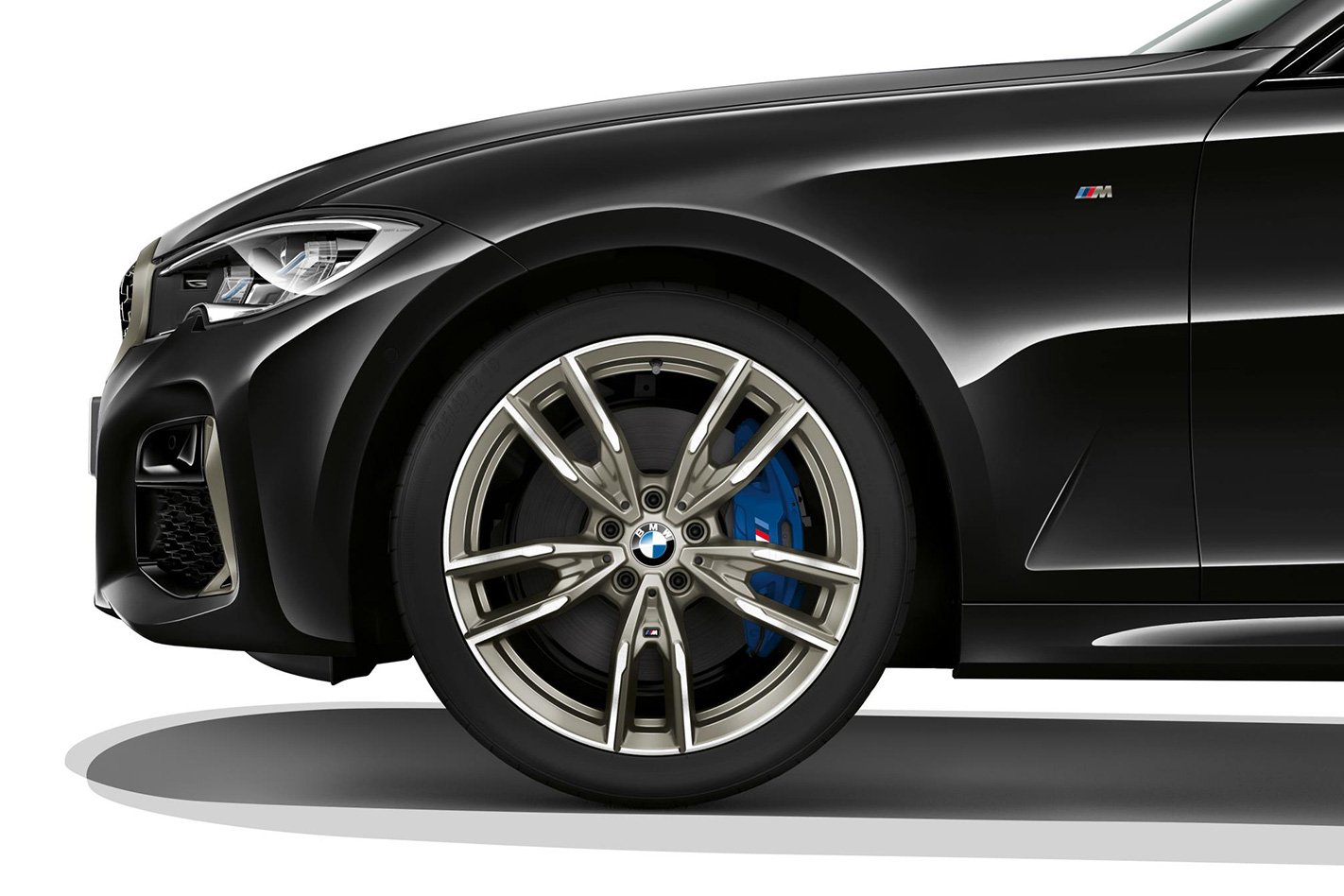
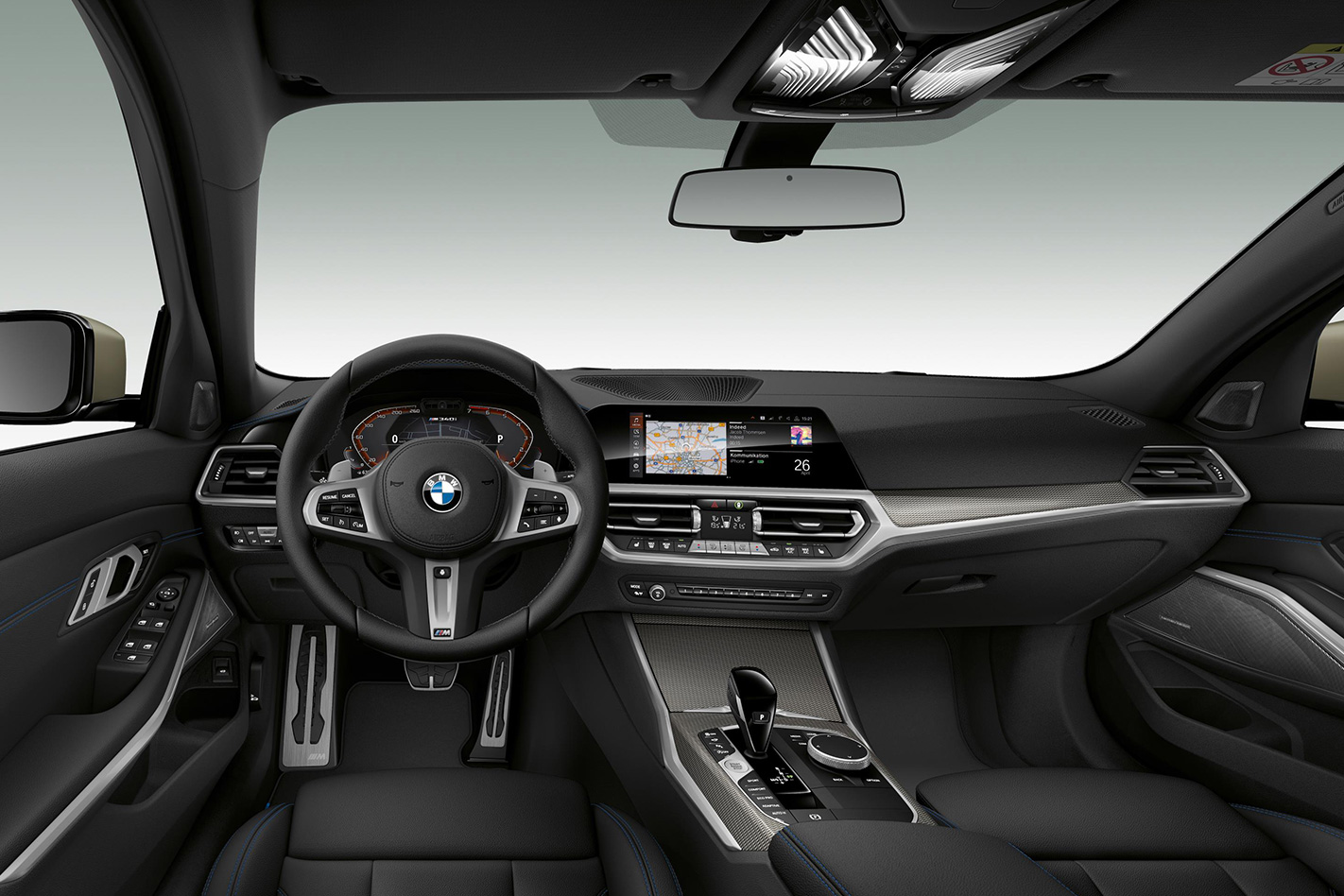
Along with the higher engine tune, the M340i will also feature 18-inch alloy wheels, more luxurious interior trim, and aggressive exterior styling. Australia-specific spec is yet to be confirmed.
When it does arrive on Australian shores, the BMW’s main rivals will be the Audi S4 and Mercedes-AMG C43.
The all-paw 2019 C43 produces 287kW and 520Nm from a twin-turbo V6, which is good for a 4.7 second 0-100km/h spring. We’ll be sure to put both BMW’s and Mercedes-AMG’s claims to the test with independent performance testing when we get our hands on them locally.

A facelifted A4 is expected to arrive in Australia early next year, while the current S4 produces 260kW and 500Nm from a turbocharged V6, and can sprint to 100km/h in 4.7 seconds.
As an aside, let’s take a moment as enthusiasts to revel in the fact that the ‘baby’ performance sedans from Audi, BMW and Mercedes-AMG can all cut sub 5.0 second 0-100km/h times.
The M340i is expected to launch internationally in the US and Europe in July 2019, while an Australian launch is slated for late 2019.
The Toyota RAV4 has come a long way since it first arrived on the Aussie scene back in 1994, before anyone had heard the term ‘SUV’.
It’s been a stunning success for Toyota ever since, with more than 19 million sold around the world, and the new-generation RAV4 will draw on that success while adding all-new safety technology, a powerful hybrid powertrain and an off-road capable variant.
Scroll through the photo gallery above to learn more about what we know about the 2019 Toyota RAV4 so far.
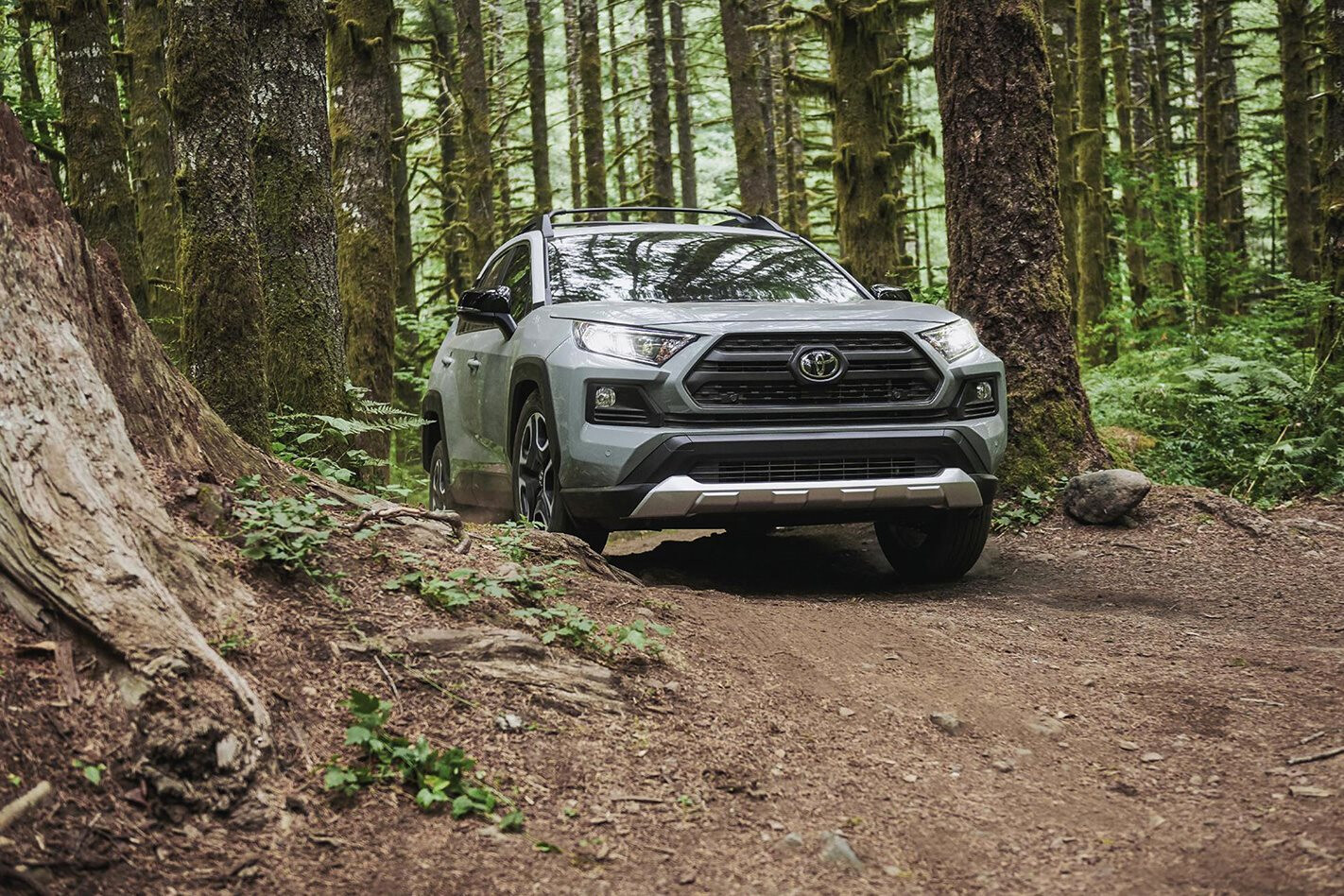
The 2.5-litre RAV4 will have the option of torque-vectoring AWD and multi-terrain drive modes to help it grip, lending itself to a more off-road focused version called the ‘RAV4 Adventure’.
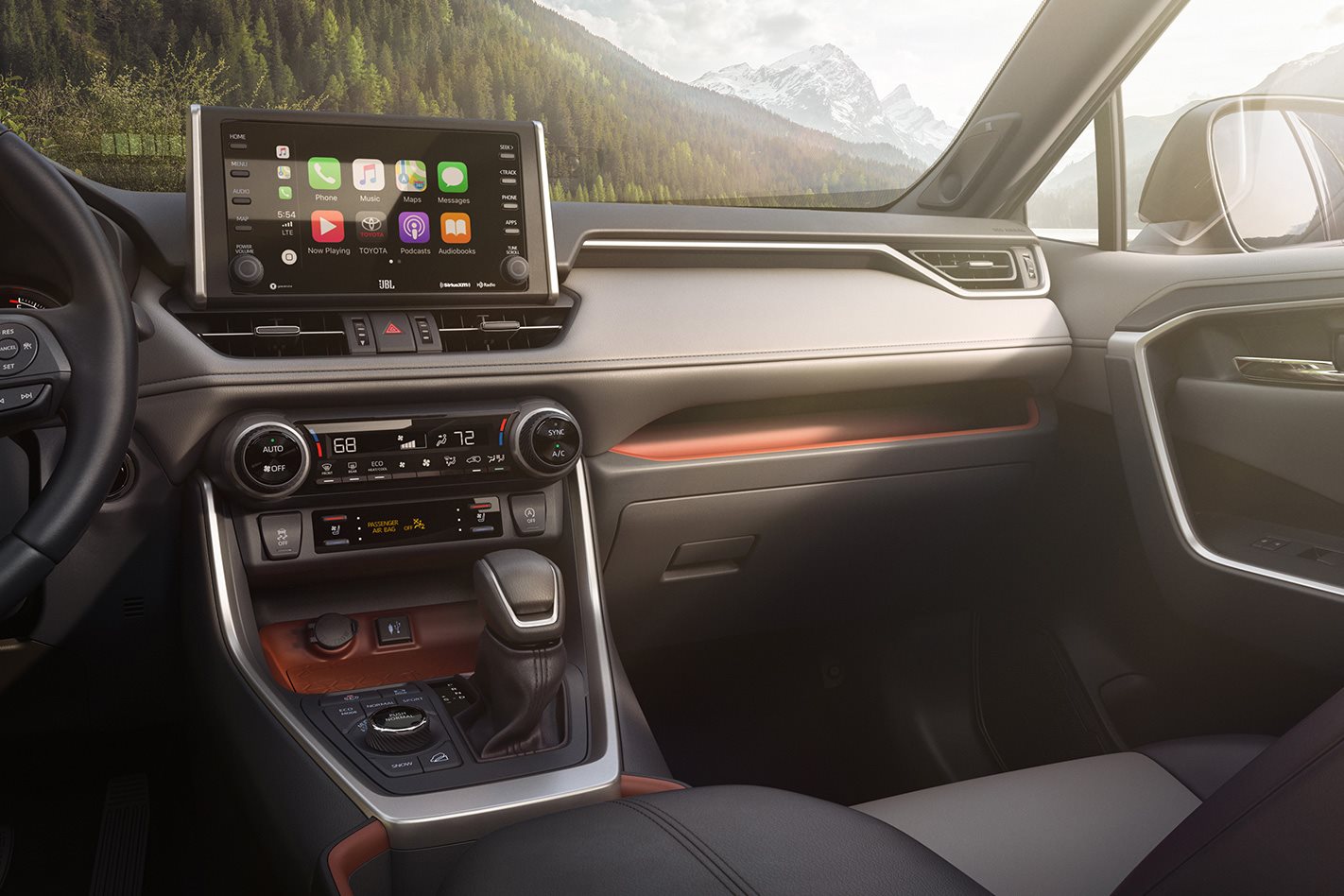
Infotainment is expected to include a standard 8.0-inch touchscreen with Apple CarPlay compatibility (sorry, Android users). Qi wireless charging will also be available.
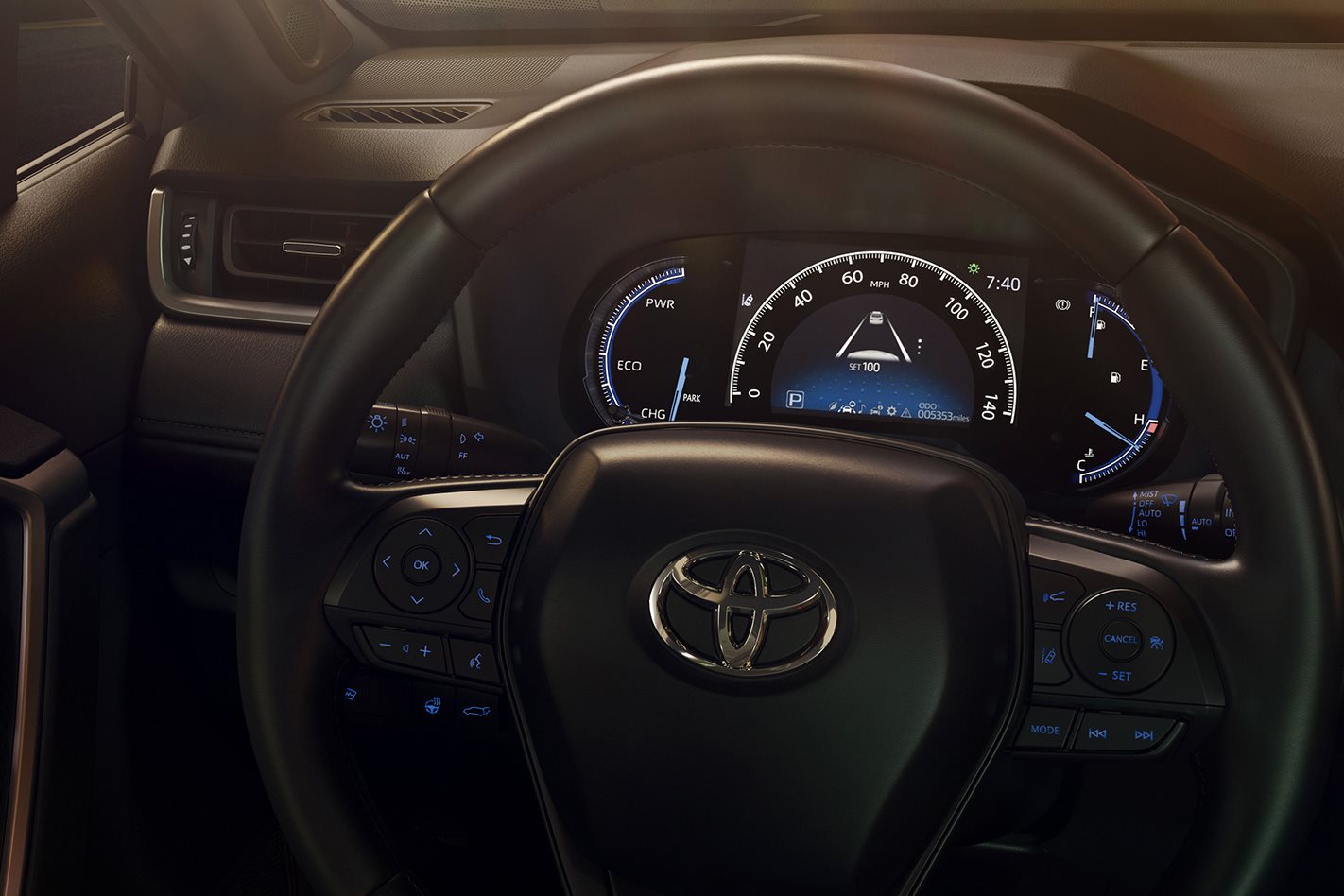
This will also be among the most technologically-advanced Toyota models with semi-autonomous driving tech that includes auto braking, and lane-keeping assist that recognises white and yellow lines and, if there are no lines to track, will follow the car in front.
MORE: Toyota RAV4 Specs, Range & Price MORE: Toyota RAV4 Range Review
If you thought the ‘E’ in Jaguar E-Pace stood for electric power or some relation to the XE sedan, you’re wrong.
The E-Pace, rather, comes from the Range Rover Evoque. And while that means its steel rich platform uses only turbo four cylinders and offers front-wheel drive, we thought the all-wheel drive P300 might be the jacked up hot hatch of the range.
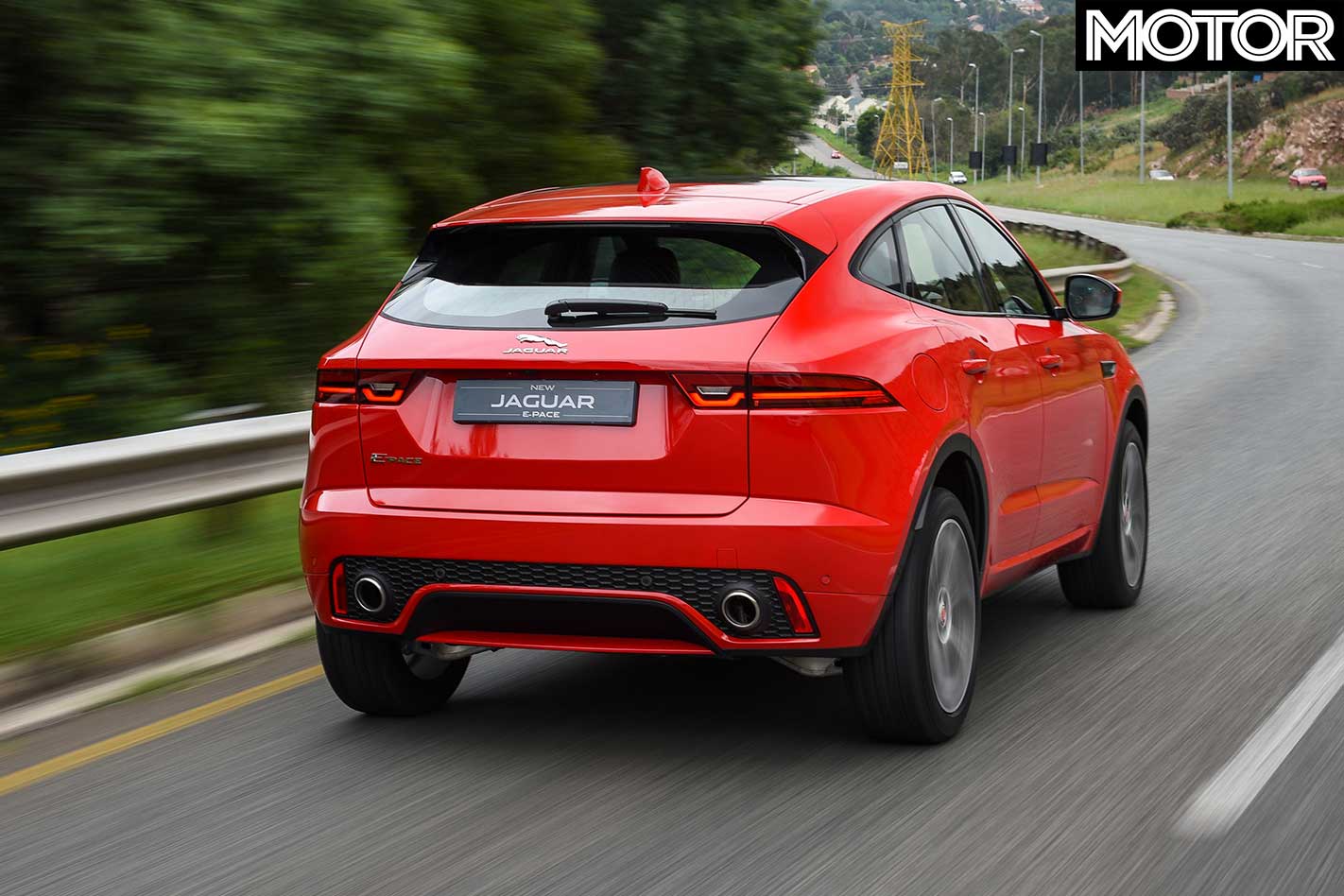
It channels a healthy 221kW and 400Nm through a nine-speed automatic to four wide tyres, but in reality the high-spec Ingenium four lacks fizz and drama. Acceleration from rest to 100km/h feels slower than the 6.4 second claim, while the handling is similarly adrift of initial aspirations.
It might be close in length and width to a Mercedes-AMG GLA45, but struggles to control its weight perched some 150mm higher. It has useful approach angles and can tow a tonne, but its classy styling suggests it will live an easier life than that.
Our narcissistic side enjoyed the attention paid to its exterior and in top HSE spec our car bore 20 inchers, a sports body kit, 18-way power front seats and ebony leather.
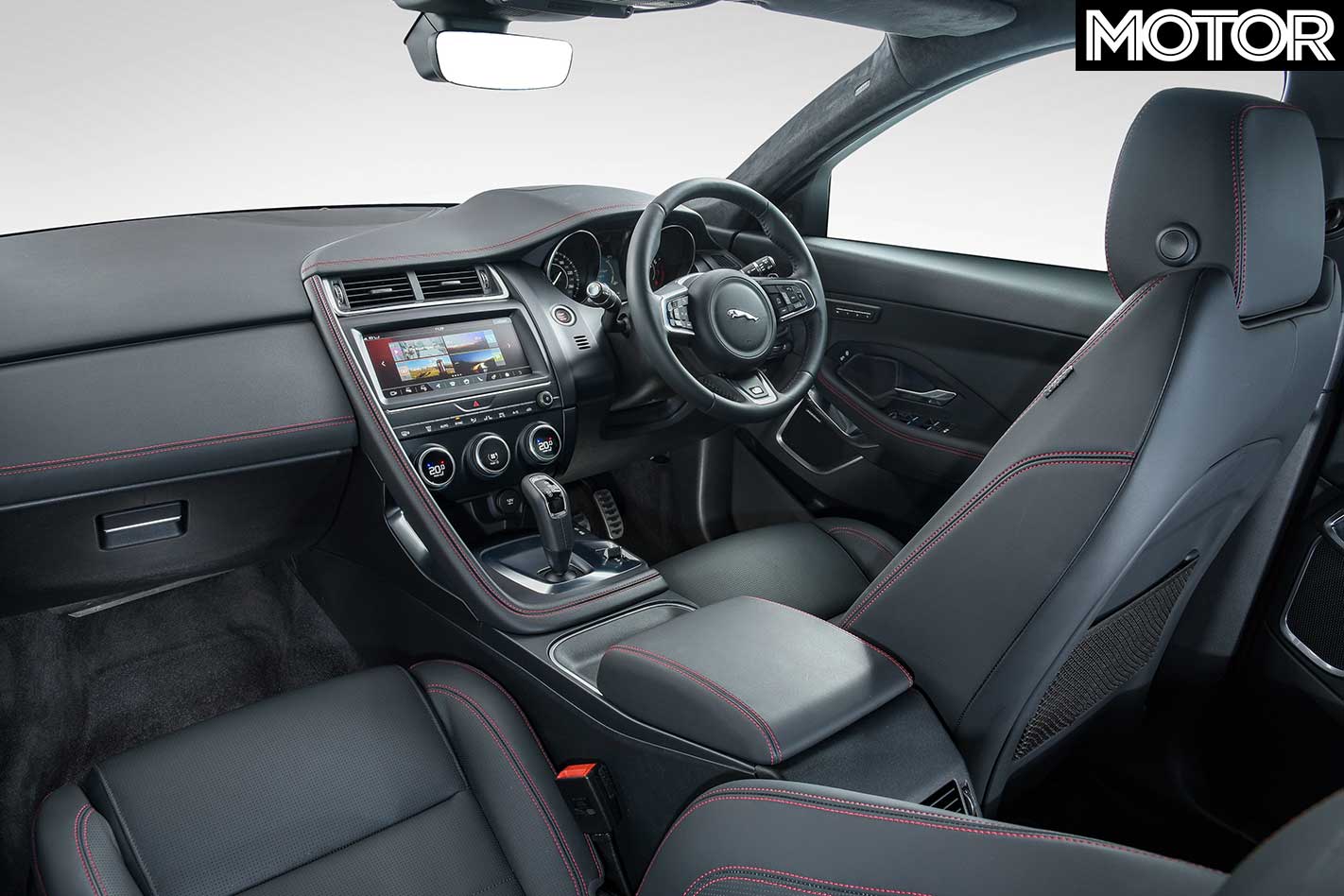
Inside felt high-tech until we realised it included $12K worth of options. We’d put our money towards an $89K GLA45 for proper performance.
2018 JAGUAR E-PACE P300 R-DYNAMIC HSE SPECS: Engine: 1998cc 4-cylinder turbo, DOHC, 16v Power: 221kW @ 5500rpm Torque: 400Nm @ 1500rpm Drive: AWD Weight: 1894kg Price: $83,733
The weather’s improving and the footy season is long over. You’ve cleaned the house, swapped your winter and summer wardrobes, and tended to the garden – now it’s time to give your car some of the same much needed love.
Interior
- Remove any litter that has gathered inside the car over the winter months. Also clean out the boot and only carry what you need. Carting around that sports bag and toolbox adds weight which makes you engine work a little harder and consume more fuel – every gram counts.

- Vacuum the floor carpet, mats, parcel shelf and the boot floor. Also look for dried mud on rubber mats, the scuff plates, door jams, side of the dashboard and behind the front seats – especially if you have kids. You should be able to clean it off harder surfaces with some soapy water.
- Clean seats by running the vacuum cleaner them over them first to suck grit out of the seams. If they’re cloth seats use a cleaner that’s suitable for that particular fabric, or concoct a homemade cleaner using a cup of vinegar and a few drops of dishwashing liquid mixed with about four litres of hot water. Scrub the fabric and remove the dirty suds with a cloth and repeat that process until it’s clean.
- Clean vinyl seats the same way using a general purpose car interior surface cleaner that also protects the surface from UV rays during summer, which can otherwise fade and crack the seats. For leather upholstery, use an appropriate cleaner that also softens the leather and provides UV protection.
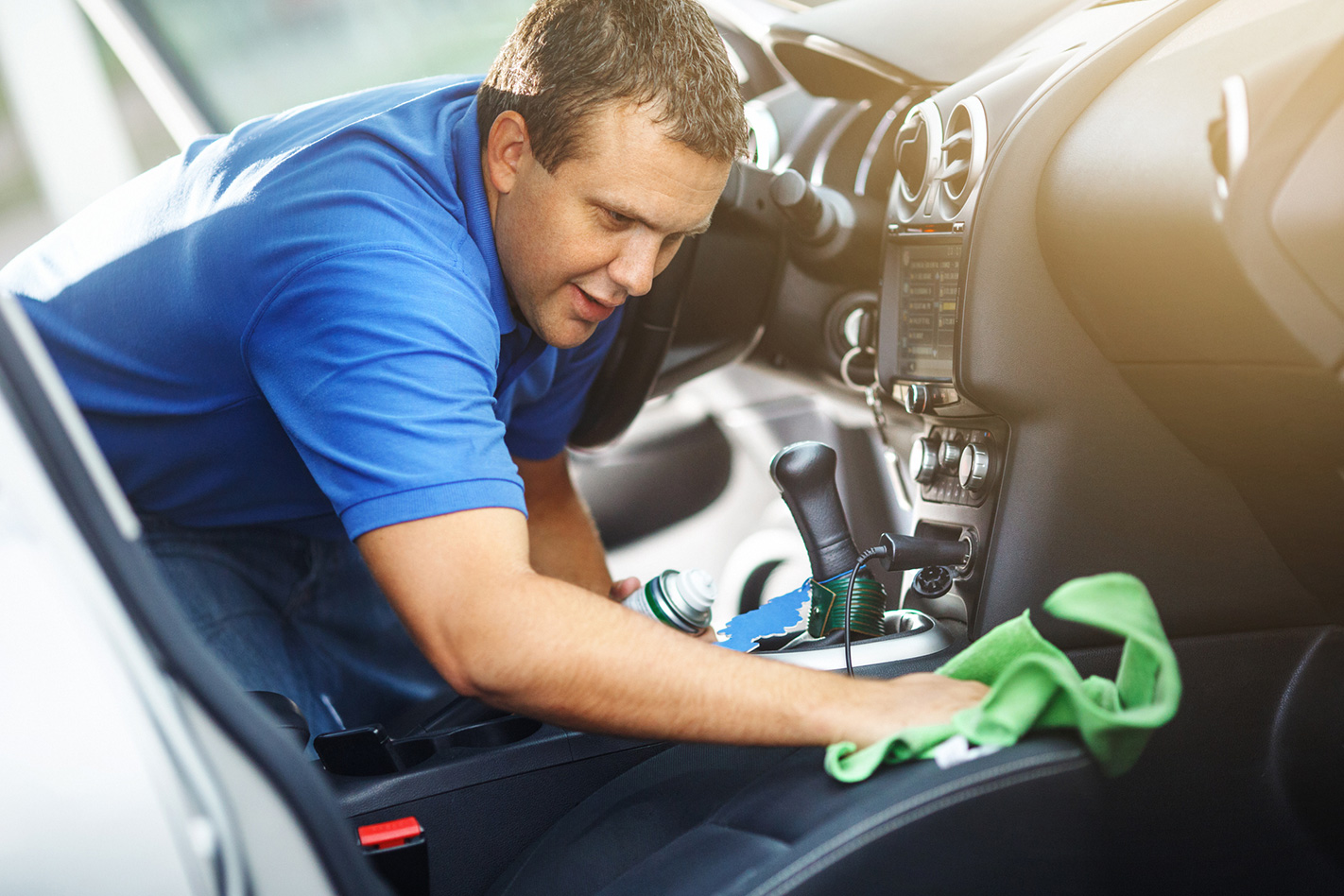
- Wipe all other surfaces such as the dashboard, door sills and steering wheel and then apply some car interior cleaner such as Armor All to revitalise the surface and provide UV protection.
Exterior
- Flush or dig out leaves from the base of the windscreen, inside the bonnet and in the lip below the boot lid.
- Wash the car all over to get rid of all that winter dirt and road grime including the windows and underside. If you’re doing it at home use the two bucket system, with one bucket containing the clean soapy water and another with just water to rinse out your sponge.
- Give the tyres and wheels a scrub. Alloy wheels collect plenty of grime and brake dust over winter so use a wheel cleaner and apply it with a medium-sized paintbrush to get into all the little nooks before rinsing.
- Once your car is clean, dry it off with a chamois or micro-fibre towel.
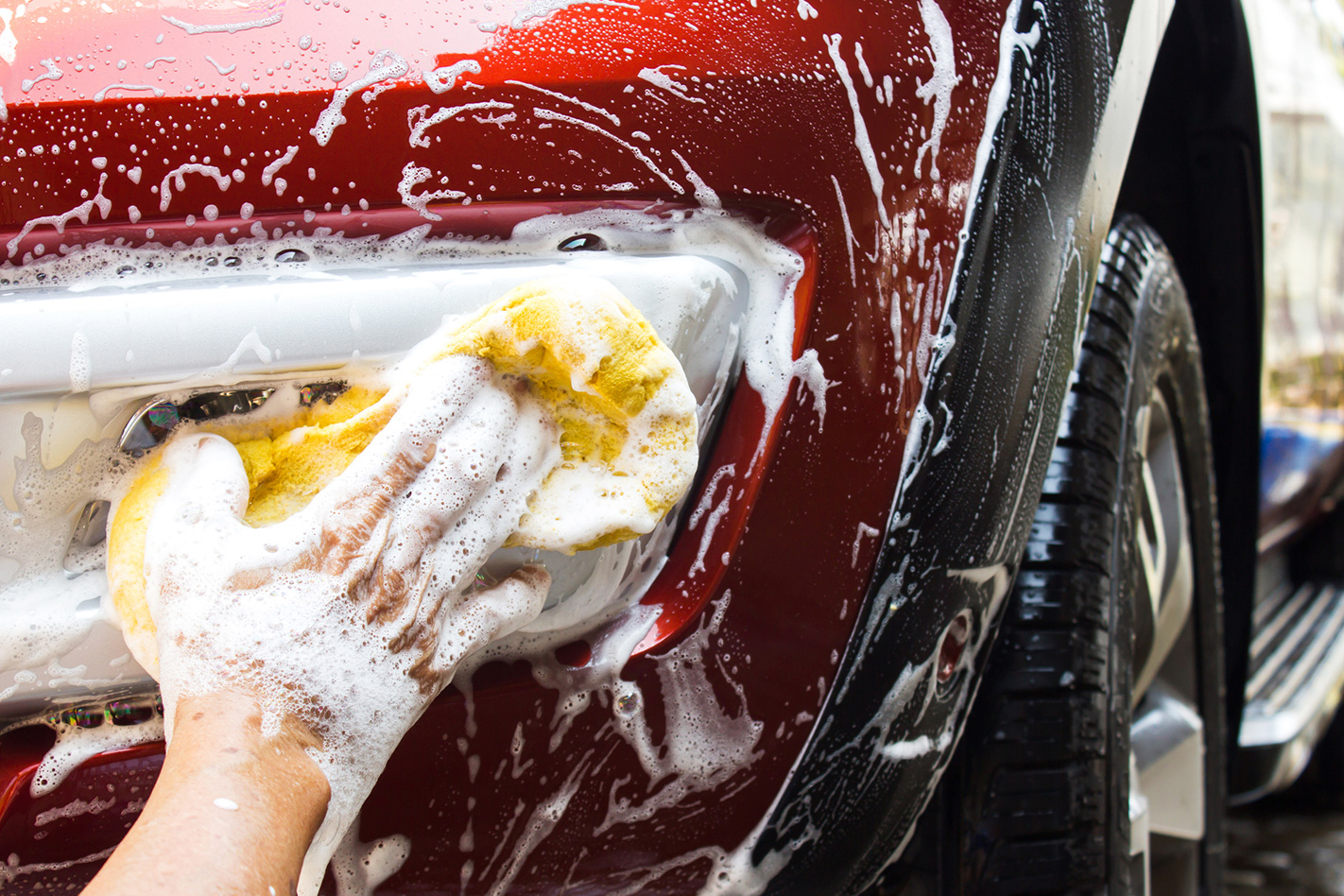
- Spring is a great time to polish and wax your car, especially if the paintwork is looking a little dull.
- Once your car is all clean, waxed and polished, use window cleaner on both sides of the glass. A good way to avoid streaks to is to wipe them with newspaper. This is also the perfect time to replace your windscreen wipers.
- If your headlight lenses look a little cloudy try scrubbing them with toothpaste, which has a mild abrasive and acts like a polish. While you’re at it check all the light globes around the car.
- Finally, use a plastic restorer product to rejuvenate the tyres and any fading black plastic or rubber areas such as bumpers and side strips.
Track mode is coming to the Tesla Model 3, which appears to make the more accessible of the electric brand’s model range easier to drift.
A short teaser released by Tesla shows the Model 3 on track partaking in some smoky oversteer action.
The Model 3, which is due to arrive in Australia next year, is able to pull off a claimed 0-60mph (0-97km/h) time of just 2.5 seconds in its most potent form.
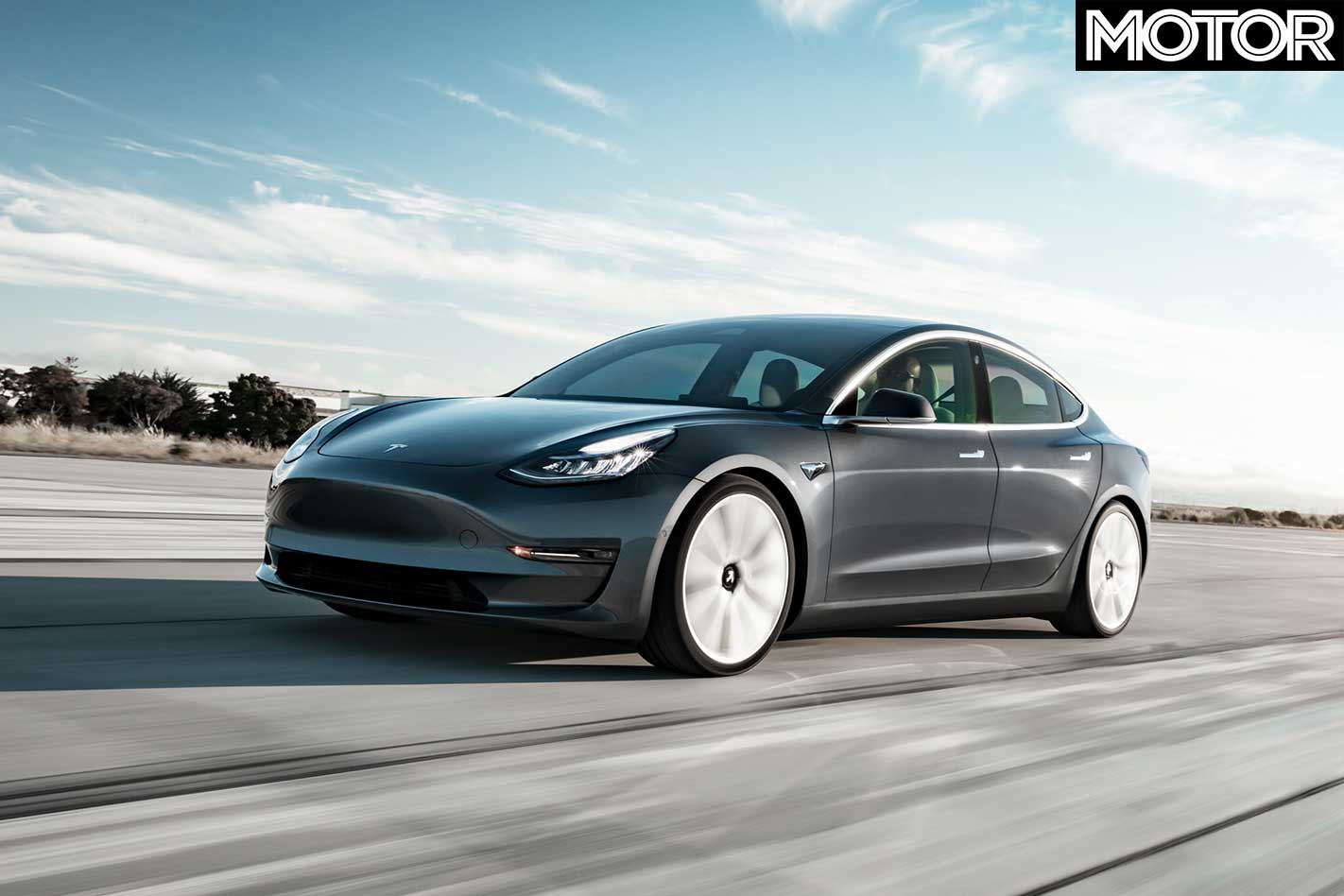
“Our ‘vehicle dynamics controller’ constantly monitors the state of the vehicle and all of the inputs from the driver to determine the driver’s intention and affect the rotation of the car in a matter of milliseconds,” Tesla says.
“Track Mode relies heavily on the front and rear motors to control the car’s rotation, and we have the ability to command a 100 per cent torque bias.”
Tesla also claims that the regenerative braking will become more aggressive in Track Mode, so much so that the company claims that it will “not be comfortable for day-to-day driving.”
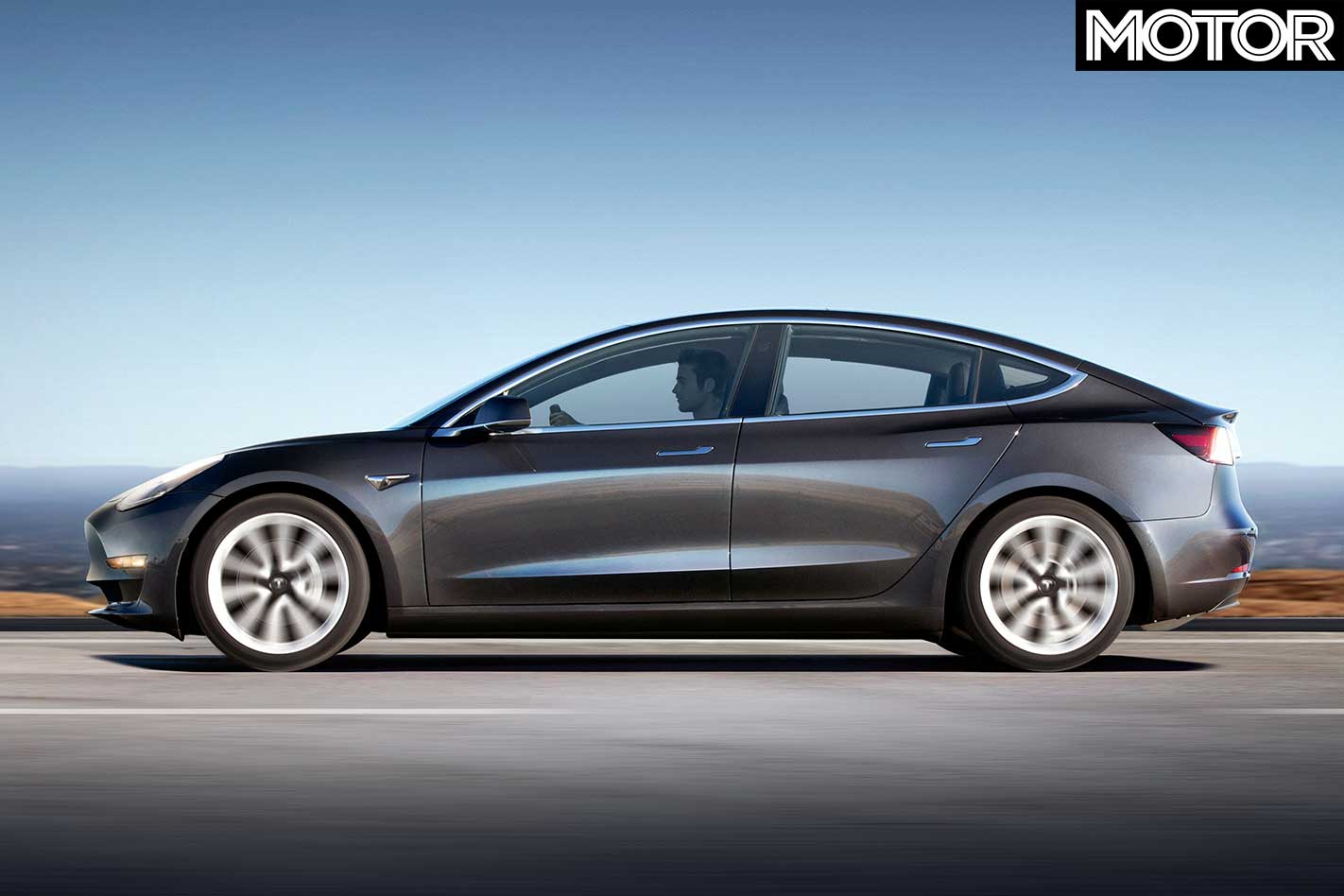
Cooling also becomes a higher priority for the computer management, with the cooling system kicking in between sessions of hard driving and even before a session begins.
“We can also allow operation of the powertrain beyond typical thermal limits and increase our refrigerant system capacity by overclocking the AC compressor into higher speed ranges.”
Finally, Tesla says it induces torque vectoring more effectively to corner sharply. It adds that improvements to track mode can be made though software updates, sent wirelessly through to customer cars from Tesla.
WE’VE all been there. Every once in a while we find ourselves at a traction disadvantage. Rather than break out the racks and shovels, the latest Mercedes-Benz GLE has another trick up its sleeve: E-Active Body Control.
This is the first suspension system that can individually control both spring and damping forces at each wheel, the 48v electrical architecture also controlling vehicle pitch and squat.
What this means is that when you do get stuck, you can set it to bounce the car to help individual wheels attain a little traction and pull you out of a tight spot.
Much like getting your mates to perch on the bumpers and bounce, the system’s hydropneumatics assist the air suspension.
The driver can even nominate one individual wheel for extra attention via a touch screen display, which is helpful if one spring is at full droop or contraction. About the only downside of it is that it sounds like your next door neighbour going at it.
As if bouncing around like a Chicano lowrider wasn’t enough, the GLE’s suspension also has a couple of showstoppers on the bitumen too. Curve inclination sees it lean into corners and the Road Surface Scan stereo cameras prime the suspension so that they know when a bump’s coming.
We’re only just beginning to see what 48v electrics can do for vehicle suspension. And, if the video link is anything to go by, we’re merely scratching the surface of the fun a Merc GLE will serve up in a Maccas drive-thru lane.
https://www.instagram.com/p/Bp2YF2BHwX-/?utm_source=ig_embed&utm_medium=loading
TOYOTA is making a statement, and it wants Australia’s performance-hungry car buyers to pay attention.
The statement is that the company has its mojo back, and it’s called Gazoo. Forget the daggy whitegoods Toyota of the last decade, Gazoo stands for the iconic performance heroes of the ‘90s like the JZA80 Supra and Celica GT-Four.
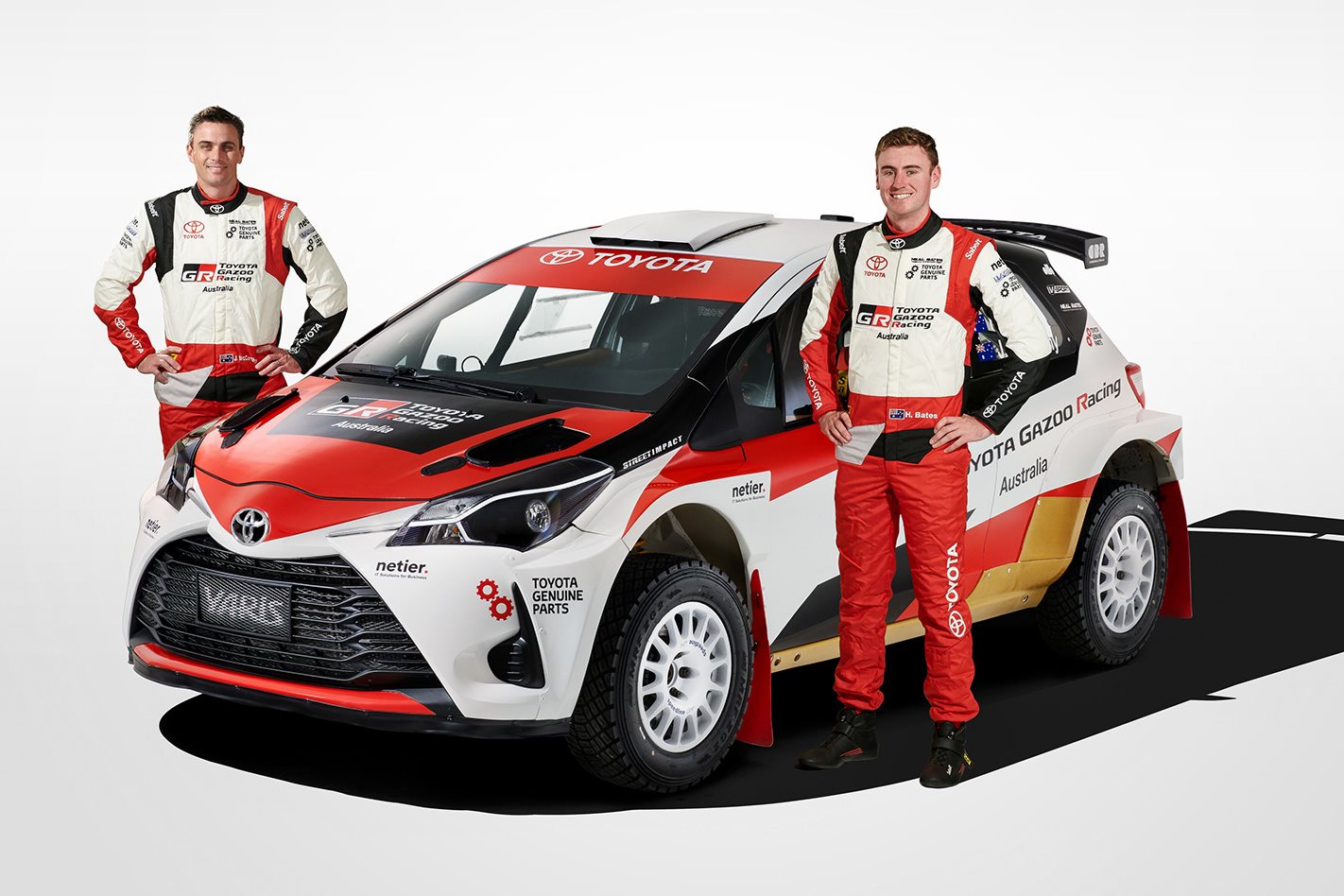
Gazoo is the performance arm of the international juggernaut that is Toyota – think Mercedes-AMG and BMW’s M division.
To help Aussies get on board with the oddly named sub-division, and transition from the TRD brand most already know, Toyota Australia has returned to the local motorsport scene with the factory-backed Gazoo Racing Australia rally team.
Modern motorsport at its core is a marketing tool, and that’s exactly what Toyota Australia is using the Australian Rally Championship (ARC) for next year, with the Gazoo Racing Australia team essentially working as a billboard to help introduce Aussies to the brand.
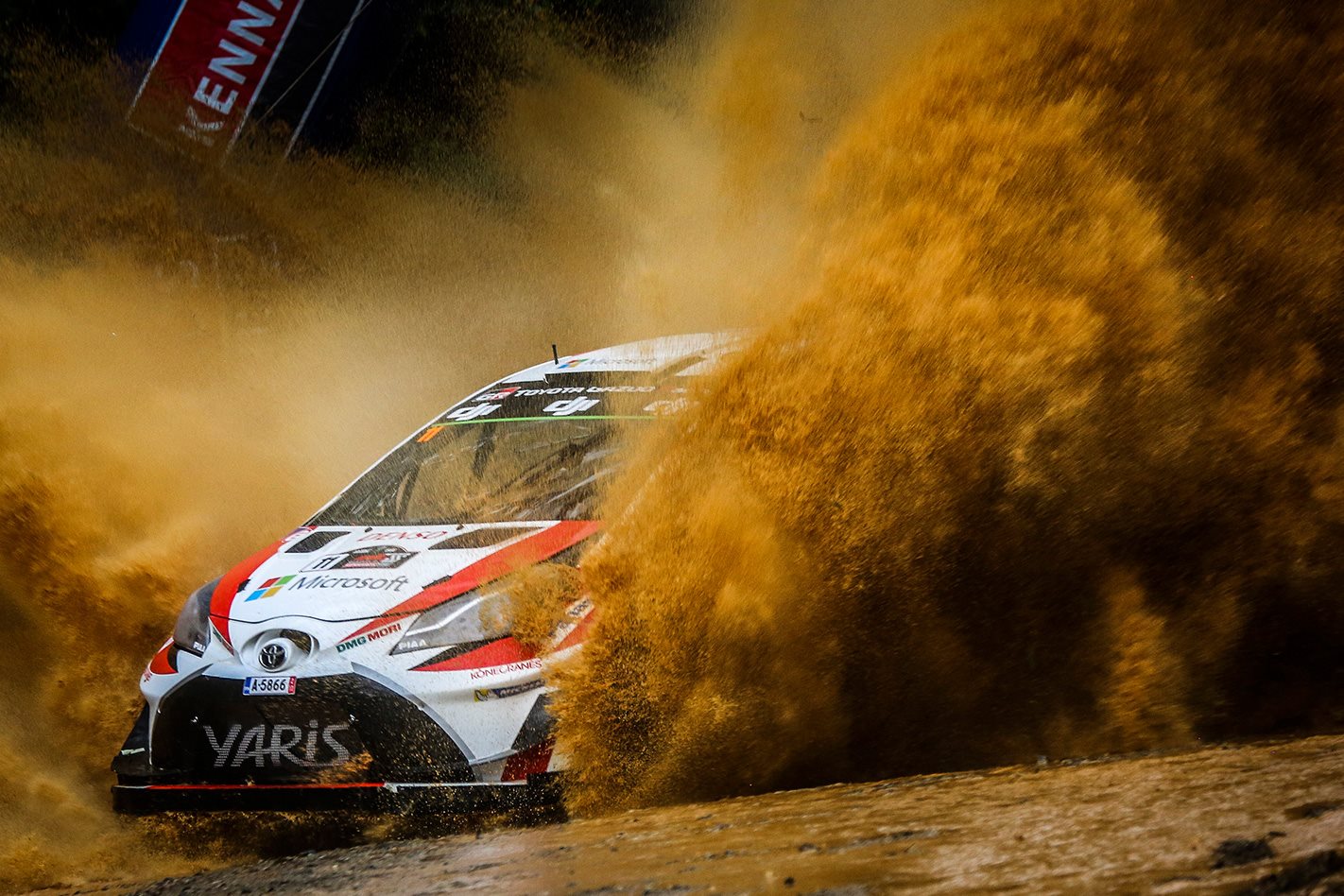
Wayne Gabriel is the chief marketing officer at Toyota Australia, and says the push for a local factory racing presence is backed by Toyota’s motorsport-obsessed president, Akio Toyoda.
“It is actually coming from global,” Gabriel told Wheels. “Akio Toyoda has a big passion for motorsport. He believes motorsport builds more exciting motor vehicles, and that is something the brand can always aspire to improve on.
“A performance brand needs credibility, and needs motorsport heritage. You can see that the credibility that we will get out of the motorsport arm will substantiate the GR road vehicles when they come.”
Gabriel told us the Supra is set to be the first Gazoo branded road car to be sold in Australia, and will likely arrive on our shores in late-2019.
Nissan launched its own performance arm Nismo in Australia early last year, introducing performance variants of the GT-R, 370Z, and Juke since then. Nissan Australia has repeatedly publicly stated it would only add Nismo products if they offer a genuine performance improvement over standard models – no sticker packs and body kits here.
Gabriel says this is something Toyota would “definitely” mimic.
“There will be some structure to what can and can’t wear Gazoo, because you need to have that authenticity and credibility in that category,” he explained.
Gazoo road cars are only expected to arrive in Australia during mid-life updates or all-new product launches for existing models. Toyota Australia has remained tight-lipped on what Gazoo products could be joining the Supra.
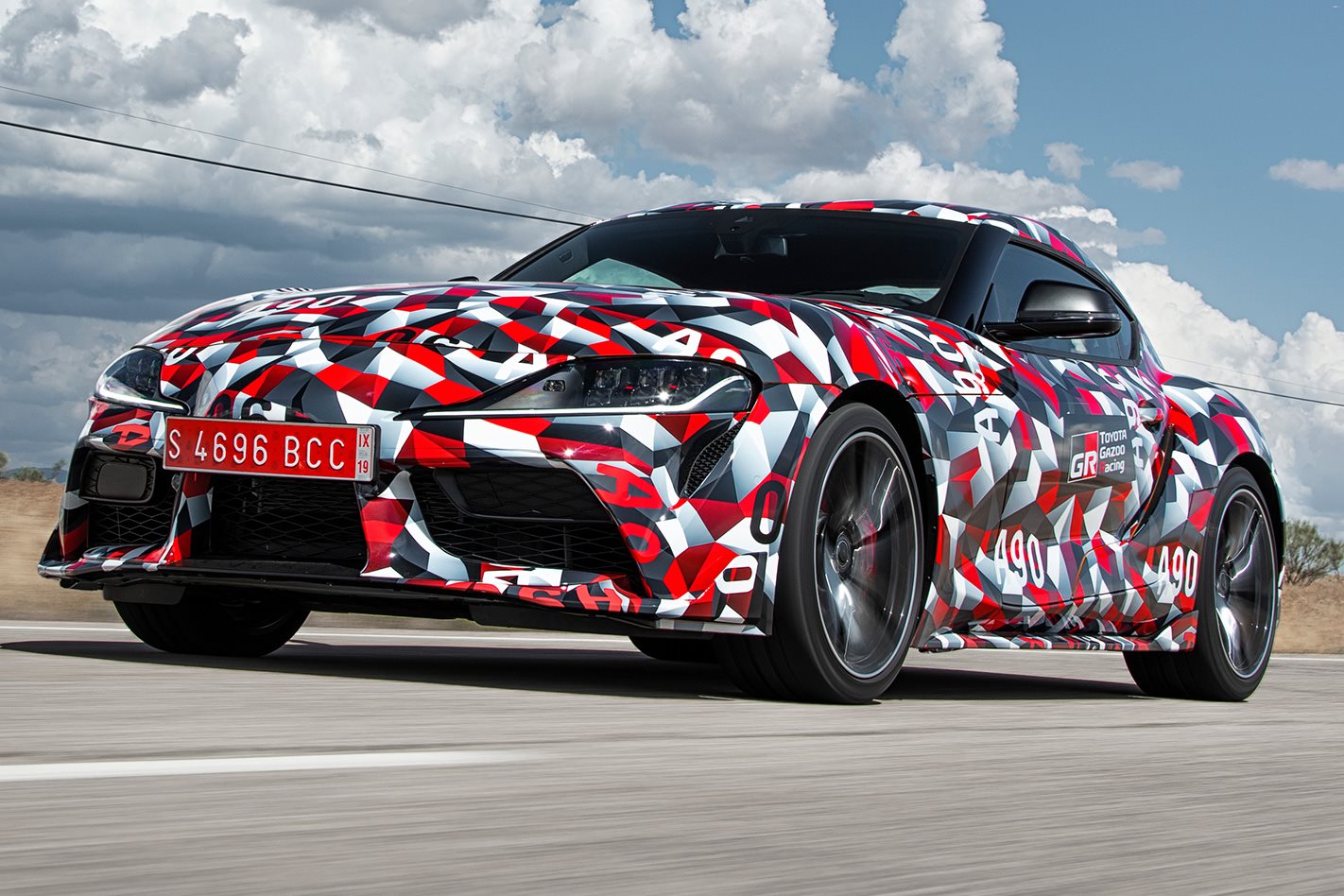
“[Toyota Motor Corporation] is talking about a lot of product options that are still at this point in time theoretical, and things that I can’t comment on,” Gabriel added. “However, if those things do become a reality, we’ve said we’d love for them to come to Australia.
“We want product that adds to our brand. It has to be authentic and credible in the performance area.”
Many Australian Toyota fans would be aware of the TRD brand, which stands for Toyota Racing Development. Gazoo ostensibly replaces TRD locally, with GR-branded cars the more subtly tuned products, while GRMN vehicles being more hardcore track-focused cars.
“[Gazoo] is a global brand for us, so we get a lot more support, a lot more assets, and a lot more leverage through that, whereas the TRD brand is more of an aftermarket brand. We will definitely see this as being our hero brand in the future,” Gabriel told us.
The current deal with Neal Bates to run Gazoo Racing Australia only lasts for a single year, with an option to extend – which Gabriel says Toyota is likely to take.
