
Porsche’s 70th birthday sees the marque in ruder health than ever before. Wheels celebrates the company’s seven decades of engineering excellence forged on road and track.
GT
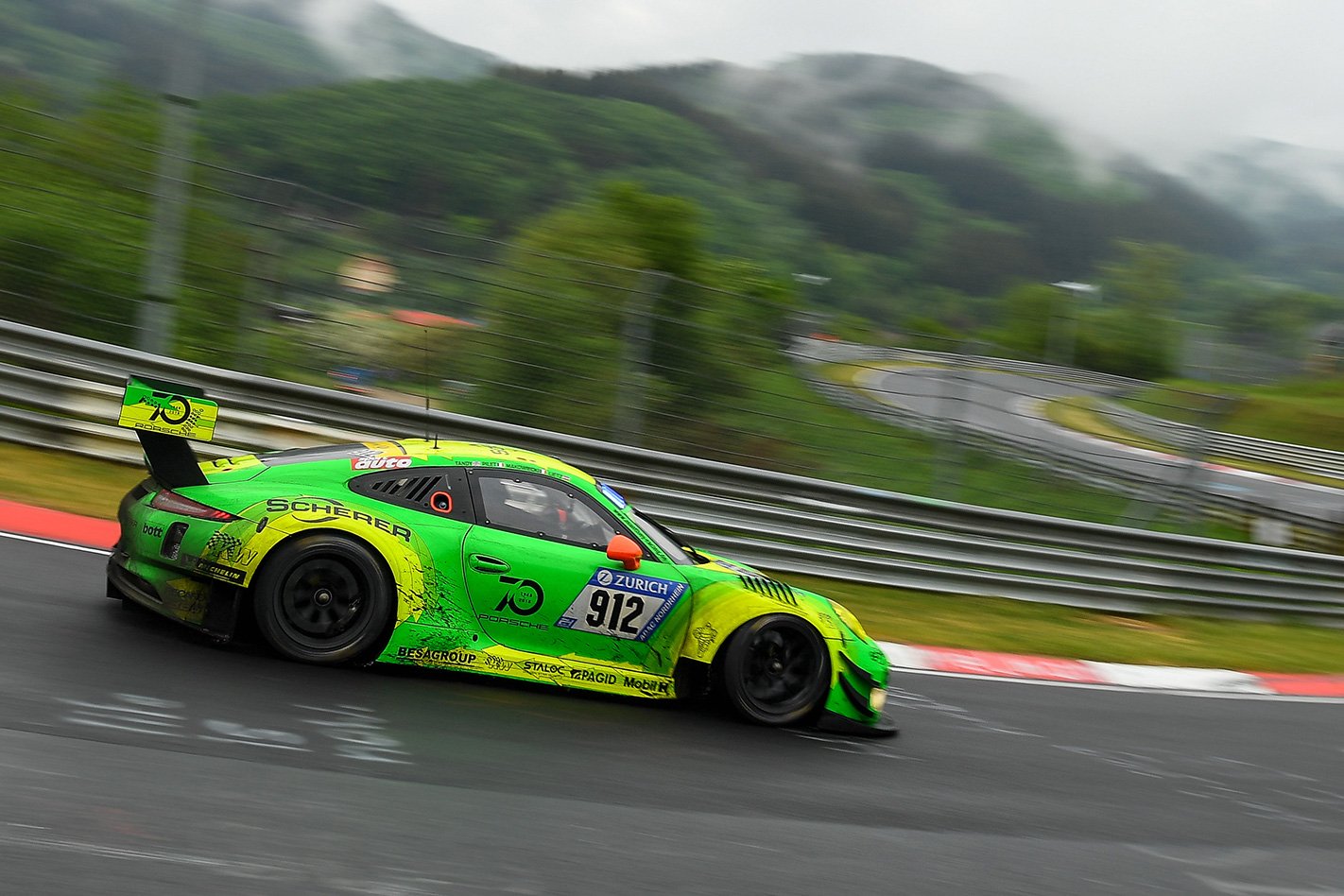
GT racing marks the intersection of Porsche’s road car and racing businesses. Its current GTE, GT3, and GT4 racers all start life alongside the road-going vehicles, before undergoing circuit preparation in the continuation of a tradition that started with the original 911 RSR of 1973 and carried through the likes of the mighty 911 GT1 homologation special. The heightened competition in global GT racing today has prompted a 911 first, with the current GTE-spec 911 RSR playing against type – but not the rules – with a decidedly mid-mounted flat-six.
ONE-MAKE
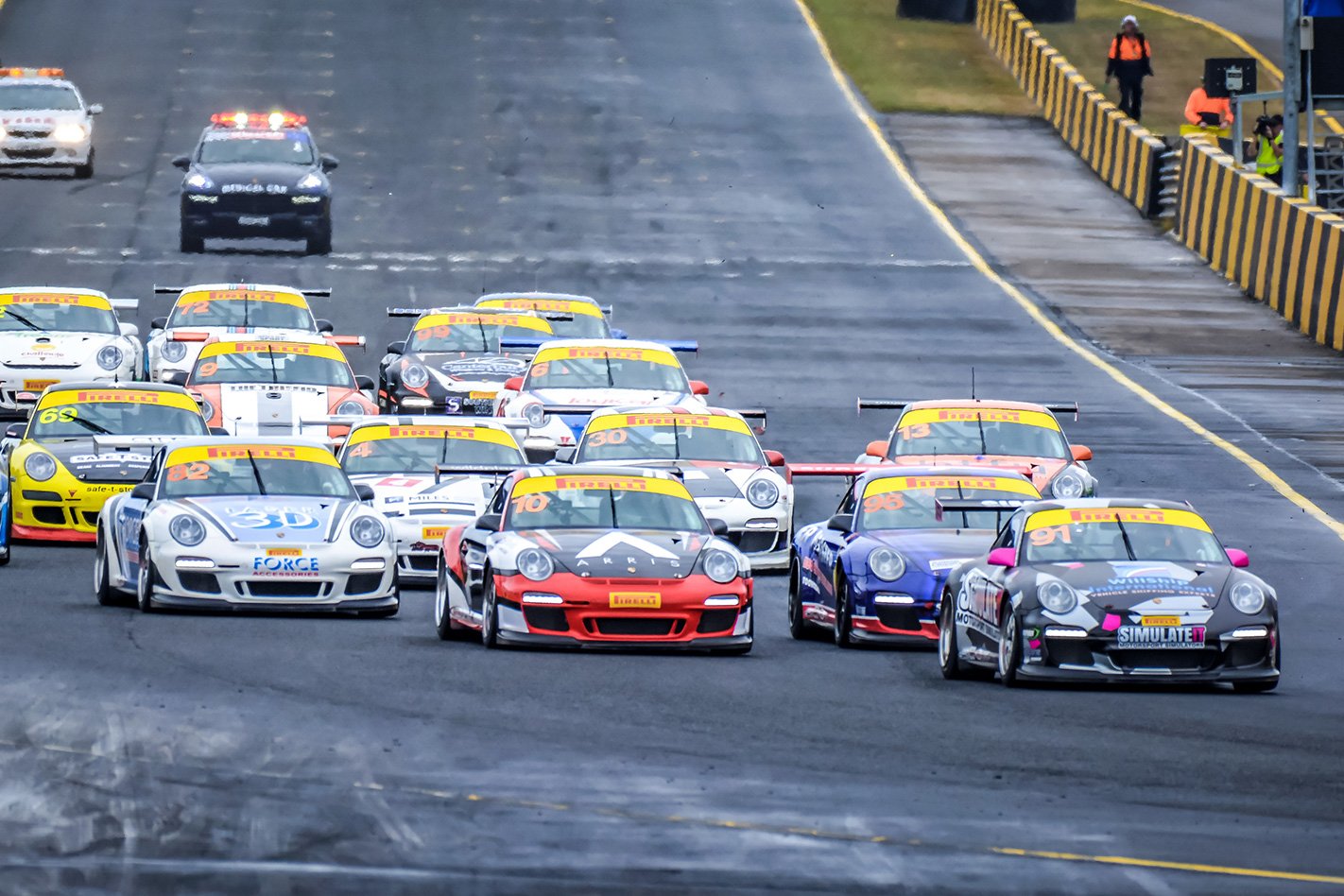
Porsche’s credentials span from grassroots racing to the pinnacle of international motorsport, but its cornerstones are the one-make Carrera Cup and GT3 Cup Challenge, which have spread to almost 20 championships across the globe. The first Carrera Cup was held in 1986 in Germany and the series has since grown to be the most prolific one-make category in the world. To keep it relevant for the man on the street, the current crop of Carrera Cup cars share the GT3’s 4.0-litre atmo engine.
RALLY
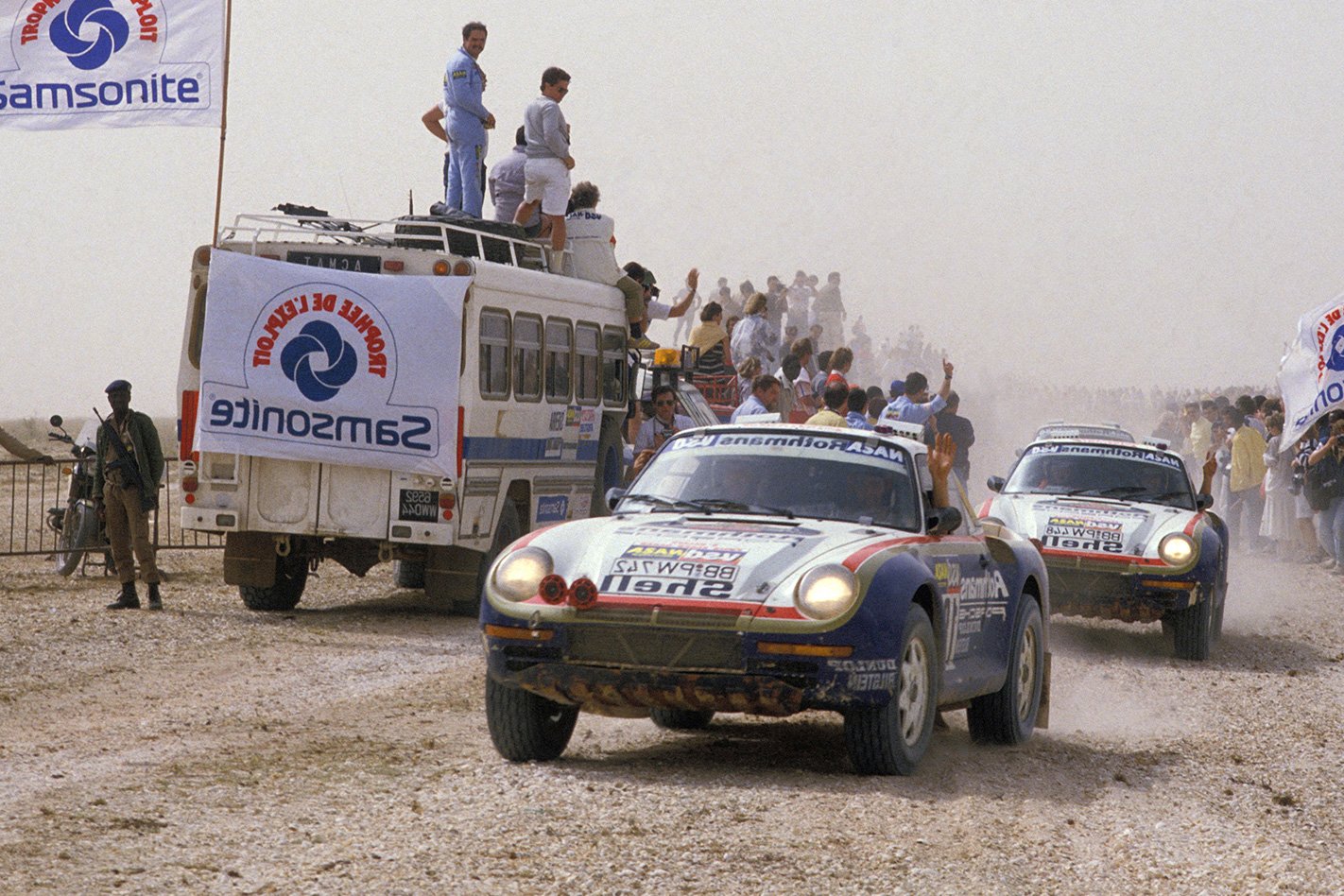
The image of a gravel-spitting 911 might seem incongruous, but Porsche made a success of international rallying, starting in 1967 when Polish racer Sobiesław Zasada drove a 912 to capture the European Rally Championship. Irishman Cathal Curley followed with a run of international rally wins in a standard 911 Carrera RS 2.7, leaving competitors scratching their heads in his wake. The 911 became a must-have rally car, particularly in Ireland, which was a hub for European rallying at the time, and more than half of the 17 911 RS 2.7 Sports allocated to the UK competitively took to Irish rally stages in the 1970s.
Factory-backed 911s only won twice in global rallies, but while the Porsche factory’s rally results didn’t quite measure up to its road racing successes, a pair of outright victories in the fearsome Paris Dakar rally in 1984 and ’86 (back when the route began in the French capital) cemented the brand’s loose-surface credentials. If Porsche went racing, even in the inhospitable conditions of the Ivory Coast, it was going to win.
ENDURANCE
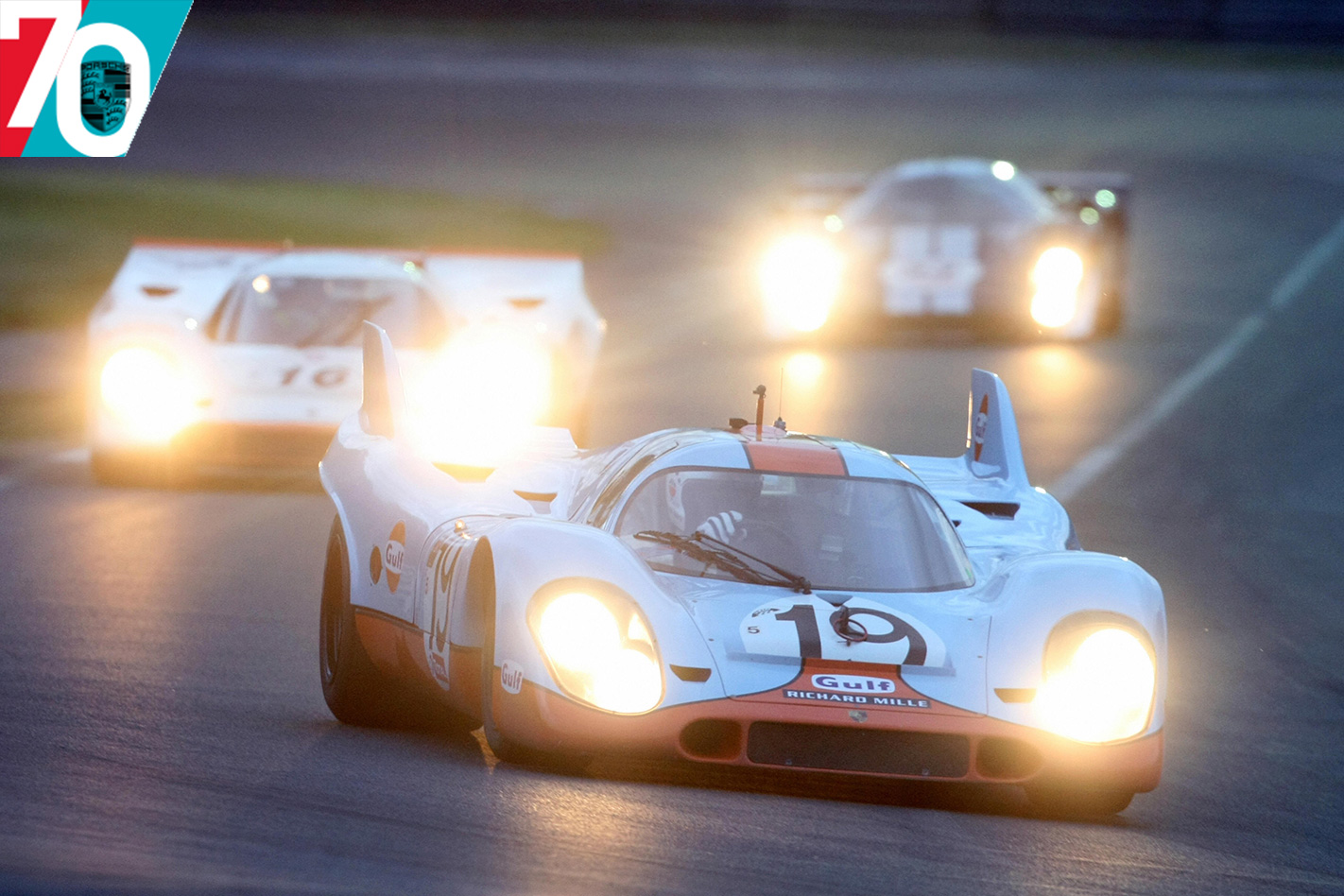
The unique test of mettle – and metal – that is international endurance racing has provided a happy hunting ground for Porsche. Between the big four – the 24 Hours of Le Mans, Spa, Daytona and the Nurburgring – Porsche has 55 victories, and is the most successful brand in history at the Circuit de La Sarthe with 19 wins.
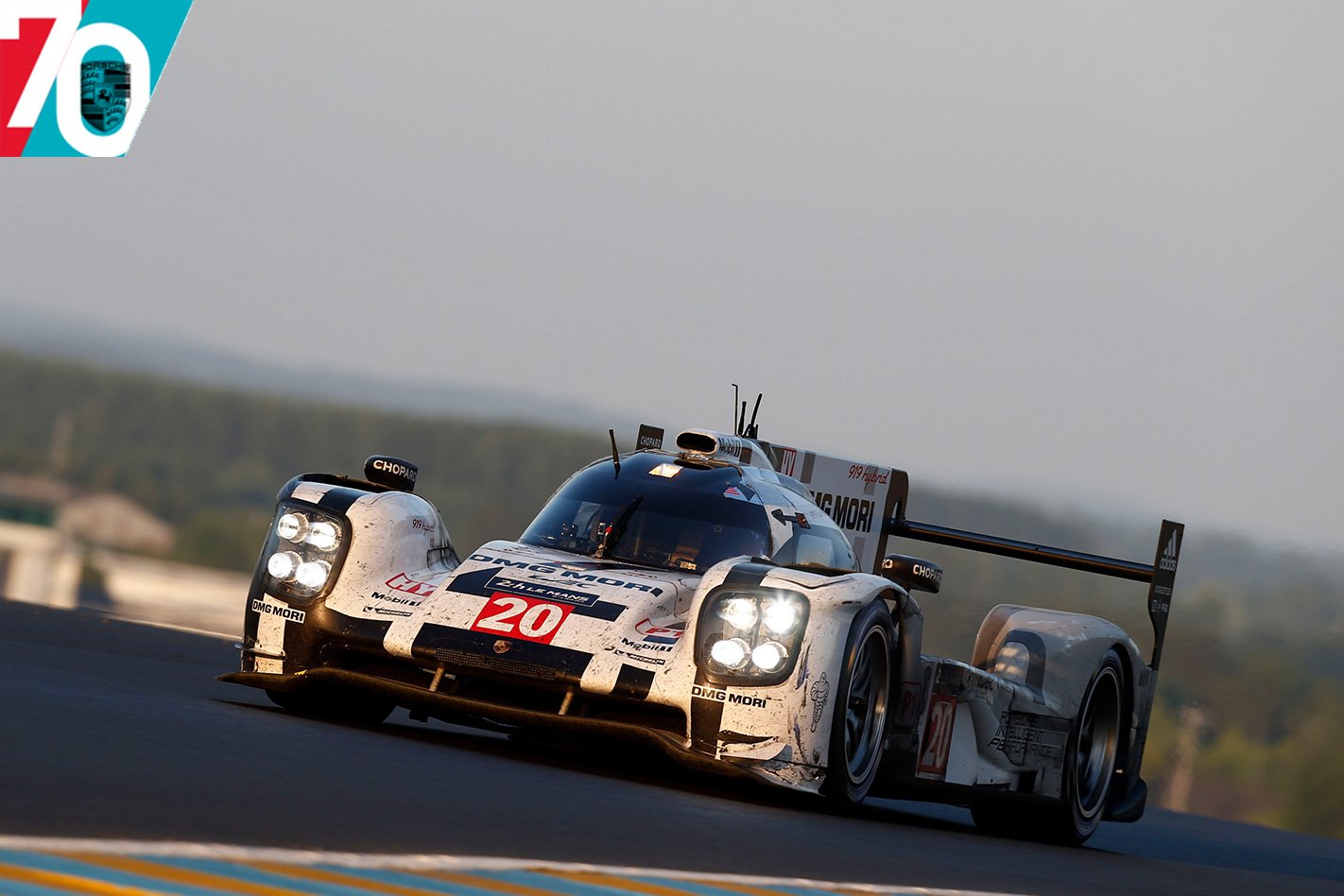
The course of endurance racing history has seen Porsche build some of motor racing’s most iconic machines. The likes of the 917, 936, 935, 956, 962 and 919 crushed the competition in races spanning two circumnavigations of the clock. In endurance racing folklore, Zuffenhausen is a giant.
OPEN-WHEEL
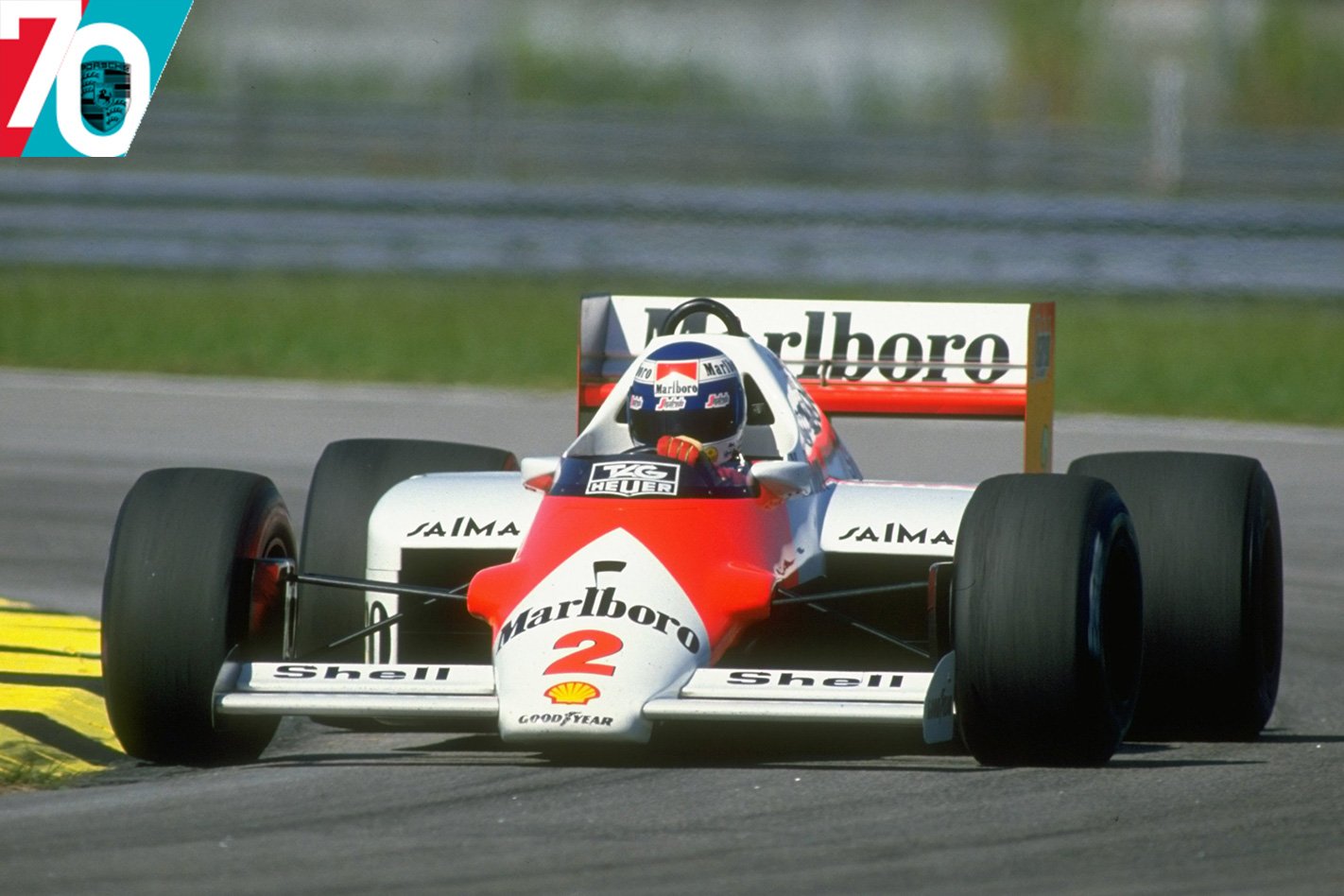
Ferdinand Porsche designed successful Formula 1 cars in the ’20s and ’30s for Mercedes and Auto Union, but his own company’s Grand Prix success came as an engine supplier, with works entries between ’57 and ’62 netting just a single victory in the final year thanks to the late Dan Gurney. Porsche in F1 is most fondly remembered through a partnership with McLaren, as the supplier of TAG-branded engines for four full seasons from late-’83 to ’87 – during which the Woking team took home two World Constructors’ and a trio of Drivers’ Championships. The next chapter in a revered motorsport history is about to open when Porsche fields a factory team in the 2018/’19 all-electric open-wheel Formula E world championship.
Porsche’s 70th birthday sees the marque in ruder health than ever before. Wheels celebrates the company’s seven decades of engineering excellence forged on road and track.
It’s enough to make us regular car-buying lunks go in search of a very high window ledge to step off. I’ve burned tens of thousands over the years in vehicle depreciation, when it turns out all I really needed to do was buy a decent 911, revel in the driving thrills and watch it rise in value like a glider riding a warm updraft.
But can it really be that simple? What happened to the old finance adage that if something appears too good to be true, it probably is?
Well, a degree of prudence is always necessary in any form of investing, and the Porsche owners we spoke to mostly insisted that they did not buy their cars with expectations of turning a profit; merely with the hope that running costs would be kept in check by a degree of capital appreciation.
But are we now in bubble territory, where values could drop like a stone? This seems unlikely, because the fact is that ‘classic’ 911 values have softened over the past 18 or so months, by as much as 15 to 20 percent according to our sources. So a little steam being let out of the market may have now steadied it, but demand remains solid so a plunge in values seems remote.
According to Porsche expert Anthony Raymond (Sales manager, Autohaus Hamilton, Chatswood, NSW) the demand is underpinned by several fundamentals: firstly, at a global level, the rich are getting richer, and are prepared to pay huge premiums for limited-run models like the GT2 RS and 911 R if they are unable to secure a spot in the queue. “This has the effect of dragging the broader ‘classic’ 911 market up,” says Raymond.
Then there’s the housing market, which has surged massively in the last decade or so. “When mature-age home owners with low debt realise their house is worth twice or more than they paid for it, they feel more inclined to buy a ‘lifestyle asset’ like a classic car, and this also pushes the market higher,” says Raymond.
Further to this, as 911 values have boomed since around 2010, it’s made some buyers wonder if they have missed the boat, and turn their attention to other models, like 944 Turbos, 968s and 928s. According to Raymond, values of these models have firmed considerably over the last five or so years, and that trend seems set to continue its upward march.
Wheels’ own Michael Stahl is prime example of a 911 buyer who got the timing right. Stahly took the plunge on his 3.2-litre 1989 G-series car around six years ago, paying circa $55,000. “Aside from having always wanted one, I also knew I basically had no superannuation, so while I had no idea the value would soon double, I did figure that I’d be very unlucky to ever lose money on it, even taking into account the running costs,” says Stahly.
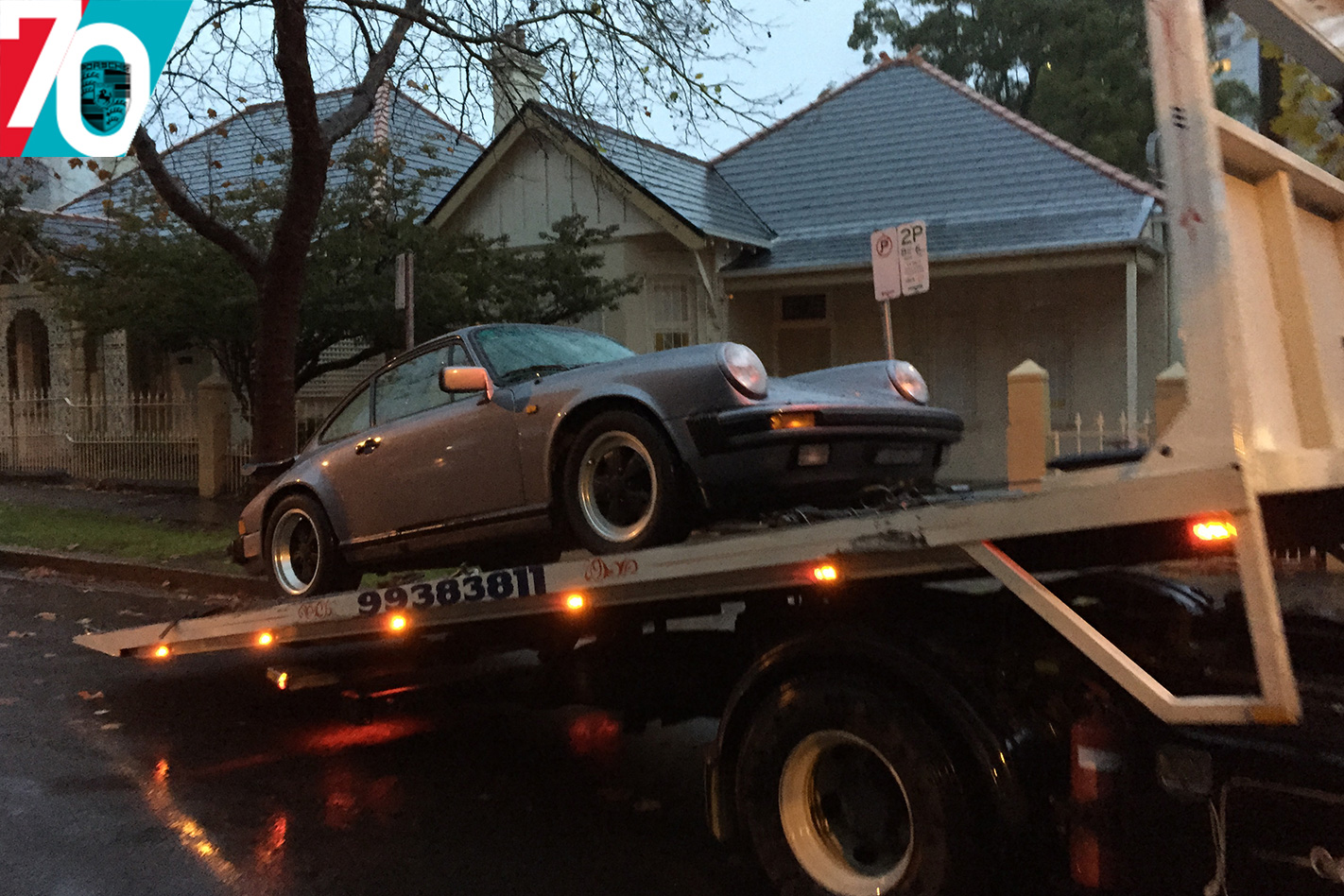
But proving even sound investments can take a hit, Stahly’s 911 would go on to need engine work, and his perfectionist streak didn’t allow him to just do the bare necessities. “I was expecting $12K, but a broken piston and weeping bearing seal prompted all new cylinders and pistons … the rebuild totalled $27,500. The clutch was fine at that point, but the rubber centre failed six months later, so another engine drop, new clutch, $3.5K. But if I did the sums, given that the car is worth $120K any day of the week, I’m probably still slightly in front.”
The desirability list for 911s includes original Australian delivery (versus UK cars which can have rust; Oz cars are also usually better specced), coupe body (versus cabrio or Targa) and manual (auto only arrived with the 964’s Tiptronic – well, excluding the early, weird Sportomatic; another story). A 911 is generally more valuable if it hasn’t been messed with; there was a big trend in the 1990s to bodykit sad old G-series to look like 964s; then in the early-2010s to ‘backdate’ late G-series and 964s to look like ’73 RSs. What most buyers want now (short of a Singer) are clean, original cars.
But what about enthusiasts wanting something a bit more modern? “I’d direct them to a good 996 or early 997s,” says Anthony Raymond. “These cars have hit the bottom of their deprecation curve and are on the way back up.” He suggests savvy buyers look closely at lower volume models, like the brilliant, wide-bodied 997 GTS. “I’ve had a couple of 991 owners roll out of their current cars and ‘backtrade’ into 997s because they claim it gives a more authentic 911 feel and character,” he says.
And so the 911 legend – and its price of admission – continues to grow.
The mid-engined maestros
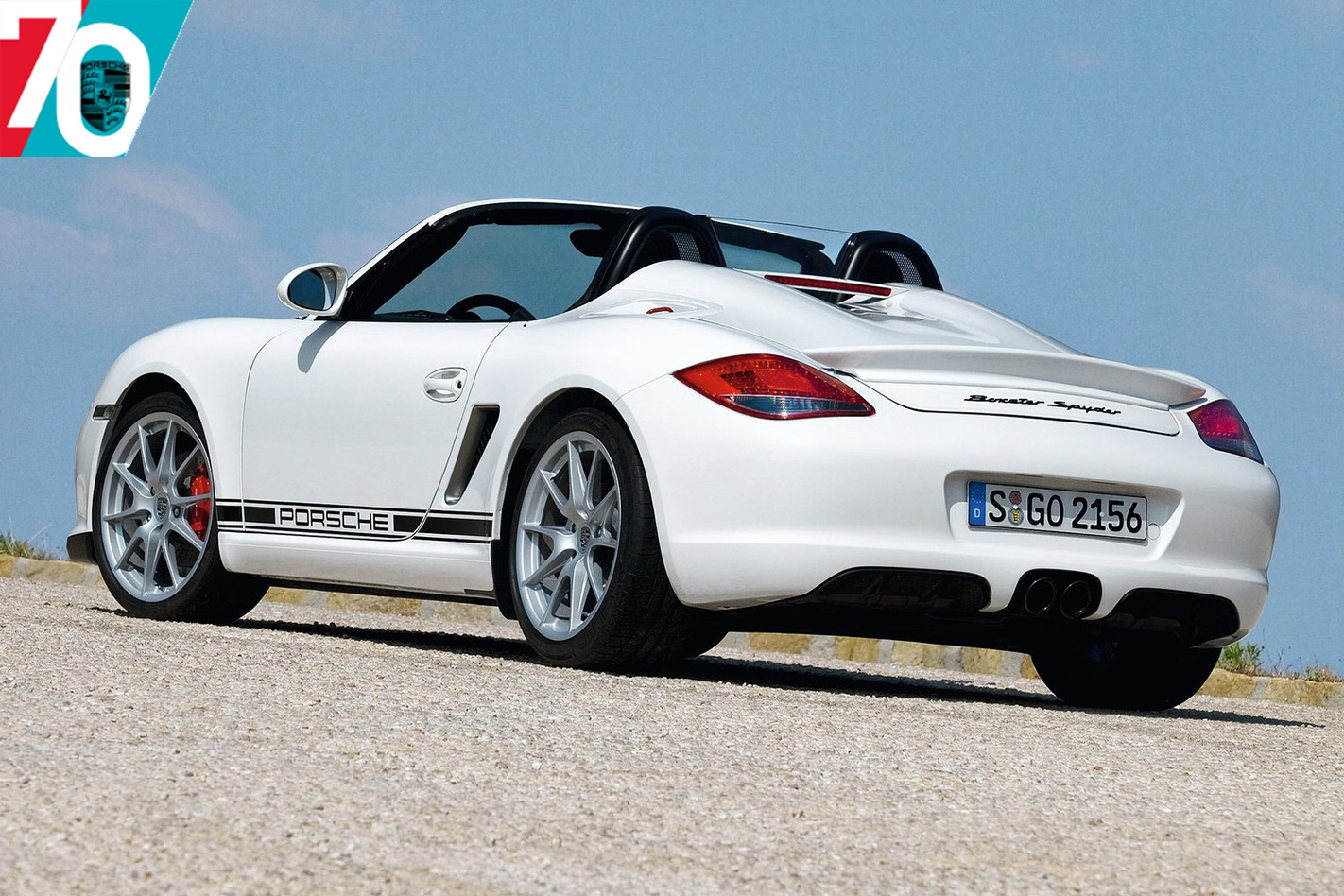
Shrewd Porsche buyers should not overlook late-model six-cylinder Cayman and Boxster models, according to our sources – especially the GT4 Cayman (currently around $205K) and limited-run models like the Boxster Spyder. The virtues of the thirstier, less torquey atmo sixes over the turbo flat-fours are well documented, and while second-hand values may not have fully bottomed, the word is that time may not be far off, and from there, these cars should be, at the very least, depreciation-proof. And remain joyous to drive.
A peek under the skirts
Paying a Porsche specialist like Autohaus Hamilton for a pre-purchase inspection could be the best $500 to $1000 you’ll ever spend. “Our techs spend a minimum of three hours going right through the car, and detail any work that needs to be done immediately, and then outline all the rectification work that’s imminent, so a potential buyer knows exactly what costs they face over the next 12 or 18 months,” says Anthony Raymond.
WHAT IS IT
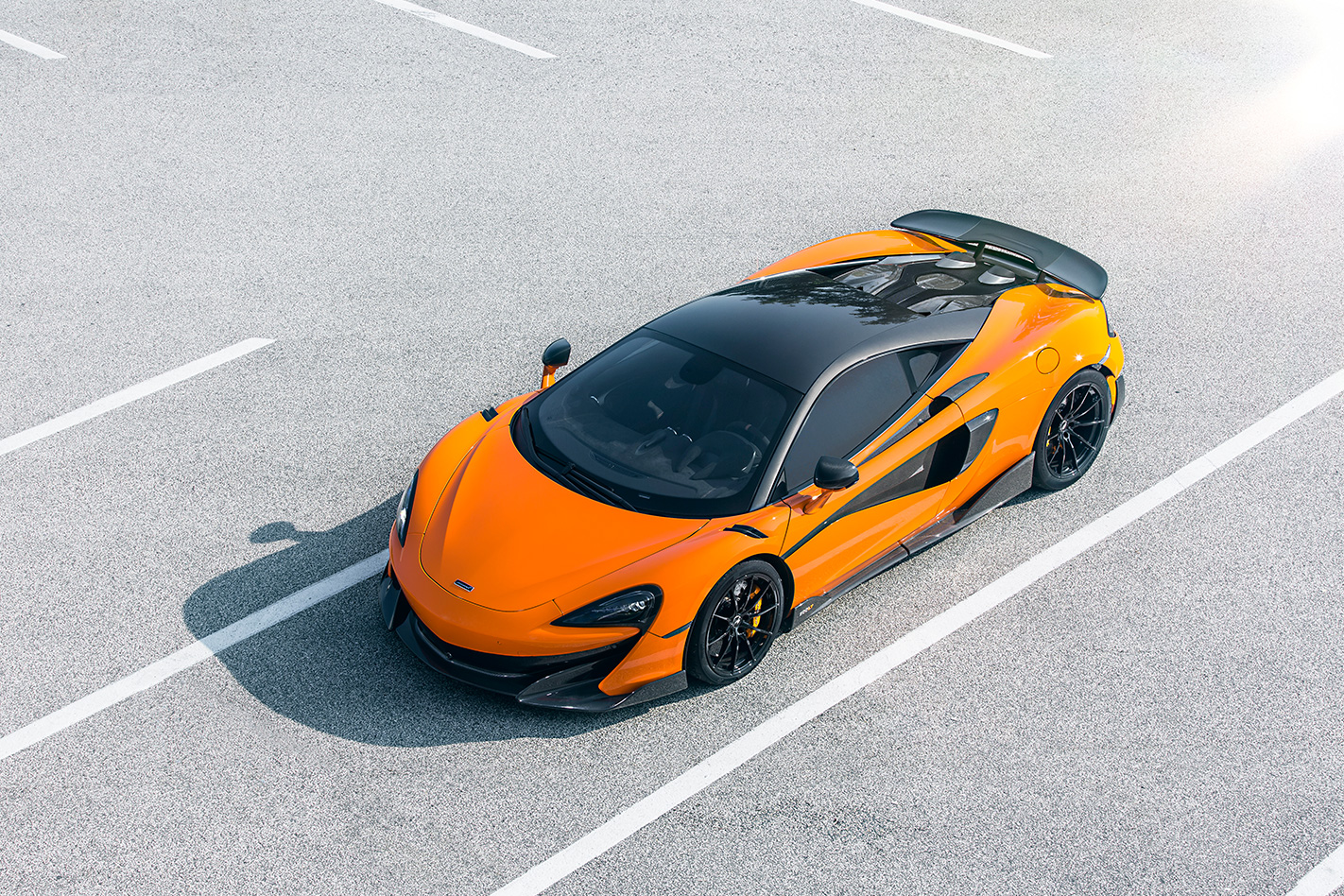
Think of this as a McLaren 570S that has spent all winter in the gym. Harder, faster, leaner and meaner, the 600LT is the fourth Longtail model from Woking’s skunkworks and is undoubtedly the most accessible. We like that.
WHY WE’RE TESTING IT
We were given the opportunity to stretch the 600LT’s legs on track at the Hungaroring. A McLaren on a bona fide F1 circuit? That’s a hard invitation to turn down.
MAIN RIVALS
Ferrari 488 Pista, Lamborghini Huracan Performante, Porsche 911 GT3 RS
THE WHEELS VERDICT
We have to qualify this verdict as we’ve only driven it on a super-smooth F1 circuit, but the McLaren 600LT seems the real deal. Searingly rapid yet surprisingly approachable for a bona fide carbon-tub supercar with 441kW and doors that open upwards, the 600LT may look closely related to the 570S, but it feels markedly different. It’s more direct, more alive and just flat-out angrier. It’s a gem.
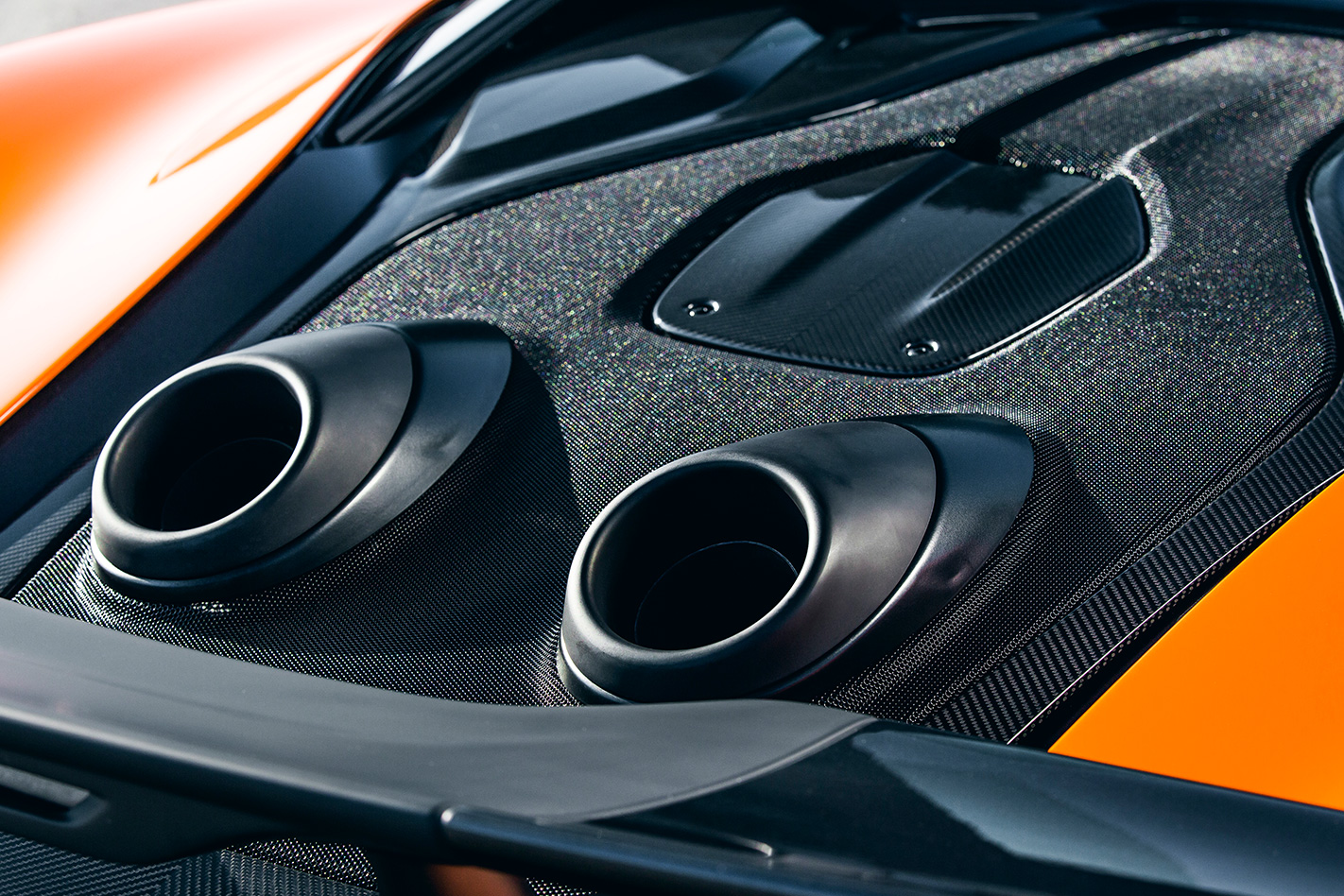
PLUS: Sharp responses; amazing steering; linear power delivery; chassis exploitability; flames from top-mounted exhausts MINUS: Engine not overly tuneful; interior can look underdone without optioning
THE WHEELS REVIEW
MAX VERSTAPPEN calls the Hungaroring a Mickey Mouse track. Danil Kvyat reckons it’s a bit too narrow for modern F1 cars. They might well be right, but in a McLaren 600LT, it’s electrifying. All those things that GP jockeys hate – the guardrail proximity, the patchy runoff, the weird sightlines, the linked sequences of bends that make overtaking almost impossible – don’t really matter when you’ve got the track to yourself in a 441kW road car that weighs just 1356kg.
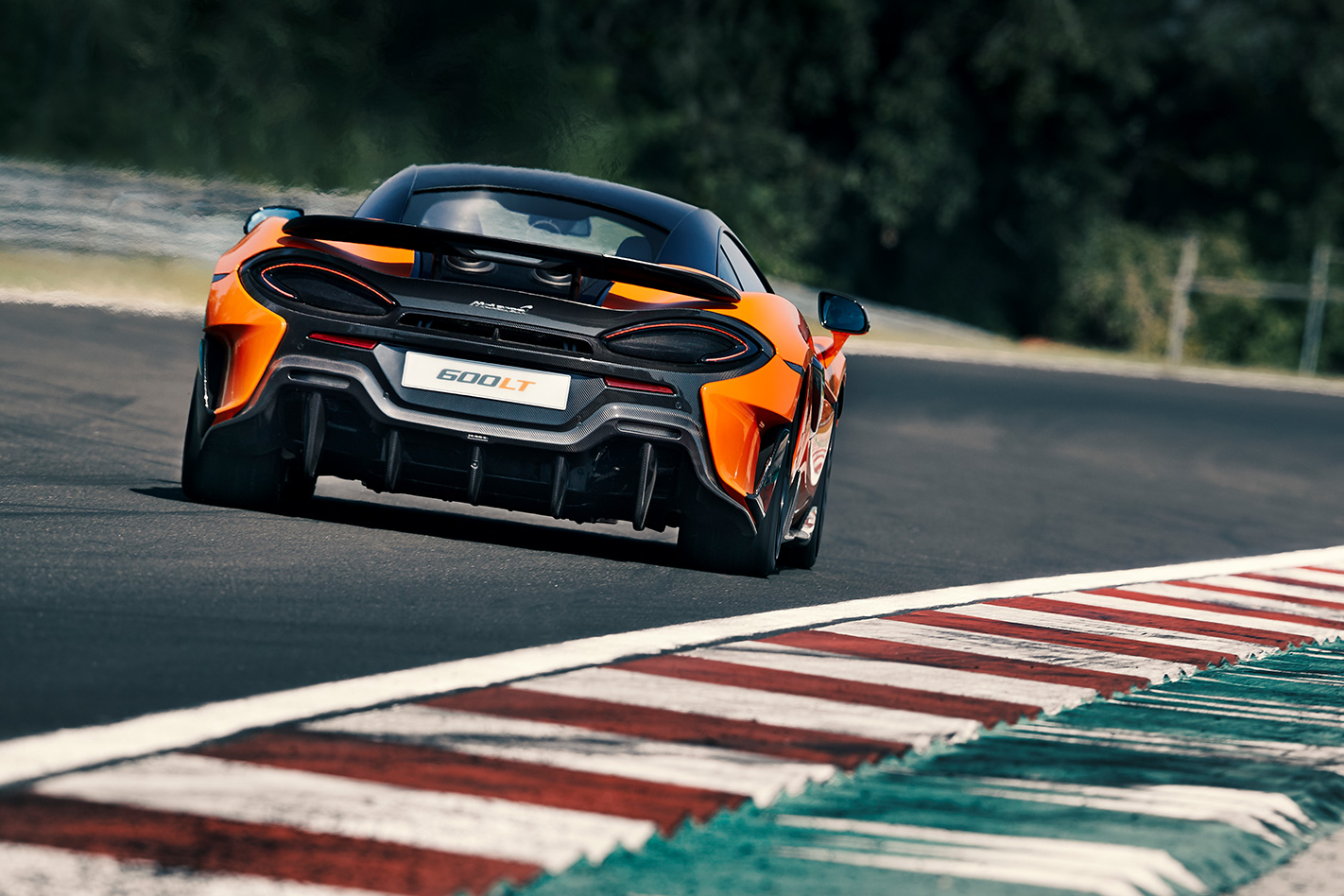
The 600LT is not a difficult car to understand. Take a 570S and just tweak virtually every dynamic criterion. Aero, brakes, track width, power, torque, spring rates, roll bar width, breathing, weight, tyres – you name it, it’s been amped up by a few percent. You might consider these marginal gains, but fully 23 percent of the 600LT is different to the 570S and it shows. The sighting laps of the 4.4km circuit were conducted in a 570S. Jump from that into the 600LT and the former feels rubbery and dull in its responses. It’s anything but, and we rate the 570S very highly as a road car, but on track the 600LT is night and day better. It’s sharper, fiercer, more playful and just a bigger, more three-dimensional personality.
Don’t put too much credence in McLaren’s claim that 100kg has been excised from the Sports Series to create the 600LT. Yes, it is possible to slice that amount from the 570S’s figure, and McLaren claims that a hundred kegs less is more beneficial than another 60PS (44kW) due to the virtuous circle of lighter weight requiring lighter componentry, but you’d need to delete the air conditioning and audio system and nobody’s about to do that. Few will go for the fixed bucket seats either. By the time you put the stereo back in, you lose the benefit of a cut-down lightweight loom. Most customer cars will weigh around 60kg less than a 570S.
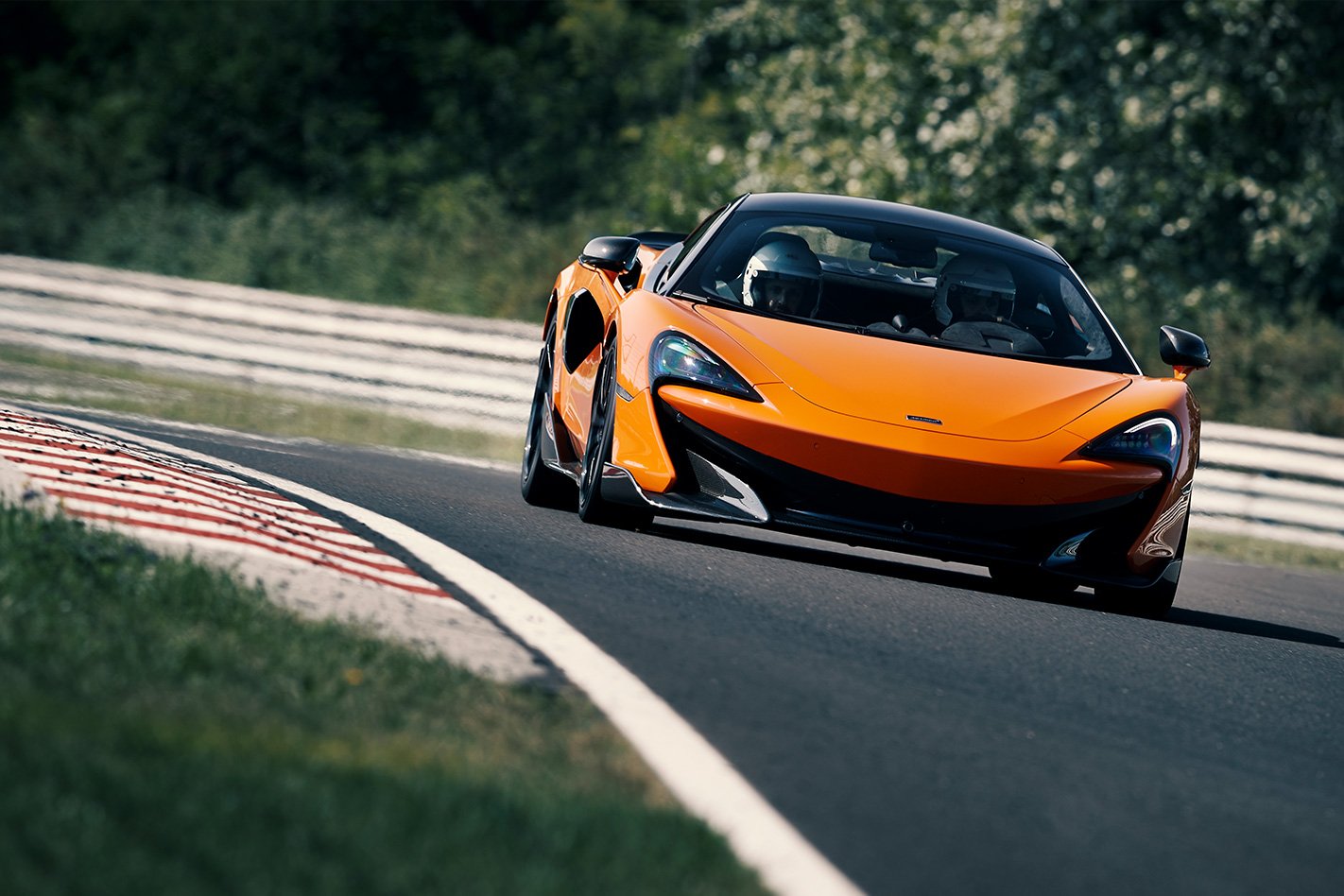
You’ll feel each and every kilogram of the car barrelling into Turn One. Switched into Track mode, you get a set of shift lights that are blazing blue as the speedo shows 255km/h and you jump on the brakes just past the 200m board. The 390mm carbon ceramic front discs are borrowed from the 720S and are augmented by a brake booster developed from the Senna’s. The pedal feel is firm and you can hit it hard without worrying about the 600LT weaving under braking as you might in a 570S. At this speed, the LT’s fixed aero package is creating 100kg of downforce as you jump on the picks, reducing front pitching.
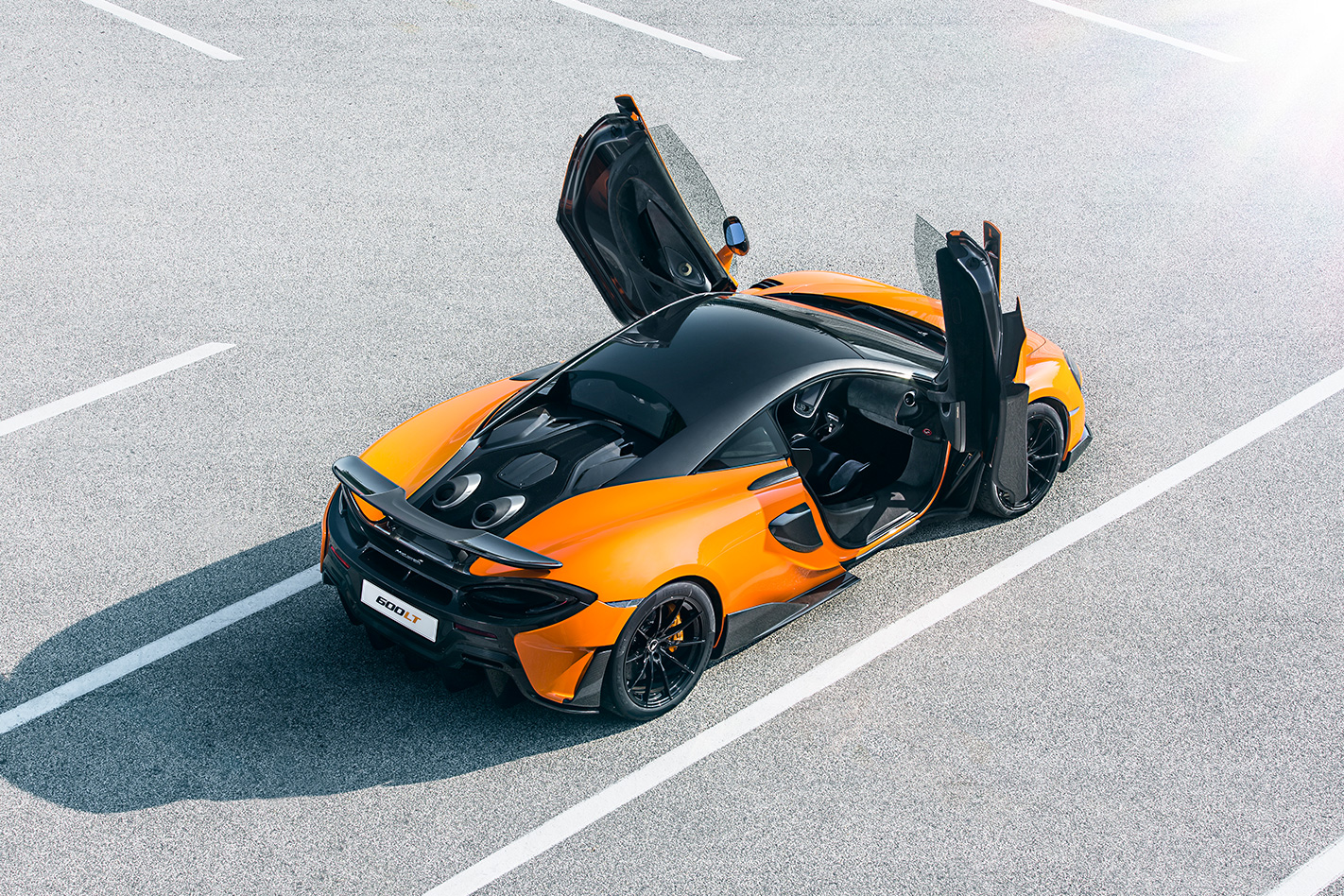
Flick the carbonfibre paddle shifter down through three gears, and the top-mounted exhaust’s blare right behind your head drenches the cabin in sound. The M838TE 3.8-litre V8 isn’t a melodic powerplant, but it sounds purposeful and raw here, twin gouts of blue flame occasionally issuing skywards like foot-long candles. It’s warm on track, 34 degrees, and the specially designed P-Zero Trofeo Rs find no shortage of purchase on the hotmix.
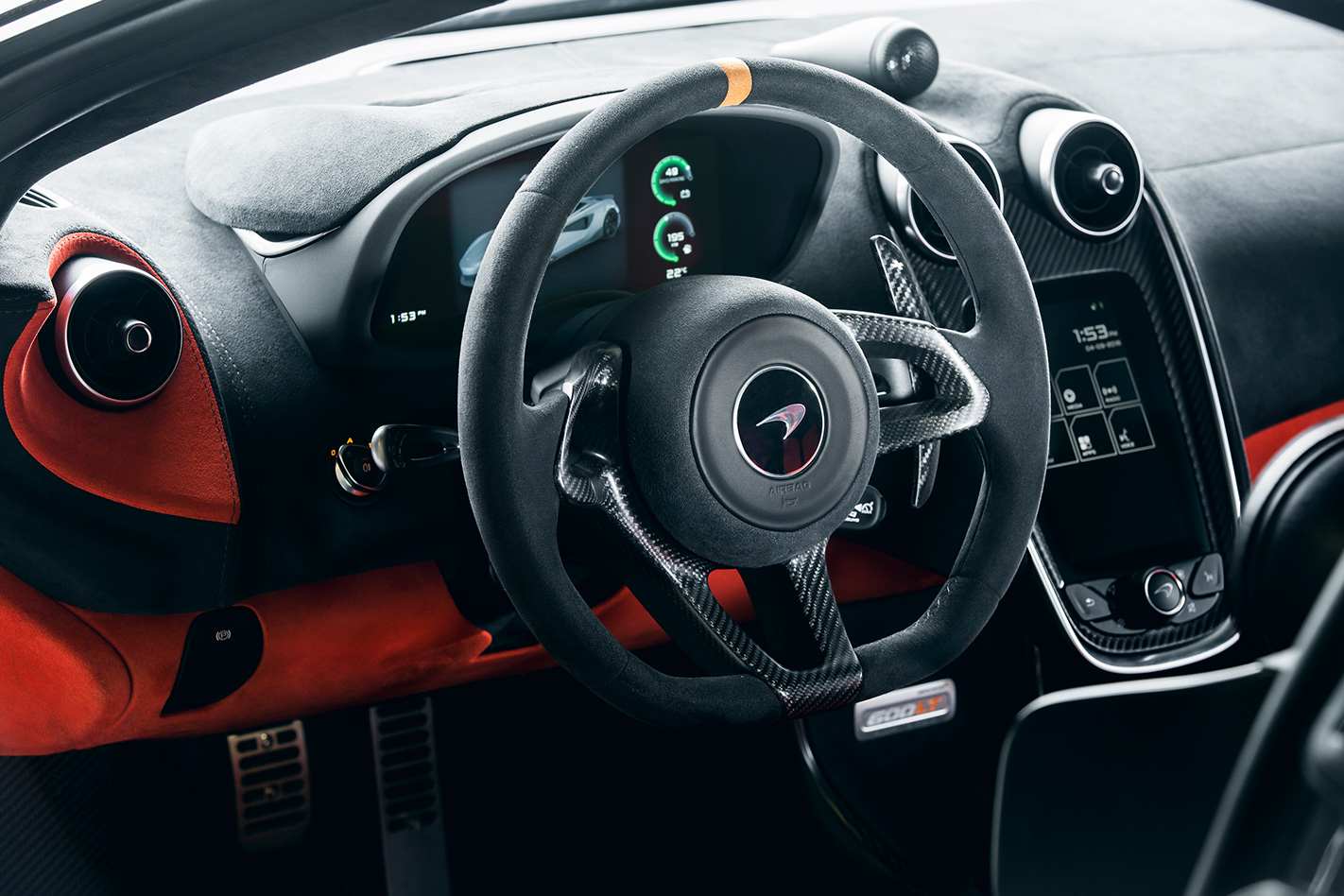
You’ll need to trail the brakes gently into the broad hairpin before gradually feeding throttle. The 600LT can feel scrappy if it’s driven clumsily or bullied through corners. It has its own cadence that you’ll need to key into, which is quick and smooth. The hydraulically assisted steering doesn’t change no matter which powertrain or handling mode you’re switched into. That’s a good thing, because it’s the best steering in its class by a significant margin; clean, feelsome and with the sort of feedback you thought was a thing of the past. A stiffer torsion bar in the rack and a ratio that’s four percent quicker than the 570S make the front feel alert but not hypersensitive.
Darren Goddard, Sport Series Line Director, explains the logic behind McLaren sticking with ‘old tech’ hydraulic assistance. “There’s no pressure within the business to fit EPAS (electric power assisted steering) to our cars, but there is pressure from the industry as a whole, because everything now is going that way,” he says. “We tried different manufacturers’ EPAS systems and didn’t like them. The Lamborghini Huracan? Ugh. Porsche’s is about the best, but it doesn’t have the on-centre feel. They’re trying to replicate a lot of characteristics that we don’t have to.”
The steering’s helped by the tyre, which McLaren has specially developed in conjunction with Pirelli, rejecting a couple of design iterations until the combination of huge belt stiffness with a slightly softer-than-normal sidewall was achieved. Turn-in is crisp, with hardly a sniff of understeer. “Getting the roll stiffness right at the rear was key to giving this car the front end it has,” claims Goddard, alluding to the rear roll bar that’s increased in stiffness by 25 percent. The front bar is 50 percent stiffer than 570S and spring rates have increased by 14 percent front and 34 percent rear to give a similar overall stiffness to the previous Longtail model, the 675LT. It corners flat and hard, but with just enough roll to telegraph its limits. The 600LT will lap this track quicker than the 675LT, despite being a little slower in terms of outright acceleration.
Mid-corner, you’re rolling off brakes and onto power as you home in on the apex. In Sport powertrain mode, big throttle openings will see the car mete out only as much torque as the rear tyres can deploy, which can make it feel laggy on corner exit. Switch to Track mode and it’s a lot more hands-off. That ‘lag’ was the software, taken from Bosch’s standard map and developed in-house by McLaren, protecting you from yourself.
In Track, you feel the limit of grip more cleanly, and you also get Inertia Push – above 5000rpm and from 60 percent throttle input – which means that when the transmission is upshifting, the next gear is preselected and energy built up in the flywheel and rotating/reciprocating engine components is scavenged. The effect is such that rather than there being a lull when flicking up a gear, there’s virtually no let-up in acceleration. Track delivers quicker and smoother gearshifts than Sport mode, which introduces a momentary pause that can shock the driveline.
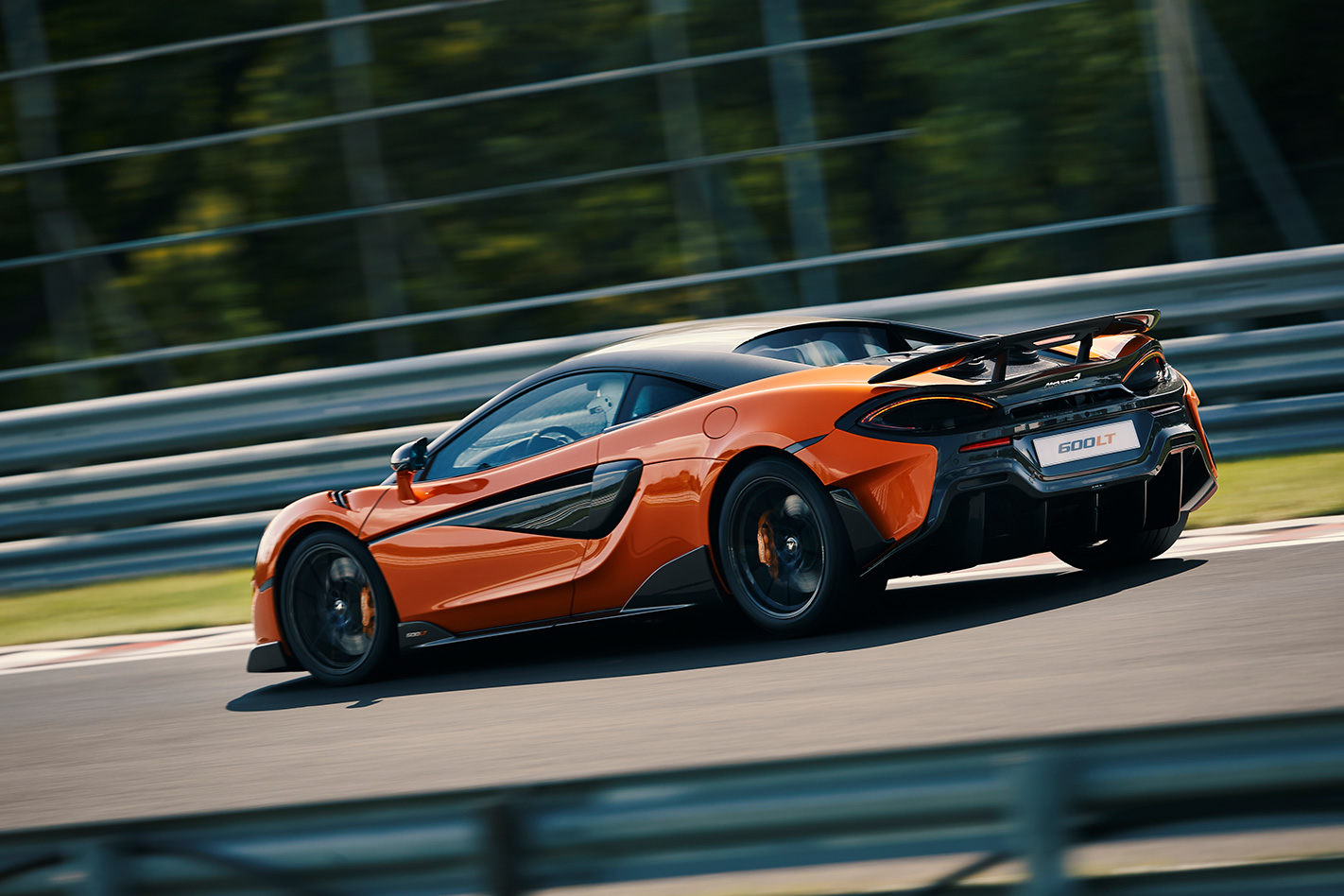
Due to the fact that the power delivery is so linear, the 600LT never feels crushingly accelerative or boosty like a heavily turbocharged 911, but the numbers don’t lie. Any rear-wheel-drive car that can dip below three seconds to 100km/h is quick. And 8.2 seconds to 200km/h is quicker than a 911 GT2 RS or a Huracan Performante. Historical point of reference? The McLaren F1, which managed 0-200km/h in 9.4sec.
In terms of outright laptimes, the 600LT will likely sit somewhere between the Performante and the Ferrari 488 Pista and, at $455,000, is more affordable than both. The 675LT was limited to 500 examples of each body style, but McLaren won’t put a figure on 600LT production plans. A Spider model will follow next year, but the only indication on how many will roll out of the MPC at Woking is that less than 20 percent of Sport Series volume will be devoted to Longtail. Those lucky few will be rewarded with the most sweetly honed, beautifully balanced road car that McLaren has ever built. How to put a price on that?
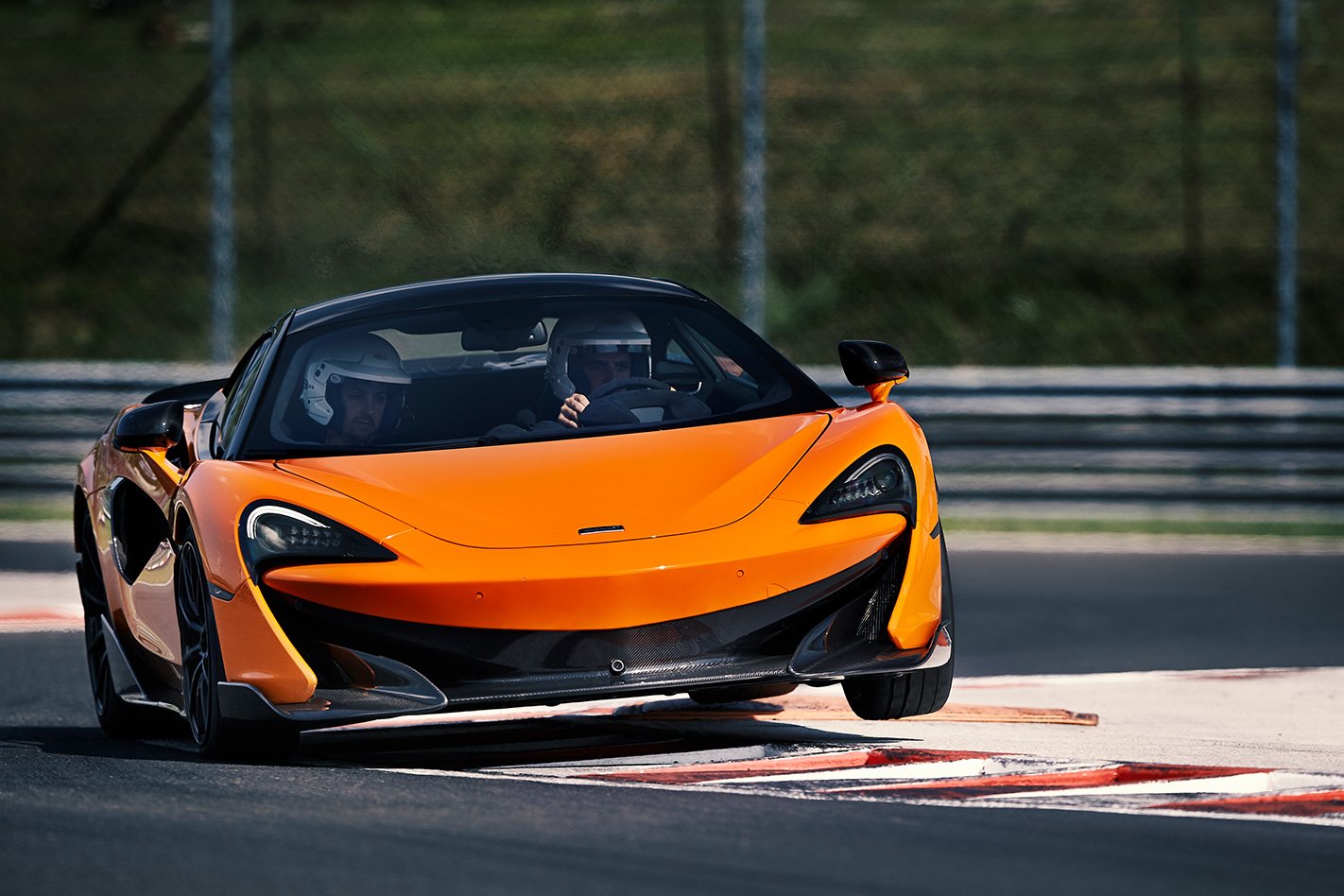
Model McLaren 600LT coupe
Model McLaren 600LT coupe Engine 3799cc V8 (90°), dohc, 32v, twin turbo Max power 441kW @ 7500rpm Max torque 620Nm @ 5500-6500rpm Transmission 7-speed dual-clutch L/W/H/WB 4604/1930/1194/2670mm Weight 1356kg 0-100km/h 2.9sec (claimed) Economy 12.2L/100km Price $455,000 On sale Now
There are signs, here and there. If you rattle the Huracan Performante Spyder over a rough patch of tarmac at speed, you’ll be aware of the structure shuddering slightly around you.
In the third gear with the throttle wide open it doesn’t feel as effortlessly accelerative as it might – although by the time 6000rpm has come and gone you won’t believe there could be another car that’s as fast.
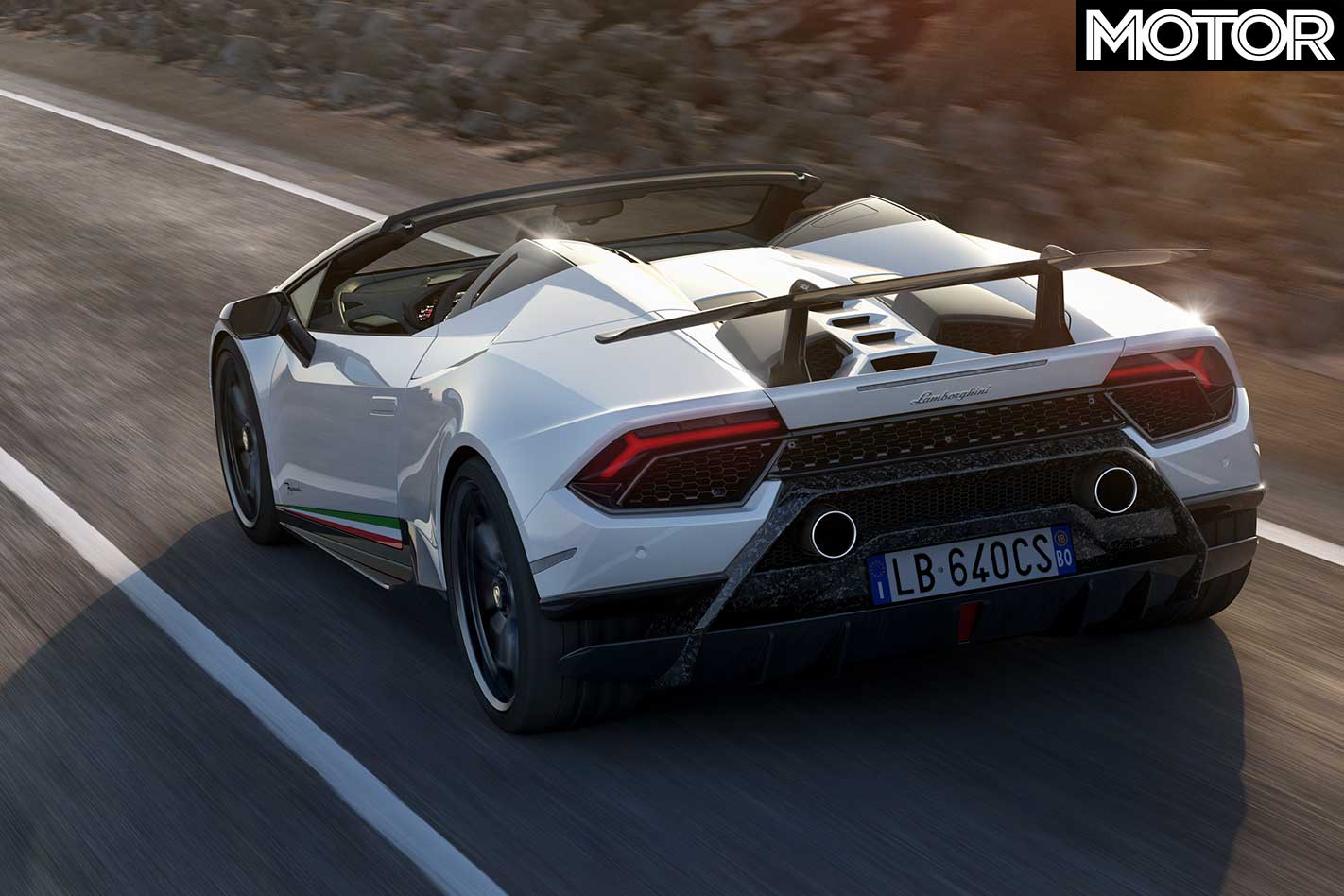
You might be faintly aware of the chassis getting a touch flustered when you ask it to do several things at once, too; such as turn into a corner while you’re hard on the brakes just at the moment the road drops away, for instance.
If you really go looking for them you can identify the handful of ways in which the Performante Spyder is compromised over the coupe. Its decapitated structure is less rigid and is saddled with 125kg of additional weight, but those things only make themselves known right out there in the margins. Most of the time the drop-top model is every bit as deserving of your money as the fixed-roof car.
The Performante treatment is the same for both versions. The 5.2-litre V10 has been wrung out to 470kW/600Nm and the Spyder remains all-wheel drive. The weight saving is 35kg and is mostly down to a lightweight exhaust system and what Lamborghini calls Forged Composites (carbon fibre). The chassis is reworked for sharper dynamics and the tyres are grippy Pirelli P Zero Corsas.
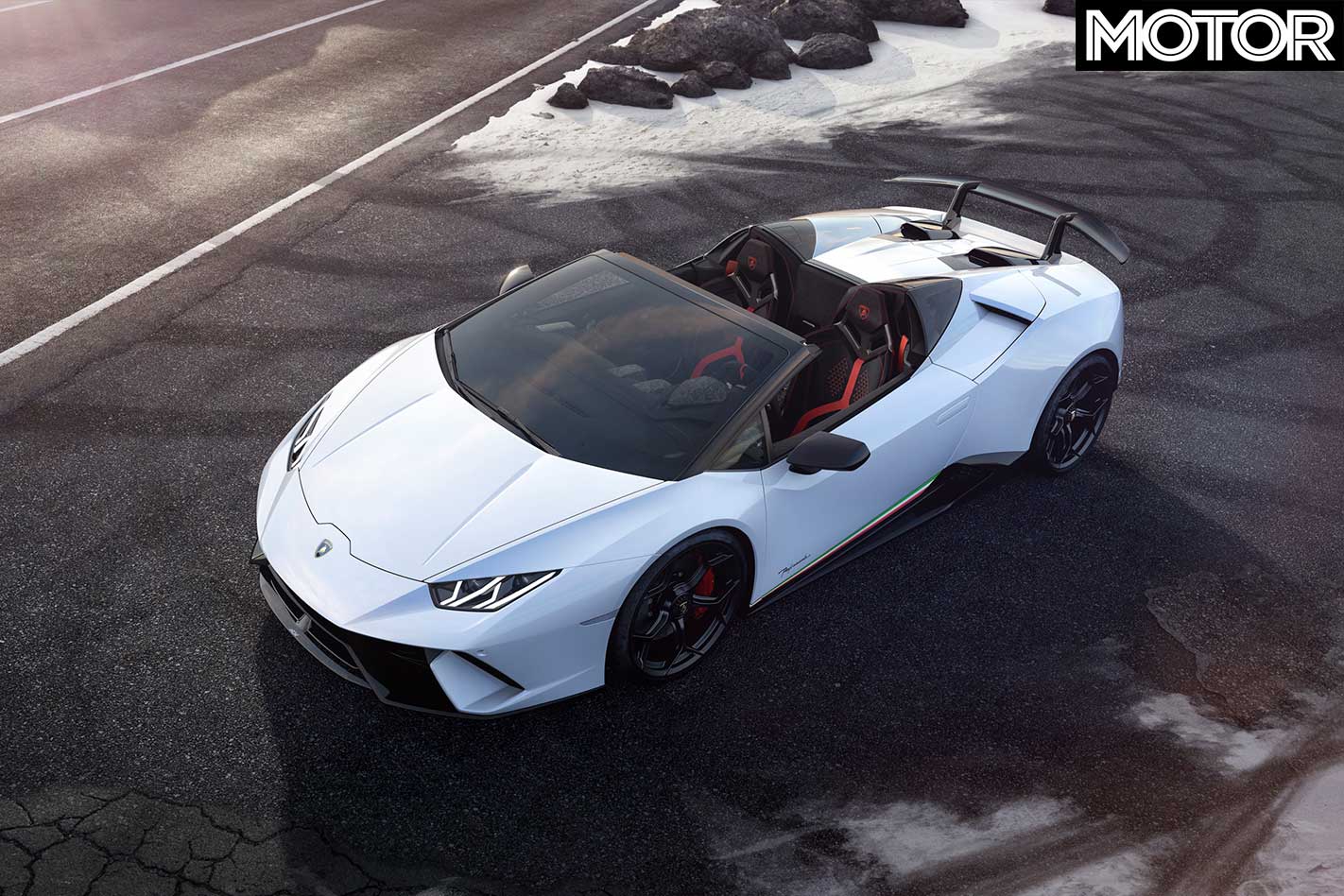
The signature innovation is Aerodinamica Lamborghini Attiva (ALA), a neat system of electronically controlled flaps that can divert air one way or the other to increase downforce one moment and reduce drag the next.
Now, it does need to be said this car is fundamentally at odds with itself. On circuit the Performante Spyder will inevitably give away a few tenths. Out on the road, however, the topless model is no less thrilling and no less rewarding. It is a masterstroke.
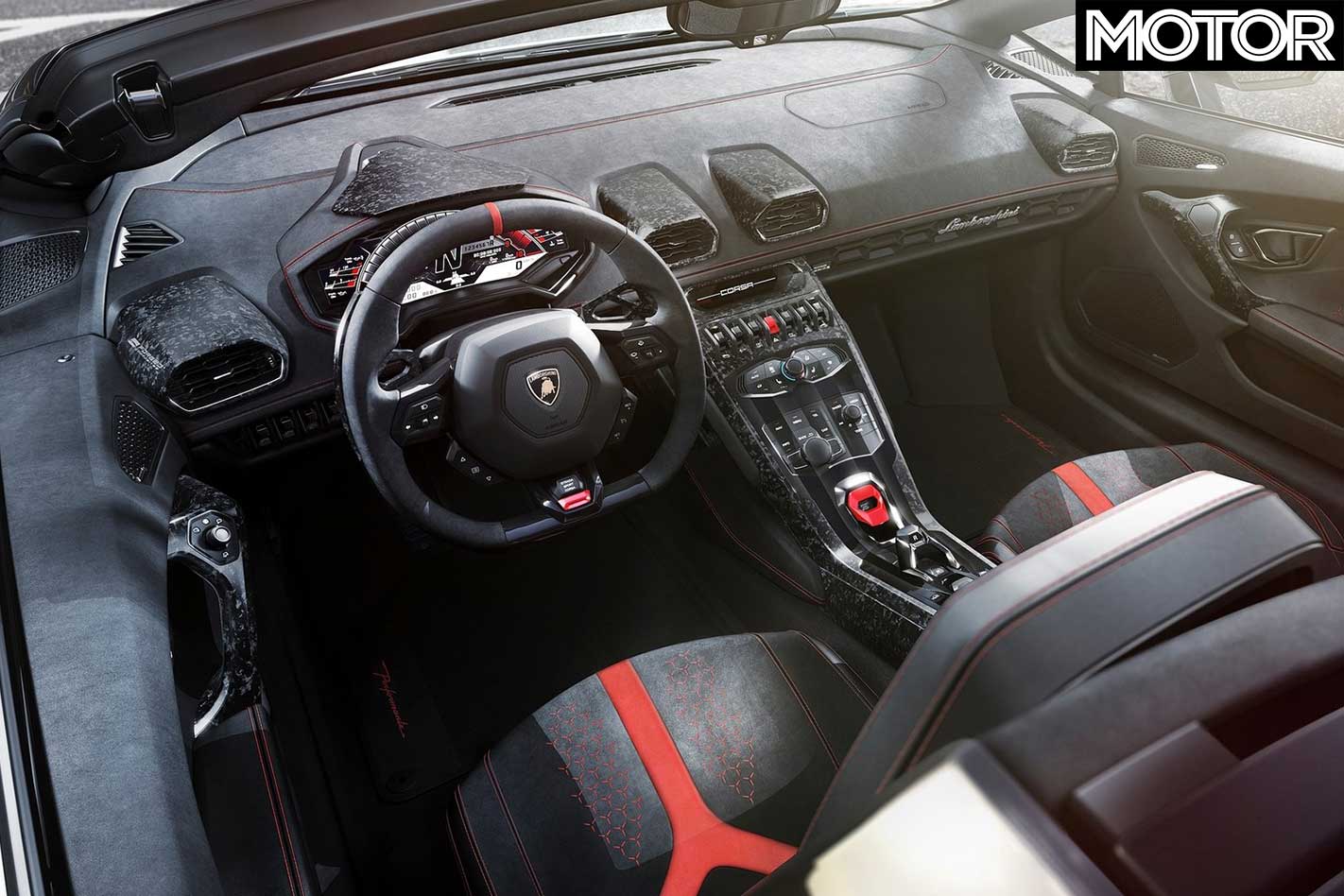
That titan of an engine – more vocal now thanks to the trick exhaust and even better appreciated with the canvas hood stowed away – is arguably the most exhilarating combustion engine you can buy right now.
The ride and damping are exquisite (on optional adaptive dampers, which includes a front axle lift), body control is absolute, grip levels beggar belief and the twin-clutch transmission is impossibly fast.
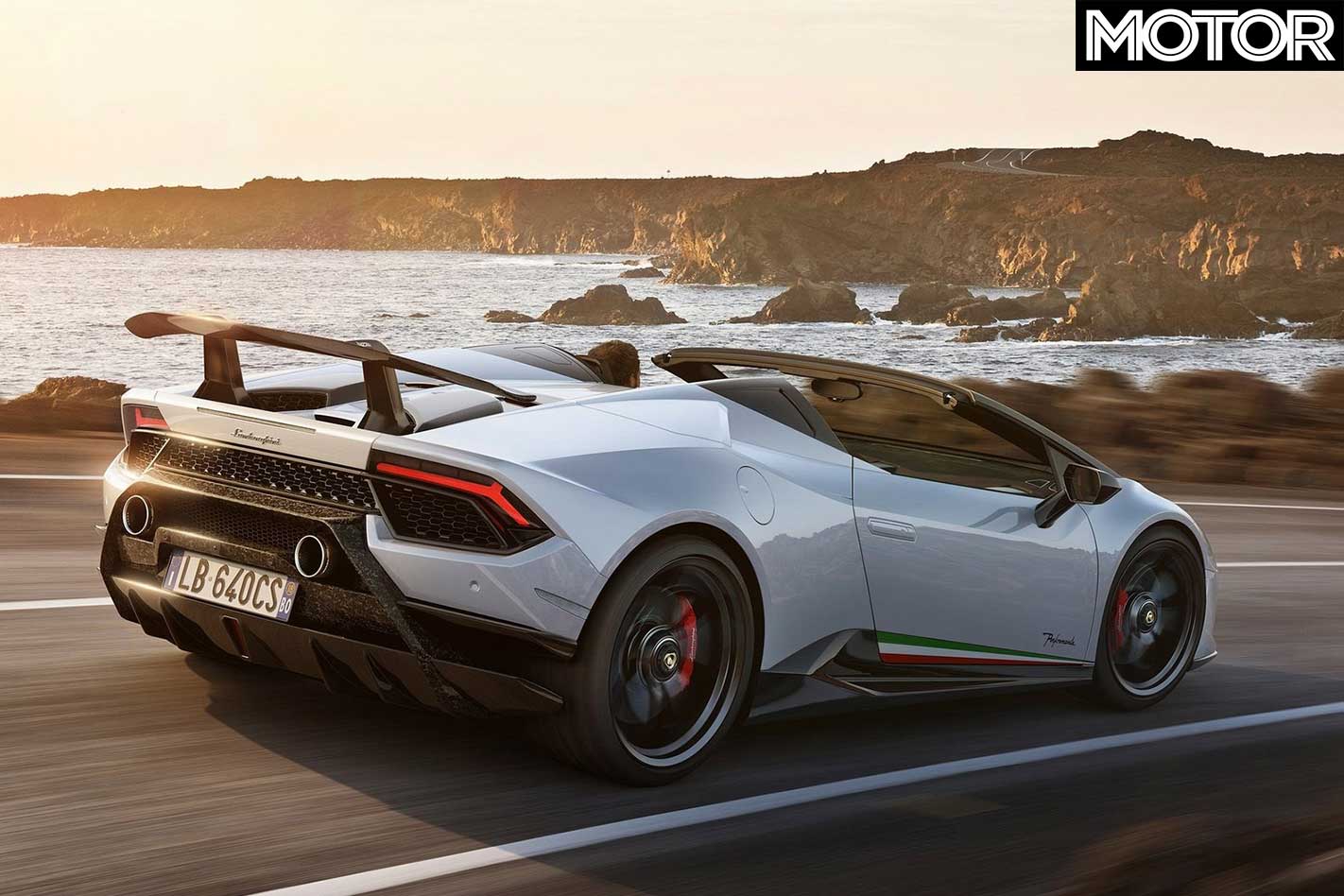
Headroom with the roof in place is tight, but it’s the fixed-back bucket seats that really let the side down. After 90 minutes or so at the wheel you’ll want to stop and go for a short walk, just to straighten your spine out. Still, what an epic bit of kit.
2018 LAMBORGHINI HURACÁN PERFORMANTE SPYDER SPECS: Engine: 5204cc V10, DOHC, 40v Power: 470kW @ 8000rpm Torque: 600Nm @ 6500rpm Weight: 1507kg 0-100km/h: 3.1sec (claimed) Price: $532,635
Like: Few downsides to cutting off the roof; glorious V10 soundtrack; epic performance Dislike: Headroom with the fabric roof down; fixed-back bucket seats; confused persona
Rating: 4.5 out of 5 stars
View the entire Lamborghini range
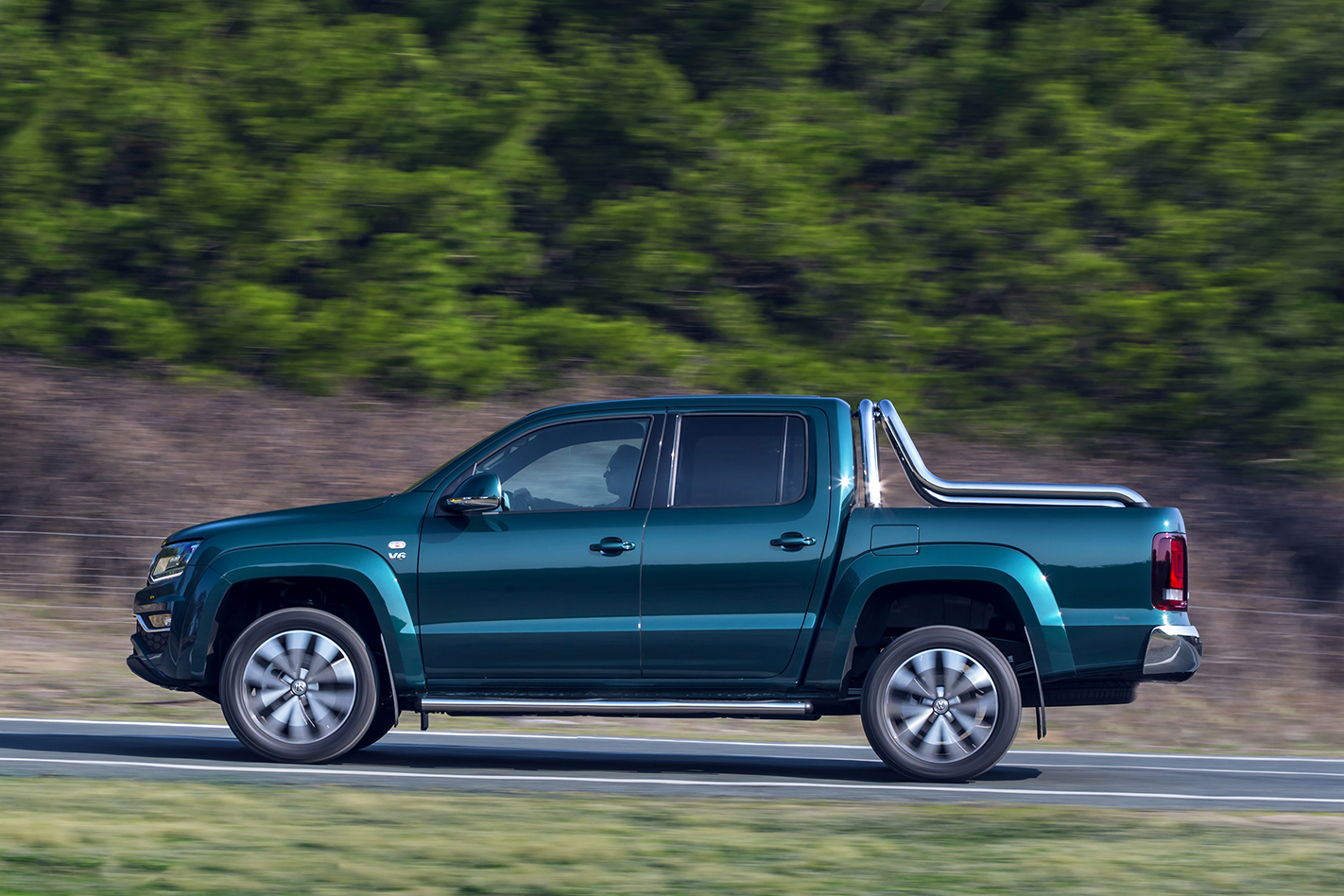
The Volkswagen Amarok Ultimate 580, on sale from October, is the new hero in the German marque’s 4×4 dual-cab ute model range. As the name hints, the Ultimate produces 190kW of power (200kW on overboost) and a mighty 580Nm of torque from its turbo diesel V6, with an eight-speed automatic transmission channelling all of that to all four wheels.
These figures eclipse the previous diesel V6 Amarok (165kw/550Nm) and ensure the Volkswagen Amarok continues to reign as the most powerful 4×4 dual-cab ute on the market. Impressively, considering the boost in power and torque, VW is also claiming a slight reduction in fuel consumption (albeit by 0.1L/100km) down to 8.9L/100km.
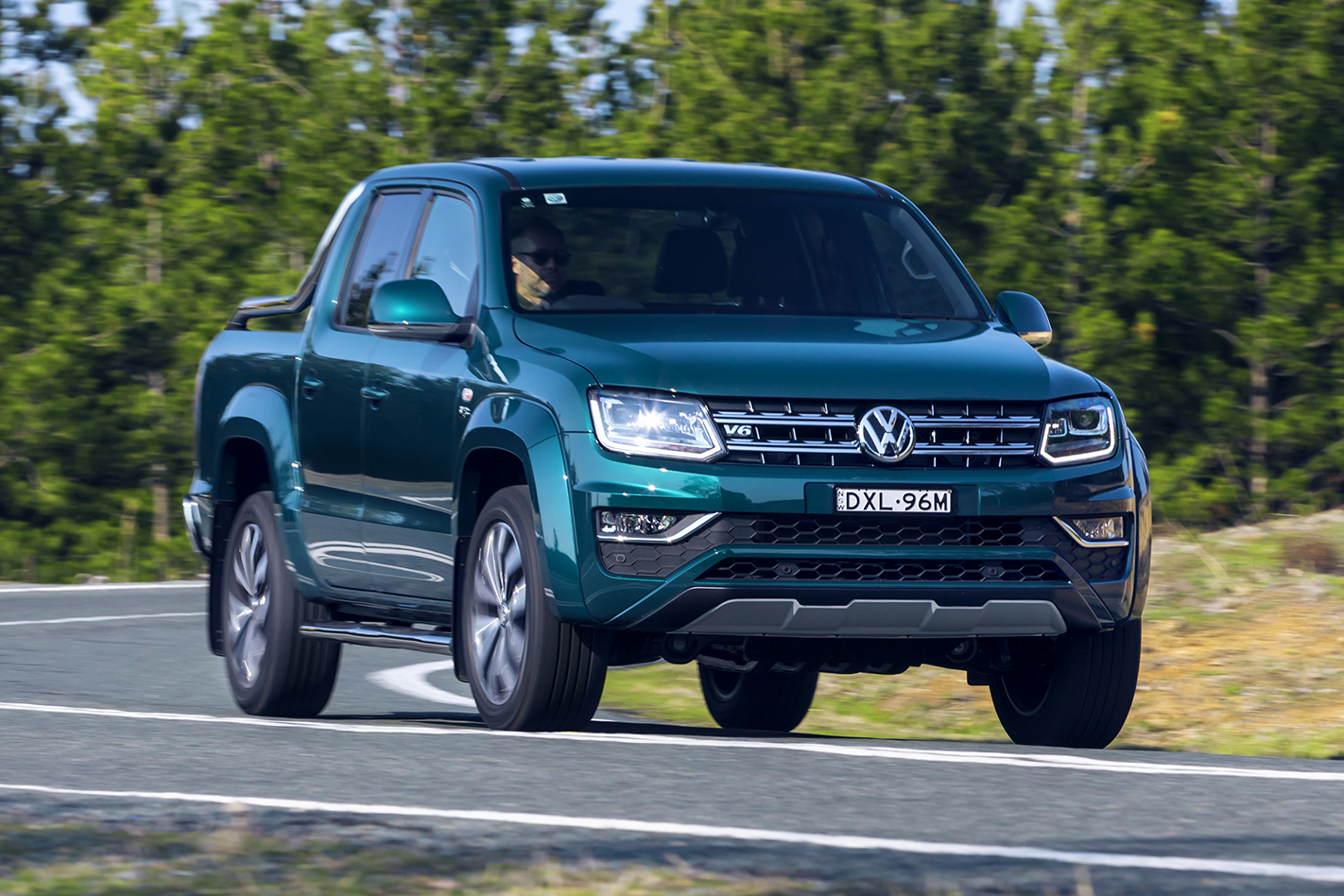
Meanwhile, the 0-100km/h stat comes in at a very sprightly 7.3 seconds.
With an asking price of $71,990 the Amarok Ultimate 580 is in direct competition with other brands’ top-tier dual-cab utes, including the Ford Ranger Raptor ($74,990), Toyota Hilux Rugged X (auto: $63,690), the just-released Holden Colorado Xtreme ($69,990 drive away) and the soon-to-be-released Mercedes-Benz X-Class X350d (expected to be between $75k and $80k).
In that group, only the Amarok and the Mercedes offer an engine with more than four cylinders.
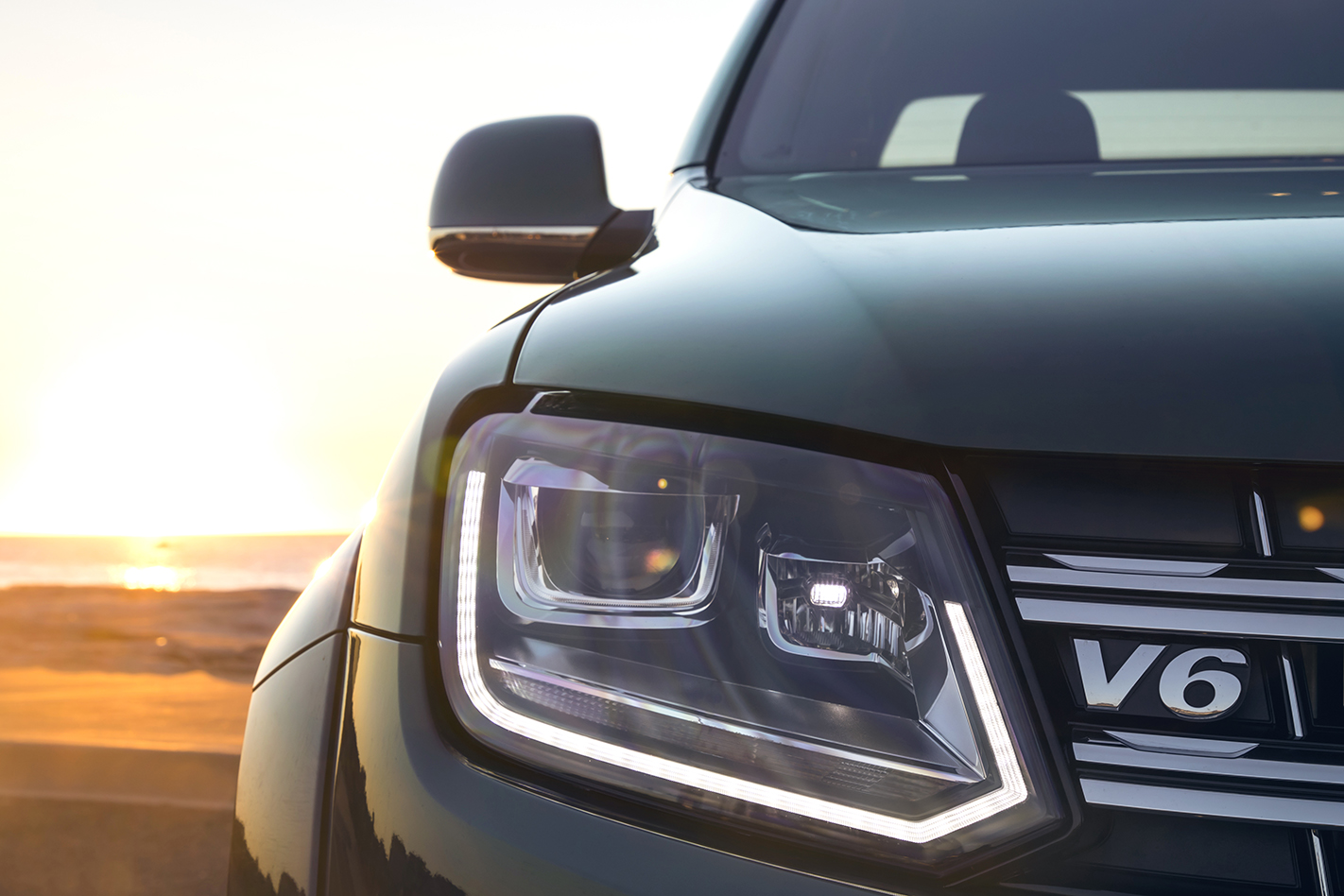
Besides its powerful V6, the Ultimate 580 (as with all Volkswagen Amarok models) differs from competitors in its class by offering constant four-wheel drive for optimum traction, rather than a part-time 4×4 system that can only be shifted to full-time 4WD on broken (read: dirt) surfaces. The X350d will also adopt a permanent 4WD drivetrain, but doesn’t arrive locally until December.
And that makes the Amarok the only dual-cab ute with a V6 diesel for now, giving the flagship Amarok a distinct advantage in a market where many still adhere to the old adage of “capacity is king”.
On top of its size advantage is the Amarok’s unique (in this market) ‘overboost’ mode that offers around a 10-second lift in power output when the accelerator pedal goes past 70 per cent of its extension – just in case you do need a wee bit more grunt for overtaking, serious offroading or towing a particularly heavy load.
A more sensible standard feature is the Amarok’s four-wheel disc brakes, sharing this with only two competitors (Ranger Raptor and Mercedes-Benz X-Class).
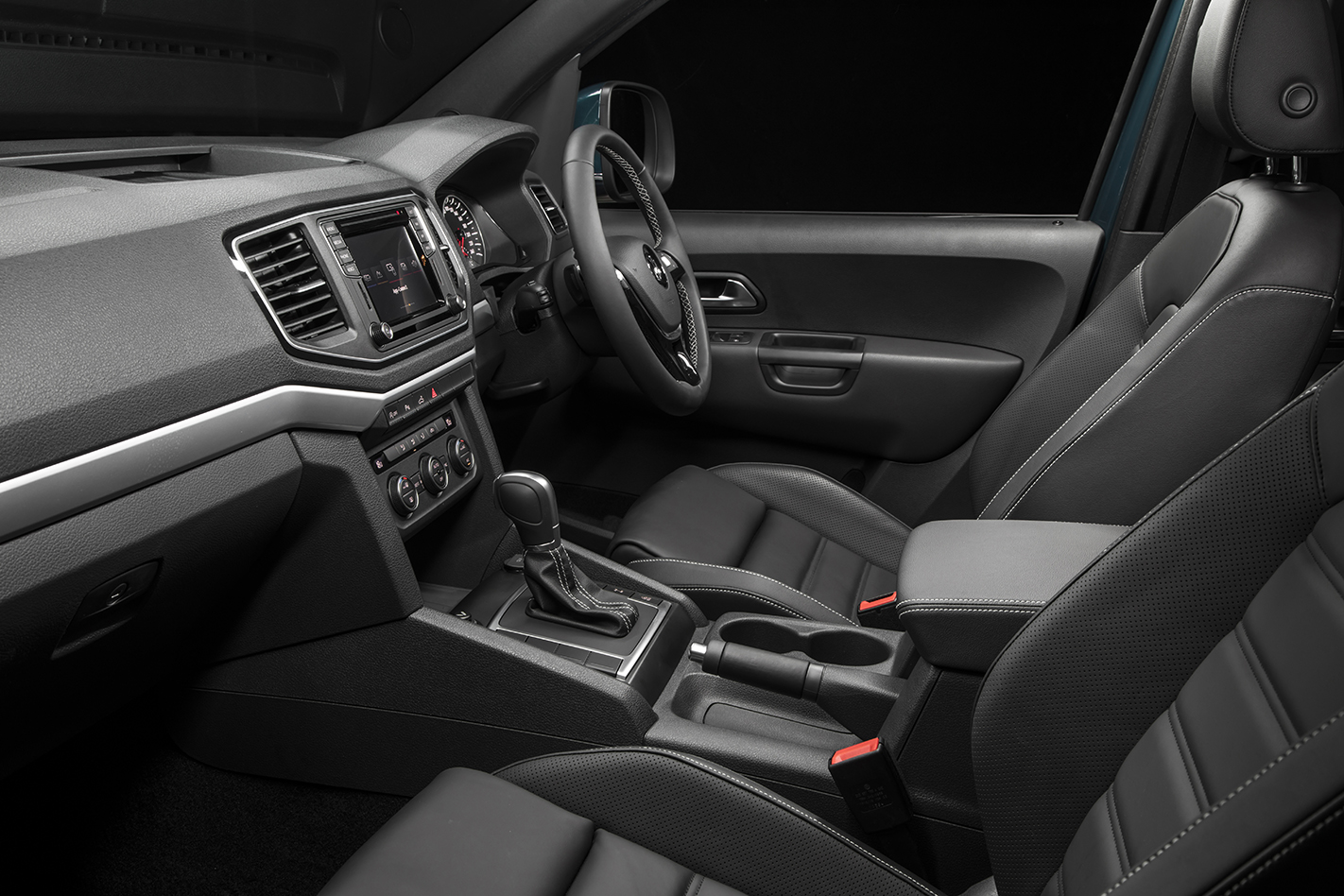
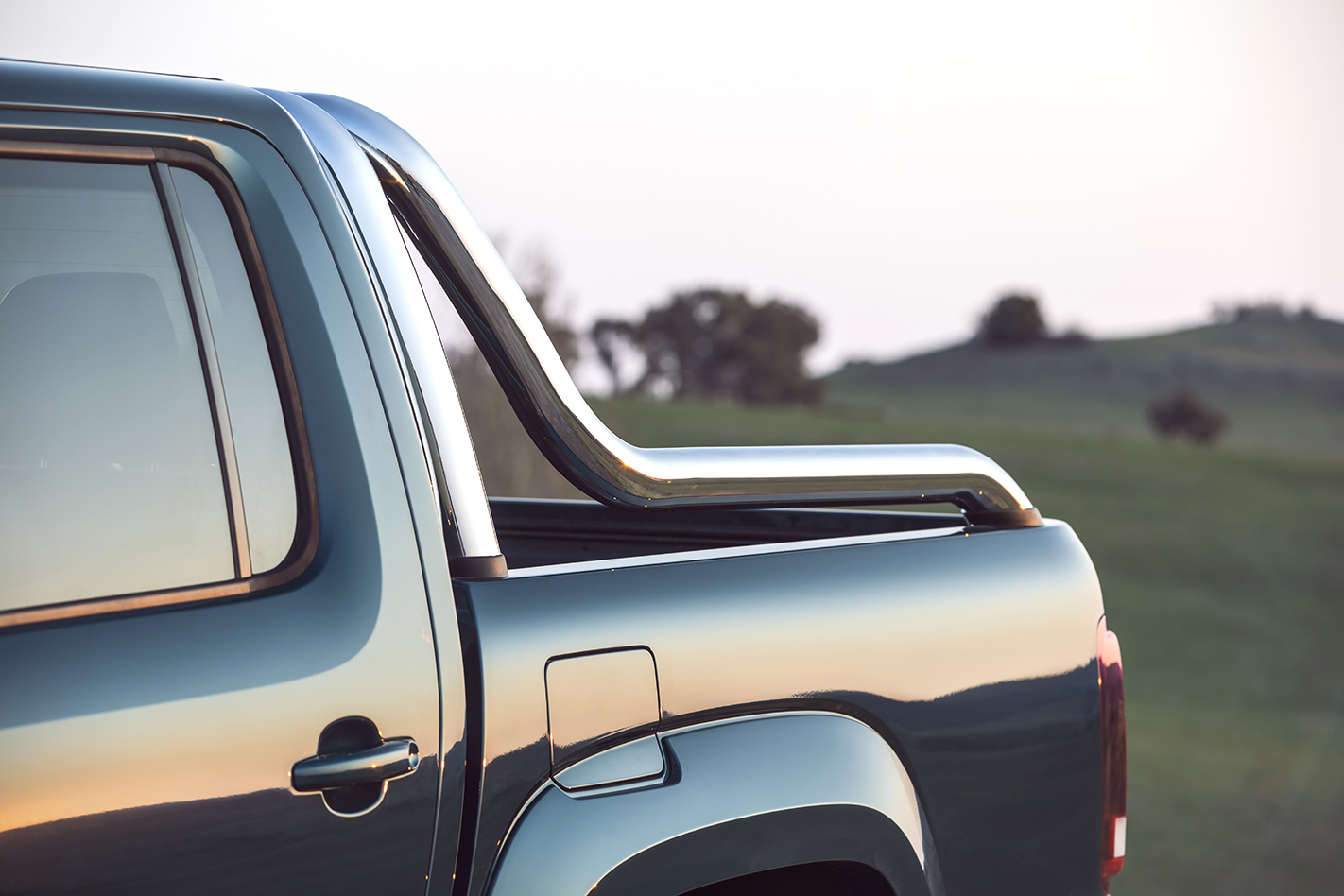
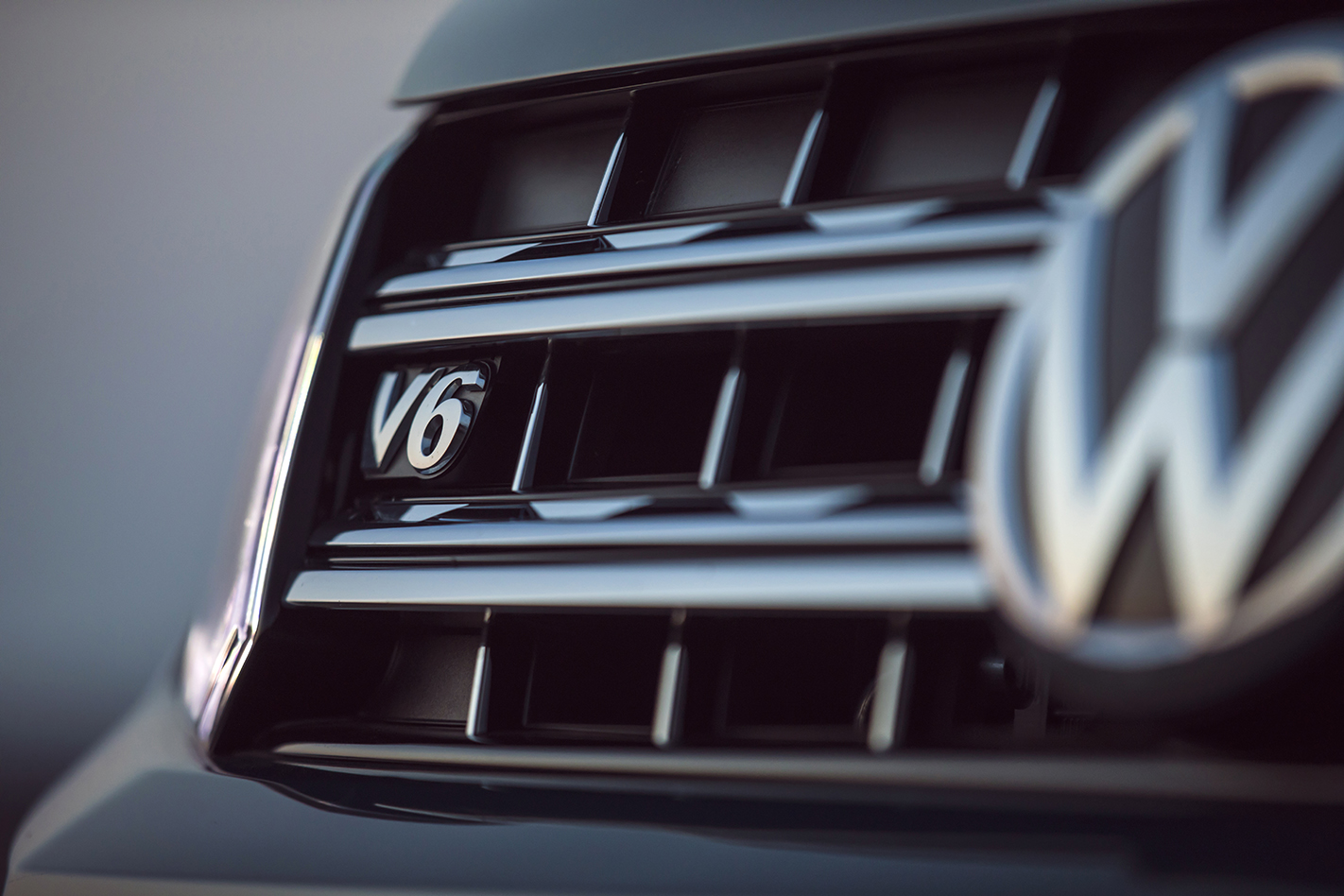
The Amarok Ultimate 580 also includes some unique styling features, such as 20-inch alloy wheels, 14-way electrically-adjustable seats upholstered in black Nappa leather, black roof lining and a different front grille treatment to other Amarok models. On top of that, there’s also power folding wing mirrors, illuminated stainless steel side steps and a stainless steel sports bar.
Standard safety kit is as per the rest of the Amarok range, and includes all the expected electronic driving and braking aids, as well as driver and passenger front and side airbags. Unfortunately, there are no rear passenger side airbags – a continual down-mark for the Amarok, and one negative way in which it differs from other vehicles in its class.
It does, however, still carry a five-star ANCAP safety rating.
The Amarok Ultimate 580 is also accompanied by the Amarok Core V6, a budget-oriented six-cylinder option that develops a still-handy 165kW (180kW on overboost) and 550Nm of peak torque.
It too takes power to all four wheels through an eight-speed automatic, but is a more utilitarian offering than the Ultimate thanks to hose-down rubber flooring rather than carpet, and hard-wearing cloth upholstery in lieu of leather.
Pricing has yet to be confirmed, however Volkswagen Australia says the Core V6 will sit beneath the carry-over Sportline and Highline grades in the Amarok’s six-cylinder range.
PRICING
- Volkswagen Amarok V6 Core – TBA
- Volkswagen Amarok V6 Sportline – $55,990
- Volkswagen Amarok V6 Highline – $59,990
- Volkswagen Amarok Ultimate 580 – $71,990
- Metallic – $610
THE last time an Alfa Romeo and Volvo faced off in a Wheels comparison was almost four decades ago. It’s not often that you would find someone cross shopping the two brands, but the unlikely rivals have returned to do battle once more, this time with a pair of diesel SUVs of all things. Welcome to 2018.
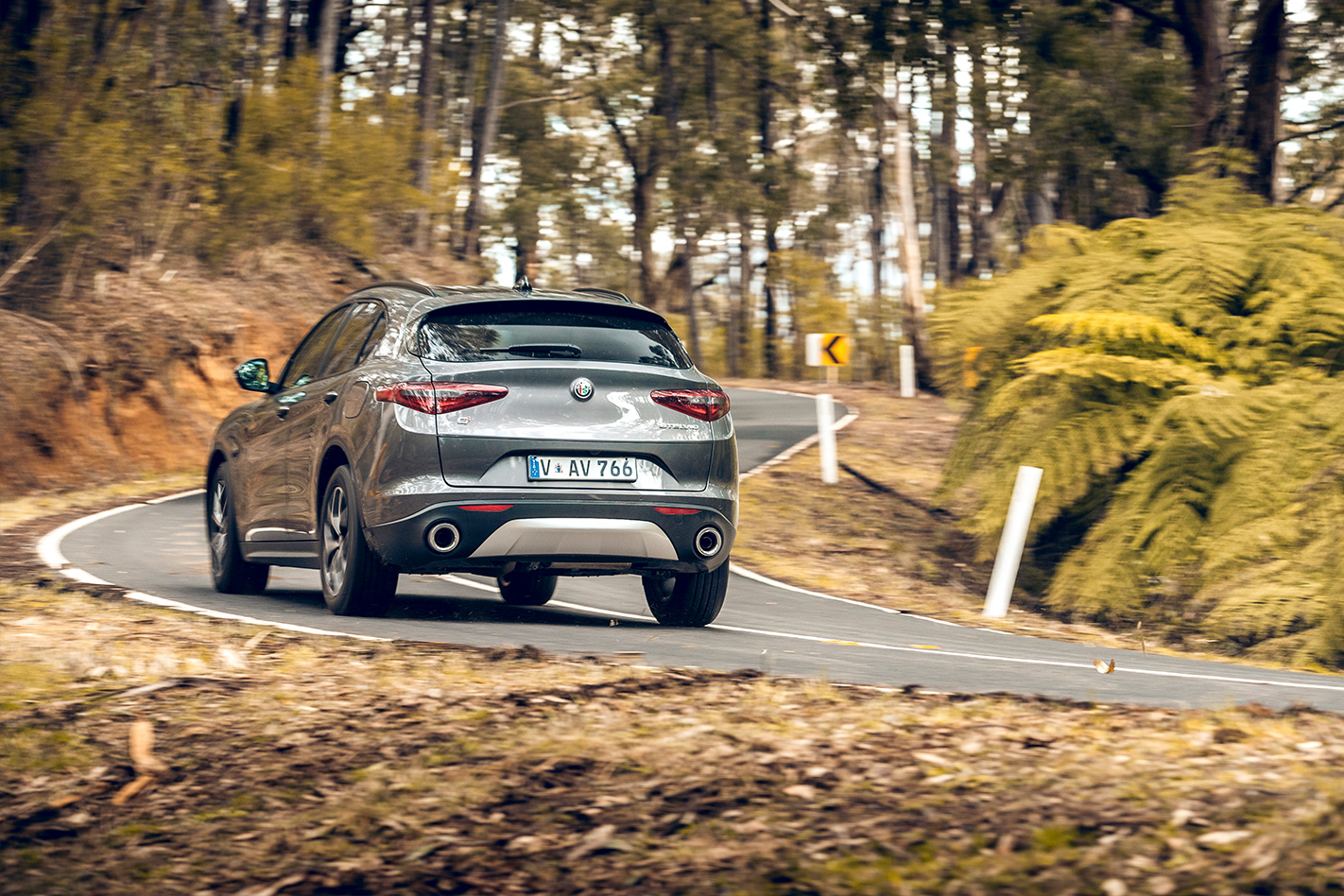
Entering the fray for Sweden is Volvo’s XC60 D5, while the Alfa Romeo Stelvio diesel is the pride of Italy.
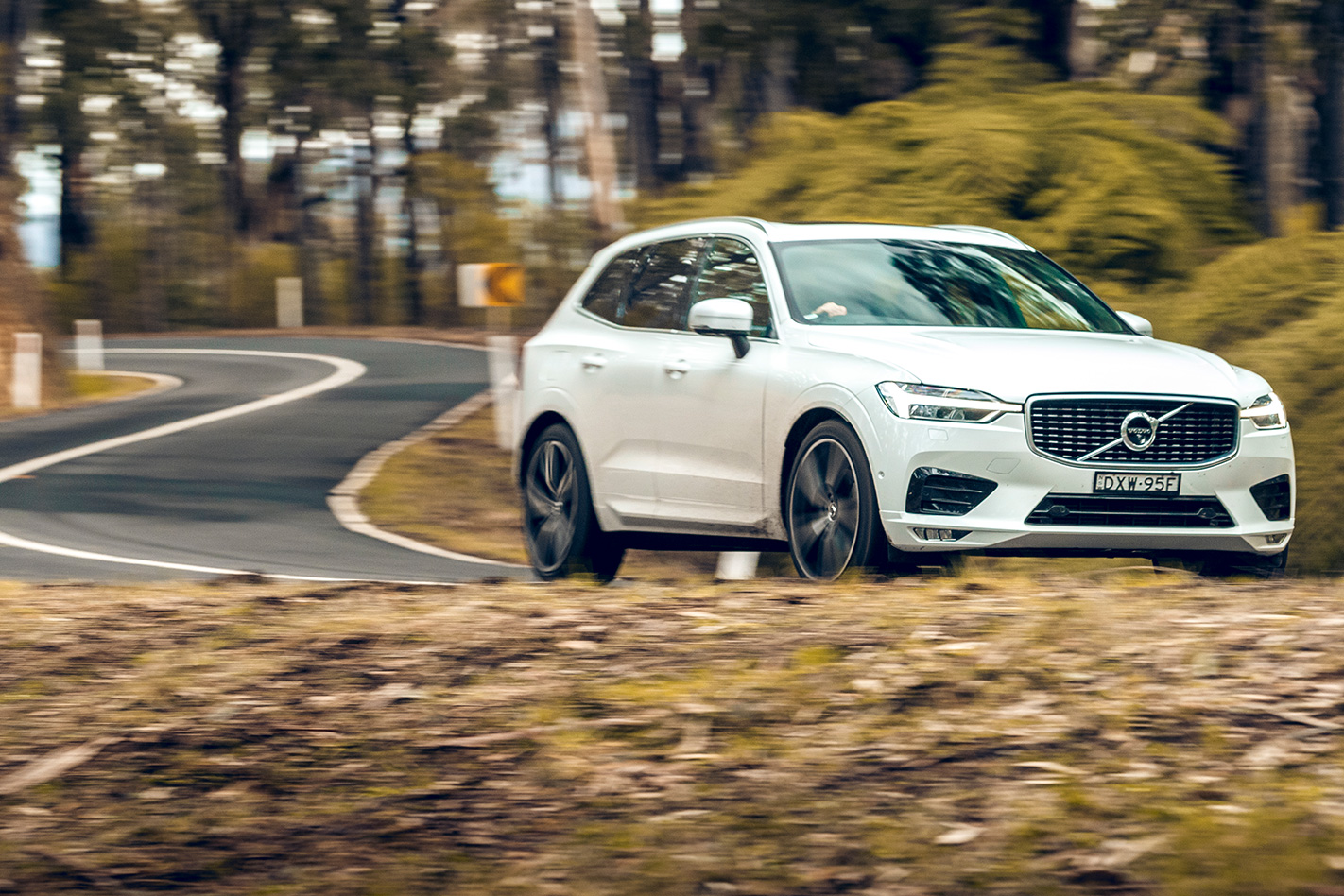
Both come with heavy expectations on their jacked-up shoulders, as the XC60 is the defending Wheels Car of the Year, while the Stelvio’s sedan sibling was an angel hair’s width away from taking the gong as one of the top three finalists last year.
We’re here today to see if adding inches to Alfa’s unashamedly sporting platform will help or hinder it in its hopes of usurping the Northern King.
Price and Equipment
Winner: Volvo
While the fairest comparison of value is base price, it doesn’t really tell the whole story with this pair. Wheels wouldn’t recommend either vehicle without first fitting certain options, and it’s unlikely either of these two will typically be rolling off the showroom floor in completely standard specification.
The Stelvio is the cheaper of the two, with a $67,900 base price that sits well below the Volvo’s $75,990.
Both have a four-cylinder turbo-diesel engine that sends power to all four wheels via an eight-speed automatic transmission, but we’ll get onto the drivetrains a little later.
For our comparison the Alfa Romeo was fitted with expensive metallic paint ($1300), and the $6000 First Edition pack, lifting the as tested price to $75,200.
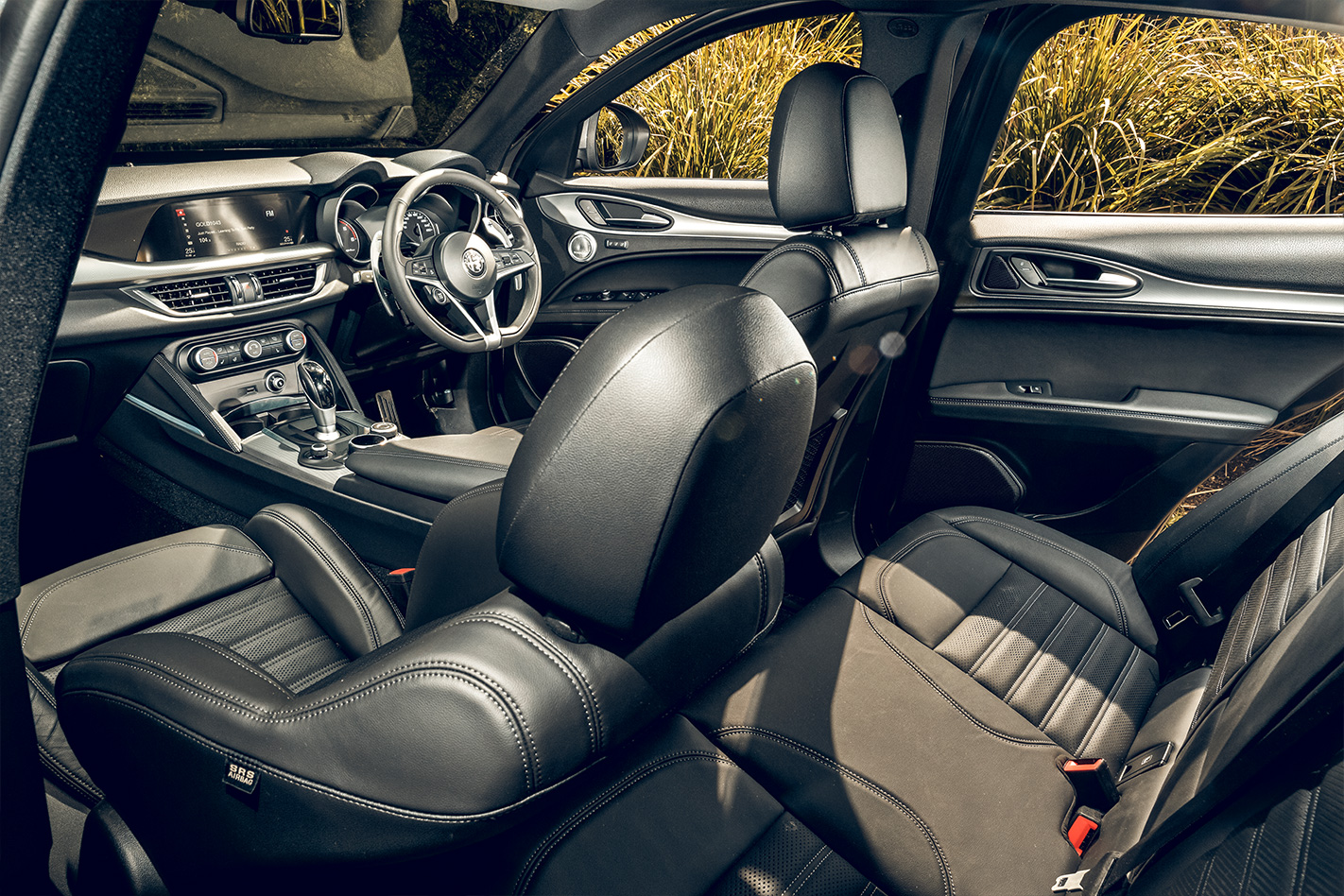
The First Edition pack should be on any prospective Stelvio buyer’s list of must-have options, and without it, the Alfa Romeo feels a little shy of the right stuff. By ticking the box, owners gain 19-inch alloy wheels, a panoramic sunroof, a 900-watt Harman Kardon 14-speaker sound system, ambient interior lighting, privacy glass for the rear window and second row, sports leather heated front seats with power adjustment, a heated sport steering wheel, adaptive dampers, aluminium interior trim accents and sport pedals, red brake callipers, and gloss black window surround.
Volvo’s press office did its best job at short-changing the XC60 in this comparison by not fitting the D5 with the $2400 optional air suspension that is a must-have for all XC60s. The $2500 lifestyle pack is fitted, however, adding a panoramic sunroof, tinted rear glass, and heated front seats. Metallic paint adds another $1900, while powered seats cost $450, bringing the as tested price to $80,840.
On standard equipment alone, the Volvo is the more generous of the two, with the Stelvio requiring the First Edition pack to truly compete with the XC60 for kit. Meanwhile, the Swede’s lifestyle pack is a nice addition, but not a must-have.
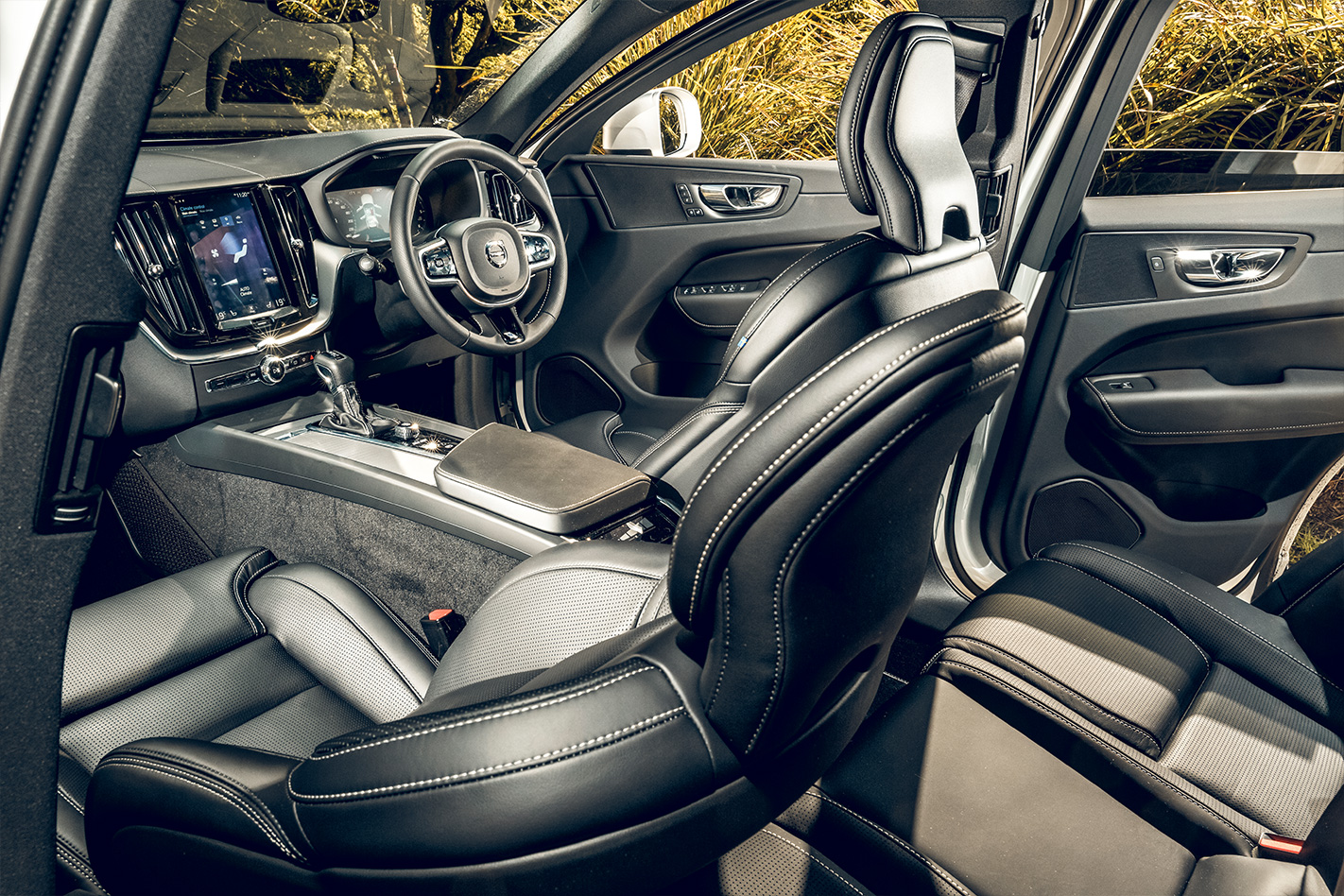
While the XC60 is the more expensive of the two, it feels a class above in terms of finish, with finer materials used throughout the cabin. Some of the included equipment really is special, with a 12.3-inch digital display replacing traditional gauges for the driver, dual-zone rear climate control, wiper blades with integrated washers, nappa leather upholstery, a cooled glove box, and Volvo’s full suite of safety tech.
Interior and Connectivity
Winner: Volvo
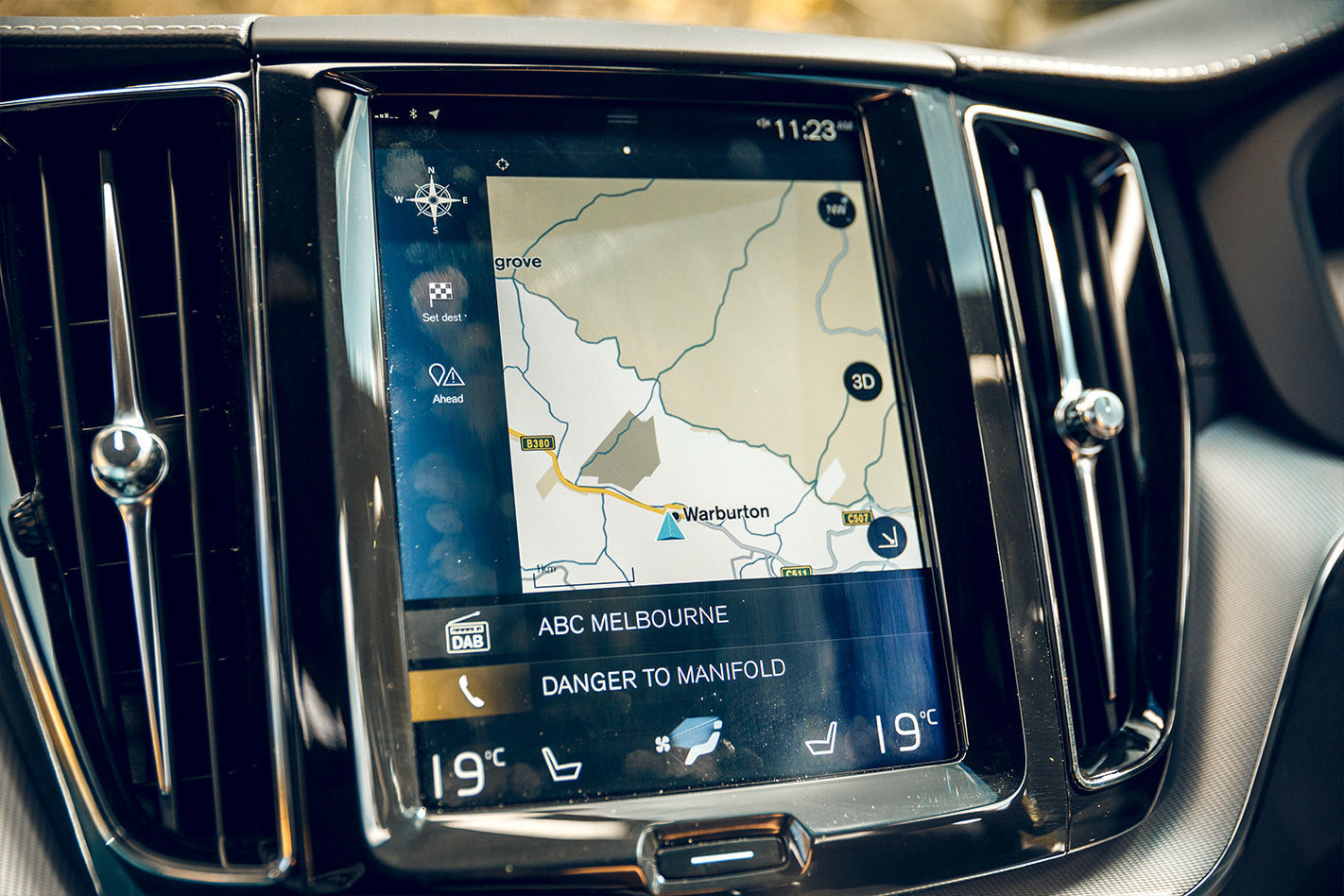
The design of the Volvo’s infotainment system sets it apart here, with a nine-inch portrait orientated screen instead of the landscape view offered by most other manufacturers.
While at first taking some getting used to, the XC60’s controls quickly become second nature, and the display is both larger and clearer than that offered by the Alfa Romeo.
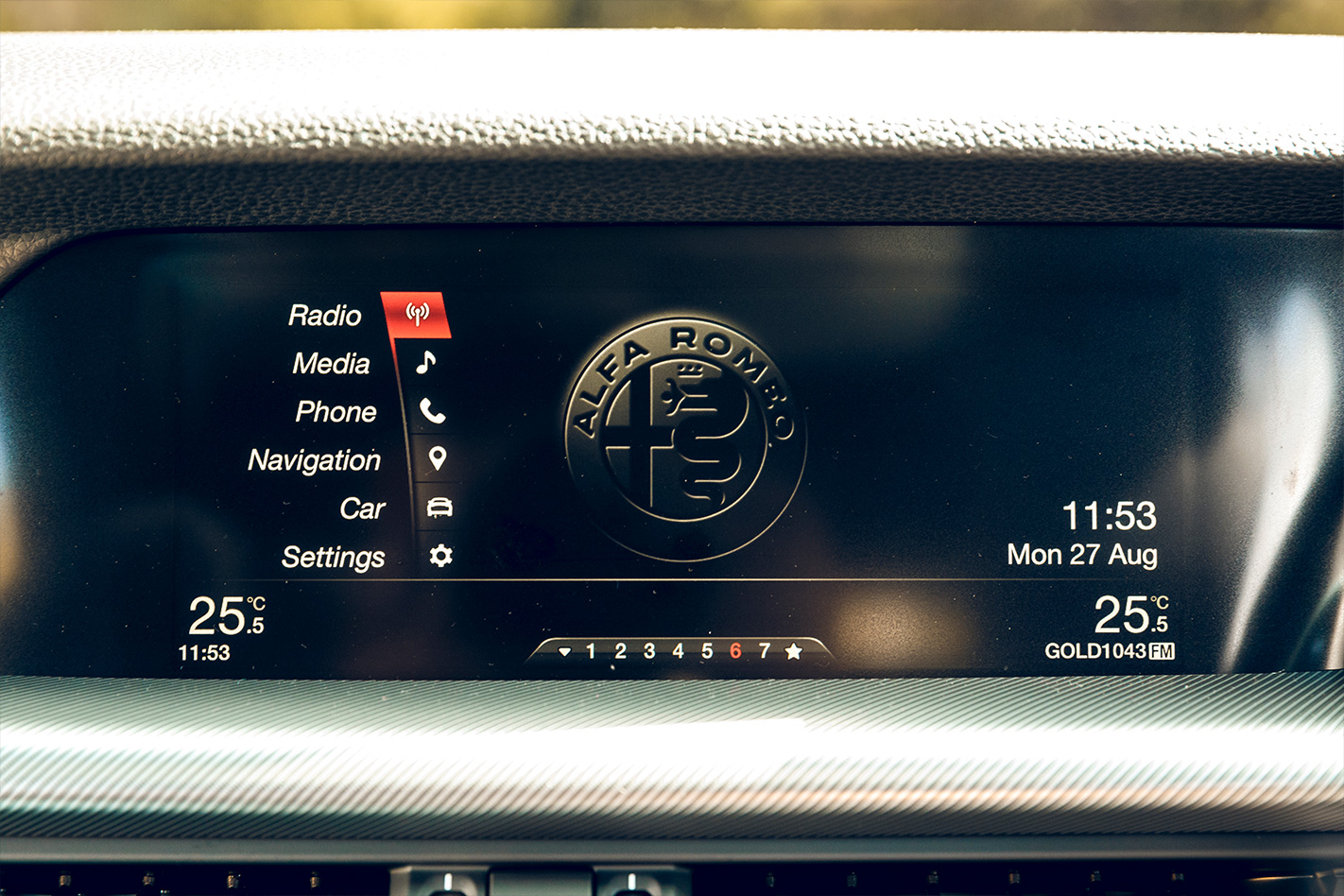
The Stelvio mimics the design of the Giulia, with the screen blending to the side of the twin-cowled instrument panel. However, the resolution of the sat-nav and reversing cameras are sub-par compared to the Volvo. The menus are logical to navigate, however Bluetooth pairing was inconsistent during our testing.
Apple CarPlay and Android Auto are standard on the Volvo, while the Alfa Rome misses out. The Stelvio also lacks a head-up display and adaptive cruise control system.
In terms of infotainment design and useability, the XC60 provides exactly what you’d expect of a nearly $80,000 SUV, while the Stelvio is outclassed by some vehicles half its price.
Tech is one thing, but liveability of the cabin is much more important for many SUV buyers. Unfortunately, the Stelvio doesn’t find redemption here.
While riding on the same platform as the Giulia, the wheelbase has been shortened marginally, meaning space is at a premium. Rear occupants are short on legroom, and the door apertures make entry and egress harder than necessary. There is more boot capacity on offer in the Italian hatch (525 litres compared to the Volvo’s 505), but the shortcomings of the second row are too severe, especially if you’re manhandling child seats in and out.
Volvo owners are presented with a cabin that offers more leg, shoulder, and headroom for rear occupants, even with the panoramic sunroof fitted.
Ride and Handling
Winner: Alfa Romeo
The Italian chassis and dynamics engineers at Alfa Romeo have outdone themselves with the Stelvio. While we have become accustomed to SUVs performing like cars on twisty roads, and not the jelly-legged stereotype the comments section would have you believe, we weren’t quite expecting the dynamic prowess of the Stelvio.
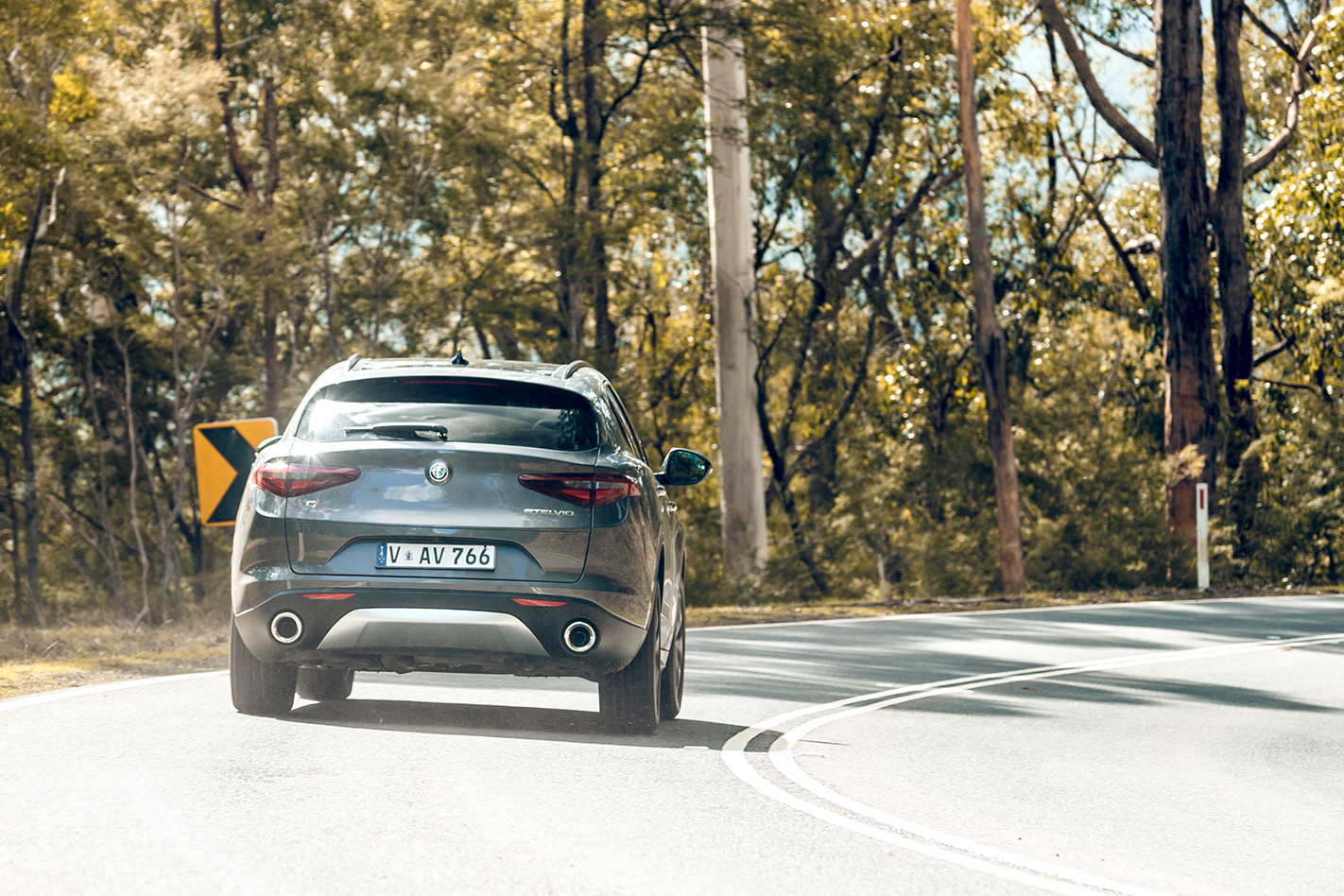
Steering is crisp and direct, and the front end inspires boundless confidence by remaining almost unflappably planted. While there is slightly more body roll than its sedan sibling, the Stelvio remains beautifully poised through curves.
The eight-speed automatic gearbox is intuitive and responsive, and in manual mode, will rev out to its proper redline of 5000rpm.
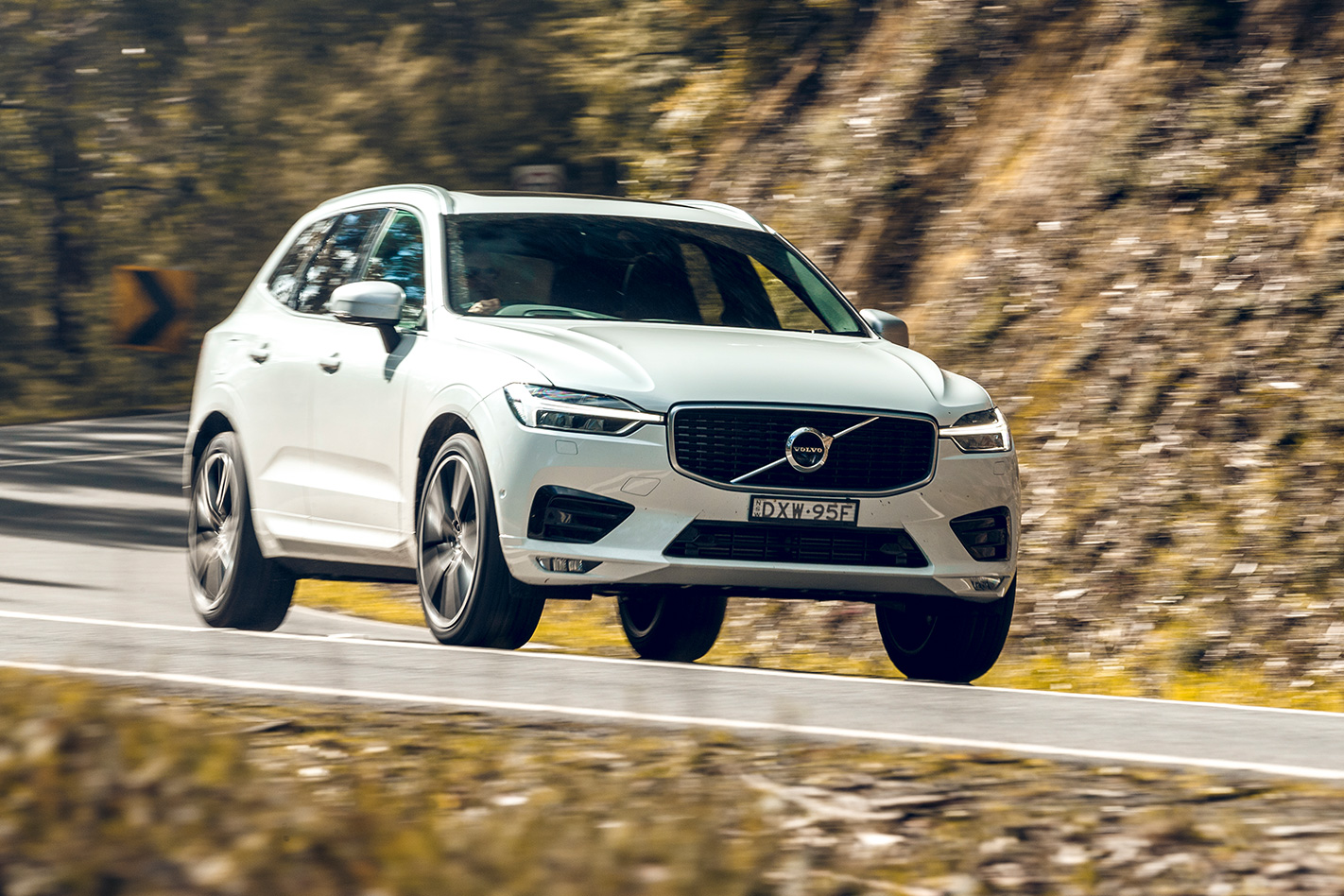
XC60 owners won’t be revelling in the bends as much those in a Stelvio, but that’s not to say the Swedes have been put to shame. The Volvo is still nicely controlled when hustled on a mountain road, but remote steering doesn’t reward the driver as much, and undermines confidence slightly.
Highway refinement falls the way of the XC60, with the cabin providing impressive NVH suppression. Rougher roads will soon show why we stress the need for air-suspension, with the standard springs and 21-inch wheels providing a pattery ride.
The Stelvio’s adaptive dampers (part of the First Edition pack) go a way to gaining an advantage over steel sprung XC60’s, but would be neutralised by the Volvo’s pillowy air set-up.
Performance and Economy
Winner: Volvo
Thrilling acceleration and diesel SUVs don’t traditionally go hand in hand, but oil-burning engines have a well-earned reputation for their tractable torque. To get a gauge on which of the pair performed better in a straight line, we took them to Heathcote Raceway to conduct independent performance testing.
While the Stelvio’s 154kW and 470Nm from a 2.2-litre four-cylinder engine seems less impressive than Volvo’s 177kW and 500Nm from a 2.0-litre, it is the former which raises eyebrows in a straight line.
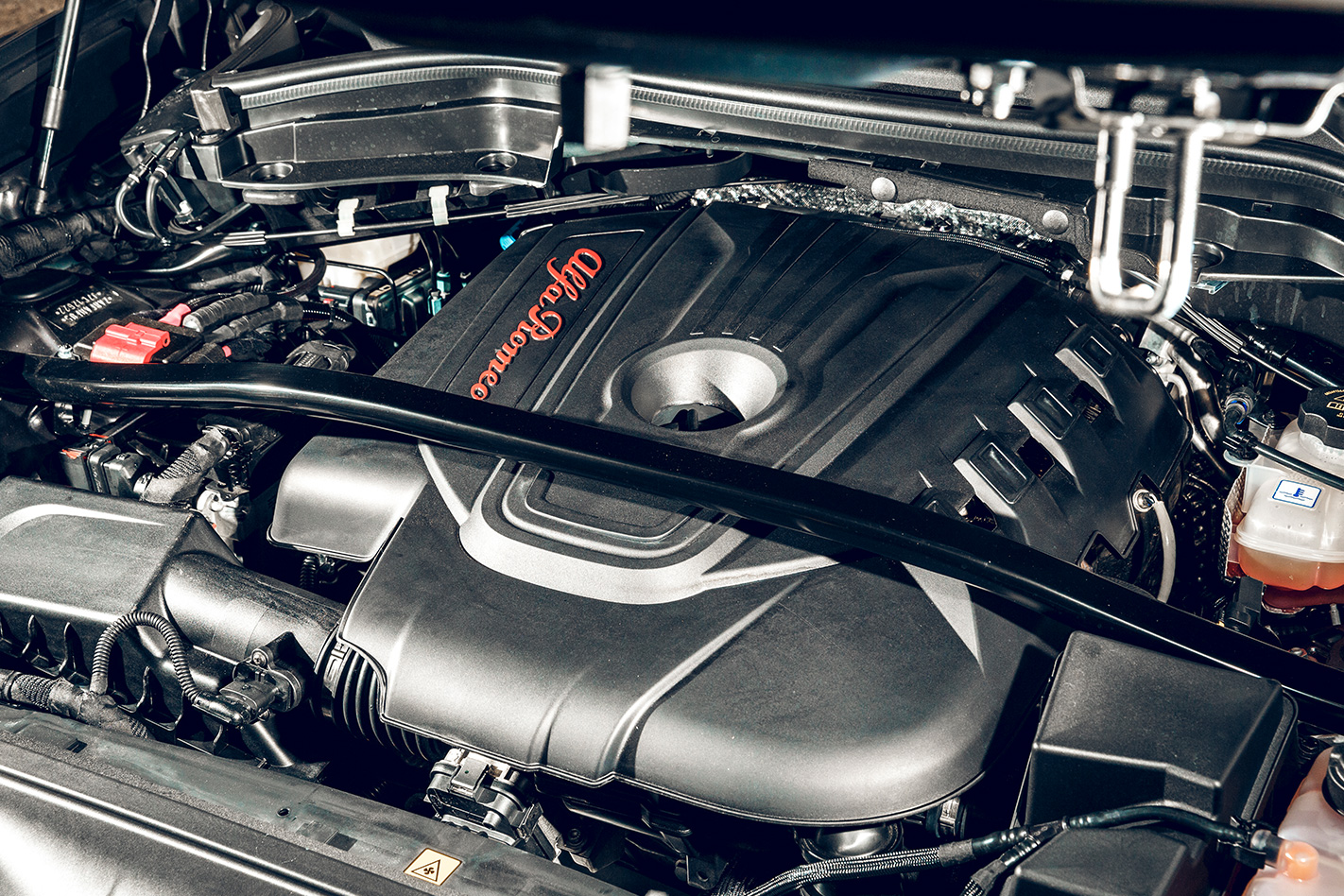
This is largely due to a 300kg weight advantage, which gives it a power-to-weight advantage of 96kW per tonne over the Volvo’s 92kW per tonne.
The Italian is a full second quicker to 100km/h from standstill than the Volvo, taking 6.6 seconds. However, rolling acceleration is much closer, with the Alfa jumping from 30-70km/h in 2.5 seconds compared to the Volvo’s 2.9 seconds. Highway overtaking performance is similarly matched with the Alfa clocking 80-120km/h in 5.0 seconds, while the Volvo is three tenths of a second slower.
Just 10 centimetres splits the pair when hauling from 100km/h to a standstill, with the Volvo scrubbing off all its speed in 36.4 metres to the Stelvio’s 36.5 metres.
But performance isn’t everything, and can often be a detriment to the hip pocket in terms of fuel economy.
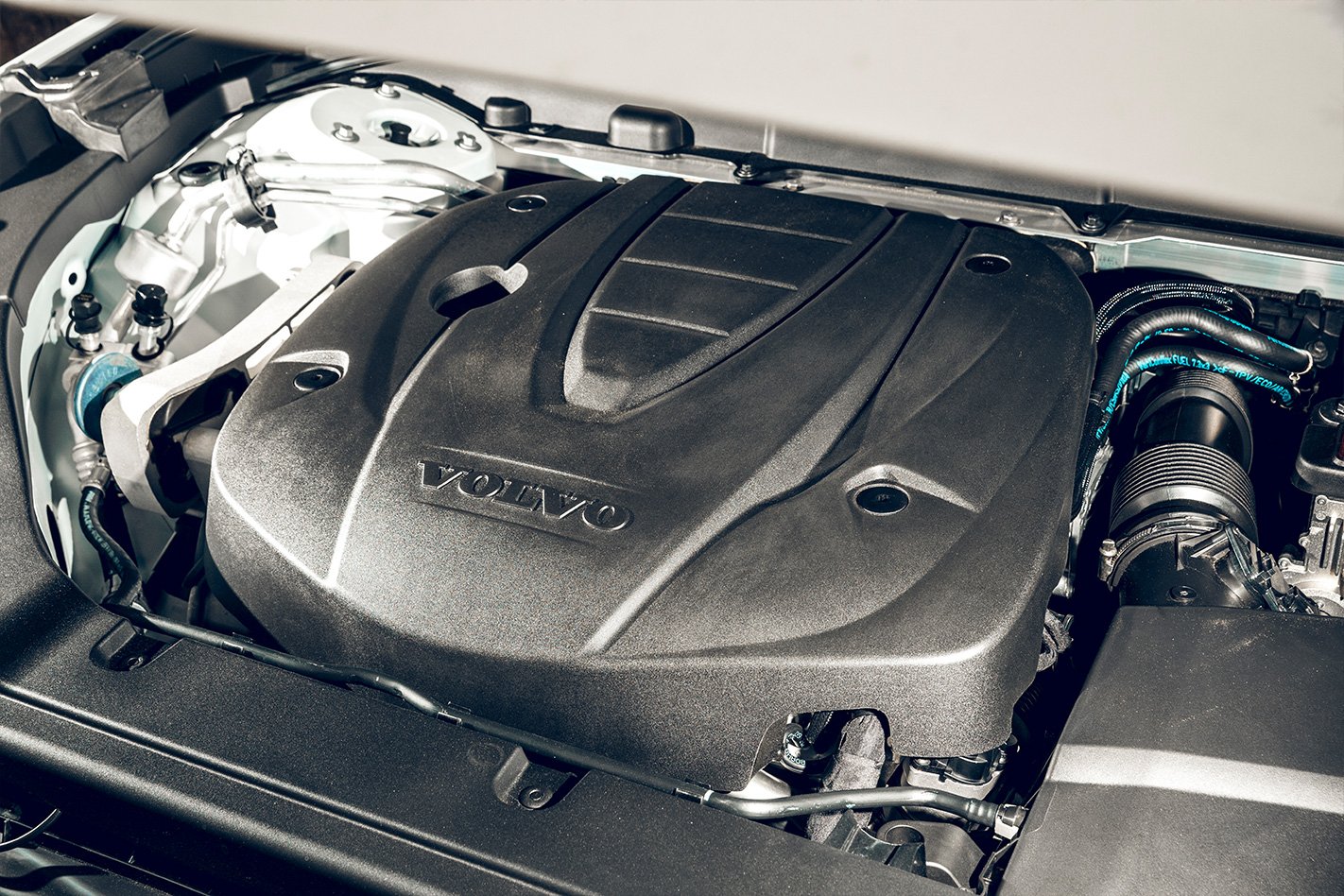
The Volvo’s 2.0-litre engine sipped diesel at a rate of 10.5L/100km during our testing, compared to the Alfa Romeo’s 11.1L/100km.
With a tank size of just 64-litres to the Volvo’s 71-litres, Stelvio owners will be pulling into a servo 100km before the XC60 runs out of gas.
We have to give more credence to miserly fuel economy than bahn-storming performance given the buyer demands, and for that reason, it’s another notch – just – for the XC60.
Verdict
For doing what diesel SUV buyers want, the Volvo is the clear winner here.
That’s not to say that Alfa Romeo has delivered a duffer. Far from it. The company should be commended for building a genuinely engaging diesel SUV, which will appeal to an owner who is less intent on family practicality, but instead desires to own something in the mould of a Giulia wagon, with Giulia-like dynamics, that fit an active lifestyle. For a certain niche, the Stelvio is all but irresistible.
The engine, steering, and gearbox are each peerless in the segment for driver enjoyment. However, the lacklustre interior, cramped rear legroom, and shortfalls in standard specification hurt the Stelvio in the eyes of most typical diesel SUV buyers.
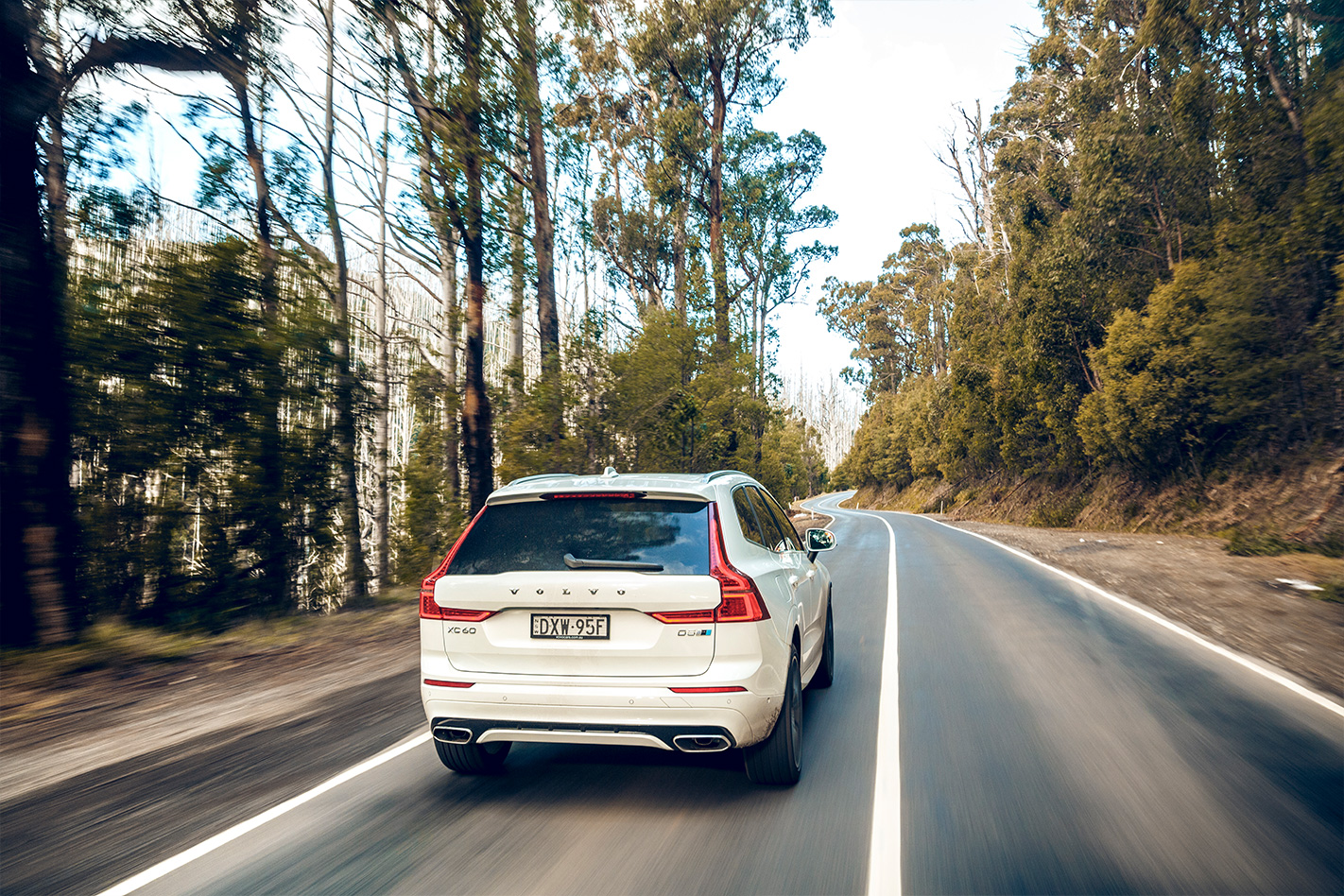
Similarly, any owner who takes delivery of an XC60 without air suspension is doing themselves a disservice.
However, that spec shortfall cannot undo the Volvo’s impressive fuel economy, interior room, slick design and premium feel.
These two SUVs will appeal to different buyers, but while the Stelvio will surely please a driving enthusiast, the pragmatic family won’t be as impressed. The XC60 – if correctly specified – can cover all bases. That’s why it’s still the champ; the judges’ scorecards returning a strong majority verdict this time round.
The words diesel and SUV aren’t usually synonymous with driving joy, but no one seems to have told the folks at Alfa Romeo given the perkiness of the 2.1-litre diesel version the Stelvio.
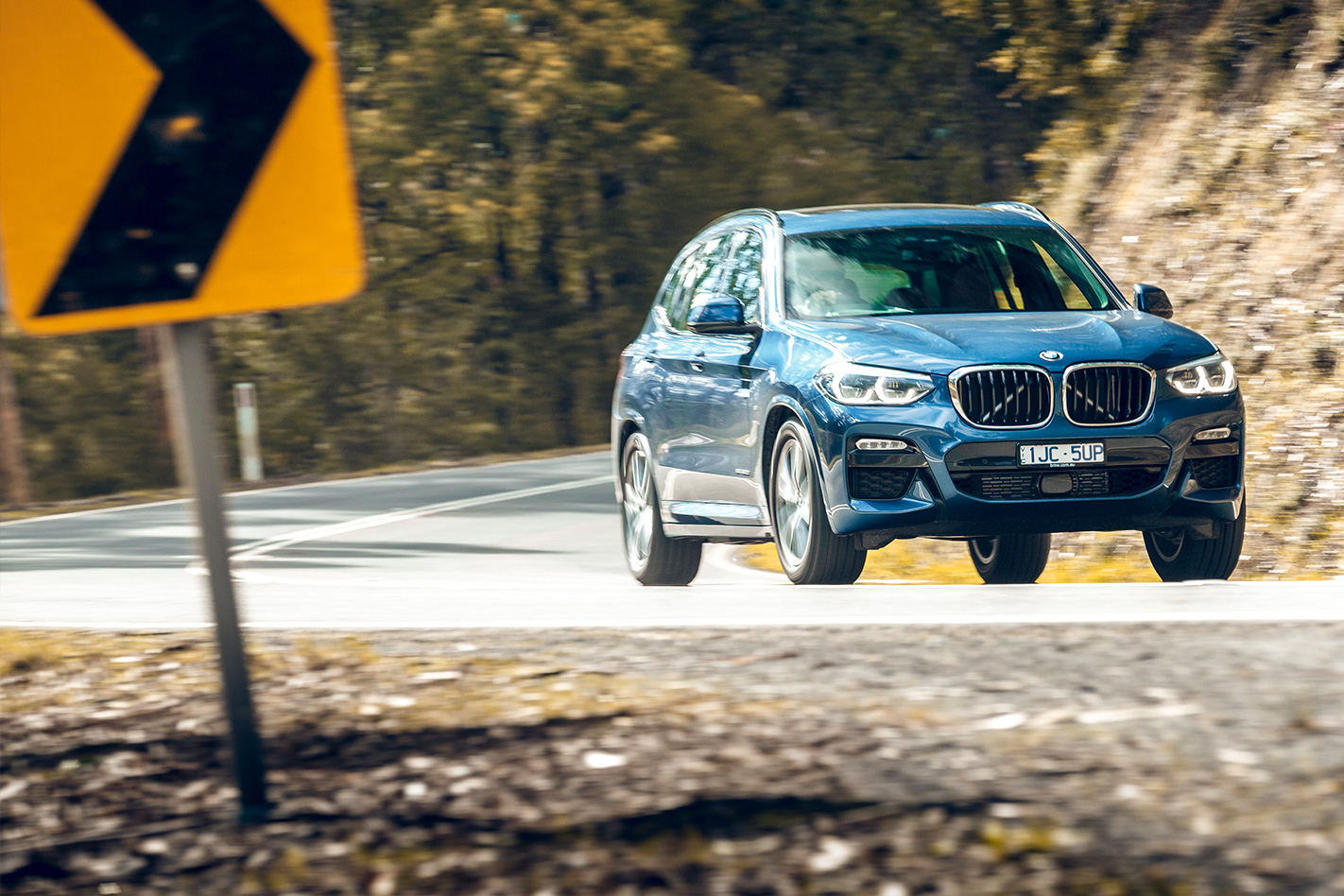
The Stelvio is based on the Giulia, which was built to take on the German sports sedans and by many accounts has largely succeeded. So how does the entry-level Stelvio Diesel, with its 154kW/470Nm turbodiesel stack up against a similarly priced, equipped and powered German mid-sized premium SUV ? We put it up against the 2.0-litre BMW X3 xDrive20d to find out.
HOW AFFORABLE ARE THEY?
Priced at $67,900, the Alfa Romeo Stelvio Diesel holds up the bottom of the range along with the $65,900 Stelvio Petrol.
However spending just $6000 on the First Edition Pack, which equipped our test car, thrusts the base Stelvio into premium territory by adding more than $10,000 worth of desirable features. The addition of Vesuvio Grey metallic paint ($1300), helped push the as-tested retail price to $75,200 all-up.
The 2.1-litre diesel is very economical, with an official combined fuel-consumption rating of 4.8L/100km. In real-world conditions during our week-long test that figure crept up to about 7.5L/100km – still an admirable result for an SUV.
You’ll only have to trouble the service department every 20,000km or once every 12 months, with capped-priced servicing setting you back $395, $695, $1295, $695 and $1395 for the 20,000km, 40,000km, 60,000km, 80,000km, 100,000km services respectively. Meanwhile, warranty coverage lasts for three-years or 150,000km .
At $69,900 BMW X3 xDrive20d will set you back $2000 more than Stelvio, but comes with a few additional standard features.
It’s $15,000 cheaper than the more powerful xDrive30d diesel, which gains a host of additional features on top of the power boost, many of which are available to the xDrive20d as extra-cost options.
Much of these found their way in to the xDrive20d we tested, which sent its retail price soaring to $88,650.
The 2.0-litre diesel engine has a frugal official combined fuel consumption rating of 5.7L/100km.
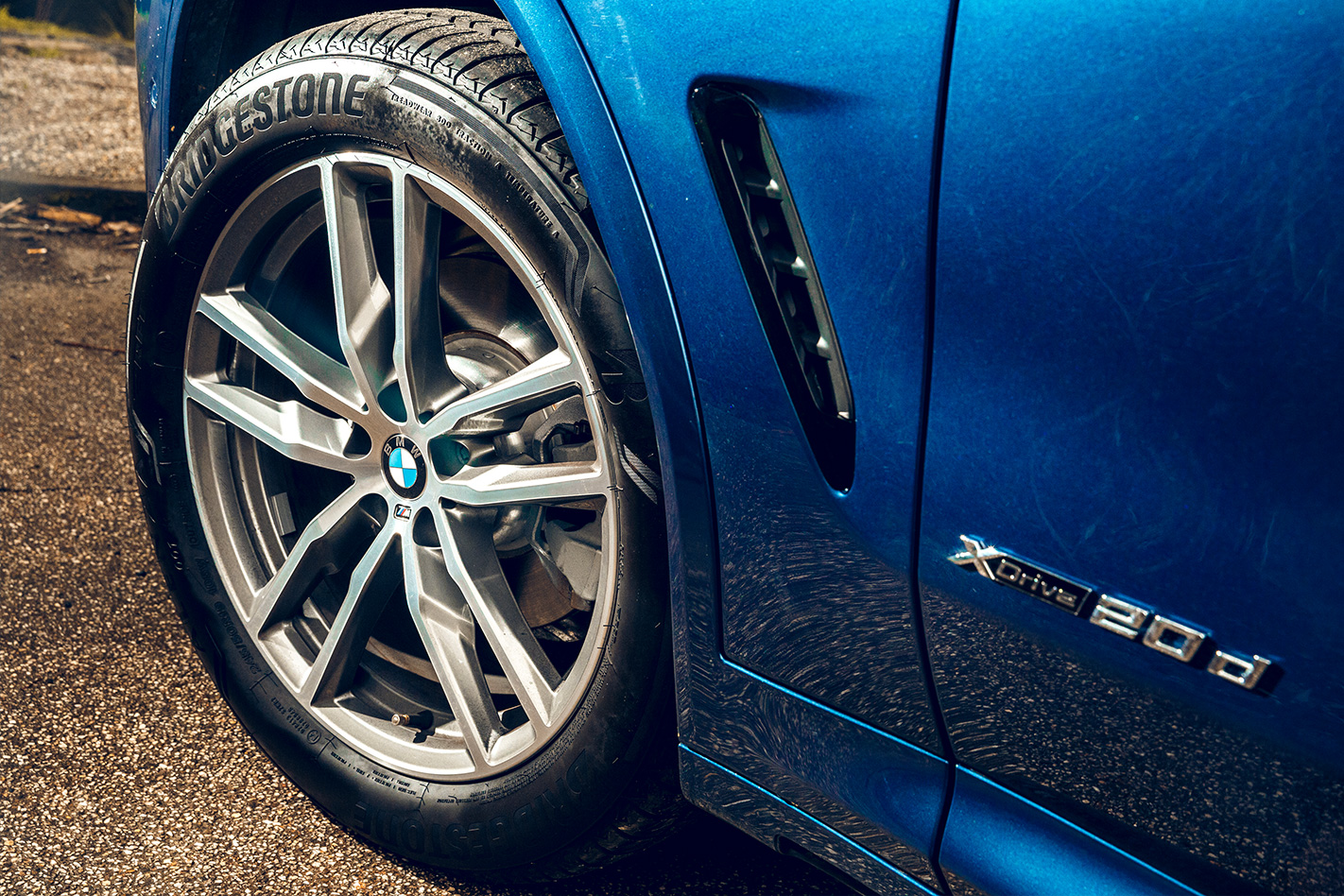
BMWs don’t have a set servicing schedule based on kilometres or time. Instead they work on ‘condition based servicing’ which lets the car’s systems decide when a service is required based on oil levels and wear and tear on individual components. Drivers are alerted that a service is due via a dashboard notification.
BMW owners can take out a prepaid Inclusive Service package which covers basic service costs, including filter replacements and fluid top-ups for the first five years or $80,000km. This costs $1495 for the X3. There’s also a $4400 Service Plus package that includes the replacement of brake pads and discs, wiper blade rubbers and clutch and disc plates.
WHAT FEATURES DO THEY HAVE?
The all-wheel-drive Stelvio Diesel comes with autonomous emergency braking, lane departure warning, blind spot monitoring, front- and rear-parking sensors, rain-sensing wipers, dusk-sensing, bi-Xenon headlights, hill descent control, and DNA (dynamic, natural and all-weather) drive modes. A puncture repair kit sits under the boot floor in place of a spare tyre as standard, though a space-saver is available at extra cost.
Creature comforts include a 7.0-inch infotainment screen, satellite navigation, dual-zone climate control, leather seats, power adjustable front seats, push-button start, paddle shifters, keyless entry, powered tailgate, eight-speaker sound system, and digital radio (DAB+).
The satellite navigation display is also relatively basic, with a less-than-intuitive control interface that proves clunkier to use than systems like BMW’s iDrive or Audi’s MMI.
For an extra $6000, the First Edition Pack brings some much-needed wow factor to the entry-level Stelvio spec, by adding:
- Bespoke 19-inch alloy wheels
- Two-piece panoramic sunroof
- 14-speaker 900W Harman/Kardon sound system
- Ambient interior lighting
- Heated leather front sports seats
- Heated leather sports steering wheel
- Aluminium interior trim accents
- Aluminium sports pedals, red brake calipers
- Gloss black window surrounds.
- Koni adaptive rear suspension, versus the non-adaptive dampers in the standard Stelvio Diesel.
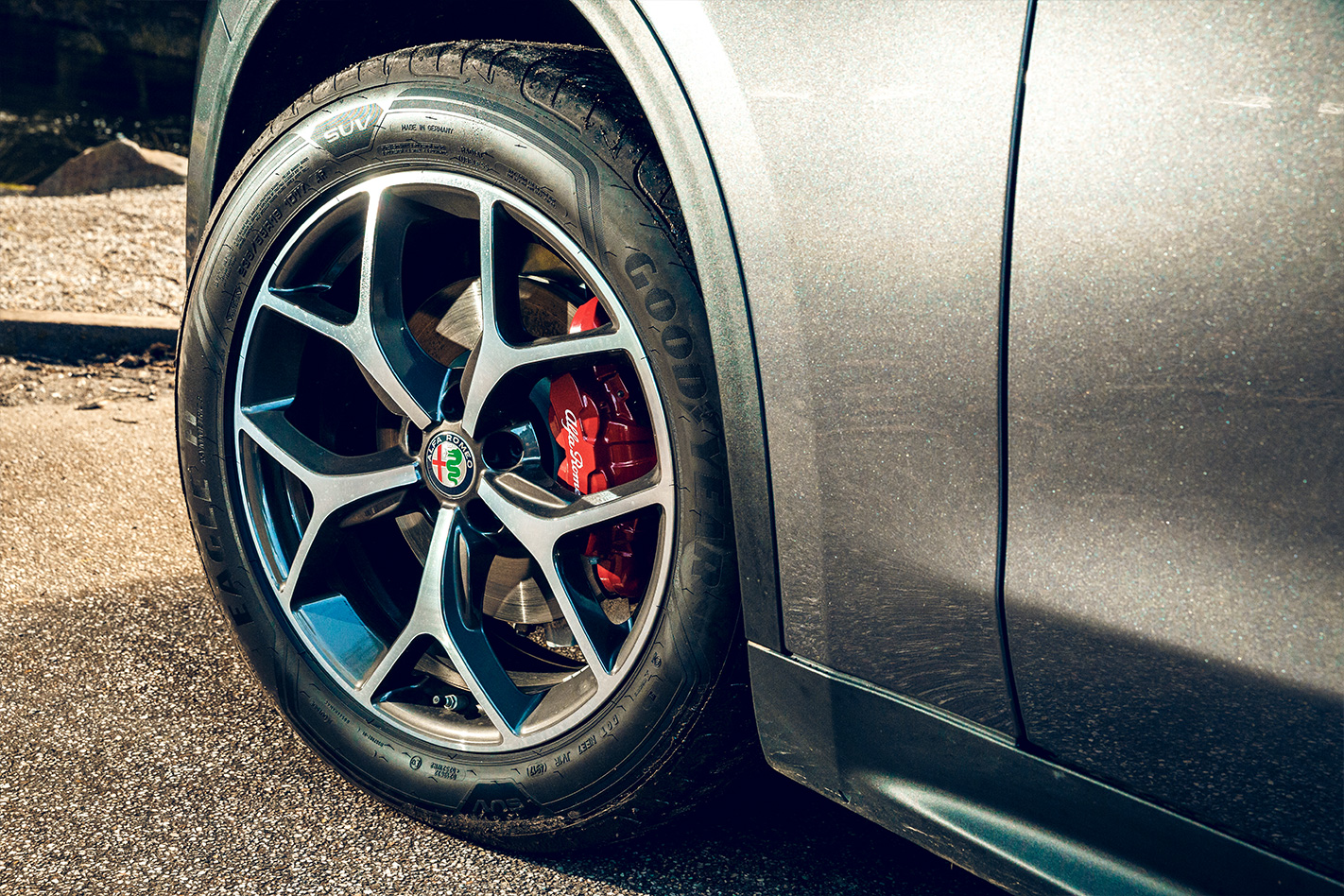
The BMW X3 xDrive20d comes with a broad list of features that you’d expect from a $70,000 SUV, including automatic tailgate, LED headlights, front and rear parking sensors, head-up display, speed-limit info, adaptive cruise control, autonomous emergency braking, digital radio (DAB+), six-speaker sound system, satellite navigation, park assist, sports seats and internet-connected features in its infotainment system.
However, the vehicle we tested had almost $10,000 worth of optional extras, including:
- M-Sport Package that added sporty exterior embellishments, adaptive suspension, LED fog-lights and leather sports steering wheel with paddle shifters ($4550)
- Metallic paint ($1950)
- ‘Vernasca’ leather upholstery with decorative stitching ($2500)
- Panorama sunroof ($3000)
- Ambient interior lighting ($700)
- Driver Assist Plus, with active cruise control with stop and go function, front cross traffic alert, lane keeping assist, and side collision warning ($2800)
- Innovations Package, which includes a 12.3-inch touchscreen, 3D surround view parking camera, adaptive LED headlights, and multifunction digital instrument display ($3250).
HOW PRACTICAL ARE THEY?
The Alfa Romeo Stelvio and BMW xDrive20D are five-seater medium SUVs.
The Stelvio measures 4.69m long by 1.9m wide, and weighs in at 1660kg. Its more hatchback-like body, which ends at the C-pillar rather than boasting extra glass and an additional pillar behind the rear doors, disguises its size fairly well.
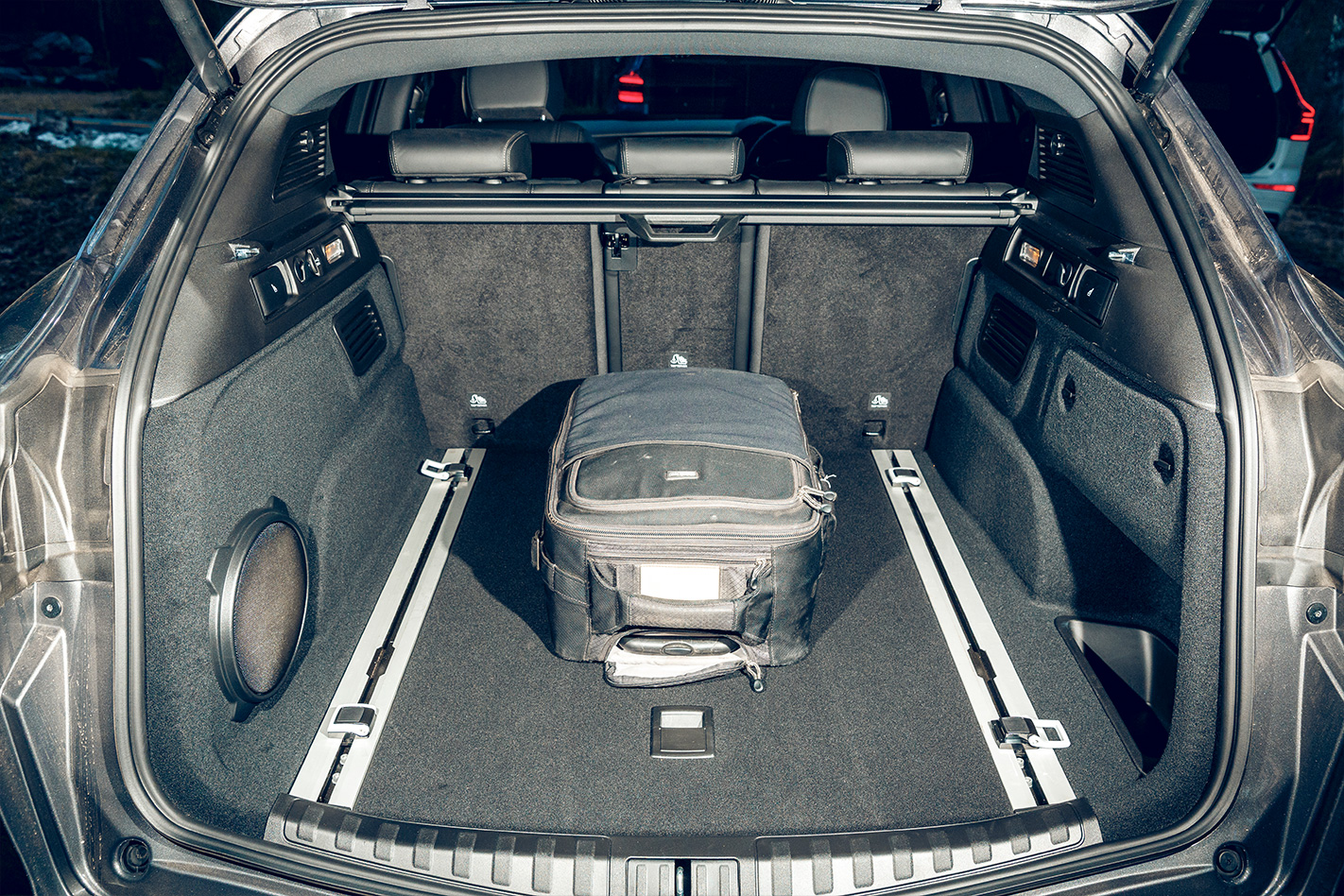
Boot volume behind the Stelvio’s second row is a reasonable 525 litres with good depth between the tailgate and seats. Tick the box for the space-saver spare and seats-up capacity drops to a still-decent 499 litres, while folding the rear seats down expands capacity to a handy 1600 litres.
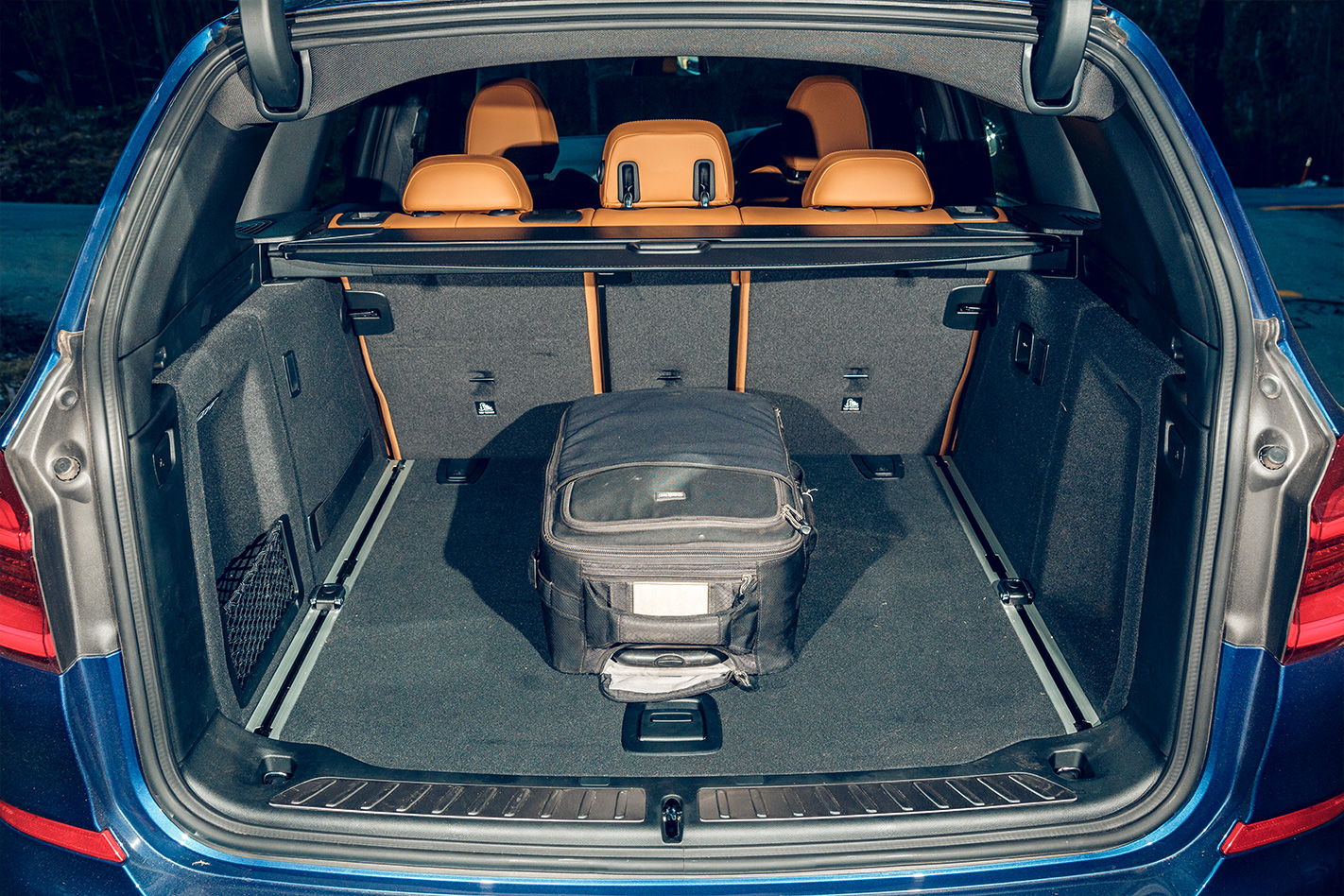
The BMW X3 is roughly the same size as the Stelvio. At 4.71m long it’s 54mm longer than the previous generation X3 and is actually bigger than the original X5 large SUV. Overall width comes in at 1.89 metres.
The X3 can swallow 550 litres of luggage behind the back seats, extending to 1600 litres with the 40:20:40 split-folding backrests folded down.
HOW SAFE ARE THEY?
The Stelvio Diesel was awarded a five-star ANCAP safety rating in March 2018 thanks in part to its active safety features, including autonomous emergency braking (AEB), lane departure warning, and blind-sport monitoring.
It’s also equipped with six airbags, seatbelt reminders and ISOFIX child seat anchors for each of the three rear seats.
One downside is its reversing camera display, which is basic and only takes up half of the 7.0-inch screen’s real estate, thus making it difficult to spot smaller obstacles. When many competitors now sport 360-degree surround view cameras on far larger screens, it makes the Stelvio look somewhat behind the times.
The BMW X3 also earned a five-star ANCAP rating, in November 2017.
The X3 xDrive20d is equipped with seven airbags: two directly in front of the driver and passenger; one on the outer side of each front occupant to protect the upper body; driver’s knee airbag, and two airbags on each side to protect the heads and chests of front and outer-rear occupants.
It also comes standard with BMW’s Driving Assistant which includes a camera-based autonomous emergency braking, lane-departure warning and blind-spot monitoring.
HOW COMFORTABLE ARE THEY?
The interior of the Stelvio Diesel First Edition is typically Alfa Romeo, with attractive leather sports seats and an elegant and uncluttered dash design.
Alfa has gone for a minimalist approach, with analogue gauges and old-school air-conditioning controls, but while it would look great in a hatchback it seems a little too basic for a premium SUV.
That said everything is sensibly laid out, including the steering-wheel buttons that include a simple cruise control interface. The sports steering wheel itself looks great, with the long metallic paddle shifters adding further visual and tactile appeal.
The front sports seats are very comfortable with great back support, soft headrests and adjustable lumbar, side bolstering and under-thigh support.
The rear-seats aren’t quite as plush. Legroom is tight for a medium SUV, and the swept-back roofline and panoramic sunroof won’t do taller passengers any favours. The window line also sweeps high, which might make it difficult for smaller passengers to see outside. It’s adequate for shorter trips, but it would start feeling a little claustrophobic for a couple of adults for anything longer than an hour.
The rear door opening is also tight, which makes entry and egress a tad difficult for less abled people and can make installing child seats a chore.
One the plus side, rear-seat passengers get their own air vents and two USB ports mounted at the rear of the centre console.
The BMW X3 xDrive20d’s cabin quality is excellent even before you start ticking option boxes. Buttons and controls are intuitively placed, easy to use and pleasant to touch thanks to their metallic coating.
The driving position is good and comfortable over long distances, and the instrument panel is neat and clearly presented – as is the head-up display.
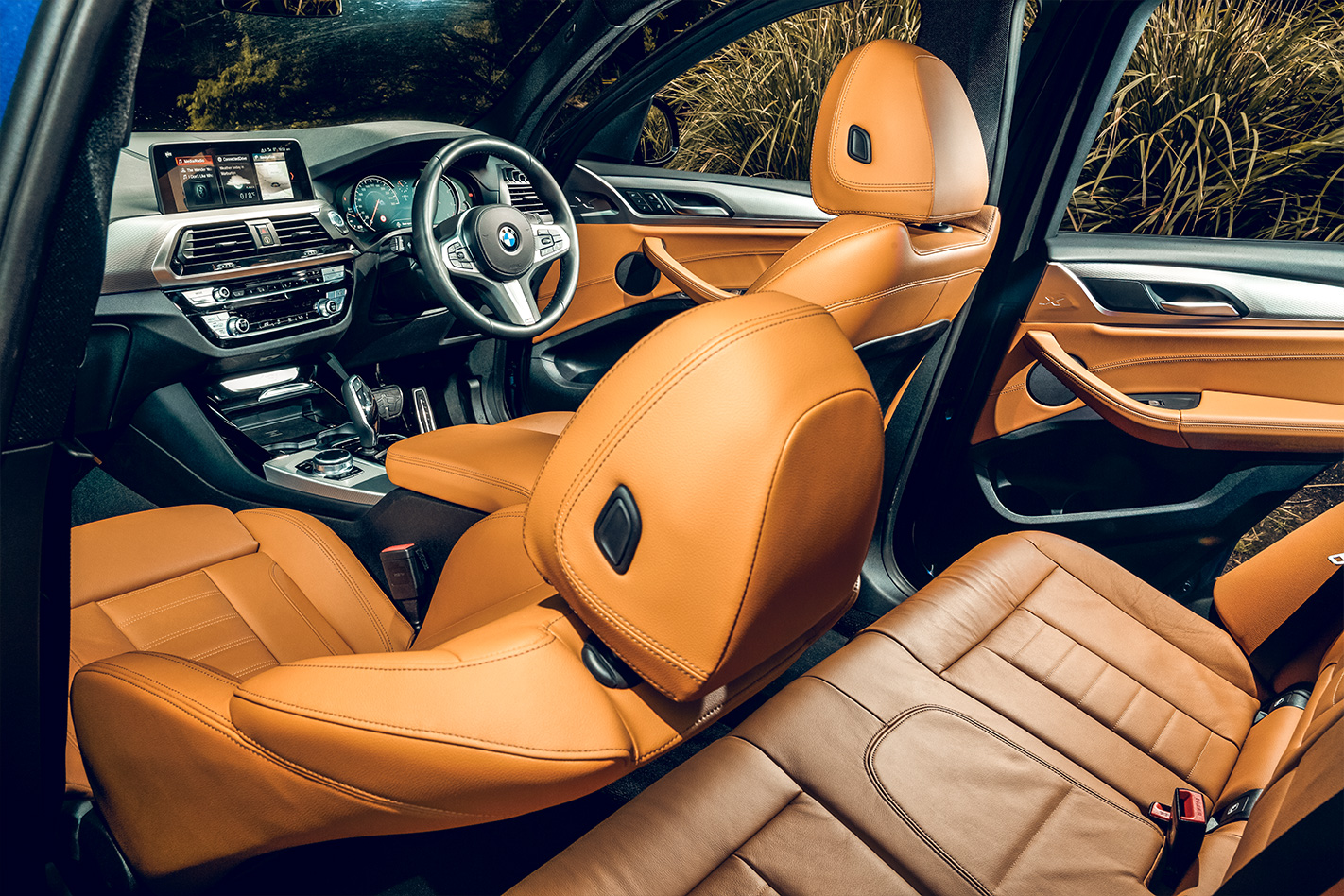
The cabin is practical and spacious with plenty of headroom across both rows, even with the optional panoramic sunroof.
The rear compartment offers good legroom even behind taller drivers and comfortably seats three adults. The rear seat is low, which helps with headroom but hampers forward vision, though the low rear window line nevertheless affords good side vision even for kids. Rear seat passengers have their own air-conditioning vents and controls and a 12-volt socket to charge their devices.
Cabin noise is refined with barely perceptible engine noise – an achievement for a diesel – with the din from 19-inch tyres only becoming noticeable beyond 80km/h.
WHAT ARE THEY LIKE TO DRIVE?
This is where the Stelvio Diesel provides bang for your buck. Its 1671mm height is pretty low for an SUV resulting in a low centre of gravity that allows for car-like cornering.
The Koni adaptive suspension that comes with the First Edition pack offers a more composed ride than the standard kit, and though slightly firm in its initial bump response it gives way to a compliant ride over road imperfections with minimal secondary bounce when recovering from truly big lumps.
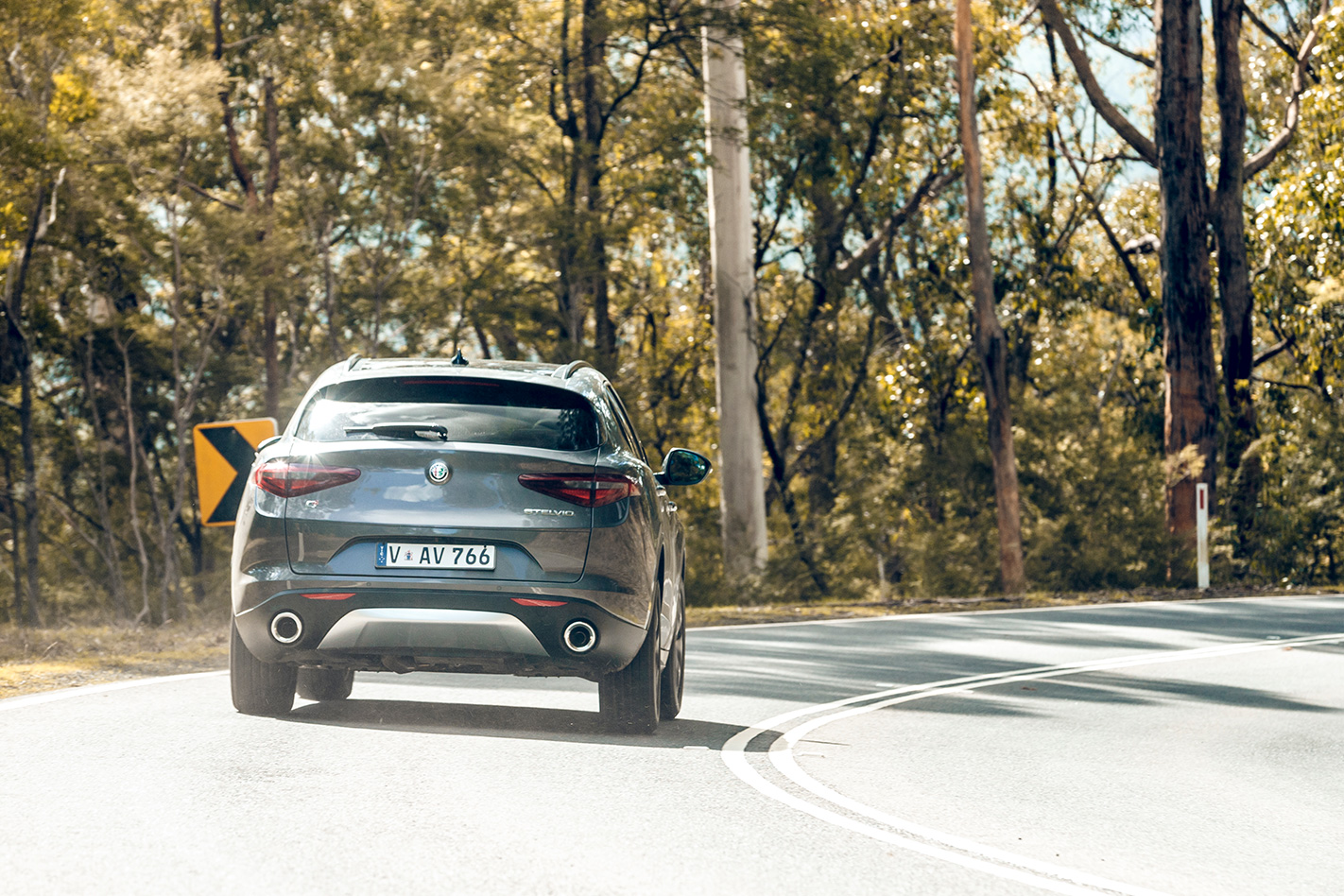
The 154kW/470Nm 2.1-litre four-cylinder turbo diesel engine is lively and works harmoniously with the eight-speed automatic gearbox. Power is sent to all four wheels when extra traction is required, but in ordinary driving the drivetrain is biased toward the rear wheels for a more dynamically engaging drive.
It’s a little sluggish when the drive mode selector is set to its default Natural mode and it can feel like you’re driving through honey when the dial is flicked to All-Terrain mode, but switching to Dynamic tautens the Stelvio’s powertrain to deliver a respectable 0-100km time of 6.6 seconds. That responsiveness is maintained at higher speeds, which inspires confidence when overtaking.
The steering is also very sharp, as is the electronic braking – perhaps a little too much at first, though you learn to adjust to the left pedal’s grabby nature. Their responsiveness is certainly in harmony with the athletic persona of the Stelvio’s suspension, steering and powertrain though, which feels great when you find yourself on a twisting road.
The BMW X3 xDrive20d’s tamer 140kW/400Nm turbodiesel engine on the other hand is no bolter, but provides enough thrust for urban and highway driving, It has adequate power reserves to keep up with most traffic when asked to climb hills, though there can be a moment’s hesitation when you put the foot down.
The eight-speed automatic gearbox does a good job keeping up with pedal inputs, and if you feel like contributing to the shifting you can flick the gear selector into manual mode (or use paddle shifters if you have the M-Sport Package fitted).
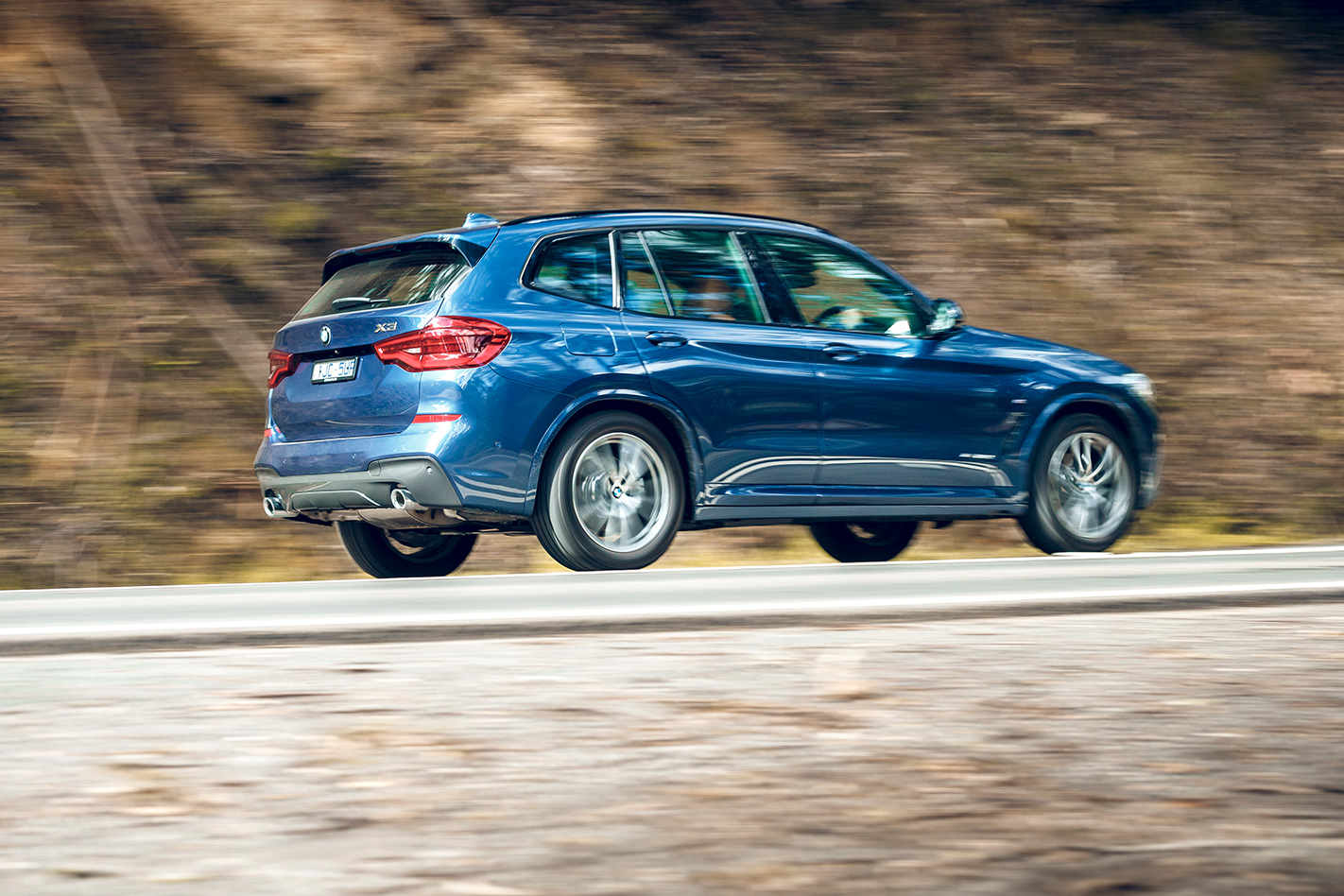
With the adaptive dampers the ride feels composed even on rougher surfaces. It rides particularly well in Comfort mode, and while switching to Sport makes for a firmer ride, it still absorbs bumps well with minimal jarring.
The steering has a nice fluid feel to it in Comfort mode, but in Sport mode it’s unexpectedly inconsistent meaning you lose feedback on sharper turns. Fortunately you can tailor the driving settings to come to a compromise between Sport’s sharper handling and Comfort’s direct steering.
The xDrive20d is also handy on rougher tracks, with effective all-wheel-drive and a hill-descent control system as standard.
OUR OPINION
Choosing a winner here depends on what you want most from your premium diesel SUV. If it’s driver enjoyment and engagement, the Stelvio Diesel First Edition offers it in spades, however with the diesel derivative Alfa Romeo seems to have created a car with something of an identity crisis.
As an SUV it’s adequate when it comes to practicality, though the BMW X3 provides more in terms of rear-seat comfort and boot space. Its real reason for being is to be an SUV for driving enthusiasts – people who you’d ordinarily think would prefer the punchier, rev-happy petrol version or the similarly-priced Giulia Super.
That said, if you consider yourself a keen driver you’ll still have plenty of fun, just be sure to get in while the First Edition Pack is still available, or look at adding the Veloce Pack which brings similar features, but for $8000. And maybe save yourself $2000 and opt for the base petrol instead of the oil-burner – the diesel, though perky, simply seems at odds with the rest of the Stelvio’s ultra-sharp character.
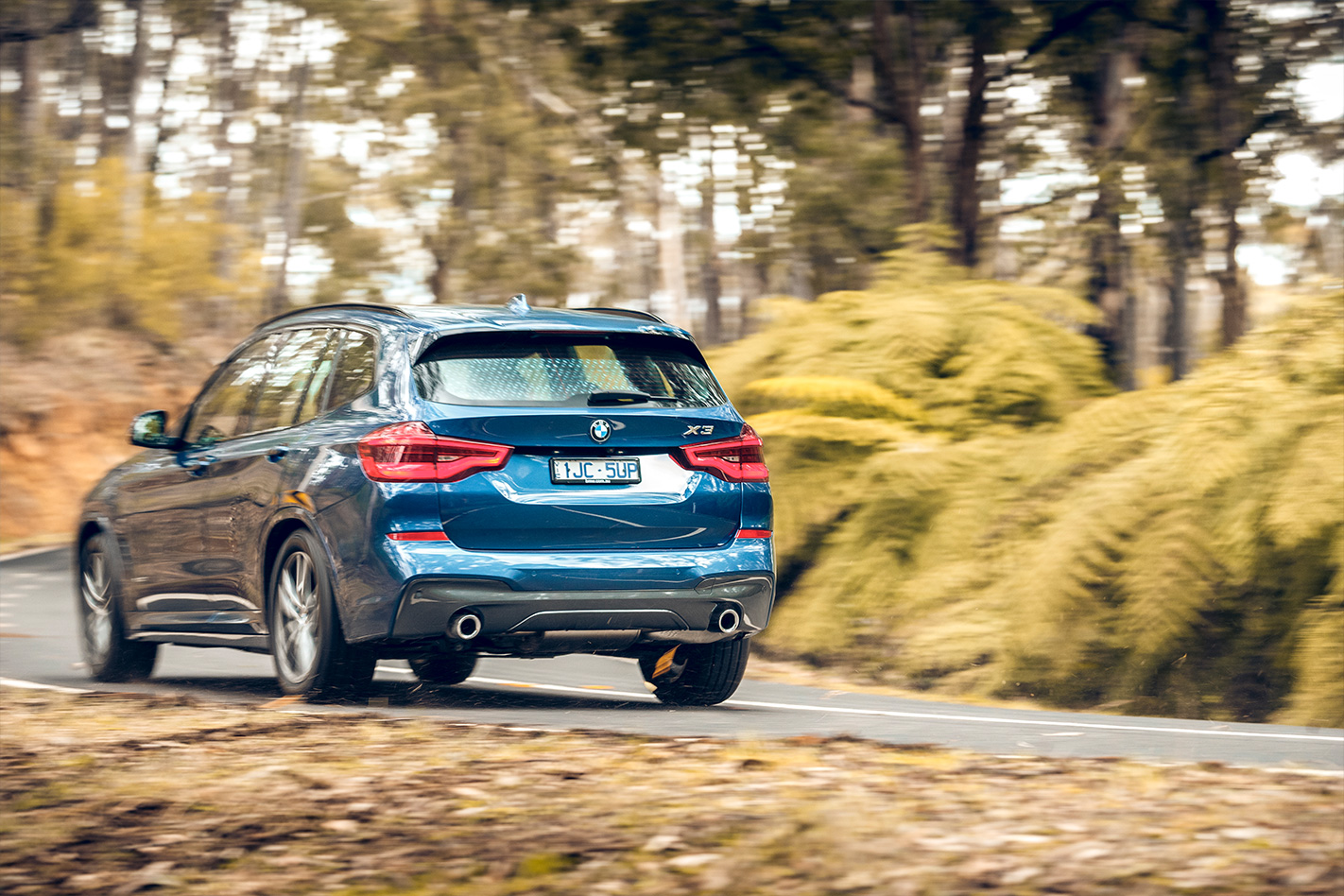
The BMW’s superior space, equipment and comfort levels make it the better all-rounder. It’s not as racy as the Stelvio, but is still enjoyable to drive and offers more than enough power for everyday driving.
As with the Stelvio, you won’t regret spending a little more to get adaptive dampers – available separately or as part of the M-Sport Package – which bring an enhanced ride quality that approaches that of the best alternative premium SUVs. The Stelvio deserves credit for injecting some genuine dynamic fun into a segment that’s not traditionally known for it, but it’s the BMW that ultimately ticks more boxes.
At this year’s Bathurst 1000, to be held in the lead up to and on the first weekend of October, past racers from both sides of the rivalry will be on display to celebrate the biggest race of the Supercars calendar.
For Holden, it’s 50 years since he Lion first took victory at The Mountain so the National Motor Racing Museum is bringing out some classics – including a replica of the HK Monaro that won the 1968 Hardie-Ferodo 500.
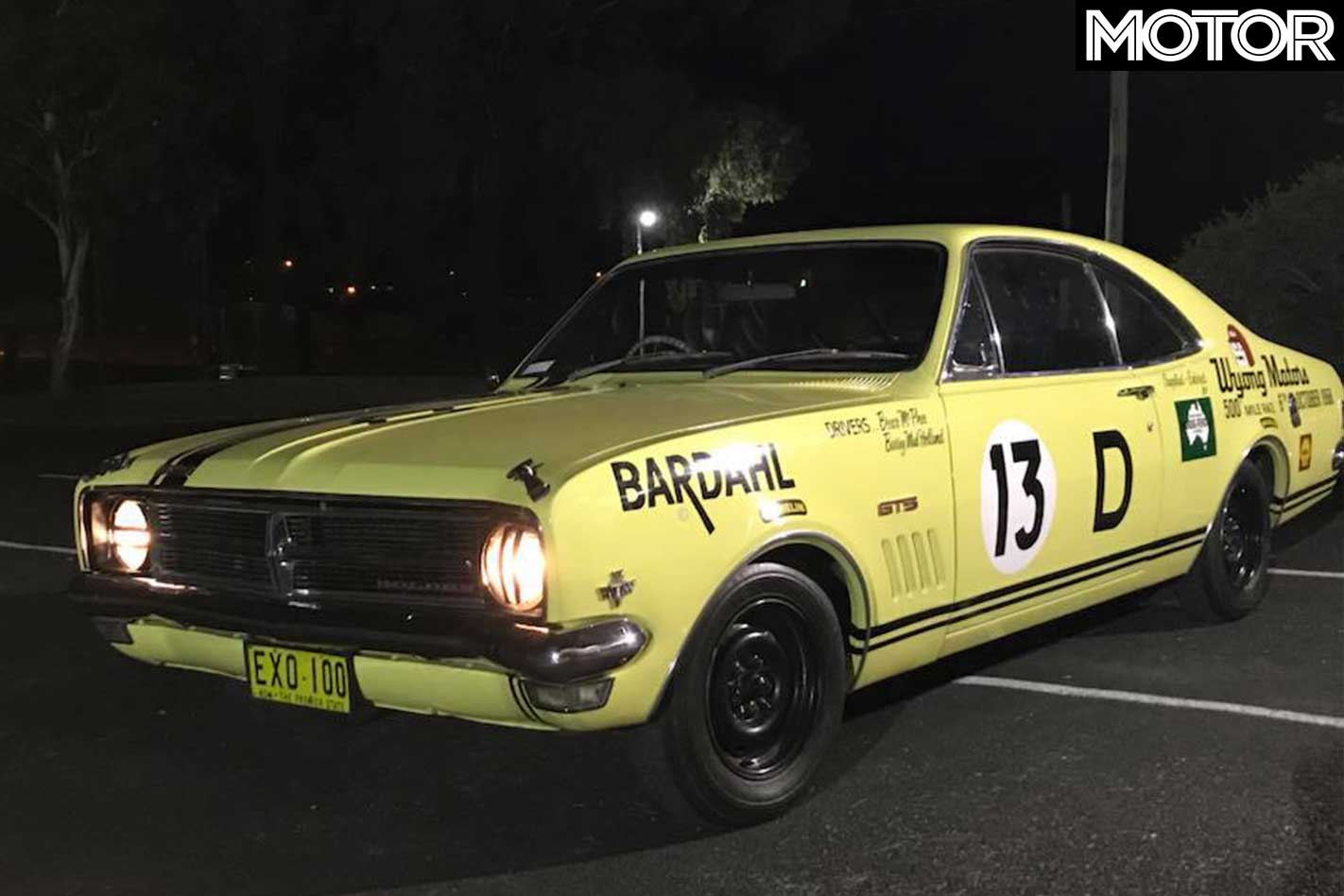
The Bruce McPhee/Barry Mulholland (though the latter famously only drove one lap) replica is regularly on display at the museum, so it won’t need to go far.
Joining it will be perhaps Holden’s most iconic racer, the A9X Torana which Peter Brock and Jim Richards used to dominate in the late 1970s. It’ll be traveling slightly further, coming from the Bowden collection at the Sunshine Coast.
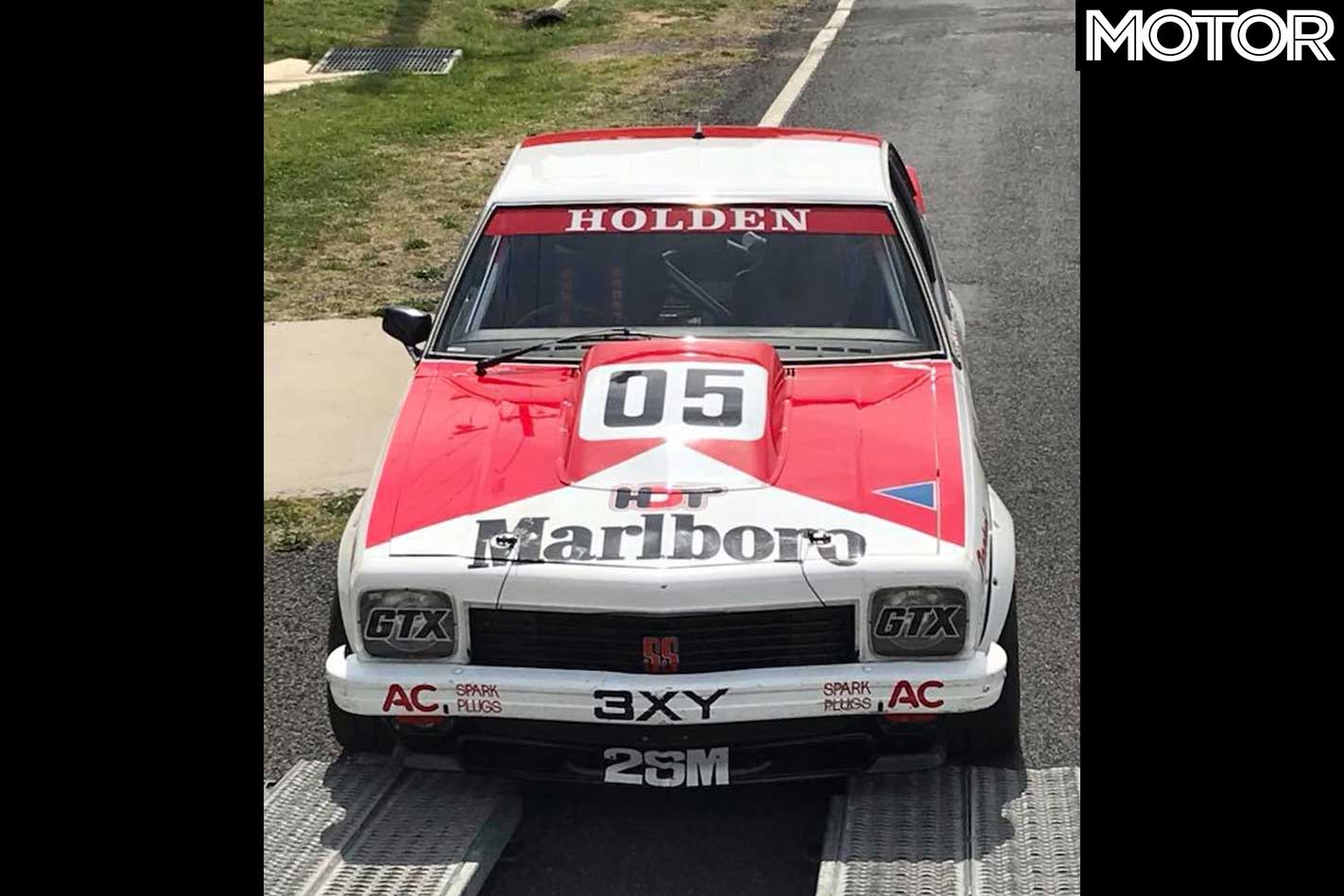
Supercars says other cars to feature from Holden’s history will be the Torana driven by Bob Morris and John Fitzpatrick in 1976, and the Chikadee VK Commodore from 1986 which was the inspiration for Erebus’ Sandown 500 retro livery.
The Perkins/Ingall VR from 1995, the Murphy/Kelly VY from 2003, the Tander/Davison VE from 2009 and the 2015 Lowndes/Richards VF will also be on display.
According to Supercars, Supercars’ events manager Phil Shaw says a collection of 10 Falcons is planned to display on the weekend of the race, with Craig Lowndes’ ‘Green-Eyed Monster’ AU Falcon and Glenn Seton’s 1997 ATCC-winning EL Falcon already confirmed.
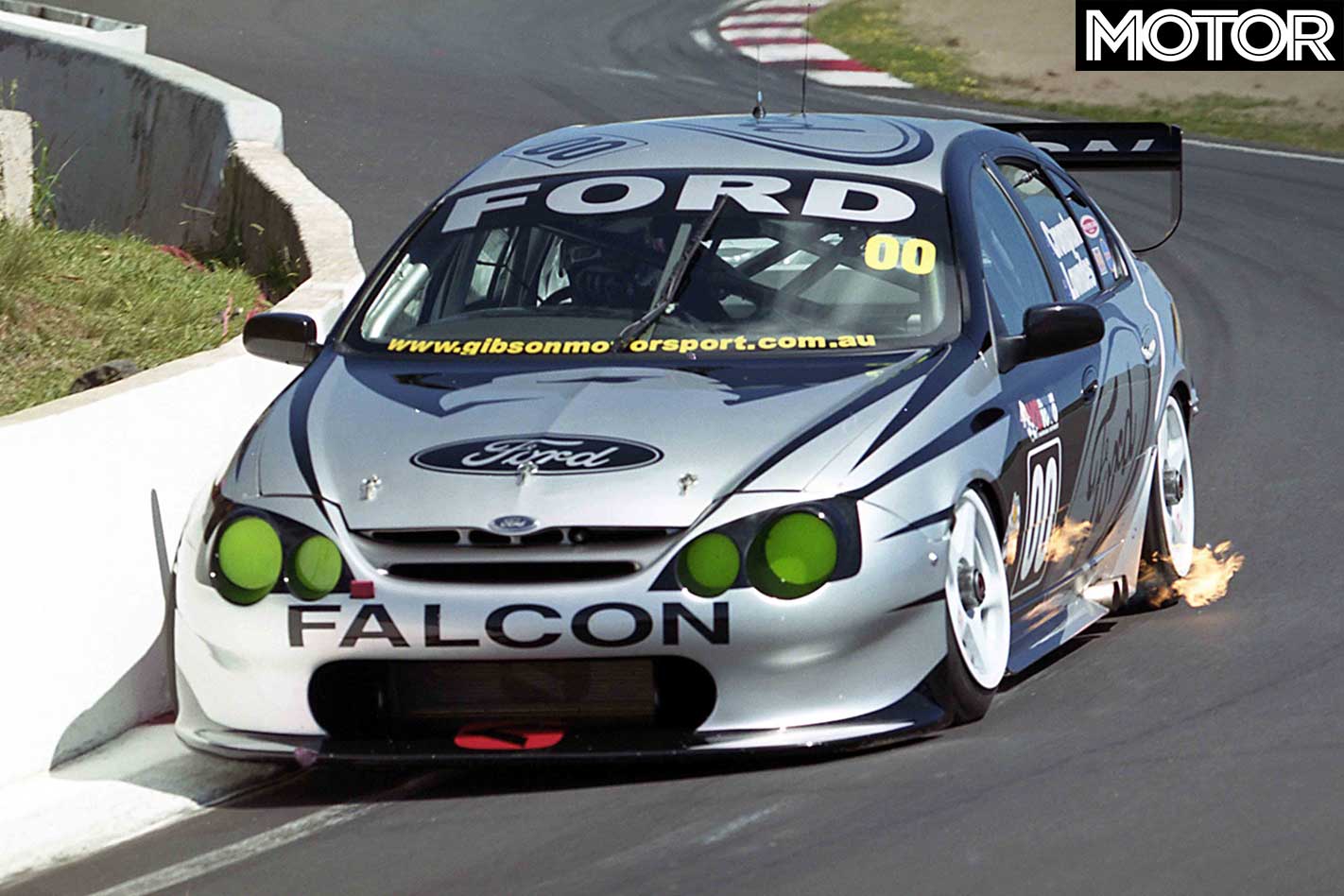
It’s expected the other eight Falcons will be confirmed over the next two weeks.
Porsche’s 70th birthday sees the marque in ruder health than ever before. Wheels celebrates the company’s seven decades of engineering excellence forged on road and track.
1973 Porsche 911 Carrera RS 2.7
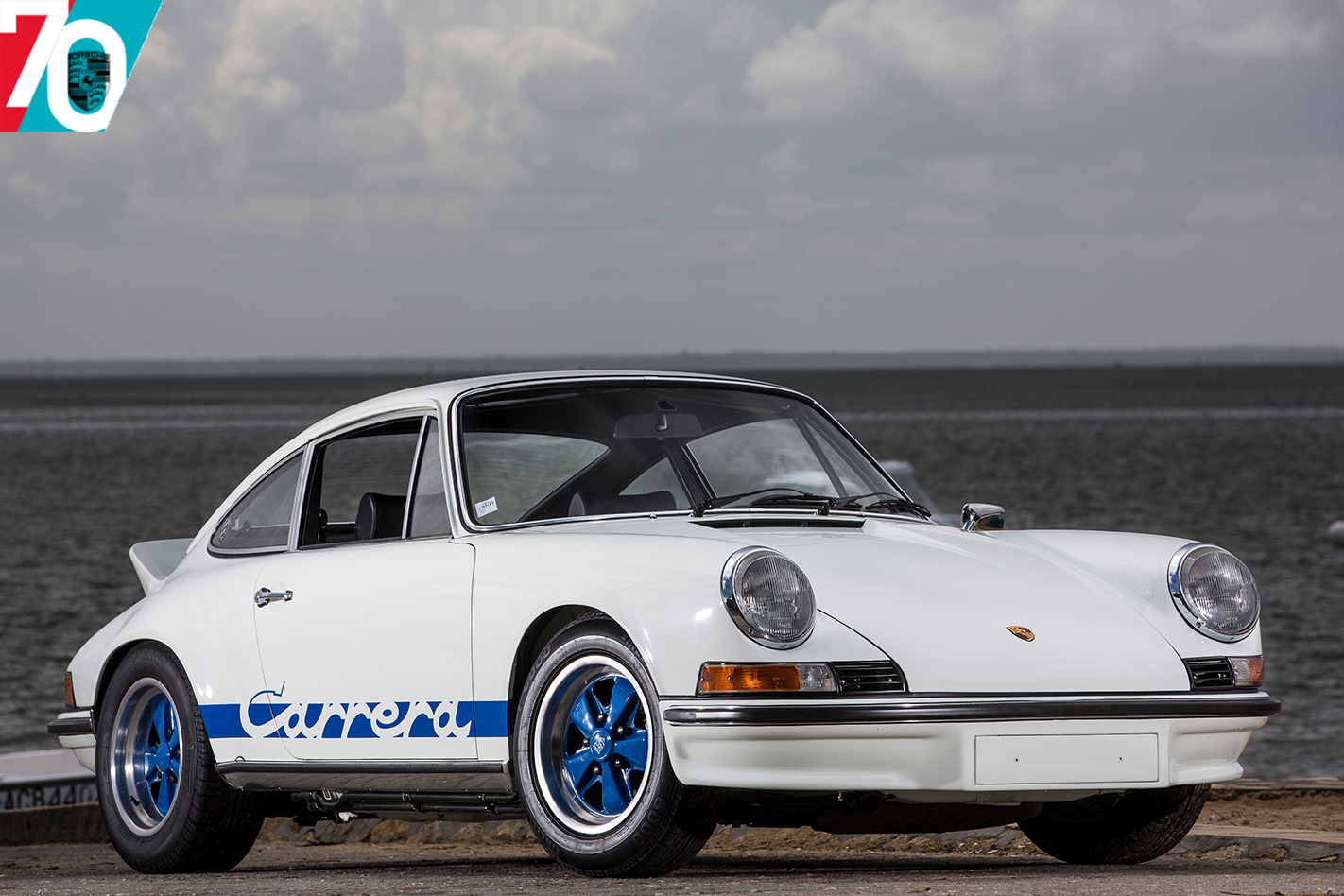
One of today’s most sought-after 911s was born out of an FIA ruling that effectively banned Porsche’s flat-12-powered 917 from racing in Group 5. Focus shifted to a 911-based Group 4 racer, and the road-going RS 2.7 of 1973 was built to homologate it. It became the first 911 to wear the Carrera moniker (first used on 356) and the first 911 to receive the Rennsport suffix (originally placed on the 550 RS Spyder). Porsche built the RS 2.7 in both Touring and Sport (aka Lightweight) specification, plus a few wide-body 2.8-litre racers. The road car’s 2687cc flat-six only made 156kW, and the 1580 produced mean it’s not the rarest (though only 117 were RHD), but as Michael Stahl wrote more recently, “It’s a long way from being the fastest, the lightest, the most powerful or the most technically advanced 911 ever built. Yet to Porsche purists, the Carrera RS of 1973 is simply the best 911 ever.”
1974 Porsche 930 911 Turbo
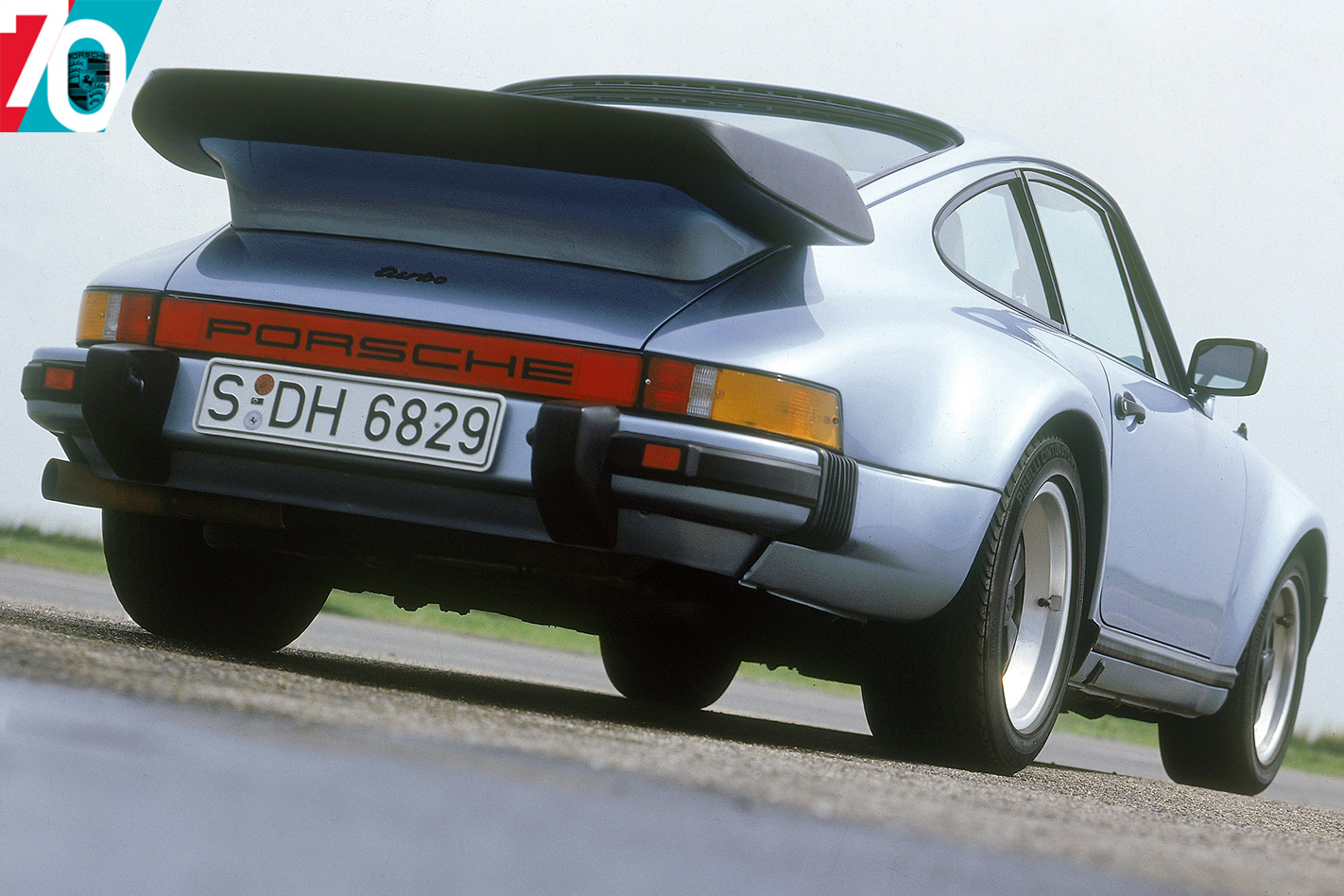
Engineers Ferdinand Piech and Hans Mezger began toying with turbochargers during the 1960s, but Porsche didn’t bring boost to market until 1974. The 930 911 Turbo was narrowly beaten to the title of Europe’s first turbocharged production car by the BMW 2002 Turbo, though both were trumped to overall glory by a couple of oddballs from GM in the US. The lavishly equipped Turbo was a handful on the limit, and Porsche advertised it as a grand tourer – possibly to excuse the fact it used standard Carrera brakes. Its laggy 3.0-litre engine produced heady peaks of 183kW and 408Nm. A 221kW/430Nm 3.3-litre version launched in 1977 featuring an intercooler and stoppers derived from Porsche’s 917 racer.
1997 Porsche 911 GT1 Strassenversion
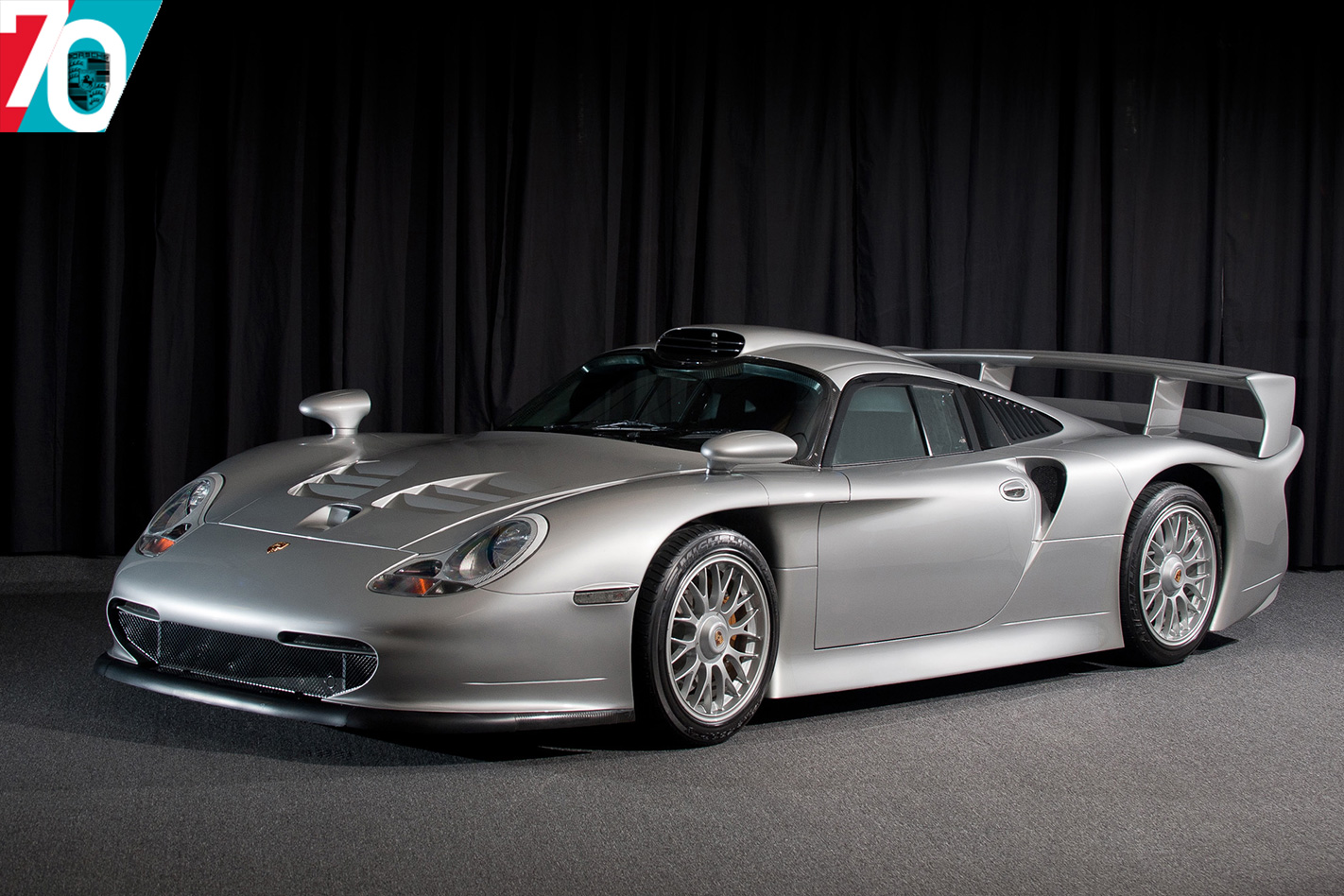
Porsche doubled-down on its sportscar racing endeavours in the late 1990s, as evidenced by the 911 GT1. While Porsche’s rivals (notably McLaren and Ferrari) were racing modified versions of their road cars, Porsche effectively took the category rulebook and developed a prototype racer that exploited it to the full. To race it, 25 street-legal versions had to be built. Changes from the racer were minimal; a little more ride height, slightly softer springs and more streetable gear ratios. The front end was mostly 993, but the rest was closer to 962 than 911. Beneath its carbonfibre body lay a mid-mounted twin-turbo flat-six producing 405kW and 600Nm in street-legal trim, with a six-speed manual transmission. Two were built in 1996 with 993-style headlights, and approximately 20 more followed in 1997 and 1998 with 996-style lamps. In March 2017, Gooding & Company auctioned one off for a staggering A$7.5 million.
1964 Porsche 901 911
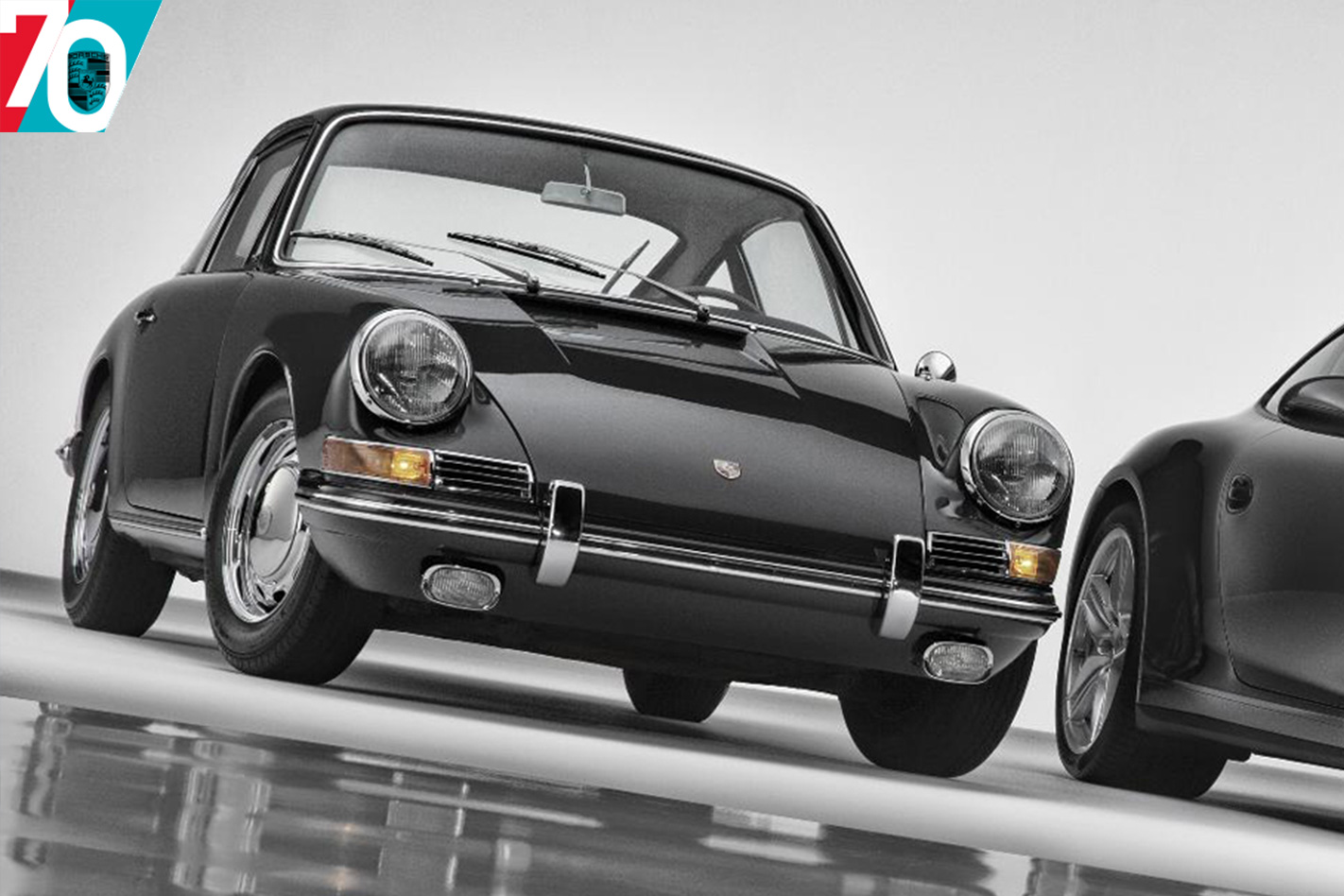
What’s now known as 911 was originally introduced as the 901 (based on its internal ‘Typ 901’ designation) at the 1963 Frankfurt motor show. This larger, more powerful successor to the ageing 356 was powered by a 96kW/174Nm 2.0-litre flat-six evolved from the 356’s 1.6-litre flat-four. A total of 82 pre-production 901s were built, but at its 1964 Paris motor show appearance Peugeot took issue with the middle-zero, three-numeral nomenclature. Porsche capitulated and changed the name to 911 for full-scale production. Approximately 55,000 A to F series 911s were built between ’64 and ’74. In 1966 the 911S, or ‘Super’, launched with 120kW becoming the first performance 911. It was also first to wear now iconic Fuchs alloy wheels. Its engine later peaked at ‘2.4-litres’ (2341cc) and 142kW/216Nm, and introduced fuel injection to 911.
1999 Porsche 996 911 GT3
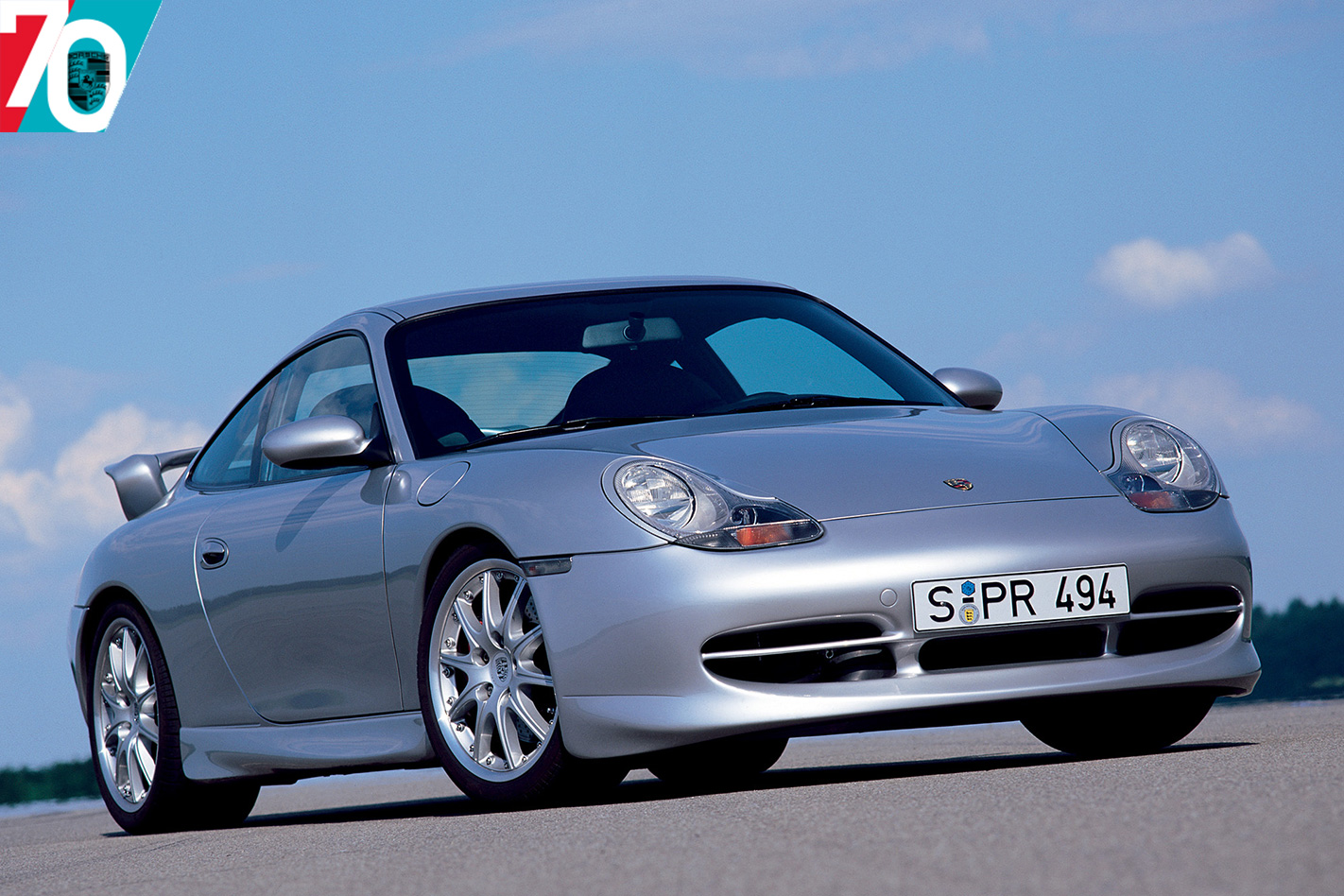
“Just listening to the GT3, you could never doubt there is a direct link between this car and the legendary 1973 Carrera 2.7 RS, despite the change from air-cooling to liquid-cooling.” That was what Peter Robinson said in September 1999, having just driven the first Porsche GT3. The 996 model was the GT division’s first road car under the leadership of Andreas Preuninger. It followed a similar line of thinking to earlier RS models, with an interior almost completely devoid of sound deadening and with adapted racing mechanicals. Powered in its initial guise by a 3.6-litre ‘Mezger’ flat-six that produced 265kW at 7200rpm, it marked the beginning of the GT3’s naturally aspirated dynasty. It was also one of the first road cars to have a steering wheel trimmed in Alcantara.
Peugeot has revealed plug-in hybrid variants of its 508 and 3008 models that both offer enough battery-only range for a day’s worth of motoring while retaining the long-range capability of petrol power.
Not only that, but in the case of the Peugeot 3008 Hybrid4 the adoption of a hybrid powertrain also unlocks an all-wheel drive capability thanks to a rear-mounted electric motor driving the rear wheels. The 3008 medium SUV has been strictly a front-drive proposition until now, something that may have turned away buyers looking for an SUV with wet-weather grip.
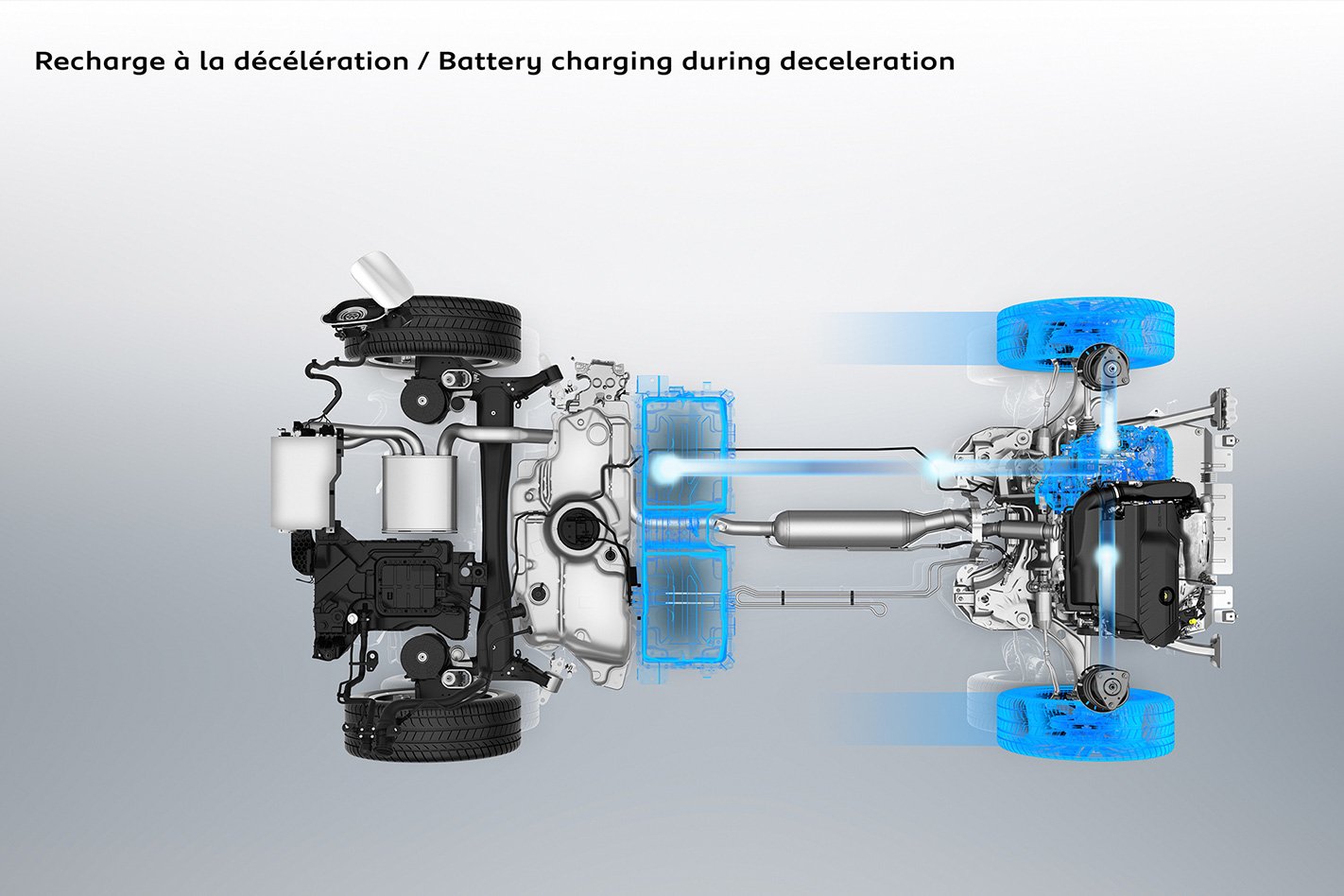
Besides improving traction on slippery surfaces, the Hybrid4 setup also turns up the dial on the 3008’s performance.
A 13.2kWh lithium-ion battery supplies voltage to both electric motors (another one sits within the gearbox and drives the front wheels), which each deliver 80kW and supplement the 147kW turbocharged petrol 1.6-litre to generate a total combined output of 220kW.
With all three power sources working together, the 3008 Hybrid4 can reach 100km/h in a hot-hatch-like 6.5 seconds.
Driven at a more sedate pace in pure-electric mode, the battery supplies enough energy for up to 48km of range. For the average Australian commute of circa 15km, that’s enough to get from home to work and back without burning a drop of petrol.
It’s also worth noting that the Hybrid4 option also brings a more sophisticated multi-link rear suspension for the 3008, which uses a much simpler torsion beam rear axle in front-drive form.
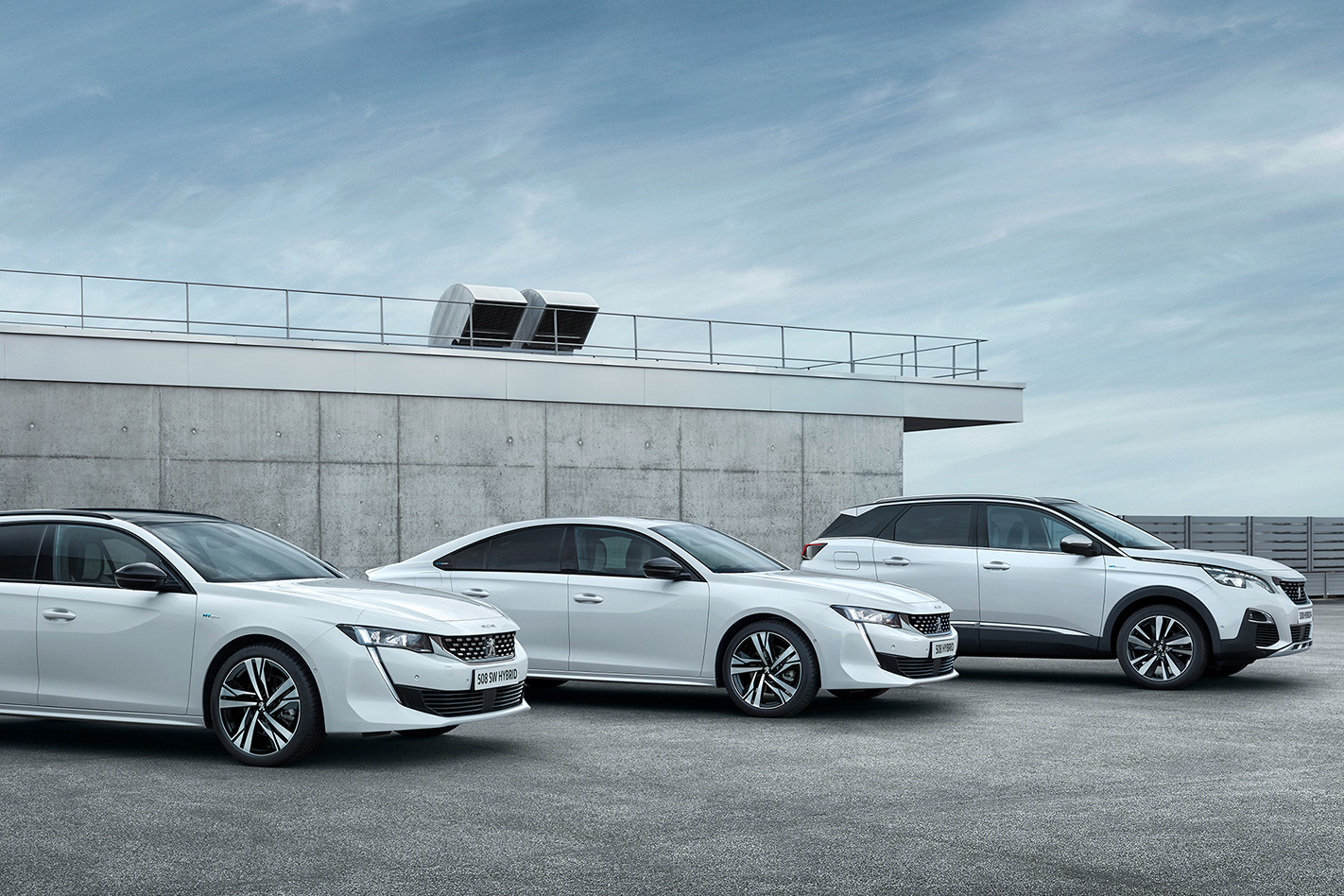
A less powerful hybrid setup will also be offered, which forgoes the rear electric motor and multi-link suspension in favour of a simpler – though less powerful – single-motor arrangement. The turbo petrol combustion engine generates 132kW by itself, and when operating in concert with the 80kW electric motor the system output maxes out at 165kW. The FWD driveline will be available on the Peugeot 508 Hybrid four-door and 508 Hybrid wagon, and will eventually be offered on the 3008 as well.
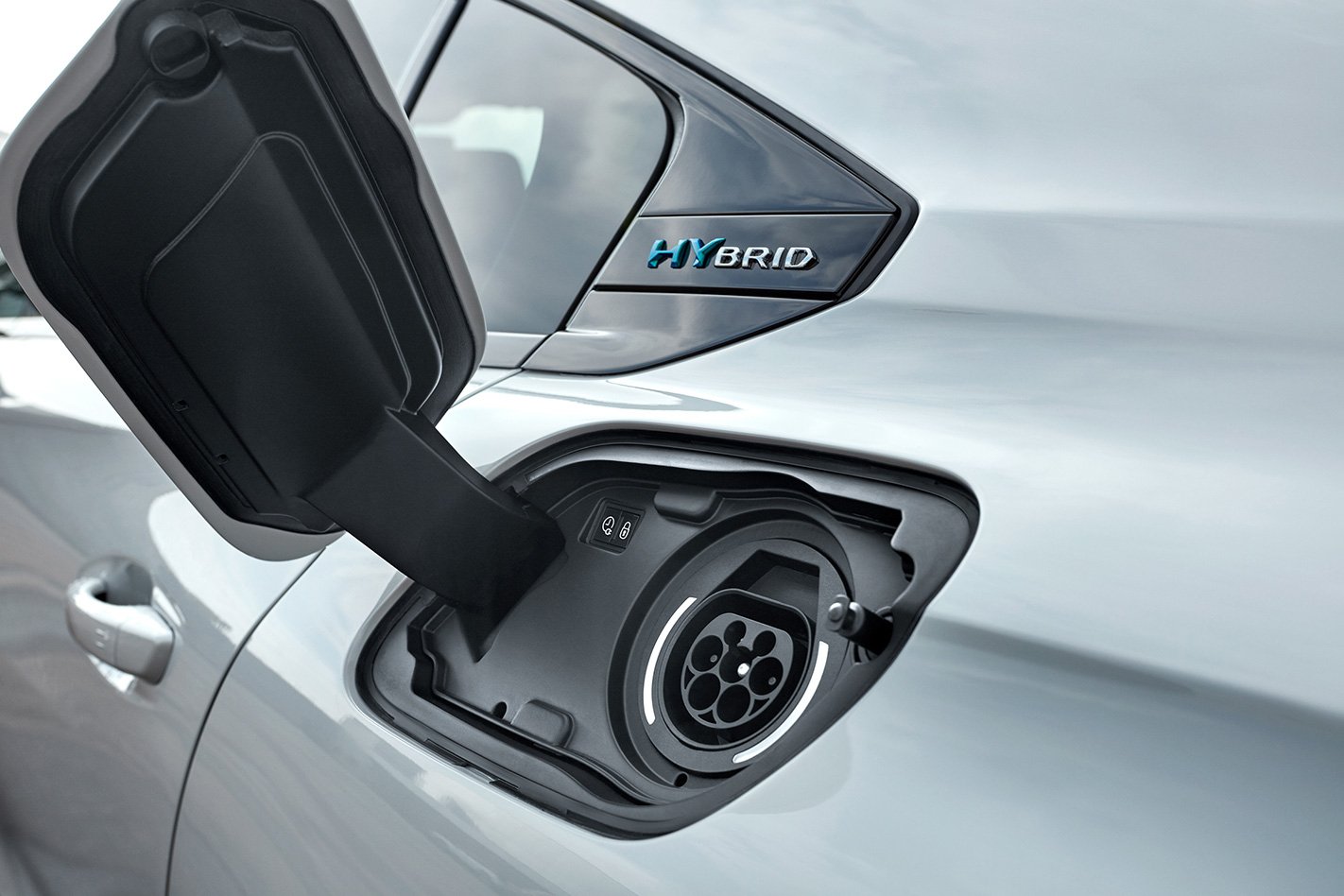
Charging times for a household power outlet have yet to be announced, though Peugeot confirms that when plugged into a 32-amp, 6.6kW wall charger the 3008 Hybrid4 can be recharged in under two hours.
If drivers prefer to save their battery charge for later, such as when they have to endure stop-start city traffic after a long highway cruise, both the Hybrid and Hybrid4 systems are capable of ‘holding’ their EV capability until when the driver requests it.
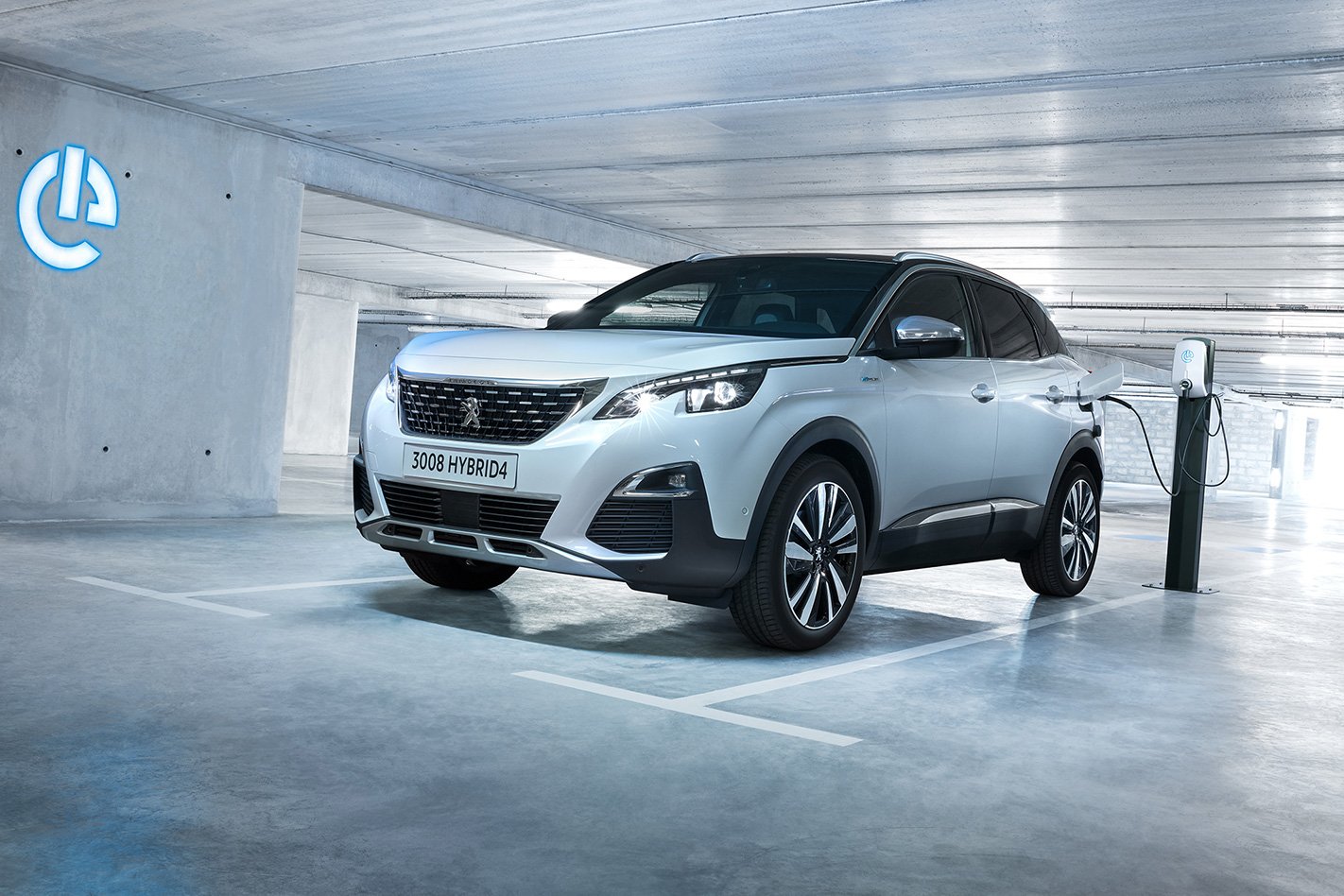
Both the 508 Hybrid and 3008 Hybrid4 will make their first public appearance at next week’s Paris Motor Show, but aren’t due to enter European showrooms until this time next year.
An Australian arrival has yet to be confirmed for either of the hybrid models, though the new 508 sedan in its conventionally-powered form is slated to reach Australia either late this year or early in 2019. The 508 wagon is currently under consideration for this market.
