
If you want one of the ultimate versions of the Ford Sierra RS Cosworth, now’s your chance.
A 1986 Ford Sierra RS500 Cosworth built by Wolf Racing in Germany is up for auction at Silverstone Auctions, due to cross the block this month.
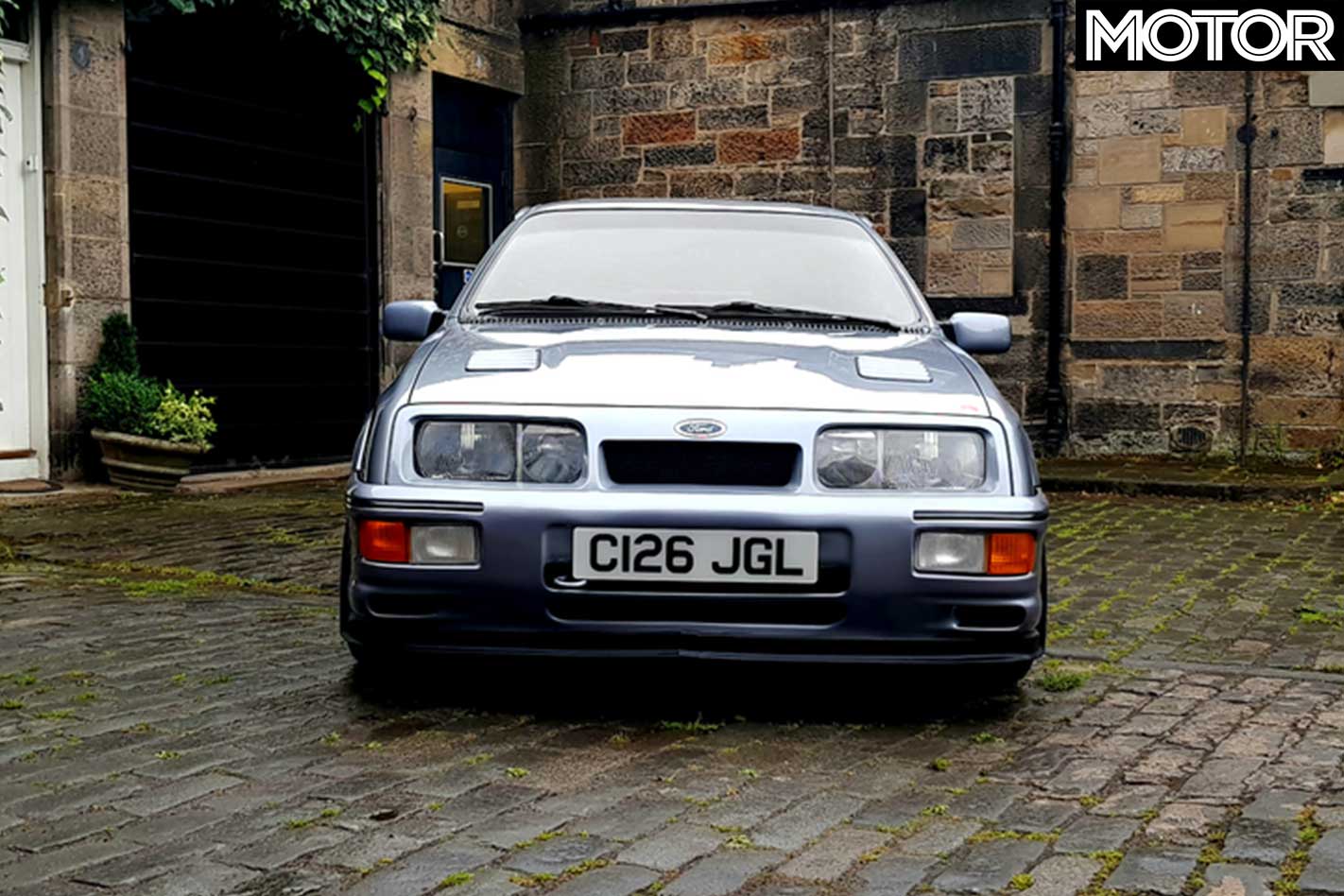
With an expected price between AUD$67,500 and $76,500 (directly converted from £37,000 – £42,000) it should prove to be rather pricey, but for good reason – only 10 were ever built.
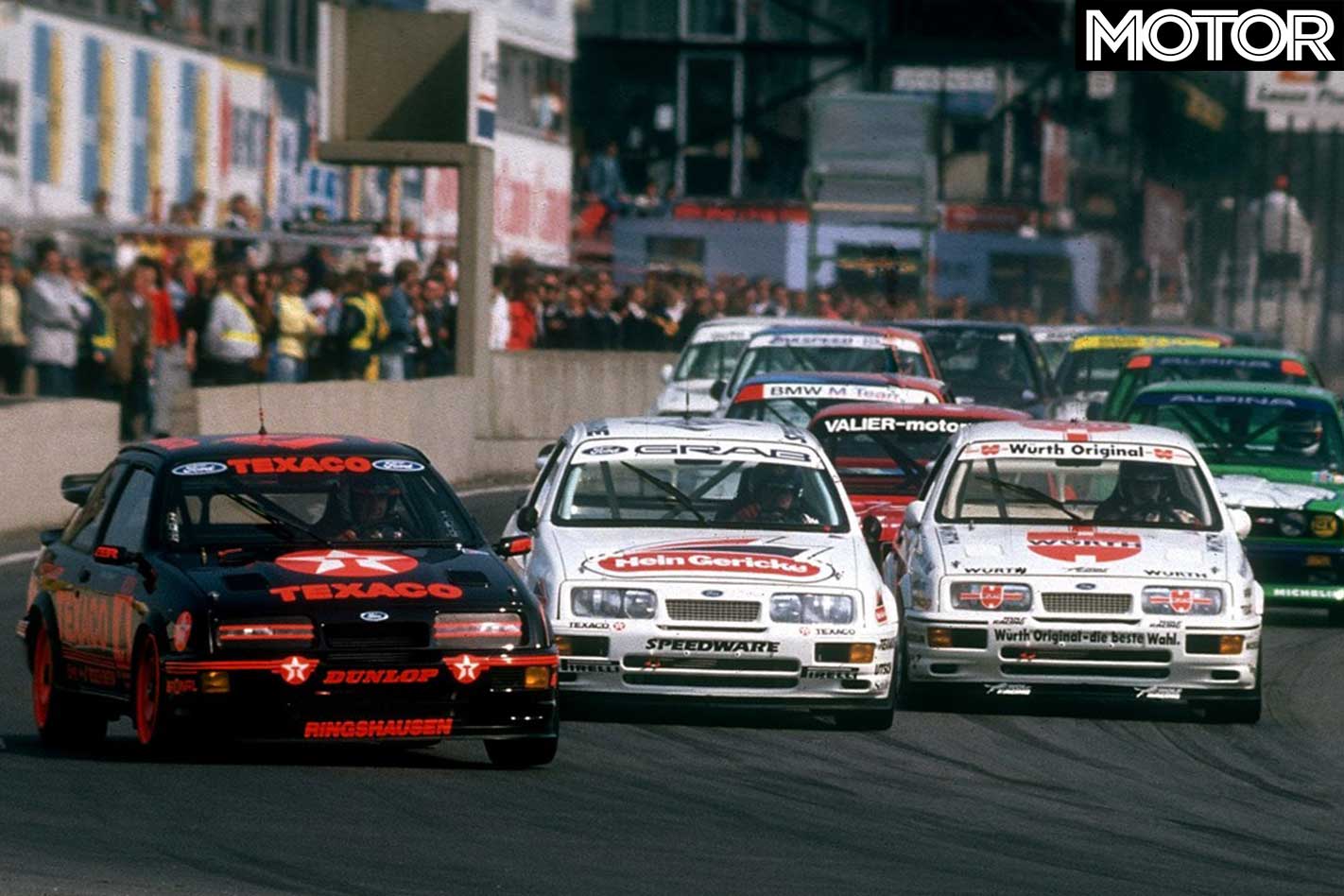
This one comes with a letter of authenticity from Wolf Racing, the German company that built the ten cars for Ford, which also happens to have been quite a successful presence in the DTM (German Touring Cars) for many years.
Essentially, the ‘Wolf’ RS500 is a DTM-tuned road car.
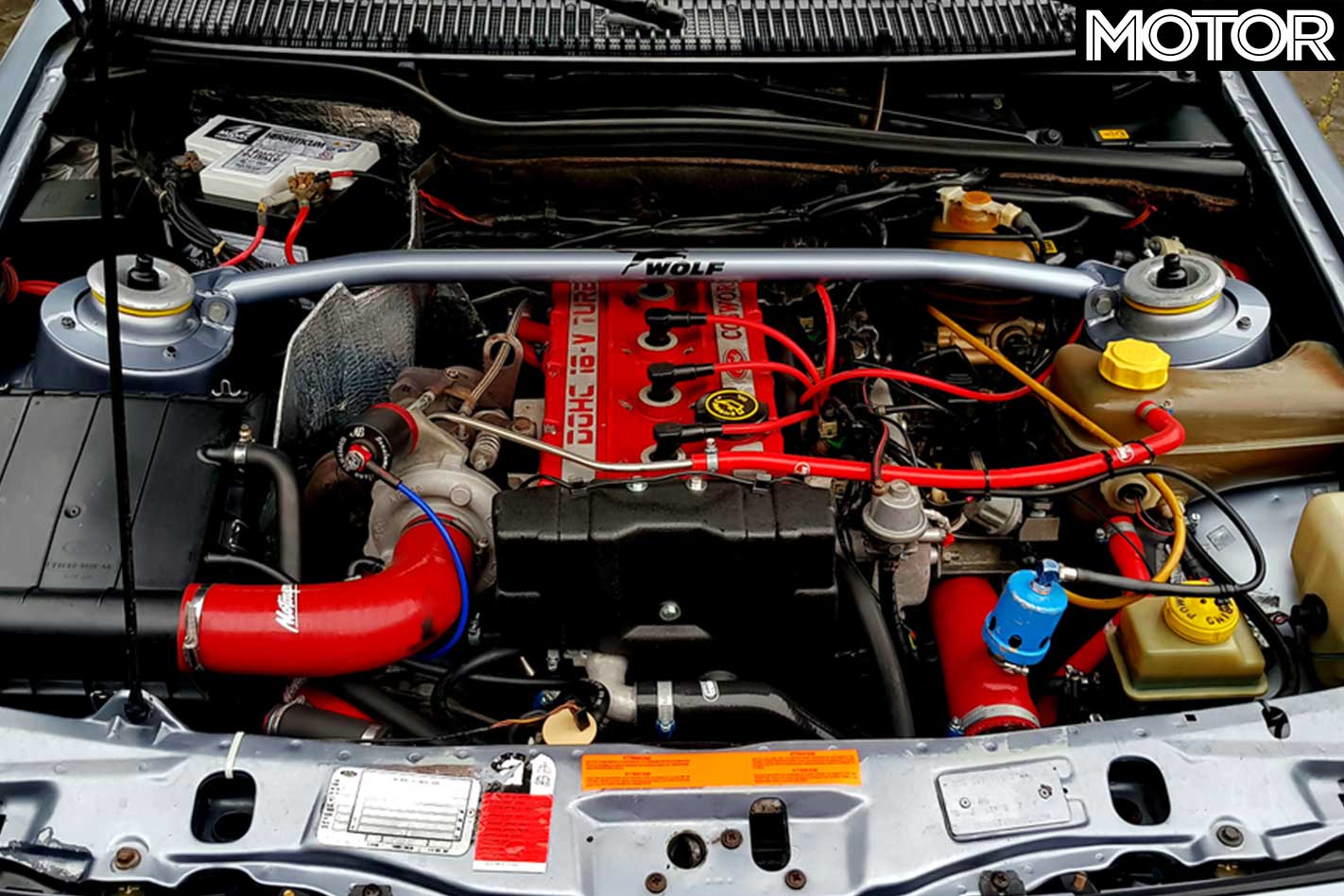
All were built in ‘Moonstone Blue’, with a power figure upwards of 220kW thanks to racing pistons, improved injectors, a bigger fuel pump, and a racing wastegate.
The ‘standard’ RS500 Cosworth was good for 167kW, which was considered plenty for its time. The Wolf-tuned version almost matches a current-generation Honda Civic Type R for power.
This particular car has fewer than 38,620km showing, meaning it hasn’t been ‘babied’, but still has plenty of life left in it.
Silverstone says it’s one “not to be missed,” though an auction house wouldn’t really be doing its job if it wasn’t talking up its stock.
“This very rare car is now ready to be enjoyed, either on the road or as part of a collection of very special Fords, and any serious collector would have to admit that the chances of finding another one in this condition would be rather slim.”
The all-new Ford Focus range will arrive in Australia this December with the previous sedan to be replaced by a wagon that will be sold alongside the prevailing five-door hatchback.
The initial line-up has been trimmed down from a range of nine variants, with three engine choices, to just four all of which will be powered by a 1.5-litre turbo petrol bolted to an automatic transmission.
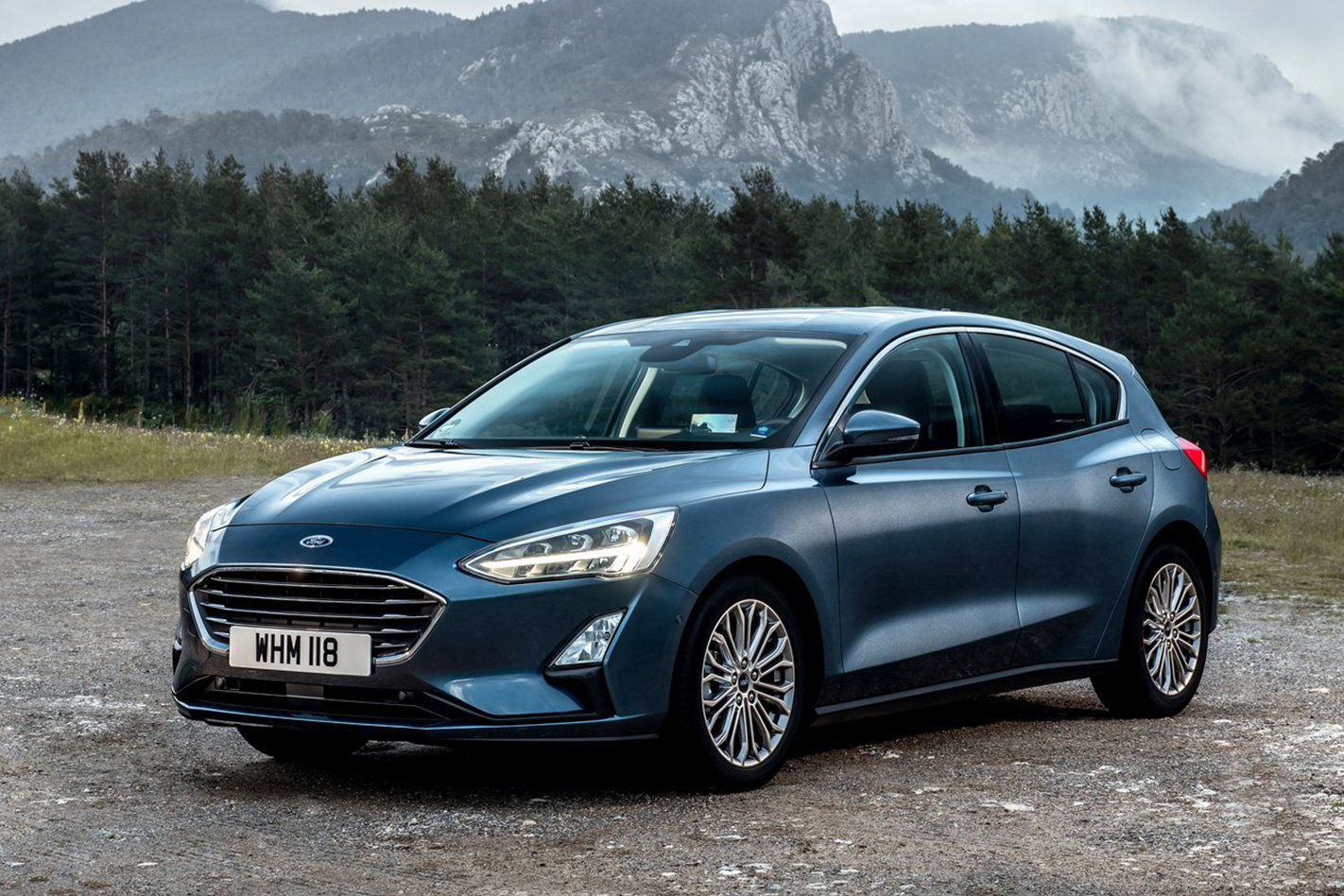
With a new kick-off price of $25,990, the most affordable version costs $2600 more than the equivalent it replaces, but now gains an eight-speed automatic as standard. Manual options have been shown the door.
Ford says the value equation is even sweeter thanks to a suite of new technology and an altogether more grown up Focus, which now gains autonomous emergency braking (AEB), an eight-inch touchscreen and active aerodynamics to name a handful of the new features.
The Trend opens proceedings and introduces the new three-cylinder turbocharged engine, which produces 134kW and 240Nm of torque, representing a small increase in power over the previous four-cylinder of the same capacity.
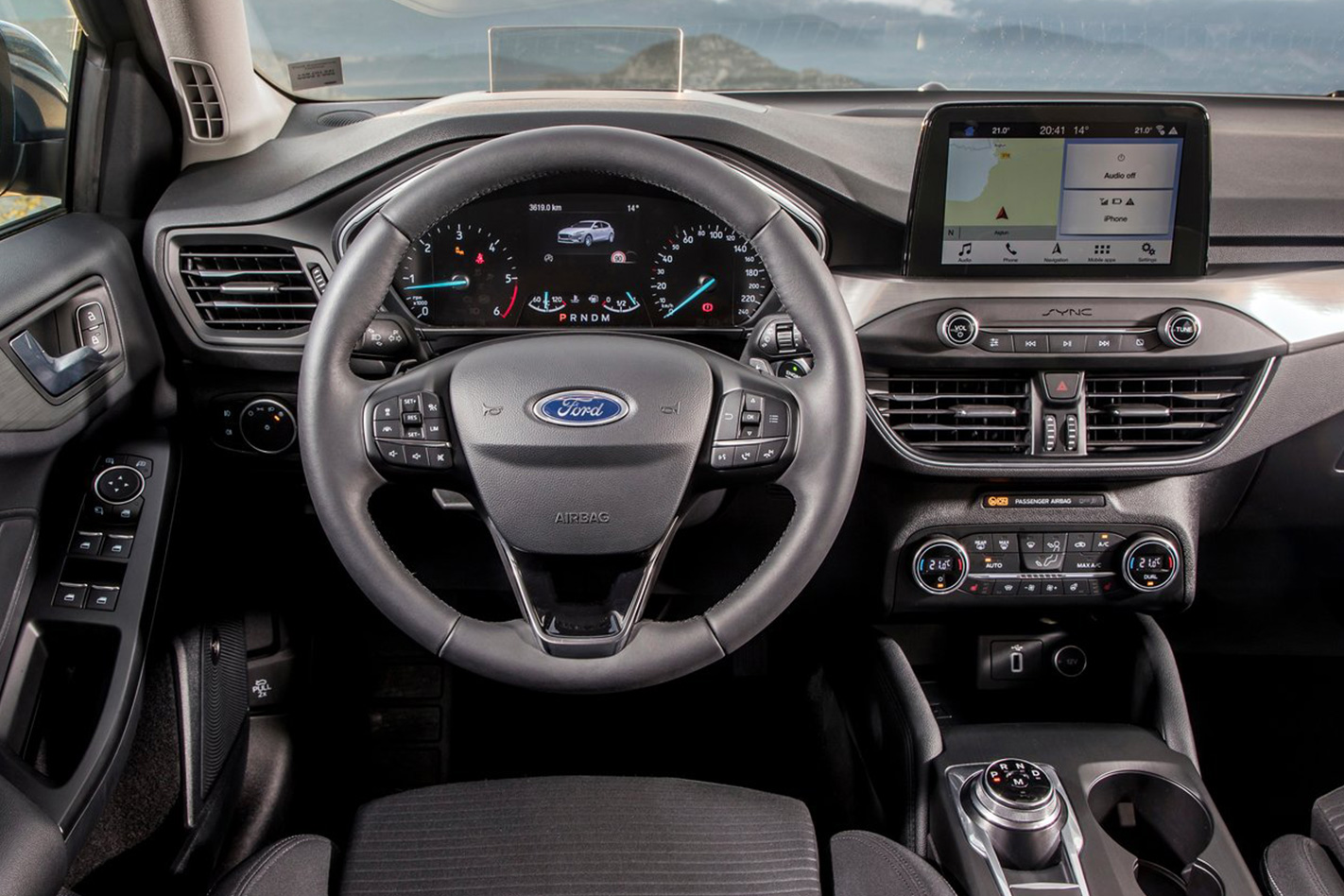
As for all variants, the most affordable Focus includes a more aerodynamic front bumper, underbody panels, rear spoiler and an active radiator grille, which can close off when full cooling capacity is not required. The net result is lower wind resistance and lower fuel economy.
Sixteen-inch alloy wheels and LED daytime running lights (DRLs) are standard for the Trend, the cabin gets an electric park brake, leather steering wheel and six-way adjustment for the driver.
Technology gets a decent upgrade for the 2019 version, with an eight-inch touchscreen, Ford’s latest Sync3 operating system, smartphone mirroring, voice controls, digital radio, navigation, Wi-Fi hotspot capability and Bluetooth connectivity.
A selection of new safety features complete the tech update including: AEB that can detect pedestrians and cyclists; lane-keep assistance; a reversing camera with panoramic 180-degree view; post-impact braking that applies the brakes following a collision to prevent the vehicle rolling away; and ISOFIX child seat anchors for the rear seats.
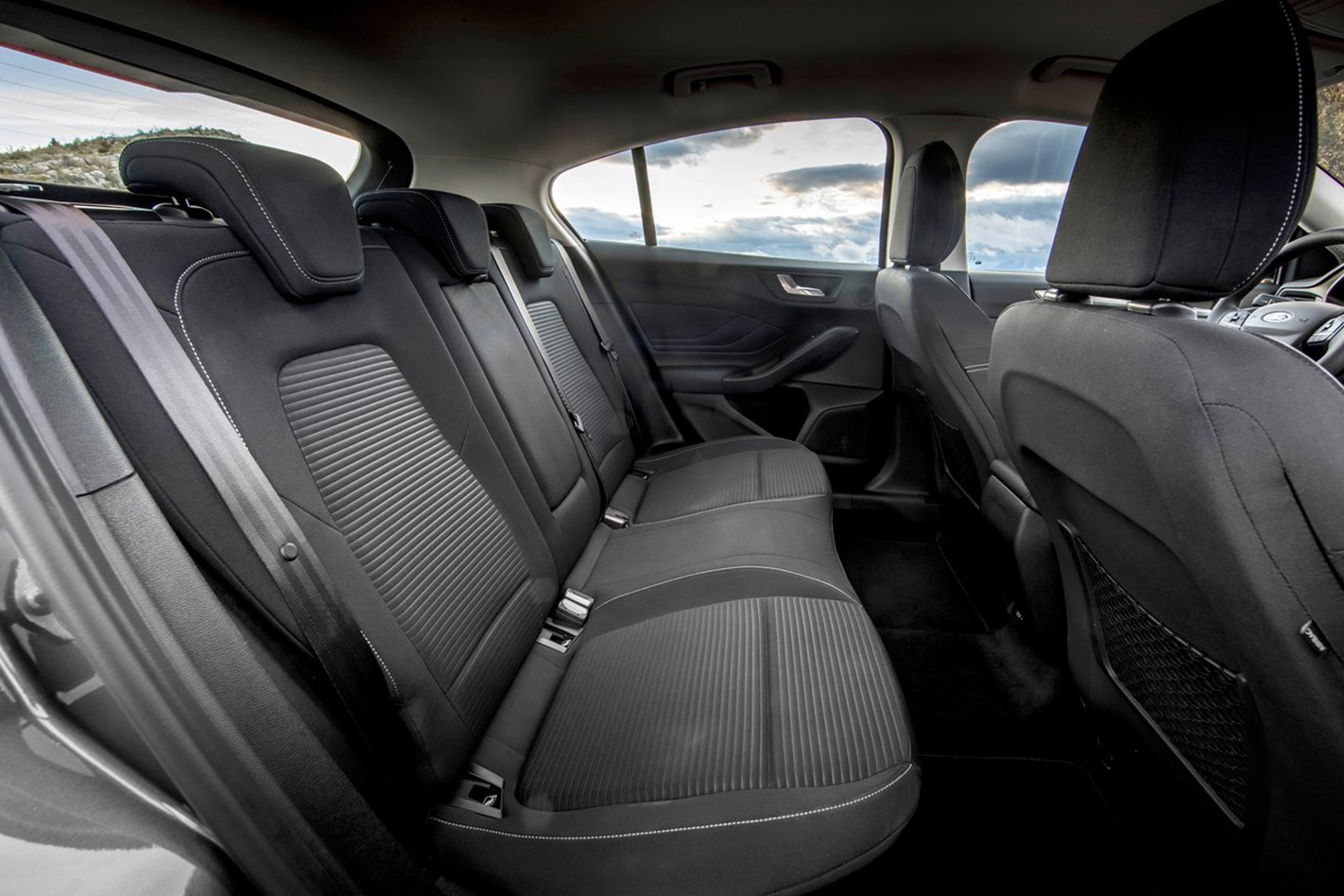
There’s no hot ST or RS successors for now, but an ST-Line now joins the Focus fold in both hatch and wagon body options. The variant is new to the Focus line-up and offers a little of the sporty nature of Ford’s full-fat ST models.
Priced from $28,990 or $30,990 for the wagon, the ST-Line adds larger 17-inch wheels, a lowered ride-height, more athletic looking ST-Line bodykit, LED fog and tail lights, tinted windows, folding door mirrors with puddle illumination and roof rails for the wagon version.
On the inside, the ST-Line lifts the cabin feel with a sportier black roof lining, alloy pedals, flat-bottom steering wheel, keyless engine start and wireless device charging. Tyre pressure monitoring also gets added to the safety kit list.
Opt for the wagon version and you’ll get a larger boot which can expand up to 1653 litres using the special Easy Fold Seats that stow without having to lean into the vehicle from the load area.
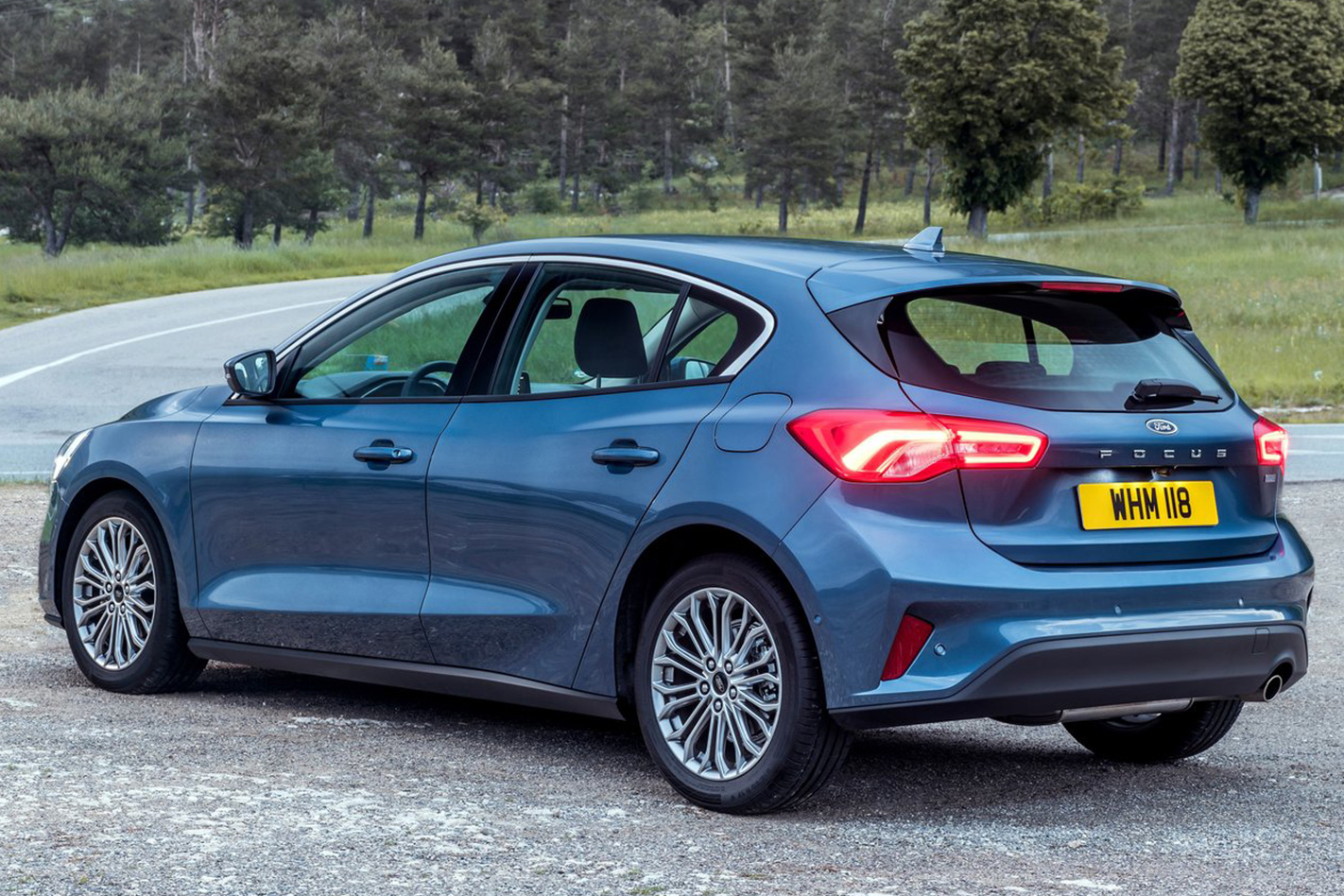
At the top of the pack, the Focus Titanium costs $34,490 and bumps the wheel size another inch again to 18, headlights go full LED, while the interior is treated to seat heating in the front row, ambient colour lighting, and a top-shelf Bang & Olufsen stereo.
The range-topper can brag the most comprehensive safety kit spread with smart adaptive cruise control, blind-spot monitoring, rear cross traffic alert and active braking added as standard. The more advanced cruise control system operates down to stop and start traffic, while an evasive steering feature can pilot the vehicle around a stationary car if it detects an imminent collision.
These additional safety features can be added to Trend and ST-Line variants as part of a $1200 Driver Assistance Pack.
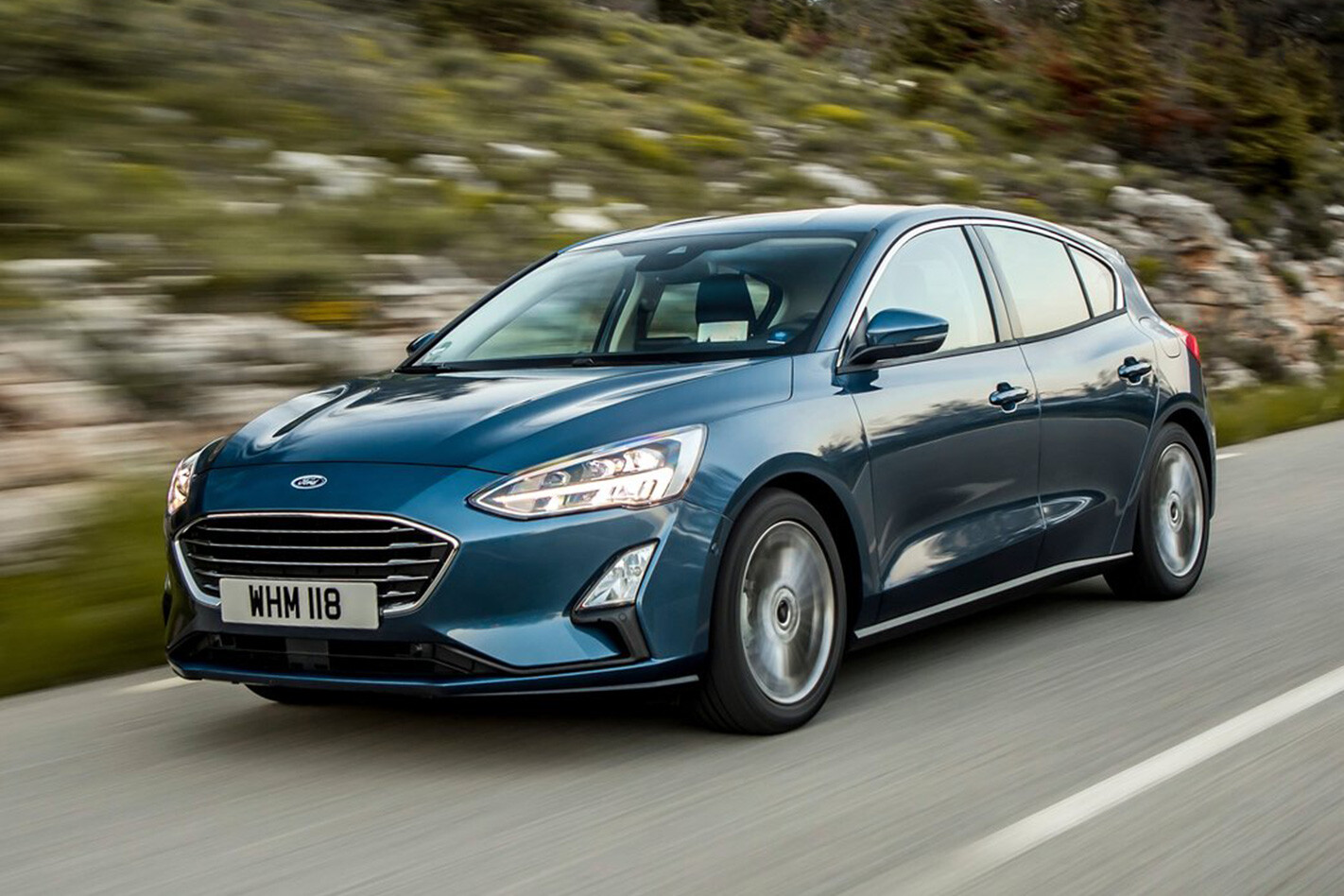
2019 Ford Focus pricing
- Focus Trend hatch – $25,990
- Focus ST-Line Hatch – $28,990
- Focus ST-Line wagon – $30,990
- Titanium hatch – $34,990
- Driver Assistance Pack (Trend, ST-Line) – $1200
- Design Pack (ST-Line) – $1800
- Panorama Roof Pack (ST-Line, Titanium) – $2000
- Head-up display (Titanium) – $300
- Active Park Assist (Titanium) – $1000
- Premium paint – $550
Look, I’ve got nothing against investment bankers, hairdressing salon owners, stockbrokers and self-employed PR types. Lovely people, I’m sure.
This feature was originally published in MOTOR’s December 2006 issue
For a while there in the 1990s, though, they were all shopping for cars at one place; BMW. And they were buying one car, the 3-series coupe. First released in 1992 in E36 guise, the most recent E46 sold strongly for more than six years. In its 330Ci, 3.0-litre six form, it was a pretty handy device, too.
Long citing lag and poor fuel economy as the chief reasons to avoid forced induction, the siren song of weight reduction and more power from less cubes has lured the Bavarians into applying some pretty smart tricks to overcome these inherent problems.
The all-alloy 2979cc six-potter’s biggest party trick is its High Precision Injection set-up. Fuel is sprayed directly on top of the pistons, not only meting out fuel much more precisely, but also helping to cool the combustion chamber. This in turn allows engineers to run a higher compression ratio (which enables fuel to burn more efficiently) than they otherwise could.
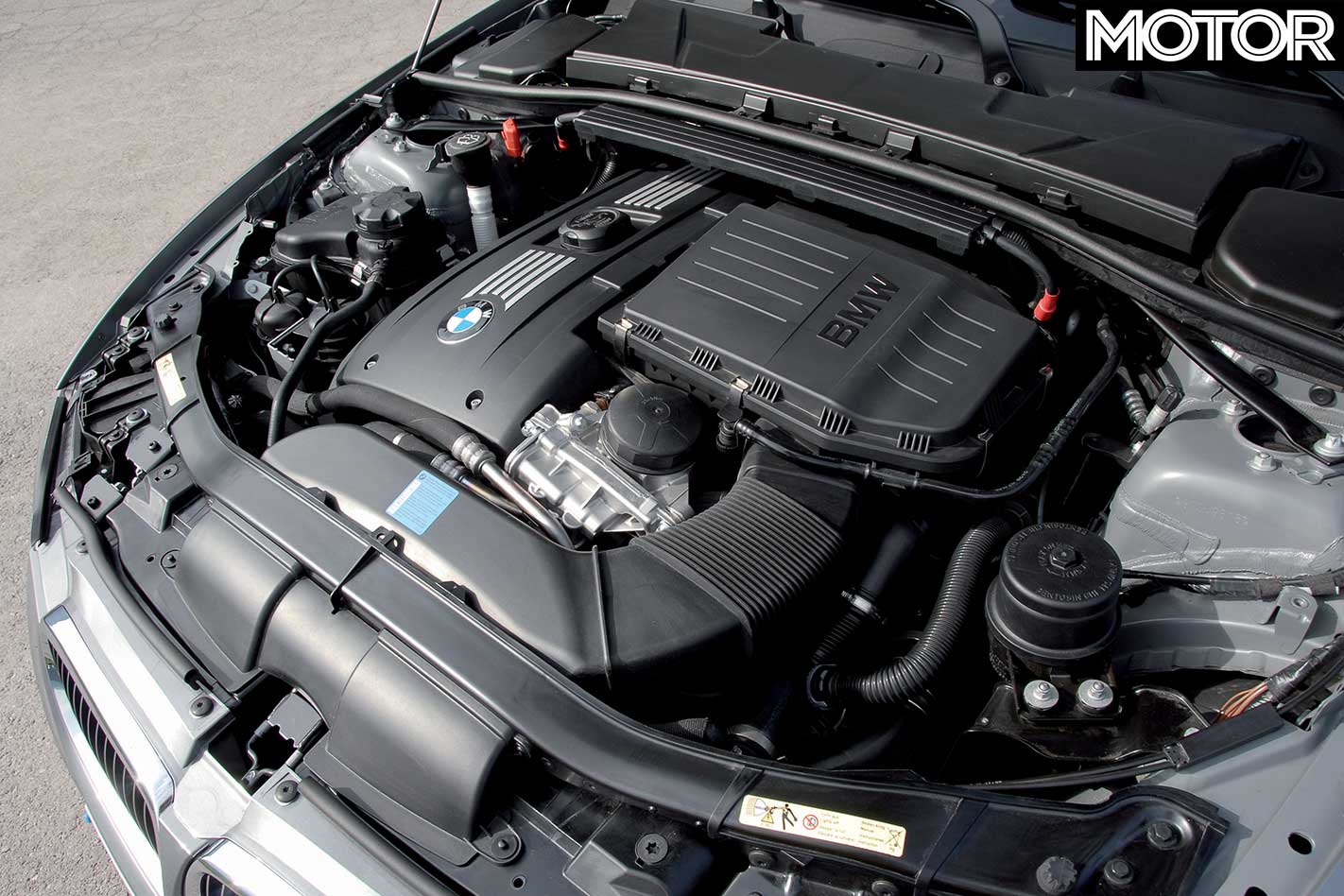
The pair of tiny turbos sit low in the engine and are fed exhaust gases via two manifolds. Capable of delivering boost at engine speeds as low as 1300rpm, it’s a shining example that bigger isn’t always better.
Numbers? How’s 225kW at 5800rpm and 400Nm from 1300rpm grab ya? From tickover to time to shift, the six is ever eager to deliver, via a finely modulated fly-by-wire throttle map that suits the car’s character perfectly.
BMW claims a 5.5-second sprint to the 100km/h mark, and there’s no doubt it’ll go pretty bloody close. The silky six provides a killer punch in a package that weighs 70kg less than a bent eight mill.
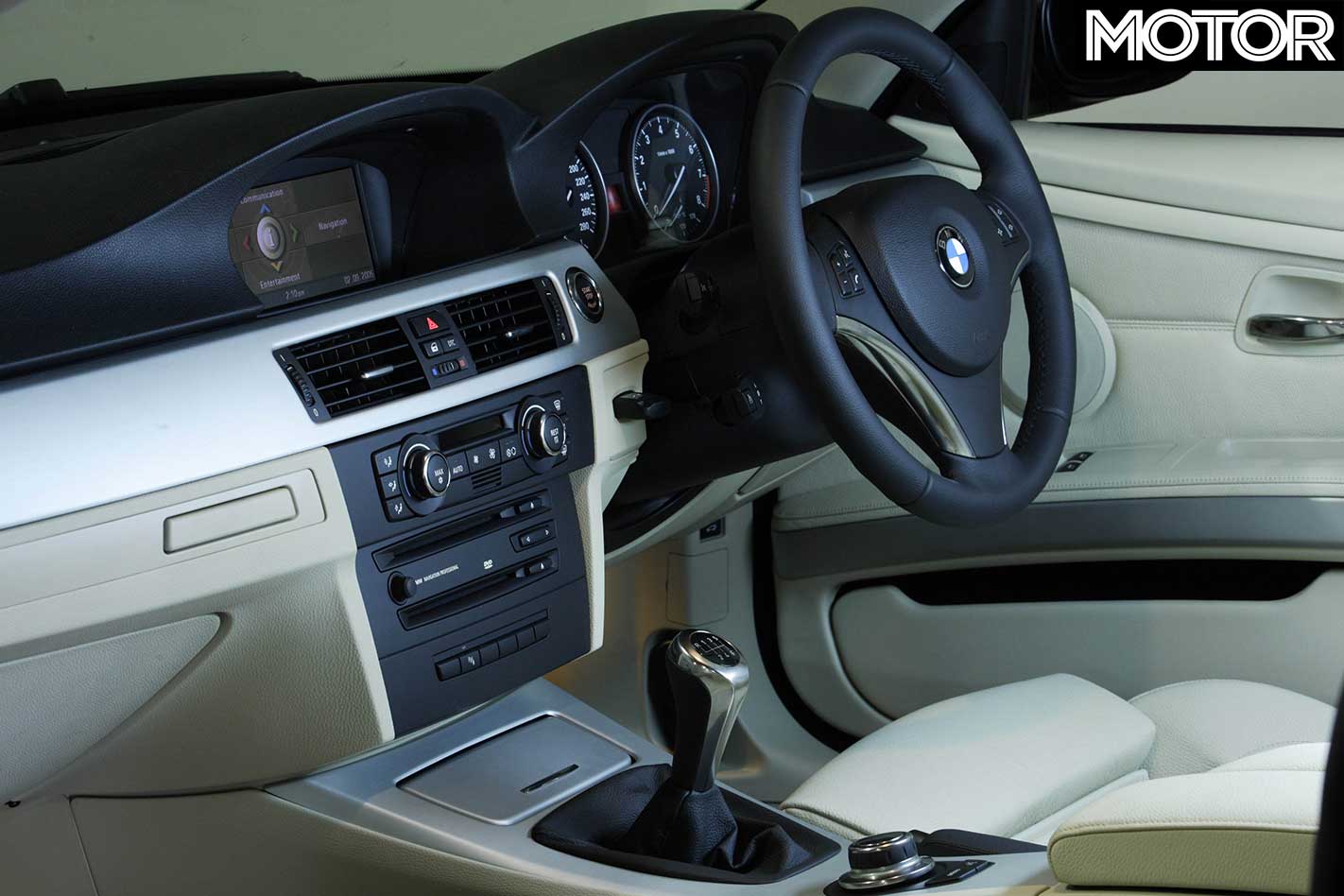
If you don’t go for a manual box, the new six-speed auto isn’t a bad compromise. Far more refined and user-friendly than the truly confounding auto in the 130i we recently tested, the push-pull gearshift paddles (an inexplicable $200 option on top of the $2600 ask for the box itself) will be very familiar to anyone who rides a modern mountain bike. Given that both paddles perform exactly the same function, maybe you can give the other one back to the dealer for a $100 credit…
The cabin is still very much 3-series, and the elctric seatbelt handover device is such a neat Jetsons touch, it’s hard not to smile as it silently and politely taps you on the shoulder.
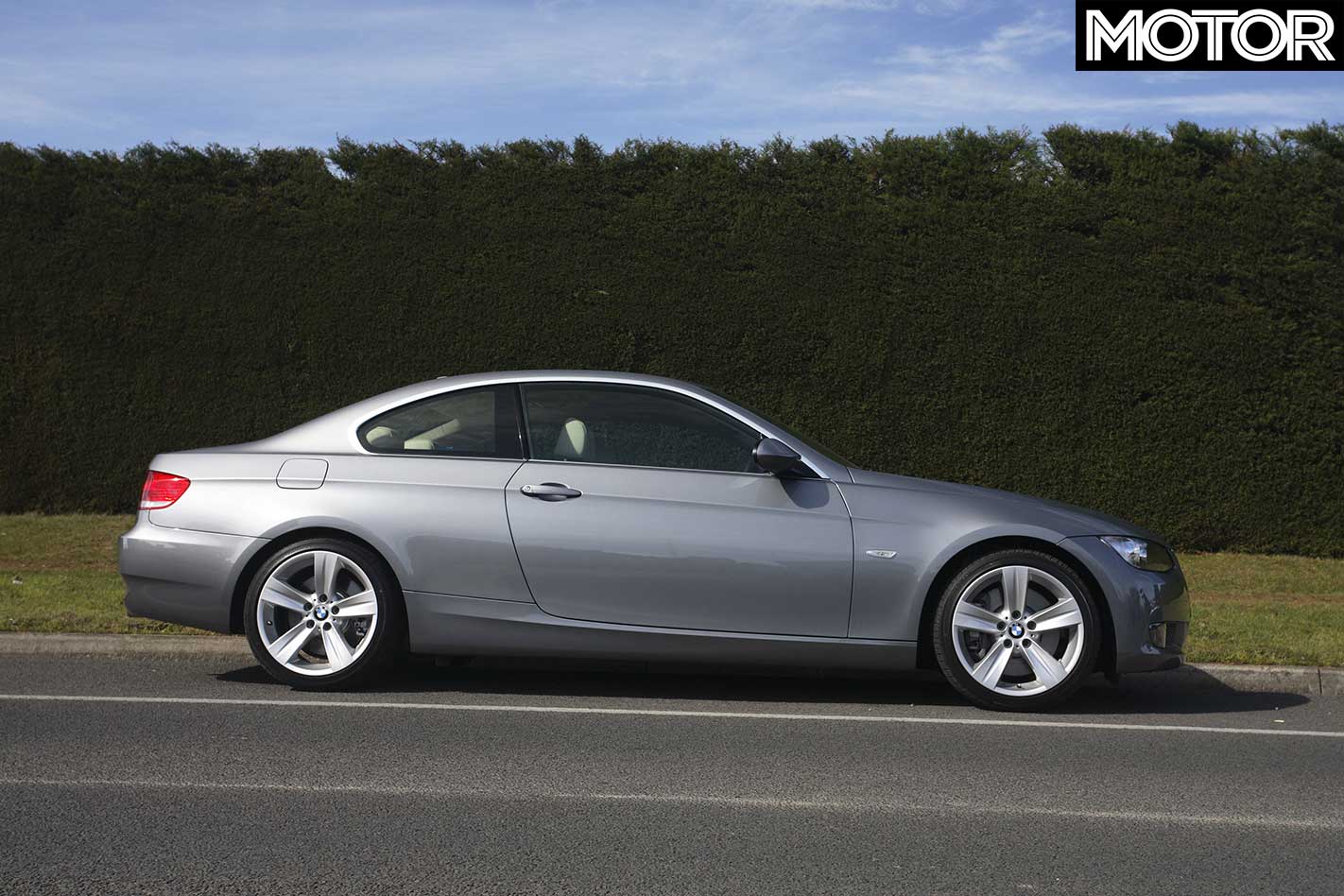
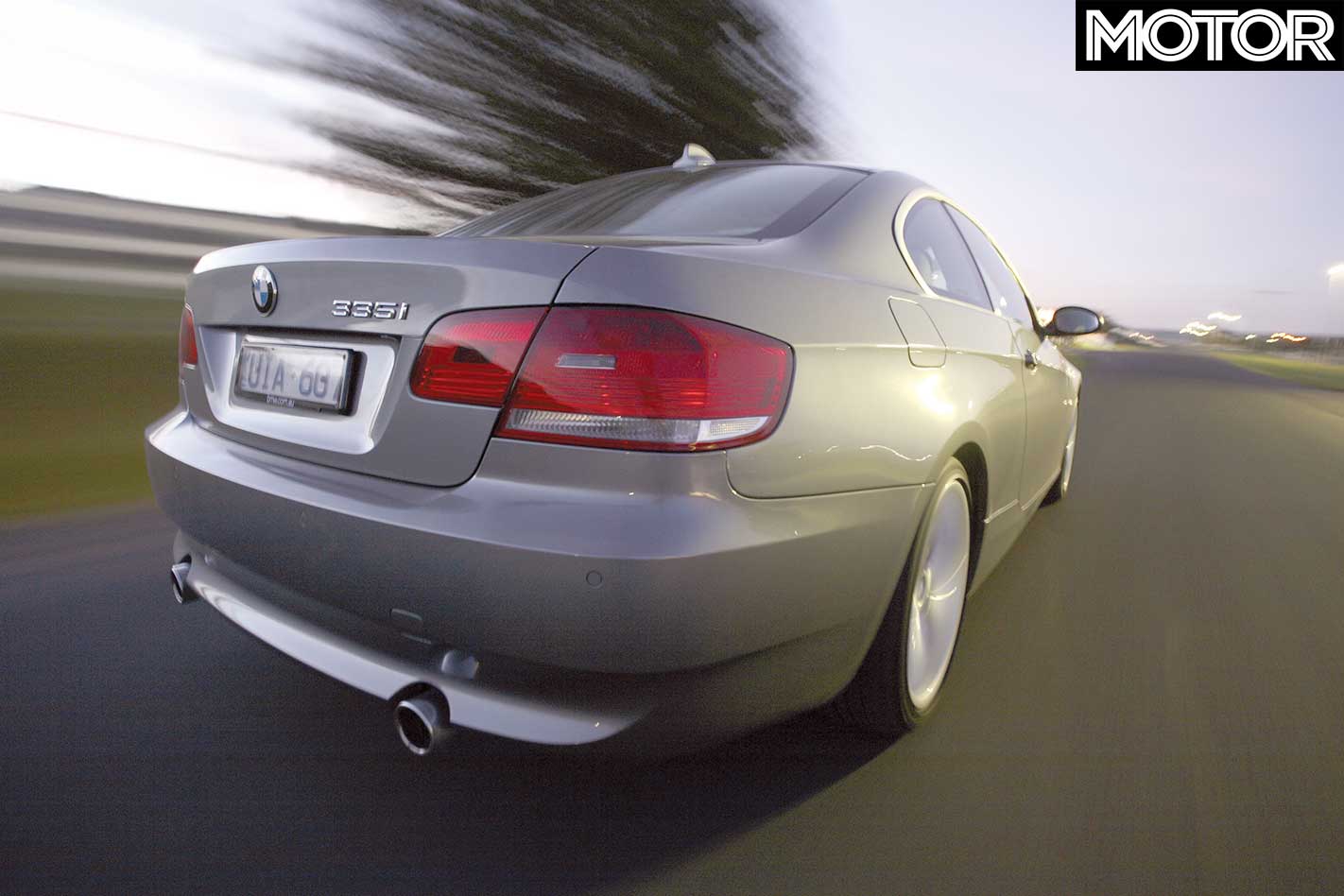
Lower in line, sleeker in style and visually much more together and integrated than the occasionally boxy sedan, the 335i has the brains and the talents to back up its moviestar good looks. Answering the throttle with vim and vinegar, the twin huffer motor feels anything but.
It even sounds rortier and more up for it than the M3 straight six, with a baritone bark overlaying the typical thrashy screech of the finest crop of straight sixes of this generation. With power delivered with the linearity of a plumb line and torque up for grabs anywhere you want it, it’s got the bite of an eight with the frugality of a four.
Getting the power down on dimpled blacktop isn’t comfortable at times, the third-generation Pirelli runflat tyres dulling the tarmac’s messages through the thick-rimmed wheel. Sections of stuttered road confounds the rear end, the axles stuttering and hunting for traction as the tyres refuse to deform to absorb even the smallest ridges and humps.
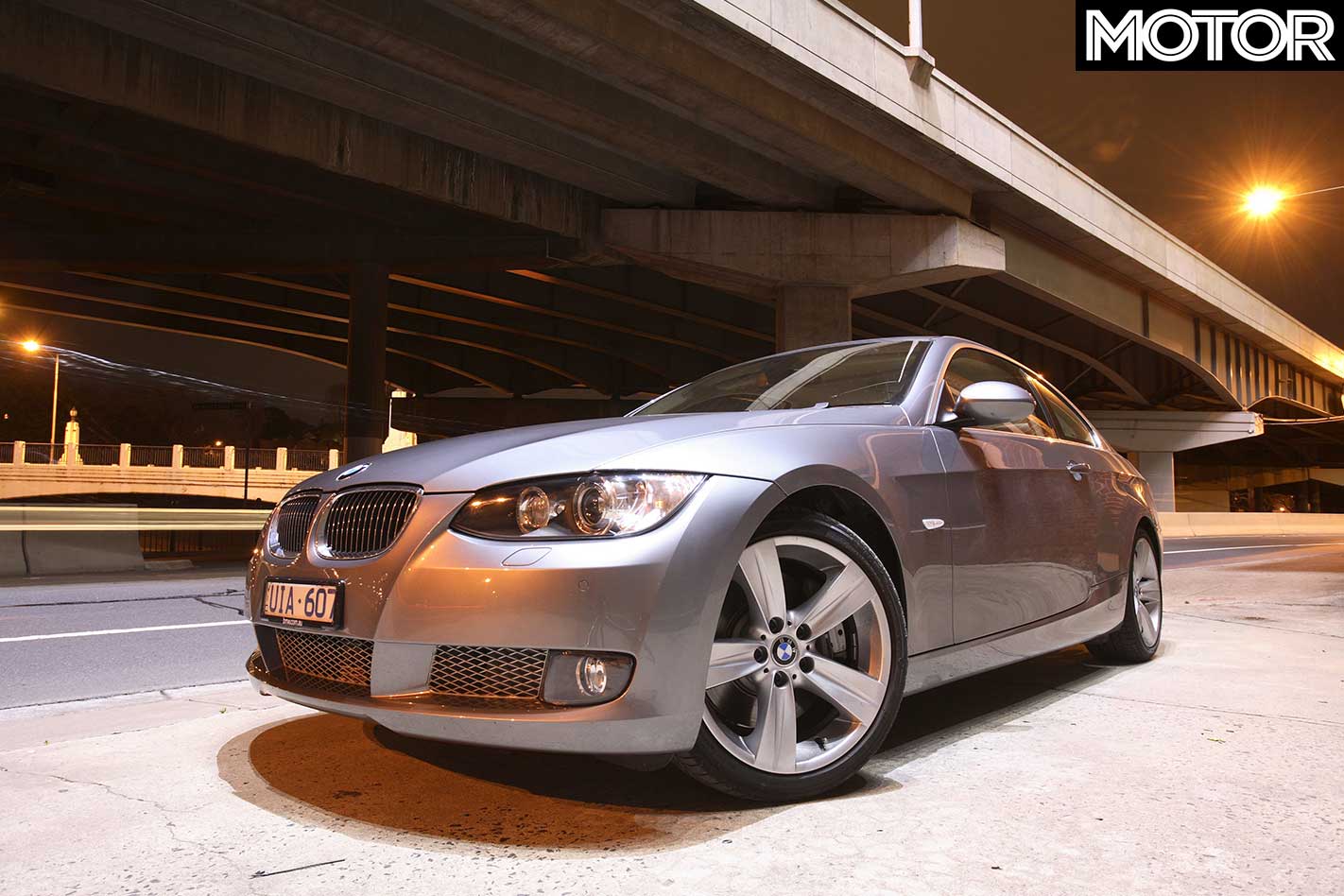
Having said that, the ride feel of runflats is improving, but the heavy sidewalls mean that they still aren’t the ideal performance tyre for a car with such a sporting intent to it.
Sharp-edge hits are heard through the cabin rather than felt, with the all-steel chassis and tuned dampers working together very well to produce a cruiser that, despite being 15mm lower than the sedan, provides a sharp yet supple ride.
At $111,100 in auto guise, cheap it ain’t. Chump change for an city stockbroker, though.
FAST FACTS 2006 BMW 335i Coupe Engine: 2979cc straight six, twin turbochargers Power: 225kW @ 5800rpm Torque: 400Nm @ 1300-5000rpm Weight: 1540kg (auto) Power-to-Weight: 146kW/tonne Price: $111,100 (auto)
It’s official: Wheels is 65 years old. But this series isn’t about us. To celebrate our 65th, we thought we’d take a look at the decisions that have changed the automotive world over the last six and a half decades. Some were inspirations that altered it for the better, others were engineering dead ends, nefarious cover-ups and valiant flops. Scroll on to read more, then click here to explore all 65 cars, people, game-changers and failures that have influenced the car industry since 1953, in no particular order.
1. Range Rover
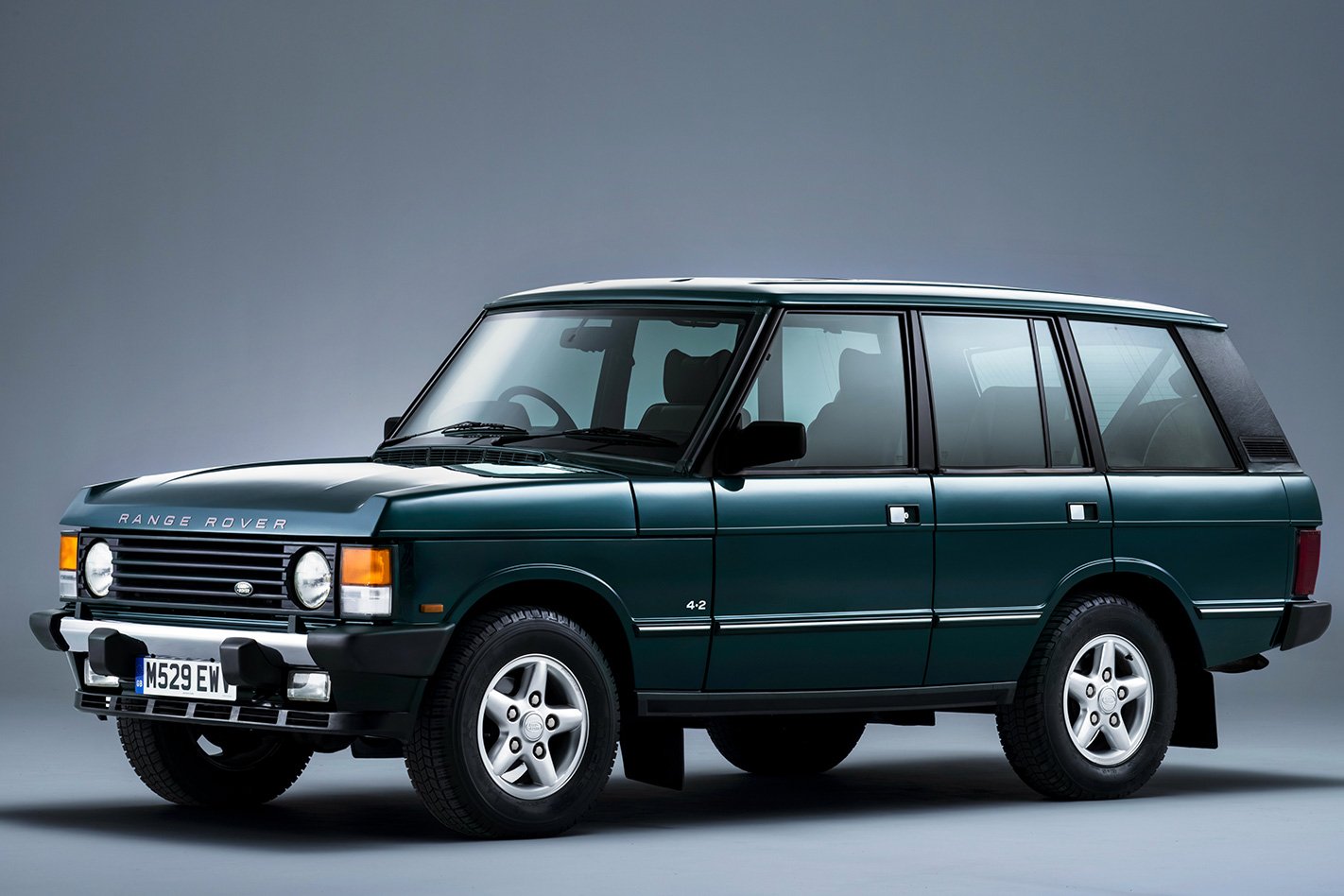
Designed to capitalise on a US market that had fallen in love with the Ford Bronco and Jeep Wagoneer, the 1970 Range Rover was a development of Maurice and Spencer Wilks’ Road Rover concept, this time fitted with permanent four-wheel drive, a lightweight V8 engine and sitting on a 99.9-inch (2537mm) wheelbase. Spen King and Gordon Bashford refined the styling of the new car, prototypes of which were badged Velar, and the production version soon started selling to a very different market sector than that envisaged by Land Rover. By accident rather than design, the luxury SUV was born.
2. McLaren F1
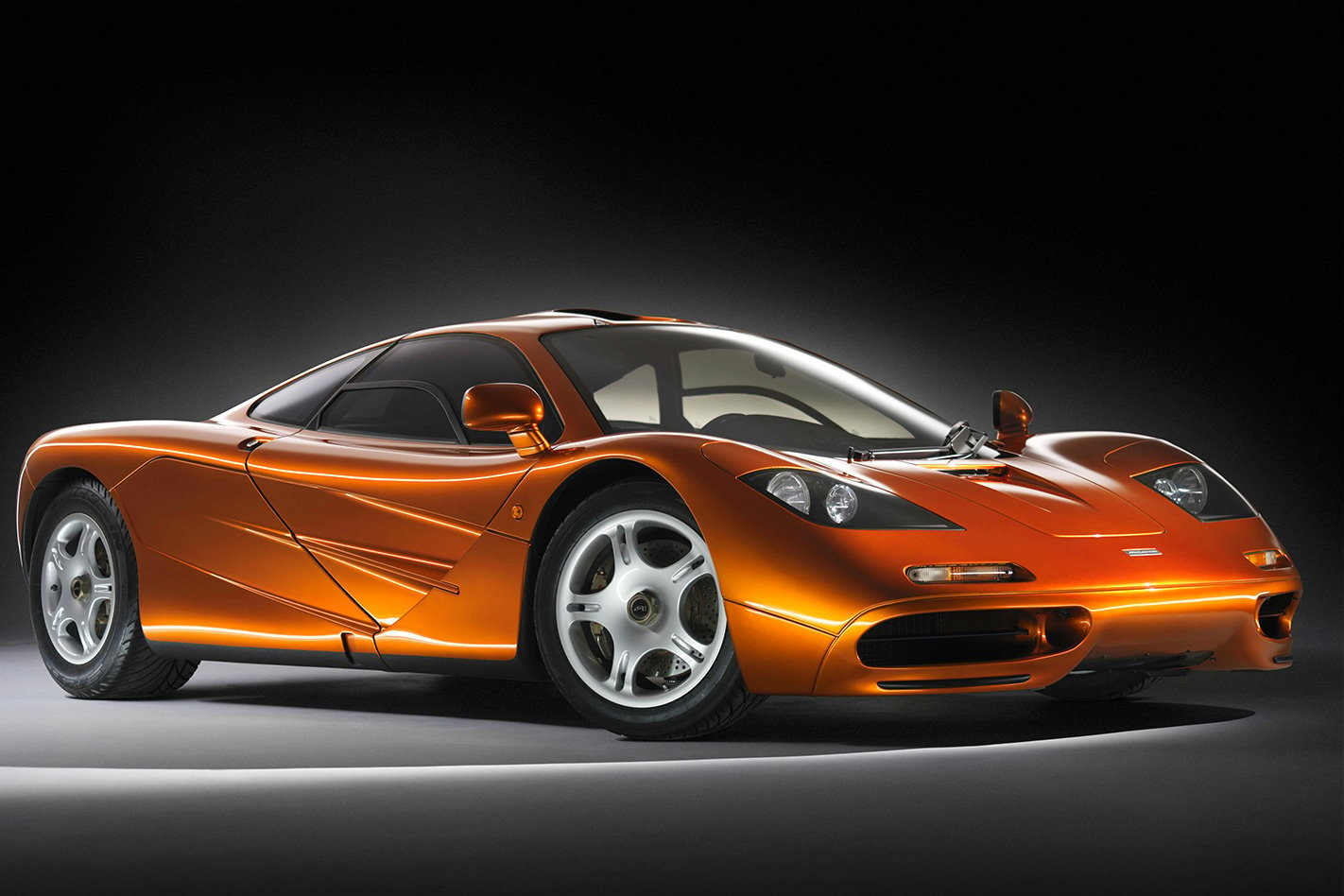
It’s strange to think that the car we viewed as the greatest supercar ever built is now perceived as the last of the line of analogue sports cars. The F1 had no turbochargers, power steering, ABS or traction control, and neither designer Gordon Murray or manufacturer McLaren had ever built a road car before. And nobody will ever again win Le Mans outright with what was a lightly modified road car. It was the greatest in 1992 and while it may no longer be the fastest, it’s still the one today.
3. Datsun 1600
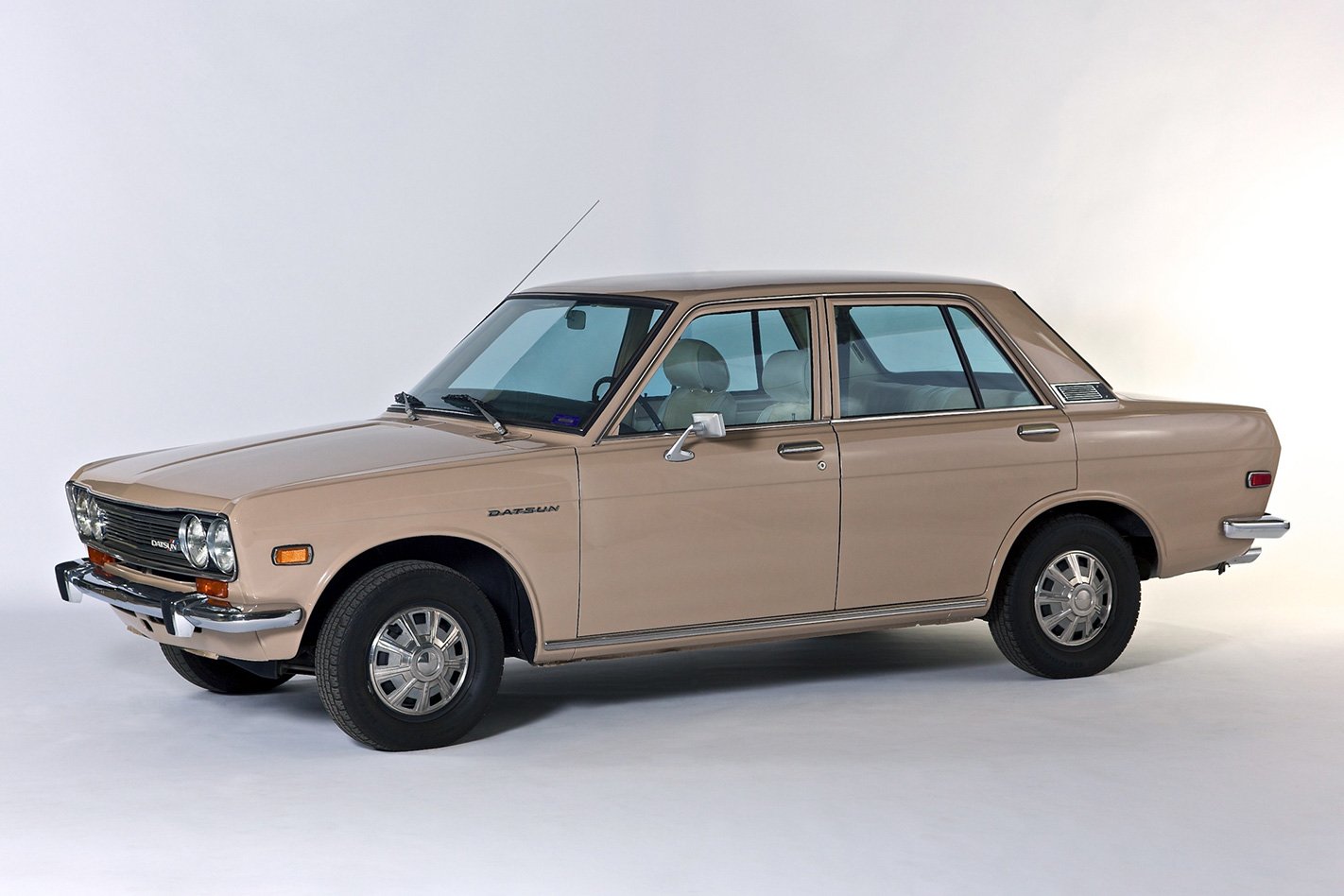
The model that made us take Japanese cars seriously was not the Lexus LS400, or the Honda NSX, nor the Datsun 240Z. We’re going with the humble Datto 1600, which came to Australia in 1968 and competed against the Mk2 Cortina. The Ford had overhead valves, a live rear axle in all but top GT trim, and drum brakes. The Datsun 1600 had an overhead cam engine, front discs, and independent rear suspension. It was an instant success on both track and rally stages, thanks to a 100mph (160km/h) top end and peerless reliability.
4. Mazda MX-5
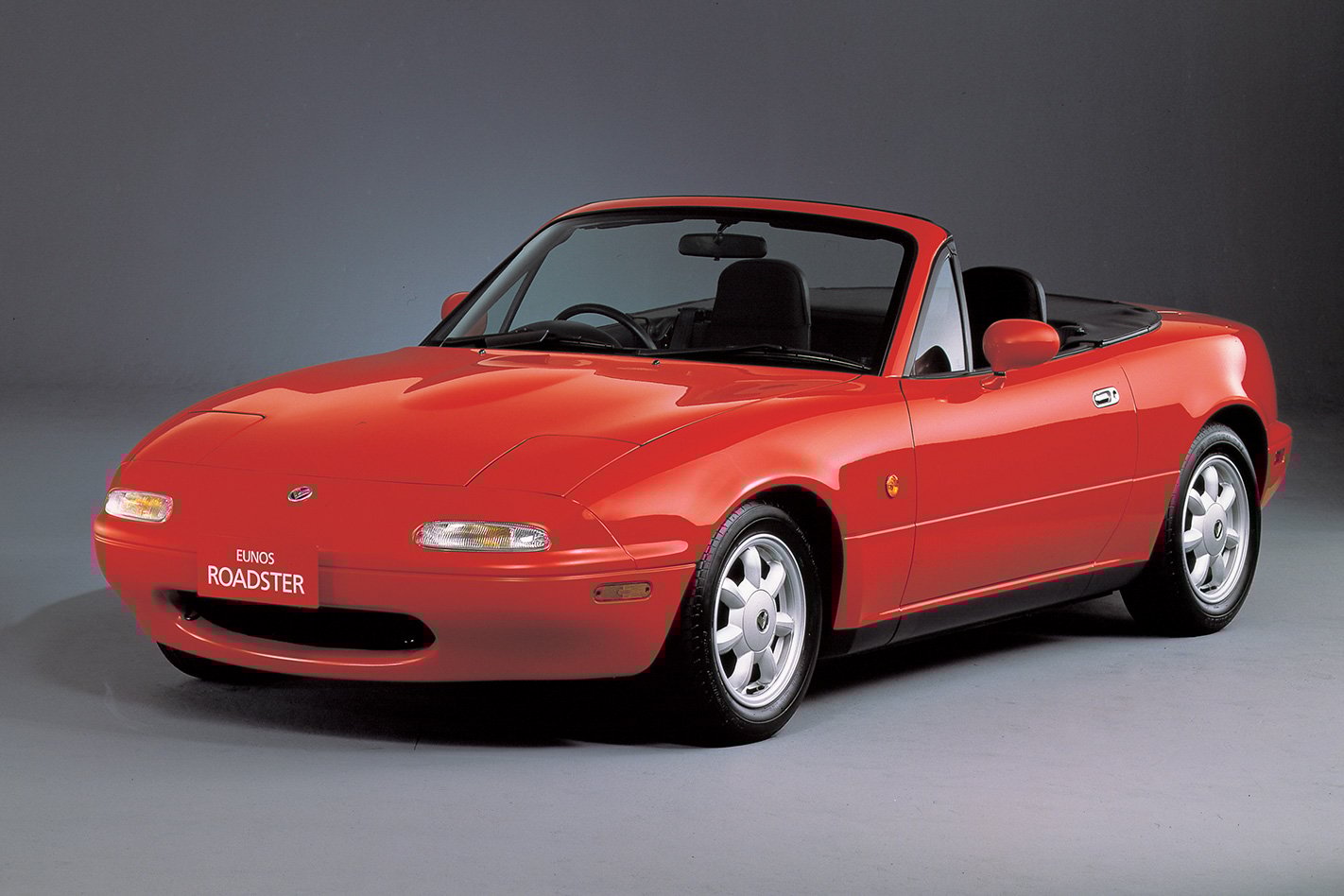
It’s hard to believe that such a simple car as the MX-5 took 13 years from ex-Wheels journalist Bob Hall’s first proposal to the 1989 Chicago Show car, but Mazda’s labyrinthine planning and approvals process produced a gem, reviving the classic formula of British sports cars such as the Lotus Elan and the MGA, minus the flaky build quality. Four generations on and with the millionth car built in 2016, the MX-5 has proven the old adage that light is right.
5. Audi Quattro
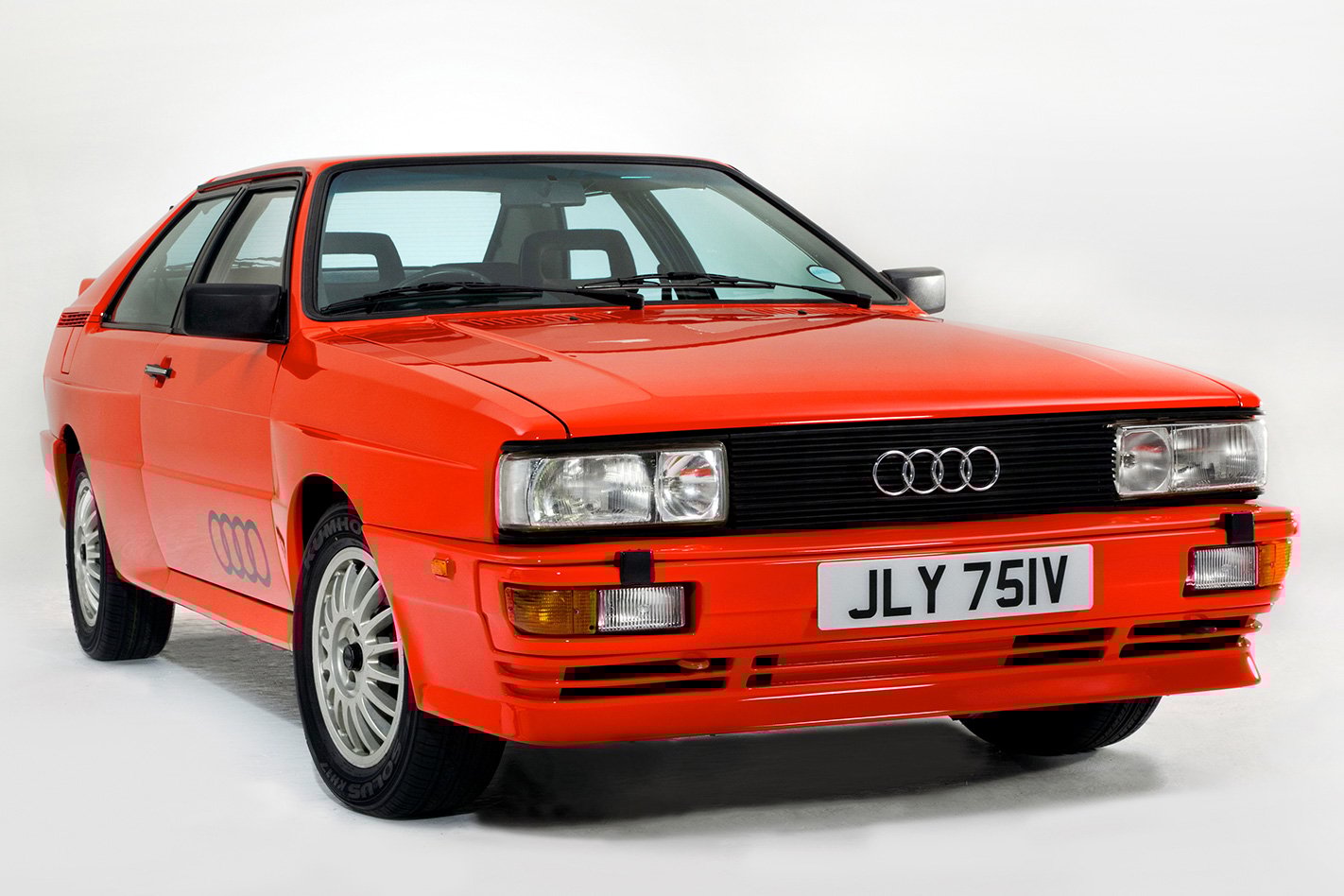
Who cares that it wasn’t the first all-wheel-drive performance car? The Jensen FF might have beaten Audi’s icon to production by a good 14 years, but Ingolstadt made the link between rallying success and road-car sales. In certain regards, the Quattro was expedient; a cost-effective piece of engineering genius at a time when Audi’s brand cachet was outgrowing its front-wheel-drive architectures. The most game-changing rally car of all time also kick started a road-car revolution.
Today, all-wheel drive has grown beyond its rally-replica roots and now underpins the latest generation of hypercars, super sedans and hot hatches. The massive torque outputs of modern turbocharged engines has put a premium on traction, and directing drive to each corner is the natural solution. And to think that this all grew from one Audi engineer who noticed that Volkswagen’s Iltis 4×4 was capable of embarrassing higher-powered cars on Finnish snow tracks. Jorg Bensinger, take a bow.
6. Toyota Prius
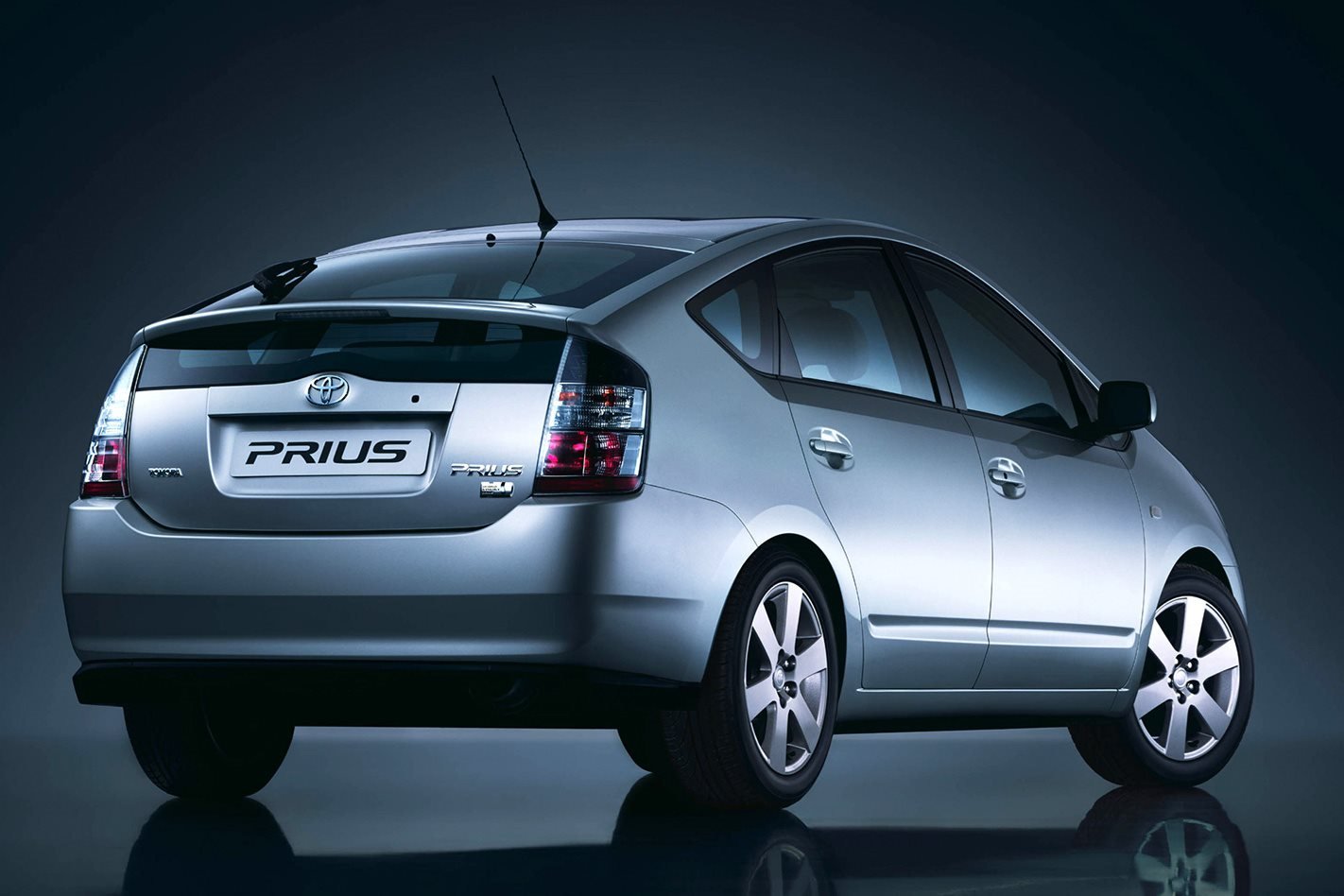
Hybrids aren’t new. Ferdinand Porsche developed an AWD series hybrid, the Mixte, in 1900. In the early ’90s Audi developed the 100 Duo, Volvo the 850-based ECC and BMW worked on an E34 5 Series hybrid. But Toyota was the first to bring a product to market in 1997, with its first-generation NHW10 Prius. A spud-like sedan, the Prius sold just over 37,000 units in its first three years on sale, or about what the Corolla would shift in two weeks. That was about what Toyota expected, internal documents showing that they gave it a five percent chance of commercial success.
Better fortunes would come with the XW20 model. Toyota realised the Prius needed to make a more overt statement and developed swooping new bodywork. Suddenly, it was hot. Leonardo di Caprio, Natalie Portman, Tom Hanks, Julia Roberts, even Millennium Falcon helmsman Harrison Ford all owned one. Arguably the most game-changing vehicle since the Ford Model T, the Prius has sold over 4.5 million units and sparked a hybrid boom that now sounds the death-knell for the solus internal combustion lump.
7. Renault 16
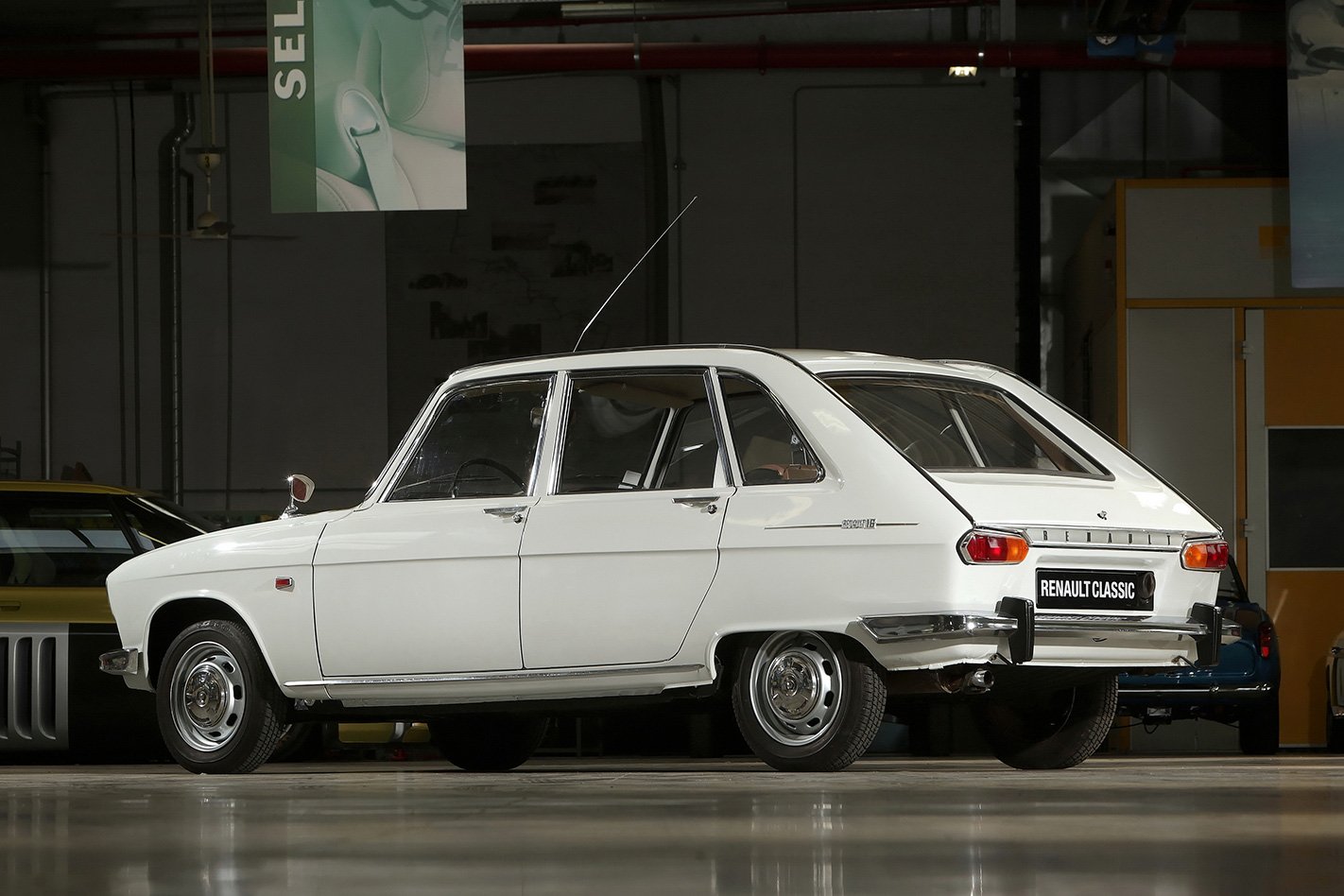
“We have to take a different approach,” said Renault CEO Pierre Dreyfus, in 1965. “Cars can’t just be four seats and a boot any longer. They must be viewed as a volume.” With those words, he set in place a revolution and birthed the modern hatchback. A front-engined, front-wheel drive, torsion-beam suspended hatch, the R16 changed the script for compact cars. Back in 1970, Stirling Moss said, “There is no doubt that the Renault 16 is the most intelligently engineered automobile I have ever encountered.”
8. Volkswagen Golf GTI
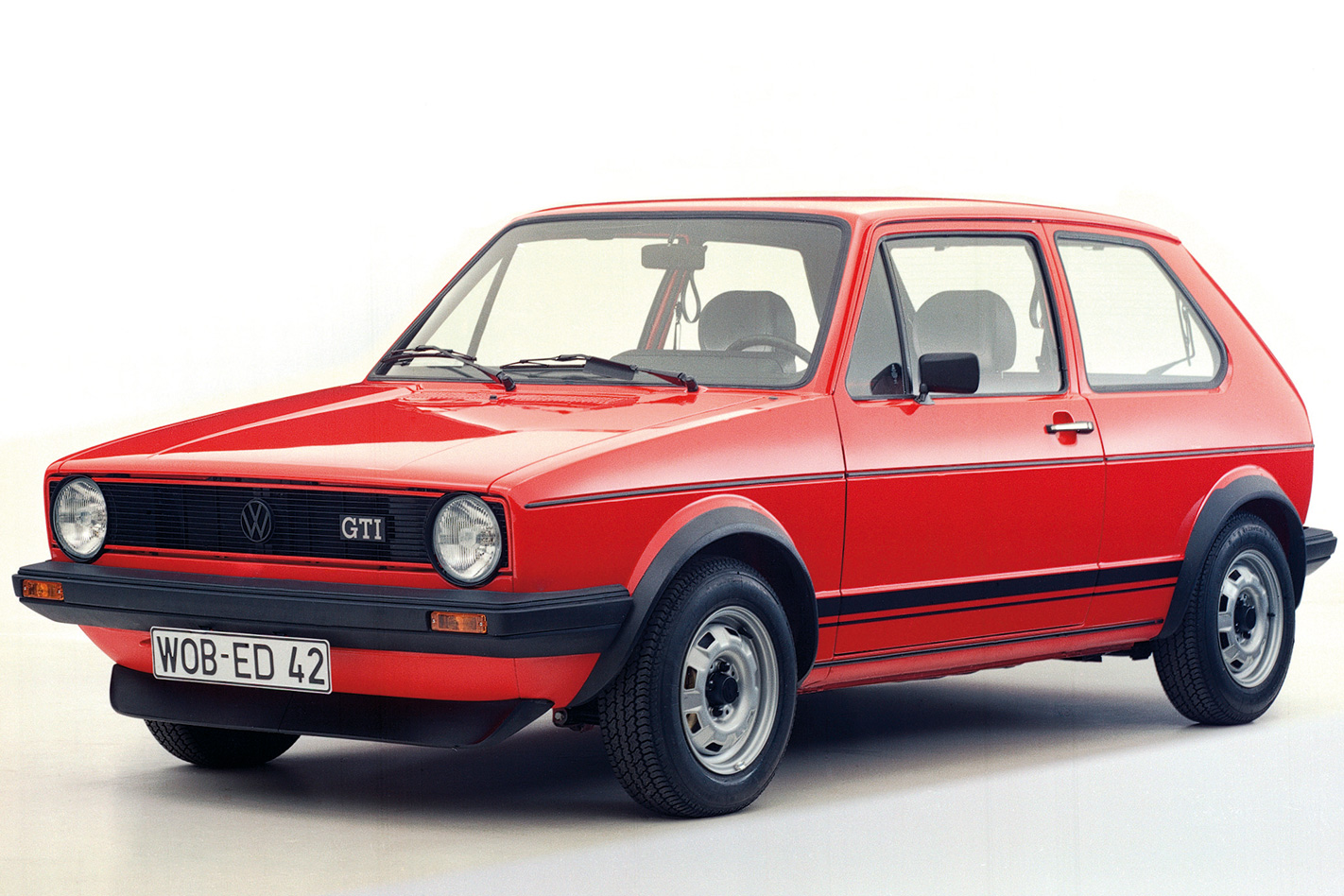
Fast, cheap, reliable – pick any two. That was the received wisdom until Volkswagen’s Golf GTI appeared in 1976. Designer Giugiaro’s magnum opus may not have even been the first hot hatch – the Autobianchi A112 Abarth, for example, predating it by 15 years – but the Golf democratised the concept. It took until 1990 before Australians were offered the privilege with run-out Mk2s. Even accounting for the so-so Mk3 and Mk4 generations, it’s been a love-in ever since. Four decades on, the Golf GTI remains the benchmark by which hot hatches are judged.
9. Renault Espace
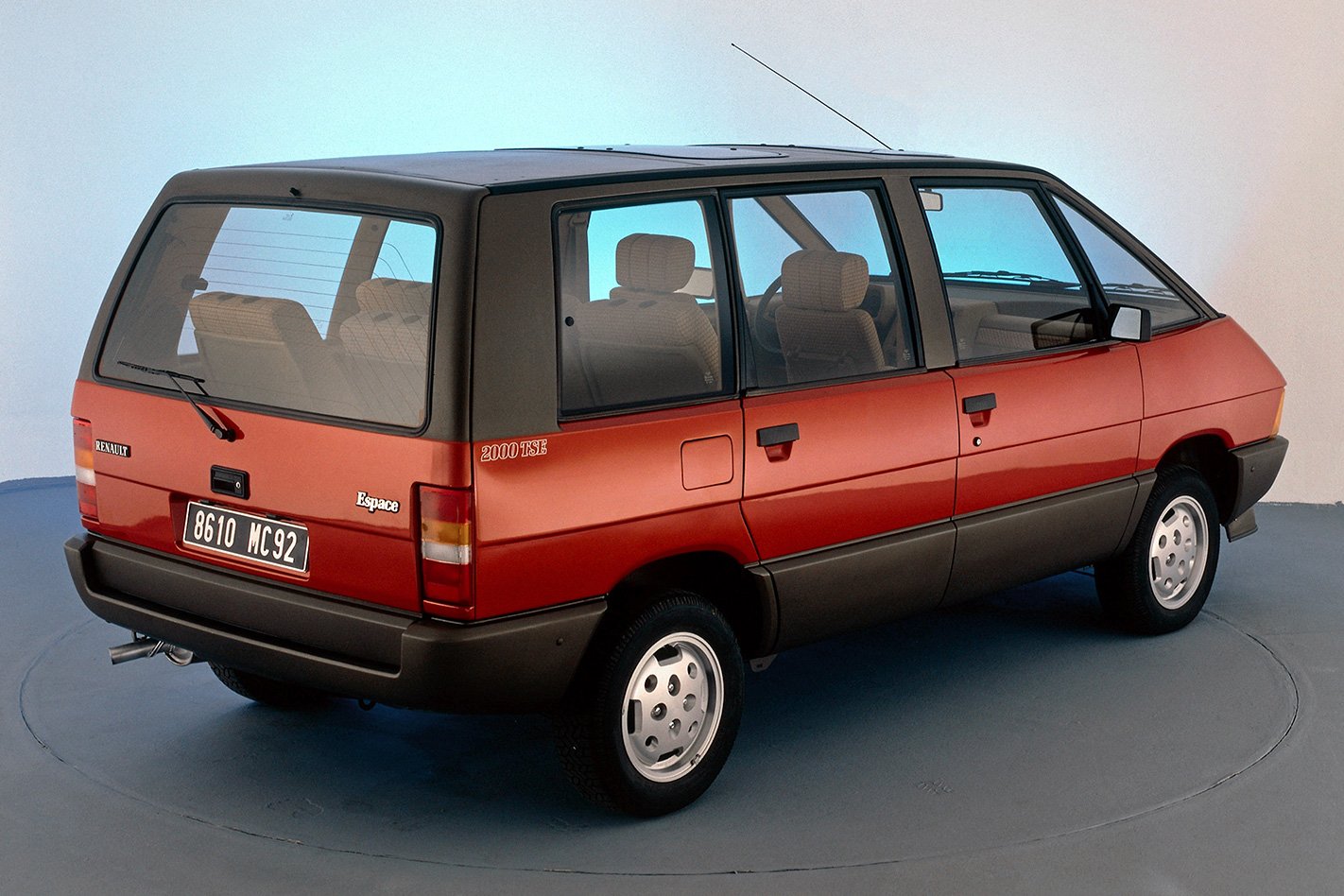
Say what you will about the Dodge Caravan and Plymouth Voyager twins, also launched in 1984, but neither had the ambition and clarity of vision of the Renault Espace. A Matra concept that was sold to Renault but which originated in the Chrysler UK planning department, the Espace featured a galvanised steel chassis and polyester bodywork, resulting in low weight and decent rustproofing. Seven seats in a 4.25m long car (shorter than a modern Mazda CX-3) was a triumph of packaging for the ground-breaking monospace.
10. Tesla Model S
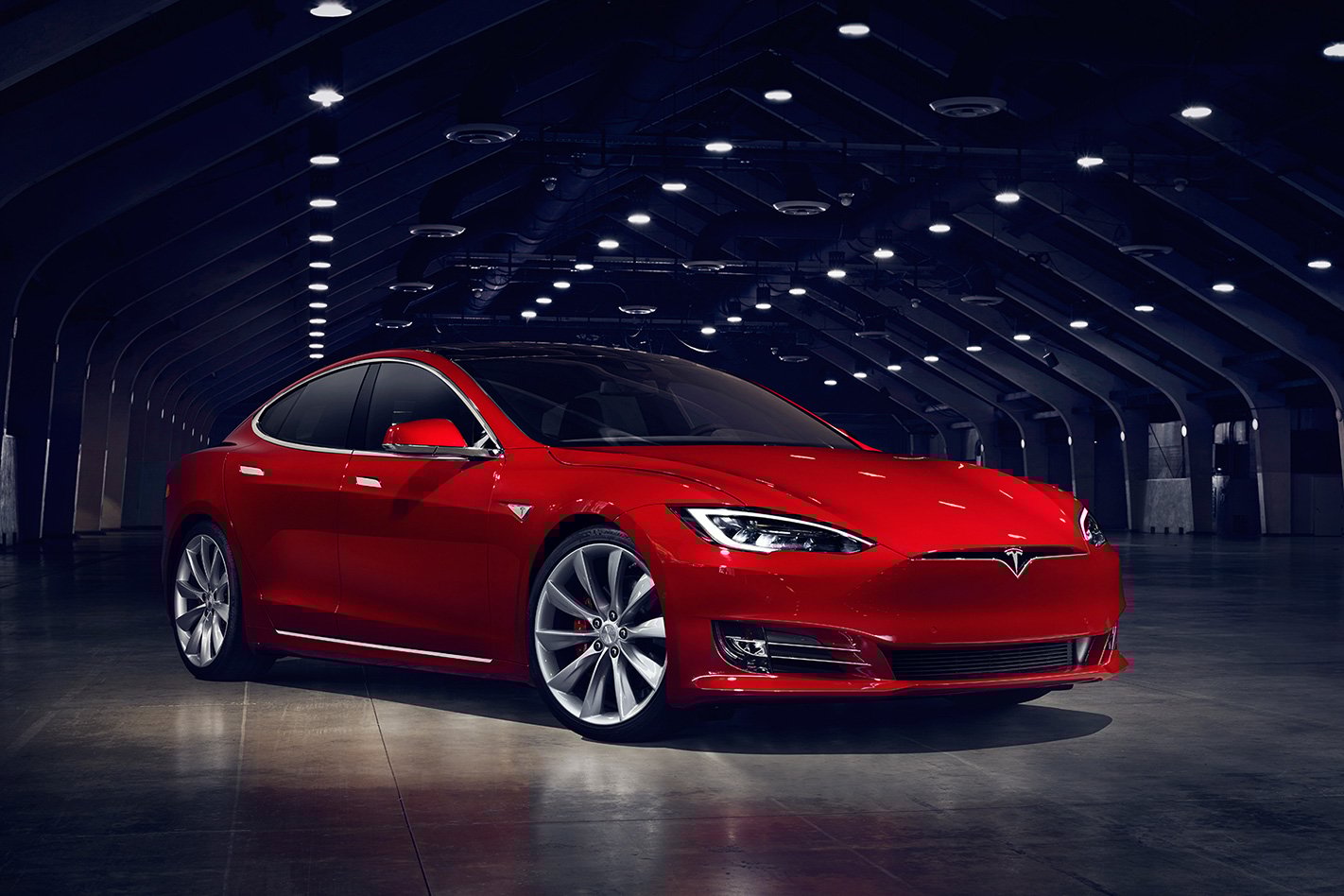
It’s a measure of Tesla’s vaulting vision that six years after the Model S was first unveiled, it still has no commercially viable electric rivals. Sales have grown every year it’s been on sale, it revolutionised our ideas about performance sedans and rendered your hot-rod V8 a dinosaur overnight. Sure, Elon Musk’s hubris in refusing to see Tesla as a car company has saddled the business with all manner of production issues, but the Model S remains a game changer.
Never before have new-car shoppers been so spoiled for choice in the small SUV space. Nearly every brand has at least one model in the fast-growing category, and those that don’t are desperately scrambling to bring something to market.
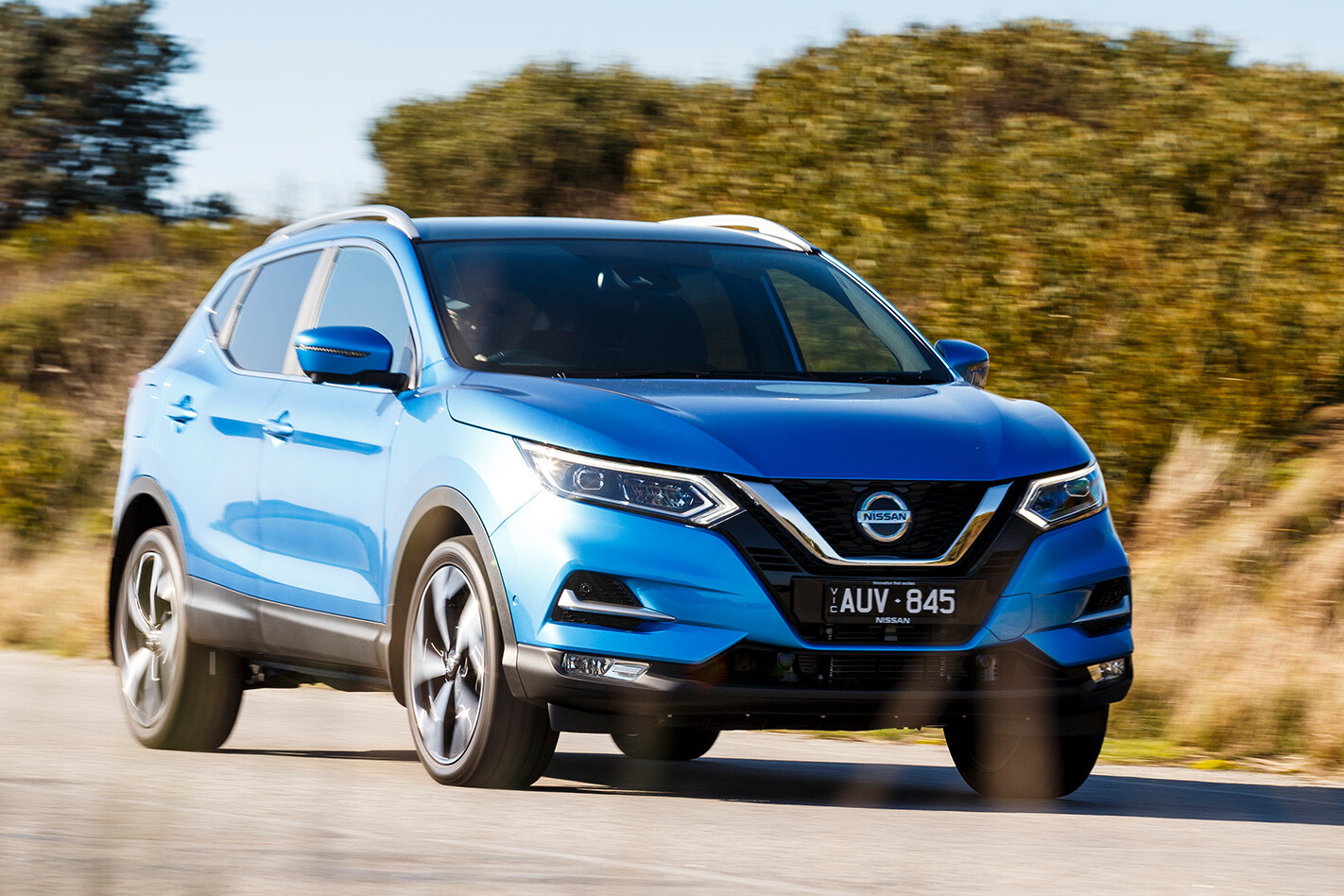
Two of the segment stalwarts are Nissan and Mitsubishi. Nissan’s been in the small SUV game for a while now, having attracted plenty of customers with the Dualis that first launched in 2007 and following up that car with the equally-popular Qashqai.
Mitsubishi, meanwhile, has been in the segment since 2010 with the high-selling ASX. The ASX is still around but at eight years old its age is definitely counting against it, and that’s where the Eclipse Cross comes in. Roughly similar in size but positioned above the ASX as a more modern and feature-rich alternative, the Eclipse Cross provides Mitsubishi with a more compelling rival to the current crop of compact crossovers.
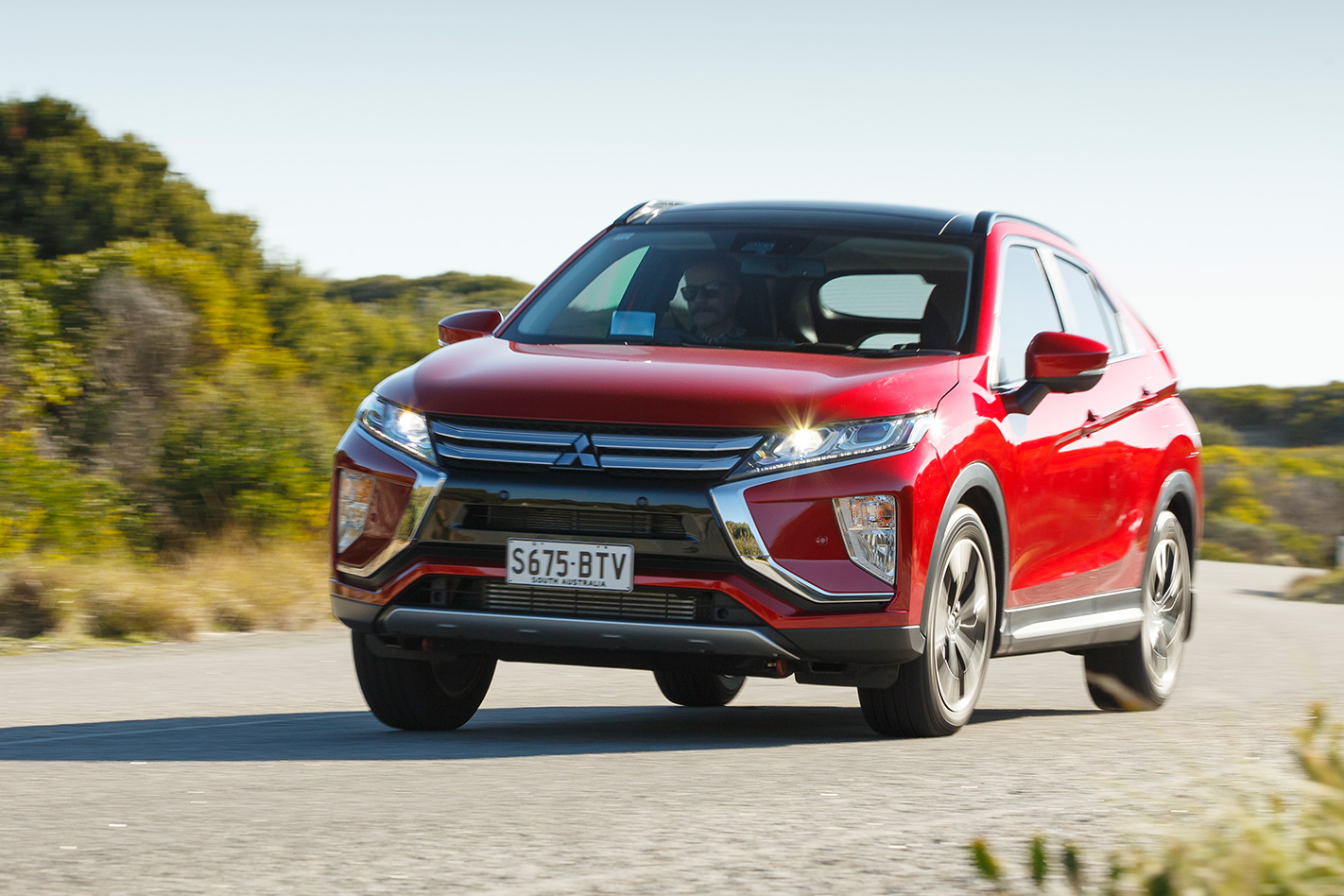
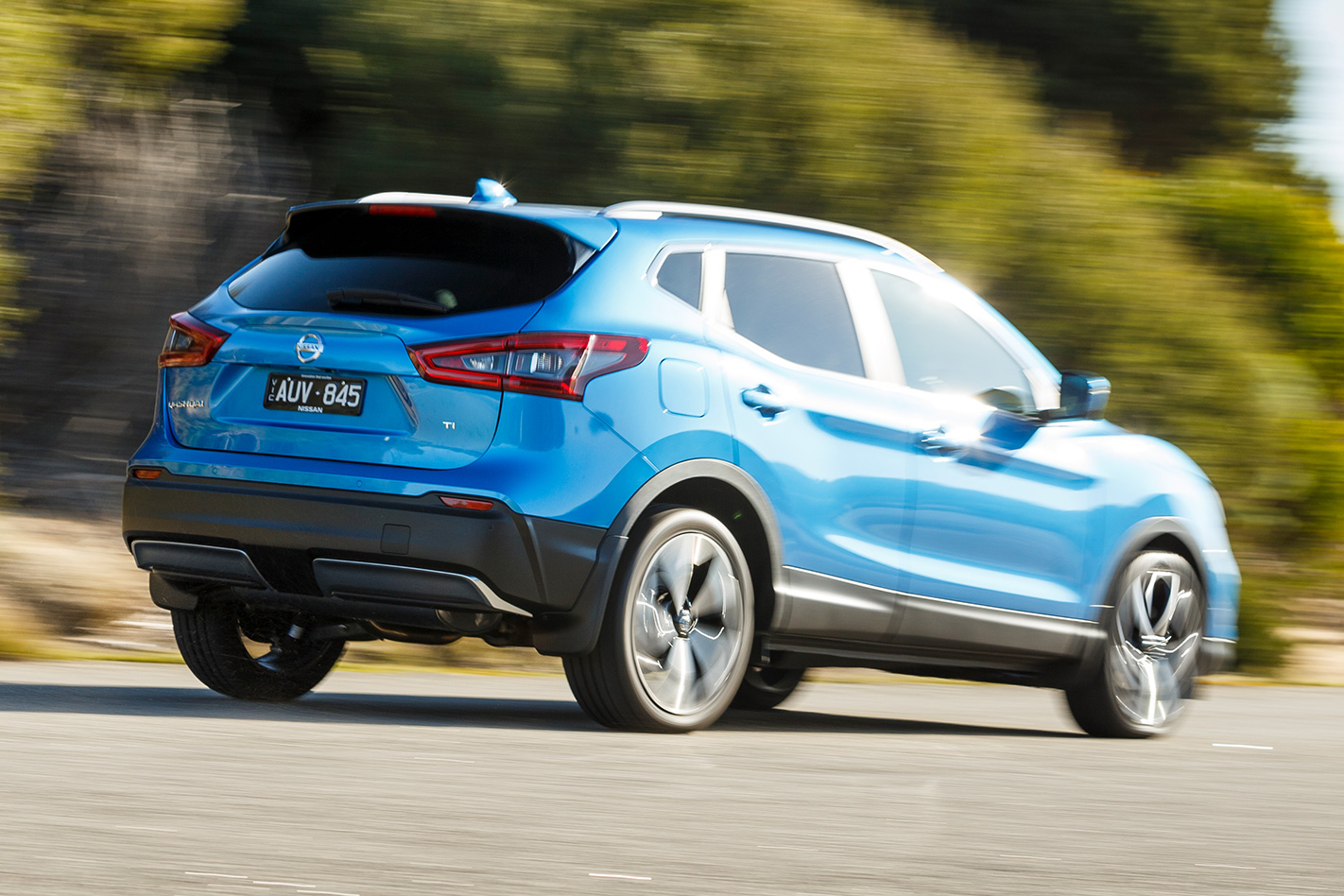
For this pairing we’ve taken the highest-grade versions of both: the Nissan Qashqai Ti and the Eclipse Cross Exceed. Priced above $36,000, both are definitely pitched toward buyers who put a greater priority on premium features – but as it turns out, only one car delivers an experience that’s worth paying a little extra for.
How affordable are they?
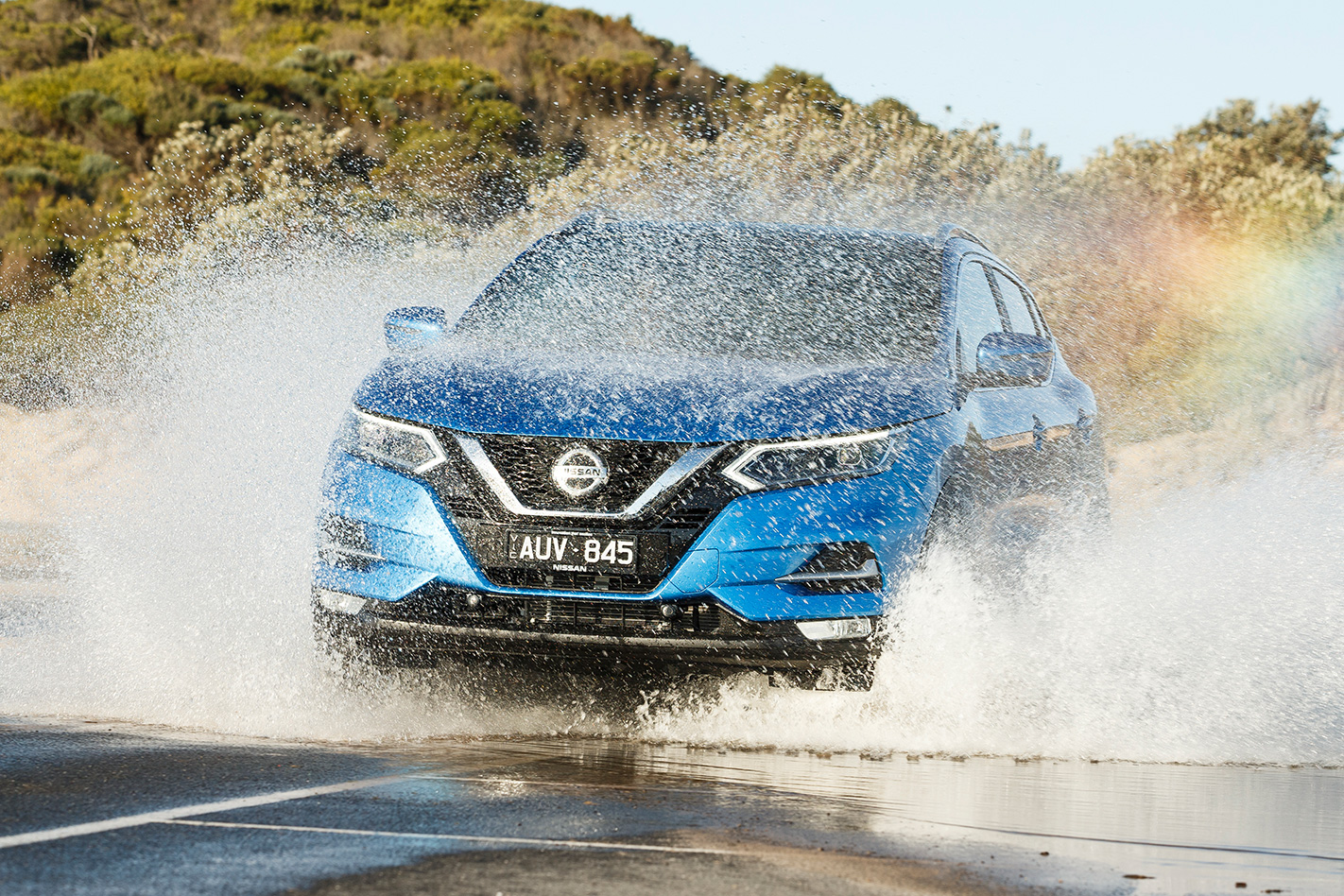
Nissan Qashqai: Let’s address the elephant in the room: yes, the Qashqai Ti is an expensive thing. Retailing at $37,990 it’s priced deep into midsize-SUV territory, and runs perilously close to more premium offerings like the $41,900 Mini Cooper Countryman or $43,900 Mercedes GLA 180.
Even looking at other mainstream options, the range-topping Mazda CX-3 Akari diesel costs $100 less than the Nissan yet packs in all-wheel drive as standard. The Qashqai, meanwhile, is only available in front-wheel drive form and without a diesel option. But the Nissan justifies its price through equipment. It’s loaded to the gunwales with gear and for those that want something dependable, but very highly specified, the Qashqai Ti ticks those boxes.
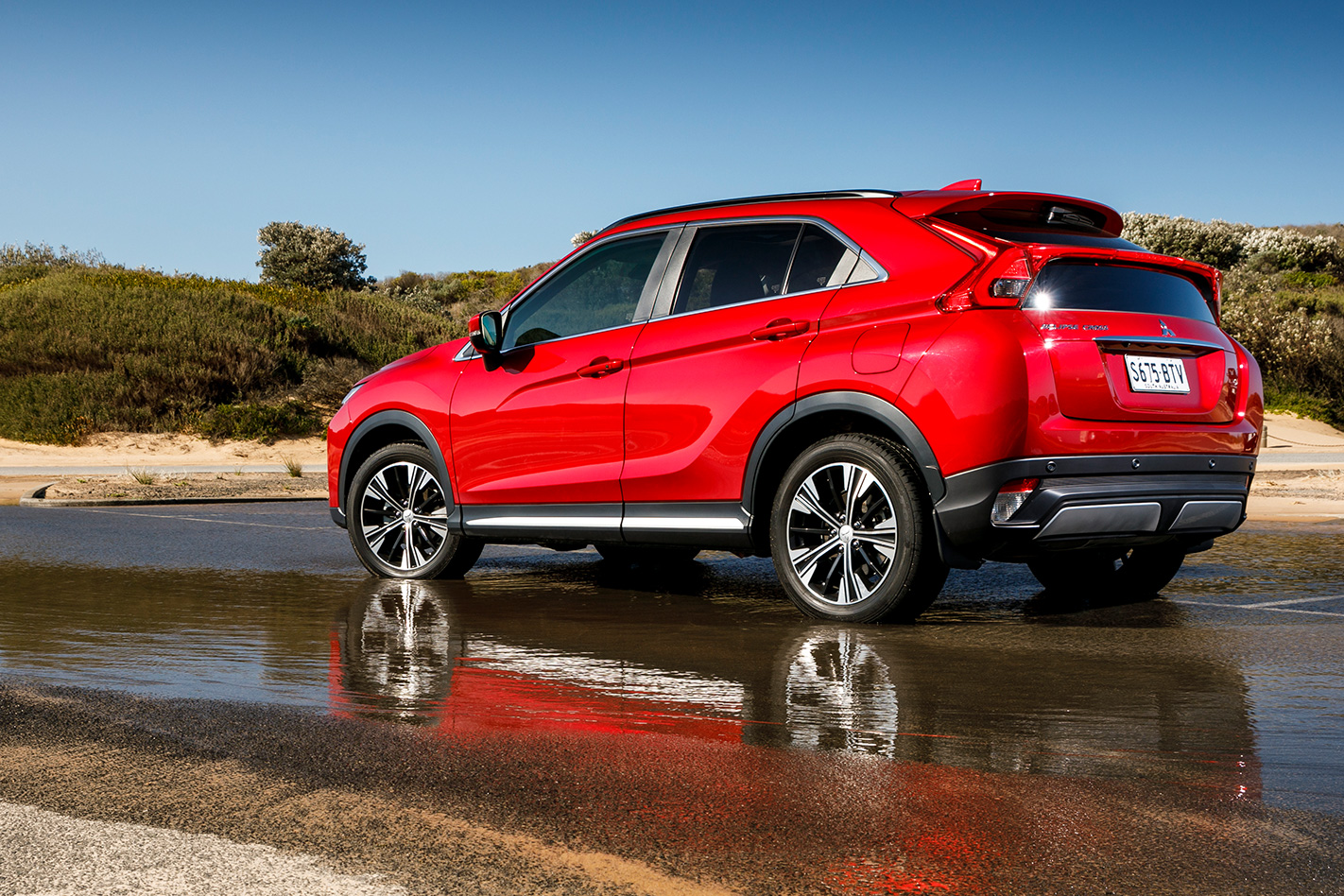
Mitsubishi Eclipse Cross: At $36,000 before on-road costs, the Eclipse Cross Exceed seems like it’s at something of a price disadvantage. That pricetag propels the Eclipse Cross, a small SUV, deep into medium SUV territory, where the competition is fierce and there’s no shortage of excellent cars to choose from.
However Mitsubishi’s strategy for its range-topping Eclipse Cross is to pack it full of equipment to help justify its cost. It’s certainly feature-rich, we’ll give it that, however there’s no additional value-adds in the form of different powertrains or mechanical improvements over the base model. An AWD option is available, but it costs $2500 more than the front-wheel drive model we’re testing here.
It is at least easy on fuel, with a manufacturer fuel consumption claim of 7.3 L/100km and the ability to run on 91 octane petrol (despite being turbocharged) helping keep running costs reasonable. There’s capped-price servicing too, with intervals set for 12 months or 15,000km and prices fixed at $300 for the first service and $400 for the next two services.
What features do they have?
Nissan Qashqai: As the flagship of the Qashqai range, the Ti variant is certainly feature-rich. In addition to the basics of power folding wing mirrors, power windows, keyless entry, dual-zone climate control and power-adjustable front seats, there’s also high-end equipment like active cruise control, a self-parking system, 360-degree camera view, adaptive headlamps and a massive panoramic glass roof.
The glass roof is definitely a highlight. It covers the heads of both front and rear seat passengers and unlike many so-called panoramic sunroofs is completely unencumbered by structural beams – it’s one big ol’ piece of glass. For those who love to soak up some rays on a Sunday drive it’s a huge selling point, literally.
Infotainment is handled by a 7.0-inch colour touchscreen display that brings integrated satellite navigation and a digital radio tuner. Unfortunately, it’s incredibly dated in its appearance, not as responsive to inputs as other systems and doesn’t come with Apple CarPlay or Android Auto smartphone mirroring – a feature that’s fast becoming standard on mainstream vehicles. It’s one area where Nissan could absolutely improve its game.
Mitsubishi Eclipse Cross: Seemingly everywhere you look in the Mitsubishi Eclipse Cross Exceed, there are buttons. Dozens of them – certainly more than the average SUV – and it’s all because the Exceed grade is absolutely packed to its metal gills with equipment.
Standout features include a head-up display, panoramic glass sunroof, a 360-degree camera view, active cruise control, a touchscreen infotainment system, a trackpad controller for said infotainment, dual-zone climate control, smartphone mirroring, digital radio tuner, heated front seats and two USB ports – and the list doesn’t end there.
However, while the list of gear is impressively lengthy, there are some holes. The primary one is the lack of integrated satellite-navigation – fairly unforgiveable for a $36,000 car in this age, though you can at least use smartphone mirroring options like Apple CarPlay and Android Auto to get around that shortfall.
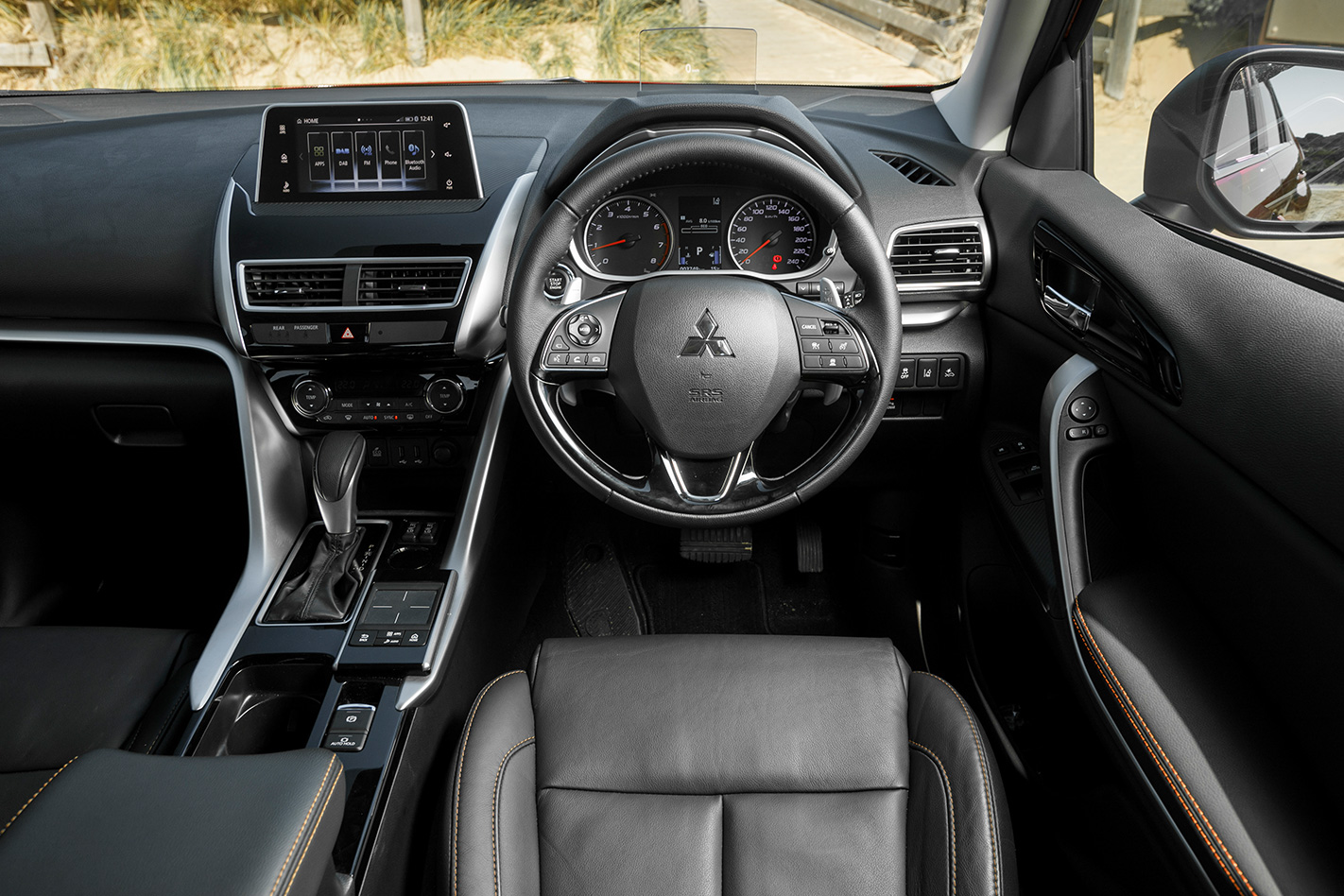
The infotainment system itself, however, is far from the best in segment for usability. The graphics already look dated, the screen is slow to respond and the touchpad controller feels like it was lifted from an old laptop. The interface is clunky, and with infotainment systems fast becoming a key selling point for new cars, the Mitsubishi’s under-done electronics hold it back.
How practical are they?
Nissan Qashqai: Sized to fit five people in reasonable – though not excessive – comfort, the Qashqai Ti dwells in the small SUV segment and is positioned below the more generously proportioned X-Trail in Nissan’s lineup. With external dimensions of 4394mm in length and 1806mm in width, the X-Trail is easy to park in average-sized car spots, driveways and garages.
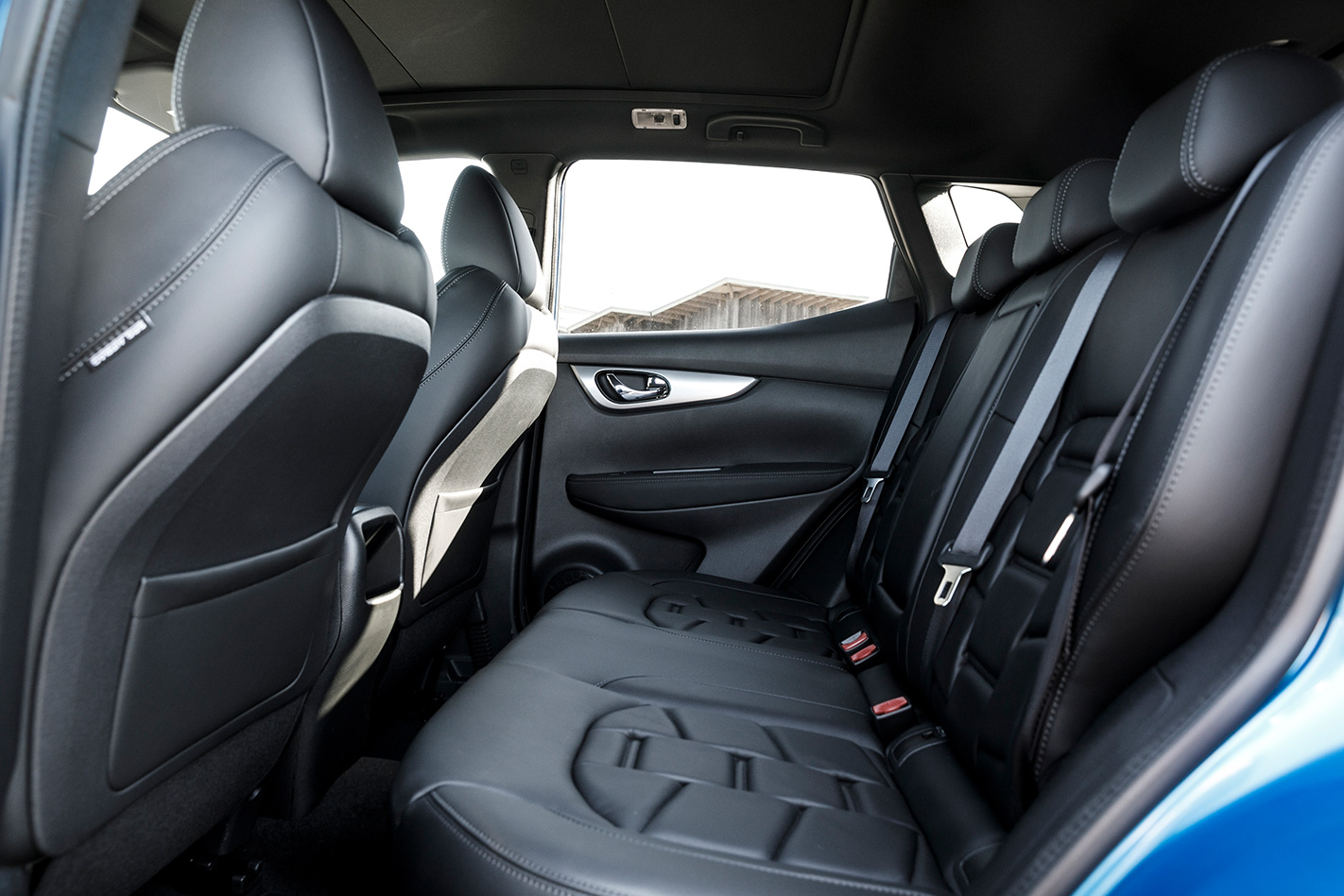
Its comparative compactness conceals a very usefully-sized boot, which offers up 430 litres of seats-up storage space or 1598 litres when the rear seatbacks are folded down.
Mitsubishi Eclipse Cross: Confused about where the Eclipse Cross sits in the Mitsubishi hierarchy? We forgive you, for the differences between the Eclipse Cross and the Mitusbishi ASX, which is also classed as a five-seat small SUV, are marginal when it comes to physical size.
The distance between the front and rear axles measures an identical 2670mm for both ASX and Eclipse Cross and there’s only 5mm difference in overall width between the two (the ASX being slightly wider. The only major dimensional disparity is in total length – the Eclipse is 4.41m long whereas the ASX is a mere 4.0cm shorter at 4.37m.
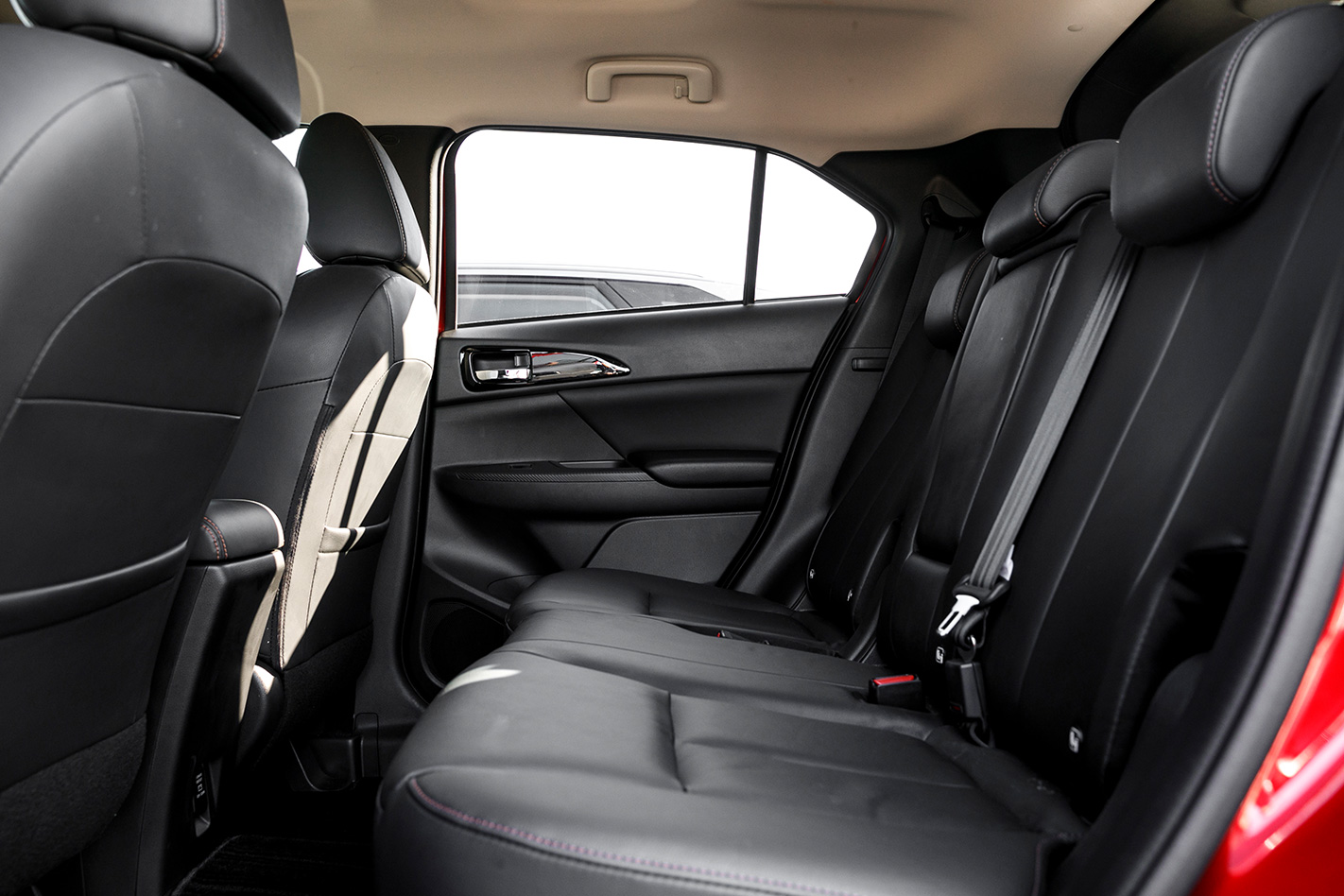
It’s a different story on the inside though, with the ASX able to tote up to 395 litres of luggage and the Eclipse Cross offering just 341 litres. Slide the rear seats forward and you can boost that to 448 litres, but that comes at the cost of legroom. Don’t have passengers to worry about? Drop the rear seats and unlock 1122L of storage – however that number is also on the small size for this segment.
How safe are they?
Nissan Qashqai: Equipped with blind spot monitoring, a forward collision warning, lane keep assist, rear cross-traffic alert and autonomous emergency braking as standard, the Qashqai Ti’s active safety suite provides more than just the usual ABS, EBD, stability control and traction control.
In the event of an accident, there are three-point seatbelts on all seats and ISOFIX child seat anchorages on the outboard rear seats, though while there are six airbags in total – the industry average – note that the head-protecting curtain airbags don’t extend to cover the second row. Airbag protection is unfortunately limited to those in the front seat.
Mitsubishi Eclipse Cross: The Eclipse Cross is well-equipped for safety, with seven airbags, ISOFIX child seat mountings on the outboard rear seats, autonomous emergency braking, anti-lock brakes, brake assist, traction control, and stability control.
The Eclipse Cross has been assessed by ANCAP and awarded five stars for crash safety.
How comfortable are they?
Nissan Qashqai: The first thing that strikes you as you enter the Qashqai Ti’s cabin is its leather upholstery. The watch-strap style folds of the Nappa leather seats are anything but your average black hide, and while it’s probably going to be a pain to vacuum crumbs out from the seat base it at least looks distinctive and high-end.
They’re heated too, which is nice in the frosty Melbourne mornings we experienced, and there’s also two-position memory settings for the driver’s seat – an invaluable argument-saver if the car is regularly driven by both members of a couple. Those front seats are also a pleasure to sit in thanks to well-sculpted cushions that support your back and bum nicely.

The rear seats aren’t quite so accommodating, given limitations in legroom and headroom (the latter impinged upon by that massive glass roof and its retractable sunblind), not to mention the absence of rear seat vents and the presence of rock-hard door card plastics. Even so, despite the cosiness of the rear bench there’s nevertheless enough room for a pair of adults to be comfortable for a while.
Mitsubishi Eclipse Cross: The Eclipse Cross has a fairly unique feature for a small SUV in that its second row can slide fore and aft, liberating legroom when you’ve got passengers to carry or freeing up some extra cargo space if you have a fair load of non-human cargo.
But that’s unfortunately about the only cabin comfort advantage it has. There’s leather upholstery for a dash of luxe, but a persistent rattle from a rear door trim in our test vehicle took the gloss off the Exceed’s semi-premium presentation.
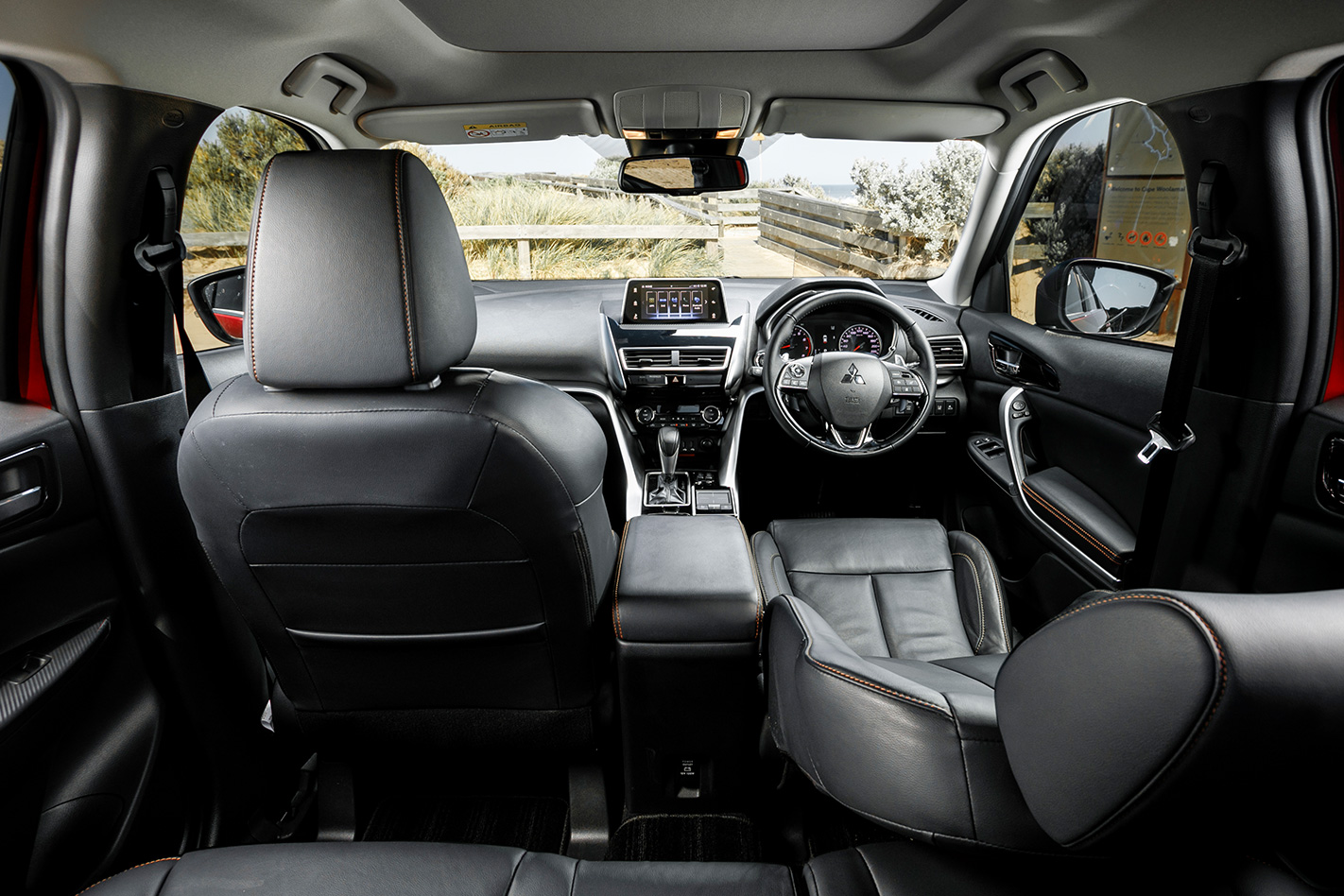
But more troublingly, the Eclipse Cross Exceed simply lacks comfort. ‘Stadium’ seating that elevates the rear seats above the front row provides backseaters with a decent view forward, but they’re hemmed in by limited headroom (both from the panoramic glass roof and the shape of the C-pillar, which cuts close to your noggin), the rear door armrests have no padding, there are no rear face-level air vents and the seat cushions are flat and unsupportive.
On top of that, there’s plenty of road noise in the back half of the car that drowns out voices and makes it difficult to hold conversations with those in the front – and it’s not like the front-seat occupants are much better off. There are definitely more soft-touch surfaces up front to keep elbows unbruised, but the seat base cushions provide poor under-thigh support.
What are they like to drive?
Nissan Qashqai: See those gargantuan 19-inch alloys? They’re more than just some visual bling – in fact, they – and the Dunlop Sport Maxx tyres around them – play a massive part in the Qashqai’s on-road manners.
Those tyres are quite an unusual sight on a mass-market small SUV. You’d ordinarily find them wrapped around the wheels of a performance car like the Subaru WRX STI, but Nissan has taken the curious step of fitting them to the humble Qashqai. The result is an otherwise quite mild-mannered car with stacks of grip, but as weird as it sounds it actually feels ‘right’.
And that’s because the Qashqai is blessed with a fairly decent suspension tune, and though the ride is slightly sharp thanks to the low-profile rubber and huge alloys, it’s actually got quite good compliance once you get past that initial harshness. It deals with challenging surfaces admirably well, and the extra grip from its sporty rubber means it can deal with emergency lane changes, hard braking or even the occasional spirited drive without breaking a sweat.
The Qashqai’s suspension was heavily revised late last year with firmer spring rates and retuned damper settings to quell what was previously an unsettled ride. Those changes work a treat, especially on the top-grade Ti.
It’s a shame the powertrain isn’t quite up to the same level of athleticism as the chassis. With just 106kW and 200Nm from a naturally-aspirated (non-turbo) 2.0-litre petrol inline four, the Qashqai Ti feels underwhelming in straight-line acceleration, and though its CVT automatic makes for fuss-free motoring around town, its monotone drone when you ask the car to perform is anything but enjoyable.
What’s more, the engine only starts producing peak torque at 4400rpm, meaning that if you live in a hilly area or frequently carry many passengers (or both!) the engine will need to spin harder than competitors powered by more torque-rich turbocharged engines.
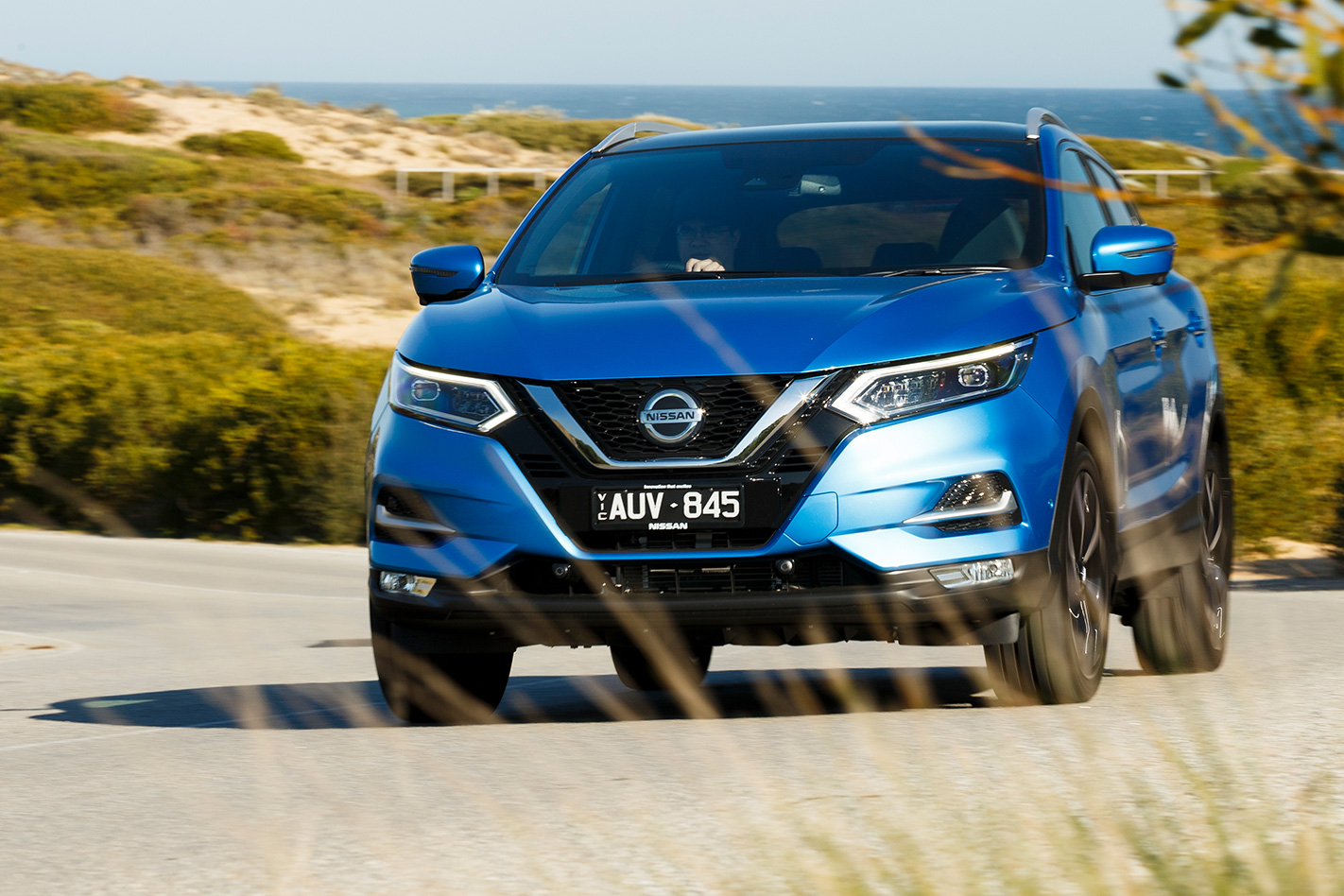
Mitsubishi Eclipse Cross: First, the good news. Though there’s no element of choice in the Eclipse Cross’ engine department, with all models powered by the same 1.5-litre turbocharged engine, that engine happens to be a strong, willing engine with plenty of torque (250Nm for those that are counting) for everyday driving. Connected to a continuously-variable automatic, it proves to be perfectly suited to around-town motoring with decent thrust to deal with the occasional bursts of acceleration, while also being smooth and reasonably refined.
It’s a shame the steering and suspension don’t have the same level of competence or polish. The steering is over-assisted to the point that it’s too sensitive to minor inputs, which can lead to a ‘wandering nose’ when highway cruising, while it also transmits noticeable torque steer when accelerating hard.
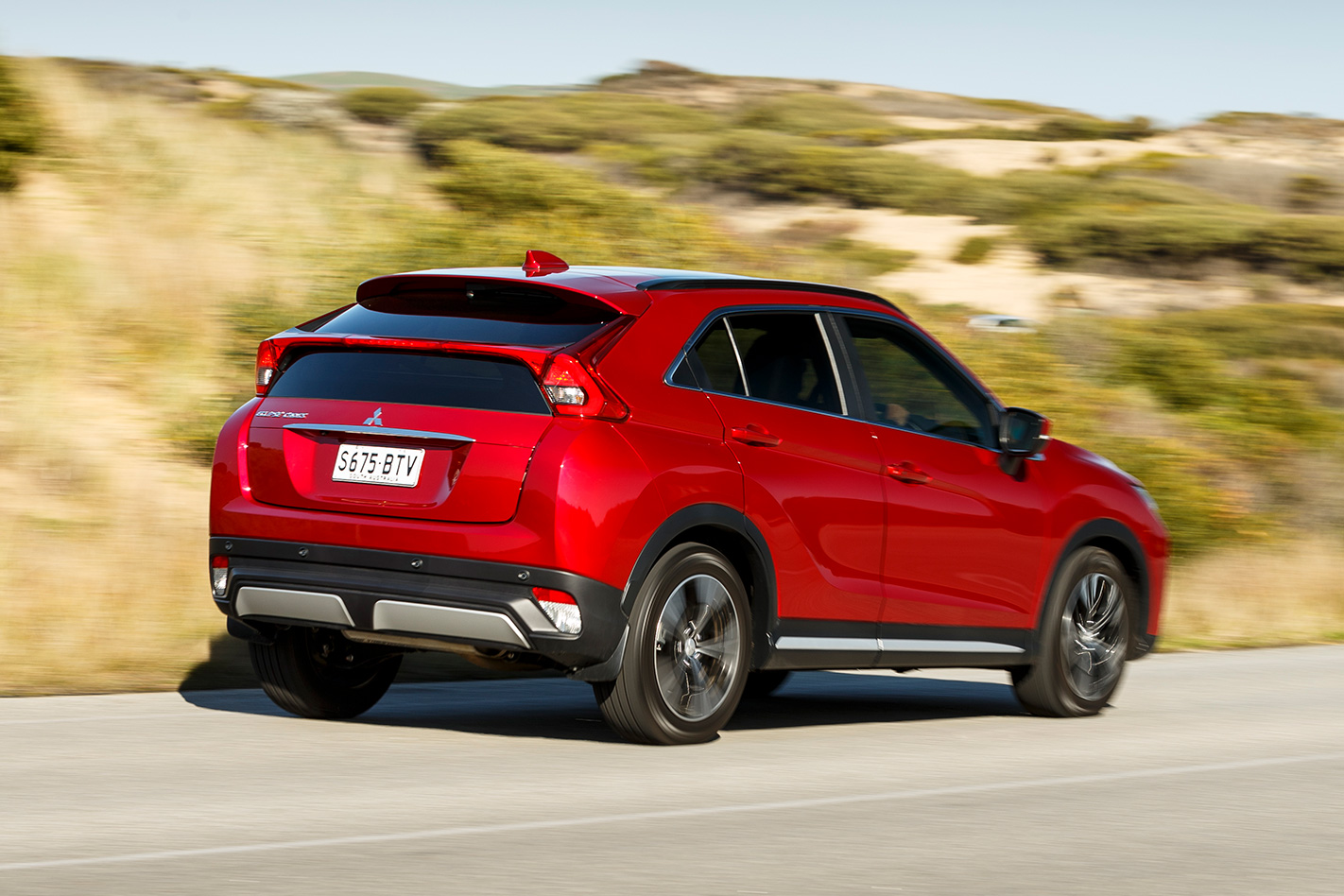
The suspension meanwhile pitches and rolls a lot on typically lumpy country roads, and tends to be upset by road imperfections that wouldn’t bother many of its rivals. Like most new cars, it’s fine at suburban speeds but venturing onto a highway – especially one that is less than smooth – quickly reveals the Eclipse Cross’ dynamic shortcomings and poor ride comfort.
Our Opinion
Mitsubishi’s top-grade Eclipse Sport has the benefit of a slightly sharper price of entry and being a younger vehicle, but it’s the Nissan Qashqai Ti that impresses us more.
The Nissan’s feature set is more generous when it comes to things that count, like an infotainment system that – though old – is easy to use and features a built-in satellite navigation function. There’s also no denying the greater wow factor of its huge and uninterrupted panoramic glass sunroof, not to mention its cool ‘watch strap’ leather upholstery.
But the most important advantage the Nissan has is the core engineering that lies beneath. It’s more comfortable to be in thanks to its supportive seats, and though its suspension is a little firmer than the Mitsubishi it’s actually better for long journeys simply because it’s tuned properly. Like a boat in rough waters, the Eclipse Cross never feels settled.
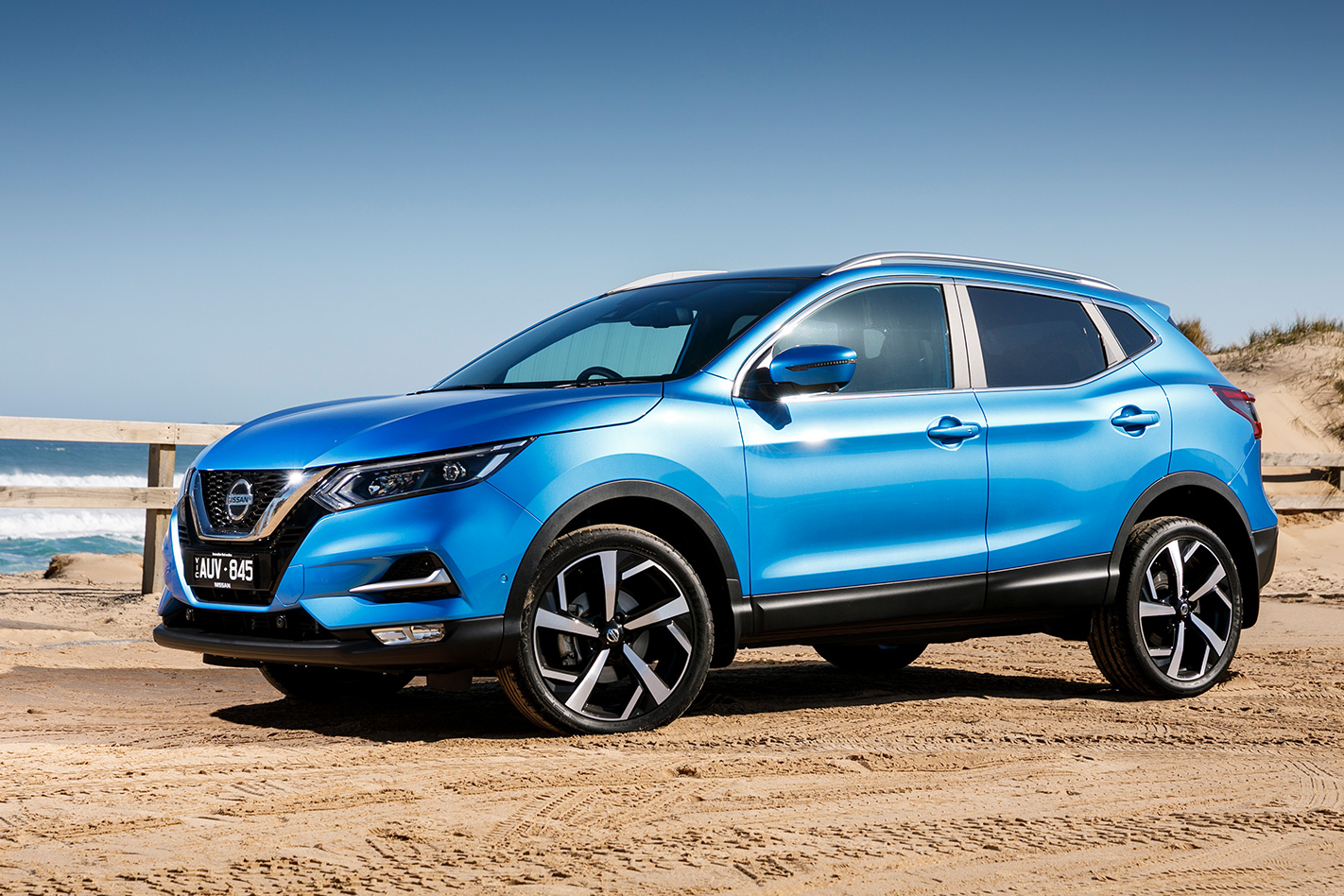
That said, the Mitsubishi’s turbocharged engine is a great powertrain and its sliding rear bench does introduce an element of adaptability to its cabin layout that some may find useful. On the whole, however, it’s the Nissan that simply feels like a better-resolved car.
Geelong-based carbon fibre manufacturer Carbon Revolution is set to open a new facility and potentially triple its workforce after a $100 million expansion has received government support.
In an announcement made by the office of Victorian Premier Daniel Andrews, the state government claims the expansion will open up 500 new jobs, with the capability to increase manufacturing exponentially.
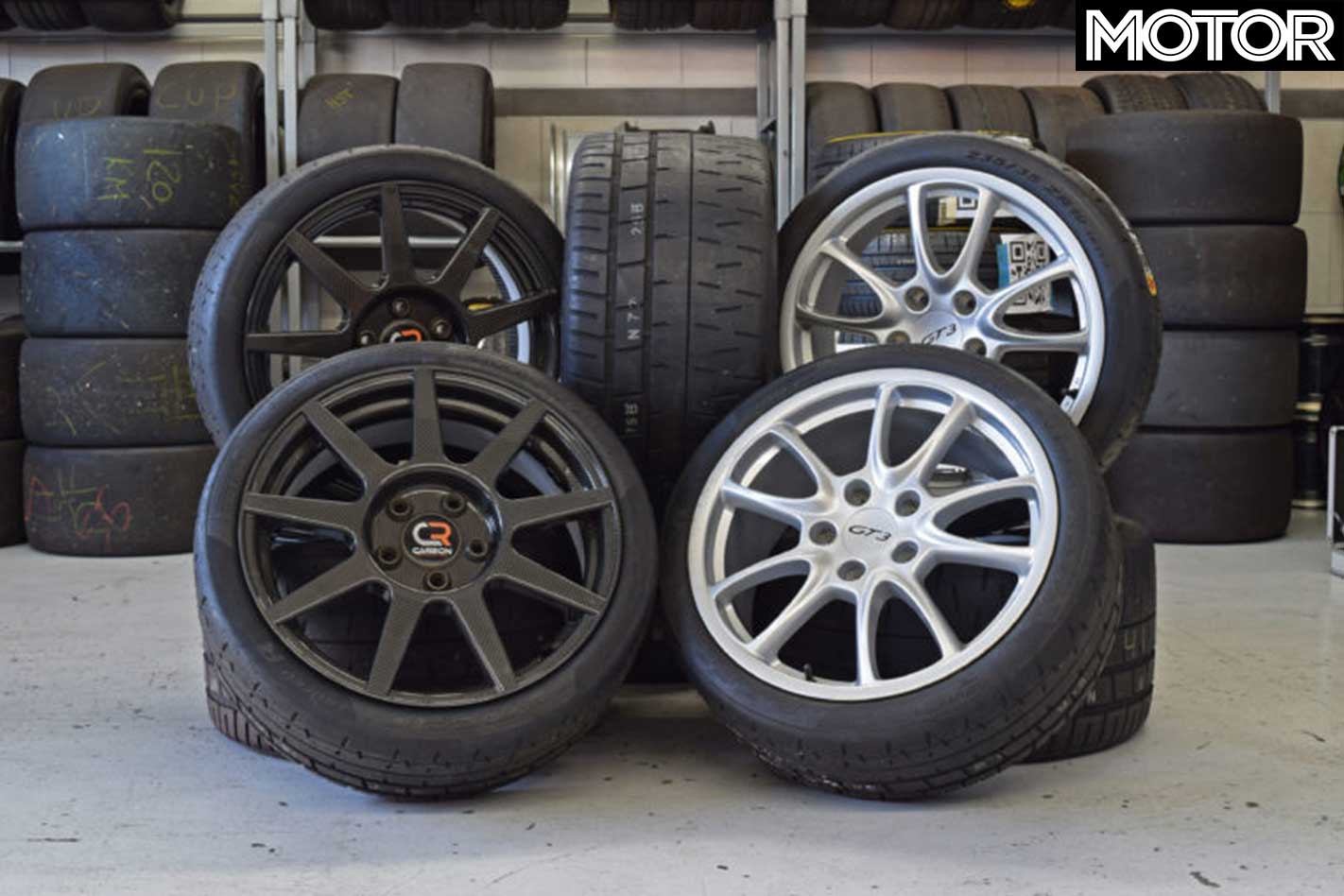
Carbon Revolution’s current facility at Deakin University will be joined by another 7000 square metre facility to accommodate the expansion.
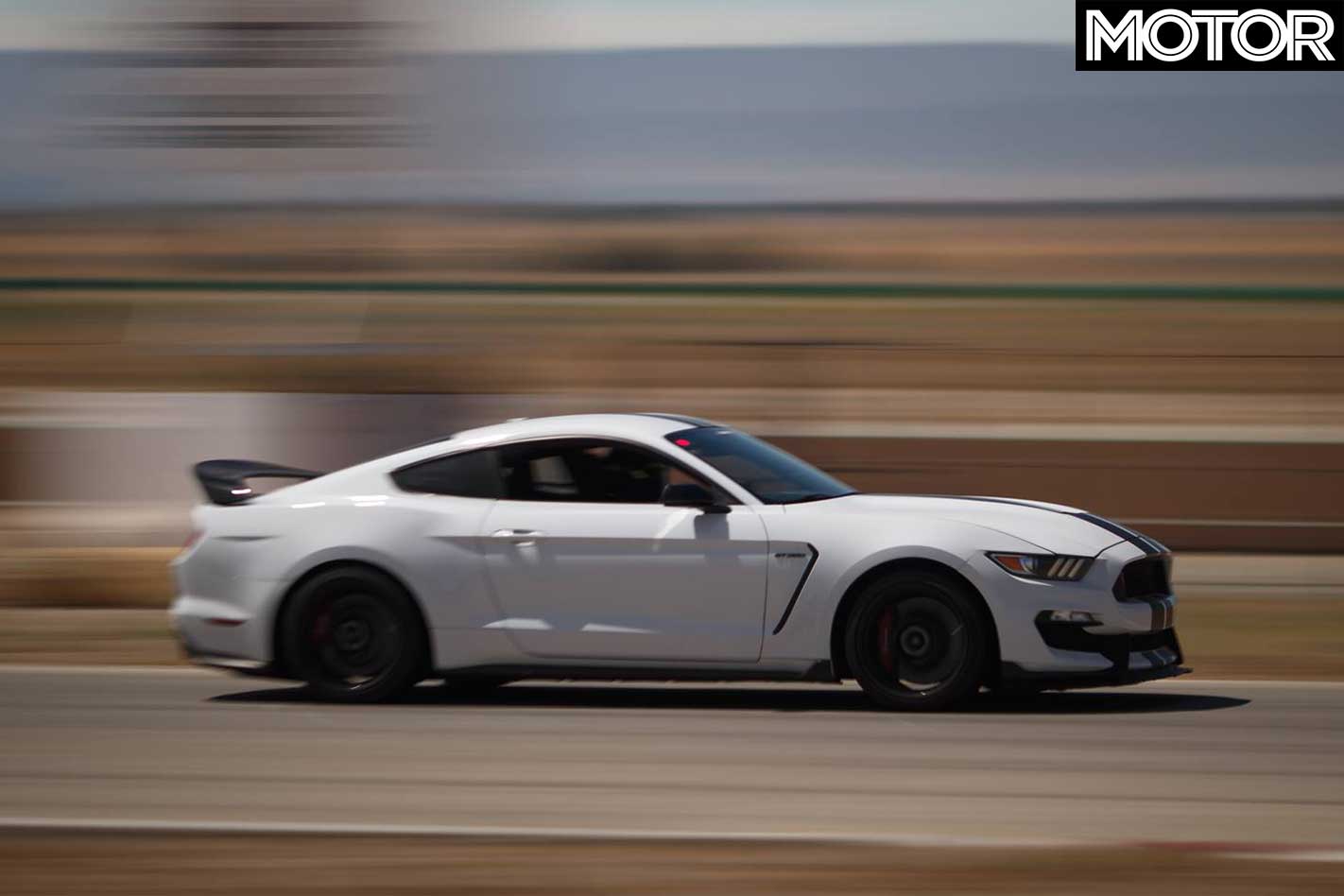
The brand’s one-piece carbon wheels appear on high-end cars the world over, with companies from Ford (specifically the Shelby GT350R) to Ferrari using its wheels as standard parts.
Andrews says the automotive manufacturing industry can still bounce back from the major carmakers closing up shop, announcing a ‘Made in Victoria’ campaign to ensure the wider manufacturing industry remains in business.
“When Ford and Alcoa closed their doors, we said we’d be with the proud Geelong community every step of the way and that’s exactly what we’ve done – creating new jobs for hard working families,” Andrews says.
“This is yet another massive vote of confidence in Geelong – these are high-tech, secure jobs that will help the local economy continue to prosper.”
Minister for industry and employment Ben Carroll backs the Premier’s sentiment, pointing out that Carbon Revolution is an important presence for the automotive world, and for local manufacturing.
“Carbon Revolution is a Victorian manufacturing success story and we’re proud to back their massive expansion here in Geelong,” says Carroll.
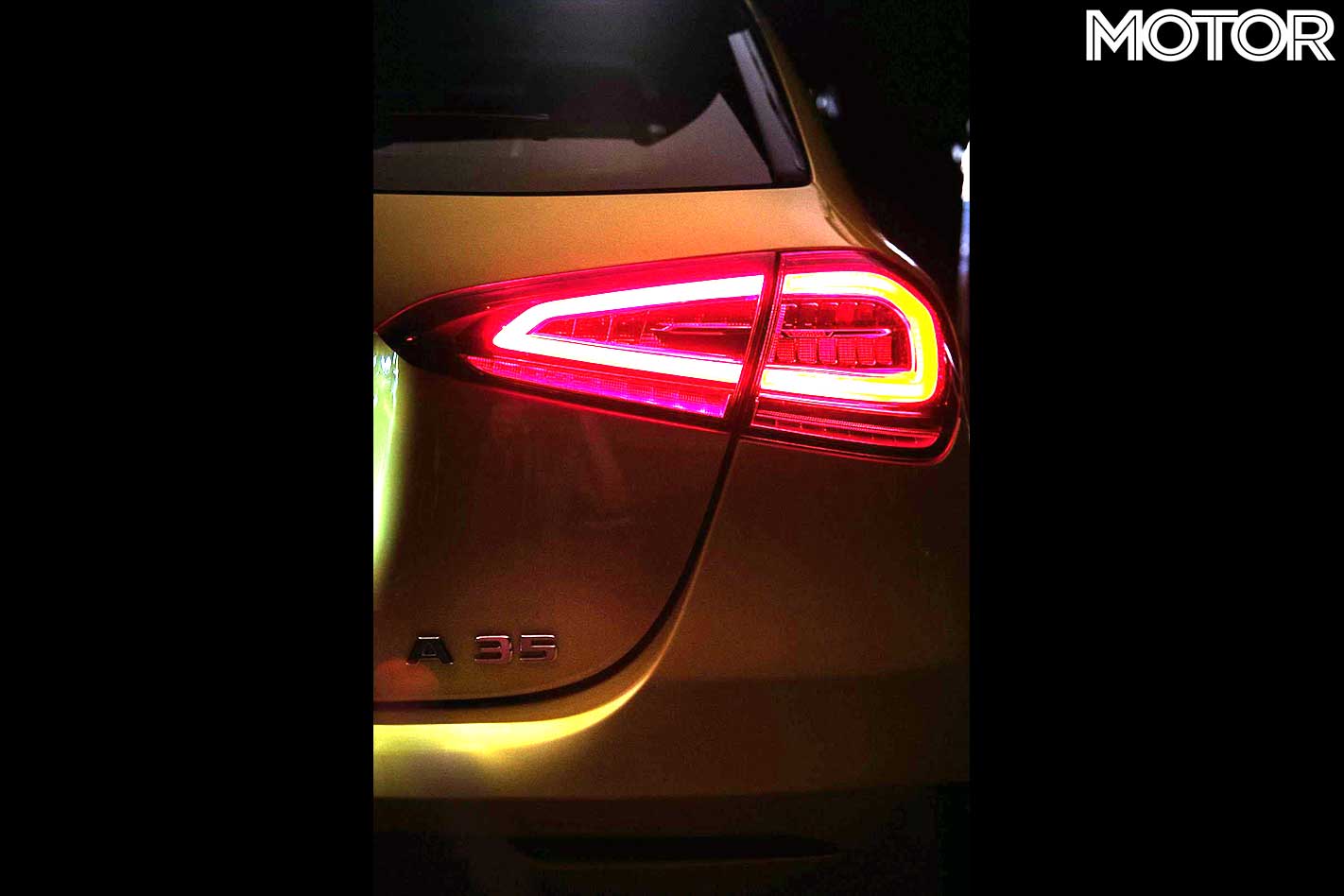
Mercedes–Benz has given the world an early look at the new Mercedes-AMG A35 hot hatch ahead of its debut.
Expected to debut at the upcoming Paris Motor Show, starting October 4, the A35 AMG is set to bridge the gap between AMG’s stonking A45, and the Mercedes A250.
Based on the new A-Class, it’s expected the A35 will come along with outputs in the region of 250kW and 450Nm from the tuned-up 2.0-litre turbo, for a sub-5.0sec 0-100km/h claim.
This puts it far enough north of the A250’s performance without encroaching on even the current generation A45’s 280kW/475Nm.
The next A45 is expected to break the 300kW mark in an effort to chalk up a sub-4 second 0-100km/h time, achievable given the current 4.2 second claim.
The inaugural A35 AMG will utilise an AMG-fettled version of the latest 4MATIC all-wheel drive system, which MOTOR previously reported replaces a hydraulic pump for the actuation of the rear differential with an electro-mechanical clutch.
This should put it in competition with the likes of Audi’s S3 and BMW’s M140i, both being performance cars teetering on the edge of being full-blown members of their sub-brands families (Audi Sport and M respectively).
On its Twitter post, Mercedes-Benz attempted to lead followers to believe the images of the A35 might be of a different vehicle, though the yellow car also appeared in a post by the AMG-specific account, on which the ‘A35’ badge is clearly visible.
The post also states it’s “a new AMG family member,” which is an equally big giveaway – unless Mercedes-AMG is very good at keeping secrets.
A HARDER, lighter, and faster Toyota Supra is on its way, according to the car’s chief architect.
Tetsuya Tada, the chief engineer of both the Toyota 86 and reborn Supra confirmed to TopGear.com a more focussed Supra could be in the works.
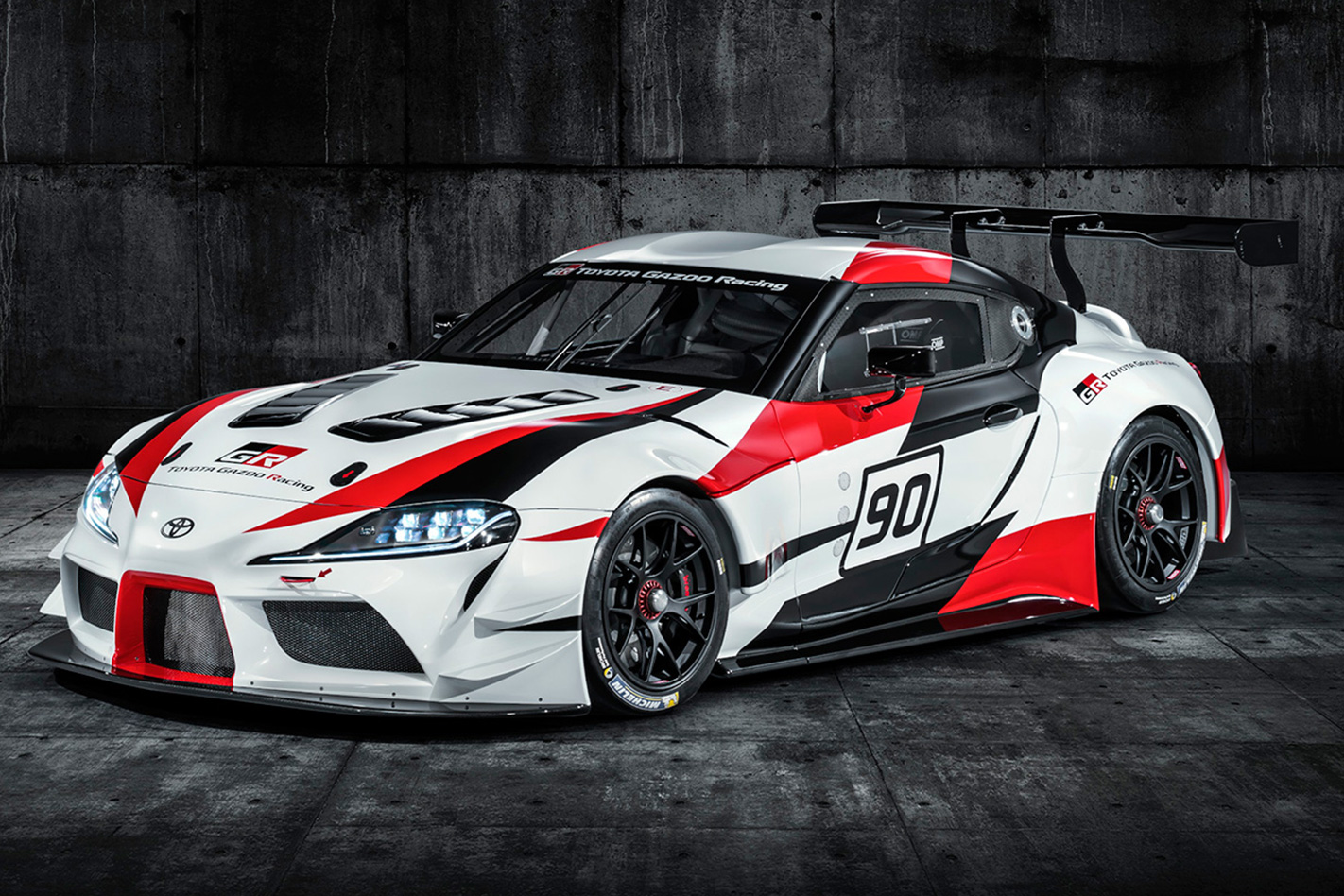
Gazoo Racing, which Tada-san heads up, will be responsible for the work, with the end result likely to be badged as a Supra GRMN.
“At some point I would like to make a track-limited Supra with less weight,” Tada told TopGear.com.
Tada indicated that work already conducted on a racing version of the Supra has shown that the more hardcore version may not need a significant power bump to thrill drivers.
“We know if you take out 100kg it’s a completely different car – you don’t even need any more power,” he explained.
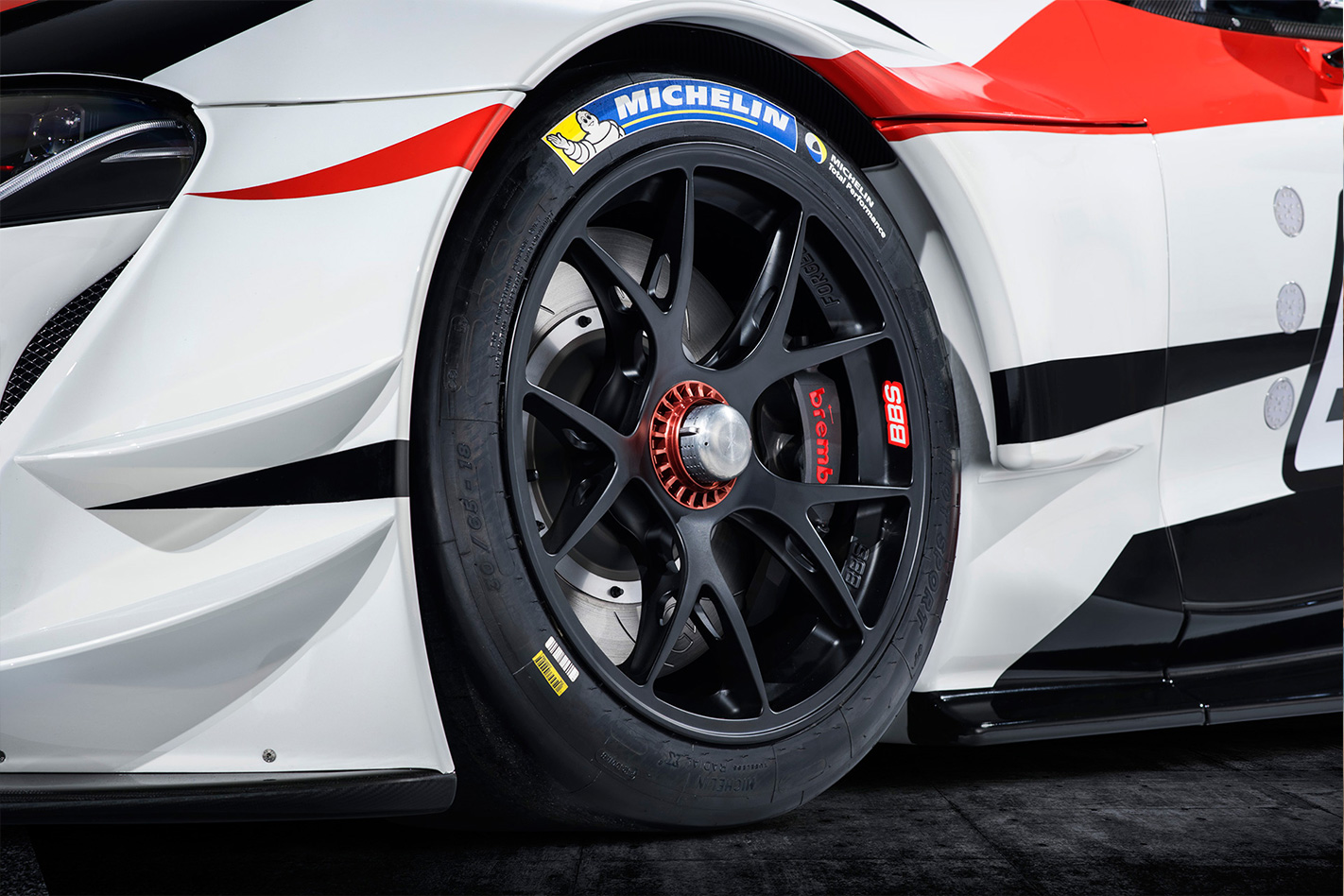
Wheels understands the new Supra will have a 3.0-litre twin-turbo straight-six engine sourced from BMW, with power to sit somewhere between 225-250kW and torque peaking between 450-500Nm. With the car expected to be of similar size to Toyota’s current RWD sports car, the 86, that should be plenty of grunt. A less powerful variant, likely powered by BMW’s B48 2.0-litre four-cylinder turbo with a 195kW tune, is also expected to be part of the A90 Supra’s range.
Wheels is currently in Spain driving a prototype of the new Supra, which was developed jointly with BMW’s new Z4 roadster. We will have a full review coming later this week.
Tada-san says the dynamic benchmark for the new Supra is the Porsche Cayman, with Toyota even initially evaluating a mid-engine design for the cult hero.
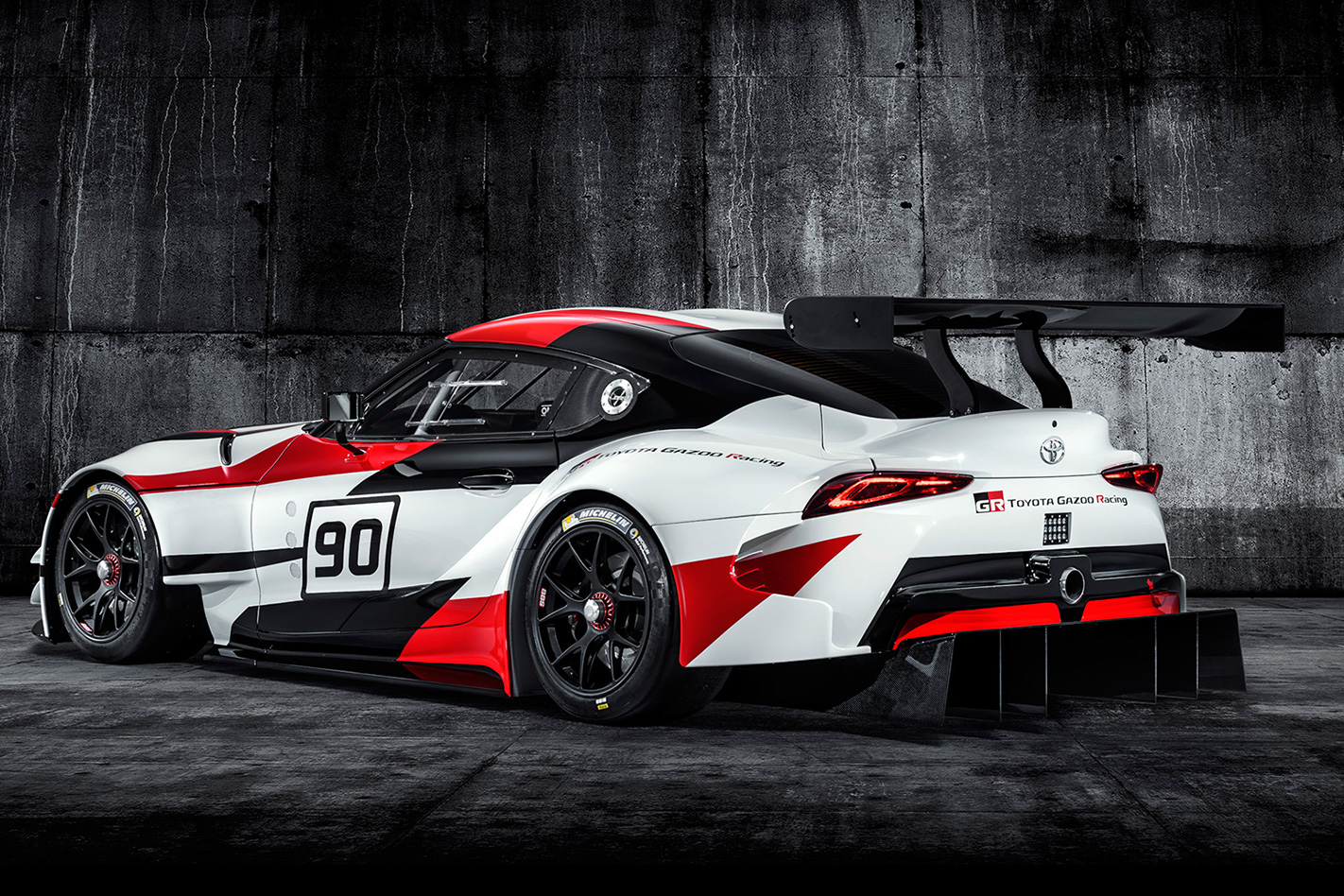
“The Cayman has the advantage with its engine positioning but I’ve driven the cars back-to-back on track and we’re definitely in the same zone,” Tada said.
“We stuck with front engine because of feel and control. We know how to control a front-engine car, we already have that capability. In the planning stages we suggested a mid-engined layout and BMW was happy to go with it, but I took the idea to Akio Toyoda and he told me off.”
Gazoo and Toyota are still deciding if the more focussed Supra GRMN will be restricted to a track-only toy, or be able to wear numberplates.
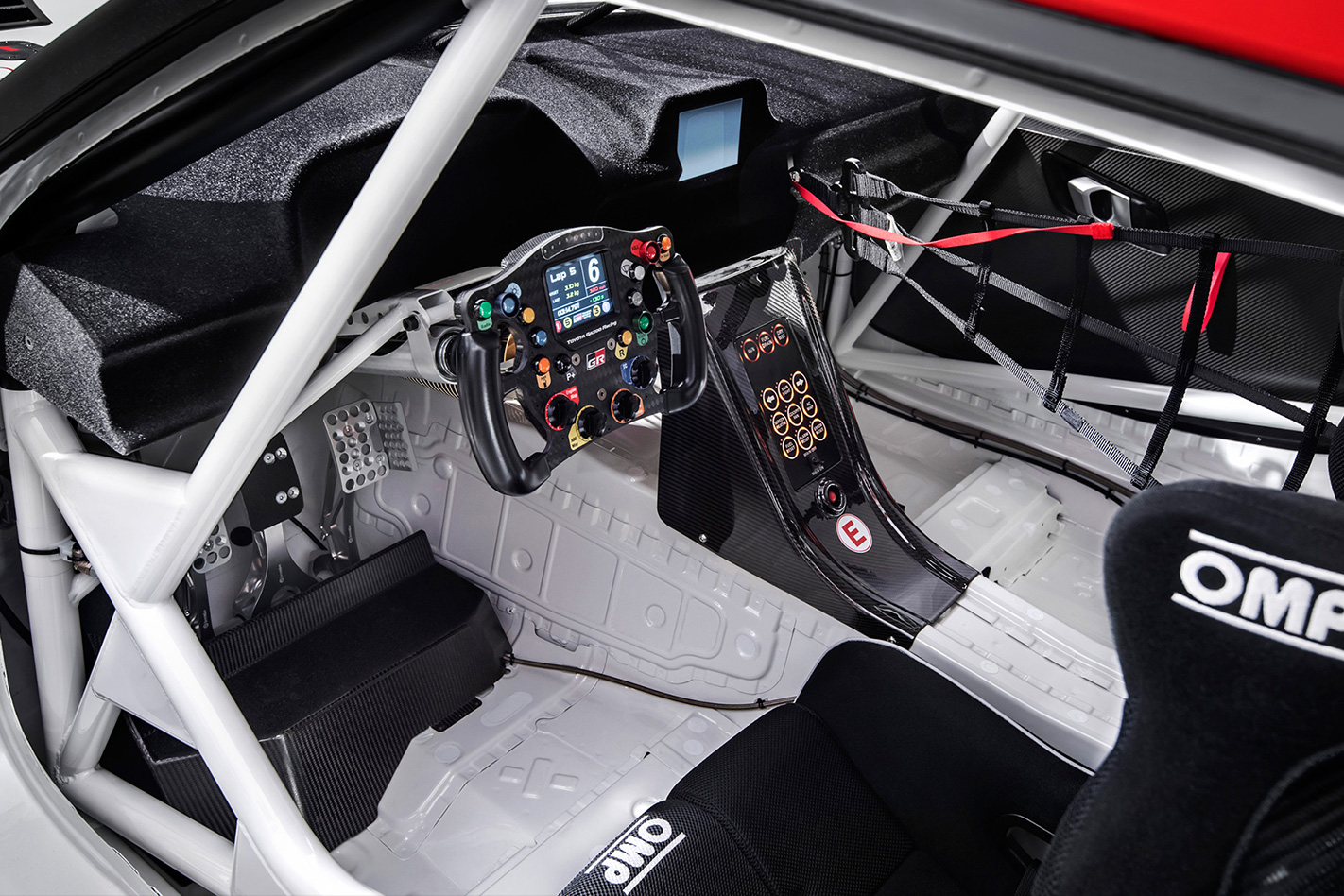
“We’re investigating both avenues, there’s always a trade-off because being road-legal brings restrictions,” Tada added.
The Supra’s chief engineer also enthused about his eagerness to see the car compete in motorsport around the world.
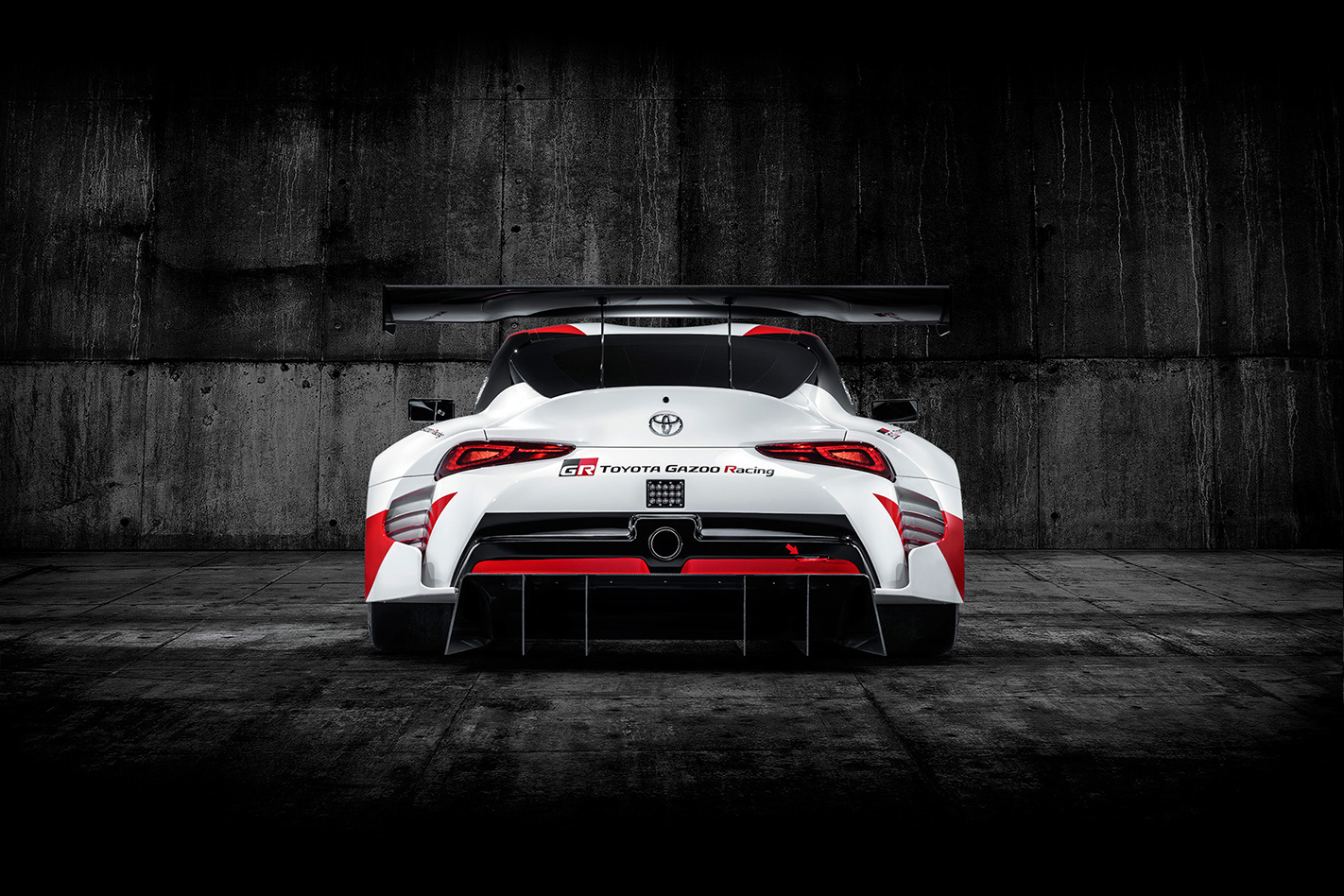
Toyota will run the Supra in NASCAR’s second-tier XFINITY series, however there is almost no link to the road car, with styling cues painted onto a stockcar body, with an old school V8 under the hood.
Japan’s SuperGT would be a logical home for the Supra, likely in the GT3-esque GT300 class. Toyota’s luxury arm Lexus already fields the LC500 coupe in the flagship GT500 class against the Honda NSX and Nissan GT-R. If built to GT300 regulations, a leap to GTE wouldn’t be a stretch, allowing the Supra to race at Le Mans against the likes of the Porsche 911 RSR and Ferrari 488.
LEWIS HAMILTON cruised to victory under lights in Singapore, at a venue where many expected Ferrari and Red Bull to dominate.
The plans for Hamilton’s usurping of the preconceived running order were laid in qualifying, when he put on a masterclass to steal pole from Max Verstappen and Sebastian Vettel.
Where the trio started is where they would finish the Singapore Grand Prix. However while Hamilton had it relatively easy at the lead of the race, Verstappen was forced to work for his second-place finish.
The Dutchman was on the dirty part of the grid, and Vettel got a run heading through the first complex of turns, but couldn’t make a pass stick.
However, the Ferrari driver drained his entire battery on the long run to turn five, slipping past the Red Bull in the nick of time before a Safety Car was called.
Bernd Maylander was summoned to the front of the field as Esteban Ocon’s Force India laid mangled and broken following contact with the circuit’s unforgiving concrete walls.
Ocon was the first and only DNF for the race, crashing at turn three after a bump from his teammate Sergio Perez that was awfully reminiscent of the pair’s multiple clashes last year.
As the official F1 safety car driver, Maylander has now led the fourth-most number of laps at the Singapore Grand Prix, overtaking Nico Rosberg after his 18th appearance in 11 grands prix at the venue.
Vettel held onto second during the opening portion of the race while the field played a game of tyre management on the hypersoft compound. Ferrari attempted to perform an undercut on Hamilton, but it backfired when Vettel was fed back out behind lapped traffic.
The situation then got worse for Vettel, who was on the ultrasoft compound, when Verstappen exited pit lane ahead of the Ferrari wearing the harder soft compound.
The 20-year-old Red Bull driver was battling with a powertrain that wanted to select neutral at part throttle, but Verstappen held onto his second place position to the end of the race.
Valtteri Bottas finished fourth behind Vettel, but ahead of Kimi Raikkonen, and Daniel Ricciardo. Fernando Alonso, Carlos Sainz, Charles Leclerc, and Nico Hulkenberg rounded out the top 10.
The most entertaining part of the 61-lap affair was Sergey Sirotkin’s antics in the bottom half of the field.
The Russian driver was ahead of Sergio Perez for most of the first half of the grand prix, much to the Mexican’s chagrin.
The Force India driver finally passed the Williams at the halfway point of the race, but with the red mist fogging Perez’s visor, the faster driver moved hard left, causing a collision with Sirotkin. Perez was handed a pit lane penalty for his efforts.
Then it was Kevin Magnussen’s turn to tussle with the Russian. The pair were duelling when race leaders Hamilton and Verstappen arrived on the scene.
The two backmarkers did little to abide by the blue flags, allowing Verstappen to close in on Hamilton. Despite a look down the inside by Verstappen as he and Hamilton lapped traffic, the order at the lead of the race remained unchanged.
Kiwi Brendon Hartley was the third and final driver to rub shoulders with Sirotkin, with the Williams driver being handed a five second penalty for almost forcing the Toro Rosso into the barriers.
Hamilton now has a 40-point lead over Vettel with just six grands prix left in the championship. With only 25 points available for a victory, the odds are being stacked against Vettel in the fight for a fifth world title. There’s still aglimpse of hope for Vettel insofar as he can win if he finishes the remaining races first, with Hamilton consistently second. His fate is, for the time being at least, in his own hands.
However, in Formula 1 you can never be assured of victory, as Vettel knows all too well.
JAMIE WHINCUP and Paul Dumbrell were unchallenged during 161 laps of running at Sandown to clinch the opening race of the Supercars’ enduro season in dominant form.
The duo led home Red Bull Holden Racing Team teammates Shane van Gisbergen and Earl Bamber who finished second, while Craig Lowndes and Steven Richards made it a clean sweep of the podium for Triple Eight Race Engineering.
A second place in the 500-kilometre race helped van Gisbergen extend his championship lead, while earning Bamber a podium for his Supercars’ debut.
Whincup and Dumbrell were untouchable throughout the race, leading from the start, and only conceding first place during the pit stop cycles. The duo lapped all but the top 12 finishers during the race.
It wasn’t as easy for the second and third placed finishers, who started in the middle of the pack following a pair of chaotic qualifying races on Saturday. Bamber and Richards worked hard in the early portion of the race, handing their cars over to van Gisbergen and Lowndes inside the top five.
The podium sweep is the first for any team in Sandown 500 history.
Scott McLaughlin and Alex Premat finished in fourth place, holding off polesitters David Reynolds and Luke Youlden who couldn’t pass the DJR Team Penske car despite a late-race pace advantage.
McLaughlin stated he and Premat “got properly smoked” by the Triple Eight trio.
“If it wasn’t for the safety car, they probably would have lapped the whole field,” he said following the race.
Ford teams began to air worries about an aero disadvantage to the Holden ZB Commodore over the weekend. The new Commodore appeared to have a straight-line speed advantage over the ageing FG X Falcon, which gave the Holden crews the upper hand on Sandown’s pair of long straights.
With Bathurst having a similar focus on top speed, the Ford crews will be scratching their heads looking for a solution before the next race.
There were a number of impressive drives through the field, in particular Garth Tander and Chris Pither, who dropped to dead last following contact on the first lap. The pair then put their heads down and pushed on, finishing in ninth place by the end of the race.
Finishing in second place allowed van Gisbergen to extend his championship lead over McLaughlin, with 55 points now separating the pair.
Whincup is still third in the points’ standings, with a 338 deficit to his teammate heading to Mount Panorama.
The next race of the season is the Bathurst 1000 on October 7.
