
As the shattering realisation sets in that there will soon be no more atmo Porsche 911, the older and atmo Porkers are only going to increase in value.
But what do you do if you can’t see yourself dealing with a high-maintenance classic? You buy a new Carrera.
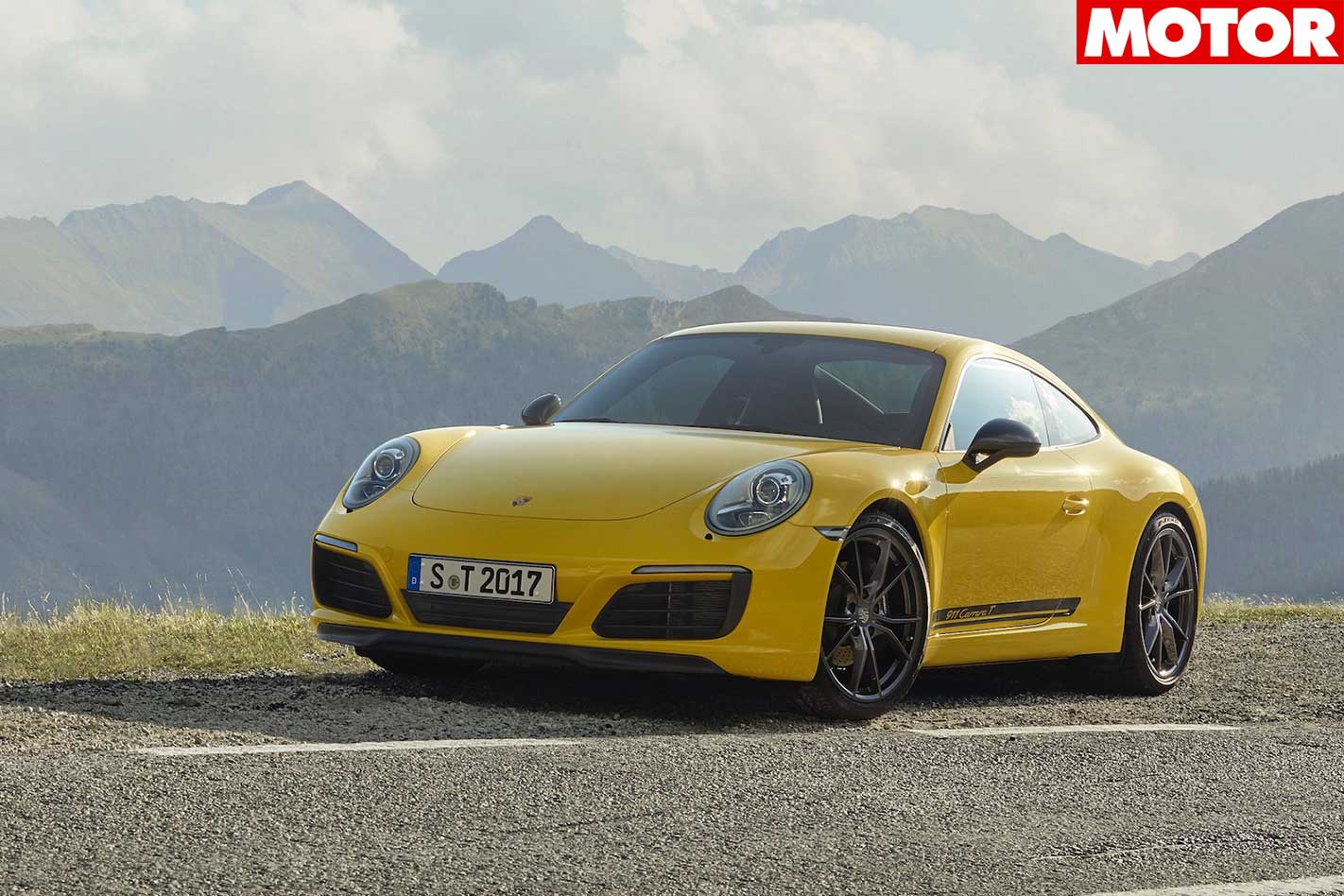
Enter the Carrera 2.7. Air-cooled, barely more than a tonne of metal, and a sound that will bring joy to even the atmo-agnostics. Sure, it’s not going to be as comfortable as the new Porker, but why are you worried about being comfortable if you’re buying a Carrera?
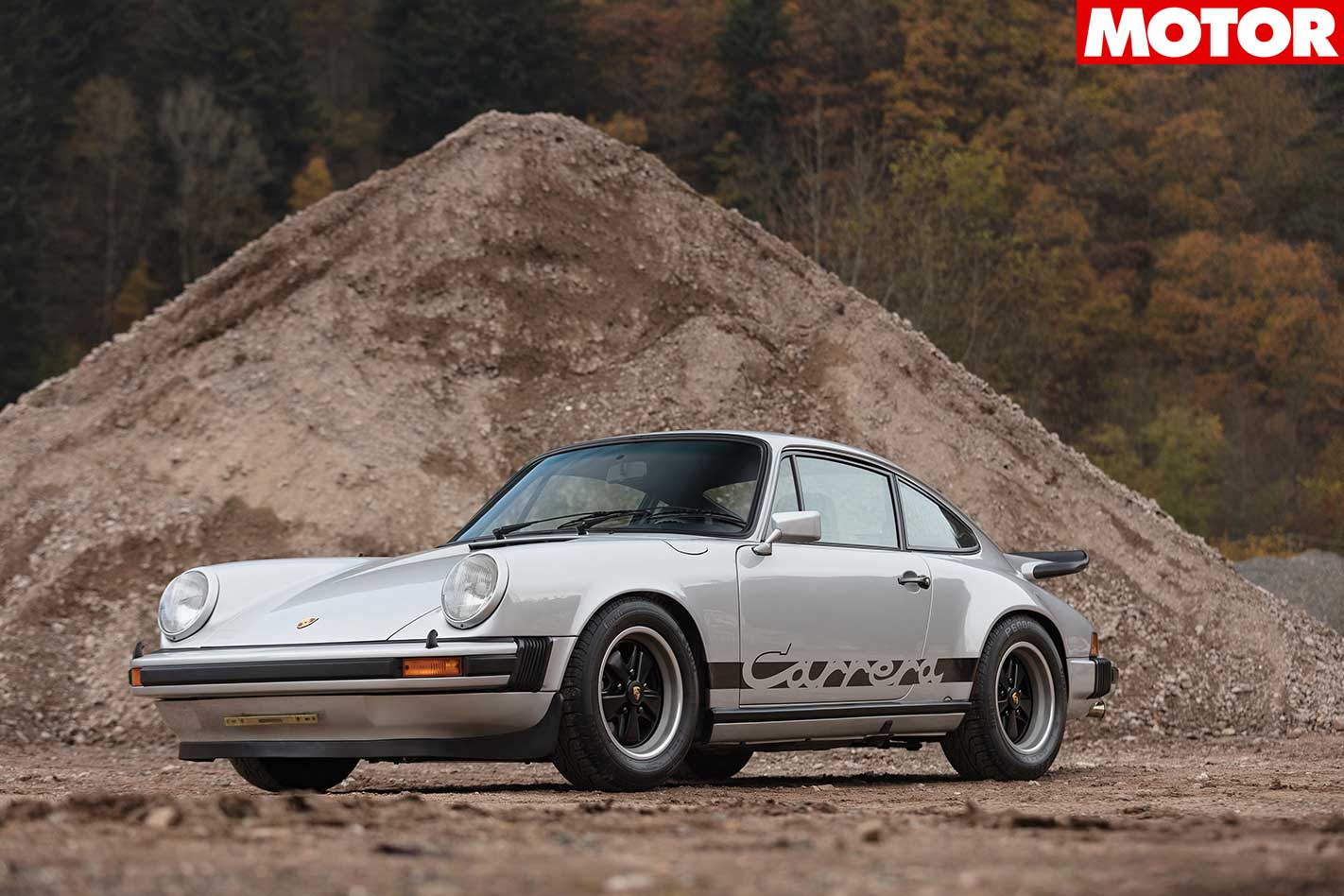
In terms of the ‘magic handling’ our Feb ’75 article describes, you might find yourself feeling a little more confident in the new Carrera, with Porsche’s active stability management (or PASM) being a standard feature.
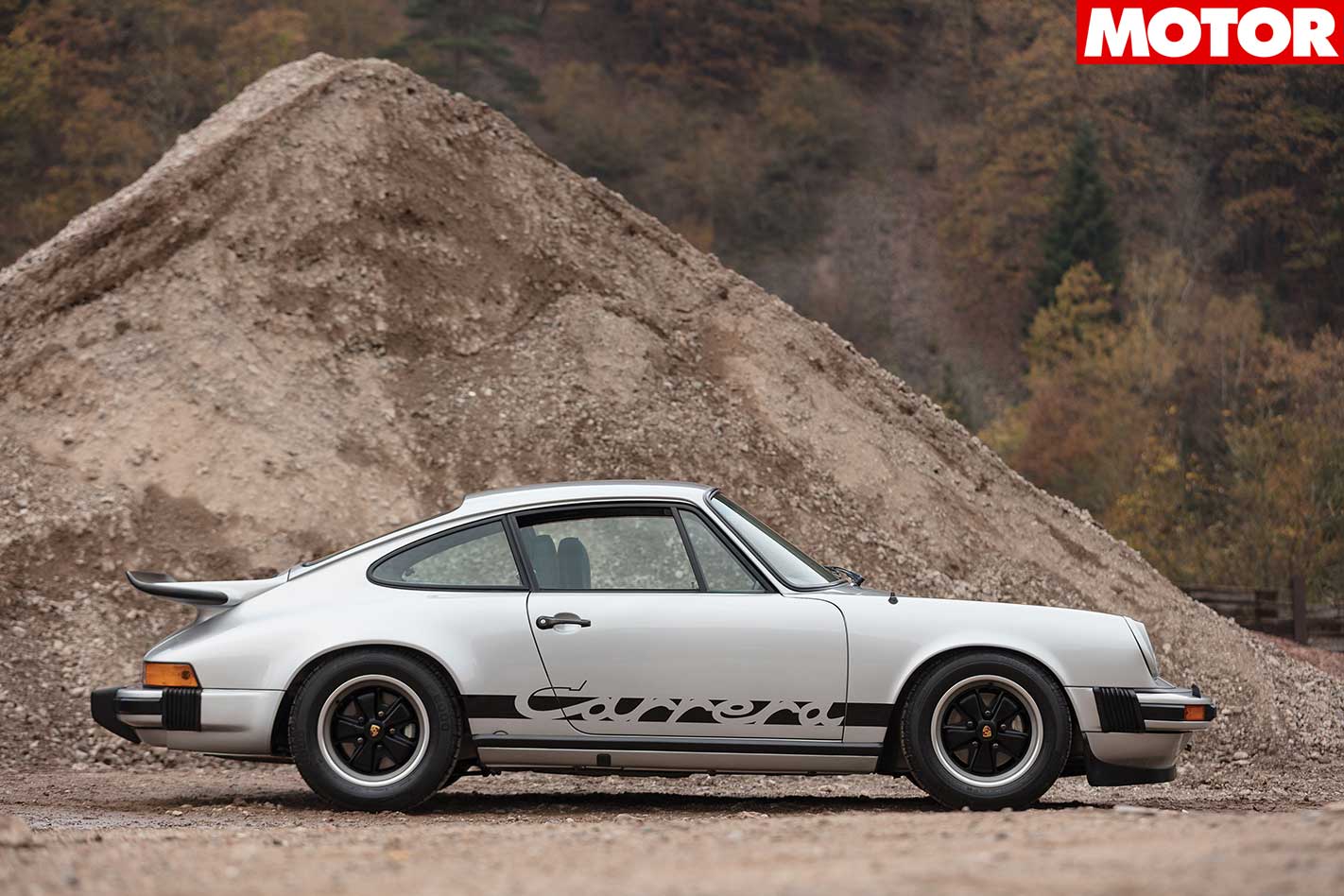
| u00a0 | 2018 Porsche 911u00a0Carrera T | 1975 911 Carrera 2.7 |
| ENGINE | 2981cc flat-6, DOHC, 24v, twin-turbo | 2687cc flat-6, SOHC, 12v |
| POWER | 272kW @ 6500rpm | 154kW @ 6300rpm |
| TORQUE | 450Nm @ 1750-5000rpm | 255Nm @ 5100rpm |
| WEIGHT | 1425kg | 1075kg |
| 0-100KM/H | 4.5secu00a0(claimed) | 6.3sec (est) |
| PRICE | $238,400 | $24,895 (1975) |
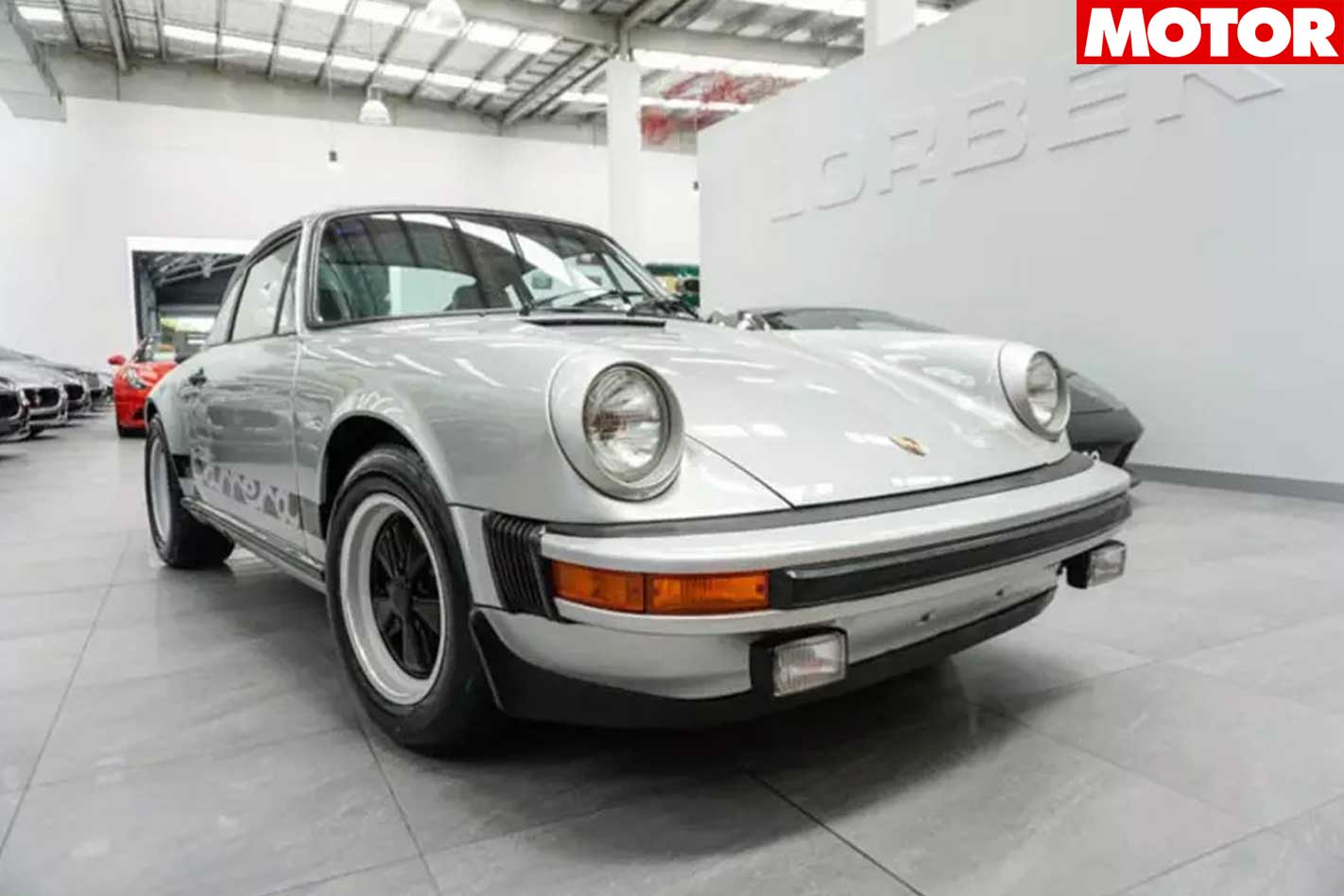
Here’s one we found on Trade Unique Cars
1975 911 Carrera 2.7 – $219,990; left-hook; 74,515km
Last year 45,592 passenger cars and light commercial vehicles were stolen across Australia, with more than a quarter of those thefts occurring in Victoria alone.
According to the National Motor Vehicle Theft Reduction Council, almost 13,000 cars were stolen in the Garden State during 2017 – an average of 40 a day. There was some good news for Victorian residents though, as the number of thefts has actually dropped, by 22.8 percent, compared to 2016 when 16,544 vehicles were taken.
| How to prevent your car from being stolen
The City of Hume in Melbourne‘s outer north experienced the greatest concentration of thefts in Victoria, with more than 800 vehicles pinched from within its borders, followed closely by Greater Geelong where 740 cars were swiped.
Hume and Geelong were by no means the worst local government areas (LGAs) for car theft, though. Three South East Queensland municipal areas made the top four including Brisbane CBD, Gold Coast, and Logan City, which accounted for 2118, 1375 and 906 thefts respectively.
The Australian Capital Territory had, surprisingly, the third-highest LGA theft rate, with 1170 cars taken; a 42.3 percent increase over 2016, and more stolen cars than in Tasmania (1111) and Northern Territory (837).
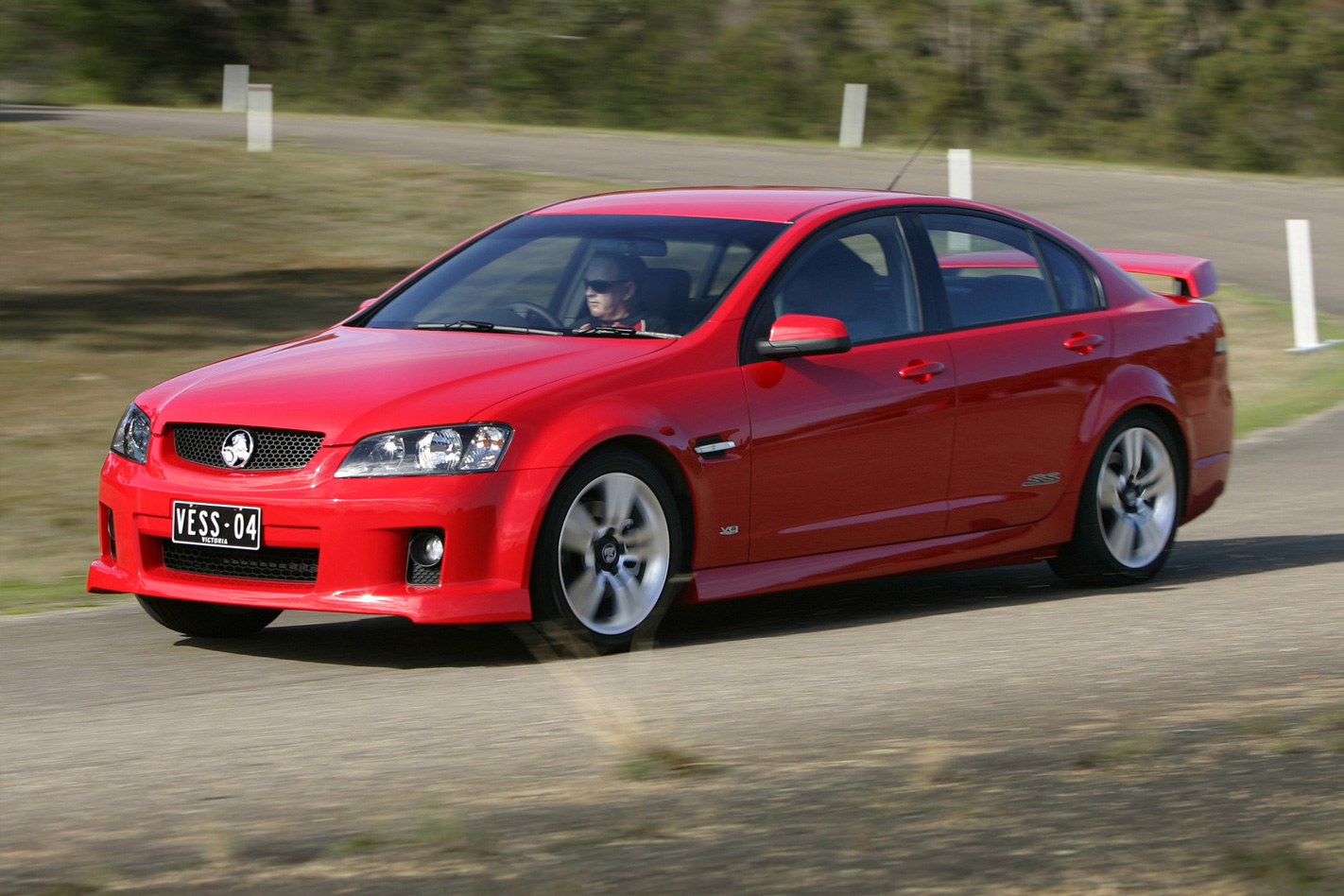
The Commodore was Australia’s most stolen car in 2017, with a total of 3280 taken including 908 VE models.
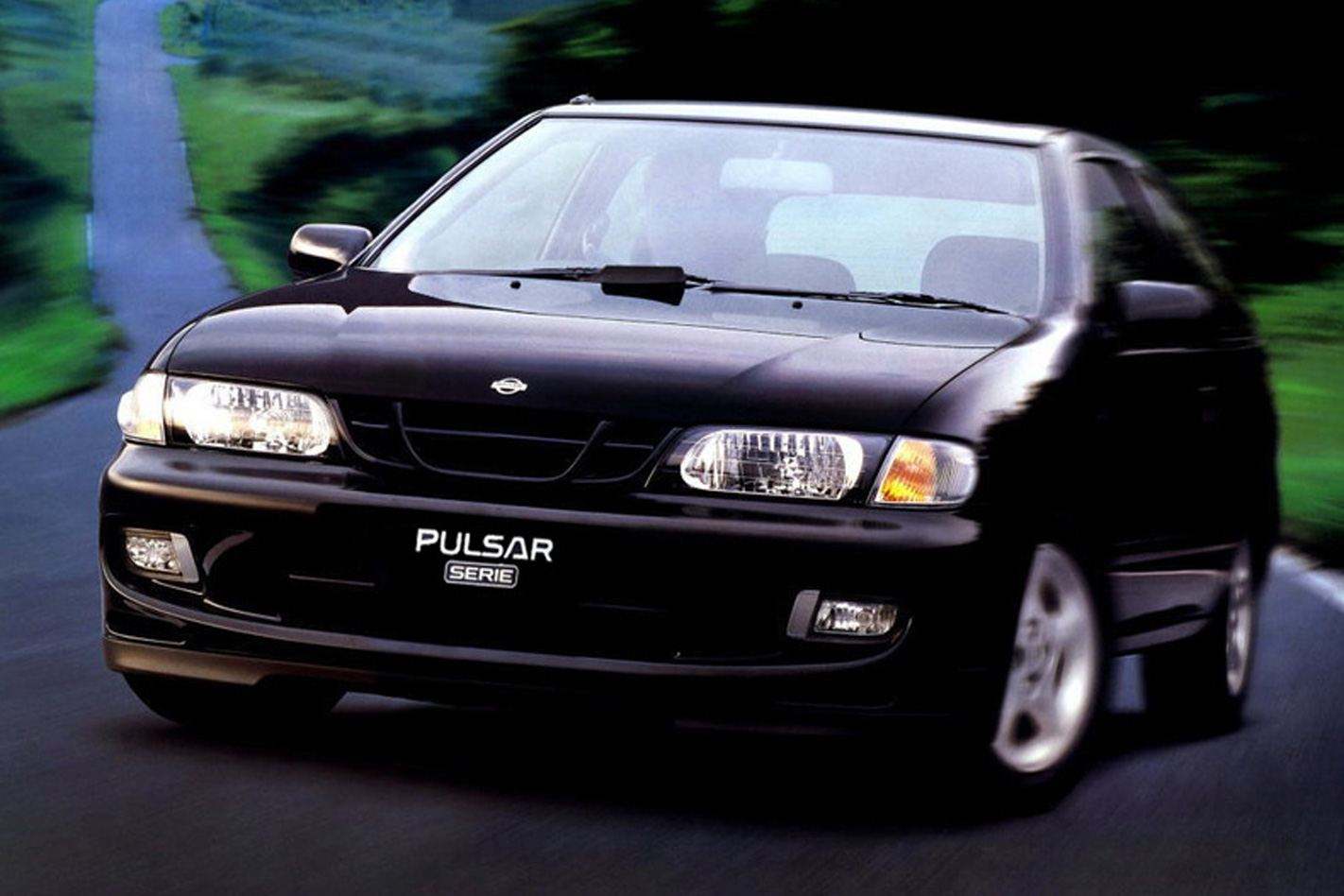
The Nissan Pulsar, which was the most prolifically stolen car in 2016, is still inexplicably popular with thieves. A total of 747 N15 models (1995-2000) were pilfered, trailed by 596 stolen Hiluxes built between 2005 and 2011, and 577 BA Falcons (2002-2005) that also proved popular among thieves.
Overall, thefts in 2017 fell by 7.4 percent, thanks largely to a 9.6 percent reduction in ‘short-term’ thefts where cars were pinched and later recovered. However, profit motivated thefts – where cars are stolen to be sold or broken up for parts – increased by 1.2 percent nationally, and 8.7 percent in NSW.

Three out of every five cars stolen happened to be valued at less than $5000 making up about 10 percent of the estimated $506 million worth of losses. One in five thefts were of cars valued from $10,000 to $20,000, while cars valued at more than $50,000 accounted for only one in every 50.
2017 vehicle thefts by state
- ACT – 1174 +42.3%
- NSW – 10,037 +1.6%
- NT – 837 -9.7%
- QLD – 9029 +10.5%
- SA – 2342 -14%
- TAS – 1111 +7.6%
- VIC – 12,768 -22.8%
- WA – 5294 -10.2%
HE’S THE front-row forward who barged all the way onto the grid at the Indianapolis 500, along the way building a major motorsport media agency and establishing friendships with pretty much everyone who’s anyone in motor racing, both here and in the US.
In the 50 years since his birth in Albury, NSW – also where he was selected to play for Australia in American football – Brett ‘Crusher’ Murray has led the sort of life that would make a great book. Which, of course, he’s just written, and called it Crusher: You Just Can’t Make That S#^! Up.
Murray has never lacked mental strength, motivation or business smarts. “I come from a working-class family – my dad worked for Borg-Warner, making transmissions. The best thing my mum and dad gave me was knowing that if I went and had a crack at something and it didn’t work out, there was a roof over my head.
“My first business venture was selling fireworks illegally at school. I got caught and that was that, but I’d made good money. Then I ran an SP book at school. I got top marks in Year 10 because a teacher owed me money, so that wasn’t a bad result.”

At 16 he left school for a newspaper gig as a cadet sports journalist, but the footy continued and at 19, Murray was selected for the Kookaburras national gridiron team. “I toured the US and Europe; I got offered a US college scholarship, but declined it because I’d just been made Sports Editor of the Border Mail in Albury, at 19. One of my knees was bunged up, anyway, so I thought that was the better option.”
In 1989, he relocated to Queensland with a gig on the Gold Coast Bulletin. His report on that year’s Sandown 500 caught the eye of Tony Longhurst, who invited Murray to accompany his Ford Sierra team to Bathurst. “I saw a niche in the market in PR there … [over the next few years] I sort-of created a bit of PR stuff on the side and in 1992 I started out on my own.”
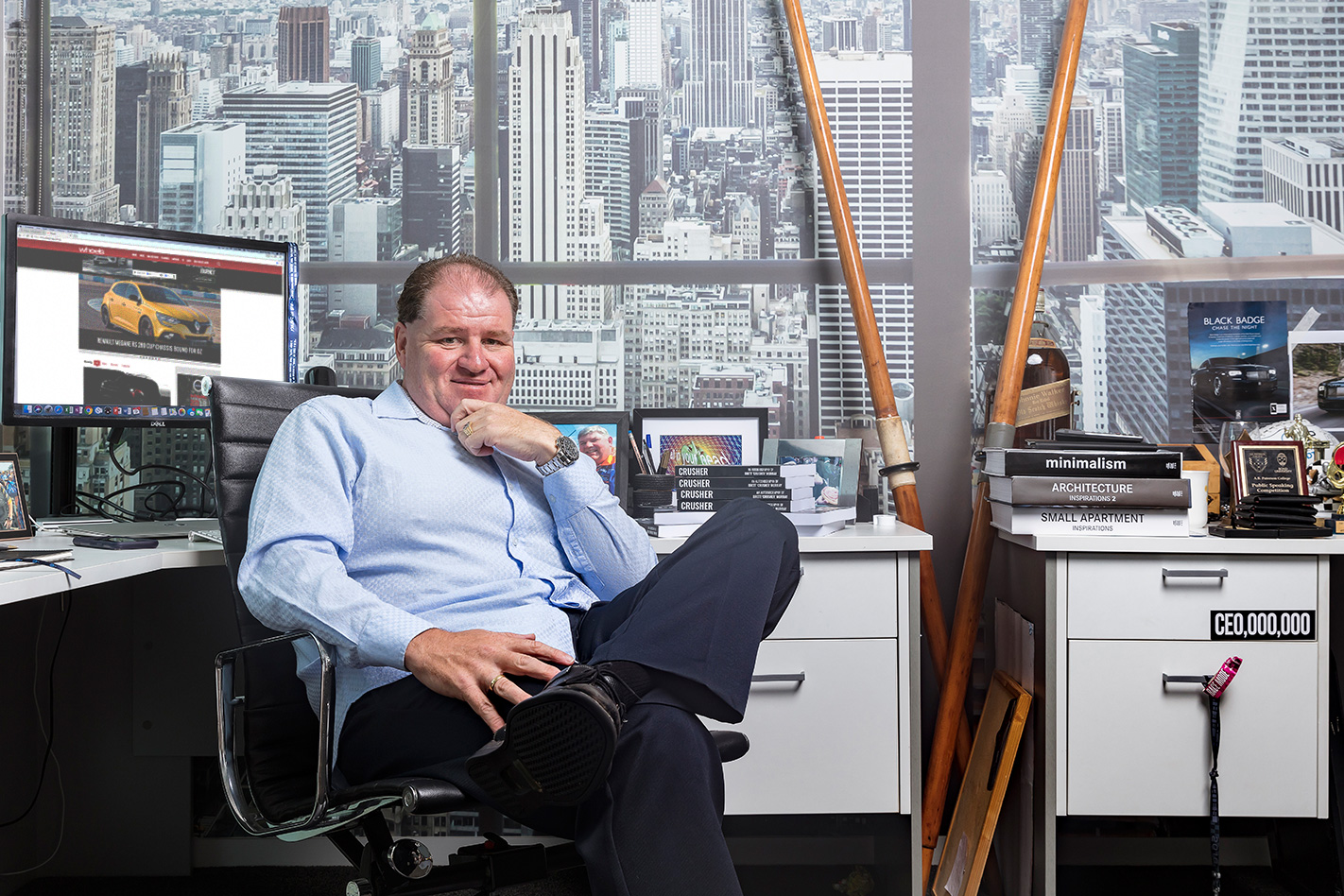
With his mix of dry humour and hard-nosed professionalism, Murray has always won friendships and respect around the paddocks, but he admits: “I don’t get close to too many of them, because you’re always a bit wary of when it does go wrong …” The loss of Indy drivers Renna and Greg Moore, and local Gregg Hansford, were all close to home.
Marcos Ambrose’s NASCAR venture prompted Murray to set up a branch of his business in the US. While things at home were going great – Murray represented Stone Bros Racing through its 2003-’05 hat-trick of championships with Ambrose (2003-’04) and Russell Ingall – there was one overarching ambition that Murray yearned to satisfy: to race at the Indianapolis 500.
He achieved that dream in 2016, with Pirtek-backed Team Murray fielding driver Matt Brabham, who ran as high as 14th before finishing 22nd.
“The 500, the Indianapolis Speedway is the Mecca to me,” says Murray.
“I’m not necessarily a motorsports fan. I know that sounds weird. I’m a fan of the business, the people, the stories – at the end of the day, I’m a storyteller.”
IT BEGINS, fittingly I guess, in a classroom.
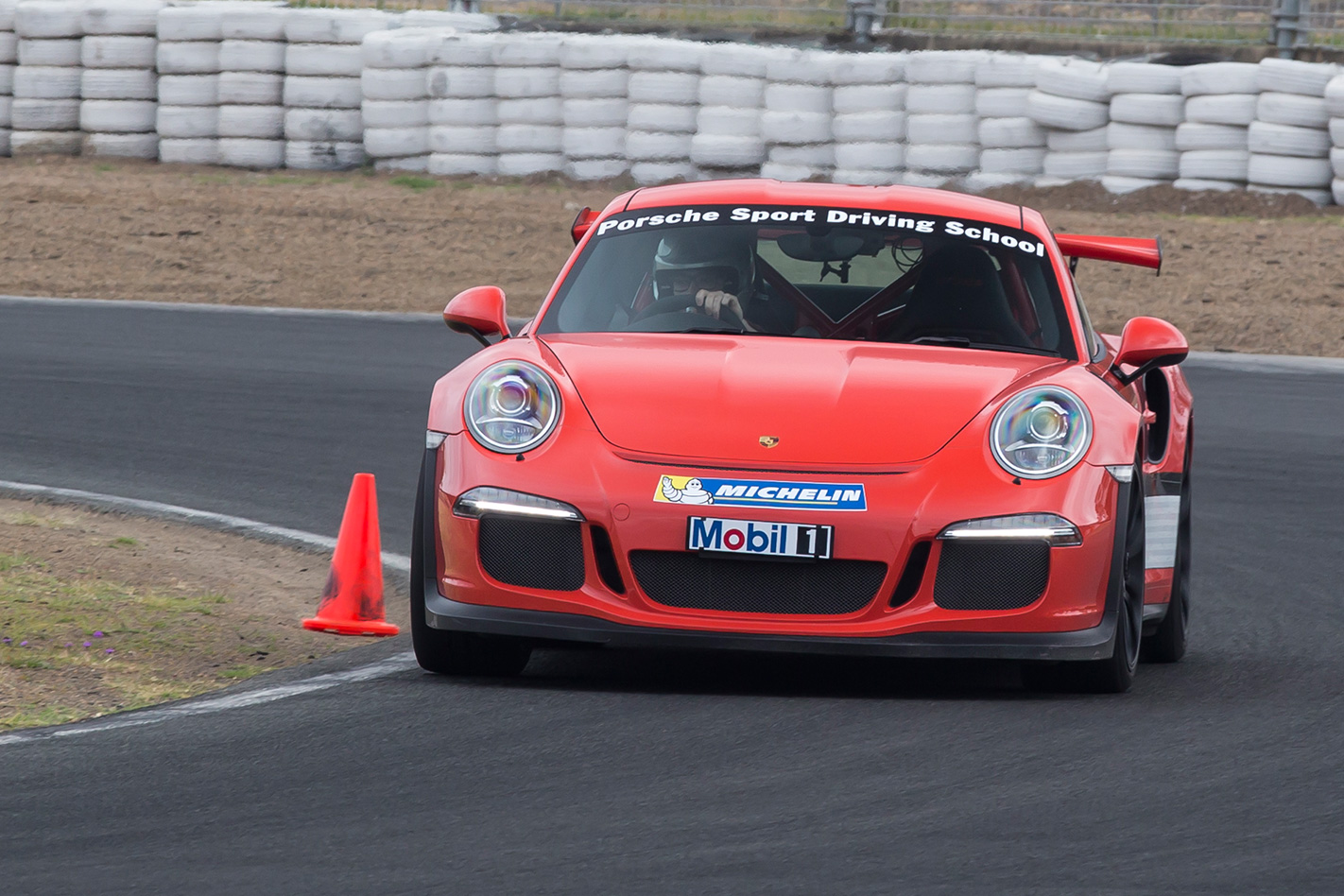
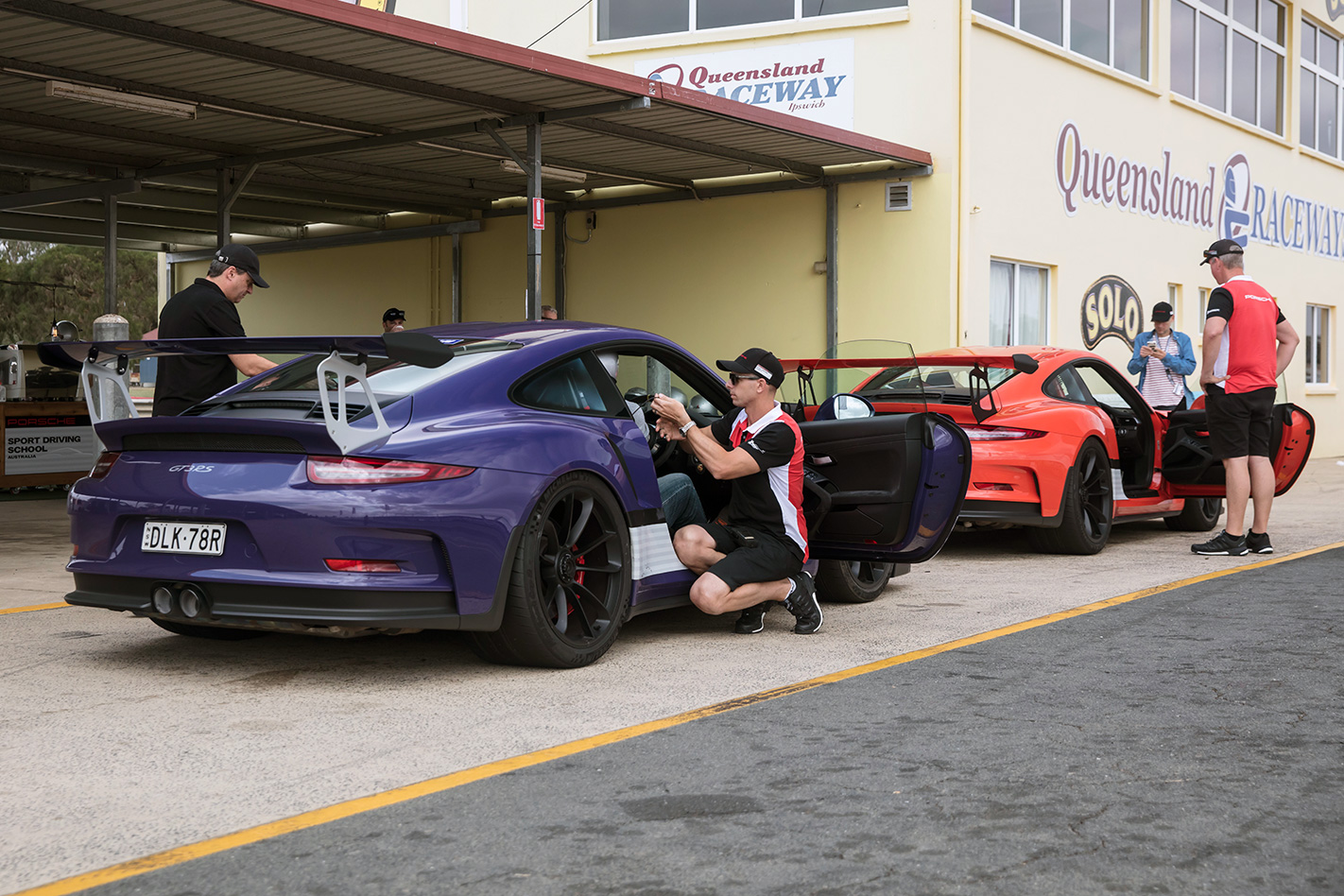
Outside, not 10 metres away, sits ‘my’ Porsche 911 GT3 RS, resplendent in Lava Orange, its tyre pressures set just so, its flat six thrumming away as oils and vital fluids are brought to temperature.
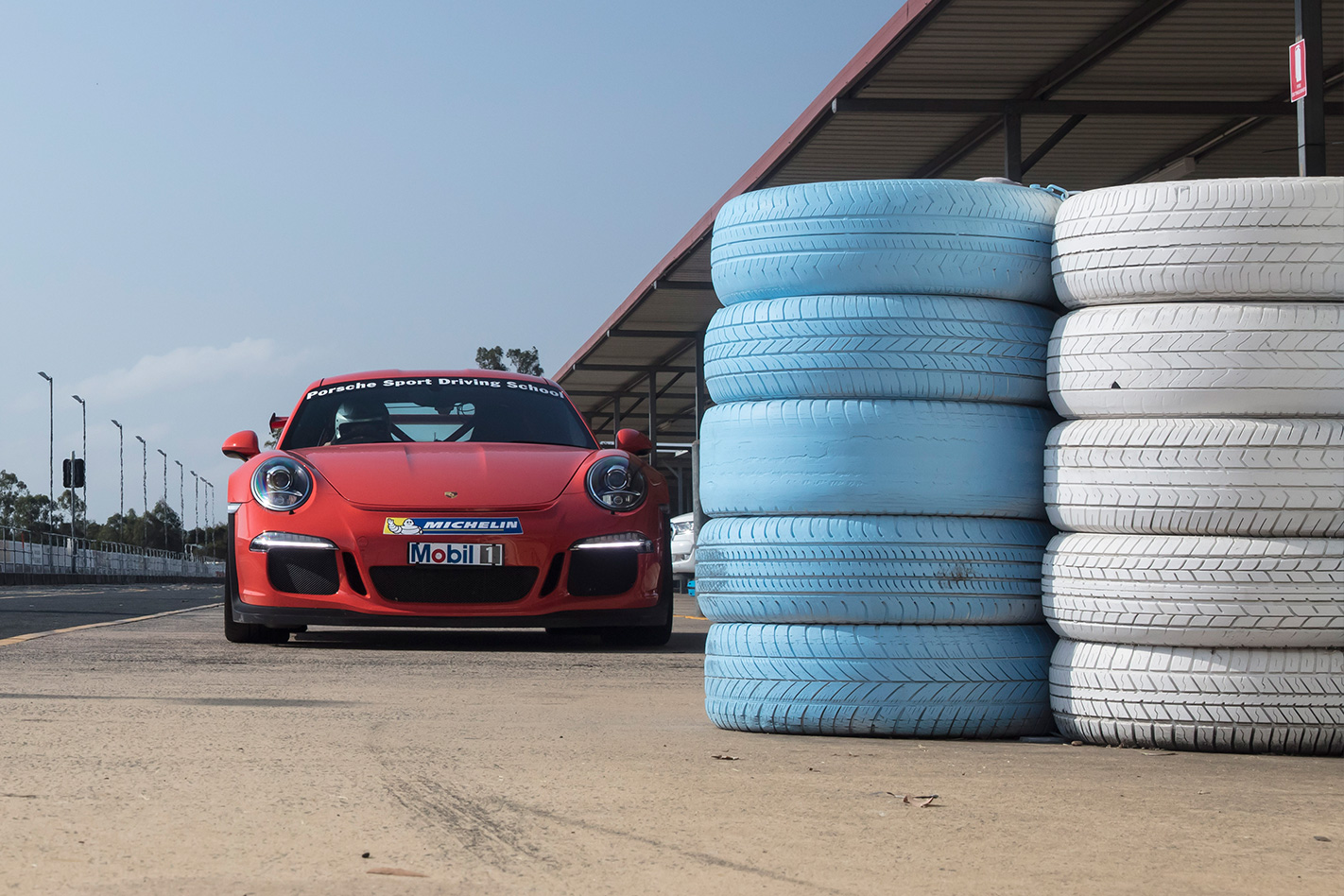
It’s designed, I deduce, to knock some of the confidence from our sails. Not that I have much left. The seeds of self-doubt are blowing my way, and the morning has been spent with some germinating in the concern that I’m about to be not so brilliant at something most car lovers desperately want to be brilliant at – driving quickly. After all, there’s no hiding today.
Porsche runs around 80 drive day programs in Australia each year, ranging from the entry-level $1540 Precision course, where punters can drive the Porsche range in a controlled, speed-limit-free environment, right through to the $6600 ‘GT3 Cup’ that provides Queensland Raceway, a slick-shod 991 Cup Car and your own race engineer for an entire day.
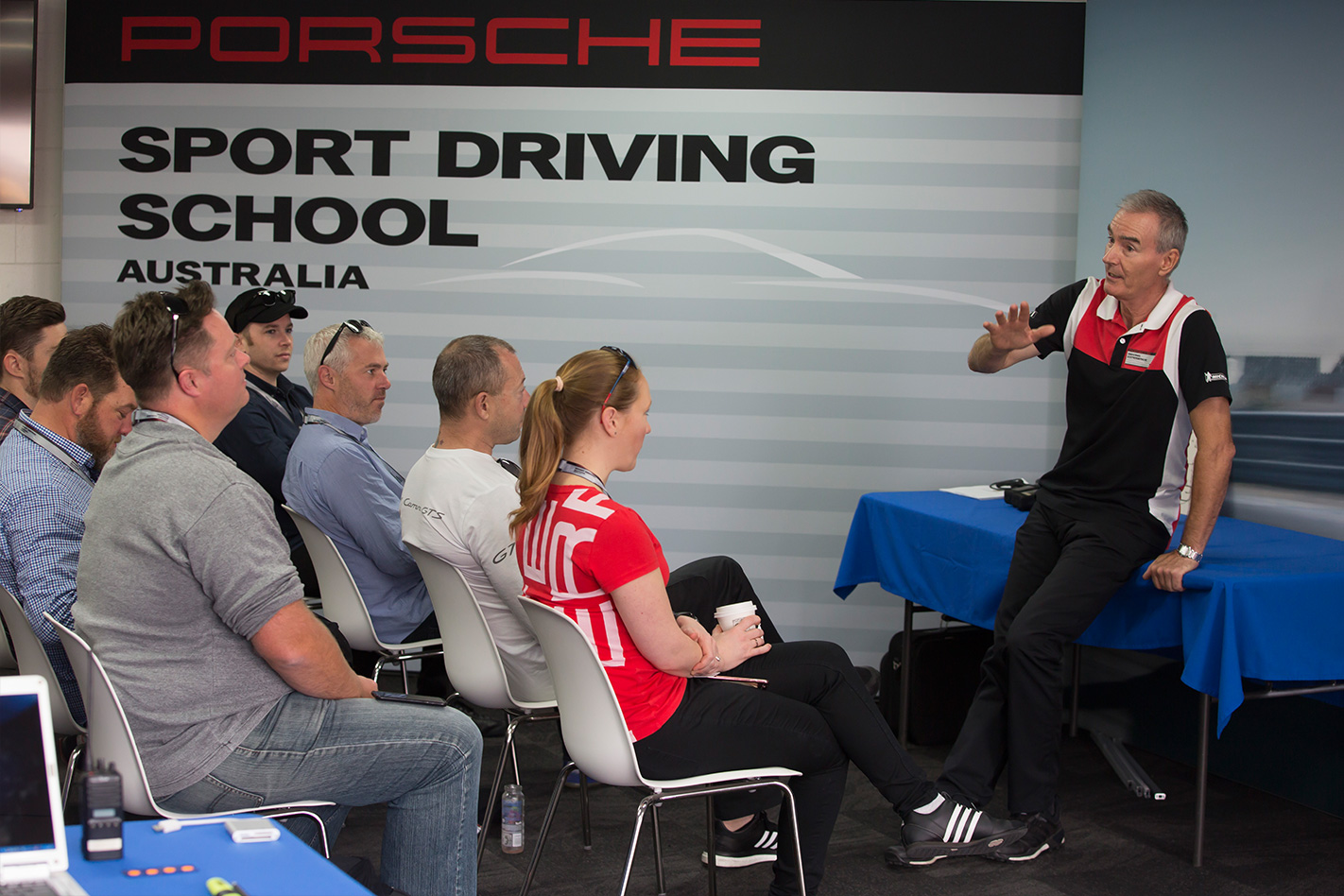
Like I said, no hiding.
However, Mezera is well practised at putting jangled nerves at ease.
“The most important thing today is to relax,” he says in his slow Czech accent. “It’s all about your attitude and approach. I can have [Fernando] Alonso here and he would go out and feel the car first, then hang its balls out. I expect the same from you lads.”
Ably supporting Mezera are 2017 Bathurst 1000 winner Luke Youlden and freshly minted Touring Car Masters champion Steve Johnson, who are given the task of being our hands-on instructors for the day.
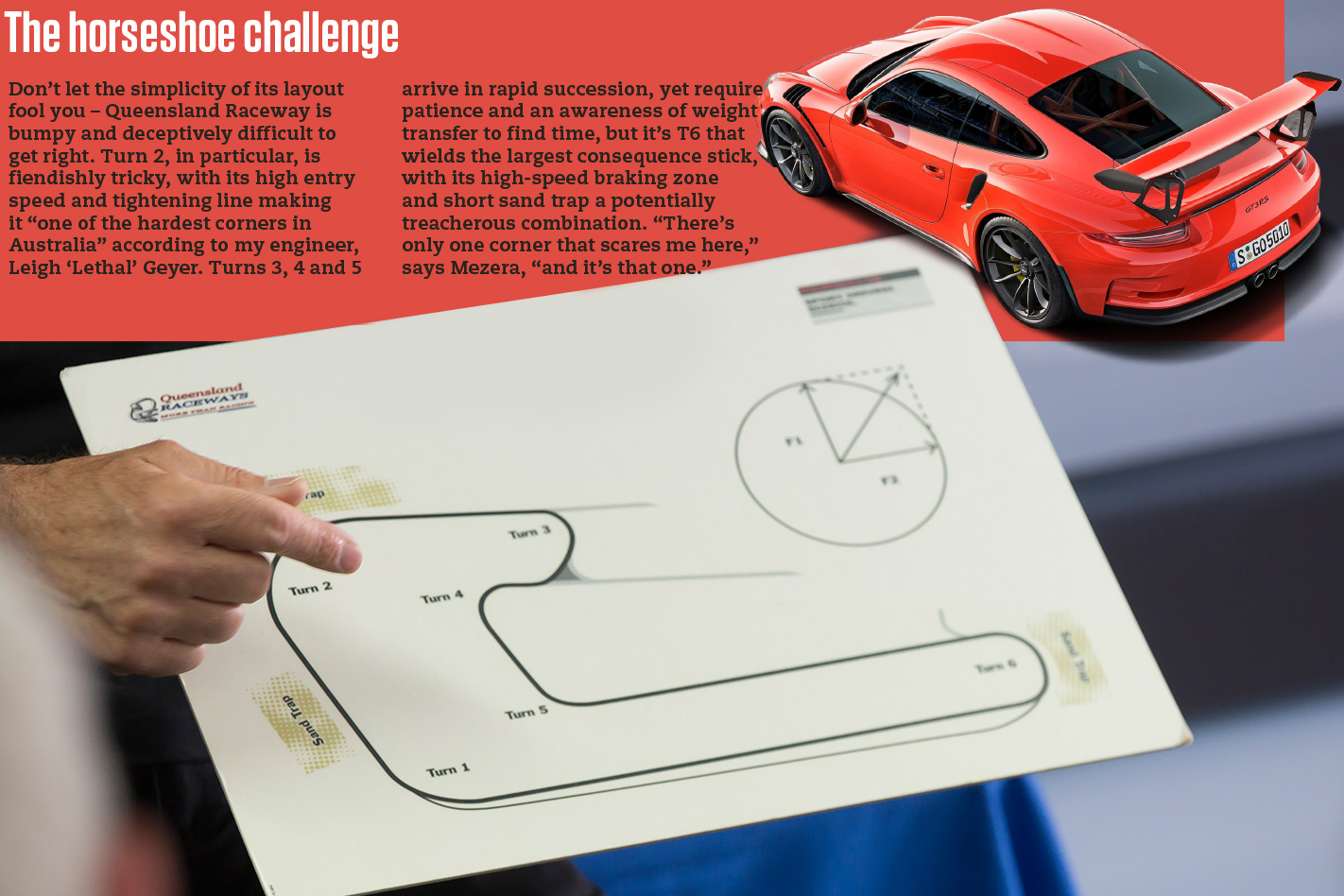
I’m assigned Johnson and the instruction begins, not in the GT3, but a dog-eared Cayenne. Johnson is at the wheel, me pinned in the passenger seat as he gives me my first proper look at the track’s deceptively simple layout.
“It’s all about being smooth and keeping your vision up,” says Johnson as he tips the Cayenne into the big commitment Turn 1 with one finger on the wheel. “We just went through there faster than most of our customers do.”
My first solo stint in the GT3 is overly cautious. I’m learning the circuit and also learning the car, having never driven a GT3 RS before, or any GT 911 for that matter.
It doesn’t take long before I feel comfortable. Porsche’s $387,300 GT3 RS is friendly, progressive and predictable, with huge grip at the rear axle and a howling, evocative soundtrack. I’m instantly reassured this isn’t a car I need to ‘learn’, but rather one where I can focus on myself without having to second guess how the car will respond to my inputs.
With the laptop’s hard drive humming, Leigh reveals my fastest time is a 64.1sec, which unsurprisingly, is hopelessly slow. Lethal doesn’t sugar coat it; he says most Porsche owners who regularly track their cars manage a high 61 or low 62sec by the end of the day.
Time to find, then, and the secrets to unlocking it lurk in the data. Initially the speed traces are confusing, like colourful mountains that rise and fall in jagged little steps, but with Lethal’s help, they begin to make sense. My time is overlaid with a 59.1sec delta set by Mezera and it’s obvious where I’m losing time. Braking is my biggest weakness, with my initial application too soft.
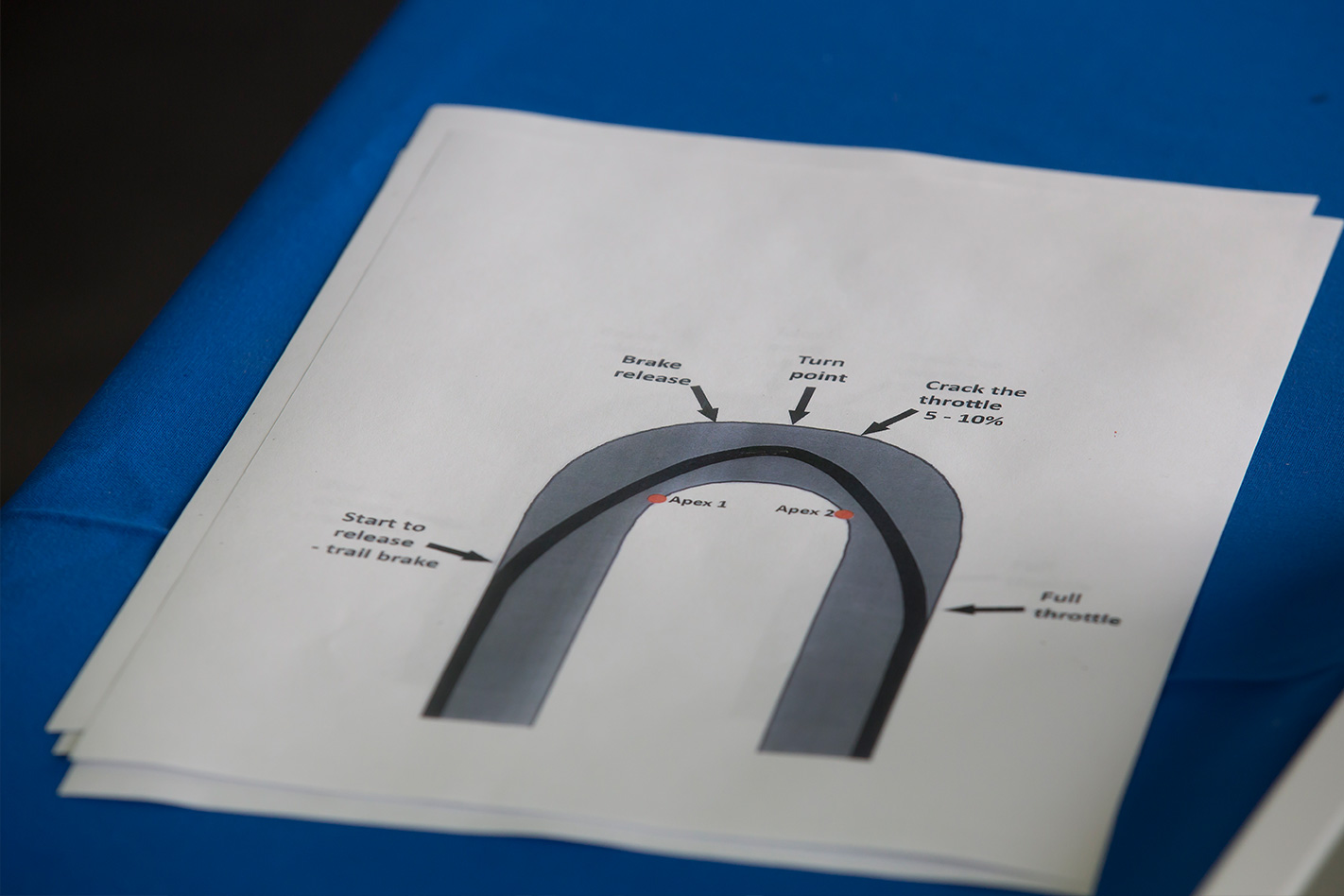
I need to carry more brake into the corner, too, with Leigh explaining I should divide the braking phase into two parts: a big application that hovers just on the edge of ABS to wash off 80 percent of my speed, then slowly bleed off the pedal as I add more steering lock.
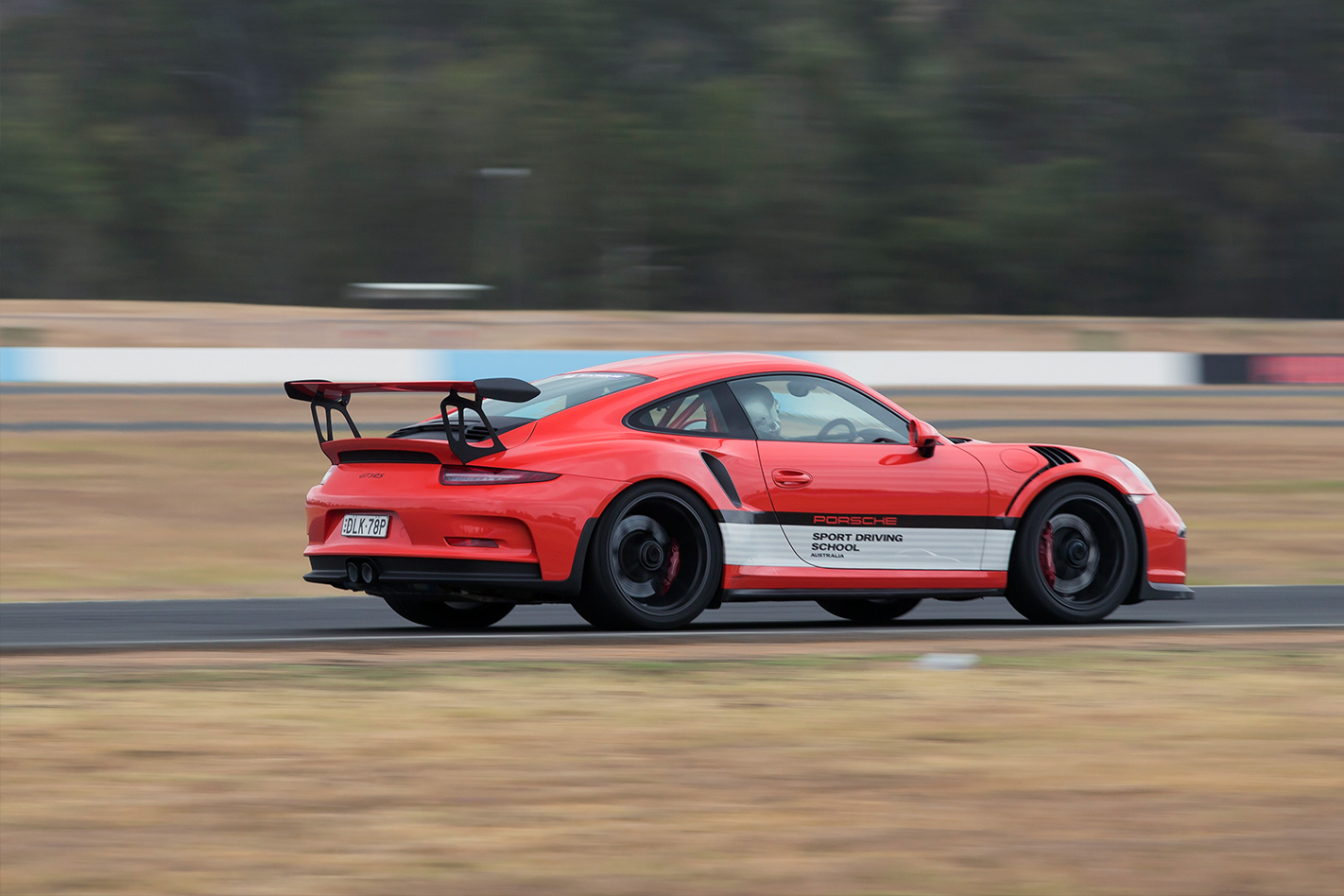
I’m discovering other quirks with the GT3 too, despite my initial confidence. Mounting the engine behind the rear axle means it’s prone to oversteer if you brake too hard or too late with lock applied, and I’m also encountering power understeer through the slower Turn Four and Five complex as I greedily feed in the throttle in a misguided attempt to go faster. Patience and decisive, smooth inputs are the cure for both issues.
My second five-lap session slices 3.0sec from my time, and before lunch, I head out for the first of three 10-lap stints. It’s here I discover first hand how much the weather and track temperature can impact lap times. With the sun hidden behind thick cloud and the ambient temp hovering in the low 20s, grip levels spike and everyone goes faster, with my best effort a 60.2sec.
Still, I’m demoralised at lunch. Others in the course have gone more than a second faster, and I’m starting to bump into my talent threshold, my last session relying on the GT3’s deftly calibrated electronics to save me from some ham-fisted inputs at more than 120km/h.
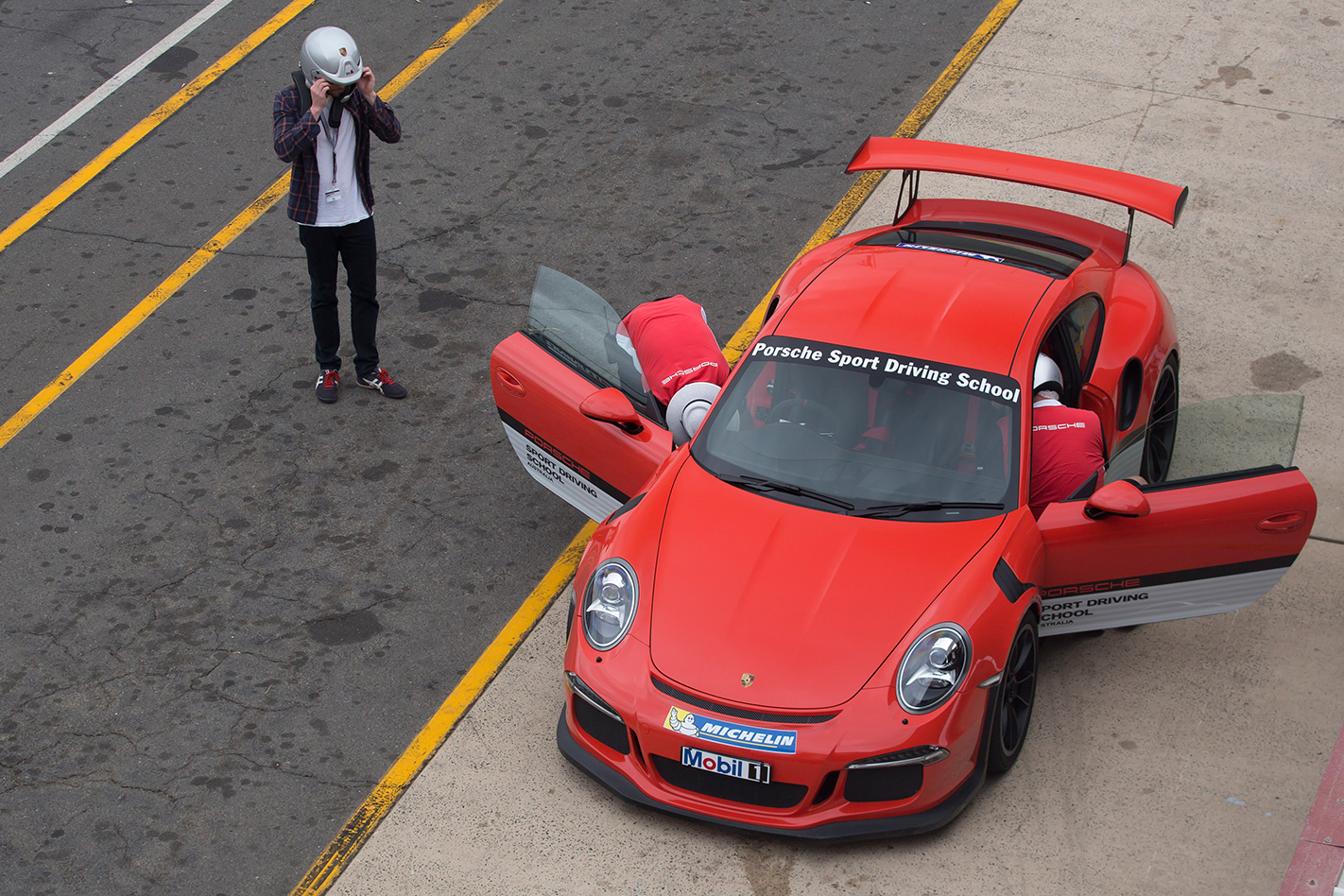
“You’re textbook into Turn 1 and through Turn 6, but there’s lots of time to find at the exit of Turn 1 and Turn 2,” he says. “You need to be braver.”
The real turning point, however, arrives just before I head out for my final two 10 lap stints. Perhaps sensing my frustration, Johnson takes me for a passenger ride in the GT3 RS and it’s here where things begin to click. Seeing Mezera’s speed trace and understanding what the car is capable of on a computer screen is one thing, but experiencing it first hand, and feeling how smooth Johnson is and how much lateral load the car can take, is a light bulb moment.
My next session is my best yet. Consistent and relaxed, I manage a string of 59.5sec laps by piecing together all of the day’s advice: vision up, stay calm, late on the brake, carry as much speed to the apex as possible, rotate the car and then patiently feed in the throttle.
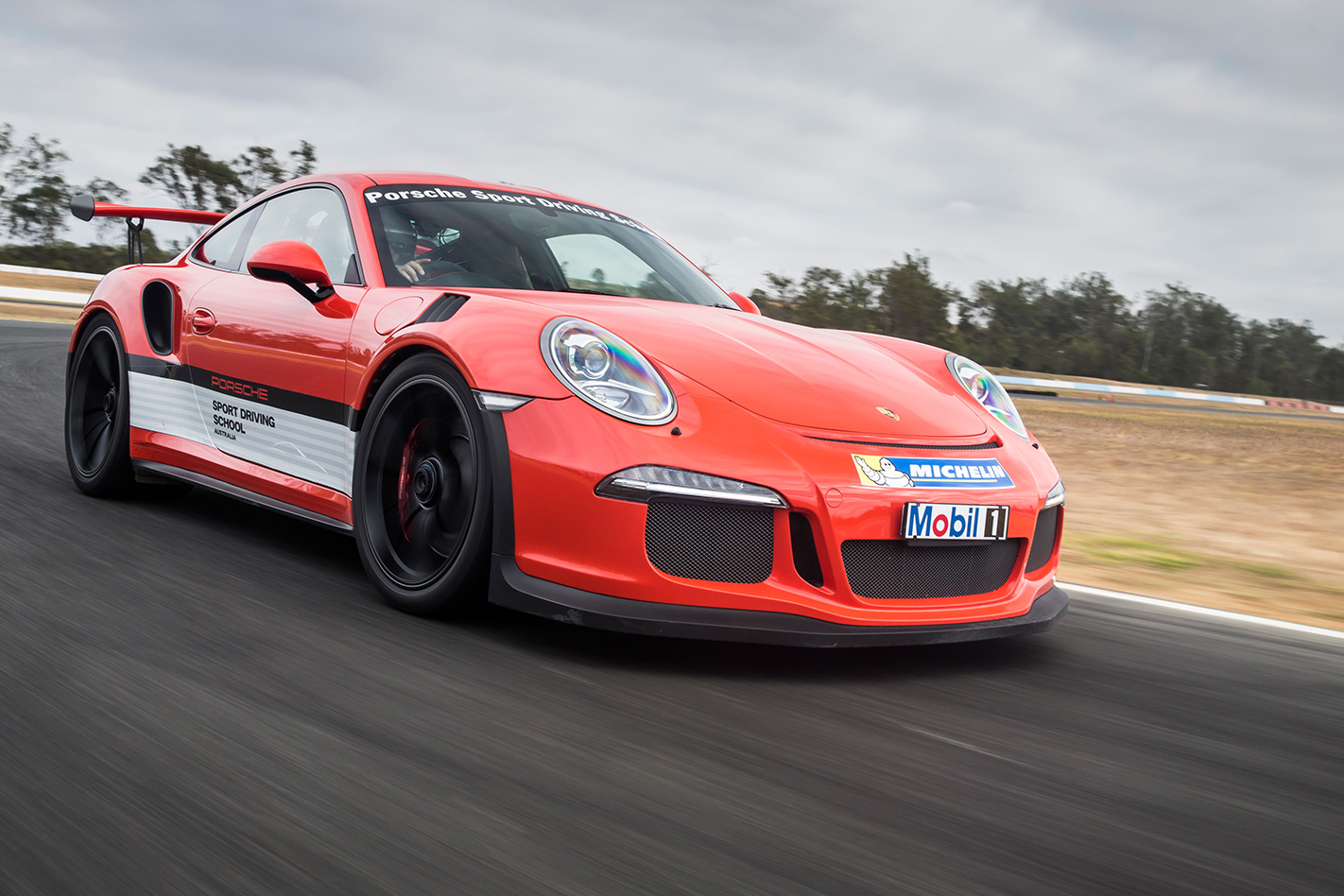
I’m stoked, though the day has taken its toll. I’m mentally shagged, the day-long process of driving flat out while learning new skills illuminating, though utterly exhausting.
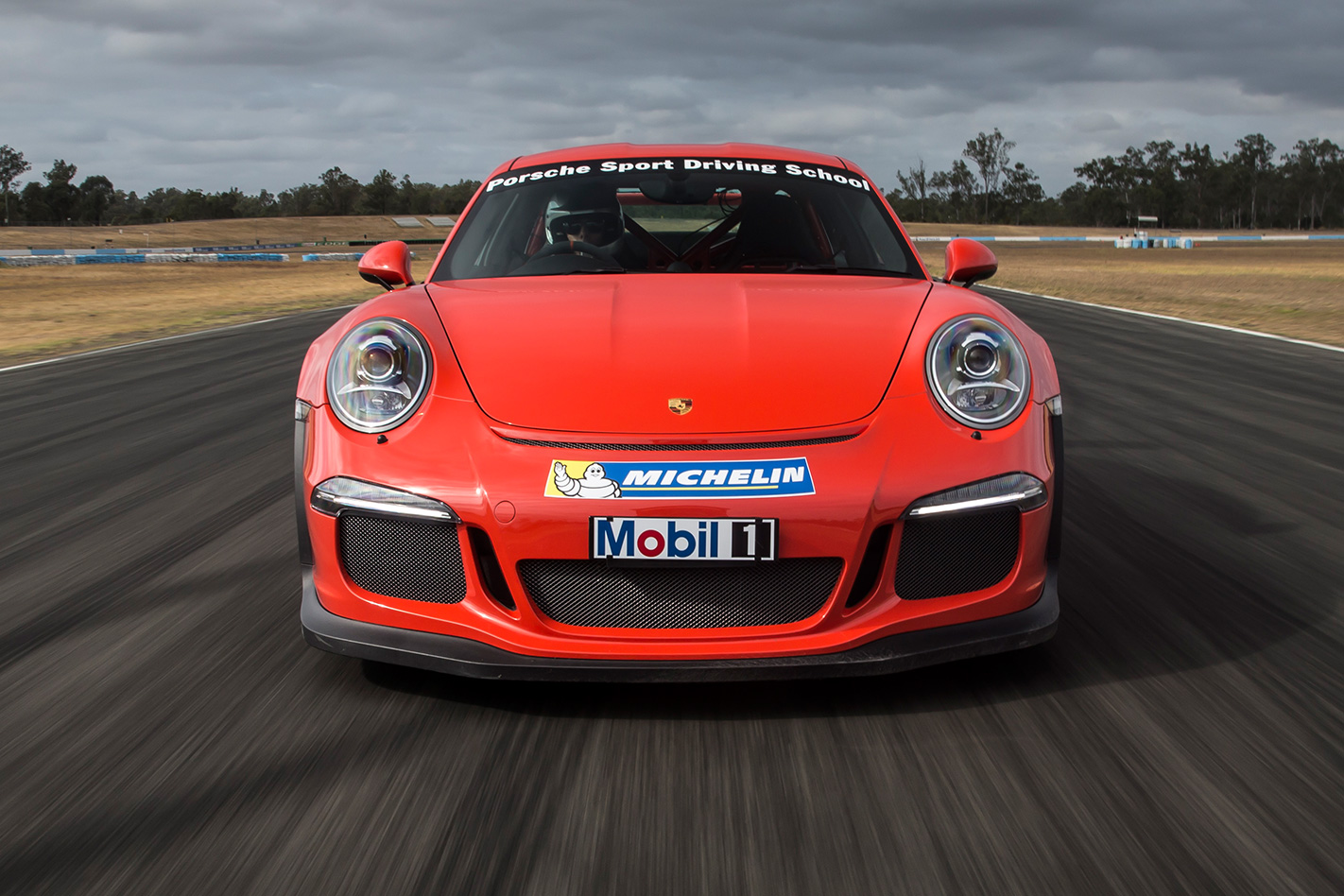
So it ends in pitlane, the GT3 RS ticking and pinging as it cools, me nursing a slight headache as I relive the day and ponder how much money I’d need to spend on performance-part upgrades for a 911 GT3 RS to slash six seconds from my lap time.
A lot more than $3960, I bet.
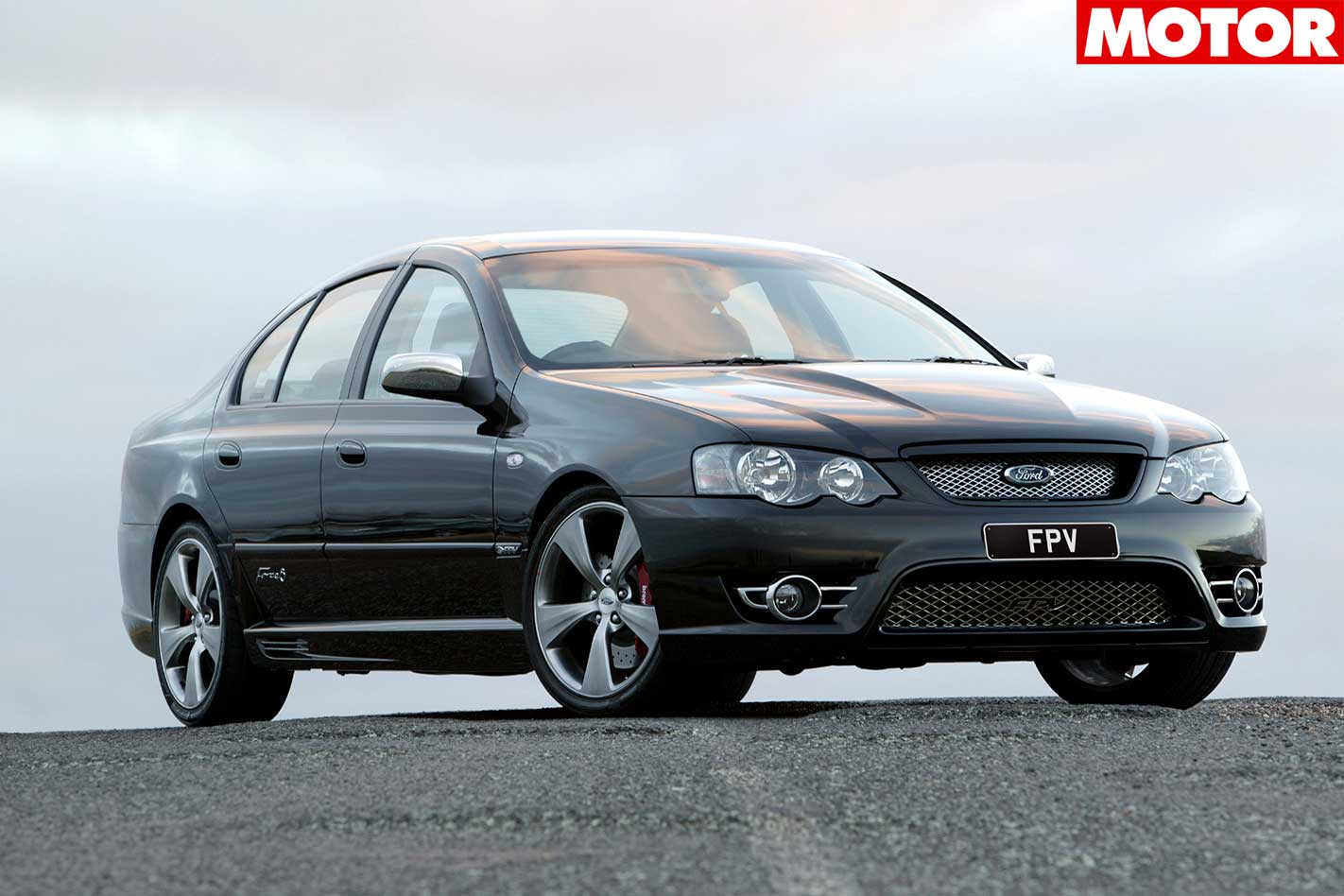
Even dedicated Aussie car enthusiasts might struggle to recall the short-lived FPV Force 6 and Force 8 models.
Introduced as part of the BF II Falcon range in October 2006, the models marked the diversification of Ford Performance Vehicles into the sports-luxury market, finally providing a rival to the HSV Senator while the racier Typhoon and GT continued to battle the Clubsport and GTS.
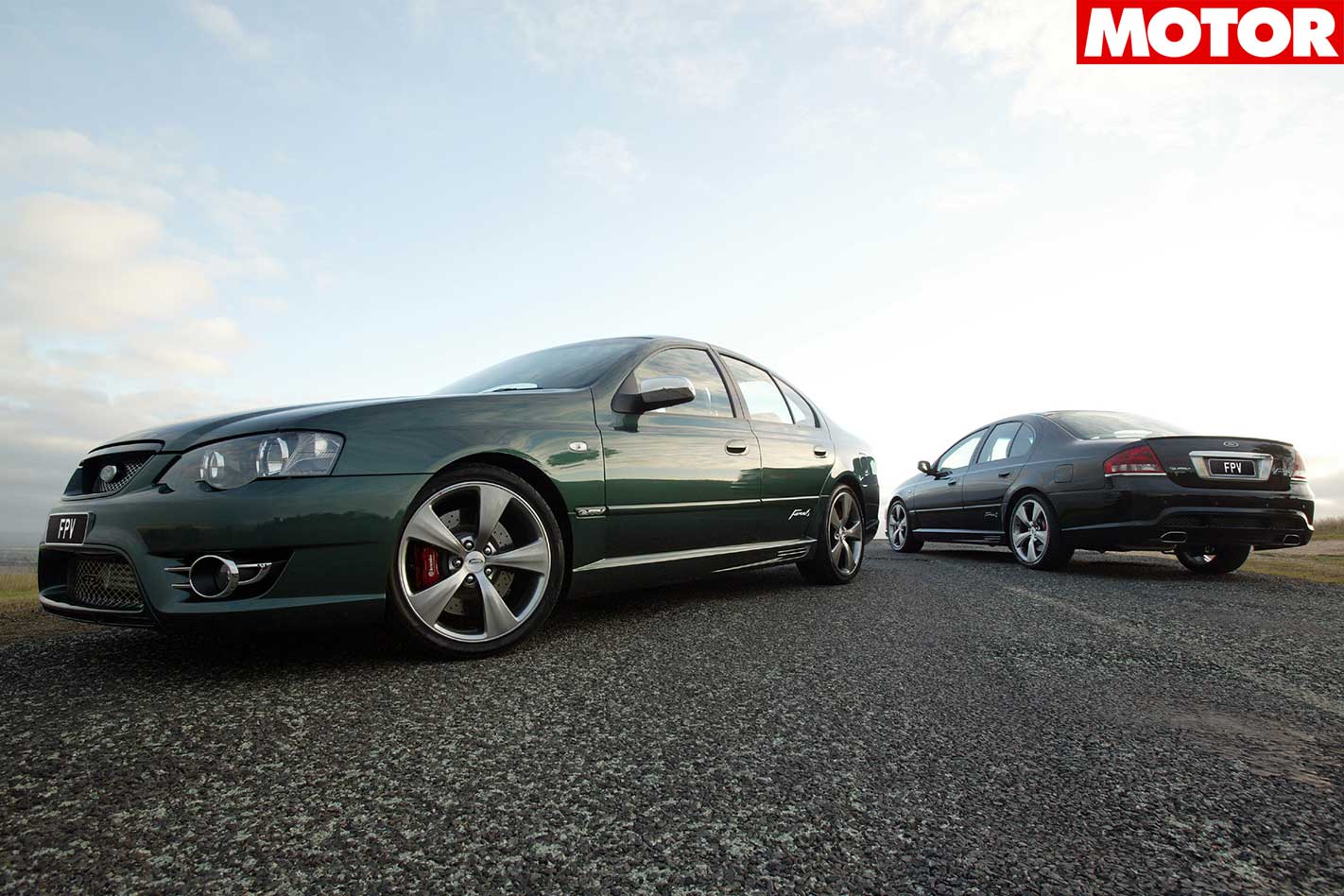
The Force twins went without the V8 Supercar-style spoilers, fluoro colours and lairy stripes of their sportier siblings, instead preferring a subtle bodykit with lashings of chrome highlights and shadow chrome 19-inch wheels.
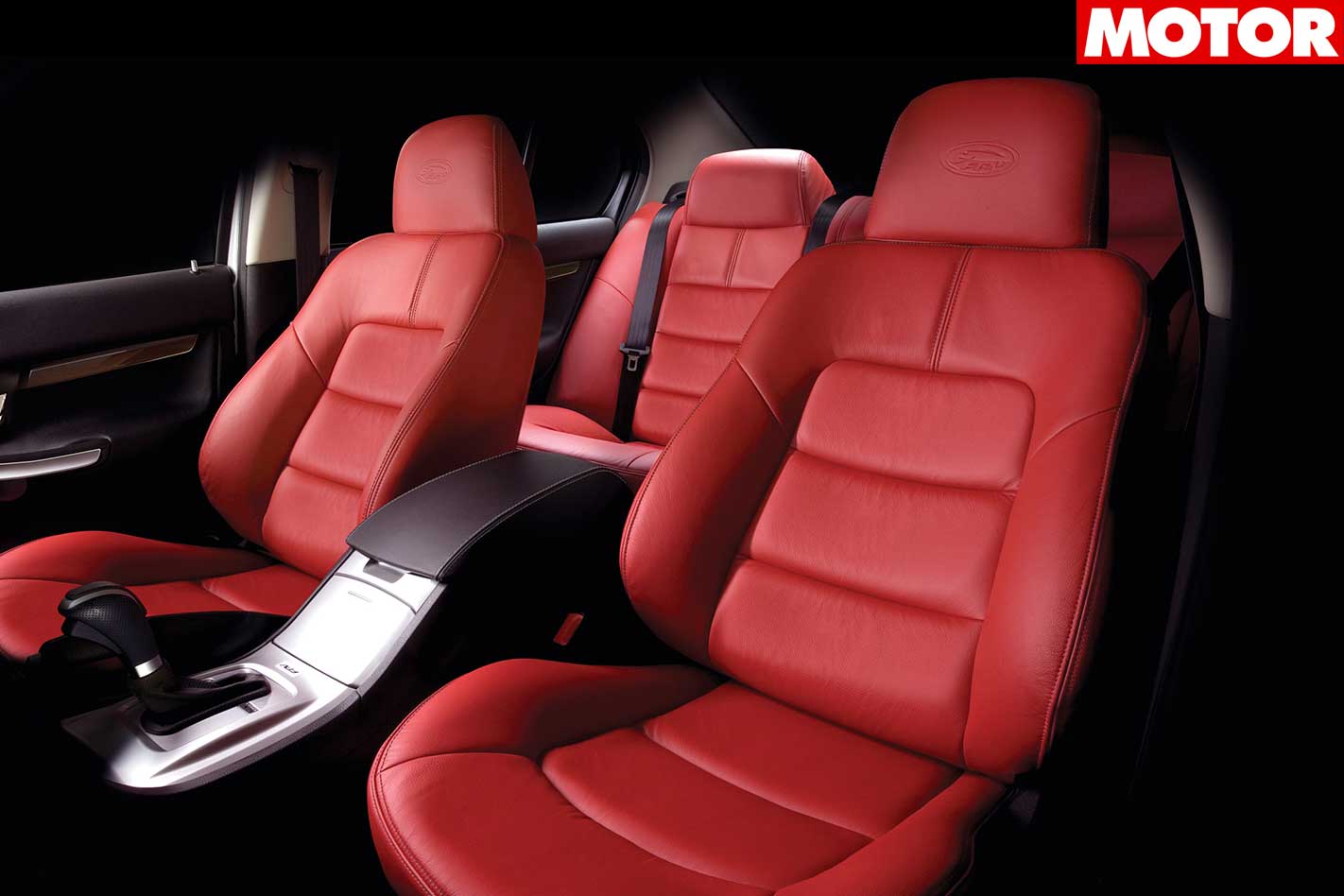
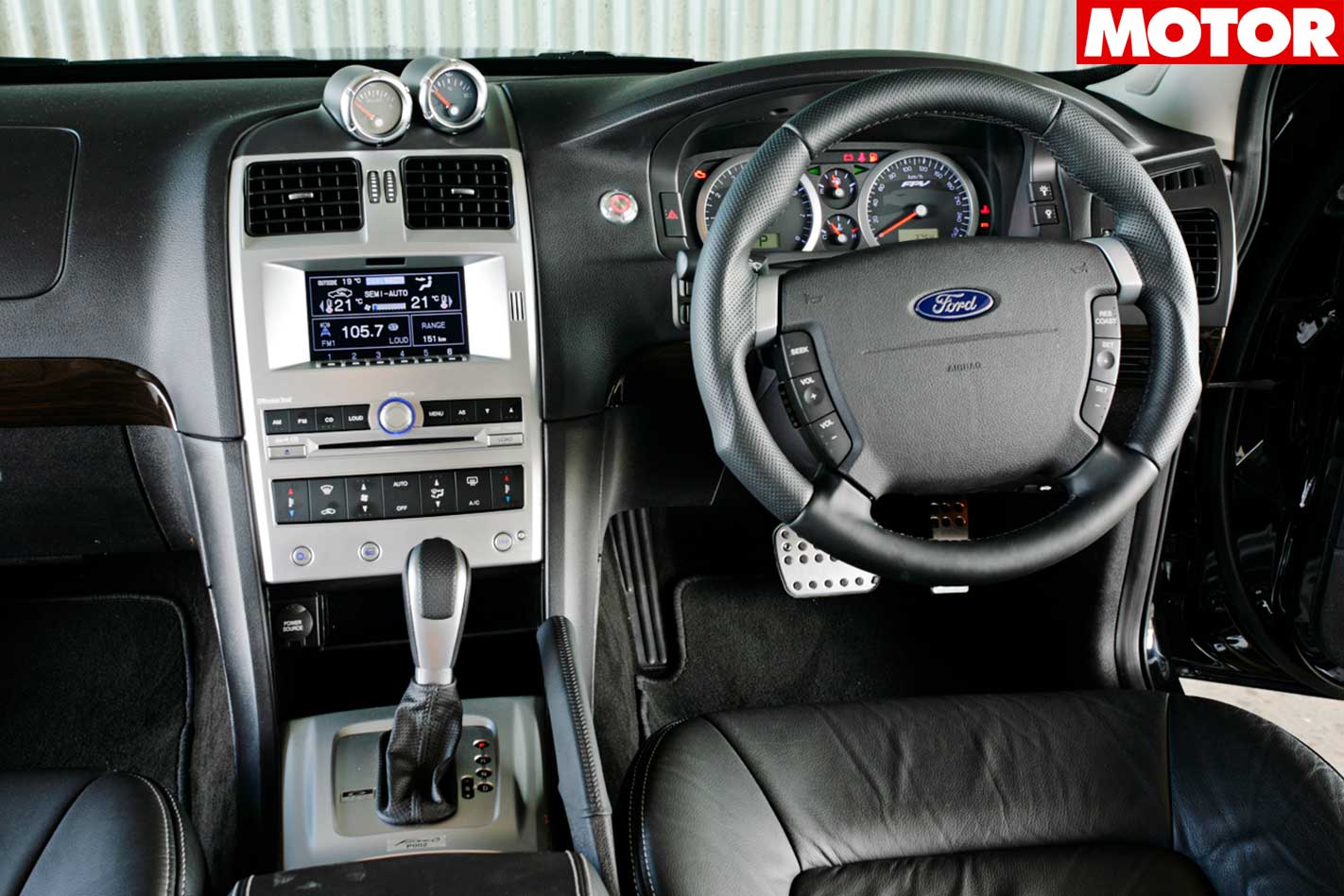
Inside, woodgrain inserts on the dash and doors added a touch of class, while the equipment list boasted eight-way adjustable electric seats, a 150-watt, six-speaker stereo with six-disc in-dash CD player (remember them?), dual-zone climate control, electronically adjustable pedals and a performance steering wheel.
Unfortunately, not even Jedi mind tricks were enough to convince the intended corporate executive clientele the Force models were good value, with the equivalent Typhoon and GT models retailing for almost $10K less.
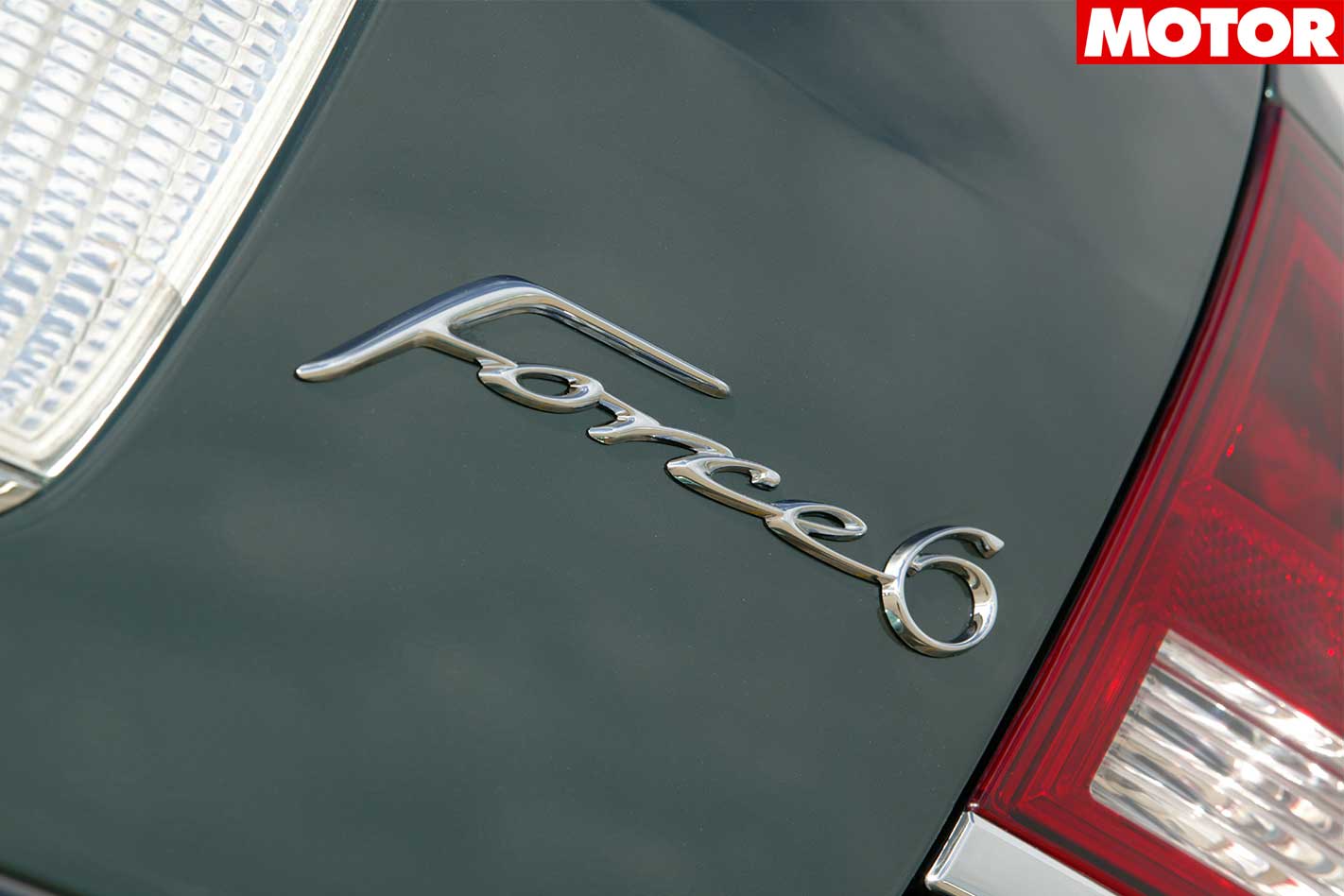
Three Force Facts
1 – Less is More
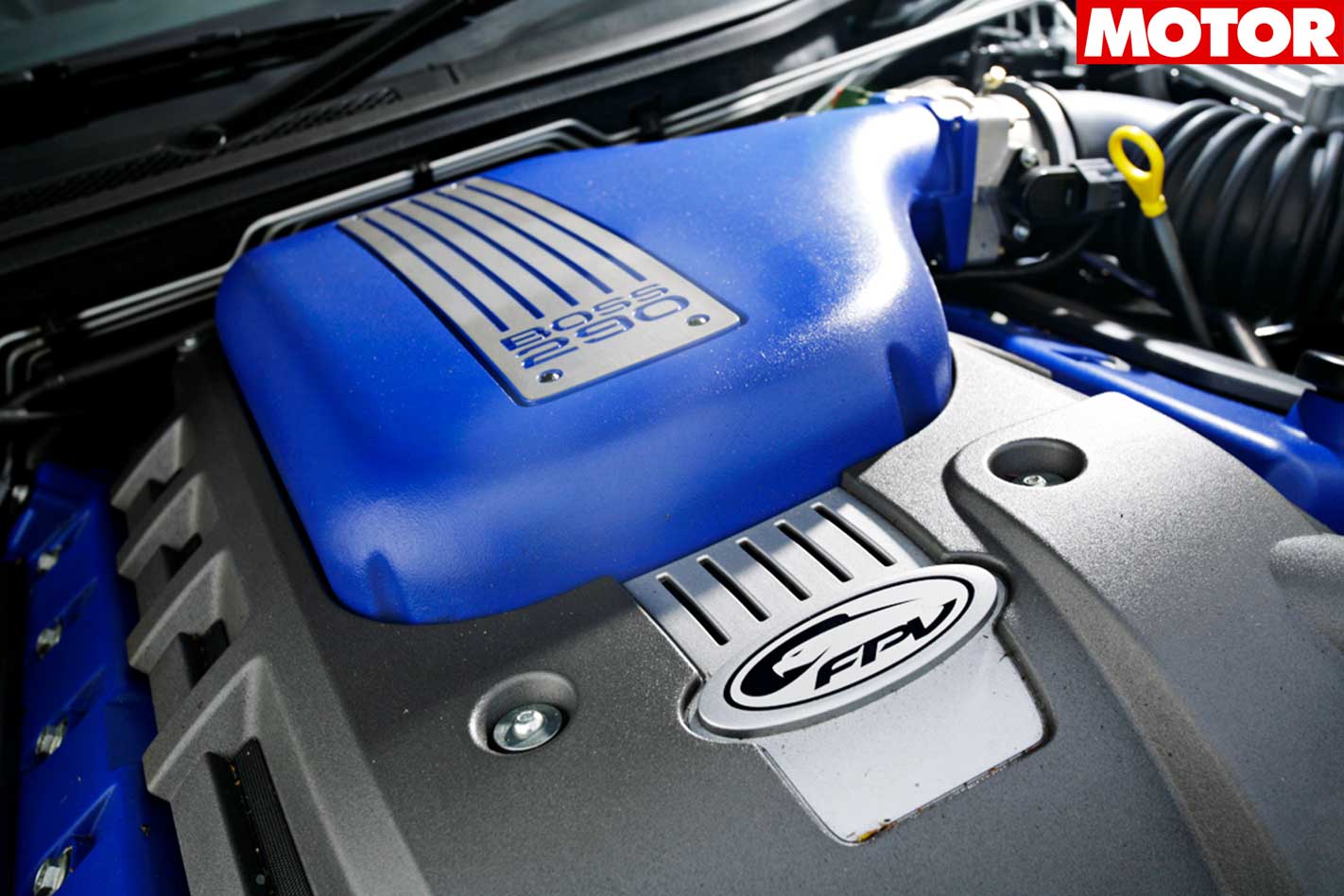
2 – Drab decor
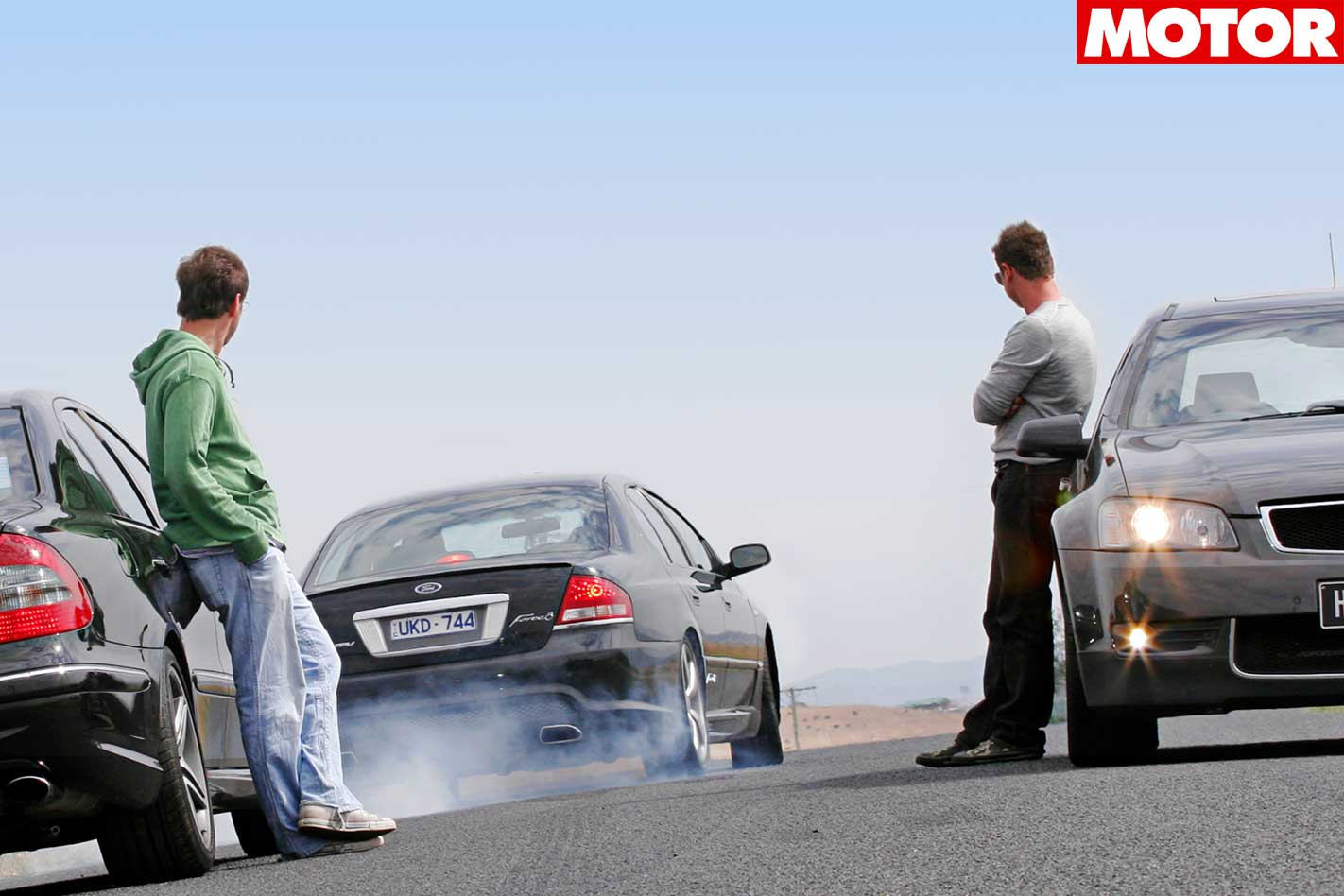
3 – Hoon at Heart
Mazda has never been afraid to step out on a limb every now and then.
This review was first published in MOTOR magazine’s August 2008 issue.
The Hiroshima-based carmaker has long been one of the world’s most underrated pioneers in automotive design and technology. Sure, it has never had the financial resources of giants such as Mercedes-Benz, GM or Toyota, but that hasn’t stopped it from developing and introducing a few clever innovations over the years. The RX-8 is a prime example.
The original, which was introduced in 2003 and quickly gained numerous accolades including the Car Of The Year from our sister magazine, Wheels, broke new ground for lightweight sportscars with its four-door, four-seater layout. Its only flaw was that, in Mazda’s quest to appeal to a wide audience, it was trying to be everything for everyone with a single model.
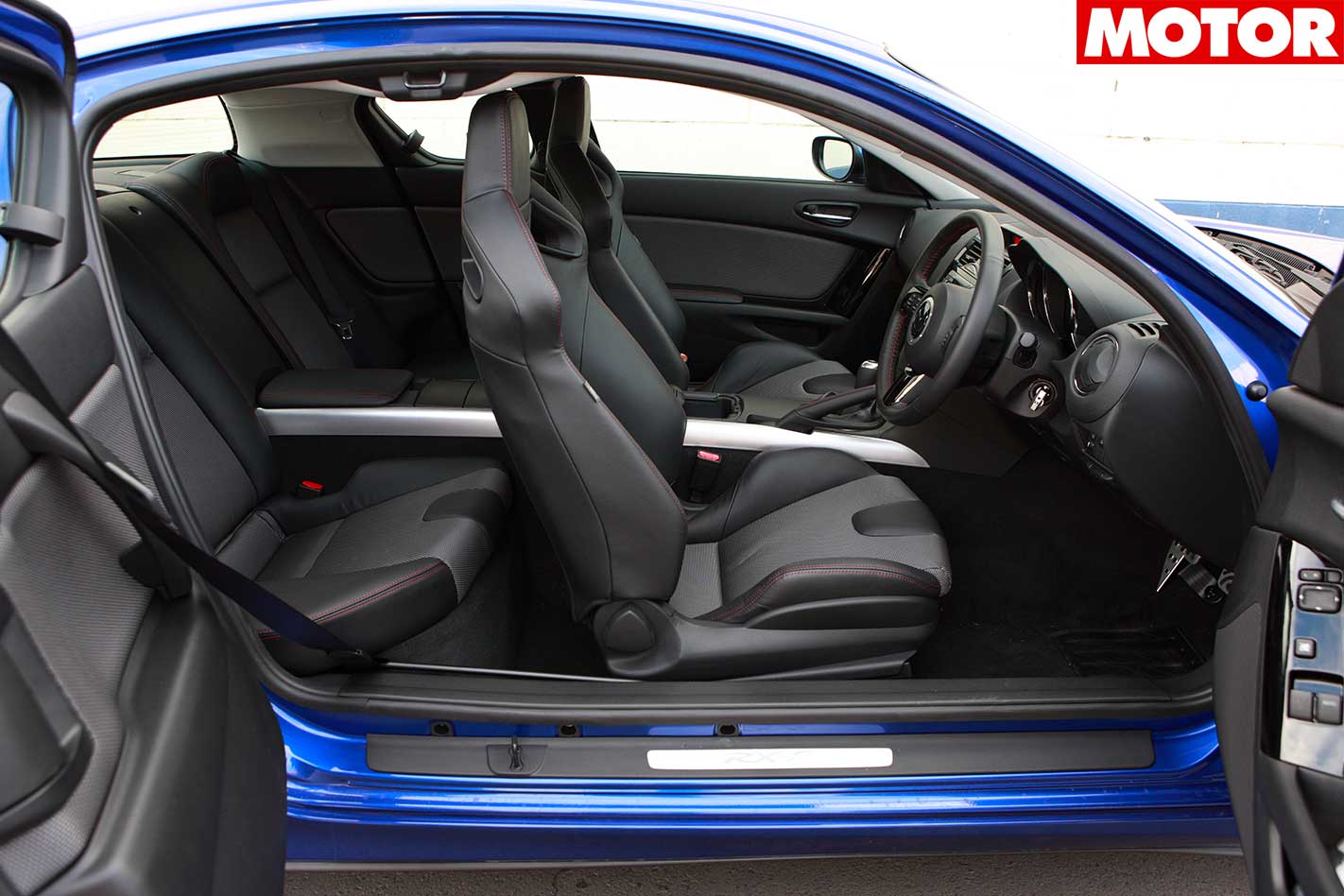
The $55,520 Luxury model adds leather and electric seats, a Bose sound system, sunroof and xenon headlamps. It’s the only one with the new six-speed Activematic automatic transmission (from the MX-5 and replacing the lame four-speed) as a $1645 option.
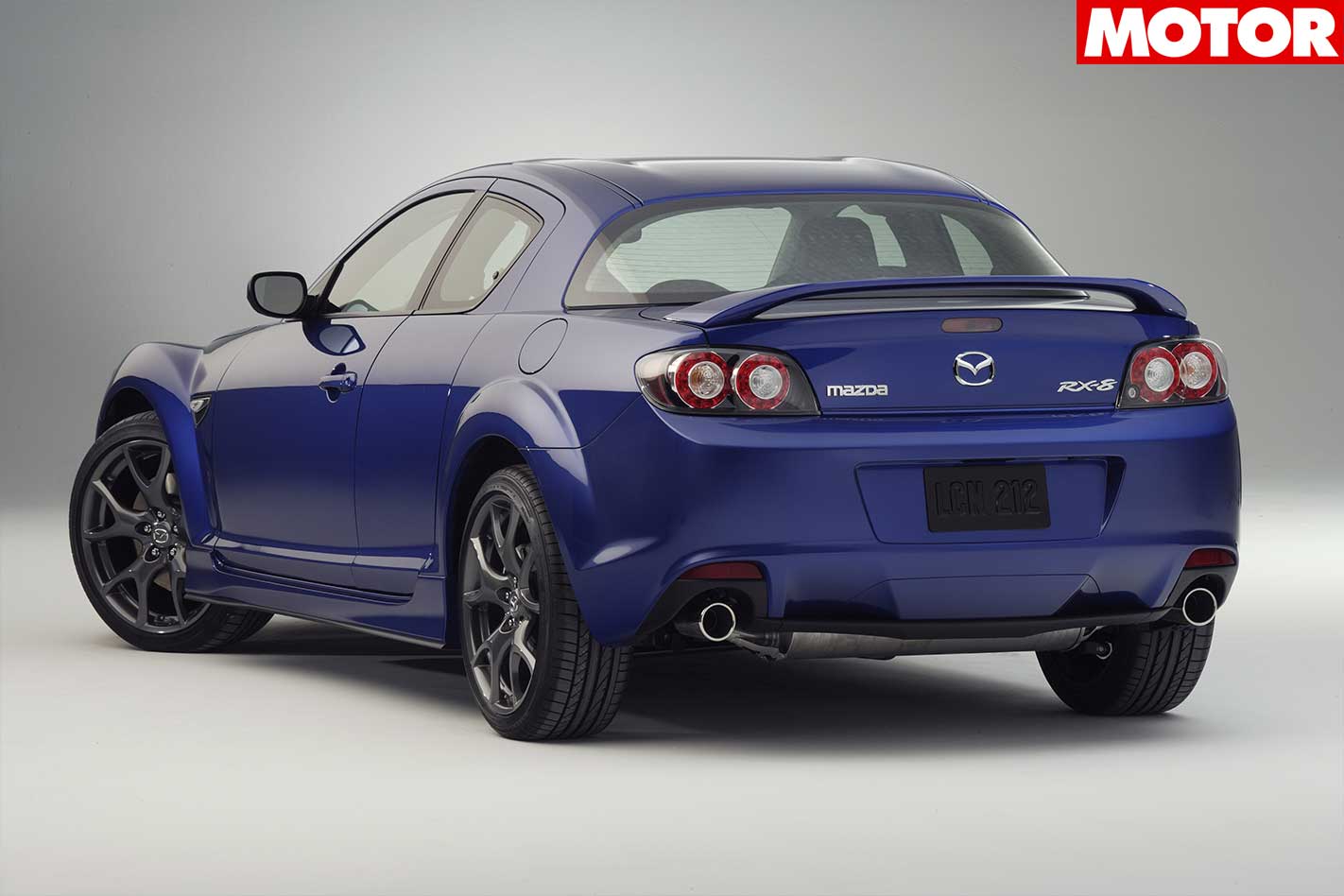
But the biggest change is the addition of a dedicated sports-tuned GT version that, priced at $57,625, gets stiffer and lower Bilstein suspension, tough 19-inch alloys, a pair of Recaro seats, plus a unique body kit with front lip spoiler, side skirts and a wing on the bootlid.
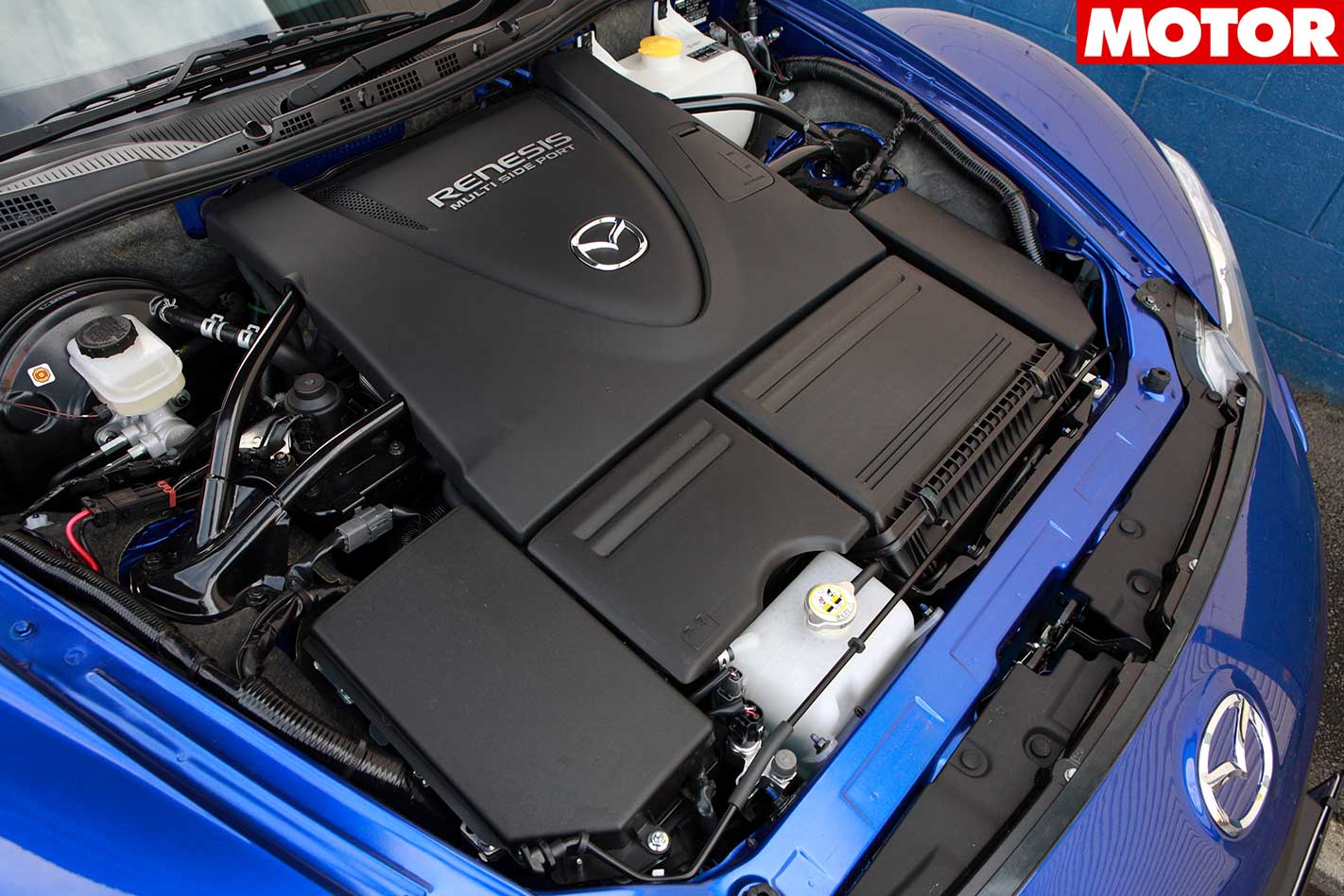
The Renesis 13B twin-rotor engine has been tweaked, with the addition of twin knock sensors for better control of ignition timing and an electric-metering oil pump and larger oil pan, to lessen any oil pressure drop during cornering. There’s been a backward step in peak power for the manual version, with it dipping from 177kW to 170kW at 8200rpm, but maximum torque remains the same at 211Nm.
The more advanced six-speed self-shifter, however, allows the Luxury auto spec to increase power from 141kW to 158kW, but it drops the torque from the original’s 220Nm to the same amount of twist as the manual version.
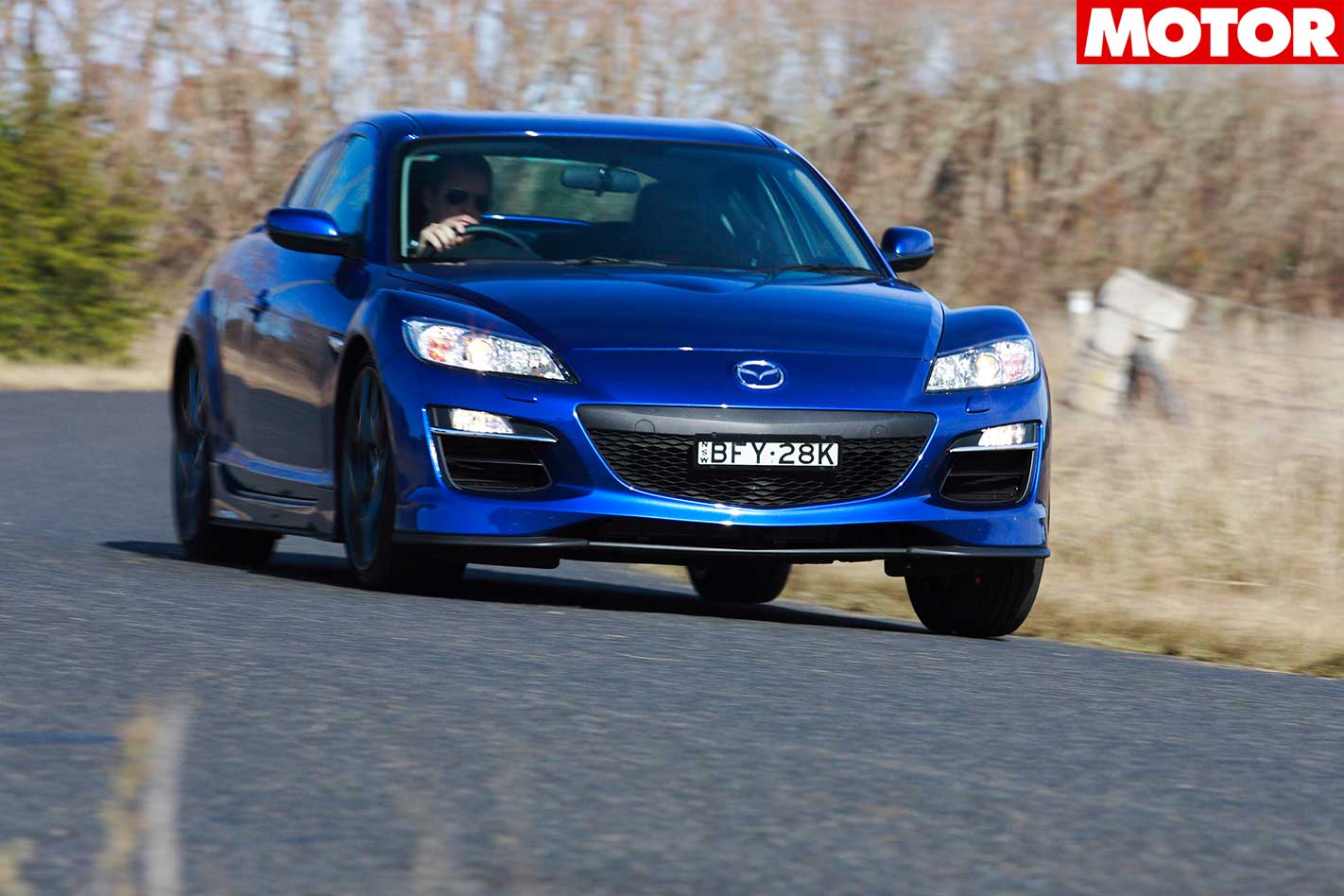
While the general improvements are noticeable, it’s the GT’s suspension tweaks that really give the RX-8 a new character.
The Bilstein dampers and lower springs, along with an exclusive urethane-filled front cross member and the 19-inch Bridgestone Potenza RE050A tyres, give the car a defined edge over the previous model’s more touring-oriented setup. It’s noticeably stiffer from the instant you drive off, but retains a level of compliance in its ride quality that is liveable and comfortable to drive around town.
With the rotary’s inherent need for revs and the GT’s hardcore suspension tune, Mazda’s new flagship won’t appeal to everyone. But the RX-8 now has the sporting focus that wasn’t quite there in the original. And if you don’t like it, Mazda finally offers a choice, with great value in the standard RX-8 or valuable goodies in the Luxury model.
Fast Facts – 2008 Mazda RX-8
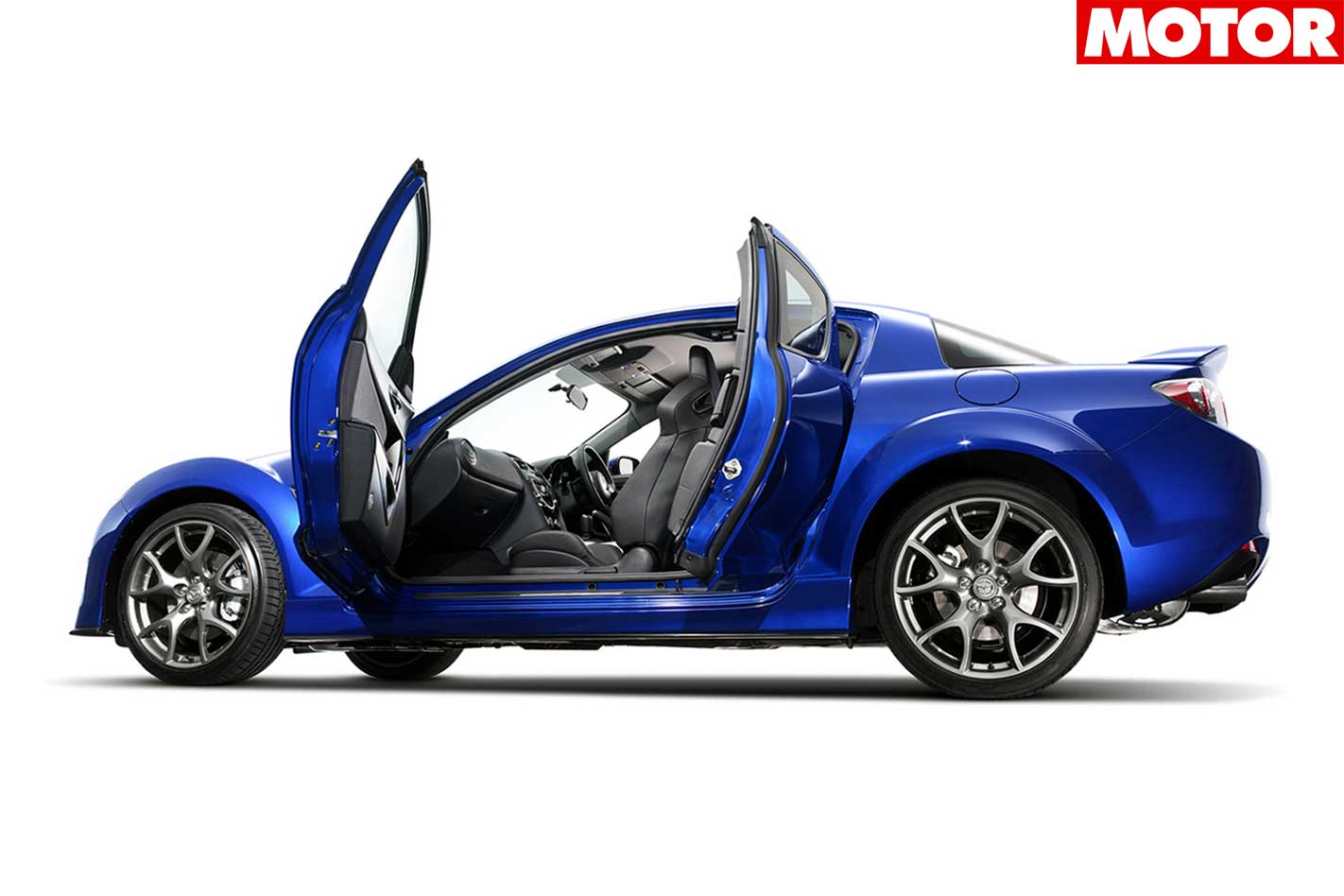
LIKE: More choice; cheaper entry price; six-speed auto; sharp new GT DISLIKE: Manual’s power figure is down; still needs big spins for big grins
My first gig as a motoring writer was a cross-country blast in the then-brand spanker Nissan Skyline R33 GT-R.
It seems a bit quaint now, but its detractors sniffed at the R33 GT-R‘s suit of chassis tech, claiming the car would virtually drive itself.
In the interests of consumer testing, I confirmed that it would do none of the sort by entering a hairpin on a Welsh mountainside at a ludicrously optimistic speed and bouncing off the Armco as if I was playing Gran Turismo 2.
As I hitched a lift to Aberystwyth in the back of a beer dray, I had time to consider the notion of consequence.
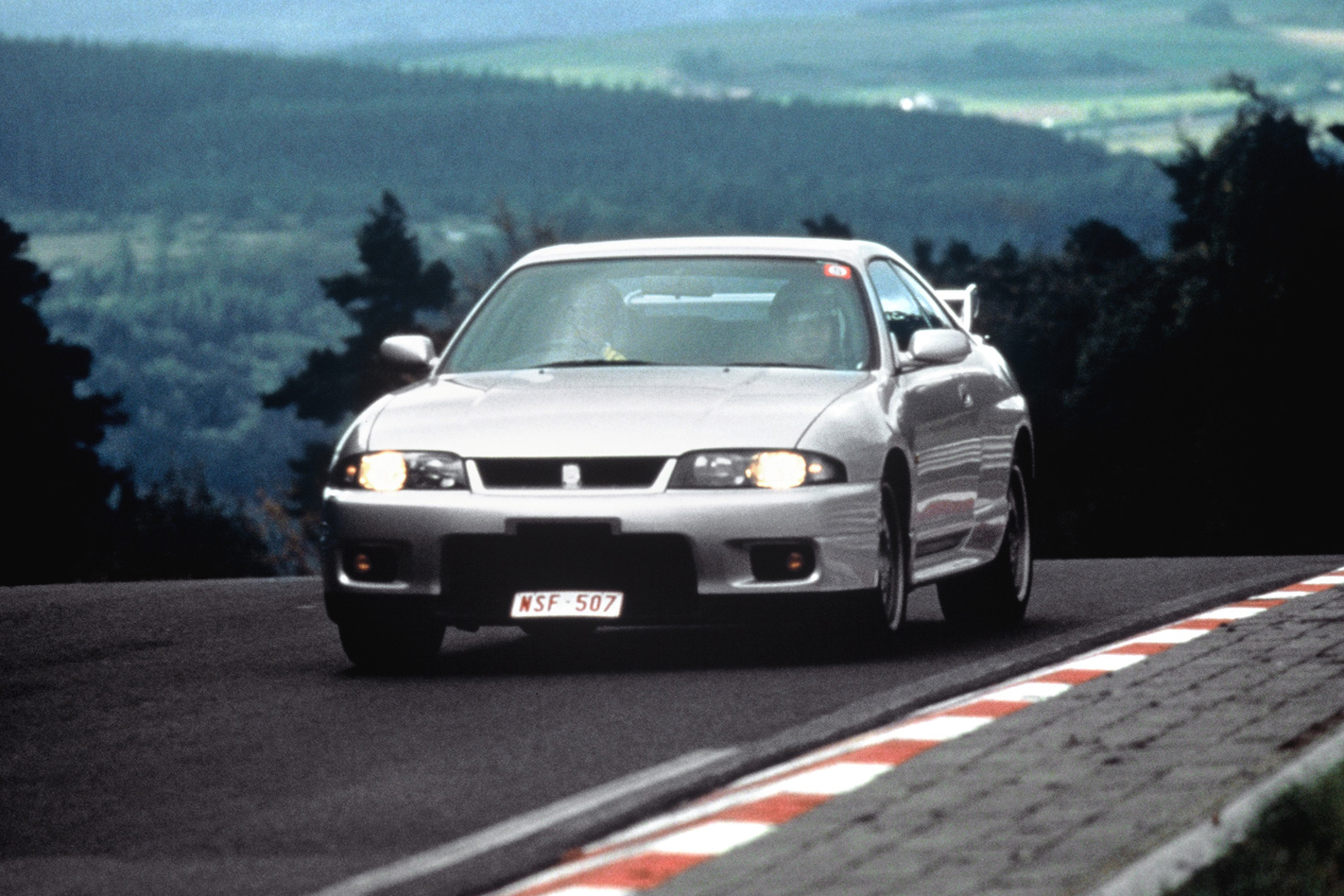
Since then, I’ve been deeply suspicious of cars that make you feel more talented than you actually are.
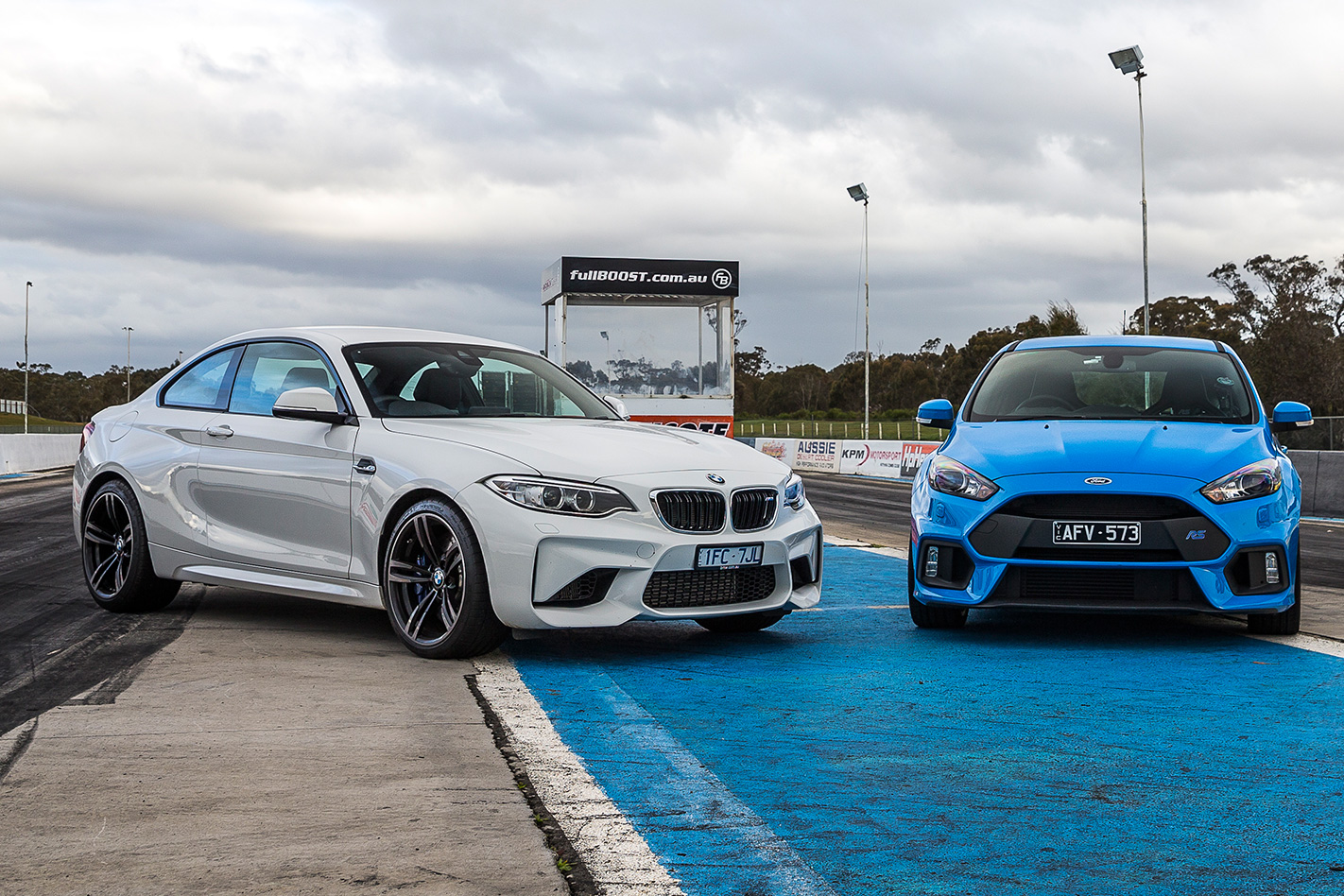
Last year, I got to drive Ford’s Focus RS and BMW’s M2 back-to-back.
While they’re not cars you’d instantly cross-shop, their cross-country pace wasn’t too different. But whereas the all-wheel-drive Focus’ torque-vectoring Twinster diff put you into a bubble of apparent invulnerability, driving the M2 quickly always felt manifestly life-threatening. Not through any particular shortcoming of the car, more that it always ceded responsibility to the driver.
It’s also why I have a nagging desire to own a Porsche 996 GT2, the last of the really fast 911s without driver aids.
Okay, so the Widowmaker’s 340kW is now comfortably eclipsed by some Range Rovers and, in terms of outright lap times, it’s closer to a Mini JCW Convertible than it is to the current 991 GT2 RS, but it still feels properly consequential.
I had the chance to drive one recently, in the wet with Cup tyres on it. White-knuckling it up Mount Donna Buang, oversteering out of hairpins and feeling suitably heroic, I was overtaken at one point by an Isuzu MU-X. As I watched his stick-figure family disappear up the road, I wondered whether better tyres, smarter stability control, more airbags and all-seeing camera systems have really made cars safer. The rising road toll seems to suggest otherwise.

A 2012 study at the Western Michigan University School of Medicine on head injuries among skiers and snowboarders in the US found that the number of head injuries increased 60 percent in a seven-year period, from 9308 in 2004 to 14,947 in 2010, even as helmet use increased by an almost identical percentage over the same period.
Could the same logic apply to cars? If we feel invulnerable, do we stop perceiving risk?
I don’t have a definitive answer to that question, but perhaps you ought to buy a Porsche 996 GT2. Just to be on the safe side.
If efficiency is intelligent and inefficiency is dumb, then cheap fuel is surely making us stupider.
Just look at Australia’s new vehicle sales numbers. In 2017 sales of SUVs overtook cars, and a pair of pick-ups were the nation’s best-selling vehicles.
The connection between what people need and what they buy is coming unglued.
Some buyers truly need a capable SUV, but surely they don’t make up 39 percent of the new-vehicle buying population?
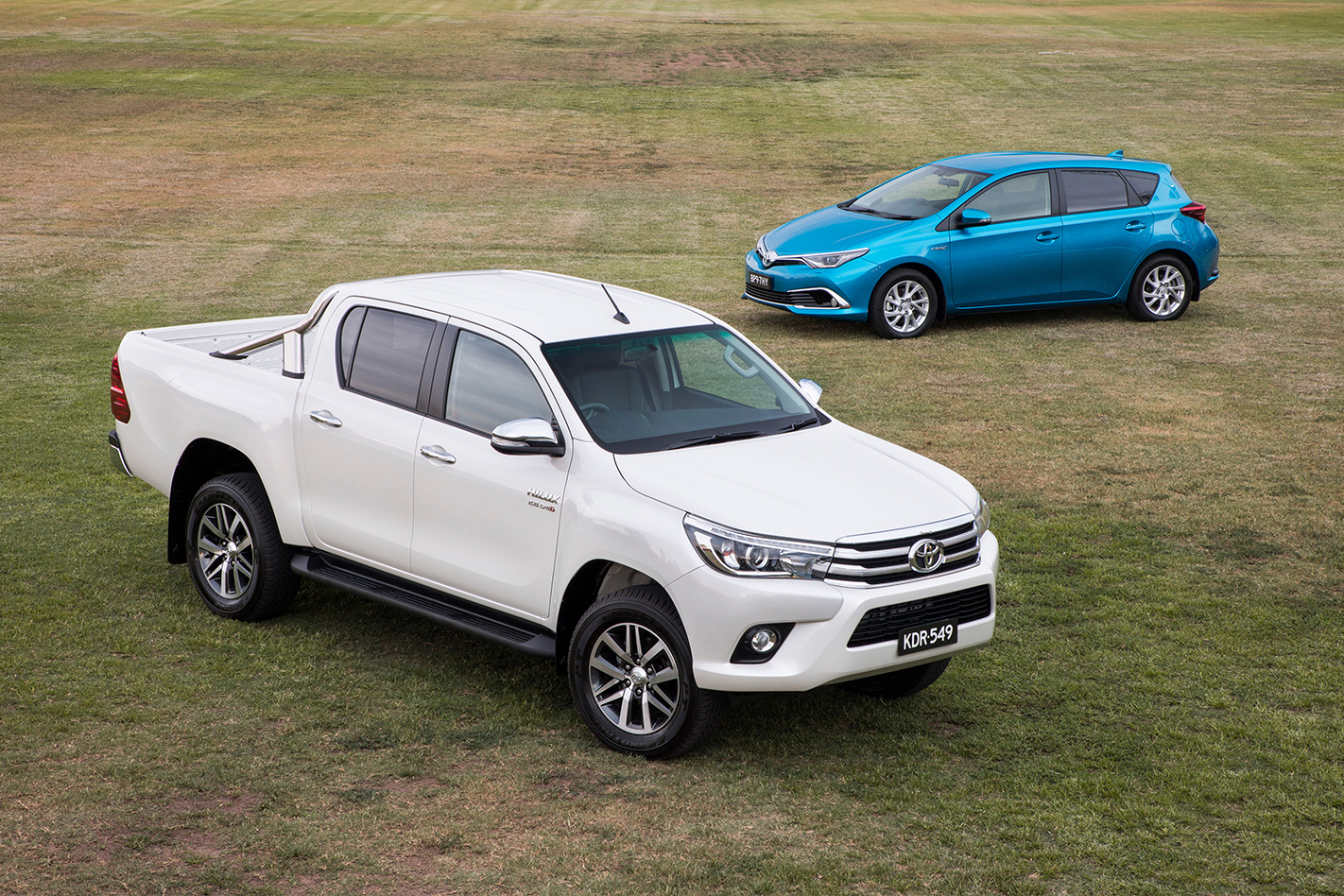
With the Toyota Hilux, Ford Ranger, Mazda CX-5 and Hyundai Tucson spearheading the charge, SUVs and (mostly) 4WD pick-ups together accounted for 59 percent of 2017 new-vehicle sales in Australia.
Last year, the share of passenger cars was just 38 percent, with further decline predicted. Depending on your viewpoint, this phenomenon might evoke wonder, horror, or indifference. And there’s a good debate to be had about what precise mixture of affluence, ignorance, market forces, driving environment and social pressure is propelling the trend.
But one thing that can’t be disputed is that Australia’s inexpensive fuel contributes to it. Cheap petrol and diesel mean choosing inefficiency comes with a negligible penalty.
There’s not a pick-up to be found in these countries’ Top 10 best-seller lists. The Fiat Panda and Ford Fiesta instead top the charts. There are SUVs among the best-sellers in both places, but they are models that are one or even two sizes smaller than the most popular SUVs in Australia.
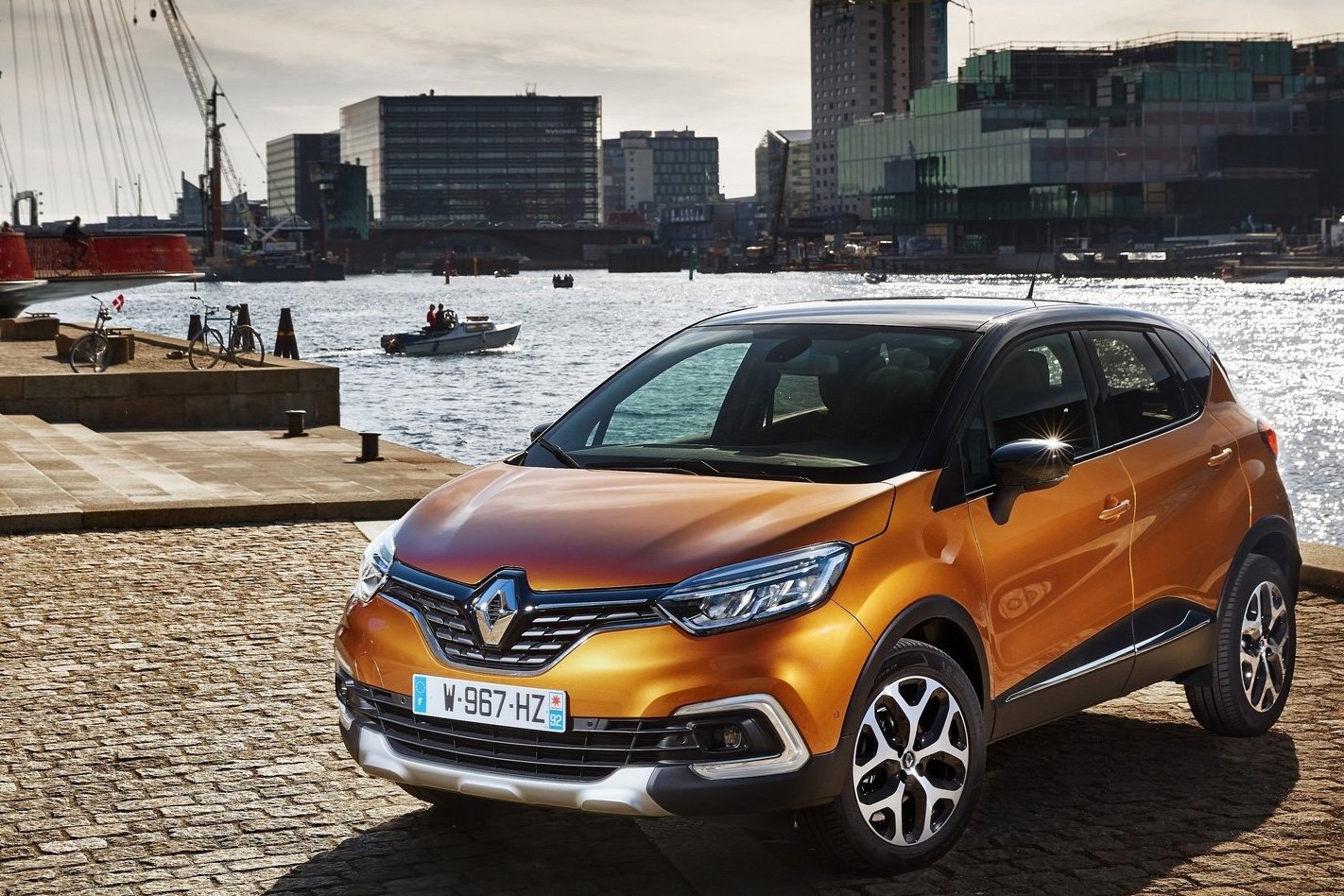
Not only the sales charts suggest that efficiency really matters to new-car buyers in Europe. In 2016, the excellent Italian monthly Quattroruote conducted one of the smartest consumption comparisons I’ve ever come across. They first selected a bunch of vehicles where exactly the same engine is installed in a car and an SUV (or MPV).
Each pair was fitted with test equipment and put through the same three custom-designed driving cycles, duplicating typical average driving on city streets, arterial roads and motorways. The aim was to precisely measure how much more the SUVs burn than cars with exactly the same engine.
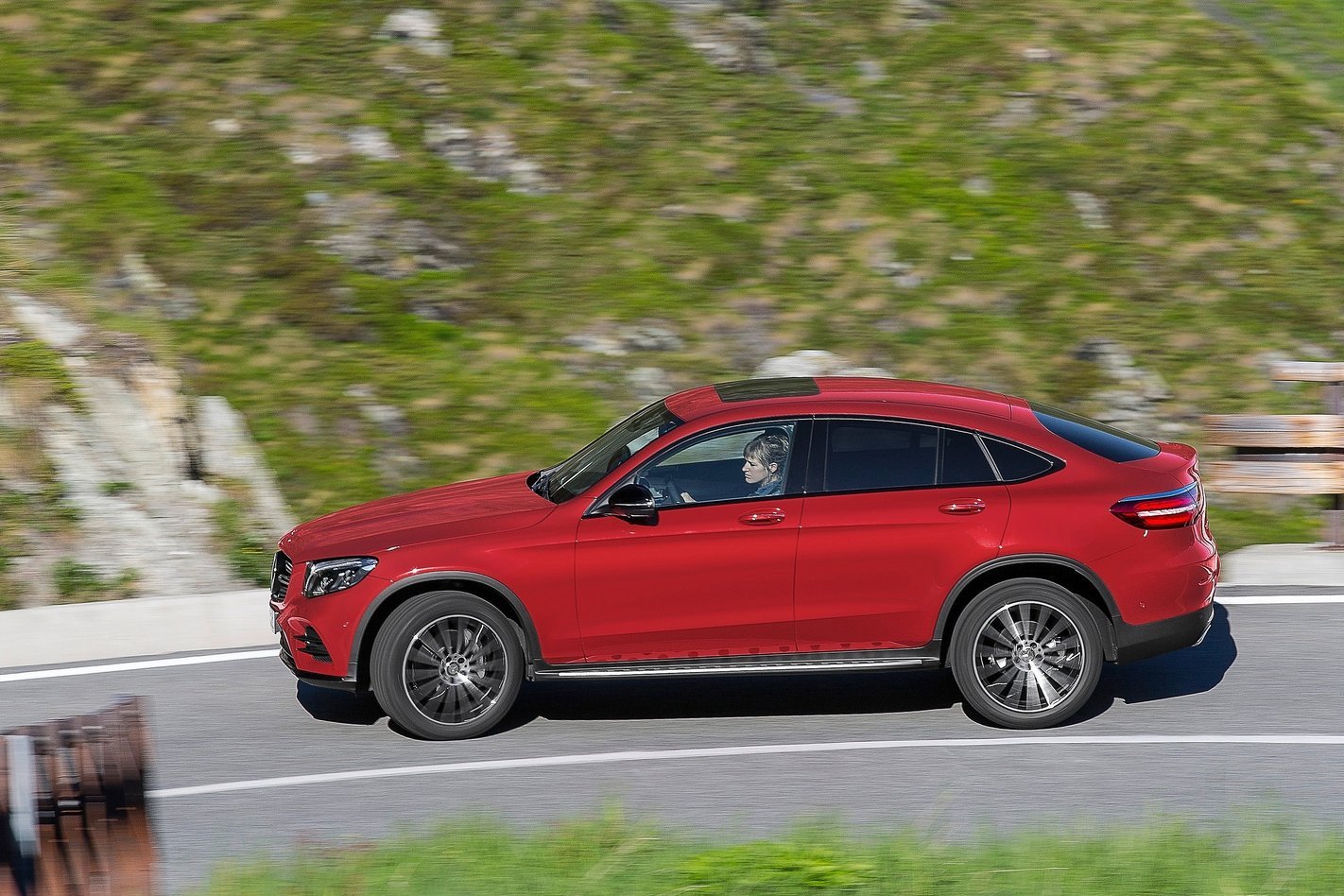
The Jaguar F-Pace 2.0d was better. It consumed 14 percent more than the XE sedan with the same Ingenium diesel.
The differences discovered by the Italians were much reduced at the small end of the spectrum – Mazda 2 v CX-3 and Renault Clio v Captur – but in every single case the taller, heavier vehicle consumed more fuel, and therefore emitted more CO2.
Affording those extra litres obviously isn’t troubling many Australian new-car buyers. But the environmental cost of burning them is surely something only the dumb will dare deny.
With such an illustrious lineage stretching back by more than a decade and a half, the 2008 Mitsubishi Lancer Evolution X very nearly stands in a league of its own. So what better yardsticks for the new boy than pitching it up against its own kind, more specifically, its impressive predecessor, the Evo IX, and what arguably is the benchmark of its lineage, the Evo VI TME.
This comparison review was first published in MOTOR Magazine’s August 2008 issue and the second part of our Evo X first drive review.
1999 Mitsubishi Evolution VI TME The Hardcore Tommi Mäkinen Edition kick-started the Evo legend in Oz
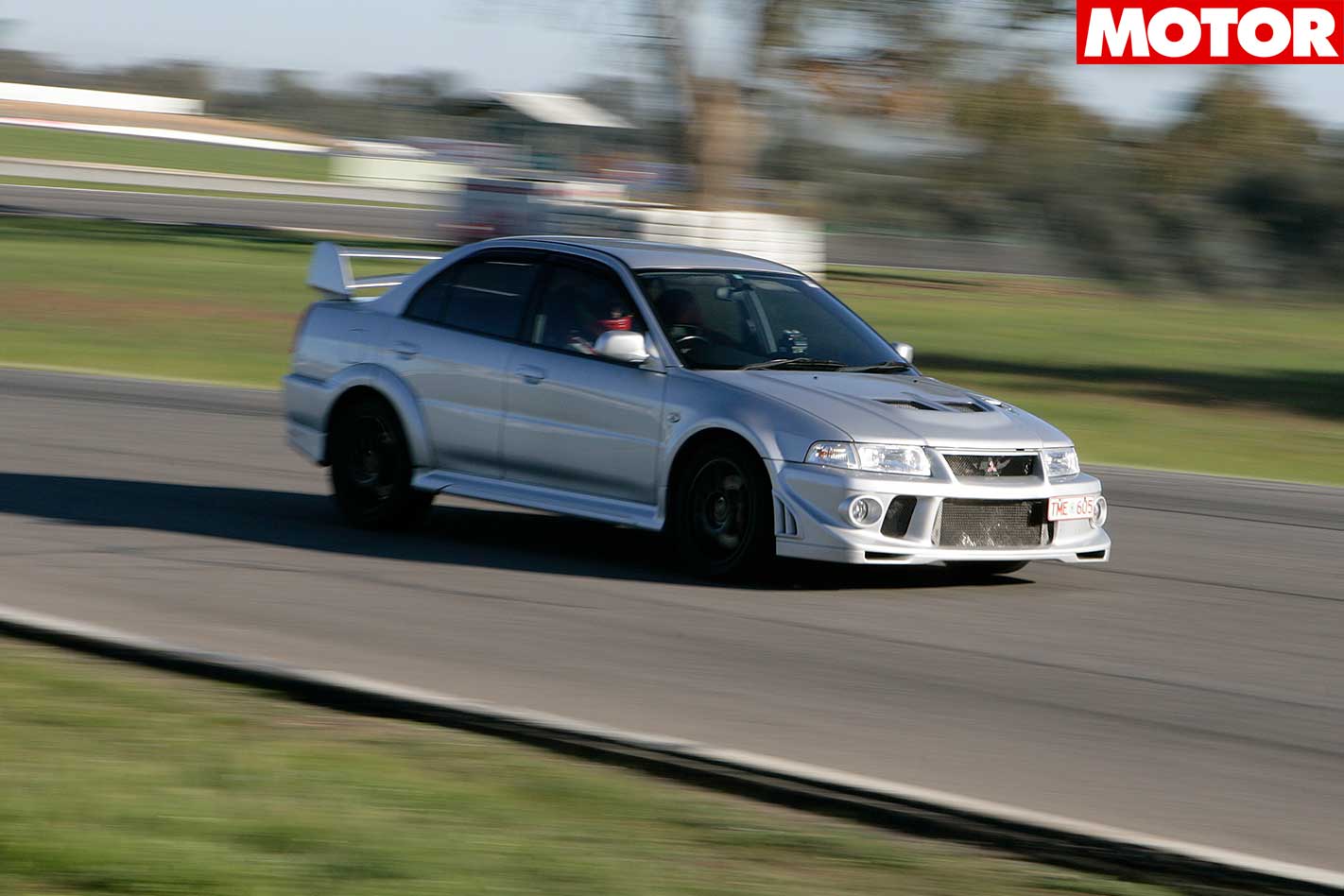
If there’s one benchmark model in the Lancer Evolution’s history the others inevitably get compared with for performance ability, it’s the late-90s Evo VI Tommi Mäkinen Edition (TME), which the trainspotters dub the ‘6.5’.
Not just for the fact it was the first Evo model officially sold in Australia, but because the entire second generation Evo range (IV thru VI) took the original’s (I thru III) rally homologation concept and pushed the limits of handling, acceleration and braking. The final iteration, the TME, was the most ferocious of them all.
Its active yaw control and electro-mechanical centre diff were pure rocket science. Its 4G63 turbo four mocked Japan’s 206kW power limit – it was 220kW or more – and it has 373Nm at just 3000rpm. Focused more on tarmac ability, the TME has long been considered the monster, on road or circuit.
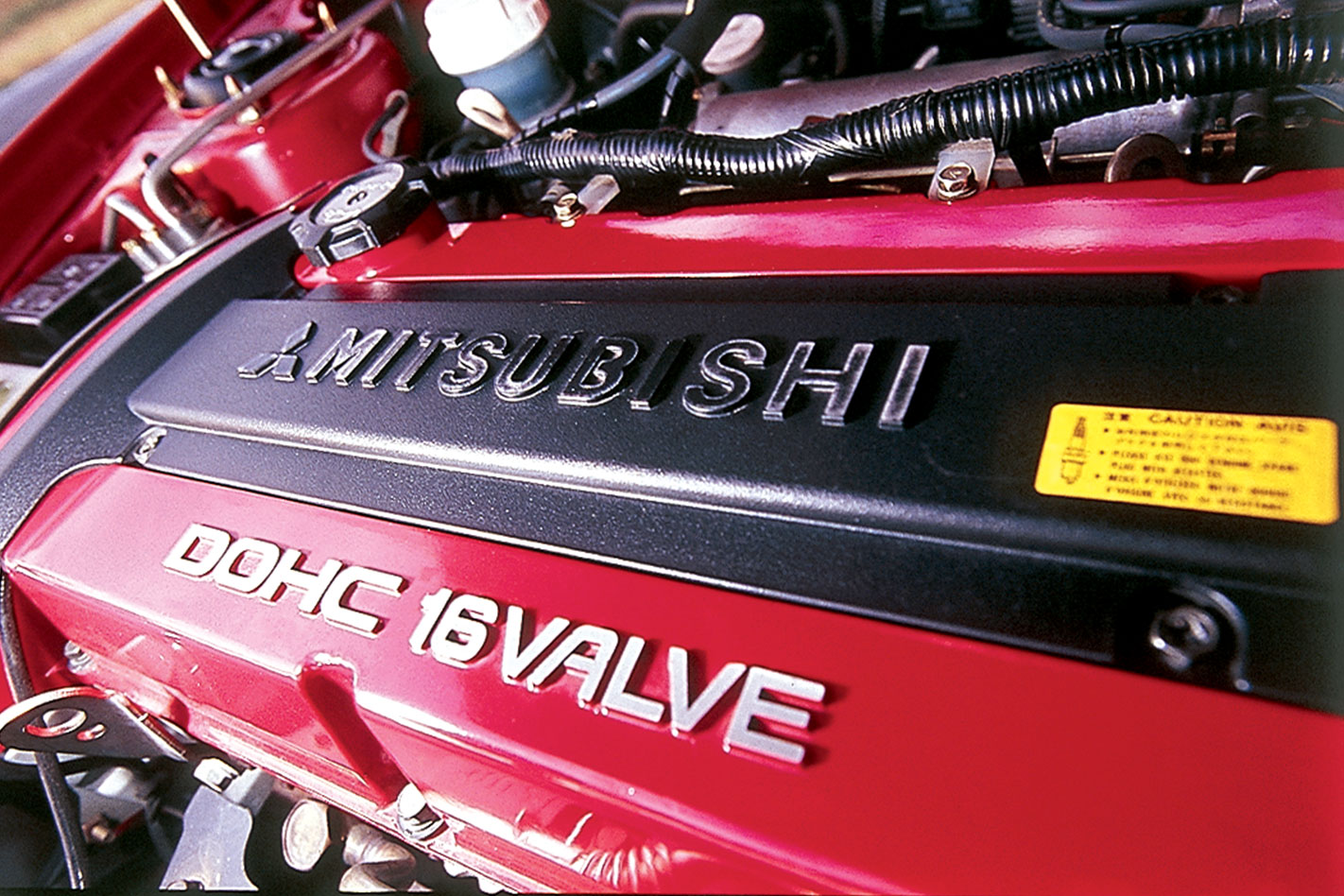
Vicky’s Japanese-spec MY99 example is nicely ‘pre-loved’ yet about as stock as you’d expect to find these days: standard boost control/turbocharger and a factory Aussie-spec ECU. And any of the gains netted through some minor aftermarket tweaks – an HKS intercooler and turbo-back larger exhaust – is offset by it riding on some pretty average 225/45 Federal rubber. And, lord, it wasn’t hanging about on a dry, crispy morning at Winton.
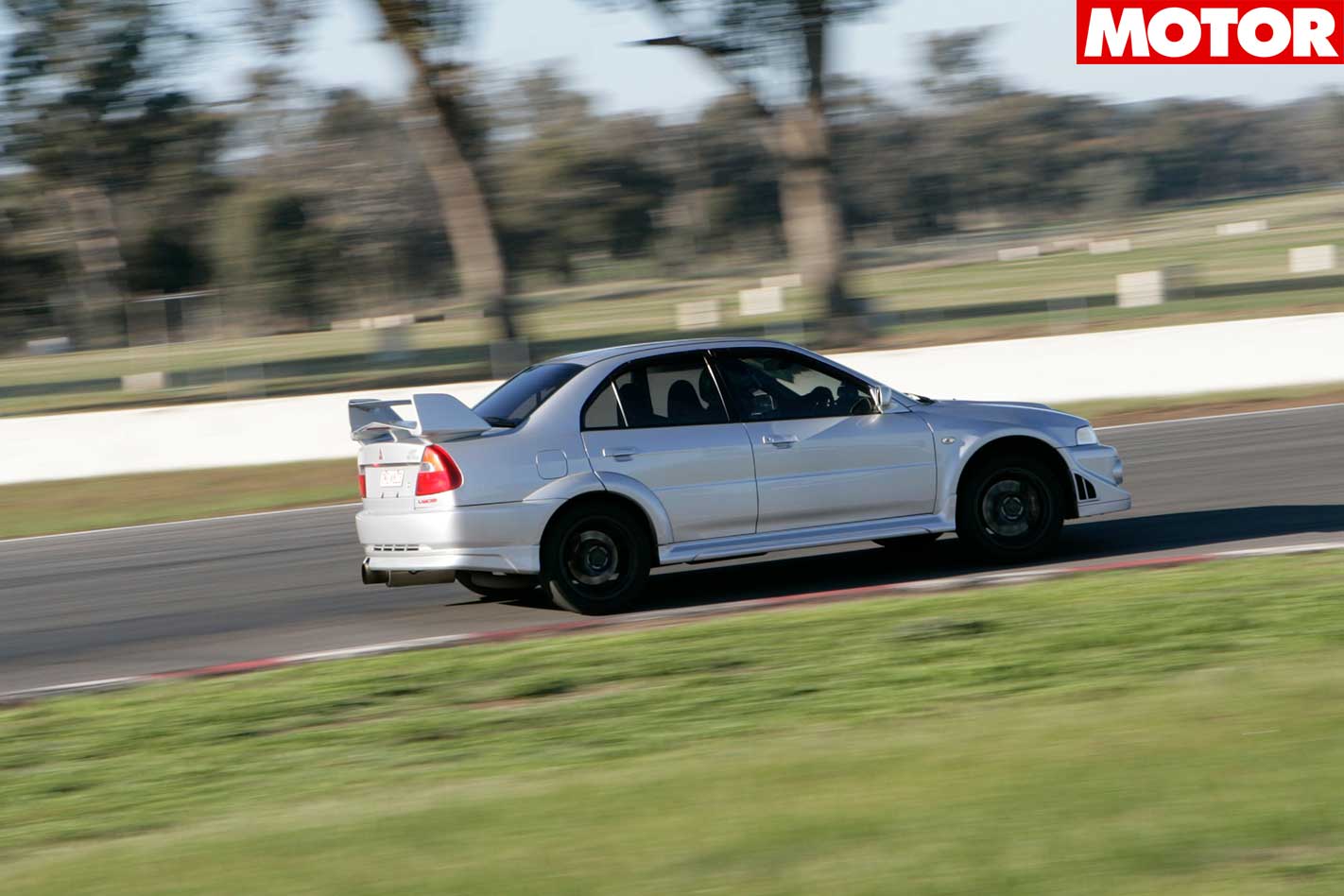
Noticeably louder than the newer pair (no doubt due to the aftermarket exhaust), the TME both looked and sounded quick, its big lungs and low mass no doubt aiding the highest v-max of the three; a cracking 177.9km/h. But its lap time was ultimately the slowest. Half a second is hardly a punishing defeat, but a loss is a loss. Not to mention a surprise.
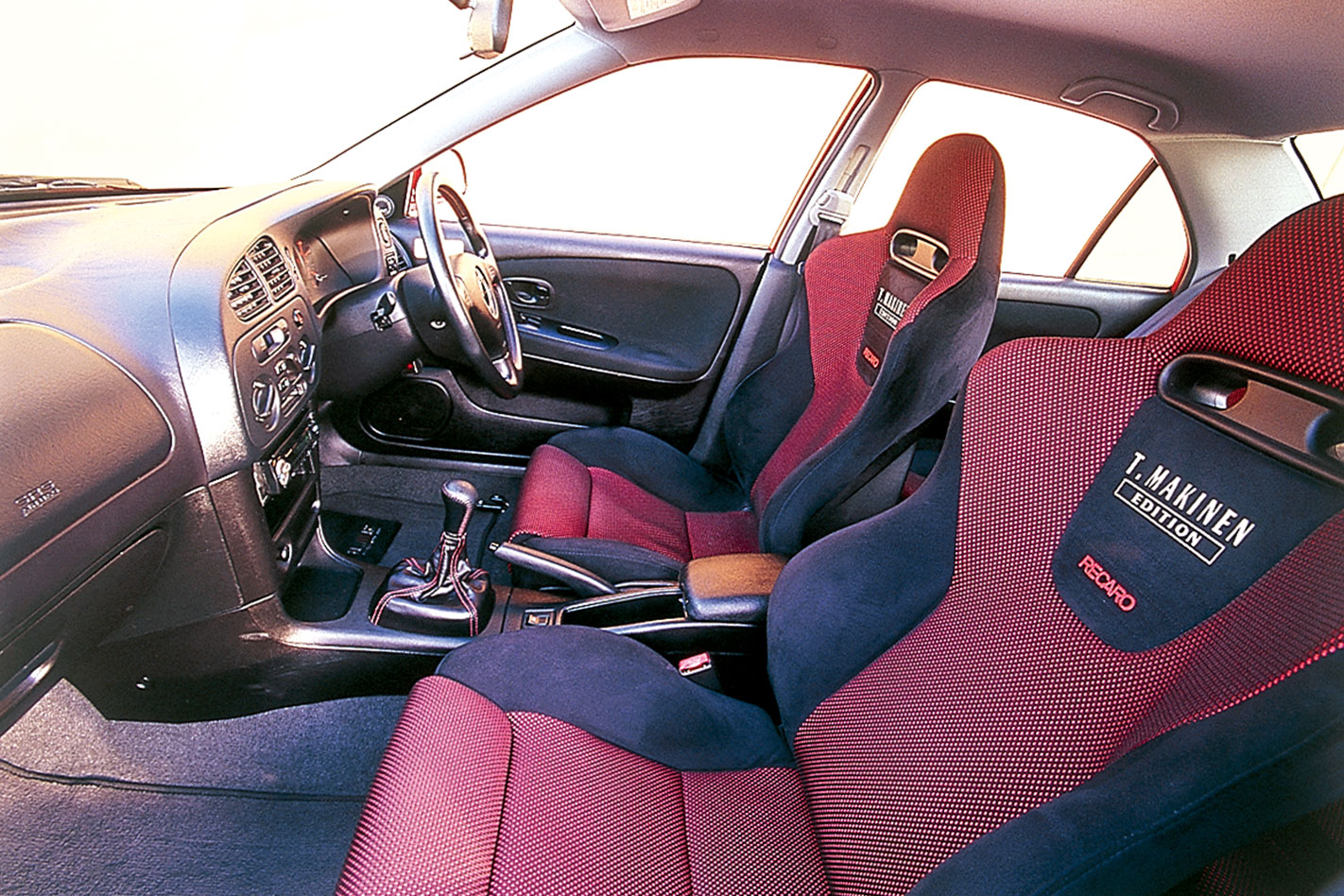
Ultimately the VI’s brutality – its biggest drawcard – is also its undoing against the IX and X.
In developing the car, it seems the engineers focused mainly on the hardware’s ability generating – for its time, at least – mind-bending physics, and how it felt to drive was way down on the priority list.
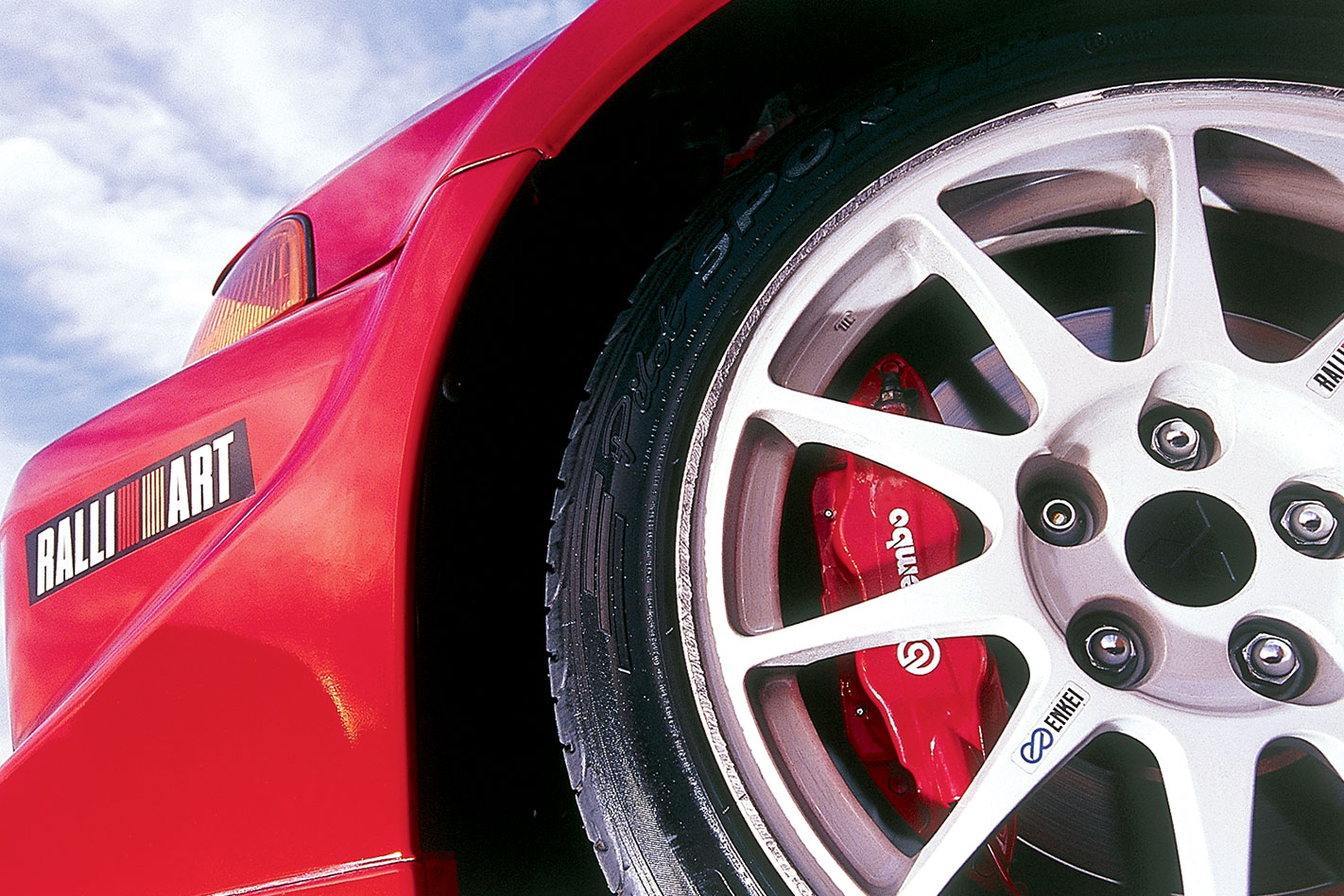
Despite the average rubber, roadholding was good, yet its limits arrived sooner than expected. It wasn’t particularly well-balanced in the turns, and nowhere near as responsive as the IX.
Of the three, it tended to body roll onto its nose the most. The steering, gear shift and brakes all worked well, but lacked tactility.
Fast Facts – 1999 Mitsubishi Evolution VI Tommi Mäkinen Edition
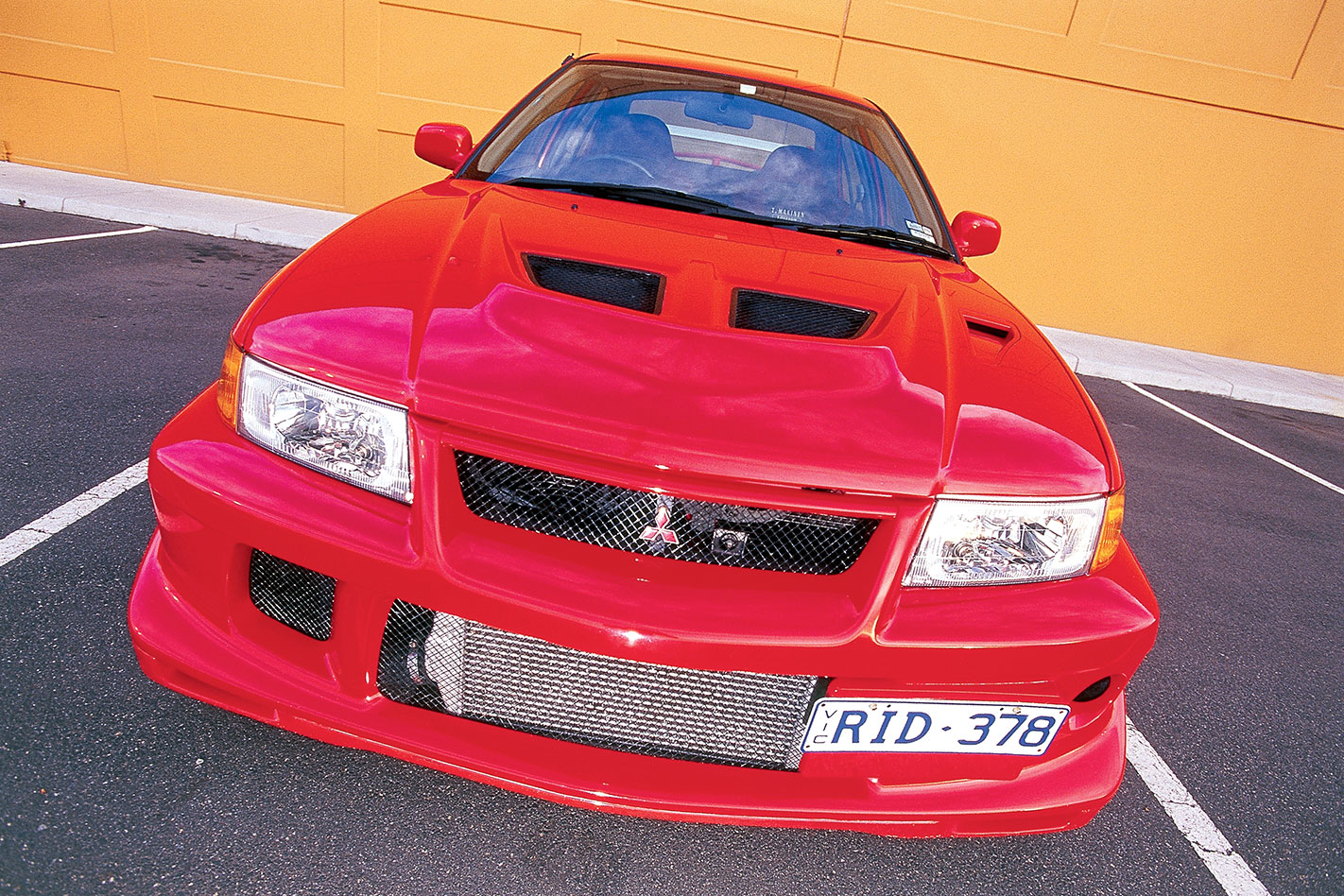
Like: Animalistic character, brutal punch, explosive power Dislike: Cost $80K new, vulnerable clutch, agricultural interior
2007 Mitsubishi Evolution IX Critics labelled it soft, but the Evo IX might just be greatest of all time
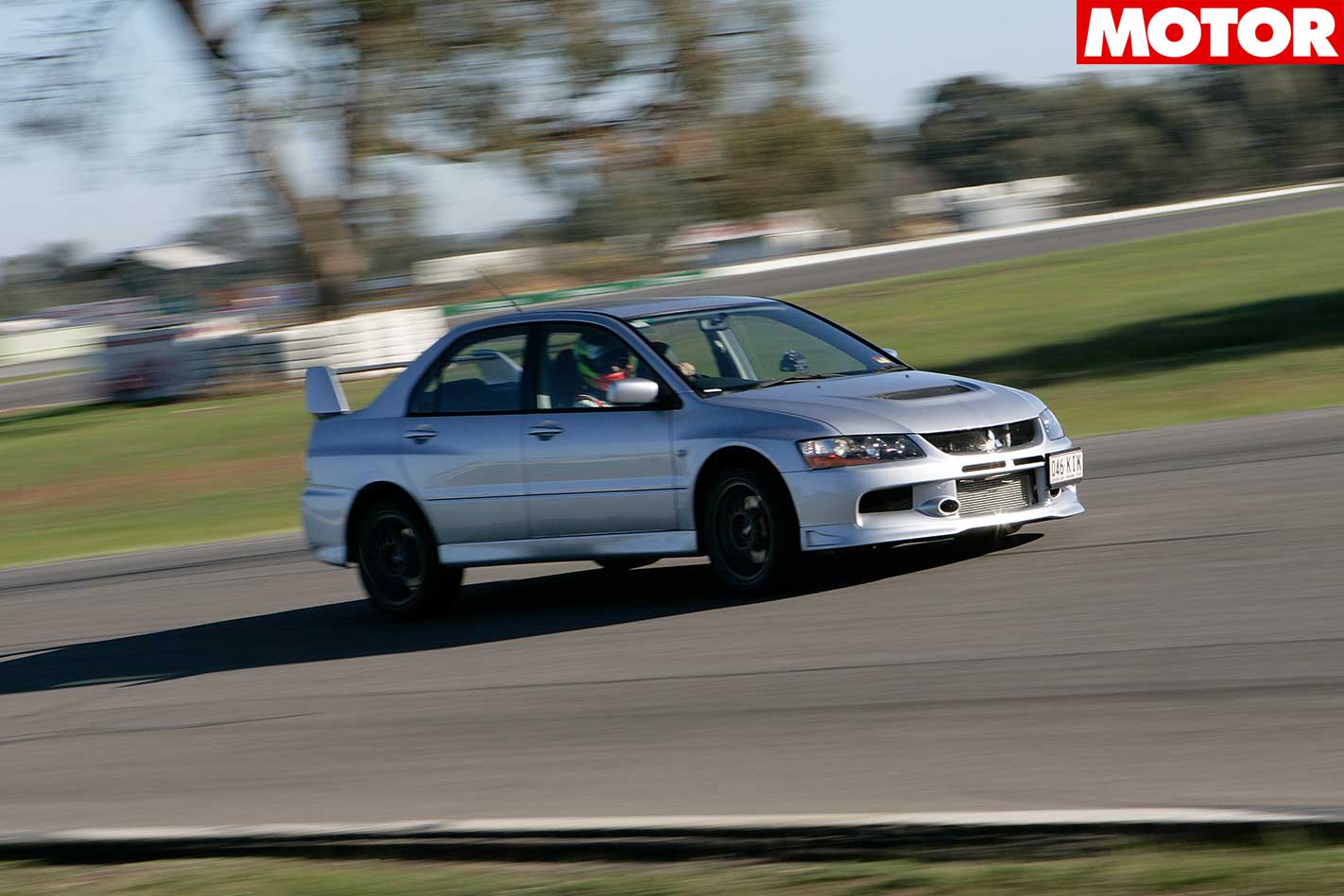
Shortly after Ralliart started shifting Evo’s increasingly techy hardware from generation two’s CP9A Lancer into the bigger and heavier third-gen CT9A jigger (in 2001), it was clear that the focus had shifted and the Evo was heading in a more refined and useable direction.
Of course, after the shock treatment that was the Evo VI, many purists accused the Evo VII of being soft. (Ever driven one? It’s not soft, and not by a long mark.) And the more refined and useable the VIII and IX became, the more the accusations flew. And this was despite constant criticism from elsewhere that Evos, as a breed, were still too low-rent and harsh by normal automotive standards. They just couldn’t win!
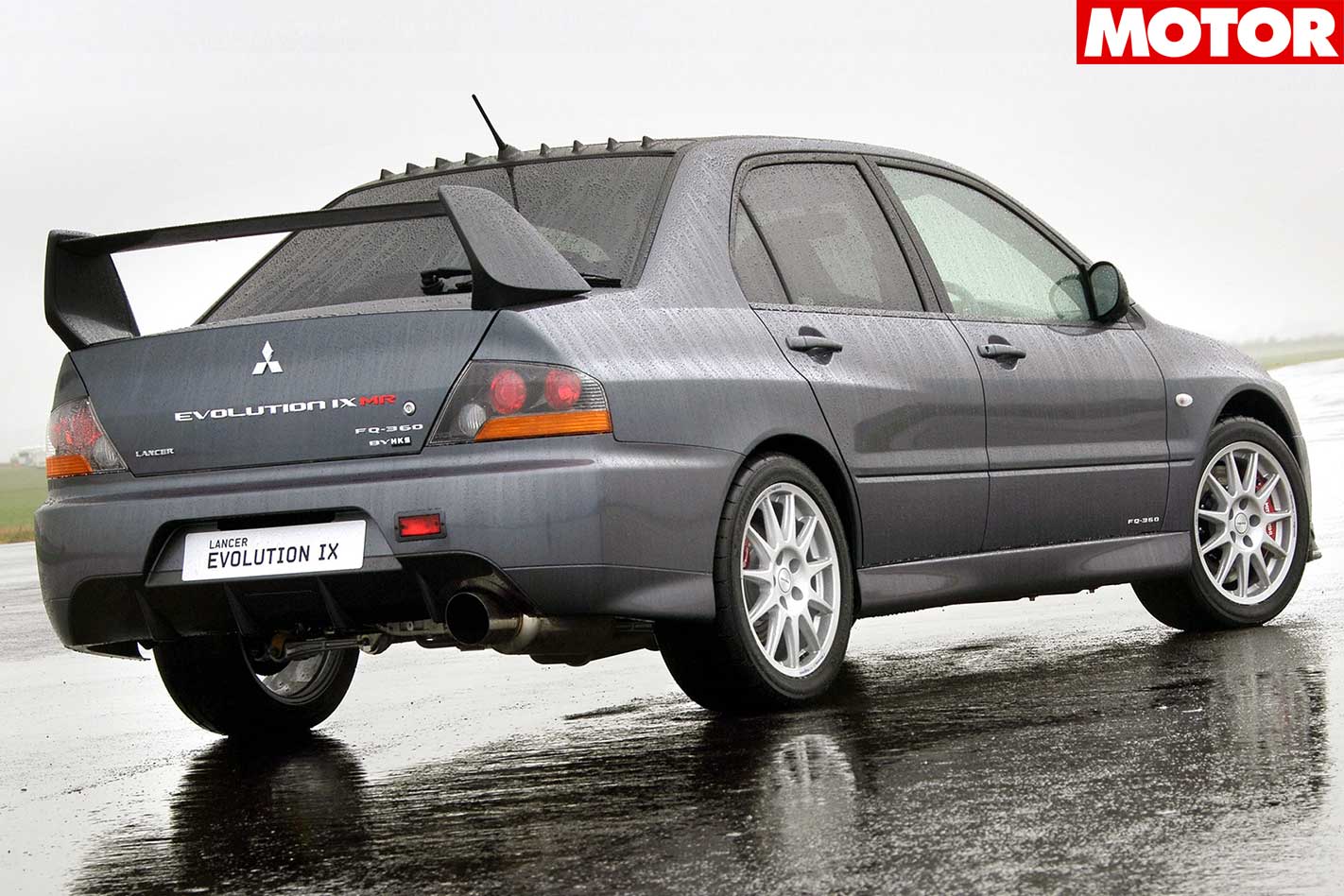
Unlike the VI or X, it runs a conventional six-speed cog swapper. (Why the new X only gets five cogs in the manual is anyone’s guess.)
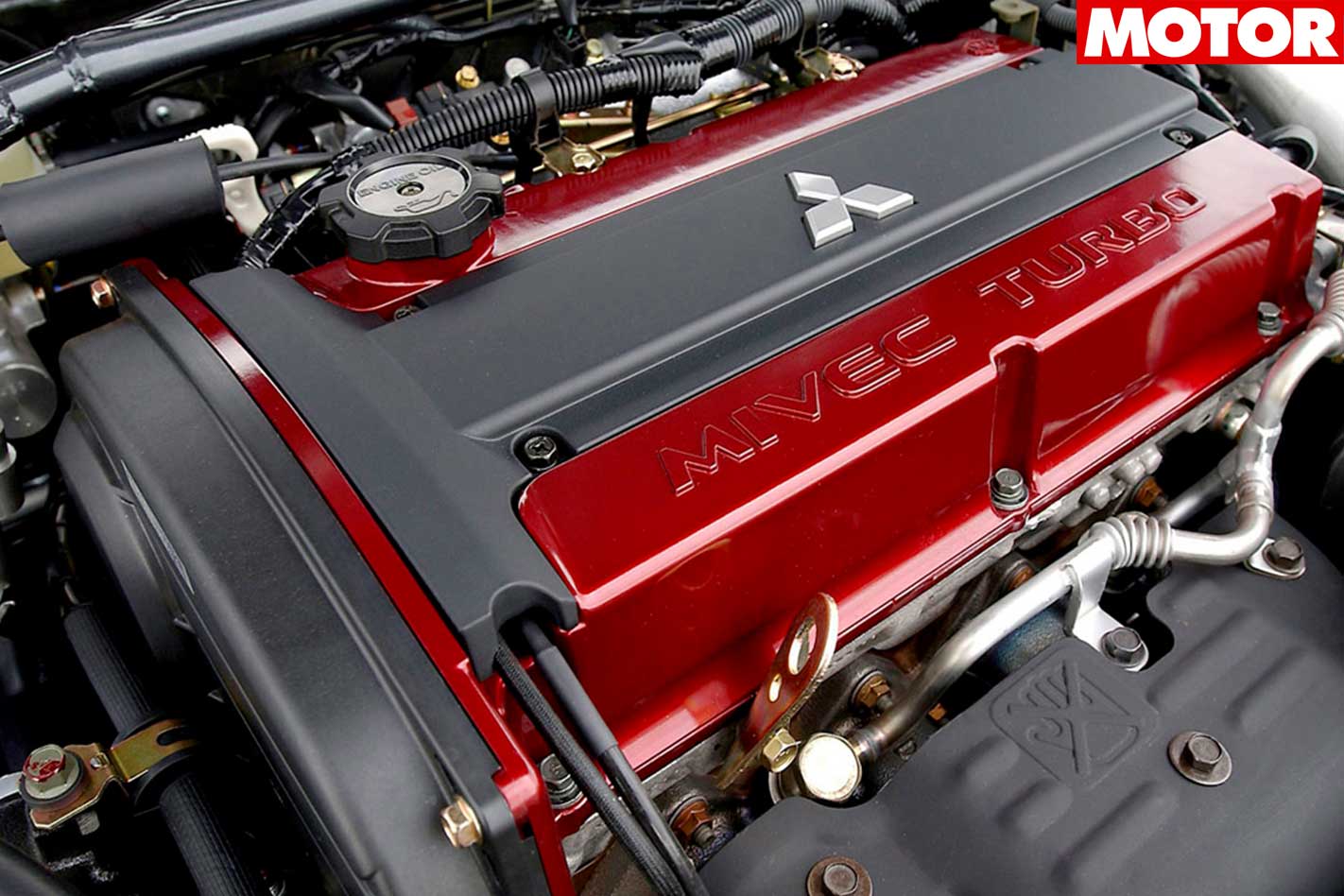
At 206kW and 355Nm, its 4G63 turbo four (the first with MIVEC and a six-speed box) looked to pull the shortest straw for power and torque. But after 21 years of performance-focused development, the engine feels brilliant: punchy down low, linear all the way through, and with more spice than the figures suggest.
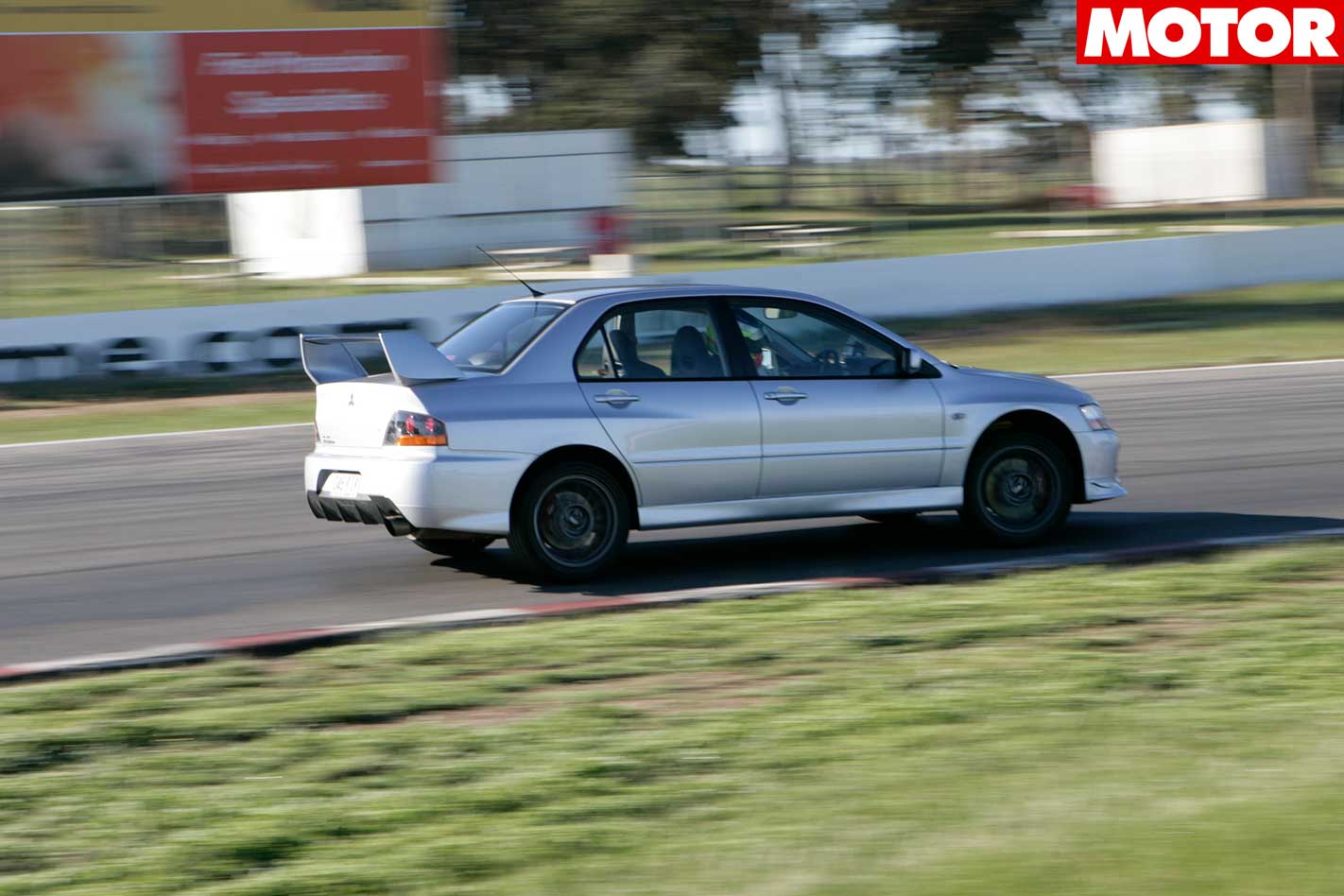
The second was its lap time. A best of 1:40.2sec was not only eight-tenths quicker than the Tommi gun, it also dispatched the new Evo X by 0.3sec. Not much in it, but a case of read ’em and weep.
This wasn’t down to a tyre/grip advantage (with its stock 235mm Yokohama Advans) as it didn’t dominate the corner speeds. Nor did it have the highest terminal speed. And while the brakes are exceptional − far better than the long-pedalled VI – they’re not the superb late-brakers under the X.
The IX clearly gets its advantage on corner entry and exit. It has a blend of initial turn-in and mid-corner poise the other two can’t match, and it’s more nimble and eager to respond to quick changes in direction. It’s a bit racier than the X, but without the VI’s white-knuckled histrionics.
The IX manages to blend the VI’s stunning sucker-punch with the planted, predictable useability of the X that pretty much encapsulates Mitsubishi’s Evo catchphrase of “ingeniously brutal”. It’s when the term ‘refinement’ means improving interaction and not just comfort. But is it soft? No way.
The jury is out as to whether the VII, VIII or IX is the finest of Evo’s third generation. But as evidenced against two of the most significant benchmarks − the ‘monster’ 6.5 TME and the latest and greatest X − it seems that the quickest and (potentially) best Evo of all time has been sitting right under our noses, and in showrooms, for the past couple of years.
Fast Facts – 2007 Mitsubishi Evolution IX
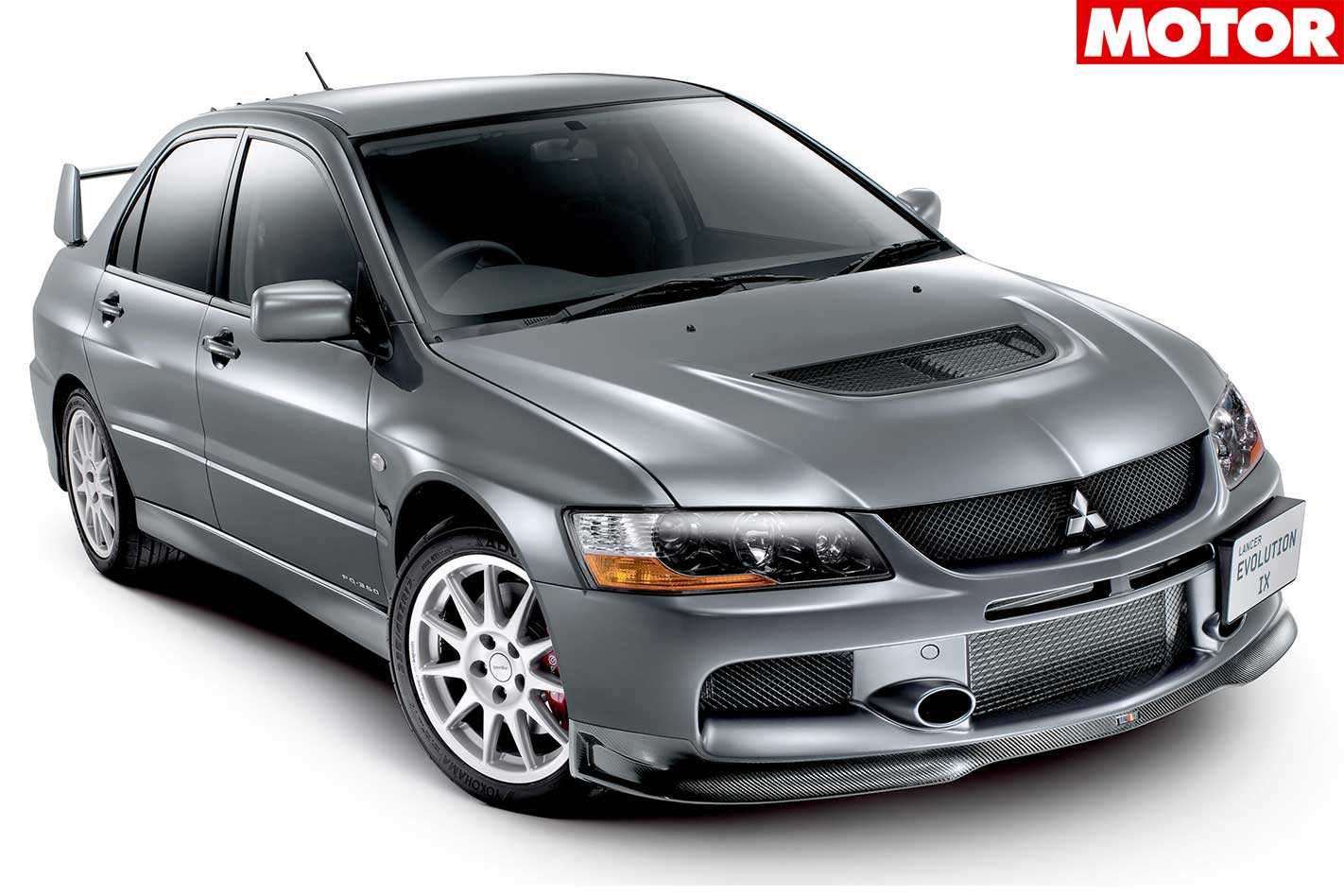
Like: Fast, crisp handling, more refined than TME, lighter than X Dislike: Basic interior, road noise, least powerful of the three
THE NUMBERS
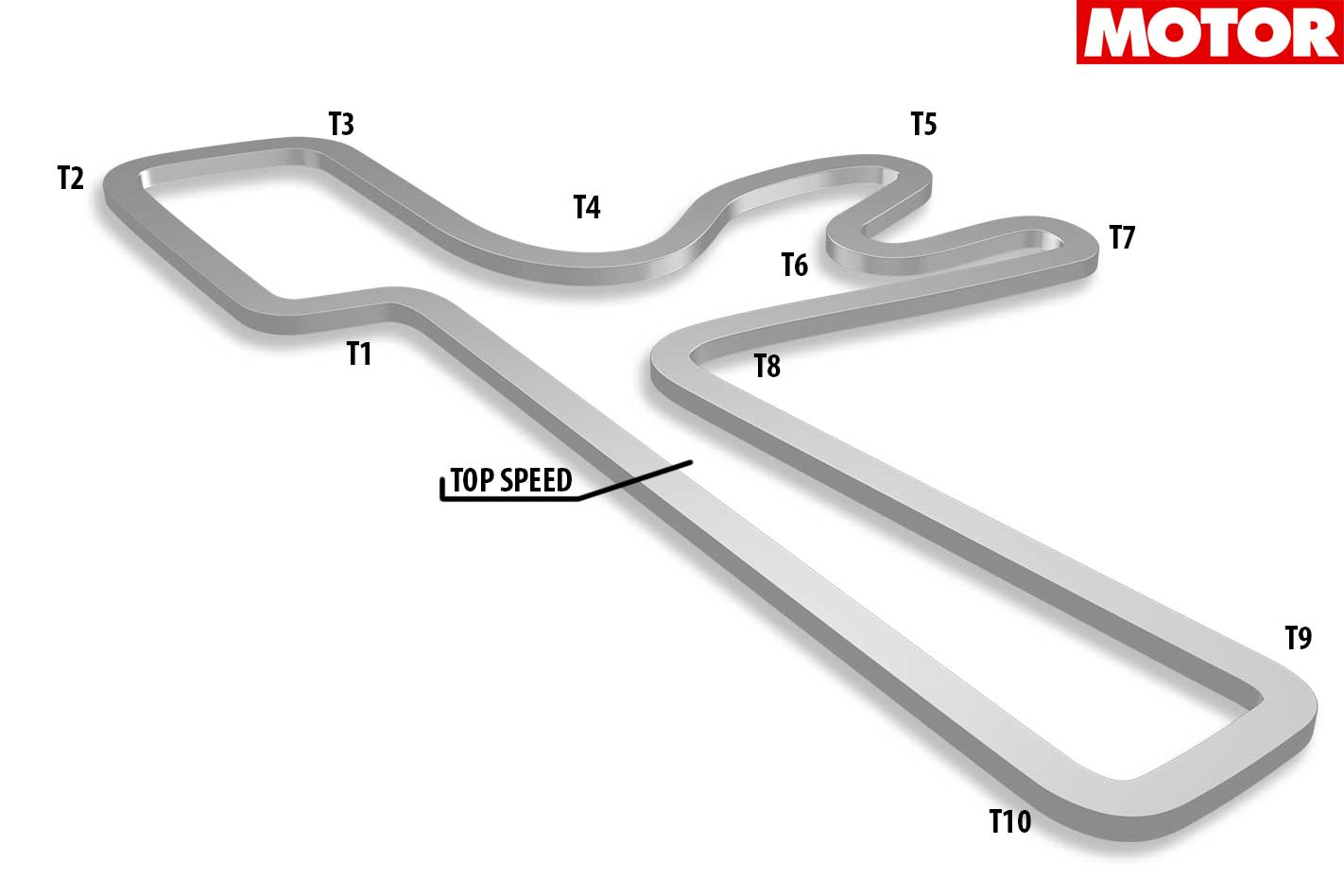
| u00a0 | EVO VI TME | EVO IX | EVO X |
| T1 | 90.3km/h | 92.4km/h | 90.1km/h |
| T2 | 80.3km/h | 78.8km/h | 80.8km/h |
| T3 | 89.6km/h | 93.0km/h | 95.0km/h |
| T4 | 109.5km/h | 112.9km/h | 114.3km/h |
| T5 | 55.1km/h | 56.9km/h | 56.3km/h |
| T6 | 64.3km/h | 60.9km/h | 65.7km/h |
| T7 | 54.8km/h | 53.2km/h | 57.8km/h |
| T8 | 64.2km/h | 64.4km/h | 63.3km/h |
| T9 | 69.5km/h | 69.2km/h | 70.6km/h |
| T10 | 64.9km/h | 69.1km/h | 68.9km/h |
| Top Speed | 117.9km/h | 173.8km/h | 170.6km/h |
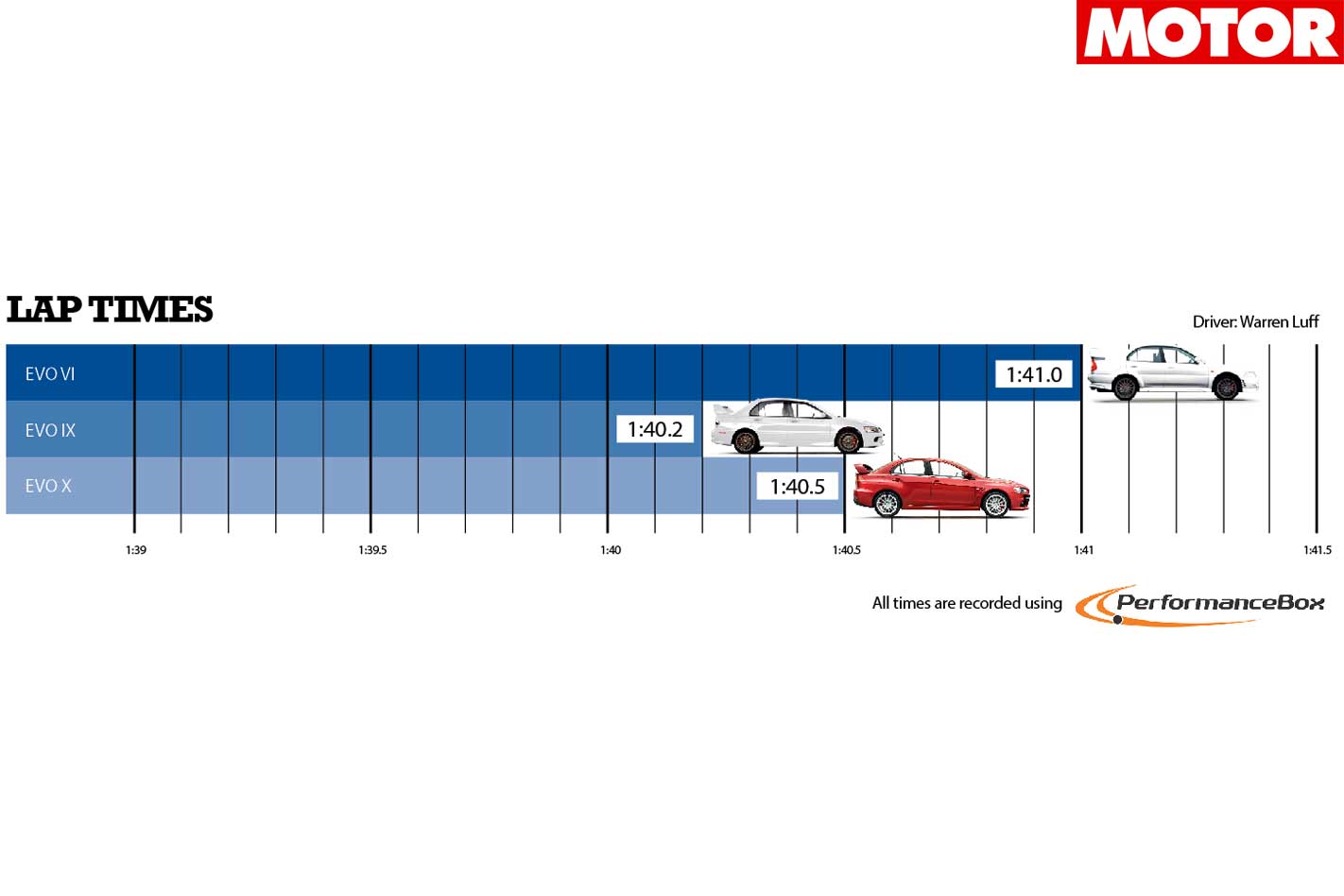
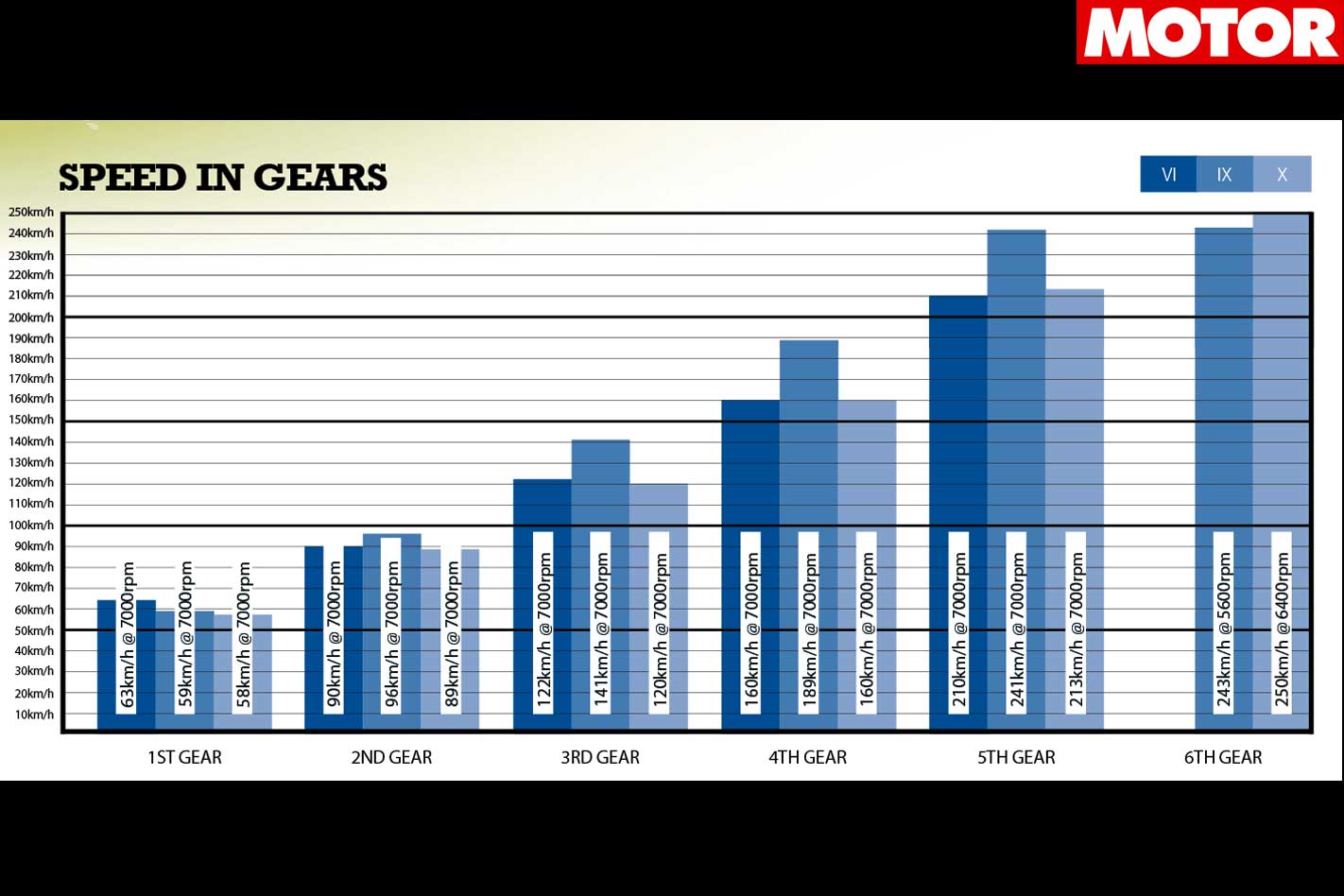
| u00a0 | EVO VI TME | EVO IX | EVO X |
| 0-10km/h (sec) | 0.42 | 0.61 | 0.36 |
| 0-20km/h (sec) | 0.94 | 1.18 | 0.95 |
| 0-30km/h (sec) | 1.42 | 1.66 | 1.50 |
| 0-40km/h (sec) | 1.88 | 2.15 | 1.94 |
| 0-50km/h (sec) | 2.39 | 2.65 | 2.37 |
| 0-60km/h (sec) | 3.23 | 3.17 | 2.85 |
| 0-70km/h (sec) | 3.73 | 3.70 | 3.73 |
| 0-80km/h (sec) | 4.30 | 4.26 | 4.31 |
| 0-90km/h (sec) | 4.94 | 4.86 | 4.96 |
| 0-100km/h (sec) | 5.68 | 5.60 | 5.71 |
| 0-110km/h (sec) | 7.00 | 6.41 | 6.80 |
| 0-120km/h (sec) | 7.96 | 7.25 | 7.77 |
| 80-120km/h (3rd) | 2.8sec | 3.1sec | 3.7sec |
| 80-120km/h (4th) | 3.4sec | 4.0sec | 4.3sec |
| 80-120km/h (5th) | 6.0sec | 5.4sec | 6.0sec |
*Winton Raceway does not have a straight section suitable for 0-400m performance times
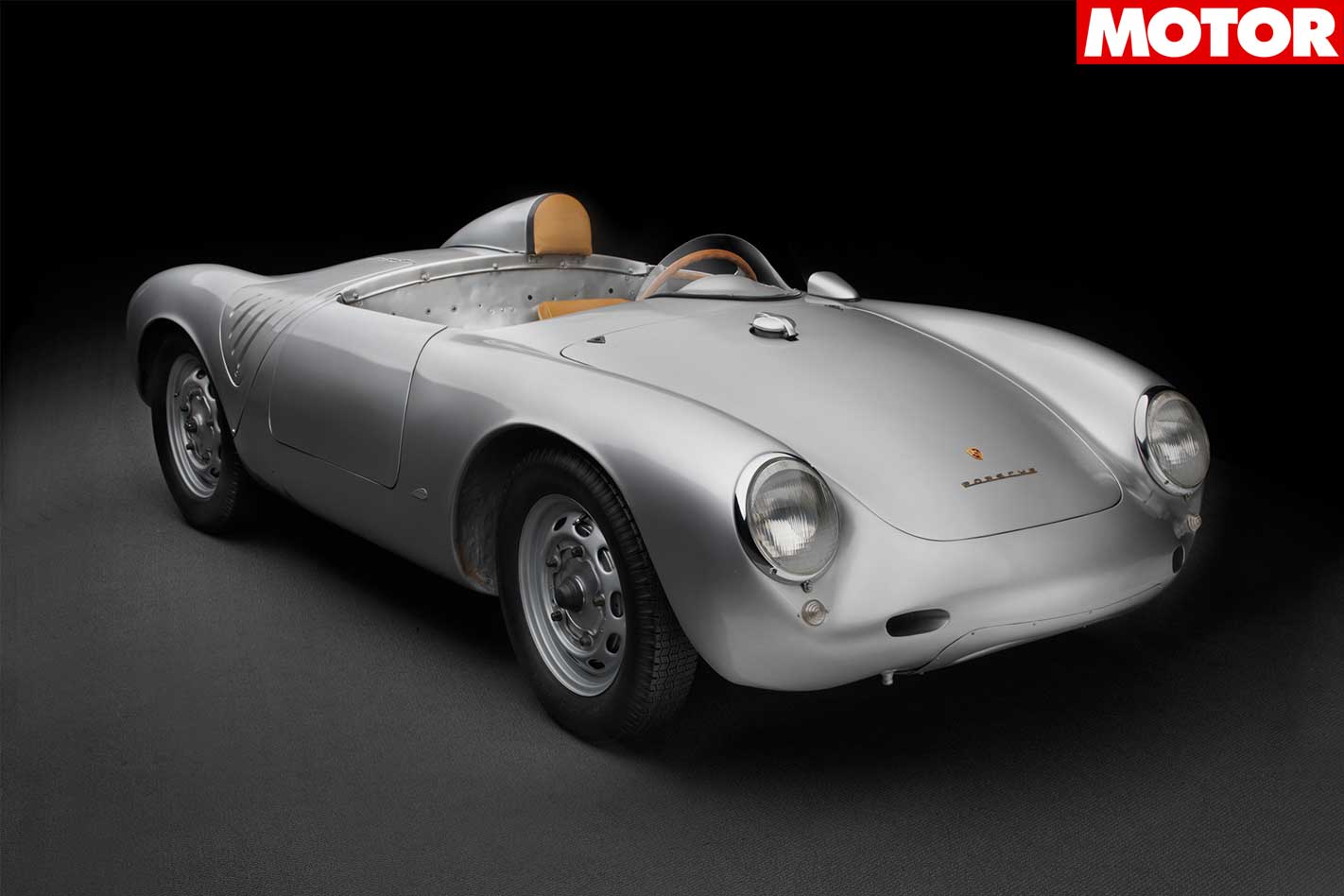
MADE famous by its motorsport success, and known somewhat infamously for the fatal crash involving James Dean, the Porsche 550 Spyder is a rare gem. In fact, only 90 of them were built.
First and foremost, the 550 Spyder was designed as a super-light racecar inspired by the 356. Its 1.5-litre boxer four-pot might have only been endowed with about 81kW, but given it was taxed with a spaceframe chassis weighing just 590kg, it was a force to be reckoned with. So much so that it gained the nickname ‘Giant Killer’ long before Dean branded his ‘Little Bastard’.
Given the extra weight, sticking the force-fed flat-six out of the Carrera GTS should solve that ill.

Here’s how we’d do it
Boost Me Up Weight is an issue here. Slotting in the twin-turbo Carrera GTS engine, with its 331kW/550Nm, would go a long way to combating that and would result in a 0-100km/h time in the high threes. The boosted 3.0-litre flat-six, despite not howling like the atmo 3.8-litre (think Cayman GT4), would also spice up the acoustics, with the largely unloved flat-four from the 718 shafted.
Parts-bin Glory With an extensive array of mechanical goodies to choose from, the Boxster R deserves to be fully kitted out. Adaptive dampers and configurable drive modes will allow for tailored driving dynamics while rear-wheel steer could be pinched from the GT3. Seats and racing harnesses nabbed from the GT cars are also a must, as are some sticky Michelin Pilot Sport Cup 2 tyres for ultimate grip.

Hollywood Looks The original attracted the attention of mega movie stars and race drivers alike, so we’d add some visual drama. A flameless windscreen, bulbous rollover hoops, tasteful decals and black Clubsport wheels help add appeal to the eye.
Family Warfare With Porsche’s unwillingness for the Cayman and Boxster to step on the toes of the 911, pricing for the Boxster R would have to sit around the $200K mark in six-speed manual guise.
