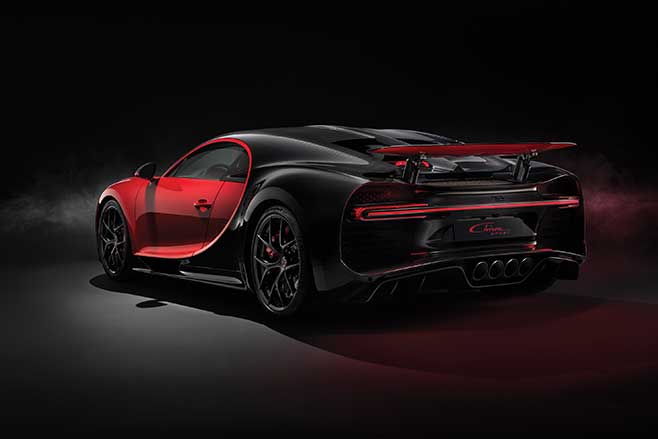
Bugatti has made its fastest car even faster. This is the Bugatti Chiron Sport.
Okay, so it doesn’t have any more power than the regular – if you can call it that – Chiron, but it’s 18kg lighter, and has “significantly improved handling and even greater agility.”
With that, lap times at the Nardo test track improved by 5 seconds over the standard car.
Koenigsegg beats Bugatti’s 0-400-0km/h record
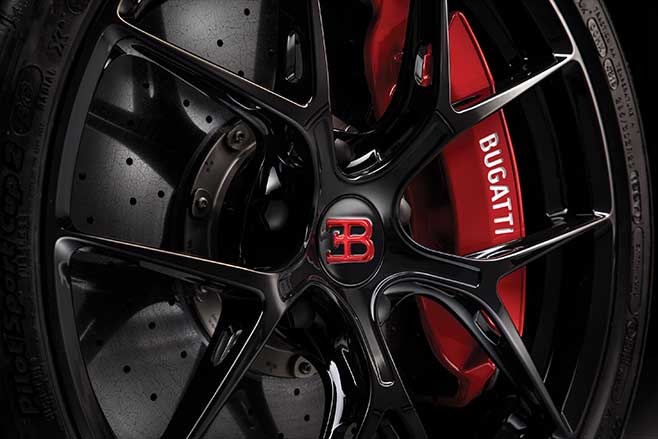
Even the windscreen wipers are carbon fibre, something Bugatti says it is the first top do on a production car.
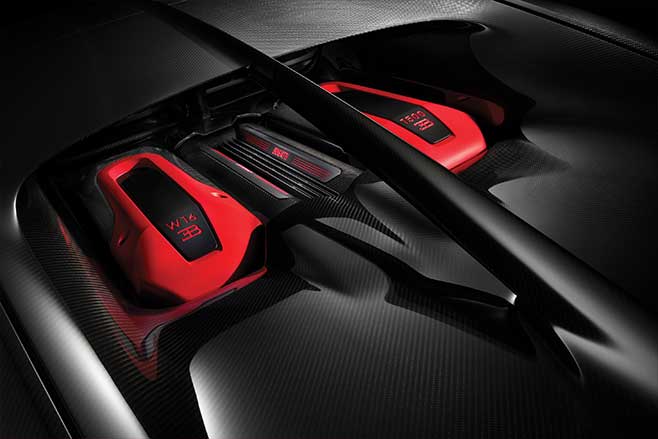
New features like stiffer suspension, adjusted steering, an optimised rear diff, and dynamic torque vectoring also make the Chiron a more sporting drive.
“We have developed the Chiron Sport for customers wanting an even sportier driving experience with their Chiron, with improved lateral dynamics on winding roads,” says Winkelmann.
“What was important for us was to leave unchanged the unique character of the Chiron, its combination of ultimate performance, longitudinal acceleration and maximum speed with luxury, comfort and everyday usability.
Bugatti expects to make its first deliveries by the end of 2018, with a base price of €2.65 million in Europe, or USD$3.26 million in the States.
Porsche has been spending some time playing mash-up, it seems, as the latest Stuttgart concept is half Panamera Turismo, half Mission E.
But it’s not a wagon, or an SUV, it’s a cross utility vehicle.
More specifically, this is “the concept study of an electrically driven cross utility vehicle,” which Porsche has granted all-wheel drive and an 800-volt architecture for fast charging and fast driving.
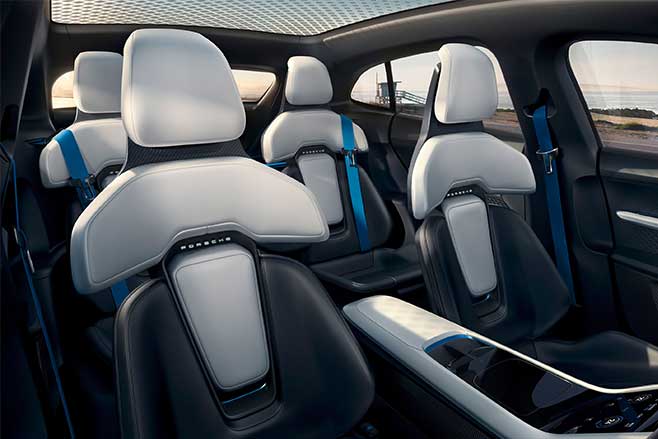
It adds that the Mission E Cross Turismo would have a range of about 400km after a charge lasting just 15 minutes.
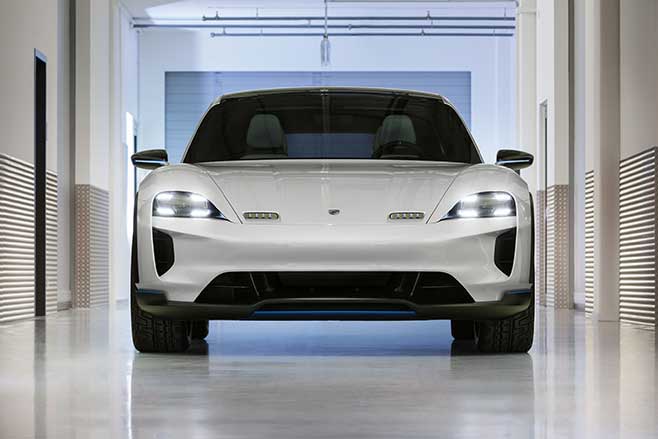
All-wheel steering and air suspension, as well as Porsche Dynamic Chassis Control and 275/40 R 20 tyres all help keep the Mission E Cross Turismo stable and firmly on the road, reducing tilt and ‘lateral rocking’.
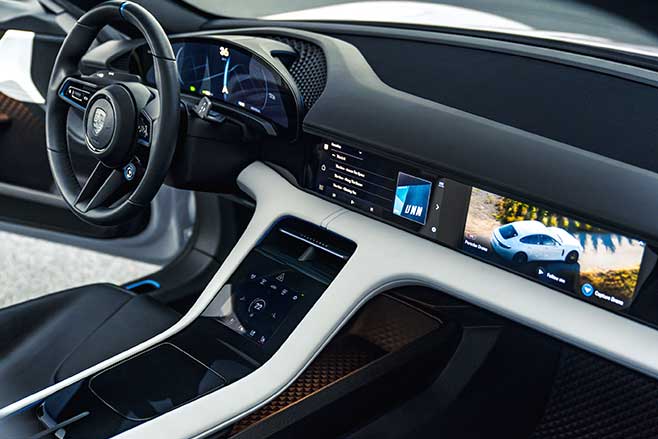
Here’s how Porsche describes it: “Using a camera in the rear-view mirror, the eye-tracking system detects which instrument the driver is looking at.
“The displays he or she can see are then brought to the foreground, while others are made smaller when the driver looks away.
“Operations are carried out using smart touch controls on the steering wheel.”
During the press conference, it was hammered home that Porsche has designed the Cross with active lifestyles in mind.
But is it Porsche’s future? There was only a quick joke about putting it into production, so we won’t hold our collective breath.
VOLKSWAGEN has provided a glimpse toward 2030, with its next-generation I.D Vizzion premium sedan concept.
The fourth instalment of the I.D. concept series, which includes the I.D. Hatchback, I.D. Crozz SUV and I.D. Buzz van, will be the brand’s future flagship. While a production version is expected in 2021, this concept looks ahead another nine years where autonomous driving will mean the cabin can be rearranged to a plush lounge.
You’ll also be able to change the cabin ambience and seating positions to create an atmosphere conducive to work, rest, play or communicate using holograms and augmented reality technology.
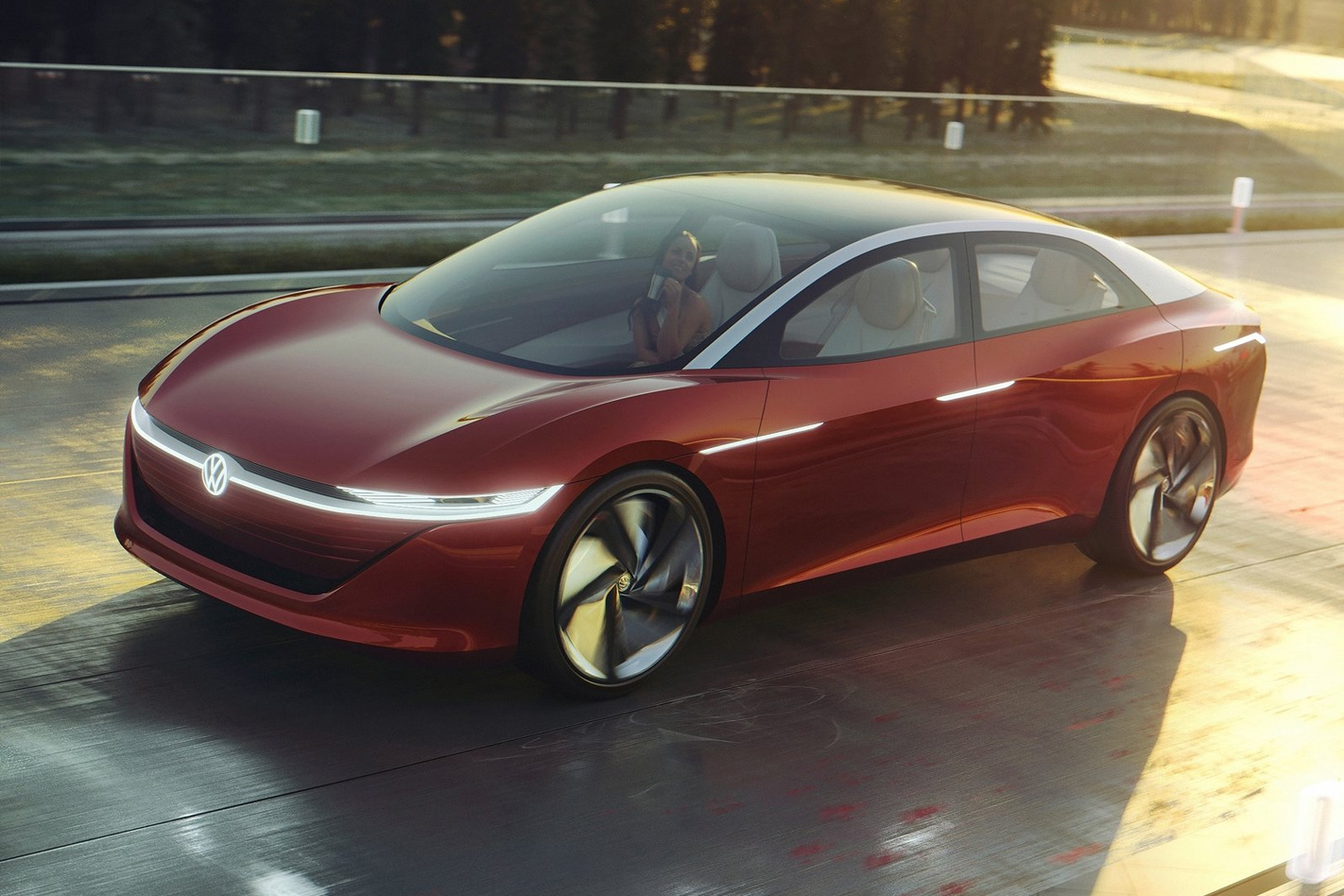
You’ll have plenty to enjoy the big interior and its features, because with Level-5 autonomy, the all-electric sedan will become the chauffer and will drive itself up to 615km before requiring a charge.
This will be achieved with some serious high-tech including LIDAR laser scanners, ultra-sound sensors, radar sensors cameras located around the vehicle.
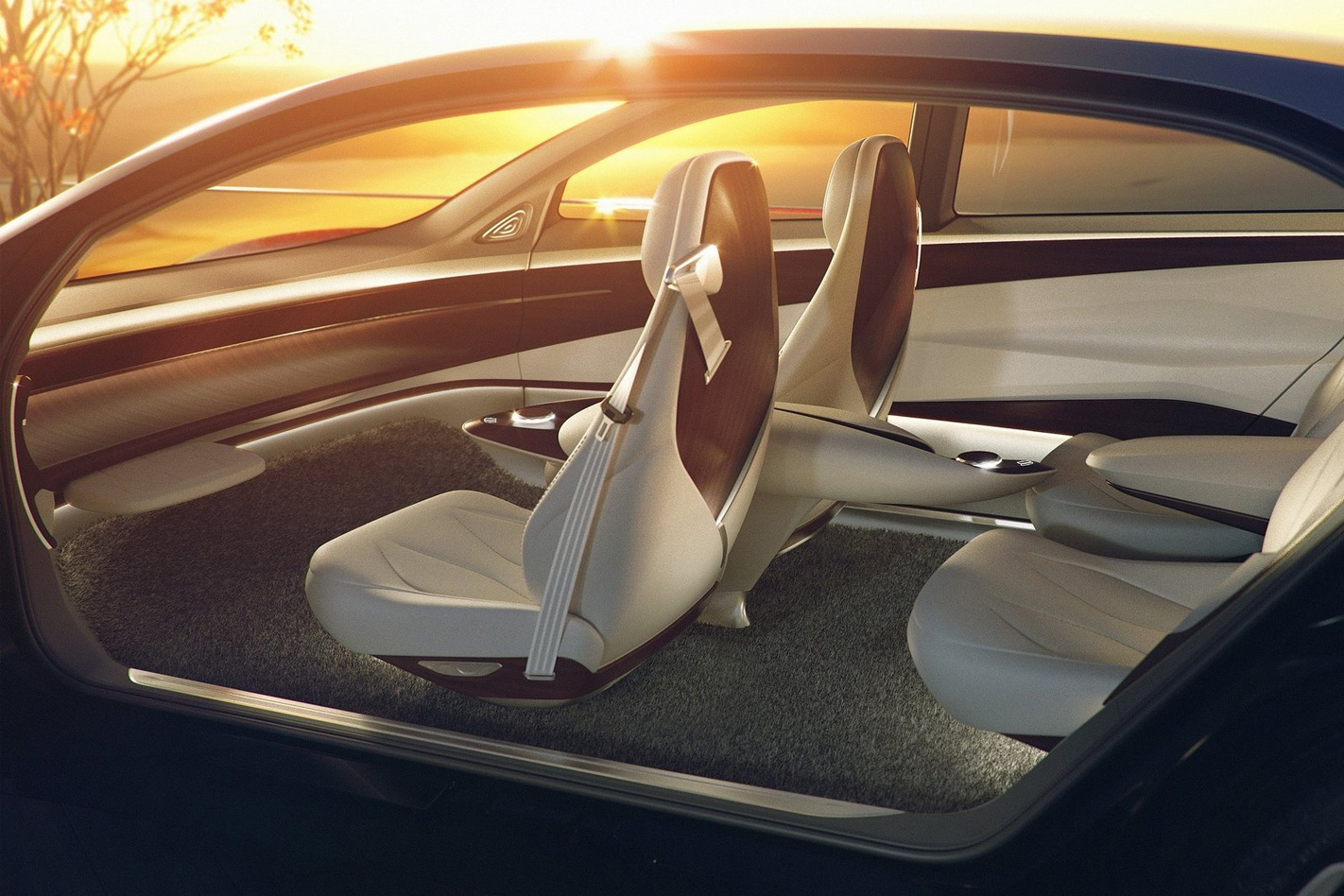
Power is courtesy of two electric motors sending 75kW and 150kW to the front and rear wheels respectively and will suck electrons from a 111kWh lithium-ion battery laid below flat floor to help maintain centre of gravity.
It will have a theoretical top-speed governed to 180km/h and reach 0-100km/h in a moderate 6.3 seconds.
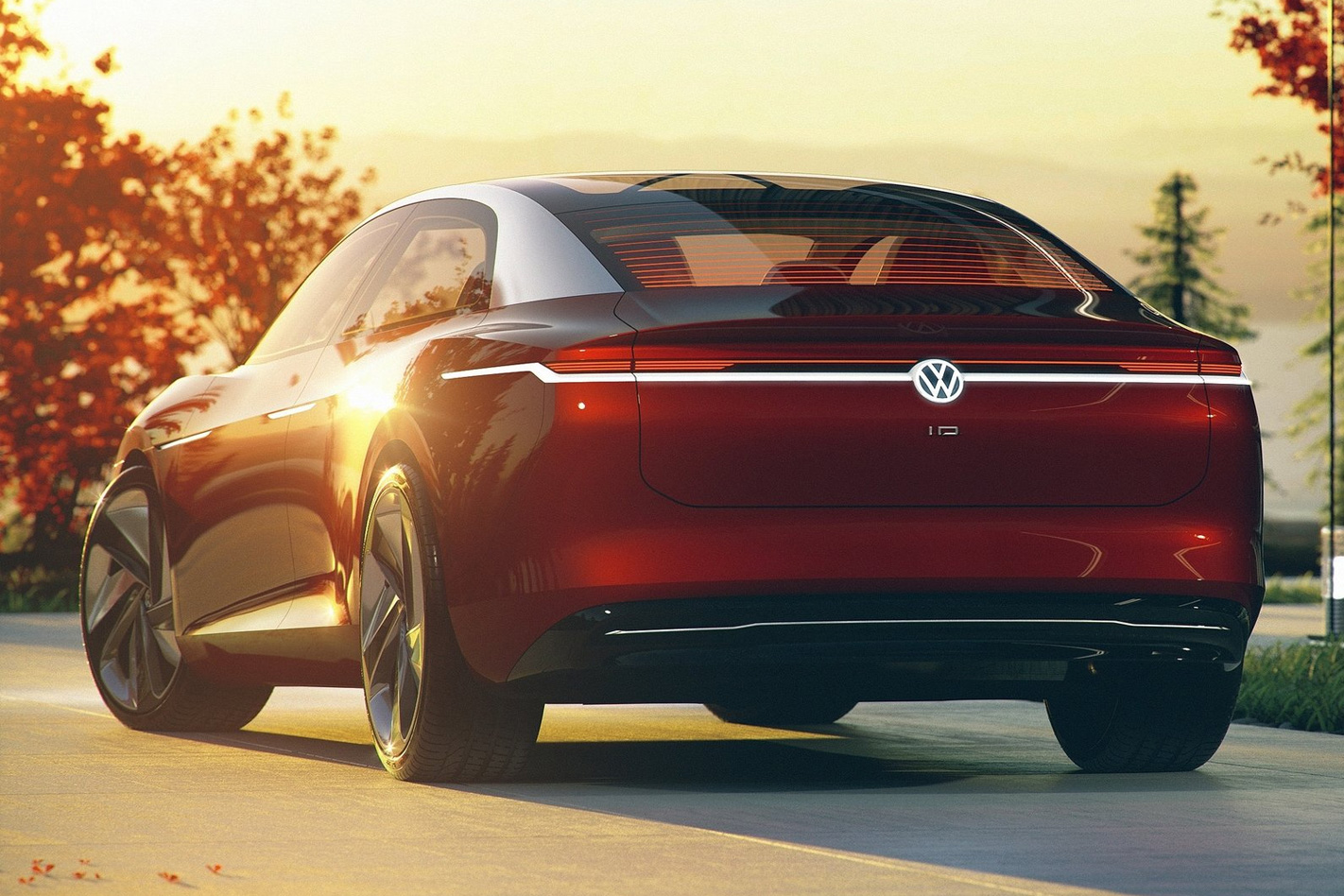
While it remains to be seen if the predicted technologies will eventuate, the I.D. Vizzion’s production progeny will be the standard bearer of Volkswagen’s massive commitment to electrification and autonomy, even if it does initially arrive with a steering wheel.
ATTENDEES at the Geneva Motor Show were expecting to see a production-version of the Mission E from Porsche, but instead the German manufacturer ripped the covers off a new all-electric concept.
Dubbed the Mission E Cross Turismo, the vehicle is a “concept study” of what Porsche calls a “Cross Utility Vehicle (CUV).
While lacking the high-sided bodywork of an SUV, the Cross Turismo concept is designed for customers with an active, out-door focused, lifestyle. Hence the raised ride height compared to the original Mission E.
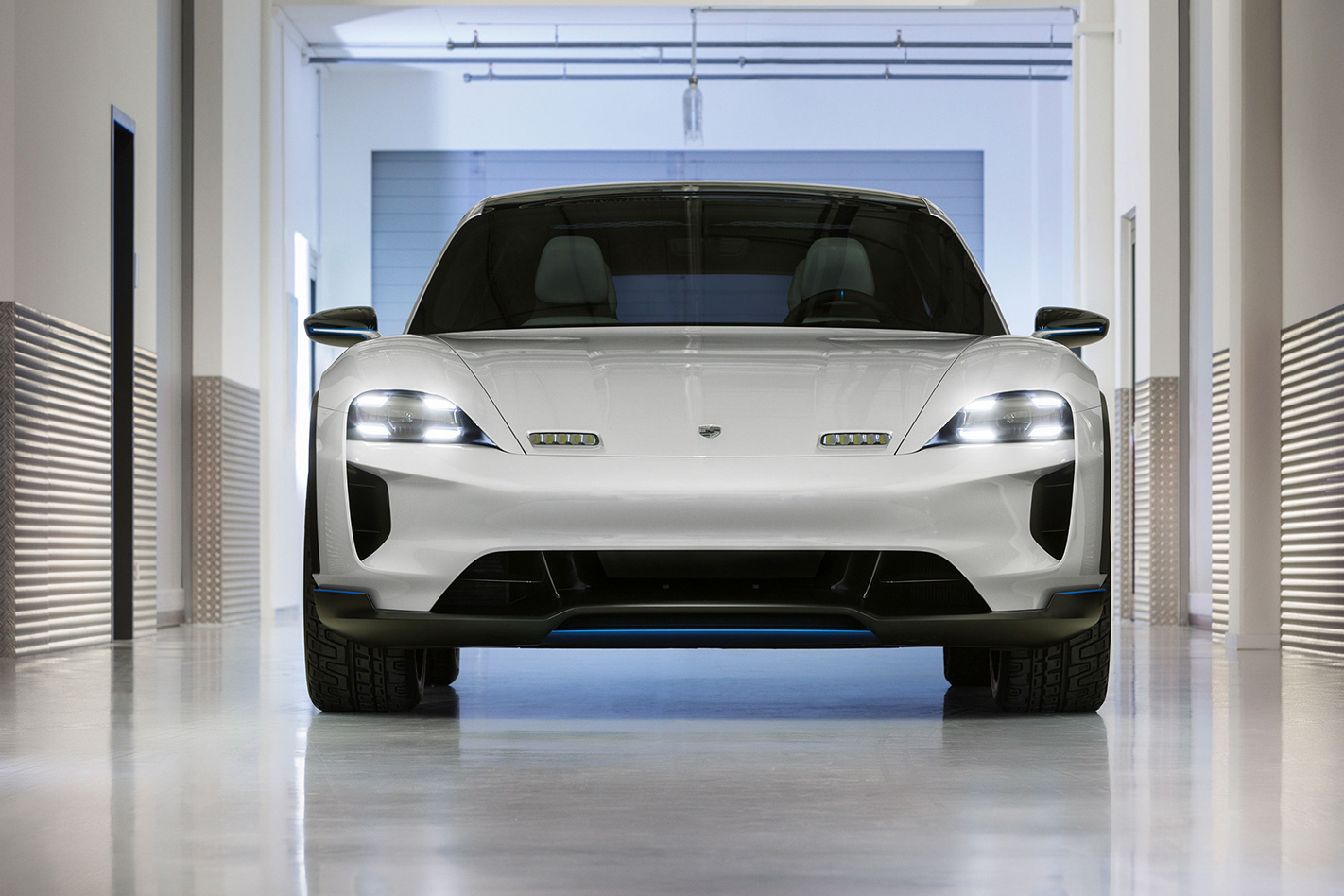
Two permanent electric motors have a combined power output of 440kW, which means the Cross Turismo will crack 100km/h in less than 3.5 seconds, and can silently breach the 200km/h barrier in under 12 seconds.
Porsche claims multiple accelerations are possible in a row without a loss in performance figures.
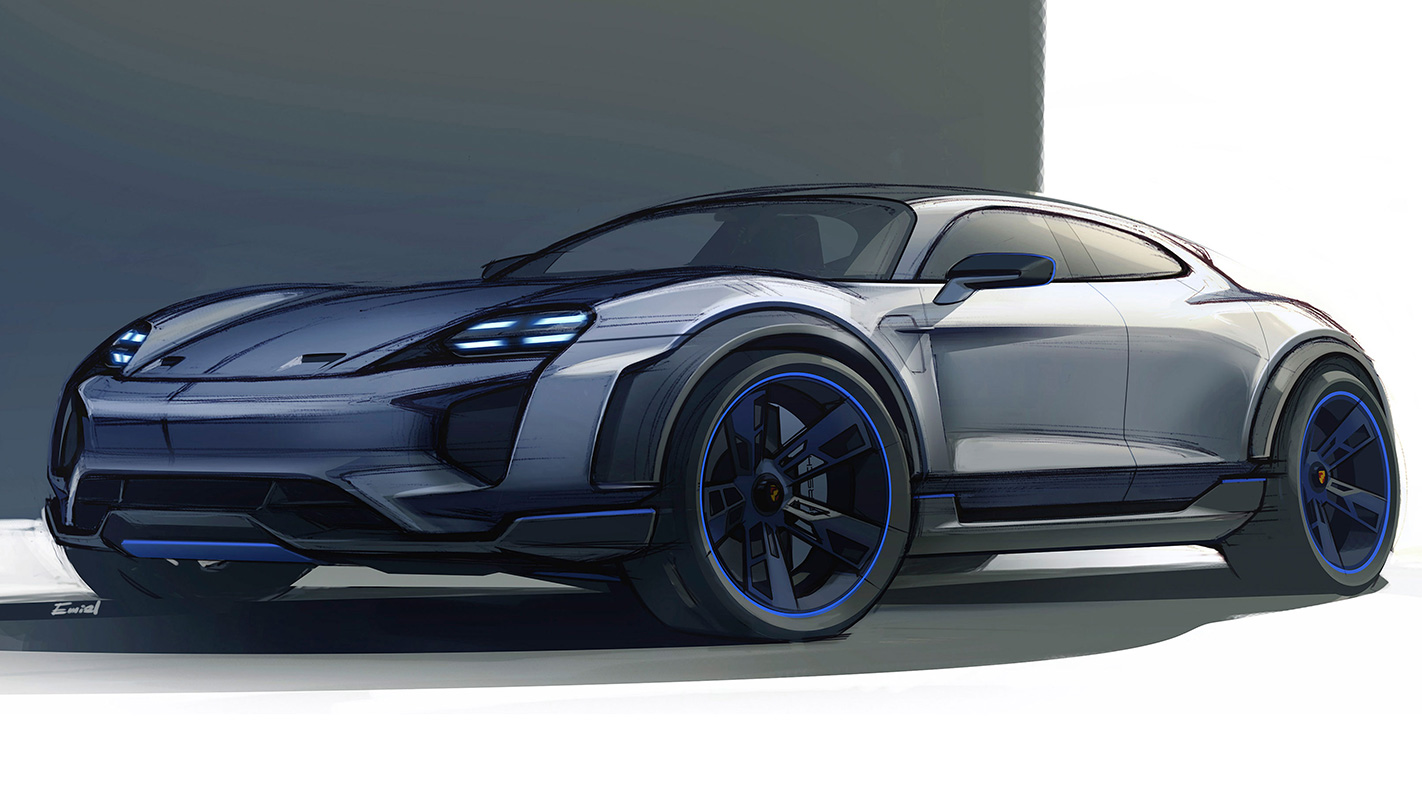
Underpinning the concept is adaptive air suspension which can raise the ground clearance by up to 50 millimetres, along with four-wheel steering and Porsche Dynamic Chassis Control.
At the front of the car, the design language is highlighted by the use of Porsche’s matrix LED headlights, and vertical air intakes. Hinting at the car’s intended off-road purpose, the Cross Turismo has cladding on the wheel arches and door sills. It rides on 20-inch wheels, with 275/40 R 20 tyres.
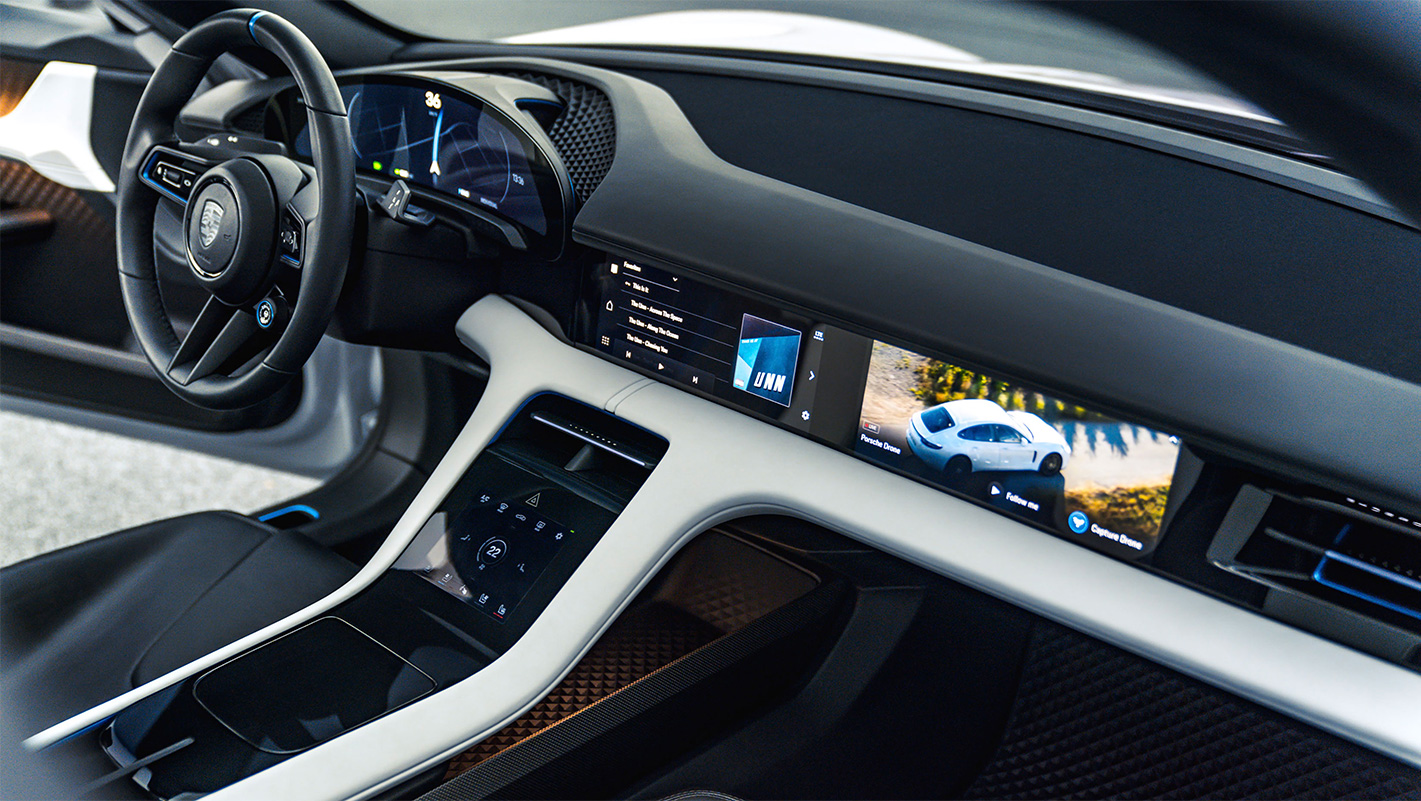
The instrument cluster and infotainment unit are fully digital, with Porsche claiming it has developed an eye-tracking system which detects the instrument the driver is looking at, and brings it to the foreground to minimise the time spent with eyes off the road.
IT’S confirmed: Toyota will revive the Supra nameplate, and this is our first good peek at what it will look like.
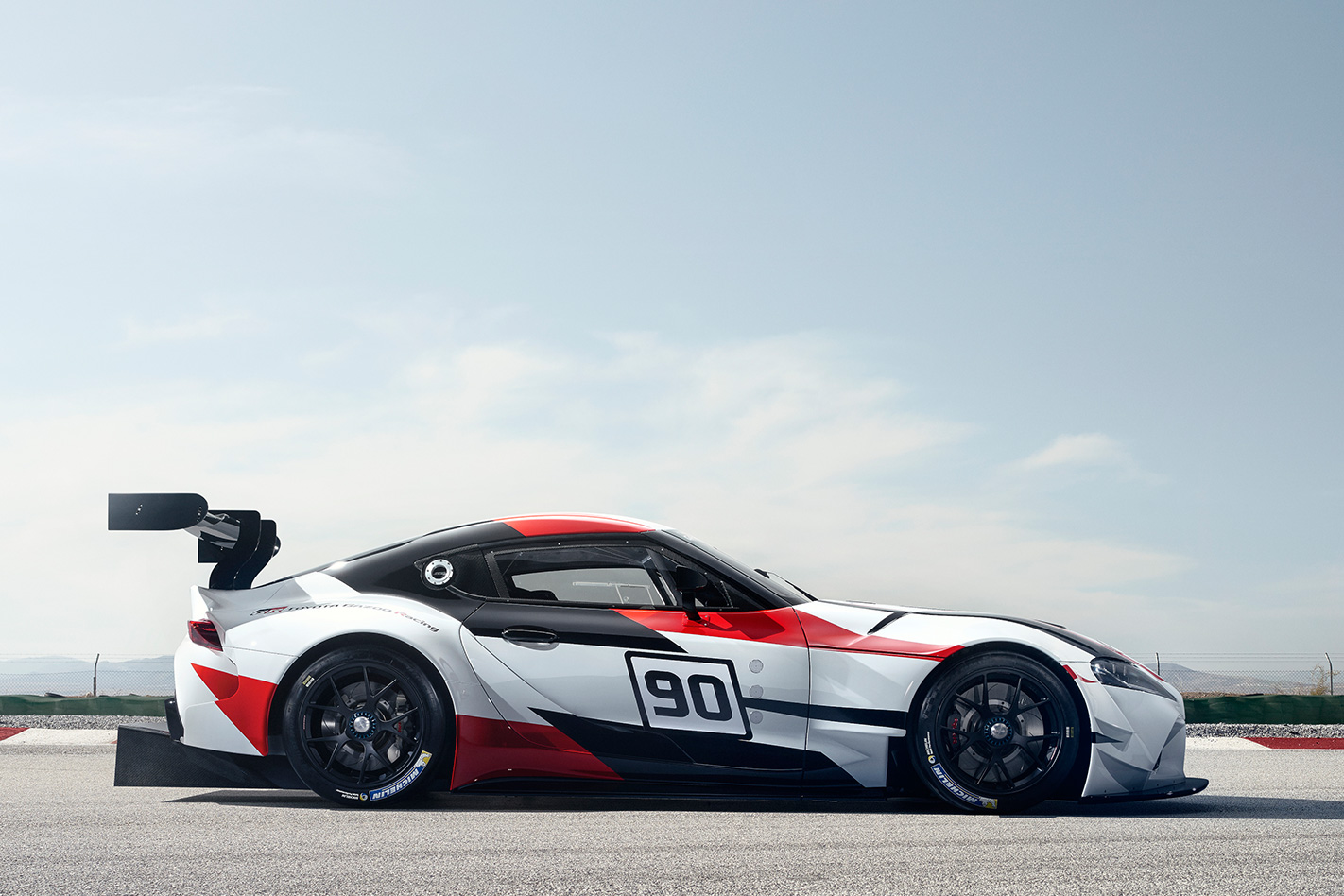
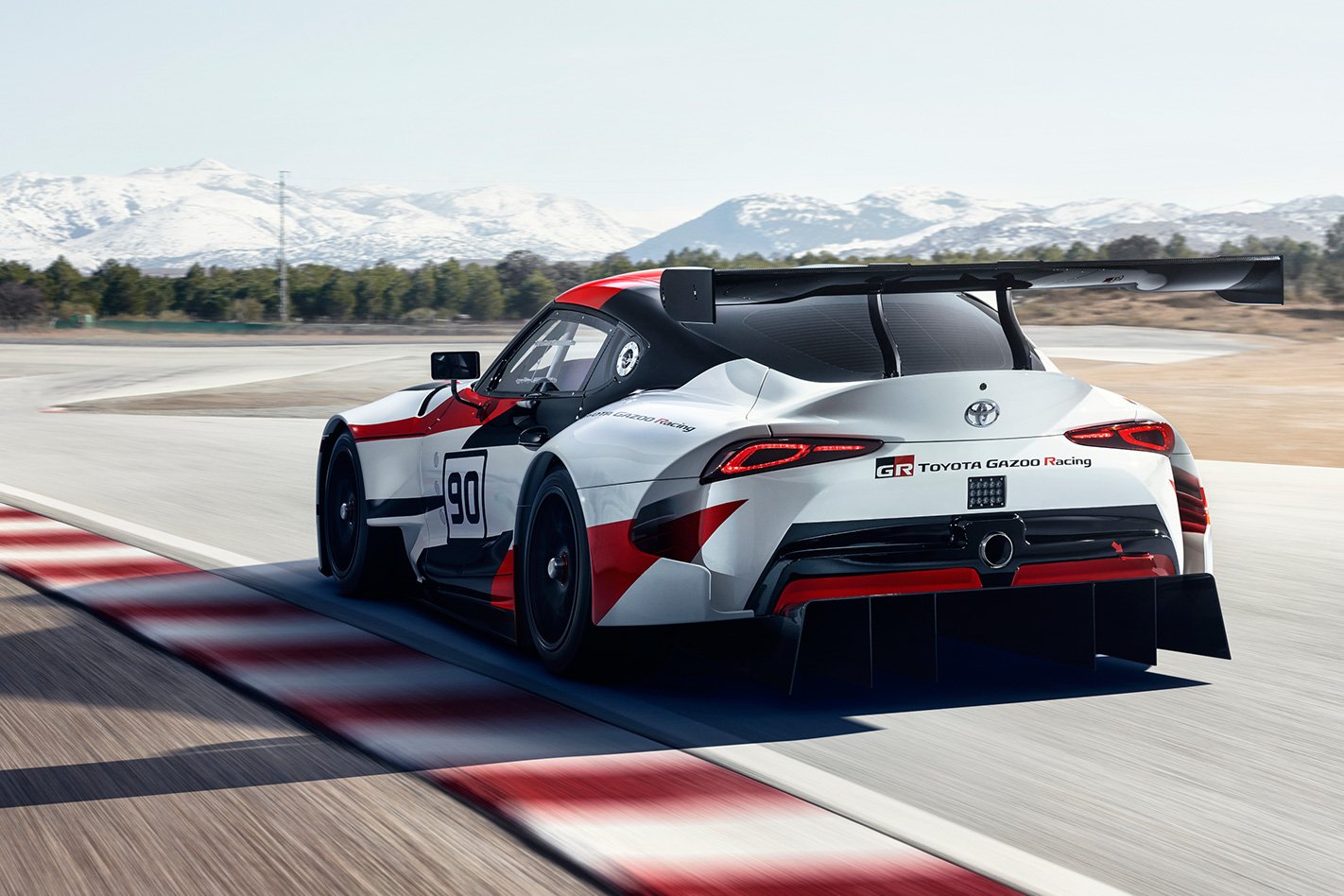
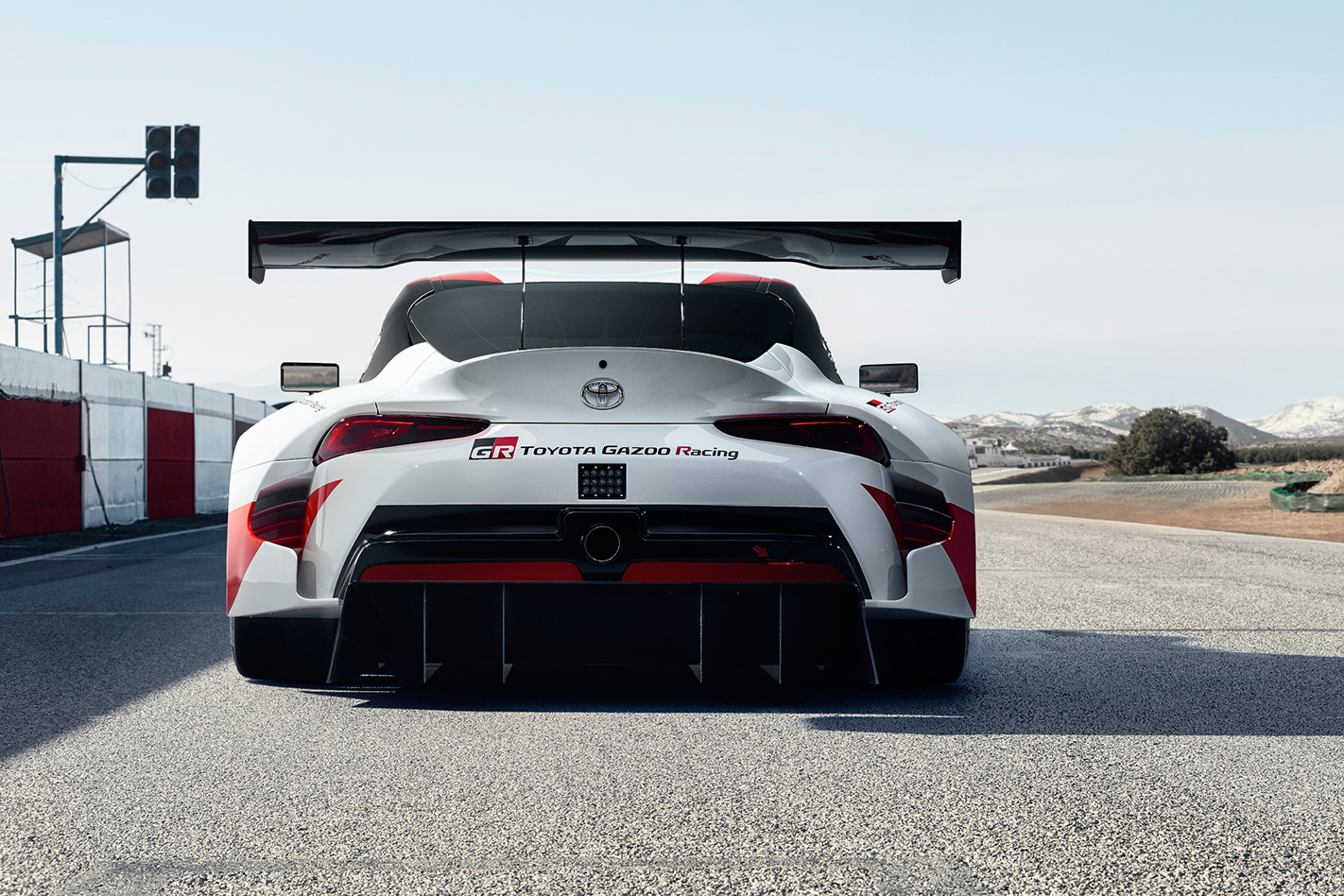
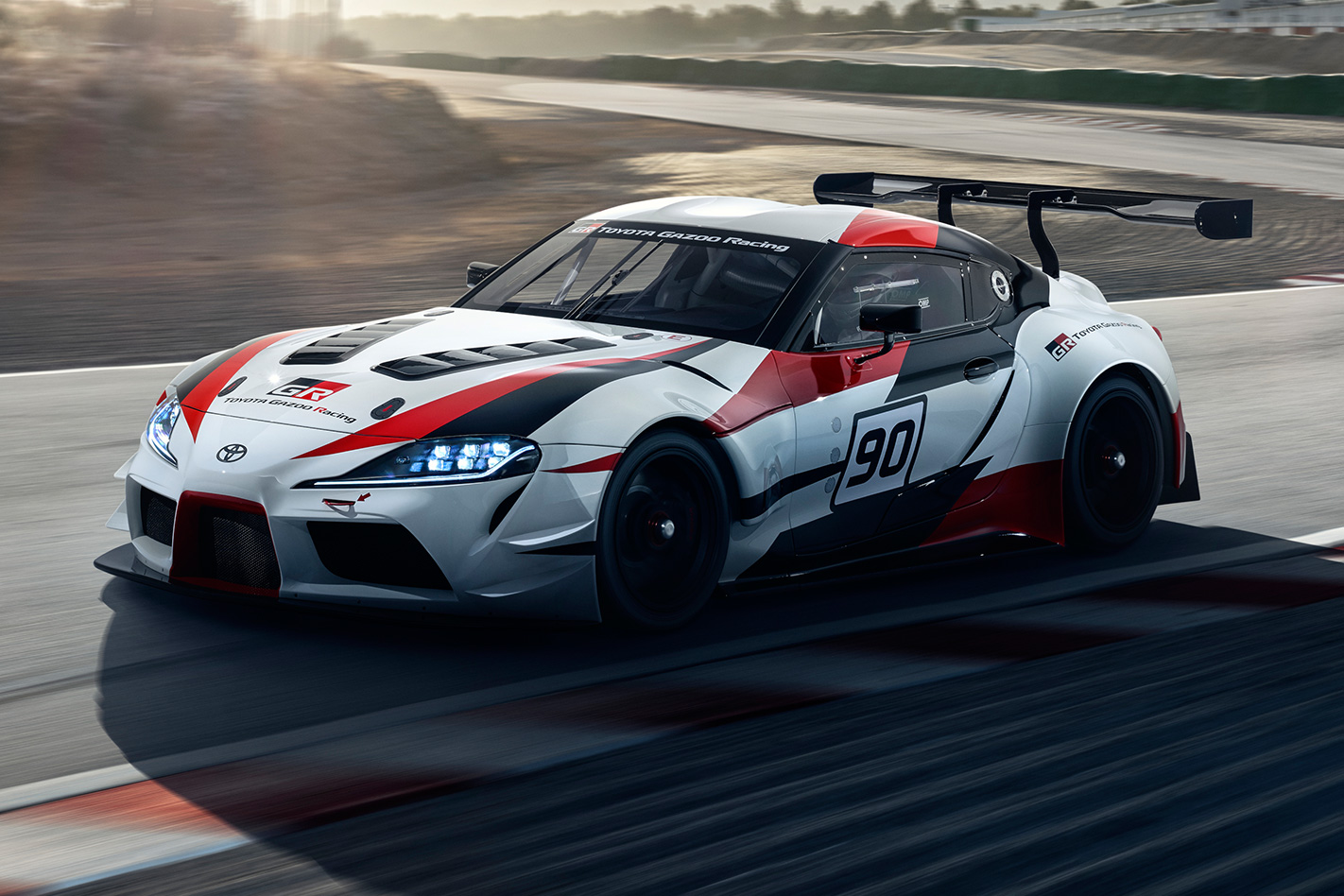
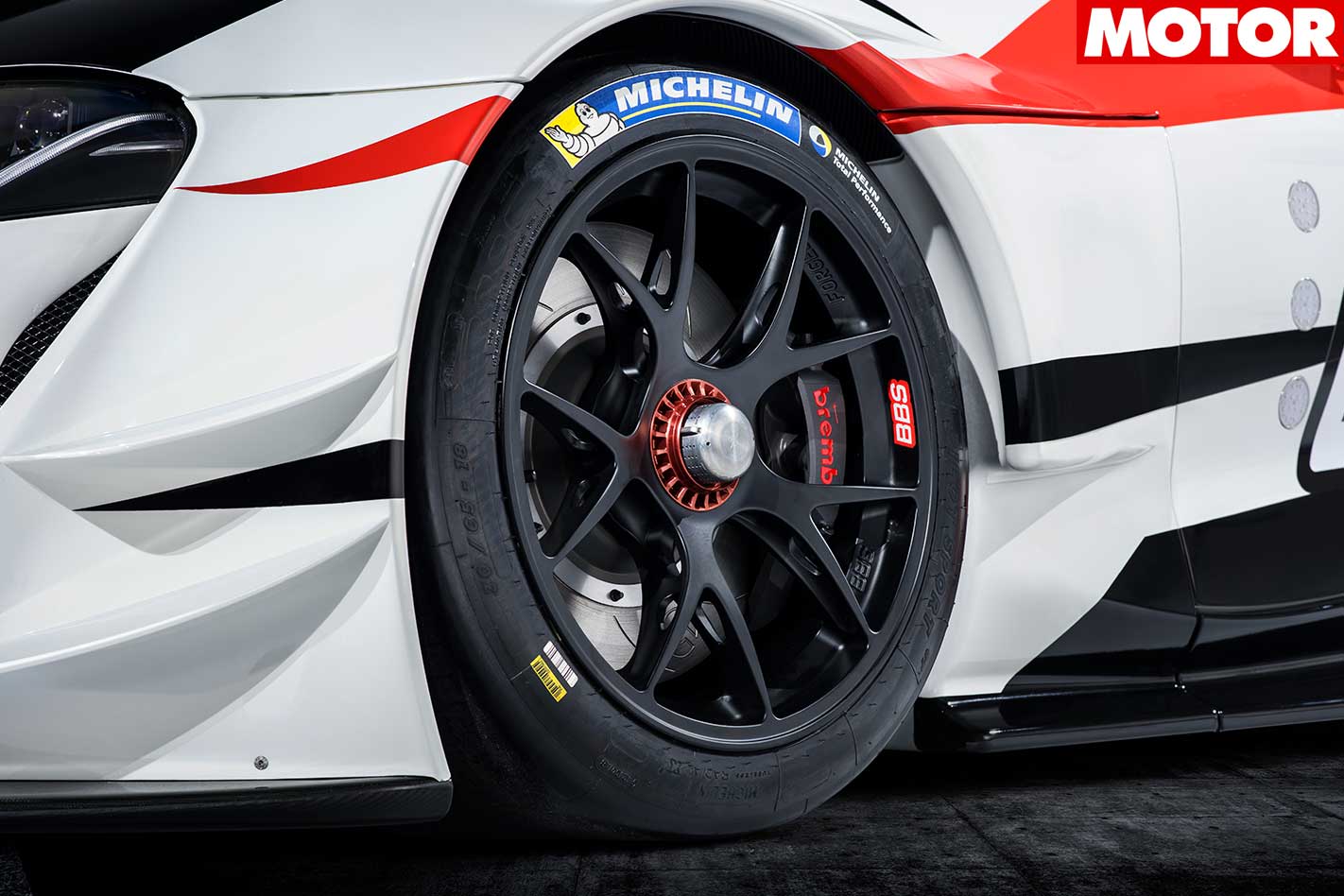
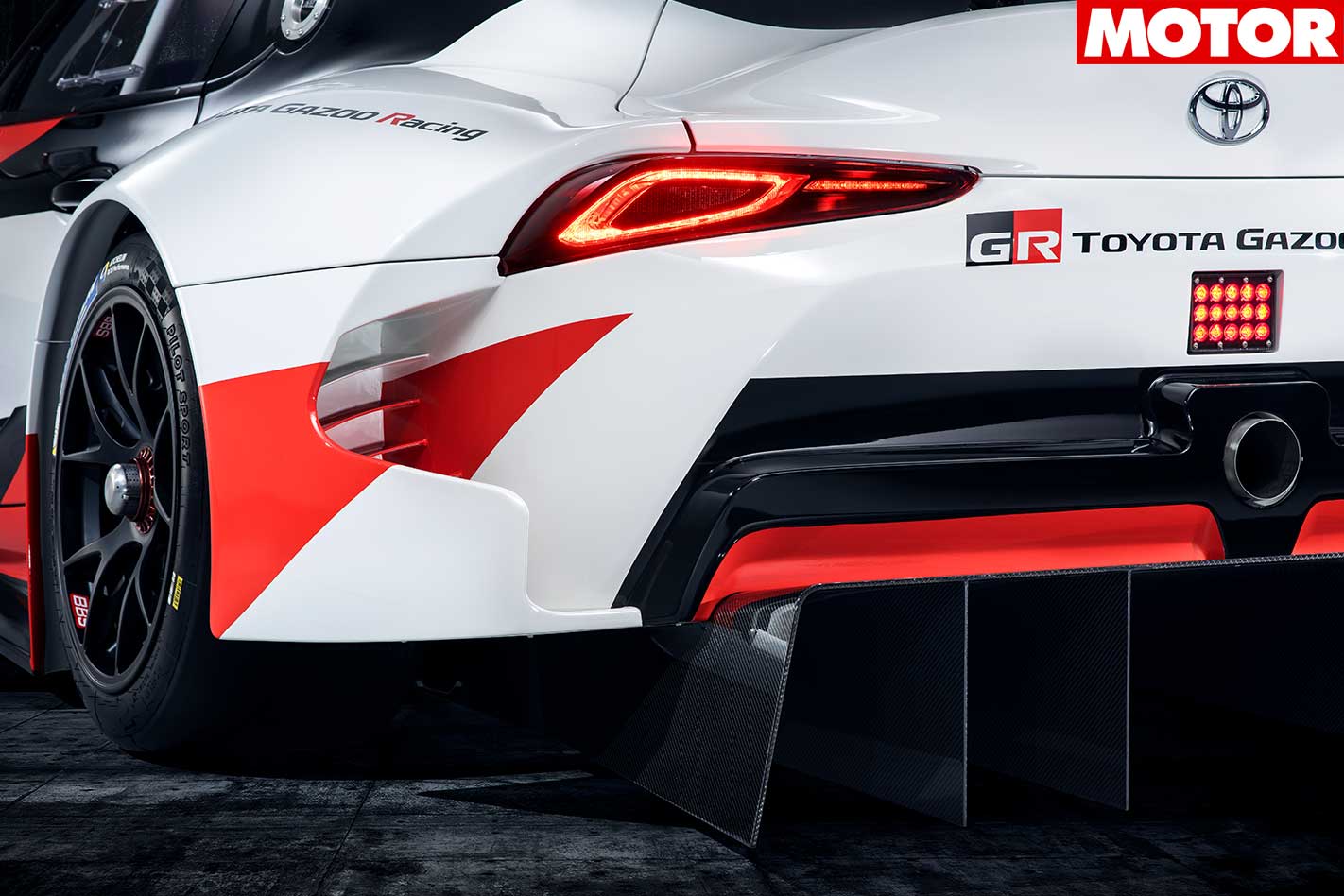
Dubbed the Toyota GR Supra Racing Concept, the company’s Geneva Motor Show showstopper is a track-ready version of the car that is expected to sex up Toyota dealerships from next year. Subtract the big wing, rear diffuser, vents, stickers, and motorsport-grade wheels, brakes and tyres, and you’re left with sheetmetal and bumpers that appear virtually production-ready.
2018 Geneva Motor Show: Toyota Supra scooped ahead of official reveal
The sheetmetal faithfully echoes that of the stunning FT-1 concept that Toyota wheeled out at the 2014 Detroit Motor Show, though the bumper plastics deviate significantly from the form of that concept.
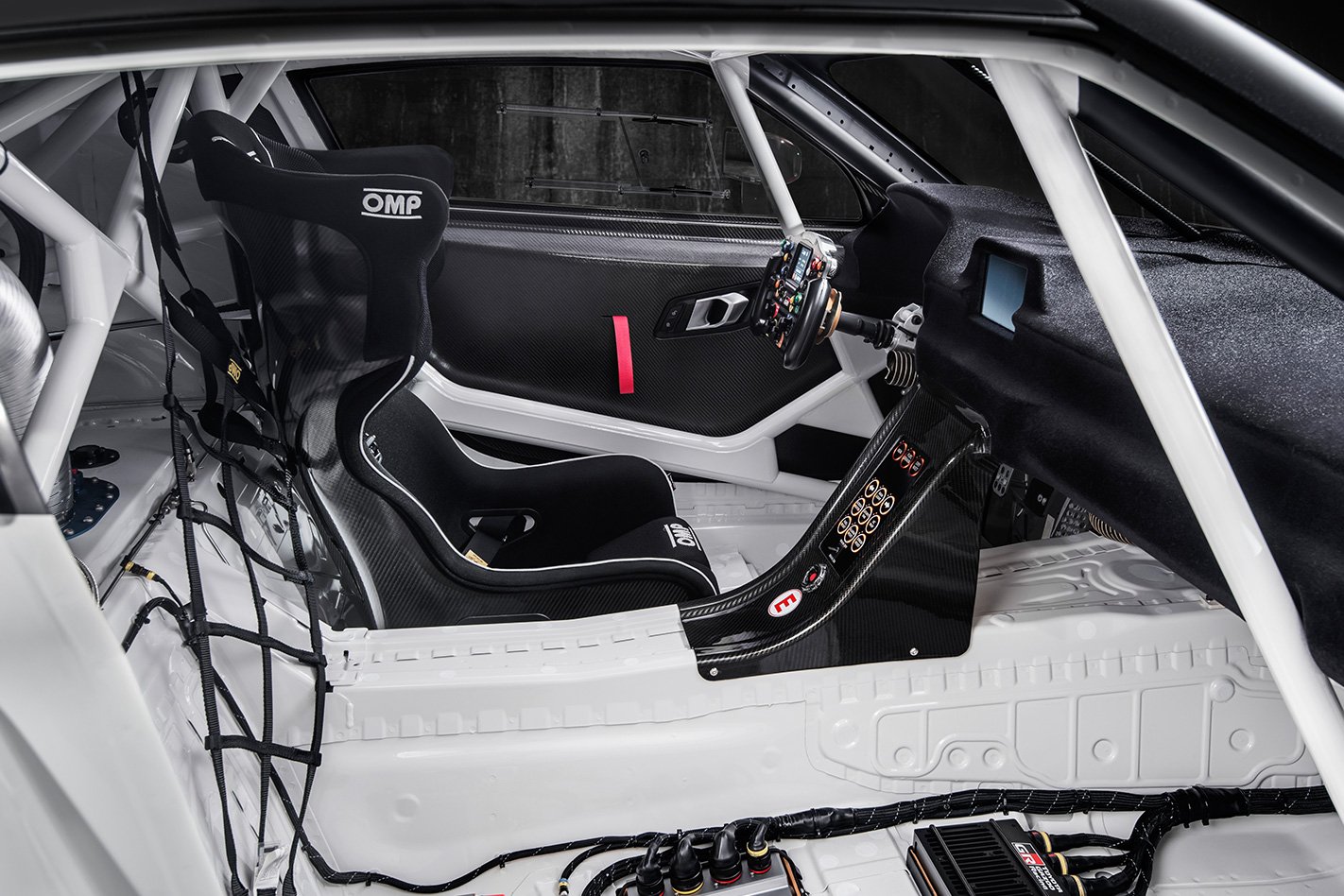
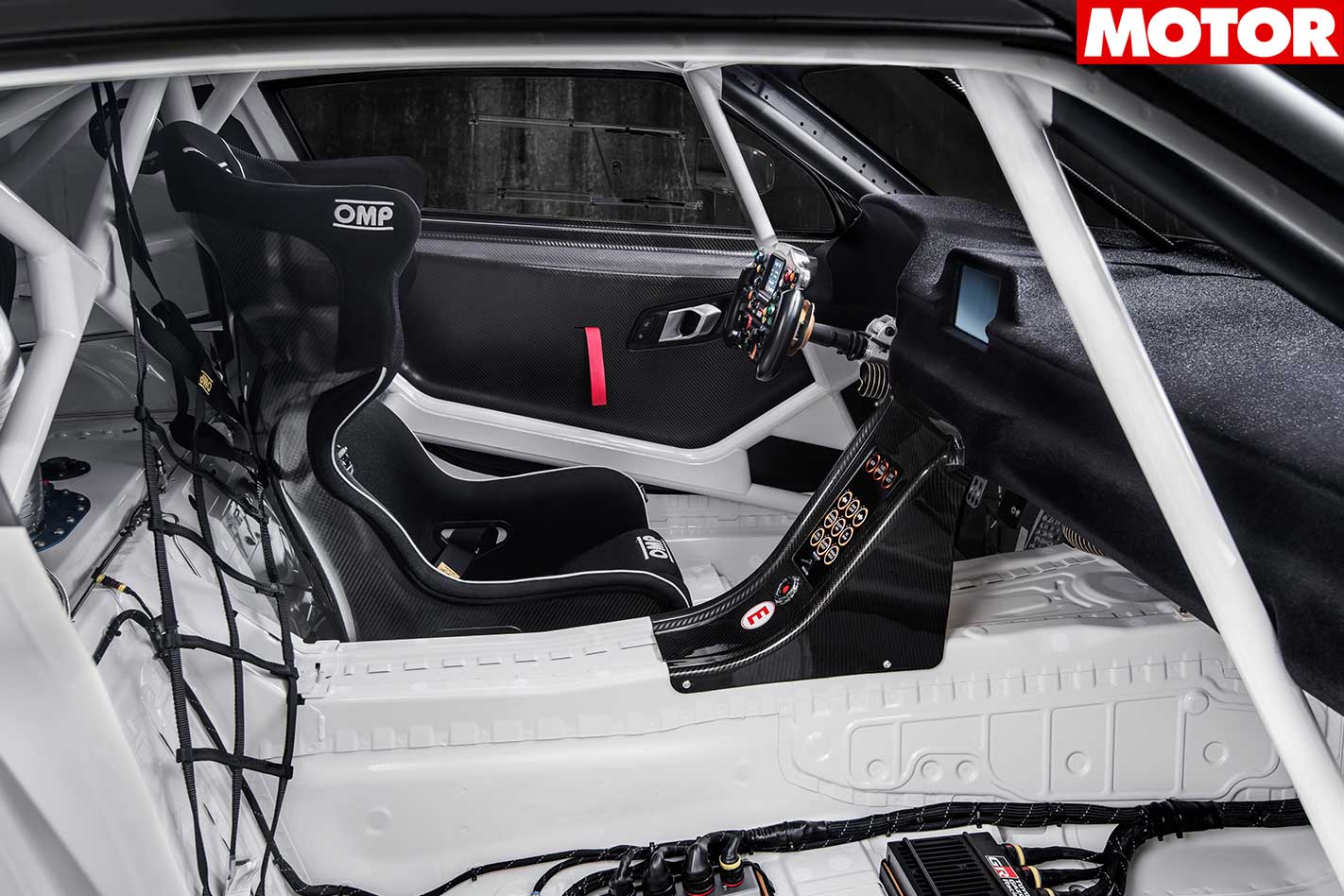
Few clues to the production car’s interior are given by this concept, with the cabin stripped-out and fitted with a roll-cage, simplified dashboard, racecar steering wheel, fixed bucket seat and featureless door cards. We’ll have to wait a little longer before we see that aspect of the new Supra.
Even so, BMW’s B58 3.0-litre turbocharged inline-six is a hot candidate for a flagship Supra, which currently offers up 250kW and 500Nm in performance-oriented BMWs like the M240i. A 2.0-litre turbocharged petrol engine with around 188kW – also BMW sourced – is rumoured to power entry-grade variants. An 8-speed ZF automatic will likely equip all models, with no manual option.
“We haven’t yet confirmed that we’ll get this car, but I can assure you that we’re certainly very keen to take Supra,” Hanley said to media at Geneva.
Hanley wouldn’t be drawn on pricing, but said that the car’s arrival in Australia wouldn’t necessarily follow the same bargain-pricing strategy of the 86, which launched in 2012 with a completely unexpected sub-$30K pricetag.
“I see this as a niche car,” Hanley continued. “Being [price] competitive is important, but it will play a very different role to a volume car. We think that this car will stand on its own in name, design, performance and desirability.”
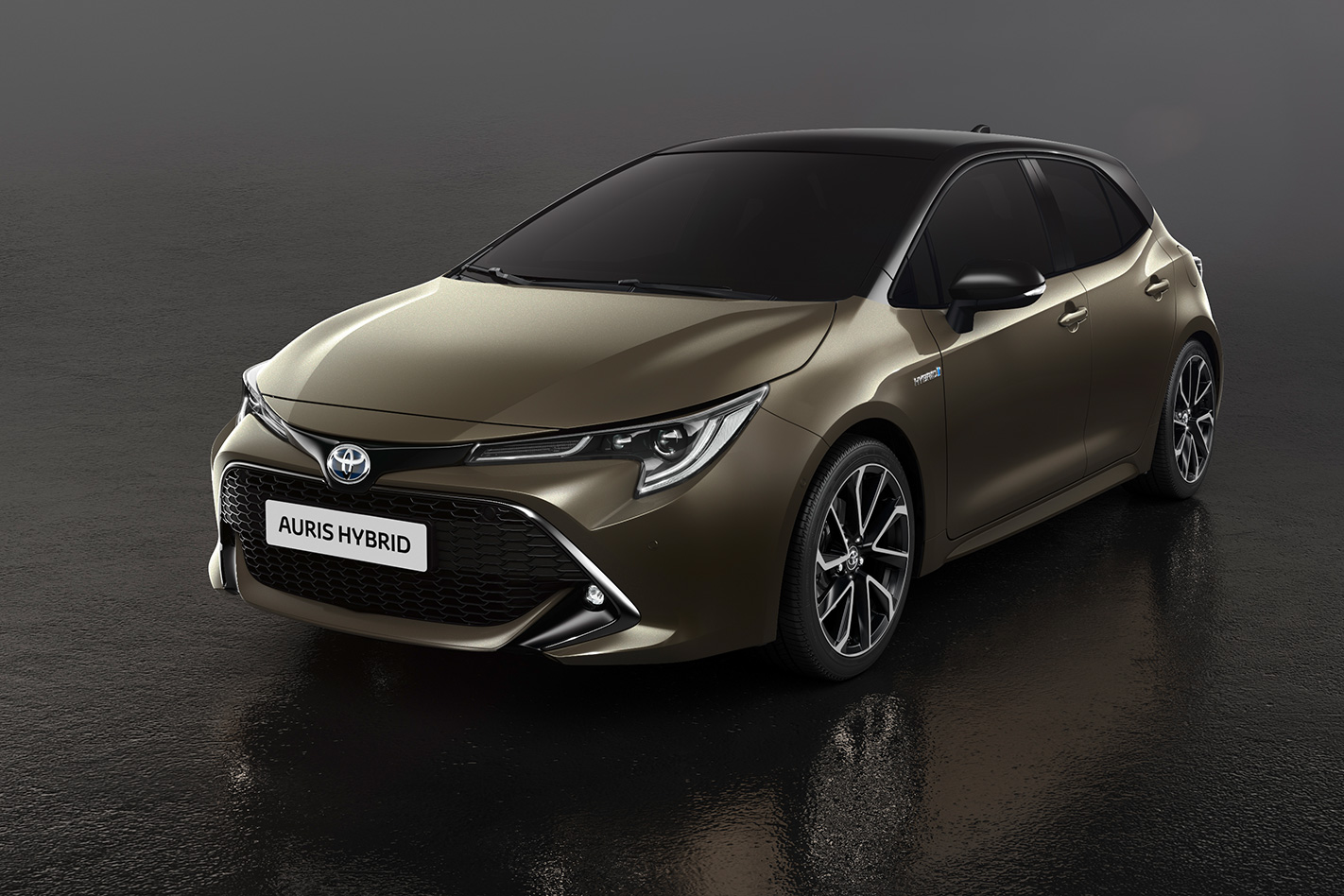
THE next-generation Toyota Corolla hatch has been officially unveiled in Geneva today, flaunting bold styling cues, a bigger body and an all-new platform underneath.
What’s more, Toyota dropped a word seldom seen next to the Corolla name in its press release announcing the new car’s arrival – “premium”.
The humble Toyota Corolla, Australia’s most popular passenger car, is next in Toyota’s product pipeline to receive an all-new generation based on the brand’s scalable TNGA platform, which has already made it to our shores inside the C-HR compact SUV and Prius hybrid.
As with those cars, TNGA – which stands for Toyota New Generation Architecture – brings more mature underpinnings that promise better handling and refinement than before.
A key part of that is the upgrade from a torsion beam rear suspension to a proper multi-link rear end, while a more torsionally rigid bodyshell and lower centre of gravity helps the suspension perform better.
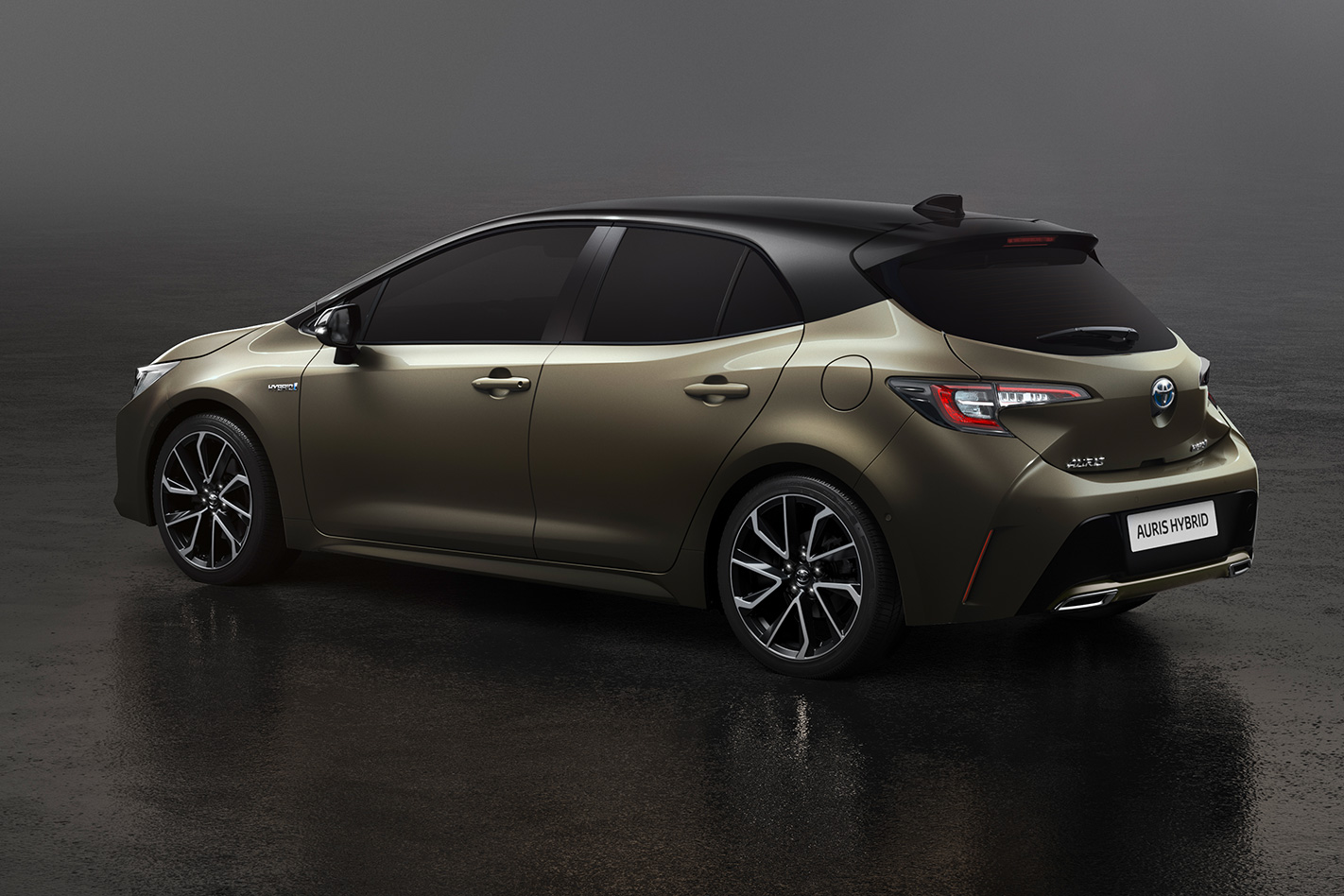
The new Corolla’s interior has yet to go on display – word is it will be revealed in the coming months at a US event – however the aforementioned boost in wheelbase combined with a 30mm wider body indicates passengers will have more sprawling space. We expect it to boast a more upmarket treatment than the current car’s drab cabin, fulfilling the promise of a more “premium” Corolla than before.
But that doesn’t necessarily mean Toyota will reposition the Corolla at a premium price point.
“We’re still a little while away from [pricing the Corolla], what I do expect is that we’ll bring this Corolla in at a very market competitive price and a compelling value story,” said Toyota Australia national sales and marketing vice president Sean Hanley.
The atmo petrol engine won’t be carry-over, and will be the mainstay motor of the range. Toyota is staying mum on stats for this engine however, besides saying that it will be direct-injected and generate “substantially more power and torque than the current car while requiring even less fuel”.
Unfortunately, the 1.2-litre turbocharged four-cylinder that will be offered in Europe will not be available in Australian Corollas despite it already being available in the C-HR. A shame, given that engine attracted praise when the C-HR was tested in Wheels Car Of The Year testing.
On the safety front, Toyota says the new Corolla hatch will feature autonomous emergency braking as standard, and is confident the car will achieve a five-star ANCAP rating.
Expect more details to be revealed as we draw nearer to the new Corolla hatch’s August launch date.
Supra is back.
Announced with the reveal of the Toyota GR Supra Racing Concept, the iconic Toyota Supra will return as a front-engine, rear-drive car for the road.
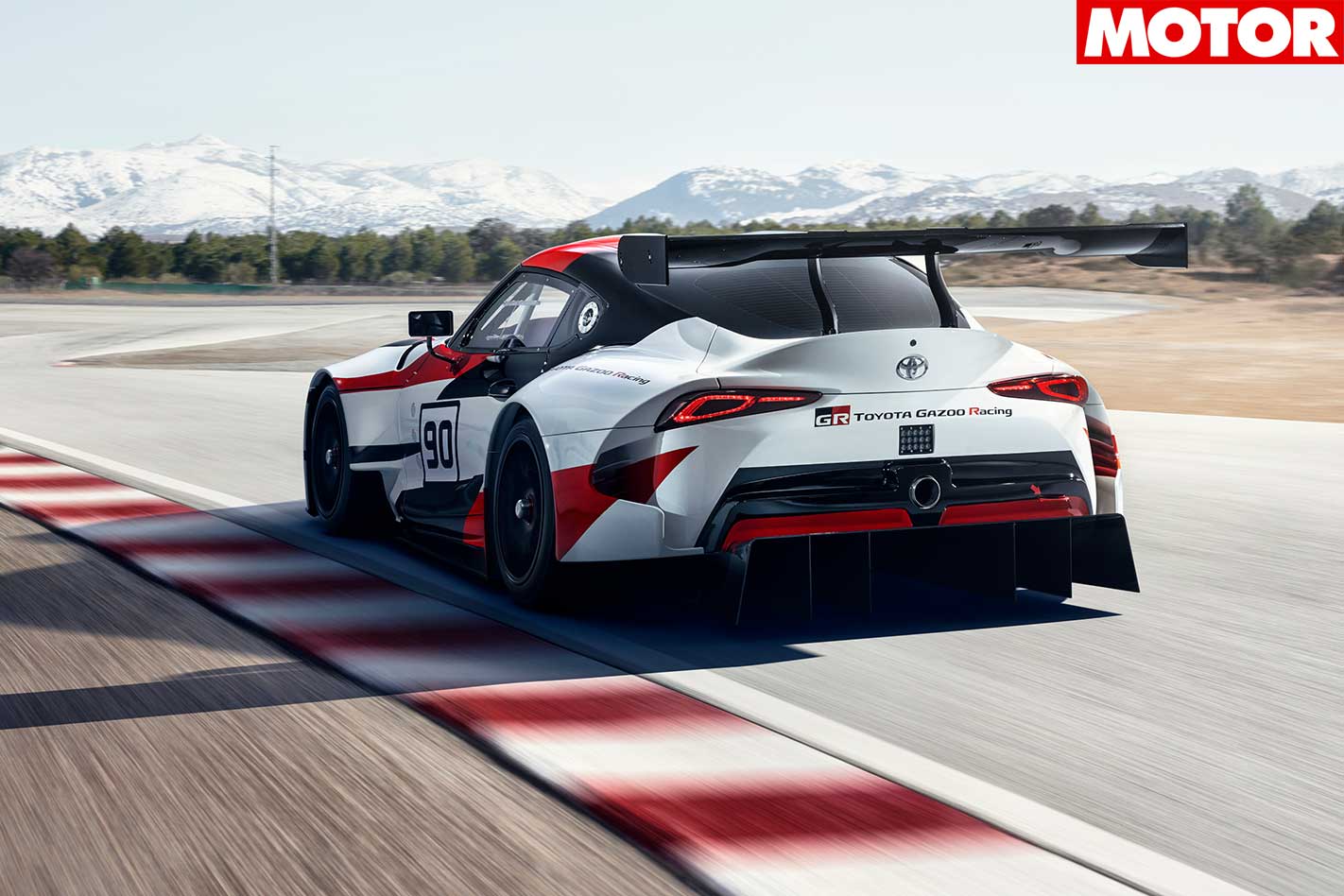
The racing concept specifically has a link to Toyota’s motorsport arm, Gazoo Racing, in its GR badge.
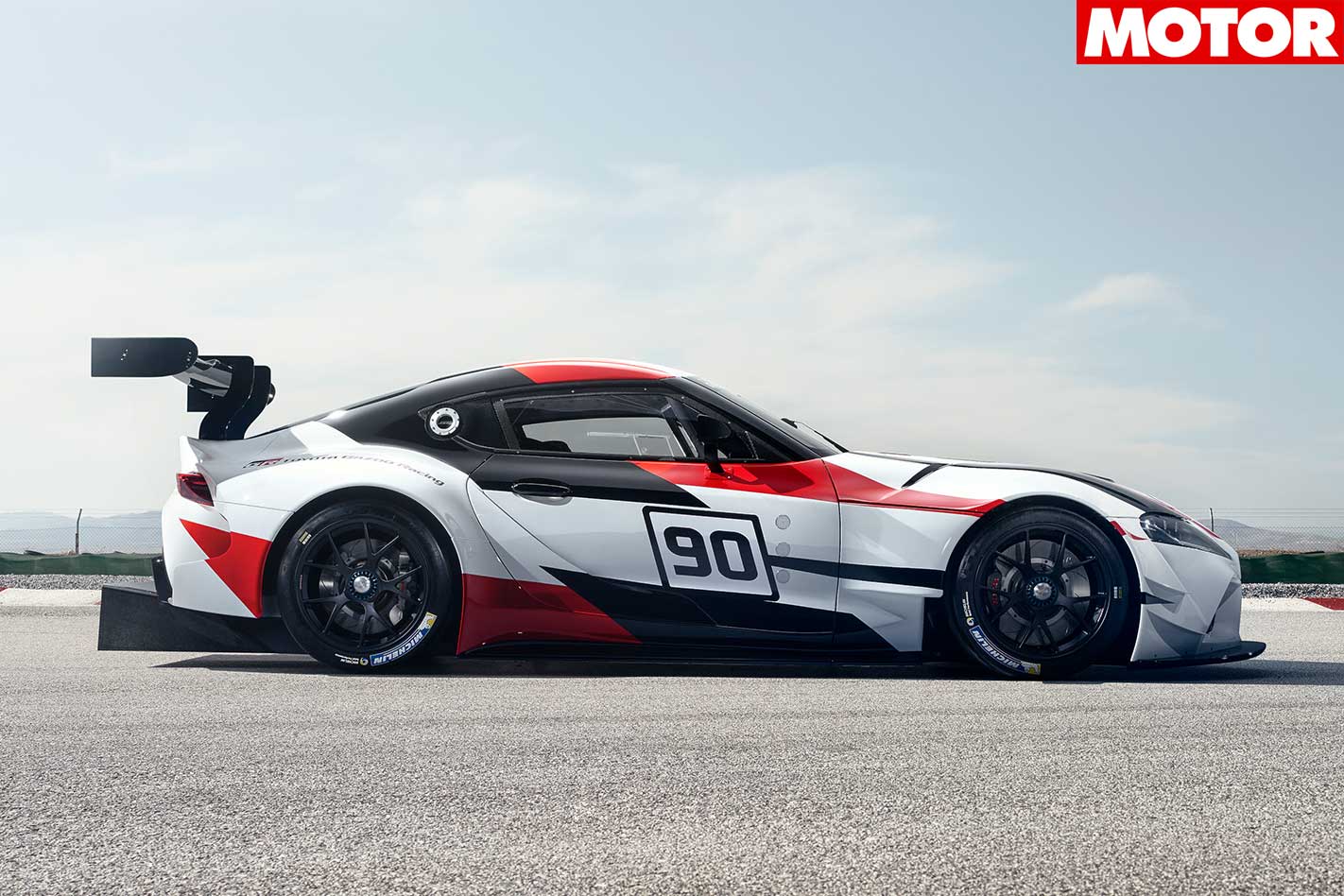
It does, however, hint that the Supra could become another addition to racetracks in the future.
“Supra is one of the most beloved Toyota cars of all time and its nameplate continues to command enormous respect,” Mr Hanley said.
“Revealing a racing concept ahead of a production model highlights that motorsport is Toyota’s proving ground of choice for high-performance vehicles.
“The GR Supra Racing Concept makes it clear Toyota is developing the Supra to be a true driver’s car.”
Don’t expect to see Supras in showrooms for some time yet.
EUROPEANS can soon order a production version of the Honda Urban EV concept early next year, with the car to be built in late 2019.
Honda’s Urban EV Concept was built as a preview for the brand’s first mass-produced battery electric vehicle to be sold in Europe, and was followed up with the sportier Sports EV Concept.
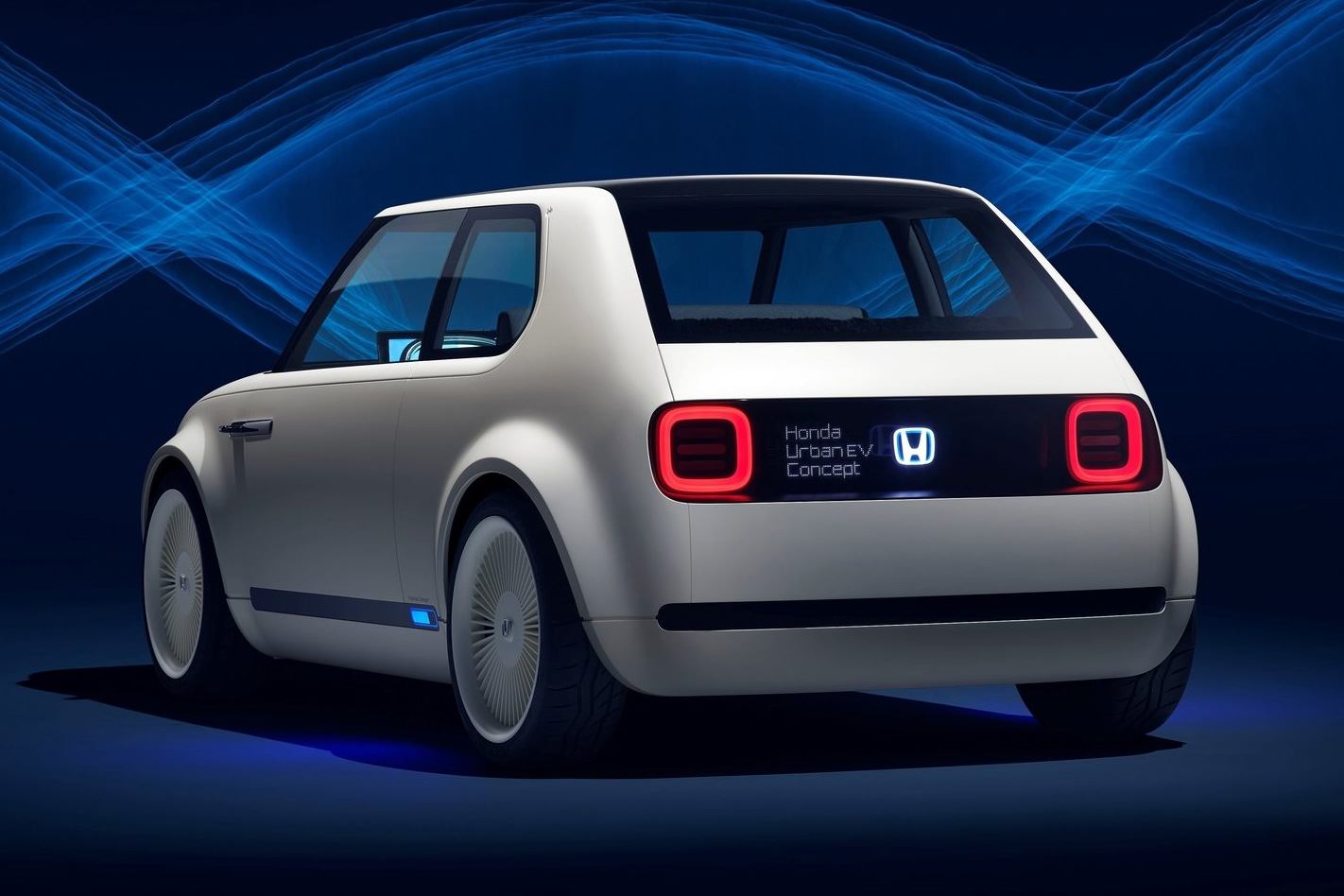
“A production version of this highly acclaimed concept will be introduced to Europe during late 2019,” Honda’s senior European vice-president, Philip Ross, said. “And in response to the positive feedback to this model, we expect to open order banks for the Urban EV during early 2019.”
The Honda Urban EV Concept stole the show at the 2017 Frankfurt Motor Show. A surprise reveal, its seriously cool retro-futuristic styling outshone much more exotic metal.
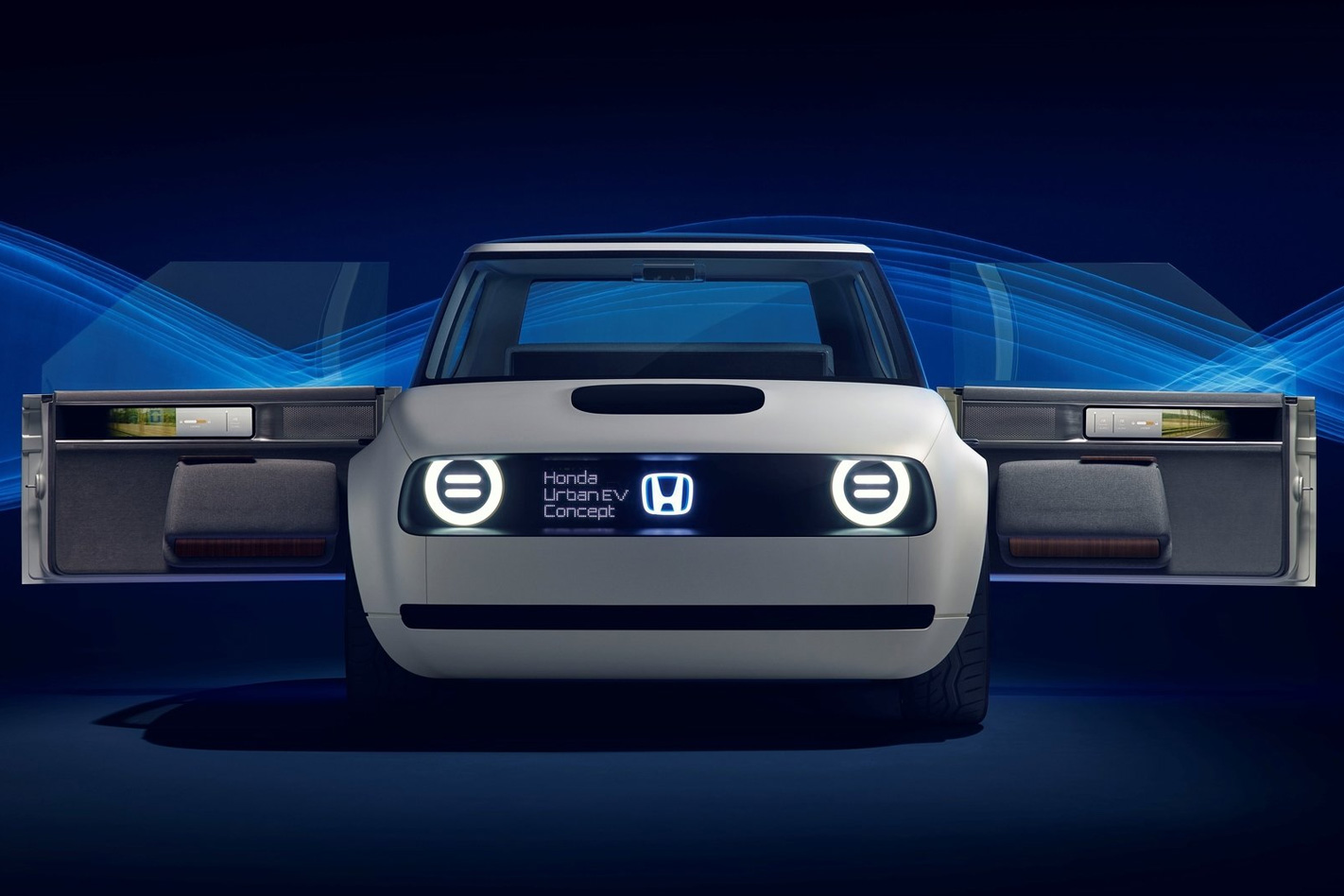
The Japanese brand looks set to come good on its promise, officially allowing customers to place orders for a production version of the car, due next year.
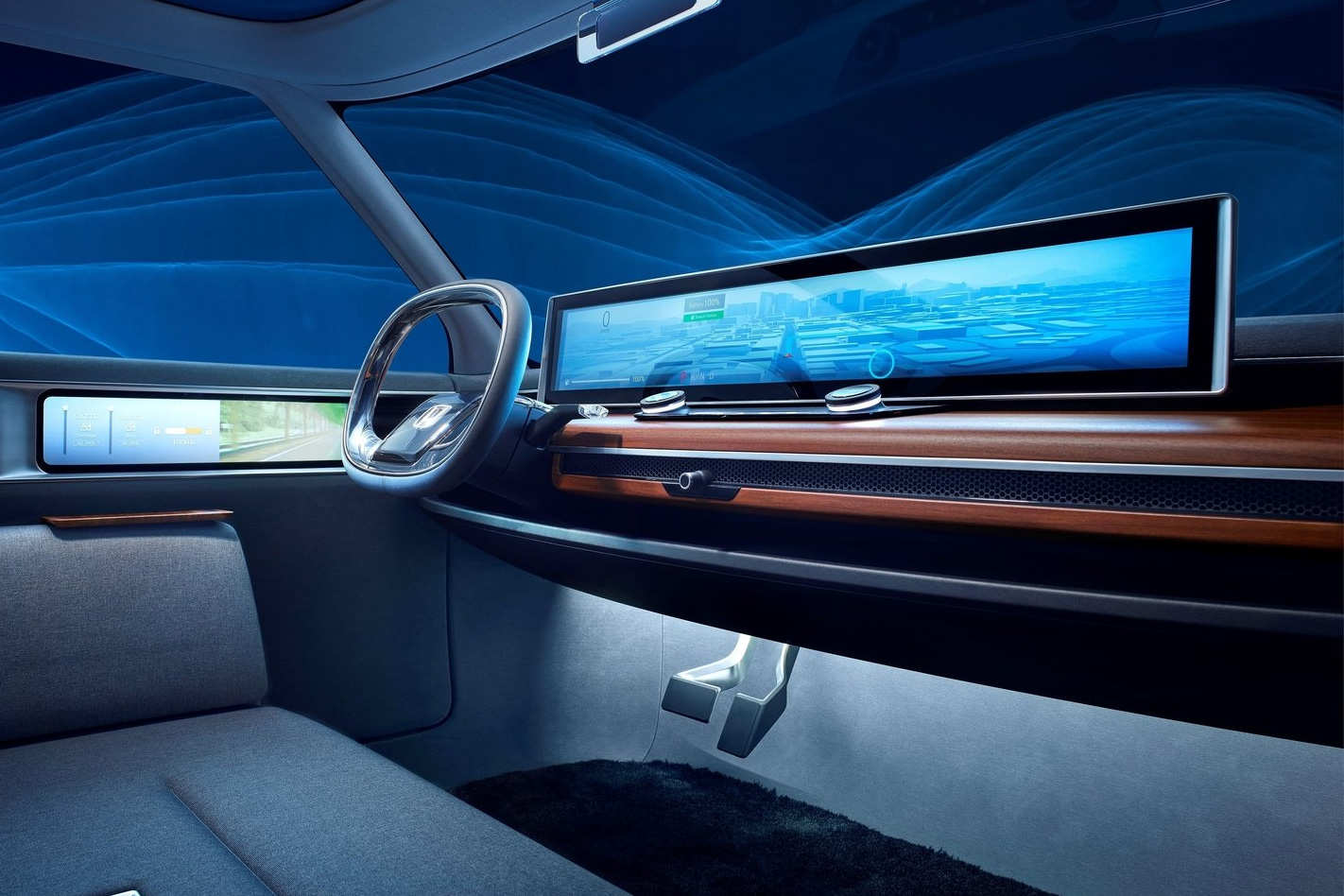
It’s likely the production version of the Urban EV Concept will have a slightly toned down interior than the large touchscreen that stretches across the cabin of the Frankfurt concept. The ‘suicide’ doors also will likely be killed off in the transition from show floor to showroom.
Honda did not say when Australian customers would be able to place an order for the Urban EV.
HYUNDAI has wowed the Geneva motor show with a concept coupe modelled on a ‘Sensuous Sportiness’ theme that it promises to embody in all its vehicles.
Meet the Le Fil Rouge HDC-1 design concept, whose French name translates to ‘common thread’, which happens to describe the Korean carmaker’s belief that its past, present and future designs are all connected.
According to the Hyundai Design Centre boss Luc Donckerwolke, the Le Fil Rouge is a reboot of the 1974 Pony Coupe Concept. Hyundai’s first concept was a rather spectacular thing, with a Gallic-like angular design that influenced its early models including the Pony and first-general Excel, before the late 1980s ruined everything.
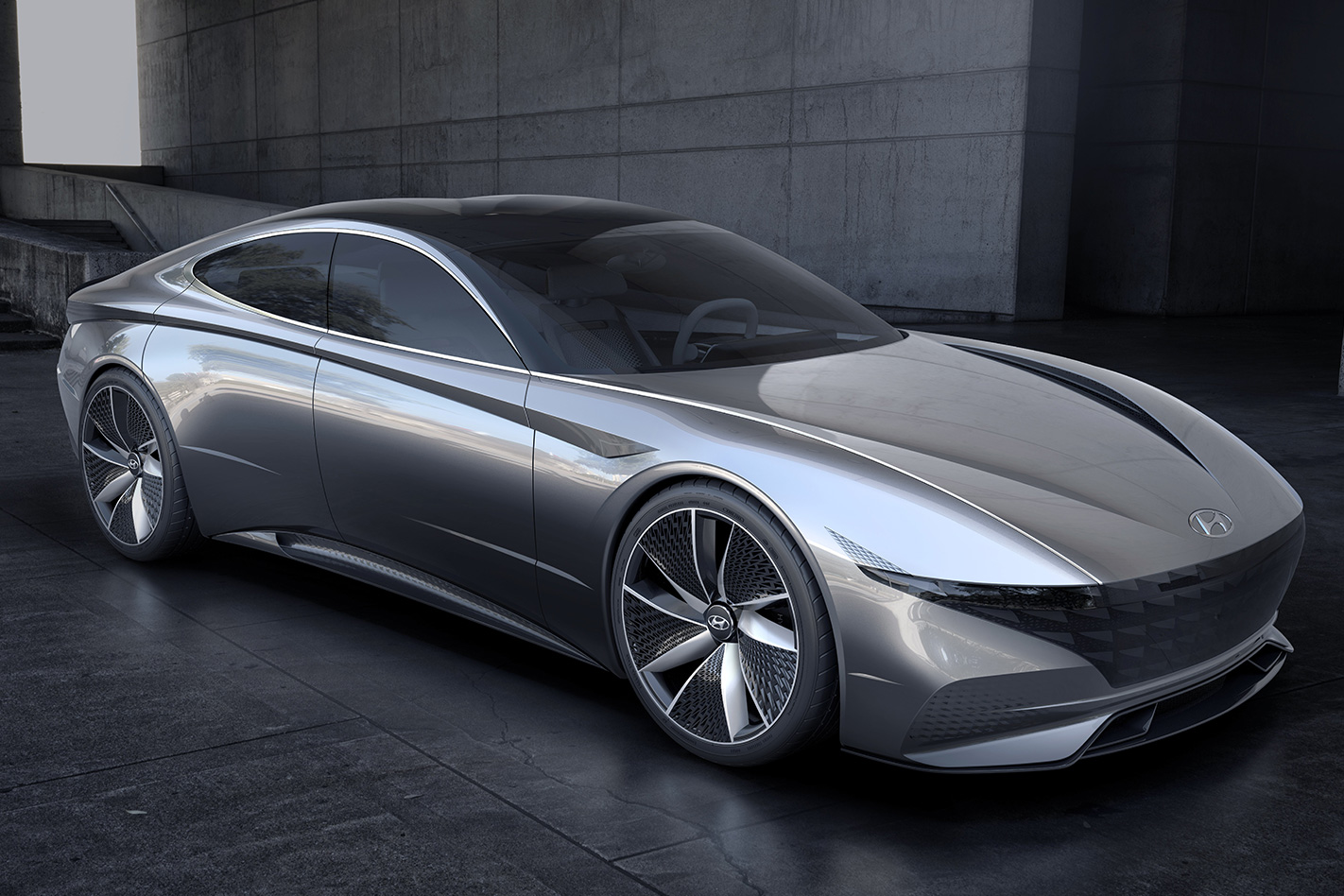
The stunning coupe demonstrates how Hyundai’s new Sensuous Sportiness mantra will be represented by four fundamental elements in vehicle design, including:
Proportion: This is based on the golden-ratio (often used in design and art) which results in an aesthetically pleasing long wheel base, large wheels and short overhangs, topped with a teardrop roofline.
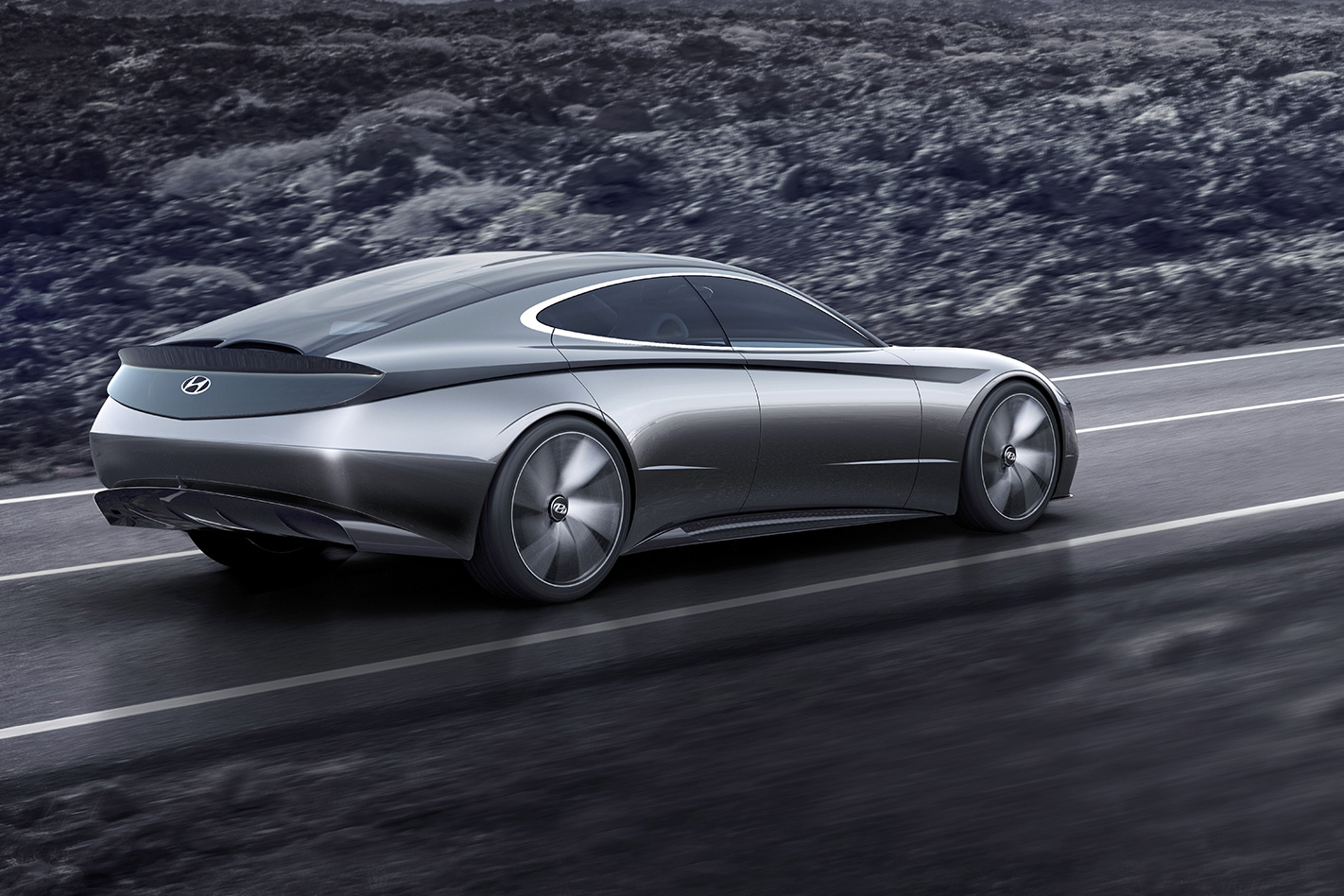
Styling: The aim of Sensuous Sportiness is to create a vehicle that is instantly recognisable as a Hyundai, even from a distance. This includes a reinterpretation of the brand’s familiar cascading grille with a more three-dimensional design that blends seamlessly into the headlights.
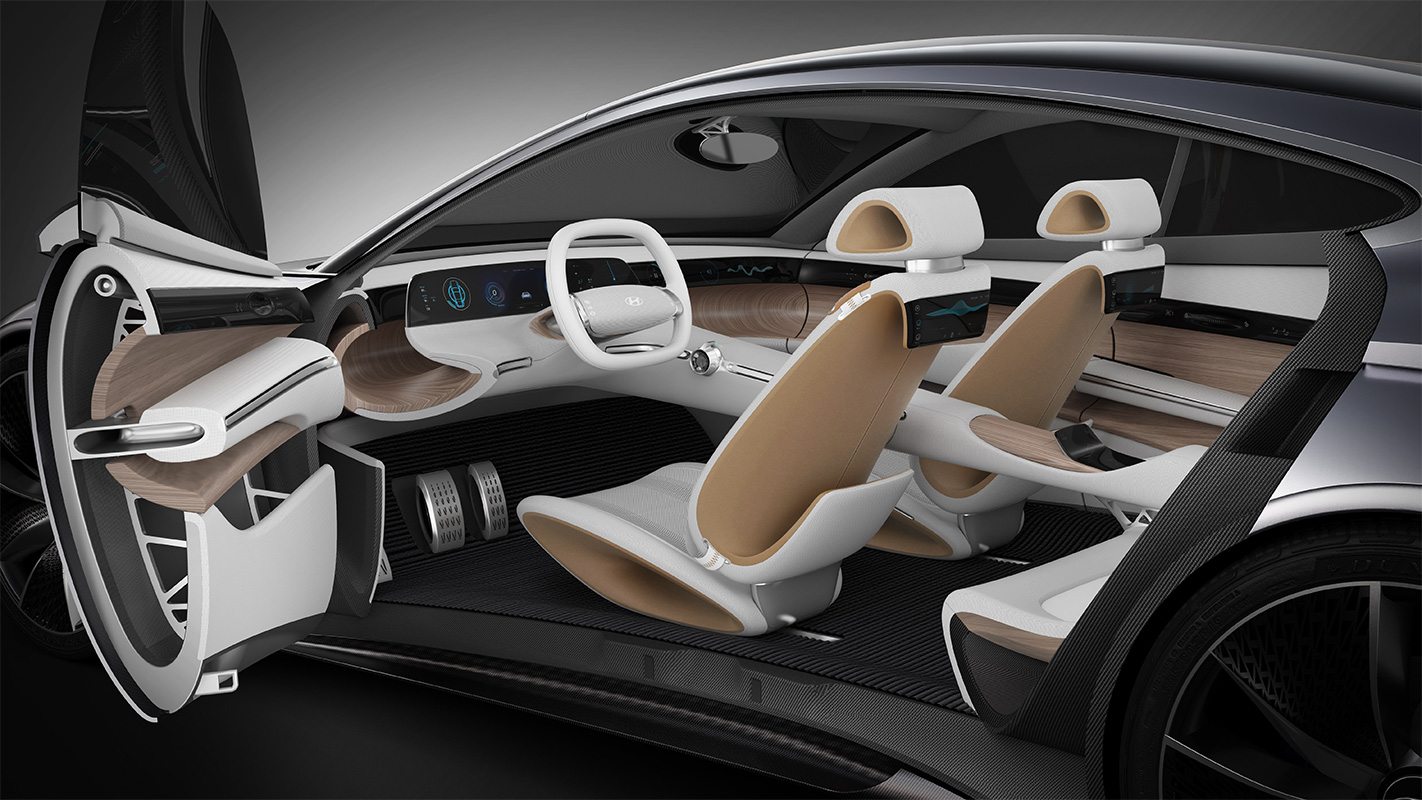
Technology: Nothing earth shattering here, but it does include aviation-inspired ventilation that blows air over and through the hollow curved surfaces, while revitalised wood and high-tech fabrics are used for interior furnishings. A panoramic floating display coupled with haptic technology provides intuitive controls for climate control and other vehicle configurations.
Shannons is seeing an increase in interest in modern classics.
We know this, because last month a Toyota MR2 practically doubled its auction estimate by the time it sold, and a tidy first-gen WRX put in an equally impressive effort.
So, we’ve picked out a few cars to watch during the next auction, held in Sydney on Monday March 12.
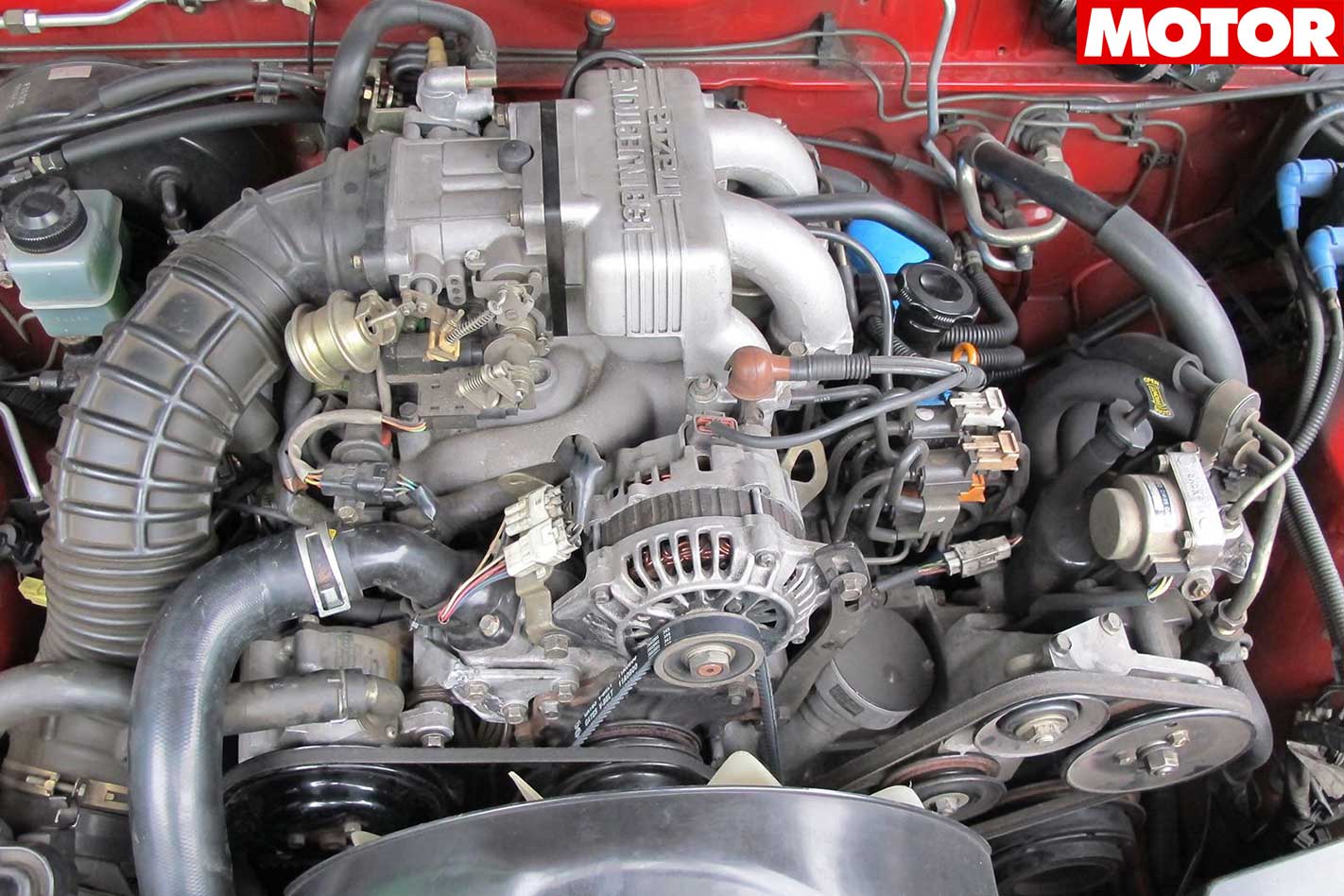
1995 Mazda RX-7 SP
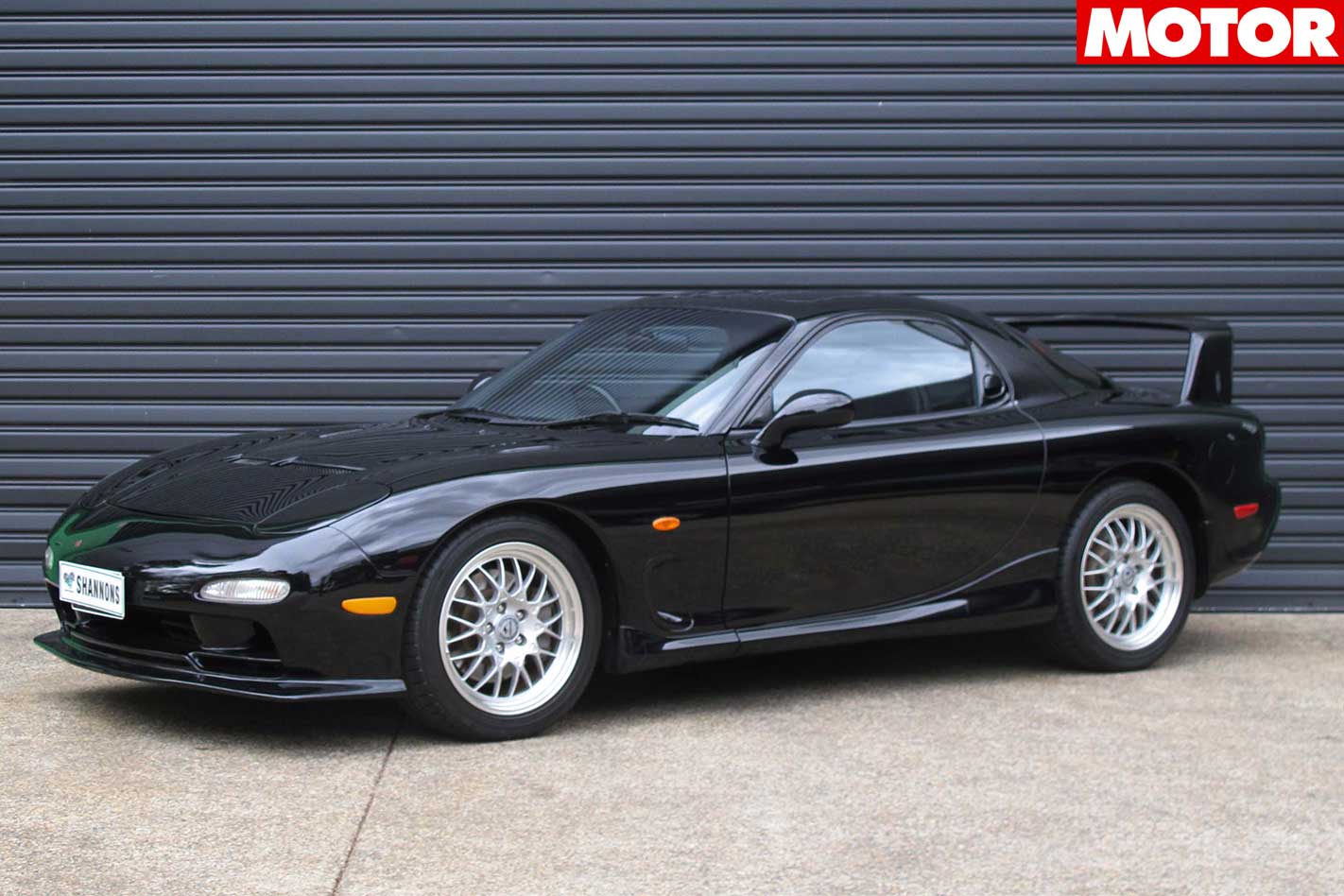
It has only 87,500km on the clock, is in stock condition, and is believed to be the only surviving ‘Brilliant Black’ SP.
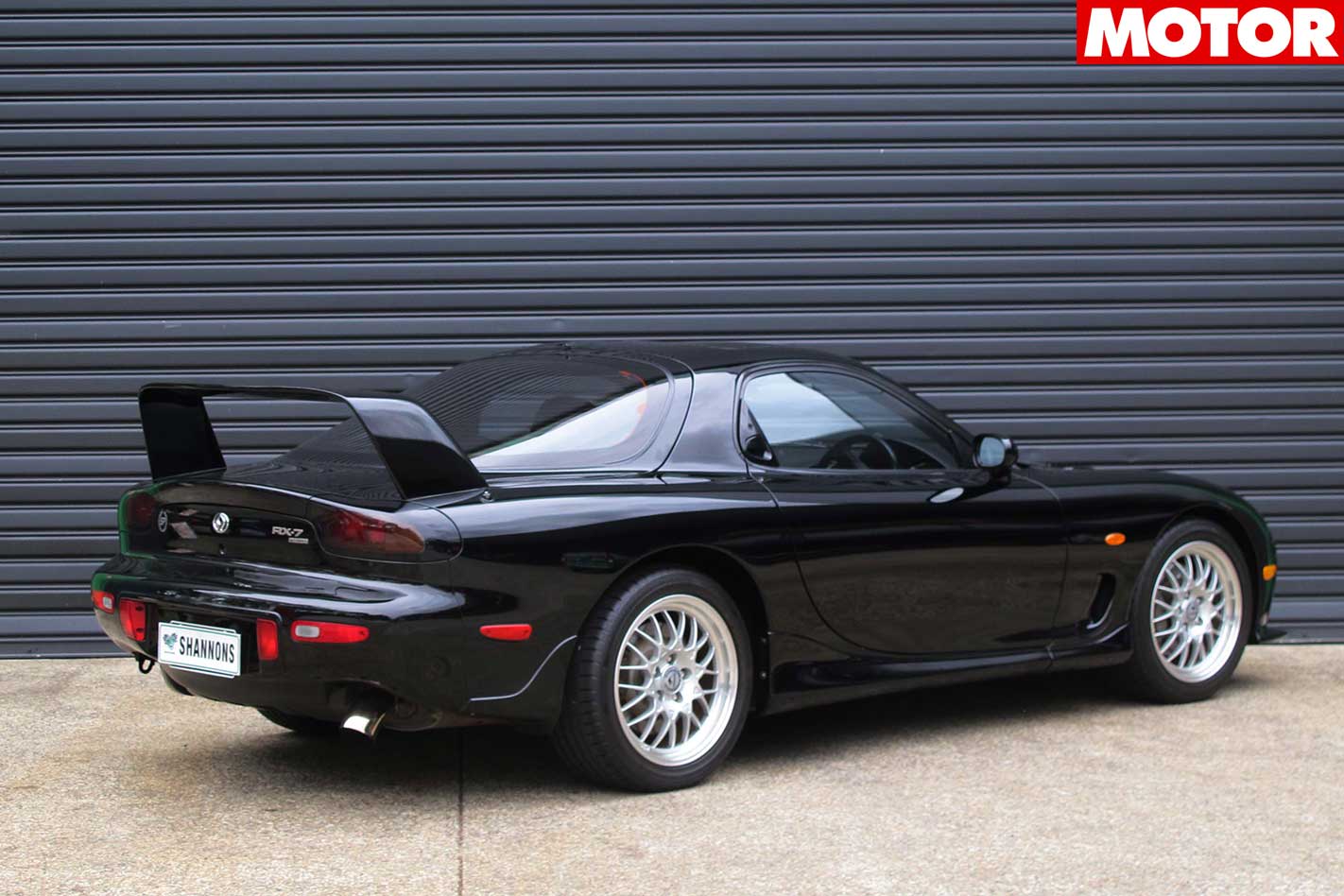
“Cars like the MR2 and WRX are still relatively affordable compared with most Australian or European classics, easy to obtain parts for and work on.
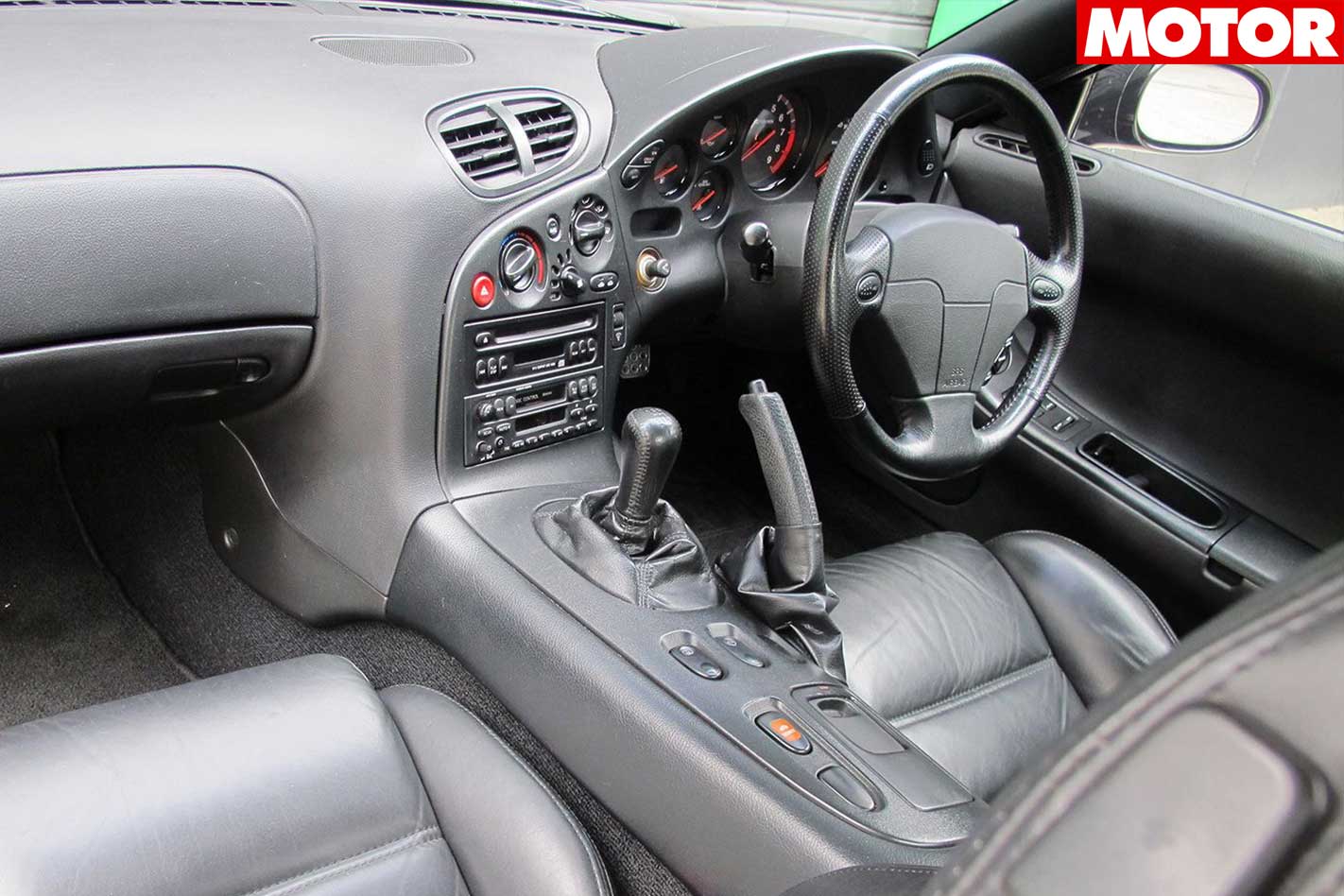
This RX-7 SP, however, is on another level, with an estimate of $80,000 – $90,000.
2005 BMW M3 Competition
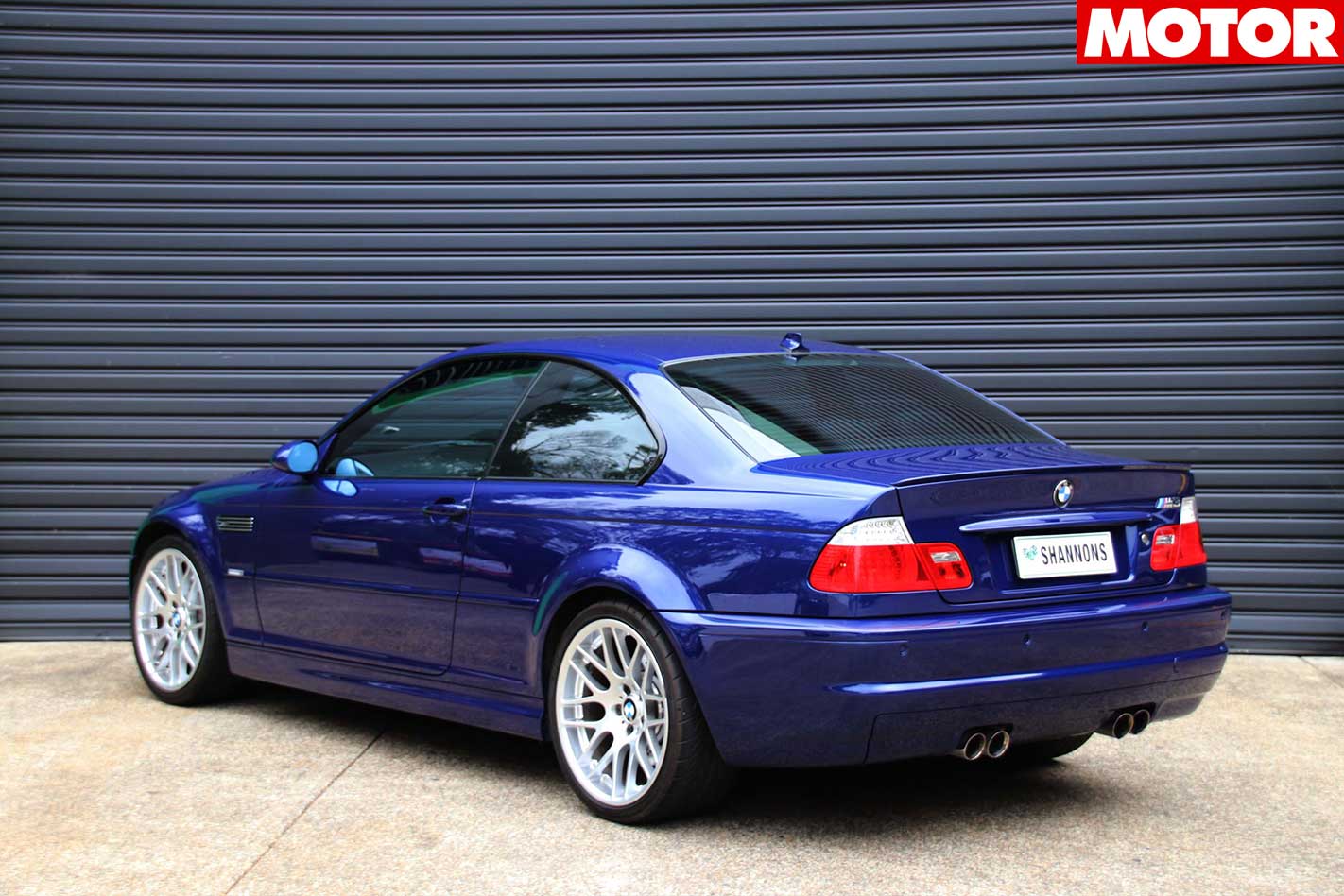
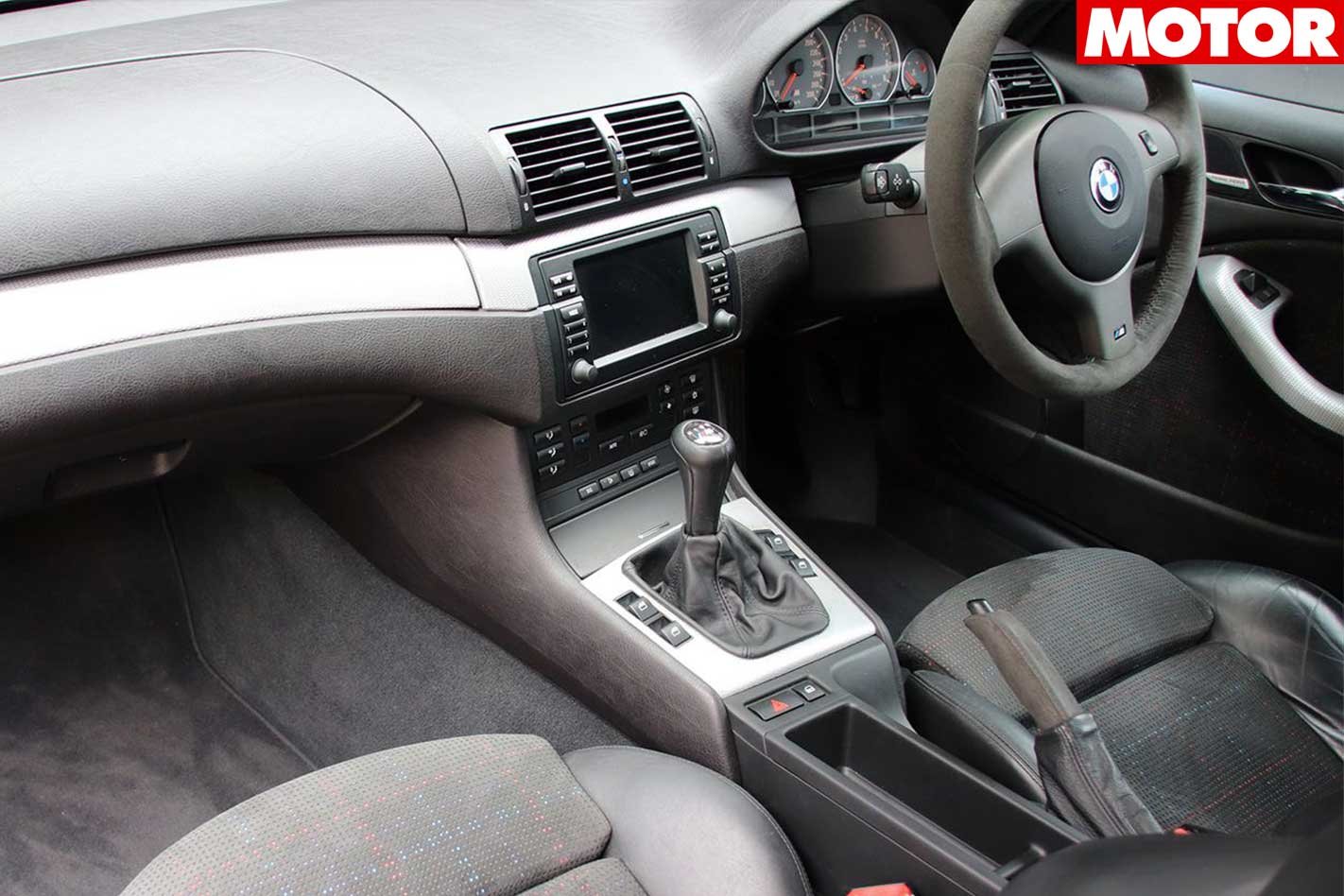
It looks stunning in Interlagos Blue, and will likely starts to become more valuable than its $60,000 – $70,000 estimate very soon.
1998 BMW 840Ci
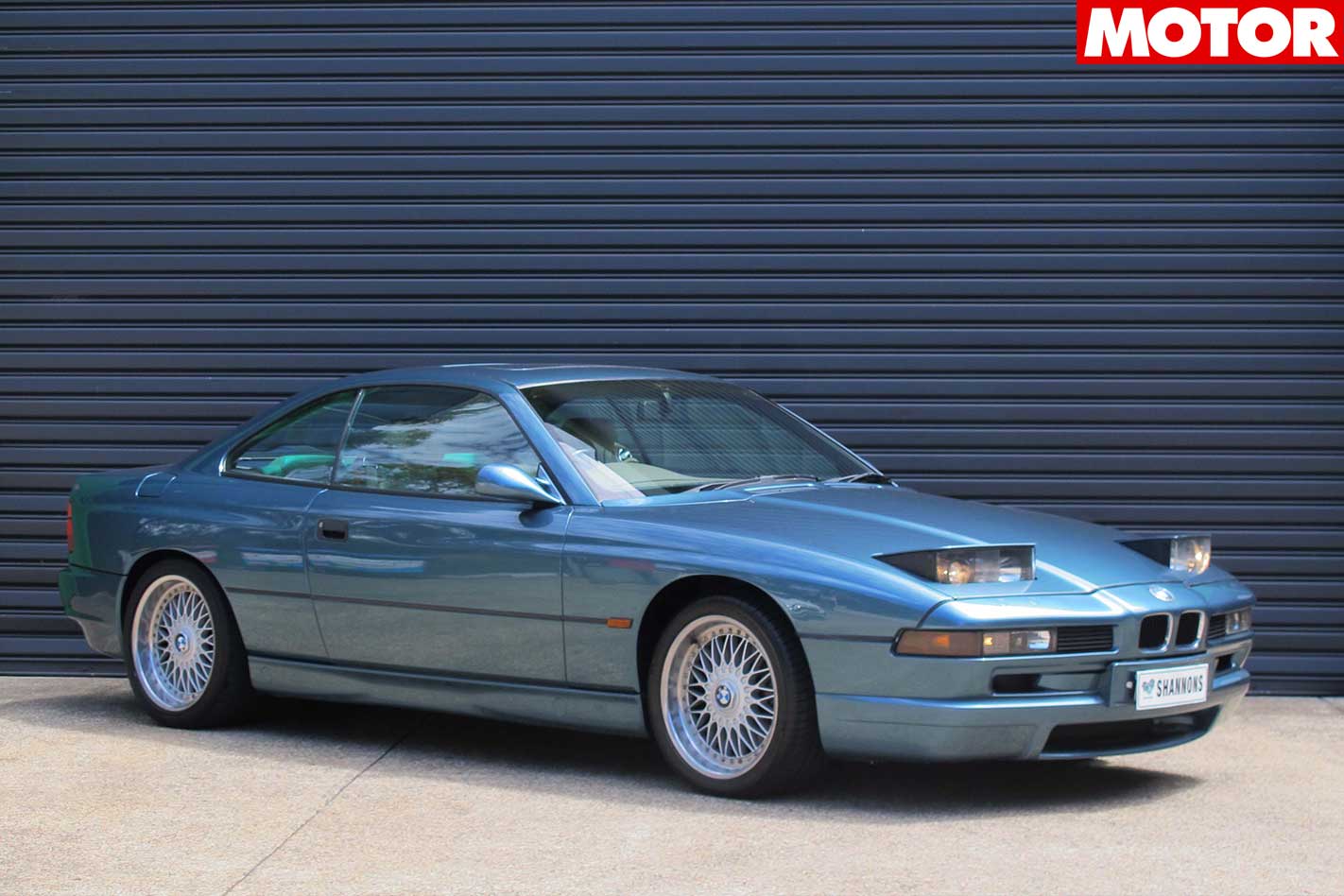
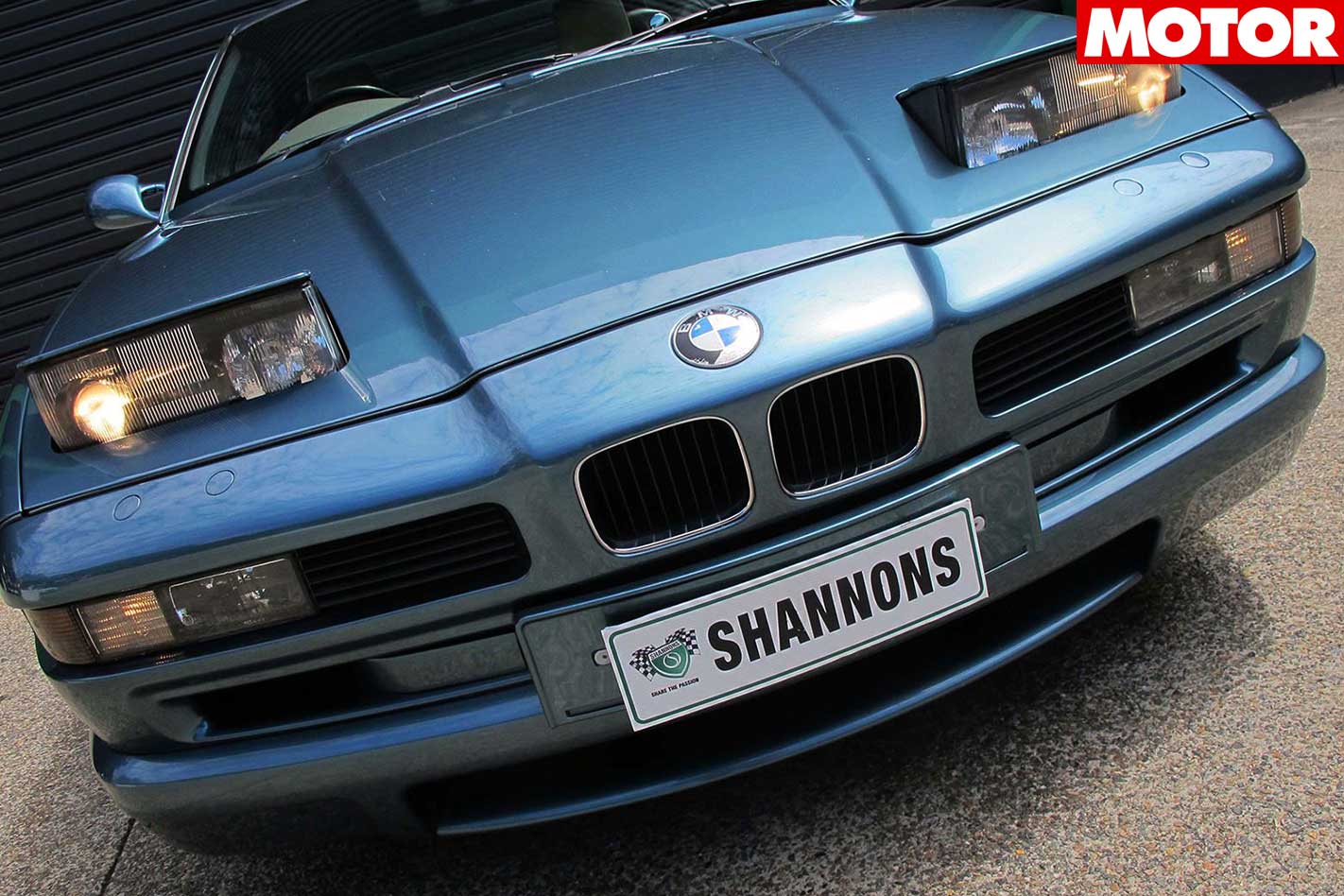
Its colour screams “’90s”, and so does the interior, but its rarity will draw admiration, or at least curiosity, from passers-by.
1990 Mazda RX-7 Series V
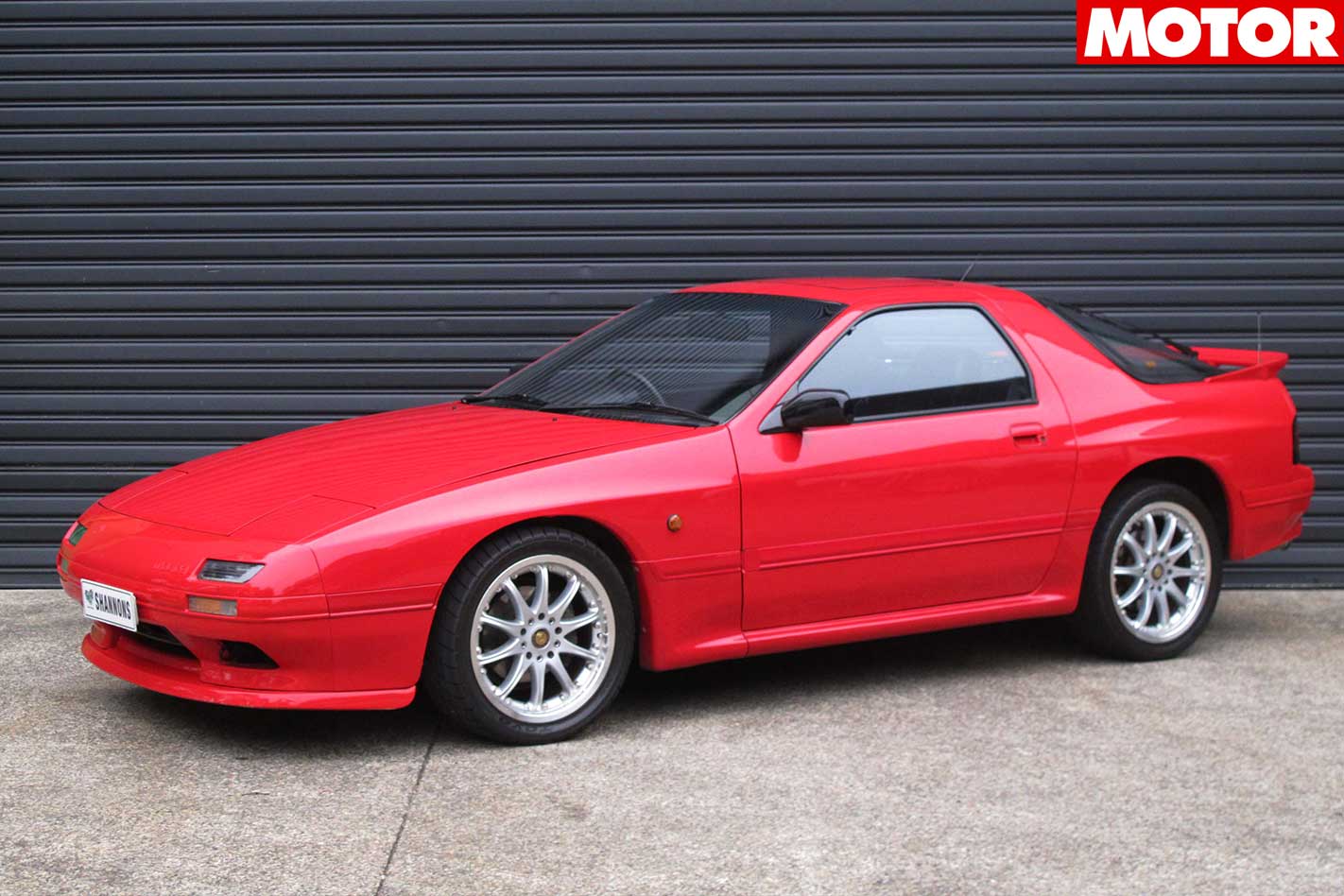
This older FC-gen car will fill the void, even if it’s not as a fast or as iconic. And it’s automatic.
It does, however, boast fewer kays at just 79,243 showing, and comes with original books and a much smaller $10,000-$15,000 price estimate.