
ANDY Green is the only person to drive a vehicle faster than the speed of sound, earning himself the Land Speed Record behind the wheel of Thrust SSC in 1997
One of Green’s favourite quips is that he is the only person not to hear the jet-powered beast send a sonic-boom rattling across the Nevada desert, because he was busy white-knuckling the car with up to 90-degrees of steering lock while it barrelled towards the horizon faster than anyone else had gone before.
Now Green is preparing to do it all again, this time at the helm of Bloodhound SSC, the most complex and advanced land speed record car in history.
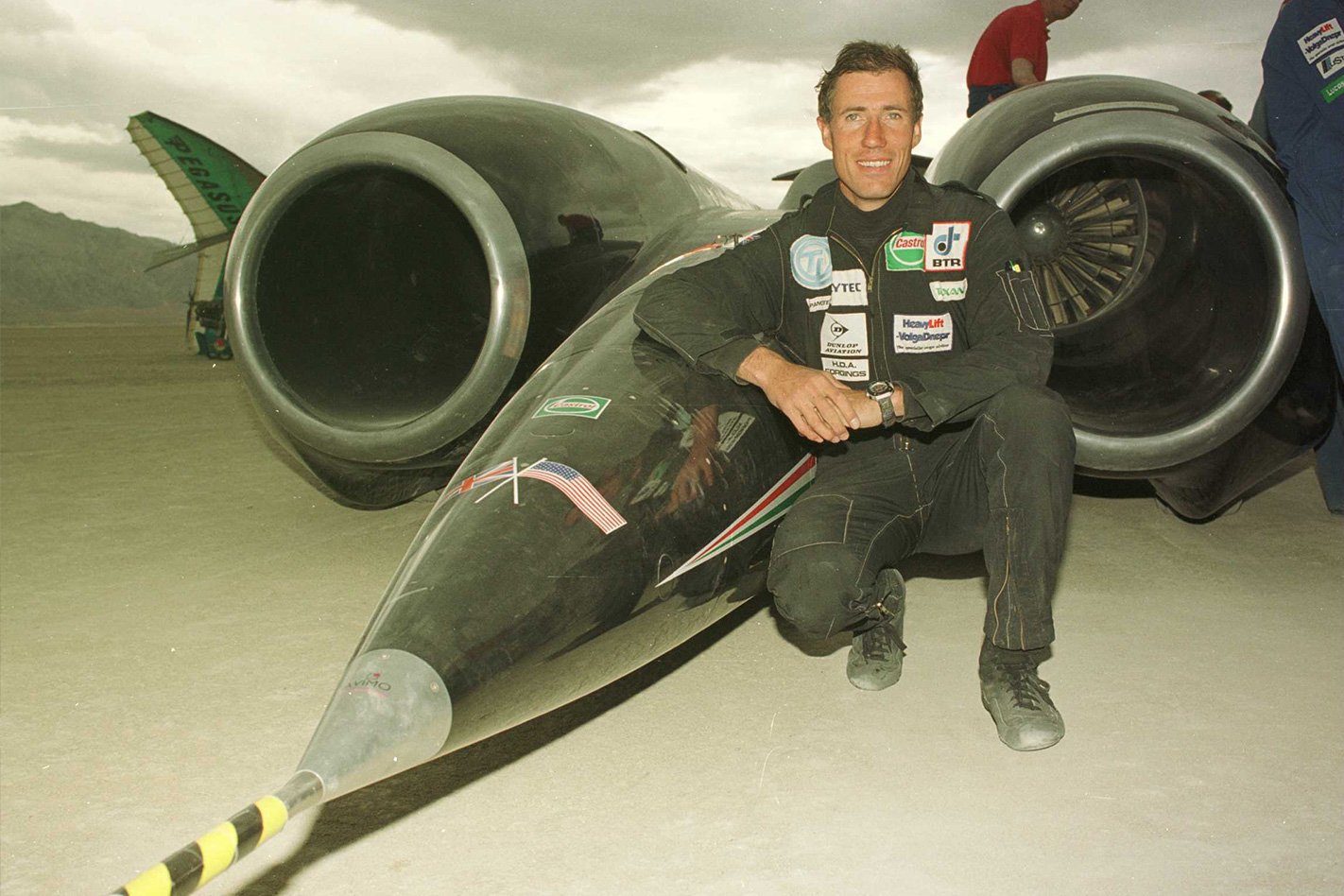
“I come to this venture with the context of having the world’s best job as a fighter jet pilot in the Royal Airforce,” he tells Wheels.
“So high-speed supersonic vehicles and all that, that’s my background. Getting into a high-powered supersonic jet and rocket propelled vehicle is just an extension of my day job, without any of the difficult bits like getting airborne, or flying in the rain, or flying at night.
“We will only operate in perfect weather conditions, on the perfect surface, it is all as predictable as we can make it. If something goes wrong in an aeroplane you can’t just switch it all off and park it – you have to now, in whatever poor state the aircraft is in, go and find a narrow strip of concrete probably with a crosswind at night, land it, and figure out what is wrong. With the car, I can just switch it off, because it is always in landing mode with the ground on the wheels. Going supersonic in a car is like aviation with all the difficult bits taken out. As long as we keep all our wheels on the ground at all times, we have solved our primary safety problem.
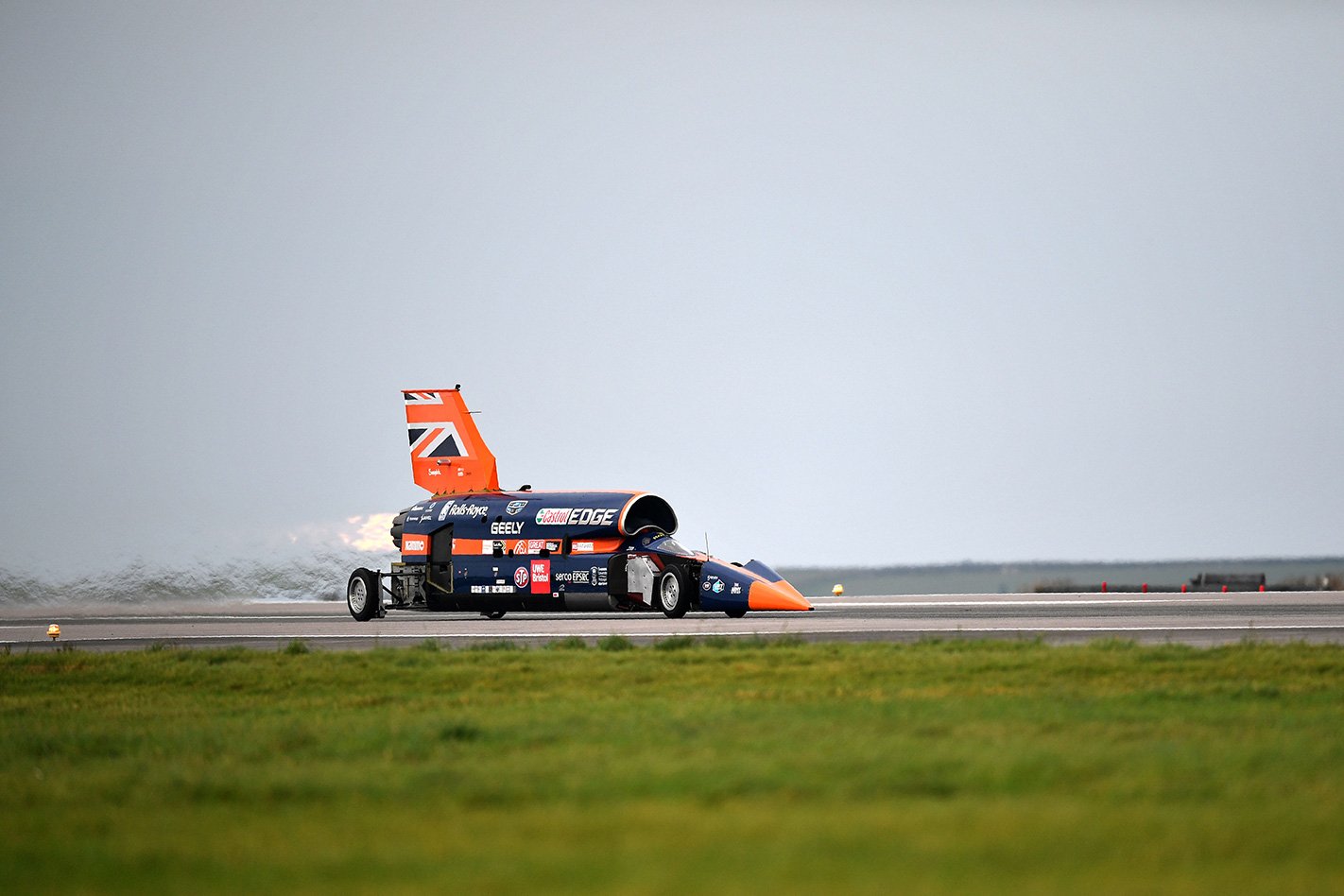
“It is like crossing the road, if you are scared to look both ways, it is an incredibly dangerous occupation. But if you take your time and do it properly it becomes quite safe. That is the same approach we have with driving 1600km/h.
“There is never a day when we will go ‘Oh, we did some low-speed testing, let’s just floor it now and see what happens’. There will be a step-by-step test program, which will slowly build across a number of years up through 200km/h, to 500km/h and then progressively by 80km/h increments until around 1000km/h, then supersonic. If there is any point that we begin to see the steering is a bit loose, or aerodynamics aren’t working as intended, then the next 80km/h increment we might throttle that back so we have more time to watch and analyse.
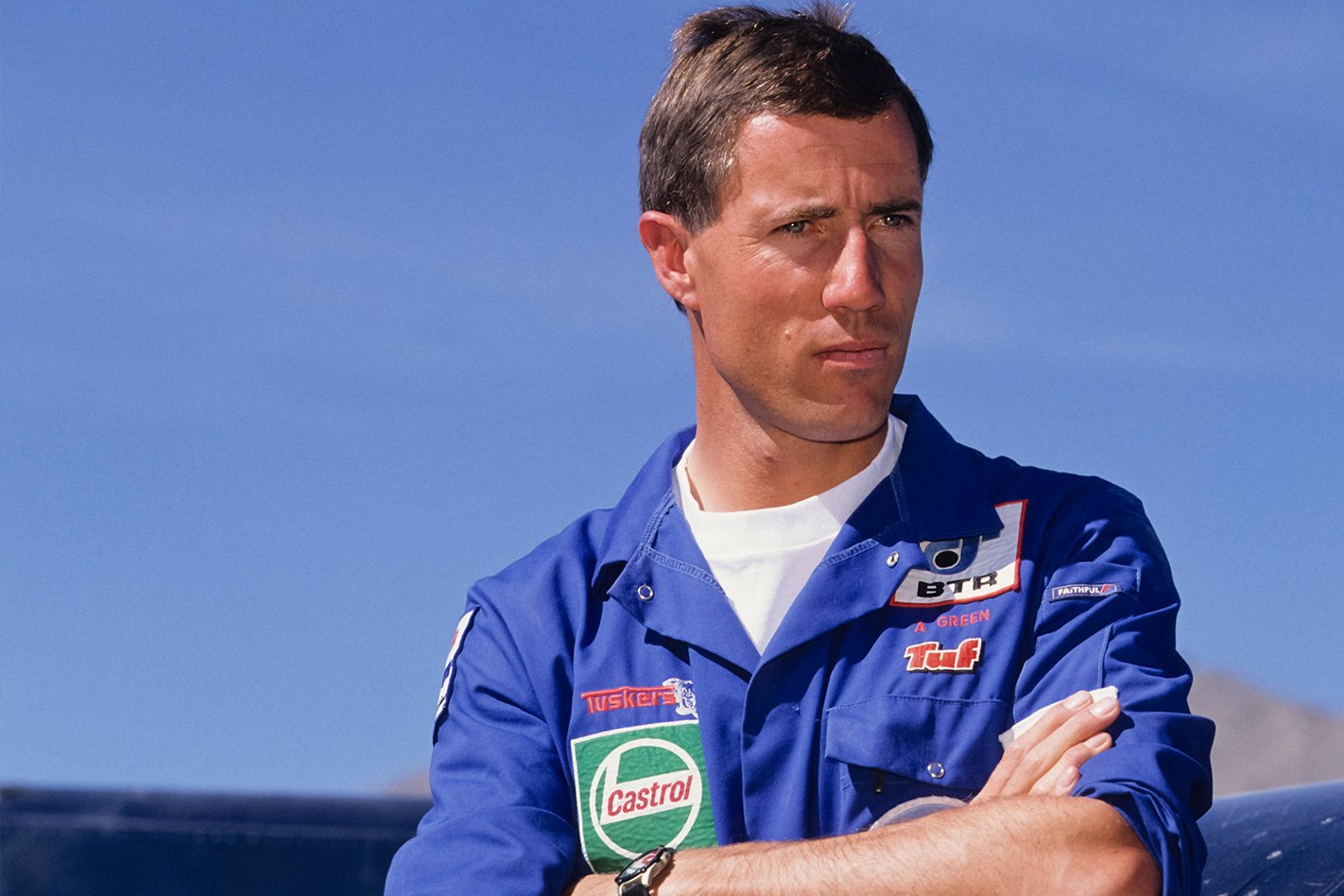
For Green, going faster than anyone else has before in a vehicle is more maths problem than high-speed thrill seeking. Let’s just hope his numbers come up right, and the speedo sails past 1600km/h without any issues.
Ford has not yet fully met the raging demand for the 2017 Mustang in Australia – the second largest market for the pony car after the US. But it’s already time to focus on the new 2018 model.
Due to arrive in the second half of this year, the next iteration of the 54-year old muscle-car brand doesn’t mess unnecessarily with the successful, tyre-shredding formula. It just makes it even better.
There’s more power, more noise, more grip, better handling, greater comfort and a stack of new technology to keep it all under some kind of control. Sound good? It is. Better than the 2017? No question.
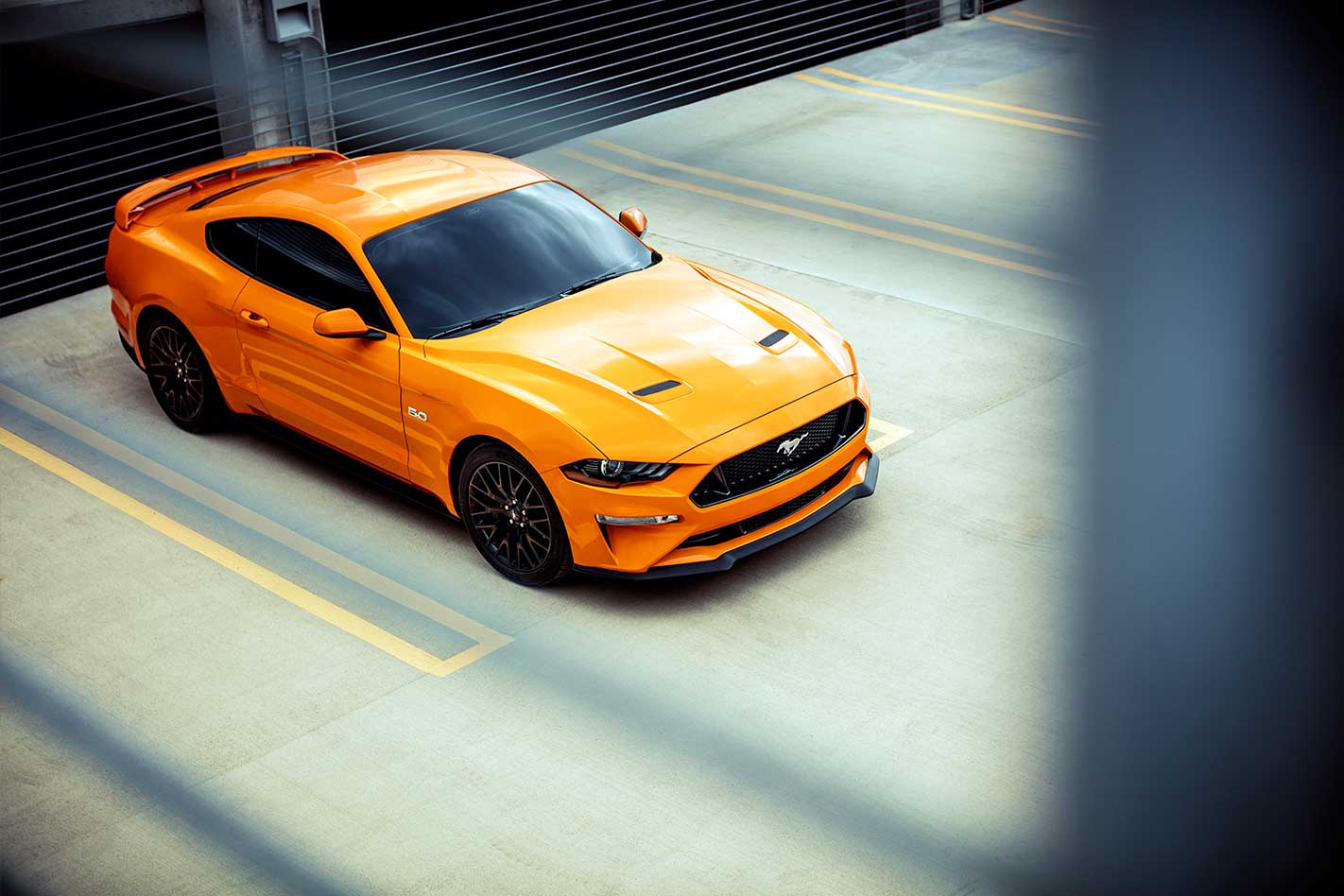
The EcoBoost 2.3-litre lump retains the same max power output of 233kW but gets another 41Nm of torque. This has been wrought from the engine using an overboost code refined from the Focus RS.
The really big news, though, is in the gearboxes. Both the V8 and the turbo-four can now be specced with a 10-speed auto ’box – a relative of the 10-speeder fitted in the all-conquering F-150 Raptor. This allows both engines, but especially the smaller unit, to remain smack in the middle of peak performance. There is also a six-speed manual option on both cars that’s been reworked to handle the extra torque.
On the V8 cars, it now includes a twin-disc clutch and dual-mass flywheel. Both help smooth the clutch action. Ford looked at, but resisted, the idea to add auto rev-matching to the manual. It isn’t ruling it out for later models.
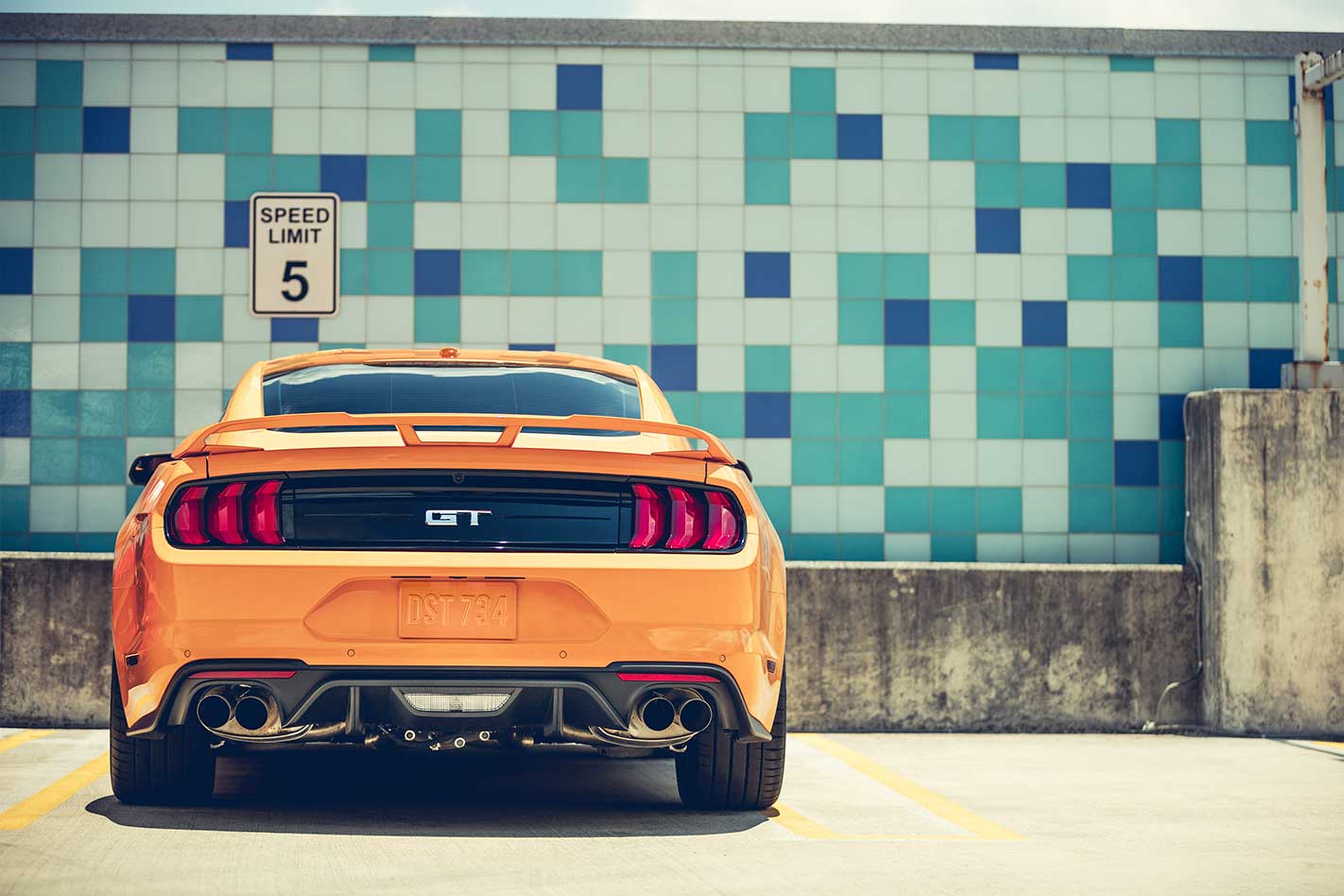
All the chassis systems – ABS, ESC and electric steering – have been retuned. It includes bigger, six-piston Brembo brakes, a bigger radiator and front suspension K brace, plus a Torsen limited-slip diff and Michelin Pilot Sport 4 S tyres.
There is also a Performance Pack 2 version, which will be available in the US later in 2018, which features more aggressive front and rear aero aids, plus wider wheels shod with the performance tyre of choice, Michelin Cup 2s. That package, which we have not yet driven, is claimed to be a couple of seconds faster per lap than the PP1-equipped cars.
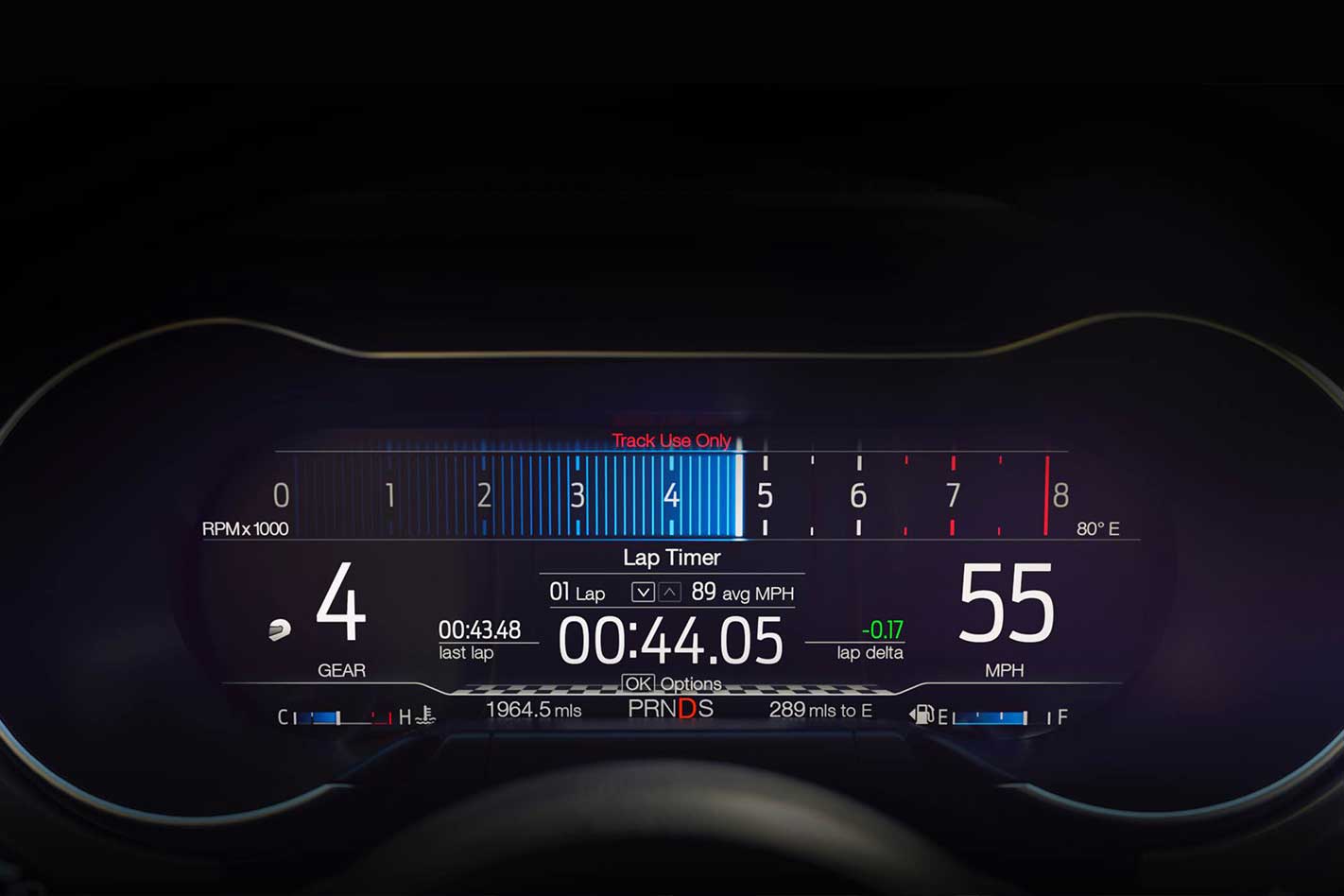
The software softens the rear active shocks to transfer the weight to the rear for max grip and keeps the engine at peak torque even while changing gears. The result is a 0-100km/h time of 4.1sec – although it’s unclear if the mode will make it to Aus-spec cars.
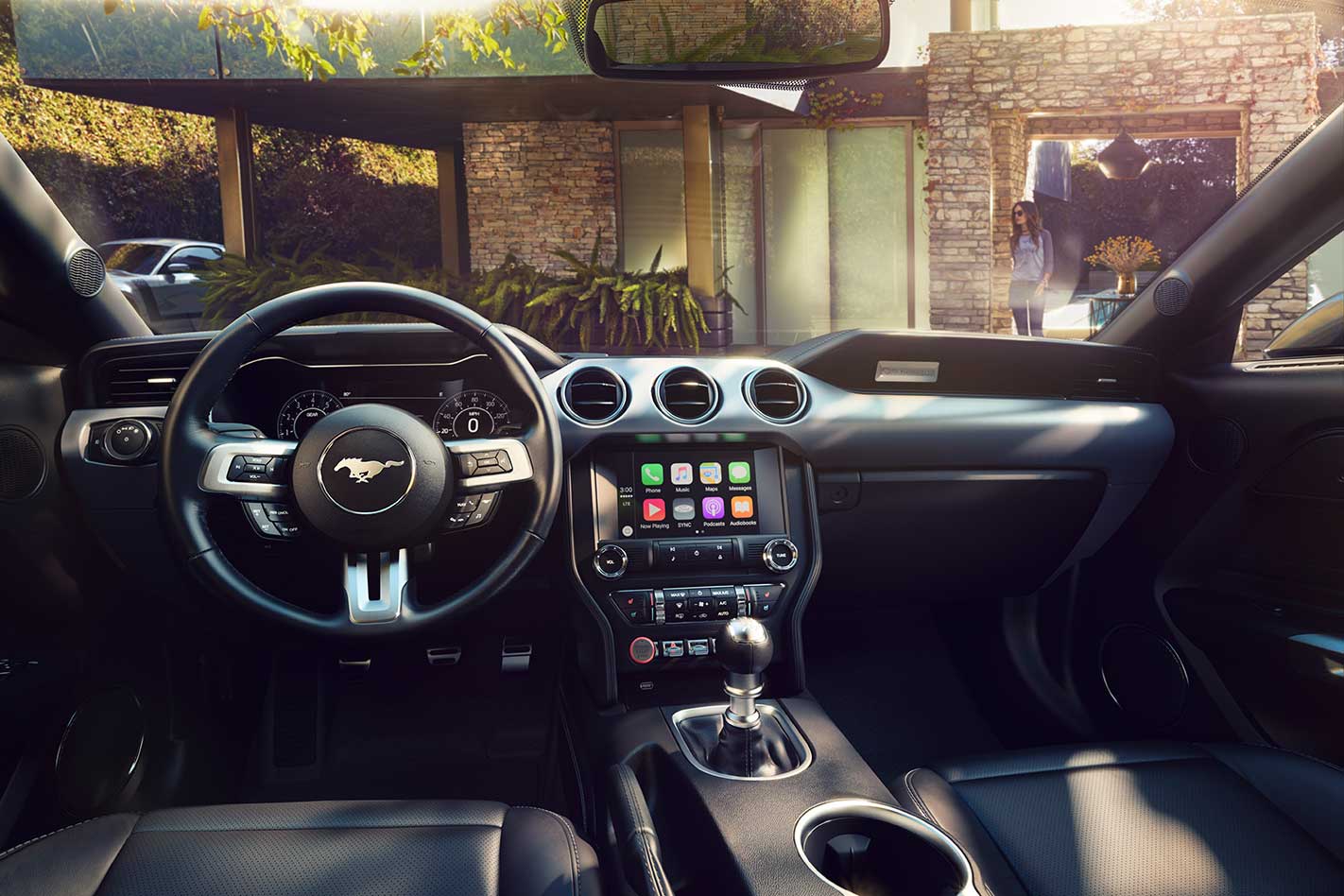
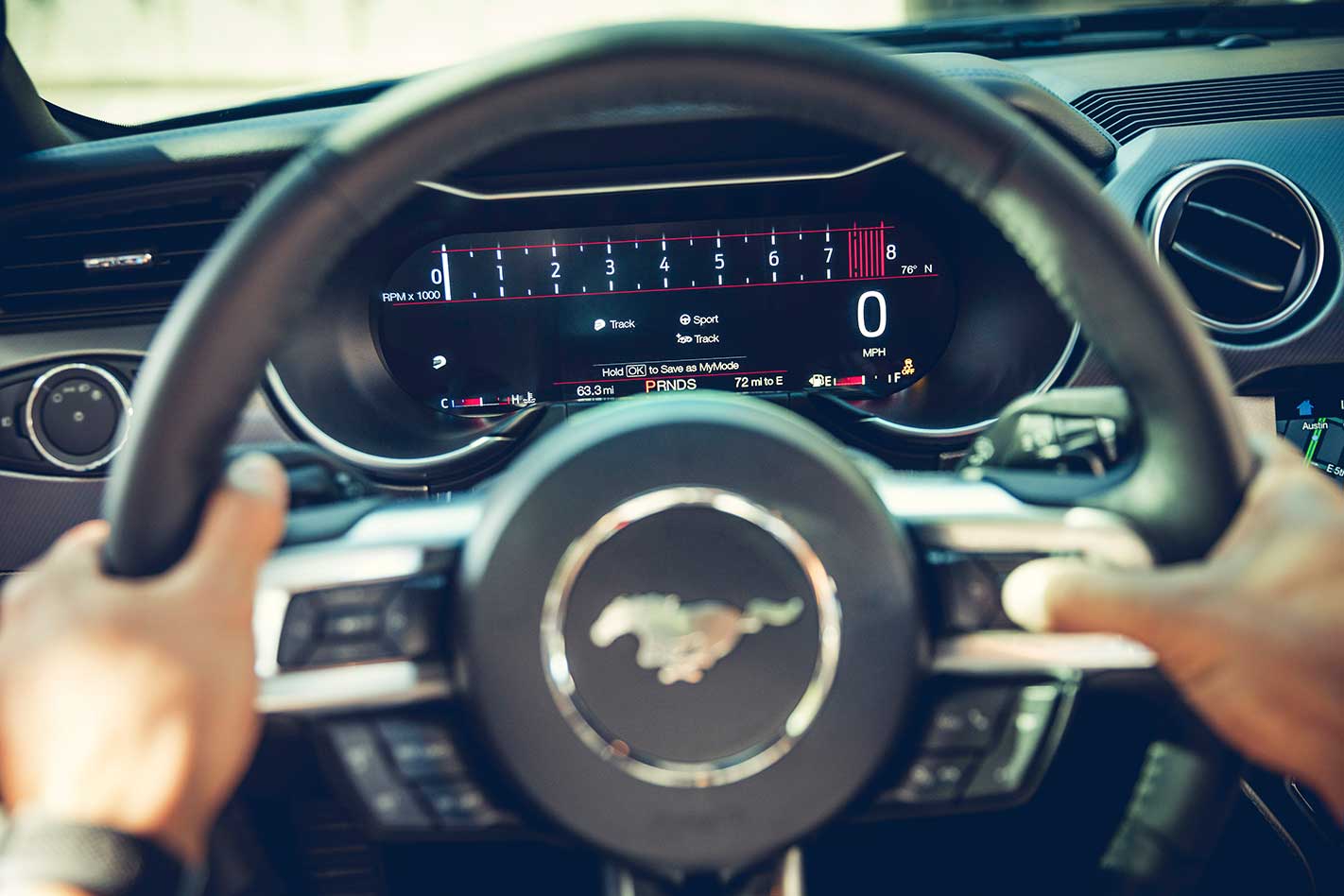
The quality of the interior is subtly improved, but the basic architecture and quality is unchanged. New for 2018 models is a pile of anti-crash tech from adaptive cruise control to lane-departure warnings and automatic emergency braking.
Out on the road in an actively damped car, the first impressions are how composed the car feels and how much sharper it handles. Steering response is appreciably more direct. The manual gearbox is slicker and more positive in action, too.
Pushing on a bit on Malibu’s tight and broken canyon roads, there is more performance on tap, but higher up the rev range. Allied to the gears, which feel wider spaced, you often find yourself swapping between second and third hunting for the sweet spot. Not a problem if you like swapping gears, but not ideal unless you are flat-out.
At higher speeds and cornering loads, the handling remains nicely neutral. Understeer is its natural tendency but, in true muscle-car fashion, you can remedy that swiftly and surprisingly precisely with your right foot. But as per the engine output, all this is now happening at appreciably higher speeds. Which is why, on many tighter roads like the ones we drove on, the EcoBoost-equipped car, with its skinnier tyres, lighter front end and better weight balance, was the more fun car to throw around. Bung in the auto ’box to keep the engine fizzing and it was the one we all got out of with the biggest grin.
Like 80 per cent of Australians, go for the V8, though. Because when you’ve waited this long to get your hands on a Mustang, only the noise, fury and interaction of a manual V8 will do. But you can understand why the remaining 20 per centers went for the EcoBoost.
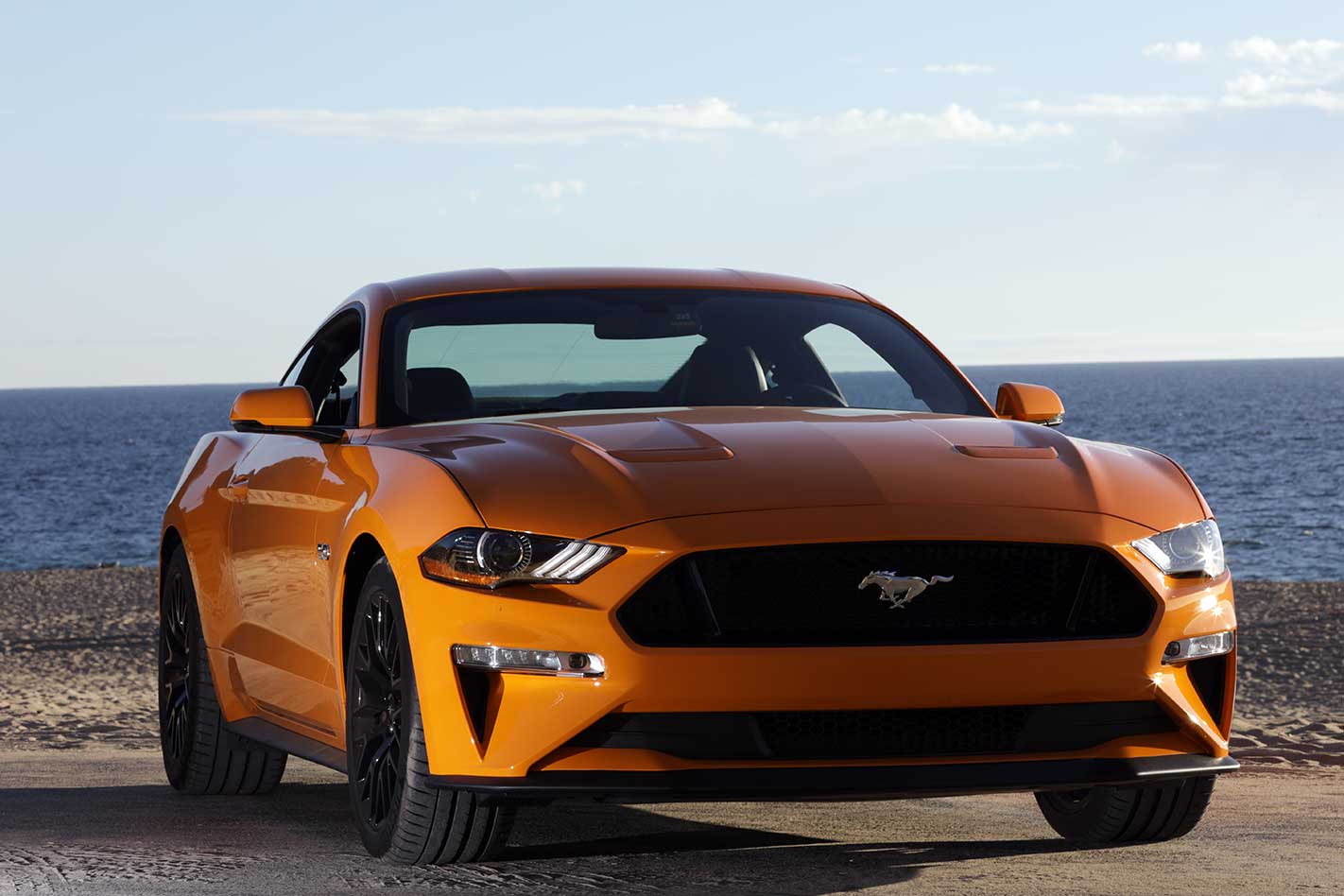
This revised ’Stang will keep you going until then – if Ford can keep up with demand.
2018 FORD MUSTANG GT SPECS: Engine: 5030cc V8, DOHC, 32v Power: 343kW @ 7000rpm Torque: 569Nm @ 4200rpm Weight: 1680kg 0-100km/h: 4.1sec (claimed) Price: $60,000 (estimated)
Like: Exhaust sound; 10-speed auto; comfort/control Dislike: Interior quality; manual ’box gear ratio spacing Star Rating: 4 out of 5 stars
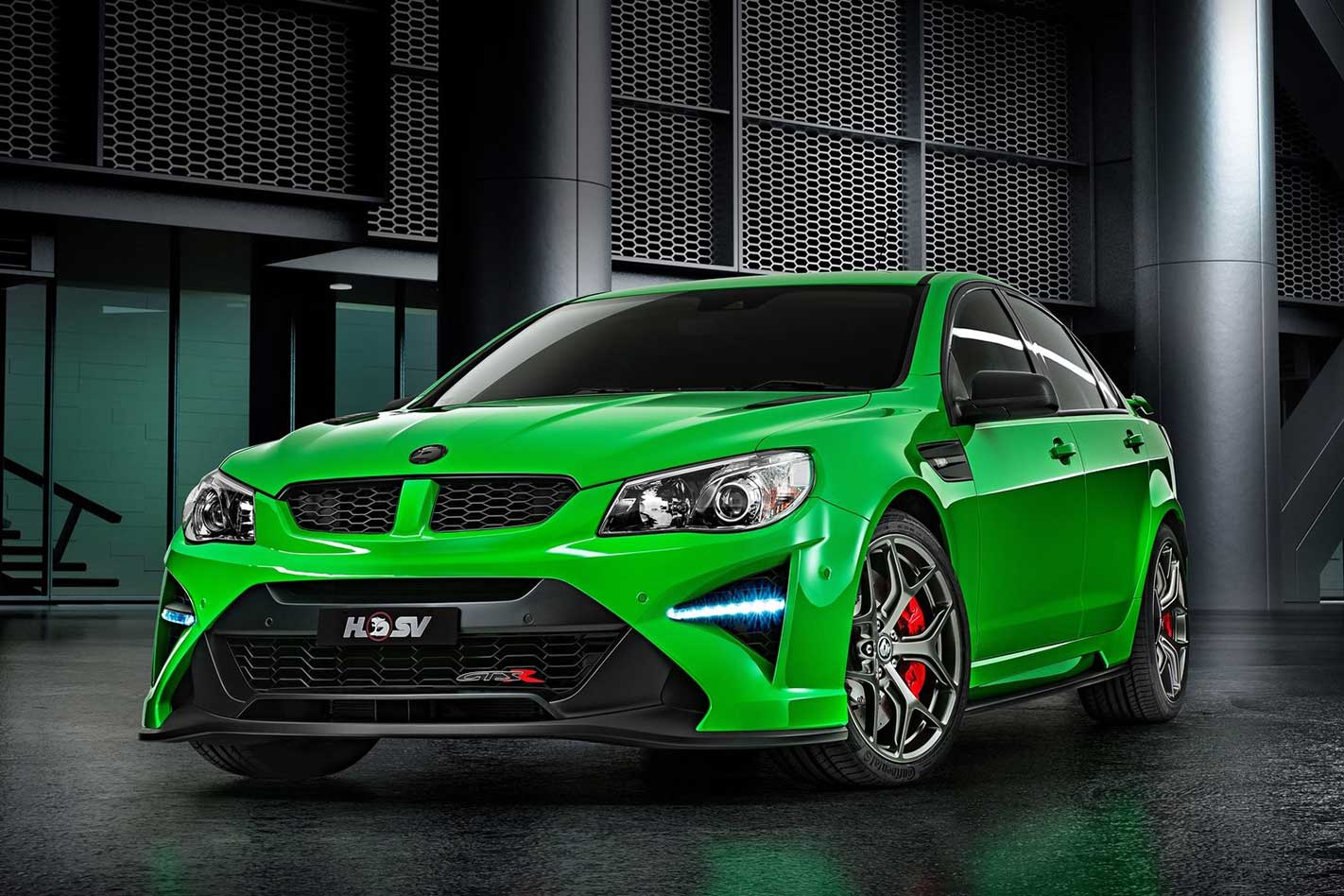
Holden Special Vehicles has survived the end of the locally made Commodore to become the home of a more diverse range of specialist GM models.
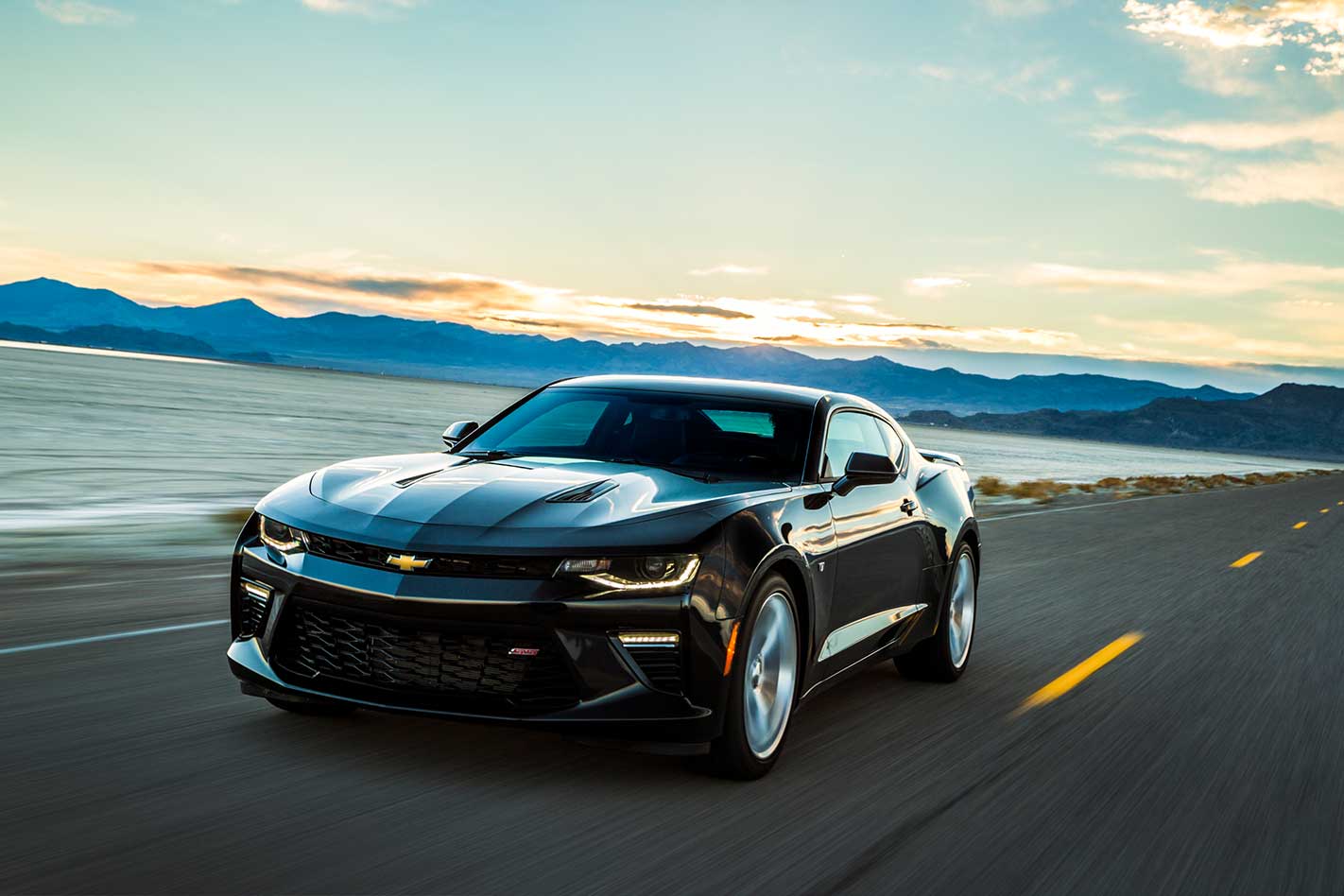
After relying on heavily re-engineered Commodore V8s for three decades, HSV’s new niche is a mix of import-based products headlined by a local right-hand drive conversion of the Chevrolet Camaro.
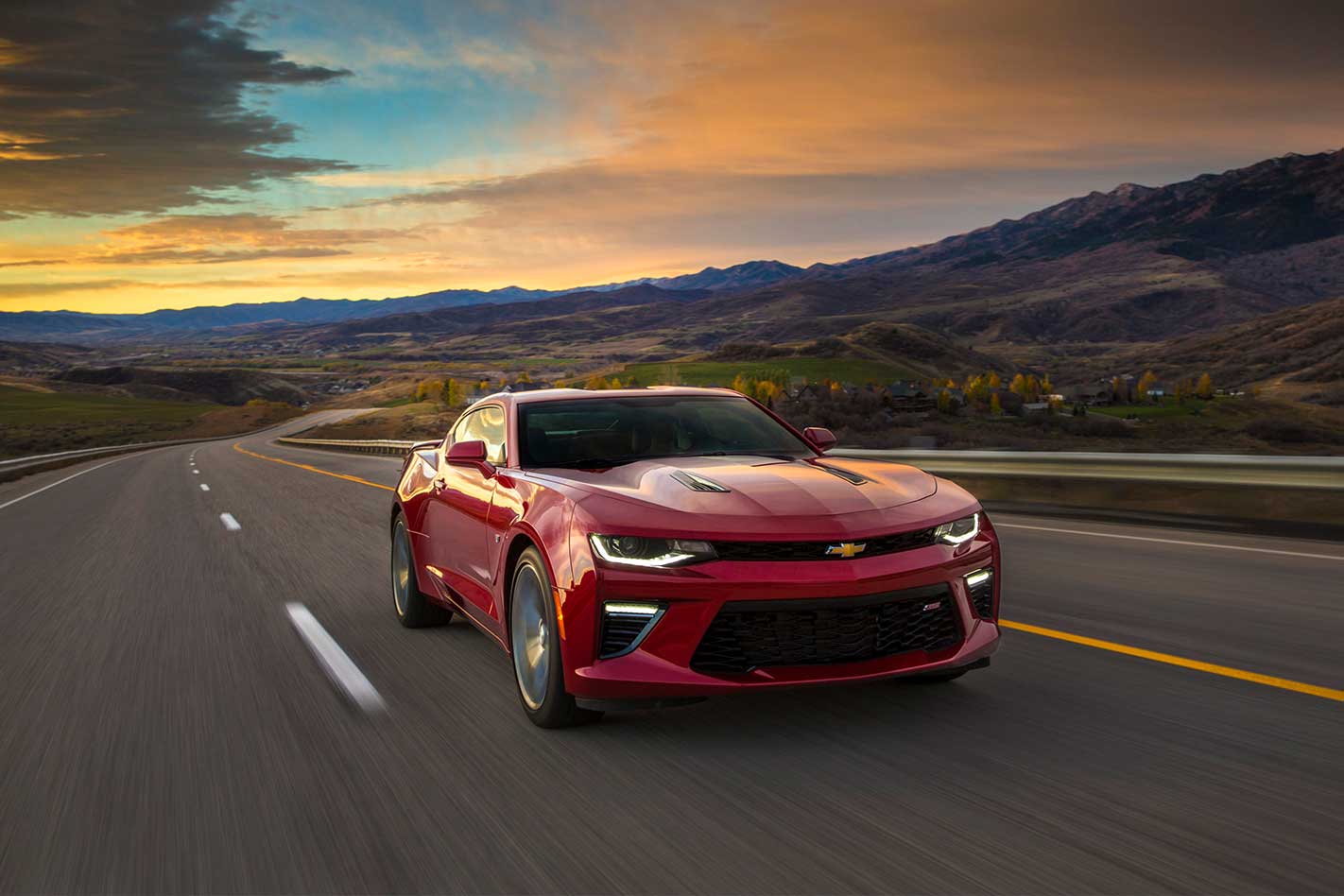
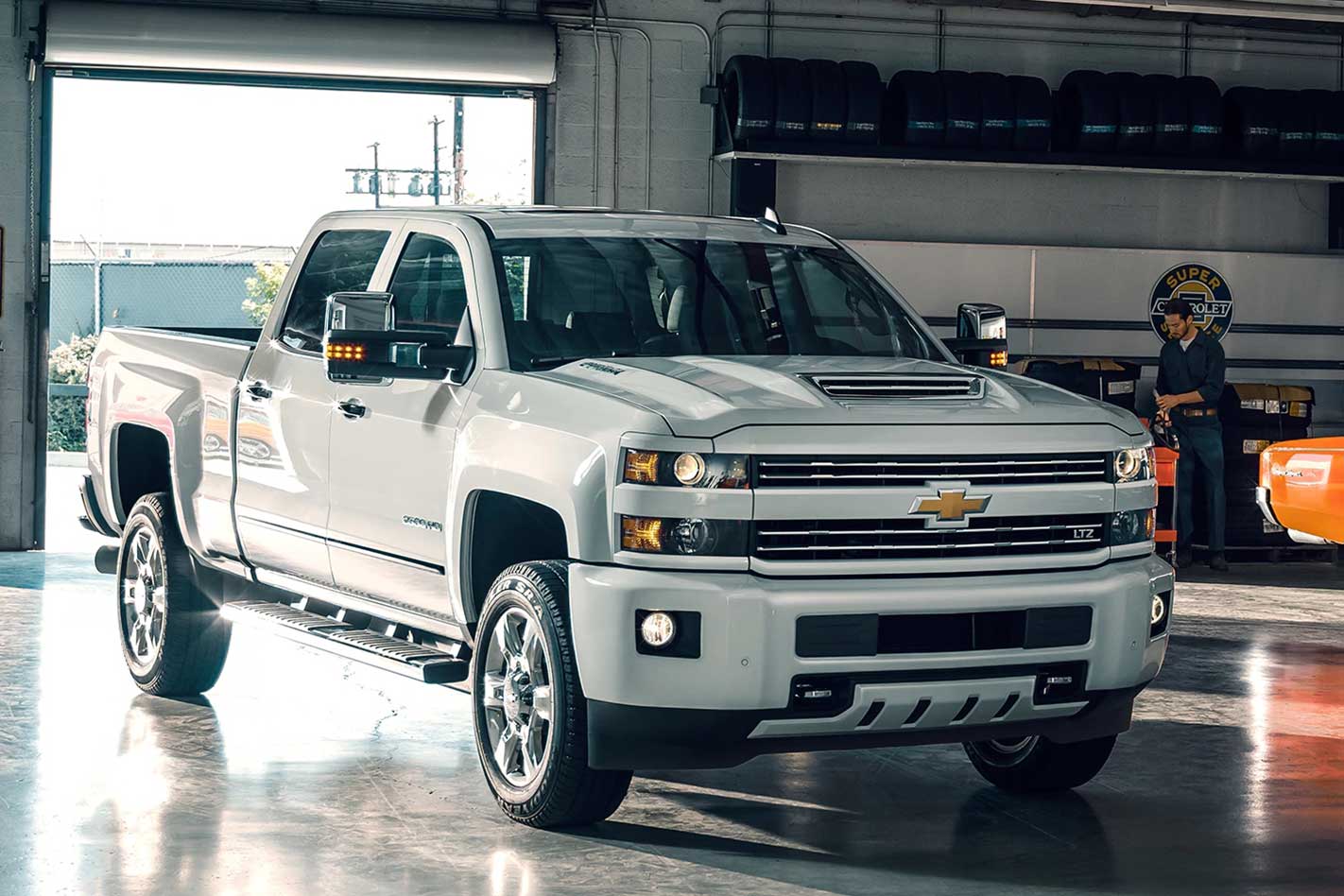
The American muscle car will be backed up by converted Chevy Silverado pick-up trucks and extensively enhanced Holden Colorado utes in next year’s first wave of the new-look HSV line-up. The right-hook Camaro will be the latest version of the mid-line 2SS model, powered by the LT1 6.2-litre V8 producing 340kW and expected to cost close to $80,000. While not a direct rival on either price or volume, the Camaro will naturally be compared with the hot-selling Mustang.
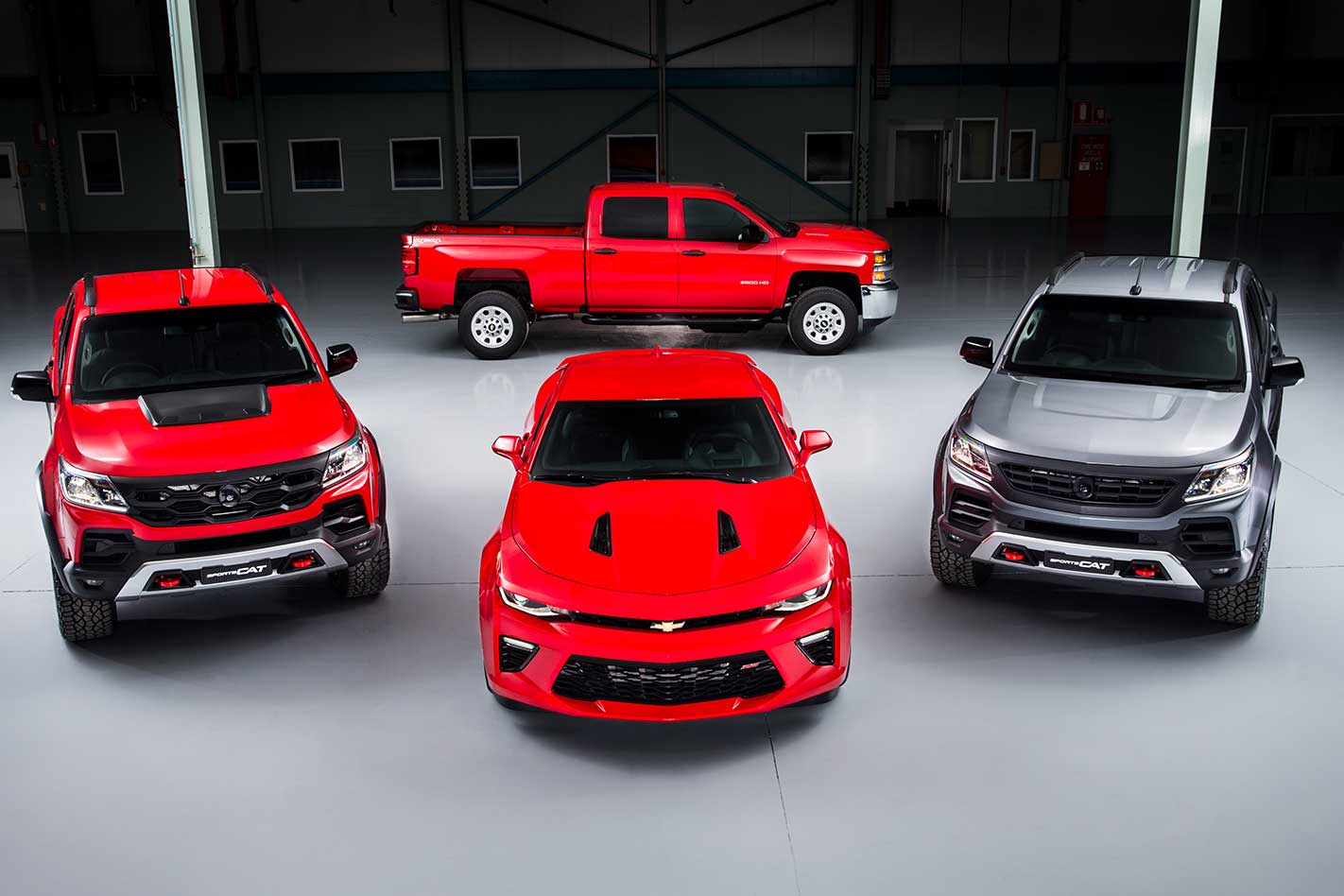
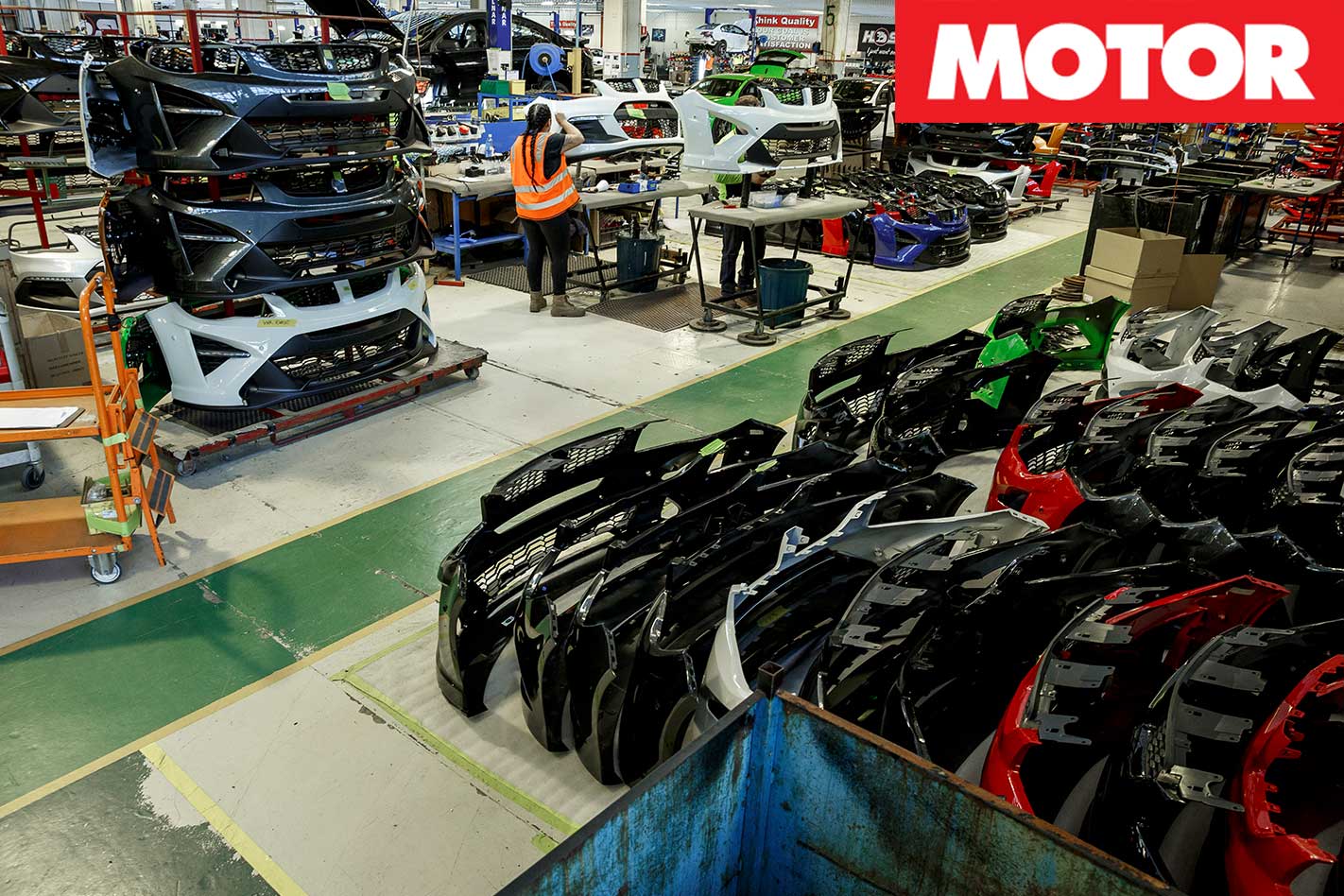
The last VF Commodore-based HSV was a W1 produced in December, also signalling the end of operations at the Holden hot shop’s long-time base at the Clayton Business Park in Melbourne. From early 2018, HSV will join the rest of the Walkinshaw Automotive Group at a new standalone site. The HSV brand lives on, but in the background rather than as a standalone nameplate.
HSV’s renewed long-term deal as Holden’s performance partner begins in January 2018 with the start of production of the Colorado SportsCat by HSV. Right-hand drive Silverados follow in March, with the first converted Camaros due in June/July.
The Colorado SportsCat by HSV features major appearance and suspension upgrades to the Thai-built dual-cab ute, but the 2.8-litre Duramax diesel misses out on performance improvements, never mind dropping in a turbocharged V6 or a V8. Well, not for the moment. A Super Colorado is in the works, powered by GM’s twin-turbocharged 3.6-litre V6, but whether that is a Holden-approved HSV project or a Walkinshaw Performance mutant machine isn’t clear.
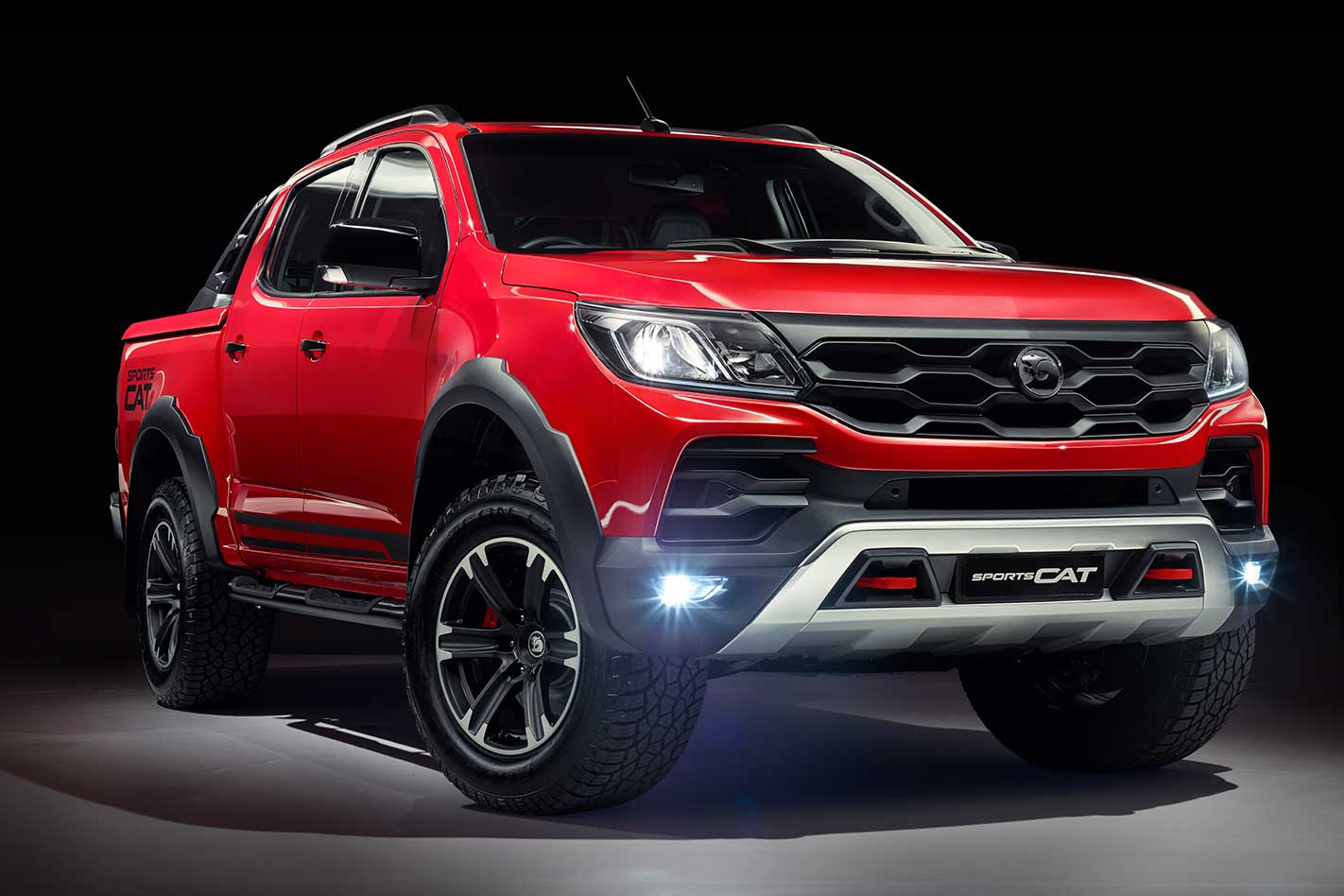
The men who forged HSV’s new future were managing director Tim Jackson and Monaco-based owner and chairman Ryan Walkinshaw, the son of late founder Tom. They sat down with MOTOR for an extended discussion to outline HSV’s plans to prosper in a post-Commodore V8 world.
How does HSV’s new deal with Holden work?
Tim Jackson: “It’s structured in a way that makes it easy to pursue different platforms. Obviously, with the Commodore platform coming to an end, the job has been to work out, ‘okay, what does the next phase of HSV’s business look like?’ and that will definitely look more diversified. Certainly, keeping a foot in the performance camp, but also looking at other growth areas for the business.

“It’s been a journey over a few years and we have to be grateful in terms of the work that’s gone on in the background between ourselves and Holden and GM to find the right product solutions for the marketplace. We’re genuinely excited about the opportunity and how our business is going to change and transform. It doesn’t come without risk and scrutiny, but we think we have a portfolio of products in the beginning that will hold us in good stead. But there’s a lot of scope for other and new and different product going forward.”
What happens with the HSV brand?
TJ: “The HSV brand sticks around. In terms of the Colorado, we’re going to refer to that as the Colorado SportsCat by HSV. We’ve had a lot of different discussions about what HSV has become synonymous with and I guess it’s not dissimilar to an M Sport or an AMG as reference points. People will ask about the SportsCat, ‘is it a fully blown HSV without a powertrain upgrade?’ because it doesn’t have a powertrain upgrade at this point. And I think we’re honest enough to say, ‘yeah, we think it’s probably best described as a Colorado SportsCat by HSV’.

So where does the HSV name fit in with the Camaro and Silverado conversions?
TJ: “It won’t. The simplest way to describe it is that HSV is the organisation behind these products. When and if there’s a product that we think logically wears the HSV brand, I’m sure we’ll have the conversation with Holden and determine if that’s the right path.”
Hence Holden Colorado SportsCat by HSV rather than HSV SportsCat?
TJ: “I think it’s trying to be honest about where it sits. We see a lot of debate in the market place about what name should be on different products, but it’s actually a great product and we don’t want it to get lost in the debate of what its name should be if people think we’re overstating the name. We’re better off saying, ‘don’t worry about that, it’s actually a great product, worry about the product itself’.
“Typically, when we’ve looked at an HSV, it’s been strong, bold design, improved chassis dynamics and a power upgrade. And that’s really the only thing we haven’t been able to have an influence on (with the Colorado SportsCat). The only thing we haven’t been able to change is power. Realistically, this category is a torque-driven category and the engine itself is actually a very strong engine for what it delivers. But that’s one of the reasons we’ve moved to calling it the Colorado SportsCat by HSV.

Why did it take so long to finalise and announce this new arrangement?
Ryan Walkinshaw: “We wanted to make sure we got it right. Getting a long-term agreement like we have with GM and Holden, we had a negotiation that looked at all the different options that was open enough to allow us to do something we’ve not traditionally done. Previously, we’ve really only had one product that we’ve worked on and it’s primarily been a relationship with just Holden. Now that we’ve expanded that relationship our contract is with GM in Detroit as well.

“Everyone worked very hard to get a deal done that lets us work on so many programs going forward rather than just what we’ve traditionally done. It’s always been an ambition of mine to expand away from just doing Commodore and into different markets.”
We hear to renewal is for 10 years.
RW: “It’s a long-term deal, that’s all I’ll say.”
Was GM’s ultimate approval fundamental to going ahead with the Camaro and Silverado conversions?
RW: “It’s their brand, their original product, and they have to have confidence that what we’re doing won’t damage their reputation. That’s why the cars we’re working on with them will be in their dealerships.”
RW: “Yes. And we’re working on other programs in the future that will fall into that category.”
So there’s scope to do other things with other models in Holden’s imported model range?
RW: “Absolutely. In fact, the entire point of this new arrangement is that it opens a lot more doors than we previously had access to. Previously, our relationship was defined by a contract with Holden to work specifically on Commodore and there wasn’t much ability for us to go and play with some of the other toys in the toy box. But going forward, the relationship now opens up a lot of opportunities to work on different products and also different business models.
“So rather than just having the specific business model we’ve been used to, the new arrangement with GM allows us to look at different business models in order to make other programs work which may not have worked under our traditional business model.”

Do you think HSV’s traditional buyers make the move with you?
TJ: “I think it’ll be a bit of both. If you’re only in the market for a four-door, rear-wheel drive V8, we’re not going to get you. But if you’re in the market for a car that is exciting to drive, meet your needs, makes a statement about who you are, I think we have a great portfolio to capture you.”
Did you look at a high-performance HSV version of the ZB Commodore?
TJ: “We have looked at it, we continue to look at it. The right solution hasn’t presented itself as yet. But the world evolves and things change, so we never completely put something to sleep. Situations change, opportunities present themselves all the time, so our job is to have our eyes and ears open, and always be looking for that next opportunity.”
TJ: “I think it would have been very good.”
Has the market for the vehicles that HSV has traditionally built and excelled in, become too small?
RW: “We excel in being a niche design/engineering/manufacturing house. What we excel in is what we deliver to develop a product. It’s our design, engineering and manufacturing expertise, and our ability to bring good product to market. That’s what we excel at. What we’re doing is looking into new products to put that experience into.”
RW: “When you have uncertainty in any business on what the future holds, that can be uncomfortable. But looking back on it now, it was probably one of the best things that ever happened to us. We had a very comfortable existence back then. We knew what products were coming, we had a great relationship with Holden working on that product, we knew we had a strong customer base and we knew how to make that product really sing.
“What it really did was it forced us to look at ourselves internally and look at the world externally again, and say, ‘what do we want to become? Do we want to become more or do we just want to continue to try to do what we have been doing?’ And our answer was, ‘no, we want to be more’. We want to be more ambitious, we want to be bigger, we want to grow and we want to do more exciting products in more different market segments.

Has taking the next step forward required substantial investment?
RW: “Yes. I won’t talk about the details, but these car programs always require a lot of investment and that’s what separates us from other automotive groups that try to play in our sphere. We’re one of the few groups in the world that can take a product right from inception and design through the engineering and manufacturing processes, and also bring it to market. But, obviously, when you’re doing that much work, there’s a lot of investment that goes into it.”
What sort of volumes are you looking at with the new line-up?
TJ: “By the time we get to the end of 2018, we think we’ll be around the 3000 unit run rate, which is roughly where we’ve been for a long period of time. We typically adopt fairly conservative business cases. But longer-term, over a sort of three- or four-year period, we could be looking at upwards of 4500-5000 units if done well. We’re actually looking at it as a growth opportunity. Our business becomes more complex – we’re running 3000 units over three different programs as opposed to what was essentially one program – but it sets us up to grow.
TJ: “Certainly, the traditional buyer will be interested in that space, given the nature of the product. If you look at the two-door sports sedan market, obviously Mustang’s had a pretty big impact there. But we haven’t set up to go after Mustang. We’re focused on the fact that within its competitive set, it’s an exciting product on its own.
“I know the automotive business traditionally talks about conquest sales, but we don’t really talk in those terms. We just think about, ‘is that a great product and is there a market for it?’ We think that market for us can be anywhere between 1000-3000 units per year. It’s going to come down to the final pricing and the overall spec.”
But Camaro and Mustang are traditional arch-rivals in the market.
RW: “There’s always going to be a perception that they’re direct rivals, sure.”
Will there be any HSV branding on the Camaro?
TJ: “There may well be a build reference – as in “Built by HSV”. Effectively, we will have complied the vehicle, so there’ll be a reference to our organisation on the compliance plate”.
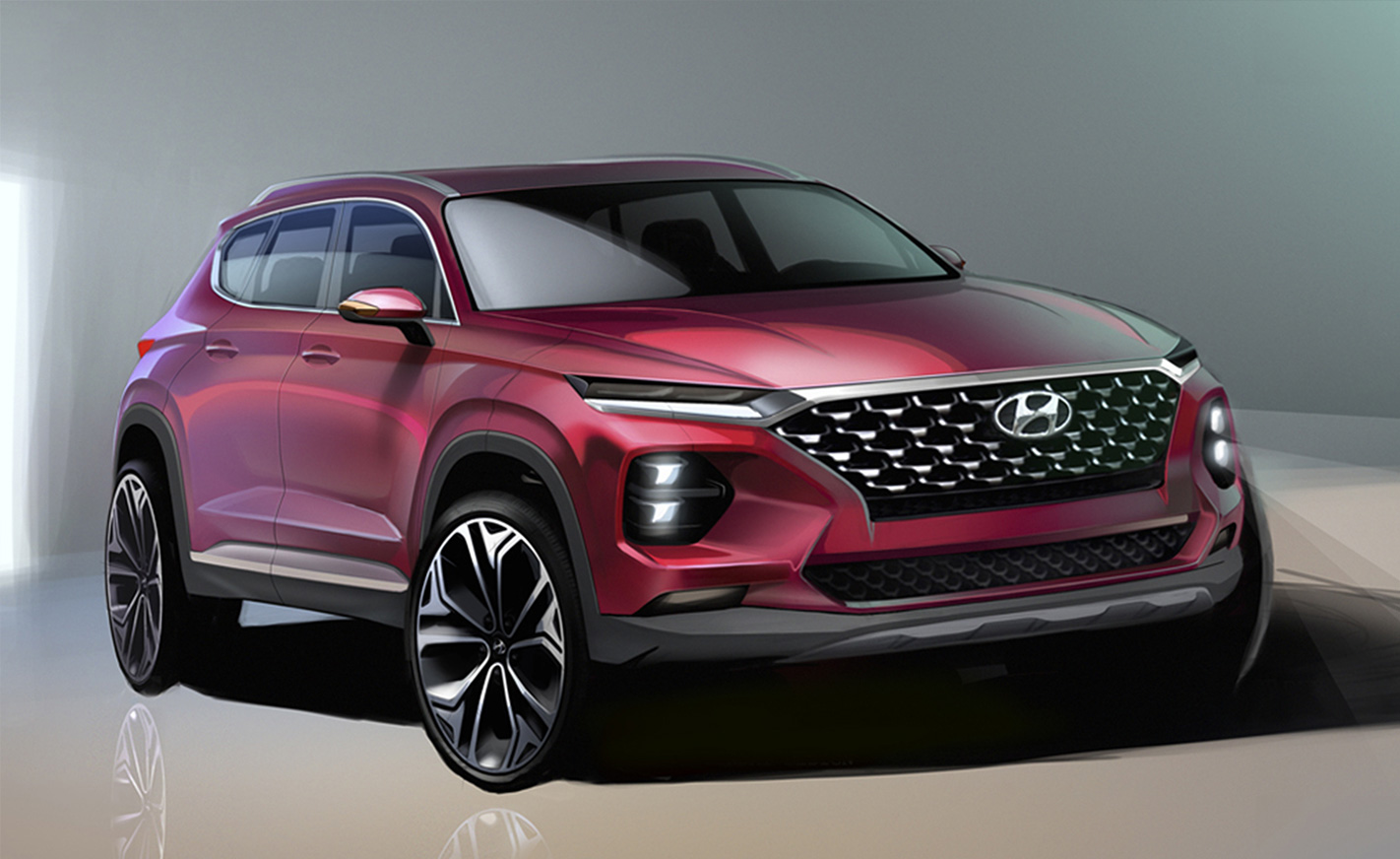
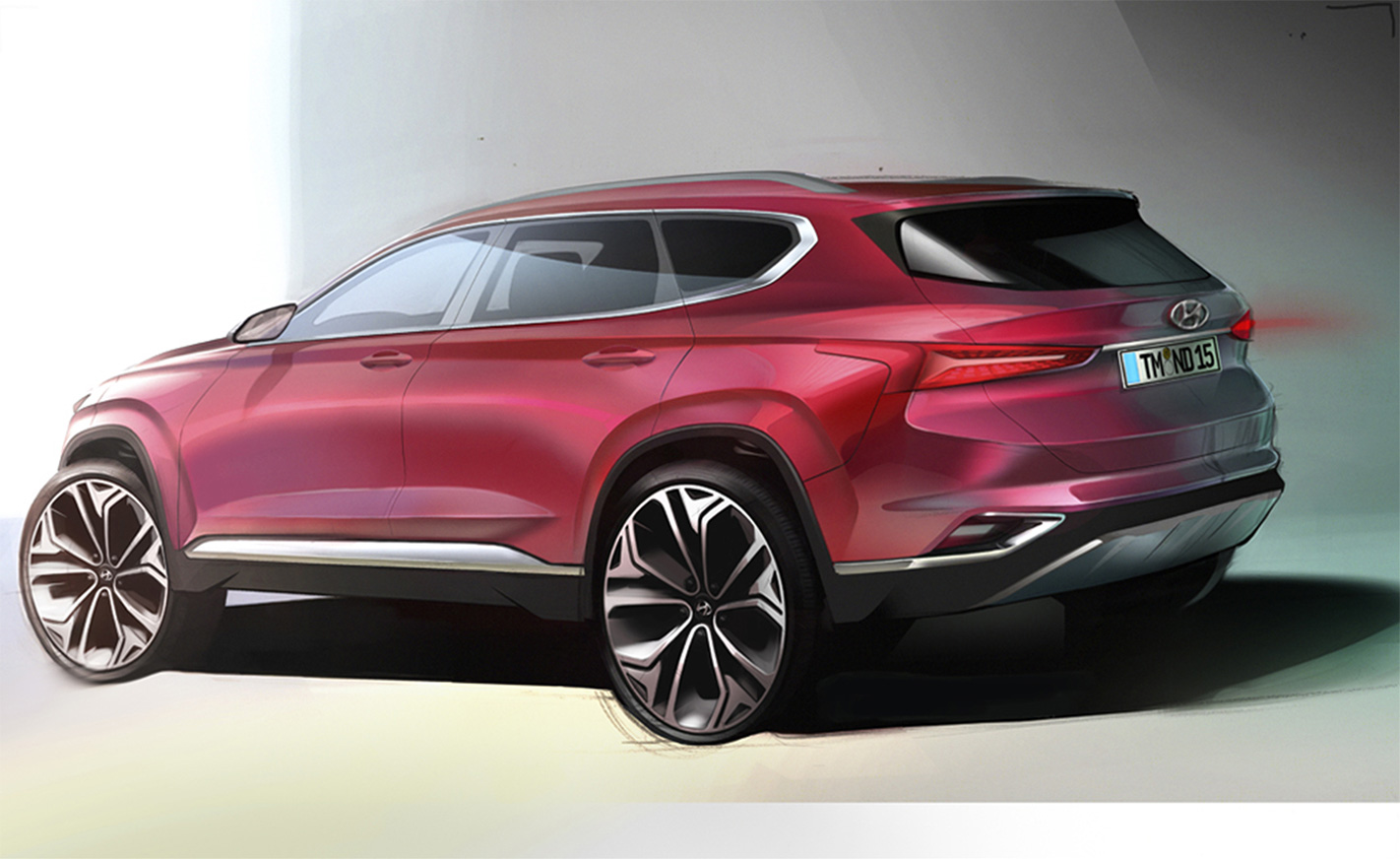
Don’t expect any subtle design changes for the next-generation Hyundai Santa Fe if these renderings, released ahead of its full reveal in February, are anything to go by.
The 2018 Santa Fe embraces the Korean carmaker’s latest SUV design language as first revealed on the smaller Hyundai Kona, including a separate headlight system featuring narrow daytime running lights sitting above and main headlights embedded in recesses either side of a bold cascading grille.
As revealed in a dimly-lit teaser image released last week, the profile view suggests the new fourth-generation Santa Fe will align with the Tucson, with a shallower-angled rear window and gently curved bonnet, while the asymmetric shape of the wheel arches and side windows are a virtual carbon copy.
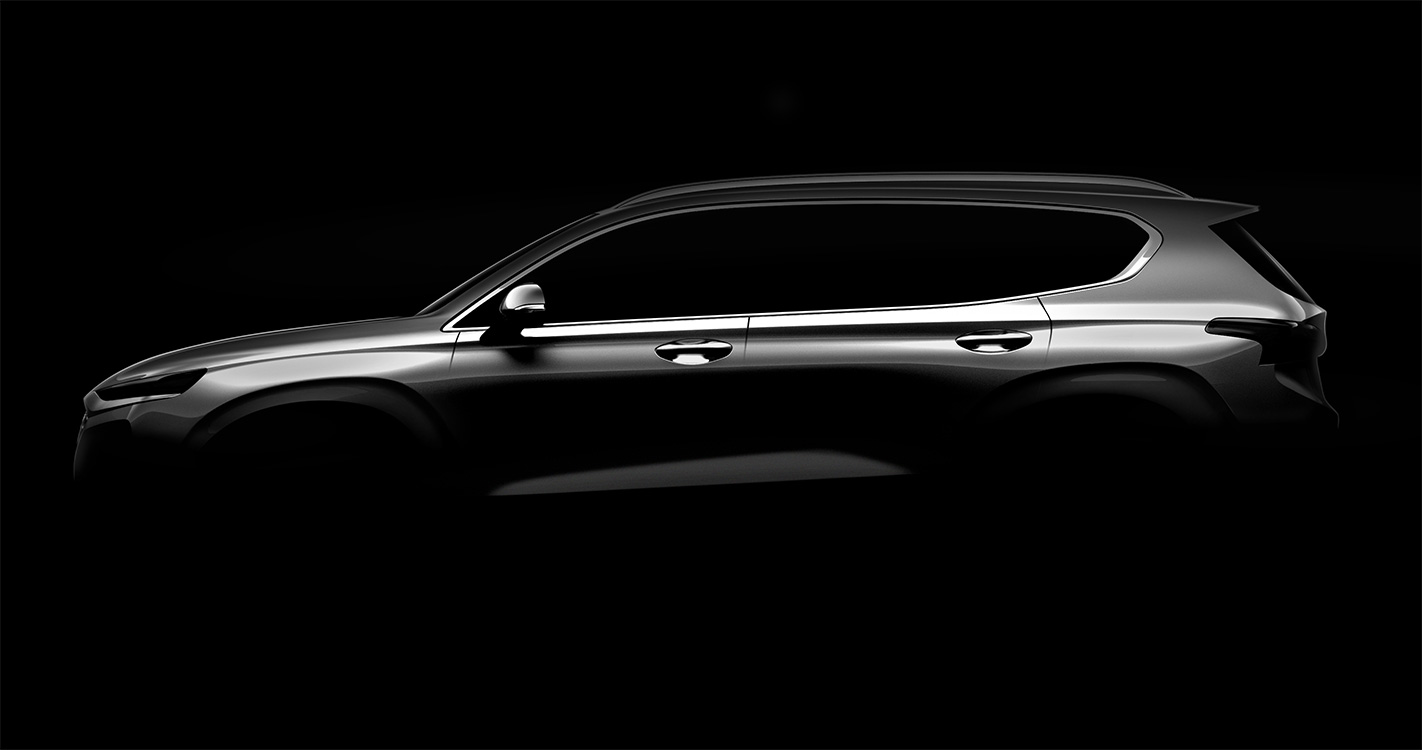
A scattering of initial details accompanied that single profile view, including confirmation that the Santa Fe will be equipped with a full complement of safety and driver assistance kit, but the full story will have to wait until its next month’s unveiling, and the big SUV’s public debut at the Geneva motor show in March.
Notable additions to the latest version’s Smart Sense technology include a new rear seat occupant alert, which warns the driver if a person is left in the second row when leaving the car. The system is intended to reduce the risk of accidentally leaving children in the back seat particularly in hot weather.
If movement is detected in the rear seats after locking, the vehicle will sound the horn, flash the light and send a message to a connected smartphone – an industry first, says the South Korean manufacturer.
Also on the safety equipment list is rear-cross traffic alert which is now supplemented by automatic braking. If the driver ignores warnings of approaching vehicles when reversing, the new Santa Fe will apply the brakes to help mitigate the chance of a collision.
Its proportions appear to show a longer wheelbase, which will again allow a third row of seating but the more elegant rearward roofline is likely to limit headroom.
The current generation of Hyundai’s first and largest SUV continues to attract a reasonable amount of attention despite being on sale for six years, with 7974 sold in 2017.
It ranks seventh in the large SUV under $70,000 segment and is usurped in sales by its Tucson smaller sibling, but the new-generation will likely provide sales a significant boost when it arrives later this year, though the yet-to-be-announced pricing will be critical.
The 2018 Hyundai Santa Fe will be revealed in February before its first public debut at the Geneva Motor Show in March.
NO, what you see in front of you isn’t some futuristic render of what a race car might look like in 2030 – it’s the second-generation Formula E race car, and it will be taking to city streets later this year.
The new car will debut in the all-electric Formula E series at the start of the 2018/19 season.
But just look at it! The new car improves massively on the frumpy first-gen chassis, which got a facelifted front wing last year.
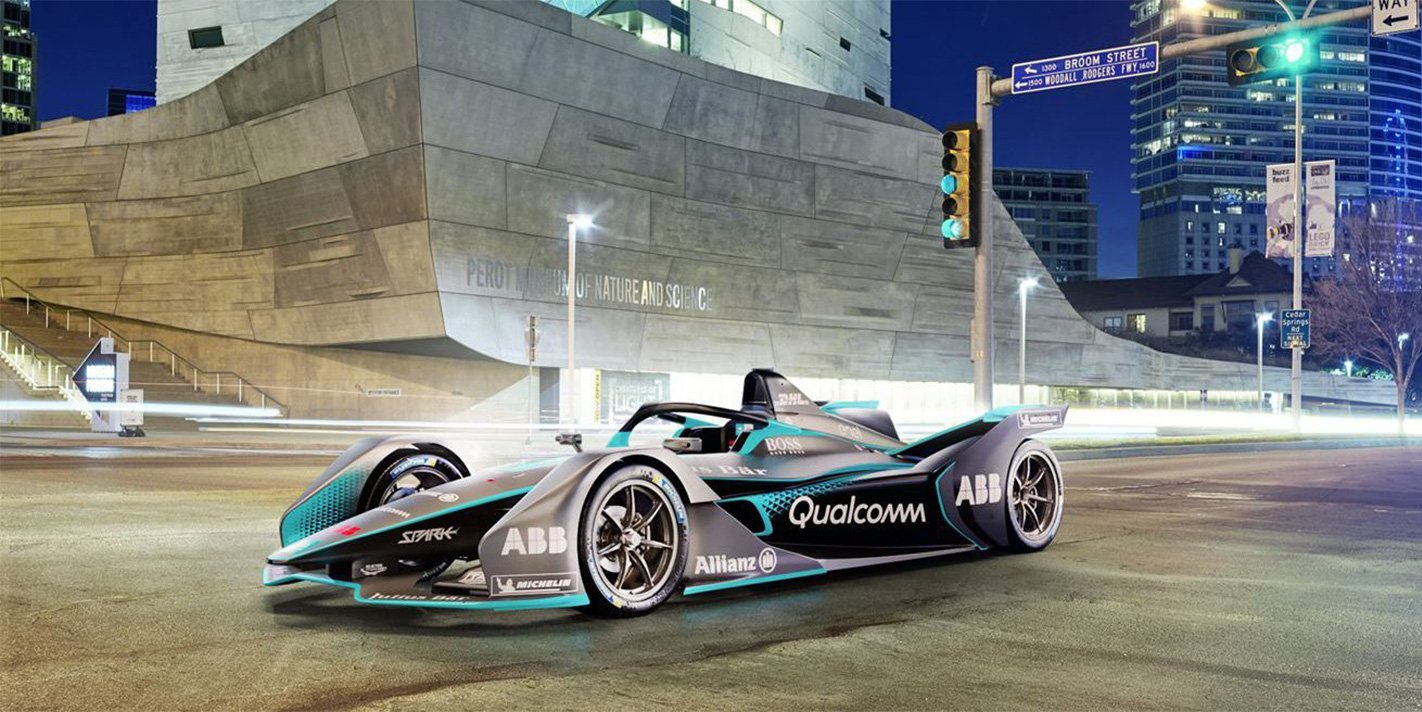
More aggressive aerodynamic bodywork dominates the car, with LMP1-style front wheel coverings, and a split rear wing which has hints of Porsche 917K when viewed from the side.
The aerodynamics have been taken up a notch too, with more aggressive rake on the wings. However, the single-element design should ensure close racing while keeping the cars glued to the ground.
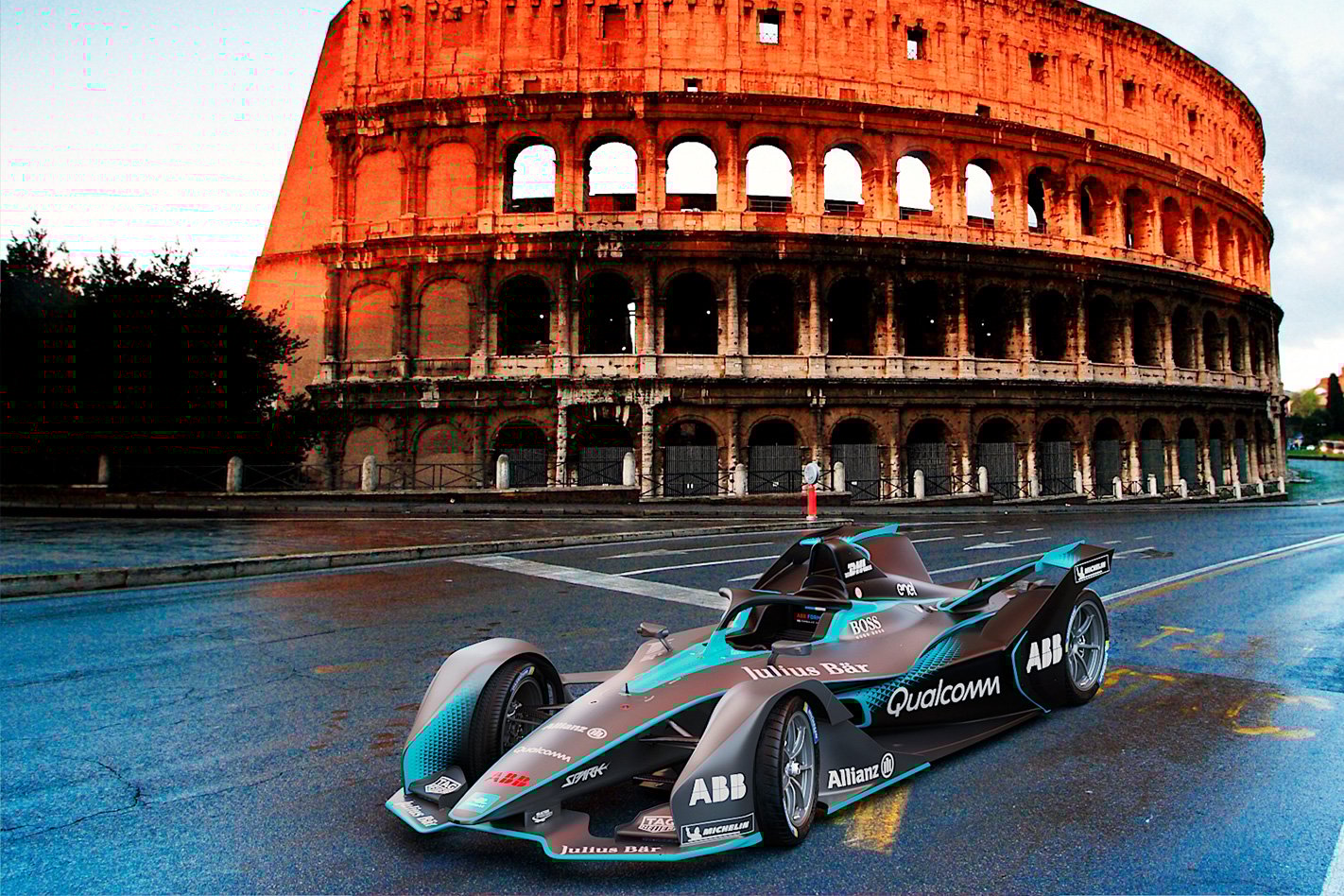
Formula E CEO Alejandro Agag said the new cars will “have almost double the amount of energy storage capacity and double the range” of the current cars.
“When we started Formula E, our goal was to break the mould and challenge the status quo – bringing a revolution to motorsport,” he added.
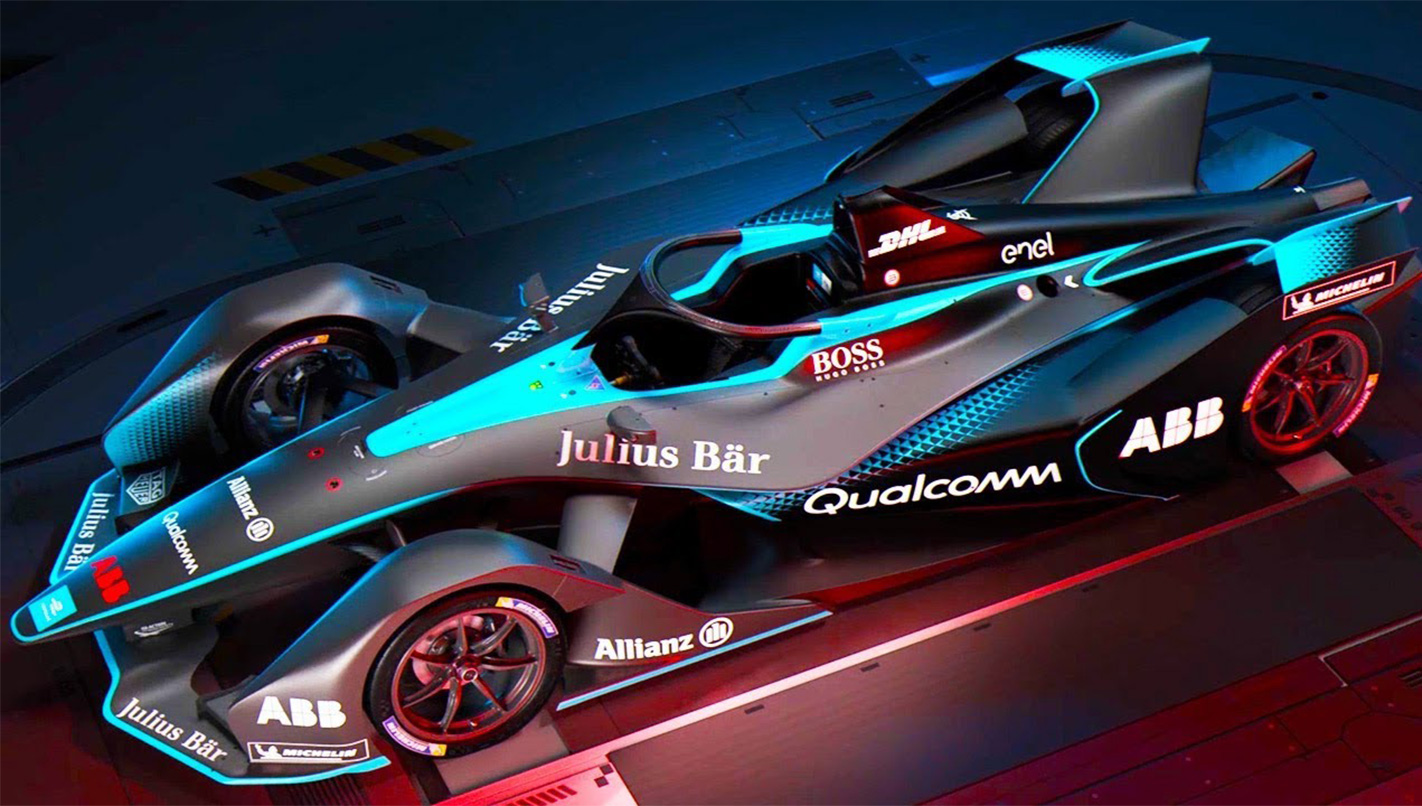
Now, the looks are locked away, perhaps it’s time to add an extra 200kW so the racing can become truly spectacular.
With last year’s world champion Sebastien Ogier now able to access more funding from Ford, it seems he might be unstoppable in the 2018 season.
Despite falling victim to a few setbacks, the Frenchman overall ended up almost a full minute ahead of Toyota’s newest weapon Ott Tanak, who again was nearly a minute ahead of teammate Jari-Matti Latvala in third for the rally.
Then again, Rally eMonte Carlo thrives on setbacks.
Thierry Neuville ditched his car on SS1 (0:15, main video)
The treacherous night stages in the late hours of day 1 are an unknown quantity, more so than the rest of the unpredictable Monte.
While Ogier avoided the slippery trap, Neuville lost a lot of time sitting still in a ditch after the ice was unkind.
Andreas Mikkelsen’s car gave up (0:24, main vid)
You’d be worried if you looked out your front window and saw a Hyundai rally car headed straight for your house, but Mikkelsen was probably more concerned later on when his alternator failed, leaving him with only three points by the rally’s end.
Ogier’s car also ended up in a ditch on SS7
It’s a good thing rallying is such a strong spectator sport, or a lot more time would have been lost when half of Ogier’s Fiesta ended up in a ditch after a spin.
Dani Sordo hit a tree on SS9
You can probably imagine what that bleep was covering.
Lappi’s car went full Matrix on SS11 (4:23 in this video)
Despite the fact that Keanu Reeves was nowhere nearby, Lappi’s Yaris decided to wall-run like it could bend reality.
Unfortunately for Lappi, reality still won, and he lost enough time to drop a few places on the last day of Monte.
Smoke and sun caught Ogier off guard
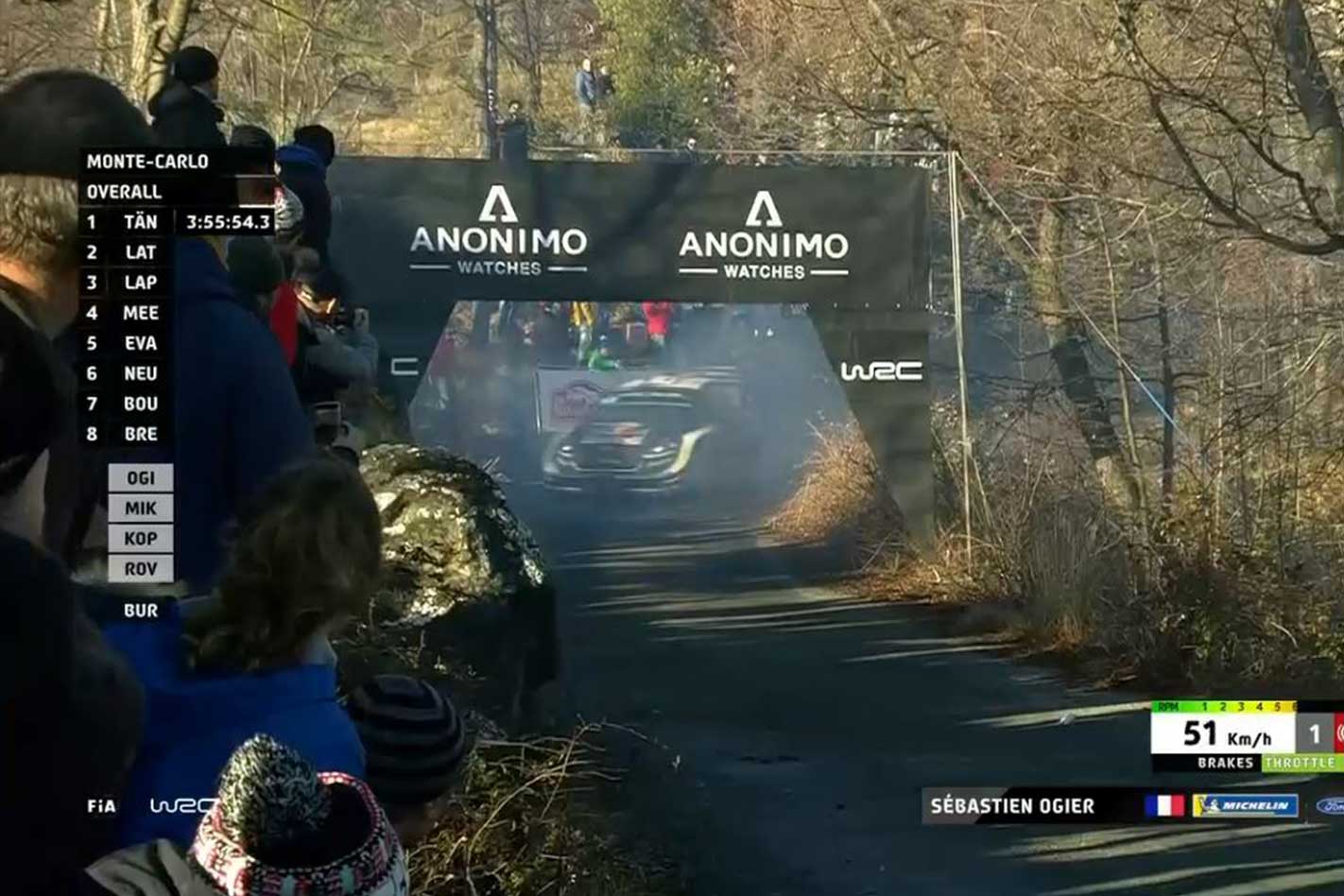
Though the WRC live camera (above) didn’t pick up how bad the haze was, Ogier’s onboard camera (below) is a good indication that he really had zero visibility.
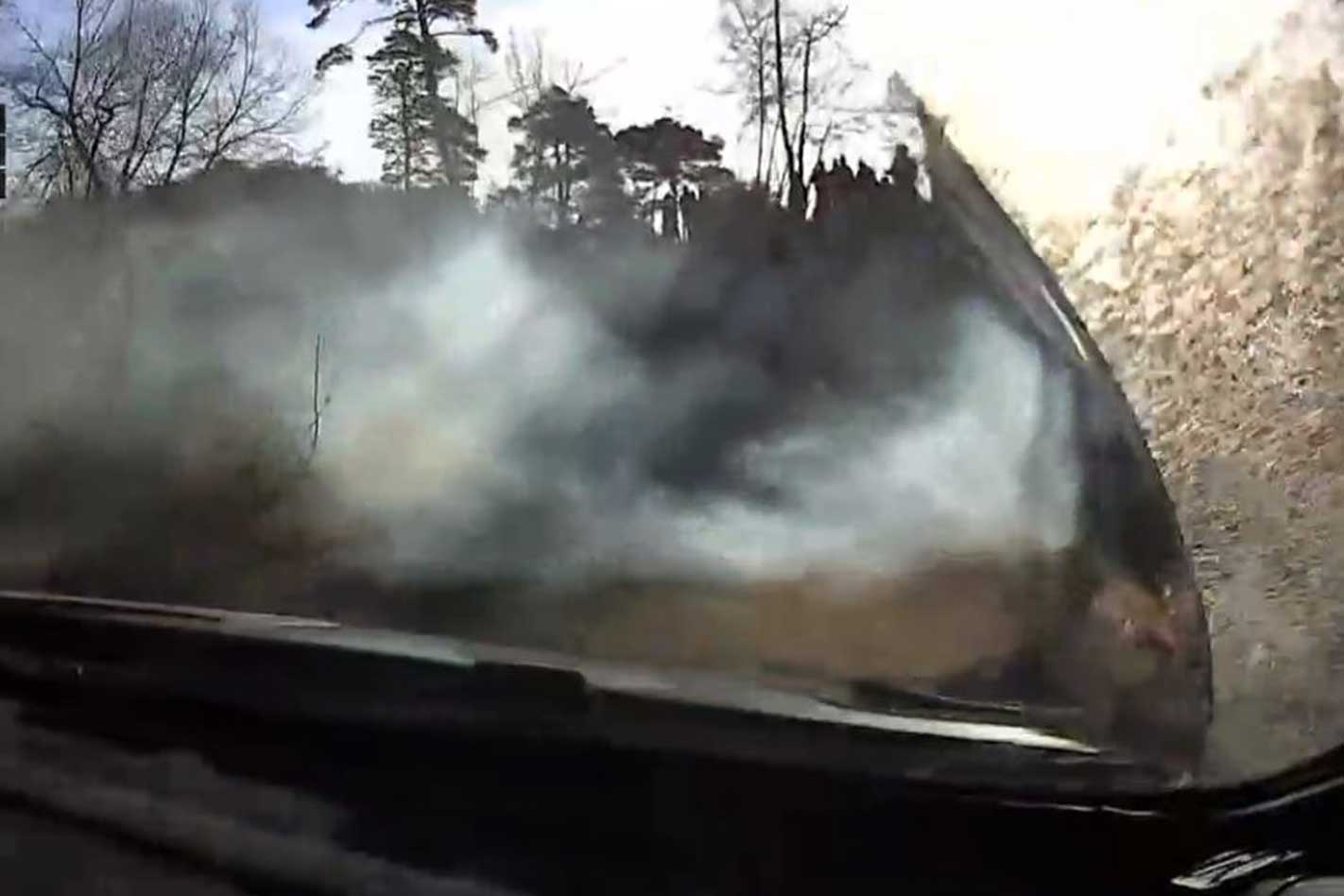
Many new cars have the potential to be lit up like a Christmas tree, with headlights and taillights bolstered by additional illumination in the form of daytime running lights (DRLs), foglamps, driving lights and LED light bars.
Some of these lights can only be used in certain conditions and it’s an offence to use them incorrectly, which in most states can result in a fine and demerit points. Here’s how to make sure you don’t get a nasty surprise.
FOGLAMPS
Front foglamps (or foglights) are mounted below the line of the headlights and emit a narrow beam designed to shine under the mist to illuminate the road surface in hazardous weather conditions such as fog, snow, heavy rain and dust storms. Rear foglights help make a vehicle easier to spot from behind in such conditions.
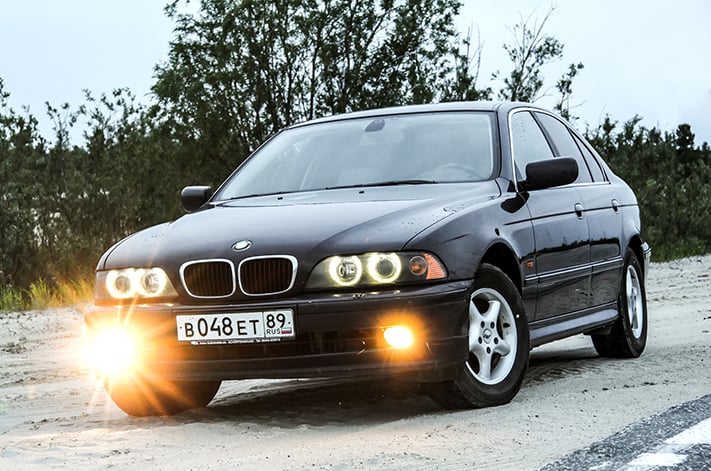
Front and rear foglamps can be very bright and can easily dazzle drivers, especially if they’re not aligned properly, making it illegal to drive with them on in clear conditions. Rear foglights are especially irritating to other drivers when used improperly.
According to Australian Road Rule 217, “drivers must not use front or rear foglamps unless driving in fog or other hazardous weather conditions that cause reduced visibility. They must be switched on separate from the main beam (high beam) and dipped beam (passing) headlights”.

Telling a copper that “they look cool, mate” isn’t an excuse to misuse fog lights, and neither is not realising they were on – all factory-fitted fog lights have a dashboard indicator light.
DRIVING LIGHTS
Driving lights are designed to illuminate the road over a long distance beyond the capability of the headlight beam. They’re mostly used in the country and are useful for spotting animals on the road from further away.
However, they have the potential to temporarily blind other drivers, a fact that seems lost on some jerks, who seem to think freeways are as good a place as any to illuminate the backs of our heads.
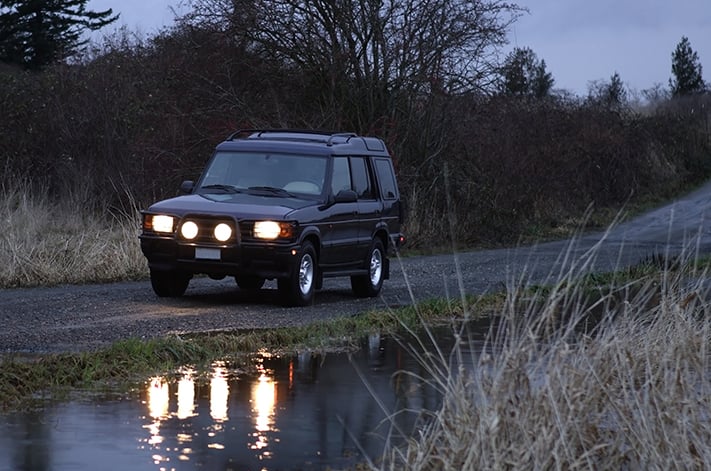
Driving lights are covered under high beam laws by Australian Road Rule 218, which states that, “drivers must not use the high beam headlights when driving less than 200 metres behind a vehicle travelling in the same direction, or less than 200 metres from an oncoming vehicle.”
Driving lights must have a separate switch and can only operate when the headlights are on high-beam.
LED LIGHT BARS
LED light bars (LLBs) are a modern style of driving light often found fitted to the front, or above the cab, of vehicles – particularly off-road 4x4s.
Their operation comes under Rule 218, along with driving lights and high beams. They’re also covered by the same Australian Design Rule (ADR13), which caused a headache for a few state authorities and until recently saw single LLB units deemed illegal in some states.
The problem with ADR13 was its statement that driving lights must be installed in pairs, but it was amended to include single LLBs as long as they:
- Are fitted symmetrically about the longitudinal centreline
- Do not exceed four in total
- Are wired in conjunction with the high beam circuit of the vehicle
- Face towards the front of the vehicle
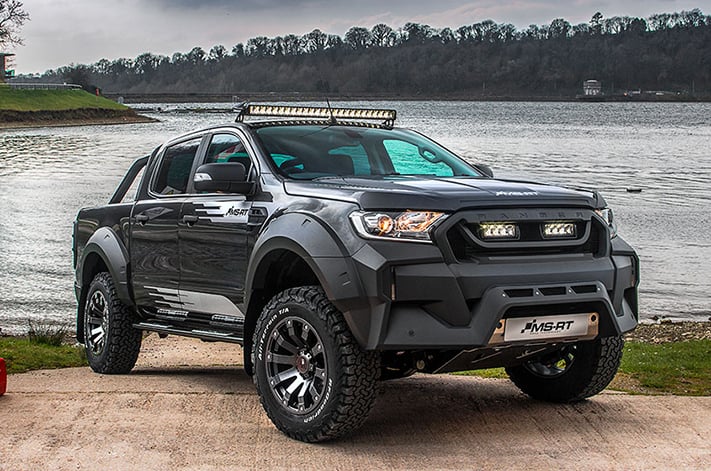
Single LLB units are now legal across Australia, however there are still discrepancies between the states concerning where they can be fitted on a vehicle (the joys of Federation).
According to ADR13:
- the lamp/s must be installed in a way that the light produced does not cause the driver of the vehicle discomfort either directly or by reflection
- The lamps must not obstruct the driver’s view of the road.
- Light bars cannot be mounted on top of the bull bar above the bonnet line.
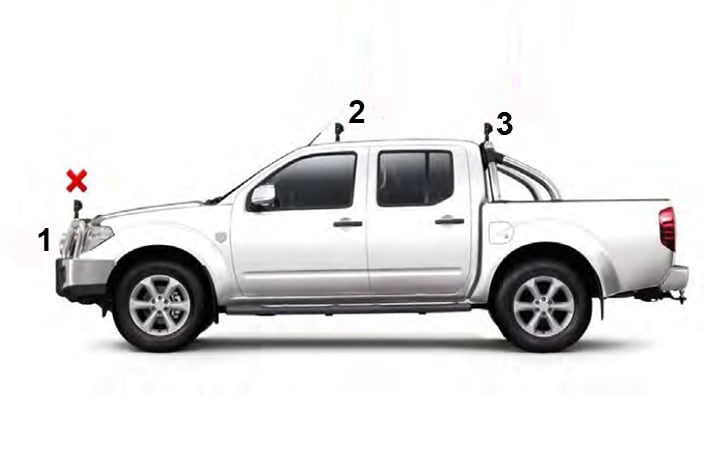
As it currently stands:
- ACT and Tasmania permit position one only
- NSW, NT, SA, Vic, WA permit positions one, two and three
- Queensland permits positions one, two and three if the rollbar is situated at the front half of the vehicle
IT’S hard to believe, considering his fame, that the late Colin McRae won only a single World Rally Championship in his eleven seasons.
That was in 1995 at the wheel of the legendary Subaru Impreza 555 Group A.
But some of McRae’s most memorable driving came from the four seasons (’99-’02) he spent in a Ford Focus.
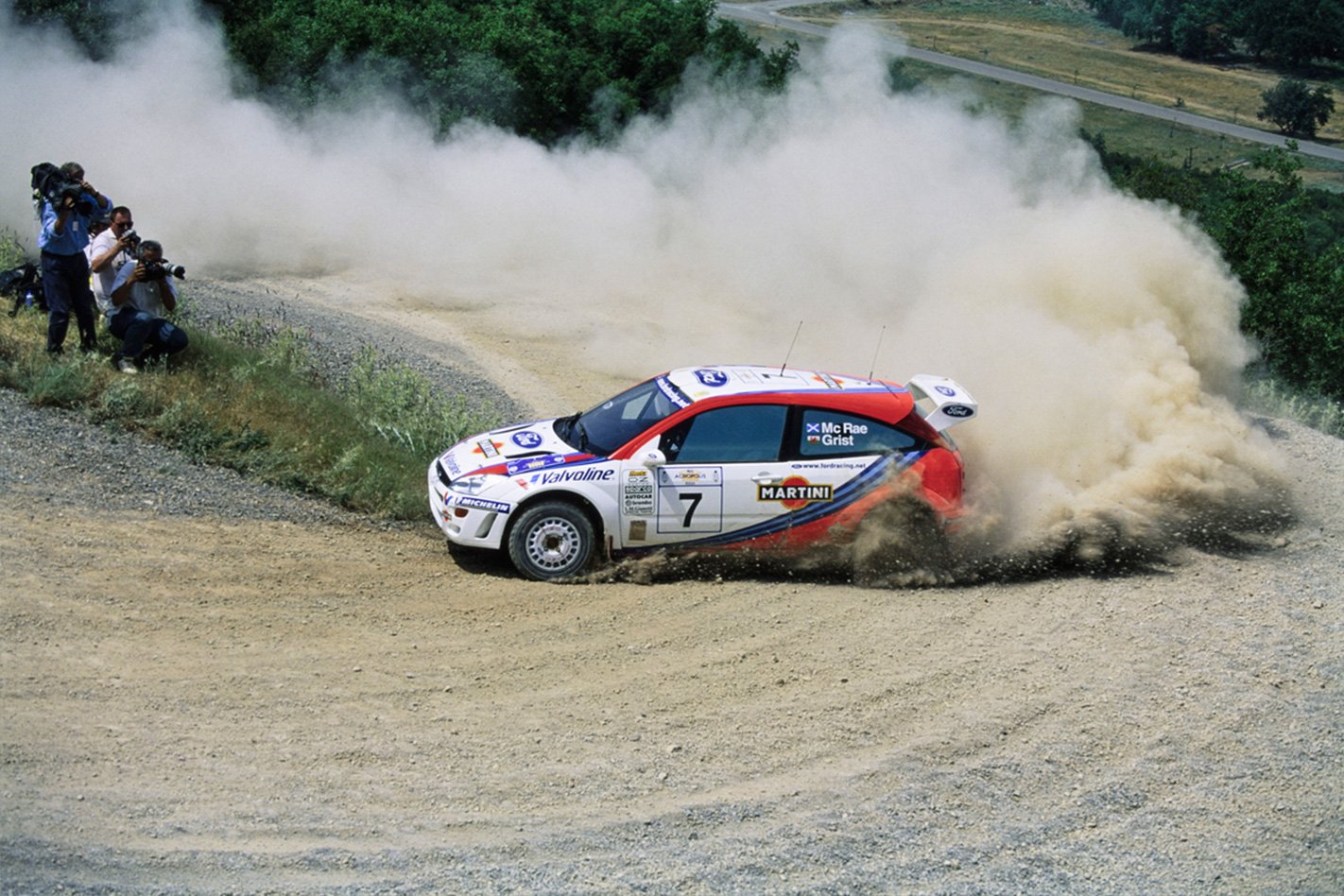
Chassis #68335, as you might expect, had a hard life on the receiving end of McRae’s ‘if in doubt, flat out’ driving style. It achieved its best WRC result at the 1999 Rally Tour De Corse in France where it finished fourth. It was also raced by McRae at Rally Catalunya in Spain, Acropolis Rally of Greece and Rally China, but retired from all three.
McRae’s teammate Thomas Radstrom took to the helm of #68335 at the 1999 WRC rounds in New Zealand and Australia, managing a seventh place finish here in Oz.
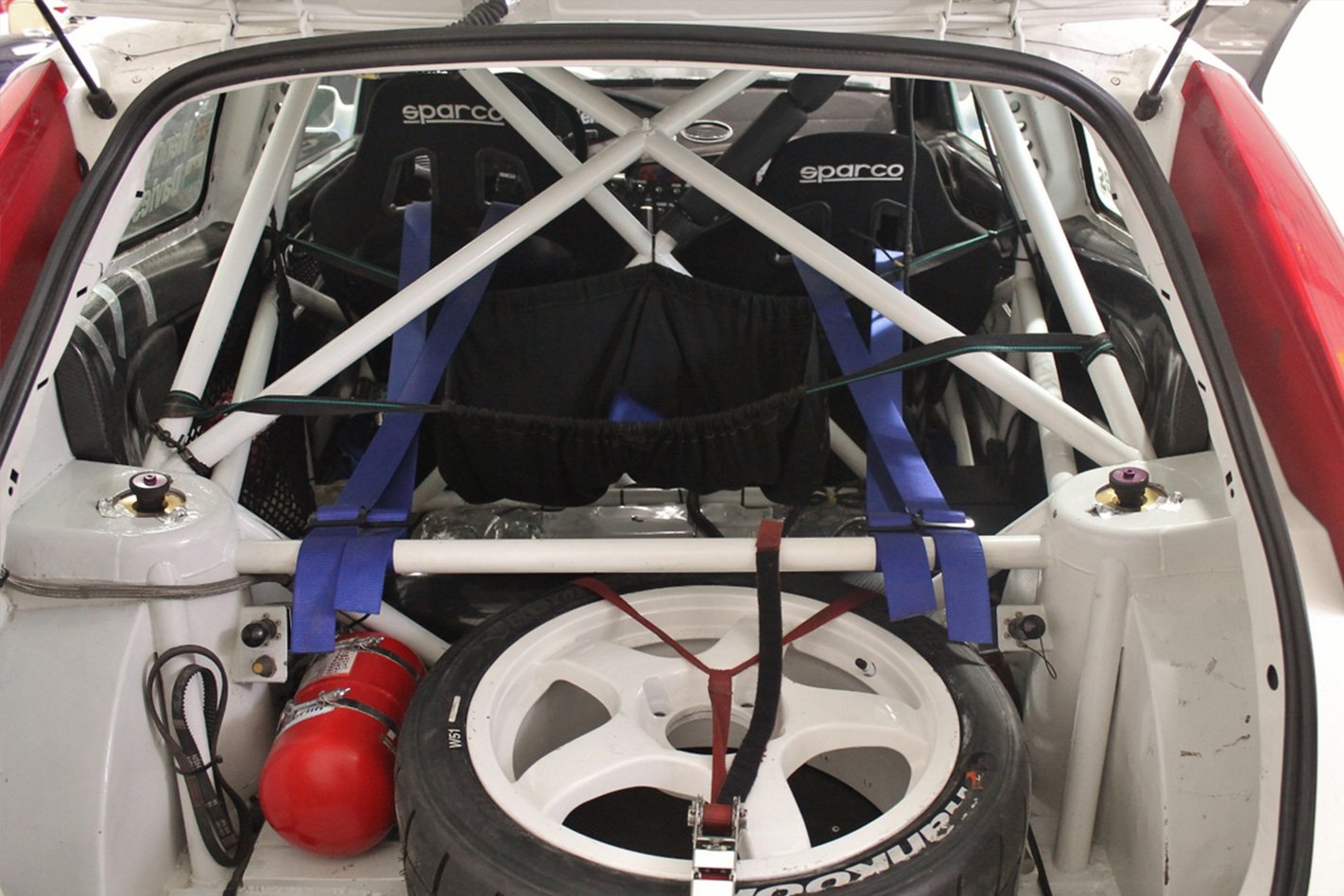
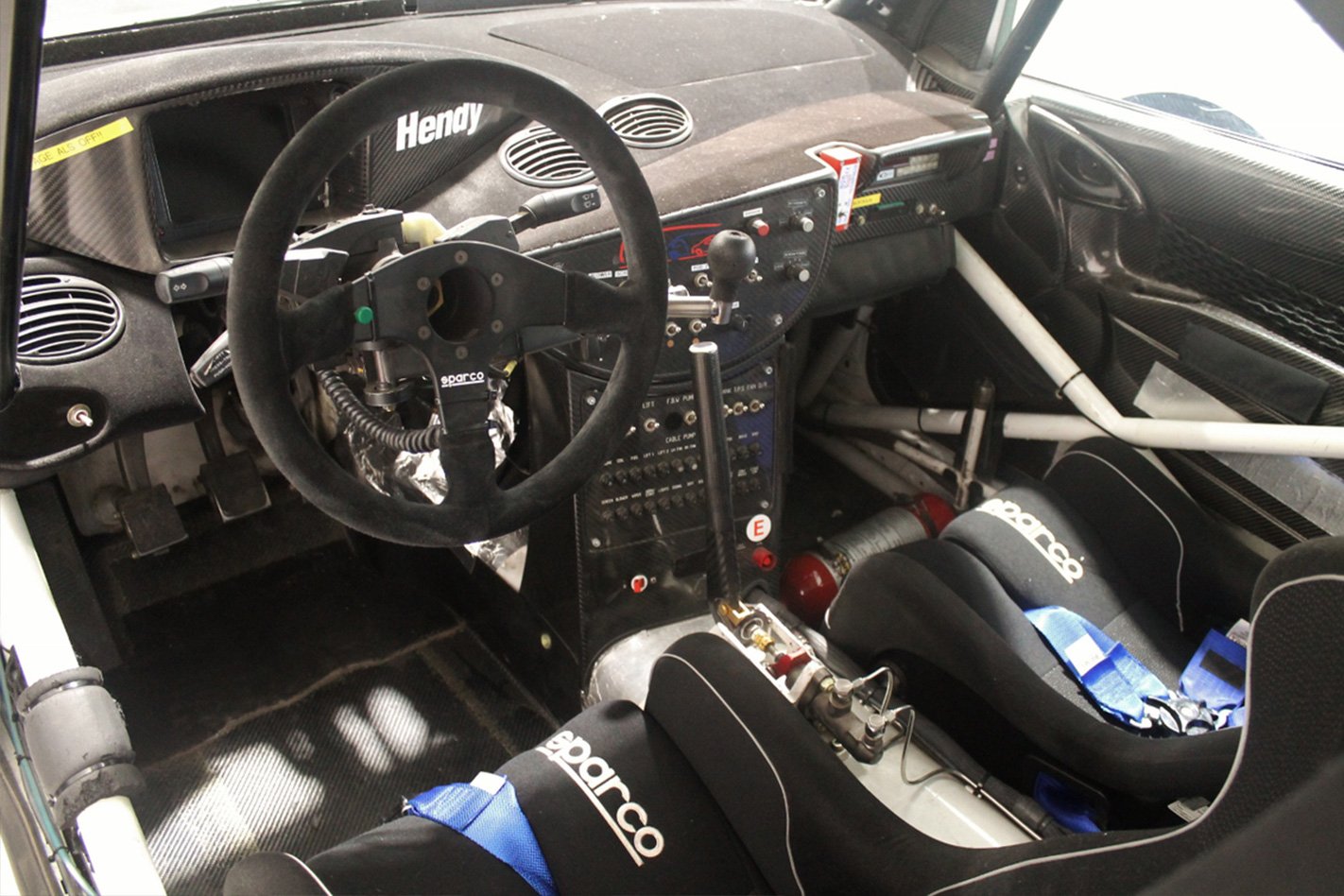
The car itself was built by M-Sport and features a turbocharged 2.0-litre four-cylinder ‘Zetec-E’ twin-cam engine. When it debuted, the C170 platform boasted a 10 percent stiffer body-shell over the Escort RS Cosworth it superseded.
Below is some of the most incredible on-board footage ever recorded that just happens to be of McRae driving his 2001 Ford Focus at mind-bending speeds during Wales Rally GB. Now seems like the perfect time to watch it again.
Then there was the time the Flying Scotsman used his Focus WRC car to teach us how to drive like him in an instruction DVD called Pedal to the Metal.
The car will be sold by Silverstone Auctions at the Race Retro Competition Car Sale in Coventry, UK, on the 23rd February.
The Porsche 911 GT3 is fighting a rearguard action against the onslaught of forced induction, but sadly it’s a fight it’s soon to lose.
According to MOTOR’s European Editor, Georg Kacher, the next-generation 911 GT3 – part of the all-new ‘992’ lineup – will feature a turbocharged flat-six producing around 410kW fed through an eight-speed PDK gearbox.
This is a substantial increase over the 368kW produced by the current 991.2 GT3’s 4.0-litre flat-six and forced induction will increase torque by a far greater percentage. The 550Nm developed by the 911 GTS’s 3.0-litre twin-turbo flat-six is already well in excess of the current GT3’s 460Nm.
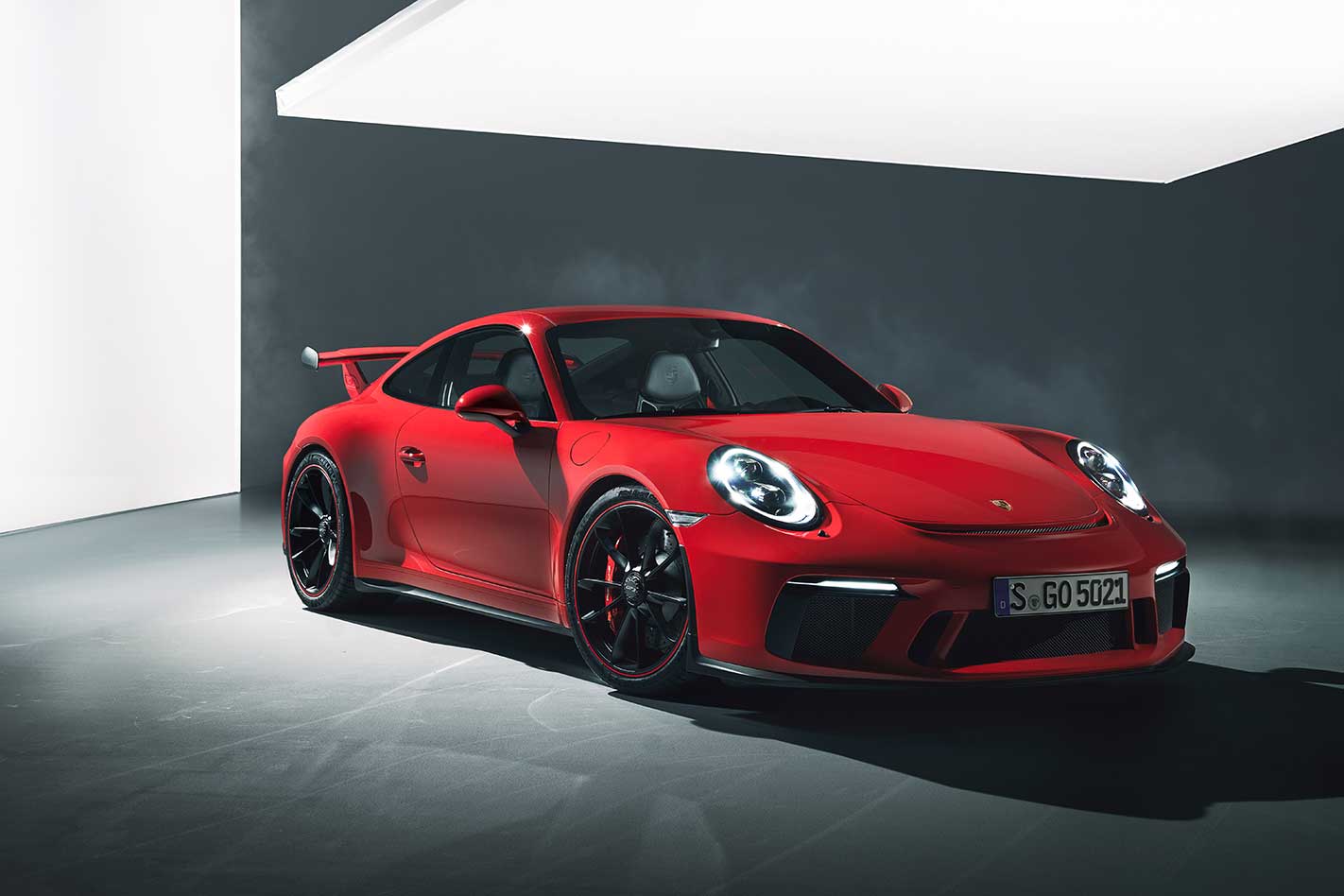
The greater use of high-strength materials in the 992’s MMB modular sports car platform will attempt to offset the increased weight of the forced induction system. Chassis trickery like all-wheel steering will almost certainly return with an even greater emphasis on active aerodynamics.
As well as farewelling the naturally-aspirated engine, at least for series production models, the 992 911 will introduce the first hybrid 911, teaming an electric motor with an uprated version of the current Carrera’s twin-turbo flat-six to boost performance and efficiency.
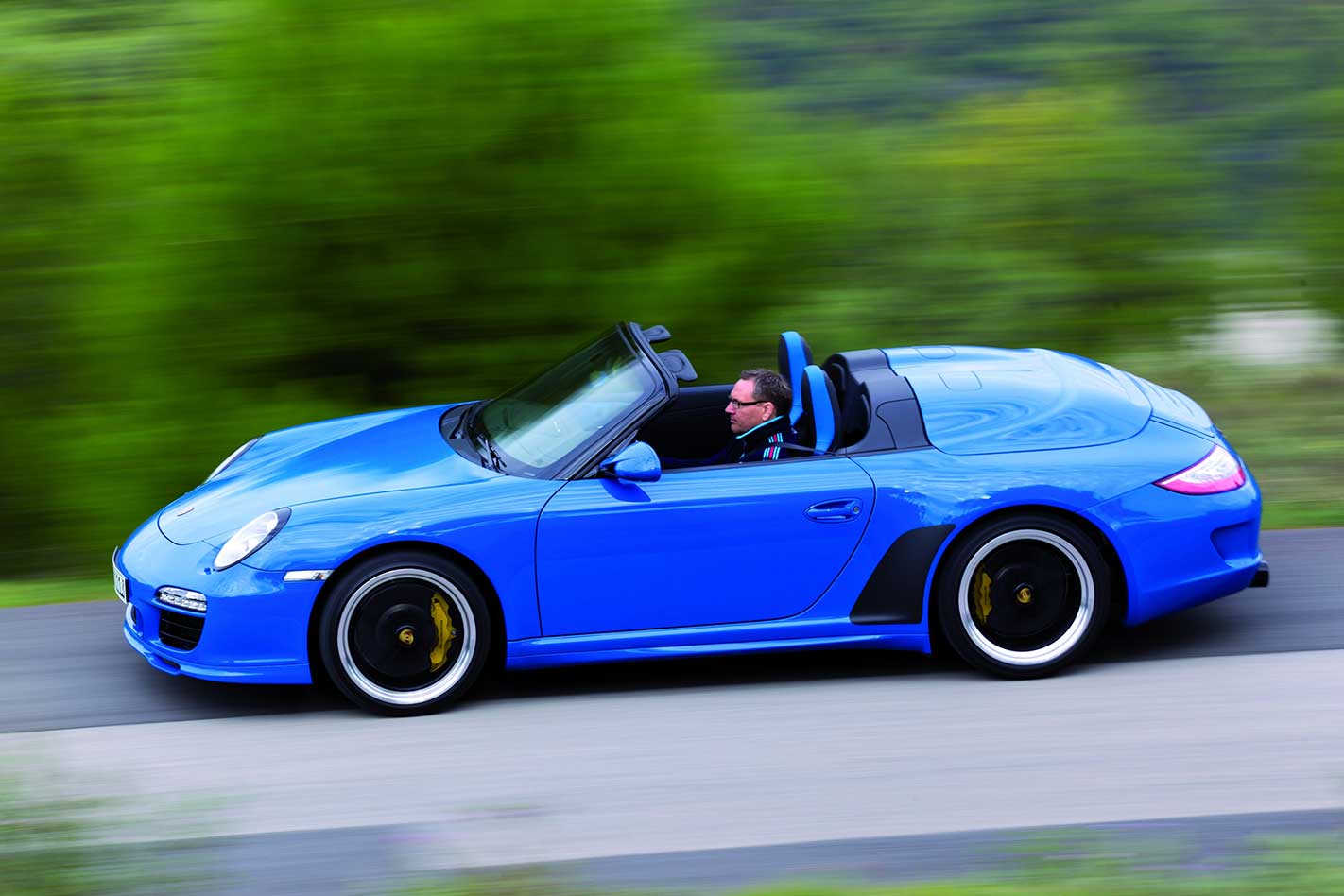
The new 911 is expected to break cover towards the end of 2018, however there are still a number of 991.2 models due before then, including a new GT3 RS and potentially a retro-style Speedster like that introduced at the end of the 997 lifecycle.
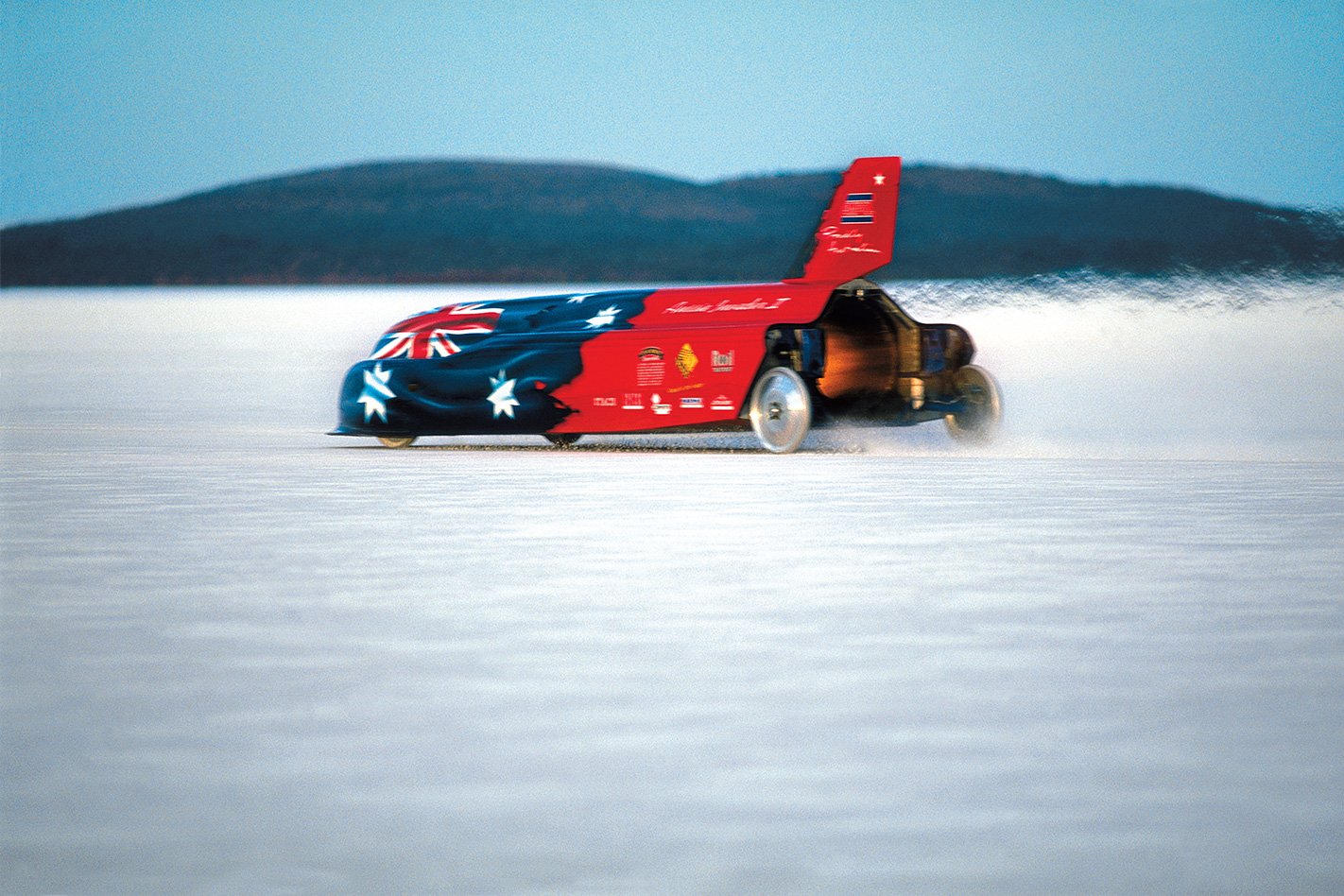
IN 1995 Rosco McGlashan became the fastest Australian in history with his Aussie Invader II land speed record car after clocking 1,013.55 km/h on Lake Gairdner.
At the time it was faster than anyone else on earth had gone on four wheels.
During the return run, seven kilometres of the track had deteriorated due to water, but McGlashan kept the throttle pinned anyway. The end result? A destroyed car, obliterated timing gear, and no record. This is how McGlashan recalls that day.
u201cWe went faster than the world record on our northbound run, and we knew we could go even quicker in the other direction,u201d he recalls to Wheels.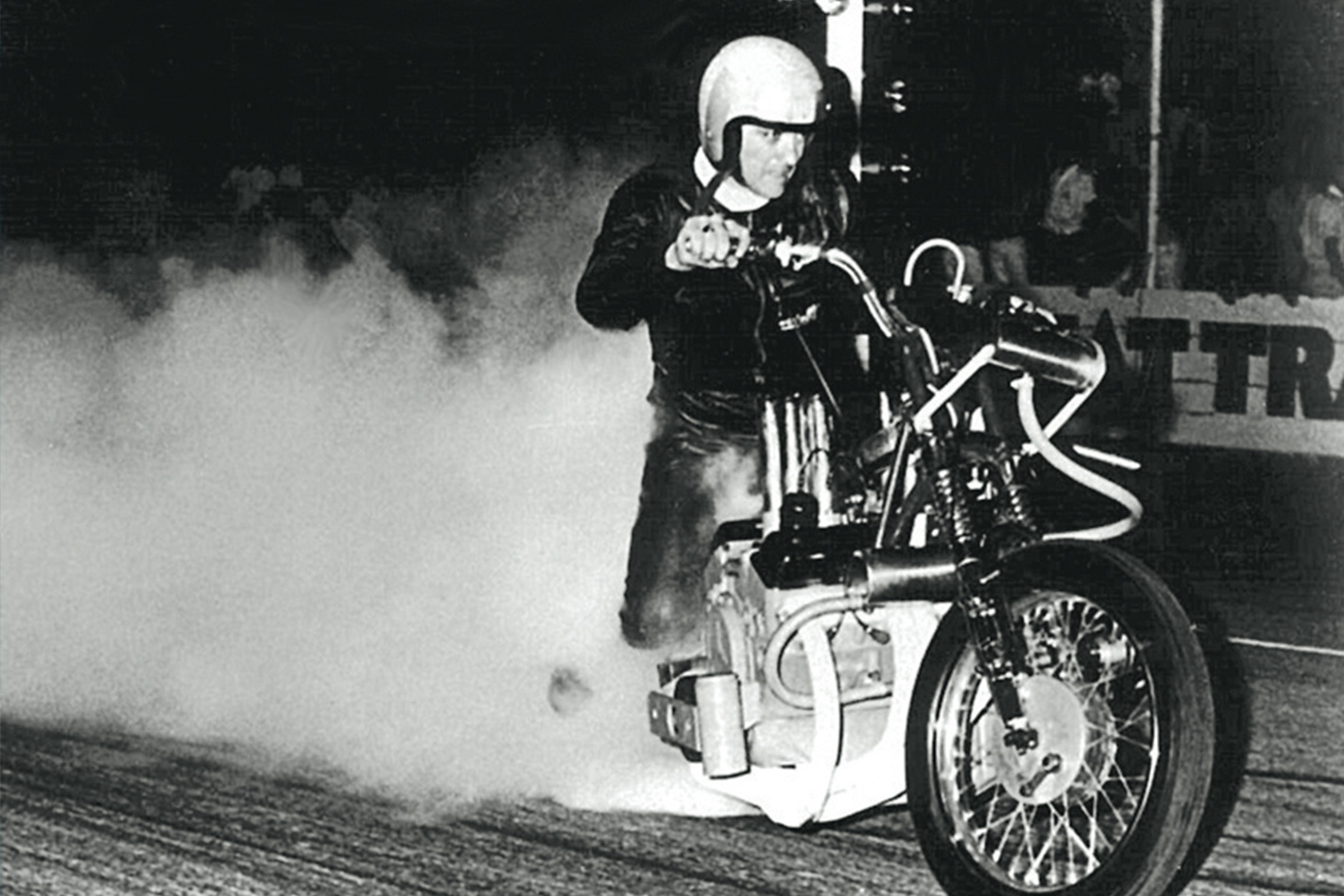
“The wheels work like water jet cutters at those speeds, it just cut the car to bits with the pressure coming off the wheels.
“But doing 1000km/h, you have no context for the sheer speed you are travelling at. You are sitting on the salt, with a marker barrel every kilometre down the course, and a black line you are trying to follow because you wouldn’t know where you were without a black line on the salt.
“You put that line where you want to have it in comparison to where you want the car to be running, get start clearance, fire the car up, and what I do is pull away by about 10 metres, then put the full jet engine burner on like a drag racing car and hit it hard.
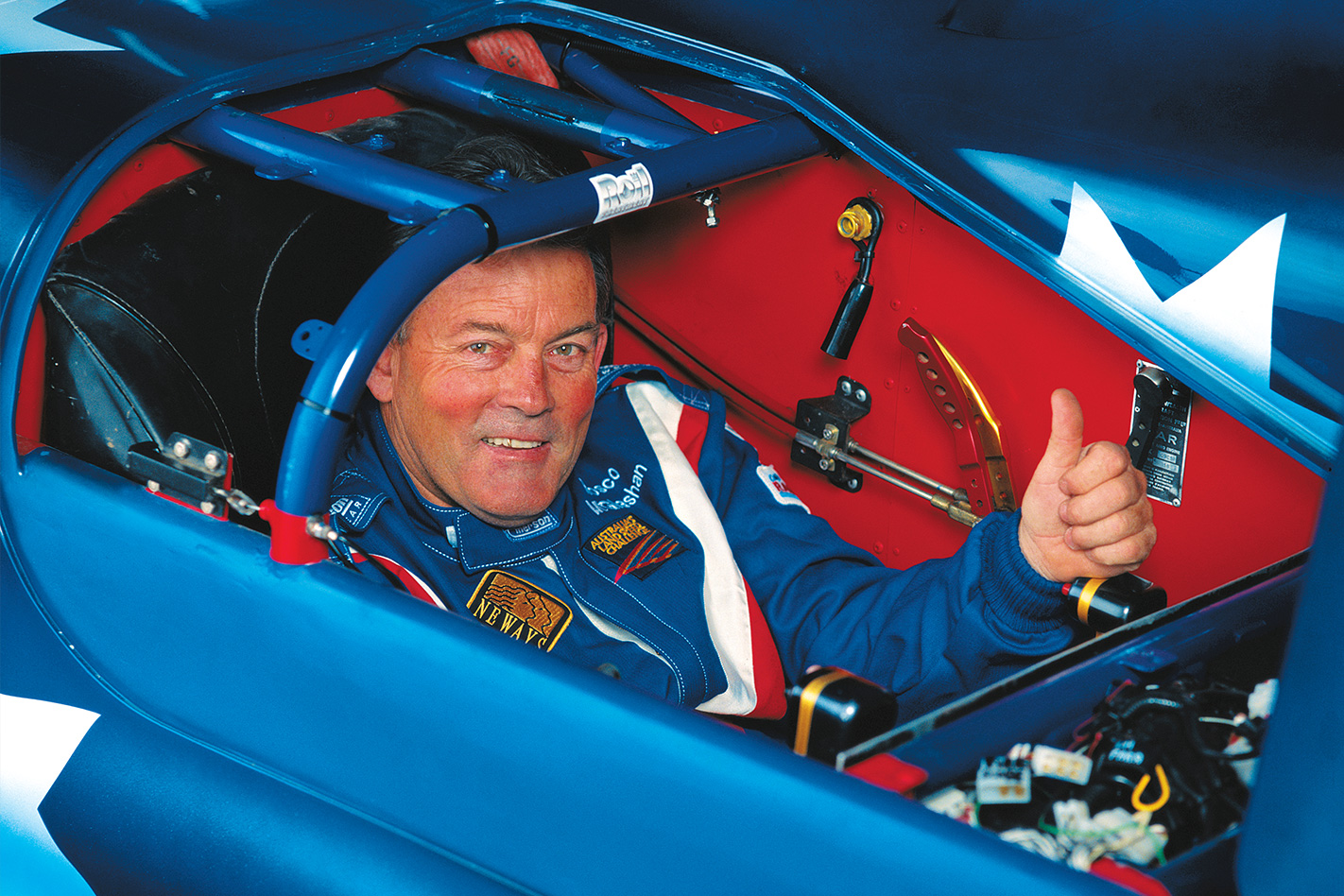
“The biggest sensation of it all is driving a car over the curvature of the earth. If you haven’t been on a salt lake, the hardest thing to describe is you are standing on the salt and looking at the horizon over the curvature of the earth. If someone is three kilometres away, you couldn’t see them.
“When you are going that quick it feels like you are looking over a hill. You really know you are moving fast. In Aussie Invader II we pulled 4G, and I lifted my bum out of the seat. I would get out of the car and my neck would be killing me, I thought ‘Geez, I have been drag racing all my life and it’s not the G, I don’t know what is going wrong’.
“If you had to go that fast on a race track you’d shit yourself with all the trees and what not whizzing past.”
McGlashan remains adamant to this day that he would have broken the world record on his return run if he hadn’t gone off course, obliterating timing gear which was placed 180-metres from his intended path waiting to measure his speed.
