New year, new me – it is one of life’s greatest cliches. But wouldn’t you prefer the sound of new year, new Ferrari? Or perhaps new year, new Lamborghini?
Okay so definitely not brand new, but a new addition to your garage. Yes, buying any old Italian supercar is fraught with danger, and by the end of 2018 you might very well end up with beyond 12 pages of servicing requirements. But with all this in mind, here is our guide to buying such an exotic if you want to – as the kids would say – treat yo’ self.
Ferrari
The cheapest way to display a Prancing Horse key on the table of your local café is to buy an early-1980s Mondial priced from $60,000-plus. There is a good reason, however, that this Fazz is almost half the price of the next most affordable Maranello model, and that’s because it wasn’t good. A mid-rear 3.0-litre V8 engine produced just 157kW/243Nm, although the standard dog-leg five-speed manual was at least better than a three-cog auto.
Into the 1990s – well after Honda came out of nowhere with the NSX – and successive models started to get better and better. On the used market, however, prices have levelled between a 348 in the early-to-mid part of the decade, to the F355 in the latter part, with both models now in mid-six-figure territory. The question now is, rare F355 or popular 360?
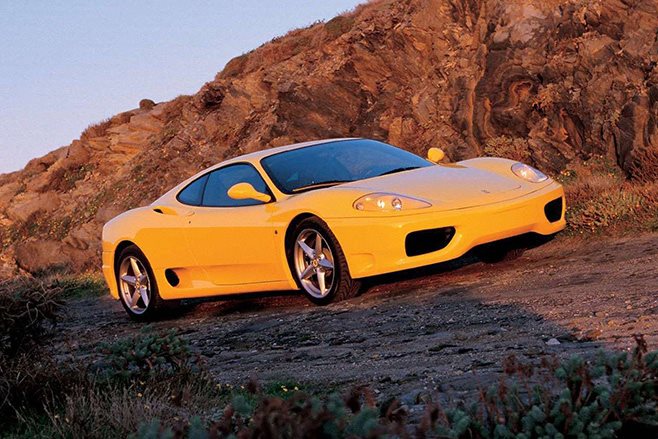
Consider that a next-generation 2005-model year F430 starts from $220,000 and beyond in six-speed single-clutch auto guise, and a 360 especially appears like good value.
Lamborghini… and Audi
You can’t just pluck a 1980s Lambo on the cheap. Looking at the Countach from late that decade? That’ll be $500,000-plus, thanks. Diablo? Half that, if you’re lucky.
So we instead have to start not with a Lambo but rather with the Audi R8, Ingolstadt’s coupe that landed in 2007 as the ‘everyman supercar’ priced from $260,000 plus on-roads.
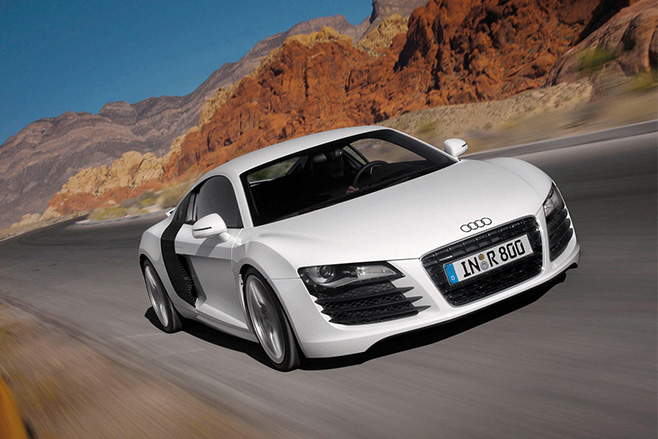
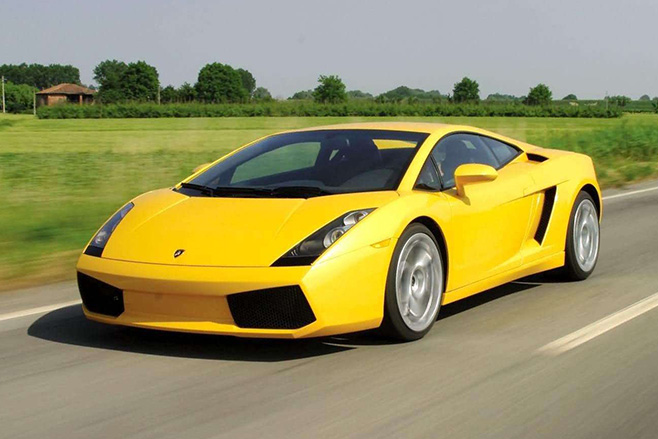
And the reason we bring this up now is because the most affordable Audi supercar on the market costs $120,000-plus with 60,000km on the clock, losing barely half its value in a decade. And the most affordable Lambo equivalent built in the same year? A 2008 Gallardo will set you back $200,000 with 40,000km showing, but the cheapest 2006 model we could find costs $160,000 with the same kilometre count.
The Australian Medical Associated has called for aggressive penalties to help compel L-plate and P-plate drivers from using their phones while driving.
The proposal, which would see penalties ranging up to 12-month driving ban – was announced just after New South Wales introduced a new law that prohibits probationary drivers from touching their smartphones at all while driving. The AMA’s proposal, delivered as part of its “Position on Road Safety 2018” report, wants to see a similar zero-tolerance policy applied nationally.
“The AMA is particularly concerned about the use of mobile telephones and electronic devices, including navigational devices, in cars,” said AMA president Dr Michael Gannon.
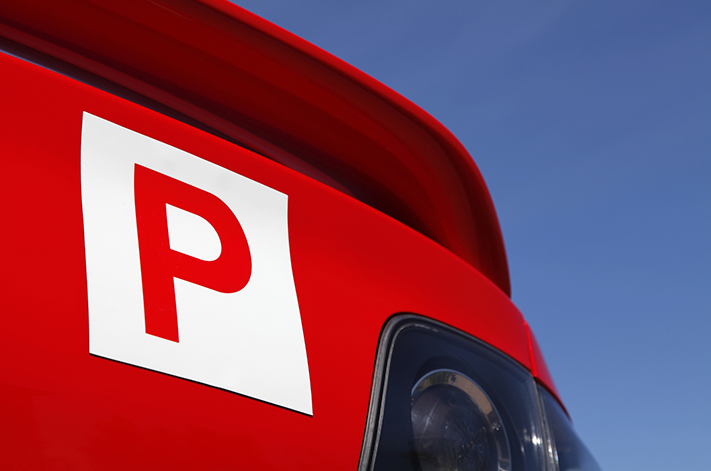
“Mobile phones and other devices are driver distractions, and a major cause of accidents, trauma, and death. The AMA supports measures that change driver behaviour. We want to change the culture and mentality about using mobile devices in cars.”
But is singling out young drivers the right approach, given mobile phone usage while driving is not strictly limited to that demographic? The AMA says its strategy isn’t about penalising Australia’s youth, but about instilling good driving habits from the get-go.
“Good habits must be ingrained in new, inexperienced drivers,” Gannon explained.
“There should be zero tolerance of provisional and learner drivers who use mobile phones or electronic devices, and penalties should include the loss of licence for up to a year.”
But it wasn’t just Australia’s young drivers that came under the AMA’s road safety microscope. The group made a call for a national standard for assessing the driving aptitude of older drivers, saying differing standards between the states and territories was potentially putting the public at risk by allowing drivers who were no longer medically fit to get behind the wheel.
The Association also levelled its sights on pedestrians and cyclists using headphones or earpieces, calling it a “serious safety risk” and identifying it as a factor in motor vehicle accidents.
IT’S easy to think of the Alpina B3 Biturbo Touring as the M3 wagon that BMW never made. Easy, but wrong. The 301kW load lugger instead offers a softer-edged take on going quickly, with the reassuring exclusivity that comes with every Alpina product. You’ll pay for the privilege though…
WHAT IS IT? Alpina has been fettling BMW products for more than half a century, and it’s reasonable to expect the company has become pretty competent at bringing its own look and feel to Munich’s wares. The B3 Biturbo Touring is the fast BMW wagon you’d probably build on a fantasy configurator, brought to life in Buchloe.
WHY WE’RE TESTING IT Having recently spent some seat time in Audi’s RS4 Avant and Mercedes-AMG’s C63 wagon, we were curious to see whether Alpina could bring something new and worthwhile to this fearsomely competitive sector.
MAIN RIVALS Audi RS4 Avant, Mercedes-AMG C63 S Estate, Porsche Macan Turbo
THE WHEELS VERDICT There’s something delightfully old-school about the Alpina B3 Biturbo Touring. Compared with its key rivals, it feels a bit of a throwback, but in a good way. It feels friendly, analogue and predictable and although it’s tough to make a case for at this price, in this market, it’s not impossible. A trickle of takers is all that Alpina needs to tick over output while retaining exclusivity.
PLUS: Prodigious torque; composure; discretion; comfort; practicality MINUS: Silly gear shift buttons; occasionally snatchy transmission calibration; creaky interior; price
THE WHEELS REVIEW EASY power. It’s a term we hear a lot of in sport. George Foreman had it in his prime. Tennis star Nick Kyrgios has it in spades, as does AFL’s Dustin Martin and cricketer Chris Gayle. It’s that effortless ability to land a hammer blow without appearing to break sweat and the Alpina B3 Biturbo Touring majors on it. Yes, you can buy wagons that are quicker, but I can’t think of one that makes going quickly so easy. Is that a good thing? That depends on your point of view and the overall appeal of the Alpina certainly depends on a certain left-field standpoint.
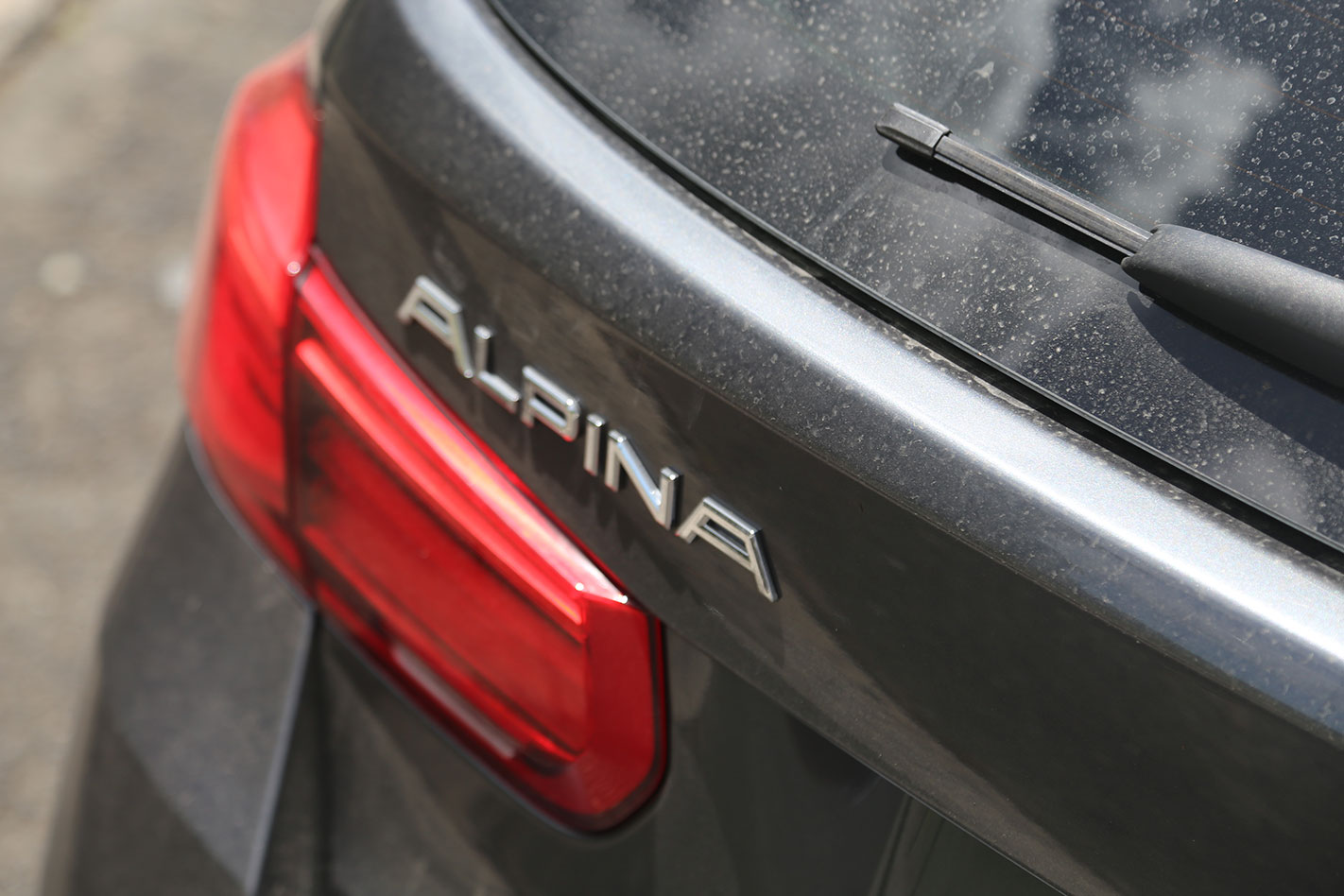
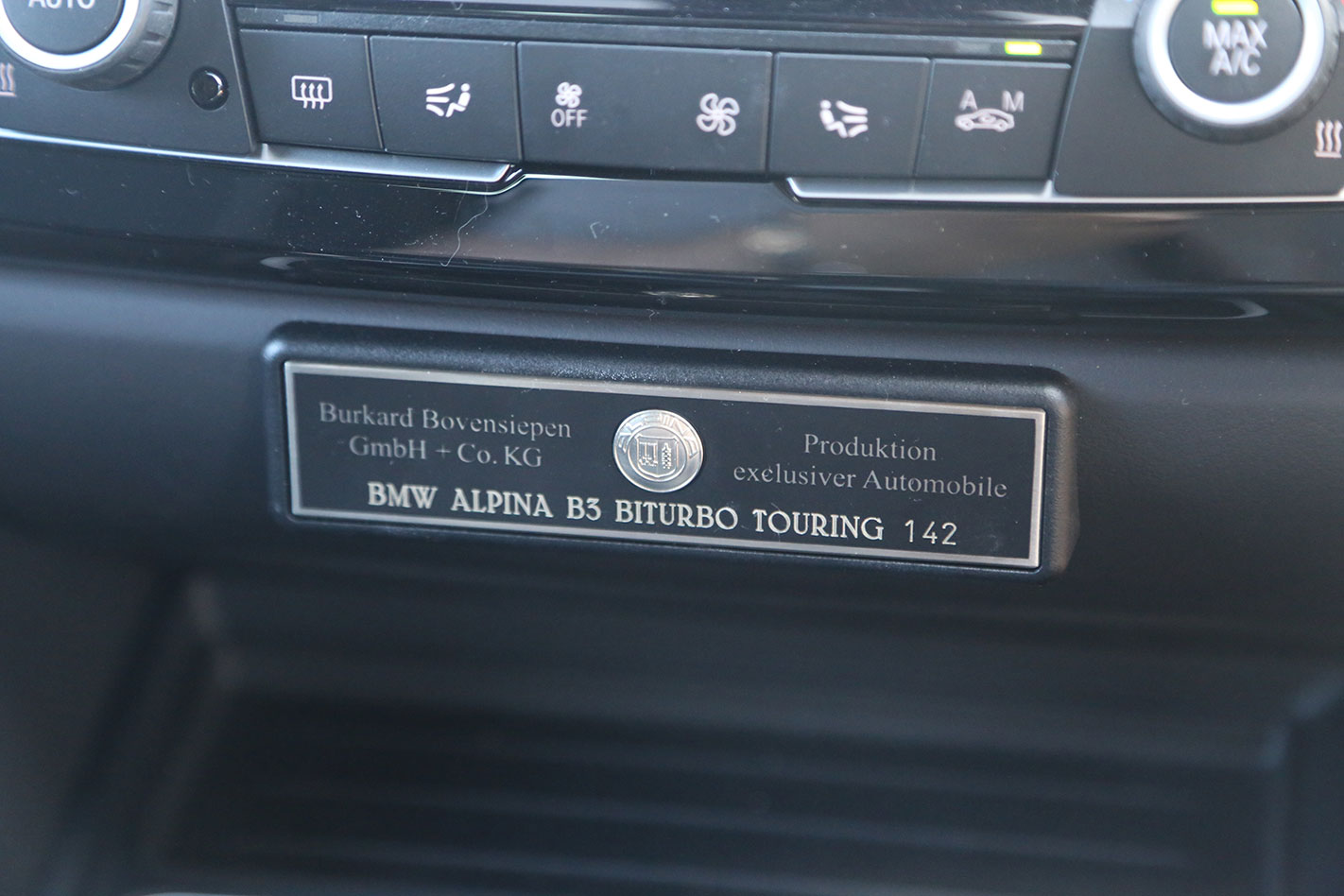
At first, it’s easy to be cynical. The Alpina dress-up kit with stripes, badging and distinctive alloy wheels looks great or gauche (again, standpoint is key), and the interior is all buttery thick leather, build plaques and factory crests of carbs and cranks. The engine is the N55 engine from the 335i, modified with a pair of turbos rather than the single twin-scroll unit it’s usually supplied with. It also gets a specially cast crankcase design that Alpina ships to Munich for installation on the line before the car arrives at Buchloe for final fettling. It’s an open-deck design rather than the closed-deck architecture of BMW’s successor engine, the B58 that’s found in the 340i, so in many ways it’s a bit of a pick’n’mix. A melange it might be, but when teamed with a custom-calibrated ZF eight-speed auto it’s a heck of a combination.
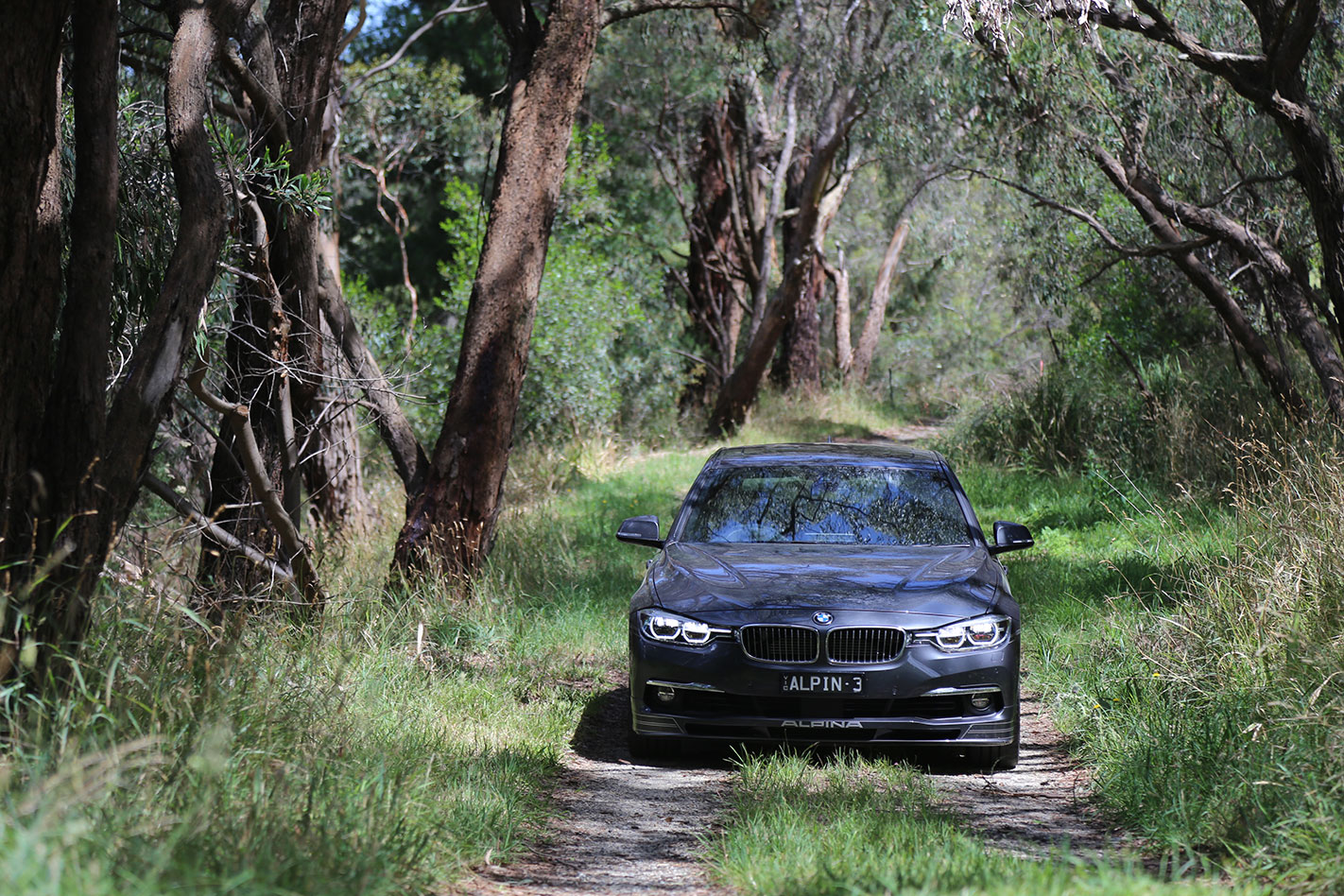
The Akrapovic exhaust adds a few pops and bangs on the overrun in the Sport modes to amp up the aural excitement, and from 5000rpm towards the redline there’s a yowling intensity, with the rear always feeling just on the edge of needing some electronics to rein in the 600Nm in the lower gears. Yep, that’s 50Nm more than an M3 or M4 Competition, so you need to really think twice before doing the long press on the stability control button. Get the B3 sliding and you need to be on your game. The chassis is relatively benign and the steering excellent, but plugging into that Goldilocks zone where there’s just enough torque before the big turbo really gets excited requires a sensitive right clog. On a flowing road, keeping the engine around 4000rpm gives the Alpina a sinewy feel, leaping from apex to braking zone with an addictively elastic muscularity.
The transmission is a sweeter thing at most speeds than the M3’s twin-clutcher, although it does occasionally have the propensity to kick down a bit too sharply when you’re just ambling. The shift buttons on the back of the wheel spokes are a flat-out bad idea. If you’re really jinking through tight corners, you can often find the car running to its redline while you’re fumbling for the dollar-coin sized bumps. Sorry, Alpina, but a set of paddles is just a better execution for shifting on the fly.
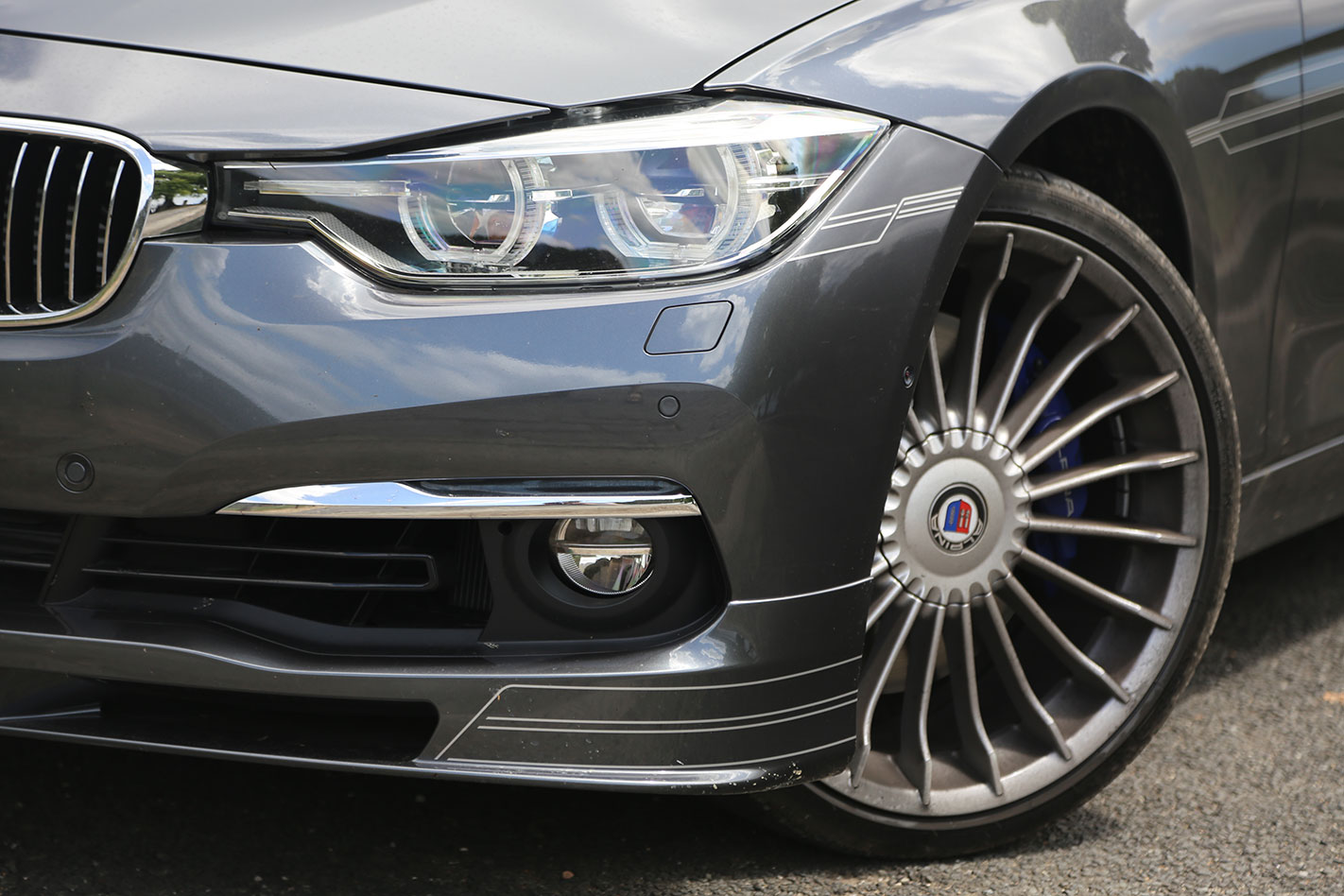
There are clearly more conspicuous claims on your $167K than the Alpina B3 Biturbo Touring. It’s an easy car to overlook based purely on numbers, but to do so ignores a blend of talents that Buchloe has spent half a century honing. It’s a lovely thing to drive either quickly or slowly, with Alpina’s nuanced understanding of balanced dynamics giving it the sort of polish that feels anything but the ‘tuner car’ that the uninformed will pigeonhole it as. If anything, the B3 feels a more cohesive proposition than any current 3 Series and one that richly rewards the keen driver.
SPECS Model: Alpina B3 Biturbo Touring Engine: 2979cc in-line six, dohc, 24v, twin turbo Max power: 301kW @ 5500-6250rpm Max torque: 600Nm @ 3000-4000rpm Transmission: 8-speed automatic Weight: 1780kg 0-100km/h: 4.4sec (claimed) Fuel economy: 7.7L/100km Price: $167,727 On sale: Now
GOING, GOING…
As it stands, there are only two Alpina B3 cars left for sale in Australia but that’s actually no great cause for regret. Winging in at the same $167,727 price point is the new Alpina B3 S, packing 323kW and 660Nm. Based on the updated ‘LCI’ version of the latest 3 Series, the B3S cars get new turbochargers, a revised cooling system, fettled suspension and remapped transmission software.
RARE METAL
Mercedes sells more than 4000 AMG models per year in Australia. Alpina? “We’re supply limited,” explains Sales Manager Phil Jeffery. “BMW only allocates Alpina between 1500 and 2000 build slots per year. That’s globally across B3, B4, B5, B6 and B7 lines. If we considered ourselves to be 1 percent of that we’d be extremely fortunate. In real terms, double figures would be good, here in Australia. Twenty sales would be excellent.”
FAST FIVE
If the B3S still seems a bit too pedestrian for your tastes, the next-gen Alpina B5 is due to launch in February/March. Arriving at much the same time as the new M5, the B5 is the product of BMW and Alpina working hand-in-hand with the new G30 Five Series platform. With all-wheel drive, 447kW/800Nm, and 0-100km/h time of 3.5 seconds, the B5 Biturbo Touring will also run on to a top speed of 330km/h, making it the world’s fastest wagon.
Car sales figures don’t always tell the whole story about a car’s popularity as they’re often skewed by commercial and fleet sales which tend to favour certain models. They also don’t tell us what cars people intend to buy, which makes the 2.5 million views of WhichCar reviews an interesting barometer of car preferences. If our top 10 range reviews for 2017 are anything to go buy, the rise of the SUV is complete, with not one passenger or sports car making the list.
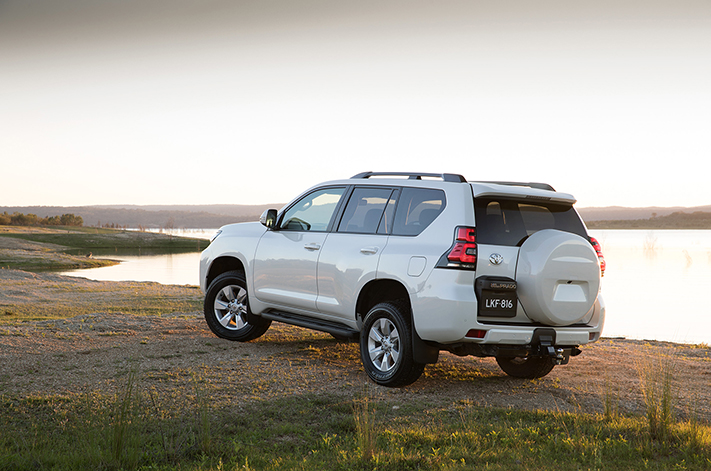
1. Toyota LandCruiser Prado
The Range Review for Toyota’s big go anywhere SUV attracted big numbers all year even before the long-awaited facelifted model arrived in November 2017. Not surprisingly, the Prado was the biggest selling large SUV in 2017, with 15,982 sold.
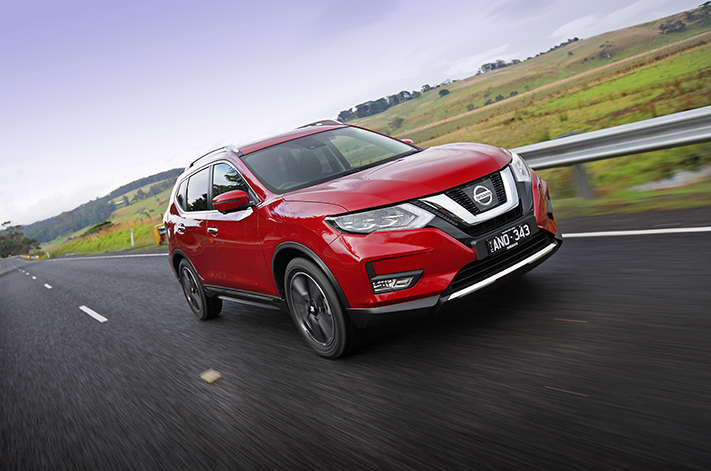
2. Nissan X-Trail
Nissan’s handy medium SUV also received a facelift in 2017 which led to plenty of interest on WhichCar. Nissan’s biggest seller in Australia and the fourth most popular mid-sized SUV, the X-Trail finished 2017 with 18,955 sales.
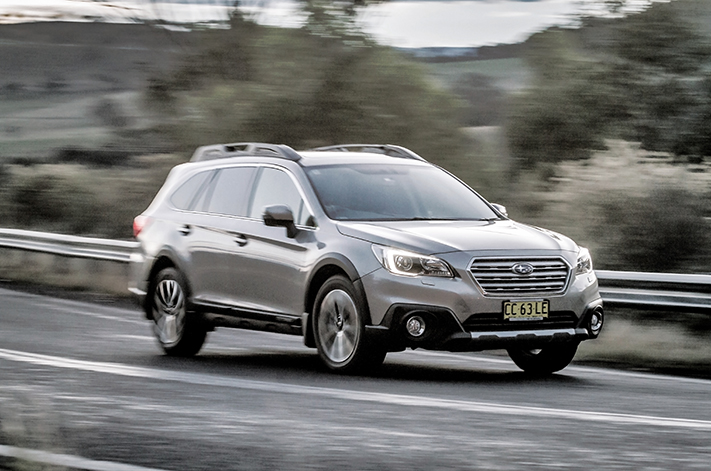
3. Subaru Outback
The Outback was the closest thing to a normal car in the list, with the high-riding wagon’s range review attracting plenty of attention despite no updates for the 2017 model year. The Outback is classified as a large SUV though and was the third-biggest seller in that category last year after the Prado and Toyota Kluger.
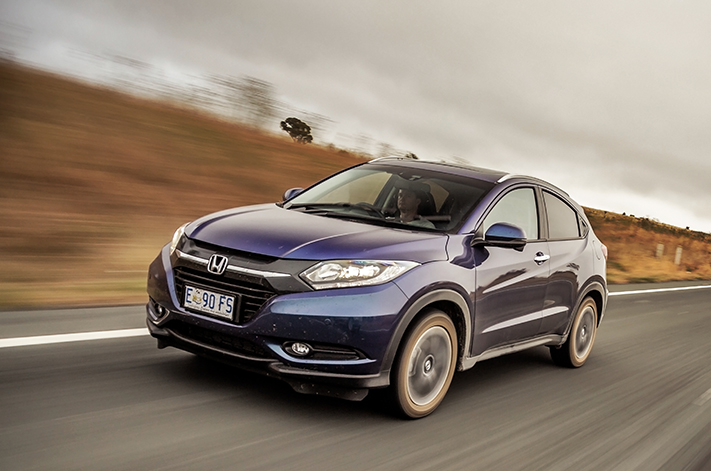
4. Honda HR-V
The HR-V is Honda’s second most popular model after the Civic and the fourth most popular small SUV in 2017, with 11,843 delivered to customers. Despite minor updates for the 2017 model year it was a consistent performer when it came to our top reviews.
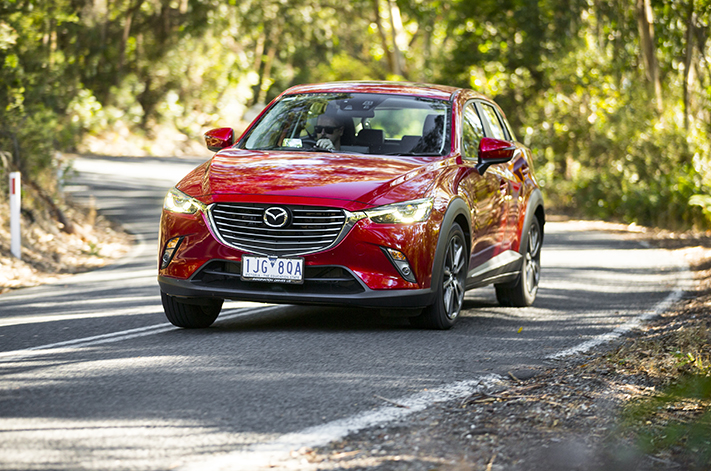
5. Mazda CX-3
An upgrade earlier in the year, big sales and the popularity of small SUV was always going to mean plenty of interest in our CX-3 range review. The CX-3 was a big contributor to Mazda’s success in 2017. It was the Japanese carmaker’s third biggest seller after the Mazda3 and CX-5 and the second-most popular small-SUV after the Mitsubishi ASX.
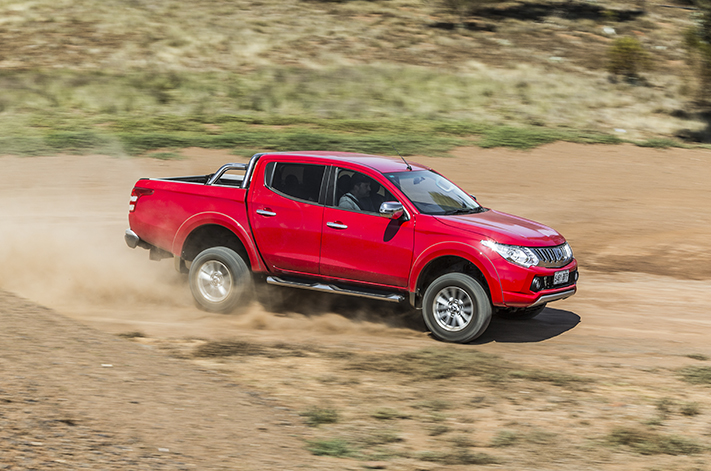
6. Mitsubishi Triton
If you confine ute sales to dual cabs, the Mitsubishi Triton is right up there with the Toyota Hilux and Ford Ranger – which is reflected by the popularity of its range review.
Mitsubishi Triton Range Review
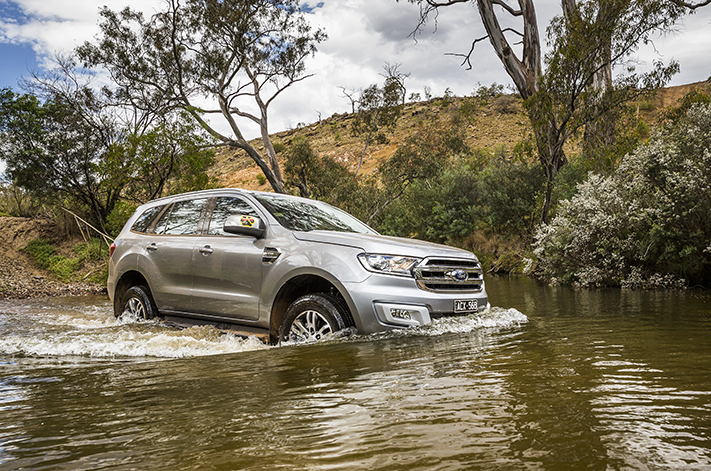
7. Ford Everest
The wagon version of Ford Ranger attracted plenty of interest in WhichCar despite moderate sales last year that saw it just squeeze into top-10 large SUV sales with 4607 sales. The addition of a two-wheel-drive version in May 2017 probably added to the interest on WhichCar.
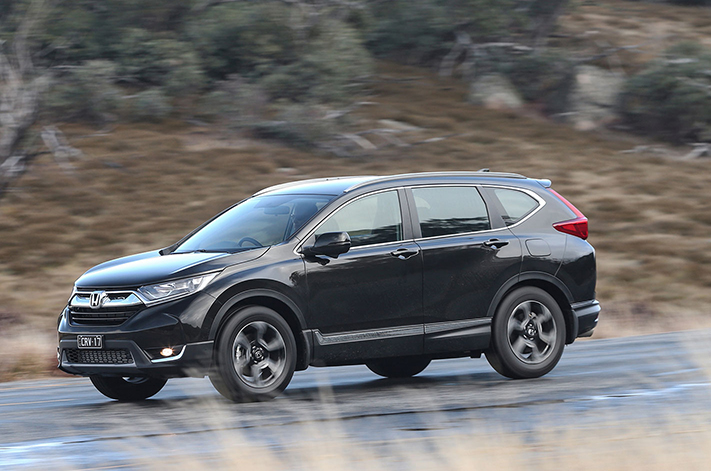
8. Honda CR-V
Honda’s roomy SUV attracted plenty of interest after the all-new model arrived in July 2017, despite the fact the CR-V finished the year ninth on the medium SUV list behind the likes of the Mazda CX-5, Hyundai Tucson and Toyota RAV4, with 9502 sales.
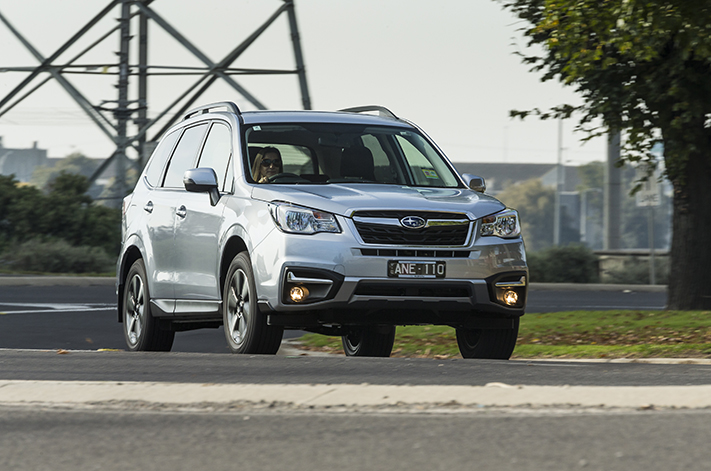
9. Subaru Forester
Like the Outback there was continuous interest in Subaru’s biggest seller in Australia, despite only a minor upgrade last year that added the EyeSight driver assist system to more models in the range. Subaru sold 12,474 Foresters last year, with an all-new model due this year.
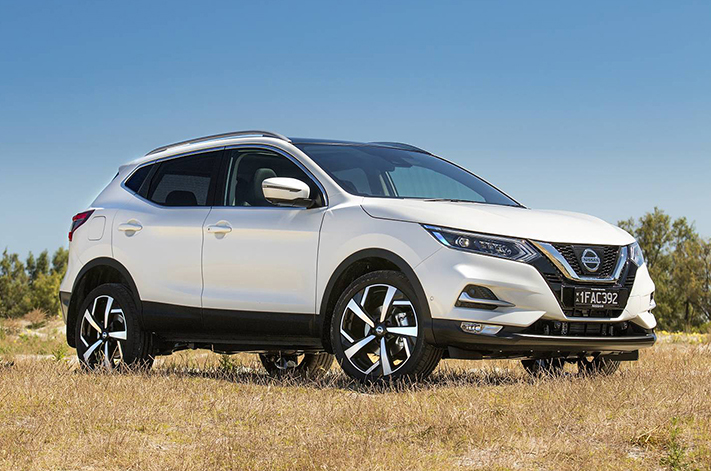
10. Nissan Qashqai
The Qashqai snuck into the top-10 WhichCar range reviews on the back of the updated model which arrived in the latter part of 2017. Nissan’s small-SUV has a good year, pipping the Honda HR-V to third place in the competitive small-SUV segment, with 13,495 sales.
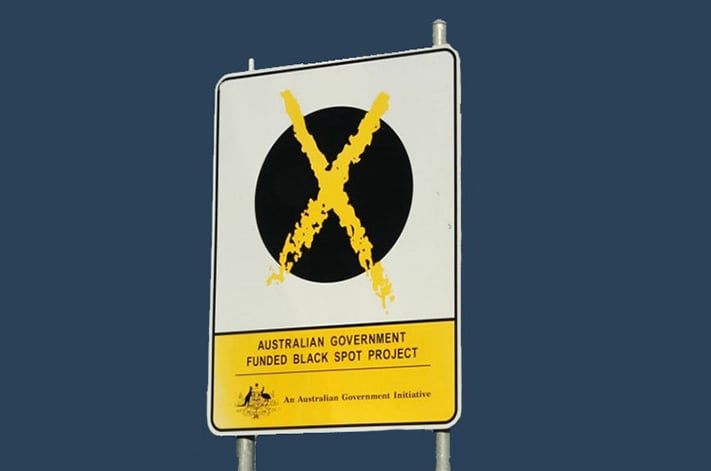
A ROAD safety expert says the national Black Spot Program is a too-little-too-late Band-Aid solution, which will fail to meet its target of cutting Australia’s road toll by 30 percent by 2020.
Dr John Crozier, who chairs the Royal Australasian College of Surgeons’ Trauma committee, says complacency by successive federal governments has doomed the program to failure.
Dr Crozier is also the co-chair of a review of the National Road Safety Strategy which is due to report to the government in April, but has spoken out about his concerns in the wake of 28 deaths on NSW roads over the Christmas New Year holiday period.
The vascular and trauma surgeon told Fairfax Media that successive federal governments have become complacent about road the accident prevention ever since the Howard Government abolished the Federal Office of Road Safety in 1999.
“There are 44,000 [people hospitalised after a vehicle crash] each year in Australia. We accept that as the price to travel on our road system. It’s got to stop, we can’t keep doing this,” Dr Crozier said.
He also criticised the program’s reactive approach to the road safety problem
“It’s a flawed concept to wait until you’ve got hotspots of fatalities and serious injury before you then throw a Band-Aid at fixing that bit of road,” he told Fairfax.
“We’ve got to get well past waiting for death or serious injury before we do something about it. We have to be much more proactive.”
More than $684 million in federal money has been budgeted to be spent on the Black Spot Program between 2013 and 2021, but Dr Crozier said it should be scrapped in favour of “whole of corridor improvement”.
He also says the states should be required to provide evidence that the work led to reduced deaths and serious injuries.
The Australian Automobile Association (AAA), which has long been a supporter of the Black Spot Program, recently shared similar concerns in its National Road Safety Platform released in September 2017.
The AAA supports the program, which it says has prevented more than 4000 crashes and 30 fatalities per annum. However, it remains concerned at the recent under-spends in the program and recommends the program guidelines be urgently reviewed to ensure funding can be allocated to projects in a timely and efficient manner.
The AAA’s recommendations include:
- Making road safety a greater priority in Infrastructure Australia’s Assessment Framework as well as referencing road safety objectives in IA’s statement of expectations.
- Creating incentive payments in infrastructure agreements to incentivise road safety outcomes and objectives with states and territories for individual projects.
- Permanently increasing funding to the Black Spot program to at least $100 million per year.
- Improving and reviewing the Black Spot program guidelines to ensure funding does not continue to be underspent.
- Demonstrating leadership in innovative congestion management solutions or intelligent transport systems that can be easily replicated across states and territories.
“Since 1996-97, the Black Spot Program has provided more than $1.3 billion for around 8150 road safety projects throughout Australia. Approximately half the total funding is allocated to regional areas because of the large number of accidents on country roads.
“By funding measures such as traffic signals and roundabouts at dangerous locations, the Government’s Black Spot Program reduces the risk of crashes and is saving the community many times the cost of the relatively minor road improvements implemented.”
The spokesperson pointed to a 2012 evaluation of the Program by the Bureau of Infrastructure, Transport and Regional Economics (BITRE), which covered 1599 black sport works.
It estimated that, between 1996 and 2003, the Black Sport Program had reduced fatal and casualty at the improved sites by 30 percent and property only crashes by 26 percent.
“BITRE has also calculated that every $1 invested in the Program reduces the cost of road trauma to the community by $6.70 over the longer term.”
A FACELIFTED version of one of Australia’s best-selling cars – the Ford Ranger – has been spied in Thailand ahead of an official reveal expected early next month.
The new-look Ranger – last year it was Australia’s second best-selling vehicle behind the Toyota Hilux – was snapped driving around an industrial park in Thailand, near to where it will be built. It features evolutionary changes that will carry the existing trade ute platform through to an all-new model due next year that will also herald the vehicle’s introduction to the US market for the first time.
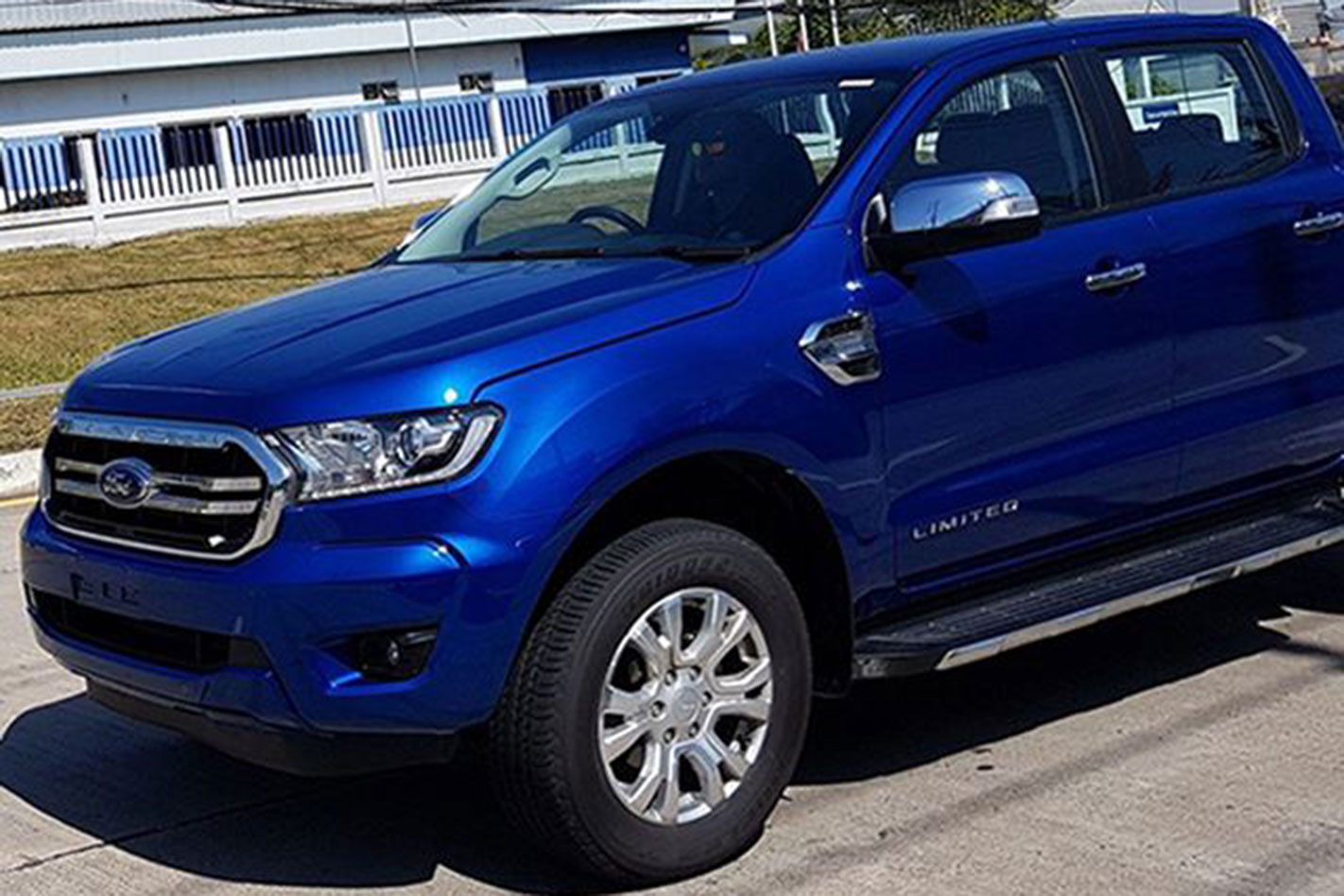
The most noticeable change is the grille, which adds a chromed bar on the top edge with the word “RANGER” etched into it. Meanwhile, the single chrome bar carrying the Ford emblem becomes a pair of chrome strips. The headlights framing the new-look grille appear to be carried over from the current version of the Ranger.
This version of the Ranger appears to adopt more of Ford’s New Edge design elements that tie in with the car maker’s growing family of SUVs, such as the EcoSport, Escape and Everest, and the upcoming Endura large five-seater that fills the void in the showroom left after the loss of the Territory.
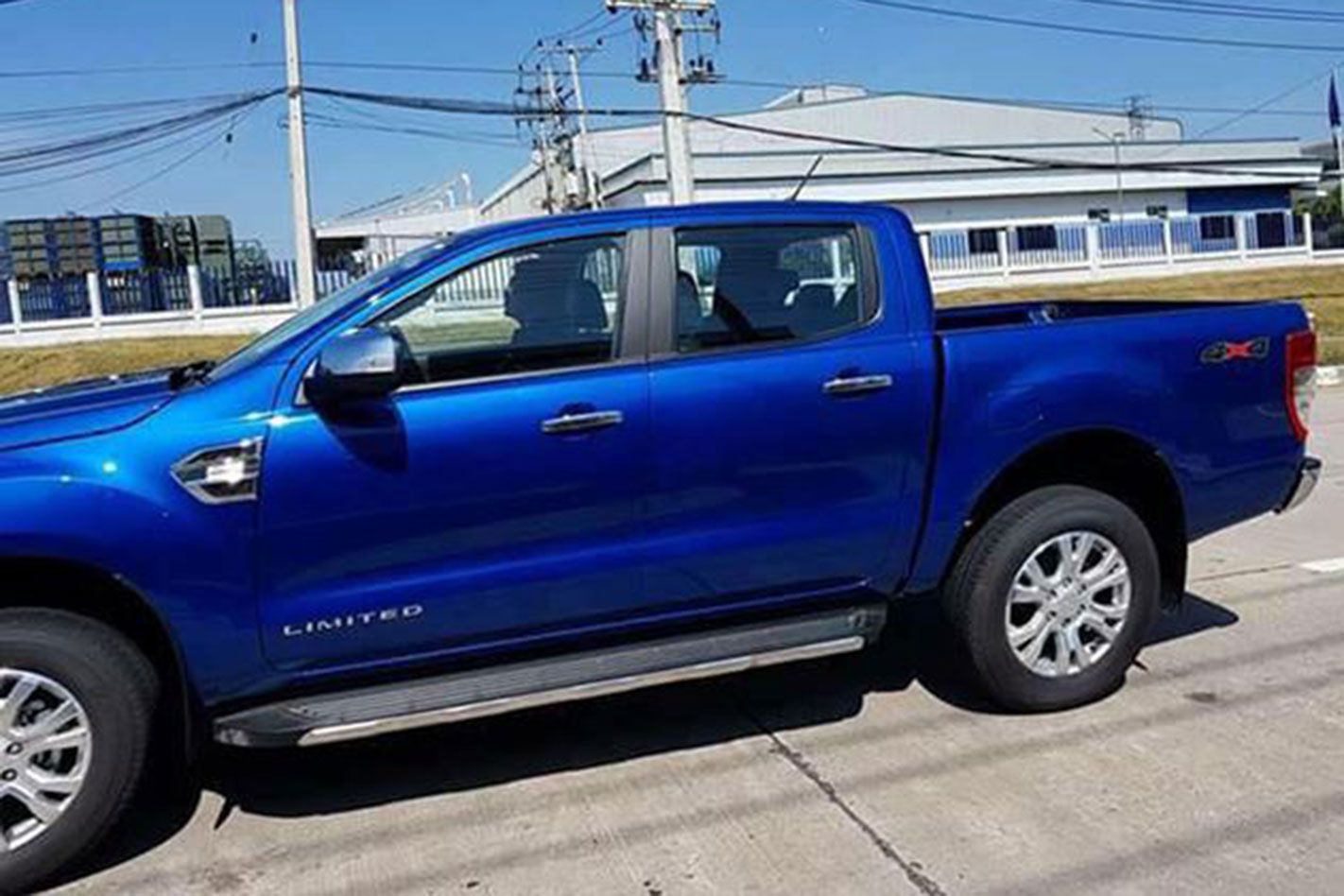
This right-hand-drive model wears a “Limited” badge denoting this is the top-spec version of the dual-cab Ranger sold in Thailand and Britain.
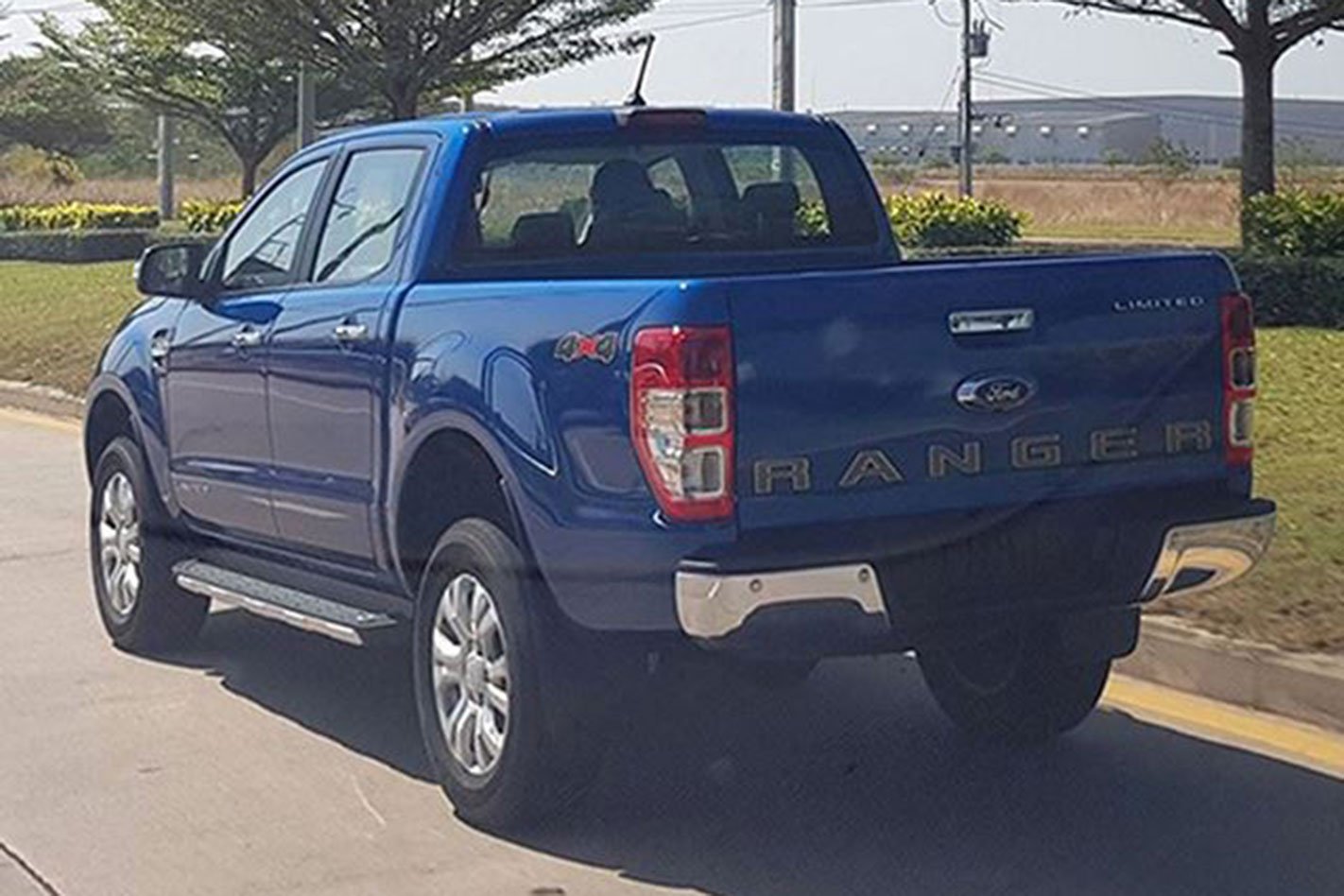
Of note, though, is that this model doesn’t yet carry the porthole in the rear window that would flag it as ready for entry to the potentially lucrative US market, but it does shift the bee-sting antenna from the leading edge of the roof to the trailing edge.
Down the back, little if anything appears to have changed.
Ford is planning a reveal for the Ranger Raptor, a more hardcore version of the trade ute, in Thailand on February 7 – hinting that the facelifted Ranger could also have its first official outing at the same time.
Speculation is still rife about what will power the driver-focused version of the Ranger, although reasoning – and a few hints in an official video teasing the Raptor – points to a twin-turbo four-cylinder diesel engine instead of the 3.5-litre Ecoboost turbocharged V6 expected to launch in the US market.
Other Raptor modifications are expected to include Everest-style rear-strut towers replacing the load-bearing leaf springs used on the more commercial use-focused versions, and rear disc brakes replacing the tow-friendly rear drums. As well, it will introduce a 10-speed automatic gearbox – a big leap from the six-speed version used today.
The Ford Ranger Raptor is expected to launch in Australia later this year.
The BMW X3 range has expanded from two to three with the addition of a range-topping diesel variant badged the xDrive30d.
TELL ME ABOUT THIS CAR
BMW has overhauled its premium mid-size SUV, the X3, and the xDrive30d variant is the most powerful diesel option on offer. It’s bigger and better looking than the old one, but at $83,900 it also costs more than before. Here’s what you need to know about it.
STRENGTHS
- Performance. A 3.0-litre turbo-diesel inline six-cylinder engine under the bonnet produces 195kW and a whopping 620Nm. It gives smooth, willing acceleration off the line and right through to its relatively high redline of 5500rpm. It’s a fantastic engine, and a highlight of the overall package.
- Fuel efficiency. Loaded up with gear and on a long distance drive the xDrive30d returned real-world fuel economy of 7.1L/100km. BMW claims a combined efficiency of 6.0L/100km.
- Space. This all-new X3 is bigger than the old one, and roughly the same size as the first-generation BMW X5. The extra length has opened up room for passengers. It’s possible for adults to sit comfortably in the back.
- Styling. Australian-born BMW designer Calvin Luk turned his hand to the X3’s exterior, and the result is a much more handsome vehicle than its slightly gawky predecessor.
- Infotainment. BMW’s iDrive6 system is slick, highly functional and easy to use. An excellent head-up display is offered and the xDrive30d’s digital dashboard is easy to read in all light conditions.
- Ride. The xDrive30d isn’t as bump-absorbing in Comfort mode as one might expect. There’s some initial impact harshness through its big 20-inch wheels that’s a little on the jarring side, and that slightly annoying trait doesn’t gel with the car’s otherwise convincingly luxurious look and feel.
- Steering. There’s room to improve the X3’s steering, which never feels completely at ease with the task at hand when driving quickly. It’s especially difficult to live with when using the xDrive30d’s semi-autonomous driving features on the highway. The active steering veers around a lane more than is comfortable, and needs constant correction – it’s not a ‘self-driving’ system by any means. Think of it as a back-up that will keep you pointed more or less where you want to go for when your attentiveness lapses, rather than letting the car drive off the road.
- Value. It is possible to find value at certain points of the X3 range, but up at the top the xDrive30d starts to look quite expensive, especially when options are added. Though the xDrive30d is faster, an entry-level Porsche Macan costs less and is more prestigious.
BMW X3 rivals include the Audi Q5, Mercedes-Benz GLC, Jaguar F-Pace, Land Rover Discovery Sport, Range Rover Velar, Volvo XC60 and even the Porsche Macan.
Aston Martin has announced its sales in 2017 were better than they’ve been since 2008.
The company sold more than 5000 vehicles last year, driven by “demand for its DB11 model and special vehicles including the Vanquish Zagato and Aston Martin Vantage GT8.”
Its retail sales saw a record increase of 58% year-on-year, which earned Aston Martin over £840 million in revenue ($1,447,300,000 AUD) and expects to exceed its predicted earnings (before interest, taxes, depreciation and amortization) of £180 million ($310,136,000 AUD).
Increased interest in Aston products from North America, the UK and China have also helped secure a strong year for the marque.

“We continue to perform ahead of expectations, both in terms of financial performance and in meeting our targets for the DB11 and special vehicles,” says Palmer.
“This strong sales performance shows that our Second Century transformation plan is building momentum.
“Phase Two of the programme will be largely completed in 2018 with the introduction of the Vanquish replacement and production of the new Vantage, contributing to continued sustainable profitability at Aston Martin.”
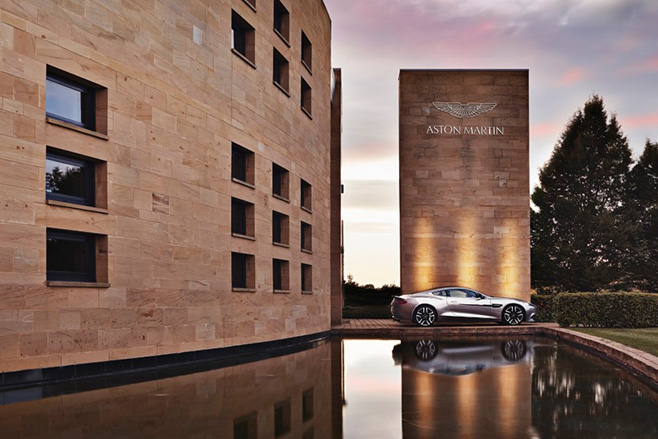
“The company has resumed output of special vehicles, notably the DB4GT Continuation, at its Newport Pagnell facility for the first time since 2007.
“Construction work is continuing at the new St Athan facility in Wales, due for completion in 2019, ahead of production of the new DBX SUV.”
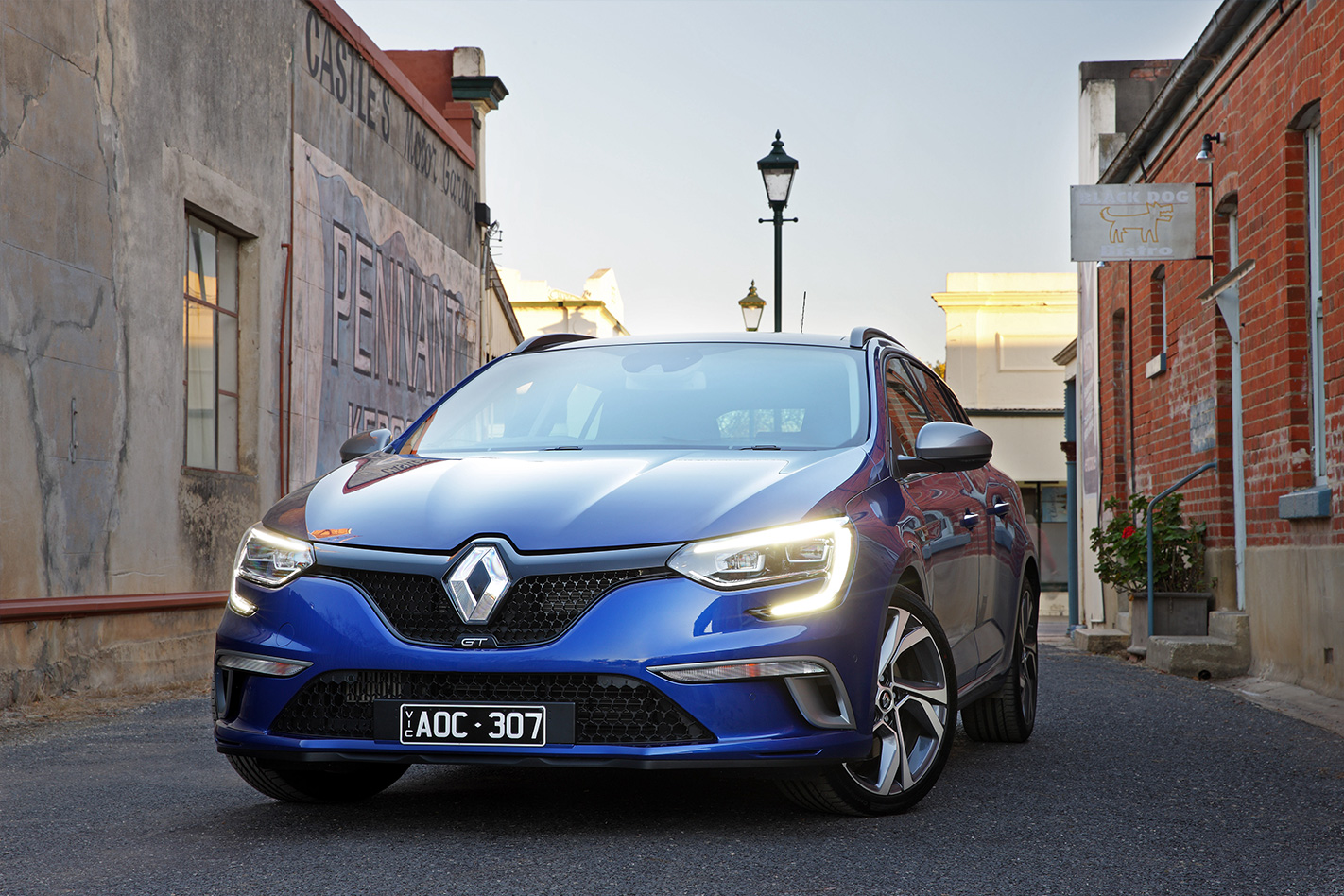
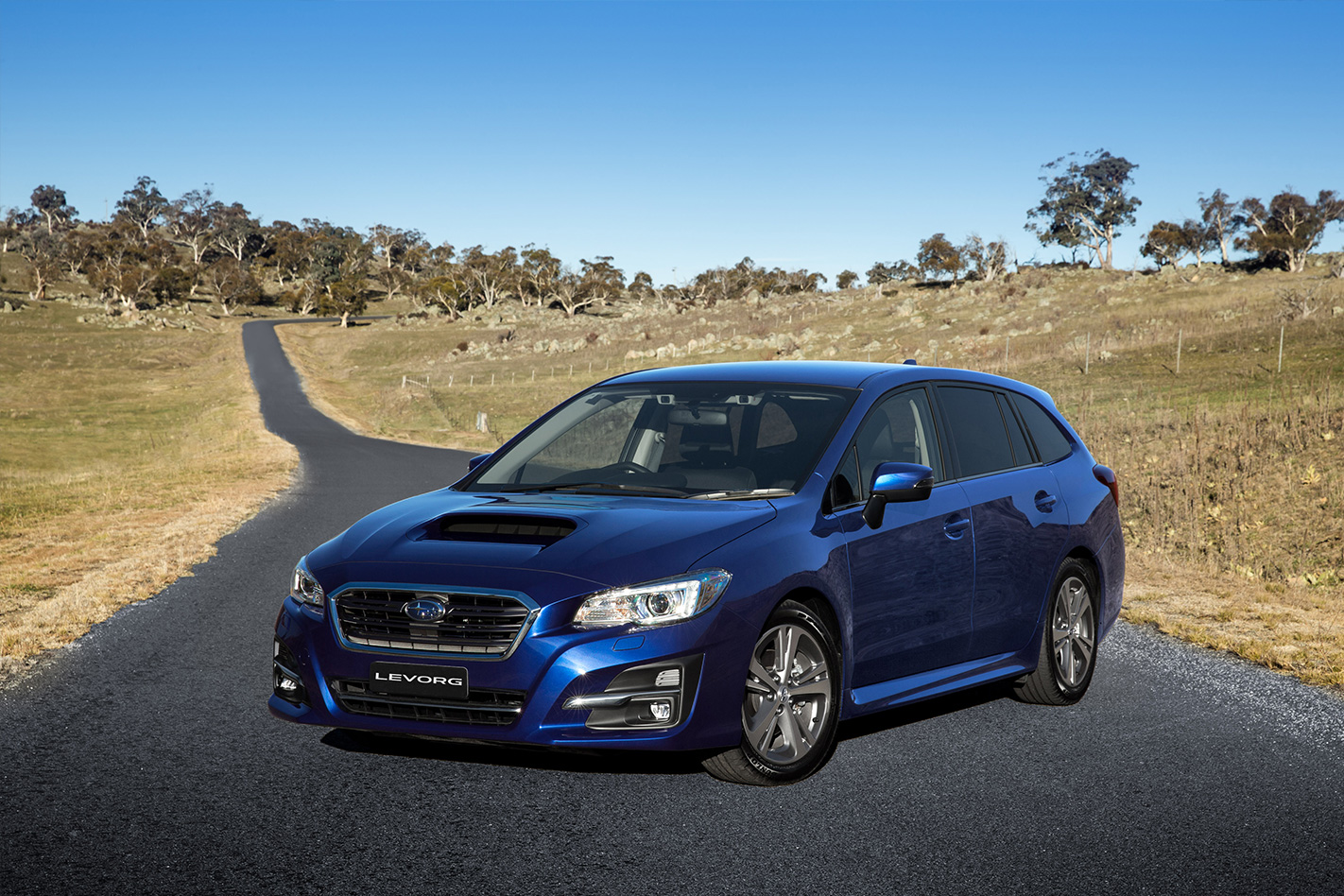
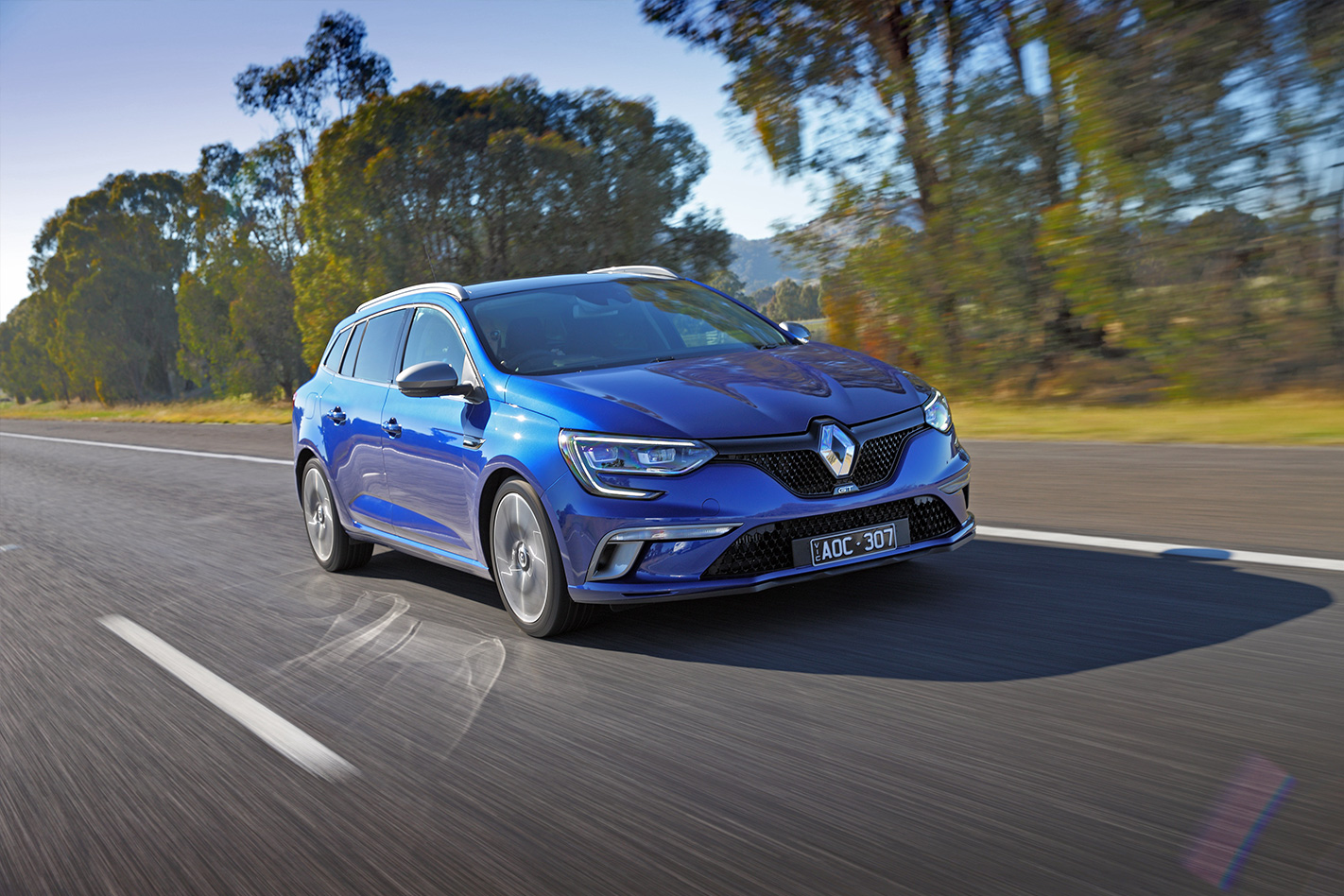
Price & Equipment – Winner: Renault Megane GT Wagon
The $39,990 1.6 turbo Megane GT looks like a good deal on face value and makes a better match for the base Levorg than the 1.2 GT-line. Sat-nav, front, rear and side parking sensors, tyre pressure monitor, and active safety such as AEB, a lane-departure warning and adaptive speed limited cruise are standard. You also get heated front seats and premium audio.
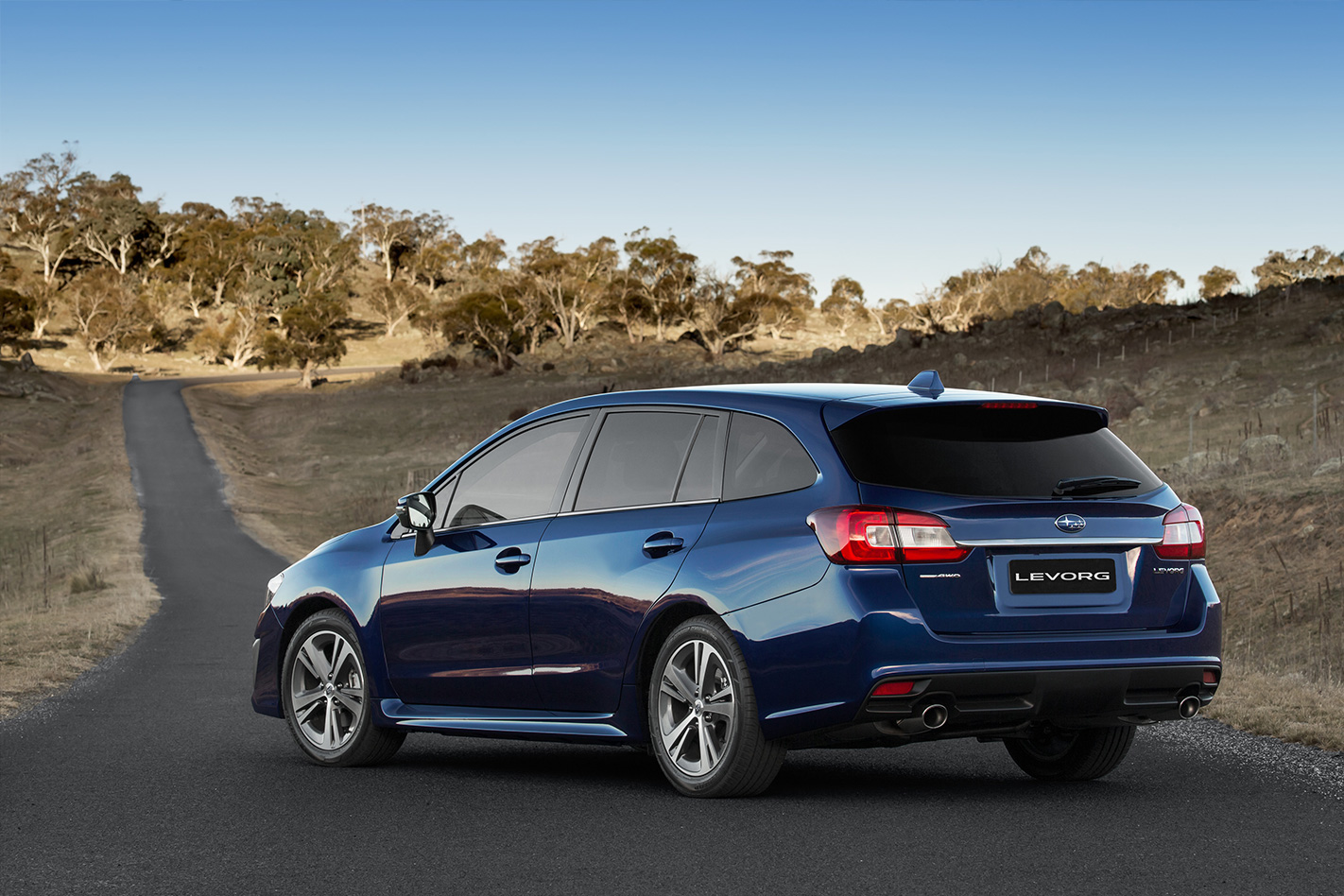
Though the Levorg 1.6 Premium might have been a closer match, the 1.6 turbo GT seemed the pick because it brings the Subie wagon’s price to a tasty $35,990. Cloth trim and 17s betray the base status, but just as in the Megane you get a rear camera, dual-zone climate control, heated mirrors and rain-sensing wipers. There are also dusk sensing, steering-responsive LED headlights and Subaru’s Eyesight safety suite.
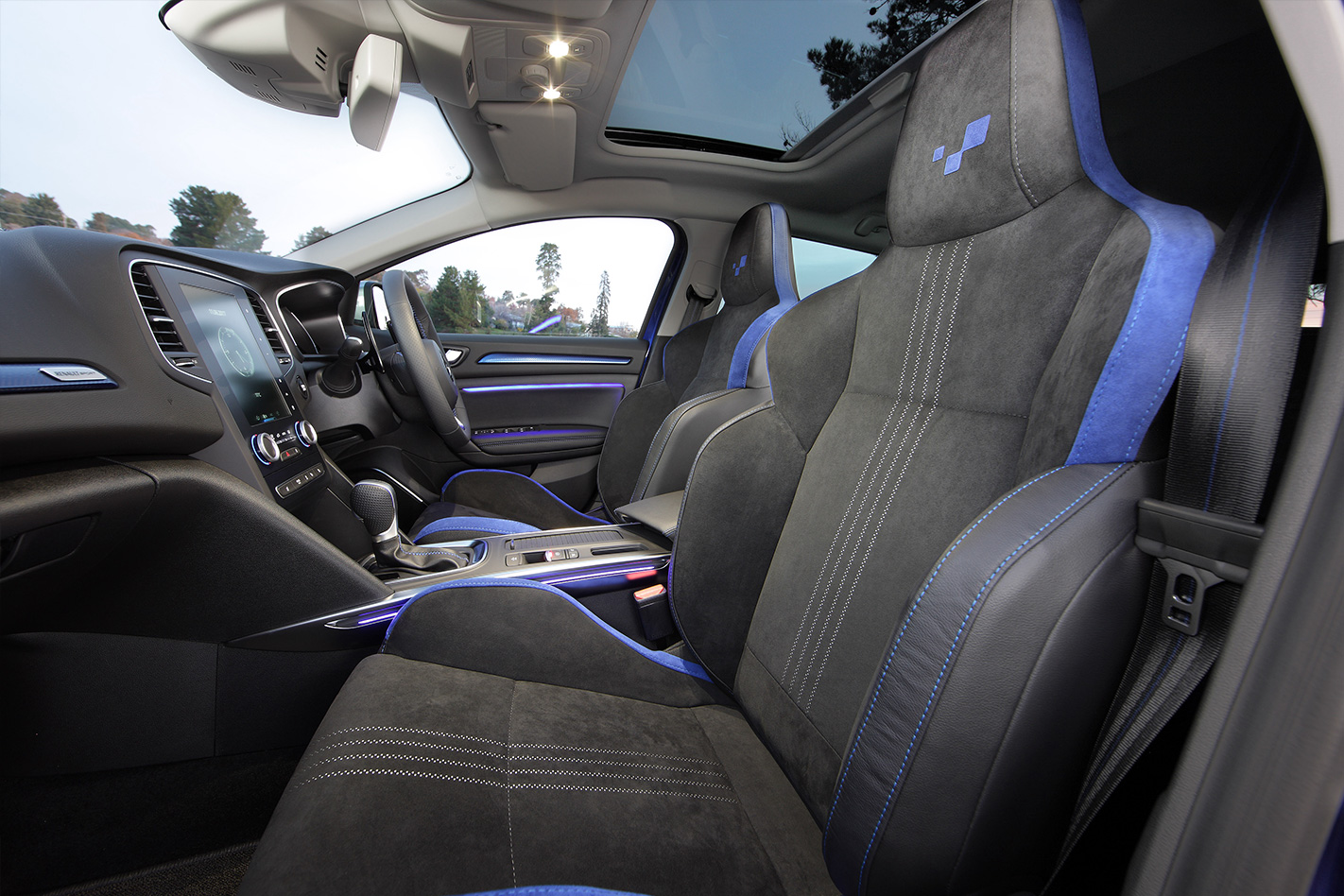
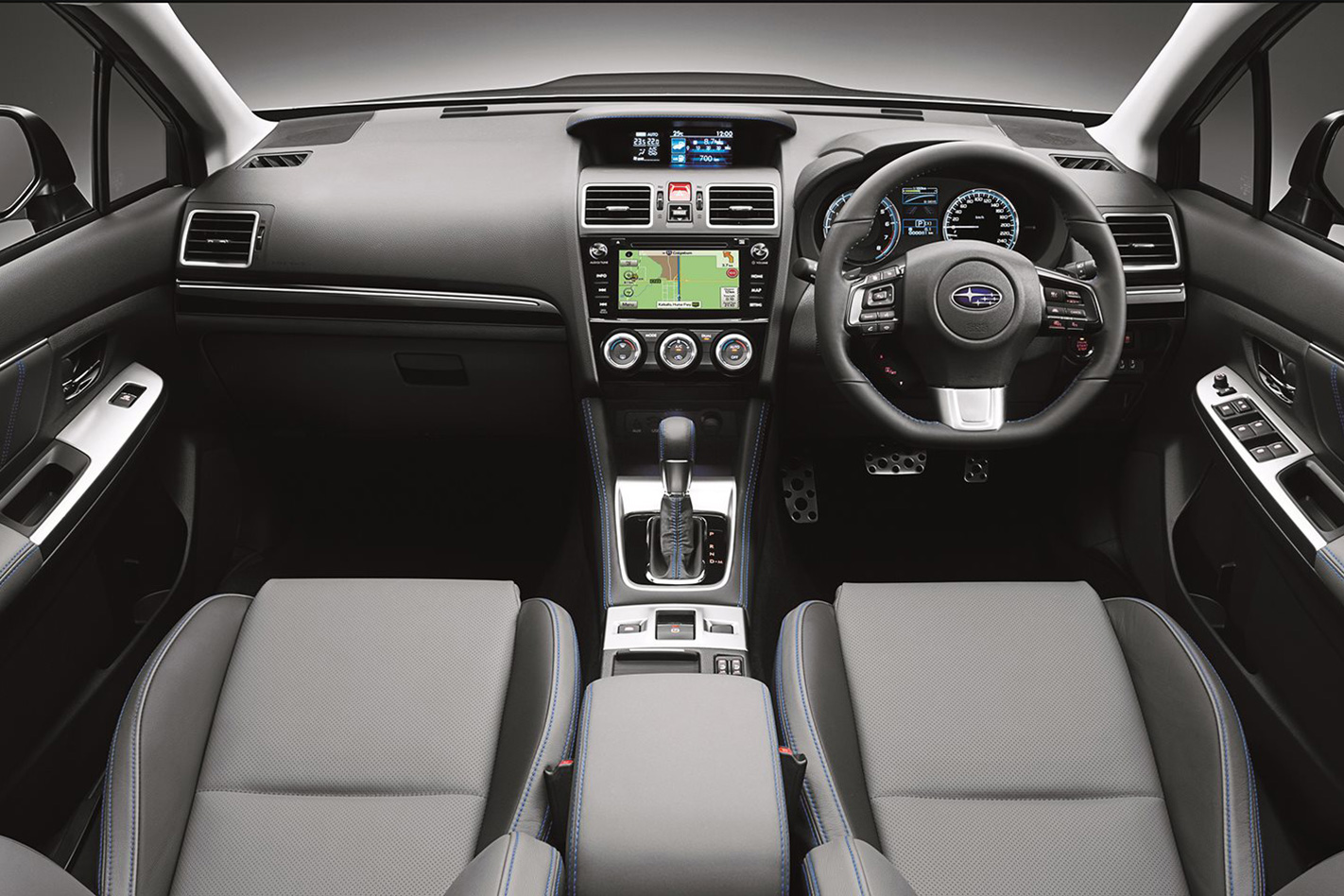
Interior & Versatility – Winner: Renault Megane GT Wagon
It’s no surprise it’s sportier and nicer in the top-spec Megane than the entry Subie, with sports seats and Alcantara trim. There’s ample legroom in the back and a bigger cargo bay than the Levorg’s, at 580 litres in spite of the Renault being 64mm shorter than the Subaru (on a 20mm-longer wheelbase). The rear seatbacks have a one-touch fold function and you get a tyre repair kit.
The cloth trim in the Levorg, like the rest of the cabin, feels of high quality and is well finished, and you get a seventh airbag here, for the driver’s knees. There’s similar rear legroom to the Renault and the handy 40/20/40 one-touch folding backrest presents multiple ways to expand the 489L bay while still carrying two rear occupants. A temporary spare provides the fix for a flat.
Performance & Economy – Winner: Renault Megane GT Wagon
The Megane feels fizzier, in part because its direct-injected 1.6-litre turbo is 26kW and 30Nm up, at 151kW/280Nm, and in part because its seven-speed dual-clutch auto lets you fully harness the engine’s grunt, but you need to dial up the R.S. Drive system, or paddle shift to bring it to life. A 20 percent smaller tank (50 litres) is offset by better official economy – an excellent 6.0L/100km.
Subaru’s first 1.6-litre flat-four grabbed our interest – could this be a gem? The direct-injected, 1599c FB15 DIT mill has 125kW/250Nm and hits peak torque early, at 1800rpm. But the CVT doesn’t let you find out how keen it is because there’s little linearity between right-foot movement and rate of acceleration. And the Subie is hefty at 1539kg, which might explain the 7.4L/100km figure.
Ride & Refinement – Winner: Draw
The Megane, as the tailgate badge suggests, rides on Renault Sport tuned suspension – and it wears 225/40R18s. Despite this, the highway/country ride is nicely absorbent, though the tyres create a bit of roar. At city speed and over the sharper bumps typically experienced in this sort of driving, it’s a bit jiggly, but we’re good with the compromise.
The base 1.6 is the only Levorg that doesn’t get Bilstein dampers, and it also gets smaller wheels than the others – mere 215/50R17s. Both are plusses, because it rides with greater absorbency than its siblings as well as its rival. The Subaru is quiet and especially good at rounding off urban bumps, but the lack of absolute body control at higher speeds detracts from overall comfort.
Steering & Handling – Winner: Renault Megane GT Wagon
It’s safe to say the Megane GT is the dynamic pick of the small-wagon niche. With the chassis honed by the renowned RS division, a four-wheel-steering system and well-weighted turn-in that actually delivers feel, it’s a revelation. Here’s a compact family car that turns in keenly, keeps its composure over lumpy backroads and has a lovely fluid feel to the way it corners.
An inert electric steering system and a lack of body control that introduces itself quickly when you have a go ensure you can draw conclusions on the entry Levorg nearly as fast. It’s not as good as we’d hoped, or as it could be. It’s not a patch on its rival for entertainment, but the ride/handling compromise stacks up well in the Levorg line-up.
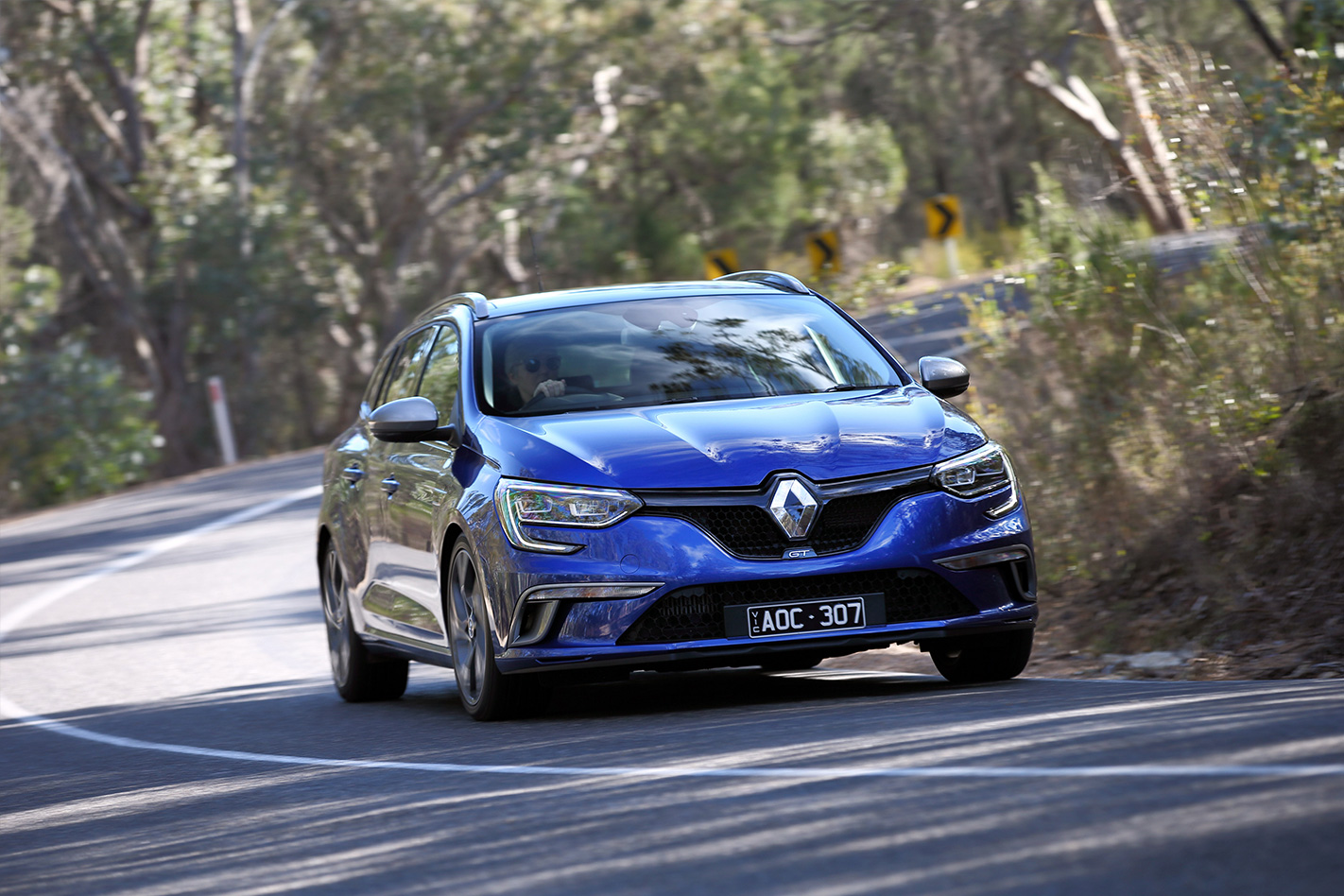
Verdict – Winner: Renault Megane GT Wagon
The 2.0-litre Levorg doesn’t aim to be – and isn’t – a hot wagon.
We wondered: would the new 1.6-litre Levorg GT version let the model work better as a warm one? In a way, it does. The softer suspension and bigger tyre sidewalls smooth out the ride and the 1.6 goes okay. With a bit more handling polish and steering feel and a normal auto or, even better, a manual, it would be cool
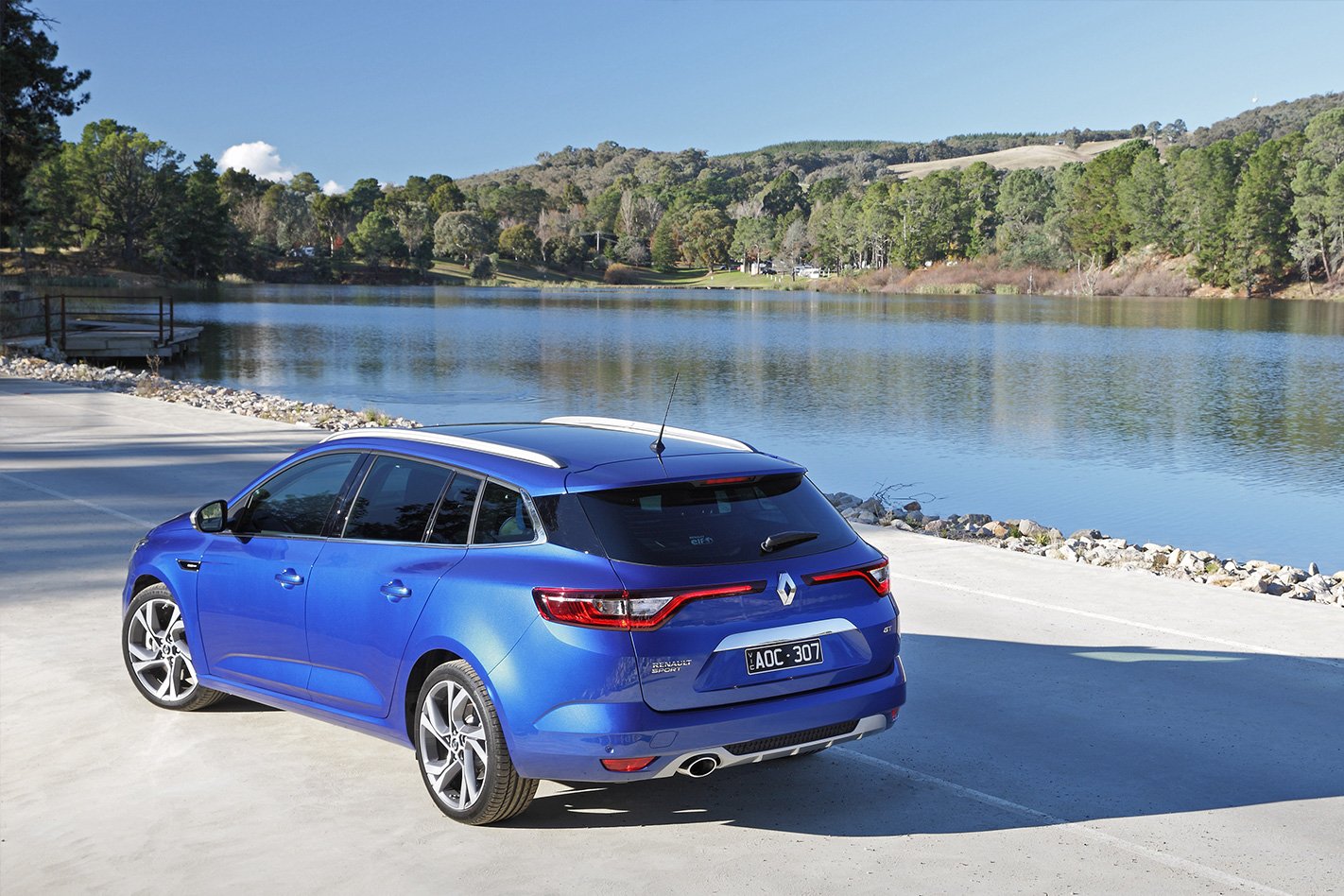
As it is, the doors shut with a nice thud, the cabin is well put together and it’s well equipped for the money. However, for $40K – and only $4K more than its rival – the Megane GT wagon gives you plenty: equipment, cargo space and a five-year warranty. You also get more performance, greater character, and way more engaging steering and handling than in the Subaru.
The Renault is a ripper all-rounder.
NOW, AS far as tunnels go, the ‘Hochtor’ on the Grossglockner High Alpine Road is fairly unremarkable.
It’s only a bit over 300 metres long, so you don’t even need to have entered it to apply the old cliche about seeing light at the end.
It was built, as were the other 48 kilometres of this sublime road straddling the eastern Alps between northern Italy and Austria, by toiling Austrian workers back in the early 1930s. It’s stood sentinel to a world war, economic collapse, recovery, and monumental changes to both the people and vehicles that pass through it.
Overhead, its arched ceiling bears the weight of millions of tonnes of earth and shale, and come winter, a crushing blanket of snow and ice.
There’s so much to ignite the senses on the mighty Grossglockner that to single out this tunnel may seem a bit abstruse. But stay with me, because something unique happened in there: I uttered an involuntary expletive about a Korean car that was not generated by disappointment or frustration. Instead, it was a ‘holy s__t!’ spontaneously ejected through sheer, shocked elation.
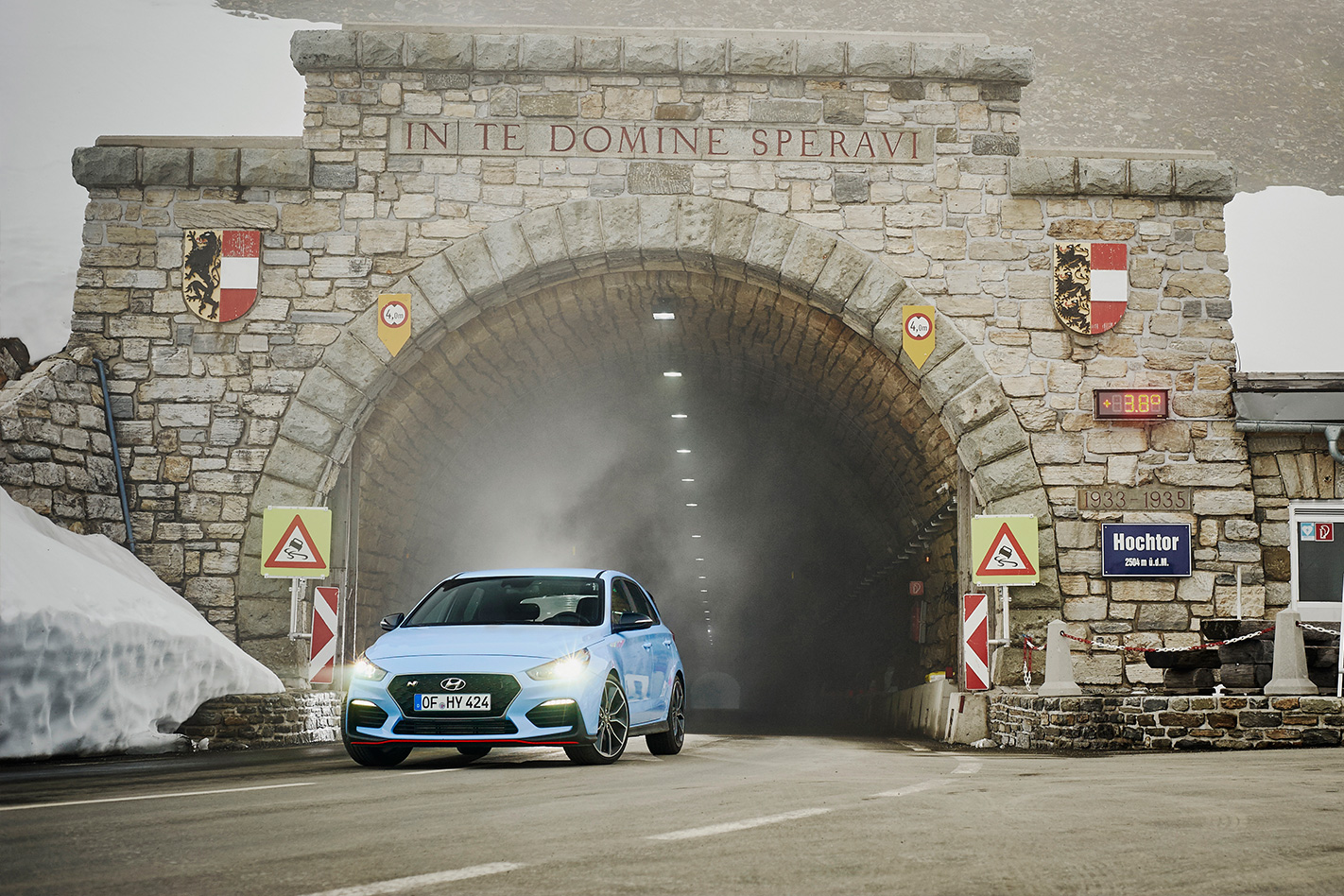
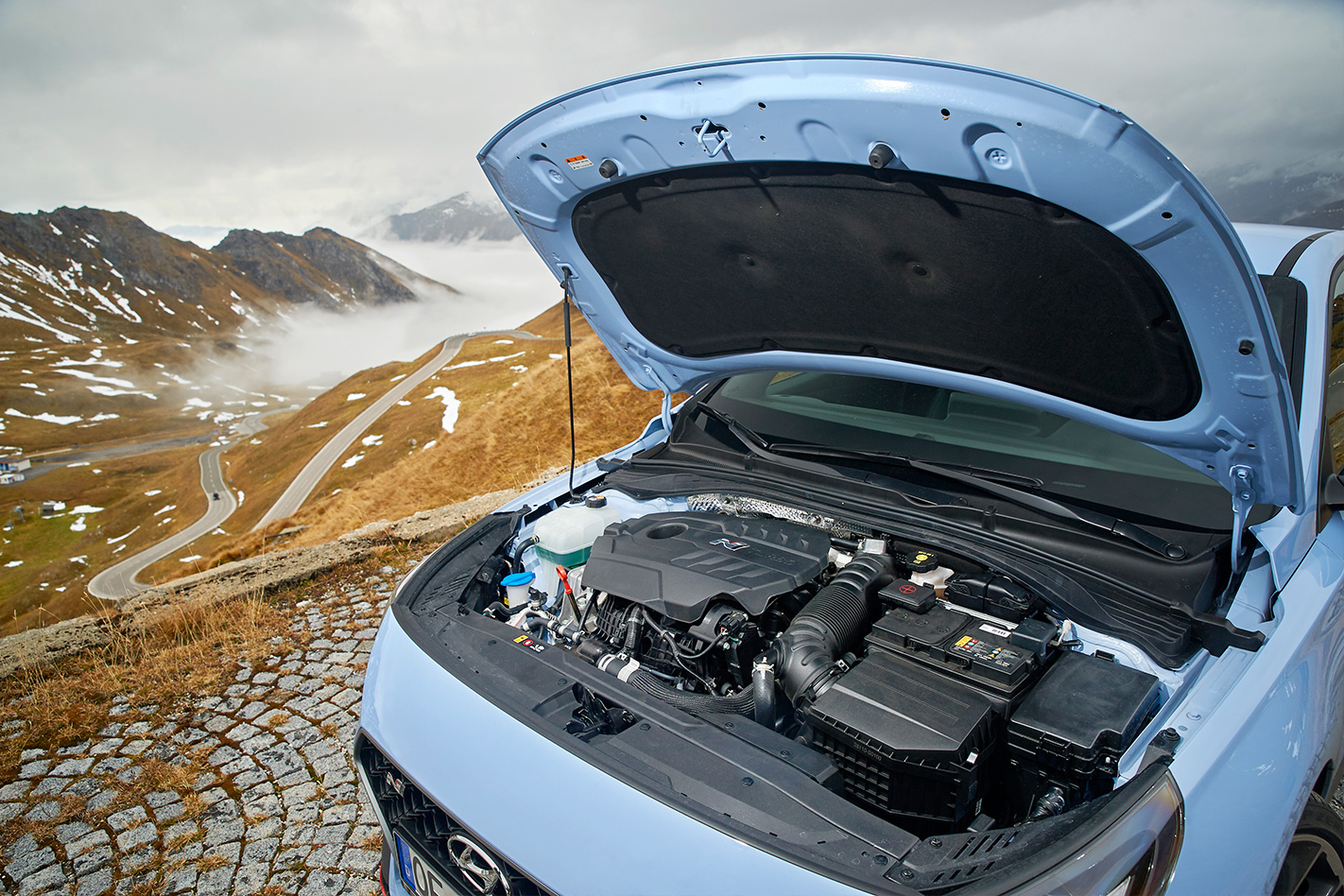
I had the Hyundai i30 N pinned at the top of second gear, its eager, rorty 2.0-litre turbo engine delivering every last one of its 202 kilowatts near the 6700rpm limiter. Sooner than I anticipated, it seemed prudent to lift, as low fog shrouded the tunnel’s exit in a white veil. As the throttle snapped shut, the ECU did its trick of allowing a trace of fuel to pass into the hot exhaust, and the vapour’s ignition delivered a couple of supercar-loud, rapid-fire bangs that ricocheted like gunfire off that tunnel’s damp, grimy walls.
It was an exhaust noise no other hot hatch delivers, and to stretch a metaphor, no half-arsed warning shot across the bows of the car companies that have dominated this segment for the last decade or so. No, this was the sound of a declaration of open warfare.
Hyundai’s N division high-performance debutante had hit the open road, and the automotive world as we knew it shifted, just a little.
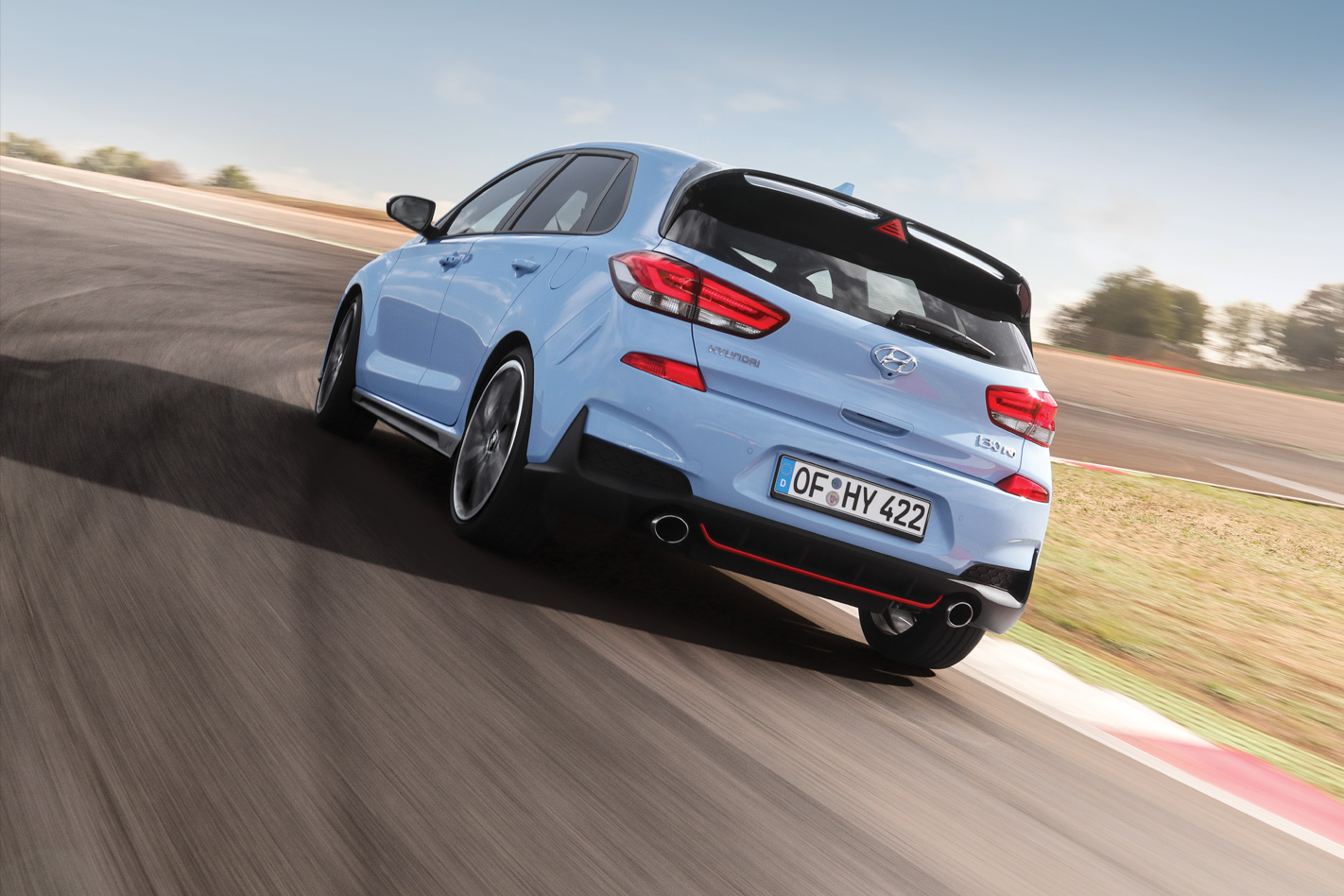
We’re in the Performance Pack car that’s expected to sell for around $4000-$5000 more than the standard i30 N (tipped as a sub-$40,000 offering) when it arrives in Australia.
It will become increasingly evident over the next few days that the Performance Pack is worth the extra spend.
It doesn’t just deliver a more satisfying sonic repertoire and a bit of extra top-end punch over the 184kW base model, it also has a clear dynamic advantage thanks to the electronically controlled (but hydraulically actuated) limited slip differential, leaving the regular i30 N to make do with torque vectoring by brake to control front-end traction under a heavy throttle.
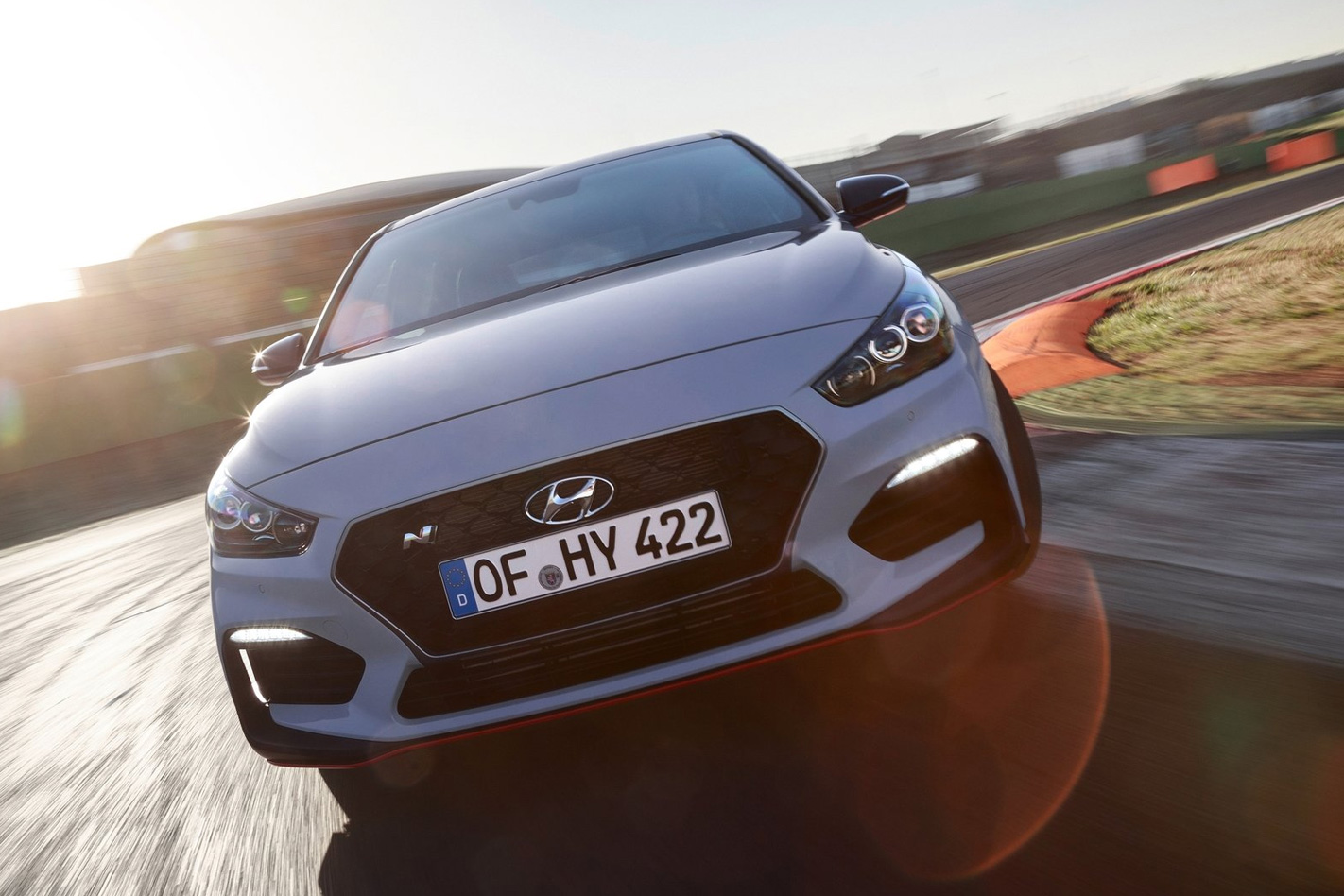
Where the base car counters is with its more modest 18-inch wheels and 225/45R18 Michelin tyre package, which delivers a subtle but noticeable improvement in ride quality on rough and sharp-edged stuff compared to the Performance Pack car on its 235/40R19 Pirelli P Zero tyres.
Let’s see how the 19-inch package copes with Aussie roads, but even in the dampers’ comfort mode, it’s unapologetically firm in the hills above Rome; occasionally jarring. Both versions deliver abundant levels of grip, although ultimately the 19-inch Pirellis will hang on with a bit more tenacity.
Our time on the circuit is a chance to stick the Performance Pack version in its N-mode, which sets all the driver-adjustable parameters – throttle mapping, steering weight, damper stiffness, ESC setting, diff calibration and exhaust – to their most aggressive and performance focused. (And yes, all these can be individually configured into your own custom setting.) First impressions are that the steering (now with rack- mounted assistance, rather than column-mounted) has real deftness just off centre, allowing you intuitive turn-in, and a confident connection with the tyres in fast, open bends.
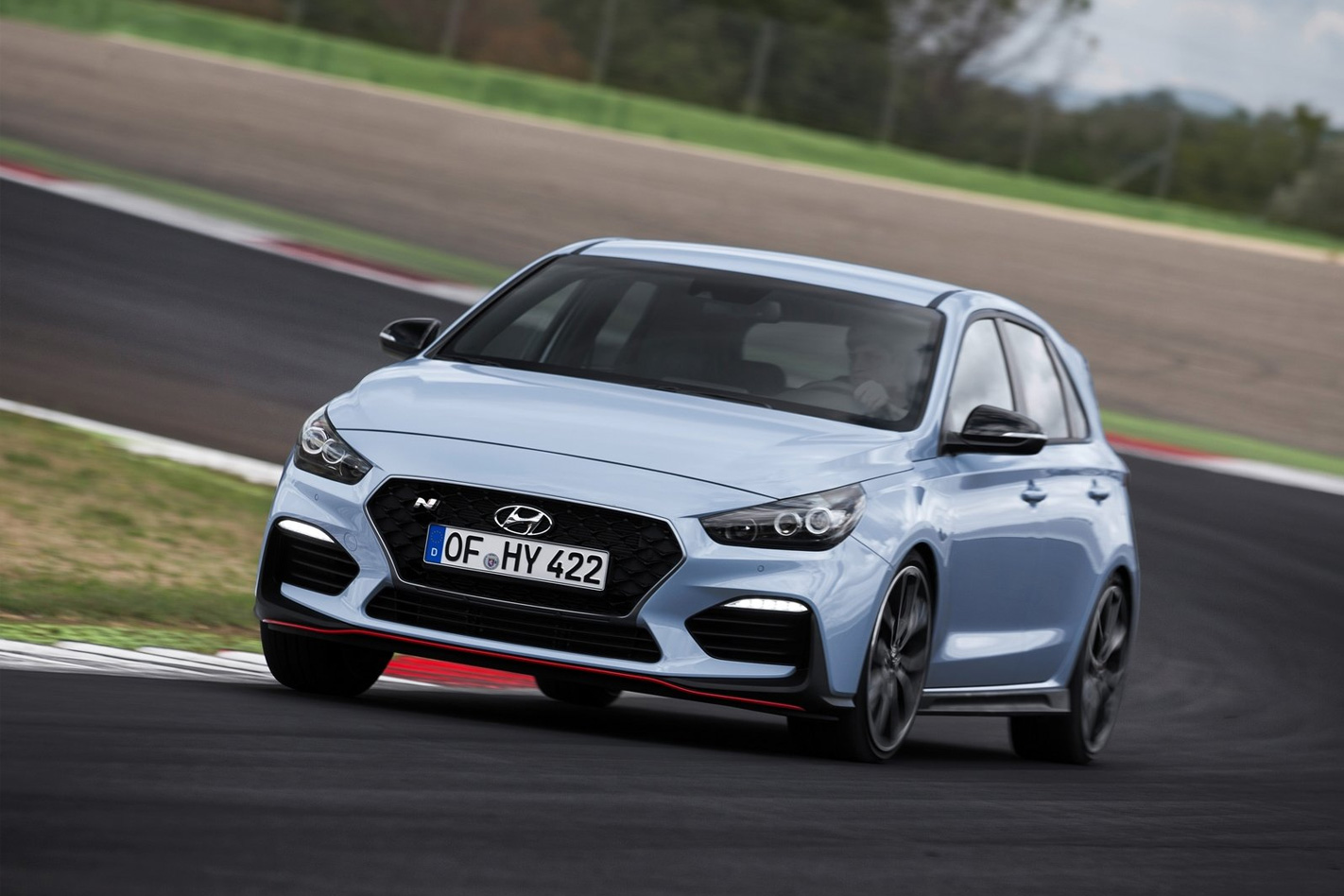
It’s early days to be making a call, but after several laps I’m left feeling the i30 N hangs on more manfully in hard driving than a regular Golf GTI does, which can wilt pretty quickly when really punished on a track. But how will it compare as a road car?
THE ITALIAN autostradas that take us north toward the Grossglockner prove that the i30 N has got seriously sorted high-speed manners.
The roads here have a 130km/h limit and point-to-point cameras, but no-one seems to heed them, and this is the country that coined the “when in Rome…” expression, so we don’t hold back. Around 160-170km/h feels a real sweet spot given moderate traffic, but in more sparse sections, the car feels utterly planted and confidence inspiring at over 200km/h.
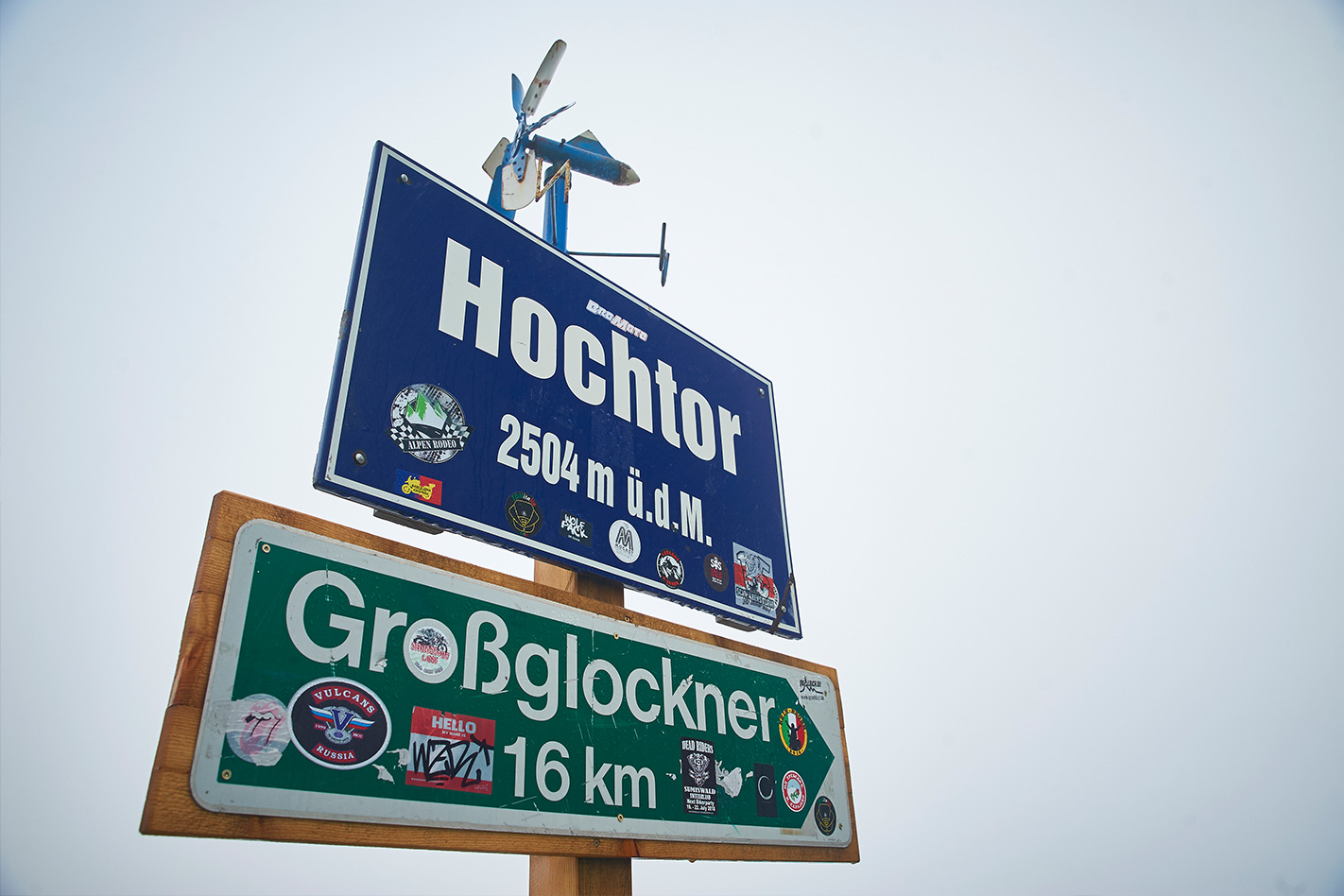
Our fuel burn sits in the low teens, a fill of the 50 litre tank costing around €80, (A$120) but small compensation comes via the excellent coffee from the ubiquitous Autogrill servos/rest stops; just €1 and delivering a more effective jolt than most recreational drugs sold on the streets of Sydney. Or so I’m told.
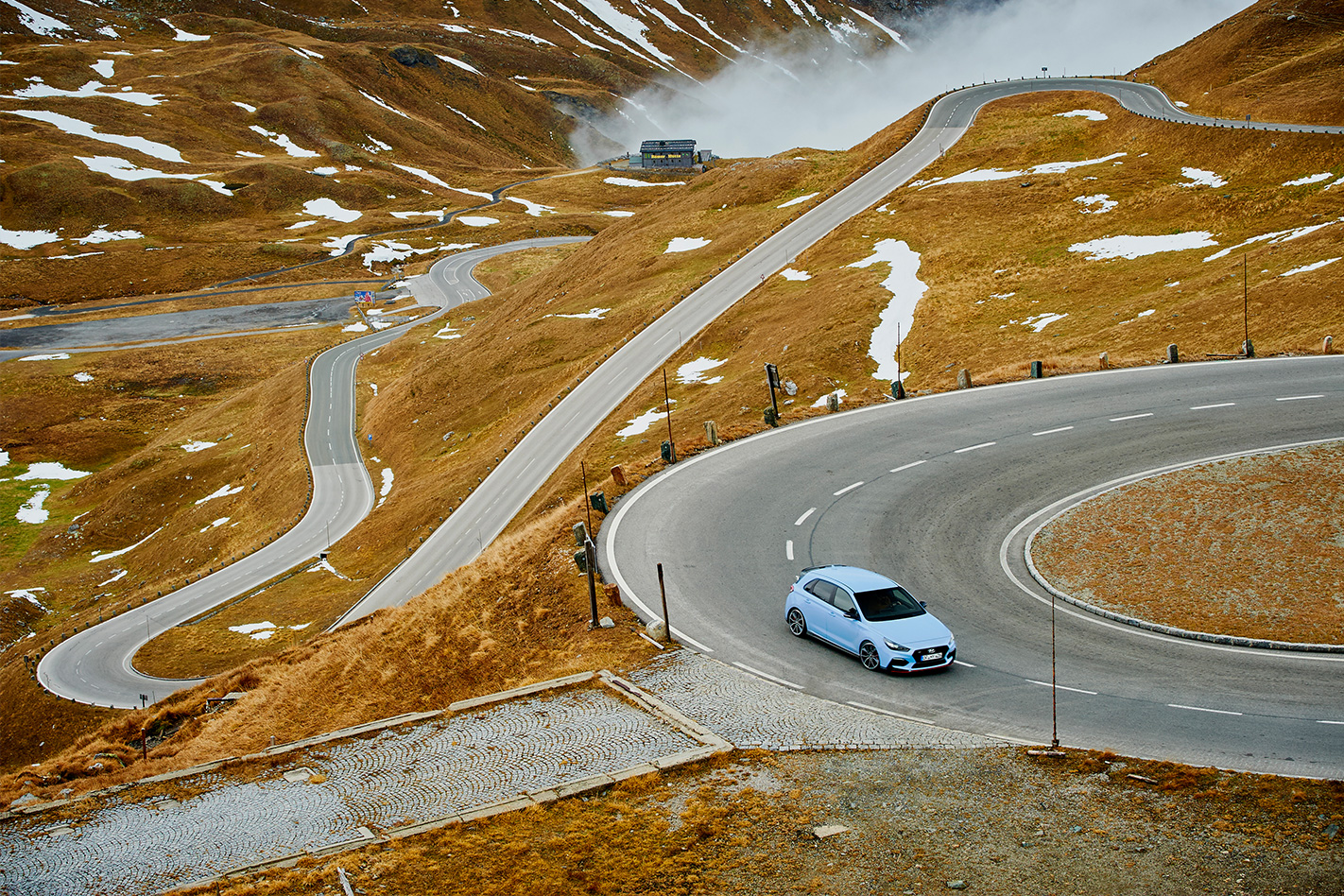
I COULD bore you rigid with stats and facts about the Grossglockner, but here’s the most salient point: unlike just about every other high road that passes over the Alps, the Gross was not built for the efficient passage of people, armies, or trade. It was built for recreation; a magnificent ribbon of infrastructure intended to attract visitors to the area and showcase the spectacular scenery and the Hohe Tauern National Park it dissects. The Gross is to roads what the Sydney Opera House is to music and arts: a place for pleasure and fulfilment, not merely transportation.
It’s a toll road, which is actually a bonus for keen drivers, as it tends to dissuade travellers in lumbering campervans and backpackers in clapped-out Skodas; those types seek out the free routes over the Alps.
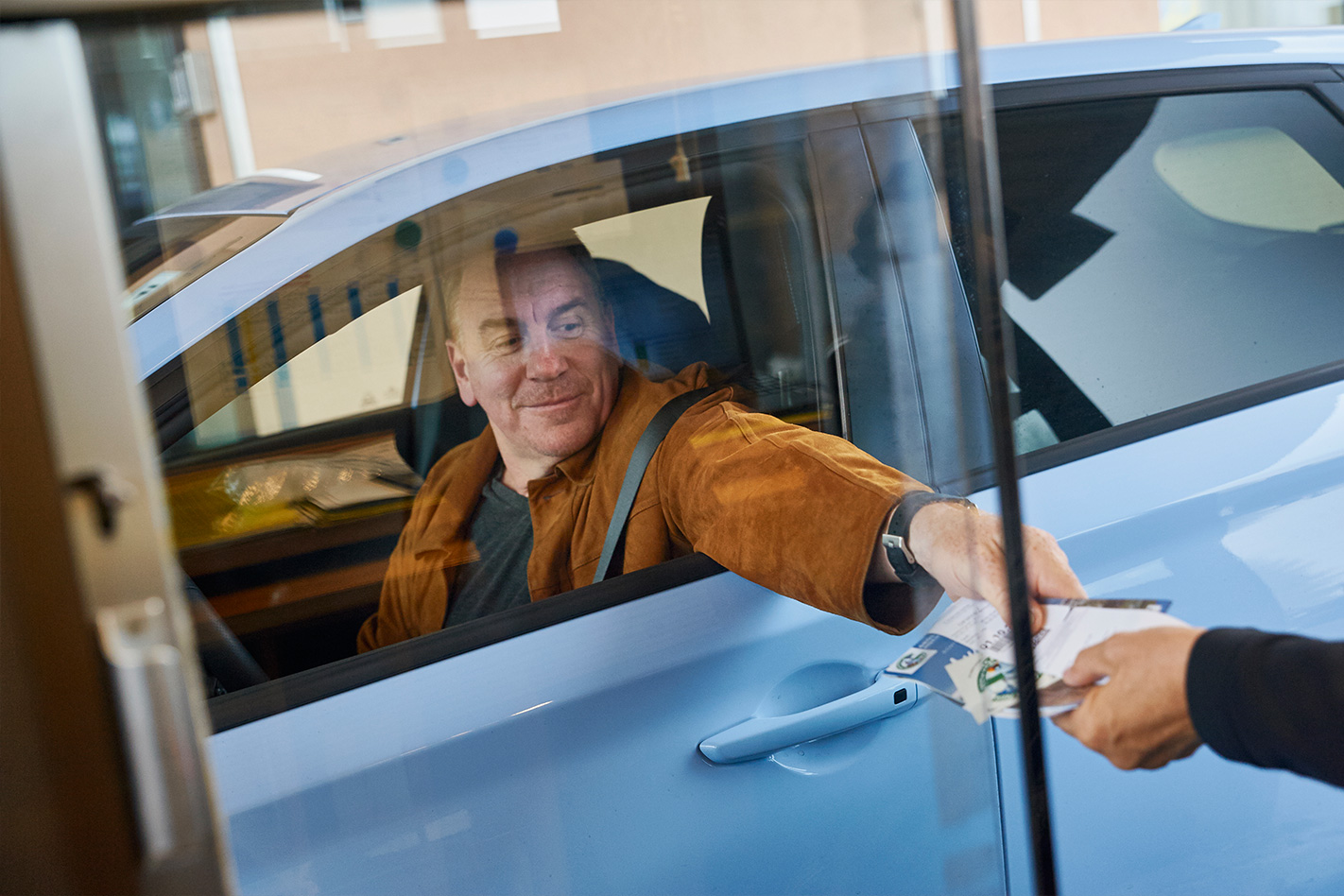
Okay, on that: given the absence of police and zero enforcement of the 100km/h limit, you could almost think of the Grossglockner as a racetrack to the clouds. It’s tempting to just cut sick like Mike Tyson on a Vegas bender, but one little detail tempers that urge: the fact that you can end up very dead at this place.
In July 2015, two young Englishmen went over the edge high on the northern descent, leaving their Seat Leon Cupra, when it was finally recovered, looking like a blob of chewing gum picked off your shoe.
I’m reminded of the Sherpa people of Nepal, who revere Mount Everest as Chomolungma; or ‘Mother of the World”. You do not want to climb all over her when she’s cranky, and likewise you don’t take liberties with the Gross. You want a car here that delivers detailed feedback; one that drip-feeds confidence so you can attack, but with prudence.
Then there’s the rev-matching function. In my dreams I am to heel-and-toe downshifts what Michael Jackson was to moonwalking, but the reality here is my limited brainpower and coordination is being drained by picking braking points, nailing the occasional apex and not looking over the edge.
The shift action from the six-speed manual (an eight-speed dual-clutch is still around two years away) is terrific, with short throws and a super-positive gate feel. The rev-matching function brings a welcome flurry of revs that smooths out the downchanges as the lever almost feels magnetically sucked into each gate.
But really, you could drive a steam-powered Trabant on this road and still feel elation. The corners are cambered with a radius and precision that borders on fine art; they remind me of the racetracks I used to make in our backyard sandpit as a kid. And in places where the road could logically continue its ascent, it sometimes doesn’t, instead diving down a saddle in the mountain just to extend out and wrap around another spectacular vantage point, opening out to a landscape that is in parts both brutal and beautiful.
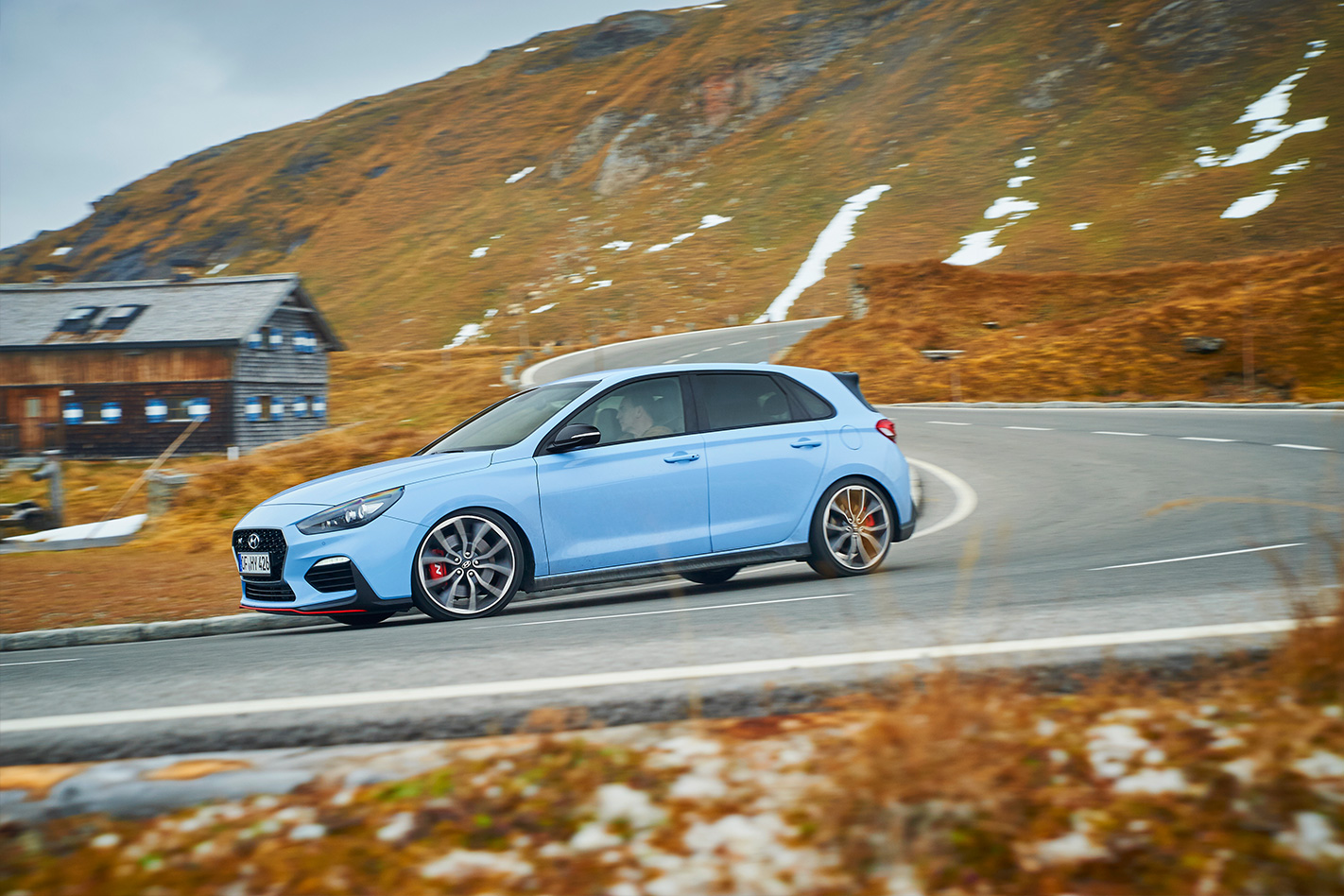
It’s as much in the fact that everyone else here appears to respect you as a car enthusiast indulging in your passion. There’s no fist-shaking or scowling; just knowing nods as you howl past. Slower drivers use the turn-out bays to let you past.
The i30 N is the product of a true car-guy, and it’s an unalloyed joy to be able to fully extend it in an environment that embraces that passion.
At the road’s highest point, the 2571m Edelweiss-Spitze, we give ourselves and the brakes a breather, and take a moment to soak it all in.
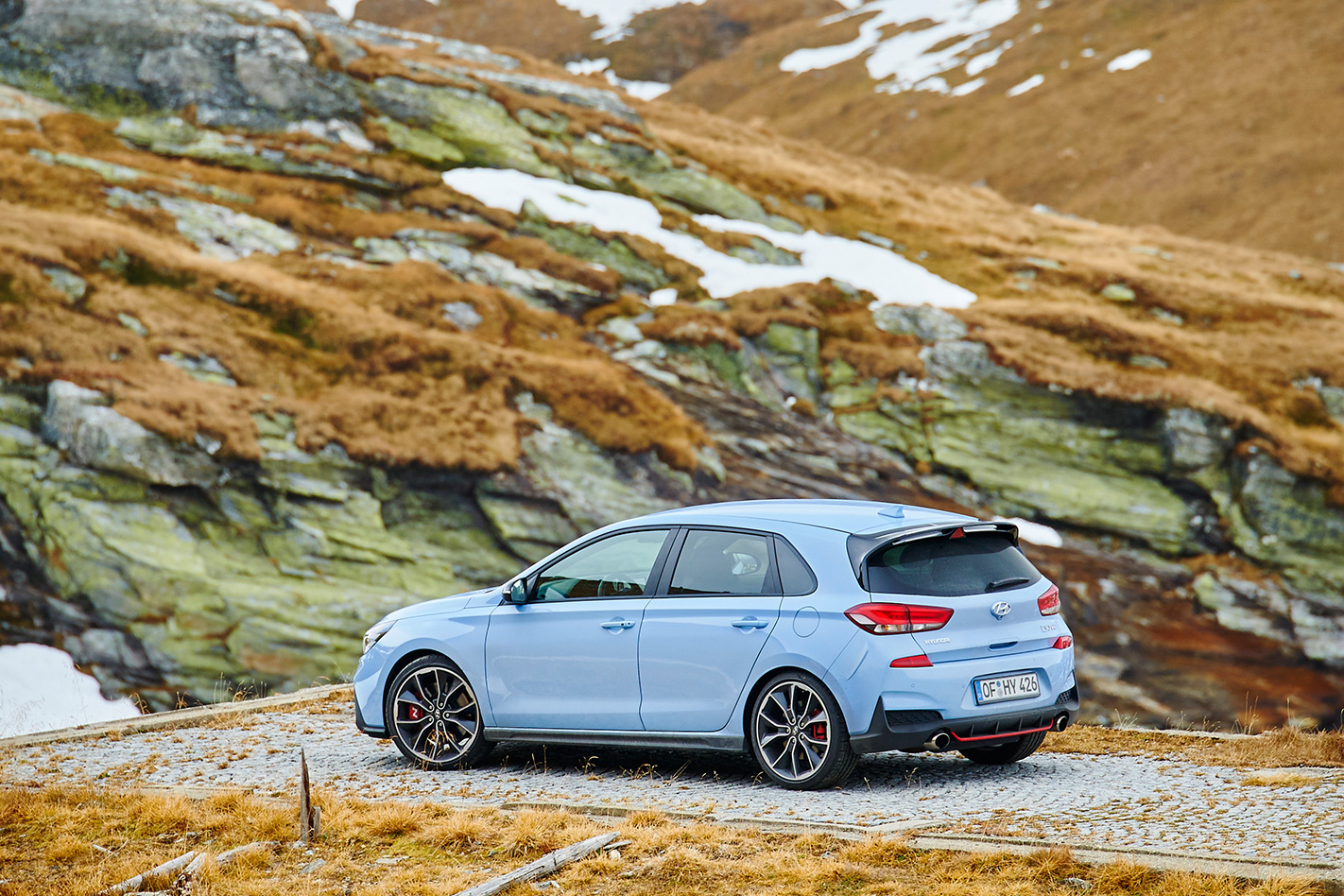
The weather is turning. In just a few weeks, heavy snow will blanket the region and the toll gates will be boarded up, not to reopen until May.
By then Hyundai’s first-ever N division car will have been on sale in Oz for around four months, and we’ll have a reading on just how well the Koreans are scaling their own mountain.