
The Ford EcoSport, a small SUV that kicks around in the same off-road-styled sandpit as the Holden Trax, Mazda CX-3 and the Nissan Juke, has received its most significant update since its launch here in 2013.
Despite the changes, the price of the entry-level Ambiente remains at $20,790 so as to not frighten off city-friendly SUV buyers on a tight budget. But opt for one of the more richly equipped models and you’ll have to dig deeper than before; the volume-selling Trend is up $2200 to $24,490, and the range-topping, sunroof- and leather-trimmed Titanium rises by $1200 to start from $28,990.
Visually, the EcoSport gains a number of changes that vastly improve the looks over the old model. Key to this is a new fascia that ties the EcoSport in more closely with the other “E” SUVs in the Ford line-up – the Escape and Everest (and the soon-to-arrive Territory five-seater replacement, the Endura).
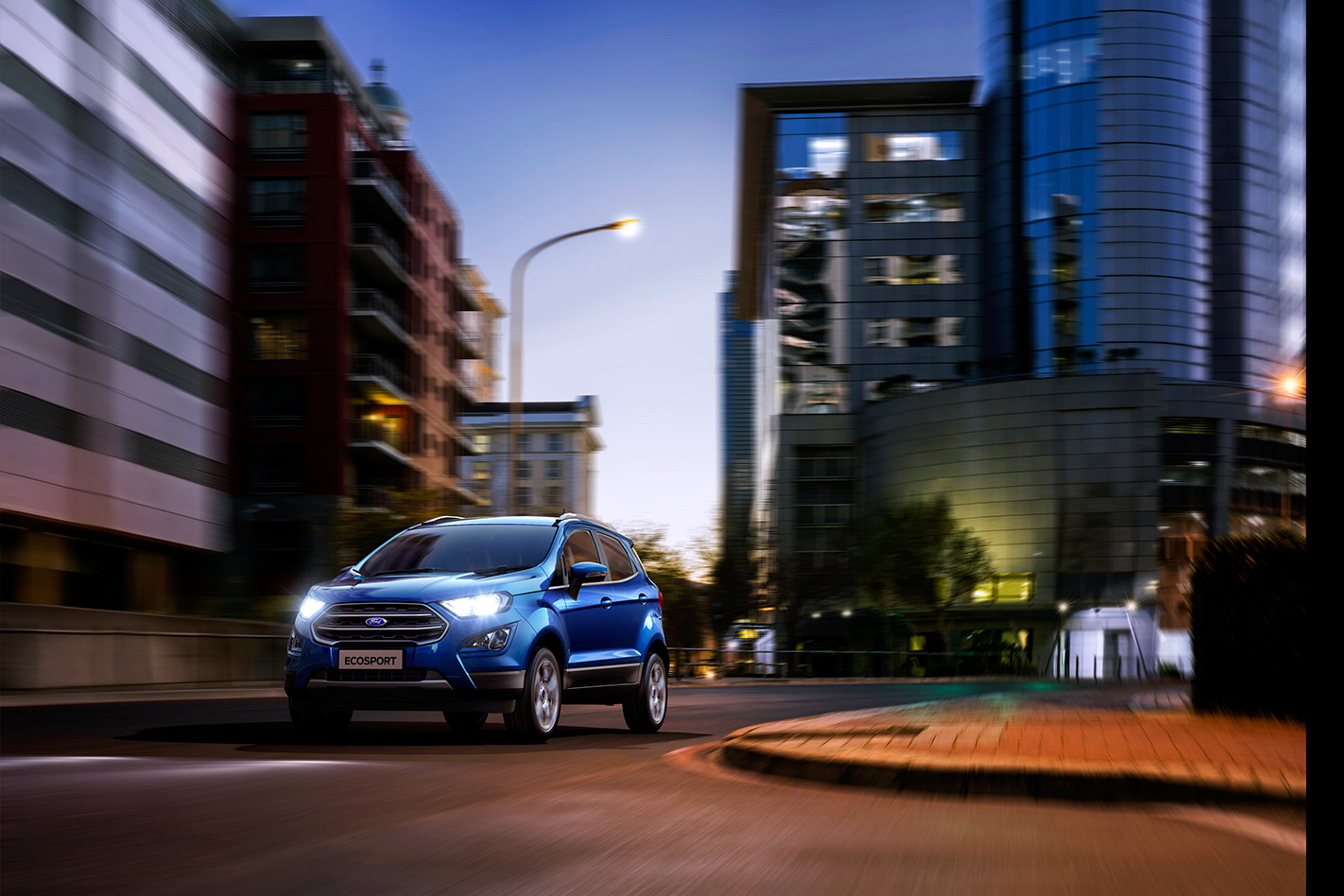
That includes a new bonnet with an, ahem, power bulge, and foglights that add definition to what was, and let’s be honest here, a distinctly unremarkable look of the car it replaces. Down the rear, a restyled bumper and more modern-look tail-lights that on the right-hand side hide the soft-touch release for the swinging tailgate add a different look.
The EcoSport range kicks off with the Ambiente. It uses a new generation of Ford’s 1.5-litre three-cylinder engine that produces 90kW and 150Nm, a gain of 8kW and 10Nm over the engine it replaces. The other big change, though, is that this, and all other engines in the EcoSport line-up, adopt a new six-speed automatic transmission.
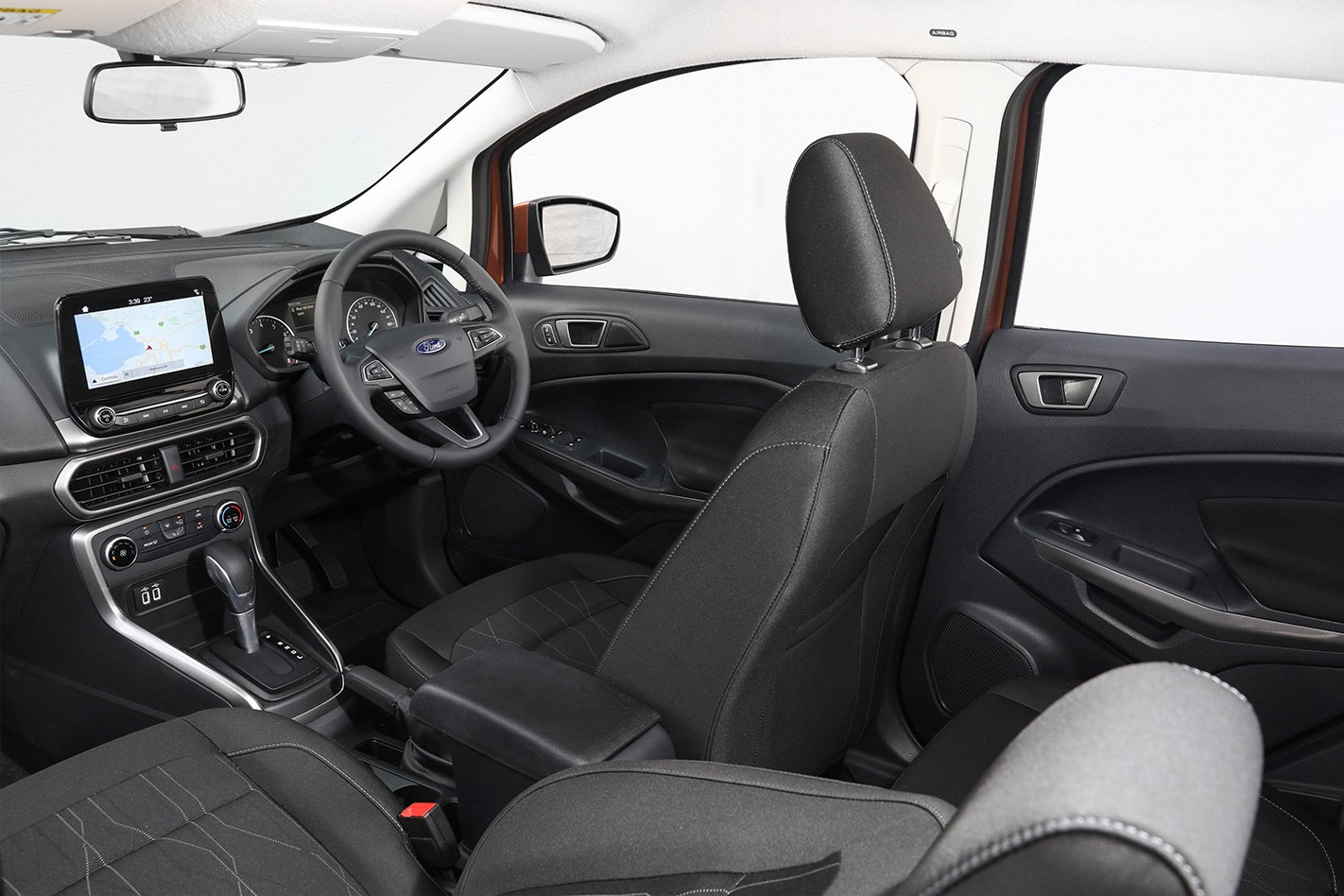
Inside, the cloth-trimmed EcoSport has had another big makeover that improves it well beyond the old car’s Ford Fiesta-like fit-out. There’s now a redesigned steering wheel and centre armrest between the re-cut front seats – plastic until you spend a bit more to step up to the Trend – and two backlit USB ports that indicate the arrival of Sync 3, the latest version of Ford’s multimedia interface, to the small SUV range.
A small tray slides out from under the front passenger seat, a good option given there’s no cover over the centre console’s bulkhead storage spaces.
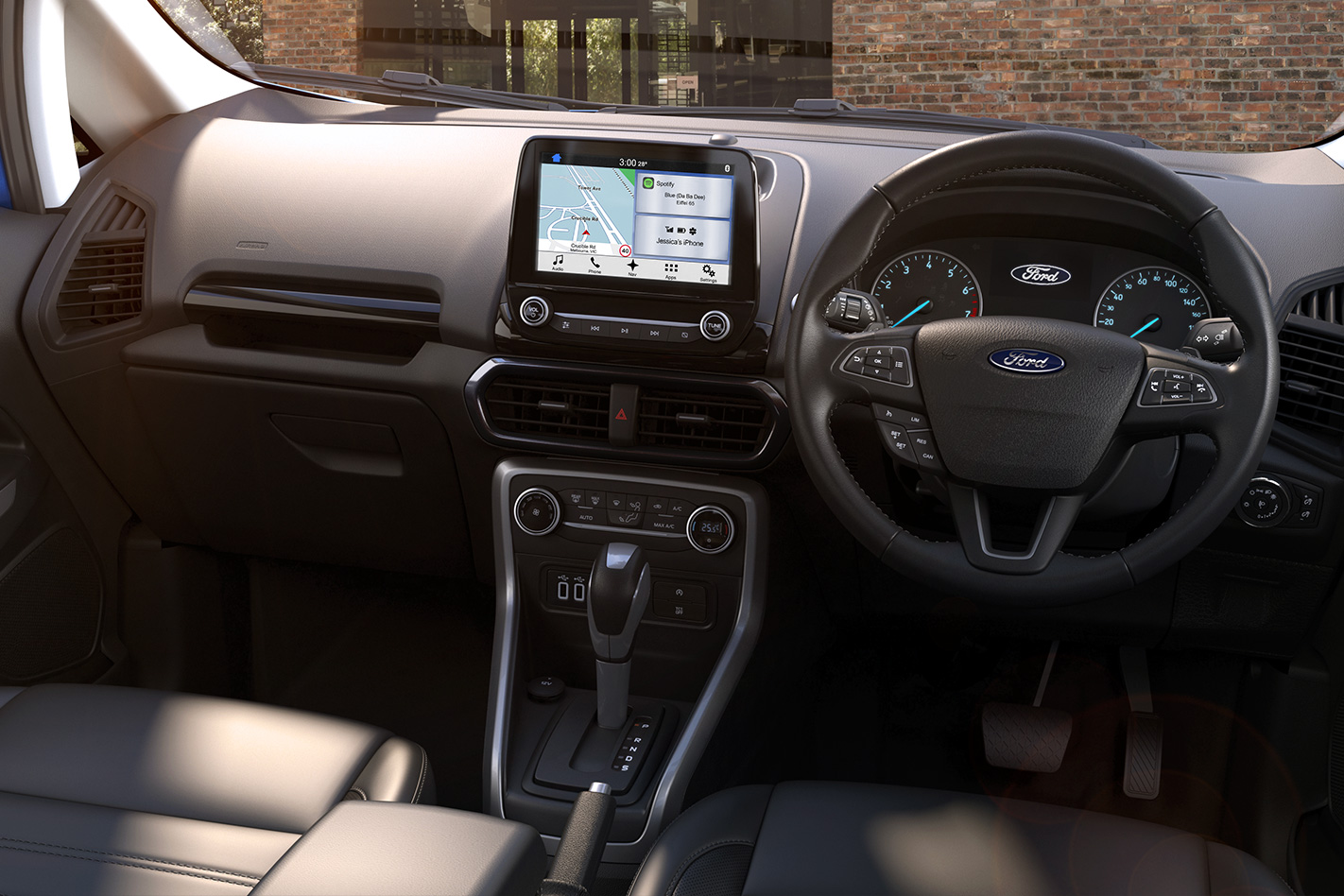
There’s a different instrument cluster with a sharp-looking digital display that includes the tripmeter and a digital speedo. The cruise control system includes a speed limiter. The dashboard is much cleaner, with a tombstone-style 6.5-inch multimedia touchscreen replacing a number of buttons in the pre-facelift car and linking to a reversing camera with reverse parking sensors.
The driver’s seat features six-way manual adjustment, and the front passenger seat four-way as it misses out on height adjustment. You need a key to start the engine, but at least the doors open remotely via the key fob. Once inside, the driver’s window has automatic up/down.
There’s one 12-volt charging point for the front seats, and another tucked away in a small storage space on the outboard side of the right rear seat. Down the back, the EcoSport’s rear seats flip and tumble forward to provide a flat floor, increasing load space from 743L to 1178L, and the boot floor has three settings that, on its highest, provides an under-floor storage space.
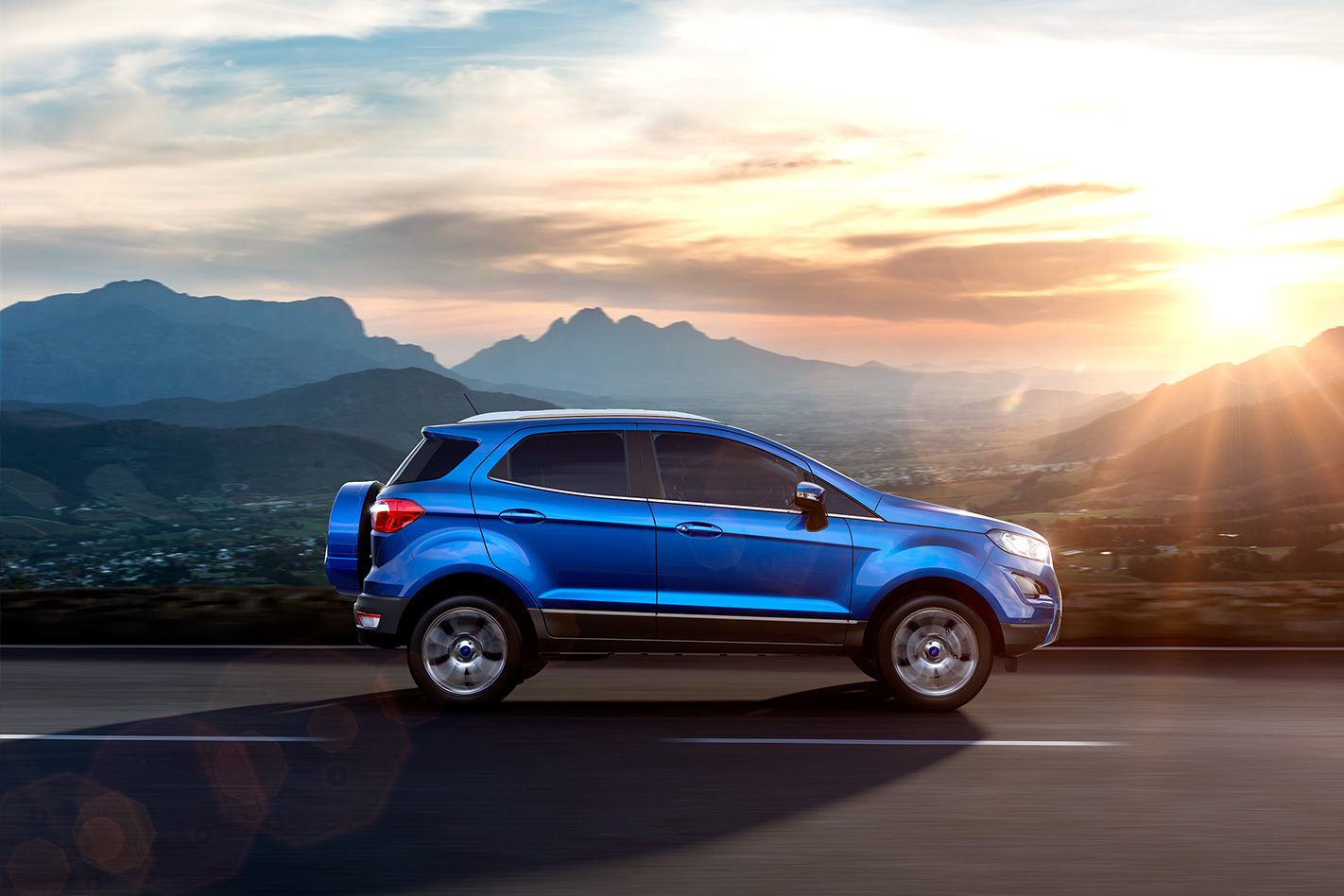
The EcoSport Ambiente sits on 16-inch steel wheels featuring plastic hubcaps. A full-size spare wrapped in the same 205/30 profile Goodyear Assurance rubber hangs off the tailgate. Black highlights – the grille, mirror caps and door handles – mark the entry-level status.
Each EcoSport also has Ford’s capless fueling system that doesn’t require owners to unscrew a cap before refuelling.
The mid-spec Trend is expected to remain as the EcoSport’s best-selling model. It replaces the 1.5-litre engine in the Ambiente with a turbocharged 1.0-litre three-cylinder engine producing 92kW/170Nm, up 10kW/30Nm over the pre-facelift car.
Externally, it swaps out the Ambiente’s 16-inch steel wheels to alloys, keeping the same rubber. It adds fog lights to the front bumper, and a silver grille. The mirror caps and door handles, meanwhile, become body-coloured and the roof rails are finished in a matte black.
Inside, the noticeable change is the multimedia touchscreen, which steps up to 8.0 inches, adds satellite navigation, and has seven speakers, three more than the entry-level variant. The steering wheel replaces the plastic for leather, and in the back seat there’s a fold-down armrest with a pair of cupholders.
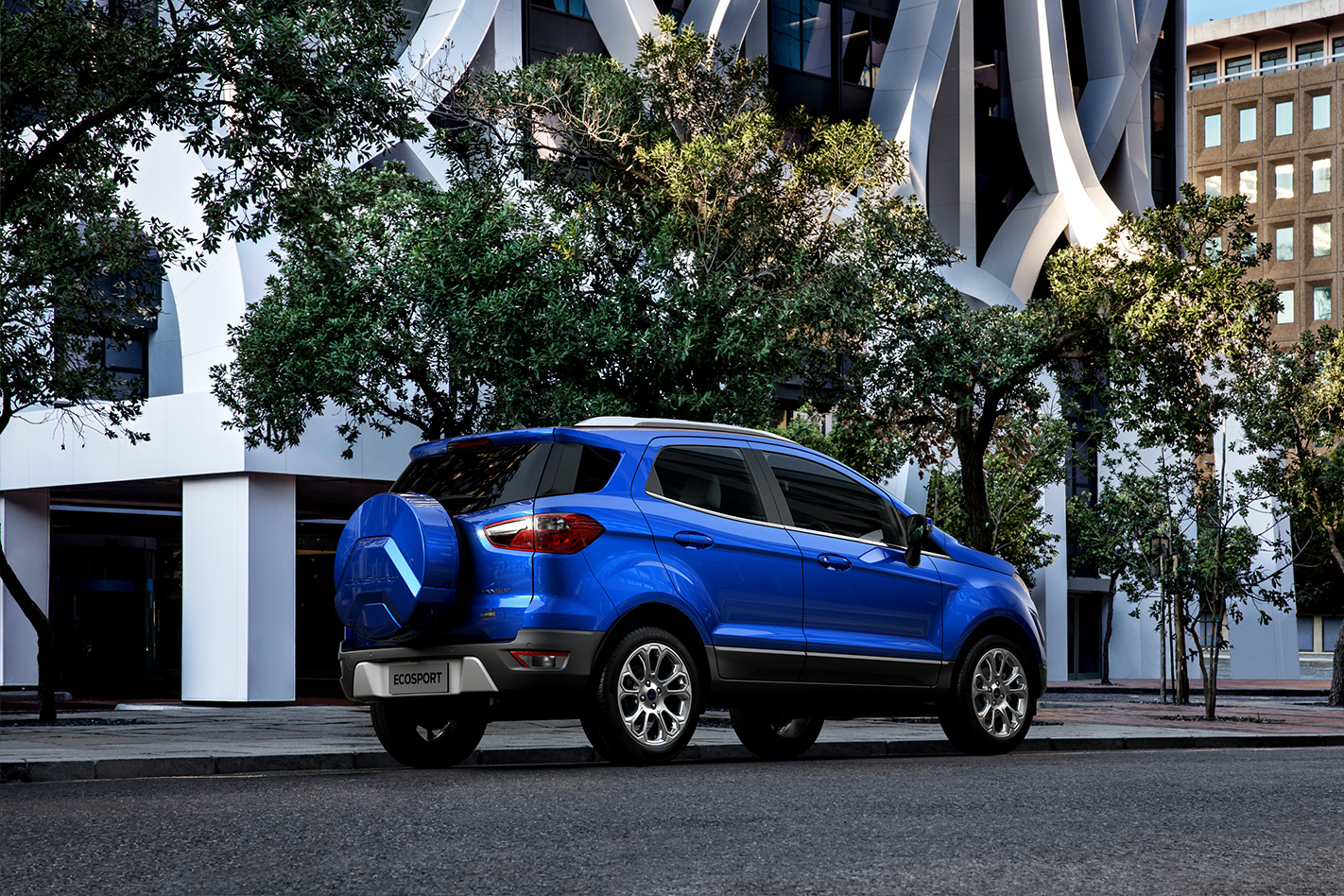
The range-topping Titanium adds leather trim to the seats and a sunroof. Keyless entry and push-button start mean you can keep the key stowed away when entering and firing up the engine. The air-con system adds climate control – using 1980s-style LED indicators to show the temperature setting – while an auto-dimming rear vision mirror, folding side mirrors, and a sliding armrest are also standard.
The wheels step up to 17-inch alloys wrapped in fuel-miserly 205/50 profile Bridgestone Ecopia tyres. The spare wheel adds a cover. The grille, framed in LED daytime running lights, gains a chrome look, the halogen headlights of the other models are replaced with high-intensity discharge lamps. The folding mirrors add puddle lamps, and the roof rails are finished in silver.
The Titanium is also the richest model in terms of driver assistance, adding front parking sensors, a blind spot monitor, dusk-sensing headlamps and rain-sensing wipers.
One thing the EcoSport range lacks, though, is emergency autonomous braking, a feature that any new – rather than facelifted – car would need to get a five-star crash rating. Instead, the EcoSport is expected to carry a five-star crash test rating that it was awarded five years ago.
MERCEDES-Benz will showcase a completely new approach to small car information and entertainment technology at the Consumer Electronics Show (CES) in Las Vegas next month, with the system set to make its debut in the next-generation of its small cars.
Dubbed the Mercedes-Benz User Experience (MBUX), its maker says the rethought system uses “artificial intelligence” for a more intuitive operating system, and is likely to gradually replace the current Comand system that has proliferated the range.
It is unusual for the three-pointed star to roll out innovations in its smaller, more affordable models, with that honour normally reserved for the S-Class flagship sedan. The move could indicate that the MBUX is destined only for the smaller end of its range.
The current Comand technology has received some criticism for being difficult to navigate with too many submenus and tabs, but the MBUX is likely to address customer feedback – both good and bad.
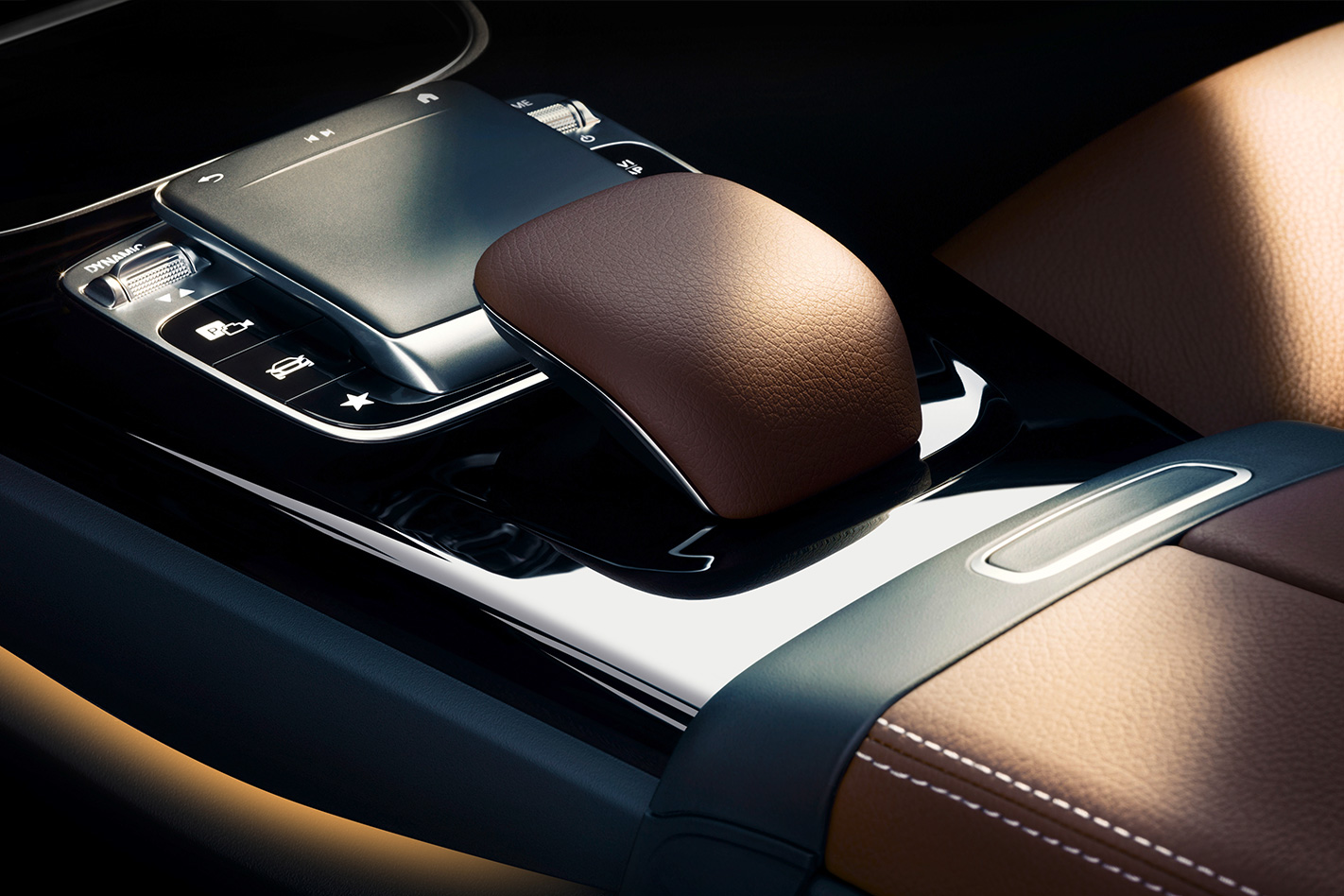
Details about the new system are light at this stage, but Mercedes has already revealed images of the forthcoming W177 A-Class’s interior, which offers a clue at some of the new features we can expect.
In place of the fiddly Comand scroll wheel, the A-Class and its CLA and GLA derivatives will get a touchpad with wrist rest and hot keys, or the driver can access a number of functions with steering wheel switches.
Similar to other models in the Benz line-up, the A-Class will complement the new system with a pair of 10-inch screens behind a single pane of glass, although only the top-spec cars will get the largest display.
Australian fans can expect to see the new A-Class on red dirt this coming winter but if you can’t wait that long to see its interior, the new infotainment system will make its debut in Vegas on January 9.
BMW Australia has cut almost $22,000 from the sticker price of its M4 CS Coupe.
Since the BMW M4 GTS sold out, the M4 CS is the lightest, most powerful, iteration of the 4-Series Coupe you can buy in Australia. For fans of Bavarian-bred performance cars, the CS is now the king of BMW showrooms.
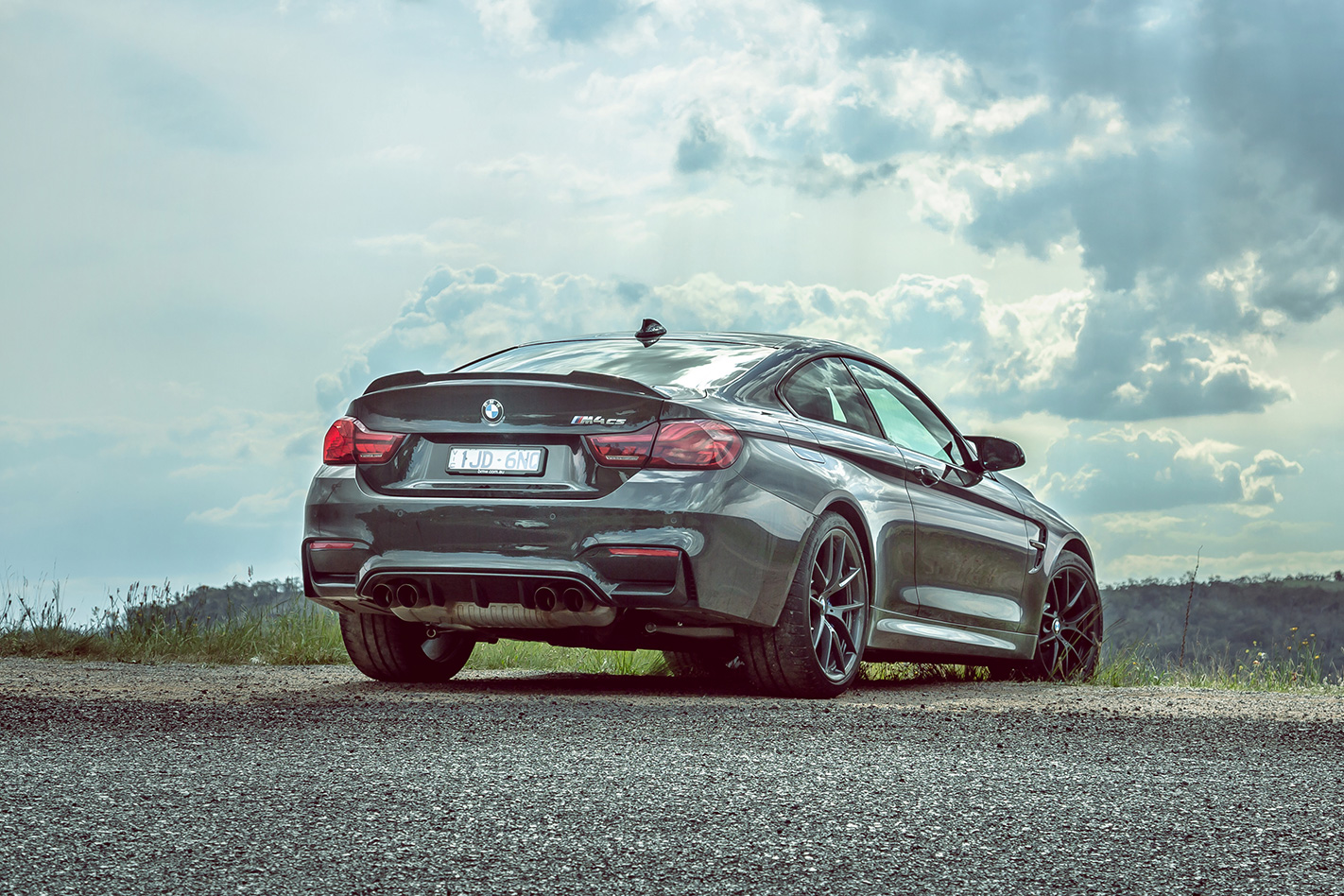
And now BMW Australia wants to help said fans put a CS in their driveway. People who have already pre-ordered a CS, along with future customers, will now be able to snatch one up for $189,900 – a nearly $22K discount on the old $211,610 price.
BMW has also ditched the ‘standard’ M4 from its line-up, leaving the manual Pure edition as the entry model at $139,900.
The cheapest automatic M4 is the Competition, costing $156,710, offering a seven-speed DCT transmission in the place of the Pure’s six-speed three pedal manual.
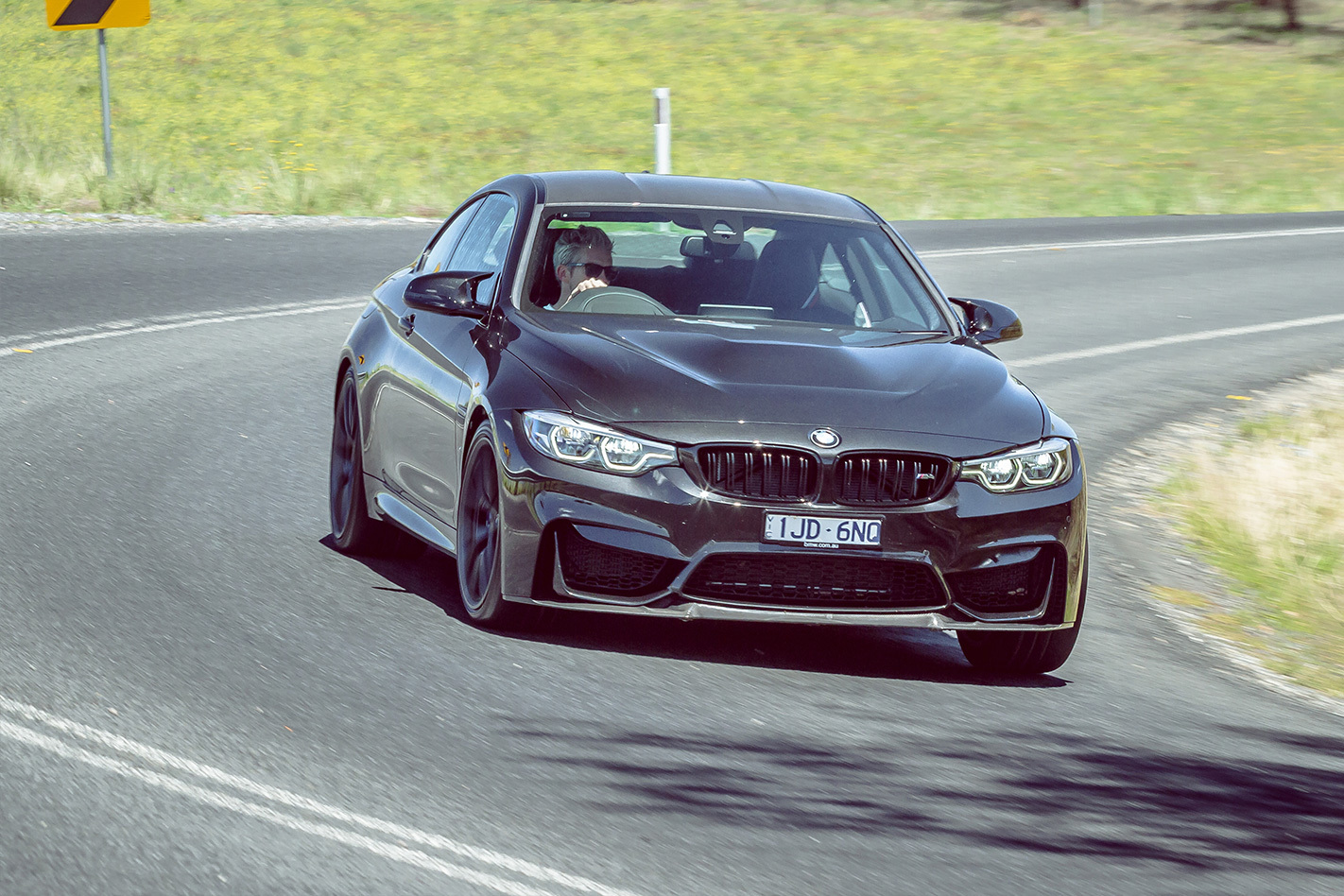
All M4 variants are powered by a 3.0-litre twin-turbo straight-six engine, with the Pure and Competition making 331kW/550Nm. The CS gets a 7kW/50Nm boost, along with plenty of weight reduction to improve its performance.
The M4 CS will sprint to 100km/h from a standstill in 3.9 secs, while stopping performance from 100-0km/h is accomplished in the same time. The Pure and Competition will complete 0-100km/h a tenth of a second slower than the CS.
“We have been working hard behind the scenes to deliver strong pricing for our M vehicles,” BMW Group Australia CEO, Marc Werner, said.
“By introducing the M4 Pure local editions, we have made this core M car more accessible than ever.
“In addition, internal and customer feedback has allowed us to re-examine the flagship M4 CS pricing.
“This new M pricing structure is a sensational early Christmas present for BMW M customers.”
BMW M4 Coupe range pricing:
- BMW M4 Pure – $139,900
- BMW M4 Competition – $156,710
- BMW M4 CS pricing – $189,900
THE Ford EcoSport has undergone a mid-life refresh that takes some of the hard edges off the model it replaces.
WHAT IS IT?
The EcoSport is the smallest SUV in Ford’s Australian showroom. It has a fight on its hands; there are more than 20 brands exchanging blows in the sub-$40K SUV segment, with just two models – the Mazda CX-5 and the Mitsubishi ASX – accounting for almost two in every five sales this year. EcoSport has accounted for only one in every 10.
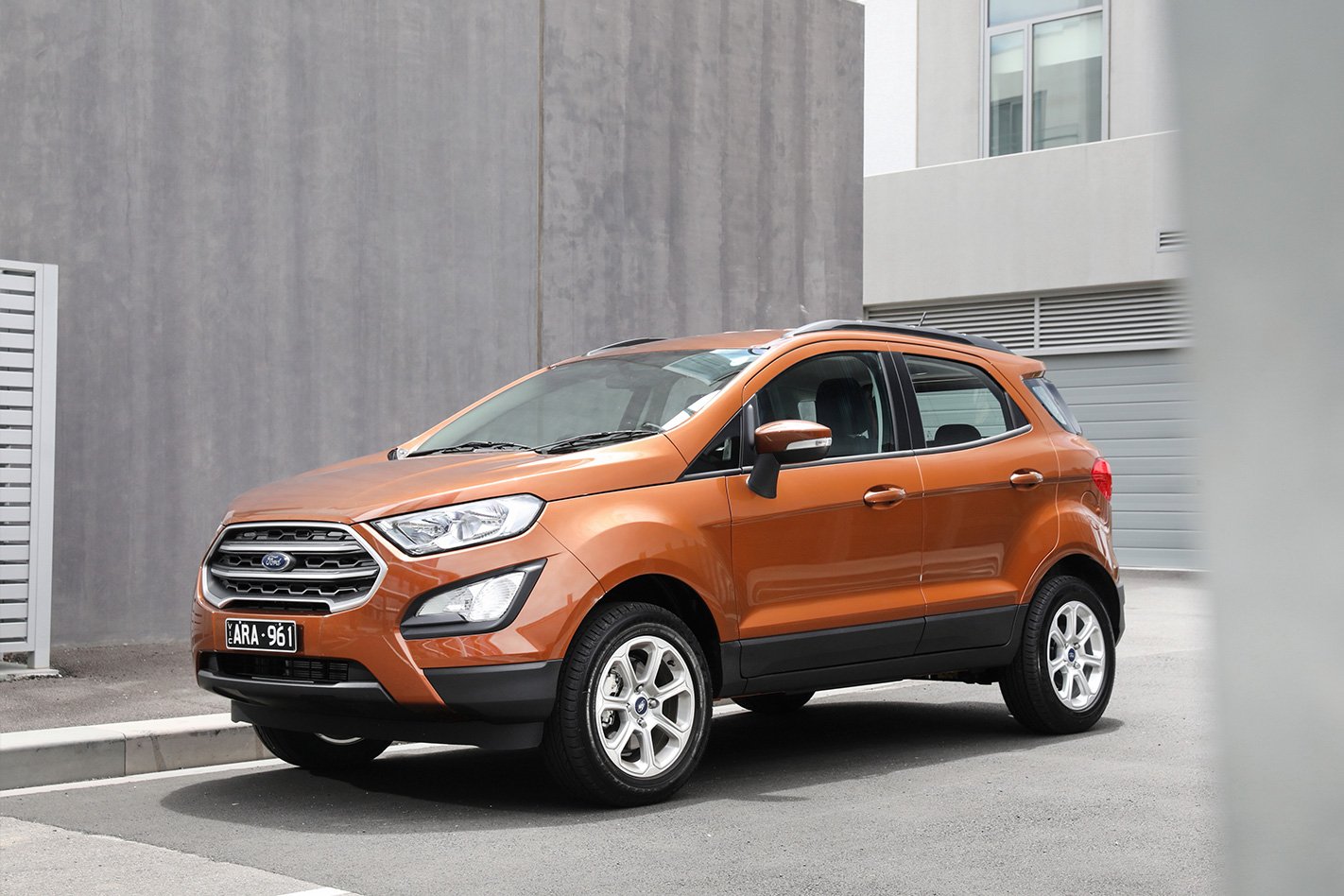
A mid-life refresh for the EcoSport brings better looks, and more importantly for Ford’s target customers, an automatic option for its volume-selling model and an interior that’s much more attractive to its target buyers – couples stepping into their first new-car experience, and downsizing empty nesters.
RIVALS
Holden Trax, Honda HR-V, Mazda CX-3, Mitsubishi ASX, Nissan Juke, Skoda Yeti, Subaru XV
THE WHEELS VERDICT
Changes made to the exterior and interior of the Ford EcoSport, and more under the bonnet, improve the breed. But the game has moved on since 2013, and the EcoSport is still a long way off catching up with the pack.
THE WHEELS REVIEW
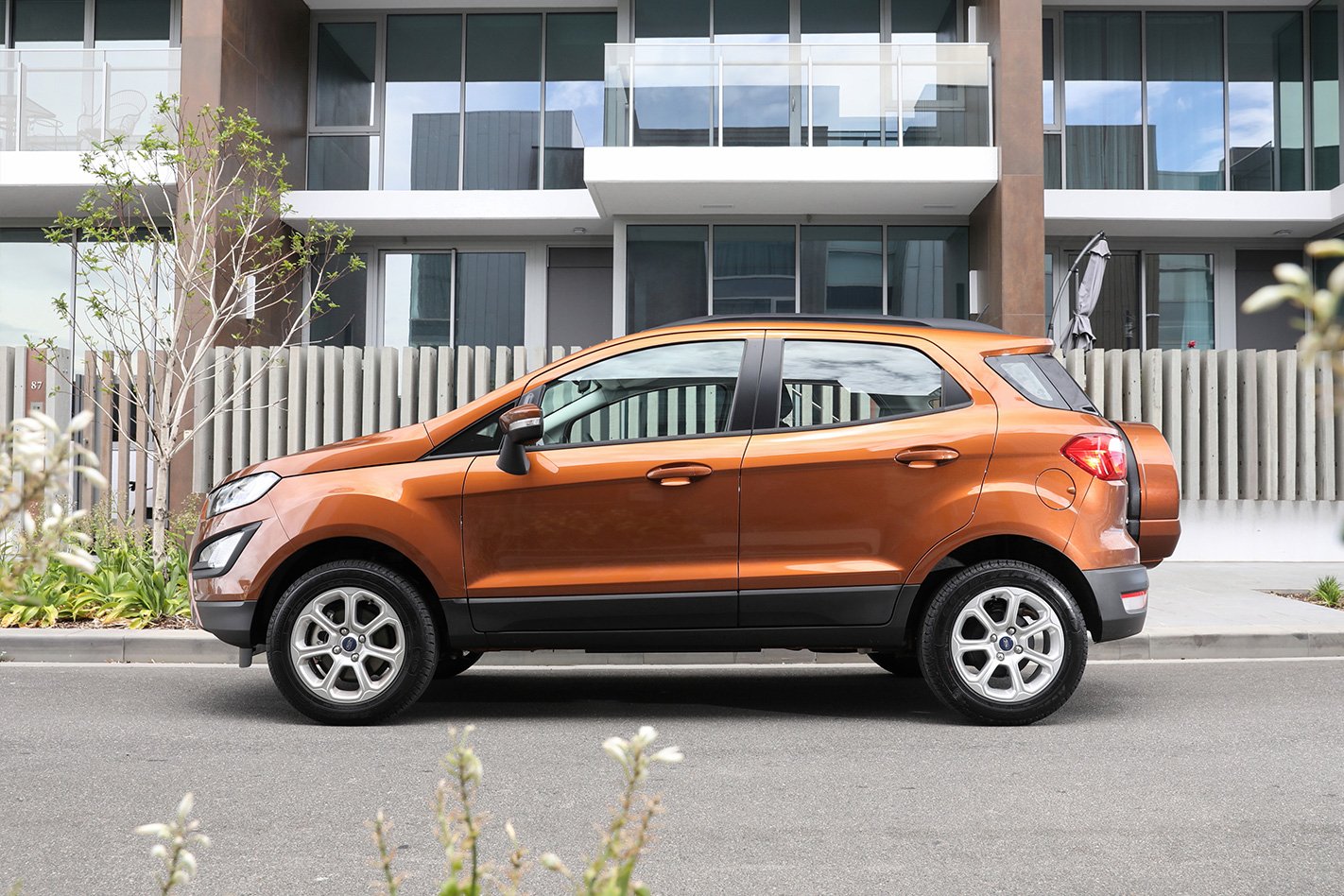
THE ugly duckling of Ford’s SUV line-up has had a makeover. The EcoSport was introduced to Australia in 2013 as a cheap, Indian-made small car based on the brilliant Fiesta platform. However, something was lost along the way. Somewhat unsettling to look at, sporting a full-size spare wheel on its tailgate and a dual-clutch automatic gearbox that is now the subject of a class action – and with an interior unashamedly built down to a price – buyers lured mainly by either quality (Mazda CX-3) or value for money (Mitsubishi ASX) voted with their wallets. And not in the EcoSport’s favour.
Ford is now keen to turn the EcoSport’s fortunes around. Key to this is a significant facelift, an interior makeover, and the decision to bin the problematic Powershift and replace it with a traditional six-speed torque converter automatic that bolts on beside the 1.0-litre turbocharged triple, relegating the six-speed manual gearbox it used to be paired with to the pages of history. Very few customers wanted it, anyway.

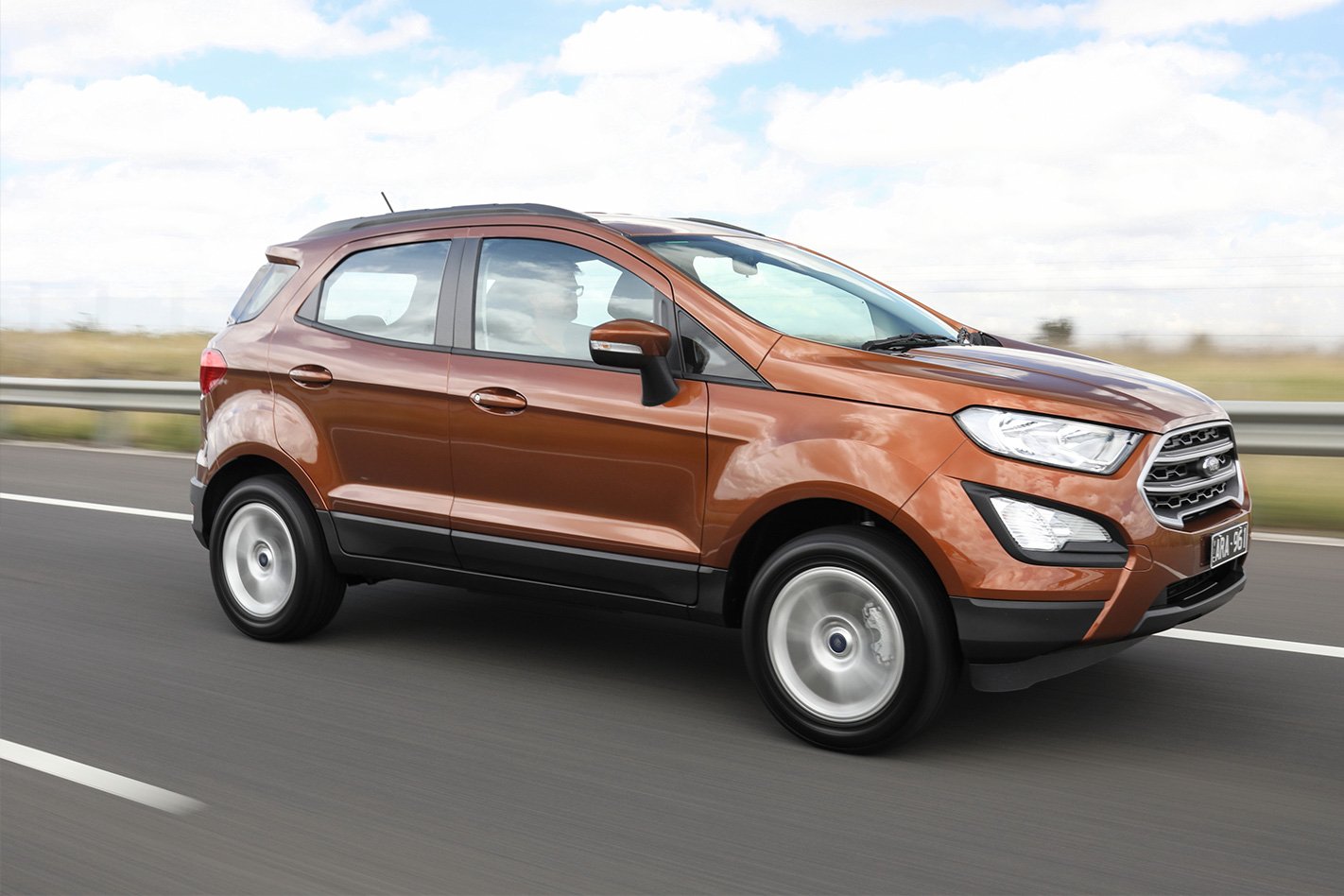
A better option is the much-lauded 1.0-litre turbo triple fitted to the mid-spec $24,490 Trend ($2200 more expensive now that there’s no manual option) and the range-topping, leather-clad $28,990 Titanium ($1200 more expensive). It carries over from the pre-facelift car but has more poke, generating 92kW/170Nm (that’s 10kW and 30Nm more than before) is more willing to build revs, even if the pace is still best described as leisurely, but with less vibration and noise than the bigger atmo donk. Your foot isn’t buried as hard to the firewall, either.
So you’d think autonomous emergency braking would be an important feature for a city-bound SUV, then. Not Ford, because no version of the EcoSport gains AEB. But all models get a reversing camera, mounted low below the spare tyre and hanging like a small dag off the side-opening soft release tailgate, which doesn’t show enough of the world behind the SUV. Even so, the EcoSport, with its seven standard airbags, is expected to retain its five-star crash rating from 2013.

The EcoSport’s interior is very plastic, and more so in the Ambiente that features a plastic steering wheel. Hard, textured surfaces dominate, but the interior is surprisingly roomy – even in the back seat. The 346L boot will grow to 1128L once the rear seats flip forward (you need to pull the seat base forward if you want the seatback to sit flat), with a three-stage setting for the boot floor height. The world’s shortest cargo blind – it extends maybe 40cm – hides the contents away from prying eyes. The lack of a vertical-lift tailgate means it can’t be replaced with a hatchback-like hard cover.
Changes made to the EcoSport have improved it. But relative to some of the competition, the EcoSport is still a significant step behind – particularly in terms of safety. It may not look like an ugly duckling, but it still quacks like one.
Spare me
The spare wheel hanging off the EcoSport’s rear door will soon join the manual gearbox in the rejects bin. Ford is waiting for a MY18.5 update to the EcoSport to replace it with a tyre inflation kit. The current spare tyre is either a full-size steel wheel or alloy, depending on the variant it is fitted to.
SPECS
Model: Ford EcoSport Trend Engine: 999cc 3cyl, dohc, 12v, turbo Max power: 92kW @ 6000rpm Max torque: 170Nm @ 1400-4500rpm Transmission: 6-speed automatic Weight: 1368kg 0-100km/h: N/A Fuel use: 6.7L/100km Price: $24,490 On sale: Now
After Holden dealerships were found to be holding onto VF Series II limited edition models and attempt to sell them at an exorbitant price, now one dealer has placed online a Magnum ute sticker package and other parts to sell to the buying public.
The dealer advertised a Magnum ute decal sticker package – tagged as GM genuine – on eBay for the price of $1690 and with mid-December delivery, along with other parts including a Calais Director lip spoiler ($145).
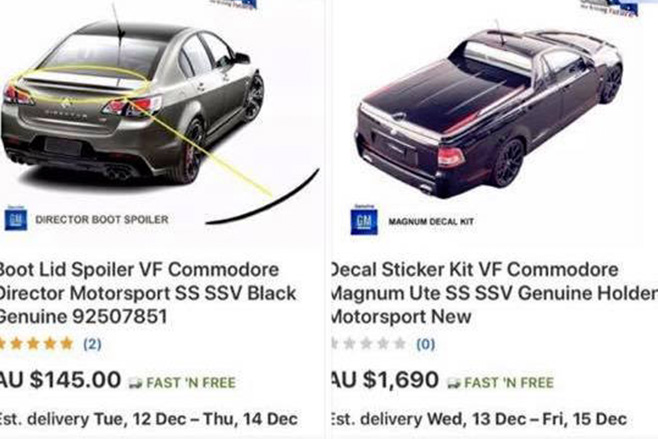
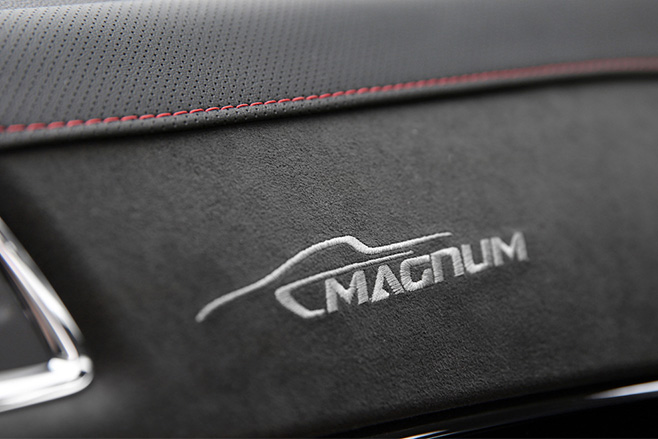
Items such as a red-painted engine cover were already part of the VF Series II accessories catalogue, as were the black 20-inch alloy wheels, although they lacked the red outline common to all three locally made limited editions. It leaves the ‘Magnum’ stitched dashboard, and electrically adjustable heated front seats as the only major differentiators.
While it isn’t unusual for dealers to sell parts, owners of the limited editions had been told by their Holden dealers that a VIN number would have to be supplied, and a broken or defect part shown, in order to receive a replacement part in order to manage future stock.
The Holden spokesperson said that the dealer network has been told of this practice, and parts specific to VF Series II limited edition models will not be sold through outlets of eBay. As MOTOR went to press the Magnum ute decal package had been taken down.
In a silver lining for owners of the delayed Calais Director, meanwhile, Holden has extended its seven-year/175,000km warranty to owners of the limited edition who collected their vehicle after the extended coverage promotion started in October.
It will end across the Holden range, however, on December 31 as the local Lion reverts back to three-year/100,000km coverage.
AUSTRALIA’S consumer watchdog has savaged the new-car sales industry in a scathing report that calls for more regulation and better protections for buyers – including more believable fuel use figures.
The Australian Competition and Consumer Commission report – the result of almost 18 months of analysis of the new-car market – has drawn a strong reaction from the industry, with the Federal Chamber of Automotive Industries saying the findings had “maligned” new-car retailers.
The final report, released late yesterday, calls for “several reforms to improve the new car retailing industry, which should lead to better outcomes for consumers”.
“Some will require industry led change and others, we consider, require regulation,” ACCC chairman Rod Sims said.
The report was critical of the way that dealer agreements, the commercial arrangements made between car importers and the dealerships that sell them, allowed the dealerships to respond to complaints from buyers.
“If manufacturers’ policies and procedures don’t adequately recognise consumer guarantee rights, this can influence the behaviour of dealers in responding to complaints,” the ACCC said.
“We recommend that car manufacturers update their complaint handling systems to ensure consumer law is front and centre of relevant systems, policies and procedures. Conditions or obligations under the manufacturer’s warranty must not exclude or limit consumers’ rights.”
However, the ACCC said it was concerned that some brands imposed “unnecessarily complex warranty claim processes, leaving dealers inadequately compensated for repairs or remedies provided to consumers”.
“Dealers have direct responsibility to provide remedies to consumers but they also have a right under the Australian Consumer Law to recover the reasonable costs of providing these from the car manufacturers when the manufacturer is at fault,” it said. “We will take action if a manufacturer prevents a dealer from fulfilling their legal obligations under consumer law.”
The official fuel use figures provided by Australian tests – which are sometimes up to 20 percent higher in the real world depending on driving style – also fell under the watchdog’s scrutiny.
“The ACCC recommends that the Federal Government introduce more realistic laboratory tests for fuel consumption and emissions, and an on-road ‘real driving emissions’ test to give new car buyers more accurate information,” it said. “Our research shows fuel consumption is the third most significant purchasing factor for consumers after price and model. We are concerned that new car buyers are not receiving accurate information about fuel consumption or emissions performance.”
FCAI chief executive Tony Weber said the ACCC report not only revealed a poor understanding of the industry but also provided meagre evidence to support the need for change.
“While the FCAI and motor vehicle companies in Australia are still studying the detail of today’s report, at first blush it appears that the ACCC has taken 18 months to research and understand a complex industry, and failed to properly comprehend it,” Weber said. “The ACCC’s report appears to be predicated on a very small number of complaints which it uses to tarnish Australia’s $17.5 billion retail motor industry. This is not only unfair, it is inaccurate.”
Weber said the retail new car industry had been “unfairly maligned” by the report, which also said manufacturers should supply independent repairers with technical information so that owners did not have to return to dealerships to have their vehicle serviced. “The reality is that as modern motor vehicles become more sophisticated, the independent repair sector needs to continue to adapt and change to ensure it remains relevant and up to date,” Weber said. “Independent repairers shouldn’t be able to say they can repair all makes and models when clearly they can’t. Unfortunately, today’s report just smacks of the ACCC looking to support old and failing business models for independent repairers.”
The ACCC has taken various car brands to court recently including Audi (over diesel emissions claims), Ford (over problems with the Powershift dual-clutch gearbox fitted to Fiesta, Focus and EcoSport models), Holden (in relation to a manufacturing fault with the Captiva SUV) and Volkswagen (over Dieselgate emissions cheats).
WHAT IS IT?
The mid-life update to the Mercedes flagship sedan that brings a host of new technology to enhance driver safety and comfort. New engines include a 3.0-litre straight-six turbo diesel and 4.0-litre bi-turbo V8 that brings the return of the 560 badge.
WHY ARE WE TESTING IT?
Audi and BMW have shown their hands with the new A8 and 7 Series, but Mercedes-Benz has shuffled its cards in an effort ensure its S-Class remains the benchmark luxury sedan. Wheels sampled the powerful S400DL long-wheelbase diesel at its international launch in Switzerland so we focused on how the new S506L V8 faired alongside it at the model’s Australian launch.
Audi A8, BMW 7-Series, Jaguar XJ, Lexus LS
THE WHEELS VERDICT
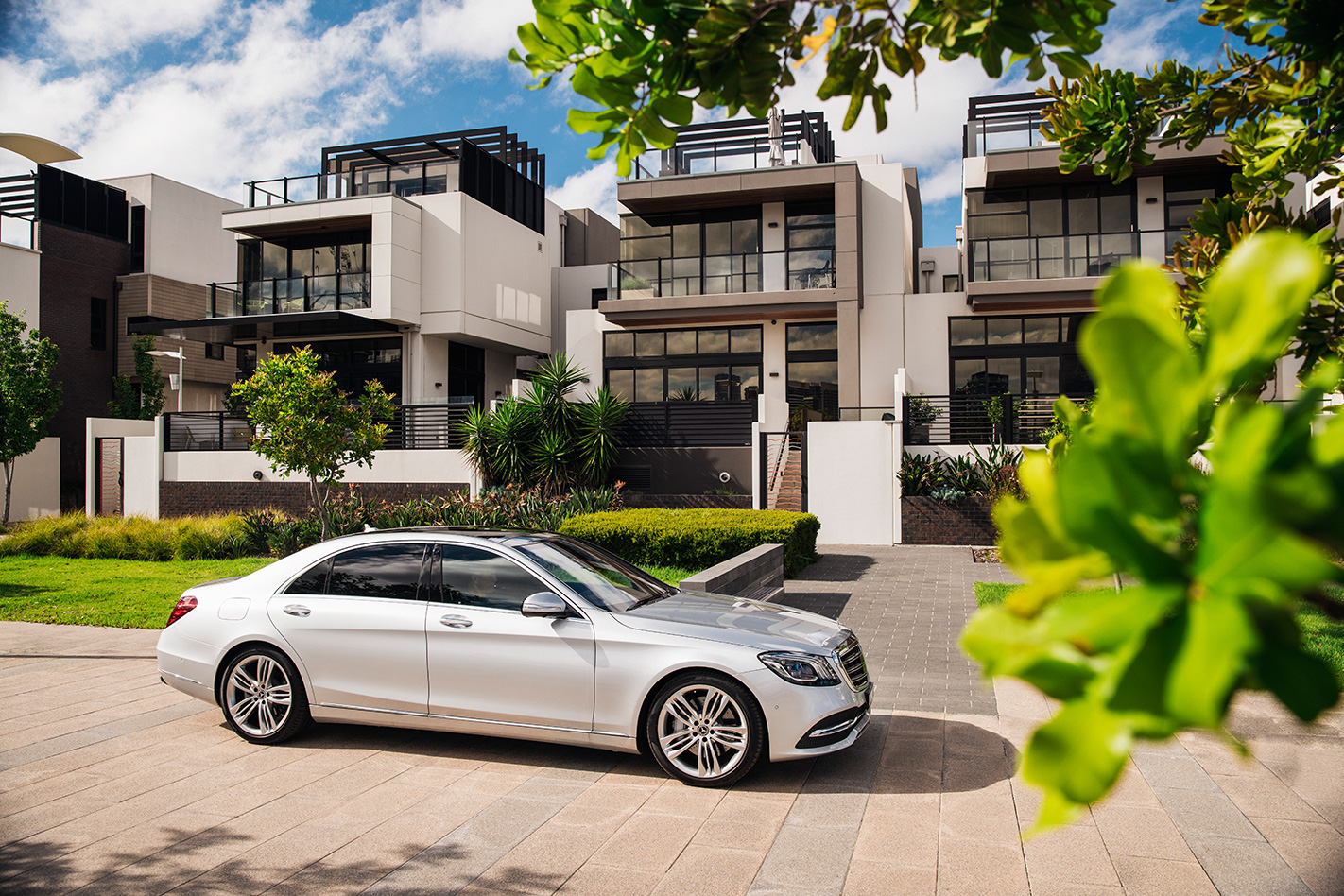
It’s easy to see why the S-Class attracts so much loyalty from its well-heeled clientele with each upgrade providing enticing enhancements for customers which keeps the dealers busy with trade-ins. This relatively mild update brings a facelift, new engines, 6500 new components and enough aesthetic, performance and technological changes to take into yet another level in terms of driver and passenger safety and comfort.
THE WHEELS REVIEW
The S560 badge has returned to the Mercedes-Benz S-Class for the first time since it appeared on the boot-lid of the second-generation W126 S-Class during the late 1980s.
While the original 560SE drew its name from the big 5.5-litre atmo V8, its latest incarnation is a bi-turbo 4.0-litre V8, but as recent Benz nomenclature has shown, the badge numbers have evolved beyond displacement to represent the hierarchy of the range.
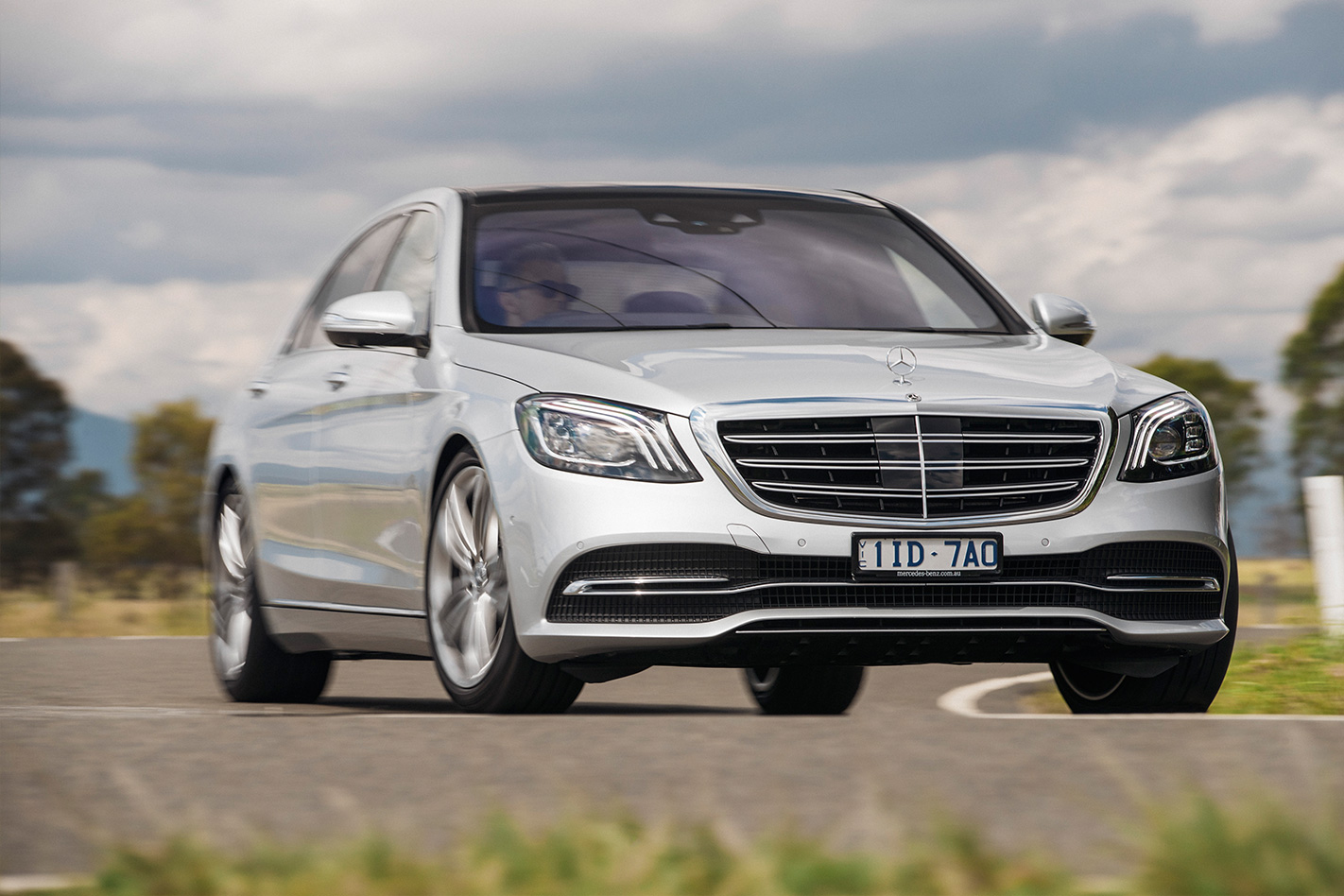
In the newly updated S-Class, the S560 is the most powerful and well-equipped variant without an AMG or Maybach badge and, like the big-selling model introduced in 1986, is offered as standard and long-wheelbase versions.
The diesels are powered by a new 3.0-litre turbocharged straight six in two guises – the 210kW/600Nm 350d and the 250kW/700Nm S400dL which feels every bit as nimble as the 345kW/700Nm twin-turbo V8 in the S560 models, and the slightly detuned version (270kW/520Nm) in the S450L.
With the S400DL already covered in Switzerland, I chose to concentrate in the range-topping S560L at the local launch in Victoria’s Yarra Valley, swapping Swiss mountain air for a 37-degree Aussie scorcher.
As well as having the most powerful donk of the standard S-Class models, the S560L is fully loaded and you get a hell of a lot to justify its $295,000 price tag, $75,000 of which is GST and luxury car tax.
It’s only when you jump into one of the lesser-powered models, such as the S350d, which experiences the kind of inertia you’d expect from land yacht, that you appreciate just how effective the extra power and torque is.
The nine-speed torque converter auto generally keeps pace with throttle and brake commands, though the paddle shifters came in handy for quicker downshifting through bends. Power is sent to the rear wheels for all Australian models, with the 4Matic all-wheel-drive traction limited to left-hand-drive versions.
Continuously adapting air suspension provides an exceptionally smooth ride even on the 20-inch rims wrapped with 245/40 and 275/35 rubber at the front and rear ends respectively. The dampers adjust to most conditions for the Comfort drive mode to cover most bases, but Sport mode came in handy on the Yarra Valley’s twisting roads to stiffen things up a little, and reduce that floating sensation without compromising ride comfort.
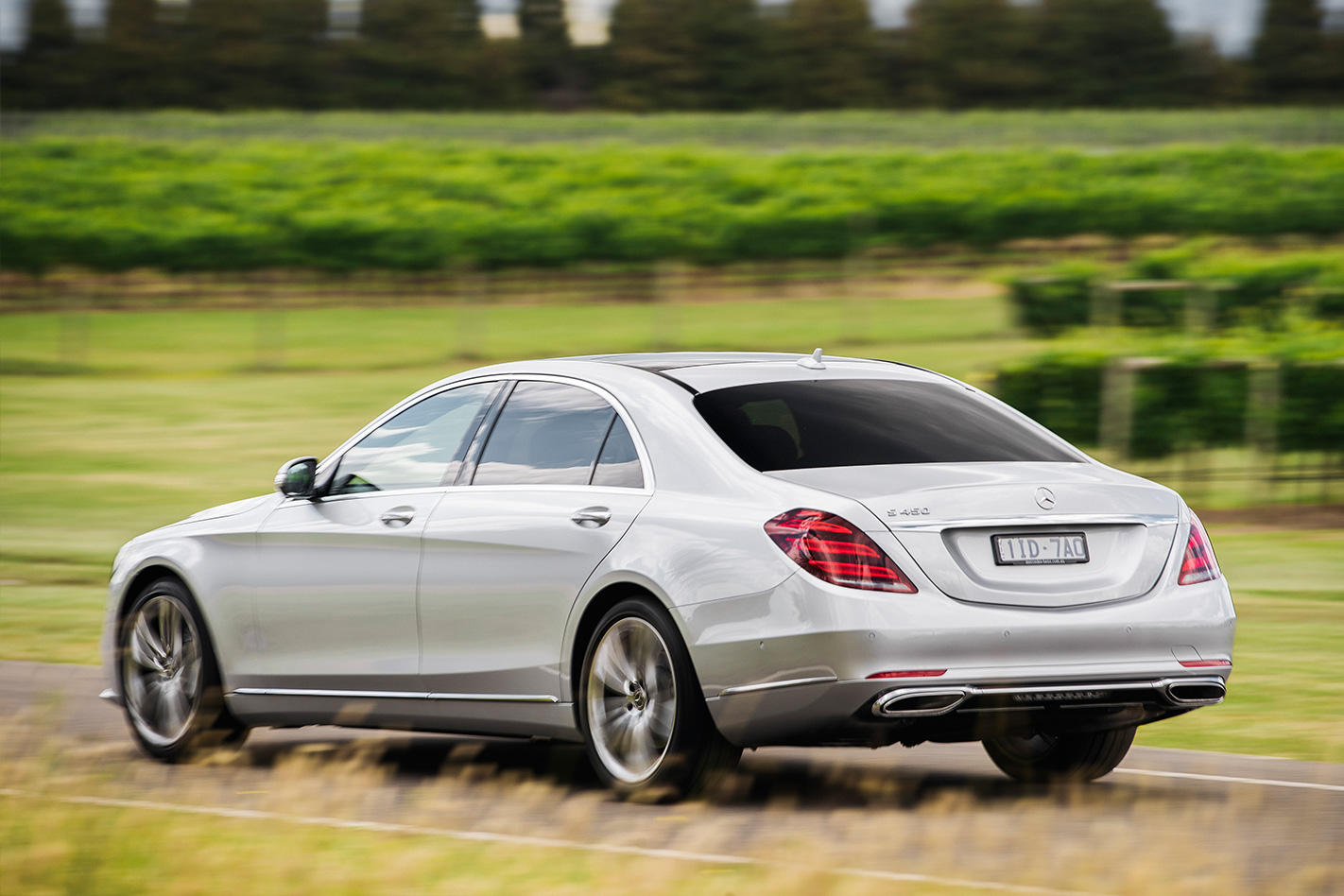
Published fuel economy is a relatively frugal 8.5L/100km though I averaged a still-respectable 10.3 with a mix of freeway, and enthusiastic country driving.
The S Class update brings a relatively mild facelift, including a revised grille, front bumper, and headlights, each containing 84 individually controllable LEDs that can project the brightest legal high-beam intensity up to 650 metres ahead. As well as the new engines there are around 6500 new components, says Merc, and even more technology to boost semi-autonomous driving and comfort.
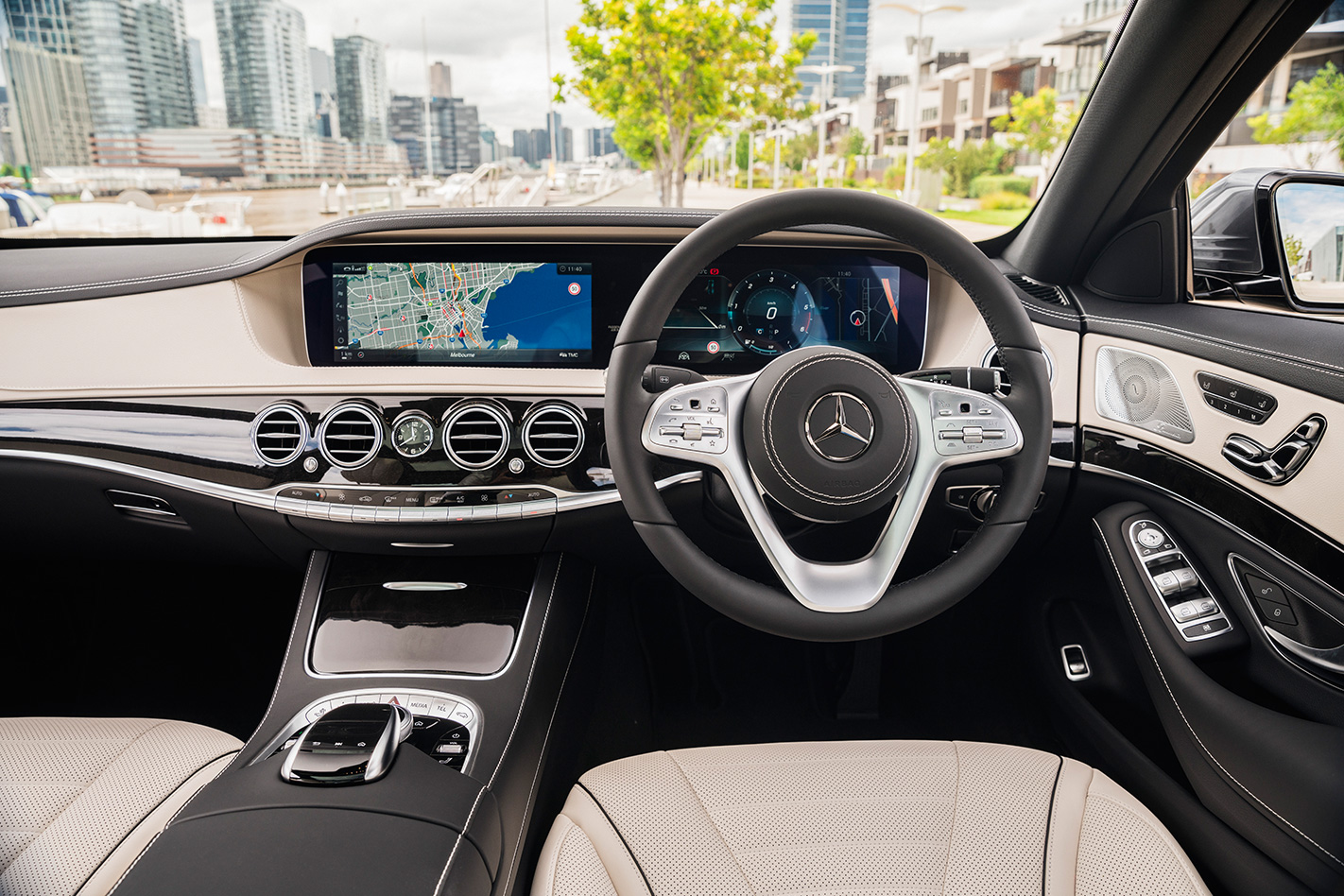
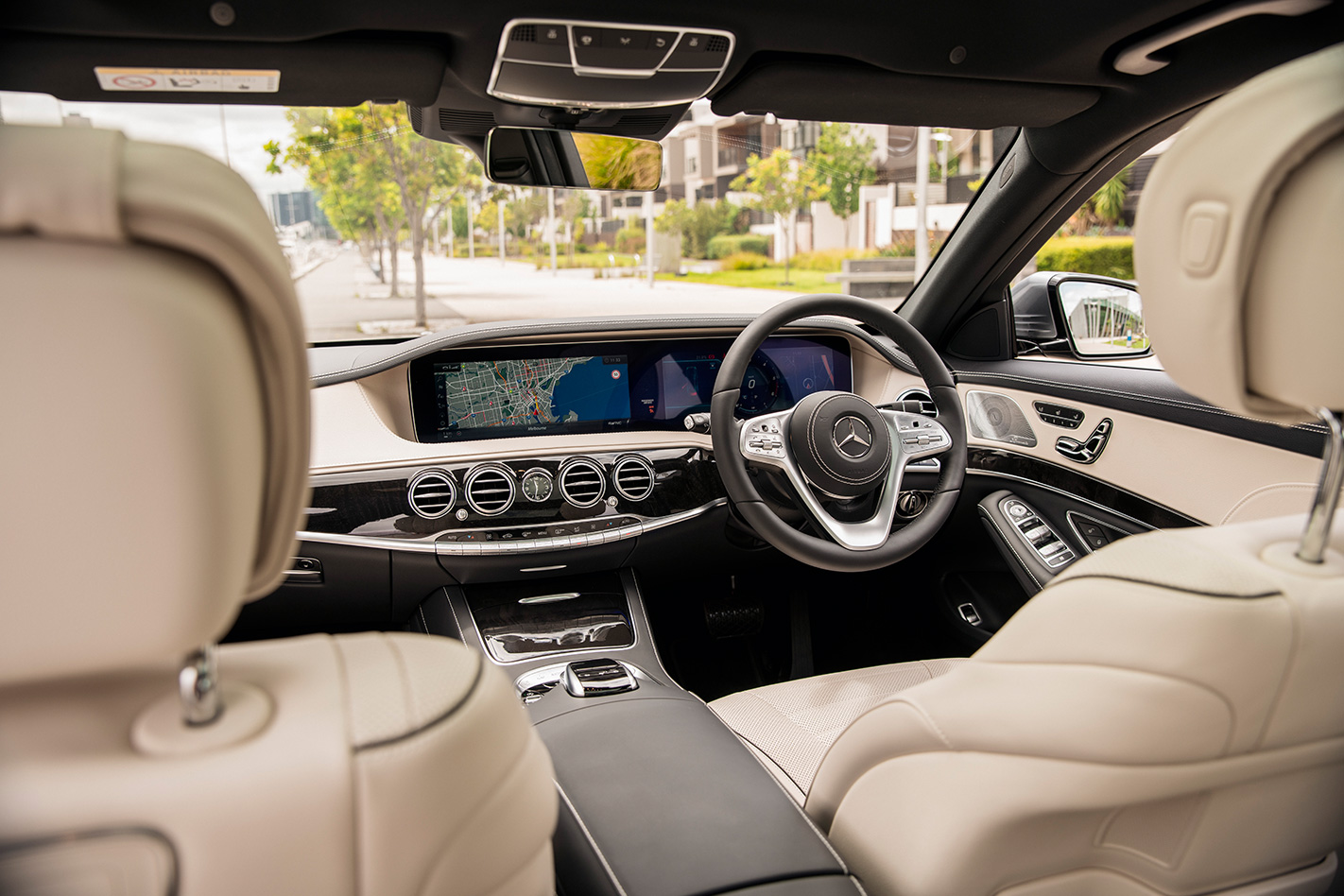
What’s incredible is how all the accompanying gadgetry is designed to caress your senses, including even your sense of smell, in a way that actually relaxes rather than distracts.
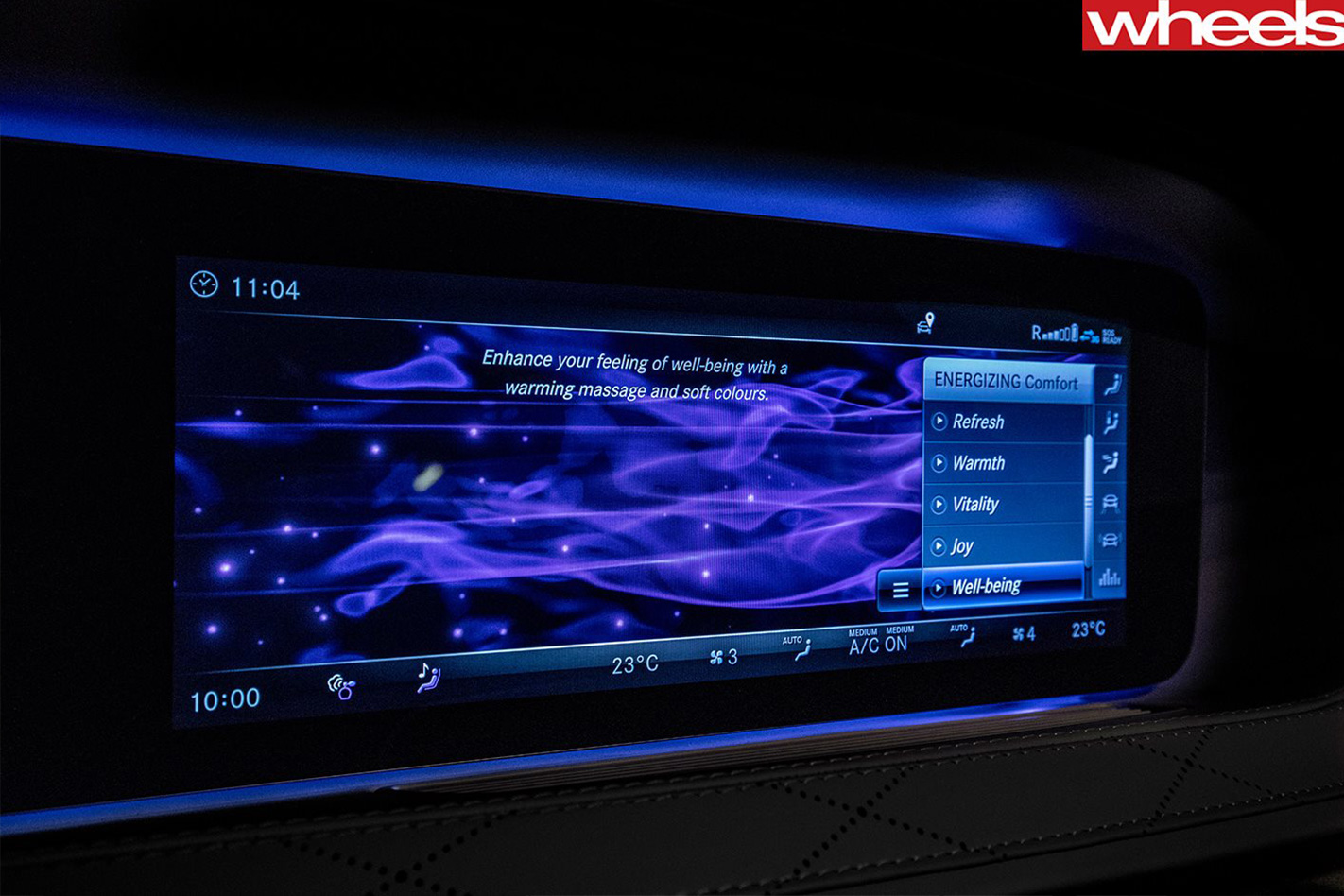
But, while it continues to add new semi-autonomous functions, Mercedes believes the best way to avoid an accident is to ensure the driver is relaxed but alert. Enter the S Class’s latest party trick; Energizing comfort control, which uses the rhythm from a music library to create a series of settings that will operate some of the car’s interior functions to suit the occupants’ mood.
Standard in the S560 and AMG S 63 and a $973 feature in the other models, it has five modes, Refresh, Warmth, Vitality, Joy and Comfort modes that, when selected, display unique graphics on the 12.3-inch colour display matched with the ambient lighting.
It even adjusts seat settings and climate control accordingly and plays appropriate music, based on the beats per minute, to either invigorate or relax. It also has a choice of three 10-minute ‘training programs’ which feature a soothing voice that advises on body movements, breathing techniques and thoughts to keep the driver stimulated and alert.
Mercedes calls it “Wellness while driving” which sounds a little naff, but on a 37 degree day the Refresh mode, which simulates a fresh seaside breeze, actually managed to make such a gracefully performing and comfortable car even more pleasant.
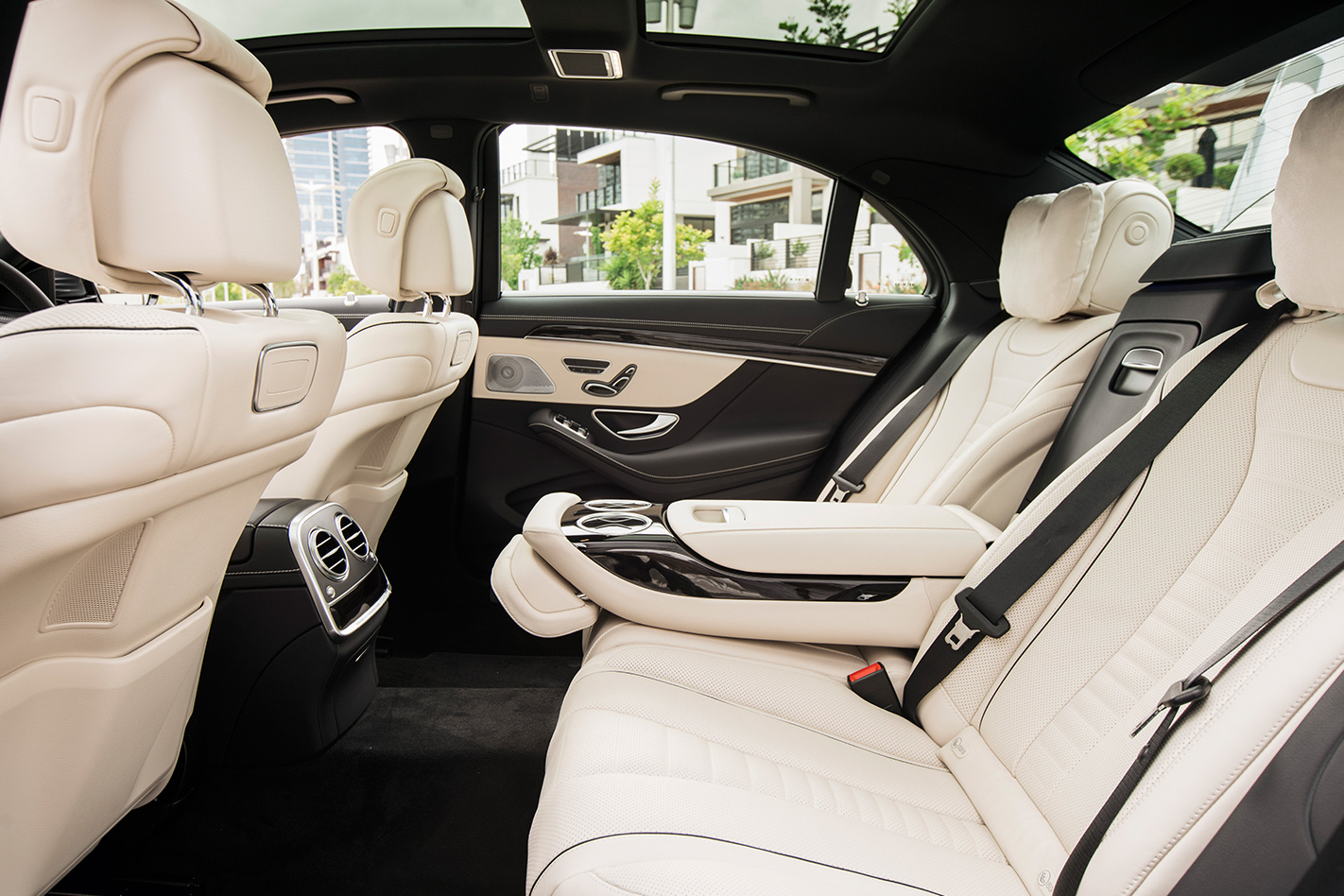
Model: S560L Engine: 3982cc V8, dohc, 32v, petrol, turbo Max power: 345kW @ 5500rpm Max torque: 700Nm @ 4000rpm Transmission: 9-spd automatic Weight: 2280kg 0-100km/h: 4.7sec Economy: 8.5L/100km combined Price: $295,000 On sale: January
HSV won’t be making any fast Commodores in the foreseeable future, but it’s not calling it quits just yet.
We recently revealed HSV’s plans for the near future, but we were also working on a retrospective of its past.
Over the last three decades, MOTOR has watched HSV grow and thrive, so we put together this 146-page special edition, made up of a collection of historic articles, to celebrate 30 years of HSV.
This preview runs through less than half of what this special issue has in store for those who go pick one up. Enjoy!
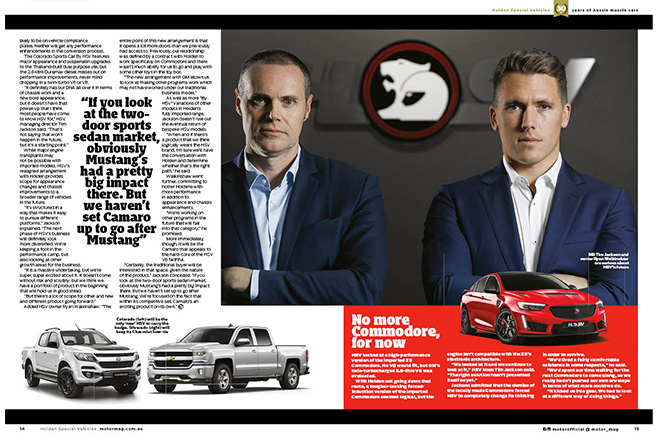
We sit down with Ryan Walkinshaw and HSV director Tim Jackson to discuss the future of HSV.
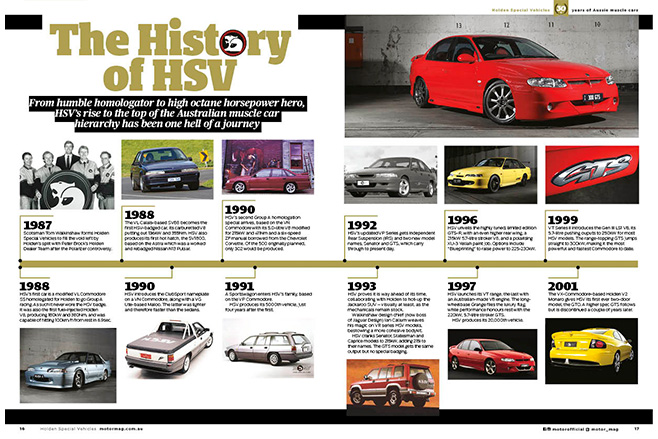
Charting HSV’s rise from humble origins to creator of the world’s most potent and desirable performance sedans.
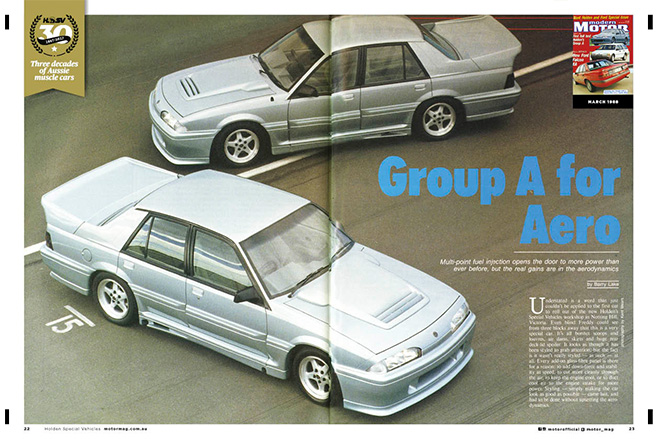
This classic article from MOTOR’s March 1988 issue chronicles the beginning of Holden Special Vehicles.
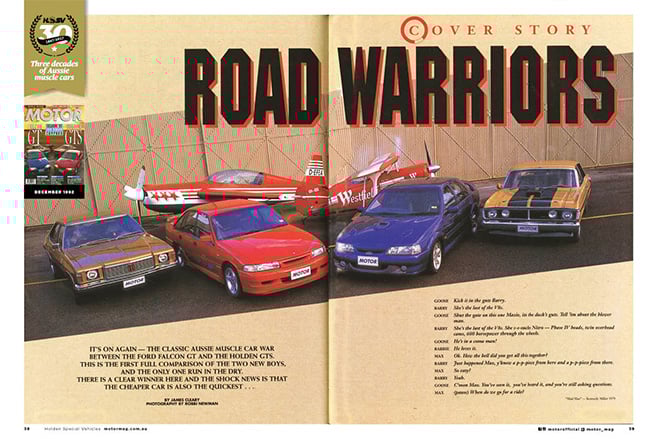
December 1992: Ford versus Holden, Falcon GT versus GTS, it was the Australian muscle car battle of its time.
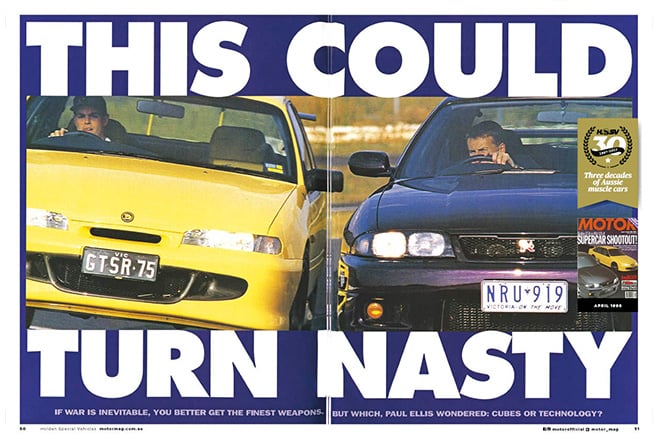
It was Skaife versus Lowndes, and HSV GTS-R versus Nissan Skyline GT-R.
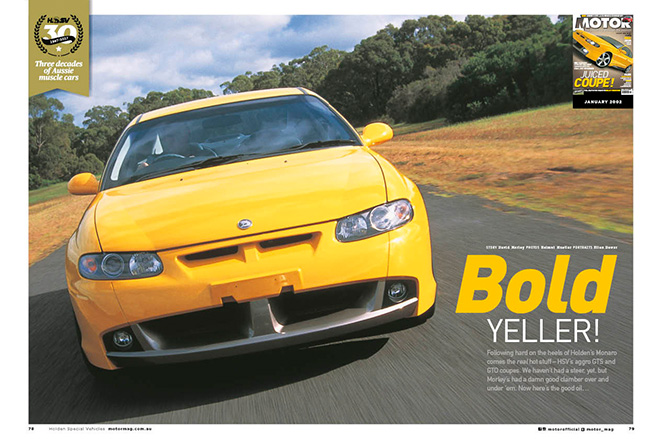
January 2002: HSV turned Holden’s stunning Monaro into a juiced coupe to challenge the Bavarians.
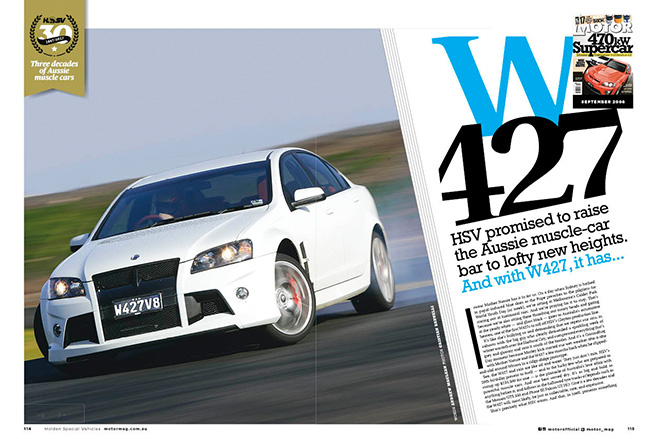
September 2008: The biggest engine ever in an Aussie sedan raises the performance bar to new highs.
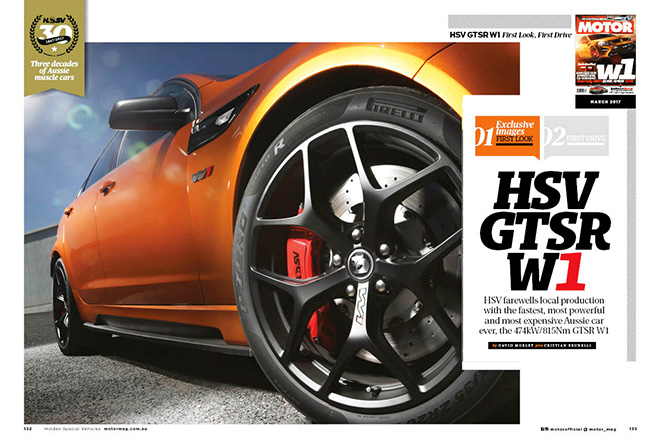
March 2017: The last Commodore-based HSV flies off in a supercharged 474kW/815Nm cloud of tyre smoke.
And much, much more
Really, there’s a lot more in this issue than just what this preview has shown. Go pick up a copy today!
The already muscular Chevrolet Corvette ZR1 is set to get a power boost thanks to tuner Hennessey.
Its 563kW and 969Nm is able to be pumped up with one of three engine upgrades for the 6.2-litre LT5, the highest of which Hennessey estimates could put the ZR1 in the low 9 second range for the quarter mile.
But starting at the lowest level, called HPE850, the Corvette will still get a boost to 633kW while retaining its original 969Nm. This is done through a series of changes such as high-flow cylinder heads, stainless steel headers, a lower pulley upgrade, and a Hennessey camshaft upgrade.
Hennessey estimates this level of upgrade could hit 97km/h (60mph) in 2.6 seconds, and run a 10.3s quarter mile.
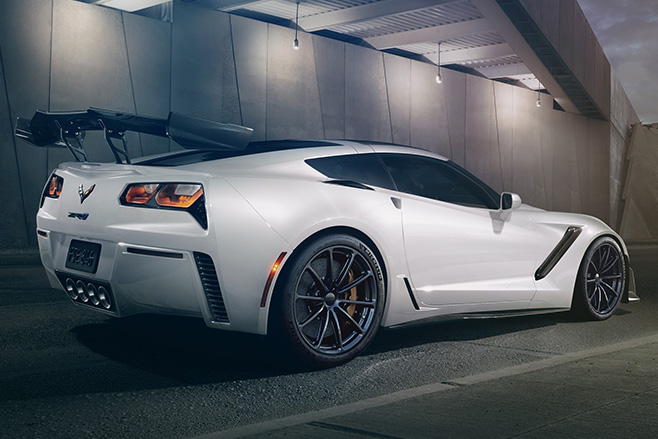
This is achieved through an upgraded high-flow supercharger, a Hennessey camshaft, ported cylinder heads, high-flow catalytic converters, and a high-flow air-to-air intercooler upgrade amongst other changes.
The final, and most powerful of the upgrades, is the HPE1200.
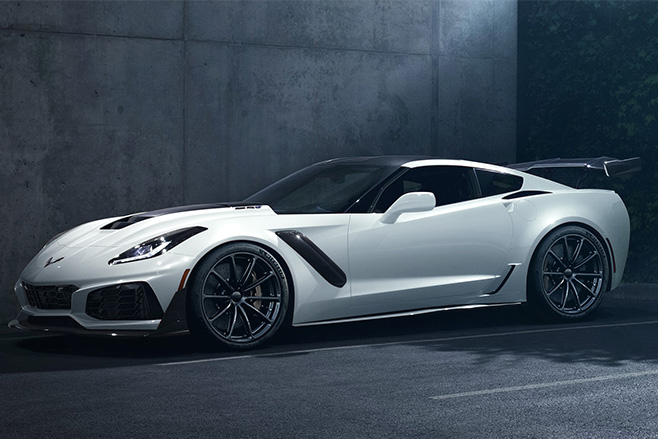
0-97km/h is a claimed 2.2 seconds, with a quarter mile in 9.2s.
While the lower two upgrade packs come with a two-year or 24,000 mile warranty, the HPE1200 come with one year and 12,000 miles.
Hennessey says production for the upgrade is limited to 100 units, though didn’t specify whether that applies to each level of upgrade, or the Corvette upgrade series overall.
LEXUS tends to move a little slower than its German arch-rivals.
While the likes of AMG, Audi Sport and BMW M made the switch to turbo tech for their V8-engined performance cars, Lexus stands apart as the only luxury manufacturer still offering a naturally-aspirated, high-revving V8.
But that may come to an end in 2019, when Lexus is expected to wheel out an all-new 4.0-litre twin-turbocharged V8 – and the initial recipient of the company’s first-ever forced-induction bent eight is likely to be a high-performance LC F flagship coupe.
According to Japanese magazine Holiday Auto, the large coupe’s highly-anticipated ‘F’ variant will see a bevy of changes over the current 5.0-litre atmo V8 petrol LC 500, not to mention its V6 hybrid LC500h sibling.
The rumoured twin-turbo 4.0-litre V8 is an obvious point of difference, and is expected to crank out a massive 463kW – 33kW more than what’s offered by Mercedes-AMG’s head-kicking GT R – while wider wheelarches, performance-oriented wheels and tyres, bigger brakes and weight reduction will further set it apart from the luxury-oriented LC500 and LC500h.
A very modest seven percent decrease in mass is part of Holiday Auto’s report, which would bring the LC F down from 1930kg to a still-porky 1832kg kerb weight. If the 463kW power output had you salivating, bear in mind that the LC F’s sheer bulk will dampen its performance somewhat: with 3.95kg per kilowatt, it trails behind the Porsche 911 Turbo S’ 3.74kg/kW power-to-weight, let alone the aforementioned AMG GT R’s 3.61kg/kW.
Extensive use of carbon fibre composites will put the big LC on a diet, while also stiffening up the already mightily-rigid GA-L platform that it rides on.
So how accurate is the rumour? Holiday Auto is a notorious rumour mill that doesn’t always get details right, but Lexus filed for a trademark on the “LC F” name earlier this year and a 4.0-litre twin-turbo powerplant has already been speculated upon. Furthermore, Lexus’ Yamaha-developed 5.0-litre atmo V8 is getting on in years, and continued compliance with emissions legislation – particularly in Europe – is under a cloud. The timing is right for a new turbocharged engine to step in and pick up the baton.
