
LAMBORGHINI has confirmed its next-generation Huracan will feature a plug-in hybrid powertrain, as suggested by its CEO Stefano Domenicali in an interview with Wheels earlier this year.
According to UK motoring publication Autocar, the Lamborghini Huracan’s successor, due in 2022, will use a “radical hybrid powertrain, featuring ‘next-generation’ battery technology to minimise weight and give it the ability to run in electric-only mode”.
The announcement adds weight to Domenicali’s comments in a previous interview with Wheels, in which he said the Huracan will be used to develop alternative powertrains.
“I cannot deny that we are looking at what is happening and what will be the evolution,” he said earlier this year. “For example, in the discussion of what will be the future of the Huracan, that’s on the table for discussion. This is part of the strategic approach that we have to have.

Fast forward seven months, with Domenicali all but confirming to Autocar “The [next] Huracan – that car will need hybridisation. Hybridisation is the answer, not [full] electric.”
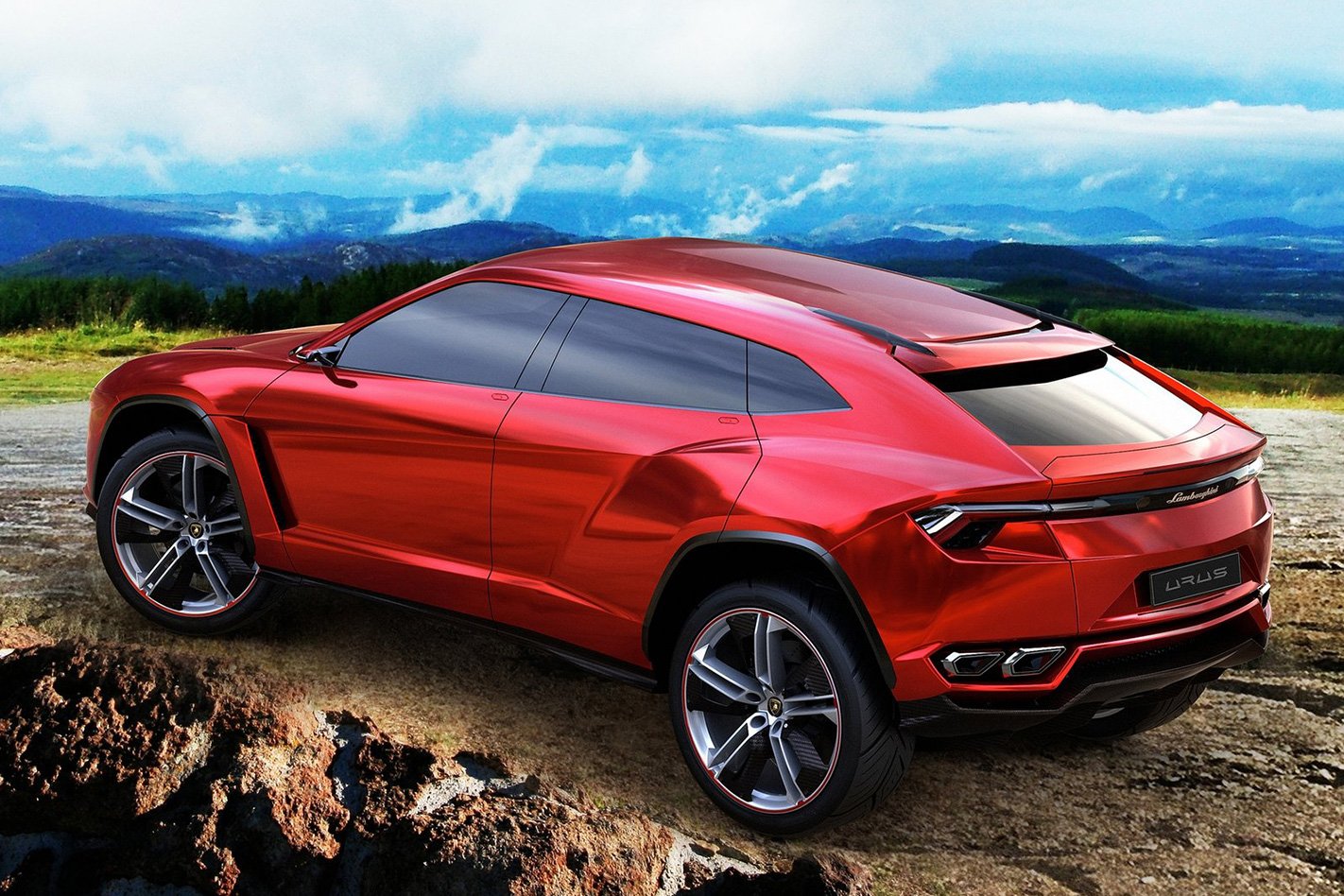
It’s too soon to talk specifics, but don’t expect the Huracan to share the PHEV powertrain in its Urus SUV, which is slated for unveiling next month, with a greater focus on weight-saving for the sportscar.
The Raging Bull is investing heavily in research and development and last year began working with the Massachusetts Institute of Technology to develop future supercars that are constructed using lighter materials and battery solutions.
Lamborghini’s R&D boss Maurizio Reggiani said the key issues currently preventing the brand from integrating hybrid technology were focused around driving range, but he hoped to have a solution for a super-sports car within “four to five years”.
He said plug-in electric technology is still not effective enough for use in a supercar if it is to be driven at pace and for prolonged periods of time.
“Imagine if you went to the Nordschleife with a hybrid. It will be faster on the 0-100km/h time [than non-hybrid cars] but it will not be faster over a lap – or at least won’t be able to do more laps,” he told Autocar.
Which means, at least for the foreseeable future, your dream of owning a new, petrol-sucking Lambo with a double-digit piston count is still alive.
According to Domenicali “There is still a lot of potential for the V12. The right approach for us is to have the V10 and V12 to suit our customers and then be ready to switch [to a hybrid] at the right moment.”
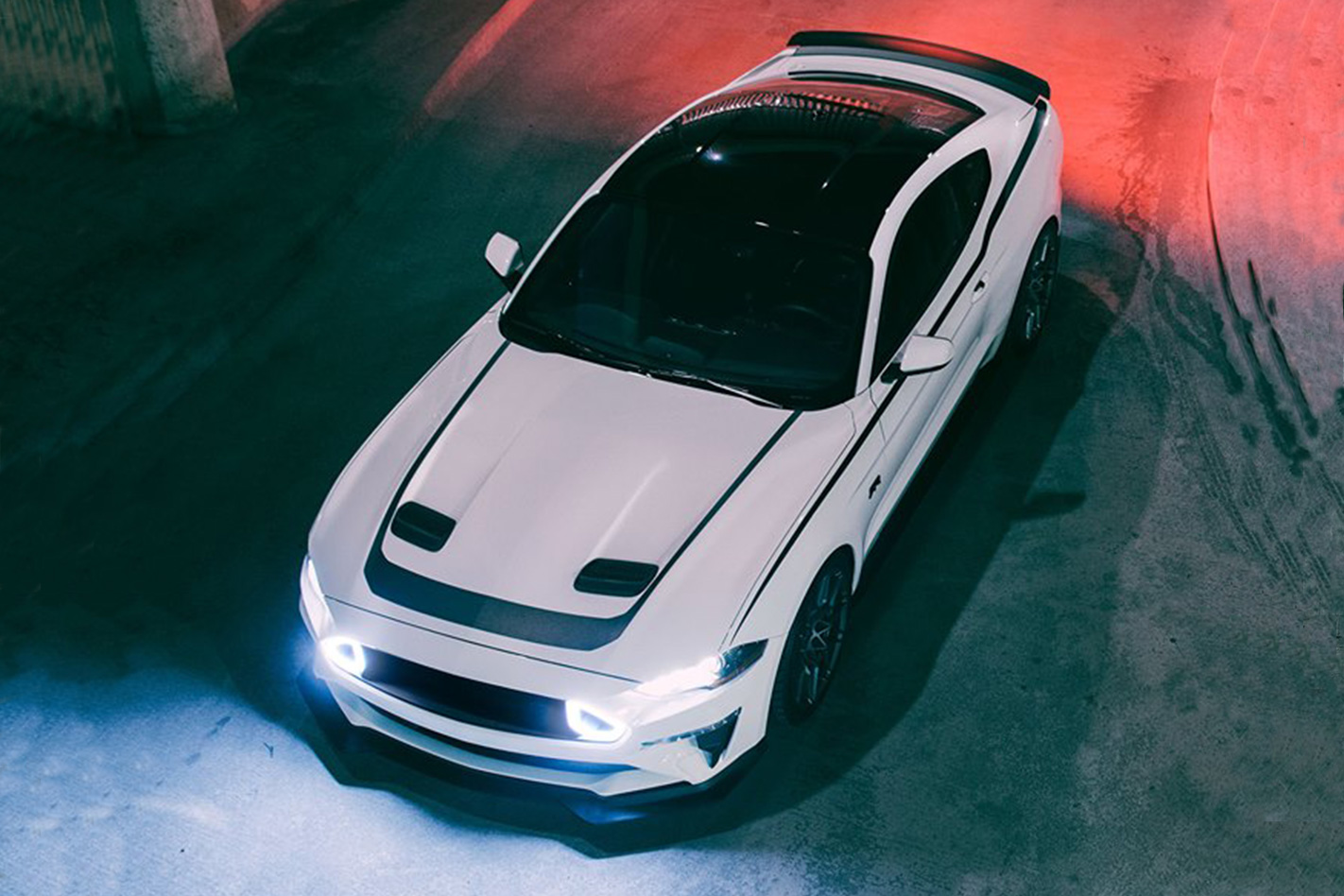
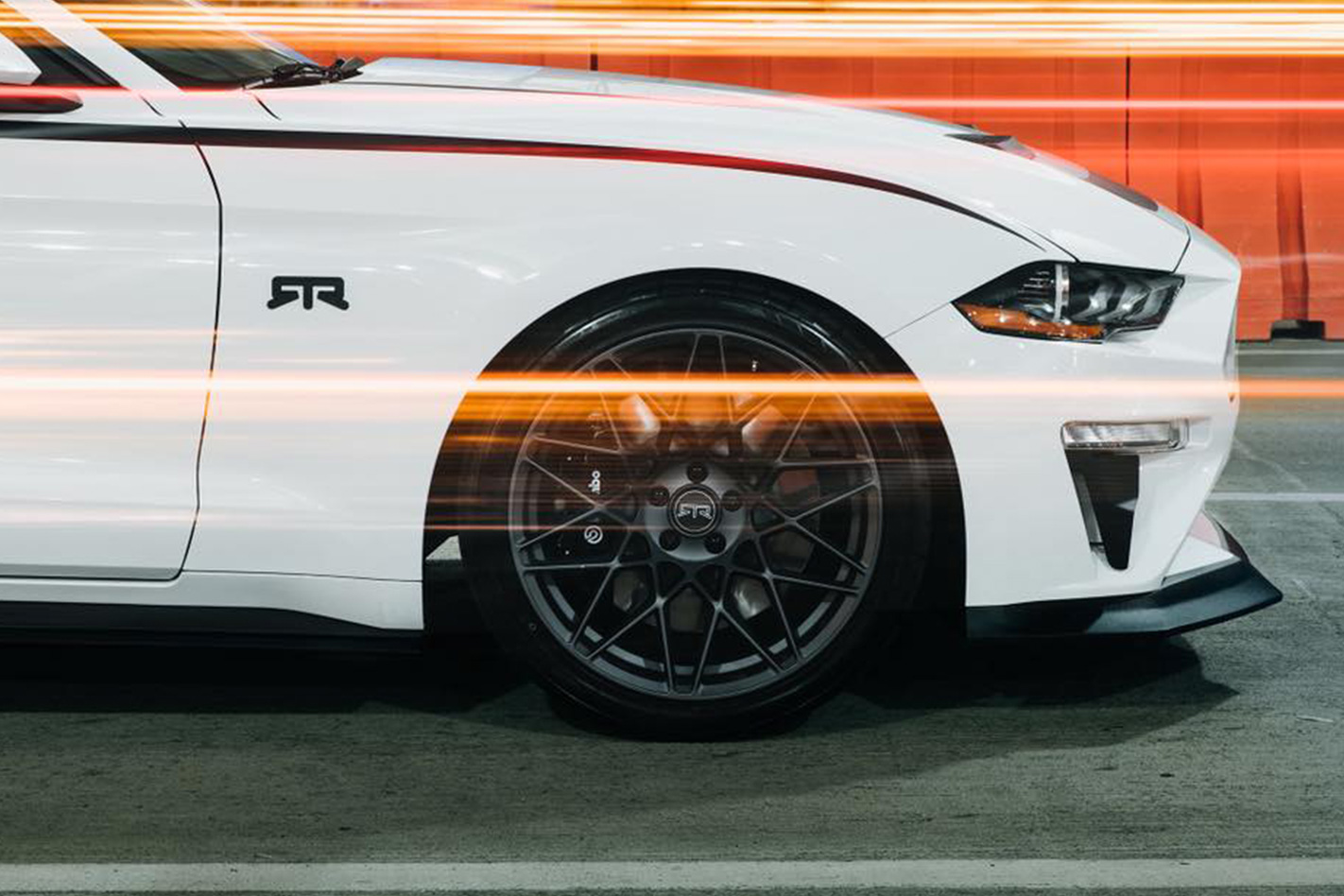
This angry-looking Mustang, built by RTR and pro drifter Vaughn Gittin Jr, is more than just a visual upgrade.
The RTR Ford Mustang has “up to 700 horsepower,” or 522kW thanks to a tuning package endorsed by Ford.
They’ll even be available through Ford Dealers in the US.
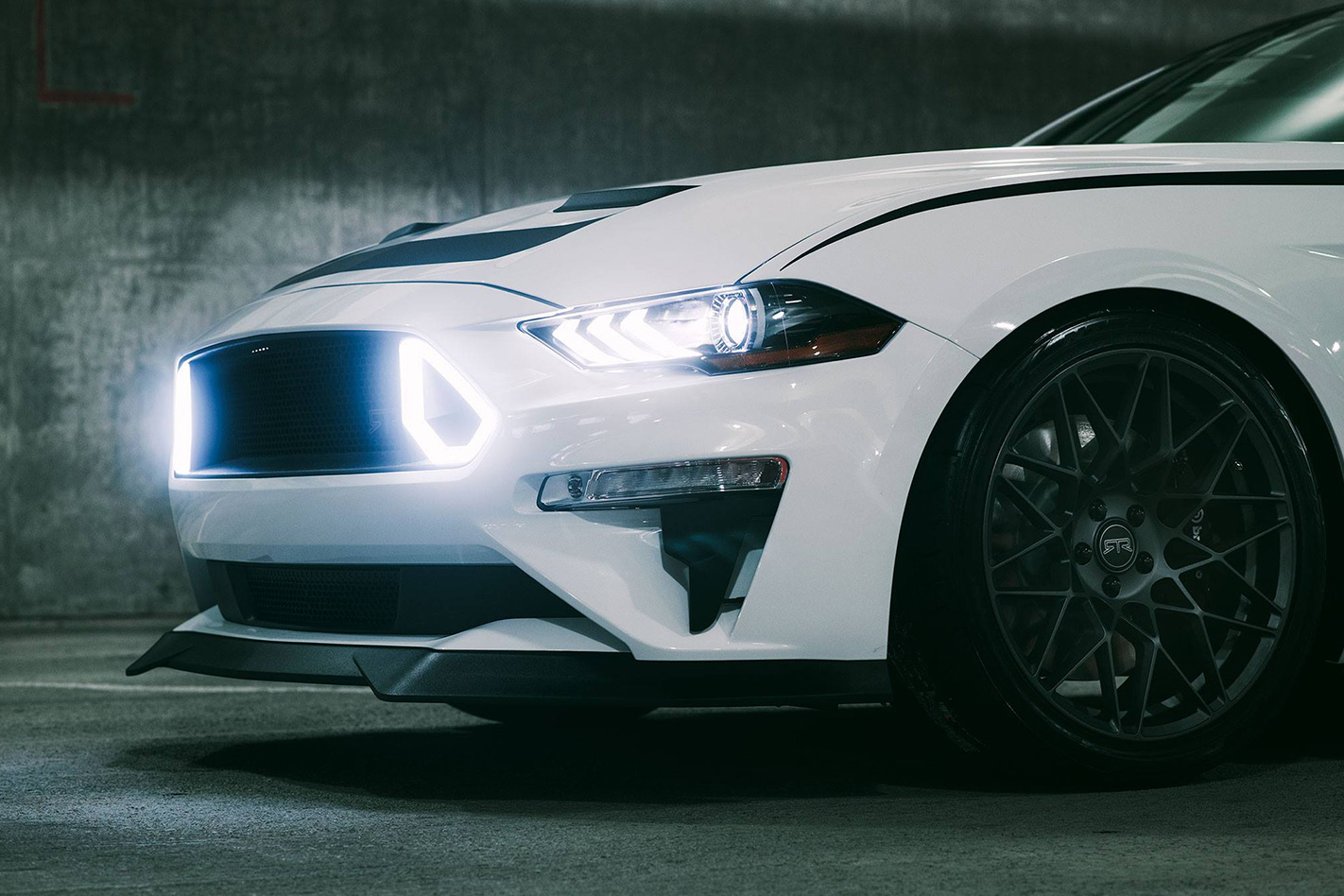
An aero pack is also added, which includes front bumper turning vanes.
Inside, there’s also a plaque on the dash which has been signed by Gittin Jr.
“The new 2018 Ford Mustang is the most technologically advanced and arguably the best Mustang ever on all fronts,”Gittin says.
“It’s amazing what Ford has been able to accomplish with the 2018 Mustang in terms of performance and overall refinement, but the RTR team and I just couldn’t leave it alone!
“I am confident, and many will agree, that this is one of the most fun Ford Mustangs ever to hit the street!”
If there was ever a way to make the Ford Raptor more ‘Merican, Hennessey just figured it out; add more of everything.
It’s called the Hennessey VelociRaptor.
This Raptor-with-the-lot scores an extra set of wheels to make it a 6X6, and also gets a power boost courtesy of Hennessey’s experience with tuning hi-po engines.
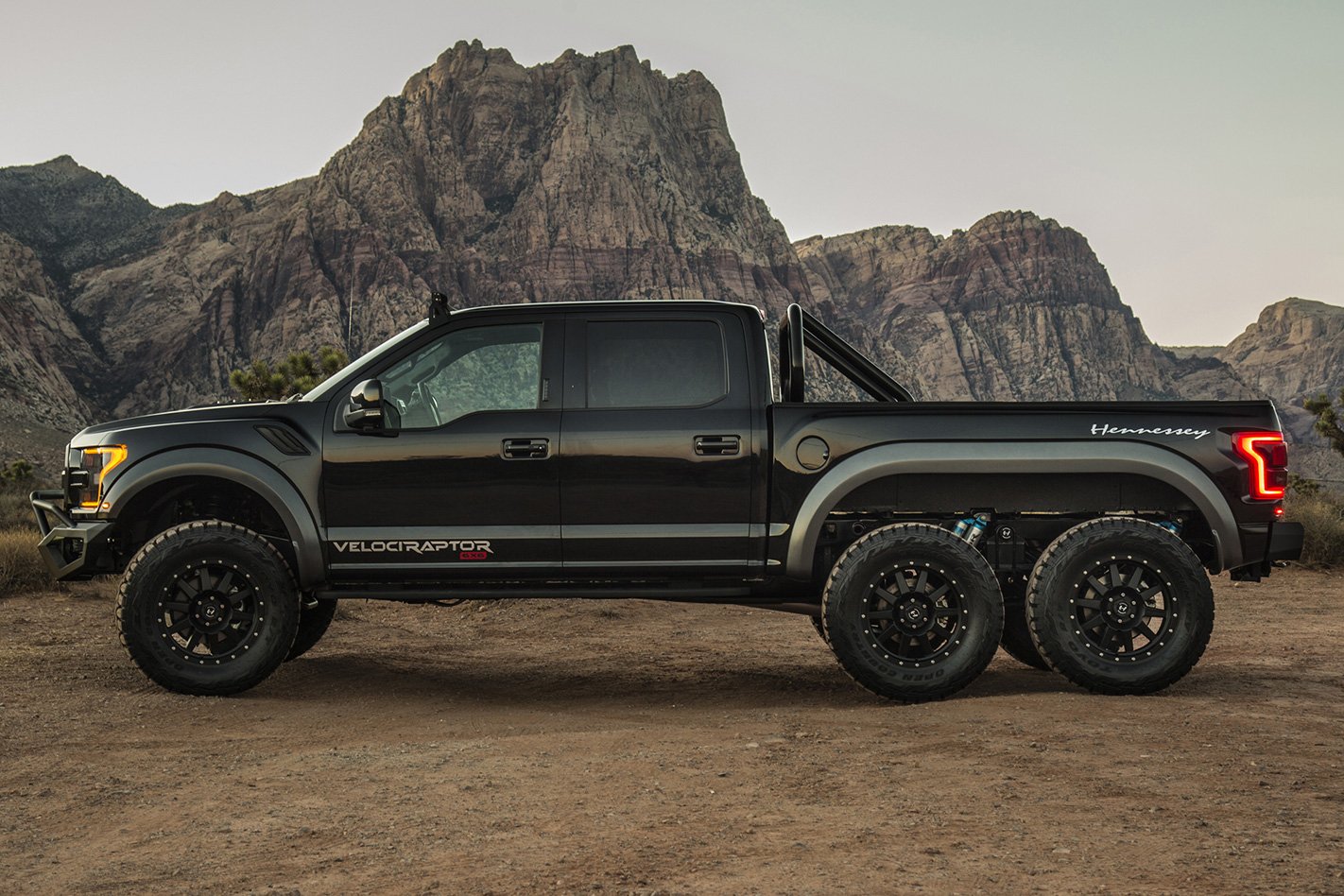
Slightly more visible are the 20-inch wheels and off-road tyres, the unique front and rear bumpers, a new roll bar and LED lights. New upgraded suspension also helps manage the extra power and wheels.
All this will set buyers back $349,000 USD, or $455,900 AUD, an additional $22K ($28,700 AUD) is added on top of that price if buyers tick the option box for a set of Brembo brakes.
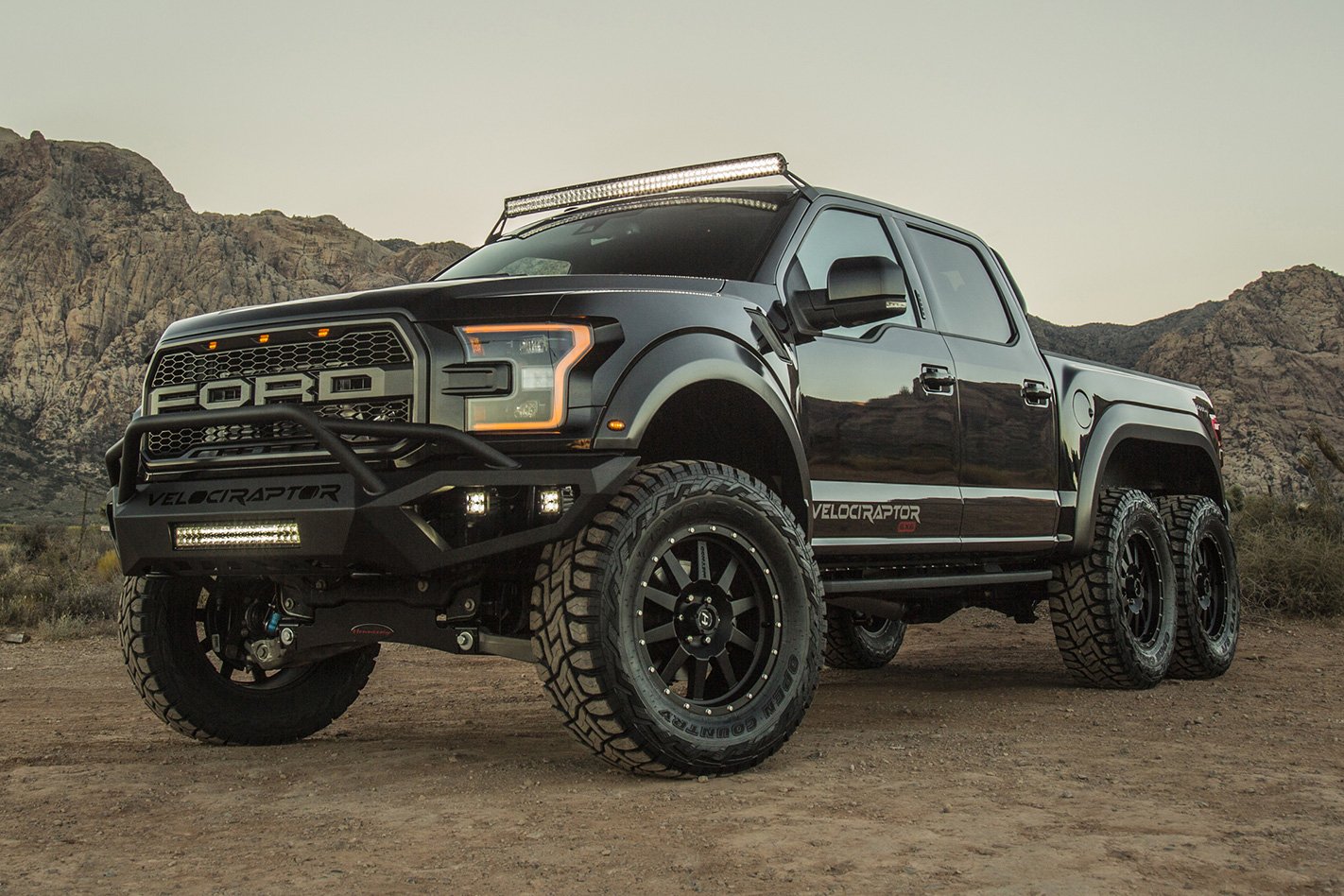
Hennessey Performance CEO and founder John Hennessey says the limited-edition vehicle will remain unique (and valuable) due to its low unit count.
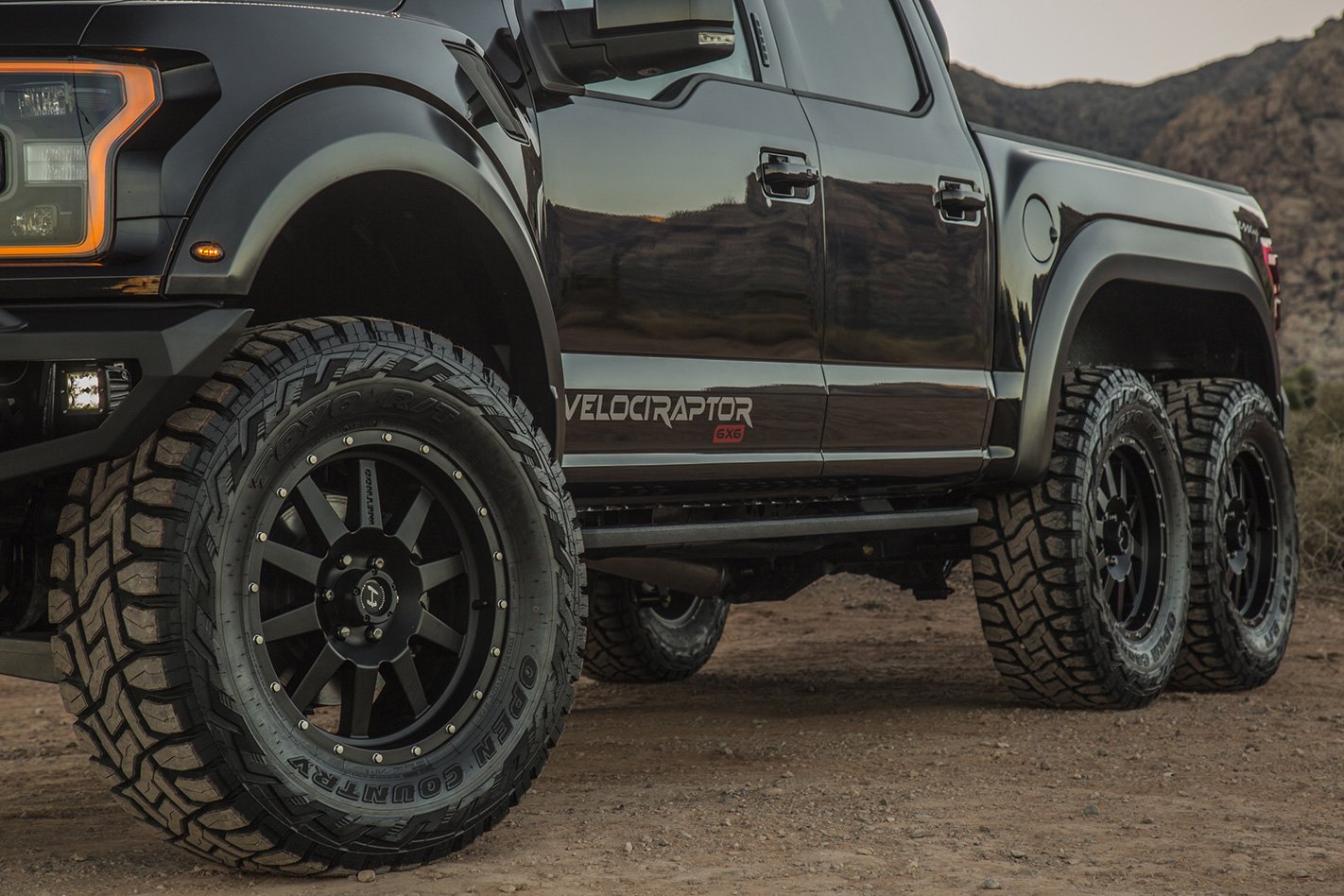
“We will be building just 50 VelociRaptor 6X6s, which makes it not only one of the most aggressive and unique vehicles on the market, but also one of the most exclusive.”
“Our VelociRaptor 6X6 is pure aggression on wheels – all six of them.”
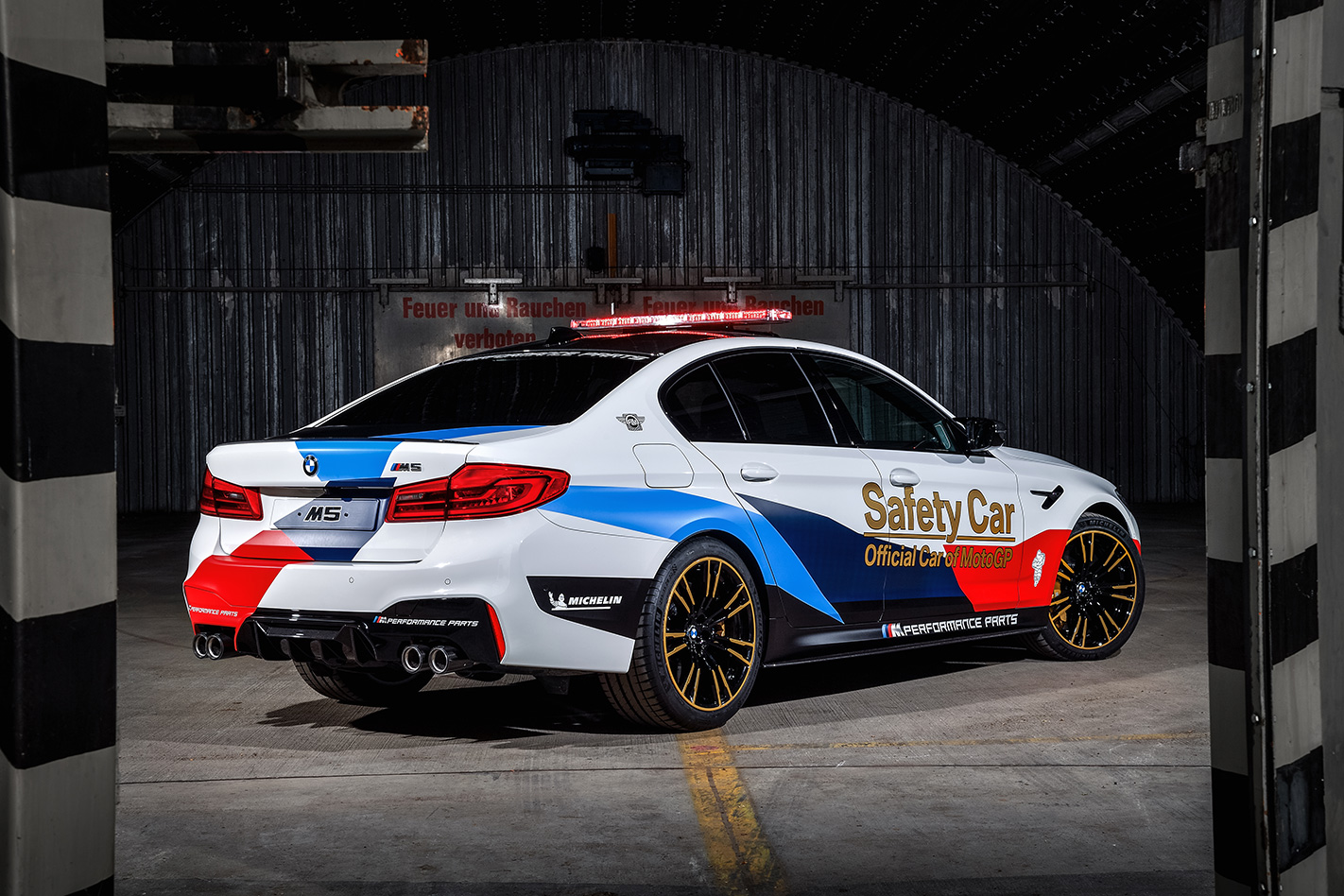
The new BMW M5 will take its place as the primary safety car for the 2018 MotoGP season, strating with its debut at Valencia in the last round of this year.
The Bavarian super sedan will put its 4.4-litre V8 and xDrive all-wheel drive to use when it needs to quickly make its way around a track in an emergency.
BMW M president Frank van Meel says the M5 makes the perfect safety car for BMW due to its sporting appeal and its versatility.
“Innovative motorsport technology is an essential part of this. The new BMW M5 forms the perfect basis for a safety car, as its technical features ensure perfect handling, even at the limits of driving dynamics – on the road and on the racetrack.

To complete the transformation from road car to track car, the M5 scores a new front splitter which is a prototype just for this application. It also has racing bonnet latches, bucket seats from the BMW M4 GTS, and of course, flashing red and blue lights on the roof and in the grille.
Since Wheels’ birth in 1953, it’s arguable that no other motoring publication in the world has followed Holden like we have.
As the sun set earlier this month on the last of our home-grown heroes, we capstone our journey with this- a 196-page subscriber-only collector’s edition.
We examine the dominoes that ultimately fell our roaring lion; celebrate its greatest cars and moments; and speak to some of the many thousands of people who gave so much to the Holden brand, and subsequently, gave so much to us Australians.
This is our first subscriber-only cover and is not available on retail stands. For your own copy of our special tribute to the Aussie-made Holden, head through to MagShop and purchase your copy today!
VOLKSWAGEN Australia has announced it will make the three-door bodystyle a permanent member of the Golf GTI lineup once more, with the imminent arrival of the new Golf GTI Original at the start of next year.
Available exclusively as a three-door with your choice of a six-speed manual or DSG automatic, the GTI Original is priced from $37,490 for the manual and $39,990 for the auto. Options? Not many – just a driver’s assistance pack ($1600) for a little more safety tech – and the only colours available are gloss red or white.

Regardless, it’s far from a stripper model. You still get 18-inch alloys, an 8-inch infotainment touchscreen, dual-zone climate control, LED headlamps, AEB and front and rear parking sensors. Under the bonnet lies the same 169kW/350Nm turbo inline four that powers the five-door Golf GTI, so you’re certainly not getting short changed there either.
A handy discount compared to the $41,490 five-door Golf GTI manual, the Golf GTI Original is available for order now with local deliveries set to begin in January 2018.

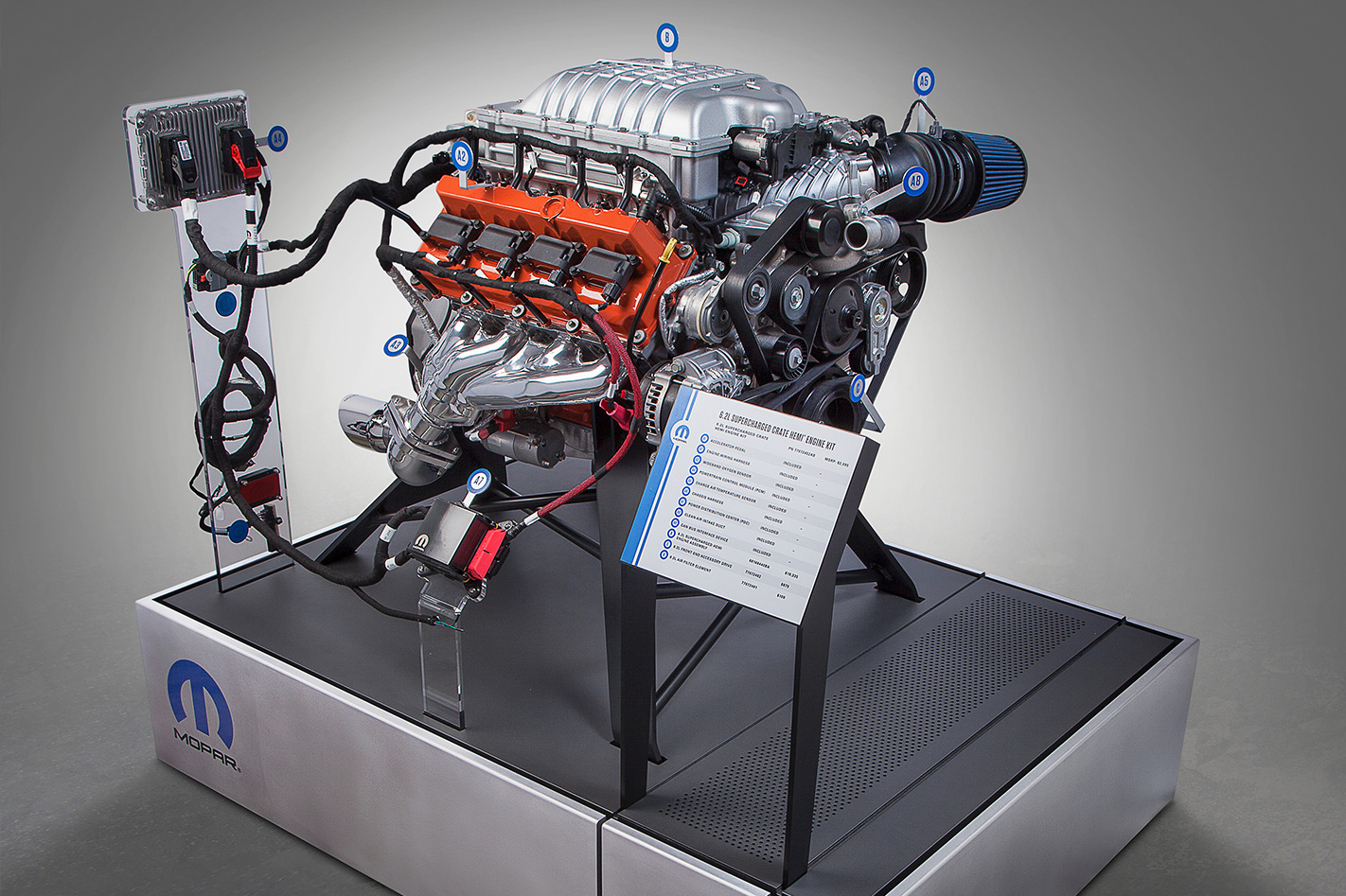
If you’ve ever wondered what it’d be like to swap a modern 6.2-litre supercharged Hemi into a 1968 Dodge Charger, Mopar has you covered.
It has just announced that its 527kW 6.2-litre V8 is now available as a crate motor, with a compatibility kit for older cars also available.
Dubbed the ‘Hellcrate’, the supercharged motor can be purchased for $19,530 USD, or $25,440 AUD, with the kit at an extra $2195 ($2859 AUD).

Debuting at SEMA, the Hellcrate and its engine kit will first be used to power a 1970 Plymouth Superbird tribute.
To do so, a “Front End Accessory Drive” kit was needed as part of the install, which includes an alternator, power steering pump, belts, pulleys, and other parts necessary for compatibility.

The kit also includes essentials such as a powertrain control module, power distributor, engine wiring harness, chassis harness, accelerator pedal, oxygen sensors, air temperature sensors and a fuel pump control module.
Head of Mopar parts at FCA Pietro Gorlier says, in terms of power, the Hellcrate is the first of its kind.
“This ultimate powertrain option fits the needs of owners and fans who demand iconic performance.”
MOTOR understands FCA Australia is exploring options in relation to making the Hellcrate engine available in Australia
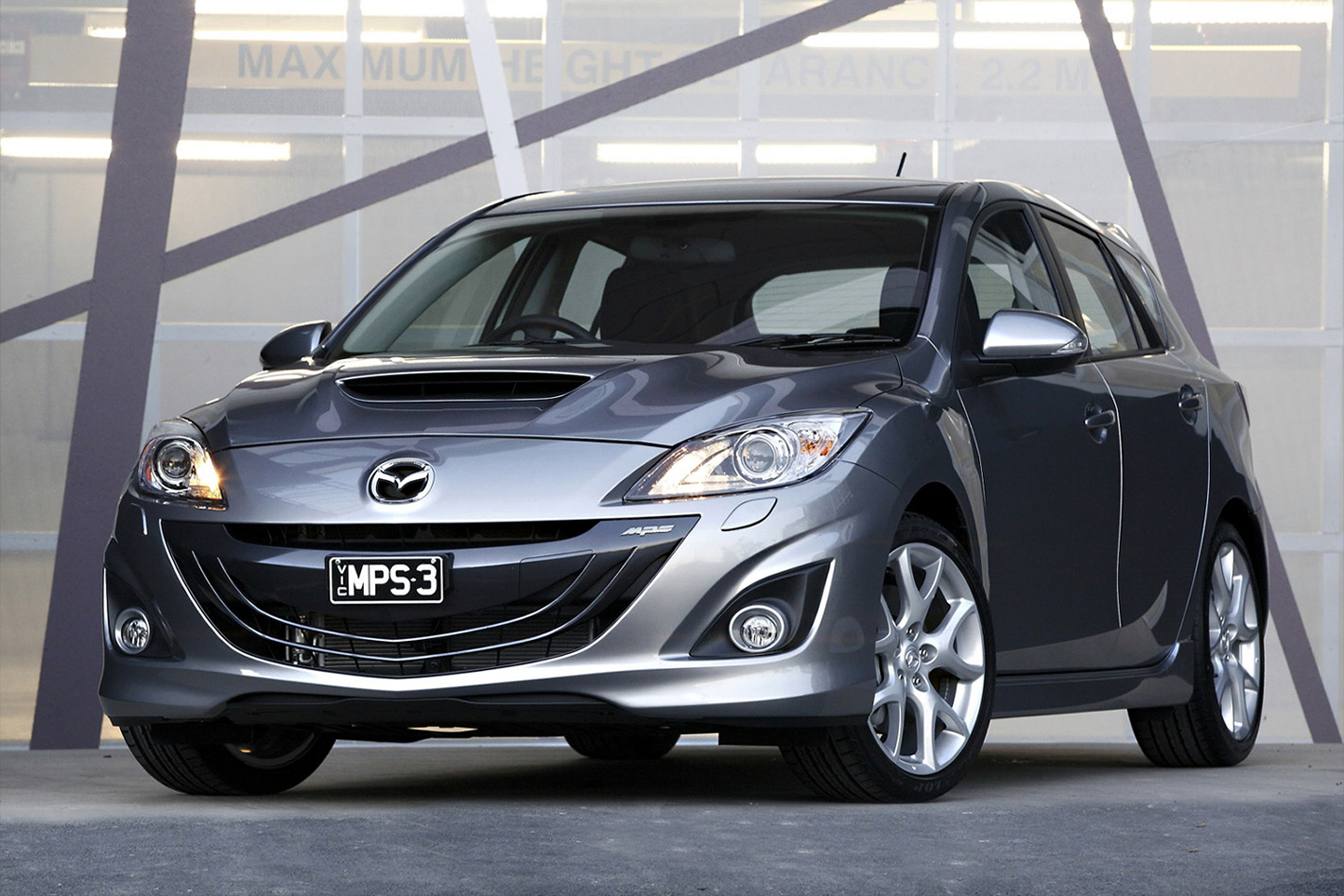
BEFORE we get into the meat of this story, let’s get one thing clear – Mazda currently has no plans to resuscitate its MPS (or Mazdaspeed if you’re Japanese or American) performance sub-brand anytime soon. Zero. Nada.
But when the bigwigs in Hiroshima do decide the time is right to inject some sporty sparkle back into its passenger car range, as it did with the Mazda 3 MPS and the Mazda 6 MPS in the noughties, the company has the tech to make it happen.
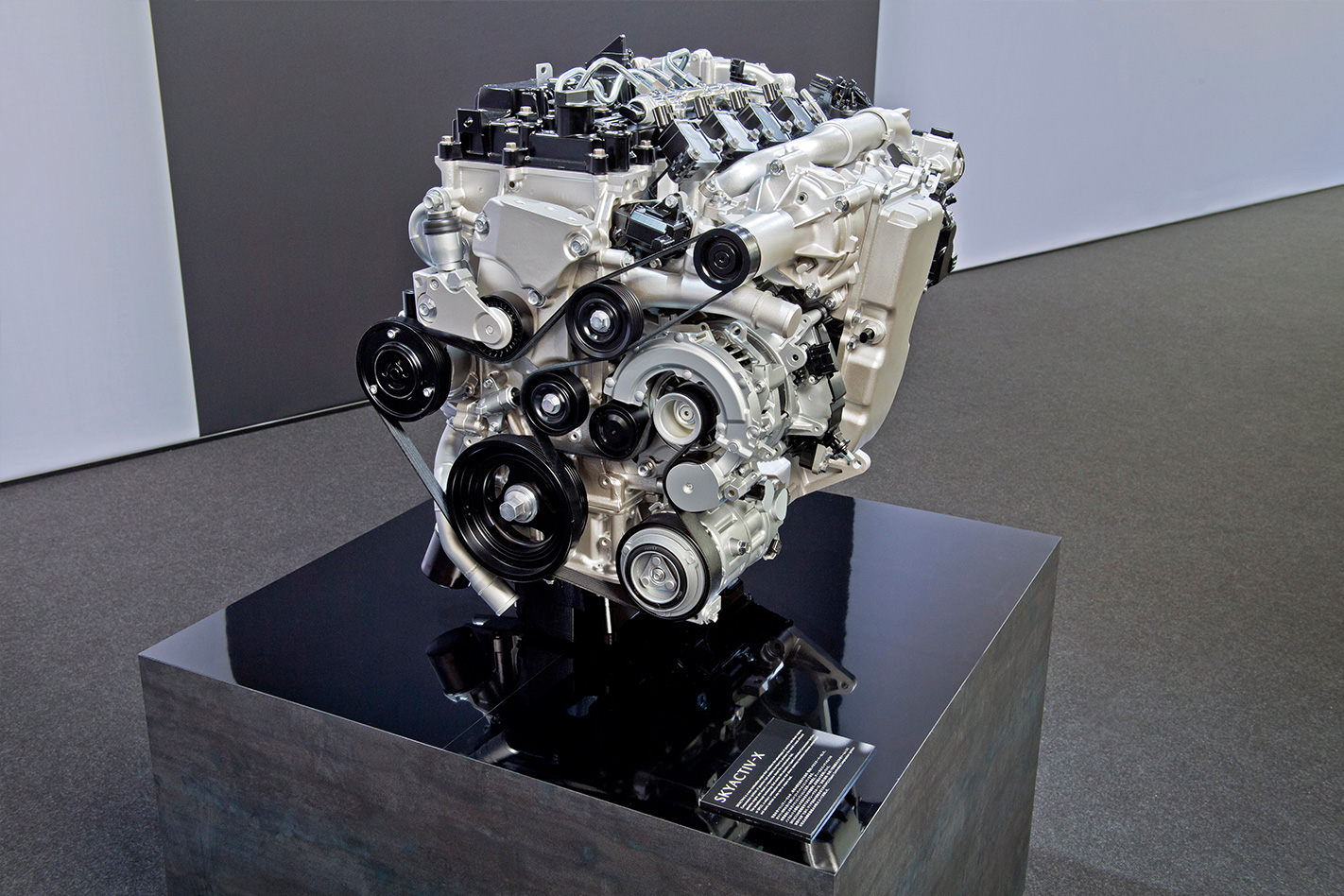
Instead, it could very well be the company’s revolutionary supercharged compression-ignition SkyActiv-X engine under the bonnet rather than a development of the Mazda CX-9’s existing turbocharged 2.5-litre petrol four – Mazda’s only contemporary turbo petrol powerplant.
Speaking to Wheels at the Tokyo Motor Show, Mazda’s managing executive officer in charge of powertrain development, Ichiro Hirose, said the SkyActiv-X engine could be adapted to the role of a high-performance powerplant.
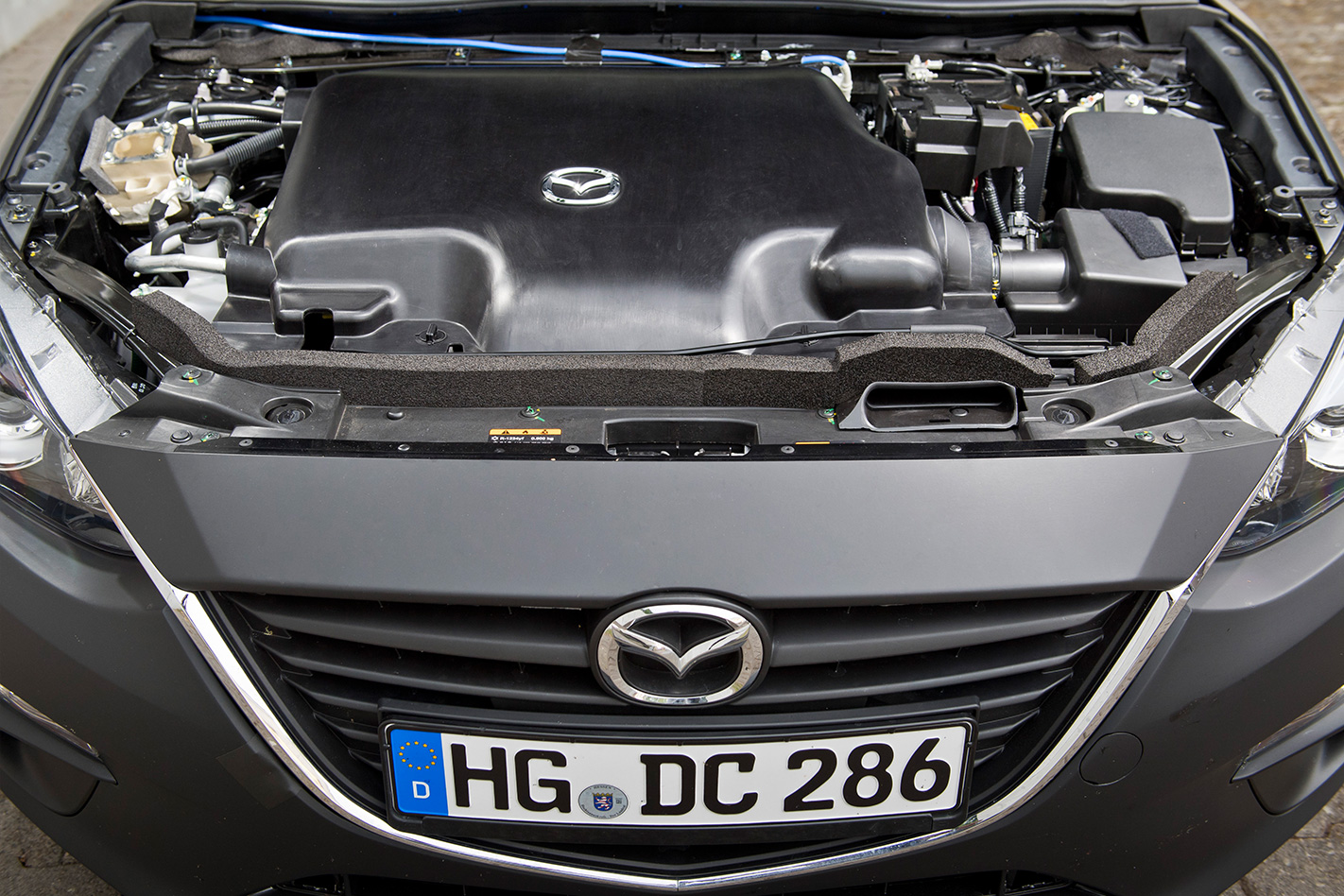
And with the sophisticated compression-ignition engine set to make its production debut in the next-generation Mazda 3, previewed at Tokyo by the Mazda Kai Concept, the prospect of Mazda making a return to the hot hatch segment starts to look feasible.
Unlike traditional petrol engines, the SkyActiv-X burns its fuel-air mixture through sky-high compression ratios, which squeezes the mix until it spontaneously ignites. It can only do so at certain points in its rev range, but the result is a cleaner, leaner burn and more energy extracted per drop of fuel.
“Since this engine is utilising compression ignition combustion, the lower the octane value actually makes it easier to work,” Hirose said.
“In the case of spark ignition they have to avoid knocking, so high-octane fuel is preferable.
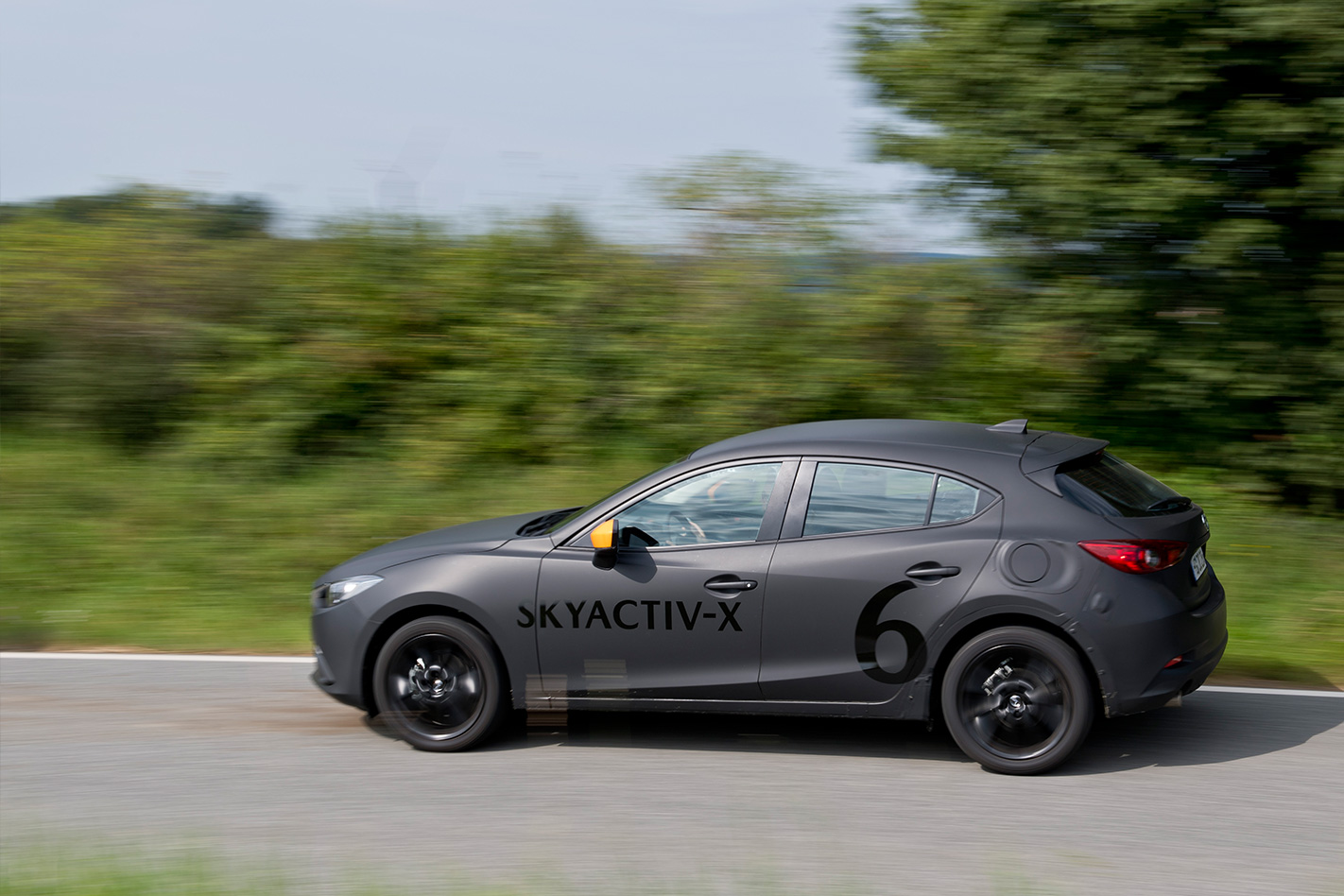
“And if we want to make a high-output [version], we can.”
Hirose’s openness to the idea of a performance-tuned SkyActiv-X variant is a stark contrast to Mazda’s attitude toward giving the CX-9’s turbocharged 2.5-litre the same treatment. Speaking to engineers at the debut of the CX-9, questions about hot hatch applications for Mazda’s turbo tech were met with explanations about how its torque-rich, non-revvy nature were at odds with Mazda’s requirements for sports models.
SkyActiv-X, however, appears to have more potential. The Kai Concept may have its aggressive stance, big wheels, gigantic brakes and ground-scraping bodykit toned down when it morphs into the grocery-getting Mazda 3 by 2019, but MPS fiends should take comfort in knowing that the 3’s new engine has the right DNA to breed a proper athlete.
There are plenty of reasons to love rear-wheel drive cars. But when it came to a Jaguar F-Type with a V8 engine, one stood out from the rest.
Packing a 5.0-litre supercharged V8 with 405kW and 680Nm it could turn tyres into smoke with just one look.
Sadly, though, after next month the F-Type won’t be able to perform that party trick, with the skid-monster dropped from incoming 2018 model year range.
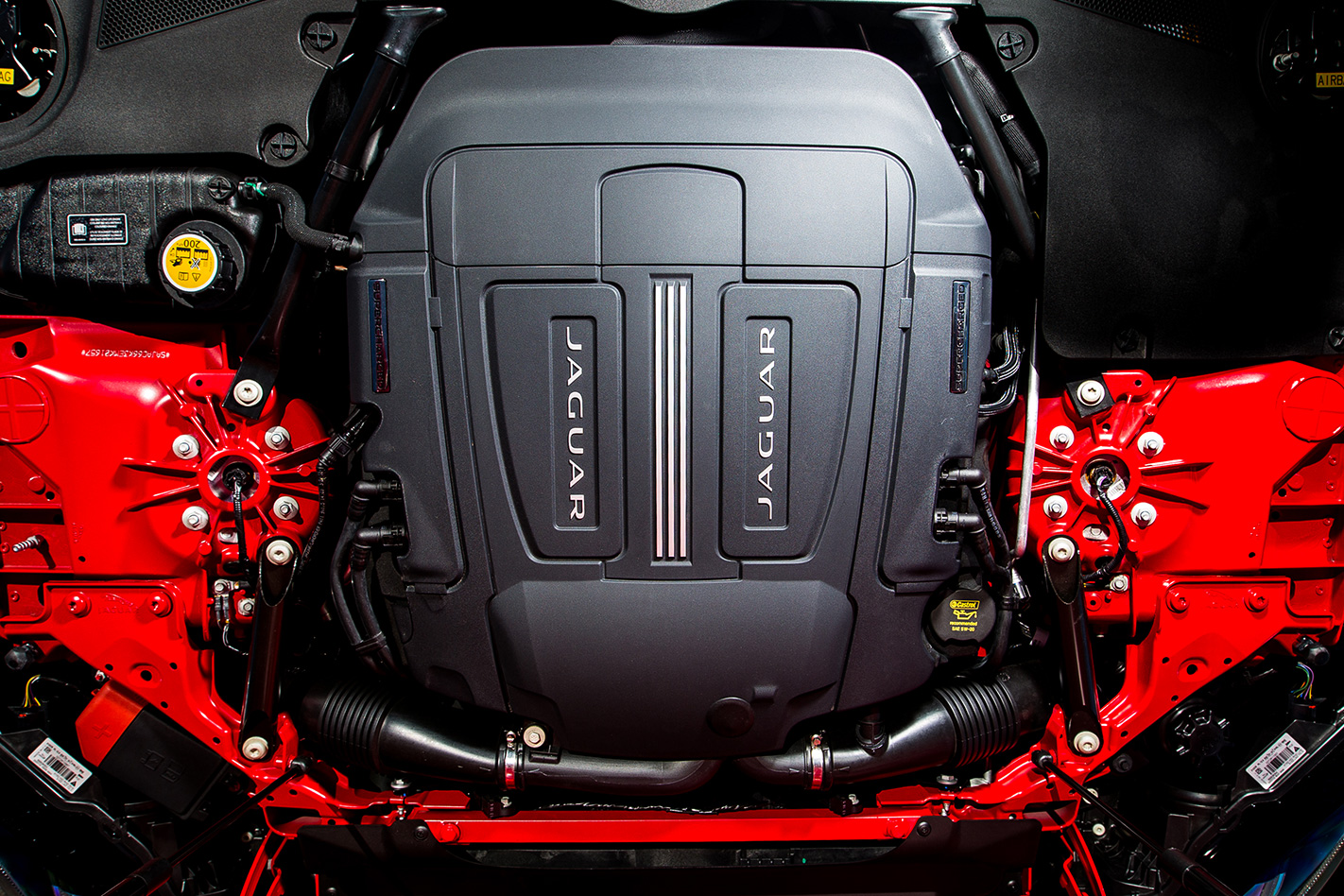
During its time in Aussie showrooms, Jaguar’s sold 155 rear-drive V8 F-Types. Making up 20 per cent of the total 717 units sold since its release. Which is a decent chunk. However, it was the only variant available for some time.
We’ve haven’t been given a clear reason on why this has happened. That said, it’s probably for the best.
Even though the R channelled its godly grunt through an electro-controlled clutch-differential, you never stabbed the F-Type V8 R’s throttle pedal. Unless you liked looking out the side windows to drive.
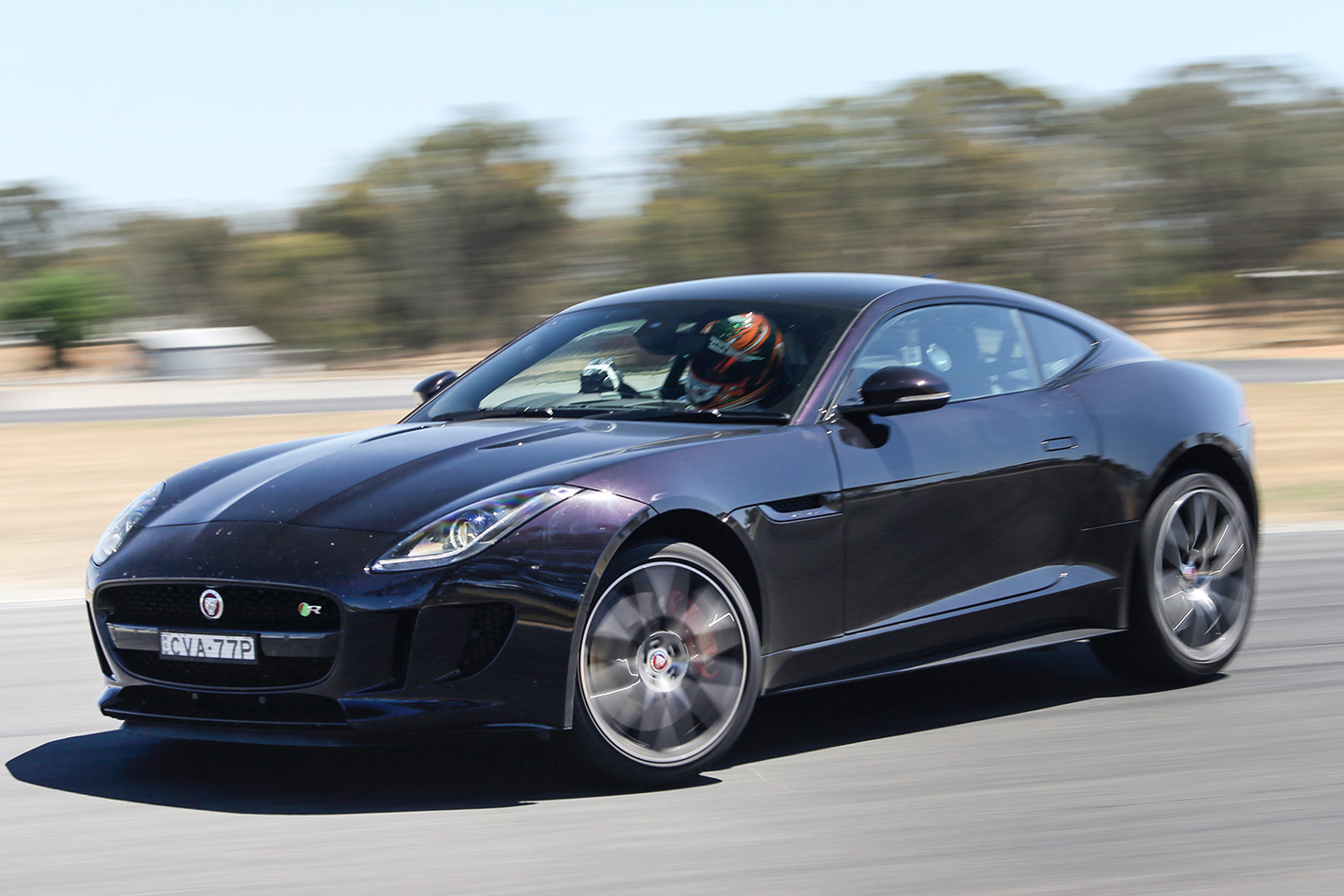
We loved its balanced chassis. Which managed to be both communicative and progressive. One judge during 2014’s Performance Car of the Year likened it to a BMW V8 M3. Just with a whole lot more power.
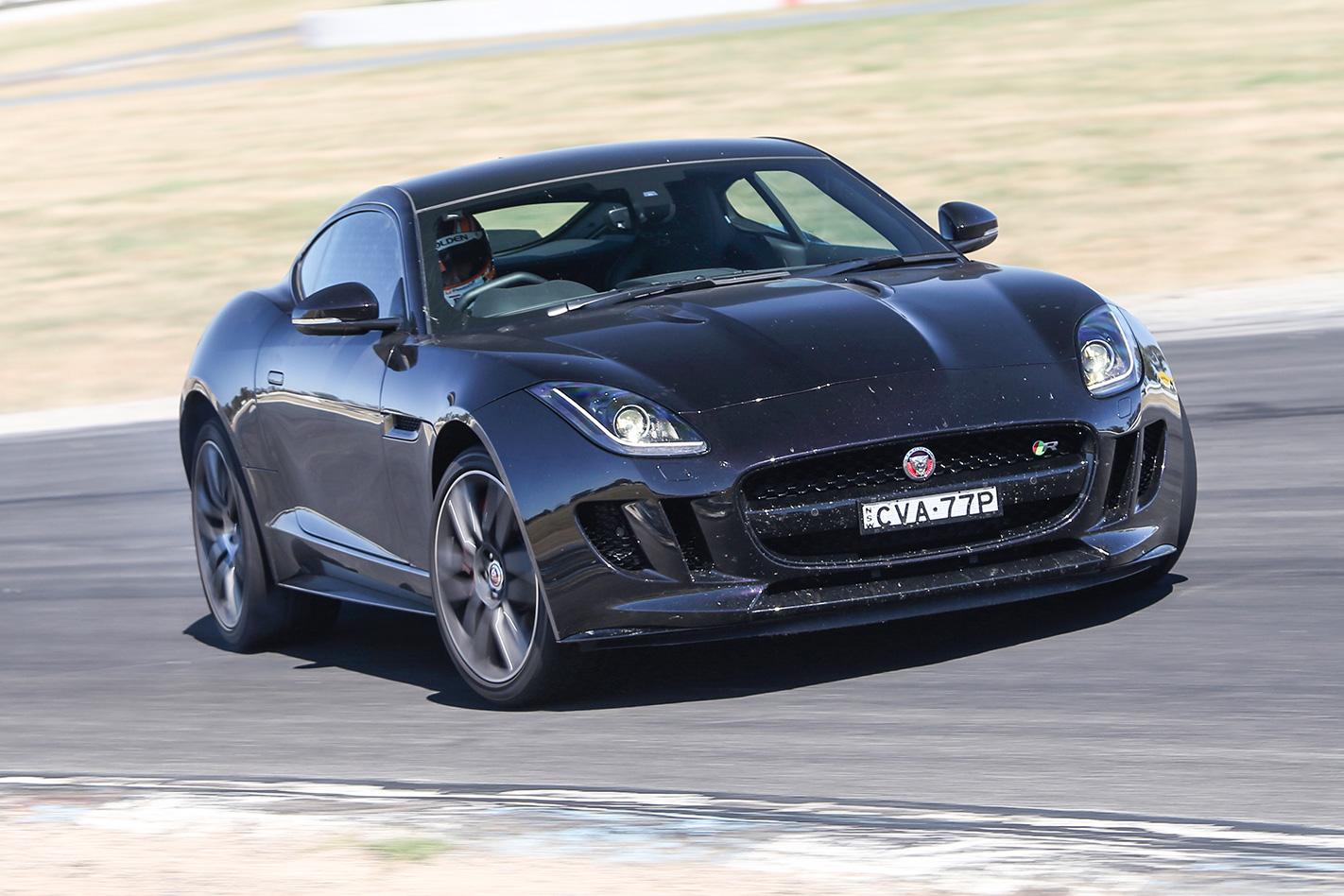
Thankfully, it’s not a total loss. Jaguar’s demonic 5.0-litre supercharged V8 lives on in R and SVR all-wheel drive variants. But while tyres everywhere are safer, the world is a little sadder.
Price & Equipment – Verdict: Nissan X-Trail ST-L
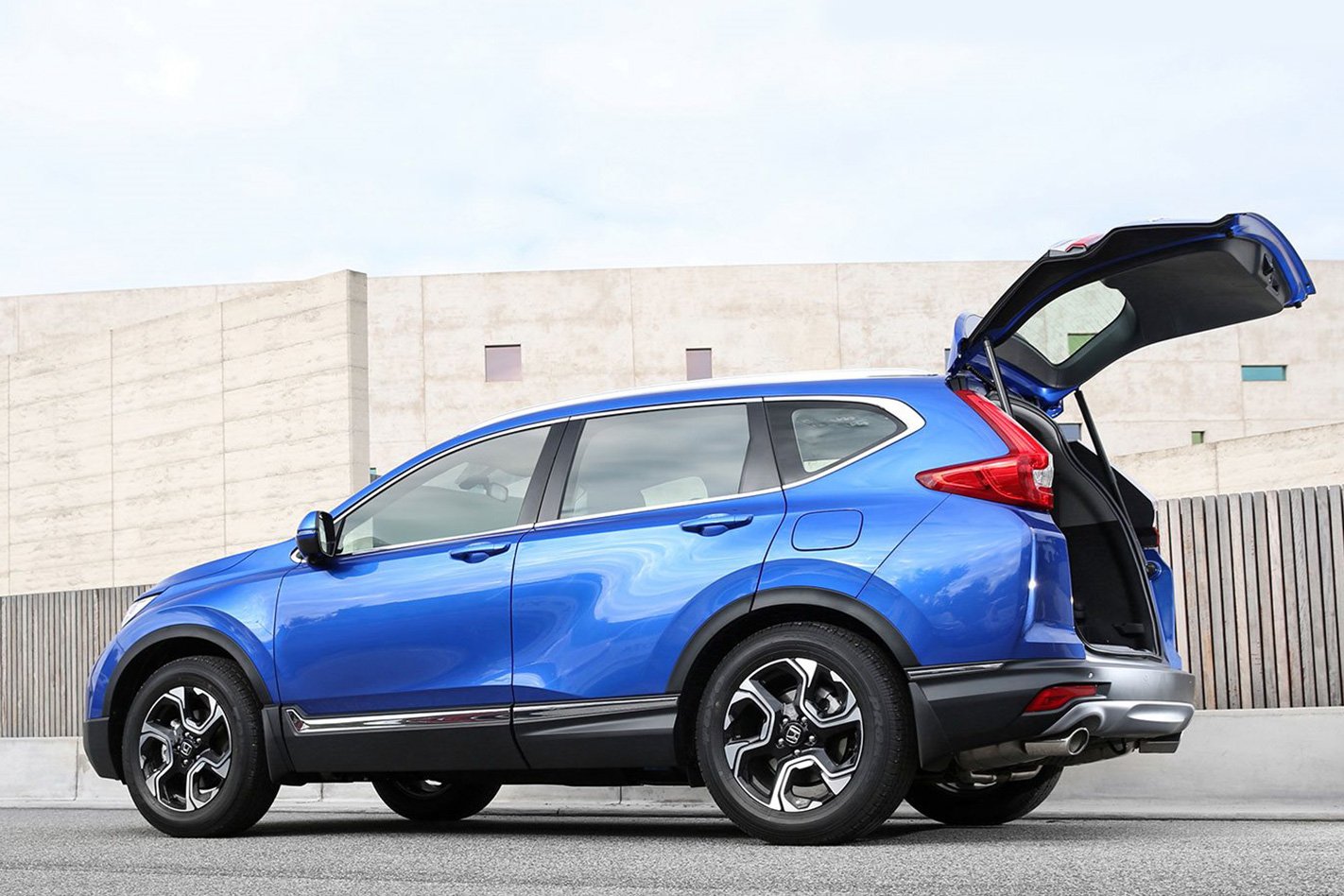
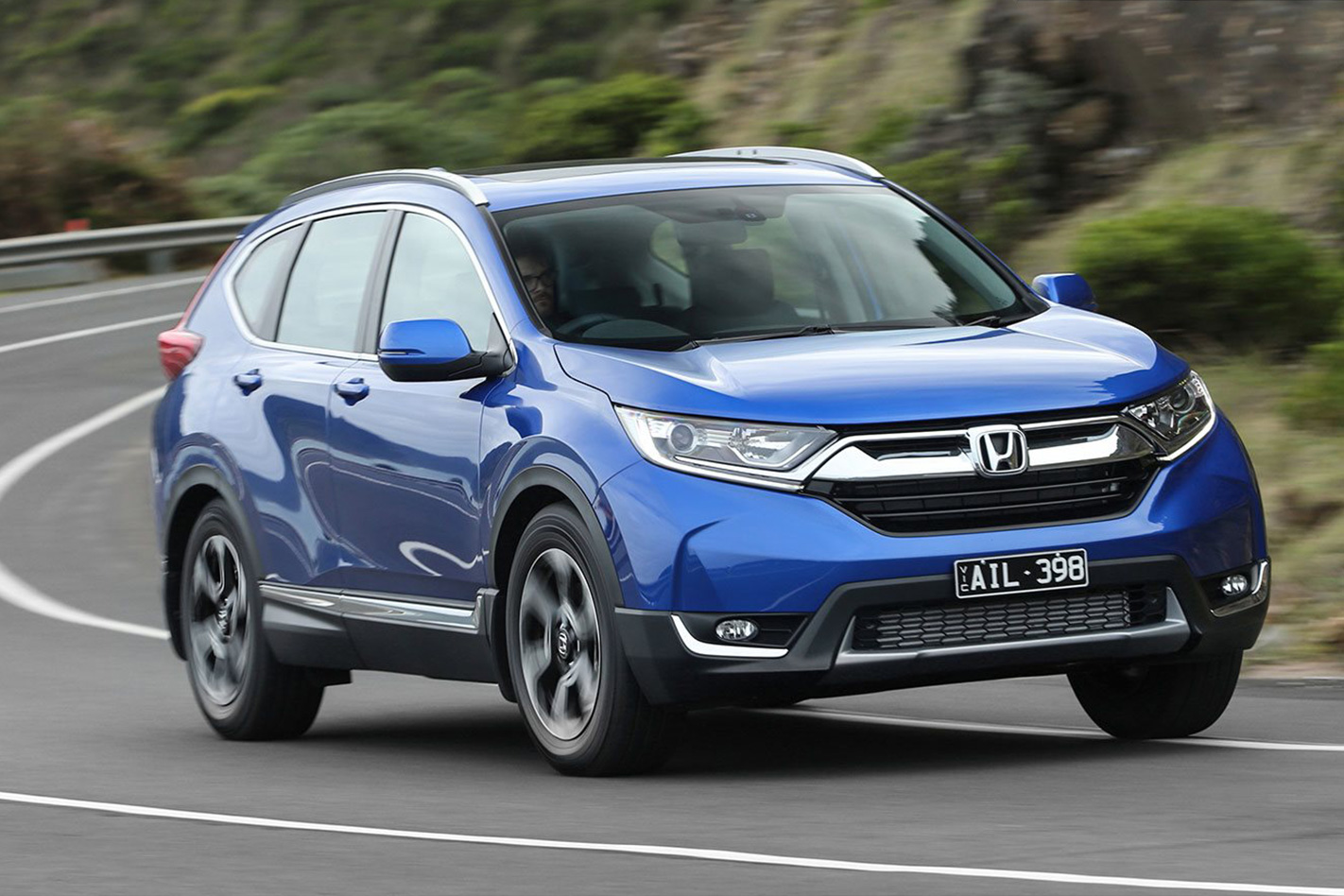
Honda’s $39K seven-seat CR-V VTi-L gets 360-degree view cameras, 7.0-inch touchscreen with sat-nav, driver attention monitor and Lanewatch, dual-zone climate, heated front seats (powered with memory for the driver), roof rails, smart key entry, six airbags, power tailgate and auto headlights and wipers.
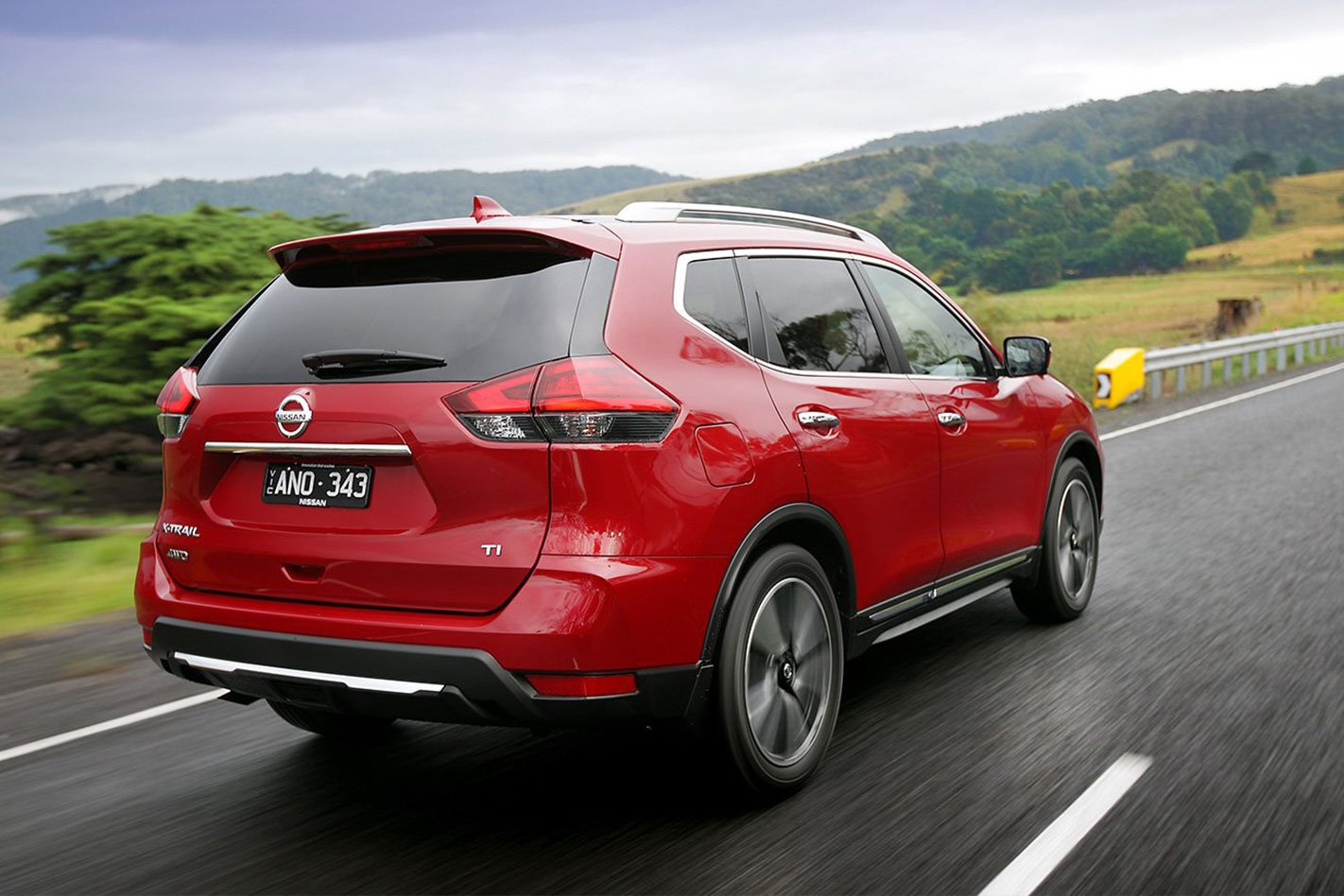
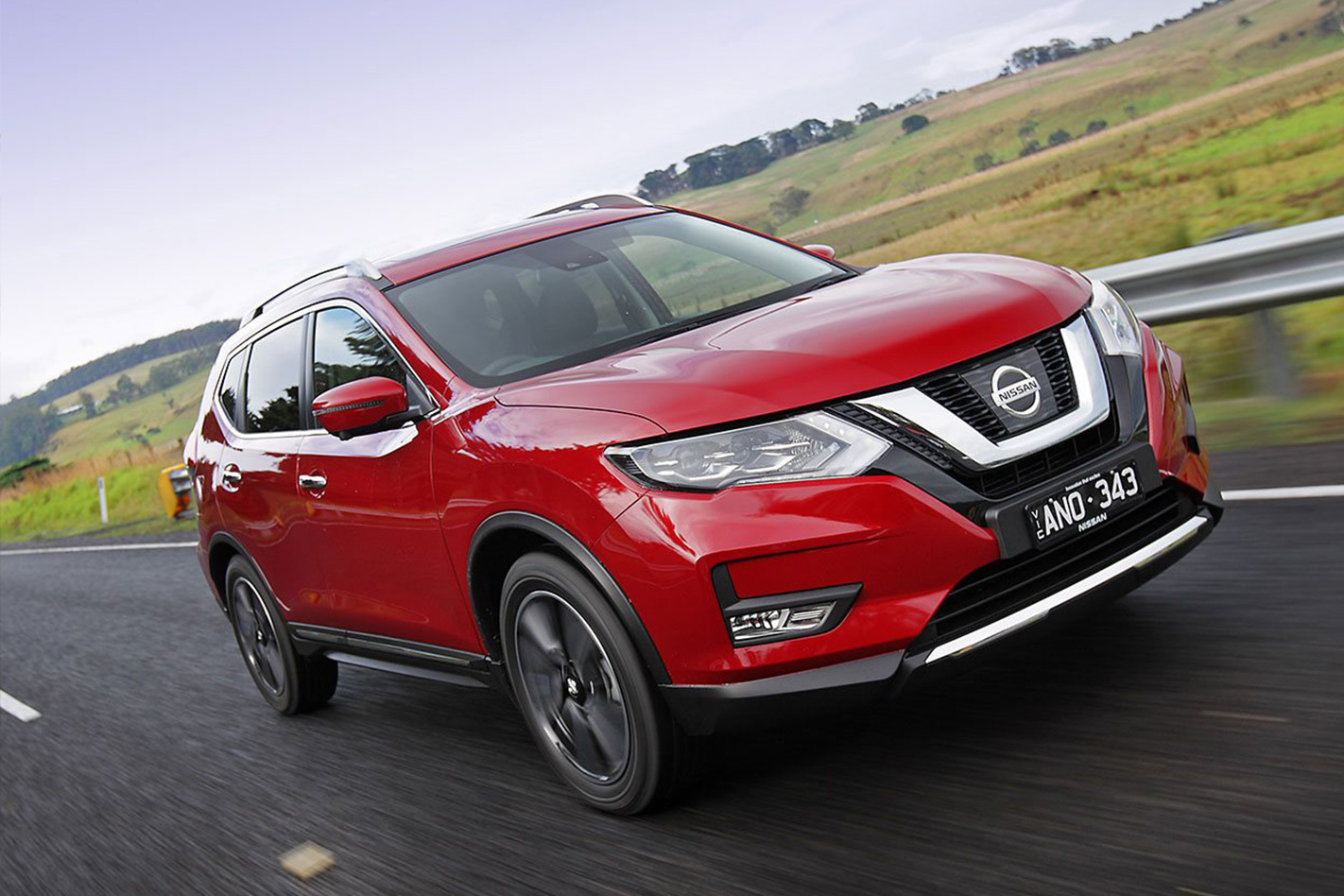
The $38K seven-seater Nissan X-Trail ST-L is a CVT front-drive like its rival and comes similarly equipped inside, with the addition of full leather trim. Though the X-Trail doesn’t have a driver attention system or the Honda’s Lanewatch, its safety package is more comprehensive with blind-spot warning, rear cross-traffic alert systems and AEB.
Interior & Versatility – Verdict: Honda CR-V VTi-L
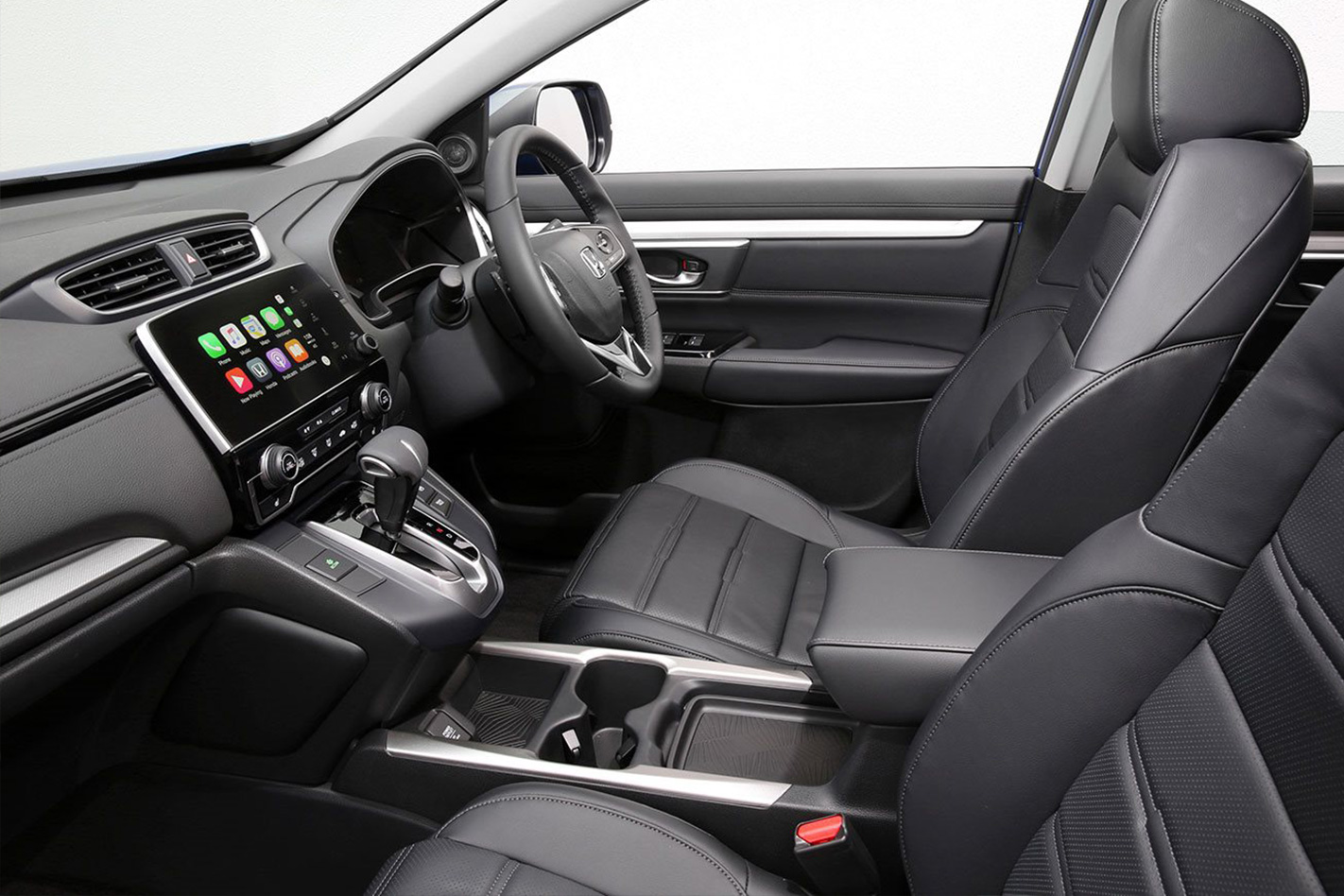
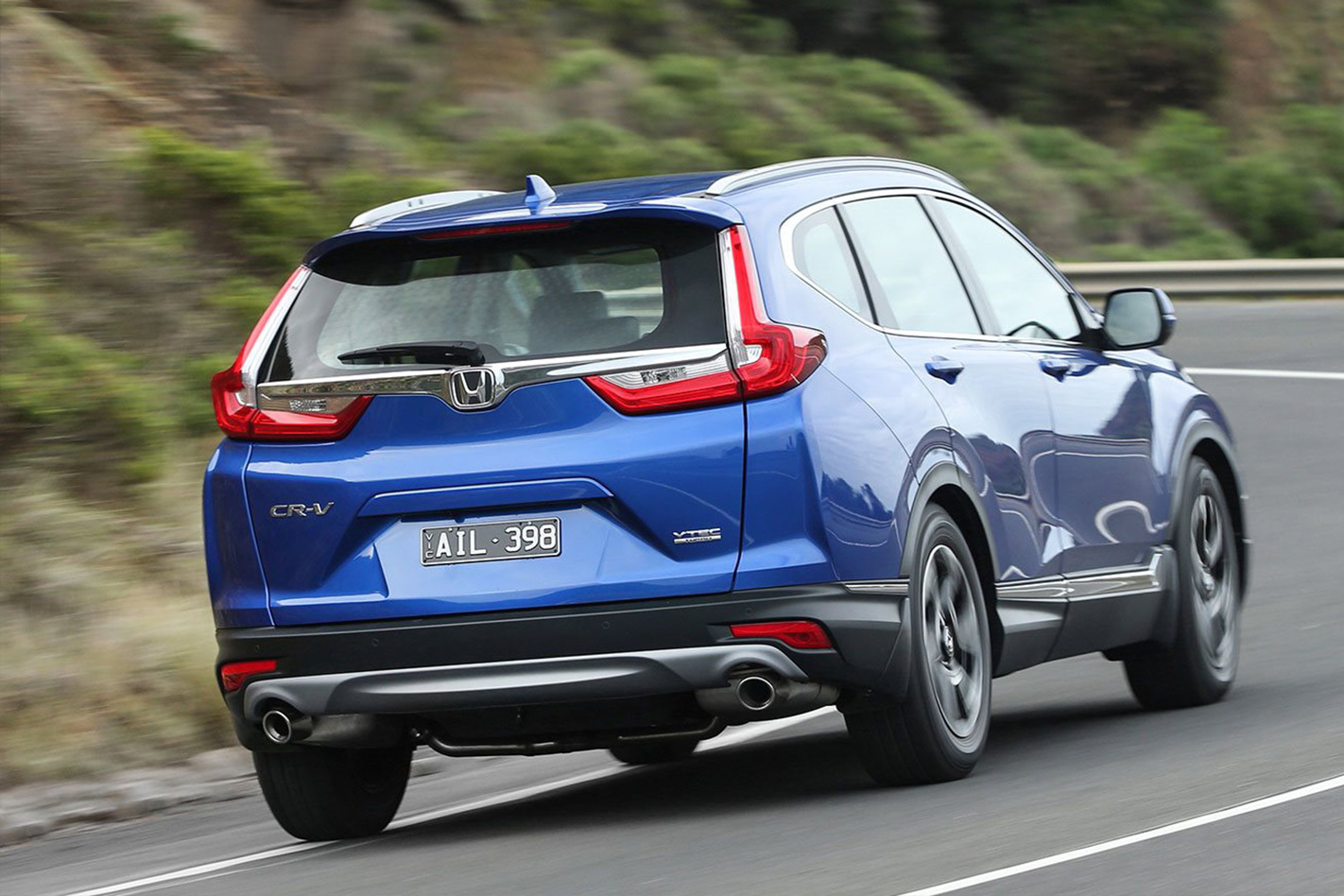
The Honda CR-V’s part-leather-trimmed cabin is roomy, with comfy front seats. Vision is uncommonly good, around the slim pillars, and the electric park brake trumps the Nissan X-Trail’s (and previous CR-V’s) foot pedal. You get a full-size spare but, like its rival, there’s not much boot space behind the third row (150L) – fold the third row down for 472L.
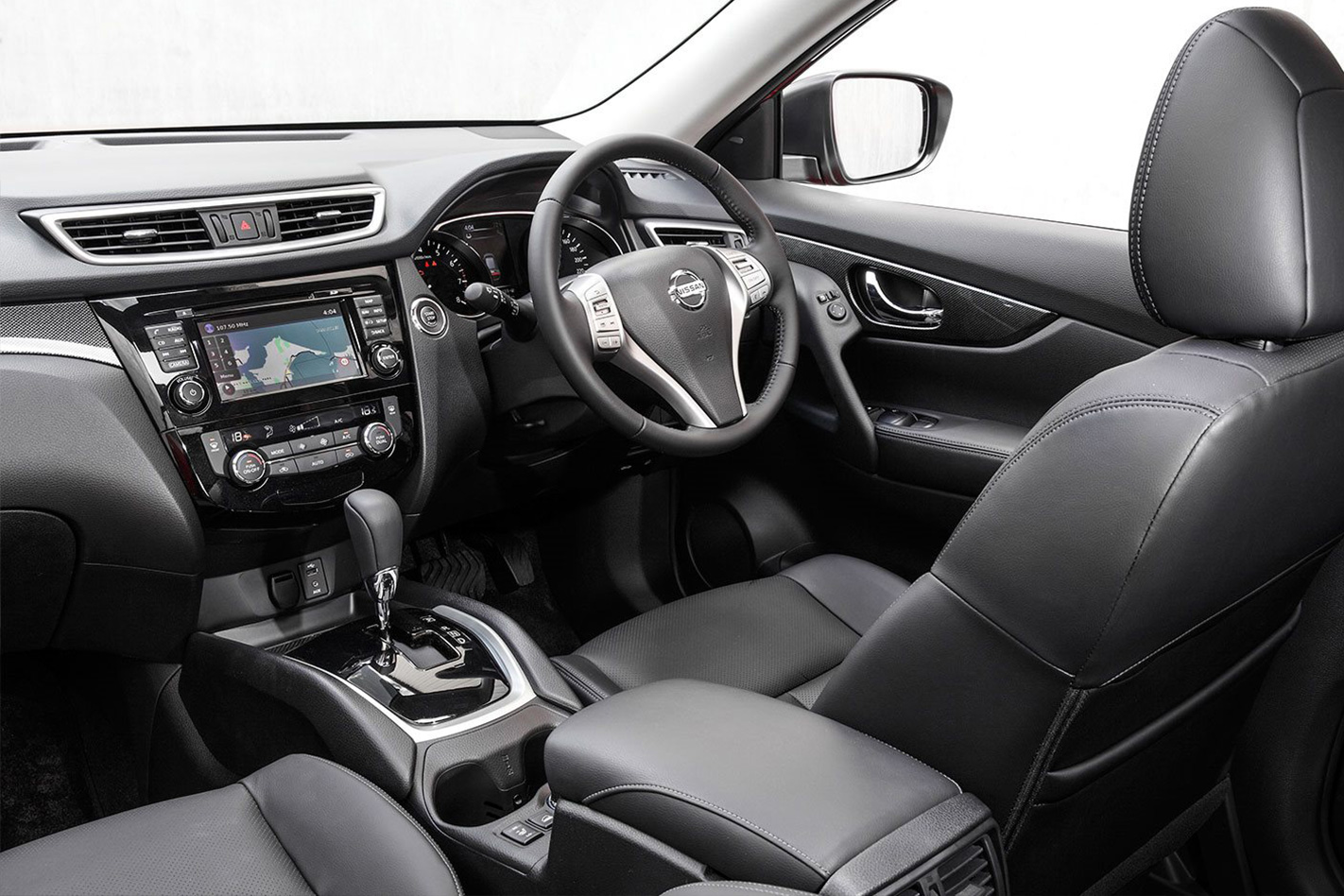
Neat and intuitive presentation and materials take a step up in the updated series two Nissan. The X-Trail remains roomy for a medium SUV, and there are second row air-con outlets. The third row is of the small-kids-only variety, but that’s par for the class. Small boot with seven in seats; and a space-saver spare.
Performance & Economy – Verdict: Honda CR-V VTi-L
The CR-V’s turbocharged 1.5 petrol departs from the segment norm to bring tangible benefit. It officially uses 7.4L/100km and with 140kW/240Nm, there’s more grunt and flexibility here than in the Nissan. The auto works well when left to its own devices, with seven ratio steps and paddle shifters to help break the CVT monotony.
Nissan’s workmanlike atmo 2.5-litre four delivers a reasonable 126kW/226Nm and teams amicably with the CVT to achieve 8.1L/100km on the official combined cycle, but expect around 10-12L/100km in everyday urban driving, perhaps a bit more than you’ll use in the Honda. Like its rival, the X-Trail is happy on regular 91 RON.
Ride & Refinement – Verdict: Draw
The new-gen CR-V is immediately more comfortable than its predecessor by virtue of better body control. Is it a bit better sound deadened than its rival? Perhaps. But it’s certainly true that the snail-assisted donk makes less noise, because it doesn’t have to work as hard as the atmo Nissan mill.

The Nissan delivers a well-controlled ride and good absorbency (on 17in wheels and tall sidewalls) that deals well with sharp bumps and undulations across a range of speeds. There’s a bit of roar on rougher surfaces, and the engine can intrude under hard acceleration, but in most types of driving, the X-Trail goes pretty quietly.
Steering & Handling – Verdict: Honda CR-V VTi-L
It’s interesting that both SUVs have a form of brake torque vectoring. Not long ago this was reserved for sports machines. Honda calls its system ‘Agile Handling Assist’, and it presumably contributes to the chassis’ well-balanced, agile behaviour. The steering, though initially inert, points well further into its lock and is quite quick.
Nissan’s ‘Intelligent Brake Control’ is a subtle brake torque vectoring system that, like the Honda’s, helps to impart well-mannered handling characteristics. It steers quite responsively but there’s not much feel and the bodyroll that’s inevitable in a high-rise wagon presents itself when you corner quickly.
Verdict – Winner: Honda CR-V VTi-L
Getting seven seats in a medium SUV immediately helps the bottom line for big families, who can avoid the stretch to a large wagon, though the third rows on offer here are for little kids only. The mid-spec Nissan costs $1500 more in seven-seat guise than as a five-seater, while Honda only offers seven seats in its second-from-top VTi-L wagon, which costs about $5500 more than the lesser-equipped VTi-S.
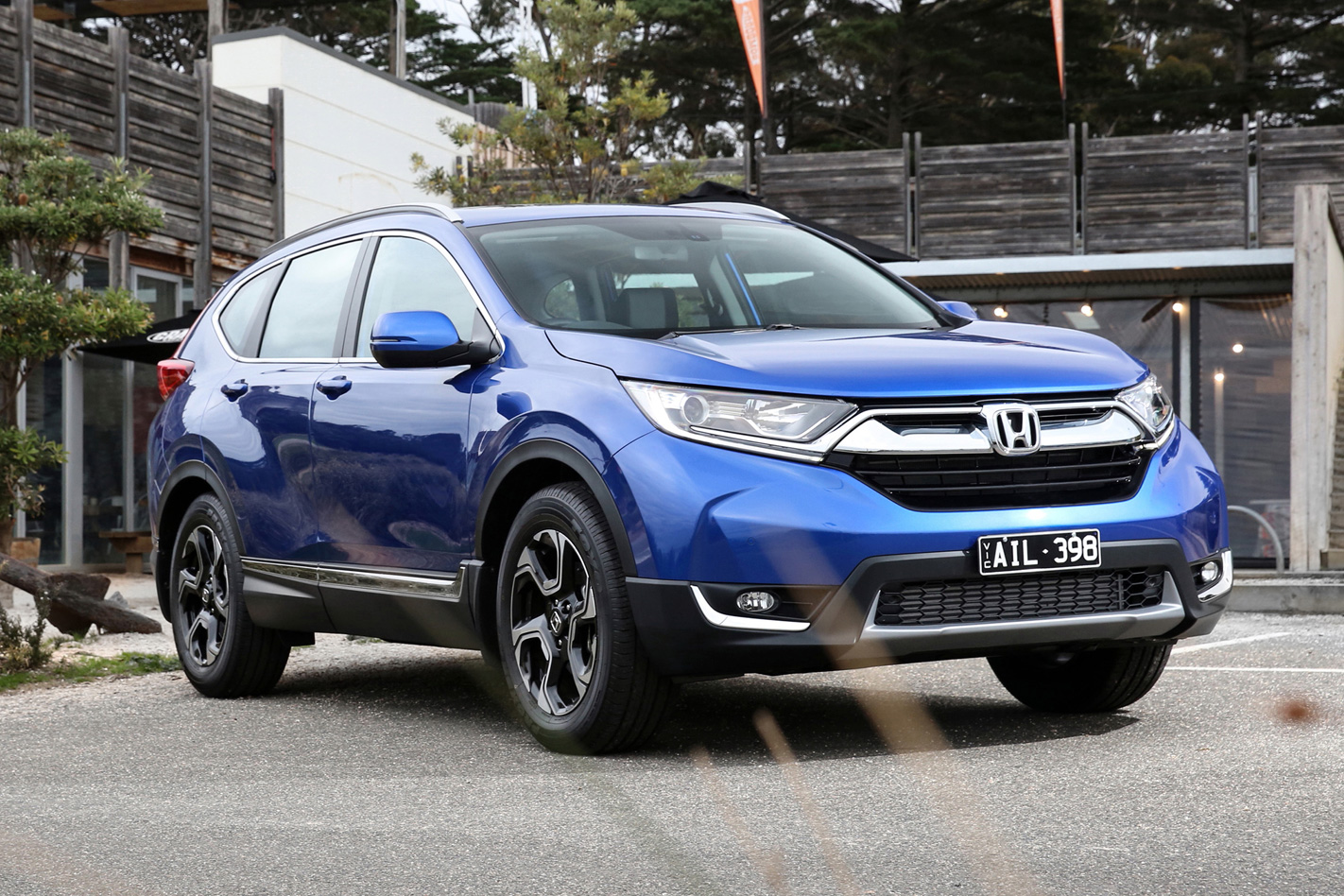
The Honda is a nicer steer, with more urge and better economy; pity AEB only comes in the top version. The Nissan, meanwhile, gets this and other safety extras, plus more convenience kit, but its engine fails to inspire and uses more fuel. On the basis of a more efficient, modern engine, and a better cabin, the Honda CR-V erases the Nissan X-Trail’s small value advantage.
