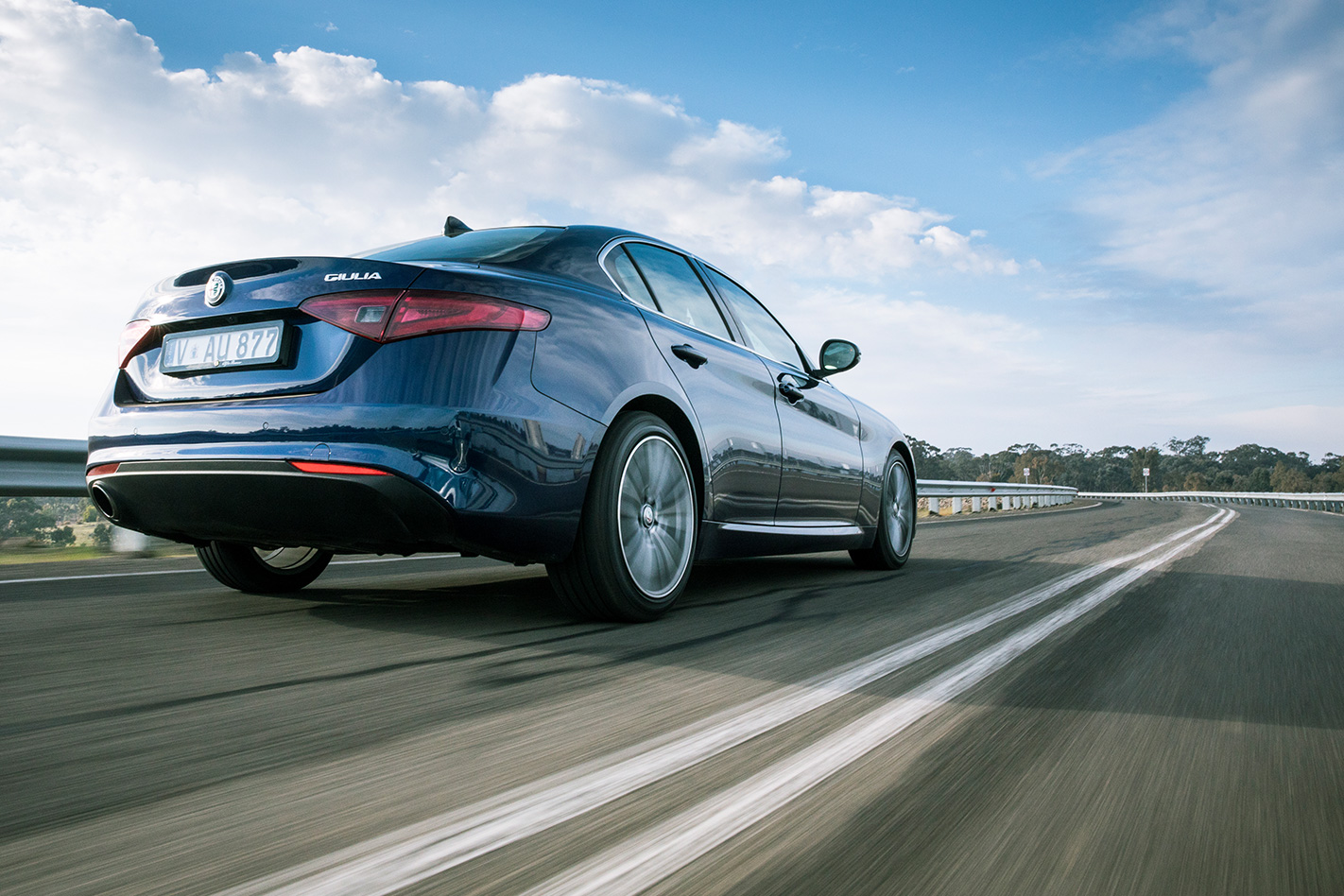
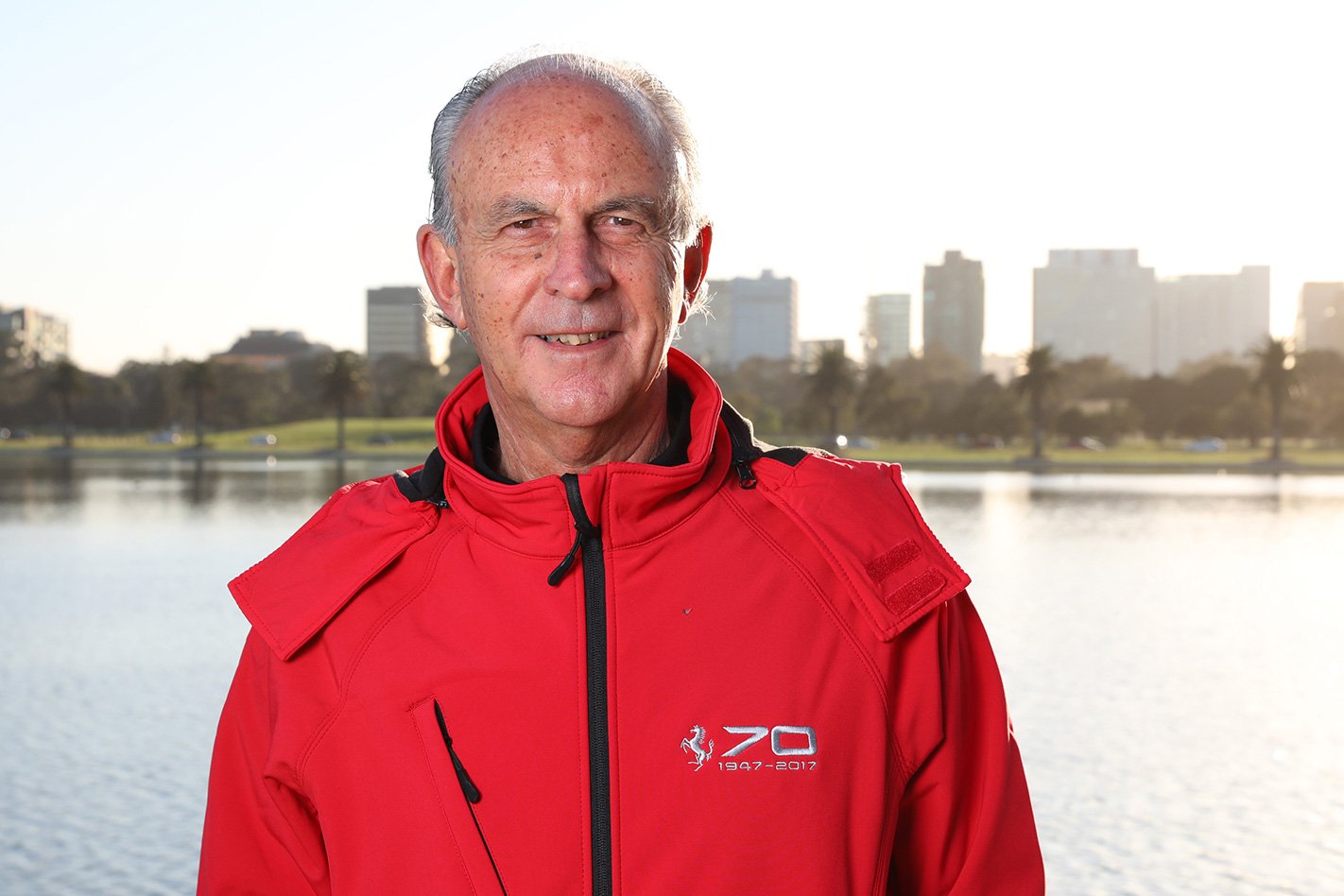
He’s probably the only person in the room who could get away with – even gently – leaning on the rear wing of a Ferrari F50, but he still notices what he’s doing and stops himself.
“Maybe I shouldn’t have been doing that!”
A light wipe from the cotton sleeve of Tim Schenken OAM and the red paint is again unmarked. Over the last five decades, Schenken has built up one of the most internationally impressive motorsport resumes an Australian can have.
After travelling to the UK at the age of 22, racing F1 cars for Brabham-Ford, becoming Ferrari’s only Australian driver, and winning the 1000km of Buenos Aires race in its final year, Schenken has seemingly done it all.
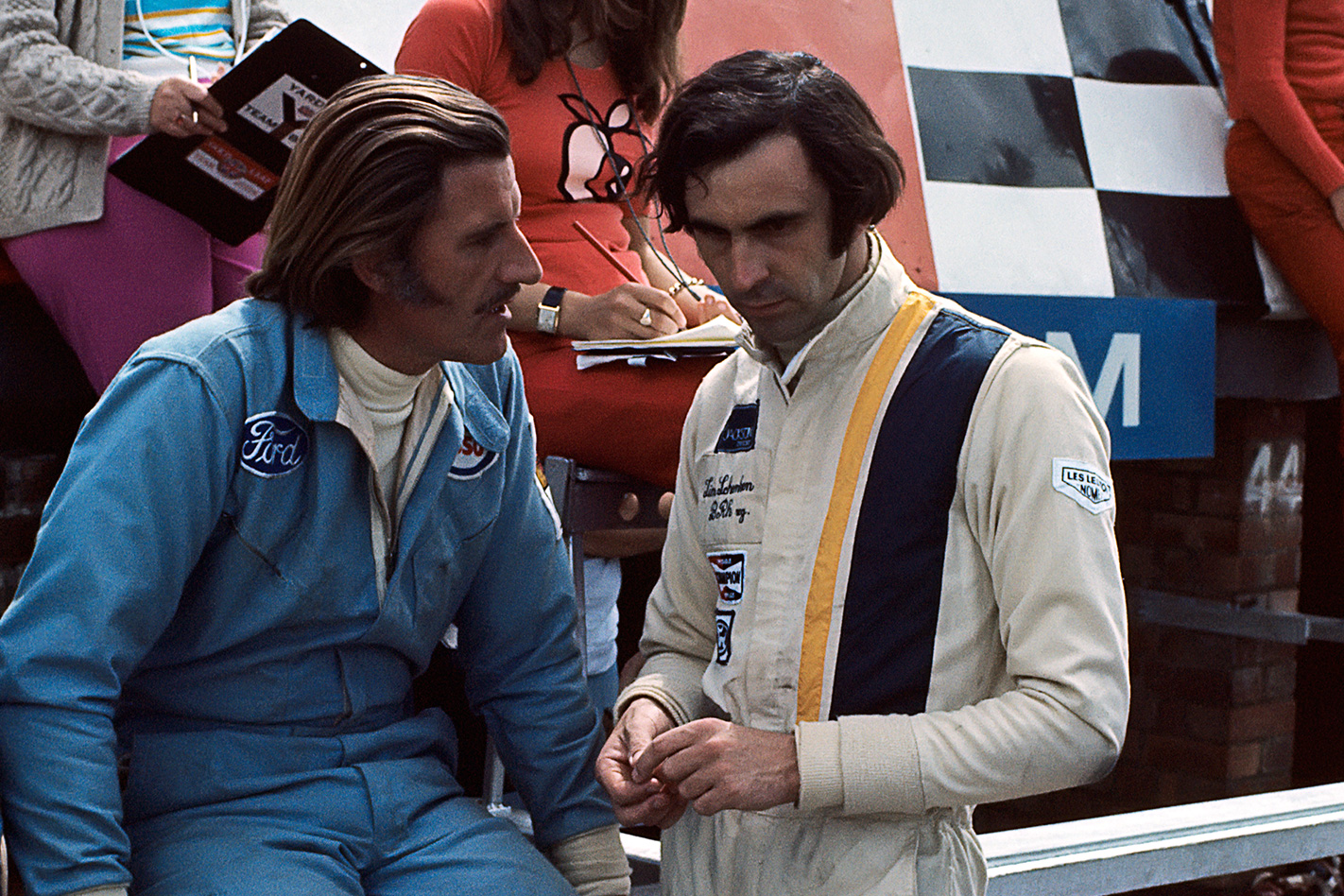
“For someone who fell in love with motorsport at the age of 12 to still be involved with it now, I’m 75 next year, is pretty special,” Schenken told MOTOR after lifting his arm from the F50.
“I work for CAMS, so I’m the race director for the Supercars series, and I’m the Chairman for the committee of the Australian Grand Prix – and the clerk of the course. In fact, I’ve been the clerk of the course since the first one in Adelaide in ’85.
“I’m also involved with the FIA, on the Touring Car Commission and I’m vice president of the Circuit Commission which is responsible for circuit safety. I’m also one of the inspectors so I’m often doing track inspections, across pretty much all of Asia.
“And I’m one of the permanent stewards for Formula E, which has me doing about four races a year. Last season I did Mexico, New York, and Berlin, So I’ve got a full life and I enjoy it.”
Presently, Schenken is with Ferrari to celebrate the brand’s 70th anniversary, after having been associated with the Prancing Horse for most of his life.
“Working with Ferrari has been sort of in-and-out, I was invited to be part of this, and on Monday I led the parade in the LaFerrari Aperta from Albert Park to Langwarrin to a function there. We had 100 cars following us at 60km/h, but even doing 60 you can appreciate a Ferrari.”
Aside from those he’s raced, Schenken finds it hard to pinpoint the most significant Ferrari in his life. “They’re all fantastic. Once you’ve driven Ferrari, whether it’s old or new, there’s something special about it. And maybe that’s just the mystique of the man and the brand, but they’re all lovely to drive.
“But I haven’t actually driven most of the cars that are here. Even when I drove for Ferrari, I can’t think of many road cars I did drive. Sometimes at Fiorano, when there was a break, we’d jump off the track into a road car then head up and have a wander around the factory. Not sure you could do that today.”
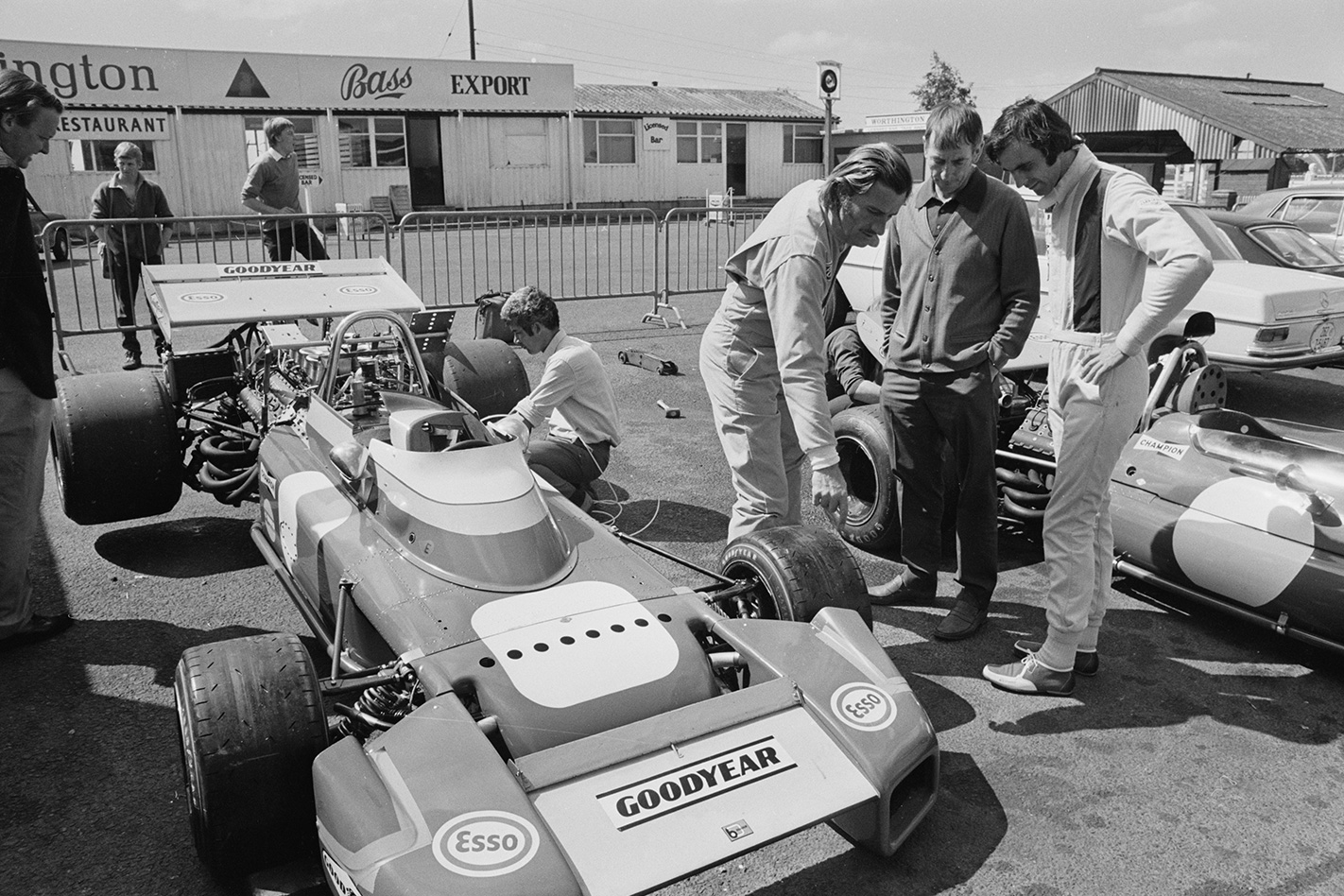
The oldest Ferrari on display in the Motorclassica hall did however grab Schenken by the nostalgia strings. “Well even this here, the 195 EL Coupe, I mean just look at it. It’s a lovely car to look at and I feel like it’d be lovely to drive. As it would with many of these older cars. But no one invites me to for some reason.
Maybe they’ve read about my exploits on the road from when I was younger. I guess they didn’t want to risk their cars.”
But you’d expect Tim Schenken, of all Australians, to at least have a small collection of the things. If not road cars, maybe a race car?
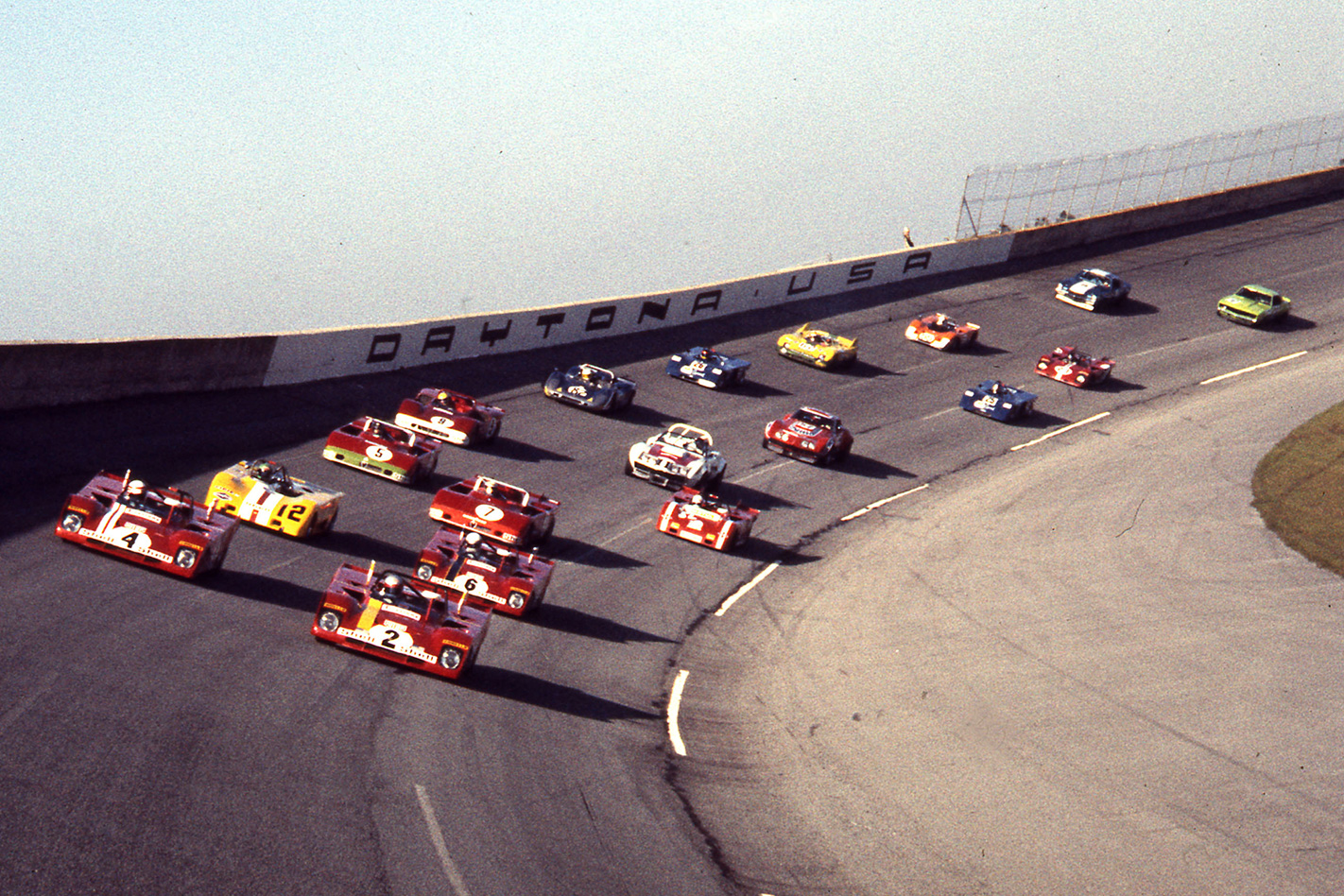
“Personally I don’t really have a collection of cars. I probably missed a few great opportunities, in fact I often tell the story of the 312P at the end of 1972.”
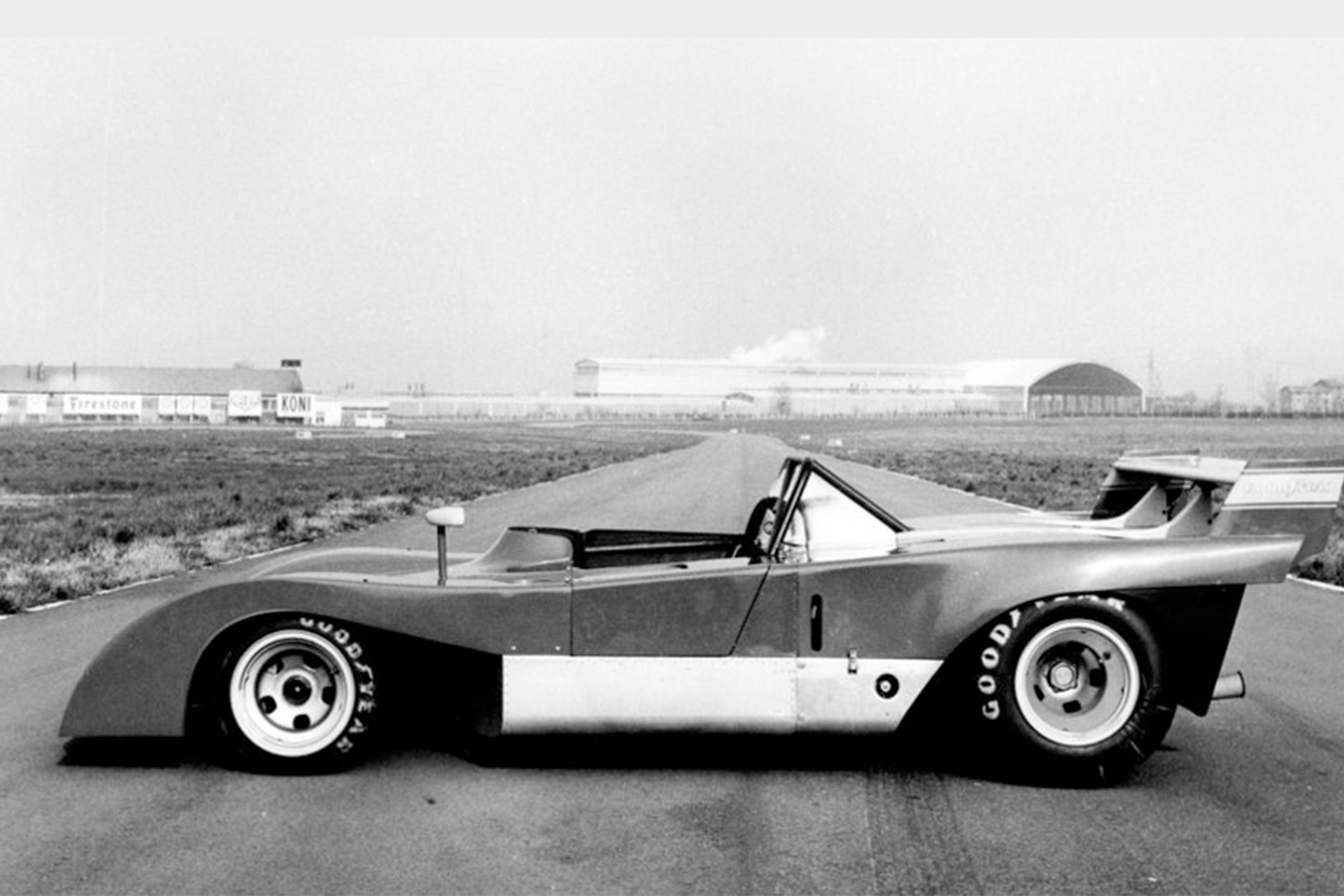
“Enzo Ferrari offered the drivers the opportunity to buy those cars for 12,500 pounds. When you look at it today you think ‘well, bloody hell you should have bought them all!’
“But to put things into perspective, I bought a lovely house in Maidenhead which is just outside of London on the river – not in the river – for 7500 pounds.”
“At that time I was a professional racing driver so I thought, you know, why would I want to buy the car? People pay me to drive their cars, and even at that time I didn’t really appreciate what Ferrari was about.
“I have to admit, I didn’t really then.”
But since then, once media coverage of motorsport picked up and Ferrari became a more widely-known brand among even non-motoring folk, Schenken began to see that what he had been part of what incredibly special.
“It must be the most recognised name and logo in the world ahead of Coca-Cola and the rest. I don’t even think you have to be into motoring – people just know what a Ferrari is.
“In those days there was no media attention really, so when you looked at the London newspapers, if Graham Hill or Jackie Stewart won a race you’d see an inch or so in one column in the sports section.
“Now I think it still holds that same romance, maybe more so. If I was driving for Ferrari today, I’d be a sensation!
“I was just a race driver in those days.”
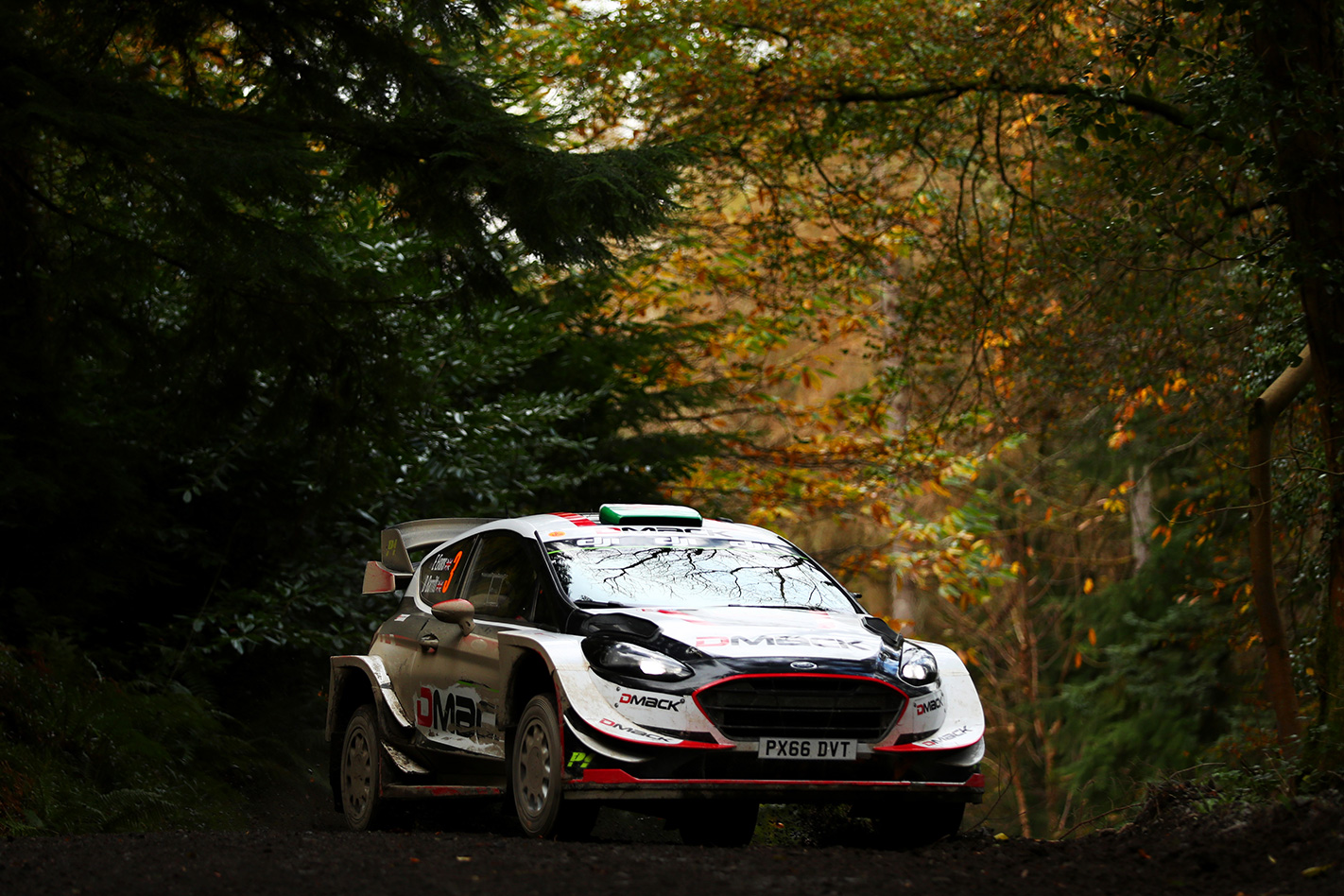
FORD M-Sport’s Welsh driver Elfyn Evans has taken a dominating maiden World Rally Championship victory, winning his home event by 37.3 secs over Hyundai driver Thierry Neuville.
But Sebastien Ogier’s third place, a further 7.9 secs back, was enough for the Frenchman to clinch the 2017 drivers’ title, his fifth consecutively but the first with Ford M-Sport.
Unbeatable in the muddy forests of Wales Rally GB for the past four seasons, Ogier appeared a little tentative and conservative during this year’s event, keeping his eye on the championship rather than going after the win in the penultimate round.
With a third M-Sport Ford Fiesta driver Ott Tänak finishing sixth, Malcolm Wilson’s British privateer team capped an historic weekend by taking the WRC manufacturers’ championship for the first time in 10 years.
Evans, though, was brilliant in front of his local fans, controlling the four-day rally and setting fastest times on nine of the 21 stages and, despite the challenges of rain, fog and muddy roads, he grabbed and held the overall lead from the first speed test on Friday.
“It’s been a good rally,” Evans commented after his biggest win in the sport. “I’m incredibly grateful to everybody that has stood by me through all these years – to get to this point has taken a lot. To all the people who have supported me and backed me – this is for you. And this result only makes us even hungrier for more.”
Ogier was emotional after claiming a hard-fought championship with his new team. Four times a champ with VW, Ogier was forced to find another driver this year when the German giant withdrew from the sport. It has been a tough season’ this year Ogier has won only two of the 12 rounds so far but finished on the podium a further seven times.
“I don’t know what to say. It’s just incredible. Thank you so much to the whole M-Sport team and Malcolm. It was a hard job. We work all very hard. It’s amazing to be World Champion with this team,” he said through tears.
“I had very, very strong emotions on the finish line. I’m very happy for Elfyn. It’s amazing for M-Sport – victory, two guys on the podium, the manufacturers’ championship, drivers’ world championship – everything!”
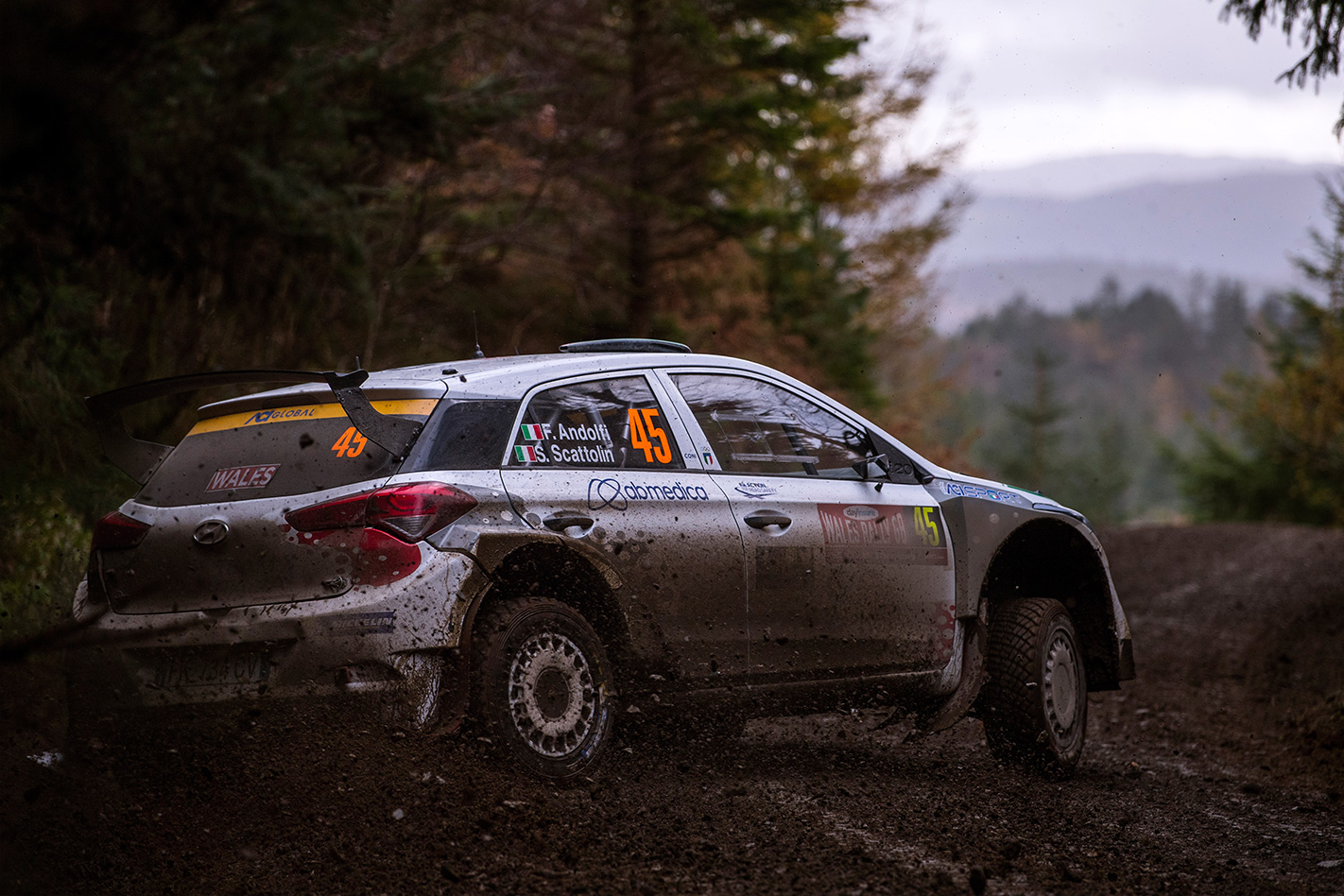
Organisers are planning a big welcome for the international and Australian teams entered, with a free Rally Show and Ceremonial Start expected to attract thousands of fans to the closed main street of Coffs Harbour on Thursday 16 November.
The competitors’ service park at C.ex International Stadium will be a hub of rally activity and free entertainment, including driver appearances, music concerts, fireworks, student visits, souvenir sales and a $5000 cash giveaway, throughout the weekend.
There is also a rally within the rally at Coffs – the Australian Rally Championship decider between Molly Taylor and Nathan Quinn
RESULTS (provisional)
Wales Rally GB (round 12 of 13):
1 Elfyn Evans/Daniel Barritt (Ford Fiesta WRC) 2h57m00.6s
2 Thierry Neuville/Nicolas Gilsoul (Hyundai i20 Coupe WRC) +37.3
3 Sébastien Ogier/Julien Ingrasia (Ford Fiesta WRC) +45.2
4 Andreas Mikkelsen/Anders Jaeger (Hyundai i20 Coupe WRC) +49.8
5 Jari-Matti Latvala/Miikka Anttila (Toyota Yaris WRC) +50.3
6 Ott Tänak/Martin Järveoja (Ford Fiesta WRC) +1:02.3
7 Kris Meeke/Paul Nagle (Citroen C3 WRC) 1:20.5
8 Hayden Paddon/Sebastian Marshall (Hyundai i20 Coupe) +2:16.3
9 Esapekka Lappi/Janne Ferm (Toyota Yaris WRC) +2:46.5
10 Dani Sordo/Marc Marti (Hyundai i0 Coupe WRC) +3:50.5
2017 FIA World Rally Championship for drivers after round 12:
1 Sebastien Ogier 215
2 Thierry Neuville 183
3 Ott Tanak 169
4 Jari-Matti Latvala 136
5 Elfyn Evans 118
6 Dani Sordo 95
7 Juho Hänninen 71
8 Kris Meeke 70
MotoGP: Dovi wins in Malaysia to keep title hopes alive
Marquez takes a safe fourth in risk-minimisation: takes 21-pont lead to Valencia decider
Ducati’s Andrea Dovizioso bounced back from a bad weekend in Australia to take a bold victory in steamy and slippery conditions in a tension-charged Malaysian Motorcycle Grand Prix, at Sepang, keeping his slender MotoGP title hopes alive to the final round in Valencia in two weekend’s time.
Championship leader, Honda’s Marc Marquez, could only manage fourth as Dovizioso banked his sixth win of the season..
Marquez had a chance to seal the 2017 championship in Sepang but didn’t look his normal assured and confident self through practice and qualifying.
Marquez crashed on his first flying qualifying lap and on his second bike couldn’t do better than seventh, his lowest grid slot of 2017.
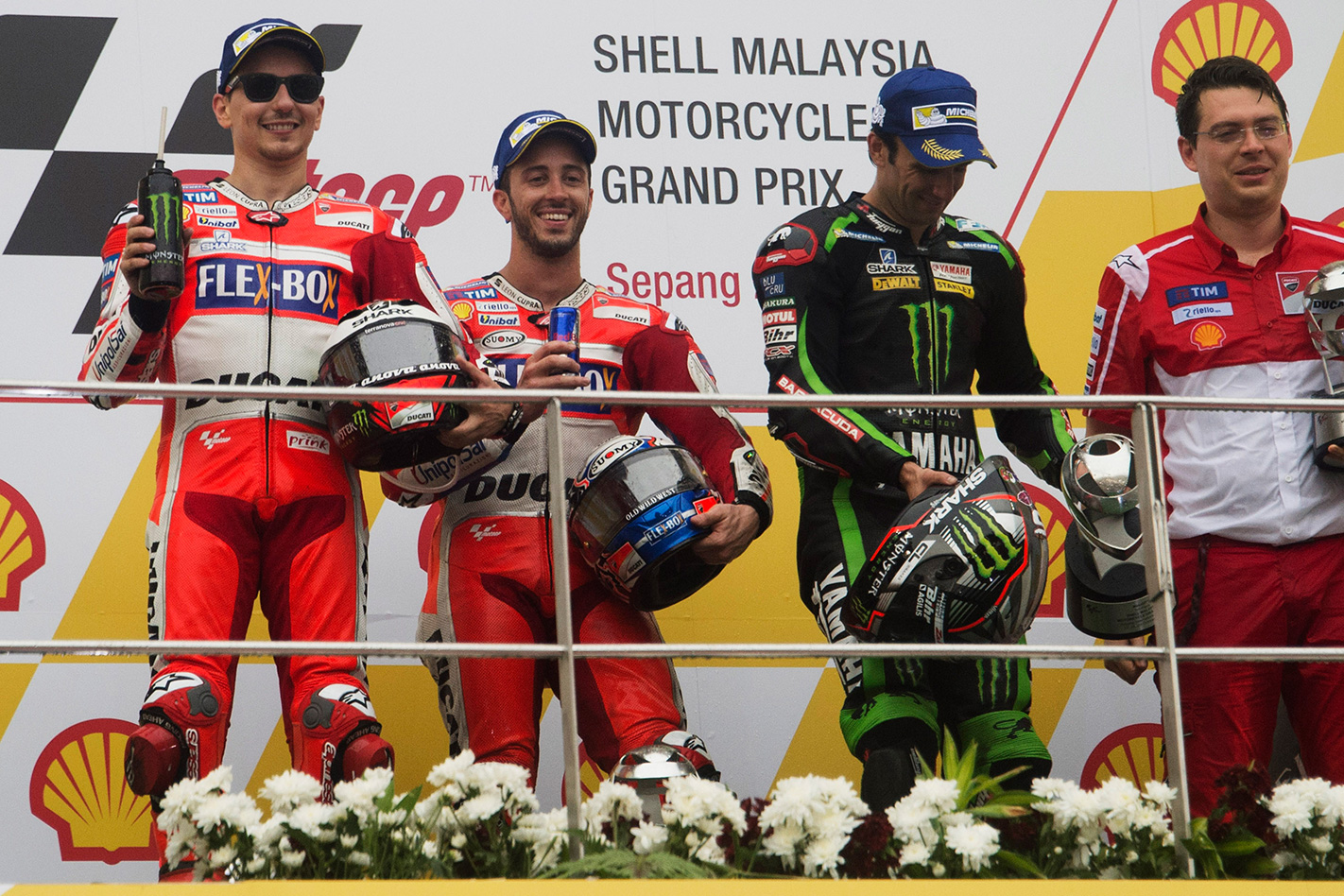
This penultimate round of the 2017 MotoGP World Championship was a must-win race for Dovi..
Steamy, uncomfortably hot Sepang with its ever-changeable weather can always spring surprises and so it was on Sunday when, in typical Malaysian fashion, the sun that had shone until half an hour before the start of the MotoGP race was replaced by a sudden heavy thunderstorm that left the track completely soaked.
From the third row, Marquez, got away brilliantly and hit the lead briefly, completing the first lap in third place behind the exciting rookie Johann Zarco (Yamaha) and Ducati’s Jorge Lorenzo.
Dovizioso got into his usual smooth rhythm and moved forward past Marquez to third on lap five.
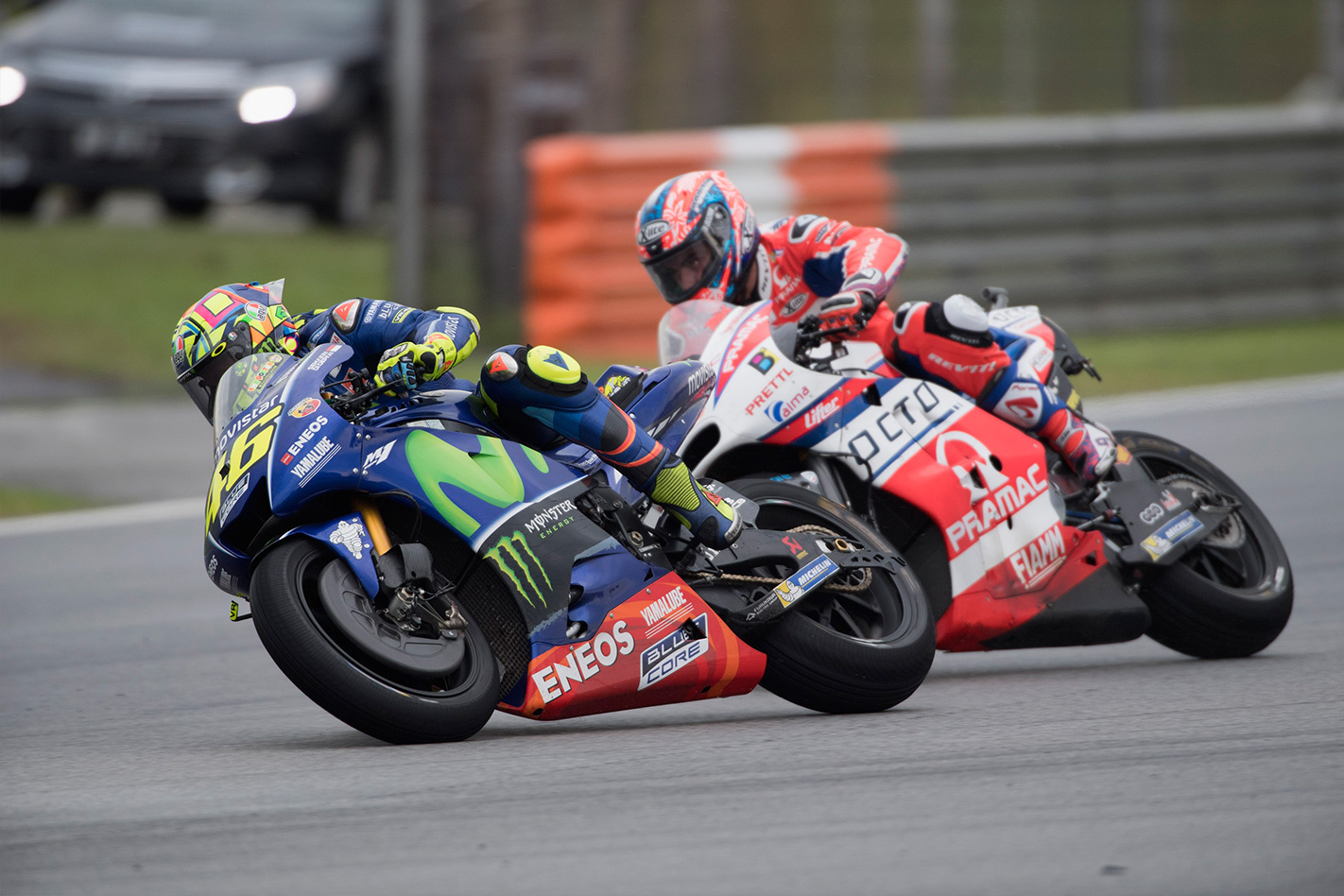
Marquez experienced a few moments in his chase and elected to back off and aim at finishing.
Commentators, team bosses, riders and those watching on TV were now doing mental arithmetic to see if Marquez could seal the title deal in Sepang…
If they held station, Marquez would be champ for 2017.
But speculation was rampant that Ducati would implement team orders and tell Lorenzo to relinquish the lead to the championship contender.
Then with less than five laps to the chequer, Lorenzo had a massive moment, barely saving a perilous front-end slide with his left knee.
With Dovizioso winning the race in front of Lorenzo and Zarco, Marquez will take a 21-point lead to Valencia, meaning that the Ducati rider must win the finale and hope the Honda star .
Pedrosa, who had been the fastest rider in Saturday’s dry conditions, wasn’t the happiest man when the rain started to fall, but the decision to use a soft rear tyre allowed him to keep a decent pace and take fifth place, just behind his team-mate and ahead of Danilo Petrucci, who came from the back of the grid on his back-up Ducati, Valantino Rossi, and Jack Miller.
Marquez commented afterwards: “Today the race was the most difficult one we could have had for the championship because we had rain conditions and the track was extremely slippery. Anyway, I got a good start, and I tried to push at the beginning because I didn’t want to be stuck in the middle of the group. Then I tried to find the feeling and the pace but I saw that both the Ducatis were very fast, so I decided to not take too many risks, to be calm, and to get good points for the championship.”
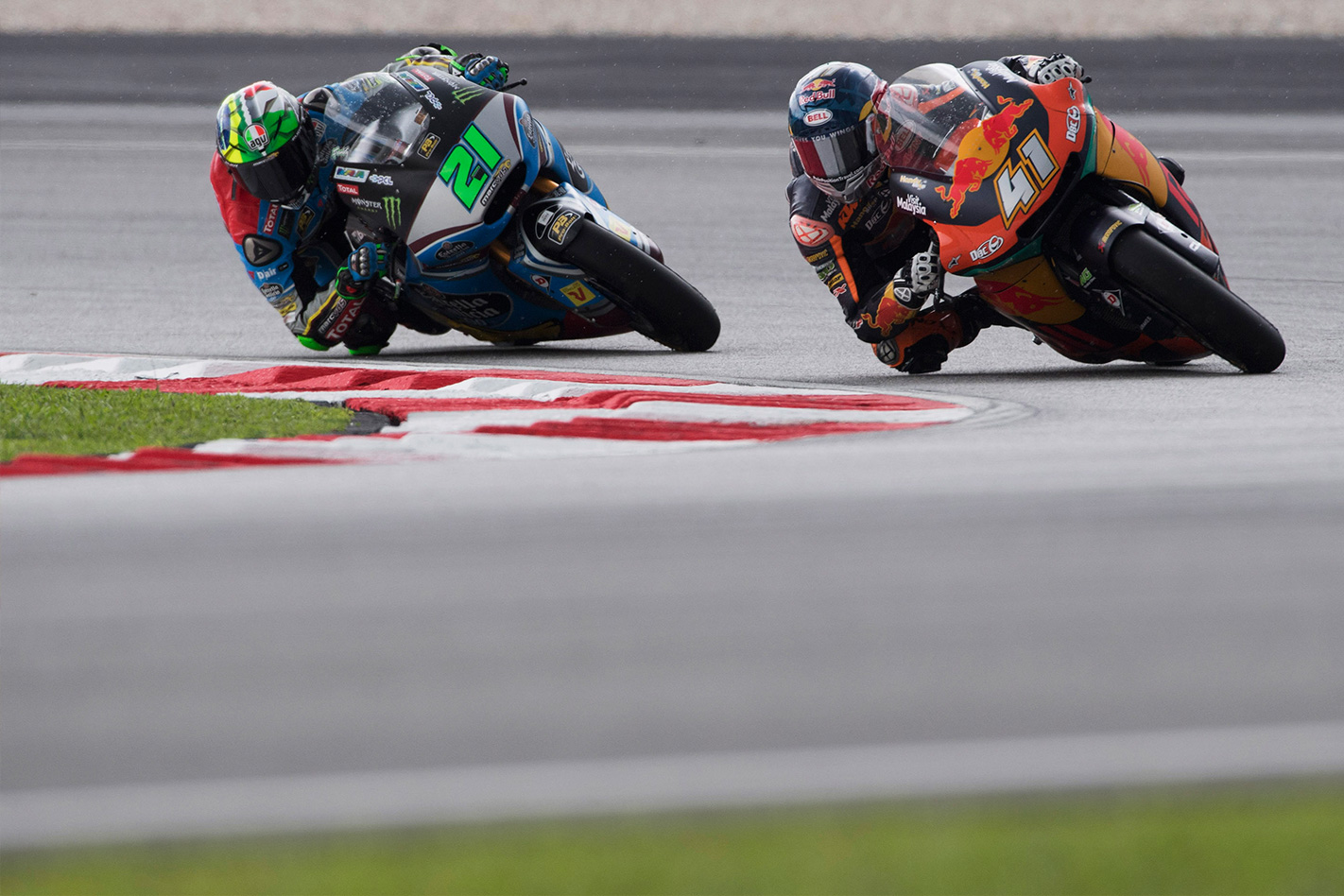
The race was a crash fest with more than one third of the field, including Australia’s Remy Gardner, falling. Up front though, the quick guys stayed upright, led by Portuguese Miguel Oliviera.
The in-form Phillip Island winner defied the oppressive humidity and threatening skies to zoom away from KTM team-mate Brad Binder and Morbidelli. This three went on to lock down the podium occupancy. Portugal is not renowned for great motorcycle racers but Oliviera could chance that.
Having secured his first Moto3 championship the previous weekend at Phillip Island, precocious Joan Mir could go out and enjoy himself in Malaysia, securing his first pole of the year before going after yet another win.
One-lap wonder Jorge Martin cleared out with Mir playing his usual controlled waiting game in front of a crocodile chain of a dozen pursuers, most aboard Hondas. Then in a mid race surge, Mir closed on Martin and with 10 laps remaining hit the front. It wasn’t over though as Enea Bastianini and Martin fought past Mir to start a savage three-way battle for the win, Then, with two laps remaining, and as he has done so often, the new world champ checked out for his 10th victory of this season, ahead of Martin and Bastianini.
Rivals will be relieved to see the cool Spanish superkid Mir depart to Moto2 next year.
Unforgettable night in Melbourne for Aussie Jason Doyle
Newcastle rider is world speedway champion and Australian Grand Prix winner
Newcastle’s Jason Doyle has achieved his dream of winning the world speedway championship, doing the deed brilliantly in front of an ecstatic Australian crowd at Melbourne’s Etihad Stadium.
The 32-year-old professional is the sixth Australian to be crowned FIM World Speedway Champion, but the first to grab the crown in his home country.
It was a just reward after a tough season for Doyle, who has carried the pain of the right foot he broke in Torun four months ago to join Lionel Van Praag, Bluey Wilkinson, Jack Young, Jason Crump, and Chris Holder as Australian speedway world champions.
Doyle went into the meeting with a useful margin of 14 points over the only rider who could catch him in the title chase, Poland’s young coming man Patryk Dudek.
Three terrific wins in his first three heats gave Doyle the points’ grab he needed, with celebrations immediately breaking out in his pit, while family and friends also went wild in the crowd.
It was an emotional night for Doyle, who was favoured to win last year’s title until he was badly injured in Poland just weeks before the Melbourne finale. He had to sit out the decider with a shattered shoulder and elbow, punctured lung and busted ribs.
Doyle’s approach to riding is rarely conservative and on Saturday night he said he took the ‘win it or bin it’ attitude. “The same as I have done all year,” he declared.
After securing the title, Doyle could have been forgiven for thinking he could relax, enjoy the achievement, and go easy in his remaining rides. But he had other ideas, going hard and boldly and topping the points after five heats and then doing enough in his semi final to make the final four.
From an unfavourable grid spot, Doyle fired into second before fiercely rounding up the fast-gating Dudek to win the Australian Speedway Grand Prix. It was stirring stuff.
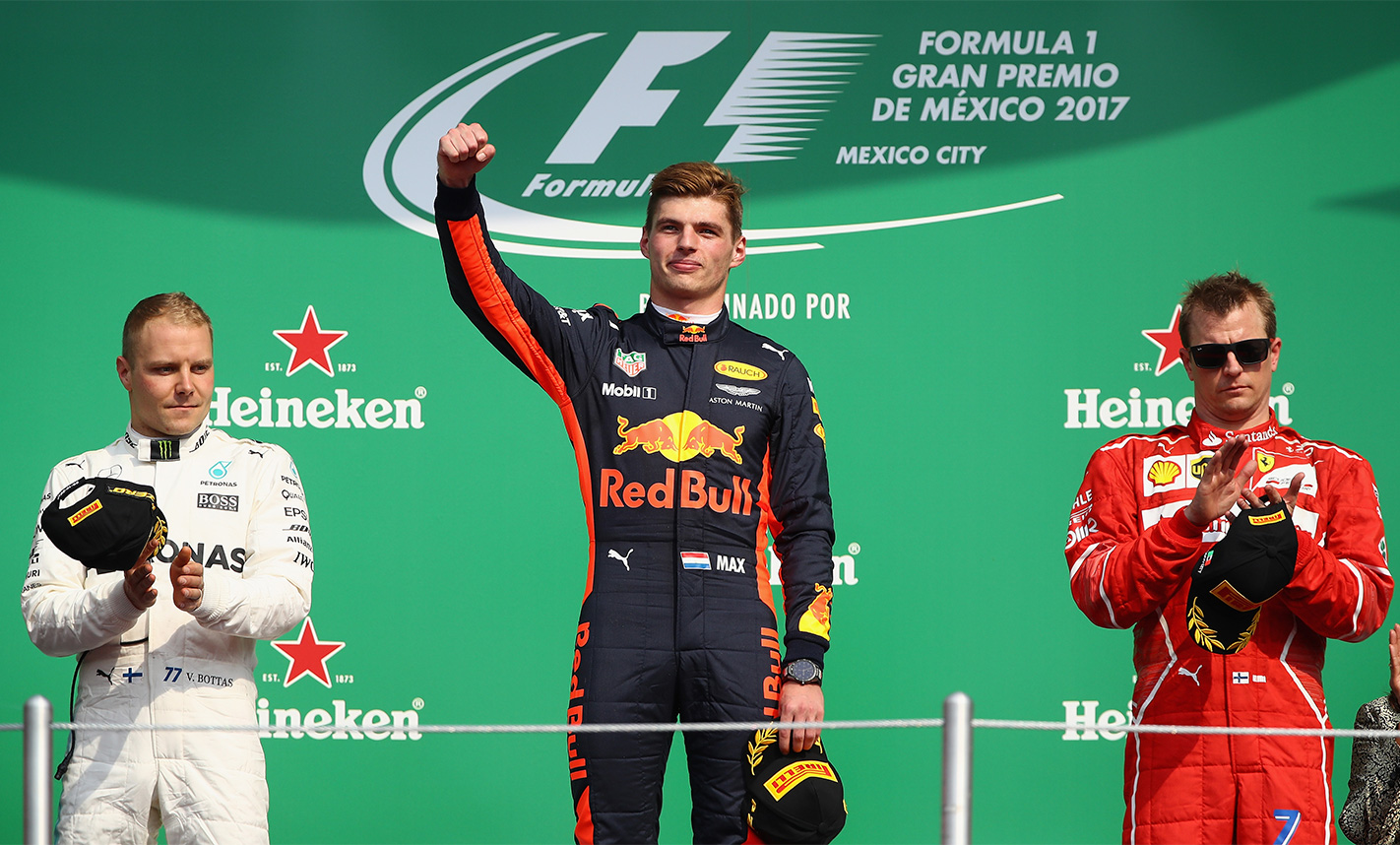
Lewis Hamilton has joined Alain Prost and Sebastian Vettel as a four-times world drivers’ champion despite finishing back in ninth in the Mexican Grand Prix, which was won comfortably by Red Bull’s Max Verstappen.
It was Verstappen’s second win of the year, this time by 20 seconds ahead of Valtteri Bottas, with Kimi Raikkonen third.
Vettel’s fourth place wasn’t enough to keep him in championship contention. He really needed to win.
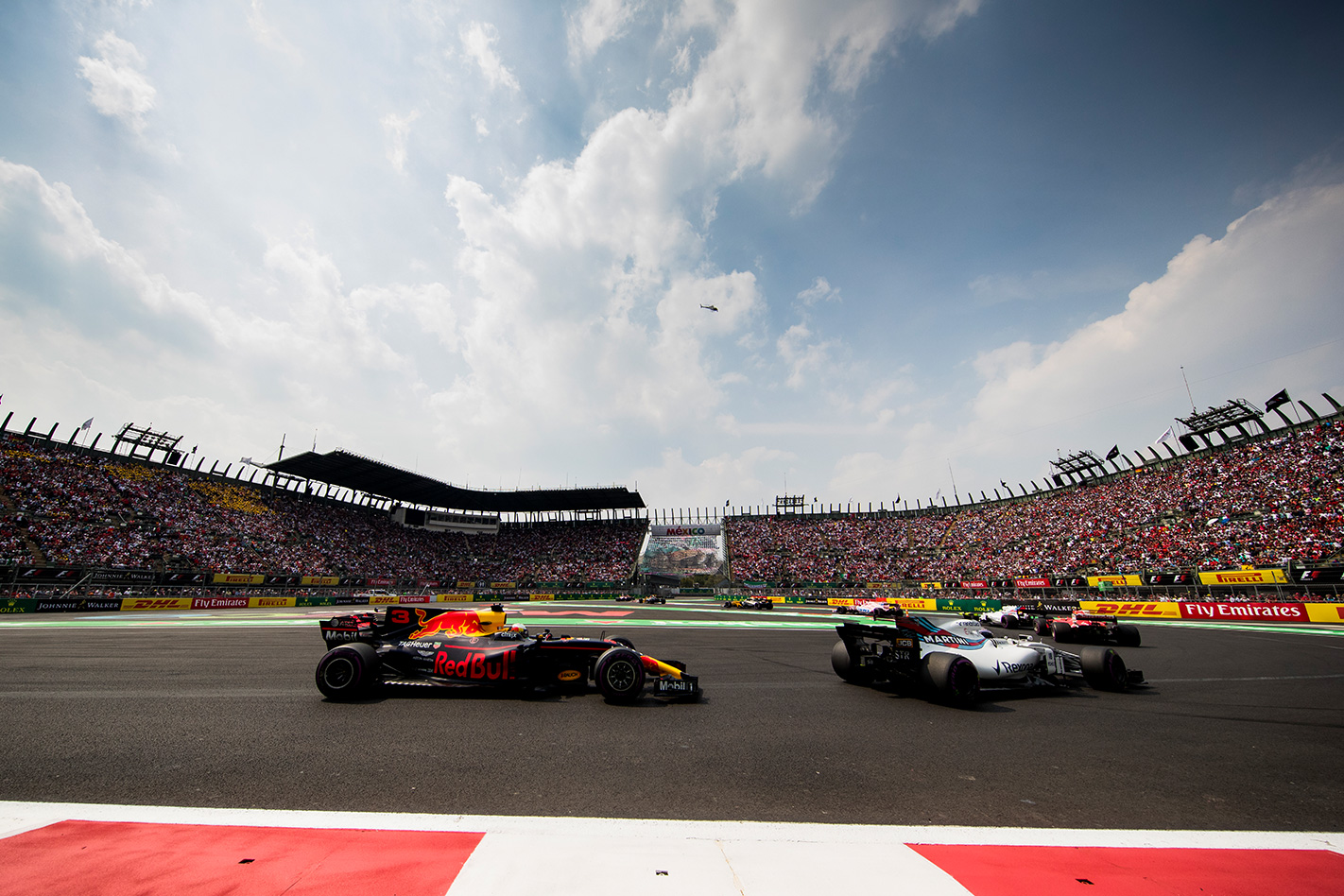
The opening lap dramatically changed the race prospects of the title contenders, with Verstappen zinging around the outside into the lead in a characteristically daring turn one move. “Simply, simply lovely,” Verstappen reported to his team as he emerged in front. Then in turn three, Ferrari’s Vettel clumsily hit the back of Hamilton’s car, puncturing the Briton’s right rear and damaging his own front wing.
Daniel Ricciardo’s race ended prematurely after a bizarre weekend. After promisingly topping Friday’s practice, he qualified a lowly seventh, and admitted to being confused with his car’s sudden lack of grip. Then came further bad news that Ricciardo would start 16th due to penalties for new engine parts.
Ricciardo charged hard from the start and was up to seventh on lap four. Impressive, however just two laps later he was headed back to the pits to retire with engine failure.
Up front Verstappen edged away from the Mercedes of Valtteri Bottas, while Kimi Raikkonen worked his way up to third as Nico Hulkenberg’s Renault stopped with power unit issues.
On lap 33, the virtual safety car was called after Brendon Hartley’s Toro Rosso came to a halt – continuing a bad race for Renault-powered teams. Carlos Sainz was to follow 10 laps from the end
Vettel’s comeback drive had elevated him to seventh, and then aggressively past Force India’s Sergio Perez to sixth, but still with a mountain to climb in order to keep his title prospects thriving. Then he jumped Lance Stoll’s Williams to take fifth. And moments after Hamilton grabbed 10th, Vettel pounced on Esteban Ocon for fourth.
Even so, Hamilton would surely regain his title today. A great duel with Fernando Alonso brought Hamilton up to ninth. Which is where he finished, making him the first Briton to win four titles.
On his cool-down lap, Hamilton spoke over the team radio: “A big thanks to everyone in the team…what you’ve done over the last five years is remarkable.”
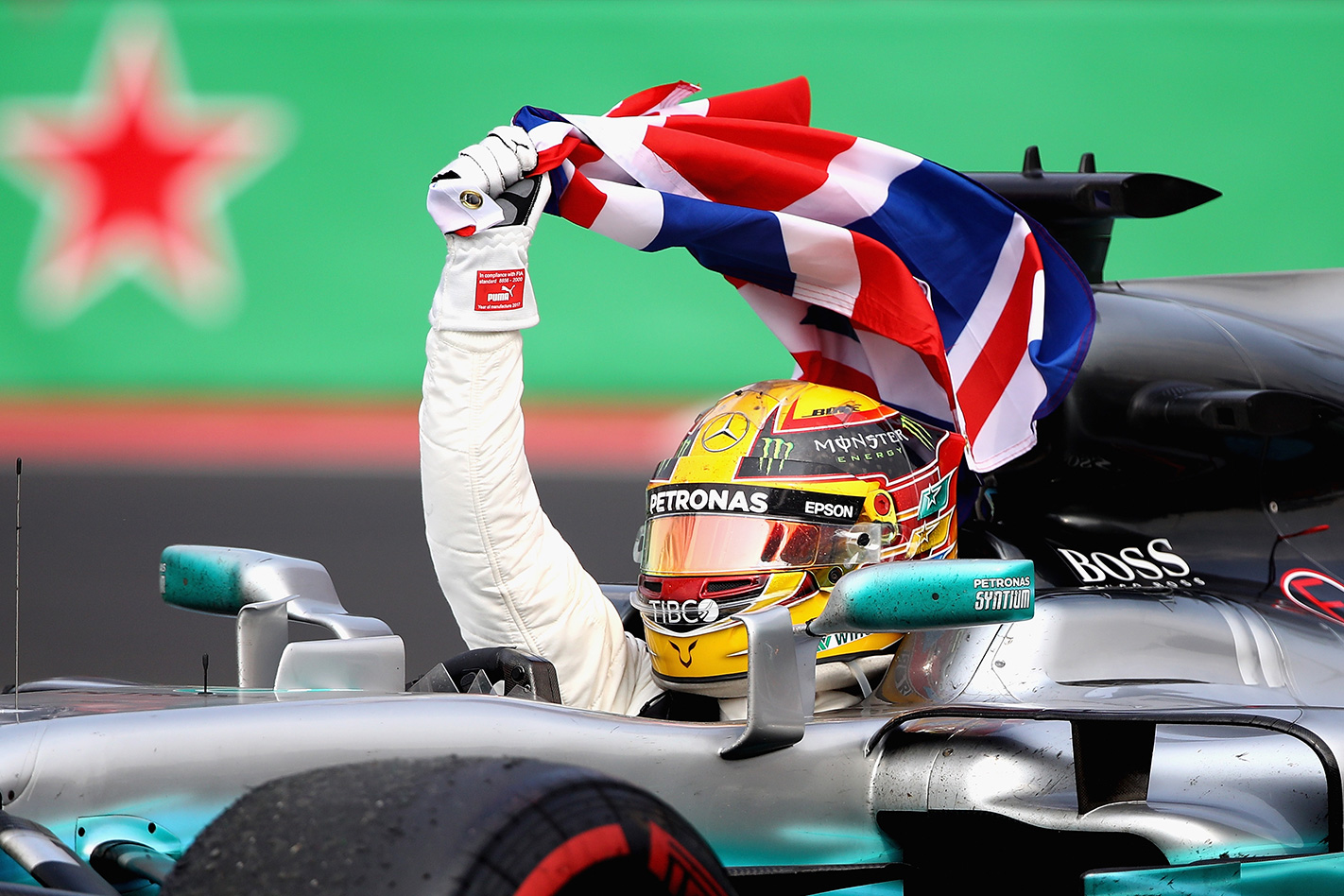
Before taking off on a victory run along the track, Hamilton commented on the race-turning incident: “I don’t know what happened in turn three but I gave him [Vettel] plenty of room.”
Verstappen was untouchable as he cruised to a win all the sweeter after he lost a podium at the previous race due to a controversial post-race time penalty. And his Renault kept ticking along all race.
“I’ve never been so nervous watching temperatures,” said Horner afterwards. “But Max stroked it home.”
If you thought the LaFerrari was bonkers, Ferrari’s FXX-K was there to let you know that things only get more hardcore from there.
Now, there’s a car that makes the FXX-K look tame. It’s the Ferrari FXX-K Evo.
Though the engine and its outputs are essentially the same as that of the ‘regular’ FXX-K (773kW from a 6.3-litre NA V12 and an electric motor), the Evo cops a plethora of changes which improve handling, weight, and more importantly, downforce.
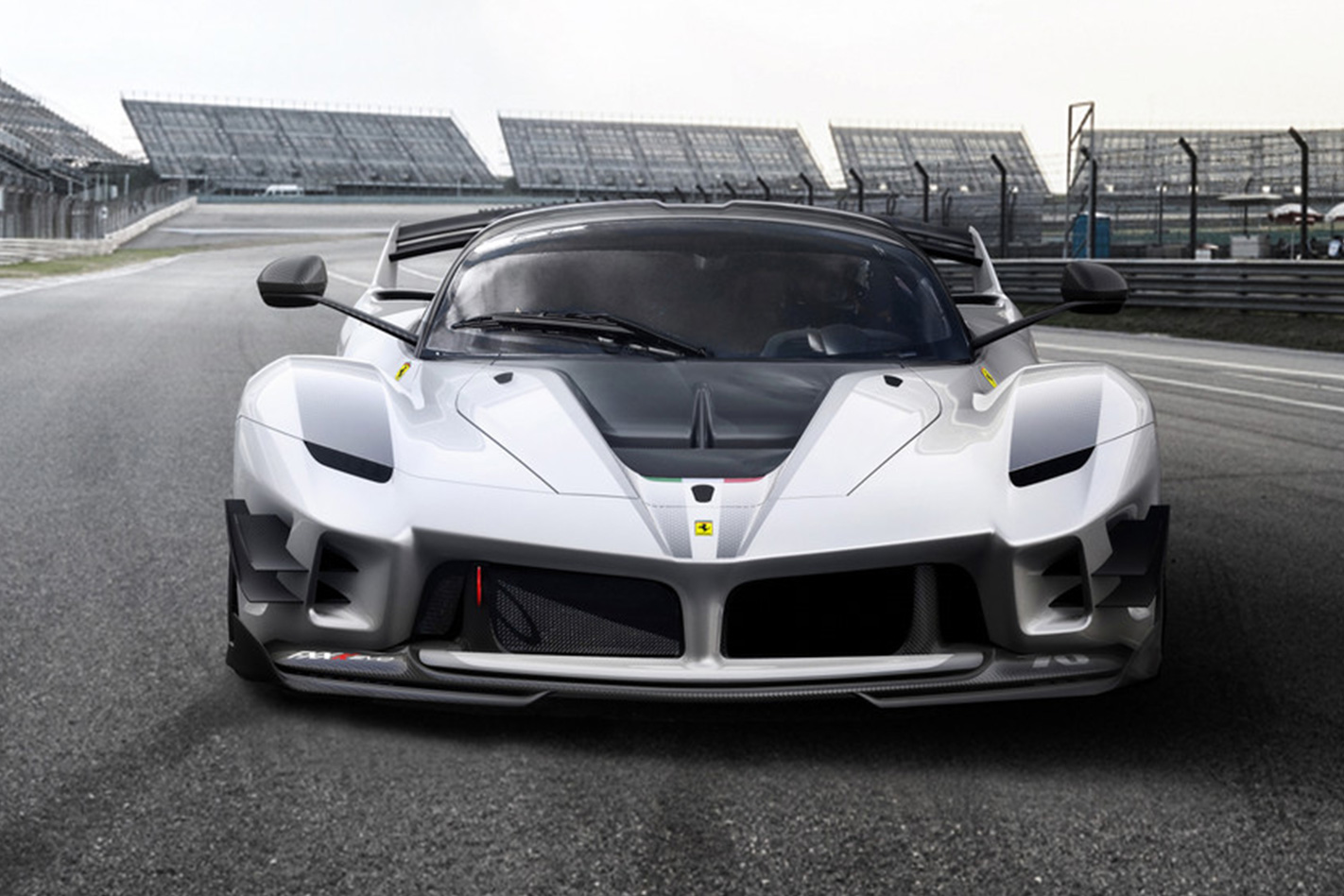
Essentially, Ferrari is closing the gap between its road cars and its race cars.
As a result, an aero package has been gifted to the Evo which creates almost as much downforce as Ferrari’s GT3 and GTE cars. At top speed, the FXX-K Evo produces 830kg of downforce, 23 per cent more than the standard FXX-K.
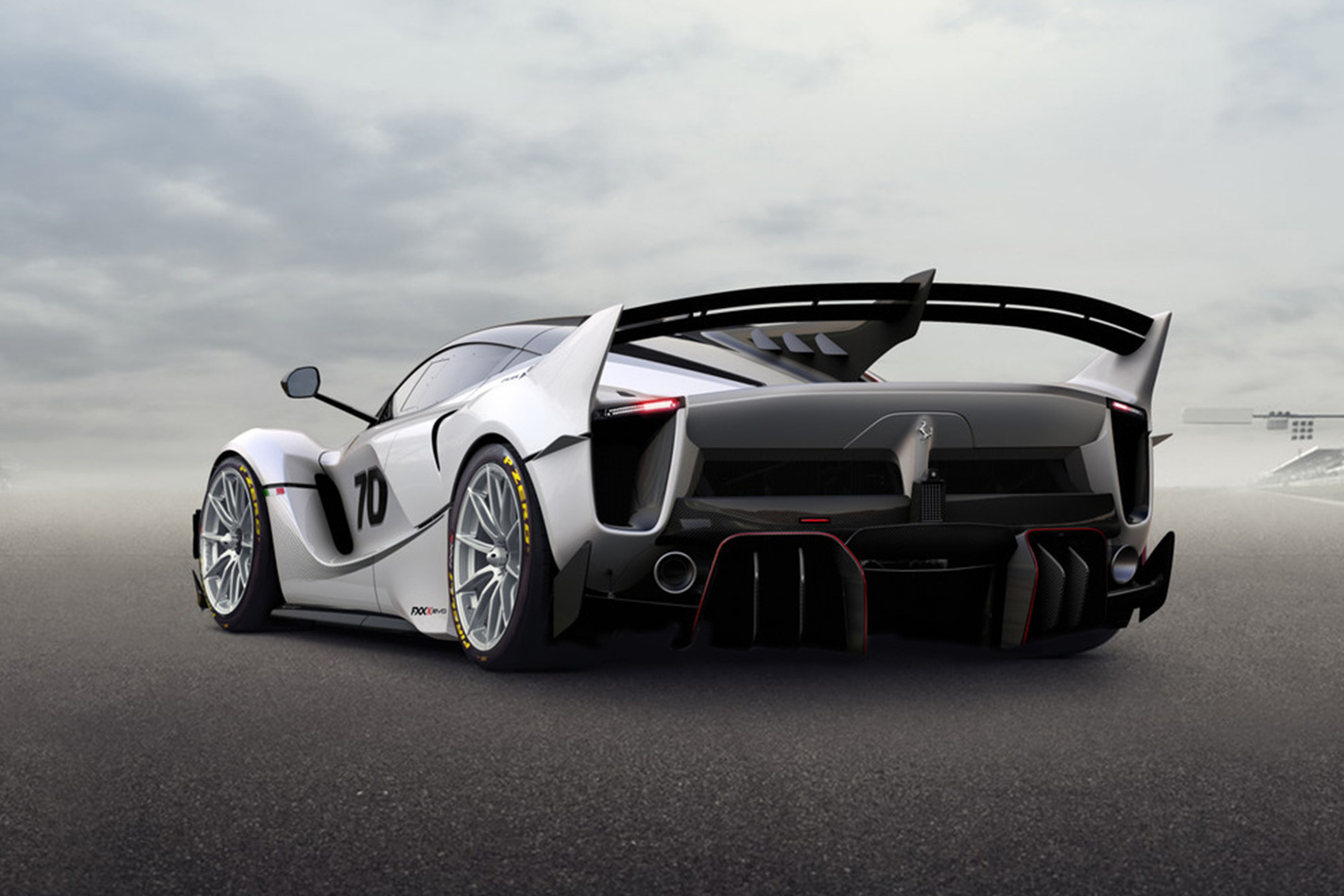
The aero pack is so meticulous that Ferrari even hollowed out the space beneath the headlights to make space for “a couple of flicks divided by a vertical turning vane and an additional intake ahead of the front wheels.”
Ferrari says this small change nets a 10 per cent increase in downforce production compared to the FXX-K’s front bumper.
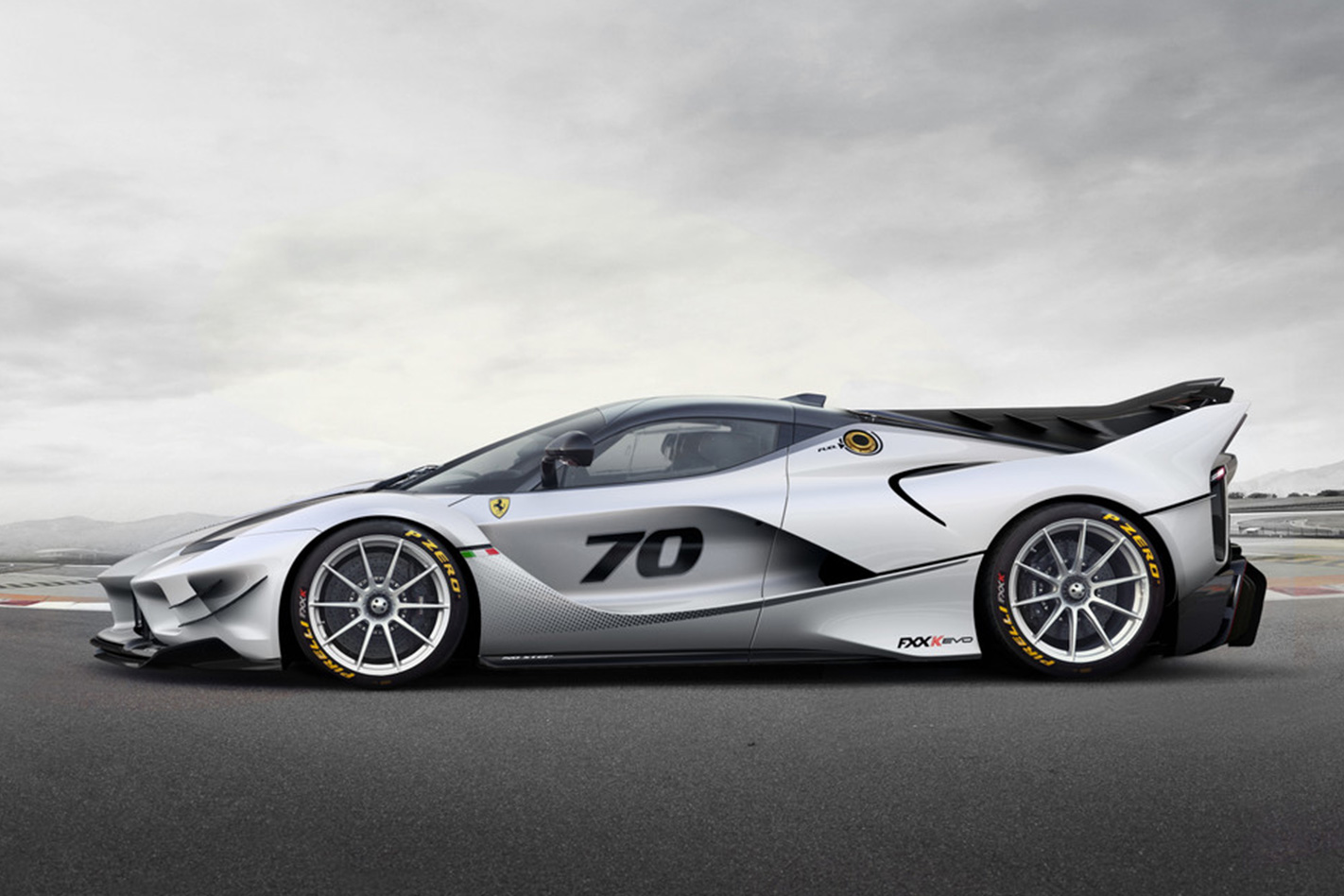
In terms of availability, details are scarce, but Ferrari says the Evo will be available “as an extremely limited-run model and as an upgrade package for the existing XX cars.”
Don’t blame us. If there was any predictability to this year’s winner, it wasn’t exactly our fault.
This was first published in MOTOR magazine’s January 2013 issue.
There just isn’t anything about what the 911 Carrera S does that dips down to even Very Good, let alone Mediocre… Sound familiar? That is, word for word, the first paragraph we wrote back in 2005 about the 997-gen Carrera S winning Performance Car Cup. At the time, it was 911’s third victory.
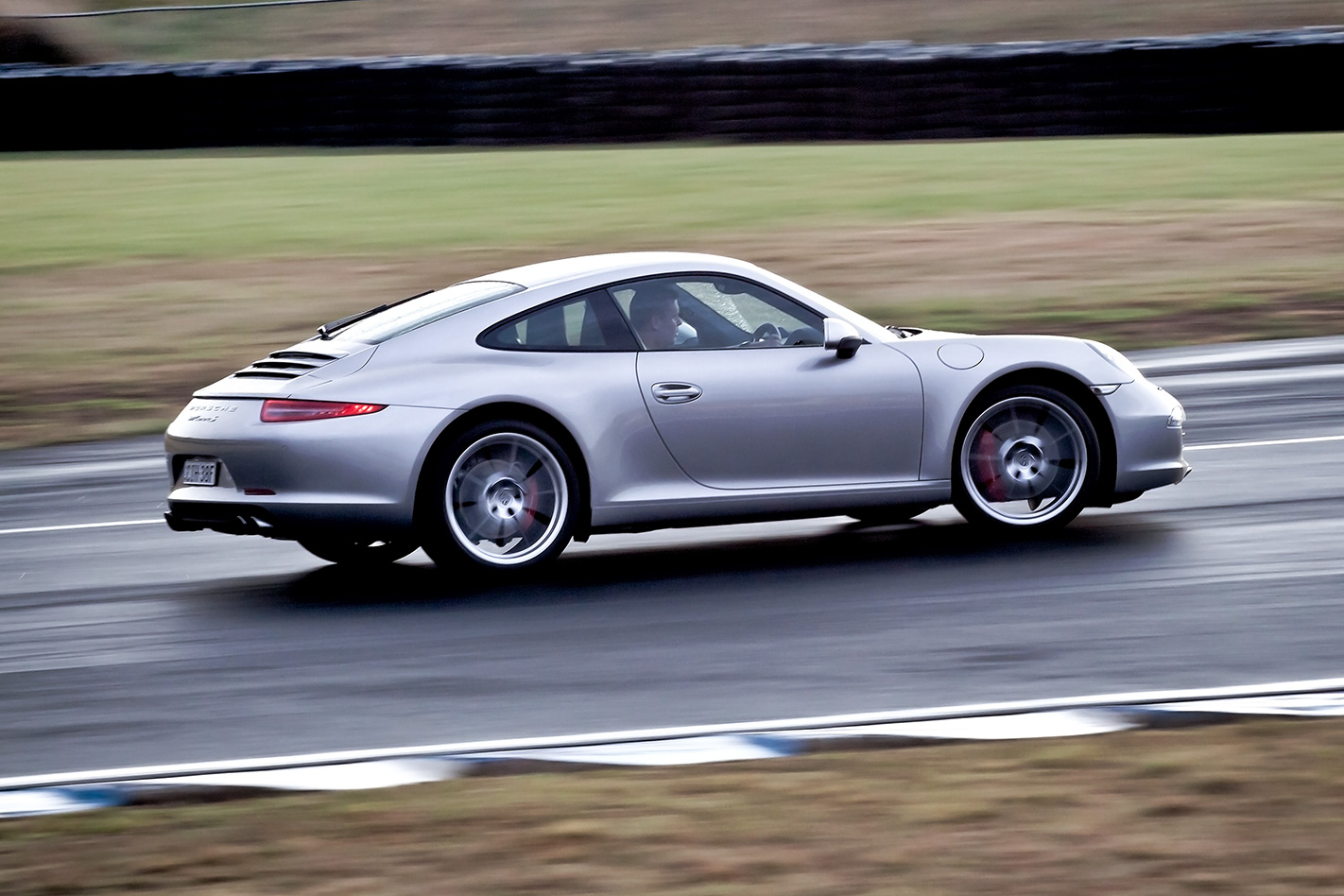
This has led to now long-running suggestions of unfair favouritism on MOTOR’s part. And past custodians of this tome have, at times, felt the need to apologise for its successes. Bugger those. The 911 badge is no guarantee of landing the top tier of the PCC rostrum.
In 2000, a GT3 came fourth; in ’01 Turbo came runner up; ditto in ’02 for Carrera in a year the mighty GT2 managed just fifth … the list goes on. And we’ll leave the apologies to Porsche’s rivals whose cars often fail to match the iconic Stuttgart coupes’ all-encompassing excellence.
And best braking performance. And had the highest road speed measured on three of the circuit’s corners. Yet none of this ends the argument or decides the winning verdict. Instead it’s more a starting point – a foundation of sorts – that illustrates with consummate clarity just how much the 911 is a breed apart and, in most aspects, beyond.
Take design and engineering, for instance. Clearly, what’s ostensibly the second-lowest-rung model variant of the eventual 991 range rollout is maximising the potential of its available resources – output, grip, stopping power – with devastating effectiveness and efficiency.
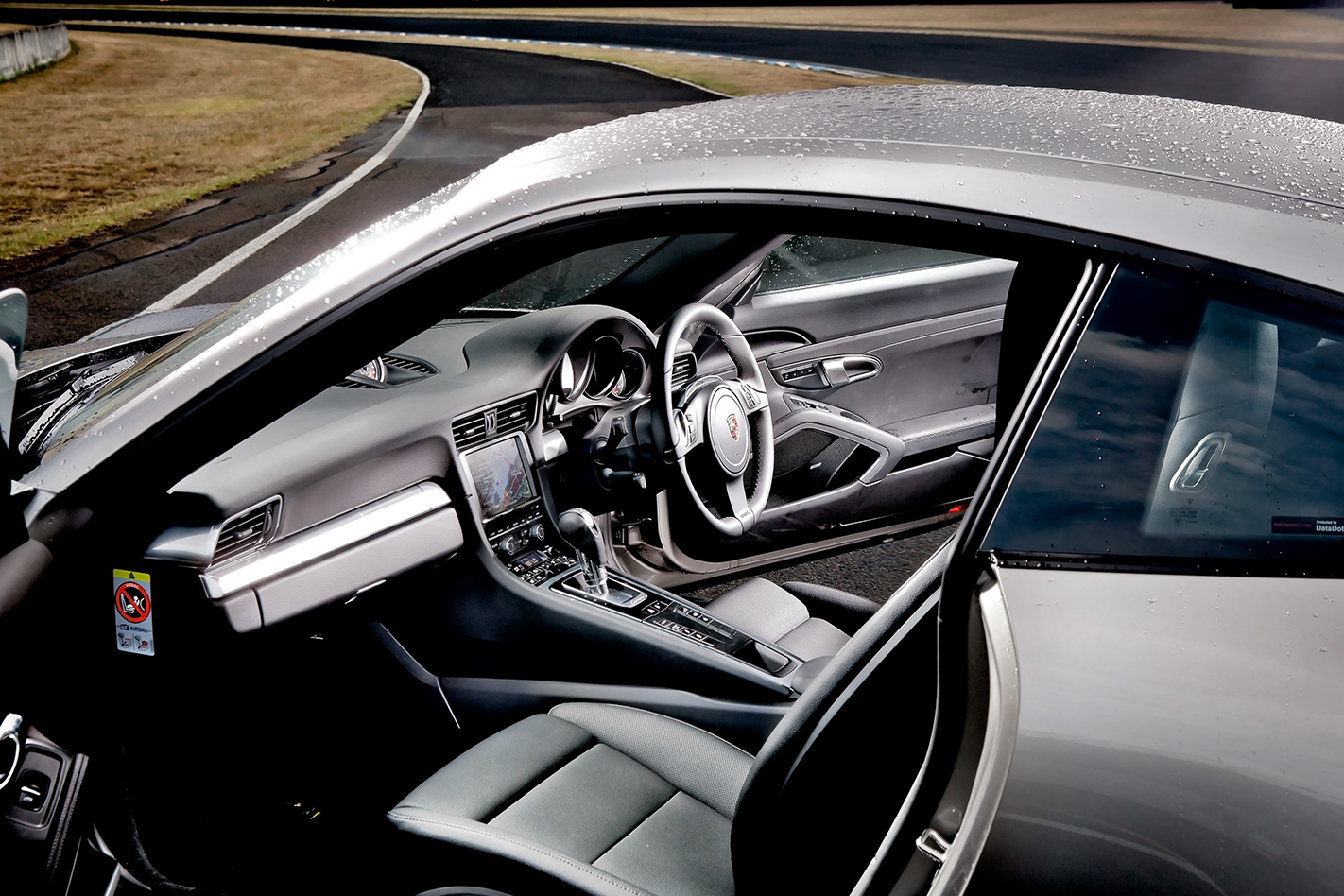
This is the most thoroughly evolved, honed and revised concept in road car history. And while purists bemoan attributes lost to the march of progress – the air-cooled, Metzger-engined, floaty-nosed, widow-making facets of yore – some things are as inevitable as death and taxes.
And that’s that today’s 911 is always, without fail, fitter and faster than yesterday’s. And tomorrow’s will raise the bar once more. It’s why 911s win and win and win again. It’s why today you climb into the 991 Carrera S and it presents a unique set of traits that absolutely cemented victory.
Only the Boxster and the Toyota 86 connects the driver and road together like the 911 does, but from there it was a class of one when it came to providing comfort and refinement without compromising mojo. But turn the wick up and it was only the Boxster that can match the 911 for pure driving joy.
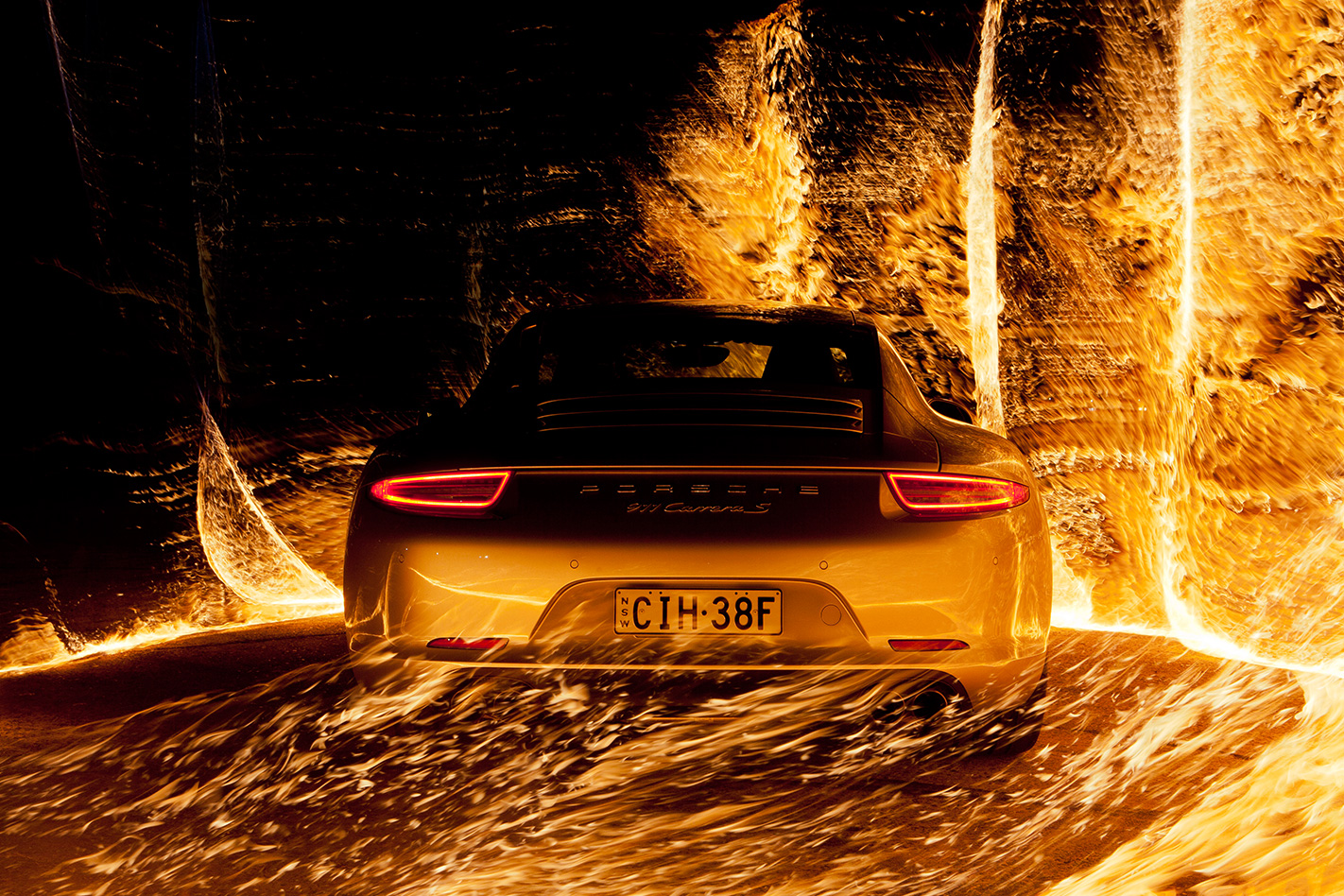
But the Boxster hits its threshold before the 911, and a couple of other PCC rivals, do. The Carrera S just marched on, fastest everywhere, the most enjoyable doing so. Sure, the Boxster’s cheaper. But the Carrera S provides supercar pace while not quite asking proper supercar money.
That Porsche claims the new Carrera S is as quick as the old 997 GT3 around The Ring is laughable, though you laugh simply because after a ten-tenths punt on circuit you’ll believe it’s actually plausible. Know what? Our 2010 PCC-winning GT3 RS was just 0.02 quicker to 100km/h and 400m…
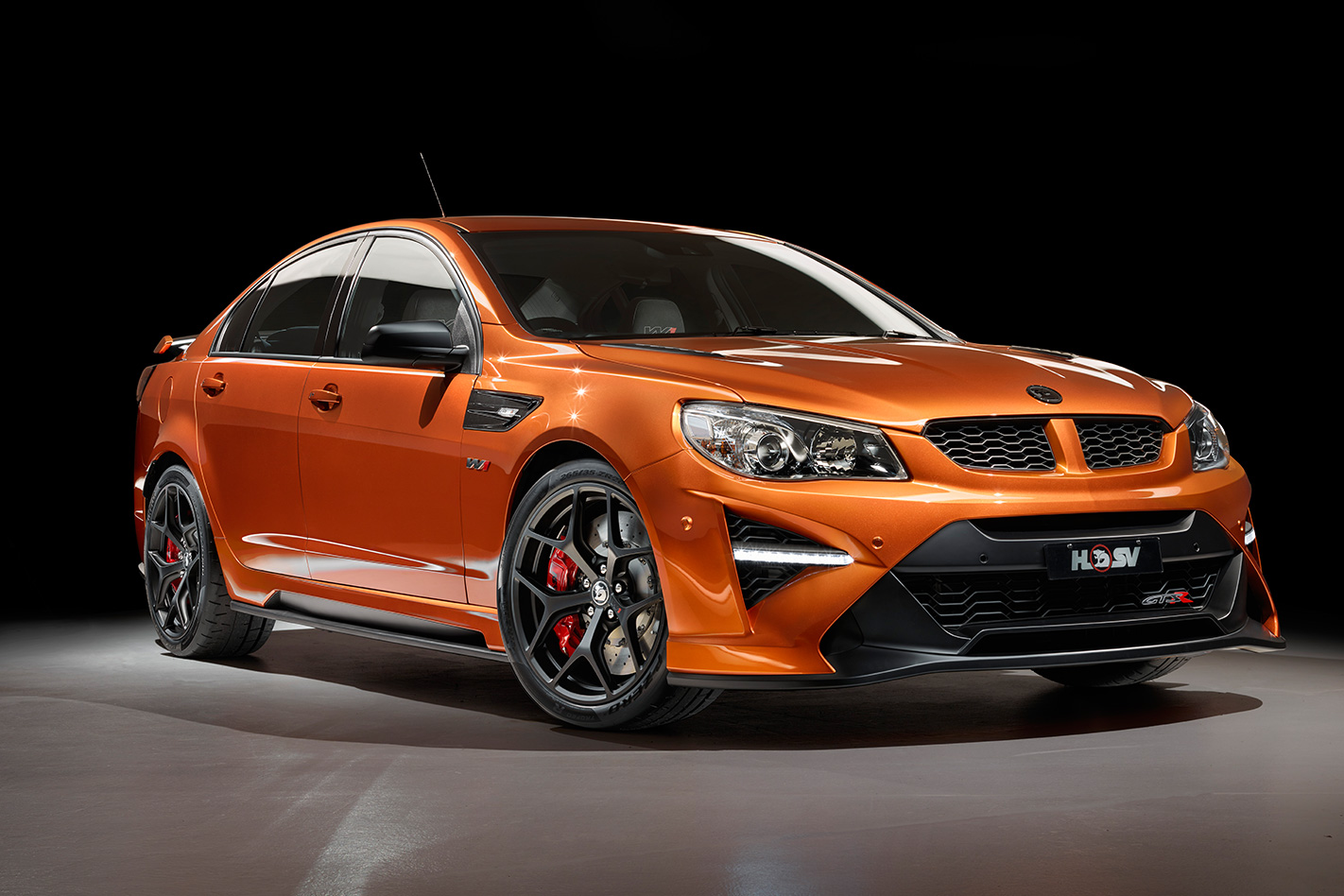
Converted Chevrolets and enhanced Holdens are the future of a new-look HSV that will emerge from the end of the locally made Commodore.
The final Commodore-based HSV is scheduled to be completed in December, ending three decades of world-class Aussie V8 sedans.
As already revealed by MOTOR, HSV will next year switch to converting Camaro SSs and Silverados to right hand drive with full factory approval.
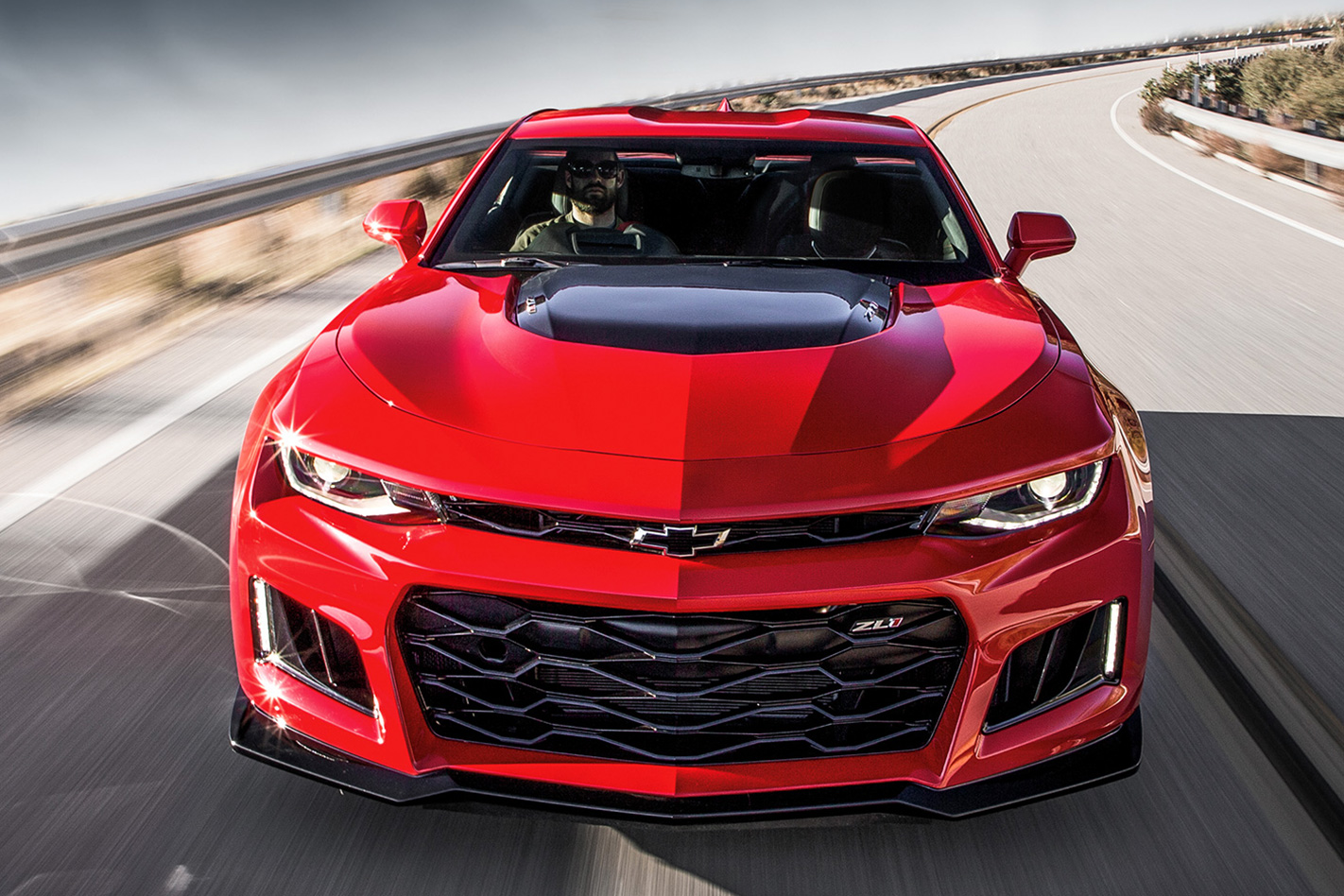
Right-hook Camaros headline the new arrangement, partially replacing the Commodore-based V8 models that have been HSV’s mainstay for 30 years.
The converted Camaro coupes and Silverado pick-ups will retain their Chevrolet badges as WAG’s new deal with Holden is likely to see the HSV brand temporarily retired.
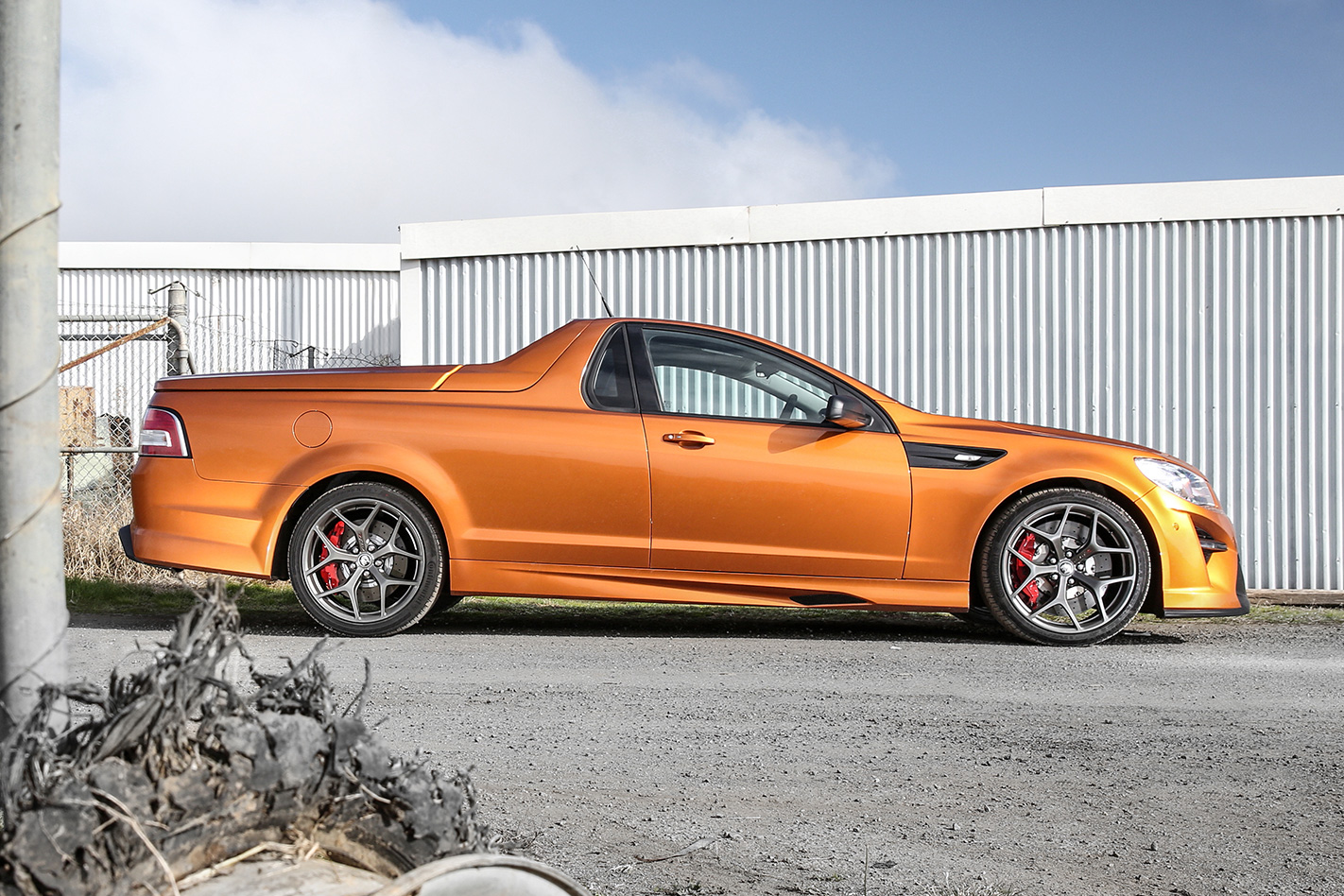
Locally engineered performance and appearance enhancements for the Colorado and other Holden factory imports will also be announced as part of the Holden hot shop’s future, dubbed ‘HSV Next’.
While it is now an open industry secret that locally converted Camaros are coming as a V8 stop-gap until Holden brings in US-made RHD versions of the next-generation Corvette and Camaro, HSV bosses are remaining tight-lipped about the future.
Monaco-based Walkinshaw, whose HSV-aligned Supercars squad has formed an international alliance with leading IndyCar team owner Michael Andretti and McLaren F1 boss Zak Brown, spoke to MOTOR in broad terms about HSV’s post-Commodore future.
He hints at the renewed long-term relationship with Holden and preparations for a new line-up of GM-based vehicles, as well as forecasting HSV’s and the wider Walkinshaw group’s best years ever financially.
What can you say about HSV and the continuation of its long-running relationship with Holden?
I’d say that the current state of HSV is that it’s never been in a more exciting and promising position for its future. We’re very, very excited with a lot of the new work that we’re doing. We’re the only car company in Australia that’s actually growing and putting on staff.
It seems that every week we’re hiring more and more designers and engineers. When the announcement was made by Holden that they were going to cease manufacturing locally, obviously it was very disappointing and put our future up in the air a little bit.
It’s actually turned out to be a huge blessing in disguise because it opened up a huge amount of opportunity for us within GM and the wider automotive industry. So we’re very, very excited about things at the moment.
Is there a future for HSV? Will you be stockpiling cars to keep selling into next year?
We’re not going to explain our strategy on stock. But are we looking to continue our relationship with Holden? Yes, we’re working and talking through all those options with Holden, and when we have something we feel we’re ready to announce, we’ll announce it.
So the brand can survive and thrive beyond traditional Commodore-based V8s?
Again, anything I say on this is going to give something away, so I’m not going to talk about anything to do with brand, future products and what the future’s going to hold at the moment. When we have something we’re ready to announce, we’ll be announcing it.
But you want the future to be with Holden, right?
Yeah, absolutely, and we’re working with Holden currently to go through all those different options.
Is HSV as opposed to Holden Special Vehicles now a standalone brand?
It’s a difficult question and I think if you’re looking at the real brand definition, that’s something I think you really need to ask Holden because at the end of the day it’s Holden’s brand, it’s their IP.
I think from our perspective, we have to make sure we do everything we can – as we have over the past 30 years – to build the best performance cars that we can for Holden under the HSV brand or any other brand that they may choose in the future to use.
But I think from our perspective, a re-energised focus on the Walkinshaw brand and the Walkinshaw Automotive Group is also going to be an additional priority of ours.
Do you require Holden’s approval to use of the HSV brand?
The HSV brand has, and always will be, a Holden-owned asset.
So you’re at their mercy?
I’d like to think we have a longstanding partnership of 30 years which adds incredible value back to each other and that we both aim to continue in the future.
Is HSV strong enough on its own to transfer to derivatives of other makes?
Are you asking if Hyundai come and want to do a special vehicles range, would we use the HSV moniker? Absolutely not. No, we couldn’t, anyway, but we wouldn’t even if we could. That would be inappropriate and disrespectful to our relationship with Holden.
We wouldn’t want to do that. That’s not how we operate. As I said, it would be inappropriate and disrespectful to our relationship with Holden if we even considered something like that.
Does the HSV operation have a strong future?
I certainly hope so, barring Trump-related nuclear missile crises and everything else that can have massive impacts on markets. As it stands today, we’re very, very excited about the future and we’re hiring more staff than we’ve ever had to hire in the engineering department.
We are working on more cars, more different products, than we’ve ever worked on before and we’re about to have the best financial year we’ve ever had in the business. So, from that perspective, all things are looking very, very exciting.
It should be a great year for HSV and for the dealers, but for the wider Walkinshaw group, it’ll be our best financial year, I believe, if we hit all of our targets – and we have a strong group of guys focused on doing that. And we need to do that because we have a lot of investment in new product in the future going forward, so we need to make sure this year is a good year for us to be able to take us into that next level.
Our new facility will already be at capacity from when we move in early next year, once building work is completed, which is a good problem to have. So we may have to start looking almost immediately for additional space for our new programs.
The new group facility is too small for the sudden increase in programs and volume of cars we will be producing. That’s frustrating from an operational perspective, but fantastic to be leading a business that is growing so rapidly.
What stands out?
The Kia Sorento is a comfortable seven-seat SUV that’s beautifully finished inside, well equipped, and enjoyable to drive, with a reversing camera in all versions. The optional diesel engine is refined and powerful, and the Sorento is covered by Kia’s seven-year warranty. Auto braking is available.This review covers third-generation Sorentos on sale prior to the mid-life upgrade of October 2017. You can also read our review of the current Sorento.
What might bug me?
Admitting to friends that you’ve spent this much on a Kia. But don’t let that get to you: it’s a great car. The Sorento was the first Kia to be named by motoring magazine Wheels as the winner of a comparison review.That people riding in the rearmost (third) seat-row are not protected by airbags. The curtain airbags on a Sorento, which protect you at head level from side impacts, cover only the first and second seat rows.Otherwise, what you see is pretty much what you get with the Sorento – it’s not likely you’ll be ambushed by annoying surprises. The Sorento even has a full-sized spare wheel and tyre, and the wheel is aluminium alloy like the others on the car.
What body styles are there?
Five-door SUV-style wagon only.The Kia Sorento drives either its front wheels or all four wheels. It is classed as a large SUV, lower priced.
What features do all Sorentos have?
Cruise control. Satellite navigation. Dual zone climate control, which lets you set different temperatures for each side of the cabin.A 7.0-inch colour touchscreen, from which you can control the MP3-compatible audio system. Sound sources include an AM/FM radio, iPod compatible aux and USB inputs, and Bluetooth connectivity for phone calls and audio streaming. There are controls on the steering wheel for sound and Bluetooth.Headlights that turn on automatically when it’s getting dark. Cornering lights, which shine into bends when you turn the wheel. Daytime running lights, illuminated by long-lasting LEDs.A reversing camera, and parking sensors front and rear (these help you judge how far the bumpers are from obstacles).Hill-launch assist, which operates the brakes automatically to make take-offs on steep hills easier.Wheels made from aluminium alloy, which are usually lighter and better looking than steel wheels with plastic covers. A full-size spare tyre, on an alloy wheel.Tyre pressure monitors, which warn you if a tyre has lost air (this can give you extra time to get a slow puncture seen to).Six airbags. Electronic stability control, which can help you control a skidding car. (For the placement of airbags, and more on Kia Sorento safety features, please open the Safety section below.)Every Kia Sorento carries a seven-year, unlimited kilometre warranty.
Which engine uses least fuel, and why wouldn’t I choose it?
All front-drive Sorentos use a petrol engine, and every all-wheel drive Sorento is powered by a diesel.Even with AWD, it is the 2.2-litre four-cylinder turbo-diesel that uses least fuel, consuming 7.8L/100km on the official test (city and country combined).In a real-world comparison conducted for the September 2015 edition of Wheels magazine, a diesel Sorento Platinum averaged 9.3 litres/100km, using about as much fuel as an accompanying Hyundai Santa Fe diesel and 25 per cent less than the Toyota Kluger and Nissan Pathfinder (each powered by a petrol V6).In many respects, an AWD diesel Sorento is preferable to its front-wheel drive petrol alternative. The diesel accelerates the car with powerful ease from low speeds, offering about 40 per cent more urge than the petrol engine in most driving conditions. And AWD is nice to have for its extra traction on slippery surfaces.The main reason you might not choose a diesel is that you want to pay less for a Sorento.The petrol engine, a 3.3-litre V6, drinks substantially more fuel than the diesel, at 9.9 litres/100km on the same official test (and 13.2 litres/100km in an October 2016 Wheels comparison). However it does produce more power if you work it really hard.You can have either engine in a Sorento Si or SLi. The Sorento Platinum is diesel only.Every Sorento has a six-speed conventional automatic gearbox.(Power outputs and all other Kia Sorento specifications are available from the Cars Covered menu, under the main image on this page.)
What key features do I get if I spend more?
The least costly Sorento is the Sorento Si, which has cloth-covered seats, 17-inch wheels, and the features common to all Sorentos.For about the same price, you can have an Si Limited, which has seats trimmed in a mix of real and fake leather, and a nicer steering wheel. Wheels are an inch bigger at 18 inches and mount lower profile tyres, which slightly sharpen the steering and look sportier.Paying more for a Sorento SLi gets you a smart key and pushbutton start (which let you unlock and start the car with your key kept safely in a pocket or bag). Like the Si Premium, the SLi has 18-inch wheels and leather on the seats – but in addition the driver’s seat is power adjustable. You get a hands-free power-operated tailgate, the sound system is better, and taillights use very long-lived LEDs.Spending more again on the Sorento Platinum adds power adjustment to the front passenger seat, and a memory for adjustments to the driver’s seat (which makes it easy to restore your settings after a companion has driven the car). The front and second-row seats are heated, as is the steering wheel, and the front seats are ventilated. There is a big, power operated sunroof that opens above the first two seat-rows. Very bright HID headlights abet the cornering lights by shining into turns as you enter them. Wheel size increases a further inch, to 19 inches.The Platinum also brings you an active safety suite that includes automatic emergency braking, a blind spot monitor, lane change assist, lane departure warning, rear cross-traffic alert, and smart cruise control.The most expensive Sorento is the GT-Line, essentially a Sorento Platinum with more flamboyant styling. The key functional change is the addition of paddle shifters, which allow you to control the auto gearbox from the steering wheel. Aesthetic changes include red brake calipers and red leather interior trim.
Does any upgrade have a down side?
The Sorento Si rides more comfortably on its 17-inch wheels than the Si Limited, SLi, Platinum and GT ride on their 18s and 19s. The lower profile tyres on the bigger wheels have less rubber and air cushioning the wheels from the road. The difference is most pronounced at city speeds.Of seven colours available, only one, Clear White, comes without extra cost. Other colours cost about $600.
How comfortable is the Sorento?
As soon as you ease into the driver’s seat, shut the door with a substantial thud and grip the sculpted steering wheel, you get a feeling that the Sorento will be very nice to drive and ride in.This sense continues with the lovely design of the dashboard. Cabin presentation is clean, simple and smart, and could be mistaken for that of a more costly European car.The Sorento’s steering wheel buttons make it easy to work the audio system, a paired phone and the cruise control. The graphics on the central touchscreen are crisp, and the satellite navigation is easily programmed.The overwhelming impression inside is that as well as being beautifully finished, the Sorento is strong and quiet. You don’t hear rattles or creaks from the interior trim, and you’re well insulated from noises and harshness from the engine, suspension and tyres.The front seats offer great support and you can settle back in them for a long drive.Controls such as the steering, accelerator and brakes are smoothly responsive, and easy to operate.The engines are refined, and the diesel is quiet most of the time because it doesn’t have to work hard to push the Sorento along.The suspension gives a supple ride and is good at absorbing both sharp imperfections in the road and big bumps. The extra weight of turbo-diesel Sorentos helps them feel a bit plusher than the petrol versions.
What about safety in a Kia Sorento?
Anti-lock brakes, stability control, a strong body structure, six airbags, LED running lights, a reversing camera, and seatbelt warnings for all positions, are fine safety fundamentals in all Sorentos.There are two airbags directly in front of the driver and front passenger; one alongside each front occupant to protect the upper body; and a curtain airbag down each side protecting the heads of those riding in the front and middle seat rows.The curtain airbags in a Sorento do not extend protection to those in the rearmost (third) seat row, however.Platinum and GT line Sorentos on sale since about December 2016 for the 2017 model year add active safety that includes autonomous emergency braking – which will brake the car automatically to prevent or mitigate an impact with an obstacle in front (typically another car that has slowed suddenly).These vehicles (and previous Sorento Platinums) also have a blind spot monitor, which warns you when a vehicle is alongside out of view. Their lane change assist alerts you if you are about to change lanes into the path of a vehicle approaching quickly from behind. And their lane departure warning lets you know that you are drifting distractedly – and possibly dangerously – into the lane alongside.In addition, their smart cruise control automatically maintains a safe distance from vehicles ahead on the highway. And a rear cross-traffic alert warns you, when reversing, that something is crossing your path.The Australasian New Car Assessment Program (ANCAP) has rated the Sorento at five stars for safety, its maximum. The Sorento gained perfect scores in the pole and side-impact parts of the crash safety test, on the way to an excellent total score of 36.62 out of 37.
I like driving – will I enjoy this car?
For a long time large SUVs – and Kias – were not much chop to drive. But the Sorento proved good enough to emerge the surprise winner from a Wheels magazine comparison in September 2015, against four prime seven-seat alternatives. The Wheels win was a first for the model, and for the Kia brand.One of the best parts of driving the Sorento is steering that helps you feel nicely connected to the car. The Sorento responds eagerly when you turn the wheel and flows responsively through corners – much more so than you might expect for such a tall, heavy wagon. (Not unexpectedly, the body does lean over noticeably in tight corners if you tackle them quickly).The Platinum’s 19-inch wheels with low profile tyres give it more direct steering and the most immediate handling of all the versions.On the Platinum and GT-Line, 19-inch wheels with low profile tyres give more direct steering and more immediately responsive handling than you experience in the less costly versions.The turbo-diesel Sorento surges forward when you press the accelerator. You will love the effortless oomph the engine provides – it’s a big part of what makes the Sorento satisfying.The petrol car isn’t quite so potent at low engine speeds but offers similar shove at medium engine speeds. And on a matching tyre package it’s a bit sharper to steer: the petrol engine is lighter than the diesel, which means there is less weight over the front wheels and less weight overall.
How is life in the rear seats?
Second row passengers have it good in the Sorento. The seat is supportive and the rear compartment is roomy. And they get a centre armrest, and 12-volt and USB sockets for charging electronic devices. In SLi, Platinum and GT-Line versions, the outer seats are heated. There are twin cup holders in the centre armrest, and a bottle holder in each door.Importantly for long trips, they also get dedicated second-row air-conditioning vents, and handy roll-up sunshade blinds.The third row is too cramped to be comfortable for adults, but it’s roomy enough for children aged in the single digits. They get a pair of cup holders, their own air-conditioning vents and fan controls, and a good view forward and out of the side windows.
How is it for carrying stuff?
With the third row seats folded flat (50/50), the cargo bay swallows a substantial 605 litres of stuff.Folded the second row (60/40) as well, and cargo capacity opens out to a van-like 1662 litres.There’s room for a folded pram and a couple of small bags in the back with both the second and third rows erected, but probably not enough for a family’s luggage for a week away.The hands-free powered tailgate in SLi, Platinum and GT-Line versions opens when you walk up to it with the car’s key in your pocket. That eases loading when you have your hands full.
Where does Kia make the Sorento?
The Kia Sorento is made in South Korea.
What might I miss that similar cars have?
Compatibility with Apple CarPlay or Android Auto, which would allow you to control apps on your smartphone from the car’s touchscreen. The similar Hyundai Santa Fe has this, for example.Extended curtain airbags that protect your rearmost – third-row – passengers from side impacts. The Mazda CX-9, Toyota Kluger, and Nissan Pathfinder come with these, for example.If comfortable travel for seven is more important than getting off the beaten track, perhaps consider the Kia Carnival, which has more room in the third row, easier access, and airbag protection for all.
When did Kia update this Sorento?
The current third-generation Kia Sorento arrived in 2015. About December 2016 the cosmetically enhanced Sorento GT-Line was added, and both it and the Sorento Platinum gained autonomous emergency braking. In May 2017 Kia extended the range further, adding the Si Limited – a leather-trimmed version of the least costly Sorento.The Sorento underwent a mid-life upgrade which arrived in October 2017 for the 2018 model year (which is featured in a separate review).It added active safety, including automatic emergency braking as standard, smartphone mirroring via Apple CarPlay and improved cabin quality. Performance was also enhanced by adding a more efficient, eight-speed auto gearbox in place of the six-speeder, and the V6 petrol engine received a slight power increase. Suspension and steering were also revised for noticeably improved ride and handling.The 2017 facelift also brought changes to the Sorento range, with the Sport replacing the Si Limited, and the upper-spec Platinum withdrawn.
I like this car, but I can’t choose which version. Can you help?
We like the Sorento SLi, because it strikes a pleasing balance of price and equipment. Ultimately, the diesel is a better bet than the petrol, because it has more grunt and uses less fuel. But the petrol is less costly and steers a bit more satisfyingly. If the extra fuel use and lack of AWD are not drawbacks for you, it’s worth a look, too.If you don’t need all the SLi features, you could have some leather on the seats for less money with an Si Limited.
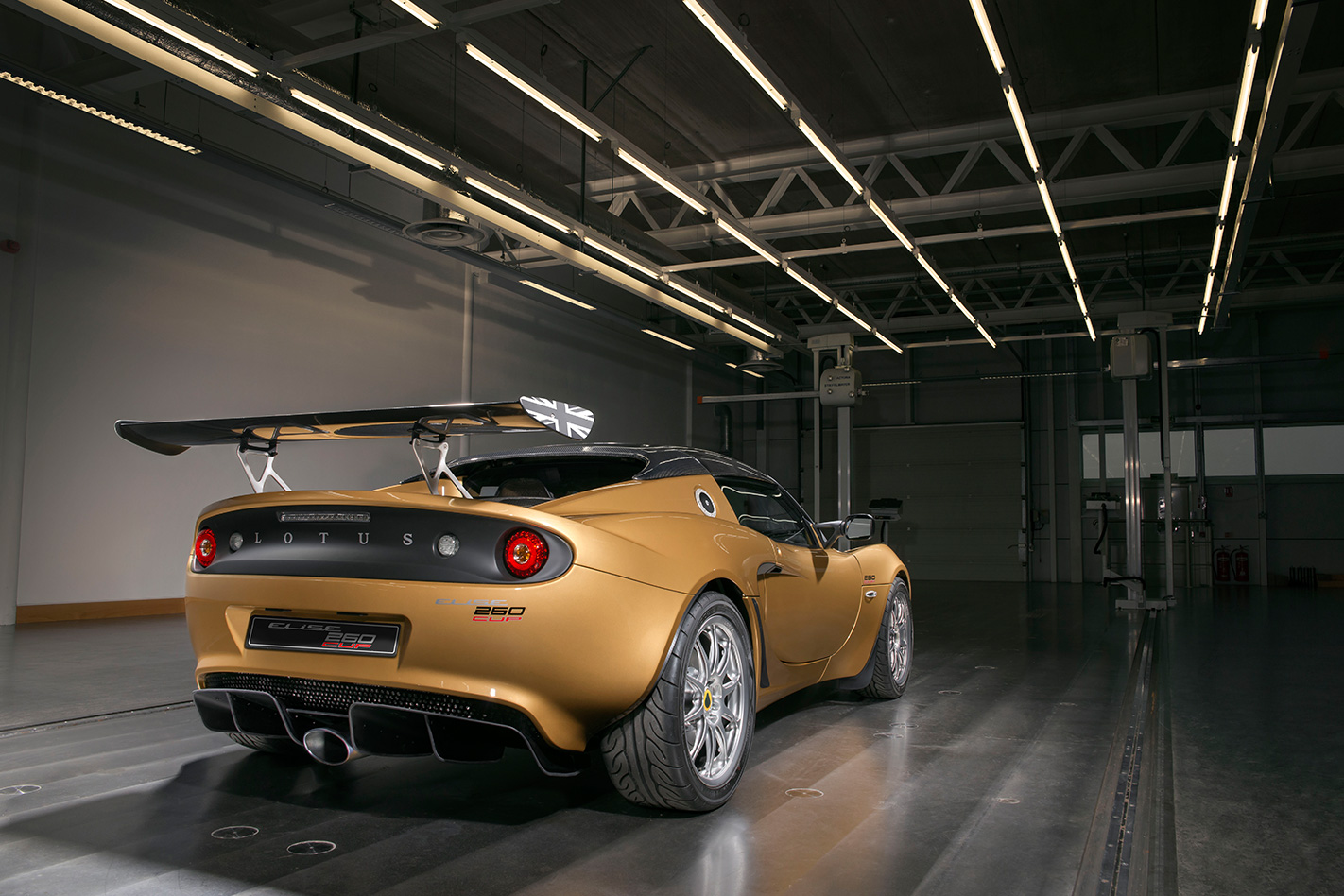
Lotus has revealed its latest special edition car, the Elise Cup 260, which it claims is the ‘ultimate’ Elise.
With a claimed 0-97km/h time of 3.8 seconds and a kerb weight of 902kg, the Cup 260 makes a Cup 220 look dreadfully sluggish.
This is thanks to its 1.8-litre supercharged four pot being bestowed an extra 24kW and 5Nm over the Elise Cup 220 for a total of 186kW and 255Nm.
In addition, the Cup 260 is 41kg lighter when compared to the Lotus Elise Cup 220.
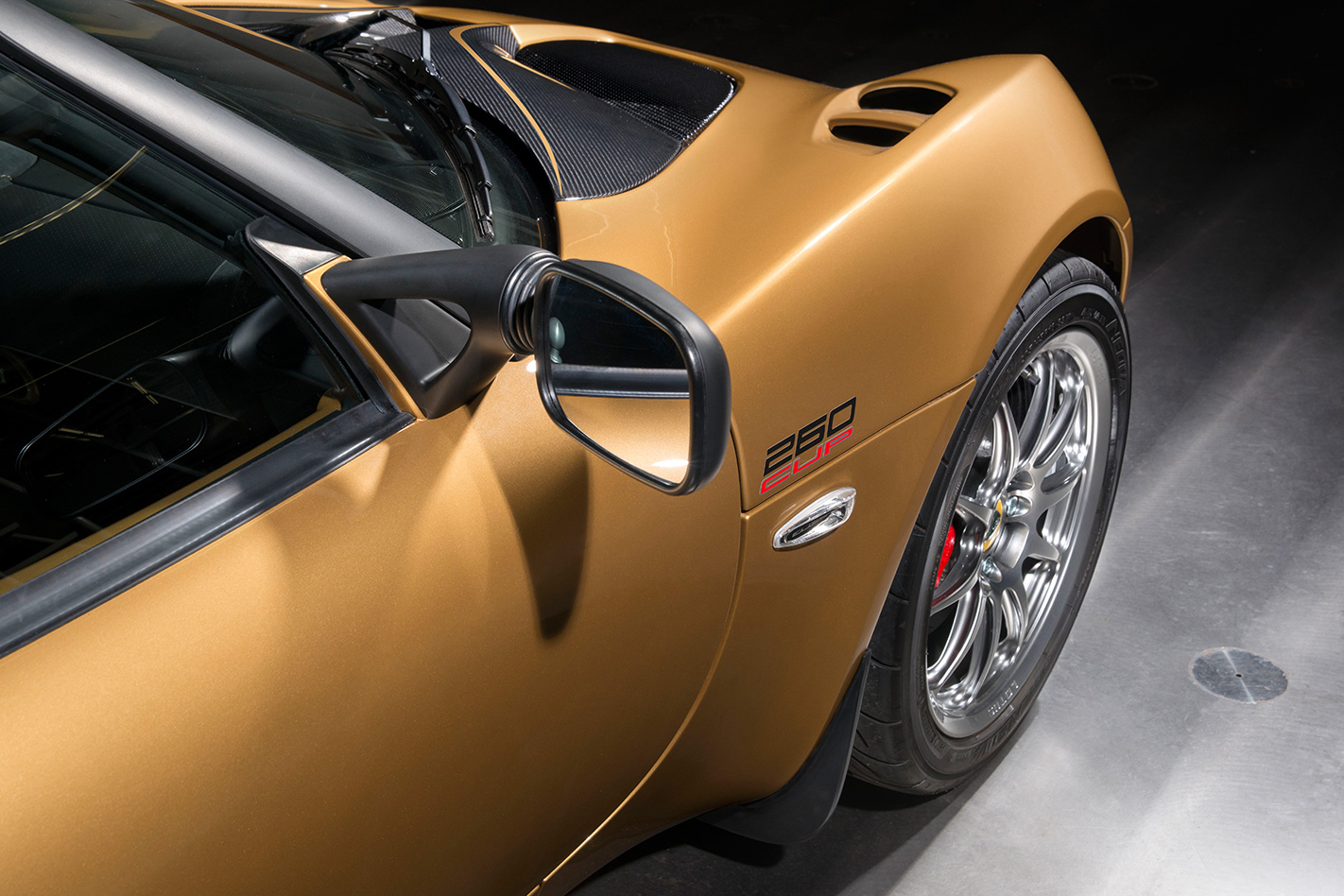
“The large rear wing and the front access panel save 1.1kg, the engine cover saves 3.3kg, the roll hoop cover, 0.7kg and the side sill covers, 0.8kg.
“Ultra-efficient and lightweight two-piece brake discs save a further 4 kg.”
The seats which are found in the Cup 260 weigh only 5kg each, while its battery is lightweight lithium-ion.
At its top speed of 243km/h, the Elise’s wing, splitter, and diffuser create 180kg of downforce.
“Each and every one of the sports cars produced by Group Lotus today carries the true spirit of Lotus, laid down by my father nearly 70 years ago,” Chapman says.
“I am extremely proud that his legacy and achievements are being acknowledged and celebrated in this iconic version of the Elise.”
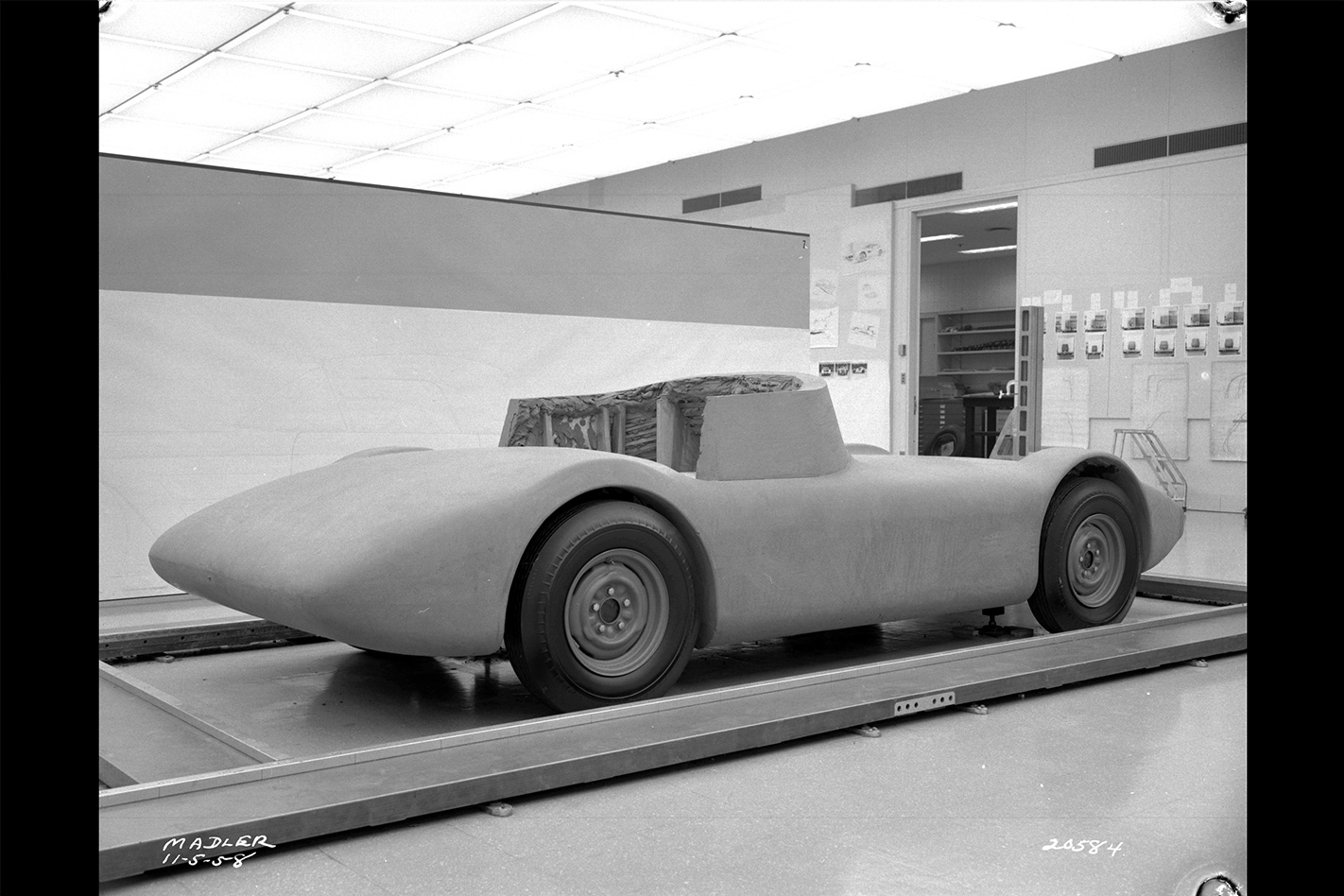
A Holden-powered Corvette, under development by General Motors in Detroit almost 60 years ago, has finally surfaced from the archives to reveal what might have been: an Australian-engined roadster for the world.
Until now, the shock project – code-named XP-85 – has remained top secret, only coming to light when Wheels dipped into the GM archives on a recent visit to Detroit.
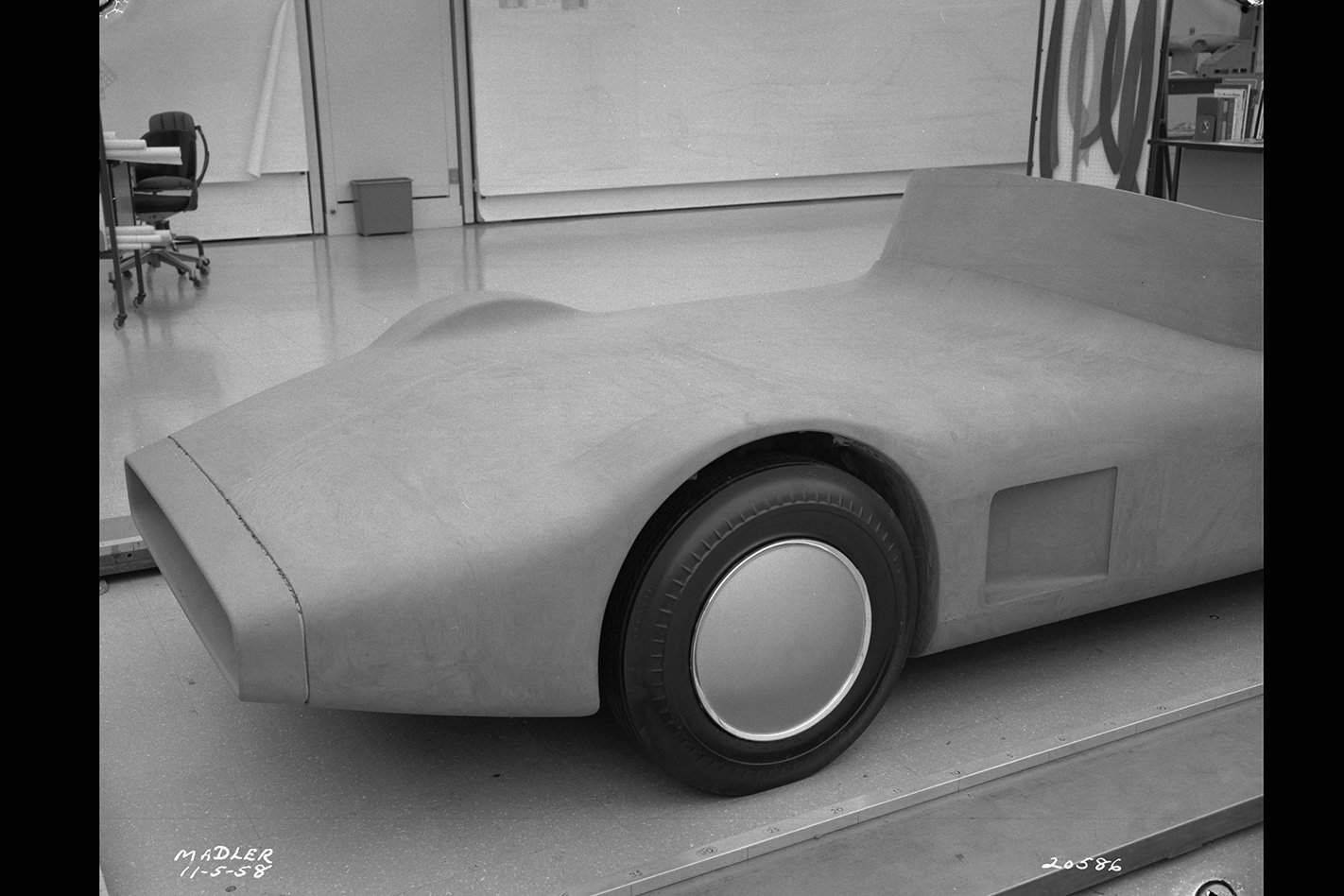
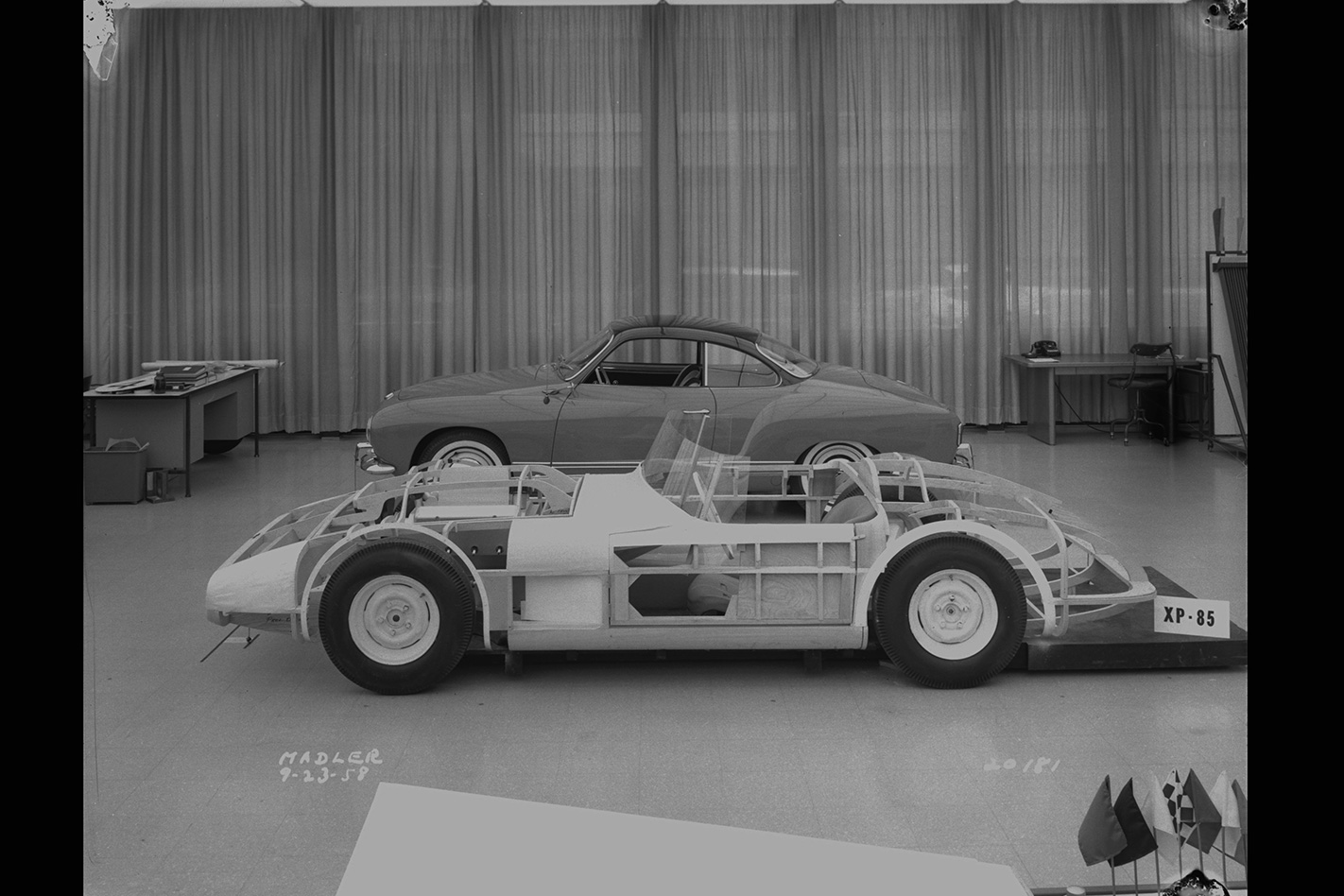
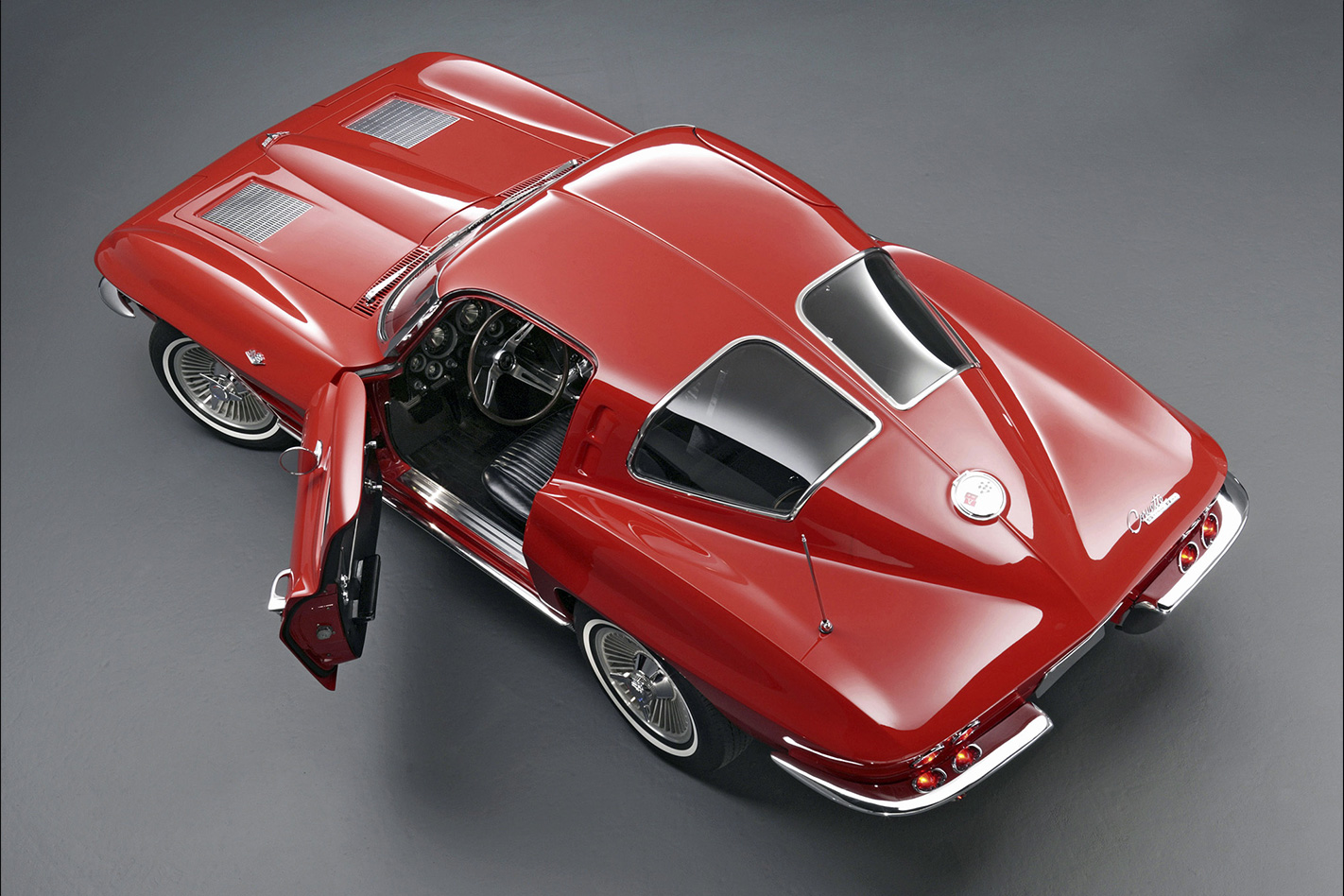
The XP-85 (the ‘XP’ stood for Experimental Project) was just one of a number of sports cars being developed by GM during the 1957-58 period. Project XP-87 eventually became the 1963 Corvette Sting Ray (see below).
Corvette C8 set to be Holden’s mid-engine halo car
“This letter will authorize the fabrication of a development buck for the XP-85 Program. The buck will include platform, floor, wheelhouses, body outline, seating, and wooden mock-ups of engine, suspension, transmission, drive train, etc (some of these mock-ups are available). Fabrication will be accomplished in the Studio using Studio Drawings.”
The memo, called an ‘Internal Organizational letter’ in GM’s 1950s language, is signed by R.L. Dressel, Program Planner. Four months later, on September 25, Dressel addresses another ‘letter’ to Bill Mitchell. Hand written beside the subject is, “Corvette Holden engine.”
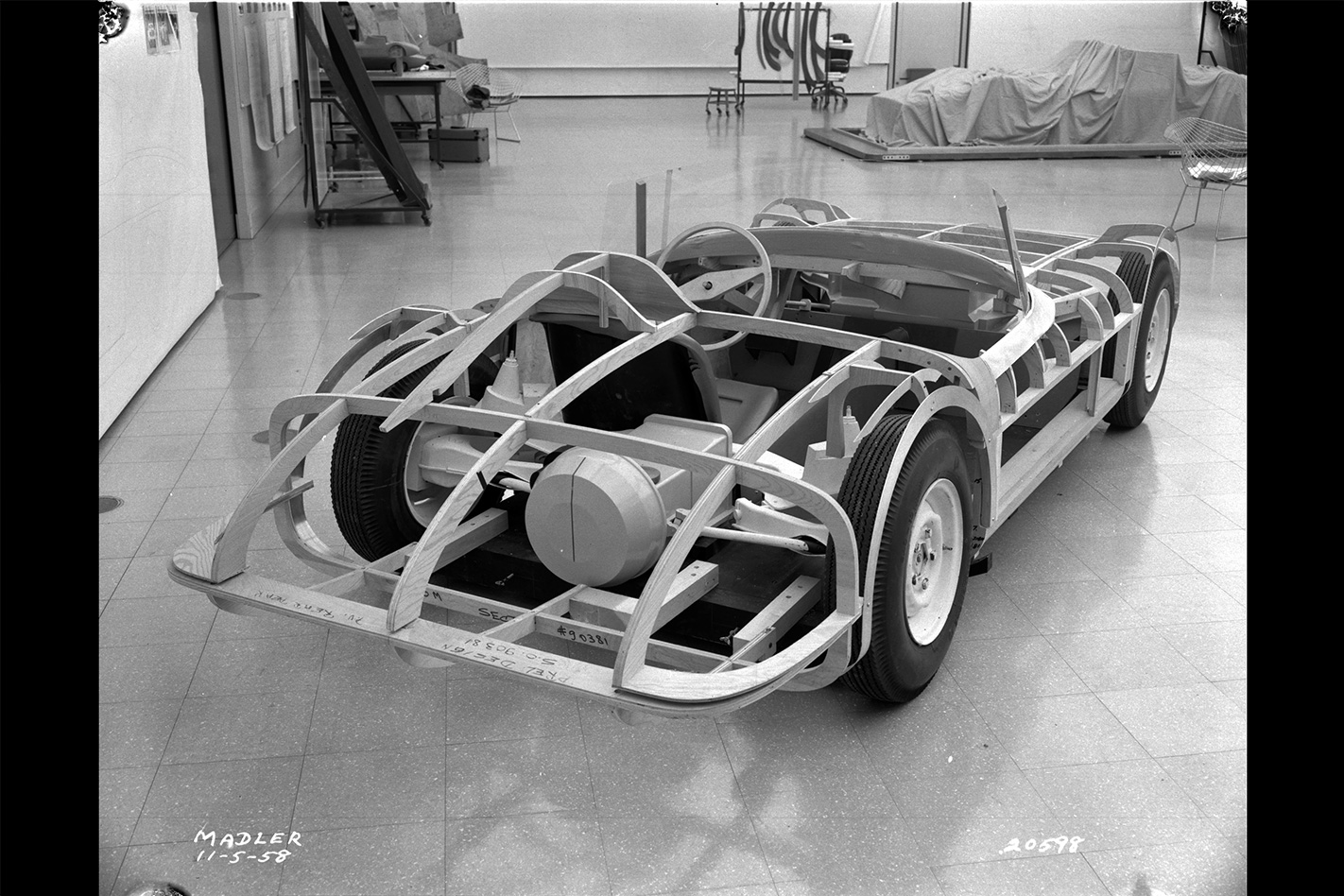
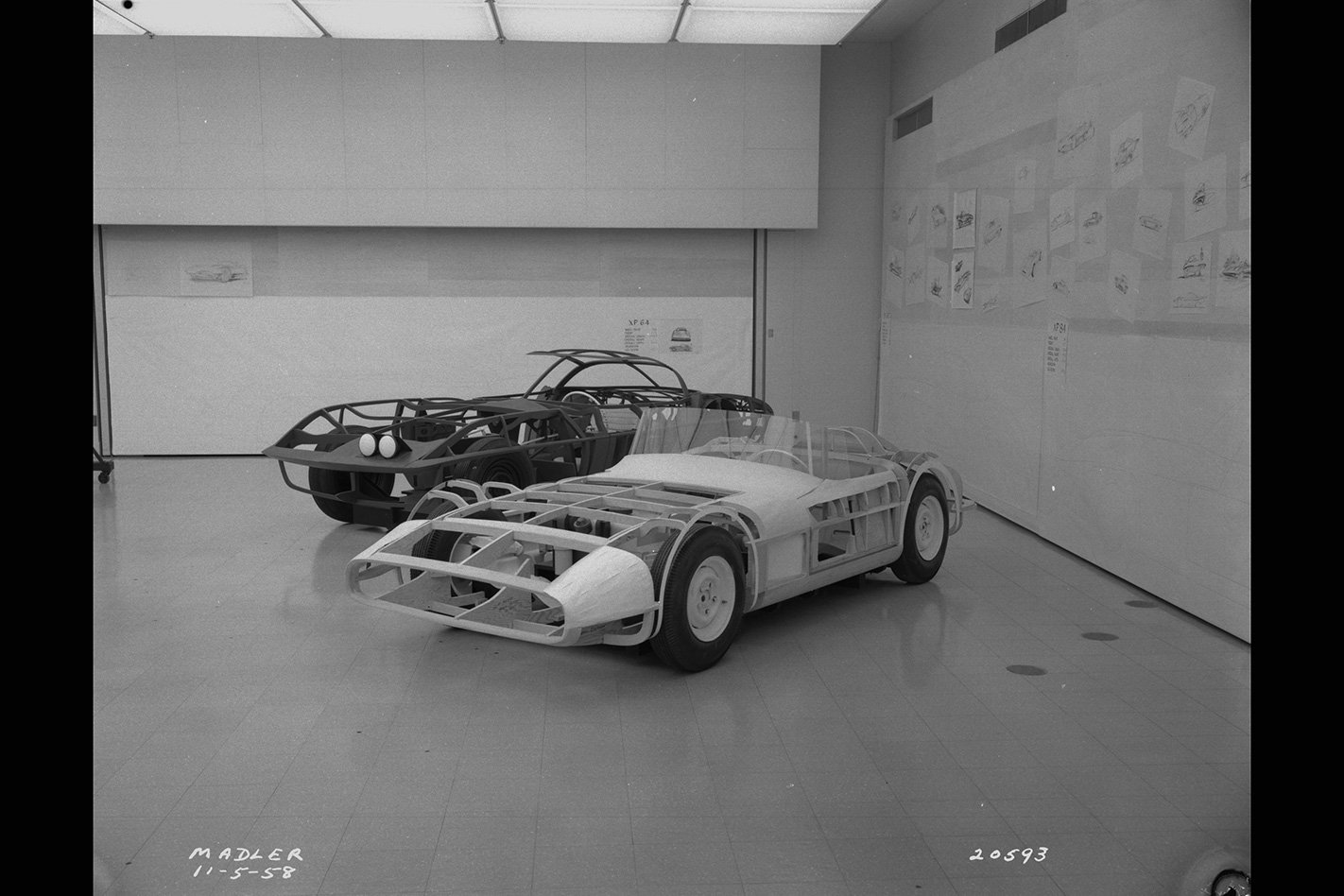
By early November 1958, the design proposal had progressed sufficiently to be photographed by Neil Madler, one of two GM staff photographers allowed into Styling with a camera.
Pressure on Mike Simcoe for Corvette C8 design
The styling is remarkably clean and straightforward for a GM project of this time and clearly points to Mitchell’s ambitions to go beyond the Earl-era chrome and fins. The photographs also reveal that, as the project developed, a vent behind the front wheelarch was added, probably to aid cooling.
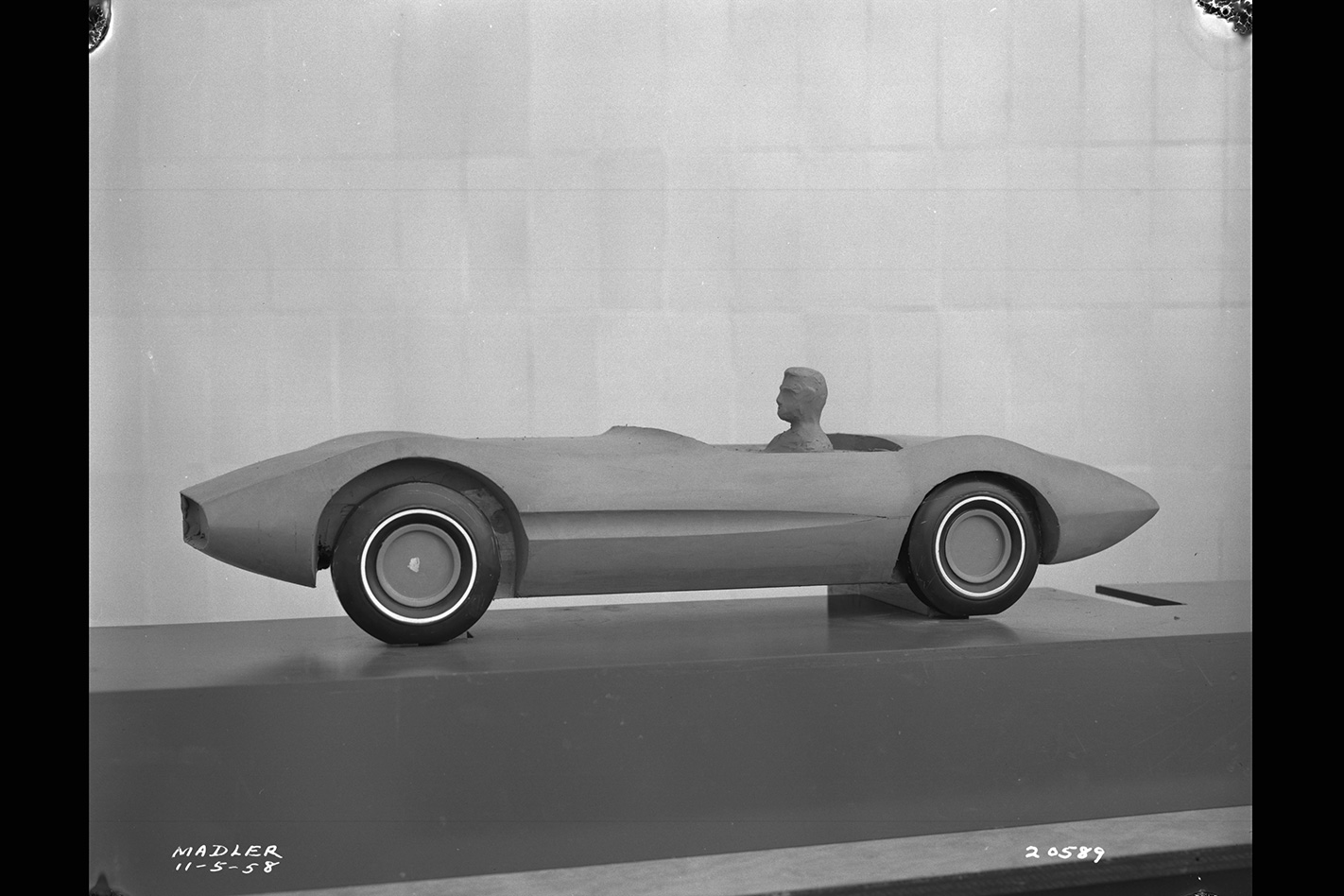
Nobody alive today could throw any light on the project so Holden’s involvement is unknown, beyond (in theory) providing a grey 2.2-litre in-line six. For the 1958 FC Holden, a new camshaft and higher compression ratio upped the power to a hardly heady 52kW, well below the Healey’s 87kW and TR3’s 71kW, though way more than the VW’s 37kW.
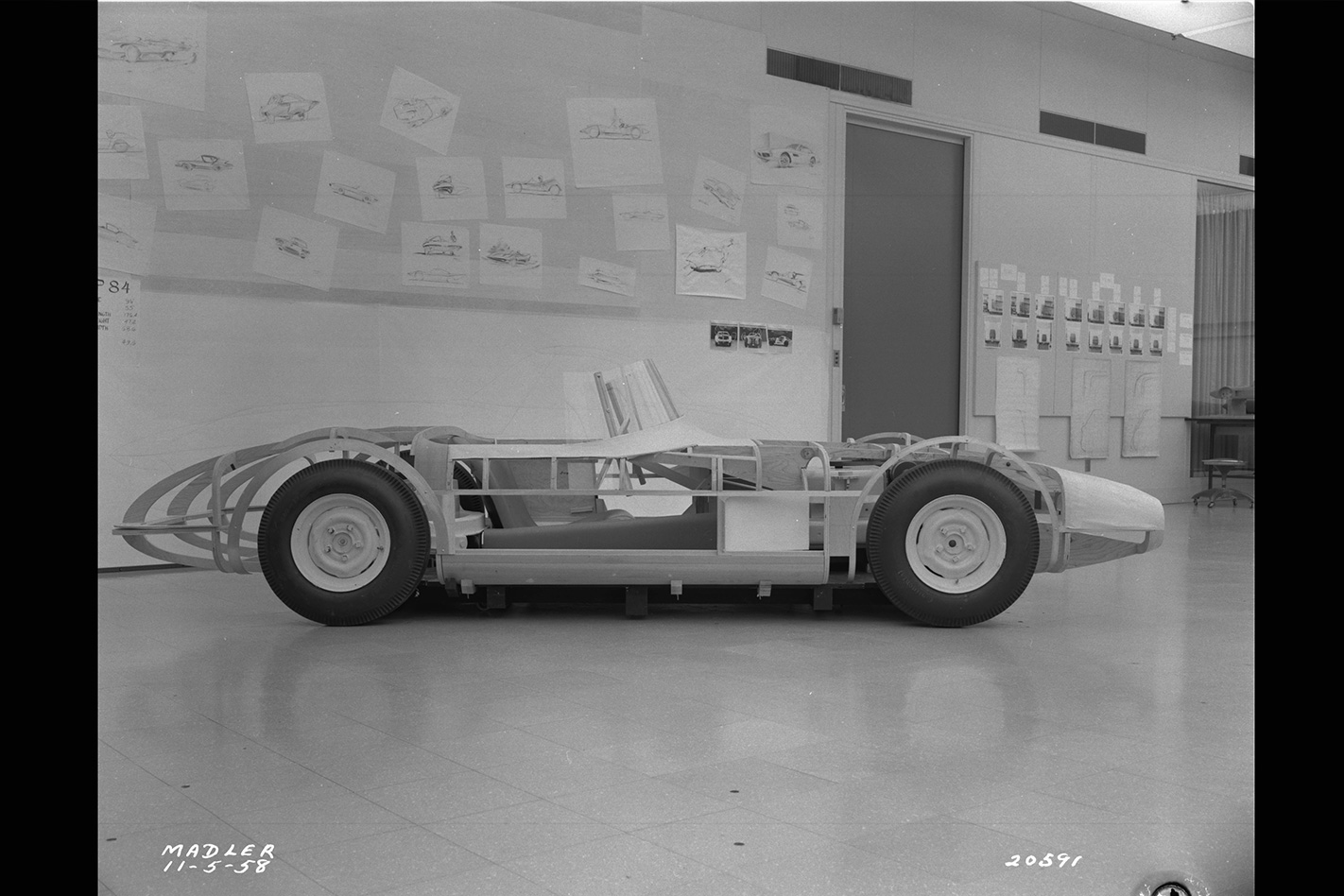
The GM archivists told Wheels, “The file you examined is likely the only existing documentation. The XP binders are the sole source of documentation on internal projects like this that still exist at GM.”
Guns behind the ’Ray
Chevrolet’s Corvette Sting Ray, perhaps the most dramatically styled car in Chevy history, was created out of XP-87 (above) by a team of designers under the direction of Bill Mitchell. It was inspired by a number of Italian cars Mitchell liked at the 1957 Turin show.
“Mitchell came back to Detroit with photographs of Abarths and Alfa Romeo Disco Volantes and handed them to us.”
The designers – Bob Veryzer, Chuck Pohlmann and Brock – spent a few weeks coming up with sketches. Brock’s design was chosen and set the direction for the shape that became the 1963 Sting Ray.
ON OCCASION, it’s better to forget what you thought you knew; to chuck out all those old tropes, heuristics, and pub knowledge you’ve accumulated about the cars we’ve assembled here.
They’ll do you no good. The game of one-upmanship in the medium executive class has moved at such breathtaking pace that perhaps it’s time to reset the datum and look over the best of 2017’s crop with a fresh set of eyes.
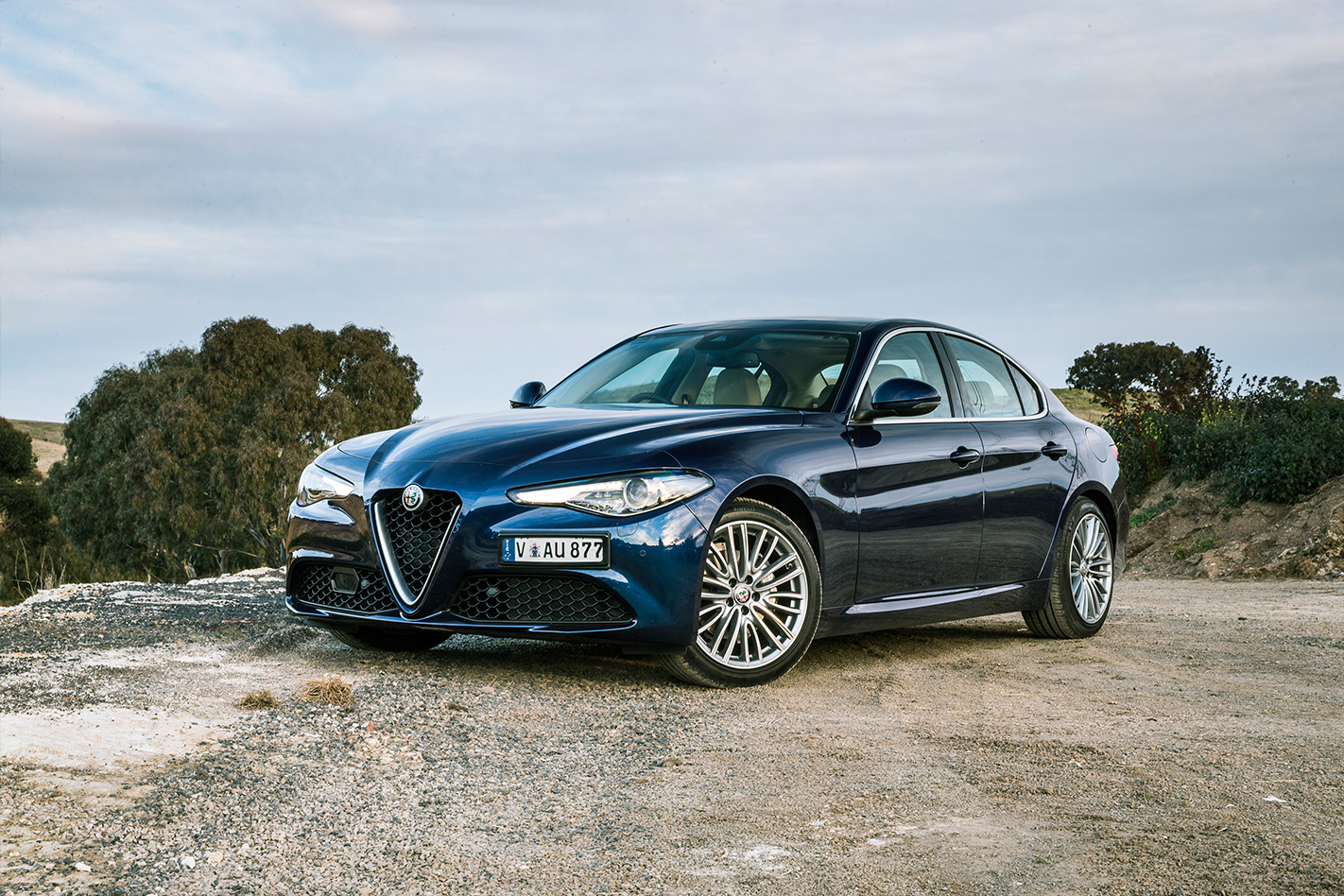
The Alfa Romeo Giulia was the catalyst for this comparison. We adored the 375kW Quadrifoglio rocketship, but wondered whether shearing more than 200kW from that figure would leave the Super version feeling a bit overmatched and underbaked in this company.
You’re probably car-mag literate enough to know that these tests usually go one of two ways. The conventional route is to discuss the merits of each vehicle in turn and then award the verdict to something German. Safest that way.
The alternate option is to cultivate a tasty bit of controversy by naming a left-fielder as the winner, and be forced to doggedly repeat and justify that decision for years to come. What we’re seeing here is something a bit different. As this genre matures, the templates for packaging, ride, handling, and other attributes become better known and easier to replicate. The net effect of this is that what was last year’s class leader can rapidly become this year’s wooden spoon holder. Picking a favourite a priori isn’t easy and that’s a new thing.
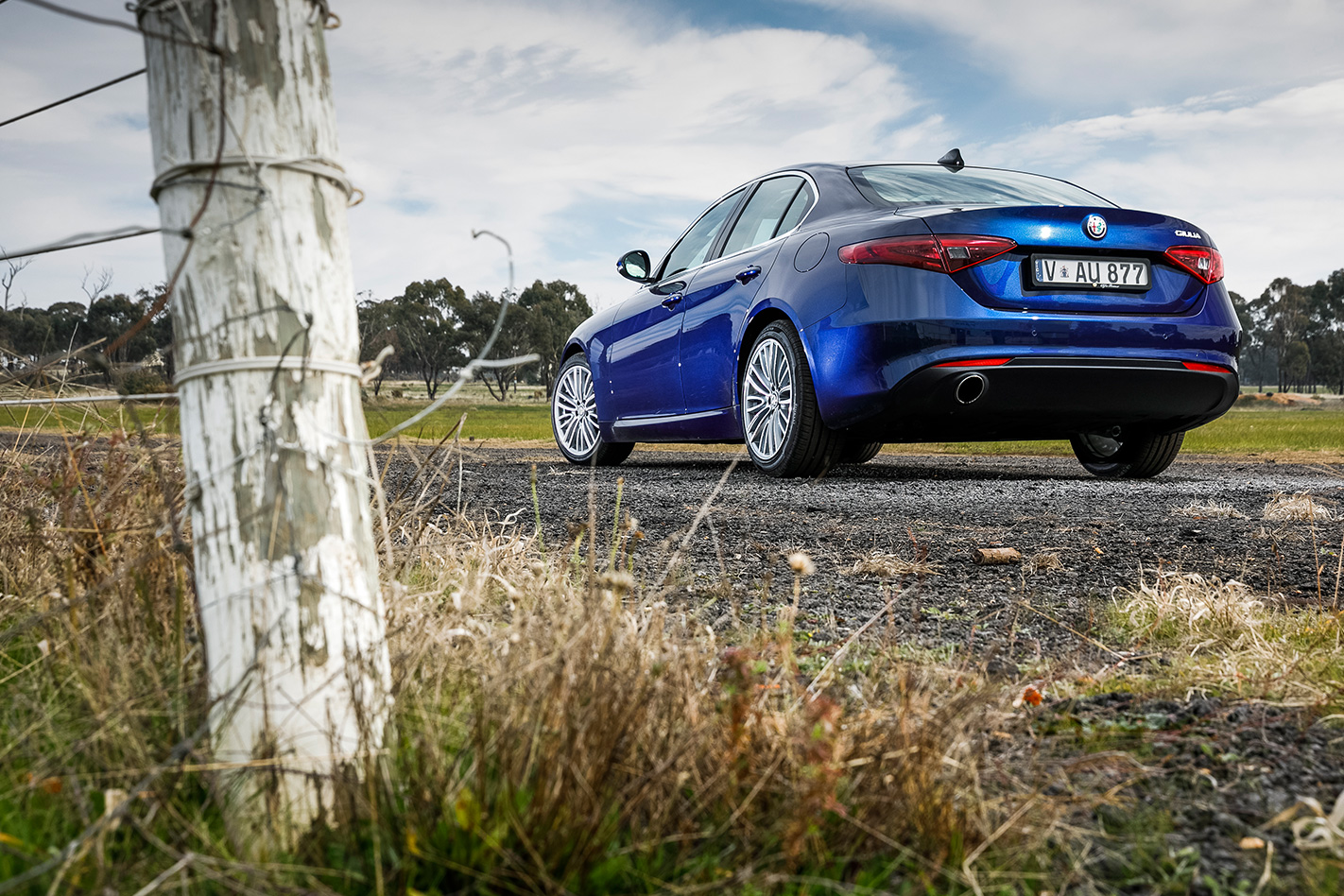
Its ZF eight-speed transmission can be marshalled by a pair of vast column-mounted paddles, but with the ‘DNA’ drive controller set to dynamic, the software is smart enough to make these largely redundant. The engine isn’t the most vocal or charismatic unit, but 330Nm at 1750rpm ensures that you don’t need to work it too hard, and that delicious lack of inertia to the way Giulia changes direction means this is the only one of the bunch that eggs you on to look for the twistiest route home. The lack of a limited slip diff would be an issue with more power at its elbow, but even if you do step up to the more powerful Veloce, you’re then buying a diff with non-switchable ESC, which largely defeats the point, from an entertainment perspective at least.
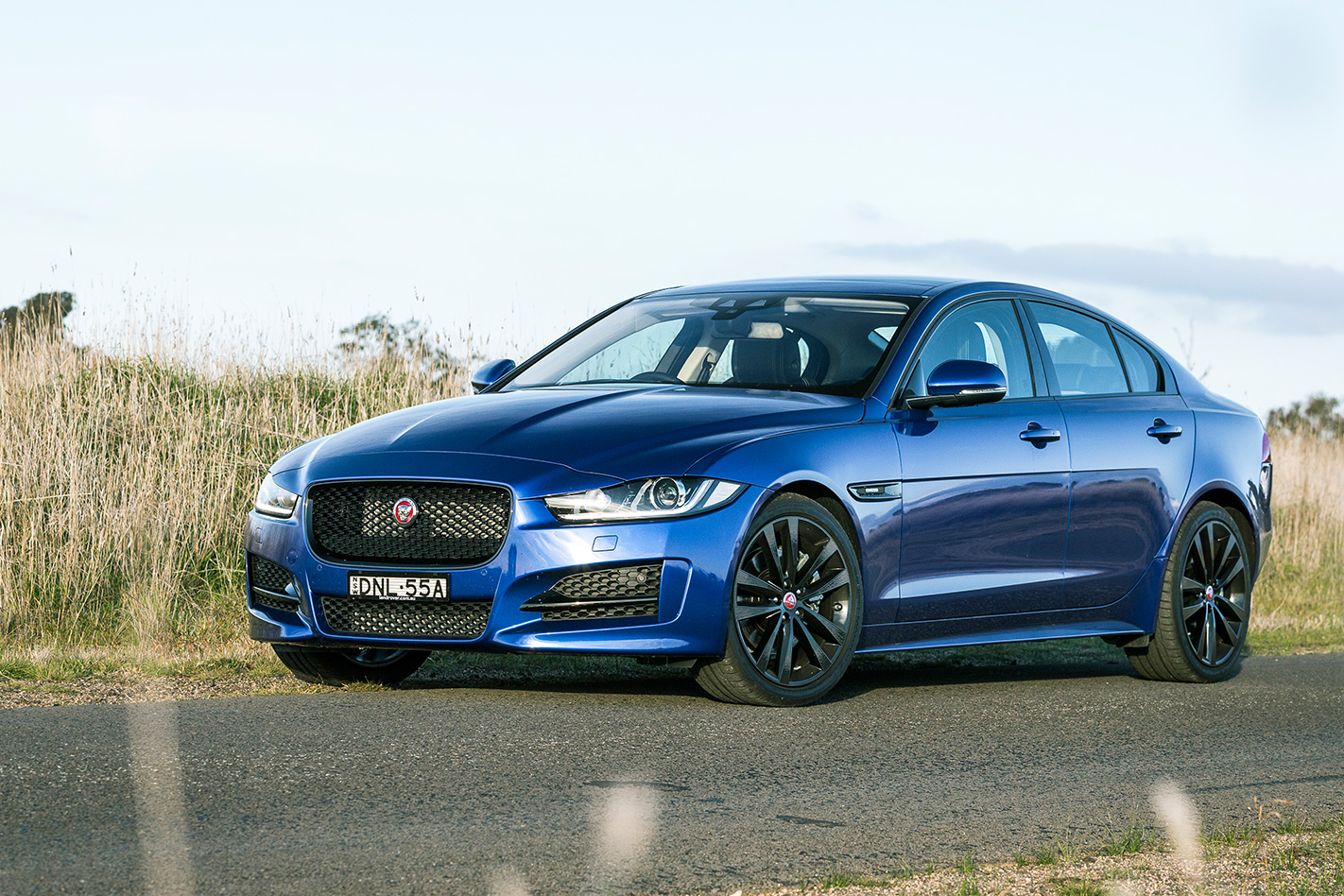
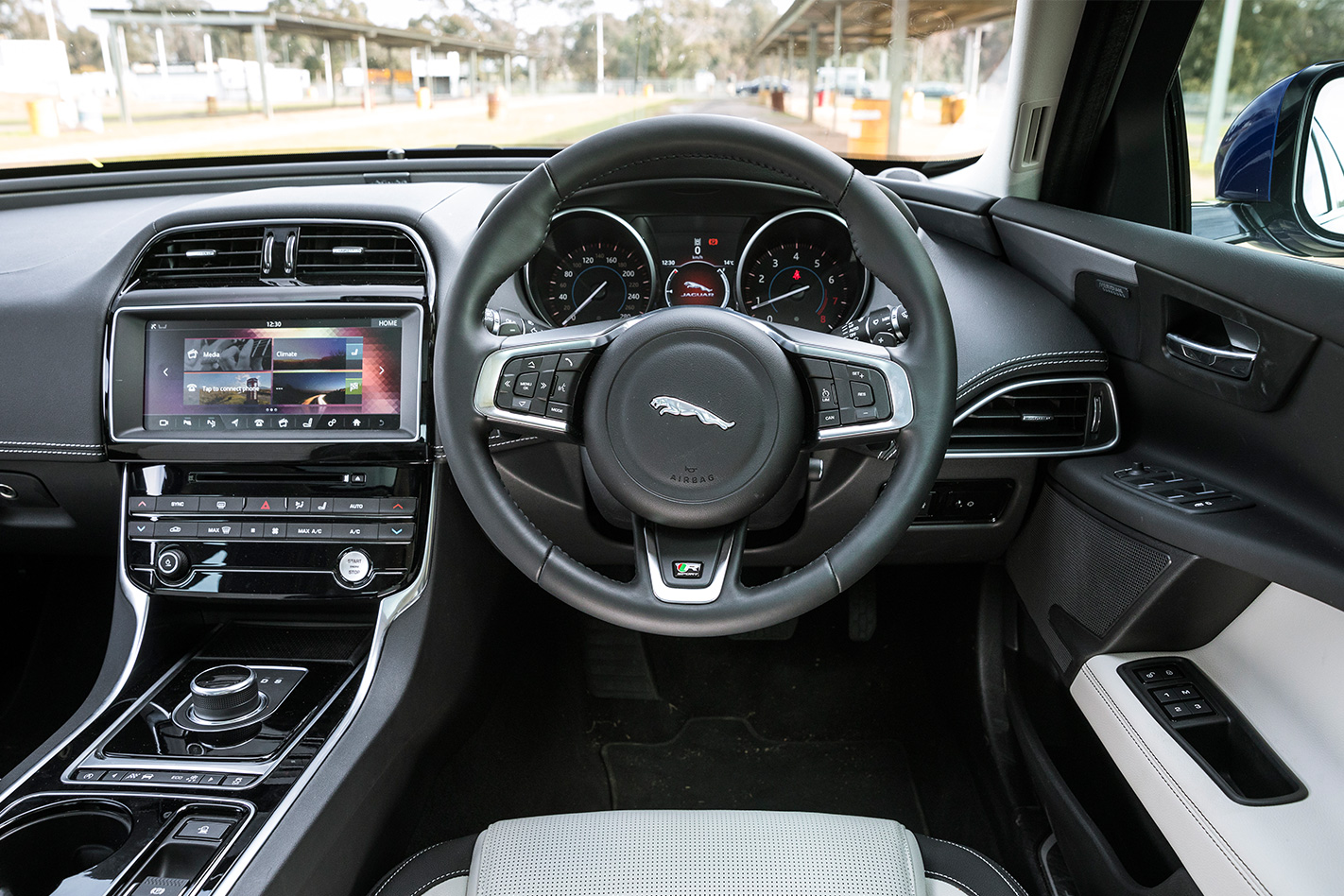
On adaptive dampers, the ride quality varies from best of the bunch in Normal, to easily the worst when set to the borderline unuseable Sport mode. As a result of this huge variation, you tend to leave the Jaguar in Normal and put up with the slightly lugubrious body control. The steering’s excellent, there is stacks of grip and clever ESC calibration, but there’s a whole welter of ergonomic glitches that ought to have been ironed out of the XE’s interior by now. Changing drive modes is an inelegant grope for tiny buttons, and the motorised gear selector, which rises from the centre console remains an answer to a question that nobody was really asking.
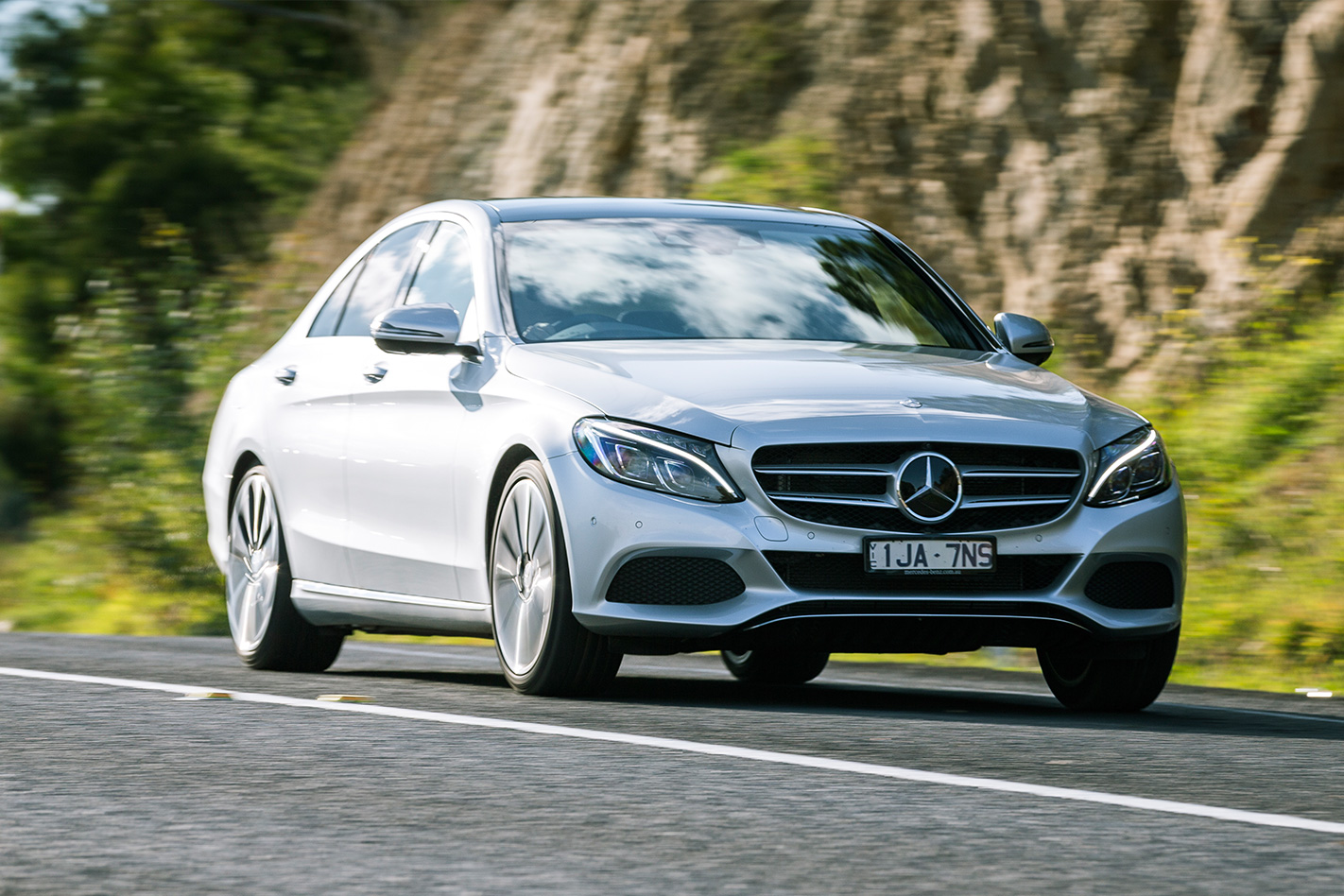
On poorly surfaced roads it feels slightly neurotic, never really settling but without ever getting floaty. It tips into a corner sharply, though, and clings on gamely in the twistier sections without delivering much in the way of nuanced feedback. There’s also markedly more wind noise around the mirrors than in any other car here. What the engine lacks in charm, it makes up for in effectiveness, with the 155kW unit ceding nothing to its rivals in the lunge to the redline.
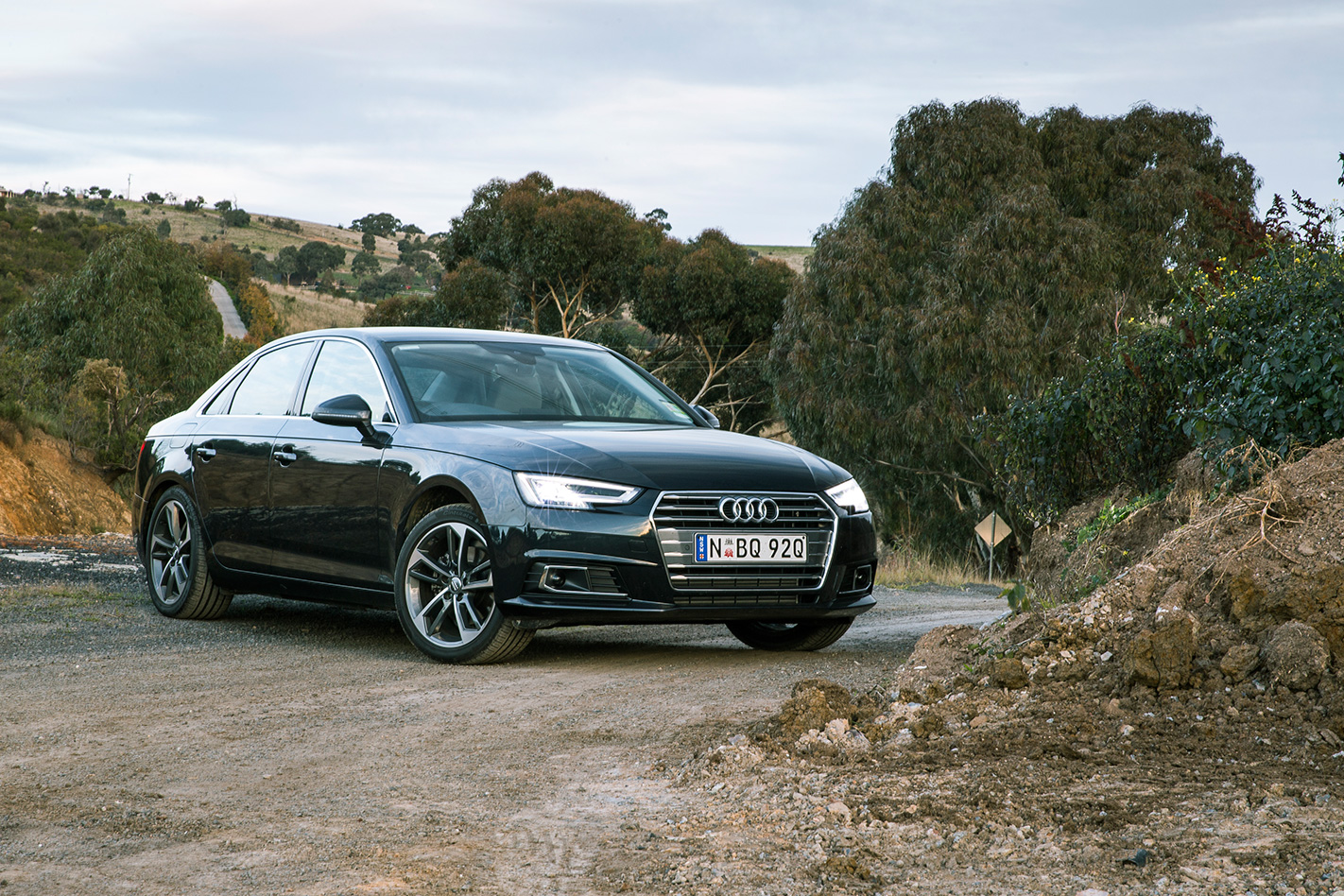
In a field of rear-drive rivals, the front-drive Audi A4 2.0 TFSI always runs the risk of feeling a bit inauthentic, a gussied-up hatch chassis pretending to be part of an exclusive club. On the road it feels nothing of the sort. Refinement is excellent, front-end grip mighty, turn-in crisp, body control taut, and only on rougher roads does the Audi begin to feel a bit raggedy, despite the fitment of $1700 worth of comfort adaptive suspension. Like the BMW, it feels fairly frothy despite fronting up with a mere 140kW, pipping the Munich liftback, but nothing else on the Heathcote strip.
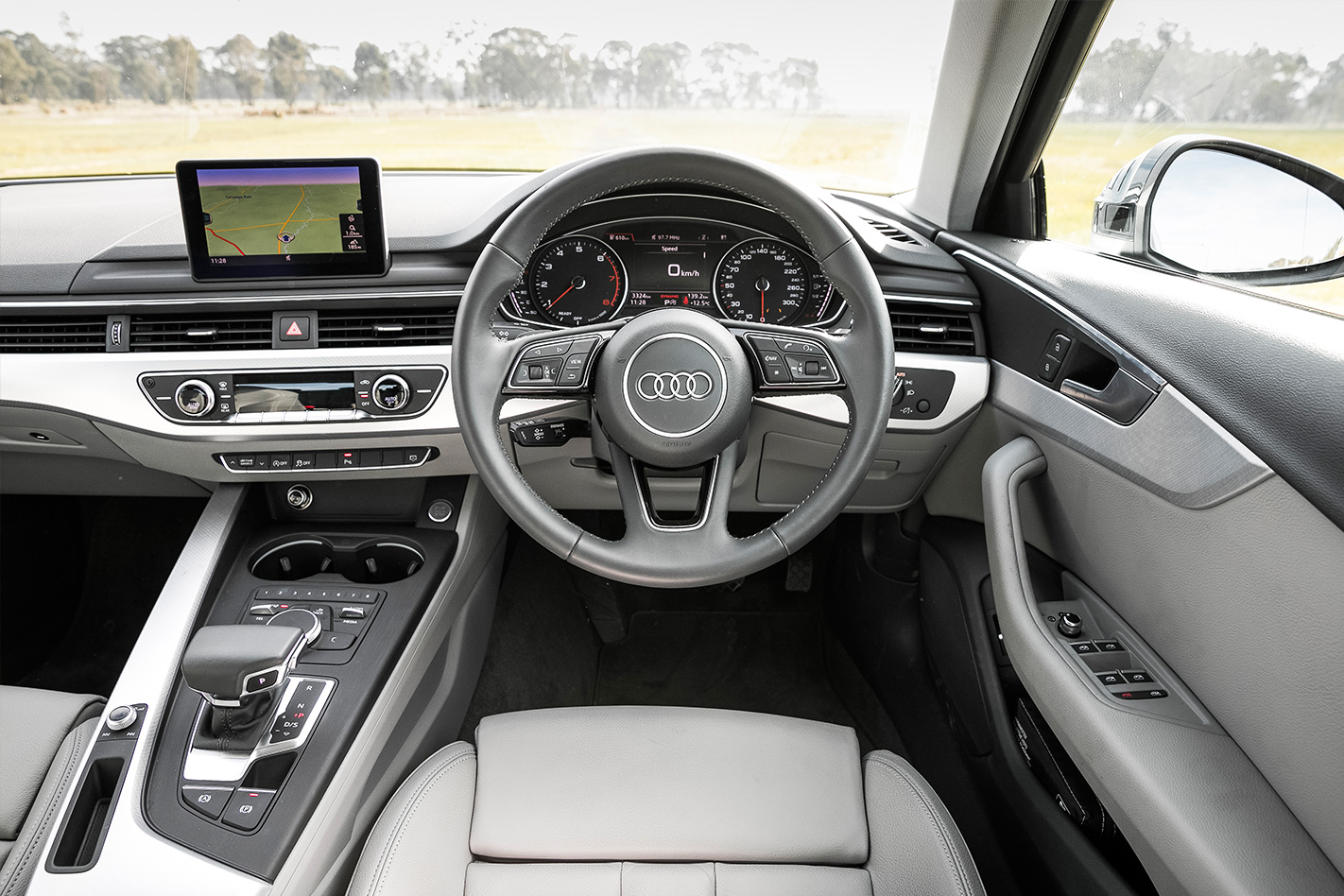
The A4 also won admirers with its design and packaging savvy. Its rear is the only one of this quintet where a six-footer would be comfortable spending any extended period. Headroom up front is the best too, though it being the only car here without a sunroof certainly helped in that regard. While the dash finish and layout is beautifully executed, the long reach to the Drive Select switches and volume control is evidence of a complacent right-hand drive conversion. The interior trim choices of this particular car aren’t Ingolstadt’s finest hour.
That’s one accusation you’d never level at the Jaguar XE 25t R-Sport – presented here laden down with options that lifted its $68,900 list to an eye-watering $87,590. It’s hard to argue that the combination of 19-inch black Venom alloys, Caesium Blue metallic paint, and gloss black detailing pack doesn’t create a compelling visual argument. Lantern-jawed good looks aside, the XE was found wanting inside.
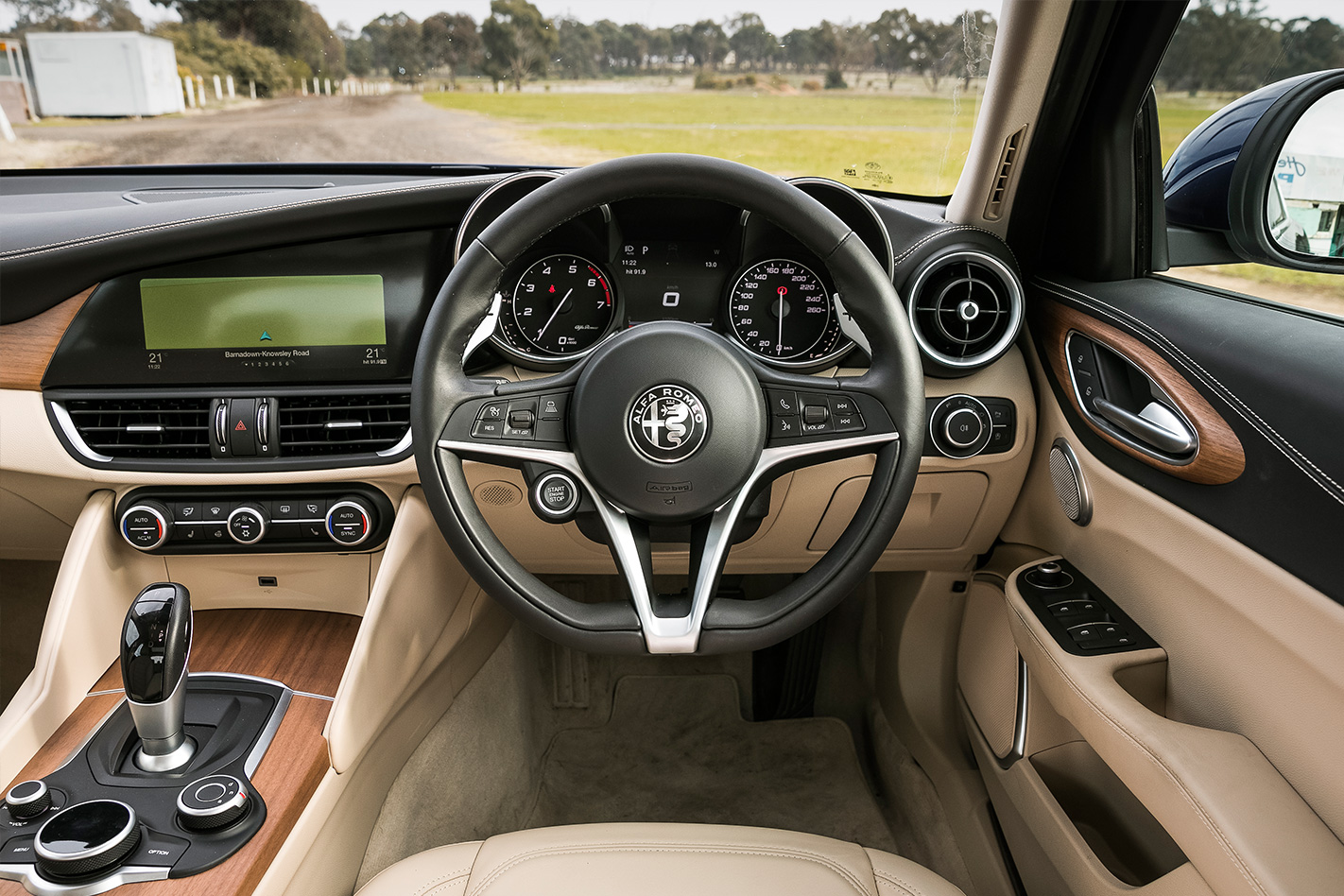
The Giulia’s cabin is a game of two halves, good up front, not so special in the back. The pale wood finish on this car worked better than expected, however some features, like the overly loud indicators, the lack of any interior bottle storage, and the bizarre piano black overhead panel that looks like Darth Vader’s helmet didn’t endear the Giulia to testers.
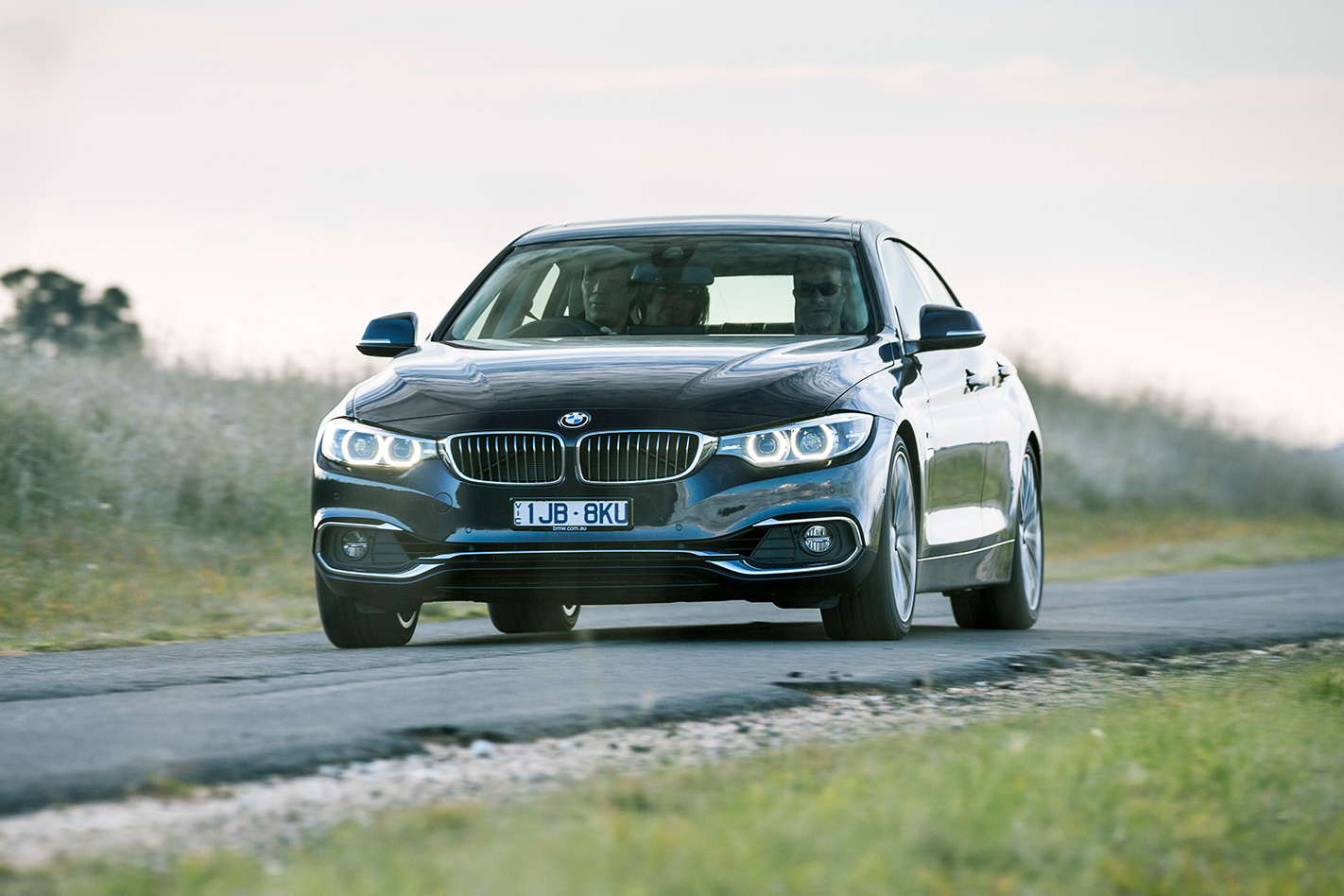
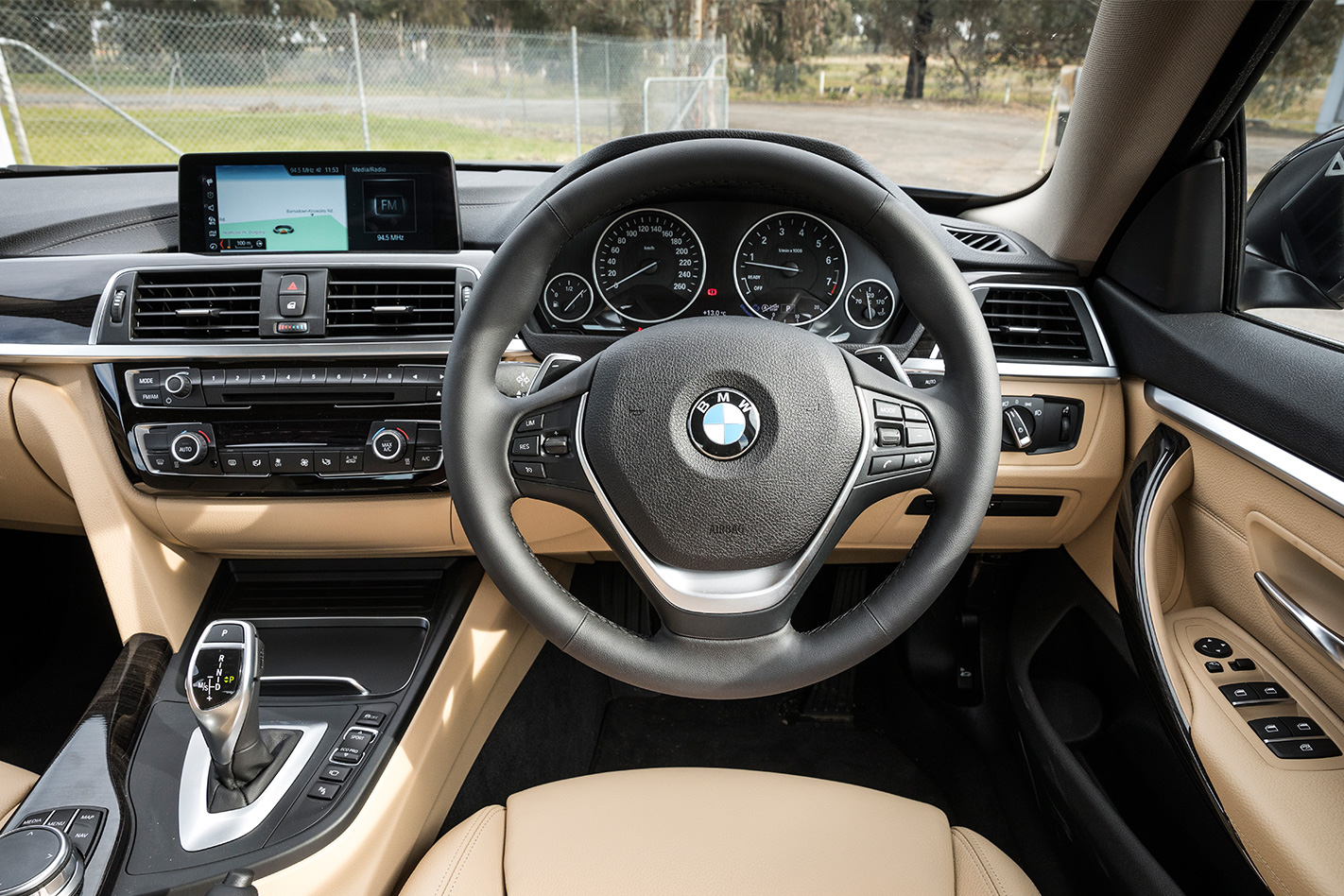
As the only liftback of the lot, the BMW offers something a little different. It arguably looks better than the 3 Series sedan too, with its power-packed bottle rocket flanks and sleek glasshouse. Whether you see that as worth its $7500 premium is clearly debatable, but the recent Life Cycle Impulse (Munich’s mangled argot for ‘facelift’), has seen the price shaved by $2200 and a stack more kit included as standard.
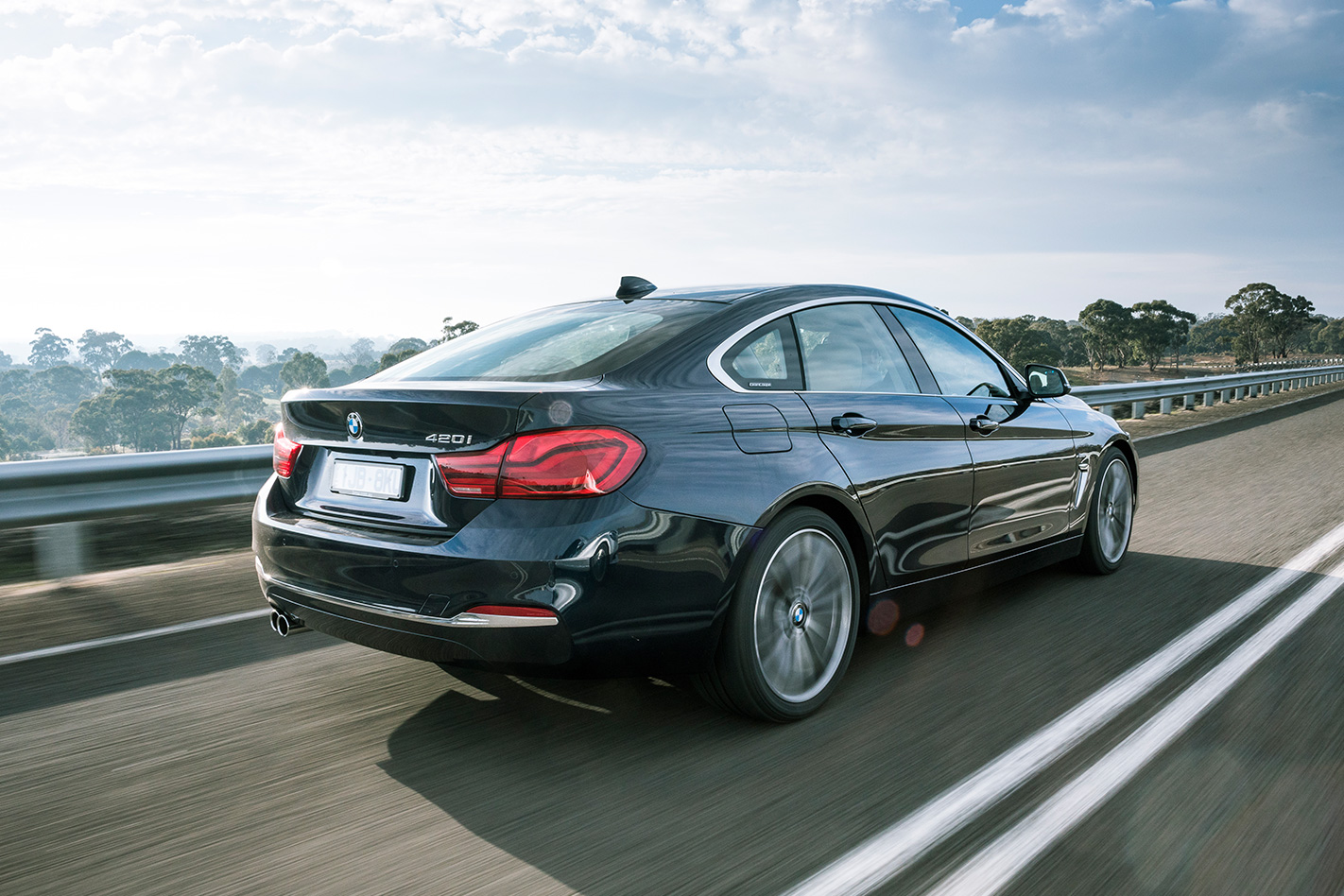
Where things get a bit sticky for the BMW is when you want to step up to the rather lovely 430i version, and net yourself 185kW rather than 135. It’s much the same engine, effectively making the 420i a crippleware version of the 430i, and yet the step up will cost you a swingeing $10,000. For $9000, Audi will elevate you from the 140kW 2.0 TFSI to the 185kW version and include the quattro all-wheel drivetrain, with comparatively better residuals to boot.
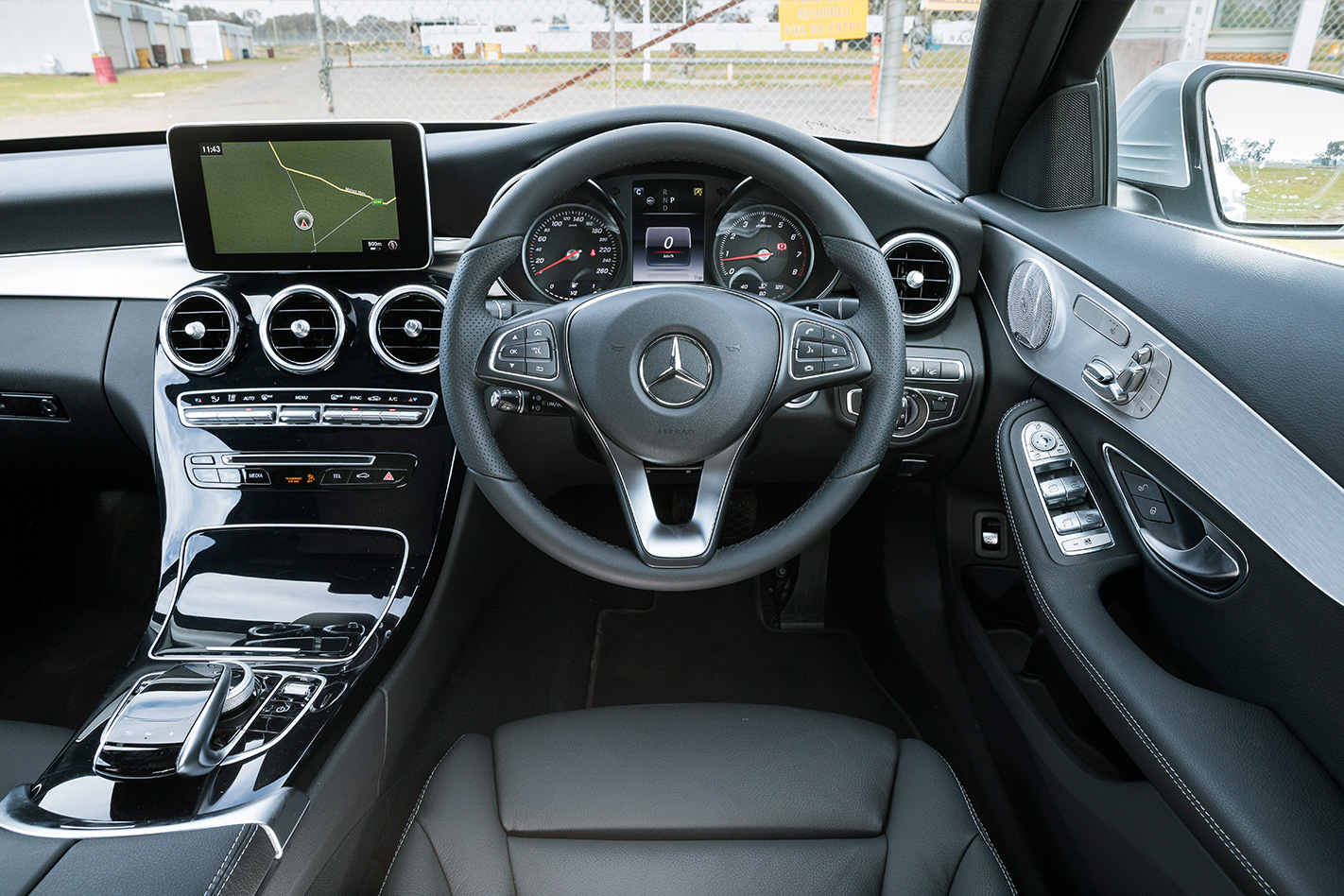
Yet, despite the conservative exterior treatment, the interior is the brashest of the bunch. It’s strangely mismatched in this regard, with swathes of distractingly reflective piano black on the fascia and look-at-me flourishes of contrasting silver and chrome. Yes, it’s undoubtedly expensive looking, but it feels a bit new money in overall execution.
Sifting these cars into any semblance of order based on merit is far from a straightforward task.
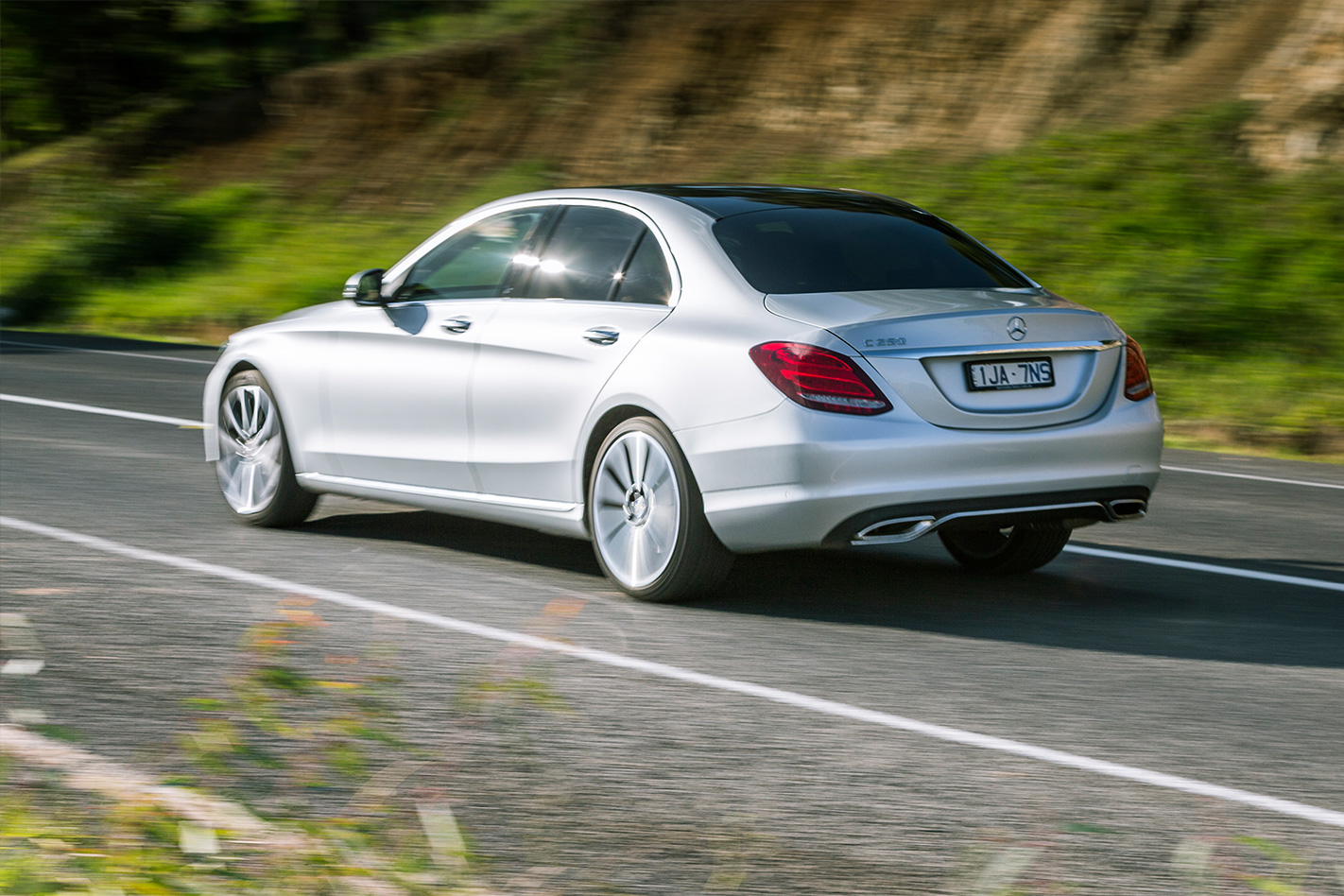
This engine has now been replaced with the 180kW C300 9G-Tronic, which could well have punched the Benz back into contention.
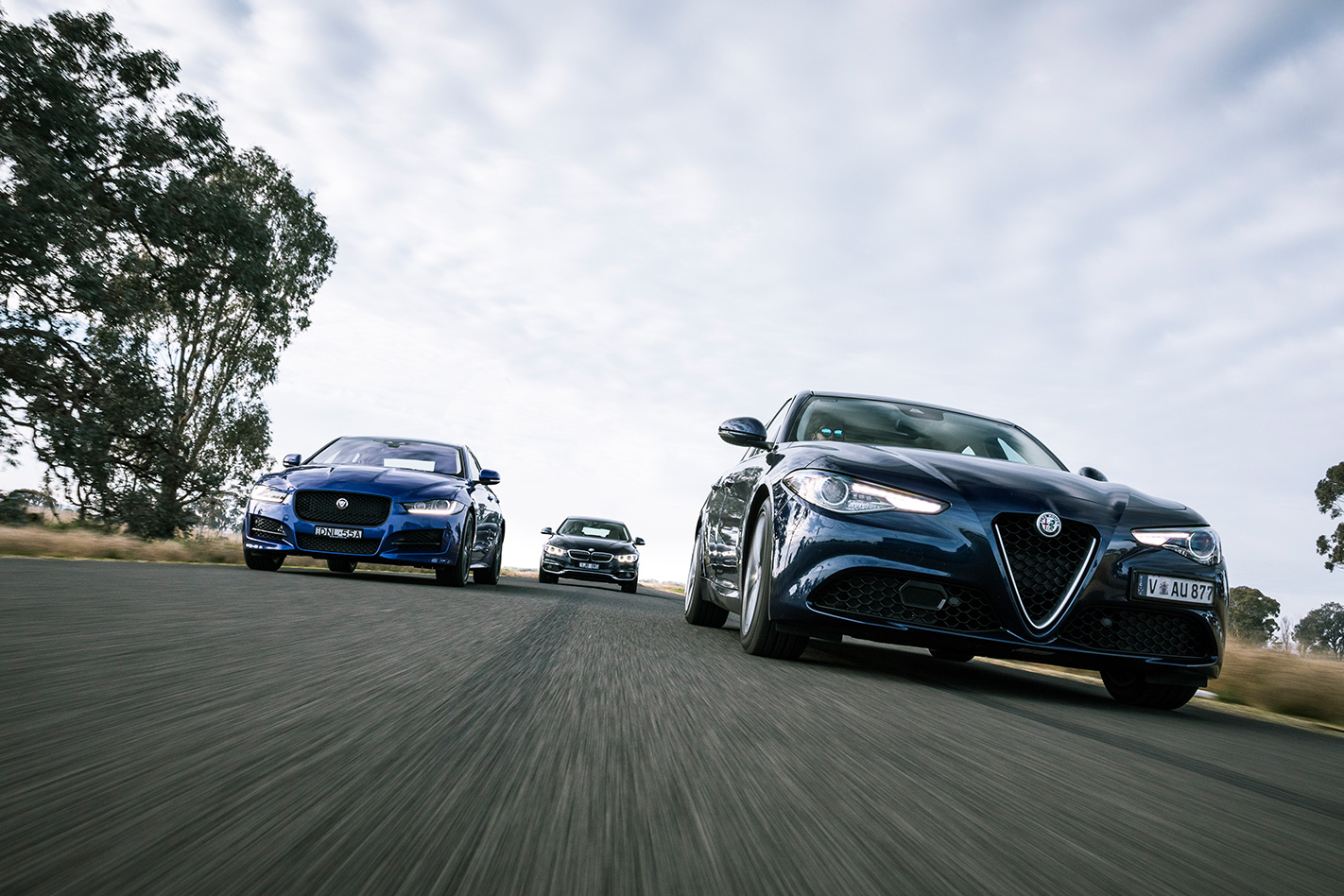
In the final reckoning, despite its overall likeability, the sedan that became a coupe and then became a four-door again asks the most money for the least amount of engine, which proved a hurdle too big to overcome.
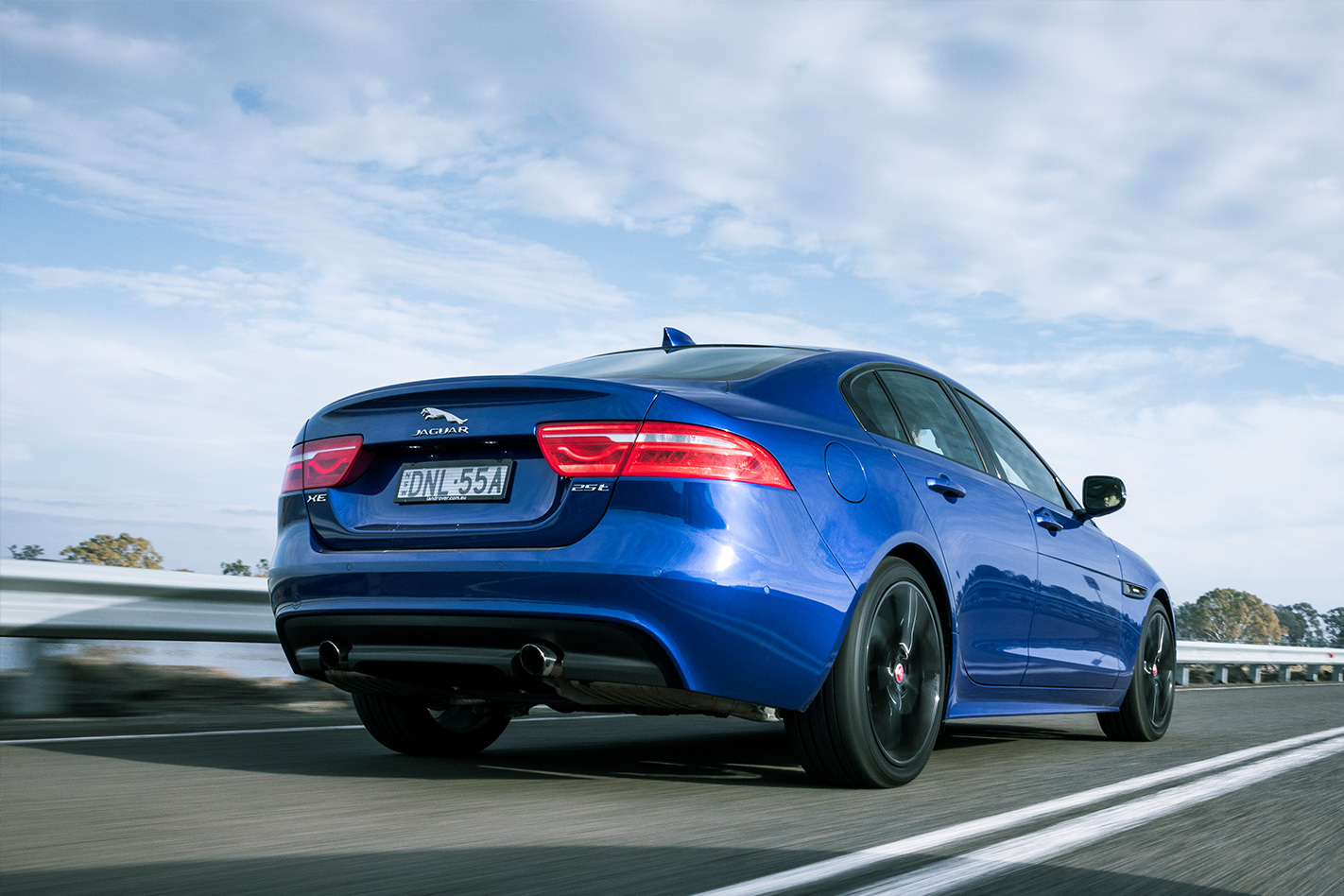
It’s arguably the best-looking car here, it’s the quickest, has unquestionably the best ride (in Normal mode), and is fun to drive. And it’s only going to get better when the Ingenium petrol engines arrive with the promise of better efficiency and refinement.
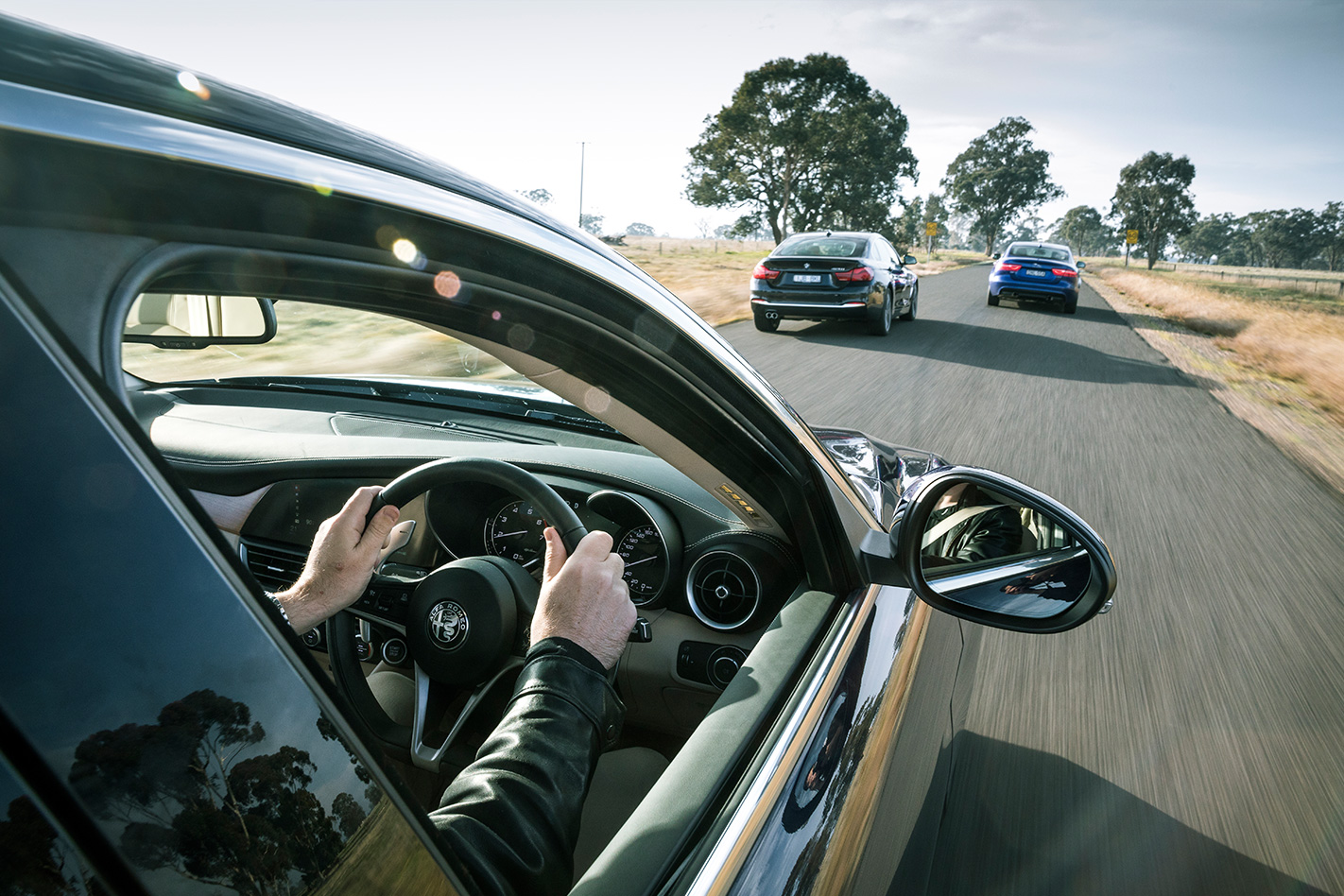
Which leaves the Giulia. Nobody saw this coming, not even those among us who got a bit worked up over the Quadrifoglio. Most felt that with the show-stopping engine taken out of the equation, the Alfa would struggle against the unrelenting polish of the premium German marques, but of all the cars here, there’s only one that’s touched by the mark of genius, and it’s the Giulia. The others are very good cars, and none would spark a moment of buyer’s remorse, but there’s a clear superiority about the way the Giulia goes down a challenging road that buys it all manner of credit.
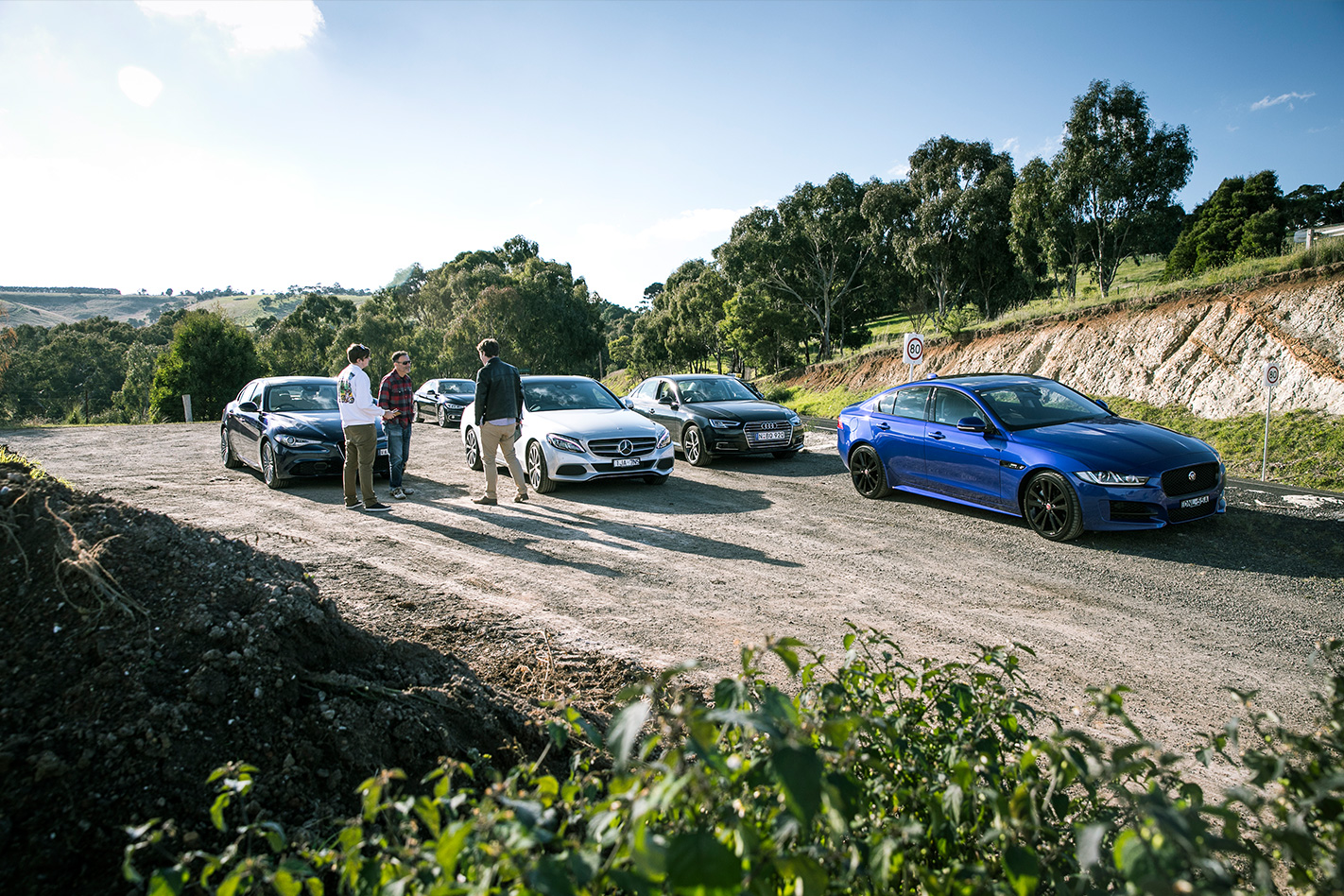
But if, like us, you’d rather be behind the wheel of a car that delivers so much and asks for so little, the Giulia delivers a wholly convincing argument.
Forget what you thought you knew. Press reset. You’re going to like it.