
1. 48-215 – 1948-53
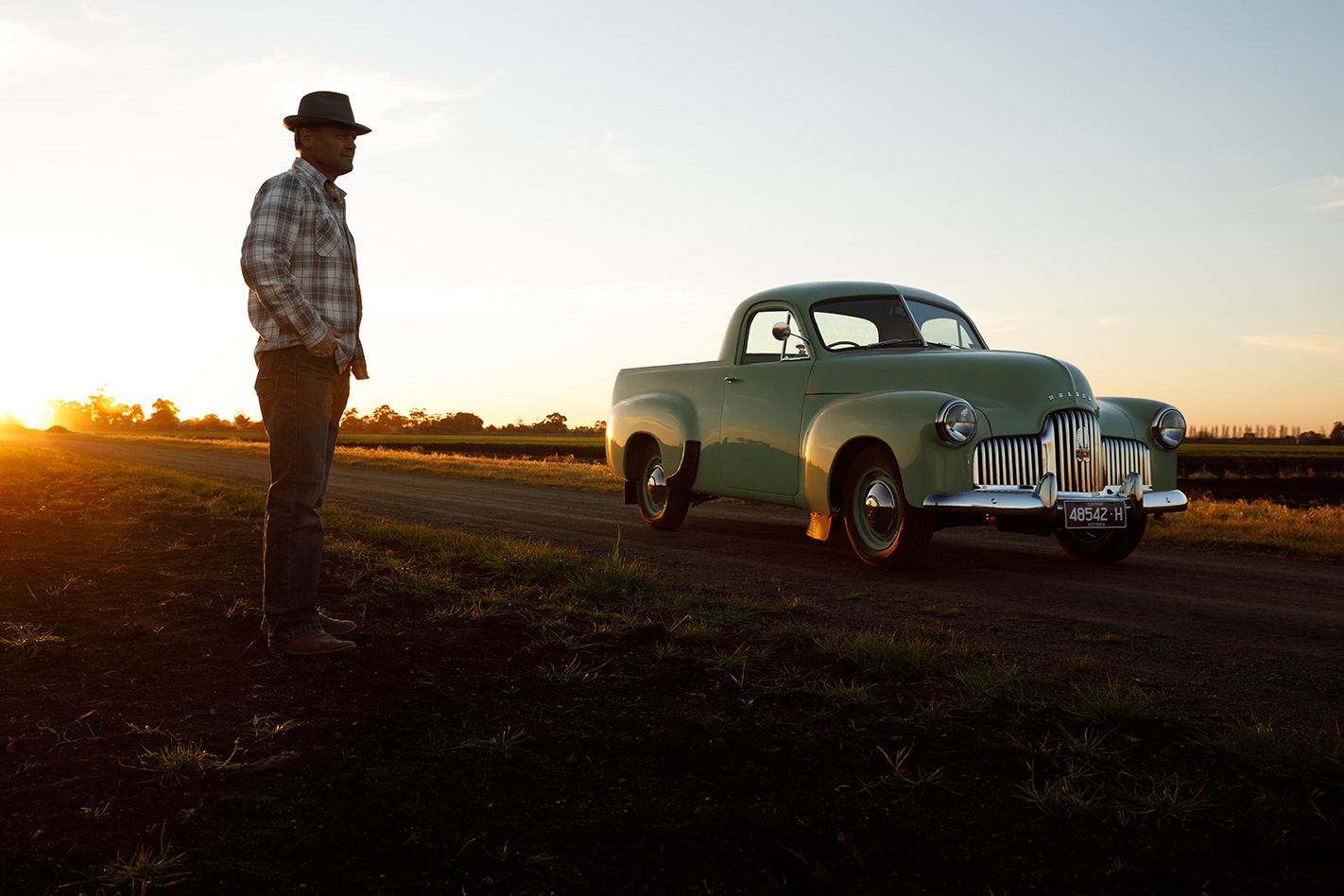
Also known as the FX or ‘Humpy’, the 48-215 was quite advanced for its time when it was rolled out of the Fisherman’s Bend factory in 1948.
It was comparatively light and had a torquey 2.15-litre straight six engine which offered good towing ability and fuel economy. It was also pretty quick, with an alleged top speed of 137km/h. And with a raised ride height it was able to handle most of Australia’s primitive road network.
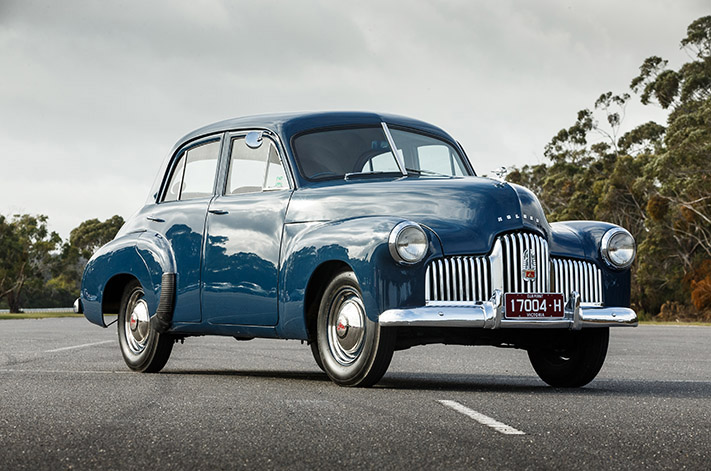
Inside its bulging body there were two bench seats that accommodated six people, including the driver, and there was enough headroom for passengers to wear hats.
Holden built 120,402 examples of its first car, yet demand was so great that the waiting list stretched out for a year, thanks to a mixture of Aussie pride and the fact it was actually a very good car compared to many comparable imports.
2. VE Commodore – 2008-2013
Holden always held ambitions to build a true ‘world car’ and it finally succeeded with the VE Commodore in 2008. It cost Holden more than a billion dollars to develop, but the gamble paid off, despite the global financial crisis cruelly intervening to halt widespread global exports (though a number of were shipped across to the US as Pontiac G8s and later as the VF-based Chevrolet SS).
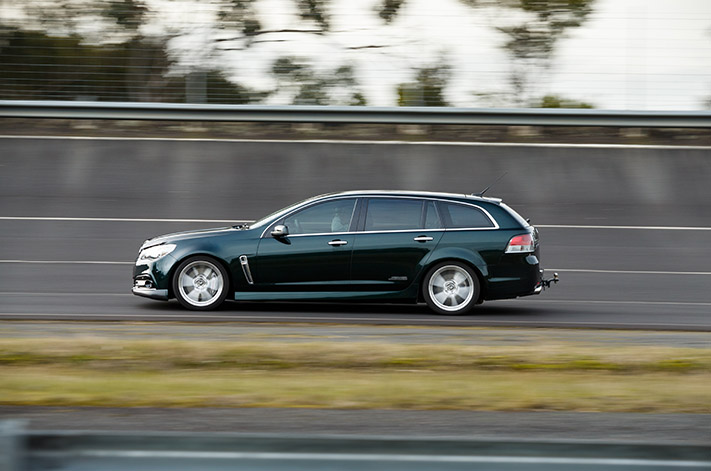
The VE set new standards with its spacious interior, body strength, dynamic cohesion and styling which was appealing whatever the model or bodyshape be it the sedan, Ute, Sportwagon, or Calais which one 2008 Wheels Car of the Year.
The VE morphed into the VF which bows out on a high note, with the last of the V8 SSV-Redline models rolling off the Holden’s Elizabeth production line as instant classics and the world’s best-value sports sedan.
3. VB Commodore
The generation that grew up on the American-based H-model Holdens didn’t know what to make of the first European-designed Commodore when it arrived in October 1978.
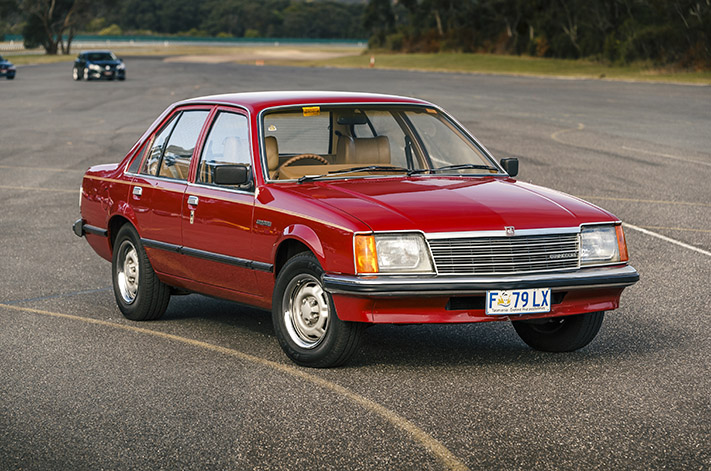
Based on an Opel Senator/Rekord mash-up, it was a generation ahead of the Kingswoods and Premiers it replaced.
The VB Commodore won Wheels Car of the Year for 1978 and its credentials as a true-blue Aussie car were sealed when it gave a Peter Brock led team victory in the gruelling 20,000km Repco Reliability Trial in 1979.
4. HSV GEN-F – 2013-17
Based on the VF Commodore, the Gen-F range roared onto Aussie roads in 2013 with the supercharged 430kW/740Nm 6.3-litre V8 GTS which was considered as a better car than the Mercedes-AMG E63 S on a dollar-for-dollar basis.
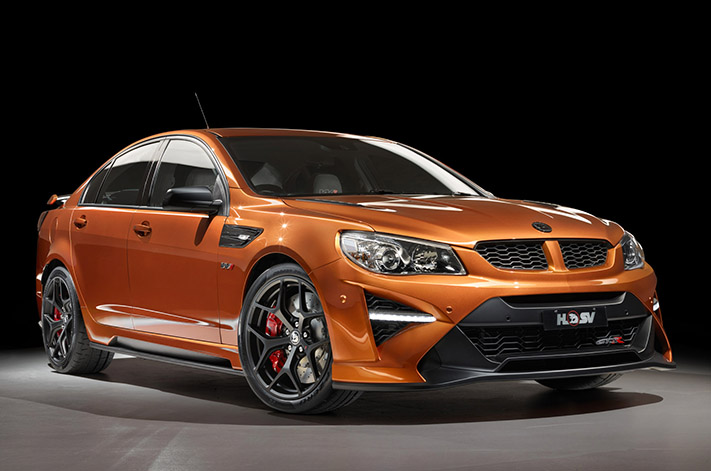
Suitable as track day superstars and daily drivers, the various Gen-F models hit their peak with the 474kW/815Nm Gen F2 GTS-R W1 which is the most powerful production car ever built in Australia as well as the most expensive with its $170,000 price already heading north.
5. HQ Holden – 1971-74
Of all the older Holdens the HQ has dated remarkably well, especially in coupe form. Like the VB Commodore, the HQ was a revolution in design compared to the barge-like HT it replaced and came with family of cars in several luxury grades and shapes including sedans, coupes, wagons, panel vans and utes wearing legendary badges such as Kingswood, Premier, Statesman and Monaro
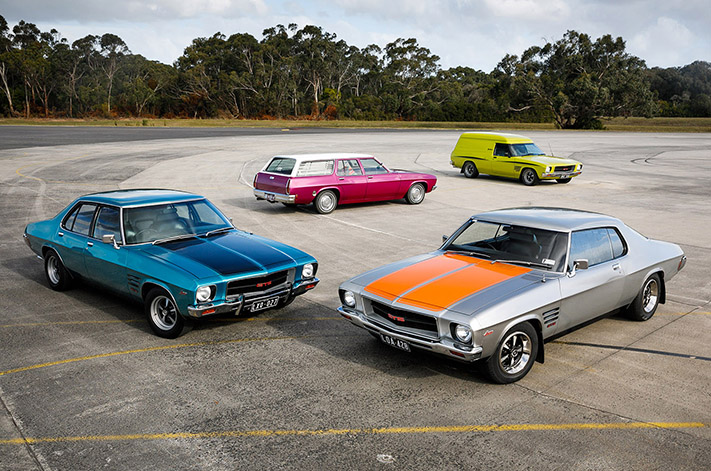
Despite its heavy steering and rudimentary handling, the HQ range was a huge success, with Holden building more than half a million in three years. It’s design morphed into the HJ, HT and HZ models as well as the WB panel van, wagon and Statesman which continued to be built well into the 1980s
Volkswagen Motorsport plans to run an electric hill climb racer in the hope of setting a record run.
It’s been more than three decades since VW have taken on the Race to the Clouds, so doing it with an electric car will be quite the comeback, as well as a statement on how the brand has progressed.
The all-wheel drive racer will run at the Pikes Peak International Hill Climb in Colorado, USA on 24 June 2018. The vehicle is being developed by Volkswagen Motorsport in close cooperation with Technical Development in Wolfsburg.
“The race on Pikes Peak is a new beginning for us. We are developing an all-electric race vehicle for the first time,” says Sven Smeets, Volkswagen Motorsport director.
“The project is also an important milestone in our new motorsport orientation. Our team is literally electrified about taking on this incredible challenge.”
VW’s last efforts at the Pikes Peak mountain race in 1987 were unsuccessful with a twin-engined Golf didn’t make it to the finish line. “It is high time for a rematch,” says Smeets.
Frank Welsch, development board member, says the challenge of Pikes Peak will help VW develop electric technology that’s up to the task.
“The Pikes Peak hill climb is one of the world’s most renowned car races. It poses an enormous challenge and is therefore excellently suited to proving the capabilities of upcoming technologies,” Welsch says.
“Our electric race car will be equipped with innovative battery and drive technology. The extreme stress test on Pikes Peak will give us important findings that will benefit future development, and it will showcase our products and their technologies.”
WHILE we journalists like to think our words are the backbone of magazines like Wheels, the truth is no matter how finely crafted our copy is, it is nothing without the photographs that fill our pages both digital and physical.
It’s a well-worn cliché that a photo says a 1000 words, but that doesn’t make it any less accurate.
So we have compiled some favourite photos from our years of photographing Holdens, doing as they were intended; being driven on road and track, and putting smiles on our faces.
We’ve battled all conditions in Holdens over the years, from seemingly boundless, searing and barren deserts, to sprawling and crowded metropolitan cityscapes.
Behind the wheel we’ve taken part in countless journeys, criss-crossing our vast nation taking routes both popular and almost unknown. It’d be impossible to calculate the number of kilometres travelled in Holdens by Wheels staff over the years.
At the same time, our snappers have built an archive housing hundreds of thousands of images during those same years.
These images capture part of what has made Holden so great, and so much more than just another car company for many Australians.
The cars built at Elizabeth and Acacia Ridge have become a part of our cultural landscape, and as the leading automotive magazine in the country it was Wheels’ task to photograph them, and share it with the public.
So sit back and enjoy this small selection of some of our favourite Holden images from over the years.
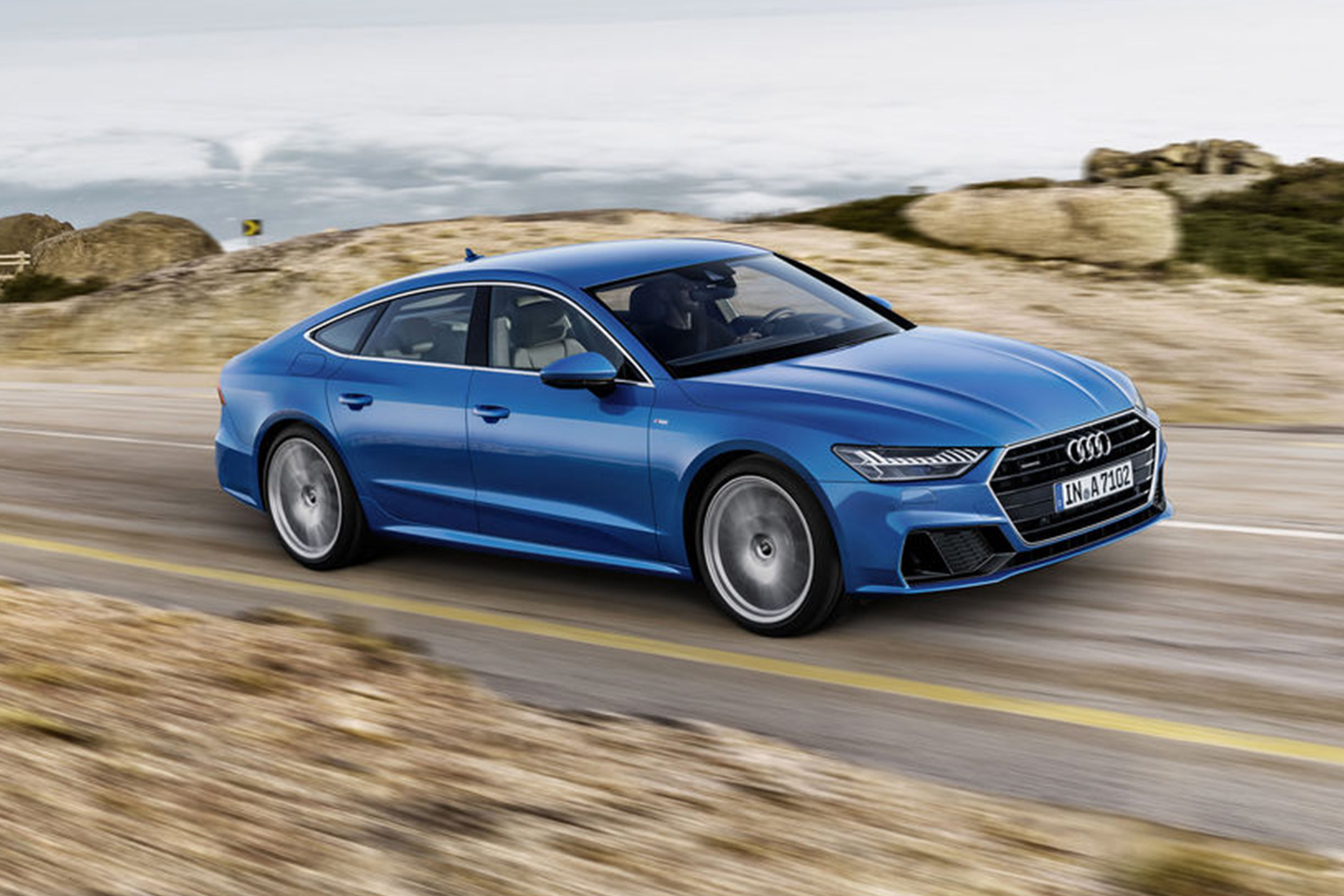
After the reveal of the Audi A8 luxury limo earlier in the year, the Audi A7 Sportback seems to have received a little less fanfare.
But the attractive new look for the Sportback and its bold performance claims have gotten our hopes high for the next iteration of the S7.
When equipped with Audi’s “sonorously understated” 250kW/500Nm turbocharged 3.0-litre V6, The A7 sprints from 0-100km/h in 5.3 seconds and has a limited top speed of 250 km/h.
We know, it doesn’t make sense to us either.
Every engine the A7 will also be ‘mildly’ electrically assisted “for greater comfort and efficiency.”
In terms of the A7’s technological features and fit out, it gains an all-digital control system which includes the Audi AI remote-garage pilot and the Audi AI remote-parking pilot.
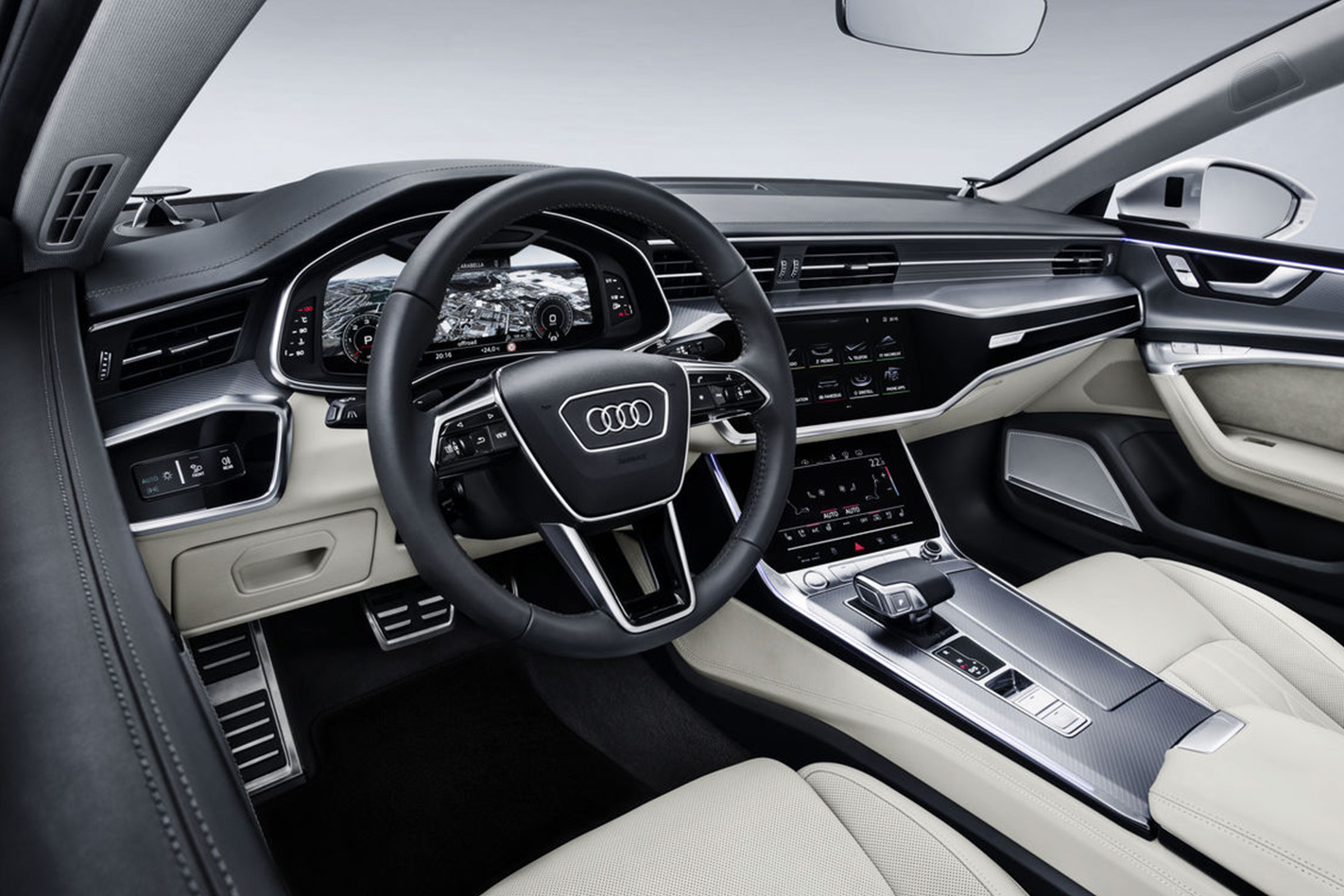
“Besides the Audi AI systems, the new A7 Sportback features a total of 39 driver assistance systems to make things easier for the driver.”
These assistance features fall under three packs, the City, AI, and Tour packs.
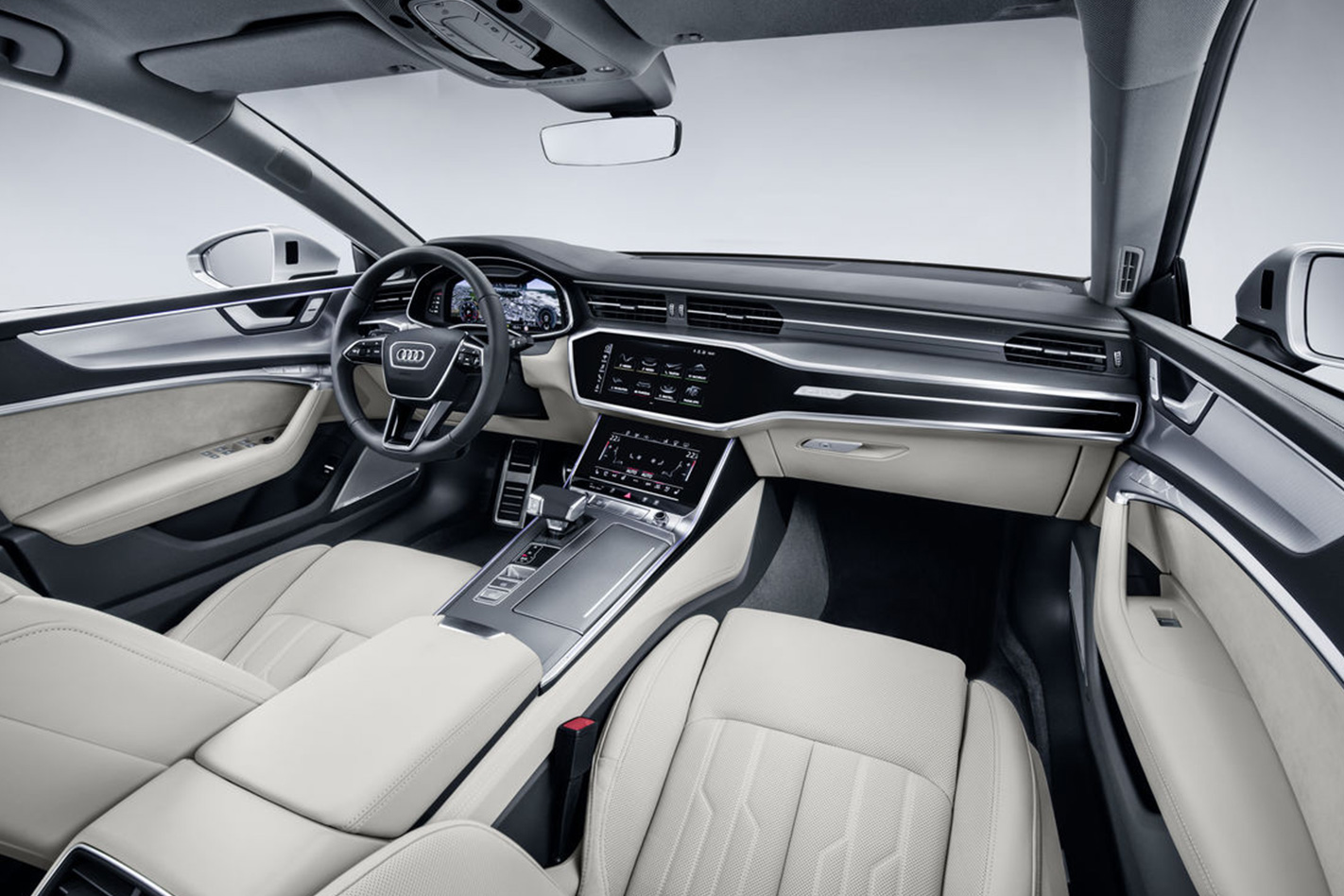
Also available as an option is a sport differential, which Audi says the driver can adjust in correlation with the chassis platform using “different ride profiles”.
The new A7 will launch on the German market in late February 2018, with Australian availability yet to be announced.
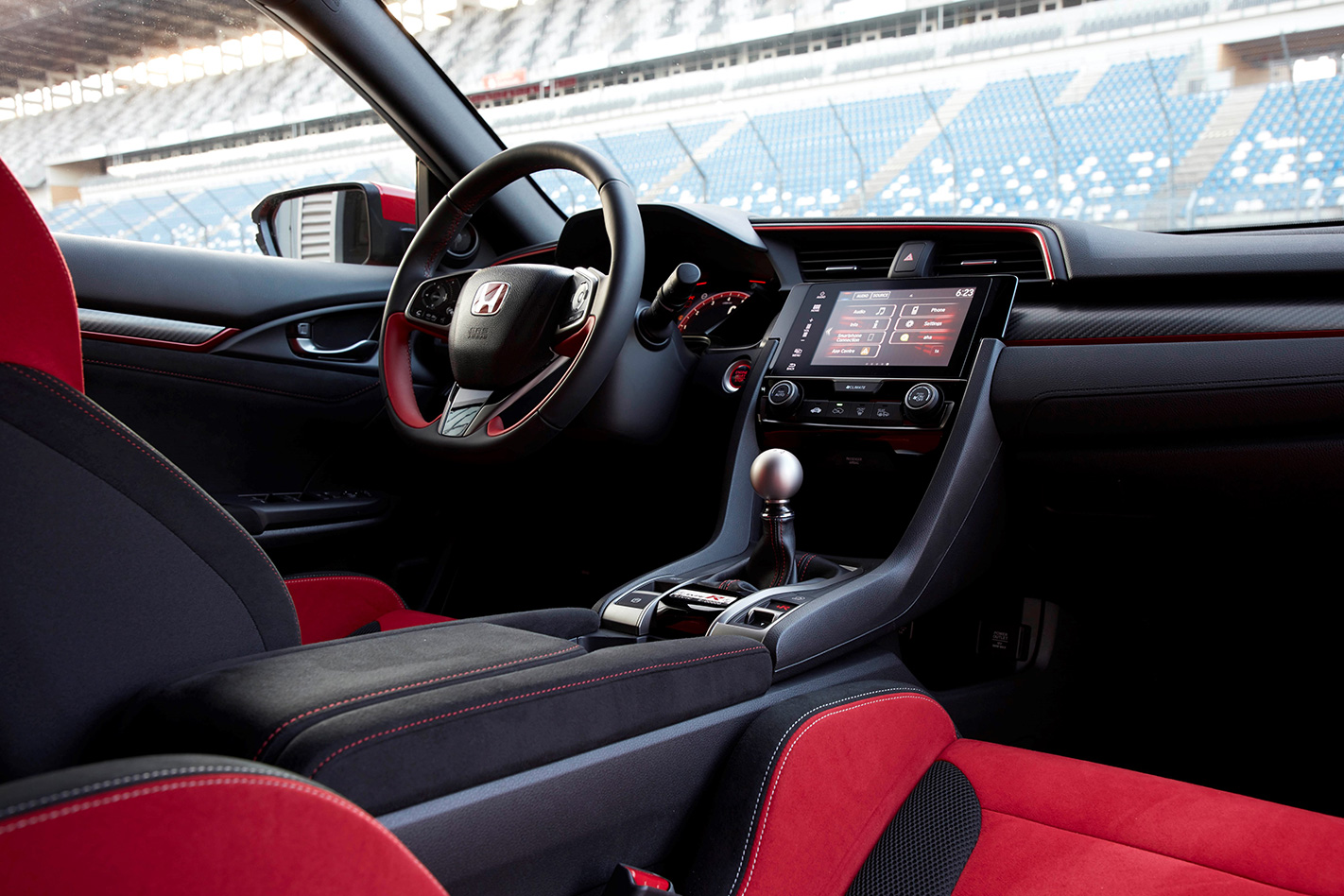
Honda’s new Civic Type R has finally hit Aussie soil. And judging by our first taste, it’s a bloody weapon.
But is this it for the next five years like the last models? Well, a couple things suggest not. Not long ago Hideki Matsumoto, the Civic Type R’s lead engineer, told Automotive News Honda will release more variants of the Type R in the future to keep sales healthy.
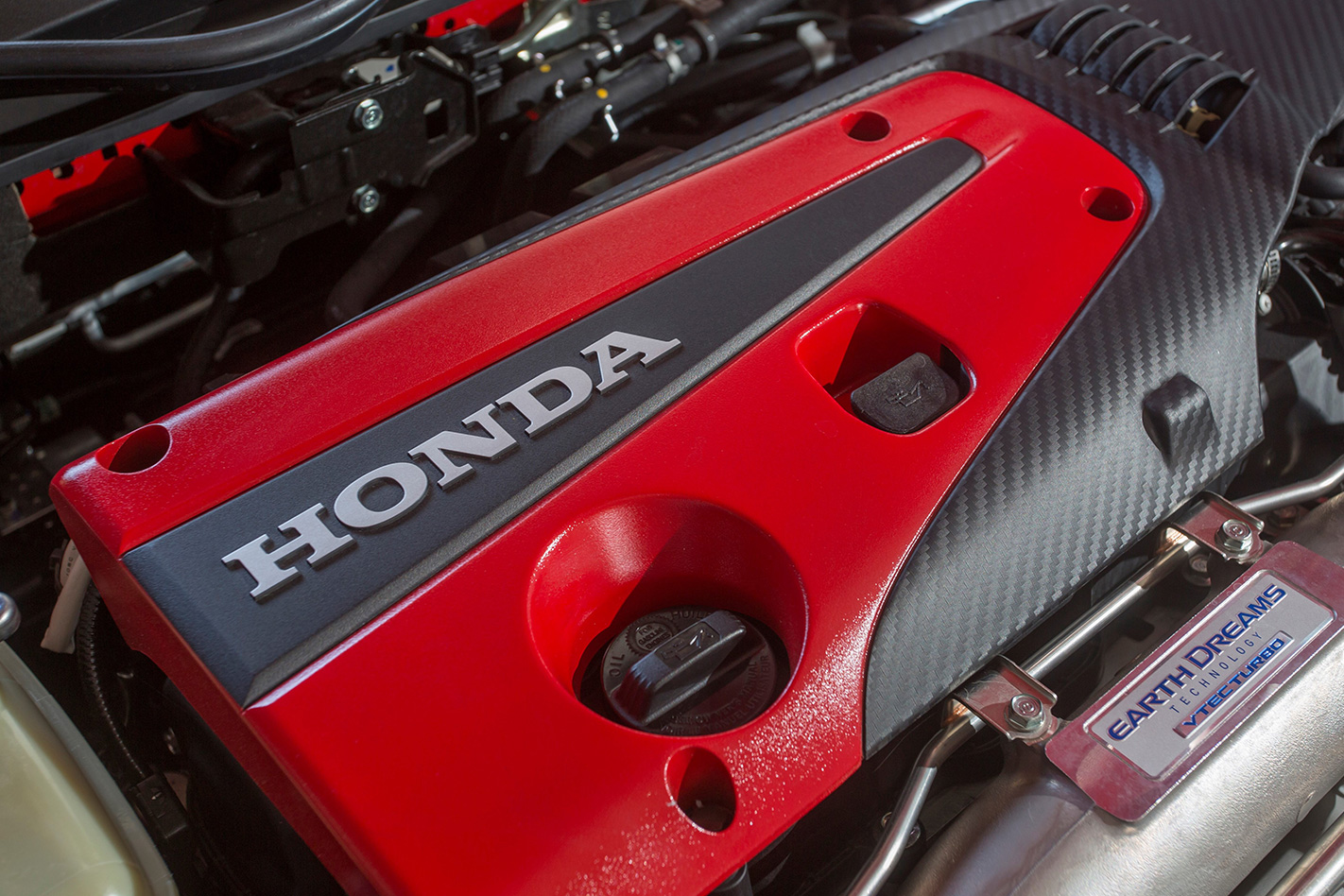
Chief among them was a more powerful car. Which reminds us of what Honda let slip at the international launch in Dresden, Germany, about the car’s feisty 2.0-litre turbo engine.
“This engine has the Type R. Therefore we choose the mono-scroll, because we can get the big power into the high-speed radius [corners],” he detailed.
“Twin-scroll is better equipment because the low-speed area is very good response. However, if we choose the twin-scroll in this engine, we cannot achieve over 300PS [220kW], because the turbocharger is very small size.”
Boosting outputs mid-life-cycle is almost unprecedented in Type R history, but so are turbochargers.
It would be welcome Down Under. Aussies pulled the short straw on the 228kW engine-tune, in line with the 2016 model sold overseas, thanks to our dodgy fuel. Other markets score the full 235kW.
FOR 69 unbroken years, Australians have had a love affair with vehicles manufactured on their own shores.
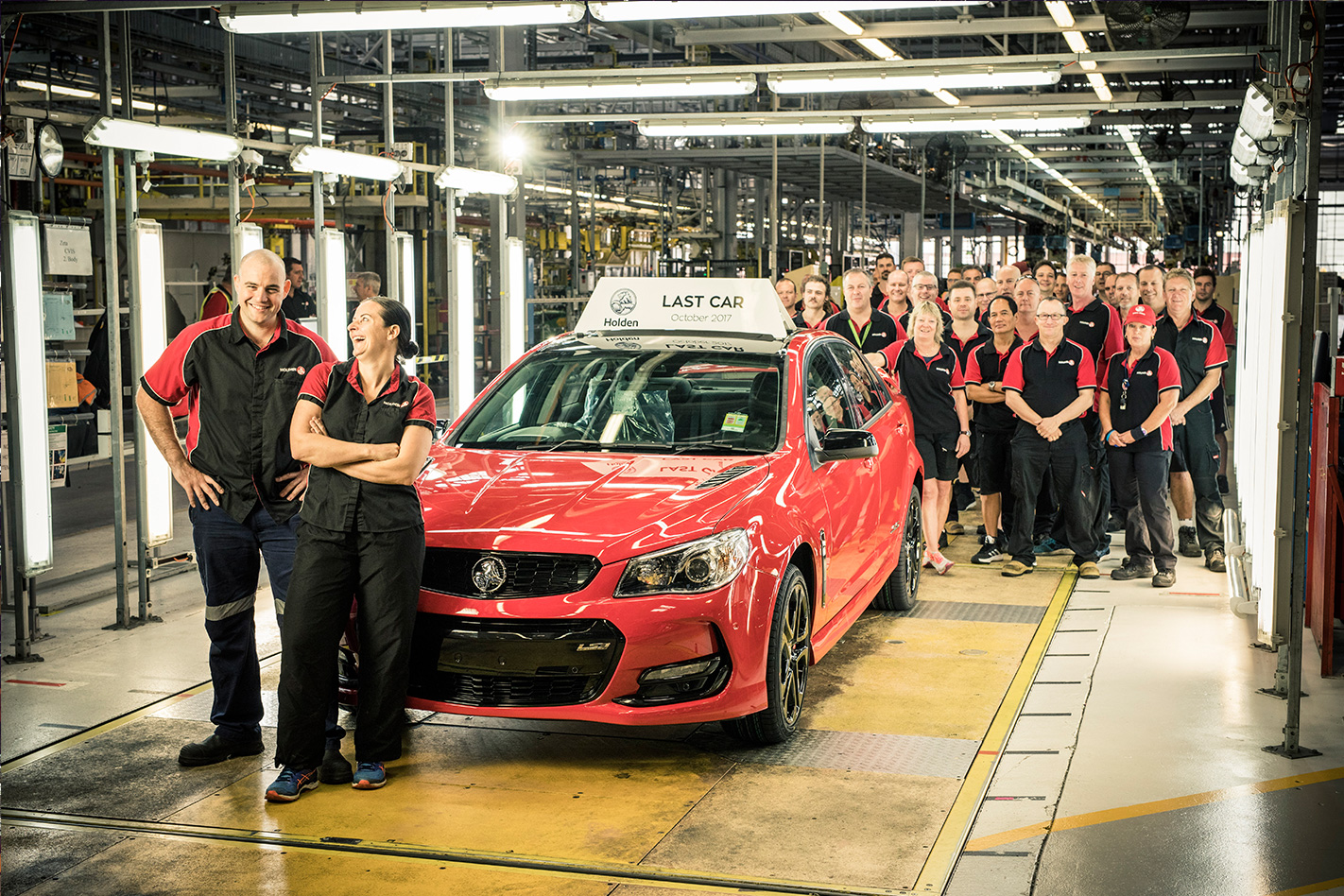
October 20, 2017 will forever be remembered as the day it all came to an end, with Holden ceasing production at its Elizabeth Factory, in South Australia.
The General Motors subsidiary will be following in the footsteps of Toyota earlier this month, Ford last year, along with Mitsubishi, Nissan, and others before that.
It’s a sad day for patriots and car enthusiasts alike, but emotions aside there are genuine and reasonable questions the end of Australian motor vehicle production raises for anyone in the market for a new vehicle.
So, let’s dispel any myths and misconceptions.
Are Ford, Holden and Toyota leaving Australia?
No. While the trio have ceased production of vehicles in Australia, they will continue to have a strong dealer network across the country post October 20.
Toyota will remain the best-selling manufacturer, with the Camry imported alongside other big selling models such as Corolla, HiLux and RAV4.
Is the Commodore now dead?
While the VF will be the last Australian-built Commodore, the name will remain on Australian roads. Early next year the ZB Commodore will begin to be sold in Australia. The ZB is a European built and designed replacement, with four and six cylinder engines.
Will it make cars cheaper?
It’s unlikely the loss of vehicle production in Australia will lower the price of new cars. The government introduced tariffs and taxes such as the much maligned Luxury Car Tax to help protect the local car industry, and increase the cost of foreign-built vehicles. While levies and taxes may not have ultimately prevented the demise of manufacturing, they did bring in a new, healthy revenue stream for the government so it’s unlikely they’ll be abolished any time soon.
Should I avoid buying one of the last Aussie built Commodores or Camrys?
While Holden and Toyota will no longer build the cars in Australia, there is no reason to not buy one of the final cars off the production line.
Manufacturers are required to keep a large stockpile of spare parts, so, as with any discontinued model, if something does go wrong with your new purchase, there will be replacements available to fix any issue.
How will the showrooms change?
For Toyota, the showroom won’t see much of a change with the end of manufacturing. The next-generation Toyota Camry will be sold here when it arrives from Japan next year, with the only change being it will arrive on a boat, instead of rolling off the Altona production line.
Holden’s showrooms are due to undergo significant transition, with the loss of the Aussie Commodore also spelling the end of the Ute. Holden is committed to bringing in a fleet of new models as a part of its import-only future. Expect more SUVs, and the European-built Commodore, and a Chevrolet-badged Camaro sports cars.
Can I buy an Australian built car after October 20?
While Holden ceased production on October 20, the manufacturer’s stock will still be available, but finite. Securing a V8 Commodore is likely to be a challenge, as the final versions will be highly sought after by collectors.
Toyota will also have stock available of Aussie built Toyotas, but this will run out quickly as many will be snapped up by fleet buyers.
If they still exist, the number of Australian-built Ford Falcons and Territorys still for sale in showrooms is likely to be in the single digits 12 months since its Broadmeadows-plant closure.
Beyond those three, HSV in Clayton will still be assembling modified Holden vehicles. The last of the brand’s Commodore-based vehicles is expected to be built in December, while the company has committed to working on imported Holden products into the future.
Technically, it will be the last of the production vehicle manufacturers left in Australia, but the number of vehicles it produces pales compared to what once was.
There aren’t many twin-turbo V12-powered vehicles you can buy, and pretty much none of those are SUVs.
But the G65 is the exception, and with its demise the world loses a ridiculous but wonderful vehicle.
In honour of the V12 SUV going by the wayside, Affalterbach has announced the AMG G65 Final Edition, an SUV that just keeps the big numbers rolling.
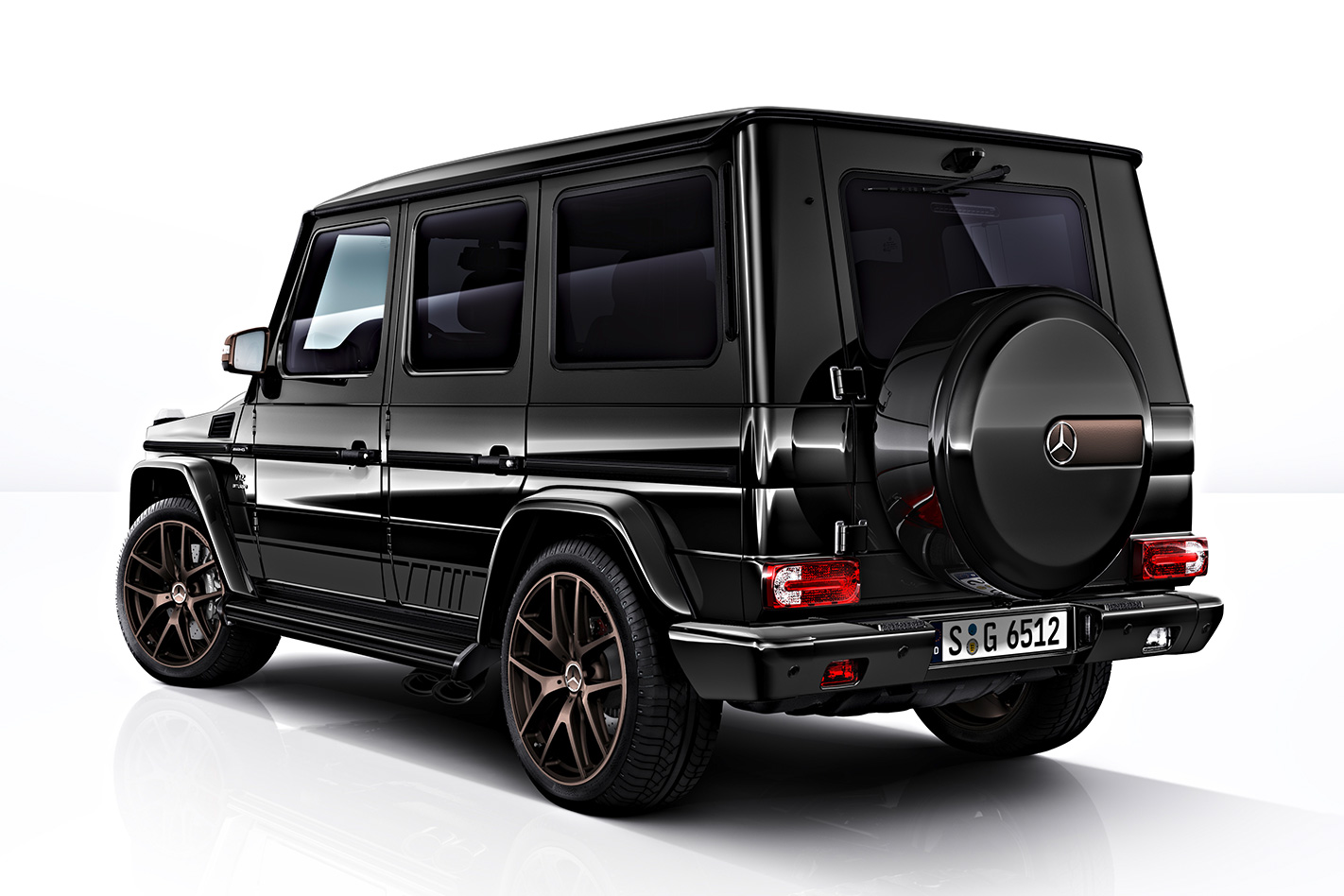
It sprints to 100km/h in a claimed 5.3 seconds, and that’s for a vehicle which is approaching the three-tonne mark.
In addition, AMG says it can climb a slope of 38.66 degrees with the right surface. Those 1000Nm are probably helping out there.
And though AMG says its G-Class is the top of the pack “among luxury off-road vehicles”, we doubt we’ll see any of these Final Editions leaving the road deliberately.
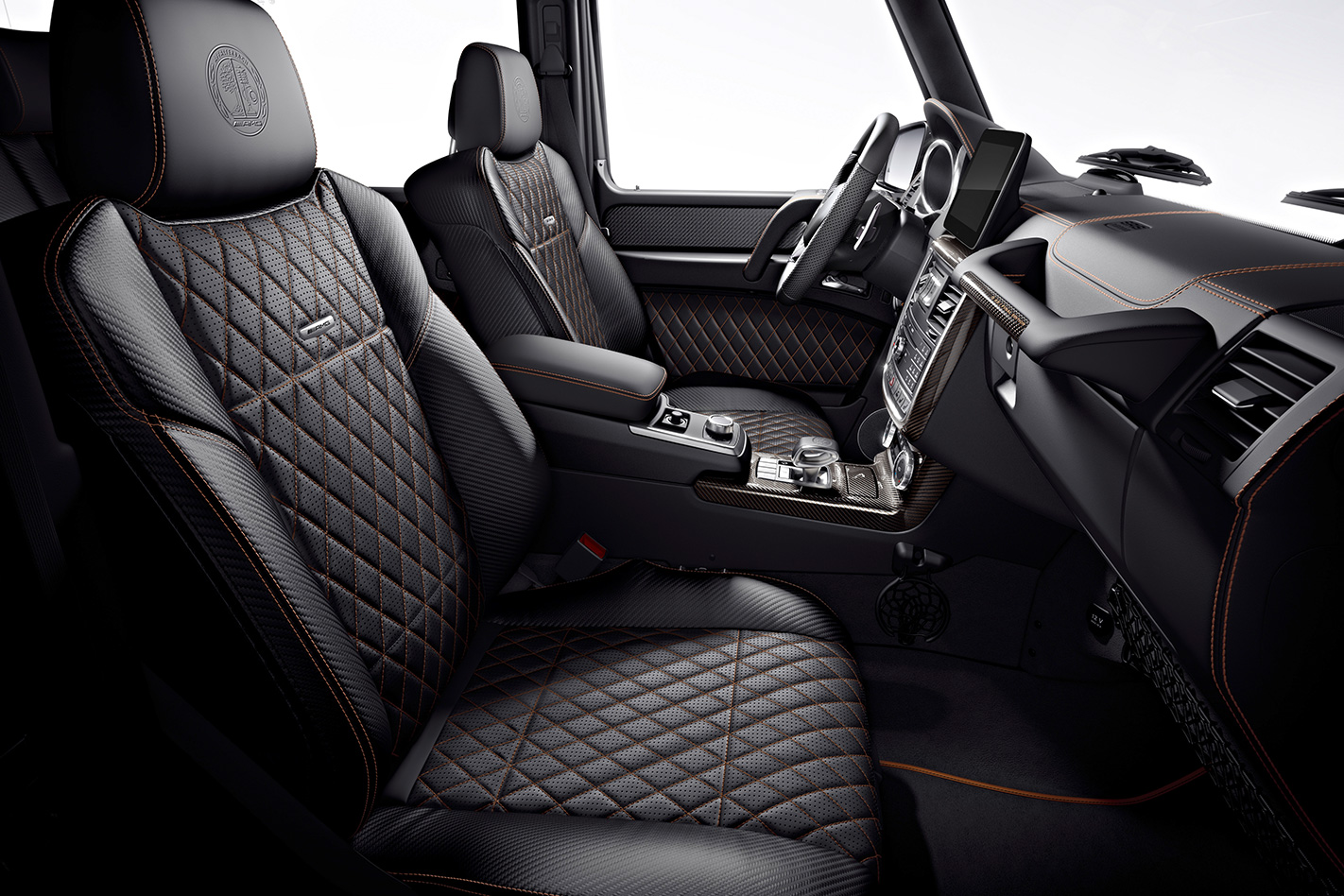
Also worth keeping unscathed are the matte black and bronze special trim parts, such as the radiator grille, side mirrors, or running boards.
Inside, bolsters in “carbon-fibre look” flank the front seats, as well as Final Edition lettering in the grab handle.
The Seat Comfort package means “climatised” (heated and vented) seats are able to have their temperature adjusted by the driver and front passenger.
The Mercedes-AMG G65 Final Edition is available immediately, though it won’t be available in Australia due to the lack of right-hand drive compatibility.
WHEELS has recorded more of Holden’s history than any other motoring publication on the planet. It’s only right then, that Wheels did something unprecedented to mark the end of Holden’s local manufacturing.
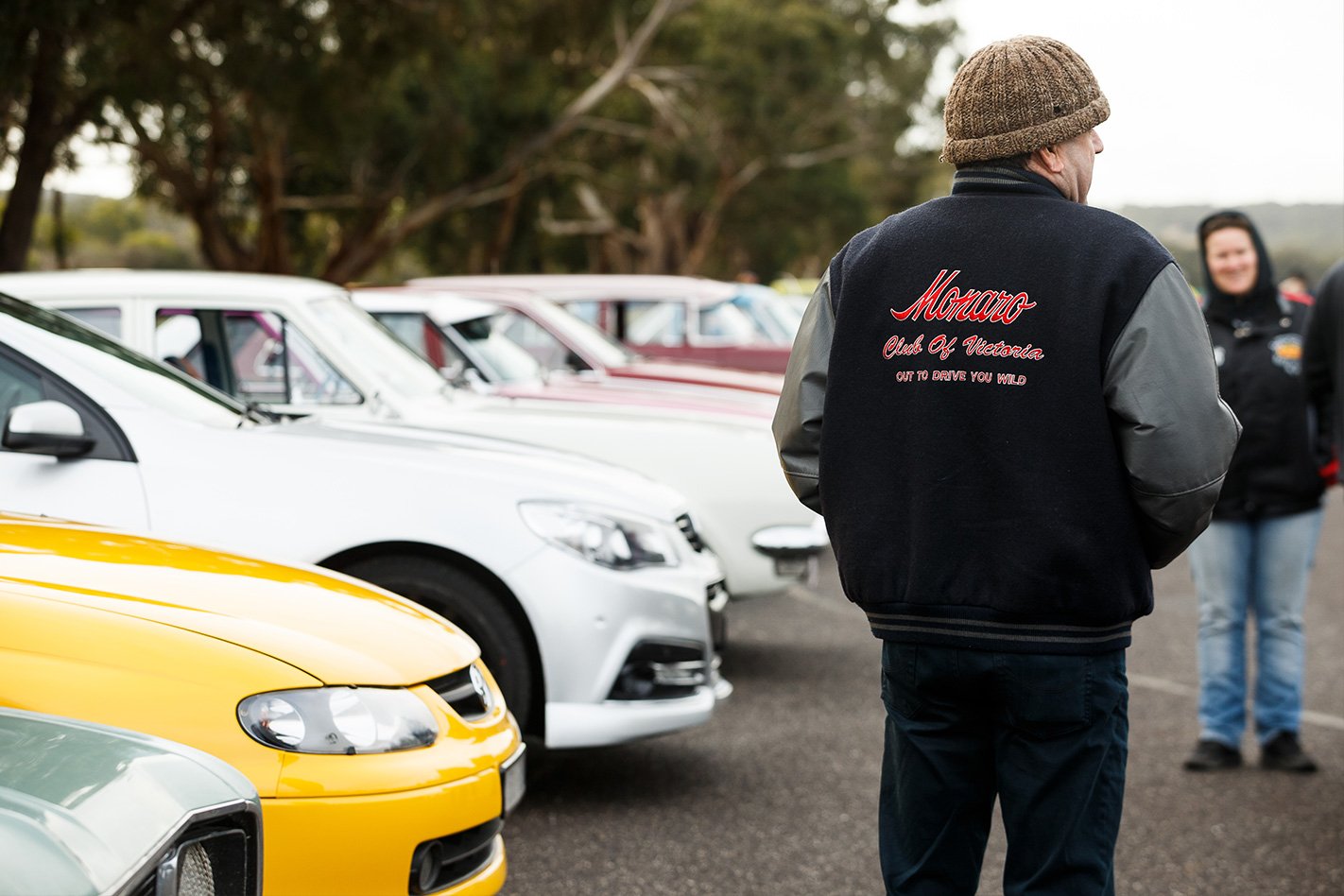
On a suitably cloudy day, more than 50 Aussie-made Holdens and their owners gathered together at the Lion’s 60-year-old Lang Lang proving ground in south-eastern Victoria.
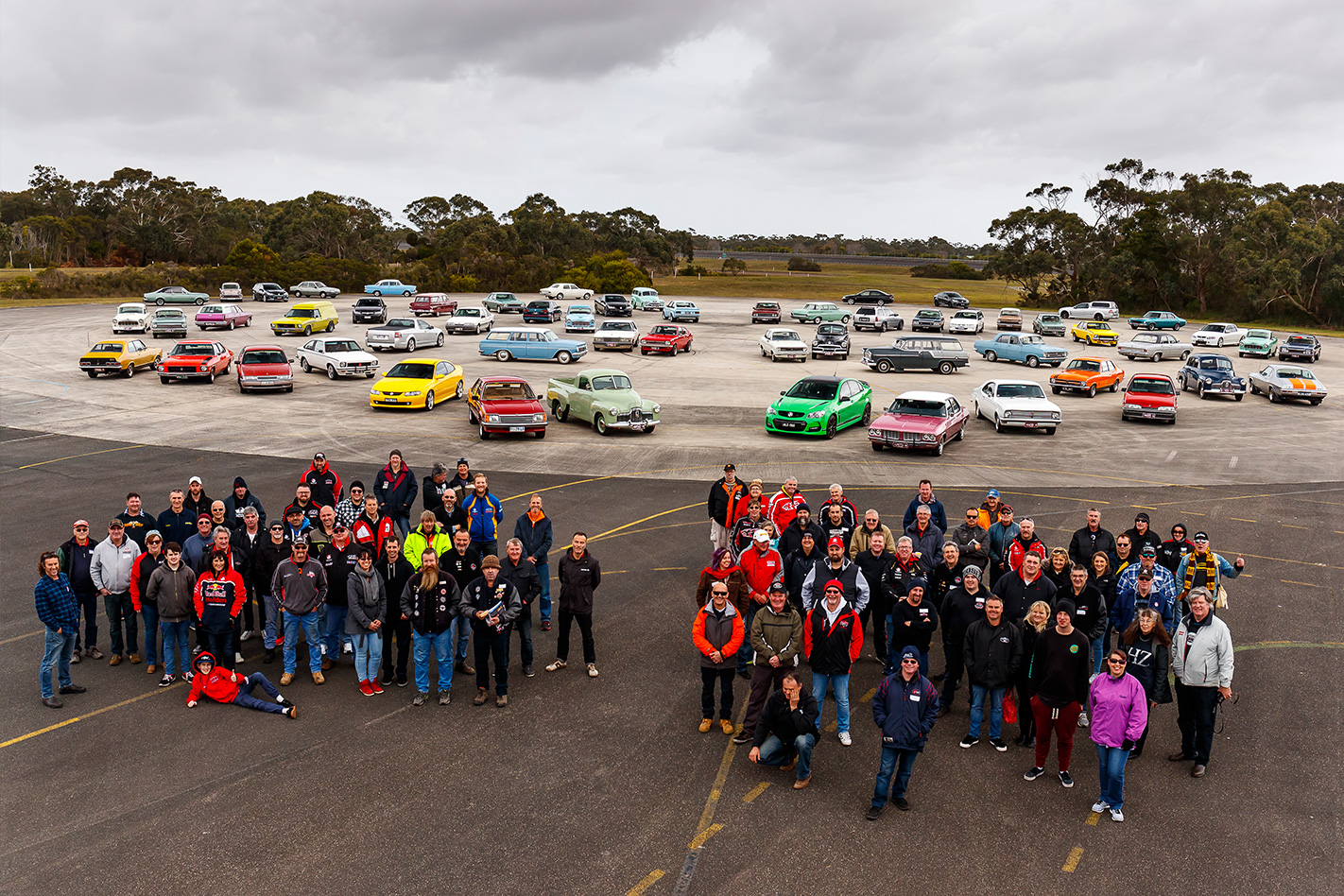
The purpose of the day was to snap one big family portrait, and document 69 years of cars made by Aussies for Aussies with their owners on hand, and to talk about what the ownership of these Aussie-made icons really means.
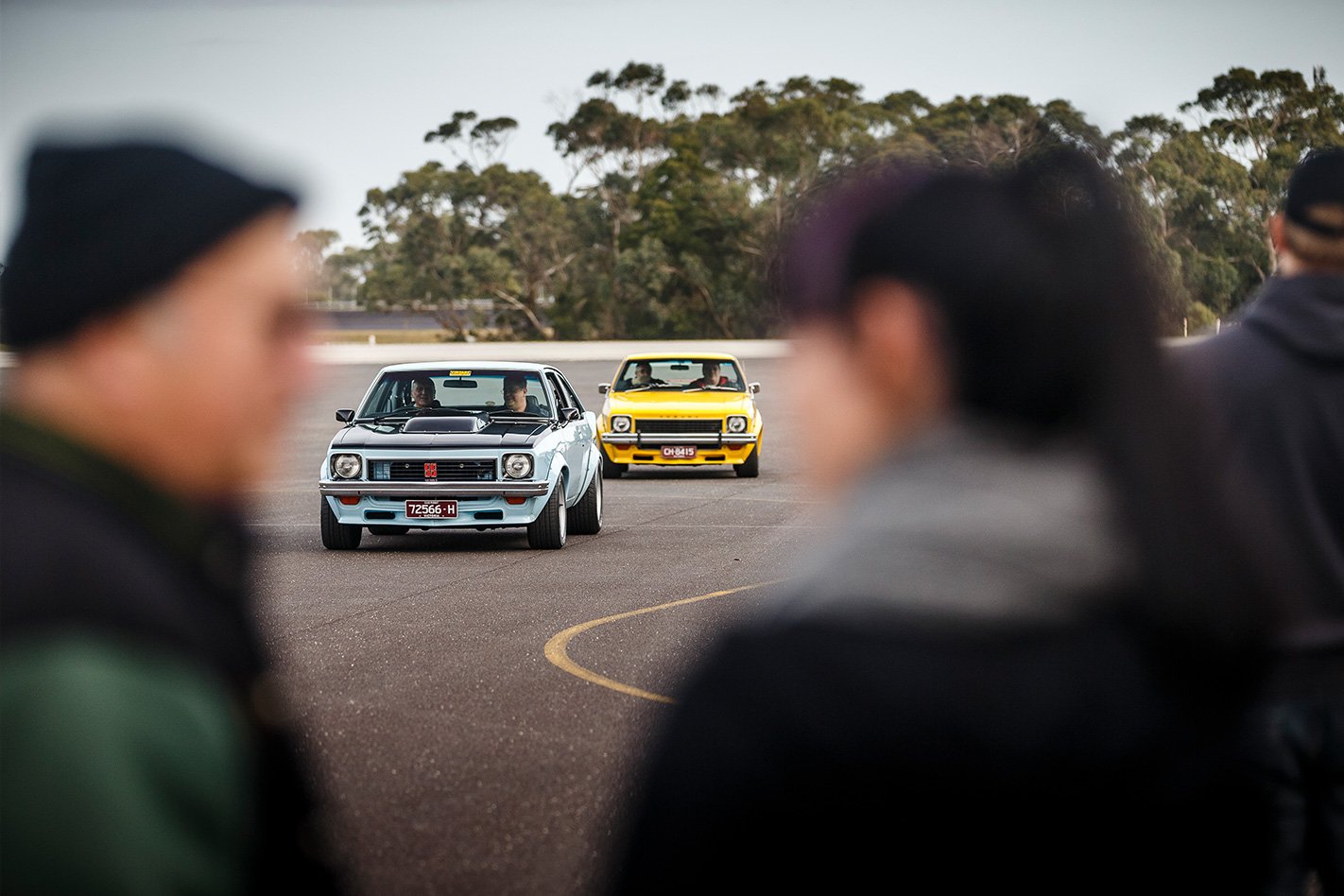
In this video, Wheels Senior Journalist Daniel Gardner talks to a few owners of key Holdens and takes the chance to drive some of the most significant vehicles back-to-back.
AFTER churning out a tally in excess of 7 million vehicles, today Holden rolled its last cars off the Elizabeth production line, signalling an end to the company’s nearly seven decades of local production.
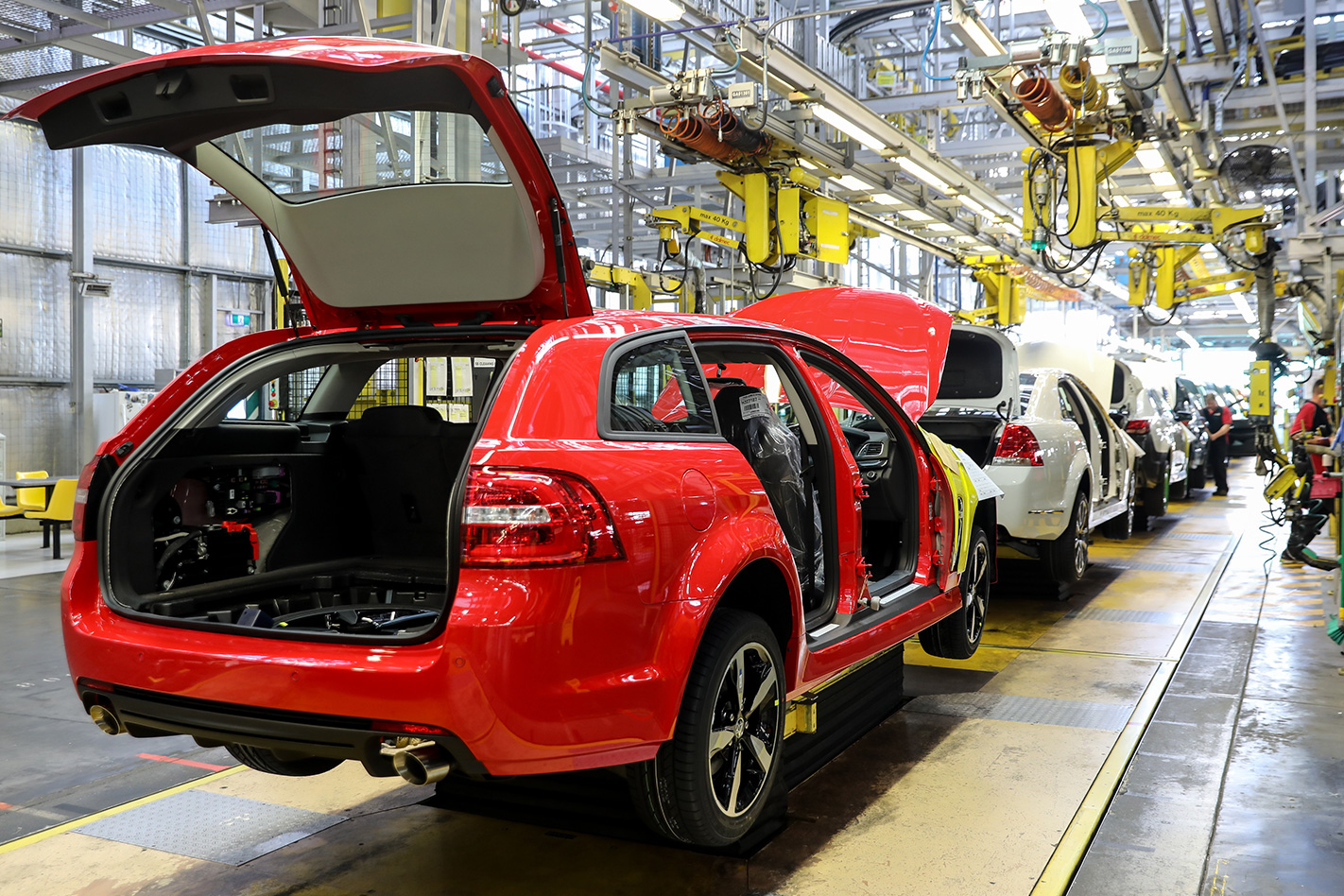
The final car was a Red Hot SS-V Redline sedan – the last Holden Commodore to be built not only with a V8 engine under the bonnet, but with a H-pattern manual gearbox as well.
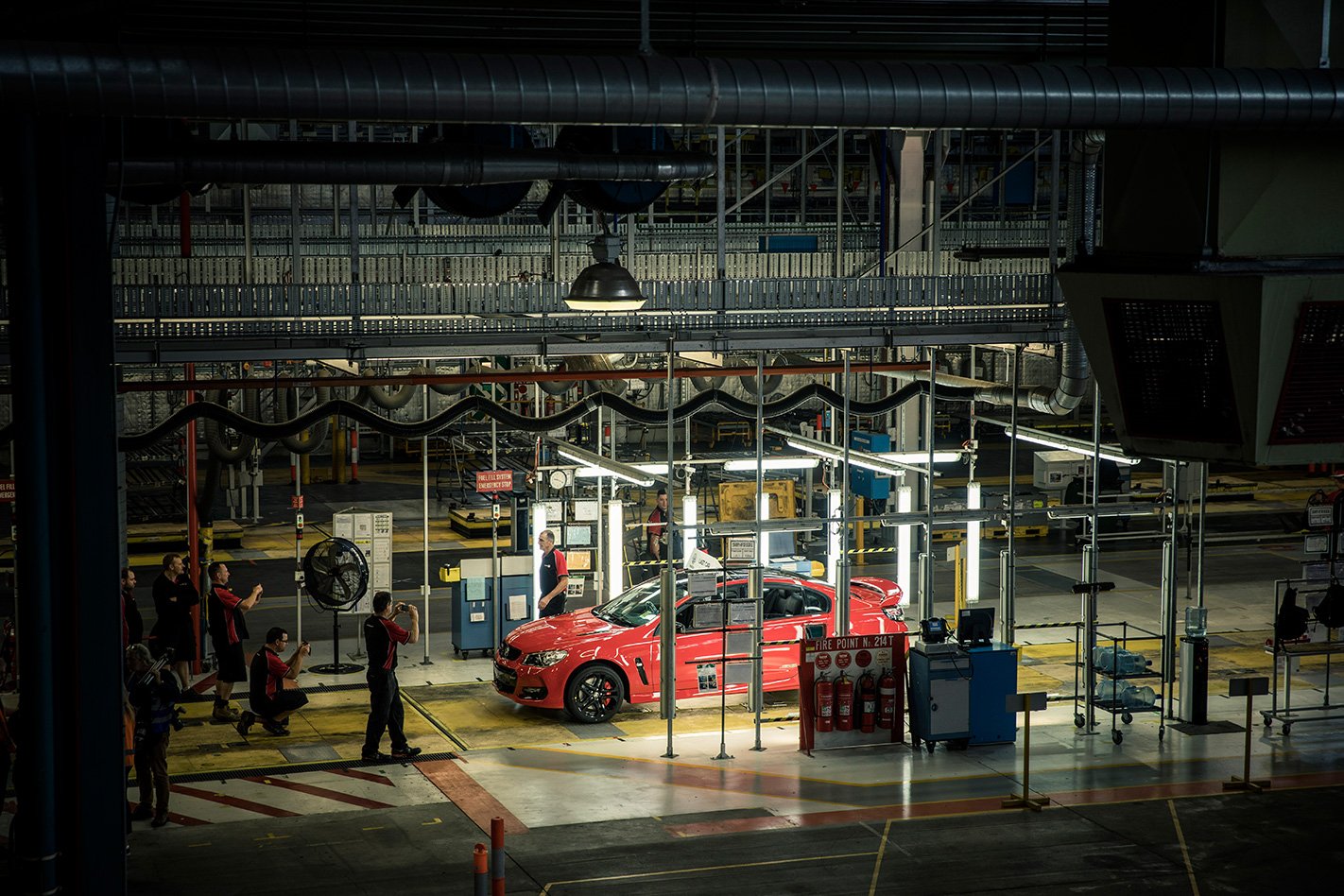
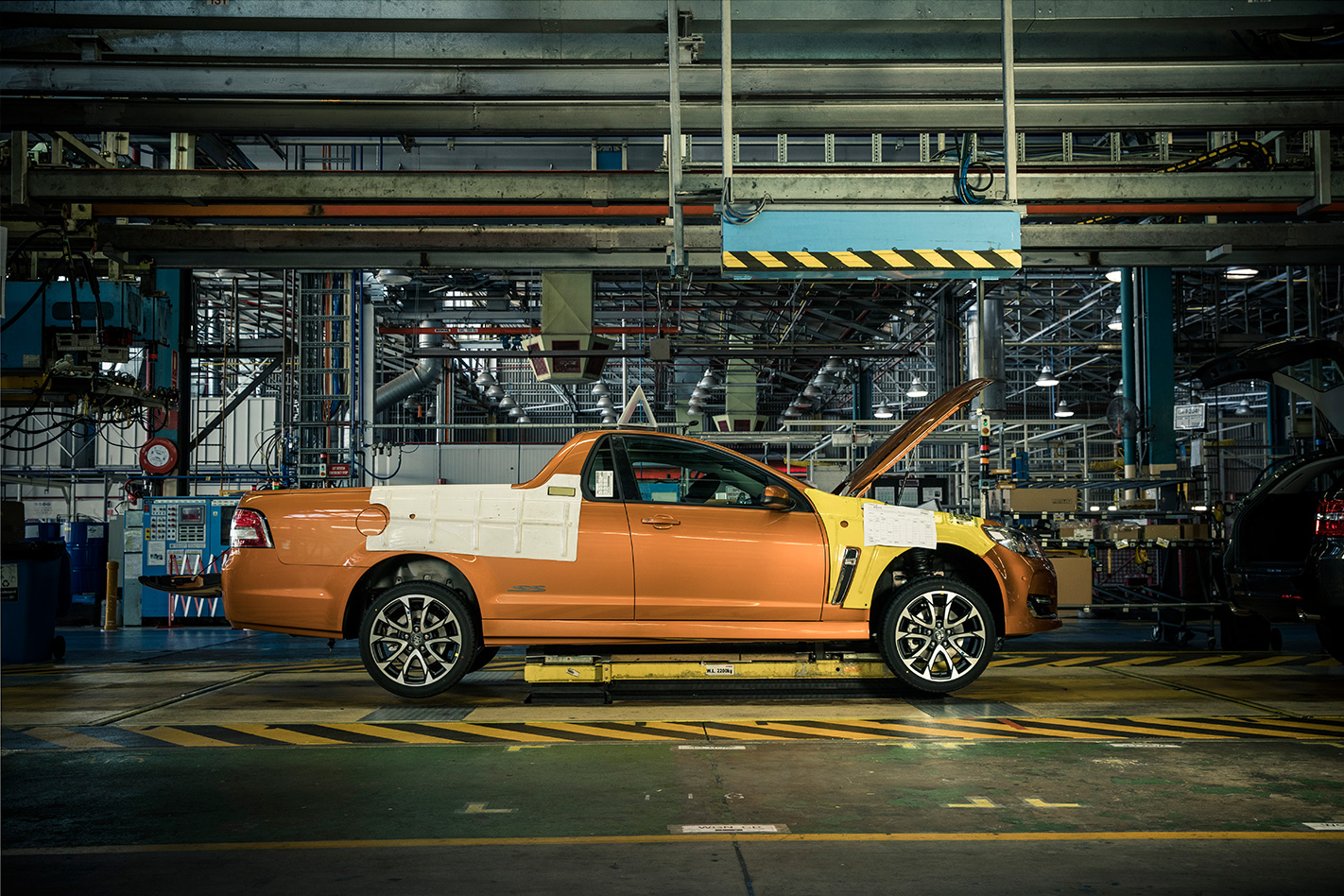
Ahead of it on the production line was a Light My Fire automatic SS Ute, a Son of a Gun grey Calais V V6 wagon, and a Switchblade metallic silver V8-powered Caprice V Sportwagon.
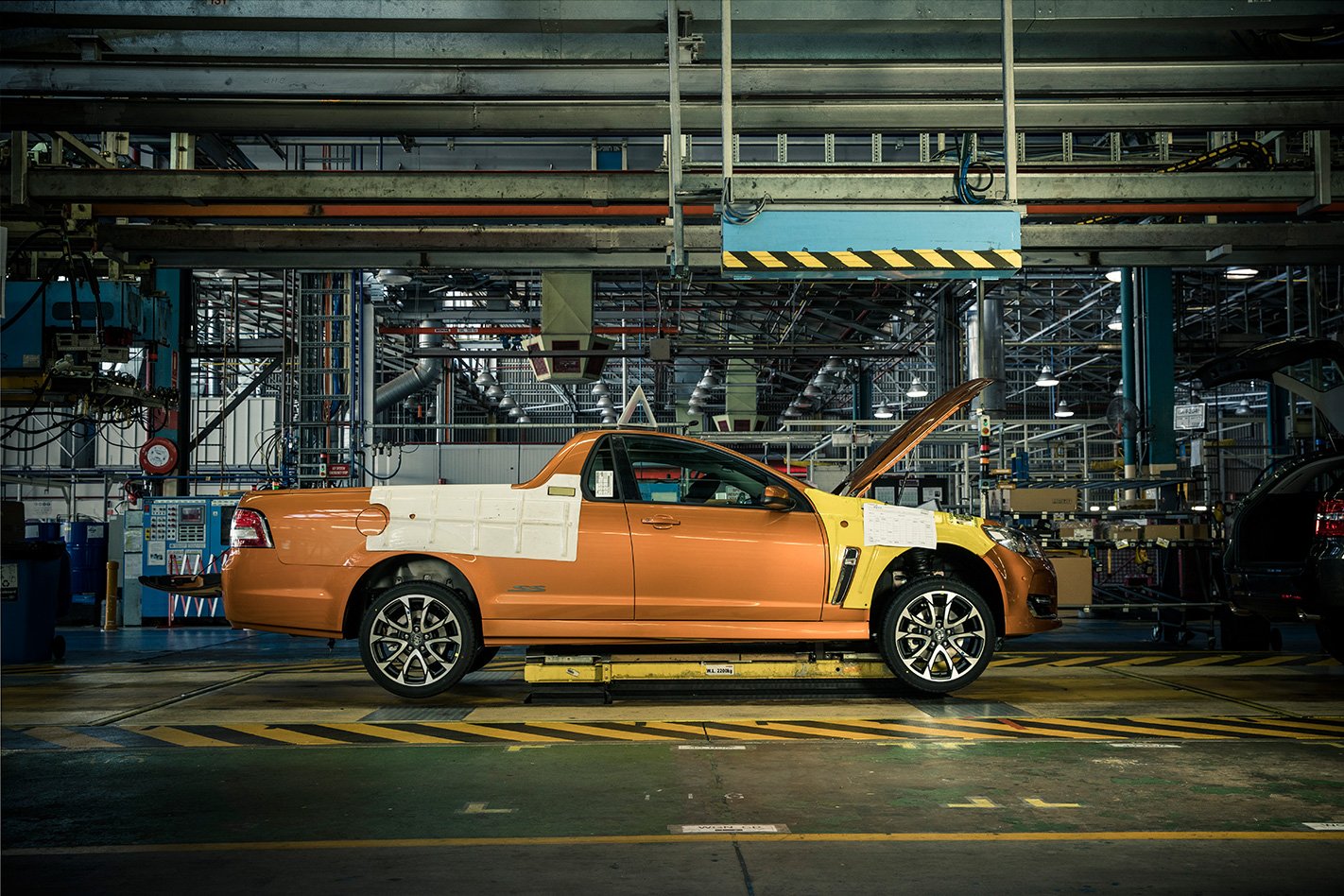
The last four cars will join Holden’s heritage collection that will one day be housed on part of the site where they were built
The first car ever built by Holden in Australia was a 48-215, which was produced in Fishermans Bend in Melbourne on November 29, 1948.
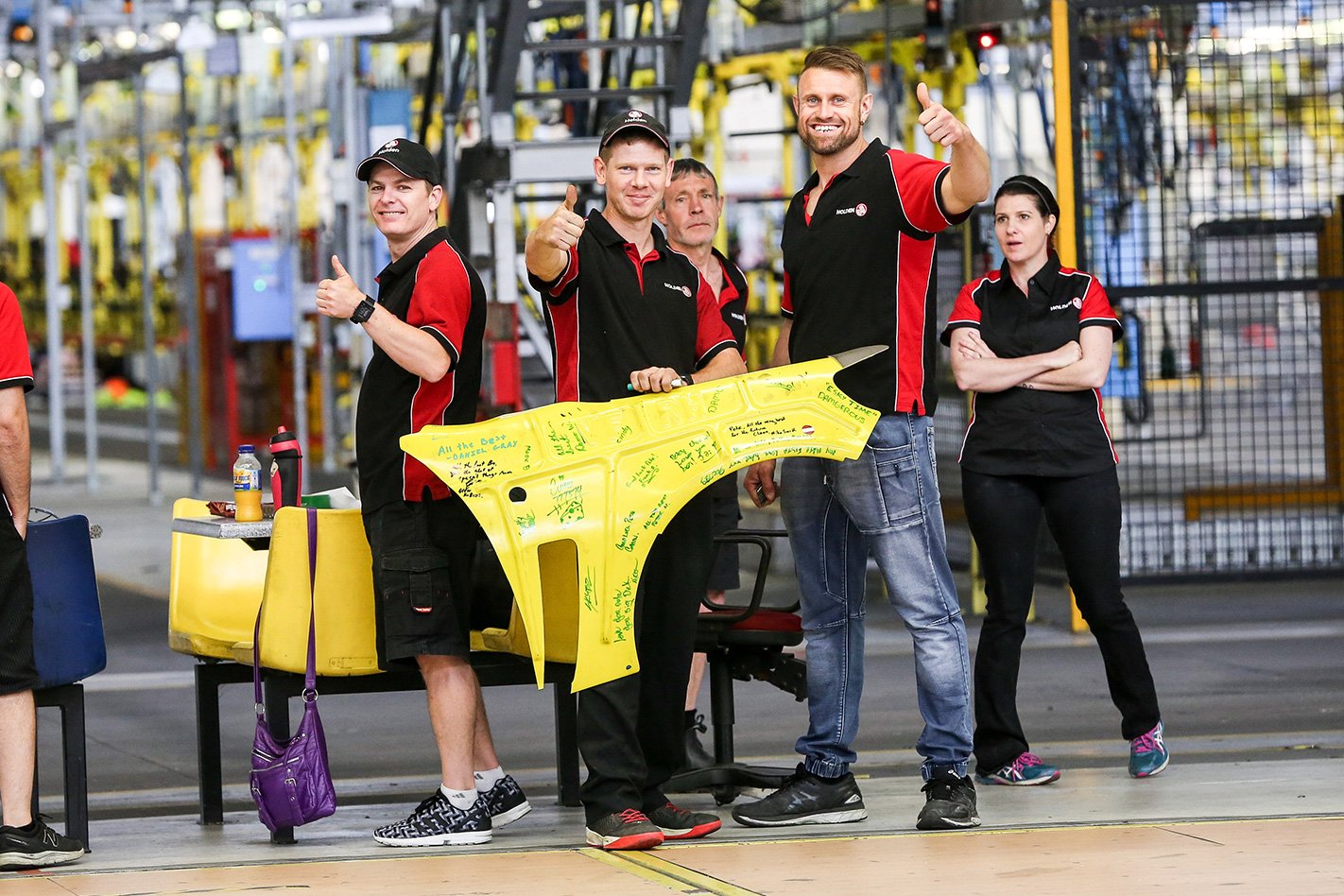
On the final day of manufacturing, 945 people were employed at the Elizabeth plant.
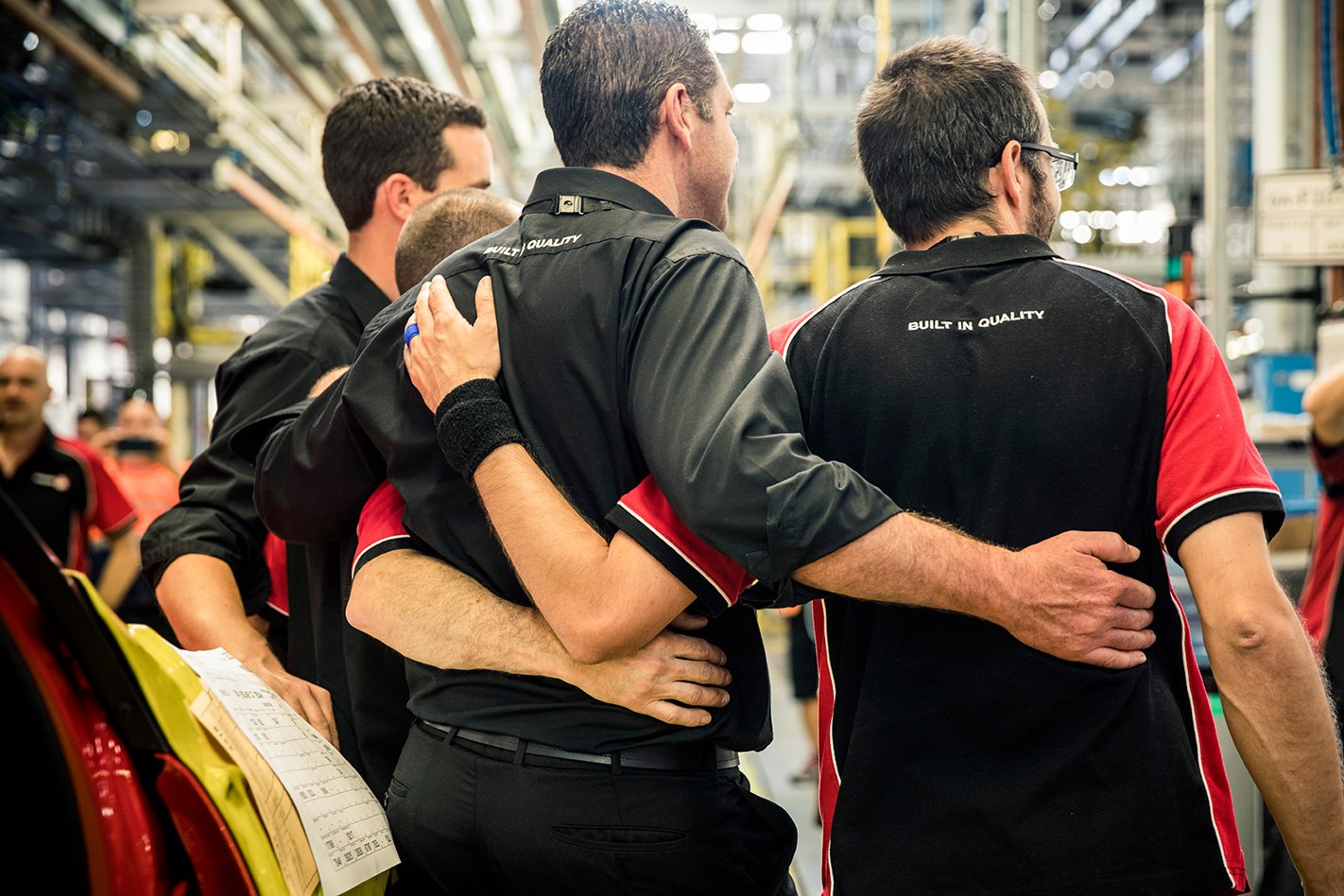
AUSTRALIA’S almost 70-year run as a car manufacturer is over. At 10.45am today, Adelaide time, the last Holden Commodore rolled off the manufacturing line.
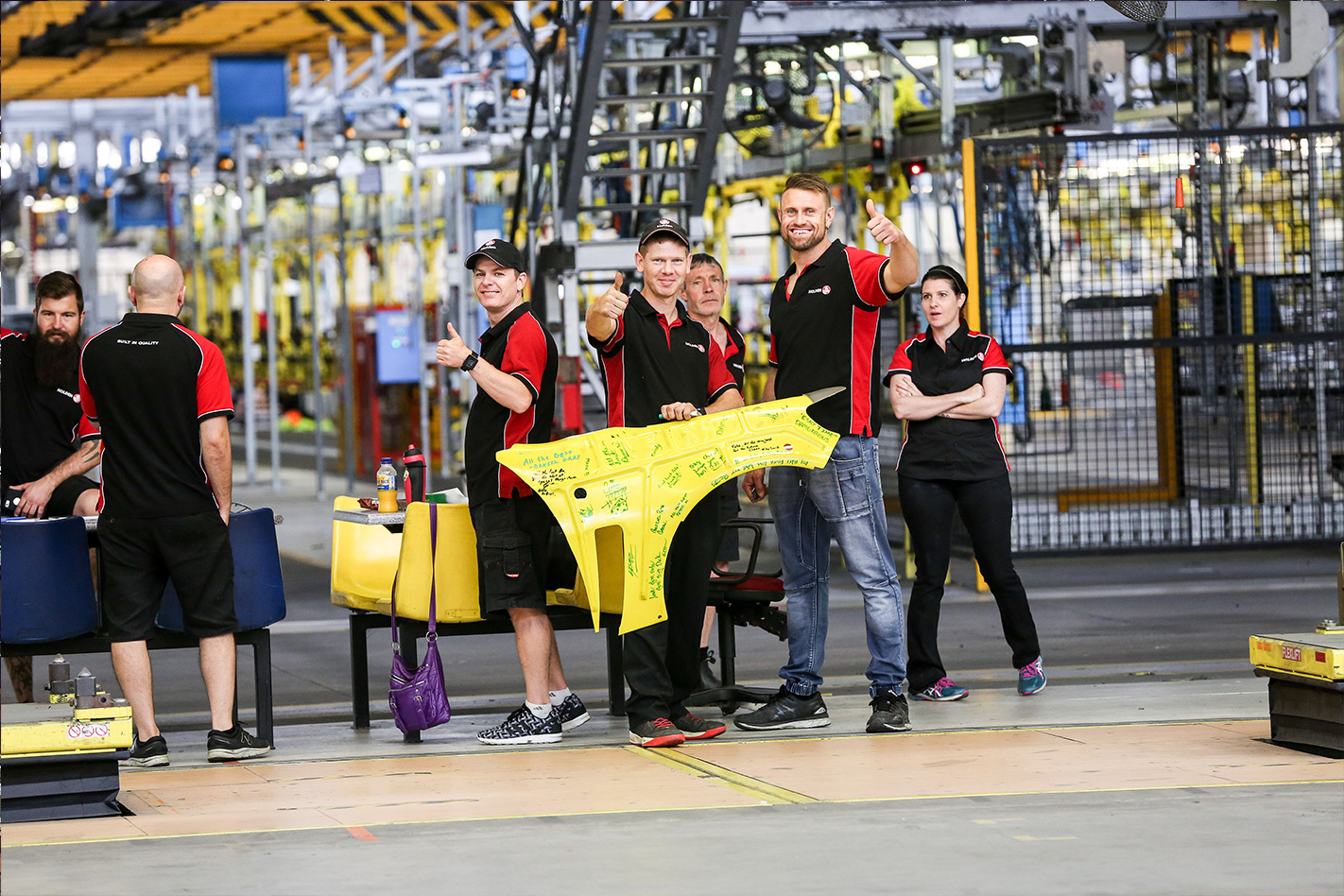
The occasion was marked in what Holden described as a private ceremony for employees, designed to “mark Holden’s proud manufacturing history and pay tribute to the generations of hard-working men and women who literally built the Holden legend”.
In all, Holden built more than 7.6 million vehicles over 69 years, starting with the 48-215 that launched to an Australian public instantly enamoured with the idea that we could produce a big, powerful and fuel-efficient family car here that was tough enough to handle everything our landscape could throw at it.
Holden, the world’s second-oldest transportation company, had almost made it to seven decades, but fell tantalisingly short after announcing three years ago – largely in response to intense government pressure – that it would follow in Ford’s footsteps and quit local manufacturing. The first Holden rolled off the line on November 27, 1948 in a sawtooth-roofed factory a few hundred metres away from where the national sales office now sits; the last one more than 1000 kilometres away on October 20, 2017.
“Today … is about paying tribute to the generations of men and women across Holden and our supply network who have given so much to our company,” managing director Mark Bernhard said in a statement. “Holden is the icon it is today only because of these passionate people. On behalf of everyone at Holden, I thank you for your service from the bottom of my heart.”
Holden executive director of manufacturing Richard Phillips said it was an honour to have worked alongside the team at Elizabeth, the site where Holden consolidated its manufacturing in 1978 with the launch of the VB Commodore.
“In the final years of production, we have been building categorically the best-quality cars to ever roll out of this plant, and our last car was our best,” he said.
“Together we achieved a string of productivity and quality awards in recent times, doing so during the closure period is testament to the skills, professionalism and dedication of the team.”
Holden’s Commodore will live on beyond today, but as a German-built front- or all-wheel-drive import sourced from a French-owned conglomerate. It mirrors the early history of the Commodore, which was itself a more hardened version of the German-designed and built Opel Rekord – the vehicle that inspired four generations of the large Aussie sedan, wagon, coupe and ute.
The loss of the Commodore’s front-engined, rear drive layout – particularly with a brawny V8 shoehorned in under the bonnet – has turned many long-time Holden fans off the brand. However, the full line importer (we can no longer call Holden a car maker) has promised it will introduce “a true V8, rear-drive sports car to Australia” as part of its showroom rationalisation.
Holden will still be a big employer after today. It will keep its national sales office in Melbourne, although at the moment it is housed in a building it no longer owns. Between it, a number of national zone offices, the Lang Lang proving ground that is helping GM improve its stable of rear-drive vehicles, and the Port Melbourne design studio and engineering division that rings with international voices, about 1000 workers will carry on the legacy of the brand.
Holden has a lot to be proud of – look overseas, and there are plenty of Aussie accents housed in GM’s global research and development centres globally. An Aussie, Mike Simcoe, holds one of the highest-regarded automotive posts globally as chief of GM design.
But the decision to quit Australia – when you add Ford, which closed this month last year and Toyota, which shuttered the first ever factory it established outside of Japan earlier this month, to the scale of its impact – will take its toll on the wider economy.
Holden has promised it will tap its parent company, General Motors, for “leadership in electric vehicles and autonomous driving technology”, and will continue to tune and test vehicles for Australian tastes and conditions – one of the driving forces behind GM’s decision to retain the Lang Lang proving ground.
The last four car built today will join Holden’s heritage collection that will one day be housed on part of the site where they were built. The last off the line was a Red Hot SS V Redline V8 manual, the last of 7,687,675 built. Before it came the last of the other body shapes: a metallic silver Switchblade Caprice V V8 automatic (the last of 7,687,672 built); a grey Son of a Gun Calais V V6 automatic wagon (the last of 7,687,673 built and the only one here to feature an Aussie-cast and assembled engine); and an orange Light My Fire SS Ute V8 automatic ute.
Holden’s advertising campaign for the original VB Commodore used the catchline “This is it”. Sadly now, for Australian manufacturing, that was that.
