
“If this car could be charged as fast as I refuel my own car, I’d have one tomorrow.” It’s a familiar refrain from many who have sampled electric cars, love the quietness, the acceleration, the seemingly limitless torque and the surface-skimming centre of gravity.
Porsche might not have quite attained that just yet, but its Cayman e-volution demonstrator and 800-volt charging system is a massive leap forward in cutting the wait for EVs to charge.
We’ve seen plans for the 800-volt system for a couple of years now. It’s being developed hand-in-hand with the Mission E supercar, due to launch in production form in 2019, and the big sell here is that it claims to be able to charge that car to 80 percent capacity in a mere 15 minutes.
That’s about the time I take to fill my car, get diverted by the servo’s chocolate selection and then cycle through four attempts to remember the PIN on my fuel card.
Based on the previous-gen 981 Cayman, the e-volution features what Porsche rather awkwardly dubs ‘Turbo Charging’. It’s has a range of around 200km and can knock over 100km/h in 3.3sec, that’s more than a second quicker than the current 718 Cayman S. It’s helped by all-wheel drive and the 38kWh lithium-ion battery pack that propels it to a top speed of 192km/h.
The Turbo Charging accumulator fast-charging system charges at a capacity of up to 320kW per vehicle and is set to be rolled out across Europe by 2020 in partnership with Audi, BMW, Daimler and Ford. Porsche claims it’s designed to be used as a supplement to high-power fast charging networks with medium voltage connections. To put that 320kW figure into perspective, Tesla’s juiciest superchargers are good for around 120kW.
| Mercedes-Benz and Ford to introduce wireless car charging this year
The power wars are already kicking off in a battle to develop the most potent chargers. Porsche’s 320kW Turbo Charging figure is equalled by Volkswagen’s Electrify America scheme and pipped by the 400kW ChargePoint Express Plus tech. The champ? That’d be Geneva’s bus chargers that crank out 600kW, topping up the batteries in 15 seconds with enough juice to get them to the next stop.
DESIGNING Chevrolet’s first-ever mid-engined Corvette must be hungry work.
It’s probably why the Zora – the low-slung Ford GT fighter wears the name of the engineer who shaped it, Zora Arkus-Duntov – was sprung overnight visiting a Michigan-based McDonald’s drive-through restaurant.Still heavily disguised, but failing to hide those distinctive supersized cab-forward, stretched rear proportions that hint at a mid-mounted engine bay, the Zora is believed to be built on top of an eighth-generation Corvette chassis that includes plenty of lightweight aluminium spaceframe wrapped in a carbonfibre composite shell.
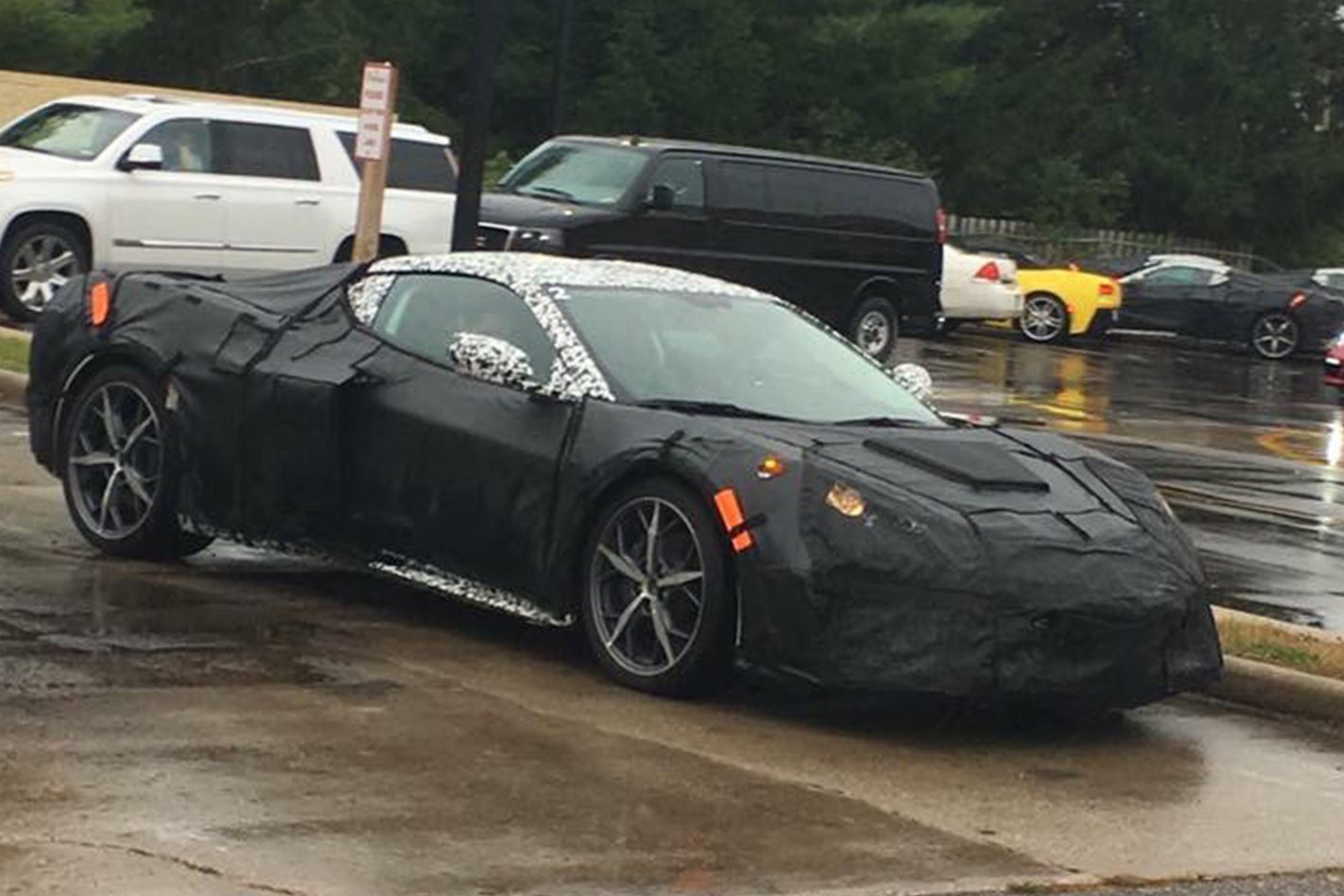
There’s also the possibility the Zora will fit an atmo V8 in the back, making the burger run of the future just a little more deep-throated and vocal.The Corvette’s move to a mid-mounted engine is believed to be down to the current C7’s design limitations – apparently shoehorning a large, powerful V8 over the front wheels and sending a tsunami of torque to largely unloaded rears doesn’t do much for step-off acceleration, where the energy is more likely to be dissipated as clouds of tyre smoke rather than tenths of seconds off the 0-100km/h sprint.
Moving weight rearward tips the balance of performance towards straight-line speed. Best of all, one day it’s going to be right at home in Australia’s Hungry Jack’s drive-through, with the C8 believed to be package-protected for right-hand drive development.
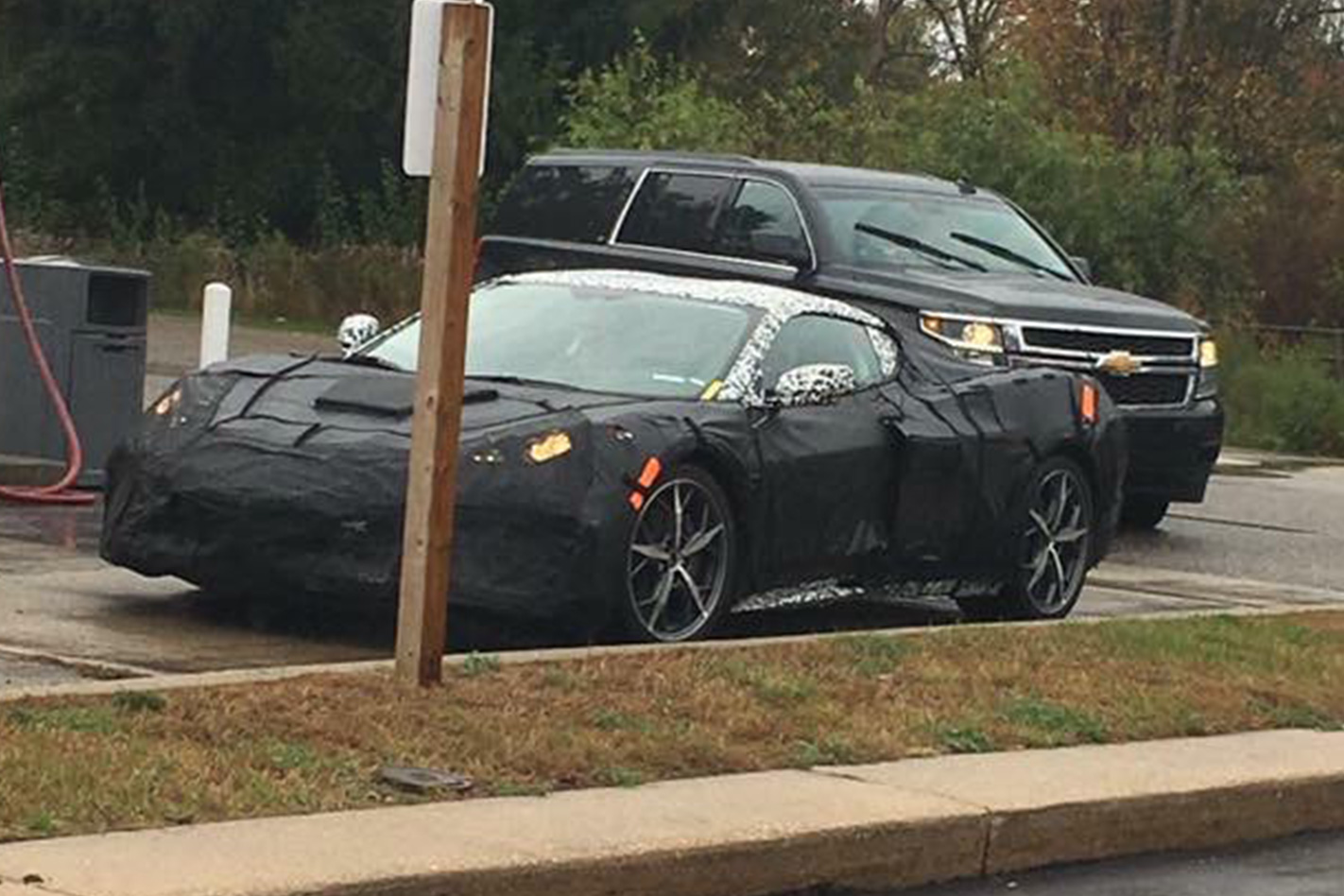
The next-gen Chevrolet Corvette already has a deep, and distinctly Aussie connection, with an early mule of the supercar wrapped inside a heavily modified Holden Ute skin early in the supercar’s development program.Add to that an 18-month ban on visits to GM’s Bowling Green assembly line where the current C7-generation Corvette is made, and everything adds up to a 2018 US arrival for the circa $150,000 supercar, and a 2019 arrival for us.Expect our first up-close look at the Chevrolet C8 Corvette at January’s Detroit Motor Show, where the pride of the US car makers often see the light of day. After that, it’s going to be a long wait for us that will keen the appetite …
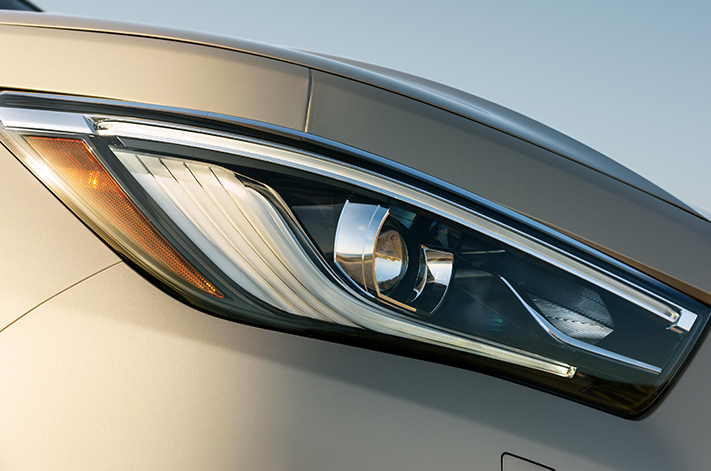
Infiniti is primed to launch its next generation QX80 luxury SUV in Dubai next month and, judging by teaser pics released today, it’s set to be a bold improvement over its ungainly predecessor.
The new QX80 will be a slightly toned down version of the QX80 Monograph concept revealed at the New York Motor Show, which featured a facelift that raised and narrowed the current QX80’s low-set droopy headlights so they led to a larger one-piece ‘double arch’ grille that’s also been reshaped to match recent models such as the Q60.
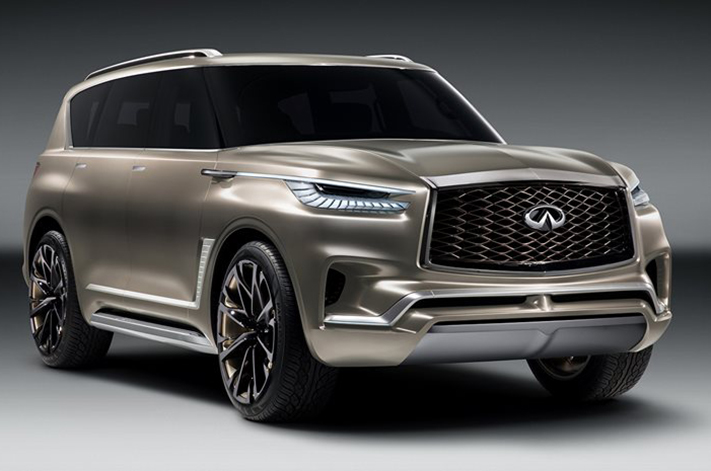
From this first look at QX80 we can see that it shares the Monograph concept’s deep cheek vents in the lower corners of the front bumper, but with the addition of an LED light strip to enhance the look.
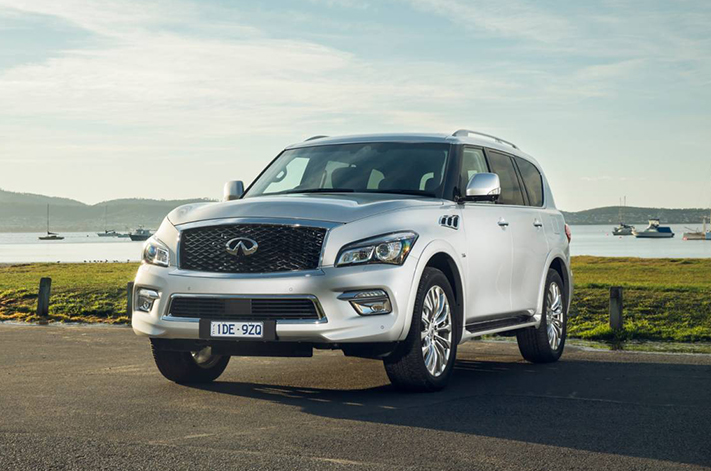
The teaser pics don’t reveal too much more of the exterior, but expect cleaner lines and less of the bling that did nothing to make the current QX80 (pictured below) look more elegant than the Nissan Patrol on which it’s based.
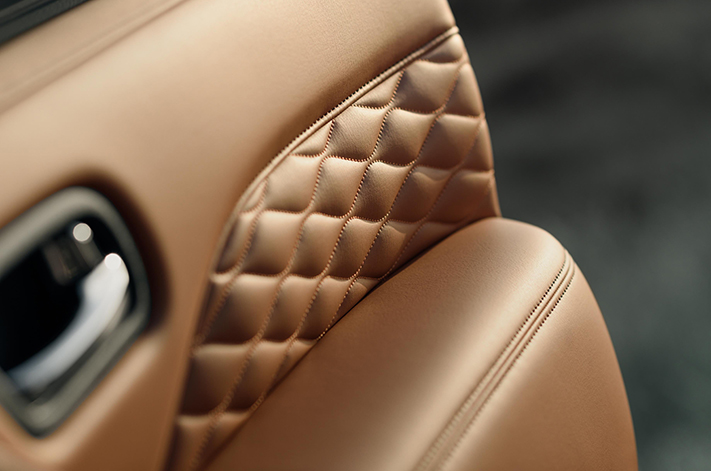
Inside, Infiniti promises a more luxurious cabin with handcrafted, quilted leather trim.
Production QX80s will share underpinnings and components with large SUVs from the Nissan, Renault and Mitsubishi alliance including the Nissan Patrol and Mitsubishi Pajero.
No details about powertrains are available as yet, though there’s likely to be choices beyond the Patrol’s big 5.6-litre V8, including a hybrid version.
The Infiniti QX80 will be revealed on November 14 at the Dubai International Motor Show.
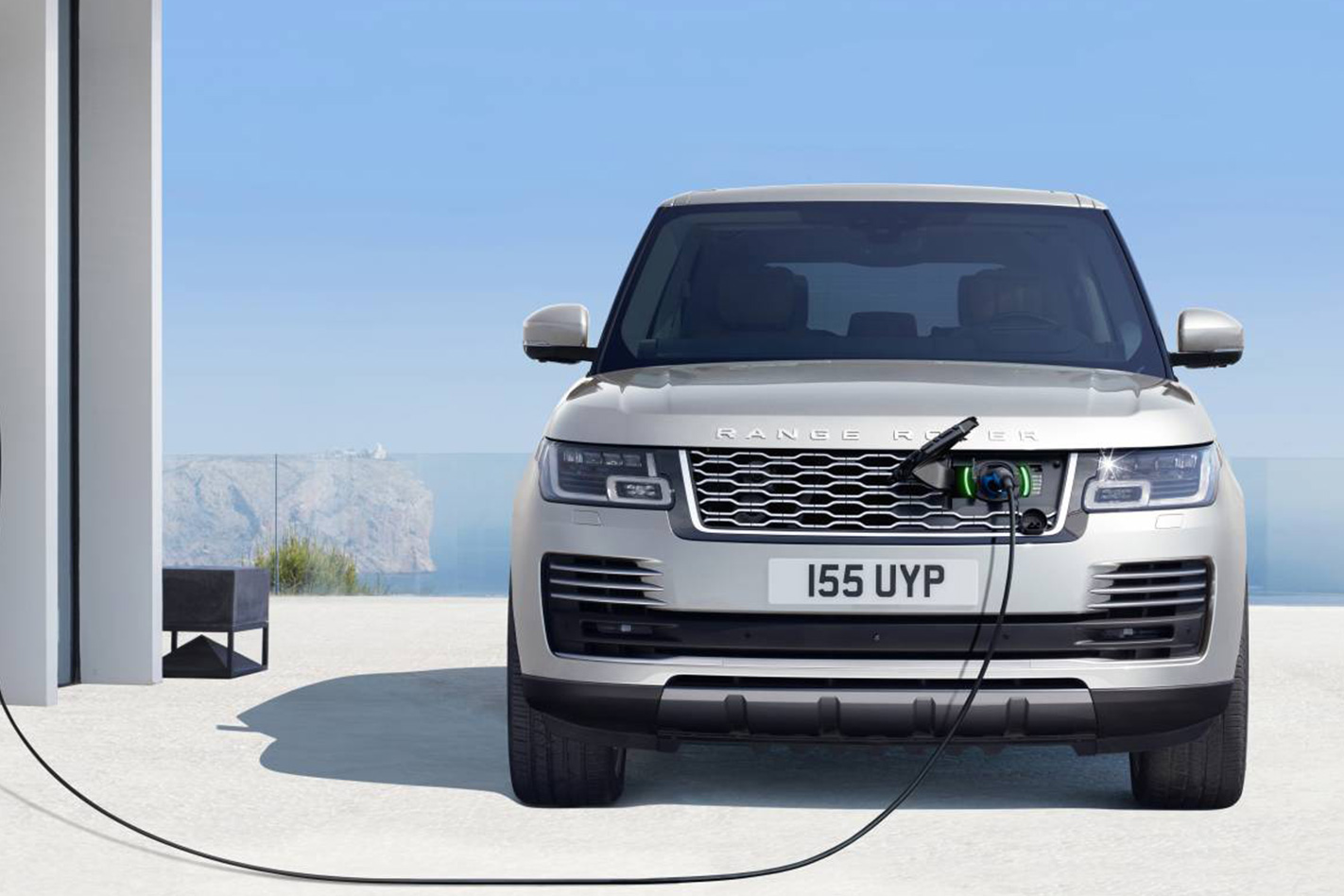
Alongside the updated 2018 Range Rover line up for Australia, a new addition will arrive in the form of the 297kW/640Nm Range Rover P400e plug-in hybrid.
With a 221kW 2.0-litre four-cylinder Ingenium petrol engine with a 85kW electric motor, the P400e has a claimed 0-100km/h time of 6.8 seconds.
Jaguar Land Rover Australia boss Matthew Wiesner says the plug-in hybrid will still feel like a traditional Range Rover to those who are familiar with the previous models.
“The new PHEV powertrain isn’t simply a no-compromise solution – it builds on the traditions of our flagship SUV and delivers heightened refinement and comfort with impressive performance and efficiency.”
But for those looking for something with a bit more go, the 2018 Range Rover SVAutobiography Dynamic now has 416kW to offer, with a claimed 0-100km/h dash of 5.4 seconds.
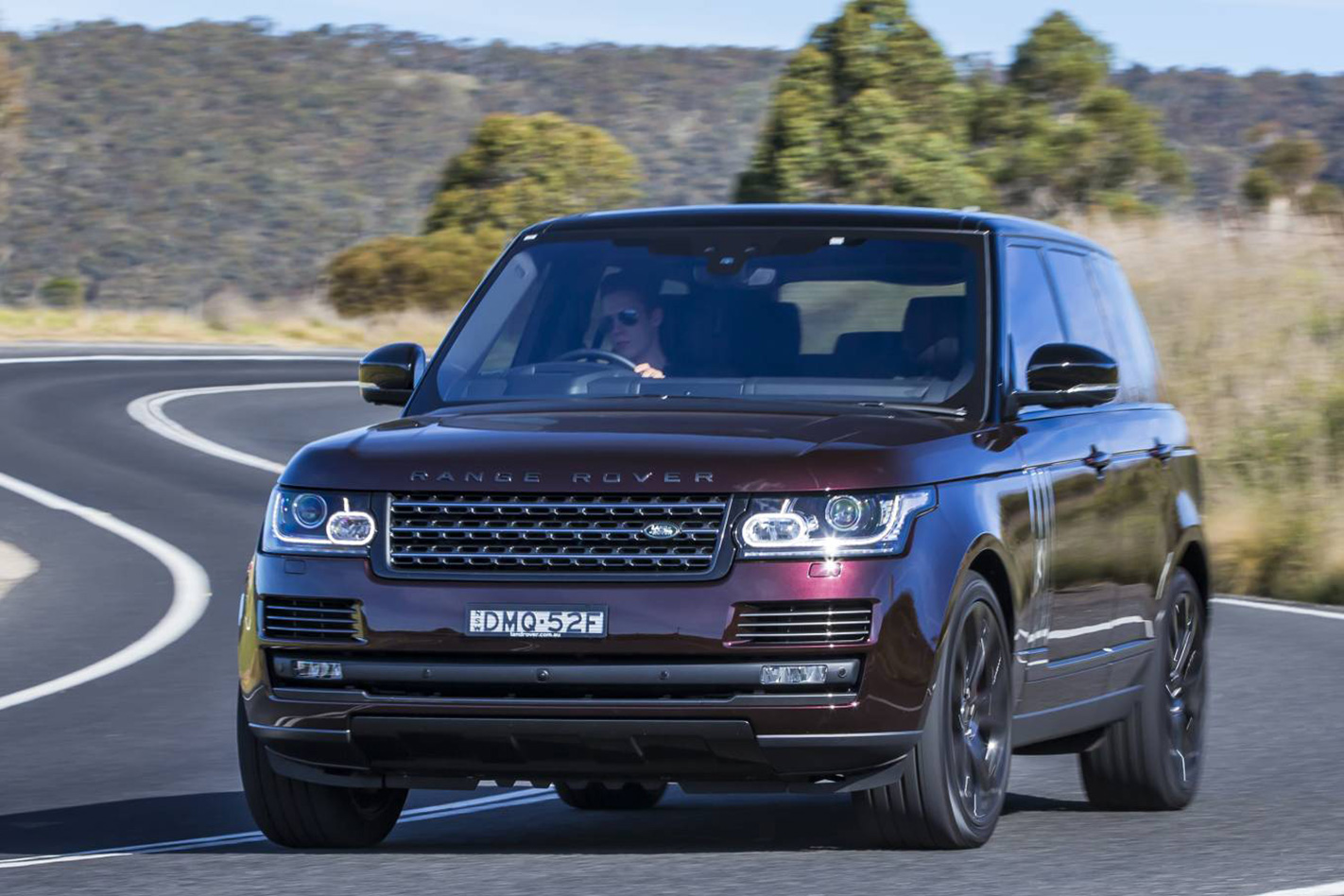
As an SUV, one of the more important aspects of the Range Rover is comfort and luxury, which the updated models seem to have in large supply.
New 24-way adjustable seats now have softer foam and are wider, plus score heated armrests on top of the regular heating. They’re also programmed with 25 massage settings.
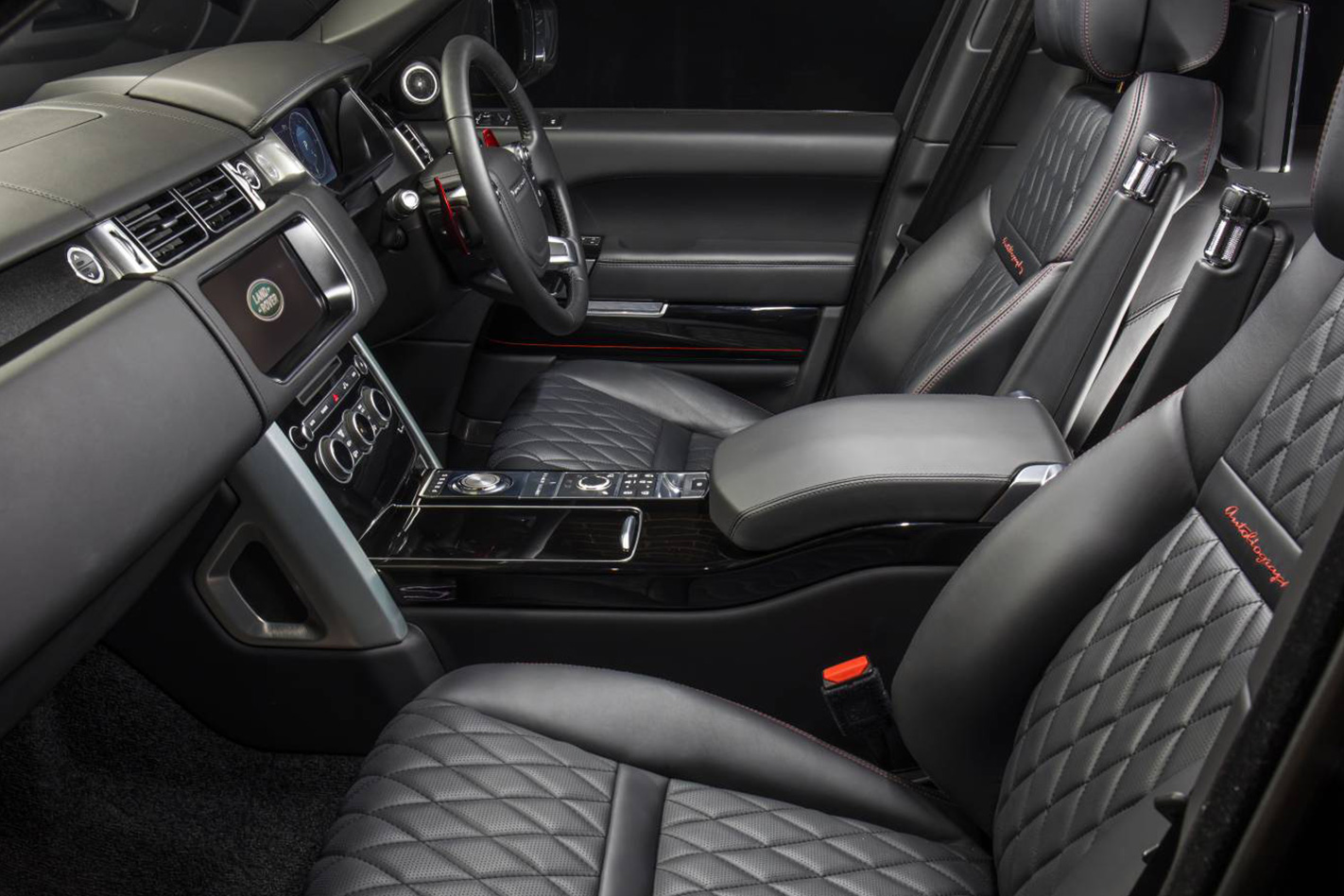
The updated Range Rover is available to order now, with prices starting from $190,000 plus on-roads.
LIKE Conan the Barbarian, the Commodore died three times: Once when it was announced back in 2013 that Holden was going to cease manufacturing, once early in 2017 when they put a firm date on it; and most cruelly of all, now.
Sure, the Commodore nameplate will live on, but it’s just not the same, in exactly the same way that The Commodores may still have the same name, but without Lionel Richie they are, at most, just two times a lady.
The 2018 ZB Commodore may well be a very good car, but no matter how closely you sniff the upholstery, you won’t be able to detect the phantom traces of meat pies from the Adelaide Oval kiosk. Although I do take some comfort knowing the ZB will be assembled in Russellsheim – if you had to pick one place in Germany to make Commodores, it would be the one named after some bloke called Russell.
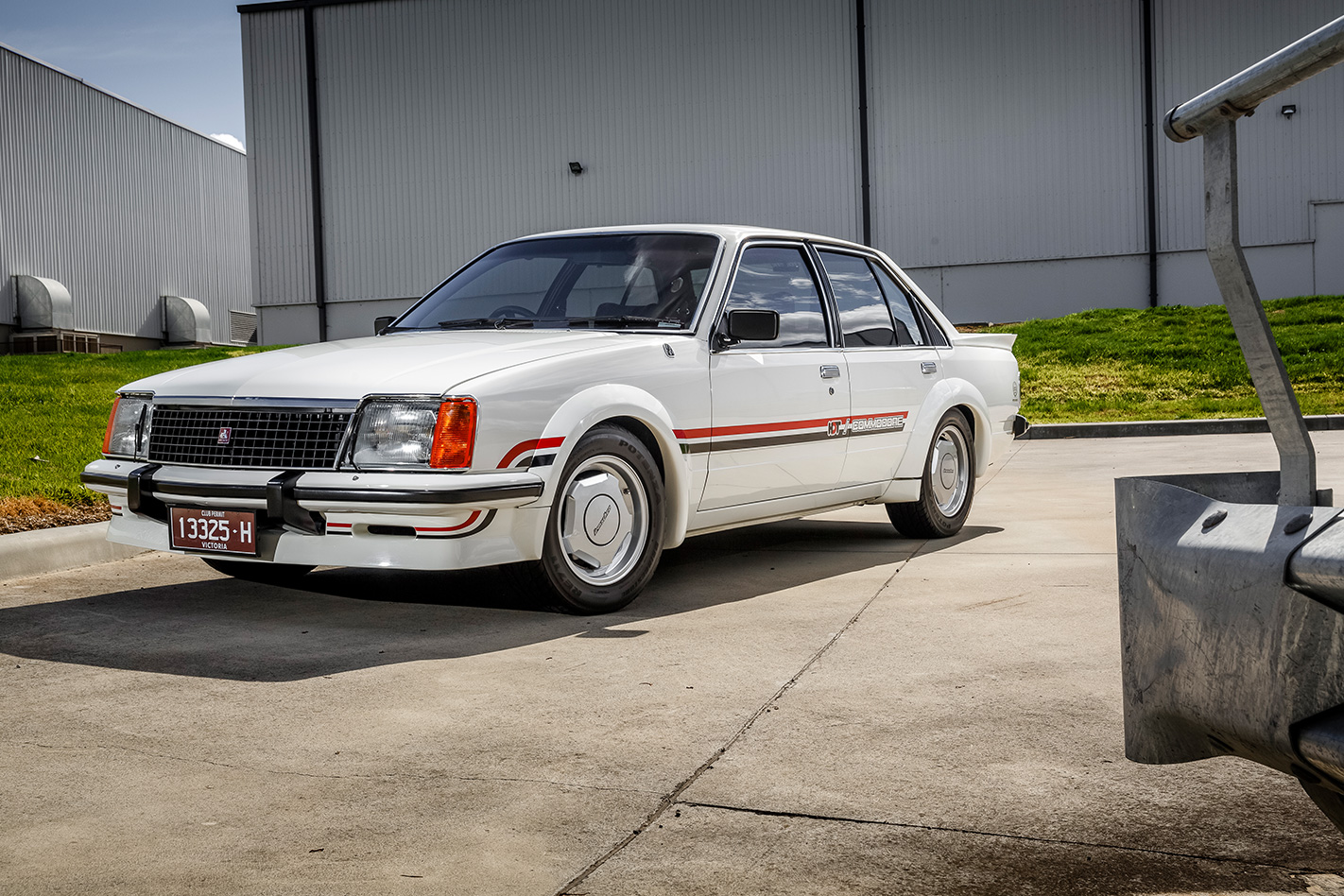
And then, suddenly, it turned out we couldn’t – not without government assistance – and so a piece of our identity died alongside the chance to buy a ute and haul 1200 litres of air around at 180km/h.
And so here we are, dearly beloved, gathered today to pay tribute to the Commodore, as the tools fall silent at the Elizabeth plant. (Oh, and the Camry plant in Altona too. But that one has made less of an impact on the national psyche. The death of the Camry is like the chauffeur who died alongside Princess Diana – just as tragic, really, but Elton John didn’t write a song about it.)
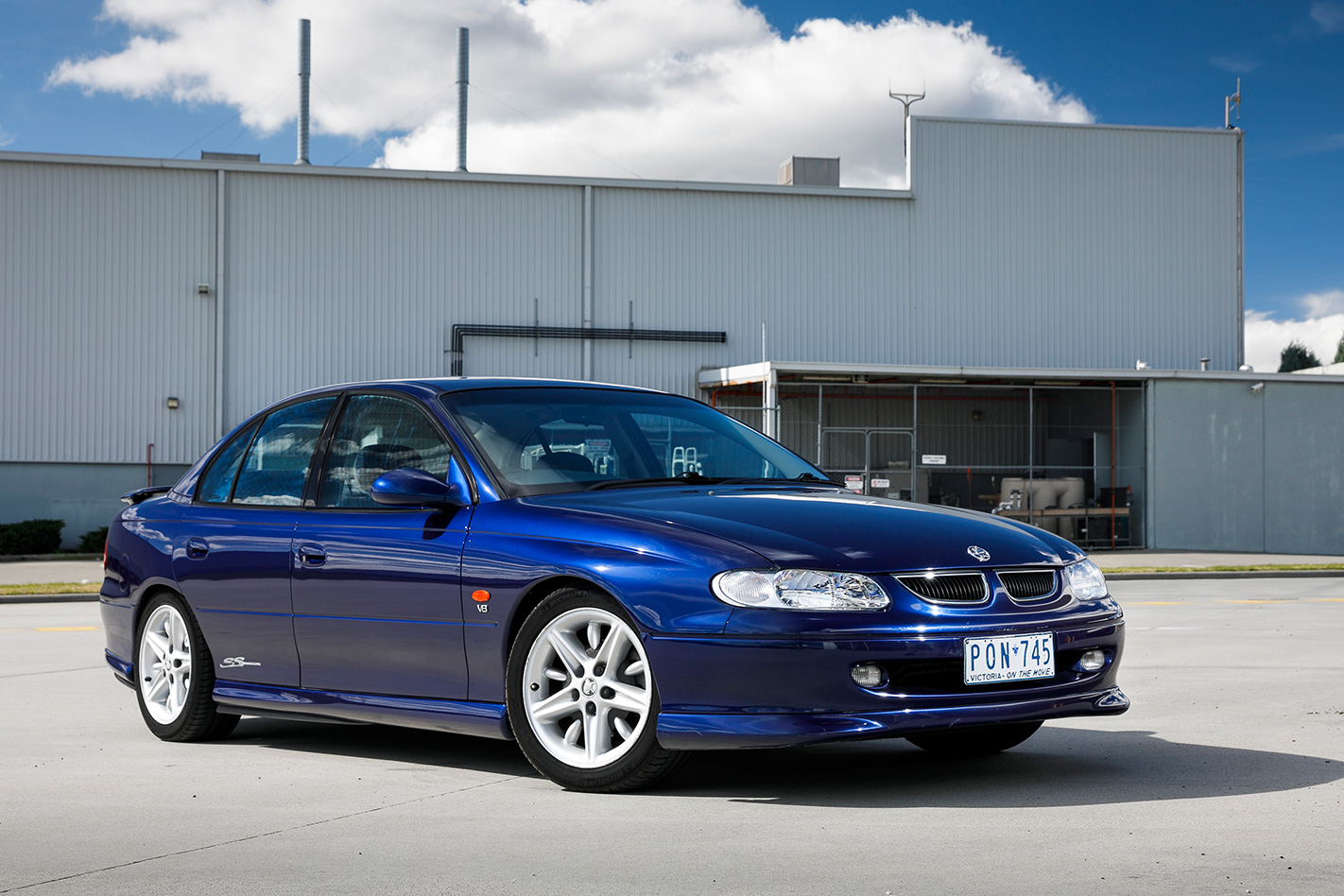
In reality, it should be a lot more like a rowdy New York Irish wake, where everyone gets drunk and laughs until they spit black-and-tan out their noses retelling the story about how the dear departed lost his pants and had to run six blocks home wrapped in paper towels.
I’ll always think of Melbourne’s Commodore design labs like Wonka’s chocolate factory, a wondrous dream-forge powered by giggling enthusiasm and rivers of obnoxious Spitfire Green paint. I’ll always remember the Commodore, not by its sales figures or its P&L spreadsheets, but by the cheek-cramping grin it could give you firing up an LS3 V8 on a cold morning, or by the date-tightening surge it delivered when you kicked it in the ribs.
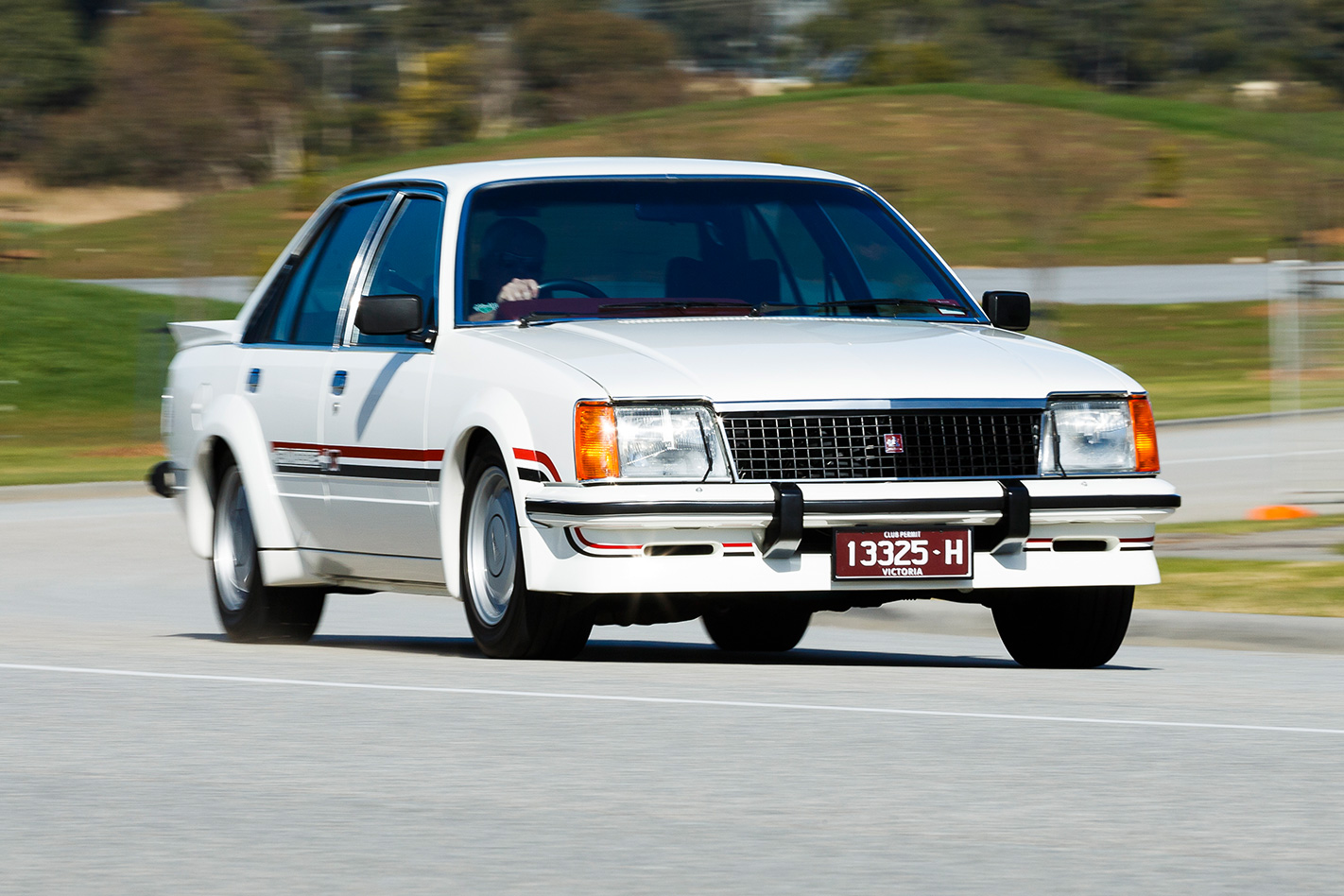
Let’s remember the locally built Commodore the way it should be remembered: Not how it went out, but how it lived, tearing up the Mountain with Brocky’s mullet flowing majestically behind, or blowing plumes of tyre smoke to celebrate generations of Aussies getting their P-plates and their first used car. The Commodore is dead. Long live the Commodore. Oh, and the Camry, I suppose.
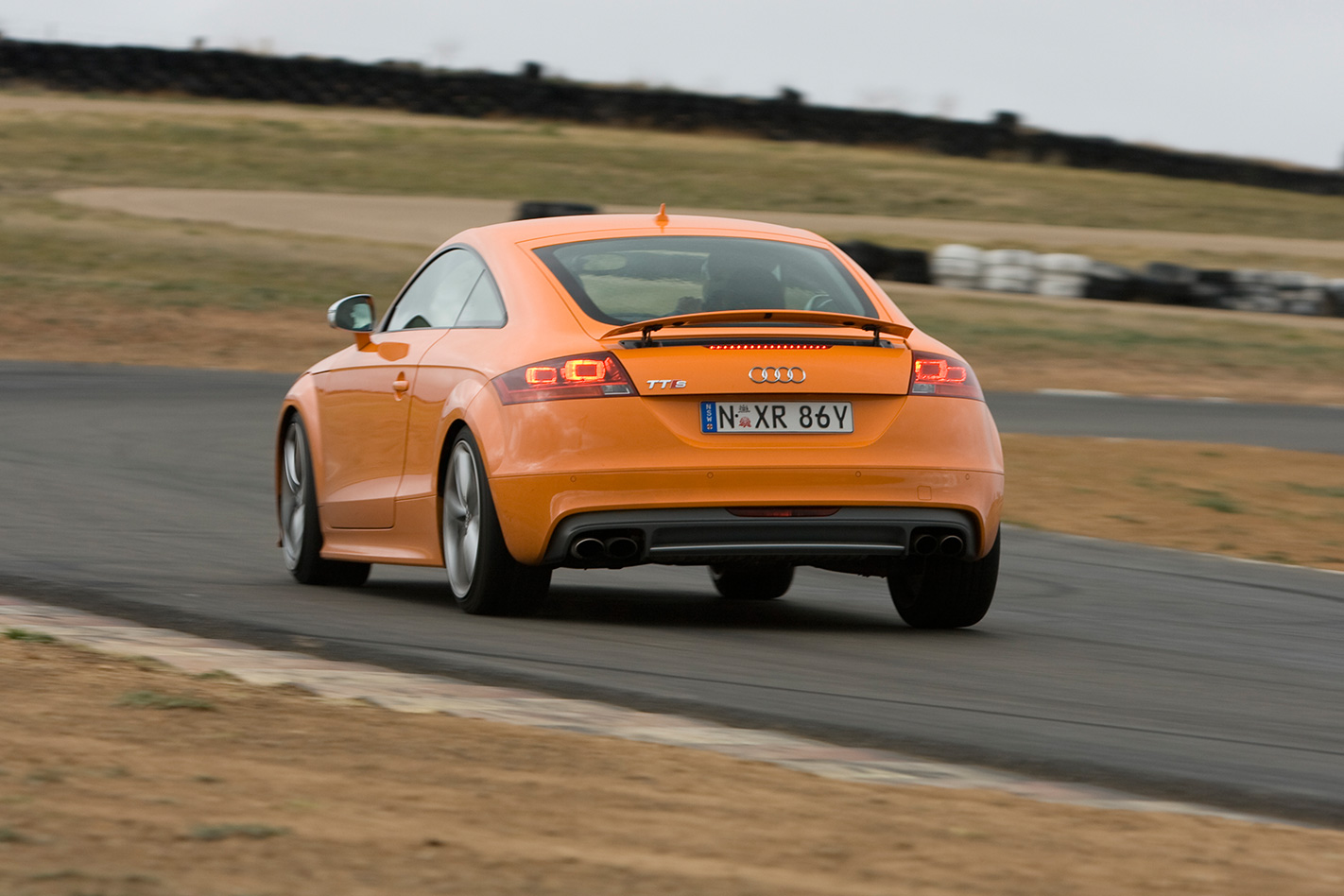
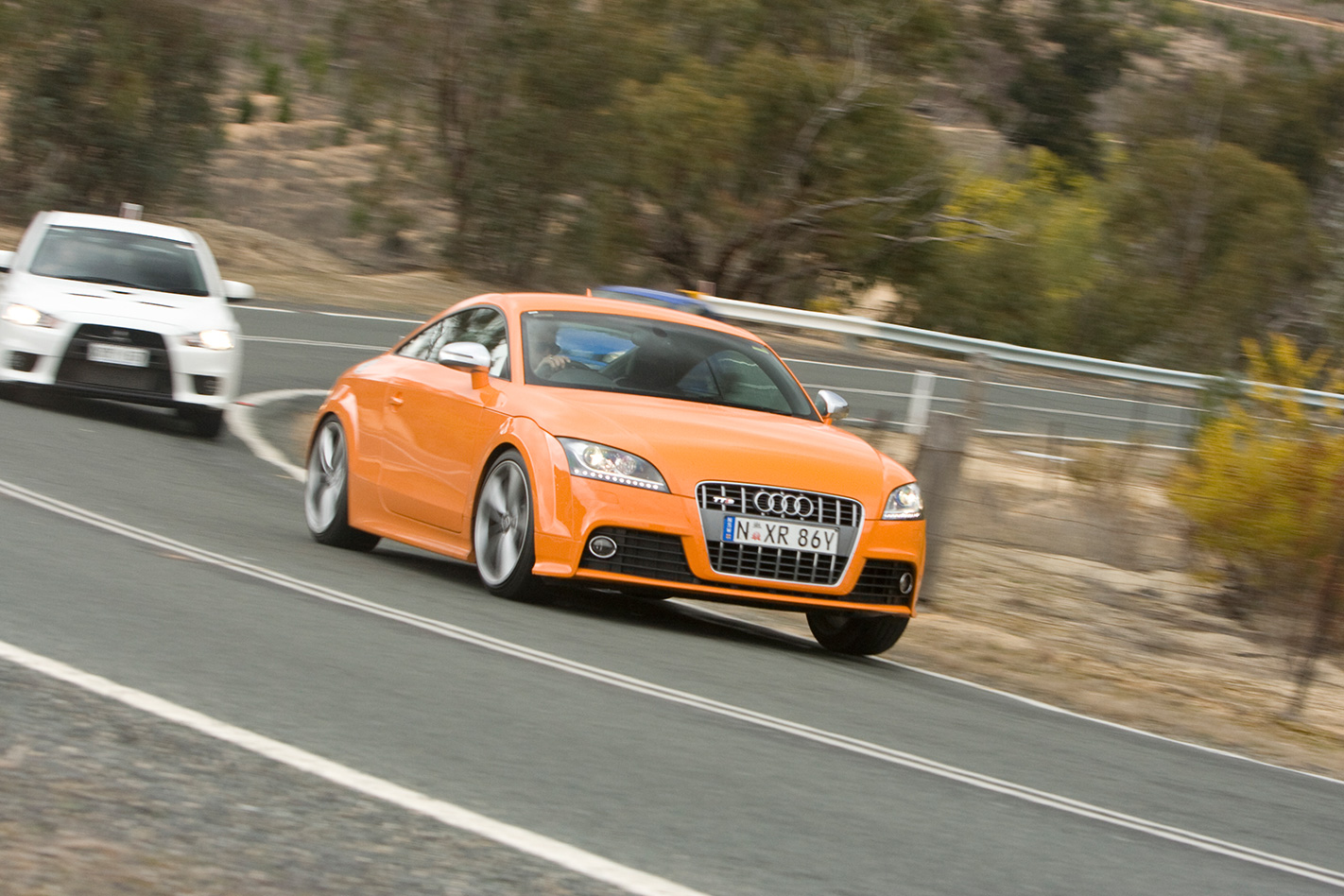
IF AN Audi TT garnished in a blinding metallic-orange hue doesn’t scream ‘hairdresser’s car’, then we’re not sure what does.
This Performance Car Of The Year article was first published in MOTOR Magazine November 2008.
But we’re assured by an insistent AMac, who has already driven one of this type, that this car’s different. And after thrashing the new TTS around Wakefield Park for ourselves, shortly after it crashed through the magic one-minute-and-ten-second threshold under Luff’s expert command, you can call us all hairdressers. Except Morley, for obvious reasons.
At the 400m mark at the airport, the TTS was neck-and-neck with the Evo X at 13.83 and 13.80 seconds respectively. After crossing the 400m stripe at around 165km/h, the TTS pulled well clear of the Evo X to reach the 200km/h mark almost 2.3 seconds quicker. And at the 1000m mark, the TTS was carrying an additional 10km/h.
On the racetrack, the TTS floored us with its astonishing pace. After last year’s TT V6 impressed with its easily accessible performance in PCOTY Round One, we expected the TTS to be a cinch to drive fast. But that proved to be a gross underestimation.
Furthering the driver’s feeling of security are the powerful stoppers that are impressively fade-free. Its much-improved all-wheel-drive Haldex diff, now version IV, drives the rear enough to minimise power understeer and the steering, while a little dead off-centre, gives a reassuring account of how well the turning wheels are gripping as you pitch the TTS into a high-speed corner.
Wakefield Park wasn’t the only place the TTS showed its prowess, however. On the fast Brindabella roads skirting Canberra’s west, the TTS made an even better showing than it did on-track. With the firm magnetic dampers switched back from its track ‘sport’ setting to the more appropriate ‘normal’ mode for the road, the TTS’s ride is firm without being crashy, and as a result, demonstrated probably the best iteration of Audi’s magnetic damping system.
But for a competent driver, the TTS seems almost too accomplished, lacking that last crucial smattering of breath-catching action. Ponch summed up the judges’ feeling perfectly: “you totally, massively admire it… but it lacks the layer of emotion that makes you ache for it.” But it’s not about emotion, for Morley…
The Koreans look to make up on lost time with the extrovert Hyundai Kona compact SUV
WHAT IS IT?
The Kona draws a bead on the best compact SUVs – cars like the Mazda CX-3 and the Toyota C-HR – offering a distinctive look, sturdy mechanicals, an attractive warranty and stacks of gear. Two engines, two chassis layouts and three trim levels deliver plenty of customer choice.
WHY WE’RE TESTING IT
The bar in the compact SUV class has been jacked up pretty high in the last couple of years, so we’re curious to see if Hyundai can score a meaningful hit on what’s become a fast-moving target.
MAIN RIVALS
Honda HR-V, Mazda CX-3, Mitsubishi ASX, Subaru XV, Toyota C-HR
THE WHEELS VERDICT
If you’re a harsh marker, it’d be hard to escape the conclusion that the Hyundai Kona moves the compact SUV game on in no particular regard. Some rivals are bigger, some are better looking. You can buy cheaper and you can choose other models that are better to drive.
Where the Kona scores is in delivering enough on every key buying criterion to lever itself into contention. It’s an endearing thing that has no serious vices and which promises a temptingly hassle-free ownership experience. That ought to be enough to guarantee success but, given how late it is to market, it’d be understandable if you expected more.
PLUS: Bold styling, interior space, 1.6T engine’s zest, equipment on upper-spec models
MINUS: Inelegant body control, unadventurous interior, space-saver spare, odd spec omissions
THE WHEELS REVIEW
WHEN asked whether the Kona could hope to beat the sales of rivals like the Mazda CX-3 and Mitsubishi ASX, Hyundai Australia’s chief executive, JW Lee, appeared momentarily affronted. “Why not?” he shrugged, regathering his composure. “It’s a better car.” Confidence is clearly not in short supply.
Timeliness, on the other hand, is. Since 2011 there’s been a massive explosion in the Aussie compact SUV market, registrations increasing from less than 20,000 to more than 90,000 cars per year. As Hyundai’s Japanese rivals carved up this lucrative pie between them, the Koreans sat on their hands.
Lee used the example of Netscape Navigator, one of the first web-browsers, as a case study, citing that it had then been overtaken by Johnny-come-latelies such as Internet Explorer, Chrome and Firefox. The thing is, in order to replace the incumbent champ there needs to be some demonstrably superior point of difference.
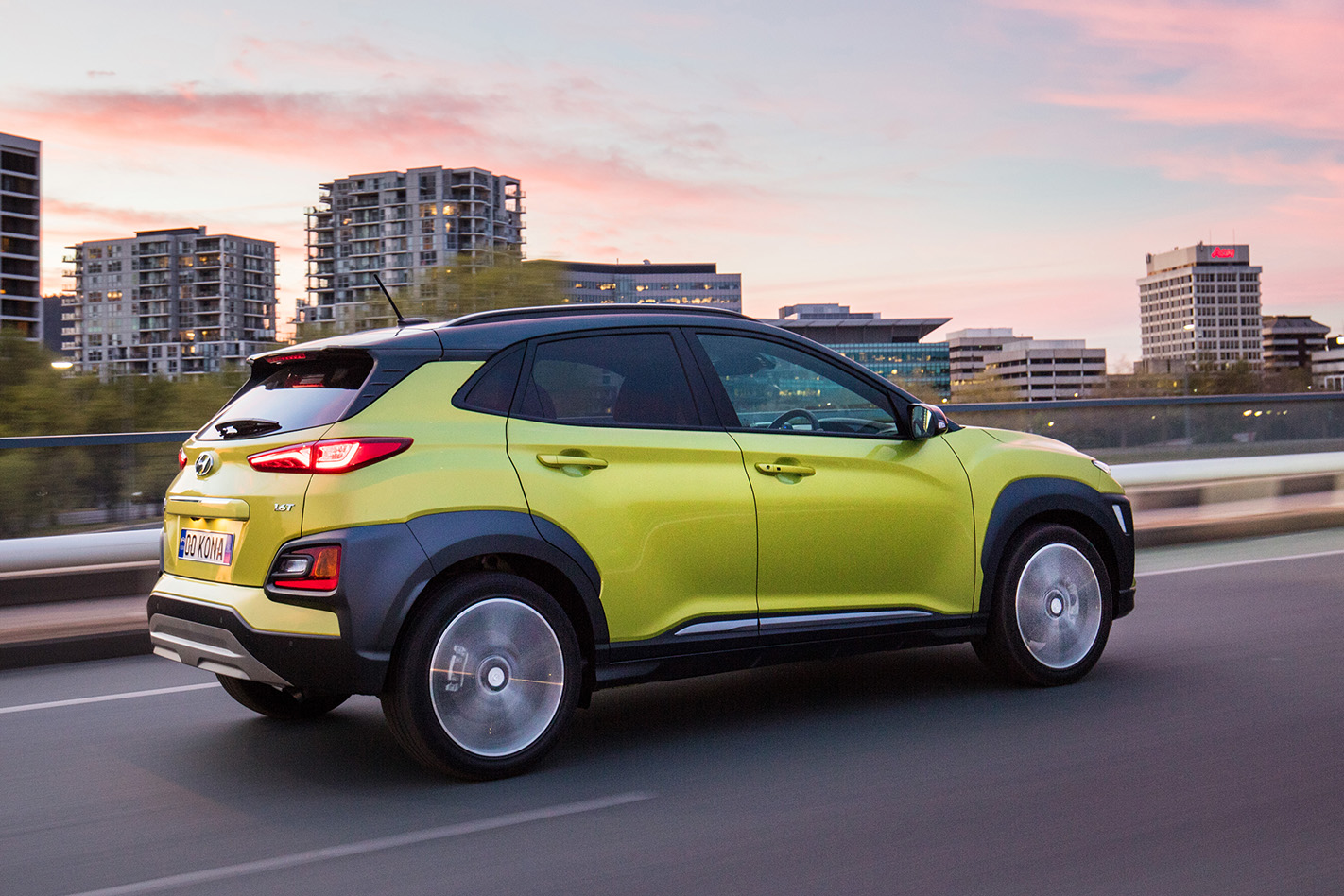
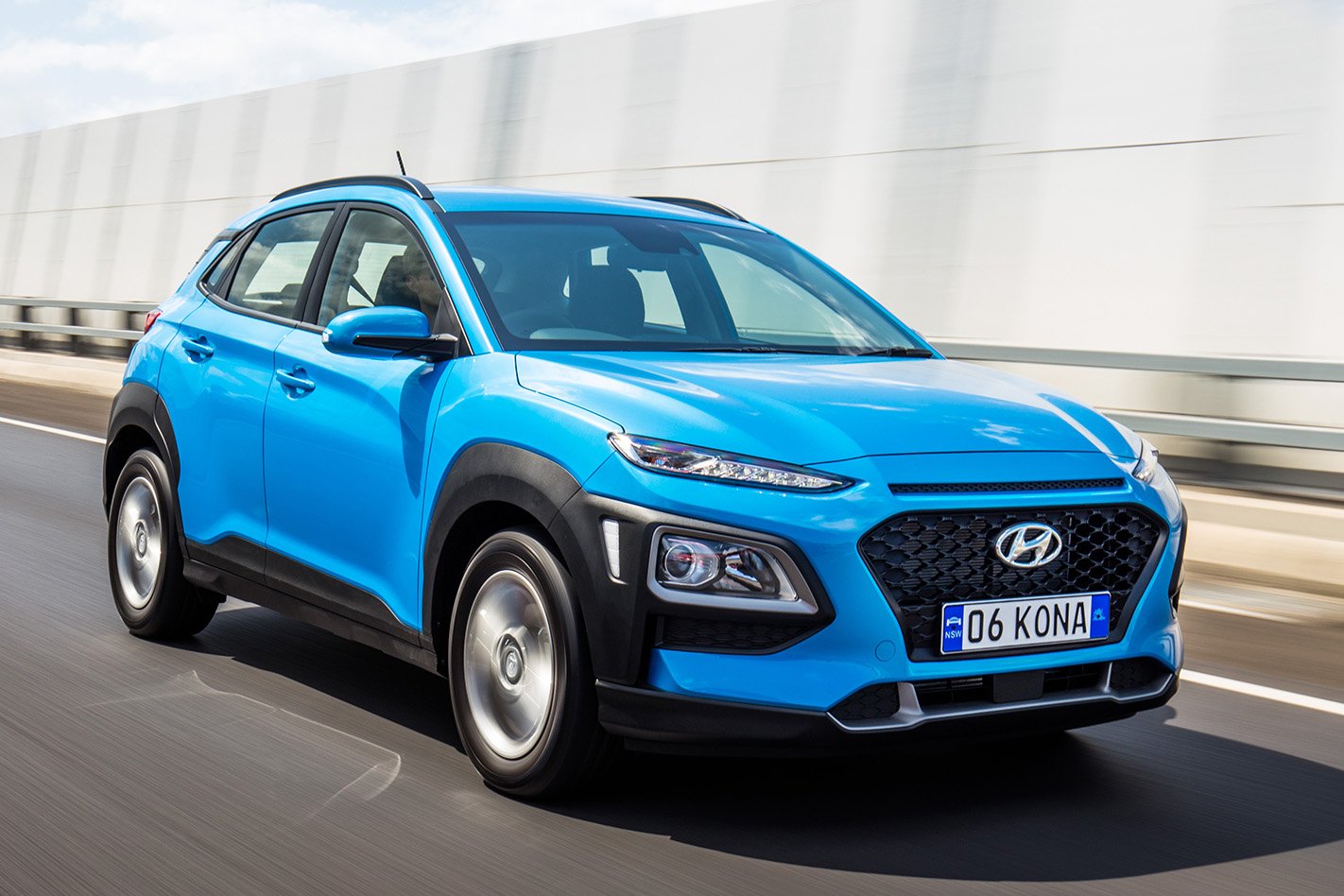
At first acquaintance, the Kona struggles to express such obvious superiority. Based on a modified version of the PD platform that underpins the i30 hatch, it’s a distinctive looking thing, with striking body armour, a chunky, purposeful stance, a sleek glasshouse and neat detailing such as the split daytime running lights and main driving lamps.
It has top notes of Citroen about some of the styling flourishes, albeit ones that have been toned back a few degrees.
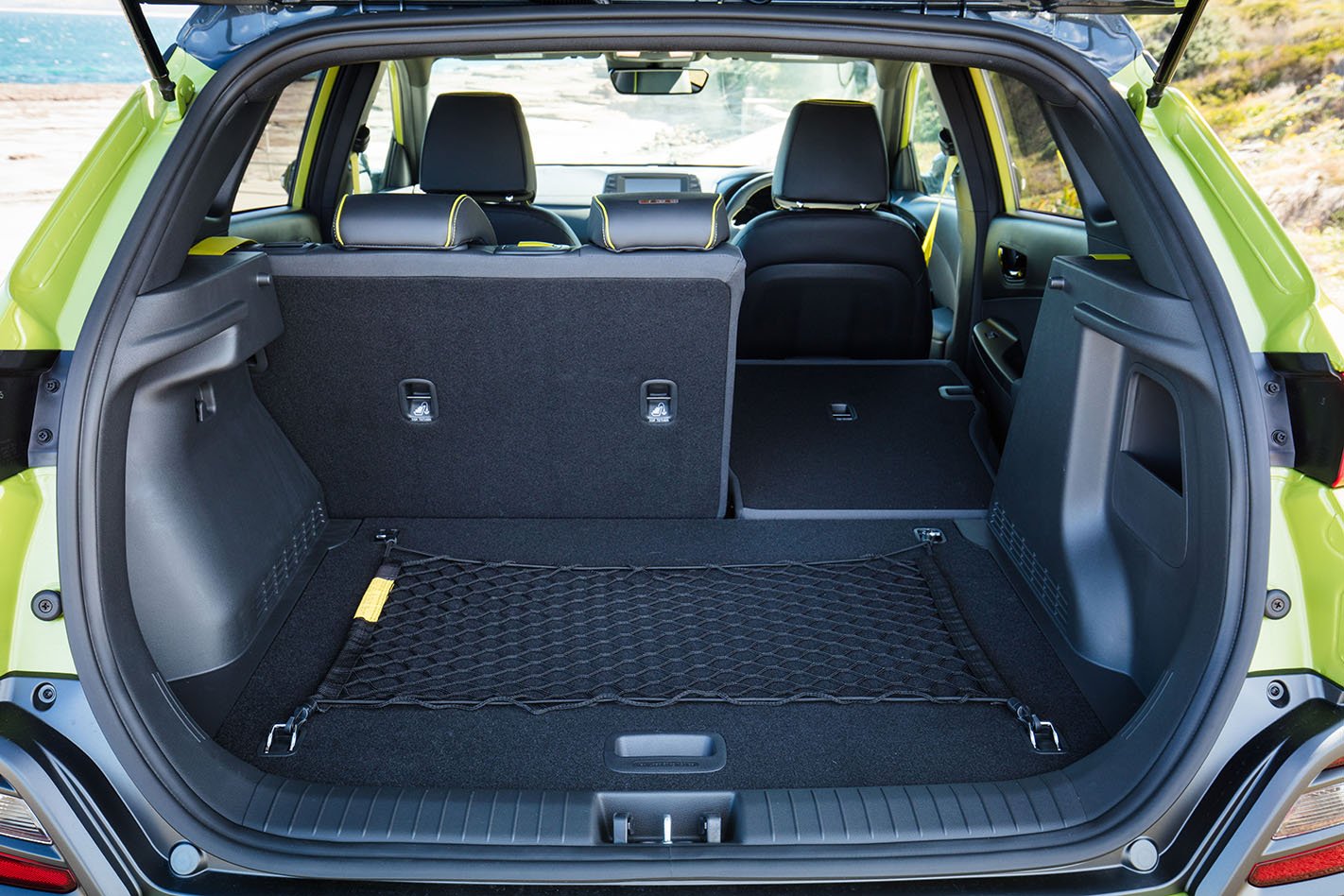
At 4165mm in length, 1800mm in width and 1565mm in height, the Kona’s 110mm shorter than a CX-3, but boasts a 30mm longer wheelbase and measures 35mm wider too, resulting in a cabin that feels airier. The flipside of this is that with the wheels pushed out to each corner and passenger cell space prioritised, luggage space suffers. Except that it doesn’t, the Kona delivering 361 litres with the rear seats in place, compared to the Mazda’s measly 263-litre capacity. Both cars use a space-saver spare to do this, rather undermining the Kona’s outdoorsy brief, especially as the i30 hatch gets a full-size item.
Buyers get to choose between a 110kW 2.0-litre normally aspirated engine, paired with a front-wheel drive chassis and a six-speed automatic gearbox or, if you’re feeling a few grand flusher, a 130kW 1.6-litre unit with all-wheel drive underpinnings and a 7-speed twin-clutch transmission. Hyundai also offers three trim levels – Active, Elite and Highlander – and all of these trims are offered with either engine.
Strictly speaking there are three and a half trim levels, as the entry-level Active can also be specified with a $1500 SmartSense safety pack which includes a suite of features such as blind spot monitoring, rear cross traffic alert, lane keep assist, forward collision warning, AEB, driver attention warning and, as a bonus, heated and folding door mirrors.
The Elite trim features this pack as standard, the alloys grow an inch to 17-inch, and you get leather, climate control, keyless go, and some slicker exterior garnishes amongst others. The top Highlander trim gets the options list shoehorned in, with a new to Hyundai head-up display, 18-inch wheels, a 4.2-inch colour TFT ‘supervision cluster’ between the dials, heated and ventilated front seats, a heated steering wheel, LED lights and a Qi wireless phone charging pad.
Prices start at $24,500 for the entry-level 2.0 Active and top out at $36,000 for the 1.6T Highlander.
The 1.6-litre turbo engine, a similar unit to that found in the bigger Tucson, feels peppy when asked to shunt 1414kg of Kona up the road and the sprint to 100km/h will detain you for just 7.9 seconds. With 265Nm arriving at just 1500rpm, it rarely feels short of zip, but the twin-clutch transmission can be a little reluctant to downshift in automatic mode, even when set to sport.
At times, it seems as if the car is deliberating on its transmission, rear axle deployment and electronic stability control strategies before finally deciding upon a solution some way after corner exit. With no wheel-mounted paddles, keen drivers will recourse to the stick, pulling back to change down the box.
The 2.0-litre engine that 80 percent of buyers will choose is a good deal more vocal when pushed, but the six-speed automatic feels a suitable partner, giving the front-wheel drive car a relaxed loping nature. Here, 100km/h arrives in 10 seconds and the arrival of peak torque is a similarly languid affair, the 180Nm serving waiting until 4500rpm to make an appearance.
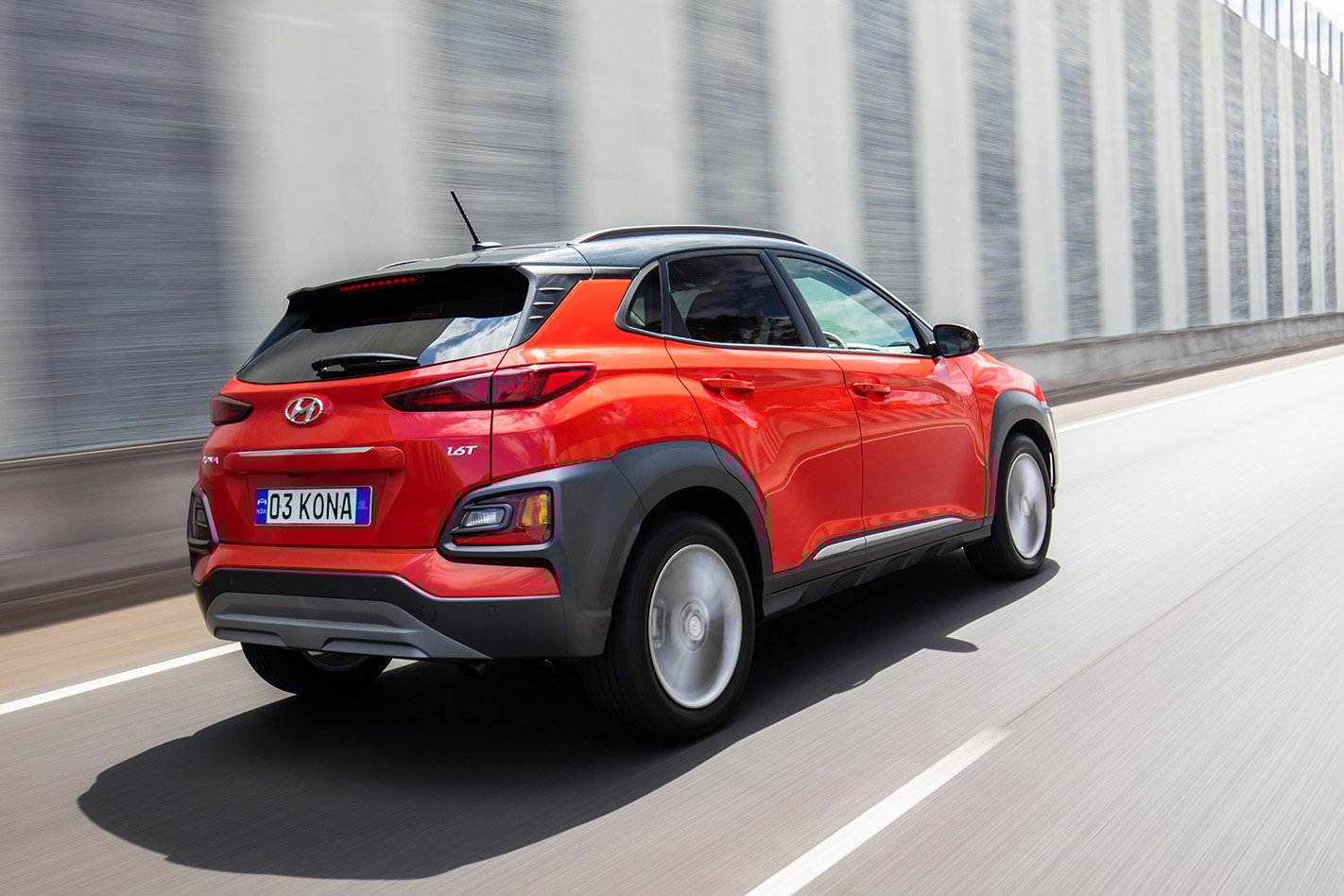
Peak power is at a nosebleed 6200rpm, a zone on the tacho you’ll rarely feel inclined to explore. Both cars feature a drive mode select switch that shuffles between Eco, Comfort and Sport modes. This alters transmission shift points, steering weighting, throttle and engine maps but doesn’t back off the stability control settings.
Delivering a definitive verdict on ride quality proved to be a tough assignment. Many of the test vehicles were riding on Nexen tyres, which were noisy and unimpressive in terms of grip. Hyundai maintains that customer cars will get Hankooks for 16 and 18-inch wheel choices and Continentals for 17-inch rims.
The Contis we tried were a far more impressive set of rubberwear, quelling road noise and offering a more malleable feel when cornered hard.
At this point it’s worth pointing out that the front-drive Kona and the all-wheel drive model have very different rear suspension architectures. The front driver gets a cheaper and simpler torsion beam rear end, while the all-paw variant gets a more sophisticated dual-arm multi-link arrangement. That said, Hyundai has done a good job in tuning the torsion beam and in everyday driving there’s not a lot to choose between the two. Only a modest increase in noise from the luggage bay differentiates the two.
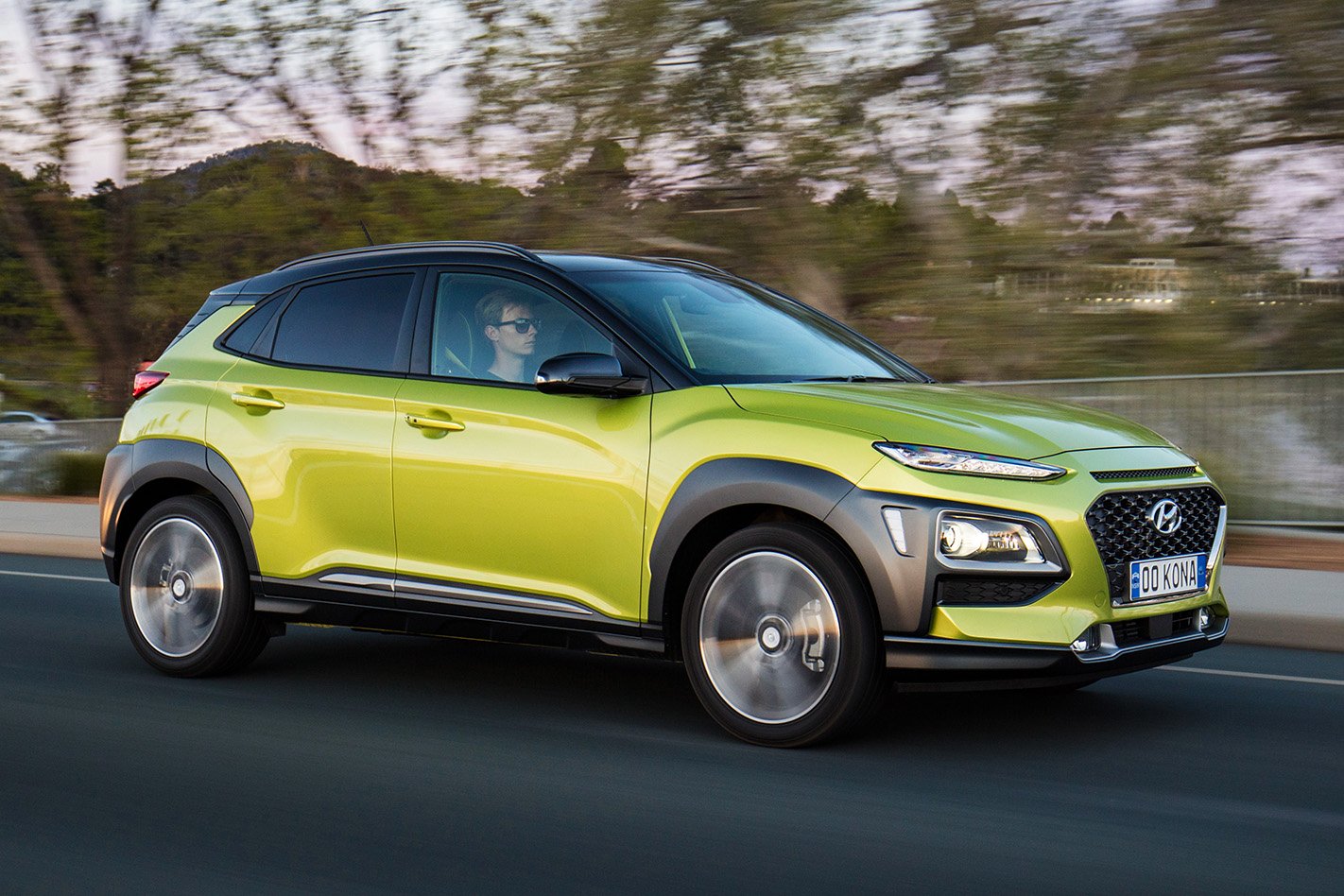
Ride quality is firmish but not intrusive, only sharper road imperfections sending a jolt through the superstructure. Body control is about on a par with a Mitsubishi ASX, the Kona lacking that chuckable, tied-down junior hot hatch feel of a Mazda CX-3.
Much has been made of the Aussie-tuned suspension, the local chassis team going through 13 different front and 29 rear shock absorber combinations and appraising two different stabiliser bars, but fitting non-production standard tyres then renders this largely moot from a tester’s perspective. The electrically-assisted steering has a quick ratio but feels gluey as you wind on more lock. The brakes are beyond reproach, with an excellent pedal feel and strong performance.
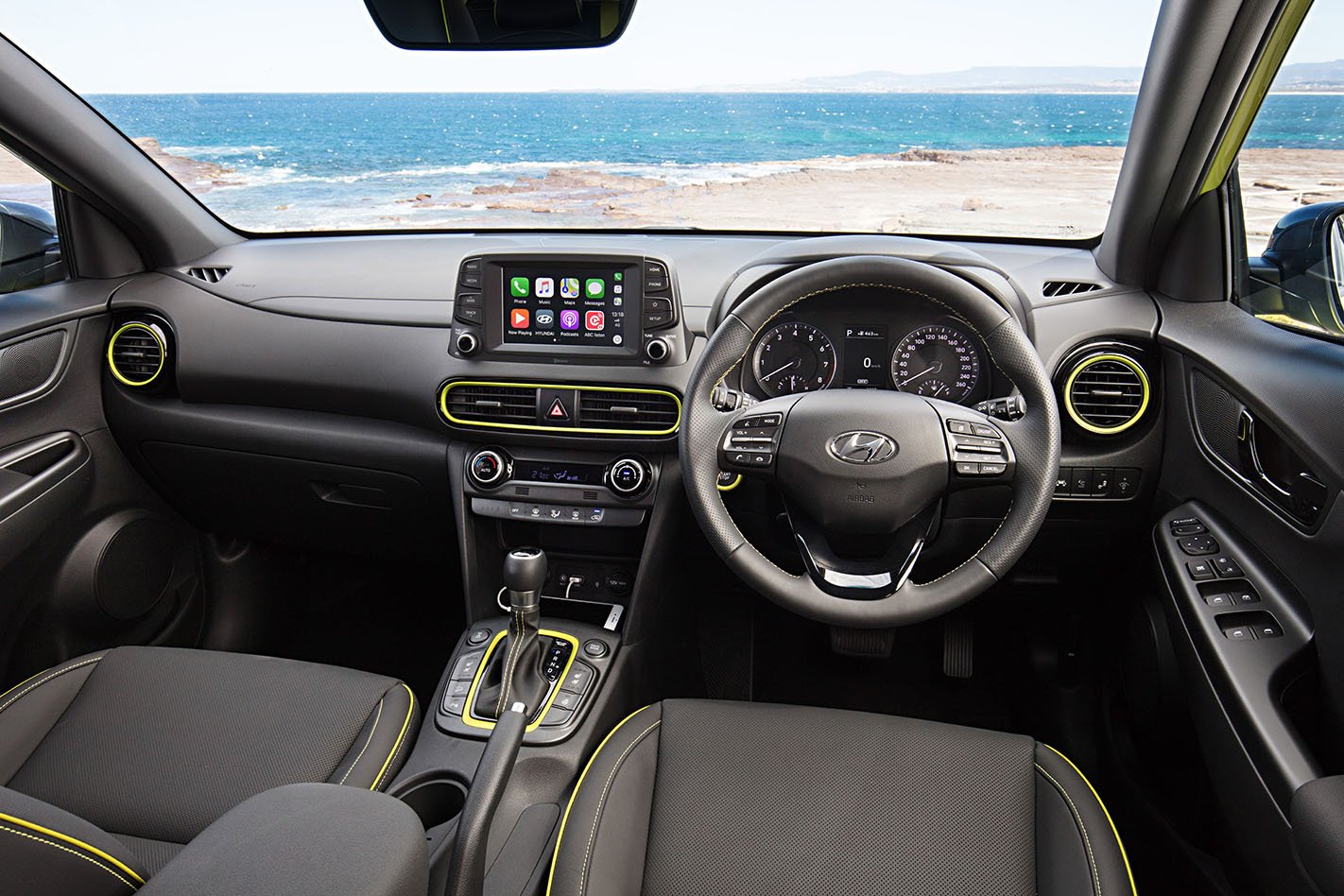
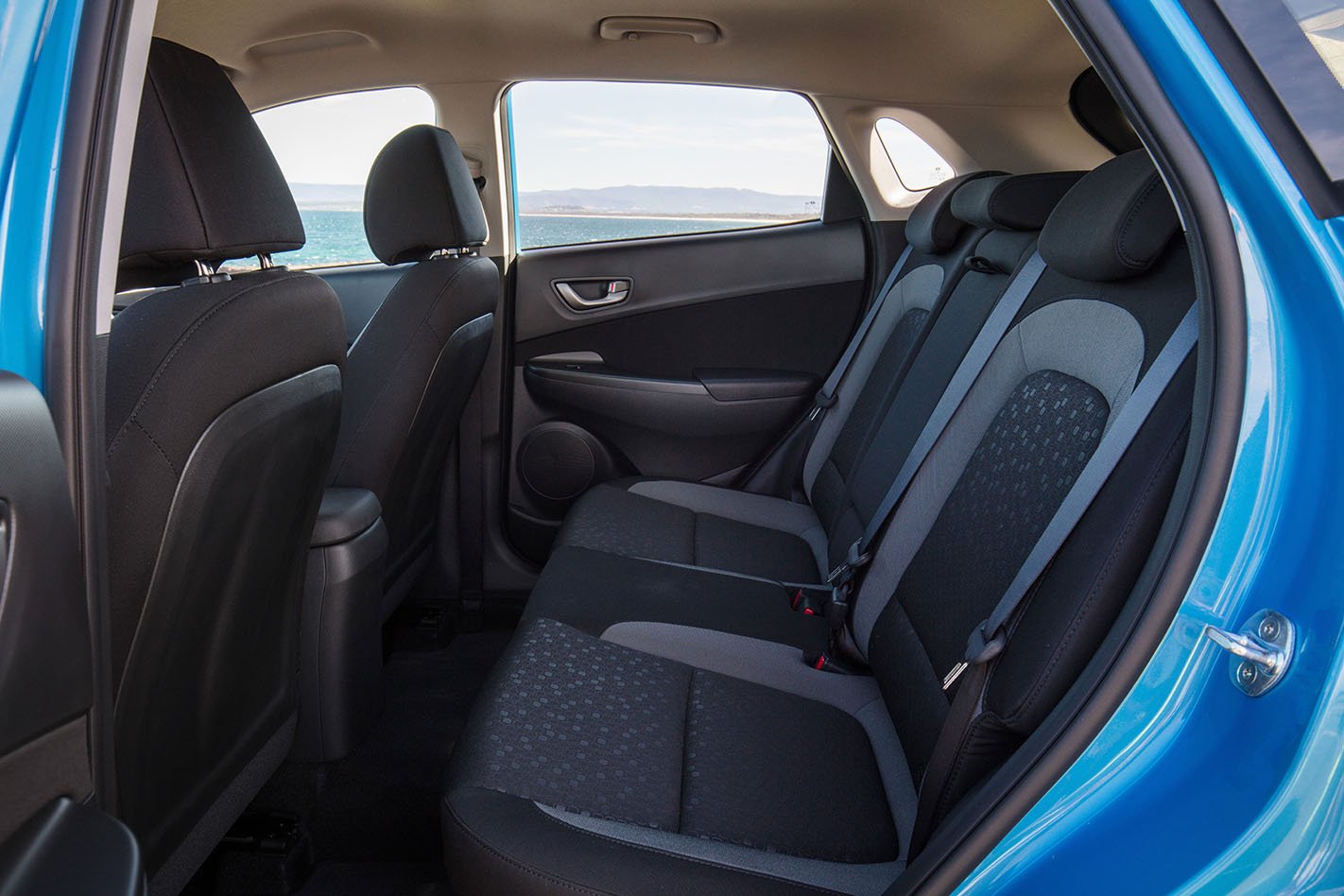
The cabin will be familiar to most i30 drivers, offering much the same basic architecture, with a few changes to the HVAC controls and the instrument cowling, making space for the Highlander’s head-up display. Space in the rear is very good for a car of this size, two six-footers easily able to sit in tandem.
Front headroom is also excellent and aside from the inconveniently-sited starter button on upper-spec models, the ergonomics are sound. Many manufacturers could learn a few lessons in wheel-mounted controls from Hyundai.
Intriguingly, no version of the Kona comes with built-in sat nav. Hyundai has decided that most users prefer to port the nav from their phones, all cars being fitted with standard Apple CarPlay and Android Auto integration. The voice control button on the steering wheel then directly interacts with Siri or your friendly ‘droid, marshalling many of the phone and music selection functions.
Identifying the sweet spot in the Kona range is tough. If pushed, I’d nominate entry-level 2.0-litre and all the bells and whistles for the 1.6T version. The latter pushes pricing up towards Hyundai Tucson Elite levels, which could prove a diversion. For what it’s worth it’s also a little north of Mazda’s range-topping petrol-engined CX-3 Akari, which will doubtless raise a few eyebrows. We’re looking forward to getting these contenders into a head to head at some point in the not-too distant future. The Kona certainly has enough about it to give the baby Mazda something serious to contend with.
While it may not leap straight to the top of the class, I’m sure you’ll be seeing a lot of these on Aussie roads very soon. Despite its chief exec’s bold proclamation, that’s something Hyundai Australia looks set to be content with. The Kona might have been late to the party but, hey, if you’re there before it’s over, you’re on time.
Vote for the Hyundai Kona to win the 2018 Wheels Car of the Year Readers’ Choice competition
SPECS
Model: Hyundai Kona 1.6T Highlander Engine: 1591cc 4cyl, dohc, 16v turbo Max power: 130kW @ 5500rpm Max torque: 265Nm @ 1500-4500rpm Transmission: 7-speed twin-clutch Weight: 1414kg 0-100km/h: 7.9sec Economy: 6.7L/100km (claimed) Price: $36,000 On sale: Now
The updated Range Rover lineup will arrive in Australia later this year bookended, eco wise, by a new plug-in hybrid (PHEV) powertrain and a new supercharged 5.0-litre V8.
The P400e PHEV combines a 221kW Ingenium 2.0-litre petrol four-cylinder engine, with an 85kW electric motor for a combined output of 297kW and 640Nm.
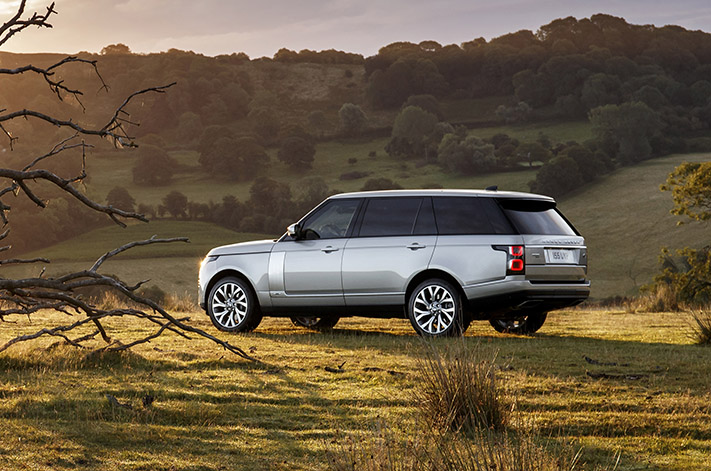
Combined fuel economy is a stingy 2.8L/100km but it’s now slouch, with swift 0-100km/h of 6.8 secs, and a top speed of 220km/h.
With an all-electric range of up to 51-kilometres, Range Rover claims the 13.1kWh battery can be fully recharged from empty in two hours and 45 minutes, using a special wall box charging unit.
At the other end of the scale is the new SVAutobiography Dynamic, which Land Rover says is the most powerful production Range Rover so far.
It’s powered by a brutish 416kW/700Nm supercharged 5.0-litre V8 (12kW over the previous model) and sends the big SUV from 100km/h in just 5.4 seconds.
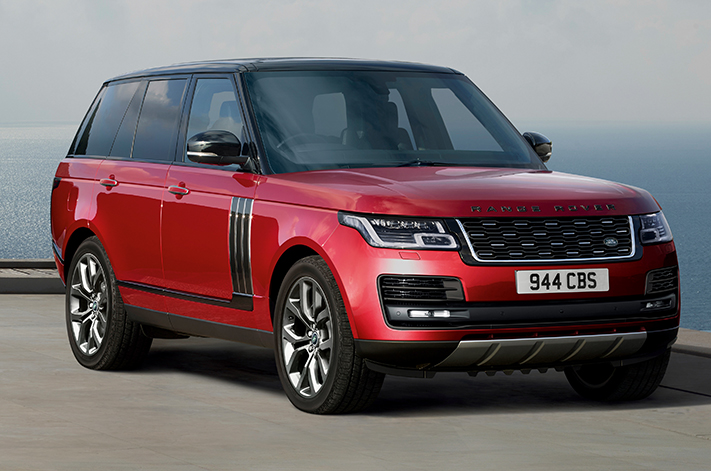
The rest of the six-engine range includes more relatively conventional offerings including a 190kW/600Nm 3.0-litre V6 turbo diesel, a 250kW/740Nm 4.4-litre V8 twin-turbo diesel, a 380Kw/450Nm 3.0-litre supercharged V6 and a 5.0-litre supercharged V8 pumping out 386kW and 625kW.
Visually, the 2018 Range Rover receives subtle exterior changes including a refreshed grille and new LED headlights, while the cabin gains an adapted version of the twin touchscreens found in its all-new Range Rover Velar that’s been rolled out across the Range Rover family.
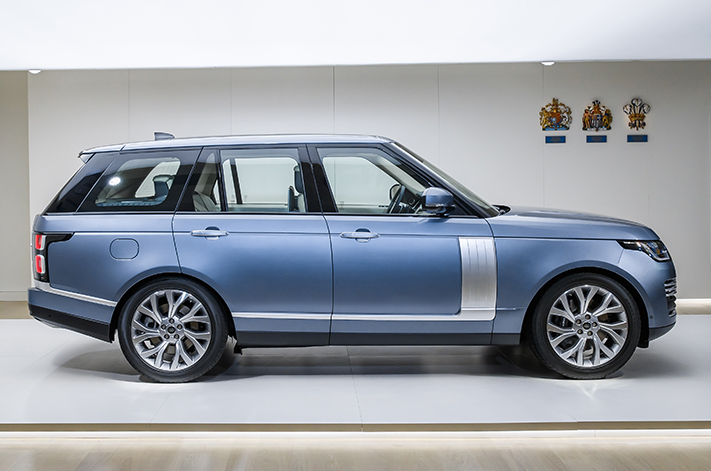
There are also wider, softer seats, which can recline up to 40 degrees for increased passenger comfort and there should be no arguments about plugging in phones with 17 connection points inside the cabin, including USB, HDMI, and 12-volt ports.
The 2018 Range Rover will arrive in showrooms in March priced from $190,000 before on-road costs.
BABY Citroen SUV arrives with cheerful design flair and a peppy turbo triple
WHAT IS IT?
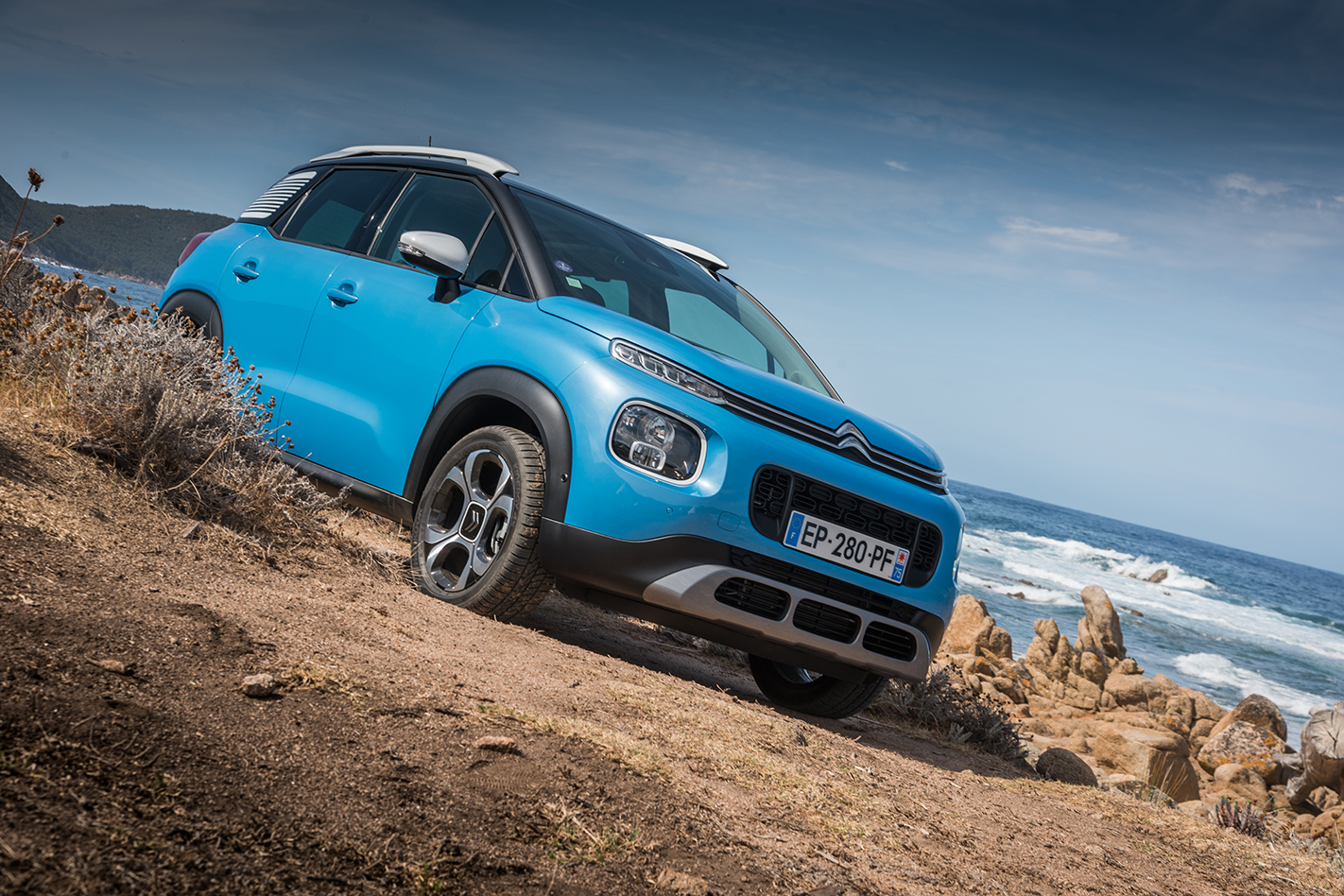
Citroen’s smallest SUV; a front-drive sub-compact job built in Spain and destined for a global audience.
WHY ARE WE DRIVING IT?
The C3 Aircross doesn’t arrive in Australia until well into the second quarter of 2018, but the international launch was held on the French-controlled island of Corsica, so a chance to hit some challenging, lightly trafficked roads and a few unsealed trails.
MAIN RIVALS
Mazda CX-3, Honda HR-V, Toyota C-HR, Hyundai Kona, Nissan Juke, Renault Captur
THE WHEELS VERDICT
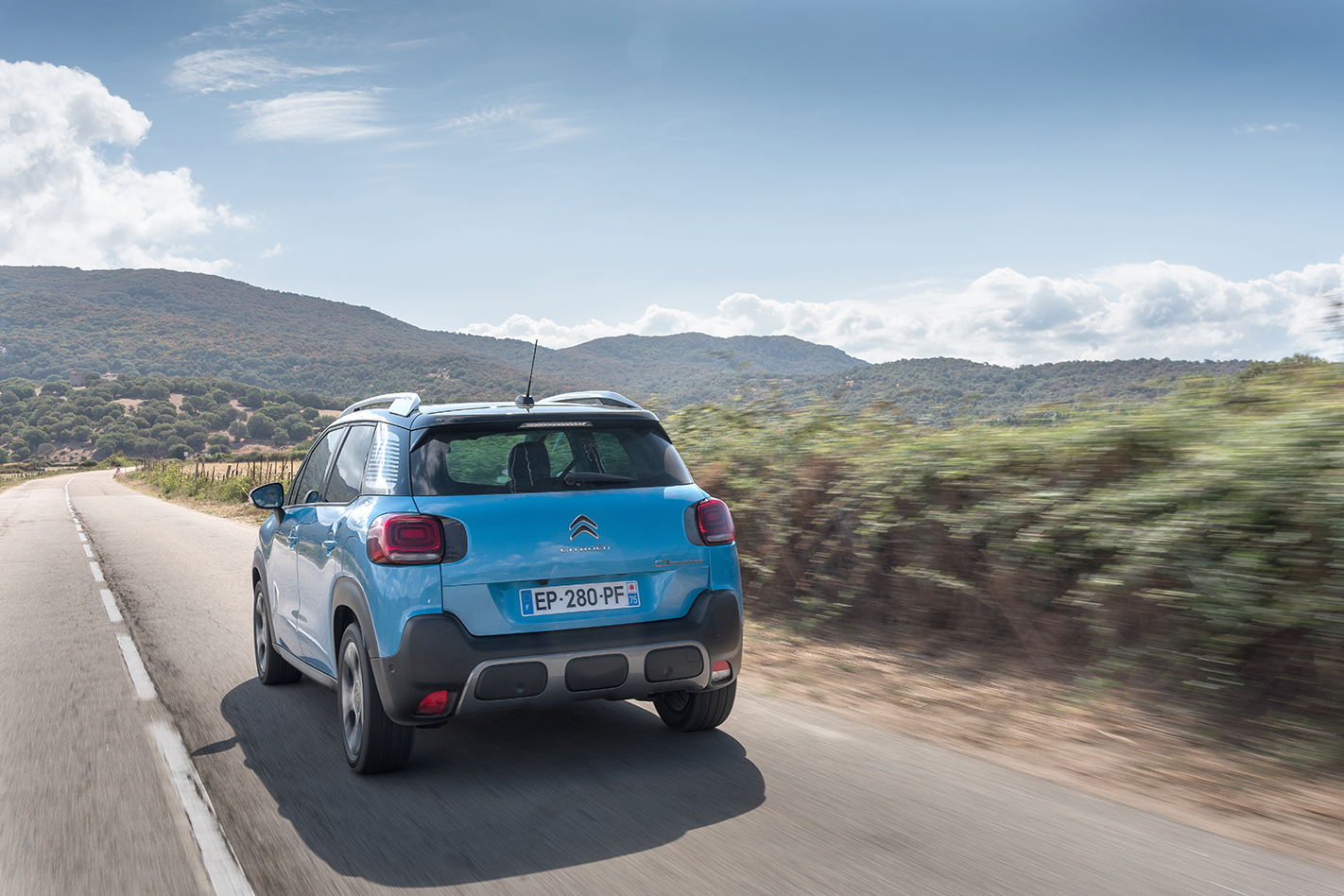
This is a segment where true all-rounder brilliance is elusive, and C3 Aircross does not shift that status quo. But it’s not without appeal, primarily in terms of design, packaging, and the character of that little turbo-petrol triple.
PLUS: Bold exterior styling; interior design flair; engine’s flexibility and verve. MINUS: Ride can turn brittle and occasionally crashy; transmission prone to clunkiness; seats lack side support
THE WHEELS REVIEW
Not far from where I’m writing this, on Paris’s famous Champs-Elysees avenue, a queue of about 40 people stand waiting patiently. Not to see a live performance, not to meet a celebrity, not even for a special meal. No, they are standing around for their turn to enter a shop. I’m told the shop is full of very stylish, very expensive goods – clothes, shoes, bags, accessories – and this is what makes it worth queuing up for. But the fact remains, if you have a pressing need for any of these items, there are literally hundreds of stores along this retail strip that can provide them, with no queuing required.
It’s a snapshot of the lure of that abstruse thing called ‘style’. Certain people care deeply about it, they know it when they see it, and they are prepared to pay a premium for it.
Citroen likes these people. It’s that mindset, when applied to an automotive purchase, that will help sell cars like the new C3 Aircross. Because if you’re going to enter a non-pragmatic segment like that of the compact SUV, it really helps to do it with a degree a panache.
Fortunately the C3 Aircross has more than just design flair in its favour. It’s roomy inside for a car of such a compact footprint, meaning a six-foot passenger can sit behind a six-foot driver, and three adults can cosy up across the back for short hops. The rear seats slide fore-and-aft to create extra luggage space if you only have kids in the back, and the rear backrests are rake adjustable.
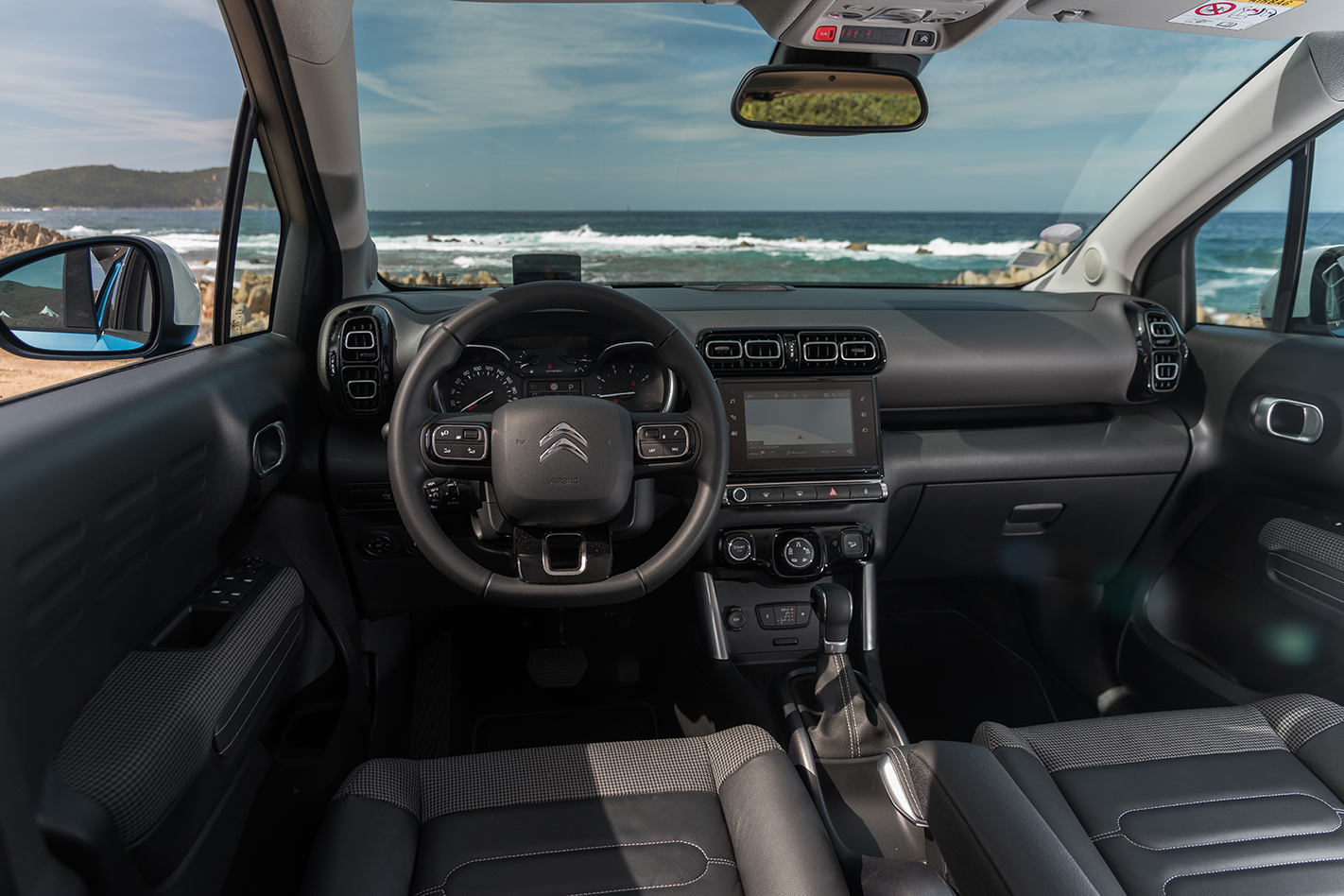
And like the regular C3 hatch with which it shares powertrains and interior architecture, the cabin is a cheerful, agreeable place to spend time. The front seats may lack under-thigh and side support, but they are otherwise a bit larger and more generously padded than the class norm. The 7-inch touch screen has all the functionality and connectivity you’d expect, even if some owners will miss dedicated climate control knobs, and the Grip Control system with multi modes to optimise traction of different surfaces is surely a pointless gimmick.
What will attract attention is an interior that stands apart from the competition for design flair, with just enough high quality materials to deliver a premium impression.
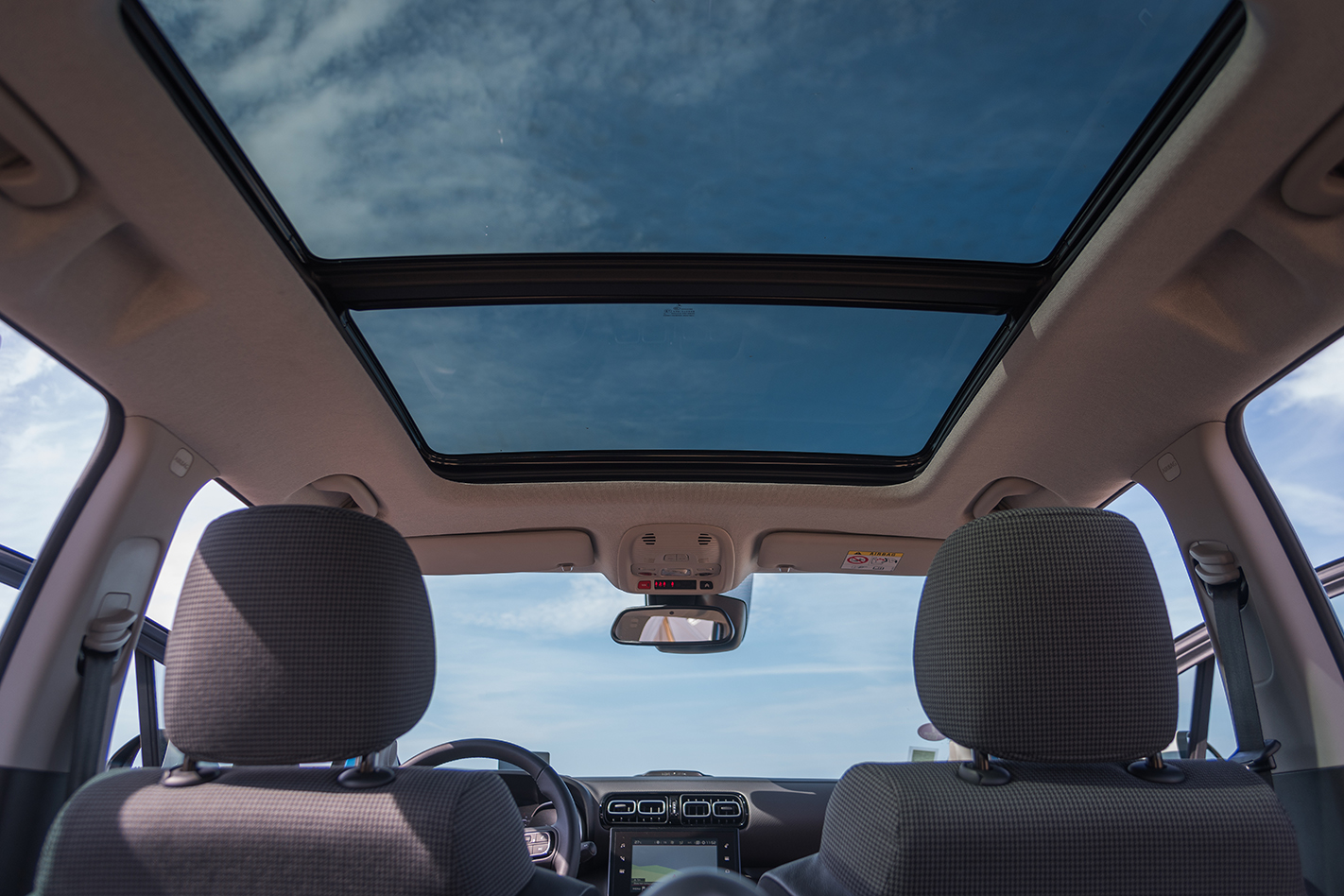
We drove both the 1.6-litre turbo-diesel four and the 1.2-litre turbo-petrol triple at the launch, and side with Citroen Australia’s decision to only take the latter, mated to a six-speed automatic, as per the C3 hatch which will arrive here well ahead of the Aircross. This little three-pot really is a zesty jigger – it’s an Engine of the Year winner in its category three years running – and makes the Aircross willing and happy to cop a bit of a spanking. My co-driver pointed out its soundtrack is a bit like half an atmo 911 climbing on cam; try hard and you can sort of hear it.
The steering is not as feather light as that in the C3 hatch, which suits the Aircross, even if it remains a direct yet feel-free system. Body control is about what you expect in this class, as is the ride – it tries hard to stay composed, but sharp edges turn it terse, and even fairly restrained speed on a rough section of dirt brought some butt-puckering crash-through.
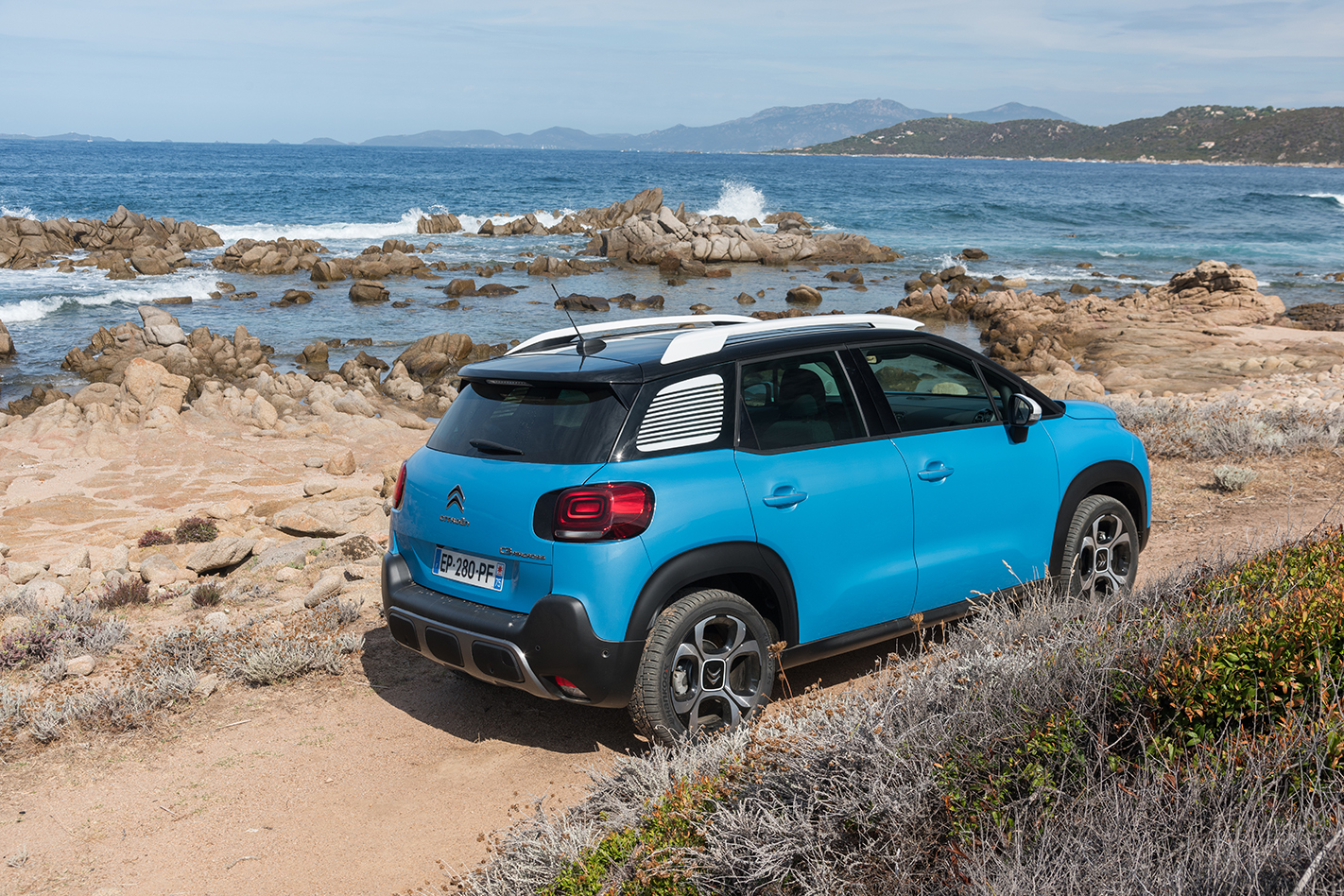
The only other concern lies with the transmission calibration, which is prone to the odd unpleasant thunk as it searches frantically for a lower ratio during heavy braking.
But will the type of buyer seduced by the Aircross’s splash of individuality and practicality notice or care? I doubt it. Hey, the luggage bay holds 410 litres, which translates to quite a few Louis Vuitton bags – if only this wretched queue would move along.
SPECS
Model: Citroen C3 Aircross Engine: 1199cc 3cyl, dohc, 12v turbo Max power: 81kW @ 5500rpm Max torque: 205Nm @ 1500rpm Transmission: 6-speed automatic Weight: 1203kg 0-100km/h: 11.8sec (claimed) Economy: 5.6L/100km Price: $32,000 (estimated) On sale: Q2, 2018
Toyota has radically reduced the price of its HiLux-based Fortuner 4×4 SUV by a minimum of $5000, bringing all but the range-topping Crusade variant below $50,000.
The Fortuner range now starts at $42,590 for the GX manual, which saw its retail price drop by $5400, or 11.25 percent. The GX auto price has also been slashed by $5400 to $44,590.
Despite the price cut the GX gains 17-inch alloys in place of the steel wheels and rear parking sensors.
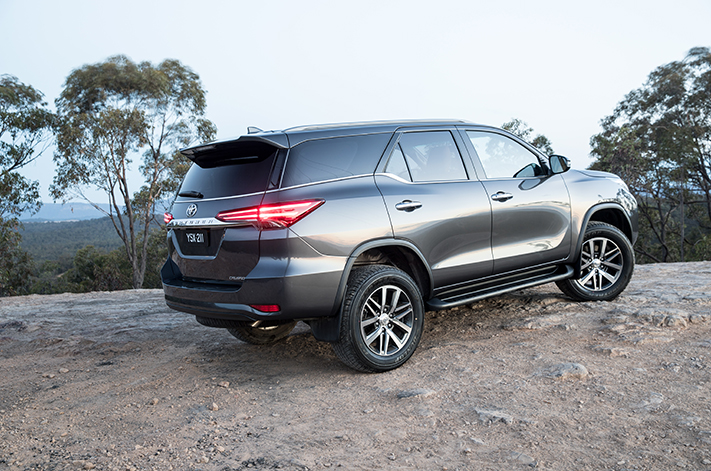
Prices for the mid-range GXL manual and auto models have also been slashed, by $5500 to $47,490 and $49,490 respectively, but gain satellite navigation, Toyota Link infotainment, digital radio and a choice of dark brown leather-accented interior trim.
Meanwhile, the range topping Crusade receives a premium 11-speaker JBL audio system, heated and eight-way power-adjustable driver and front-passenger seats, and LED instead of halogen fog lamps, despite its price being reduced by $5000 to $56,990.
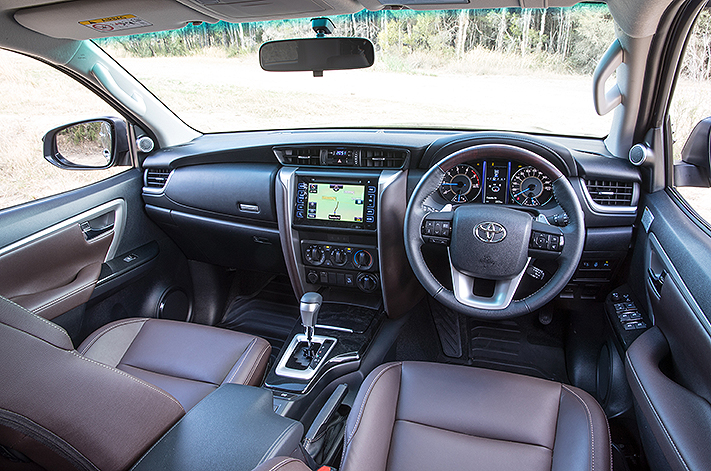
The new pricing comes with the Aussie-engineered Fortuner being one of the few Toyota models to languish in its segment (Large SUVs) which is dominated by its LandCruiser Prado and Kluger stablemates.
Fortuner sales are down by 40 percent this year, with year to date sales by the end of September totalling 1960, compared to the Prado’s 12,071, and Kluger’s 9136.
It is also behind similar ute-based SUVs such as the Isuzu MU-X (5829), Mitsubishi Pajero Sport (5489), Ford Everest (3360) and the new Holden Trailblazer (2311).
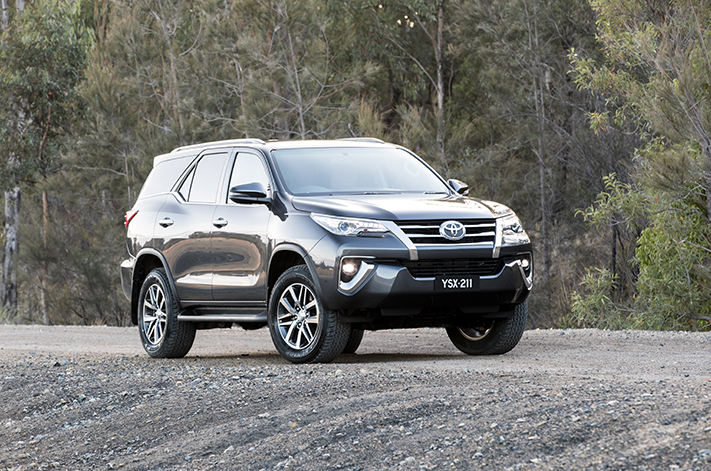
The discounts mean Fortuner’s entry-level pricing is now lower than any of the above competitors, undercutting the Pajero Sport GLX by $3410.
MY18 Toyota Fortuner pricing
- Fortuner GX manual – $42,590
- Fortuner GX auto – $44,590
- Fortuner GXL manual – $47,490
- Fortuner GXL auto – $49,490
- Fortuner Crusade auto – $56,990
