
PETER BROCK, his hair matted, his Simpson driving suit soaked with perspiration, walks off-camera and into the crowded confines of the James Hardie Tower.
He’s just accepted the spoils of victory for the seventh time in Australia’s greatest motor race. But the cheque, the trophy and a beaming Robert Lee Hawke now take second place to a four-litre bottle of Gatorade.
Brock consumes the green stuff at a prodigious rate, sucking it through a plastic tube while Larry Perkins, the knockabout, no-frills, no-bullshit co-star in the Marlboro travelling road-show, opts for a jug of beer.
John Harvey, having proved that 13 is not an unlucky number, simply grins from ear to ear and lights a smoke.
Bathurst 1983 has been run and won. For Peter Brock and his Commodore equipe it didn’t go precisely to plan. But they’re here, in this oppressively hot and overcrowded VIP entre, amid the champagne, the backslappers and photographers … as winners.
In this business, nothing else matters. As Allan Moffat reminded the press so often during his long bitter week of discontent at Mount Panorama ” . .. there are no prizes for coming second”. While the record books show that’s precisely where he finished, the stone-faced Moffat is true to his dictum: not for him the postrace festivities. He’s been and gone from the victory presentation in record time.
Out of the balcony he was greeted with a howling wave of derision he certainly didn’t deserve. In response he reminded us it took “two cars to beat me out there today”. The message was to hit home during the ensuing week, when Brock faced an unprecedented public backlash against his swapping horses in midstream.
But for now, Allan Moffat speaks to no-one. With eyes fixed firmly at the straight-ahead, he disappears to the isolation of his team headquarters – the aptly named Canvas Vatican. And that is the last we see of him at Bathurst in 1983.
It was a desperately unhappy week for Moffat – a case of The Boy Who Cried Wolf … except the Wolf really had arrived, and nobody took it seriously.
The fans who pressed so tightly under that balcony on Pit Straight demonstrated their feelings with a vengeance and venom which shocked veteran commentator Evan Green and left the Prime Minister plainly puzzled. In an aside to Brock, he asked why Moffat was so unpopular. Brock replied: “Because they think he’s a Liberal politician.”
For Dick Johnson, it was a different story. The Mountain dealt this sandy-haired lad from Queensland yet another kick in the guts. But the blow enhanced the Johnson legend, sparking a new wave of personal identification with his little battler image. From a public relations point of view it was he, who finished nowhere despite the valiant efforts of his crew, who emerged the only winner in an event which proved a dismal shadow of its former self: Strip away the 26 cameras, the technical gee-whiz and golly-gosh and what we had ·was a very ordinary motor race. Just like Sandown three weeks earlier.
True, we had Johnson running in a cobbled-up car he described as “such a dog we should have left it chained to the fence”; granted the early departure of the BMW and Nissan turbo robbed the front of the pack of much needed interest; but the fact remains … the James Hardie 1000 of 1983 will not be a classic.
The rule makers cocked it up. And while it is easy to be critical with the benefit of 20/20 hindsight, the men who control motorsport – our motorsport – have some soul searching to do: the Bathurst mystique may not survive too many repeats of 1983.
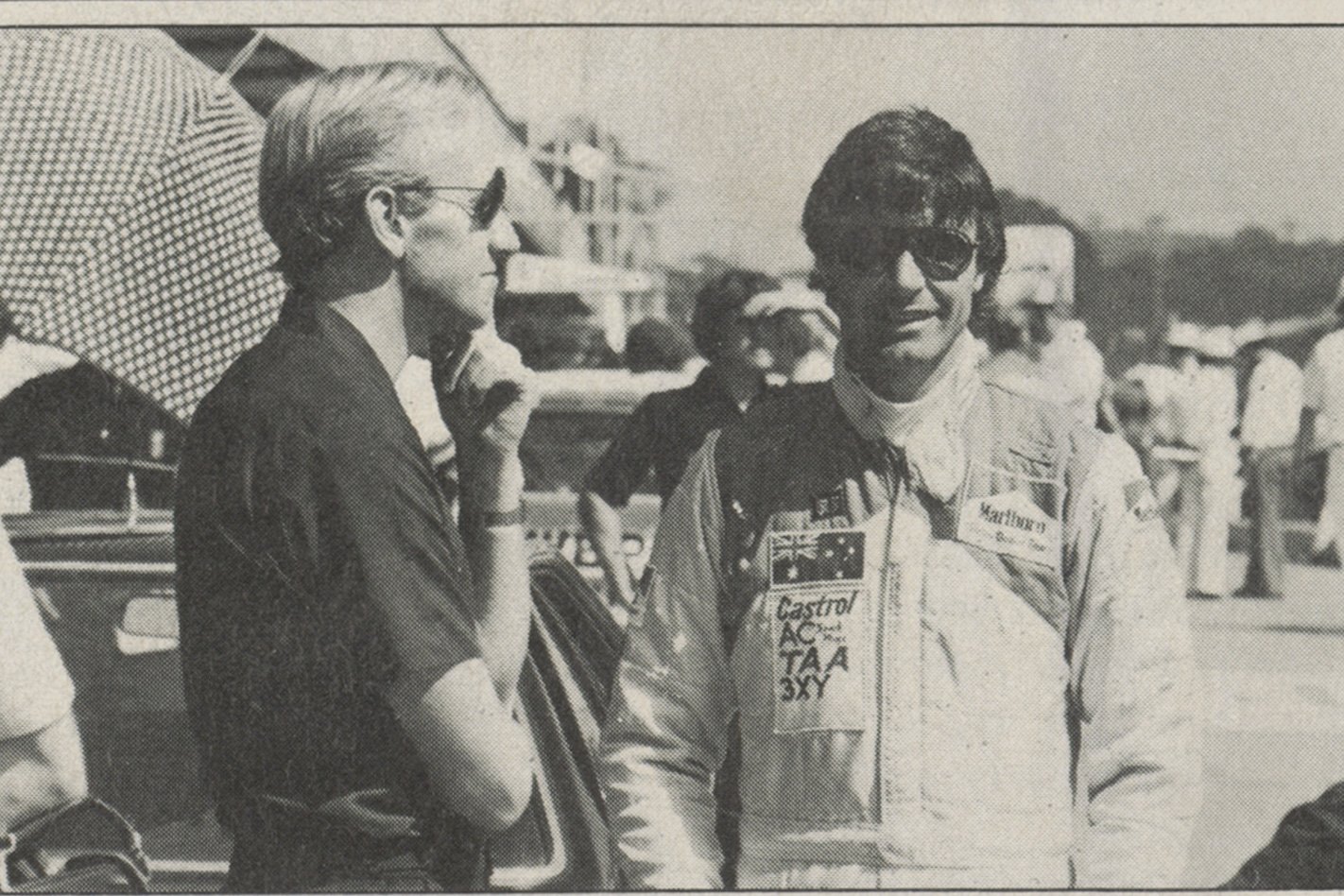
Kevin Bartlett, one of the most senior drivers in the sport, walked into Canvas Vatican for an unscheduled audience with Pope Allan, the pistol toting guards having not yet taken up their posts.
As a rather nonplussed Bartlett later described it, he was told to wait outside where Mr Moffat would “make himself available in a few moments”. This from a colleague of 20 years standing. So much for sport and the camaraderie of the Mountain …
It was a sour opening to the traditional setting-up day at Bathurst – a Tuesday where no practice is allowed but where a cricket match is fought out with much humour between the leading teams. Tuesday is the day the paddock area is transformed from a bare patch of earth into a canvas and aluminium metropolis with a population of about 6000 – a figure to rival many country towns. By nightfall every major team is settled in, waiting for the declaration of hostilities at 11 am the next day.
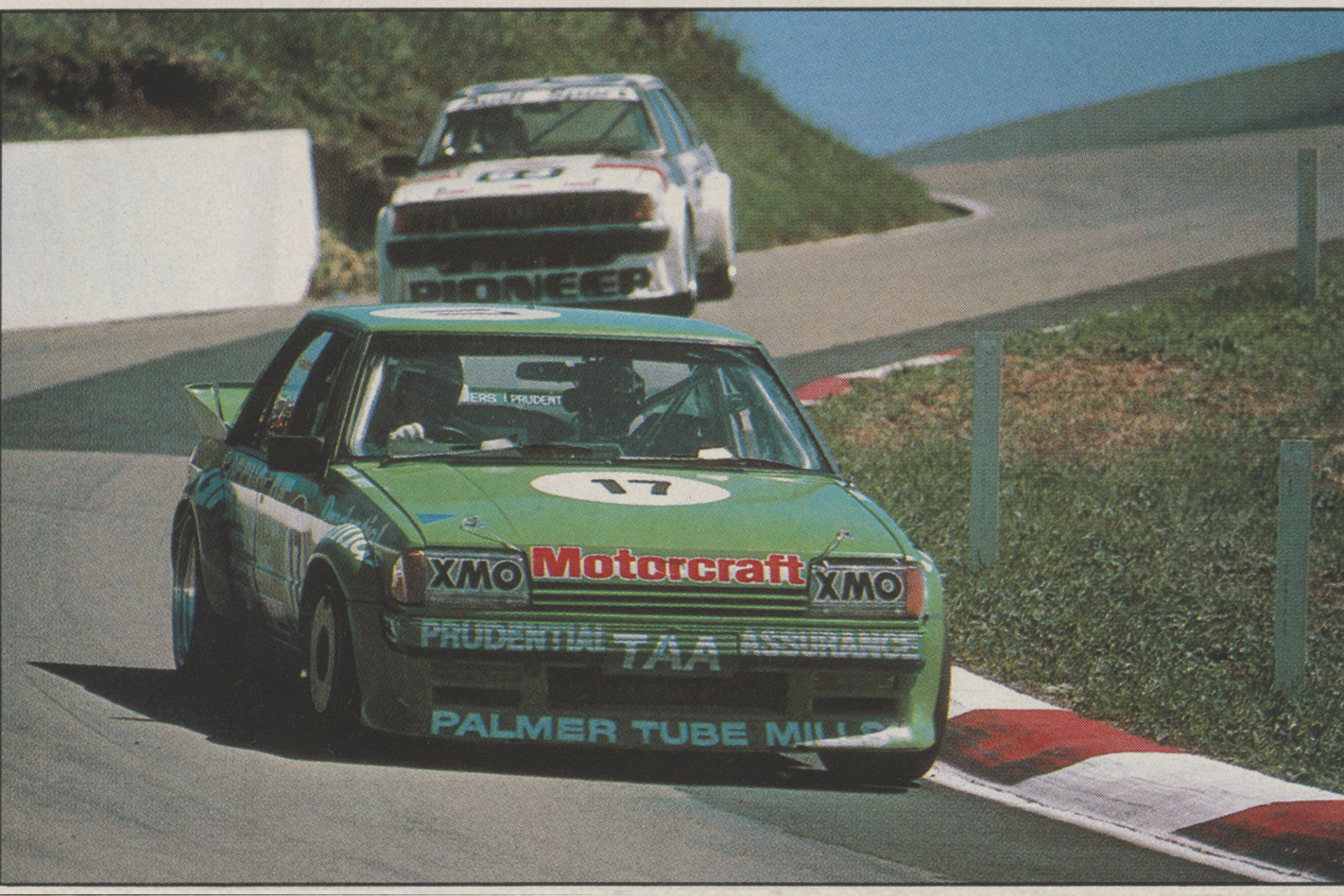
Peter Brock arrives in the early evening, casts an eye over the workshop and heads for his hotel. Dick Johnson, Kevin Bartlett and Wayne Eckersley (the ex-Williams spannerman now working on Car 17) are out on the prowl, slowly cruising Mount Panorama in the road Falcon, debating where the race car’s suspension will suffer the greatest loads.
It’s a typical think-tank session, for every team at Bathurst is pondering unknowns created by the new touring car rules. Bigger wheels and tyres, suspension freedoms, power improvement and aerodynamic aids have thrown last year’s equation out of whack.
To its credit, CAMS, the controlling body of the sport, had moved to try and even things out. Opinion is that the Mazdas (and more specifically the Moffat Mazdas) are going to clean up. That conclusion is based on the Stuyvesant car’s easy win at the preceding Castrol400 – a win achieved with a fuel-injected 13B rotary that has the V8 powered teams frothing at the mouth. They argue that Moffat, already winner of the Australian Touring Car Championship with a lesser powered 12A carburettor engine, should not have been granted a bigger engine with fancy fuel injection. He’d already whupped ’em, so why give him a bigger stick? CAMS replied that should any competitor have an unfair advantage, he’d be given a weight penalty. And that, in a nutshell, fuelled the fires of what Moffat described as a “propaganda campaign” against him.
Against that stormy background, the sky dawned bright and sunny over Bathurst on Wednesday morning. But almost as if the weather sensed the tension, it changed. The thunderheads rolled in from the north-west barely half an hour before the first practice, blotting out the light and drenching the assembled throng.
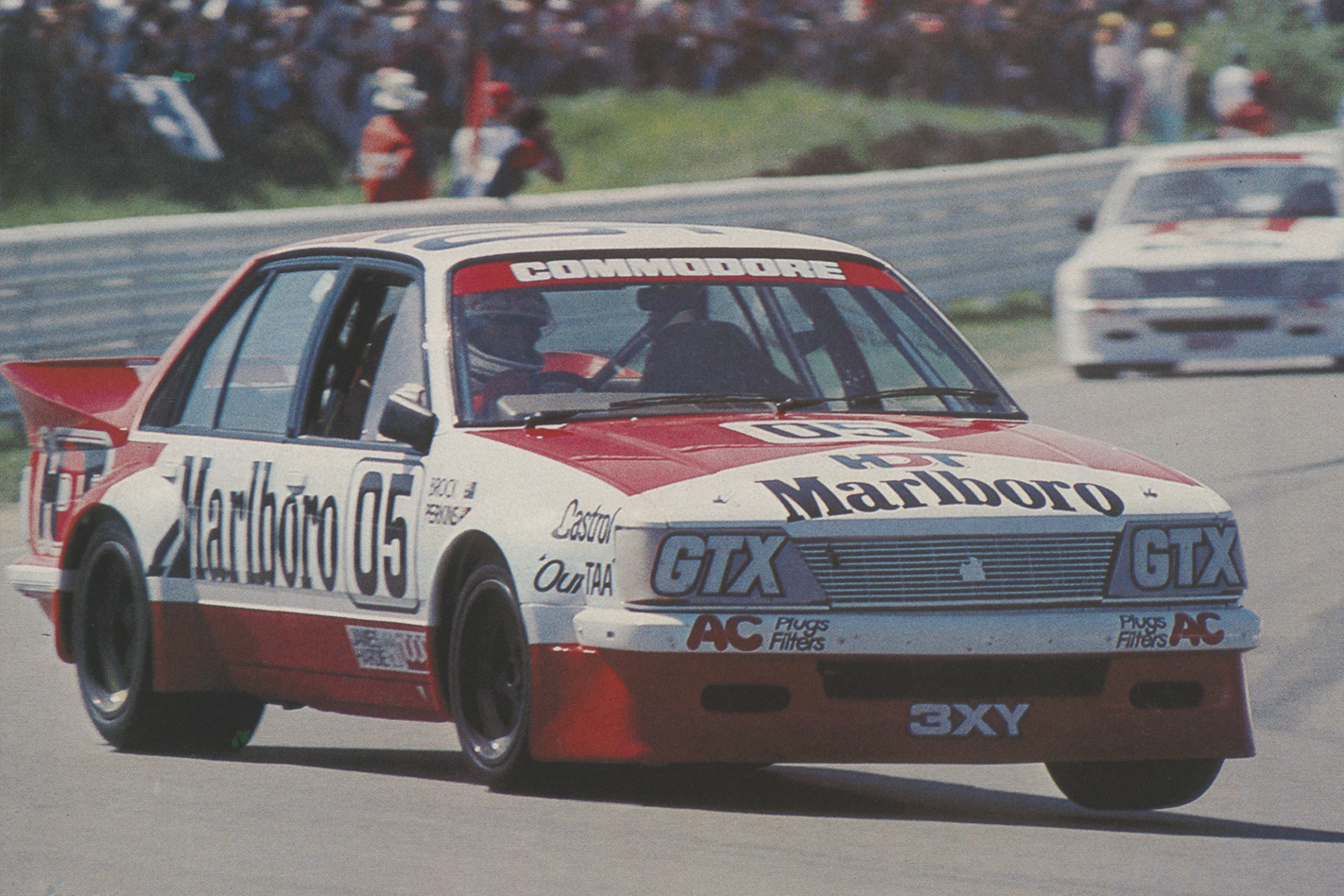
Peter Brock appears from the Marlboro workshop attired in slip-on rain-boots and a driving suit. With his characteristic cup of tea in one hand and a sponsored cigarette in the other, he surveys the sheets of water on pit straight and orders a tyre change.
On wet weather rubber he stays out for 25 minutes then pits, declaring the session a waste of time.
Allan Moffat doesn’t think so. He’s clocked a time some three seconds better than Bartlett’s 1981 wet-weather pole-sitting mark of two minutes 36 seconds. At his press conference later in the day the man is beaming, obviously well pleased. And why not?
If you listen to Commodore punter Allan Grice, the Stuyvesant car has the 1983 James Hardie shot to bits: “We went into the Cutting side-by-side and as soon as we straightened up, he just out-accelerated me. By the time we got to the top of the hill I was out of his slip. He was gone!
So the battle lines are drawn. The animosity grows stronger, a despondent Grice refers to Moffat as “that Canadian member of the New York Yacht Club”.
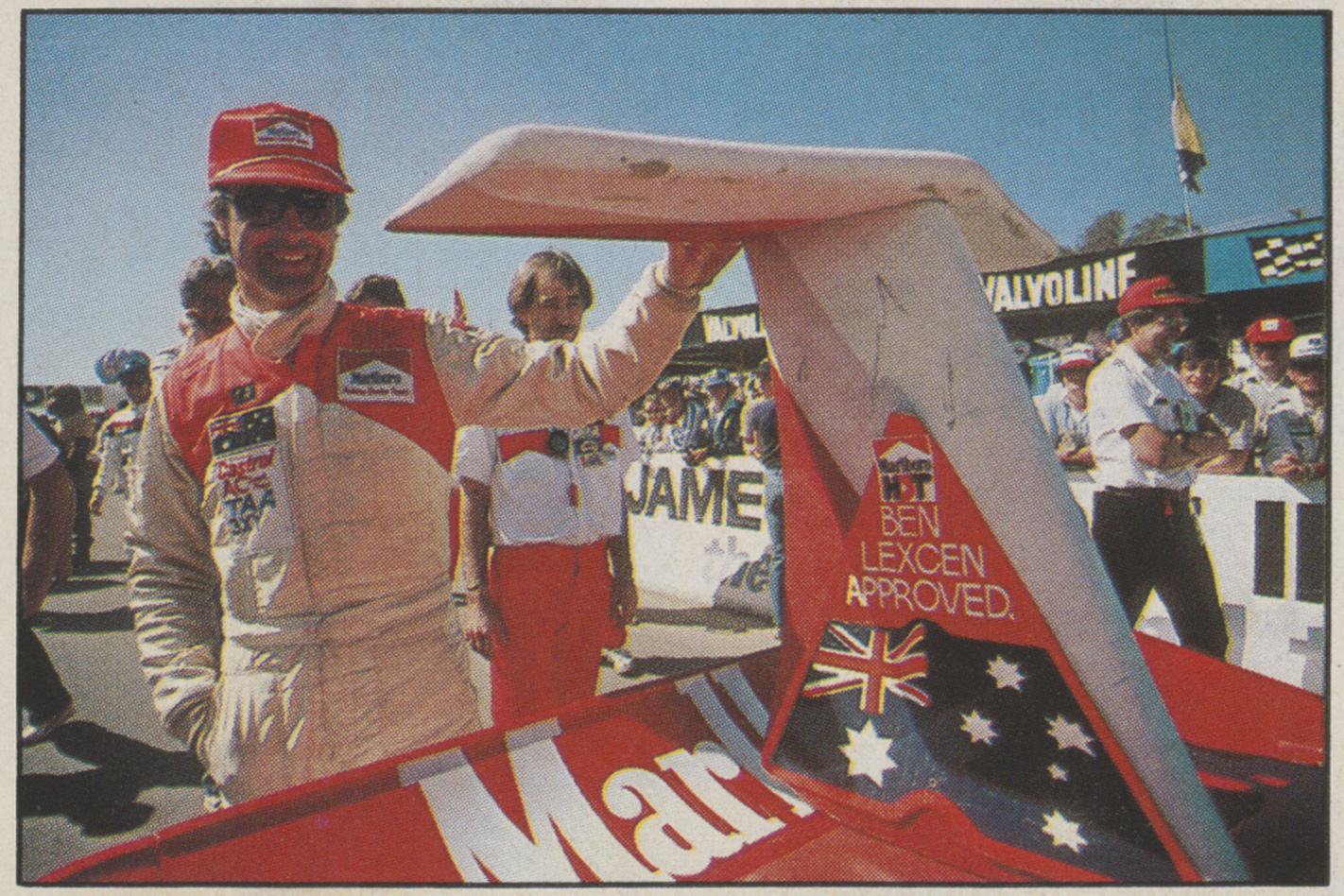
Peter Brock meanwhile has other problems – embarrassing problems. You see his pit counter has been painted with the very famous slogan of a rival cigarette company – and it will be in full view of the television cameras come Sunday.
Taking matters into his own hands, Brock plasters a dozen Marlboro stickers over the offending logo, pausing to chat over developments during practice. He’s a polished performer, this man they call Peter Perfect, totally relaxed and easy-going – a stark contrast to the brooding presence of Moffat.
As the sun breaks through we talk: “I was worried about Moffat before I left Melbourne – I didn’t have to get to Bathurst to know his car went … I saw it at Sandown.
Brock’ s analysis is totally plausible – or so it seems. And his thoughts on the current state of play are equally worthy of note. Of Dick Johnson he says: “He’s more likely, because of the stress on the machinery, to have a problem. Keep in mind his car has never completed 163 laps at Bathurst.”
On the relativity between himself and Moffat: “I still think we can win, if we get our act together totally and don’t have any hitches, we can j-u-s-t win.
“But we must remember we waltzed away with the race last year and CAMS are doing everything in their power to make sure it doesn’t happen again; my concern is that they’ve gone too far.”
Despite the rain – and the fog which closes the circuit for 20 minutes during the afternoon – the Brock team is in good spirits as the drivers sit down for post practice de-brief. They’re a diverse lot. Brock, with the articulate nice guy image which almost makes you forget the tales of his hellraising youth; John Harvey, a more reserved, quietly spoken character; Larry Perkins, the mother hen of the team, given to calling a spade a spade in no uncertain terms. As well as co-driving, he’s responsible for the mechanical preparation of the cars and organising the crew of mechanics, tyre and fuel men. Then there’s Phil Brock alias “Split-pin” – younger brother of Peter – tackling the Mountain for the first time in five years.
They gather in the canvas privacy of their compound with tea and cigarettes. Perkins is assertive, firing questions at the others. It appears the wheel balance is bad on Brock’s car and he wants the gearshift angled closer to him.
The 05 car is locking a front brake at the top of the Mountain which prompts a discussion on braking distances at the end of Conrod. Harvey’s seatbelts are coming undone and Perkins reckons his seat is angled too far forward. He reckons you need “a peg up your arse to locate it properly.”
And tomorrow? “We’ve got to get down to some serious chassis tuning” says Brock.
WEATHER FINE, track good is the news on Thursday morning and the crews have some catching up to do. Brock is out early but obviously doesn’t like the way the Commodore is handling.
He orders the front springs changed because “around here you’ve got to compromise between setting it up for the straights and the bumps while still retaining some sort of roadholding through corners … That’s what I’m trying to do – trying to make the car feel nice.”
He’s chasing balance too, for with big bags on the back the Commodore’s front-end grip is found wanting. So far the team is using race compound Avon tyres on Momo rims, but with some extra chassis tweaks in the afternoon, Brock switches to soft compound Dunlops. The difference is immediate and apparent.
His best morning time of 17.7 drops to a sizzling 15.8 – nearly two seconds inside the 1982 pole-time. Brock is happy and quips to Perkins: “I nearly tipped her on its roof up there, LP. There was just so much grip, my inside wheel must’ve been three feet off the deck!”
But in motor racing there is point … and counterpoint.
At his daily press conference – dubbed the Claytons Conference – Allan Moffat tells us: “Brock shouldn’t be hard to beat at all – providing you’ve got an F111 parked on top of Conrod. There’s no race at the moment. The best I might squeeze out of the little Mazda is an 18.5!”
And still the woe-is-me outpouring continues: “I’ve done a year’s work since I last sat in this room and I’m basically bitching about the same thing I did a year ago. We were a long way from our opposition then, and we’re still that far away.”
Then the bombshell: ” I’ve been so far out-homologated it’s unbelievable.”
But why such a turnaround in just 24 hours? “My hour in the sun was shortlived yesterday, wasn’t it? I couldn’t let the euphoria go, it comes so infrequently I had to grab it while I could”.
Many listened, very few believed. Moffat was foxing they said: take it all with a grain of salt. What we didn’t know was that the fuel injection system he lobbied so hard to get was causing high drama inside the Vatican City. But that is another story, for another day.
For now, we return to the MHDT compound where Peter Brock imparts the wisdom of 15 jousts with the Mountain to a rookie – Adelaide motoring writer Bob Jennings. “The entrance to McPhillamy, Castrol … that area down to Forest Elbow, that’s where all the time is mate. On the rest of it, you’re not going to lose much. If you have a real go through there, compared to doing it nice and neat but still brisk, there’s bloody two seconds.”
Brock is sitting in the back of the team caravan, driving suit rolled down to the waist, the ever present cup of tea in his hand.
It’s the first time we’ve had a chance to talk about anything other than immediate news. Brock responds with practised panache to every question.
How does he approach the week of Bathurst, the culmination of six months’ work? “I try and have a very normal, relaxed week – a bit of sitting around, a bit of chat and a bit of teev, read and a novel, that sort of thing. I don’t like roaring around and seeing too many jokers, dropping in here and there for a social chat.
“As far as I’m concerned I try and make it like a normal week at home – relaxed, with just the team around. That’s good, because if you think of something you can go and find someone and say ‘hey, I just thought of something, why don’t we try this and this’. At Bathurst you can’t afford to lose impetus, even when you’re relaxing. You’ve got to eat, sleep and drink the race … for the whole week.”
“Sometimes it bothers me, sure. But it gets down to a personality thing really; there are some blokes you can cop and others you can’t.”
Does he notice any build up in tension – what the drivers call putting on a race face – as Sunday gets closer?
“I try and not change too much,” is all he says.
It’s time to go. Larry Perkins has finished directing traffic in the workshop. He calls a driver’s de-brief but there are no problems. The MHDT is operating with the precision of a Swiss watch. And tomorrow is the day the cards must be laid face up on the table. For Friday is qualifying day at the Mountain.
THE BIG question at Mount Panorama on the last day of September, 1983 is the strategy of Team Tense – the Peter Stuyvesant Mazda outfit.
Expert opinion says Allan Moffat will run dead (on race rubber and full tanks) to just squeeze himself into the top 10. To run hard and post a good time would be bad for his image and could attract the handicappers for 1984. Or so the experts said.
But the qualifying skirmish begins with Brock and Harvey first out of the flying lap and running in very close company. A tow for two perhaps?
Brock opens with a 17.7, closes with a 15.5, then puts 05 away. He’s a bit tighter this morning is Peter Perfect. He talks, but not in the same flowing, easy way. He sits in a director’s chair at the back of the garage, with Porsche sunglasses shading his eyes.
“Quite frankly, you’re risking your car out there. These people are on line and off line and all you can do is hope to God they stay where they are. I just put in one quick one to qualify us for the race.”
With an ice pack clasped to his head, Grice vents his spleen at what he sees as some very poor wheelcraft on the part of the Ford driver: “I got such an overlap on him that I could look across and see his hands – it was my corner. Then I saw him turn down and I thought, oh shit, and he came straight across into me. The car went into the fence and put the right front wheel into the firewall”.
There are other casualties too – reinforcing Leo Geoghegan’s theory that there are 30 drivers in this country who are totally capable, another 30 reasonably capable, and the rest … have never gone so fast in their lives.
However the Grice incident, the spectacular demise of Jim Keogh and half a dozen other biffs and bingles, are overshadowed by the non-performance of Allan Moffat.
He can do no better than a 20.3 – well adrift of the leaders. In fact well adrift of his 1982 qualifying time of 18.89 set in a 12A car.
The latter only serves to reinforce the foxing strategy. After all, you don’t spend 12 months on chassis and brakes development, fit a bigger engine and fuel injection … then go slower.
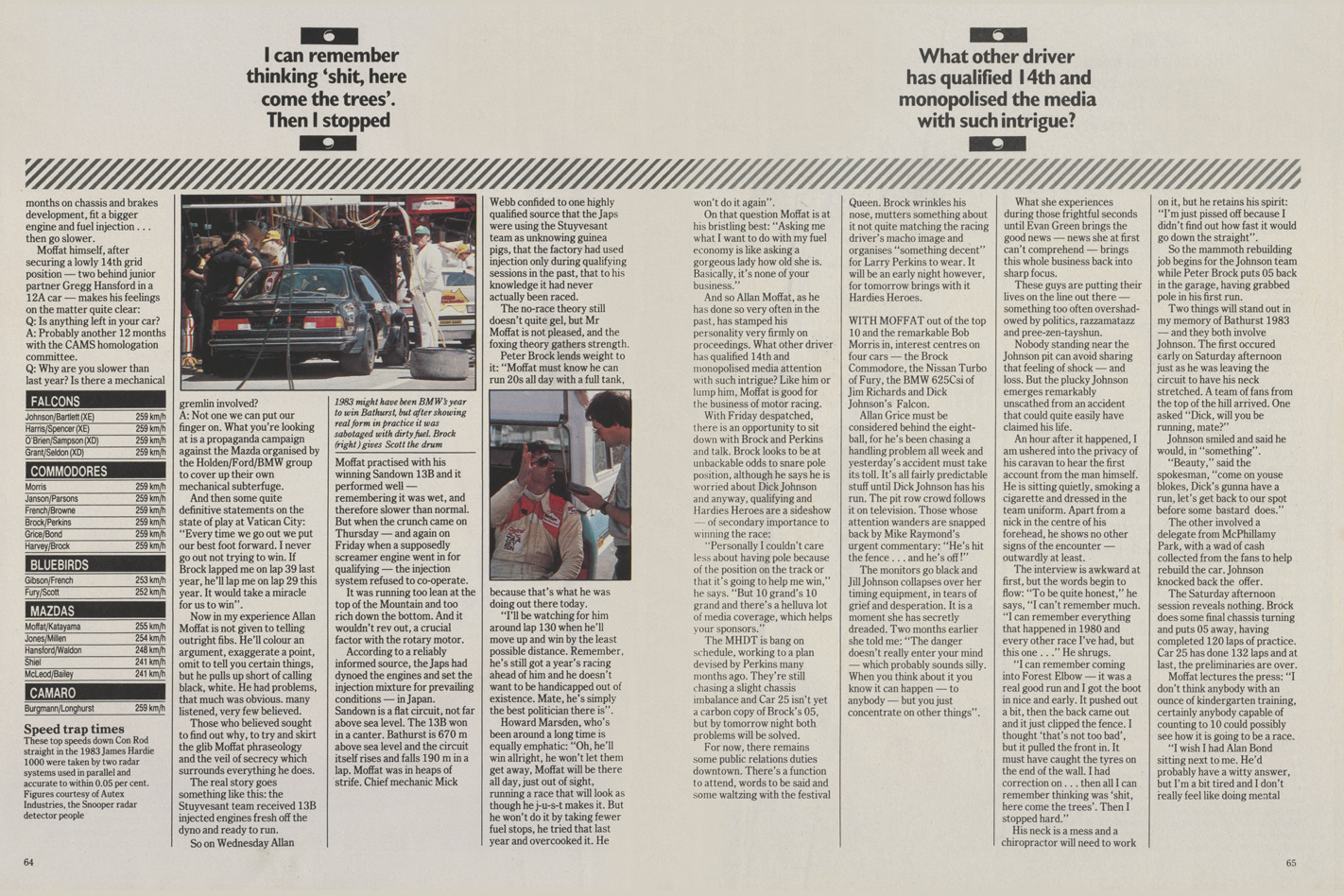
Moffat himself, after securing a lowly 14th grid position – two behind junior partner Gregg Hansford in a 12A car – makes his feelings on the matter quite clear:
- Q: Is anything left in your car?
- A: Probably another 12 months with the CAMS homologation committee.
- Q: Why are you slower than last year? Is there a mechanical gremlin involved?
- A: Not one we can put our finger on. What you’re looking at is a propaganda campaign against the Mazda organised by the Holden/Ford/BMW group to cover up their own mechanical subterfuge.
Now in my experience Allan Moffat is not given to telling outright fibs. He’ll colour an argument, exaggerate a point, omit to tell you certain things, but he pulls up short of calling black, white. He had problems, that much was obvious. Many listened, very few believed. Those who believed sought to find out why, to try and skirt the glib Moffat phraseology and the veil of secrecy which surrounds everything he does.
The real story goes something like this: the Stuyvesant team received 13B injected engines fresh off the dyno and ready to run. So on Wednesday Allan Moffat practised with his winning Sandown 13B and it performed well, remembering it was wet, and therefore slower than normal.
But when the crunch came on Thursday – and again on Friday when a supposedly screamer engine went in for qualifying – the injection system refused to co-operate. It was running too lean at the top of the Mountain and too rich down the bottom. And it wouldn’t rev out, a crucial factor with the rotary motor.
According to a reliably informed source, the Japs had dynoed the engines and set the injection mixture for prevailing conditions – in Japan. Sandown is a flat circuit, not far above sea level. The 13B won in a canter. Bathurst is 670m above sea level and the circuit itself rises and falls 190 m in a lap. Moffat was in heaps of strife. Chief mechanic Mick Webb confided to one highly qualified source that the Japs were using the Stuyvesant team as unknowing guinea pigs, that the factory had used injection only during qualifying sessions in the past, that to his knowledge it had never actually been raced.
The no-race theory still doesn’t quite gel, but Mr Moffat is not pleased, and the foxing theory gathers strength. Peter Brock lends weight to it: “Moffat must know he can run 20s all day with a full tank, because that’s what he was doing out there today.
“I’ll be watching for him around lap 130 when he’ll move up and win by the least possible distance. Remember, he’s still got a year’s racing ahead of him and he doesn’t want to be handicapped out of existence. Mate, he’s simply the best politician there is”.
On that question Moffat is at his bristling best: ”Asking me what I want to do with my fuel economy is like asking a gorgeous lady how old she is. Basically, it’s none of your business.”
And so Allan Moffat, as he has done so very often in the past, has stamped his personality very firmly on proceedings. What other driver has qualified 14th and monopolised media attention with such intrigue? Like him or lump him, Moffat is good for the business of motor racing.
With Friday despatched, there is an opportunity to sit down with Brock and Perkins and talk. Brock looks to be at unbackable odds to snare pole position, although he says he is worried about Dick Johnson and anyway, qualifying and Hardies Heroes are a sideshow – of secondary importance to winning the race: “Personally I couldn’t care less about having pole because of the position on the track or that it’s going to help me win,” he says. “But 10 grand’s 10 grand and there’s a helluva lot of media coverage, which helps your sponsors.”
The MHDT is bang on schedule, working to a plan devised by Perkins many months ago. They’re still chasing a slight chassis imbalance and Car 25 isn’t yet a carbon copy of Brock’ s 05, but by tomorrow night both problems will be solved.
For now, there remains some public relations duties downtown. There’s a function to attend, words to be said and some waltzing with the festival queen. Brock wrinkles his nose, mutters something about it not quite matching the racing driver’s macho image and organises “something decent” for Larry Perkins to wear. It will be an early night however, for tomorrow brings with it Hardies Heroes.
WITH MOFFAT out of the top 10 and the remarkable Bob Morris in, interest centres on four cars – the Brock Commodore, the Nissan Turbo of Fury, the BMW 625Csi of Jim Richards and Dick Johnson’s Falcon.
Allan Grice must be considered behind the eightball, for he’s been chasing a handling problem all week and yesterday’s accident must take its toll. It’s all fairly predictable stuff until Dick Johnson has his run. The pit row crowd follows it on television. Those whose attention wanders are snapped back by Mike Raymond’s urgent commentary: “He’s hit the fence … and he’s off!”
What she experiences during those frightful seconds until Evan Green brings the good news – news she at first can’t comprehend – brings this whole business back into sharp focus. These guys are putting their lives on the line out there – something too often overshadowed by politics, razzamatazz and pree-zen-tayshun.
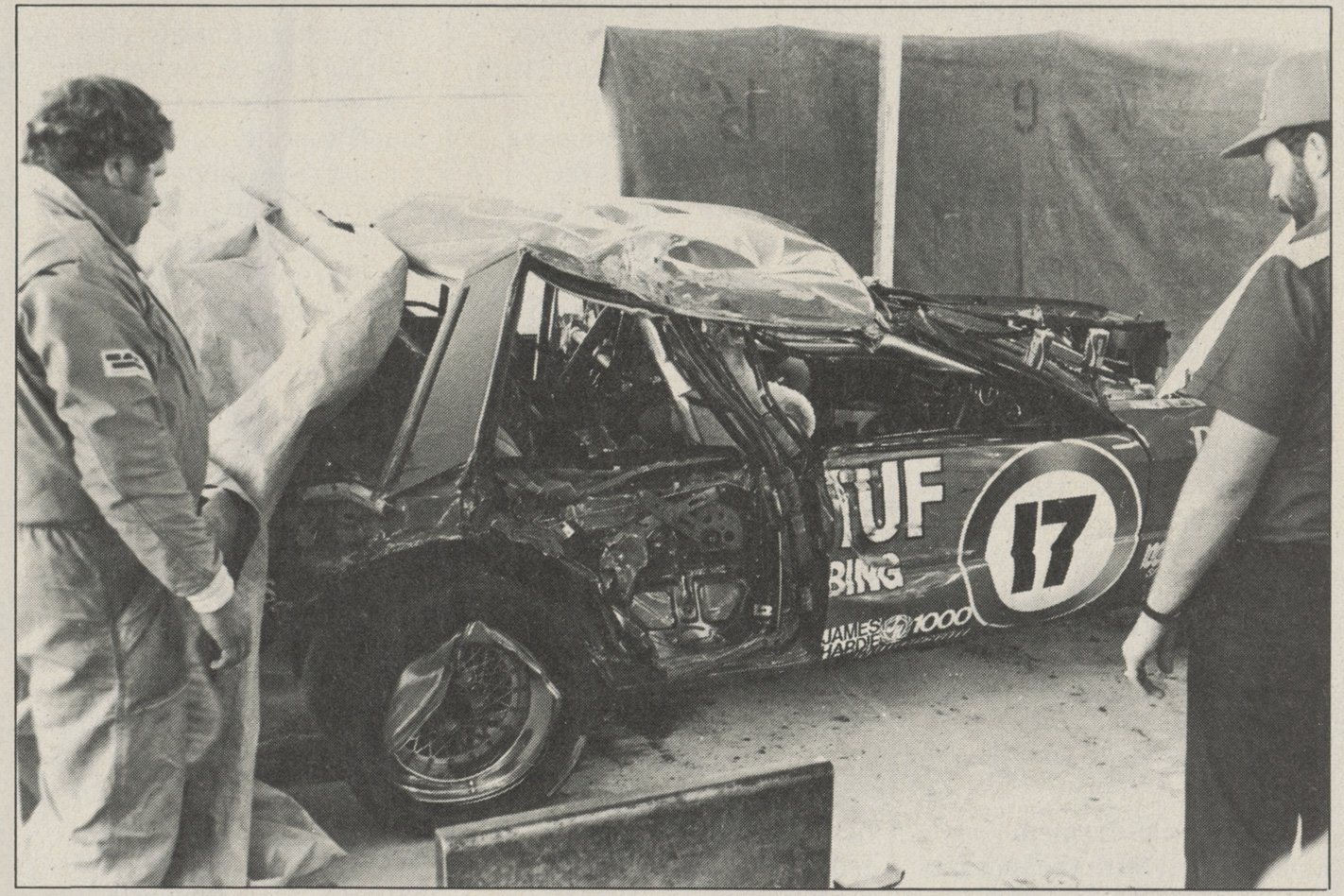
Nobody standing near the Johnson pit can avoid sharing that feeling of shock – and loss. But the plucky Johnson emerges remarkably unscathed from an accident that could quite easily have claimed his life.
An hour after it happened, I am ushered into the privacy of his caravan to hear the first account from the man himself. He is sitting quietly, smoking a cigarette and dressed in the team uniform. Apart from a nick in the centre of his forehead, he shows no other signs of the encounter – outwardly at least.
The interview is awkward at first, but the words begin to flow: “To be quite honest,” he says, “I can’t remember much. “I can remember everything that happened in 1980 and every other race I’ve had, but this one … ” He shrugs.
“I can remember coming into Forest Elbow- it was a real good run and I got the boot in nice and early. It pushed out a bit, then the back came out and it just clipped the fence. I thought ‘that’s not too bad’, but it pulled the front in. It must have caught the tyres on the end of the wall. I had correction on … then all I can remember thinking was ‘shit, here come the trees’. Then I stopped hard.”
His neck is a mess and a chiropractor will need to work on it, but he retains his spirit: “I’m just pissed off because I didn’t find out how fast it would go down the straight”. So the mammoth rebuilding job begins for the Johnson team while Peter Brock puts 05 back in the garage, having grabbed pole in his first run.
Two things will stand out in my memory of Bathurst 1983 – and they both involve Johnson. The first occurred early on Saturday afternoon just as he was leaving the circuit to have his neck stretched. A team of fans from the top of the hill arrived. One asked “Dick, will you be running, mate?” Johnson smiled and said he would, in “something”. “Beauty,” said the spokesman, “come on youse blokes, Dick’s gunna have a run, let’s get back to our spot before some bastard does.”
The other involved a delegate from McPhillamy Park, with a wad of cash collected from the fans to help rebuild the car. Johnson knocked back the offer. The Saturday afternoon session reveals nothing. Brock does some final chassis turning and puts 05 away, having completed 120 laps of practice. Car 25 has done 132 laps and at last, the preliminaries are over.
Moffat lectures the press: “I don’t think anybody with an ounce of kindergarten training, certainly anybody capable of counting to 10 could possibly see how it is going to be a race. “I wish I had Alan Bond sitting next to me. He’d probably have a witty answer, but I’m a bit tired and I don’t really feel like doing mental repartee with you.”
And so the main event. Johnson makes it after a rebuild on the Andrew Harris Falcon, which had the fans six and seven deep outside his workshop all night. The atmosphere was hushed, almost religious, as they peered intently through windows, angled for a glimpse through the doors.
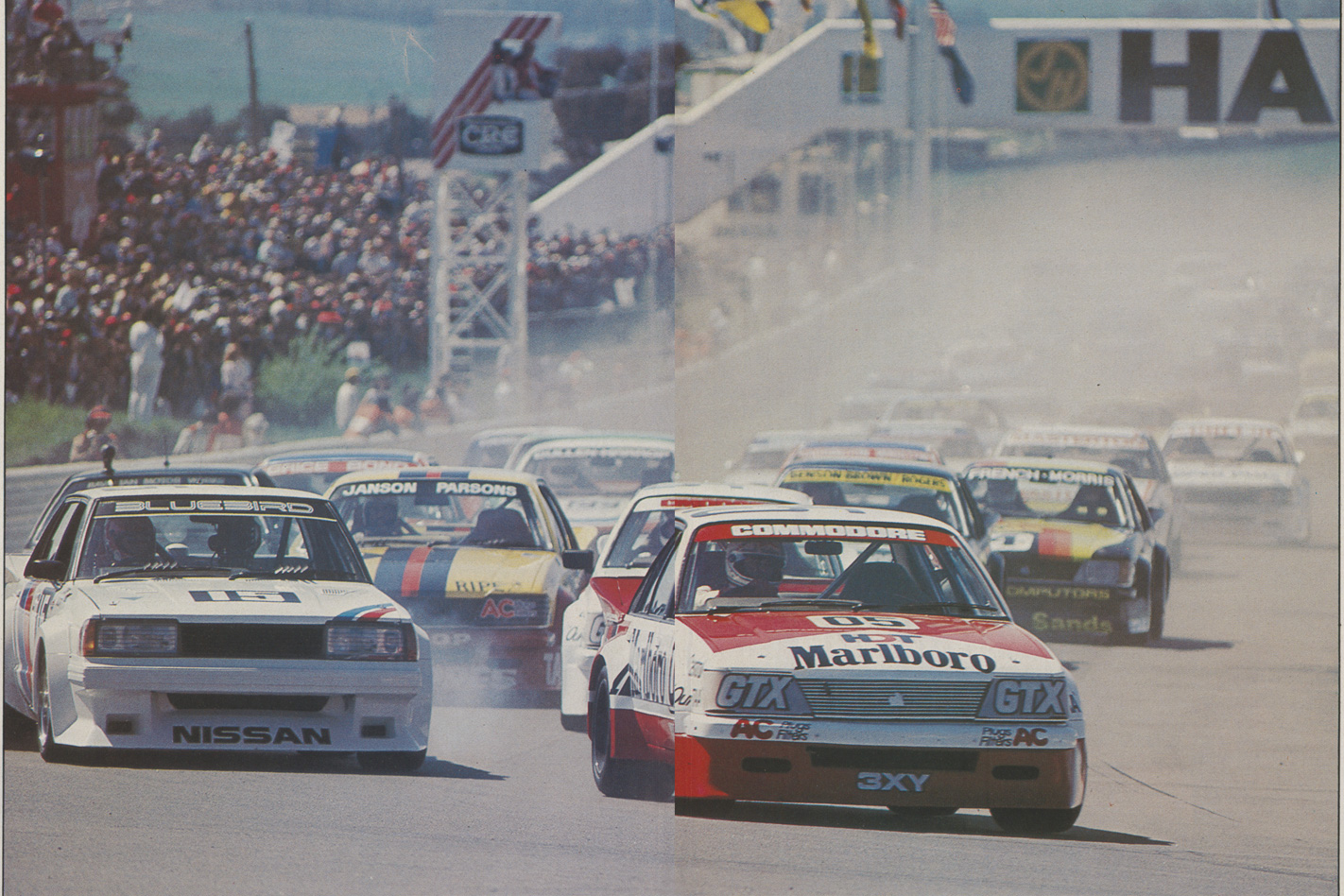
Brock, as expected, gets away with a flourish and opens up an early lead. In the space of two laps, most of his opposition evaporates. Fury is gone with a blown gearbox, Richards pits with metal filings clogging the injectors – sabotage, says Frank Gardner – and Moffat pulls up to ninth.
By lap 10 anyone with an ounce of kindergarten training can see there is no race. Brock will simply devastate the field. But then the engine in 05 detonates like a hand grenade and the black-eyed Marlboro man is back in the pits with a contingency plan.
The papers are already signed for he and Perkins to take over car 25. It’s perfectly legal, but something the “viewers at home” can’t quite comprehend. Brock says: “We’ll get the second car up there and cracking, but it’s difficult to see how the race will pan out. I think Moffat is capable of staying with us. I’ll just have to try and re-establish a gap”.
So, on lap 20 Harvey gets the IN signal and 32 seconds after he pits, Brock roars back out in Car 25. As he later said, it felt “wonky”. “It wasn’t horrendous, but after a couple of laps I thought to myself, this car’s not going to finish. It was vibrating when I left the pits, pulling to the right and the brake balance was a bit dodgy.”
But Peter Perfect drove a percentage race and his pit crew backed him magnificently. His next three stops, two of which involved driver changes, were done in 31 seconds, 32 seconds and finally, 37 seconds.
Moffat led briefly, but was let down by tardy pit stops. The final margin was 163 seconds, or a second per lap. Harvey contended the Marlboro team made up 60 seconds alone with slicker pit work. But we shall never know what the margin might have been as Brock eased off, content to keep Moffat in sight. And Moffat also conserved his car.
Brock rattled off a couple of quick ones towards the finish, but the race had been won between laps 21 and 57. The rest was a formality. Just as it has been at Bathurst for too many years now. How long is it since we’ve had a close finish? Brock won it by a lap in ’78, six laps in ’79, a lap in 1980 – we had the 740 km race in 1981 – and a further on lap margin in 1982. But Bathurst is Bathurst and the fans will continue the annual pilgrimage. Perhaps.
As Allan Grice put it so succinctly: “I think this event will always have it. It’s like the Melbourne Cup. It doesn’t matter if a horse gets out and wins by 20 lengths, it’s still the Melbourne Cup.”
Dick Johnson’s bitter luck continued after the race had run its course. Fifty kilometres out of Bathurst, a towball sheared on a borrowed truck driven by a team member. The rig, with the remains of Car 17 on the trailer, rolled and was destroyed.
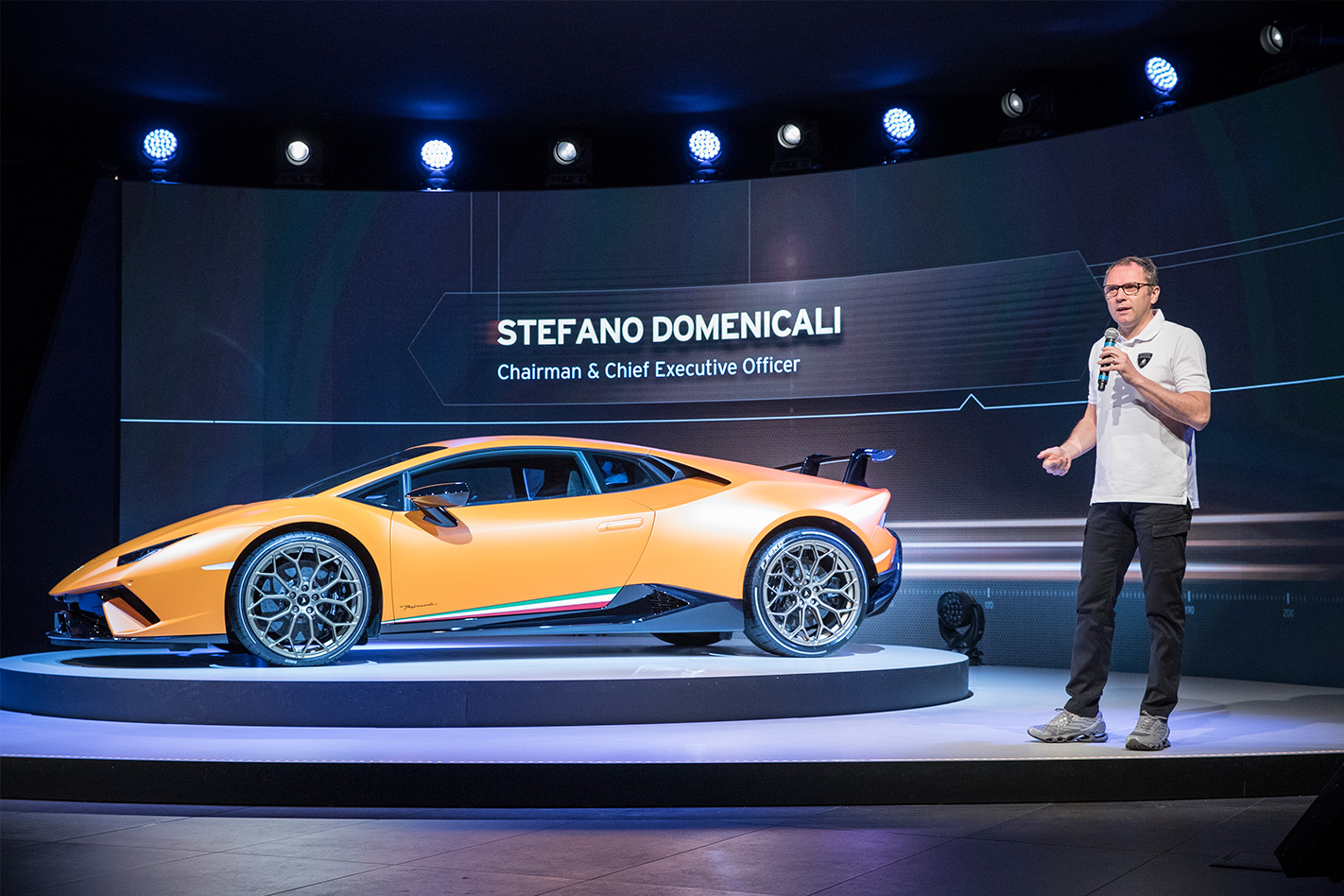
For a moment I wonder if Stefano Domenicali is really the right guy to be leading Lamborghini, one of the world’s most extrovert carmakers.
If you have ever daydreamed of returning to your old school in triumph and finally exorcising the long-buried hurt of being passed over for sports teams, ignored by the opposite sex, and told you’ll never amount to much, with a display of your subsequent success (please say it’s not just me) – well, this arrival would do nicely.
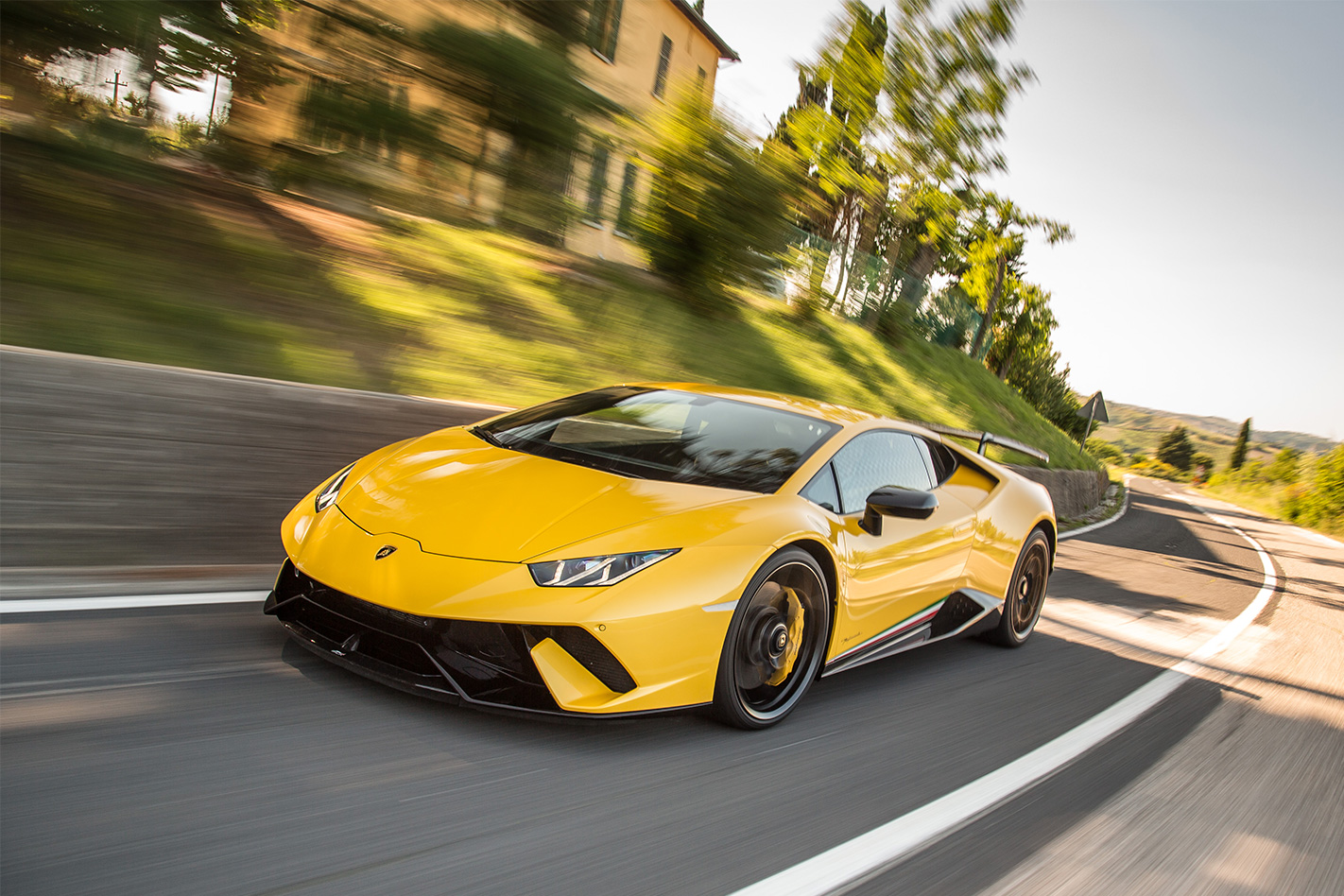
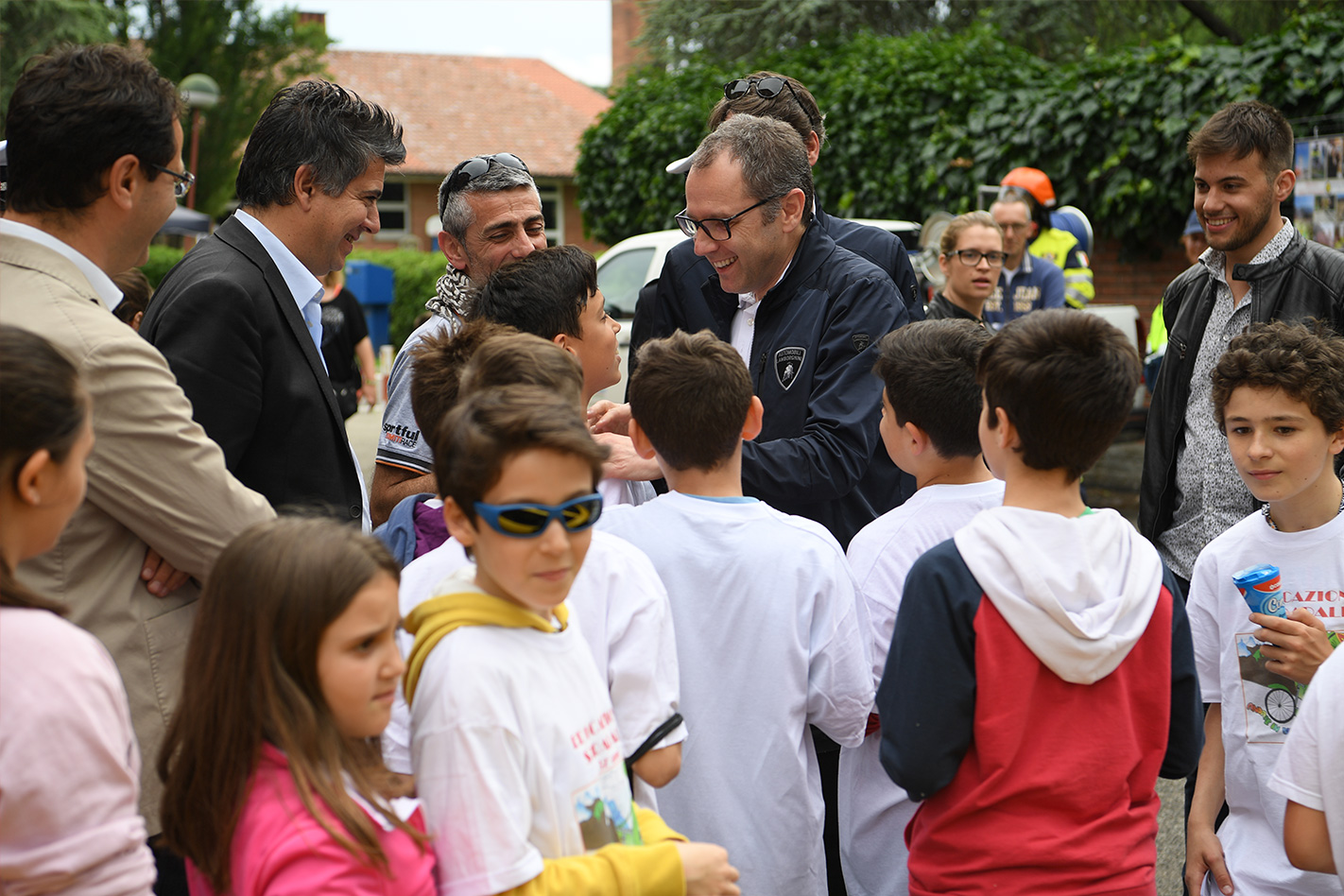
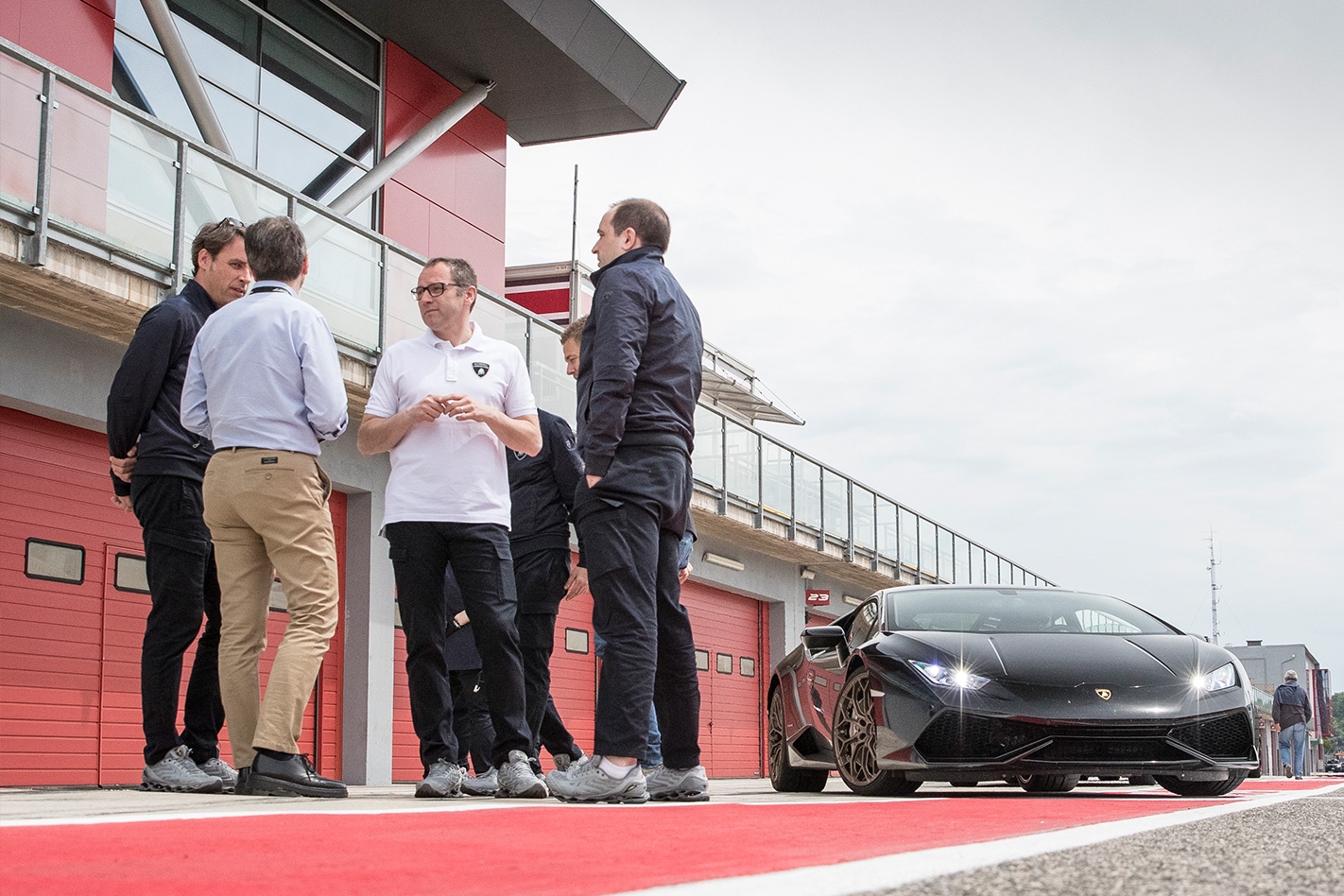
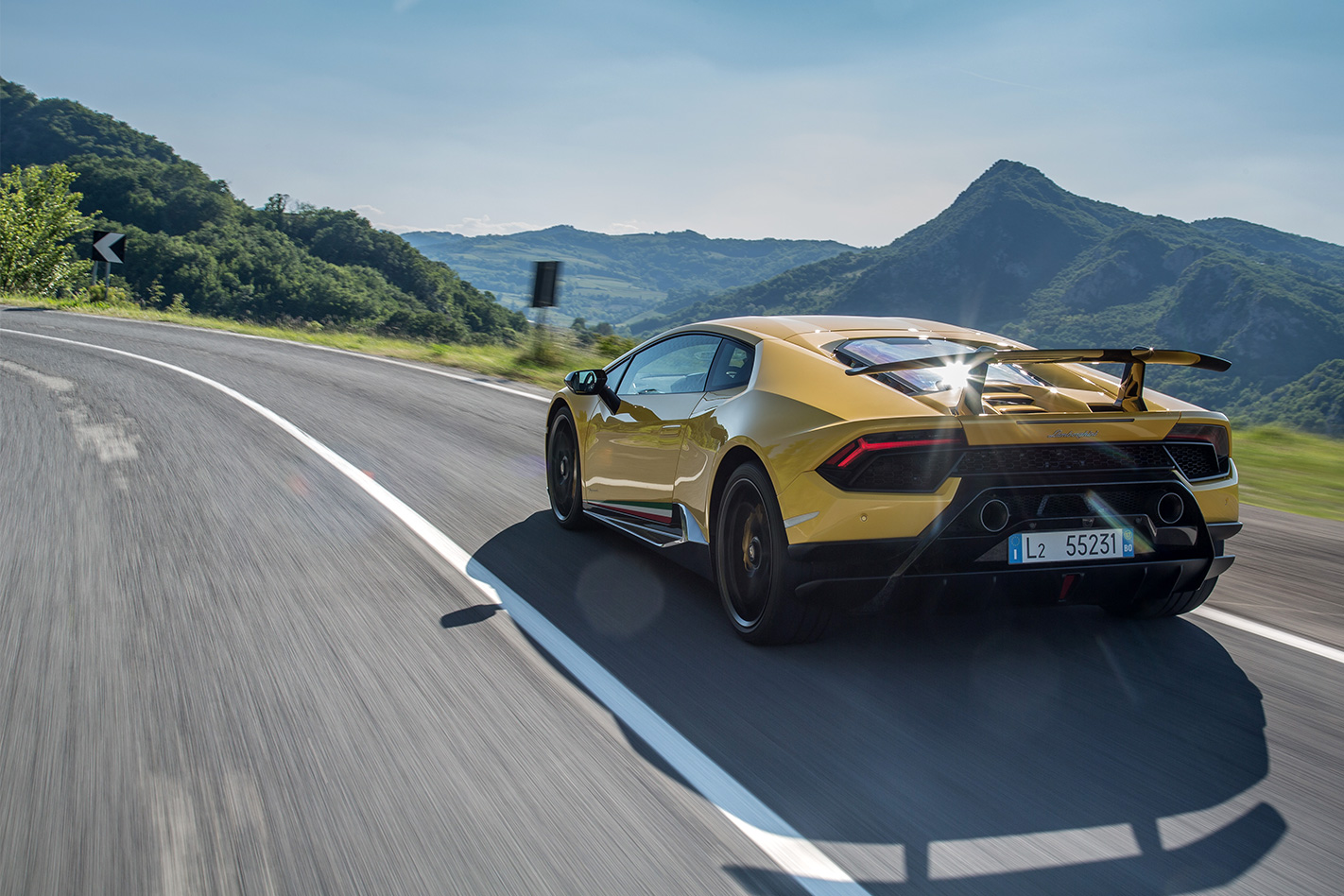
Stefano arrives at his old school in Imola in a yellow Lamborghini Huracan Performante with a police escort. The school is having a road-safety day and Stefano is the guest of honour.
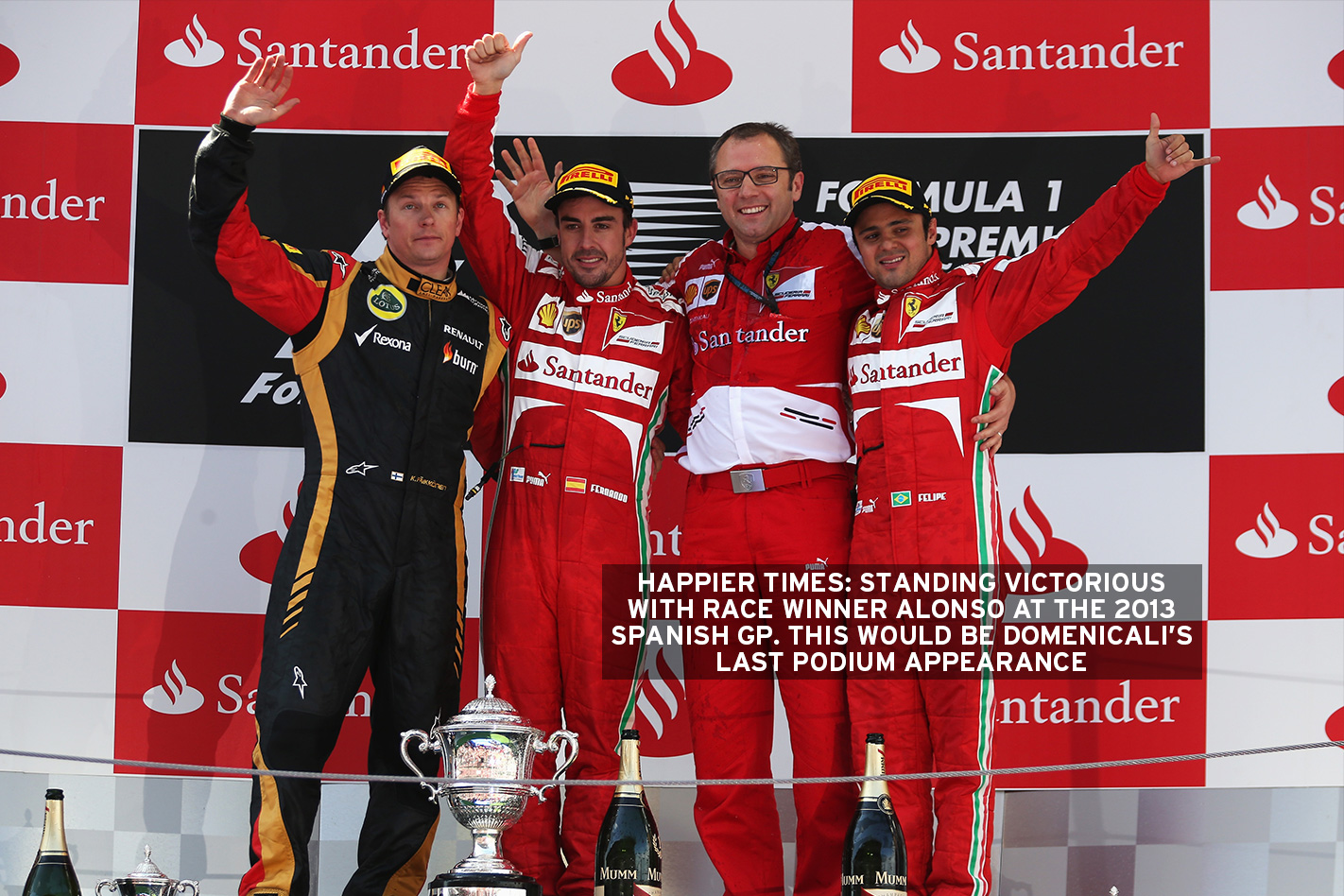
For seven years he led what is effectively the Italian national Formula 1 team and was a constant presence on their televisions, on the pit wall or in his typically humble, cooperative post-race interviews.
He leans towards me in the passenger seat, and touches my knee. “You know, I’m not comfortable with being the centre of attention. I don’t like it when the focus is so much on me. This is really their day. And I don’t want to run over a child’s foot. Especially today.”
He starts to relax once we park. And then, to mark his arrival, the town band strikes up. But once he’s out of the car, you see that he’s exactly the right person to be leading Lamborghini.
We do most of our talking back at the Imola circuit, where he is launching the Performante to the world’s motoring media, in a quiet room overlooking the pit lane.
“I was born here. I remember as a child coming to see races of bikes and cars here because the circuit is in the centre of town. I had the enthusiasm of all the kids that were born here. I didn’t miss a single race.
“In high school on race days I worked here. I was the guy who went between the organisers and the teams, and I was there in the middle of the trucks and I knew everyone. I lived a lot of moments here. I remember all the racing. I remember incredible times with the 200 mile-an-hour motorbikes with Kenny Roberts and Barry Sheene. And then I remember all the Formula 1 races. I remember seeing Villeneuve and Pironi, and unfortunately I was here when Ayrton Senna died. All the memories are here. But I would never expect to change side from the passionate guys that were cheering and asking for autographs, to be the guy leading the Ferrari team.”
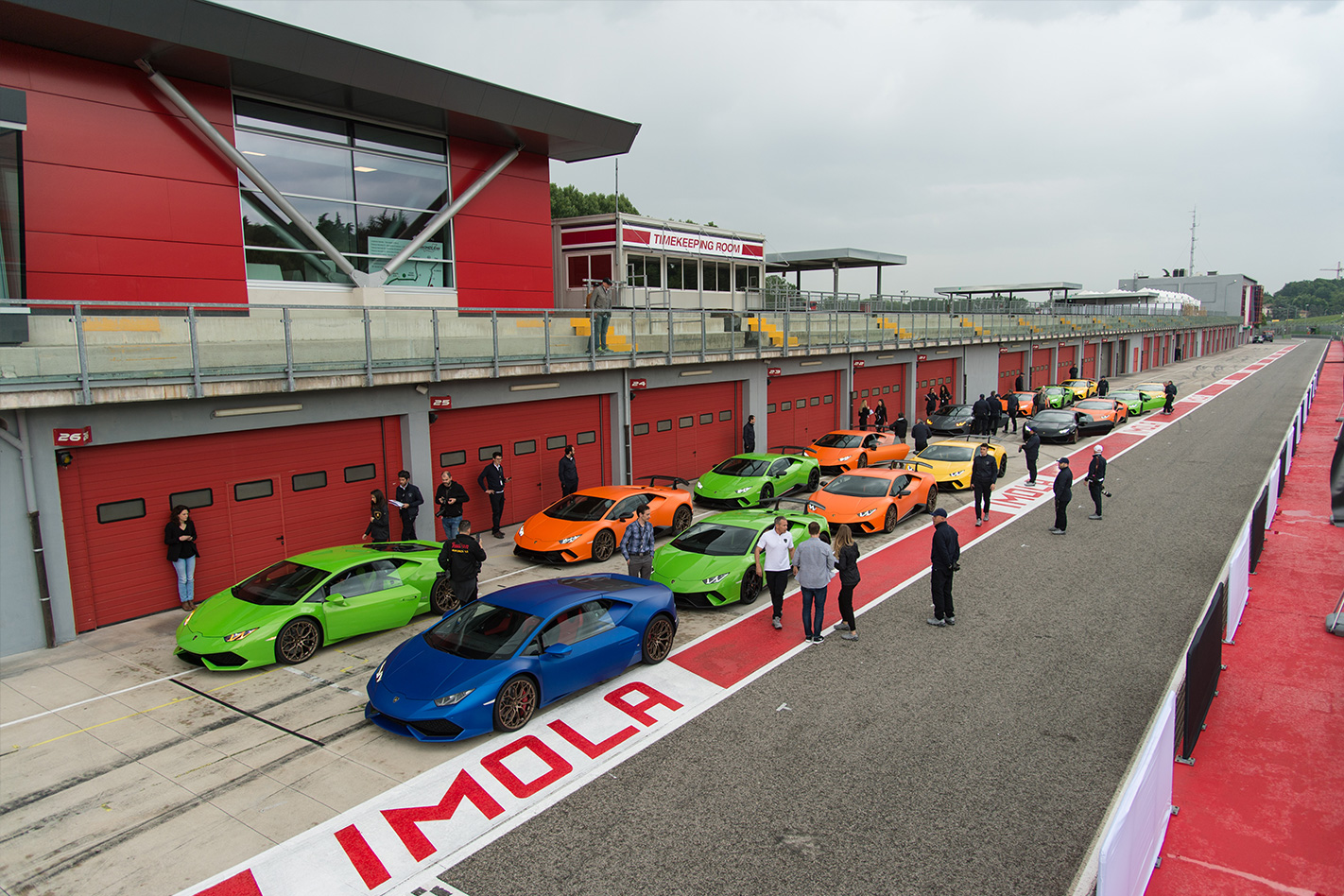
But those childhood memories don’t include the extraordinary road cars that have long come from his region, and which he now makes.
“Sometimes when you are inside the hurricane – and I don’t mean the Huracan, I mean a real tornado – you don’t think about it. I have to be honest: in that moment, I was not thinking about it. I thought it was normal. Then the more I was living around the world, the more I had this appreciation, but during my teenage period I was not really perceiving that as something incredible.”
His office might have been close to home but he certainly travelled, to every part of the world that F1 attempted to colonise in his 23 years with Ferrari.
The last seven were as Team Principal and were not Ferrari’s finest with only one championship win, but he was immensely popular and clearly able.
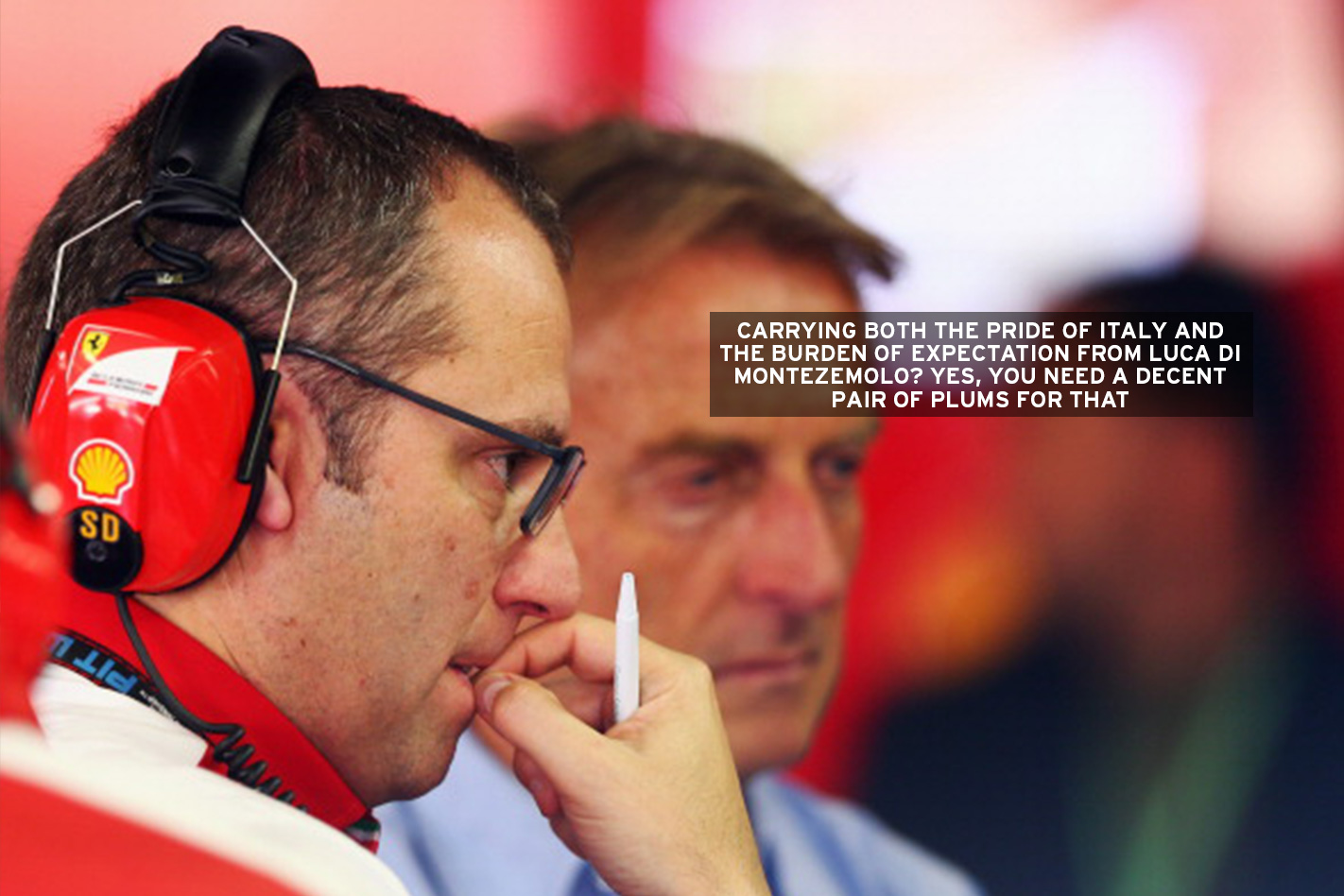
He throws up a similar smokescreen when asked about that time now, but of course he was examining an Audi F1 entry, with an engine supply deal for Red Bull as the first step. When it became clear that the cost of winning the championship would be too great and the emissions crisis hit, he was made CEO of Lamborghini.
He started in March last year. Italian Stefano replaced German Stephan, and the two couldn’t be more different. Stephan Winkelmann was one of those expatriate German car bosses who go native. He cultivated the look and manner of an Italian business prince like Agnelli or di Montezemolo. His trouser cuffs were always cut to brush the tops of his shoes, in the Italian fashion. He out-Italianed the Italians and was not universally popular, but he left Lamborghini in sensational shape, with record sales, profits and turnover.
I first saw Italian Stefano as I disgorged from a bus at the circuit that morning with a bunch of other hacks. A slight figure wearing the staff uniform of white polo shirt, black trousers, and Lamborghini trainers was darting between the Performantes lined up for the drive program, as if checking them.
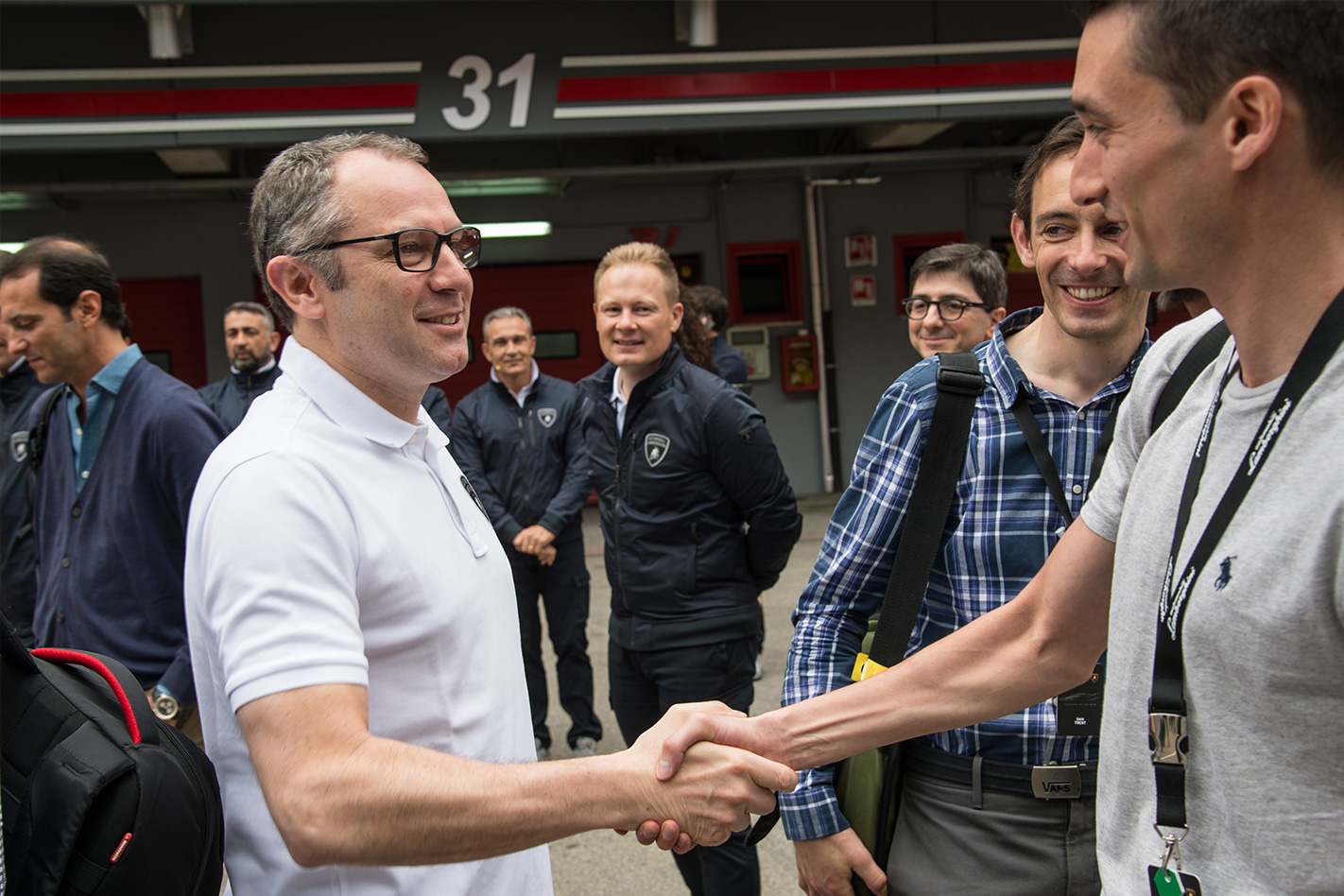
He skipped over, shook us all by the hand and led us up to a track briefing, which he delivered in English and without notes before clapping his hands and saying, “let’s go and have fun.”
His hair has been cut, not styled. He hasn’t been near a sunbed. Like Mark Zuckerberg with his permanent grey T-shirt, you sense that Domenicali’s attention is focused solely on his work and not his personal image.
He spent most of his working life in a uniform as part of a team and plainly doesn’t see the need to change that now he’s a CEO. But aren’t running an F1 team and a carmaker utterly different activities?
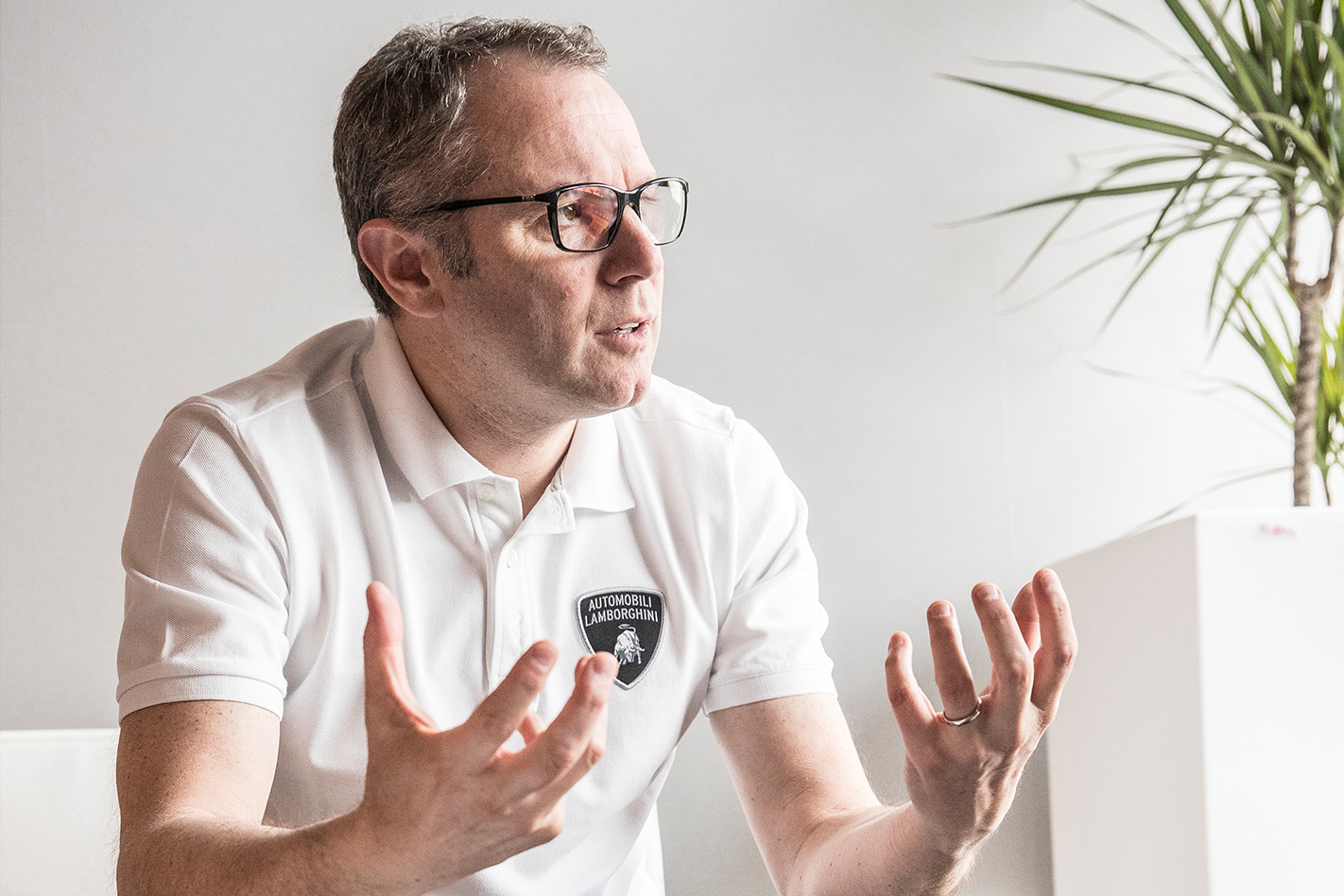
“From an F1 team to super-sports cars, for sure you have to know more elements that were natural in my previous experience. So I need to be humble. I always try to apply my maximum approach in the areas that are out of my comfort zone. To work on things that I already know would be much easier because I can do it with one eye closed and one eye open. That would be wrong. These things I try to delegate even more. I try to focus on the things that I need to learn. You have to remember you are not the king. You do not know everything. That would be the killer.”
Audi plainly has faith in his ability to learn on the job. Lamborghini’s turnover will soon exceed a billion euros. Its 3500-car output will double with the launch in December of the Lamborghini Urus SUV.
Eventually, Stefano thinks it will treble. He hasn’t been asked just to caretake a stable business. He has to guide Lamborghini through a period of steroidal expansion, with all the attendant risks to its image and the quality of its cars. His instinctive connection with his staff will help.
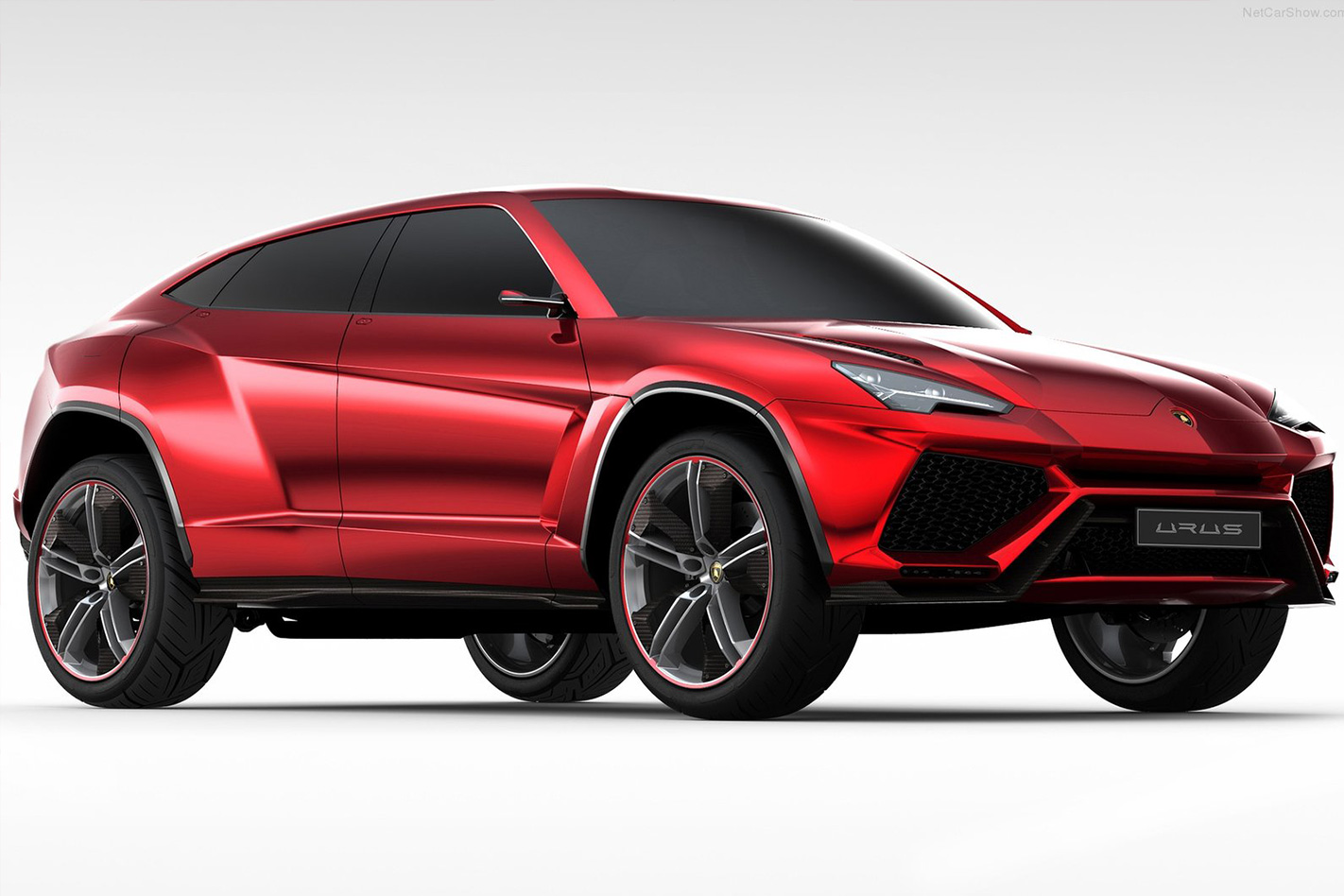
The first new Lamborghini he could still influence was the Performante we’re driving, and he tells me he did make some changes. But it’s a sideshow compared to the transformative Urus. The first pre-production cars are about to roll out of Sant’Agata.
“I wish I could show it to you now. It will be very sporty, very good sound, very great at driving, with a cool design. In a segment where everyone is present, we need to be different, so we have made something with all the values of our super-sports cars. This is fundamental. We are going to give a push to the extreme part of the segment. I’m expecting that our competitors will react to it, and look at how this market can grow. There is a lot of potential there.”
There won’t be a Performante version of the Urus: Domenicali says its performance will already be sufficiently extreme for an SUV. And while Urus will debut turbocharging for the Lamborghini brand, Domenicali remains attached to natural aspiration and the V12 engine in particular. There’s life in it yet, he believes, and it provides both a reference point for the brand and a key point of difference to its rivals.
Later, Lamborghini will use one-off or limited-run models like the Veneno to introduce new propulsion technology and prepare us for its introduction on its standard cars.
By 2025 or 2030, Lamborghini could be making 10,000 cars a year, but growth will come from additional models: first the Urus, then maybe the 2+2 or crossover. Domenicali says the whole portfolio will only grow at the same rate as the segments it is present in, so Huracans and Aventadors (and their replacements) will not suddenly become commonplace.
“We need to be different. If we are different, we will be successful. The risk is to be diluted, and we are small. An ant who wants to fight against the elephant, either it’s quick, or it has a problem.”
Unprompted, he denies again that his move to Lamborghini indicates that VW still plans to enter F1. The costs just don’t stack up. But Domenicali remains the head of the FIA’s single-seater commission, and if he encourages changes to the formula to make it more affordable he might yet find himself competing with his old employer on road and track.
“I spent half of my life with Ferrari. I have been here just a year and a couple of months. It seems like yesterday, it seems like life, I don’t know. I am very proud of my time with Ferrari. I have a fantastic relationship with the people at Ferrari still, because it’s stupid not to do it like that. It’s not my character. We need to have the inspiration of them, but only to make sure we are different. The biggest mistake would be to copy.”
“Actually with this car, it’s super easy. You get out from the circuit at Rivazza. Get straight over there into the hills. Then you go back on the other side to Dozza, a little village, have a coffee. Don’t worry about the clouds. If they are on that side, it will not rain.”
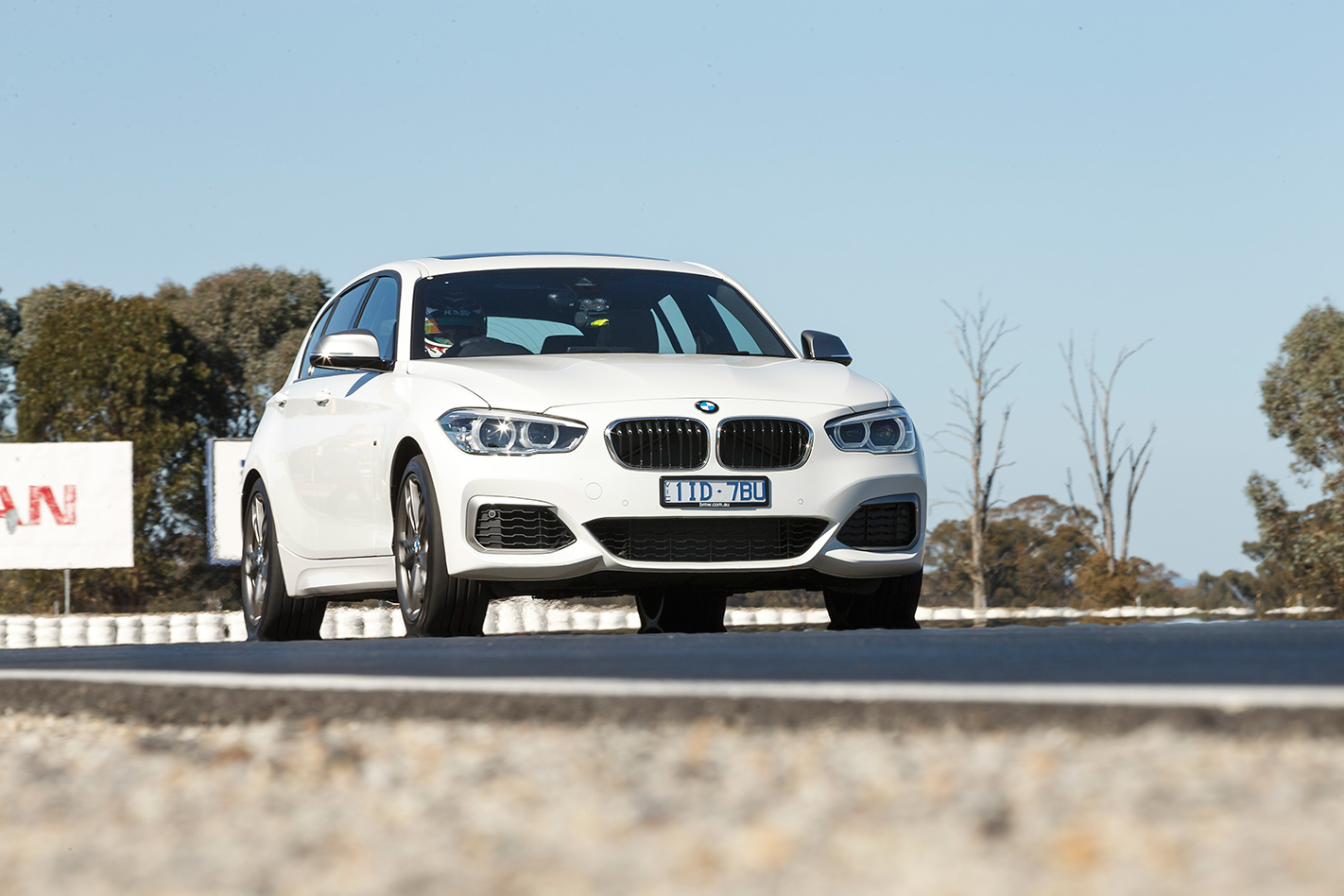
The thing about the M140i is it makes purists uneasy. It’s that M badge they’re fiercely protective over, and for good reason.
The letter was once reserved for the company’s finest, not it’s cheapest performance cars. Now, desperate to lure as many new buyers as possible, BMW’s M Performance 1 Series proves things have changed.
Think of the new sub-brand as a stepping stone, like Audi’s S badge, and perfect Bang For Your Bucks fodder at less than $65K. Sure, it looks like a Toorak Nan’s runabout, however, underneath its boxy body is BMW’s latest weapon. Pinched from its new modular engine family, a new turbo 3.0-litre inline-six puts another 10kW/50Nm on the tin.
The car’s angle tweaks a few degrees under full throttle at low speeds, but once it’s off, acceleration is sweaty palm, eye-widening stuff. It erupts like a V2 rocket, and at the strip’s end carries an extra three clicks on the Holden Commodore SS-V Redline Ute.
And that’s pushed by a 6.2-litre V8 with a nudge over 300kW. But the BMW’s engine isn’t all brawn, it’s a refined unit. As thrust surges down low and builds into a heady charge by 6000rpm, revs rise so freely the 1500rpm gap from its power-peak to the 7000rpm redline vanishes in a blink.
There’s no suspension upgrade accompanying the extra power. So the 245mm-wide rear Michelins struggle to manage in anything but a dry, straight line, instead relying on a measly inside-wheel braking system to quell single spinners. Yep, that’s right, still no LSD.
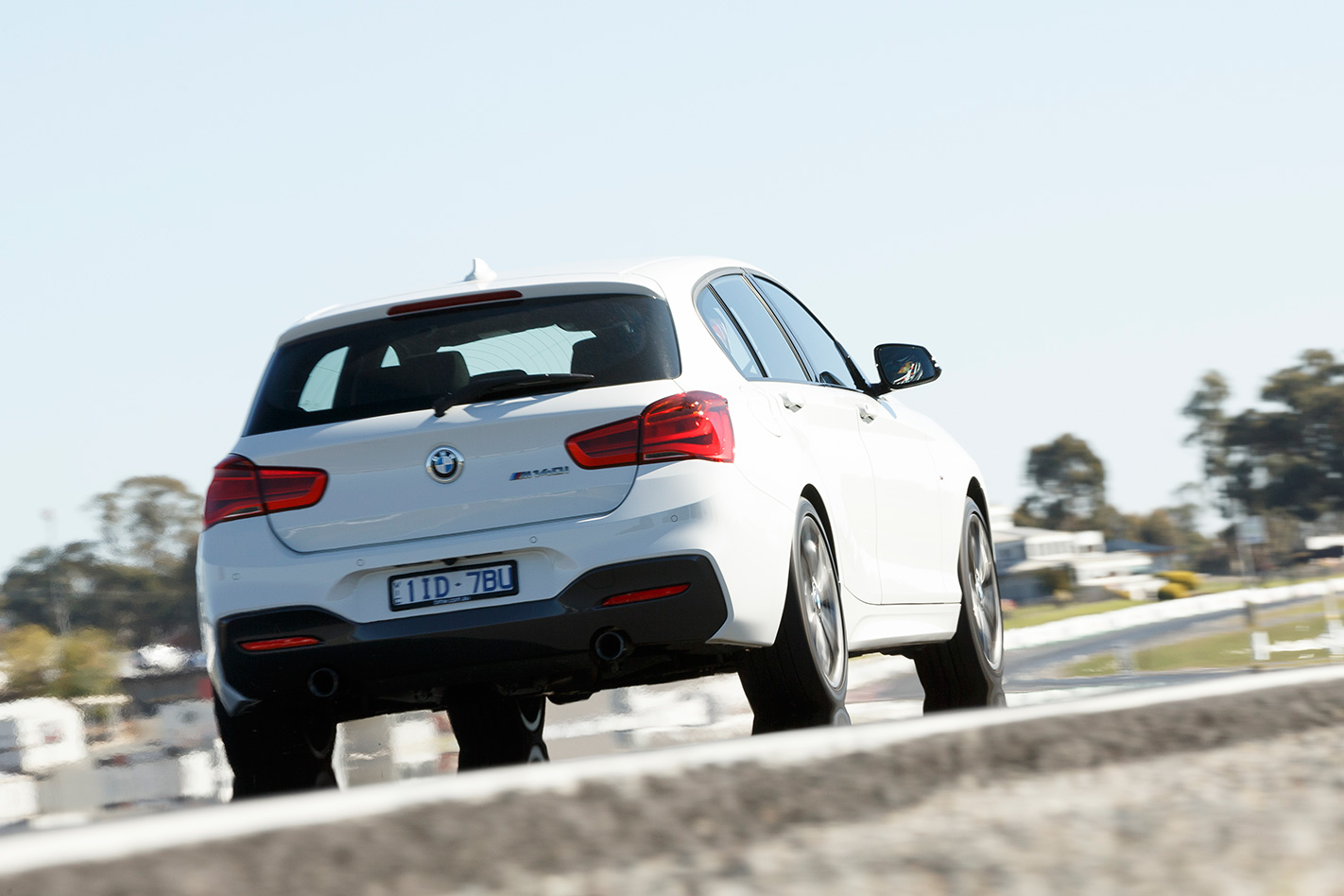
Then again, its job would be a little like trying to plug a dam with a cork. You really have to wrestle a good laptime from it, as the variable steering doesn’t tell you much on the way into the corner, and it’s clear the M140i could do with a sharper front-end.
The brakes, while up to the abuse, could do with more feel under pump. There are piles of mid-corner grip and it rewards clean driving. And despite a slight lack of feedback and poise, the BMW is seriously quick. That laptime, for one, is a huge surprise and achievement.
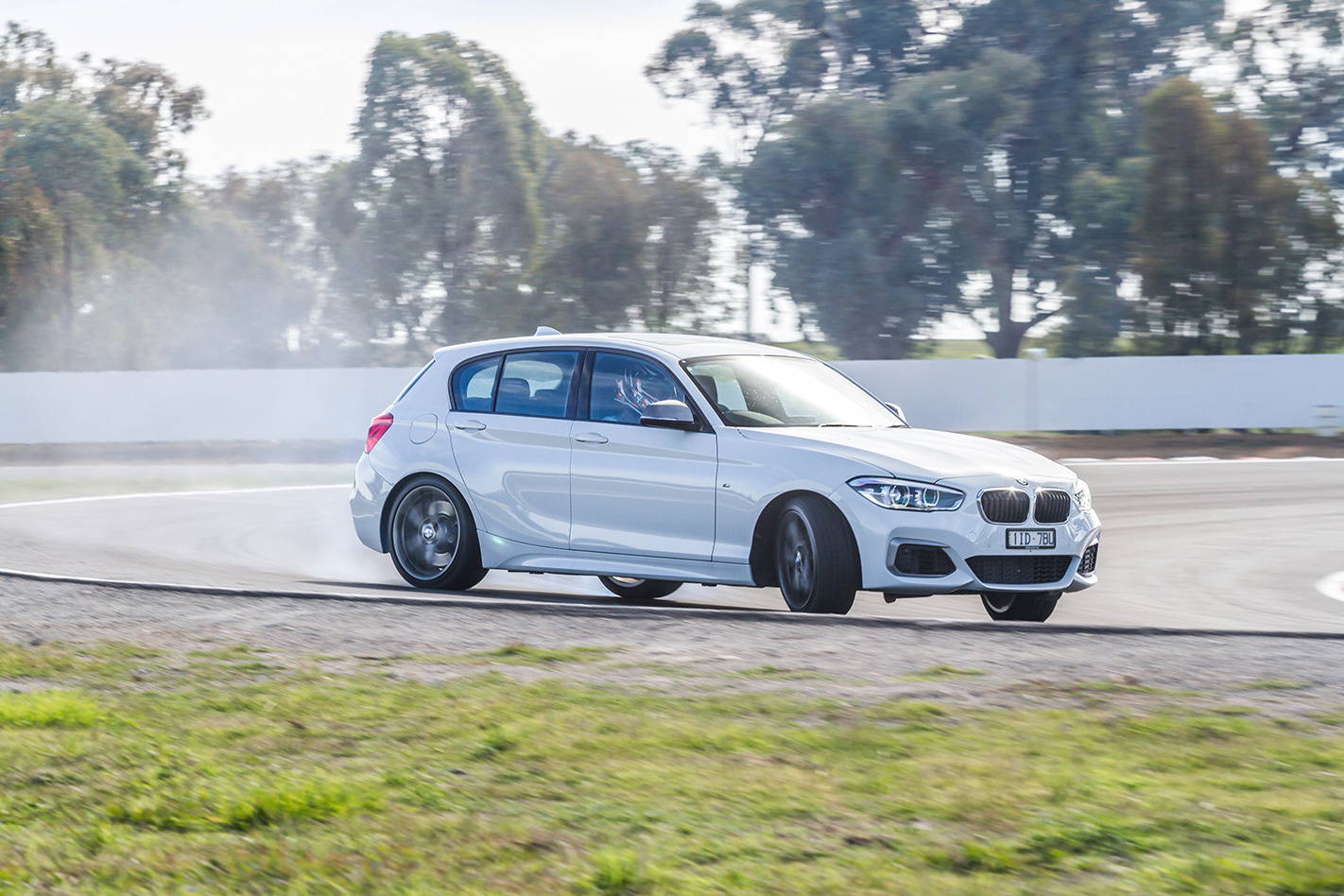
It’s unhinged character calls for courage, though, cause it might otherwise rip your face off. If it were up to us, we’d ask for an LSD or more stability before power. But this is Bang For Your Bucks after all.
And the M140i’s meek looks, and somewhat underdone package, reward it with an asking price that’s $10K cheaper than a M240i – the next model in BMW’s range armed with the B58 engine. And it drops the little Bavarian bullet in third place up against the formula. A solid result.
Specs: Engine: 2998cc inline-6, DOHC, 24v, turbo Power: 250kW @ 5500rpm Torque: 500Nm @ 1520-4500rpm Weight: 1475kg
Times: 0-100km/h: 4.65sec (2nd) 0-400m: 12.76sec @ 180.53km/h (2nd) Lap Time: 1:37.8sec (1st)
Scores: Price: $64,900 Bang Index: 128.5 Bucks Index: 104.3 BFYB Index: 118.8
Warren Luff says “A very easy car to drive on the limit. It’s more of an understeer based car. From the moment you clear the brake it’s all about trying to balance the understeer to get the car to rotate as early as possible. While it’s not as fun around the confines of Winton as some of the other cars, it does produce the laptime. It’s got a great engine; gearbox is really good. Brakes aren’t too bad. Probably one of the downsides of the chassis being so stiff is in all the tight stuff it’s very easy to get the ABS on the way in which generates even more understeer.”
Judges notes David Morley – 3rd: “Liked this car a lot. But I’d still have an M2.” Dylan Campbell – 2nd: “If only it looked better I’d probably buy one. It’s all the car I’d need.” Louis Cordony – 4th: “A menacing little sleeper. BYO brave pills.” Tim Robson – 7th: “Wicked engine, but it and the chassis have commitment issues.”
Brand-new cars have never been cheaper on a year’s-wages basis. I even own a couple of relatively newish cars (by my standards, anyway).
But the kind of people I prefer to hang around tend to drive old cars. Not older cars. Old cars. Dungers, bangers, shitters. And lovely they all are.
So, faced with the knowledge that a good buddy was about to road trip his elderly Swedish supercar (that’d be a 40-year-old Volvo) from north of Sydney to Melbourne, I took the only reasonable course of action: I dropped everything, grabbed a cheapie Bogan Air flight to Newcastle and occupied the passenger’s chair for the trip to Melbourne on what I suspect was the most indirect route possible short of going through Perth.

Not so with a four-decade-old car that was not known for its reliability even back in the day. But you know what? Hearing the engine churn and wondering whether it will start this time is hugely satisfying, whichever way the cards fall.
It’s satisfying when the old bugger blurts into a smelly, stumbling fast idle and possibly even more satisfying when it doesn’t start, because then you get to fix whatever is wrong and do the mechanic’s victory dance in the driveway. And fix it you will, because these old girls have about three moving parts.
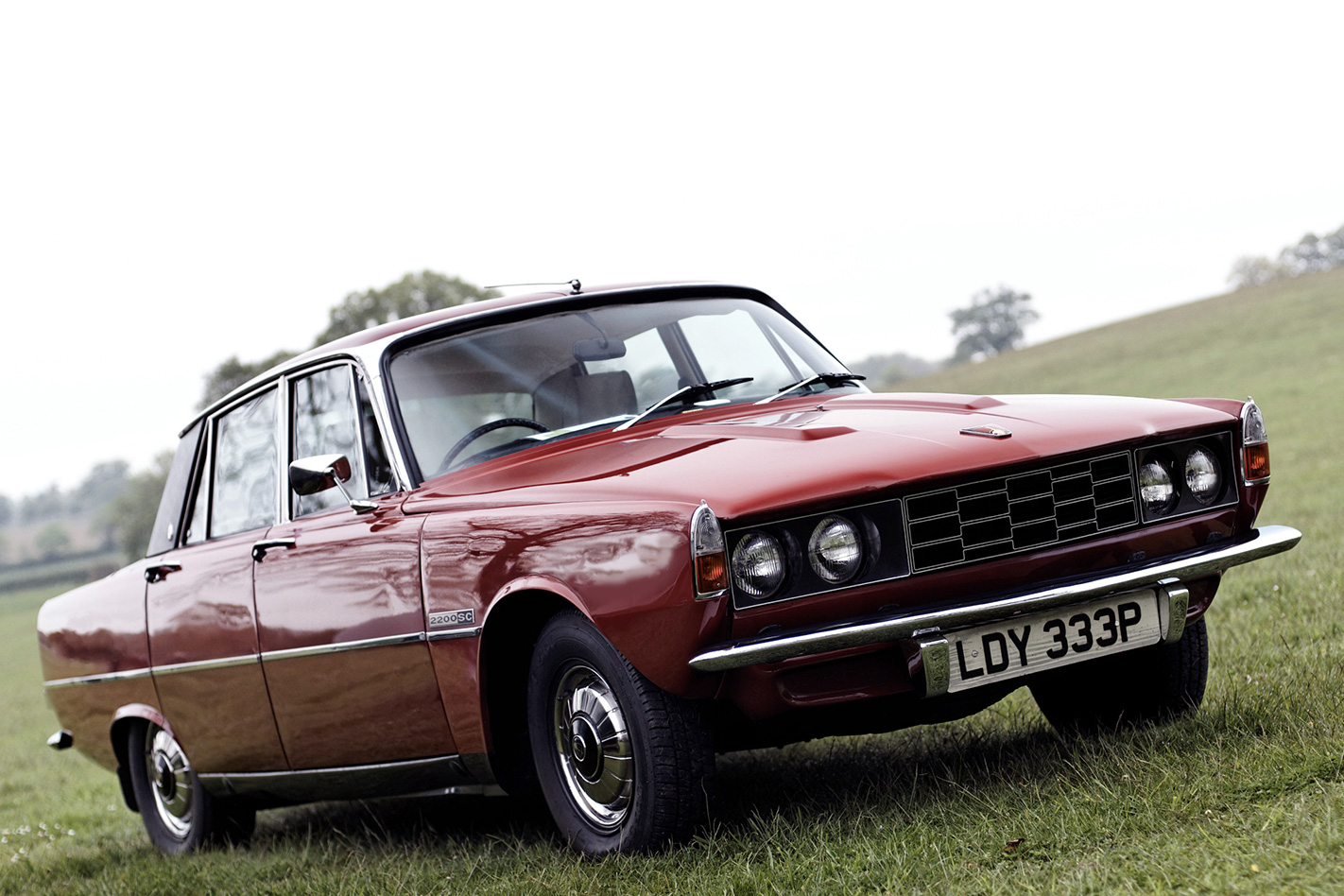
You don’t just go out, throw your toothbrush in the boot and hit the key. Oh no.
You pop the bonnet each morning, cop a visual of the level of coolant, dip the oil, dip it again, add some oil from the bottle in the boot, check the level in the windscreen-washer bottle, twiddle the battery terminals to make sure they’re still tight and generally run an eye over the engine bay, looking for loose wires, oil leaks and melted plastic bags stuck to the exhaust (that’ll be that burning smell yesterday).
It’s all part of the experience. Having sorted that lot, you then move to the process of starting the engine, which will vary from car to car, but nearly always involves crossed fingers, a small, hushed prayer and strange gurgling noises from the starter motor.

That should disappear as you incrementally turn off the choke (the WHAT! I hear you young ’uns ask) and you’re constantly listening for the tell-tale clunks and bangs of inside bits of the engine trying to make a break for the outside.
But, finally, you’re on your way. And you know what? Suddenly, you’re having a relationship with your car. Just as you demand things of it, so does it demand certain things of you. That’s fair, isn’t it?

And, can I borrow your mobile phone, because my old Volvo won’t start.
If you were to say you thought Colin McRae was one of, if not the greatest rally driver who has ever found themselves at the wheel, you’d find few who’d argue.
The man who made the ‘Rexy’ an icon sadly died 10 years ago today in a helicopter crash.
But even still, young rally fans know Colin McRae.
So to commemorate the anniversary of his passing, we essentially spent the day watching videos of the legend in action.
We also found a few of our favourite McRae moments, which is also live on MOTOR.
But here are two videos we found of McRae testing his almost 250kW Group A car, one on tarmac and one in the slightly less grippy snow.
His tarmac testing from 1995 is said (by a YouTube commenter) to have been undertaken at Dunlop’s test track, and it’s a good thing, too. McRae was keen to do some damage to those tyres.
All-paw-donuts are cool.
Swapping the plain rubber for something a little more spiky, McRae ‘s snow test was a little different. As you’d expect snow to be different from tarmac.
More sliding, less smoke, and a spin-out which didn’t seem to faze McRae much at all.
Finally, just to round out the trifecta, we grabbed some footage from one of the Hafren stages Colin ran in the 1994 RAC Rally in Wales.
It’s not as visually exciting if you want sideways action and smoke, but it’s a testament to McRae’s flat-out driving style.
RIP Colin McRae.
The Genesis G70 has been revealed in Seoul, sporting graceful lines, features-packed interior, and choice of three powertrains including a 3.3-litre twin-turbo V6.
The G70 will be offered in Australia as the Genesis standalone luxury brand, rather than a Hyundai badged model.
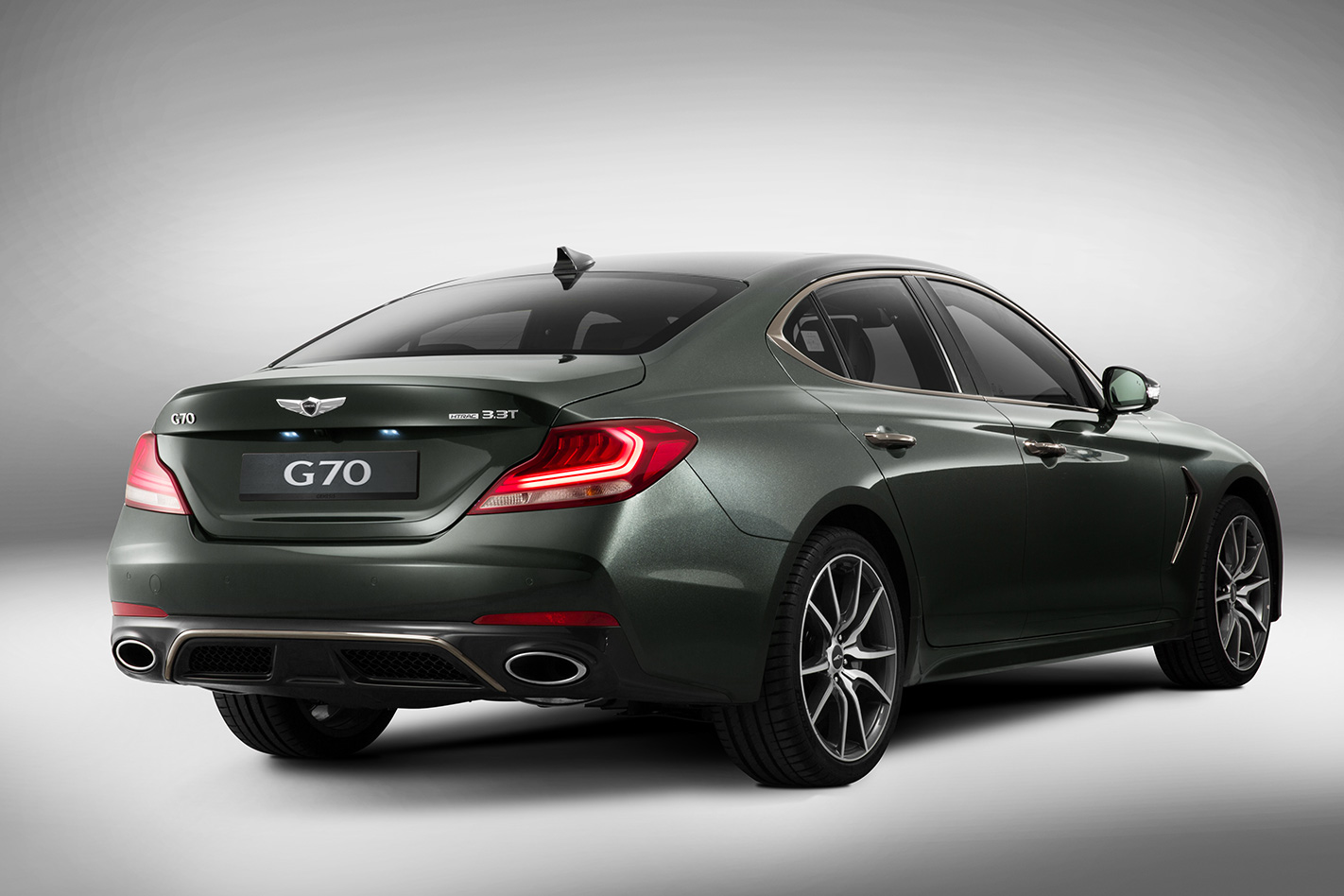
The G70 is smaller than the current Hyundai Genesis and will offer an alternative to smaller European luxury sedans such as the BMW 3 Series, Mercedes-Benz C-Class, and Audi A3 with semi-autonomous driver assist functions and advanced connectivity with server-based voice recognition technology.
The exterior echoes the BMW’s lines with a long hood, short front overhang, and a curved roofline that sweeps down to a high boot line. It’s similarly sized too, at 4685mm long and a wheelbase of 2835mm, it’s comparative to the 3 Series’ 4633mm/2810mm dimensions.
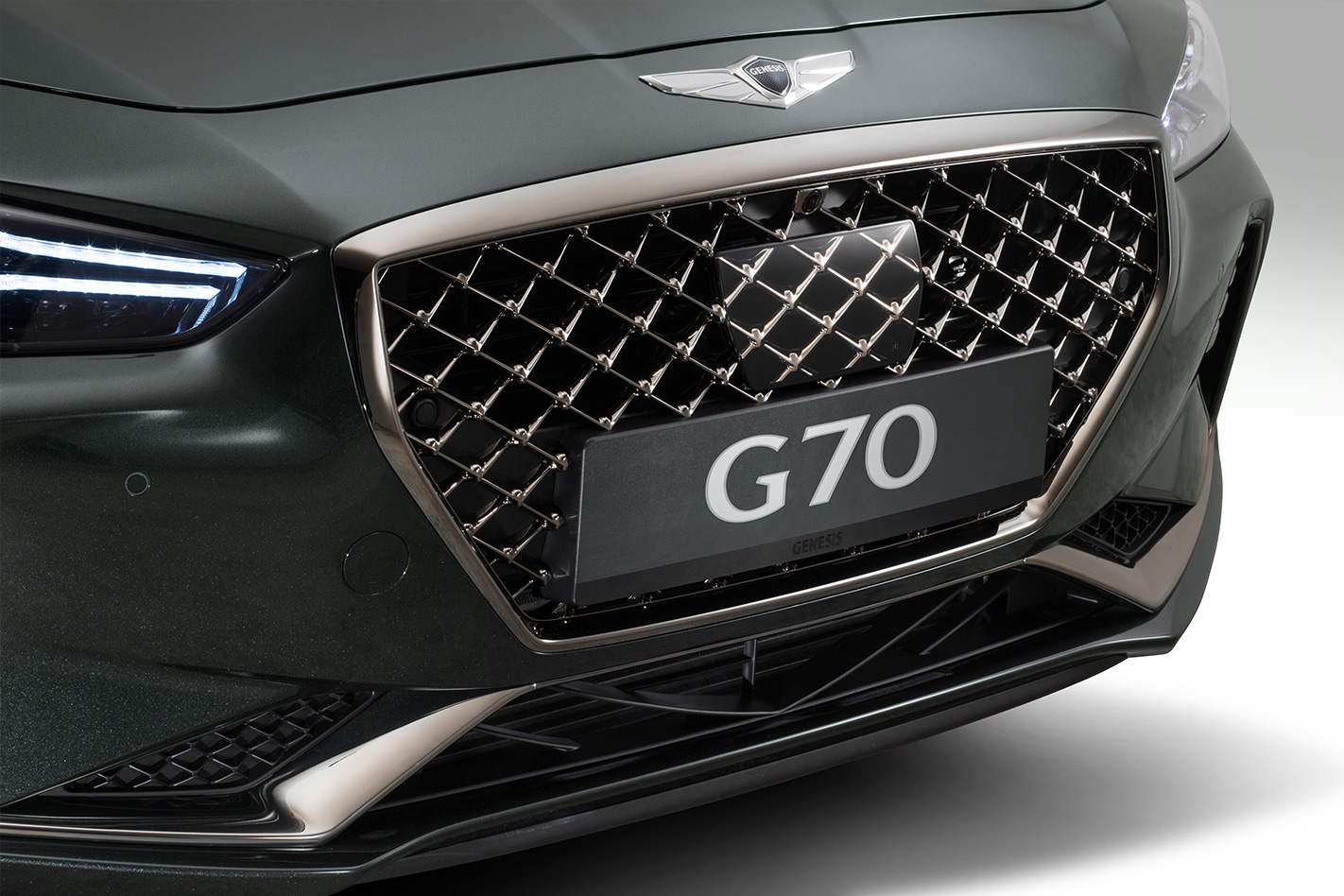
The G70’s front is characterised by the large honeycomb pattern grille flanked by wide intakes below sleek LED headlights with a pincer styled daytime running light signature.
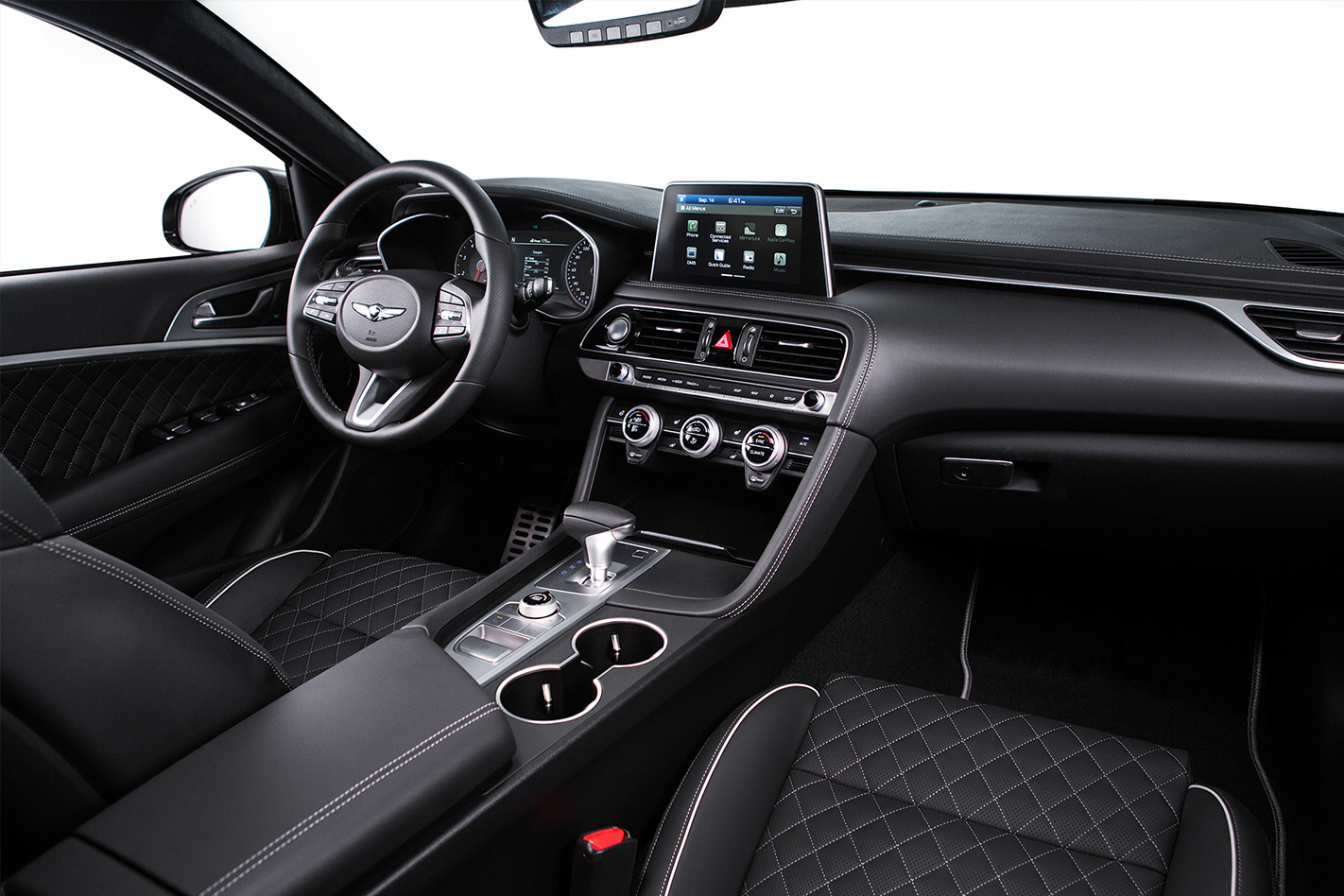
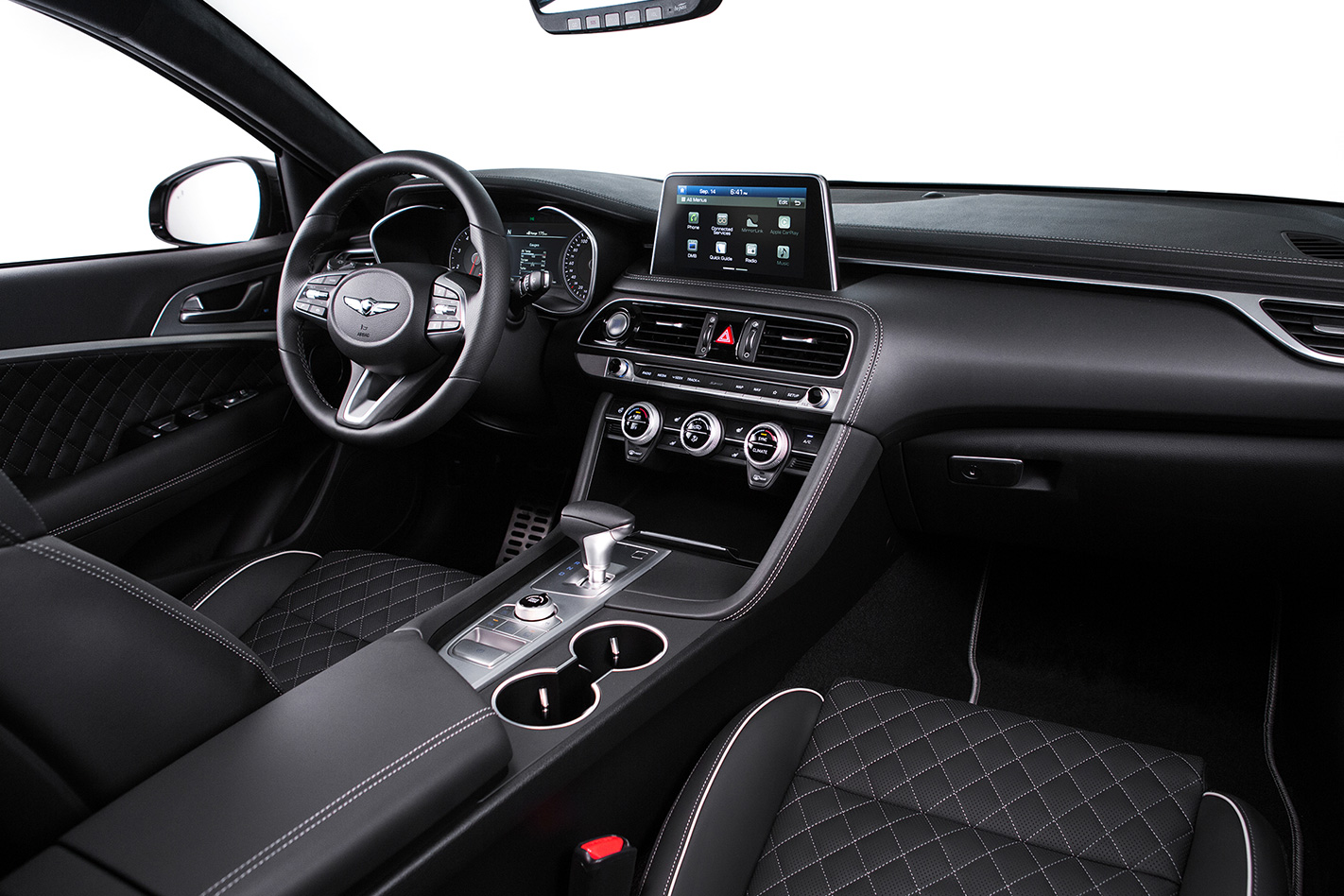
Inside, the premium interior looks functional but uncluttered with effective use of aluminium bright points and soft touch materials, sport-grip steering wheel, and Nappa leather seats with quilted stitching.
Comfort levels are enhanced with a smart posture control system which takes the driver’s body information and automatically adjusts the seat, steering wheel, outside mirror, and heads-up display to the optimal position.
Infotainment and connectivity includes an 8-inch touch screen display supporting MirrorLink, Apple CarPlay and Android Auto with voice recognition, while music is pumped out via a 15-speaker Lexicon surround-sound system.
Like the current Hyundai Genesis, which scored the highest ever ANCAP score when released here in 2014, the G70 is brimming with passive and active safety measures including ‘Genesis Active Safety Control’ driver assist system package.
Equipment levels aside, Genesis is talking up the G70’s performance credentials which are highlighted by the range-topping 3.3T Sport that’s powered by the 3.3-litre twin-turbo V6 producing 272kW/510Nm and capable of reaching 100km/h from a standing start in 4.7 seconds and a top speed of 270km/h.
Its performance is backed up by “agile steering response and an optimal ride and handling experience” via variable ratio steering and electronically controlled suspension.
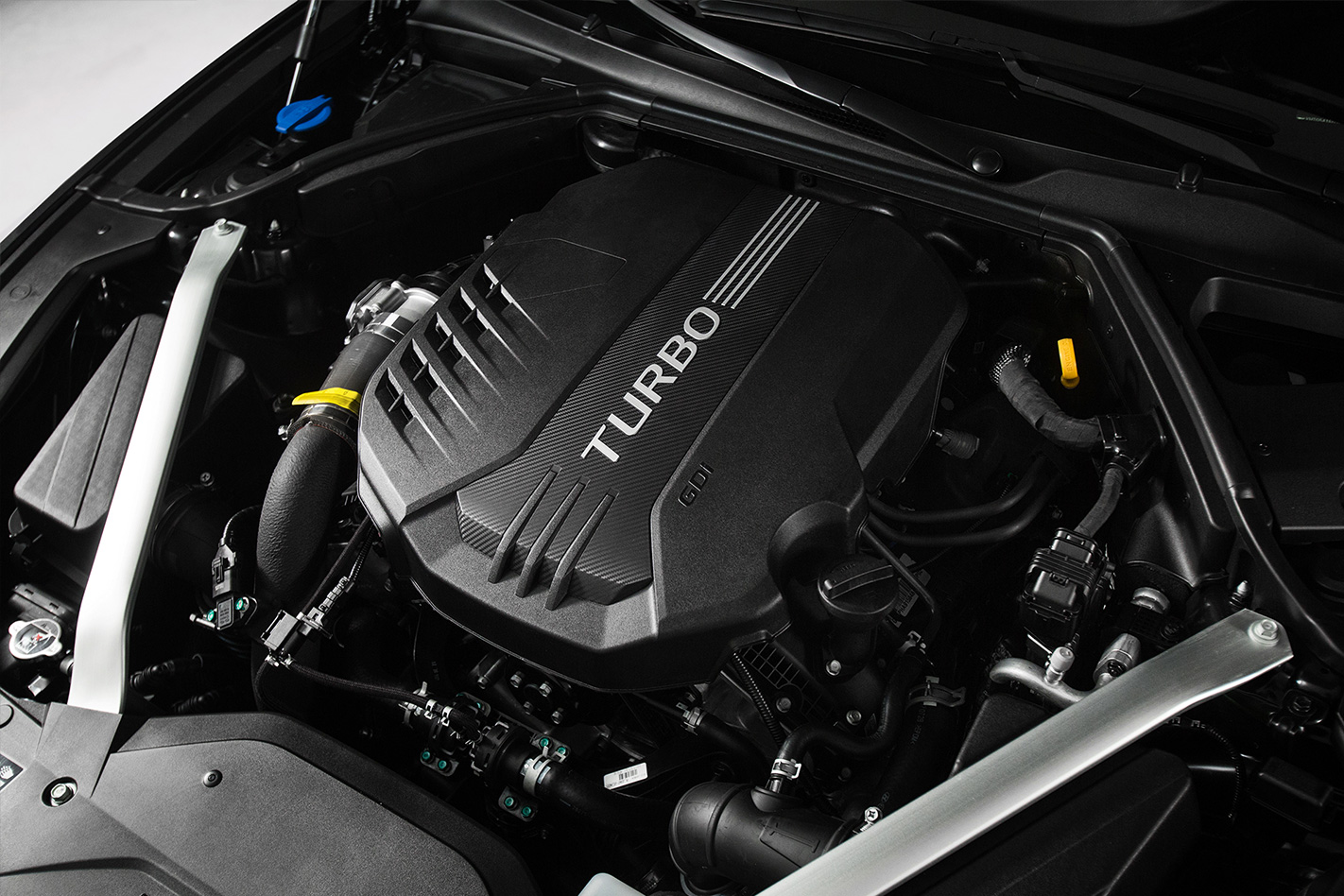
A smaller 2.0-litre GDI petrol turbo engine is also available, which produces 185kW/353Nm – and can be tweaked to 188kW as part of a Sports package.
There’s also a 2.2 litre 149kW/441Nm turbo diesel though that won’t be available in Australia.
The Genesis G70 will be available here from the first quarter of 2018, with entry-level pricing expected to be around the low-$50k mark.
To complete the Hyundai Genesis line up, the new Genesis G70 has been launched at the Hyundai Genesis Design Centre in Namyang, South Korea.
The Genesis G70 is being introduced as a continuation of the brand’s luxury focus, making it more of a BMW 3 Series rival than the budget-friendly Kia Stinger.
The G70 will arrive with three different engines available, from the same 3.3-litre twin-turbo V6 as the Kia Stinger GT, to a 2.0-litre turbo petrol or 2.2-litre diesel.
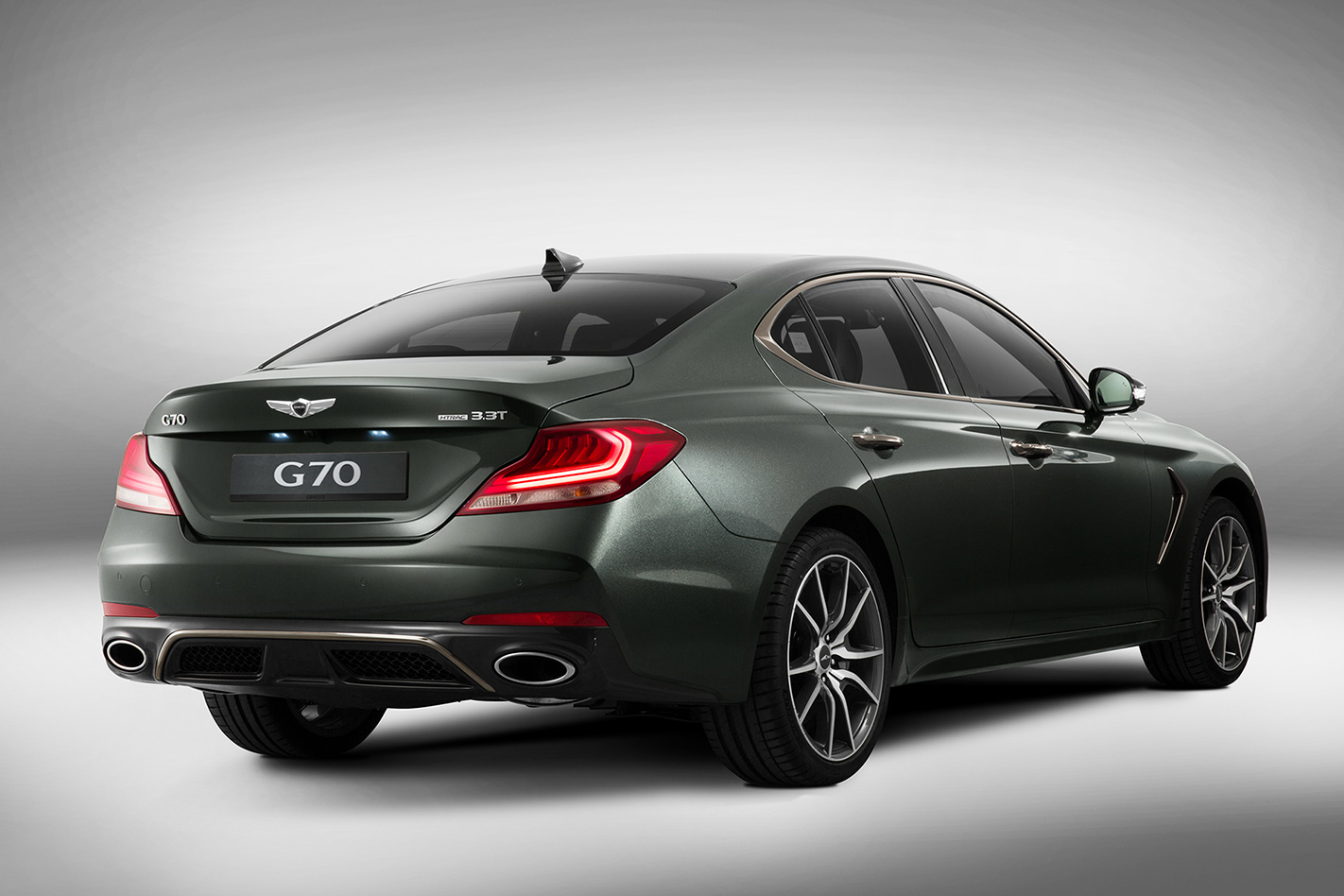
The G70 will also come with the option of rear-wheel-drive as opposed to being AWD only.
Though related to the first Hyundai Genesis, the brand is working to separate the Genesis badge into three different models, G70, G80, and G90.

“It’s a different product, obviously it’s a little bit smaller in size but it will be packed with performance credentials that mean the ownership and driving experience will be quite different from the G80,” Grant said.
“I drive a Genesis now, it’s quite a large car, it’s beautifully finished, but it’s not necessarily a sporting drive where I think the G70 will have a more performance orientation.
“You have got to have the luxury but you’ve got to have the sports flavour to it. You can’t have one without the other.”
Hyundai Australia hasn’t yet confirmed delivery dates or pricing for the G70 in Australia yet.
MAZDA Australia says it will have another look at bringing the CX-8 fastback-styled SUV to Australia now that the six- or seven-seater has gone on sale in Japan.
“This car is now available for the Australian market,” a Mazda spokeswoman told Wheels. “We will be reviewing whether or not we will be taking this up over the coming months.”
Speculation has swirled that the Japan-only CX-8 – first deliveries will head out of showrooms in December – could make its way here to fill a gap in Mazda’s showroom, sitting in between the mid-size CX-5 and the larger CX-9. Built on a modified CX-5 platform, it has either six or seven seats – the six-seat version has captain’s chairs for the second row – it also has something the larger CX-9 doesn’t; a frugal diesel diet.
The CX-8‘s 2.2-litre four-cylinder engine uses Mazda’s latest Skyactiv fuel-saving technology to up its performance to 140kW and 450Nm, compared with 129kW and 420Nm for the four-pot diesel’s previous tune. In Australia, the CX-9 is fitted with a 170kW/420Nm turbocharged 2.5-litre four-cylinder petrol engine.
The CX-8 is billed as the range-topping SUV in Mazda’s Japanese domestic market, where the CX-9 is not sold.
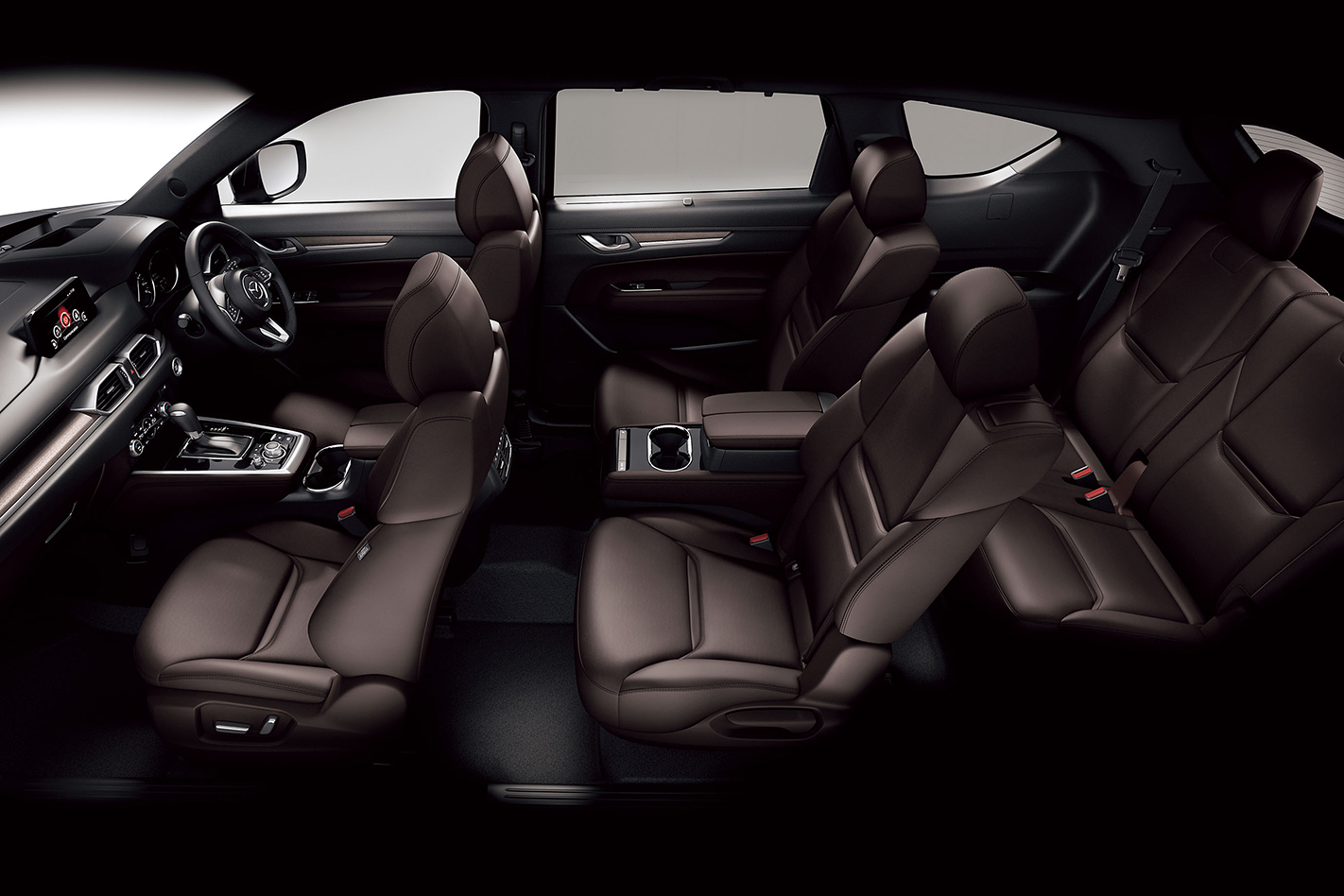
At 4900mm long, the CX-8 is 175mm shorter than the CX-9, yet shares that model’s 2930mm wheelbase. However, dimensions released in a short Japanese media statement reveal the CX-8 will be 129mm narrower than the CX-9, making it the same width as a CX-5, and with a roofline that sits 17mm lower.
Mazda says it will build about 1200 of the CX-8 large SUVs a year for the right-hand-drive Japanese domestic market.
Mazda Australia has been keen to add the CX-8 to its showroom ever since the car was revealed earlier this year as a “new people-moving option for customers who want to enjoy outings with family and friends but don’t want to sacrifice design or driving performance”.
“If there was ever to be an ADR [Australian Design Rule] version of CX-8 offered to Mazda Australia we would evaluate this opportunity and consider its viability in this market and actually ask ‘how does it fit amongst the other SUV models we have on offer here?’’’ Mazda Australia managing director, Vinesh Bhindi said recently.
The sharply styled CX-8 is not the only fastback SUV in Mazda’s expanding showroom. Last year, the Japanese car maker unveiled the China-only CX-4, a cut-down coupe-like version of its CX-5 mid-size SUV. Again, Mazda Australia has shown some interest in bringing the more design-driven, smaller version of the CX-5 here.
TYRES, bastions of all things black and round, haven’t had a major change in technology for decades.
However, that could soon change with Continental Tires announcing that it is working on tech which will allow for tyre pressure, and rim width, to adapt the contact patch to road conditions.
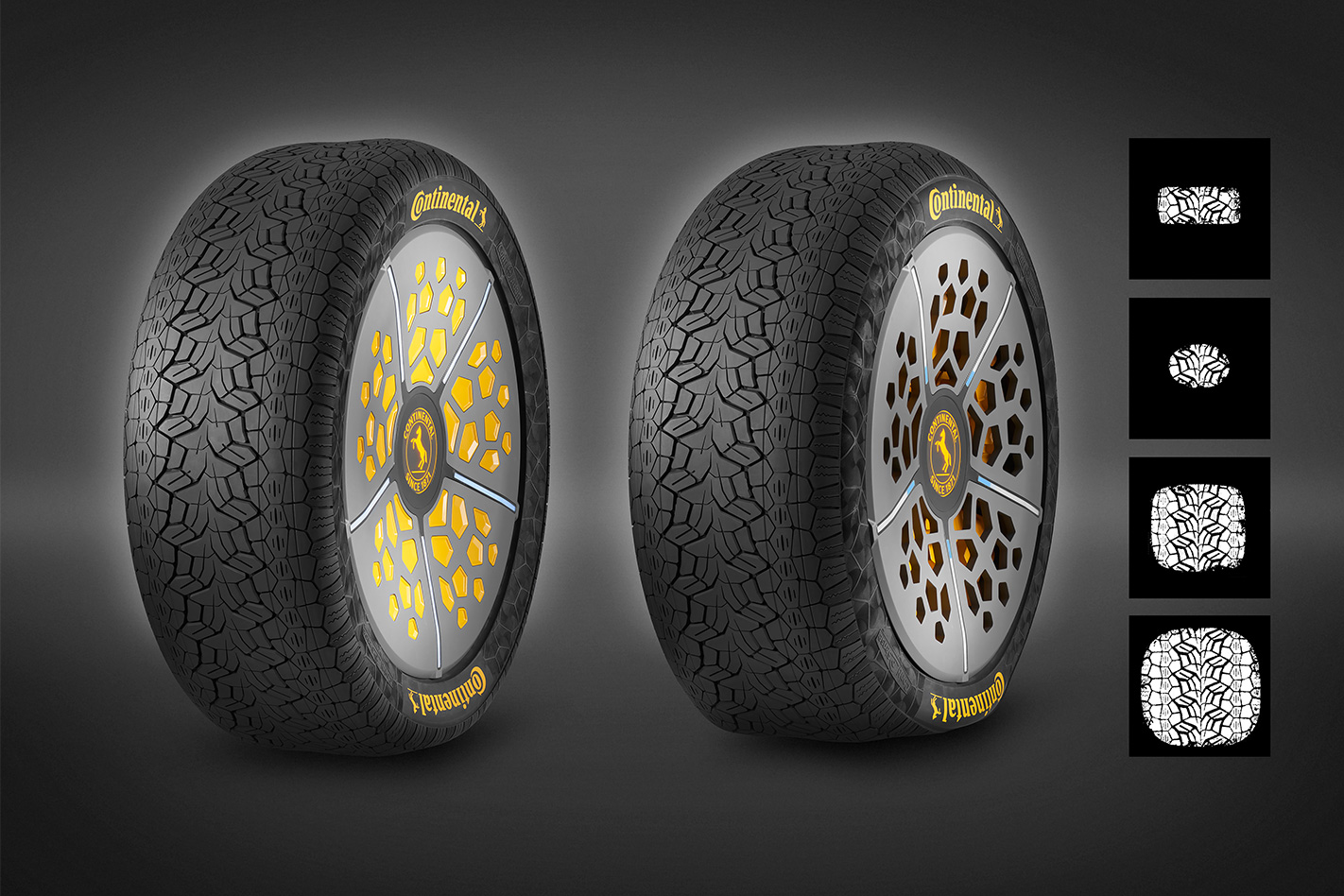
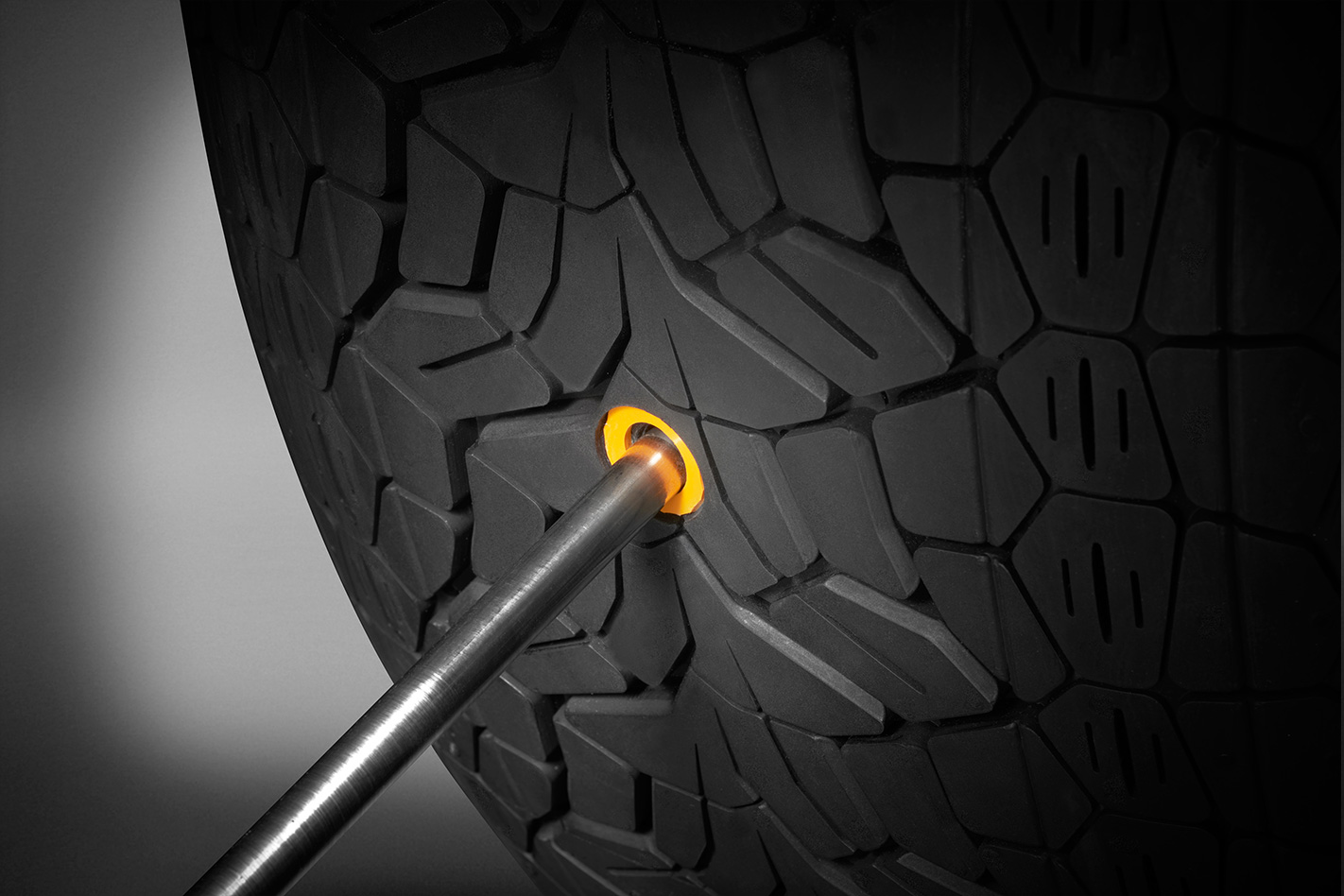
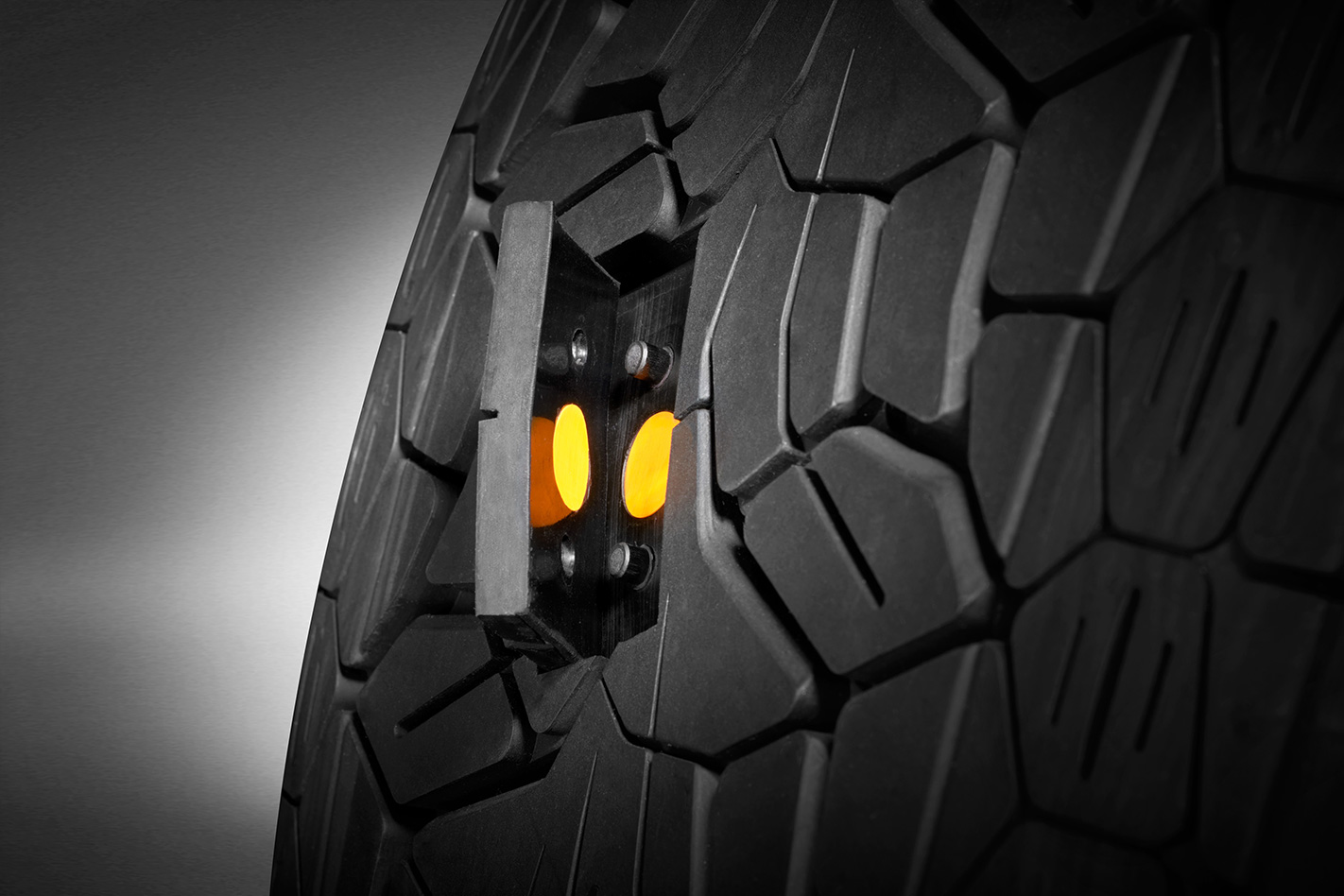
It should be noted the two systems are individual of each other – ContiSense for tyre pressures, ContiAdapt for contact patch.
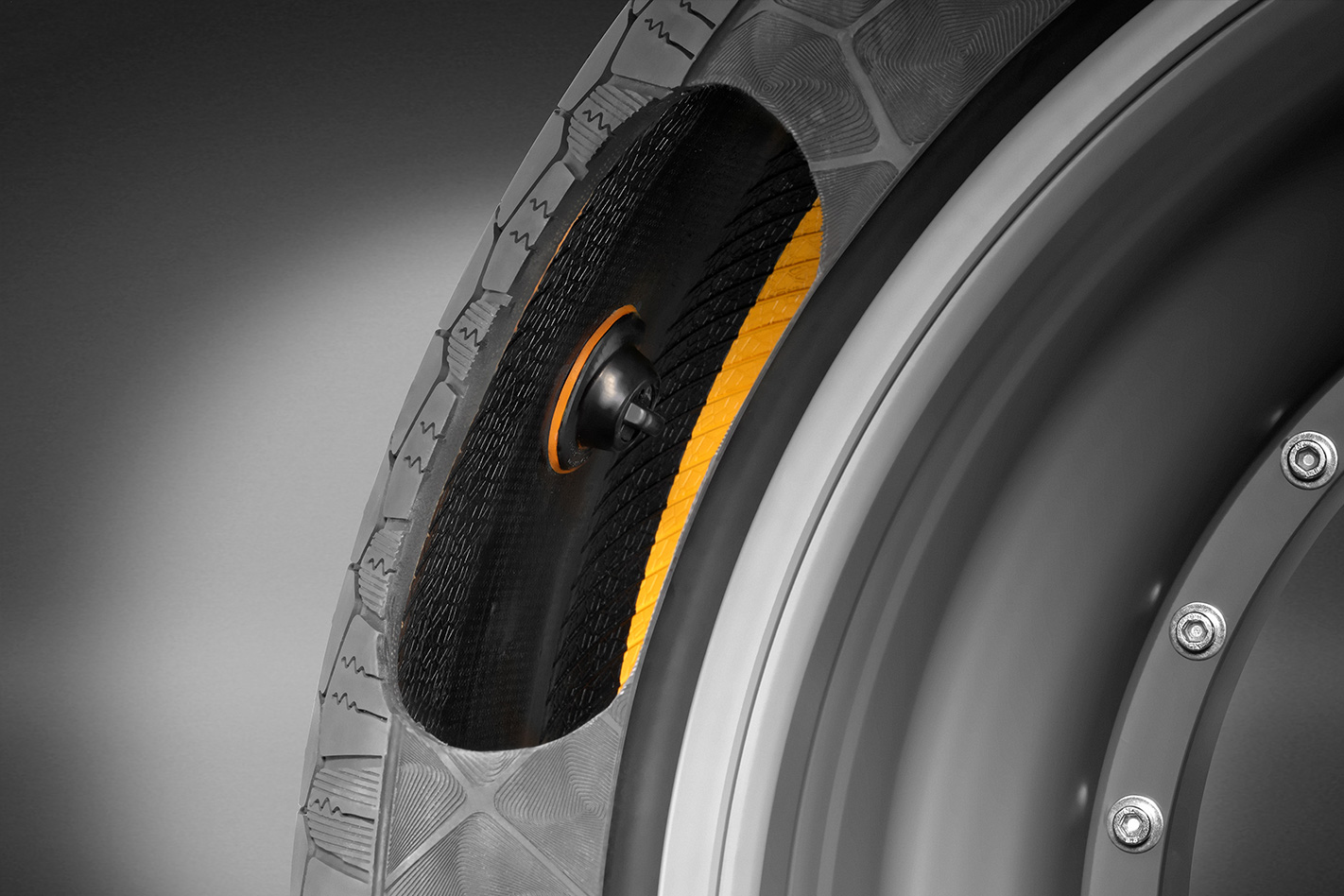
“If anything penetrates the tread, a circuit in the tire is closed, also triggering an immediate warning for the driver,” the Continental release states.
Wheels Tyre Test 2017: Eight brands compared
Meanwhile, ContiAdapt relies on a variable width wheel rim to change the size of the contact patch while in motion.
“Four different combinations allow perfect adaptation to wet, uneven, slippery, and normal conditions,” the release reads.
“By contrast, the combination of a larger contact patch with lower tire pressure delivers ideal grip on slippery roads.
While not yet in production form, the concept technology gives us a glimpse at the kind of rubber future vehicles could be rolling atop.
Peter Brock repeatedly claimed it was the greatest race car of his 40-year career.
This story first published in MOTOR Magazine March 2009.
It won three championships in three years, was on pole position at all of its Bathurst outings and scored two Bathurst wins – the latter by a never-to-be-repeated margin. It is the epitome of late-1970s Australian muscle-car performance and simply destroyed its opposition in the hands of Brock, Jim Richards and John Harvey at HDT, or privateers Bob Morris and Allan Grice.
If you know Aussie cars – and even if you don’t – then you’ll know of the Torana A9X. The A9X was the Torana’s finest performance evolution and the last homologation special. It was a specially-built version of the LX Torana SL/R 5000 sedan and SS 5.0 hatch, effectively an update of the dual-Bathurst winning L34 LH Torana sedan.
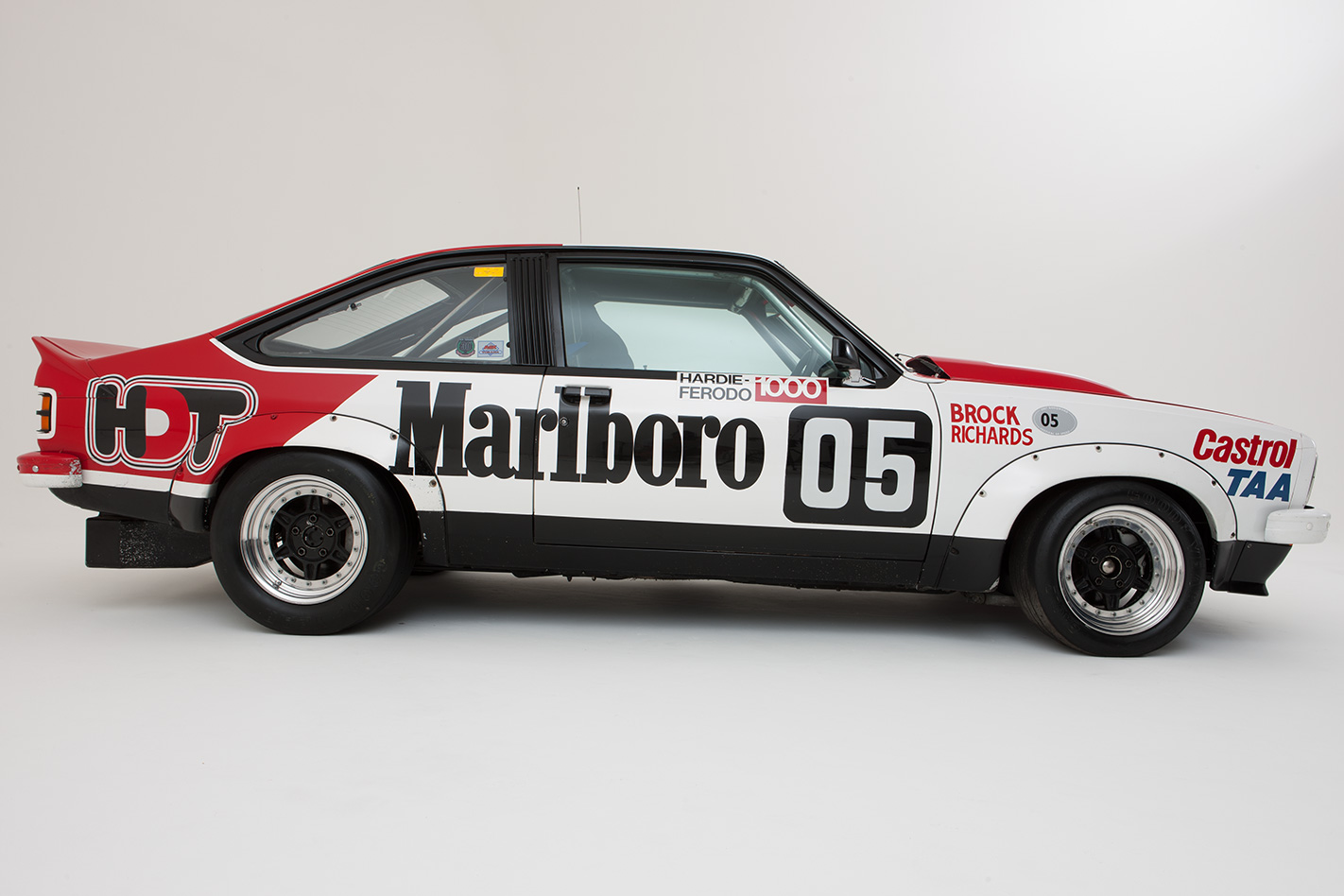
The first race version, the L34, was developed for competition with roller rockers, a larger exhaust system, bigger brakes (from the Kingswood), uprated suspension, flat-top pistons, larger valves, modified porting, and a lightened flywheel.
The 308’s standard Rochester Quadrajet four-barrel carburettor was binned in favour of a larger 780cfm Holley, and visually, the L34 copped bolt-on flares to enable fitment of wider race wheels. More fibreglass appeared in the shape of a reverse bonnet scoop, designed to push air into the fat Holley from the windscreen pressure zone.
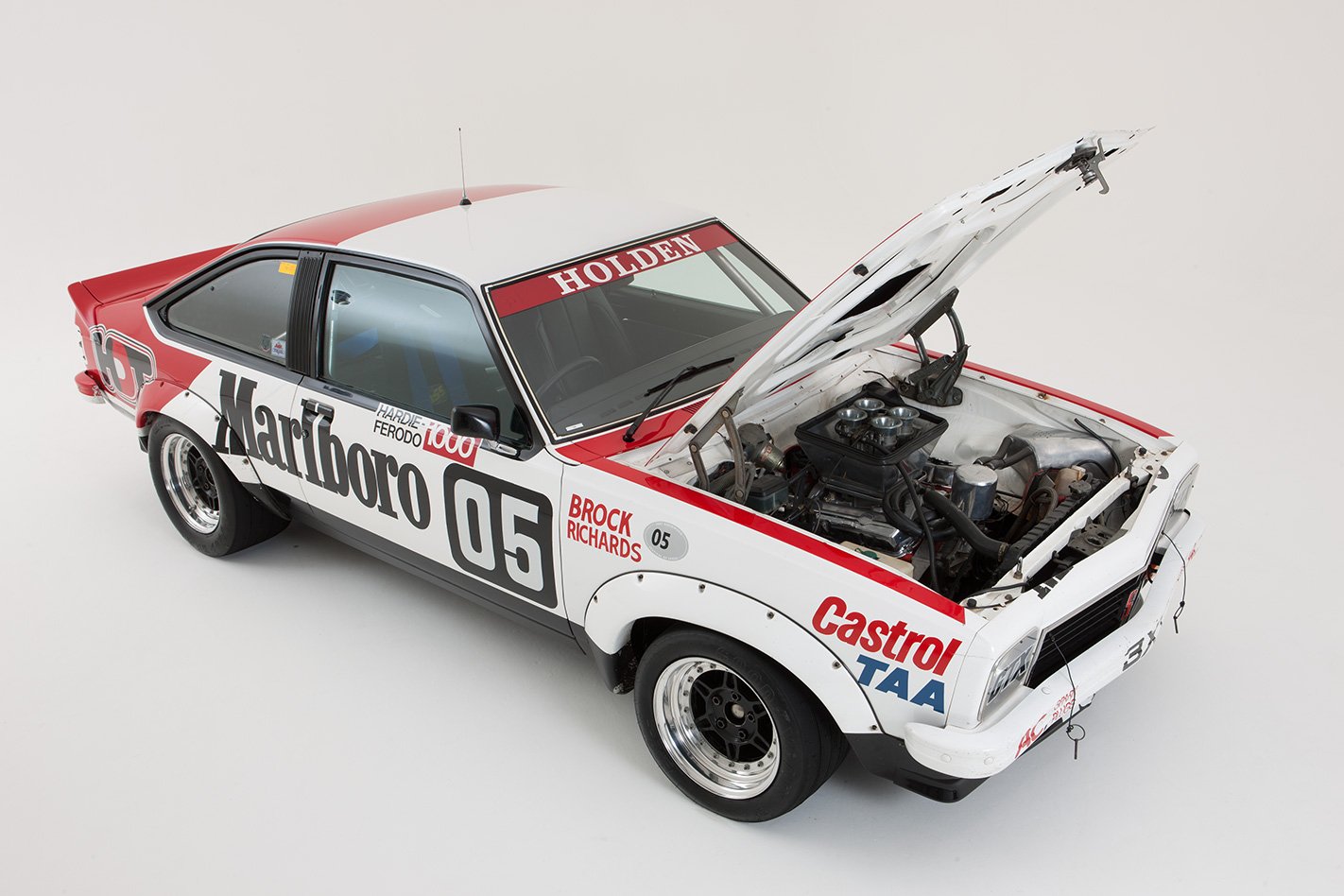
The Morris/Fitzpatrick L34 then managed to limp over the line in an emotional victory at Bathurst in ’76. A facelifted LX Torana arrived the same year, and introduced the Torana Hatch.
The new hatchback range spanned a six-cylinder base-model through to a V8-powered SS, which in 5.0-litre form, was the equivalent of the SL/R 5000 sedan. But the major improvement over the LH came with the introduction of Radial Tuned Suspension (RTS) across the LX range in mid-77.
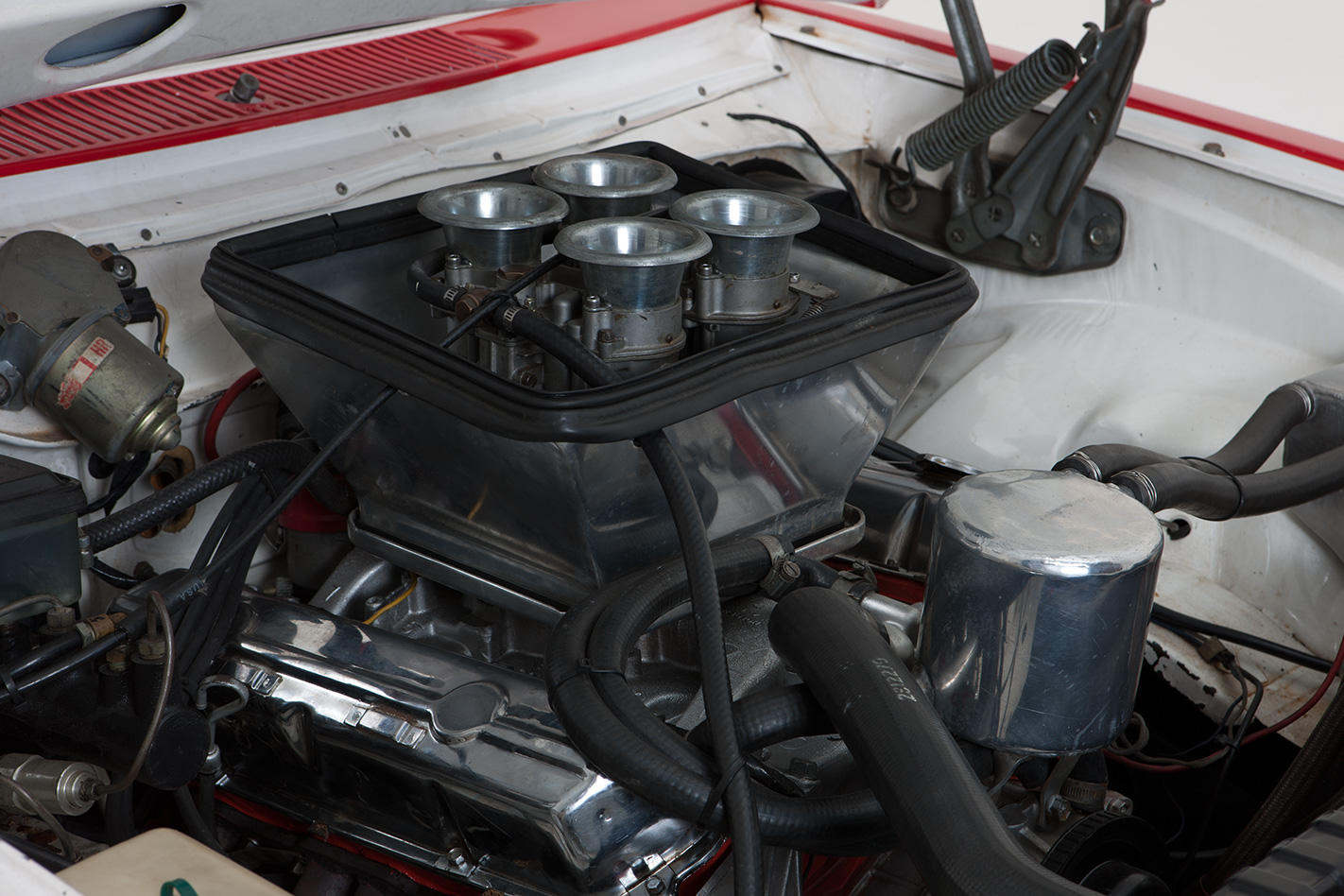
This made the RTS-equipped LX a massive step ahead of the LH in terms of handling dynamics. And it meant that the A9X could be a far superior track warrior – and a better road car – than the L34 LH. The previous L34’s weaknesses on the track centred around its braking system and differential.
And while the LX SL/Rs still used rear drum brakes, the A9X wore four-wheel discs. The race cars featured a stronger rear axle with a 2.60:1 Detroit Locker (the road-going A9Xs used a Salisbury LSD with the same ratio).
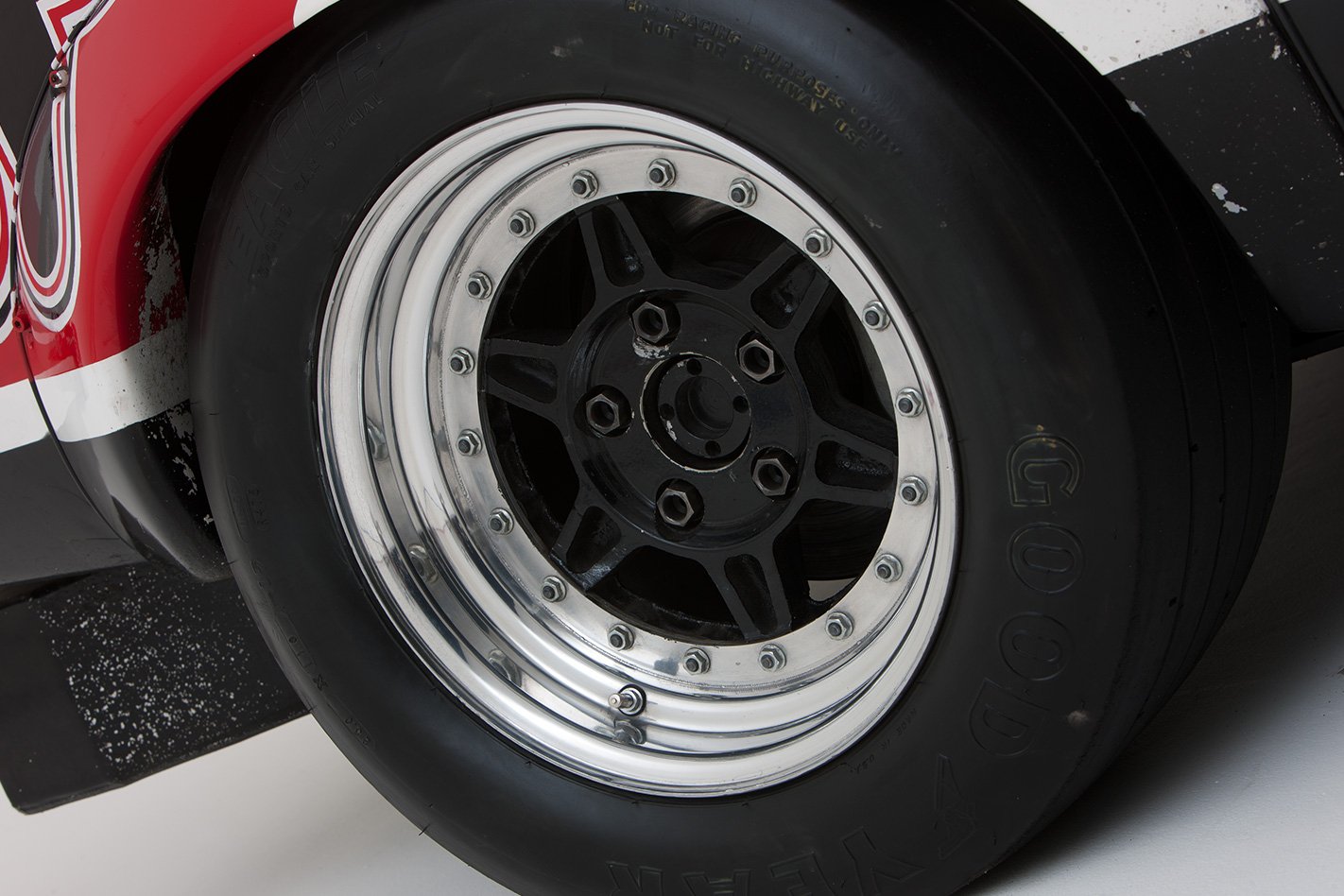
But it was these relatively minor changes that built on the L34’s success to make the A9X the ultimate combination of braking, power and reliability for local touring-car competition. Strictly speaking, the A9X was not a model, but an option code available on the LX SL/R 5000 (sedan) and SS 5.0 (hatchback), with 500 required to be built for racing homologation.
The popular image of this car is as a hatch, however 95 were sedans. But the hatch had one major advantage over the four-door in that it could accommodate wider rear tyres, and hence its subsequent favour for tackling Mount Panorama.
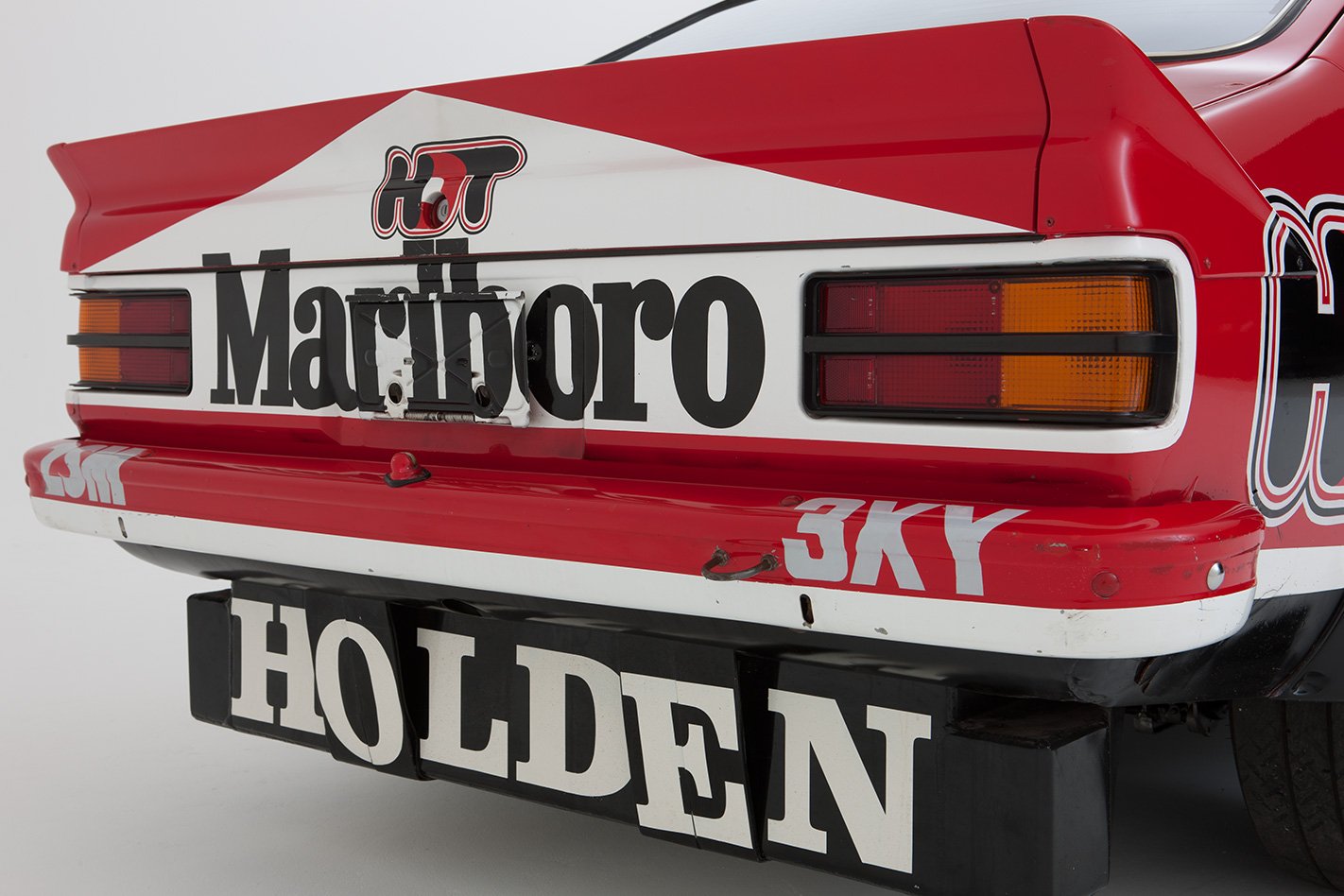
Ford’s demoralising one-two form finish at Bathurst in October ’77 – where Allan Moffat infamously ordered the second Falcon Hardtop to fall in behind his lead car which was suffering mechanical woes – hit the Holden camp hard.
In response to this crushing defeat, two key players joined the Holden Dealer Team which, in hindsight, transformed the outfit into a race-winning organisation whose halo of success shone over Brock’s HDT road-car operation of the 1980s.
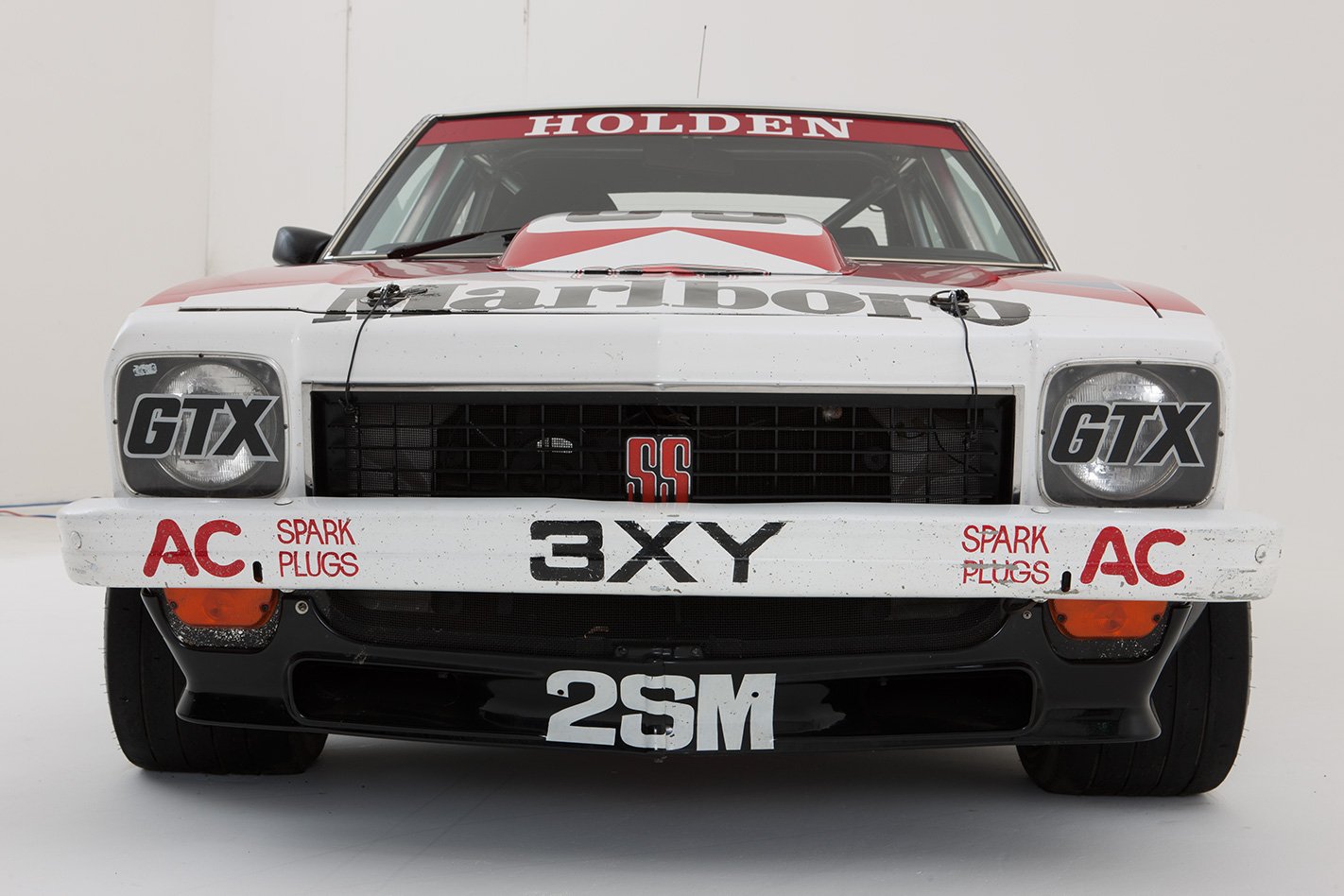
After winning the ’78 Australian Touring Car Championship, Sandown and Bathurst, the Torana A9X’s 1979 Bathurst performance was incredible. Peter Brock put the John Sheppard-prepared, Marlboro-liveried A9X on pole, more than two seconds ahead of Bob Morris, also in an A9X.
And the car slashed more than five minutes off the race record. Such domination was unprecedented and never repeated. The A9X’s performance on that day remains without peer.
And that’s what makes the iconic Holden Torana A9X the most formidable Aussie touring car of all.
ROYAL PURPLE PATCH
John Sheppard’s influence at HDT allowed it to achieve unrivalled success in touring-car history. Between 1978 and 1985, the team won six of seven Bathursts, two championships and an incredible seven consecutive Sandowns. Add the one-two-three victory in the 1979 Repco Round Australia trial, as well as Brock’s establishment of HDT Special Vehicles with the HDT VC Commodore in 1980, and you had an organisation boasting the nation’s best engineers and driving talent.
WHERE CAN I GET ONE? HOW MUCH?
Getting behind the wheel of an A9X is an expensive exercise. The muscle-car boom has seen values soar. Last year, a road-going A9X sedan was sold at a Shannons auction in Melbourne for the princely sum of $192,000. Ex-racecars in pieces command even more coin, but around $150K seems the norm for a road-going A9X, though you’ll have to hunt far and wide to find one. And don’t even think about the value of cars like the 1978 Bathurst winner you see here…
THE GOOD 1. Hero Status: Alongside the XY Falcon GTHO Phase III, the A9X is arguably Australia’s most legendary touring car. And it’s the car that Brock scored his most crushing victory in, too 2.The best of the bunch: The A9X is the Torana’s finest hour – the culmination of years of painstaking development by both racers and engineers. It’s the best Torana Holden ever produced 3. A good investment: The A9X has a permanent slot in Australia’s racing hall of fame, and with such a heritage, will hold its own in the dollar deals. If you’ve got one, you’re basically set for life
THE BAD 1. Park and perve: You wouldn’t buy an A9X as an everyday driver – they’re simply too valuable and probably too precious to insure. Today, it’s the sort of car investors and collectors buy 2. Proof of life: Proving your A9X is the real deal can be tough, as many race shells were fitted with the A9X stuff for competition, and as such don’t have the identifying numbers 3. Orginality: With many street machiners modifying LH/LX Toranas in the ’80s, and the A9X being a supreme racecar, finding a non-modified, factory-spec A9X is nigh impossible
