
How long can you hold a drift? A few seconds? A whole minute? Six hours?
That probably depends on what your definition of drifting is. According to Guinness World Records, as long as the driven wheels are still spinning, it’s all one continuous drift.
Toyota goes turbo with 86 racer
The most recent ‘official’ record belongs to German man Harald Müller (and the Turkish Ministry of Youth and Sports, for some reason), who drifted a Toyota 86 for 144.126 km on 15 July 2014.
However, the most recent ‘unofficial’ record belongs to South African motoring journalist Jesse Adams, who did 1000 laps of a small, circular skidpan setup.
The result was a 168.5km drifting session lasting five hours and 45 minutes. In a Toyota 86. Picking up a theme here?
The ‘slidey’ rear driver is easy to get sideways, making it an easy choice for spending a quarter of a day getting sideways.
The publication Adams writes for, IOL Motoring, asked him how he felt after his slog in the seat of a budget coupe.
Limited edition Toyota 86 announced
“I just wanna go to bed now! I want a hot bath and to go to bed,” he told his colleague.
“There was a point at around 600 laps when I was seriously ready to stop. I didn’t think I was going to make it, but I did, and probably could have done another 200.”
If you were worried he got off lightly, fear not. Adams went through plenty of drift practice to make sure he’d be able to meet his goal.
There are worse ways to spend a few hours, that’s for sure.
THE Goodwood Festival of Speed is a rolling motor show featuring the world’s most exotic racing and road cars touring Lord March’s driveway in the beautiful English summer sunshine.
While the cars are the stars of the show, there is plenty to see off the track, with manufacturers revealing new and future models and a who’s who of the automotive world meandering around the grounds.
In the centre of it all is a towering sculpture. Each year a new artwork is commissioned to sit in front of the Goodwood Manor paying tribute to that year’s theme. This year it is the man who made modern Formula 1 what it is today, Bernie Ecclestone. In the past the Goodwood sculpture has celebrated a manufacturer or particular models.
Last year, a sculpture was made to celebrate BMW’s 100th anniversary. The end result was a swooping, colossal structure, with three iconic cars from three motorsport disciplines (the Mille Miglia, Le Mans 24 Hour, and Formula 1), all suspended at its peak.
Mazda was honoured the year prior, with its iconic Le Mans winning 787B sportscar hoisted atop a rotating spiral that seemed to scratch the heavens.
Instead of simply hanging a car overhead in 2011, a giant Jaguar E-Type was constructed and placed nose-down over the grounds. The construction overlooked the entire event, and was lit up at night.
Then, to celebrate the Porsche 911 in 2013, three of examples were elevated on pylons. At the time it was the tallest sculpture to be constructed at Goodwood, reaching 34 metres into the sky. Weight? Not including the Porsches, 22 tonnes!
It remains a mystery what will be constructed to celebrate Mr Ecclestone this year, but judging by previous iterations it will be an unexpected masterpiece.
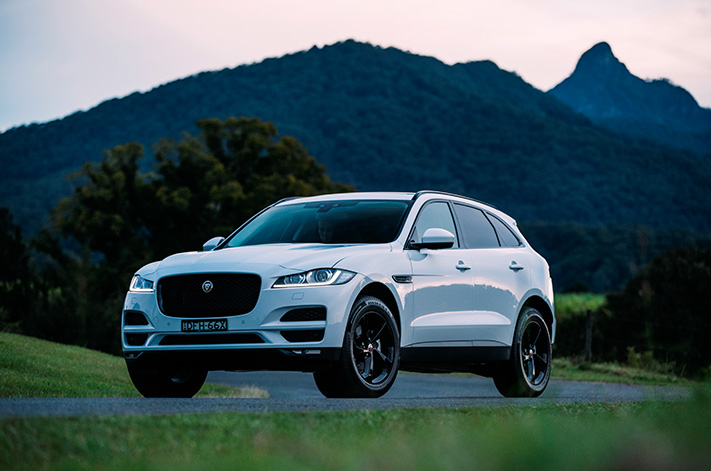
Jaguar has announced a more powerful version of the four-cylinder Ingenium petrol engine currently fitted to the XE, XF, and F-PACE will be available here in Australia later this year.
This new variant of the 2.0-litre turbocharged petrol unit – which will produce 221kW and 400Nm torque – will join the 147kW version currently available in the XE and XF, and the 184kW version available in all three models.
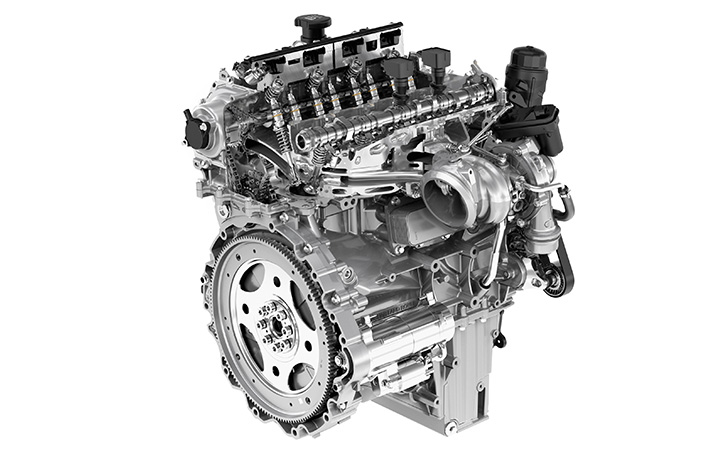
This new member of the Ingenium engine family will help shift the XE from 0-100km/h in 5.7 seconds while returning a claimed 6.7L/100km.
In the XF, it will deliver a 0-100km/h time of 5.9 seconds and fuel economy of 6.8L/100km, while in the chunkier F-PACE it should still be able to manage 0-100km/h in 6.0 seconds and fuel economy of 7.7L/100km.
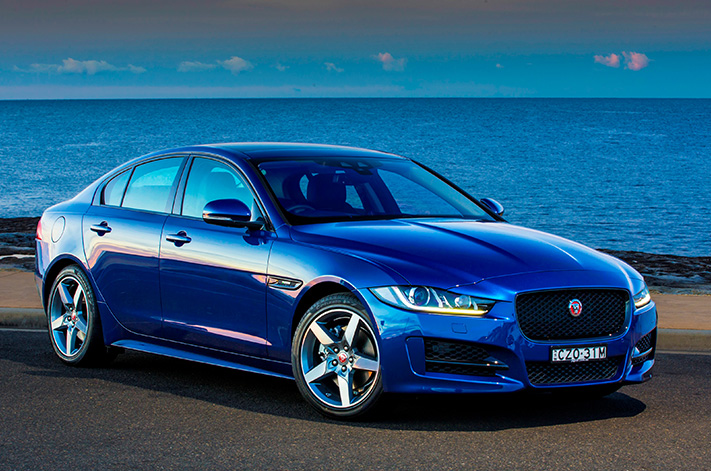
However, the focus is not just on performance but on Jaguar’s eco credentials too, with this new engine variant claimed to have CO2 emissions of as little as 153g/km.
Nick Rogers, Executive Director of Product Engineering at Jaguar Land Rover, believes this new engine option will be a good fit for these three models.
“Our new 221kW petrol engine provides the performance synonymous with Jaguar, while delivering enhanced fuel economy thanks to its state-of-the-art exhaust technology and pioneering valve train design,” he said.
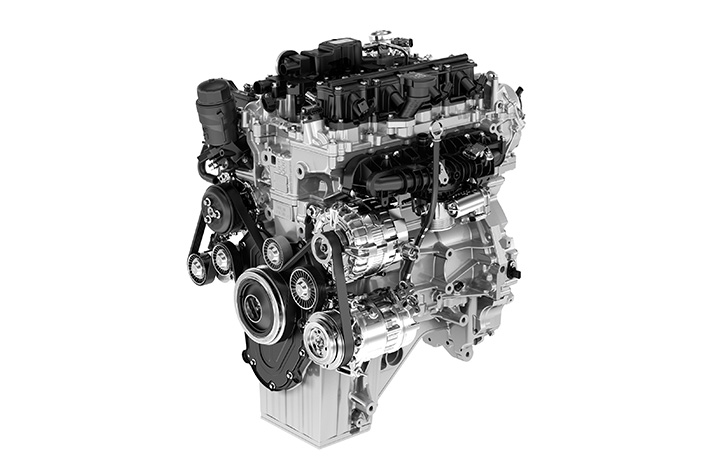
“This clean and more efficient engine perfectly complements the advanced lightweight aluminium body structure of our XE, XF, and F-PACE models.”
The new engine is not the only upgrade in store for the 2018 model year, as a Gesture Boot Lid will now be made available on the XE and XF, allowing drivers to wave a foot beneath to open the boot. Jaguar’s configurable Dynamics technology is also on the agenda, offering more settings and personalisation for the eight-speed automatic transmission, throttle response and steering feel.
All three models will also benefit from the latest safety tech including Forward Vehicle Guidance and Forward Traffic Detection.
First Australian deliveries of models with these upgrades are expected in late 2017.
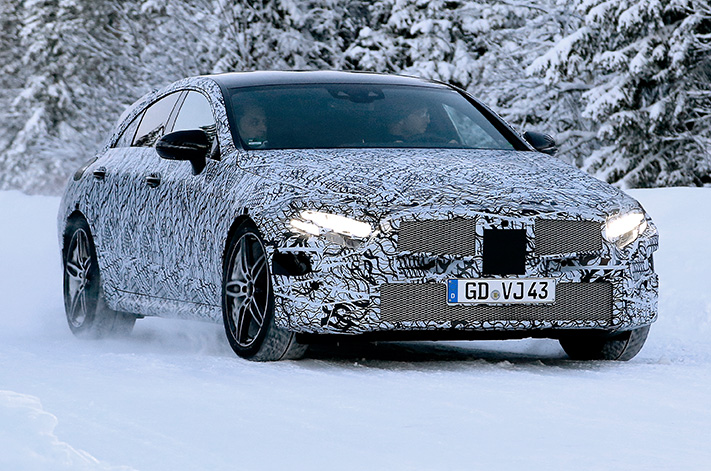
MERCEDES-AMG is poised to roll out a juiced-up performance version of Benz’s all-new inline six-cylinder petrol engine and introduce a ‘53’ model grade to replace its short-lived, V6-engined ’43’ models.
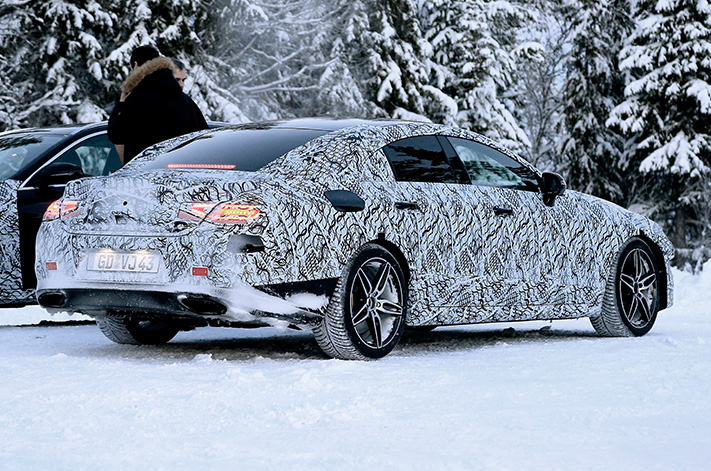
The all-new third-gen CLS will be first to wear the 53 badge. The CLS53 is expected to be unveiled in March next year featuring the hotter six with hybrid electrical assistance, followed by a local arrival in the third quarter of 2018.
Speaking to Wheels at the launch of the E-Class Cabriolet, a source within the company revealed the nomenclature and said AMG’s warmed-up version of the turbocharged M256 3.0-litre inline engine will generate a sizeable 320kW on its own, with a 50kW boost from an electric motor available when extra shove is required.
E53 coupe and cabriolet variants will follow, and an S-Class variant is also part of the product plan. It’s not yet clear how long punters will need to wait for a C53 version, but it’s likely a case of ‘when’, not ‘if’.
Given AMG’s massive model growth in recent years, expect the inline six to eventually roll out across all of Benz’s longitudinally engined offerings – including the GLC, GLE and GLS SUV ranges. It seems likely smaller models may forgo the hybrid hardware to keep cost down and increase separation between the ‘53 and even more powerful ‘63 variants.
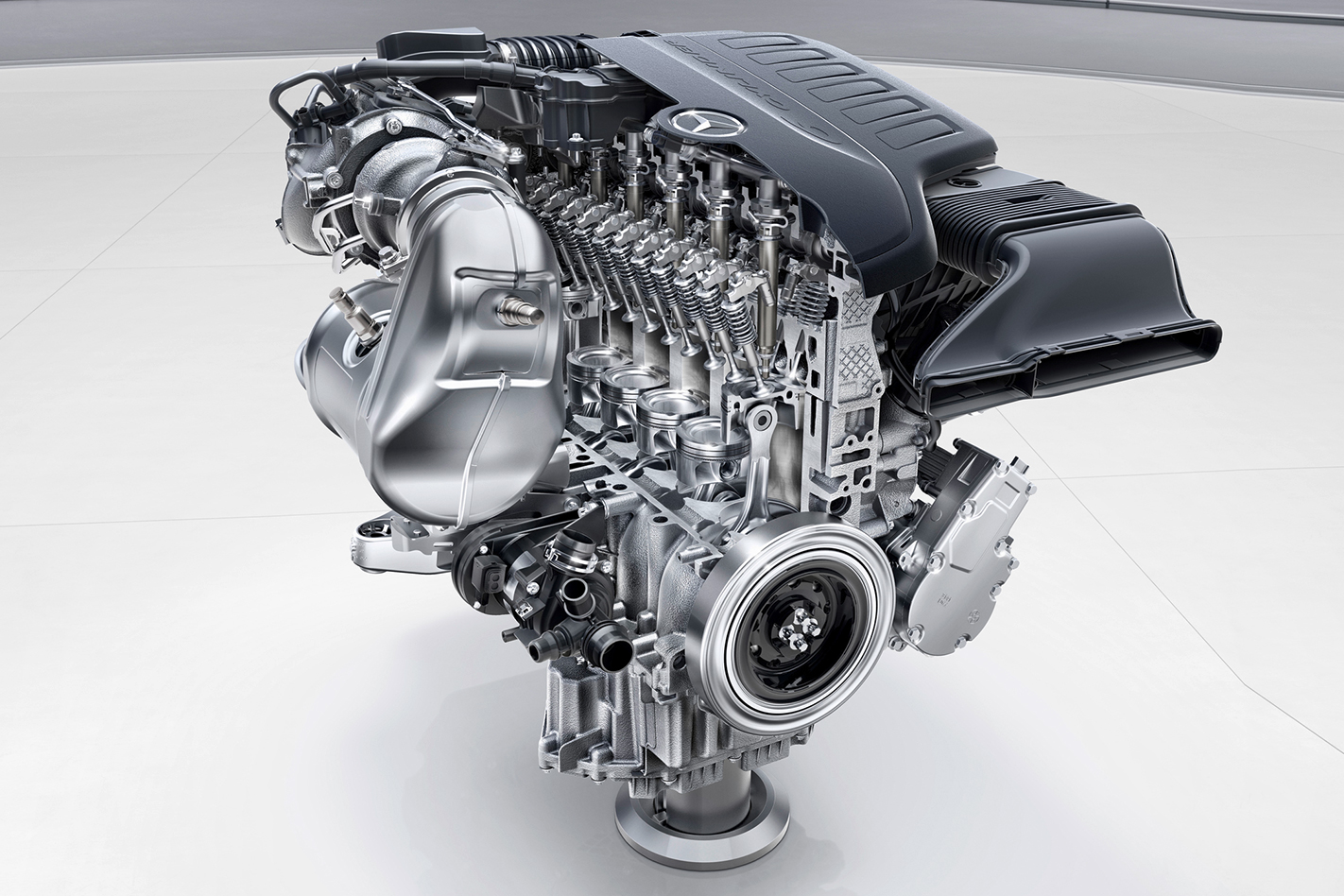
Benz’s boosted straight six is dubbed M256 in non-AMG form, and will debut in the revamped S-Class later this year.
According to our source, AMG has no plans to transplant the dragon-slaying E63’s 450kW twin-turbo V8 powerplant into the snout of Benz’s just-launched E-Class cabriolet. The new turbocharged inline six will feature in the big convertible as the only AMG variant for that model.
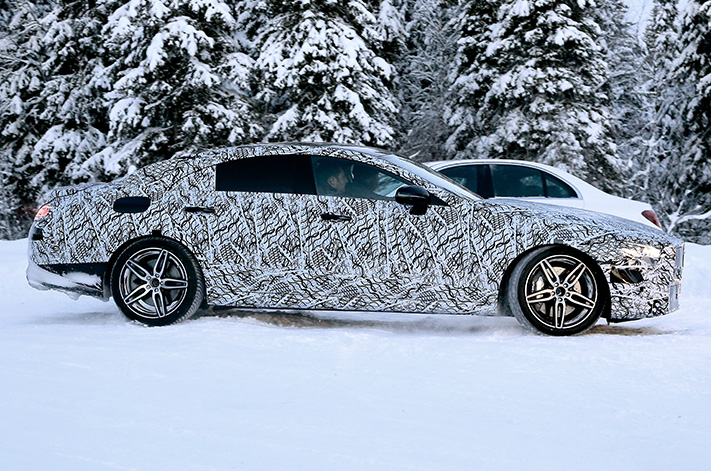
Given the new powertrain’s V8-rivalling grunt the six is hardly a consolation prize.
It’s not yet clear precisely how the 50kW hybrid system hinted at for the CLS 53 and E53 will be integrated, but Wheels understands it won’t come with a plug-in charging system due to packaging constraints – at least for the cabrio. Limited space for batteries means that for the E53 Cabriolet won’t be able to be driven on electric power alone – at least not for any meaningful distance.
AMG products command a significant chunk of Mercedes Australia’s sales pie, with the company on track to deliver around 6000 cars from AMG’s ever-growing model line-up before the end of 2017.
Much of that growth can be attributed to the arrival of the mid-strength AMG ‘43 models. In the C-Class’ case, the C43 outsold its more powerful C63 sibling for two months this year, however those sales were in addition to what the C63 model would normally sell. Latent demand for more approachable – and affordable – AMGs clearly hasn’t stepped on the toes of its V8 flagships.
BMW’s next generation of small SUV, the updated X3 line-up, features its first performance model, the X3 M40i.
Featuring a 3.0-litre straight six engine, the M40i will put out 265kW and 500Nm, which Munich says will propel the SUV to 100km/h in 4.8 seconds.
That’s the same claim as than the much lighter BMW M140i (1445kg vs 1810kg) which has a similar power output of 250kW/500Nm.
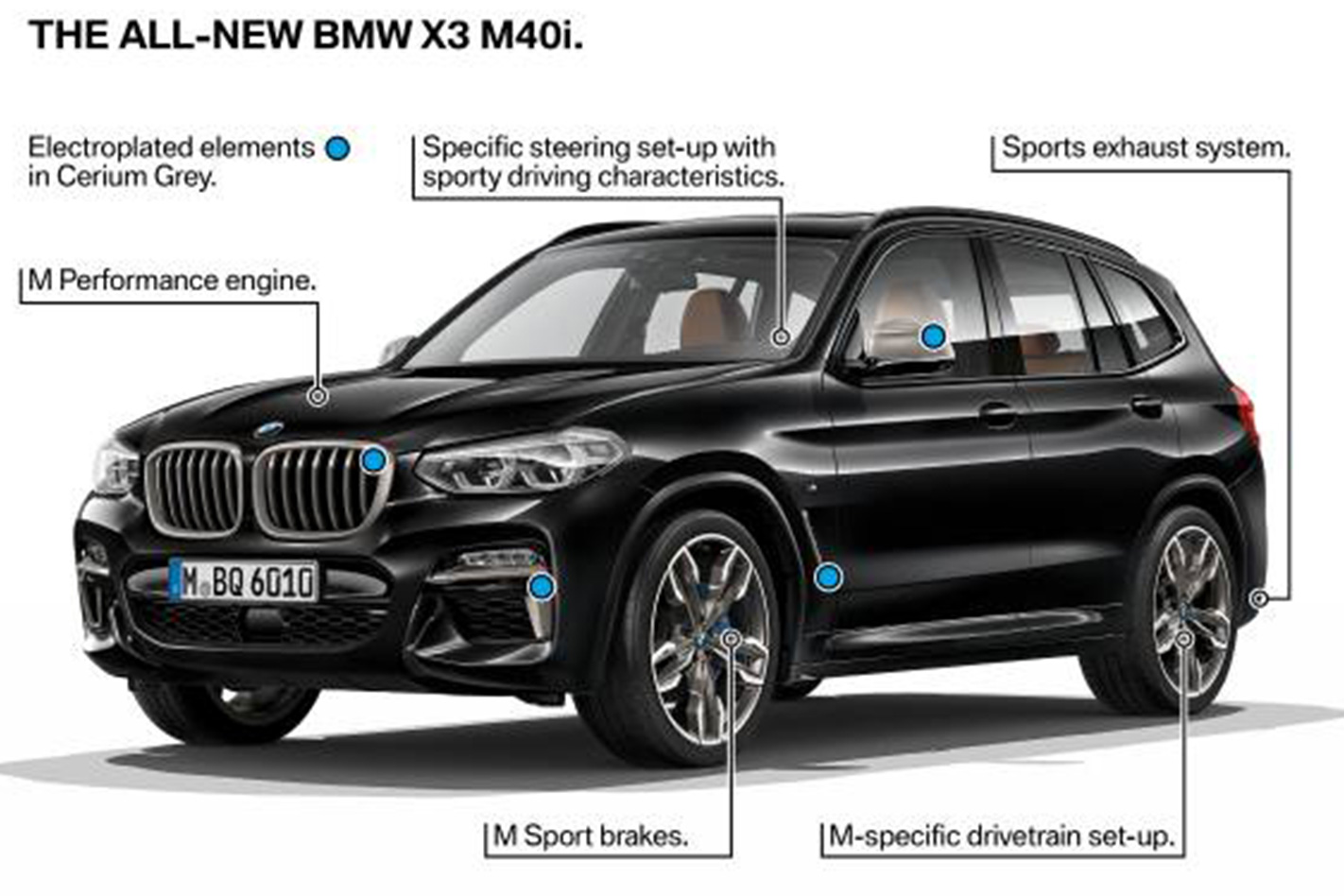
It also gets “model specific” tuning and equipment, as well as visual M Performance design features.
These features include flap-controlled M Sport exhaust system (with Black Chrome tailpipe “embellishers”), M Sport brakes, M Sport suspension with M Performance tuning, variable sport steering, and 20-inch light-alloy wheels.
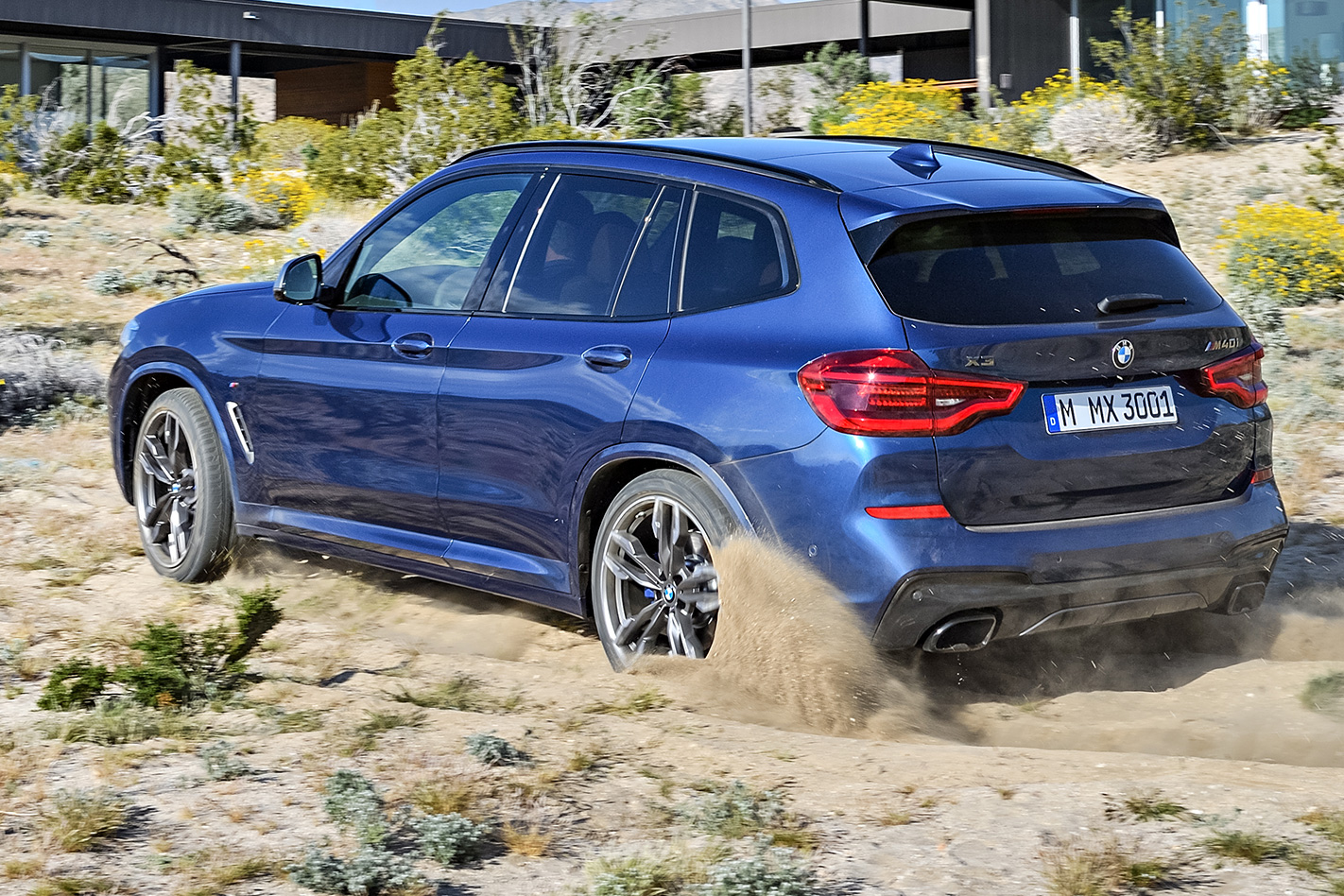
“In addition, its xDrive all-wheel-drive system has a far more pronounced rear bias than on the other model versions.
$100K to play: BMW M2 or M140i?
“The Performance Control feature integrated into the DSC system and acting on the rear wheels has been reconfigured to produce the dynamism, agility and traction control for which M models have made their name.”
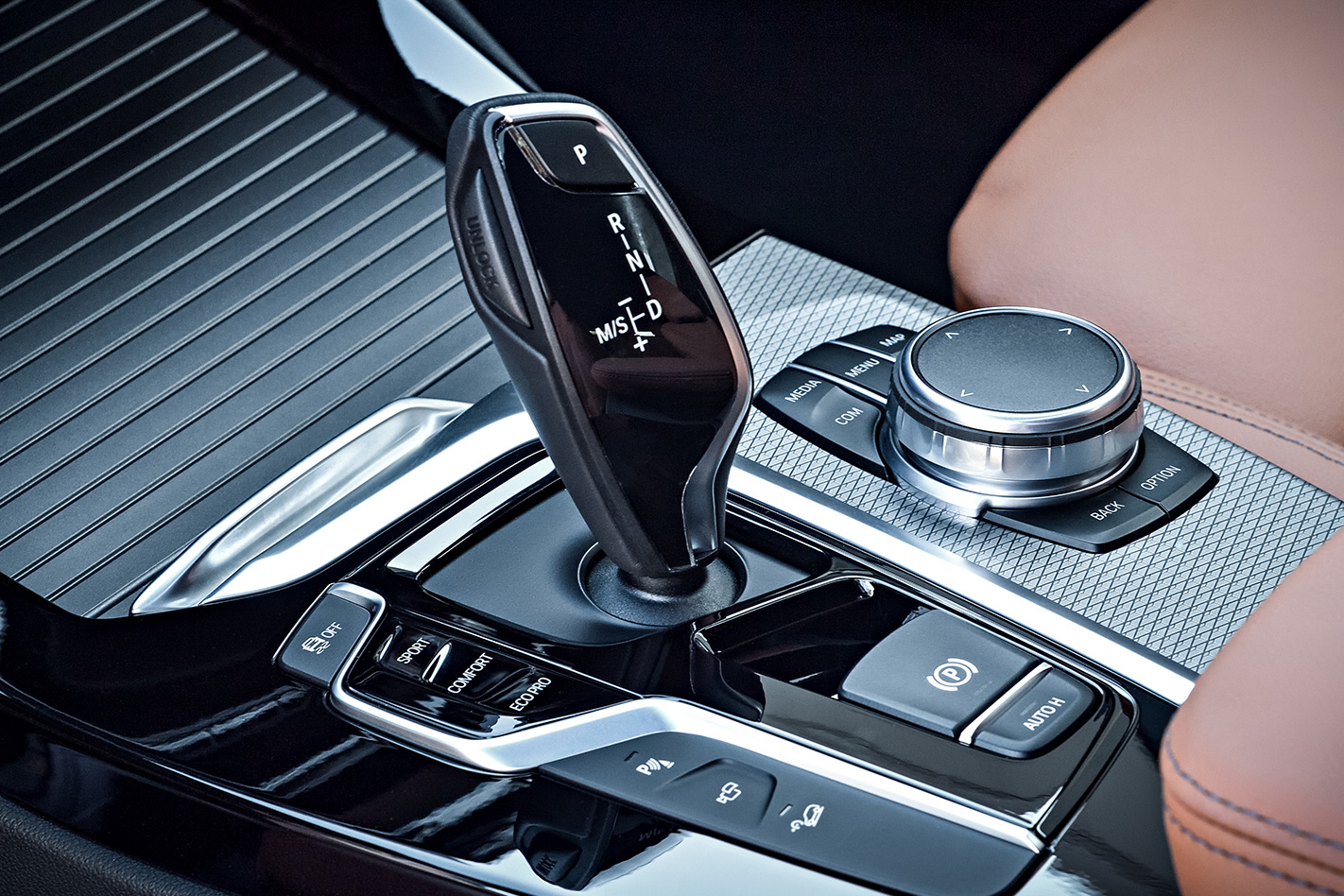
“M40i logos adorn, for instance, the front door sill strips and instrument panel to provide further visual emphasis of the car’s performance capabilities.”
The new X3 will, of course, hit our shores, though when is not yet known.
JAGUAR’S snarling XE SV Project 8 has been spied testing on the Nurburgring ahead of its official reveal at the Goodwood Festival of Speed.
The XE SV Project 8 will be the most powerful road-legal car in Jaguar’s history, packing a supercharged 5.0-litre V8, pushing 441kW to all four wheels.
All that power is being transferred via a specially tuned version of the eight-speed ZF auto which features in all XE variants.
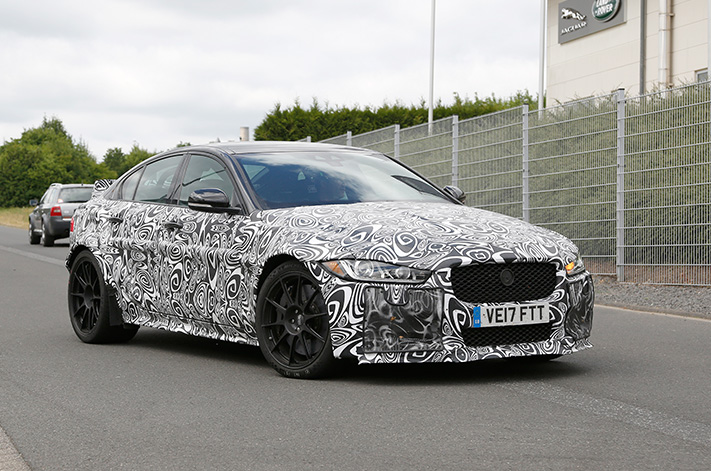
If this sounds like something you would want to add to your garage, you’re probably already too late, with Jaguar only building 300 cars, all in left-hand drive.
Jaguar hasn’t released any performance figures, but you’d be safe to bet it’ll sprint to 100km/h from a standstill in 3.5 seconds or less. The four-door brawler is angled directly at battling the Porsche 911 GT3 and BMW M4 GTS.
The car has been tested and developed on the Nurburgring, with our spy photographers snapping pics of the car just days ahead of its reveal.
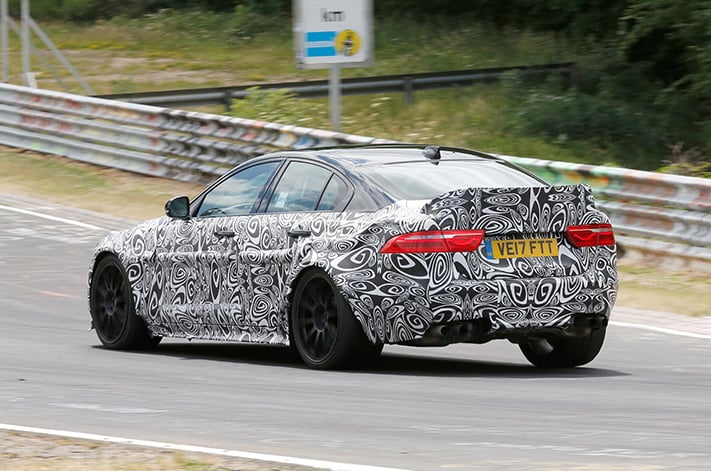
It’s also likely the Project 8 will have gone on a diet, ditching kilos compared to its less powerful brothers. More power and less weight is a tried and true recipe.
The car will be revealed at the Goodwood Festival of Speed (29/6 – 2/7/2017), and is rumoured to be making a run up Lord March’s famed driveway.
What is it?
Catalytic converters (or simply ‘cats’ for short) are one of the most important parts of the exhaust system of modern cars. Generally located close to the engine, the catalytic converter is tasked with breaking down the pollution coming out the end of the tailpipe.
To put it in the simplest of terms, it’s a metal box that cleans up the emissions coming out of the back of your car, but the science behind it is far more complex than that.
How does it work?
Catalytic converters contain catalysts – chemicals which speed up the process of chemical reactions, which themselves do not change during this process. Catalysts break down the harmful exhaust gases coming from the engine by separating the atoms which make up these molecules.
There are typically two different catalysts inside of a common three-way catalytic converter – one which tackles nitrogen oxide by removing oxygen through a process called reduction, and the other which turns carbon monoxide into carbon dioxide by adding oxygen, called oxidation.
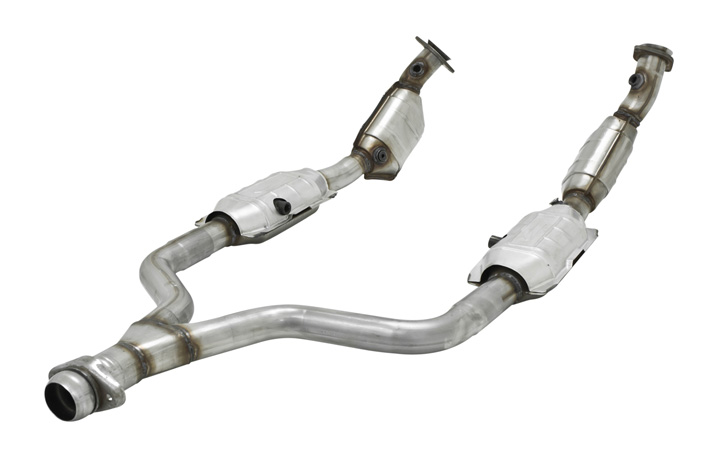
There is also a second oxidation reaction that happens inside the catalytic converter, which turns any unburned hydrocarbons into carbon dioxide and water.
What this all amounts to is less smoke and odour coming out of the exhausts of cars now than before catalytic converters were mandated by Australian authorities during the 80s for all cars sold here.
It is also worth noting catalytic converters are one reason we must use unleaded fuel in cars today, as leaded fuel, which is no longer sold in Oz, prevents the catalysts from breaking down the pollution in the exhaust gases.
Why does it matter?
Arguably, if it weren’t for catalytic converters at play, cities would be a lot smoggier than they are, and the smog would be far more harmful to the environment and to people.
As catalytic converters play a vital role in reducing short-term air pollution, they can certainly be considered beneficial, although they aren’t without their detractors.
Some environmental concern bodies, such as the Intergovernmental Panel on Climate Change, have claimed that due to the amount of nitrous oxide they produce they are doing more long-term harm to the environment than they are good.
However, newer catalytic converters produce far less nitrous oxide than older ones, and the effect they have on reducing the emissions of hydrocarbons, carbon monoxide, and nitrogen oxides is certainly noticeable.
TAKATA, the Japanese manufacturer embroiled in a massive global recall over faulty airbags, has finally bowed to the inevitable and filed for bankruptcy.
According to court filings from Monday’s submission, the company plans to sell the majority of its assets to Detroit-based airbag manufacturer Key Safety Systems for USD$1.6 billion.
Key Safety System, itself owned by giant Chinese conglomerate Ningbo Joyson, emerged as the leading bidder, but will close down Takata’s airbag manufacturing division in 2020 when it completes the manufacturer of replacement inflators to comply with the terms of the 100 million-strong recall of faulty units that affects 32 car brands. Takata will continue to manufacture seatbelts, steering wheels and a host of other automotive componentry.
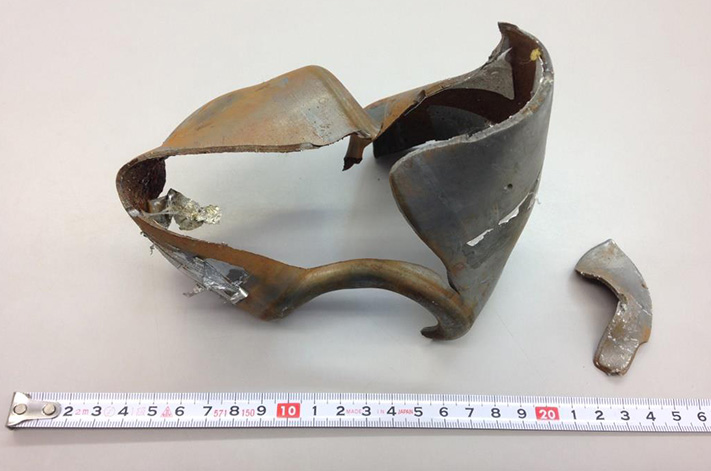
The Takata scandal first emerged when airbags on Hondas began injuring people with metal fragments in 2008. Since then, the company has clocked up what US analysts estimate to be between USD$10bn to USD$15bn dollars in liabilities from class action and individual lawsuits as well as fines levied against the company by federal bodies. Since 2008, at least 17 people have died as a result of faulty Takata airbag actuators and, at the last count, 184 were registered as injured.

On the face of it, spending $1.6bn acquiring one of the world’s most toxic brands might not seem immediately appealing, but the purchase makes good sense for Key Safety. The company will not assume Takata’s liabilities and will also be in pole position to supply Takata’s biggest customer, Honda.
Ron Fieldesen, Key Safety’s senior VP of sales and marketing also promised a new regional headquarters in Japan. “If there is a need for Japanese people to serve our Japanese customers, I’m sure management would ultimately do that,” he is on record as saying.
The combined Key Safety/Takata holdings would account for a 25 percent market share of the global airbag sales, ranking second to Sweden’s Autoliv (34 percent).
So, what does it mean for you? Will the recall process be affected?
No. The recalls will continue and the Takata plants will continue manufacturing the replacement airbag actuators. Rival airbag manufacturers have also stepped in to take advantage of the unexpected sales bonanza. Key Safety’s continuity plans for Takata lessens the chance of supplies drying up, as would have been the case if an asset-stripping bid had acquired the Japanese company.
Is Takata off the hook financially? What legal redress do I have?
That’s a tough one. The bankruptcy courts will put every obstacle possible in the way of new lawsuits being presented to Takata/Key. As a result, the car manufacturers will find themselves assuming the majority of the legal heat. Although the defective bags were manufactured by Takata, car makers nevertheless have a responsibility to sell a safe product. Winning punitive damages won’t be easy because the manufacturers will attempt to pass the blame to the now-defunct Takata legal entity.
How do I know if my car is affected?
Go to the government’s product safety site and have a look. It’s populated mainly by Japanese manufacturers, but some BMW, Chrysler, Dodge, Ferrari, Ford and Jeep vehicles are on the list too.
THE days of ever increasing vehicle emissions crackdowns are upon us, and car makers are pulling every trick out of the book that they can to make their products cleaner, and greener.
One of the technologies that is becoming more widespread are stop-start systems, also known as idle-stop systems. They cut the engine when the car is not moving, saving fuel that would otherwise be wasted while the car is idling.
These systems are designed to recognise when the driver lifts a foot off the brake, and restart the engine before the driver’s foot presses on the accelerator.
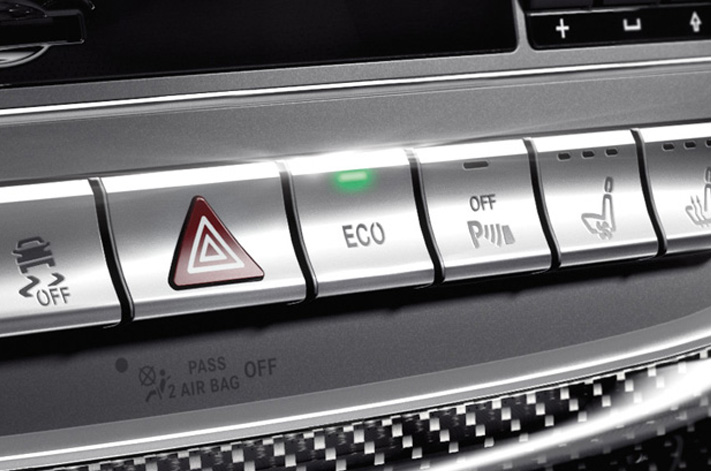
However, while they bring benefits, idle-stop systems are not without their drawbacks.
One of the most obvious differences is that if a car engine is stopping and starting all the time, you’ll need a more energy-soaked 12-volt battery. And that means a bigger, more sophisticated battery, which in turn weighs more. For vehicles such as large SUVs car batteries already weigh up to about 20 kilograms, or about the equivalent of a five-year-old child – and idle-stop systems need a similar amount of performance.
Unlike fashion, where the less it covers the more it costs, battery cost seems to go hand in hand with performance.
| Top Five: Most Fuel Efficient Cars on sale in Australia
The big no-no for car batteries is running them at less-than-optimal voltages. If you live a short way from work, and stop frequently, the car may not be getting sufficient time to recharge the energy it has lost from the idle-stop system. This could dramatically shorten the battery’s life – normally you’d expect to get about four years out of one before needing a replacement. You’ll notice the battery is on the way out in cold-weather starting, where the battery becomes less efficient at releasing its electricity. Some early idle-stop systems were quite hard on batteries, but these days the car makers seem to have that problem sorted.
Not all idle-stop systems are created equally, either. Some systems are sluggish, requiring a degree of anticipation if you’re crossing a busy intersection or making a sprint away from the traffic lights. Yet others are so sharply honed and controllable – some cars will only activate the stop-start system if the driver’s foot is firmly on the brake pedal; light pressure will keep the engine running – that you’d almost never notice them working. Others will rumble into life if you give a small tug on the steering wheel.
Then there’s the fuel savings. An average 2.0-litre engine in a passenger car will burn about 600mL of fuel – the equivalent of a Big M – an hour while it is idling. A larger six-cylinder engine will use about 1.5 litres an hour. Assuming you’re facing five minutes of complete-stop congestion a day over your 40km round commute, back-of-the-envelope calculations show you’re officially only saving 5mL of fuel a day in your small, fuel-efficient car, or about 12 litres a year. It’s a more meaningful 30-odd litres of savings for the bigger engine.
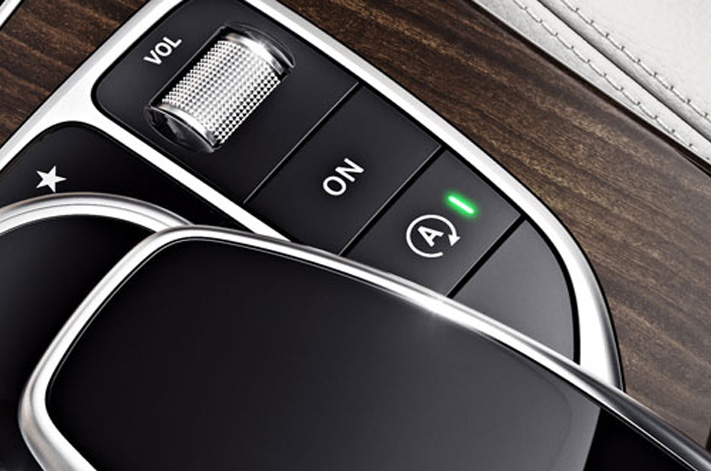
It’s not that good, either, if you’re in slow-moving traffic such as on a freeway, where there’s little to no chance of coming to a complete stop.
Why have an idle-stop system, then? The biggest benefit is for the car makers, who need to meet strict emissions targets overseas or sell their products in markets where owners are charged registration fees depending on how much pollution their car emits.
Government fuel tests have standard driving cycles that all new cars have to use as a benchmark, and which includes simulated urban (slow with lots of stops and fast acceleration) and rural (loping along) stages. It’s how their cars behave on this cycle that determines how much fuel they officially use. In Australia, the test takes about 20 minutes. More than six minutes of that test simulates when the car is stopped in traffic, so any fuel saved here can make a significant difference to how much fuel it officially uses.
That’s not to say idle-stop technology is the wrong thing. Anything that saves motorists from having to reach again into their purse or hip pocket – even if it is only the equivalent of half a tank a year – is a help.
Of course, if you don’t like it, there’s always that switch to turn it off.
ALFA Romeo has a winner on its hands. Not only is the all-new Giulia the most hyped Alfa sedan in decades, but in flagship QV guise, it’s a giant-killer too, having recently stunned its lauded rivals from AMG and BMW M in our latest sports sedan showdown.
But how does Alfa’s billion Euro baby fare without the beefed-up Quadrifoglio dressing? Can it really be just as impressive in run-of-the-mill Super guise? In many ways this battle is the real test of the Giulia’s mettle – while range-topping flagships are important, it’s the mid-spec variants in the $60-70K bracket that gobble up the bulk of sales in the tightly fought mid-size luxury category.
Our reigning champ in this segment is the Jaguar XE 25t, found here in handsome R-Sport guise it can be rolled off the showroom floor for $68,900. However, our test car cost $87,590 with a slew of options fitted. The XE is a 2016 Car of the Year finalist, and a class leader, praised for its chassis balance, ride refinement, and selection of perky engines. With optional adaptive dampers (costing $1,910), it is able to provide both smooth refinement, and sporty aggression at the flick of a button.
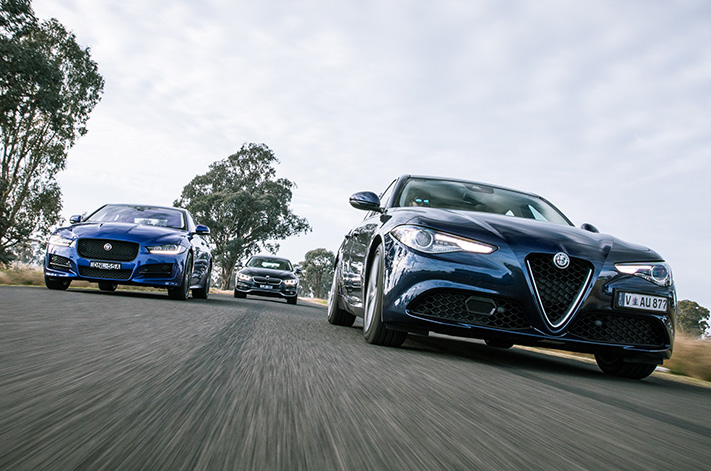
Interestingly, every car in this trio follows the same drivetrain recipe: a 2.0-litre turbocharged four-pot up front, eight-speed automatic gearbox and rear-wheel drive.
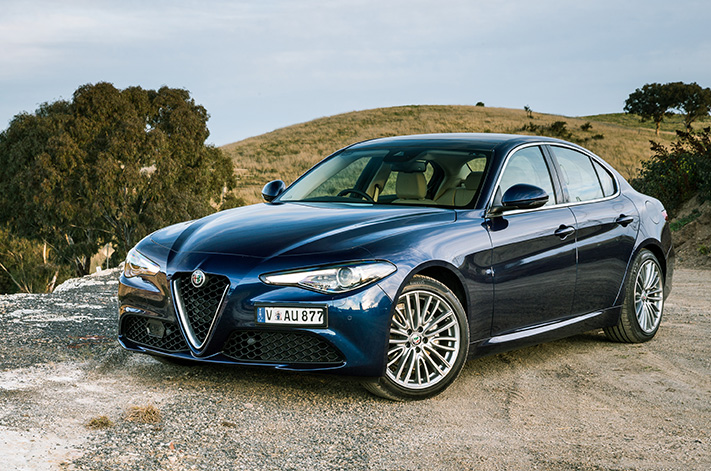
As tested, the Alfa remained the cheapest at $70,395.
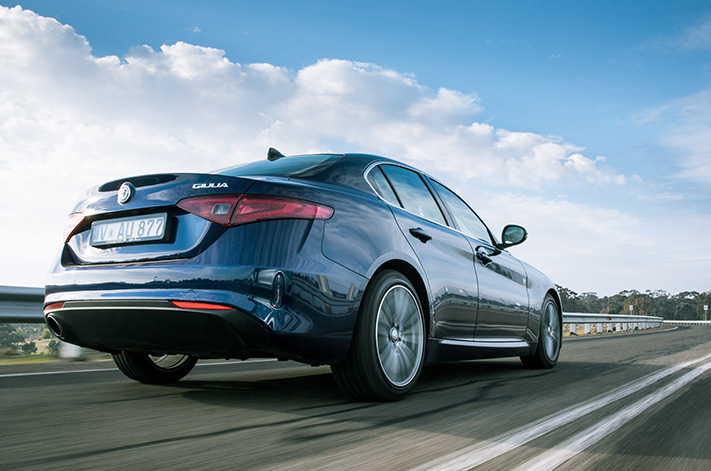
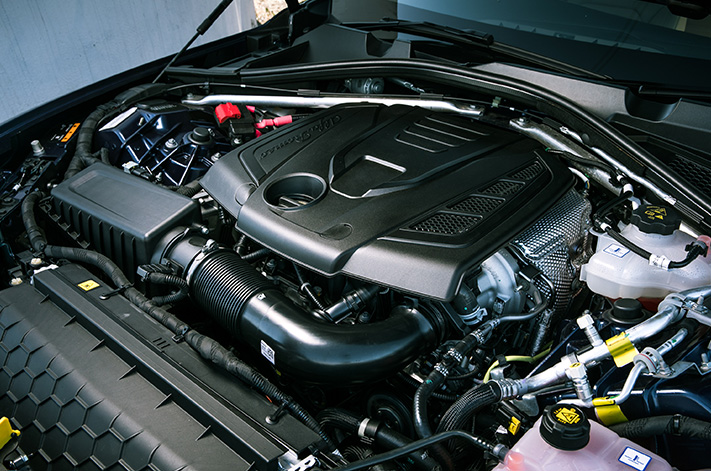
The Giulia Super’s 2.0-litre turbo engine is a perky little unit. It doesn’t have the same ‘designed by Ferrari’ PR hype as the 2.9-litre twin-turbo V6 from the QV, but it revs happily, and is torquey throughout the rev range. It will easily cruise in relative quiet on the highway, and in-gear acceleration doesn’t leave you wanting for more.
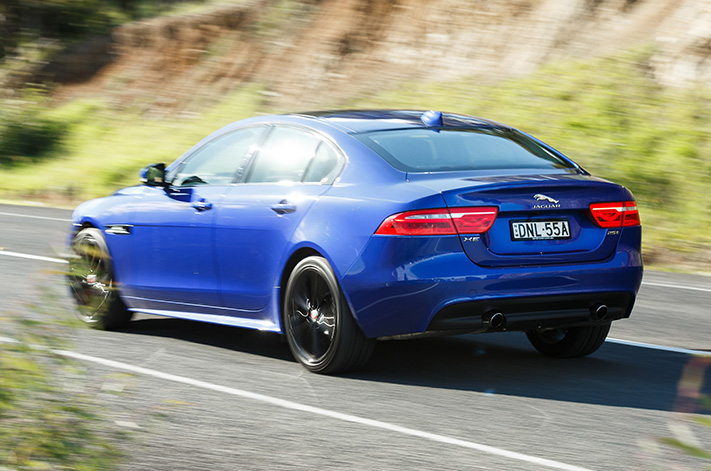
Nipping at the Giulia’s fun-to-drive heals is the XE, which holds onto the road impressively. The XE has heavier steering that communicates what is happening at the front wheels better than the Alfa, though it is less eager to tip in, and tends toward understeer earlier than the Giulia. If you are patient on turn in, the Jaguar rewards with a sweet balance in the corners, and its standard torque vectoring helps it through the bends.
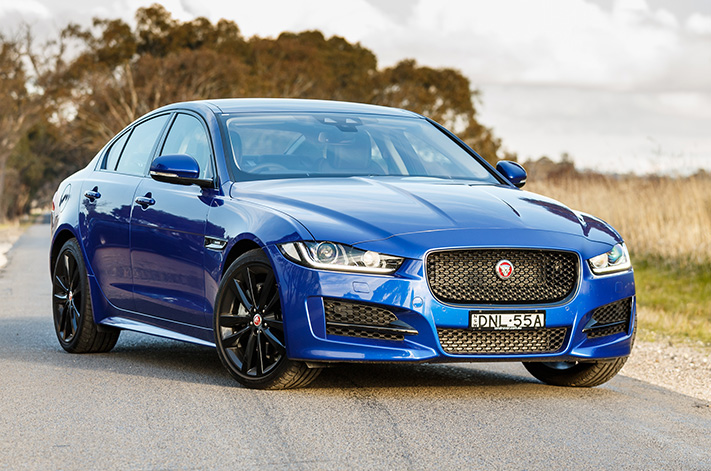
It is the quickest in a straight line, but also the thirstiest, drinking over a litre per 100km more than its rivals in this comparison (10.8L/100km v 9.8L/100km in the Alfa, and 8.9L/100km for the BMW). Power is delivered in a smooth fashion, but it is higher in the rev range where the XE really comes alive.
It is the same with the engine, with Sport and Manual modes required to really get the most out of it. However, for day to day driving, the BMW excels.
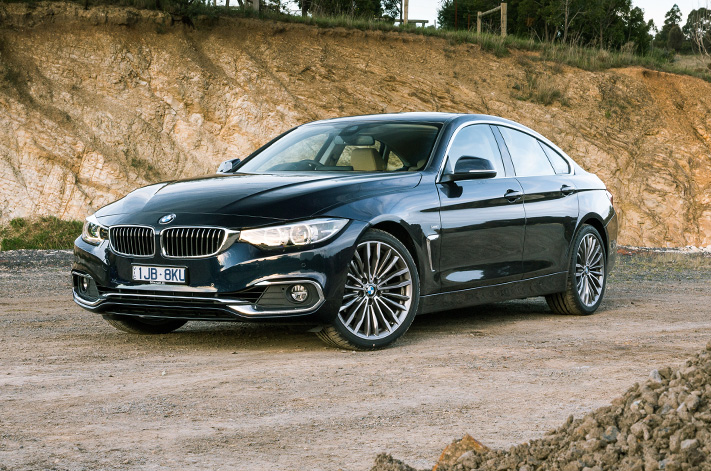
Where the 4 Series really has the edge is inside. Despite its coupe roofline, there is more leg and headroom in the back of the BMW than in the Jag or Alfa. However, don’t expect to put three people across the back row for anything but short trips. Its 2+1 back row design means four people max out comfortable cabin space.
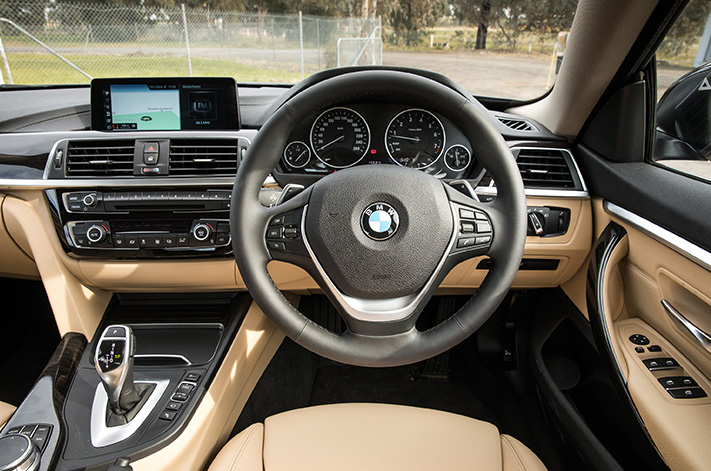
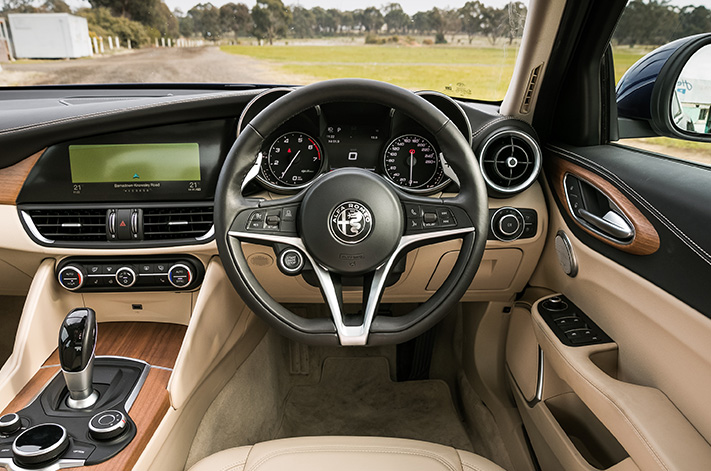
The Giulia’s interior is the most stripped-back and minimalist, though it doesn’t feel bare, rather it has a light and airy vibe. The 8.8-inch infotainment screen blends well with the dash design, and is easy to use and navigate, unlike the Jag’s. In the spec we tested, the cabin of the Jag felt somewhat dark and cramped. All black leather for the seats, headliner, and dash didn’t help. The touchscreen infotainment system was difficult to use safely on the move, with small buttons that are closely grouped. However, the $3,760 optional Meridian Digital sound system in the Jag is the best of the bunch. In such a tight battle, it is issues like ease of use that separate the final order.
The BMW is the most accomplished of the bunch from a practical day-to-day standpoint, but misses the mark dynamically by demanding too much manhandling to get through its initial lethargy and into the best bits.
It is the Giulia which excels, and proves Alfa’s comeback isn’t reserved for the high-rolling sports sedan crowd. The mid-spec Super is more than just a one-trick pony, being a winner both dynamically, and around town, thanks to its engaged driver appeal and well behaved on-road manners.
Model: Jaguar XE 25t R-Sport Engine: 1999cc inline four-cylinder turbo Max power: 177kW @ 5500rpm Max torque: 340Nm @ 1750-4000rpm Transmission: 8-speed automatic L/W/H: 4672/1967/1416mm Wheelbase: 2835mm Weight: 1520kg 0-100km/h: 6.7 seconds (tested) Economy: 10.8L/100km (as tested) Price: $87,590 On sale: Now
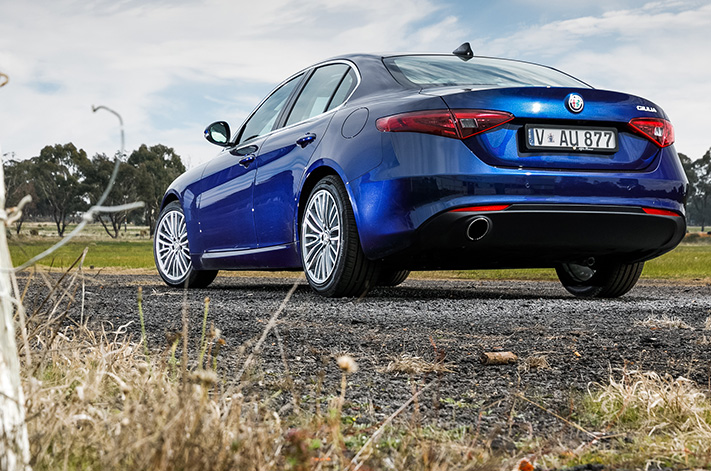
Model: Alfa Romeo Giulia Super Engine: 1995cc inline four-cylinder turbo Max power: 147kW @ 5000rpm Max torque: 330Nm @ 1750rpm Transmission: 8-speed automatic L/W/H: 4643/1860/1436mm Wheelbase: 2820mm Weight: 1492kg 0-100km/h: 8.3 seconds (tested) Economy: 9.8L/100km (as tested) Price: $70,395 On sale: Now
