
QUESTION – GLENN (April 14, 2017)
I’m looking for a car, prioritising fuel economy and safety. I drive daily around 20km and 140km a week, mostly around the city, so I’m looking for a small car. The best I could fine was a Volkswagen Polo 81TSI but I want to be sure.
BUDGET: $25,000
ANSWER – NATHAN PONCHARD:
There’s a wealth of choice in the small-car market for less than $25K and you’re correct in identifying the Volkswagen Polo 81TSI Comfortline DSG ($21,190 RRP, not including on-road costs) as one of the safest and most economical.It’s also roomy, gutsy, and confidence-inspiring to drive. However, you should be aware that the current shape has been on sale since 2010 and an all-new Polo generation will launch here in 2018.Others we’d suggest looking at include the Polo’s close cousin – the younger and funkier Skoda Fabia 81TSI – in two trim levels. The standard car is $19,490 RRP (with a range of cool, design-focused options available) while the more upmarket Monte Carlo is $23,490 RRP. You may be able to find a Fabia Monte Carlo for around $25K driveaway. There’s also a Fabia wagon available (unique in this class).As it stands, while there are fewer Skoda dealers around, they offer reasonably competitive fixed-price servicing, and given that the Fabia shares its entire mechanical and safety package with the Polo, you may like the fact that it’s a little less common, a bit more cool, and can be individualised.
FORD… what on earth were you thinking?
Back in 2013, you launched one of the safest, roomiest, comfiest, sportiest, and most practical medium-sized SUVs out there.
But then you mucked it all up with a weird made-up name that some people frankly felt uncomfortable with… no, not Trump, but Kuga. Sales never hit the heights that the car deserved.
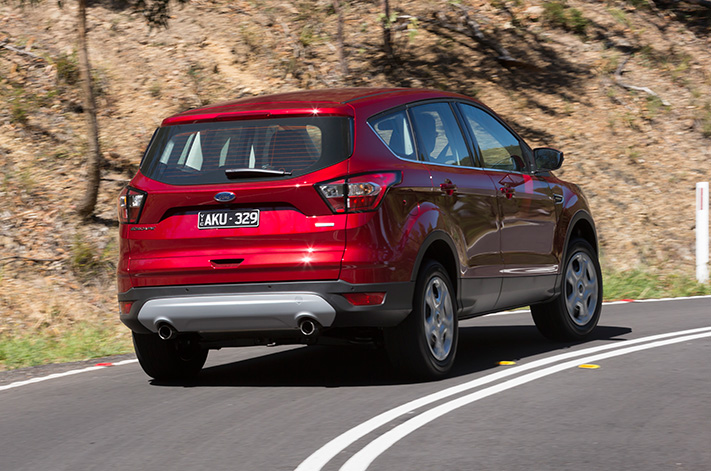
Welcome, then, to the 2017 Ford Escape. An old name revived for the Kuga facelift, will it finally give one of our favourite medium SUVs a fighting chance at success?
If legendary Hollywood tough guy John Wayne could make it after changing his name from Marion Morrison, then anything is possible.
ON PAPER The switch from Kuga to Escape has brought with it a tougher new face dominated by a substantially-bigger grille that’s more in line with other Ford trucks and SUVs, as well as slightly cleaner tail-light treatment behind.
Along with new-look wheels, the result is surprisingly effective in modernising an ageing design.
As before, there are three grades available – the base Ambiente from $27,490, mid-range Trend from $33,000, and the luxury Titanium from a cool $45,000.
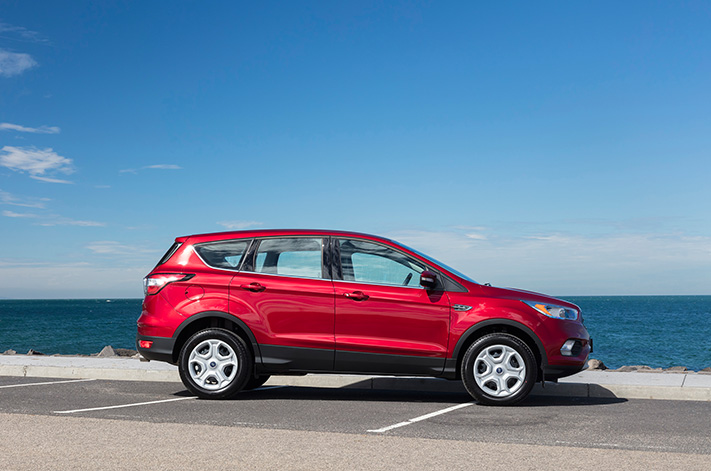
While the 1.5-litre engines remain largely unchanged, the 2.0-litre petrol turbo tearaway has been thoroughly overhauled. Lighter and more efficient than before, it adopts the smaller powertrain’s start-stop tech, to cut consumption to 8.6L/100km.
That’s still some way off the frugal diesel’s 5.5L/100km rating, while the crafty 1.5-litre manual at 6.3L/100km beats the auto’s circa-7.5L/100km result hands down.
Towing capacity is between 1500kg and 1800kg depending on whether it’s petrol or diesel, and it’s worth noting that – despite what the new name, AWD badge, and lofty 200mm ground clearance imply – the Escape cannot go off-road at all.
WHY IS IT IMPORTANT? The really big news is that, compared to the preceding Ford Kuga, the 2017 Escape offers a broader and more complete line-up, as well as representation in the hottest part of the medium SUV market.
Put another way, buyers can now have the popular Trend at a more affordable price, since the newly minted 1.5L FWD variant from $33,000 is almost $4000 cheaper than the old, 2.0L AWD-only version.
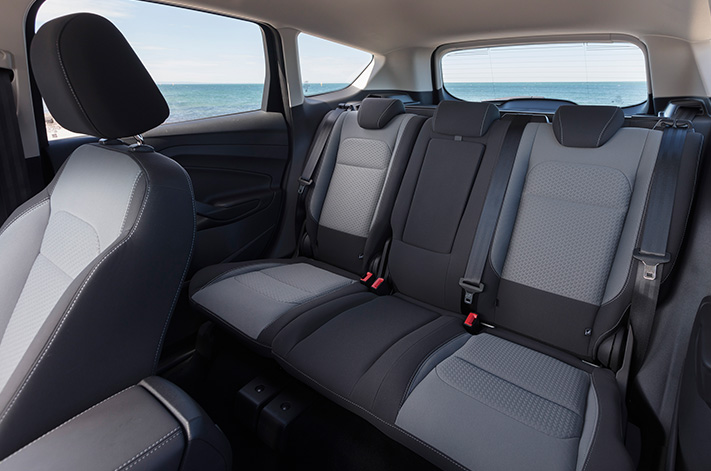
Ford has put some work in making the cabin quieter and more refined, with the Trend gaining acoustic window film to cut noise paths, as well as an available foot-operated, hands-free tailgate opener.
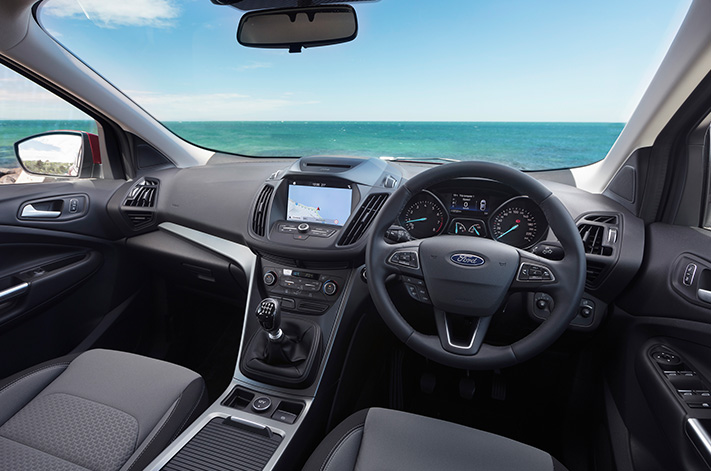
Note, however, that AEB Autonomous Emergency Braking is only available from the Trend upwards as part of a $1300 Technology Pack, that also ushers in latest-generation Lane Departure Warning with Driver Alert, Lane Keep Assist, Auto High Beam, Adaptive Cruise with Forward Alert and Enhanced Collision Mitigation, Blind Spot Information System with Rear Cross-Traffic Alert, and Tyre Pressure Monitors.
So is the increasingly rare manual gearbox availability – which makes the cheapest Ambiente the keen driver’s choice amongst all medium SUVs – not just the Escape range – at a sensational price.
VERDICT We expected the Escape to feel a bit tired and dated after the rash of recent arrivals like the VW Tiguan.
But with its handsome new nose, upgraded multimedia tech, broader model range (including the cracking base manual), improved refinement, and powertrain efficiency gains on the gutsy 2.0L AWD, the Escape takes over from where the Kuga left off as one of Australia’s most likeable – and fun – medium SUVs.
The new name is just the beginning.
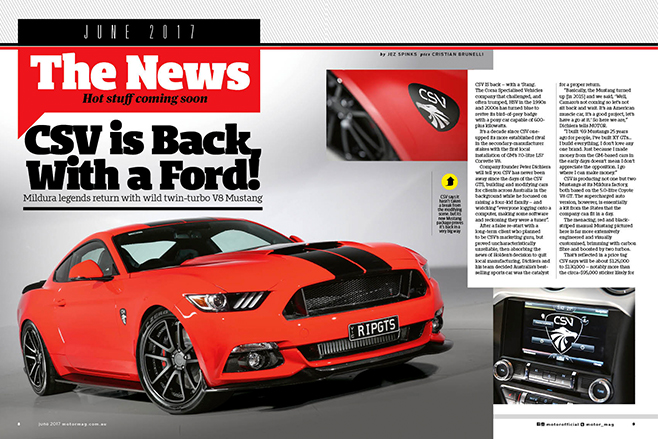
A new issue of Australia’s best fast car magazine has been upon the public, so get your hands on our current pages, available in stores and at Zinio online.
On the cover you’ll find one of the most wicked Mustangs around. It was built by Corsa Specialised Vehicles, which is well on the way to bestowing 600kW and 800Nm upon it. Watch out, W1.
Welcome to episode three of the Performance Car Podcast.
In this episode Editor Dylan Campbell and Associate Editor Scott Newman discuss the trend of downsizing. Most performance cars are now using smaller engines boosted by turbocharging to produce improved performance with greater fuel economy – or at least that’s the theory.
We discuss the various cars that encompass this trend and the effect – whether positive or negative – a smaller engine has had, as well as examining whether the trend is producing the intended results.
Our studio for this episode is the Volvo S60 Polestar, which is a poster child for the downsizing movement having recently switched its 3.0-litre turbocharged six-cylinder for a 2.0-litre turbocharged and supercharged four-cylinder. Despite losing a third of its capacity, power and performance has actually increased.
You can listen to this podcast in audio form on iTunes and Podbean, please subscribe and leave us a rating. Feel free to let us know any cars or topics you’d like us to cover in future episodes, we’ll see you again in a couple of weeks with another episode.
So, you’re about to become a parent. Congratulations! But while it means big changes for you, it could also mean big changes for the car you drive.
Before you put down the positive pregnancy test and rush out to buy a new family transporter, there are a few things to stop and consider. Not every vehicle out there is as family-friendly as they seem.
Here’s the WhichCar guide to putting family first on the car-buying list.
YOU’LL NEED BOOT SPACE. PLENTY OF IT
Kids come with a lot of baggage. When they’re small, it’s all about prams and change bags, and if you’re heading away for a weekend pitch in a portacot.
We then move into the day care and kinder years, and all of a sudden it’s backpacks full of mashed-up banana, hand-print art on butcher’s paper, and what seems like half the sandpit. Primary school are the halcyon years – one bag, and that’s it – but then it’s serious school books, laptops, footy practice, netball and social lives.
Whatever luggage space you have, it will take a beating right from day one. Think about the shape, size and height of the boot space you think will work for you.
The shape and size of the boot are important. Car boots tend to be shallow and deep, hatchbacks and some SUVS tend to be tall and shallow, and other SUVs and station wagons tall and deep.
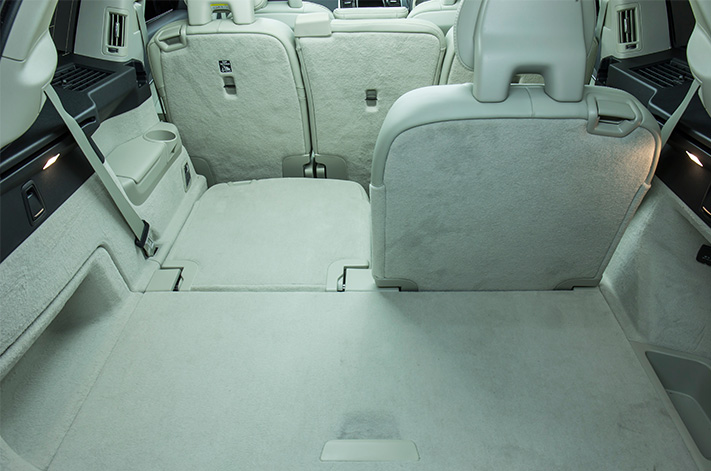
Lift up the tailgate or bootlid and look at the shape. Will stuff fit in between the wheel arches or past the shape of the aperture? Can the rear seats slide forward to increase boot space when the kids don’t need legroom, but slide back when they do?
SUVs generally have a high boot floor – the cars sit higher off the ground after all – so think about whether you want to lift a heavy pram all that way. If not, a more conventional car would make a better choice.
Some cars also have a small lip around the edge of the boot that sits higher than the floor. This is to prevent things that may have moved from falling out when you lift the tailgate.
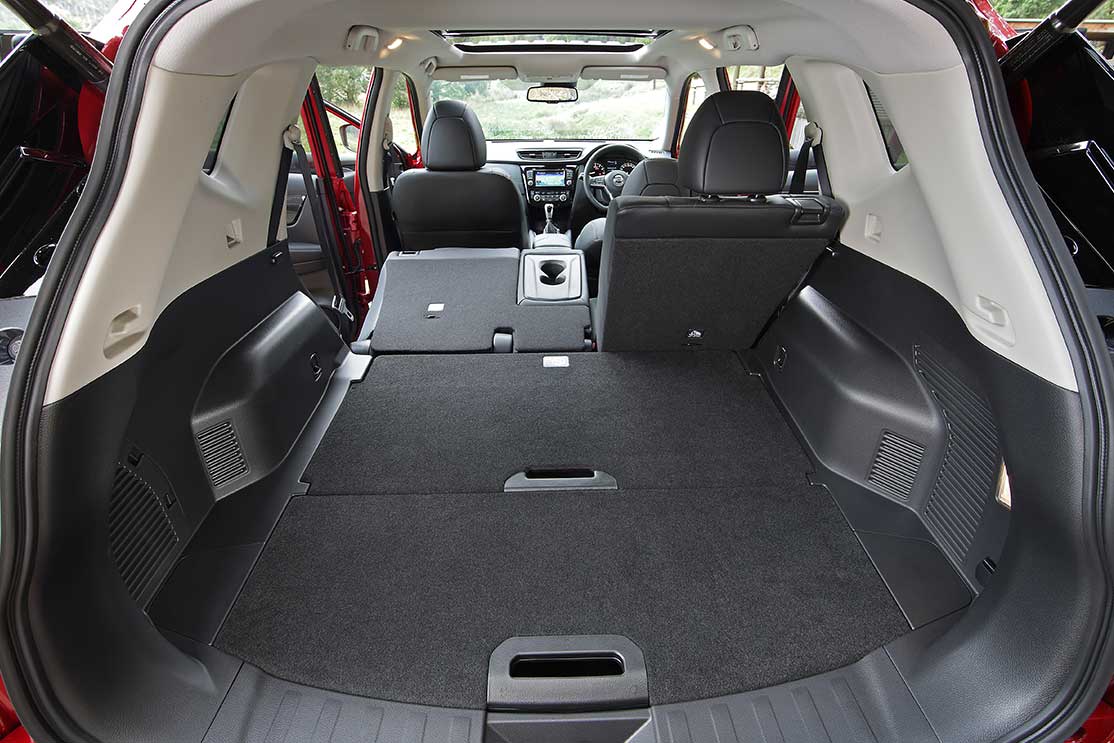
Good boots will also have well-positioned lights that aren’t lower than the luggage space height, luggage space covers to keep out prying eyes and shade the contents, and some will even have hooks that will stop shopping bags from sloshing around while cornering.
The best boots, though, have a keyless opening function usually activated by sweeping a foot under the rear bumper. You don’t even need to drop anything to open it.
IT WAS A DARK AND STORMY RIDE
Glass weighs more than steel. When carmakers design new cars, weight is an enemy, so by that reckoning, carmakers hate glass. And that shows in some of their products.
Well, they seem to hate glass. Look at most modern cars, and the windows will get smaller and smaller the further back along the car you go. It’s a sharp, classy look, but the reality is it’s generally quite bad for anyone who has to make use of them.
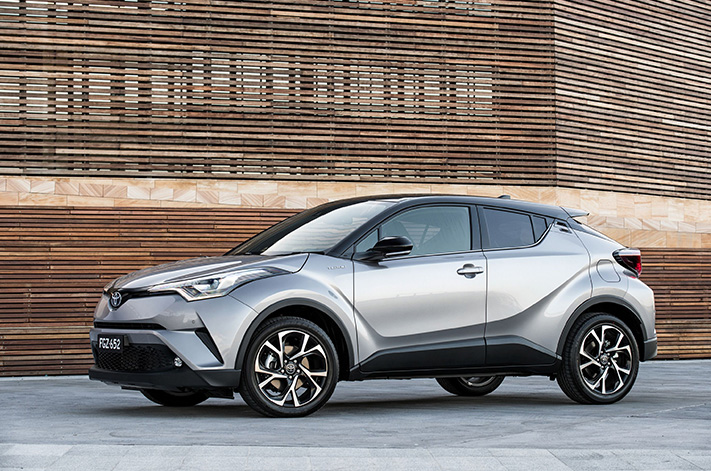
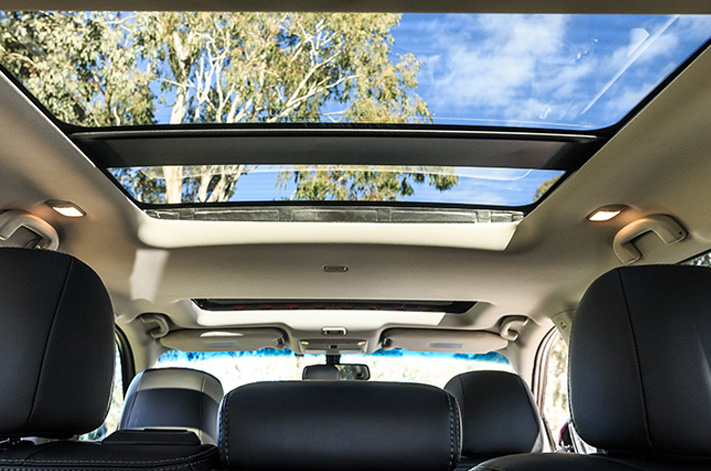
That’s because it turns rear seats into black holes. There are some bad ones out there; climb into the back of a Toyota CH-R and it will feel like you’ve been swallowed whole by the small SUV. Kids sit so low in the back seat of a high-waisted Volvo XC60 that all they see is sky. Contrast that with a Subaru Forester, where the window glass seems to extend forever and bring the outdoors inside the car.
You should care about good rear-seat visibility; it is particularly important for kids who suffer from car sickness. Take away any sense of horizon, rob them of peripheral vision, and the increase in frequency, and smell, of kids falling ill on a road trip will be a constant reminder you’ve not bought wisely.
LET ME ENTERTAIN YOU
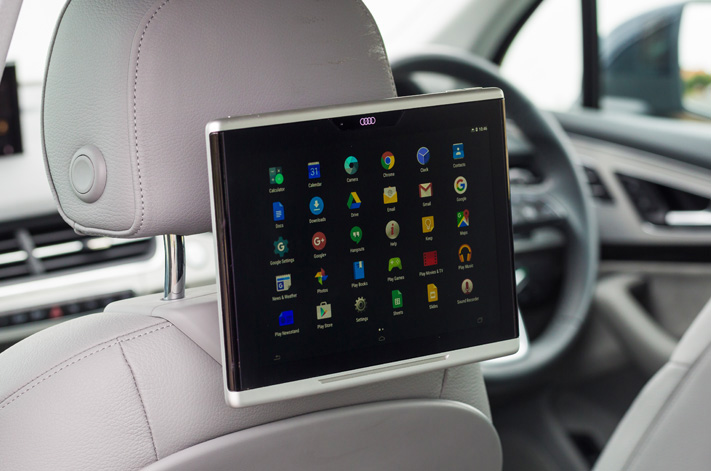
In-car entertainment is an important part of parenthood. Not so long ago, it was all about video, so anything that had in-car DVD screens for the rear seats could easily buy you some silence and compliance. The in-car DVD player was king.
It’s surprising, though, how quickly things change in the automotive world. With tablet computers becoming so cheap, it’s now more convenient to load a movie up on a device and shove that under a kid’s nose. Carmakers seem to be aware of this, and all of a sudden DVD screens are going the way of the foot-operated high-beam dip switch.
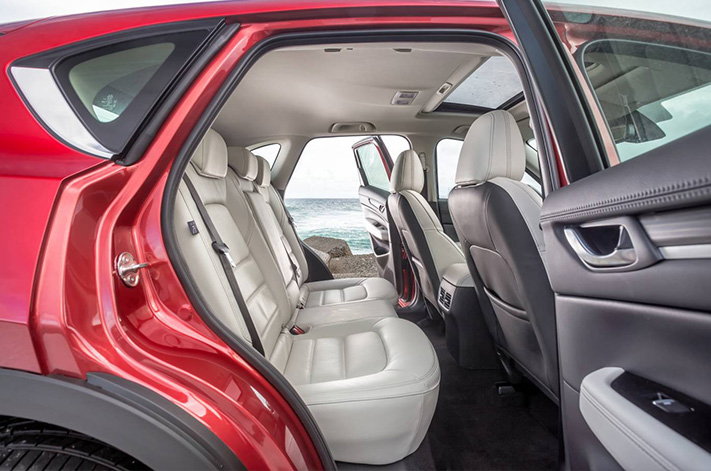
We’re now at the point where keeping children happy is more about how many USB recharging points are available.
If you’re buying a Land Rover Discovery Sport you can option up to nine USB ports around the SUV, but there are only seven seats; something doesn’t quite add up there. But cheaper options include the Kia Sportage, which a single USB port in the back row, and the Mazda CX-5, which has two USB ports built into the rear-seat armrest.
LEATHER IS BETTER FOR SPILLS
Kids will drop things. Drinks, lollies, fruit, the content of their stomachs; it all ends up exactly where you don’t want it. It accumulates, too, to the point where removing an infant’s car seat for some routine maintenance and cleaning can turn even the most iron of stomachs.
Why is leather better? It’s simple really; cloth and foam seats absorb things, while leather ones generally won’t. And when it comes to resale time, cars with leather seats sell for a higher price than those without.
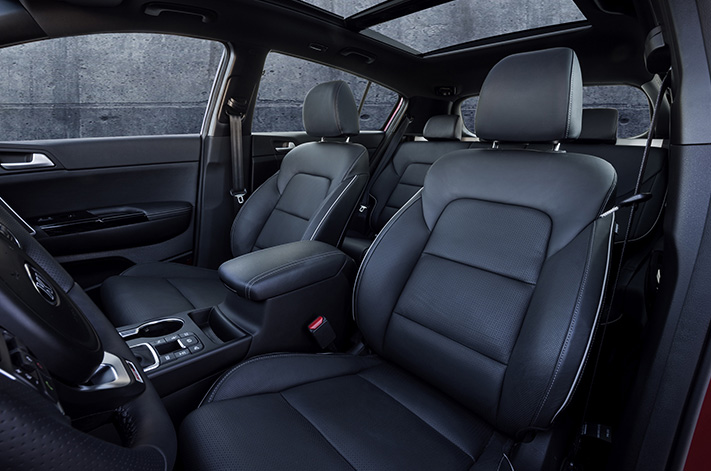
If leather isn’t an option or your conscience won’t allow you to entertain the idea of exposing children to swathes of animal skin, you could go to an automotive upholsterer and get a bespoke seat back cover made to protect the space from the worst that children can throw at – or up on – it.
If you have young children in the car, their space needs to be cleaned regularly and thoroughly. Experience suggests that sometimes it’s better to spend money on a spot of professional interior detailing rather than do it yourself.
THREE ROWS ARE BETTER THAN TWO
A child’s social life is so much better than a parent’s. Day care, kinder and school are all important in a child’s social development, and blossoming friendships are likely to extend after-hours to birthday parties, movies, play centres and the like, and not to mention sports.
But parents are busy people, too, and sometimes you’ll be called in to become the equivalent of under-age public transport to ensure someone else’s sprog doesn’t miss out on all the fun.
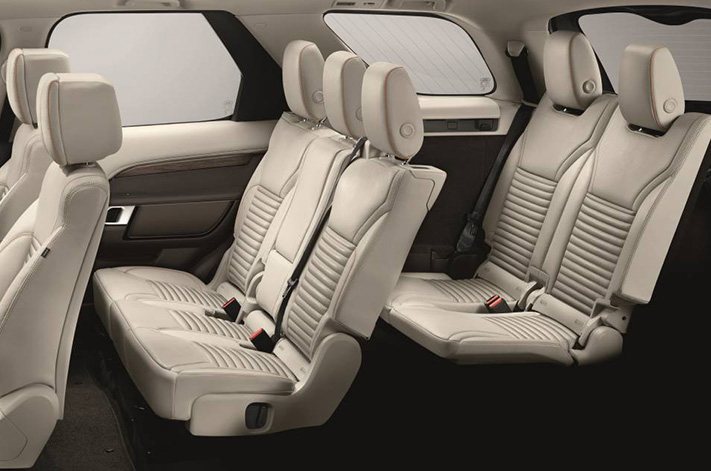
It’s where a third row of seats can come in handy. Yes, a five-seater may suit you right now, but the ability to expand capacity to seven opens up a whole world of opportunity to your child’s friends’ parents in terms of getting kids from home to social activity, and back again.
Choose carefully, though, because as children grow, a third row of seats that pop up out of the boot floor may have been okay in the pre-teens, but once the hormones hit home and the growth spurt hits it could soon become an uncomfortable, cramped space.
SUV OR SEDAN? THE HEIGHT OF FASHION
Want to save a bit of money in the long run? Walk past all the SUVs in a showroom and instead kick tyres on a traditional passenger car.
We’ve already touched on the advantages of a traditional wagon over an SUV in terms of boot space, but SUVs generally come with a lot more baggage. They’re heavier than normal cars – and even more so if they have all-wheel-drive systems rather than just front-wheel-drive – usually drink more fuel, and they don’t drive as well given that they sit taller, struggle to ride well and have a higher centre of gravity. And, as we’ve mentioned earlier, they cost more.
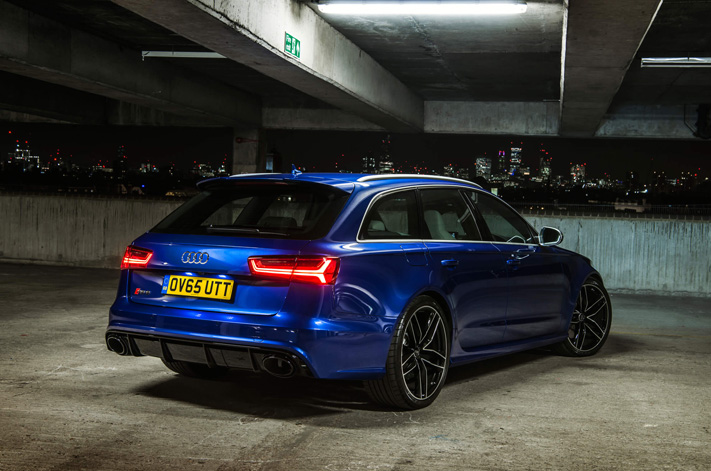
Smart parenting will have you weighing up if you really need an SUV over a passenger car. About the only advantages a high-riding hatches hold over conventional cars are they sit taller, so some parents will find it easier to lift infants and prams in and out, and they fit in better with the SUV clique at the school drop-off or pick-up. Buy a car rather than an SUV and you’ll stand out from the crowd.
YOUR OWN LITTLE CONAN THE DESTROYER
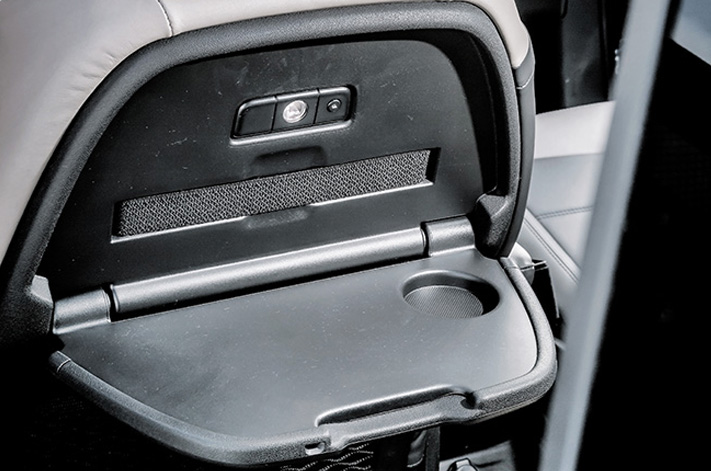
Children interact with the world very differently to us. A flimsy plastic tray hanging off the back of the seat in front is a plaything, not a tool. Any tears or holes need to have a finger inserted, loose threads must be pulled, pop-up cupholders stress-tested and seatback pockets need to be stretched to breaking point once the seat backs have been solidly kicked into submission.
The trick here is that simple works best. Young children need a durable rear seat space, so shop accordingly. If anything in the rear seat space looks fragile or brittle, chances are your children will find and exploit it.
Any other parenting tips and tricks for car owners? Join the debate on our Facebook page at facebook.com/whichcarau/
Everyone is supposed to own a sports car at least once in their lifetime.
First published in the May 2017 issue of Wheels Magazine, Australia’s most experienced and most trusted car magazine since 1953.
For several million people around the world – more than a million of them as new-car buyers – that was made possible by Mazda’s brilliant MX-5.
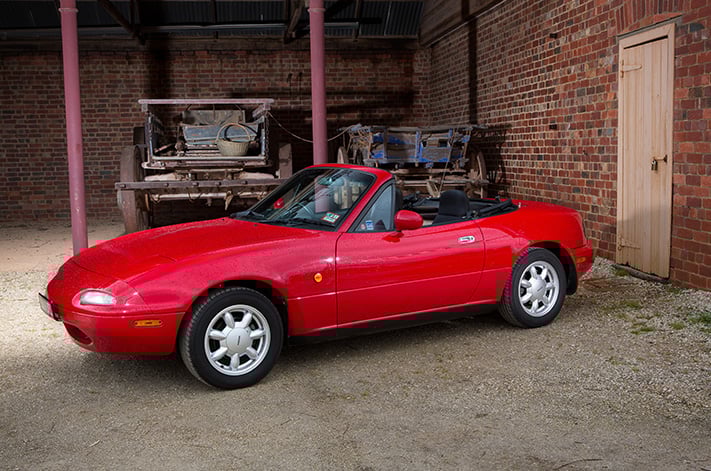
The MX-5’s simple and honest styling recalled a more romantic era of motoring; its modern mechanicals implied reliability. It was a roadster without oil leaks, soaked upholstery or roadside strandings; an economical, everyday sports car that was a hoot to drive.
US automotive journalist Bob Hall, who later became a long-time Wheels staffer, is often credited as the father of the MX-5. In 1979, Hall proposed and sketched a low-cost rear-drive roadster for Mazda president Kenichi Yamamoto; that led to his hiring by the brand’s California styling studio in 1981.
Initially working on pick-up trucks, Hall was soon personally tapped by Yamamoto to start work on the sports car concept.

The final car wasn’t as simple as it looked. While the MX-5 invited comparison with the likes of the MGB and Lotus Elan, its handling and comfort stemmed from a rigid, unitary chassis designed with a super-computer.
Similarly, while originally conceived with a sohc engine and a live rear axle, cost savings along the development path made way for more advanced components.
Computers also produced a cocktail of strangely familiar sports car emotions.
None of this overshadowed the purity of the MX-5’s 50/50 weight distribution and a communicative chassis that was all the more enjoyable for not being overwhelmed with power.
Between April 1989 and October 1997, Mazda built a total of 431,544 NA-series MX-5s, selling 231,800 in North America (as the Miata), 118,300 in Japan (Eunos Roadster), 67,800 in Europe and around 6100 in Australia.
Nothing ‘B’ about it The MX-5’s all-alloy 1598cc four-cylinder was based on the 323’s transverse B-series donk, but with a modified block for rear-drive, a new dohc 16v cylinder head and a lightened crank and flywheel.
Outputs of 85kW at 6500rpm and 130Nm at 5500rpm went through a snickety-quick five-speed manual to push the roadster from 0-100km/h in 8.8 seconds.

Double-wishbone suspension at each corner was similarly exotic, brakes were discs all around and, with its 980kg balanced 50:50 front to rear, the MX-5 introduced sublime handling to the masses.
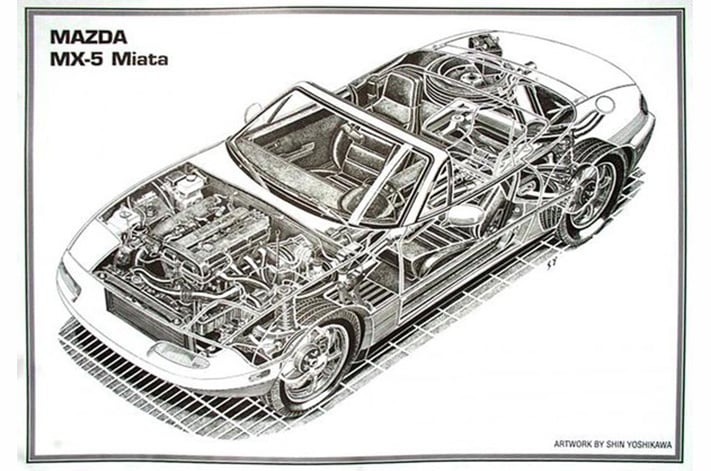
But beautiful details like Alfa Spider-inspired door handles, a gearshift that clinked against metal stops as in a Ferrari, and a manual roof that a stronger driver could operate one-handed while seated, made this a joyful place.

Those expecting the C8 Corvette to replace the Commodore as a Holden hero will be deeply disappointed.
First published in the May 2017 issue of Wheels Magazine, Australia’s most experienced and most trusted car magazine since 1953.
The six-figure price tag will turn many away, while the fact it has only two seats will see it do the same to many more.
A mid-engine supercar is a long way from the performance-for-the-people family cars that Holden has been known for since 1948.
But don’t expect the Corvette to gather dust in the corner of a showroom that fewer people than ever are visiting.
If GM nails the C8 in the same way other recent Corvettes have hit their mark then it could be a fantastic halo.
Yet the Corvette is more likely to take on its own brand rather than lift the Holden one, in much the same way as the Nissan GT-R is a separate entity to the Pulsars and Navaras at the other end of the showroom.
At least the GT-R wears a Nissan badge, whereas all indications are that Roary the lion won’t go anywhere near a Corvette.
Fact is, Corvette is American to the core. The lure of Ferrari performance for a fraction of the price will be a nice sideshow, but Holden’s main game – producing real Holdens and getting them back on shortlists – is far tougher.
SAY it isn’t so! Is this plain-Jane, almost conventionally proportioned SUV really the upcoming Lamborghini Urus?
Spy shots have lobbed into the Wheels inbox showing what is believed to be the Italian supercar brand’s reborn SUV, showing much dumpier proportions than the concept car that wowed us five years ago.
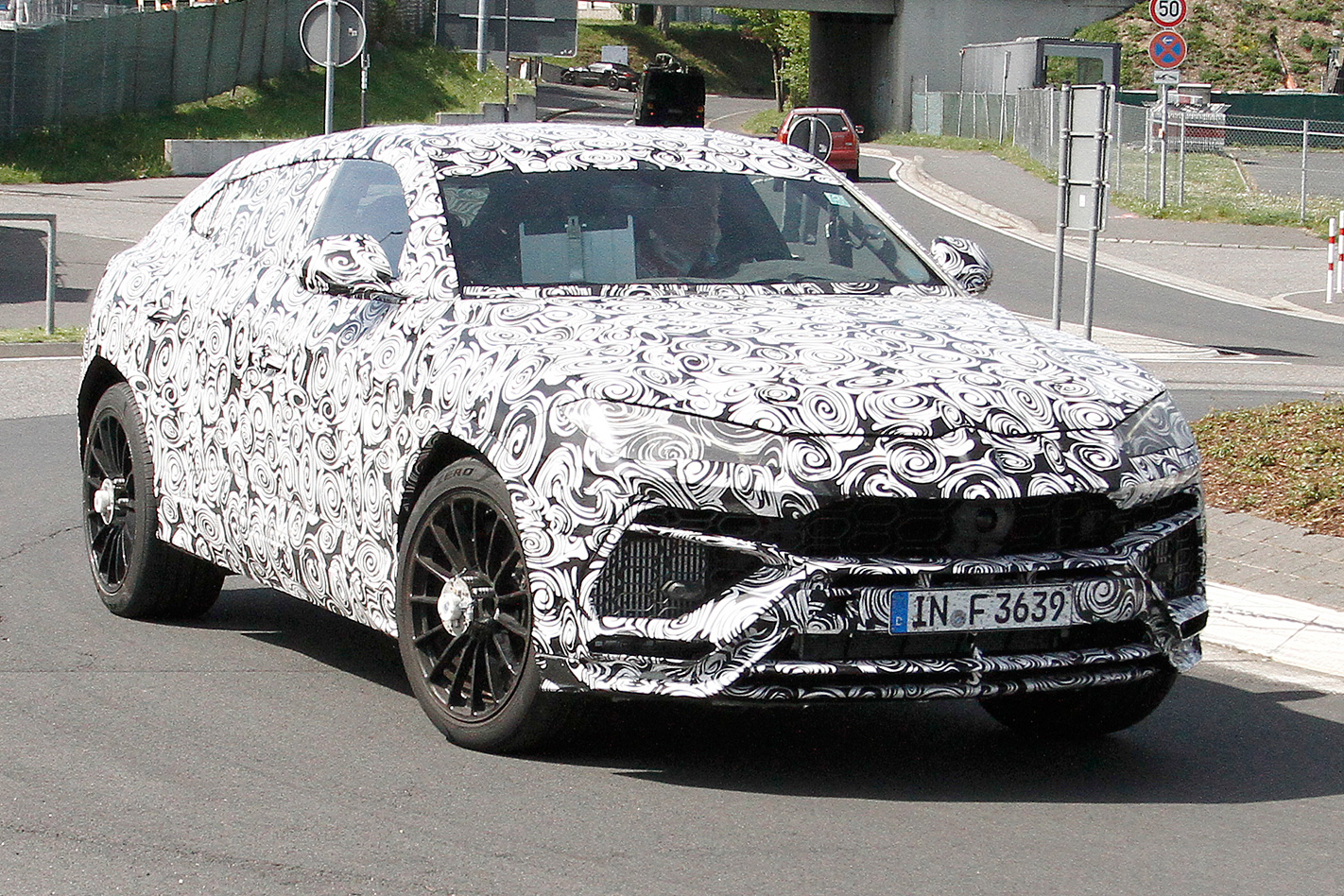
There’s the obvious nods to what Lamborghini claims will be the world’s most powerful SUV, though. Radiators sit behind two deep, trapezoidal air intakes, which in turn frame a shark mouth-like slit set with hexagonal shapes that runs across almost the entire width of the air-gulping nosecone.
Lamborghini commits to V12 future
Also standing out is what appears to be a radar sensor, suggesting the Urus may perform better as a distance-chewing grand tourer rather than an out-and-out performance behemoth.
There’s a few cues that carry across from the concept, including off-round wheel arches that give the impression that the Urus is moving forward even when it is stopped, and the rear quarter window that forms a sharp point on the remarkably thin D-pillar.
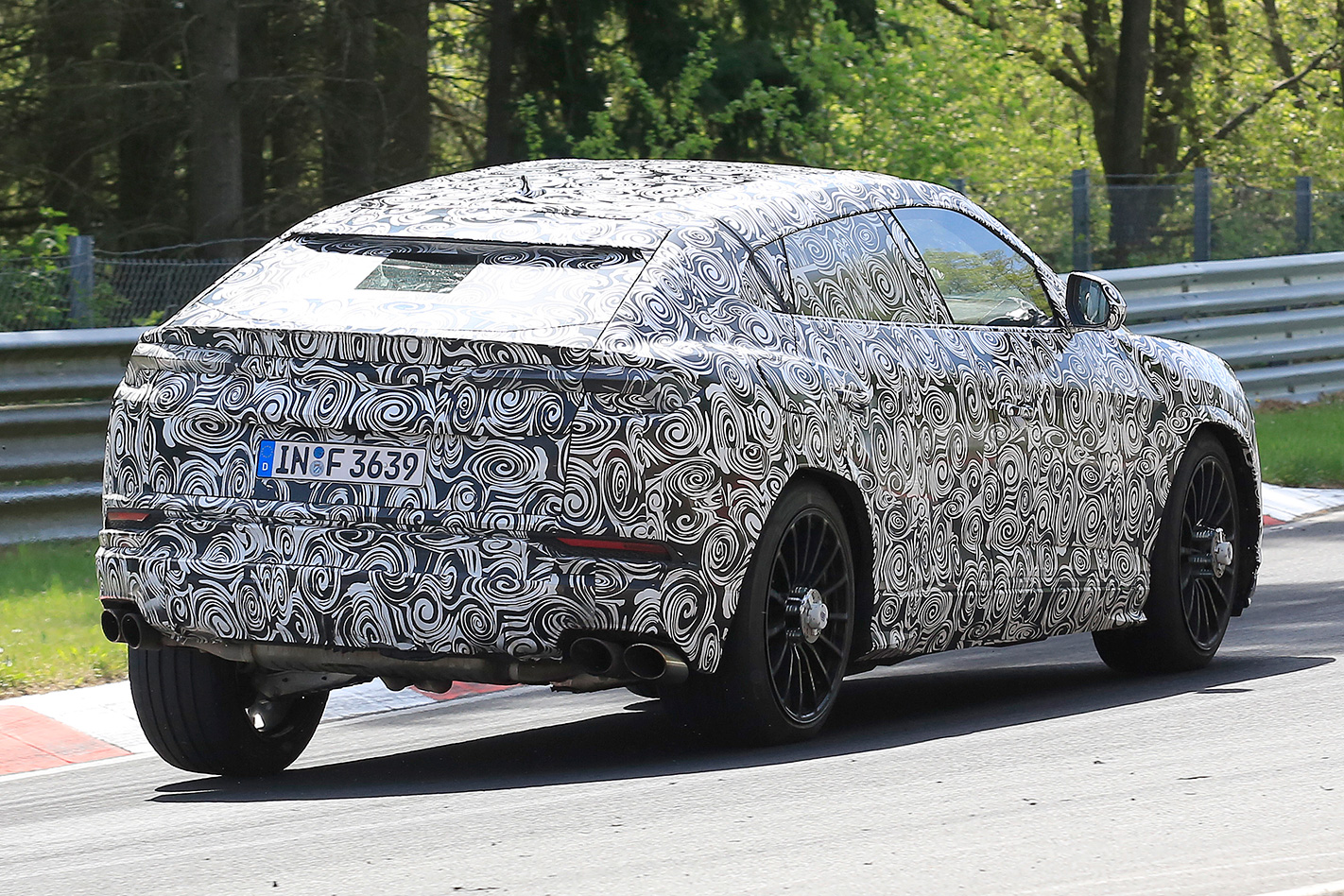
The Urus concept sits on a set of huge alloy wheels wrapped in liquorice strip-thin Pirelli boots. It looks as though they need to be that size; inside sits what appear to be cross-drilled carbon ceramic brakes wrapped in huge calipers for the front wheels, and decent-sized ones for the rears.
We’re likely to get our first look at the production version of the Lamborghini Urus at September’s Frankfurt motor show as part of the Volkswagen Group showcase held a day before Europe’s German car show opens its doors. But being Lamborghini, the supercar maker could go all out and launch the Urus at a time and place of its own calling. Watch this space.
FERRARI is developing a modular V6 turbo engine as part of a bold hybrid vision that will spread to its latest V8 models in a fast-evolving drivetrain strategy.
First published in the May 2017 issue of Wheels Magazine, Australia’s most experienced and most trusted car magazine since 1953.
The new V6 is poised to change the shape of Ferrari, according to chief technology officer Michael Leiters, speaking to Wheels at the Geneva motor show.
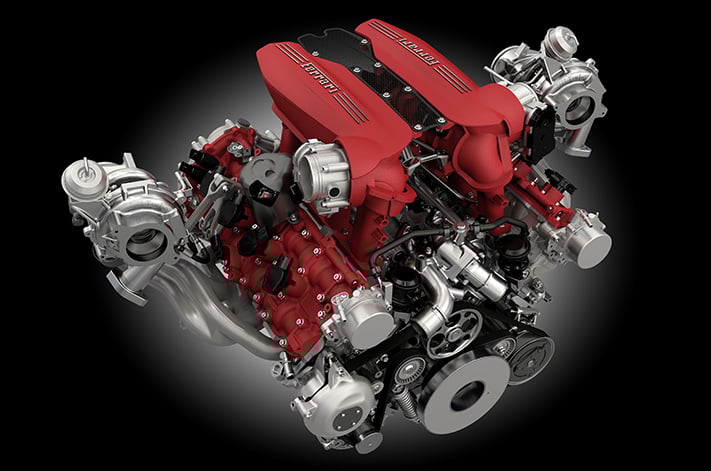
“We are thinking about downsizing,” said Leiters. “If we were to develop a six-cylinder, it should have the same performance as today’s eight-cylinder engine.”
But he said the sound would be crucial to signing off a V6 program.
“If we were to develop a V6, we would do one with a tremendous sound,” said Leiters.
He pointed out a Ferrari V6 would save crucial kilograms, allowing for the addition of a hybrid system’s batteries and electric motors.
“We are not only talking about a fuel consumption reduction, we’re talking [about a] weight reduction, because, if we’re thinking about hybrid, there will be extra weight.” Utilising turbos, Leiters hinted much of the development work would revolve around blending electric propulsion with an ICE.
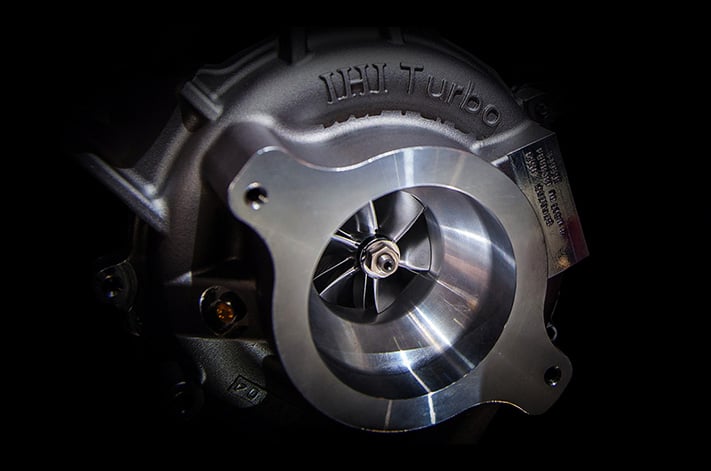
Electric turbo tech is one solution for eliminating lag.
Leiters said Ferrari was beginning to think about a future where its entire range relied partially on electricity.
“There will be a time when we have to talk about … hybridisation as a standard,” he said. “We are still discussing what could be the future product range. Obviously, we want to present a hybrid car … [that] has outstanding performance, and we want to do it in a modular way to have synergies to continue with hybridisation of the product range.”
THE GOOD news is that the legendary naturally aspirated V12 that has defined the brand since its inception in 1947 will continue.
Leiters stressed an atmo V12 would play a core role in future Ferraris, despite a shift to forced induction that was seeing cylinders increasingly lopped off.
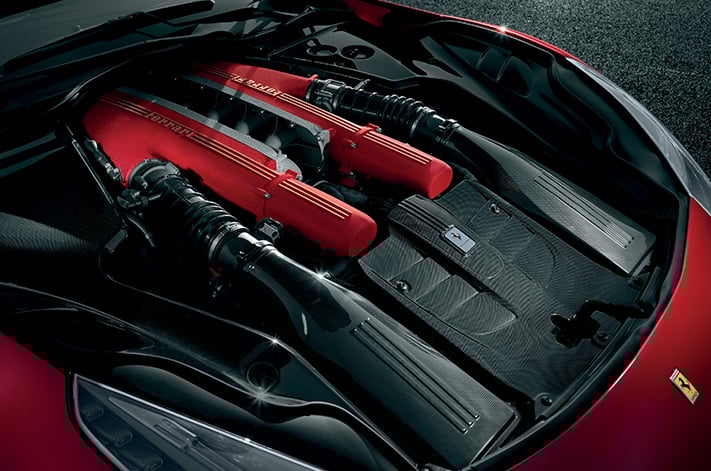
“I’m convinced there will be always a niche [for] a V12,” he said, opening the door to a new-generation engine, and possible hybrid system. “We want to do more. Now we are starting thinking about it for the next car.”
He cautioned that tightening emissions regulations and customer requirements would shape the future of the Ferrari V12.
He also said power figures would not make the leaps of the last decade; in 2006, the then-new 612 Scaglietti made 397kW; the 812’s power output is up 48 percent.
“We are getting to the limit; or at least we’ll see a lowering of the [percentage] it climbs by,” said Leiters.
“The more important part will be the emotionality; how we evolve this performance. It’s not necessarily having 900 horsepower; for me it’s more important to have more emotion. We talk about the sound, we [focus on] the torque curve and so-on, the revs.”
It´s mid-afternoon, the last clouds have long buggered off, and the sun is putting the whole arena on the grill.
Time for a three-hour showdown, an empty racetrack and a total of 37 laps in Y33MCL. No speed limit. no instructor, no pace car, no holds barred. Il autodromo Vallelunga is a converted ancient horse racing track which switched to horseless carriages in 1951. Recurrently updated, the track length was doubled to 3222 metres in 1963, the year it hosted Rome´s first F1 GP.
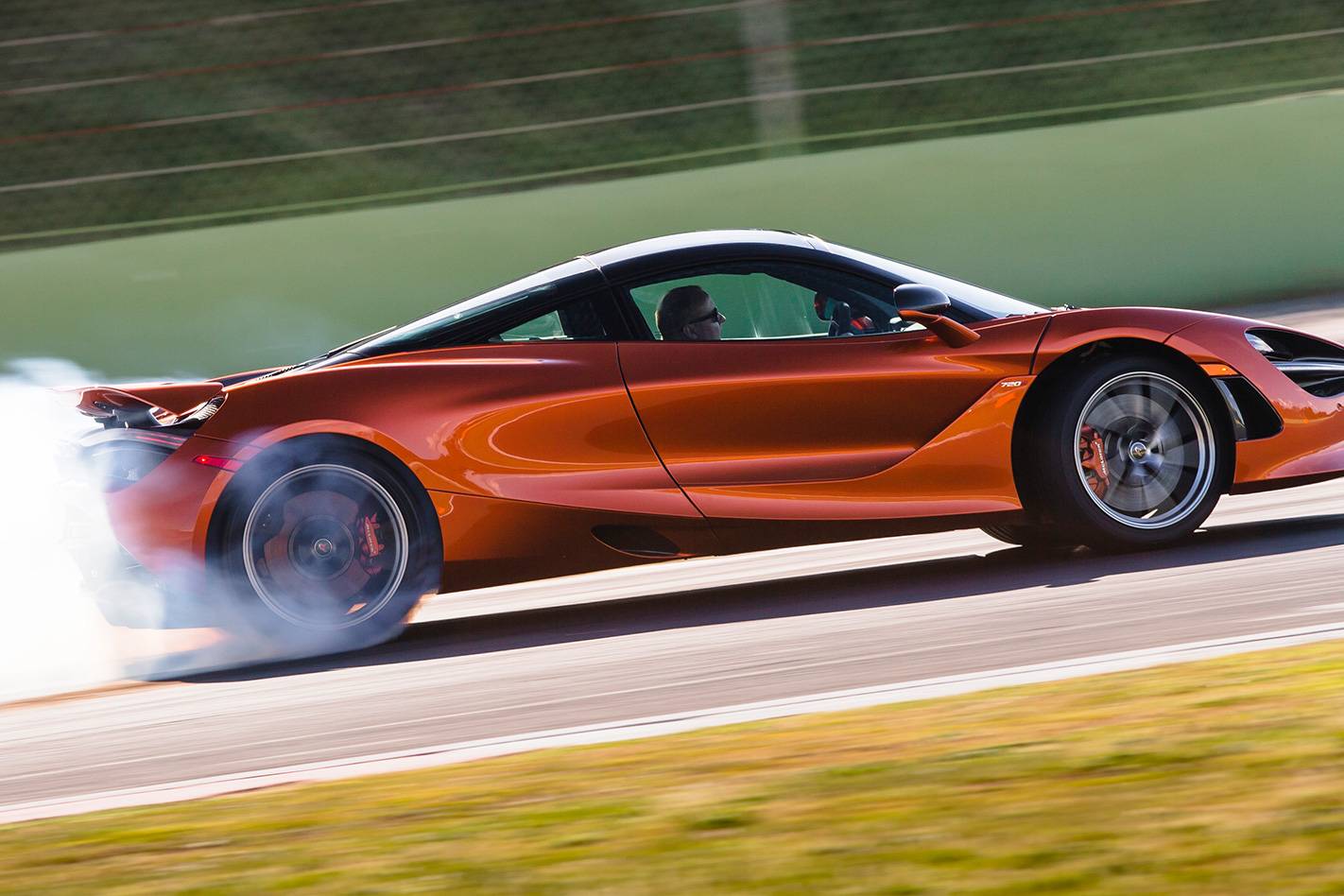
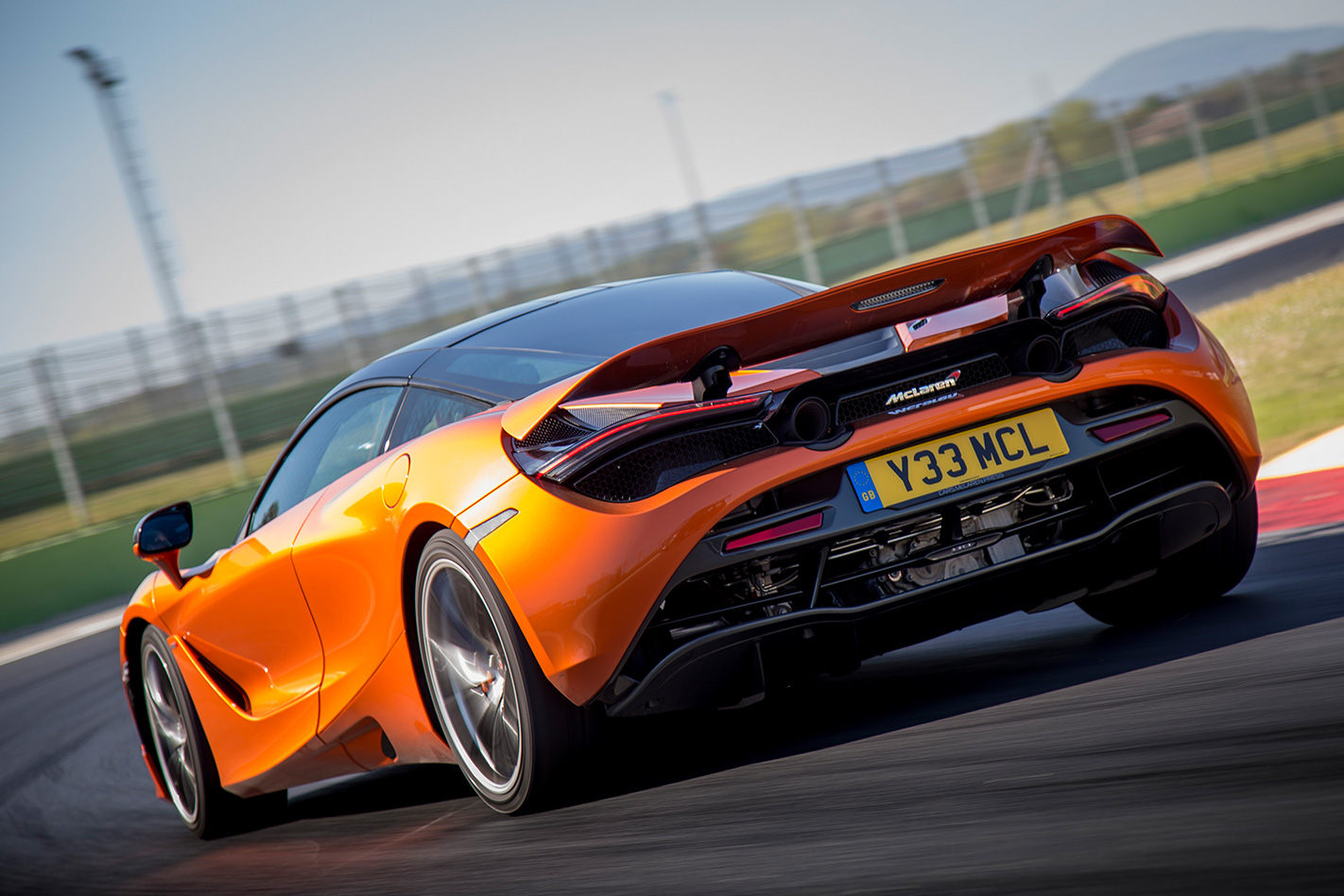
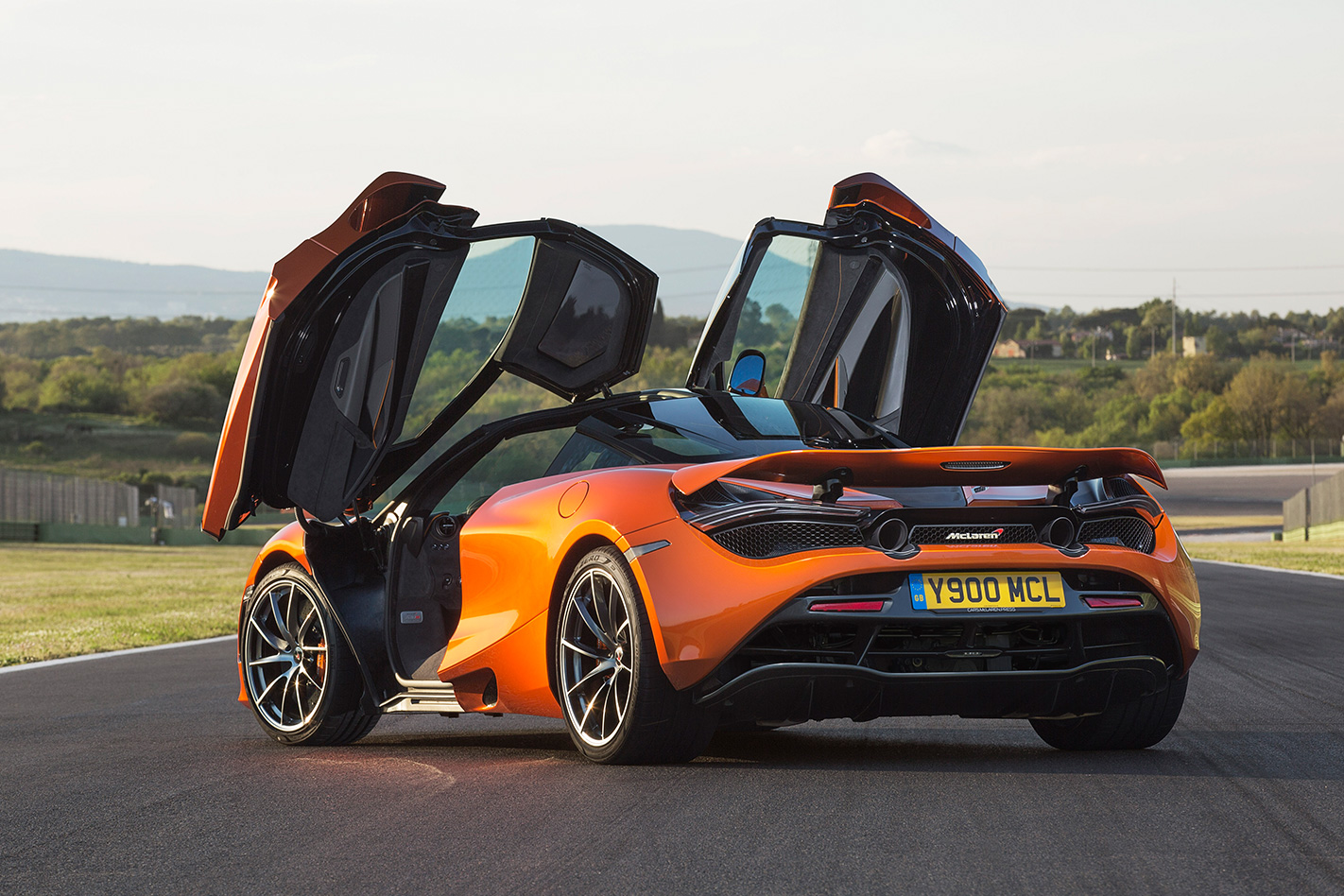
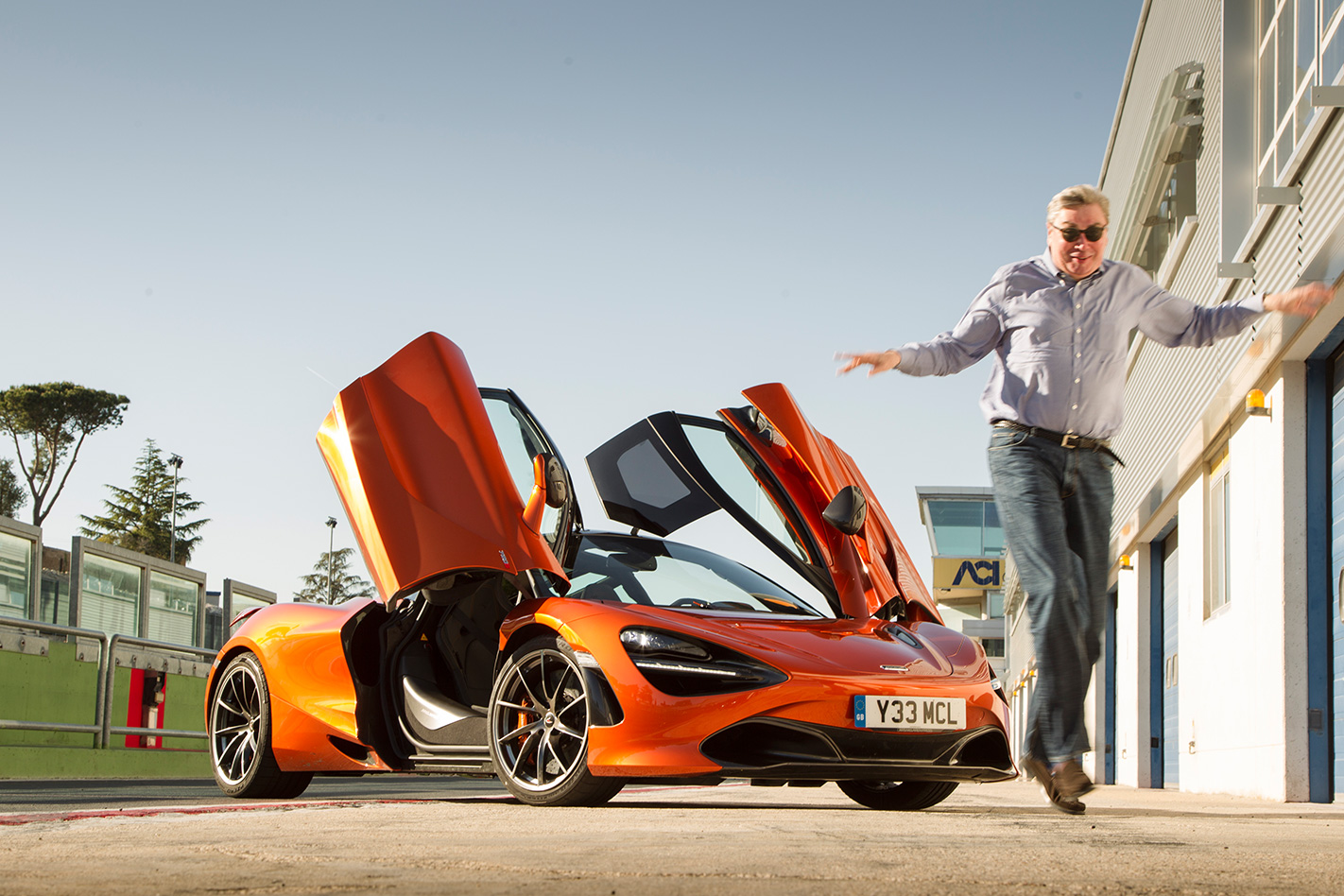
In its current metamorphosis, the circuit is 4085 metres long, challenging drivers with twelve direction changes and two long straights, each good for close to 250kph. Painted Aperol metallic, adorned with charcoal carbon-fibre accents and fitted with black 19/20in wheels, the shiny 720S looks a world apart from the original 2011 MP4 12C which later became the Super Series aka McLaren 650S and 675LT.
Although 91percent of the content is claimed to be new, r&d had to carry over the old electronic platform which is incompatible with a desirable head-up display and a bunch of advanced assistance systems. Instead, the centre stack once more houses the familiar toggle switches which calibrate handling and performance from comfort over sport to track.
Completing the ergonomic confusion are additional buttons labelled Active (permits manual gear shifts), ESP (can be switched off in part or completely), Aero (triggers DRS at high speed) and launch control. The most obvious cockpit-related novelty is the revolving instrument panel. In normal driving conditions, it acts as a full-size display like the one fitted to the the 650S, but put a knife between your teeth, and the panel will swivel into slim display mode indicating only gear position, revs and velocity.
No more theory, no more time wasting. Entering the pit line on cue is a sizzling orangerie with crackling exhaust, steaming brakes and smelly tyres coated in marbles. The test driver hops out, and the 6ft8in amateur is pleased to report that getting into a McLaren has never been this easy: lift the gullwing door, use the cutout in the roof to step over the sill – right leg first – without crouching, then slide down into the seat and buckle up.
Thanks to the optional sports exhaust, the engine starts with a misbehaving gun salute before lapsing into a flowing, dense and somewhat impatient idle. While the infotainment has taken the afternoon off, the in-dash monitor is already beginning to fill with telemetry data including Chris Goodwin´s benchmark lap time – humiliation in five provoking digits.
The first rotations are quite hopeless. Reacquainting myself with the track and adapting to the car is one thing, coping with the juddering marble-studded tyres is another. Looking through the windscreen while being shaken to bits feels like deceiphering a fata morgana under the influence.
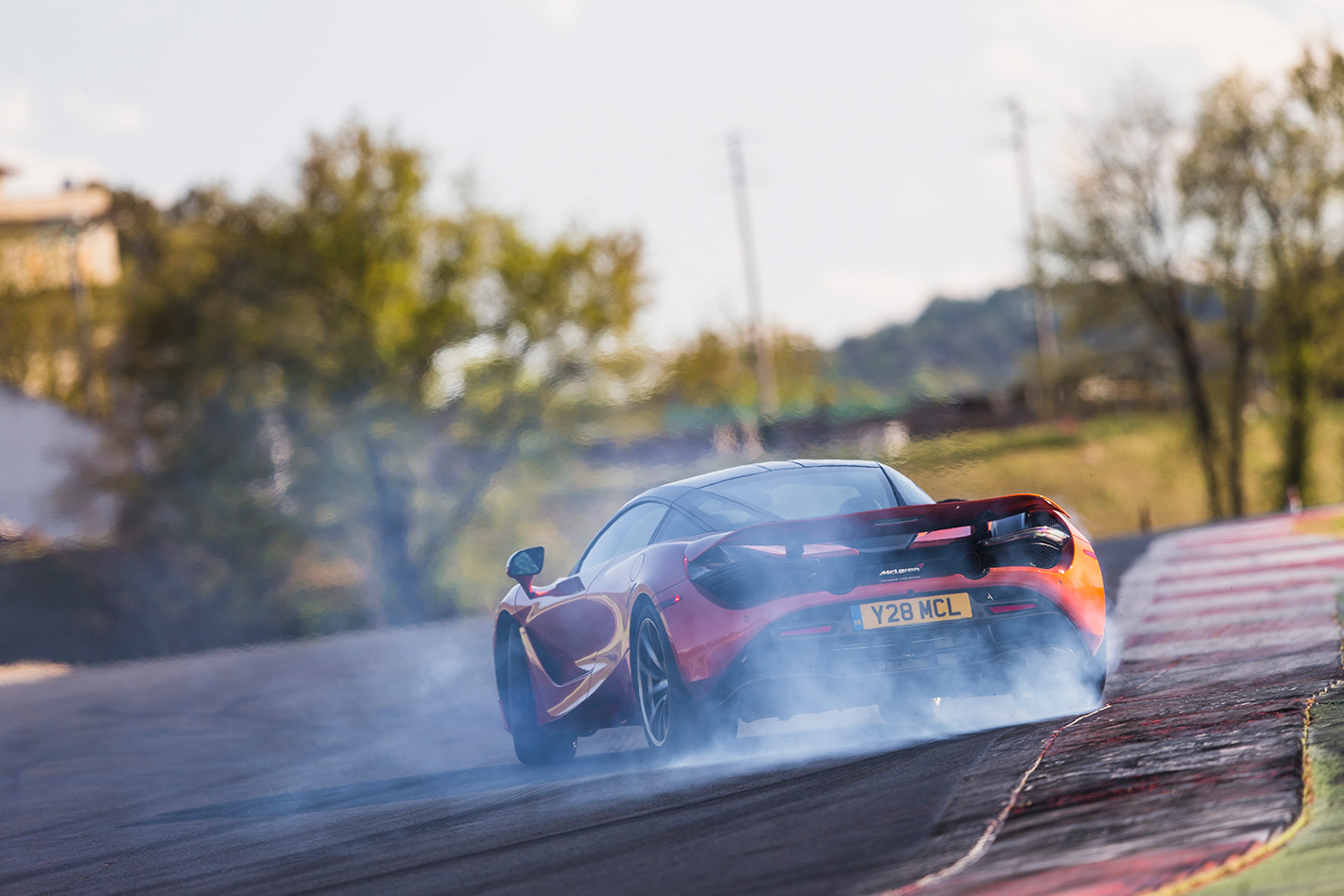
There is only one way to clean-shave the well used P Zeros back into shape: hard braking and hard cornering, again and again and again. But just as the grip starts to come back, the orange is ru-n-ni-ng out of juice. You averaged 96.6 l/100km, says the friendly on-board computer, that´s a ninefold increase of the official consumption.
With 720bhp on tap, the featherweight 1283kilo coupé can accelerate in 2.8sec from 0-60mph, storm in 7.8sec to 125mph, reach 188mph after 21.4sec and max out at 212mph. Take that, F12!
Here in Vallelunga, it´s above all the instant seamless mid-range punch which makes the mind boggle, lap by lap. Within less than 15 seconds, the 720S can beam itself from 125 to 185mph. In terms of negative acceleration, it takes only 2.8sec or 29.7 metres to come to a stop from 60mph.
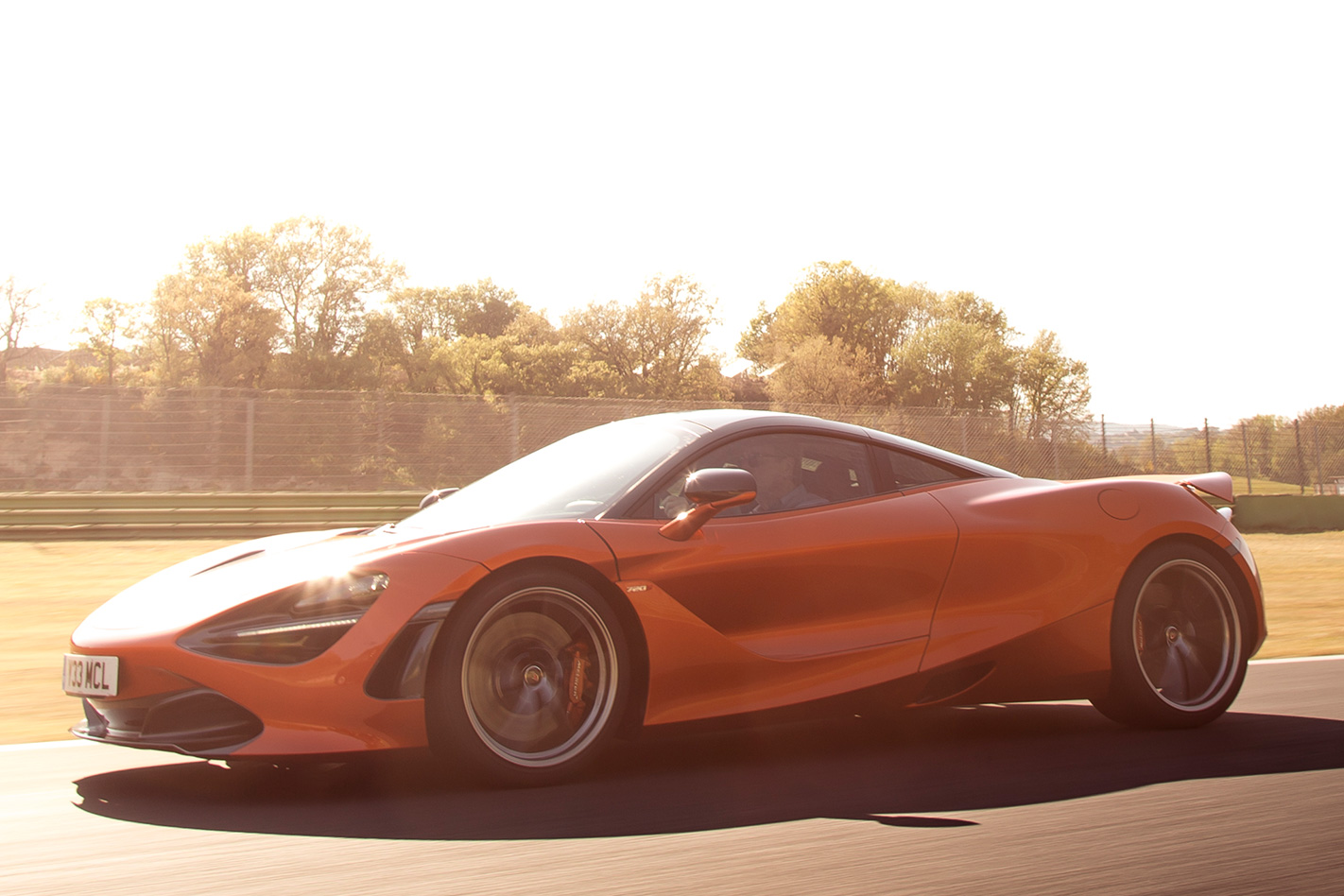
Second-gear junkies who turn in too early and fail to nurse the front tyres end up a touch too soon with mounting understeer which then begs to be neutralized by an early stab at the throttle. So better take it easy and let the car do its job.
You see, this McLaren is more about momentum than raw power, it does not depend on sky-high revs, it does not rely on mid-corner upshifts to keep up the pace, it rewards smooth drivers while punishing indecisive wheelmen.
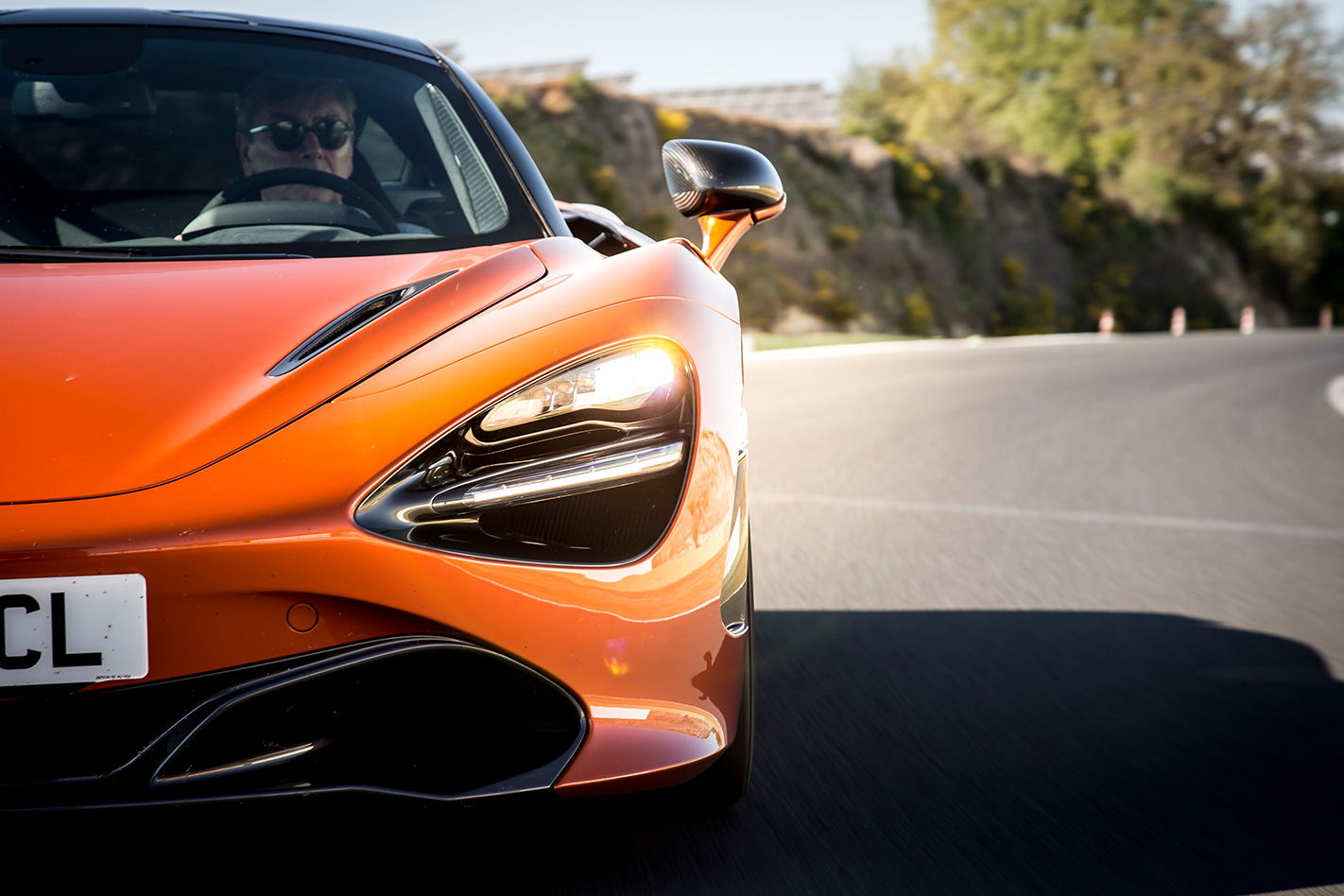
The McLaren likes its corners wide and fast, so we stay away from the kerbs on the entry to the start-finish straight, set the car straight early, shift flat-out into fourth then fifth, roar still full-throttle past the huge temporary sign that says BRAKE. Down the following dip, it´s easyeasyeasy on the throttle until the nose finally starts to hug the looong apex.
Having regained grip and composure, the car approaches the following double-apex right-hander with three machine-gun downshifts like a Stuka fighter plane on the attack. What makes the 720S feel so special on this demanding section lined by gravel traps and tyre walls is the interaction of its talents.
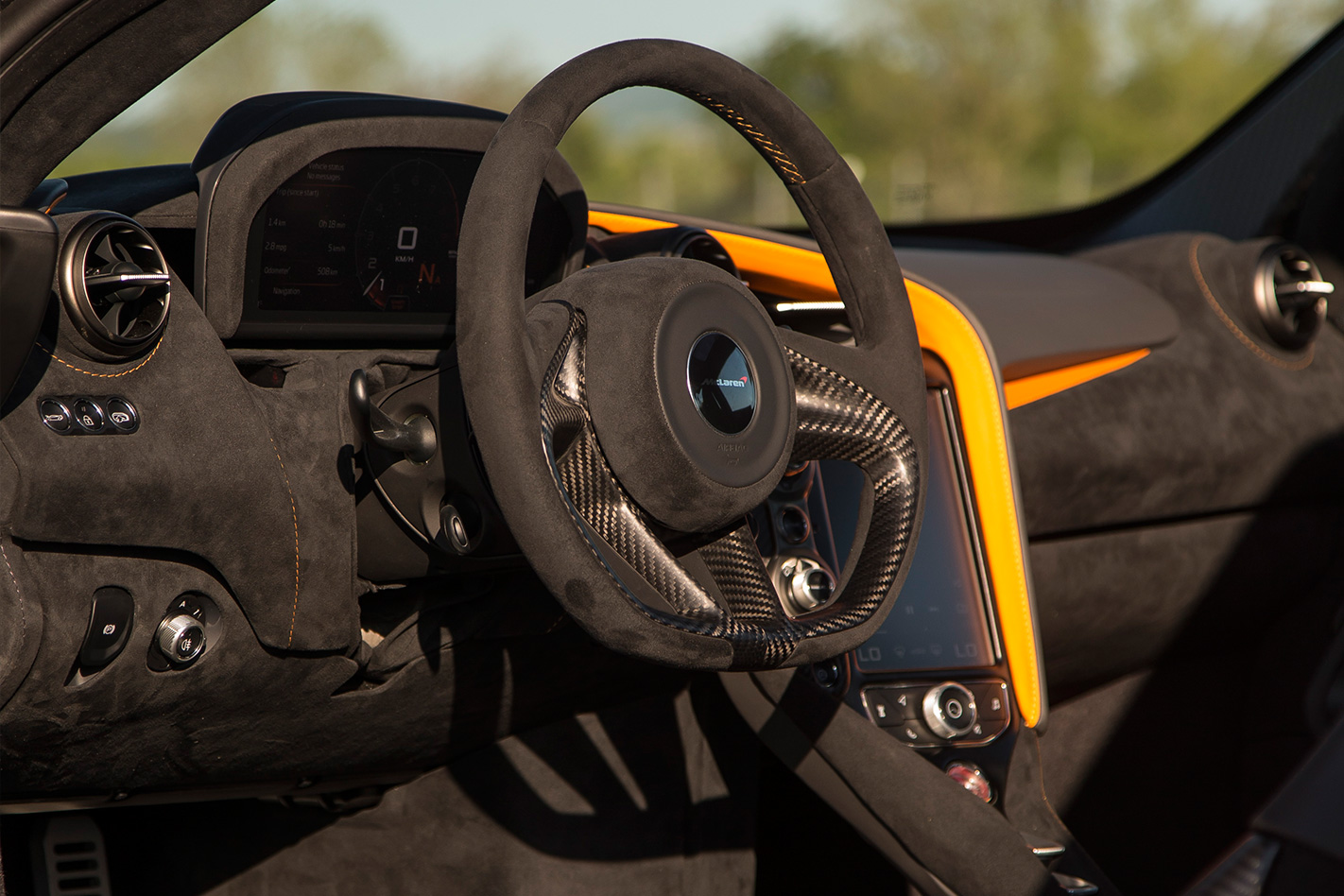
Like its predecessor, the new Super Series employs Proactive Chassis Control for a special blend of poise and compliance. The modified suspension features redesigned uprights and double wishbones for improved feel and grip while taking out 16 kilos of weight.
Hydraulically interlinked dampers make anti-roll bars redundant, there is now a more clear-cut difference between the three drive available modes, Variable Drift Control does a fine job modulating the torque flow to the rear wheels, McLaren Brake Steer replaces the limited-slip differential with an advanced type of torque vectoring, the carbon ceramic brake discs are bigger and fatter than ever.
There are better locations to test a 720bhp sports car than the outskirts of Rome where bad roads, incompetent drivers and poor signposting pose a constant threat to a 250K Euro bahn-stormer. In theory, the speed limit in Italy is 55mph. In reality though, it varies from a fully autonomous 30mph with the driver sending a text message to a kamikaze 125mph-plus recorded by the odd Maserrari. In the 720S, at least you don´t have to flee for your life when entering a junction because you can actually see what´s going on behind those bulging buttocks.
With both control units set in comfort, the citrus fruit on UK plates combines commendable compliance with a drivetrain calibration one may describe as toothless on the track but which is quite relaxing on the open road. In stop-and-go traffic, it won´t even hurt to let the seven-speed DCT do the gear changing, but as soon as an empty stretch of blacktop unfolds in front of the McLaren´s LED eyes, paddle-shifting is the only satisfactory form of progress.
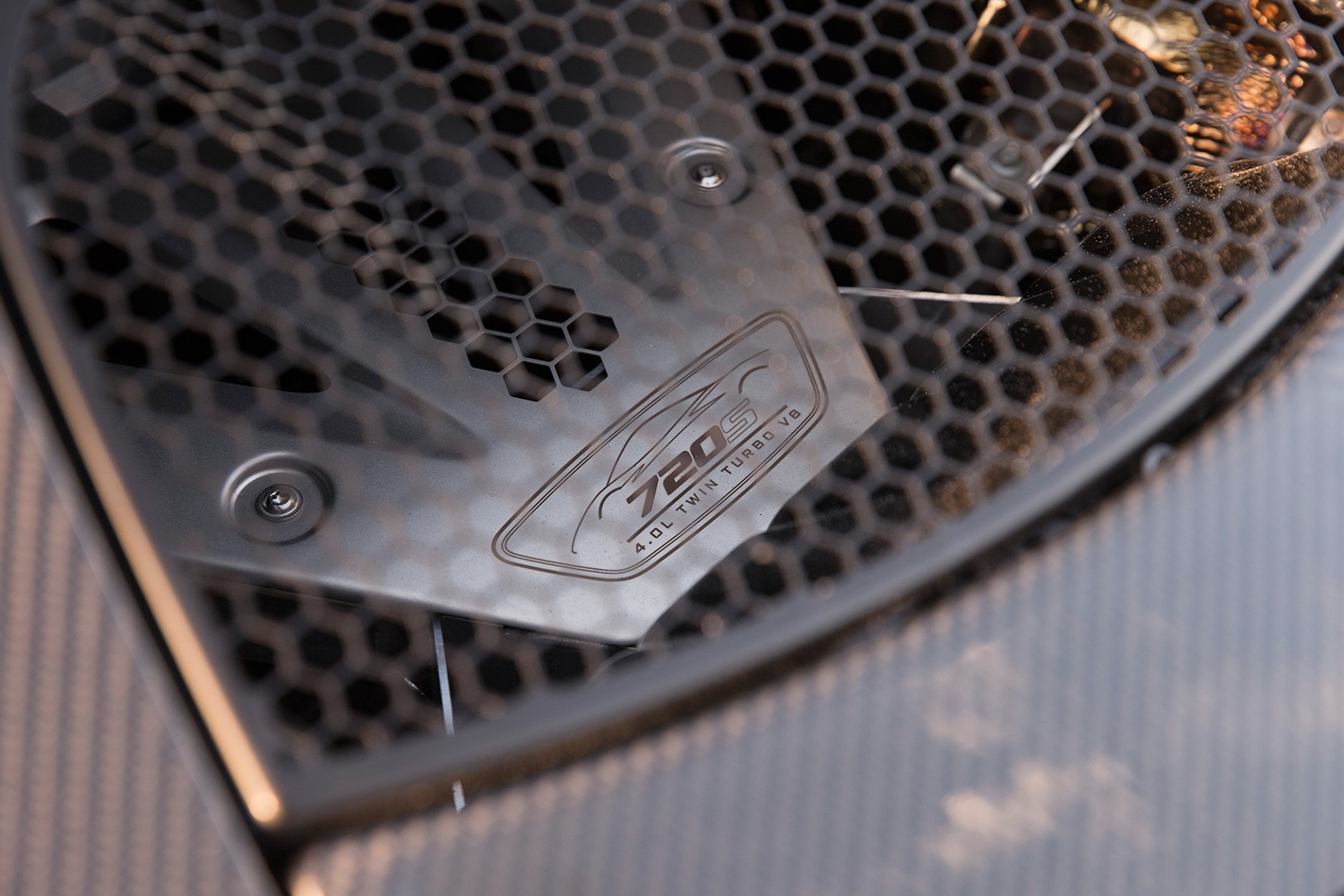
The evolutionary 4.0litre unit does not only gain 70bhp and 92Nm over the outgoing engine, it also has become more vocal and more melodical. Lit bright red for a few seconds when you unlock and open the door, the mid-mounted kraftwerk codenamed M840T sounds crisper, cleaner and more characterful, thankfully avoiding the fake heeling and toeing and artificial lift-off blat-blat cultivated elsewhere.
Capable of up to 160,000rpm, the two turbochargers intone a charming background whine and whistle, the high-mounted exhaust adds a high-rev drum roll to the busy working noises, and the full-throttle intake slurp keeps singing a duet with the polyphonic tailpipe baritone. Nice.
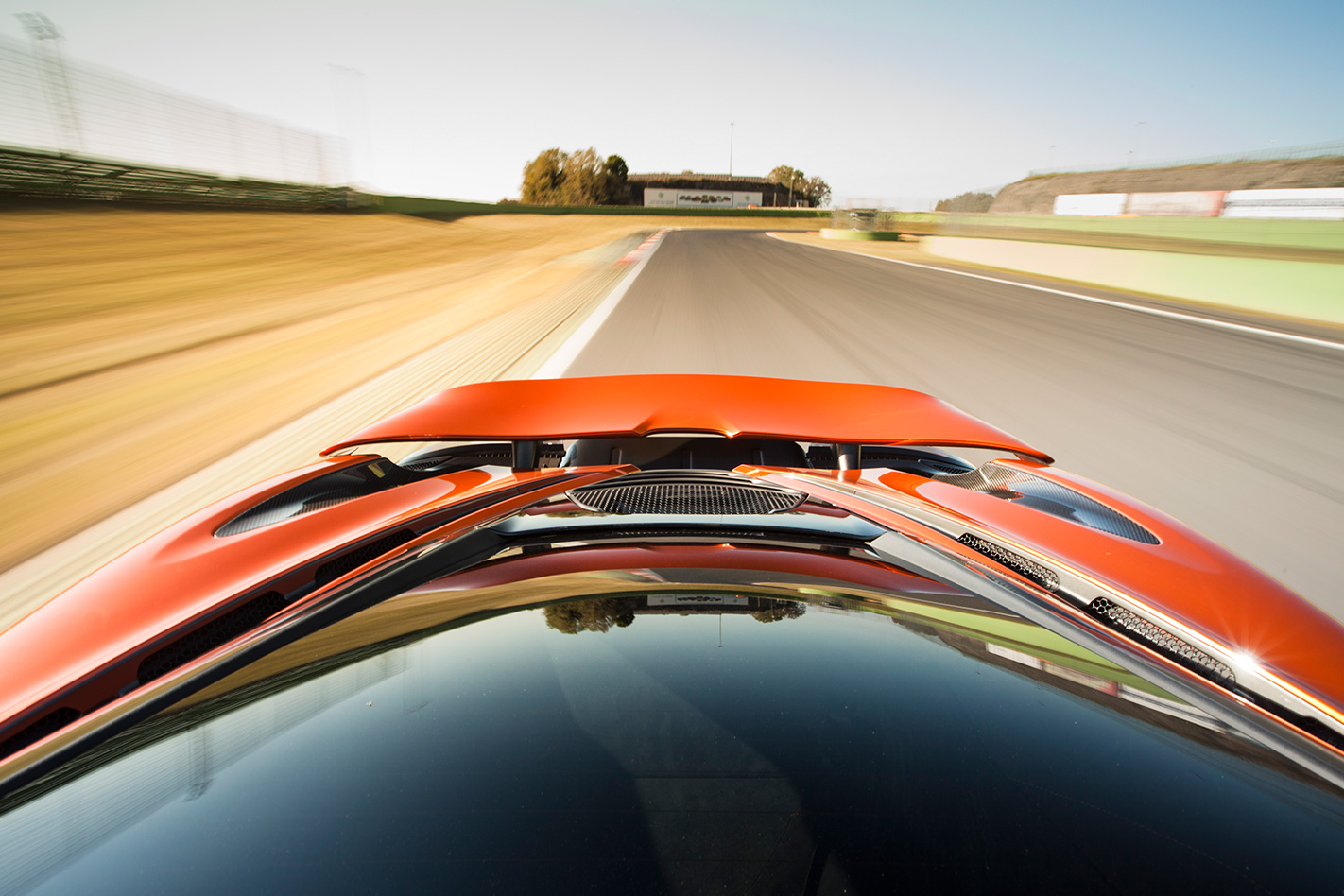
Through that high-speed fifth-gear courage-tester, the 720S is suddenly begging for even more punch – after all, downforce has increased by up to 30percent, and the Pirellis are still young and eager. The occasional waywardness experienced during the first outing has given way to enhanced grip and poise.
As soon as you drop the anchors, the air brake deploys with a whooshing plop, tying that broad rear end firmly to the ground. On the long straights, the tail rudder automatically assumes its lowest-drag position, adding a new emotional nuance to the colourful soundtrack. Through the third-gear esses, drift control beckons and is unleashed, to the great joy of the devil inside…
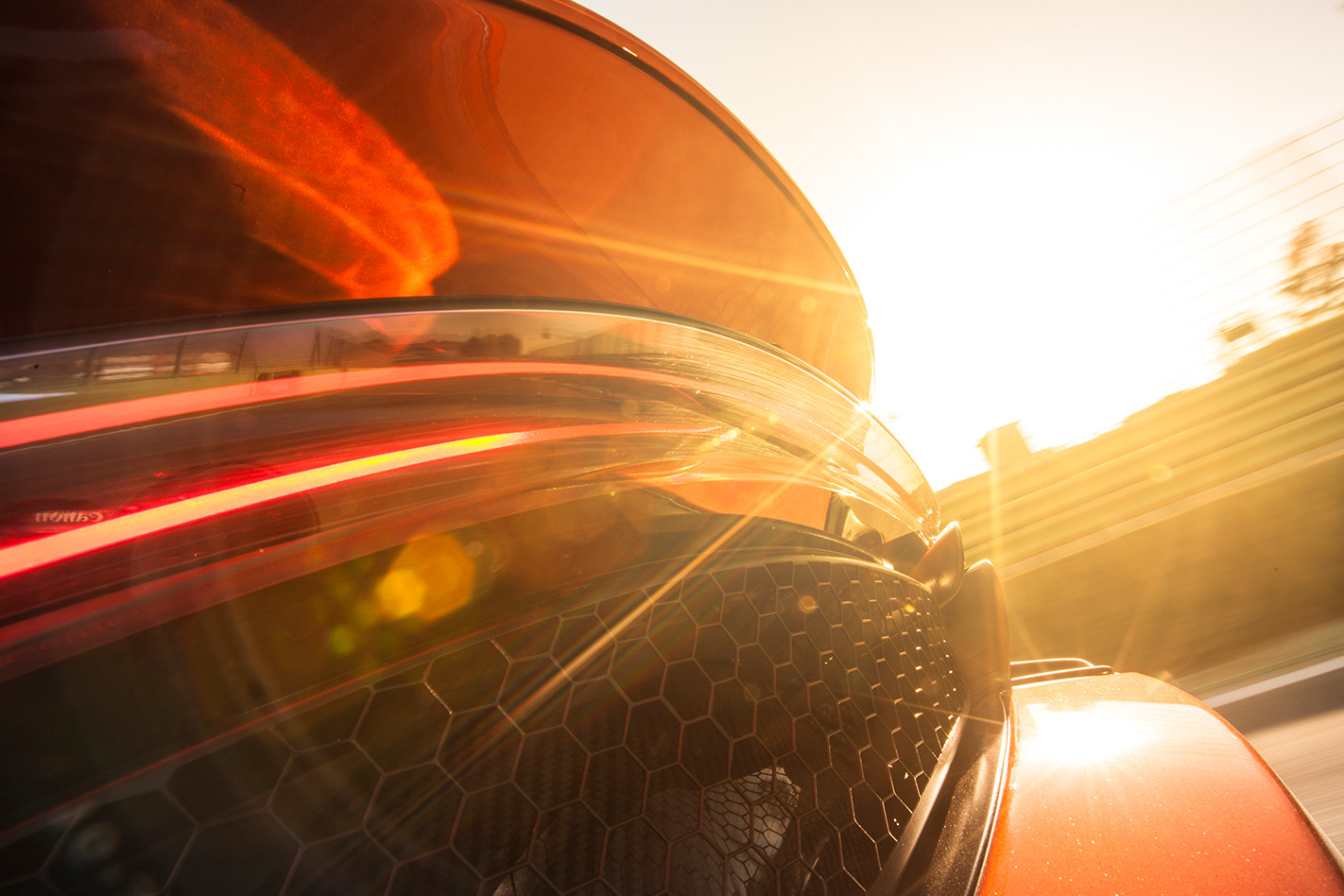
Would I want one? Do sharks eat raw meat? Far too soon, the red lights come on again, imposing the final cooldown lap. A quick glance in the mirror shows a lobster-red face framed by thumping temples, crested by a high-voltage hairdo and illuminated by a pair of blue eyes which retain their luster deep into the night.
Even though all the excitement is now safely stored away in memory lane, I´m already game for an encore, perhaps late next year, in the S720 Spyder.
