
IT can be hard to visualise just how fast modern race cars are sometimes.
Tracks with huge run-offs, a lack of door-bashing racing, and wide camera angles do a good job of hiding the fact motorsport is faster now than ever before.
Indycar has found a solution – the Visor Cam. Okay, so it isn’t completely new, with the series pumping out a number of videos over the years from this angle. But hot diggity, if it isn’t the best footage in motorsport.
While most onboard shots give you a good feel of what is going on, the visor cam gives you a real drivers’ eye view. You get a sense of the violence that accompanies speed, with the camera moving with the drivers head as it is buffeted by the wind.
This footage of Ryan Hunter-Reay at Barber Motorsports Park almost looks sped up. But you can be rest assured, it isn’t!
The Visor Cam also helps demonstrate the unique challenge of oval racing. The North American favourite is oft ridiculed for simply being a continues procession of left turns.
But as this Visor Cam of Graham Rahal at Phoenix Raceway proves, it is anything but.
Drivers are dealing with an incredible 4.1G in the turns, wrestling the cars to stay on the right line, searching for where the rubber is, and battling with wind and aero wash from other cars.
Then you have Rahal again at Sebring International Raceway.
Sebring is infamous for its brain rattling bumps, and this is illustrated beautifully in the clip, with Rahal shaken harder than a maraca in a mariachi band.
Finally, Hunter-Rey returns to give a drivers-eye perspective of the St. Petersburg race track.
Try not to wince as he races towards concrete walls at an incredible speed, all the while wrestling a steering wheel that appears to want to do anything but obey his command.
Long live the Visor Cam. F1, take it now.
ON THE face of it, the car you see here is just a 2017 model Porsche 911 Carrera.
It’s not a range-topping Turbo S or the achingly desirable GT3 but it might be one of the most collectable cars ever to roll from the Zuffenhausen plant because it’s the millionth 911 to be built.
Finished in Irish Green and adorned with just the right amount of classic Neunelfer cues such as the houndstooth seats, the wood accents on the steering wheel and fascia panel and a spot-on manual gearbox. We appreciate that most German cars do wood interiors about as well as the Brits do waterproof electricals but this one is admirably restrained.
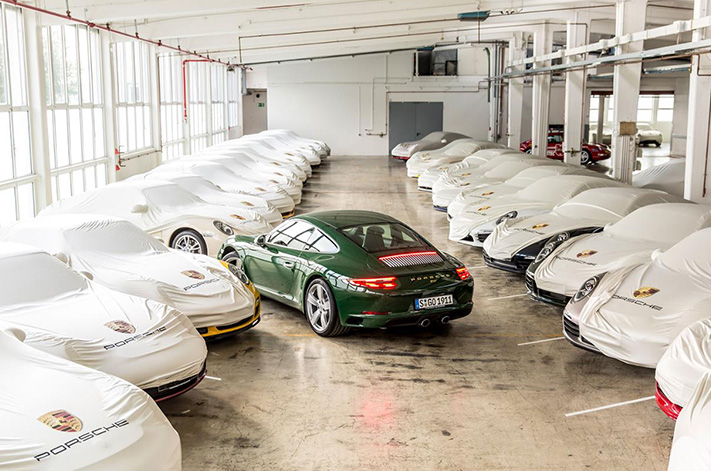
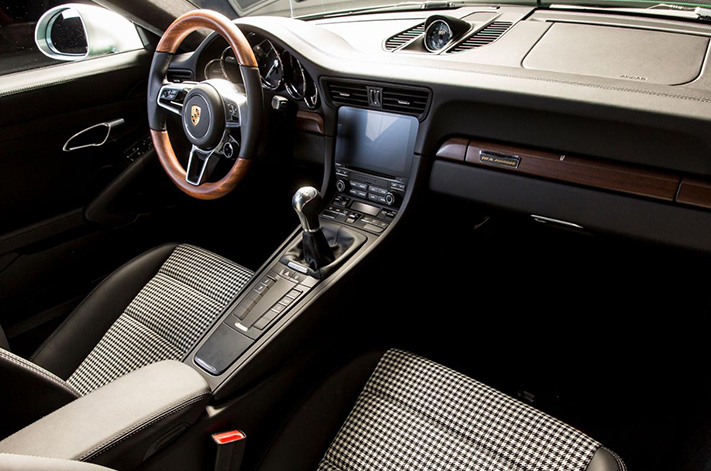
Porsche claims that 70 percent of those million 911s are still out there, a remarkable claim to be able to make of a car with a 54-year history.
THE 8 SERIES badge is making a comeback according to an announcement made by the Chairman of the Board of Management of BMW, Harald Kruger, at the Group’s Annual General Meeting.
Scheduled to debut on May 26 at the Concorso d’Eleganza Villa d’Este, the production 8 Series won’t actually arrive in showrooms until sometime in 2018.
As a precursor to the “exclusive look” later this month, BMW has teased us with a silhouette sketch of the concept version, which shows a sweeping roofline, fat rear wheel arches and some stylistic cues taken from its 6 Series sibling.
The German carmaker said the concept car “embodies uncompromising dynamics and contemporary luxury – the essence of a modern BMW coupe.”
Rumours of the 8 Series revival have done the rounds since last year, and spy shots of a coupe have been circulated with speculation on whether it would be the 8 Series or a replacement for the 6 Series two door.
“The BMW 8 Series Coupe will build on our tradition of luxurious sports coupes and add a genuine dream car to our line-up – a slice of pure automotive fascination,” Krüger said.
“[It] will underpin our claim to leadership in the luxury segment. I can tell you today that this will be a true luxury sports coupe.”
With the 8 Series return, we anticipate the 6 Series will take on a new battle with the Porsche 911.
The new BMW 8 Series would end the nameplate’s 20 year hiatus, with the last example sold in Australia in 1999.
WHAT IS IT? Audi’s all-new, second-generation A5 Sportback sits on the same MLB platform as the excellent A4 and A5 Coupe, merging sedan practicality with fastback looks and carrying the mantle of most popular A5 variant in Oz.
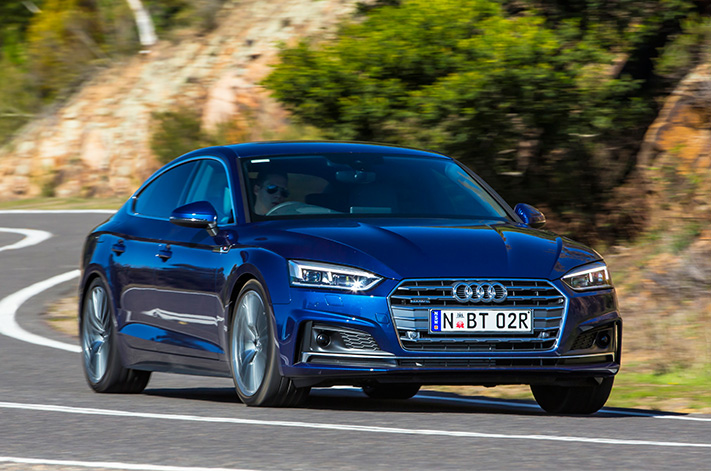
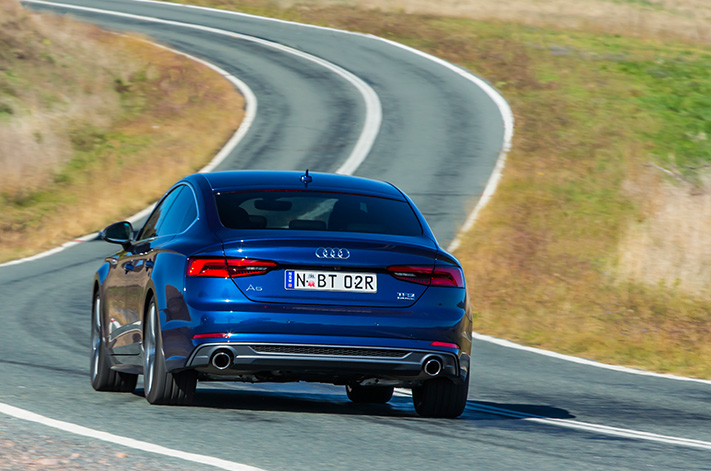
THE WHEELS VERDICT The A5 Sportback is more than just a stylised A4 sedan. It combines genuine practical advantages and added design appeal into a blend of style and substance that will lure design-savvy buyers with a bit of extra money to spend.
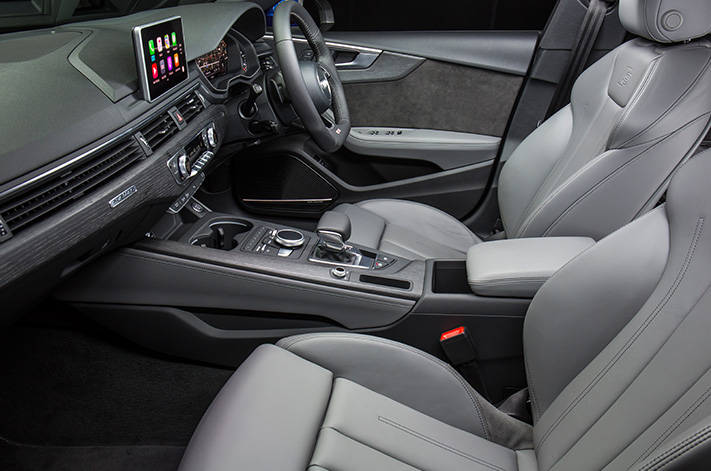
THE WHEELS REVIEW FUSE the most desirable bits of Audi’s mid-size model family into one vehicle and the A5 Sportback is what follows. It’s a versatile cocktail of passenger space and cargo room draped in the dramatic, fastback styling of the A5 Coupe, and more than half of all Aussie A5 buyers have opted for the five-door variant since it was added to the line-up in 2010.
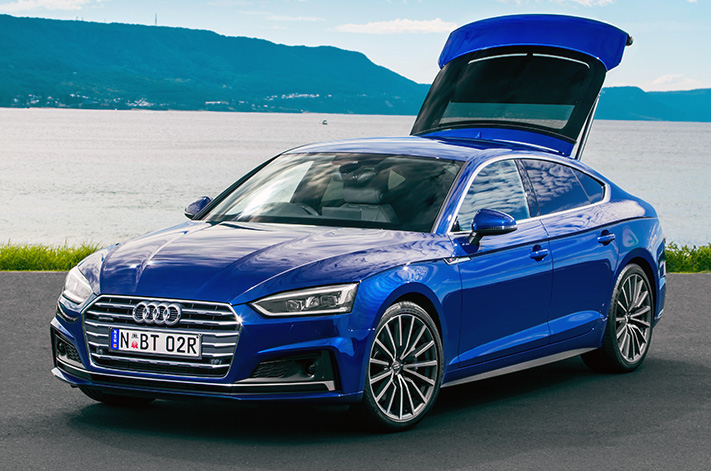
Second time around, and unlike the original, the A5 was developed with a Sportback variant in mind from the get-go, and with less packaging compromises diminishing its usefulness the new car is better in about every measurable way. The VW Group’s accomplished MLB platform, shared with the A5’s excellent A4 sedan and wagon siblings, sits beneath beautifully refined bodywork that loses none of its appeal despite an extra pair of doors.
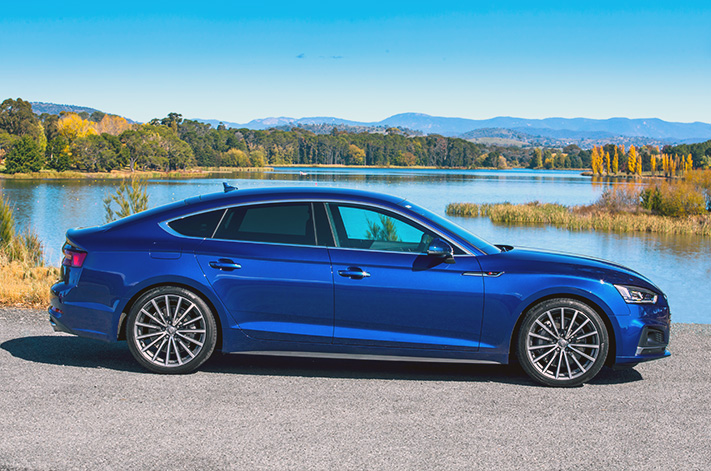
Those who view the Sportback merely as a stylised A4 sedan may find the price premium hard to swallow, but the liftback trumps both it and the Coupe by bringing genuine practical advantages. Its wheelbase is 4mm longer than the A4 and 60mm longer than the A5 Coupe, which opens up 24mm of extra legroom for rear seat travellers. It’s wider in the back, too, with a proper three-seat rear bench allowing for an extra passenger compared with the A5 Coupe’s divided pair of back seats.
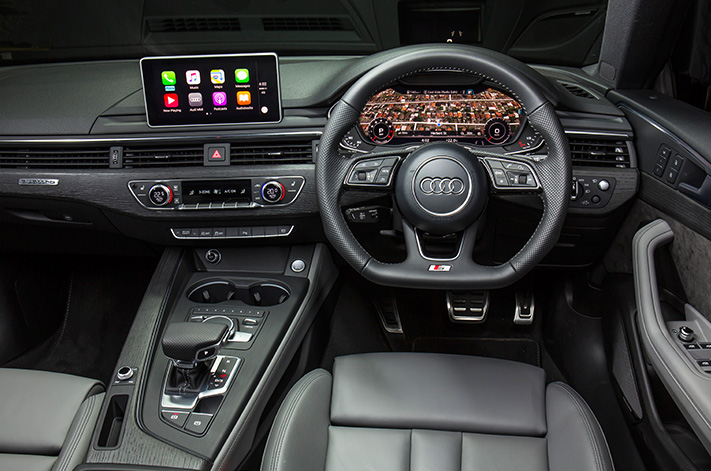
Inside, the Sportback carries over the same elegant interior styling as seen in the A4 and A5, including highly considered touchpoints and an overall focus on quality. On the road it’s a composed and controlled drive with the 2.0-litre quattro model offering reasonable driver involvement and satisfying torque delivery without stepping on the toes of its bigger S5-badged brother.
That said, the A5 Sportback’s mixture of style and substance is a compelling alternative to the other Audi B segment models. Audi’s niche-mining seems to have struck a sweet spot for those who can afford it.
SPECS Model: Audi A5 Sportback 2.0 TFSI quattro Engine: 1984cc, four-cylinder, 16v, dohc, turbo Max power: 185kW @ 5000-6000rpm Max torque: 370Nm @ 1600-4500rpm Transmission: 7-speed dual-clutch Weight: 1535kg 0-100km/h: 6.0sec (claimed) Fuel economy: 6.5L/100km (claimed) Price: $81,500 On sale: Now
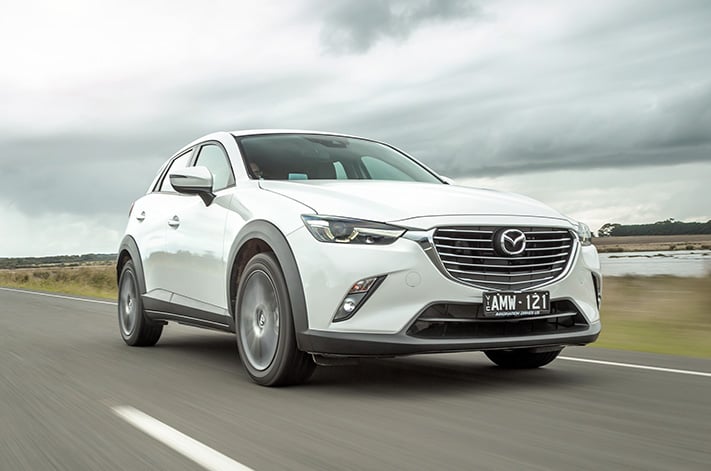
Mazda doesn’t believe in change for change’s sake. That’s probably why it left it the CX-3’s good looks alone and instead concentrated on its few technical shortcomings including excessive road noise, less-than refined handling on rough roads and the noisy diesel engine.
It also chucked in some active safety gear including automatic emergency braking across the range – the first compact SUV to do so.
TELL ME ABOUT THIS CAR
Third up in the CX-3’s four-model line-up, the sTouring comes with a competitive list of standard features and a choice of 2.0-litre petrol and 1.5-litre turbo diesel engines, as well as front- and all-wheel drivetrains. We drove the sTouring AWD Diesel that ris priced from $33,390.
STRENGTHS
- While the 77kW/270Nm 1.5-litre turbo-diesel engine has carried over from the previous model, Mazda has improved throttle response by adding something called ‘High-Precision DE Boost Control’. It is designed to minimise turbo lag – that moment of hesitation when you hit a diesel engined-car’s accelerator and nothing much happens for a slight moment — which helps to make it more zippy, particularly in stop/start traffic.
- The diesel engine is also quieter and sounds less truck-like thanks to a “sound smoother” that makes the engine clatter less by cushioning the piston pin, and an engineering tweak Mazda calls the Natural Sound Frequency Control, which suppresses the engine’s sound waves much like noise-cancelling headphones.
- Better handling thanks to the inclusion of Mazda’s SkyActiv G-Vectoring Control (GVC) that uses the engine to enhance chassis performance. It does this by slightly reducing the engine’s revs to tip more weight onto the front wheels, resulting in smoother cornering.
- Noise, vibration and harshness (NVR) is improved via thicker carpet, and extra sound insulation in the dash panel and floor tunnel. Thicker trim seals line the C-pillar and tailgate opening.
- The sTouring comes with advanced active safety features as standard including forward and reverse automatic emergency braking (Smart City Brake Support), blind spot monitoring, an alert that sounds if you’re about to back out into the path of oncoming traffic, adaptive headlights and speed limit sign recognition.
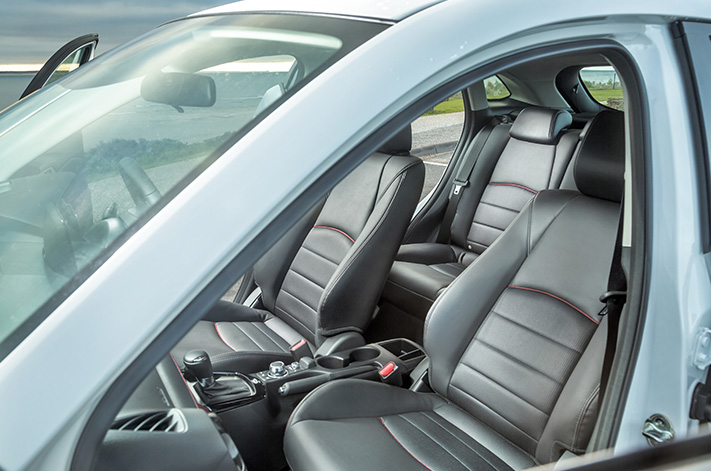
- An attractive, clutter-free interior includes a floating seven-inch screen controlled by a dial mounted on the centre console.
- The seating position feels more car-like and the seats are comfortable.
- Satellite navigation and a digital radio are standard.
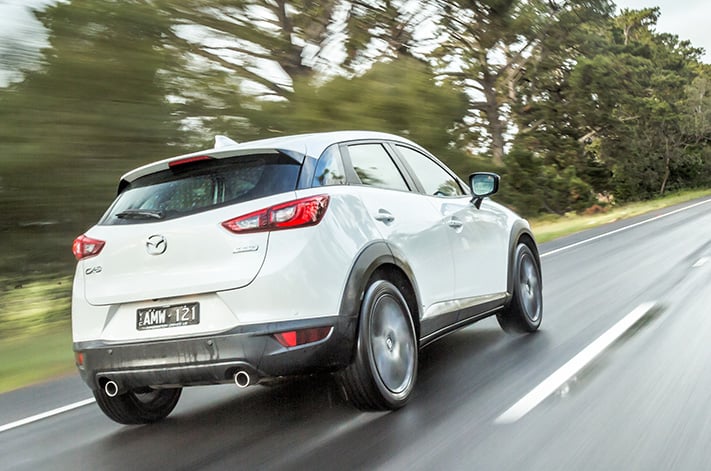
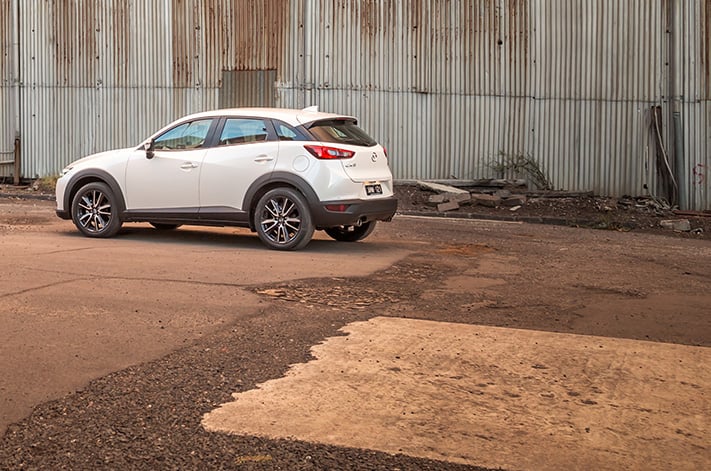
- Apart from a new paint colour and alloy wheel finish, there are no exterior changes to help show it’s the updated model.
- Rear side vision is limited, particularly for children in the back seats, because of the high window line.
- None of the all-wheel-drive versions come with the delightful six-speed manual transmission.
- The dial used to control the multimedia screen is too far back on the centre console, meaning you have to reach back and look down to use it.
This update should help the Mazda CX-3 remain competitive at the top of the small-SUV rankings against the likes of the Toyota C-HR, Holden Trax,Honda HR-V, Mitsubishi ASX, Peugeot 2008, Suzuki Vitara, Suzuki S-Cross and Ford EcoSport.
Let’s kick off with a positive: for the first four months of 2017, electric car sales have boomed in Australia.
Private passenger car sales in the segment were up more than 70 percent in April, and across the first four months of the year they’re bubbling along at a buoyant 20 percent. Turn your eye to battery-powered SUVs, and those numbers jump to 200 percent for the month, and are up more than a third for the year so far.
But here comes the reality check: that’s based on a combined 40 sales for the first four months of this year. It also only represents 0.01 percent of the market. That’s right, for every single electric car sold so far in 2017, the market has moved more than 9000 conventionally engined cars. Ouch.
Those figures are skewed slightly as Tesla politely declines every request to disclose how many cars it sells here. It is believed to move fewer than 10 a month of its Model S large hatchbacks, and the Model X seven-seat SUV-styled people-mover.
Why so few electric cars when makers the world over are talking big about electrification?
Speak with the brands, and they point to a lack of government support here encouraging new-car buyers to switch to electrons over hydrocarbons. The brands are screaming for help – BMW and Nissan have both been very vocal that in order to offset the high cost of owning an electric car, governments need to step in and help offset some of the cost.
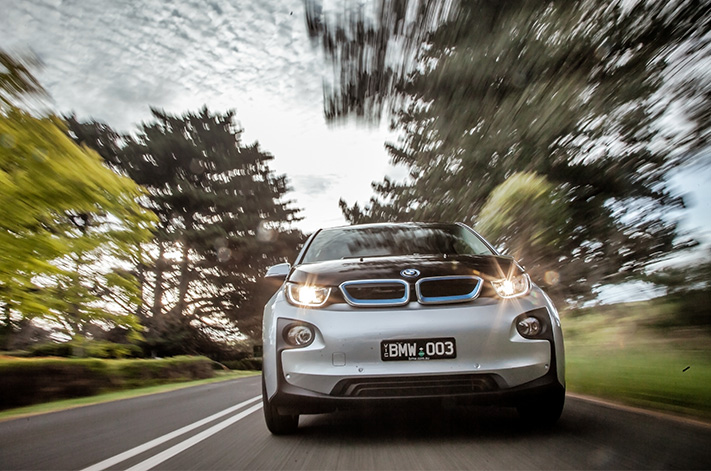
This sort of happens now at some levels, with Victoria offering $100 off registration fees on hybrid and battery-powered vehicles, and the ACT waiving stamp duty on highly fuel-efficient vehicles, for example, which help a bit.
But the car makers look to the thousands of dollars that governments overseas throw at electric car buyers, and question why the Australian government doesn’t do the same.
It’s a chicken and egg thing. There isn’t much incentive for businesses to roll out publicly accessible recharging infrastructure, so it happens very slowly. In turn, the lack of public infrastructure is a turn-off for buyers who fear they will run out of electrons somewhere between Point A and Point B – something that infamously happened in Wheels Car of the Year testing. The car still won.
There are some free recharging stations around, but they’re usually at shopping centres where there’s an economic benefit: the centre’s management spend the equivalent of a cup of coffee topping up your car, and you spend hundreds of dollars on clothes bought from the shops inside in the hour or so the car takes to juice up. It’s why you see the pram-friendly parking bays close to the doors at supermarkets: they aren’t being kind to mums, they’re being market-savvy.
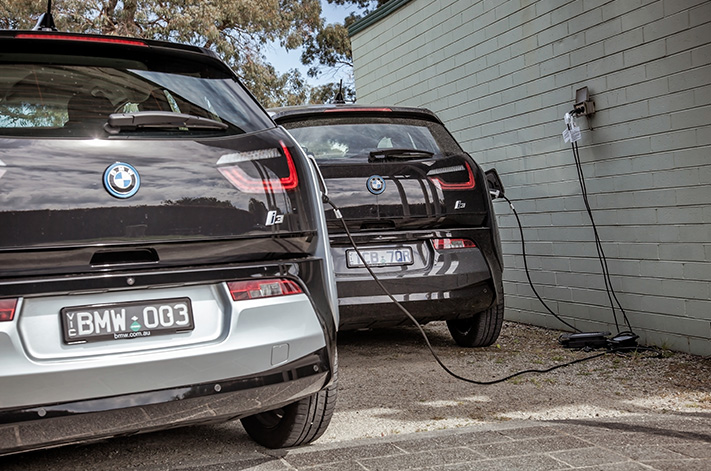
There are some concessions that the carmakers offer. Buy a $61,800 BMW-badged i3 electric car – or one of the German luxury brand’s plug-in petrol-electric hybrids that, at the push of a button, can run on electricity alone for decent distances – and BMW will pick up the tab for recharging it via a nationwide network of ChargePoint stations. Similarly, buy a Tesla Model S, and the Californian car maker will give you about 1600km of free electricity a year via its network of public Supercharger stations. After that you pay.
Then there’s the range of electric cars on offer. We’ve mentioned the BMW i3 and the Tesla twins, but what else is out there?
Not much. Mitsubishi has retired its hugely expensive (it almost hit $50,000) and somewhat impractically small i-MiEV battery-powered hatchback that in 2010 became the first production electric car on sale in Australia – even if you could only order it in the showroom rather than drive away in one.
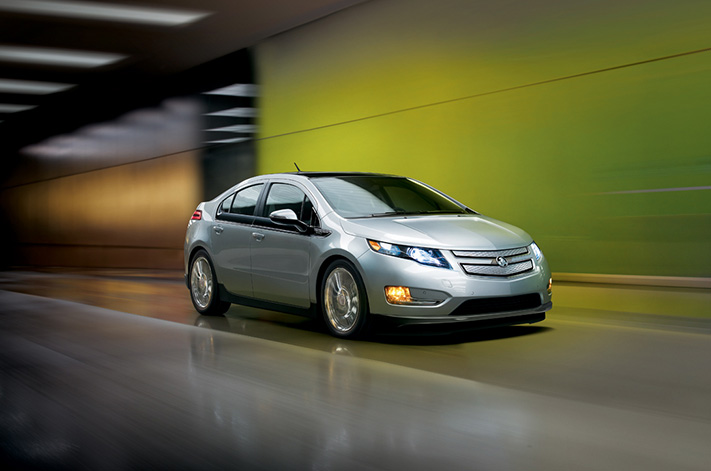
Holden had the Volt, a circa-$60,000 rebadged Chevrolet Cruze hatchback that also featured a 1.6-litre petrol engine that it used mainly to recharge its bank of batteries. Highly priced and with a limited all-electric range, it struggled.
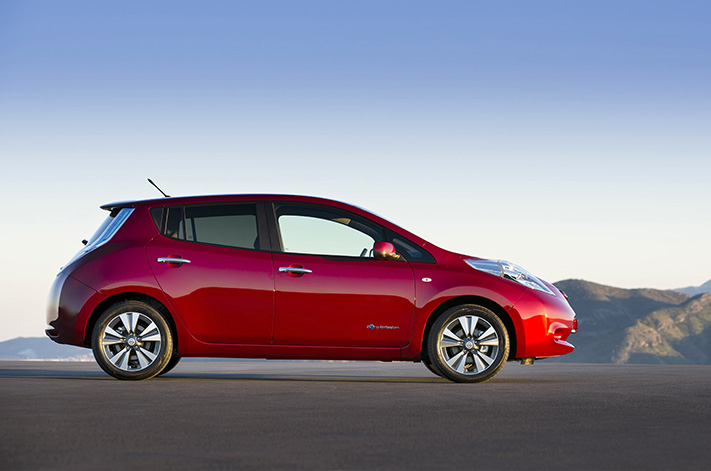
And Nissan’s $39,990 Leaf – Australia’s best-selling electric vehicle to date – has recently dropped off the market as the Japanese car maker makes plans to bring in an all-new model that builds the car’s borderline-useful electric range, something sure to make it more attractive to buyers.
We’re hearing rumbles, too, that Renault is keen to bring its next-generation Zoe – a compact, chic-styled battery-fuelled hatchback – to Australia after spending a good couple of years evaluating the previous-generation car for our conditions.
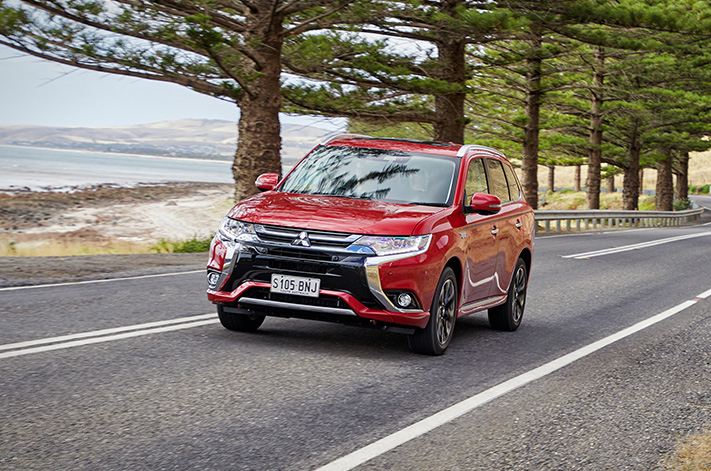
The $50,490 Mitsubishi Outlander PHEV mid-size SUV is classed as an electric car even though it has a 2.0-litre petrol engine under its bonnet used for recharging the batteries on the fly, but it will also sometimes drive the front wheels. It will travel for more than 30km on battery power alone in the real world, though.
There are other cars that will run short distances on electricity alone, but are classed as hybrids, not electric vehicles.
Then there’s recharging at home. Installing a wall charger can be an expensive proposal for some owners, crossing over into thousands of dollars, and depending on the length of the commute, you could still have to plug the car in every day to top it up. It’s the only real blight on the experience, and car makers are working on wireless recharging tech to replace it.
But at the moment, the car makers need electric cars more than we do. If the Australian government ever introduces congestion zones or locks off roads to emissions-spewing cars, all of a sudden those that don’t burn fuel become more attractive.
And petrol prices are still really cheap, making electric cars more expensive to buy than conventional ones, but not that much cheaper, or convenient, to run.
So is now the time to buy an electric car? Not really.
But it’s early days yet for the electric car industry. Fuel won’t stay cheap forever, and particularly in cities such Sydney and Melbourne, the idea of a congestion charge has plenty of government appeal and is regularly up for discussion.
The reasons for buying an electric car are mainly cosmetic. You get some free fuel, there’s the ability to recharge at home
The electric car’s time is still well ahead of it.
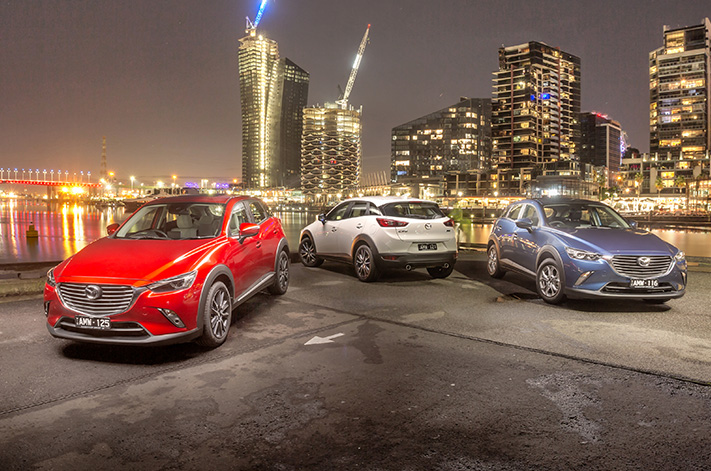
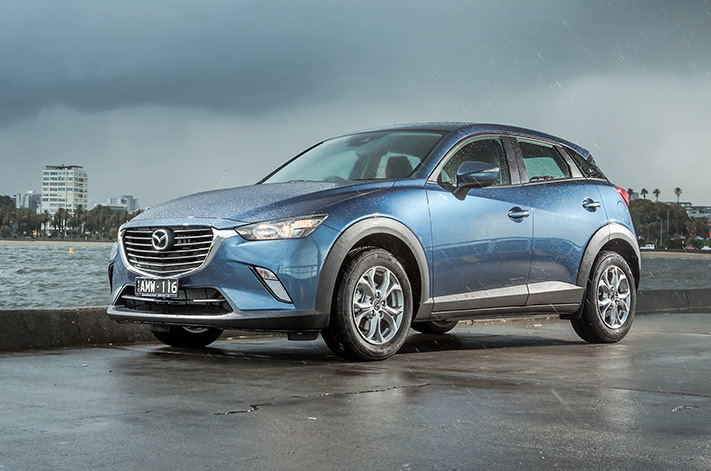
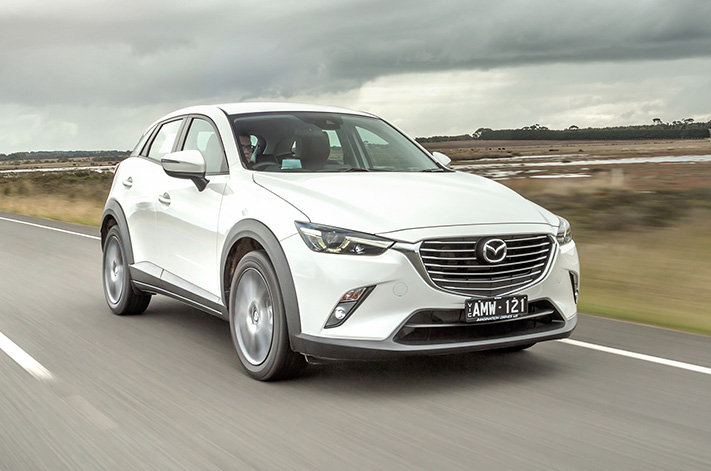
Mazda doesn’t believe in change for change’s sake so you’ll be hard pressed to find aesthetic changes to the 2017 model, though plenty has gone on under its familiar skin.
One of the key changes is the addition of forward and reverse Smart City Braking across the entire range – the first small SUV in its class to feature autonomous braking as standard.
Forward braking works up to 80km/h to prevent or mitigate a collision, while in reverse it will stop you hitting something or someone up to 10km/h.
Other safety featured include Blind Spot Monitoring (BSM) and Rear Cross Safety Alert as standard on the Maxx grade up, while sTouring and Akari variants also get Driver Attention Alert (DAA) and Traffic Sign Recognition (TSR) which alerts you if you’re braking speed limit via the head-up display and audible alarm (which you can turn off).
The range-topping Akari also gets Adaptive LED Headlamps and Front Parking Sensors, however active cruise control is still unavailable.
As with other entry-level Mazda variants, the Neo still doesn’t come with a reversing camera to keep the base cost down, though it is a $500 option.
There was always a lot to like about the Mazda CX-3 but there were a couple of notable shortcomings including ride refinement on rougher roads and excessive road noise.
The former has been addressed with the addition of Mazda’s SkyActiv G-Vectoring Control (GVC), which uses the engine to enhance chassis performance by varying the torque loading on the front wheels for smoother cornering. The front suspension arm has also been redesigned and the angle of the front damper bushes changed, resulting in a more refined ride on rougher surfaces and less body roll.
Diesel variants are also more refined in terms of throttle response and noise. A ‘High-Precision DE Control Boost’ has been introduced for quicker accelerator response, and it sounds less truck-like thanks to the some fancy gear including the Natural Sound Smoother which cushions the cylinders to reduce ‘diesel knock’ and Natural Frequency Control which suppresses sound waves much like noise cancelling headphones.
Noise Vibration and Harshness (NVH) has been reduced to more acceptable levels in all models with the addition of thicker carpets, and extra sound insulation in the dash panel and floor tunnel. Thicker trim seals have also been added to the C-pillar and tailgate opening, resulting in a reasonable reduction in general road and wind noise.
Inside, the Mazda CX-3 receives a newly designed steering wheel taken from the CX-9 and illuminated meter graphics that are an improvement over the old LCD display.
Outside, a new paint colour, Eternal Blue Mica, has been introduced while the 18-inch alloy wheels in sTouring and Akari models are finished in gun metal.
The high-grade models also feature auto folding and heated mirrors, while Neo and Maxx side mirrors now fold with a flick of a switch.
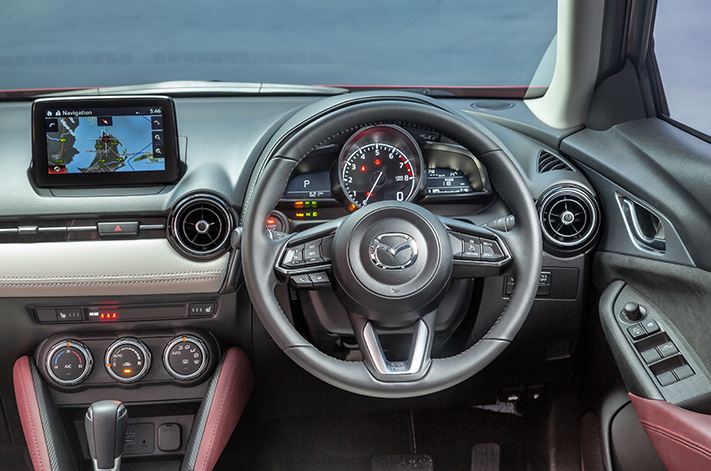
The range-topping Akari also gains more luxury with heated 10-way power adjustable driver seats with memory function, auto folding mirrors, digital radio, a coloured Active Driving Display and the full range of available i-ACTIVSENSE safety equipment.
As before, the CX-3 is powered by a 2.0 litre SKYACTIV-G petrol and a 1.5 litre SKYACTIV-D diesel engine mated to a 6-speed SKYACTIV-MT manual or 6-speed SKYACTIV-Drive automatic transmission.
The New Mazda CX-3 is on sale now, with prices starting at $20,490.
2017 Mazda CX-3 Pricing
- Neo: 2.0L petrol FWD manual- $20,490
- Neo: 2.0L petrol FWD auto – $22,490
- Maxx: 2.0L petrol FWD manual – $22,890
- Maxx: 2.0L petrol FWD auto – $24,890
- Maxx: 2.0L petrol AWD auto – $26,890
- Maxx: 1.5L turbo diesel FWD – $27,290
- sTouring: 1.5L turbo diesel AWD auto – $33,390
- sTouring: 2.0L petrol AWD – $30,990
- sTouring: 2.0L petrol FWD auto – $28,990
- sTouring: 2.0L petrol FWD – $26,990
- Akari: 2.0L petrol FWD manual – $31,490
- Akari: 2.0L petrol FWD auto – $33,490
- Akari 2.0L petrol AWD auto – $35,490
- Akari 1.5L turbo diesel AWD – $37,890
BMW is keeping things simple for its latest 2 Series update, with the so-called Life Cycle Impulse (LCI) limited to interior and exterior aesthetic changes and a light tech boost.
When the refreshed range of small sports coupes and convertibles arrives in September this year it will be the second update the German carmaker has treated its 2 Series line-up to, since the model was introduced in February 2014.
A major reshuffle of variants and offerings will not be rolled out with the latest revision as confirmed by BMW Group Australia product communications manager Adam Davis.
“Expect carry-over model variants with the same engines,” he said. “It’s an aesthetics and technology update and will mirror the existing variant spread.”
The current line-up extends from the entry-level 220i priced from $51,300 before on-road costs or $58,300 if you opt for the convertible version, through 230i coupe and cabriolet, to the sub-M range-topping M240i which is also available in drop-top or tin-top versions.
Performance enthusiasts will also delight that the LCI will be applied to the hugely popular M2, which will arrive at the same time as the rest of the range, as well as the stripped-down M2 Pure – the purist’s version formulated for Australia.
“That’ll include M2 as well,” said Davis. “We’ll do our Pure local edition again with manual only and your full-fat DCT-equipped but no-cost option manual M2 as well.”
Europeans are treated to a far more diverse 2 Series range with nine coupe variants on offer and eight convertible options including diesels and all-wheel drive xDrive transmissions, but Davis said no such additions would be making it down under. The lone 220d was dropped last year.
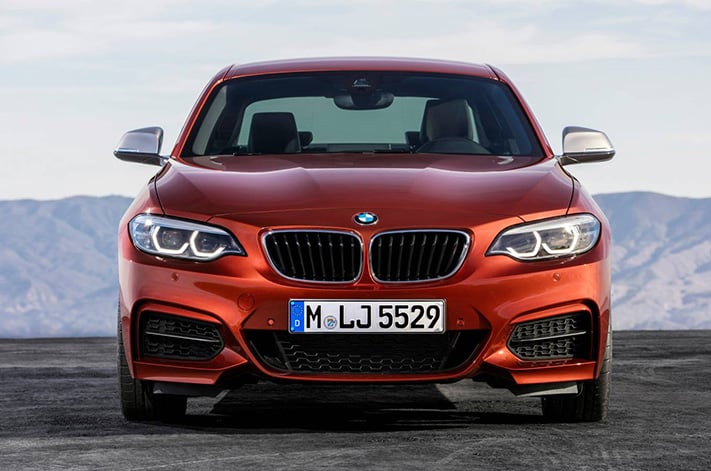
On the outside, the 2 Series LCI has a redesigned nose headlined by bi-LED headlights (adaptive versions are optional), wider signature kidney grille, air vents and fog-lights dependent on the variant specification, while a new all-LED taillight design provides a fresh look for the rear.
Four new alloy wheel designs from 16-inch to 18 inches have been added to the options catalogue for customers wanting to add a more personalised look, as have three new paint tones; Mediterranean Blue, Seaside Blue and Sunset Orange.
On the inside, a range of new fabrics and design themes give the 2 Series cabin “a more spacious, calmer and clearer feel” says BMW, complemented by a new instrument cluster design.
A new 8.8-inch dash-mounted touchscreen forms the centrepiece of the update, allowing occupants to access the iDrive information and entertainment options via a more intuitive operating system, which adopts swipe-style tiles similar to a smartphone.
Pricing has not yet been finalised for Australian customers but is not expected to deviate greatly from the current structure, given the relatively subtle changes.
In the sports cars under $80,000 segment, BMW’s 2 Series continues to attract consistent sales and 211 registrations to the end of April this year. It falls behind the runaway success Ford Mustang (639) but still holds strong in second place ahead of the Hyundai Veloster (180), and Toyota 86 with 145 of the affordable two-seaters finding homes since the start of the year.
Audi Australia has mapped out its RennSport model assault on the local market for 2017, with three major flagship product launches in addition to a trio of S-branded updates set to storm our performance-loving shores before year’s end.
Only two weeks from launch, the Audi TT RS will be first cab (or coupe) off the rank. With a new 2.5-litre turbocharged five-cylinder engine producing 294kW of power and 480Nm of torque between 1700rpm and 5850rpm, Audi claims a 3.7-second 0-100km/h for its top quattro TT.
Expected to be priced under $150K, Audi will for the first time ever boast a greater cylinder count than its loftier Volkswagen Group sibling, Porsche, in the sports coupe class. Given that the 2.5-litre turbo four-cylinder and rear-wheel drive 718 Cayman S can run 0-100km/h in 4.2 seconds, the TT RS is faster, too. Comparison tests, obviously, await.
And with a sub-$100K starting price, the outputs hike of 24kW/15Nm compared with the current RS3 Sportback, it will make the RS3 sedan one of the fastest new cars available for the price. Crucially, it also sneaks past the 280kW/475Nm 2.0-litre turbo AMG CLA 45.
But the big-daddy RS5 is reserved for a fourth-quarter 2017 launch.
Swapping out the old 4.2-litre V8 for a 2.9-litre bi-turbo V6 developed in partnership with Porsche – and in service first in the latest Panamera – the new engine produces 331kW and 600Nm, the latter from 1900rpm until 5000rpm.
The BMW M4 Competition and Mercedes-AMG C63 are on notice.
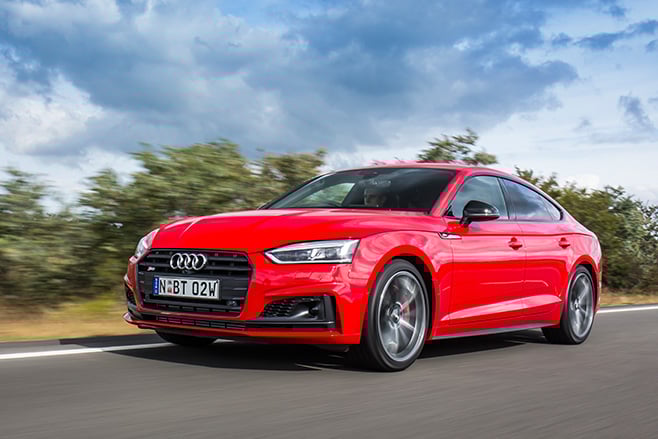
Rounding out the Audi Sport new models for 2017 are the more subtle S-branded trio – the just-released S5 Sportback and its S5 Cabriolet sibling, the latter slated for a third-quarter 2017 launch; and also the SQ5 now with 3.0-litre turbo V6 petrol power delivering 260kW/500Nm and a 5.4sec 0-100km/h.
In Australia’s sports-loving market, Audi must be rubbing its hands together in anticipation.
RAM-RAIDERS were once spoilt for choice in the fast-Audi lineup. Like an automotive footy shoulder charge, Mr Crim could simply turn aggressively towards a bank shopfront at speed and that stolen original-gen Audi S4 would reliably plough-understeer into it.
Now, however, the latest S4-derived S5 Sportback displays poise and panache to shatter bad memories, not kerbside windows – though with one caveat. Especially now that a 3.0-litre turbo V6 replaces the old blown motor with 500Nm between 1370rpm and 4500rpm, and 260kW from 5400rpm to 6400rpm, Audi’s $2950 sport diff is an absolute must-have.
Taking the all-wheel drive system’s 60-to-75 per cent rear-bias, the optional mechanical differential can then send torque to an outside rear wheel to “nip understeer in the bud” according to the brand. It works, permitting the S5 Sportback to pivot on its axles while – in excellent ESC Sport – even allowing throttle-steer. No lairy oversteer, mind, but there’s sweet adjustability, sharp yet progressive steering and balanced (three-mode) damping.
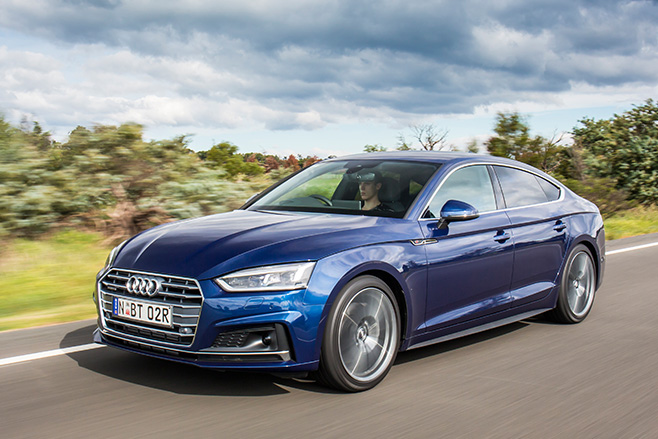
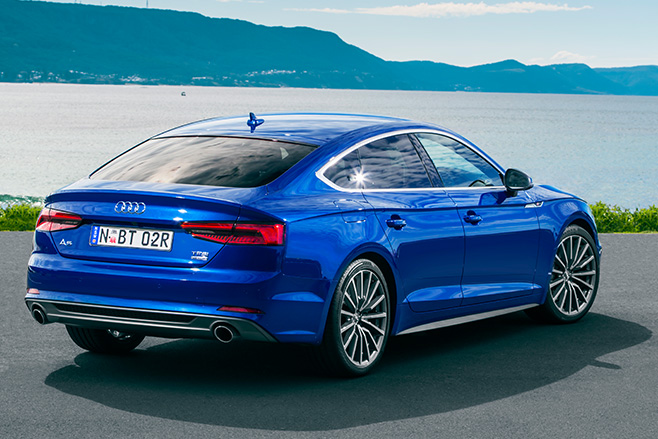
The S5 Sportback offers five doors for the same price as the two-door, and so 52 per cent of buyers are tipped to pick it compared with 35 per cent for the latter. From the contoured bonnet to the wavy ‘tornado’ side character crease, and the integrated lip spoiler at the rear, Sportback is also meant to lure buyers up from the $5900-cheaper three-box S4.
It mirrors that sedan’s 480-litre boot but adds glass-up loading versatility, and while that volume is unchanged compared with the old model, there’s now 24mm extra rear legroom.
The Sportback is a halfway house, longer (+41mm) and taller (+18mm) than the coupe, with 59mm added to the now-Avant-equalling wheelbase, while being shorter (-12mm) and lower (-25mm) than that wagon.
The S5 Sportback can match the coupe and sedan’s 4.7-second 0-100km/h, and allied with a quick and adept eight-speed automatic, along with deep and silky acoustics, it feels realistic.
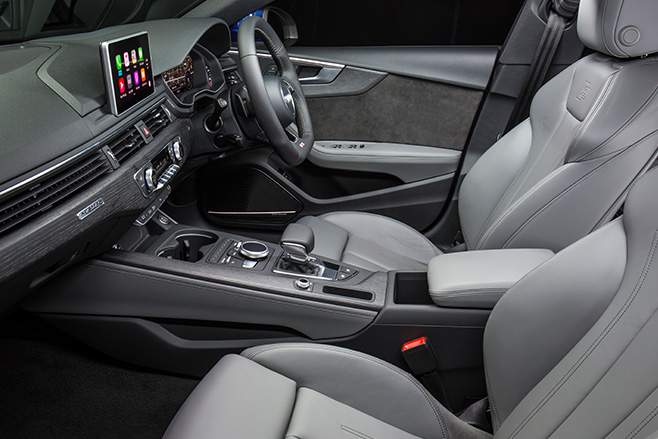
Bodystyle overload it may be, but the S5 Sportback adds to a complete and alluring range that positions these Audis at the top of the circa-$100K sports-luxe medium class. And that is certainly a nicer place to be than wedged in a shopfront window.
4/5
Pros: Sports diff a must-have, lovely turbo V6 and auto, steering/ride/handling balance Cons: Less rear headroom than S4 sedan, pricier than roomier S4 Avant, optional sports diff
Specs Engine: 2995cc V6, DOHC, 24v, turbo Power: 260kW @ 5400-6400rpm Torque: 500Nm @ 1370-4500rpm Weight 1660kg 0-100km/h: 4.7sec (claim) Price: $105,800
