
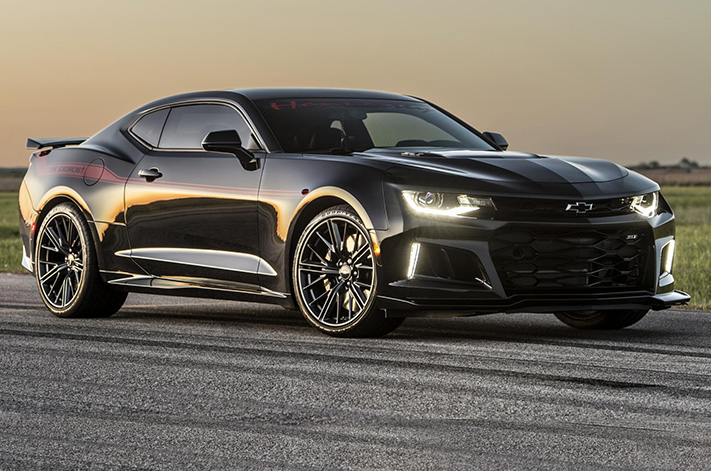
HENNESSEY has released video footage of its most extreme Camaro-based creation, known as The Exorcist, casting out (Dodge) Demons on a chassis dyno to the tune of 715kW at the rear wheels.
Based on the Chevrolet Camaro ZL1, The Exorcist uses a heavily tweaked version of its 6.2-litre supercharged V8 engine called the LT4. As standard the ZL1 puts out a claimed 477kW at the flywheel, before drivetrain losses.
2018 Chevrolet Camaro Z/28 spy pics
Modifications to the engine itself include head porting, an upgraded camshaft, long tube stainless steel exhaust headers and a less restrictive induction system. Hennessey’s custom ECU tune is then loaded to tie it all together.
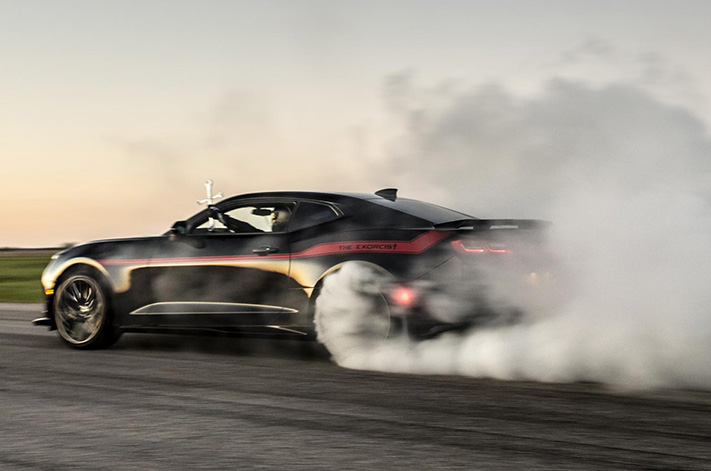
More details about gearboxes, drag packages and costs are available here, but for now have a listen to The Exorcist at wide open throttle as it ferociously snarls to redline.
Stick around to the end of the video for a sample of the car’s lumpy exhaust note at idle, which is an arguably even more intimidating sound than its monstrous V8 at full noise.
Hennessey has built a reputation for extreme horsepower vehicles based on performance cars from other manufacturers, and has announced plans for a truly outrageous 1119kW version of the Dodge Demon.
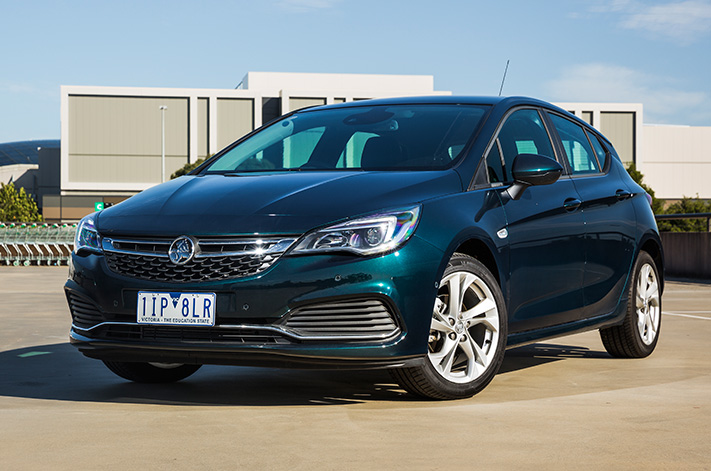
The Polish-built 2017 Holden Astra replaces the Cruze hatchback in Australian showrooms, with the switch from Korean to European sourcing also coinciding with a number of other fundamental changes for the brand’s volume-selling small hatch offering.
Styling is a big one, with design morphing from dull-but-purposeful to eye-catching and modern. Cabin quality has also seen a big improvement, with the Cruze’s seriously low-rent plastics being replaced by interior furnishings with a bit more tactile appeal.
| 2017 Holden Astra Sedan – 11 things you need to know
Tested here in mid-grade RS configuration, there’s also a powerful 1.6-litre turbo inline four under the bonnet – one of the Astra’s biggest selling points. With segment-leading power and a proper manual transmission, does Holden’s grocery-getter also have some sporty zing?
STRENGTHS
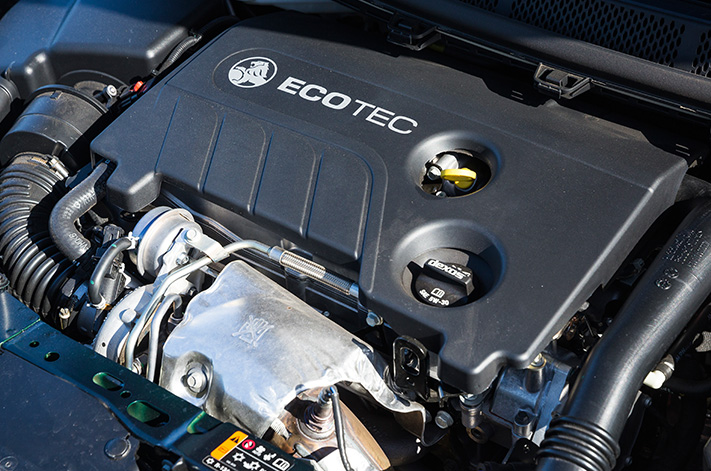
Powerful engine – with 147kW of peak power and 300Nm of torque, the Astra RS’s engine is not only significantly more muscular than the base Astra R’s 1.4-litre turbo, but it’s right up at the top of the class when it comes to output. All of that torque is available between 1700 and 4700rpm too, endowing the Astra RS with exceptional driveability, and it’s thoroughly enjoyable with the standard manual gearbox.
Compliant suspension – the ride is excellent thanks to supple and well-tuned suspension, which preferences passenger comfort rather than cornering capability. That said the Astra proves itself to be more than competent when shown a twisting stretch of road.
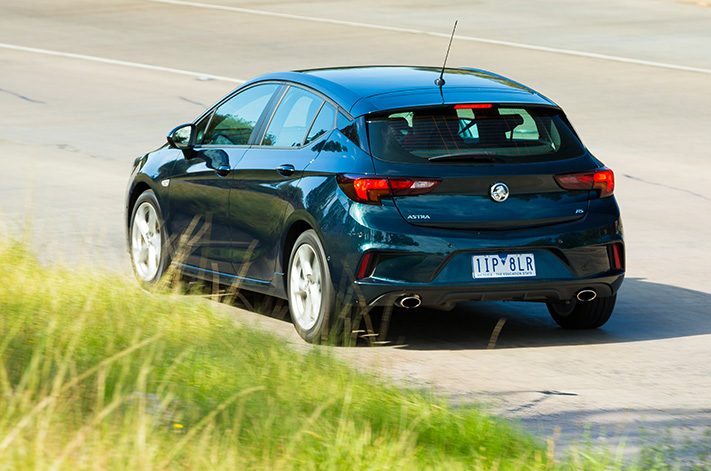
Clean design – Both inside and out, the 2017 Astra is a handsome car to look at. Compared to the fairly unexciting Cruze hatch that it replaces, the Astra’s European design has just enough visual flair to keep your eyes interested.
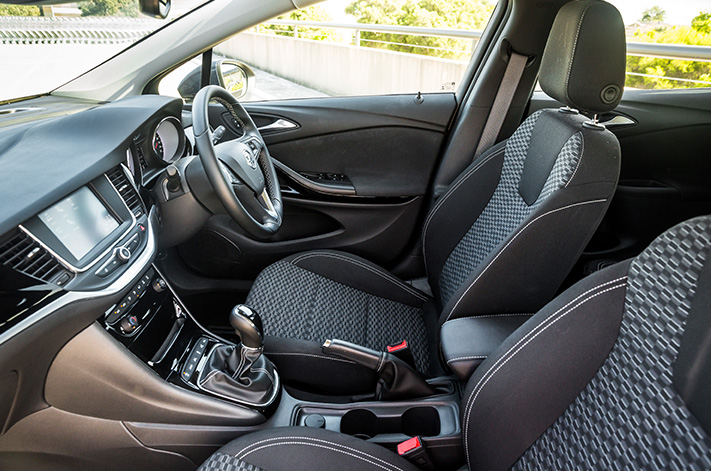
Well-weighted steering – Maybe not an attribute that will be immediately appreciated, but the Astra’s steering won’t have you straining to spin the wheel at low speeds, nor is it disconcertingly light. It’s right in the Goldilocks zone, and that’s part of what makes this car easy to drive.
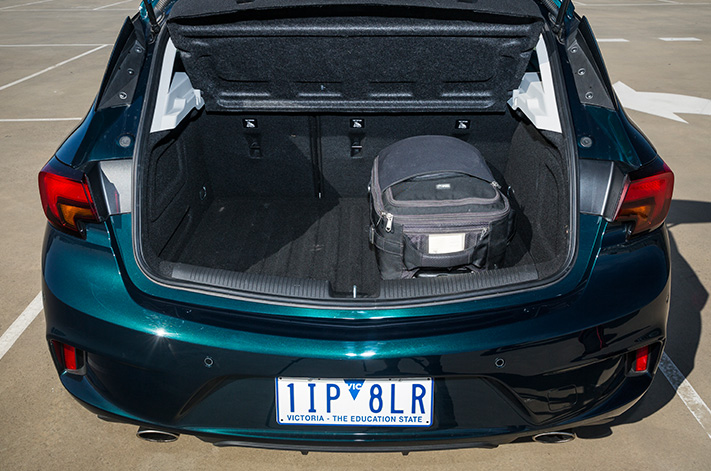
Useful-sized boot – with 360 litres of cargo capacity the Astra’s boot area isn’t quite in the same league as many of its competitors in terms of on-paper specifications. However, it’s still more than big enough for the average pram or a couple of sets of golf clubs, and there are shopping bag hooks to help keep small loads of shopping secure.
Good rear seat space – back seat passengers are treated to a spacious bench seat with good knee and foot room. A pair of adults will find plenty of sprawling space, though like most small cars it’ll get a bit squeezy with three sitting across the bench.
Digital radio – standard-issue across the full Astra range, a digital radio tuner allows a broader array of stations to be listened to. Other standard inclusions on the Astra RS include rain-sensing wipers, dusk-sensing headlamps, keyless entry/ignition, front and rear parking sensors, blind spot monitoring and a reversing camera.
WEAKNESSES
Torque steer – one side effect of a torque-laden engine driving the front wheels is torque steer, the sensation of the steering wheel being tugged left or right when under hard acceleration. It reminds you that though this car may have a lot of power for its price point, it’s intended more for effortless cruising than it is for driving in a properly sporty manner.
Axle tramp – another by-product of strong power and a relatively soft suspension is axle tramp, the tendency of the driven wheels to ‘hop’ up and down when traction is broken. You won’t experience much of it in dry weather, but when rains starts to fall the Astra can spin up its front wheels easily.
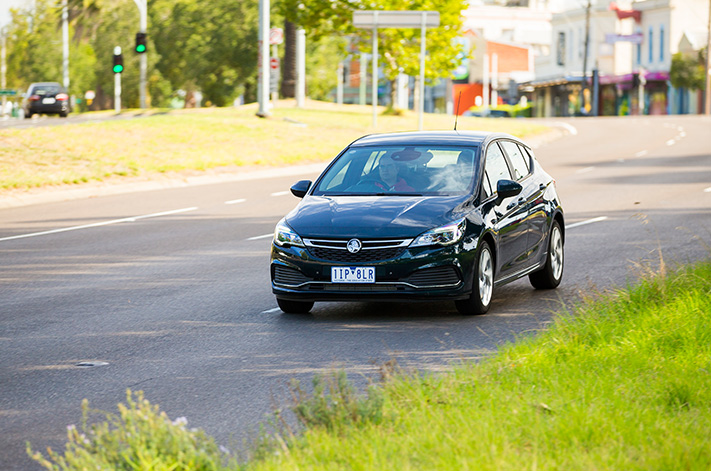
Ergonomics – generally speaking the Astra’s cabin is a nice place to be, but there are some ergonomic issues. Things like the mobile phone pocket in the centre stack being far away from the USB port in the armrest box, necessitating a cord to stretch right across the shifter area if you want to use smartphone mirroring – or just charge up your phone. The gearshift knob is also an awkward shape, and doesn’t feel nice in the palm of your hand.
No rear air vents – your rear passengers may have to sweat for a few minutes until enough cool air wafts out of the front air vents to reach the rear of the cabin, something that could have been avoided had the Astra been equipped with rear face-level air vents as standard.
Needs 95 octane fuel – unlike the base model Astra R and Astra R+, the larger, higher-output engine of the Astra RS and RS-V requires more expensive premium unleaded fuel. That means you’ll be paying more at the pump per fill.
No integrated sat-nav – priced at $26,490, the Astra RS manual exists at a price point where satellite navigation is fast becoming standard-fit. Unfortunately, Holden has elected to keep a built-in sat-nav system out of the mid-grade Astra, leaving smartphone mirroring via Apple CarPlay and Android Auto your only option for putting navigation info up on that seven-inch colour touchscreen.
WHAT RIVALS SHOULD I CONSIDER
There are plenty of alternatives, but few can match the Astra RS for outright power and torque. That said, the following are polished offerings within the segment: Volkswagen Golf, Peugeot 308, Ford Focus, Subaru Impreza. The new Hyundai i30 and Honda Civic hatchback are also set to go on sale locally too.
THE dudes behind Donut Media – the ones who brought us the likes of the Ferrari-powered Toyota 86 – have turned their attention to another hot topic: the evolution of racing sims.
They’ve produced a six-minute video that runs through the evolution of sim racing games built for the arcades, personal computers and specialist gaming consoles throughout the years, kicking off with the 1980s-era F1-style sim, Chequered Flag.
Yeah, so we start with the world of blocky eight-bit graphics and piezo-inspired sound effects. From there, it only gets better.
My own love affair with sim racing dates back to 1994’s release of The Need for Speed, the game that spawned the game and movie franchise. What drew me in about the game was the cover: a sleek, red Ferrari Testarossa in sharp profile, chasing down a bewinged, jet black Lamborghini Jalpa, the background blurring into nothingness. It was a pure driving sim – before the game turned to today’s crash-and-bang silliness – and the first time I met, and fell in love with, the Jaguar XJ220.
It progressed from there, originally using a flight-sim controller before moving to a Thrustmaster, and beyond that series of Logitech wheels that would randomly brick themselves.
Archive: Holden SS Group A versus HDT Brock Group Three Comparison Review
The games, too, went through their highs and lows, with the ecstasy of discovering the open-source, free, and very buggy TORCS driving sim that at the time offered the most realistic dynamics available, to the lows of dealing with V8 Challenge’s idiotic AI that would spear you off the track if you gave one of the computer-generated rivals even the lightest of taps – but it did have Mount Panorama. Its GT touring car-based successor was even worse.
Speed Race, Crazy Taxi Sega Rally and Daytona USA all swallowed pocket money at an alarming rate. Colin McRae’s Dirt honed snow-driving skills, and F1 2015 wowed with its advances in virtual reality. Mario Kart on the Wii filled in the gaps with the kids.
I’ve never raced in iRacing, but wish I had; it requires a standalone computer to run the software, and those who use it rave about the experience. But via the PlayStation network I have raced on Gran Turismo games, waking up in the small hours to race Brits and staying up late in the evenings to determine the pecking order among Aussie motoring hacks.
I now race sitting behind a homemade buck that sits in a corner of the lounge room, with the crowdsourced sim Project Cars my new vehicle of choice. I’ve eyed off Forza Horizon 3 for its unique Aussieness, and followed the development of Gran Turismo Sport, the successor to GT6, with interest even if I’m not part of the beta test program, but neither have the purity of driving I’m looking for.
It’s also why the end of this video brings a smile to my face: Project Cars is spawning a gen two that promises the cutting edge in physics and the environment you drive in, due late this year.
I can’t wait.
SKODA’S five-seat version of the seven-seat Kodiaq SUV going on sale around April next year – the Karoq – has been revealed almost in full ahead of its official reveal later this month.
The small, gutteral SUV will join Skoda’s showroom before the middle of next year alongside the Kodiaq, which is named after a North American bear, or a region a bear lives in, or something. Karoq, on the other hand, is derived from an ancient Alaskan language and stands for either a mish-mash of the words “car” and “arrow”, or “expanded smartphone connectivity and sharp on-road dynamics” blended with the 13 different words the Alutiiq people use to describe snow.
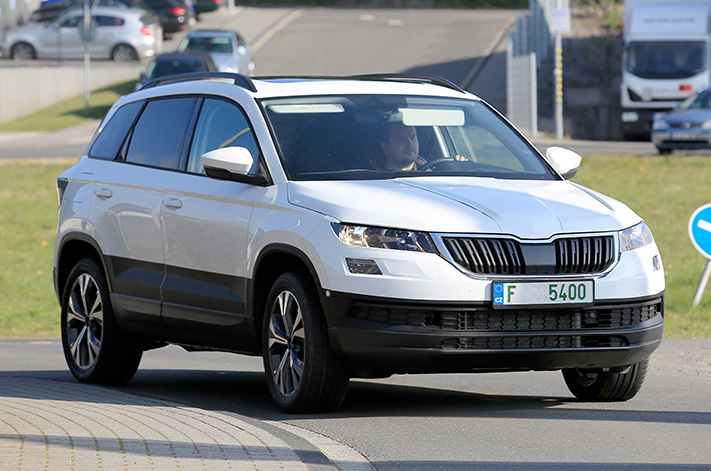
Based loosely on the Volkswagen Tiguan, the Karoq steps up to Volkswagen’s new MQB platform that includes the ability to roll out plug-in hybrid and fully electric versions of cars that use it. The generational jump means the Karoq is more compact than the Kodiaq, particularly in terms of interior space, which will help it take on the likes of the Mazda CX-3, Nissan Qashqai and the new Peugeot 3008.
Slated for a May 18 global reveal, it will introduce a raft of technology, including automatic city braking – a feature recently made standard on the Octavia mid-size liftback and wagon – and a range of turbocharged petrol and diesel engines, with front-wheel drive and a manual gearbox standard on European market cars. Skoda is yet to say how base cars will be configured once they arrive.
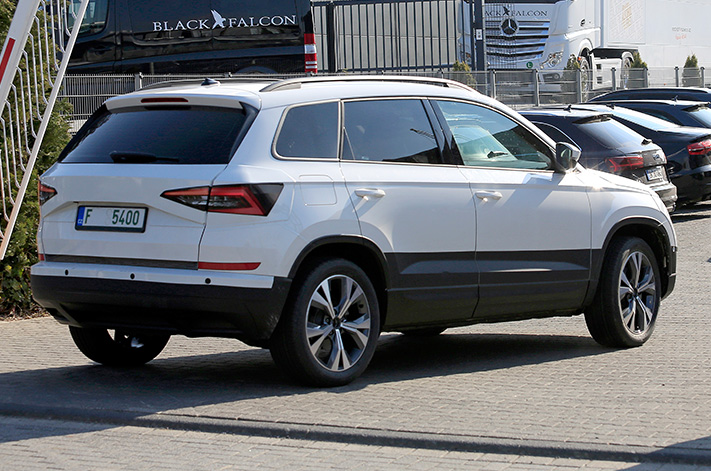
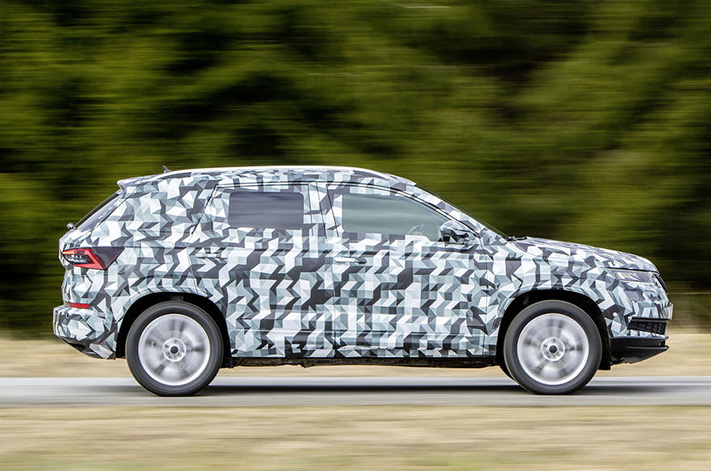
The still-disguised car will be revealed later this month before launching globally in November.
Volkswagen is adamant the Karoq is not a replacement for the small, boxy Yeti five-seat people-mover. However, it says the Yeti will be withdrawn from sale in Australia shortly before the bigger, new SUV’s arrival.
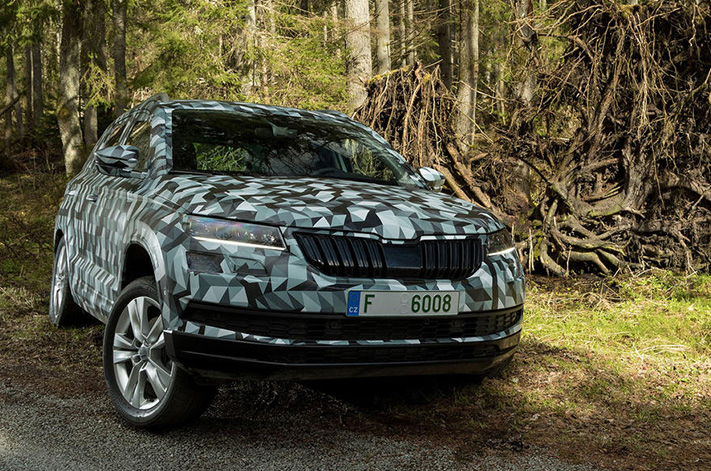
Skoda is believed to be working on a replacement for the Yeti that could shrink a future version of the car’s proportions even more.
This month’s launch of the seven-seat Kodiaq, priced from $42,190 for the entry-level AWD model, will be a welcome addition for a brand arriving very late to Australia’s SUV party.
The Kodiaq is expected to help lift Skoda’s combined sales above 5000 for the calendar year, a record for the brand that only re-launched here a decade ago.
Unless you’re one of those people who enjoy washing their car as much as the rest of us enjoy Sunday brunch, then you’re probably already aware of the damage the outside world can have on your beloved car’s skin.
But for the rest of us, washing a car is akin to the joy of polishing the silverware or ironing hankerchiefs.
Unfortunately, car paint isn’t immune to the environment’s elements, and just like running your clothes through a wash cycle, washing a car can save it from a lot of damage and discolouration.
The most common causes of paint damage are beyond control, and are likely to come in contact with your car every day. And while paint has come a long way, it’s still not possible to full avoid Mother Nature’s wrath.
Here are some of the most common substances that can threaten your car’s shiny paint, and what you can do to avoid destruction.
1. Bugs
If you regularly travel long distances at high speeds in Australia, you’ll know the ‘bug blanket’ that can cover the bonnet of your car. These splattered insects not only look like a scene out of a mash-up between A Bug’s Life and Game of Thrones, but once their lifeless skins dry they can remain imprinted in your car’s paint. Best way to remove them is with a little specialised bug and tar solution.
2. Bird poop
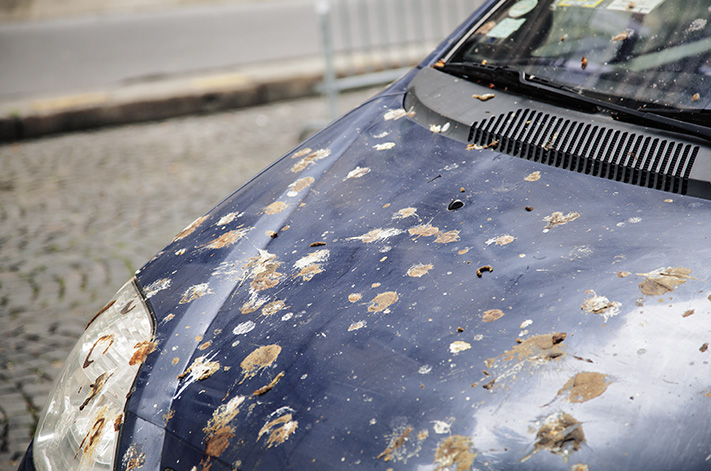
No one really wants to wash bird poop of anything – cars, clothes, or skin. But these ugly droppings can do serious damage to your car’s paint thanks to a bird’s diet, which results in grainy, acidic waste. It’ll dull and stain your paint, and leave a nasty reminder of the time you parked under the berry tree. If you do come back to your car to find a few gifts from the birds, be sure to wash the affected area immediately with some water and a microfibre cloth.
3. Salt water
Living near the beach, or regularly driving a four-wheel drive along the coast will expose a car to salty air that can cause various parts of your car to rust. While a car’s paint is most susceptible to damage caused by abrasive sand, the salt water in the air is most dangerous to the bits underneath the car. If this sounds like it matches your lifestyle, then the best advice would be to regularly wash your car with water.
| Five Australian road trips for Winter
4. Tree sap
This sticky tree goo can eat into your paint and can be tricky to remove. The longer it stays on your car, particularly on warm, sunny days, the more damage it’s likely to cause and the harder you’ll need to scrub to remove it. Over time, the sap will dull your car’s shine, so the best thing to do is wash it immediately. If the sap has made itself at home, then head to a store and buy some commercial sap remover and a microfibre cloth.
5. Petrol
Hopefully fuel is one of those things that rarely comes in contact with your car’s exterior as the life-force of your car’s engine is made to keep its internals running. If it does leak out the fuel cap, though, it can cause the paint to peel, so give it a quick rinse as soon as it happens to avoid any issues.
| How often should you service your car?
6. Sun
Here in Australia, cars are exposed to a lot of sun for most of the year. And just like our skin, your car needs protection. Unfortunately, there’s no SPF50+ cream for your car, so best way to protect the paint is to keep it in the shade as much as possible. If you’ve got a carport, use it. Likewise with your garage – use it for its intended purpose; your car, not your junk. And if you really have no choice but to leave it outside, try and find the shadiest spot possible – which is likely to be under a tree – in which case you’ll probably have to wash it afterwards anyway (see points 2 and 4).
7. Gravel
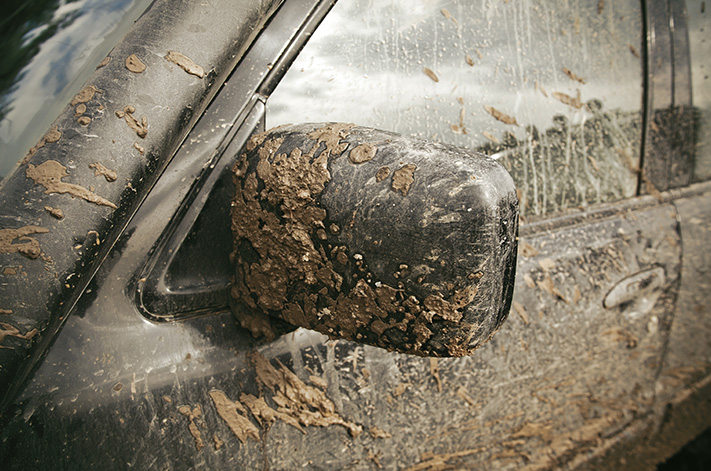
Driving a car on gravel roads will subject it to damage from stones and rocks. Not only can these nasty little loose stones chip through to the outer layer of a paint job, but they can also dent panels and chip windscreens. While they’re sometimes unavoidable on unsealed roads, keeping a safe distance from cars ahead of you and not driving too fast can help lessen the damage. If you do happen to get a few scratches from these fly-aways, then it’s best to get the scratch treated as soon as possible to prevent the body from rusting.
After a pretty rough day for driver Kris Meeke at the WRC Rally Argentina, Citroen’s mechanics were hard at work to make sure the car got back on the track for the next day.
The time lapse video featured here, which was originally posted on the Citroen Racing Facebook page, shows Meeke’s C3 being gutted and rebuilt. Never mind the panel gaps.
If you noticed that the roof looked in less than optimal condition, you’d be right to think it had been rolled. Meeke put his car on its roof through what looked like a fairly benign corner.
However, this inconspicuous bump is the same one that undid the efforts of Meeke’s fellow Citroen driver Craig Breen, as the Irishman’s car copped a beating and was “stuck in 5th gear after a big compression”.
Breen’s car also suffered an oil leak which slowed its re-entry into the competition. Despite the bout of bad luck, neither car was beyond repair.
Though both cars eventually made it back out into the gravel, matters were made worse by Meeke once again rolling his C3, and undoing the work seen in the time-lapse above, the next day.
Ultimately, the competition was dominated by the rivalry between Thierry Neuville and Elfyn Evans, who looked strong right up until Neuville surpassed him to steal victory with a gap of 0.7 seconds.
With Meeke unable to finish the South American rally, he stands at 9th overall in the championship, a couple of places behind Breen at 7th.
We’ll next see them take to the gravel when the WRC heads back to Europe for the next few months, until the final round takes place at Rally Australia in November.
Love a bit of turbo front-drive hot hatch fun but prefer your thrills to be packaged in a three-door form factor? Are you fundamentally a bit selfish and don’t want people to ask you to be a carpool driver, and are also fond of some light hooning? Volkswagen has your back.
The German car maker’s Australian arm will be shipping over just 150 examples of its three-door Golf GTI Performance Edition 1, which will arrive alongside the rest of the 2017 Golf ‘7.5’ line-up this month.
Boasting the same upgrades applied to regular 2017 Golf GTIs, the 150 Golf GTI Performance Edition 1s will be available in just two colours – White Silver or Dark Iron Blue – and will be exclusively equipped with a seven-speed DSG dual-clutch automatic transmission.
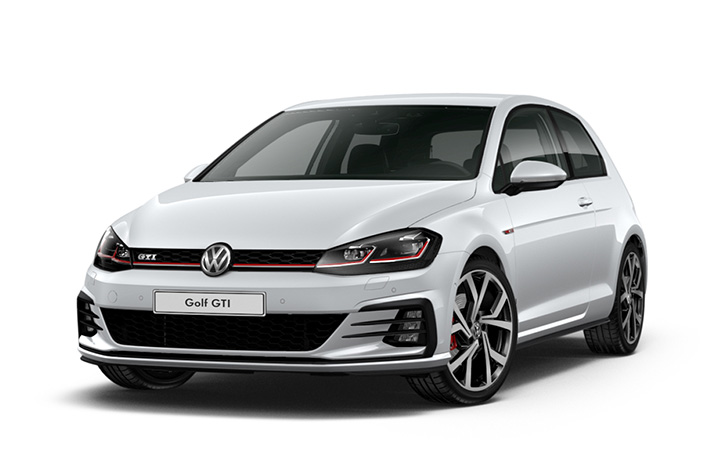
There’s also a locking differential between the front axles and a bigger brake package peeking through the 19-inch alloys. LED tail-lamps, privacy glass and honeycomb-pattern microfleece/leatherette upholstery round out the rest of the visual changes, while standard gear includes active cruise control, lane keep assist, dynamic light assist, blind spot monitoring and VW’s Active Info Display.
Each one will also come with a $340 merch pack that includes a sport bag, umbrella, beach towel and other VW-branded gear.
Pricing for the Volkswagen Golf GTI Performance Edition 1 will be announced next week.
Isuzu Ute Australia’s lack of pretension with its ute and 7-seat SUV offering has served it well to date. Often seen as the robust, value driven choice albeit with a mundane image.
The spirit of truck tag line that was formerly part of the brands marketing angle cut both ways with the MU-X. The 3 litre 4J engine was indeed a tough, reliable cookie with a loyal following. The downside was that regardless of trim level, the Isuzu SUV sounded very much like a truck from behind the wheel.
This latest update has added more equipment and refinement across the MU-X range.
Tell Me About This Car
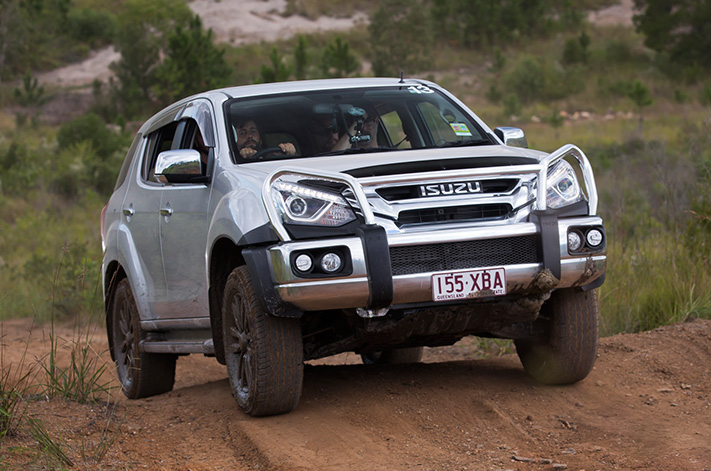
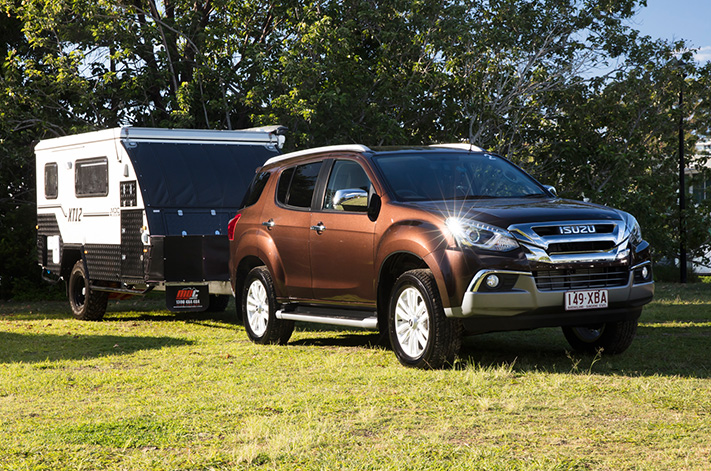
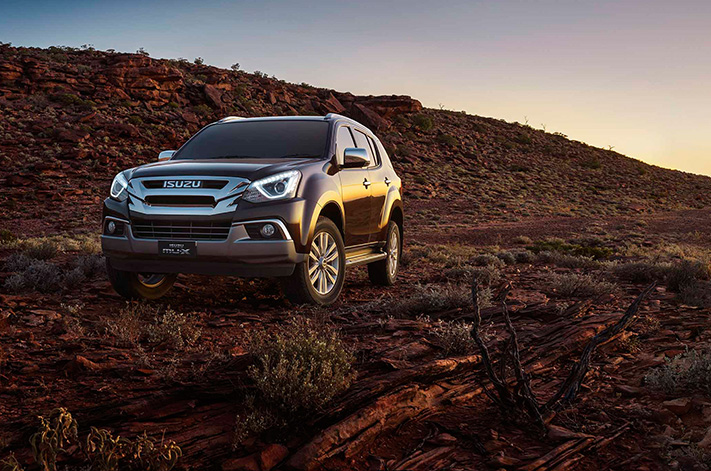
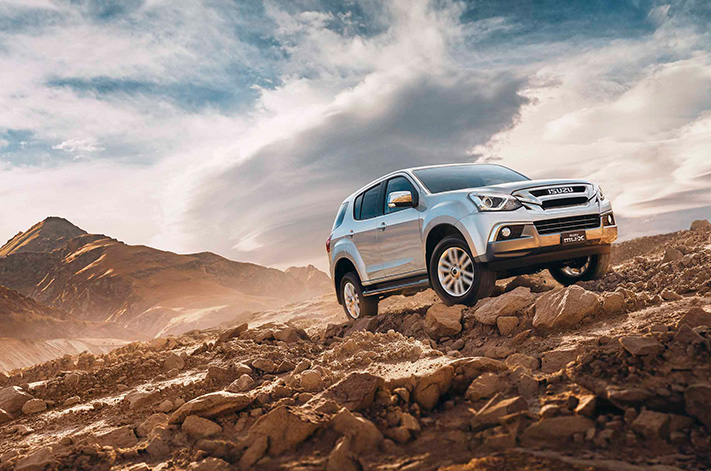
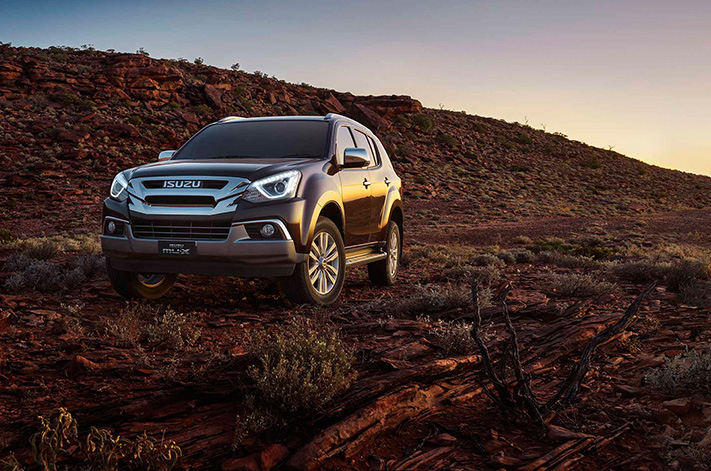
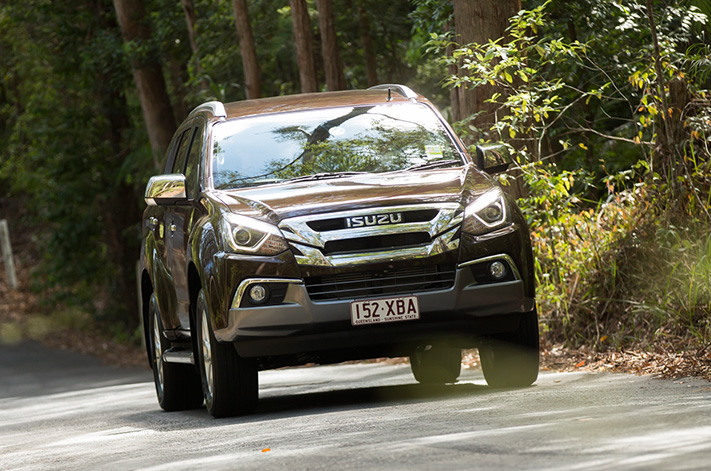
Outwardly little has changed with the MU-X. A new face updates a familiar 7-seat off-road wagon shape. That updated nose now features Bi-LED projector headlights that also use an auto-level feature to keep that brighter headlight beam off the windscreens of oncoming traffic.
A new Havana brown colour has been added to the option list as well as new 18-inch alloy wheels for LS-U and LS-T models. LS-M models also get new look 16-inch alloys.
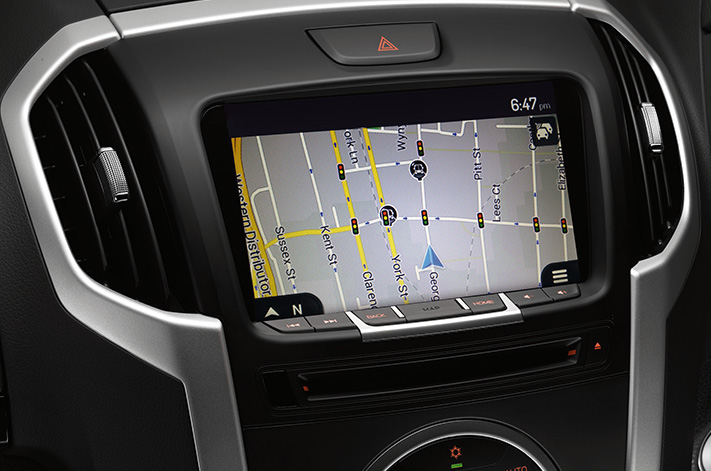
Inside, the formerly quite commercial look of the MU-X cockpit has been made- over with the addition of soft materials over much of the dash area. LS-U and LS-T models now get a Satnav equipped 8-inch touch screen multi-media unit while the LS-M gets a 7-inch screen. All models now feature Reversing camera and parking sensors are standard across the MU-X range.
The most significant changes have taken place out of sight. More insulation has been added in an effort to minimize driveline chatter. The 3 litre turbo diesel engine still makes 130kW of power but now makes 430Nm of torque. Transmission choice is between a 6-speed auto or 6-speed manual.
Strengths
- The almost bulletproof 3 litre engine used in both the MU-X SUV and the D-MAX ute has plenty of runs on the board locally in in terms of reliability. It’s also been successfully used in the Australian Isuzu truck line up since 2011.
- As an automatic proposition the new 6-speed Aisin auto is a solid performer. This gearbox makes the most of the relatively large engine out front when towing in hilly country yet remains a smooth if unsophisticated performer around town.
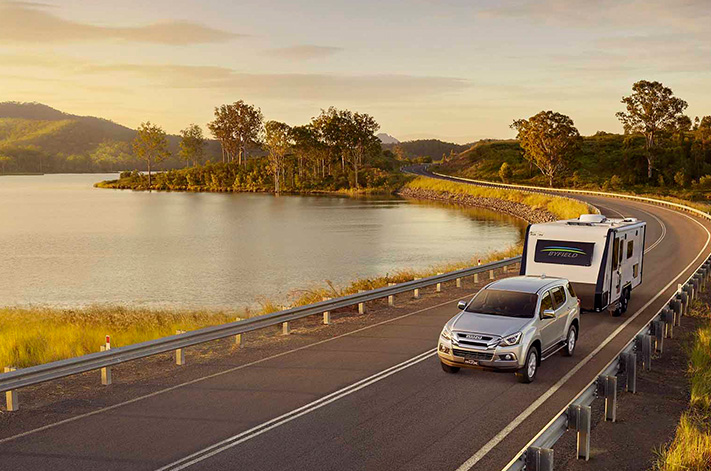
- More torque from lower revs makes the MU-X an easy, unstressed drive even with a heavy trailer on board.
- Isuzu Ute consistently tops the charts in terms of customer satisfaction. This is nothing to be sneezed at in this day and age when customers of some brands have been forced to air their vehicle grievances on social media to get their attention.
- A respectable list of standard equipment sees the MU-X equipped with hill start assist, hill descent control (even on 2wd models), reverse camera and parking sensors regardless of trim level.
- At $52,990 drive away for the top of the range LS-T the MU-X makes a pretty convincing value statement as a kiddy hauler, bush bashing weekender and tow vehicle.
Weaknesses
- Some 7 layers of insulation have been added to the interior yet it still sounds like a truck. Where other manufacturers in this segment offer smaller, mechanically sophisticated drivelines the MU-X can sound and feel a bit old school on the road.
- The brand’s rather conservative approach to styling and equipment means that unless you order the new Havana brown colour you will most likely lose in a car park.
- Enduring constant comparisons with the Holden Colorado/Trailblazer. While the two share a basic platform they are mechanically completely different. The MU-X is the kid that studied hard and got an engineering degree and a respectable job. The Trailblazer is the kid that joined a rock band, got a drug habit went to rehab and now sells soy candles at the local craft market.
Any Rivals I Should Consider?
Toyota Fortuner, Mitsubishi Pajero Sport, Ford Everest.
May 1 will always be a sad day for motorsport fans, as it marks the anniversary of the death of Ayrton Senna da Silva, arguably the greatest driver of all time.
Senna was killed in an accident during the 1994 San Marino Grand Prix when his Williams left the road at high speed and slammed into the wall at the infamous Tamburello corner. It was a horror weekend for F1, with Austrian Roland Ratzenberger killed in an accident the day prior, and a start line crash injuring spectators.
As tragic as the events were, the anniversary always provides an opportunity to celebrate the immense talent of the Brazilian three-time world champion.
The above footage is an excerpt from the Racing Is In My Blood documentary from 1997, which while overshadowed by the excellent Senna documentary from 2010, provides possibly an even greater insight into the man himself.
Senna’s connection to the Honda NSX is sometimes overstated, however he definitely did drive the car and provide engineering input. And he drove it hard, with the footage above showing Senna right on the ragged edge in the iconic Japanese supercar.
Amusingly, his driving technique wouldn’t win him too many fans among instructors – sitting miles from the wheel, with his hands wrapped entirely around it at the 10-to-2 position – but when you have a feel for the car like Senna you can sit however you like.
It’s a lesser-known video than the one below, which shows Senna’s heel-and-toe technique while wearing a pair of stylish loafers, also filmed behind the wheel of a Honda NSX at Suzuka.
An engine torque increase, new six-speed transmission and a more refined interior are the leading points to the updated Isuzu MU-X.
WHAT IS IT The MU-X is a body-on-chassis, five-door, seven-seat 4-wheel drive wagon and one of only two products in the Isuzu Ute Australia model range, the other being the D-Max ute on which the MU-X’s ladder chassis is based. The MU-X is available in three 4×2 variants and five 4×4 variants over three specification levels priced from $42,800 for the LS-M 4×2 auto, to $56,800 for the LS-T 4×4 automatic.
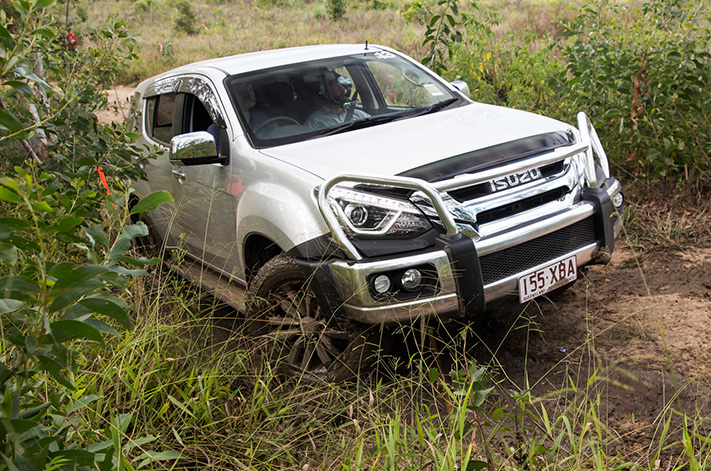
The MU-X has just received the second of two updates for 2017. The first came back in February and centered on the powertrain with updates to the 3.0-liter turbo diesel four to make it Euro5 compliant and increase torque, while also bringing new six-speed auto and manual transmissions.
This 2017 update brings new front and rear end styling, softer interior touch points, and reduced engine noise transmission to the cabin.
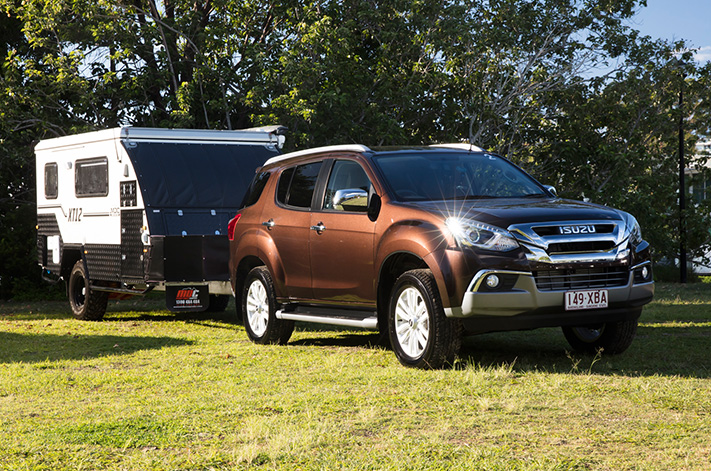
Competitors are lining up in the seven-seat SUV segment but not all of them offer the true off road performance and towing capacity that the MU-X has. Those that do include ute-based wagons such as the Mitsubishi Pajero Sport, Holden Trailblazer, Toyota Fortuna, and Ford Everest.
The soft road options generally offer better on-road dynamics and refinement in lieu of off-road ability and include the Mazda CX9, Toyota Kluger, Hyundai Santa Fe, Kia Sorento, and Nissan Pathfinder.
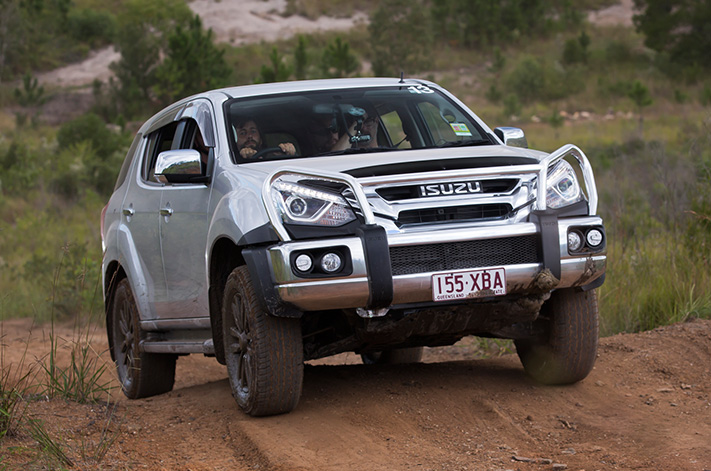
The MU-X has always been popular with buyers looking for a no frills, value for money 4×4 wagon with a healthy towing ability, strong drive train and genuine off-road ability. Sales have grown steadily since its late 2013 launch in Australia, an accomplishment for Isuzu given hefty competition from bigger brands with sizable marketing budgets and extensive dealer networks.
That growth is set to continue with the improvements in torque, interior finish and styling tweaks, while retaining all the values that have already made the MU-X a popular choice.
PROS – Strong 3.0L engine, value for money, interior space, genuine seven-seater, improved audio and navigation integration, 3-tonne towing ability.
CONS – Engine still a bit noisy, lack of a rear differential lock
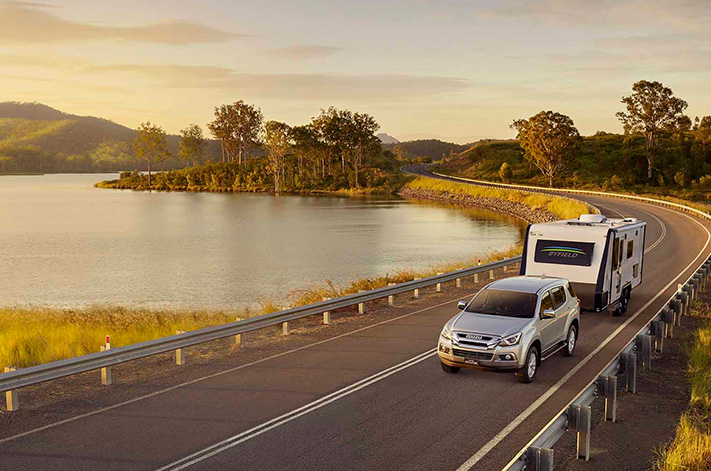
Isuzu is probably better known in Australia as a truck company and it’s that rugged dependability that comes from building trucks that has made it popular in the 4×4 ute and wagon markets.
In fact, Isuzu vehicles formed the basis of Holden Rodeo and Colorado utes and Jackaroo and Frontera wagons long before General Motors decided to part ways, leading to the Isuzu Ute Australia brand launching here in 2008.
The two models in the IUA range have hung on to the simplicity and dependability that the brand is famous for, but with an evolving 1-tonne ute market and competitive SUV segment the company has evolved its products by adding features and refinements to both the D-Max and MU-X vehicles.
The 3.0-liter diesel engine is the only choice in both models and in these days of shrinking capacities, is on the larger side of engines in this class. And that’s not a bad thing.
Durability and economy are also its strong-points with owners who are proud of years of faultless service and moderate fuel use, even when towing large trailers. The official combined fuel consumption figure drops as low as 7.9L/100km depending on the variant chosen and remains one of the best in the 4×4 wagon segment.
Part of the good fuel number can be attributed to the new 6-speed auto transmission from Aisin. Not only does it allow the engine to do its best regardless of the terrain, but also makes touring more relaxed and comfortable. On our highway drive it was never found hunting between the top ratios, even with a 3-tonne trailer hooked up behind it.
With that load on the tow bar the engine is still quite vocal in the cabin despite the efforts to quieten it down. These extend to updated injectors and additional sound deadening in the firewall, floors, engine bay and at the base of the windscreen. The sound isn’t intrusive but if you were new to a diesel engine then you might find it so.
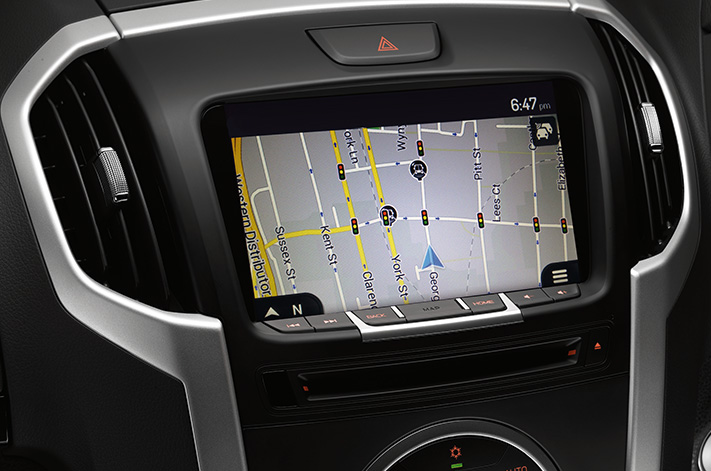
Otherwise, the interior of the updated MU-X is a nice place to ride. There’s a lot less of the hard plastics that the model was criticised for in the past. It has been replaced with soft-touch leather–like trims with new piano black and silver adornments. The MU-X, even in the lower spec levels now has an almost upmarket feel to its cabin.
The leather seats in the top of the range LS-T have a quilted design that adds to the quality feel along with a drop-down DVD player/screen for rear seat passengers. If you are one to need the third row seat, then rest assured the MU-X’s is one of the better ones available. Able to seat adults for short trips and children for longer rides, it is a usable seat that folds flat in to the floor when not in use.
The MU-X’s 4-wheel drive system is also the real deal featuring 2-wheel drive for regular on road use as well as 4-wheel drive with low range. The system is supplemented by electronic traction control but is lacking a rear differential lock that many of its competitors come with. Past tests of the MU-X have shown that it could do with a diff locker, however this launch drive didn’t give us the challenging off road terrain necessary to test it again.
Add in a five-year/130,000km warranty, five year roadside assistance and five-year/50,000km capped price servicing and the package looks even better, although we would like to see IUA back its proven reliability with unlimited kilometres on its warranty.
Capped price servicing for the first five years means that the cost for the regular servicing shouldn’t cost any more than $1500 in total. This all adds to the strong value-for-money argument that makes the LU-X the most appealing choice.
Model: Isuzu MU-X Engine: 2999cc inline 4-cyl, dohc, 16v diesel Max power: 130kW @ 6000rpm Max torque: 430Nm @2000-2200rpm Transmission: 6-speed auto or manual Weight: 1992 – 2095kg Economy: 7.9-8.1L/100km Price: from $42,000 On sale: Now
Isuzu MU-X Price List Trans RRP inc. GST
4 x 2 LS-M auto $42,800 4 x 2 LS-U auto $45,100 4 x 2 LS-T auto $48,800 4 x 4 LS-M man $48,000 4 x 4 LS-M auto $50,100 4 x 4 LS-U man $50,300 4 x 4 LS-U auto $52,400 4 x 4 LS-T auto $56,100
