
IT DAWNS on me that Villeneuve, father of 1997 world champion Jacques, is now to most people a Clark, a Castellotti or an Ascari; the semi-familiar name of some distant, dead driver.
First published in the April 2017 issue of Wheels magazine, Australia’s most experienced and most trusted car magazine since 1953.
The month of May also means it’s been 15 years – Jesus – since I made a pilgrimage to the Belgian circuit on the very day, May 8, of the 20th anniversary.
I wrote a story about that, which a couple of friends still say is the best thing I’ve ever written. If you haven’t read it, and know nothing – or even everything – about Gilles, do me the honour at wheelsmag.com.au.
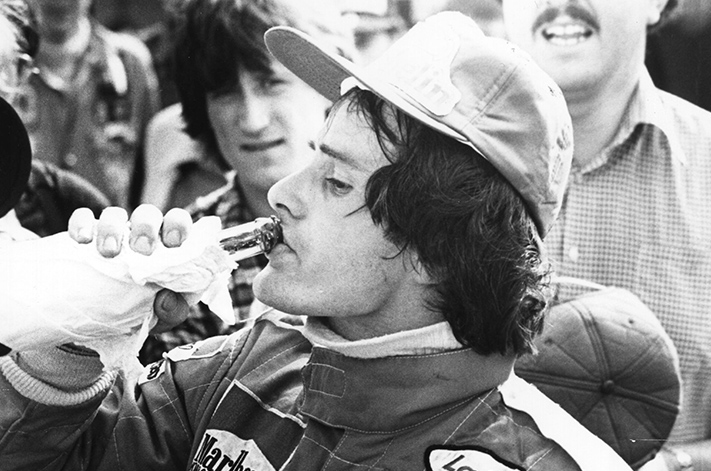
Well, at least my part in it.
On that day of the 20th anniversary, I met a new friend. Armand, a Dutchman three years younger than me, was the only other person there.
Armand had been at Zolder in 1982 on the Friday, watching his hero in practice. But he’d missed Saturday’s fateful qualifying.
Armand had returned to the Terlamenbocht corner at 1.52pm on every fifth anniversary.
Bernie Ecclestone: The Mysterious Mr. E
There had never been anyone else there, until I showed up.
As I’d written 15 years ago, the trip to Zolder turned out to be a celebration of a unique life: our own. Armand and I stayed in touch, emailing every May 8.
I wrote about him in this column five years ago, when he bought a Goodyear racing slick purported to have been used on Gilles’ 126C2 at Zolder. I was able to help him get his tyre’s cryptic crayon markings verified.
By then, we already shared something special of Gilles. In 2007, Armand had gone as usual to Zolder on May 8 and was sad to find the place locked.
He crawled under a fence and, as usual, went to Terlamenbocht.
In the forest there, he inspected the modest marble plaque that had been mounted there in 1982 by a local stonemason.
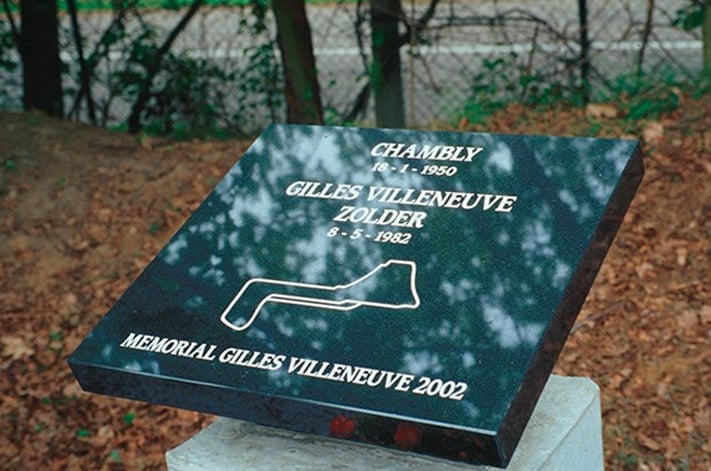
Five years later, Armand found just one large corner of it remaining … and decided to rescue it.
His first thought was to send it to the Musee Gilles Villeneuve, in the Canadian driver’s home town of Berthierville.
But he wanted my opinion on another idea: “I want you to have a piece of it, and the other part, I will put it in a special place in our house … Nobody else takes any interest in the plaque and it will be in the hands of two real Gilles fans.”
And so, in our opposite hemispheres, we each held our piece of the plaque.
In 2013, Armand made his first visit to Canada. We agreed that the plaque pieces should be reunited and preserved at the museum. After a selfish six years, I packaged my sticky-taped segment and sent it to Berthierville.

But last week he wrote to me.
Armand spent most of 2016 recovering from surgery for a brain tumour. He’s in a new relationship, his 13-year-old son is already taller than he is, and we now have Max Verstappen and Daniel Ricciardo to argue over.
I’m celebrating my friend’s unique life and the fact that he’s in mine.
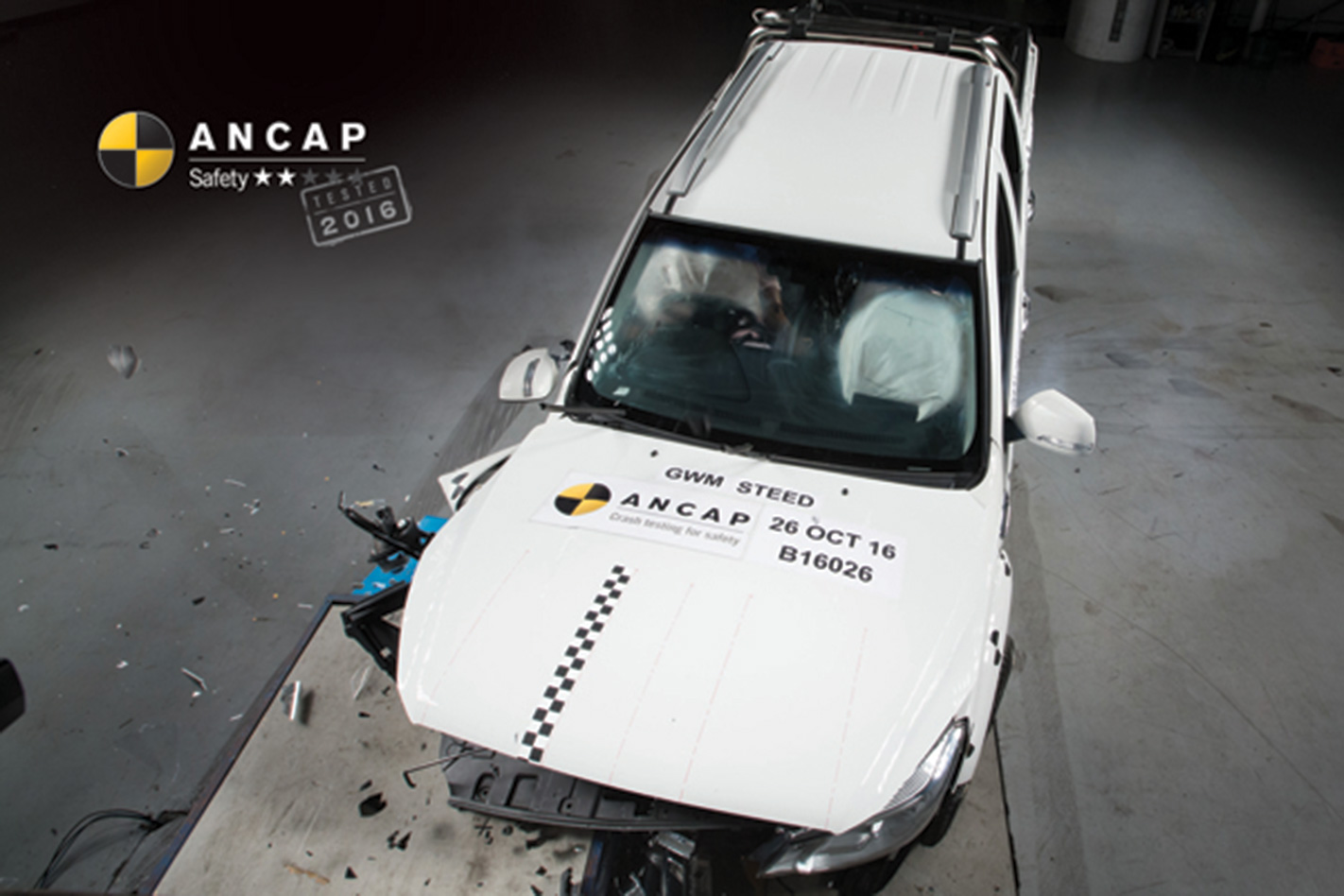
THE Ford Mustang now has some company on the independently assessed list of Australia’s worst cars for crash performance. The Great Wall Steed hasn’t lived up to the glory of its name, earning a shock two-star rating from the Australasian New Car Assessment Program (ANCAP).
According to ANCAP, the underpinnings of the Steed “differ little to that of the previous-generation dual-cab ute which carried the V240 model name”, lowering it to the level of Ford’s similarly equine-themed performance coupe.
The poor result was despite Great Walls’ claims the ute was “all-new” and offered “outstanding levels of performance, value, safety and comfort”, ANCAP said.
“This is a disappointing result for consumers and the brand,” ANCAP chief executive James Goodwin said.
Great Wall Motors, which is trying to rebuild itself after something of a false start on the Australian market, defended ANCAP’s claims. Spokesman Andrew Ellis said the brand’s Australian distributor had “sent all the data to our engineering team in head office and set up a response team to investigate what needs to be done to improve the ANCAP performance of our product”.
“We thought the additional safety features would help improve the Steed’s ANCAP rating. It’s clear to everyone in the organisation our ANCAP test standards need a dramatic improvement,” he said.
ANCAP rated the Great Wall Steed at 16.49 out of a potential 37 points for its part in the bits of the crash testing in which the vehicle was eligible to take part – it decided to not test the Steed for pedestrian protection “due to its poor performance in the frontal offset test”.
No overall ANCAP score was given for the V8-engined Mustang, but it was marked down for poor passenger and child protection, and the lack of driver safety aids such as automatic emergency braking.
The Great Wall Steed, however, had engineering problems that dragged down its overall score. That included a firewall that deformed, footwell panels that split open, and a steering column and dash that increased the risk of knee injuries.
The Steed joins the Mustang on ANCAP’s bottom rung as one of the lowest-rating cars for crash safety on sale in Australia, along with the Indian-made Tata Xenon trade ute and the Chinese-made LDV V80 van. The previous-generation, petrol-engined Great Wall Motors V240 was rated two stars out of five for crash performance.
According to ANCAP, a two star-rated car carries a “high risk of serious injury or death resulting from injury to the head and right leg of the driver” that “are likely to be serious and life threatening”, as well as exposing the front-seat passenger to a higher risk of “exposure to serious injury or death”.
Chinese ute maker Foton received a three-star rating in 2012 for its dual-cab ute after it achieved a score that is higher than the Great Wall’s. It also lacks the same driver-assist systems as the Great Wall Steed, but its engineering appears to hold up to ANCAP’s crash test regime, according to the official report.
The sale of Opel shows how little sway Holden has within the walls of General Motors’ towering Detroit headquarters.
It’s startling to learn that the first Holden knew of the Opel sale was when press releases were issued from GM and PSA (parent company of Peugeot and Citroen).
Within weeks, the deal to offload the company that became part of GM in 1931 – the same year as Holden – was done, throwing up dozens of internal questions Holden is still desperately trying to answer.
Key to Holden’s reduced impact within GM is its loss of manufacturing. For 69 years Holden forged its identity by creating cars Aussies wanted.
The key to any customer getting exactly what they want is scale, something Holden doesn’t have much of.
Consequently, it’s rare for any Australian importer to call the shots on a global car. (Something like the Toyota LandCruiser is an exception. Australia is the single biggest customer, so Japan listens.)
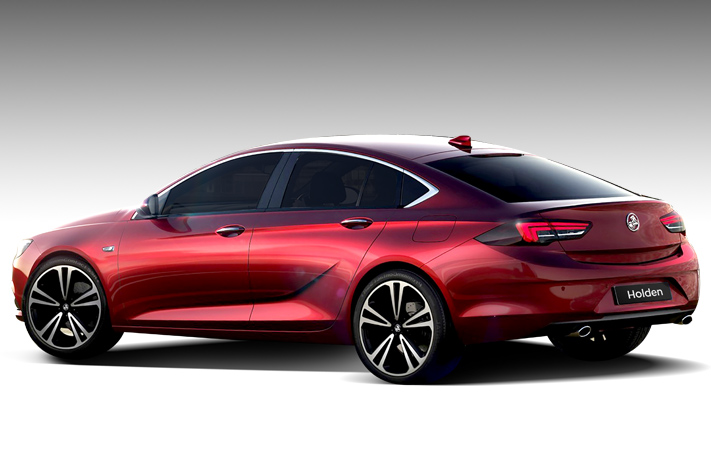
Another point of contention is how GM – and, therefore, Holden – will get the European tuning and tastes our market loves. GM will lose a load of European engineering and design talent with the sale of Opel, including those who created the 2018 Commodore.
And what for Holden, longer term? Could it also be sold? It’s a logical question, but we reckon such a move is unlikely. Holden is a well-established Australian brand, but without a manufacturing base, it’s poised to be just another importer struggling against a declining market share. I can’t see anyone rushing in to buy that.
INFINITI, the luxury division of global carmaking giant Nissan, has flagged plans to introduce an engine that can change its compression ratio on the fly, transforming it from a fuel-sipping miser to a performance powerhaus.
WHAT IS IT? It’s the most radical rethink of the four-stroke engine since its advent.
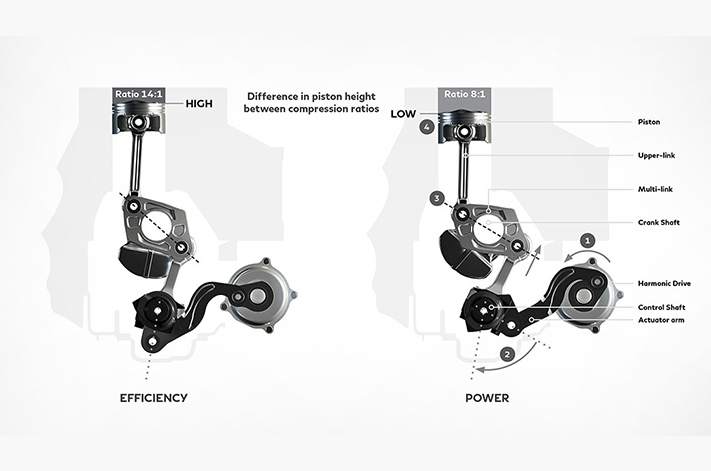
Infiniti’s variable compression turbo (VCT) removes the power vs efficiency compromise with its revolutionary ability to offer any compression ratio between a low of 8:1 (for higher output) and a high of 14:1 (for greater efficiency).
More than 100 prototypes were built over 20 years. It may look ostensibly like a regular four-cylinder, but it isn’t.
WHY DOES IT MATTER? Conventional engines squash fuel and air at a fixed volume and have relatively limited flexibility.
This system can favour performance or economy based on driver input. Infiniti is the first to productionise an engine with this capability.
Others have tried (GM, Volvo, PSA, Renault, Saab…) and failed. The brand says its 200kW/390Nm 2.0-litre VCT engine uses 27 percent less fuel than the similarly powerful 3.5-litre V6 it replaces.
HOW DOES IT WORK? Variable compression is achieved by changing the height of the piston at the uppermost point of its stroke.
A conventional crankshaft is used, but each connecting rod and piston attaches to its own multi-link, which rotates with the crank.
2017 Infiniti Q60S Red Sport review
On the other side of each link sits a lower arm to control the link’s orientation. That arm determines the final height of the piston by pivoting the multi-link.
The higher the piston’s final position, the more it compresses the mixture in the combustion chamber.
At low compression, more boost is fed from the turbo to deliver greater performance. At high compression the engine will run on the Atkinson cycle and achieve optimal fuel efficiency. It’s the best of both worlds.
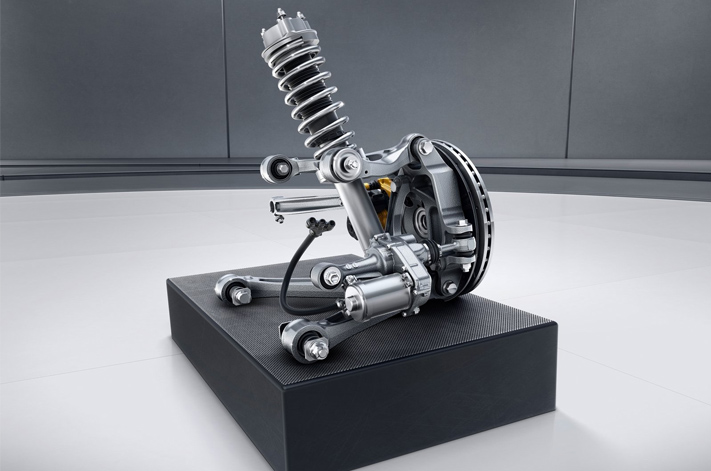
NOWADAYS four-wheel steering (4WS) is one of the techie spec highlights in an array of mostly Euro premium hotshots like the BMW 5 Series, Porsche 911 Turbo, Mercedes-AMG GT R (its system pictured below) and even the Renault Megane GT.
But it was during the halcyon days of 1980s Japan – predictably enough – where this system first came to prominence in production vehicles.
BMW M to dump dual-clutches, go auto-only within a decade
And it was the impossibly low-cowled third-gen Honda Prelude Si 4WS that was first to market in Australia towards the end of 1987, sweeping our Car of the Year award just a few weeks later.
The sporty 2+2 seater coupe featured rear wheels that turned only about one-fifth of the angle of the front ones via a mechanical rotating shaft that ran from the rack and pinion front to the rear steering box. At small angles, all wheels faced the same way for added high-speed stability, but applying more lock saw the rears switch progressively in the opposite direction by up to five degrees.
– Byron Mathioudakis
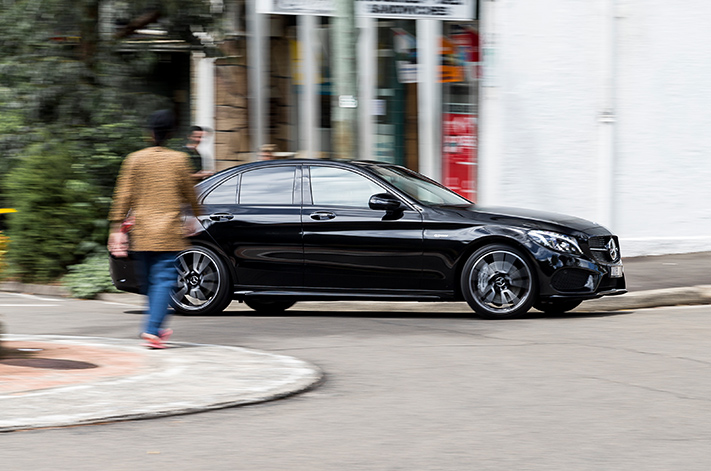
When it comes to powerful luxury sedans, just how much do you really lose by stepping down to the circa-$100K zone? Do the Audi S4 quattro and Mercedes-AMG C43 4matic sit forever in the shadow of the heavier-hitting Alfa Romeo Giulia QV, BMW M3 and Mercedes-AMG C63, or are they plenty of car for most people, most of the time?
It’s handy that the S4 and C43 have ample design distinctions both inside and out, because if they were debadged and styled like whitegoods, you may initially struggle to tell them apart. They’re dimensionally close, both run 3.0-litre V6 engines fed by turbochargers; two for the AMG, one twin-scroll unit nestled between the cylinder banks in the S4.
Both use torque-converter autos; the Audi with eight ratios, the AMG nine. Both drive all-four wheels and are capable of sending the bulk of their torque rearward. Both are lavishly equipped and both ooze ample driver appeal.
The AMG lands a few early shots with an even richer specification – sunroof, power column steering adjustment, power bootlid – but the Audi counters with better-sounding (optional) Bang & Olufsen audio and Virtual Cockpit instruments.
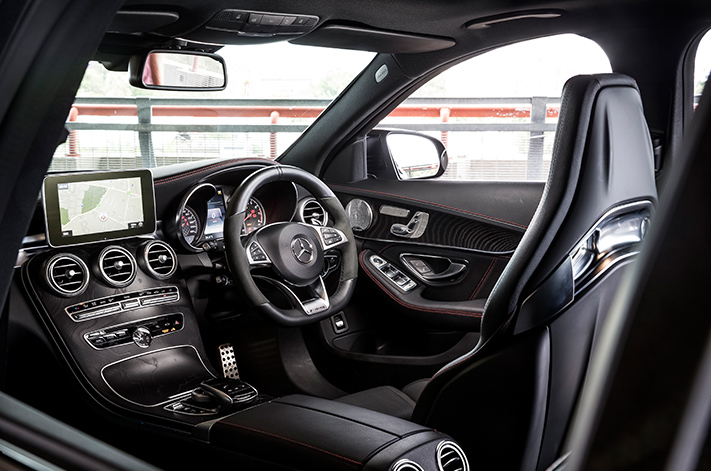
You’ll need to hit the options list to get either of them looking as you see them here, though – the AMG soaked up around $9K in paint, seats and performance exhaust, for a total of $110,000, while the Audi came in at $116,000 with paint, audio, extra tech and flashier trim. You’ll also want the optional sports differential ($2950) in the S4, as it can send bulk torque to an individual rear wheel and brings a more pivotal, adjustable feel from the rear end in hard driving.
Hit some properly challenging roads and you’ll feel the C43 has a bit more suspension compliance than the ultra-firm AMG C63 S, but its comfort setting still doesn’t cut your butt much slack. You get the sense that the chassis engineer who deemed the ‘comfort’ setting truly comfortable may sleep on a granite mattress. Big expansion joints still thump and slap, while rough roads can bring audible protests through the structure and dash.
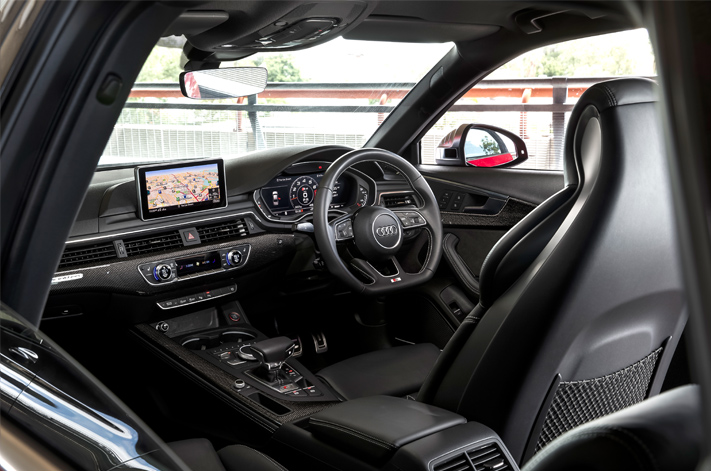
The S4 instantly feels more supple and pliant, but more than that, it breathes better with the road, and instantly contrasts with the slight restlessness of the C43’s chassis. In lots of ways, this first impression of composure and machine-edged precision is a pointer to the core differences in character between the two cars: the Audi is ultra-refined and polished; the AMG has a bit more mongrel in its genes.
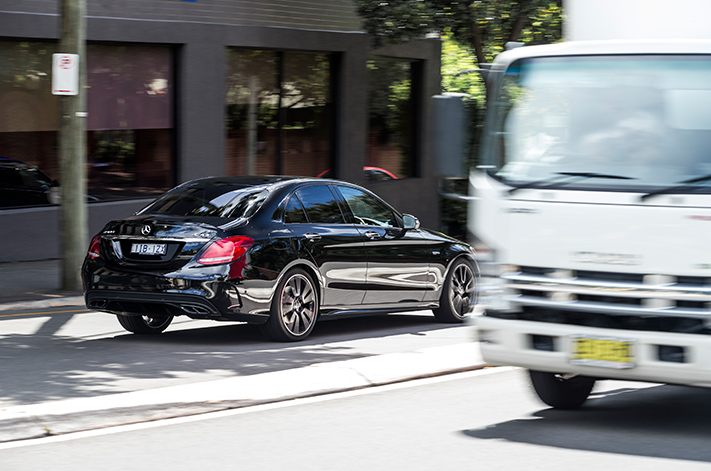
You know it from the moment you stick the Benz in its most aggro Sport+ setting (there’s no Race mode like there is in the C63), allowing the V6 to dig in early, and hammer through the mid-range. Up top, it has a keenness that the Audi can’t quite match. You get the light-artillery sound effects on over-run, too – a touch contrived perhaps, but who doesn’t like the percussive barrage of distant mortar shells from an AMG exhaust?
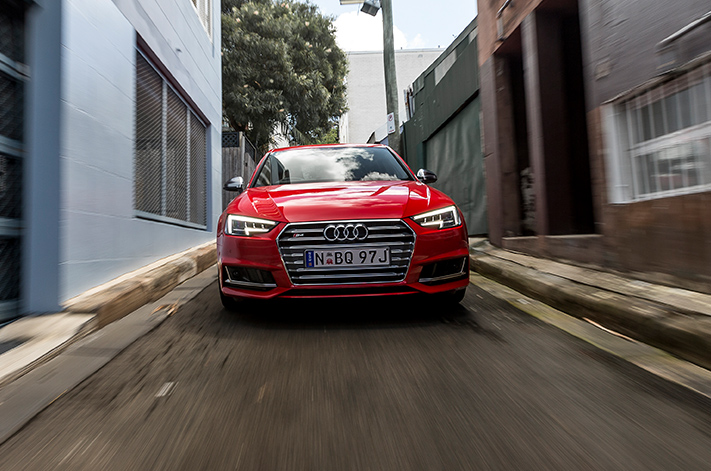
Anyone with fond memories of the previous- generation S4’s supercharged V6 may find the new turbo V6 a touch anodyne, and maybe a little uninspiring near the redline, but the reality is it makes more torque and a bit more power than the old blown unit, and is actually a really lovely thing to slip behind regardless of conditions.
Like the Alfa, the S4 is happy to adopt stealth mode, gliding along with little apparent effort, the exhaust switched to deliver a distant, contented hum; wind and road noise set firmly to mute.
It’s this part of the Audi’s character that actually starts to win your affections, especially ensconced in the designer-cool cabin, all sleek surfaces, quilted stitching, and glossy carbonfibre. Its steering, too, is less try-hard than the AMG – not as quick in terms of turns lock-to-lock, but lighter, pointier, without the overt masculinity the C43 wants to impart.
In terms of outright performance, there’s not a whole lot to split them: both claim 0-100km/h in high fours, both will actually do it in low fives. , but still plenty to keep you in the game, and ample to test the power-down abilities of the respective all-wheel-drive chassis.
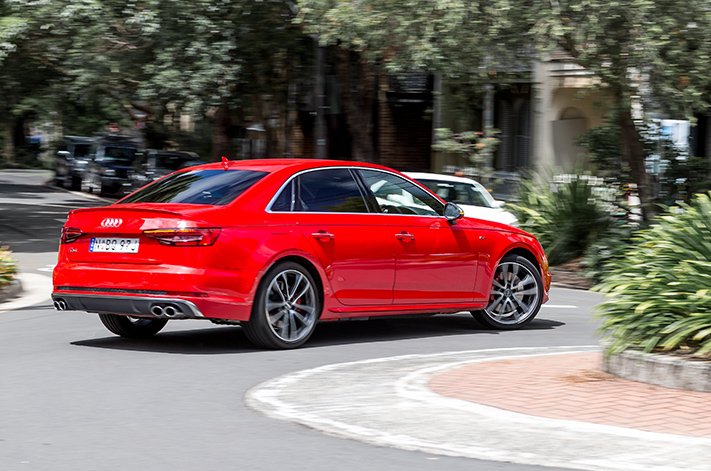
Which is the other area where this pair do their thing differently from cars like the M3 and C63 S. Where those machines goad you to chase the throttle and manage the rear end, this pair encourage you to load the tyres, point and shoot. Tractive, failsafe and damn effective in the wet – but ultimately not as satisfying.
For all their technical similarities, it’s actually refreshing to find there are fundamental character differences between this pair. If you like your sports sedan to be a bit of a brawler, you’ll want the Mercedes-AMG. We lean to towards the all-round athleticism of the Audi, but wouldn’t pick an argument with you – or your AMG – if you went the other way.
First published in the April 2017 issue of Wheels magazine, Australia’s most experienced and most trusted car magazine since 1953.
You knew this was coming. Honda said its new Civic Type R would be the fastest front-driver around the Nürburgring Nordschleife, and lo, it has delivered on that promise with a scorching seven minute, forty-three second lap time.
And it’s not like Honda is without form in this particular competition. The outgoing Civic Type R edged out the mighty Renault Megane RS275 Tropy R to clinch the top slot with a 7:50 lap, which it held for two years until it was beaten by the Volkswagen Golf GTI 40 Years almost 12 months ago.
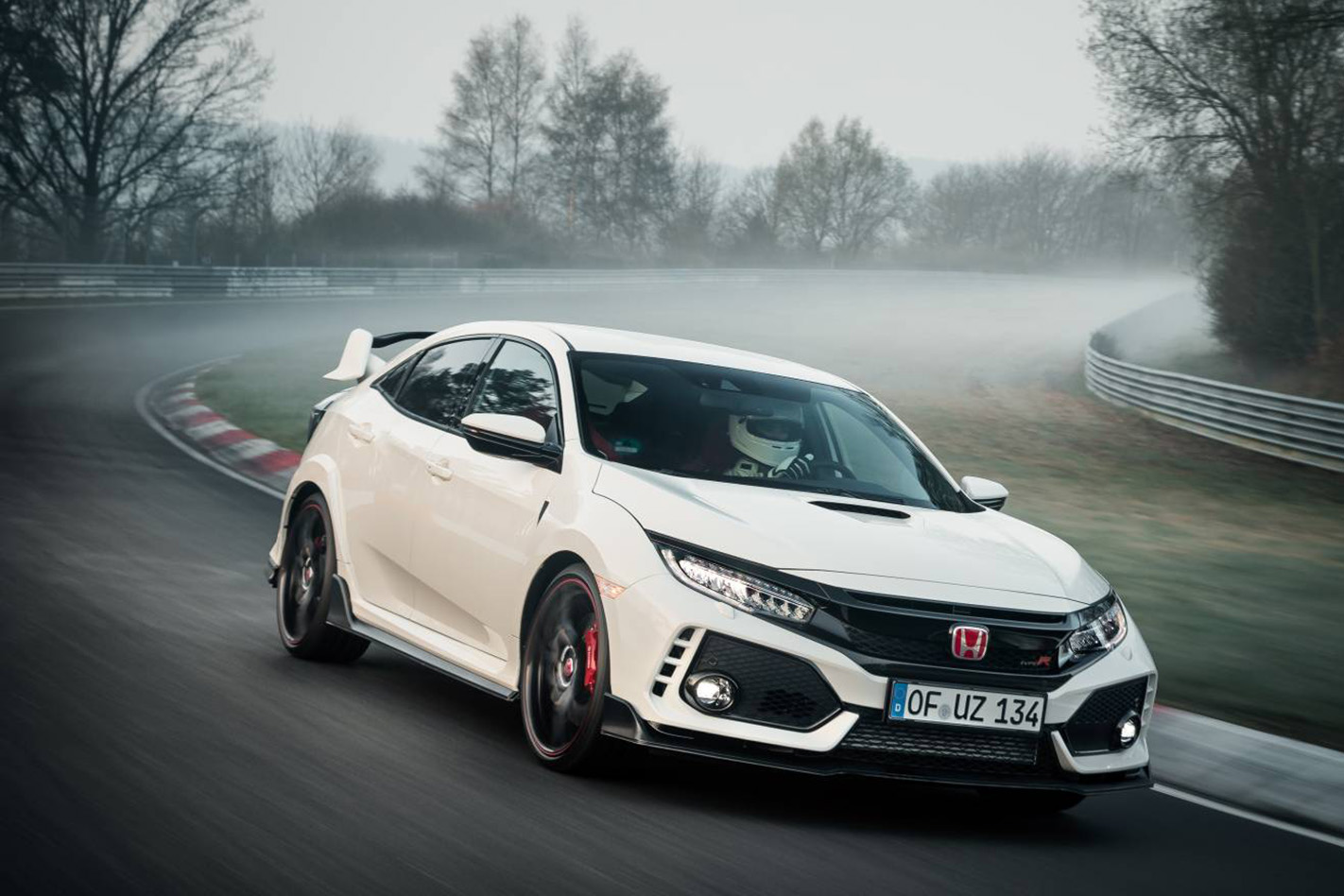
Surprisingly, with 235kW of power and 400Nm the 2018 Civic Type R’s powerplant boasts just three percent more mechanical muscle than its predecessor. That being said, 235kW is still a hell of a lot of oomph for a front-drive hatchback: to put that into perspective, the Golf R has fewer herbs and twice the number of driven wheels.
For its latest Type R, Honda’s engineers focused on improving stability through widening its track width, exploiting the longer wheelbase of the new Civic hatch, and tuning its multi-link rear suspension to improve body control. That big wing at the back also acts like the fletching of an arrow, keeping the rear stable in high speed corners.
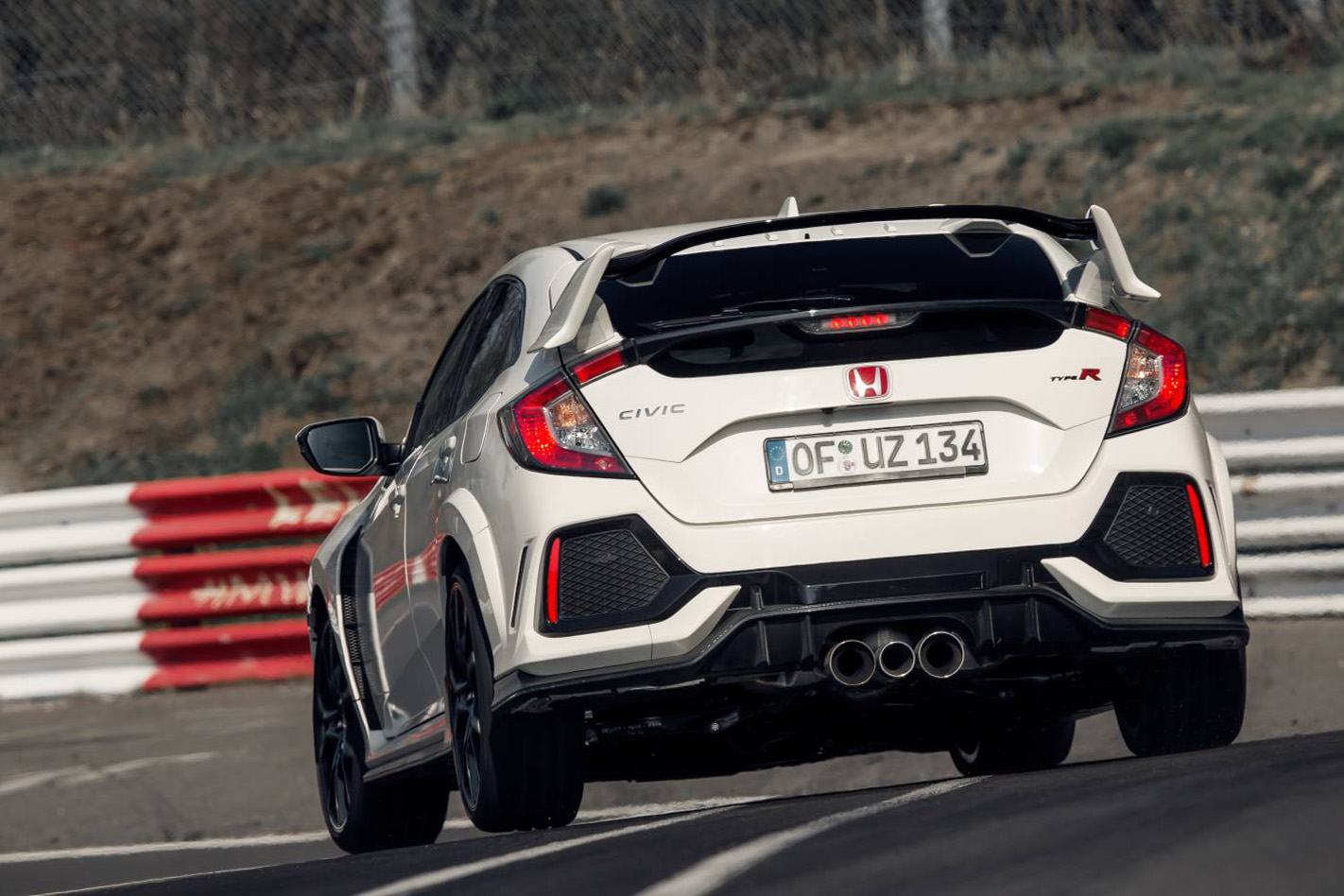
Expect to see the new Civic Type R in local showrooms late this year, with a price tag possibly just under the $50,000 mark.
TELL ME ABOUT THIS CAR
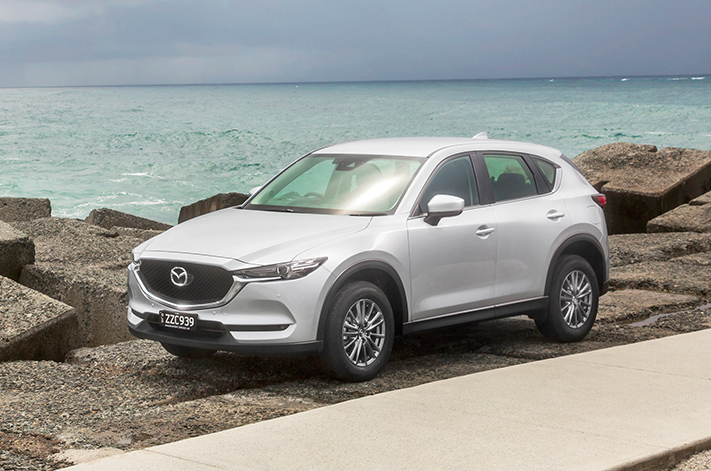
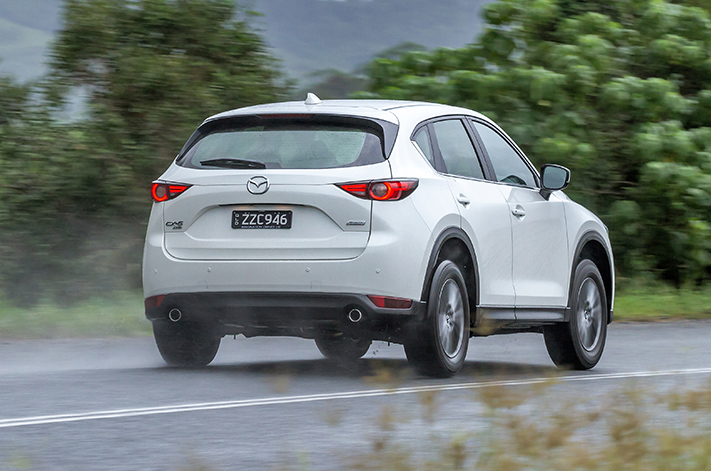
The Mazda CX-5 is the biggest selling SUV in Australia and Mazda has introduced an all-new model with a raft of improvements to bolster that popularity. While the mechanical package is an evolution of the outgoing model, the second-generation CX-5 addresses many of its predecessor’s shortcomings such as road noise and ageing interior.
One level up from the entry level CX-5 Maxx, the Maxx Sport tested here is expected to be one the biggest sellers due to an impressive range of standard features and interior finishes, and a lively powertrain including an economical 2.0-litre four-cylinder petrol engine. We test drove the front-wheel-drive version with six-speed automatic transmission priced from $34,452.
STRENGTHS
- Noise vibration and harshness (NVH) is noticeably reduced compared to the previous model, though it only matches some of its competitors in this regard without setting any new benchmarks.
- It’s a lot more fun to drive than the previous generation CX-5 with dynamic steering, a smooth drivetrain and a Sport mode that isn’t afraid to keep the revs up when needed.
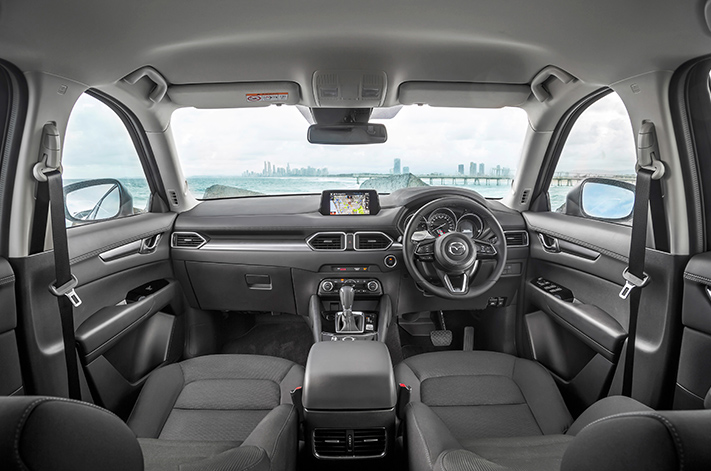
- The dashboard is elegant and clutter free with the tombstone-style infotainment screen that’s already a fixture in other Mazda models. The leather-grain soft-touch plastics and stitching adds to the sophistication.
- Front seats comfort is great, with good back and side support.
- The fold down centre arm rest at the back has a compartment fitted with two USB ports and space to hold a couple of mobile phones. Perfect for gadget-obsessed kids.
- Rear passengers also have their own air vents. And the rear door open almost 90 degrees to make getting in and out easier.
- The parcel shelf lifts all the way up flush with the tailgate so it doesn’t get in the way of bulky items.
- While the exterior isn’t a huge departure from the previous model, the new look is refreshing and includes a Jaguar F-Type-esque mesh grille, sleek LED headlights, and shark fin antenna.
WEAKNESSES
- Ride is a little jostling and the suspension lacks the notable suppleness of the CX-9.
- The rear seat doesn’t offer much in the way of under-thigh support
- The high door line means less outward vision from the rear seats compared to airy competitors such as the Subaru Forester and Volkswagen Tiguan.
- The Maxx Sport FWD doesn’t come with a manual transmission option.
ANY RIVALS I SHOULD CONSIDER
The medium SUV segment is full of well-equipped contenders in the low-$30k price range including the Kia Sportage SLi, Toyota RAV4 GXL, Hyundai Tucson Active X, Subaru Forester, Ford Escape and Volkswagen Tiguan 110TSI Trendline. An all-new Honda CR-V is also due in showrooms soon.
QUESTION – JUDITH (questions asked on: 30/01/2017):
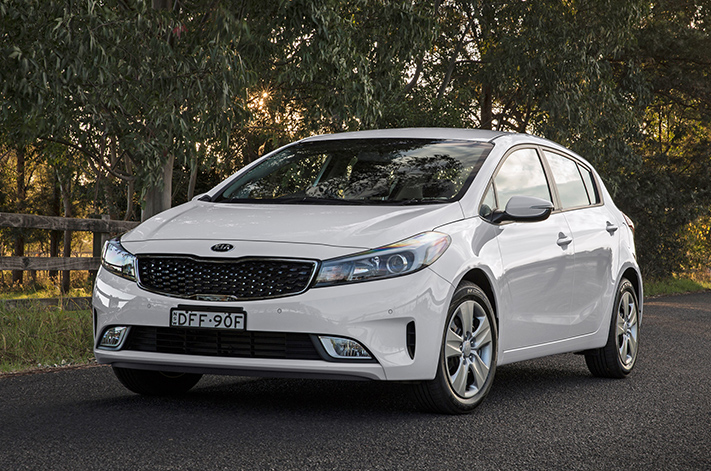
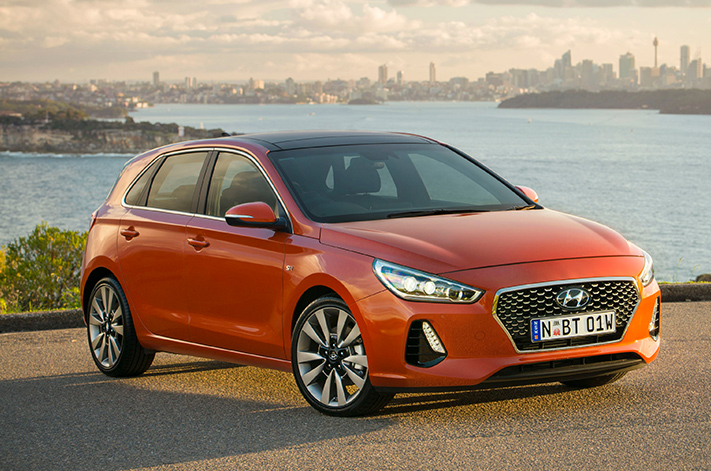
I’m looking at buying a Kia Cerato, Mazda3 or Hyundai i30. Which car offers the best value?
BUDGET:
$25,000
ANSWER – SAMANTHA STEVENS:
The three you have chosen are all fantastic cars, and all have some pros over the other – and not many cons.Our favourite of the three from a driver’s perspective would be the Mazda3. We like the Maxx mid-level specification for value and goodies, but would highly recommend stepping up to the Maxx Safety ($23,890) which gets some attractive features such as keyless start, parking sensors and sat-nav, plus some extra active and passive safety features which add only $1000 to the price and are well worth the spend. Note the servicing intervals are just one year/10,000km and not one year/15,000 like some others, so you will have to factor that into the budget if you do higher kilometres.The Kia Cerato S (AV) 5D Hatchback can be picked up for $22,790, and its seven-year unlimited kilometre warranty and seven-year capped price servicing, plus three year roadside assistance is unbeatable. The AV adds a reversing camera, auto headlights and better-looking wheels for $500, and its safety rating is excellent. It is the best value for your dollar.
THE NEW Honda Civic Type R has taken the front-drive Nurburgring lap record with a blistering 7min 43.8sec lap.
The effort, using a development car in final production specification, and conducted on April 3, beat the existing record holder, the Volkswagen Golf GTI Clubsport S, by just 5.41 seconds – or a slim 0.25sec per kilometre over the 20.81km course. Honda has not stated who the driver was.
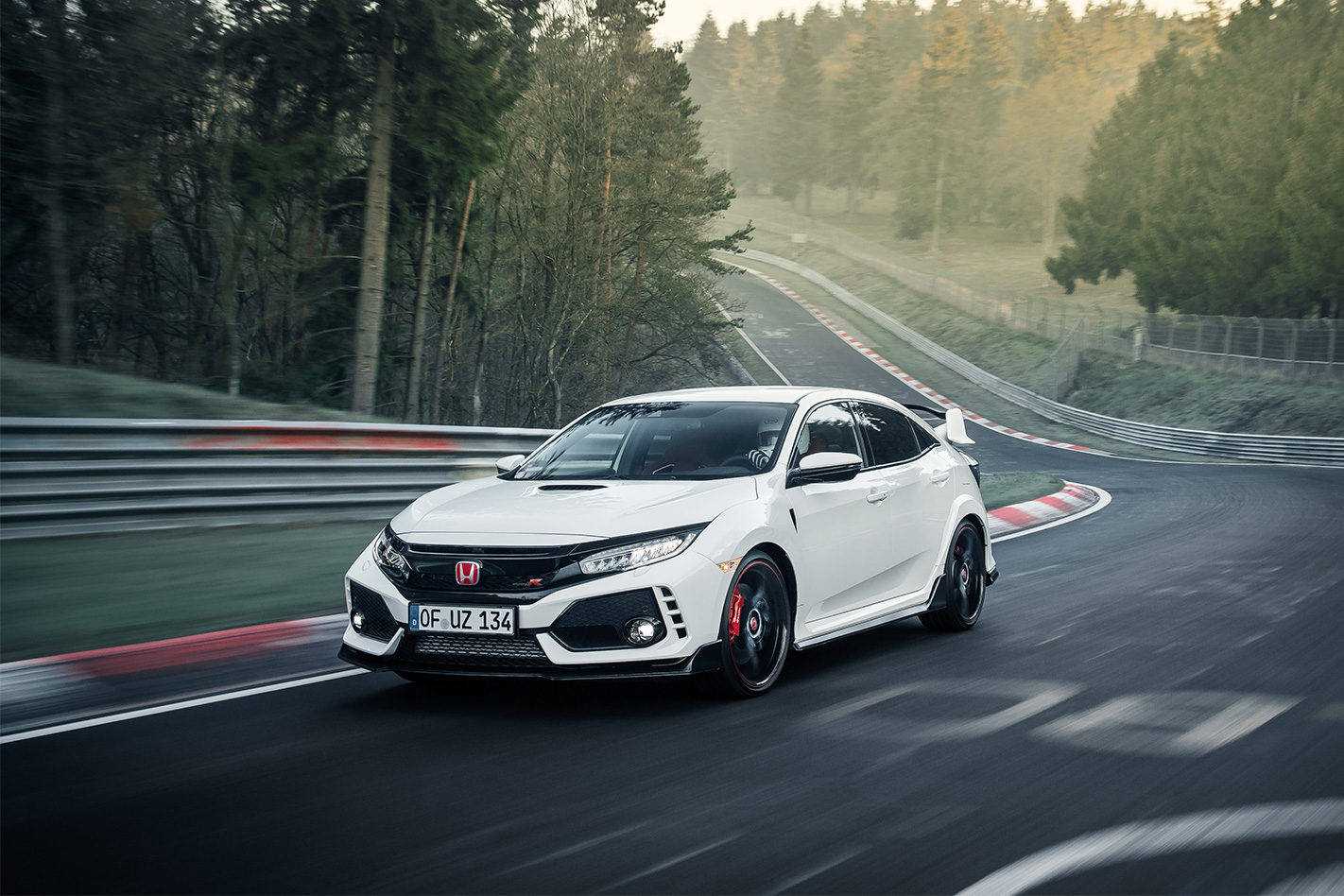
The new Civic Type R’s time was set on a dry track with the temperature optimal for tyre and engine performance, the 2.0-litre VTEC turbo unit belting out 235kW and 400Nm.
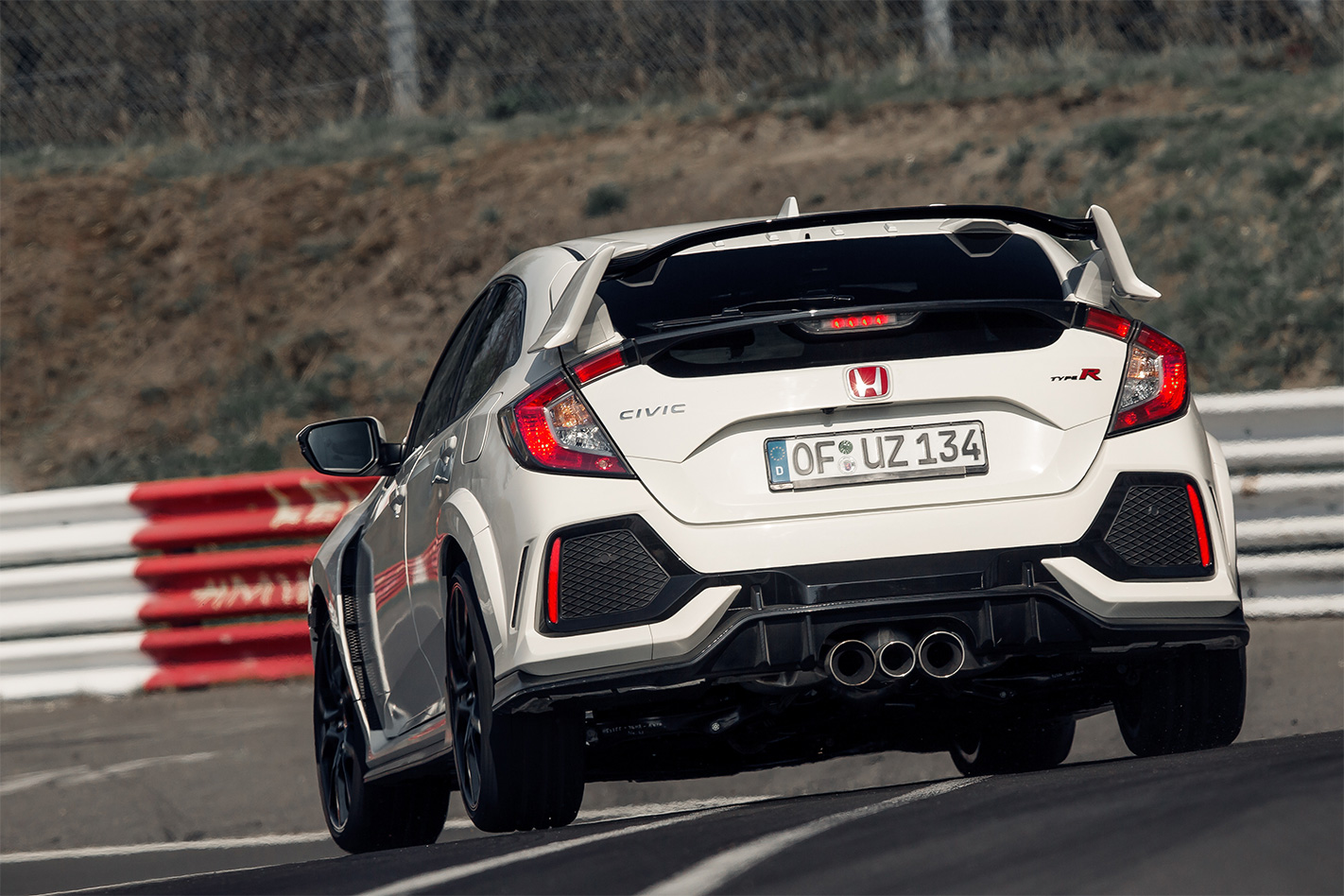
Instead the Japanese brand, which is currently enjoying a resurgence in performance on-road (if not on track), attributed the extra speed to new lower gear ratios, improved aerodynamics for extra high-speed stability, a 16kg lighter body-in-white and brand new multi-link rear suspension.
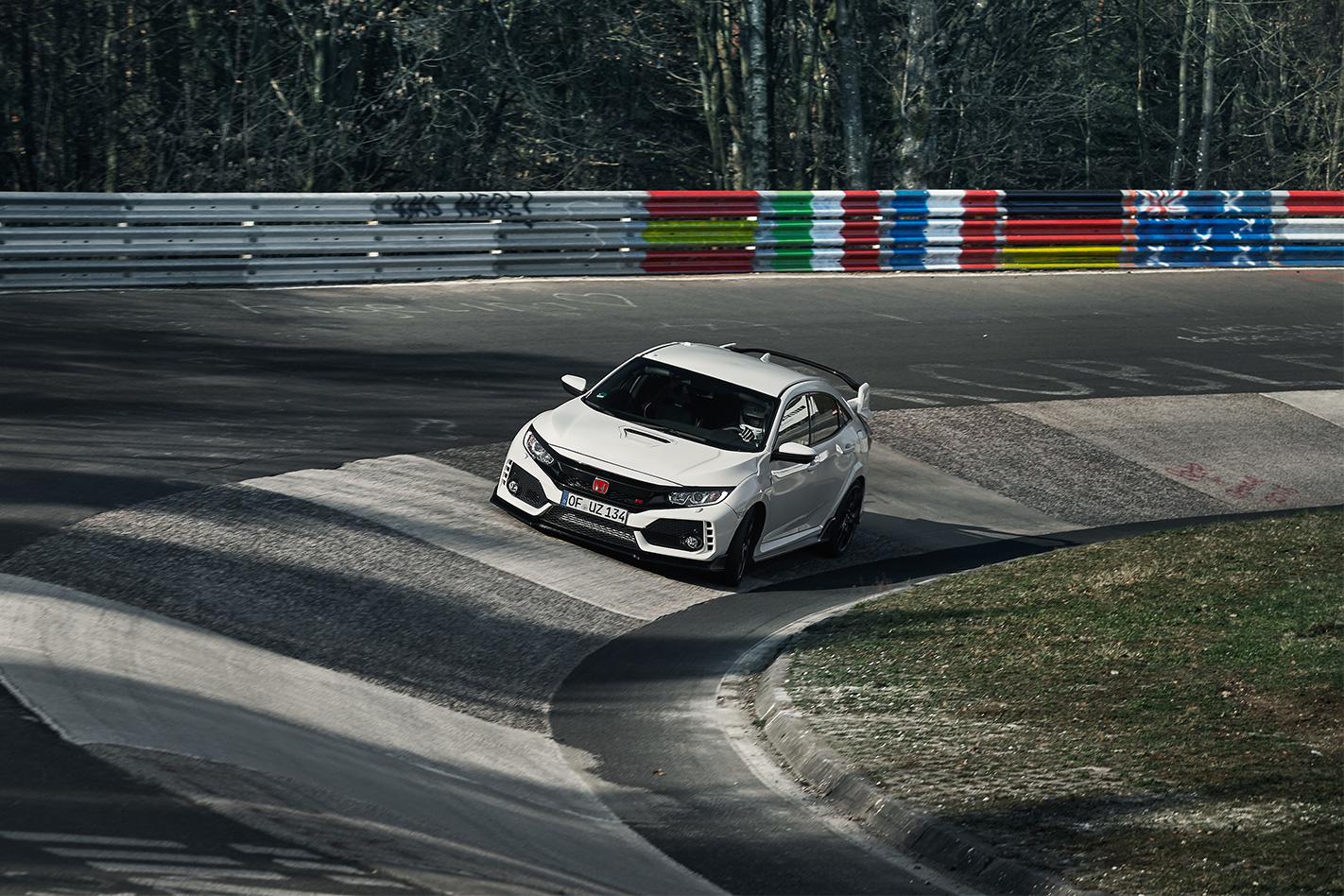
Built in Swindon, UK, the new Honda Civic Type R will go on-sale in Australia later this year for around $50,000. The official Australian price has not yet been released.
SUVs are suddenly hot property, with the jacked up, high-riding wagons now starting to consistently outsell passenger cars in Australia.
But the sports utility vehicles, as they’re known, also carry compromises when compared with a traditional passenger car – you can notice it in the way they drive, and each time you visit a fuel pump.
One of the fastest-growing segments of the new car market in 2017 is mid-size SUVs, led by the likes of the Mazda CX-5, the Toyota Kluger and the Holden Captiva.
However, there’s a host of mid-field players also worthy of attention. Generally, they cut prices by sending drive to the front wheels only, and not all four corners – a trend that has grown across almost all SUV brands.
Here, we’re looking at the $31,090 Hyundai Tucson Active X FWD, one rung up from Hyundai’s entry-level mid-size SUV offering, and the entry-level Mitsubishi Outlander LS fitted with a continuously variable automatic transmission and an optional driver-assist safety pack that brings the price to $32,000.
There’s less than the cost of a pub meal between them, but is there enough difference that one stands out ahead of the other?
PRICE AND EQUIPMENT – Winner: Draw There’s that much competition in this segment that cars need to stay fresh to keep at the front of buyers’ shopping lists.
The Hyundai Tucson was launched in Australia in 2015 as a replacement for the ix35, and as part of running changes introduced in April 2017 it is now more sharply priced, and slightly better equipped, than before.
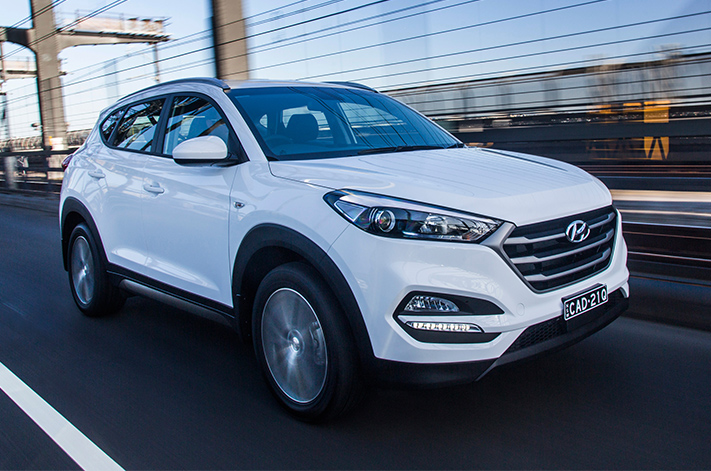
The headline for the Korean car is the addition of Apple CarPlay compatibility across the range. Because of a production switch from Korea to Europe the Tucson now gets a more fuel-efficient and powerful “GDi” 2.0-litre petrol engine.
The Mitsubishi Outlander, meanwhile, received running changes in September that added various driver assist systems, including autonomous emergency braking, as part of a safety pack rolled out as a separate model. It’s a feature only available on the most expensive Tucson.
Both cars come reasonably well equipped, although the Outlander has the added benefit of digital radio as standard (even if the sound quality is lost on the Outlander’s below-par six-speaker audio system).
Both have reversing cameras – handy for getting around the higher ride height and poor rearward visibility – leather-wrapped steering wheels and gearshifters, remote central locking, and rear parking sensors.
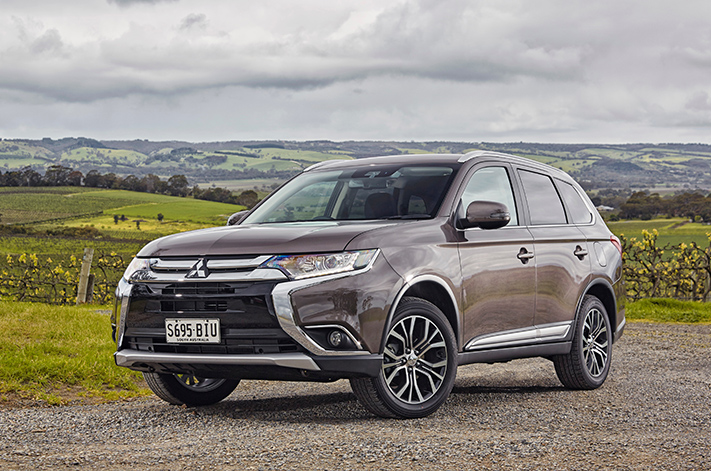
The Tucson gains a full-size spare tyre wrapped around an alloy rim, while the Outlander makes do with a temporary space-saver spare and includes dual-zone climate control air-conditioning.
There’s little to separate these two on price alone, as both are well stacked with value.
If a long warranty is important, Mitsubishi’s is five years or 100,000km, with a year of roadside assistance thrown in. Hyundai offers five years and unlimited kilometres, as well as a year of roadside assistance.
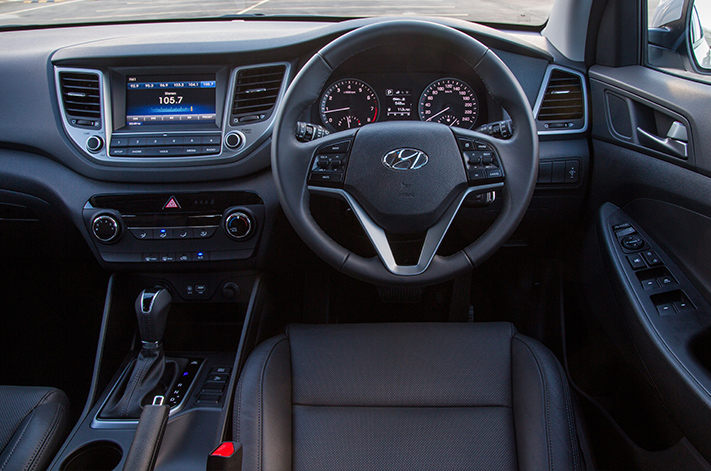
INTERIOR AND VERSATILITY – Winner: Hyundai Tucson Active X The Hyundai’s interior feels fresh, edgy and new, and the seat trim has a utilitarian, but not unpleasant, texture. The rear seats flip forward at the lift of a lever on the side of the seat (which is a bit annoying as you have to go to both sides of the car to open up the load space entirely), and there’s plenty of room in the front and back to swallow drivers and passengers.
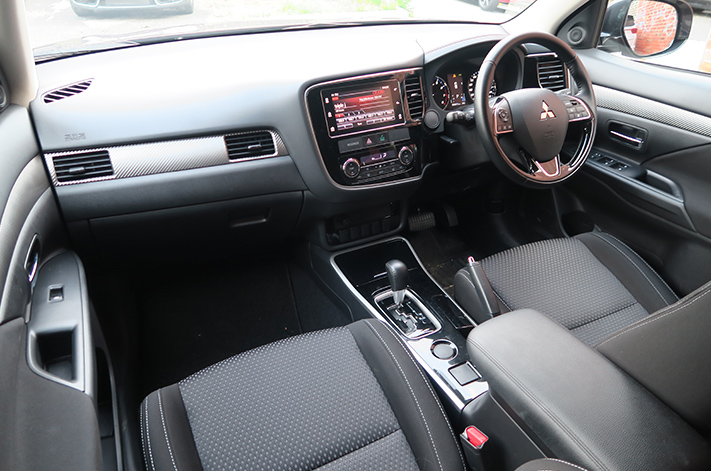
The Outlander struggles to give the same sense of quality. There are more hard plastics, the seats are a bit flatter and the contrasting inserts in the seats feel as though they’re made from textured plastic sheeting.
Both interiors offer a pair of kid-friendly USB connections, and only the Outlander features drink holders and underfloor cubby holes in the boot space – a legacy of the seven-seat layout used in more costly versions and a constant reminder that this is only the cheaper five-seater.
Both tailgates lift nice and clear, giving plenty of headroom beneath them. The only downside is that both are challenging for shorter owners to close.
The Tucson is the only one of this pair to feature electrically adjusting lumbar support for the driver, which you’ll notice is missing on long trips in the Outlander.
ON THE ROAD – Winner: Hyundai Tucson Active X The most recent revisions to the Mitsubishi Outlander include suspension refinements, but they struggle to lift the Mitsubishi to the same level of ride comfort as the Hyundai.
Hyundai tunes the Tucson’s suspension specifically for Australia, so we get a ride comfort more aligned to our tastes than the one-size-fits-all-markets approach taken by Mitsubishi.
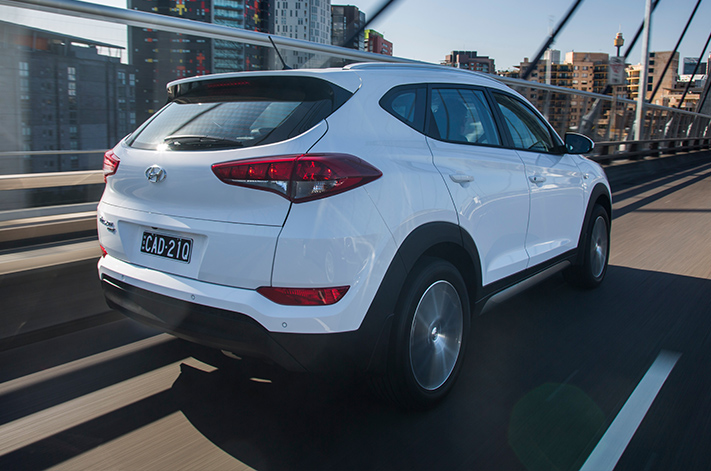
The Hyundai Tucson, then, rides quite nicely for a big, heavy SUV, and the steering feels much better than the Mitsubishi’s vague, remote system (both use electrically assisted steering boxes to help turn the wheels).
The Mitsubishi’s ride has improved, but still rides rougher with more body movement than the Tucson. On the flip side, the Outlander’s levels of cabin noise while driving, especially over coarse-chip roads, is much, much better than the Hyundai’s. If a quiet cabin is a high priority, go with the Mitsubishi.
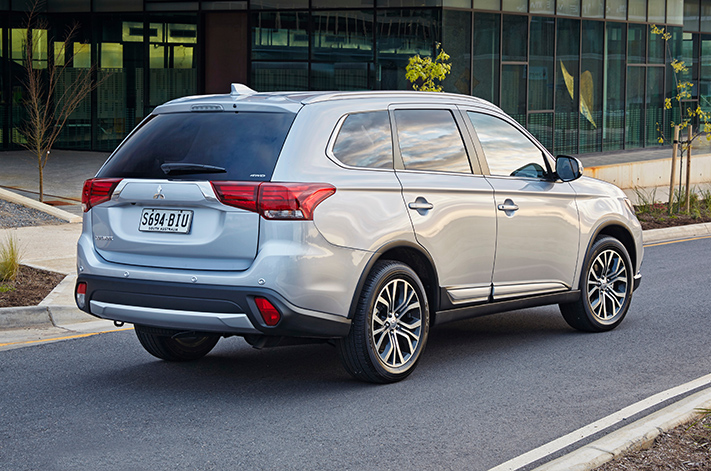
The Outlander uses a continuously variable transmission to drive the front wheels, while the Tucson uses a traditional six-speed automatic gearbox. The CVT keeps the Outlander’s gruff 2.0-litre petrol engine in its performance or economy bands, but gets buzzy when accelerating hard. The Tucson’s auto is much smoother and better-suited to city traffic, but even its engine gets coarse and shaky high in the rev range, such as when accelerating hard from traffic lights.
The Tucson’s better refinement comes with a slight fuel use penalty, though; it will use more than a litre of extra fuel per 100 kilometres than the Outlander.
VERDICT – Winner: Hyundai Tucson Active X Just by virtue of the fact it is a much newer car, the Hyundai Tucson Active X noses ahead in this comparison. Its cabin is a lot more comfy than the Mitsubishi Outlander’s, although it does miss out on the city-friendly safety gear that stands out on the Outlander’s package list.
It’s more refined around town, though, which is where both of these cars are likely to spend most of their working lives.
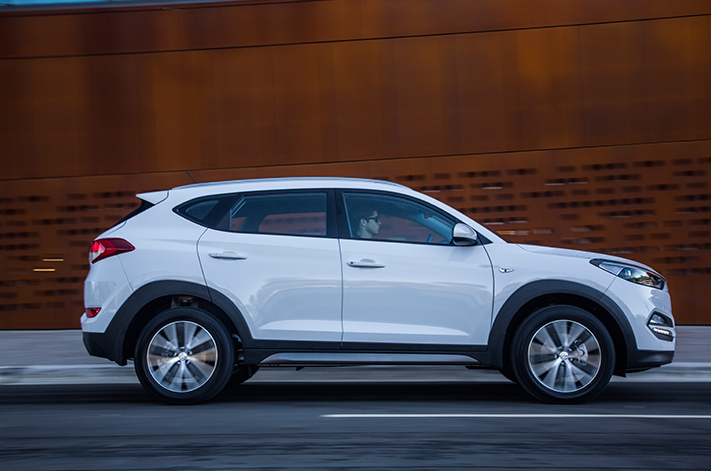
SPECIFICATIONS Model: Hyundai Tucson Active X Engine: 1999cc 4-cyl, dohc, 16v Max power: 121kW @ 6200rpm Max torque: 203Nm @ 4700rpm Transmission: 6-speed automatic Fuel use: 7.9L/100km Kerb weight: 1588kg Price: $31,090
Model: Mitsubishi Outlander LS Safety Pack Engine: 1998cc 4-cyl, ohc, 16v Max power: 110kW @ 6000rpm Max torque: 190Nm @ 4200rpm Transmission: CVT Fuel use: 6.7L/100km Kerb weight: 1430kg Price: $32,000
