
Images of an upcoming Mazda 2 mid-life facelift have been leaked before the model’s official reveal, giving us an advance look at the latest version of this popular light hatch.
The images were found in a Japanese-market Mazda brochure and posted online to blog CarDrive. They show very subtle changes to the exterior appearance of the Mazda 2 – known as the Demio in Japan – though more significant changes inside have added charm and appeal to the 2’s funky cabin..
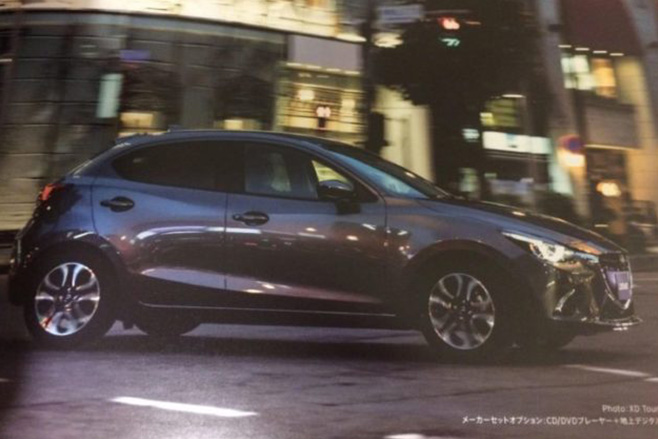
From the outside the revised yet largely familiar bodywork has updates limited to new paint options, including the Machine Grey colour debuted with the Mazda CX-9 and featuring in the Mazda MX-5 RF palette, plus some very minor tweaks to trim and bumper details.
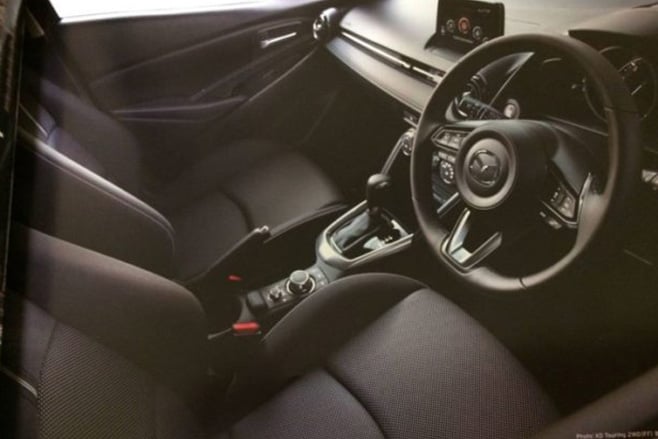
The interior is where the Mazda 2 gets most of the design-love, with its refresh aligning the baby Mazda with the brand’s latest design signatures, which we’ve seen roll-out with the likes of the CX-9 and facelifted Mazda 3 range.
A new steering wheel is one of the obvious and significant changes, as it is the single most interacted with control in any vehicle. Side-mirrors have also received a makeover.
We expect the Mazda 2 to get some mechanical changes to go with the visual upgrades, although these are yet to be announced.
Mazda’s G-Vectoring Control (GVC) system, as seen in Mazda 6 and 3, is a likely addition to this model. This steering system is designed to minimise driver fatigue by reducing the amount of small corrections needed when driving in a straight line..
The local launch for the Mazda2 is next month, so we’ll deliver more details then.
A VICTORIAN legal expert has accused the state’s toll road system of willingly burdening users with hundreds of thousands of dollars of debt that they don’t have a hope of repaying.
Victoria University law professor Denis Nelthorpe has slammed the system as unfair to people who default on toll payments – either knowingly or unknowingly – and then rack up huge financial penalties as a result.
Nelthorpe, who also works as a community lawyer, has for years campaigned against what he claims is unjust debt collection in Victoria, and says a focus on revenue raising is causing unnecessary stress to both families and the court system.
“Imagine if, for your mobile phone bill, they didn’t sue you for non-payment at the end of a three-month period, they sued you for every single call; put stamp duty, service fees, and court fees on every single call,” he told Wheels.
“It means that an amount of $2000 to $3000 [of debt] turns into $100,000.
“The system is so heavily based on revenue raising that common sense and proportionality have gone out the door.”
Punishments handed out for toll debt could be worse than if you were convicted of a violent crime, Nelthorpe said.
“To put this in context, if you were charged with a serious assault as a first-time offender, you would get a far lighter penalty than someone who has three months’ unpaid tolls,” he said.
“The fines are completely out of kilter in regards to the severity of the situation.”
- Keeping your licence on Australian roads is a matter of luck
- How Australia lacks leadership on electric car technology
Nelthorpe said not only is the system frustrating to use, but it also leaves toll road users in the dark about how much is owed once all debts are added up – meaning users have to wind through a system “where you may not get a chance to talk to anyone until [the debt] has gone from $8 to $3000”.
He recommended following systems used in other states. “You may be sued for not paying 100 days of road tolls, you may even be prosecuted, but it will be done in a way that is proportional to the problem you are causing.”
One of the issues the system has to deal with is what he says are “third-party actions” – drivers racking up fines in cars they do not own and have no intention of paying for: think of a jilted partner racking up large toll debt on an account that isn’t theirs.
“All these problems arise because the system is too heavily based on revenue raising, and not sufficiently responsive to problems that arise out of third-party actions or something like that,” he said.
The community lawyer said both the state government and toll operators shared blame over this.
“The government is tacking on administrative fees on every single trip, and it is producing disproportionate outcomes that are unworkable for everyone.
“The court routinely discharges two thirds of the fine in one go,” he said.
Nelthorpe said no one wanted to take responsibility for the issue.
“Common sense has gone out the window,” he said. “And as the problem has become more obvious, both the government and toll operators have just stuck their head in the ground and said it’s not their problem.”
Transurban and CityLink were contacted for comment. Neither had responded by the time of publication.
OPEL’S new owners appear to have locked the future of the Holden Commodore in for at least the next five years – but beyond that remains uncertain.
Under the terms of the deal locked in by Opel’s parent, General Motors, and the European brand’s new owners, Peugeot and Citroen parent company, PSA Group, the German carmaker will send rebadged Opel Insignia large cars and Astra small hatchbacks to Australia for the foreseeable future.
However, look deeper into the partnership, and GM has made it clear that while it will share with PSA Group its intellectual property – the platforms that fit under and the technology that slips inside its cars – the products will eventually have to move from GM to PSA platforms.
GM chairman Mary Barra mentioned only in passing that Holden’s supply of rebadged Opel products would continue to flow into Australia.
“GM and PSA expect to collaborate in other deployment of electrification technologies, as well as existing supplier agreements for Holden and certain Buick models,” Barra told assembled media at last night’s internationally flavoured press conference announcing the sale.
Opel chief executive Karl-Thomas Neumman was adamant the brands under his stewardship would retain their individuality, and Holden’s supply contract.
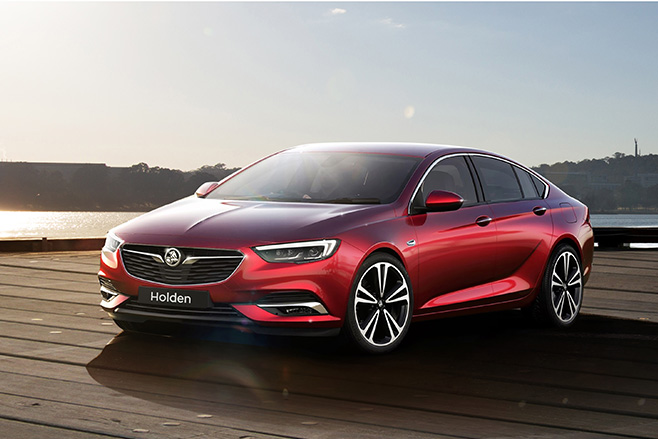
However, the longer term future of the agreement suggests the landscape, and the future of the Commodore, will both be up for significant change.
“Opel Vauxhall will also continue to benefit from intellectual property licences from General Motors until the vehicles progressively convert to PSA platforms over the coming years,” GM president Dan Ammann said. This is already starting to happen; the new Crossland X small SUV and its larger Grandland X sibling are both Opel products built off Peugeot platforms. An as yet unnamed all-electric commercial vehicle is a third.
Ammann revealed that GM’s biggest problem with Opel was its struggle to meet competing regulations that were driving a wedge between products developed for its most lucrative markets, such as China, and those for its least profitable markets, such as Europe.
“As we at GM observed further change in the landscape in the European automotive industry, the need for greater local scale has become clear and the industrial combination of Opel with PSA has become more and more compelling, which has ultimately led to today’s announcement,” he said.
“… However, we know that further progress will be challenging without building additional scale in Europe to support the investment needed to address the diverging consumer preferences and the diverging regulatory environment.
“For example, market needs in Europe… they’ve shifted enough that only 20 percent of the vehicles in the future portfolio of Opel and Vauxhall would have been common with the rest of General Motors,” he said.
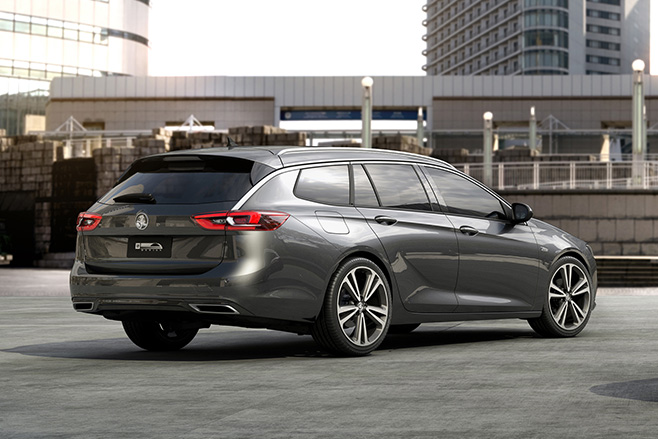
Depending on how the carve-up of Opel’s products pans out, supply of the Commodore beyond the middle of next decade could revert to GM, although it would mean upsetting rusted-on Holden fans with another bait-and-switch of an all-new, fully imported product that once more attempts to cash in on the legacy almost 40 years of local car production.
The only member of the assembled executives to show any sign of regret over the change of ownership was Opel’s Neumman.
“Today is truly a sorry day for Opel and for Vauxhall,” he said. “It’s also, I must admit, an emotional day for all of us. Since 88 years, so most of our 155 years of history, we have been a part of General Motors; today we are about to enter a new area with the PSA Group.”
Holden isn’t saying much about what the PSA Group takeover means for its day-to-day business activity.
“Holden and Opel have had close ties for many years and delivered fantastic vehicles to Australian customers, including the current all-new Astra and the next-generation Commodore due in 2018,” it said in a statement.
“The good news is these product programs are not affected at all. We will continue to work closely with Opel and GM to deliver our vehicle plans with excellence and precision.
“This includes future, new right-hand-drive SUVs like the Holden Equinox and Acadia that were engineered specifically for right-hand drive markets.”
Could GM’s willingness to carve off parts of its empire that aren’t core to its business of making a return to shareholders one day hurt its far-flung Australian outpost?
Once the fully imported Commodore’s future is settled, the next logical step is for GM to decide where Holden – an orphan brand with no local product to pin its badge on – fits in.
Let’s hope that decision doesn’t start with the words: “Today is truly a sorry day for Holden …”
Volkswagen has revealed its ultramodern vision for a fully autonomous future with the overnight reveal of its boxy Volkswagen Sedric concept.
The Sedric (self-driving car) is the “first Concept Car” as part of the Volkswagen Group’s Together-Strategy 2025 – which is part of the German automaker’s focus-shift from traditional automotive to become the leading global provider of sustainable mobility, through its newly-created Mobility Solutions division.
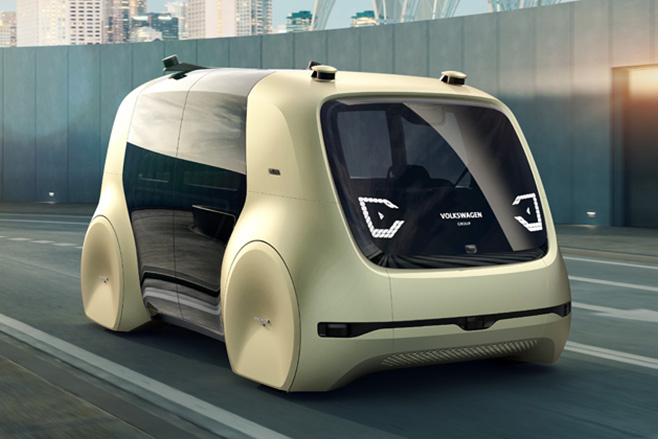
“A mobility concept based on intensively used vehicles will take up less space, will consume less energy, and will be safer and more sustainable at the same time,” Volkswagen said in its release.
The four-seater concept car is the Group’s first fully autonomous car (level 5), which doesn’t require human input, and was developed in cooperation with the Future Center Europe of the Volkswagen Group in Potsdam and the Volkswagen Group Research in Wolfsburg.
Sedric is said to be the “father”-car, leading several future concepts across the Group’s brands. Its design sticks to the futuristic-shift to a new way of creating vehicles and mobility solutions, in a bid to simplify transportations for all people – from children to retirees.
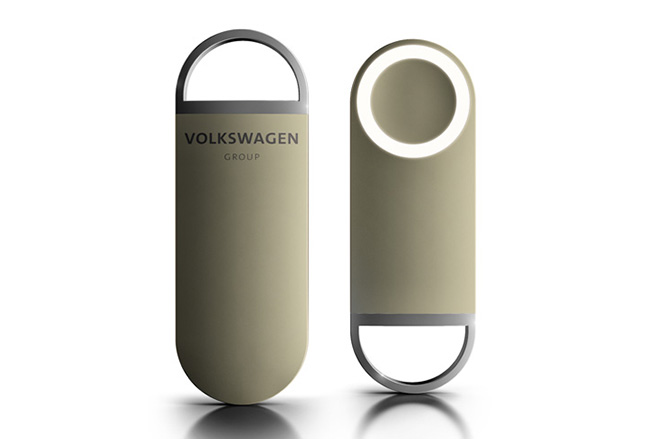
Intended to be a universally usable vehicle, with a simplified control concept, Sedric works at the touch of a button, which will deliver the car to anyone, anywhere.
A ring and coloured signals let the users know when Sedric will arrive, and a vibration signal will guide those with vision impairments to the car.
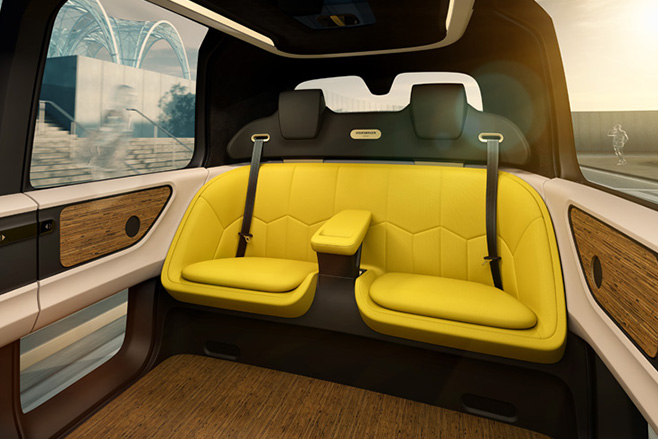
Its boxy exterior moves away from traditional car silhouettes, doing away with standard features like steering wheels and pedals to accommodate a two-by-two couch-like seating arrangement.
Outside, the pod, which looks more like a rolling toaster than a car, is created without familiar elements like a bonnet or shoulders, in a bid to give a more robust and safe façade, and spacious lounge-like interior.
It’s even got air-purifying plants near the rear window and bamboo charcoal air filters. Volkswagen said the lounge interior is meant to give passengers that “welcome home feeling.”
Powered by an electric motor and battery pack, Sedric is not intended to be a production concept, but rather a showcase of Volkswagen’s autonomous future plans.
“Sedric will drive the children to school and then take their parents to the office, look independently for a parking space, collects shopping that has been ordered, picks up a visitor from the station and a son from sports training – all at the touch of a button, with voice control or with a smartphone app fully automatically, reliably and safely,” Volkswagen claimed.
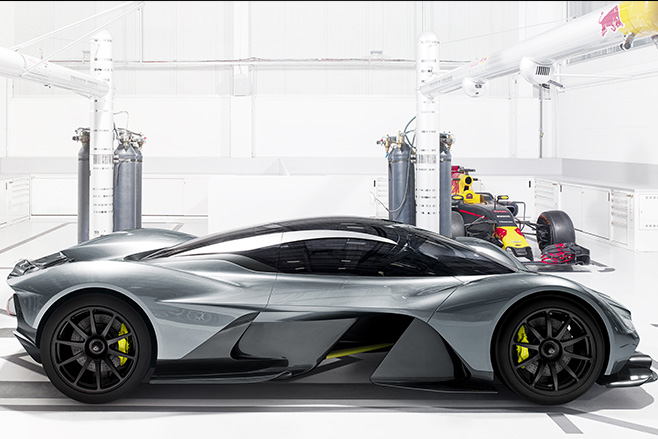
ASTON Martin and Red Bull Racing’s hypercar love child, the AM-RB 001, has been christened the Valkyrie.
The Valkyrie badge continues Aston Martin’s tradition of starting the name of its high-performance cars with a V. This started with the Vantage in 1951, and continued with the Virage, Vanquish, and Vulcan.
Aston Martin CEO Marek Reichman sees the name, taken from the Norse god responsible for choosing who lives or dies in battle, as the rightful continuation of the brand’s heritage and step into hypercar territory.
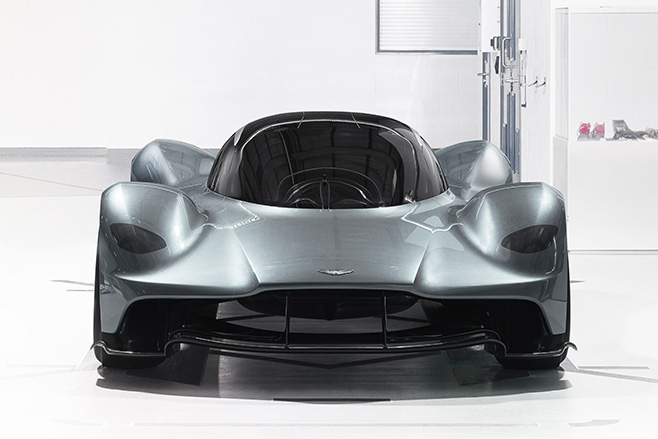
“The Aston Martin Valkyrie is an incredibly special car that demands an equally remarkable name; an uncompromising car that leaves nothing in reserve.
“The connotations of power and honour, of being chosen by the Gods are so evocative, and so pertinent to a car that only a fortunate few will ever experience.”
The British manufacturer claims the hypercar is going to rival a LMP1 racecar in terms of laptime performance.
The Croatian battery company’s Concept One road car has earned a reputation for decimating hypercars like the Bugatti Veyron and Ferrari LaFerrari in drag races.
Only 150 road-going Valkeryies will be built, with an additional 25 track-only versions.
Aston Martin says first deliveries are due in 2019.
Despite Volvo’s efforts to carefully hide the finer details of its all-new XC60 SUV under camouflage, it’s been spotted in the raw just before it was due to be launched at Geneva Motor Show.
The single picture posted on Dutch motoring site Autoblog.nl confirms expectations that the second-generation model has more slender lines in keeping with the larger Volvo XC90.
As shown in teaser pics released last week, the side profile shot shows how the ‘Thor’s Hammer’ daytime running lights now extend from the headlight cluster all the way to the grille.
The grille of the pictured variant is without the chrome detailing featured at the front of the 90-series models, while at the rear the waterfall-style taillights, that run down the side of the raked tailgate, have a new LED graphic.
The second-generation Volvo XC60 shares the XC90’s Scalable Product Architecture (SPA) platform which will also underpin the all-new S60 and V60.
This will mean the mid-size SUV will get powertrain choices in line with the bigger XC90, including a family of turbocharged four-cylinder petrol and diesel “Drive-E” motors working on their own or as part of a “Twin Engine” hybrid system.
The XC60 will also feature array of active safety features including the acclaimed IntelliSafe technology. Volvo says the technology leap will make the XC60 one of the safest cars on the road, against its competitors Audi Q5, BMW X3, Range Rover Evoque and Lexus NX.
Due for release at the 2017 Geneva Motor Show tomorrow, the Volvo XC60 is expected to launch globally later this year with the other 60-series cars to follow soon after.
Remember Infiniti’s foregone Q50 Eau Rouge, the four-door GT-R which signalled it wanted a taste of Germany’s best? Well, the brand’s back with another bold statement.
Infiniti’s revealed a concept Q60 featuring technology inspired by the world’s most advanced race engines and says it might one day make production.
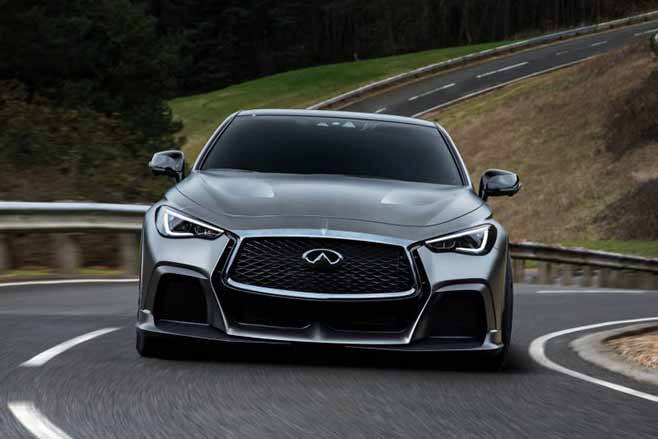
As you might know, F1 cars rely on a hybrid-system that harvests energy from the engine and turbocharger. This charges batteries, which spool the turbocharger or boost power on straights.
Infiniti hints this type of arrangement’s been adapted to its Q60’s 3.0-litre twin-turbo V6 engine, saying the Black S uses an Energy Recovery System to boost power and torque and “does not yet exist in a road car”.
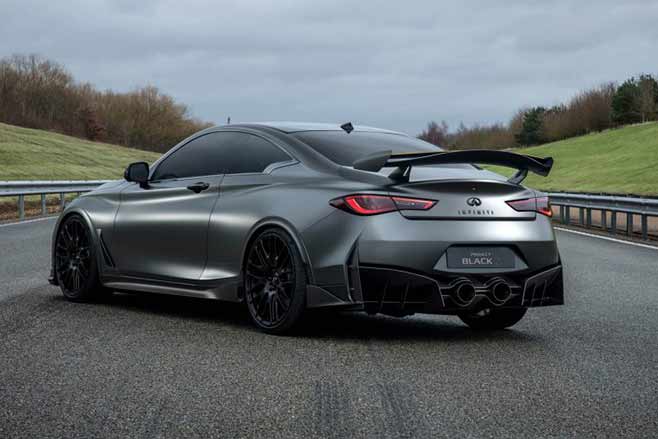
A titanium exhaust that finishes with drain-sized tips helps underscore the car’s intent, while the front bumper’s been opened up to cool and feed the energetic V6.
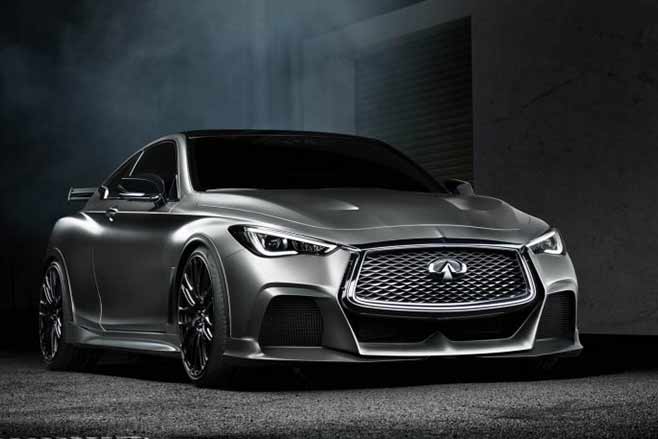
Meanwhile, thanks to the work of its London design studio, all remnants of staid luxury have been flicked, the car swapping metal gloss trim for gloss black replacements.
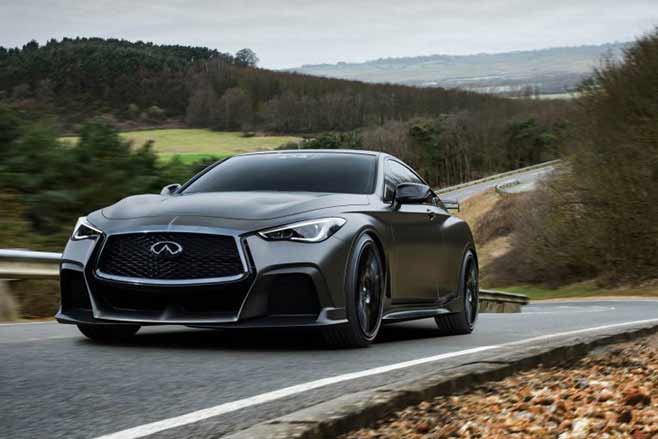
Like what you see? The company says it’ll be gauging interest on the Project Black S ahead of plans to introduce a line of cars which will inject a higher-grade of performance into its line-up.
It’ll be on display at the Geneva Motor Show, which kicks off this weekend.
Lamborghini has finally given us an uncovered look at the go-faster version of its Huracan, called the Performante.
The Huracan Performante earned plenty of column inches recently with its blistering 6min52.01sec lap time of the Nurburgring Nordschleife, more than 35 seconds faster than that of the regular Huracan.
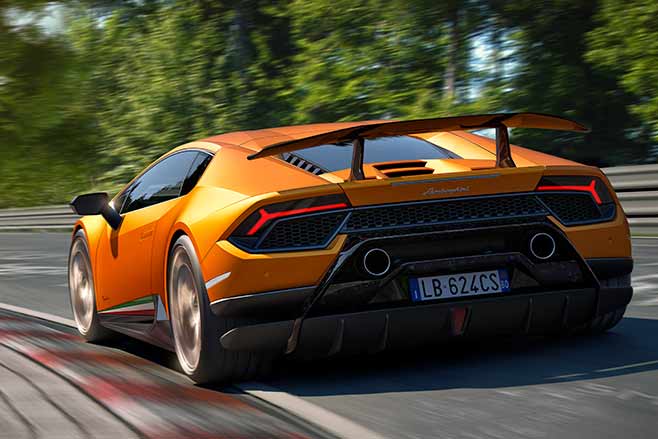
Also contributing to this searing speed is a weight loss of 40kg (now 1382kg dry), courtesy of using composite material for the front and rear spoilers, bonnet, rear bumper and diffuser as well as forged 20-inch rims and carbon-ceramic brakes.
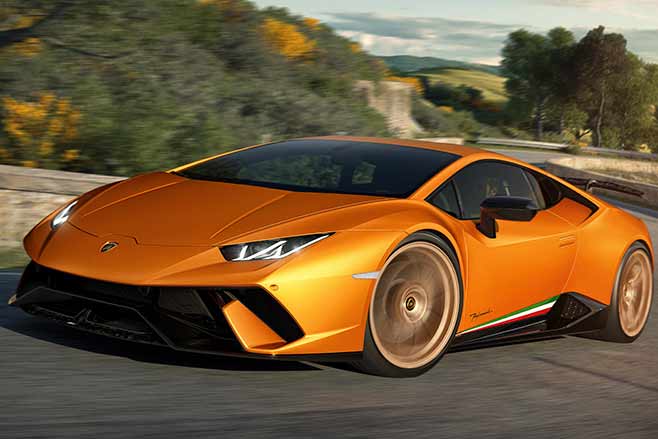
The Performante’s piece de resistance, however, is its adaptive aerodynamics, dubbed ‘Aerodynamic Lamborghini Attiva’ (ALA) which uses a trio of flaps (one front, two rear) to manipulate the airflow to either increase downforce or reduce drag, depending on the car’s situation.
In Corsa mode, the two rear flaps can operate independently, with the inner flap remaining closed to increase traction on the inside wheels while relieving the aero load on the heavily stressed outer tyres.
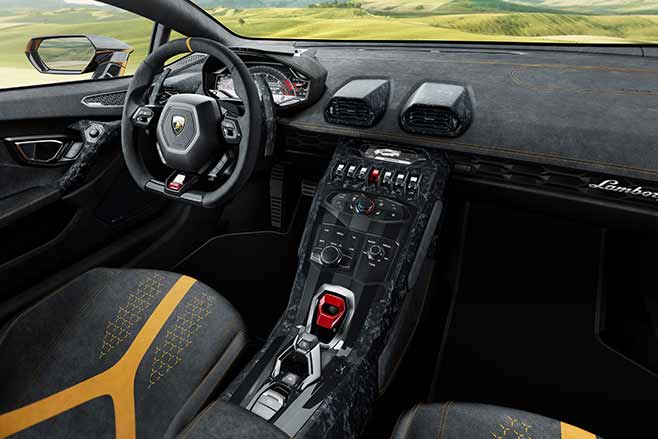
Australian launch timing is yet to be confirmed but expect a late-2017 arrival with a price tag of $483,866.
THE Volkswagen Arteon has been unveiled ahead of its debut at the Geneva Motor Show, revealing the German carmaker’s latest evolution of its four-door coupe.
The Arteon, described as a replacement for the Passat-based CC but expected to sit above the Passat passenger car line as the flagship passenger car in VW’s showroom, looks very much like the Sport Coupé Concept GTE revealed at Geneva in 2015.
The Arteon introduces a radical change for Volkswagen’s design. The coupe-like profile of the four-door gran turismo looks low and wide. Frameless doors add to a sense of luxury, while inside the Arteon – built on Volkswagen’s new “MQB” Modular Transverse Matrix platform – is said to boast a surprising amount of legroom for its dimensions.
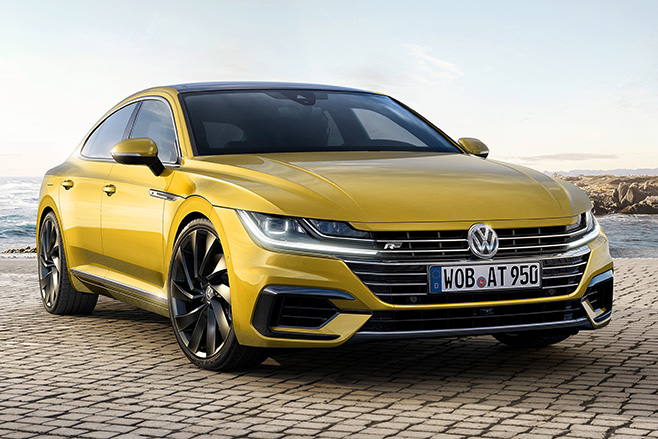
In Europe, the Arteon will launch with the choice of six engines under the bonnet, including a 100kW 1.5-litre four-cylinder unit that includes cylinder deactivation to help save fuel under light engine loads.
However, Australia will take a version of the Arteon powered by the most powerful engine on offer, a 206kW 2.0-litre four-cylinder, sending drive to all four wheels via a seven-speed wet dual-clutch gearbox.
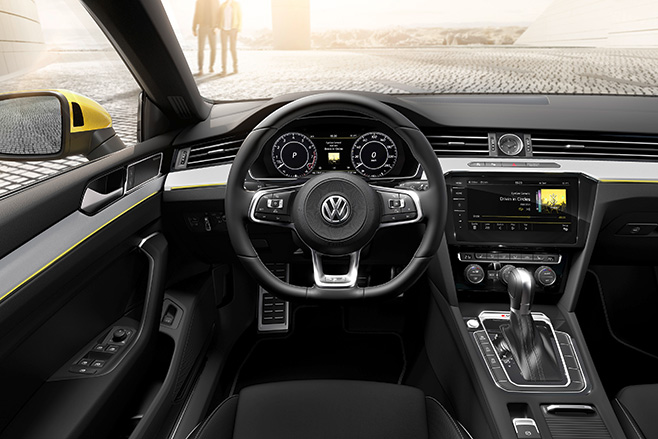
When it land here in October, the Arteon should price from about $65,000. Its fastback form still sets it apart from almost everything else in its price range, although it will sit rather close to the entry-level Audi A5.
The Arteon is one of 60 new models the carmaker will introduce in 2017 including an all-new VW Polo, the Skoda Yeti, the Porsche Cayenne, the Audi A8, and the Bentley Continental GT.
The carmaker also used Geneva to announce it has also set itself the target of having more than 30 battery-driven cars on the market by 2025.
View our full coverage of the Geneva Motor Show 2017.
WHAT IS IT
In 2016, Aussies bought more than 18,000 ASXs, making it the second best-selling small SUV after the much younger and funkier Mazda CX-3. It’s no spring chicken, having launched right at the start of this decade, making it the oldest baby crossover by far.
Since its launch in the middle of 2010, the Mitsubishi ASX has been refined to help keep it competitive against much newer rivals. A new nose here, better quality trim there. Improved seating and switchgear, updated multimedia systems… that sort of thing. Yet the basic recipe has remained the same.
ON PAPER
There are two grades to choose from – LS and XLS – in either front-drive petrol or AWD turbo-diesel guises. Kicking things off is the LS petrol manual from $25,000. It uses Mitsubishi’s tried and trusted 2.0-litre four-cylinder petrol engine that has also powered the closely related Lancer and Outlander since the mid-2000s.
Producing 110kW of power and 197Nm of torque, it drives the front wheels via either a five-speed manual gearbox or – for $2000 more – a CVT auto. The luxury XLS starts at $31,500.
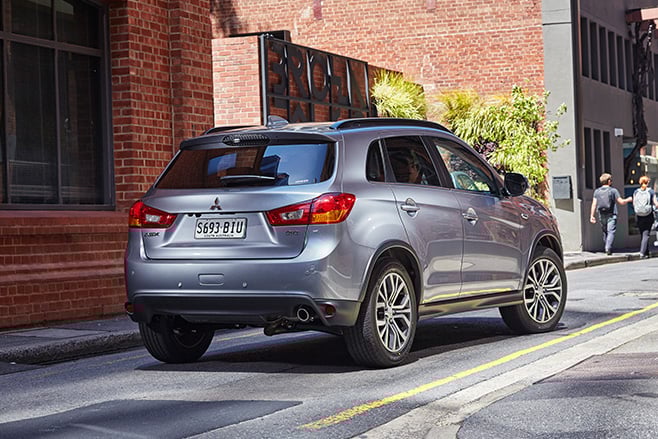
The 110kw/360Nm 2.20-litre four-pot turbo-diesel AWD LS from $32,500, meanwhile, uses a six-speed auto to drive all four wheels, yet it manages to be nearly 2.0L/100km more economical, averaging a commendable 6.0L/100km.
At the top of the ASX tree is the XLS AWD diesel from $32,500. That’s quite a spread of models to choose from. Note that – at 205mm – the ASX FWD petrol offers 25mm extra ground clearance than the AWD diesel.
FIRST IMPRESSIONS
Getting in, the first thing you notice is how spacious the cabin is compared to some smaller SUVs, with plenty of width, lots of headroom, and deep windows. You sit perched up high, affording a commanding view out.
The dash might seem a little dated and plasticky compared to the latest flashy cabins found in, say, the Suzuki Vitara, but the current ASX has a big central touchscreen multimedia system with the obligatory reverse camera. Plus, all the basics are right.
The driving position is comfortable, all the controls are easy to see and light to use, there’s excellent ventilation, and obviously Mitsubishi has thought about how these things get used – with heaps of storage places.
Finally, the boot is pretty competitive too, with 393L with the split/fold backrest up, or a sizeable 1475L with them folded flat.
PLUS AND MINUS
+ Packaging: For many people the size is just right between a small and medium SUV. The ASX sits in the Goldilocks zone. Neither too big nor too little. + Value: While it isn’t the cheapest in class, the ASX is good value with plenty of standard features. All models include seven airbags and stability/traction control, as well as a reversing camera, rear parking sensors, Bluetooth, climate control, rear-seat air vents, and 18-inch alloy wheels. + Space: There’s a sense of space inside, with a useable three-wide back seat (at a pinch). +Height: You sit up high in the ASX, with a sense of control over the vehicle improving the driving experience. + Ease: Everything you need is within easy reach, and is a cinch to operate. + Versatility: The boot is reasonably large and practical for a small SUV, beating others like the Mazda CX-3. + Simplicity: Driving the ASX with its gutsy engines (that can become noisy but get on with the job) is designed to be as easy as possible with plenty of mid-range pick-up and steering that’s light but fairly accurate.
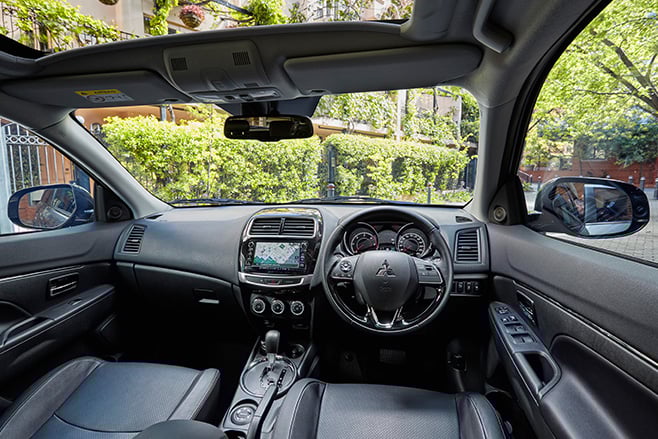
– Outdated: ASX has been around since Julia Gillard first became PM – so it’s an oldie alright. And in the increasingly chic compact crossover world, she ain’t no style statement either. – Cabin: The interior design of ASX is definitely from another era, with hardy but low-rent plastics that look and feel cheap; and some of the multimedia controls are fiddly. – Noise: There is heaps of noise coming from the engine by and the road. The engine is lusty but rowdy when revved, with the CVT causing the revs to flare at the first push of the pedal. It can become tiresome. – Boom: With constant booming from the road and tyres, this isn’t a particularly quiet car at the best of times, and can be downright deafening at speed. Be prepared to speak up. – Ride: On smooth roads, it’s OK, but bumps certainly make themselves felt. There just isn’t much suppleness or sophistication to the chassis’ firm set-up. – Safety: If the ASX were tested today, it wouldn’t score the same five-star ANCAP rating that it did when introduced back in 2010, because it lacks driver-assist technology like the potentially life-saving AEB, not to mention collision warning, lane departure warning, adaptive cruise or lane keeping. In terms of tech, the ASX is stuck in the last decade.
VERDICT
With chunky styling, a roomy interior, high seating, easy controls, a long warranty and a wide choice of models, it is clear why the ASX sells in consistently high numbers. It really does fit the bill for folk who seek a durable, dependable, and undemanding experience.
But the Mitsubishi’s age is obvious inside, from the cheapo plastics and dated dash, to the ever-present noise, and at times hard ride, revealing a lack of sophistication compared to newer rivals like the CX-3, HR-V and Vitara.
Still, the ASX hits a sweet spot in the market, making it the Goldilocks – if not exactly the Golden Child – of the small SUV set.
