
YAMAHA’S Maverick Viñales, the young gun recruit whipped away from Suzuki to replace the departing Jorge Lorenzo this year, has confirmed what the smarties had been saying for some time – that he is a potential world champion.
The latest in an endless production line of exceptional Spanish riding talents, Viñales dominated the three-day pre-season testing at Phillip Island.
The new kid at Yamaha was also fastest during earlier testing at Sepang and Valencia; he has now topped the time sheets at every test to date this year.
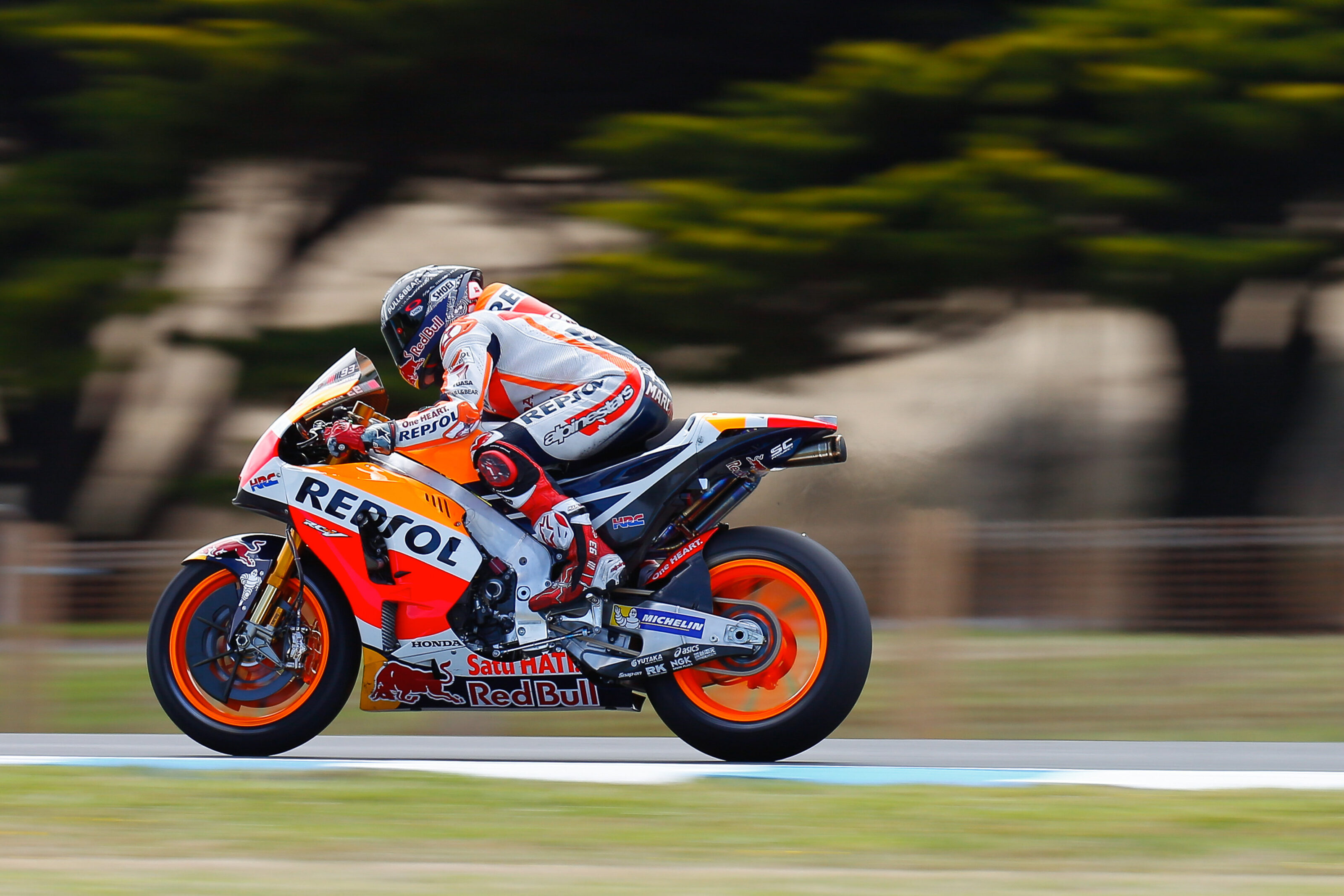
Looking right at home on the Yamaha at the Island, Viñales ended the Australia test ahead of the Repsol Honda Team pair of Marc Marquez in second and Dani Pedrosa in third.
His teammate – nine-time world champion Valentino Rossi ended the Australian test days 12th on the list of combined times, sinking any thoughts that he might get things easier with the departure of Lorenzo, who finished eighth fast overall on his Ducati (one place back from teammate Andrea Dovizioso.
The fastest rookie on each of the three days was Germany’s Jonas Folger (Monster Yamaha Tech 3) who was fourth fastest but despite a crash still ahead of 2016 Australian GP winner Cal Crutchlow (LCR Honda).
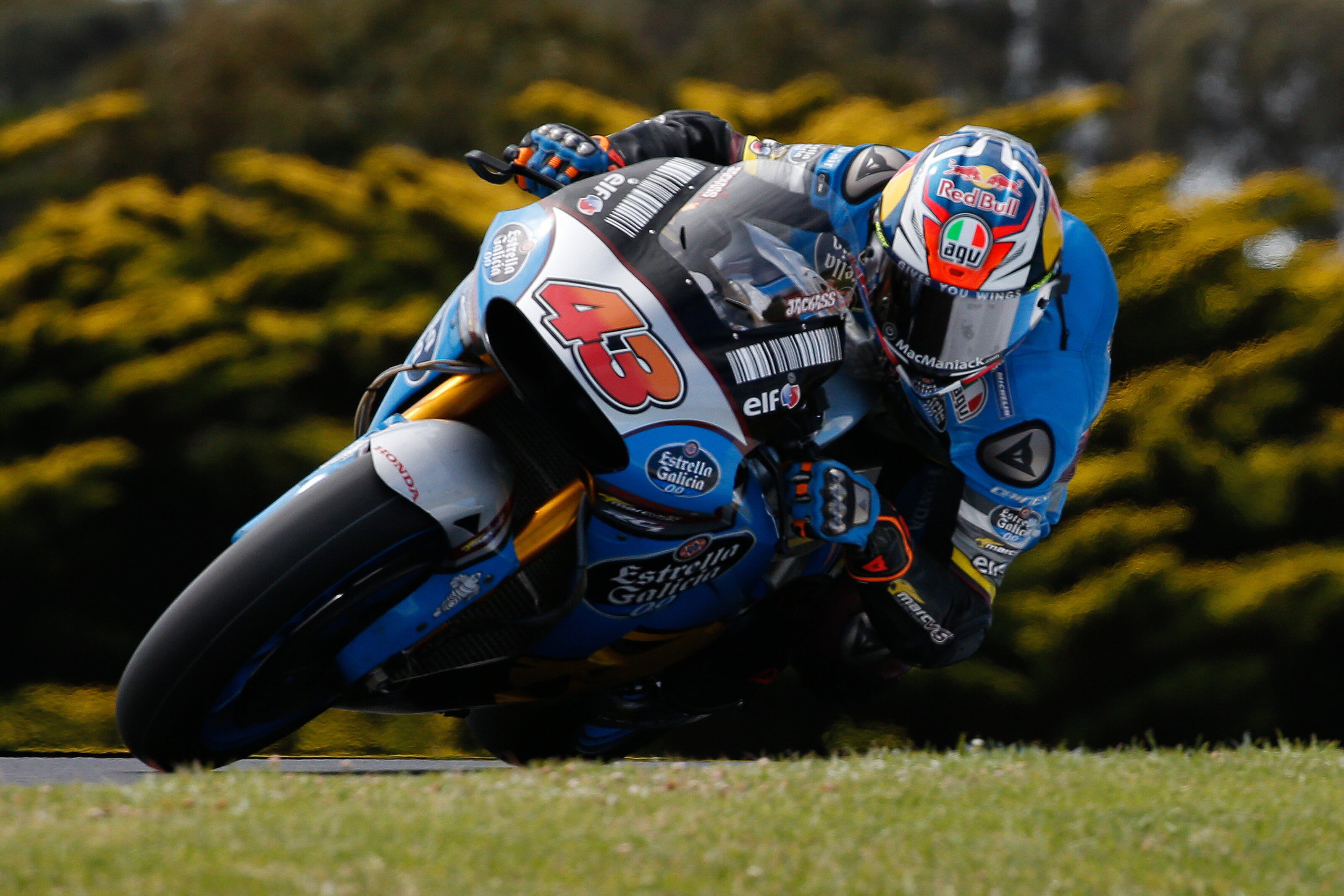
Back to peak fitness, local hero Jack Miller (Estrella Galicia 0,0 Marc VDS) was consistently fast too, ending the three days ninth overall.
Next up is Losail International Circuit for another test – the last – from the March 10-12, before the lights go out at the same venue later in the month and the 2017 championship hits the gas.
Heartbreak for Mawson in MRF Challenge
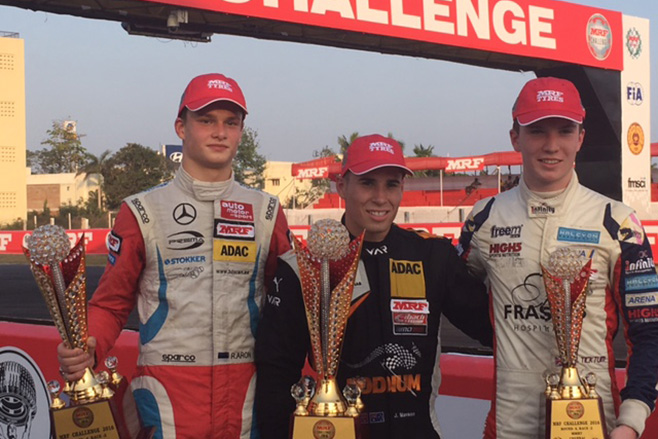
It was so near and then ultimately a massive letdown in Chennai at the weekend for Australia’s rising young star Joey Mawson whose crack at the MFF Challenge ended in a tie with British racer Harri Newey – and a loss after the tie breaker rules were applied.
The overall winner was then determined by the number of race wins. Newey, the son of Red Bull Racing tech genius Adrian, was declared the victor.
“It hurts to lose by so little,” said a disappointed Mawson afterwards, adding “I now I know how [Felipe] Massa felt in 2008″.
But Mawson, who last year beat Mick Schumacher and Newey to win the German Formula Four Championship, said the MRF Challenge, held across Asia in the northern winter, was invaluable in keeping him sharp for the upcoming European season.
An announcement on his 2017 season will be made within a few days.
Mawson’s weekend of four races in Chennai brought a win and a podium, but struggles with car speed at times.
Qualifying was a let down on Saturday. He was only seventh fastest, his worst result in more than a year. Newey maximised his chances, and qualified on pole from Schumacher.
Some major changes to Joey Mawson’s car set up were evident in the first race, and he moved up to finish fifth, setting the fastest lap of the race. Newey won the race from Schumacher and Ralf Aron.
The grid for race two gave Mawson the chance of redemption, the grid being the top six reversed.
From the outside of the front row, the Australian pounced into the lead before the first corner, and again set the fastest lap en route to a crushing eight-second victory from Aron. Newey was fourth; Schumacher sixth.
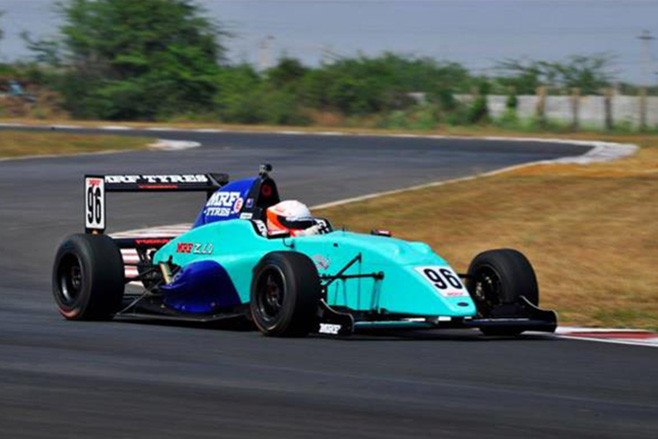
Then came the race four decider. Mawson got away well from pole with Newey in second, with Schumacher third. All three were on old tyres, and Mawson was struggling most. He stayed in the lead until lap 11 or 15, when he had a moment, allowing Newey alongside and then to the lead.
Newey went on to win, setting the fastest lap on the last lap of the race, giving him the two extra points needed to equal Mawson’s tally.
Indycars: no test surprises and Power thereabouts
Okay, remember this fact; the last 11 season Indycar championships have been decided at the final race of the season.
Aussie Will Power knows this only too well because he has been caught short a few times – he was championship runner-up in 2010, 2011, 2012 and 2016. But in 2014, he did win the Indycar title – the first Australian to do so.
Power, recently a dad for the first time, won at least one Indy car race in each of the past eight seasons. Since 2010, Power has never finished worse than fourth in the standings.
His record stands at 44 poles, and 28 wins.
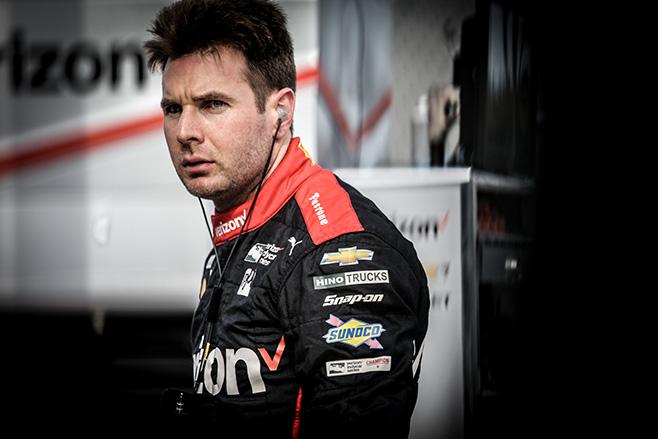
The Queenslander was one of the 21 drivers and cars present at the open test at the one-mile, low banked Phoenix Raceway and the signs after two days and nights, and more than 5000 laps run on track (collectively), the competition for the upcoming 17-race season looms as tough as ever.
Cars propelled by Chevrolet engines and aero kits dominated the day sessions of the Phoenix Raceway open test, while those with Honda equipment filled out the top of the leaderboard for the night running.
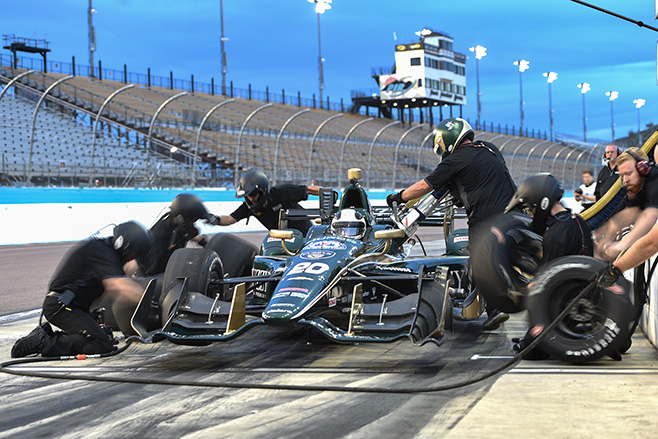
Hildebrand also had a huge moment later, clipping Power with the right front wing and tearing off part of it. Hildebrand eased off but going into a turn his unsettled car understeered into the wall.
The 2017 Verizon IndyCar Series season opens with the Firestone Grand Prix of St. Petersburg on the 1.8-mile temporary street circuit, on March 12.
Locals Macleod and Hunter take Targa North West
Putting their knowledge of local roads to great use, the Launceston pairing of Trevor Macleod and Scott Hunter have banked the overall win at the inaugural running of the of the Burnie-based Targa North West, an event touted as an ideal tune-up for the annual Targa Tasmania.
It was a giant-killing act Macleod and Hunter in their Subaru WRX STI as they came out on top in a close and intense fight with the very experienced fellow Tasmanians Jason and John White in their V10 Dodge Viper ACR.
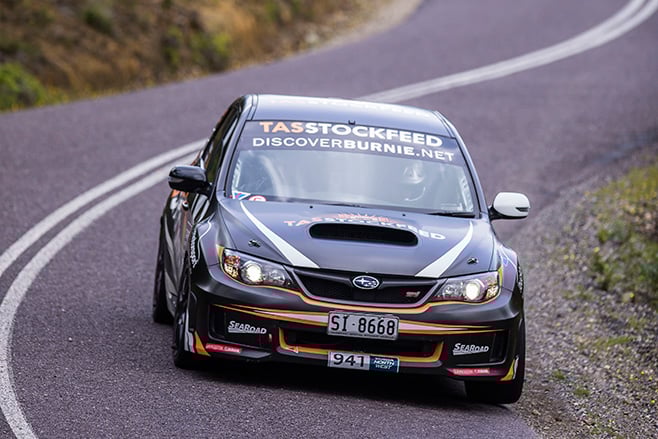
Macleod and Hunter won Targa Hellyer Gorge last year, so the pair came to this event with form. On the amazing Savage River stage they made the most of their AWD advantage to take very handy lead into lunch. They then repeated the effort on the reverse of the stage to enter the return trip through Hellyer Gorge with a comfortable lead and then drove smartly on the final stage to secure a very well-deserved overall win.
Naturally, the Launceston stockfeed business owner was delighted with his win.
“We’ve only been doing this for three years and we came into it with no motorsport experience before that, so how cool is it to be able to get out on the roads we grew up with and go out and get a win,” Macleod said.
“We are building up each event – picking up more knowledge and improving every time out.
“I enjoyed the tight twisty stuff even on Savage River, even in the wet today. It’s a sensational stretch of road and really suits the Subaru STI.”
All eyes will now focus on the 26th running of Targa Tasmania from April 24 to 29.
Pay attention, kids, because this is going to get a bit complex. It’s taken Nissan and Infiniti the better part of 20 years and 400 patents to get this engine to this production-ready stage, and it’s frankly a bit of a mind-bender.
On the surface, it’s nothing out of the ordinary. An all-alloy inline four-cylinder block and alloy head is bored out to two litres of capacity, and a smallish turbocharger is slung off the exhaust manifold. The clue, though, is in the name. Known as the VC-Turbo, you’re looking at the first production engine in the world with the ability to change its compression ratio on the fly.
Why is that even a thing? Low compression ratios are great for making power – they allow turbos to stuff more air into a cylinder, with more fuel, for more bang, basically – but are lousy for economy. High compression engines – like diesels – are excellent at making the most out of minimal air and fuel, but that compromises its ability to produce power without nasty things like pinging (underfuelling) happening.
Infiniti has basically figured out a way to deliver both, with a compression ratio low of 8:1 and a high of 14:1 (which is a ridiculously big number for a petrol engine). It claims it’s a lot smoother and quieter than a standard turbo four-potter, too.
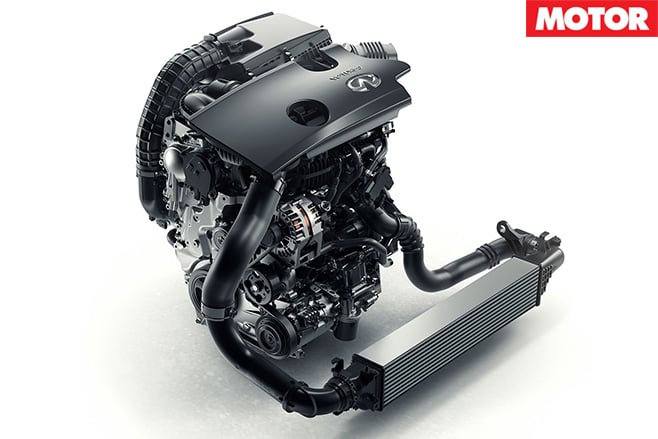
Infiniti/Nissan sees it not only as a replacement for the VQ six-cylinder family, but it’s also a ploy to add an engine to the range that will achieve ultra-low fuel consumption and emissions figures without the need to add a hybrid electric system to the mix.
STRETCH GAME
How it works
1. QUIET POWER Infiniti is targeting 200kW and 390Nm from the 2.0-litre four-potter. It hasn’t told us what the expected economy will be, but it claims the internal workings are so smooth it’ll knock 20dB off the typical 30dB of noise inside the engine.
2. THE HEART OF THE MATTER The system fits into an area of the engine previously occupied by a pair of balancing shafts. And a lower set of conrods controlled by an actuator arm is key. They’re linked to an upper set via a ‘multi-link’.
3. PUSH AND PULL The actuator arm changes the angle of the lower connecting rods, which alter multi-link angles to restrict or extend piston travel. Plant the foot, the piston doesn’t travel as far up the bore. Go easy, and the piston travels higher, increasing compression.
4. SQUASHY and SQUASHIER The gap at the top of the cylinder head doesn’t appear to change much. Fuel is the constant here – the engine has to combust it at both ends of the ratio scale – so expect to use 98RON as a minimum. Fuel is both direct- and port-injected.
5. CAR PLAY Infiniti says that the VC-Turbo will first be rolled out in 2018 under the bonnet of the (Mercedes-Benz A-Class based) QX30 crossover. And while Nissan’s luxury arm will initially enjoy the fruits of the clever tech, Nissan will adopt it in short order.
Grand Plans
How Nissan will roll-out the VC engine

IN ONE fell swoop, Infiniti and Nissan cracked one of the internal combustion petrol engine’s final codes, and scored a number of goals along the way.
It makes more manufacturing sense, with Nissan admitting the VC-Turbo will be cheaper to build than a diesel. It’s also supposed to be up to 27 per cent more efficient than a 3.5-litre VQ petrol six-potter, all without the complexity and weight of hybrid systems.
Then there’s the fact the VC-Turbo’s more vertical piston arrangement will likely be quieter and smoother than any inline four in the market today.
Nissan will roll out the engine far and wide to amortise 20 years of development costs, and has all but confirmed the VQ six-potter – like the VQ37 in the 370Z – is goneski.
Take the fact the VC motor is just as torquey as a small modern diesel, and it also stacks up as a replacement for oilers across its range.
But a lot has changed for Nissan in 20 years; it now owns both Renault and Mitsubishi, who bring with them considerable EV and hybrid experience, and despite the VC-Turbo’s claimed fuel savings, emissions regs are at levels not imagined when the project kicked off in 1996. Will it be clever enough to survive the new age? Only time will tell. –
I was buying shoes recently and started thinking about buying cars. Not instead of the shoes, although I do believe the car is the best invention ever, especially once you’ve compared it with walking.
Let’s face it, the pinnacle of walking is a ridiculous Olympic event with wobbly-hipped competitors who look like they’re struggling to keep a chicken phall on board. Really, does anyone get started in that ‘sport’ out of genuine awe for its gladiatorial grandeur, or its household-name heroes – let alone its grace and technique? Surely people do it for a piss-take.
Anyway, I was in this shoe store, a semi-fancy one among a whole cluster of international-label ones. I was in the mood for some Italian leather loafers for summer. The ones in the neighbouring label shops were at least $850 a pair. I do cruel and unusual things to shoes – I put my feet in them, sometimes walk around in them – so $850 was a bit rich.
These ones were all Italian-made, but lesser-known brands. I chatted amiably with the salesperson as I looked at a few pairs I liked, checking the leather, the stitching and the soles.
I settled on two pairs that I liked; I could have both pairs for $500.
Then I did an unusual thing: I paid the salesperson and left with my new shoes. What plenty of people do now is go to a shop, try on everything, photograph the label or model number, then go home and buy it cheaper online.
While I was feeling all self-righteous, I got to wondering: If I felt this way about shoes, would I ever buy something as fashion- and fit-sensitive as a new car over the internet? I was stunned to acknowledge I would.
The way we buy cars has barely changed in a century, and I’ve never thought it a bad thing that such a significant purchase is a personal, tactile, time-consuming process.
But now carmakers have embraced ‘experience venues’, perhaps with a test track attached, where prospective customers get a concentrated exposure and a brand ear-bashing. They might order a car there, but take delivery at their local dealer. Tesla has city-centre stores and representatives who drive to you.
It’s been a long battle. I remember sitting with Jac Nasser in 1998 as he confidently discussed Ford’s plan to direct-sell and service cars via the internet and factory-owned stores. He hadn’t counted on the might of dealers who’d spent millions on their franchises and who were, in fact, Ford’s customers.
What’s going to change for me is the cars. If I were in the market for a small, affordable electric car, I’d be confident in doing online research, speccing and actual buying. But an equivalent Mazda 2 or VW Polo? Couldn’t do it.
I need to know what it sounds like, how it drives, what sort of relationship we could have. It’s a real, mechanical thing, with moving parts and warm fluids and a beating heart. An electric car, at least at this end of the market, is a mobility appliance.
When we eventually get to fully autonomous cars, everything but the entertainment and air-con will be out of your hands anyway. Buying a car will be just like buying a telly. Or a pair of Crocs.
Mercedes has hogged quite enough of the limelight with its E-Class lately, BMW has decided. And so the new, ground-up-redesigned, seventh-generation 5 Series is here – and we’ve driven it.
Until the Teutonic next-gen M5 arrives late this year the 540i will be the quickest G30 5 Series Australia gets, the storming 4.1sec 0-100km/h all-paw V8 550i sadly off the radar of BMW Australia (for now). That also includes BMW’s xDrive all-wheel drive system, the 540i available with all-corner traction in Europe and the USA but only rear-drive for Oz.
As with all new 5 Series the BMW 540i is bigger than its predecessor – 36mm longer, 6mm wider and 2mm taller – but although the 5 Series dodges the expensive carbonfibre structural elements of its larger 7 Series sibling, it also gains a greater percentage of aluminium and hot formed high strength structural steel to slash 95kg compared to the older 535i, bringing the new, rear-drive 540i in at an relatively svelte 1595kg.

Performance aside, what actually strikes you most is the 540i’s refinement. It’s outstanding – whisper quiet on the move, the ride supple and the interior as good as they come, a truly luxurious place to sit.
Switch the 540i into Sport mode and it really perks up. Throttle, engine, gearbox, steering and suspension enter their most athletic settings, providing the 540i with pleasantly precise, engaging and entertaining traits. It satisfies in the snot department, too.

While weighty in the sportier modes the steering is satisfyingly direct. But mostly it’s the rear-wheel steering that makes the 540i feel as nimble and chuckable as a 340i. The 540i is truly engaging when pushed hard along a challenging back road.
The crowning achievement here for BMW has been to broaden the ability of the 5 Series to a point where it is now every bit as capable, if not more so, than the talented Mercedes-Benz E-Class.
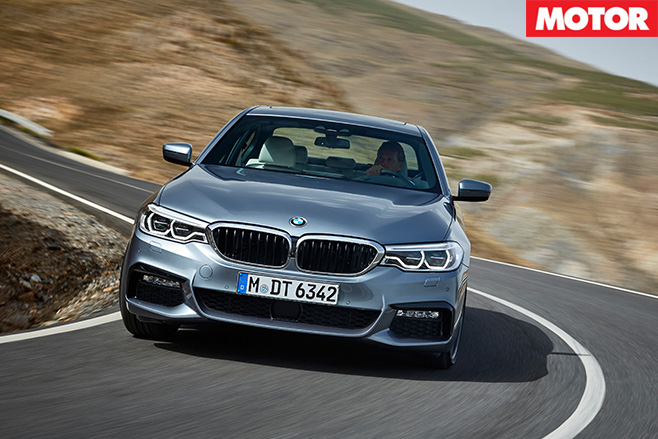
The new 5 Series arrives in Oz in March and it’s clear it has taken a big step forward.
4.0 OUT OF 5 STARS
Like The driver’s choice; superb refinement; smooth drivetrain
Dislike Some of its gadgets a bit naff; where’s our 550i?
Specs Engine: 2998cc inline-6, DOHC, 24v, turbo Power: 250kW @ 5500-6500rpm Torque: 450Nm @ 1380-5200rpm Weight: 1595kg 0-100km/h: 5.1sec (claimed) Price: $136,900
There are some cars you just have a good feeling about.
This is a separate issue to reviewing cars objectively; this is about how a car fits into your personal lifestyle and satisfies what you want from it. For some, this will be a small front-drive hot hatch, others will prefer a turbocharged all-wheel drive sedan or perhaps a stylish convertible.
As a quick aside, it’s important to keep this in mind when reading car reviews. Ferrari’s 488 GTB is unquestionably a five-star car, but if you have two kids to transport, it’s useless. Likewise, a Ford Falcon XR8 Sprint might have its flaws, but if you’re a Ford fan who loves V8s, chances are it’s going to tick boxes.
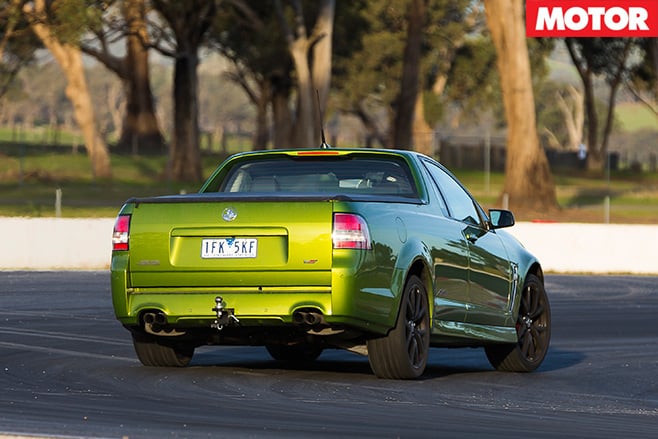
Lacking any offspring (or friends) two seats was more than enough and with an annoying motorsport habit the enormous boot proved invaluable for carting bits and pieces. Then there’s the driving experience.
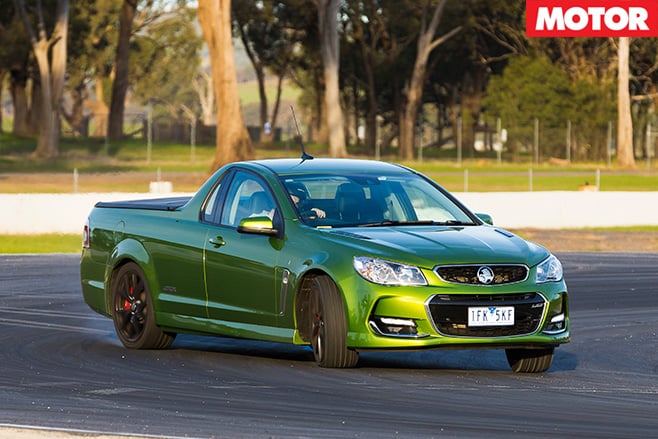
The Redline isn’t the sharpest tool in the shed, but having grown up with rear-wheel drive I’ll gladly trade some handling precision for the ability to help steer the car with the throttle, something that became alarmingly easy as the tyres wore down. The Bridgestones still had plenty of tread, but towards the end of the Redline’s tenure you certainly had to be awake when driving in the wet.
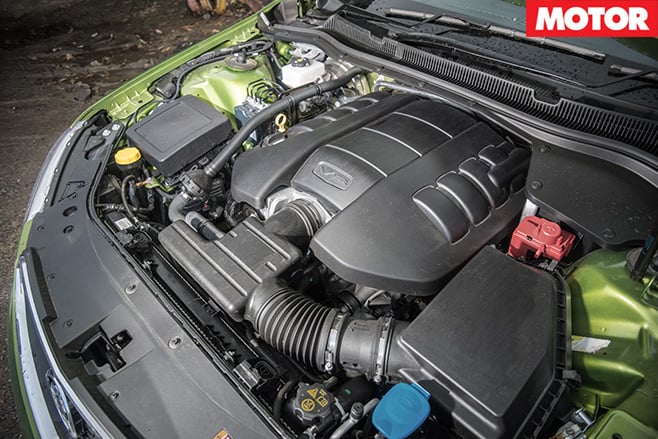
In these eco-conscious times an average of 15.2L/100km is pretty disastrous. However, when you consider that this includes two track sessions and plenty of unnecessary acceleration in order to hear the LS3 roar, it’s actually not too bad. It’s a figure that could be trimmed, but equally, if you’re worried about fuel consumption, a V8 ute isn’t for you.
As mentioned last month, one option I would consider is either a hardtop tonneau or a canopy, while one option I wouldn’t tick is the 20-inch wheels. They might help the Redline’s stance, but I worried about having such low-profile tyres when engaging in typical ute activities like driving on gravel roads.
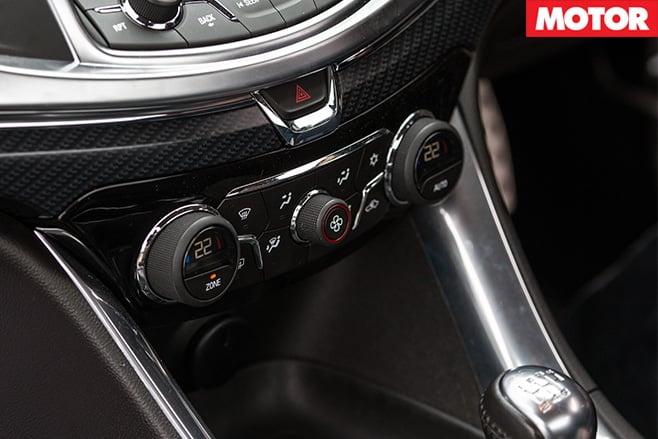
My overriding impression of the Redline is that it’s a great ‘isolation’ car. There’s always plenty of new metal in the MOTOR garage and if I’d stepped out of something particularly focused, the Holden could feel a bit woolly and imprecise. However, the feelings soon faded and I always looked forward to getting back behind the wheel of the green machine.
Sadly, while the Holden Commodore name will live on, it will soon be the end of the road for this type of vehicle, a true do-everything performance car. As of October 2017, the V8 ute will merely be a chapter in Australia’s motoring history, and that really is a crying shame. For one, I’m not sure there’s any other car that gives me such a good feeling.
Liked Extending the loan
Disliked Not extending it enough…
Favourite moment Hearing that V8 roar every day
Fuel This Month: 16.2L/100km Average: 15.2L/100km Distance: This Month 356km Total: 14,411km
Buying a car is a big decision and it comes at a big cost, but it doesn’t need to be so scary. Learn to avoid these five common mistakes, and you’ll be well on your way to getting that new-car feeling and avoiding the dreaded buyer’s remorse.
Skipping the research
Look, the internet is so easily accessible these days, there’s really no excuse for skipping the research step. Not looking at what’s out there and filtering through your options is the first mistake you can make as a car buyer. There’s so much available, there may be something that suits your check list for a more affordable price.
Read reviews of people who have actually driven the cars and find out all your need to know from the experts (have you seen the website WhichCar.com.au? We hear they’re a pretty good place to start). Arm yourself with knowledge and you’ll avoid walking out of a dealership with a car you were talked in to buying rather than a car you wanted to buy.
Settling for dealership financing
Dealership financing is convenient, but don’t be suckered in to thinking it’s the best. Sure, zero percent financing will sound appealing, but remember, as with all loans, there’s always the fine print and you could end up paying a lower monthly fee, but for a longer period of time.
Banks and credit unions are as competitive as car dealerships, so before you set foot in a dealer, find out what loan deals are available and get pre-approval. Then you can compare that against the dealerships offer, and use it as a negotiating point.
Only visiting one dealer
There are a lot more buyers out there who only shop at a single dealership than you realise. But even if you know the salesperson or you’ve bought all your cars from him before, that doesn’t mean they are offering the best price.
The bonus is that these days a lot of dealerships also put their best deals online, so it makes it easier to shop around, pick a couple, pay them a visit, and negotiate.
If you feel disloyal shopping elsewhere, then at least you have a bargaining chip to take to your regular salesperson.
Not being prepared to negotiate
A car’s sticker price is usually the manufacturer suggested price, so they’ve got a hefty margin and give dealers a lot of room to negotiate, making an average deal appear a lot better.
Find out what the dealer price is (the amount they paid the manufacturer) and use this as a starting point for your negotiation. You won’t get it profit-free, obviously, (it’s a business after all) but you’ll be able to get a better deal than just paying sticker price.
Not asking questions about dealer extras
“We’ll even throw in…” is always an appealing phrase when you’re trying to make a deal. But did you know dealers make more money on extras and servicing than they do on the actual margin of the car? So while accessories are an extra bargaining chip to sweeten a deal, they’re also likely to use these to up the final price you’re paying.
Things like fabric or paint protection, wheel insurance, or floor mats can sometimes be unnecessary costs. Make sure you’re only buying what you want and be aware that sometimes you can buy accessories elsewhere. Don’t settle for the added cost.
Hyundai’s eco-star Ioniq is the world’s only car with hybrid, plug-in hybrid and pure electric variants and all three are heading our way early next year.
Unlike the grotesquely over-styled fourth-generation Toyota Prius, Hyundai’s five-door front-drive hatchback is attractive. The Ioniq is obviously aerodynamic, but its clean, sleek shape is more pleasing to the eye.
Hyundai’s drivetrain engineers also aimed to create a hybrid system with more driver appeal than Prius. Both plain and plug-in versions have a six-speed double-clutch transmission to avoid what the Korean carmaker calls the “rubbery feel” that’s inevitable with a CVT like that in the Prius and other petrol-electric Toyotas.
Hyundai’s hybrid layout is more like that chosen by Porsche, BMW and Mercedes-Benz for their petrol-electric models.
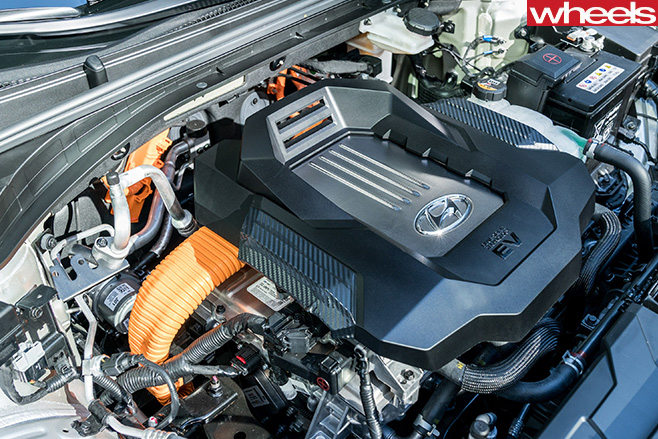
A hybrid-specific version of Hyundai’s 1.6-litre Kappa is used in both Ioniq hybrids, but the plug-in version has a more powerful electric motor, and a larger lithium-ion polymer battery for an electric-only driving range of around 50km.

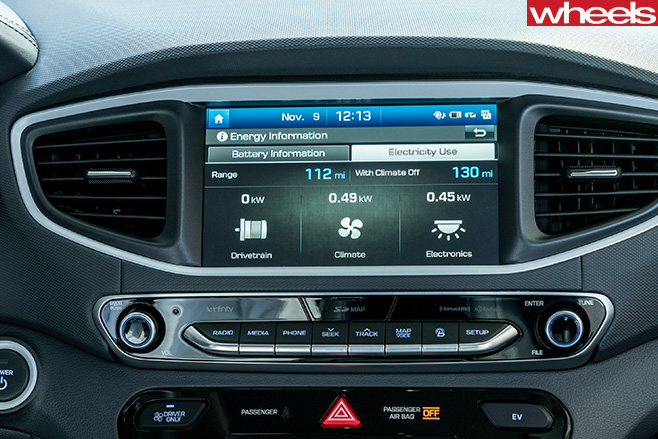
It uses the same battery cell technology as the plug-in, but its 28kWh pack stores more than three times as much energy.
Hyundai’s engineers claim the car is the most energy efficient electric on the market.
- Read about the new, tree-hugging Hyundai Ioniq variants
- Find out more about Hyundai and Kia launching a small SUV assault
In the USA the Hyundai Ioniq electric is priced below the Leaf, Nissan’s strong-selling electric car. There’s no reason to think Hyundai can’t do the same in Australia. Priced around $35,000, the Ioniq electric would be the most affordable battery-powered model ever offered here.
“There’s three different segments, the way we see it.”
Grant believes Ioniq is an image-builder for Hyundai.
“The product, in all three executions, says something about our company globally, our technology, and our capability to be a part of the future of our industry. There’s a global necessity to play. And, in Australia, it’s good to be able to bring those technologies to people in different forms.”
Launching all three at once would make a major statement, Grant believes. While right-hand drive versions of the hybrid, plug-in hybrid and electric will finally become available very late in 2017, a launch just weeks ahead of Christmas doesn’t make commercial sense, he adds.
“We need more government support and more government vision and leadership around the adoption of these kinds of technologies, because they are still emerging and relatively expensive, and you need infrastructure,” Grant says.
Tax breaks are just one of the measures Grant believes governments could use to encourage car buyers to make the switch.
What’s needed, he argues, are measures that will be persuasive from the point of view of car buyers. “Some incentive directly for the consumer to adopt these new and emerging technologies that are good for the country, good for the environment,” is the way Grant puts it.
“We can battle on our own, or the government can sort of show some leadership on it,” he continues. But Grant is doubts this will happen any time soon. “I haven’t seen any signs that it’s emerging.”
Grant’s criticism of the government echoes that of BMW Australia’s CEO Marc Werner who earlier this month called on Prime Minister Malcolm Turnbull “to finally action robust policy to support the introduction of low emission vehicles to the Australian market.
Citroen’s floundering luxury offshoot, DS Automobiles, will receive a much-needed boost next year with the arrival of the DS 7 SUV Crossback.
Poised for a Geneva Motor Show debut early next month, this will be the French brand’s first foray into the SUV sphere (outside of China, which offers the regional DS 6), which should help give it a much firmer footing internationally.
To do that, of course, it needs to conquer established rivals like the Audi Q5, BMW X3, Land Rover Discovery Sport, Lexus NX, Mercedes-Benz GLC and Volvo XC60, though whether DS has the same cachet as the others outside of Europe remains to be seen.
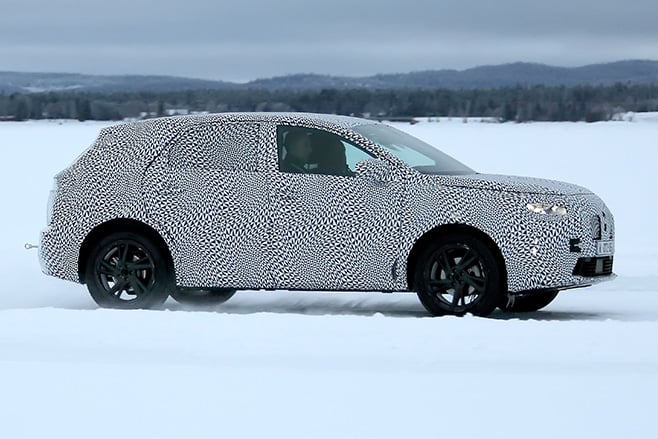
Actual details are scant, except that the five-seater SUV is to ride on Groupe PSA’s same lightweight yet strong EMP2 platform underpinning a variety of impressive recent Peugeots and Citroens, including the latest 308, C4 Grand Picasso and upcoming 3008.
That means a variety of four-cylinder turbo petrol and diesel powertrains, driving the front wheels via a six-speed automatic transmission, as well as a rumoured plug-in hybrid that is capable of travelling up to 50km in pure EV electric vehicle mode.
It is believed that the newcomer is closest in size to the latest Peugeot 3008 SUV. As the latter has been strongly received in Europe, it augers well for DS Automobiles’ aspirations.
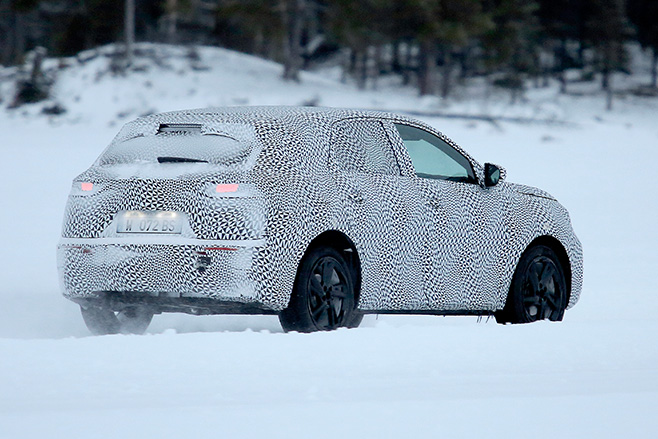
Reportedly, one key difference between the two Group PSA cousins might be the availability of hydropneumatic suspension on some variants. Not only would that move promise class-leading ride comfort, it links the Crossback directly back to an iconic Citroen technology that helped make the otherworldly original DS from 1955 to 1975 one of history’s great GTs. We live in hope.
So when can we count on seeing this intriguing mid-sized SUV? With luxury crossover sales booming in this country, it seems almost certain that the DS 7 Crossback would be under careful consideration for Australia.
If given the green light, expect pricing to mirror that of most rivals such as the GLC, which kicks off from about $65,000 in its most basic form.
Have spy pics of your own? We’d love to see them. Just email them to [email protected]
The grim reaper of diesel engines will strike small cars first, and the carnage will be swift and widespread.
Wheels has written at length about the impending death of diesel; (see Insider, p20, Wheels, February), and nowhere is this more evident than in Volkswagen’s powertrain strategy for its next-generation Polo.
More broadly, the once-ubiquitous small B-segment diesel car that filled cramped parking spots on Europe’s streets is set to quickly move to the endangered species list.
Speaking to Wheels at the launch of the VW Golf 7.5, Dr Holger Blume, a senior head of VW powertrain development, all but confirmed that the sub-2.0-litre diesel was dead for small cars, in maybe three to five years.
Dr Blume said, “Diesels are at their most efficient in low-rpm running on motorways, and these days, small cars tend to get used less in this environment. Ultra-efficient petrols and mild hybrids make far more sense in this [mostly urban] application.”
Dr Blume reinforced what is already on record from VW’s head of research and development, Frank Welsch: that the high cost of developing an effective emissions after-treatment system for a successor to today’s turbocharged 1.6-litre four-cylinder diesel (known internally as the EA827) – is a key factor in the decision for the switch in driveline strategy.
According to Dr Blume, “The after-treatment system needed to meet new regs is very expensive; maybe as much as the engine itself.”
Instead, we need to look to the new 1.5-litre EVO four-cylinder turbo petrol and the 1.0-litre turbo triple for a guide as to how VW plans to navigate the next phase of ever-tougher emissions and consumption legislation. The EVO 1.5, not slated for Australia at this point (but inevitable in the longer term, when the current 1.4-litre is discontinued) features lightweight construction, ultra-low-friction cylinder liners and internals, but is actually only the starting point for VW.
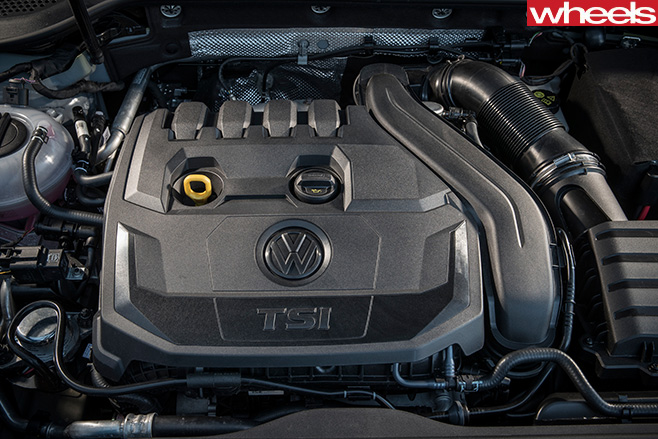
Second, cylinder shutdown. Already employed in the current 1.5 EVO, this system see cylinders one and four shut down on a light throttle application, allowing the engine to run as a super-frugal twin when gradient is in the car’s favour.
Finally, when the driver’s foot is fully off the throttle, the Bluemotion EVO engine not just decouples from the transmission, it bypasses the idle state conventional ‘coasting’ functions opt for, and cuts out altogether. The car’s stored reserve of electrical energy is used to power key systems such as power steering, brake assistance, HVAC, and emergency functions.
But it’s not all death for diesel; at least not just yet. While binning development of the 1.5-litre four-cylinder turbo-diesel, Blume told us that VW will continue to develop a next-gen version of the EA288 2.0-litre four-cylinder turbo-diesel. “The 2.0-litre is important to continue,” he said, adding, “When it comes on stream in a couple of years, it will be outstanding in terms of low CO2 and Nox.”
Okay, so Nissan had already bred a rally monster from its Pulsar in the early 90s. But this video makes us wonder why we haven’t seen more GT-Rs slinging dirt.
Sure, Nissan focused using the R32 to tear circuit competition to shreds. But its drivetrain debuted one of the most sophisticated all-wheel drive systems of the modern era.
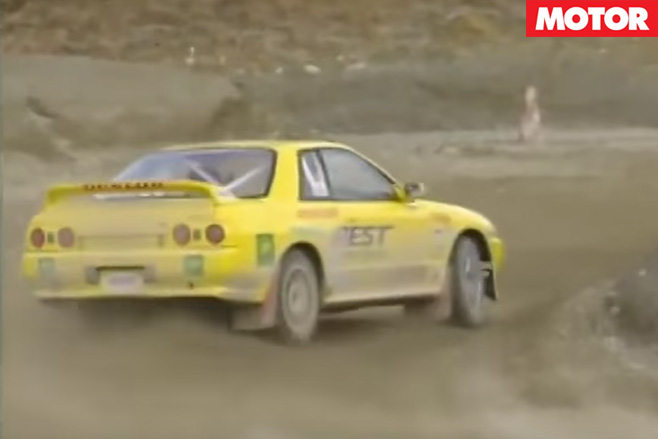
The video’s Japanese commentary makes it hard to decipher what exact spec his R32 GT-R was built to, but we know the world needs more of them with mud flaps and a lurking ARC intercooler.
We can, however, see his GT-R also packed a centre-diff controller, ala WRX STI, to vary the amount of power sent to the rear wheels.
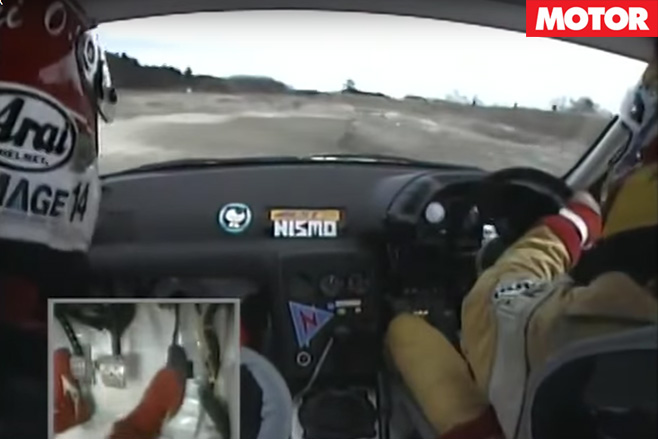
But with that RB26 howling and gravel flying it looks and sounds more than natural on the slippery stuff.
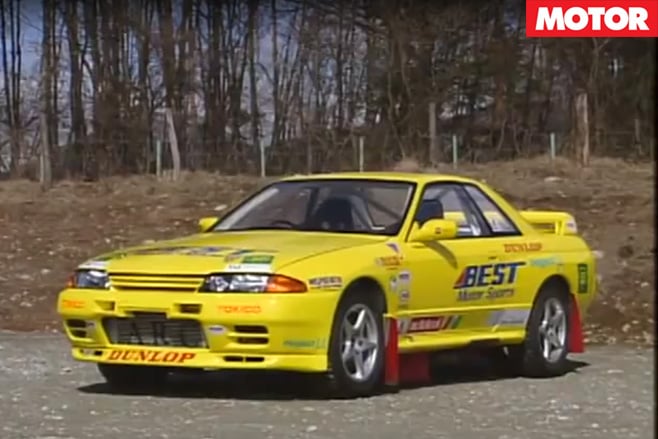
He also returned three years later with a R33-series 400R, which if you can’t tell by the video below, loved the dirt just as much.
