
Mitsubishi’s imagination seemed lacking when it named its all new small SUV by simply recycling an old badge name from a now defunct coupe.
Sadly it’s not Starion, but the astronomically related Eclipse Cross, borrowed from the Eclipse compact sports car sold in the US between 1989 and 2012. The Cross is short for crossover.
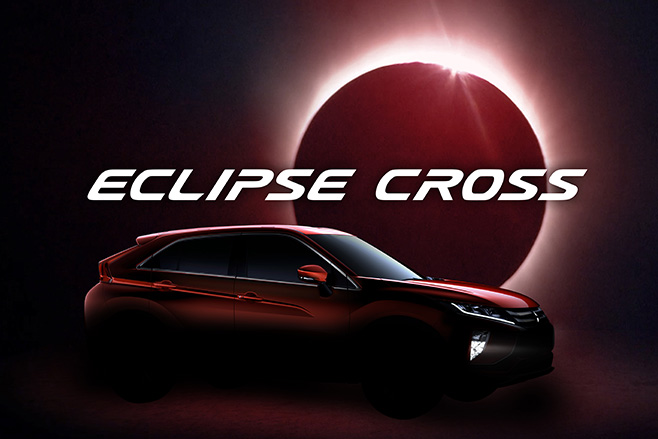
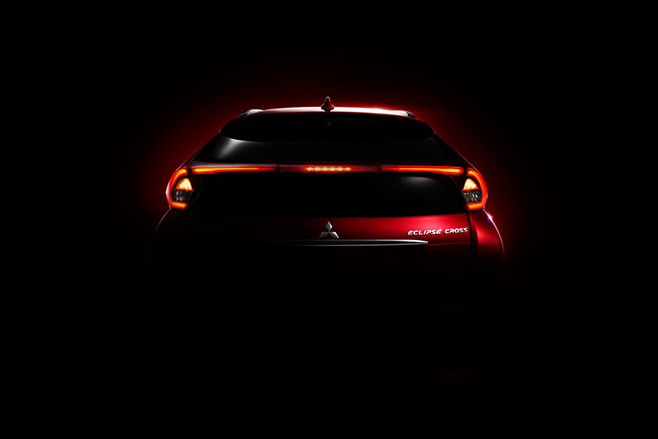
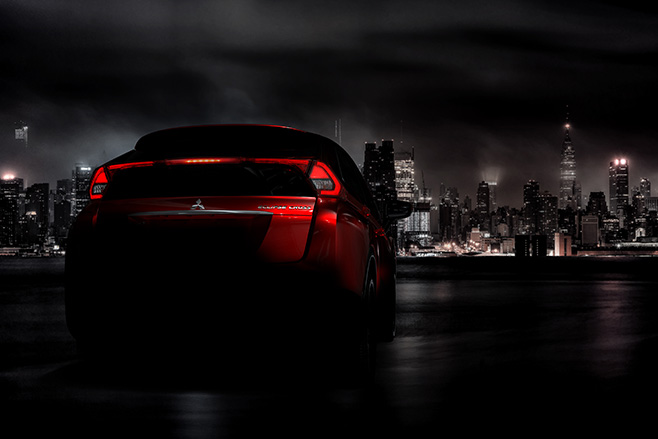
The accompanying teaser pictures are predictably obscure. So, barring any leaked images, we’ll have to wait until the Eclipse Cross is revealed at next month’s Geneva Motor Show to see whether or not it’s as beautiful as they say or if viewing it requires extreme eye protection.
They do however reveal it will be a toned down version of its audacious XR-PHEV II Concept parent, with subtle takes on its front-end treatment, shoulder line and stepped tailgate.
No word on powertrains yet but, with all Mitsubishi SUV concepts since the PHEV-II being plug-in hybrids and the company’s commitment to hybrid electric vehicles, it’s a safe bet there will be a battery-assisted version.
The Eclipse Cross is the first of a new generation of Mitsubishi SUVs and will slot in between the Mitsubishi ASX and Mitsubishi Outlander in the company’s five-SUV strategy that also includes the Pajero Sport and Pajero.
It’s expected to only be marginally bigger than the ASX, which is due to make way for a baby SUV, based on the Mitsubishi EX concept shown at Tokyo in 2015, as soon as next year.
The current, third-generation Outlander isn’t due for replacement until 2019 with its successor expected to be a subdued version of the very brash Mitsubishi GT-PHEV concept which turned heads at Paris last year with its B-pillarless design and rear suicide doors.
AN ALL-NEW Kia Picanto hatchback will have its first outing at the 2017 Geneva Motor Show ahead of its arrival in Australia in about June.
The new-look, European-designed city runabout will take on the likes of the Holden Spark, the Suzuki Celerio and the Mazda 2 when it arrives, introducing a five-speed manual version for the first time that should trim about $1500 off the four-speed auto Picanto’s price.
As well as the option of changing gears yourself, this update to the Kia Picanto brings something the smallest car in Kia’s Australian line-up lacks when compared with the competition – a high level of smartphone connectivity.
To be built in Korea, the 2017 Kia Picanto will replace the model introduced to Australia in mid-2016 – the small hatchback launched last April was already six years old before the carmaker found the means to bring it here.
Although it is not longer than the car it replaces – those dimensions remain unchanged even though the wheelbase has grown by 15mm – the Picanto boasts a roomier interior than the car it replaces. The car will initially launch in Europe with either a 49kW 1.0-litre three-cylinder engine – if it comes here, it will be the least-powerful engine on sale in Australia – a 74kW turbocharged 1.0-litre three-cylinder engine (fitted to the five-speed manual alone), or a 62kW 1.2-litre four-cylinder engine.
In an interesting twist, if you order the 1.2-litre-engined car with incandescent daytime running lights, fuel economy for the 976kg hatchback is unofficially rated at 4.0 litres per 100 kilometres. Swap out the globes for LEDs, and fuel use falls to 3.9L/100km, indicating those bright white strips visible in the rear-view mirror aren’t just for show.
The Picanto also takes a big step forward in safety, adding automatic city braking to its suite of driver aids for the first time, although it is not yet known if this feature will be standard on all the cars sold in Australia. That adds to six airbags and electronic stability control and the option of a tyre pressure monitor.
Inside, the more tech-heavy Picanto adds a 7.0-inch touchscreen that appears to float from the centre of the dashboard. It includes satellite navigation, Apple CarPlay and Android Auto compatibility, and a reversing camera. On European models, a wireless phone charging pad and a USB slot at the base of the centre console are offered.
It should be better to drive around in, too. Kia says it has worked on making the Picanto’s interior much quieter, and has made the body more rigid to improve how the hatchback drives.
The new Picanto is expected to sell from about $14,000 in manual form when it arrives here.
It’s one of the most affordable small SUVs on the market, so let’s see how far your money gets you.
What stands out
The Mitsubishi ASX is classed as a small SUV, though it’s one of the roomier options in its segment. It drives nicely on country roads with good steering and decent power especially in diesel form. Every ASX has cruise control, a reversing camera, Bluetooth phone connectivity and climate control air conditioning. Safety features includes seven airbags and stability control, and it’s covered by a five-year, 100,000km warranty from Mitsubishi.
What’s inside
Controls and displays inside the ASX are logically laid out and the front seats aren’t too bad, though they could use more lateral support. Cabin noise can be a bit of a problem with loud tyre roar on the freeway, and around town it lacks the refined ride of some competitors, but it does a generally good job of keeping passengers comfortable at open-road speeds.
Choosing yours
ASX comes with either a 2.0-litre petrol engine with a front-wheel drive CVT gearbox, or with a stronger 2.2-litre diesel engine and a six-speed automatic with all-wheel drive for better grip on gravel roads. From there you have a choice between the entry LS model and the premium XLS. The higher spec XLS is significantly more expensive and adds leather seats, a panoramic glass roof, keyless entry and start, automatic headlights and wipers, and satellite navigation.
For overall cost-effectiveness, we’d buy the ASX LS 2WD petrol. It’s the most affordable and represents the best value of the range. More expensive ASX models don’t stack up as well against their newer competitors, but the base ASX with its keen driveaway pricing makes sense.
Summing up
The ASX is getting on in years and isn’t quite as well-rounded as some other small SUVs, but for those on a tight budget there’s a lot to like about the cabin space, safety features, new-car warranty and value that the base model offers.
Toyota has just sold its 10 millionth hybrid car, achieving a significant benchmark less than two years after announcing it had reached the eight million mark.
However, before you get excited, it’s been a long road to now. Toyota sold its first hybrid car, the Prius, in 1997. Toyota’s environmental poster car didn’t make it into Australian showrooms until 2001.
Over that time, the Prius family has grown to include three models: the compact Toyota Yaris-sized Prius C hatch, the small Prius five-door hatch, and the Prius V compact people-mover. It also has the larger Australian-made Camry Hybrid. Add in Toyota’s Corolla hybrid, and the cars made for its luxury arm – the CT200h small hatch; the small IS, mid-size ES, larger GS and limousine-like LS sedans; the small NX and the mid-size RX SUVs – and the Japanese carmaker has the most comprehensive hybrid line-up in Australia.
Leaving Lexus alone, what’s the pick of Toyota’s hybrid litter?
Toyota Prius C
The tiny Prius C is the entry-level model in Toyota’s hybrid line-up, costing from $23,450, or about a $2500 premium over the most expensive, best-equipped Toyota Yaris. An i-Tech version – Toyota’s fancy name for adding satellite navigation and replacing the halogen headlights with LED ones – adds another $3000-odd to the price.
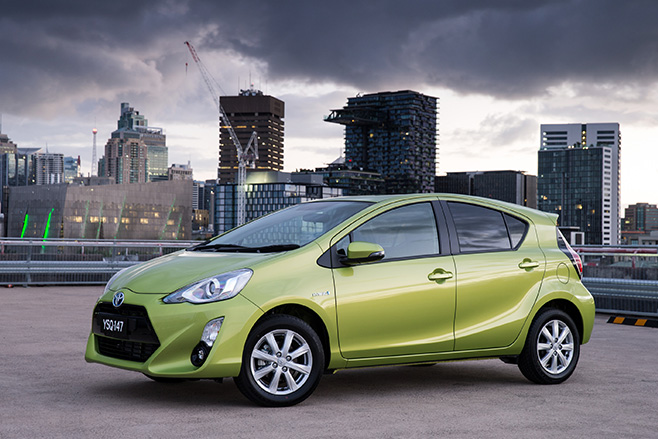
Official fuel use from the 1.5-litre petrol engine paired with an electric motor to help drive the front wheels is 3.9L/100km, while its carbon dioxide emissions – a sign of how green the car is – is rated at 90 grams per kilometre.
The Prius C is quite tight in the rear seats, and because the batteries are under the boot floor, the load space is very small compared with a normal hatchback. It’s rather dull to drive, and the plastics inside feel cheap and a little nasty when squared off against its high price.
Likes: Good fuel economy, cheapest way into a Toyota-badged hybrid Dislikes: Tight on rear-seat space, smaller cargo area, dull to drive, feels a bit cheap
Toyota Prius
We’re up to our third generation of Toyota’s environmental hero, and it has improved along the way. Priced from slightly less than $36,000, it costs about $3000 more than the much more conventional-looking Toyota Camry Hybrid.
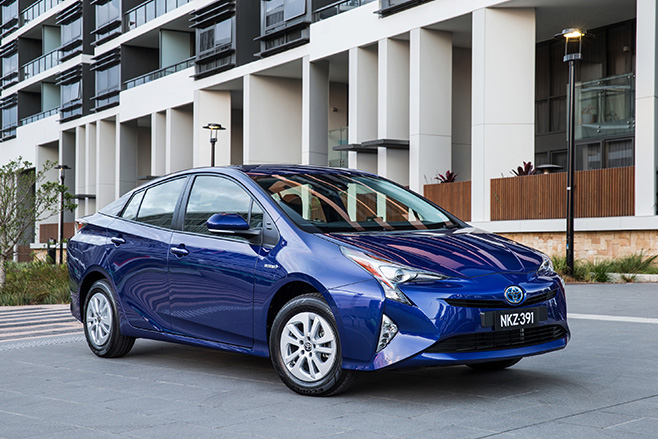
It’s the newest car in Toyota’s showroom, featuring what is known as the Toyota New Generation Architecture. That means it uses an all-new way of being built that optimises the Prius for hybridisation, as well as improving ride and handling. Unfortunately, the Prius’s new wrapping has become something of an acquired taste.
That said, the Prius now drives much better than it did before, but is still different to a conventional car. The big difference is how it brakes; to scrounge electricity it puts its electric motor in reverse to act like a generator, giving the brake pedal an odd, disconnected feeling. It’s good for rear-seat space, but the swept-back roofline eats into headroom. The boot is also a decent size; you can split-fold the rear seats to fit in larger parcels.
A more expensive i-Tech version with sat-nav, bigger wheels, a smattering of leather, heated front seats and power-adjust driver’s seat, and blind-spot warning system cost an extra $7000-plus.
The Prius uses a 1.8-litre engine and an electric motor, and uses just 3.4L/100km and spits out 80g/km of carbon dioxide.
Likes: Great fuel economy; roomy inside; best-driving Prius yet Dislikes: Confronting design; lack of headroom in the rear
Toyota Prius V
Need the convenience of a part-time people-mover but don’t like the big fuel bills? The $34,490 Prius V may be the answer. It uses a similar 1.8-litre engine and electric motor to the Prius, but fuel use jumps to an average 4.4 litres per 100 kilometres, and emissions to 101 grams per kilometre.
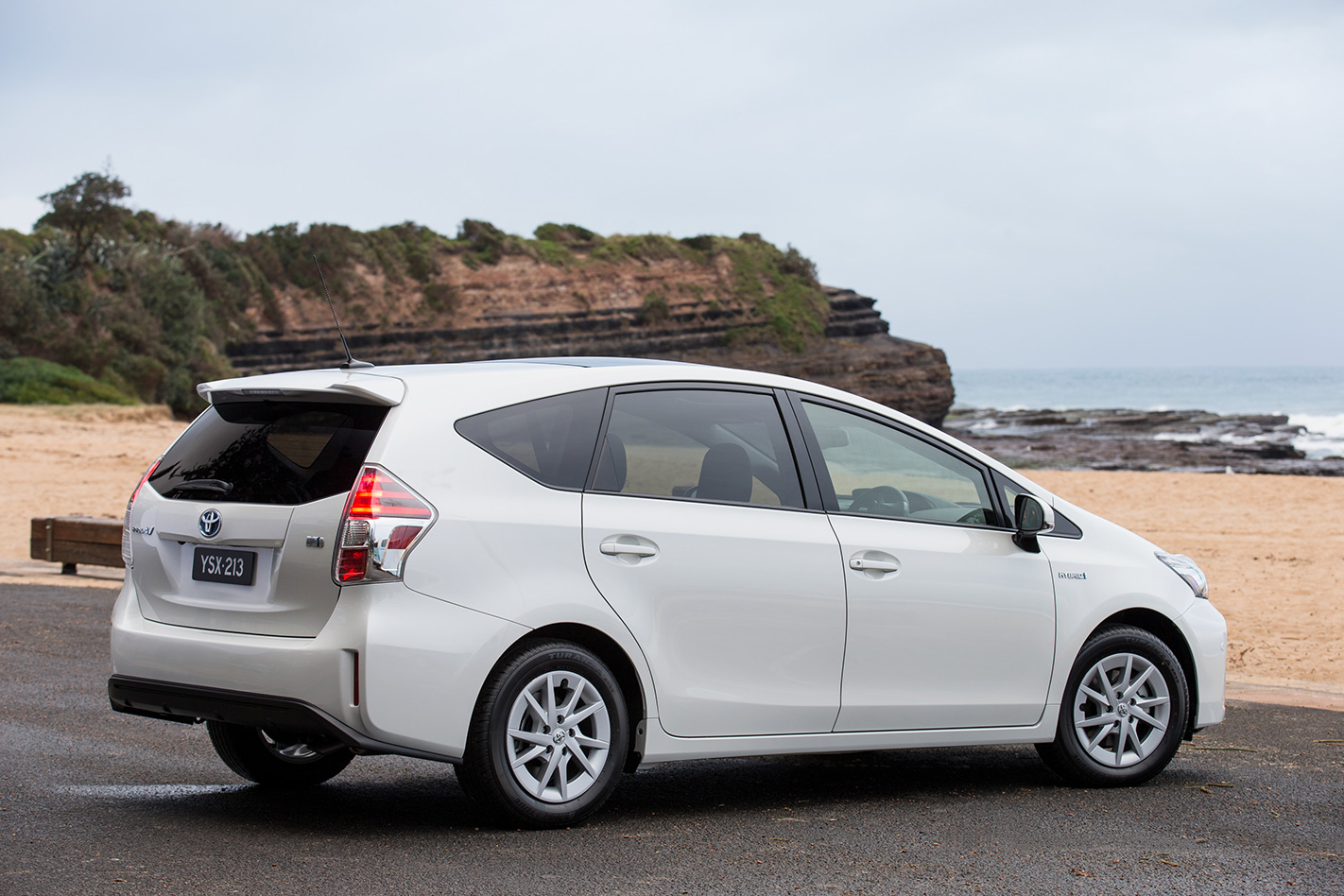
The rear-most seats are better suited to occasional use, and even then only with children filling them, and once the third-row seatbacks are upright there’s next to no luggage space.
As the Prius V is based on the old platform, it’s old-world tech apart from the frugal fuel use. Once again, there’s an almost $10,000 more expensive i-Tech version – wow – that includes satellite navigation and better LED headlights. The only bit of leather is on the steering wheel.
The Prius V suffers the same foibles as the smaller Prius C; it’s dull to drive, and the second- and third-row seats are rather cramped for space.
Likes: Seven-seat capacity; still pretty frugal Dislikes: Cramped interior; huge price jump to i-Tech model; no storage with all three rows occupied; dull drive
Toyota Corolla Hybrid
The Corolla was pipped last year for another crown as Australia’s best-selling car by an unexpected rival – the Toyota Hilux trade ute.
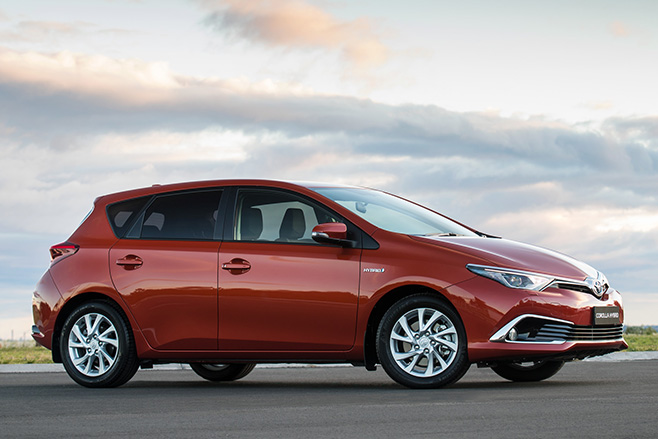
That aside, the Corolla was still Australia’s best-selling passenger car last year. It added a hybrid version costing $26,990 last year, making it more expensive than the much bigger Camry Hybrid (see below) and the second-most expensive Corolla on sale.
Inside, it’s surprisingly roomy and relatively well built if not very plastic. Under the bonnet is a 1.8-litre engine detuned for fuel efficiency, and paired with an electric motor to give the same level of performance as a conventionally engined version. Fuel use is as low as 4.1 litres per 100 kilometres; emissions fall under the magic 100 to sit at 96 grams of carbon dioxide per kilometre.
About the only sore point, apart from a raised boot floor that robs some luggage space, is the brake pedal. It is tuned to use the electric motor to scrape as much energy out of the braking process that it can and convert it to electricity that’s stored in the batteries. It can get so tricky that you never know exactly how much brake pedal pressure to apply.
Likes: Looks conventional; cheap for a hybrid vehicle; good fuel economy; roomy Dislikes: Expensive for a Corolla; hard plastic interior; slightly unpredictable brake pedal
Toyota Camry Hybrid
Aussie-made until early October, the Camry Hybrid is the quiet achiever of the Toyota range. It features a 2.5-litre four-cylinder petrol engine working alongside an electric motor to give V6-like levels of performance with four-cylinder rivalling fuel economy. And it can carry five adults in comfort.
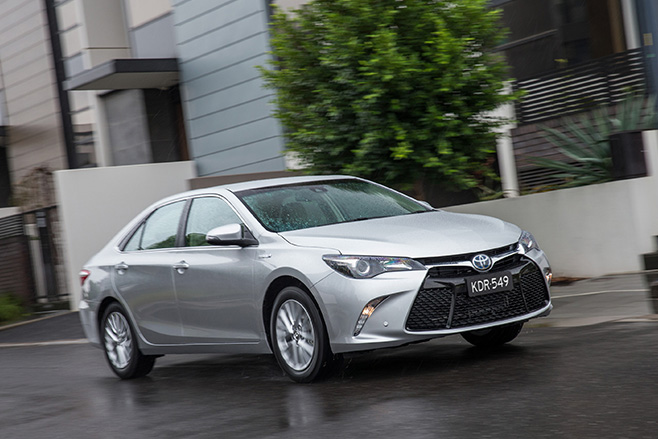
Priced from a pretty impressive $26,490 for the fleet-friendly Altise, the Camry Hybrid is something of a favourite with bulk buyers that have to tick the Aussie-made box, but want a low cost of ownership attached. Jumping up to the more richly equipped Atara S Hybrid adds $6000 to the cost. Fuel use is officially rated at 5.2 litres per 100 kilometres; emissions are 121 grams per 100 kilometres.
Disappointingly, this generation of the mid-size hybrid has taken half a step back from the previous one. The steering has become almost lifeless, the brake pedal has lost a lot of its feel so you don’t know how much to squash the pedal, and the ride – affected by the weight of the batteries hidden under the rear seat that it needs to carry – has softened.
The last Australian-made Toyota Camry is pretty dull inside, missing out on many of the changes – including more advanced driver safety aids – made to the car overseas but not introduced here in the name of capping costs.
Be warned, though: Toyota has flagged the fully imported Camry won’t be as cheap as it is now, suggesting if you’re interested in the hybrid, now’s the time to buy.
So what’s our top tip for the best hybrid Toyota? We’d lean towards the Prius, which is built on the new foundation that will spawn a whole generation of much-improved Toyota- and Lexus-badged cars. Unless you really want the extra tech, save some money and stick with the cheaper version, too; it will ride around the city better on its smaller wheels, so what you lose in convenience you make up for in comfort. If space is your priority, grab the Camry Hybrid while it’s still something of a bargain.
AUSTRALIANS are getting older and fatter. Fact. The population is ageing, and our collective love for processed food and our aversion to physical activity means our waistlines are blowing out too.
This proves an interesting dilemma for developers of crash test dummies, who are tasked with building the metal-and-plastic human analogues that carmakers use to make sure vehicles are safe enough to sell. If we’re getting chubby, why aren’t our crashable counterparts doing the same?
In order to remain relevant, the folks at Humanetics in the US of A have developed a new crash test dummy to represent elderly members of our population. Designed to help highlight the vulnerability of our ageing society when it comes to vehicle crashes, Humanetics’ new dummy design is intended to replicate the physical form and frailty of post-retirement road users.
In 2014 Humanetics also developed a dummy to represent obese members of the population, as a person’s physical size can play a large factor in how their body reacts in a crash.
Newtonian physics can be a cruel mistress, and when you add more mass to a person you’re also increasing the amount of kinetic energy that needs to be absorbed by seatbelts, backrests and airbags.
According to the Australian Heart Foundation the average Aussie weighs 85.9kg, while the US Centre for Disease Control says the average American adult weighs 75.4kg – however even though we Australians weigh more than our Yankee cousins, it is unlikely that obese dummies will be used in Australian crash tests just yet.
Australia’s home-grown crash testing body, ANCAP, currently uses a range of dummies to assess new cars. A 50th percentile adult male (weighing 77.7kg), 5th percentile adult female (weighing 49kg), an 18-month old child, and a 3, 6, and 10 year old child. The 50th percentile meaning a body shape that represents 50-percent of the population. The female dummy is used because of its smaller frame, as more diminutive passengers are more vulnerable in crashes.
ANCAP CEO James Goodwin says the body is constantly investigating new crash test dummies such as the WorldSID, and THOR mid-size dummy.
“The population is ageing and our testing takes this into account with a range of different crash test dummies used, including male and female adults and children,” he said in a statement to Wheels.
“Our broadening test program introduces a small adult female dummy and its design and stature provides a good indication of injury risk to older, more frail occupants.
“Additional, more sophisticated dummies are also joining our family so that we can provide consumers of all ages with a fair representation of injury risk to ensure everyone is kept safe.
“The work being done to develop a specific ‘elderly’ dummy is an important step in acknowledging our changing population and we welcome input into its development to improve vehicle safety design.
“Like other NCAPs around the world we will monitor the results of the research on the new dummy.”
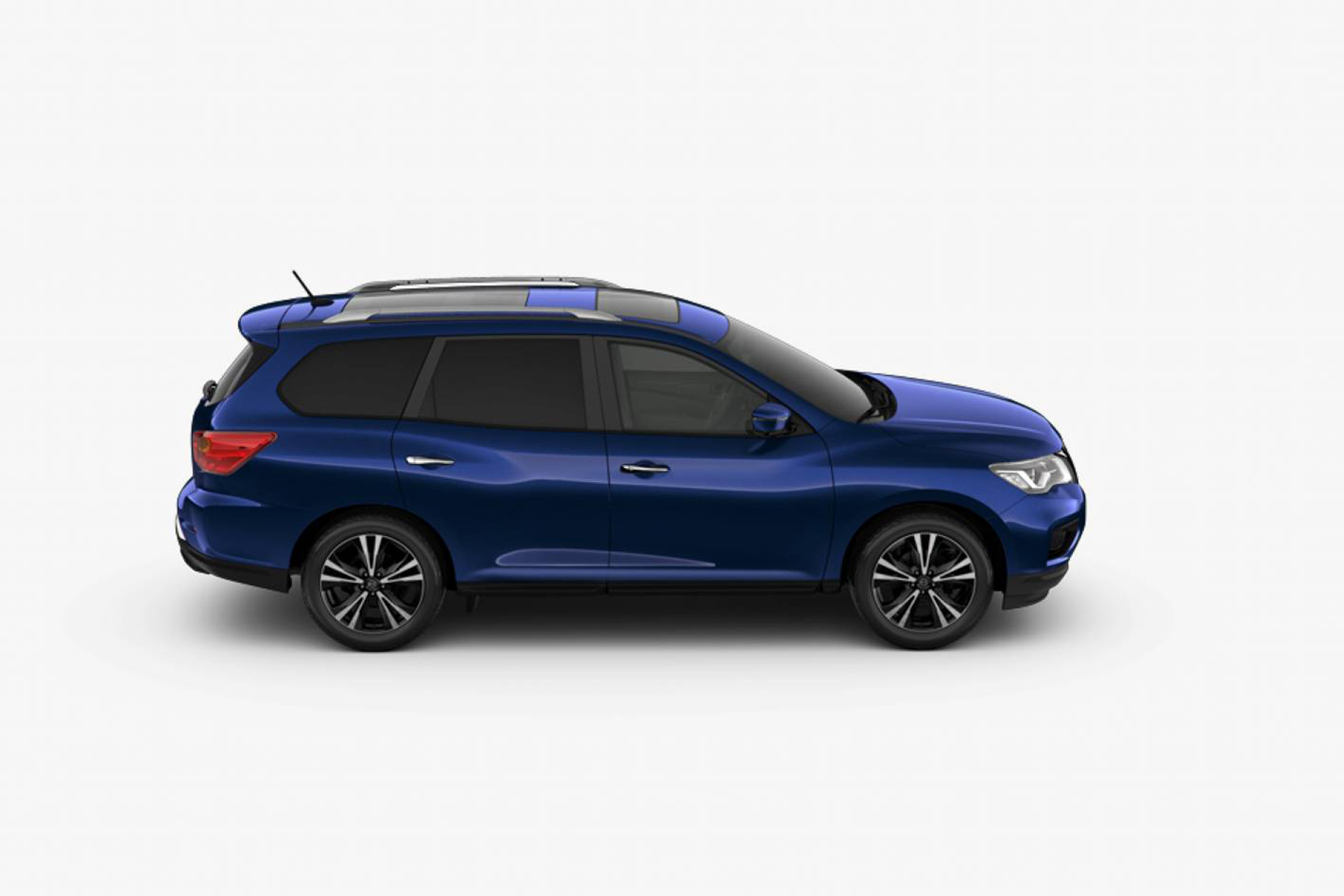
Nissan has updated its Pathfinder family of large SUVs for 2017, with engine changes, exterior design and revised suspension settings being the highlights of the now four-year-old Pathfinder’s facelift.
For 2017, the Nissan Pathfinder’s 3.5-litre petrol V6 engine goes from port injection to direct injection, gaining 12kW of power and 15Nm of torque in the process and achieving peak output figures of 202kW and 340Nm. That compares favourably with the Pathfinder’s key rival the Toyota Kluger, which makes 201kW and 337Nm from its 3.5-litre petrol V6.
Nissan has also equipped the Pathfinder’s engine with a higher compression ratio, reshaped combustion chambers, new pistons and electronic variable valve timing. Besides helping the V6 produce more power and torque, those changes also help it drink less fuel – albeit marginally. For 2017, average fuel consumption on 2WD models falls from 10.0L/100km to 9.9 L/100km, while AWD models drop from 10.3L/100km to a new low of 10.1L/100km.
The 2.5-litre petrol-electric hybrid powertrain option remains a part of the Pathfinder line-up, with unchanged power and torque outputs (188kW/330Nm) and combined fuel consumption of 8.6L/100km.
Both the hybrid and V6 come hooked up to a continuously-variable automatic transmission (CVT), which now simulates the stepped ratios of a conventional automatic. Suspension calibration has been revised for 2017 as well, with Nissan giving the Pathfinder slightly firmer spring and damper settings and a faster steering ratio to help quell its floatiness.
Safety upgrades include the addition of forward collision warning, autonomous emergency braking, active cruise control, and rear cross traffic alert on the mid-grade Pathfinder ST-L and high-grade Pathfinder Ti.
Meanwhile, the 360-degree camera view now has a moving-object-detection function to alert drivers of pedestrians or pets that are moving around the car.
On the outside, Nissan’s now-familiar V-Motion grille and reshaped headlamps and bumper plastics set it apart from early-model Pathfinders. A squarer bonnet, new tail-lamps, fresh alloy wheel designs (18-inch for ST and ST-L, 19-inch for Ti) and mirror-mounted turn signals round out the rest of the changes, while a motion-activated tailgate is now standard on the Ti model grade.
PRICING
| MY2016 MSRP* | MY2017 MSRP* |
Pathfinder ST | u00a0 | u00a0 |
Pathfinder 3.5L V6 ST 2WD | $41,490 | $41,990 |
Pathfinder 3.5L V6 ST 4WD | $45,490 | $45,490 |
Pathfinder 2.5L 4-cyl. ST 2WD HYBRID | $44,490 | $44,490 |
Pathfinder ST-L | u00a0 | u00a0 |
Pathfinder 3.5L V6 ST-L 2WD | $53,690+ | $53,690 |
Pathfinder 3.5L V6 ST-L 4WD | $57,690+ | $57,690 |
Pathfinder 2.5L 4-cyl. ST-L 4WD HYBRID | $60,690+ | $60,690 |
Pathfinder Ti | u00a0 | u00a0 |
Pathfinder 3.5L V6 Ti 2WD | $62,190 | $62,190 |
Pathfinder 3.5L V6 Ti 4WD | $66,190 | $66,190 |
Pathfinder 2.5L 4-cyl. Ti 4WD HYBRID | $69,190 | $69,190 |
Tell me about this car
The latest model Suzuki Ignis stands on tippy-toes high enough to be considered an SUV while feeling nimble like a city car. The base model manual is priced at $15,990, which is what its predecessor cost in 2005. For an extra $3000, the GLX comes with a heap of extra kit including with CVT automatic transmission, dusk-sensing LED headlamps, daytime running lights and keyless start.
Strengths
- The price: At $18,990, even the top-spec GLX is cheaper than similarly equipped competitors costing well above $20,000.
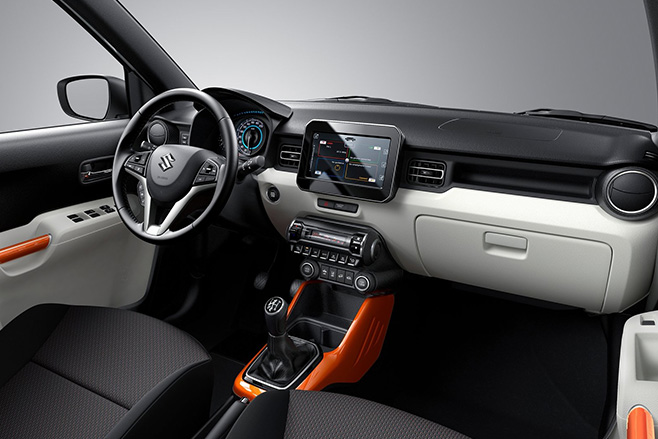
- Interior styling: The bold two-tone black and white interior can be custom enhanced with a choice of accent colours for the gear console, door handles, vents and cloth trim.
- Exterior styling: The side view is an acquired taste but you can’t help warming to its mini-ruggedness. Front-end styling is rather elegant and there’s an option to add custom accent colours to headlight and grill surrounds and wing mirrors.
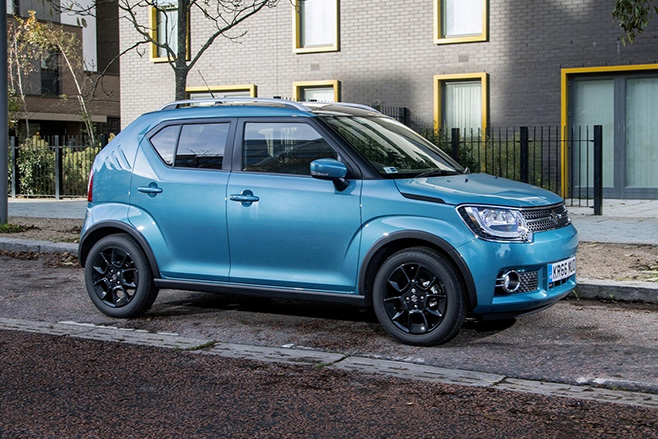
- Ride and handling: Despite being narrow and tall the Ignis doesn’t display excessive body roll. The suspension is firm but not at all harsh and feels like a bigger car, and it has a very tight, 4.7-metre turn radius.
- Parking: The short 3700mm length, low rear overhang and narrow 1660mm width makes the Ignis extremely simple to parallel park in even the tightest spots.
- Features: The entry level Ignis GL comes with cruise control, 7-inch display screen, reverse camera, voice control, satellite navigation and Apple Carplay/Android Auto as standard. On top of that the GLX has steering wheel audio controls, 16-inch alloys, daytime running lights, dusk-sensing LED headlamps, climate control air-conditioning, tinted glass and keyless entry and start.
- Space: The GLX back seats divide 50:50 and slide back and forth separately. You can adjust the backrest angle to increase the 264-litre boot capacity. Fold the seats all the way down and capacity is a substantial 1104-litres. The rear accommodates two adults with good leg and headroom. Its four-seat capacity isn’t really a disadvantage when you consider the middle seats in most small cars are token at best.
- Economy: The fuel economy is excellent. I averaged about 5.6-litres/100km with a heap of city driving and a couple of high-revving trips on country freeways.
Weaknesses
- The GLX doesn’t come with a manual gearbox option.
- The CVT is fine around town but with just a 1.2-litre engine it revs like crazy on freeways when confronted with hills or high winds.
- Its SUV classification is notional. Its practicality should be viewed against light cars where it holds up pretty well.
- The centre console doesn’t have an arm rest
- Inadequate cabin storage space.
Are there any rivals I should consider?
SUV rivals include the Ford Ecosport, Holden Trax, Mazda CX-3, Honda HR-V and Mitsubishi ASX. It’s also worth comparing with light cars such as the Honda Jazz, Holden Spark, Ford Fiesta and Toyota Yaris.
McLaren’s 650S successor will possess otherworldly acceleration according to newly revealed performance claims.
Leading up to the debut of its new Super Series line next month, the brand’s published quarter mile and 0-200km/h times on its next generation of Ferrari fighters.
Using a new 4.0-litre twin-turbo V8, codenamed the M840T, drivers will be able to extract 10.3-second quarter mile times from the new cars. During runs, 200km/h is said to pass by in 7.8-seconds.
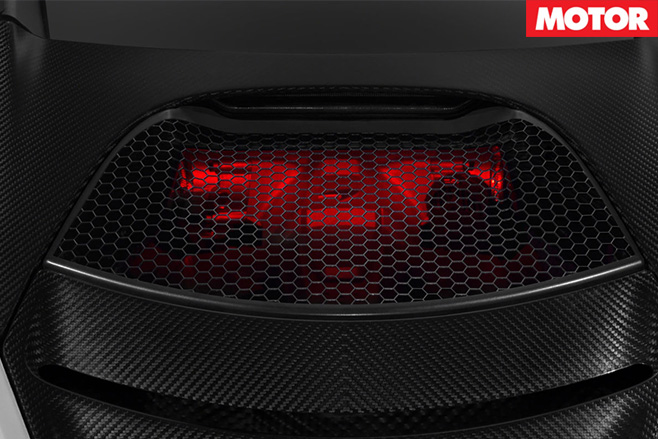
More importantly, while we’re comparing claims, the new McLarens should pip Ferrari’s 488 GTB to 200km/h by 0.5sec, and run a drag strip over a tenth sooner.
If it could back up those claims on Australian soil, the new Super Series would be faster than any car MOTOR has tested. Including the PCOTY-2017-winning Porsche 911 Turbo S, which slaughtered the quarter mile in 10.7sec.
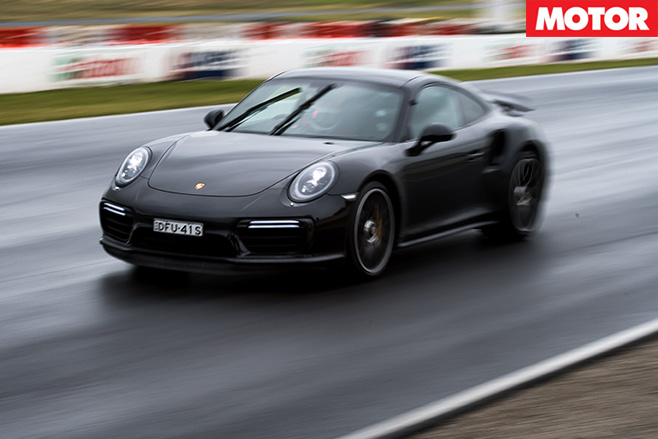
With a new exhaust system said to be “among the most emotive of any McLaren”, throttle response, torque, and power are all claimed to have improved along with fuel efficiency and emissions.
Rumours suggest McLaren will reveal the first Super Series car as the ‘720S’ at the Geneva Motor Show – the numbers, of course, indicating its engine’s horsepower output.
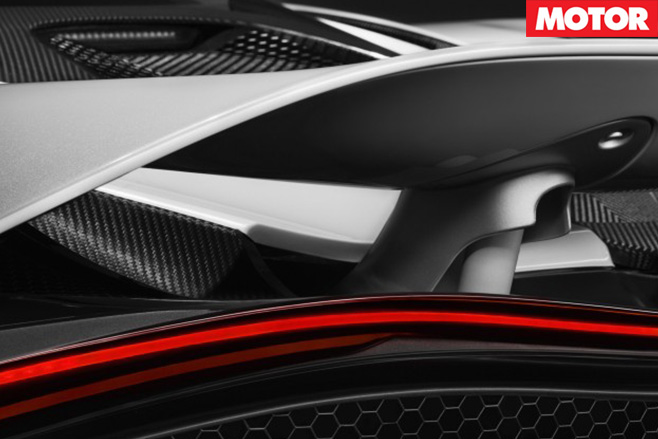
As we’ve previously reported, the car will also debut a new, lighter carbon-fibre driver’s cell, and an evolution of its hydraulically-linked suspension system.
The car will be revealed at the Geneva Motor Show on March 7.
Heard about the Tesla Model X? Its reputation certainly precedes it: with staggering numbers such as a 0-100km/h sprint of 3.4 seconds and average fuel consumption of 0.0L/100km, Tesla’s first-ever SUV is certainly a remarkable machine.
However, at $159,342 retail (including luxury car tax) for the entry-level Model X 75D or a whopping $258,402 for the range-topping Model X P100D tested here, it’s far from a cheap means of family conveyance. Those prices, by the way, are when it’s in five-seat configuration. Ticking the box for a six-seat or seven-seat interior adds $4500 and $6000 respectively. So, does it justify such a significant outlay?
STRENGTHS
Don’t let its near three-tonne kerb weight deceive you. The Model X, when asked to, can handle corners like a sports car. It grips the road like a limpet, and its floor-mounted battery packs keep the centre of gravity low for zero body roll. Meanwhile, torque vectoring ensures outstanding cornering even while under power.
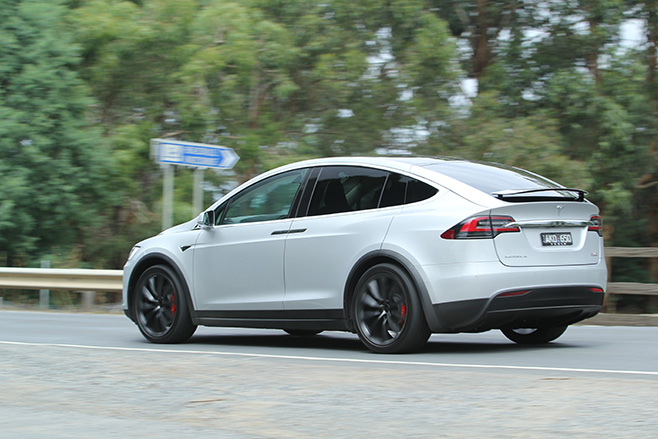
Instant response from its powerful dual electric motors makes the Model X stunningly fast – especially in the P100D grade tested here. Plant your foot down, and the Model X P100D leaps forward instantly. In fact it does so with such vigour that you may want to consider dialling it back to its less-intense Insane Mode (yes really) if you don’t want to upset your passenger’s stomachs. Dial up Ludicrous Mode (we’re absolutely not joking), and the P100D rips to 100km/h in a scarcely believable 3.1 seconds.
Guilt-free motoring is another Model X virtue. If you source your household power from renewable sources and keep your battery charged up from your wall outlet, the Model X can get you and your brood from point A to point B without any CO2 being emitted in the process.
Though it may look a bit compact from the outside, fitting seven adults in the Model X is certainly achievable. The hard plastic seat shells cut into knee room, and toe room for third-row occupants is still tight despite the Model X’s clever pedestal-mounted second row seats, but passenger packaging is commendable.
The Model X is a tech fest, a gadget-lover’s wet dream. From its huge tablet-style touchscreen infotainment display to its 360-degree array of cameras and radar sensors that will eventually enable a fully-autonomous self-driving capability, the Model X is festooned with high-tech gear. If you’ve got the latest TV and a cutting-edge stereo in your lounge room, odds are you’ll fall in love with the Model X.
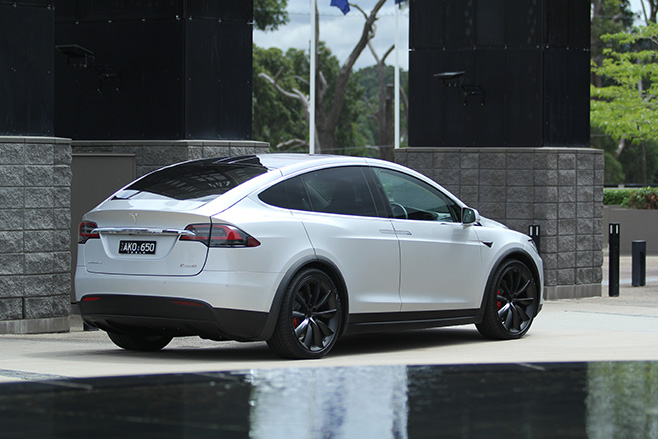
With a claimed range of 542km on a single charge, the Model X P100D has the legs to quell most concerns of range anxiety – the fear that you’ll be left stranded, electron-less, during regular driving. The longest-ranged model is the more sedate 100D, though even the base Model X 75D enjoys a generous 417km maximum range.
WEAKNESSES
As accommodating as it is, there are sparse storage options for rear passengers. There are no seatback map pockets, for example, and the roof-hinged nature of the rear Falcon doors means you can’t store anything in them (unless you want them raining down on you as you open the door).
Dropping the third row seats is easy, but raising them again isn’t. You’ll need to reach deep into the boot to activate the switch that unlocks them, and there are no convenient straps or handles to pull them back up again – just a small tie-down hook.
Cost. At well over a quarter of a million dollars, the Model X P100D we tested is far from cheap. The performance-for-dollar quotient is incredible nevertheless, but do people buy seven-seaters for drag strip supremacy? Buyers may find better value at the lower end of the Model X range, albeit with a slight compromise in range.
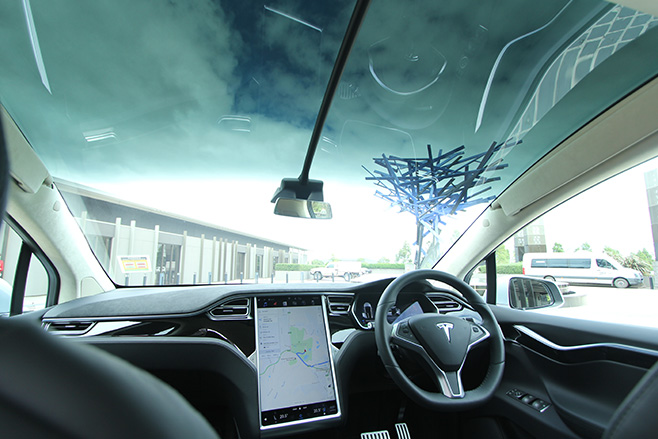
Our tester was equipped with the optional 22-inch wheel, and the ride was brittle on rough ground as a result. The good news is that 20-inch items are standard-issue, and we’d advise to stick with them for the extra compliance they’d offer.
As cool as its top-hinged Falcon doors may look, they’re a little bit gimmicky. Sure, by removing part of the roof they do make getting in and out of the third row a smidge easier, but you’ll need to watch your height clearance when parking (such as in shopping centre car parks) and they’ll knock over any small children who happen to be standing right next to them. Tesla says sensors in the doors should stop them from colliding with walls and roofs, but standing right next to the car while they were opening just resulted in being forcibly shoved sideways. Surely a regular ol’ sliding door would suffice – and save a heap of weight and mechanical complexity at the same time.
Rearward vision is virtually non-existent in the seven-seat model with all three rows raised, thanks to the full-size fixed headrests on the second row. The third row headrests can fold down, but you’ll only have a decent view through the rear window if you opt for the six-seat configuration. On the plus side, you can have the rear-view camera permanently display on the infotainment screen to compensate.
ANY RIVALS I SHOULD CONSIDER?
As far as all-electric, supercar-shaming SUVs go, the Model X is all by its lonesome in a segment of its own creation. If going fast while carrying seven is your only concern (and damn the environment!), you may want to investigate the Mercedes-AMG GLS63, BMW X5M, Volvo XC90 T8 R-Design and Audi SQ7.
New engines from Jaguar-Land Rover’s Ingenium range comprise 147kW and 184kW 2.0-litre four-cylinder turbocharged petrols, plus a 177kW diesel that is the first JLR four-cylinder to feature dual turbos.
The two petrol units replace Ford-sourced four-cylinders that were offered with 147kW and 177kW.
JLR’s 147kW version gains 40Nm, lifting maximum torque to 320Nm; the new 184kW gains extra power and an extra 25Nm for peak torque of 465Nm.
Fuel efficiency is improved across all three engines, varying with model.
The Jaguar XF adopts all three engines, while the XE takes only the two petrols and the F-Pace skips the 147kW version.
All three models now feature Forward Traffic Detection and Forward Vehicle Guidance, which both link to the surround camera system. FTD uses the grille-integrated camera to visually warn the driver of detected hazards in low-visibility scenarios. FVG combines the surround camera system and sensors to help parking in tight spots.
The trio also add Dual View, which can split navigation and media information for driver and passenger, respectively.
The Jaguar XE and XF sedans get an upgrade to their blind-spot detection systems, which can now apply a small countering steering wheel force if it detects the vehicle is about to cross into the path of an occupied lane.
XE and XF also gain hands-free boot access called Gesture Bootlid, and standalone Configurable Dynamics set-up, which allows drivers to choose Normal or Dynamic modes for each of the engine, gearbox and steering settings.
Jaguar says pricing for the expanded model ranges is unlikely to be finalised until late March.
Here’s WhichCar’s quick guide to the key 2017 changes for the trio of Jaguars:
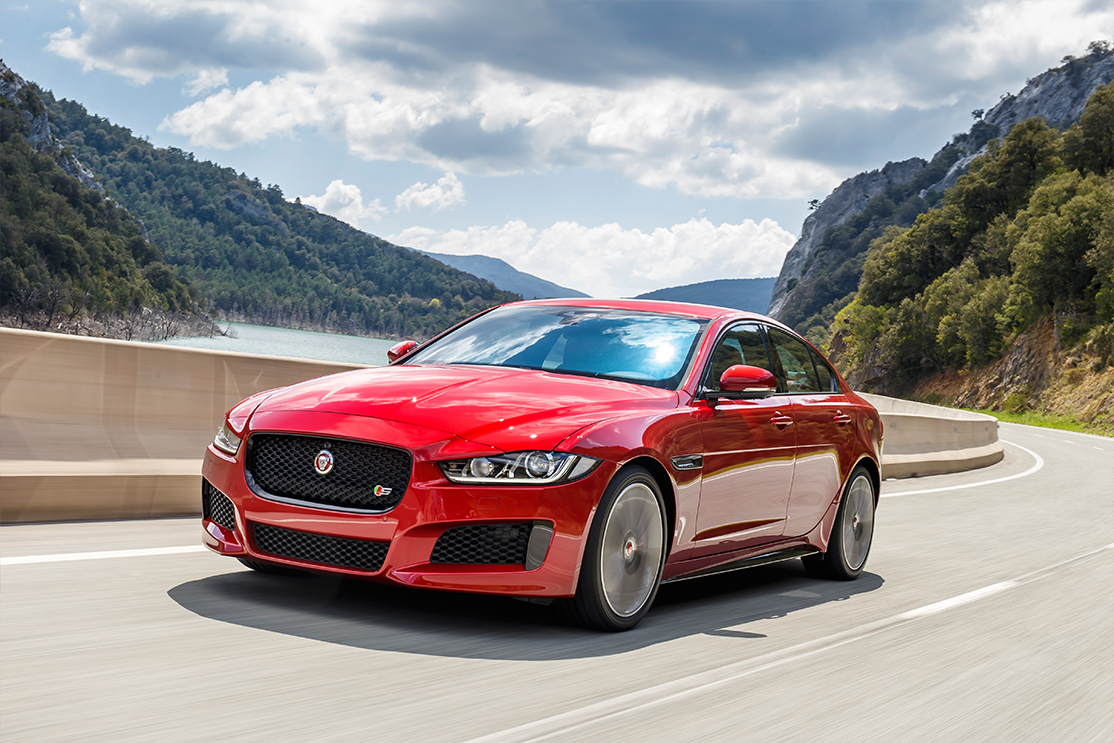
JAGUAR XE MY18
New Ingenium 2.0-litre four-cylinder: 147kW, 320Nm, 6.3 litres per 100km fuel consumption, 7.1 seconds 0-100km/h.
New Ingenium high-output 2.0-litre four-cylinder: 184kW, 465Nm, 6.3L/100km, 6.3 seconds 0-100km/h.
Adaptive Dynamic suspension available on 147kW and 184kW models.
Gesture Bootlid feature.
Configurable Dynamics.
Touch Pro advanced infotainment system option with 12.3-inch TFT display.
Dual View feature.
Forward Traffic Detection.
Forward Vehicle Guidance.
Blind Spot Assist – with steering-counterforce function.
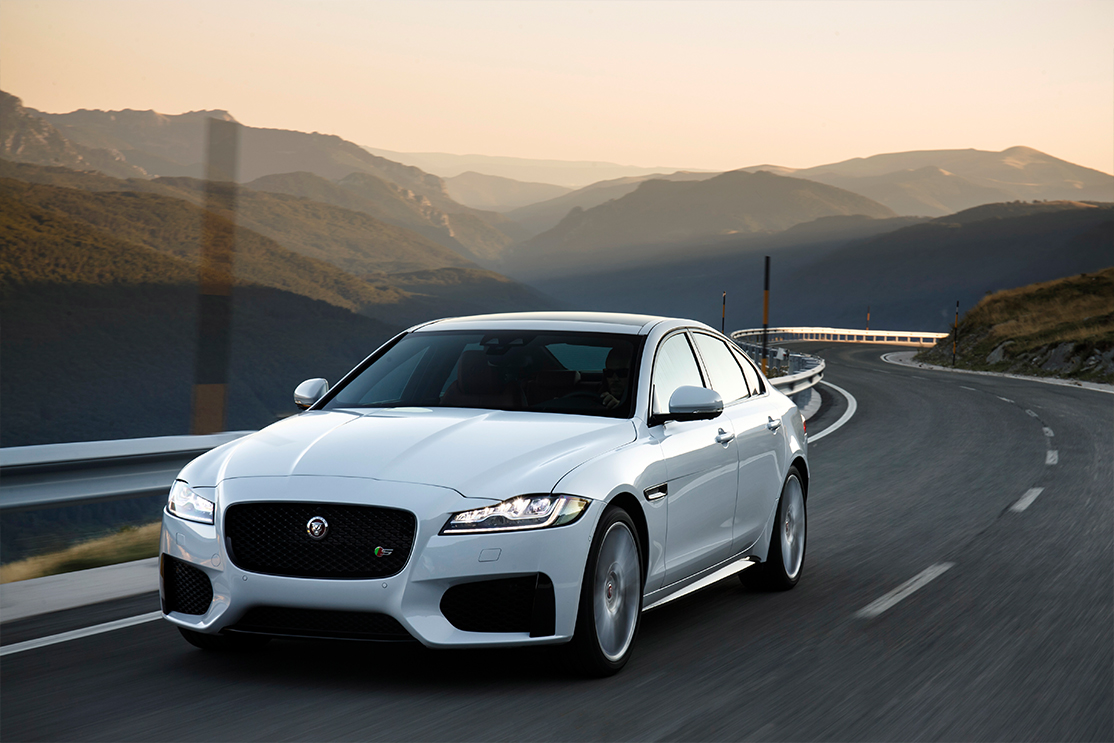
JAGUAR XF MY18
New Ingenium 2.0-litre four-cylinder turbo petrol: 147kW, 320Nm, 6.8 litres per 100km fuel consumption, 7.5 seconds 0-100km/h.
New Ingenium high-output 2.0-litre four-cylinder turbo petrol: 184kW, 465Nm, 6.8L/100km, 6.6 seconds 0-100km/h.
New Ingenium 2.0-litre four-cylinder diesel: 177kW, 500Nm, 6.3 litres per 100km fuel consumption, 7.1 seconds 0-100km/h.
Gesture Bootlid feature.
Configurable Dynamics.
Dual View feature.
Forward Traffic Detection.
Forward Vehicle Guidance.
Blind Spot Assist – with steering-counterforce function.
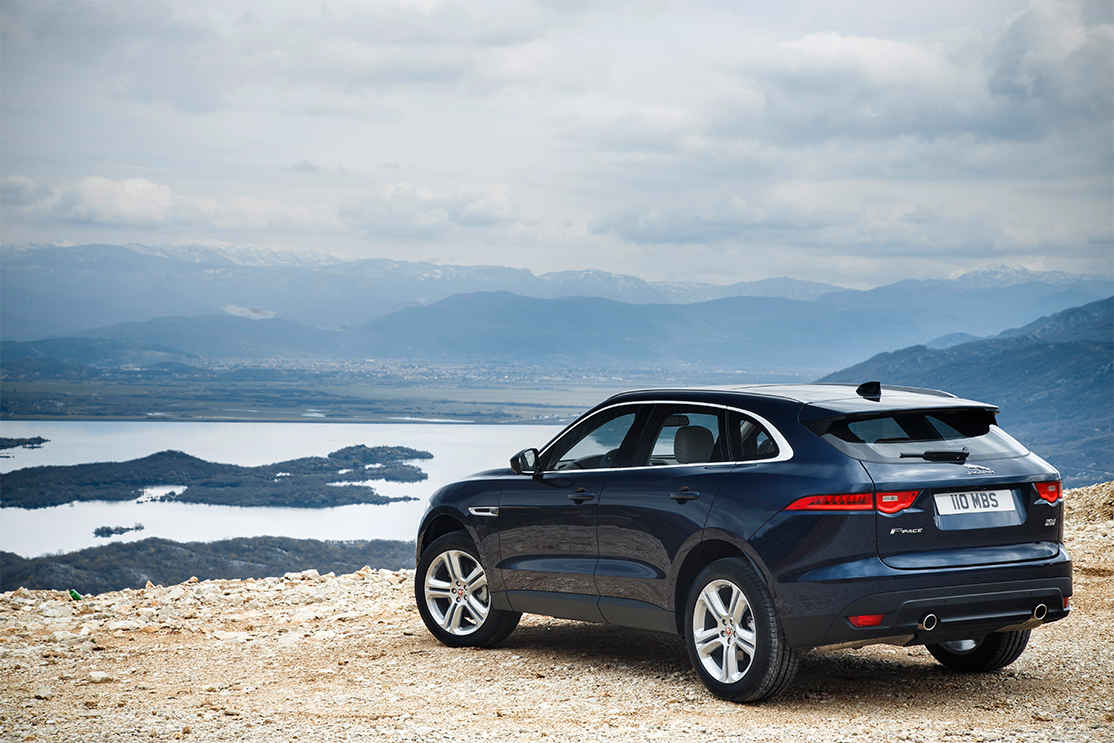
JAGUAR F-PACE MY18
New Ingenium high-output 2.0-litre four-cylinder turbo petrol, RWD: 184kW, 465Nm, 7.1L/100km, 6.8 seconds 0-100km/h. (AWD variant also available.)
New Ingenium 2.0-litre four-cylinder diesel, AWD: 177kW, 500Nm, 5.8 litres per 100km fuel consumption, 7.2 seconds 0-100km/h.
Dual View feature.
Forward Traffic Detection.
Forward Vehicle Guidance.
