
The next-generation, fully imported Holden Commodore wagon has emerged as an early contender to make up the backbone of future police Highway Patrol fleets, with the Kia Stinger GT, and the significantly more expensive BMW 5 Series also in the mix.
The end of local vehicle production has created a need for Australian police forces to find imported replacements for the XR Falcons and SS Commodores that make up the backbone of their highway patrol fleets.
There has been much speculation about what cars will fill the void, backed up by many a rendering of exotic types in candy-car colours ranging from Ford Mustangs and Chrysler 300s to Lexus GS Fs.
However, the coppers might not have to look too far after all, with Holden pitching the next-generation Opel-built Commodore as a police ready model.
Victoria Police manager of transport Frank Milelli told Wheels thatHolden is keen to provide the AWD Commodore with the same capabilities as the current model.
“The current Commodore has basically got a 20-year history of improvement in terms of what they provide for us and that’s a pretty good package.”
A Holden spokesperson confirmed the company has been engaging with all state governments on their current and future vehicle requirements including police service fleets and taking them through its future vehicle portfolio, which includes the new V6 AWD Commodore.
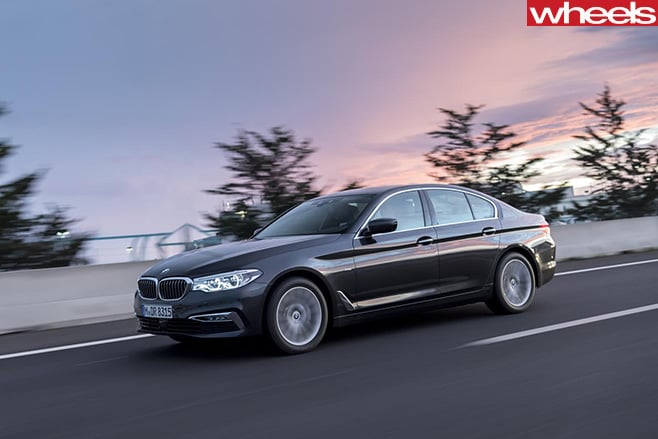
“Nationally they’re saying 0-100kms in seven and a half seconds; our rule is equivalent to the current SS, which is about six seconds.”
While it won’t have a V8 engine, the 2018 Holden Commodore AWD’s 230kW/370Nm naturally aspirated V6 engine and nine-speed automatic gearbox combine to achieve 0-100km in 6.0sec, 0.2sec faster than the current SSV Redline.
Milelli said the new Holden Commodore Sportwagon has sparked particular interest because of its extra carrying capacity compared to the new liftback version.
“We’re going to be looking at vehicles that meet the carrying capacity of at least the current Sportwagon and with the same performance.”
That need to carry equipment rules out performance coupes like the Ford Mustang, which was widely touted as a highway patrol car even before its two-star ANCAP safety rating was revealed.
“I don’t think a two-door highway patrol car is practical,” says Milelli.
“We wanted to run Monaros many years ago but our executive was saying operationally they’re not ideal, you still need a rear seat to carry members around.
“(Besides) Ford already said they’re not going to play, that they’re not going to provide police pack options.”
Other contenders
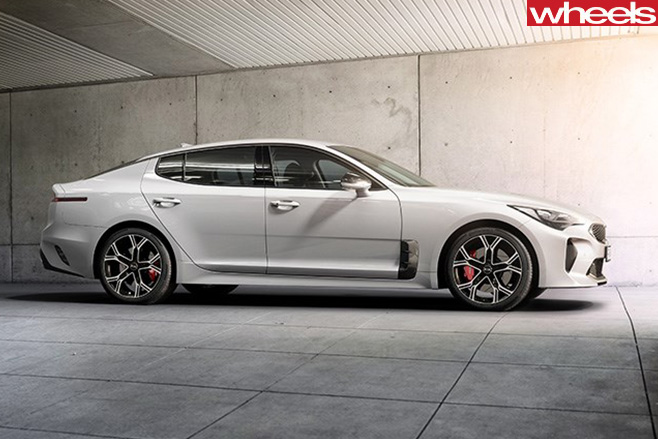
Wheels understands Kia has been in discussions with police forces including Victoria, South Australian and NSW about the supplying the Stinger and has even taken representatives from some states to Korea to drive the cars.
It’s believed NSW has showed a particular interest with a potential for 2000 police vehicles across a variety of roles during the Stinger’s lifetime – NSW Police declined to speak with Wheels about police car procurement.
Milelli confirmed Kia has approached Victoria Police to supply the Stinger but was still unsure if it would be available with a police pack that includes all the wiring needed for police lights and equipment and appropriate brakes.
A Kia spokesperson told Wheels the Stinger’s powertrain and Brembo brakes already met police requirements and the company is confident it will come off the line with all necessary requirements once they are known.
BMW is another company that, to quote Milelli, “wants to play”.
BMW Australia head of product and marketing planning Shawn Ticehurst conformed the company has offered the BMW 5 Series as a police ready vehicle.
“Cars like 5 Series have got such a good history with the German police and the British police … so I think it’s certainly got potential but we’re not talking about any discussions we’re having at this stage.”
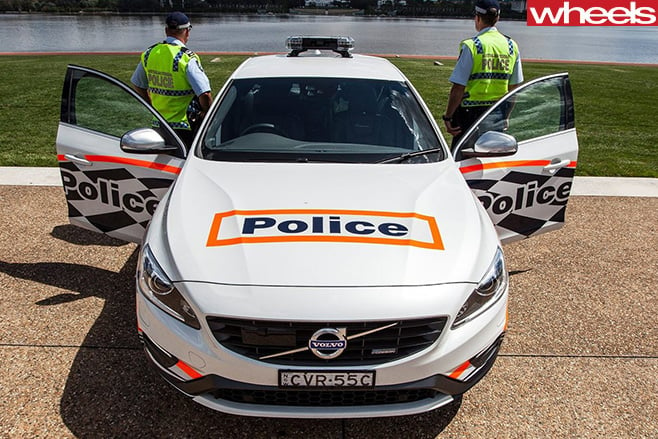
“We’ve sold X5s to the Federal Police in the past, so we were able to work with them and revise the spec.”
This would be important for the 5-Series to be selected for the pursuit role, with Milelli admitting financial considerations and even the politics of using ‘luxury’ vehicles along with ongoing service costs were key factors in the highly capable X5 not being chosen to replace the force’s Ford Territory fleet, with the Hyundai Santa Fe and Toyota Kluger chosen instead.
But he reckons using European cars such as the BMW 5-Series or Volvo S60 Polestar, as tested by the ACT Police, would be easier to justify for highway patrol because of the role’s specialist nature.
“We’ve been saying forever we want a car off the shelf and if it’s made by a manufacturer it’s safer than anything we can put together. So my view has always been that the public will accept it if you are spending their money correctly.”
The above vehicles will also being looked at for general police patrol duties along with other contenders, including the all-new Toyota Camry and the Hyundai Sonata, which is already in use with Queensland Police.
Every car company is going to talk about electric and autonomous cars throughout 2017. Fortunately for us, talk is all it will be.
Well, it’ll be all talk and behind-the-scenes development, but the technology they’ll actually have in showrooms will seem warmly familiar. And a lot of it will seem pretty fast.
It’s going to be a strange year. The likes of BMW, Audi, Mercedes-Benz and Jaguar will continue making pots of cash from their high-performance sub-brands, with even Australia regularly popping up as AMG’s number three market in the world despite our population.
But the Japanese makers have tried, failed, succeeded, failed again, withdrawn, re-entered and withdrawn again from following with hi-po sub brands. They’ll try again, but they won’t be alone, because the Koreans are having a chop at it now, too.
And, for us, there’ll be a last hurrah from HSV…
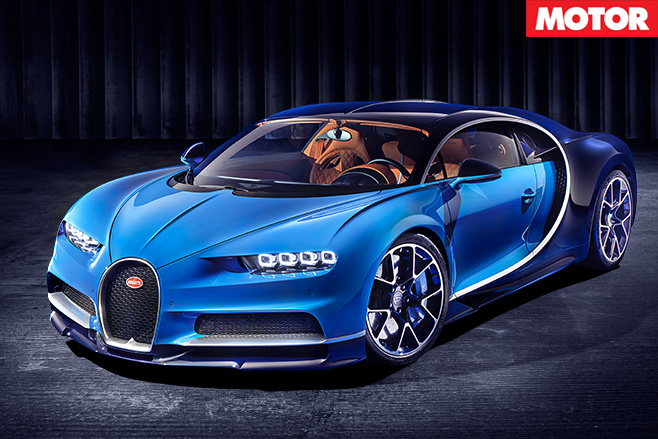
Veyron replacement has big shoes to fill in a new landscape
Bugatti’s planning to build 500 of these things and it’s already sold 200 of them, which isn’t bad considering it’s a fancy facelift. Sort of.
Don’t expect it to be as stupendously received as the Bugatti Veyron, though, even with 1103kW of power and 1600Nm of torque from the 8.0-litre, four-turbo W16 motor.
The Veyron arrived as a flag-on-Everest exercise, bringing mass-production validation to the sometimes-sketchy world of hypercars. At the time it looked like the last great flourish of internal-combustion engineering.
The Chiron might be faster, exploding to 200km/h in less than 6.5 seconds and limited to 420km/h, but from some angles the Chiron looks more like it came from a late decision and got rushed through development.
It carries over an awful lot of Veyron ideas, including the engine and transmission, though it does score a new carbon-fibre chassis.
But in a world where Formula E champ NextEV has broken the all-electric Nurburgring record with its megawatt four-motor Nio EP9, and Rimac’s Concept One is making the establishment look sluggish, all of a sudden the Chiron starts to look a bit like yesterday where the Veyron looked like tomorrow.
It will be fast, though, and that’s the main thing with any Bugatti. Try zero to 300km/h in less than 13.6 seconds and, with its limiter removed, Bugatti estimates it’ll reach 463km/h – about 190km/h quicker than the takeoff speed of Airbus’s massive A380.
Not that the Chiron isn’t a massive unit itself, weighing 5kg less than two tonnes, and it’s more than two metres wide.
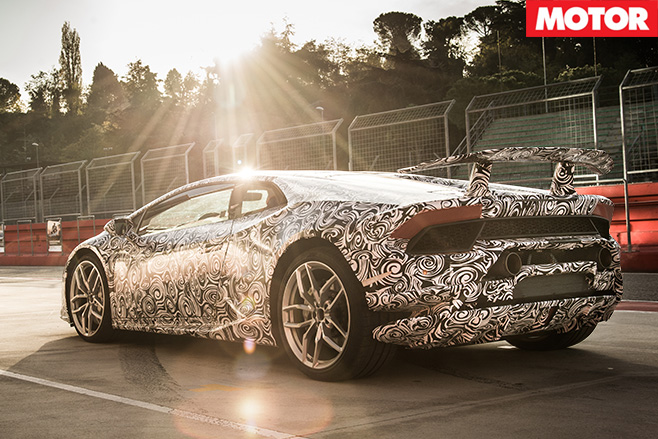
Track-focused Huracan to cut weight and increase grunt – what’s not to like?
This one was predictable, with Lamborghini rolling out basically the same game plan for the Huracan it used for the Gallardo. And why not? That worked out well.
So the Performante will arrive this year as the track-focused version of the Huracan, complete with active aero, tauter suspension, different wheels and a massaging of the already impressive power figures.
It’s not clear if the Lamborghini Performante will be all- or rear-wheel drive but the precedent for all-corner traction is there with the Superleggera. If it is all-wheel drive, it’ll be a more aggro tune.
Of course it’ll also be stripped out with sports seats. However, even that isn’t enough, so Lamborghini will fit forged carbonfibre panels to make it even lighter. Then there’ll be a big wing to make it heavier again, particularly in corners.
While the rear-drive LP580-2 has been detuned from the stock Huracan, it’s likely the Superleggera will go the other way and score a bit more power. Although, exactly how much more power is something we’ll have to wait to find out.
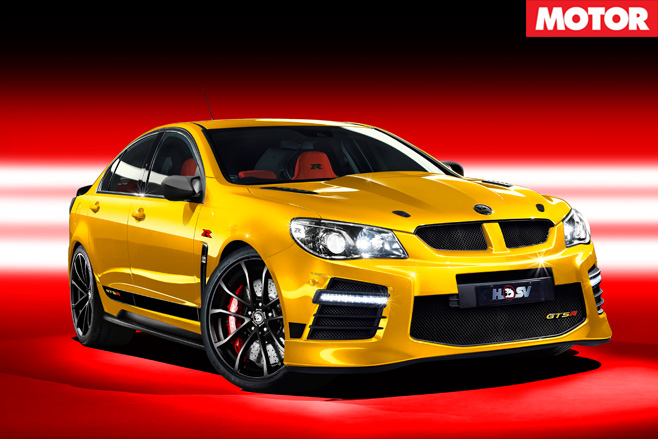
Curtain call will be one to remember
HSV is going out with a bang and after so many fried tyres, drifts and even detonated steering systems over so many years, it’s going to be a mournful bang.
So HSV has reached in to the superseded Corvette and grabbed a blown 6.2-litre LS9 V8, with 476kW of gristle, and stuck it under the nose to cheer us up. The ’Vette ran to 820Nm of torque so expect the number to be somewhere around that. It will very likely be the fastest production car ever produced in Australia.
Part of the W1’s strategy to tame all that power will be adaptive, Australian-made Supashock billet dampers replacing the current magnetic-ride versions. Even with limited traction thanks to its huge power, it will still manage a 0-100km/h time of around four seconds and a high-11 second quarter mile.
The three-pedal car will use the Tremec TR-6060 six-speeder, which is not a delicate thing to use, and a mechanically-locking limited-slip diff. And there will only be 250 of them, at somewhere around $170,000.
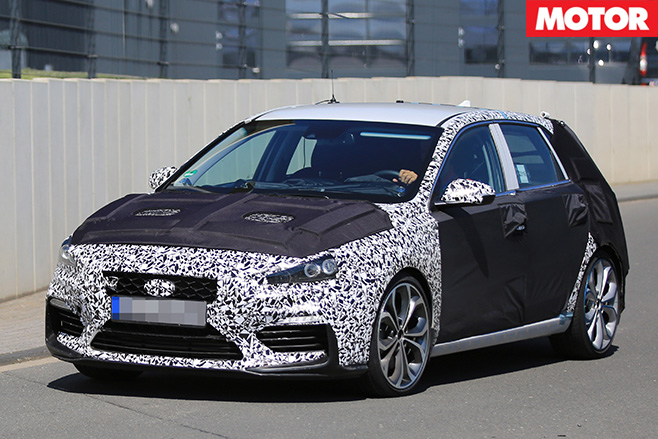
Performance starts with N
Its years of getting consistently beaten up by Volkswagen in the WRC are over and now Hyundai insists it won’t be taking a backward step on the road, either.
After poaching BMW M’s development boss Albert Biermann on a rumoured €700,000-a-year contract to run its nascent N division, it will deliver both road and track packages for its first hot car, the i30 N, midway through this year.
One of them will have a road-usable suspension setup and the other will have a road-barely-tolerable suspension tune – and if they’re not enough, there’s an even hotter RN30 on the books for 2018.
The i30 N takes the stock standard i30 hatch and gives it more power, adjustable dampers, different engine performance modes as well as completely new front suspension geometry and hardware.
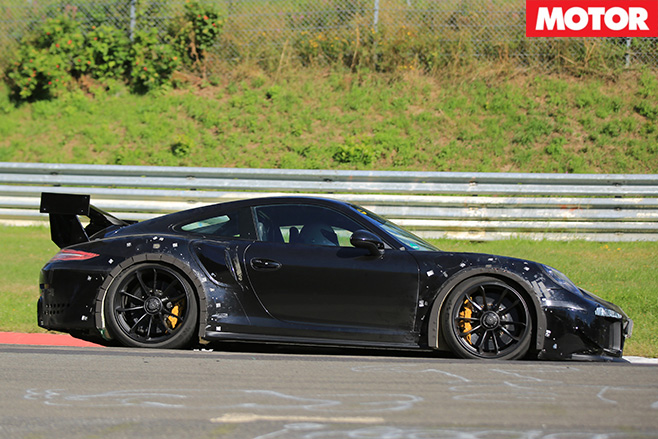
The ultimate go-fast 911 returns to the fold
The 911 GT3 RS is a great car, and fast. The 911 R is a scorching, charming car, and unattainable. However, this year’s 911 GT2 will be the very fastest 911 money can buy.
We know it’s slated for this year, because they don’t start showing off at the ’Ring until the car’s almost ready. Porsche loves the Geneva motor show, and it’s most likely going to be launched there, with something around 520 kilowatts.
While the next-generation GT race version of the 911 has gone mid-engined, the GT2 will retain the bi-turbo, six-cylinder engine on the scary side of the rear axle.
Oddly, the 991 911 generation didn’t actually have a GT2, with Porsche waiting for its facelift. That left GT2 fans with a six-year weight between their favourite tyre fryer, and there’s also a track-focused GT2 RS version for next year.
Even so, after all that waiting, the new GT2 will only have a production run of about two years.
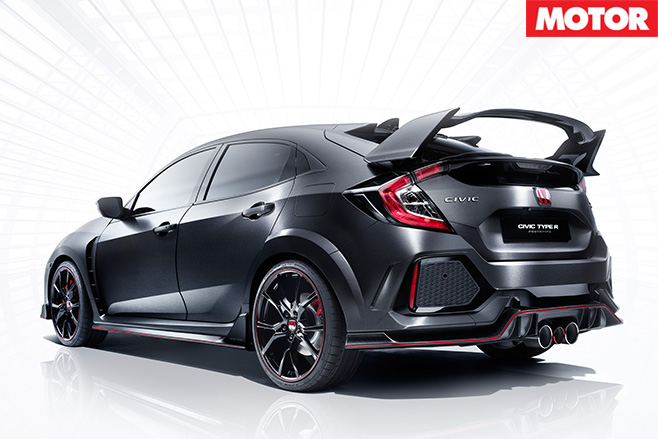
Fast front-driver to take fight to all-paw rivals
Ford’s Focus RS has raised the bar for hot hatch makers and Honda is determined to jump over it with the Type R.
It will be a front-driving rocket, with an upgrade of the ninth gen’s 2.0-litre, four-cylinder turbo engine.
Expect around 250kW of power and 440Nm of torque from the $50,000 hatch, and you won’t miss it in traffic with the pizza-tray rear wing and huge Brembo anchors.
It will rev to 7000rpm and use a mechanical limited slip diff, while there’s also growing talk that the six-speed manual gearbox will be partnered by a continuously variable transmission instead of an automatic or a dual-clutch transmission.
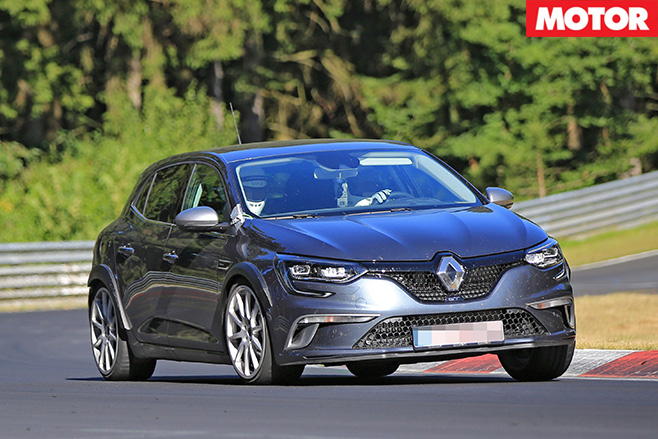
Frenchie heats up
Renault’s Sport operation is gaining credibility with every new front-drive offering it burps up and the Megane looks set to add to the story.
This is a car more about handling than outright grunt, with Renault Sport going to an optional four-wheel steer system to help cornering.
There will also be a track-focused version, dubbed the RS, and all variants will be five-door hatches.
There’s an all-new engine (not the unfortunately named F4RT family) and it will have around 224kW sent to the front wheels.
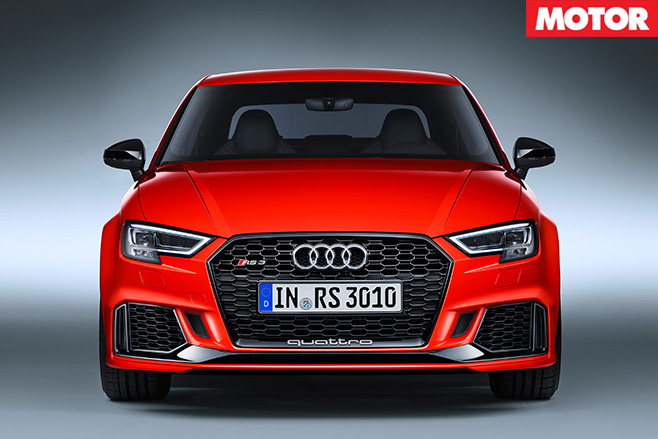
New five-pot screamer and sedan join range
At about $80,000, the RS3 will bring a lot of the TT RS tech downmarket, with the cast-iron block turfed for an alloy unit that helps the handling by lifting the weight off the nose.
The sedan will have 294kW and 480Nm from the 2.5-litre inline five and the all-wheel drive system gets launch control and far faster power redistribution whenever it’s sliding.
The TT RS is lighter, so sprints to 100km/h four-tenths quicker than the 4.1-second RS3, but the new car is still two-tenths quicker than the outgoing 270kW five-door hatch.
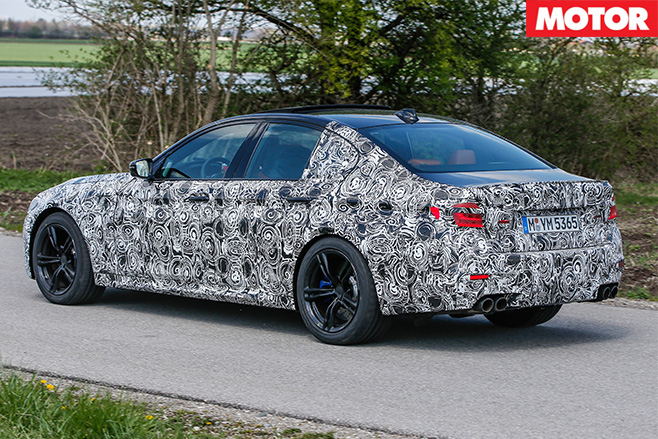
Bavaria ups the ante to take on the mighty E63
All-wheel drive comes to the M5, some say finally, and that’s going to slash the one-second 0-100km/h gap to the AMG E63 S to, err, about zero.
It will run an upgrade of the current V8, with a pair of hot-vee, twin-scroll turbos, however it won’t quite get the 5-Series’ 100kg weight drop because of the heavier all-wheel drive system.
It will have around 600 horses, get to 100km/h in less than 3.5 seconds and will debut some cool new in-car toys.
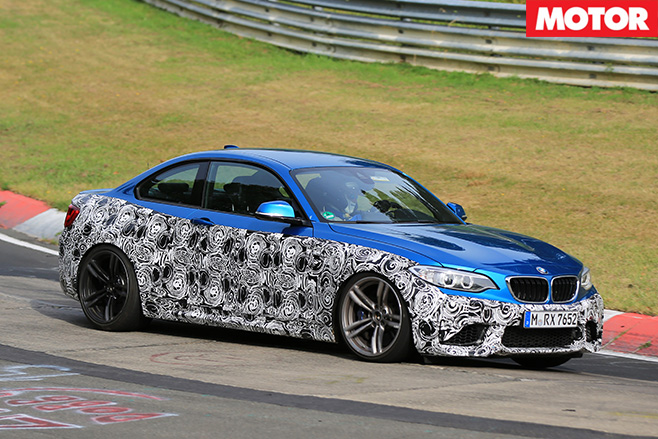
Baby M-car to receive the CSL treatment
Everybody loves the M2. It’s what an M jigger ought to be, while the M4 is a bit more junior Grand Tourer.
But there’s a $50,000 gap between the two cars and that’s a bit of real estate to fill. Besides, if the stock M2 is great, a lighter, faster version will be awesome, right?
Sources say that’s coming either late this year or in the first half of 2018.
There will be more grunt, too, with some extra boost to slip the torque number to around 520Nm, but don’t expect it to be faster in a straight line.
It could be, of course, but the M2 gets to 100km/h in 4.3 seconds and the M3 does it 0.2 seconds faster, so that’s not a lot of wriggle room. However, it’ll be a different story in the winding bits.
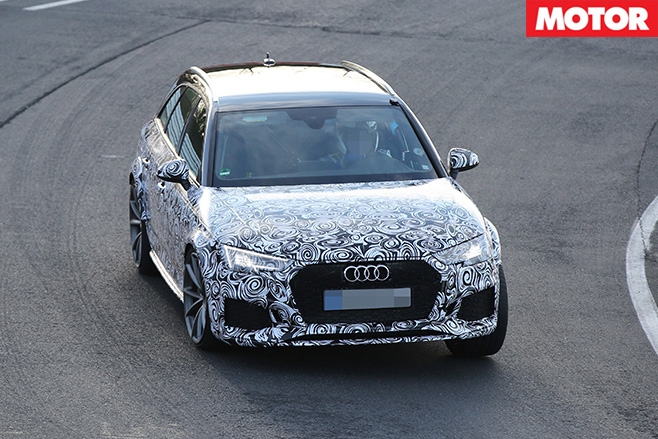
Power figure climbs as cylinder count drops
There is confusion over this car. Audi has two turbocharged V6 performance motors and the RS4 will use the 2.9-litre twin-turbo unit designed by Porsche.
The 90-degree unit, which will be shared with the R8, should pump out between 350kW and 370kW, so V8 fans don’t have to be worried in power terms.
Oh, and the other one is a 3.0-litre, Audi-developed V6 that can be seen in the S5.
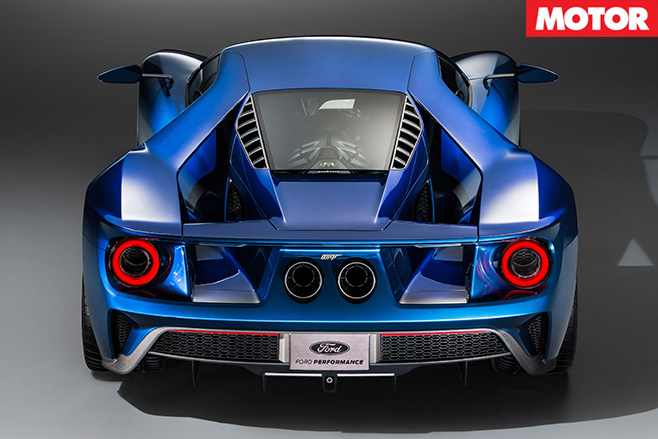
On-track winner to hit driveways
The Australian-designed GT was launched in Detroit two years ago, it won Le Mans last year and customers are getting production cars this year.
The car that forced the Corvette to go mid-engined, the GT production run will only be 1000 cars and limited to 250 a year.
It ditches V8 power for a twin-turbocharged 3.5-litre V6, but the carbonfibre wonder won’t be cheap.
Ford took four of them to Le Mans and recorded lap times four seconds quicker than some of its rivals.
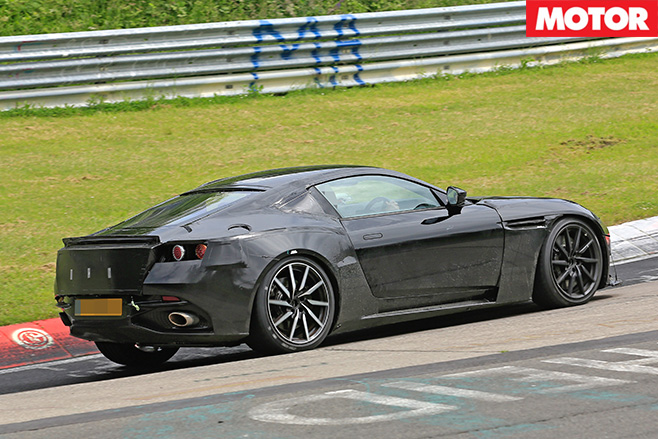
Vatange to follow in DB10 footsteps
If the Vantage makes it in 2017, it will be only just. In reality 2018 is the more likely release date, but it’s too cool, traditionally, to leave out.
It retains a lot of the styling signatures of the DB11, but Aston insists it will take more cues from the DB10 in Spectre than the big GT.
It also leverages everything AMG wants to give it, including the bi-turbo 4.0-litre V8 from the GT, with around 300kW of power in base spec and closer to 325kW from the heavier hitter. There will also be a 5.2-litre V12 as an option, while a dual-clutch seven-speeder will be the lazy pick over the six-speed manual.
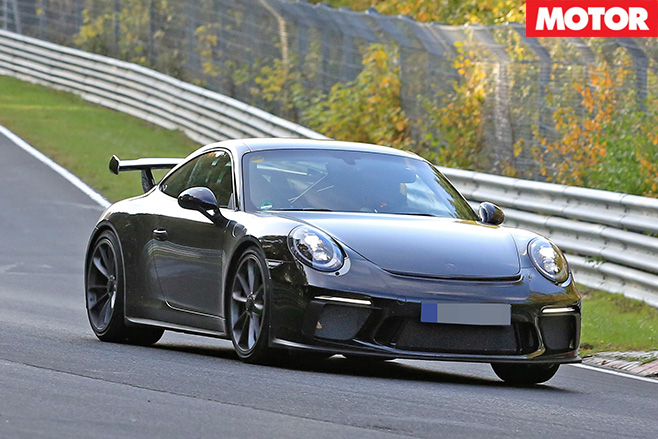
Purists get their way
The overwhelming glee from everybody who used the 911 R’s six-speed manual gearbox forced Porsche to make a decision it didn’t want to make.
Yes, the GT3 will once again be offered with a manual gearbox – we can hear the cheers already.
Sure, the dual-clutch PDK will be the thing to have to make lap times (and will be standard in the GT3 RS), but the six-speed manual ’box will be the standard transmission on the upgraded GT3.
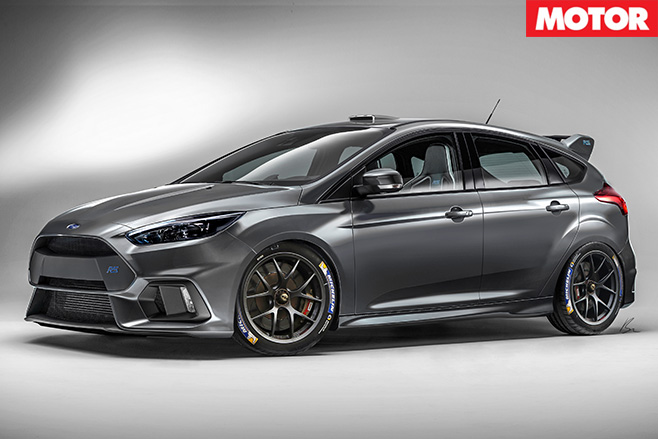
Blue Oval prepares hot-hatch warfare
THE big question now is why would you buy a Mustang when you can get an RS500 version of the ripping Focus RS? It’ll be lighter, stiffer, grippier and it’ll have bigger brakes.
Ford thinks it’ll be enough to get around the ’Ring quicker than any other hot hatch in the foreseeable future, even though the power won’t rise much from the current RS’s 257kW 2.3-litre turbo four.
Sadly, there will only be 500 of them, but it should be enough to lift the Focus into the fight with Audi Sport, M and AMG, and it could be enough to put Hyundai’s N back in its box.
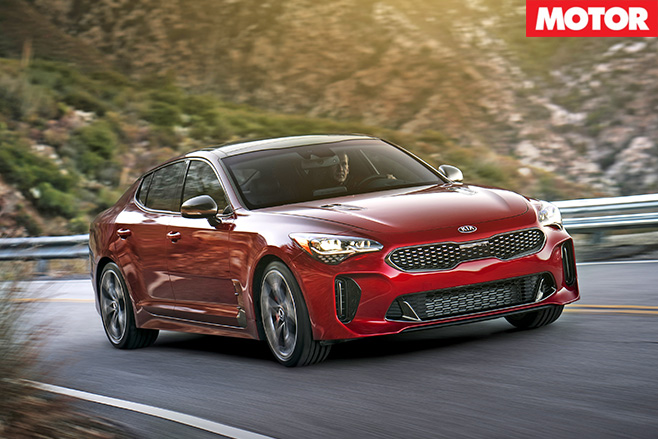
Concept turns into a reality
This screams that Kia is looking to move into posher post codes, with its first rear-drive fast sedan (available with all-wheel drive in overseas markets).
The architecture is bound, obviously, for the upmarket Genesis brand, but it will show up first as a Kia, with turbocharged four- and 3.3-litre twin-turbo six-cylinder power.
Producing 272kW/510Nm, it’s aimed at European offerings but with a projected price tag of around $50,000, it’ll be a possible replacement for those mourning the loss of the Commodore SS.
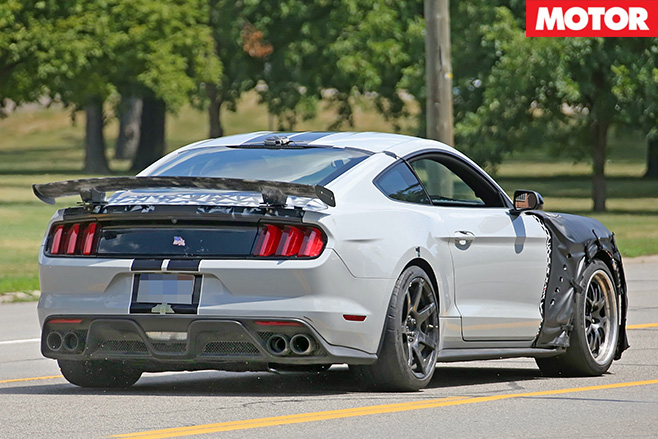
Pony to get bigger sting in its tail
The Mustang coupe is a nice machine, but it’s getting its freckle kicked in public power perception by the Hellcat range. After all, to get 700 horsepower in a production car you can either get a Hellcat or you can spend another half a million dollars.
It’s all a bit speculative at the moment, but there are filings in the US for a 5.8-litre V8 motor. And that’s a good thing. There is speculation that the motor could be turbocharged, too, with well over 500kW of power – some sources are suggesting 550kW – and all that in a rear-drive package.
Alfa Romeo has killed off plans to produce a Giulia wagon variant, citing the Alfa Romeo Stelvio SUV for its change of heart.
A Giulia Sportwagon was hypothesised by the Italian brand as recently as October last year as a potential competitor for the BMW 3 Series Touring, Audi A4 Avant and Mercedes-Benz C-Class Estate, all of which are sold in Australia.
However, Alfa’s need to focus on the next stage of its product development and its belief in the driver appeal, sales potential and practicality of its high-riding Stelvio SUV has seen the brand move away from the idea.
“We decided not to do a Giulia Sportwagon,” Alfredo Altavilla, CEO FCA Europe, told CAR Magazine.
“Do we really need it if the Stelvio SUV drives that well? Maybe not. With our fine-tuning, the Stelvio can capture all the people who would otherwise have been interested in the [wagon].”
The decision mirrors a choice made by Mercedes-Benz Australia, which opted not to bring in the Mercedes-AMG E63 Estate due to buyer demand for SUVs, like the GLE63, instead.
Fast wagons are most popular in the UK and Europe where a high performance Alfa Romeo Giulia QV wagon with the same 375kW/600Nm 2.9-litre twin-turbo V6 as the sedan would likely have found its primary market, sandwiched between the Mercedes-AMG C63 and Audi RS4 wagons.
Is Alfa’s resistance to a speedy wagon of its own justified? From a purely business point of view, it seems the writing is on the wall – wagons have been falling out of favour for a while, while SUV stock continues to swell. Putting money behind a performance SUV variant makes sense if you’re looking to make money – no matter what wagon aficionados may say.
Australia’s unique GT enduro just grows and grows, on track and off.
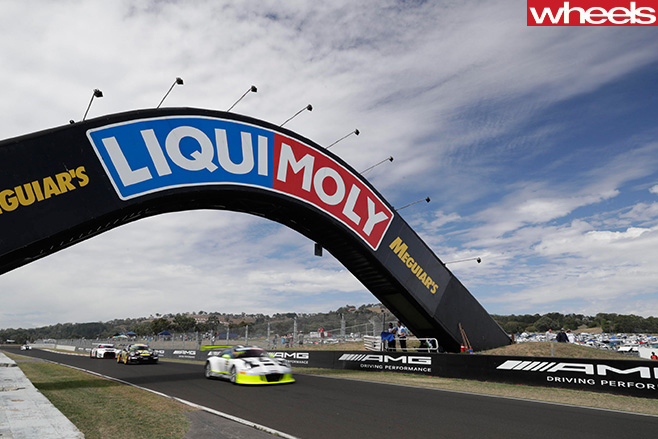
THE 2017 edition of the LiquiMoly Bathurst 12 Hour endurance race for GT cars has measured up positively by most counts including attendances, television viewers, web streaming, social media activity and, significantly, feedback from international drivers and teams.
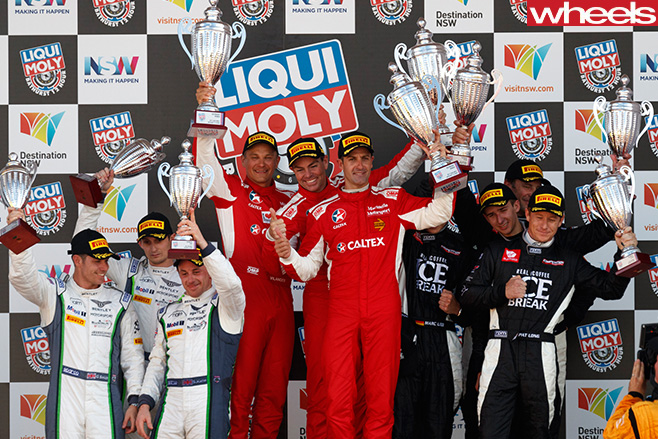
One comment in particular stands out. Oliver Jarvis, the ex-Audi LMP1 driver who is now a factory racer for Bentley, was all awe and wonder after his Continental GT3 started 23rd and finished on the podium.
“This is in an incredible place and I don’t think I’ve been in a race as brutal as that,” Jarvis told UK’s Autosport.
Of the 51 starters, 19 went out via crashes or, in a few rare cases, mechanical failure. Today’s production-based cars are spectacularly reliable.
In a measure of competitiveness across many manufacturers, seven brands finished inside the top eight outright positions.
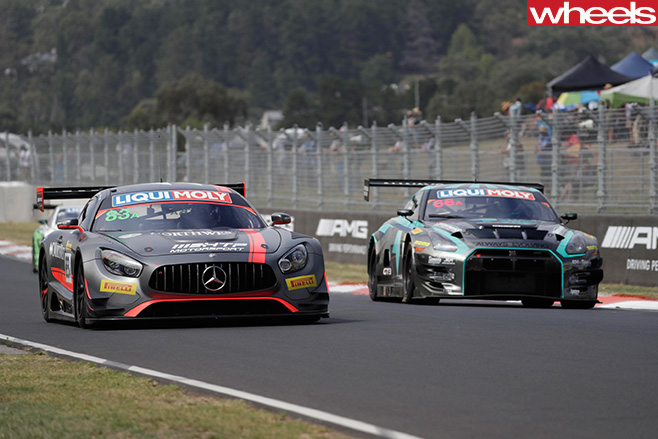
Across a sweltering Bathurst weekend, the race pulled a record 40,000-plus three-day crowd – still modest by Bathurst 1000 comparisons. But the graph is heading in the right direction.
Importantly, too, the free-to-air television audience on the Seven Network beat last year’s figures despite it being consigned to 7Mate by programmers who seem to be favouring Davis Cup tennis on the main channel.
More than two million people watched some or all of the Sunday race, either on TV, the live streaming coverage or via highlight videos posted on social media throughout the day.
The Sunday telecast on 7Mate averaged over 400,000 nationally – up five percent year-on-year in the metro markets and up two percent nationally. A further 219,000 viewers nationally watched the Pirelli Top 10 Shootout on Saturday.
“I was happy to be on 7Mate because we were there all day – no platform changes, which made us easy to watch,” he said.
“Everyone wants to be on the main channel – but at least we got all 12 hours plus the Shootout on Saturday, and then one hour of highlights the following Saturday and Sunday. I would say they [Seven] supported the event well.”
Additionally, the Bathurst 12 Hour attracted 800,000 live streams of qualifying and the race from around the world. A further 938,536 watched video highlights posted by the event on Facebook, Twitter and YouTube.
A post-produced three-hour highlights show will be broadcast in 86 countries across North America, Europe, Africa, Asia and the Middle East.
That will be music to the ears of Australian teams concerned that the growing international flavour and status would possibly rule them out of future Bathurst 12 Hours.
Casey continued: “Going forward I would like to tidy up the class structure a little – Am means amateur! This will mean the [class] races within the race are fairer.
“Other than that, some operational improvements, new driver briefings, ongoing driver standards improvements, and so on we’ll be doing nothing to touches the essence of the event.
“Off track, we’ll do more for the fans and manufacturers so the venue will become even more of a place for people who love cars… Cars and Coffee, displays from participating brands and track sessions post event…that sort of stuff.”
Better to look at and better to drive, the second generation of Porsche’s Panamera more convincingly hits the sports limo brief.
WHAT IS IT? The closest thing Porsche has to a limousine. Like the original, the second generation Panamera is long and broad and has four spacious seats. But as well as some 911-infused styling there’s also plenty of performance to ensure it’s one of the fastest four-doors on the market.
WHY WE’RE TESTING IT The first two second-gen Panamera models have just arrived in Australia, spearheading an expansive model range that will include at least two hybrids and a V6 diesel. To kick it off are the Panamera S and Turbo.
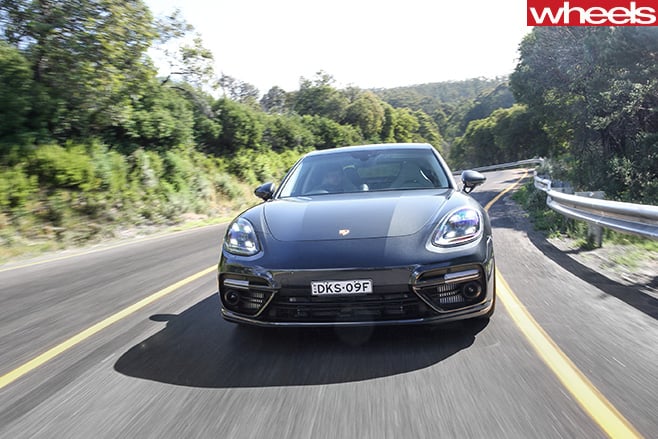
THE WHEELS VERDICT What it lacks in space against larger German rivals it makes up for with pace – and poise. New V6 and V8 engines team nicely with an all-wheel drivetrain. The second generation Panamera is a big step up, taking the ethos of the original but adding a healthy dose of maturity to deliver a sizeable sports sedan offering.
PLUS: Potent engines blend beautifully with new PDK; comfortable and spacious; more cohesive design than the original MINUS: Back seat space not up to S-Class levels; prices to match the size; sun glare from centre console; stupid centre air vents
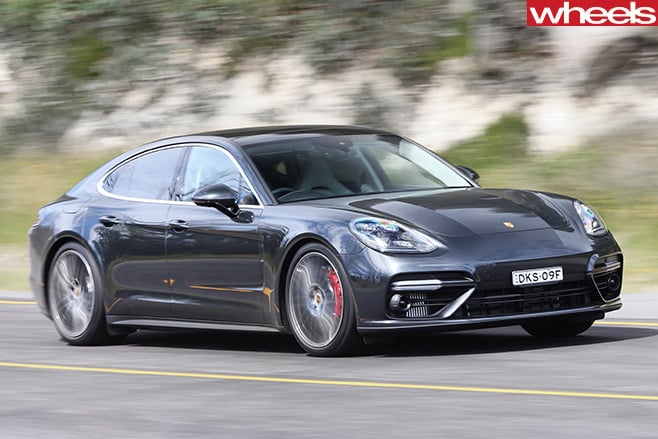
Enter the second generation Panamera. Like the original it’s big (think limousine length and width) and like the original it’s fast. It’s also a big hatchback rather than a traditional sedan, bringing 495 litres of boot space.
Faster than ever, too, courtesy of new generation V6 and V8 engines, each of which will soon spawn a hybrid. An extra ratio in the latest PDK transmission also helps things.
Even in twin-turbo V6 guise there’s a fiery 324kW and 550Nm to play with. Unleash it with the optional Sport Chrono pack that brings launch control to the performance table and it’ll scrabble all four wheels to hit 100km/h in 4.2 seconds. As with the 911 there’s a satisfying jolt to its take-off.
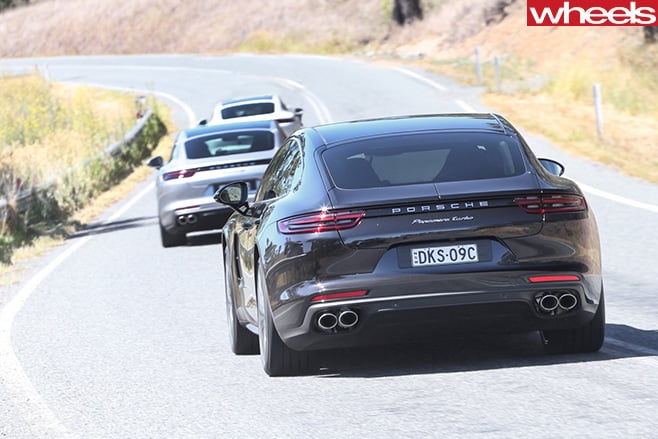
Speaking of which, the Panamera Turbo – which gets a new 4.0-litre twin turbo V8 – ups the whole equation courtesy of 404kW and 770Nm, the latter on tap below 2000rpm.
With the new 4.0-litre twin-turbo (as with the V6, the turbos sit within the V to reduce lag and assist packaging) that launch control equation drops to 3.6 seconds for the 100km/h sprint.
The noise is throatier, too.
But it’s on the road where the Panamera has matured most. A new three-chamber air suspension system ‑ up from two ‑ has 60 percent more air to play with, something that dramatically improves the ride.
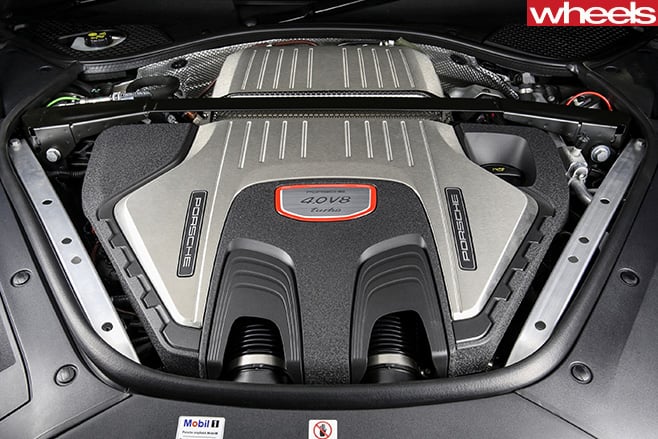
The stiffest Sport Plus setting tightens things, but not to the point of being uncomfortable, although the mid setting is generally sufficient for spirited cornering.
That said, the Panamera is more tensely tied down than, say, an S-Class, and the 21-inch hoops on our Turbo marginally degrade the ride.
But the trade-off comes once you ramp up the pace. The broad Michelins stick nicely for brisker cornering than anything else of this size.
The optional rear-axle steering (it turns the wheels up to 2.8 degrees) adds to the excellent high-speed stability, allowing for brisk cornering, whether through tight bends or flowing curves.
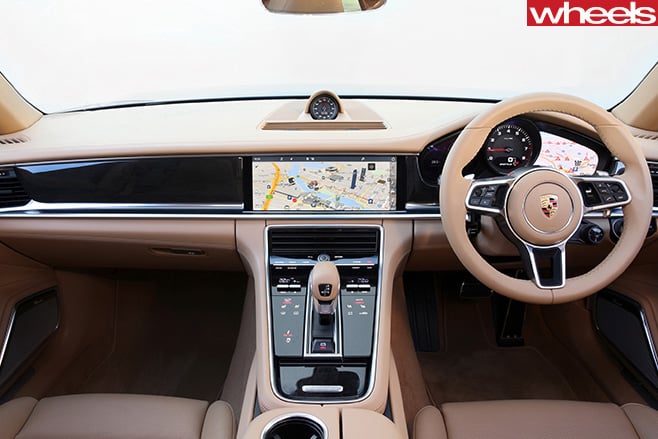
And the electronically adjustable front air vents are plain stupid. Instead of a quick manual adjustment you’re delving into menus in the 12.3-inch touchscreen to fiddle with where you want the air to go. It is rare Porsche makes a backward step for functionality in the name of complexity but it has done so here.
The stretched body allows for more generous rear legroom and the twin bucket seats are a luxurious way to travel. Taller occupants may wish for another couple of centimetres.
A generous smattering of equipment includes electric front seats, quad-zone AC, Apple CarPlay (but no Android Auto) and adaptive air suspension.
Keep ticking boxes and you can add all manner of luxury fare, from self-sucking doors and a rear sunblind to ambient lighting, Alcantara roof lining or a sensational 21-speaker, 1455-Watt Burmester 3D sound system.
All of which adds to the price. An extra $30K on top of the $304,200 for the 4S (or $376,900 for the Turbo) is merely a few pen strokes away.
Yet it adds to the luxury of what is an extremely fast and engaging four-door.
It’s no Porsche 911 but the Panamera is closer than it’s ever been ‑ in a big car sort of a way.
Vote for the Porsche Panamera to win the 2018 Wheels Car of the Year Readers’ Choice competition
SPECS Model: Panamera Turbo Engine: 3996cc twin-turbo V8 Max power: 404kW @ 5750-6000rpm Max torque: 770Nm @ 1960-4500rpm Transmission: 8-speed auto Kerb weight: 1995kg 0-100km/h: 3.6sec (with Sport Chrono pack) Price: $376,900 On sale: Now
Audi’s RennSport mob have juiced up the Audi RS3 Sportback for 2017, transplanting the all-new, all-alloy 2.5-litre inline five from the TT RS into the RS3 hatch.
With 294kW of power now surging from its flywheel, the new RS3 snatches back the title of “Most Powerful Hot Hatch” back from its arch-rival, the 280kW Mercedes-AMG A45.
Torque jumps up too, rising from the outgoing model’s 465Nm peak to 480Nm. All up, the gains tally 24kW and 15Nm, meanwhile the zero-to-hundred figure drops to a blistering 4.1 seconds with the 2018 RS3 Sportback shaving two tenths off its sprint time.
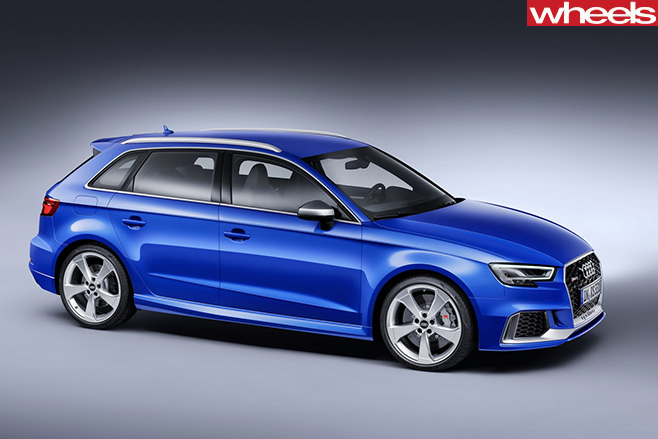
Power continues to go to the ground via a seven-speed dual clutch transmission and Audi’s quattro AWD. Fuel consumption on the European combined cycle comes increases marginally to 8.3L/100km.
At the rear, changes are limited to new tail lamp graphics and lower bumper contouring.
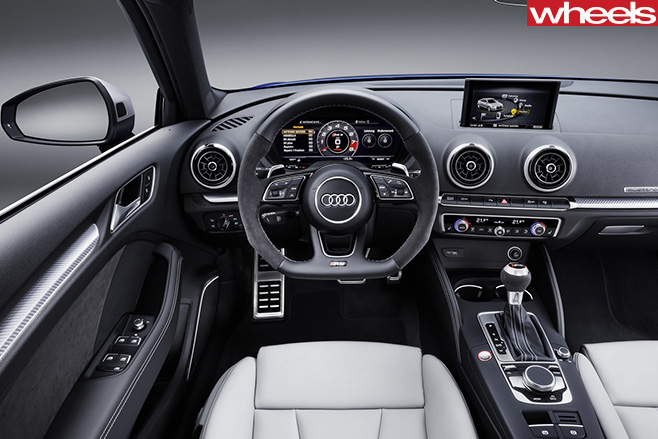
Inside, the biggest update comes in the form of Audi’s flash Virtual Cockpit instrument panel, which now features a dedicated RS ‘page’ that enlarges the tachometer, shifts it to the centre of the display, and flanks it with performance readouts for g-force, boost, tyre pressure, plus integrated shift lights.
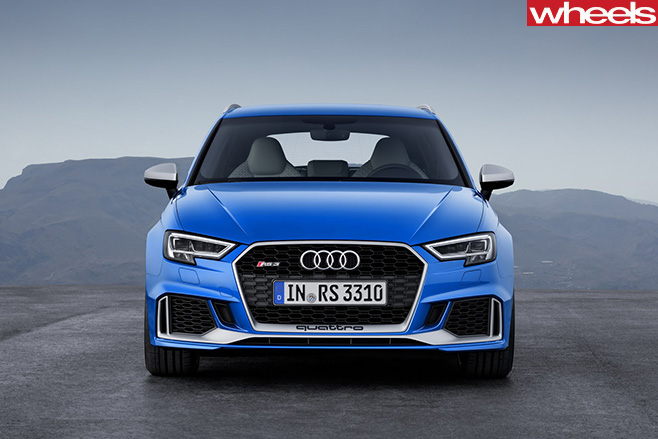
Scheduled to make its global debut at the Geneva Motor Show in March, the new Audi RS3 Sportback will go on sale in Europe in April before arriving here around the end of the third quarter this year.
The BMW 5 Series will soon launch in Australia, with four models initially kicking off the seventh generation of BMW’s executive express.
The range will start with the $93,900 diesel-engined BMW 520d, the lowest-priced model until a petrol-engined 520i – it was the model designation for the previous entry-level 5 Series – arrives late this year.
However, while the price of the 520d the car it replaces – the previous 520d started from $84,755 – BMW says it gets a much richer level of equipment to offset the extra spend.
As well as the 520d, BMW will introduce the turbocharged 2.0-litre petrol-engined 530i ($108,900), the 3.0-litre inline six-cylinder diesel 530d ($119,900) and the inline 3.0-litre turbocharged petrol 540i ($136,900).
“The new BMW 5 Series Sedan is a showcase of the latest automotive technologies,” BMW Australia chief executive Marc Werner said. “It incorporates advanced semi-autonomous capabilities, driving assistants and ground-breaking connectivity while remaining dynamic and engaging to drive.”

The entry-level 520d produces 140kW and 400Nm, but using only an average of 4.7 litres of fuel for every 100 kilometres it travels. Drive is sent to the rear wheels via an eight-speed automatic transmission equipped with steering wheel-mounted paddle shifters.
As with all the 5 Series models on offer, buyers can choose between either the Luxury Line or M Sport package to further individualise the look of their car.
Standard equipment runs to LED headlights and 18-inch alloys, leather seats with electric adjust for both driver and front passenger, an electrically adjustable steering column, wireless smartphone charging, a heads-up display, a 12-speaker audio system with digital radio, active cruise control that can bring the car to a complete stop, and semi-autonomous parking.
Each car also sells with a speed limiter, and technology that can read speed signs and display them to the driver. According to BMW, the extra gear it has added to the new 5 Series adds up to about $15,500 compared with the car it replaces.

The 530i uses a new turbocharged four-cylinder petrol engine that develops 185kW and 350Nm, but is still economical enough to use just 5.8L/100km.
It gets the M Sport package as standard, and sits in 19-inch wheels wrapped around branded M Sport brake calipers. Over the 520d, it adds a powered bootlid, adaptive LED headlights, suspension that can become tauter at the press of a button, a 16-speaker audio system, sports front seats with heating and lumbar adjust, and an M-branded leather steering wheel.
Once again, BMW claims the added equipment adds up to about $16,000 of extra value for about a $9000 increase in price.
The 530d’s engine produces 195kW and a turbocharged V8-like 620Nm, but officially only uses 4.7 litres per 100 kilometres.
As well as the M Sport package, it also gains an M-branded aerodynamics kit over the 530i. Once again BMW claims it equates to about $16,000 in extra value compared with the 535d it replaces. It’s good value; the 535d was priced about $4000 more than the car that replaces it.
The flagship – at least until the arrival of the performance-honed M5 arrives – will be the 540i. It produces 250kW and 450Nm from its six-cylinder engine, using an average 6.7 litres of petrol for every 100km it travels.
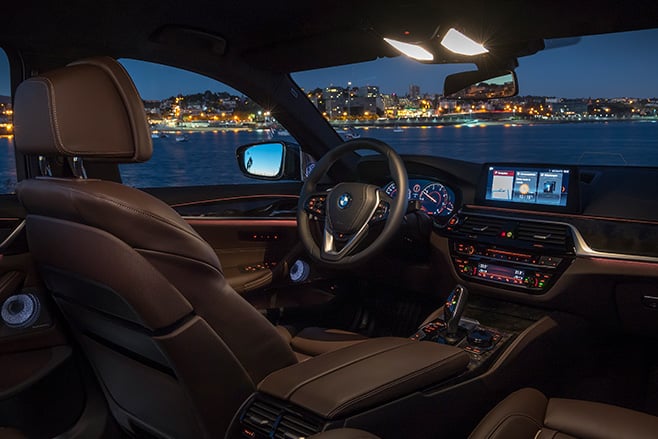
It will initially be the most driver-oriented car of the BMW 5 Series range, featuring BMW’s Adaptive Drive system with active anti-roll bars, and fitted with 20-inch alloys.
As the flagship, it will add a sunroof, metallic paint, a rear-window and rear-side blinds, Nappa leather upholstery, and comfort-oriented seats with active air ventilation.
BMW says all the extra gear adds up to $34,000 over the outgoing 535i – handy when it costs $19,000-odd more than the car it replaces.
BMW 5 Series pricing
520d $93,900 530i $108,900 530d $119,900 540i $136,900 *Before on-road costs
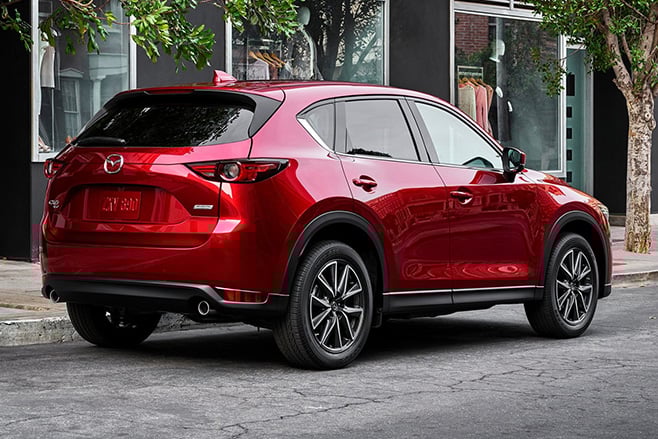
Ahead of its arrival here in before the middle of the year, Mazda Australia has announced the next-generation Mazda CX-5 medium SUV will receive a suite of cutting-edge safety technology.
The new CX-5 range, which will go on sale in the coming months, will feature a radar-assisted cruise control system able to follow traffic all the way to 0km/h, speed limit recognition and the latest version of Mazda’s “smart city brake support” autonomous emergency braking system.
This new technology will appear alongside existing safety tech such as blind spot monitoring, rear cross traffic alert, lane-keep assist, lane departure warning, and adaptive front lighting, which were added to the range late last year in a comprehensive safety update for the existing CX-5.
Mazda Australia has not yet announced which models will receive the safety update, but we know all five graves (including the new Touring spec) will feature front, side and curtain airbags, Anti-lock Braking System, Dynamic Stability Control, Emergency Brake Assist, Emergency Stop Signal, Hill Launch Assist, Traction Control System and a reversing camera as standard.
This announcement comes as part of the Japanese automaker’s commitment to safety technology.
“Our commitment to safety is clear when you look at the entire Mazda range and what we offer, particularly the safety updates to various models over the last year,” said Mazda Australia marketing director Alistair Doak.
This announcement follows a series of updated safety technology on Mazda vehicles including the Mazda6 and CX-9, the latter of which won this year’s Wheels Car Of The Year.
The new-gen CX-5 is all-new, with design featrues that ape the larger Mazda CX-9 including sharper headlights and grille, a longer bonnet, deeper side windows for better vision, a more pronounced rear hip line, sleeker tail-lights, and very CX-9-like tailgate surfacing.
Despite its age and the imminent arrival of an all-new replacement, the Mazda CX-5 is currently leading the medium SUV sales charts, ahead of the Nissan X-Trail and Hyundai Tuscon.
Full pricing and features will be released closer to the new CX-5’s arrival.
Mercedes has unveiled what is quite possibly the most ridiculous production vehicle ever conceived, the Maybach G650 Landaulet. Seriously, it makes a Lamborghini LM002 look as sensible as a VW Golf.
Slated for a reveal at the upcoming Geneva motor show, a video of the G650 leaked onto social media last week. Some commentators understandably asked if the car was a hoax, but we now have official confirmation from Mercedes that there is in fact a market for a twin-turbo convertible off-roader.
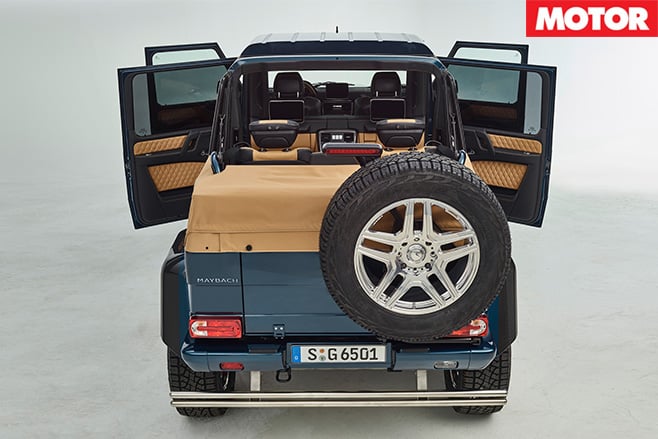
As with all G-Classes, the G650 has triple 100 per cent differential locks, live axles front and rear and a transfer case with low-ratio for ultimate off-road capability. Based on our experience with the regular G63 AMG however, Mercedes’ claim of “perfect handling both on- and off-road” might potentially be an…alternative fact.

This is despite measuring a gargantuan 5345mm in length and 2235mm in height with a 3428mm wheelbase; for reference, an Audi Q7 is 5052mm long and 1741mm high with a 2994mm wheelbase.
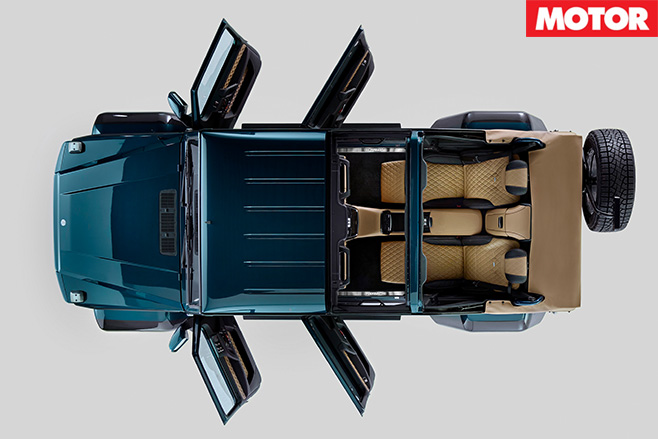
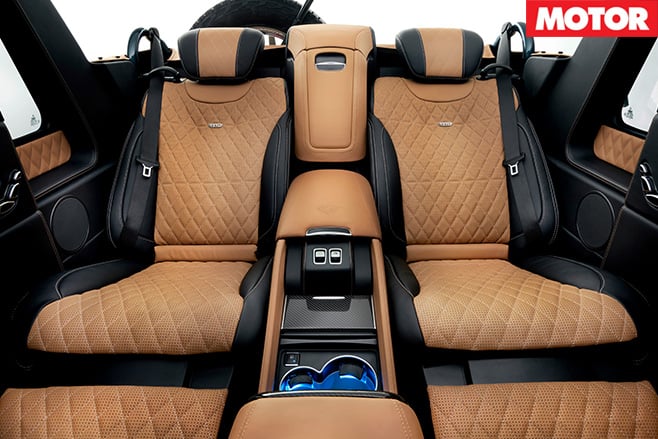
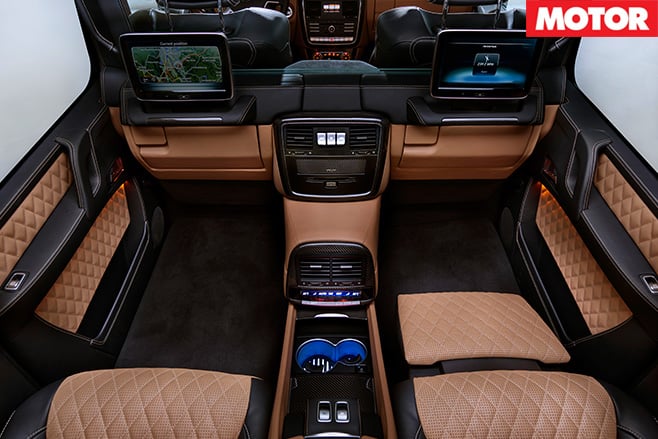
Positioned ahead of the cupholders (heated and chilled) is the suggestively titled ‘G Cockpit’, which mirrors the driver’s instrument panel, but instead of activating the diff locks the three buttons operate the interior lighting and open or close the soft-top roof. In addition, there are also two 10-inch high-resolution entertainment displays.
Some things, like Happy Gilmore reruns on a Friday night at home, surprise and delight no matter how much you expect them to happen.
Take the new Porsche Panamera. It wasn’t as beautiful as it was enjoyable to drive. And while we expected a fix, we didn’t think it’d be this dramatic.
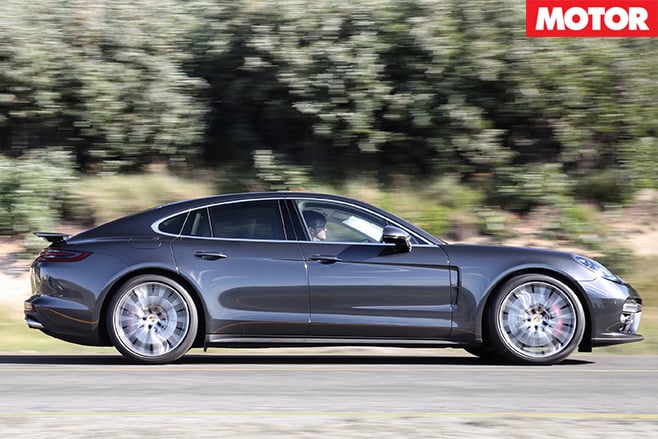
The problem was that roofline. More ‘hunchback’ than ‘hunky’, it was a constant critique in otherwise glowing reviews.
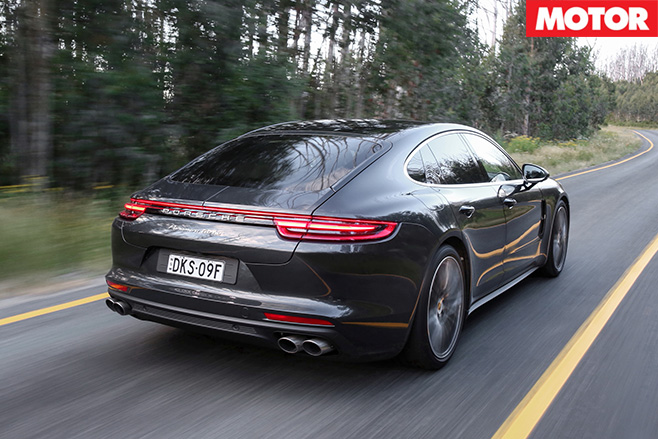
The 30mm longer wheelbase allowed the rear seats – and importantly, the roof line – to drop 20mm. The roof’s crest was lifted, too, so if you squint you’ll see the 911’s slope massaged into its revised silhouette.
You might even confuse the two from some angles, thanks to that strip of LEDs bridging its rear tail lights. However, Panamera signatures are there. The door and bonnet scallops have deepened, and its LED headlights still sport squared tips.
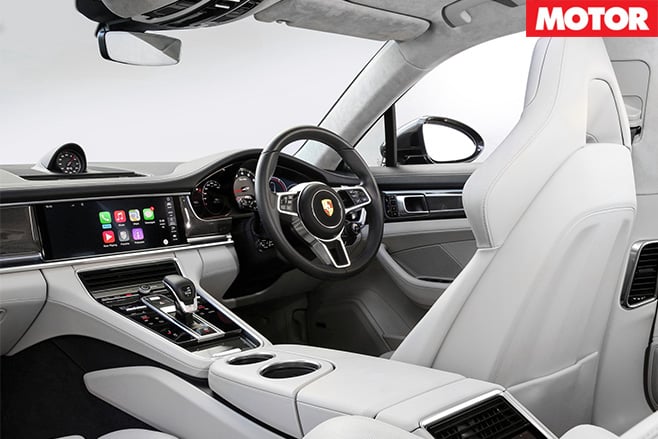
Things like a tactile ‘click’ when you press a button on the console are suitably slick. And the infotainment’s new program is simple to use, even for iPhone-phobes.
What’s familiar is a drive-mode dial on the steering wheel that adjusts the car’s air suspension, eight-speed PDK, and twin-turbo engines to suit.
Confusingly, the interior doubles up on ways to access Sport, as you can find it on both the pad and dial. But this is good fortune, as the more ways to access Sport, the better.
At times the Turbo’s 4.0-litre hot-vee twin-turbo V8 switches to a V4 to sip fuel, but the downside is sluggish tip-in at low speeds.
Sport Plus throws its personality to the other end of the scale. The quad-tip exhausts snarl around town, the Turbo’s split-wing deploys for battle, and the dampers stiffen up. But it’s a little erratic for the car’s more subdued personality.
Sport mode strikes the nicest balance. Here the ride and handling compromise is expertly judged, in that there’s a suppleness befitting of a grand tourer, but also the responses of a steel-sprung sports car.
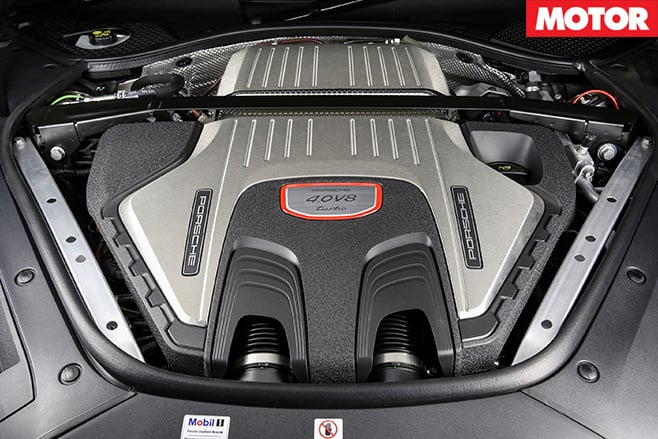
The Panamera relies on adaptive dampers, rear steering, and brake torque vectoring in this department. But soon the active-roll bars and rear clutch diff that helped it blast around the Nurburgring in 7:38 will become available as options.
Kiss the firewall with the throttle and the Turbo’s 404kW/770Nm helps it dispatch 100km/h in 3.6sec, 200km/h in 12.7sec and reach a top speed of 306km/h. At a standard price of $376K, the Turbo will empty bank accounts just as quickly.
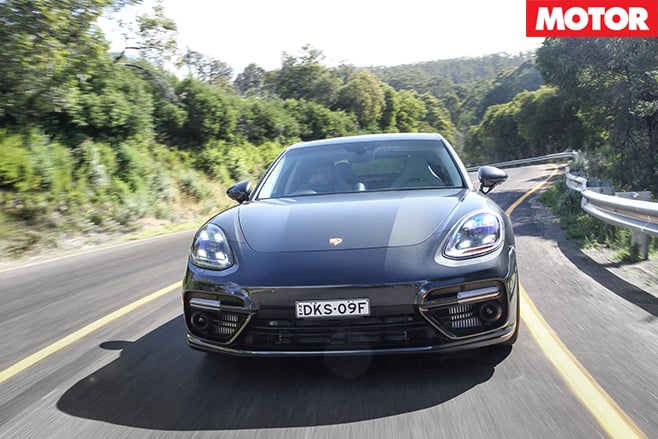
Buyers holding out for the full-fat Turbo S will be pleased to know it’ll arrive third quarter. It’ll be the fastest Panamera, with 500kW/850Nm, but it finds the new stonk via a hybrid drivetrain, a la 918 Spyder.
So, the V6 is the pick and the fastest one’s a hybrid. Now, they’re surprises we also didn’t expect.
4.5 stars out of five
2017 Porsche Panamera 4S Specifications
Engine: 2894cc V6, DOHC, 24v, twin-turbo Power: 324kW @ 5650-6600rpm Torque: 550Nm @ 1750-5500rpm Weight: 1870kg 0-100km/h: 4.2sec Price: $302,400
2017 Porsche Panamera Turbo Specifications
Engine: 3996cc V8, DOHC, 32v, twin-turbo Power: 404kW @ 5750-6000rpm Torque: 770Nm @ 1960-4500rpm Weight: 1995kg 0-100km/h: 3.6sec Price: $376,900 (est)
