
Forget self-driving cars. Flying cars are the way of the future according to a NASA advanced aircraft engineer who has joined forces with Uber Technologies Inc.
After 30 years at NASA, Mark Moore has left the aeronautical administration to head up the transportation network company’s flying car initiative, Uber Elevate, as director of engineering for aviation.
This isn’t Moore’s first flying-car initiative. In 2010, he published a white paper on vertical take-off and landing aircraft (referred to as VTOL) exploring the viability of electric aircraft. They’d be faster, smaller and quieter but work in a way not too dissimilar to a helicopter, the white paper found.
It was this report that caught the attention of Larry Page, co-founder of Google, spurring him to start two new businesses – Zee Aero and Kitty Hawk – to develop flying vehicle technology.
The aim of Uber Elevate, though, is to reduce overall travel time for commuters. In its own white paper published in October last year, Uber stated; “Every day, millions of hours are wasted on the road worldwide. Last year, the average San Francisco resident spent 230 hours commuting between work and home – that’s half a million hours of productivity lost every single day…
“For all of us, that’s less time with family, less time at work growing our economies, more money spent on fuel – and a marked increase in our stress levels.”
According to studies published in the American Journal of Preventative Medicine, those who commute more than 16km are at higher risk of high blood pressure.
For these reasons Uber Elative decided to explore on-demand aviation: to reduce the amount of time spent on the daily commute and ease on-ground congestion.
As you’d expect, such an ambitious concept is not without problems. Noise pollution, safety, and vehicle power are all issues Uber Elevate faces.
Moore brings with him years of experience, sacrificing his NASA retirement, to help the brand overcome the obstacles and push Uber Elevate to be the market leader in flying vehicles, a cause he clearly believes in. “I can’t think of another company in a stronger position to be the leader for this new ecosystem and make the urban electric VTOL market real,” He told Bloomberg.
At this stage, however, Uber doesn’t intend actually building the aircraft, but rather “play whatever role is most helpful to accelerate the industry’s development.”
Move over autonomous cars, there’s a new kid on the block.
Victoria Police has chosen its first imported patrol vehicles since the winding down of local vehicle production, with the Toyota Kluger and Hyundai Santa Fe replacing the Ford Territory general duty vehicle.
Victoria Police has long followed State Government guidelines to buy Australian cars first, but the end of Territory production in October left it with no option but to look at imported options.
Manager of Transport at Victoria Police Frank Milelli said the Territory was perfectly suited to a wide range of duties, from rural patrol to public order response, and rarely received complaints from officers.
He said when it came to finding a replacement Victoria Police approached every SUV manufacturer to see if they could provide a vehicle with that met police safety, performance and practical requirements, including a ‘Silver’ safety grading which meant they could operate safely up to 150km/h.
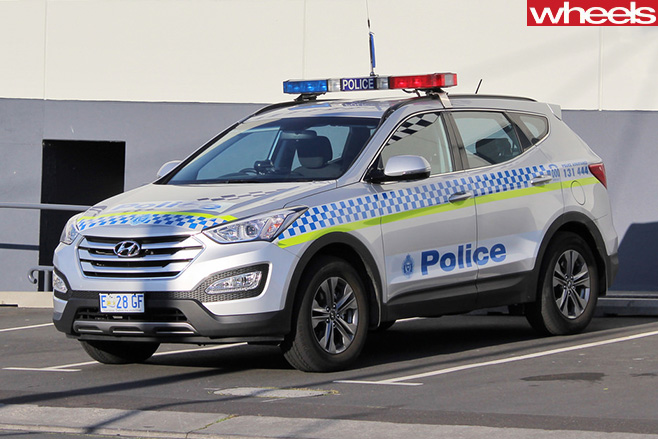
“They all said we could provide XYZ but only two of them came back with a fair dinkum willingness to a police pack option … Toyota with the Kluger and Hyundai with the Santa Fe.
“The Toyota Kluger all-wheel-drive meets our standards at Silver, but the two-wheel-drive doesn’t. That’s probably because the all-wheel-drive has a heavier drivetrain and there’s a lot of weight down below.”
“The BMW X5 also had a fairly good police pack option but we also apply financial principals too so we’ve selected two that are financially better and also politically better in case the public has an issue with us going with the BMW.”
The Kia Sorento was also well regarded, however the Korean company refused to install a police pack.
Milelli said the force decided to go with two different vehicles in case there were any unforeseen problems with either in the future.
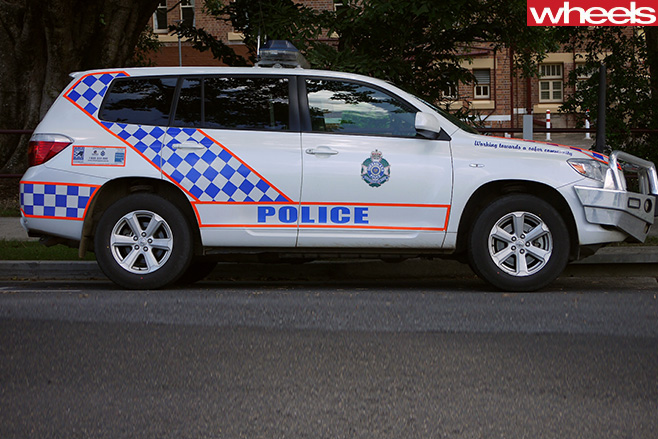
The first Klugers and Santa Fe police cars are expected to come online in March as remaining Territories reach the end of their three year or 60,000km police lifespan.
The Santa Fes is already in use with the Tasmanian police force while the Kluger is used by Queensland Police.
The selection process for the Territory replacement is a good guide to what sedans will replace the Commodores and Falcons for general and highway patrol duties.
Milelli told Wheels the selection process is just getting started with Holden, Toyota, Hyundai, Kia and BMW so far showing an interest while Ford “doesn’t want to play”.
The force also looking at a replacement to its iconic “divvy van”, with the Holden Colorado being tested to carry the pods currently on the back of Holden Commodore Utes while meeting to Silver performance and handling standard.
Mark Webber is taking an optimistic view of the upcoming Formula One season that is weeks away from delivering reengineered cars and revamped driver line-ups to the first round in Australia.
Speaking to Wheels at the Bathurst 12 Hour, Webber gave his insights on the regulation changes, how he thinks the grid will stack up, and which Red Bull teammate has the edge.
“This year it’s going to be more power-sensitive than ever. The cars will have a lot more downforce so you’ll need a bigger engine more than you ever have done.
“They’ll be a good visual to watch. The cars will be very, very fast, so the drivers will be earning their money again. I’m looking forward to that.”
Aerodynamic restrictions should result in a field of lower, wider Formula One cars with larger tyres front and rear for more mechanical grip.
“They’ll be going back to lap times that we used to do ten years ago. The drivers will be sweating on the podium. You’ll see them working harder, which is nice.”
Webber thinks the recent dominance of Mercedes-AMG will be more difficult to preserve.
“I think Red Bull have had a very quiet winter and they’re going to be quite strong. It really depends on who unlocks this new regulation best, and traditionally Adrian [Newey] has been quite good at that.
“Mercedes had the luxury of closing out a championship very early in the constructors so that means you have a big chance to put your resources onto the year after earlier than anyone else. They’ve got a very good engine, but operationally Red Bull were the best team last year. [In terms of] reliability, they were the best team. Mercedes still had some technical challenges, so if it’s nip and tuck, if it’s down the fine points, Red Bull are very good at that.”
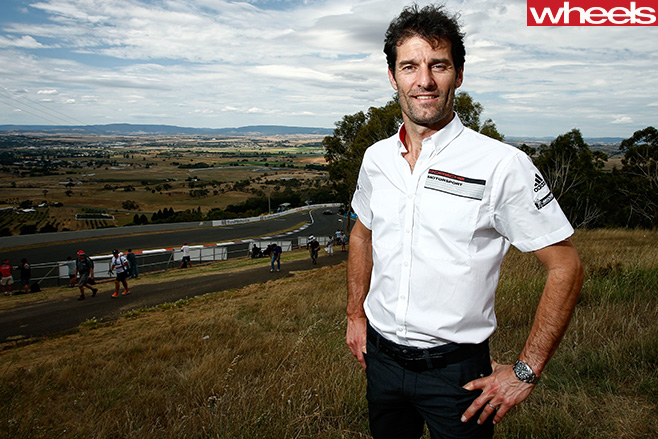
“It’ll be tight. It was at the end of last year. I still think Daniel has more composure. Experience will be very, very useful to him particularly in this early part of the championship. When you’ve seen the regulations change, which he has done, that’s an advantage for him.
“It’s going to be a good battle, but I think the composure side is a big, big plus for Daniel. He still heats up, don’t get me wrong. You don’t get to that level without having that fire – he’s got plenty of that. It’s just pulling the weekends together. Max is – thank God – still learning. He’s an unbelievable talent.”
The ousting of Bernie Ecclestone from his long-held position at the top of Formula One by new owners Liberty Media has sparked discussion about the sport’s future.
“It’s going to take a couple of years [for Liberty] to work out how they’re going to do it their way. It’s going to be about how they pay the bigger teams and the discrepancies of the commercial situation to try and give other teams a bit more of a chance.
“[Are] there some common parts? There’s never been a common part in F1 ever, but is there a common part post 2021? Who knows? Stuff like that will totally be on the table.
“Ross [Brawn] is a good addition. That’s a very good signing for Ross to be there. Formula One is global and that’s where Ross can help a bit. [Liberty] are very American-centric, but very successful. Let’s see how they can translate that. We can’t measure Liberty in the first five minutes.”
Webber retired from motor racing in 2016 and remains closely associated with both Red Bull and Porsche. His commitments to Formula One broadcasting means he will still be around the sport for some time to come.
“The first quarter this year is a lot of long haul, a lot of big travelling, but you know, it’s good. I’m doing a lot of TV work in Europe with Channel 4, all the GP work there and a one off here in Melbourne with Channel 10. It just turns out that I can talk OK about stuff. I generally should know what I’m talking about.”
The continuing dominance of the Toyota Hilux and Corolla in 2016 and a record year for Lexus has seen Australia become the second biggest market per capita for the global automotive giant, after Japan.
The local market is also the seventh overall, ahead of bigger markets such as Canada, Brazil, the UK and every nation in Europe, according to figures released by Toyota Motor Corporation (TMC).
Toyota Australia sold 218,738 vehicles last year ‑ including 9027 Lexus ‑ which equates to 8.9 cars per 1000 people, behind Japan (12.5 per 1000) but ahead of the USA (7.5) which is the company’s biggest market.

“The incredible loyalty shown by Australian motorists over more than half a century has enabled us to achieve a dominant share of the local market and to be placed among the strongest sales countries in the Toyota world,” Mr Cramb said.
“The proportion of Australians who buy Toyota vehicles is higher than in the United States and we outsell countries that have substantially larger population bases,” he said.
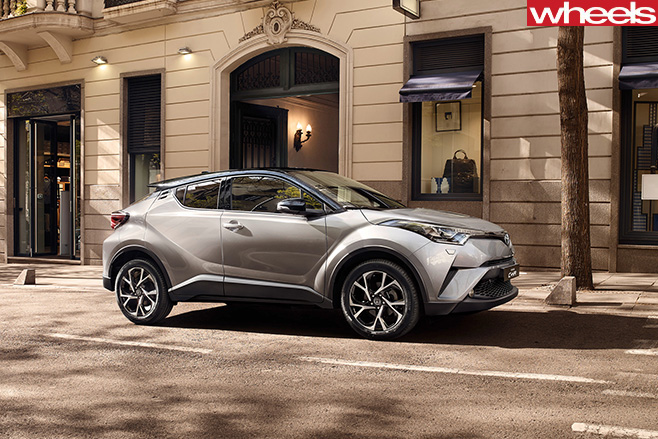
The end of local Camry production is also unlikely end Toyota’s 14-year reign as Australia’s top manufacturer, with 100,000 more sales than nearest rival Mazda (118,217) in 2016.
Top-10 Toyota sales by country, 2016
- USA – 2,449,628
- Japan – 1,580,851
- China – 1,214,163
- Indonesia – 389,341
- Thailand – 245,087
- Saudi Arabia – 228,049
- Australia – 218,738
- Canada – 217,792
- Brazil – 179,441
- Philippines – 158,728
- Japan – 12.5
- Australia – 8.9
- USA – 7.5
- Saudi Arabia – 7.0
- Canada – 5.9
- Thailand – 3.6
- Philippines – 1.5
- Indonesia – 1.5
- China – 0.9
- Brazil – 0.9
It’s not unusual to hear about a ridiculously wealthy celebrity driving a ridiculously expensive car at ridiculously high speeds and causing a ridiculously dramatic accident.
That’s a lot of ridiculous.
But what about those stars who get to and from their multi-million dollar mansions in cars that we mere mortals can afford?
LeBron James in a Kia, Adele in a Mini or Leonardo DiCaprio in a Prius are bound to turn our heads every bit as much as a celeb in a mighty McLaren.
With a bit of research, we’ve discovered celebrities like these exist and they’re much more common than you’d expect. As for the close-to-million dollar cars locked away in their garages? We’ll pretend those don’t exist for now.
Lily Allen
If you know Lily Allen, you’d know she’s not one to play the stereotypical lady card. The foul-mouthed Brit has been spotted driving a lime green Ford Focus RS. More to the point, she’s been seen pulling a handbreakie, spinning the green car 180 degrees without stopping in an empty lot. Lily Allen, you’ve just become one of our favourite pop stars, ma’am.
Eric Bana
We couldn’t do a list on celebs with ‘normal’ cars without including one of our all-time favourites. Eric Bana, who was a special guest at the 2017 Australian Motoring Awards where we presented the WhichCar Style Awards, owns a Ford XB Falcon (pictured top). He may not drive it every day, but he’s had it since he was 16 and loves it so much, he made a documentary about it, Love the Beast.
Leonardo DiCaprio
When a Hollywood heartthrob like Leo starts jetting around the world to work with orphaned children and save the environment, we’re already prepare to give him a little bit of respect. When he’s then spotted backing up his ‘eco warrior’ credentials by getting around town in a hybrid Toyota Prius, he seals the deal.
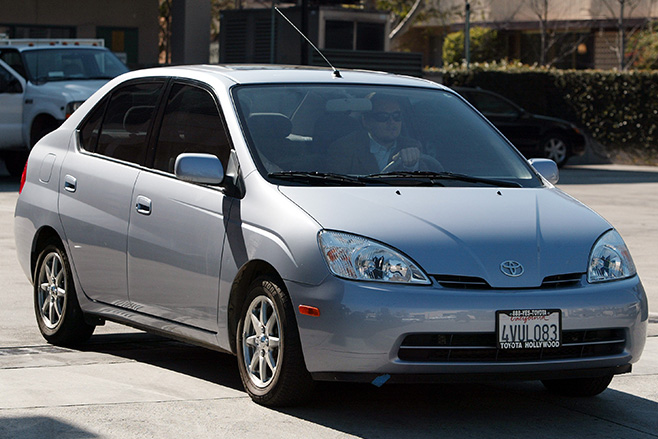
Colin Farrell
According to therichest.com, the Total Recall actor is worth a cool $30 million. He’s worked with the greats, like Elmo, he’s actually quite funny and, after a stint in rehab, he has turned his life around. There are plenty of photos of Farrell that play to his ultra-cool façade, but none quite like those of him getting around in an old Ford Bronco.
Mel Gibson
Mad Max is no stranger to beat up old cars. He drove several old, powerful cars through outback Australia for the movie, after all. But despite the Hollywood star, who is no stranger to controversy, sitting on a net worth of allegedly US$400 million, he’s been seen driving a Smart car and a beat-up old Toyota Cressida. We’re wondering if the latter was his way of channelling his inner Max.
LeBron James
The NBA superstar isn’t one for cheap cars, having been spotted driving a Ferrari, a Dodge and a Porsche. But no car captures the paparazzi’s attention quite like his bright orange Jeep Wrangler. We’ve no doubt he’s invested a little bit of money on modifications but its still no $100,000 car. Really, though, LeBron could wear a jacket made out of garbage bags and we’d still find it cool.
Angela Lansbury
Our favourite teapot, Mrs. Potts, might be in her 90s, but the actress gets around in a Kia Soul. It might say a thing or two about the car’s demographic, but it just goes to show that even when you’re worth millions and are driving around the golden fire-hydrants of Beverly Hills, practicality still wins. Also, major props to the Bedknobs and Broomsticks actor for still being behind the wheel in her 90s.
Daniel Radcliffe
Harry Potter may have spent his early years getting about on a Nimbus 2000 broomstick or a hijacked flying Ford Anglia, but the real-life Daniel Radcliffe apparently spent his first pay cheque on a car. A Fiat Punto to be precise. And it doesn’t even fly!
Britney Spears
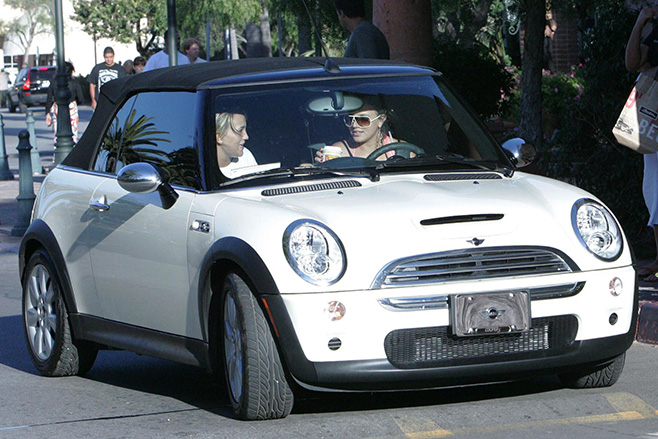
Our favourite ‘Baby One More Time’ pop diva has been spotted in a variety of cars over the years from a BMW 328i to a Maserati Gran Turismo. But her more down-to-earth get-abouts include a Mini Cooper convertible and a Smart Car.
Justin Timberlake
If you don’t already love JT, one look at snaps of him driving a Volkswagen Jetta is bound to change your mind, right? He’s funny (watch Saturday Night Live or The Tonight Show), his music gets us dancing, he constantly reminds the world how much he loves his family, and he’s down to earth. Tick.
Local arrival indicates this Italian hero is right on track.
WHAT IS IT? Only the most significant performance Alfa in decades. This is the four-door sports sedan that stands as the flagship of not just the Alfa Romeo Giulia line-up, but the halo model of the entire marque. Pressure? Um, just bit.
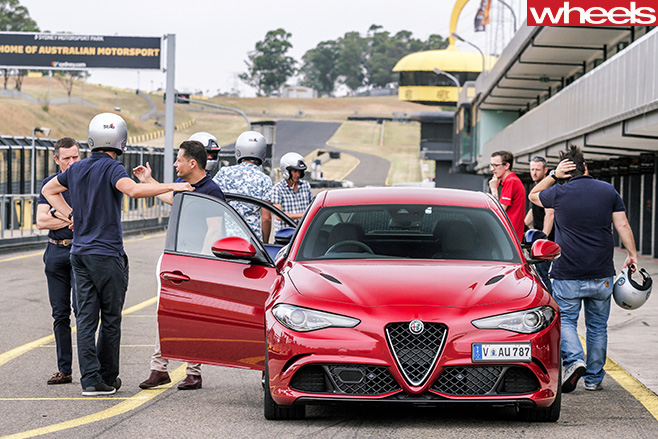
WHY WERE TESTING IT We drove the Giulia Quadrifoglio on an Italian circuit at its international launch, then took a manual example over Europe’s highest Alpine climbs. This is our first crack in the car on Aussie soil, but had to be contained to a track. A full road drive will follow soon.
The car the Alfa really needs to beat is the Mercedes-AMG C63 S, which brings two extra pots and another litre of capacity to the donk party, yet still only line-balls the Alfa for power (but does add another 100Nm.) Dampers are stiffer than a double scotch in their most aggro setting, but you’ll be intoxicated on the performance by then.
PLUS: Strong, refined powertrain; handling balance; interior; seduction factor MINUS: Lacks some equipment offered on rivals; is it really quick enough to rule its segment?
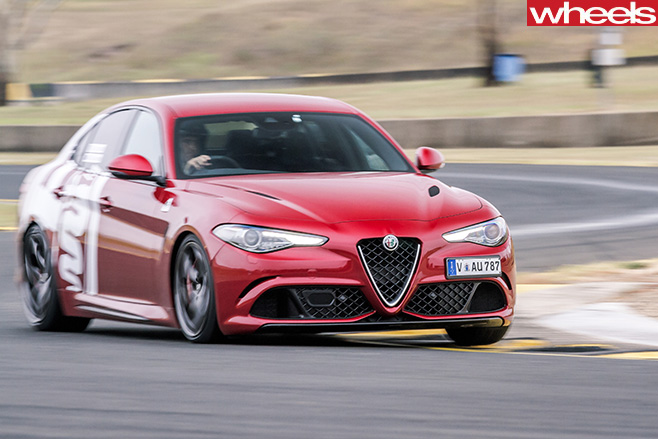
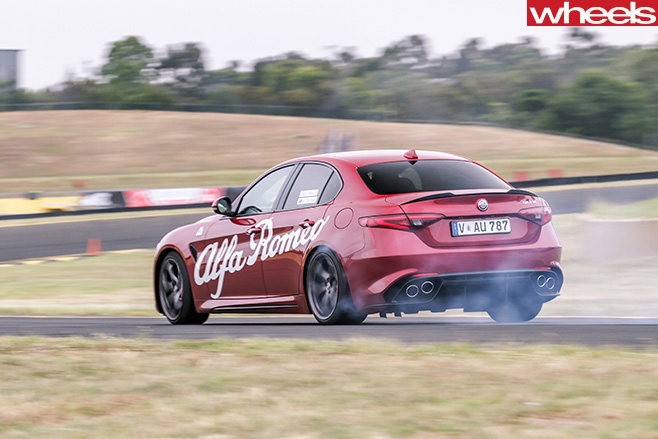
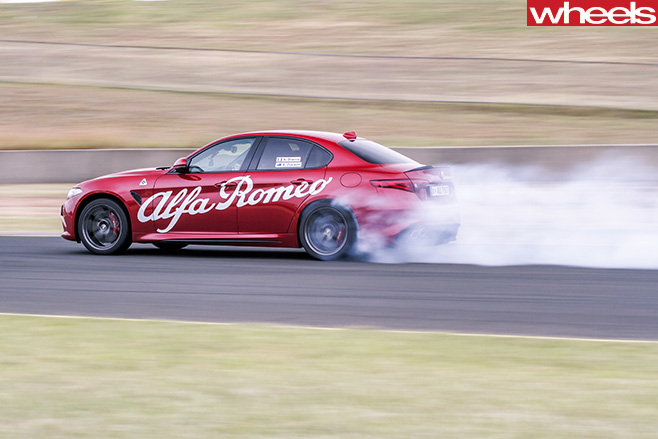
Alfa development driver Armando Bracco has the new Alfa Romeo Giulia QV ‑ recently crowned the four-door ’Ring record holder – pinned on its nose, his right foot mashed to the floor. The sweet little 2.9-litre twin-turbo V6 pa-pa-paparps against the limiter, and the spinning rear Pirellis send a flurry of smoke signals that may translate, to anyone fluent in Apache, to “Alfa is back, baby…”
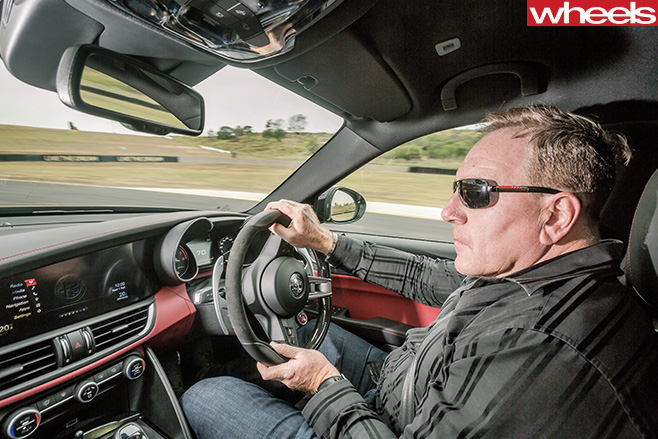
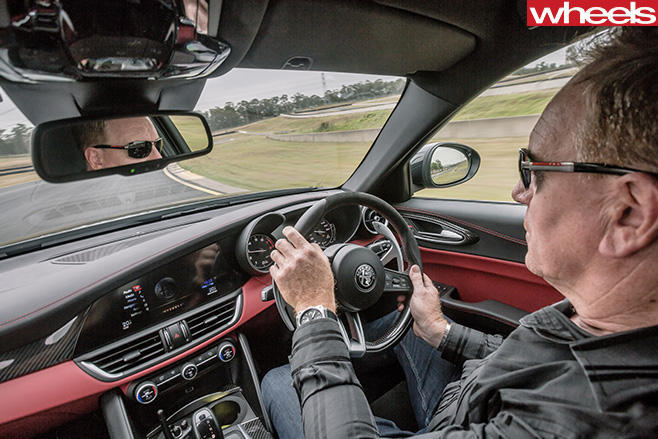
So, first impressions, beyond the local pricing: the styling is seductive, and the cabin is lovely. To my eye, the exterior has less of the overt butchness of BMW’s M3; more a purposeful curvaceousness, with several cool aero details. Inside, it has an understated style but features rich-feeling materials and fine design that feels sufficiently special.
No, this sets out to be a thoroughly modern Alfa; the car to spearhead the marque’s rebirth. You may recall Mike Duff’s drive of a manual version (Wheels, Summer ’16) scaling European summits, and his mention of an awkward shift action and high-biting clutch. No such issues here, and I suspect the eight-speed auto does a better job of masking the turbo lag Duff experienced.
What does give real hope for its ability as a brilliant road car is the chassis balance and adjustability. Even in the stiffer of the two damper settings, it doesn’t feel overly screwed down, so maybe this setting will actually be useable on Aussie roads, unlike the borderline-brutal Sport+ / Race setting on the Mercedes-AMG C63 S.
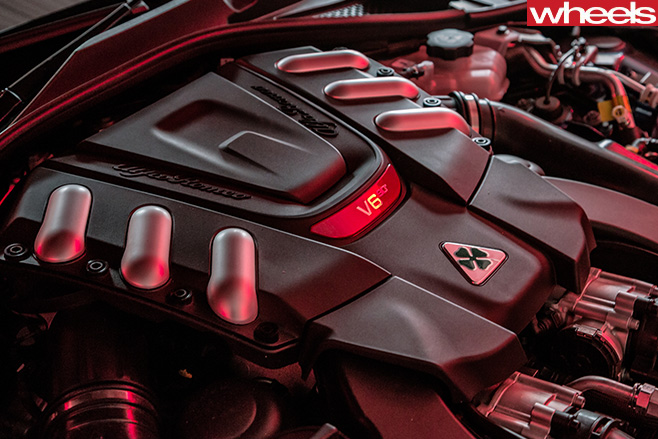
As does the overall cabin refinement, suppression of wind noise, and the feel-good factor for anyone with a weakness for Italian cars. We’ll find out for sure when the QV faces its rivals next month.
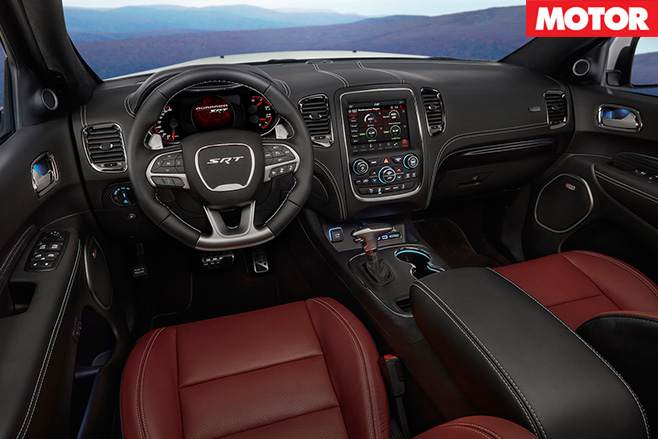
Dodge has unveiled what it claims is the Charger coupe of the seven-seat SUV segment, the Durango SRT complete with a 354kW/637Nm 6.2-litre Hemi V8 engine.
While the Dodge brand dies a slow death in Australia – its last gasp being the unpopular Journey four-cylinder seven seater – it’s a case of all guns blazing and shot-down emissions standards in Trump’s America. Let’s just say, to celebrate the Durango SRT launch, Fiat Chrysler Automobiles (FCA) released a video of its hulk performing a four-wheel burnout.
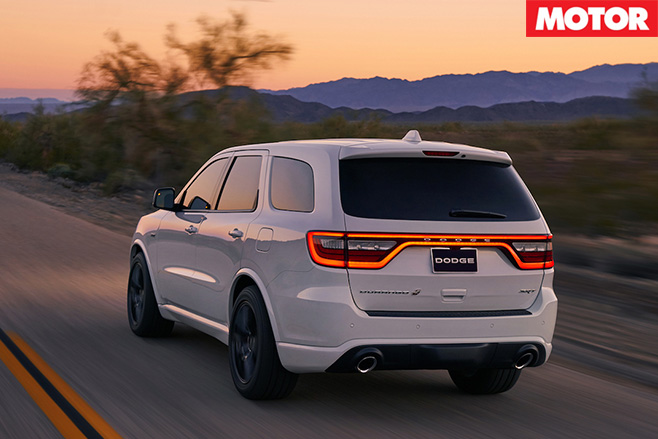
Still, it would have a Mercedes-AMG GLS63 nipping at its heels with its 4.5sec 0-100km/h.
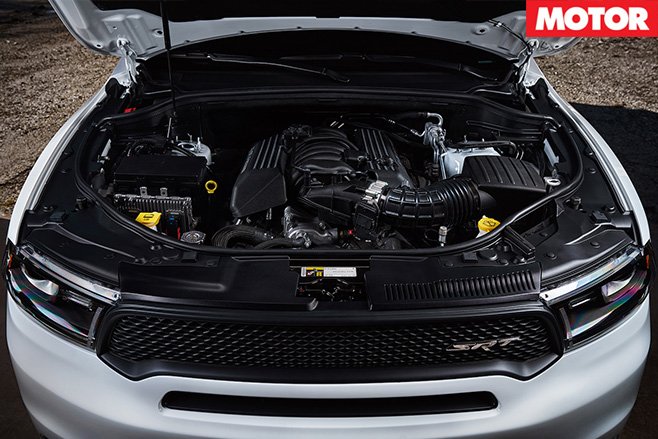
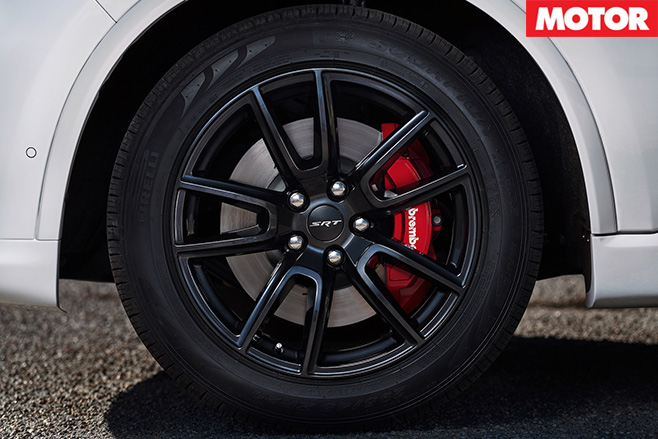
With Brembo brakes and a Bilstein multi-mode chassis that in Track mode can prioritise 70 per cent of drive to the rear wheels “for the most pronounced rear-wheel-drive experience” in the segment, it has the gear to haul beyond in only a straight line.
“A 12-second quarter mile, toy-hauling, three-row muscle car.”
The Volkswagen Tiguan range has been fleshed out further with the arrival of the 162TSI Highline in local showrooms which joins the 110TSI, 110TDI, 132TSI and 140TDI that launched late last year. And though the 162TSI’s name doesn’t sound particularly exciting, the reality is that it’s perhaps the sportiest medium SUV from a mainstream brand since, well, ever.
Powered by the same 162kW 2.0-litre turbocharged inline four as the Volkswagen Golf GTI hot hatch, the Tiguan 162TSI retails from $48,490. Here are some facts about VW’s most powerful Tiguan ever to get you rubbing your chin.
- The 162TSI isn’t the first GTI-engined Tiguan to be sold out of a Volkswagen showroom. The previous-generation Tiguan 155TSI generated 155kW and 280Nm, and while that’s only 7kW less power than the new 162TSI, it’s a whopping 70Nm less torque. The difference in acceleration is massive – the 155TSI hit 100km/h in 7.3 seconds, but the 162TSI does the same trick in a brisker 6.5 seconds.
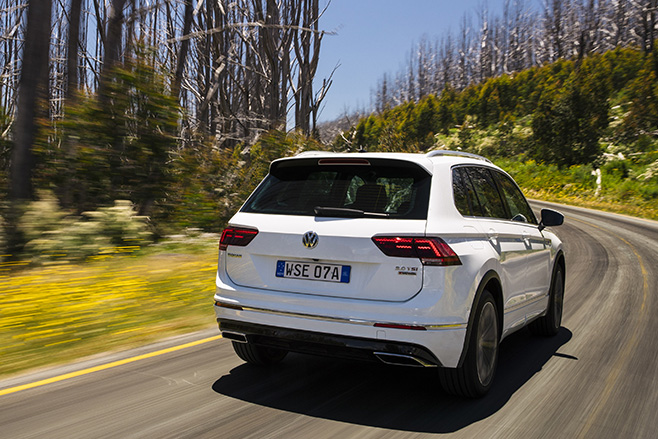
- Speaking of zero-to-hundred times, that 6.5-second stat happens to be identical to the much smaller and lighter Volkswagen Golf GTI. How does the Tiguan 162TSI achieve that? By using its all-wheel-drive driveline (the GTI is front-wheel drive only) to give it a traction advantage that helps compensate for its weight penalty.
- All Tiguan 162TSIs are strictly automatic-only, but mechanically speaking the Tiguan’s ‘automatic’ actually has more in common with a conventional manual gearbox. Odd-numbered gears are actuated by a computer-controlled clutch, while another clutch is connected to the even-numbered gears. The switch between each clutch is so fast that there’s no manual-style jolting, and it’s all handled without any driver intervention needed – unless you want to select your own gears via the steering wheel-mounted paddles.
- While the Golf GTI’s automatic option has six forward gears, the Tiguan 162TSI benefits from an extra seventh ratio – another reason why it’s able to keep up with its hot hatch little brother in a drag race.
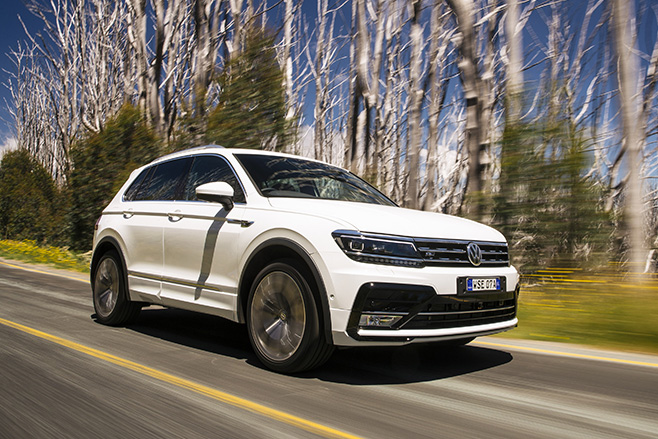
- All 2017 Tiguan models ride atop Volkswagen’s modular MQB platform, a new vehicle architecture that allows cars of widely varying sizes – from the Golf hatch to the Atlas large SUV – to share components. That means Volkswagen can save money on development and manufacturing, thus allowing them to include more equipment and better materials.
- The new Tiguan 162TSI is 30mm longer and 60mm wider than the previous model. There’s also 76mm more space between the front and rear axles, liberating more space for the rear passengers.
- All Tiguan 162TSIs are Highline grade, which means they’re the best-equipped models in the Tiguan range. That said, you’ll still need to spend on option packs if you want cool cutting-edge features like a reconfigurable electronic instrument panel or a more comfortable adaptive suspension set up.
The cover has been blown on one of Mercedes’ reveals at next month’s Geneva motor show.
A teaser image was released yesterday hinting at a convertible G-Class (no, it’s not April 1), however a video has appeared online of the new Mercedes-Maybach G650 Landaulet, completely undisguised and uncovered.
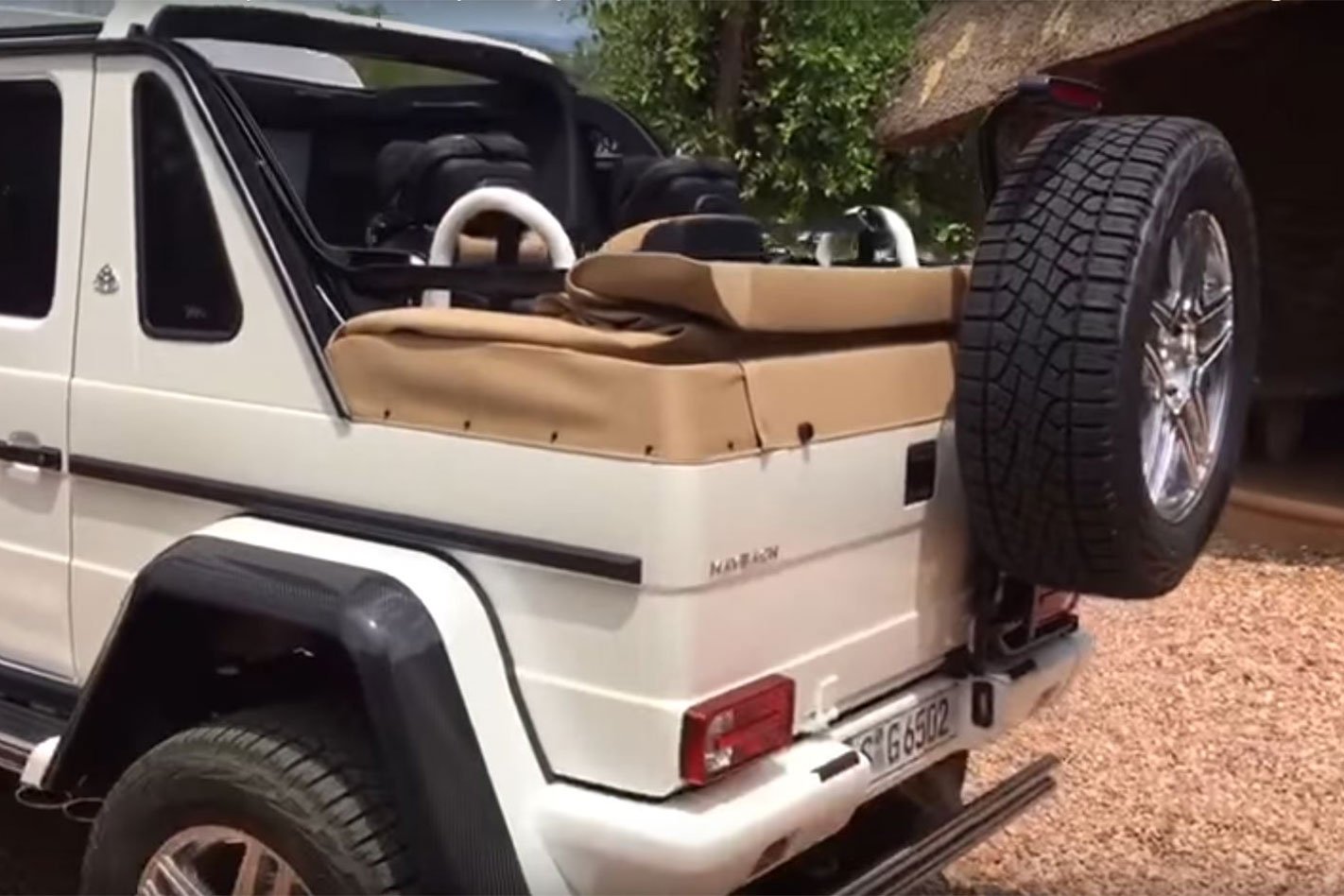
It may look like the perfect vehicle to transport Ken and Barbie from the beach to their dream house, but the G650’s best attribute isn’t its speed or its off-road ability, but the ease with which it can extract vast quantities of money from those with little or no common sense.
Details are very scarce, however the Instagram post from automailru suggests just 99 will be built at a price of US$300,000, matching the ask for the Mercedes-Maybach S650 Cabriolet, a car which makes vastly more sense.
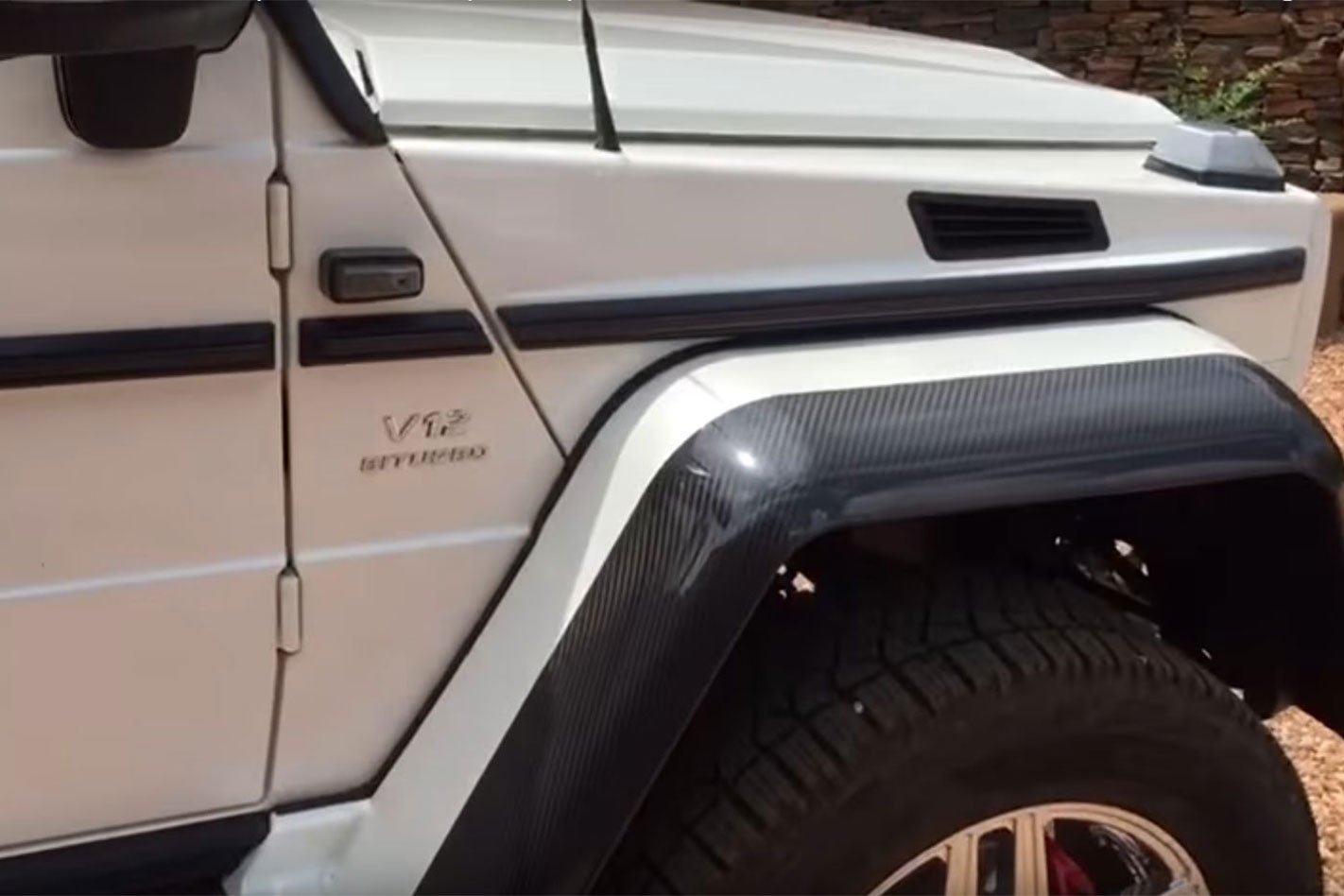
With an all-new G-Class expected later in 2017, the G650 Landaulet is a fittingly illogical way to celebrate the current car’s illogical success. No doubt all 99 will quickly find homes, however for our money the wild G63 AMG 6×6 is the much cooler car.
Holden has confirmed it will offer its NG Commodore Sportwagon with its Australia-only petrol V6 and all-wheel drive powertrain that aims for Volkswagen Passat R36 grunt.
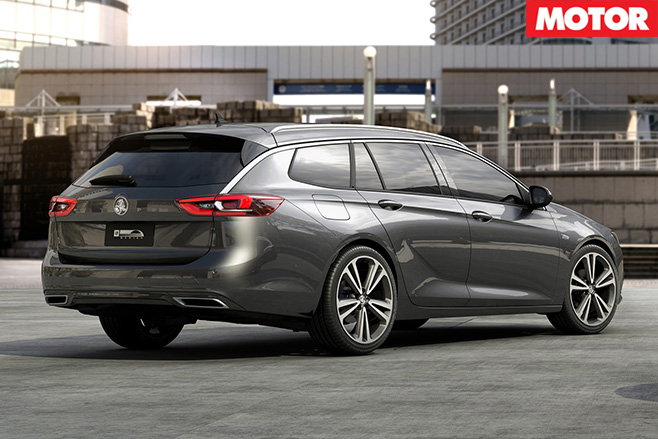
According to the brand it is “bringing sexy back” to wagons with the New Generation (NG) Holden Commodore Sportwagon unveiled overnight alongside its Opel Insignia Sports Tourer near-twin.
We say ‘near-twin’ because Opel versions will not score the 230kW/370Nm 3.6-litre V6 engine – an updated version of the VF Series II engine with higher outputs and cylinder shutdown tech – combined with a ‘twinster’ all-wheel drive system and nine-speed auto.
The highlight of the new Sportwagon design is arguably its sweeping silver roofline trim that extends from the A-pillar over its six-window design and intersects with the tail-lights. The line then extends into the concave and 3D-esque tail-lights themselves, which have more than a hint of Peugeot about them – arguably again, in a good way.
A wide and square number plate surround, meanwhile, is reminiscent of an Audi A6 Avant.
Compared with the VF Series II Commodore Sportwagon the narrower NG loses 360 litres of maximum boot space, which now totals 1640L with the rear seat folded flat. Still, that’s 47L greater volume than the Mazda6 Touring.
The tailgate also not only adds electric opening – a first for the nameplate – but additionally a ‘kick to open’ function, which allows a foot to be waved under the rear bumper, and a 40:20:40 split-fold backrest.
And of course all-wheel drive. According to details just released by sister brand Opel, the ‘twinster’ design “can apply torque to one or both of the rear wheels independently, enabling torque vectoring capability across the car’s full performance range.”
“When cornering, higher torque is sent to the outside rear wheel, inducing rotation around the vertical axis (yaw) – the Insignia turns in with more precision, responding more spontaneously to inputs from the driver.”
Apparently the twin-clutch (hence the name) differential-less design – the same as that used in the oversteer-able Focus RS – reacts with two driver-select presets, Normal and Sport, the latter prioritising “sportier behaviour.”
Holden is promising weight reductions of around 200kg on the switch from Australian-made VF Series II to German-built NG – from 1717kg to 1866kg to around 1517kg to 1666kg.
Given that a 1615kg BMW 330i Touring claims 0-100km/h in 6.0 seconds with 185kW/350Nm, the more powerful and torquier Sportwagon should be at least as brisk.
April’s Geneva motor show will mark the public debut of both sedan and wagon versions of the Insignia, giving us a first look at what will become our Holden Commodore in 2018.
