
Toyota has confirmed it will close its Altona manufacturing operations on Tuesday, October 3, 2017 – 17 days before Holden will close its Elizabeth assembly line.
The early October date means Holden – Australia’s first car maker, which opened its doors in 1948 – will be the last manufacturer to build a car in Australia, with October 20 the day the last Holden Commodore will roll down the line.
In a brief statement Toyota reaffirmed its commitment to manufacturing for the next eight months before it switches wholly to importing.
“We remain extremely proud of our rich manufacturing history which spans over 50 years,” said Toyota Australia president Dave Buttner. “Our employees are committed to producing vehicles of the highest quality as we work towards our goal of ‘last car = best global car’.”
Australia was the first country outside Japan that Toyota chose to manufacture cars, something that kicked off in 1963.
By October 3 the company will have produced about 3.5 million cars in Australia, many of them exported.
The final day of production for Holden will signify the end of almost 70 years of car manufacturing that has at times been prosperous and crucial to the Australian economy.
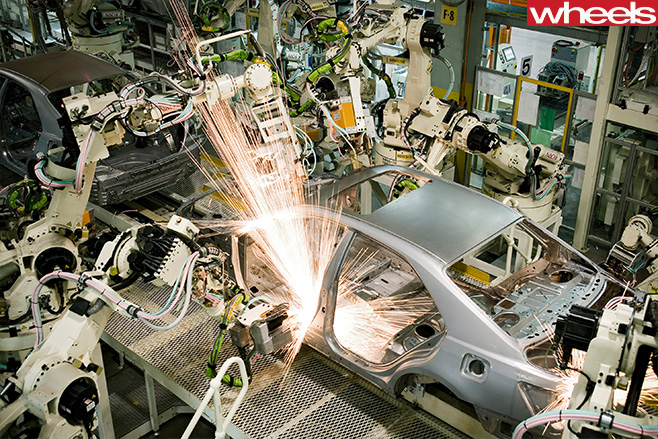
Toyota’s announcement comes just weeks after Holden confirmed it would cease local car making as it makes the shift to an import-only brand from 2018.
Unlike Holden, Toyota’s path to import-only status is expected to be a lot smoother; being a Japanese brand it is much better known for its imports, whereas Holden’s heritage was built on Australian-made cars.
Toyota has already confirmed the next generation Toyota Camry will be sourced from Japan, taking over from the Australian-made one late in 2017. The new Camry doesn’t deviate from a proven formula, except to reintroduce a V6 model that was temporarily replaced by the almost identical Aurion.
Toyota’s Australian manufacturing operations began in 1963 at Port Melbourne where its head office is relocating to (from Caringbah in southern Sydney) once local manufacturing ceases.
In 1972 the company purchased 54 hectares (133 acres) of land at Altona, then on Melbourne’s fringe, and began producing engines there in 1978.
It shifted its vehicle assembly operations to the current location in Altona by 1994 with the production of a brand new plant.
The first car to be produced at Altona was the Corolla before the Camry was added soon after, part of a bold export plan that included the Middle East.
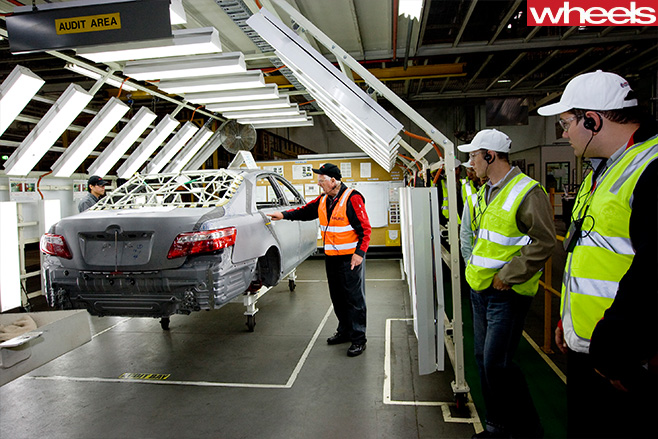
Whereas arch rivals Holden and Ford focused their manufacturing efforts on producing large cars predominantly for Australians, Toyota’s model was focused heavily on exports.
In recent years Toyota has produced more cars than Ford and Holden in Australia with a peak of 148,931 in 2007.
Ironically Holden funded much of the development of Toyota’s Altona plant with proceeds as a result of a split in the controversial and troubled United Australian Automotive Industries that was a government-encouraged joint venture between Holden and Toyota. The tie-up led to both sides “badge engineering”, whereby each other’s cars were rebranded with that of the other.
As a result not all cars produced by Toyota in Australia wore Toyota badges. In the late 1980s and early 1990s Toyota produced Corollas and Camrys for Holden. They were marketed as the Nova and Apollo and were said to provide Holden with cars with much lower warranty claim rates than the vehicles it was producing.
Started in 1986 as Holden was facing bankruptcy, the UAAI joint venture quickly soured with a clash of cultures and expectations, prompting former Toyota Australia chief John Conomos to later refer to it as a “shotgun marriage” that was riddled with “indigestion”, ultimately turning it “toxic”.
As part of the deal Toyota took rebadged Holden Commodores, which is marketed as the Toyota Lexcen. It was a flop in the sales race and quality issues negatively impacted Toyota’s stellar reputation for quality and reliability.
LARGER, smarter and more dynamically appealing than its now faded predecessor, Volkswagen’s second-gen Tiguan brings Golf-like polish and refinement to the cut-throat, and booming, mid-size SUV segment.
Oozing a new-found confidence and showroom appeal, the Tiguan impressed even before it turned a wheel at Car of the Year. As the first SUV to switch to VW’s modular transverse MQB architecture, Tiguan V2.0’s most obvious improvement is the boost in comfort and practicality gleaned from increased dimensions all round, including a wheelbase stretched by 77mm. It has officially grown from a small into a medium-sized SUV, though significantly, weight is actually down in almost every variant (by up to 53kg).
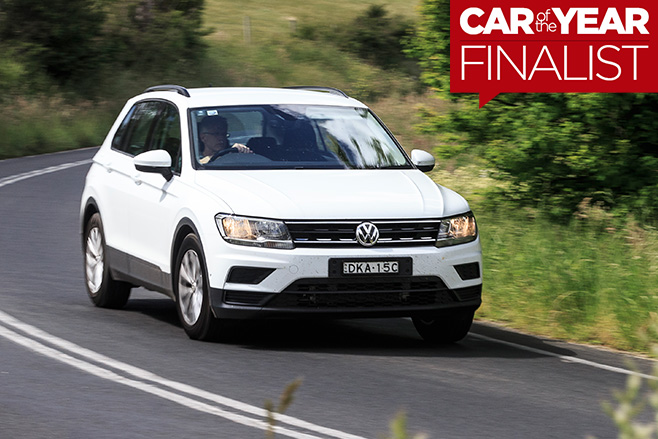
It’s not all barebones practicality and utility, either. The Tiguan’s cabin ambience, even in base 110TSI guise, is a highlight, with an airy (if unimaginative) design, quality materials, and a keen attention to detail that stretches to flocked door pockets, a rich mix of textures, and rear air vents.
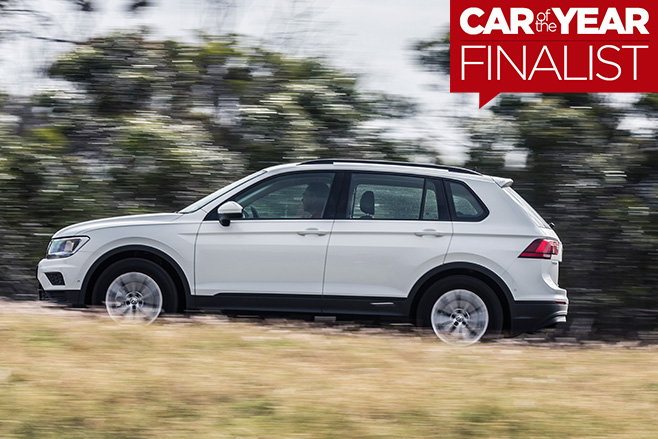
Offered with a convincing suite of five turbo engines, every Tiguan provides a zest and dynamic verve uncommon for this category of SUV. The accurate and well-weighted steering deserves particular praise and contributes to handling that is fluid, poised, and at times even fun, regardless of whether you’re in the base front-driver or the all-wheel-drive $50K Vokswagen Tiguan 140TDI Highline flagship.
IT’S been a long time in the Car of the Year wilderness for imported Holdens. Not since 2001 has a Holden other than Commodore been remotely close to challenging for a finals berth.
Enter the BK Astra, the fifth generation of the Opel-sourced small car to be sold here and a vehicle tasked with replacing the Australian-made Cruze that has enjoyed big sales but not necessarily big accolades. While Astra coupes have been available more recently, this is the first five-door Astra to wear a Holden lion since 2009.
To say the new Holden Astra arrives with big expectations is underselling it. Holden is desperate to move on from the last decade of underwhelming Korean imports and instead look to a new breed of cars closer to the values the brand once stood for.
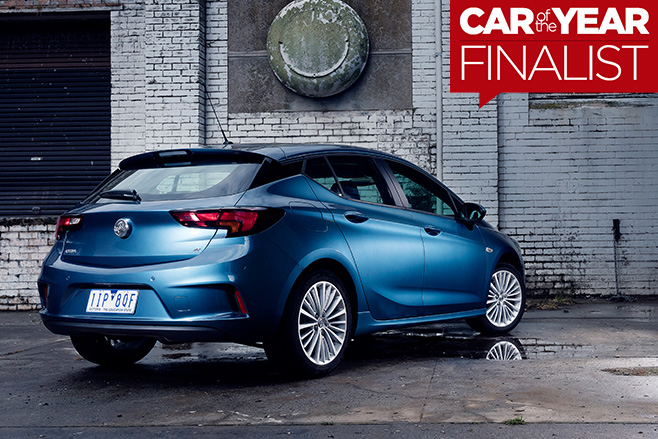
It was those 1.6s that immediately gained COTY attention. Offering 147kW from as little as $26,490 represents near-hot-hatch performance for $10K less than punters are used to paying. Throw in a slick six-speed manual ’box and few cars will deliver as much driver satisfaction for the money.
The RS-V ups that with 18-inch tyres and a raft of available features that reinforce its upmarket aspirations. As with the RS, it gets forward collision alert, auto emergency braking, lane-keep assist and blind-spot warning.
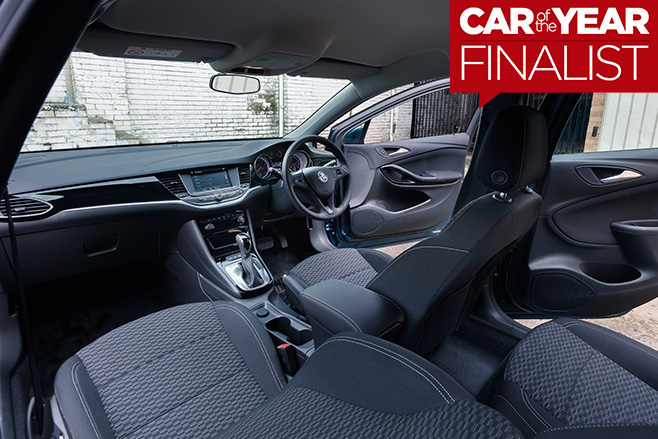
It’s a genuinely good car, delivering on sophistication and value in the heavily contested small-car field that is burgeoning with notable stars, including Volkswagen’s 2013 COTY-winning Mk7 Golf.
This year the McLaren F1 celebrates its 25th anniversary – and the company has released 19-year-old footage of the iconic supercar being driven to a record-breaking 391km/h.
On March 31, 1998, at Ehra-Lessien Proving Ground in Germany, the F1 became the world’s fastest production car with a top speed that would not remain unbeaten until the arrival of the Bugatti Veyron. Yet it still remains the fastest naturally aspirated production car.
The grainy, original footage is narrated by Le Mans 24 Hour-winner Andy Wallace as the F1 was pinned to its top speed, while the seven-minute video McLaren released this week – titled ‘The story behind the McLaren F1 and its record-breaking 240.1mph top speed’ – is also narrated by Wallace today as he reflects on the task at hand.
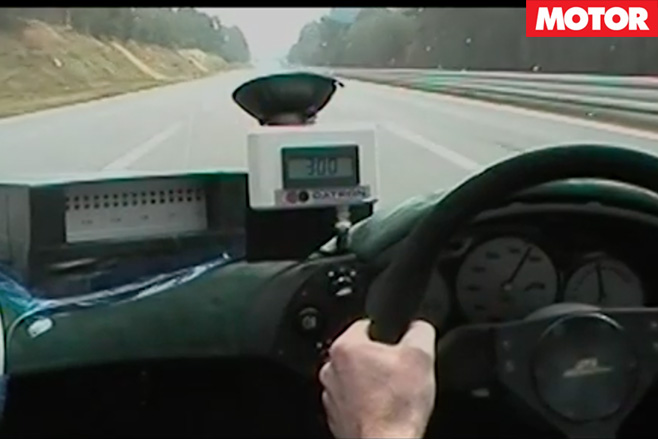
“Of course I was a bit younger and more stupid in those days, so I said ‘yeah I’ll have a go at that’,” Wallace, now 56, recalled.
Being an endurance racer, he mused that he was used to listening to orders, so when McLaren asked him for commentary while driving at 300km/h-plus, he did what he was told.
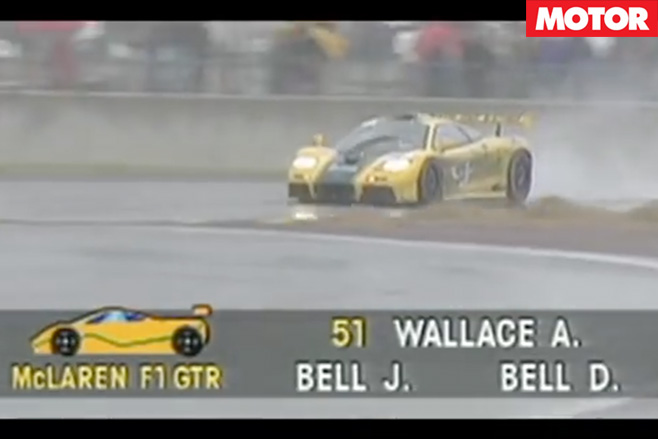
“For any tyre when you start going this fast, it’s not as easy as it sounds,” Wallace said.
“It was moving around, not alarmingly, until it got to about the 380km/h mark. And then this thought went through my mind: should I actually just lift off? Again being young and stupid, you keep your foot in it.”
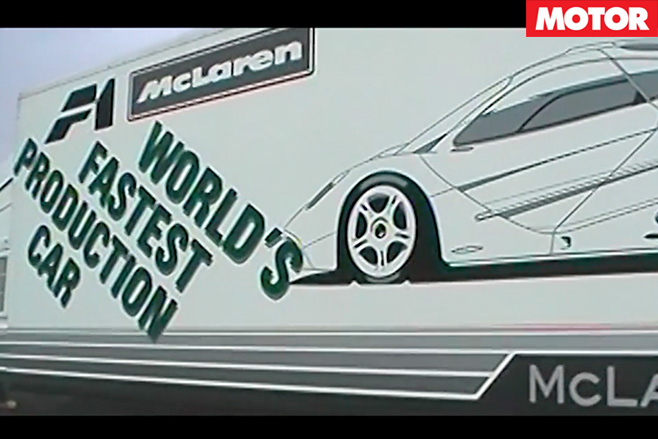
“Speeds over 350km/h were unheard of [in 1998],” he added, acknowledging that while land speed records were higher at that time, piloting a road car on rubber tyres was a different prospect. Its final combined top speed record was 240.1mph, or 386km/h.
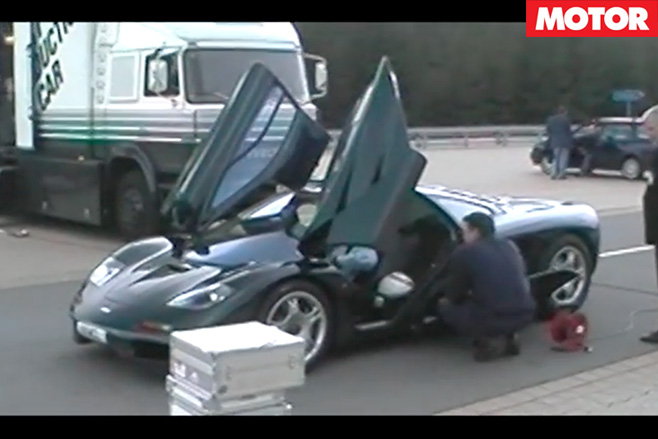
And from Wallace speaking 19 years ago, front and centre in the cockpit of the F1 having completed the record: “Appropriately we have the fuel light on, gearbox temperature reached 130 degrees, everything else is fine. I still say this is the best car ever built, ever, and will probably never be beaten.”
SERIOUSLY…it’s impossible to pick a favourite for the Bathurst 12 Hour. We defy you. So many variables. So many standout drivers, teams and GT3 cars.
The 2017 Bathurst 12 Hour has the flush and flash entry and all the necessary other ingredients to suggest it could be a race for the ages to be fought on one of the world’s toughest tracks.
The field oozes quality. Formula One drivers of the past, Le Mans winners, Bathurst 1000 winners, Supercars champions, DTM champs, and British touring car championship race winners.
We must go back to the 1987 Bathurst 1000 (which doubled as a round of the World Touring Car Championship) to recall such a stunning roll-call of overseas drivers and great variety of machinery.
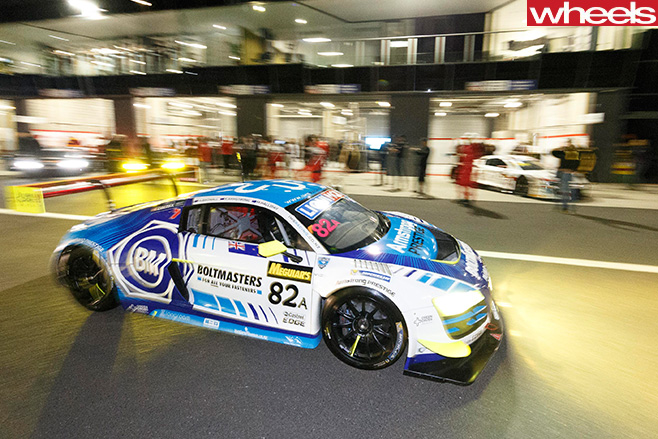
Currently 56 cars are entered, representing 16 different brands and with entries from Australia, Britain, Germany, Switzerland, USA, Japan, Hong Kong and New Zealand.
There’s always fascinating new gear to appraise and admire. New to the race this year are the Merc AMG GT GT3, BMW M6 GT3, Ferrari 488 GT3 and Porsche GT3 R.
What began as a humble “alternative” enduro for production cars in 1991 has evolved into an epic event for (mainly) international GT3 sports cars.
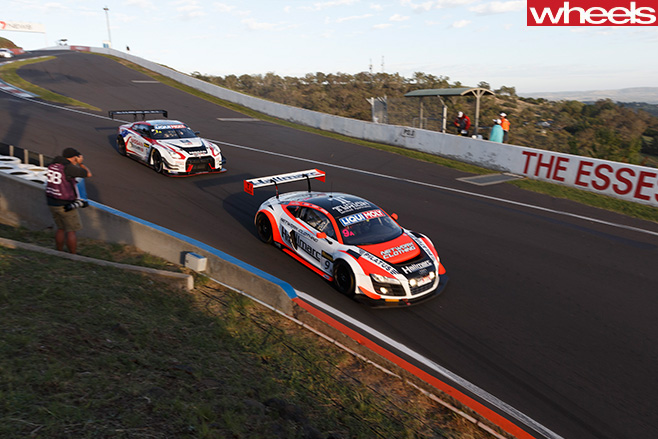
Yes, there is still some way to go before it reaches the status of the 24 Hours of Spa and the similar Nurburgring 24 Hours. Or our own legendary domestic race, the Bathurst 1000.
Give it time; it is still relatively fresh to the international calendar. This will be just the seventh time the B12 Hour has been centred on GT3 cars as the outright category.
The outright GT3 class has 36 cars across 10 brands – Aston Martin, Audi, Bentley, BMW, Ferrari, Lamborghini, McLaren, Mercedes AMG, Nissan and Porsche will all battle for outright victory.
These are evocative, exotic poster cars with clear visual and technical links to production models.
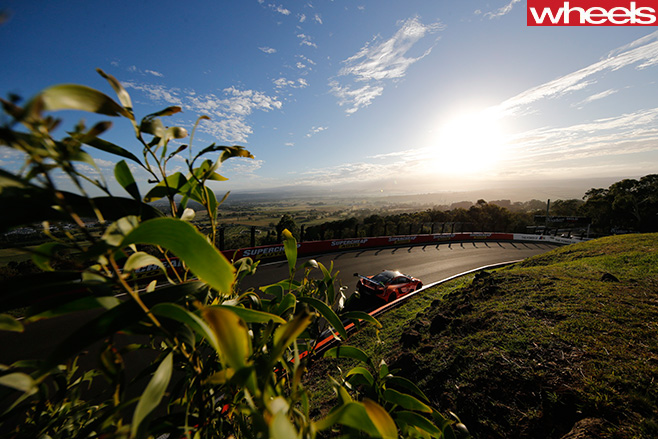
Supercars champions Jamie Whincup and Mark Winterbottom are each making their competitive GT3 debuts in the 12 Hour.
Which brings us to the toughest task of all – predicting a winner. There are simply too many dynamic combinations in competitive machinery, but here are some to watch out for.
Whincup joins Craig Lowndes and Finnish factory gun Toni Vilander driving a Maranello Motorsport Ferrari 488 GT3, with Triple Eight support. Whincup may have stayed away from sports car racing to concentrate on Supercars, but he was instantly quick in his first brief test of the 488, the lone Ferrari in the race.
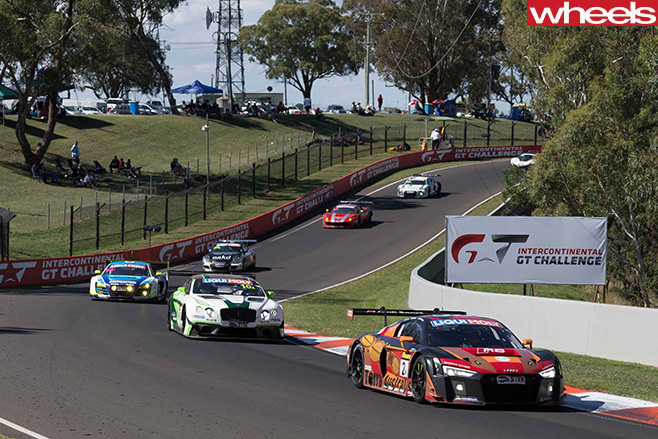
Hot Mercedes chances are Kiwis van Gisbergen and Craig Baird hooking up with Maro Engel aboard a factory supported STM AMG Mercedes GT3.
In a similar AMG GT3 entered by powerhouse HTP Motorsport are Pedro Lamy, Paul Della Lana, Mathias Lauda and five times DTM champ and B12 Hour winner Bernd Schneider.
Bentley’s Team M-Sport entries are full factory driver squads – Steven Kane/Guy Smith/Oliver Jarvis in one majestic-sounding Continental GT3 and Andy Souchek/Maxime Soulet/Vincent Ambril in the other.
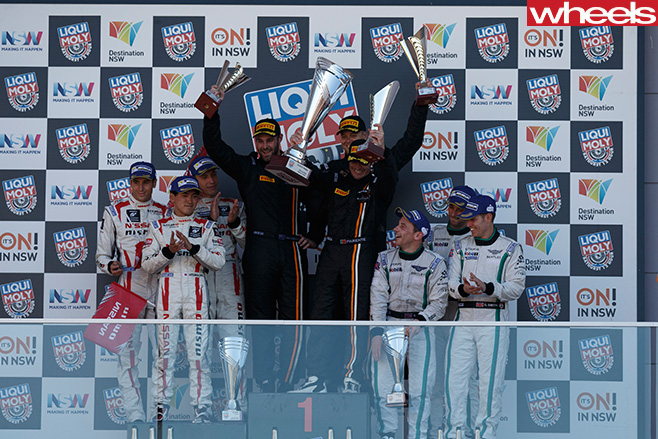
The only brand to win the race more than once, Audi has confirmed two R8 LMS Jamec-Pem factory combinations, including Garth Tander, twice 12-Hour winner Chris Mies, and Chris. No weaknesses there. Nor in the #75 R8 with Marcus Winkelhock, Frank Stippler and Dutch sensation Robin Frijns.
Porsche hasn’t been a massive threat in recent years but the new Walkinshaw Performance 911 GT3 R is to be shared by Kiwi ace and 2015 Le Mans winner Earl Bamber and super-fast Euros Kevin Estre and Laurens Vanthoor. Another 911 GT3 R, fielded by Competition Motorsport, offers an equally potent line-up of Patrick Long, Marc Lieb, Aussie standout Matt Campbell, and amateur racer David Calvert-Jones.
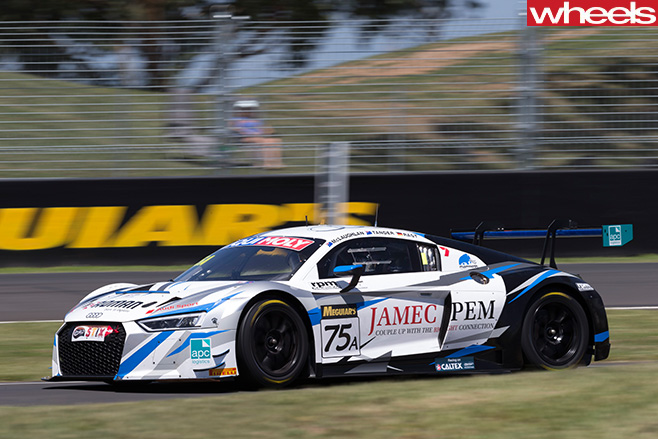
Best of luck pulling a fave out of that bunch.
The performance of each individual car is monitored by a system called ‘Balance of Performance’, which uses weight, aerodynamics and engine power to ensure the performance between different cars is as close as possible.
This parity system keeps the diverse types of GT3 weaponry astonishingly close in performance, although the cars are getting progressively quicker each year.
It means cars like the front engined, V12-powered Aston Martin can be on terms with the mid mounted, V10 Audi R8, the V8-powered turbo Ferrari and the rear engined, flat-six powered Porsche 911 GT3 R.
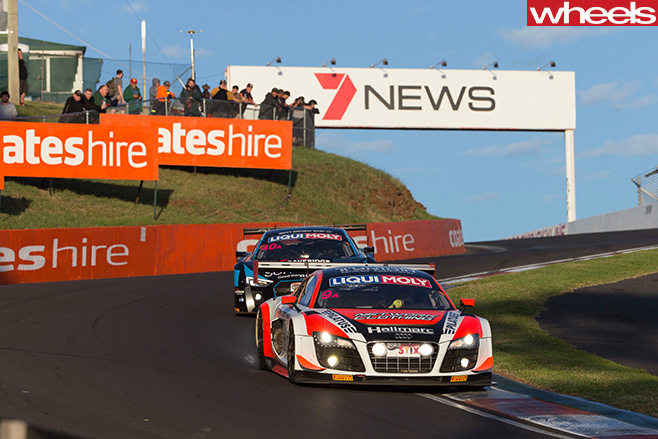
The B12hr has always been one of the most accessible, fan friendly events on the schedule (modest crowd numbers in past years have helped). For 2017 organisers have a new, covered grandstand at turn one and a ‘Glamping’-style Tent City at McPhillamy Park. Another initiative is a rooftop bar above the pits.
The international drivers and teams are drawn to the track. The word is spreading fast. Manufacturers love it too, choosing to link customers and potential clients with their highly desirable products across the weekend. Expect lapping in a lively fashion at the Mountain by Schneider in the green Mercedes AMG GT R that set the record lap at the Nurburgring for a rear-drive road car – and a rare La Ferrari. And one or two other wild and expensive beasts. All in the name of entertainment and brand positioning.
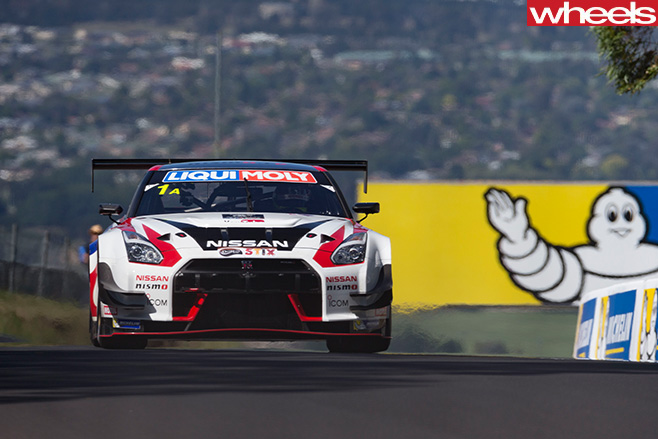
Of casual interest to Australian spectators but of serious importance to teams and drivers, the Liqui-Moly Bathurst 12 Hour doubles as the opening round of the Intercontinental GT Challenge, a four-round series of major GT endurance races for drivers and manufacturers that includes the Spa 24 Hour, Sepang 12 Hour and a race at Laguna Seca in the USA.
The race will be broadcast live on 7mate on Sunday, February 5, with the coverage starting at 5:30am and finishing soon after the race’s conclusion, at 6pm.
Live internet streams will allow international audiences to tune in. More than 180 countries watched last year’s race. Steaming is available at www.bathurst12hour.com.au or on Nismo TV, Red Bull TV or via the SRPO Blaincpain site.
Bathurst 12 Hour GT-era winners
Since it became a GT race in 2011, only one brand (Audi) has managed to win the race twice.
2011: Marc Basseng / Darryl O’Young / Christopher Mies (Audi R8 LMS) 2012: Christer Jons / Darryl O’Young / Christoper Mies (Audi R8 LMS) 2013: Bernd Schneider / Thomas Jaeger / Alex Rollof (Mercedes Benz SLS AMG GT3) 2014: Craig Lowndes / Peter Edwards / John Bowe / Mika Salo (Ferrari 458 GT3) 2015: Katsumasa Chiyo / Florian Strauss / Wolfgang Riep (Nissan GT-R NISMO GT3) 2016: Shane van Gisbergen / Alvaro Parente / Jonathon Webb (McLaren 650S GT3)
Fast facts and stats
The combined winning margin across the 2014, 2015 and 2016 races is just 3.7 seconds.
Closest finish of just 0.4s recorded in 2014 when Craig Lowndes edged the Mercedes of Maximilan Buhk.
The lap record was set by Shane van Gisbergen, driving a McLaren 650S GT3 in 2016 – 2m01.567s. This is also the outright Bathurst circuit lap record.
The qualifying record was also set by van Gisbergen last year at 2m01.2860s.
The record race distance is 297 laps or 1845km – set by the winning McLaren in 2016.
Adult tickets for race day are just $35 and include paddock entry.
FORGET Dieselgate. Volkswagen Group has overtaken Toyota to become the world’s largest carmaker in 2016, despite the costly hangover associated with the emissions scandal rocking the company.
Toyota, which has topped the sales chart for the past four years, has officially reported it sold 10.175 million vehicles globally last year. However, Volkswagen Group announced overnight it had sold 10.31 million vehicles worldwide.
The difference between the two brands was down to growth: Toyota increased its sales by just 0.2 percent in 2016, while Volkswagen’s sales grew 3.8 percent.
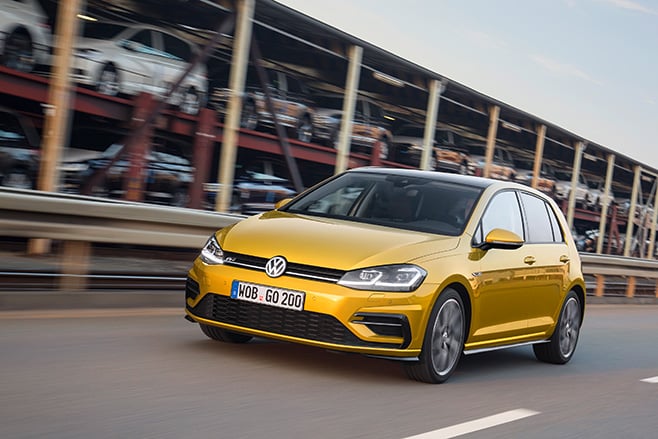
Toyota’s success came via its vehicles built outside of Japan. The brand posted its fifth consecutive year of production growth, hitting a record high as production in North America, Latin America, and Europe ramped up.
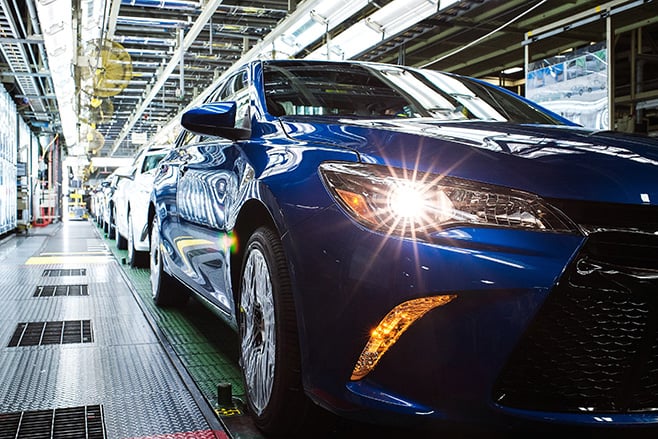
Volkswagen Group chief executive Matthias Mueller said 2016 was a “very challenging year for us”.
“We made strides in resolving and overcoming the diesel crisis and … we managed to stabilise operating business in difficult conditions,” he said.
“The fact that we handed over more than 10 million vehicles to customers last year bolsters the group and its brands as we head for the future.”
General Motors, the third-largest carmaker in 2015, is expected to release its global sales numbers next week.
Toyota continued its reign as Australia’s dominant brand, selling 209,610 vehicles in 2016, up by 1.6 percent over 2015’s result, with the Hilux trade ute becoming the nation’s best-selling vehicle for the first time.
In contrast, Volkswagen’s sales here slumped 6.1 percent to 56,571 as Dieselgate-affected models such as the Golf small car and Amarok ute fell out of favour with buyers.
It’s hard work, but someone’s gotta do it.
Surprising though it may be, there is actually a fair degree of work involved in Performance Car Of The Year, purely because it’s an award we take very seriously.
Make no mistake though, every bit of the long hours, hundreds of kilometres and endless chin scratching over scoring is worth it for the privilege of belting 12 of the finest performance cars of the last 12 months.
Here are the five lucky so-and-so’s that get the job.
Tim Robson
David Morley
Scott Newman
Dylan Campbell
John Bowe
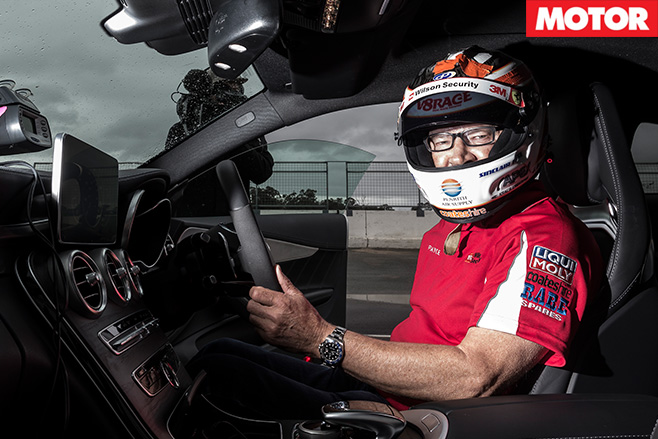
Watch this space and stay tuned for more Performance Car Of The Year action!
The performance car of the year will be announced at the Australian Motoring Awards on February 1, 2017.
HOLDEN Special Vehicles has teased it is about to reveal a tyre-shredding, 476kW GTS-R badged tribute to the rear-drive V8 formula that has shaped it for the last three decades.
The specialist carmaker teased on Twitter it would reveal its 2017 model line-up – the last to be based on the locally built Commodore – tomorrow. The post, which read “Stop EVERYTHING! Our 2017 range is coming”, included a tightly cropped image of a red brake calliper and two spokes of a rim.
Wheels believes the return of the GTS-R badge will be a big part of the announcement, which should include a range-topping variant called the GTS-R W1, expected to be powered by the 6.2-litre supercharged LS9 V8 found in the Chevrolet Corvette and Camaro.
What we understand is the GTS-R W1 was spied without any camouflage earlier this year shortly after separate images of what appeared to be the 2017 range were snapped.
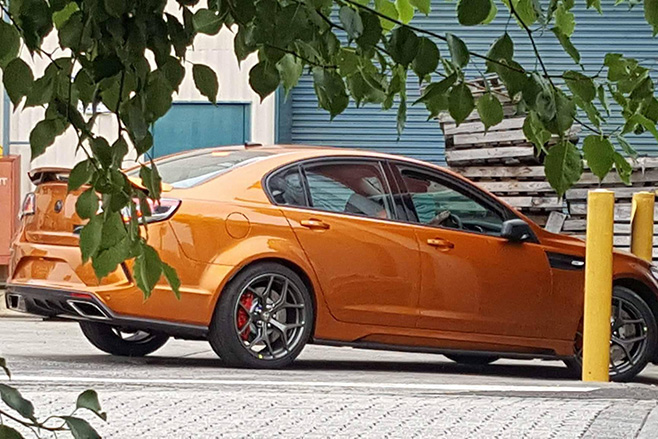
Judging by the camouflaging, there will be visual tweaks to the front, side and rear of the cars, as well as new colours, and rims.
Wheels has covered the top-secret development of the GTS-R W1 extensively since HSV first approved the project. We previously reported that the W1 will be powered by the Chevrolet Corvette ZR1’s LS9 engine, with a power output in the region of 476kW and a massive peak torque number of 820Nm. The cost? It’s rumoured to be as high as $170,000, which would make the GTS-R W1 the most expensive and powerful Holden Commodore ever made.
Just a reminder: HSV’s tweet states the range will be unveiled just after midnight tonight. Make sure you check back at WheelsMag.com.au for all the news and details of the updated HSV range.
The second Panamera plug-in hybrid, due sometime before the end of 2017, will pack Porsche’s twin-turbo 4.0-litre V8 beneath its bonnet.
The new Panamera Turbo’s 404kW engine will be teamed with the company’s even newer plug-in hybrid system, revealed at the launch of the Panamera 4 E-Hybrid in South Africa.
Without being explicit, Porsche executives and engineers at that event made it clear that the company’s latest E-Hybrid tech has a big role to play in the future of both Panamera and Cayenne.
Adopting an electric boost strategy developed for the exotic, limited-production Porsche 918 Spyder plug-in hybrid, the electric motor sandwiched between the Panamera 4 E-Hybrid’s twin-turbo 2.9-litre V6 and eight-speed double-clutch transmission adds a 100kW and 400Nm kick.
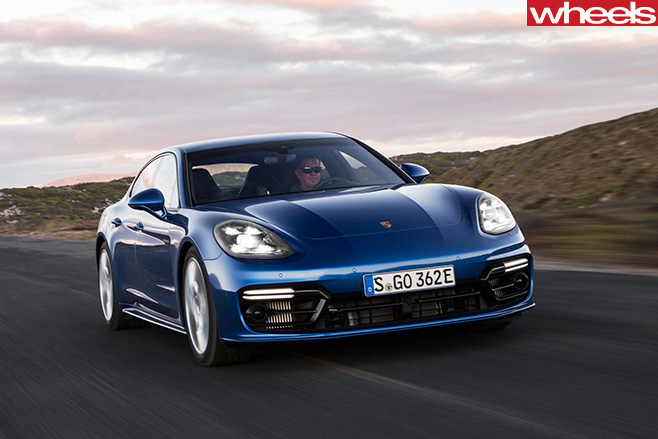
Porsche hybrid drivetrain manager Daniel Semmler confirmed the second Panamera hybrid would be quicker. “The second car will have more power, more total power,” he said. “The total performance will be increased.”
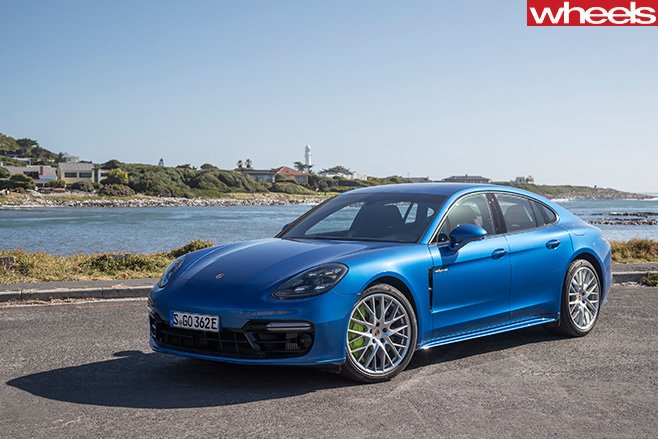
Growing hybrid sales meant Porsche could invest in designing its own all-new Gen II hybrid system to suit its big front-engine models, reducing the emphasis on efficiency.
“The new hybrid strategy means hybrid stands for additional performance,” said Stefan Utsch, Panamera sales and marketing director. “With the predecessor Panamera you needed to push the sports button, you had to push the accelerator pedal at least 80 percent, and you have to fulfil specific requirements concerning how fast you open. With the new one, it’s right from the beginning. When you start to tip in, the boost is there.”
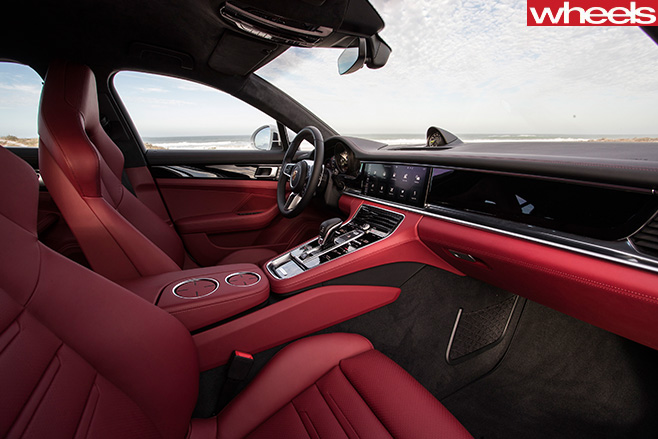
The flexibility Porsche has designed into the E-Hybrid means it will be widely used. “It’s part of our strategy for several models,” admitted Daniel Semmler. This suggests both V6 and V8 plug-in hybrid versions are on the way for Porsche’s big SUV, which has always shared powertrain tech with the Panamera. “For the Cayenne plug-in is always an option,” said Semmler. “It’s available at the moment, and it will be available in the future.”
While dense European and Asian cities are expected to experience rapid uptake of electric vehicles in the next decade, Australia – both its people and its government – has until now proved reluctant to embrace an electron-powered motoring future.
But that may change quickly, and Volkswagen’s local arm says it will be poised to take advantage of any shift in market demand for electrified passenger cars.
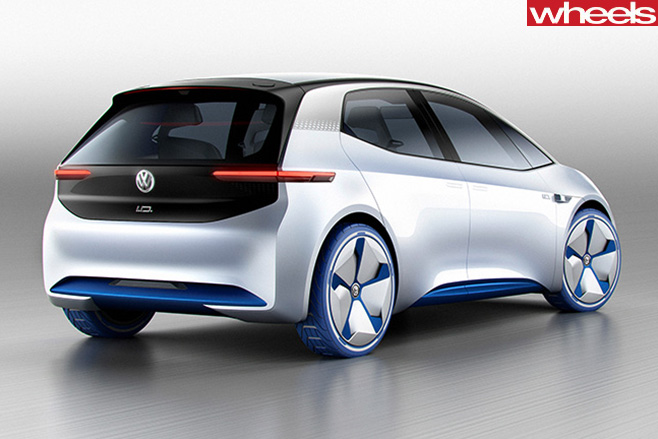
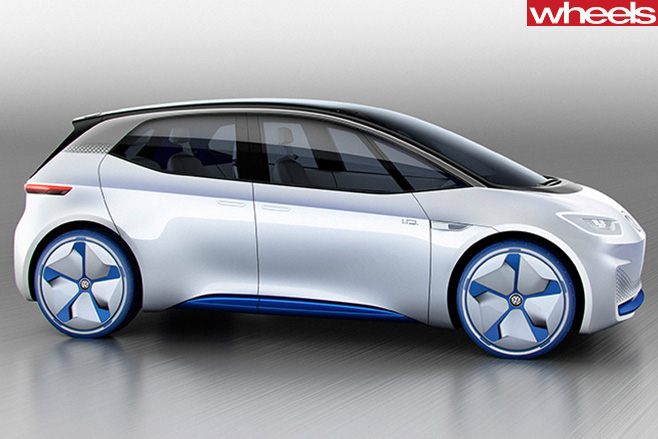
With a family of all-electric vehicles built off its EV-specific MEB platform due to launch from 2019, Volkswagen’s Aussie showrooms could quickly find themselves hosting a range of battery-powered commuter cars.
But there will need to be some seismic shifts in the market first.
Speaking to Wheels, Volkswagen Australia’s head of product planning Jeff Shafer admitted the local market had yet to truly warm to the idea of combustion-less motoring.
“It’s a part of the market that really hasn’t grown as quickly as I might have expected,” he said.
“Up until now we really haven’t seen the breakthrough combination of affordable price, long enough range and packaging.”
However those products are not expected to come our way, at least not yet. Shafer said there are no immediate plans to bring existing VW plug-ins to Australia, but the company was nevertheless dipping its toes in the battery-electric pool.
“I wouldn’t suggest that we’re not going to offer GTE type product in the future as well … however we don’t have a plan today to bring that kind of car out. Having said that, we’re actually in the process right now of putting a charging station at our headquarters, which gives us a tangible step towards a future with EVs.”
Volkswagen will watch the market closely over the next few years, biding its time until the first of its MEB-platformed electric cars makes its debut overseas. With substantial single-charge ranges and passenger-focused packaging, it’s these models – which are expected to kick off with a Golf-sized hatch and a family-sized people mover – which hold the most promise for Volkswagen Australia’s transition to an electrified showroom.
According to Shafer, the first MEB offering will boast the “footprint of the Golf with the interior size of the Passat”.
Price premiums over conventionally-powered options are also expected to be modest, rather than the tens of thousands asked by the current crop of EV options.
“It’s close to the end of the decade [for MEB] so there’s a bit of time I suppose to ready ourselves but also to see how the market develops.”
“If you have a range of 400km for example – and I think they’re projecting 80 percent charge in 20-30 minutes [for MEB] – those sorts of things really make it move beyond a ‘take a chance’ or a ‘not really sure’ proposition.”
“However as good as the MEB product looks on paper it’s maybe not the ‘silver bullet’ solution. It takes a particular customer. You have to have a garage to charge it overnight, for example.”
“There might be a range of solutions,” Shafer said, leaving the door open for plug-in hybrids to slot in beside the MEB range.
Australian government policy regarding EV car incentives has lagged behind that of many other countries in the developed world, with no Federal Government support for buyers of zero-emissions vehicles. However, Shafer believes government subsidies aren’t necessarily holding EV uptake back in this country.
“That type of government policy could accelerate the uptake of electric vehicles, but whether or not that’s the difference between success or failure I’m not so sure,” he said to Wheels.
“When the product is good enough to appeal to the head as well as the heart, the premium is small enough over an internal-combustion engine car, and I don’t have to change my lifestyle to suit the car – which is really about range and ease of charging – I think we’ll see those cars be adopted fairly widely.”
“Infrastructure in terms of charging stations has been a little bit of a sticking point. But ranges between 200 and 400km starts to get into the realm of not impinging on your lifestyle.
“And at that point, even without that charging infrastructure, we’ll start to see [EVs] become popular.”
