
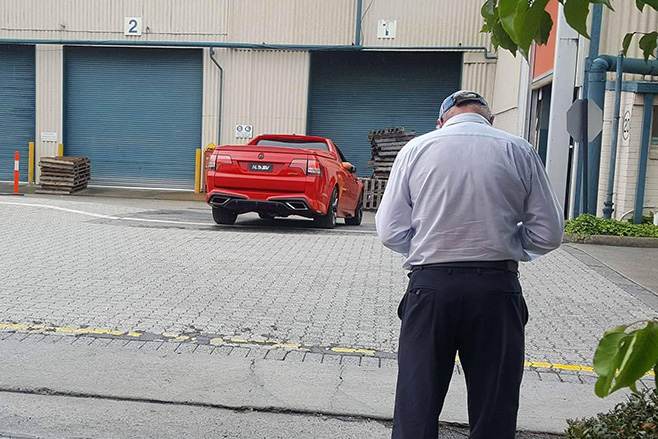
Is this Australia’s most powerful car? The 476kW LS9-powered HSV GTS-R has been snapped again, with images appearing online of the car without any camouflage.
What are believed to be the 476kW HSV GTS W1 in both sedan and ute body styles have appeared online in fresh images – and almost undisguised.
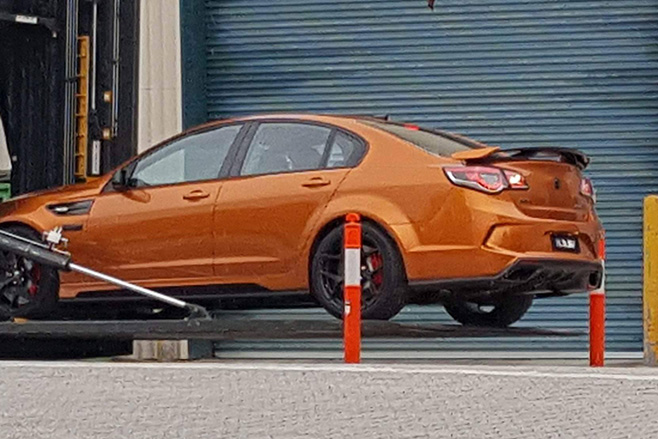
HSV has remained tight-lipped over the planned swangsong models for its Commodore-based models, although rumours leaked late last year speculated that as well as a GTS-R, the final line-up will also feature a monstrous GTS-R W1 variant.
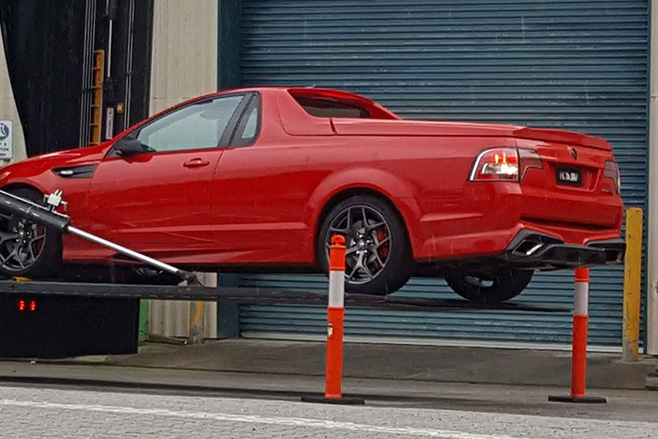
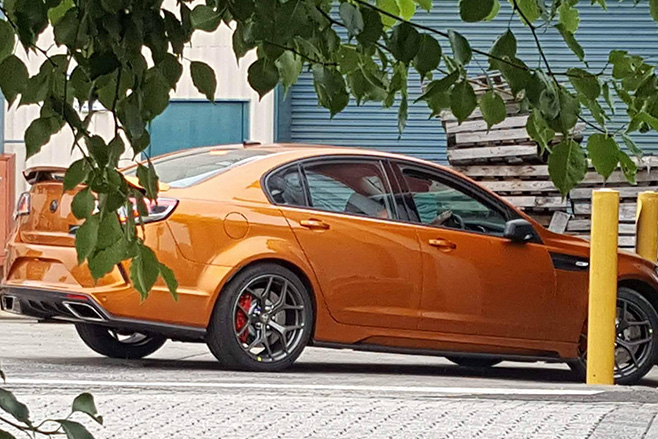
The previous most-expensive Commodore available was the HSV W427, which was powered by a 7.0-litre LS7 and cost almost $150,000.
Holden has announced it will close the doors of its Elizabeth manufacturing plant on October 20, 2017, bringing an end to its unbroken 69-year run as an Australian car maker.
The announcement is consistent with Holden’s original position that it would wrap up its manufacturing operations in the fourth quarter of 2017 and suppliers and employees were informed of the final date earlier today.
Holden first began local production with the 48-215 in 1948, while the plant in Elizabeth, South Australia opened its doors in 1963.
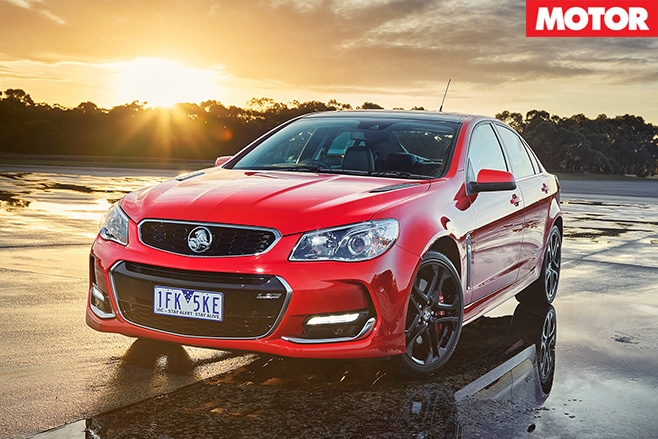
The Elizabeth plant will continue to run at full capacity, with nearly 1000 employees remaining until the final day. Of the 700 employees who have left Elizabeth since 2015, 80 per cent have “successfully transitioned”, within 12 months of leaving, with 69 per cent securing other employment, five per cent in training, three per cent retiring and three per cent volunteering.
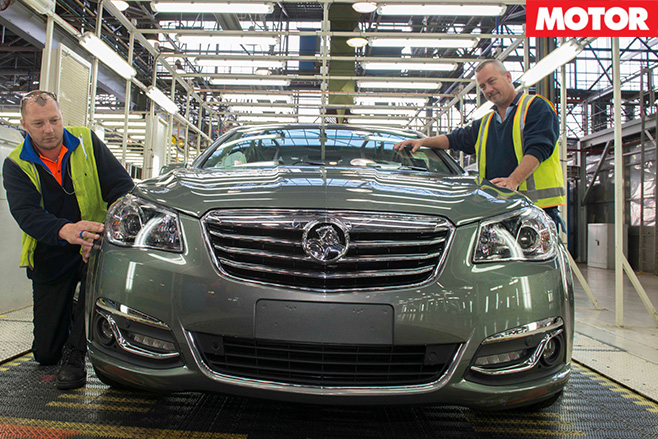
Holden plans to launch 24 vehicles and 36 new drivetrain combinations between now and 2020, however has a mountain to climb having recorded its worst ever sales result in 2016 with just eight per cent market share.
Despite falling sales, Holden this year announced a $128.1million profit for its 2015 operations, its first since 2011, with boss Mark Bernhard putting the decision to end local manufacturing into stark focus by saying: “Put simply, Holden is profitable on our imported vehicle range, while our manufacturing business continued to run at a loss in 2015.”
Here’s Holden’s statement in full announcing the end of almost 70 years of local manufacturing.
HOLDEN CONFIRMS OCTOBER 20 FOR END OF PRODUCTION AND FINAL TRANSITION TO VEHICLE IMPORTER; PROVIDES CERTAINTY TO EMPLOYEES AND SUPPLY CHAIN NETWORK
- Holden manufacturing continues until October 20, 2017.
- More than 30,000 vehicles to be built before manufacturing ends.
- Nearly 70% of Holden’s Elizabeth employees have secured jobs within 12 months of leaving.
- Holden to retain more than 300 designers and engineers in addition to 10,000 employees at Melbourne headquarters, Proving ground, Design Studio and across 230-strong national Holden dealer network.
Today Holden’s manufacturing workforce in Adelaide were the first to be told the company will fulfill its 2013 commitment to manufacture vehicles at its Elizabeth plant until the final quarter of 2017.
Holden Executive Director of Manufacturing, Richard Phillips, said that Holden’s overriding priority is giving employees and suppliers advance notice and providing certainty.
“While this confirmation isn’t a surprise for anyone and we’ve been working toward this for nearly four years, we can now confirm the actual date for our people and our suppliers. Putting our people first and foremost has always been our highest priority,” Mr Phillips said.
“This October may bring to a close more than 60 years of vehicle manufacturing by Holden at Elizabeth but I know it will be business as usual for our manufacturing workforce until then – we have tens of thousands of world-class cars to build in coming months and I know we all want to see Holden have great success in Australia for many years to come.
“Every day our employees exhibit professionalism and passion for achieving quality. We are categorically building the best cars Holden has ever built and that is backed up by internal and external data. They simply are a fantastic team that will ensure our last locally-made car is also our best car ever.”
Holden has assembled vehicles for domestic and export markets at the Elizabeth plant since 1963 and will continue to manufacture the world-class Holden Commodore range there until October 20, with nearly 1000 employees remaining at the Elizabeth plant in production, engineering and support roles until production ends. There are no plans for any further workforce reductions ahead of October 20.
Of the nearly 700 people who have left Holden’s Elizabeth plant since 2015, 80 per cent have successfully transitioned within 12 months of leaving (69 per cent employed, 5 per cent in training, 3 per cent have retired and 3 per cent are volunteering).
Holden’s Transition Support program will continue to prepare job seekers for new careers and support those opting for retirement until well after the factory closes.
During 2016, the Elizabeth plant was recognised with two awards for safety and financial performance within General Motors International.
All Holden employees leaving the business have access to a suite of transition services and up to $3000 in approved training and $500 for financial advice – all part of Holden’s $15 million contribution to the federal government-led Growth Fund for specific support of automotive manufacturing employees.
Holden’s Transition Centre was opened at its Elizabeth plant in 2014 to provide a range of support services including information sessions, workshops, career counselling, employment expos, resume writing, interview skills preparation and more.
Holden Chairman and Managing Director, Mark Bernhard, said Holden’s manufacturing workforce had set new benchmarks for quality and performance in the past four years.
“They have continually pushed to improve the quality of their work for the benefit of our customers – this commitment, continuous improvement attitude and passion have been exhibited in spades in challenging circumstances,” Mr Bernhard said.
“It’s not surprising that their skills, work ethic and flexibility are highly sought after and they are leaving a legacy for Holden that deserves to be honoured by ensuring this company has a bright and successful future.
“Holden continues to change but we are proud to retain a significant presence in Australia for the long-term that includes more than 300 people across our local design and engineering workforces, in addition to the approximately 700 corporate staff and 10,000 people employed across our dealer network. Holden remains committed to Australia and our customers for many, many years to come”.
Holden Transition Support
- Holden acknowledges the impact the end of local manufacturing has on our people and their families, across the country and throughout the industry. We are doing everything in our power to allow our people to make considered choices and help them move onto their next opportunity.
- Every Holden worker leaving the business has access to a suite of transition services and up to $3000 in approved training; all part of Holden’s $15 million contribution to the federal government’s Growth Fund for specific support of our manufacturing and engineering employees.
- The Transition Centre established at Holden’s Elizabeth plant is open to employees, contractors and supplier employees.
- As a result of Holden’s world-class transition services, about 80 per cent of people who have left the business have gone on to find other work. This does not include those who chose to retire or made personal decisions not to seek work.
- Holden has proactively engaged with HR and business leaders in South Australia and interstate, who have toured the Elizabeth site and viewed the variety of skills and capabilities of our workforce. Employees who have secured another job have been able to access an early voluntary separation package, helping them to take up opportunities.
- Holden’s Transition Centre at Elizabeth opened in 2014, after significant research into global best practice and consultation with employees and partner organisations.
- Up to $3000 training funds
- Career counselling
- Financial advice and superannuation support
- Coaching sessions to develop individual tailored plans
- Information on career pathways, training providers and courses
- Industry information sessions
- Careers and training expos
- Computer training
- Jobs vacancy board
- Dedicated staff to help answer questions
- Resume and job application writing workshops
- Interview training
- Networking training
- Job search training
- Department of Human Services (representatives and self-service kiosks)
- Resume writing workshops
- NewAccess program (BeyondBlue/BeyondAuto)
- Future of Holden:
- Holden will launch 24 major vehicles and 36 new drivetrain combinations by the end of 2020
- Holden vehicles will continue to be tuned and tested for Australian conditions and
- customers with the retention of the famous Lang Lang Proving Ground in Victoria, along with advanced engineering capabilities
- Holden’s Global Design centre continues to be based in Port Melbourne, contributing to local and global product programs
- Holden will retain more than 300 designers and engineers beyond 2017
- This is in addition to approximately 700 corporate staff and 10,000 people employed across the 230-strong Holden dealer network
- More than one-third of Holden’s future product portfolio will be sourced from Europe; with vehicles also being sourced from North America and Asia
- The esteemed Commodore nameplate will live on from 2018 with Holden’s next-generation large car
- Home Ground Advantage, Holden’s $5 million, 10-year commitment to grassroots sporting clubs has been a huge success with more than 5000 entries since launch
- Holden has launched the biggest Capped Price Servicing Program in the country, covering every Holden ever built.
Remember Porsche’s Mission E?
The dazzling all-electric showstopper that made its debut at the 2015 Frankfurt Auto Show was always expected to spawn a battery-powered production Porsche, but the hacked-up test mule recently snapped by our spy photographers suggests Porsche’s electron-burner may look radically different from the sleek form that wowed the crowds at Frankfurt.

Add-on wheelarches close the gap between the standard Porsche Panamera panels and the tyres, but it’s not clear whether this mule previews the Mission E’s final form – after all, prototypes such as these often use whatever bodywork is big enough to cloak the truly secret stuff underneath.

The Mission E Frankfurt concept took the form of an elegant four-door not too dissimilar to the Panamera, and with the recently-launched second-generation Panamera now boasting larger dimensions there’s the potential for the Mission E’s production counterpart to slot in beneath it.

Whatever the case may be, Porsche’s electric car won’t be niche. Porsche CEO Oliver Blume is on the record as saying the Mission E’s production variant is expected to sell in the region of 20,000 cars per year – healthy volumes for an electric vehicle, let alone one with a premium pricetag.

All should be revealed closer to 2019, when Porsche’s first all-electric model is expected to enter production.
HOLDEN has announced it will produce the final Commodore at its South Australian production line on Friday, October 20, 2017.
The date signifies the end of an illustrious and often challenging 69-year manufacturing operation that has defined the quintessentially Australian brand and produced nameplates as iconic as Monaro, Kingswood, Commodore, Torana and Sandman.
October 20, 2017 will be 25,163 days since the company’s manufacturing facilities were opened by Prime Minister Ben Chifley on November 29, 1948.Holden informed the 1000 staff who will be made redundant as well as its vast supplier network earlier today.
In a statement released today Holden’s executive director of manufacturing, Richard Phillips, said the announcement puts the end on a long expected transition from manufacturer to importer.
“While this confirmation isn’t a surprise for anyone and we’ve been working toward this for nearly four years, we can now confirm the actual date for our people and our suppliers,” said Phillips. “Putting our people first and foremost has always been our highest priority.”
Holden says it will build another 30,000 Commodores, Utes and Caprices between now and October 20. They will include the long anticipated Director and Magnum limited edition models and the eagerly awaited HSV GTS-R and HSV W1.
“This October may bring to a close more than 60 years of vehicle manufacturing by Holden at Elizabeth but I know it will be business as usual for our manufacturing workforce until then – we have tens of thousands of world-class cars to build in coming months and I know we all want to see Holden have great success in Australia for many years to come.”
Holden will still employ up to 1000 people, most at its Port Melbourne head office, including about 300 designers and engineers who will be remain heavily involved in developing vehicles for General Motors for global markets.
A skeleton staff from the manufacturing operations will remain in place for months after the closure to take part in the decommissioning of the Elizabeth production line.
Holden chairman and managing director, Mark Bernhard, praised the staff who will leave the company and looked towards what he hopes will be a more successful future as an importer.
“They have continually pushed to improve the quality of their work for the benefit of our customers – this commitment, continuous improvement attitude and passion have been exhibited in spades in challenging circumstances,” said Bernhard.
“It’s not surprising that their skills, work ethic and flexibility are highly sought after and they are leaving a legacy for Holden that deserves to be honoured by ensuring this company has a bright and successful future.
“Holden continues to change but we are proud to retain a significant presence in Australia for the long-term that includes more than 300 people across our local design and engineering workforces, in addition to the approximately 700 corporate staff and 10,000 people employed across our dealer network.
“Holden remains committed to Australia and our customers for many, many years to come.”
Holden’s sales in 2016 represented the worst market share for the brand since it began building cars in 1948; Holden accounted for just 8.0 percent of the nearly 1.2 million cars sold last year, well down on its 50 percent-plus highs in the 1950s.
Toyota is the last Australian car maker to announce its manufacturing shutdown.
The company is expected to close its Altona production line after Holden, making it the last ever volume car maker in Australia.
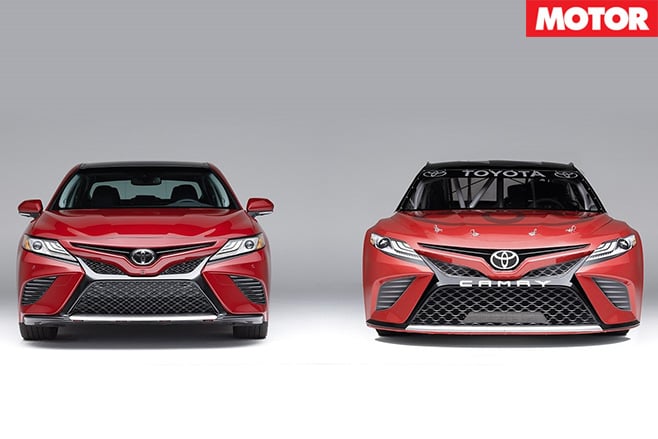
Toyota has revealed its radical new 2018 Toyota Camry at the Detroit Motor Show, a surprising move for the notoriously conservative Japanese car maker.
The all-new Camry will debut shortly after the closure of Toyota’s Australian manufacturing facilities, with local cars instead imported from Japan.
The biggest change involves the drivetrain layout, with the traditional four-cylinder front-wheel drive layout replaced by a 5.8-litre fuel-injected V8 feeding power to the rear wheels. Unsurprisingly, this has led to a huge surge in power, with a 12.0:1 compression ratio releasing 540kW at 9000rpm.
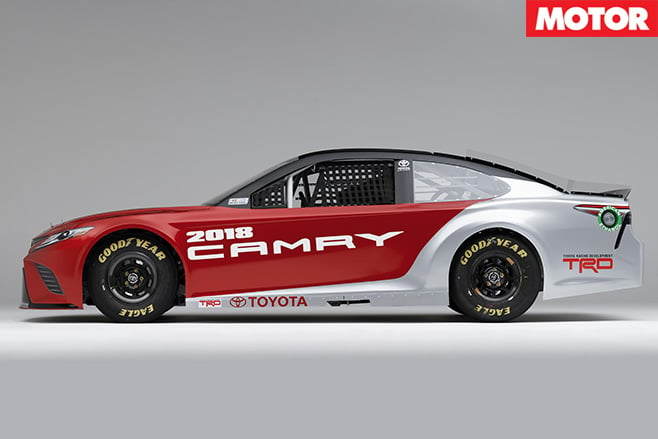
Weight has remained roughly similar at 1450kg, however the revised drivetrain has led to a suspension overall, with unequal length double wishbones up front and a live axle with panhard rod at the rear. Again, simple, proven technology which again should reap benefits at servicing time.
Possibly the most controversial aspect of the new Camry is Toyota’s decision to remove the doors. In an effort to reduce the average age of the Camry buyer, occupants are now forced to clamber in through the window, where they’ll find a basic interi…
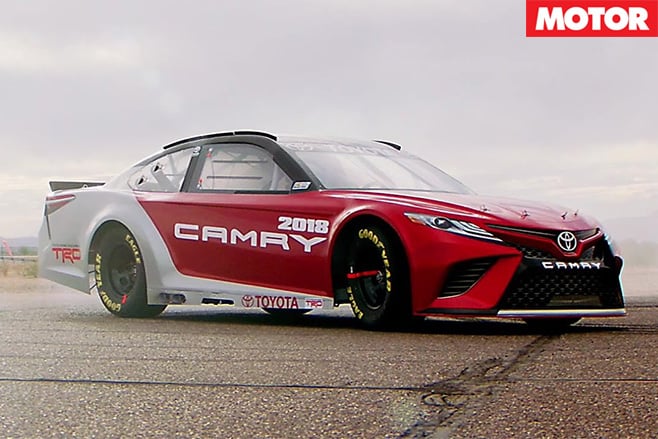
The new road-going Toyota Camry will land locally in the fourth quarter of 2017 and continue to provide safe, reliable, unexciting transport for thousands of Australians.
THE US Environmental Protection Agency has accused carmaking giant Fiat Chrysler Automobiles of using hidden software to cheat on diesel emissions tests.
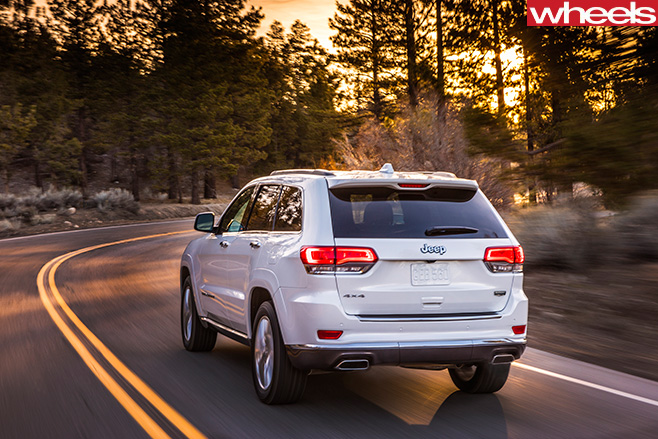
The claims – revealed overnight and which FCA flat-out denies – relate to the way its Jeep Grand Cherokee, the brand’s best-selling model in Australia, handles emissions of poisonous nitrogen oxide emissions from the vehicles. The claims only relates to vehicles sold in the US between 2014-16.
The allegations stem from the EPA’s wider investigation into diesel emissions in the wake of the Volkswagen Dieselgate scandal. VW announced this week that it had struck a $US4.3 billion ($A5.7 billion) settlement with the US courts to pay for its emissions cheats.
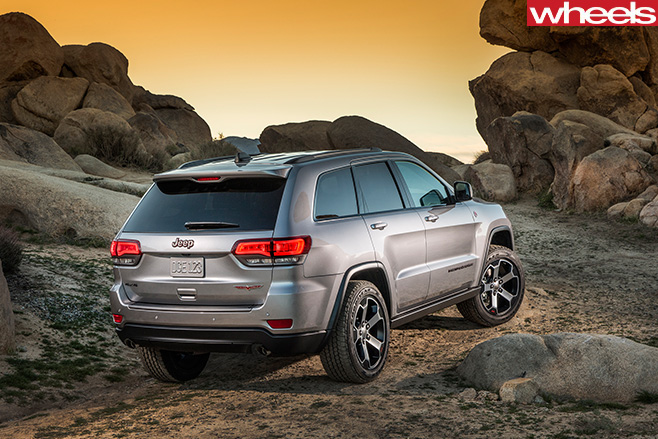
The EPA said it was investigating FCA for both not disclosing it was using engine management software, and to determine if the software used was an illegal “defeat device” designed to only reduce emissions when the vehicles were being tested.
“The Clean Air Act requires vehicle manufacturers to demonstrate to EPA through a certification process that their products meet applicable federal emission standards to control air pollution,” the EPA said in a notice flagging that FCA was under investigation.
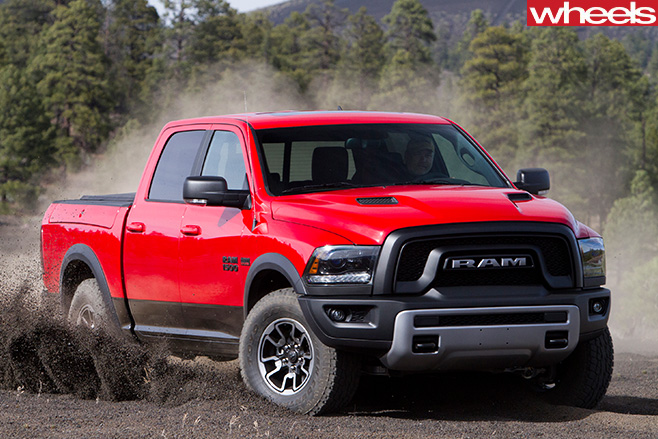
“FCA did not disclose the existence of auxiliary emission control devices to EPA in its applications for certificates of conformity for model year 2014, 2015 and 2016 Jeep Grand Cherokees and Dodge Ram 1500s, despite being aware that such a disclosure was mandatory,” it said.
“By failing to disclose this software and then selling vehicles that contained it, FCA violated important provisions of the Clean Air Act.”
FCA said it was “disappointed” that the EPA had issued the notice of violation, and said it would work with authorities to “resolve this matter fairly and equitably”.
“Every auto manufacturer must employ various strategies to control tailpipe emissions in order to balance EPA’s regulatory requirements for low nitrogen oxide emissions and requirements for engine durability and performance, safety and fuel efficiency.
“FCA US believes that its emission control systems meet the applicable requirements.”
It said it “looks forward to the opportunity to meet with the EPA’s enforcement division and representatives of the new administration to demonstrate that FCA US’s emissions control strategies are properly justified and thus are not ‘defeat devices’ under applicable regulations and to resolve this matter expeditiously”.
Fiat Chrysler Automobiles Australia said it would not comment on the investigation.
AUSTRALIA is firmly in line to receive the production version of the Lexus UX Concept that was previewed as a concept at last October’s Paris Motor Show.
While the premium compact SUV has yet to be confirmed for production, the Japanese luxury brand’s take on the Audi Q2, BMW X1, and Mini Countryman is expected to debut sometime later next year or in 2019.
Speaking to the Australian media at the Detroit Motor Show this week, Lexus’ local CEO, Peter McGregor, made it clear that he intends to have representation in every growing segment there in order to grow sales.
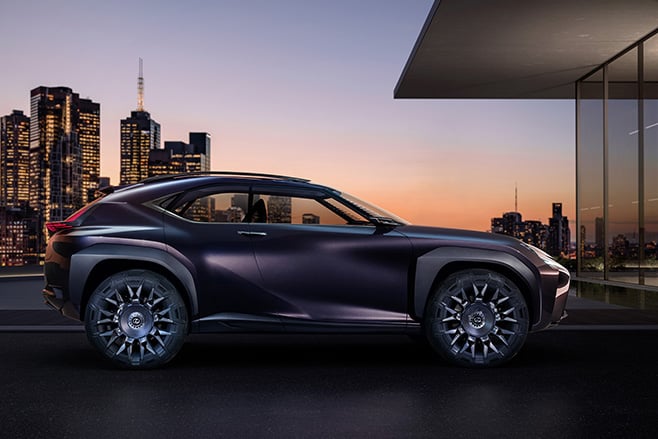
“If Lexus International decided to take a vehicle such as the UX Concept or something similar into production into a sub-Lexus NX market, we would certainly be putting our hand up and asking for that to be introduced into Australia,” he said.
“If we see a luxury market segment that exists and is growing that we don’t have a presence in, of course we are making that case to Lexus International that there is an opportunity that there are customers in this market segment that we are not satisfying.
Based on the Toyota New Generation Architecture that will form the basis of all future transverse-engined Toyota and Lexus models. The TNGA platform debuted beneath the all-new Prius launched earlier last year, but the production UX Concept will most likely be derived from the new Toyota C-HR small SUV.
One clue are the similar dimensions, including 2640mm wheelbase. Another is the hidden rear door handles in the C-pillar on both vehicles.
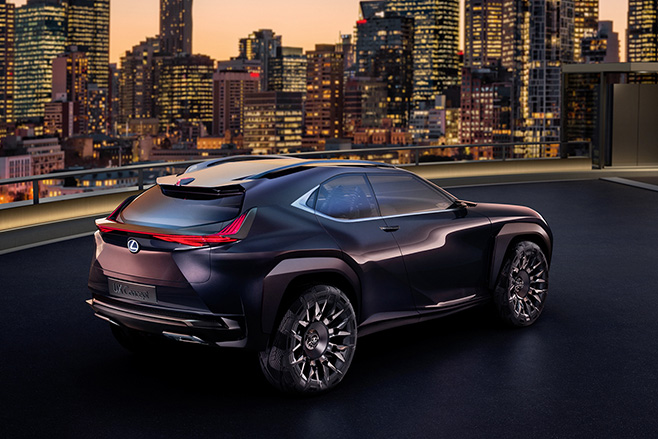
Back in September when Lexus released images and info on its Parisian concept, the company revealed that the design was conceived at Toyota’s ED2 design centre in France.
The wild design language (dubbed “inside out design”) is even more outrageous inside, though there is little doubt that the final product will be toned down considerably.
Not much else is known about the sub-NX SUV, and many questions remain, including what badge it will carry and whether the C-HR’s fresh new 1.2-litre turbo, 2.0-litre atmo, or 1.8-litre petrol-electric hybrid powertrains will be utilised. With flagging passenger car sales and rising SUV market share, questions also surround whether Lexus will ditch the slow-selling and poorly received CT hatchback for the more modish crossover.
A final answer on the UX’s production potential is expected in the coming months, with more details likely to be announced at the Geneva Motor Show in March.
British outfit Litchfield isn’t convinced Nissan’s Track Edition and Nismo GT-R are enough for some owners.
That’s why it’s just lobbed the LM20 special edition, a turnkey warranty-backed GT-R packing a new realm of power and grip.
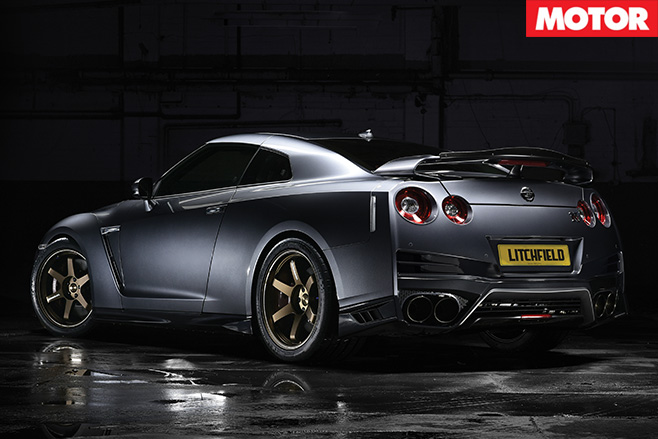
Slipped under the bonnet is on a new exhaust system, from turbo to tips, then matched to an uprated fuel system, air intakes, and intercooler. A retuned ECU plays mastermind.
It all amounts to a staggering 496kW and 833Nm, that huge torque peak squeezed through its all-wheel drive system as low as 2100rpm.
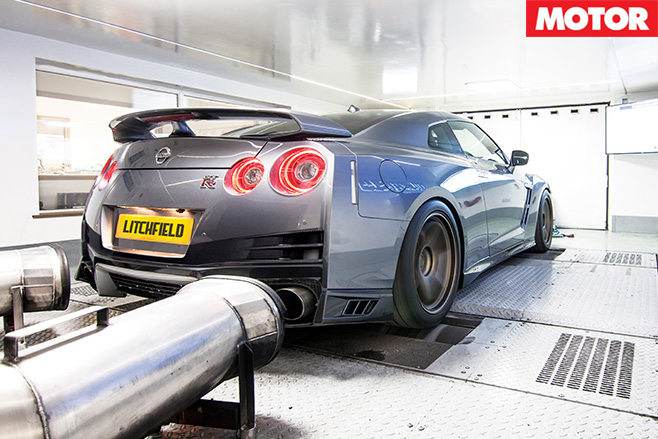
For comparison, Porsche’s fastest 911, a Turbo S, needs 6.5sec to reach 99mph.
With such firepower at the driver’s disposal, Litchfield’s tuned its electronic stability and traction control systems to custom standards.
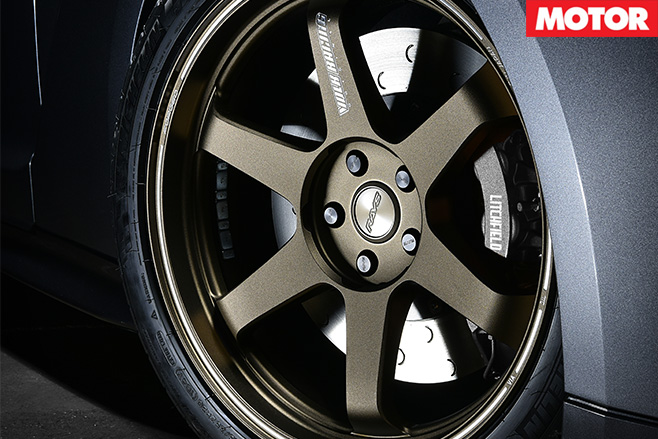
Alcon brakes clamp 400mm two-piece rotors, and are hidden by Rays lightweight track wheels all round. Michelin’s Pilot Sport 4 tyres wrap the rims.
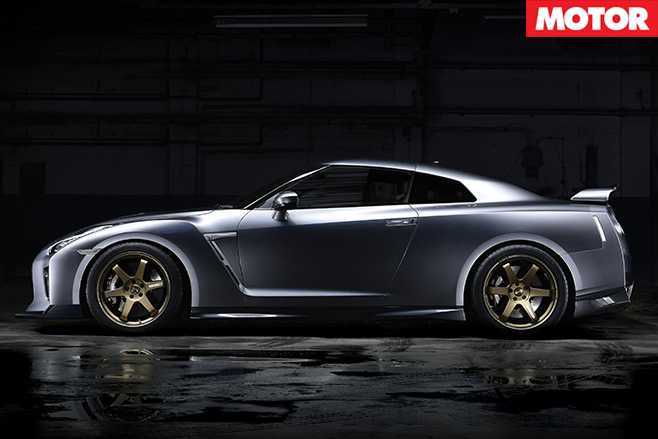
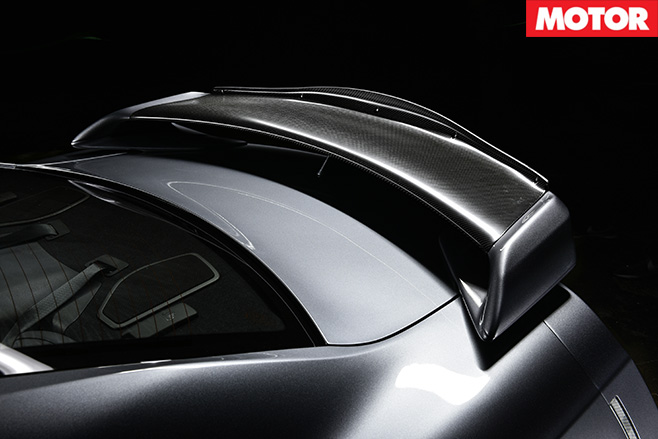
Its front lip’s been redesigned in carbon fibre, along with the grille blade and rear heat vents. The rear spoiler’s also been fitted with an extended carbon fibre lip.
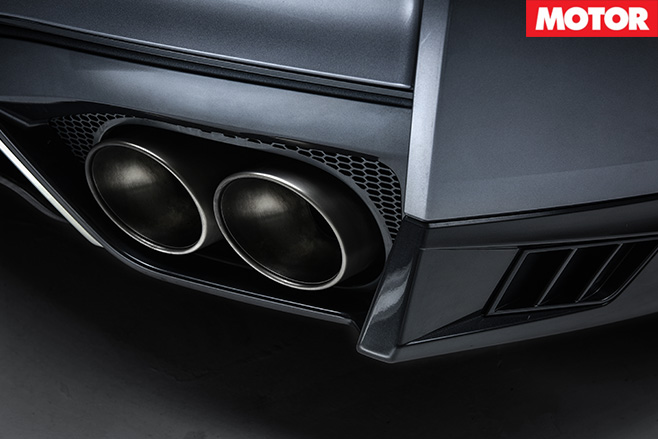
Only 20 units of this special edition will be made, but Litchfield reportedly says it will build more with a different name if the demand is there.
A mildly facelifted version of the Toyota Yaris has surfaced in Japan, bringing minor changes to the front, rear, and interior of the ageing supermini.
Due in Australia in March, directly after its Geneva Motor Show world premiere, the Japanese-built five-door hatchback gains the option of AEB Autonomous Emergency Braking across the range, though it’s standard on the top-line ZR. It is part of the Toyota Safety Sense suite introduced in the 2017 Corolla range that also brings lane-departure alert and auto high-beam headlights. Expect it to cost $750.
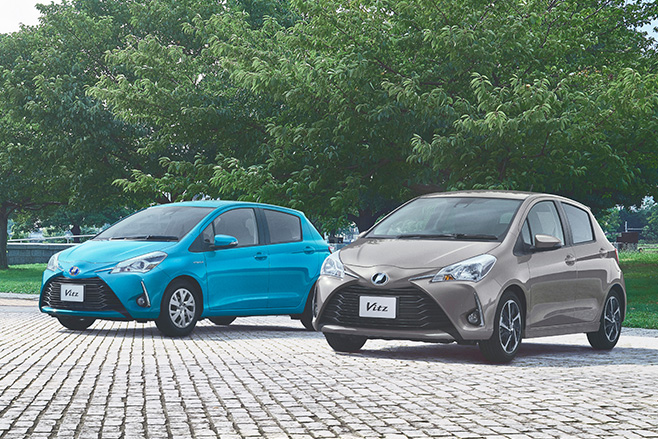
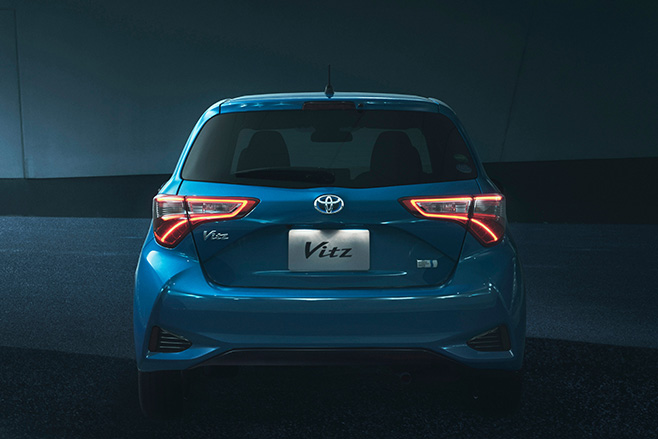
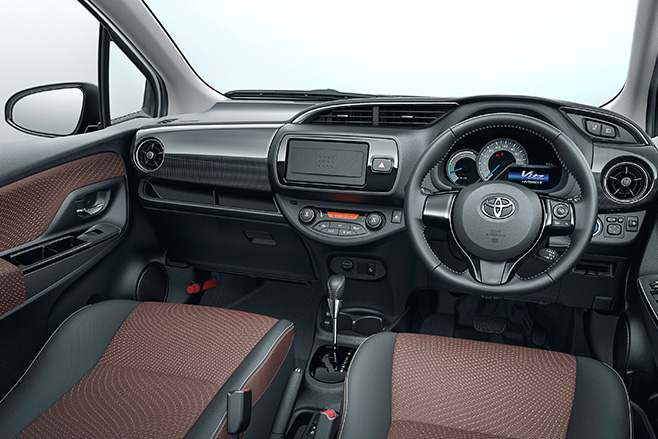
The MY17 Yaris also gains new headlights and grille, reshaped front and rear bumpers with different foglight housings and diffuser respectively, elongated horizontal taillights, redesigned tailgate sheetmetal, updated wheel covers/alloy wheels, and some low-key dashboard and trim mods, including a fresh central multimedia system and more contemporary trim.
All are designed to keep the popular light car competitive in the face of all-new rivals like the Suzuki Swift.
Mechanically, however, nothing will change, according to one Toyota spokesman, meaning that the carryover 63kW/121Nm 1.3-litre (base Ascent) and 80kW/141Nm 1.5-litre (SX and ZR) twin-cam four-cylinder petrol engine choices remain. If you were hoping for a switch from the antiquated four-speed automatic transmission, you’ll have to wait a little longer, though a five-speed manual gearbox is the standard shifter in both.
While Toyota has yet to announce MY17 Toyota Yaris pricing, it is expected to remain the same as before, meaning that the entry-level variant should kick off from about $15,000, reaching up to about $22,000 for the top-line ZR auto. Whether the company will hold on to the Ascent/SX/ZR variant badging is unknown.
This is the second facelift that this 130-series Yaris has received since the current-generation version appeared in mid-2011. The last update occurred towards the end of 2014, when the slow-selling three-door hatch body was discontinued.Once Australia’s bestselling supermini, Yaris sales slipped nearly 16 percent last year, to 12,158 units, to come in at third place in its segment behind the high-flying Hyundai Accent (18,703) and Mazda 2 (13,639).
