
Mercedes-AMG has updated its GT for 2017.
Along with the introduction of the new GT C coupe, AMG has boosted power and facelifted its top-shelf sportscar.
The new Mercedes-AMG GT range is due to land with the GT C roadster and GT R in 2017’s third quarter.
All new models will wear a new ‘Panamericana’ grille featuring 15 vertical chrome bars, as seen on the GT GT3 racing car.
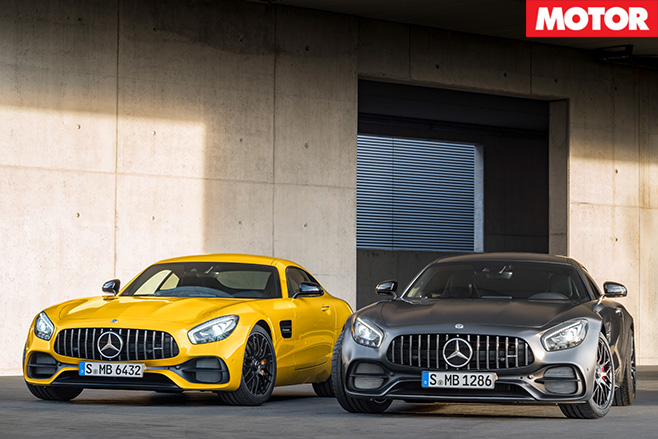
Power’s been bumped in both the GT’s and GT S’s 4.0-litre twin turbo V8.
The entry level GT now produces 350kW and 630Nm, up 10kW and 30Nm on the current 2016 model, while the GT S scores another 9kW and 20Nm, for a total of 384kW and 670Nm.
The GT R’s active rear steering system can now be optioned on the GT S, and uses the same electronically controlled differential.
If optioned, the system steers the rear wheels in the opposite direction to the front wheels under 100km/h, above that speed it then steers all wheels in the same direction.
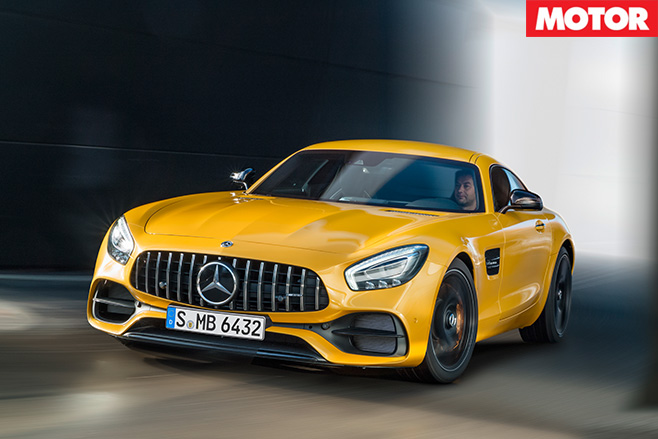
AMG’s Dynamic Plus package, which includes active engine mounts, firmer suspension, sharper steering and a performance steering wheel, can now be ticked for the base GT variant.
A new AMG Track Pace app can turn your iPhone into an engineer’s telemetry display, transmitting data like speed, gear, steering angle, time position and acceleration.
Information on pricing is yet to be announced.
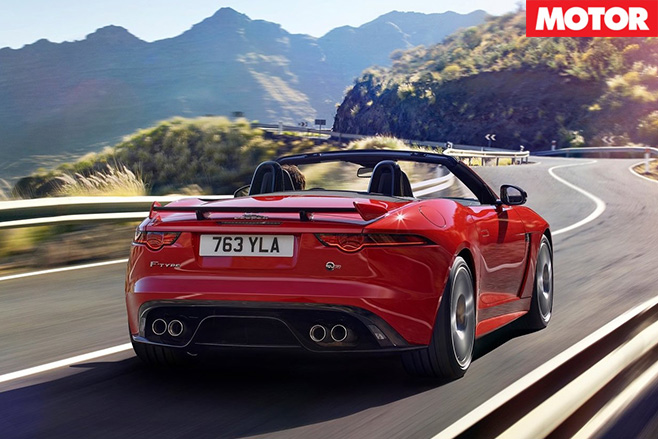
If the squint-then-squint-harder exterior changes of the facelifted Jaguar F-Type are anything to go by, the Brit coupe still looks to be feline fine entering its fifth year on sale.
Fresh LED headlights debut in the 2018 model year, along with new bumpers featuring “bolder surfaces and simpler forms with discreet signature features subtly enhancing the front end form.” Right, then.
Bigger news comes in the form of an F-Type 400 Sport launch edition that pumps power of the 3.0-litre supercharged V6 petrol engine from 280kW to 294kW and is available in both rear-wheel drive and all-wheel drive form only with an eight-speed automatic.
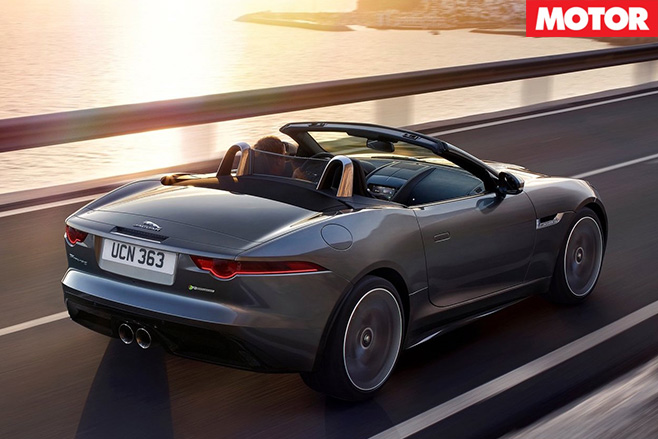
Jaguar also claims the F-Type S-based 400 Sport scores an “uprated chassis” with standard mechanical rear limited-slip differential, multi-mode suspension, 20-inch alloy wheels and 380mm front/376mm rear brakes stamped with the launch edition’s nameplate.
The company has worked to provide greater differentiation between carry-over models, with the 400 Sport coming in above the 250kW/450Nm base V6 and 280kW/460Nm V6 S, but below the 405kW/680Nm R and 423kW/700Nm SVO.
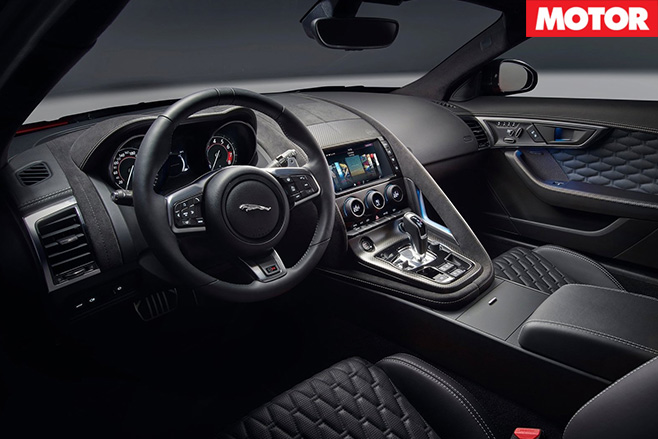
Those looking for a cheaper entry into the convertible and coupe range, which currently starts locally from $119,545 plus on-road costs, may have to wait until the Geneva motor show in March when turbocharged four-cylinder versions are strongly rumoured to be revealed – and will be ready to tackle the four-pot Porsche Boxster and Cayman.
Lexus is keen to remind the world it can take the fight to the likes of the BMW 7 Series and Mercedes-Benz S-Class with the unveiling of its all new LS flagship.
Expected in Australian dealerships in early 2018, the LS is packed full of the latest technology as a showcase of everything Toyota’s premium arm knows about building luxury cars.
It’s based on the new GA-L modular platform, which first underpinned the new Lexus LC 500 coupe and will do duty in all manner of future rear-drive models, and subsequently weight has dropped 90kg compared to the previous model.
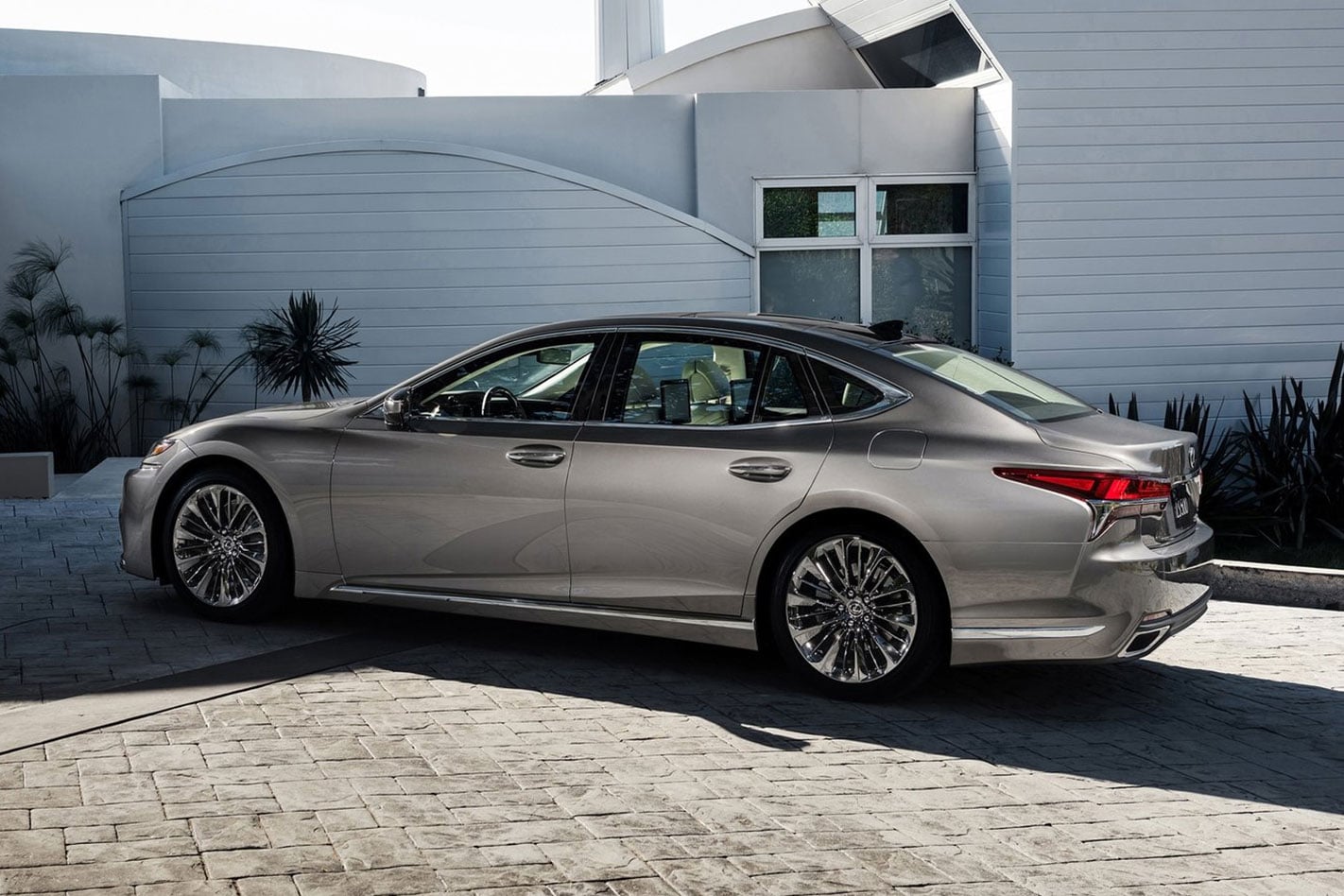
Powering this tech-fest is a brand new 3.5-litre twin-turbo V6 developing 310kW/600Nm, supposedly developed using the company’s F1 technology, and odd claim given that Lexus has never been in F1 and Toyota last took part in 2009.
Anyhow, power is fed to the rear wheels through a 10-speed torque converter automatic.
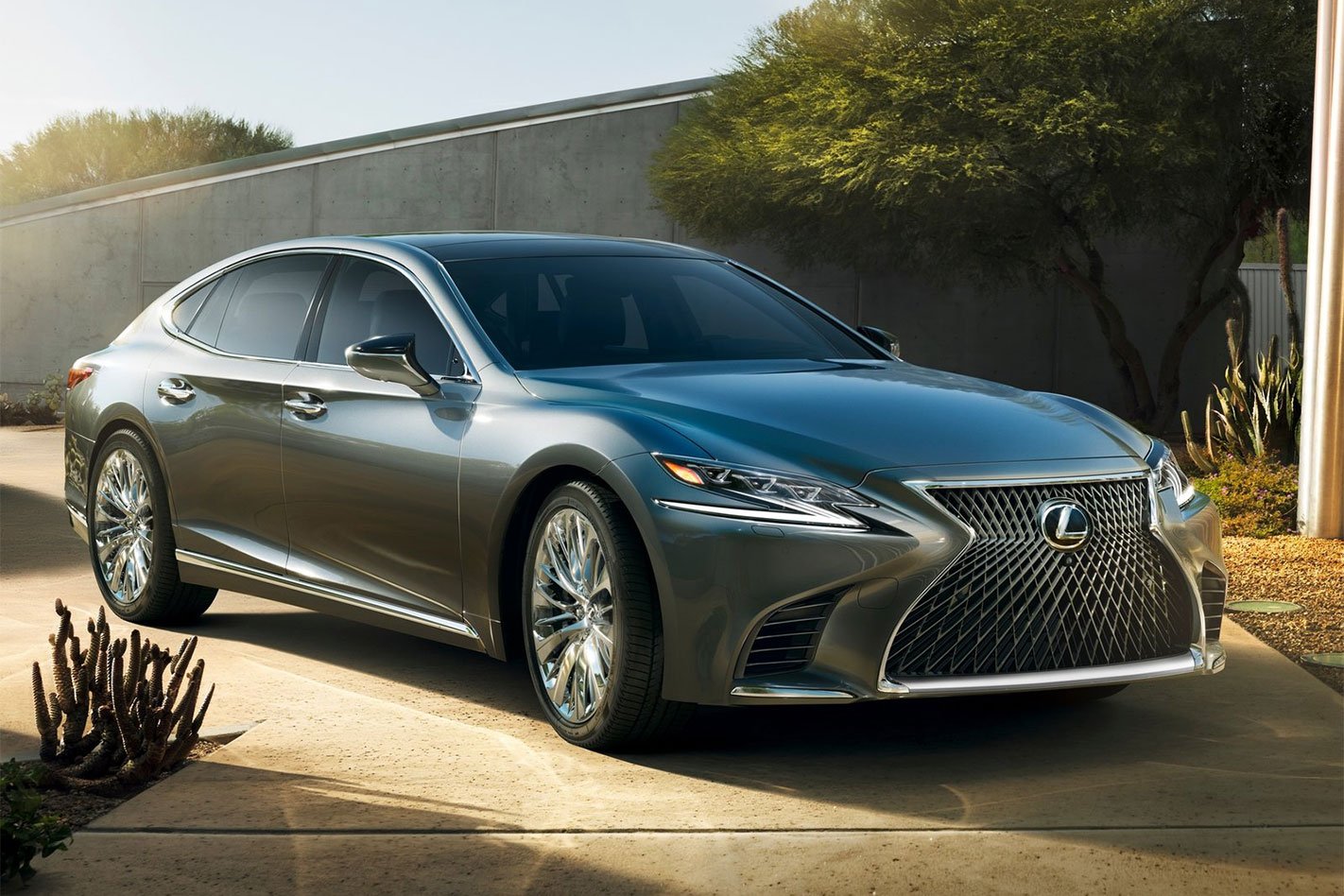
Just how well it works will be apparent when we drive the LS, however there’s no shortage of technology, including active anti-roll bars, rear-wheel steering and supposedly the ability to control the vehicle in split surface scenarios, such as dry tarmac and ice.
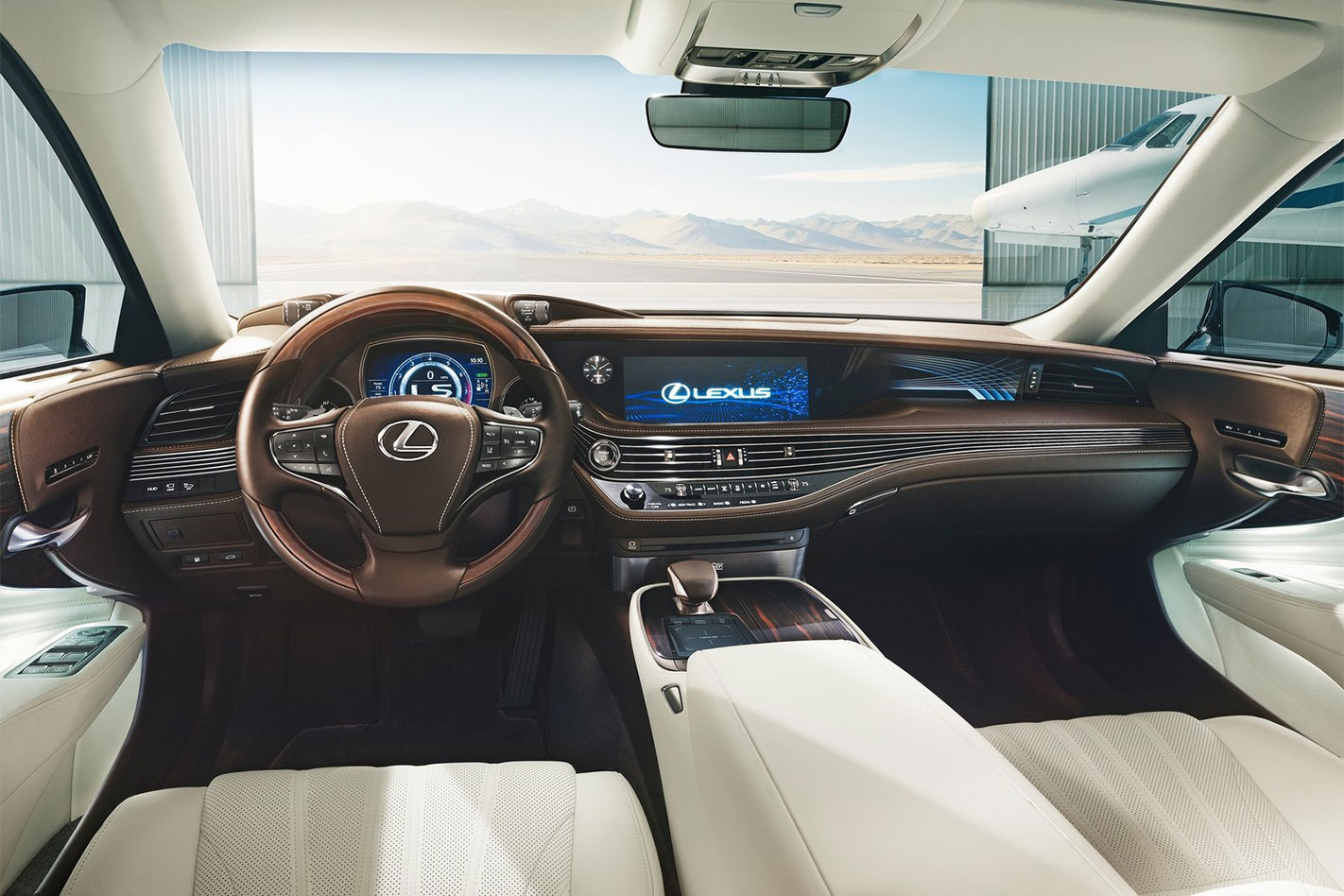
Of utmost importance in this sector is the interior and the new LS offers the likes of a 12.3-inch navigation display, optinoal Mark Levinson 3D surround sound audio system, a raft of active safety equipment and seats that can heat, cool or massage the occupants.
Local pricing has not yet been announcing, however bank on pricing starting at around the $200,000 mark and climbing to $250,000 with all the optional bells and whistles specced.
One of the most ambitious ventures ever undertaken by a carmaker now has a name, the Mercedes-AMG Project One.
AMG boss Tobias Moers joined Mercedes-Benz chief Dieter Zetsche to open proceedings at the Detroit motor show, and drip-feed information about the F1-engined hypercar ahead of its public unveiling at Frankfurt in September.
“I know there is wide speculation regarding its performance data. So let me tell you, expect a combined power output of more than 1000hp (746kW),” announced Moers.
“Add to that an electrical range of about 25kms, a front axle driven purely by our powerful and highly efficient Formula One wheel-selective electric motors, and you get one of the most fascinating two-seaters that ever hit the road.”
Project One will utilise a 1.6-litre turbocharged V6 hybrid powertrain, lifted from the championship-winning Mercedes AMG Petronas F1 car, which will be “slightly modified” for road-going duties.
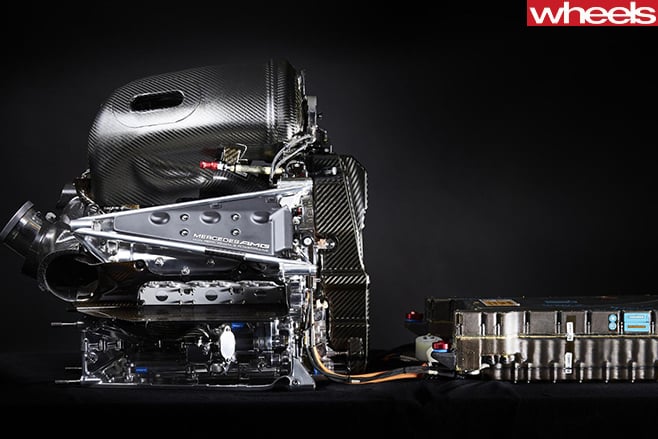
Speaking afterwards to Australian media at the show, Moers shared further details about the state of development.
“We just fired up the first engine running at lower revs at idle speed, which is a revolution for a Formula One engine not idling at 3000 revs!”
“Getting a Formula One engine street legal in terms of emissions is a challenge.”
Now that a suitably heady power figure has been mooted, discussion moves to performance figures, though Moers would not be drawn on specifics.
“I have my targets. We have a clear understanding about what is the target, but I don’t want to lay that on the table.”
Electric motors at the front of the car will facilitate all-wheel-drive and torque vectoring. The toughest complications for AMG at this point are the gearbox and the aerodynamics, about which Moers says “active aero is key”.
Simulations are currently underway to determine more of the setup specifics. A working prototype will be built for the Frankfurt debut, and not driven until after it has been revealed, Moers confirmed.
It’s a bold and aspiring endeavour, though Moers and Zetsche are single-minded in their resolve to see it through.
“There was no alternative in my perspective,” Moers said.
“To bring a hypercar to the market it has to be something really innovative, really different.
“Bringing a hypercar with a V8 or a V12, it’s just another one. This is much more outstanding. It’s the pinnacle of what you can execute today.”
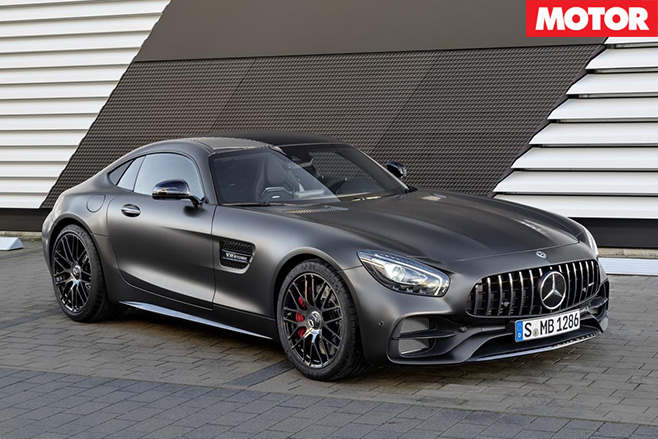
AMG revealed its new GT C Coupe at the Detroit show to kick start its Golden Jubilee celebrations. Project One is set to be the cherry on top of a big year of product announcements.
“At the age of 50, we don’t even think about slowing down. For me, the best way to celebrate is with more launch parties over the year. At AMG we live up to our reputation as performance enthusiasts.”
Project One’s powertrain is built at the company’s F1 HQ in Brackley, UK, and discussions are underway as to whether Project One itself will find a home for assembly there, or at AMG’s facility in Affalterbach.
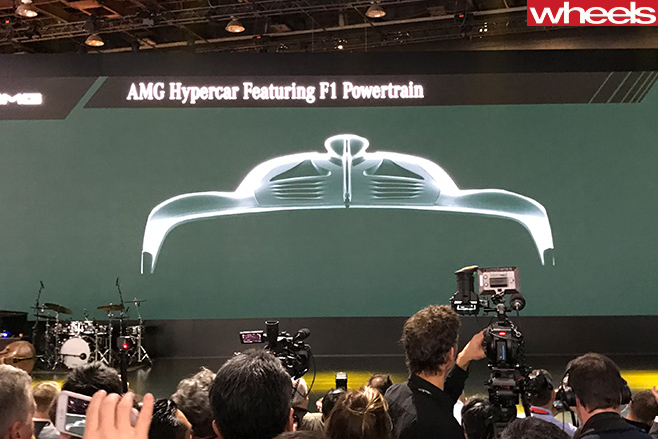
Less than 300 will be made and sold at a price of more than $2.88mil (€2mil) each. A brochure concerning the car was shown to select journalists at the show, highlighting its Project One working title and featuring the illustrations shown here.
Customer deliveries of the finished cars will not happen before 2019, and deciding who will get one is a task Moers says he does not want to be a part of.
“We will discuss with our markets, they bring us their prospects, we put all the prospects on a list and have a discussion.”
Six orders are already held by Mercedes-Benz Australia.
Mercedes-AMG is beefing up its GT sportscar range ahead of 2017 with a new coupe variant of the GT C roadster.
The new GT C coupe slots itself in between the GT S and track-ready GT R with a 4.0-litre twin-turbo V8 been tweaked to 410kW and 680Nm.
That’s 20kW and 20Nm shy of the GT R, but stands 35kW and 30Nm above the current 2016 GT S, and bumps up its top speed by 7km/h to 317km/h.
This cuts only a tenth from the GT S’s 0-100km/h time, mainly because the new GT C coupe also lugs around another 55kg and a total of 1625kg.
Roadsters are penalised a further 35kg, at 1660kg, and 1km/h of top speed.
Both GT C variants, however, come with 10mm wider rear rubber, with the rear Michelins now measuring 305mm across.
As a result of the wider track another 57mm has been added to the car’s width.
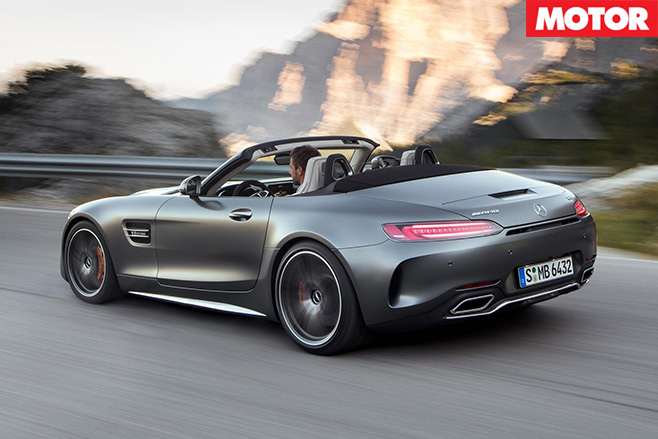
It’ll come standard with AMG’s interior night package and black chrome highlights on the exterior and inside.
There are also two exclusive ‘magno’ paint finishes; graphite grey and cashmere white.
The new GT C coupe now joins the updated 2017 Mercedes-AMG GT range and is expected here early 2018. The roadster will debut third quarter this year.
Pricing is yet to be announced.
Conventional wisdom has it that the original equipment tyre fitted off the showroom floor is the ideal choice for your car.
In a perfect world that may be the case, as a carmaker’s engineers generally tend to optimise a car’s handling, braking and electronic systems intervention to the OE tyre.
But it’s no perfect world. Particularly when chasing maximum handling and braking performance. And, further to that, combined dry and wet performance.
Fuel consumption, ride comfort, low noise, cost, supply logistics – there are myriad considerations outside of extracting maximum tyre performance that carmakers have when selecting OE rubber. Even with some big-dollar performance cars it can be a lottery as to what brand and model of tyre is fitted, due to the economics of car making.
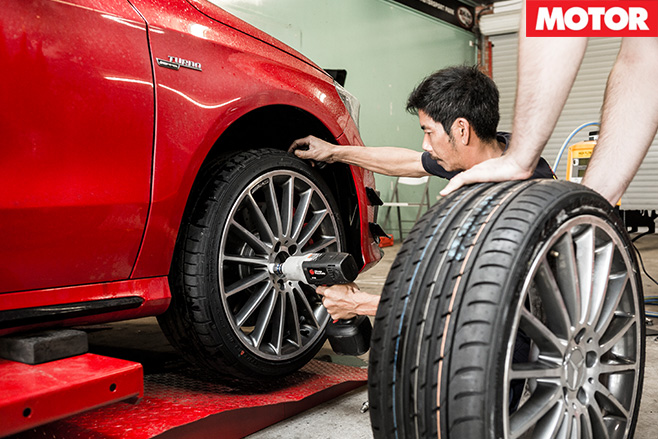
And as performance equates to maximising grip, handling and stopping, by the very nature of our testing regime we’ll also discover the safest performance tyre of this year’s eight-strong field.
This year Bridgestone, Continental, Dunlop, Falken, Goodyear, Michelin, Toyo and Winrun stepped up to our annual ‘Tyre Olympics’, each nominating their best-performing tyre model within conditions of the Tyre Test rules.
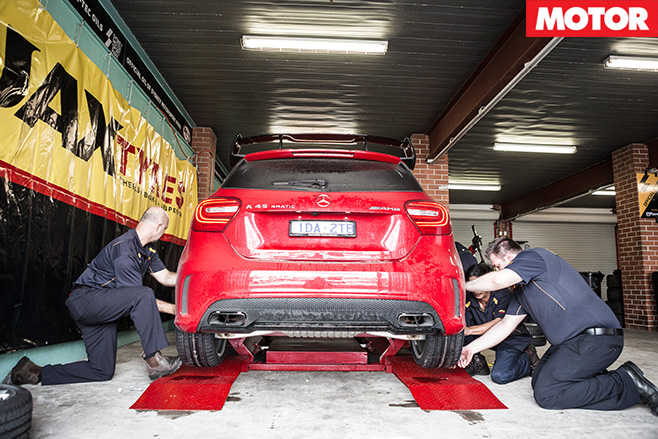
That’s precisely why our testing is split between dry and wet disciplines. By its very nature, mixed running works unfavourably against sticky track tyres that require dry heat with which to excel and favours rubber capable of dealing with all real-world on-road conditions.
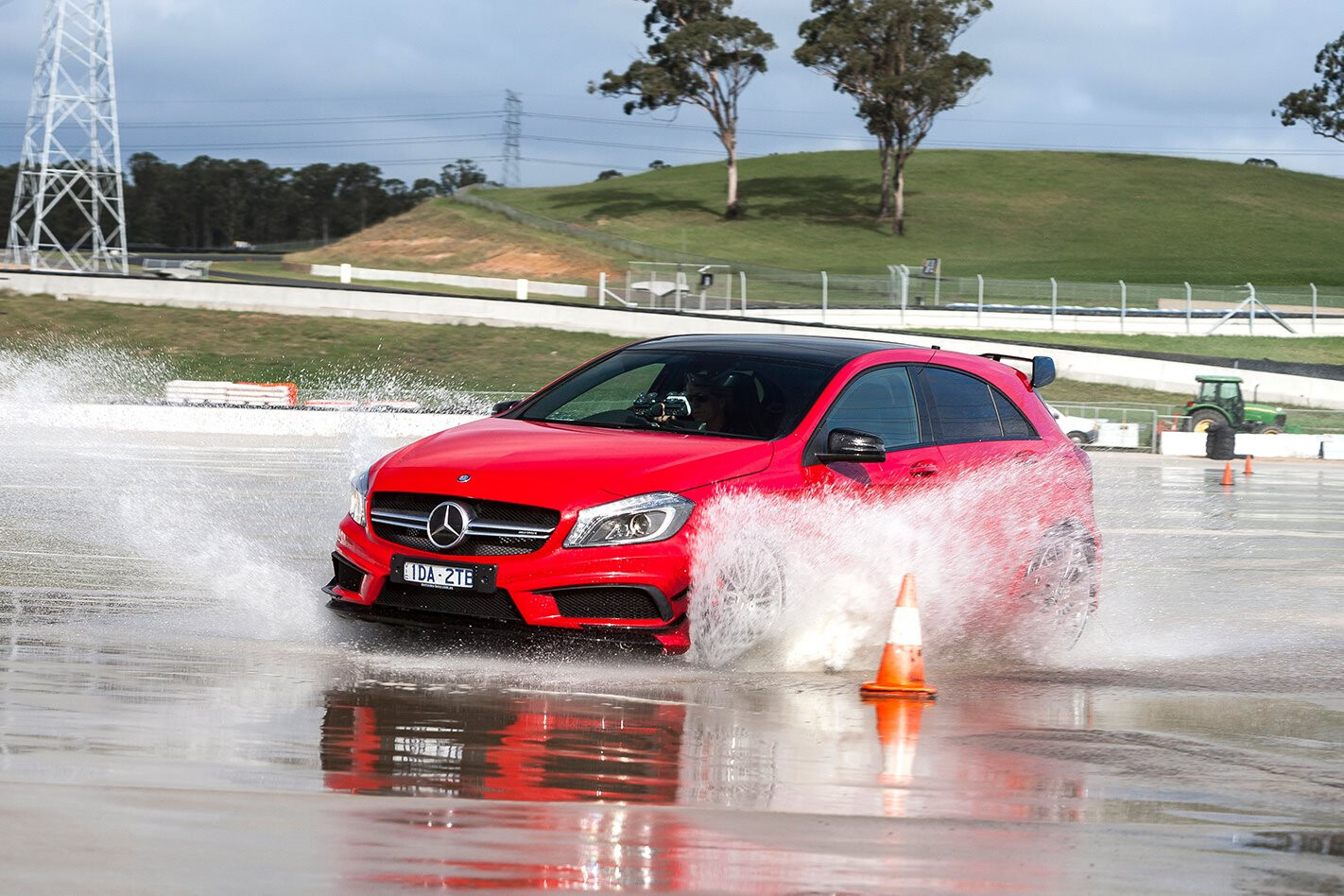
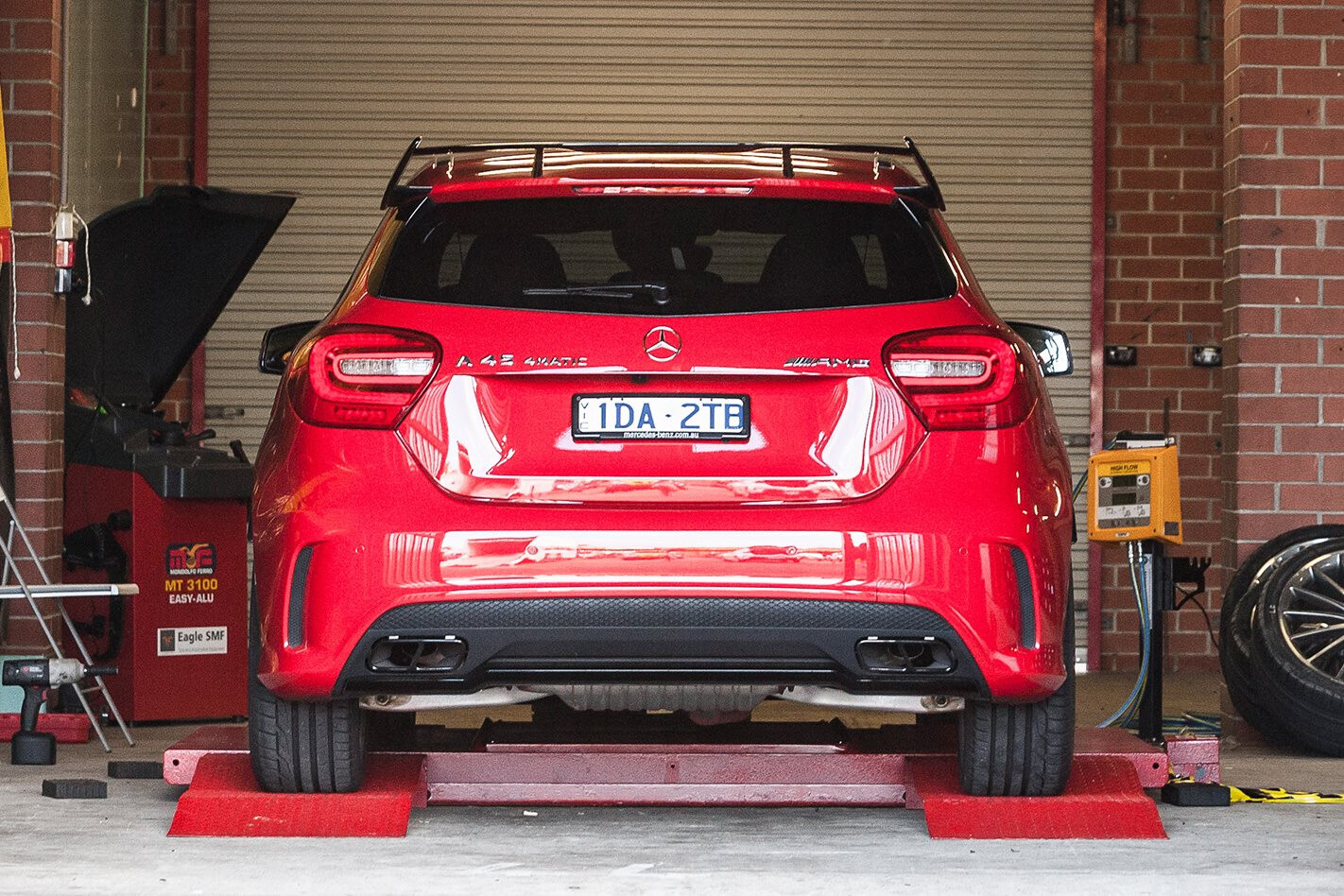
New to our Tyre Test is the Mercedes-Benz A45 AMG, a list-topper of ideal Tyre Test go-to vehicles for two reasons. Firstly, it’s the hottest modest-sized device out there, so it’s a perfect fit for the disciplines at hand. And, secondly, it runs 19-inch rims fitted with 235mm-wide 35-aspect ratio rubber that, today, seems to be something of a sweet spot for high-performance road rubber.
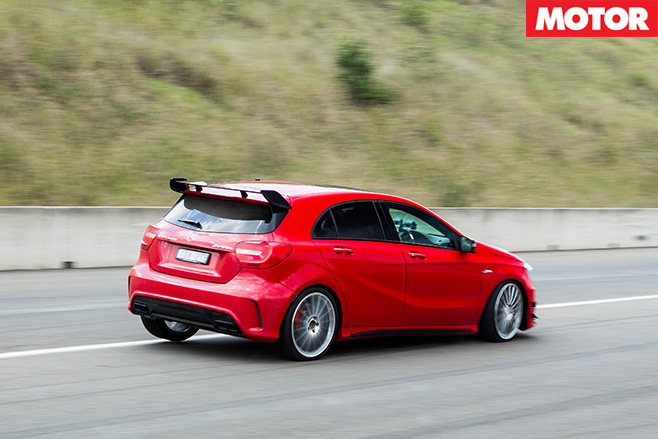
The rest of the Tyre Test cast and crew will be familiar to regular, erm, viewers: Warren Luff as stunt test dummy, our trusted mates at JAX Tyres supplying the tyre-swapping muscle and Eagle SMF the hardware, our trusty Driftbox timing equipment as judge and jury, and Sydney Motorsport Park and Sydney Dragway as the exotic test locales.
Let’s cut to the chase then, shall we?
THE CONTENDERS
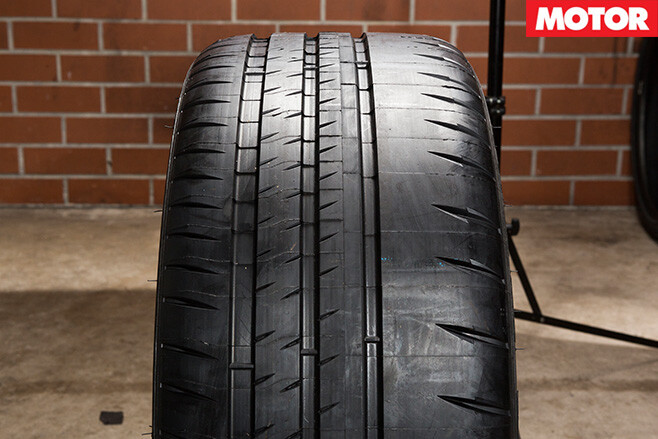
MICHELIN PILOT SPORT CUP 2
ORIGIN: FRANCE
TREADWEAR: 180
PRICE: $480
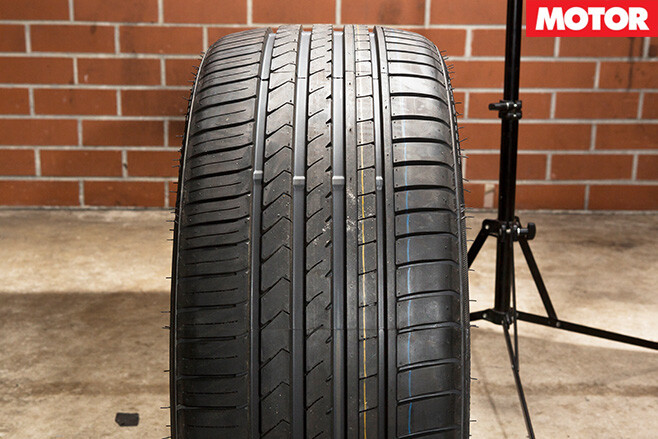
WINRUN R330
ORIGIN: CHINA
TREADWEAR: 420
PRICE: $145
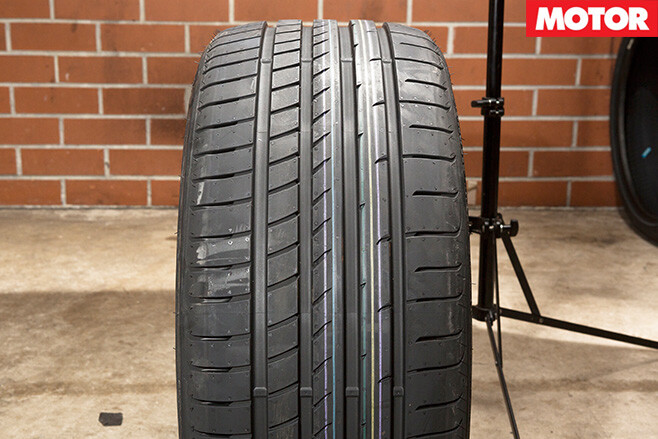
GOODYEAR Eagle F1 asymmetric 2
ORIGIN: GERMANY
TREADWEAR: 300
PRICE: $540
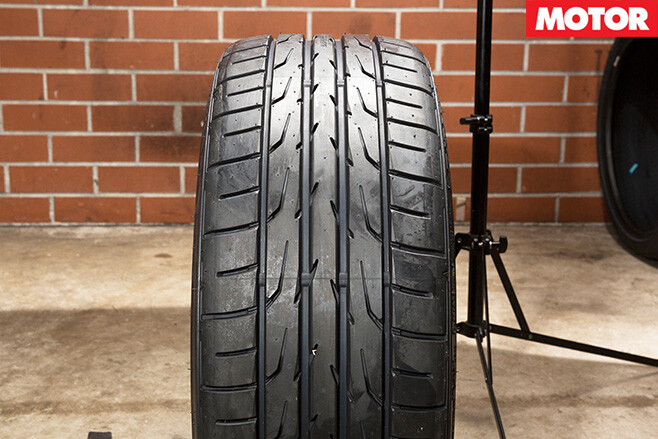
DUNLOPDIREZZA DZ102
ORIGIN: THAILAND
TREADWEAR: 460
PRICE: $460
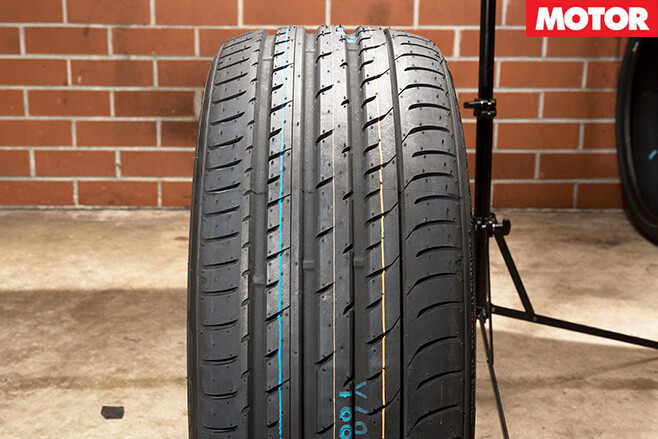
TOYO PROXES T1 SPORT
ORIGIN: JAPAN
TREADWEAR: 240
PRICE: $350
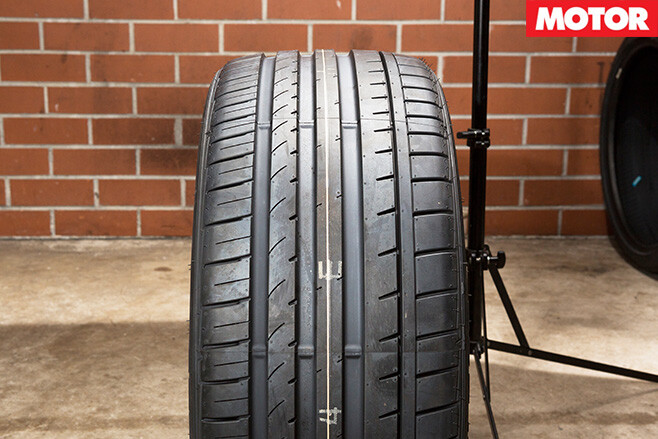
FALKEN AZENIS FK453
ORIGIN: JAPAN
TREADWEAR: 300
PRICE: $279
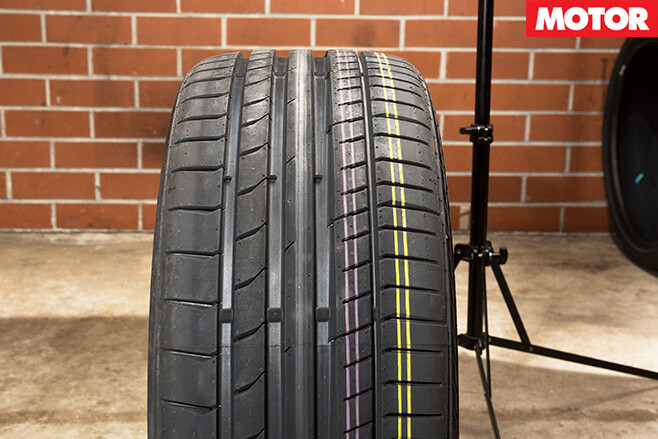
CONTINENTAL CONTISPORTCONTACT 5P
ORIGIN: CZECH REPUBLIC
TREADWEAR: 240
PRICE: $360
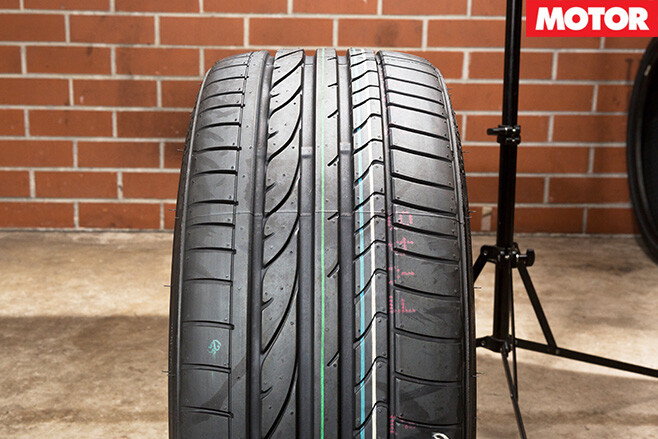
BRIDGESTONE POTENZA RE050A
ORIGIN: JAPAN
TREADWEAR: 140
PRICE: $440
THE TYRE TESTS
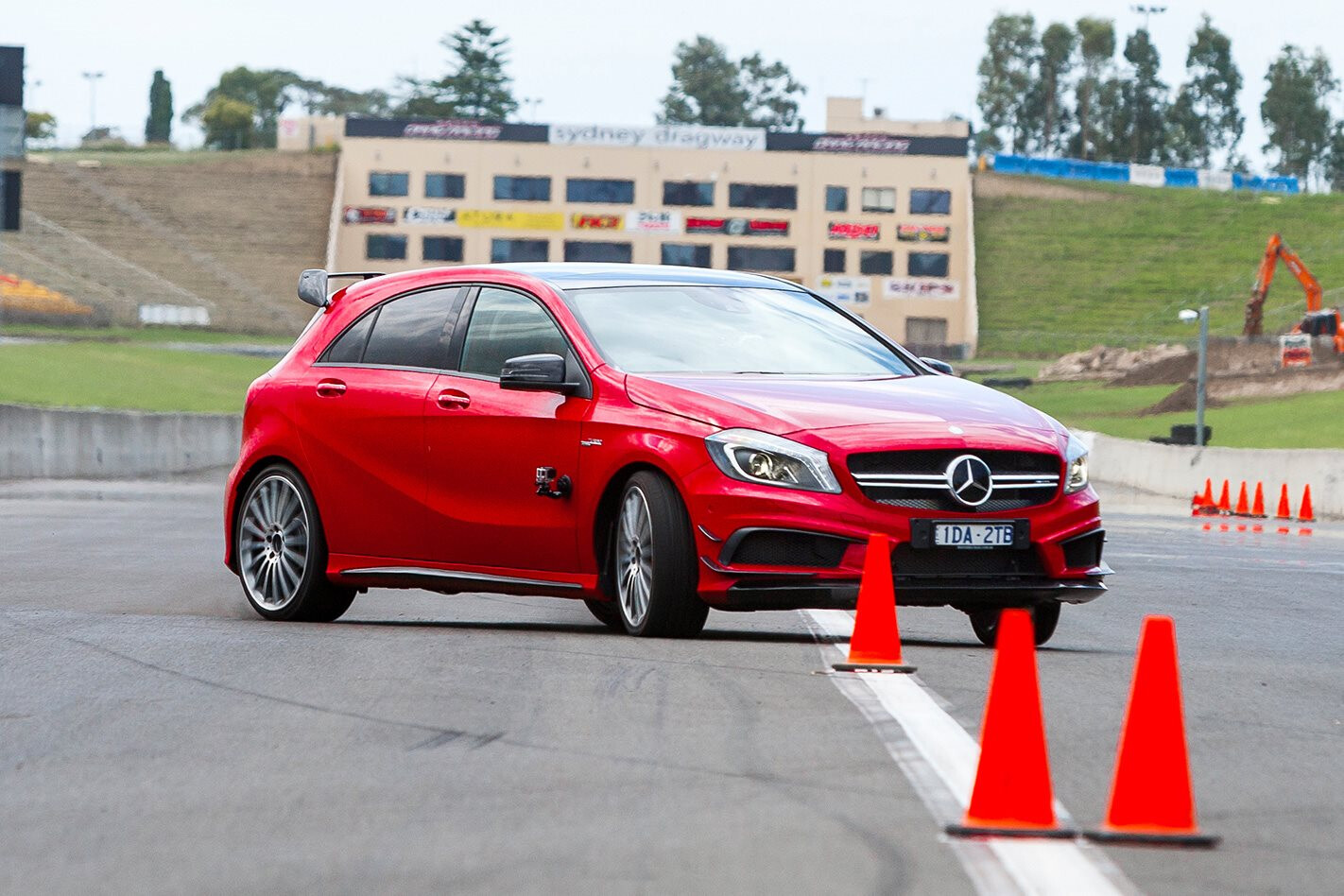 SLALOM
Beyond the 400m timing point, at the top end of Sydney Dragway’s strip, lays asphalt free of sticky surface prep. It’s the perfect venue for our first discipline.
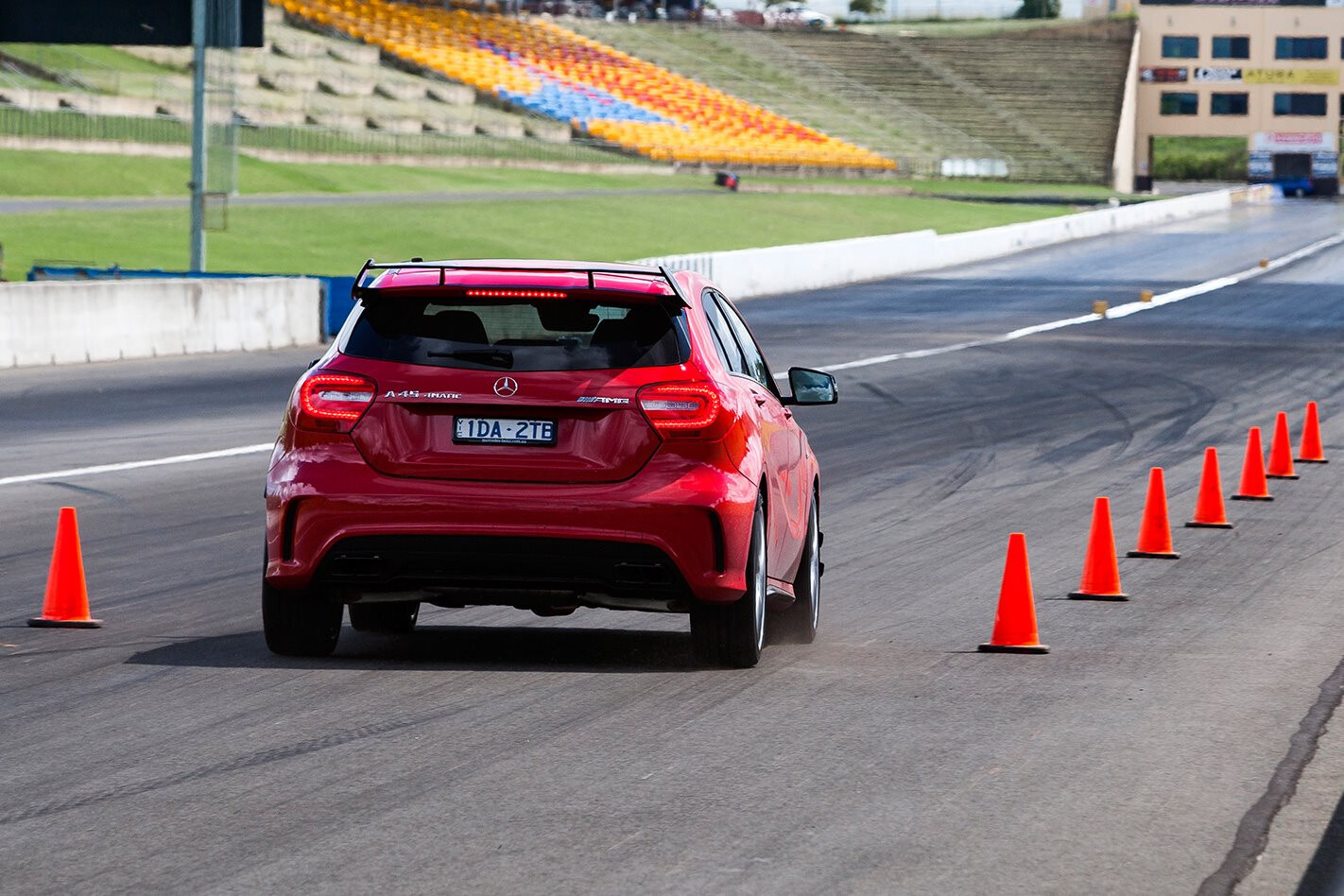 DRY BRAKING
The spread of braking distances, across this field of eight competing tyre models, spans a whopping 8.52 metres!
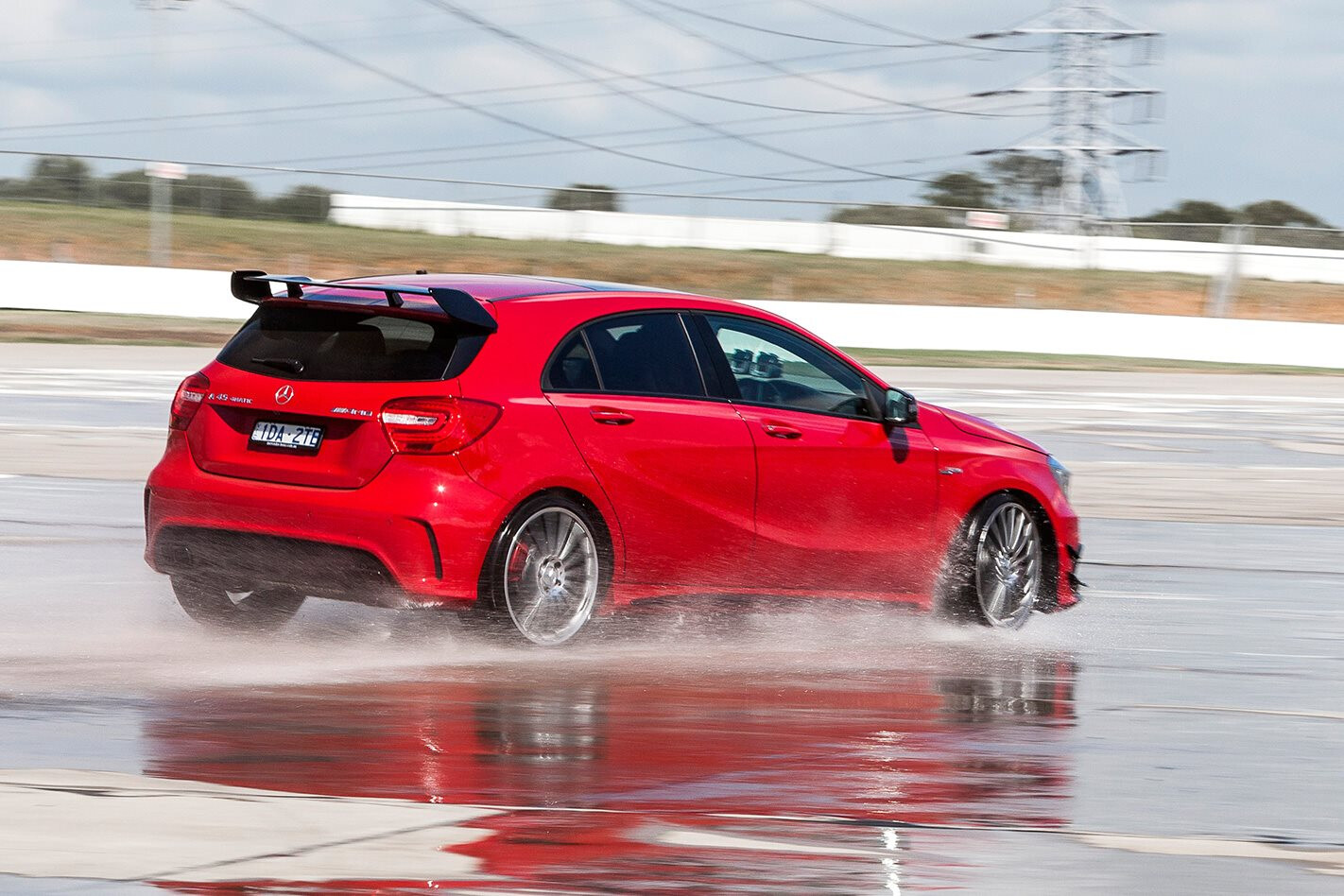 WET MOTORHANA
A tyre’s ability to cope with wet conditions plays a huge part of the Tyre Test and represents a significant portion of the overall scoring.
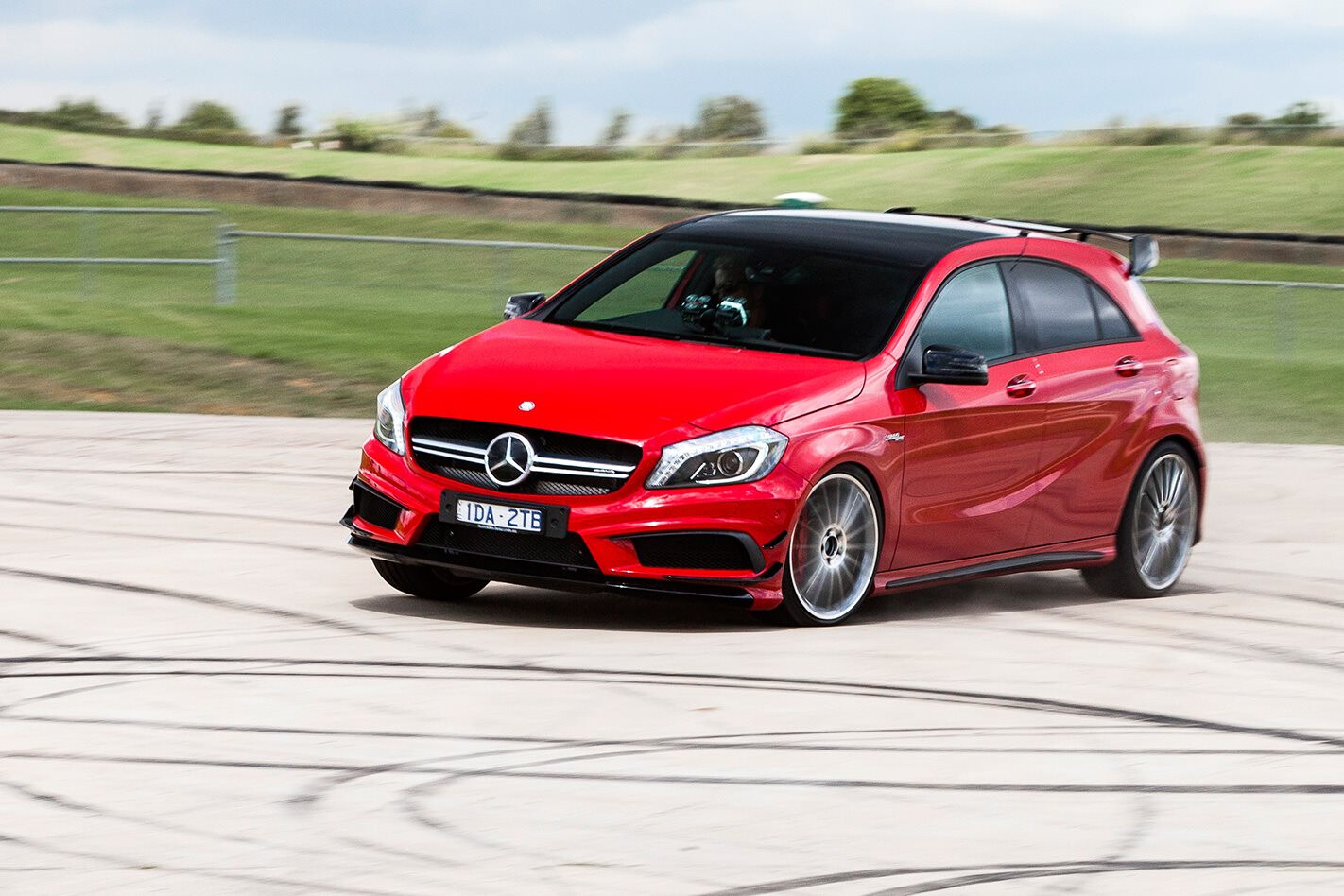 FIGURE EIGHT
With the Michelin and Continental showing class-leading form on dry high-friction asphalt, it was interesting to see if the same dominance would continue on the Figure Eight.
 WET BRAKING
Ordinarily, we’d be discussing the field’s wet lateral G force performance right about here.
TYRE TEST VERDICT
 MOTOR TYRE TEST 2015: THE VERDICT
Our ultimate grip test again proves that while they may look the same, the levels at which these rings of sticky stuff perform are vastly different.
MORE MOTOR TYRE TESTS
 MOTOR TYRE TEST 2016
Finding the best high performance tyre in Australia
 MOTOR TYRE TESTS
The quest to find the best high performance tyres in Australia.
Lexus has flaunted its fourth-generation luxury sedan at the Detroit Motor Show today, 28 years after the debut of the original LS that launched the Lexus brand into the global market.
The arrival of the all-new LS also heralded the arrival of Lexus’ first-ever twin-turbo V6 and ten-speed automatic, with the flagship (for now) LS 500 making the transition from a naturally-aspirated V8 to turbocharged six-cylinder power.
Built on a dramatically extended and widened version of the GA-L modular platform that debuted beneath the Lexus LC 500 sports coupe, the 2018 Lexus LS 500 is the biggest four-door to be offered by the Toyota-owned luxury automaker.
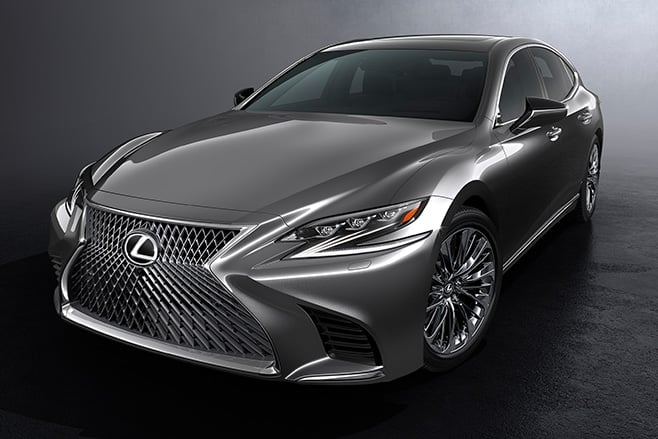
The new LS is longer and lower than the car it replaces, with a wheelbase that is a huge 158mm longer than the existing normal-wheelbase model. Even compared to the long-wheelbase LS presently on sale, the new LS (which will only be offered in a singular bodystyle) is a sizable 33mm longer with an overall length of 5235mm.
Weight drops by 90kg compared to the outgoing LS, largely thanks to the increased use of high-strength steels and aluminium alloy. Meanwhile, performance is up thanks to the totally new 3.5-litre twin-turbo petrol V6 that powers the LS 500, which generates a stout 310kW of power and 600Nm of torque.
Those numbers are a significant increase against the current LS 460’s 285kW/493Nm figures, and though specific stats have yet to be announced Lexus claims average fuel consumption is reduced compared to the V8.
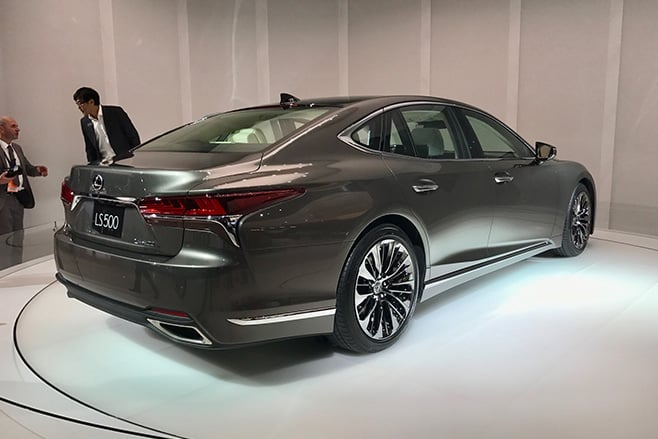
The ten-speed automatic transmission the turbo V6 is hooked up to also takes some responsibility for the 2018 LS 500’s more restrained thirst, yet crisp shifts that are claimed to rival those of a sportier dual-clutch transmission. With a 0-96km/h time of just 4.5 seconds, it appears the big Lex has strong legs under its big bod.
Air suspension and a more torsionally rigid bodyshell also help the new LS deliver on Lexus’ claim that its new flagship sedan will be the best-handling, most comfortable and quietest LS to date.
The 2018 Lexus LS is expected to go on sale locally around this time next year, with pricing and features to be confirmed closer to launch.
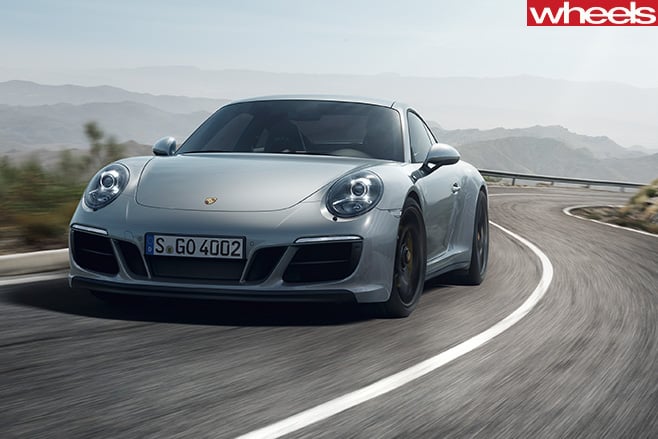
Porsche has added five GTS models to its 2017 Porsche 911 line-up, with even more power and performance for Carrera and Targa variants.
The RWD 911 Carrera GTS Coupé and Cabriolet; AWD 911 Carrera 4 GTS Coupé and Cabriolet and the AWD 911 Targa 4 GTS all get new turbochargers, boosting the 3.0-litre flat six’s engine by 58kW, to 331kW.
This is 15kW more than the previous naturally-aspirated GTS model and 22kW more than the 911 Carrera S.

All variants come standard with a manual seven-speed gearbox or optionally, Porsche’s Doppelkupplung (PDK) dual-clutch automatic transmission.
They each have a top speed beyond 300 km/h, the rear-drive Coupe with standard manual transmission topping out at 312 km/h. The quickest of the quintet, the Carrera 4 GTS Coupé with Sport Chrono Package and PDK, achieves 0-100 km/h in 3.6 seconds.
Combined fuel consumption test cycle figures range between 9.4L/100km and 9.7 L/100 km.

Visual differences include 1852mm wide AWD body even on the RWD models, a new front apron, low front spoiler and a higher rear-spoiler extension to reduce lift on both axles.
The wide rear end has smoked tail lights, silk-gloss black air intake grille and central black twin tailpipes. The RWD versions have a black strip between the tail lights while the AWD models sport an illuminated red strip.
Unique exterior mirrors and 20-inch wheels with a central locking nut painted silk-gloss black are fitted, while the 911 Targa GTS has a distinctive black Targa bar.
The Alcantara seats have a unique stitching pattern and GTS logos on the headrests. Other features include brushed, black anodised aluminium trim strips on the instrument cluster and Alcantara finish on the steering wheel, centre console and armrests.

GTS pricing bridges a gap between S and Turbo models, starting at $279,000 for the 911 Carrera GTS Coupe.
2017 Porsche 911 GTS pricing (add $6250 for PDK transmission)
- 911 Carrera GTS Coupe, $279,000
- 911 Carrera 4 GTS Coupe, $295,100
- 911 Carrera GTS Cabriolet, $300,500
- 911 Carrera 4 GTS Cabriolet, $316,600
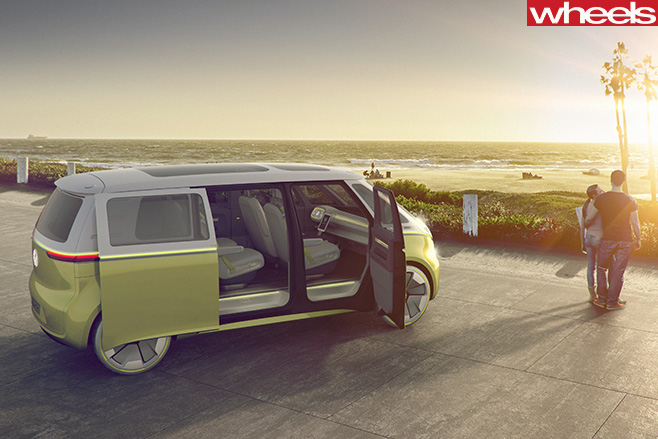
The influx of electric concepts continues in Detroit, this time with Volkswagen re-invigorating ghosts of cult-classics past in the I.D. Buzz.
The fully electric mini-van is inspired by the VW Kombi of old, while showing off brand-new tech as part of Volkswagen’s push into the electric vehicle market.
The I.D Buzz is claimed to have an electric range of 434-kilometres. However, as a concept car, this isn’t going to be put to the test by consumers any time soon.
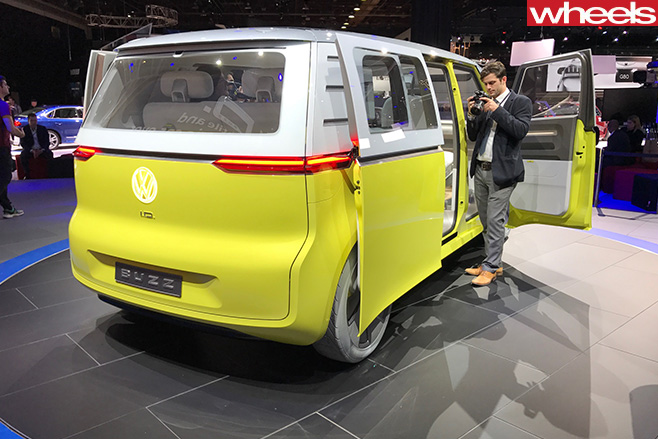
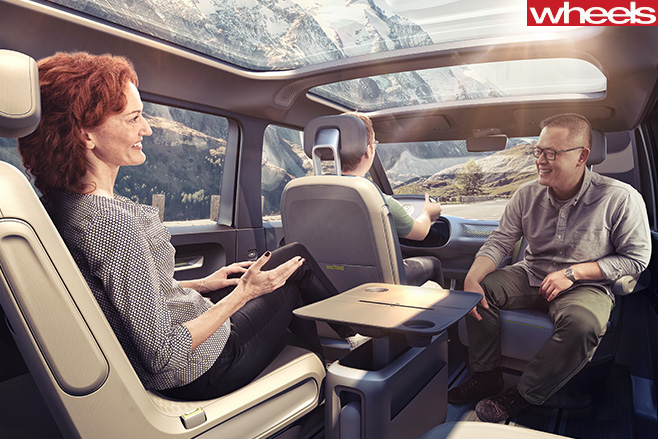
The van has room for nine people, with modular seating allowing for the interior setting to be adjusted into a number of configurations.
Volkswagen claims the ID Buzz is the world’s first multi-purpose fully autonomous vehicle. It says the “I.D. Pilot” mode “could make it into production by 2025”.
“The I.D. BUZZ is not a retro design on 22-inch wheels; rather, we have taken the logical next step forward in development using what is in all likelihood the most successful design of its kind in the world,” he said.
“The entire design is extremely clean with its homogeneous surfaces and monolithic silhouette. The future and origins of Volkswagen design DNA combine here to create a new icon.”
“That is when we will be launching an entirely new generation of fully connected, all-electric vehicles to the market,” Dr Diess said.
“By 2025 we want to be selling one million of these vehicles annually. We are making electric mobility the new trademark of Volkswagen.”
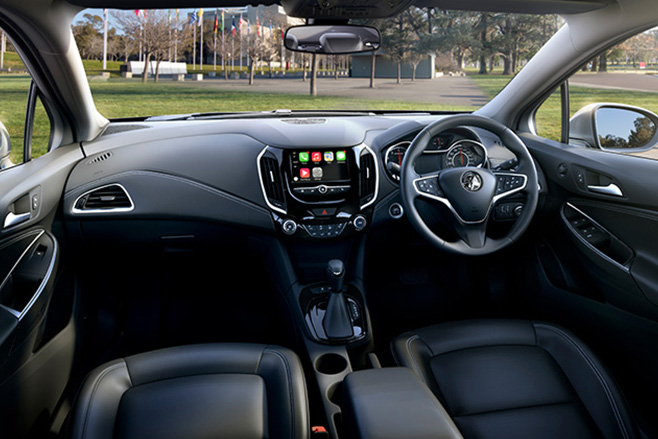
Holden has slashed thousands of dollars from prices across its Astra small car line-up in a bid to stimulate sales of the Cruze replacement.
And in a goodwill gesture, Holden will compensate existing Holden-badged Astra owners with a refund equivalent to the difference between the old and new pricing.
Under the pricing revisions, Holden has slashed $1700 from automatic versions of the Astra R, reducing it to $22,490 and making it only $1000 more expensive than the six-speed manual version that has fallen by only $500.
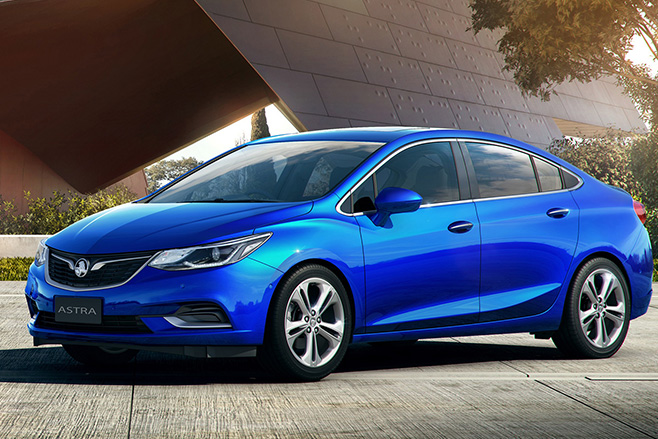
The mid-spec Holden Astra RS manual has a more modest price cut, going from $26,490 to $26,240, but the automatic variant is now priced at $27,240 instead of $28,690.
The range-topping Astra RS-V is now priced from $30,740 as a manual ($250 cheaper) or $31,740 as an automatic ($1450 cheaper).
Holden says owners who have already bought an Astra will offered a refund equal to the difference between the old and new pricing.
However not many will be eligible for a refund. Since Astra’s launch in November, Holden has sold just 448 of the hatches. That’s just eight percent of the number of Hyundai i30s sold during the same period, and 15 percent of Volkswagen Golf sales.
Holden managing director Mark Bernhard acknowledged that the Astra’s pricing structure hadn’t resonated with buyers looking for a small car.
“We felt we’d priced it at the right point,” he said. “Looking at the feedback that we’ve got from various constituents it did warrant a relook.”
However, Bernhard stopped short of saying the Astra’s price-tag at launch was too ambitious.
“I don’t think we got the pricing wrong,” he said. “It’s not a science, there’s a lot of art in the way you price a vehicle; you look at the competitors, you look at the product that you’ve got … you look at the features that you’ve got … you look at how that product fits in with your overall portfolio.”
Holden has not tweaked equipment levels or specifications in response to the price cuts.
