
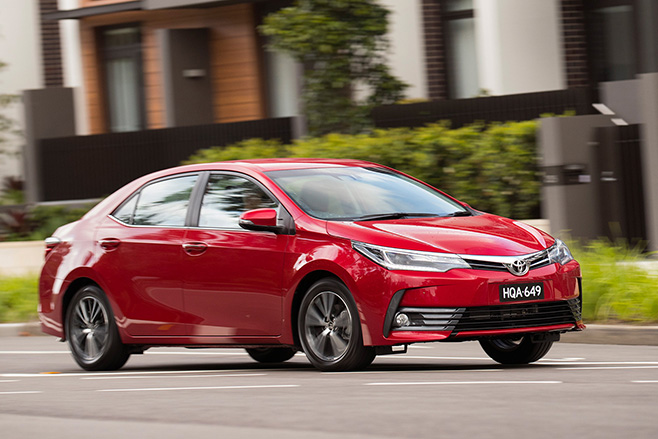
The Toyota Corolla sedan range has been given a facelift and equipment boost for 2017, which includes new safety and infotainment technology.
The Corolla sedan range has advanced safety equipment available across the range including the belated addition of autonomous emergency braking, lane-departure alert and automatic high beam.
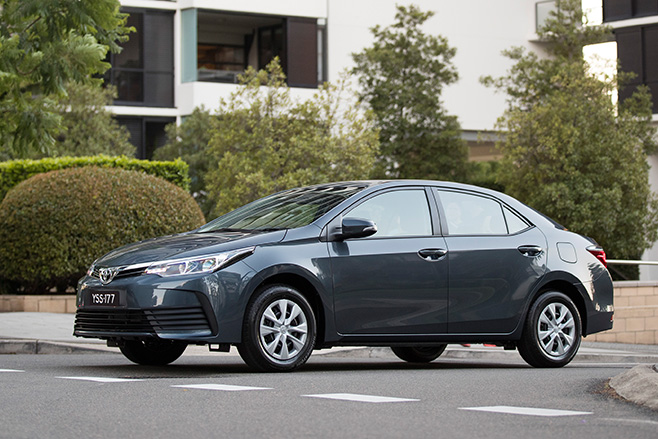
These are now standard on the top-of-the-range ZR variant and a $750 option for SX. If you want these features in the entry level Ascent you’ll have to fork out $1500, but for you’ll also get 10-spoke 15-inch alloy wheels for the extra spend.
For 2017 the Ascent also gains a 7-inch touchscreen display audio system as standard along with a three-dimensional “Optitron” backlit instrument and a 4.2-inch colour multi-information display.
All these new standard features plus the new styling come with a $500 price increase, taking the base-model Corolla sedan’s retail price to $21,240.
The mid-range SX gains satellite navigation as standard while the range-topping ZR comes with bi-LED headlamps.
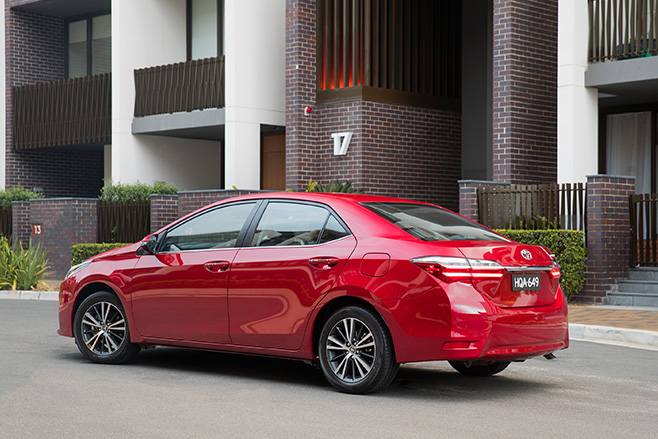
Cosmetically the 2017 Corolla sedan has been given a mild nip and tuck with the small upper grille now flanked by new headlamp clusters with LED clearance lamps, and a revised front bumper incorporating a larger lower grille.
Rear styling includes new LED tail lamp clusters and chrome highlights.
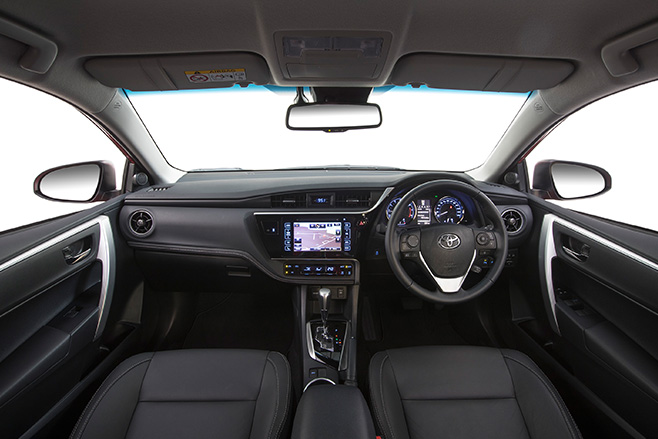
Inside, the instrument panel has been updated along with a redesigned climate control panel and circular air vents. Other upscale touches include a piano-black centre-cluster surround and chrome-plated ornamentation.
Toyota has also made running improvements to the drivetrain including the 103kW/173Nm 4-cylinder engine and Multidrive S continuously variable transmission (CVT), which it says results in smoother shifting and improved linear off-the-line acceleration.
Handling has been enhanced by suspension improvements including larger-diameter shock absorbers at the front to improve balance between ride comfort and handling stability.
2017 TOYOTA E170 SERIES II COROLLA SEDAN PRICING
Ascent manual: $21,240 (up $500) Ascent CVT: $23,490 (up $500) SX manual: $23,820 (up $830) SX CVT: $26,070 (up $830) ZR CVT: $31,920 (up $930)
As we charge headlong towards a robotised future, car interiors are quickly becoming the arena for automakers to create their point of difference.
The Consumer Electronics Show (CES) in Las Vegas has seen car manufacturers flood its halls in recent years, showing off innovations from the relatively realistic to the thoroughly far-fetched.
Below is a list of five new automotive technologies seen at CES this year, some that could turn up in production at any moment, and at least one that’s a little further away.
CORNING GORILLA GLASS
Heard of Gorilla Glass? It’s the stuff smartphone manufacturers like to use for the faces of their handheld devices. It’s tough, it’s light, and it turns out it’s also suitable for use in cars.
At CES the company had Gorilla Glass panels with digital displays built directly into them. The integrated display is transparent enough to see through when nothing is shown, and can overlay information inside the glass. It’s also able to dynamically darken for tinted windows on demand.
Its maker, Corning, has already started supplying windscreens for the Ford GT as the glass by itself is claimed to be one third lighter, two times stronger and three times better for optics, which makes it perfect for head-up displays.
Gorilla Glass can also be formed into shapes with tight curves for touchscreens, instrument clusters and mirrors. Corning’s demo car had Gorilla Glass everywhere – windscreens, windows, sunroof, dashboard, steering wheel and even in the door panels.
BOSCH ACTIVE CAR PARK MANAGEMENT
Finding a car park can be miserable. Bosch understands this and is making it possible for navigation systems to guide drivers directly to a park.
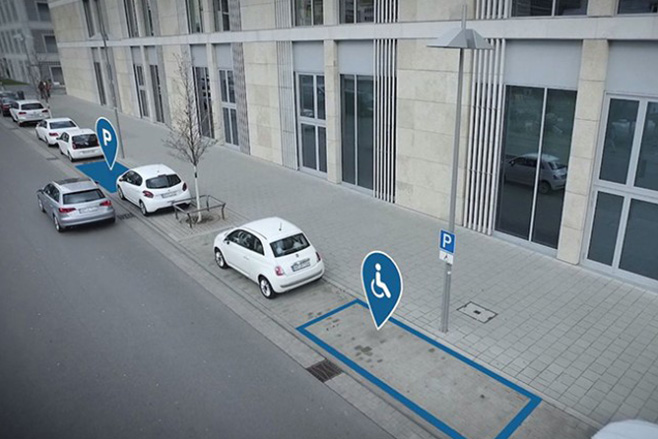
Cars will constantly scan the side of the road in city areas using the same parking sensors already found in a huge number of cars. As the sensors detect an area large enough to park a car in, the location information is uploaded to the cloud, where navigation systems in other cars can retrieve it.
In practice, a driver would enter destination info into a GPS system and the guidance would take them straight to the car park closest to it. Three manufacturers, including Mercedes-Benz, are working with Bosch to implement this system in the US.
As more cars with basic autonomous functions join the road, the system would also work with parking complexes like those at shopping centres. In that scenario a driver would pull up at a ‘drop zone’ near the car park entrance, get out, and the car finds itself a spot using information from the Bosch car park management system.
It’s different to other self-parking systems seen in cars with current driver assist functions, in that it doesn’t require as much hardware in the vehicle because the car park sensors do most of the work. The first car park fitted with the system will open in Germany in 2018, also in partnership with Mercedes-Benz.
MERCEDES-BENZ CLOUD MAPS
As cars collect more information about their environment in order to drive themselves, so too will they help other cars and drivers. Real-time maps, updated over the air by sensor data from cars will give more detailed and accurate information about the roads we drive on than ever before.
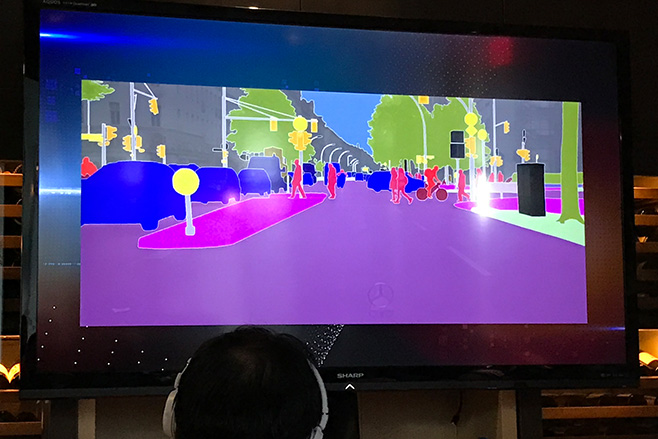
High resolution, three dimensional scanning that can determine what objects are, even down to distinguishing between a bicycle and a motorcycle is in development at Mercedes-Benz. The brand plans to have its cars sharing that information in the near future.
Satellite navigation systems will refer to an onboard map and realtime information from the cloud, so that autonomous functions will work when network connectivity is not possible. High-definition information about traffic, road works and other new developments will be relayed with centimetre accuracy.
This information will not only improve general GPS routing, but also enable fully autonomous driving, by telling the car when to pre-emptively adjust speed for tighter radius corners and turn offs based on map data, well before the onboard sensors have scanned the road ahead.
NVIDIA ARTIFICIAL INTELLIGENCE
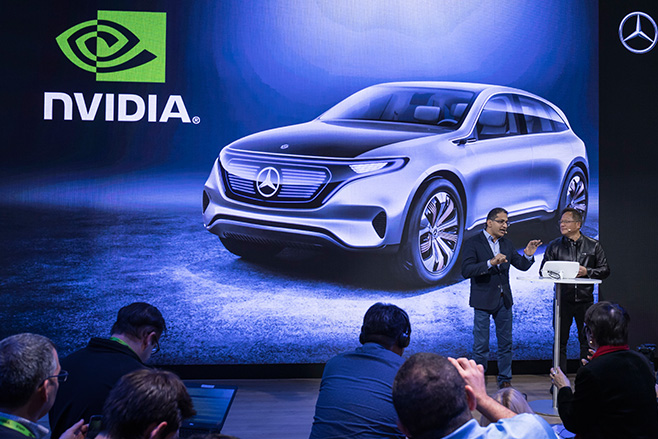
CES was dominated by two things: virtual reality, and artificial intelligence. Nvidia is one of the brands charging ahead with both, and announced at CES that it is working with Mercedes-Benz to bring artificial intelligence to a mainstream production car within a year.
So what does AI in a car look like? In essence, the car will be able to help with tasks simply by asking it to do so via voice, or automatically via predictions based upon your behaviour.
The system is also called machine or deep learning, and is the concept behind systems like Siri, which can interpret requests based on contextual understanding. For a car application, the vehicle can get to know what you do on a regular basis, and suggest actions it thinks you might be looking for, before you ask for them.
For example, before you ask the car to tell you where the nearest petrol station is, it will know that you’re getting low on fuel, and will find the petrol station with the cheapest fuel at that time, that is going to be nearest to the route you normally drive based on your regular movements or the destination you have input.
Mercedes and Nvidia want to give you 26 hours a day. When you sit in the car, its in-car office functions will use artificial intelligence to help you work on your emails and calendar, and you save time in the office. It’s an incremental approach, and the capabilities of this are only just beginning to unfold.
BMW HOLOACTIVE TOUCH
Now this is one we’ll probably be waiting some time to see in a BMW 3 Series, but BMW revealed a system called HoloActive touch, and it’s amazing to note that this virtual touchscreen technology with haptic feedback already exists, and is not just science fiction.
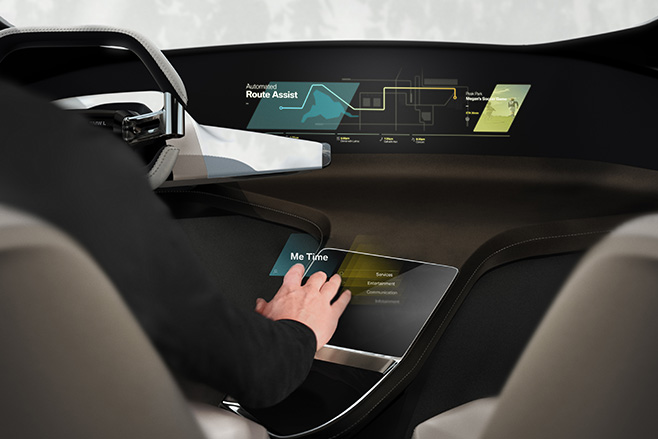
A full-colour holographic image is reflected off an LCD display buried inside the centre console, and ‘floats’ in mid-air, within direct reach of the driver. The hologram displays buttons and other car controls, which can be interacted with by pressing with a finger, or using other intuitive gestures.
What’s most impressive/bizarre is the array of ultrasonic speakers, which beam a jet of inaudible sound that ‘buzzes’ the fingertip of the user, so that HoloActive Touch can acknowledge the button input. It’s a bizarre thing to experience, but it actually works.
BMW did this in order to move the dashboard and centre console further away from passengers, and open up the interior to feel like a living room. It’s all part of its i Inside Future concept, and you can read more about it here.
FCA has confirmed it will be adding three new Jeeps to its line-up including the much anticipated revision of the classic Wagoneer, Grand Wagoneer and a pick-up truck.
The announcement comes as production of existing Jeep models is being stepped up to meet increasing demand for SUVs and pick-up trucks, particularly in the US.
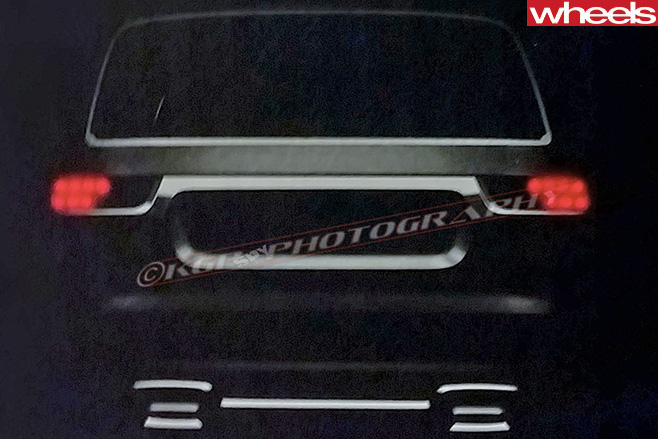
The Wagoneer is based on the classic big Jeep first introduced in 1962 and dropped in 1991 despite its enduring popularity, and will offer a third-row option for Jeep buyers.
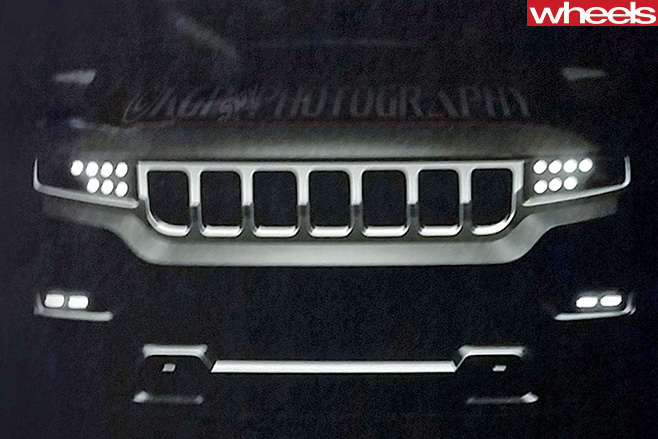
It’s also likely to go up against more esteemed company, with FCA executives previously hinting it may actually be put up against more upmarket maxi offerings such as the Audi Q7, Mercedes-Benz GLS and Range Rover.
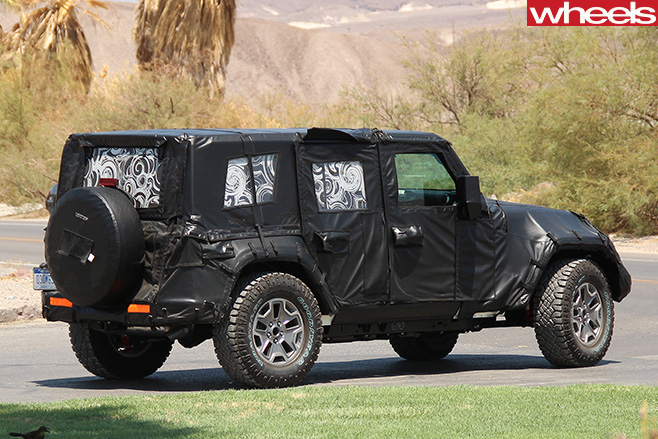
While not much is known about the new pick-up truck, it is expected to be the Jeep Wrangler-based four-door ute due in 2019, which FCA has previously expressed will be “very good for Australia”.
FCA chief executive Sergio Marchionne says the expansion of the Jeep line-up is a key pillar of the company’s continuing strategy in the face of a global sales downturn across its brands, which also include Fiat, Dodge and Chrysler.
“In addition, these all new products will reach new consumers as well as those that have been part of the Jeep tradition.”
Healthier drivers are safer drivers. That’s the message from Mercedes-Benz at the Consumer Electronics Show (CES) in Las Vegas.
A Mercedes-Maybach demonstrator featuring the brand’s ‘Fit & Healthy’ technology was displayed with in-car programs to wake up or relax passengers depending on their mood.
It works using seats that adjust position for better blood flow, bursts of scented air and adjustable ambient lighting, all in the name of reducing accidents.
“One of the core values of Mercedes is obviously safety. Protecting the driver and protecting the passengers. When you step into a Mercedes, you need to feel better when you step out,” said Ola Kallenius, head of research and development at Mercedes-Benz, and former AMG chief.
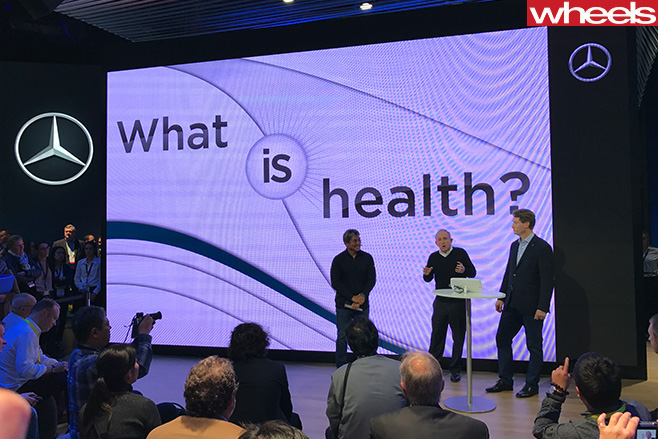
“Maybe you’re tired in the morning, and you need an espresso shot. You push activation and that program in combination with light, scent, massage in your seat, a burst of fresh air, it wakes you up. It’s a three minute program that really gets you awake.
“To get it medically right we worked with people who know what they’re talking about when it comes to the human body. We put the engineers together with the doctors.”
Every model in the Mercedes-Benz range is expected to receive elements of the Fit & Healthy concept as new generations are rolled out.
“We’re going to go through our whole product line from top to bottom,” said Kallenius.
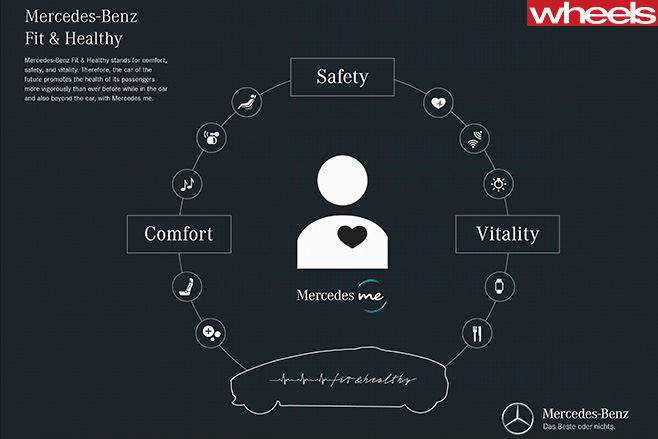
The first applications of the Fit & Healthy system will arrive in the new S-Class later this year.
For drivers of commercial vehicles, Mercedes has a wearable vest in development that measures heart rate and body vitals, and could potentially prevent heart attacks.
“If you are a bus driver that has 45 or 50 people in your bus, there’s a real case there.”
“Put the human at the centre in terms of safety, we have been working on that for decades. With Attention Assist, everything you do from how you move the steering wheel, to the profile of braking and pressing the gas pedal, it knows if you’re getting tired and prompts you to take a break. That started years ago.”
I don’t go to church. Nor do I have any pigs that need ferrying to market on a Monday.
Nonetheless, having a modern interpretation of Lew Bandt’s coupe-utility concept has been extremely handy for a multitude of reasons. Holden’s SS ute cops a bit of a flak for not being a ‘real’ ute, and it’s true that with a maximum payload of 646kg you’re not going to cart a tonne of topsoil with it (though that’s also true of a few full-size utes).
It is more accurate to think of the SS-V Redline as a coupe with a big boot, but there are plenty of occasions where this amount of space is useful. Need to carry a couple of bikes? Or flat-pack furniture? Or timber from the hardware store? All no problem. While realistically a Commodore Sportwagon could also accommodate these items, the ute’s plastic tray liner is a lot more durable than the wagon’s carpeted load area.
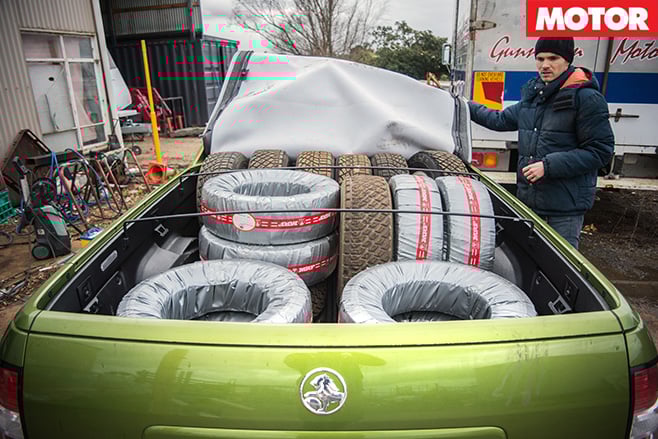
But that creates another issue, as had the hard tonneau been fitted, I wouldn’t have been able to carry all the tyres. The best of both worlds appears to be a canopy; mounting 70-odd kg high over the rear end isn’t going to do much for the handling balance but you could always remove it for track days – or just rock the quasi-Sandman look.
As for why the auto-equipped sedans are rated to tow 500kg more, Holden says the sedan has a stiffer bodyshell – just as a convertible is bendier than a coupe, so too is a ute bendier than a sedan.
On a slightly different note, we also took the opportunity to run our long-termer down the strip. With a couple of track sessions and a few thousand road kilometres under its belt, the rear tyres aren’t exactly in pristine condition, but it nonetheless managed 0-100km/h in 5.12sec and a 13.21sec quarter mile at 178.37km/h, only a couple of tenths off its claims.
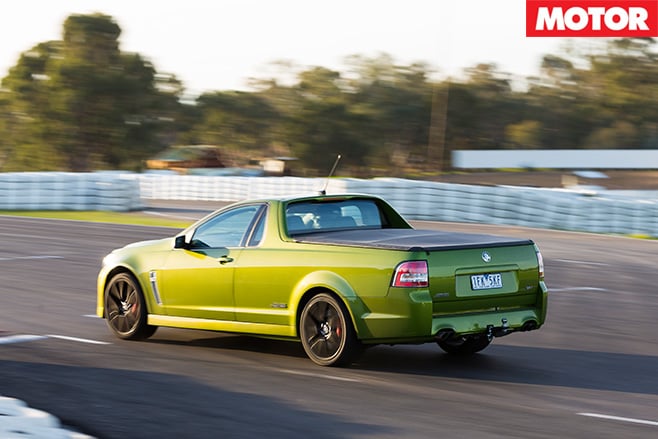
It also provided another opportunity to activate the one-foot rollout function on the VBox, which we’ll do with all our regular performance testing from now on. The result was 0-100km/h in 4.9sec and a 13.0sec quarter at an identical 178.4km/h, so a 12.8 or similar should be achievable at the Wednesday night drags.
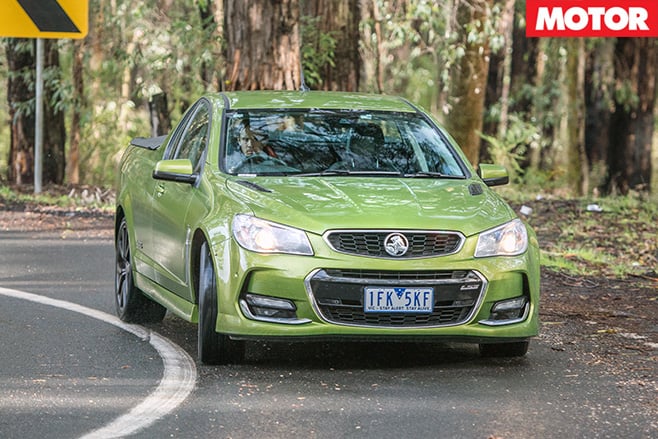
LIKED: Getting the dirty jobs done DISLIKED: Worrying about tyres being nicked FAVOURITE MOMENT: Hearing that V8 roar every day
FUEL THIS MONTH: 14.9L/100km AVERAGE: 15.1L/100km DISTANCE THIS MONTH: 1070km TOTAL: 14,055km
Want more info on the SS-V Redline? Check out how it compared against HSV’s Maloo R8.
In the future, nothing has buttons. It’s all touchscreens and, in BMW’s case, holograms.
BMW’s i Inside Future concept car is a long way from reality, but the HoloActive Touch system it debuted at the Consumer Electronics Show (CES) in Las Vegas is already functional.
A full-colour image is projected R2D2-style into thin air above the centre console, aimed toward the driver. It displays floating buttons controlling a huge door-to-door dashboard display. The most unusual thing about it is a type of haptic feedback, developed so users can feel the hologram as they touch it.
It works using an array of 300 ultrasonic speakers in a panel beneath the hologram. An infrared camera detects the position of the driver’s finger as it presses the air, and a jet of sound is shot at the fingertip to acknowledge the input. It’s a bizarre sensation, similar to a static pulse. The tone can’t be heard by ear but it is picked up in the video above.
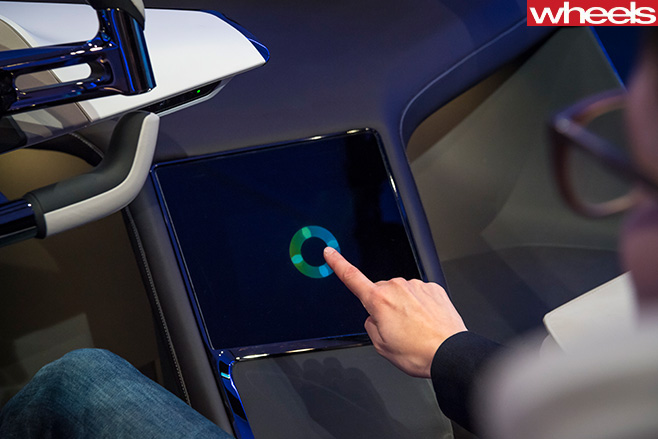
Most of the functionality is smartphone linked for receiving calls or playing music and video. In the future BMW says it could project anything from a volume control with haptic feedback for each click of the dial, to paddle shifters, or even the steering wheel itself.
HoloActive Touch is an evolution of the relatively primitive gesture control system currently found in BMW 7 Series. BMW strongly believes that gesture-based systems are the future.
“Being in your direct reach, we think it is such a natural way of interacting with the car,” said Sonja Rumelin, technical expert HoloActive Touch. “Now you are touching something, so it is a mixture of the gestures you normally do and the gestures which have become intuitive from using touchscreens.
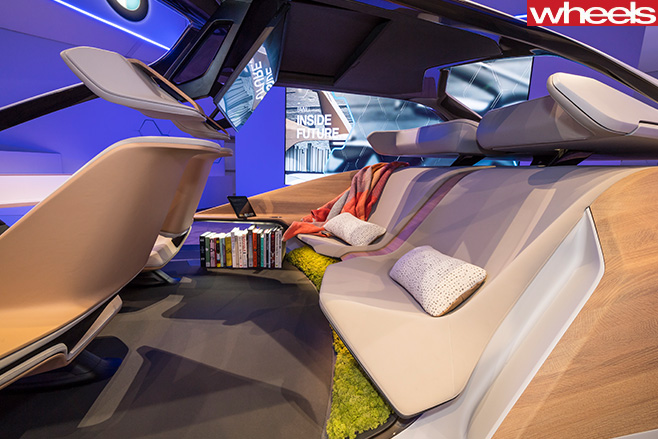
Living room experience refers to the concept’s open design, with a minimal console and a dashboard mounted much further away than is typical. The holographic image is created using micro mirrors and glass prisms to reflect an LCD display mounted behind a panel in the low centre console, similar to a regular heads-up display.
“It’s like learning a new language. Once you have it and you start using it, it’s seamless. Then you get into another car and you start waving your hand and realise it doesn’t have it,” said BMW North America spokesman, Hector Arellano-Belloc, speaking to Wheels.
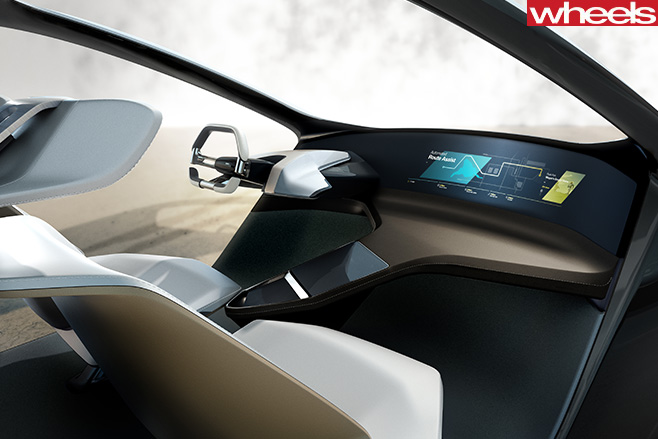
Other features in the BMW i Inside Future concept include a function called Sound Curtain. Using speakers in the headrests, an isolated area of sound is created around the passengers, so that each can listen to their own audio without disturbing others.
New materials have been used around the car, inside and out, for their ‘functional properties’, including a garden bed of moss under the rear seat for its climate benefits, and a cork floor to help with acoustics.
“We don’t want to put new materials just because, it has to make sense,” said Rumelin.
Mercedes-Benz’s has given its GLA crossover a makeover for 2017 with punchy exterior and interior updates based on ‘expressive design’ that matches the different variants.
The most obvious feature of the new range is the facelifted front bumper that surrounds redesigned air-intake grilles.
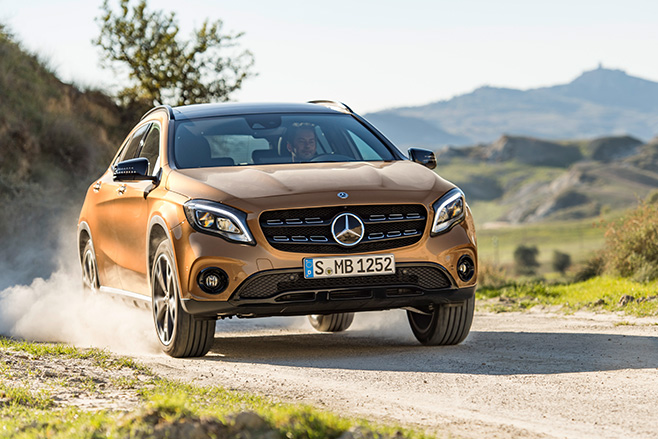
There’s also a new colour, ‘canyon beige’ to highlight the 2017 range, which has a choice of three chassis variants including standard comfort suspension and two with lowered suspension heights.
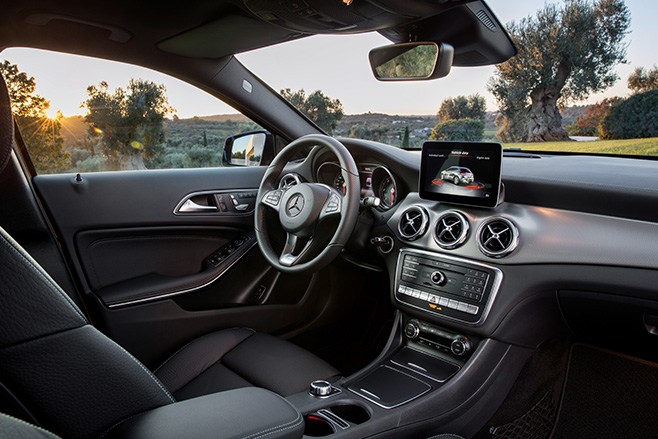
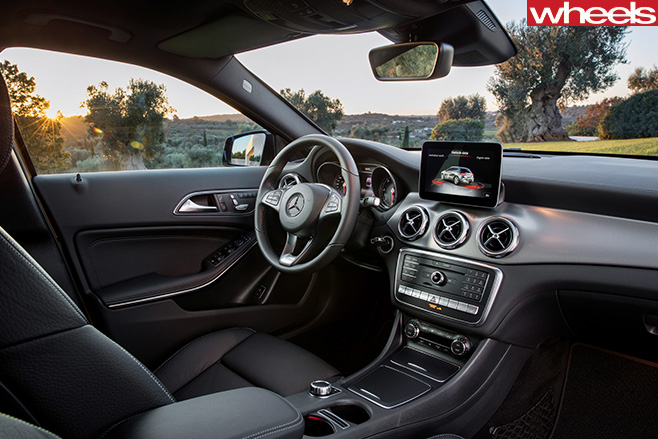
Inside you’ll get new seat covers and trim as well as chrome-effect control panels and new-look switches.
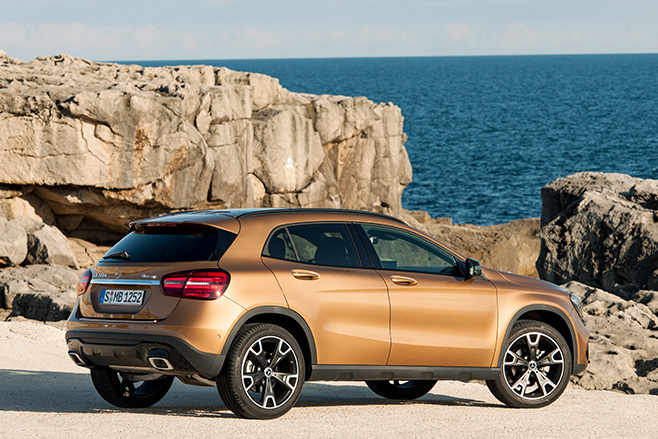
Additional equipment across the range includes 360-degree parking camera with bird’s eye view and keyless entry, while options include optional hands-free tailgate and soft LED headlamps with daylight hues.
There’s also a new petrol AWD variant, the GLA 220 4Matic powered by a 135kW/300Nm engine 4-cylinder engine.
The range is topped by the show-stopping Mercedes-AMG GLA 45 4Matic Yellow Night Edition, with aggressive black with yellow trim that stands out from the standard GLA 45
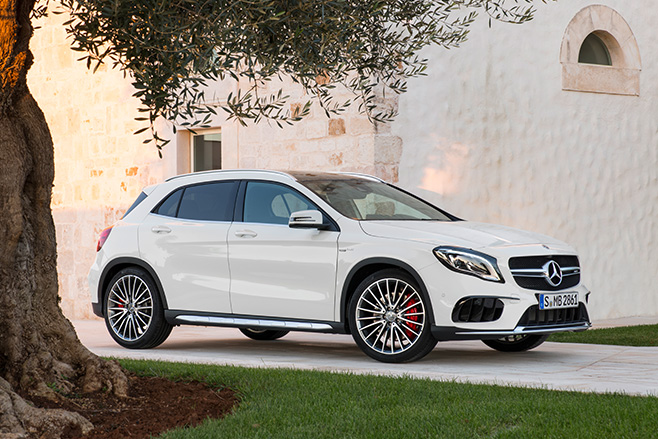
For the AMG models, the most obvious visual difference lies in the sharper front bumper featuring a new front splitter insert and aerodynamic side strakes to improve airflow through the newly shaped air-intake grilles.
The AMG’s rear end also receives an aerodynamic tweak, with a new diffuser and roof spoiler while new wheel options include multi-spoke 20-inch light-alloy wheel in matt black or titanium grey.
The new -45 models reach 0-100km/h 0.4 seconds quicker, hitting the ton in just 4.4 seconds. It has the same 280kW/475Nm 2-litre 4-cylinder turbo petrol engine as before, but software revisions to the launch control system have helped slash its 0-100km/h time.
The 2017 Mercedes-Benz GLA is expected to arrive in Australia in the middle of the year though the company is yet to confirm if this will include the new GLA 200 4MATIC or AMG GLA 45 4MATIC Yellow Night Edition.
Local pricing and specifications have yet to be announced.
Subaru has lifted the lid on its WRX and WRX STI facelift, which is set to go on sale later this year and give the all-wheel-drive performance pair a boost in showroom appeal.
The most noticeable changes are on the outside, with new bumper plastics at the front, a reshaped grille and new alloy wheel designs for both the Subaru WRX and WRX STI – the latter also receiving a set of 20-spoke mesh-style 19-inch alloys as an option.
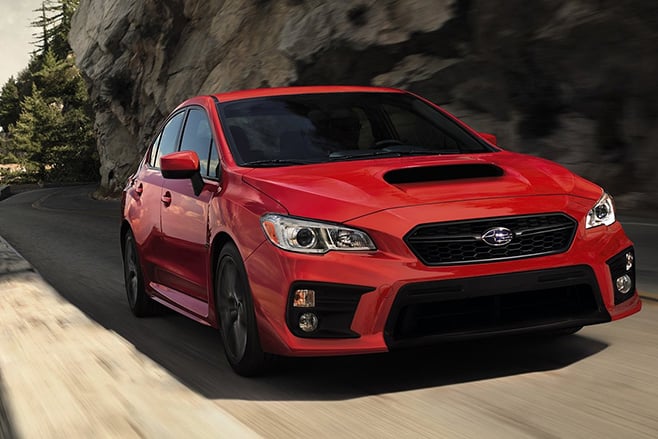
LED headlamps that actively steer into corners will also be available on high-grade WRX and WRX STI variants.
In-cabin upgrades are modest, with upgraded materials, cupholders in the rear seat armrest, new door grips and a faster boot opening mechanism being the key changes for this year. US-market WRXs will have the option of eight-way power adjustable Recaro seats, though availability for the Australian market has yet to be confirmed.
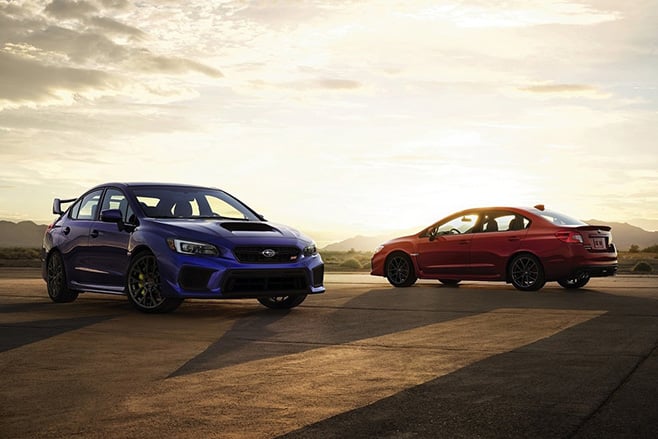
Thicker door glass, new door seals and foam-filled structural members help filter out unwanted noise.
More substantial improvements have been applied under the skin. Though the WRX’s 199kW turbo 2.0-litre flat four and the WRX STI’s 227kW 2.5-litre turbo flat four engines carry over largely unchanged, suspension revisions to damper valving net a more comfortable and stable ride without impacting on handling.
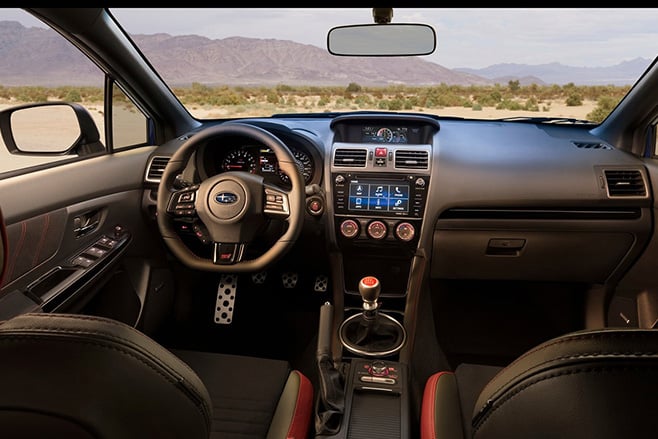
The WRX’s electronic power steering calibration has also been tweaked for a more natural feel, but the WRX STI gets a bigger upgrade in the form of new AWD hardware. For 2017 the WRX STI will gain an all-electronic centre differential system, promising faster and smoother reaction times than the outgoing model’s part-mechanical, part-electronic AWD system.
As before, the WRX STI’s ‘DCCD’ AWD system will allow the driver to vary the front-to-rear torque split settings to their own tastes.
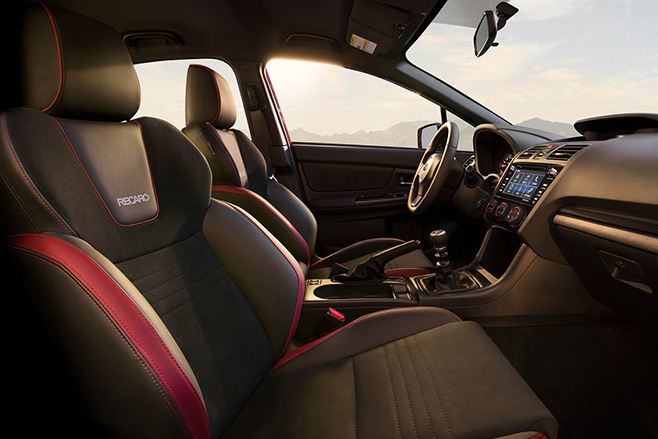
The six-speed manual transmission has also come in for some work, with new synchros promising enhanced shift feel and smoother, faster gear changes.
The WRX STI scores a new brake package, finished in bright yellow. With stronger 6-piston Brembo calipers up front, two-piston calipers at the rear and cross-drilled brake rotors with bigger brake pads, the STI’s new brakes promise improved stopping power and greater fade resistance.
Local arrival timing, pricing and specifications have yet to be announced.
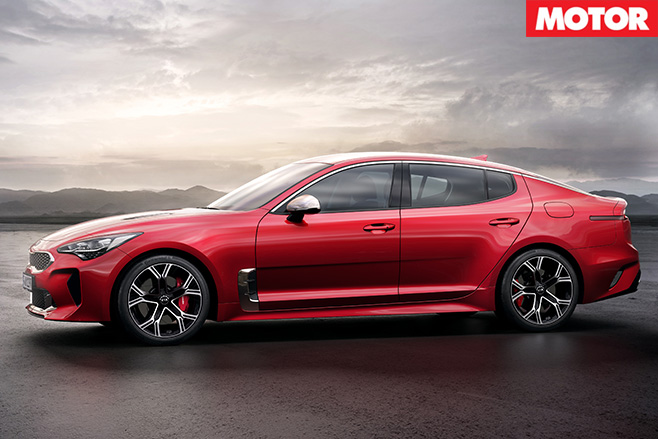
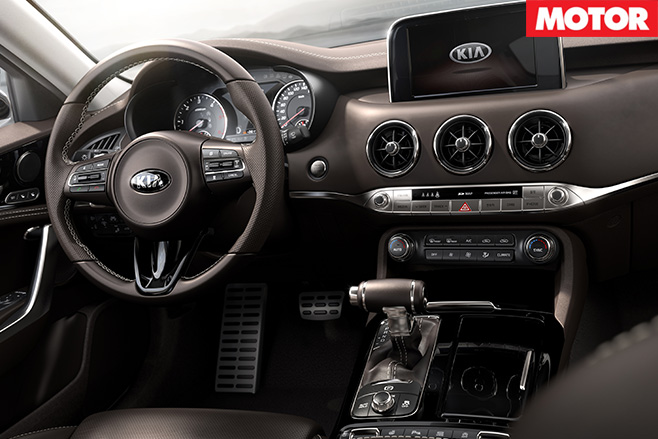
Kia has pulled the covers off its first true performance model, the Stinger GT sedan, at the Detroit Auto Show.
As local manufacturers vacate the large, rear-drive segment the Koreans are embracing it with gusto, with Kia’s forthcoming Stinger expect to be joined by new offerings from Hyundai’s Genesis range in 2017.
The Stinger’s bold styling was previewed by Kia’s GT Concept that appeared at the 2011 Frankfurt Motor show, however it takes its name from the sporty coupe that appeared at Detroit in 2014.
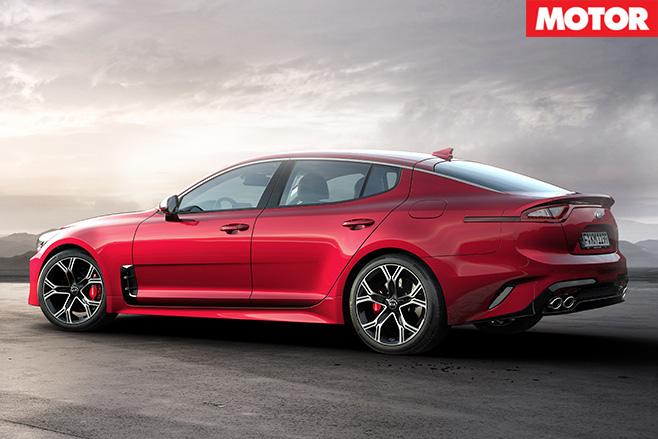
What’s under the skin, though, is even more tantalising. Powering the Stinger GT is a 3.3-litre twin-turbo V6 producing 272kW at 6000rpm and 510Nm from 1300-4500rpm, capable of hauling the large four-door to 100km/h in just 5.1sec.
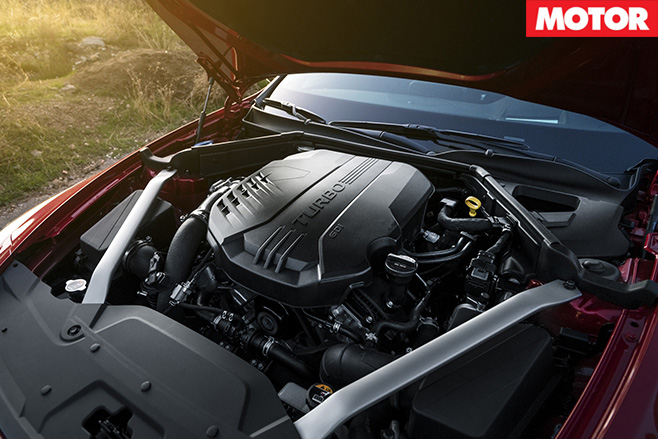
All-wheel drive is available overseas, however Australian Stingers will be rear-wheel drive only, feeding power through an eight-speed automatic gearbox.
We’ll be sliding behind the wheel of the production Stinger later this year, however our sister publication Wheels has scored an early prototype taste which you can find here.
The Mercedes-Benz GLA baby SUV is looking all grown up for 2017 with punchier styling, an additional drivetrain option and an audacious new AMG edition.
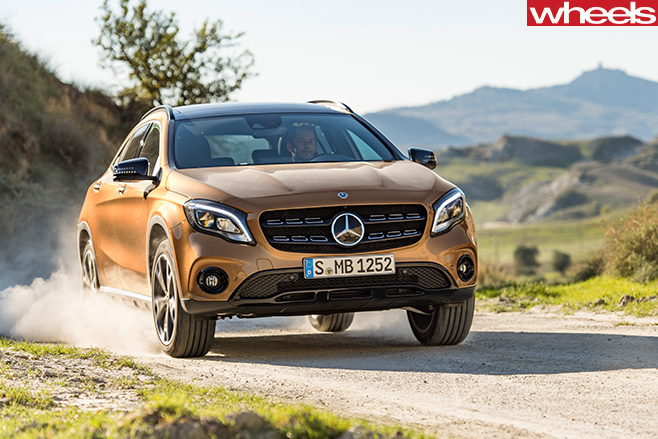
The 2017 GLA comes with exterior and interior updates based on ‘expressive design’ that matches the different variants.
The showstopper is the Mercedes-AMG GLA 45 4MATIC Yellow Night Edition, which comes dressed in black with yellow trim and provides a striking visual option to the standard GLA 45, which benefits from a range of technical and design enhancements and improved performance.
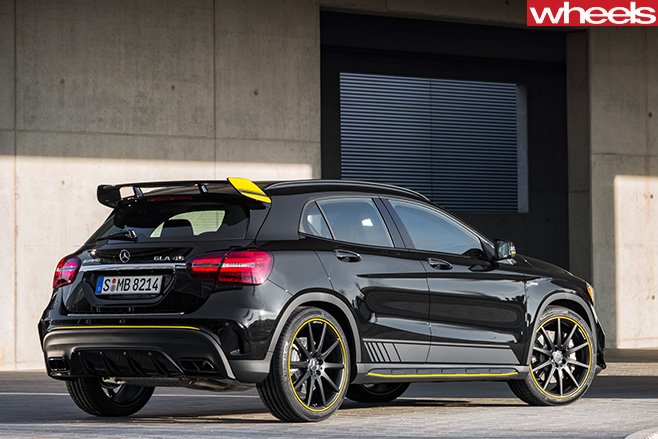
The rear end sports a new diffuser and roof spoiler while new wheel options include multi-spoke 20-inch light-alloy wheel in matt black with a high-sheen rim flange (yellow for the Night Edition) or titanium grey with a high-gloss finish.
Interior changes include faux leather dashboard covering contrasted in the Yellow Night edition with yellow stitching. If you’re not a fan of yellow, the standard AMG interior comes with red highlights.
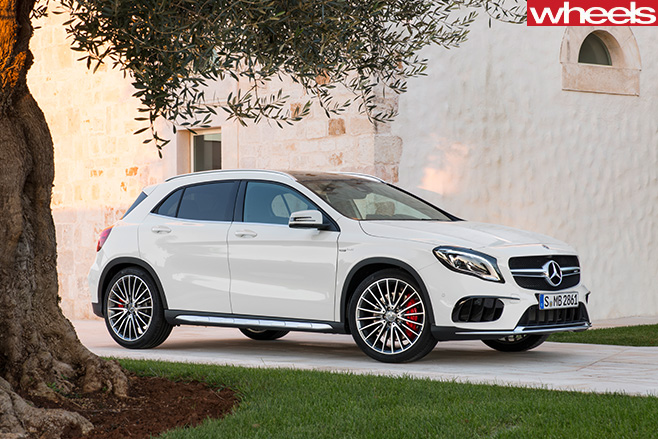
There’s also a new colour, ‘canyon beige’ to highlight the 2017 range, which has a choice of three chassis variants including standard comfort suspension and two lowered suspension grades for those who really want a Mercedes-Benz A-Class but have somehow been convinced that a cross-over is the way to go.
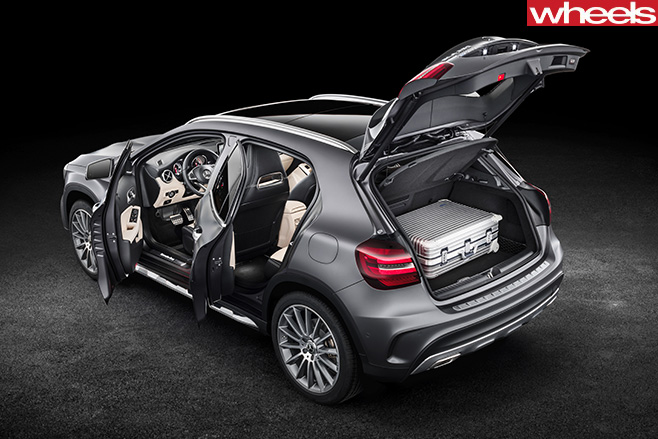
Additional equipment across the range includes 360-degree parking camera with bird’s eye view, keyless entry and optional hands-free tailgate.
Local pricing is also yet to be confirmed, though it’s not expected to differ too much from the current range, which starts at $43,600 for the GLA180.
