
The past 12 months have been good to car enthusiasts. We’ve been blessed with a glut of delicious new metal to fawn over, and two of the most exciting cars of 2016 are also two of the most accessible.
The BMW M2 Pure and Ford Focus RS are both worthy of ‘driver’s car’ distinction, yet these two highly discussed performance machines go about getting there in significantly different ways.
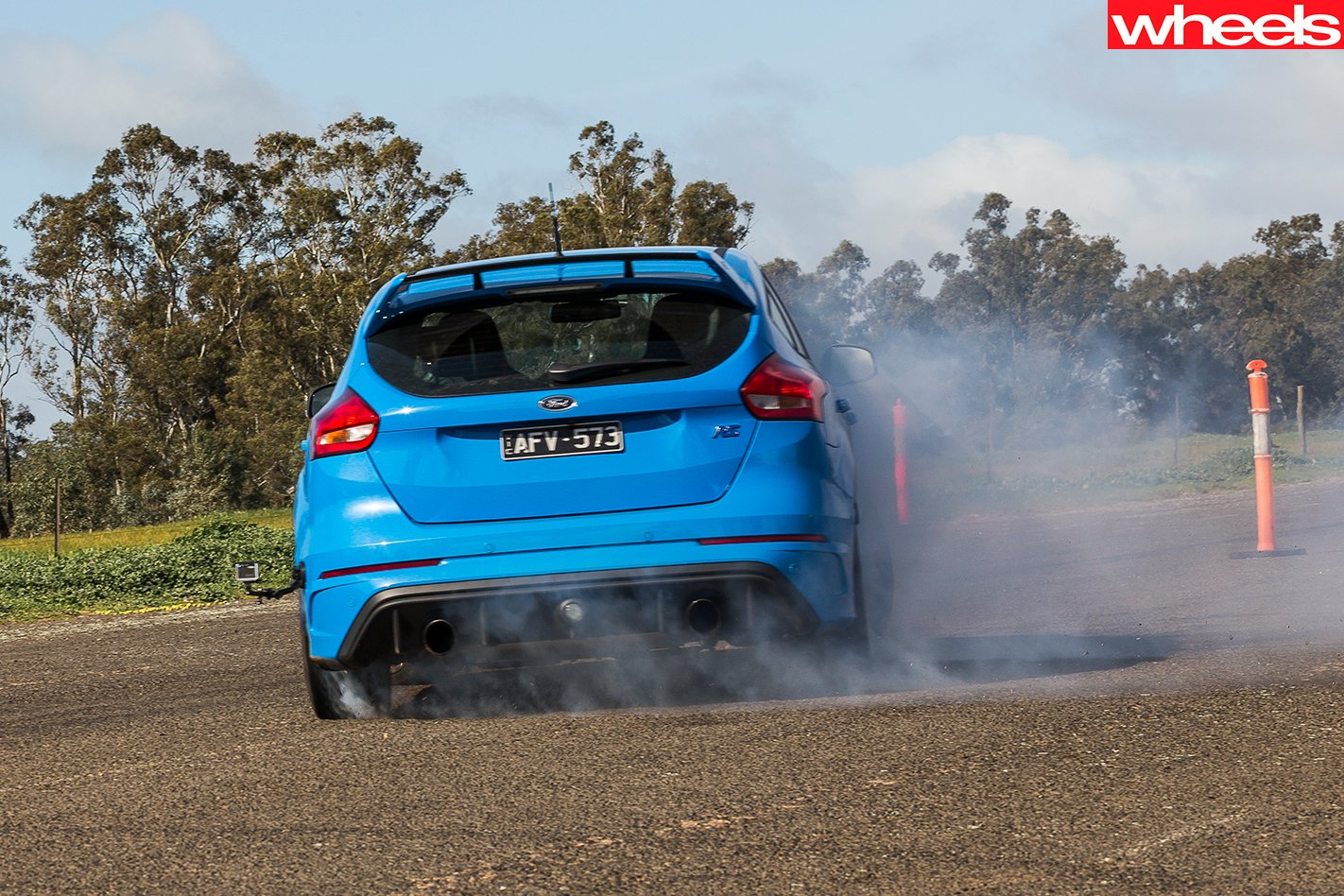
Where the BMW is a modern, thoroughbred rendition of a tried and true formula, the Ford is a rambunctious upstart, with technologically sophisticated underpinnings that make unsophisticated driving not only possible, but assisted.
Naturally, in the interests of science, it’s important to find out which of these two cars is better. Can an unhinged hot hatch really tangle with a pedigree M car that costs almost twice as much?
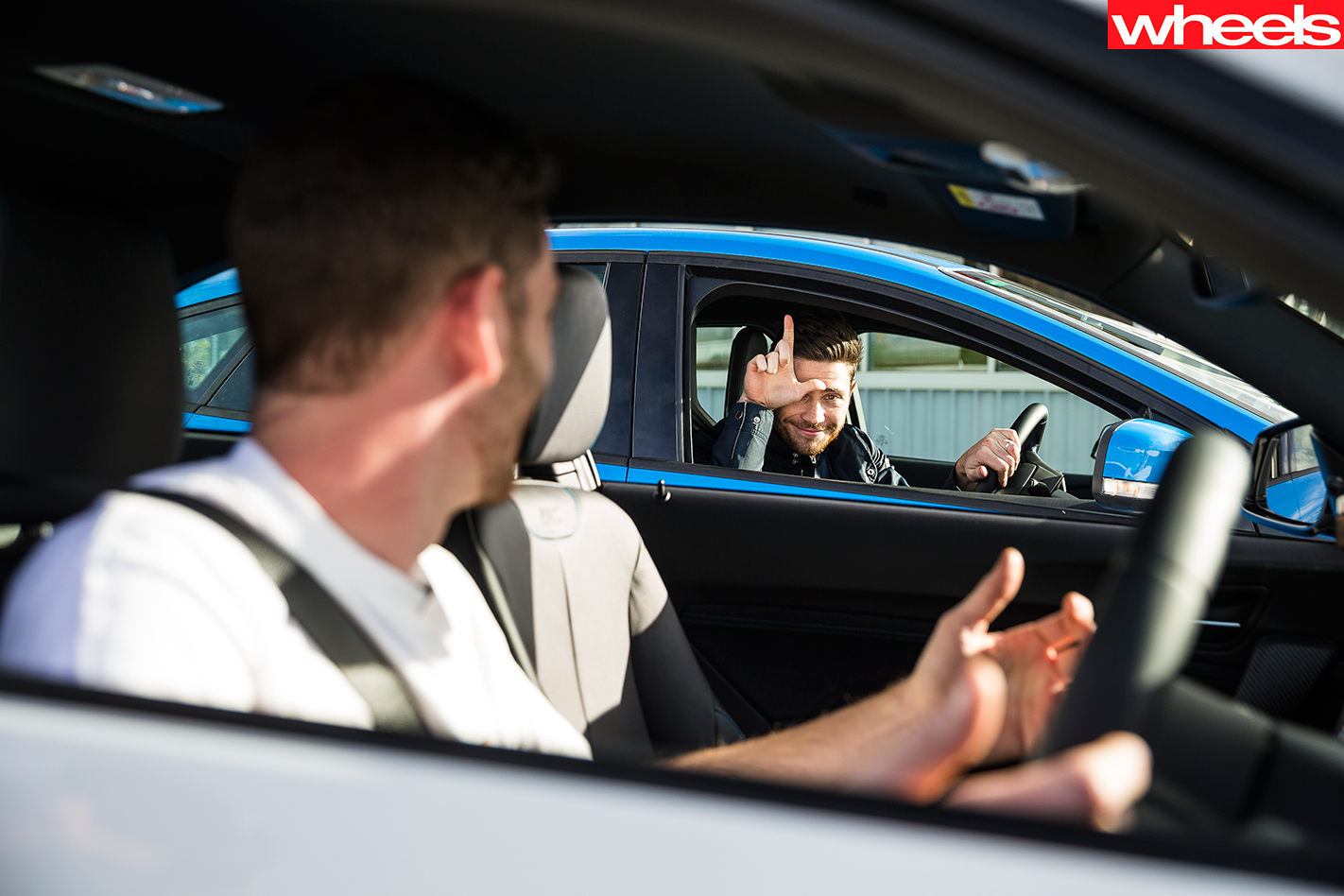
On paper they’re an interesting, albeit unusual match-up. Both cars are turbocharged and have six-speed manual transmissions, and appeal to people who like cars and driving. That’s about as far as the similarities go.
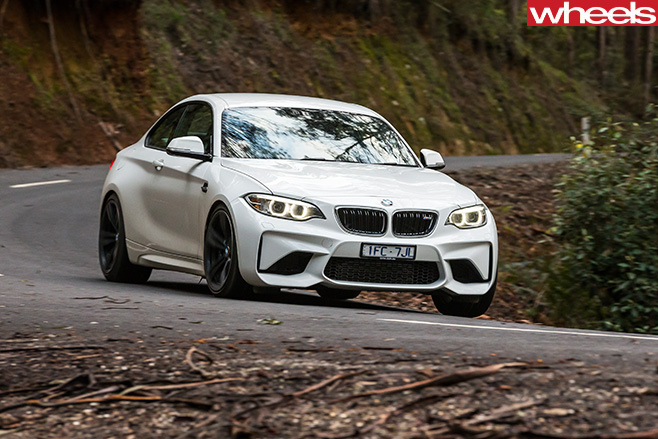
The M2 uses a 3.0-litre straight six to generate 272kW at 6500rpm, and 500Nm from 1400 to 5560rpm. It’s rear-wheel drive, and has no launch control or, in fact, much in the way of electronic assistance whatsoever. It costs $89,615 to buy.
The Focus RS uses a 2.3-litre four-cylinder engine, measuring in at 257kW at 6000rpm, and 440Nm between 2000rpm and 4500rpm. It is all-wheel drive, but – much to the anger of the fun police – is able to isolate most of its power to the rear wheels when the now infamous Drift Mode is engaged. Ford will charge you $50,990 for one.
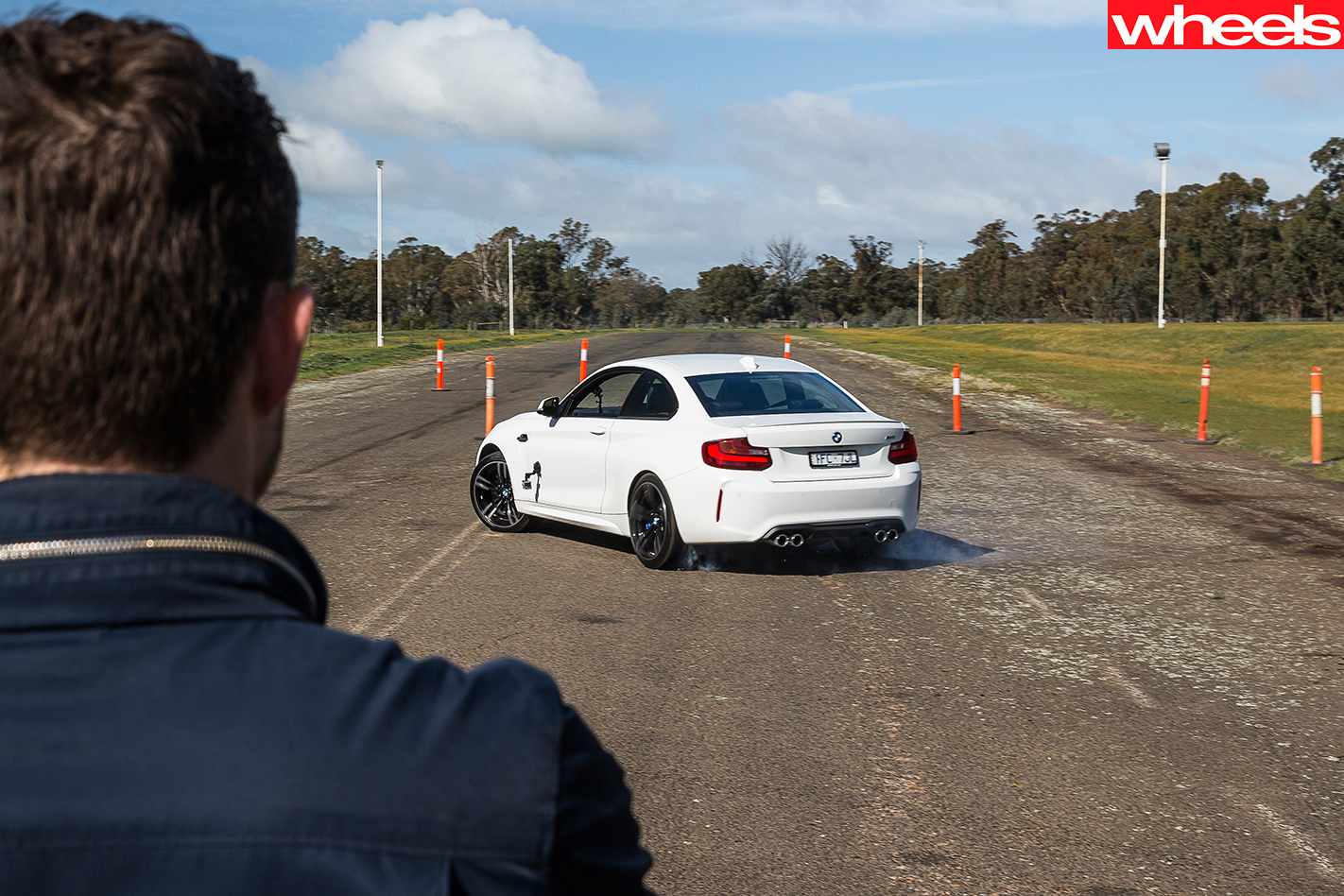
Wheels took both cars to the drag strip, the set of an extremely low budget Ken Block video, and a selection of different roads to see how these two manufacturers have gone about creating their version of a user-friendly driver’s car, and to work out how they stack up against each other.
Wheels journos drive hundreds of cars each year, and with 2016 drawing to a close, we’ve asked them to nominate their favourite from the past 12 months.
‘Favourite’ is wonderfully vague, and could mean anything from the fastest car they sampled, to the most exciting, or simply one of those rare moments in time where a car, the road and weather unite in perfect harmony to deliver an unforgettable driving experience. So, with that in mind, here are our favourite cars of 2016.
Mercedes-AMG GT R
Alex Inwood – Acting Editor

My favourite drive of the year, though, occurred in Japan at the wheel of an Abarth 124 Spider. It was my first time exploring the mountain roads around Hakone, which are breathtakingly beautiful and smeared with rubber from drifters. I dutifully added to the black marks.
BMW M2 Pure
Ryan Lewis – Journalist
Peugeot 308 GTi 270
Tony O’Kane – Journalist

Why? Because it’s astoundingly light. Because it manages to squeeze 200kW from a 1.6. Because it rides and handles like a dream. Because it has a proper limited-slip diff, motorsport-spec brakes and seats that are as grippy as its Michelin Pilot Super Sports. There are so many reasons to love the 308 GTi 270, and so few reasons to reject it over its hot hatch rivals. I want one.
Mazda MX-5 GT
David Bonnici – Journalist
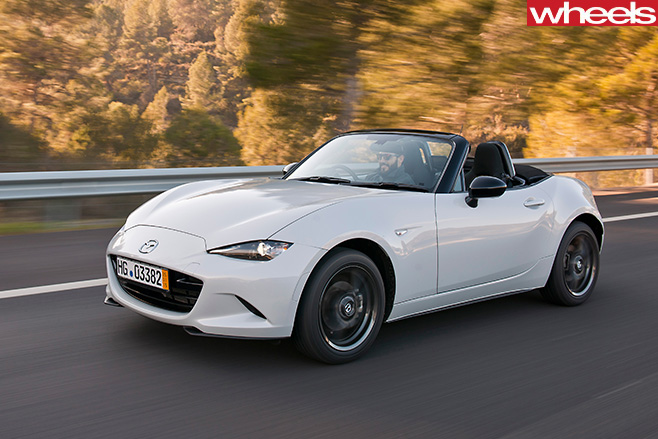
While my 49-year-old frame groaned whenever I climbed in, I loved the feeling of being enveloped by MX-5’s tiny body and how everything was within arm’s reach. It’s become almost cliché to heap praise on the 2016 COTY, but the MX-5 warrants nothing less.
Audi RS Q3
Cameron Kirby – Journalist
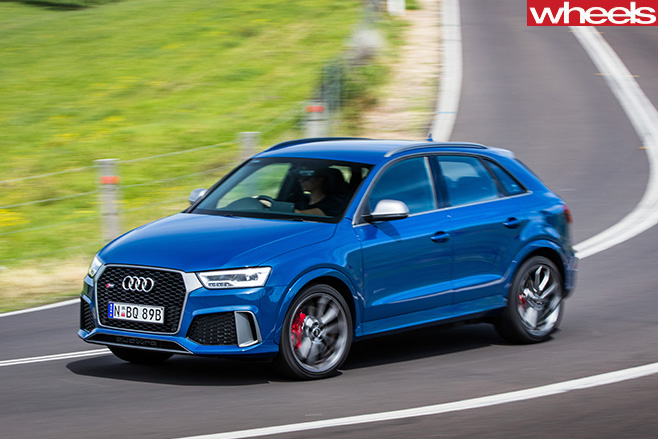
Yes, it is heavy, yes it has the turning circle of a suburb, yes it lacks a USB port. But oh lord is it fun. Seeing the face on sportsbike riders as I harassed them in a small SUV in the twisties made my year, and cruising along the seaside was a joy. Long live silly cars.
BMW 440i Gran Coupe
Barry Park – Journalist

That’s right; deep down I’ve lusted after a folding-roof car for its roof-up profile. But the GC’s four doors kept the kids happy, the liftback is great for chucking in luggage, the styling does grow on you after a while, and there’s that sweet, sweet 240kW twin-turbo 3.0-litre in-line powerplant. I’m a convert-ible.
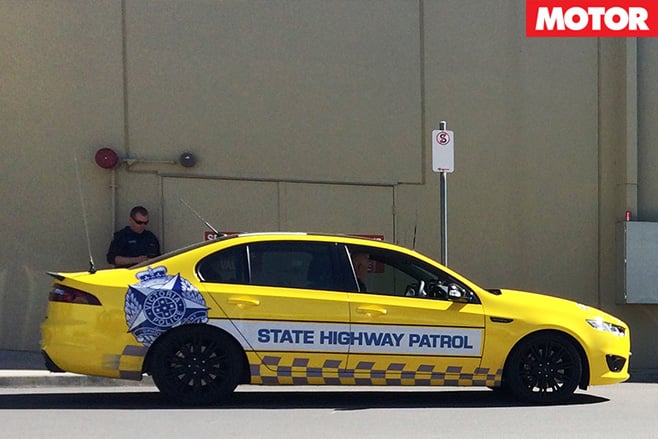
Victoria Police has prepared a final Ford Falcon XR8 Sprint for highway patrol duties complete with the ‘candy’ livery of the 351 Interceptor used statewide during the 1970s.
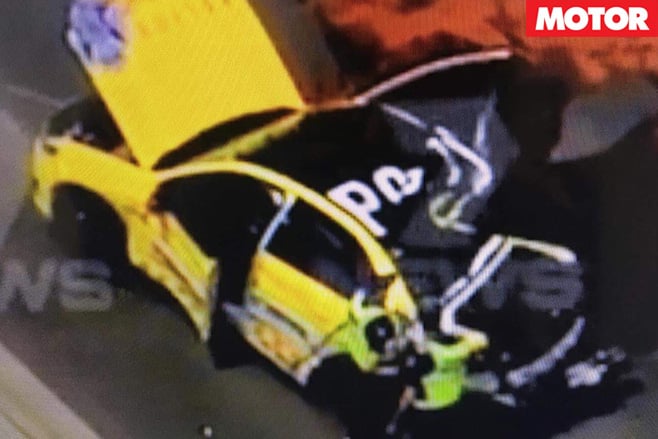
Although the XR8 Sprint was purchased to “celebrate the end of an era” between Victoria Police and its use of four-door Falcons, MOTOR understands the pictured vehicle, which was set to then become a permanent museum display following its operational life as a highway patrol (HWP) car, has today been involved in a major accident.
As we go to press, 7 News Melbourne has broadcast images of the yellow XR8 Sprint sideswiped on the passenger’s side and ripped apart from the driver’s B-pillar back – it is unknown if anyone was hurt, but MOTOR has contacted Victoria Police for comment.
Victoria Police had contacted Ford Australia with a proposal for final HWP Falcon following its announcement that a final run of 750 XR8 Sprints would be built to close off the Broadmeadows manufacturing facility on October 7, 2016.
“We saw this as an ideal opportunity to re-kindle a previous high-profile highway patrol vehicle in the Victoria Police fleet known colloquially as the ‘candy cars’ which were V8 Ford Falcons,” a Victoria Police spokesperson told MOTOR in a statement prior to the accident.
“The original ‘candy cars’ were part of starting the HWP decades ago and were the iconic vehicle in the Victoria Police fleet. We believe they were introduced in about 1971 and were a 351 Ford Interceptor.
“We contacted Ford, and briefed them on our desire to use the vehicle as part of our road safety campaign. Ford considered our request and welcomed the opportunity to be involved in the program.”
“We are continually trying to think of new initiatives to combat road trauma,” explained the Victoria Police spokesperson.
“It is the thinking of Road Policing Command that the higher visibility and higher profile the Highway Patrol Fleet, the better. Ever since Victoria Police have had iterations of the ‘candy car’ they continued to be iconic in our fleet and also drew the respect of road users when the ‘yellow interceptors’ pulled over motorists.
“So the candy cars are part of the HWP history in Victoria Police and are also part of our long standing relationship with Ford Australia.”
Photography by John Pallot.
THE Infiniti Q60 S makes for a refreshing alternative to the European set. However, it doesn’t quite supersede them.
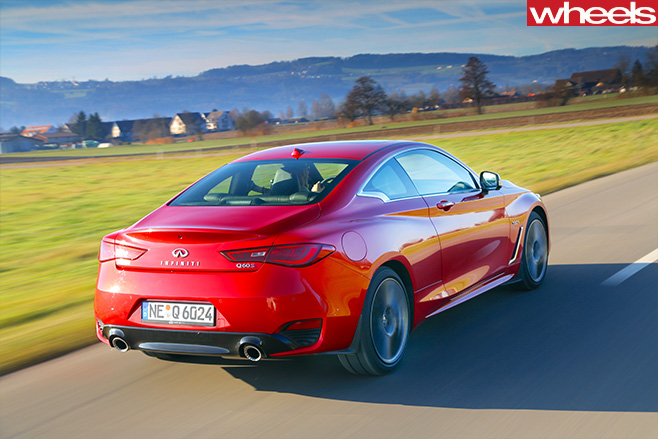
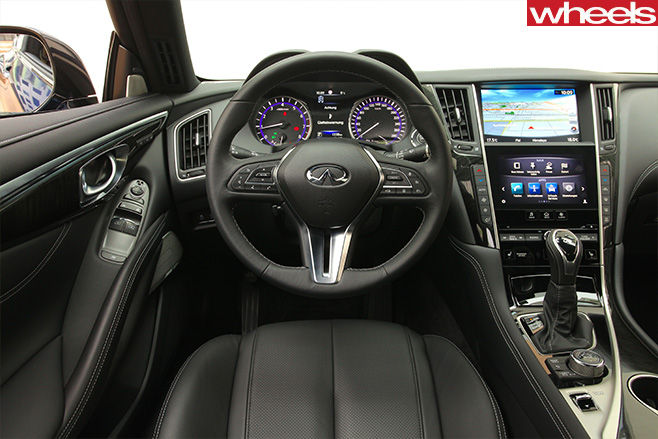
WHAT IS IT? This is Infiniti’s flagship coupe, complete with the brand’s newly developed twin-turbocharged V6 engine and controversial pure electric steering system. It’s a handsome two-door with strong design, a well finished cabin and generous standard equipment. It will come to Australia as the more senior partner to the 2.0-litre turbocharged version.
WHY WE’RE TESTING IT To see if Infiniti has finally made a car that stands a chance of winning a fair fight against the established players in the premium segment. With 298kW the Q60 S outguns all of its obvious rivals, although performance is blunted by its near 2.0-tonne kerb weight. But with looks and generous equipment levels on its side, it could be the breakthrough Infiniti has been waiting so long for.
MAIN RIVALS BMW 440i; Mercedes-AMG C43; Lexus RC
THE WHEELS VERDICT
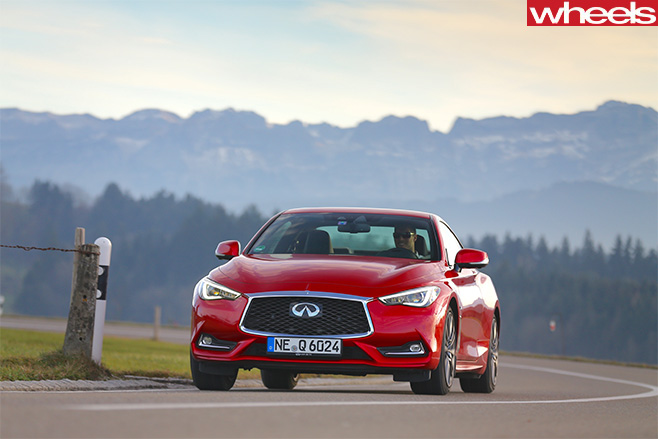
PLUS: Decent looks; rarity; well equipped; brilliant engine (on paper, at least) MINUS: Artificial steering; dull gearbox; suspension weighted towards cruising
THE WHEELS REVIEW IF THERE’S one thing in the automotive world worse than being talked about, it’s probably being Infiniti. It’s more than 25 years since Nissan launched its premium sub-brand, but it remains the most minor of minority tastes across most of the world, and especially in Australia. That’s where the new Q60 S could help, as a halo performance model.
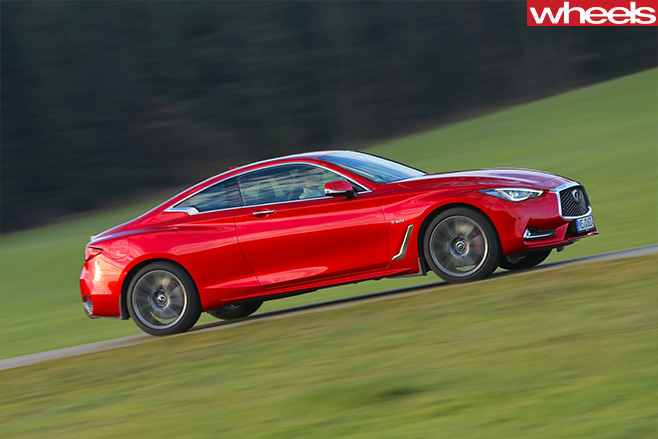
The new V6, a heavily developed version of Nissan’s long-serving VQ motor, is an absolute stormer. We’ve already driven it in the Infiniti Q50 Red Sport and most of the same comments apply – some low-down lag turns into serious mid-range punch and keeps pulling to the limiter, which doesn’t call time until 6800rpm. It’s short on top-end aural appeal, and doesn’t feel quite as fast as its raw output numbers suggest it should, because of what’s happening on the other side of the power-to-weight ratio. On EU DIN figures, which include a 90 percent full fuel tank, a 68kg driver and 7kg of luggage, the Q60 S weighs 1892kg – a chunky 250kg more than the BMW 440i. The seven-speed automatic isn’t the sharpest of gearboxes either; there’s no chance of confusing its leisurely shifts for a double clutcher and its manual mode feels particularly dull-witted.
The slippery conditions didn’t stop me from struggling with the all-electric Direct Adaptive Steering. Software modifications have earned this a ‘2.0’ suffix over the underwhelming system fitted to the original Q50, and although it’s definitely better it’s still not very good, especially when compared with the best conventional EPS systems on rival cars. The Infiniti’s shtick is that there’s no direct connection between steering wheel and front axle except in an emergency (when a clutch closes to create a mechanical link); all instructions (and feedback) are done by flowing electrons that allow reactions to sharpen up in Sport or Sport Plus modes. The weighting is more consistent than the early Q50 and doesn’t change mid-corner, but it still feels artificial, and with feedback akin to being delivered by a video game rig.
SPECS Model: Infiniti Q60 S Engine: 2997cc V6, dohc, 24v, twin-turbocharged Max power: 298kW @ 6400rpm Max torque: 475Nm @ 1600rpm – 5200rpm Transmission: Nine-speed auto, all-wheel drive Weight: 1892kg (EU) 0-100km/h: 5.0 sec (claimed) Economy: 9.1 lit/100km (est) Price: $88,900 On sale: Q1 2017
Faster than an BMW M5 but without the brutal focus on performance, the BMW M550i might be the velvet sledgehammer you’re looking for – except we won’t be getting it.
We’ve known about the all-new G30-generation BMW M550i and its M5-shaming turn of speed since mid-October, but now BMW has dropped the full dossier on its Fast Fiver.
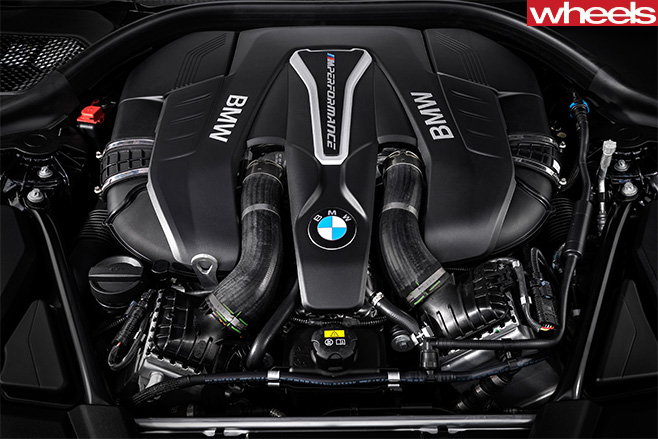
The M550i’s engine is a “specifically modified” M Performance version of BMW’s familiar 4.4-litre turbocharged petrol V8, which places both of its turbochargers between the two cylinder banks to shorten exhaust and intake manifolds and reduce lag.
Peak outputs for the direct-injected V8 measure 340kW at 5500rpm and 650Nm between 1800rpm and 4750rpm – down on the 423kW/680Nm peaks of the current-generation M5 Competition, but 10kW more than the 4.4 turbo V8 of the X5 xDrive50i.
That xDrive gear is also tuned to be more enthusiast-friendly, with a rear-biased torque split that aims to preserve the RWD dynamics BMW is known for while still ensuring excellent traction under power. And despite being AWD the M550i doesn’t carry much of a weight penalty. In fact, with a kerb mass of 1810kg it weighs 60kg less than the rear-drive F10 M5.
An eight-speed torque converter automatic channels all of the M550i’s power to the AWD gubbins, boasting an extra gear over the M5’s seven-speed dual-clutch auto. Simpler tech, but one that offers better low-speed driveability.
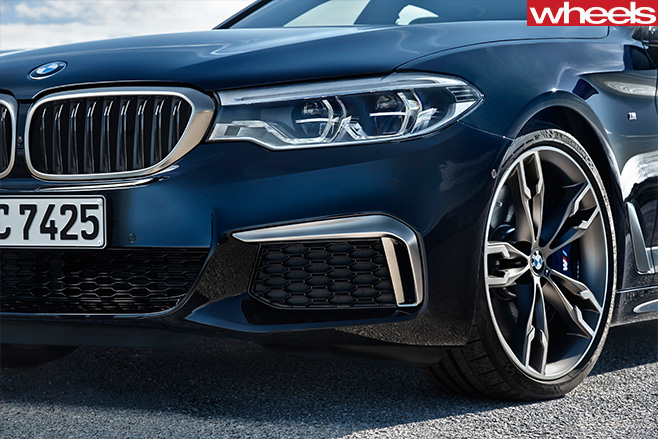
The electric power steering features a different tune to that of regular 5 Series variants, with M-specific response curves when the car is put into the Sport or Sport+ drive modes. BMW claims the result is “pinpoint accuracy” and “feedback that guarantees immense driving pleasure”. Integral Active Steering, BMW’s term for four-wheel steering, will be available as an option.
Braking hardware, meanwhile, comprises an M Sport brake package featuring large calipers and rotors, the former finished in metallic blue paint.
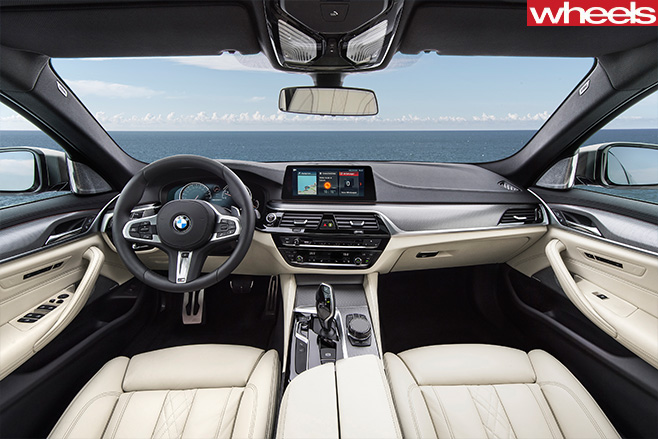
Driver aids include a Dynamic Traction Control mode, Cornering Brake Control and Dynamic Brake Control – though the M550i doesn’t get a performance-focused M Dynamic Mode for its stability control system – that’s reserved for the M5.
The 5 Series also features Intelligent Speed Limit Assist – a system which allows the cruise control to automatically respond to speed limits – and the car can also draw on online data to help the driver find a free on-street car park. Remote Parking can also be specified for the M550i, allowing the driver to park the car without being behind the wheel.
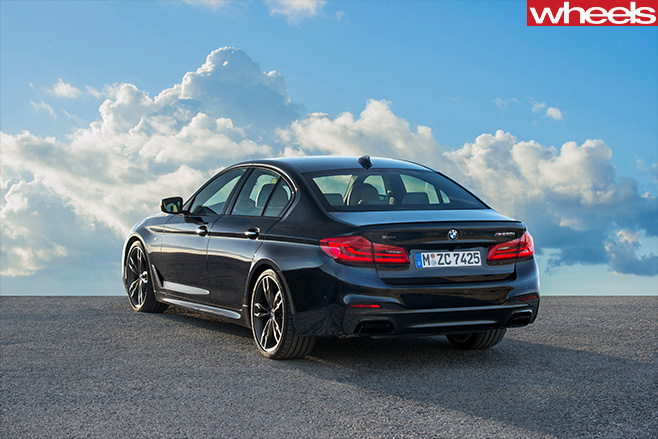
However, that’s not for a lack of trying on BMW Australia’s part: the German automaker’s local arm has the M550i firmly on its wishlist, and should head office relent and elect to put the M550i’s steering wheel on the right side, it’s virtually certain it will then head for our shores.
Until then, however, the M550i and its V8 delights will remain out of our reach. If you want a V8-engined G30 5 Series, you’ll need to wait for the next-gen M5 to appear.
The Mitsubishi Outlander – a sometimes people mover and full-time wannabe SUV – has had significant tweaks as part of running changes that simplify the line-up, make it more refined on the road, and improve safety.
TELL ME ABOUT THIS CAR
Mitsubishi’s third-generation Outlander was introduced to Australia in 2012. Despite a number of tweaks to the styling and packaging, it has never exactly set buyers in the mid-size SUV segment alight. A rush of fresh, good-to-drive competitors have moved the game on since the current-generation Outlander’s arrival, but Mitsubishi has tried to keep pace. The latest update, following on from a major styling tweak introduced in April 2015, drops the XLS badge, includes suspension and steering refinements, and adds an optional safety pack for some LS-badged cars. The one we’re reviewing here is the upper-middle-class 2.2-litre diesel-engined seven-seater that includes a part-time selectable all-wheel-drive system, and is priced from $39,500 including the extra safety gear.
STRENGTHS
● The addition of a safety pack expands the Outlander’s already-strong credentials. It has seven airbags including one for the driver’s knees, an electronic stability control system that doesn’t have an off-road setting, and anti-lock brakes. The safety pack pitches in automatic emergency braking, a lane departure warning, adaptive cruise control and automatic high beam dipping.
● The fuel economy of the diesel drivetrain is good. Our car was barely run in, which means the engine is unlikely to have settled into its most fuel-efficient mode, but we were still getting an average of 7.1L/100km compared with an official figure of 6.2L/100km.
● The diesel-engined Outlander sets a conventional six-speed automatic, and not a continuously variable transmission. The conventional auto is a much better match to the diesel as it means the engine doesn’t flare angrily and noisily under harder acceleration – a drawback of the petrol-engined cars.
● Space is great. The cabin is a bit narrow, but as a six-seater with small children in the rear seats, it makes for a great people-mover. The second-row seatbacks flip forward to open up enough space for kids to get into the third row comfortably.
● Parts of the Outlander’s updates include its infotainment system. That means it adds crystal-clear digital radio, and improved smartphone connectivity via Apple CarPlay.
● It rides and steers a lot better. The improvement to particularly the steering, which gains weight and doesn’t need constant small inputs to keep pointed straight ahead, helps give the Outlander a more confident feel on road. The ride with just the driver on board is a bit jittery, but fill some seats in the back and the ride quality improves even more.
WEAKNESSES
● An electric park brake, added to AWD models, is great because it introduces a function that automatically holds the car at traffic lights, and opens up a lot of space on the centre console. However, that extra real estate isn’t converted to useful storage space, just more hard plastics. And the ergonomics of hiding it under your left elbow aren’t great.
● The Outlander beeps a lot. It chimes when you open a door while the engine is running, if you stray too close to the line when the lane-keeping function is on, when a car closes in up front while the active cruise control is set, and when the active cruise brings the car to a complete stop and hands control back over to the driver.
● You need to question why you want the AWD system. It provides better traction on slippery surfaces, but the downside is that it adds weight, which drags down fuel economy. Aside from its extra ride height, the Outlander doesn’t have any other nods to off-road ability, so even with AWD you wouldn’t take it far off-road.
● The centre-middle seatbelt drops down from the roof. It’s a minor nuisance when accessing the third row, and cuts across the view in the rear-vision mirror. The Outlander has a reversing camera standard across the range, which atones for it.
● The load flexibility of the wagon is a little compromised. Third-row seats fold flat to the boot floor, but the second-row seatbacks sit proud, so the load space isn’t flat. The seats don’t have a memory, either, so don’t return to the position you moved them from when flipping and moving them forward to open up the third-row seats.
● Mitsubishi’s warranty is good at five years, but is valid for only 100,000km. Kia, in contrast, has a seven-year, unlimited-kilometre warranty. Likewise, Holden has just three years, but 100,000km. Mitsubishi’s mix may encourage you to keep the amount of travel down if you tend to do more kays than average.
ANY RIVALS I SHOULD CONSIDER?
The Nissan X-Trail offers a seven-seat version, but only with a petrol engine. A Dodge Journey (that offers a diesel engine) offers a similar interior package to the Outlander, as does the Honda Odyssey (that doesn’t), although both replace faux off-road looks with a mash-up of van and SUV styling. The Holden Captiva has a seven-seat diesel, but struggles against fresher, and much better, competition apart from its $33,490 price tag. Kia’s Sorento has seven seats as standard, but at more than $42,000 is priced out of this league; as are the Mazda CX-9 and the petrol-only Toyota Kluger.
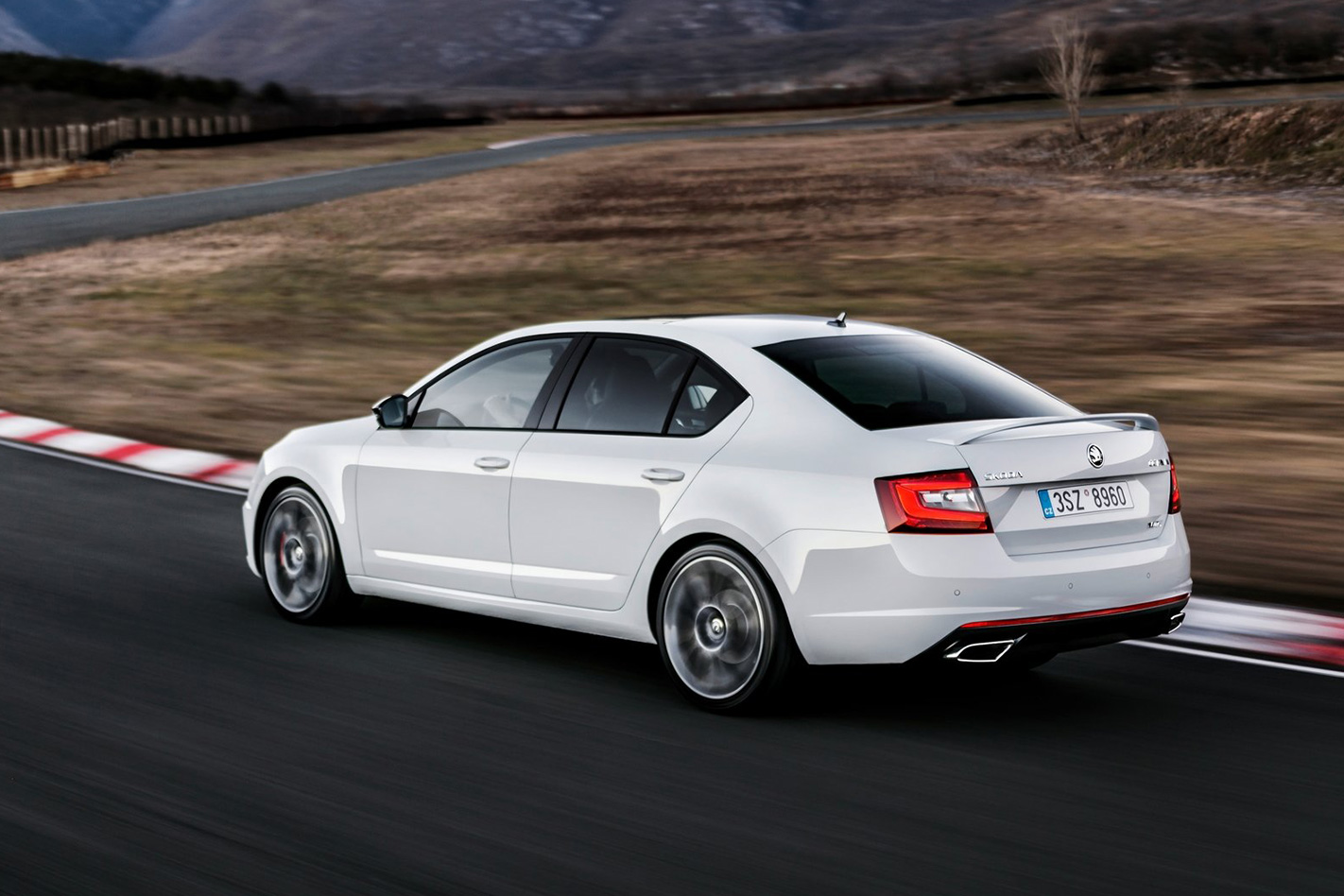
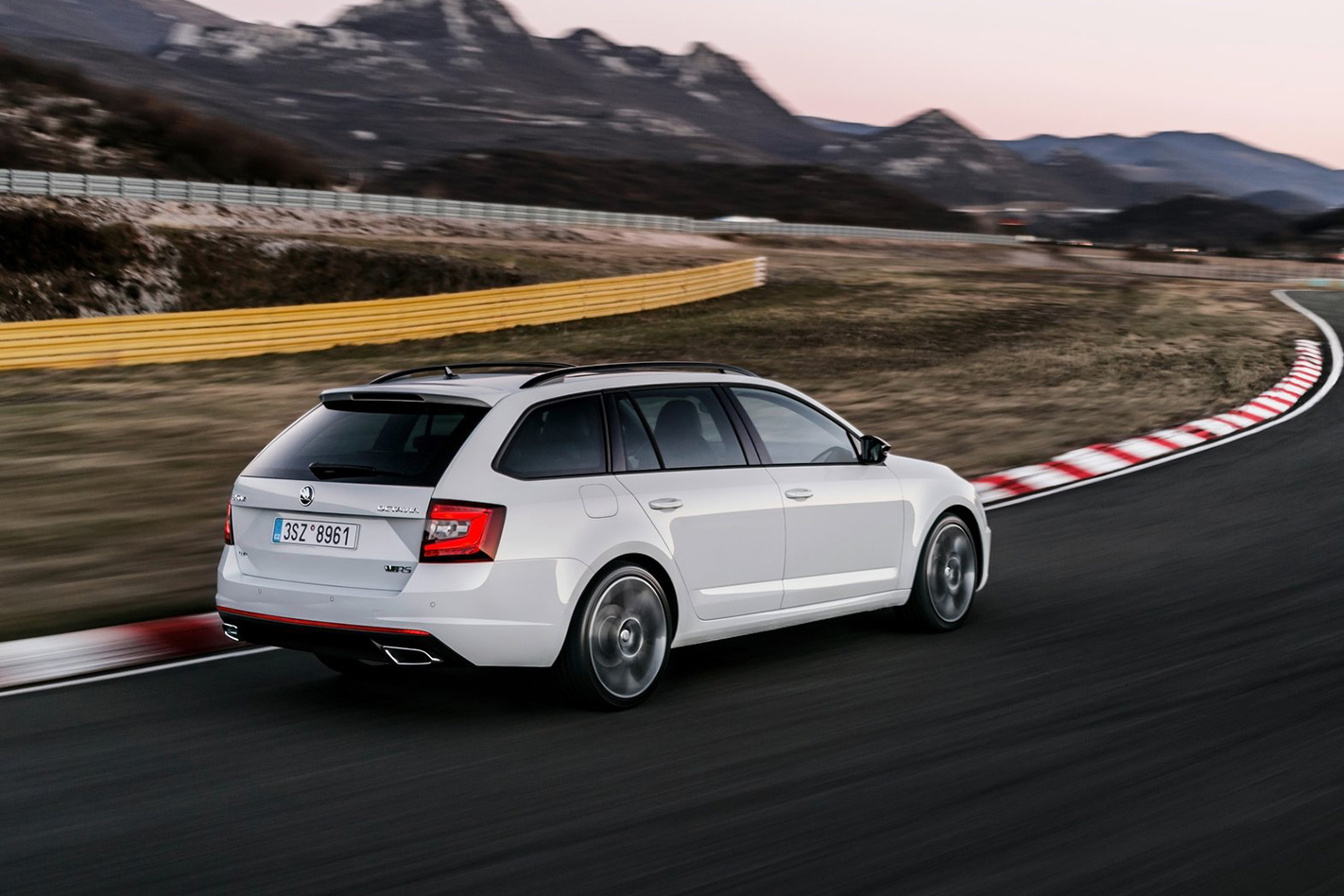
Skoda has revealed the RS version of its upgraded 2017 Octavia range featuring aggressive front styling, sporty interior and a slight power boost in the turbo petrol variant that makes it the Czech manufacturer’s fastest ever series-production car.
Available in liftback-sedan and wagon body styles, the 2017 Octavia RS takes on design cues of the range’s 2017 facelift in a “particularly sporty and emotional way’; which is Skoda speak for a broad lower honeycomb grille and air intakes highlighted by strip LED fog lamps.
The rear end of both body shapes also differs from the standard 2017 Octavia most notably through the twin chrome-tipped diamond exhaust pipes.
The interior is characterised by sporty black trim with high-sided RS-Sport seats with integrated head rests. These come in a leather/fabric combination or optional Alcantara. Other touches include ambient lighting, aluminium-finish pedals and plenty of RS badging.
The activewear is backed up by improved performance and handling – Skoda’s boffins have managed to squeeze an extra 7kW out of the 2.0-litre TSI petrol to 169kW which, in the manual liftback at least, shaves 0.1sec off its 0-100km/h time to 6.7secs. Top speed is up slightly to 250km/h and Skoda claims a combined fuel consumption of 6.5L/100km.
The 135kW 2.0 turbocharged diesel’s power and performance remain the same, with a 0-100km time of 7.9sec, 232km.h top speed and frugal 4.5L/100Km economy.
Handling wise, the Octavia RS sits 15mm lower than the current model on a 30mm wider rear track. The ride harnessed by the Dynamic Chassis Control System that offers a choice of Comfort, Normal and Sport driving modes. An optional Performance Sound Generator adjusts the engine note … because why not?
The Octavia RS also comes with a range of driver assistance systems including Trailer Assist reversing aid, Blind Spot Detection, Rear Traffic Alert. It also has Crew Protect Assist that, when sensing an imminent collision, closes windows and sunroofs, tightens driver and passenger seatbelts and works in conjunction with the improved auto emergency braking.
All versions come with a choice of the latest generation of infotainment systems: Bolero, Amundsen and range-topping Columbus, which, along with the currently available Swing system, all have a 9.2-inch glass touchscreen that’s more responsive to lighter touches.
The Columbus features a WLAN hotspot and, if desired, a SIM card module capable of LTE speeds for an ultra-fast connection to the Internet.
The 2017 Octavia range is due for a mid-year Australian release with local specifications and prices set to be revealed closer to launch.
Stop! Before you tick that option box for carbon ceramic brakes, have you thought about whether you genuinely need them or not?
It’s worth consideration, even if the special braking system may seem a natural choice for your new performance car, because they can be an expensive outlay.
Carbon ceramic brakes first made an appearance on aircraft in the 1970s, moving into motorsport the following decade. They’re relatively newer to production cars, having first appeared in 2002 when brake specialist Brembo provided a set for the Ferrari Enzo supercar.
They’ve been standard equipment on all Ferraris since 2008, but typically require an additional cost on models from the likes of Audi, BMW, Mercedes and Porsche. Even the upcoming Alfa Romeo Giulia will sport carbon ceramic brakes as an option.
While conventional brakes are made of steel, these discs are formed from a mixture of powders, resins and fibres – and covered with a ceramic layer.
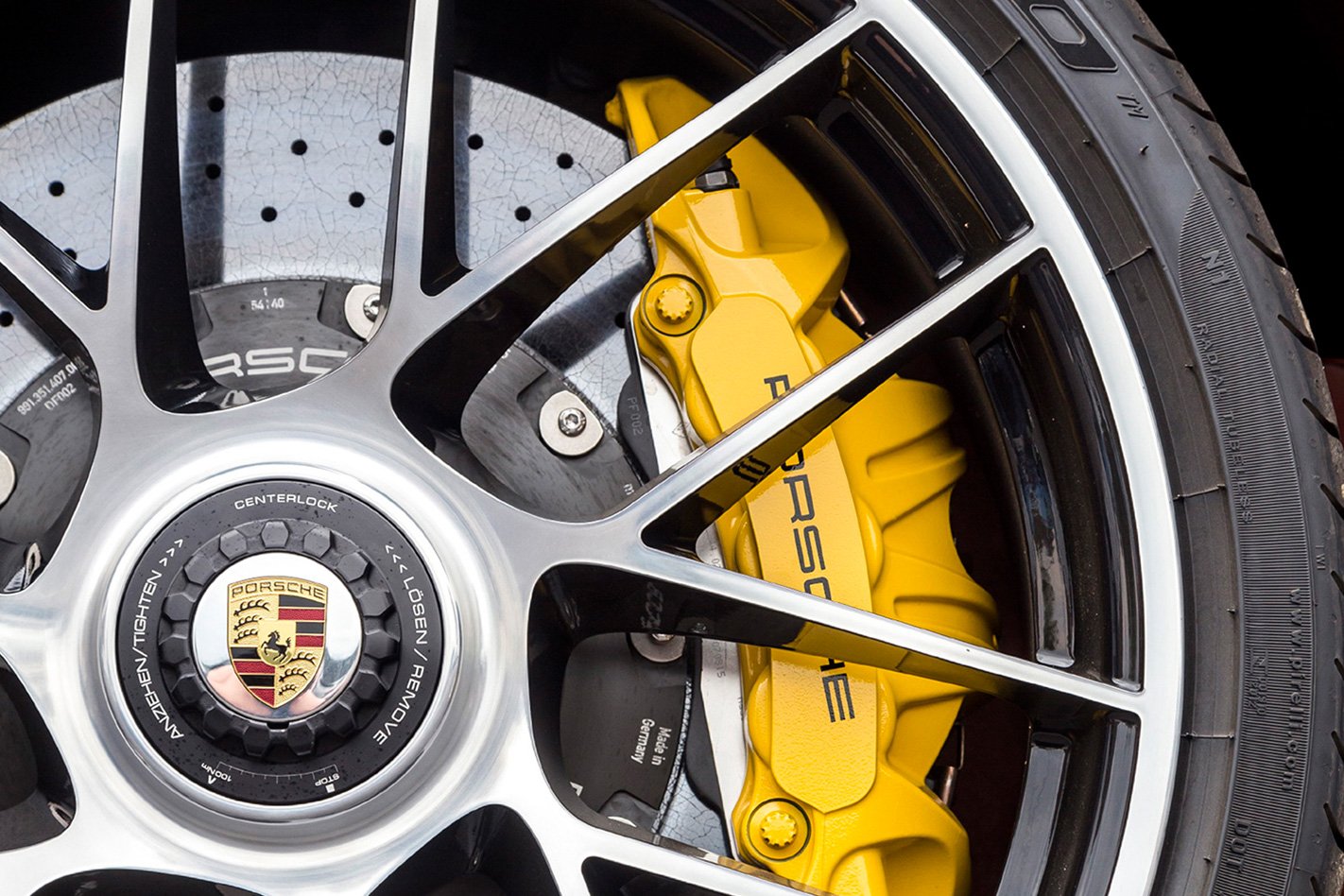
The high-performance material has numerous benefits. Durability is longer because that ceramic layer helps to dissipate the heat caused by friction as brake-caliper pads squeeze the discs to slow the vehicle.
Particularly crucial for track driving, it means the composite brakes are less likely to warp or fade – becoming less responsive to brake pedal applications – after multiple laps of fast driving. It ensures consistent performance and driver confidence, with the latter heightened even further with the brake system’s ability to reduce braking distances.
Another important bonus is reduced unsprung mass – the components, like the wheels, suspension uprights and brakes, which are not supported by the suspension. Carbon ceramic disc brakes are about half the weight of the equivalent size steel brakes, which can allow engineers to better tune the suspension for sharper handling and better ride comfort.
They’re also more resistant to corrosion from salt and water, though this is arguably a more significant factor for buyers living in countries with less hospitable seasons than Australia – such as the US or Europe, where winters can be harsh and roads periodically salted.
Carbon ceramic brakes, however, sometimes lack brake feel, owing to their preference to operate at higher temperatures. They can also be prone to squeaking, particularly at low speed and after a period of intensive use.
The main downside remains the aforementioned cost. Where a $18,000 option cost on a $430,000-plus Lamborghini Huracan isn’t going to raise an eyebrow, Porsche charges $17,990 for a set on a $110,000 Cayman – about 16 per cent of the car’s price.
They increase in price as you move up the Porsche range, with the PCCB (Porsche Ceramic Composite Brakes) system for a 911 Turbo costing $21,990.
BMW asks about $15,000 for carbon ceramic brakes on its $149,615 M4, for example, while Mercedes-AMG’s $155,615 C63 asks about $10,000 extra for its superior stoppers.
The more advanced construction materials and more complex manufacturing process contribute to the higher price of carbon ceramic brakes. Whether that cost can be justified is going to be a personal choice based mostly on your driving habits and your available budget.
And if you’re planning to take your sports/performance car to track days, certainly don’t let us stop you from making a sound investment.
Another $10,000 has been chopped from the Volvo S60 Polestar as upgraded MY17 versions hit showrooms this month with a new 270kW twincharged four-cylinder engine.
Now priced from $89,990 for the S60 Polestar or $92,990 for its V60 Polestar near-twin (both plus on-road costs), the medium performance models now claim a two-tenths-faster 4.7-second 0-100km/h.
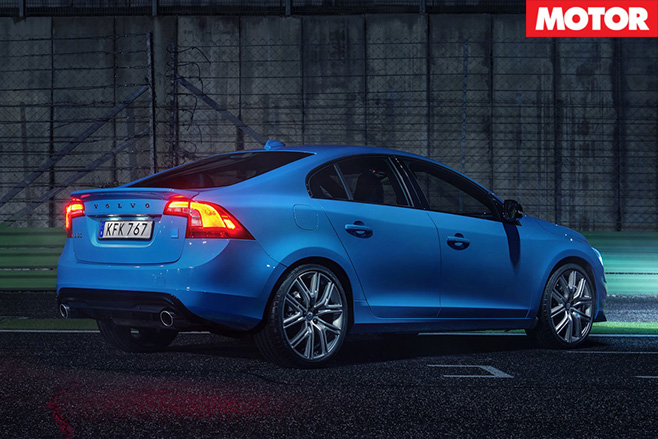
The new 2.0-litre turbocharged and supercharged four elbows out the old 3.0-litre turbo six and makes 13kW more than before, with 270kW at 6000rpm. It’s also down 30Nm, with 470Nm between 3100rpm and 5100rpm, but the new engine is 24kg lighter than old and is allied to a new eight-speed automatic – an additional two ratios – with launch control.
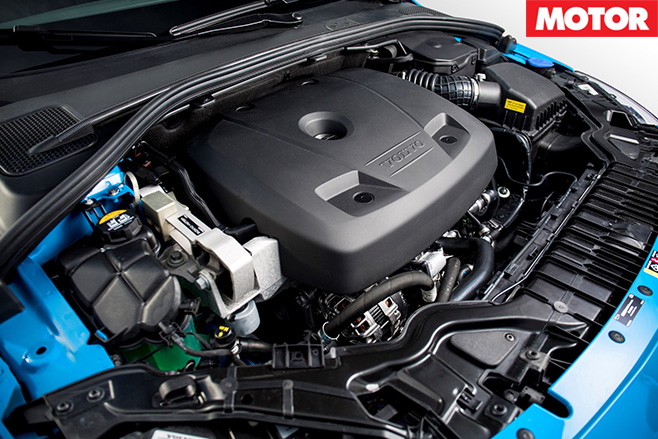
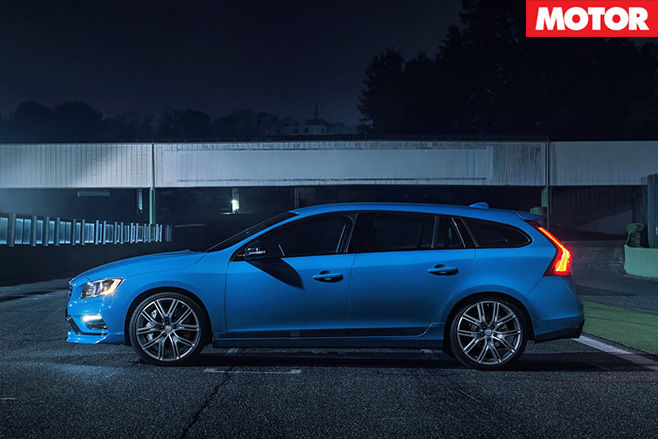
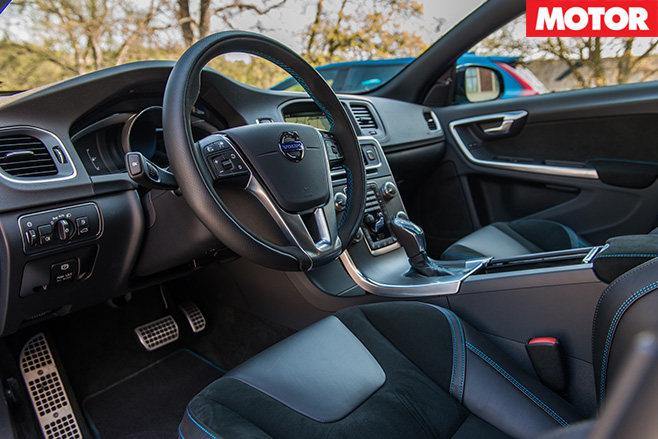
Safety kit extends to adaptive cruise control, autonomous emergency braking (AEB), blind-spot monitor, cross-traffic alert and front/rear parking sensors with reverse-view camera.
HSV’s 427 weapon lives again – but this time you’ll actually be able to buy one. Prepare for a fundamental shift in the performance playing field…
First published in the April 2008 issue of Wheels magazine, Australia’s most experienced and most trusted car magazine since 1953.
FORGET GT-HO Phase III, E38 Charger and GTS 350 Monaro – Australia has a new performance king. With its 370kW 7.0-litre V8, HSV’s W427 hammers every other locally-built muscle car and threatens to bloody the nose of European heavy hitters like BMW’s V10 M5 and Mercedes’ E63 AMG. With a claimed 0-100km/h time of 4.7-seconds it’ll have no problems running with the best European four-door super sedans.
“Since the original HRT 427 model [see breakout, right], the core of the company has wanted to do a supercar program,” explained HSV managing director Scott Grant. “There’s been that simmering of interest. Once E Series was established in the marketplace we could start thinking about this.”
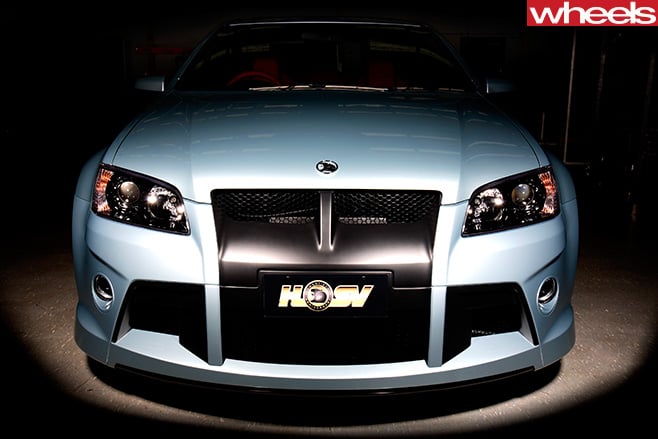
Unlike the stunning HRT concept, however, the W427 is destined for production in the third quarter of this year despite some mumblings from online conspiracy theorists that it could still go the way of the 2002 project.
HSV’s chief engineer Joel Stoddart is quick to shoot down such claims, “We wouldn’t have shown the car at Melbourne unless we could get it ADR certified. It’s passed the brake testing and we’ve just got to do emissions testing. There have been no big hurdles we had to get over for ADR.”
Stoddart’s confidence, however, does not mean the project was an easy one.
And it was this dry-sump system that caused the greatest headaches for the engineers.
“Locating the dry-sump catch can was a challenge,” explains Joel Stoddart. “Packaging that, plus a 13-row engine oil cooler in front of the radiator, meant we had to go for a Chevrolet Corvette-style over-the-radiator air-induction system.
“GM Powertrain is sensitive when you start changing oil systems,” he adds. “Lots of work was done with them on the best way to set it up and ensure we’re getting enough cooling.”
HSV couldn’t package the Corvette’s 4-into-1 manifold and instead designed a ceramic-coated 4-into-1 tubular 3-inch system for the W427.
“The headers are very different from the GTS and the rest of the system is 2.75-inch. A GTS uses a 2.25-inch. It’s a big exhaust,” says Stoddart.
The exhaust features active rear mufflers that, unlike most systems, don’t just rely on back pressure to open. Engine speed, vehicle speed and throttle position all determine whether the valves are open. At idle, for example, the valves open, but if you rev the engine with the car stationary, the valves snap shut.
“We still haven’t set the rev limit,” explains Stoddart, “and it’ll be a call whether we want to let it rev to 7100rpm and what benefit there is. That’ll come in the final calibration. The final numbers are pretty close.”
Unlike the rest of the V8-engined HSV range, where the engines are line-fitted at Holden’s Elizabeth plant in South Australia, the LS7 will be installed at HSV’s HQ in the Melbourne suburb of Clayton.
“It’s not just the engine,” says Stoddart, “we’ve got the LS7 clutch, which needs a different pedal assembly because it’s a high clamp-load clutch. There’s also a different master cylinder. The plant’s not equipped for things like that in such small volumes.”
HSV can build around four cars per week and the program has an expected three-year life cycle, if demand justifies it.
Backing the LS7 is a Tremec TR6060 M10 six-speed manual gearbox. The ratios are the same as the T56 manual in the GTS (except for a slightly shorter first gear), and the W427 retains the 3.70:1 final drive. The ZF differential features a carry-over casing, but HSV did extra work beefing up the internals including double shot-peening. The remainder of the drivetrain is as per GTS or Clubsport.
Like the Corvette Z06 there’s no automatic option for the W427, but Grant doesn’t see this limiting demand. “I think the type of buyer will appreciate the performance characteristics of the car with a manual,” he says.
The W427 sits 20mm lower than GTS and spring rates are 30 percent stiffer. HSV’s Magnetic Ride Control adjustable dampers (MRC) feature a W427-specific calibration.
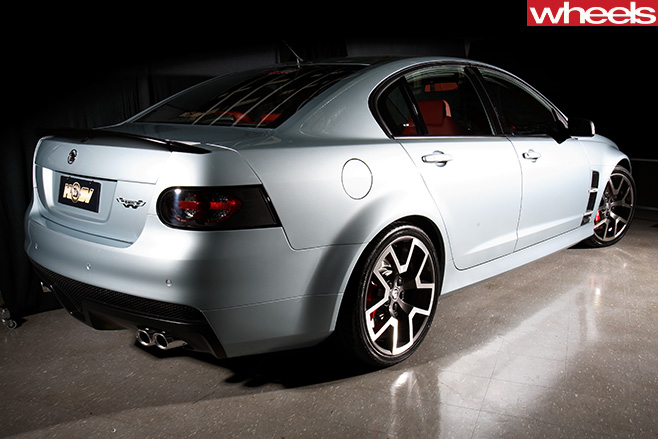
It’s the biggest engine ever fitted to an Aussie car and HSV has plumped for brakes to match. You’ll find huge 380mm slotted rotors at each end with massive six-piston, two-piece AP Racing calipers up front.
“It’s a fantastic brake package with great feel,” say Stoddart. By comparison the rest of the E Series range runs 365mm front rotors (350mm rears) with four-piston calipers.
At 208kg the LS7 engine weighs the same as the 6.0-litre LS2, so overall vehicle weight will increase by approximately only 10kg over a 1829kg manual GTS. This increase is attributed to the oil catch can, oil cooler and larger brakes. With 370kW, the 1840kg W427 has a 201kW-per-tonne power-to-weight ratio. Compare the 378kW/1840kg Mercedes-Benz E63 AMG (205kW/tonne) and BMW’s 373kW/1755kg M5 (213kW/tonne) and the W427 is easily in the ballpark.
And while HSV stops short of making a direct comparison with the aforementioned Euro super sedans, the BMW M5 comes up several times when discussing the design of the W427 with both Scott Grant and HSV’s chief of design and styling Julian Quincey.
With an estimated sale price starting north of $130,000, Grant highlights, “that type of buyer is likely to be 40-plus and not everyone wants an ostentatious vehicle.”
The challenge for designer Julian Quincey was to give the W427 a unique look within the constraints of a very tight budget. The design budget was around 10 percent of the $4million total project cost and, as the project came after E Series was finalised, Quincey was limited in what he could physically change on the car.
“We started work on the clay of W427 in November 2006,” explains Quincey, “but the first E Series sketch was Feb 2003 with the first clay in July ’04.”
“We didn’t hold back with the E Series with a view that there’d be a 7.0-litre car later,” continues Quincey. “When it came to the 7.0-litre we wanted to make sure we clearly differentiated between the two cars.”
And while HSV claims to be happy with public reaction to the W427 (500 expressions of interest were registered the weekend after the show reveal), plenty of online enthusiast websites overflowed with negative comments about the new front fascia.
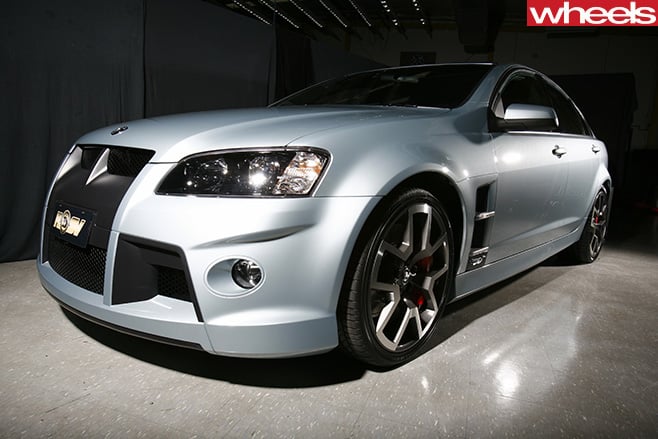
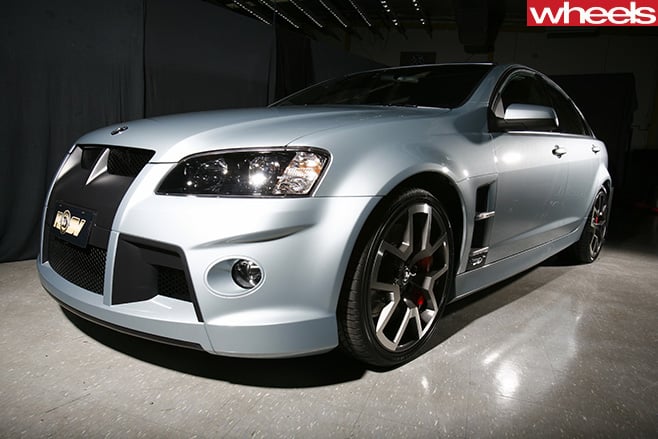
Aside from needing to highlight a clear distinction as the range topper, the W427’s front fascia also needed to provide sufficient cooling for the LS7 engine. For example, different meshes were trialed to ensure correct air flow rates.
“On the show car we have a W427 badge inset into the grille [not shown in these pre-show photos],” says Quincey, “but it’s very much in the balance as to whether that stays, such are the cooling requirements of the engine.”
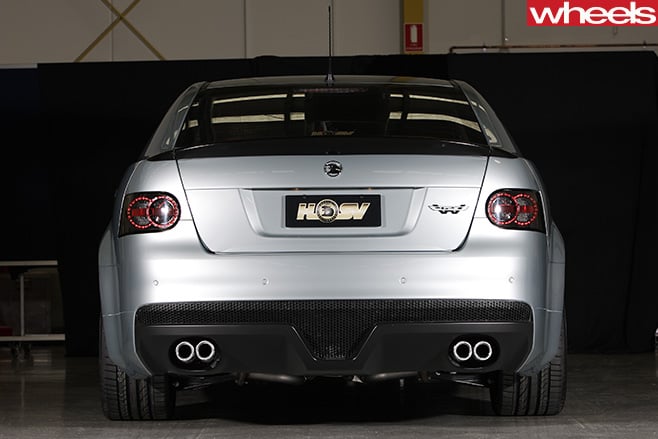
The rear deck lid is topped by a subtle carbonfibre lip spoiler that, according to Quincey, gives the W427, “a bespoke quality all of its own”.
“We felt a discreet rear spoiler was appropriate,” he says, “but if we got a big slap on the wrist [from public reaction] we’d do a bigger wing. So far, reaction has been positive.”
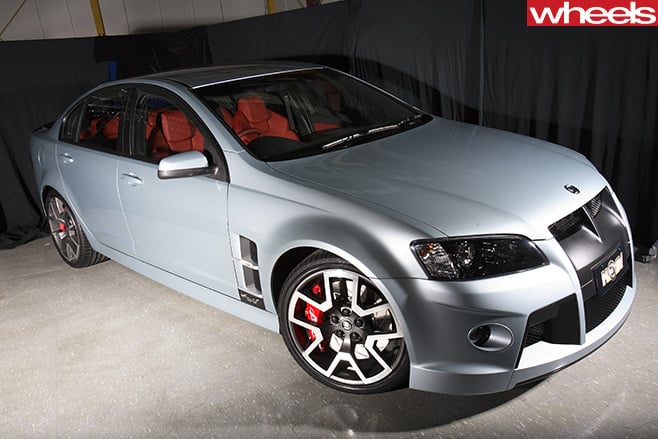
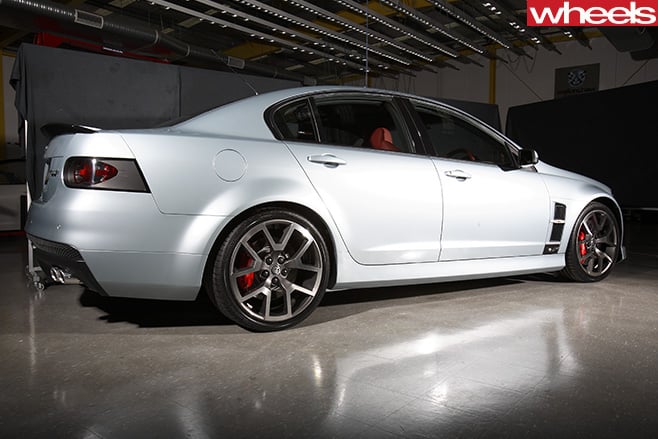
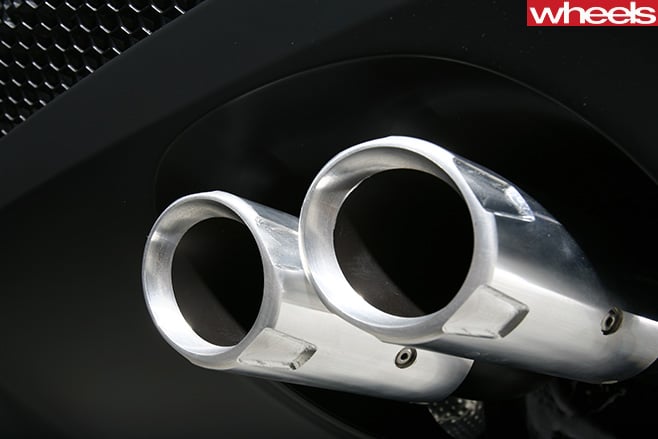
The only other exterior changes over a GTS are the W427-specific 20-inch alloys and a new set of machined quad exhaust tips.
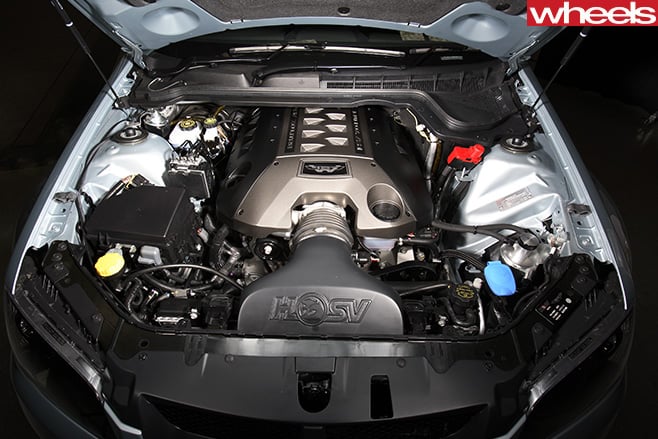
And according to Quincey, the red is not a show special. “Our current position is that red will be the only interior colour and we’ll be selecting exterior colours to go with that.”
The show car wore Panorama Silver as a nod to the 1988 VL Walkinshaw but this will not be a production option. Instead, think white, silver, red and black.
Just who will buy a $130K-plus HSV? The brand confidently anticipates that these customers will be both traditional HSV buyers and conquests from European marques. According to Scott Grant, “something like 15 percent of all E Series sales have been conquests from European brands. In some case people are trading BMWs and Porsches, which we’ve not seen in the previous 18 years of operating.”
Aside from the home market, the W427 will make its way across the ditch to New Zealand, but at this stage there are no exports plans for the UK or Middle East. Grant concedes, however, “that doesn’t mean something may not materialise over time.”
Without a great deal of chest-beating, HSV is justifiably proud of having finally brought a 7.0-litre program to life. The final word goes to chief engineer Joel Stoddart. “We just went out to build the best car we can. And now we’ll just have to see how it’ll stack up.”
