
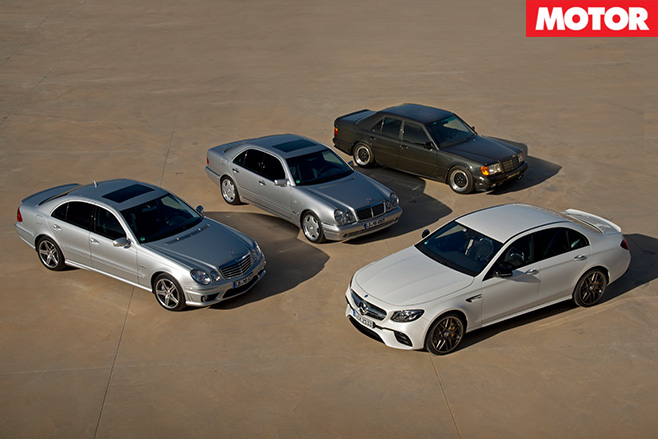
Every car ever made has been built around core pillars of one kind or another. For the E63 AMG, there have been three: a brutal engine note that shook windows, straight-line speed and interior luxury.
A single kilometer always told you the E63 had prioritized the ability to sit comfortably on its 250km/h speed limiter on an autobahn above any other ride or handling measure. And you respected that, even if it made it a bit limited as an all-rounder.
They were competent handlers rather than interesting ones, its German owners more cheered by the ability to not lift off the loud pedal for a 250km/h bend than harassing proper sports cars over mountain passes.
The thing is that it handles properly now. It can slide, it can chomp down on its brakes and remain in a straight line, no matter how ridiculously late the self-preservation impulse strikes its driver.
It can then drive through the corner like an adult, push through like the near two-tonne beastie it is, whip through in delightful four-wheel drifts or in lurid, back boot-burning powerslides.

That isn’t just good for grip, it’s good for fun times, because it’s an active centre diff and, in E63 S form, combines with an electronically controlled rear diff, both of which work off the same computer map that runs the engine and gearbox.
Then there’s the suspension. The hardware is a bit like the E-Class, but more betterer. It’s 17mm wider at both ends, with AMG-specific stuff like aluminium uprights for the five-link rear end and an upgrade of the C63’s four-link front suspension.
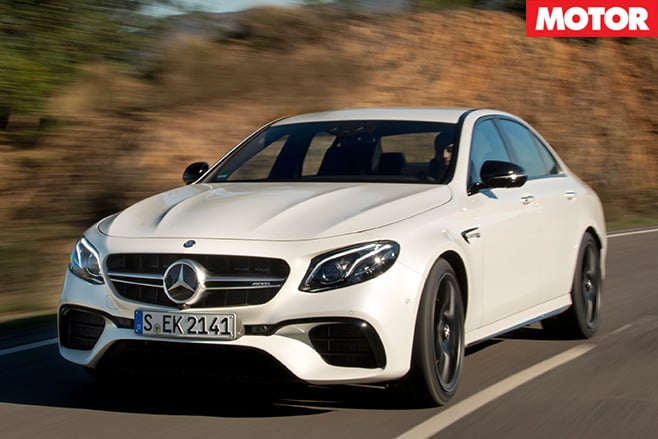
The beaut part of the E 63 S is that it is a better operator in the bends, plus it still sleds its way to 100km/h in 3.4 seconds. Yes, 3.4. A three, a decimal point and then a four.
It will still officially top out at 250km/h, though that can also be embiggened with the right box ticked until it whips along at 300km/h, but it’s clear that this is now a full-sized five seater than harries supercars in a straight line.
That’s despite the E63 S’s engine shrinking again, down from 6.2 litres to 5.5 in the last generation and now it’s on the modular Benz model of 500cc per pot.
That shouldn’t be a concern, though. Even the girly E63 has 420kW of power and 750Nm (good enough for 3.5 seconds, though it’s an unlikely starter here), but the E63 S crunches out 450kW and 850Nm and it’s never had this much fast-twitch muscle fibre before.
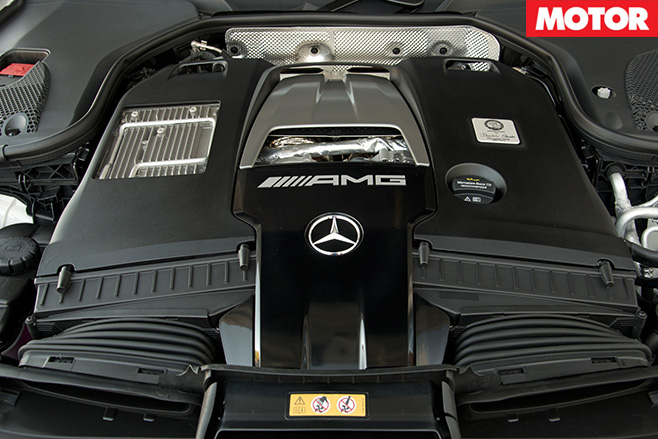
The 3982cc V8 uses a pair of twin-scroll turbochargers, mounted inside the hot vee, to shove in up to 1.5 bar of air pressure that helps deliver the torque peak from only 2500rpm.
AMG has done to Benz’s nine-speed auto what it did to the old seven-speeder. It toughened it up, gave it different ratios and then chucked out the chunky torque converter and replaced it with a bunch of wet clutches. It’s now lighter and changes gear quicker, too.
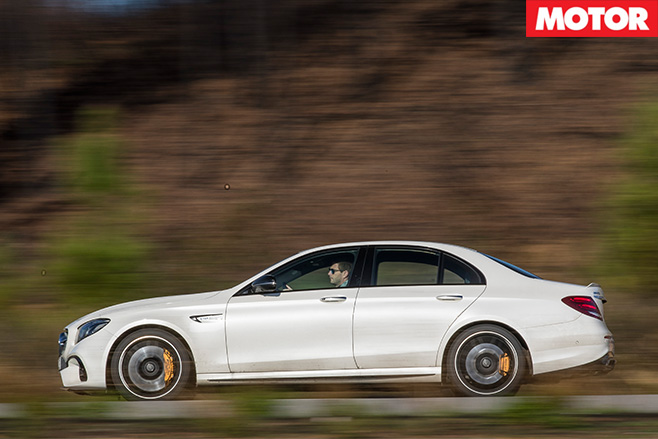
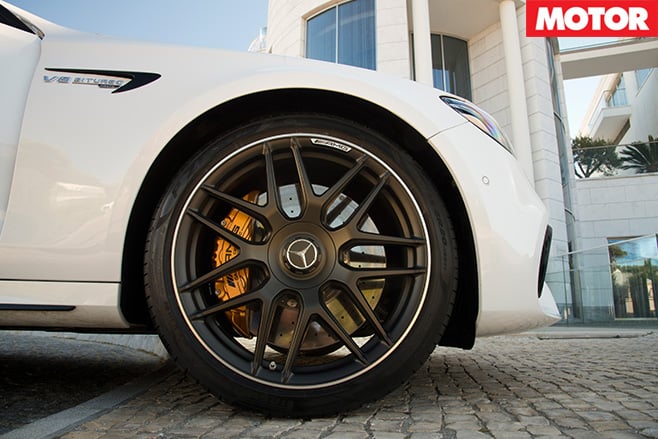
It’s got stopping power, too, though we can’t vouch for the stock 390mm x 36mm front discs, because the only anchors we could use were the optional 402mm x 39mm carbon-ceramics (which use a 360mm x 32mm disc at the back), clamped by a six-piston fixed caliper.
That’s all riding on Michelin’s finest 265/40 R19 front tyres and 295/35 R19 rears, which seem to be fusible links for the rest of the cleverness at the actual road interface.
It comes into its own in Sport and Sport+ modes, where the suspension switches things up and the big car corners so flat and steady that you just don’t get tossed around like any other sports sedan.
And that’s the secret to the rest of it. You can pick up the E63 S and fling it at the scenery like it’s a smaller, cheaper EVO and it will all just work. Except louder and faster and, if you push the special Loudenator button on the gearbox console, louder again.
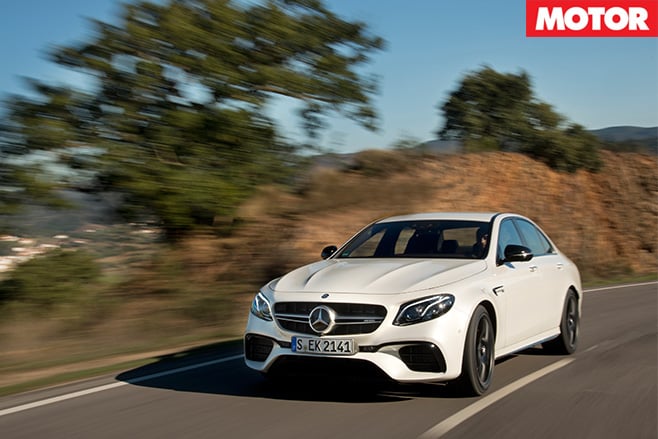
And it’s not just loud. It’s furiously loud, like a bottle of concentrated rage has been shaken up and had the cork popped out of it. It’s like a giant is ripping sheets of metal bare handed inside a kettle drum. It’s not a gentle sound.
And then you come off the throttle or change down a gear and the pops and cracks seem like you’re listening an entire sprintcar field, combined with artillery practice, from inside a cosseted leather box. And AMG suggests you don’t crank up the Loudenator button in built-up areas…
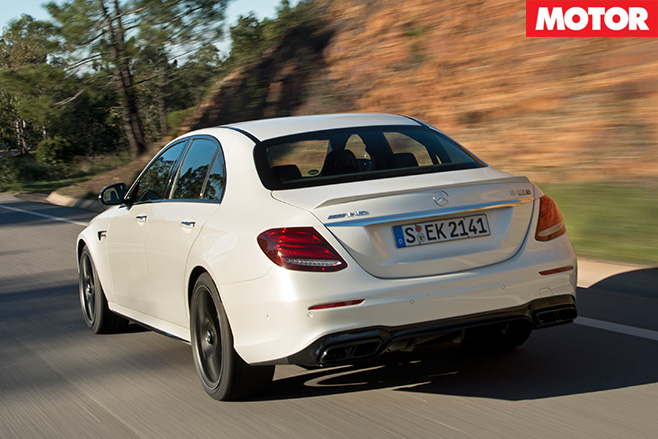
When its power peaks and goes, so goes the next gear, faster than you read it. It hardly stops punching and even when you eventually do find the surge tailing off suddenly and unexpectedly, you look down in surprise to see that it’s actually only tailing off suddenly and unexpectedly because it’s now sitting on its speed limiter.
The gearshift is beautiful, too. It’s slick and comfortable in Comfort and fast in the middle modes and brutal in Race. It can get a bit jerky on throttle response if you try to be gentle in Race mode, but that’s more operator fault than the car’s problem.

The front end is reliable and accurate, and though the steering doesn’t give much feel it counters with a nice heft. The whole car feels like it’s incredibly accurate to your steering and weight-transfer touches.
The centre and rear diffs are so sharp now that you can use the back end to help rotate into a corner and then hook it up with brutal acceleration on the way out again, even in the wet.
Get it right, which is most of the time, and the whole thing feels like it has a two-metre wheelbase on turn-in and a five-metre wheelbase whenever it starts to slide. It’s just so controllable, all the time, and so enjoyable to push to and beyond its limits that it’s actually difficult to reconcile with the badge.
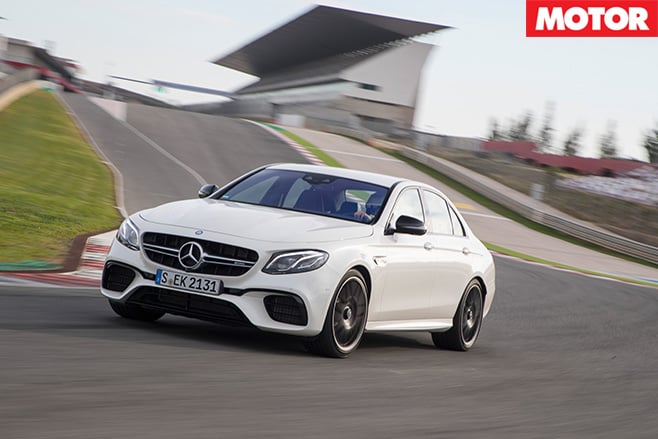
It’s so reliable, fun and predictable that the ESP button almost becomes redundant, except as a thing to keep guest drivers in line when you’re not around.
There are times when it can feel all of its 1880kg, especially if you’ve not managed the turn in correctly on a tight corner, but mostly it feels lithe and far lighter, and it helps, too, that the brakes are phenomenally strong.
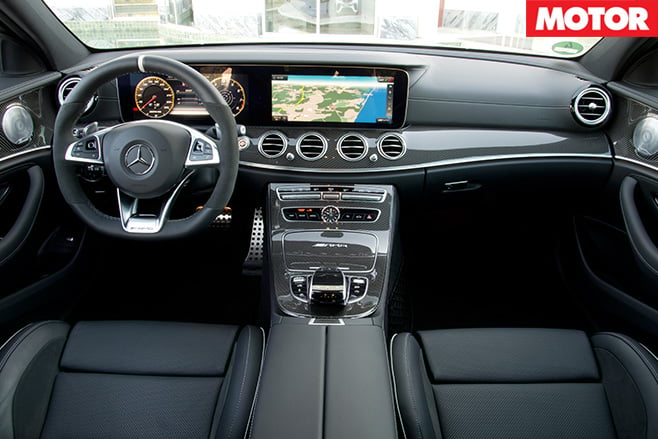
The best of them is a new connected app that lets you transfer stuff to and from your smartphone, though the annoying one is that it drops out the navigation the instant you put your phone on a cable into the USB port. That’s a bit annoying and they’re working on it.
You can switch between displays on the enormous dash screen, but the best of them is in Race mode, when you ratchet up the good stuff.

The leather, powered seats are comfortable on long highway drives and just as comfortable slicing through mountains, and the steering wheel seems nicely sized as well as being nicely weighted.
There’s an odd point at night where the start button doesn’t dim, but reflects off the windscreen like some moon you are always chasing. The ABS also does a bit of old-school springback if you hit a sharp bump under brakes and takes far too long to deliver full braking power again.
And the PreSafe braking system slices you in half with the seat belt every time you attack a corner, too. But that’s it for genuine gripes.
It’s not just the best E63 AMG has ever built. It’s the best AMG AMG has ever built.
TELL ME ABOUT THIS CAR
The new Audi Q5 does not look particularly new at first glance, but that familiar styling contradicts a car that shares hardly a screw with its predecessor. When the now Mexican-built Q5 arrives in July/August next year, Audi plans a 185kW 2.0-litre turbo petrol four and 140kW 2.0-litre turbo diesel, with a 3.0-litre V6 turbo diesel later in the year.
The new car is lighter and more frugal, and faster and far more refined than its eight-year-old predecessor. It’s also been equipped with a high-tech and more spacious five-seat interior, efficient engine technology, and dynamics that Audi claims will make the Q5 one of the best driving cars in its class.
STRENGTHS
- The Audi Q5 gets steel springs for the suspension as standard, with air suspension and adaptive dampers borrowed from the larger Audi Q7 model as an option. These were fitted to our test cars and provided excellent ride comfort with much improved handling.
- In air suspension form, the Q5 is a very comfortable car, with a smooth, forgiving ride. Audi benchmarked the Mercedes GLC for comfort in the class and it shows here. This is no off-roader, but with the ride height adjustment of the air suspension, it is remarkably competent in the dirt, and rides well even over rutted and broken surfaces.
- The 2.0-litre turbo petrol is the pick of the engines. It has excellent performance (0-100km.h in 6.3seconds), and its efficient 6.8l/100km fuel rating takes it below the luxury car tax.
- The V6 diesel is permanently all-wheel drive, whereas the four-cylinder cars send all their power to the front wheels most of the time; power only goes to the rear as well if the front wheels start to slip. So smooth is the operation that we couldn’t tell the difference between the two systems.
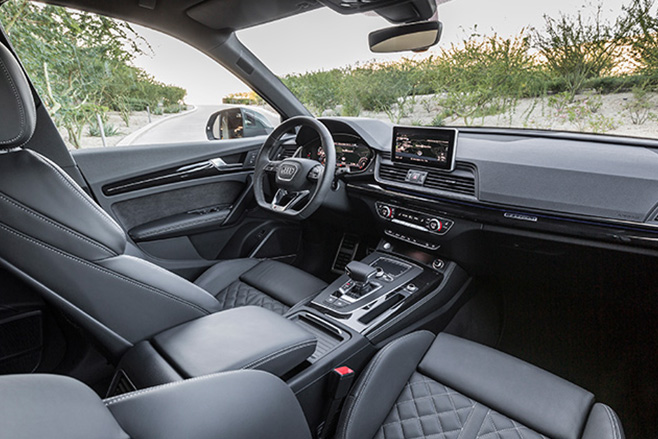
- The interior of the new Q5 is its strongest feature: no rival can match its quality feel, ease-of-use, or its advanced technology.
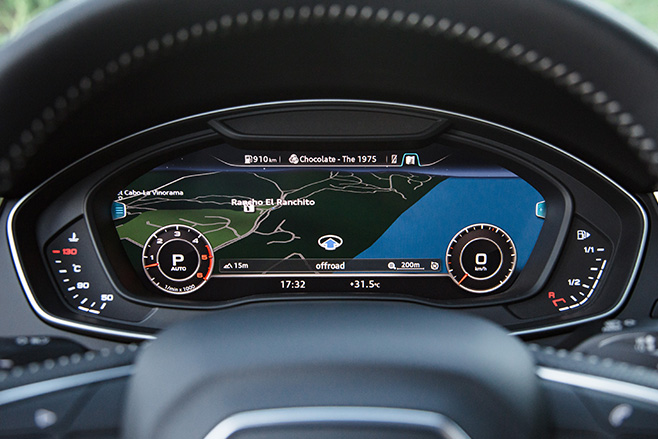
- All the materials and controls you touch feel superbly soft. The technology standouts are Audi’s optional Virtual Cockpit (a wide digital screen that replaces the traditional instruments and displays driving, navigation and infotainment data) and an intuitive Multi Media Interface infotainment system in the centre console. The new Q5 also features Apple CarPlay and Android Auto for full smartphone integration.
- Two types of smooth-shifting automatic gearbox are offered: a conventional eight-speed automatic for the V6, and a seven-speed dual-clutch type for the four-cylinder models.
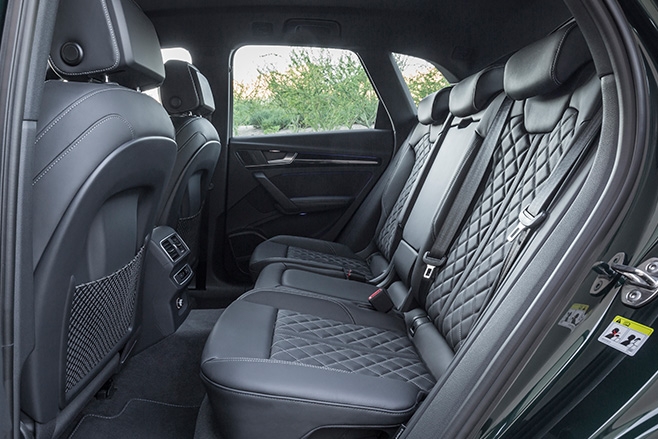
- With the sliding rear seat that’s expected to be standard in Australia the boot space is officially rated at 610 litres. That’s not quite at the level of the class-leading Jaguar F-Pace’s 650 litres, but the boot is still a large, usable space, with two convenience functions to help loading: a sensor to allow you to open the boot automatically and the ability to lower the air suspension to bring the boot level closer to the ground.
WEAKNESSES
- The Q5 handles safely and predictably, but is short on feel and enjoyment. It’s not as good to drive as a Porsche Macan or Jaguar F-Pace in this area.
- The chassis tuning is complicated with far too much choice in tuning modes for most drivers. Most buyers will fiddle with the tuning, find the setting for suspension and steering that suits them most and leave it there.
- This sounds silly, but the front door map pockets are a pain to use.
- The new Mercedes GLC is the Audi’s most obvious rival and a certainty for a comparison when the Audi arrives.
- The Porsche Macan and Jaguar F-Pace are more overtly sporting and not as comfortable.
- A replacement for the now outclassed BMW X3 is due late next year in Europe with an Australian launch in 2018.
- The Land Rover Discovery is also available for similar money, and offers extra practicality thanks to its seven-seat interior.
AUDI engineers are currently engaged in final chassis tuning of the SQ5 before launching the hot new SUV crossover in late 2017.
The S variant is set to get a more potent 3.0-litre V6 petrol and diesel engines, though Audi Australia has yet to make a decision on which version/s will come here. The new 3.0-litre TFSI SQ5 takes the 265kW V6 from the S5, while the TDI is expected to make 260kW. The first generation SQ5, powered by a 3.0-litre TDI made 250kW and hit 100km/h in 5.1 seconds. Both second generation petrol and diesels versions are expected to drop below the 5.0-second 100km/h sprint time.
Both Audi’s steel and optional air suspension are in the S pipeline, with the variable ratio dynamic steering and a diff lock as standard. Final specifications won’t be decided for Australia until much closer to the launch, though 20-inch wheels are predicted to fill out the wheel arches.
At the same time, Ingolstadt insiders say the company is also working on a super-fast RS Q5, powered by a 335kW twin-turbo 2.9-litre V6 that’s aimed squarely at the Porsche Macan Turbo. This is essentially the same 550Nm Porsche engine (basically six cylinders of Porsche’s 4.0-litre V8) used in the new Panamera 4S.
There’s talk of 0-100km/h in a blistering 4.5 seconds from this top-of-the-line model that our sources say is almost certain to come to Australia, though possibly not before 2019.
The same engine is expected to make its Audi debut in either the RS version of the Audi A5, or the entry-level R8 where it replaces the 4.2-litre V8
At local launch in July/August 2017, the Q5 arrives with petrol and diesel 2.0-litre engines, with a 3.0-litre V6 due late in the year.
Still unconfirmed is the plug-in hybrid boasting the familiar 185kW 2.0-litre four-cylinder supported by a punchy electric power pack. Since the all-electric 2018 Q6 e-tron is based loosely on the Q5, there is probably not enough room for a smaller battery-electric crossover vehicle. According to the Ingolstadt grapevine, the same components set will yield the ESS, short for “Electric Super Saloon”, which effectively looks like a Q6 coupe. Also on the cards, reportedly only for China, is a long-wheelbase Q5.
Harding Performance has a long history of modifying kit from the broader Volkswagen family, so it was no real surprise to learn that the Audi S1 had copped the full treatment.
Hot Tuner 2016 is brought to you by Valvoline SynPower
Except, according to boss man Guy Harding, it didn’t. Pardon? Well, it seems Harding’s brand-new bionic knee has had him on crutches and out of the workshop for a month. And that absence has had an impact on what his team were able to achieve in the run up to Hot Tuner.
“The car has one of the first Stage 3 turbochargers which has all new internals and is capable of exceeding 500 horsepower. Unfortunately, we didn’t get time to finish the engine calibration, so we had to wind the power output right down to safely make the event.”

“The clutch was one of the things we had to overcome. We had to ditch the factory, self-adjusting unit and put in something nice and driveable, but capable of handling 600Nm. We have achieved that well with good driveability, but even with the raised RPM limit [on the launch control system] she’s still tricky to launch.”
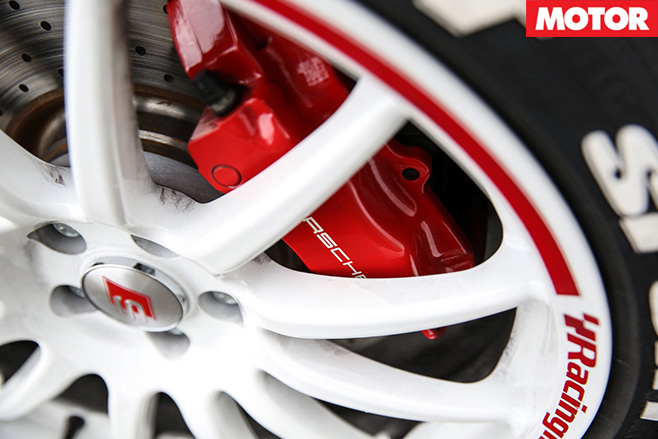
He’s not kidding. Part of the solution there was to develop in-house a performance flywheel to suit the clutch. There’s also a HP four-piston brake conversion kit, which uses bits and pieces like Porsche 996/987S calipers and an increase in both thickness and diameter of the rotors. “For track laps, this gives us a nice, consistent pedal feel where the stockers fade out super-fast.”
So tell us about the wild paint scheme, Guy. “The livery was our interpretation of the true meaning of S1. I decided to do that after we hit over 500 horsepower in crank testing. Unfortunately – like I said – we couldn’t bring that unfinished calibration with us for Hot Tuner, as long-term testing hadn’t been done. And, yeah, the same thing happened with our Golf R.”
So how’s that Terminator knee? “It’s getting there,” says the stoic Harding. Kinda like the Audi S1, truth be told.
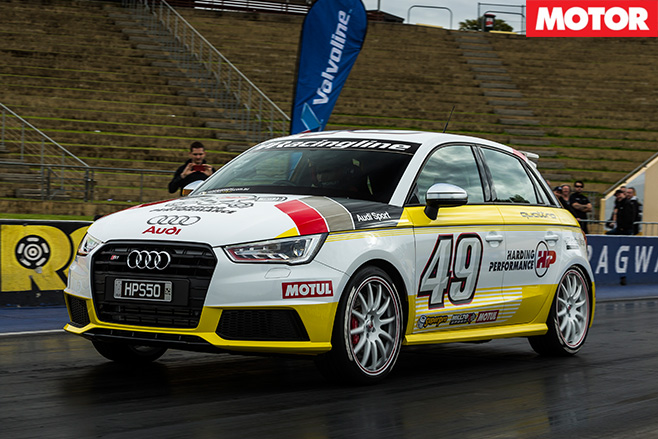
SPECIFICATIONS Drive: all-wheel Engine: 1984cc inline-4, DOHC, 16v, turbo Gearbox: 6-speed manual Suspension: A-arms, coil-overs, anti-roll bar (f); multi-links, coil-overs, anti-roll bar (r) Brakes: 330mm ventilated/slotted discs, 4-piston calipers (f); 272mm solid discs, single-piston calipers (r) Wheels: 18 x 8.0-inch (f/r) Tyres: 225/35 ZR18 (f/r); Continental Contact Sport S
PARTS AND PRICES Stage 3 kit: $5500 Intercooler: $1695 Exhaust: $4450 Intake: $995 Clutch/flywheel: $1995 Suspension: $3900 Bushes: $280 Brakes: $1995 Wheels/Tyres: $3395 Total mods cost: $24,205 Vehicle cost (mSrp): $49,900 Total cost: $74,105
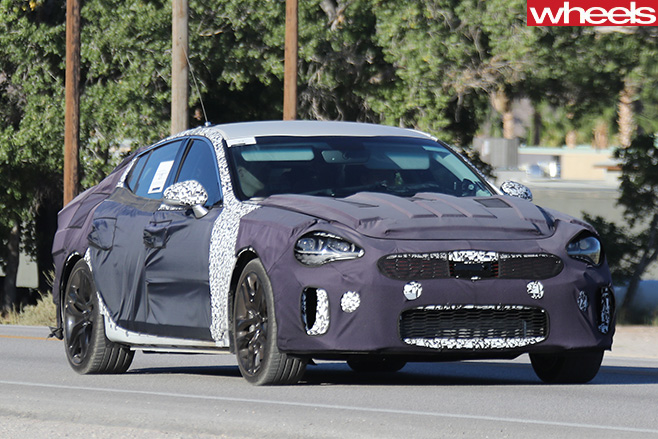
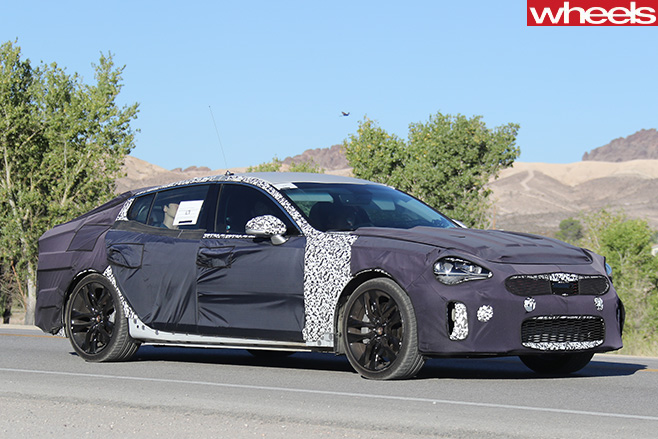
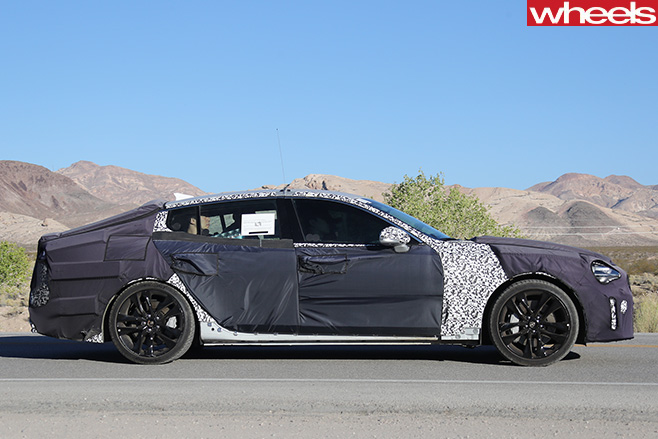
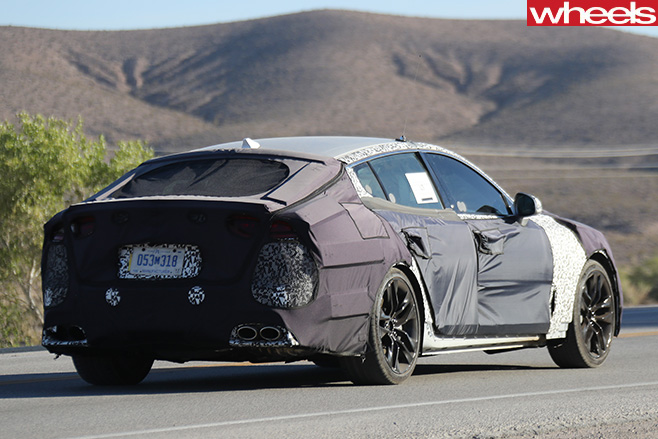
A Korean car blog has leaked images of what appears to be a production-ready version of the wildest four-door yet to wear a Kia badge – the twin-turbo V6-powered Kia GT.
Kia-world.net posted a single image showing an undisguised side profile of the car that’s already taken five years to jump from concept to something resembling what will appear in a new-car showroom. Other Kia GTs can be seen in the background.
STEERING wheels on today’s Formula One cars are the control centre for most the car’s functions including gears, clutch, pit speed limiter, drink dispenser, brake balancer and rear wing controller to reduce drag. It even steers the car!
Today they look like game console controls on steroids, but similar to everything else in F1 they evolved from much more humble beginnings, as shown in this great new video.
The latest instalment in Donut Media’s Evolution series, which includes the Evolution of Racing Helmets, has provided an entertaining look at how steering wheels have advanced at the top of motor sport, starting with the wood-rimmed wheel that helped steer Sterling Moss to many a victory in the 1950s.
Unlike some aspects of Formula One – everything from aerodynamics to tyres, electronics and the engines – steering wheels were a bit slow to evolve. While the materials used for them changed, the simple three-spoke design saw the sport through until the 1990s when cars suddenly became more advanced.
The chronological order of the vision is matched with a soundtrack that includes engine sounds and commentary from each period and a poignant voiceover by the great Ayrton Senna, whose 1984 Momo steering wheel was surprisingly basic.
Donut Media borrowed all the steering wheels, most of which have their driver’s autographs, from the Racing Hall of Fame, that sells stuff like this.
TOYOTA has brought three of its forward-looking Mirai sedans to Australia to get government and buyers thinking about alternative fuels. We had a brief drive of one of them in Sydney.
- Mirai means “future” in Japanese. It is Toyota’s play at leading the push towards hydrogen-fuelled cars, much the way the Toyota Prius played an important role in the uptake of hybrid cars 20 years ago.
- The Mirai is an electric car that contains its own miniature on-board power station. However, unlike hybrid cars there is no regular engine. The power is generated by a hydrogen fuel cell, which combines pure hydrogen and electricity to perform a chemical reaction to create electricity and water.
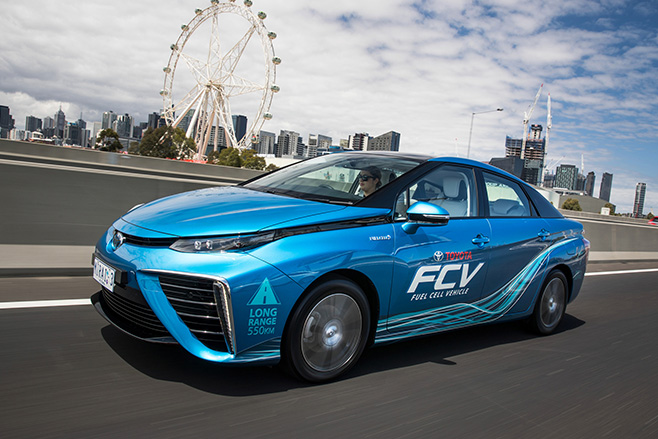
- The Mirai has 113kW of power and 335Nm of torque. That gives it similar performance to a Toyota Corolla.
- There are no plans to sell the Mirai in Australia but at today’s exchange rate it would cost upwards of $80,000. The expensive part is the hydrogen fuel cell and the specially designed hydrogen tanks.
- The Mirai takes between three and five minutes to refuel. Refuelling it is similar to how you would fill an LPG car; plug in the nozzle and pull the trigger to start the flow of hydrogen.
- The Mirai has two hydrogen tanks, one under the rear seat and one between the rear seat back and the boot.
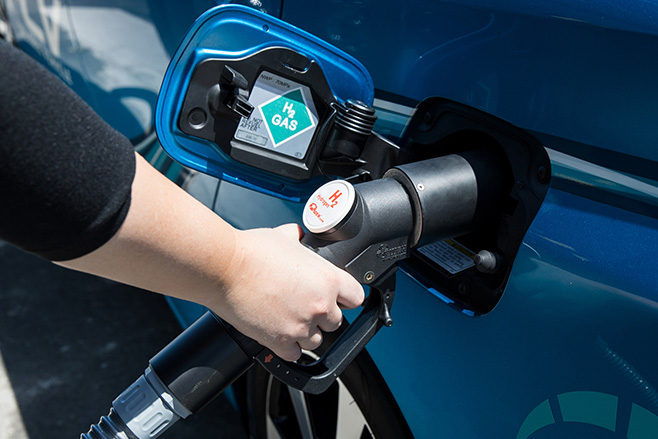
- At today’s prices it’s estimated the Mirai would cost about $60 to refuel its two tanks that together store 5kg of hydrogen.
- The Mirai is Toyota’s first mass produced hydrogen fuel cell car but it’s not the first mass produced car of its type; that honour goes to the Hyundai ix35. The ix35 fuel cell was only sold overseas, including in Europe. In Paris there is a fleet of them operating as taxis.
- It may be Toyota’s most technically advanced eco car, but the Mirai is largely assembled by hand rather than robots.
- The only hydrogen refuelling station for cars in Australia is at Hyundai’s head office in Sydney. However, Toyota has created a portable refuelling station on the back of a Hino semi-trailer, which also includes a sizeable diesel generator.
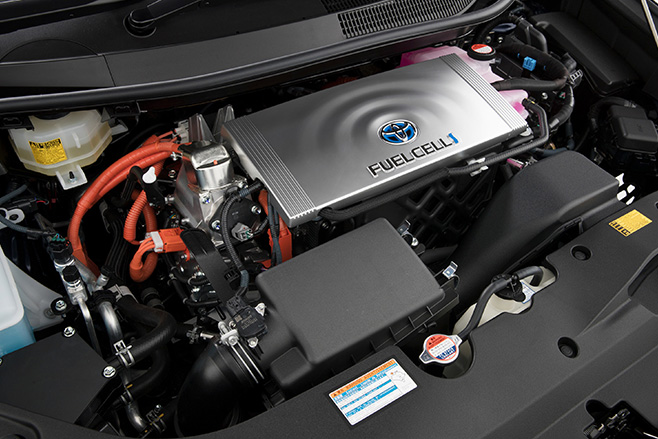
- The Mirai can be used to power external items, including camping gear, light, even a house. It has a power outlet in the boot that can be used to power other electrical items.
- Despite a focus on weight and fuel efficiency the Mirai’s coefficient of drag (which impacts how easily it slips through the air) is 0.29. That’s well below that of some electric cars; the Tesla Model S, for example, has a drag coefficient of just 0.24 (a lower figure represents better aerodynamic efficiency).
- The chemical reaction in the Mirai’s fuel cell creates about 60 millilitres of water for every kilometre it travels.
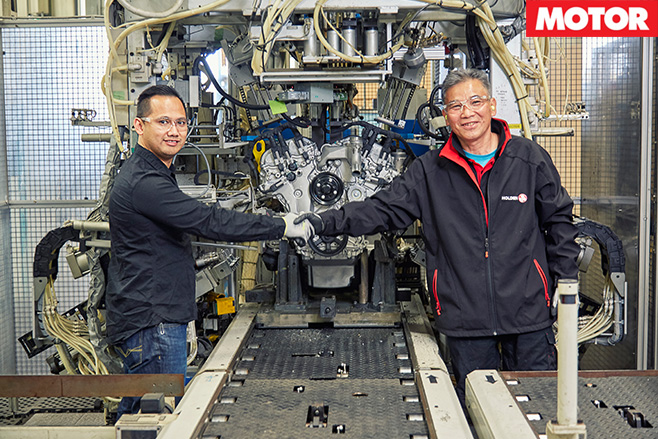
Holden has ceased engine manufacturing in Australia after 68 years with the final 3.6-litre V6 produced today at Fishermans Bend, Port Melbourne, marking the plant’s closure.
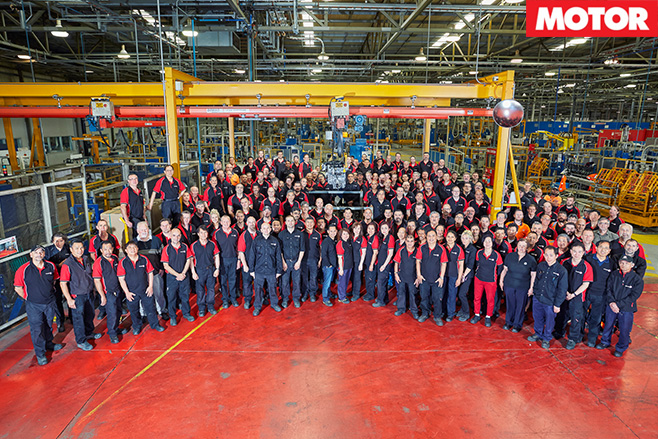
The 175 employees made redundant from the facility – which opened in 1936 with vehicle production before engine production was added in 1948 – will be offered up to $3000 in training as part of Holden’s $15m contribution to the federal government’s Growth Fund for employee assistance as car manufacturing comes to a close in this country.
Holden says 57 employees have voluntarily left the engine plant so far, with 80 per cent securing other employment and the remainder retiring or not seeking other opportunities.
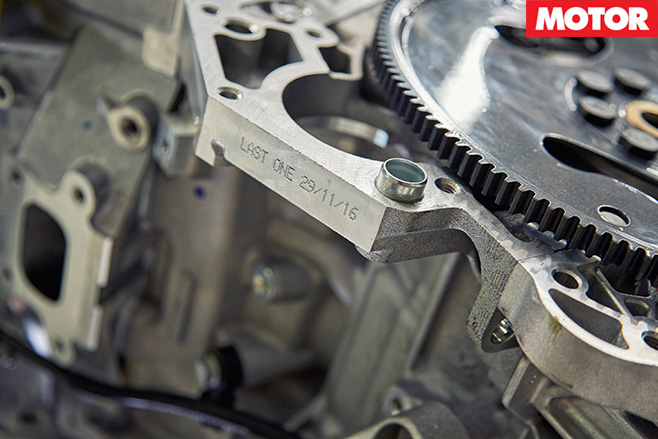
The HFV6 notched up 1,137,282 units – 699,806 for Australia and 437,436 exported to every continent except Antarctica. The final unit was stamped ‘last one 29/11/16’ and rolled off the production line at 10:50am at a private event for staff only.
The current V6’s 13-year run is, however, one-tenth of Holden’s claim that “more than 10 million engines” have been built at the Fishermans Bend site.
It was also a major producer of GM ‘Family II’ four-cylinder engines from 1982 – first for the Camira and subsequently for the late-1990s/early 2000s South Korean-made Daewoo Nubira/Leganza and locally produced Holden Vectra. It was then tagged for export markets including China and Thailand until production concluded after 27 years in 2009.
The mighty Aussie V8 finished a decade earlier in 1999, when the 5.0-litre and 5.7-litre units were replaced by GM’s all-alloy Gen III for the VT Series II Commodore.
In total 32 different engine types were produced around the corner from Melbourne’s CBD.
“Which is why Holden’s transition out of local manufacturing continues to happen in a planned, phased and orderly process,” he added in a statement.
GM Holden chairman and managing director Mark Bernhard further said: “While it was an emotional time to see the last engine built today, we are proud to retain a significant presence in Australia for the long-term.”
“This includes more than 300 people in our local design and engineering workforces across our world-class design studios in Port Melbourne and the outstanding Holden Proving Ground in Lang Lang … in addition to the approximately 700 corporate staff and 10,000 people employed across our dealer network.”
Want more? Check out 9 hot Holden concepts.
HOLDEN has built its last V6 engine as the carmaker prepares for the end of almost 40 years of Holden Commodore production in Australia.
HFV6 engine build number 1,137,282, completed about 11am today and laser-etched with “LAST ONE 29/11/17″, will become a museum piece as part of Holden’s heritage collection, ending an association with the Fishermans Bend site dating back to 1948 and the birth of the Australian car industry.
Today’s announcement is a bittersweet moment for the 175 staff made redundant by the engine plant closure. Earlier this year, they were awarded the top prize for Most Valuable Plant for Productivity across GM International, the arm of General Motors that manages the Australian assets.
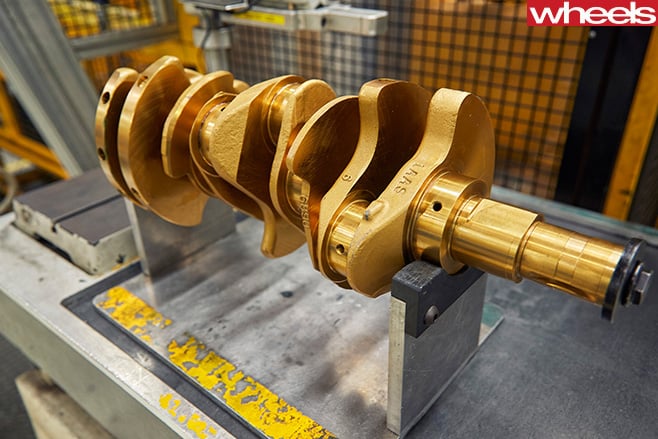
It said it had also ensured there was at least a decade of spare parts to look after warranty and servicing needs.
Production of the High Feature V6 at Holden Engine Operations started in 2003. Of the more than 1.1 million engines built, almost 700,000 joined Australia’s car parc, with 437,000 others making their way to export markets including South America, the Middle East and China.
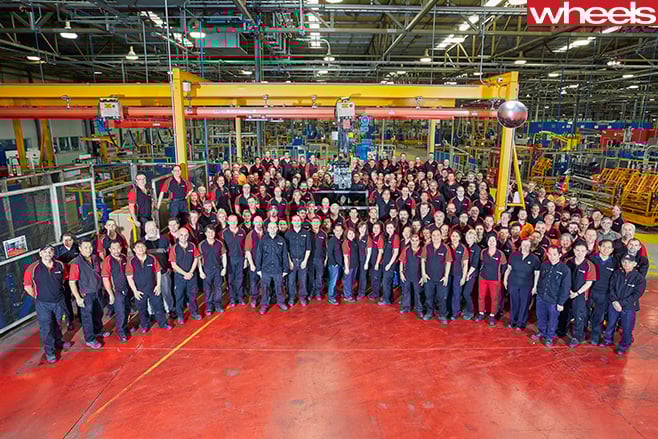
Most of the exports made their way under the bonnets of Pontiac and Chevrolet-badged Commodores, although they were used under the bonnets of JTS-badged Alfa Romeos as a 3.2-litre V6.
Holden’s big announcement with the arrival of the Holden VE Commodore in 2006 was the expansion of the engine range to include a more economical 3.0-litre version of the V6 to keep the Commodore fleet-friendly in a world that was moving towards lower fuel use.
Over its life, the engine has also been tuned to run on LPG – making it a favourite of the taxi fleets – and lived through a short-lived attempt to introduce Australia to E85 fuel – a blend of up to 85 percent ethanol and 15 percent petrol – that never fired with buyers.
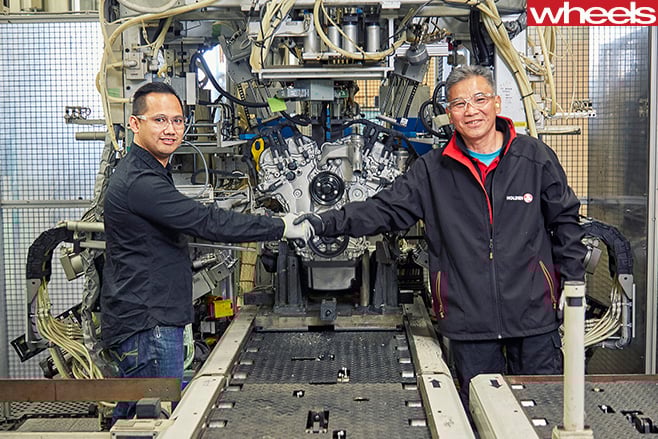
Over its almost 70-year life, the Port Melbourne-based engine casting plant has produced more than 10 million engines.
In 2002 Holden announced a $2 billion, five-year vehicle and engine plant capacity expansion program as it ramped up for exports of rebadged, V6-engined left-hand-drive Commodores as Pontiacs to the US.
Those plans came unstuck shortly after the export program was launched as the global credit crunch of 2008 took hold, forcing Holden’s parent, General Motors, into bankruptcy.No date has yet been set for the final day of Commodore production, although Holden is believed to be looking at either late in October or early November as the best timing for the shutdown.Holden has invited buyers to snap up parts of the plant after selling the site it sits on to the State Government for $130 million. According to the carmaker, General Motors will look at what parts can be used in other GM-owned plants overseas before selling off the remaining assets.
POWER PLAY: Holden’s engines over time
| 1948 | 48-215 released as first Australian-designed car with a 2.15-litre in-line six-cylinder engine cast at Port Melbourne. The u2018Grey Motoru2019 would power Holdens until EJ model in 1962. |
| 1963 | Holden introduced the new straight six Red Motor which would be the mainstay powerplant through to the Commodore era. |
| 1969 | Holden produces its first V8 engine. |
| 1980 | The Blue Motor, an updated version of the Red Motor is introduced. |
| 1984 | Black Motor introduced. It was essentially a Blue Motor with electronic spark timing and was the last straight six built at Fishermans Bend. |
| 1985 | VK Commodore is the last to feature locally produced Holden six-cylinder engine. |
| 1986 | VL Commodore launches with a Nissan engine |
| 2003 | $400 million HFV6 engine plant opens in Port Melbourne. Exports to Korea, China and Mexico start. |
| 2010 | Holden introduces a 3.0-litre version of the V6 as fleet buyer focus swings to fuel use. |
| 2013 | Holden announces it will quit local carmaking in 2017. |
| 2014 | One millionth HFV6 built. |
| 2016 | Holden builds its last HFV6 engine, number 1,137,282. |
JOEY Mawson, the 20-year-old Australian who caught the right kind of attention this year when he beat son-of-a-gun Mick Schumacher to the German Formula 4 Championship, is edging closer to securing a seat in the tough European Formula 3 Championship in 2017.
Mawson and his manager Gwenda Searle were back in Australia this past week talking to the consortium of believers (a group known as PODIUM) led by high-profile businessmen: Sydney’s Geoff Morgan, and Melbourne based Tom Warwick.
Mawson and Searle spoke to groups of potential supporters in each city, outlining what it would take to place the Australian in a strong F3 team next season.
Leading European F3 teams ask drivers to bring along a budget of €750,000 ($A1.06 million). Drivers with proven ability such as Mawson, who won 10 races this year, are likely to get a discount.
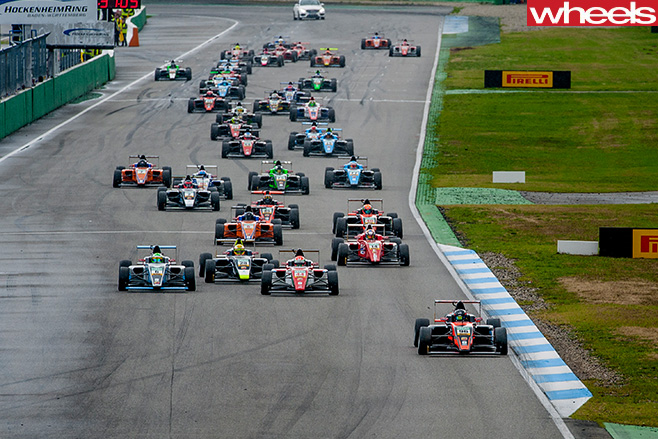
“All of the top four teams would like to have Joey in their car, but no-one gets a free ride,” said Searle.
Mawson and Schumacher’s intense rivalry is likely to spill into next year, with the German teenager also lining up in Euro F3 with the well-credentialed Prema team.
The fascinating aside to the Mawson-Schumacher track duels is their off-track friendship. They are close mates.
“We race hard – really hard – maybe because we are close friends,” said Mawson. “He is always under lots of pressure because of his name.
“One of the first guys to come and congratulate me after I won the championship was Mick.”
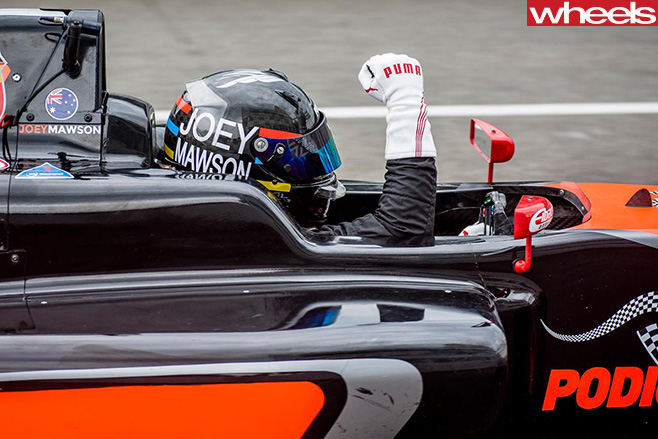
Meanwhile, Mawson is staying race-fit over the European winter by competing in the four-round MRF Challenge across the Middle East and India.
A week ago he scored three podiums and a sixth in the opening round in Bahrain, aboard a Dallara Formula 3 chassis.
Coming up next month is round two in Dubai, then New Delhi on January 27-29 and the final event in Chennai on February 17-19.
