
Mark Skaife misses racing cars. Having hung up his helmet at the end of 2011, the five-time Australian touring car champion has found that life off the track doesn’t quite provide the same buzz.
“I haven’t been in a race car for almost four years,” explains Skaife. “It’s been a big void for me, something fishing or golfing doesn’t fill so to come and have a drive again is nice.”
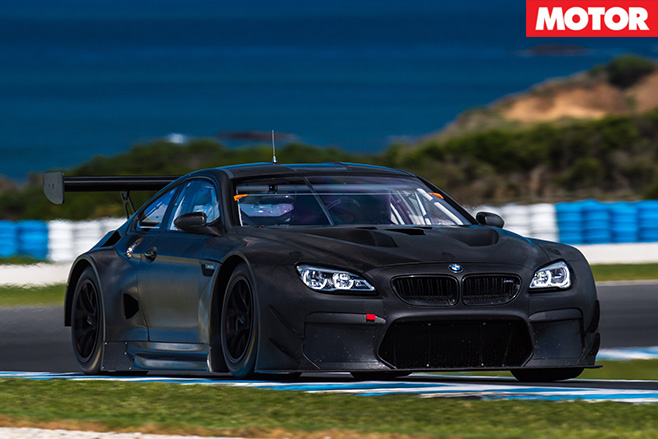
Skaife only committed to the BMW program quite late, wanting to sample the M6 GT3 first to make sure he found it enjoyable and, perhaps surprisingly for someone with his driving CV, that his abilities were up to scratch.
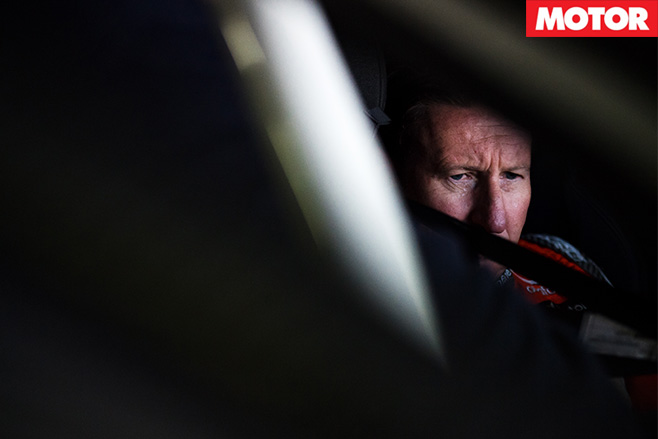
Having spent the majority of his career in V8 Supercars, a modern-day GT3 car required some adjustment on Skaife’s behalf. “I’ve never driven a race car that had paddle-shift, so for me it was like getting on the Xbox. Things like ABS and traction control with paddle-shift, they’re all modern car aspects that I’ve never really delved into.
“The gearbox never missed a shift all day, it was absolutely perfect, the ABS is just extraordinary, didn’t really use too much of the traction control because I had it on a low setting but the whole feel and balance of the car was just superb. I was four seconds faster than I’d ever been in a Supercar around there!”
And Skaife’s thoughts on partnering up with long-time rival Ingall? “I’m looking forward to it. Once upon a time it would just be unheard of for us to join up, but as we’ve been working together at Fox, we’ve grown to be quite good mates and we think very similarly about the sport.
“I’ve always had the utmost respect for how he goes about racing and his driving, so that was never in question, it was more about trying to beat each other for all those years and it’s actually nice to finally join forces. And it’s nice to do that with Tony, because when you’ve won Bathurst together there’s almost a lifelong camaraderie that comes from that.”
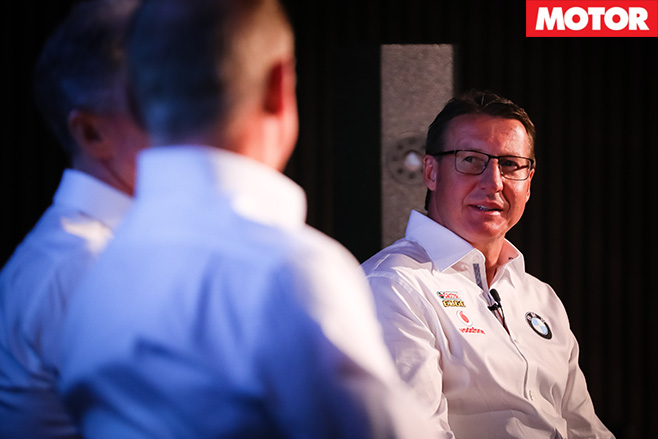
“The onus is on me not to run into one of them or do something dumb and that mostly comes from doing a good job and being fit. I’ve already got my trainer that I used for about 20 years engaged again and we’ll be doing some serious work because again, I don’t want to go there and feel underdone.”
BMW has two test days planned at Bathurst which will give all three drivers a chance to get their heads around the challenge of driving a GT3 car at Mount Panorama, which is a very different challenge to a Supercar as Skaife explains: “The [GT3] cars are easier to drive. I’m not saying they’re easy but in challenging corners you’re not as challenged because the grip level is good.
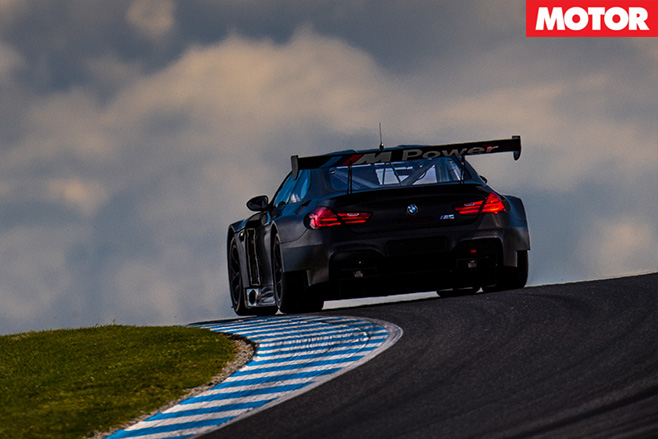
With multiple classes on the grid, just like the Group A era in which Skaife started his Bathurst career, there’s also plenty of traffic to deal with. “I think there’s two aspects to how you deal with the traffic,” says Skaife.
“Firstly, there’s experience, so, touch wood, you don’t make silly decisions based on that. But the level of patience is then important because there are zones at Bathurst where you simply can’t get by and you have to accept your penalty.
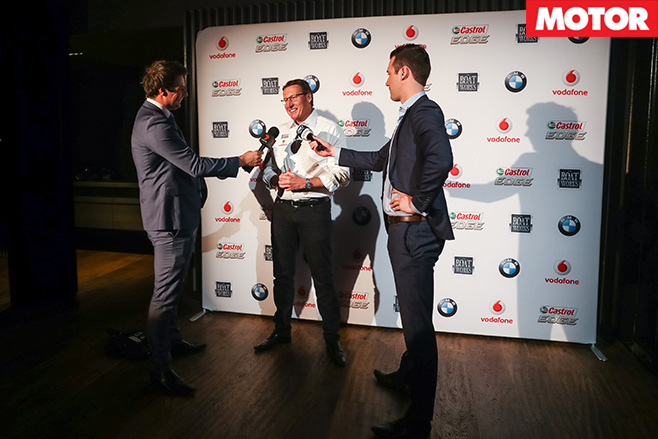
But he’s under no illusion as to the difficulty of the challenge: “I said to the guys after Bathurst this year ‘guys, it’s halfway!’. Twelve hours is just an extraordinary length race.”
First published in the February 1999 issue of Wheels magazine, Australia’s best car mag since 1953.
The best designers in Europe give their verdict on the Aussie Commo.
Recognise the iron? Yes, it’s Wheels’ custom-coloured Holden Commodore in Italy, having made the transatlantic sea voyage to Europe from where we left It in New York. PETER ROBINSON sets the Aussie VT before a trio of Italy’s leading car designers – read on for the verdict …
Leonardo Fioravanti only knows how to drive quickly. Very quickly. Leonardo is Italian, as if you didn’t know from his name. That helps explain our speed. Every Italian, no exceptions, drives with the right foot firmly urging the accelerator pedal into the firewall.
We’re in Turin, where the limit is 8Okm/h, and the speedo needle in the bronze Commodore SS has just topped 160km/h. Leonardo is enjoying himself.
“It has good horsepower, more performance than I expected,” he explains, half turning to the rear seat as he speaks. I’m cringing in the back, waiting for the accident. He of little faith. It’s the first time I’ve been driven by the great Italian car designer. Fioravanti spent 24 years with Pininfarina and can claim sole design responsibility for the Daytona and 308, among other Ferraris. The bloke’s a design genius and I know he’s twice been Italian Historic Racing champion but, until five minutes ago, he’d never driven a Commodore before.
Colin Curwood’s pointing his Nikon, motor drive whirring, at the gesticulating Fioravanti from the front passenger seat. I know what’s coming. The two-lane road leading south from Turin to Moncalieri, where Fioravanti now has his studio in a 14th century house, sweeps through a right-left-right series of fast corners, made all the more interesting by a series of lateral expansion joints. Great fun. Even the best of cars skip sideways, rear suspension compressing hard against each ridge, especially if you turn up the wick.
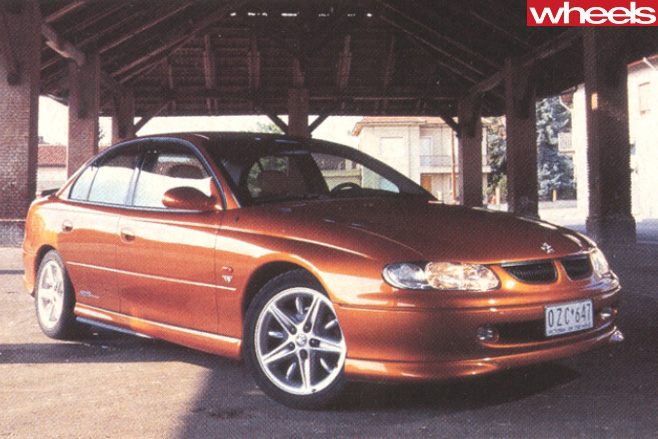
“The suspension is stiff, yet the taste of driving is American.”
Then he brakes, hard. Two trucks, one passing the other with a barely discernible speed differential, block the road. Fioravanti punches the wheel with the heel of his hand in frustration, twitching the car. Is he judging the suspension’s reaction, as compensation for his disappointment? I know we won’t run under the back of the truck, but it’s close. He pushes at the steering wheel boss, searching for the horn. Finally, there’s a feeble beep. The truck doesn’t move from the fast lane.
“At 200km/h, no person hears it,” he complains, catching my eyes in the rear vision mirror, not hearing my explanation of Australia’s low speed limits.
Most of the traffic on the Turin tangenziale (ring road) exceeds the 130km/h limit by around 30km/h. The Commodore’s accelerated to 195km/h. Through the lens, Curwood notices Fioravanti is not wearing his seat belt and asks him to do it up. Mostly, Wheels tries to be politically correct and doesn’t like to publish photographs of unbelted car occupants. Can’t remember when it was last a problem. Australians click up automatically. Not Italians.
“I am very old,” he explains, ignoring the request, waving an arm, as if it helps make the point. “I like new technology in cars when it helps the driving, but not 11-booster loudspeakers or seat belts. I only wear seat belts when I race, then you need them (he’s watching the mirror for my reaction as he talks) but you can live in a car without these belts.”
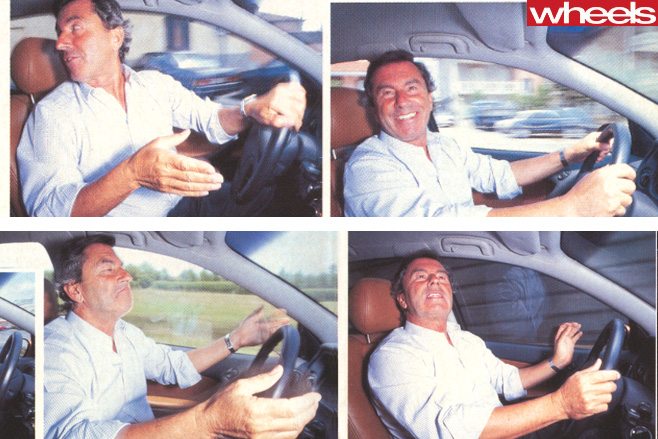
“This is one of my favourite corners, it’s a constant radius and very good for testing cars,” he says, snatching on some lock, head cocked to the side. “That’s a strange tyre noise. My 156 (Alfa) makes the same sound. It’s on Bridgestones and they grip well, but I think Pirellis are a better compromise.”
Sure enough, the Commodore’s also Bridgestone shod, and their adhesion is being sorely tested as Fioravanti hurls the Commodore around the narrow, twisty lanes.
“I know these roads very well,” he reassures us, the Commodore apexing a blind corner. Curwood’s still snapping. From the footwell.
“The handling is typical rear drive,” says Fioravanti, flicking his wrists into opposite lock to catch the oversteer, searching again for the horn. Finally, he makes contact. “It’s horrible, we need more horn.” In Italy, yes.
He asks me how much the Commodore weighs. I guess. I’m not about to try reading the brochure. Leonardo does the sums.
“I have doubts about the power-to-weight ratio. It feels too quick. The steering is light, maybe too light for the power and there’s a small vibration in the wheel. I don’t know about the brakes from high speed.”
He is constant pushing buttons, trying all the controls.
“No automatic window in up mode?”
We start talking Ferraris. Among his small, private collection of interesting cars (Alfas, Lancias, a Citroen Light 15, even a 2.4 Jaguar), mostly from the ’50s, ’60 and ’70s, is an original 308.
“I dream of a soft Ferrari with the F1 shift. When I worked at Ferrari (as deputy general manager in the late ’80s) I always drove an F40. The F5O is too big. To drive softly in an F40 is … ” (He kisses the ends of his fingers, I think I understand.)
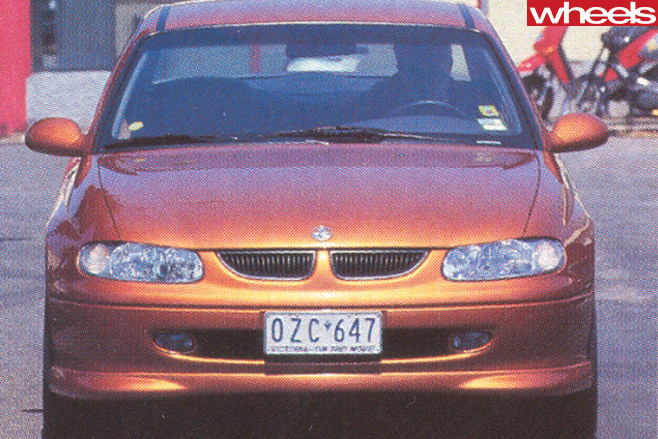
“The styling, if we don’t consider the colour, is Omega with different front and rear ends. The rear is definitely American. The surfaces are professional, well treated, but I think the front end is too gentle for a car like this. The lower is okay, the upper grille is too small. This is a big car. It’s a very enjoyable car and cheap for the size.”
Yes, he liked the Holden.
Rather than spend a week driving the left-hand drive, Victorian-registered, Commodore around Europe for Wheels, Editor MacKenzie and I decided to seek out some expert opinion on this strange-to-European-eyes Australian car.
One down, two to go. But first. This is the very same Holden Commodore SS Bob Hall and Warwick Kent drove across America. Don’t let the change in number plate deceive you. The original front number plate was stolen when the Commodore arrived in Germany. The Victorian authorities won’t duplicate plates, so the SS had to be re-registered.
Peter Davis is American, and another car designer. He also happens to be the head of Fiat Centro Stile. We decide it’s okay for him to comment on the Holden, how can there be a conflict of interest when Fiat doesn’t sell cars in Australia? We follow his Barchetta- I’m pleased to see the roofs down- out of Turin. Peter knows a picturesque village on the way home. But, before the photographs, he wants to drive the Commodore.
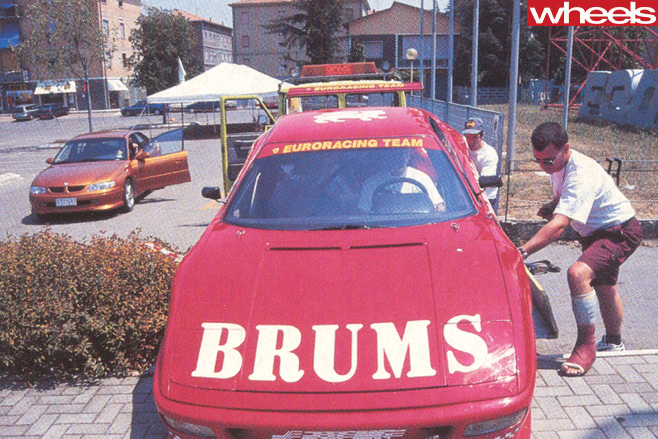
“Guess who did this?” he says proudly, pointing to the cruise control stalk. Peter worked on interiors at Opel, before moving to Turin in 1989, and he’s obviously delighted to find Holden still using something he designed a decade earlier. He looks at the other steering column stalks.
“The wiper’s new,” he says, vaguely disappointed.
We’ve found a ruined castle at the edge of the village and Curwood decides it’s a photo opportunity not to be wasted.
“The colour’s a bit vulgar,” says Peter, in a too obvious attempt to be polite, as he walks around the car.
“Everything is so generous,” says Davis. “There’s an extra 15-percent bulk in everything. Bigger radius, depths, masses in the styling, inside, the seats. Yet it doesn’t have the sense of being American, except in the sizes. It’s more European than American, but it’s also different.
“They haven’t tried to do the impossible, what they have done (in terms of styling) is refined. It’s clean, most of the details are nicely done. You can tell the spoiler was done in clay, it’s so sculptured, and I like the way the body folds out from the lights. But the SS badge doesn’t match the quality of the rest of the car. From nose-on it looks as if the track has been widened. The grille looks like black plastic and not painted metal. It doesn’t have a strong front end.
“The bit of plastic that runs along the base of the windscreen should disappear. It’s usually one of the last things you do, once everything else is solved.”
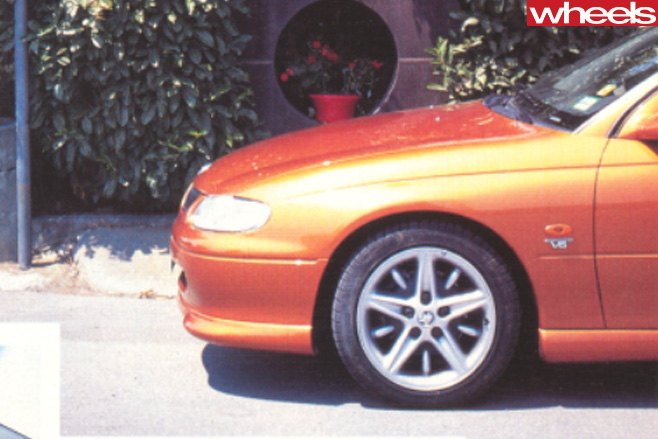
We don’t take any notice of the Lancia Kappa or its driver. Lancia’s executive sedan- even so, it’s smaller than the Commodore – slowly drives by and turns into the driveway 100 metres up the road.
“The interior is extremely conservative,” says Davis. “No big surprises, even the hockey stick shape of the top of the instrument panel. I’m sure it gives a certain confidence to buyers. The leather is good quality; it’s obviously a well made car.”
Fifteen minutes later the Kappa returns. This time it stops. We’re sprung. Nevio di Guisto, until a year ago Davis’ direct boss at Fiat and now the head of all Fiat platforms, climbs from the car. He’s taken in the scene. Recognised that his head of design is being photographed with a strange car. At least he’s smiling. Peter laughs nervously.
“I didn’t recognise the car,” Di Guisto says. “I noticed the golden colour first, because we’ve been trying to do something the same. Then I saw you.”
But he won’t be photographed. And is still dining out on the story weeks later.
We cruise home across Italy’s Po Plain at an effortless 160km/h, the tacho needle sitting on a mere 2750rpm. The speedo reads to 220km/h. It’s not enough. I whinge about the excess of tyre noise and wind noise above 180km/h and the car’s sensitivity to crosswinds. And wonder why the auto tranny is so slow to react to kickdown. And it takes time to get used to the almost complete lack of engine braking.
My friend Maurizio Amtibaletto sells cars. His is not an ordinary car yard. In a strangely Italian custom, he can sell you any new car you want. Marble capitals once graced the entrance to Bresciacar. Opera plays in the showroom. Erica, my wife, is convinced he hides an iron in the office. Maurizio’s trousers are always, always, perfectly pressed, even at the end of the day. One of those Italians. Regular readers will remember the story of collecting his new Morgan Plus 4 (Wheels, July 1996) in Rome and driving it to Brescia in convoy with a new Plus 8. Maurizio is, above everything, a true enthusiast. Anybody with an addiction for Triumph TRs must be. Still, he has enough sense to use a new 525tds automatic as his workaday wheels.
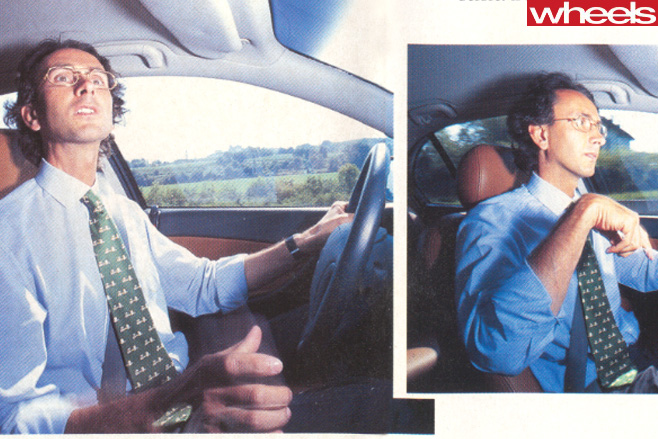
The brakes are spongy, the tyres too noisy. But he likes the performance, even if the engine doesn’t sound right. And we discover that it changes up from third to fourth at 5200rpm, or 210km/h.
“They’ve made it very harsh, as if it wants to be a sports car, but it’s not. It would seem much better at being quiet and comfortable.”
I explain the relationship of the SS to the rest of the Commodore range. He understands immediately, and can’t believe it costs so little.
Then, the inevitable.
We’re in slow moving traffic. “I can’t find the horn, where is it?”
He pushes at the wheel, again and again, until there’s a sound that is no more than a puny vibration from under the bonnet.
“That’s awful. I couldn’t buy a car with such a horn. It is a ridiculous horn – it sounds like a 1962 Fiat 500.”
The air-conditioning, however, is much admired.
“Most European cars still have weak air-conditioning. You need to set them at 19° to maintain 21°. This car’s air-conditioning is terrific.
“It’s good to know there are still muscle cars left in the world. I’ve been reading about the Commodore for years in Wheels– it’s great to finally be able to drive one. It easily beats any Kappa.”
I’ve rung Ferrari, on the off chance we can drive the Commodore around Fiorano.
“We have a little problem,” says my contact. “Sauber (they use Ferrari engines) has booked the circuit. It is very hard.”
We decided we’ll always regret it if we don’t take the opportunity to photograph the SS in Maranello. Instead of the near cliched shot outside the world’s most famous car factory, we opt to shoot it at the end of via Alberto Ascari, at the gates to Ferrari’s F1 racing department. And in Via Gilles Villeneuve, the road that leads down to the Fiorano circuit. Despite the continual coming and goings of the Tifosi, a permanent fixture in Maranello, nobody gives the gold Commodore a second glance.
I’m disappointed at the lack of response.
We’re being followed by a Dutch registered Volkswagen Golf and a Swiss Peugeot. Their occupants are using the same photograph locations. Warm Up, one of four shops (at last count) in Maranello selling nothing but Ferrari stuff, features a mural of Michael Schumacher and Enzo Ferrari on the wall. The two never meet, but who cares. Certainly not the artist.
Perfect for the Nikon.
Next stop Monza. As we arrive, the Benetton F1 transporter departs. The Porsche club of ltaly has hired the track for the day.
But these are not 944 owners out for a speed, but GT racers. No chance.
On my way home, after dropping Curwood at the airport, I refuel the Commodore. A bloke in a Mazda MX-5 saunters over.
“Nice car. I haven’t seen one of these before. Is it a Chrysler?”
The new Mercedes-AMG E63 has been revealed and it scores 450kW and 850Nm from its 4.0-litre twin-turbo V8 engine and accelerates from 0-100km/h in a blistering 3.4 seconds.
Although rear-wheel drive is now in the past for AMG’s super sports sedan, a fully variable all-wheel drive system called 4Matic+ is essentially back-boots-driven until slip is detected.
In Race mode with the nine-speed MCT transmission in manual mode (accessed via the paddleshifters) and with electronic stability control (ESC) deactivated, the AMG E63 ditches drive to the front wheels permanently – and a Drift Mode then becomes active.
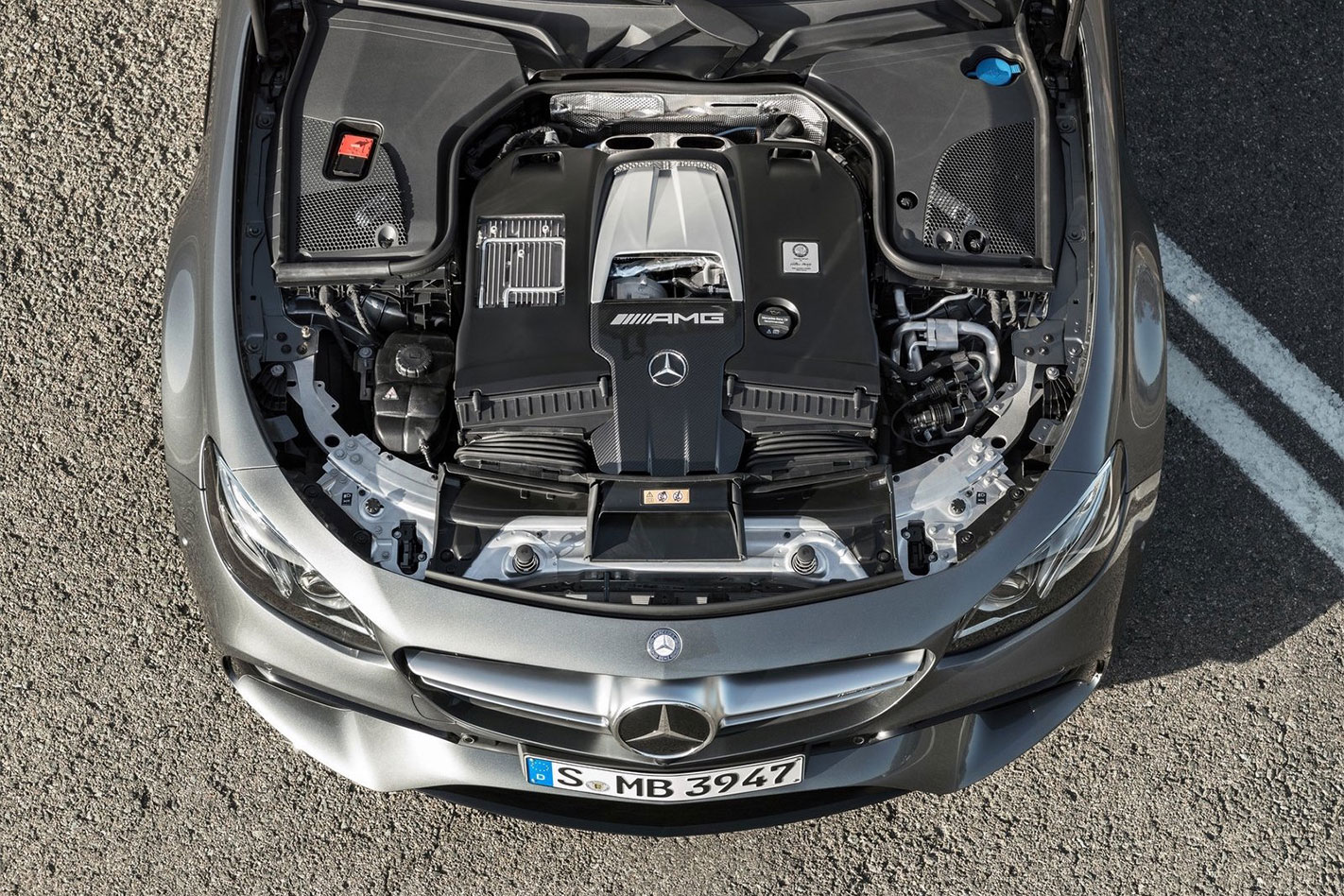
A combination of 265mm-wide front and 295mm rear tyres on 19- or 20-inch rims are available, but Australia will officially pass on the standard E63 that makes 420kW/750Nm and accelerates only a tenth slower than the E63 S that will arrive here mid next year.
Where the standard E63 gets a mechanical rear limited-slip differential, the E63 S gets an electronically controlled but mechanically-actuated variation working in concert with ESC On, Sport Handling Mode and ESC Off settings.
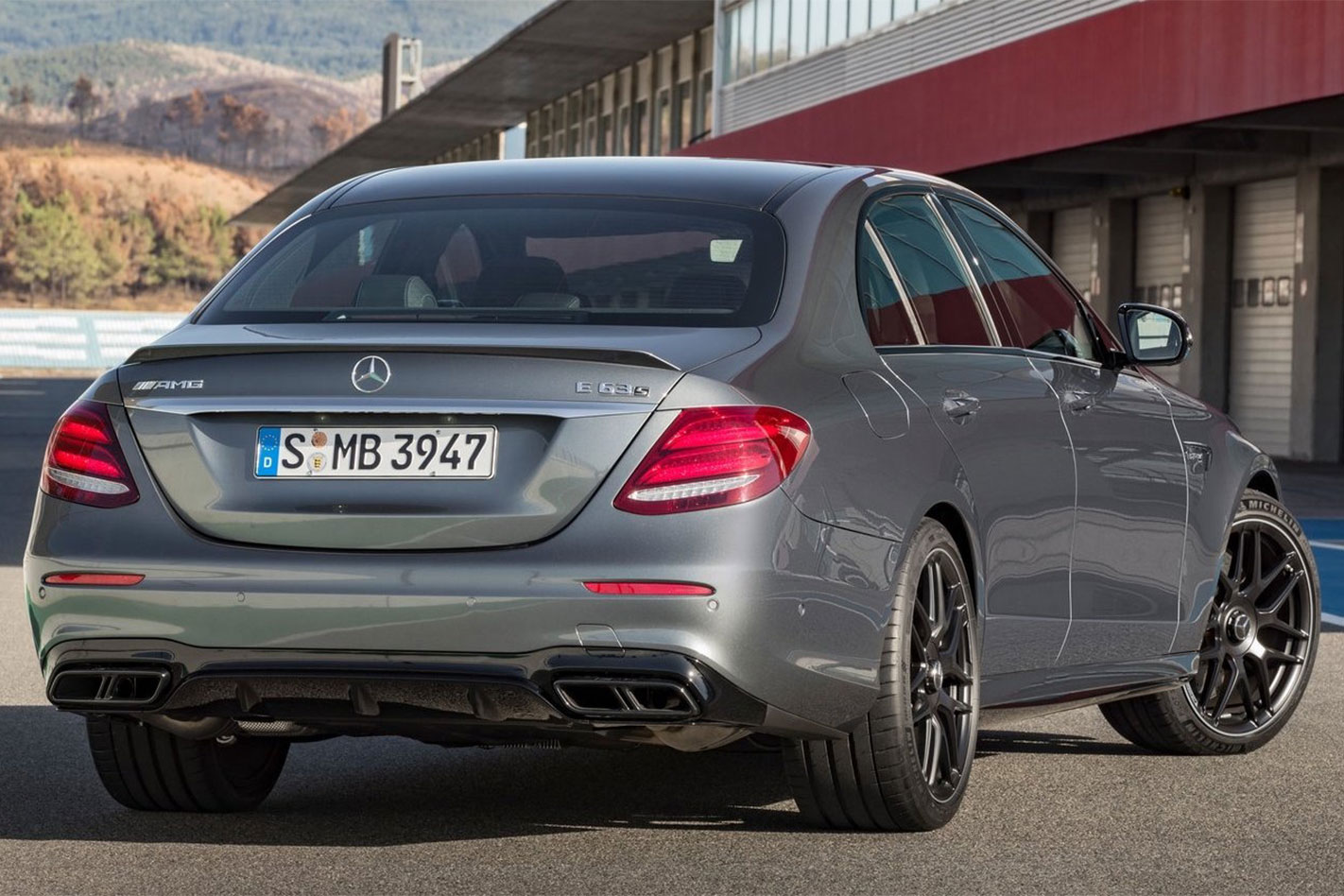
The flagship also gets dynamic engine mounts and optional availability of 402mm front/360mm rear carbon ceramic discs.
Compared with the regular E-Class the entire rear axle has been redesigned by AMG, complete with extra bracing, increased negative camber and a tubular anti-roll bar derived from the AMG GT R supercar.
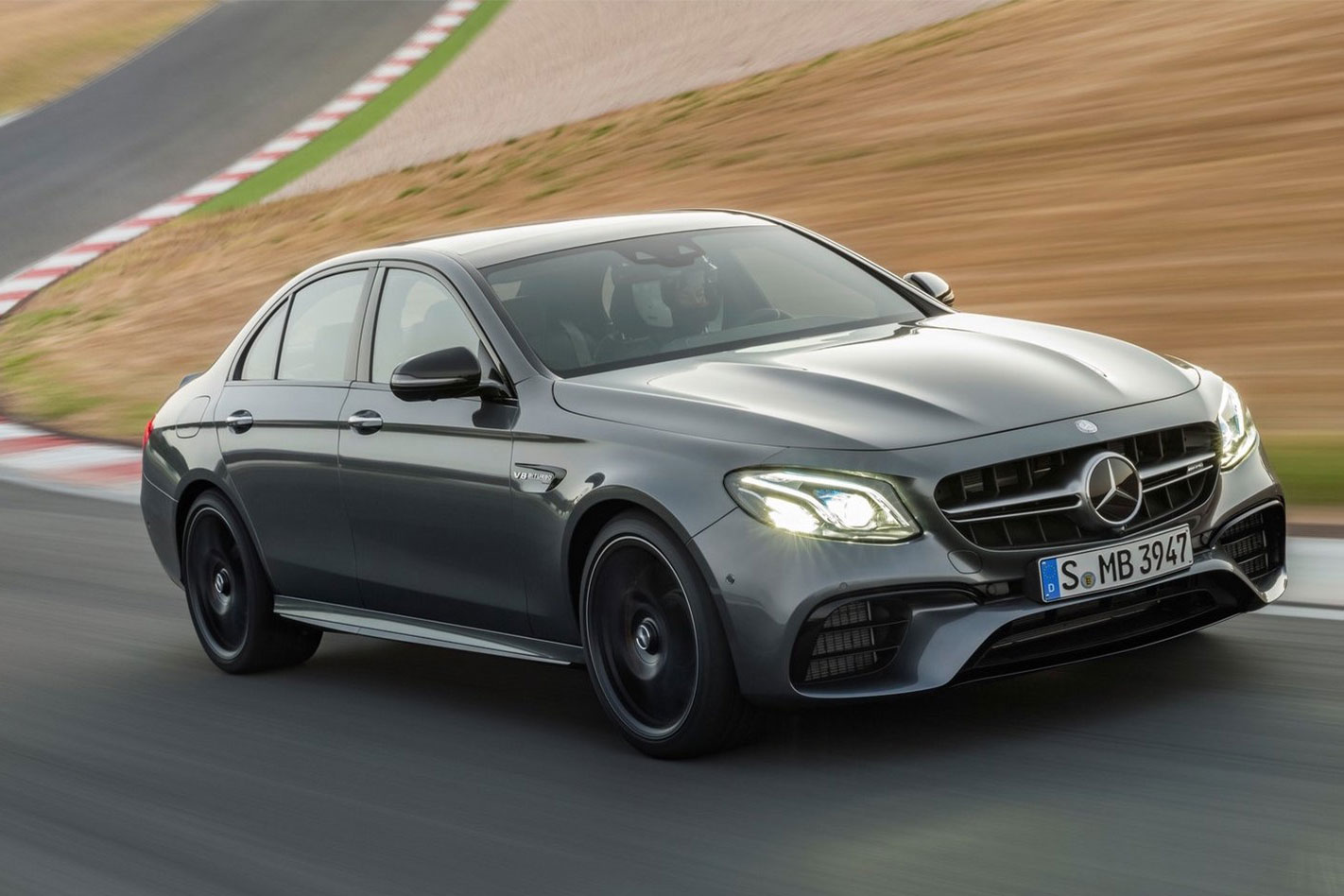
As is typical of new AMG products, multiple modes act on the weighting of the variable-ratio steering, transmission aggression and the damping for the standard air suspension, in each case with Comfort, Sport and Sport+ modes, or a mix-and-match Individual setting.
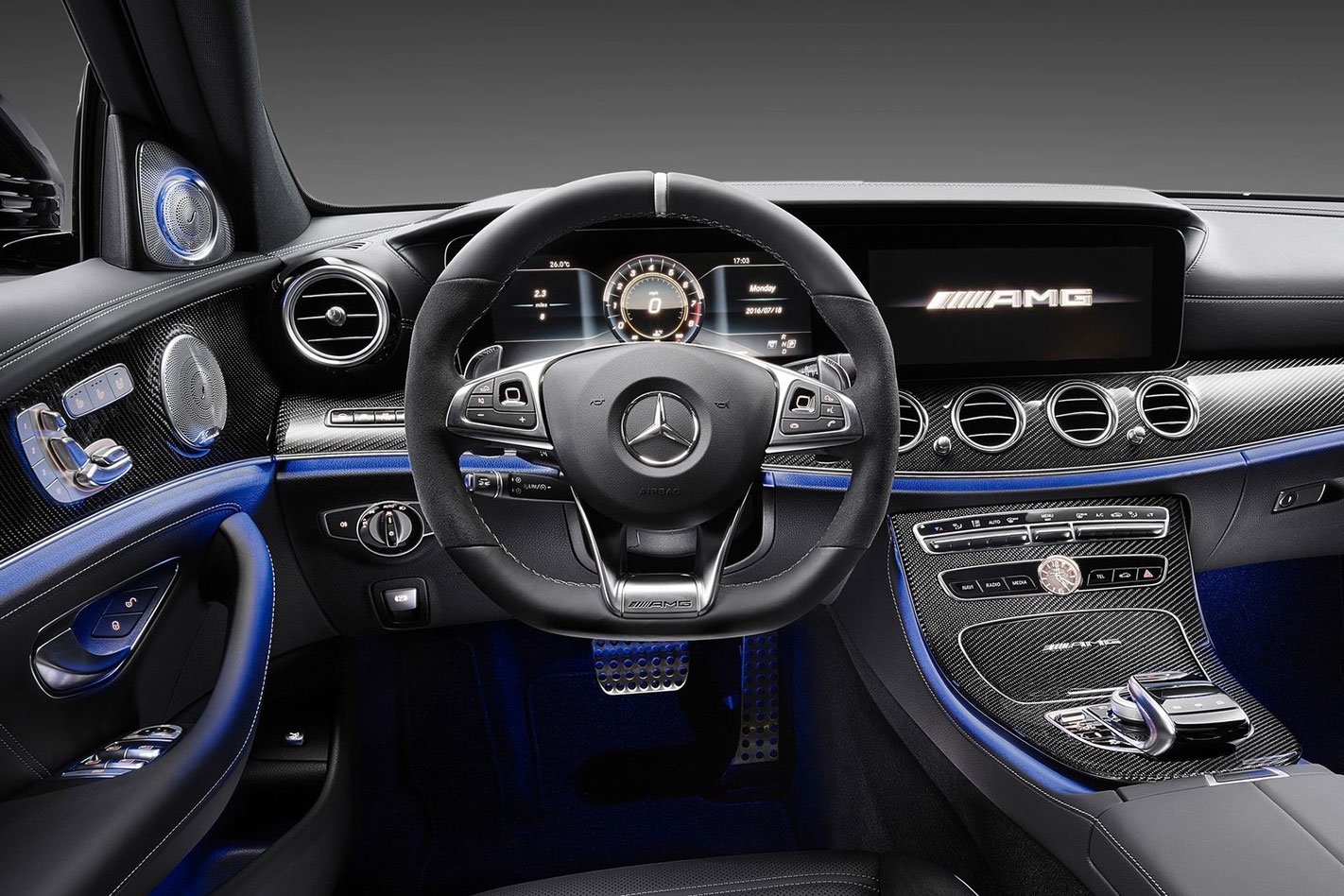
The next M5 has been spied in testing – your move, BMW M division
Mercedes-AMG has lifted the lid on its newest and most powerful E-Class models ever, the Mercedes-AMG E63 and E63 S.
Both variants run AMG’s hand-built 4.0-litre twin-turbocharged V8 engine, now producing 420kW and 740Nm in the E63, and a monumental 450kW and 850Nm in the flagship E63 S. That’s more power than the purebred Mercedes-AMG GT R sports car, which makes 430kW and 700Nm.
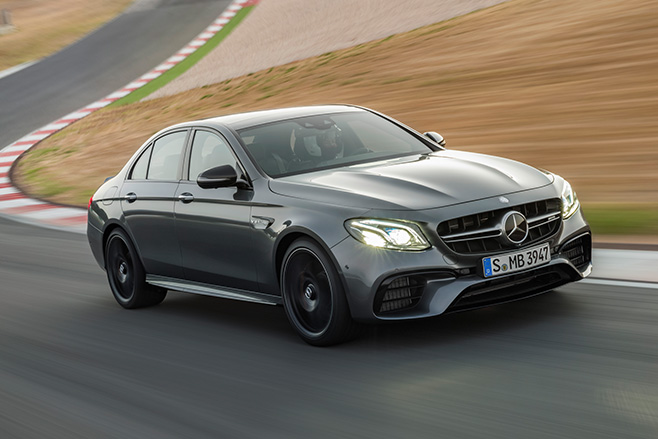
A nine-speed auto and Merc’s clever 4MATIC all-wheel-drive system is the only drivetrain combination available for managing traction. However, unlike the fixed, rear-biased setup seen in the existing AMG E43, both E63 models get a trickier version with variable torque split that can – and here’s the best news for track goers – send up to 100 percent of power to the rear wheels when Drift Mode is selected. The car will remain rear-wheel-drive until the mode is turned off.
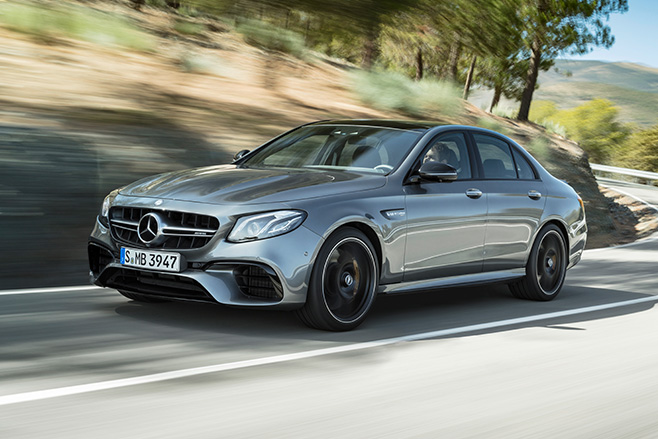
Twin-scroll turbochargers mounted inside the engine’s valley make it even more responsive to throttle input. Peak torque is available from 2500 to 4500rpm, acceleration from 0-100km/h takes 3.4 seconds for the E63 S, and 3.5 seconds for the E63. That shaves more than half a second off the old E63 S’s time.
AMG has developed a cylinder deactivation system that can shut down four of the engine’s eight cylinders to make it more fuel efficient.
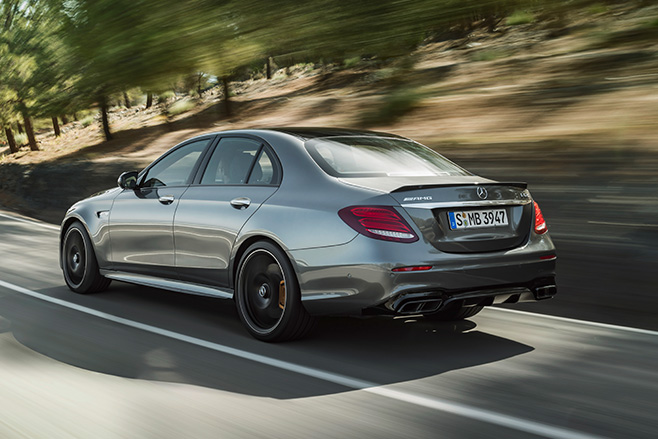
Air suspension based on Benz’s Air Body Control is standard, although AMG says it has completely reengineered the system for even higher levels of stability and more impressive cornering speeds. It now combines dynamics, steering precision and comfort.
Styling is more muscular and exclusive than regular Mercedes-Benz E-Class models. Everything in front of the windshield is specific to the E63, and incorporates defined design features around the front fascia and bonnet. Flared wheel arches, front and rear, accommodate a wider track and a 20-inch wheel and tyre package.
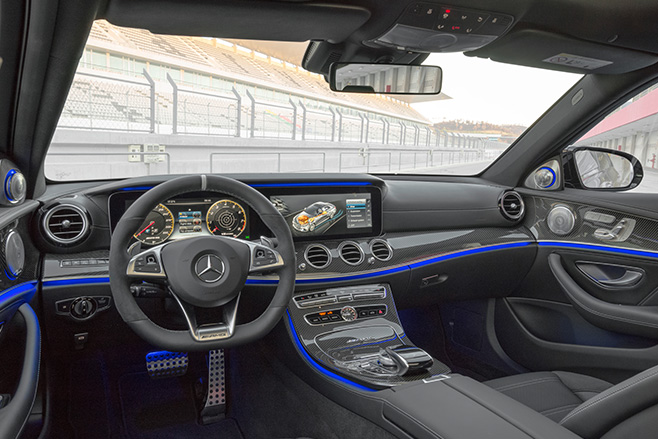
“It’s the biggest step we’ve ever made in a generation change,” AMG boss Tobias Moers said.
“In terms of styling, presence of the car, it’s totally different to anything we’re used to. The tyre sizes, drivetrain, suspension, everything.”
Pricing is expected to fall close to the $250,000 mark when the the E63 S, and potentially the E63, arrive in Australia in mid-2017.
Russell Ingall isn’t very good at being retired. Since hanging up his helmet full-time at the end of 2015 he’s partnered Rick Kelly in the Supercar endurance races, joined Fox Sports as a pundit and now put his hand up for one of the world’s most gruelling endurance races.
“I only said I’d retired from full-time racing, so you’ve got to read the fine print,” laughs the 2005 V8 Supercar champion. “I find it very easy now to do the enduros because the co-driver’s part is a lot easier, this gig’s a little bit different because all three drivers have to play a very important part.
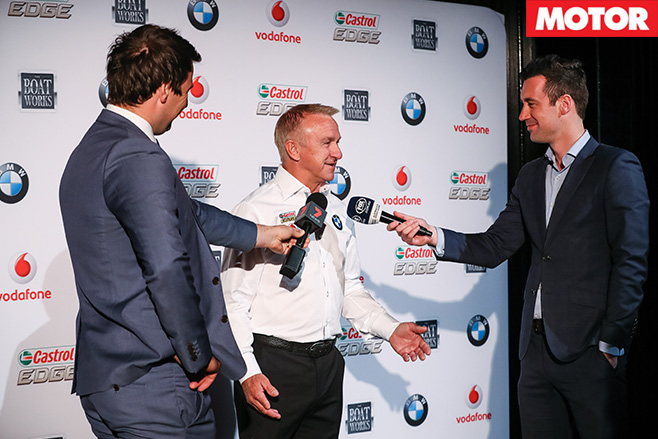
At the time of this interview Ingall had yet to sample the M6 GT3, but was chomping at the bit for a chance to drive a car with proper downforce again. “I’m looking forward to getting behind something with aero because that’s what I predominantly raced,” explains Ingall. “It’s taking me back to my grass roots of racing.
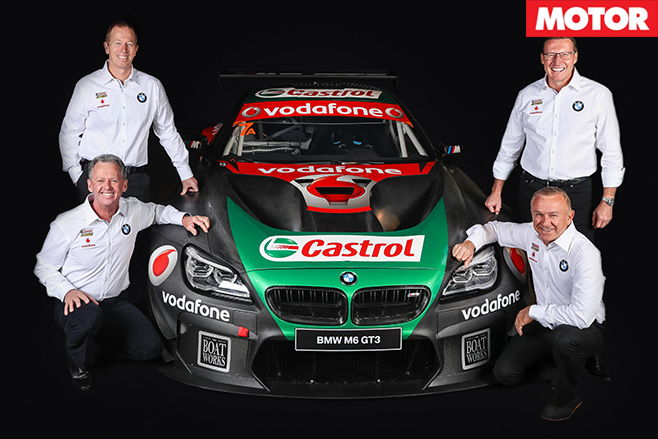
While Ingall is the driver with the most recent race experience, he’s adamant the trio will be competitive: “Don’t think we’re going to be a heap of geriatrics running around. Mark’s already been to Phillip Island in the car and he was seriously fast straight up [and] Tony did a Porsche race at Bathurst and was [around] the top 10 in the Carrera Cup – not bad.”
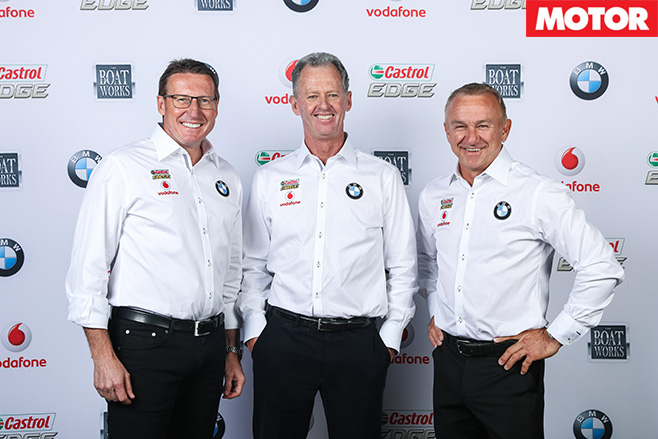
“I think [Skaife and I] respect each other because of how competitive we are. That’s what it’s all about, pushing each other, but we know how to push each other and be smart, that’s the difference nowadays. If [the Bathurst 12-hour] was a sprint event it would probably come back with every panel torn off, but it’s 12 hours of racing, you’ve got to be fast but you’ve got to be smart too.
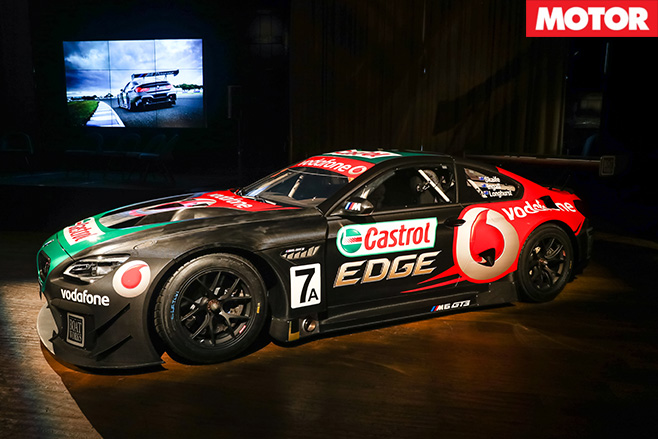
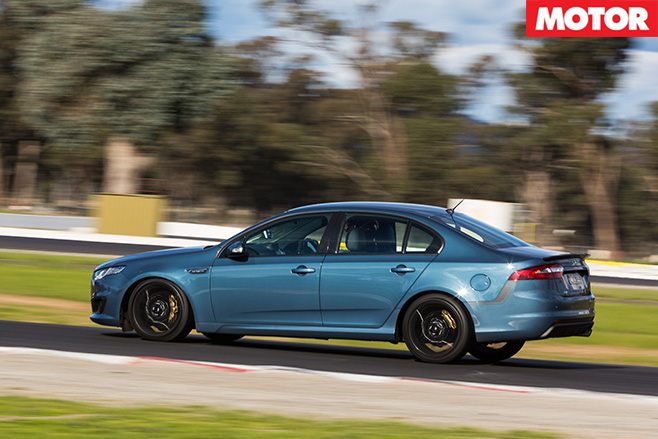
SOME OF us had Ford’s XR6 Sprint pegged as this event’s dark horse. Here was Australia’s greatest ever engine laid in the Falcon’s greatest ever chassis. And, to boot, it’s almost 10 per cent cheaper than its eight-cylinder twin.
Fusing its engine with the best bits from the F6’s meant the drag strip was always going to be a hoot, and the ZF six-speed’s launch-control meant getting off the line was considerably easier than with the XR8.
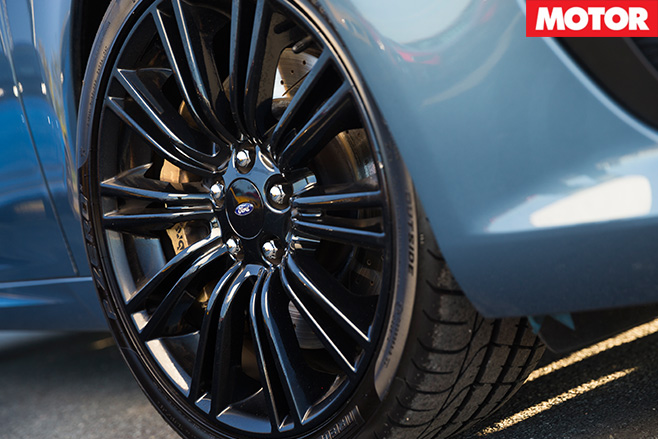
Stomping the throttle in first gear saw the new, but thinner, rear Pirelli boots throw the XR6 across the quarter mile in 12.89sec at 184.11km/h. A relatively average result, backed up by its 4.89sec scramble to 100km/h. But it’s the turbo Sprint’s crushing in-gear acceleration that spoke loudest.
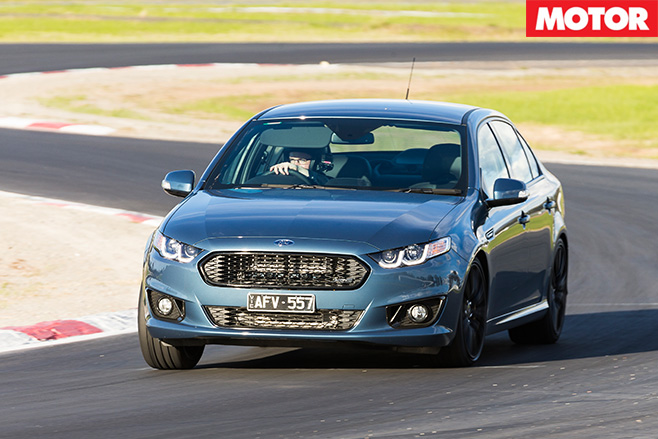
As a result it evaporated 80km/h-120km/h in 2.52 seconds (quicker than anything else on test), to underscore Ford Oz’s Sprints are the Falcon in its final, and most potent, form. The sound made during the runs is new too. Sucking through a bigger carbon fibre intake and blowing gases out a new exhaust, it spools loudly, burps angrily on upshifts, and viscously expels boost off-throttle.
The engine dominates the experience, but it’s not all Ford Oz has improved. Understeer’s claimed to have been banished from its CV. And that’s true, to an extent, as the XR6 tore around the turn nine faster than everything except the Audi TTS – a 358kg lighter all-paw sportscar.
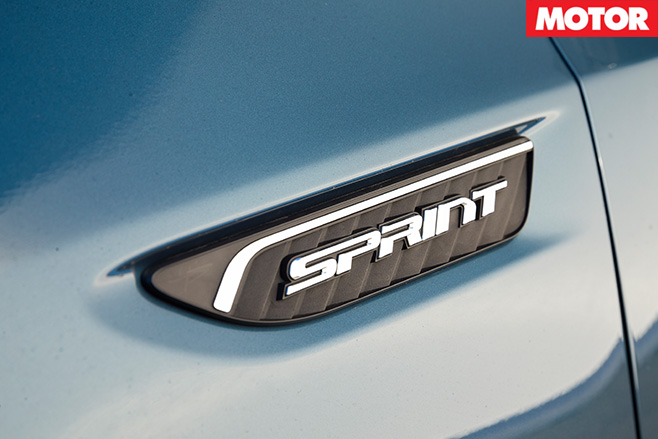
As for what the judges thought, the XR6 Sprint’s package just couldn’t make lapping, or cornering, anywhere near as enjoyable as the dragstrip. The steering rack was vaguer than a politician’s speech, and many of us missed a manual gearbox.
Ford Oz should feel vindicated its tuning of the Sprints bore genuine results here at Bang. But even with that cracking price, the improvement just wasn’t comprehensive enough to help it ascend the ranks.
So while the old girl bows out as one of the best within its bloodlines, it’s seventh among its peers.
JUDGES’ COMMENTS 10. David Morley “Stonking turbocharged engine seeks new home.”
10. Dylan Campbell “More fun, and works better, on the road than track.”
09. Louis Cordony “Addictive turbo rush, but unrefined brakes and ’box spoil it.”
10. Scott Newman “Unresponsive engine and chassis severely limits the fun factor.”
SCORES Price: $54,990 Bang Index: 79.7 Bucks Index: 128.6 BFYB Index: 153.8
WARREN LUFF SAYS 10. “Showing its age in every area – in braking, in ergonomics, in steering…”
“HONESTLY this car feels more like it should be at a Hot Tuner Challenge than at Bang. It feels like it’s the same thing underneath, but with some more power and a few more little add-on bits and pieces.
“There’s no confidence to want to try and push fast in the car. The engine is great but everything else lets it down. The gearbox doesn’t get a rev on the downshift, so it’s very slow to want to go back down to second gear. You end up over slowing the car and then the brakes aren’t that strong, so you’re struggling to pull the thing up.
“It’s still a bit of fun and it has good power, but that’s about it.”
09 Louis Cordony “Addictive turbo rush, but unrefined brakes and ’box spoil it.”
Want more? Check out the rest of 2016 Bang For Your Bucks.
IT’S ALL about four-cylinder engines and a high tech V6 for the 2018 Holden Commodore, the first imported Commodore, which will be a rebadged version of the Opel Insignia.
Holden’s all-new 2018 Commodore will miss out on the V8 engine that has been a cornerstone of the model – and the performance hero – since 1978.
However, Holden says it is confident the three drivelines that will initially be offered when the new car goes on sale in February 2018 will satisfy the majority of buyers.
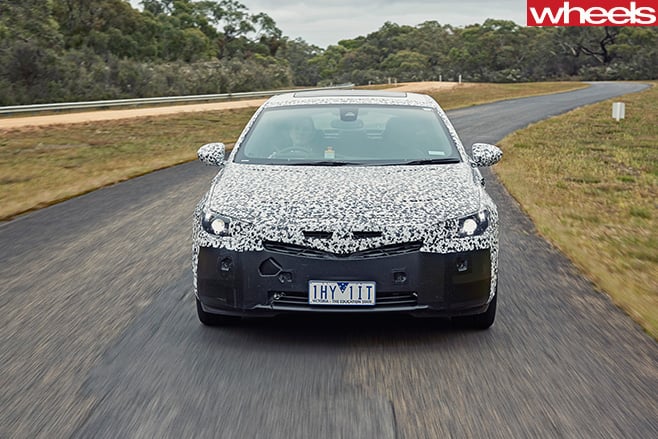
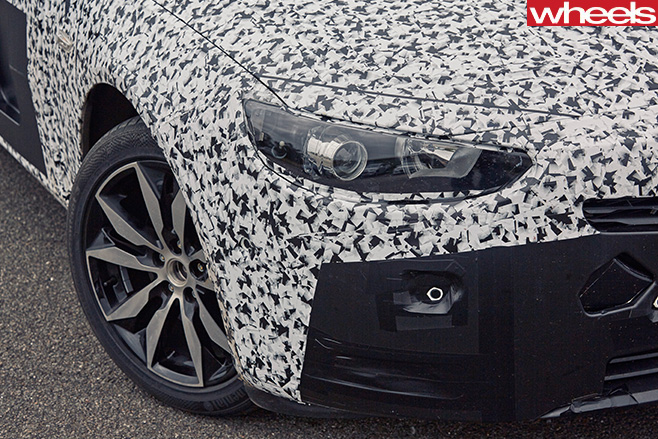
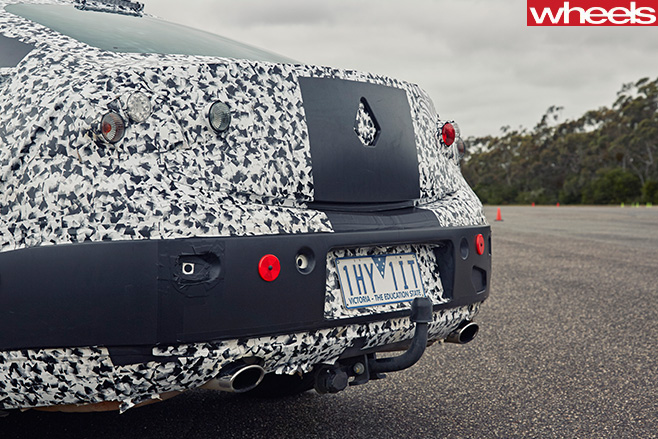
It’s the four-cylinder models that could make up the majority of sales for the bold new Holden Commodore, a car that has so far only publicly been seen covered in cladding and camouflage ahead of its international reveal later this year.
Holden is not giving details on those four-cylinders for now, except to say they will each be 2.0 litres in capacity and each will have a turbocharger.
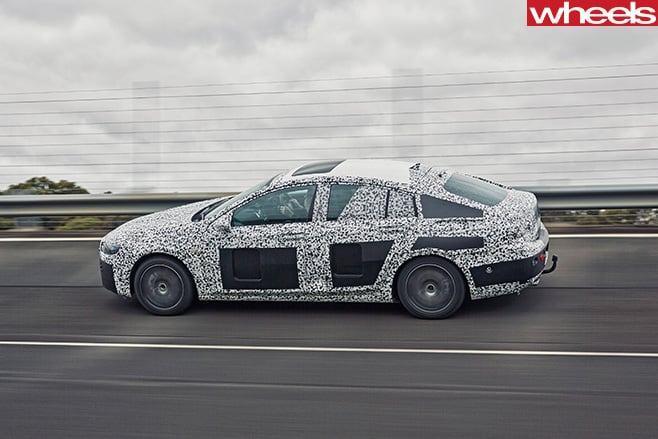
But it’s the 2.0-litre turbo petrol engine that could hold the most relevance for buyers, especially given the gradual shift away from diesel-powered passenger cars.
That 2.0-litre petrol engine will be fitted to the most affordable Commodore, a car yet to have its model name confirmed. And it will be faster and more powerful than the current V6, according to Holden.
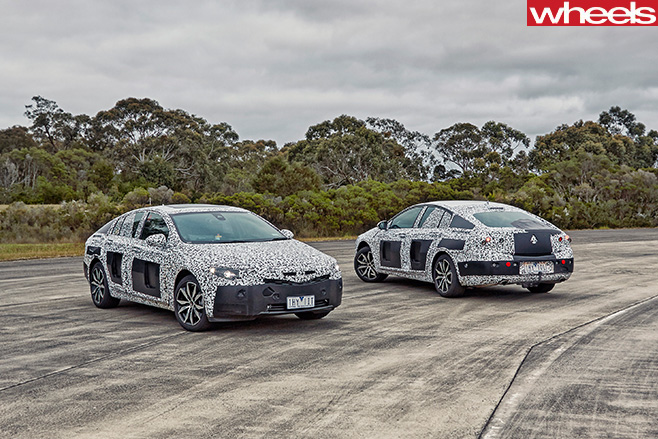
That means more than 185kW of power – and if we were betting we’d guess it will sneak in below 200kW, partially to allow room for the V6 engine.
But it’s torque where the four-cylinder Commodore engines are likely to shine. Thank the turbochargers for that, something that should endow them with plenty of that effortless urge that large Australian cars have been known for.
And, indeed, the Ford Falcon is a prime example, even if having two fewer cylinders appears to have frightened many buyers away. The slow-selling Falcon EcoBoost lacks nothing in the way of performance compared with the six-cylinder: its 2.0-litre turbo makes 176kW/353Nm versus the 4.0-litre six’s 195kW/391Nm.
“It’s about what the car does, not what it is,” says Keley, citing consumer research.
“For the core of our customers the ability to have a V6 and have the all-wheel drive will give them a lot of comfort. Where we will have the opportunity to expand sales will be the fact that we have a great entry level powertrain, which will be the best performing powertrain we’ve had in our entry level cars ever.”
Which brings us to the V6, the performance hero of the Commodore range.
“If it wasn’t for us getting in there early we wouldn’t have been able to have that powertrain in Commodore.”
Holden says the 3.6-litre V6 – a heavy development of the current car’s engine – will produce 230kW and 370Nm, 20kW and 20Nm more than the current Commodore SV6.
The engine revs to about 6800rpm and features a direct injection system for better efficiency.
It also features active fuel management, which can shut down two of the cylinders on light throttle loads to relegate it to a four-cylinder, in turn saving a few drops of fuel.
There’s also stop-start, something again implemented to save fuel.
IT’S all change for Holden’s new Commodore – the first imported Commodore – due in February 2018.
And for the Holden faithful it won’t all be good news.
As expected, a V8 engine will be missing from the options list. Blame it on a general downsizing of engines and the fact Australia is unique in wanting big sedans with big power.
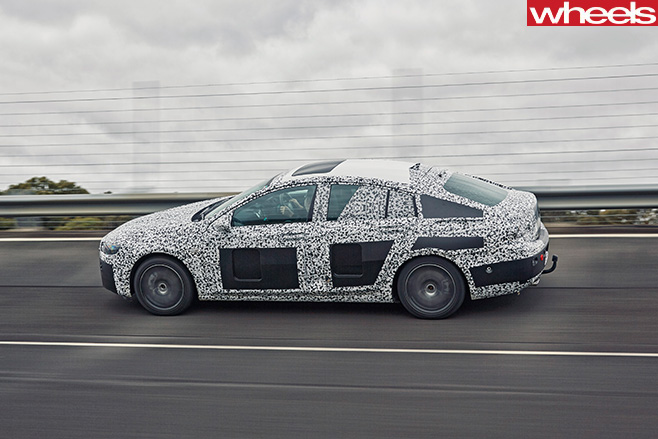
As reported exclusively by Wheels, the mainstream Commodore will be a hatchback for the first time. It’s been called Sportback to add some marketing pizazz (there will also be a wagon, or Sportwagon).
There also won’t be a manual transmission for the imported Commodore, with Holden instead settling on automatics across the range.
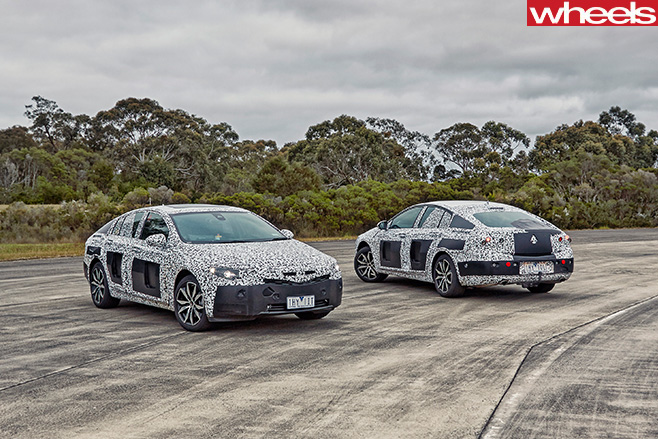
The Commodore will also do without rear-wheel drive. Four-cylinder models will drive the front wheels, while the V6 will power all four wheels.
That’s a big shift for Holden, which in the past has said rear-wheel drive is crucial to the feel and ability of a Commodore.
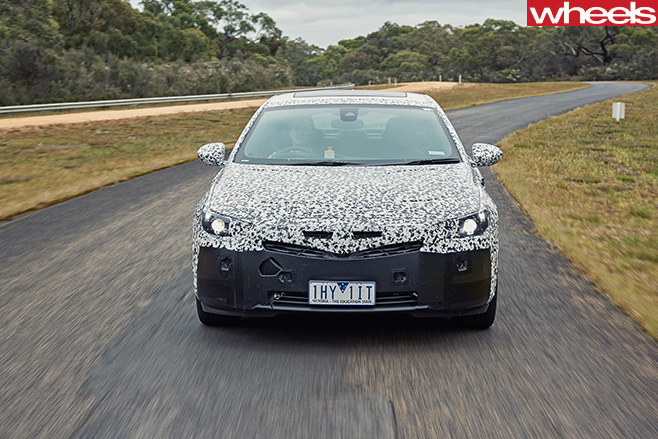
One good change is the shift to a fuel filler door that incorporates the cap. It means no fussing with separate filler caps, instead just pop the fuel door and start refuelling.
It’s not yet known whether Holden will offer a full-sized spare wheel on any Commodore. The reality is, in Europe – the prime market of the car where it will be sold as an Opel Insignia – they would prefer to save the weight and space of carrying around a sizeable wheel.
THERE won’t be a V8-powered performance flagship, but Holden’s all-new 2018 Commodore is set to benefit from handling honed at the infamous Nurburgring circuit.
Holden engineers have been heavily involved in the development of the imported Commodore, which will be a rebadged version of the next-generation Opel Insignia, with chassis development engineer Rob Trubiani among those flown to Germany to test the car at the Nordschleife.
However, the days of every Commodore variant featuring a chassis tuned specially for Aussie roads are gone.
Only one variant in the new model line-up – the range-topping V6 all-wheel drive – will benefit from a unique Australian suspension and steering tune, developed at Holden’s Lang Lang proving ground.
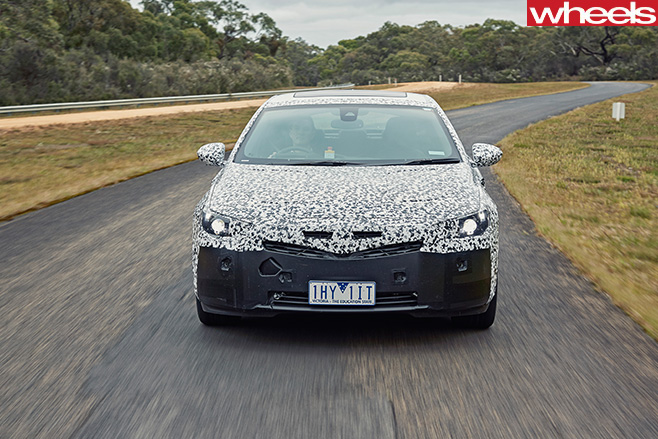
Yet Holden is confident the new Commodore will “deliver on our promise that it’ll be great to drive.”
The new car, known internally as the Next Generation (NG) Commodore, is built on GM’s all-new E2 architecture and will be significantly lighter than today’s locally made Commodore, with Holden claiming weight savings of up to 200-300kg.
The lighter body is also smaller, with the new Commodore set to shrink in every dimension except height. Overall length is down 74mm, while the new car is also 36mm narrower and rides on a wheelbase shrunk by 86mm when compared to today’s car.
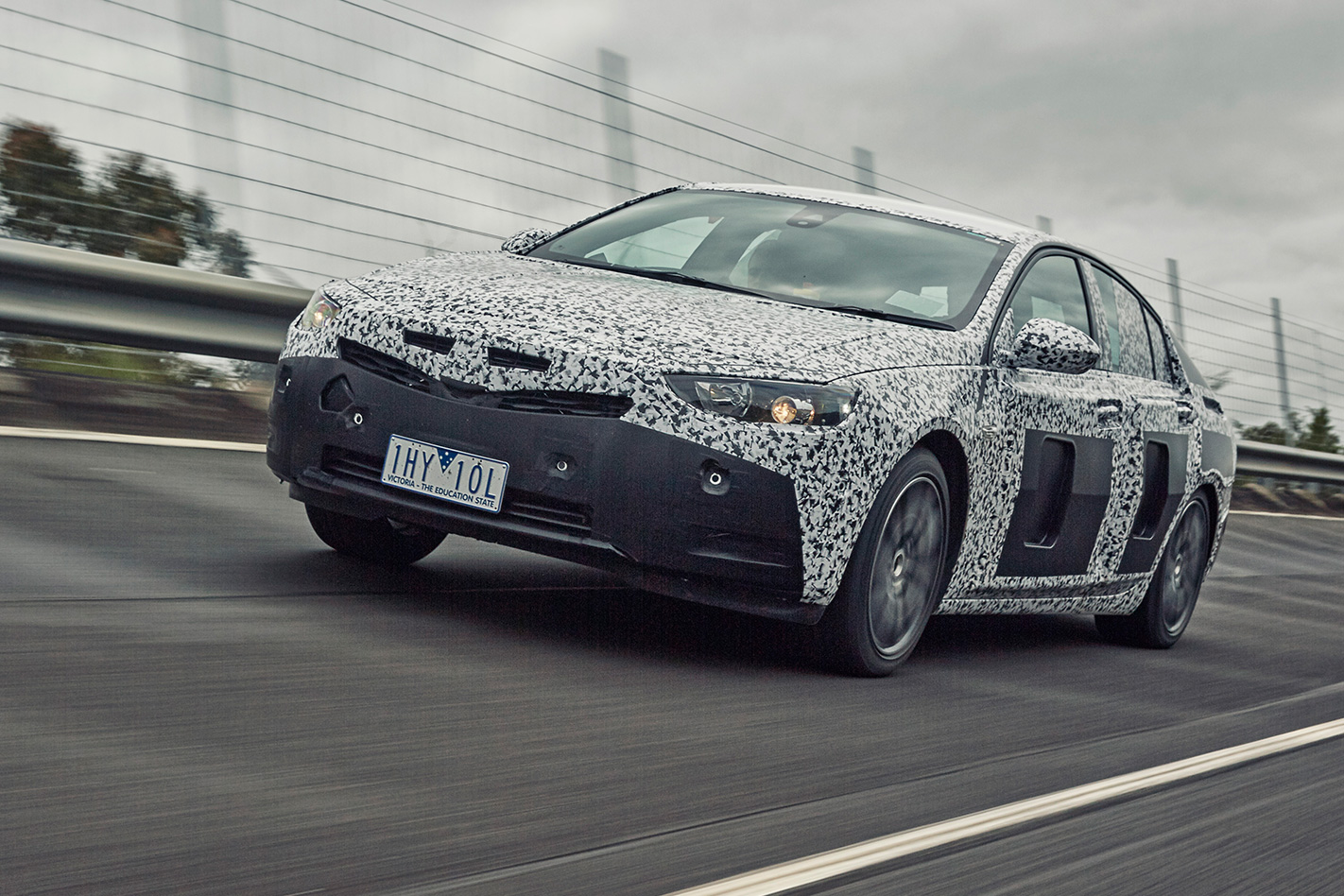
Confirmed to produce 230kW and 370Nm, the new Commodore’s V6 is a redevelopment of the current car’s engine and will include a direct injection Active Fuel Management system to improve efficiency.
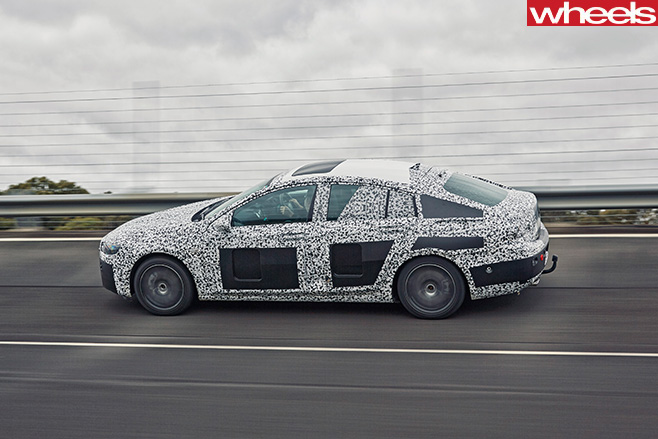
That’s a second slower than today’s SS Commodore which is powered by 6.2-litre V8.
V6 variants of the next-gen Commodore will also feature adaptive damping to improve ride quality and handling, while drive will be sent to both axles via an adaptive four-wheel-drive system with torque vectoring.
WE’VE been here before – 38 years ago in fact – only this time it’s different. Very different. Not only have we been given unprecedented access to a new-generation Holden Commodore still more than a year away from Holden showrooms, but it’s a totally different proposition.
What was the rear-drive V-car (GM’s global large car of the ‘70s), derived from its Opel Rekord/Omega/Senator cousins across three generations until Australia went it alone with the VE Commodore in 2006, has been brought back into the fold as a transverse-engined front- and all-wheel-drive sedan or wagon. It represents the merging of two size classes – the ever-expanding medium segment and the once-dominant but near-dead large-car class – into a fitter, more efficient, future-proofed form designed to extend the Commodore nameplate well into the 2020s.
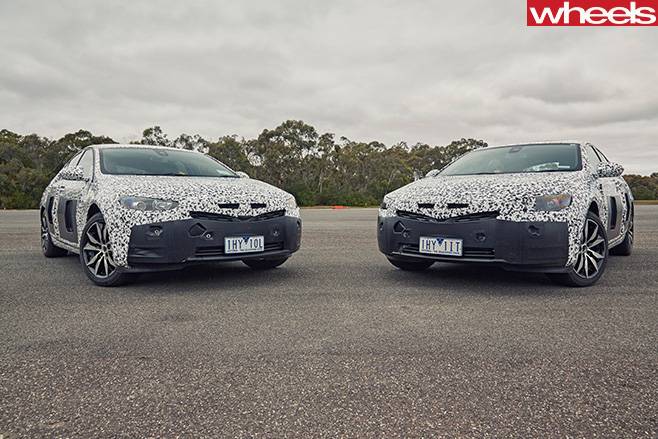
Indeed, Holden and Opel’s aim for the Holden Commodore/Opel Insignia is to deliver best-in-class dynamics and a true ‘driver’s car’ benchmark for the medium and upper-medium segment.
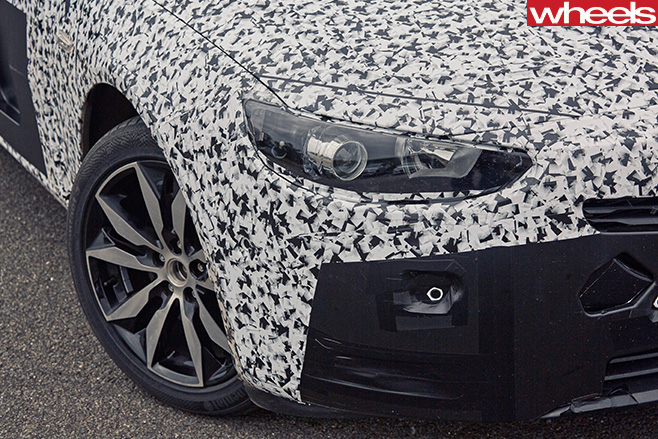
That said, the next Commodore’s E2XX platform is all-wheel-drive ready and intended to underpin a range of forthcoming GM vehicles globally.
The European Insignia will also offer all-wheel-drive with the turbo-petrol and turbo-diesel fours that will power our entry-level and mid-range Commodore variants, so there’s a chance, too, that a diesel all-wheel drive may add even more European flavour to Holden’s line-up.
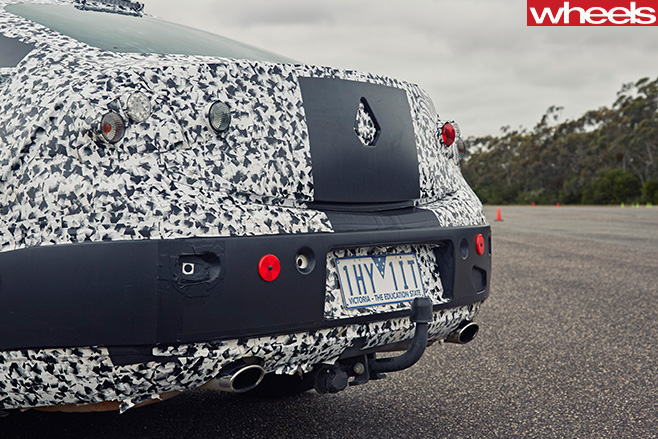
No such forgiveness today. Holden’s next-gen Commodore needs to be a knockout if it’s going to comfortably carry the Aussie-family-car blueprint into the future.
