
BANNED car ads are nothing new. For as long as advertisers have tried to sell cars on the television, there have been complaints about promoting irresponsible driving.
But this banned ad from the United Kingdom takes the cake.
Following a single complaint, an ad for the new Audi R8 which barely shows the car at all, has been pulled from the airwaves.
While we can understand outrage if the car was performing wild slides on public roads, or speeding through a playground full of children, this is just indignation for the sake of it.
While the original television ad no longer exists, you can watch an extremely similar ‘Directors Cut’, on YouTube.
The ad mainly focuses on a CGI eyeball, which dilates as audio of the Audi’s naturally-aspirated V10 is heard, and reflections of a tunnel are seen in the eye’s pupil.
Simple, emotive stuff. It doesn’t actually show the car driving at all until the end of the advertisement, when it is either clearly on a racetrack, or driving slowly in a tunnel.
However, the ad was to be “in breach of the code regulating motoring ads” for promoting irresponsible driving, and was pulled by the UK’s Advertising Standards Authority.
Audi’s parent company, the Volkswagen Group, released a statement saying the ad was filmed at speeds below 48km/h (30mph).
“The ad was particularly intended to highlight the car’s carbon ceramic brakes, the new, naturally aspirated engine, and the 7-speed S-Tronic gearbox”, a statement said, while noting a real eye would not work as shown in the ad.
The company behind the film, Bartle Bogle Hegarty, says the clip was designed to evoke a less literal response.
“We considered that viewers would interpret the changes in pupil size as an emotional response to the movement of the car, as represented by the sounds that were audible during eye sequence”, it said in a statement.
Bentley was recently forced to remove a clip from its YouTube page following a complaint in Australia. The banned video showed a Bentley Continental GT Speed hitting its maximum velocity in the Northern Territory.
At least the car could be seen doing speed in that film. This is a new level of nanny-state.
Volkswagen Australia has pointed the finger at government departments for the delay in rectifying vehicles found to be cheating diesel emissions standards.
In updating the media on the progress of the recall of 99,678 diesel-powered cars from Volkswagen, Audi and Skoda, Volkswagen Australia managing director Michael Bartsch said delays were as a result of the Department of Infrastructure not yet approving the fixes being implemented in dozens of countries.
“The reason why it’s taking so long to fix it [the diesel emissions issues] is not because we haven’t got the fixes, it’s because the process of moving it through the DIRD [Department of Infrastructure and Regional Development] and ACCC has taken a little bit longer than we expected,” said Bartsch, adding that there had been owner frustration about the delays in announcing rectification almost one year on from when the widespread cheating was brought to light.
Bartsch said Volkswagen had been in regular contact with the Department and the ACCC and that it had supplied all relevant data and proposed fixes but was awaiting regulatory approval.
“I was speaking with them [the Department] last week to get an update on where they sit with the process and I think they most eloquently said the ball is in their court; they acknowledge that,” he said, adding that “the process, the approval for those 70 percent of cars that need the rework here in Australia is reasonably imminent”.
“All the information, all the data that is required in order for them to approve those fixes lies with them and like all the other 76 EU countries in the world, the outcome of those fixes is that there will be no material differences in the performance of those cars, relative to what someone is experiencing now. All the core performance KPIs will remain unchanged… as we demonstrated for the Amarok.”
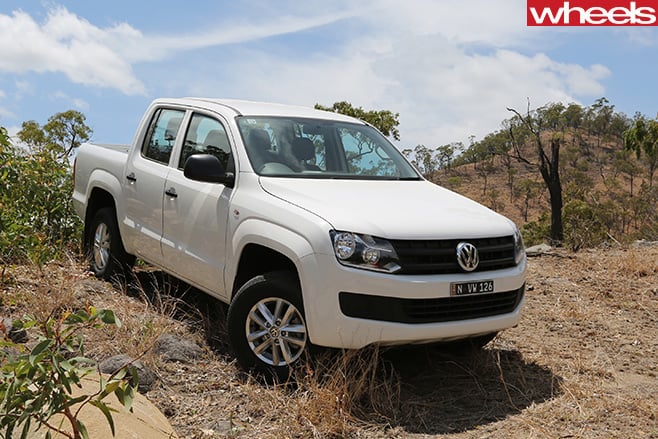
Volkswagen has already begun updating software on affected Volkswagen Amarok models as part of a voluntary recall, but in all there are more than 20 models affected by it, with others yet to be approved for repair.
“We had to [legally] bring that car to Australia under EU4 [emissions standards], which meant that we had to achieve a maximum of 390 grams of NOx output per kilometre driven,” he explained, adding that it was actually homologated under “EU5 homologation standards, which was a maximum of 280 [g/km]”.
“If you have a look at our homologation papers with that car it was putting out a NOx level of somewhere between 220 and 230. When we reflashed [the software on] that car and took the software out that is the issue of contention it still put out 220 to 230 according to the KBA [German transport authority] testing.”
Bartsch indicated the delays in getting regulatory approvals for emissions fixes was frustrating some owners.
“We are generally a culture that if you screw up and you say ‘yeah I screwed up, now I’m going to fix it’, it’s reasonably accepted. I think for most of our owners, that’s the position. The challenge we have with our owners is that it’s taking a bit too long to fix it.”
Wheels has contacted the Department of Infrastructure and Regional Development but is yet to receive a response.
Pagani’s ultra-exclusive, mega-quick Huayra BC hypercar is finally coming to Australia – albeit only fleetingly.
Its whirlwind visit is set to be a spectacular one. Not only will it be making its first Australian appearance at the World Time Attack Challenge in October – an on-track battle between some of the fastest production-based cars on the planet – but the Pagani Huayra BC will also be turning its wheels in anger.
The 552kW Huayra BC will be driven during the Midday Mayhem break on both Friday and Saturday, with Keiichi Tsuchiya at the helm. Never heard of him? His nickname of ‘Drift King’ might jog your memory.

“The Huayra BC is much more than just a beautiful, expensive car,” said Pagani’s Asia-Pacific PR chief Dino Dalle Carbonare.
“It’s been designed with a race track in mind, and we want to showcase the car in its natural habitat.”

Weight is pared down to 1218kg (slightly lighter than a Toyota Corolla) from the standard Huayra’s 1350kg, and titanium strands are woven into its carbon fibre chassis to increase rigidity.
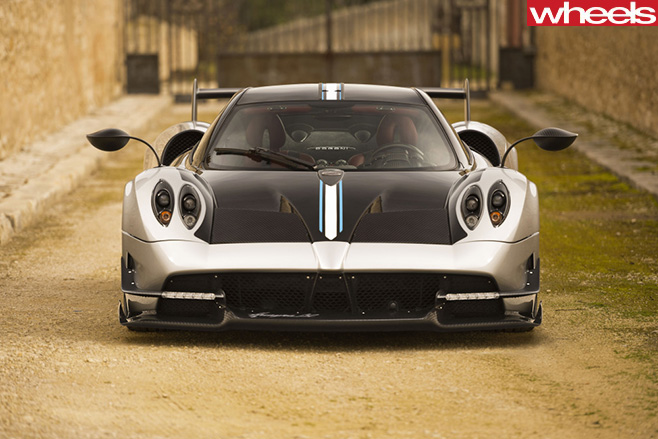
Like the standard Huayra, the Huayra BC takes power to the rear wheels exclusively through a seven-speed single-clutch automated manual gearbox.
Want one? Too bad. Besides costing in excess of $3.3 million, the Huayra BC is strictly left-hand drive – and all 20 units in its limited production run already have names against them.
Volkswagen Australia is farewelling the Scirocco R with a final Wolfsburg edition while reintroducing a performance Passat in the form of a new 206TSI R-Line model grade.
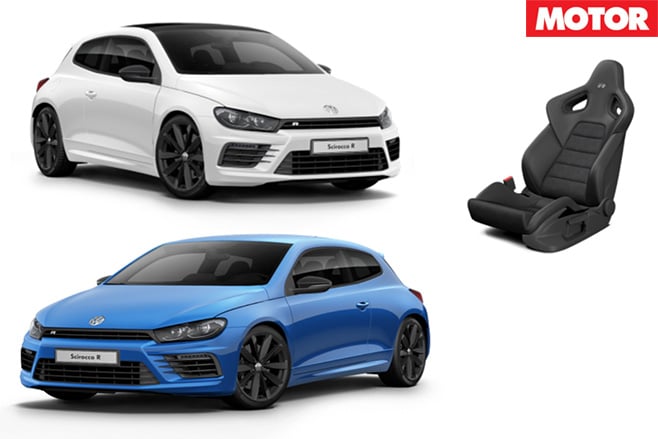
Following a five-year run the Scirocco R will be offered in a final, numbered 150-unit Wolfsburg trim priced from $49,490 (manual) or $51,990 (DSG) plus on-road costs.
The $3500 premium for the limited edition of the Megane RS-rivalling slinky coupe buys black mirrors, grille and 19-inch alloy wheels, ‘motorsport’ buckets and a badge referencing Volkswagen’s home town of Wolfsburg, as was first featured on the Golf R wagon.
Family buyers wanting something fast can now turn to the Passat 206TSI R-Line available from October this year in $57,990 sedan or $59,990 wagon guise.
As exclusively confirmed by MOTOR earlier this year, the spiritual replacement for the 3.6-litre V6-engined Passat R36 arrives with an identical powertrain to the Golf R, including a 2.0-litre turbo four developing 206kW/350Nm, and a six-speed DSG driving all four wheels.
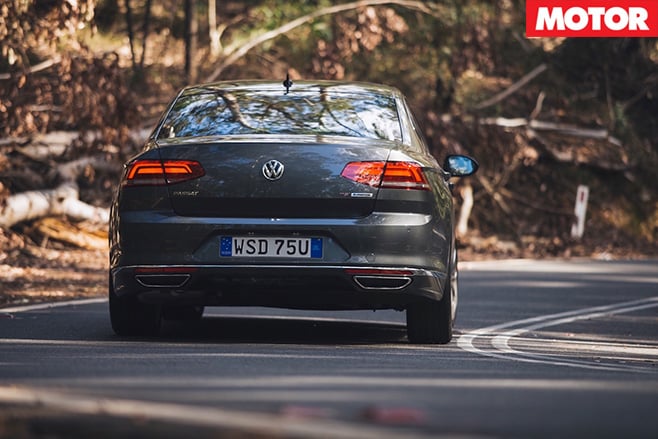
The sub-$60K sticker owes to a fully loaded equipment list extending to 19-inch alloy wheels, sports bodykit, adaptive suspension, full-TFT speedometer/tachometer/trip computer display, tri-zone climate control and full leather trim with 14-way electrically adjustable and heated front seats.
With a buxom 650-litre booty and that tall roofline – with panoramic sunroof the only option – the R-Line wagon may just be the ultimate snow car-cum-mountains bruiser.
Tesla is believed to be giving its Autopilot system a hardware upgrade to enable it to support the next generation of automation software.
Anonymous sources at Tesla have told technology news website Electrek the Autopilot 2.0 hardware will include radar units at each corner of the vehicle and a new forward-facing triple camera setup.
The hardware upgrade is anticipation for progressive improvement in autonomous software.
It’s claimed the company wants to be ready for when the software is able to produce Level 3 and 4 autonomous driving capabilities, based on a scale devised by the US National Highway Traffic Safety Administration.
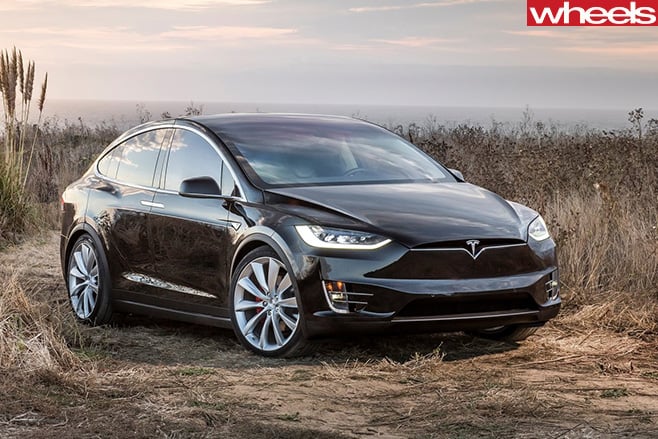
Level 4 is the quintessential self-driving car where the vehicle performs all safety-critical functions for the entire trip, with the driver not expected to control the vehicle at any time from start to parking.
The current Autopilot system operates on public roads at Level 2 which means having at least two controls automated in unison, such as adaptive cruise control and lane keeping. This is achieved using a single forward-facing camera, a forward-facing radar, and ultrasonic sensors.
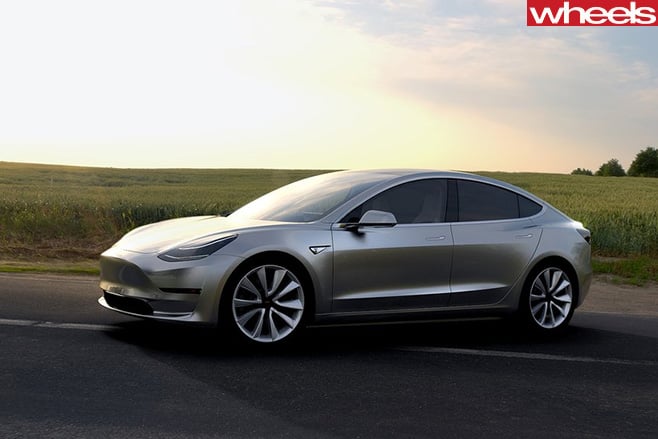
While there’s no official timeline for Autopilot 2.0’s introduction, Tesla chief executive Elon Musk said at a recent earnings call the next generation of the company’s autonomous technology will “blow people’s minds… it’ll come sooner than people think”.
Even on a tight rein, it’s always Sport over Comfort in our Mercedes-AMG C63 long-termer.
First published in the July 2016 issue of Wheels magazine, Australia’s most experienced and most trusted car magazine since 1953.
AFTER last month’s thrash-and-dash extravaganza, all to the tune of the C63 S’s bent-eight rumble, it was back to humdrum urban duties for the AMG’s penultimate month on fleet.
A Mother’s Day blast up the M1 reminded me just how luscious the C63 can be when chewing up distance, but it’s a different beast when traversing the obstacle course of shopping-centre car parks.
Experience has shown that relying on the drivetrain’s Comfort mode, and thereby cancelling out first gear, is anything but comfortable for the C63. As the transmission slips and slurs trying to channel enough torque to the rear wheels, the Mercedes-AMG C63 simply hangs about, wondering what’s going on. It’s especially hard-going in Sydney’s tight inner-city parking stations, where steep ascents and brutal speed humps leave the C63 struggling to transfer all its rev flaring into smooth forward momentum.
The solution, as I’ve mentioned before, is Sport mode. And having relied solely on this set-up for months now, I reckon it’s both more economical and a more relaxing experience than the ironically named Comfort.
Direct drive to first gear means the C63 steps off the line beautifully, supported by surprisingly progressive throttle response that ensures the rear boots don’t instantly turn into whirly-birds in the wet.
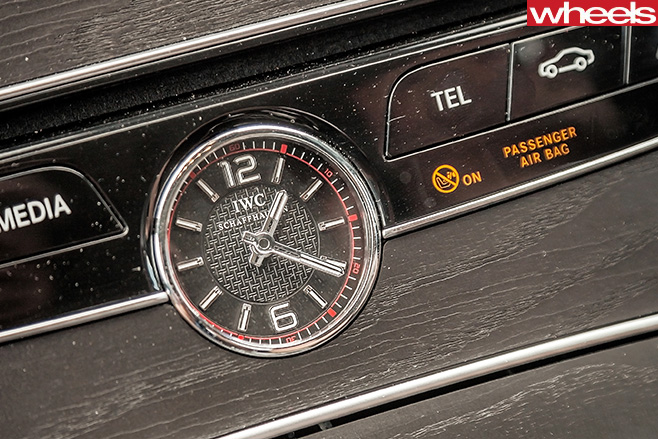
And the Speedshift-MCT transmission doesn’t needlessly hold onto gears like so many two-pedal cars when switched to Sport. Instead, progression up its seven-ratio set mirrors how you might upshift in a manual, all to the tune of an angry nudge from the exhaust as it upshifts under load.
The Sport-primed transmission also eviscerates the top gear-obsessed Comfort setting by proving that you can have your cake and eat it too. Sport has no qualms settling into sixth or seventh, yet as soon as you call for instant forward thrust, AMG’s gearbox is immediately on the case, briskly shifting down with dual-clutch-rivalling haste.
If you buy a car like the C63 S and only ever drive it in the city, you’re missing out on soooo much of this car’s richness.
Leaving the parents’ joint, there’s a right turn at a tight roundabout, followed by an uphill on-ramp leading straight into a 100km/h zone. It’s like dropping a green flag in front of the C63. With ESP Sport engaged, I flattened the aluminium throttle pedal and the C63 simultaneously grabbed the lowest gear possible and the hotmix surface below, shoving both occupants in the back as it turned that incline into something more like a downhill ski run.
Then there’s the addictive sideways nudge from the tail as it barks into third, a not-so-subtle reminder that 375kW and 700Nm are doing the talking.
Even knowing what’s up its sleeve, the C63 S never fails to surprise and satisfy.
Where to next?
Read part two of our Mercedes-AMG C63 S long-term car review.
Mercedes-AMG C63 S Price as tested: $165,610 Part 3: 428km @ 14.8L/100km Overall: 3382km @ 14.4L/100km Odometer: 5895km Date acquired: December 2015
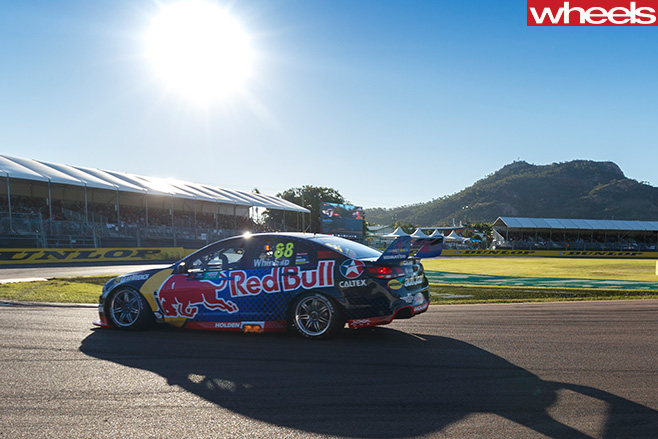
HOLDEN has announced it will dump Walkinshaw Racing as its factory Supercars team, replacing it with the dominant Triple Eight Race Engineering from next year.
A new three-year deal will see Jamie Whincup and Shane van Gisbergen race Holden VF Commodores under the Red Bull Holden Racing Team banner from 2017.
The announcement also confirmed the next-generation Holden Commodore will be on the Supercars grid from 2018.
Triple Eight will develop and build the race car under new technical regulations that come into effect next year.
It is expected the new Holden Commodore will make its public debut as the Opel Insignia at the upcoming Paris Motor Show in October.
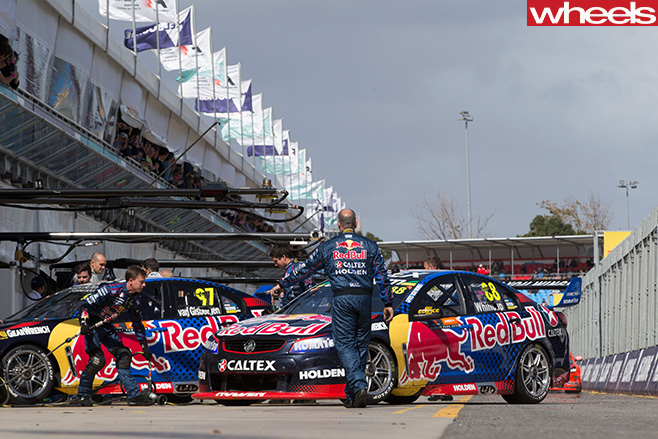
HRT was started by Tom Walkinshaw with Holden backing in 1990, but in 2003 the Walkinshaw empire collapsed and ownership was transferred to driver Mark Skaife. Walkinshaw bought back Skaife’s 50 percent stake in the team in 2008 (with Holden retaining its 50 percent).
Since Tom Walkinshaw died in late 2010, his son Ryan has been HRT Team Principal.
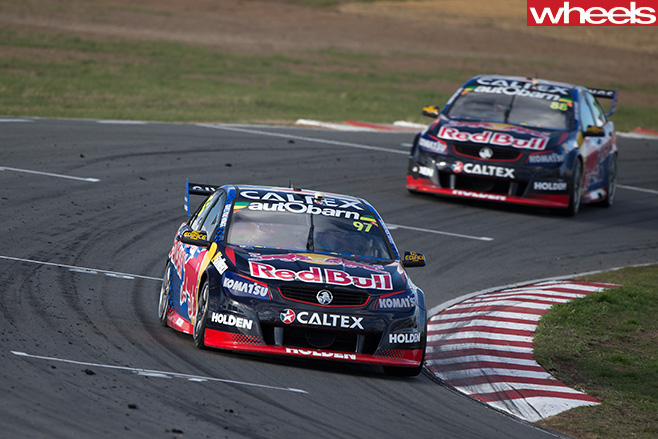
Triple Eight Racing currently runs Whincup and van Gisbergen under the Red Bull Racing Australia banner, and Lowndes as Team Vortex.
Owned by Roland Dane, the Gold Coast-based team joined V8 Supercars in 2003 and has won 6 driver championships and 7 team championships in 13 years.
Holden chairman Mark Bernhard said Holden is not cutting ties with Walkinshaw completely, with the two entities continuing to work together as partners in Holden Special Vehicles.
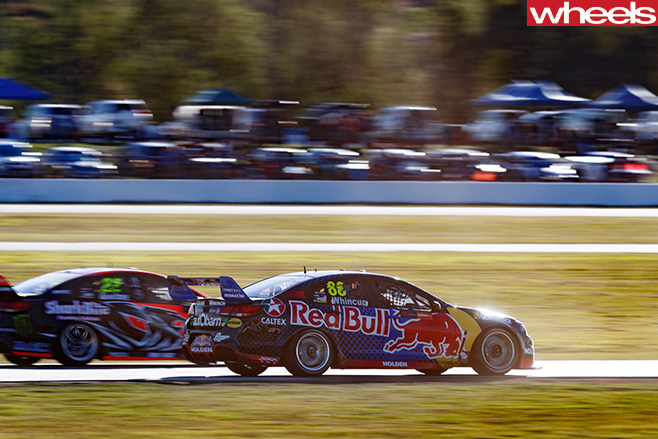
“We support every Holden team in pit lane through various avenues such as marketing support, technical support, sponsorship acquisition, even down to helping design certain race liveries,” Bernhard said.
“We’ll continue that with Walkinshaw and I wish them all the best. Our relationship with Walkinshaw remains strong and we are working closely on future road vehicle initiatives as part of our ongoing partnership with HSV.”
New rules will be introduced to Supercars from 2017, allowing two-door bodystyles and engines other than the traditional V8 to compete.
However, in 2018 Holden could debut a twin-turbo V6 engine being developed alongside the new Insignia-based Commodore.
Bernhard believes the racing version of the next-generation of Commodore will live up to the nameplate, despite being based on an imported, front-wheel-drive, foreign-designed platform with no V8 option.
“Fans around the country will see the new Red Bull Holden Racing Team on the grid from next year but I’m especially excited about our next-generation Commodore hitting the racetrack in 2018,” he said.
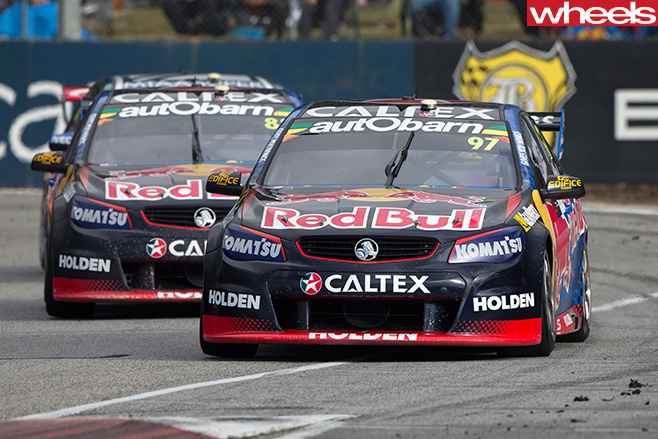
“Triple Eight is the most successful team of the modern era, they are simply the best at what they do. We’re very proud to continue our partnership with them.
“Motorsport has played a significant role in Holden’s heritage and we’re proud to be carrying on that tradition with the new Red Bull Holden Racing Team, while reshaping our brand and presence in the market and in motorsport.
“We’re taking our company forward.”
Subaru’s now uncovered the crucial changes behind the 2017-spec BRZ and Toyota 86.
The firm yesterday published a press-release that expands on changes made to the 2017 cars’ suspension, drivetrain, and chassis, and the effect they’ve had on specification.
While we’ve known power’s jumped 5kW//9Nm for the 2017’s 2.0-litre flattie, now perched at 152kW and 212Nm, the BRZ’s new spec sheet reveals weight and fuel consumption has too.
With either a six-speed manual or automatic the BRZ is now 26kg heavier, but interestingly, only the manual BRZ is a 0.6-litres thirstier over 100km.
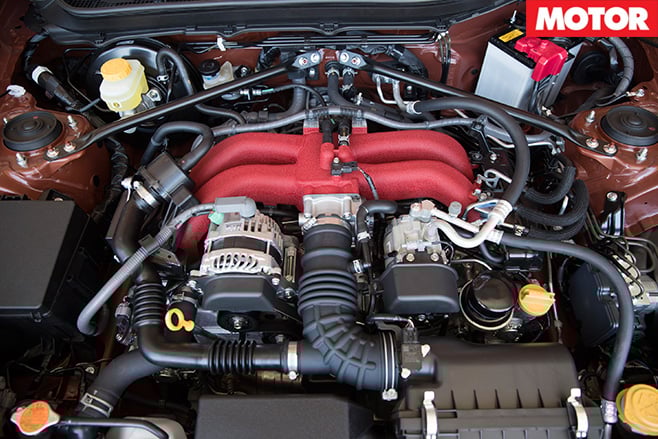
A new intake system, said to be 30 per cent more efficient, feeds the new manifold. Meanwhile the exhaust’s been improved too. The 4-2-1 exhaust header’s primary pipes have grown from 42.7mm to 45mm, while the secondary pipes expand from 45mm to 48.6mm.
Subaru’s shot peened the engine’s pistons and added ribs to the block’s rear wall to help it handle the new power, with the new stonk also making the upgraded FA20 quite loud.
The exhaust silencer’s shape and intake duct were changed to quell noise, but it wasn’t enough for the automatic variant. With the new manifolds it couldn’t pass noise regs. Hence the carried over 147kW/205Nm.
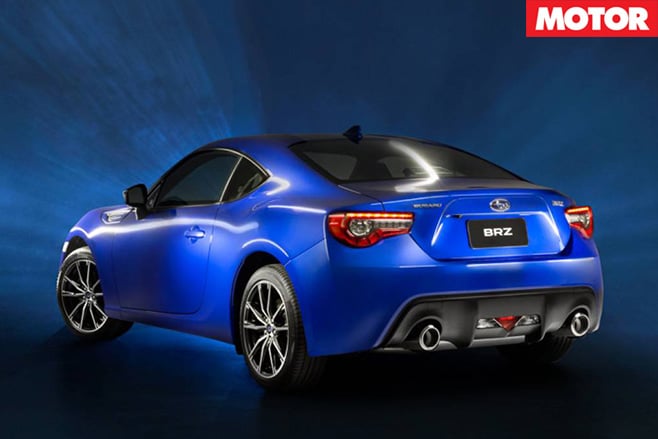
Elsewhere, the body’s said to use more high-tensile steel, while the same material has been used to reinforcement the cabin.
Suspension-wise, Toyota’s backed off rear spring rates and increased the front ones for the 2017 car. However, Subaru hasn’t divulged what’s new about its BRZ’s ‘unique’ suspension tune, which was traditionally more neutral than the Toyota’s, besides a new rear anti-roll bar size that increases agility.
Local price for either car hasn’t yet been revealed, but figures aren’t expected to change much. Expect to find out once the 86 launches October and the BRZ in November.
Our love-in with the new LS3-powered Holden VFII SS Commodore has been quite public – it’s nothing we’re ashamed of.
It’s an Aussie car deserving of a four-and-a-half star rating. But imagine how much better it’d be with bigger brakes, a sprinkling more power, more rubber and an even angrier exhaust? Well, HSV has just built the very car we’ve dreamed up.
As every reader would know, Holden ditched its reliable but long-legged L77 for the gruntier 6.2-litre LS3 as part of its VFII update late last year. It was welcome news – suddenly you could get a 304kW Commodore for less than $50K.
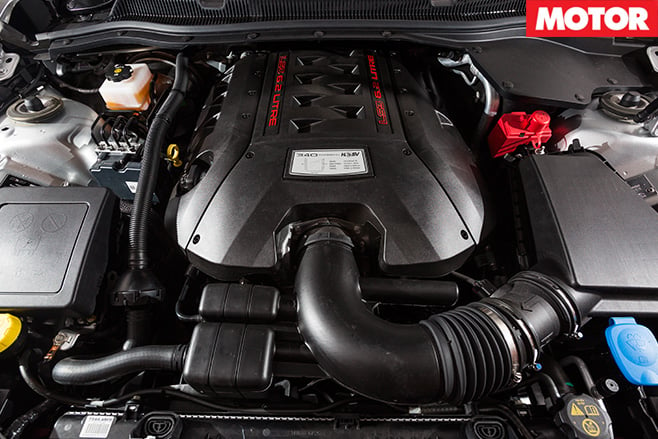
Enter the car you see here, the first (and sadly last) Gen-F2 to score the LS3 – in 340kW guise, same as the previous Clubsport SV, a rather healthy 36kW more than the VFII SS. Torque is 570Nm, same as the SS.
Aside from a bunch of styling tweaks (effectively a Gen-F2 Clubsport with blacked-out bits, some stealthy stickers and special badges) the big news here is the price. HSV is back in the sixty-something game; the six-speed manual ute a relative bargain at $62,990 and the sedan $65,990 – $2500 extra for the six-speed auto.
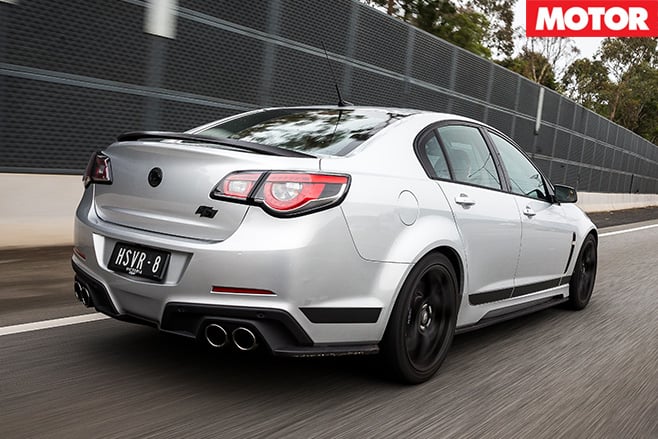
Around town, the SV Black also has a meatier, more menacing burble than the SS but the ride’s firmer owing to a stiffer suspension set-up.
The SV Black might be most unique, at least mechanically, for being the only VFII or Gen-F2 Commodore to score both Holden’s clever new sound-enhancing intake plumbing – whose little bulbous acoustic chambers and inlet tube are visible beneath the SV Black’s bonnet – with HSV’s own bi-modal exhaust. It’s an effective combo – the SV Black could be the best-sounding (stock) V8 Commodore on sale today.
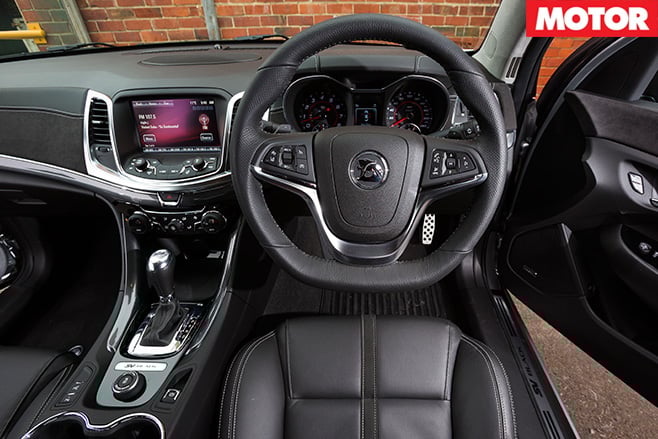
Much like all other AP Racing-equipped HSVs, the brakes are outstanding – great pedal feel, good bite. If we’re honest we ran out of time to cross the alps in the SV Black, but our initial impressions are it’d be quite the different handler to the softer-sprung SS.
Not least, the stiffer suspension would see the SV Black sit a bit flatter, but the front end bite a bit harder, thanks to wider front rubber (255 versus the SS’s 245 front tyres, and sticky Continental ContiSportContact 5Ps versus the more cost-focused Bridgestone Potenza RE050As on the SS).
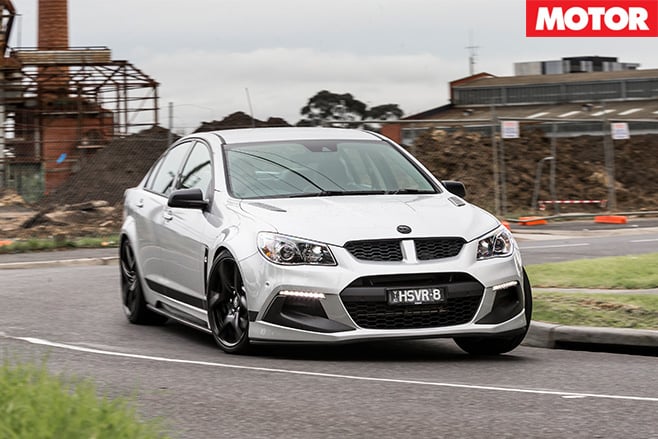
Just 350 sedans and 100 utes will be available in Australia. Best get in quick then because unless Holden’s cooking up its own 340kW special editions for the final run to the flag next year, the SV Black might be the best LS3 Commodore there will be. By extension, it’s perhaps the best all-round naturally-aspirated V8 Commodore ever.
4.5 OUT OF 5 STARS
LIKE: Sounds fantastic, goes hard, it’s like a VFII SS with extra goodies DISLIKE: Not making enough of them, last nat-atmo HSV
SPECS Engine: 6162cc V8, OHV, 16v Power: 340kW @ 6100rpm Torque: 570Nm @ 4650rpm Weight: 1764kg 0-100km/h: 4.8sec (est) Price: $65,990 (manual)
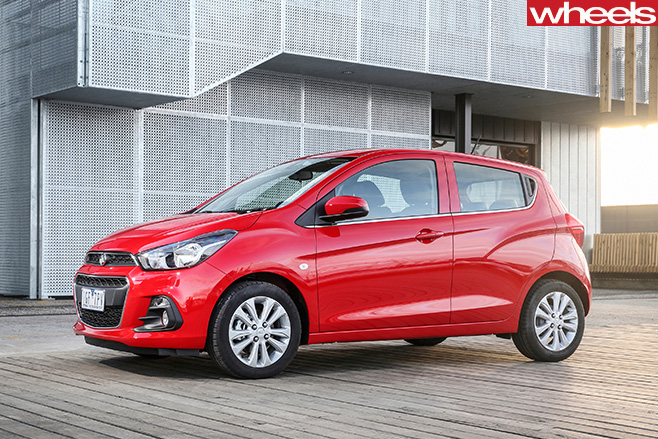
1. The Holden Spark is one of the cheapest cars available with Android Auto and Apple CarPlay.
2. The Spark is one of Australia’s most affordable cars, starting at $13,990, but it’s still a few thousand more than some of its competitors, especially once you up-spec.
3. It’s steering and suspension were developed in Australia.
4. The boot space of the Spark is one of the smallest available, at just 185-litres.
5. The Holden Spark was awarded a five-star ANCAP rating.
6. The handles on the rear doors are concealed to give it the illusion of a sporty three-door.
Click here to read the full review of the Holden Spark range.
