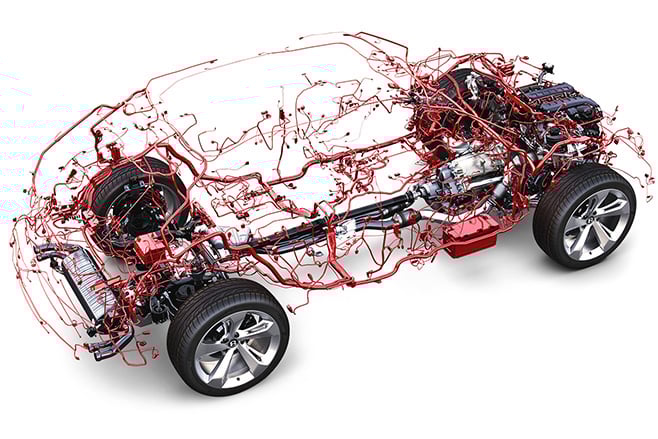
The majority of today’s vehicle faults are electrical rather than mechanical, and we don’t’ need a thousand words to explain why.
Bentley has released a fascinating image of its new Bentayga SUV that reveals its incredibly complex wiring harness.
Just like the nerve cells and fibres that transmit crucial pulses across the human body, the harness is responsible for interconnecting the Bentley’s vast electrical network.
There are actually seven different networks at play – operating at different speeds and for varying uses, but all integrated to share information where necessary.
Virtually all modern cars feature such electrical networks, though only the related Audi Q7 – especially in the advanced SQ7 variant – would come anywhere close to matching it.
Both the Bentayga and SQ7 feature the world’s first 48v electrical system, which is secondary to the main system that is commonly 12v on today’s cars.
The 48v system is used for the electro-mechanical active roll control that gives the Bentayga (and SQ7) variable wheel-axle articulation depending on whether the SUV is travelling on road or off it.
If you’re wondering why the network is so complex, there’s barely any feature of the car that isn’t dependent on it.
Beyond common driver assistance features such as electronic stability control and hill descent control, the Bentayga employs multiple cameras and systems for adaptive cruise control, traffic-sign recognition, bird’s-eye-view vision, semi-automatic parking, and infra-red night vision.
Then there’s the electronically variable dampers, front seats with 22-way adjustment and massage/heating/ventilation functions, all-LED headlights, auto tailgate … and even a fridge (for the Bollinger).
The list could go on, but we’ll let you get back to studying that captivating picture.
Want more? Check out why the Bentley Bentayga is the most expensive SUV ever.
Three months out from its official unveiling at the Paris Motor Show, Skoda has released video and exclusive images of its Kodiaq seven-seater SUV, in a bid to whet would-be buyers’ appetites.
Details released by Skoda reveal the Kodiaq will be the first in the line-up to use a surround camera system and will boast 2065 litres of luggage capacity — a figure Skoda calls class leading. The new version will be offered with either front- or all-wheel drive options.

Utilising parent company Volkswagen Group’s modular engine platform, the Kodiaq is likely to be offered with a choice of up to five different powerplants; two turbo diesel options as well as three turbo petrol variants. And while selectable drive modes – including an off-road mode for the All-Wheel-Drive version – and dynamic chassis control will be offered, Skoda has only confirmed one powerplant thus far; a 2.0L petrol engine capable of 132kW.
The SUV’s infotainment system will also come from Volkswagen, with a smartphone-like touchscreen up to eight inches wide, internet connectivity including a WiFi hotspot, as well as having Apple CarPlay and Android Auto compatibly.
Albeit wrapped in checkerboard-patterned vinyl intended to camouflage the car’s final presentation until its official unveil, the seven-minute video and high-resolution images reveal the firm’s first seven-seat three-row SUV adopts its styling cues from Skoda’s Vision S concept SUV which debuted at this year’s Geneva Motor Show. The slim headlights — which Skoda says are inspired by Czech crystal glass art, and will form part of the brand’s visual signature — as well as the wide front grille and angled bodywork, all featured on the concept vehicle.

Talking at the concept’s Geneva unveil, Skoda’s CEO Bernhard Maier also let slip the fact that the Kodiaq (and the brand’s flagship Skoda Superb) may cop the RS treatment and join the Octavia as the company’s only current performance-optioned model.
“It’s not a question of the engineering— we can do it — we need to make a business case first,” said Maier, who suggested it would be a few years away if it indeed got the go ahead.
Skoda Australia has confirmed the all-new SUV is slated for Australia and expects it to land in dealerships by the second half of 2017.
BMW fans are at fever pitch over rumours of a planned BMW M2 CSL or GTS model that would wind the baby M car’s performance level into the stratosphere.
German magazine Auto Motor und Sport broke the news, reporting that the BMW board had made a decision to grant the more extreme M2 a production green light.
Speculation suggests the track-ready model will receive a bump in power to produce more than the current 272kW/465Nm.
The M2’s turbocharged 3.0-litre inline six-cylinder engine is similar to that used in the BMW M3 sedan and M4 coupe, which is tuned to pump out 317kW/550Nm.
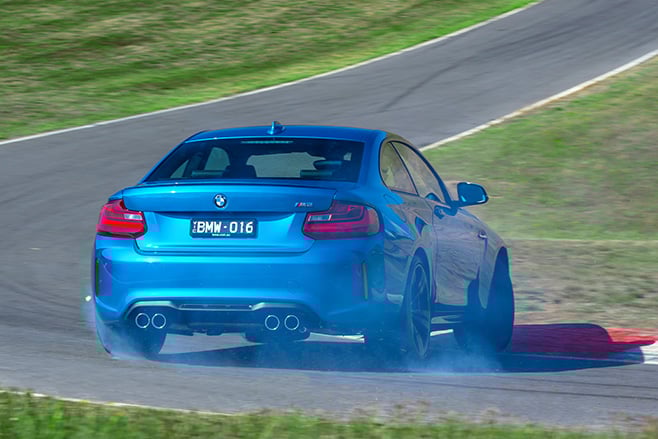
Aerodynamic enhancements could incorporate a large rear spoiler at the rear and a splitter added to the front bumper. Suspension upgrades and carbon brakes are on the cards should the model come to pass.
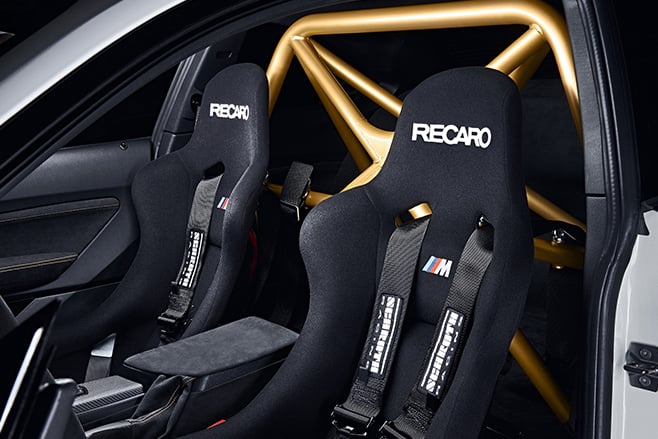
BMW has prior form, having tricked up an M2 for MotoGP safety car duties last year (pictured below). A neatly integrated roll-cage in lieu of rear seats, and an interior smattered with the familiar orange-gold colour now associated with GTS models suggests the one-off car may harbour deeper development secrets.
As with other CSL and GTS products, the special BMW M2 would likely be built in limited numbers, making it even more desirable and collectible than the current model.
Gearboxes are another talking point. The CSL variant could use the slick-shifting dual-clutch automatic of the M2, or it may go down the enthusiast path and utilise the manual transmission of the M2 Pure. So far in Oz, M2 leads all current BMWs for manual gearbox uptake.
Wheels contacted BMW for comment, though the local arm was not willing to divulge any new information.
“We are aware of the M2 CSL rumours and it once again proves the high level of interest surrounding the M Division currently.
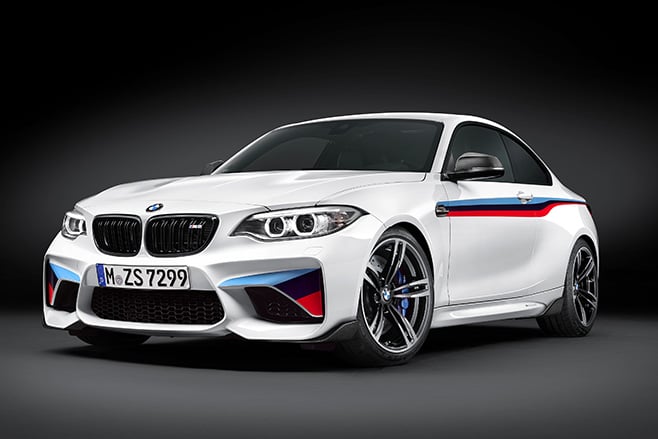
Nevertheless, enthusiasts are frenzied over the gossip and it is unlikely this level of interest will go unnoticed by Beemer executives in Munich. It is understood that circumstances like this can lead to the creation of special vehicles which were not necessarily in the minds of decision makers beforehand.
A more hardcore M2 seems to represent the desires of BMW’s M Division, so whether it remains speculative or not is something we will watch with keen interest.
The already fearsome BMW M2 has proven a big hit Down Under. The initial allocation of 300 units and a further 100 cars have already sold out. BMW says new M2 buyers will have to wait to take delivery until at least March 2017. This local appetite for M Division products should put Australia in good stead for receiving a more potent version if it eventuates.
Expect pricing to be significantly north of the $89,900 currently asked for the M2 Pure. It may cost as much as double if the $295,000 price tag of the new BMW M4 GTS is a guide. A standard BMW M4 costs $149,900.
CUSTOMERS will be able to officially purchase a Honda NSX from December 1, but the cars will arrive the month prior.
A left-hook pre-production NSX has been on display with a Honda dealer in Melbourne, but an NSX won’t take to Australian roads until the end of the year when they arrive in late November.
Honda confirmed to Wheels the NSXs that customers will be able to purchase are set to arrive in Australia in late November, early December, but stressed that could change at late notice.
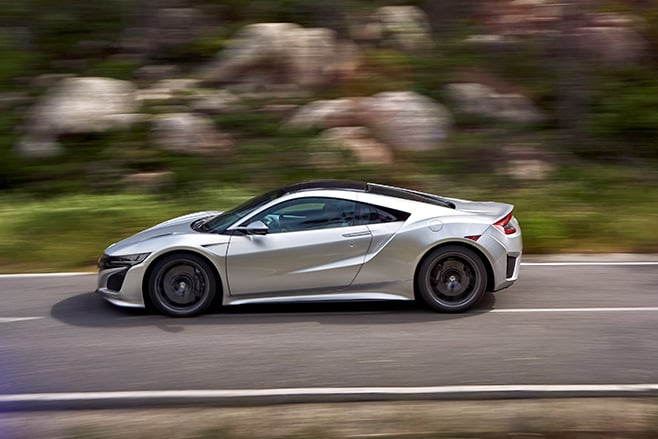
Honda Australia remains tight-lipped on pricing, and refuses to budge on suggestions the car could cost north of $400,000 for local buyers. A Honda spokesperson gave no suggestion on a price bracket for the highly-anticipated car.
However, dealers are holding orders from five different customers across the country, while fielding “many” expressions of interest.
Official pre-orders will not start until Honda formally announces the final price for the Hybrid supercar.
The Australian-spec NSX will be similar to models seen in the USA and UK, which sell for USD$207,000 and £155,000 respectively.
Using those prices as a gauge, Australian customers could expect to pay between $267,000 and $274,000.
Honda hopes to make an official announcement regarding pricing for the NSX by the end of July.
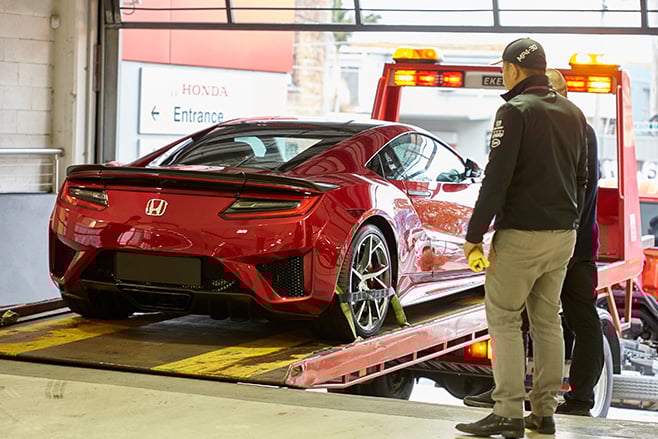
A spokesperson for Honda Australia says formal allocations “depends on demand across key markets such as US, Japan, and Europe.”
When the NSX does finally arrive, it will come equipped with a hybrid powertrain that is made up of a twin-turbo 3.5-litre V6, and three electric motors, producing a grand-total of 427kW.
NSX project boss Ted Klaus is reported as saying the car could be transformed into a ‘platform’, with up to five different models. These include a lightweight performance model, and an all-electric version.
Honda fielded a pair of all-electric NSXs at this year’s Pikes Peak Hillclimb.
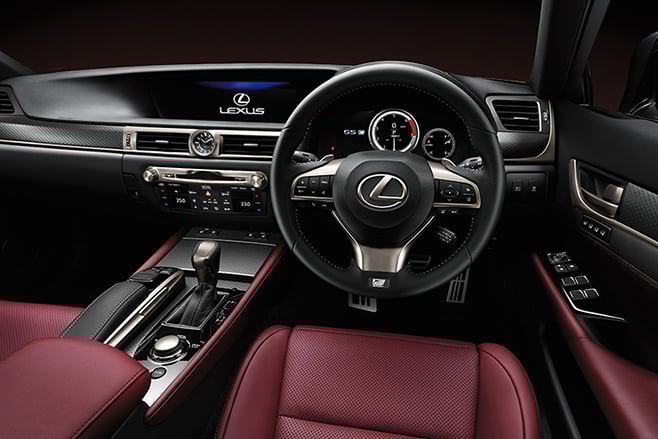
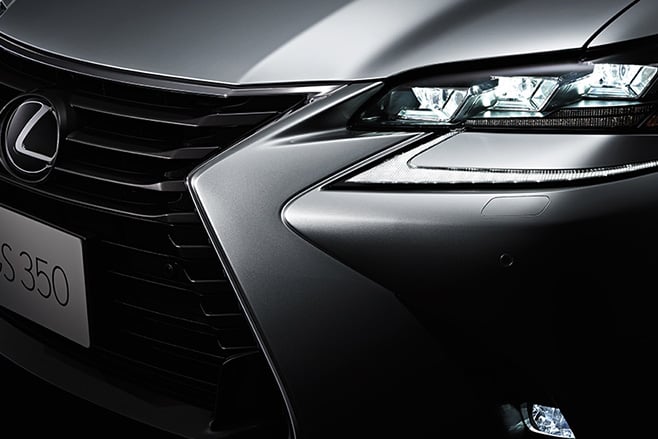
Lexus has long-promised an alternative to European luxury sedans, but never quite delivered in terms of styling and performance. With the GS series, however, they’ve made great inroads in winning over the biggest badge snobs, particularly with the gutsy features packed Lexus GS 350 F Sport
TELL ME ABOUT THIS CAR
Lexus totally ditched the beige and turned heads with its F Sport series including the IS F sports sedan and the brutish RC F V8 coupe. It now offers an F Sport version to most models across its range, including its large sports sedan, the GS, which combines big-car luxury with ‘race-inspired thrills’. First introduced in 2012, the second generation GS series has had a bit of a refresh and comes with four engine types including a 2.0-litre four cylinder turbo, a 2.5-litre hybrid, 3.5-litre V6 hybrid and the 3.5-litre V6 found in the GS 350. Of the four, the GS 350 F Sport probably best lives up to Lexus’ goal to produce a ‘fully-fledged grand-touring sports sedan’.
STRENGTHS
- Lexus’ 3.5-litre V6 engine direct injection petrol engine produces 232kW with 380Nm of torque and does 0-100km/h in 6.0 seconds. It’s tried and tested but by no means tired.
- Multiple driving settings including Eco, Normal. Sports, Sports +, Customised Sports and Snow which change
- Eight-speed automatic transmission with sequential and paddle shift
- Active variable suspension
- Dynamic, rear-wheel steering that reduces steering effort at low speed while increasing stability when you put the foot down.
- A full suite of active safety features including radar active cruise control, lane keeping and steering assist, pre-collision braking and blind spot monitor with rear cross traffic alert.
- A comprehensive multimedia system featuring a panoramic 12.3-inch multimedia display, advanced Bluetooth™ capabilities* and music pumped through an epic 17-speaker Mark Levinson sound system.
- Head-up display featuring navigation instructions.
- Quality and aesthetically pleasing interior finishes
WEAKNESSES
- It’s a little thirsty. Lexus reckons it averages 9.7 litres/100kms, but we nudged 12.0 litres/100kms with a lot of freeway driving. You wouldn’t spend more than $100,000 to then drive around in Eco mode.
- The screen controls are a little cumbersome and fiddly.
- The back seat is a little tight for anyone on the tall side
- From behind it looks like a Camry
The $104,000 drive-away price includes everything, with Lexus believing a car like this should require no further enhancements.
It is in the same league as the Audi A6, BMW-535i and Jaguar XF-S but none of them can offer this much in terms of performance and technology for the price.
Gosford in NSW won’t be an alternative venue for a championship finale for Supercars in 2017 after the Central Coast Council announced that the proposal ultimately failed to stack up.
The council indicated that insurmountable traffic management issues, the closure of a heavily used arterial road, and costs, were factors in the decision to nix the Supercars Australia push for a Central Coast attraction.
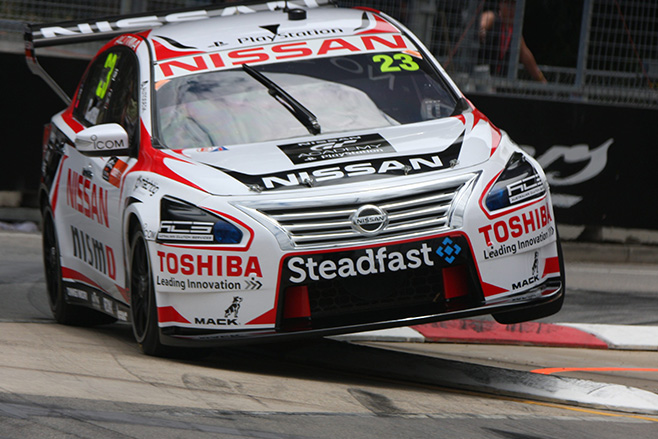
But judging by the reaction from punters on social media and web sites, there are strong thoughts that for the greater good of the sport, Supercars should be putting efforts into lobbying governments for another permanent motor racing facility in NSW, rather than shooting for costly taxpayer-funded pop-ups.
One, on Speedcafe, wrote: “So here you have the biggest Aussie motorsport series racing on temporary street circuits that are expensive to build and dismantle, disrupt local traffic and commerce and provide no ongoing facilities to other motorsport users. For all the money governments provide to V8 supercars we could have wonderful full time facilities all around the country. How much money does Townsville spend each year on a circuit no else can use? Same goes for Adelaide, Gold Coast and the Sydney 500. If government is going to support this racing series, it needs to leave a legacy in the form of new motor sport facilities that the whole community can use. This is a good decision by Gosford Council.”
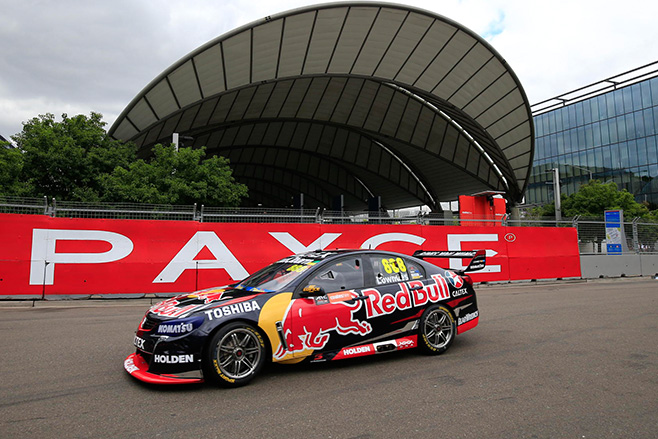
But some still hanker for a street race in a big city. One enthused: “Bring it to Geelong, Victoria, and the beautiful waterfront of the bay area, naturally in spring or summer to maximise spectator and television viewers. Closing these roads is no problems, in fact some may say they are closed more than they are open with events like the Cadel Evans cycling, Cotton On Foundation’s Run Geelong triathlon, Geelong Speed Revival, Geelong Yacht club’s Festival Of Sails, so not a problem…”
While crashes in Formula 1 are fairly common, as are crashes in Indycar, this might be the first time a crash has involved cars from both series.
The incident took place at the Monza round of Boss GP, a race series which allows eye-wateringly rich folk to play out their racing driver fantasies in a variety of single seater machinery, including cars from F1, Indycar, Champ Car, GP2 and World Series by Renault.
It’s a great concept, allowing some of the world’s fastest and finest race cars to remain in competition rather than collecting dust in a warehouse or mounted on some billionaire’s lounge room wall.
Of course, while the cars might be top flight, the drivers aren’t necessarily of the same calibre, leading to incidents like this one.
Having royally messed up Monza’s Lesmo 2 corner, the Champ Car driver is unaware the Benetton F1 behind now has the run on him and slowly closes the door, causing a monumental accident. Thankfully, all involved seem to escape unharmed.
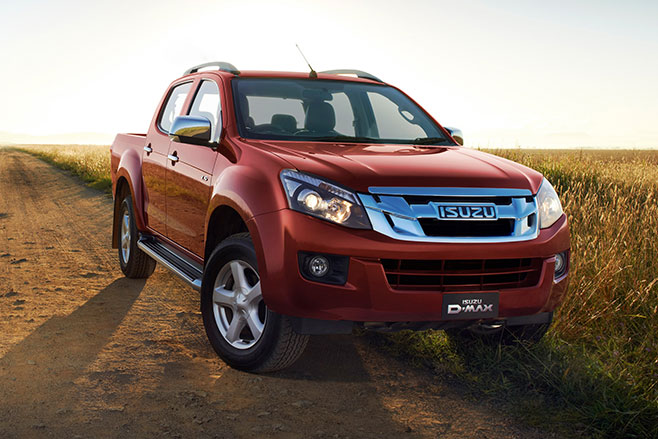
THE next-generation Mazda BT-50 will be based on the Isuzu D-Max, ending the Japanese brand’s long association with Ford.
Mazda and Isuzu announced this week “a basic agreement on next-generation pick-up truck collaboration”. The short press release featured barely any details but stated the collaboration would allow Isuzu to enhance its product competitiveness and Mazda to strengthen its product line-up and “maintain own-brand market coverage”.
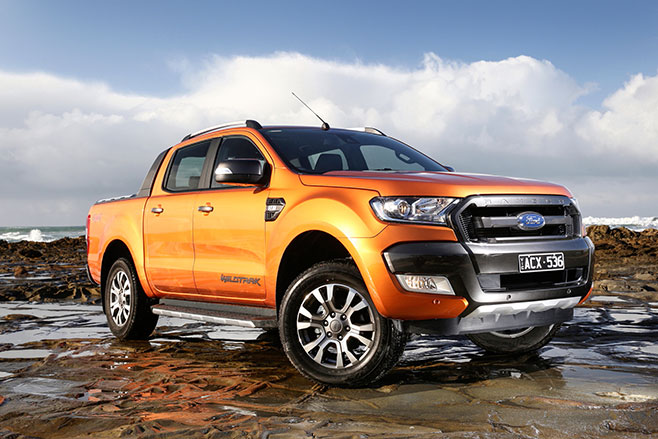
This would become the latest three-way ute partnership, following the Nissan Navara that is a donor vehicle for the upcoming Renault Alaskan and Mercedes-Benz GLT.
Isuzu and Mazda both currently build their utes separately in Thailand, where the next-generation models would be expected to continue production.
It is the last of the Mazda-Ford alliance that has seen multiple twins such as the Tribute/Escape SUVs and Mazda 3/Focus.
MAZDA will cut the BT-50 trade ute’s ties with Ford, announcing that the next generation of its one-tonner will instead use underpinnings shared with Ford’s rival, Holden.
A brief statement issued by Mazda overnight said the carmakers had “reached a basic agreement on next-generation pick-up truck collaboration, allowing Japanese rival Isuzu to enhance its product competiveness and Mazda to strengthen its product line-up and maintain own-brand market coverage”.
The move to dump the Ranger as the base for the BT-50 means Mazda will end a decade-long association with Ford.
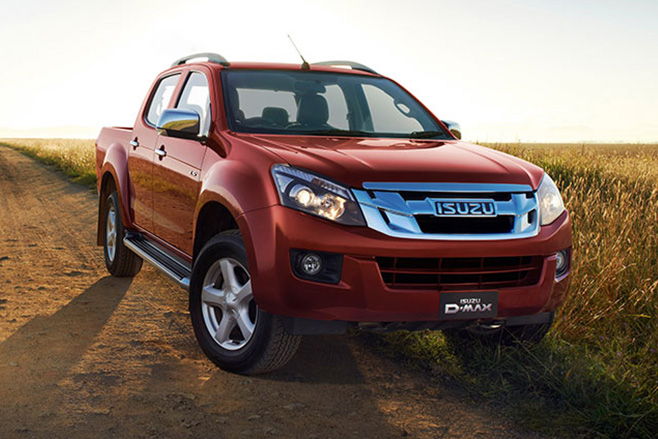
Under the terms of the agreement, Isuzu will produce next-generation trade utes for Mazda, based on Isuzu’s D-Max. The agreement also states the new ute will be sold in all markets outside North America, which includes Australia.
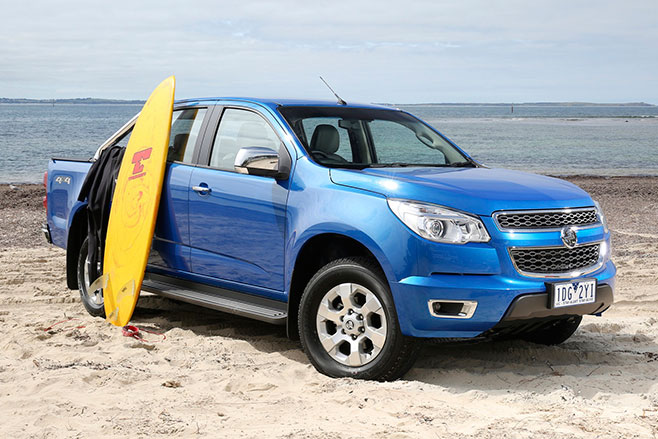
The consolidation means the Isuzu D-Max, Holden Colorado and Mazda BT-50 will all share the same DNA. Likewise, the Nissan Navara is also set to spin off rebadged versions for sister brand Renault, as well as a more luxurious version for Mercedes-Benz that’s likely to be known as the GLT.
The announcement will be welcome news for Holden, with the next-generation Isuzu D-Max expected to lift its levels of driver assistance, comfort and handling up to rival that of the current-generation BT-50 and the Ford Ranger, which according to Wheels are both close to class-leading in the segment.
In contrast, the Isuzu D-Max and Holden Colorado languish near the bottom of their class.
Light commercial vehicle sales – which includes one-tonne trade utes – have already grown by 10 percent compared with the first six months of last year, accounting for more than one in four new-car sales in Australia, or about 100,000 units. Almost all sales in this segment, which includes buses and vans, are two-wheel-drive or four-wheel-drive pick-up trucks.
Toyota’s Hilux dominates the more utilitarian 4×2 part of the trade ute segment, while in the 4×4 segment – the playground of a new generation of passenger car buyers looking for something that says work on weekdays and play on weekends – there is a hard-fought battle between the Hilux and the Ford Ranger.
The Ford Ranger outsells the Mazda BT-50 three to one in the 4×4 segment. In contrast, the Holden Colorado snares two sales for every sale of the Isuzu D-Max.
The Ford Ranger and Toyota Hilux regularly feature in the top 10 bestsellers list for monthly new-car sales.
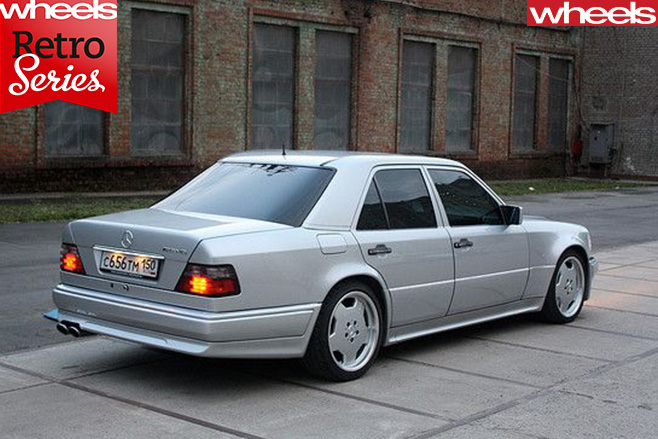
AT THE risk of stating the obvious, Mercedes-Benz has been at the pointy end of motorsport lately. Hard to imagine, then, how different its brand image was 26 years ago.
First published in the April 2016 issue of Wheels magazine, Australia’s most experienced and most trusted car magazine since 1953.
With the exception of the Cosworth-tweaked 190E 2.3 and 2.5-16 models, Merc’s matronly range through the 1980s was consistent with a company that had officially denounced motor racing for more than 30 years, following the 1955 Le Mans disaster.
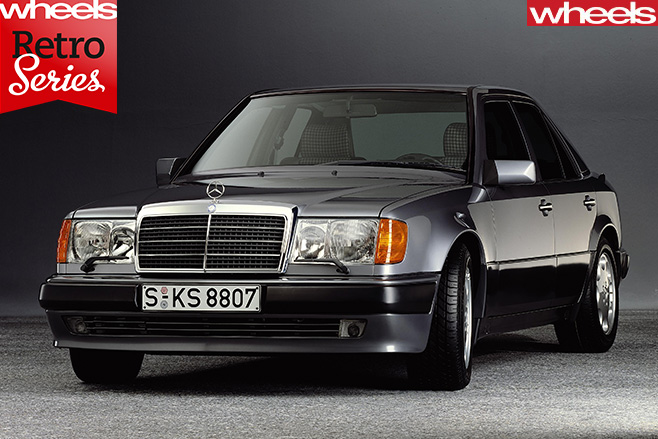
The embodiment of all that pent-up performance angst arrived at the 1990 Paris motor show in the shape of the 500E. The body was comfortably familiar (the W124 series was already six years old), but wider, lower and more muscular than the average Stuttgart taxi.
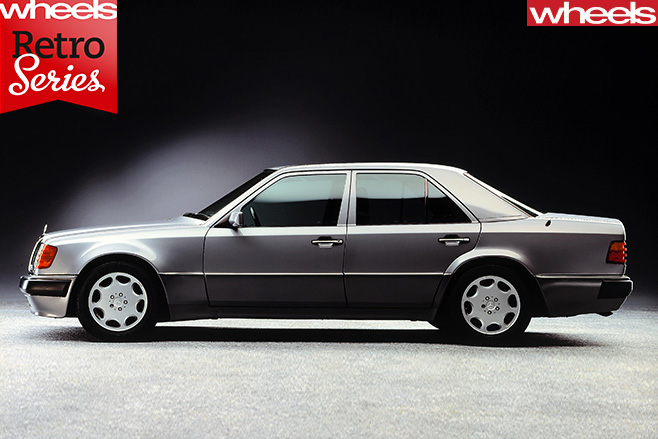
Most interesting of all was the process by which the 500E was produced. With launch pricing slated at DM135,000, or more than double the price of a 300E, Benz had forecast volumes of only 3000 per year. For the performance-development and low-volume production facilities it needed, Benz turned not to new homeboy AMG, but to cross-town rival Porsche. For the latter, the 500E contract was a financial lifeline because its 959 production had ended and the yuppie-stained Porsche 911 was struggling to sell.
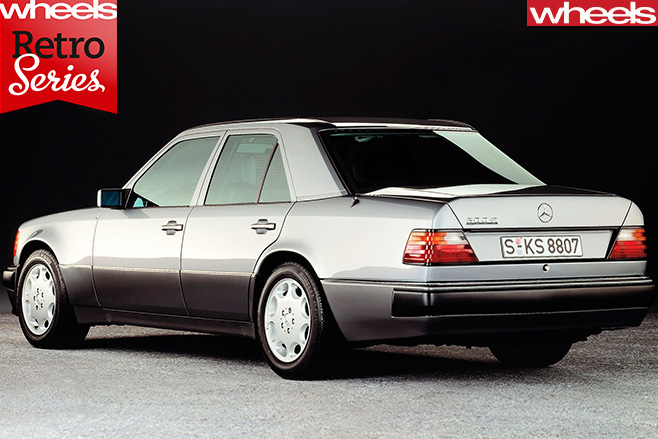
This pushed production of each 500E to 18 days, versus three days for a standard W124. It was worth the wait; the 500E (facelifted and renamed E500 in 1993) was recognised as an instant classic, with continent-clawing performance and comfort, and limited availability. Just 10,479 examples, all in LHD, were built from 1990-95.
Stacked deck
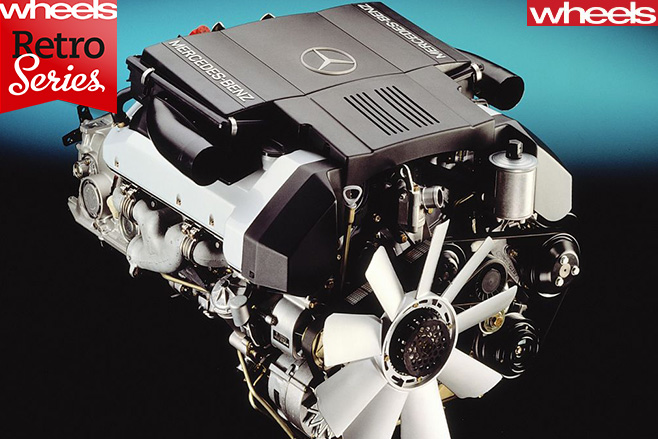
The 4973cc M119 engine had two cams per bank, variable inlet valve timing and four valves per cylinder. 500E introduced the ‘standard deck’ block, shared between 4.2 and 5.0-litre variants, and Bosch LH-Jetronic (superseding SL’s KE). Its 240kW/480Nm, via a four-speed auto, gave 0-100 km/h in about six seconds. The M119, with twin turbos, powered Sauber’s Le Mans-winning C9 racer.
Benz had a formidable basis in the landmark W124, with its separate spring/strut front-end and multi-link rear. The 500E sat 22mm lower on 37/38mm wider tracks, with uprated springs and dampers and 16-inch alloys. Ride suppleness was legendary; the only dud note was the slow, recirculating-ball steering. SL-sourced brakes improved in ’93 with bigger V12-spec items.
Hand-built by Porsche
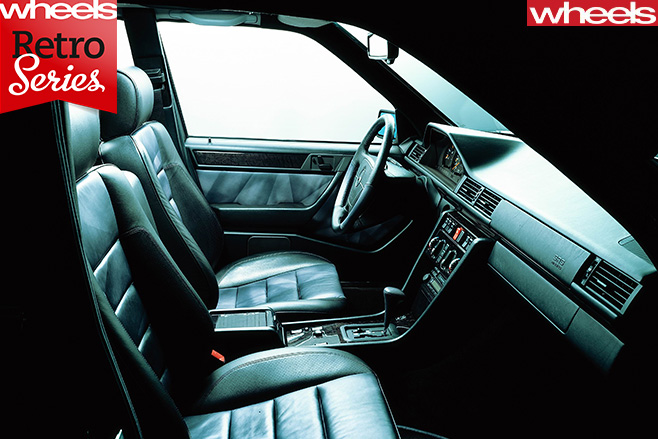
The 500E qualifies among the great hand-built Benzes, with much of the chassis and subframe reinforcement being hand-welded at Porsche, the 500E earning a Type 2758 designation at Zuffenhausen. Front and rear guards are subtly flared while a new front air dam reduced lift by 50 percent. Shaped rear bench, forced by a fatter centre tunnel, makes the cabin strictly a four-seater. Interior boasts plenty of leather and woodgrain trim but was as practical and hard-wearing as humbler Es.
Target practice
The 500E wasn’t just a charity root for struggling Porsche; rumours swirled at the time of a friendly takeover by Mercedes-Benz.
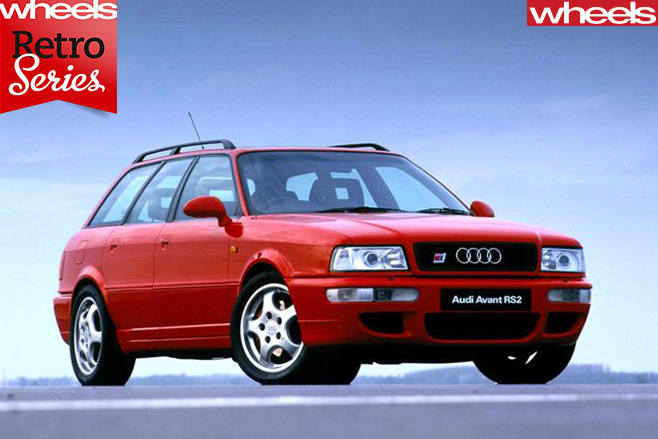
Porsche segued from 500E/E500 production to surrogate the category-busting, all-paw, turbo Audi RS2 sport wagon.
500E or E500? Both, actually. All of Mercedes’ designations swapped ends in 1993, coinciding with the W124 series’ final facelift
Famous faces
Celebrity car nuts who bought 500Es included Rowan Atkinson (Mr Bean), David Letterman and Captain Kirk himself, Star Trek’s William Shatner
Pimped
Mercedes’ tuning arm AMG had only a peripheral involvement in the project, converting a batch of 45 late-build E500s to 6.0-litre E60 AMG spec