
Final stop: the wineries.
Aside from the Fleurieu’s beautiful, clear-water beaches, and delicious local produce, it’s best known locally for its wineries-meet-ocean landscape. Not surprisingly then, it’s the internationally renowned McLaren Vale wine region that steals most of the region’s spotlight. And with the tourist focus often on the larger winemakers, it’s not unusual for visitors short on local knowledge to overlook the series of high quality boutique wineries and food traders scattered across the coastal towns.
Naturally, I collected a few of my closest friends for a bit of a food and wine adventure. With the sunroof open, making the most of our last few rays of sunshine before the weather turned in Jack Frost’s favour and we’d have to make use of the heated front seats, we loaded into the car. Four women looking for adventure and one $121k SUV. What could possibly go wrong?
Cruising along to our first stop – Mt Jagged Winery – I couldn’t wait to show off some of the cool tech inside the Volvo XC90.
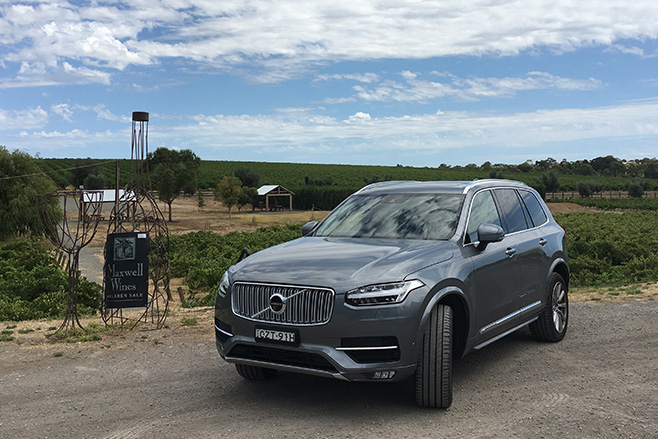
With a click of a button, the Volvo jumped into Pilot Assist; an autonomous driving technology that sees the vehicle drive itself along clearly marked lanes behind another car up to 40km/h. “Look girls, no hands. It’s driving itself!”
The gawking was infectious – it’s the beginning of driverless technology on our roads, and I wanted everyone to know I had the keys.
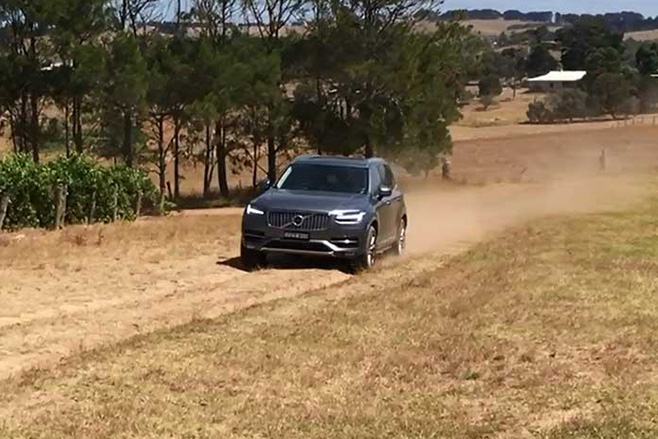
Somewhere between the sipping of Mt Jagged’s Pink Heath Sparkling Pinot Noir and Victor Harbor Winery, we found ourselves lost on a dirt service track between the grape-dressed vines. We weren’t sure where it would lead us, but it was a good excuse to try the XC90’s driving modes: comfort; eco; dynamic; off road and individual.
Switching from eco to off road, we followed the rutted dirt track in full circle. It even had hill descent control, a feature usually found in 4WDs. Given the XC90 looks more like a Toorak Tractor than an off-roader, I was surprised by how well it coped. That’s not to say I’d take it across the Australian outback any day soon.
No trip to the Victor Harbor region of the Fleurieu Peninsula is complete without a stop at the Port Elliot Bakery for a pie, pastie and their specialty – honey sticks (more commonly known as bee-strings). So with the purchased bottles of wine clinking on the floor, we picked up some snacks to end our novelty experience. Driving the XC90 to our favourite destinations sure beats the old beaten-up Corolla we’ve driven around Victor Harbor since we were 17 years old.
VERDICT
We may have only had four people in the car on this trip, but it’s easy to see how a seven-seater could come in handy on adventures like this. It’d easily be able to carry a larger-than-normal carload of tipsy wine-ers. And I could even charge for it – $100 per hour.
But the wine tour wasn’t finished yet. Poor Dad always misses out on the fun stuff, so obviously I forced him to drive through McLaren Vale with me to get some photos. #Instadad.
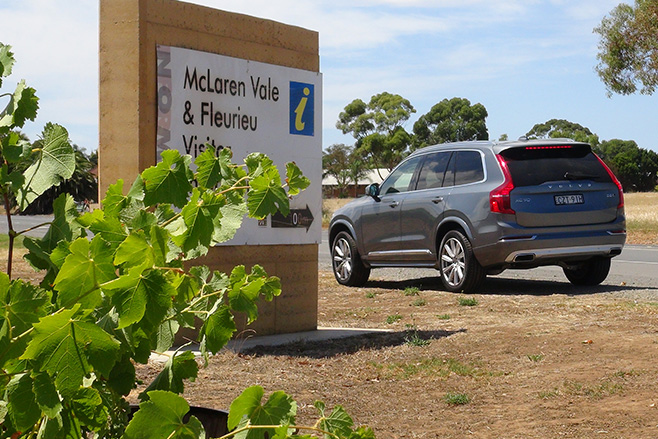
McLaren Vale is known for its dry red wines, but also produces some delightful whites like Chardonnay and Riesling. The region is also packed with some delectable places to stop for a morsel or two, such as the rustic Elbow Room restaurant, or provincial Fino.
The aim of our day was to follow South Australian Tourism’s Epicurean Way, or at least, the McLaren Vale part of it. Alas, it wasn’t meant to be. A quick stop by the beautiful d’Arenberg saw major construction works underway for the famous family-owned winery’s new architecturally-magnificent cellar door. So we’d have to find another backdrop for the photos.
After 30 minutes insisting I knew my way around McLaren Vale, and Dad sitting frustrated in the passenger seat, I decided to turn to the navigation on the 9-inch screen – which was covered in finger prints by this stage – to plug in McMurtrie Mile.
McMurtrie Mile is a strip of six experiences; Wirra Wirra, Hugh Hamilton, Primo Estate, Sabella Vineyards, Red Poles, and McLaren Vale Brewing Company.
By the time we stopped at a couple of the wineries, it was getting late in the day, and the restaurants had closed for lunch. Who knew most of a quaint, touristy country town like McLaren Vale would close by 3pm? Luckily, Blessed Cheese on McLaren Vale’s main street was still open.
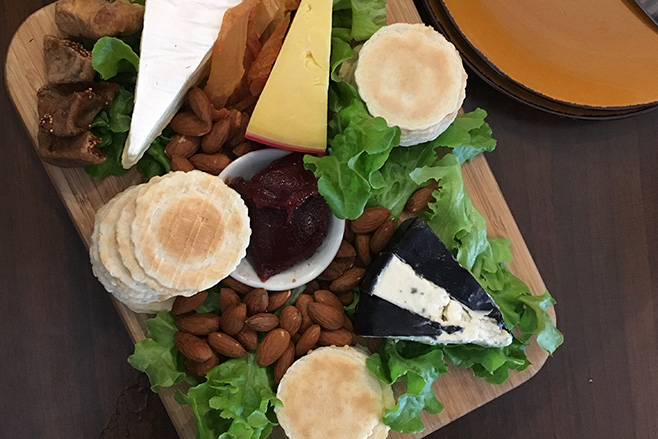
Making use of the XC90’s automatic parking feature, it paralleled itself into a tight spot on the main drag right across from the door. A delicious cheese platter and a coffee may not have been quite as extravagant as a cellar door lunch, but no one, being of sound mind and body, turns down the chance to eat delicious, locally-produced cheese.
It may have been a failed attempt at a wine tour and Instagram training for Dad, but we got to visit some of SA’s most scenic drives in a luxury SUV, so who could complain? After a few big days of driving, I was glad to have the aid of Radar Cruise Control to get us back to Adelaide.
VERDICT
For two people, the XC90 seems a little excessive. The middle seats were used as storage and the boot was left empty and unused. Still though, I was left feeling a little heartbroken that my trip had come to an end and it was time to hand back the keys. It’s not hard to find yourself addicted to the added ride height of an SUV, especially in something as luxurious, sophisticated and comfortable as the Volvo XC90.
Read part one of our Volvo XC90 road trip here.
From northeast Adelaide, to the southern coast; the XC90 was off to the Fleurieu Peninsula.
One hour south of Adelaide, the Fleurieu Peninsula is a beautiful, pristine coastal region rich in history, and a spot my family has frequented for summer holidays since before I was born.
No trip to this region is complete without a trip to the beach – and there’s no shortage of beaches to choose from: Middleton, Normanville, Aldinga and Port Willunga are all beautiful options, but from where we were staying in Victor Harbor, Horseshoe Bay in Port Elliot is our favourite swimming beach.
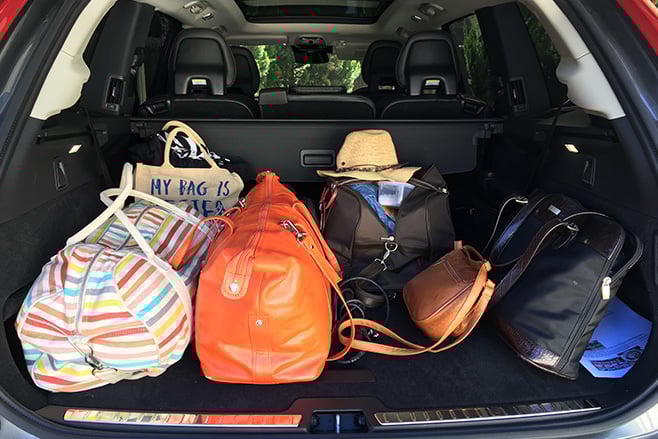
This time I was travelling with my mum, aunty, uncle and cousin – the perfect excuse to trial the third row, a responsibility bestowed upon the shortest in the group (sorry Mum). With a simple click, we set up the two extra seats. While this accommodated the additional passengers, it decreased our boot size by more than 50 percent. I watched my family walk out from the house loaded up with beach gear like something straight out of National Lampoon’s Family Vacation and declared we’d have to rationalize; I was certain it wasn’t going to fit.
But ye of little faith – even with the boot reduce from its standard 651 to 291 litres, we managed to pack in three beach bags, a pile of towels and my uncle’s snorkel and flippers, with a little bit of space to spare.
First anxiety hurdle defeated. But we still had the beach to get to and all I could think about was sand and wet bottoms in my beautiful new Volvo (a vehicle, I’ll remind you, I thought I’d have no sentimental attachment to).

Using the 360 degree reversing camera (one of my favourite features of the extra-priced Driver Support Pack), I backed out of the narrow driveway while my family ooed and ahhed at the ultra-lux SUV.
Until this point, I always thought endless “are we there yet?” questions would be the most annoying part of a road trip. But I was wrong.
“What does this do?”
“The colour is nice, are you going to include that in your review?”
“The seats are comfortable, but I suggest…”
In my family, there’s no lack of advice givers and suggestions.
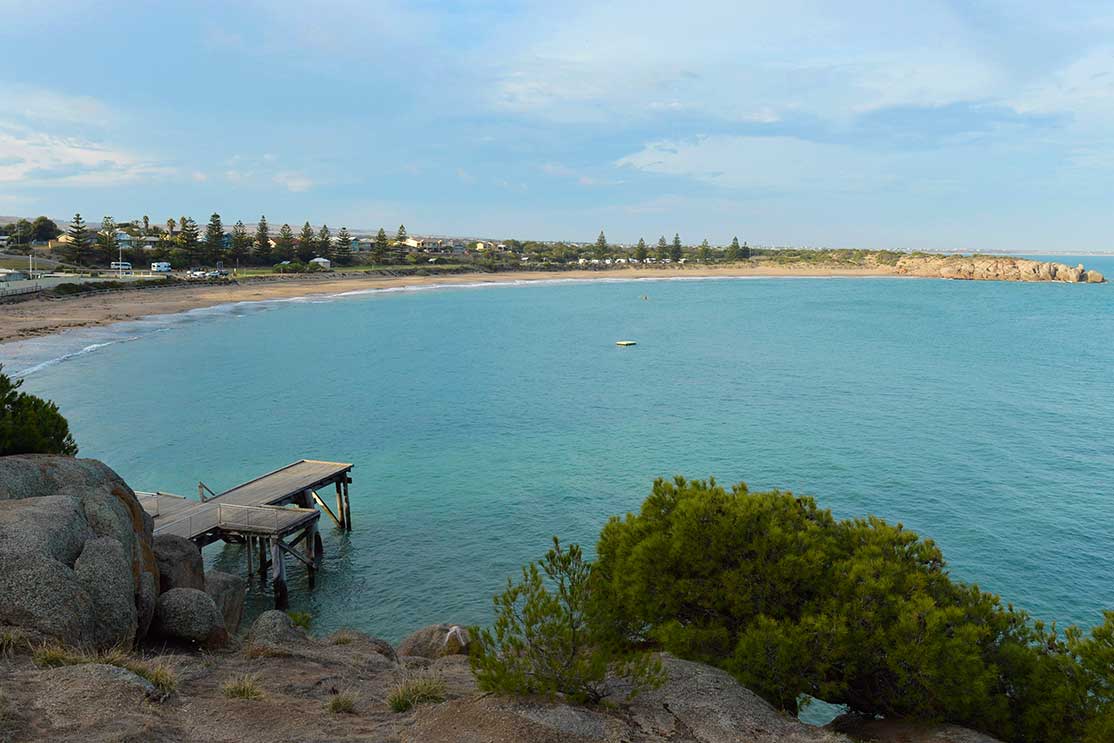
Originally a port for shipping goods, Horseshoe Bay became a popular spot for fishermen and swimmers in 1864 when trade moved to Victor Harbor. Shaped like a horseshoe (go figure), it’s now one of the more family friendly beaches in the area as the bay’s waves gradually increase in size from one end to the other.
A jetty, walking trails and the Flying Fish café are all accessible to beachgoers, and the Port Elliot Surf Lifesaving club host sausage sizzles during the warmer tourist season.
So once our skin had soaked in enough of the salt water and our bellies were full of fish and chips from Flying Fish, it was back into the XC90.
Luckily, the women in my family are as anal retentive as I am – dusting as much sand away as possible before getting in the car, followed by a vacuum when we got home. Thankfully, the leather seats and floor mats are incredibly easy to clean.
VERDICT
I was surprised by the amount of space the XC90 had and the comfort of the third row, according to my 5ft 3in mother. But if you’re a family of more than four and you need to use the rear seats, fitting everything in the boot may be a challenge – where will all those school bags go? The leather seats, though, are definitely worth the investment.
Read part one of our Volvo XC90 road trip here.
Bigger battery and wireless charging confirmed for the S500e.
While Mercedes is set to bring mild hybrid assistance to pretty much everything it produces – thanks to its new 48 volt motor-generator – the company will still be offering more traditional plug-in hybrids, with the facelifted S-Class that we will be seeing next year, set to get a bigger battery and the option of wireless charging.
While the current S500e has an 8.7 kW/h battery pack, the revised one will get a 13.5kW/h unit, boosting the electric-only range to around 50km. The new lithium-ion battery fits into the same space and – at 120kg – weighs almost exactly the same.

Despite the arrival of Merc’s new straight six engine, the 550e will continue to use a development of the current car’s 245kW turbocharged V6 and 85kW electric motor; the company also plans to drop the lesser S400h that is sold in some markets, as well as all non-plug-in hybrids.
Going forward the choice will be between the 48V “mild” system and high voltage models with sizeable battery packs. The S300h – the four-cylinder diesel version that’s offered in Europe – will be given a battery pack and turned into a plug-in hybrid, presumably also being rebadged as the S300e under Merc’s still-fresh naming convention.

To work, the system needs an air gap no greater than 160mm, but can transmit power at up to 3.6kW. Mercedes claims the system will be 90 percent efficient, with sensors allowing charging to start automatically as soon as the car is in place.
To help with that there will be an on-board cockpit display to help maneuver the S directly over its charging pad, or alternatively, buyers will be able to make use of the autonomous parking option that should be able to do a millimetre perfect job.
The S500e will also continue to have a charging port for old-fashioned plug in charging.
MERCEDES-BENZ will reveal a pure electric concept car at the Paris motor show in September – tipped to take the form of an SUV that will debut a new, futuristic design language.
The zero-emissions concept car will be the first in a family of four confirmed electric vehicles split into two SUVs and two sedans – one of which will take the fight to the Tesla Model S, and will provide the clearest look yet at Mercedes’ future electric strategy.
Built on a new scalable electric vehicle platform called Electric Vehicle Architecture (EVA), the SUV will be four-wheel drive, have a range of 500km and could produce Tesla-beating levels of performance, with Mercedes director of E-Drive system Jurgen Schenk saying “it will be dangerous”.
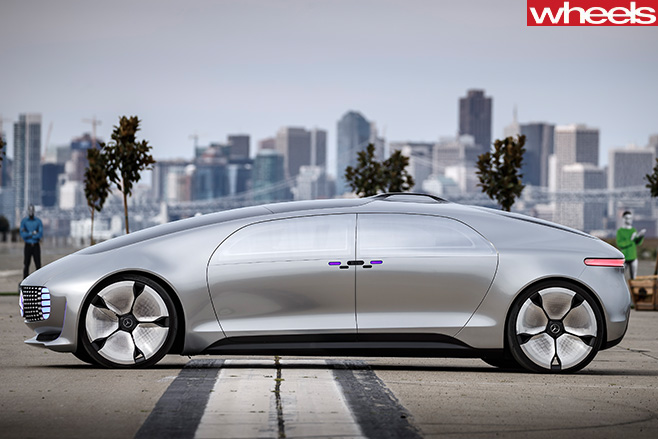
Following its Paris debut, a production version of the electric SUV is likely to hit the road in 2019.
“It’s expected in this decade, we don’t tell you more about the real year,” said Schenk. “Maybe you will get more information at the Paris auto show, but it’s planned for this decade.”
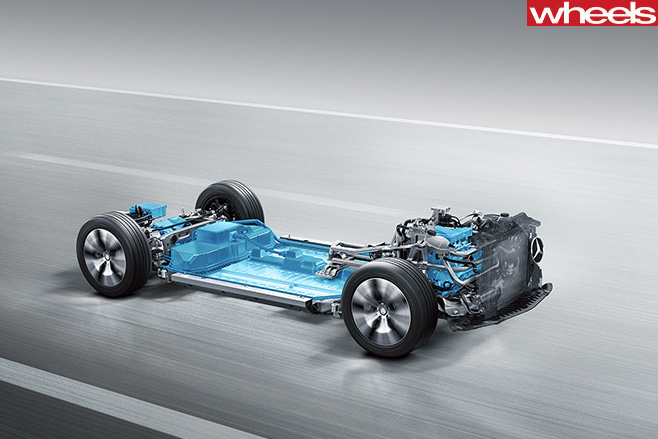
“We started with 42 people in 2007 and now there are around 450 in the main team and over 1000 in the wider team,” said Schenk.
While the SUV concept is expected to be a standalone model, the EVA is engineered to slot beneath existing Mercedes models, to improve the economies of scale of future electric cars.
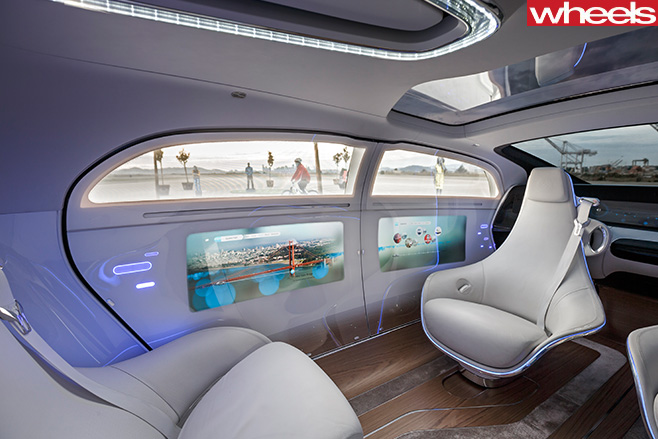
And while Mercedes’ first dedicated electric car will offer a range of 500km (a Tesla S 90D currently has a claimed range of 557km), Schenk expects battery advancements to see that number double to 1000km of pure electric range within five years.
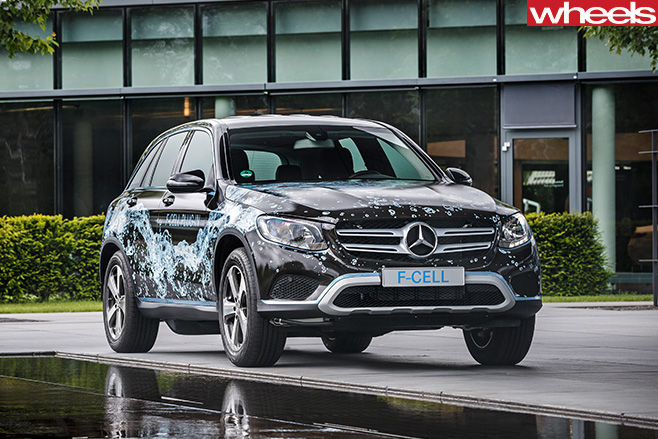
Plug-in hybrids also play a part in Mercedes’ strategy, with the brand reaffirming its plan to have 10 plug-in models by 2020 – one of which will be the facelifted S-Class [link to Duff’s story] due next year.
The next S-Class will debut inductive charging, a new family of in-line six-cylinder petrol engines and the latest version of Mercedes’ Drive Pilot system, which will take the Mercedes brand a step closer to fully autonomous driving.
There is an awful lot of navel-gazing being done about the new Porsche 911.
Few sections of the car enthusiast community are more prone to such things than Porsche devotees. It’s Weissach’s punishment for making the world’s greatest sportscar – on and off, but mostly on – for more than half a century that any significant change to it will also be regarded as contentious.
With the 996 generation of the 911, the cue was water cooling; with the 997, direct fuel injection; with the 991, a lengthened wheelbase and electromechanical power steering. And now, with the facelifted 991, it’s those contemptible, new-fangled turbos. How dare they?
The fact remains, though, that whether or not you like the idea of what Porsche has just done under the engine cover of its perennially blooming rear-engined sportscar, it has just gone and done it.
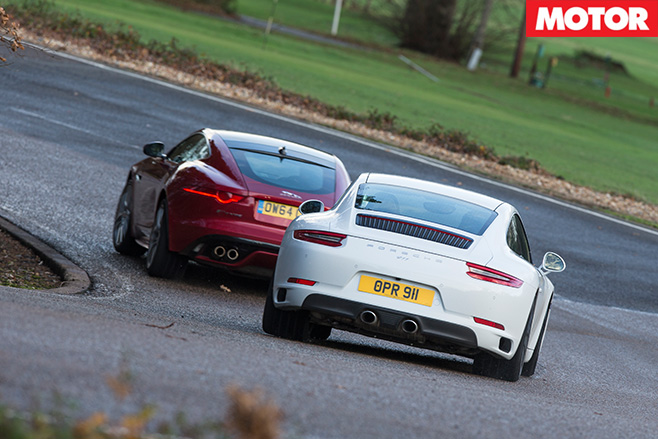
Just over $30,000 separates the list price of the Jaguar ($226,580) and the Porsche ($258,750), the 911 in high-output PDK transmission-equipped Carrera S form, which allows these cars to compete fairly and squarely. But on paper, the F-Type has a conspicuously large advantage on not just outright power but also power-to-weight and torque-to-weight ratios, even after the Porsche’s forced-induction makeover. It’s 404kW facing off against 309kW here.
Then again, 911s have become famous for overhauling such disparities. In fact, the bigger test for the Porsche’s new flat six may be provided by the effusiveness of Jaguar’s supercharged 5.0-litre V8, a telling examination of combustive character that, even the most committed moderniser would admit, has been eaten away in the Porsche’s case by the addition of turbochargers.
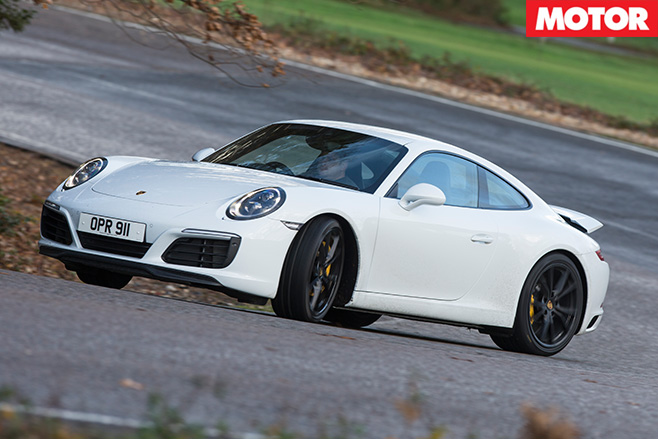
At the rear, the differentiation is slightly easier to spot. There’s a new, more retro-looking air intake screen, a wider pop-up spoiler and new air outlets for the twin intercoolers just aft of the rear wheels. Otherwise, the Porsche’s shape is classic 911: still fairly narrow and cabin-forwards by sporting standards, but nicely compact and curvaceous. It’s utterly distinctive, in other words – in spite of the effect of the car’s popularity or our familiarity with it.
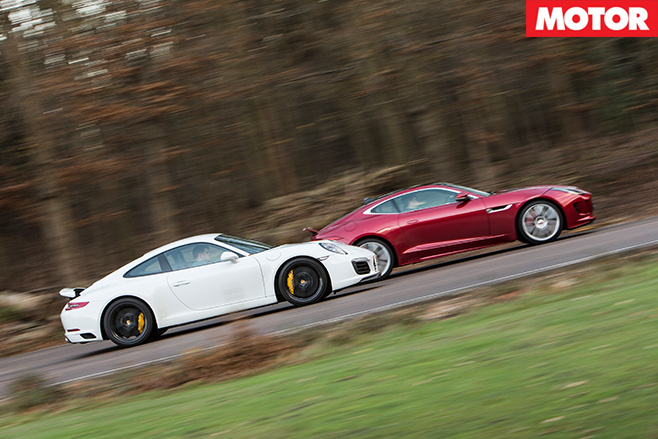
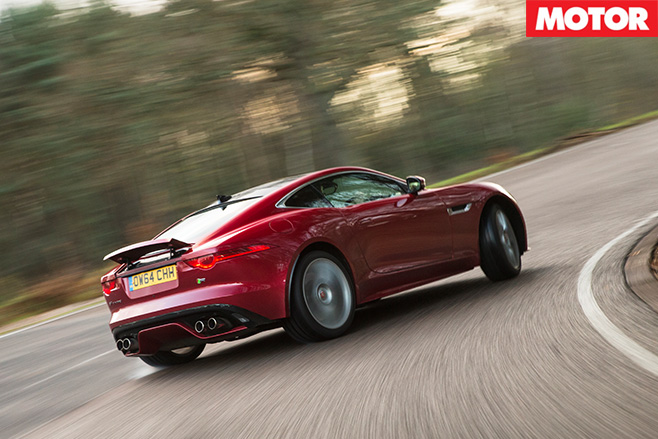
An F-Type R Coupe strikes a very stark contrast indeed. The Jaguar’s bigger, squarer body volumes, greater width and more blistered forms offer less visual subtlety and more muscle. It is somehow less prepossessing than the 911 and at much greater pains to be looked at. The long bonnet and fastback rear end pay homage to classic sportscar design type, whereas the Porsche wilfully disregards it.
What we have here are differing routes to the design of equally appealing machines. Two years ago you’d probably have given the Jaguar the edge as a simple object of desire, but now – for reasons I can’t quite put my finger on – I wouldn’t. Perhaps the 911 just ages more gracefully.
But the 911’s cabin isn’t without richness or sense of occasion, its high centre console putting the gear selector at a convenient height. Smooth leathers, solid plastics and attractive decorative trims conjure a lasting impression of quality and understated elegance.
Among the material changes brought in with the facelift are a new, smaller-diameter steering wheel (still round, praise be, and feeling great in your hands) and a swish infotainment system with a larger display (which looks and operates much more like a modern smartphone does, and is all the easier to use because of it).
And so, on those all-important one-up, scenic-route weekend drives, you’d most likely find the Jaguar the more pleasant place to be… just. The rest of the time, though, the Porsche’s occasional back seats and greater carrying capacity would make it the much more usable car. What’s more important? You tell me.
Here comes surprise number one: the new 911 Carrera S is a very fast sportscar. That may not sound like a huge revelation, but before this car, Porsche had never made a ‘normal’ 911 (one without a Turbo or GT-series badge on its rump) capable of hitting 97km/h from rest in less than 4.0sec. This one is, and by no small margin.
A full road test on the car is to come, but we can reveal now that, equipped with a PDK transmission, Sport Chrono Plus and launch control, the new Carrera S took a scarcely believable 3.5sec to hit 97km/h in our hands. It’s quicker than a 996-generation Turbo, then, and quicker even than a 997 GT3 RS. Believe it.
The mid-range torque of turbochargers is only one of many factors that explain the car’s big-hitting pace; excellent traction and a quite astoundingly good two-pedal gearbox are two of the others. The engine and transmission work together brilliantly when you ask for every drop of available acceleration, and while the turbos add urgency and flexibility to the power delivery at lower revs, they cost the car relatively little on its high-rev range.
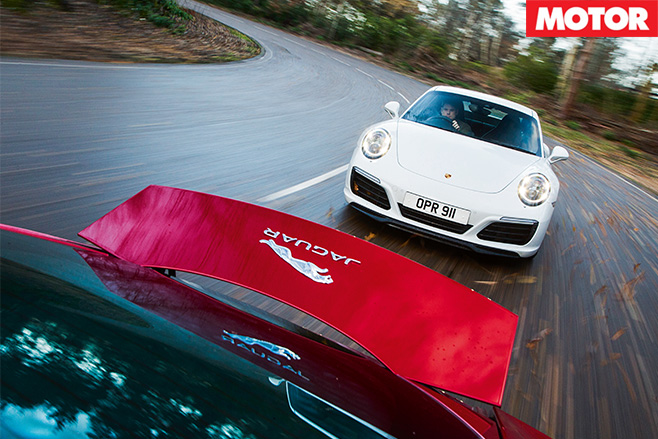
For all of its power and bellowing V8 noise, the F-Type R Coupe feels much heavier than the 911 Carrera S, and although it goes hard, it quite clearly can’t match the outright pace of the Porsche – our timing gear clocking it at 4.4sec to 97km/h at best. The 911’s thick wave of torque makes the Jaguar feel just a little bit peaky, making you wait until 3500rpm for its full portion of twist, whereas the Porsche delivers it below 2000rpm.
At times, traction limits the amount of power you can use in the F-Type. At other times, it’s Jaguar’s eight-speed automatic transmission, which doesn’t have the same shift speed or instinct for the perfect ratio as the Porsche’s seven-speed PDK. Either way, the Jaguar always seems to have a ready-made excuse for not quite keeping up with its German opposition.
You may not think it needs one, of course. What the F-Type R is brilliant at is bowling along at an arm’s length from full speed – at that easily maintained, big-distance-covering, seven-and-a-half-tenths kind of pace that feels brisk but still responsible on the road. As anti-social as it sounds at full throttle, the car’s V8 filters a more measured but still wonderfully sonorous warble into the cabin under part-throttle, with the active exhaust set to ‘naughty’ mode. For that reason alone, it would make a broader spectrum of journeys feel more special than the 911’s six-pot might, being in possession of that little bit more soul.
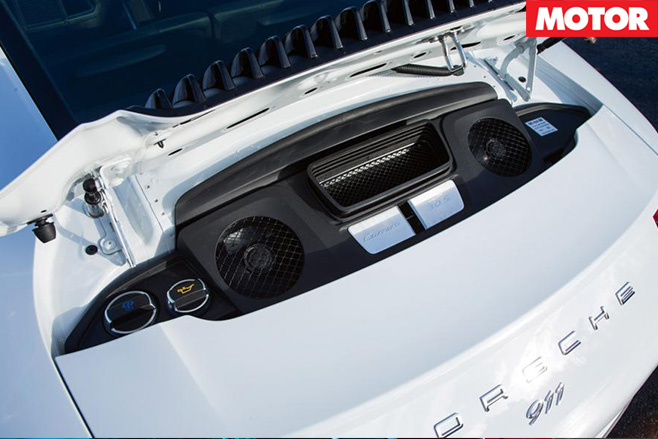
There’s no doubt the exhaust note is missing some of the audible detail that long-time owners will be used to. That tappetty, spluttering idle is present but muffled; the fizzing chatter of the valve train is less obvious at high revs, too. And yet the powerplant still offers a much greater operating rev range than a directly comparable V6, greater mid-range balance and smoothness, and – in spite of some barely detectable turbo lag at low crank speeds – remarkable responsiveness for a turbocharged engine.
Add to that greater performance and usability, plus the advantage enjoyed by the 911 on ride and handling sophistication over the F-Type, and you’re led inexorably to wonder not how much corruption and compromise turbocharging has already brought to the 911, but instead how much more it could endure and still be as good as untouchable within its niche. Because the Carrera S’s chassis is better than ever. It’s flatter-handling and more composed, retaining just enough compliance for a supple ride but laudable crispness in response to steering inputs and idiosyncratic trailing-throttle handling adjustability for those who go in search of such things. Put simply, it is brilliant.
The changes made to the facelifted 911’s suspension range from new dampers, anti-roll bars and helper springs to retuned adaptive damping software. What matters here is that, feeling light on its feet, fluent but controlled over bumps and incisive and balanced through corners, the Carrera S is a chastening lesson to Jaguar about how a multi-talented, mature and well-rounded sportscar and occasional GT really ought to conduct itself.
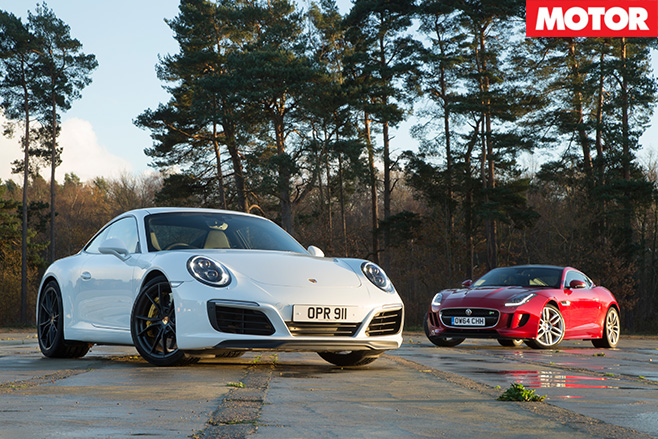
Lighter, more incisive and more communicative steering makes the 911 Carrera S keener to turn in, while greater traction also makes it more confidence-inspiring as you accelerate out of corners. In meaningful terms, the Porsche outhandles the Jaguar without breaking much of a sweat and, moreover, has better control of body pitch than any of its predecessors.
The F-Type R is a more stable high-speed motorway car, thanks to the bulk of that supercharged V8 engine, and it offers plenty of rear-driven handling adjustability of the sort that you have to drive the Porsche much harder to access. But when push comes to shove and a slippery corner follows a sudden crest and an uneven braking area, you’d rather be driving the 911 Carrera S.
| u00a0 | PORSCHE 911 CARRERA S | JAGUAR F-TYPE R COUPE |
| Body | 2-door, 2-seat coupe | 2-door, 2-seat coupe |
| Drive | rear-wheel | rear-wheel |
| Engine | 2981cc flat-6, DOHC, 24v, twin-turbo | 5000cc V8, DOHC, 32v, supercharged |
| Power | 309kW @ 6500rpm | 404kW @ 6500rpm |
| Torque | 500Nm @ 1700-5000rpm | 680Nm @ 3500rpm |
| Transmission | 7-speed dual-clutchu00a0 | 8-speed automatic |
| Weight | 1460kg | 1655kg |
| L/W/H | 4499/1808/1296mm | 4470/2042/1321mm |
| Steering | electrically-assisted rack-and-pinion | electrically-assisted rack and pinion |
| Price as tested | $258,750 | $226,580 |
| Pros | Formidable pace; brilliant handling; upgraded interior | Awesome engine; playful handling; great looks; value |
| Cons | Slight loss of character in the switch to turbocharging | Outgunned by the sheer brilliance of the 911 |
| Star Rating | 4.5/5 | 4/5 |
WARNING lights are going to be installed into the ground around the Sydney CBD for six months as a way to warn pedestrian’s using their phone they shouldn’t step in front of the #363 bus working its way down the street.
Seriously?! How about anyone who thinks this is a reasonable, let alone good, idea comes down off their techno-fear brain trip and realises what an outlandishly moronic proposal it is.
What are we even doing, people?! Are we really so complacent in dealing with road safety issues we think a quarter-million dollar trial to a problem labelled something as moronic as ‘wexting’ (vomit)or ‘petextrians’ is a good use of people’s money and time?
I am not saying pedestrians aren’t blasé in their phone use, nor am I suggesting that pedestrians distractedly walking into traffic doesn’t happen. It does – in infuriating numbers, and believe me, I can direct an internal rage monologue at some numpty meandering all over the footpath as they ignorantly stare at their phone, with the best of them. But phones certainly aren’t the cause, and wobbly texting pedestrians invariably always manage to stay within the confines of the sidewalk, and arrest their glacial dawdle when they reach an intersection. At worst, it’s a slight inconvenience for other pedestrians.
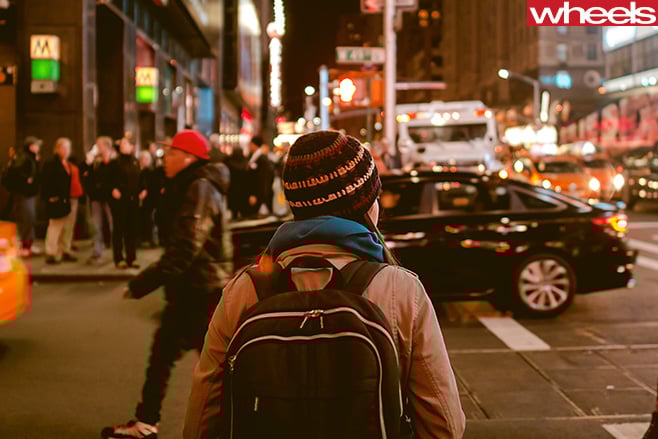
As much as elder generations might like to think so, modern mobile phones aren’t some brain-sapping device that causes those of sound mind to just walk into oncoming traffic. You can safely send a text without finding yourself in the middle of the road.
It doesn’t make as good a story, but the reason pedestrians are walking into traffic more frequently is they just don’t look or listen for traffic, and don’t respect pedestrian crossing signals. If they don’t care when the existing visual and audio warnings tell them not to cross, what makes people think some Christmas lights in the curb will help?
Oh, and about that epidemic of ‘petextrians’ stumbling into traffic like some kind of blind Bambi-esque character. We simply don’t have any numbers for how many cases of pedestrians being hit by a car are caused by texting or phone use on the walker’s behalf. None. Zero. All we have is Centre for Road Safety executive director Bernard Carlon claiming it is “highly prevalent”. That’s nice Bernard, but how about some data? Can we get that before we throw $250,000 at putting lights at our feet?

“We have studies to indicate that people who are on mobile phones with their headphones on, listening to music, are four times more likely to do something risky when crossing the road,” he told local Sydney radio.
So, it’s not really people texting on their phones. It’s pedestrians zoned out listening to some sweet tunes who can’t hear on-coming traffic, or who forget the two-ton Land Rover on a school run barrelling down the road they just decided to cross without looking could kill them. Pedestrians that get hit by traffic don’t wander out on to the road because there aren’t enough warnings in the ground – they just didn’t care or think about what they were doing.
Lets deal with the real issue here, which is pedestrians that don’t know how to safely approach crossings, and have no respect for the dangers of walking across the road. Stop with the easy targets of people on their phones – no one walks off a foot path onto the road unintentionally, and warning lights in the bitumen will do nothing. Let’s teach people that if you want to cross a road, look, listen, and pay attention.
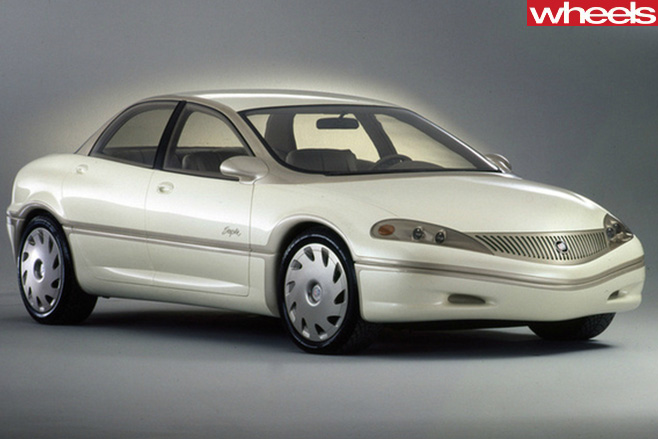
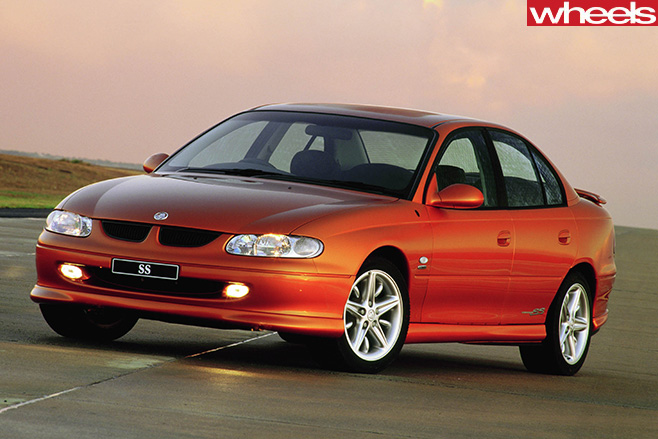
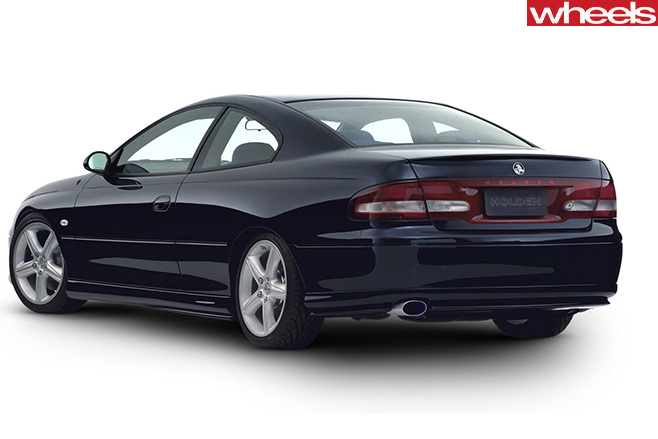
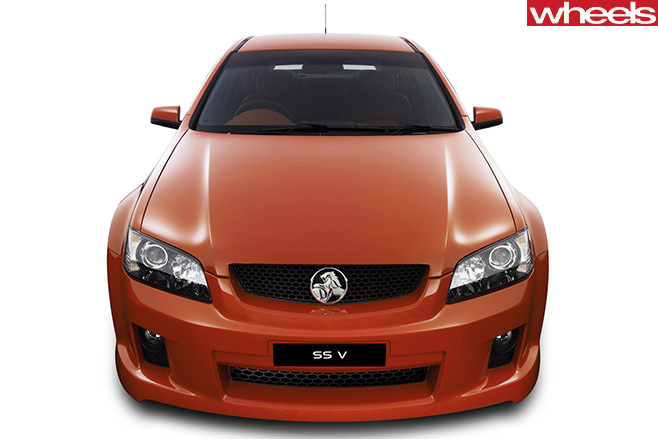
He’s shaped some of our most beloved cars, but now Mike Simcoe has the best car design job in the business. Here’s a six-pack of his best.
Aussie Mike Simcoe has gone from a kid pinning Holden posters on his wall to having the biggest job in the automotive design world – the head of General Motors’ global design team. What’s more impressive is that his University lecturers discouraged him from getting into auto design, and he only joined Holden in 1983 to make some fast money.
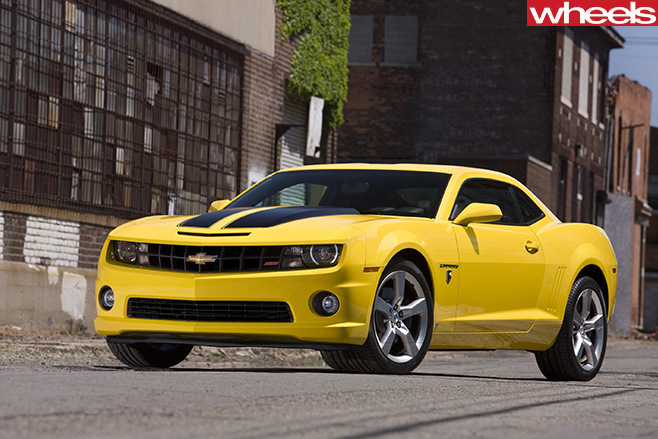
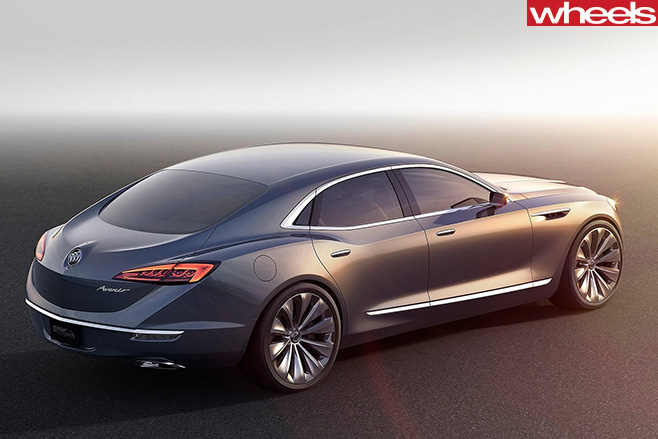
VOLKSWAGEN has confirmed that a properly powerful and fast Passat model will return to Australia in September after a six year hiatus, to take on the Holden Insignia VXR.
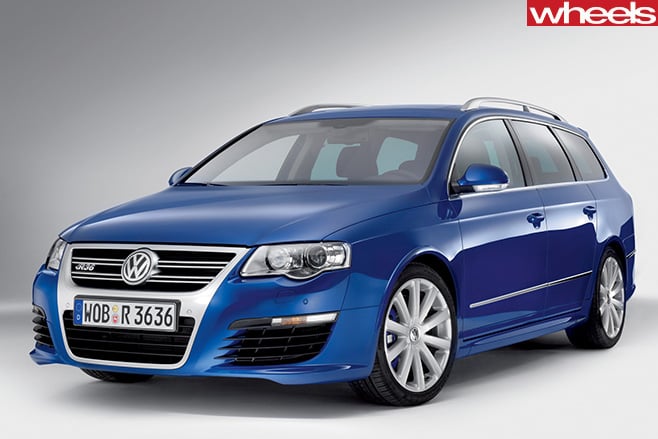
While it won’t be wearing the respected R36 badge, the VW Passat 206TSI 4Motion will offer similar performance to the old atmo V6 grand tourer, thanks to the Golf R power.
Driving all four wheels via a six-speed manual or six-speed DSG dual clutch transmission, the EA888 2.0-litre direct-injection four-cylinder turbo petrol engine delivers 206kW of power between 5600 and 6500rpm, and 350Nm of torque from 1700-5600rpm.
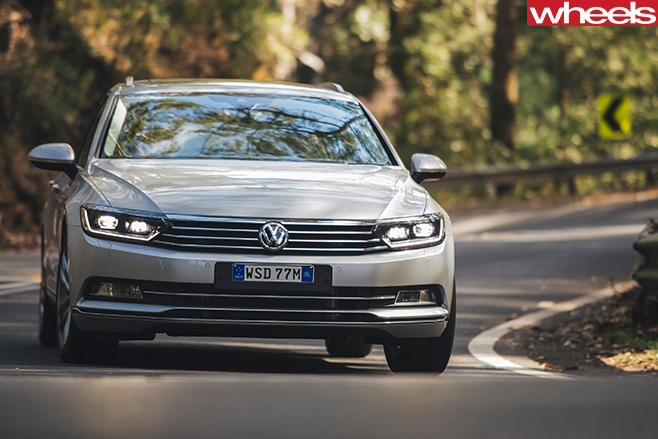
Just as importantly for some, while the 206TSI’s sprint time is only 0.1s better than the 220kW/350Nm R36 sold in Australia for two years from 2008, its combined average fuel consumption rating of 7.1L/100km compared to the latter’s 10.7L/100km makes the older car some 50 percent thirstier.
Similarly, those with longer memories might recall the oddball Passat W8, which was powered by a 202kW/370Nm 4.0-litre eight-cylinder engine in a ‘W’ configuration. It could only manage 6.8s to 100km/h, while averaging an ice-melting 13.0L/100km. And that cost $97,900 before on-road costs…
The Holden Insignia VXR AWD, which is powered by an Australian-made 239kW/439Nm 2.8-litre V6 turbo, is the only other rival for now, and that is priced from $51,990.
Final pricing and specs will be revealed closer to launch, but as its role as the Passat flagship, the 206TSI should include an R-Line body kit to give it some visual spice, as well as multi-adjustable sports seats, a suite of driver-assist safety systems such as adaptive cruise control, and 19-inch wheels as standard.
Honda is to enter a trio of electrifed supercars in this year’s 100th running of the iconic Pikes Peak hillclimb.
A pair of NSX will be joined by an NSX-inspired all-electric prototype, which will use an evolution of the electric powertrain that won last year’s Exhibition class installed in a Honda CR-Z prototype.
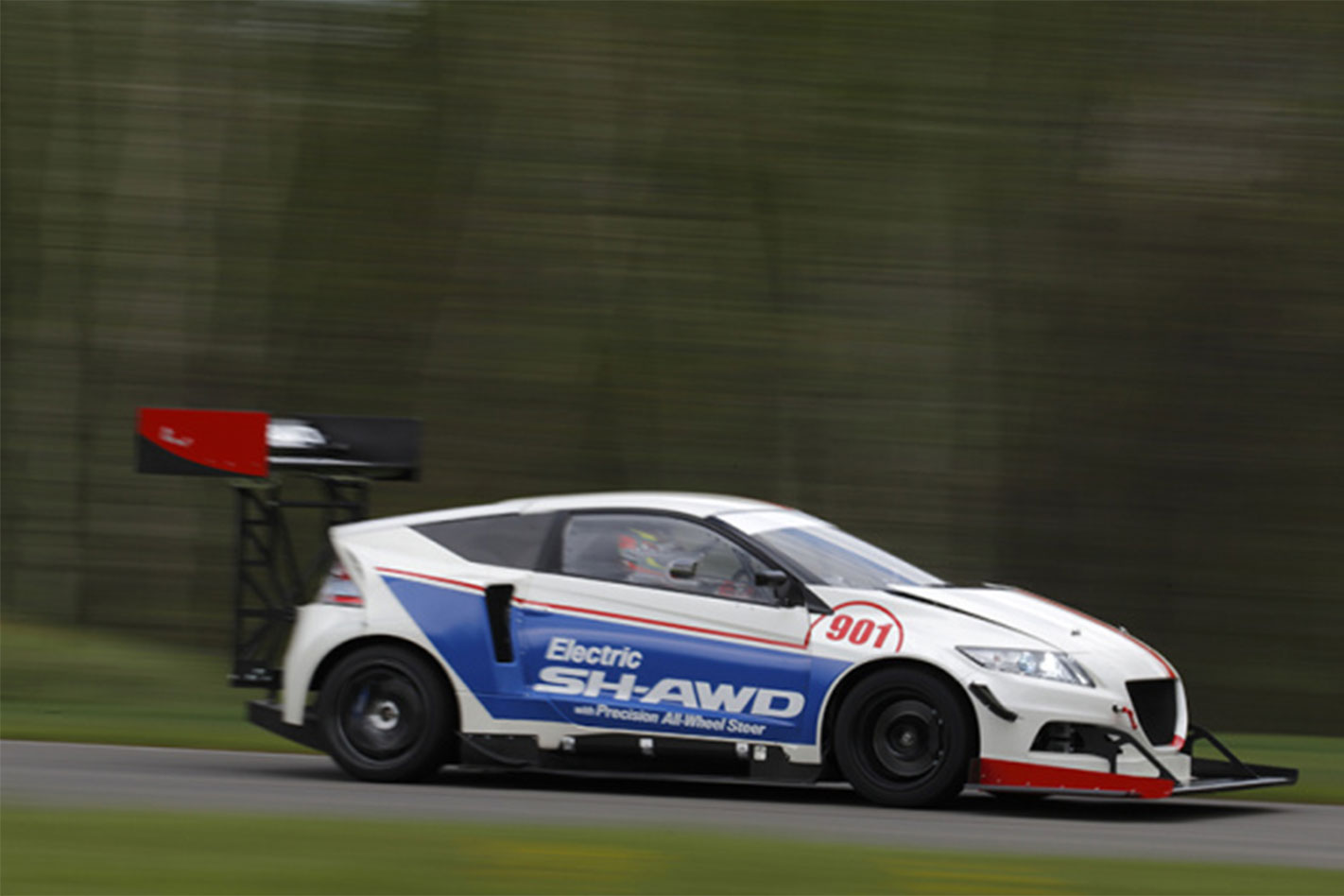
His brother, NSX powertrain engineer James Robinson, will pilot the car in Time Attack 1, which will benefit from a lightened chassis and high-flow racing exhaust. Both Robinsons have extensive Pikes Peak experience.
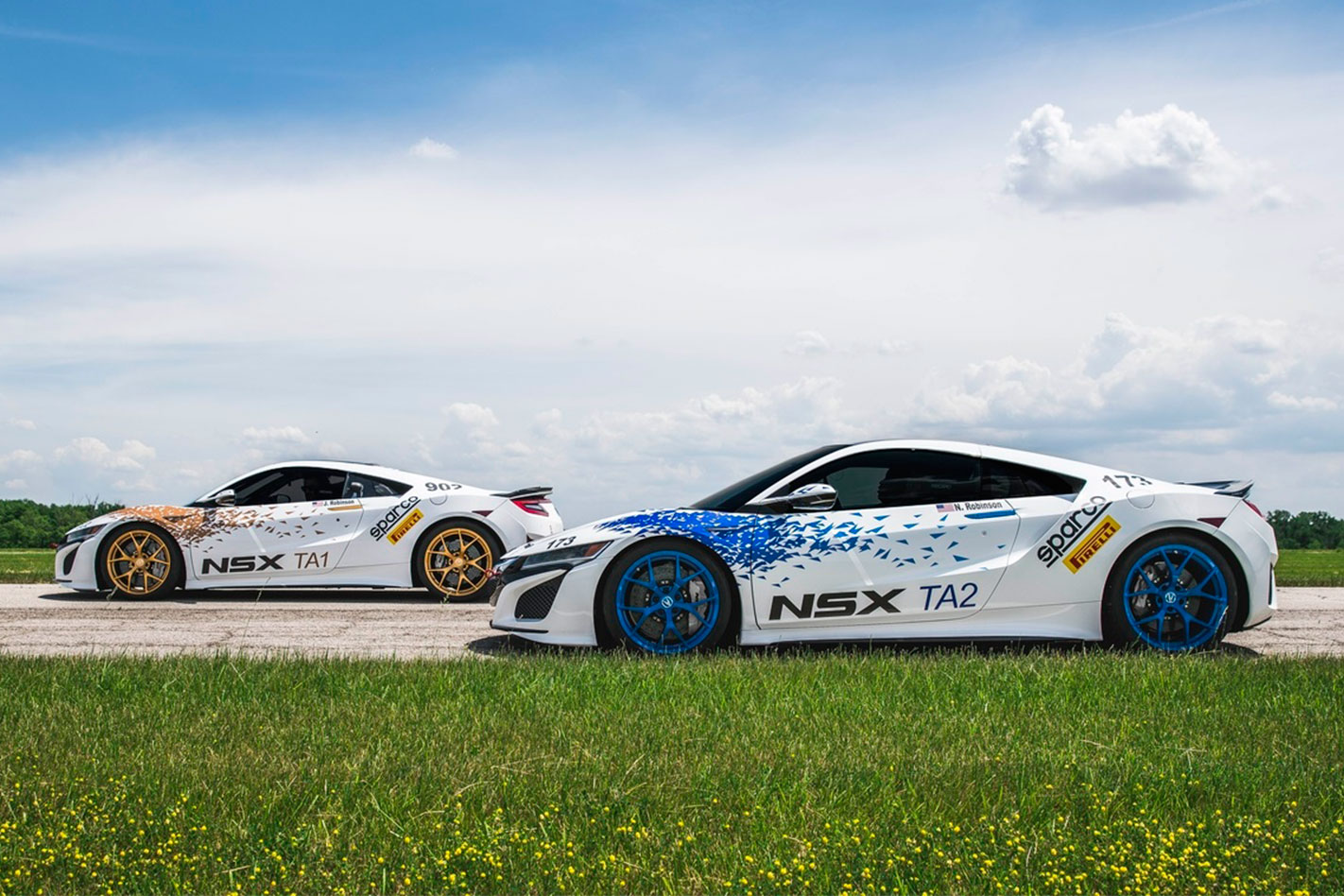
The 100th Pikes Peak International Hillclimb takes place on June 26.
A tougher Ford Ranger is still in the picture for Aussie showrooms. Ford Australia has admitted that high-end models account for nearly three quarters of Ranger sales, and it would not rule out a Ranger Raptor model joining the line-up.
Ford has applied to trademark the names ‘Ford Ranger Raptor’ and ‘Ranger Raptor’ in Australia, adding credence to rumours of a hotter Ford Performance version landing on our shores.
Wheels believes the likely introduction of Ranger to the US market for 2019 could provide the impetus for a junior Raptor model in the Ford family, under the Ford F-150 Raptor.
Ford Performance has committed to developing 12 new models by 2020. So far, it claims delivery of eight including; the F-150 Raptor, Ford GT, Fiesta ST, Focus ST, Focus RS, and Shelby GT350 and GT350R Mustangs.
As reported in the April issue of Wheels, the Ranger Raptor will likely get power and suspension upgrades and extensive bodywork changes – at a price. Expect to pay upwards of $80K.
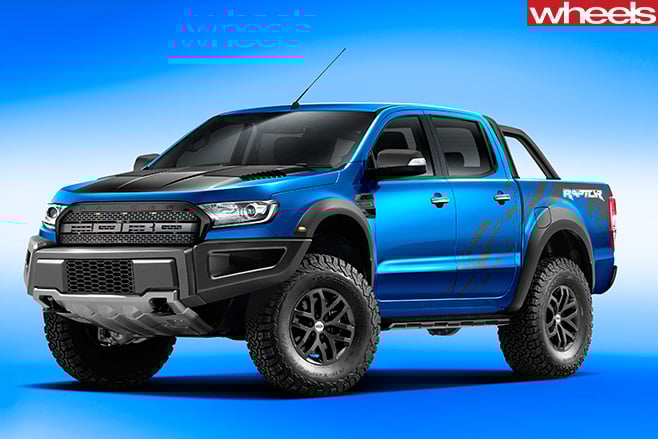
“XLT and Wildtrak models make up approximately 70 percent of Ranger sales in Australia,” said Jasmine Mobarek, brand communications manager at Ford Australia.
“What that demonstrates for us is customers are willing to put their hard-earned dollars behind those high-end vehicles, because it’s not just a workhorse anymore. It crosses work and play.”
Ranger has been as high as third on the new car best-sellers list in Australia this year.
It’s possible we’ll see a Raptor variant appear in the current Ranger line-up, or it may have to wait until the all-new Ranger, due in 2019.
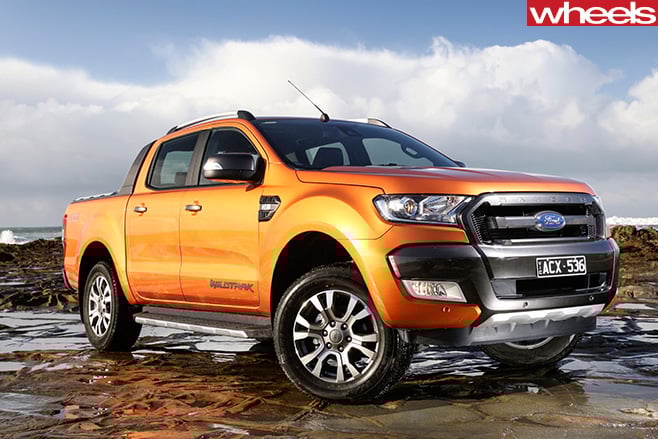
Stateside, Ford’s full-size F-Series utes remain as popular as ever, though smaller, style side variants from General Motors, Toyota and Honda are working their way up sales ladders. Ford dealerships in Australia do not offer the F-Series to buyers, however, right-hand drive converted models are available through third parties.
Ford USA has not had a vehicle competing in the mid-size truck segment since it stopped selling its own Ranger in 1999.
It is also probable we’ll see Ford Everest – the Aussie-developed SUV version of Ranger – rebadged as the Ford Bronco and built in the US for the American market.
