
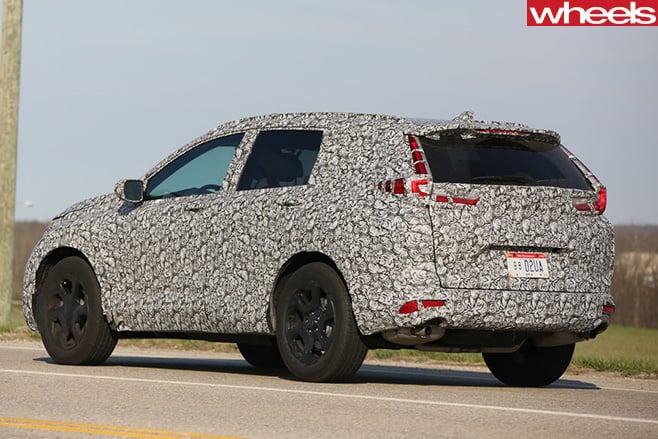
IT’S ALL CHANGE for the next-generation Honda CR-V, which is set to gain a completely fresh set of clothes, interior, chassis, and engine choices when it debuts late this year or early in 2017, ahead of an Australian launch sometime not long after that.
Pitched, of course, against age-old foes like the Toyota RAV4 and Subaru Forester, as well as the Hyundai Tucson, Nissan X-Trail, and Mazda CX-5, CR-V number five seems like it might finally score a bit more style, judging by the aggressive nose, sculptured sides, and Volvo XC60-esque look of the tail-lights.
As the North American spy shots suggest, the 2018 Honda CR-V will be the largest yet, growing half a size to help make space for the super-successful Honda HR-V to blossom below it.
Consequently, the newcomer will offer the option of third-row seating, boosting the medium SUV’s appeal against similarly-configured competitors such as the X-Trail and Mitsubishi Outlander.
That’s been made possible by an all-new platform underneath, based on the soon-to-be-released Honda Civic’s transverse modular architecture.
Lighter, far stronger, and much quieter than the item found in the existing RM-series CR-V launched in 2012, this state-of-the-art platform will include redesigned suspension (including, we hope, the Civic’s impressively silent yet effective five-link rear end) and electric power steering system, to finally give the long-running medium SUV some much-needed steering, handling, and ride finesse.
Believed to be aiding the latter is new box-section chassis welding for increased rigidity and noise-path suppression, as well as triple door seals, thicker front glass, and an acoustic windscreen – advances all found in the related Civic Sedan.
Nevertheless, don’t be surprised to see a variation of the Euro-focussed 1.6-litre i-DTEC turbo-diesel mated to a nine-speed torque-converter automatic if fuel prices rise as predicted. Whichever engines make it to Australia, the choice of front or all-wheel drive will continue.
Progressive driver-assist technology like Autonomous Emergency Braking, lane-change warning, adaptive cruise control, and Rear Cross Traffic Alert systems are bound to be on the options list, matching more developed rivals like the CX-5 and Ford Kuga in offering state-of-the-art safety for a five-star crash-test result. As a result, the most expensive CR-V AWD variants will most probably nudge $50,000.
A one-time trailblazer in the medium SUV sphere, the CR-V cannot undergo its metamorphosis fast enough for Honda Australia, as sales are 5.5 percent down in the first three months of this year in a medium SUV segment that’s rocketed by over 15%. Coming in with just 6.1% market share, it trails the class-leading CX-5 (18%), Tucson (15.1%), X-Trail (14.2%), RAV4 (12.9%), Forester (10%), Kia Sportage (7.6%), and Outlander (7.4%).
Have spy pics of your own? We’d love to see them. Just email them to [email protected]
It wasn’t always about sports cars for Ferruccio Lamborghini. He made a career building far more rudimentary items before he ever dreamt about ‘the perfect car’. In 1948 Ferruccio started Lamborghini Trattori, a tractor business. Then in 1959 he opened Lamborghini Bruciatori, an oil heater factory that went on to make air conditioners.
It wasn’t until 1963 that Ferruccio birthed Automobili Lamborghini. Ferruccio was successful in his own right by this stage, and was frustrated by the shortcomings of the Ferraris he had bought. He took his complaints all the way to Enzo Ferrari. Enzo was less than entertained by Ferruccio’s grievances, and the episode kicked off a fierce rivalry between the two men. Ferruccio started his own sports car business to beat Enzo at his own game.
The 10 vehicles listed here are the Lamborghinis we consider to be the most intriguing. Some are famous, some are not so well-known. Regardless of how each model was received at the time, they have all contributed to the Lamborghini legend. Ferruccio and the company he founded will forever be remembered for their role in shaping the motoring world today.
1964 LAMBORGHINI 350 GT
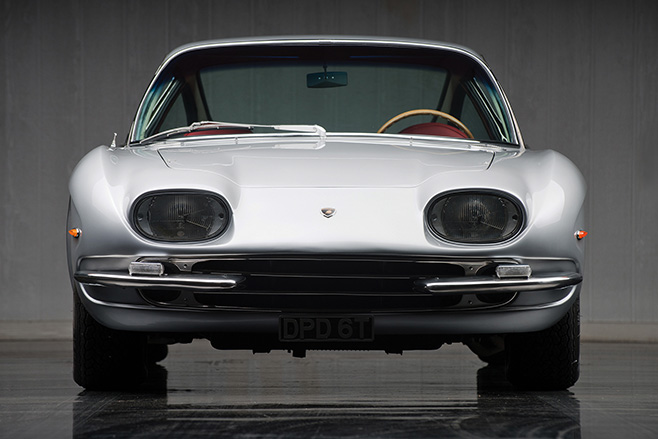
This is the first production Lamborghini road car. The 350 GT featured a 3.5-litre V12 engine in the front, producing 209kW. It later grew to 3.9-litres and 239kW to become the 400 GT in 1965. Lamborghini built 344 of them.
1966 LAMBORGHINI MIURA
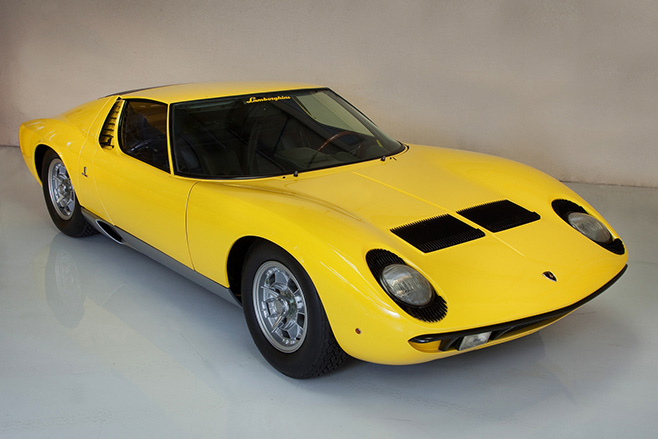
The Lamborghini Miura is one of the most famous Lamborghinis, and arguably the most beautiful car ever. It is often hailed as the original supercar. The Miura was released in a number of variants, the most desirable being the Muira SV which had wider tyres and the most power – 287kW – from the 4.0-litre V12 mounted in the middle of the car.
1974 LAMBORGHINI COUNTACH
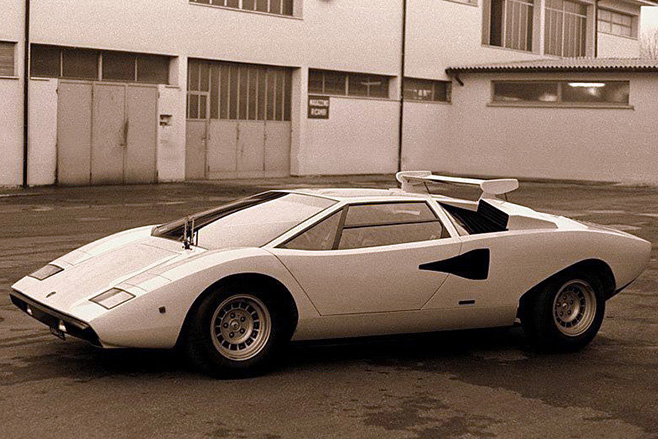
It’s hard to imagine another car that has adorned more bedroom and garage walls than the Lamborghini Countach. Its early form was the prettiest, but the outrageously dramatic styling of the 1980s models was what made the Countach so unforgettable. Almost 2000 were built, with the monstrous 339kW 5.2-litre QV the king of the castle.
1986 LAMBORGHINI LM002
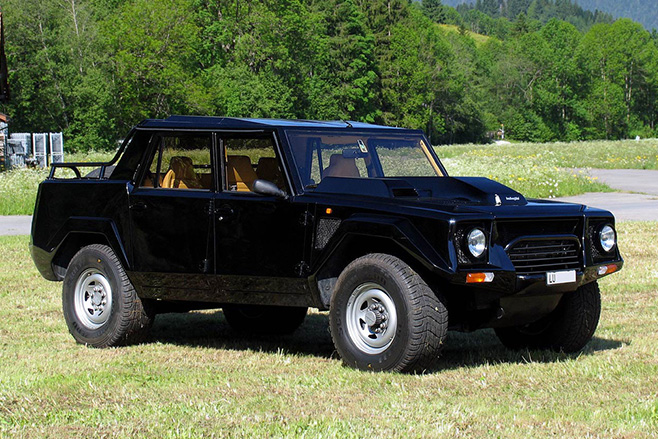
The LM002 was what Lamborghini built from the leftovers of an abandoned plan to make military off-roaders. It has been named as one of the worst cars in the world, though that is probably too harsh. It had the same V12 engine as the Countach, and earned the nickname ‘Rambo Lambo’ after Sylvester Stallone bought one. Mike Tyson had one, too.
1951 LAMBORGHINI L 33
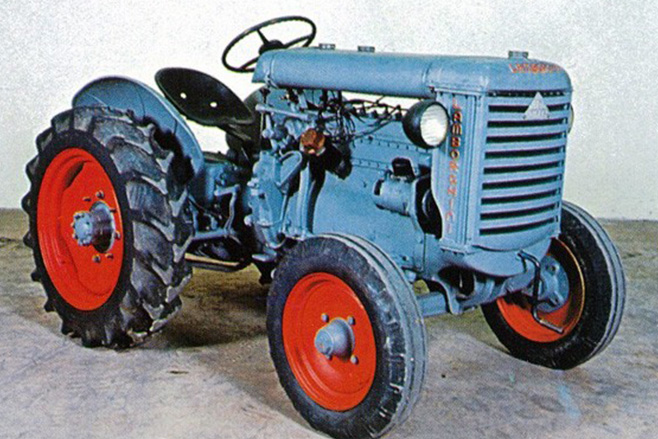
Ferruccio was very proud of his tractors. He was born into a family of grape farmers, and after the Second World War he took advantage of the need for agriculture supplies, even building tractors by repurposing military machines. The L 33 was the first production tractor made entirely by Lamborghini, with the exception of the 3.5-litre six-cylinder engine supplied by Morris. Ferruccio’s tractor business was very successful.
1990 LAMBORGHINI DIABLO
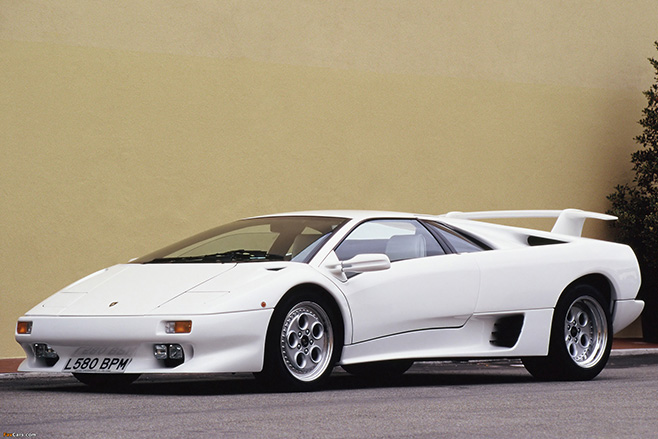
Diablo was the Countach for the ‘90s. It took Lamborghini a long time to replace the iconic Countach, but when it finally launched the Diablo it really made its mark. Early cars had a reputation for torturing drivers with extremely heavy steering and clutch action. The more refined all-wheel drive VT models were better.
1968 LAMBORGHINI ESPADA
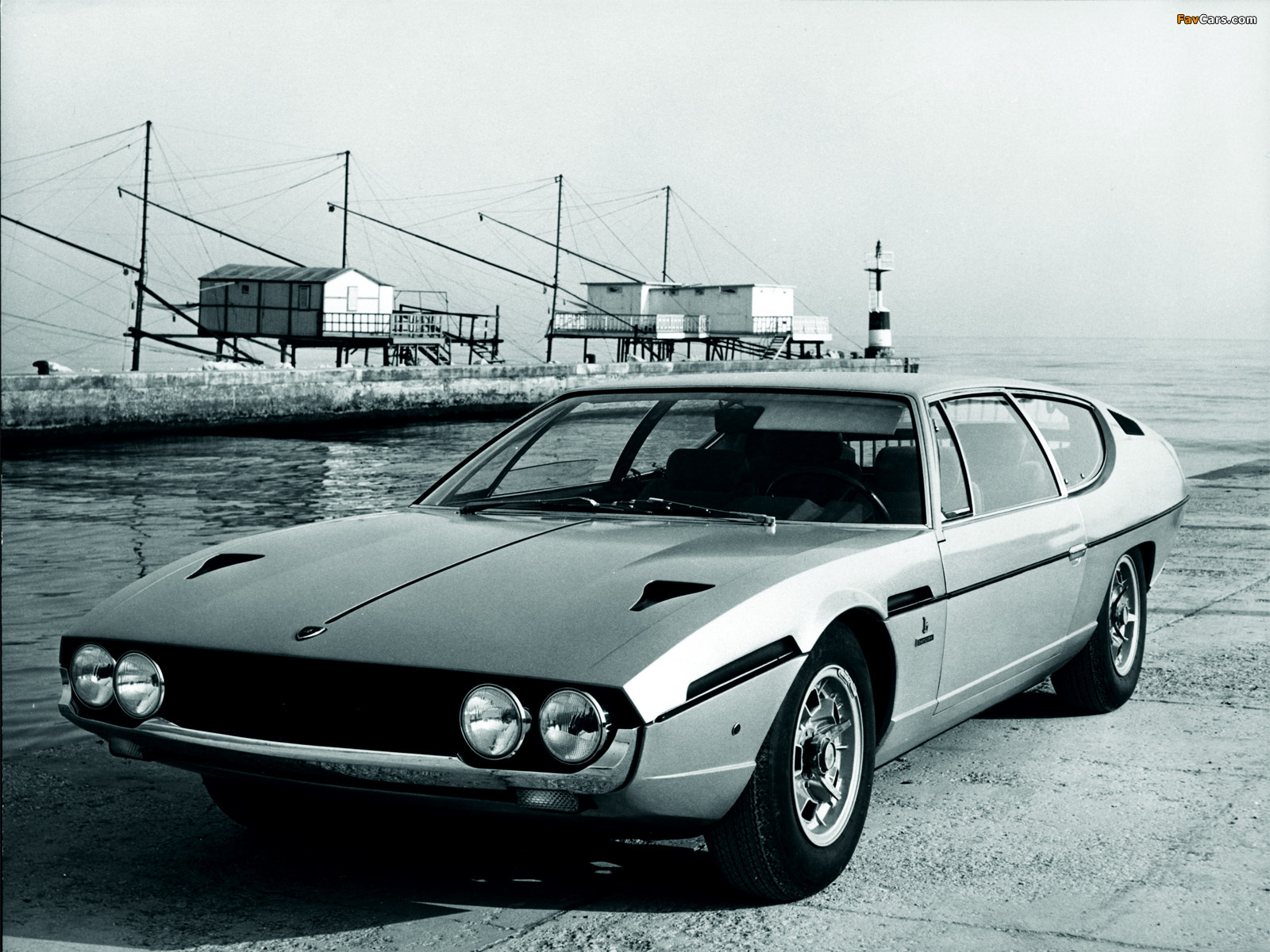
Espada was the original four-seater supercar. Despite its landmark status and strong sales when new, it remains one of the lesser-known cars on this list. Espada stayed in the Lamborghini line-up for 10 years, a total of 1217 were built during that time. Lamborghini has only revisited the four-seater sports car idea in concept form since.
2003 LAMBORGHINI GALLARDO
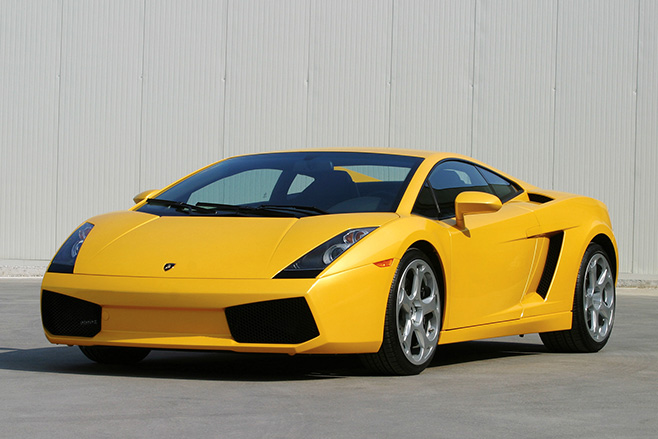
The closest Lamborghini has ever come to a car for the masses. Gallardo sold in huge numbers during its lifetime, more than 14,000 of them were made. It featured a 5.0-litre V10 engine behind the two front seats that made 368kW and an almighty soundtrack. Power went up towards the end of its life and across several special editions and formed the basis for the first Audi supercar, the R8.
1986 LAMBORGHINI MOTORCYCLE
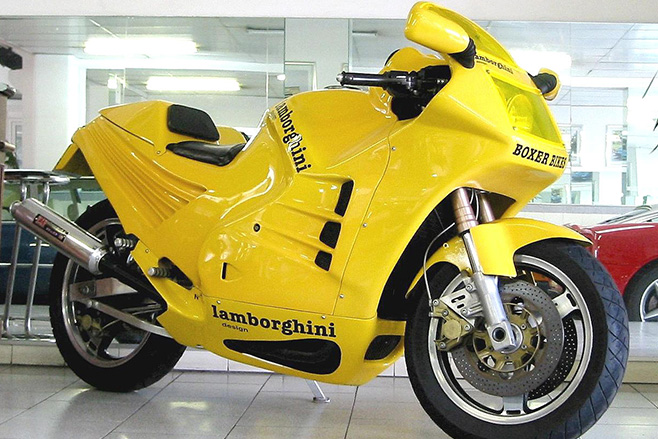
The Lamborghini motorcycle is one of the most unique pieces of the company’s history. Ferruccio was still alive when it launched, though it was not a project he was involved with. Lamborghini was bought in 1978 by Patrick Mimran who set about putting the Lamborghini name on other products. Lambo V12 engines went into speedboats with great success. In the mid-80s a motorcycle was styled by the Lamborghini design team, and then built in France using a Kawasaki engine. Orders were accepted for 50 bikes, but only six were built.
2011 LAMBORGHINI AVENTADOR
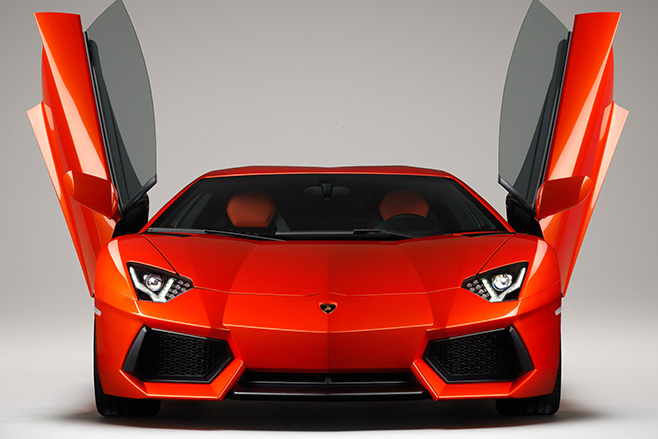
The Aventador is the Lamborghini of the moment. In some ways it is a styling evolution of the Murcielago it replaced, though under the skin it is radically different. A brand-new V12 was introduced with Aventador and remains one of the most awe-inspiring engines ever built. In standard form the revvy 6.5-litre V12 produces 515kW at 8250rpm.
Subaru WRX STI 22B owners might want to clear a neighbouring spot in their garages.
That’s because the actual race going version of that homolgation car, Subaru’s 1997 World Rally Championship contender, has popped up for sale. And if that information doesn’t raise an eyebrow, take stock that this example happens to be one piloted by the legendary Colin McRae.
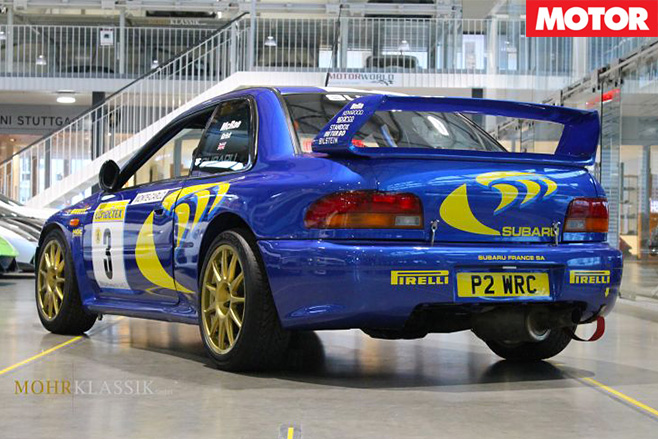
The car found form for the rest of the year, putting McRae one point behind Tommi Makinen in the final driver’s standings in 1997. Krzysztof Holowczyc commanded the driver’s seat in 1998, a Polish driver, during the Portugal, Agrentina, SanRemo, and Spain WRC rounds.
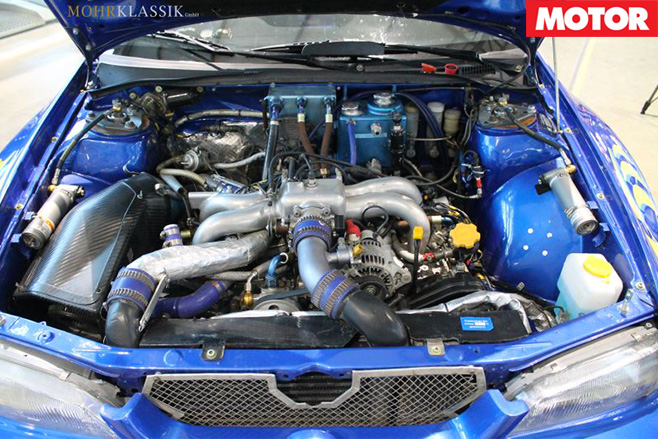
It’s remained in perfect condition since, only used for short tests, and finds itself today in Böblingen, Germany, awaiting purchase.
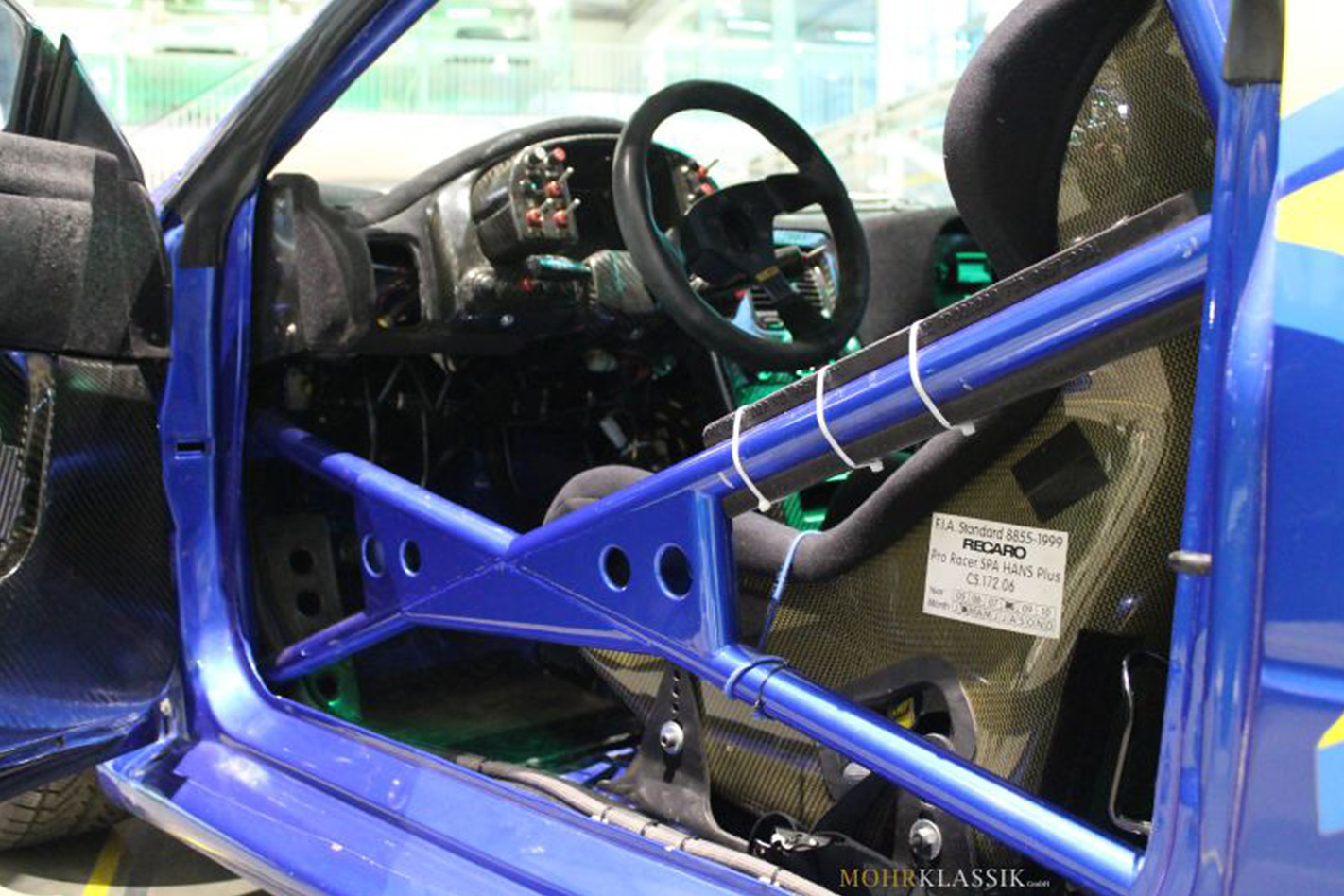
Pic credit: Mohr-klassik
Former world champ says his old team boss Ross Brawn is the man to take the sport forward.
With so much criticism aimed at the way Formula One is being governed, in particular a rash of bad decisions highlighted by the recent debacle surrounding the qualifying process, former world champion Jenson Button has called for a new man to take the reins – and that man should be his former boss Ross Brawn.
McLaren Honda driver Button, now one of the elder statesmen on the grand prix grid and increasingly opinionated as he moves towards the end of his career, feels strongly that the sport should be governed by an outsider with no vested interests.
Brawn, he declared in an interview with ESPN, is the ideal candidate.
“I think Ross would be fantastic; I think everyone believes in Ross and what he has achieved,” said Button, who got to understand and admire Brawn’s capabilities en route to his world championship triumph with Brawn GP in 2009.
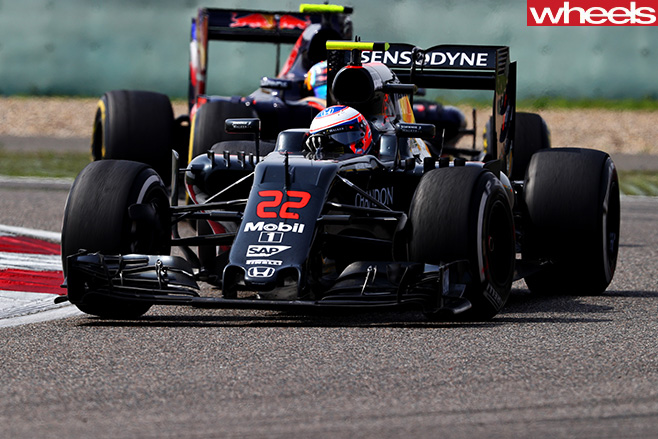
Button went on to criticise the current convoluted F1 decision- making progress, suggesting there are too many parties involved at the moment , with certain teams undeserving of the considerable power they have.
“You are never going to get all of the teams to agree on a regulation… never. But the problem at the moment is that you need every team to agree,” said Button.
Button is also unsure that the world controlling body, the FIA, should take complete control of F1.
He believes someone from outside of the sport would be a better bet “as long as they have the right direction and they have an understanding of the sport”.
He said that experts from certain areas of the sport – engineers, aerodynamicists and the like – could provide input to allow an independent like Brawn to reach the right decisions.
STRENGTHS
- Looks. To the casual observer, you’ll have a Mustang, which means you’ll be the subject of plenty of admiring glances and service station chats if our experience is anything to go by. As long as the engine isn’t running, few will be wise to the fact that there’s a four-cylinder under the bonnet.
- Handling. If you have any preconceptions about how an American car drives, it’s likely the new Mustang will completely blow them away. It’s not an out-and-out sports car, but there’s lots of grip, it turns into corners really well and gives the driver lots of confidence.
- Economy. Not a traditional muscle car strong point, but Ford claims the Mustang EcoBoost’s 2.3-litre turbocharged four-cylinder drinks 9.4L/100km on the combined cycle. That’s quite a lot for a four-cylinder, however it’ll go a lot further between fill-ups than its V8 sibling.
- Rear seats. Don’t laugh, many a coupe purchase has been knocked on the head by the realisation that you can’t put anyone or anything in the back. There isn’t masses of room in the rear of a Mustang, but there’s easily space for a couple of small children, which could be the clincher for the enthusiast mums and dads out there.
- Value. Starting from $45,990 this is an awful lot of car for the money. There’s really nothing out there that can offer this combination of looks and performance for even remotely the same price.
- Interior. While the design’s ok, some of the materials used in the Mustang’s interior are very much below par. Yes, this is a cheap car for what you get, but some of the plastics, particularly those on the centre console and door trims, would barely pass muster in a $15,000 city car.
- Engine. With 0-100km/h taking around six seconds, the Mustang EcoBoost certainly isn’t slow, but equally the engine is unable to cash the cheques written by the excellent exterior design.
- Image. The Mustang EcoBoost is a very good car, but it’s difficult to see why anyone would buy one – every time the engine is started there’s a strange sense of disappointment. It’s an enthusiast’s car, and any muscle car enthusiast is going to want the V8.
Toyota 86, Volkswagen Golf GTI, Volkswagen Scirocco R, Nissan 370Z
Read our full review of the Ford Mustang range here.
The Audi Q3-based show car was created by Audi’s China Research and Development team for the 2016 Beijing motor show, and features a 1.05-metre-long board that is stored in a pull-out drawer in the vehicle’s rear bumper.
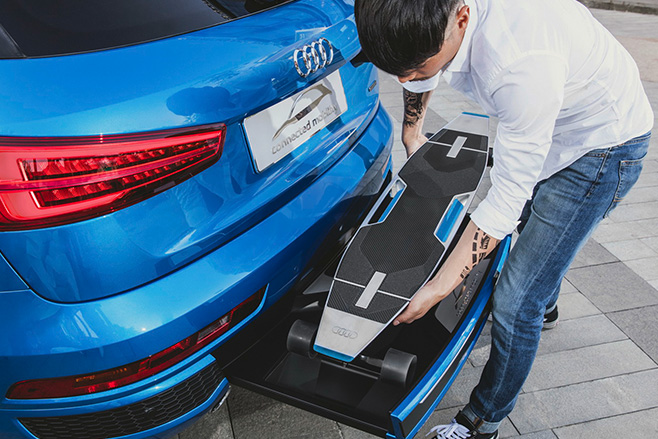
The vehicle’s infotainment system syncs with the owner’s smartphone calendar and uses real-time traffic data to determine whether they will reach their destination on time.
If traffic is too busy, the system will locate a parking space for the vehicle and recommend the owner completes the journey via the electronically powered, multifunction ‘longboard’. Sat-nav instructions are transferred to the owner’s smartphone.
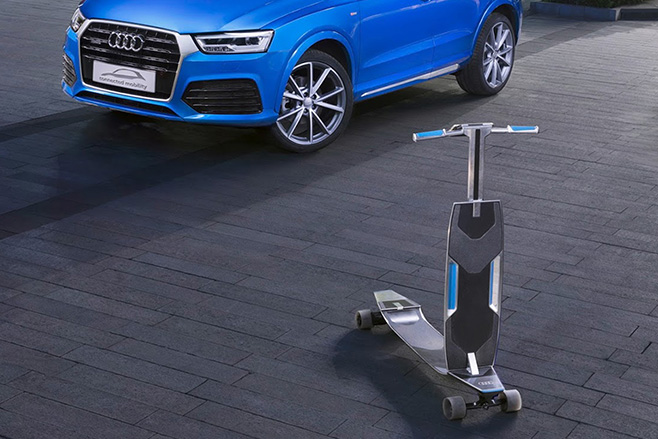
Owners can choose to ride the longboard like a scooter, complete with handlebar and clippable backpack, or like a skateboard, by retracting the handlebar.
The board is constructed from carbon-fibre and aluminium and has a battery range of 12km. Speeds up to a maximum 30km/h are controlled either way by a remote control.
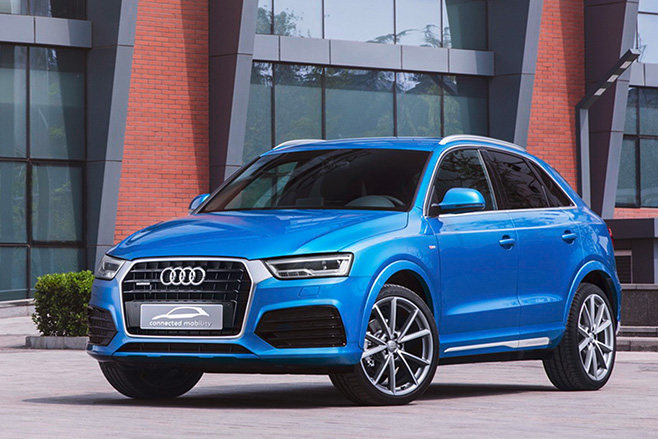
Alternatively, the board can play porter and carry luggage and shopping bags while following the owner.
Audi’s mobility concept is a new spin on what is actually a decades-old idea. Honda offered a 49cc two-stroke mini-bike called the Motocompo in the early 1980s, which was designed to fit into the boot of its small cars such as the (first generation) City.
THE supercharged Ford Mustang has come to Australia. From late April, you can order a Ford Performance-backed supercharged V8 Mustang packing 499kW that should destroy the sprint to 100km/h in less than 4.0sec.
Renowned Ford performance-car specialist Rob Herrod will supply uprated Mustangs as fully complied models through his Melbourne-based operation, only a few kilometres from Ford’s soon-to-close Broadmeadows factory.
The Herrod Performance Mustangs, as they will be officially known, will be fitted with factory Ford Performance parts – from the Eaton supercharger to suspension packages and more – shipped directly from Detroit, building on the 306kW peak currently offered by Ford in the Mustang GT.
Starting at around $75K, they land in the heart of Clubsport R8 territory, but with more grunt than HSV’s 430kW $90K GTS flagship.
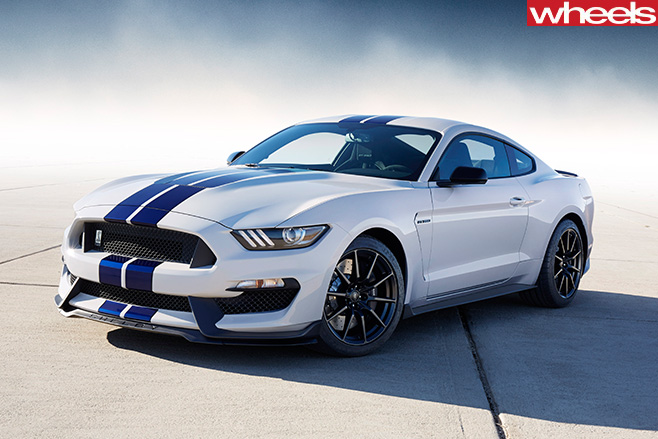
“We’ve put packages together to suit the Australian market,” Herrod told Wheels. “Like the exhaust system – we worked on it with Ford and Borla; it’s not the American exhaust. The American exhausts won’t last here in Australia [due to stricter noise limits]; we’d get EPA letters within a week!”
Herrod’s hot Mustangs have been years in the making and come with the engineering nous of Ford’s US-based Performance division as well as Herrod’s extensive local muscle-car experience, which involved developing high-performance versions of turbocharged and V8-powered Falcons.
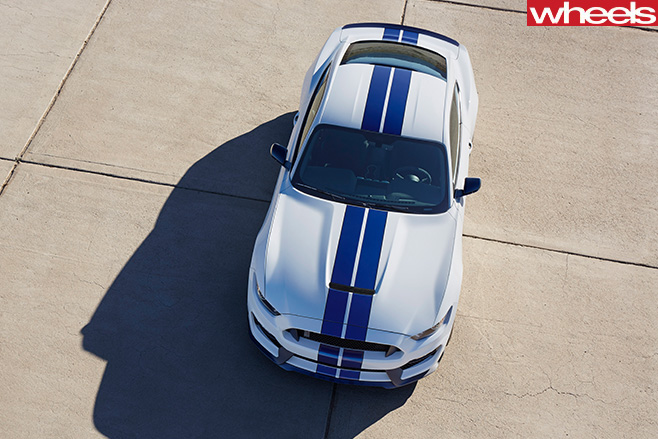
Key to the plan to sell high-performance Mustangs is the inclusion of a Ford Performance warranty. The warranty for vehicles with Ford Performance parts fitted by Herrod means owners will easily be able to register and insure these Mustangs – especially crucial as Ford’s own Shelby Mustang won’t make it to Australia.
The Shelby models – which feature a 392kW 5.2-litre V8 with a flat-plane crank for a ferocious roar – won’t be available through Ford Australia because they weren’t part of the Mustang’s ‘global’ program from their germination and are therefore not complied in right-hand drive.
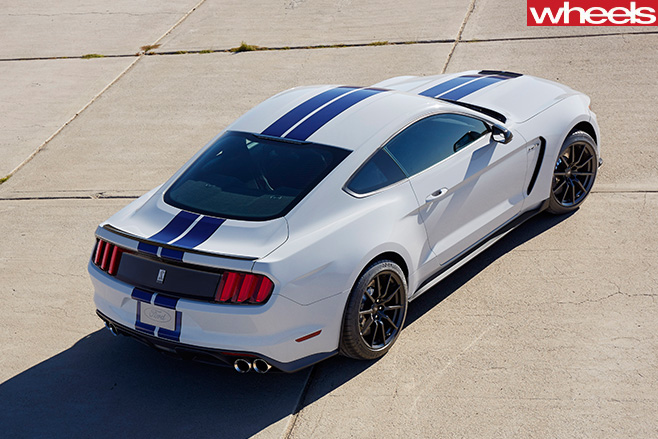
Offering high-performance components was something Ford Australia said it was pursuing when Hameedi visited Australia last year. But to date it has introduced only performance kits for Fiesta and Focus from British-based Mountune; it’s still working on getting Ford Performance products into local dealerships by the end of 2016.
“In its initial phases, it’s not going to be as large a catalogue as is available in the US,” said a Ford Australia spokesperson. “There are some key components that we’re working on for Australia. Different homologation standards, rules and laws … we’ve got to do our due diligence and get through the process.”
Herrod insists that his company is not in competition with Ford Australia and is keen to work with them. So what would happen if the local arm began importing and selling Ford Performance parts through its official Australian dealer network? “It doesn’t worry me,” Herrod said. “I will just keep doing what I’m doing … I have the answer.”
Now watch our Ford Mustang vs Holden Commodore SS-V Redline drag race video.
Alec Issigonis wouldn’t have approved of today’s frivolities. The original Mini designer/engineer obsessed over designing a British people’s car.
He moved the wheels to each corner, utilised then-unpopular front-wheel drive and laid the engine an unheard-of east-west, stuffing the gearbox and diff inside the sump to provide sedan-beating interior space within a 3.05-metre length.
His engineering background also meant creating independent suspension in the name of roadholding that was unflippable for mothers going to the market.
It took racing friend John Cooper to nudge him on the arm and tell him he’d inadvertently created a sporty car, but pragmatist Issigonis laughed. So JC built one and took it to BMC management, who signed off on the Cooper S project.
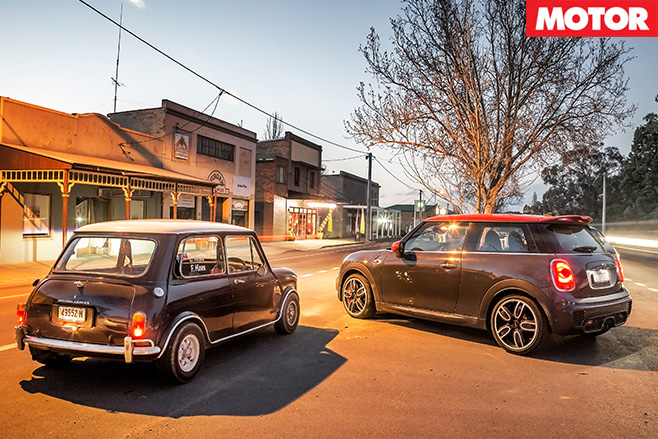
The arrival of today’s new John Cooper Works and its title as the fastest MINI ever makes it a timely entrant in the fifth annual Rylstone Classic – a ‘pretend rally’ celebration between 60 original Mini owners.
Pretend rally? We’re told that this 500km-long punt across some of New South Wales’ best driving roads will be no mothers-to-market meander.
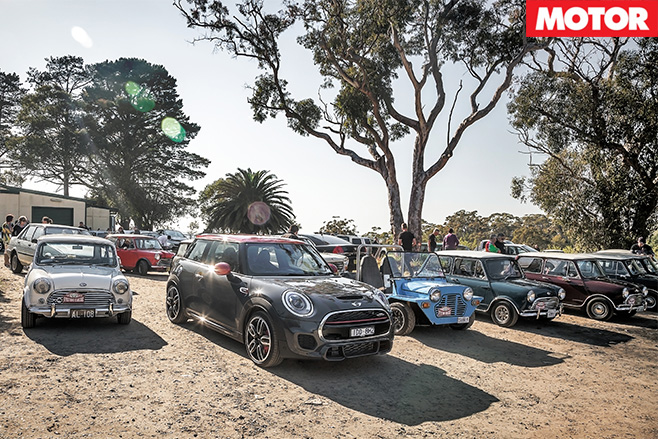
The startline is on the northern outskirts of Sydney, where the Pie in the Sky eatery’s car park is packed with cars and contenders, including a couple wearing free-love colour tees. It feels like the swinging 60s.
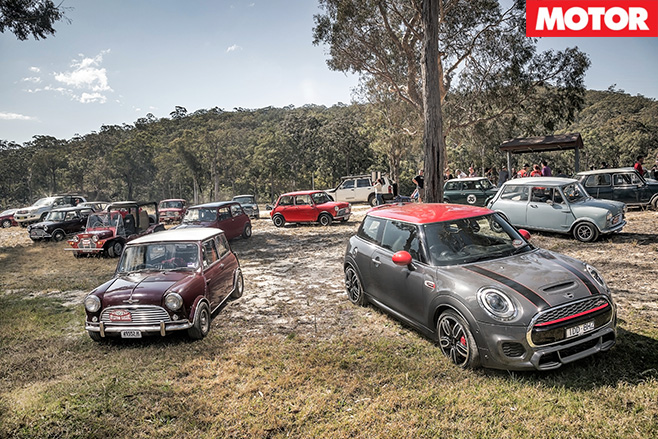
There are some lovely original Minis here, though, that all smell of innocence. Little details, such as wire mesh over the headlights and extruded door latches, define class. But even discussing image is hardly the point of today – more importantly, would John Cooper be proud of the new MINI that bears his name?
Only kilometres after the start-line, any sign of the original’s cuteness evaporates. Tracing the uphill start of Putty Road – a 174km stretch of twisty tarmac – a sweet pale-blue Cooper S is working hard to point its little nose towards the matching blue sky.
As the blacktop crests then unrolls like a wide tarmac cable, the slithering corners ahead become a spectacle, like watching Nanna’s old bathtub bobbing like a sled on a downhill course. The tiny 10.0-inch tyres squirm on the oil-filled Hydrolastic suspension, yet its cornering stance remains tidy.
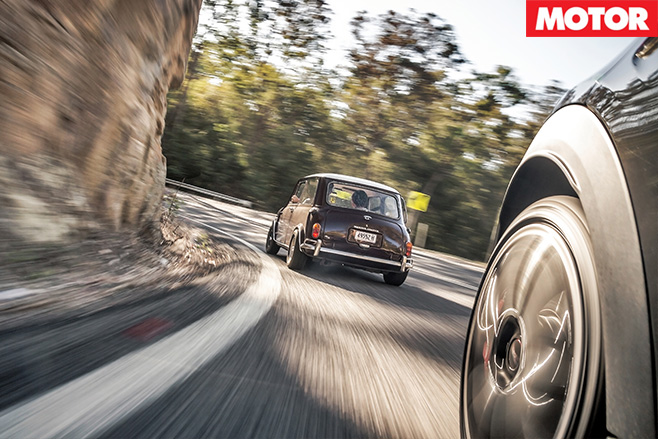
A glance in the JCW’s electro-chromatic rear-view mirror suddenly reveals a matte-black Mini following behind. It makes me feel eerily uncomfortable, the yellow-glow halogen headlights appearing slightly evil, as though it is a giant-killer from Mad Max. An overtaking lane emerges and behind ‘Darth Mini’ suddenly splays a Skittles-coloured Mini-posse on the chase.
We drop windows and the angry blurt of 1275 furious cubic centimetres screams past backed by a flurry of pops and crackles. Our MINI’s left paddle gets slapped twice as the accelerator is flattened but there is only a distant baritone boom. “Yeah,” photographer Wielecki pauses, poker faced. “Darth sounds better.”
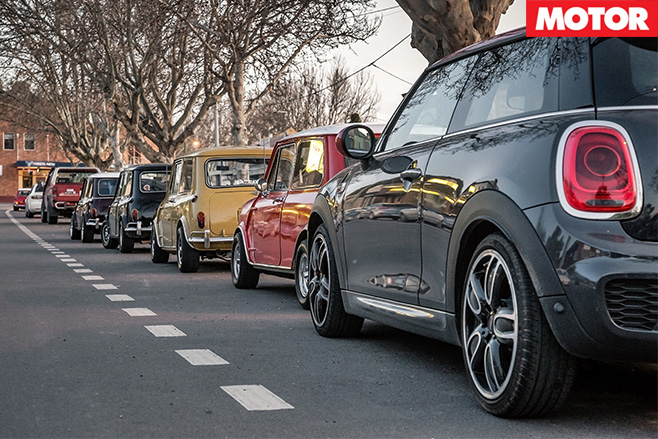
A stats comparison is interesting: the 1275 S left the Sydney factory with 57kW and 107Nm pushing the 676kg brick to 100km/h in 10.8 seconds.
Our Cooper JCW has two extra gears (six-speed auto, sadly no manual is available yet) with not quite double the capacity (2.0-litre) producing, thanks to a turbocharger, almost exactly three times the outputs – 170kW and 320Nm. With nearly double the mass to shift (1220kg), however, the new car’s 6.1-second 0-100km/h sprint isn’t half as fast as the original.
Meanwhile the overtaking lane ends as a long straight appears. Ahead we see the pale-blue Mini settling begrudgingly at the speed limit behind a gathering of sports bikes. Or at least that’s our assumption until a whiff of smoke signals an imminent overtake on a road surface that looks like a picnic rug thrown over unmown grass. Bouncing and bobbing away, pale-blue is gone after a few kilometres.
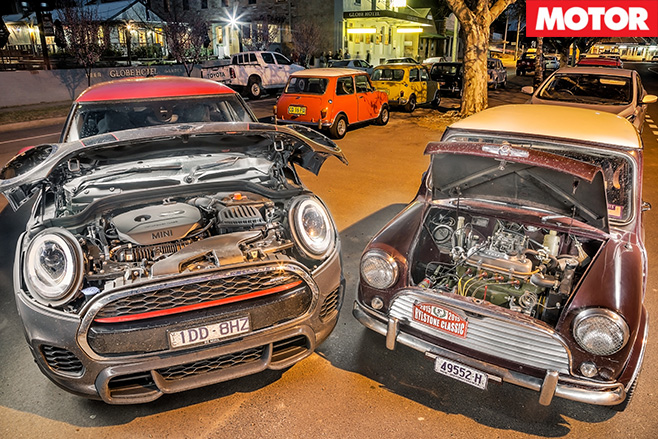
“Well… kinda,” he starts. “The engine’s bored and stroked to about 1330cc and I’ve shortened the throttle body for better low-end torque and…”
The talking soon turns to fuel stops, with some Minis having a single 20-litre tank positioned on the left side of the boot. Twin-tank models – standard on Cooper S – encroach boot space by having another 20 litres on the right, and can be identified by a second fuel cap on that side’s rear haunch.
While pies are being downed, we get a head start with father-and-son duo Frank and Luke Hines kindly giving us a drive in their restored 1966 Cooper S.
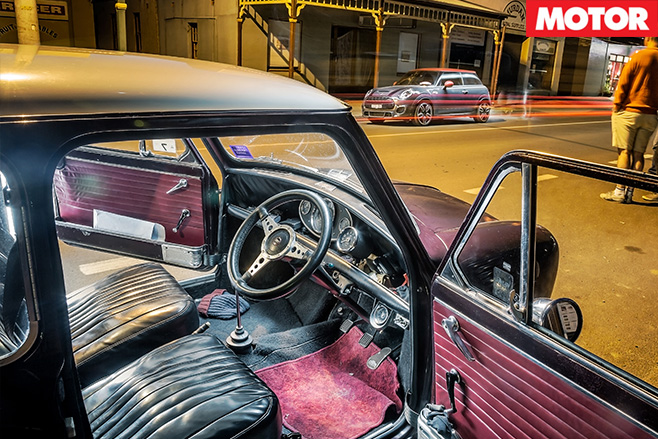
The JCW’s driving position and broad dash feel comparatively SUV-like. In our new model a plastic rocker switch on the lower dash acts as the engine start button; in the old S you switch the fuel pump on by flicking an actual metal rocker switch before twisting the key.
Within two metres the 1275 S feels twice as frenetic as the JCW. Steering systems are often tagged as sharp, but this description would downplay how wonderfully electric the original’s rack-and-pinion system is. Move millimetres off centre and it seems to confuse your desire for turning into a mere bend with wanting to punt into a switchback.
Accelerating sounds as though your ear is attached to the throttle-body – it sits just behind the speedo – so 5000rpm feels like 7000rpm, and in Frank’s car the straight-cut four-speed manual mimms and ehhhs loudly with each upchange.
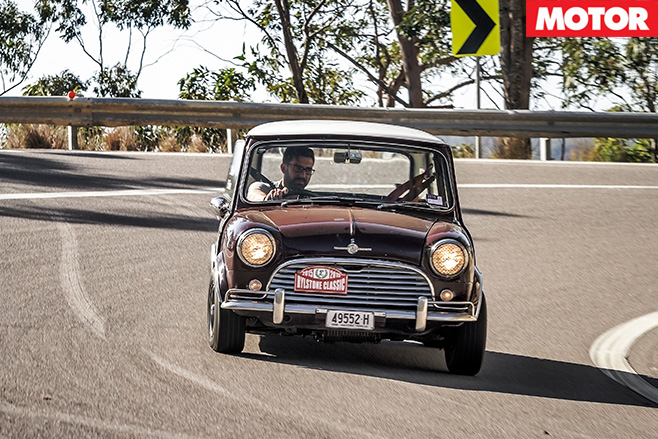
Meanwhile the unassisted brakes require the firmest of presses, yet the throttle is high enough to force ballet-style en pointe footwork when attempting to rev-match – it’s stand on middle pedal with toe, just reach right one with back of heel. Unfortunately you’re left looking more like a dad dancer at the local RSL, the completely flat seat slamming you against the door in corners while you desperately cling to the hyper-active tiller for support.
Similarities between the two Mini Cooper models are apparent, particularly on corner exit. Each keep their bodies flat at the front end, working those wheels hard before allowing a surprisingly early squeeze of the throttle. There’s gentle understeer, but ultimately a fast and neat exit. Compared with the lairy behaviour of 60s muscle cars, it’s easy to see why this earliest iteration of hot-hatch was celebrated.
At the northern tip of Putty, we switch back on Bylong Valley Way that forks over the other side of the Blue Mountains and threads to the Rylstone finish line, not far from Bathurst. With dusk photography required, we wave goodbye to Frank and Luke.
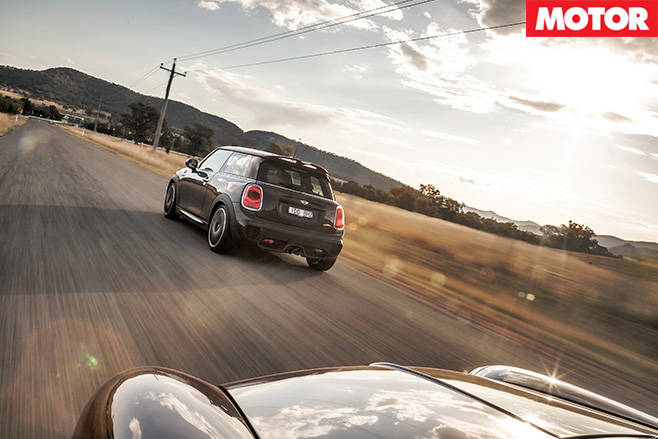
Despite that fun this latest MINI’s behaviour is utterly polished; JCW specials are typically more of a riot. The steering ultimately lacks the immediacy of its predecessor, let alone the electricity of the 1275 S, and the chassis is so balanced it stays planted even following a mid-corner brake brush. As a racing driver, John Cooper would probably adore it and punch me in the face – their kind loved grip and go.
Even then, perhaps MINI isn’t trying when it comes to ‘go’, because the same 2.0-litre in a BMW 330i makes another 50Nm (and Audi’s S1 produces 370Nm). If there’s a message from today, it’s that extracting everything out of a car reaps the greatest rewards. As likeable as it is, this JCW feels like it has more to give.
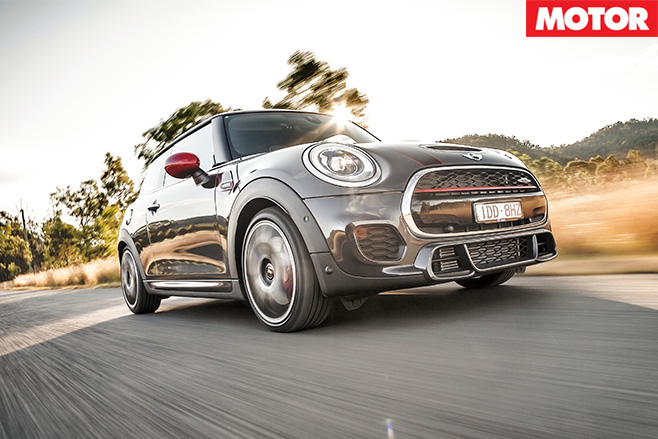
After 500km already, it’s active cruise control on, head-up display pointing sat-nav directions and LED headlights blazing. Turbo torque swells as the auto relaxes in sixth, Wielecki snoozes in the broad passenger seat and I gently crank up the Harman Kardon stereo that – much like the car itself – is anything but mini.
3.5 OUT OF 5 STARS
SPECS: MINI COOPER S JCW Body: 3-door, 4-seat hatch Drive: front-wheel Engine: 1998cc inline-4, DOHC, 16v, turbocharger Bore/stroke: 82.0 x 94.6mm Compression: 10.2:1 Power: 170kW @ 5200-6000rpm Torque: 320Nm @ 1250-4800rpm Power/weight: 139kW/tonne Transmission 6-speed auto Weight: 1220kg Suspension (f): struts, coil springs, dampers, anti-roll bar Suspension (r): multi-links, adaptive dampers, anti-roll bar L/W/H: 3874/1727/1414mm Wheelbase: 2495mm Tracks: 1485mm (f/r) Steering: electrically-assisted rack-and-pinion Brakes (F): 330mm ventilated discs, 4-piston calipers Brakes (R): TBC Wheels: 18.0 x 7.0-inch (f/r) Tyre sizes: 205/40 R18 (f/r) Tyre: Pirelli Cinturato P7 (f/r) Price as tested: $49,950 (auto) Pros: Lotsa grunt; new-found civility; looks Cons: Softer than predecessors; price
Minis en masse
Doing a bit of car spotting
A big thanks to ausmini.com and organiser Evan Redman for allowing MOTOR to bring the newbie along on the well-organised drive. Closing the generation gap just like Frank and Luke, he steered a Cooper S alongside his old man.
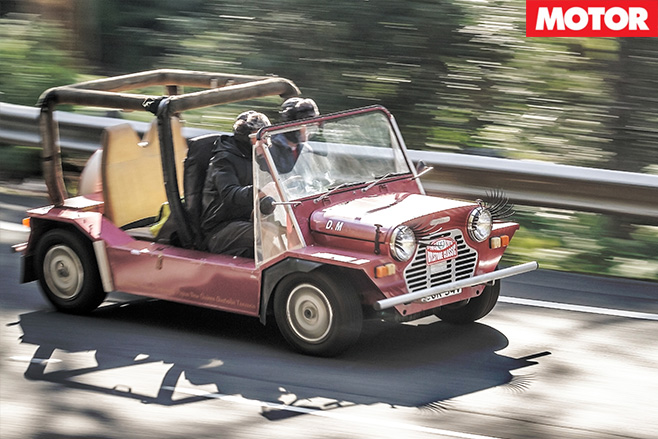
Biggest Mini fans had to be Peter and Karen Morris, who have 42 Minis in Victoria but chose to drive only one to Sydney. It broke down halfway and forced them to overnight it in the Mini’s pews. They made it, however, and completed the rally. That’s the spirit!
Nissan says it plans a significant shake-up to its SUV range in 2017 as it looks to plug the holes left in its soon-to-be-smaller passenger car range.
The Japanese car brand will need to make up to 7000 sales that will be lost late this year as it rationalises its passenger car line-up to drop the Micra city runabout and Nissan Pulsar hatch – sedan versions will remain on sale – late this year. Australia will also lose diesel versions of the Nissan Patrol large off-roader – a car that has, in Nissan’s own words, lived on beyond its use-by date.
Nissan Australia chief executive Richard Emery said the brand already offered 12 different vehicles in the Australian marketplace, and adding more would not help build sales.
“We don’t need to have extra models in the marketplace,” he said. “We need to do a better job with the ones we’ve got.”
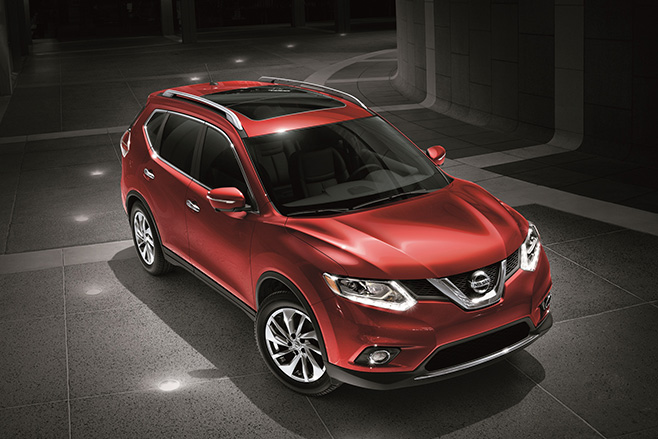
Most of Nissan’s heavy lifting in the next 12 months will come down to three models; the Nissan Qashqai small SUV (pictured top), the mid-size X-Trail (pictured below) and the newest addition to the Nissan range, the large Pathfinder SUV (pictured below), Emery said.
“We’ve got some things in calendar year 17 across our range that will add some volume opportunity across our [SUV] range that will more than make up for the potential loss [of sales],” Emery said.
“We have opportunities in Qashqai, Nissan Pathfinder and X-Trail next year. So in our SUV segmentation there’s some updates due at various points in time over the next 18 months,” he said.
The Nissan Qashqai currently accounts for one in every 10 small SUVs sold in one of the fastest-growing segments on the Australian market as buyers turn their backs on traditional passenger cars – fewer than one in five of Nissan’s sales today are for its line-up of sedans and hatchbacks. It is easily outsold by the Mitsubishi ASX.
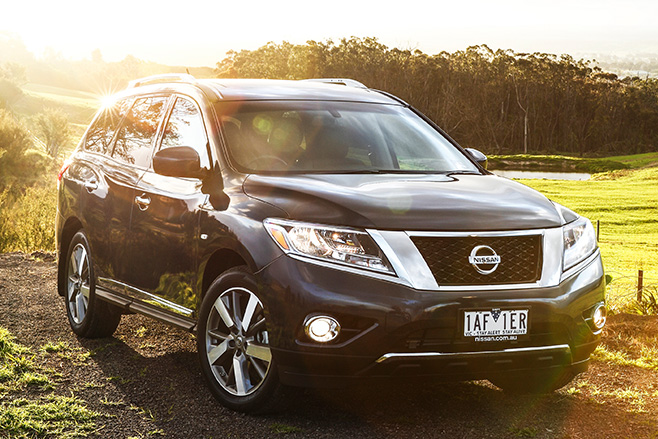
The Nissan X-Trail also competes in one of Australia’s fastest growing segments where it holds the number two spot behind the Mazda CX-5.
Pathfinder, though, struggles in its segment against the likes of the Holden Captiva, Subaru Outback and the Jeep Cherokee.
The Nissan Juke compact SUV, meanwhile, is trickling into Australia in limited numbers as the carmaker diverts production to meet higher levels of demand in other markets, with the carmaker seeing little opportunity to grow Juke sales to take on the likes of the Mazda CX-3.
It’s not just SUVs that Nissan will aim to make more attractive to buyers.
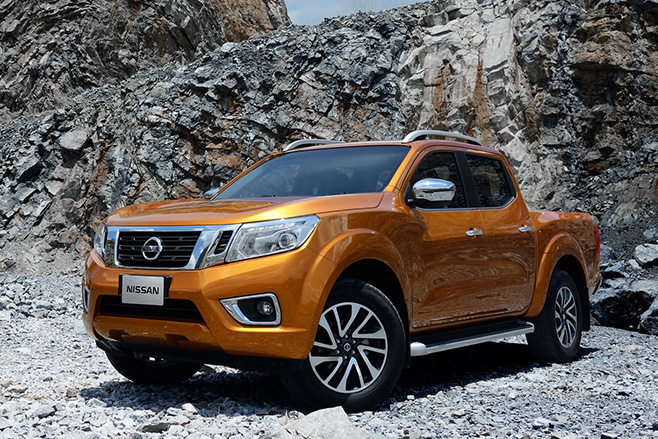
Emery said Nissan would also work to bolster sales of its Nissan Navara trade ute, which has struggled to gain a significant foothold against the likes of segment leaders Toyota Hilux and Ford Ranger, despite being more suited in twin-cab form to urban duties thanks to a more car-like rear suspension system that its stronger-selling rivals don’t match.
According to Emery, the Navara’s “stunted” launch mid-way through last year has worked against it, with the carmaker keen to make the workhorse “more competitive” and increase its showroom edge.
So where could Nissan fill gaps in its showroom line-up? If recent motor shows are any guide, carmakers are keen to see if buyers are willing to stretch their budget into premium territory.
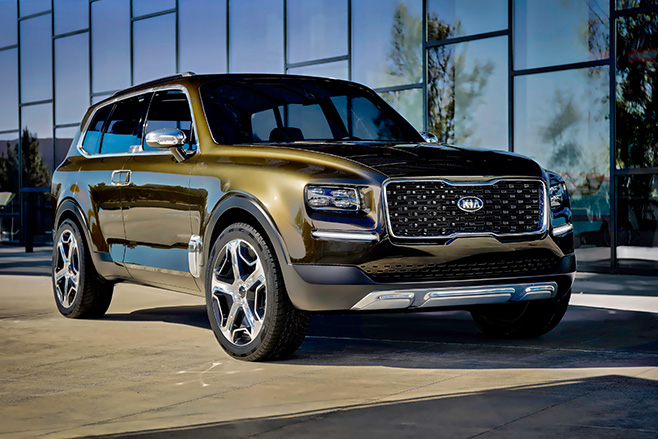
Kia unveiled the Tellrude concept car (pictured above) at this year’s Detroit motor show showing a level of luxury that would have some of the more expensive brands taking a second look. Citroen rolled out its DS Wild Rubis in 2013, featuring an interior better suited to a more expensive German SUV than a cheap, mainstream Frenchie.
Chinese carmaker Great Wall has already made a foray into the Australian market with its premium SUV sub-brand Haval, charging beer-budget prices on models stuffed with luxury-like features.
Some of Nissan’s crop of recent concept cars such as the Gripz have included swathes of leather and aluminium trim to test the buyer appeal of a more upmarket bent to what in the past has been bread-and-butter offerings.
The latest Australian new-car sales data for April is due out next week, with the growing creep of SUV sales expected to nudge even closer to matching, and even beating, the number of new passenger car sales here for the first time.
Pit-lane garage doors are up at Sydney Motorsport Park this weekend as the second annual Porsche Rennsport Festival shows off around 400 new, classic and race cars from the Stuttgart sports car brand.
Porsche tags the two-day event a “rolling museum” but clearly some rolling will be done quite quickly thanks to several on-track demonstrations during the event that opens to the public on Saturday April 30 and finishes Sunday May 1.
Passenger-ride highlights include the 463kW 2.85-litre twin-turbo 935-77 that in 1979 became the only rear-engined racer to win the Le Mans 24 Hour, and the LMP1-98, an evolution of 1996 and 1997 Le Mans winners.
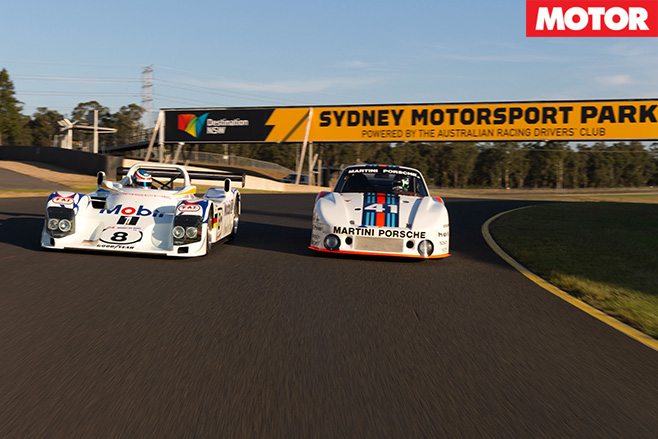
A further ‘first cars in Australia’ line-up includes the first 911, 911 Cabriolet, 911 Turbo and 924 into the country, in addition to the first right-hand-drive 356 Cabriolet and the only right-hook 964 RSR 3.8 ever built. One of only 55 911 RSR 2.8 coupes will also be on display in the Porschestrasse area.
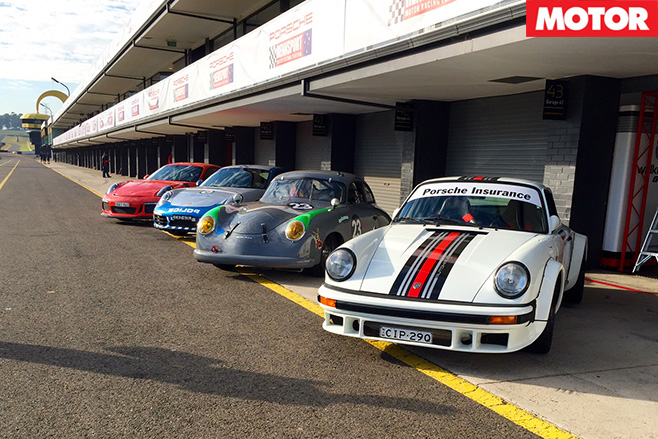
Between the on-track demonstrations, championship rounds of the Porsche Carrera Cup and GT3 Cup Challenge, and “numerous” sports car and Group S and N races will occur on the 4.5km circuit located 35km west of Sydney’s CBD.
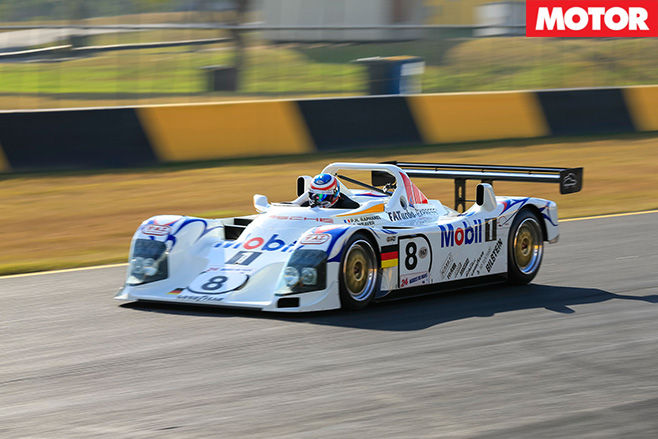
The 2016 Porsche Rennsport Festival costs $35 per day or $55 for the weekend for adults, $20/$30 for children and concession holders, or $85/$130 for a family. Tickets are $10 to $20 more expensive if purchased at the gate.
