
What if I told you that a man who has trained more than half of the current Formula 1 driver grid does so on a bleak airfield in the English Midlands around some cones he drops out the door of a Vauxhall Insignia wagon?
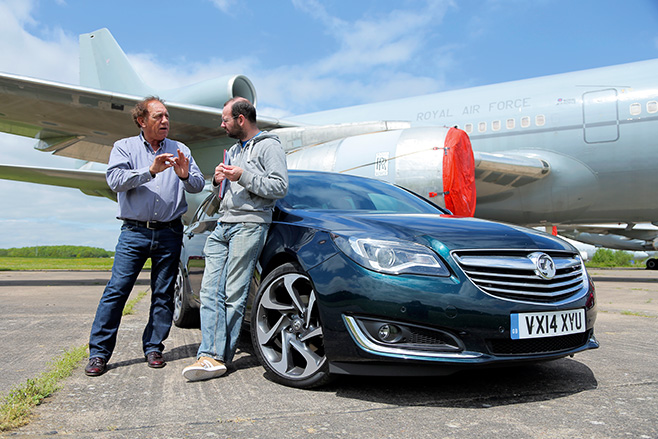
Yeah, that’s what I’d have thought, too. But here we are, at Bruntingthorpe Proving Ground, Leicestershire, to meet a former racing driver from En Zed, Rob Wilson.
Wilson’s racing CV is pretty good: he started in formula cars, briefly drove IndyCars and was the first non-American/Canadian to race semi-regularly in NASCAR. Later, he moved towards sports and endurance races, including Le Mans, Bathurst and Daytona. But within racing, Wilson is now better known for what he does in a Vauxhall estate: making today’s fast drivers go faster.
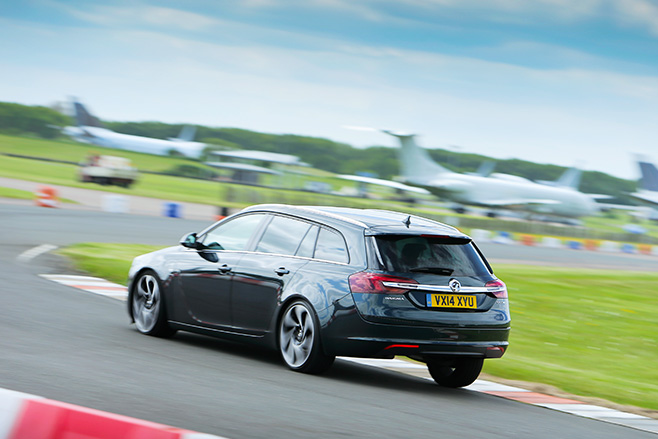
The truth is, fast drivers do take coaching, sometimes off their own bat and sometimes at their team’s behest. And as often as not, Wilson is the one they turn to. Wilson’s training days start late, over a cup of tea, informally in Bruntingthorpe’s offices. He tells you how it’s going to go and gives some theory behind going fast.
I’ve spent time with driver coaches before who are keen to just tell you who they’ve coached. They talk quickly and aggressively and don’t take questions well. Wilson isn’t like that. He’s calm and eloquent and listens to questions. Within, oh, about a minute, I know I’m in the company of someone who understands not just the racing lines of a specific circuit, but the whole theory of speed – someone who understands physics.
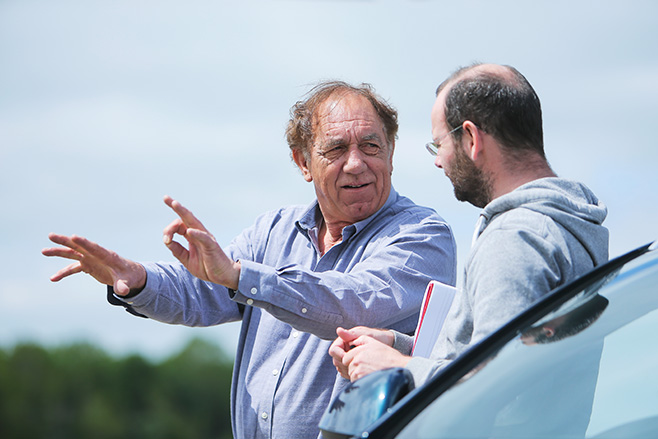
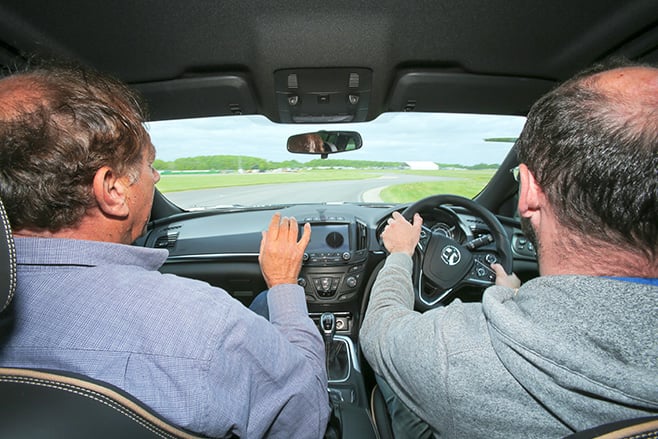
And it doesn’t take a racing car on a specific circuit to learn it. In fact, the advantage of a four-seat family car is that an engineer can ride along, too, and feel the body movements Wilson would like them to understand – movements that might not even show up on telemetry.
Some basics, then. Wilson doesn’t just tell you “smooth is fast”, because although broadly that’s true, it’s rather more complicated than that – and he might want you to be a touch more assertive with the car later.
Then we walk part of the track so that Wilson can show what he means. He points out surface imperfections and lumps to avoid. He says there might be “1000kg of load” on the wheels and that “every time you hit a bump, you take 200kg off, then re-apply it”. You can see pockmarks, a few yards after a bump, caused exactly by this, as tyres in effect land again.
Ditto with downshifts: if you can feel it, even barely, weight is shifting and affecting a car’s ability to slow effectively. Engineers have smoothed downshift patterns, and drivers leave downshifts to the last minute, to smoothen – and shorten – the braking zone.
Ideally, the wheels will be under-rotating – that is, travelling slower than the speed of the car – by around three to five per cent under braking. “More than that is a lock-up”, and you’d be trailing the brakes in, slowly bleeding off the brake pedal as you turn, so that you don’t overload the tyres, right up to the point where their speed matches the road speed near the apex.
It’s around the apex where Wilson’s theories are at their most interesting. In historic racing, on rock-hard tyres that gave their best while sliding, the highest mid-corner speed possible via a long drift was fast. Today, when you must manage tyre temperatures and are looking for maximum traction, that might not be so.
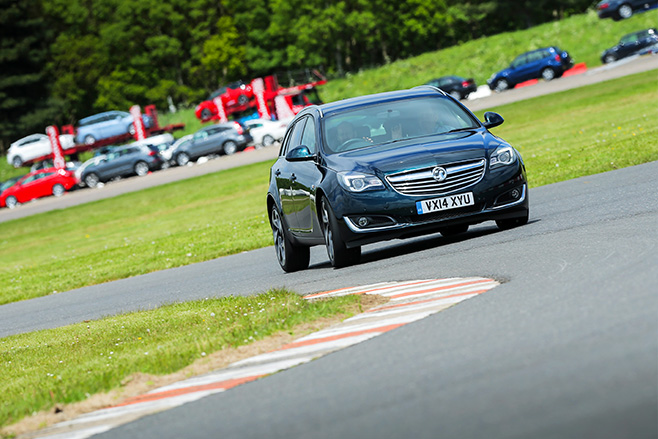
You might take the load “from 800kg to 1000kg” in that moment around the apex, but it’ll turn you more to help you create “a flat patch”, where the car is settled side to side. And a car with precious little lock applied and a settled weight balance will accelerate more quickly than one that’s still on the ragged edge on the way out of a corner, accelerating while on the limit of lateral adhesion and scrubbing with perhaps 300kg of load on its outer tyres, which it is busily overheating. Wilson talks about flat patches a lot. It’s a good thing.
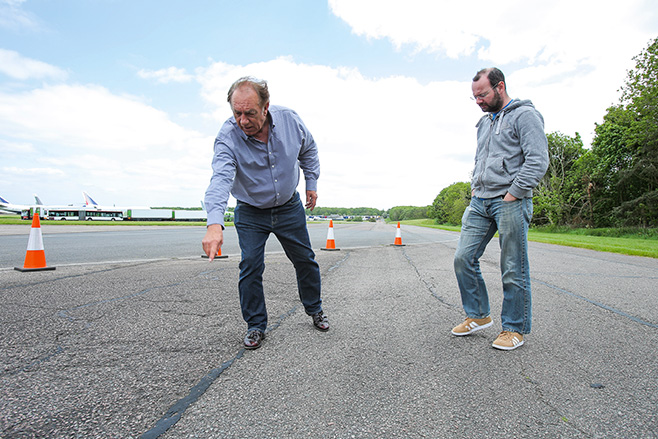
And it’s in these little details – there are more, lots more – where Wilson describes fast driving as “becoming a craft”. It is one thing to know all this, quite another to be able put it into practice, which is, I suppose, what separates really fast drivers from the likes of us. Even if they don’t like to talk about it!
Sales of the baby Rangie aren’t quite on fire like they were during its initial launch phase, though the Ember Limited Edition instead reflects a black and red theme that builds on the Evoque’s smouldering looks.
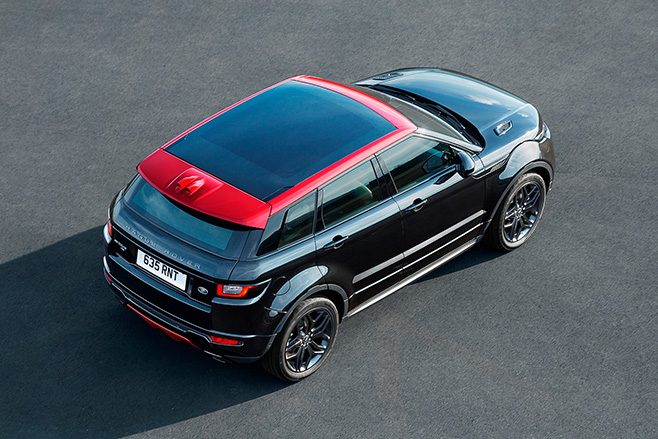
The body is dominated by a Santorini Black paintjob, with a dying-fire effect created by a Firenze Red applied to the rear diffuser, front bumper, and roof (bordering a large panoramic roof).
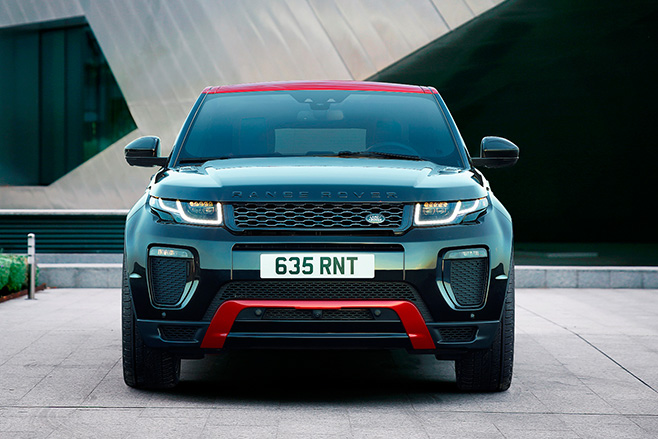
Satin Black 20-inch alloy wheels fill the guards, front and rear lights are darkened, and the exhaust tips, grille, and Range Rover bonnet lettering are also finished in black.
To help buyers further justify burning the extra $16,504 in their pocket over the $76,995 Range Rover Evoque Td4 180 HSE Dynamic five-door on which the Ember is based, LED adaptive headlights and signature lighting are added, and the interior also gains some themed upgrades.
Occupants sit on Ebony Black leather seats with red stitching, and rest feet on black/red carpet mats. Black Oxford leather with red stitching is also applied to the dash fascia.
The $93,499 Range Rover Evoque Ember Limited Edition, powered by a 132kW/430Nm 2.2-litre four-cylinder turbo diesel, goes on sale in the last quarter of 2016.
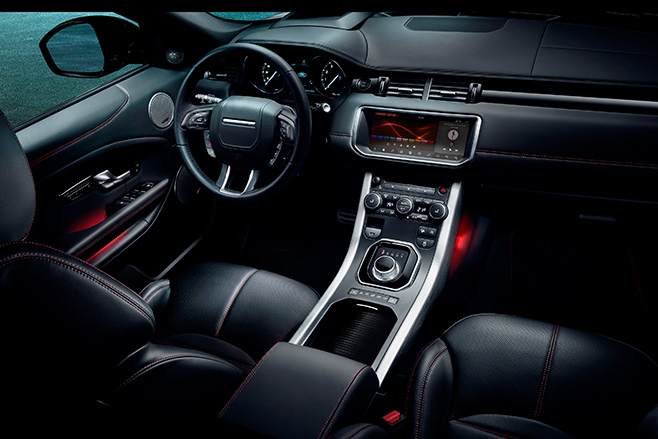
The Evoque range, including the new Convertible variant, is also now available with Jaguar-Land Rover’s flagship infotainment system – the InControl Touch Pro that features a 10.2-inch touchscreen with tablet-style pinch-and-zoom functionality.
The Range Rover Evoque continues to be priced from $51,995 to $80,605 in five-door form, and from $73,995 to $80,605 in Coupe guise.
Volkswagen says it won’t be rolling out cash payments to Australian owners in the wake of the Dieselgate scandal.
Reports in the German media overnight said US owners were on the verge of being offered a $US5000 ($A6400) compensation payment – which VW is yet to confirm – as part of a settlement brokered with US authorities.
However, Volkswagen Australia said shortly after the scandal broke that it was unlikely to extend cash payments to owners here, and today the company stuck to its guns.
According to VW Australia managing director Michael Bartsch, the carmaker “remains unchanged“ from a decision to hold off on offering cash bonuses for almost 100,000 owners here whose cars were tickled to trick testers into thinking they produced less pollution from their diesel fuel than they really did.
“You have to remember that the US situation is completely and utterly different to the situation here,” Bartsch told WhichCar.
“We’re governed by different standards here, where we have a mix of Euro 4 and Euro 5 [emissions standards], and to the best of our understanding, we haven’t contravened any standards in Australia with any program that exists.”
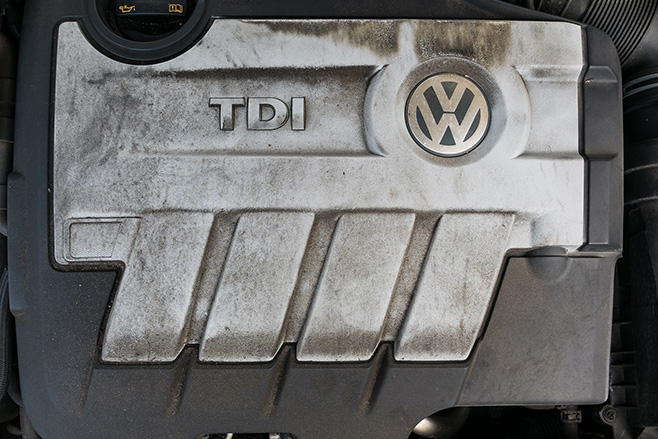
What Volkswagen means is that because it already builds its cars to meet tough US and European emissions laws, the same cars sold here easily pass more lax Australian emissions targets that aren’t anywhere near as strict.
VW is recalling its affected vehicles in stages as the carmaker’s German owners and the Australian government agree that the fixes don’t adversely affect how the cars drive or how much owners can sell them for once the fix is applied.
So far, almost 8000 VW Amarok trade utes are the only vehicles to be pulled back into the carmaker’s dealerships to have the engine’s software updated and a special sticker fixed to the inside of the driver’s door frame to show the work has been done. Of those, VW has applied the fix to about 1600 vehicles as unconcerned owners trickle back into dealerships to get them serviced – as it’s not a safety recall, there’s a low level of urgency, VW says.
However, another 900,000 fixes will be needed for Audi, Skoda and Volkswagen cars – all are built under the Volkswagen Group umbrella – that are expected to start rolling out in late June.
These fixes could range from a simple upgrade to the software that controls the engine, to extra pipes and fittings that help the vehicle to keep a keep a cap on emissions.
Affected owners will be notified once the recalls are announced.
Formula One CEO, Bernie Ecclestone, is no stranger to controversy, but this week’s comments have sent women and men everywhere into a social media frenzy. And rightly so.
The Formula One boss declared Vladimir Putin should be running Europe, Hitler was a man who got things done and this doozy; “I don’t know whether a woman would physically be able to drive an F1 car quickly, and they wouldn’t be taken seriously.”
While the rest of the world condemned the 85-year-old’s comments, Susie Wolff, one of the most successful women in motorsports and Dare To Be Different ambassador, took to social media to defend Ecclestone’s comments.

“After hearing Bernie’s comments in context and speaking to him today, it’s clear we both have the goal of getting a female driver in F1,” Wolff said on Facebook.
“Through my years in motorsport, he was supportive of my mission to make it onto the starting grid… For me, actions always speak louder than words.”
In other interviews, the ex-driver said Ecclestone has also made comments that a female driver would be a great commercial decision for the Formula One. But does the recognition of a good commercial decision equal the same as supporting women in motorsport?
Ecclestone, who has been married three times, did say the business side of Formula One was a different story and that women would be quite good in those roles because “women are more competent, and they don’t have massive egos.” And that, everyone, is what we refer to as a backhanded compliment.
Comments like these may not do much for the PR of the sport, but what they do highlight is the need for high-profile motorsport athletes to rally behind the cause. If not for feminism, then at least for the viability of the sport.
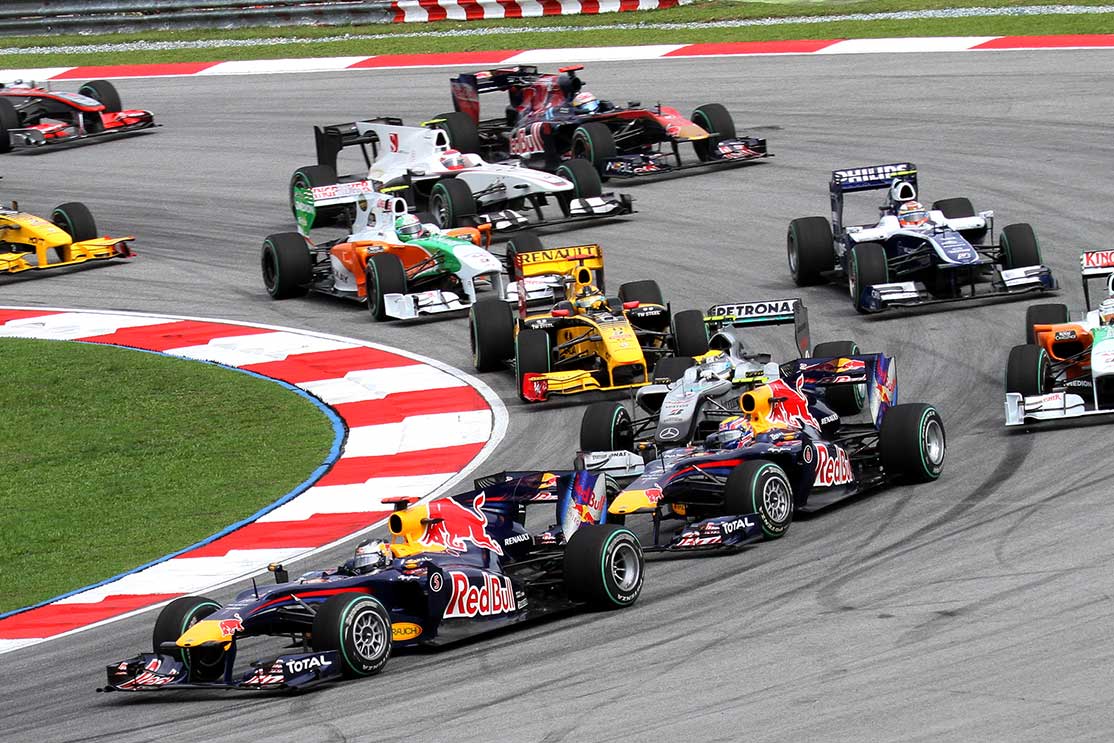
Thankfully, there are people out there who are willing to use their voice, with several drivers and celebrities speaking out against Ecclestone’s comments.
Pippa Mann, an IndyCar driver who competes in the Indianapolis 500, tweeted, “Perhaps someone should remind him that IndyCar doesn’t have power steering and we’re strong enough to driver those.”
TV host, Piers Morgan, said, “I find it hard to believe a woman could never be as quick as a man in Formula One.”
And Alice Powell, a driver in the MRF Challenge Formula 2000 Championship, told the BBC, “Bernie’s views aren’t ever going to change unless a female does make it while he is still in charge. I would like that to be me, but I will stand by anyone who does do it.”
This isn’t the first time Ecclestone has offended women. In 2005, when talking about Danica Patrick, he announced, “You know I’ve got one of those wonderful ideas… women should be dressed in white like all the other domestic appliances.”
And in 2000, he said if women ever were to succeed in F1 “she would have to be a woman who was blowing away the boys. What I would really like to see happen is to find the right girl, perhaps a black girl with super looks, preferably Jewish or Muslim, who speaks Spanish.”
So irrespective of Wolff’s response to the controversy, it’s pretty safe to assume Ecclestone has a few issues with a threatened ego.
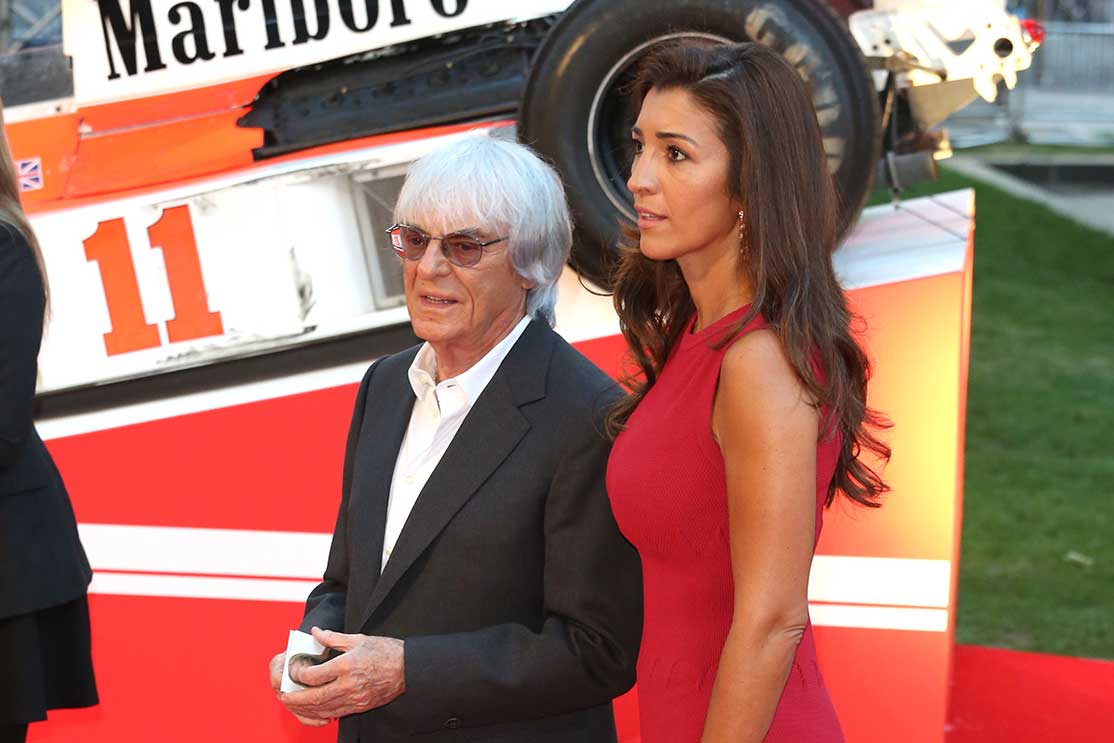
Formula One is a sport that relies on skill, rather than just physical ability, so having 30 per cent less muscle simply means women need to work harder, it does not make success impossible. The sport also has a long history of women participating in motorsports.
So Mr Ecclestone, when you have a success career as a Formula One driver, we’ll consider your comments as an educated opinion. But until then, we’ll keep our eyes rolling.
When electric steering was in its infancy, a mere decade ago, the media and car-enthusiast consensus was that this new technology was the devil’s work.
It was believed that a good hydraulic steering system couldn’t be topped in terms of delivering feel from the front tyres to the driver’s fingers.
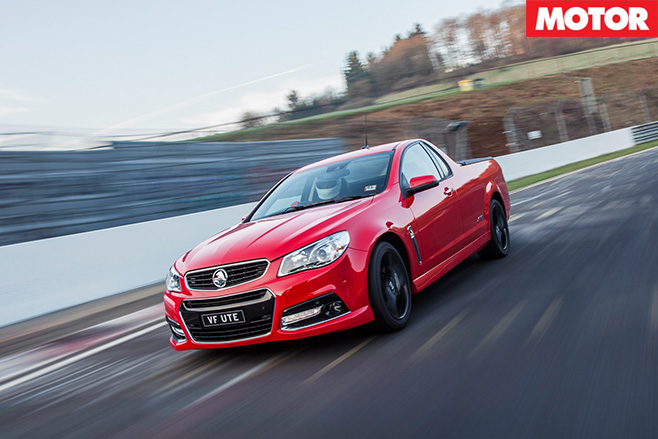
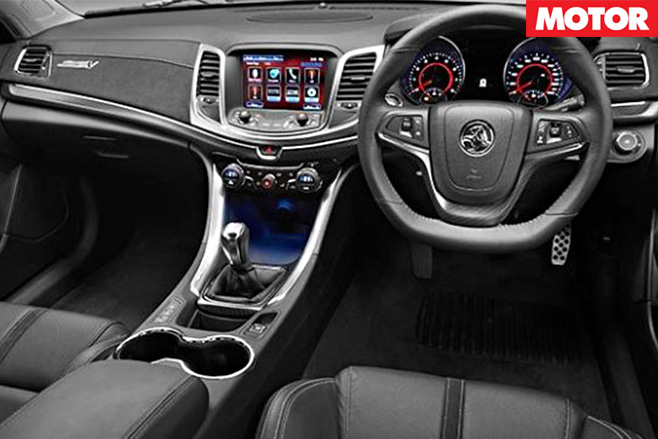
Then, current cars such as the Toyota 86/Subaru BRZ, VF Commodore and Porsche 911 pointed to a more promising electro-steer future. Sure, not everyone agreed these EPS systems were better than the brilliant hydraulic ones, but most thought they represented the state of the art – and that the art was advancing quickly.
Even the experts couldn’t agree on which means of power assistance best provided the pure, undiluted feel that serious drivers seek. But first, what is feel? It’s when the effort required and feedback felt at the steering wheel reflects what the front tyres are experiencing, whether that’s a smooth or bumpy road, a slippery or grippy surface, or a road that’s cambered or flat.
Of course, it also depended on who was tuning the system. “I’ve seen a few different EPS systems from different manufacturers … and I believe that I see software that has been created by somebody who understands how a car steers and how a steering system interacts with the driver. And then I see software that I believe has been created by a clever mathematician,” Barber said.
There’s a lot of work involved in tuning an EPS system, because with its multitude of maps it’s eminently more tuneable. “It used to be much quicker to develop a hydraulic system … you’d just bang through a few valves,” Barber said.
“In the past, [with] hydraulic steering, you pick a supplier, you tell them what you’re roughly wanting, they give you a part, you drive it and say, ‘Ahh yeah, it’s good but not great in these areas…’, so you’ll tell them the things you want them to change, you will wait a month or two, they will send you more parts, you test them again.
“With EPS, you can make those same changes, you can make 1000 changes a day, and we do make changes on the fly. You can change a number or two, hit the flash button. Within 30 seconds it’s flashed and off you go again.
“I love electric power steering – I would never have thought I would have said that years ago,” Trubiani confessed. But will enthusiasts share the love, too? Time will tell
Rack off
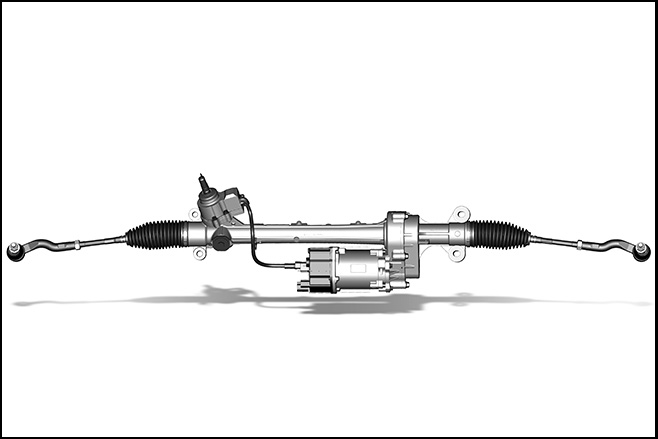
Electric vs hydraulic
1. PUMPED OUT The widespread adoption of electric power steering is a means to reduce fuel consumption. A conventional power steering system’s belt-driven hydraulic pump runs all the time, whether you’re steering or not. An EPS system eliminates this pump and the associated inefficiencies.
2. DIRECT LINE EPS systems use an electric motor powered by the car’s electrical system to drive the steering column, or (in superior systems) the rack directly.
3. BLACK ART EPS doesn’t necessarily prioritise refinement ahead of feel. “It doesn’t have to be like that, it’s in the [tuning of the] software … it’s how hard you work, but also what you think is right,” Michael Barber, Holden’s former chassis guru, told MOTOR.
4. FEEL IT “An interesting test for electric power steering is whether the effort changes on different surfaces – wet, dry, tarmac or gravel. If it doesn’t change, you know that you haven’t been feeling the tyre, you’ve been feeling the software,” Barber said.
5. GRIP GAMES “In order for the tyre to communicate to the driver, it has to communicate against this overhead load of spinning up a big electric motor and overcoming the friction, and that’s the biggest challenge [with tuning electric power steering],” Barber said.
Holding On
BMW’s late change
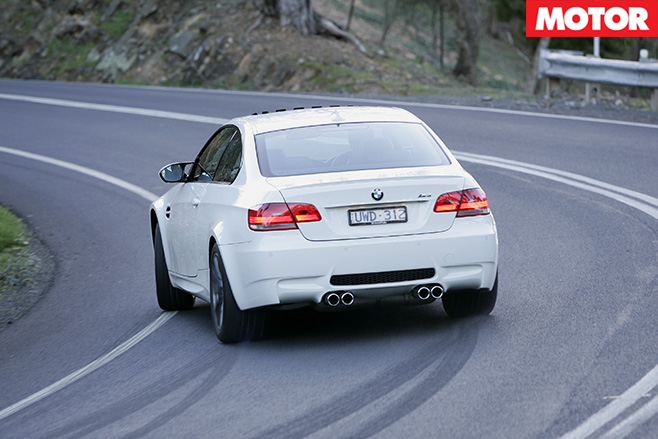
The previous-generation (E90 series) BMW M3 seemingly provided the proof that hydraulic steering is king when it comes to letting road feel flow up the steering column. The M3 (and the 335i) stuck with the old technology until 2013, even though much of the 3 Series line-up went EPS in 2004. It was the same in the second-gen Renaultsport Clio, which retained hydraulic steering when the regular versions adopted EPS in 2001. However, this was not because hydraulic steering was inherently better, just that engineers hadn’t optimised EPS for hi-po feedback levels yet. The current M3 and M4 – and every Renaultsport Clio since – have had electro-steer.
THE LOCAL distributors for Peugeot and Citroen have received “clarification” from the brands’ French head office, claiming their Mitsubishi-produced vehicles sold in Australia are unaffected by the fuel efficiency scandal.
The news comes as the world awaits more details on the fuel rigging story currently engulfing the struggling Japanese brand.
Mitsubishi Motors Corporation (MMC) has admitted it falsified fuel test data to make cars appear more economical than they are. So far the cheating is confined to four models sold only in Japan, but more may be added to the list with MMC later stating that other models produced for the Japanese market were subject to the same improper testing.
Approximately 625,000 cars sold since June 2013 are known to be affected, including two variants of the Mitsubishi eK microcar – eK Wagon and eK Space – and two Nissan-badged cars called Dayz and Dayz Roox. Mitsubishi has sold 157,000 of the two eK models while Nissan Motors (NM) has sold 468,000 of the Dayz models.
Mitsubishi executives in Australia have not ruled out Australian models being affected, while the brand’s UK chief was forced overnight to defend the integrity of vehicles sold there.
MMC has volunteered to conduct its own investigation to find out whether or not the issue extends to vehicles sold overseas. The results of that inquiry could spread to implicate vehicles sold under other brands in Australia.
Peugeot 4008 and Citroen C4 Aircross SUVs sold in Australia were built on the Mitsubishi ASX production line in Japan. Locally delivered Peugeot 4007 models were also produced in Japan, based on Mitsubishi Outlander.
But the local distributors for Peugeot and Citroen in Australia, Sime Darby Motors Group, received notification today that there were “no Peugeot products involved”.
It’s not known how PSA knows its Mitsubishi-produced models are not impacted when Mitsubishi itself is yet to determine whether any other vehicles have cheated; one industry insider suggested the company may have conducted its own fuel tests.
Mitsubishi Motors Australia (MMA) would not speculate about whether or not cars sold in Australia had been subject to the same tests in Japan, but a spokesperson did say that MMA was not aware of any reason to temporarily remove cars from sale in Australia. MMA has not been contacted by Australian authorities on the matter.
The cars known to be affected use a 660cc three-cylinder petrol engine and had an advertised best-in-class fuel mileage figure of 29.2 kilometres per litre (3.4L/100km). MMC now says that figure was wrongly inflated by about 5 or 10 percent.
The issue was uncovered after Nissan questioned inconsistencies in data provided to it by MMC. MMC then carried out an internal examination and found tyre pressure data was manipulated to alter rolling resistance test results and make fuel mileage appear better than it actually is.
MMC has since said “the testing method which was different from the one required by Japanese law has been applied to other models manufactured by MMC for the Japanese domestic market”.
MMC has instructed Japanese dealers to stop selling the affected vehicles and removed all information about the eK models from its website, publishing an apology notice instead.
MMC share value fell by 15 percent after the announcement.
VOLKSWAGEN is standing firm on its decision to refrain from compensating Australian owners affected by Dieselgate, saying it has broken no law here.
The decision to offer no payout locally had not changed, Volkswagen Australia managing director Michael Bartsch said yesterday, after an overseas report said that Volkswagen was ready to offer US customers up to $6400 each.
German newspaper Die Welt reported overnight that Volkswagen Group – the owner of brands including Volkswagen, Audi and Skoda – was close to agreement with US authorities to pay each affected owner $US5000 as part of a settlement deal.
The group is yet to confirm the report. However, Bartsch said Volkswagen Australia’s stance “remains unchanged” since an announcement six months ago that it would not consider cash payments for customers here.
“You have to remember that the US situation is completely and utterly different to the situation here,” Bartsch said.
“We’re governed by different standards here, where we have a mix of Euro 4 and Euro 5 [emissions standards], and to the best of our understanding, we haven’t contravened any standards in Australia with any program that exists.”
However, Australia’s emissions laws have fallen well behind those of the US and Europe. The Federal Government has been slow to insist that struggling local carmakers upgrade engine plants to comply with more strict environmental targets.
Volkswagen has already issued a recall for 8694 Volkswagen Amarok trade utes, powered by the EA189 diesel engine at the heart of the scandal, as the first of a number of remedies designed to remove software designed to recognise that the engine was being emissions tested and switch to a low-emissions mode.
However, Bartsch said that even without the modifications made in the recall, the Amarok complied with strict Euro 5 emissions targets that had been in place in Europe for the past two years – and are not due to enter Australia’s regulatory framework until November this year.
Bartsch said that between 17 and 18 percent of Amarok owners – about 1600 – had brought their utes in to have the fix applied since the recall was issued in February, and to have a sticker fixed to the door pillar to indicate the work had been done.
“We expect to have 85 percent of the cars [Amaroks on Australian roads] done within a year, which is what we see with other non-safety related recalls.”
Bartsch said work to fix the remaining 91,000 Volkswagen, Audi and Skoda models using 1.6- and 2.0-litre EA189 diesel engines would start to roll out in late June as it finalised its recall program with both the Australian Competition and consumer Commission and the Department of Industry and Regional Development.
That fix for the 1.6-litre engine is expected to include a hardware modification as well as a software update.
Bartsch said the timing of recalls to fix the remaining vehicles were out of the Australian operation’s control.
“We’re governed by schedules and timetables that come out of Wolfsburg – those drive the local agenda,” he said.
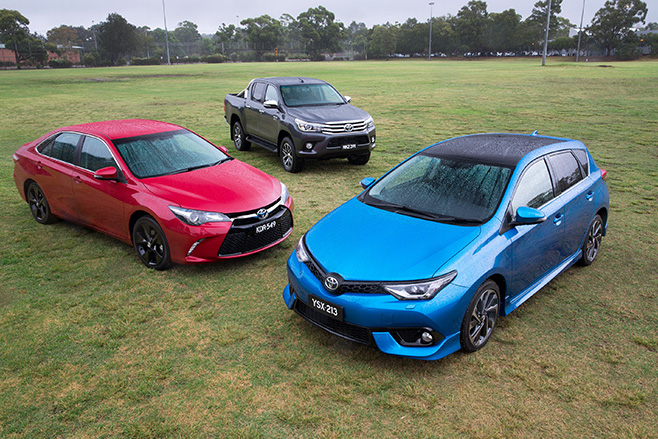
Toyota has confirmed the disruption caused by a series of shattering earthquakes in Japan will have minimal effect on Australian deliveries, as the company plans to restart production from April 25.
WhichCar spoke to Toyota dealers who believe the affects of the earthquakes will be minor here in Australia, despite the deadly disasters suspending production at three key manufacturing plants.
Toyota Australia is remaining tight-lipped on the issue, only clarifying that there will be no impact on locally produced vehicles, the Toyota Camry and Aurion.
“At this stage we are still investigating the impact on Australia,” said Beck Angle, Manager of Corporate Affairs at Toyota Australia.
“We can also confirm at this stage there has been no impact on local production of the Camry and Aurion.”
After Japan’s island Kyushu suffered a series of severe earthquakes last week, Toyota was forced to suspend its vehicle assembly lines due to a parts shortage but is preparing to open assembly lines in stages from April 25 to 28.
“The good news is that production will restart on most assembly lines from next week, which means it is only a one way production suspension,” said Angel.
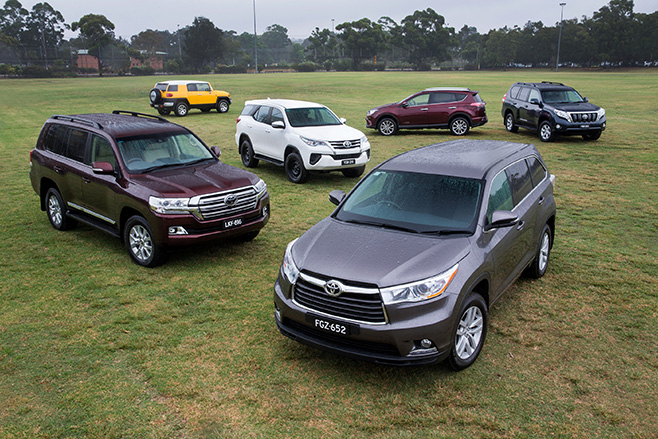
Lexus and Toyota Corolla sedan assembly lines from the Tahara and Takaoka Plants will remain closed until later this month, while the future of four other plants remains unclear.
In a statement made by Toyota President Akio Toyoda, offering thoughts to the people shaken by the disaster, he said: “In a smaller way, Toyota has also been affected by this disaster. Although we are still trying to assess the exact impact on our operations, we are aware of issues at suppliers and production facilities, as well as dealerships. Toyota team members are already working side-by-side with local residents to support the ongoing relief and recovery efforts.”
Honda and Nissan are also affected by the earthquakes which killed more than 40 people, as aftershocks continue to strike Japan.
THE next big thing from Volkswagen is quite literally that, as these spy pictures of a sizeable seven-seater SUV snapped in California reveal.
Expected to be the largest and longest passenger vehicle the German company has offered, when it surfaces this year or early in 2017, this is the productionised version of the Volkswagen CrossBlue Concept first shown at the North American International Auto Show in Detroit way back in 2013.
Taking on the popular Toyota Kluger, Ford Territory, Hyundai Santa Fe, Kia Sorento, Mazda CX-9, and Nissan Pathfinder, it will be built at Chattanooga, Tennessee, in the United States, on a stretched version of the Volkswagen Group’s flexible MQB Modular transverse architecture that underpins the latest Volkswagen Golf and Volkswagen Passat.
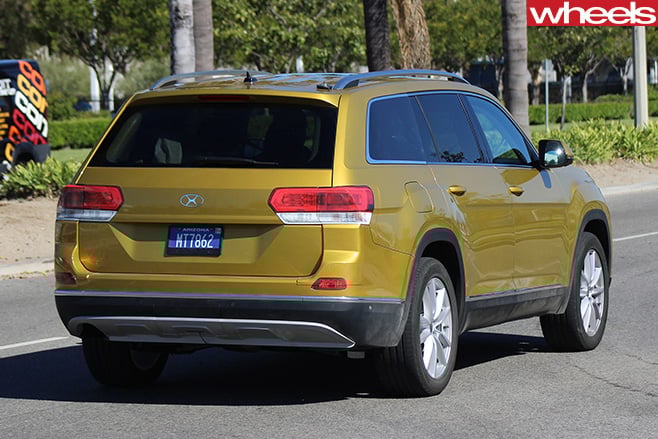
However, rumours suggest that the 2013 CrossBlue Concept still provides the strongest clues yet as to what the finished (and as yet unnamed) product will really look like.
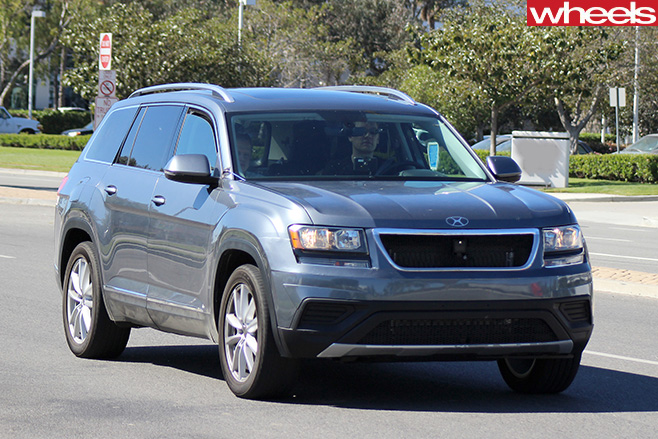
Pundits are also predicting an all-petrol set of engine choices for the production Volkswagen CrossBlue, at least initially, following the company’s on-going diesel emissions cheating scandal, with a 3.6-litre V6 favoured for this vehicle’s predominantly American demographic. There might be a hybrid option, to keep that all-important average fuel consumption figure down to reasonable levels.
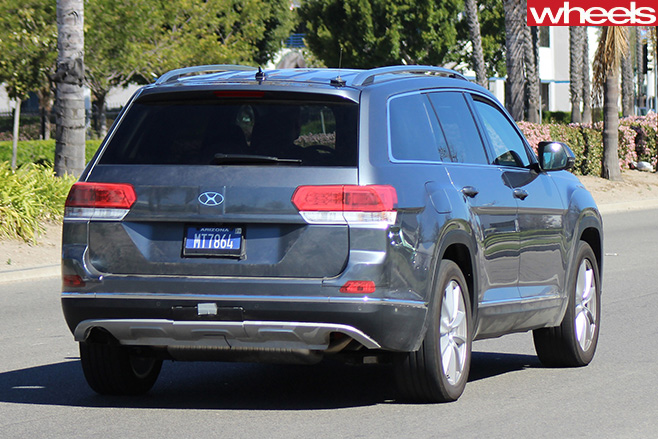
Volkswagen isn’t shying away from competitive pricing nowadays, so don’t bet against a sub-$45,000 starting point (in today’s dollars) for the cheapest front-wheel drive variant when sales commence later next year or in early 2018, stretching well into the $70,000 realm for the fully loaded all-wheel drive flagship version.
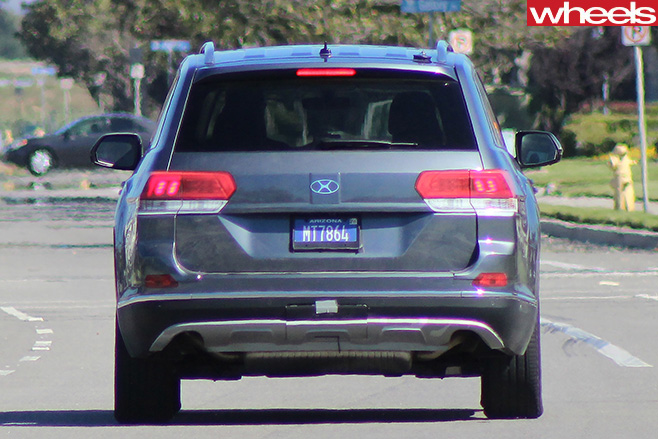
Have spy pics of your own? We’d love to see them. Just email them to [email protected]
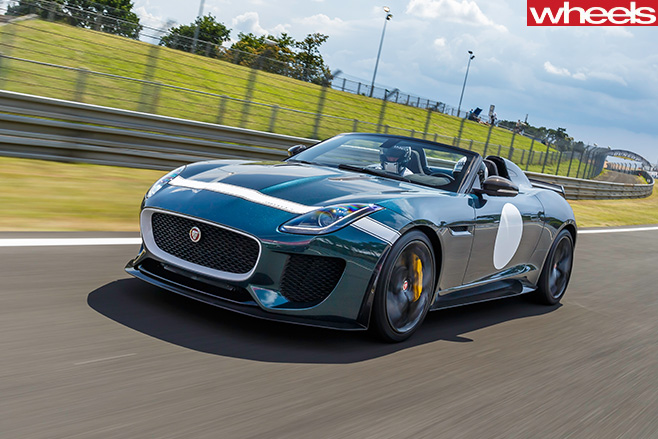
IT’S the fastest, most powerful and most track-focused production Jaguar ever, but the 10 F-Type Project 7s that have just landed in Australia are unlikely to ever undergo punishment on a race track.
According to Jaguar Australia, some of the Project 7s will spend most of their time in a garage, with owners keen to keep them straight and original – possibly even appreciating in value.
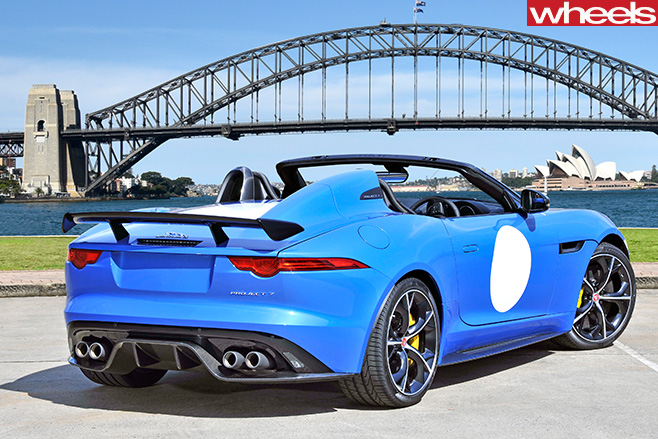
Just 250 of the show car-like Project 7s have been produced globally, with 10 air freighted to Australia so owners could enjoy an exclusive Justin Hemmes-hosted launch dinner at his house in Vaucluse this week.
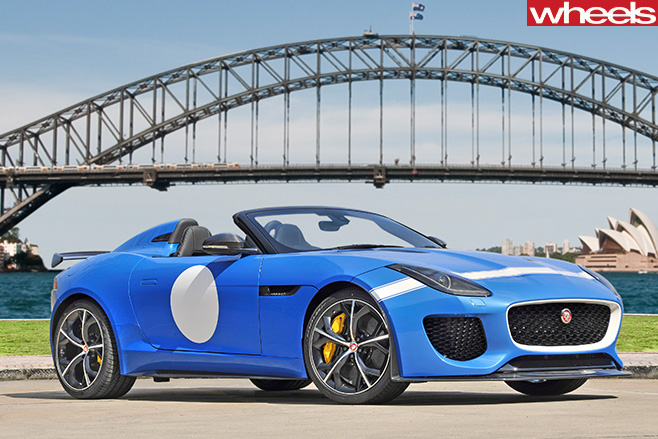
The Project 7 is based on a Jaguar F-Type Convertible R, complete with a worked version of the 5.0-litre supercharged V8.
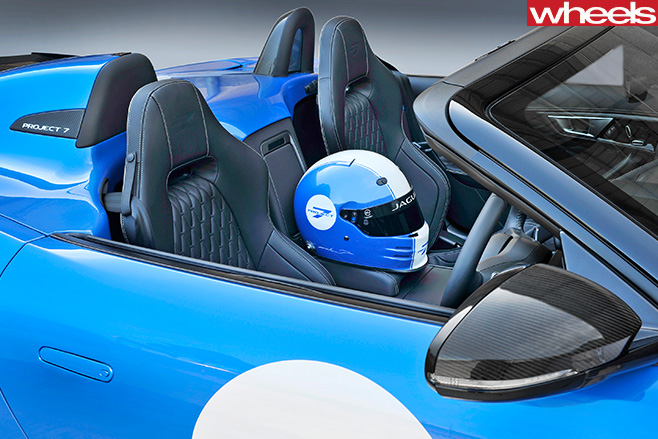
All are mated to an eight-speed auto driving the rear wheels.
Acceleration to 100km/h is a claimed 3.9 seconds, the fastest of any Jaguar road car; that figure is 0.3 seconds quicker than the Convertible R and 0.2 seconds quicker than the all-wheel-drive version of the same car.
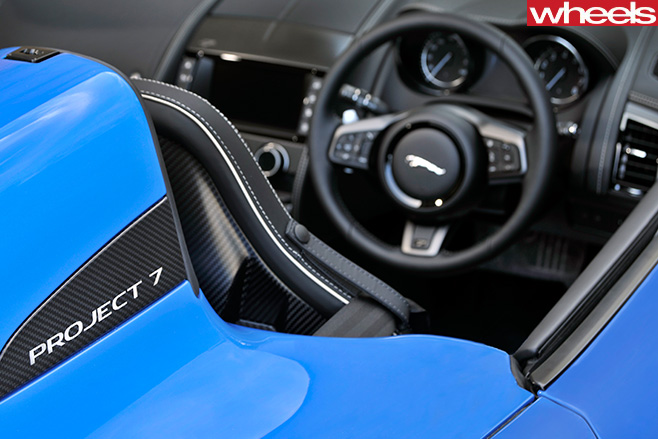
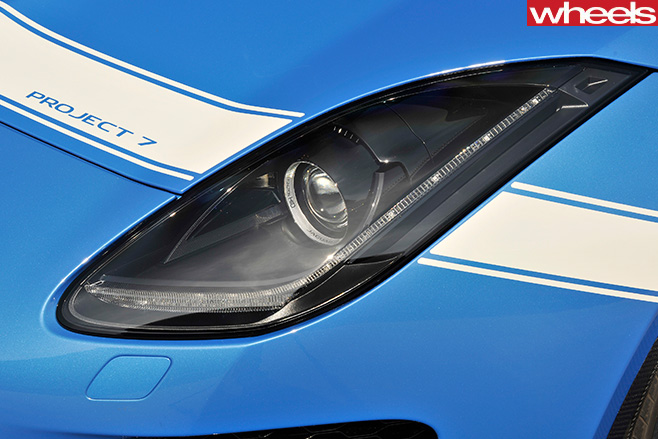
The cut-down windscreen is part of a detailed aerodynamics package that includes a carbon fibre splitter, diffuser and sideskirts. The Project 7 is claimed to have 177 percent more downforce at its electronically limited 300km/h top speed.
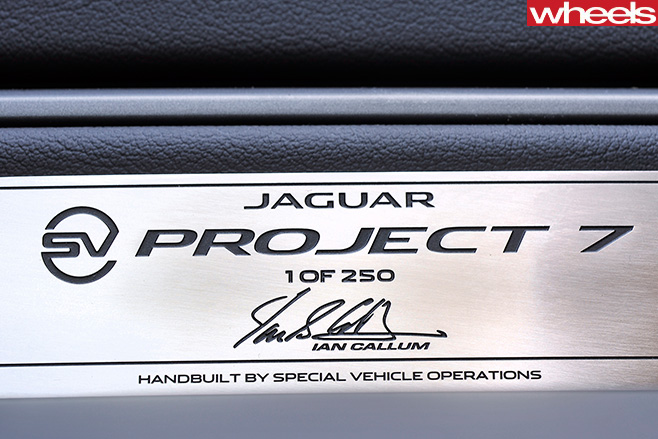
Each car also comes with a plaque bearing the name of design boss Ian Callum.
While the Project 7 is tiny volumes – its limited production run makes it one of the most exclusive cars on the road – it’s more about positioning the brand as aspirational and cementing its design and engineering cred.
“It’s not just those [Jaguar enthusiasts] that have been welded on forever. If this brand’s going to do what we want to do we can’t survive on that, we’ve got to bring a lot of new and interesting people into the brand.”
With the upcoming expansion of the AMG-fighting SVR sub-brand, Wiesner says the Project 7 was an important learning experience and one that proved there was demand for such cars.
“At that end of the market and higher … there is plenty of desire … there’s plenty of opportunity in that $350k and higher where we see opportunities for both Range Rover and Jaguar products.”
