
It’s easy to get jaded by power figures thrown around on the internet.
Want to see more from Hot Tuner 2015? Check out all the action here.
It seems like everyone’s uncle’s flat-mate’s brother’s dog has a 1000hp (that’s 750kW in the new money) car hiding in a shed somewhere, and we’re all so blasé about it.
Fact of the matter is, however, that anything more than around 375kW (at the wheels) is enough to pucker sensitive parts of the body and turn grown men into whimpering jellyfish with nary but a stab of right foot.
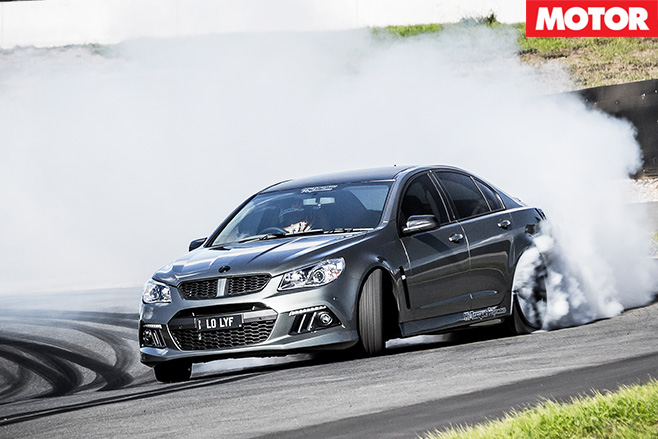
And such is the case with this demure offering from Kent Dalton, the man behind Hi-Torque Performance in Queensland. While it looks like any other Gold Coast-spec Clubby, this Gen-F packs a genuine 700hp at the rear bags, which is enough to pull huge fourth-gear powerskids as Luffy so ably demonstrated at the South Circuit.
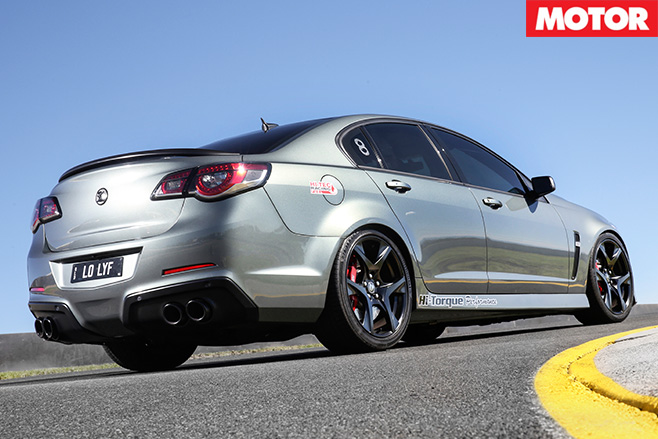
Dalton explains. “Our customer wanted something that was going to be different to the run of the mill. He wanted it streetable, and to look and operate like a factory car. I decided the best way to go about that was to run a supercharger instead of a turbo, especially with the torque in it.
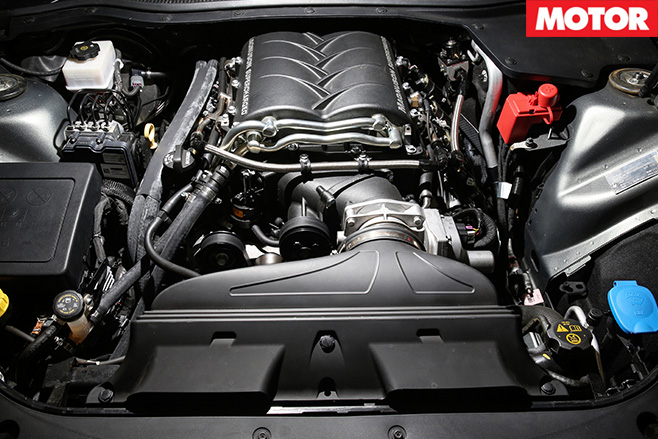
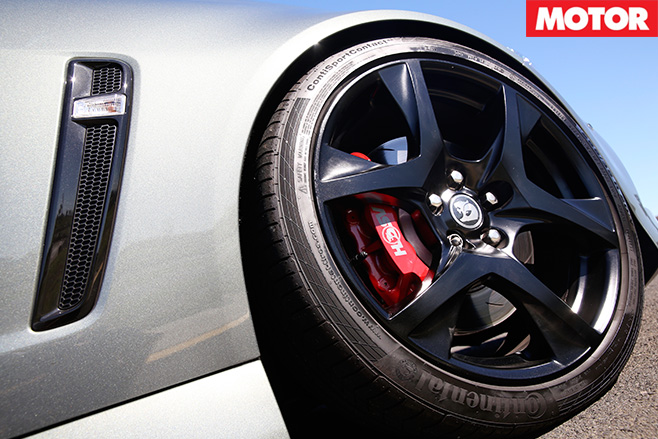
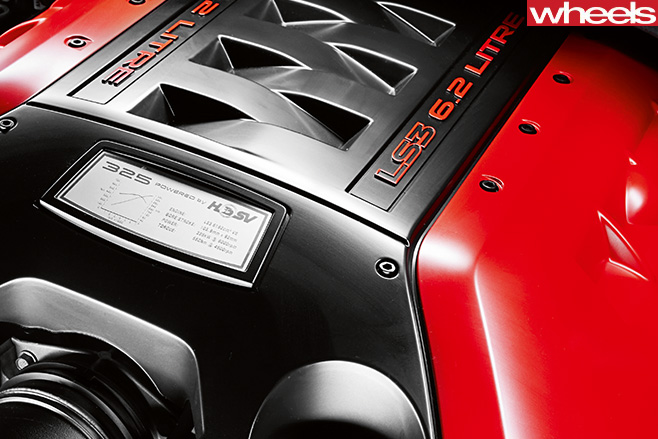
So why use the more expensive HSV and not a cheaper SS boosted up? “Using an HSV to build this car off meant we had the best base,” Dalton says. “The HSV has the optimal diff ratio in it, it’s got the good ’box and it has that 6.2-litre LS3. It has plenty of torque, the ratios work and it’s got good brakes. We put coilovers in it to stiffen it up, but the stock bushes are all left.
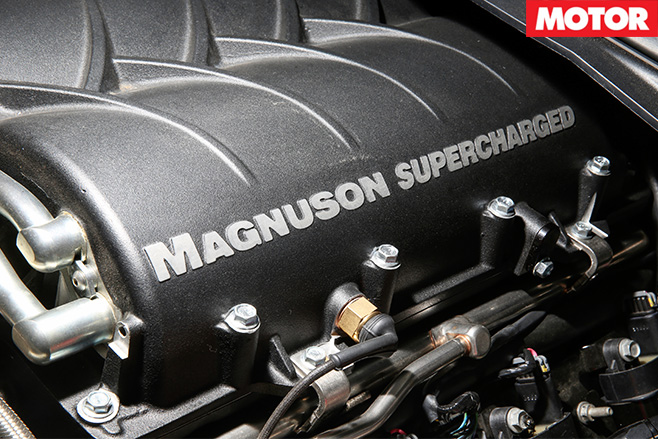
“Years of research and development mean we know what the LS engines like. We didn’t have to delve too far into tuning every part of the computer, but we put more work into finding the right camshaft.
This is so that it can have a nice idle and doesn’t make the car stall, and ensures you can drive the car easily when you want to get into it. We also needed to ensure the valve spring combo could handle the horsepower as they’re a known weak point on the LS engines.
Workshop
Car: HSV Gen-F Clubsport Who: Hi-Torque Performance Where: 3/225 Brisbane Rd, Labrador How long: 10-plus years Contact: (07) 5500 6512 Email : [email protected] Website: www.hi-torqueperformance.com.au
Specifications
Drive: rear-wheel Engine: 6162cc V8, OHV, 16v, supercharger Gearbox: 6-speed manual Suspension: struts, coil-overs, anti-roll bar (f); multi-links, coil-overs, anti-roll bar (r) Brakes: 367mm ventilated discs, 4-piston calipers (f/r) Wheels: 20 x 8.5-inch (f); 20 x 9.5 (r) Tyres: 255/45 R20 (f); 275/45 R20 (r) Continental ContiSportContact 5P
Parts and Prices
| Supercharger kit | u00a0 | $21,000 |
| Clutchu00a0 | u00a0 | $3,500 |
| Suspension | u00a0 | $3,350 |
| Total mod costs | u00a0 | $27,850 |
| Vehicle cost (mSrp) | u00a0 | $61,990 |
Total Cost | u00a0 | $89,840 |
Mild-mannered on the outside, psychotic under the bonnet
By now you should have seen the video on MOTOR’s Facebook page with Luffy hanging the Clubsport sideways at well over 100km/h around the back of the Sydney Motorsport Park South Circuit. The wall of smoke that was pumped out was equal to anything you’d see at a D1 drift comp… or the Summernats burnout finals!
Now, while I’ve driven plenty of overpowered street cars, I didn’t have the stones to attempt such a move in someone else’s borrowed car at that particular location. At least, that’s my excuse and I’m sticking to it.
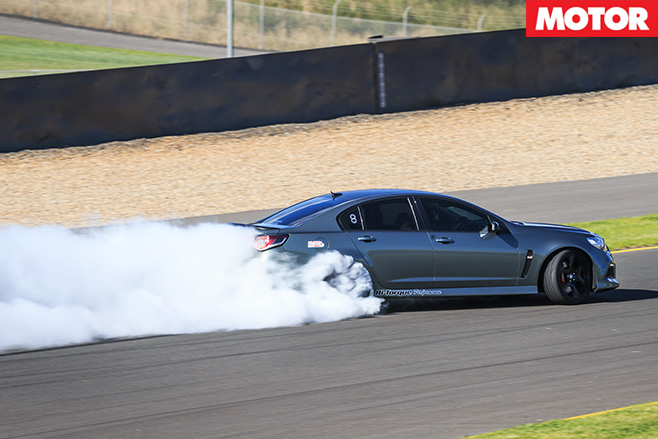
Sitting in the pits it’s a civilised, refined and thoroughly comfortable large family sedan. All the features work and it’s quite tame and comfortable to drive when you’re not trying to peel bitumen off the face of NSW terra firma. Everything works like a factory-built car and there isn’t much of a hint of the violence lurking within, apart from a bit of a cammy vibe at idle and that brutal clutch.
Plenty of tuners talk a big game about making hypercar power from a family car, but in practice they get the balance of race and street weighted too far towards the race side. We had a man at Hot Tuner with first-hand experience in a V8 Supercar, so everyone was keen to hear Luffy’s thoughts on the HTP brute.
He came in from his lap wide-eyed but beaming with praise for what Kent and the HTP boys had done. “If Holden built a car with 700hp that is how I’d expect it to drive,” exhaled Wazza.
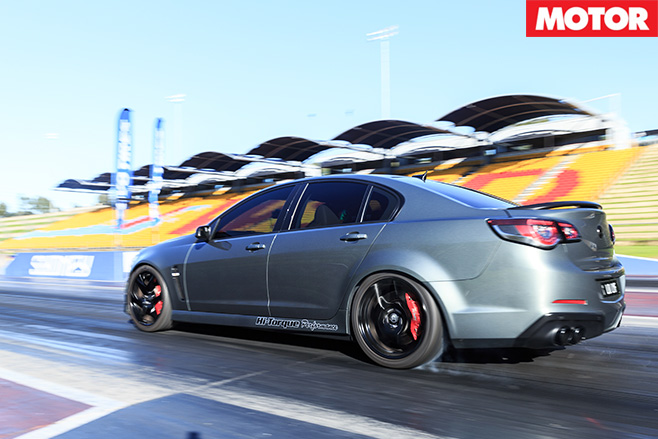
The standard brakes and tyres, combined with a huge kerb weight, also saw it finish eighth in the 100-0km/h test with a 38.49m stop. Luffy also brought the big beast home in eighth on the track thanks to a 66.30sec lap time.
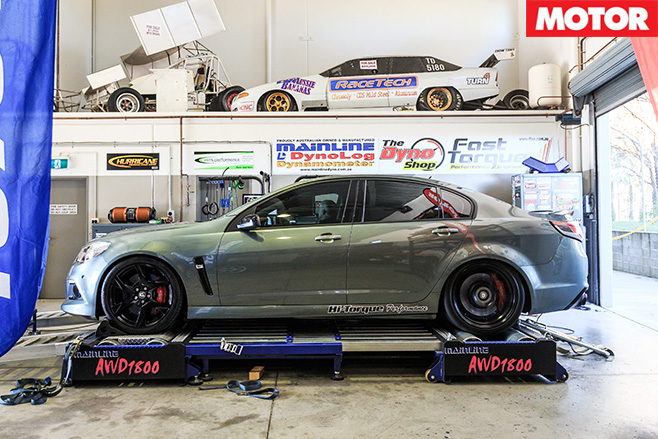
Still, it obliterated the competition on the dyno with a 517rwkW run, making 396.2kW more than the Fiesta! It was enough to see the Clubby finish fifth overall. But the scorecard doesn’t tell the real success story of this car.
That might seem like an illogical thing to say about a car which can bake the rear tyres at will in any gear, but the fact is this isn’t a machine you drive at full throttle, or steer as hard as you can go. It’s an exercise in restraint and moderation, using the huge response in the mid-throttle area to move the car in a smooth, seamless way rather than blasting on maximum attack.
Shockingly, there aren’t rattles or strange vibrations. And it didn’t get hot after a couple of punishing laps from Warren, or idling for extended periods in the pits. If you’d told someone 15 years ago that you could have a car as powerful as the Hi-Torque Clubsport with impeccable manners, they’d have had you locked up.
If power corrupts and absolute power corrupts, then I’m now as bent as a dog’s hind leg.
Results
Overall Placing: 5th
| Test | u00a0 | Result | u00a0 | Ranking |
| 0-100km/h | u00a0 | 4.89sec | u00a0 | 5th |
| 0-400M | u00a0 | 12.35sec @ 214.56km/h | u00a0 | 1st |
| 100-0km/h | u00a0 | 38.49 metres | u00a0 | 8th |
| Dyno | u00a0 | 517.0rwkW | u00a0 | 1st |
| Track | u00a0 | 1:06.30 sec | u00a0 | 8th |
Luffy Says
This car is all about the engine. It feels like if HSV decided to bring out the Clubsport with 700hp at the treads, this is how it would come. Look, it’s got a massive amount of power and you can turn the tyres in any gear, but it still feels like what you would expect to buy it from the manufacturer. The work that’s gone into making it as driveable and liveable as what it is, is a credit to Hi-Torque Performance.”
Check out the other cars that competed at Hot Tuner 2015:
- Herrod Ford Fiesta ST
- Herrod Ford Falcon XR8
- MRT Performance Subaru WRX
- ROH Wheels Toyota 86
- CPC BMW M4
- Harding Volkswagen Golf R
- Tunehouse Toyota 86
- V-Sport Mercedes-Benz A45 AMG
Don’t buy an STI. All you’re buying is a bullet-proof gearbox and some bling. This thing will crap all over an STI.”
Check out all the Hot Tuner 2015 action here.
And, with those words, MRT Performance head honcho Brett Middleton flicked the switch to duck-and-cover. But Senor Middleton is convinced that anybody after a road-burning Rex would do well to forget the STI and instead start with the base-model WRX which, BM says, is a better starting point.
“The WRX has a twin-scroll turbo, so it spins up faster than the STI. This thing (the MRT-modded car) is building boost longer; the standard car tapers off the boost too early. All you need to do is put a tune in it and it’s quicker than an STI.
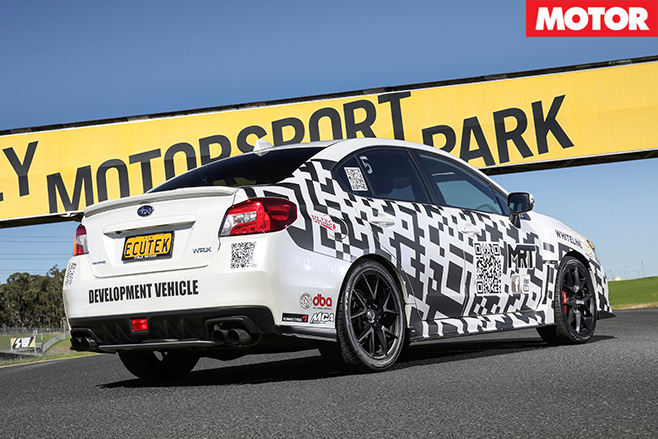
So what exactly were those fiddles? Well, let’s start with the MRT Power Pack that gives the flat-four a new set of parameters to work with. There’s also an alloy pulley kit, a Verticooler top-mount intercooler (which is bigger than the stocker and tilted at a better angle for air to hit it) an E-flex sensor and an adjustable blow-off valve.
But if that doesn’t sound like a huge change, Middleton reckons the real sweat was in making sure it would all work in harmony with no trade-off in driveability or reliability.
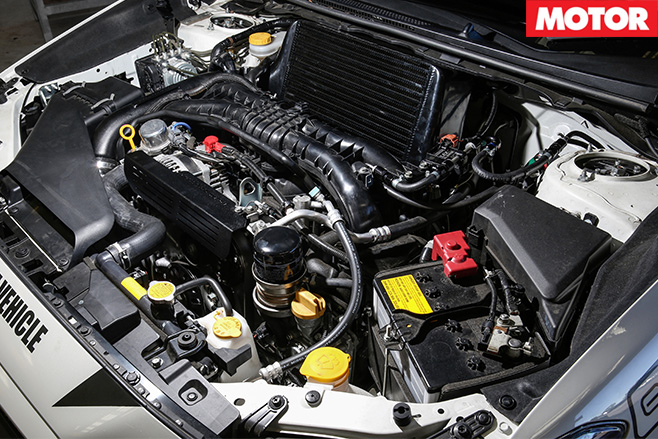
Oddly enough, Middleton reckons the maximum boost you’ll see on this engine is the same 21psi as the stocker, but it’s that more rapid spool up and holding on to boost for longer that makes all the difference.
“That’s it, though,” he admits. “It’s engine-out to get anything more.”
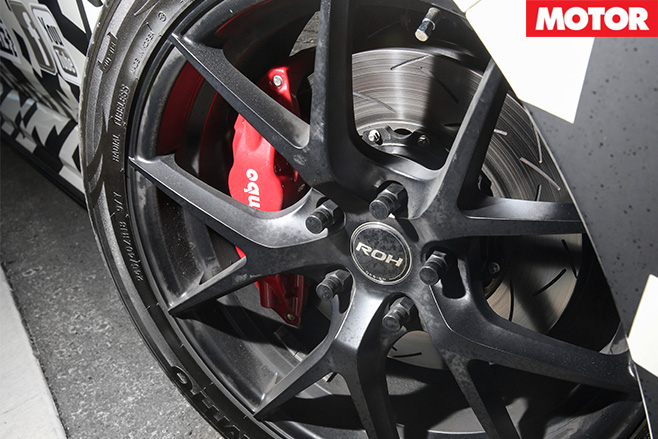
Middleton has a rich rally background and that’s reflected in the way his cars also cop a handling upgrade as a matter of course. In this case, the trick was to fit a set of MCA coil-overs. A shift kit was added as well and a set of ROH wheels and Kumho Ecsta KU39 tyres fill the guards.
This level of modification isn’t cheap, of course, and once you’ve ordered your brand-new WRX, you’re looking at adding an extra $21,626 to the bill to arrive at this specification. Which is a total of $65,616. Just as well it will kick the butt of the $50K STI then.
Workshop
Car: Subaru WRX Who: MRT Performance Where: 1 Averill Street, Rhodes, NSW How long: Since 1995 Contact: (02) 9767 4545 Email: [email protected] Website: MRTperformance.com.au
Specifications
Drive: all-wheel Engine: 1998cc flat-4, DOHC, 16v, turbo Gearbox: 6-speed manual Suspension: A-arms, struts, coil-overs, anti-roll bar (f); multi-links, coil-overs, anti-roll bar (r) Brakes: 326mm ventilated discs, 4-piston calipers (f); 315mm ventilated discs, 2-piston calipers (r) Wheels: 18 x 8.0-inch (f/r) Tyres: 245/40 ZR18 (f/r); Kumho Ecsta Le Sport KU39
Parts and Prices
| Power packs XA-XC | u00a0 | $6,370 |
| Verticooler kit | u00a0 | $1,595 |
| GFB Bov | u00a0 | $795 |
| GFB pulley kit | u00a0 | $289 |
| Suspension | u00a0 | $3,395 |
| Brakes | u00a0 | $4,486 |
| STI spoiler kit | u00a0 | $2,500 |
| Wheels/Tyres | u00a0 | $2,196 |
| Total mods cost | u00a0 | $21,626 |
| Vehicle cost (mSrp) | u00a0 | $43,990 |
Total Cost | u00a0 | $65,616 |
MRT’s super Rex is more than the sum of its parts
It’s a bit strange to jump into a tuned WRX and not be confronted by the active diff controls in the centre console. It’s a sharp reminder that this is a WRX, not an STI. But if anything, that just makes the anticipation all the more tasty. Can this thing really hand an STI a blood nose?
Um, not sure. I reckon I would want to back-to-back it with the hotter factory version before I made any bold statements. But I can tell you that the MRT Rexie is definitely as fast as the STI, despite giving away half a litre of engine capacity.
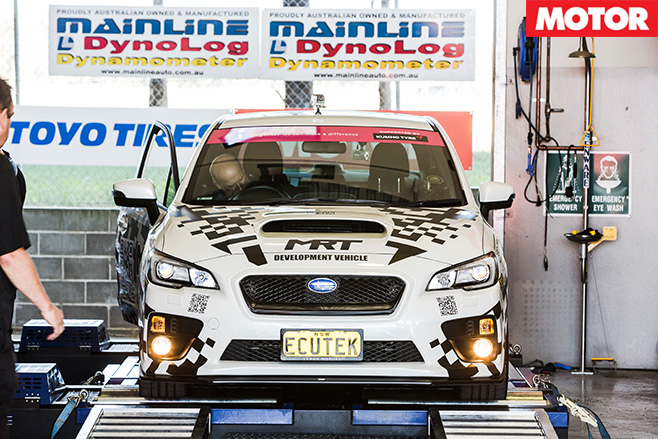
On the dragstrip that amounts to 0-100km/h in 5.8sec and a standing 400m time of 13.7sec. And that’s after Brett had leaned into the window of the car and reminded Luffy that he was dealing with a standard clutch.
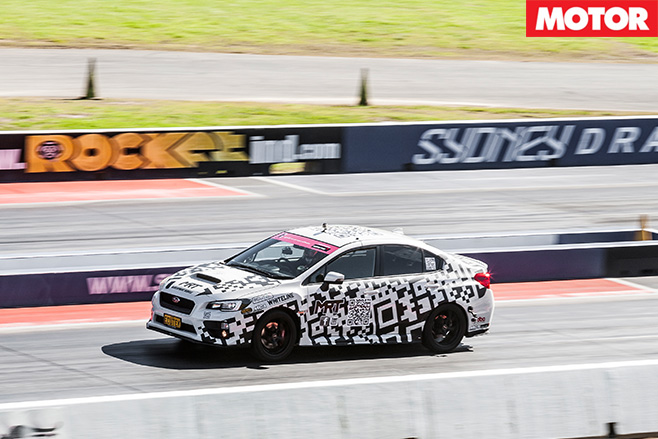
Clearly, on-road roll-ons are going to be the MRT WRX’s thing. Did somebody say real-world performance?
The South (Amaroo) Circuit at Sydney Motorsport Park has a wicked little uphill section after the first couple of turns that points you at a blind crest and then into a downhill braking area before a don’t-mess-this-up left-hander. And the eye-opener for me was just how bloody fast the MRT Subie was across the top and into the abyss of that crest.
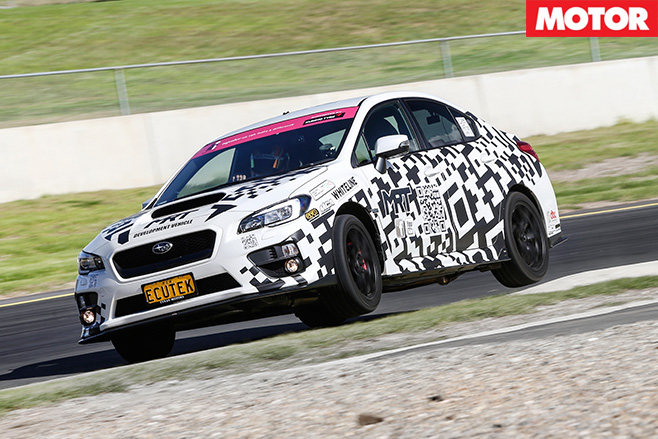
Where some cars want to lift a wheel on the kerb on the right-hand side, or feel like they’re gonna get all light on you, the WRX just smashed its way over the top and gripped up, with me hanging on like a terrified barnacle.
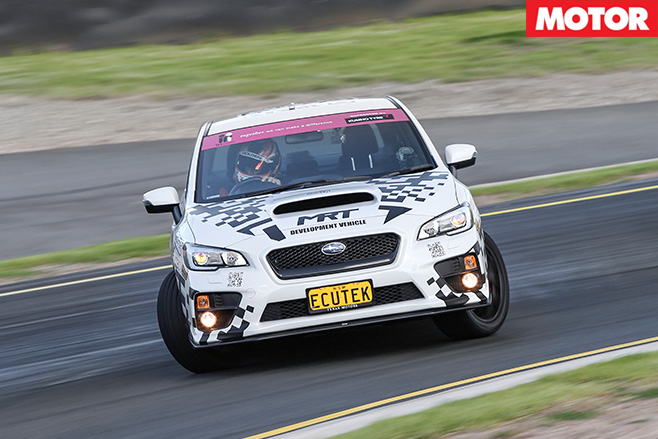
Unlike a lot of coil-overs (or, indeed, the stock STI) these aren’t rock hard. In fact, they almost feel a bit underdone when you’re pootling about, because the ride quality is better than any stock WRX derivative I’ve ever driven. But make them work and the control is phenomenal.
Yes, the MRT Rex will still understeer a fraction if you jam it in too fast, but it’s a mild case of the pushes and it only really happens in the slower stuff. Meantime, get your entry speed right and the MRT car just loves a good spanking. It actually seems to come together better the harder you flog it.
Maybe it would hand an STI its backside on the track, maybe not, but it would be a hell of a road car with so much more ride compliance, it’d be chalk and cheese. And if you wanted to save yourself a few bucks and delete the STI body kit, which would otherwise set you back $2500, this thing would be a real stealth bomber.
I imagine the problem will be that kids actually want all that active-diff stuff inside so they can play with it and actually make the car worse. But for us grown-ups, the MRT Rex makes a strong case for itself in the real world of speed humps, potholes and the Highway Patrol.
Results
Overall Placing: 8th
| Test | u00a0 | Result | u00a0 | Ranking |
| 0-100km/h | u00a0 | 5.80sec | u00a0 | 6th |
| 0-400M | u00a0 | 13.69sec @ 168.47km/h | u00a0 | 7th |
| 100-0km/h | u00a0 | 36.06 metres | u00a0 | 5th |
| Dyno | u00a0 | 189.8awkW | u00a0 | 8th |
| Track | u00a0 | 1:04.50sec | u00a0 | 7th |
Luffy says
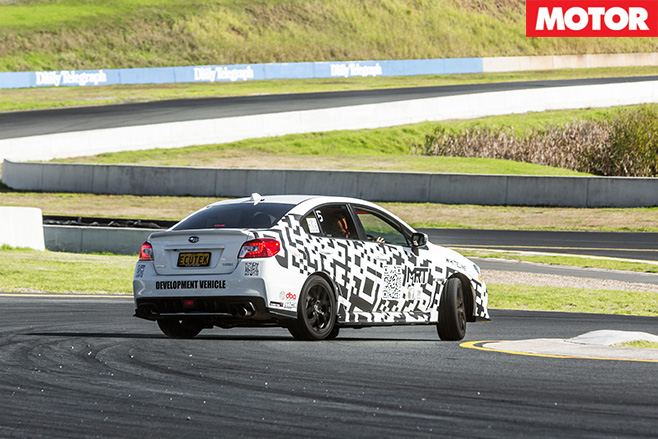
“Such a fantastic engine upgrade on this car and it’s got so much useable torque. All ’round the back sections and through all the tight stuff, it just uses third and fourth gear. You don’t really get above about 5500rpm. It just goes to show what a good tune can do for an everyday car and still make it really useable. This thing would be a really good pocket rocket on the roads.”
Check out the other cars that competed at Hot Tuner 2015:
- Herrod Ford Fiesta ST
- Hi-Torque HSV Gen F Clubsport
- Herrod Ford Falcon XR8
- ROH Wheels Toyota 86
- CPC BMW M4
- Harding Volkswagen Golf R
- Tunehouse Toyota 86
- V-Sport Mercedes-Benz A45 AMG
As sensationally wonderful as the Toyota 86 is, it’s not over-endowed in the grunt department.
Check out all the Hot Tuner 2015 action here.
Its outright speed isn’t too shameful – 0-100km/h in seven-odd seconds and about 15-flat over the quarter was V8 Falcon pace not that long ago – but its engine never really inspires.
Forced induction is the obvious solution, but apart from some tantalising motor show concepts, neither Toybaru manufacturer has offered a boosted factory variant as yet. “Not enough room”, “too hard”, they protest. The aftermarket is not so easily defeated, and Australia has been at the forefront of force-fed 86 development.
Regular MOTOR readers will be familiar with the ROH Wheels 86, as it’s appeared in these pages before. Unfortunately, the last time we drove it, during World Time Attack at Sydney Motorsport Park, things went awry when the engine let go, resulting in a costly rebuild for car owner, ROH Wheels’ Product Designer Glynn Helgeson.
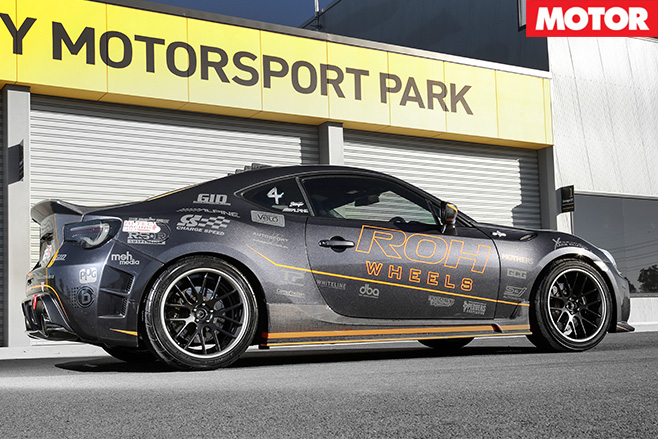
The engine itself has also been cracked open, an HKS stroker kit increasing capacity to 2091cc and improving reliability courtesy of new rods, pistons and crank.
“We actually put it back together as a twin-charge set-up,” says John Healey of V-Sport, the crew responsible for the latest incarnation of ROH’s Toyota terrier. “[We] did some testing, but the biggest thing was just the intake temps – we just couldn’t get the intake temps down enough to keep it reliable.

The rest of the package is largely familiar, with RS*R coil-overs front and rear and a full complement of Whiteline gear (anti-roll bars, strut tower brace, Nolathane bushes, etc) handling the cornering forces, and ventilated and slotted DBA rotors (355mm two-piece discs up front; 330mm items at the rear) with four-piston calipers at each end pulling everything up nicely.
What is new is the rolling stock, one-off forged 18 x 9.5-inch alloys designed by Helgeson. The extra width has allowed 265/35R18 Yokohama Advan Neova AD08s to be fitted all ’round, though even with the guards flared it’s a tight fit: “the actual gap in the rear wheel arches is 275mm,” Healey says.

Workshop
Car: ROH Wheels 86 Who: ROH Wheels/V-Sport Where: Unit 1 / 204 Walters Road, Arndell Park, NSW How long: Since 2004 Contact: (02) 9679 8644 Email: [email protected] Web: www.vsport.com.au
Specifications
Drive: rear-wheel Engine: 2091cc flat-4, DOHC, 16v, turbo Gearbox: 6-speed manual Suspension: coil-overs, struts, anti-roll bar (f); A-arms, coil-overs, anti-roll bar (r) Brakes: 355mm ventilated discs, 4-piston calipers (f); 330mm ventilated discs, 4-piston calipers (r) Wheels: 18 x 9.5-inch (f/r) Tyres: 245/35 R18 (f/r); Yokohama Advan AD08

Parts and Prices
| Turbo kit | u00a0 | $11,590 |
| Stroker kit | u00a0 | $9,655 |
| Exhaust | u00a0 | $1,880 |
| Trans tune/clutch | u00a0 | $6,204 |
| Suspension | u00a0 | $4,750 |
| Brakes | u00a0 | $5,445 |
| Wheels/Tyres | u00a0 | $2,650 |
| Seats/Harnesses | u00a0 | $2,396 |
| Bodykitu00a0 | u00a0 | $5,888 |
| Total Mods Cost | u00a0 | $50,458 |
| Vehicle Cost (mSrp) | u00a0 | $29,990 |
| Total Cost | u00a0 | $80,448 |
Massive grunt and prodigious grip result in circuit mastery
It’s with a strong sense of trepidation that I approach the ROH Wheels Toyota 86, helmet in hand. Y’see, during our previous acquaintance at Sydney Motorsport Park the car proved mind-scramblingly fast, yet also one of the most challenging cars I’ve ever driven, seemingly capable of power oversteering in every gear. And John Healey of V-Sport says it has even more power now. Help!
In fact, on the Mainline Dyno it growled, hissed and popped its way to an impressive 286.6kW at the wheels – almost 300 per cent more than stock – straining against the tie downs as it came on boost.

Those numbers are significantly quicker than you’ll achieve in a stock 86, but far from a true reflection of the car’s performance. For a more accurate picture, check out its terminal speed – at 181.12km/h, the ROH Wheels car is more than 30km/h faster at the end of 400 metres than the stocker. It’s fair to say that on a sticky track, mid-12s would be there for the taking.
Back on track, sitting snug in the Velo driver’s bucket seat, the surroundings are familiar, but the swell of turbo torque that arrives as we leave pit lane is not. By 3000rpm it’s already propelling you rapidly down the track, and it’s accompanied by a soundtrack that’s both harder and deeper than the stock car, overlaid by all sorts of whistles from the turbo.
The ROH 86 wears fairly aggressive rubber by road-car standards, and the initial laps are spent building tyre temperature, the rears fizzing in second as the boost arrives. At this relaxed speed, it feels very much like a regular 86. There’s much less roll courtesy of the stiffer suspension, but the brakes have a reassuring firmness and the steering’s weighting and rate of response are easily identifiable from the stock car.

Before, the brakes felt to have far more performance than the tyres, but with wider rubber on the front (now 265mm) you can use more of the impressive stopping power (pulling up from 100km/h takes just 35.60m).
Initially the power is intimidating, but as confidence builds you realise that the inherent 86 balance is still present, only at massively higher speeds. However, with over 450 horsepower on tap, breaking traction in the slower corners is only a flex of the right ankle away. Heavily turbocharged cars can often be a right handful to slide smoothly, but the ROH’s smooth powerband makes it a hell of a lot of fun.
In fact, Luffy was full of praise for the engine’s response. And, combined with its impressive cornering capabilities, the ROH car clocked the fastest lap time of the event, a scorching 61.4sec lap pipping the Tunehouse 86 by a mere tenth.

It may no longer have the headline-grabbing twin-charge system, but the ROH Wheels 86 is a far more enjoyable and resolved car in its current iteration. It’s reasonably well-mannered, looks superb and while 50 large is a hell of a lot to spend on a $30K car, it would simply destroy any standard production car of a similar value. And that’s nothing to be scared of.
Results
Overall Result: 6th
| Test | u00a0 | Result | u00a0 | Ranking |
| 0-100km/h | u00a0 | 6.39sec | u00a0 | 7th |
| 0-400M | u00a0 | 13.64sec @ 181.12km/h | u00a0 | 6th |
| 100-0km/h | u00a0 | 35.6 metres | u00a0 | 3rd |
| Dyno | u00a0 | 286.6rwkW | u00a0 | 4th |
| Track | u00a0 | 1:01.40 sec | u00a0 | 1st |

Luffy Says
“This thing is so much fun out there. We know the 86 is a great platform to start with, but with everything that’s been done to this car, it just takes it to that next level. You can take it and use it as an everyday track car, but still have a fantastic road car. The engine’s really driveable and the suspension and brakes really work together. There’s not one part of the car that’s been left untouched and everything has been done really well.”
Check out the other cars that competed at Hot Tuner 2015:
- Herrod Ford Fiesta ST
- Hi-Torque HSV Gen F Clubsport
- Herrod Ford Falcon XR8
- MRT Subaru WRX
- CPC BMW M4
- Harding Volkswagen Golf R
- Tunehouse Toyota 86
- V-Sport Mercedes-Benz A45 AMG
If some is good, more is better.
Check out all the Hot Tuner 2015 action here.
That’s something of a mantra for anyone building or playing with fast cars, but take that philosophy too far and you lose balance and end up with something of a monster – a car that becomes less than the sum of its parts.
That’s absolutely NOT the Tunehouse-modded 86. Tunehouse hasn’t smashed the boundaries of the lithe and nimble Toybaru’s chassis ability, nor has it gone silly with the spendooly required to make its wicked 86 one of the best-composed all-rounders – showroom or tuned – I’ve driven on a track.
Of course, Tunehouse was coming from a good base with the Subaru BRZ/Toyota 86 twins being all about driving enjoyment through terrific handling and response, rather than all-out horsepower and to-the-tenth track times.
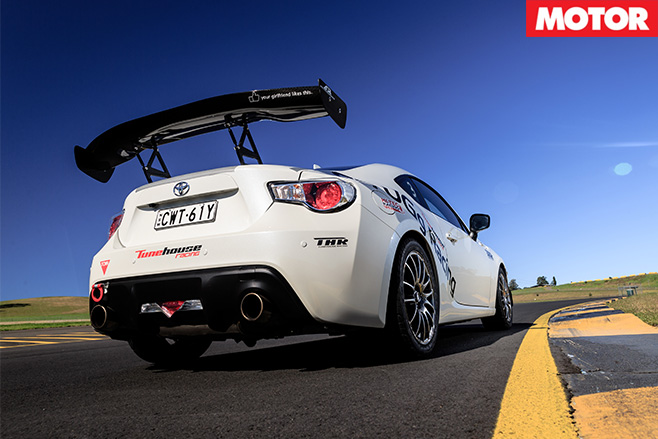
It’s possible to enhance that excellent showroom package with better grip and handling tweaks – maybe more horsepower from the engine with a light tune – but Tunehouse has filled this chassis with a lot more brawn.
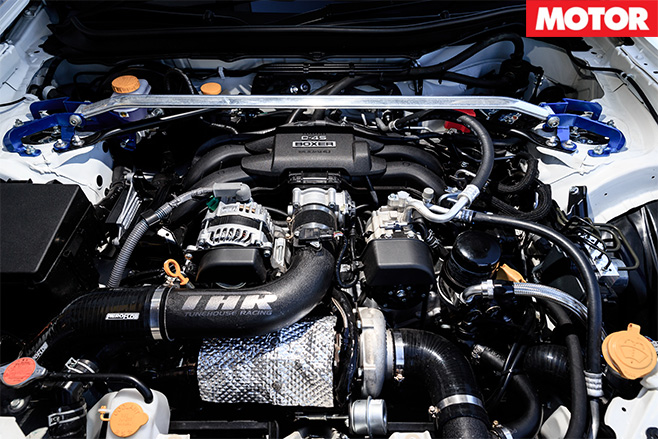
The big ticket item is the turbocharger conversion. Costing $7990, the conversion has been carefully designed as a true bolt-on affair for Tunehouse, which makes it a fuss-free drive-in, drive-out deal for the customer.
“It’s been a step-by-step process,” says Tunehouse’s Tony Tran of the design, development and testing process. A process that ensures not only a big boost in grunt, but a long and trouble-free life for the standard Subaru-built flat-four engine internals. After all, that “less than the sum of its parts” philosophy is really rammed home if an engine is pushed too far and decides to toss its internals.
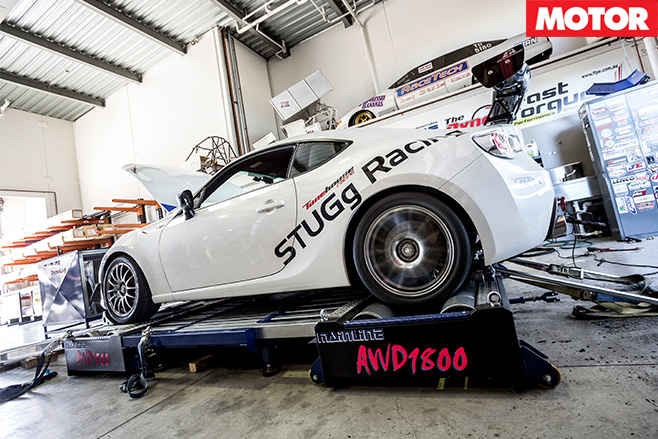
“We ran almost 12 months at 300kW,” Tran says. “That was dyno and plenty of track time. We pushed it!”
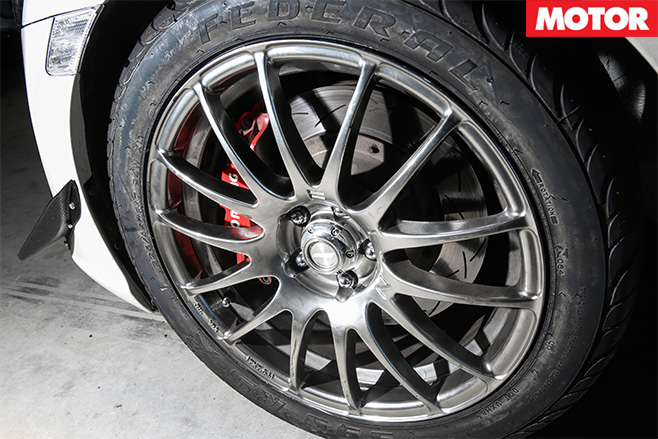
As proven on the dyno, the boosted flat-four spits out around 245kW to its 225/45 R17 Federals. According to Tunehouse, that output is safe for the internals and really wakes up the nimble chassis’ performance.
Brakes are also an essential upgrade – not just for the better performance and extra confidence they provide, but for street-legal engineering/rego, too. For $4K you get a front upgrade of AP Racing four-pot calipers over excellent Aussie-made DBA two-piece rotors.
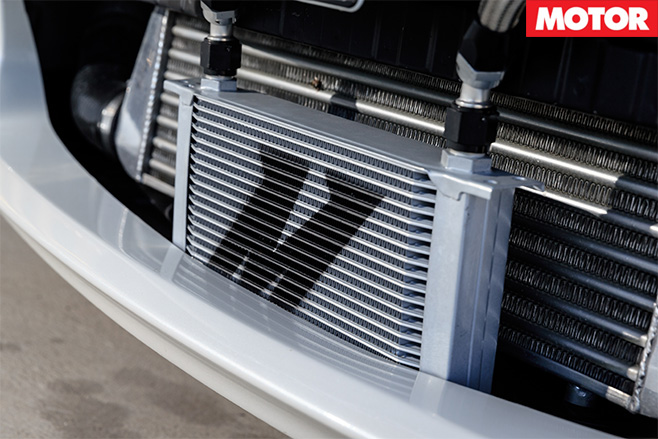
The clutch upgrade includes an Xtreme pressure plate over the Subaru friction plate. And Tunehouse’s experience during its year of testing is that the standard gearbox copes well with the 300kW.
Workshop
Car: Toyota 86 Who: Tunehouse Performance Where: 11 Chalder Street, Marrickville, NSW How long: Since 2002 Contact: (02) 9557 4000 Email: [email protected] Website: www.tunehouse.com.au
Specifications
Drive: rear-wheel Engine: 2000cc flat-4, DOHC, 16v, turbo Gearbox: 6-speed manual Suspension: coil-overs, struts, anti-roll bar (f); A-arms, coil-overs, anti-roll bar (r) Brakes: 335mm ventilated discs, 4-piston calipers (f); 335mm ventilated discs, 2-piston calipers (r) Wheels: 17 x 8.0-inch (f/r) Tyres: 225/45 R17 (f/r); Federal 595RSR
Parts and Prices
| Stage 3 kit | u00a0 | $7,999 |
| Exhaust | u00a0 | $1,600 |
| Suspension | u00a0 | $2,800 |
| Brakes | u00a0 | $4,000 |
| Clutch | u00a0 | $1,600 |
| Canard/Wing | u00a0 | $1,800 |
| Oil Cooler | u00a0 | $700 |
| Wheels/Tyres | u00a0 | $1,500 |
| Total Mods Cost | u00a0 | $21,999 |
| Vehicle Cost (mSrp) | u00a0 | $29,990 |
Total Cost | u00a0 | $51,989 |
Not too wild, not too mild, this Toyota is just right
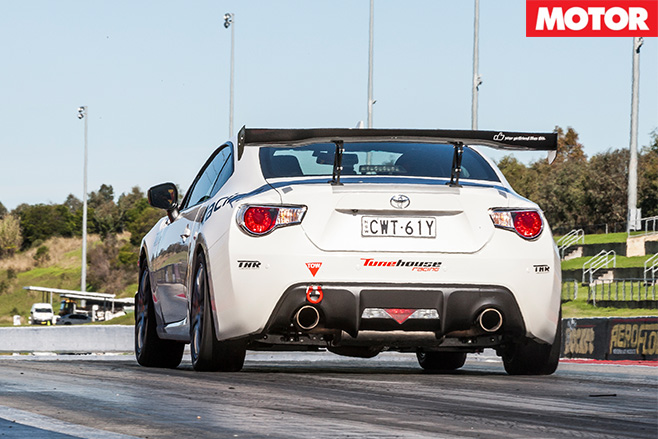
On the dragstrip, the Tunehouse 86 knocked out a 13.9-second run, which is clearly below the car’s potential. And here’s why. Even with just 16psi in the rear tyres – to improve traction off the start line – when 247rwkW teased the tarmac, Luffy found the only way to quell wheelspin was to feather the clutch, even after four or five practice launches and burnouts to warm the tyres.
Thankfully the car didn’t suffer badly from axle tramp that can, at best, add to the car’s time or, at worst, break a diff or axle.
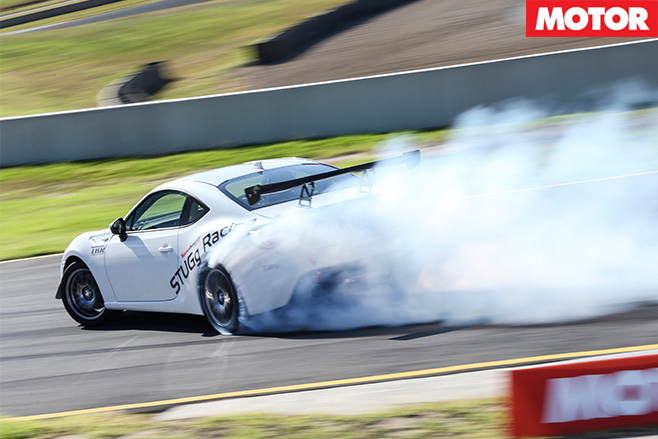
Don’t take that as criticism. The 182km/h top-end speed means this thing is hauling, and as anyone who has tried to build themselves a daily driver/drag-racer/track all-’rounder will know, ticking all those boxes with a single suspension tune is a difficult, nigh-on impossible task, even with quality hardware such as the MCA Suspension hardware under this car.
Getting a car to hook-up is hard work and to make this car a straight-line warrior, rather than an all-rounder, would probably see a full second sliced from its quarter-mile time.
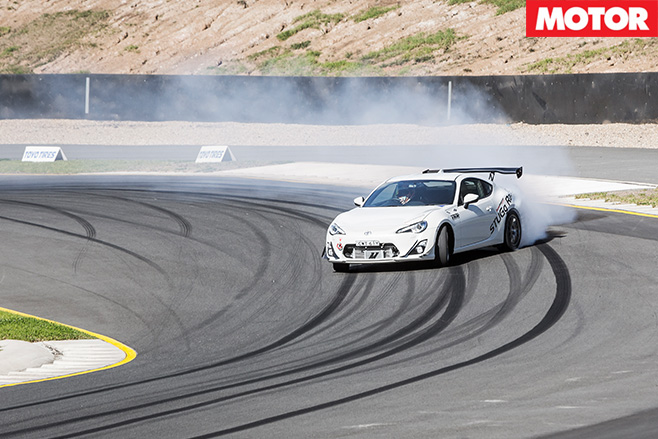
Not here. I only had three laps in the little warrior – hardly time for me to settle-in to the seat and driving position – but even in those few short laps around the circuit, the car was a terrific blend of straight-line punch and engaging, feel-some cornering.
There’s good balance to the chassis; progressiveness of the wicked-up engine’s power delivery meant there wasn’t any stepping-out at the rear due to the boosted torque overwhelming the grip as the throttle was squeezed. Nor was there any understeer – something else that can afflict a power-heavy car with a mismatch of front-to-rear grip.
Thumbs up for the on-track capability and it’s a big gold star for the low/normal-speed driveability, too. Engine–wise, there’s no grumpiness or bucking around, as is sometimes the case with cars that have been enhanced with big power but scant regard for running around-town.
The ride is firm without being harsh and the overall package is something you would be happy to drive to work each day… with Friday on your mind. Top result.
Results
Overall Result: 7th
| Test | u00a0 | Result | u00a0 | Ranking |
| 0-100km/h | u00a0 | 6.41sec | u00a0 | 8th |
| 0-400M | u00a0 | 13.88sec @ 182.76km/h | u00a0 | 8th |
| 100-0km/h | u00a0 | 35.57 metres | u00a0 | 2nd |
| Dyno | u00a0 | 246.7rwkW | u00a0 | 6th |
| Track | u00a0 | 1 :01.50 sec | u00a0 | 2nd |
Luffy Says
“It just goes to show how good this 86 overall package is. It’s not as track-focused as the other 86, but just the modifications of the engine, brakes and suspension make it such a fun car. And again, it takes that great platform that the 86 is and takes it to that level where it’s a good track-day car, but it’s still a very useable road car. It’s not like you’re losing its driveability on the road to make it an out-and-out track car.”
Check out the other cars that competed at Hot Tuner 2015:
- Herrod Ford Fiesta ST
- Hi-Torque HSV Gen F Clubsport
- Herrod Ford Falcon XR8
- MRT Subaru WRX
- ROH Wheels Toyota 86
- CPC BMW M4
- Harding Volkswagen Golf R
- V-Sport Mercedes-Benz A45 AMG
Mercedes-AMG didn’t plan on leaving survivors after it skydived into the hot-hatch game.
Check out all the Hot Tuner 2015 action here.
It wanted its A45 perched at the top of its segment’s food-chain. That’s why if you flip one on its roof the weapons-grade hardware would dazzle even a NASA pilot.
John Healey from V-Sport in Sydney knows this. “As a base car it’s a really good platform. It’s probably that next step up from a [Golf R], Evo, or an STI,” he says.
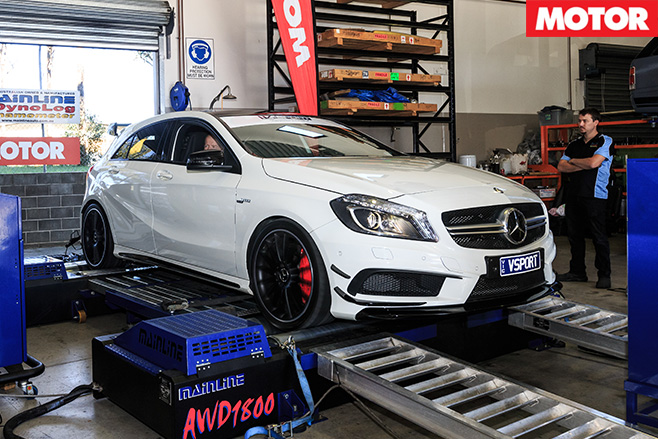
It’s also why V-Sport, renowned for experience with everything up to circuit-slurping time-attack cars, decided a mild tuning package would be the best way to present an A45 before Hot Tuner’s performance tests.
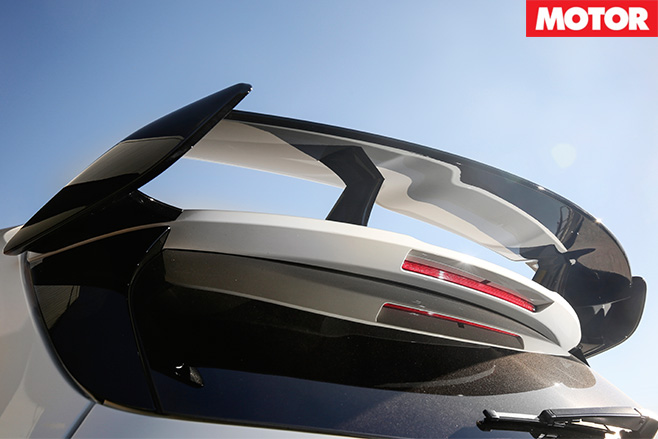
You could glean this from one glance at the A45. Out of our entire Hot Tuner field, V-Sport’s A45 looks the least modified, visually shaping up as, well, an untouched car. “Basically it all looks standard from the outside looking in,” Healey says of what V-Sport has gifted the car. “Pop the bonnet and it all looks factory, pop the glovebox and, depending on where people want it, is just a control box.”
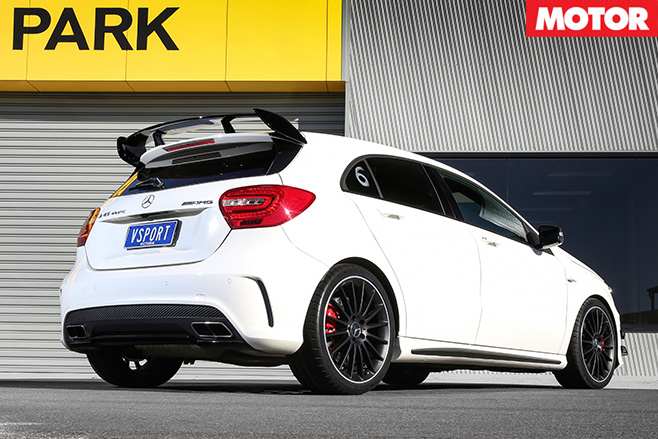
Healey says the control module then allows the driver to swap between five engine programs. “One is standard, two is 98 upgrade, three is E-Flex mode, four improves launch control on E-Flex as well, and five is your valet mode… or when you lend it to your mates.”
Unfortunately, Healey says its tune is currently designed for Caltex E-Flex, not the event’s Hi-Tec Fuels stuff, so it’s on 98 today. But for you it shouldn’t matter with precaution. “E-Flex is generally rated from E70 [its ethanol percentage] to E75, whereas if you go to E90 or E85 you need talk to us about it and how that effects how much 98 you need to keep in it for it to work.”
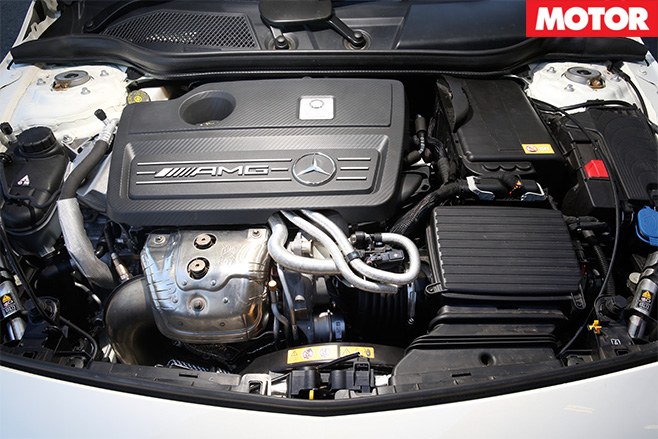
Healey explains it’s a case of bigger is better. “It’s basically about volume, so [the Willall unit] is slightly bigger, and a better design – bigger tanks, fin design, and just better overall cooling.”
Being water based, Healey adds the system needs to be bled before the new item is installed, so it’s an in-shop job.
With other cars bearing small mortgages in go-fast parts, the A45 wades in to battle with little change to its core offering. And the data will reveal whether that’s a winning, or losing, approach.
Workshop
Car: Mercedes-AMG A45 Who: V-Sport Performance Where: Unit 1/204 Walters Road, Arndell Park, NSW How long: Since 2004 Contact: (02) 9679 8644 Email: [email protected] Website: vsport.com.au
Specifications
Drive: all-wheel Engine: 1991cc inline-4, DOHC, 16v, turbo Gearbox: 7-speed dual-clutch Suspension: struts, coil springs, anti-roll bar (f); multi-links, coil springs, anti-roll bar (r) Brakes: 350mm drilled ventilated discs, 4-piston calipers (f); 330mm drilled ventilated discs, single-piston calipers (r) Wheels: 19 x 8.0-inch (f/r) Tyres: 235/35 R19 (f/r); Michelin Pilot Sport Cup 2
Parts and Prices
| Tune | u00a0 | $3,300 |
| Intercooler | u00a0 | $1,450 |
| Brakes | u00a0 | $1,140 |
| Wheels/Tyres | u00a0 | $2,540 |
| Total Mods Cost | u00a0 | $8,430 |
| Vehicle Cost (mSrp) | u00a0 | $75,800 |
Total Cost | u00a0 | $84,230 |
The AMG puts on the hurt with an all-round approach
Braking know-how runs in V-Sport’s veins, and the meagre distance covered by its A45 after Luffy stomped its middle pedal proves that point. Not only does the accomplishment of coming to a complete stop in 33.8m crown the V-Sport-fettled AMG as this year’s most efficient braker, it’s a figure that squashes any braking test we’ve completed with a stock A45.
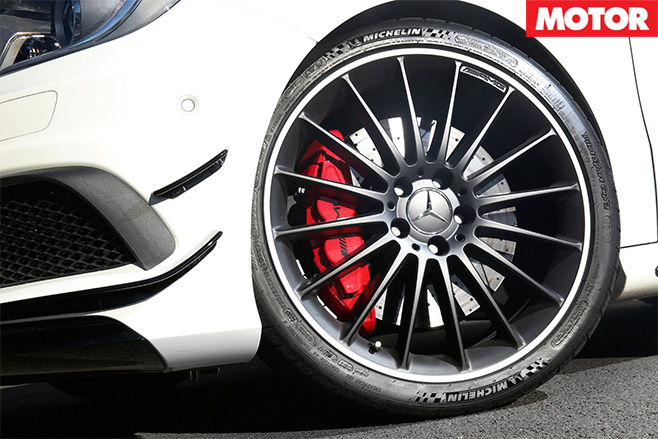
But its wheels aren’t stuffed full of race-grade hardware. In fact, all V-Sport has done is slip a pad between its four-pot fixed caliper and slotted disc, which proves refining, rather than renovating, an already good product can be key to real gains. “To be honest the standard caliper and disc [AMG is] offering are a really good package,” Healey says. When asked where its Endless pads differ to the stock ones, we’re told it’s about control and durability – two elements you’re going to need when slicing up a track.
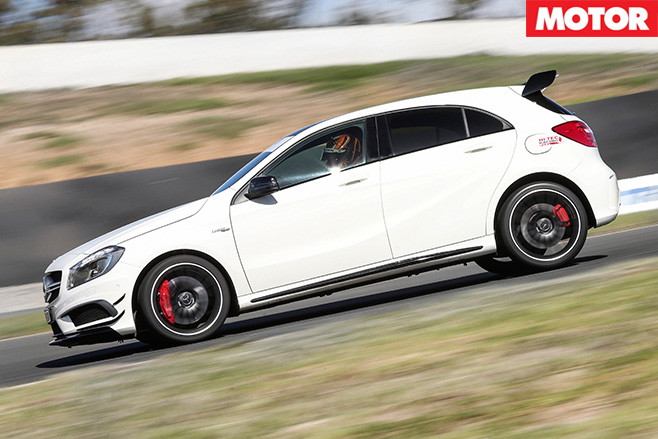
He’s not kidding, either. Out on Sydney Motorsport Park, the descent before turn 11’s hairpin presents the opportunity to assess the brakes. A concentrated squeeze reveals a precise relationship between pedal force and bite, helping you roll off the brake with millimetre accuracy to free the front tyres for turn-in. Whether that’s more the system complementing the pads or the other way around we don’t know, but it works.
And if brakes are only as good as the tyres providing them with grip, V-Sport gave the A45’s brakes some of the best street stuff available: Michelin’s Pilot Sport Cup 2, the dry-grip specialist at the MOTOR tyre test this year.
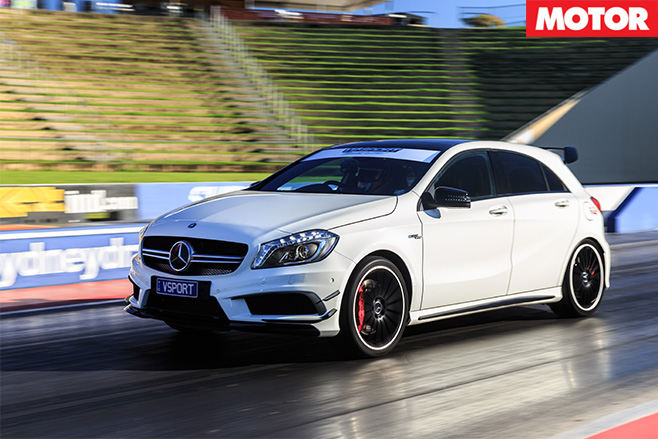
As the circuit straightens, we’re given the chance to discover what Healey means when he describes the car’s torque curve as “punchy” and concentrated on “low-end grunt”.
Despite passing on the event’s control E85 fuel for regular 98 – which hurts its overall power figure – a committed heave on the throttle from a standstill uncorks an explosive mid-range from the mildly-tuned M133 four-cylinder engine.There’s no scream from a protesting rear end or chatter from a hopping front axle; the front-to-even split all-wheel drive system simply turns the swollen mid-range in to a surge of acceleration.
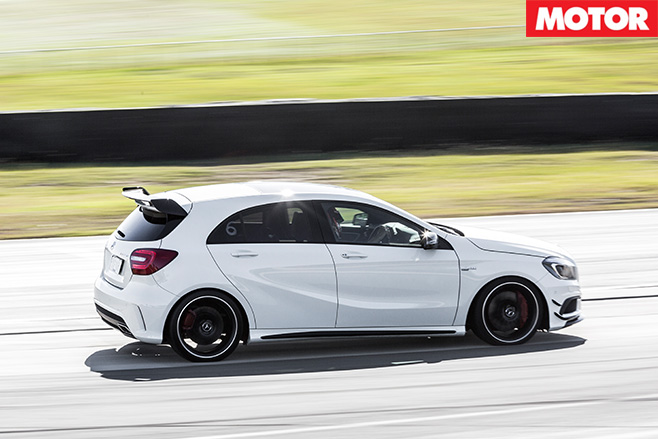
Nothing about this car advertises it’s modified in a big way. Instead, our performance tests reveal layers of slight improvement in different areas.
“You don’t have to spend a pile of money to have a really good package,” is Healey’s mantra for the A45, and the numbers prove him right. Despite having one of the lowest modification costs of this field, the A45 snatches two top-three category finishes.
And while V-Sport won’t be able to brag about its power figure or quarter-mile time, its sharper braking, stronger acceleration, and improved grip combine for a decent lap time. It’s the fastest A45 at SMSP in Hot Tuner history, and it’s on street rubber. Like we said: refining a good product, rather than renovating it, can be the key to real gains.
Results
Overall Result: 2nd
| Test | u00a0 | Result | u00a0 | Ranking |
| 0-100km/h | u00a0 | 4.57sec | u00a0 | 2nd |
| 0-400M | u00a0 | 12.78sec @178.25km/h | u00a0 | 5th |
| 100-0km/h | u00a0 | 33.85 metres | u00a0 | 1st |
| Dyno | u00a0 | 194.9awkW | u00a0 | 7th |
| Track | u00a0 | 1 :03.20 sec | u00a0 | 5th |
Luffy Says
“Such an easy car to drive on the limit. The grip levels and the dynamics of the car are just so high that on each lap you just keep pushing harder and harder and it still just wants more. It’s very forgiving in the way it handles and the way it does everything. It’s a great overall package. It goes to show you don’t have to spend silly money to make an improvement that makes a much better car.”
Check out the other cars that competed at Hot Tuner 2015:
- Herrod Ford Fiesta ST
- Hi-Torque HSV Gen F Clubsport
- Herrod Ford Falcon XR8
- MRT Subaru WRX
- ROH Wheels Toyota 86
- CPC BMW M4
- Harding Volkswagen Golf R
- Tunehouse Toyota 86
Porsche has unveiled its new 991.2 Turbo and Turbo S models ahead of their public debut at January’s North American International Motor Show in Detroit.
With Porsche’s regular Carrera range now turbocharged, questions were raised over how the traditional forced induction range would separate itself. The answer is more grip, more power and more performance.
The entire Turbo range will be launching simultaneously and is expected to land in Australia in May 2016. Prices have risen about five per cent, with the Turbo Coupe starting at $384,900 (up from $366,100), the Turbo Cabriolet $406,400, the Turbo S Coupe $456,500 and the Turbo S Cabriolet now $478,000.
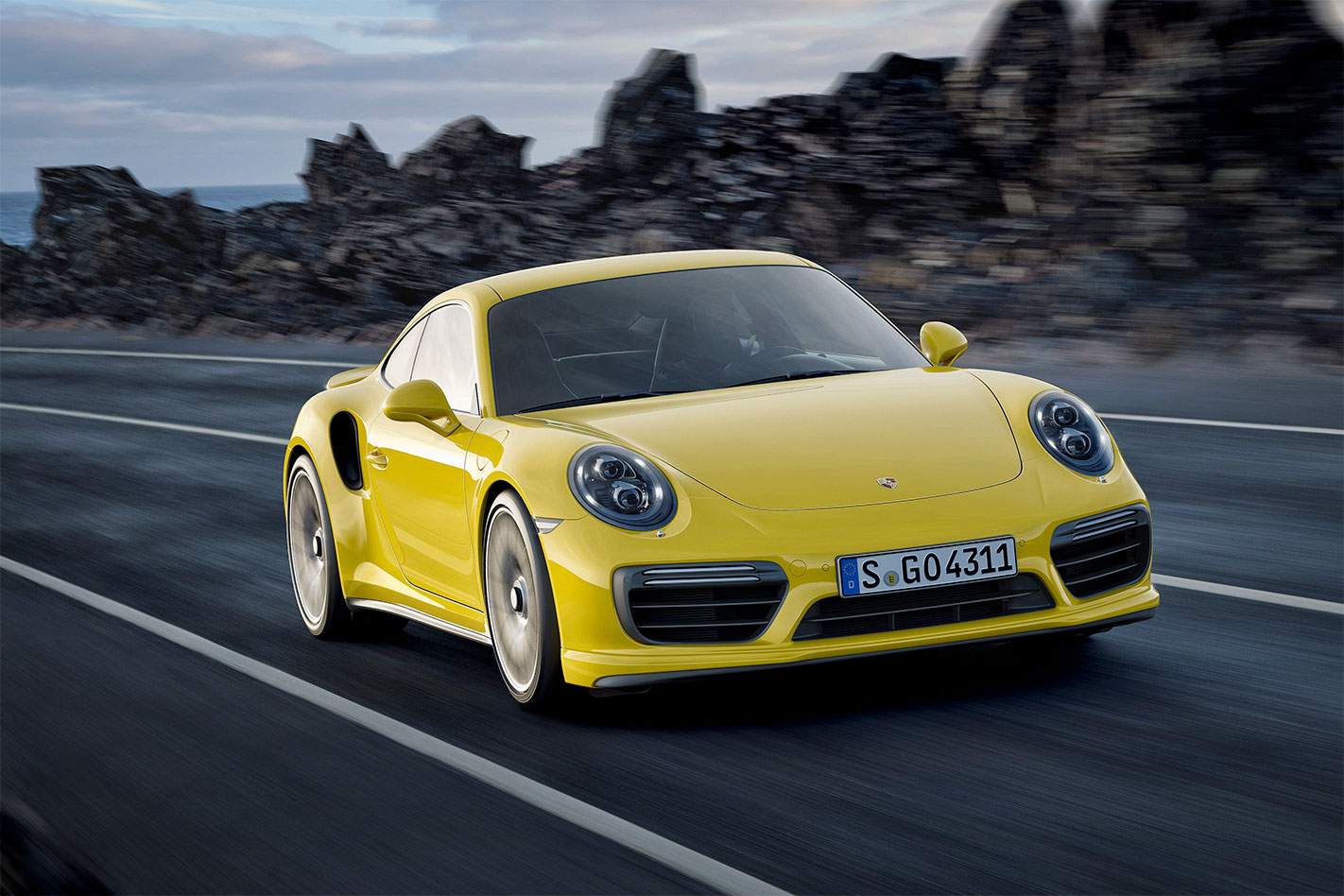
The Turbo S now develops 427kW, shaving its 0-100km/h time to just 2.9sec to go with its 330km/h top speed. That said, Porsche is notoriously conservative with its acceleration figures (we’ve clocked 3.00sec 0-100km/h with the current base Turbo) so we wouldn’t be surprised if both variants beat these claims by a tenth or two.
Both engines now have a ‘dynamic boost function’, which maintains boost pressure even if the throttle is released briefly in an attempt to offer immedite throttle response.
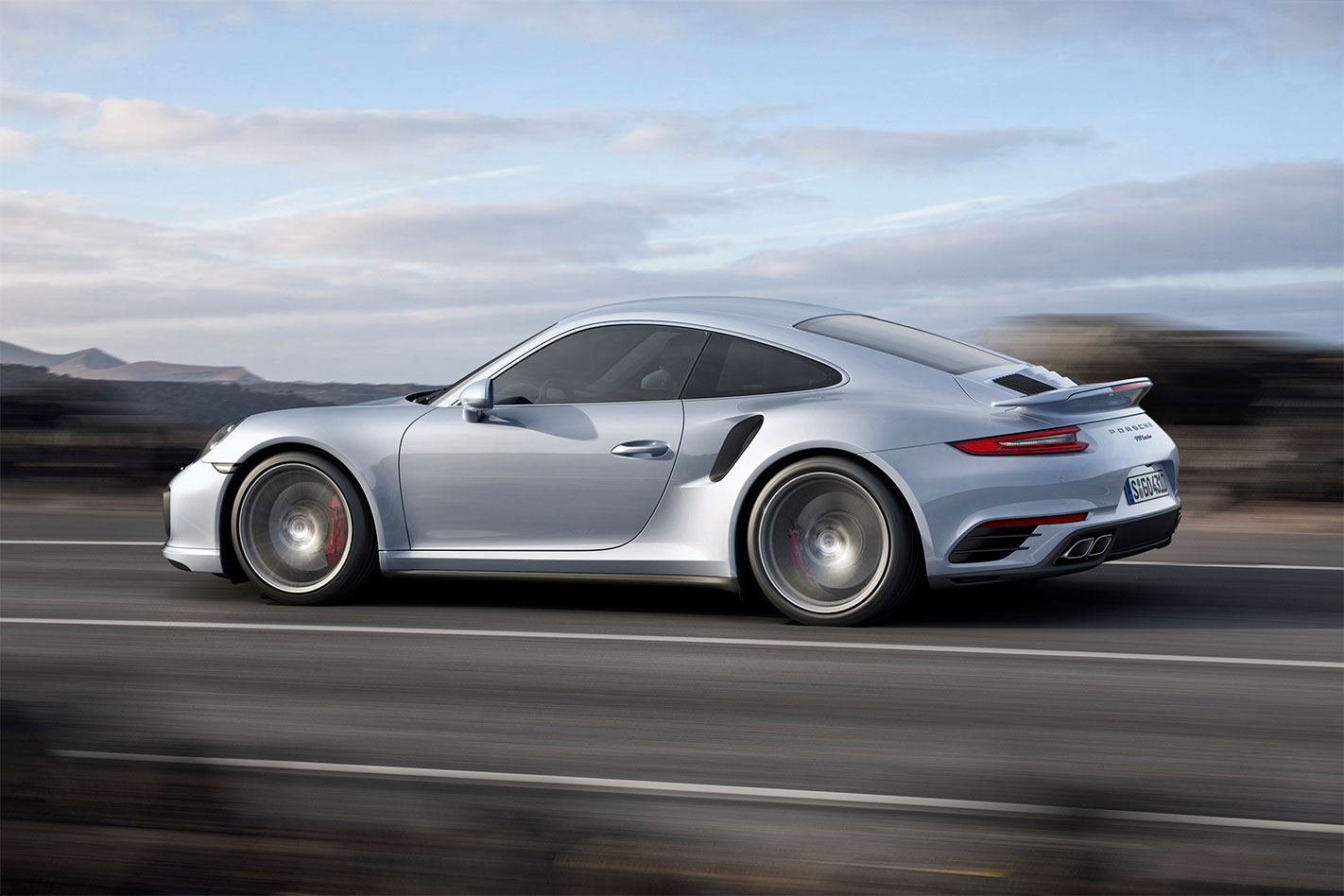
Also new for 991.2 is the ‘Sport Response’ button, which “preconditions the engine for the best possible response”. How this differs from traditional overboost is unclear, however the system is available for 20 seconds at a time with a press of the button at the centre of Porsche’s new steering wheel-mounted drive mode dial.
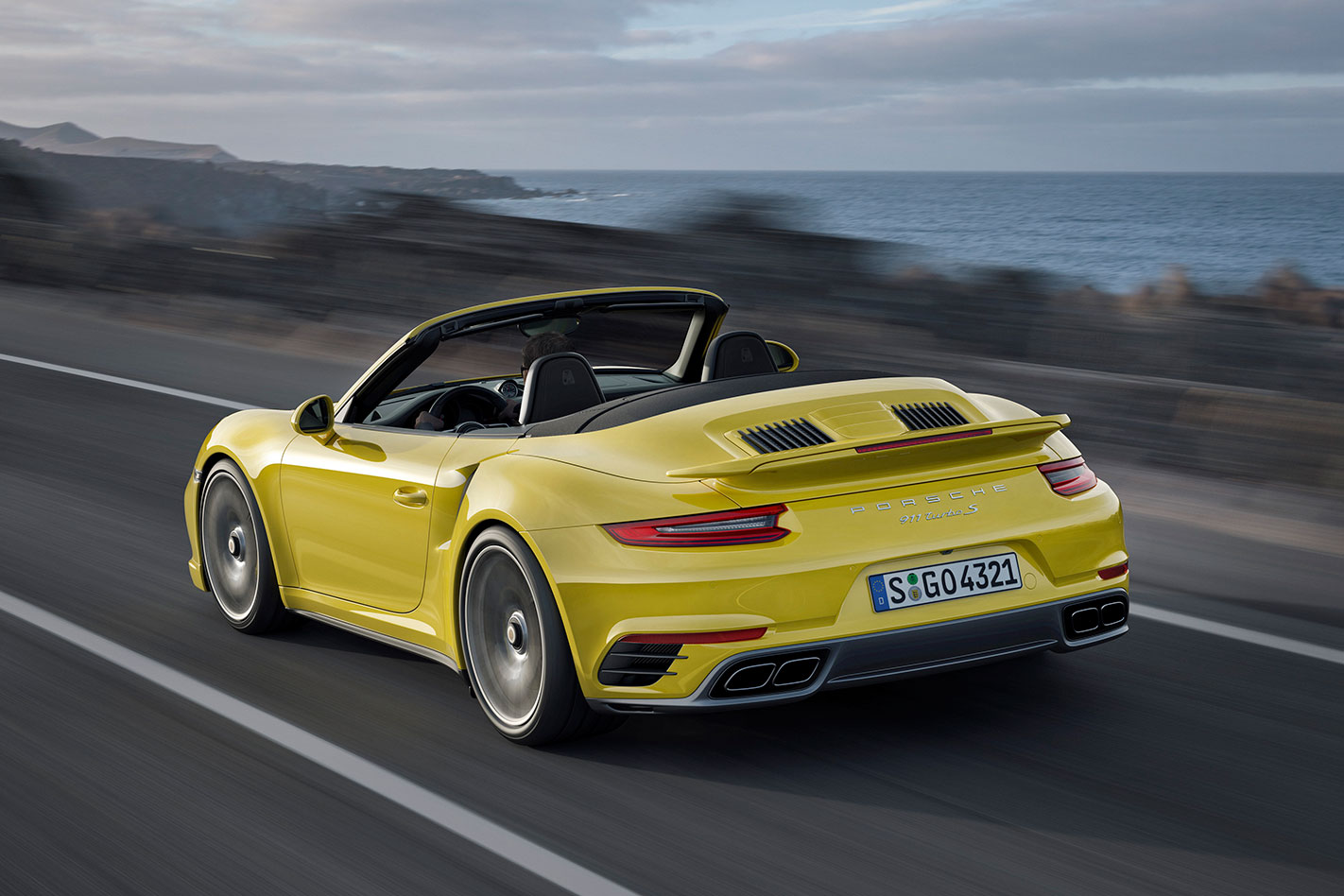
The only other notable mechanical change is half-inch wider wheels on the Turbo, it now sharing its 20 x 9.0-inch (front) and 20 x 11.5-inch (rear) sizes with the Turbo S.
Bigger changes have taken place in the interior, with a new smaller 360mm steering wheel and the adoption of the latest Porsche Communication Management system, which now offers Apple CarPlay, faster connectivity and the ability to process handwritten inputs.
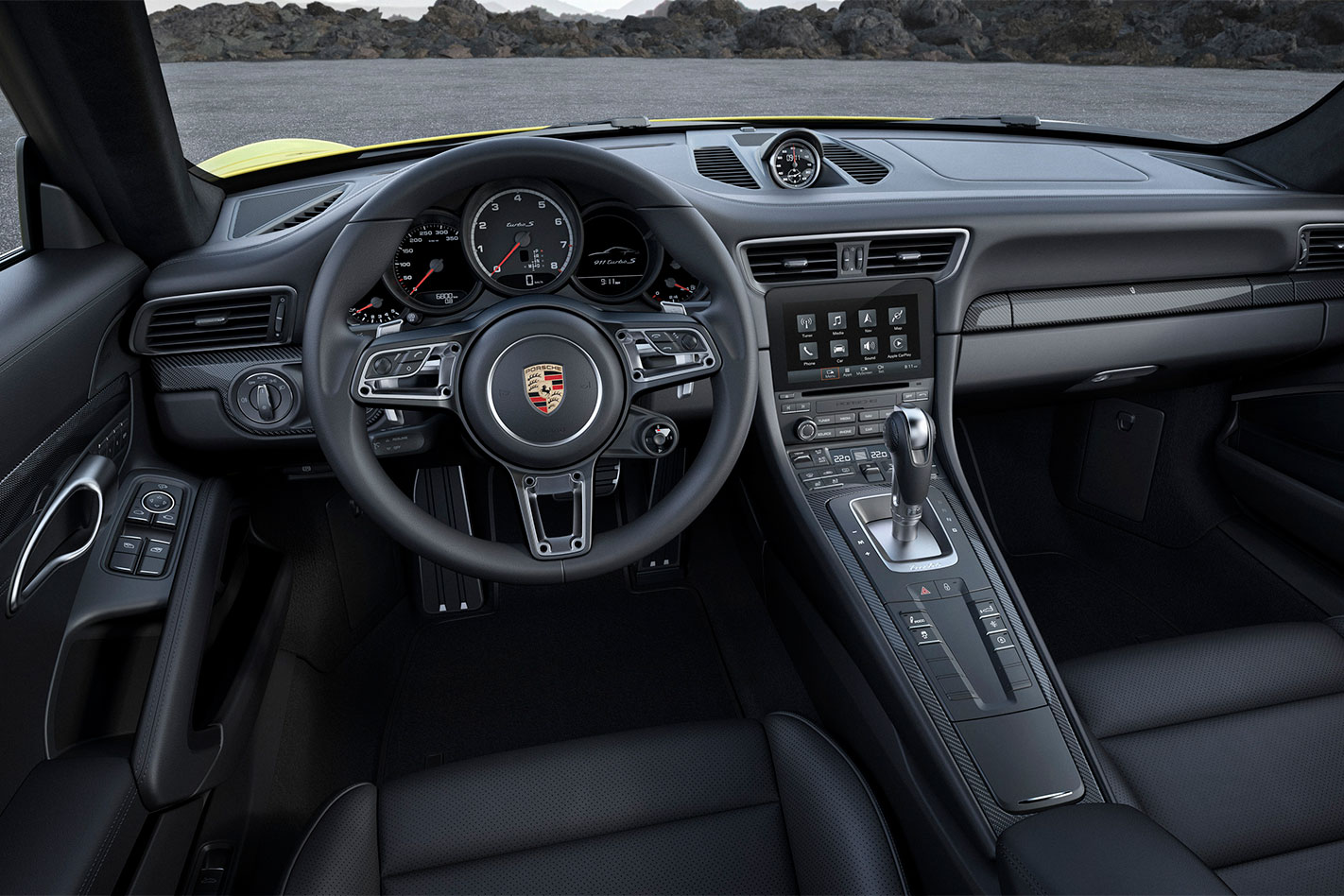
The changes are relatively small on paper, but then there wasn’t a lot wrong with our 2014 Performance Car of the Year winner to begin with. Has Porsche done enough to match the likes of the new Audi R8 V10 and McLaren 570S? We’ll find out in 2016.
We will still have a car industry to proud of when Ford, Holden and Toyota close their doors. Meet the visionaries driving Australia’s automotive future.
NOTHING focuses the mind like knowing you are going to be hung in the morning,” John Conomos deadpans.
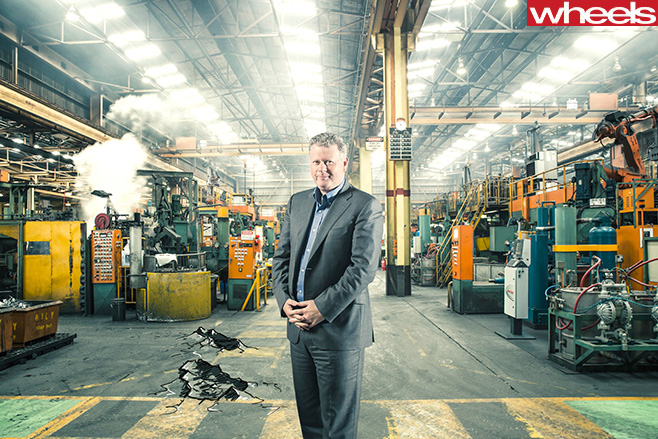
The now semi-retired auto industry veteran (below), who played a key role in Toyota’s rise to the top in Australia, is making the point that if you want to be involved in the car industry and base yourself in Australia post-2017, you’d better have your plans in place now.
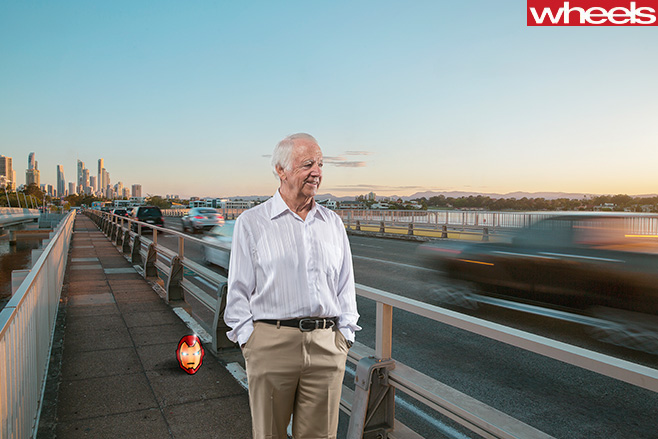
They know that when the lines grind to a halt at Ford in 2016 and then at Holden and Toyota in 2017, it will be the end of an era. But they want to be part of an auto industry that continues on, albeit one that will survive on a much smaller scale, without substantive government assistance or local production.
The change will be so great that in 2018, unless a start-up like Ethan Automotive overcomes massive odds and makes it to the start line, there will be just one company left in Australia that has the ability to design, engineer, assemble and market cars locally, and that’s the Walkinshaw Automotive Group, which includes Holden Special Vehicles. It’s a company aware of the risks and difficulties of the car industry, not least because it is based in the old Nissan plant, in the south-eastern Melbourne suburb of Clayton, which churned out its last Pintara in 1992.

Essentially, he argues, once the multinationals have vacated the field of battle, he will own it. So while he is emphatic HSV will continue in some form beyond the end of the Commodore, he intends to pursue other brands as well.
“We are going to be the only engineering and manufacturing house in Australia, so we can offer the manufacturers who are importing here something no one else can, which is a turn-key solution to try and get unique products into the market,” he explains. “We can do it with incredibly short timelines, which we have demonstrated plenty of times.
“We have got a very good supplier base and a commercial model that works very, very well, which has been tried, tested and proved with Holden for a significant period of time. Now we have the opportunity to go in and speak to everyone else and ask what can we do and what value can we add to their business.
“The guys who are going to be left behind are the ones who don’t create anticipation for their brand and don’t create any differentiation.”
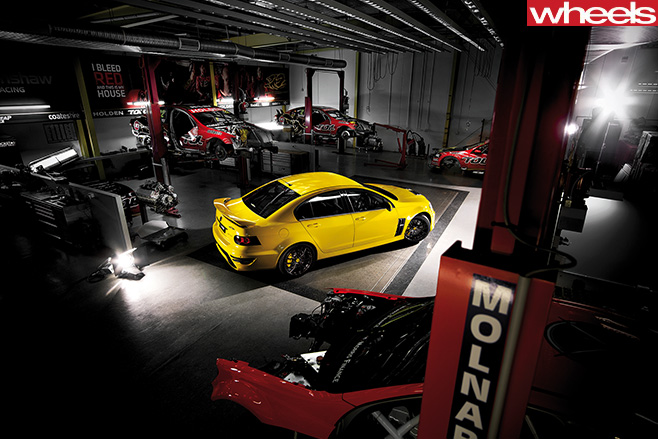
“We have a fair idea of where it is going and the details of that are probably what is keeping a few people up at night,” he admits. “But we are pretty confident in what we are doing and what we want to do. And to be honest we’re pretty excited about it.”
There is a certain irony in this being a path already well trodden by HSV’s crosstown rival, Premcar. The company formerly known as Prodrive Automotive Technology, which cut its teeth developing Ford Performance Vehicles Falcons, has had a presence in China since 2005, and also performs engineering and vehicle validation work in India.
Once a direct subsidiary of Prodrive UK, it is now locally owned by a group of Australian engineers who have had to adjust from developing 330kW rear-drive V8 muscle cars for FPV to economy cars for Chinese brands Geely, Lifan and the like.
Premcar still does work for Ford and other customers in Australia, with links into the Blue Oval’s regional development programs in Australia and internationally. But it has also diversified. Premcar recently developed a wet-brake design for mining trucks for a US company, and also works within the defence industry and others.
This jack-of-all-trades approach is the only way to keep an Australian address and stay in the auto industry, according to chief engineer Bernie Quinn.
“It’s worth doing because we’ve got all the guys we have had employed and we are still winning work,” Quinn says. “But to say it has been a challenge – an ongoing challenge actually – is an understatement. Resilience is the key.
“In the last 12 months we have seen a moderate turnaround in the amount of engineering work in Australia and we are riding the back of that, as well as the expected growth in China. We are spending more time here and have been able to add to our headcount.”
Premcar’s Asian business is just the sort of activity Conomos says Australian automotive companies need to undertake to survive. As well as the obvious targets of China and India, he rates Indonesia and Malaysia as emerging markets that need Australian expertise.
“We are good at black-box engineering, we are good at development,” Conomos insists. “So the combination of our know-how and their (Asian) potential volume is pretty exciting for those who wish to become involved and wish to become global.”
Conomos knows of what he speaks. For the past five years he has acted as an ambassador for the Australian automotive industry, heading trade missions and knocking on doors throughout the region. His role has only recently been terminated by the federal government, which has instead thrown that budget into the $155 million pot known as the Growth Fund, which is designed to ease the ‘transition’ – love that word! – of employees and companies away from car manufacturing into something else.
Mark Albert is the sort of entrepreneur Conomos knows will have a go. He already has. Albert is managing director of MTM Automotive Components, a family owned tier-one supplier established by his father, Max, in 1965 in the Melbourne suburb of Oakleigh. While the multinational suppliers will walk away when the cars and money stop flowing, MTM – and a few other locals – will still be here.
“I like Australia,” Albert laughs. “We are one of the few manufacturers growing in the current environment … I am quite positive about the future.”
Nowadays MTM also services the Ford Ranger programs in Argentina, Thailand and South Africa.
“It took us five or more years to land our first international orders … we’d gone to Asia, we’d gone to Europe and we were in North America; GM at that point had a problem and we could fix the problem.”
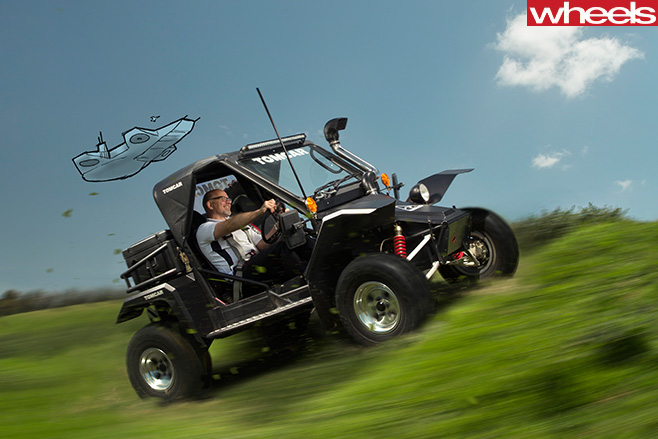
MTM has also diversified beyond its traditional automotive base, including manufacture of the Tomcar all-terrain vehicle (driven by Albert below) originally developed in Israel. It also has a plant in China that is an adjunct to its Melbourne plant, not a replacement.
“You need to be tenacious and you need to be bloody-minded to survive here,” Albert says. “You have to get out there on the front foot and that means you have to look forward.”
Walkinshaw Automotive Group
THE Walkinshaw Automotive Group traces its ancestry in Australia back to 1987, when Tom Walkinshaw did a controversial deal with Holden to replace Peter Brock, the Holden Dealer Team and HDT Special Vehicles.
Since Tom’s death in 2010, son Ryan has become the company’s leader and driving force. The highly successful Holden Special Vehicles division is the star act and biggest single entity, employing 115 people to design, engineer, manufacture, market and sell the performance V8 sports sedans it develops from the Holden Commodore.
Walkinshaw Racing employs 65 staff to construct and race four Holden Commodores in the V8 Supercars Championship. Two of these cars form the Holden Racing Team, the most successful team in the history of Australian touring car racing.
Walkinshaw Performance designs, manufactures and sells aftermarket performance parts and vehicle enhancements, employing 15 staff. It also supports motorsport activities.
The most recent addition to the group is Fusion Automotive, which has a staff of 10 and imports, distributes and sells the Indian-made Tata vehicles in Australia.
Each organisation runs as its own entity, but there is cross-pollination of talents and skills. For instance, HSV and HRT operate closely together. The group’s turnover was put at $160 million in 2013.
Performax International
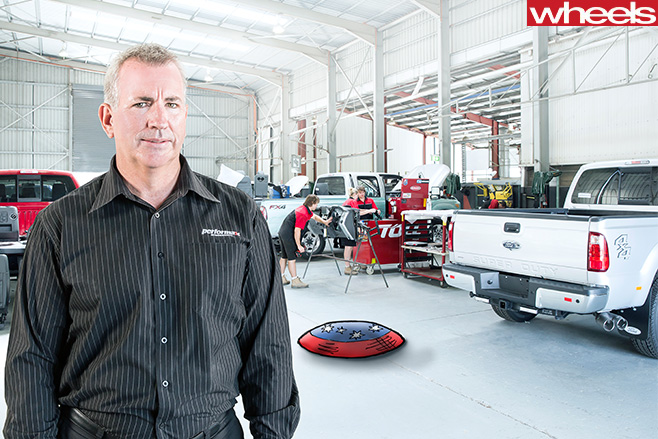
ESTABLISHED in 1989, Queensland-based Performax is Australia’s largest converter of American trucks and high-performance cars to right-hand drive.
It has done more than 3000 conversions and within three years plans to raise its annual production rate from around 300 cars per annum to 450.
It has gained full volume-manufacturer compliance, enabling it to convert the iconic 12th-generation F-Series truck for the local market and sell it without restriction.
With a starting price of $115,000, it’s an attractive business, but Performax admits gaining that accreditation has required an even higher production quality.
It has started importing and retailing the Chevrolet Silverado and GMC Denali under the same arrangement.
“We think there would be a degradation of quality of vehicles put out in the marketplace,” he says. “We would not like to see any dilution of the current framework.”
Performax is the dominant player in the Australian market, with a 65 percent share and a turnover of more than $75 million a year. It has around 100 employees and a plan to grow that to 110.
It has also developed a national dealer network to sell its products, a servicing facility within its Gympie base, a new retailing facility in Brisbane, and offers a four-year or 120,000km warranty on its vehicles.
The company supplies conversion kits to South Africa and has exported completely built-up vehicles.
PWR Performance Products
IN INTERNATIONAL motorsport, PWR is just about unavoidable.
From its Ormeau development and manufacturing facility on the Gold Coast it supplies cooling products to teams in championships across the globe.
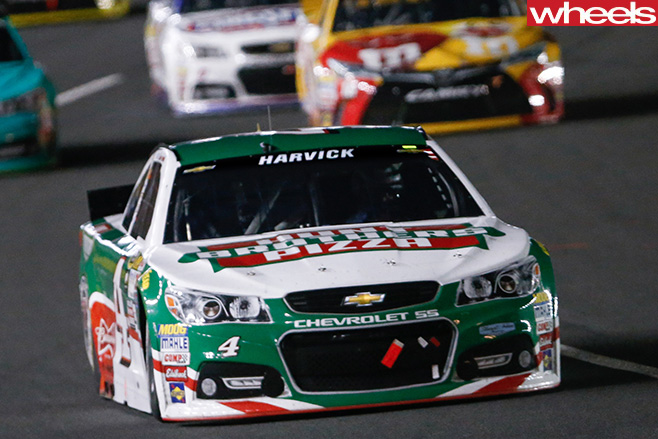
That list starts with Formula One, where it claims 90 percent of the field including Red Bull and Ferrari. There’s the World Endurance Championship, World Rally Championship, NASCAR, IndyCar, the German DTM and more. Back home in Australia PWR last year celebrated its fourth straight V8 Supercars championship with Jamie Whincup and Triple Eight.
PWR now has 95 employees and revenue of more than $20 million last year. In March, it bought US‑based cooling system maker C&R Racing, giving it an even bigger foothold in US racing.
While racing is the high-profile activity, PWR also services the aftermarket, military, industrial and off-road markets.
High-performance road cars are now a target as well, including the Nurburgring lap-record breaking Porsche 918 Spyder hybrid supercar, which comes standard from Porsche with the full PWR cooling package.
The not-so-big three
CLARIFYING the exact size of Ford, Holden and Toyota beyond 2017 is impossible, not least because they admit they don’t know themselves what their post-manufacturing footprint looks like.
What we do know is all three organisations will include sales and marketing and after-sales divisions – the bits required to sell cars here whether you build them locally or not.
Toyota has confirmed the closure of its Sydney base and centralisation of its Australian HQ to Melbourne, and that its Australian workforce will drop from 3900 to 1300. Ford will shift its administrative base from Campbellfield in Melbourne’s north to inner-city Richmond.
In all three cases some form of design and engineering capability has been retained. Ford’s commitment is the most comprehensive, including 1500 staff employed across a design centre at Campbellfield, an engineering centre in Geelong and the proving ground at the You Yangs. That will make the Blue Oval the largest automotive employer in the country post-2017.
GM will retain a design centre, engineering capability and the Lang Lang Proving Ground, but its head count in these areas is unlikely to nudge beyond a couple of hundred.
Toyota will also retain its small design studio in Australia and some form of engineering presence, but the tech centre established with so much pomp in 2005 will not be retained in its current form.
Nissan Casting Australia
FIRST out, last in. That’s the story for Nissan Australia. It bailed out of local car manufacturing in 1992 yet, once everyone else leaves by the end of 2017, it will be the sole OEM still manufacturing in Australia.
That will be via its Dandenong casting plant, which was established in 1982 and at this stage at least has no visible end date.
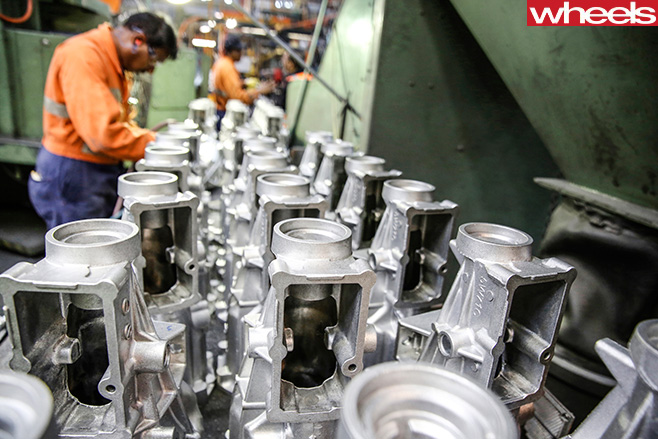
As a sign of Nissan’s ongoing commitment, a new tower furnace was installed in the first half of 2013 at a cost of $1.868 million, a third of that supplied by federal government investment programs. The furnace has a forecast working life of 20 years.
In April, Nissan revealed it had won new work to make driveline components for soon-to-be-released new models, new motor technology, and all-new propulsion systems that are yet to be announced.
So how does this one small plant survive when every other manufacturing facility owned by a multinational car company will soon shut down?
It’s nice to know nearly all Nissan and Infiniti vehicles sold in Australia have locally produced parts, arguably making them as Aussie as any cars will be post-2017. If you want to make sure, just go hunting for the kangaroo logo in the casting.
It was at PCOTY 2013 that I stepped out of the Fiesta ST and openly confessed I wished I needed to buy a new car.
Because as far as I was concerned right then and there, the little hot-rod Henry would have been a walk-up start for my cash. Not that the last couple of years hasn’t been a champagne period for affordable performance, because with the new Renault Clio RS, the Toybaru 86/BRZ twins and the Fiesta’s big bro, the Focus ST, showrooms were full of big performance for small coin.
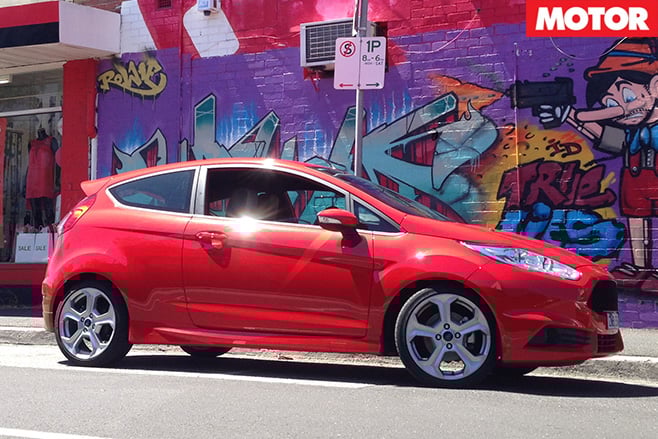
So when the children at MOTOR suggested I take custody of the long-term Fiesta, I was banging on the door before the phone hit the cradle.
My plan is to do some long trips in the Fiesta as well as thrash it around town and maybe even throw in the odd track appearance (sorry Ford). And while I realise most owners will have similar agendas, I wonder how many will take it on big interstate trips like I’m planning.
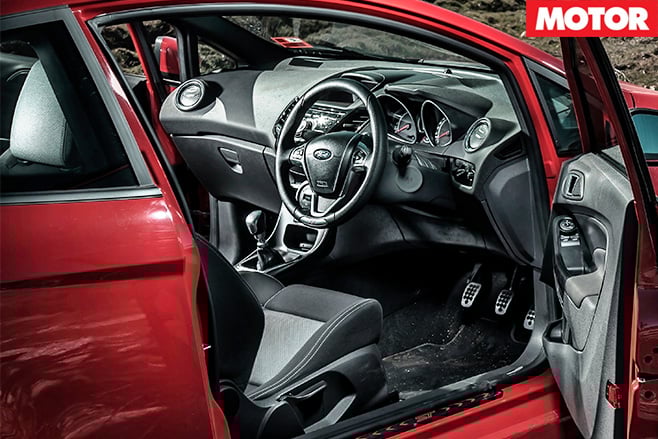
And while I’m yet to put the first tank of fuel through the ST, a couple of things have occurred to me. The two-door layout and those l-o-n-g doors mean the seat-belt is a big stretch behind you to snag the buckle.
I’m developing a technique where I reach behind with my right hand and drag the belt forward, but I reckon this is one ‘characteristic’ that could wear thin pretty soon.
Beyond that, the clutch take-up is a bit hard to feel but very sharp, meaning you need a few gear changes to get it right. Couple it with that hill-holder and first impressions can be daunting.
I’m also taking my time getting used to the long, narrow feel imparted by the cabin (even if the chassis soon dispels that sensation). And the interior layout itself? I’m no interior decorator, but this looks bitsy and piecey to me.
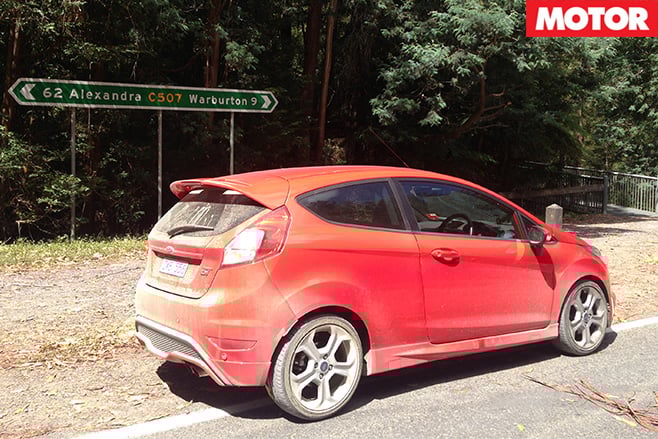
I like the ride, too; the fact it’s firm but fair and the damping seems to be right on the money (although I’m saying that about a lot of stuff lately). The vision to either side is better than the waistline would suggest and with the rear seats down, there’s a fair bit of luggage space. And I just love the Recaros.
I’ll report back when I’ve put some serious kays on the little bugger’s Potenzas and figured out whether it’s the real deal or a weekend wonder.
Check out part 2 of the Ford Fiesta ST long term test.
Here I am in the new Lamborghini Huracán, waiting for the light at the end of the Ascari circuit’s pit lane to jump from red to green.
My hands are trembling like I’ve just drunk a litre of espressos; the anticipation of driving the long-awaited baby Lambo is too much. But these initial quiet moments offer a good chance to take in the all-new interior.
Despite being longer and wider than the Gallardo it replaces, claustrophobes need not apply, as the narrow bucket seat restricts movement and the small windows allow little of the streaming Spanish sun into the cabin. The windscreen stretches seemingly all the way to your feet, but the rear-view mirror is full of V10 heat haze and over-the-shoulder visibility is nil.

The centre console accommodates a set of buttons and dials instantly familiar to any Audi owner, a row of classic rocker switches for electric windows, hydraulic nose lift, ESP and the like and, hidden beneath a red cover, the all-important starter button.
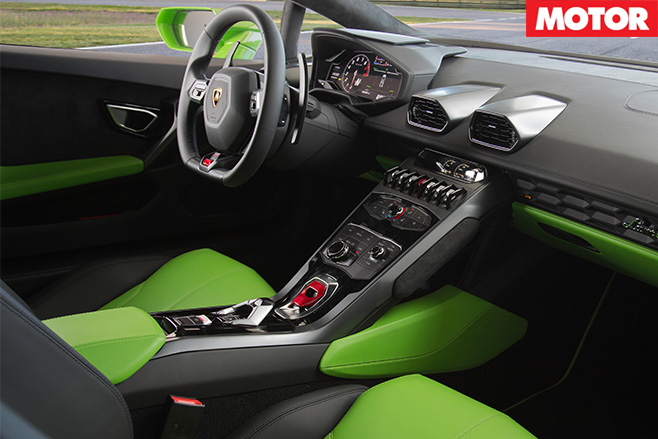
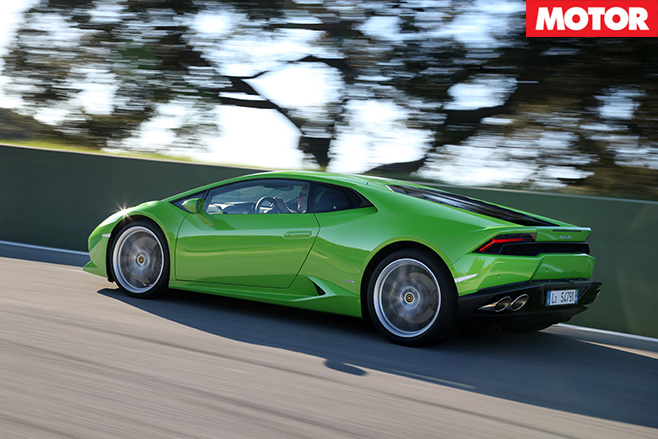
All-wheel drive transfers the power to the ground and enables this baby bull to hit 100km/h in a launch control-assisted 3.2sec and keep charging all the way to 325km/h. “Right now, we have a small advantage over the Ferrari 458,” claims Lamborghini chief engineer Maurizio Reggiani, “but the next round of updates will almost certainly produce a new leader of the pack.”
Aware the Huracán can only just hang on to the likes of the McLaren 650S and Porsche 911 Turbo S, let alone next year’s Ferrari 458-T, the Italians have added a large dollop of pantomime to proceedings. But though this Lamborghini can bark louder than most of its rivals, its personality is now more mature and less aggressive.
Case in point is the new Lamborghini Doppia Frizione (LDF, Lambo-speak for dual-clutch) gearbox, which bites harder and faster than the Gallardo’s dreaded e-gear single-clutch ‘box yet, at the same time, can be totally fluent and seamless. Even more so than the Aventador, the Huracán is two cars in one, and key to this split personality is the new ‘Anima’ system.
It’s these last two features that are arguably the most controversial of Sant’Agata’s new charger. Unlike the standard electro-mechanical system, Dynamic Steering varies its ratio depending on road speed, from a super sharp 9:1 around town to a relaxed 17:1 at autobahn velocity. In addition, it’s able to make tiny corrections to combat under or oversteer.
Where better to test all this than the torturous twists and turns of the Ascari race resort on the hills above the Costa Del Sol? With no ability to mix and match Anima settings – “we don’t want to confuse the driver,” says Reggiani – it’s straight into ‘Corsa’ and into the fray.
Corsa mode engaged, the LDF gearbox fires through changes with whiplash ferocity and while the all-wheel drive system is clearly a bonus as far as traction and stability are concerned, the freedom of a racetrack brings its otherwise well-concealed tail-out antics to the fore.
No more than 50 per cent of the power can be diverted to the front wheels and 100 per cent rear-drive is a possibility under certain conditions. A mechanical limited-slip rear diff provides extra grip.
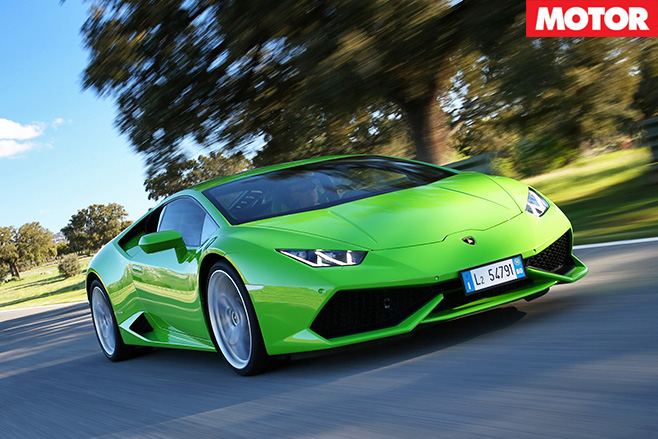
Initially, the ESC seems overzealous, but after 20-odd laps, as the tyres start to melt and the car begins to fishtail out of second- and third-gear bends, the calibration is suddenly spot on.
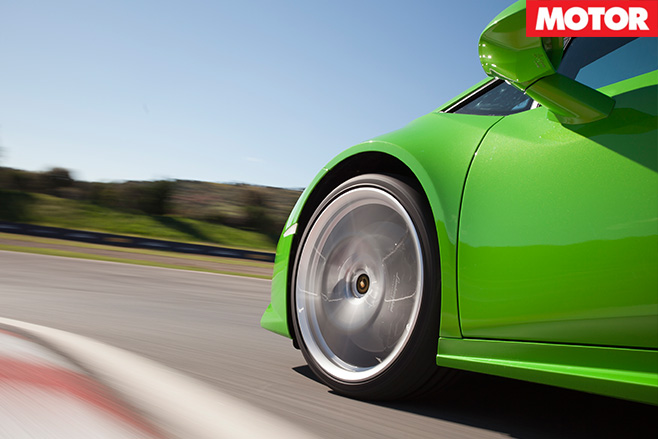
By this time the huge carbon-ceramic brakes are hot enough that the braking markers can be treated with disdain, but even as the giant bespoke Pirellis (245/30 ZR20 fronts; 305/30 ZR20 rears) begin their funeral march the interaction between man and machine remains unfazed. Safe and sure-footed like a 911 Turbo S, you can push seven-tenths in this Lambo and still feel like a superhero in the twisty stuff, overdrive it and not be punished as long as ESC is active, yet expect total satisfaction when nailing a 10-10ths lap.
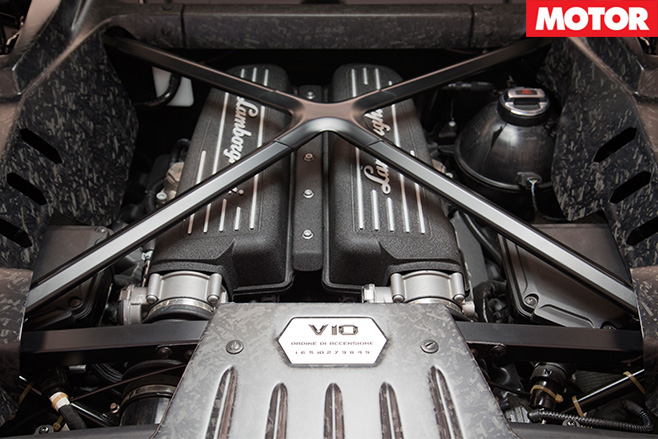
Though unable to secure the funds to develop an all-new segment-topping carbon-fibre structure, Lamborghini created its own version of the VW Group’s Modular Sports car System (MSS) that will also underpin the next-generation Audi R8, the range-topping version of which will also share the Huracán’s V10 engine.
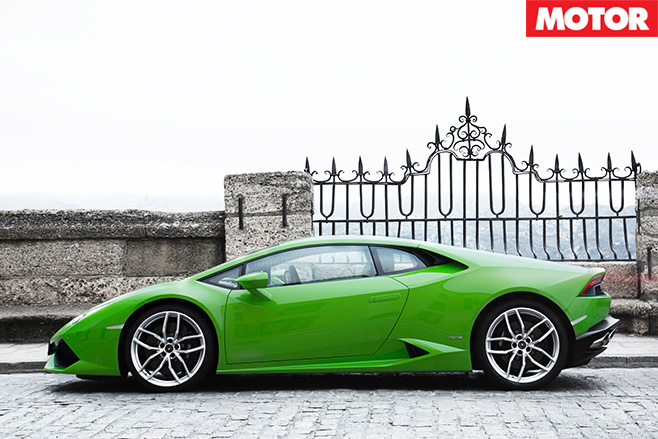
The next morning, an opportunity to try the Huracán on the famous Marbella to Ronda hillclimb route prompts a dawn getaway. Out on the road, away from the extreme velocities of the racetrack, the driving experience is no less beguiling.
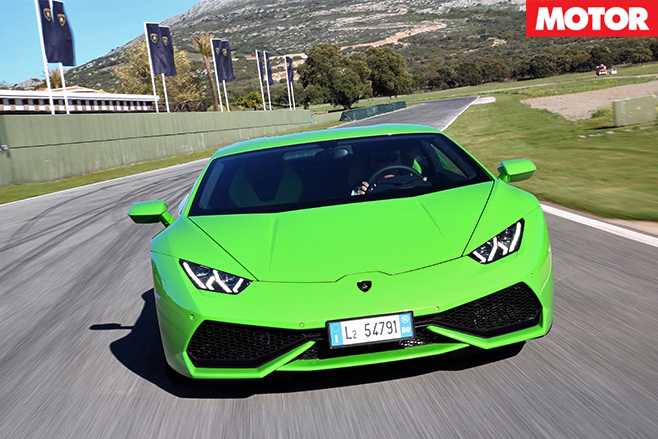
The greatest challenge the Huracán presents on the public road is operating the most basic of everyday functions. Like Ferrari, Lamborghini has moved the wiper and indicator controls to the face of the steering wheel, liberating space for a gigantic pair of shift paddles to be mounted to the steering column, and the reorganisation does require some acclimatisation.
Complaints are few. More space for larger drivers, and the claustrophobic, would be welcome, and smartphone connectivity is far from state-of-the-art in a car that is expected to top $400,000 when it lands in Australia later this year. But such petty issues fade from importance when considering the bigger picture.
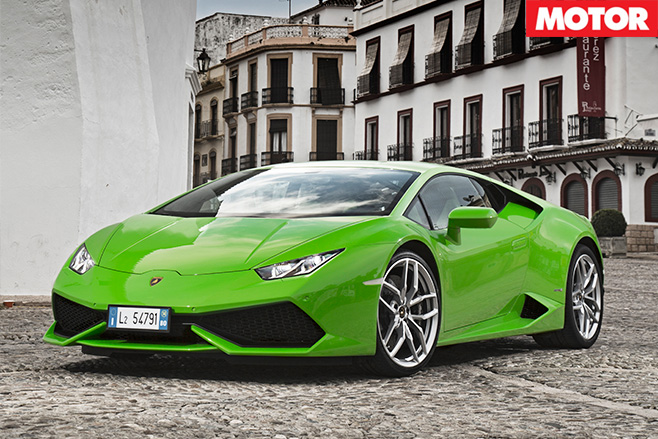
It’s arguably the most successful marriage yet between Italian character and German efficiency. If you like your Lambos coarse, loose and unrefined, go and look for a brutish pre-facelift Gallardo. But if precise handling is as important as making a wave on the approach to the golf/yacht/tennis club, check out the Huracán, whose talents are much more than skin deep.
4.5 out of 5 stars
Specs
Body: 2-door, 2-seat coupe Drive: all-wheel Engine: 5204cc V10, DOHC, 40v Bore/stroke: 84.5 x 92.8mm Compression: 12.7:1 Power: 449kW @ 8250rpm Torque: 560Nm @ 6500rpm Power-to-weight: 316kW/tonne 0-100km/h: 3.2sec (claimed) Top Speed: 325km/h (claimed) Consumption: 12.5L/100km (claimed) Emissions: 290g/km CO2 (claimed) Transmission: 7-speed dual-clutch Weight: 1422kg Suspension: double A-arms, coil springs, Adaptive dampers, anti-roll bar (f); Double A-arms, coil springs, adaptive dampers, anti-roll bar (r) L/W/H: 4459/2236/1165mm Wheelbase: 2620mm Tracks: 1668/1620mm (f/r) Steering: electrically-assisted rack-and-pinion Brakes: 380mm ventilated/drilled discs, 6-piston calipers (f); 356mm ventilated/drilled discs, 4-piston calipers (r) Wheels: 20 x 8.5-inch (f); 20 x 11.0-inch (r) Tyres: 245/30R20 (f); 305/30R20 (r) Pirelli P-Zero Price: $428,000 Positives: Still naturally aspirated; dynamically and visually rewarding Negatives: Vision; less power than its new rivals
FORMULA 1: that’s all for 2015, folks!
IF ONLY all of the season-ending Abu Dhabi Grand Prix would have been as spectacular and as crazy and the spirited opening lap.
But after it settled down, the race quickly became too much of a staple of modern Formula One – an orderly high-speed procession led by two Mercedes up front, with Ferrari, Red Bull and Williams fighting over the scraps. Oh, wait, there’s someone who didn’t read and digest the script; Sergio Perez in the Force India…
Nico Rosberg turned in another dominant performance under floodlights to crush his world champion teammate Lewis Hamilton for the third grand prix in a row, with Kimi Raikkonen grabbing the final spot on the podium for Ferrari.
Rosberg had never before won three on the trot. He’d like the 2016 season to start next weekend…
So much of the chat lately has been on the question of what has happened to Lewis’s pace since he won the title in Austin. Some defenders say he no longer had anything to fight for, the championship secure. But that’s not Hamilton. He likes to win every time the lights go out. His massive ego has a voracious appetite. Others say he has simply partied too hard lately. But more likely, Rosberg, has upped his game, worked harder and become more assertive.
Hamilton certainly went into Sunday’s race in a reflective frame of mind after the purposeful Rosberg raced to yet another pole – his sixth consecutively and by a comfortable margin.
An overworked word amongst the media was “momentum” and who would take it into 2016.

“I’m thinking of the long game today,” Hamilton declared, waving off suggestions that an advantage at the start would be crucial.
Heading the second row was a more competitive Raikkonen in third for his best qualifying result of the season, ahead of the impressive Perez in the Force India. The shock was that Sebastian Vettel was a victim to a Prancing Horse stuff-up which meant he didn’t make it beyond Q1. He started 15th.
Fifth fastest was Daniel Ricciardo in the Red Bull Renault, marginally faster than Valtteri Bottas, dealing with an outrageously wagging Williams tail.
With the sun setting over the desert on Sunday evening, Rosberg made another strong start, from Hamilton, Raikkonen, Perez, Nico Hulkenberg and our Daniel.
There was some brutal stuff going on in the mid-field around the Toro Rosso babies and Daniil Kyvat, while Vettel made up several places from further back.
Lotus’ Pastor Maldonado was sidelined on the mad first lap, after contact which earned McLaren’s Fernando Alonso a penalty.
Hamilton couldn’t land a blow on Rosberg as the German, in his most commanding performance of the year, powered to victory.
To emphasise Mercedes’ supremacy this season, Hamilton and Rosberg collected 80 per cent of all the available points.
“This is the perfect ending to the season for me – something I hoped for so much after a tough year,” said the delighted championship runner-up.
“To finish with six poles and three wins in a row is awesome. I am so happy that I found some performance at the end of the season. I also made my peace with this track after the toughest moment of my career here last year, which is a nice feeling.
“Today was really a perfect race. The start, the pit stops and the tyre management were all really good and I felt like I had it all under control.”
There was little else of importance to report, apart from Ricciardo’s beautifully controlled late braking overtake on The Hunk on his way to a sixth-place finish, and some spirited driving from Jenson Button.
Commendations go out to Vettel, who climbed to fourth, Perez who would not be budged from fifth at the finish, and Grosjean who stole ninth (up from 18th) in his farewell drive for Lotus.
“Parts of it were fun,” said Ricciardo of his race. “I would have liked more battles, though, but it looked quite spread out.
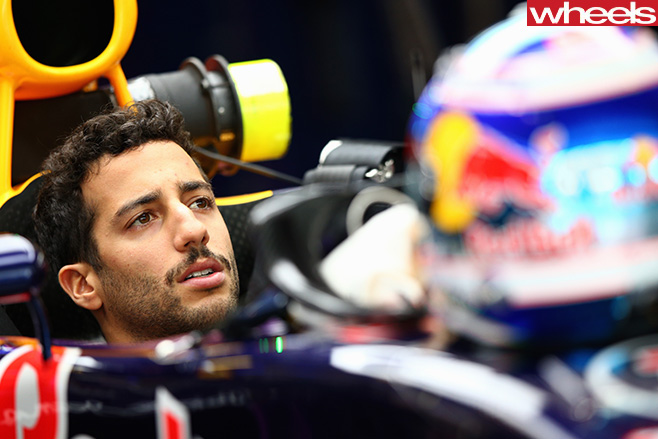
“Sixth is probably not that representative of how good our weekend was, but I’m pretty pleased. I would love to go racing next weekend but at the same time I’m happy the season is over and I’m optimistic that next year will be better,” he said.
“I think we ended the season with a lot more feeling and confidence in the chassis.”
And a final observation from the world champion: “That was a very difficult race. My tyres were done at the end of the first stint sitting behind Nico. The second stint was very good, but I don’t really know what happened strategy-wise at the end.
“I haven’t finished the season as strongly as I started it – but what an incredible year it’s been. I’ll go away now for the winter aiming to come back stronger, fitter and straight on top of our new car for 2016.”
FORMULA 1: Renault prevaricates on future
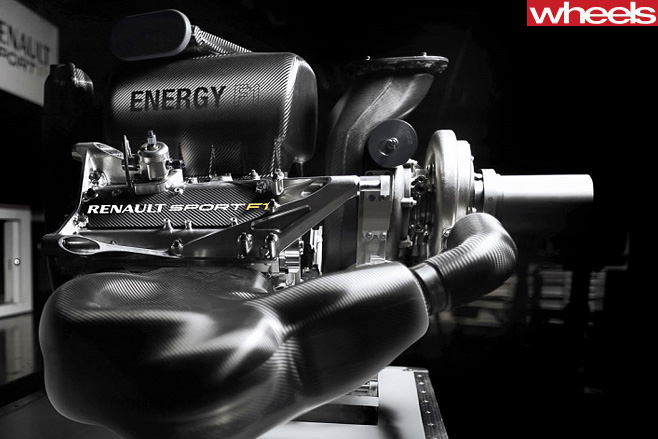
According to insiders, Renault had concluded a deal to buy a majority share of the Lotus team, which it would rebrand. There was also an on-off-on arrangement to supply engines to Red Bull next season.
Why Ecclestone and Renault have struggled to agree on the financial terms of the manufacturer’s return next year is not public, but the BBC believes there is confusion over Renault’s deal to continue to supply Red Bull in parallel with the buy-out of Lotus, which is facing the threat of insolvency if the big cheque doesn’t arrive by December 7.
When this latest deal with Ecclestone fell over, a miffed Renault immediately threatened to walk away.
A crisis meeting was called for last Friday to try to resolve the problem.
Renault Sport boss Cyril Abiteboul told BBC Sport the discussion was constructive: “We will report the result to our CEO but I am pretty sure we will have a positive result.”
However, Abiteboul also declared that while it was Renault’s intent to take over Lotus it had “no obligation” to do so.

But Lotus staff are certainly behaving as if Renault will save the team from falling into administration. They’re working co-operatively with the manufacturer on a car with a Renault engine for 2016.
The Renault boardroom must be a strange place, perhaps fitted with a springboard for back flips, remembering that the French manufacturer won championships in the mid Noughties (with Fernando Alonso) before then selling its team to investment group Genii Capital at the end of the 2009, and downsizing to a role of engine supplier.
That worked wonderfully with Red Bull roaring to four consecutive championships between 2010 and 2013.
The new hybrid formula introduced last year hasn’t been good for the once happy partnership; Red Bull initially announcing mid-year, after some frustrating power and reliability issues, that it intended to secure another power unit supplier.
At the same time Genii, similar to other venture capitalists, found motorsport a strange beast and agreed to flog Lotus back to Renault.
When Red Bull struck out in its search to find another engine source, a meal of humble pie had to be consumed as team principal Christian Horner went back to Renault and renegotiated an amended deal for 2016.
Rather than just take what Renault provides, it appears the engine will be further developed by Ilmor, the engine design company that in the past supplied Mercedes with a winning F1 engine.
GT: Two-car Cayman GT4 team for Bathurst 12 Hour
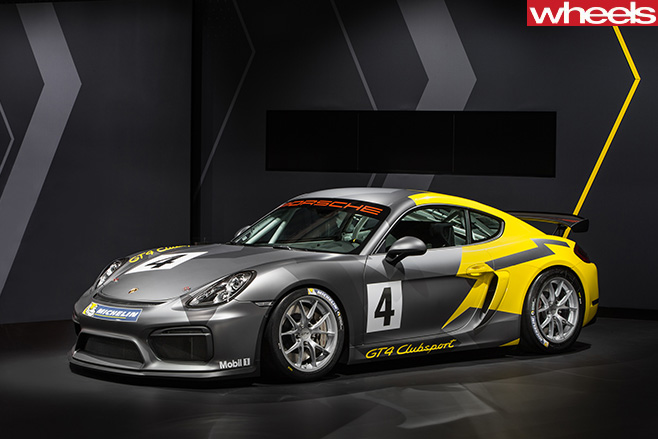
It’s a commitment the team hopes will build the profile of the GT4 class, until now always viewed as a baby class to the outright GT3 category. GT4 features more production-based vehicles with limited modifications from the showroom.
The Pro Sport Performance team, based in the town of Herschbroich inside the Nurburgring circuit, is a noted Porsche racing specialist. Pro Sport has a long record of success at the famous German circuit, notching up six outright wins and more than 100 class victories in the Nurburgring-based VLN endurance series.
The team was the first ever to compete with Porsche’s Cayman model in the VLN series.
As well as scoring several class victories in the Nurburgring 24 Hour, the team has also won a GT4 series title using a Porsche 911, and sored several class victories in GT4 competition using their Bathurst-bound Caymans.
While yet to confirm its full driving squad, the team is excited to be heading ‘down under’ for the first time to take part in a race that just keeps growing in stature internationally.
“If you have to name the big endurance races worldwide, it will be Le Mans, Daytona, Nurburgring and Bathurst,” team manager Steve Buschmann said.
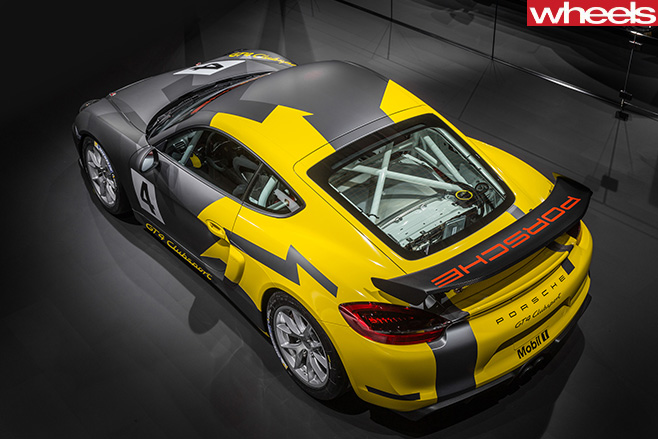
With his team so prominent in the burgeoning GT4 class, Buschmann hopes Pro Sport’s addition to the Bathurst 12-Hour grid will also help grow the baby GT class in Australia.
“Our focus is on GT4 class as it is in Europe. We hope to push this class with our entry. It is a growing market and will become more and more important, in our opinion.”
The target for the Germans is to topple the defending class winner, Tony Alford’s Lotus Exige Cup R.
Additional entries are expected in the GT4 class prior to them closing in mid-December.
Alongside the Pro Sport Performance Porsche Caymans and Lotus’ Exige and Evora models, other successful GT4 vehicles include the Aston Martin Vantage V8, BMW M3 GT4, Chevrolet Camaro GT4, Maserati Grand Turismo MC and the KTM X-Bow GTR.
WEC: Webber retains seat at cost-cutting Porsche
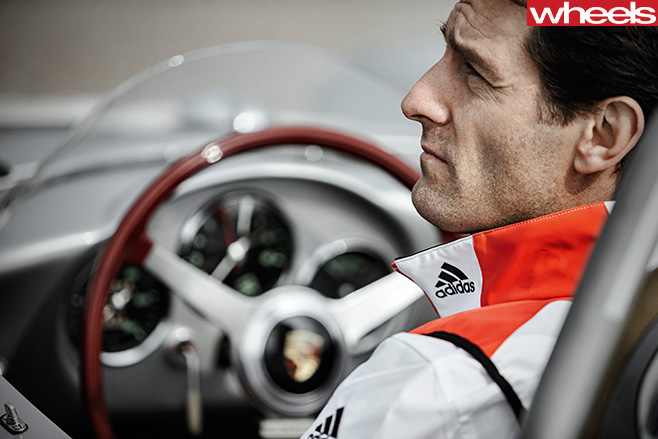
Porsche, and sister brand Audi, announced they would both cut the number of cars campaigning the Le Mans enduro next year from three each to just two.
Porsche said German Timo Bernhard, Kiwi Brendon Hartley and Webber would share one of the Le Mans class one prototypes for the third consecutive year, with Romain Dumas, Neel Jani and Marc Lieb racing with the sister car.
FORMULA E: the arrival of the automaton
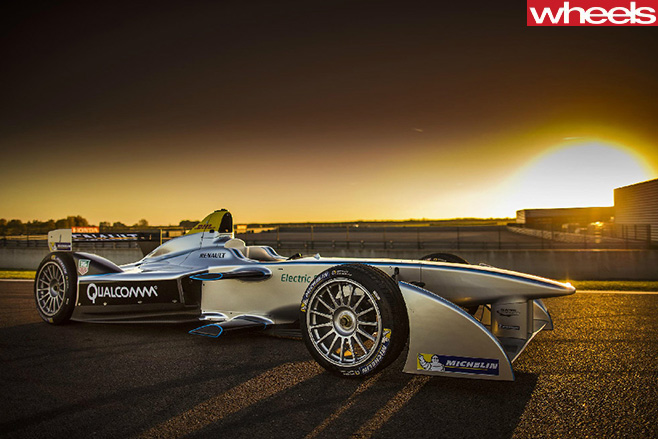
Called Roborace, the intended global race series for driverless electric cars will provide a competitive platform for the autonomous driving solutions developed by car manufacturers and industrial automotive and technology players.
Ten teams, each with two driverless cars, will compete in one-hour races over the full championship season. All the teams will have the same cars, however, will compete using real-time computing algorithms and AI technologies.
The plan is for Roborace to be a key part of the support package of the FIA Formula E Championship, with the first race for the driverless machines planned to take place during the 2016-17 season.
“Roborace is an open challenge to the most innovative scientific and technology-focused companies in the world,” said Formula E chief executive Alejandro Agag.
Denis Sverdlov, founder of Kinetik, which is a partner in the initiative, said: “We passionately believe that, in the future, all of the world’s vehicles will be assisted by AI and powered by electricity, thus improving the environment and road safety.”
For eons, motor racing writers have taken the mickey out of a space-age future where the race cars are controlled by robots.
But, really, hasn’t the world already had driveless electric machines for decades? They’re called slot cars.
