UPDATE, August 24: Volkswagen has since deleted its video detailing the new Tiguan’s ‘driving experience switch’. A new teaser for its ‘DCC Pro’ adaptive chassis control system has been added in its place.
September 2023: New Tiguan imagined – and we reckon it’s spot-on
We were pretty close with our previous speculative artwork, thanks to the spy photos available at the time. Now, though, there’s little left to wonder at.
September 2023: New Tiguan will be a petrol-only affair
Despite previously revealing efforts to get the plug-in hybrid EV Tiguan into Australia, VW has now confirmed it will only offer the petrol model, alongside the all-electric ID.4. Full details below.
August 2023: New Tiguan leaked!
The 2024 Volkswagen Tiguan mid-size SUV has leaked inside and out ahead of its official reveal.
Snapshot
- 2024 Volkswagen Tiguan leaked
- Third-gen German mid-size SUV has an evolutionary look
- Official reveal due between September and November
The images, posted to social media by MQB-Coding & Retrofit, appear to originate from an internal Volkswagen database. The new Tiguan is due to be officially revealed in the European autumn (between September and November).
As previously announced, the 2024 Volkswagen Tiguan will reach Australia late next year with a high-tech cabin, more boot space, and new optional suspension and headlight technology.
Germany’s rival to the likes of the Mazda CX-5 and Toyota RAV4 – and VW’s top-selling vehicle globally – will increase in length by about three centimetres to about 4.54 metres, with virtually unchanged width, height and wheelbase to the outgoing Tiguan.

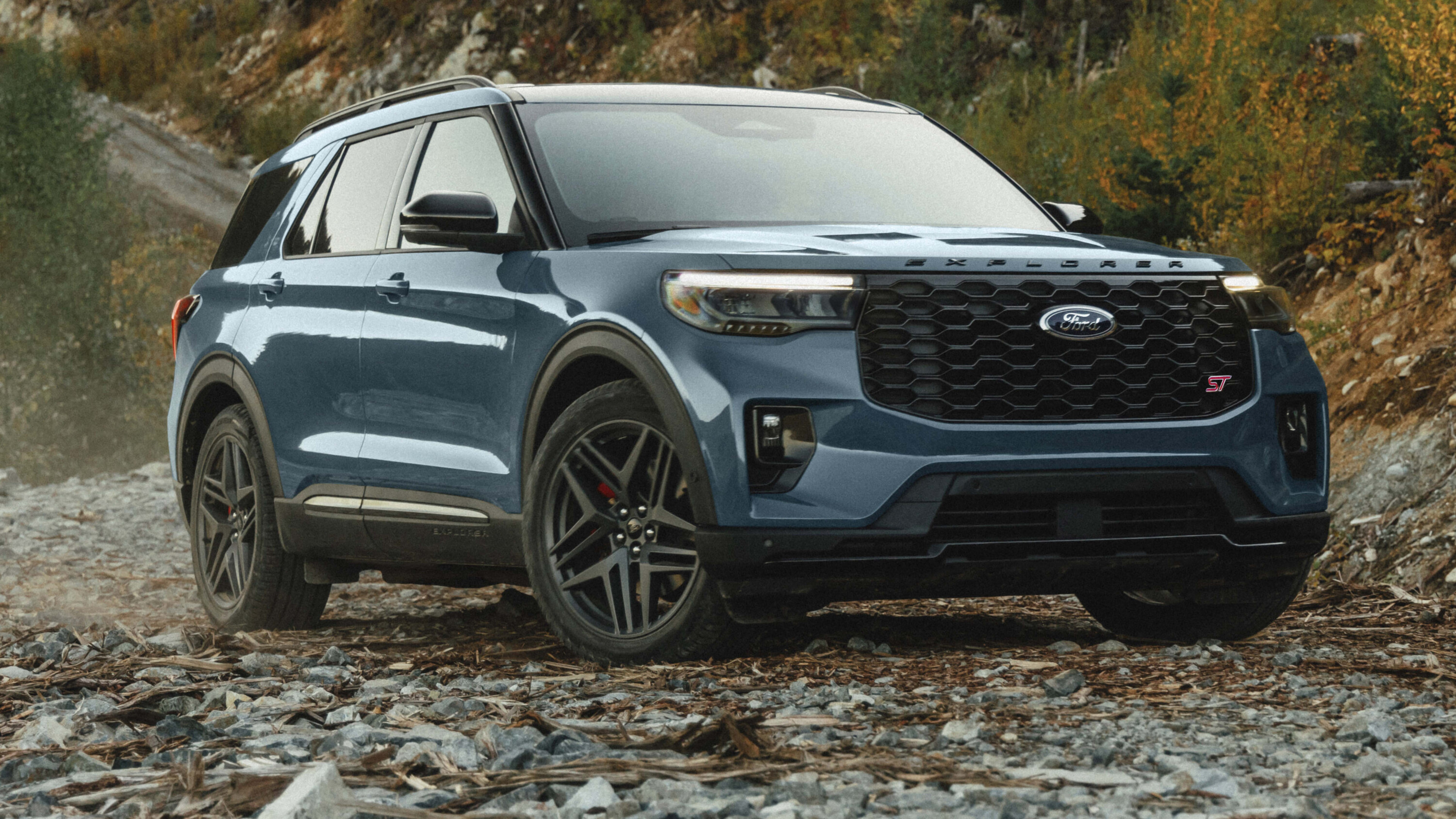
Up front, the third-generation Tiguan wears a more-rounded look similar to the latest Golf small car and ID-branded electric cars, with slimmer headlights, a lower and wider grille, and a cleaner bumper with vertical air intakes.
The available matrix headlights, which debuted on the updated Touareg large SUV, feature more than 38,000 micro-LEDs.
With a similar side design, it could be easy to confuse the new Tiguan for the current model, but it does feature redesigned side mirrors and alloy wheels, while the overall profile has a smoother look.

Full-width tail-lights with a light strip running across the tailgate headline the new model’s rear end, while the Tiguan badging has been moved lower compared to the current model.
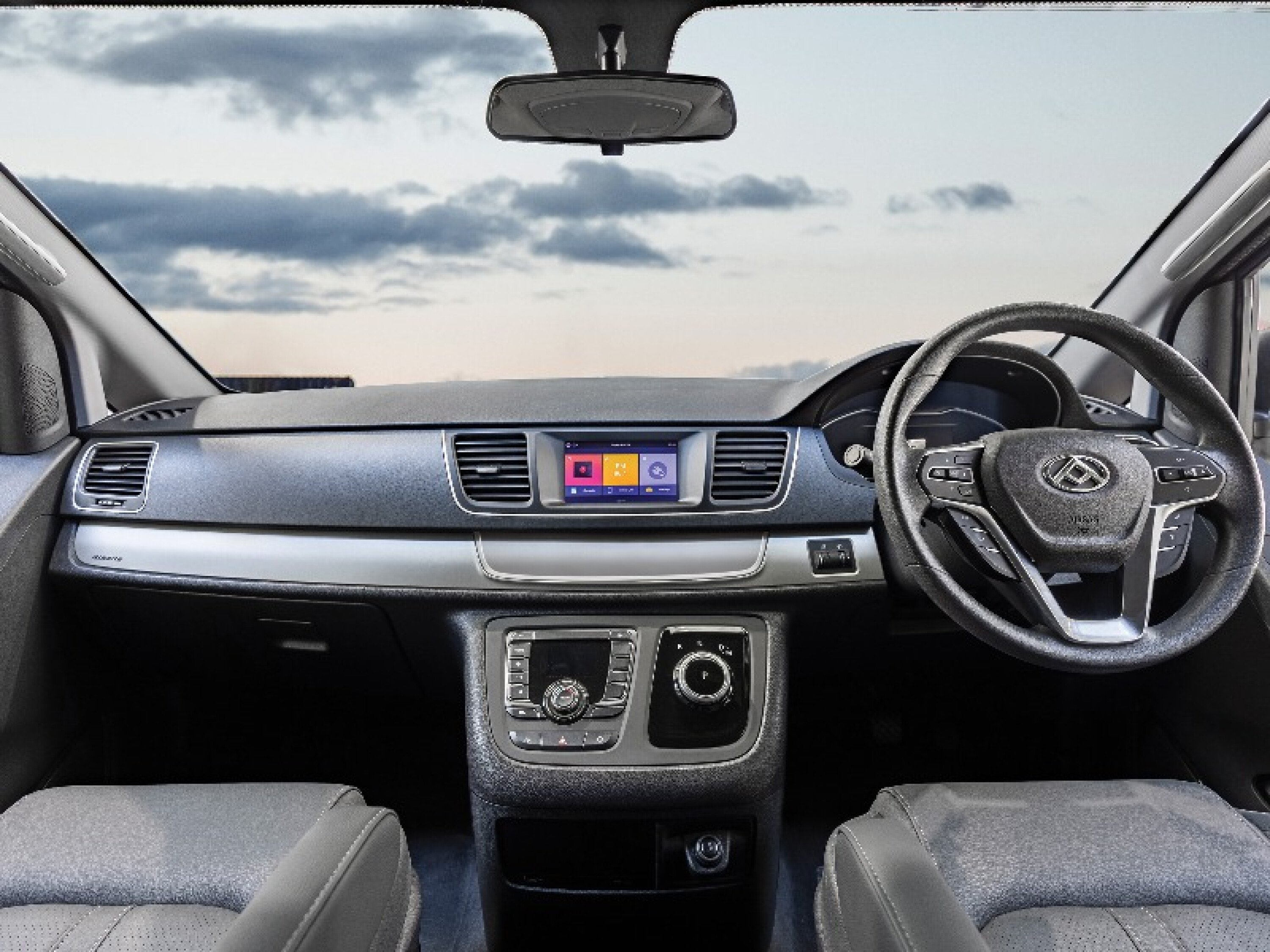
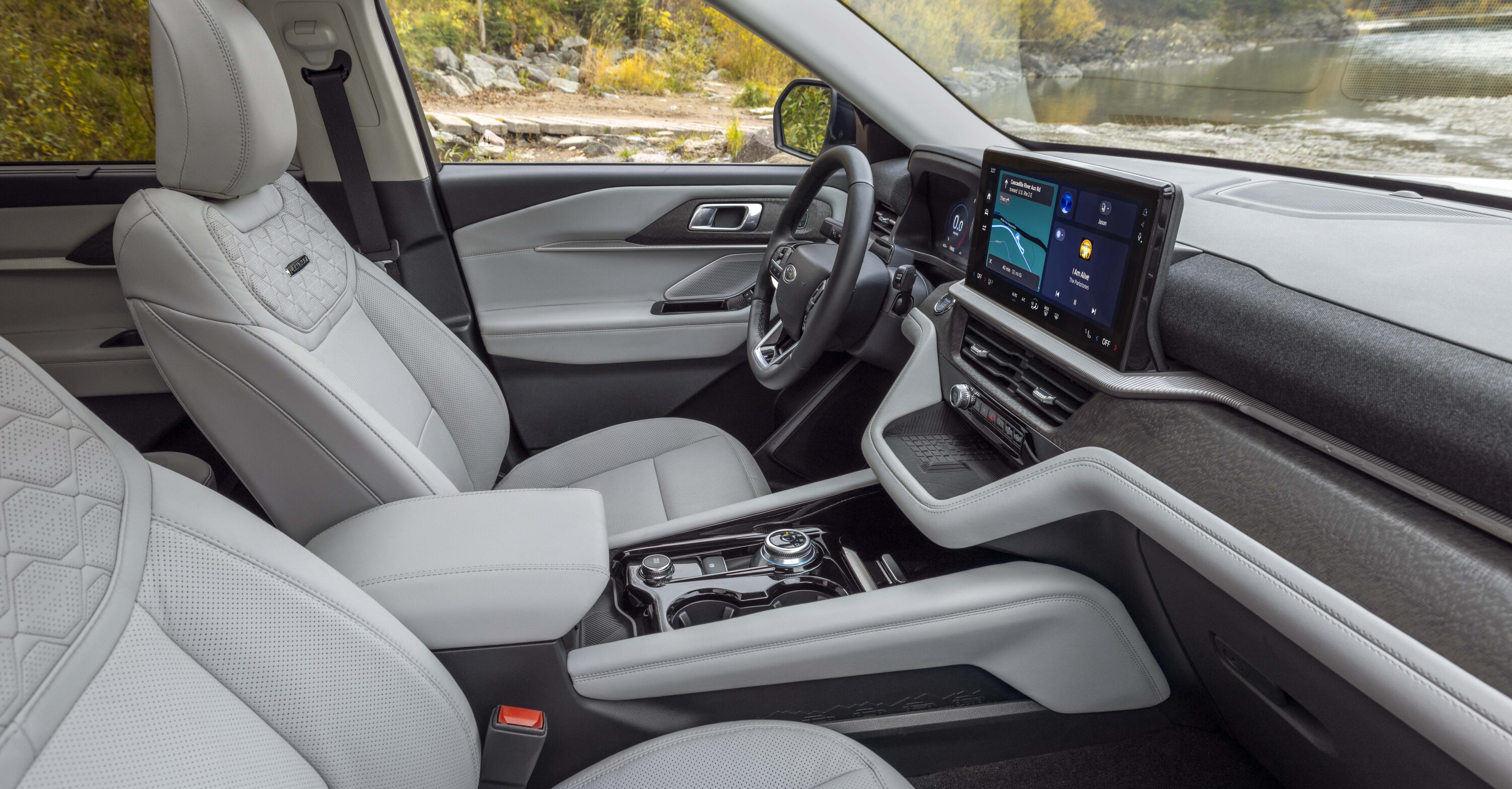
Volkswagen had already revealed the new Tiguan’s interior in a previous teaser, but the new images provide a closer look, with minimal buttons, a column-mounted gear shifter, and a cleaner centre console with a configurable dial.
The ‘driving experience switch’, teased by Volkswagen overnight, can adjust the volume, control the vehicle’s drive mode, or change the ambient lighting colour. It features an OLED display, and the outer ring will change its colour in line with the selected ambient colour theme.
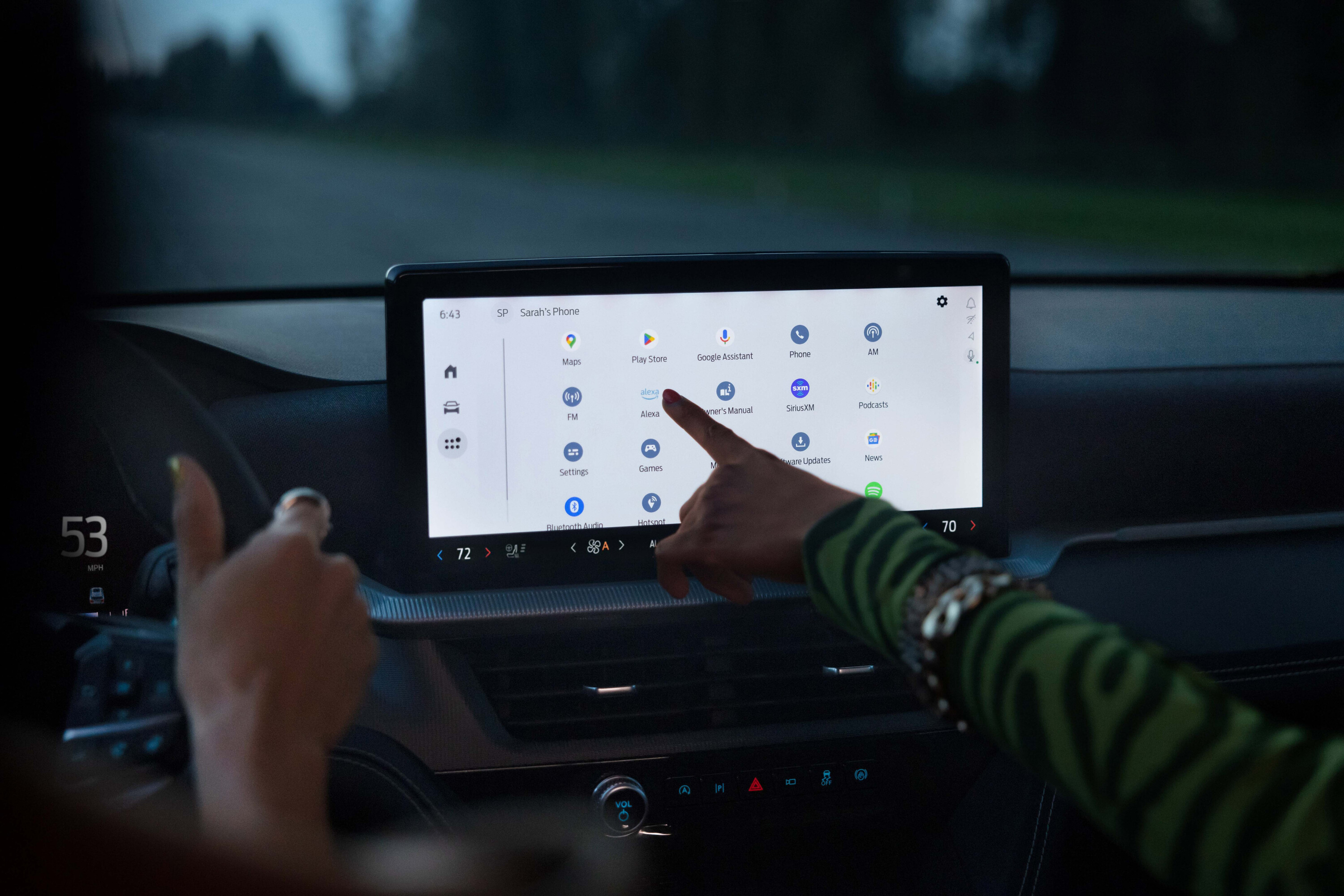
A large, tablet-style infotainment touchscreen up to 15 inches in diameter dominates the dash. Lower-spec models will feature a 12-inch display.
As with recent Volkswagen models, a climate-control bar runs across the bottom of the display, which is reportedly illuminated at night.
All models will feature a steering wheel with conventionally tactile switches – identical to current standard models – replacing the glossy haptic touch controls for R-Line variants.
Under the skin, the new Tiguan rides on the updated MQB Evo platform shared with the Golf and new Passat. It will also be closely related to the forthcoming Skoda Kodiaq, and the seven-seat Tiguan Allspace will be replaced by a new model called the Tayron.
DCC (Dynamic Chassis Control) Pro features twin-valve dampers that VW claims benefits both ride comfort and handling. The suspension ties in with a Vehicle Dynamics Manager that comes across from the Golf GTI hot hatch, which is said to deliver neutral dynamics through automatic brake interventions and damper control inputs to specific wheels.
Petrol and diesel four-cylinder engines continue as drivetrain options, along with mild-hybrid turbo petrol and petrol plug-in hybrid (PHEV) options that haven’t previously been offered in Australia.
VW says its improved PHEV drivetrains now boast a pure electric driving range of up to 100 kilometres.
Below: The current 2023 Volkswagen Tiguan, in 147TDI Elegance spec

Some Victorian roads will soon incorporate 21,000 kilograms of recycled plastics in the coming months – and it promises to be less susceptible to forming potholes.
Snapshot
- Recycled material roads to roll out in 10 Victorian sites
- Claims to be more durable against traffic and ageing
- Mass-scale roll out targeted to address crippling waste issue
Following research led by the Royal Melbourne Institute of Technology (RMIT) University, supported by Australian Research Council, Austroads and 10 Victorian councils, 10 asphalt road sections up to 900 metres long will be paved with recycled materials.
Importantly, laboratory tests by the RMIT [↗] claim improved durability of roads against traffic and ageing due to incorporating recycled materials, such as plastic and rubber.

The study found recycled plastic asphalt mixtures achieve 150 per cent less chance of cracking and 85 per cent less deformation under pressure testing compared to conventional asphalt.
In some cases, the recycled road performance was similar to more expensive polymer materials.
The initiative aims to provide a circular economy solution, with the RMIT citing Australians generate 2.6 million tonnes of plastic waste each year and landfill space is expected to reach capacity by 2025.
The RMIT project team will also establish best-practice guidelines on using recycled plastics in asphalt roads to enable the local governments – which control 80 per cent of Australia’s roads – to begin a wider-scale rollout.
New recall notices have been issued, affecting Mercedes-Benz, BMW and Ram, vehicles.
The details of each recall, as published, are posted below.

Recall: 2017-19 Mercedes-Benz X-Class
- Recall number: REC-005754
- Campaign number: RC3190
- Original published date: 15 August 2023
- Year range: 207 – 2019
- Affected units: 6117
- List of affected VINs (.csv file) [↗]
What are the defects?
Due to a manufacturing defect, the rear axle radial shaft ring may not be sealed adequately. This could cause an oil leak resulting in an unexpected reduction of braking performance.
What are the hazards?
An unexpected reduction in braking performance could increase the risk of an accident causing injury or death to vehicle occupants and/or other road users.
What should consumers do?
Owners should contact their authorised Mercedes-Benz dealership to have the work carried out as soon as possible, free of charge.
A full list of authorised dealerships can be found at www.mercedes-benz.com.au [↗]
Alternatively, please use the Mercedes-Benz online booking service.
www.mercedes-benz.com.au/servicebooking [↗]
Supplier details
MERCEDES-BENZ AUSTRALIA/PACIFIC PTY LTD
Who should owners/operators contact for more information?
Customer Assistance Centre
- Contact phone: 1300 300 896
- Contact email: [email protected] [↗]
\n

Recalls: 2022 BMW X1
- Recall number: REC-005748
- Campaign number: 0072480200
- Original published date: 14 August 2023
- Year range: 2022
- Affected units: 833
- List of affected VINs (.csv file) [↗]
What are the defects?
The outer seat belts in the second row may become jammed at the bottom of the trim panels. As a result, the seat belts may not operate as intended.
What are the hazards?
In the event of an accident if the seat belts do not operate as intended, the occupant of that seat may not receive the full protection of the seatbelt system and this could increase the risk of injury or death to vehicle occupants.
What should consumers do?
Owners should immediately contact their preferred authorised BMW dealer or BMW Australia to have the recall works completed free of charge.
Supplier details
B M W AUSTRALIA LTD.
Who should owners/operators contact for more information?
BMW Australia’s Recall Hotline
- Contact phone: 1800 243 675
- Contact email: [email protected] [↗]
- Contact website: www.recall.bmw.com.au [↗]
\n

Recall: 2014-19 Ram 1500 diesel
- Recall number: REC-005756
- Campaign number: Z46
- Original published date: 17 August 2023
- Year range: 2014 – 2019
- Affected units: 437
- List of affected VINs (.csv file) [↗]
- Variants: This model does not include variants
What are the defects?
Due to a manufacturing defect, the High-Pressure Fuel Pump could fail prematurely and introduce failed component debris into the fuel system. This could impair the fuel supply to the engine and result in a loss of power whilst driving.
What are the hazards?
A loss of power whilst driving could increase the risk of an accident causing injury or death to vehicle occupants, other road users and bystanders.
What should consumers do?
When parts become available, RAM Trucks Australia will contact affected owners in writing requesting they make an appointment at any authorised RAM dealership to have the work carried out free of charge.
For any additional information and assistance, please call RAM Trucks Customer Assist on 1300 681 792.
Supplier details
AMERICAN SPECIAL VEHICLES PTY LTD
Who should owners/operators contact for more information?
RAM Trucks Customer Assist
- Contact phone: 1300 681 792
\n

Recalls: 2020-21 Mercedes-Benz E-Class hybrid (E300e)
- Recall number: REC-005752
- Campaign number: RC3181
- Original published date: 21 August 2023
- Year range: 2020 – 2021
- Affected units: 25
- List of affected VINs (.csv file) [↗]
What are the defects?
Due to a manufacturing defect, the vehicle power electronics system wiring harness may come in contact and chafe against the underbody paneling. As a result, the wiring harness could become damaged causing a loss of power.
What are the hazards?
A loss of power whilst driving could increase the risk of an accident causing injury or death to vehicle occupants and other road users.
What should consumers do?
Owners of affected vehicles can contact their most convenient Mercedes-Benz dealership to have the vehicle repaired, free of charge.
A full list of authorised dealerships can be found at www.mercedes-benz.com.au [↗]
Alternatively, please use the Mercedes-Benz online booking service.
www.mercedes-benz.com.au/servicebooking [↗]
Supplier details
MERCEDES-BENZ AUSTRALIA/PACIFIC PTY LTD
Who should owners/operators contact for more information?
Customer Assistance Centre
- Contact phone: 1300 300 896
- Contact email: [email protected] [↗]
\n
More links to help you with your car recall
- What is a recall?
- What to do if your car is recalled
- Why a car recall isn’t all bad news
- What is a vehicle identification number (VIN)?
- All ANCAP & vehicle safety stories
The commissioning of a new building on the outside of Sydney Motorsport Park’s main straight is the first stake in the ground for what’s claimed to be the start of a motorsport industry precinct that will rival that of such famed tracks as Silverstone in the UK.
Dubbed the Australian Motorsport Innovation Precinct, the relatively modest structure – originally built to house a NSW-focused Supercars team which failed to materialise – is now home to a motorcycle helmet maker and a Formula 4 race team that hopes to find Australia’s next Formula 1 driver.
“Keeping the best in the business here in Western Sydney, we will help create the smart jobs and technology of the future”
Opened today by the NSW Labor Minister for Music and the Night-time Economy and Jobs and Tourism, John Graham, and to be run by the Australian Racing Driver’s Club (ARDC), the $10 million facility is the next step in a $32 million expansion plan that’s already realised circuit lighting as well as extensions to and partial resurfacing of the 23-year-old venue’s track.
“Keeping the best in the business here in Western Sydney, we will help create the smart jobs and technology of the future, which will fuel our economy and further support an already hugely popular sport that’s attracting visitors day and night to this first-class circuit,” Mr Graham (below) said in a statement.
The NSW Minister for Sport, Steve Kamper, said the Australian Motorsport Innovation Precinct was a key part of the NSW Government’s investment in Sydney Motorsport Park.
“The NSW Government recognises and understands the passion for motorsport in western Sydney,” Mr Kamper said.
“We are an enthusiastic supporter of the Australian Motorsport Innovation Precinct at Sydney Motorsport Park which will create a cluster of world-leading businesses to drive innovation and create employment opportunities in western Sydney.”
F1 hopefuls to work out of AMIP
The precinct is home to AGI Sport, which is owned and run by local motorsport identity Adam Gotch.
AGI Sport plans to run more than a dozen Formula 4 open-wheelers from the facility as part of a program for aspiring racers to start on the ladder towards Formula 1.
“The ARDC have had a long-term desire to get behind a high-end race car academy for elite-level drivers coming out of karting and on their way to Europe, Gotch told Wheels, “and they’d dearly like to be associated with a driver that makes it to F1 one day.”

In 2022, AGI Sport worked with six young karters, and Gotch says five of those six now live overseas in pursuit of a full-time open-wheel racing career.
“With the excitement of the Netflix show Drive to Survive, there’s a huge buzz around the world about F1 at the moment,” he said. “This is where it starts.”
Gotch admits that there’s a sense of excitement around the new facility, which has a line of sight across to Australia’s fastest racing corner at the end of SMSP’s main straight.
“There was funding available, and long term there will be a series of these [facilities] up the main straight.”
“When a client turns up to have a look, there’s a definite ‘wow factor,” he said. “The ARDC have been working on this [precinct] for some time, and Motorsport Australia has gotten involved, which has brought the state government in.
“There was funding available, and long term there will be a series of these [facilities] up the main straight.”
Trackside location a draw for racing industries
Glenn Matthews, ARDC CEO, said the new precinct offered a unique environment for the industry.
“What’s unique about AMIP is its trackside location within SMSP – undoubtedly Australia’s busiest and most diverse permanent race facility. The attraction of working alongside a smorgasbord of different car and bike events and experiences, race categories, teams and engineers creates a real honey-pot effect.
“We want to attract the brightest minds to join us here at Sydney Motorsport Park to collaborate with the leaders in the automotive industry to create the jobs and technology of the future.”
Too much of a good thing can be a bad thing, and it appears Honda knows it.
For decades, Honda’s player in the hugely popular mid-size SUV segment has been the CR-V but it’s now too big. In fact, the soon-to-arrive fifth-generation CR-V has grown so much that it’s gone up a weight division and is now classed as a large SUV. Which opens the door for the entirely new SUV nameplate you see here…
The ZR-V (known as HR-V in America) is Honda’s fresh mid-size player and we already know it has loads of appeal. When we drove the full range last month at the national media launch, we were impressed by its reasonable pricing, sorted dynamics and its unique size, which is smaller than most of the contenders in the mid-size class yet still larger and roomier than popular small SUVs like the Toyota Corolla Cross.
For this review, though, we’re zeroing in on the flagship VTi-LX which is both the most luxurious ZR-V you can currently buy and the most expensive trim level.
So does the ZR-V’s appeal still hold as strong at the pricier end of its model range? Let find out.

JUMP AHEAD
- How much is it, and what do you get?
- How do rivals compare on value?
- Interior comfort, space and storage
- What is it like to drive?
- How is it on fuel?
- How safe is it?
- Warranty and running costs
- VERDICT
- Specifications
How much is it, and what do you get?
There are three petrol ZR-Vs to choose from starting at $40,200 drive-away for the VTi X.
At the other end of the petrol spectrum is the VTi-LX tested here for $48,500 drive-away. The only way to spend more on a ZR-V is to go for the e:HEV LX hybrid.
The price seems high when you can get yourself into some larger mid-sized rivals like the Nissan X-Trail, which is our current class benchmark, for similar money, but if you look at the rest of the Honda range and its no-haggle agency pricing, it holds up bizarrely well against the Civic and smaller HR-V.

| 2023 Honda ZR-V VTi-LX standard features | |
|---|---|
| 18-inch alloy wheels (black and grey) | Heated and powered front seats |
| 12-speaker Bose-branded audio system | Reversing camera |
| Satellite navigation | Auto adaptive LED headlights |
| Wireless phone charger | Reverse auto-tilt function for side mirrors |
| Heated rear seats | Heated and powered front seats |
| 360-degree camera system | Air purification system |
| Heated steering wheel | Auto wipers |
| Black leather upholstery | Blind-spot alert |
| Hands-free electric tailgate with walk-away close | Rear cross-traffic alert. |
| Heated side mirrors | Digital dashboard |
| Front and rear parking sensors | 9.0-inch touchscreen |
| Wireless Apple CarPlay | Wired Android Auto |
A couple of interesting items popped up in the spec list.
The rear seat heating is a nice touch and like its compatriot Toyota (or some Toyotas anyway), Honda offers an air purification function in the climate control.
Honda’s Connect functionality is offered with a five-year subscription but it doesn’t seem to do a heck of a lot. It’s more generous than Toyota’s 12-month offering on the RAV4.
Another nice touch is not having to pay extra for colours. The Premium Garnet of this test car is pretty vivid in real life, though, so consider yourself warned!

How do rivals compare on value?
This part of the market is pretty busy and dominated by Toyota with the RAV4.
For the same $48,500 as the ZR-V VTi-LX you can have a very middle-of-the-road RAV4 GXL hybrid or a naturally-aspirated 2.0-litre for a few grand less. It’s bigger, not as much fun to drive (especially the 2.0-litre) and not nearly as loaded with gear. It’s a good car but not only do you pay more, you wait a lot more due to Toyota’s heavily backed-up delivery pipeline.
A Mazda CX-5 Touring Active is about the same price on the road but has more power and more driven wheels. It’s a close match for the Honda’s chassis, has a pretty classy interior (if a bit dark) and is probably the closest rival for the ZR-V. Except the Touring Active spec isn’t a match for the ore richly equipped Honda VTi-LX.

The Nissan X-Trail Ti-L is reasonably close to this ZR-V’s spec – and has a few extra little surprise-and-delight features as well.
It’s quite a bit bigger and costs $49,990 before on-road costs – so quite a few bucks more – but it’s a lot of car and our current medium SUV king.
I grew very fond of the X-Trail during the three months I had one as a long-termer but one thing to be aware of is the Nissan has relatively high servicing costs.

Interior comfort, space and storage
Let’s start with the least impressive bit of the ZR-V: boot space.
Now, it’s not terrible, so if this is the worst I could dream up about the ZR-V’s cabin, we’re already in good shape. At 380 litres, it’s a long, long way down on the segment’s hitherto tiddler, the CX-5 which has 442 litres. It’s a sizeable 200 litres behind the RAV4 and 235 behind the Tiguan.
While this gives you an indication of how the ZR-V only just squeaks into the mid-size market, the rest of the cabin is much bigger than its modest footprint suggests The back seat is as good, if not better than the Mazda, with plenty of headroom for me at 180cm as well as good leg and knee room.

Even our resident beanpole John Law found the cabin spacious. I didn’t find the lack of toe room under the front seats as bothersome but worth checking if you’ve got teenagers to carry around regularly.
The back seat itself is well-shaped and more than likely comfortable for long trips. So it’s just as well there are two USB-C ports to charge devices, an armrest, cup holders and air vents. And, as I’ve already mentioned, heating. That’s pretty good going.
Moving to the front and you’ve got a really classy design. A hexagonal theme runs across the dash and it’s largely button-free. The physical climate controls are genuinely lovely to look at and use and the screen, while “just” 9.0 inches, is the right size for the cabin.

The high-set console has a useful EV-style cut-out underneath where you can stash extra phones or notebooks.
But the gear selector is oddly tall, which is especially strange as the hybrid just has buttons to do the same job. You also get a pair of cup holders, a console bin and bottle holders in the doors.
It’s a really nice cabin in a segment that only has a couple of classy entrants.

What is it like to drive?
Honda has done an amazing job of whittling down its engine line-up and the ZR-V has the now very familiar 1.5-litre turbo petrol four-cylinder found in the similarly priced Civic.
| 2023 Honda ZR-V VTi-LX drivetrain | |
|---|---|
| Engine: | 1.5-litre turbocharged four-cylinder |
| Transmission: | CVT |
| Power: | 131kW @ 6000rpm |
| Torque: | 240Nm @ 1700rpm |
Power outputs are good rather than impressive, and that dreaded acronym – CVT – makes yet another appearance on a Honda. Except this one is quite good, with a positive uptake from standstill whether in Sport or Normal drive modes.
The thing that even a bad continuously variable transmission is good at – making the most of the available torque as long as there isn’t too much of it – means that the ZR-V gets along quite nicely without the lawnmower effect from which the RAV4 suffers.

The ZR-V’s ride is a little knobbly on less-than-stellar surfaces, which naturally abound in Sydney and its surrounds.
It improves with pace, however, which makes for a relaxed highway cruiser. The Yokohama Advan tyres are pretty quiet too.
The tyres also deliver pretty good grip in corners and this is where I really gelled with the ZR-V. It’s quite an athletic machine, which makes the slightly cheeky Maserati-aping grille a bit less so.
I wasn’t expecting to want to put some energy through the front tyres on a pleasant Thursday evening drive on my regular test loop, but the ZR-V is able enough to make that kind of thing fun.

You can string corners together with positive brakes and light but direct steering, ably supported by the transmission making sure all available power and torque reaches the road.
I tried the paddle shifters but only on a really challenging part of road, when Sport mode was not quite up to the job.
Body control is excellent and again makes up for the sometimes-edgy ride. It never feels like it’s going to lean over and feels lower than it is. In fact, the ZR-V feels like a well-sorted, high-riding hatchback, which is something helped by its relatively light 1439kg kerb weight.
It’s also very comfortable for front and rear passengers, with good supportive seats that hold you in place better than they appear they might. And at all times it’s quiet and composed, in town or on the open road.
If any of the terms in this section have left you scratching your head, these articles will help bring you up to speed!

- What is a Powertrain or Drivetrain?
- Power vs torque
- Car suspension explained
- Automatic transmissions (‘gearboxes’) explained
- Chassis control systems explained
- Car vs Ute vs SUV: How the vehicle you buy should guide the way you drive
Fuel consumption of the VTi-LX is slightly higher than the entry-level variant but it fared well during its time with us, at least against the ADR figure.
| 2023 Honda ZR-V VTi-LX fuel economy | |
|---|---|
| Fuel consumption (claimed) | 7.2L/100km |
| Fuel consumption (on test, indicated) | 7.9L/100km |
| Fuel tank capacity | 57 litres |
| Real world range | 721km |
| Fuel type | 91 RON |
On the long highway run, it really leaned out which brought the suburban-only fuel figure of 8.9L/100km down into the high sevens, which is pretty good going. It also accepts standard unleaded, another solid win for a turbo-engined car.

How safe is it?
As the ZR-V is box-fresh it doesn’t yet have an ANCAP safety rating as of early August 2023.
The eleven airbag count should get it over the line with front centre airbag and knee airbag inclusions but, frustratingly, reverse-cross traffic alert and blind-spot monitoring are only available on the top-spec VTi-LX and the hybrid. That’s not cricket.
| 2023 Honda ZR-V VTi-LX safety features | |
|---|---|
| Eleven airbags | Traction and stability controls |
| Traffic sign recognition | Lane departure warning |
| Driver attention detection | Rear seat reminder |
| Road departure mitigation | Forward AEB (vehicle, pedestrian, cyclist) |
| Lane-keep assist | Blind-spot monitoring |
| Reverse cross-traffic alert | |

Warranty and running costs
Honda offers a five-year/unlimited-kilometre warranty with a five-year capped-price servicing regime.
The Honda ZR-V requires a service every 12 months or 10,000km. Each scheduled service costs $199 for a total of $995 over a five-year ownership period. This compares favourably to the Toyota RAV4 ($260/service), though Toyota’s popular SUV has longer 15,000km service intervals.

VERDICT
The Honda ZR-V is the Japanese brand’s most convincing new model in ages.
It’s great to drive, roomy, is reasonably stylish and its smaller-than-average size will appeal to buyers looking to bridge the gap between small SUVs like a Toyota Corolla Cross and bigger, established medium players like the Nissan X-Trail.
If you’re going to reinvent your own back catalogue, this is how you do it.
As for whether the VTi LX still stacks up in isolation? Absolutely. In fact, it’s probably the pick of the range. It gains worthwhile equipment and quality improvements over the base model and is some $6400 less expensive than the ZR-V hybrid.
| 2023 Honda ZR-V VTi-LX specifications | |
|---|---|
| Price (drive-away) | $48,500 |
| Drivetrain | |
| Engine | 4cyl, 1.5-litre, DOHC, turbo-petrol, direct-injected |
| Drive | Front-wheel |
| Power | 131kW |
| Torque | 240Nm |
| Gearbox | continuously variable |
| Chassis | |
| L/W/H/Wu2013B | 4568/1840/1620/2655mm |
| Track (F/R) | 1591/1605mm |
| Weight (tare) | 1439kg |
| Boot | 370L |
| Fuel/tank | 57L |
| Economy (combined ADR81/02) | 7.2L/100km |
| Suspension | Front: struts, stabiliser bar. Rear: multi-link, stabiliser bar |
| Steering | Rack-assisted progressive electric power steering, 2.4 turns lock-to-lock |
| Front brakes | Ventilated rotors |
| Rear brakes | Solid rotors |
| Tyres | Yokohama Advan dB V552 |
| Tyre size | 225/55R18 |
| Safety | |
| ANCAP rating | Unrated |
| 0-100km/h | 9.0 seconds (est) |
August 2023: Q8 E-Tron pricing revealed
The updated Audi Q8 E-Tron electric SUV has been detailed for Australia with boosted driving range – but price rises apply. Details at the link below.
December 2022: Audi Q8 E-Tron international drive
The original Audi E-Tron broke ground as the German automaker’s first battery-electric vehicle when it launched initially in 2018.
Four years on, electric mobility is no longer a fringe sect of motoring – and that may have put a squeeze on Audi’s E-Tron branding, previously tied to a singular model.
With the arrival of the 2023 Audi Q8 E-Tron, the carmaker’s electric pioneering SUV has gained a new name and a friendly new face – as well as a larger battery, more driving range, and faster charging capabilities.

Based on familiar bones, it’s an evolutionary step in a number of areas, culminating in a product that elevates the bar over its fore-bearers.
Not only that, but the change in naming structure, adding E-Tron to Audi’s flagship SUV Q8 position, opens the door for the E-Tron brand to proliferate throughout Audi’s product portfolio in the future.
When is it coming to Australia?
A spokesperson for Audi Australia has confirmed to Wheels that we will see the local arrival of the 2023 Audi Q8 E-Tron in the second half of 2023.
More specific timing will be announced closer to launch.

How much is it and what do you get?
Local pricing has yet to be confirmed, however the previous E-Tron began at $138,323 before on-road costs.
An entry-position of around $140-150K seems more reasonable to expect.
The international Q8 E-Tron range comprises three variants: the Q8 E-Tron 50, the Q8 E-Tron 55 and sporty SQ8 E-Tron. Both conventional squarebacked SUV and more coupe-like ‘Sportback’ body configurations are available, with the slippery Sportback offering marginal driving range advantages.
As Audi puts it: ‘the old big battery is the new small battery’, with the entry-level Q8 E-Tron 50 adopting the old flagship’s 89kWh unit, with a WLTP-rated claim of 497 kilometres for the SUV and 505km for the Sportback (up 44 per cent over the previous entry Audi E-Tron 50 Sportback).

Both the Q8 E-Tron 55 and SQ8 E-Tron harness a new Samsung-supplied 106kWh battery, with a superior chemistry offering a higher energy density, improved thermal efficiency, faster charging and, of course, a greater cruising range.
The Q8 E-Tron 55 is the lineup’s efficiency king, boasting up to 582km of driving range in the Q8 E-Tron SUV, and up to 600km in the Q8 E-Tron Sportback.
The triple-motor SQ8 is the most dynamic of the litter, trading ultimate driving range for pace, with the SUV claiming 494km and the SQ8 E-Tron Sportback (pictured below) offering 513km, but sprinting from 0-100km/h in just 4.5-seconds – 1.1-seconds quicker than the Q8 E-Tron 55, and 1.5-seconds quicker than the entry-level Q8 E-Tron 50.

The new big battery allows for DC fast charging at up to 170kW (up from 150kW), with a 10-80 per cent recuperation time of 31 minutes for the larger 106kWh unit.
The Q8 E-Tron 50 and 55 both produce 664Nm from their twin-motor configurations, with the Q8 E-Tron 50 producing 250kW, and the 55 producing 300kW.
The SQ8 swings in with double the motors on the rear axle, delivering a combined 373kW output (precisely the same power output as a combustion-powered SQ8) and 973Nm.
The improved driving range isn’t down to just the larger battery unit, with more efficient motors drawing less current to produce the same amount of torque. There are also a number of clever aerodynamic improvements added into the mix, with Audi engineers adding; active air curtains in the front fascia corners, front wheel spoilers to the underbody that crucially deflect air around the front tyres and wheel well, active louvres behind the front grille and an new composite underbody/battery shield that saves significant amounts of weight.

Elsewhere, the new front fascia debuts a new identity for E-Tron products, with an inverted, body-coloured grille, full-width daytime running light, and a modernised logo introduced. Expect these motifs to appear on future electrified models too.
Audi has also added remote park assist and new LED matrix headlights, with overseas Q8 E-Trons equipped with; adaptive cruise control, lane-keep assist and autonomous emergency braking with pedestrian, cyclist, junction and motorcycle detection.

Inside, the digital array comprises a 10.5-inch central infotainment screen, a 12.3-inch digital instrument cluster along with a smaller ancillary 8.6-inch monitor handling climate control and driving modes.
How do rivals compare on paper?
Rivals include Mercedes-Benz’s EQC, BMW’s iX and Jaguar’s I-Pace.
The BMW iX is the newest alternative, splitting the Q8 E-Tron range on tech, offering a smaller 77kWh battery and 420km of driving range, opening at $135,900 (all prices shown are before on-road costs) for the entry-level BMW iX xDrive 40.
The iX range also extends to a larger 112kWh battery, offering a superior WLTP-rated 620km of driving range in the iX xDrive 50 Sport, for $174,900.
Jaguar’s I-Pace was afflicted by pricing adjustments at the beginning of 2022, with the range rising to $142,580 for the EV400 SE. Both Jaguar’s EV400 SE and flagship EV400 HSE are twin-motor, all-wheel-drive, delivering 294kW/696Nm. They boast a WLTP range of 470km.
The Mercedes-Benz EQC, like the Jaguar, sports a two-pronged range of trims, both powered by the same powertrain. The EQC 400 4matic is priced from $124,300, while the fully loaded EQC 400 4matic Sport asks $141,300. They both harness an 80kWh battery and dual electric motors delivering 300kW/760Nm, and a WLTP claim of 350kms.
Interior comfort, space and storage
Despite the fresh exterior, the Q8 E-Tron’s cabin presents virtually identically to the outgoing E-Tron SUV. The vehicles presented at launch were fitted with more conventional three-spoke S-Line steering wheels, rather than the more stylised sets we’ve seen in E-Trons past – but the overall architecture, sharp lines, sculpted surfaces, triple screen array and dense, solid feel and build remain.
The cabin is tremendously airy and spacious. Yes, it’s a large vehicle, but the boons of electric vehicle packaging contribute further with a flat second row floor and a very low centre console. This is not, as some might assume, simply a Q7/Q8 stuffed with batteries.

When quizzed on parts commonality, Audi engineers pointed out that basic front and rear subframe assemblies are shared and, while underpinned by a development of the same MLB platform, the Q8 E-Tron’s floorpan and battery cradle are bespoke, along with much of the central body between the axles, and the glasshouse.
Driver information is contained within an impressive 12.3-inch digital display, with central infotainment handled by a 10.5-inch monitor and climate and driving modes displayed on a secondary 8.6-inch monitor. Audi’s Q8 positioning trades high on technology, with both a visually and haptically responsive operating system – one of the more intuitive native systems in our opinion – featuring wired and wireless Apple CarPlay and Android Auto, and a native Google-linked navigation system, one of the best OE systems around.

Front seats are heated and have massage functions.
Our test cars were also fitted with an optional twin side-camera and OLED 7.0-inch display system, which replaces conventional side mirrors. These are wildly divisive, so best to try before you buy.
Like the combustion-powered SQ8 we drove recently, and bearing in mind that local pricing remains unconfirmed, the dense build, plush materials and onslaught of tech means that sitting in the Q8 E-Tron feels like sitting in a $200,000 vehicle.
The second row is equally as spacious, with even the swoopy Sportback body penalising headroom only marginally thanks to some considered scalloping of the headliner.

Back seat passengers are treated to four air vents of their own, along with two extra climate zones (four in total), along with two USB-C ports and two cupholders.
The Q8 E-Tron SUV offers a capacious 569L of boot capacity, with the Sportback delivering 528L.
With the second row folded, the luggage capacity swells to 1637L in the SUV, and 1567L in the Sportback. Both body styles also feature a further 62L ‘frunk’.
What is it like to drive?
| Audi Q8 E-Tron 50 | Audi Q8 E-Tron 55 | Audi SQ8 E-Tron | |
| Body | 4-door, 5-seat, SUV | 4-door, 5-seat, SUV | 4-door, 5-seat, SUV |
| Drive | twin-motor all-wheel drive | twin-motor all-wheel drive | triple-motor all-wheel drive |
| Battery size | 89kWh | 106kWh | 106kWh |
| Max power | 250kW | 300kW | 373kW |
| Max torque | 664Nm | 664Nm | 973Nm |
| Energy consumption | 20.1kWh/100km (claimed) | 20.6kWh/100km (claimed) | 24.6kWh/100km (claimed) |
| Weight | 2510kg | 2510kg | 2650kg |
| L/W/H/W-B (mm) | 4915/1937/1619-1633/2982 | 4915/1937/1619-1633/2982 | 4915/1947/1617-1631/2982 |
| Price | TBA | TBA | TBA |
| On sale | H2 2023 | H2 2023 | H2 2023 |
At launch, only the Audi Q8 E-Tron 55 and SQ8 E-Tron were available. No entry Q8 E-Tron 50s were present.
Beginning in the mid-spec Q8 E-Tron 55, initial impressions are of effortless progress and huge breadth of ability for a vehicle of this size and weight (approximately 2500 kilograms).
With a claimed 0-100km/h time of 5.6-seconds, the E-Tron 55 does a good job of disguising its portly mass, with factory air suspension and a deft adaptive damper system, the lateral body control throughout the speed envelope is impressive.

Damping in the softest Comfort mode occasionally gives moments of large vertical movements on rebound from sharp bumps, but is never afflicted by any hint of bump steer or tramlining.
Having driven a few contemporary Audis recently, the steering has been noticeably quickened, with a 14.6:1 steering ratio fitted. It feels far more natural, with less of an on-centre deadzone and a more linear feel in contrast to the previous ratio prevalent throughout the rest of the portfolio. We’ve never loved the signature steering in many contemporary Audi products, but the rack in the new Q8 E-Tron is much more natural feeling, and hopefully it proliferates throughout future Audi models.

Other dynamic improvements include a stiffer front control arm (FCA) bushings, stiffened 50 per cent in Q8 E-Tron 50 and 55, and by 100 per cent in the SQ8 E-Tron – in comparison to the outgoing e-tron SUV.
The result is a more alert chassis and steering that feels more responsive – on and off centre.
Unlike other products built atop the MLB platform, rear steering was not feasible from a packaging standpoint, but even the non-S Q8 E-Tron changes direction with impressive poise, its large kerb weight coming to the fore primarily in hot braking circumstances. In pedestrian circumstances, when noodling around town, it’s an effortless and relaxing drive.

Dynamic damping contains lateral body roll well, with a greater spread between Comfort, with hints of body roll and little jarring, despite its large 21-inch wheels and medium profile 265/45 tyres, thanks to its capable standard-fit air suspension.
Brakes do a good job of arresting speed from such a large vehicle, and can be stabbed agreeably late in deep braking moments, but are difficult to modulate in typical EV fashion. Even in the non-S Q8 E-Tron, the chassis is remarkably well resolved, with the rear outside tyre tangibly and confidently loading up the from mid-corner to the corner exit. The chassis is very friendly overall and, even when deliberately trying to provoke it with some rather drastic mid-corner throttle inputs, the big E-Tron is never fazed.

Stepping up to the SQ8 E-Tron dynamic flagship, the pace increase is noticeable, with a 4.5-second claim from 0-100km/h. Despite its mighty power outputs, standing acceleration – while rapidly brisk – but doesn’t boast that head-smack lightswitch acceleration given its size and mass.
Adding a second electric motor, for three in total, on the rear axle penalises outright range, but positions the SQ8 E-Tron as the clear athlete of the already talented range. There is a tangible torque-vectoring feeling from the rear in the way the large vehicle is able to change direction.

The SQ8 E-Tron also boasts noticeably meatier front end, with a marginally greater steering weight thanks to its larger 285-section tyres and doubly hardened FCA bushings, it also benefits from a 10 millimetre increase in front and rear tracks, distinguished by some imposing Audi RS-style wheel arch extensions.
The SQ8’s subtle adjustments feel as if it boasts a lower centre of mass, with smaller roll moments and shorter lingering body movements.
How efficient is it?
WLTP efficiency claims for the Q8 E-Tron are: 20.1kWh.100km for the Q8 E-Tron 50, 20.6kWh/100km for the E-Tron 55, and 24.6kWh/100km for the SQ8 E-Tron.
After a day in each of the Q8 E-Tron 55 and SQ8 E-Tron, we returned in-car figures of a just over 24kWh/100km for the Q8 E-Tron 55, and around 26kWh/100km in the sporty SQ8.

How safe is it?
The 2023 Audi Q8 E-Tron range has yet to be assessed by ANCAP, but its predecessor, the Audi E-Tron, was awarded five stars following its local launch in July 2019.
The E-Tron featured dual frontal and side chest airbags – plus side head protecting (curtain) airbags for both first and second rows.
Active safety features include autonomous emergency braking, lane-keep assist and warning and emergency lane keeping as standard, with European vehicles offered with optional ‘City, Tour and Park’ packages with expanded attributes – including a new-for-2023 remote park assist.

Verdict
The subtle repositioning of Audi’s E-Tron SUV to reflect its flagship Q8 large SUV seems indicative of how far electric vehicles have come.
BEVs are no longer on the fringe, a siloed product from the rest of the mainstream range. The combustion versus electric dilemma is as pertinent as ever for new car buyers today, and the 2023 Audi Q8 E-Tron makes the transition seamless and easy thanks to the familiarity of its controls, touchpoints and overall vibe.
It’s a tremendously competent car, and that’s without the ‘electric vehicle’ qualifier. The Q8 E-Tron rides with comfort, is shockingly poised and genuinely talented when the going gets twisty. It carries five with space aplenty, in a lovely cabin filled with plush materials.

Incremental developments in a range of areas elevate the original E-Tron formula and make the repositioned Q8 E-Tron a genuine alternative to the existing combustion-powered Q7 and Q8s.
Pertinent questions remain; how much will it cost? What will it feature? And how does it handle local Australian roads?
All will be answered in time. Until then, colour us impressed.
Specifications
| Audi Q8 E-Tron 50 | Audi Q8 E-Tron 55 | Audi SQ8 E-Tron | |
| Battery size | 89kWh | 106kWh | 106kWh |
| Drive | twin-motor all-wheel drive | twin-motor all-wheel drive | triple-motor all-wheel drive |
| Power | 250kW | 300kW | 373kW |
| Torque | 664Nm | 664Nm | 973Nm |
| Driving range | 491km/505km* | 582km/600km* | 494km/513km* |
| 0-100km/h | 6.0sec | 5.6sec | 4.5sec |
| Charging speed | up to 150kW DC | up to 170kW DC | up to 170kW DC |
| Charging time | 10-80% 31min DC | 10-80% 31min DC | 10-80% 31min DC |
| *=Sportback body variant |
New data from J.D. Power [↗] has revealed public electric vehicle charging satisfaction is declining in the United States, despite a growing number of stations.
Snapshot
- More Americans less satisfied with public charging
- But there are a number of major developments soon
- The most ideal way to charge is still at home
The research firm’s latest annual electric vehicle experience public charging survey found satisfaction with ‘Level 3’ fast DC public charging stations dropped by 20 points (654 out of 1000), while ‘Level 2’ slow AC units decreased by 16 points (617).
Reinforcing its long-standing reputation for reliability and ease-of-use, EV owners were most satisfied with the Tesla Supercharging network (739), though slower Tesla Destination AC units (661) closely trailed behind Volta (665).
Other DC networks were at least 100 points lower in customer satisfaction, including ChargePoint, EVgo and Volkswagen’s subsidiary, Electrify America.
ud83dude21 Key Reasons for public EV charging dissatisfaction
- Time to charge u2013 both AC and DC
- Location inconvenience and lack of amenities
- Faulty stall/s and long queues
The study also found that 20 per cent of users have visited a charger – but did not charge their vehicle due to out-of-order stations or long waiting queues.
When owners plug in at a DC fast charging station, they usually took around 30 minutes – in line with best-practice etiquette.
The study was conducted in collaboration with public charging finder platform Plugshare from January to June 2023, and included 15,079 respondents who owned a pure electric or plug-in hybrid electric vehicle (PHEV).
Will public EV charging improve?

Many major car manufacturers in North America are adopting Tesla’s connector standard, such as General Motors, Ford and Rivian, but it’ll roll out from around 2025.
Despite Tesla opening up some of its sites to all EV models via a ‘Magic Dock’ adapter, the adoption of the company’s North American Charging Standard (NACS) in non-Tesla EVs aims to take advantage of the widespread and reputable Supercharging and Destination network.
The plug is also more compact and lighter, too.
Additionally, seven major automakers have partnered to establish a new charging network in North America – similar to Europe’s Ionity – while Mercedes-Benz has also committed to launching its own network for all vehicles globally, starting in the continent.
In Australia, there are more than 370 charging locations – and that number is rapidly expanding.
Organisations such as the RAA in South Australia, Synergy and Horizon Power in Western Australia, and the NRMA in collaboration with the federal government have committed to roll out more public charging infrastructure to fill underserved areas across the nation.
A number of providers are also installing newer modular stations from manufacturers such as Tritium, Kempower and ABB, with some even upgrading and replacing older, less reliable first-generation units.
The most ideal, convenient and cheapest way to recharge an EV is at home, but for some, this isn’t possible if there is no power access.
More EV stories to help you choose the best car for your needs
- ? EV news, reviews, advice & guides
- ❓ Short & sweet: Your EV questions answered
- ⚡ New EVs: Everything coming to Australia
- ? Australia’s EVs with the longest driving range
- ⚖️ Best-value EVs by driving range
- ? How much do EVs cost in Australia?
- ? How much more expensive are EVs?
- ⚖️ Number crunching: Is it time to switch to an EV?
- ♻ Should you buy a used EV?
- ?️ Are EVs more expensive to insure?
- ? Costs compared: Charging an EV vs fueling a car
- ? EV charging guide
- ? Are there enough EV chargers in Oz?
- ?? EV servicing explained
- ? EV battery types explained
- ? When do EV batteries need replacing?
- ? Hydrogen v EVs: What’s best for Oz?
- ✋? Mind your manners! EV charging etiquette tips
- ? How sustainable are EVs, really?
MORE advice stories to help you with buying and owning a car
The 2023 Mazda CX-3 continues to capture attention in the light SUV segment, blending Mazda’s signature KODO design with a driver-centric experience.
Based off the Mazda 2, the CX-3 builds a compelling case for buyers to consider a higher ride height of a small SUV.
As a fusion of style, technology, and spirited performance, the CX-3 is a testament to Mazda’s commitment to crafting vehicles that evoke emotion and excitement.

Pricing and Features
Starting at a slightly higher price point than key South Korean competitors, the Mazda CX-3 offers a range of trims to cater to various preferences.
Back in 2015, the CX-3 was one of the first models to reveal Mazda’s current design language which has kept it looking appealing over the years.
Throughout the years it has had small tweaks to maintain its position –including this significant update in 2023 – adding safety technology and changing to an exclusive front-drive focused lineup, all linked to the same 2.0L ‘G20’ engine with 110kW and 195Nm.

Even at the base level, buyers are treated to Mazda’s MZD Connect infotainment system, Apple CarPlay, Android Auto and a suite of safety features.
All prices below are before on-road costs.
| 2023 Mazda CX-3 pricing | |
|---|---|
| G20 Sport | ($26,800) |
| G20 Pure | ($29,300) |
| G20 Evolve | ($31,050) |
| G20 Touring | ($34,300) |
| G20 Akari | ($38,620) |
Features
| CX-3 G20 Sport standard features | |
|---|---|
| 16-inch alloy wheels | Rear parking sensors and reverse camera |
| MZD Connect infotainment system with 8-inch touchscreen | Apple CarPlay and Android Auto |
| 6-speaker audio system | i-Activsense safety features including blind-spot monitor and rear cross-traffic alert |

| CX-3 G20 Pure features (in addition to G20 Sport) | |
|---|---|
| Satellite navigation system | Advanced keyless entry |
| Leather wrapped steering wheel and shift knob | Rain sensing wipers |
| LED headlamps and tail-lamps | Head up display |
| CX-3 G20 Evolve features (in addition to G20 Pure) | |
|---|---|
| 18-inch alloy wheels | Front parking sensors |
| Gloss black exterior mirrors | Tan and white synthetic suede interior seats and dashboard trim |

| CX-3 G20 Touring SP features (in addition to G20 Evolve) | |
|---|---|
| 18-inch alloy wheels (unique design) | Power adjustment seats with memory function |
| Front fog lamps | Radar cruise control |
| Black leather accented seat trim | Traffic sign recognition |
| Two-tone black roof | |
| CX-3 G20 Akari features (in addition to G20 Touring) | |
|---|---|
| 18-inch alloy wheels (unique design) | 360-degree view monitor |
| Leather seats | 7-Speaker premium Bose audio |
| Sunroof | |

Safety
Mazda CX-3 vehicles built from 1 January 2023 are currently unrated, but a five-star ANCAP safety rating applies to Mazda CX-3 vehicles built prior.
It is unconfirmed whether the CX-3 will be re-rated but as other key Mazda models have received a five-star rating with the same suite of safety features such adaptive front lighting, blind-spot monitoring, rear cross-traffic alert, and smart brake support, it’s a safe package overall to consider.

Key Rivals
The CX-3 competes against other high selling small and light SUVS like:
In the Australian subcompact SUV market, the CX-3 distinguishes itself with its blend of design elegance, driving pleasure, and a rich feature set.
Should I Put It On My Shortlist?
The 2023 Mazda CX-3 is a compelling proposition for those seeking greater functionality than just a small car.
With its captivating design, driver-focused performance, and a plethora of features, the CX-3 is a compelling proposition, bordering on a luxury offering– but coming with a price-tag in parallel.
Whether you’re navigating through city streets or cruising on open roads, the CX-3 will a journey you’ll look forward to.
The 2023 Kia EV6 heralds the South Korean automaker’s first stride into battery-electric vehicles. The EV6 is a futuristic-looking crossover and a pioneer ahead of the arrival of upcoming EV9.
Crowned 2022 Wheels Car of the Year, the EV6 combines performance, style, and technology in a package that’s eco-friendly, exhilarating to drive and luxurious.

Pricing and Features
Starting at $72,590 excluding on-roads, the Kia EV6 offers a range of trims that cater to varying needs and budgets: Air, GT-Line RWD, GT-Line AWD and the flagship GT.
Adding on-road charges and based on a Melbourne postcode, the Air can be purchased for around $78,585.
All grades hold the same 77.4kWh battery, which will produce 160kW and 250Nm for the Air.
A dual motor in the GT-line AWD will increase outputs to 239kW and 605Nm.

Picking the entry-level Air will get you 19-inch alloy wheels, 528km of range, adaptive cruise control and a 6-speaker audio system.
You’ll also grab LED daytime running lights, headlights and tail-lights, five USB ports (three up front and two in the back) and a wireless phone charger.
The dual curved 12.3-inch displays signature to premium Kia models offers a futuristic and clean appearance often found in more premium vehicles.

In order to pick up additional luxury such as a head-up display, privacy glass, eight-way electrically adjustable seats, , heated and ventilated seats, sunroof, heated steering wheel, powered tailgate and ambient lighting is all available in higher grades.
Matte ‘Moonscape’ grey paint is available for an extra $3,295 on all grades besides the Air. Runway Red is the only no-cost paint option across the range with all other paints costing $520.

Safety
Standard features encompass a suite of driver assistance technologies, including forward collision-avoidance assist, lane-keeping assist, and blind-spot collision warning, rear cross-traffic collision-avoidance assist and parking collision avoidance.
Pair all of that with Kia’s 7-year warranty and you’re looking at a pretty compelling reason to go electric.
The entry-grade Air misses out on blind spot monitor, safe exit assist, 360-degree camera and a couple of other safety specs however the EV6 range (except the GT) received a 5-star ANCAP rating, with a 90% score for Adult Occupant Protection.

Key Rivals
The EV6 squares off against electric competitors such as:
In Australia’s rapidly growing electric SUV segment, the EV6 positions itself as a compelling blend of performance, design, and technology.
Should I Put It On My Shortlist?
The 2023 Kia EV6 Air is more than just an electric vehicle; it’s a statement of intent from Kia.
If you’re looking to embrace the electric future without compromising on performance or features, the EV6 is a formidable contender.
It’s also super sexy.
I almost miss it at first. Parked up on the side of the road, the Type R’s engine ticking and pinging as it cools, I lean against the door and settle in for the Porsche to arrive.
It’s early in the mountains, the roads freshly washed by rain, and the cold valley below is cloaked in mist that sparkles as it catches the first rays of sun.
Sound carries out here but it’s still a few minutes before I catch it. The shriek of six cylinders is soft to begin with, its metallic harmony rising and falling as it ranges in and out of earshot, making it tricky to gauge its distance.
Then, suddenly, it swoops into focus, a flash of red that glints in the sun. It screams as it rips past; he’s missed our meeting place, the black edge of the Cayman’s huge rear wing cleaving the thin morning air as it whips around the next bend, but I don’t mind.

A 718 Cayman armed with the same 4.0-litre flat six as the mighty GT3? This is the car we thought Porsche would never make
It’s a few kays until he can turn around and I can hear every application of the throttle, every staccato downshift, every rush of revs as it soars towards 9000rpm. A 718 Cayman armed with the same 4.0-litre flat-six as the mighty GT3? This is the car we never thought Porsche would make.
When he eventually returns, former Wheels editor Dylan Campbell is grinning like a kid who’s hijacked Santa’s sleigh. It’s easy to see why. Cuts quite a figure, this GT4 RS, doesn’t it? All jutting front splitter, expensive-looking carbon gills and enormous swan-necked rear wing.
It’s a visual riot, the kind of car you make involuntary sounds around as you find yet another fiendishly complex detail to gawk over. It makes the Civic I’ve brought along suddenly feel a sniff plain…

Now devoid of the attention-seeking flics, wings and haphazard character lines that defined its predecessor, the fresh FL5 Type R is the very image of newfound restraint.
Still looks tough, mind, and the white paint of our particular car highlights its aggro stance, flashy red seats and tasteful aero additions nicely. The best hot hatch of 2023? You’re looking at it.
But what, you must be thinking, does a $72,000 hatchback have to do with a $312,000 Porsche? Allow us to explain. This issue is all about pitching new contenders against our segment benchmarks and in the performance car world, few fresh additions have impressed us as much as the seventh-generation Type R.
As for our yardstick in the attainable (we won’t say affordable) end of the performance car world? It’s long been the 718 Cayman. But why drag along an entry-level four-cylinder model when the zenith of the range has just arrived in the country?

It’s undoubtedly sketchy logic but stay with us because while this pair is unlikely to be cross-shopped, they have more in common than you might think.
Both put the driver squarely and resolutely first. Both are wonderfully analog.
And when we drove the new Type R for the first time, we felt there was more than a whiff of Porsche DNA in how it steered, handled and stopped. So this is our chance to tease out those similarities and to put the law of diminishing returns under the microscope. Can a GT4 RS really be worth five Type Rs?
To achieve all this, we need a road. And we’ve chosen a doozy. The Great Alpine Road is Australia’s highest year-round accessible sealed road and it’s a treasure trove of hairpins, sweepers and smooth tarmac, complimented by a sensibly high speed limit.

Our target is the serpentine stretch from Harrietville to Danny’s Lookout which, although a three-hour schlep from our current spot, might just be the best section of sinuous tarmac in the country.
But first, time to try the Porsche. Good lord. If I thought it sounded savage from the outside that’s nothing to the eardrum-popping theatrics you get from the driver’s seat. Loud? A rock concert is loud. This is like wedging yourself inside Spinal Tap’s amplifier just as it’s wound around to 11.
The key to the feral acoustics are the twin air inlets mounted where the rear quarter glass normally is. These carbon monkey ears feed air directly into the top of the flat-six and with no glass separating the cabin from the engine bay, the result is one of the loudest and aurally engaging road cars we’ve ever driven.

It chunters at idle, the 4.0-litre flat-six vibrating and tinkling metallically – and then, at full noise, it S C R E A M S.
My first run into the valley is exploratory but it’s not long before I start to dive into the engine’s upper reaches. At 7000rpm the sonic assault is so surprising that I fill the cabin with a riot of spontaneous swearing.
By 8000rpm I’m shifting up early, mostly because there is so much noise and vibration that it feels as though the engine is bolted directly to my spine, but also because it seems genuinely naughty to go all the way to the 9000rpm redline. As though, in doing so, I’d be harming the engine’s exotic titanium internals.

It’s just so… momentous. Think modern performance cars are too heavy, too complex and too choked by emissions regs? Have a go in one of these. It has the emotional connection dialled.
To regain my composure, I swap into the Civic. Its soundtrack can’t match the Cayman’s deep-lunged orchestra (no surprises there) but the Type R’s charm is equally bewitching.
It just nails the fundamentals. The seating position, although comparably high after the Porsche’s low-slung fixed-back bucket, is spot-on.
Lovely seat, too. And then there are the ergonomics. The location of the metal shifter is only an outstretched hand from the Alcantara-clad steering wheel, the weighting of the short-throw lever is perfect, there’s no slack in the steering, the brakes breed confidence. It’s mega.

The Type R piles on its power with such energetic potency that it feels decidedly more lusty than the claimed 235kW
Strong engine, too. The 2.0-litre turbo-petrol is an evolution of the K20C1 fitted to the previous Type R but Honda’s engineers have redesigned the turbo and worked hard to dispense with as much inertia as possible to make it feel livelier, more eager.
There are fewer turbine blades, the crankshaft is lighter, the intake has been redesigned, and once past 3000rpm, the Type R piles on its power with such energetic potency that it feels decidedly more lusty than the claimed 235kW.
The Honda’s also the obvious pick for the long highway leg from Melbourne to Bright. Its seats are more forgiving, the ride on its 19in alloys is more compliant and after the claustrophobic and singularly focused cabin of the Cayman, it’s less taxing to eat up the miles in.

Both of these cars are loud – tyre and road noise are the unavoidable trade-offs of focused rubber and meagre sound deadening – but it’s the Honda that does the better job of keeping you feeling fresh after a lengthy stint behind the wheel.
It’s not long before I’m itching for another crack in the Cayman, though. After Bright, the Great Alpine Road gradually gathers steam but it’s only when you exit Harrietville that it turns suddenly and savagely twisty. The Porsche devours it.
Thick with hairpins and short, third-gear sweepers that offer excellent sight lines, the GT4 RS races up the road, it sense of connection and composure goading me to brake later, to turn harder, to accelerate earlier.

There’s no short-shifting this time around. Inadvertently I’ve left my window down and the first time I run the 4.0-litre unit right to the redline the noise ricochets back so violently off the nearby rock face that it’s actually painful. Worth it, though.
If it’s orchestral lower in the rev range then the 4.0-litre takes on an almost unhinged metallic edge as it rips and soars between 8000 and 9000rpm.
What a wonder this engine is. Nicked directly from the GT3 the only changes required to fit the unit into the Cayman were the need to rotate the throttle bodies through 90 degrees and for the exhaust to take a more circuitous route to circumvent the 718’s rear driveshafts and diffuser.

The latter change is the reason the GT4 RS makes 7kW/20Nm less than the GT3 but short gearing for the Cayman’s seven-speed PDK mean the pair’s 0-100km/h sprints are identical at 3.4 seconds.
As for that other arbiter of speed, the Nürburgring, the GT4 RS is just 9.4 seconds slower than a GT3 and a whopping 23.6 seconds quicker than the standard Cayman GT4. That’s an eternity at the ’Ring.
The shorter gear ratios makes an enormous difference. The last car I drove on this road was a manual Cayman GT4 and its infamously long ratios meant this entire stretch of road was driven solely in second gear.
The RS is noticeably more urgent, its extra grunt and punchier ratios (top of second is now around 110km/h instead of 140) meaning I have the full use of second and third this time around.

Did I find myself longing for the tactility of a manual ’box? Not once.
Porsche makes the best dual-clutch gearboxes in the world and the way the GT4 RS wallops home up-shifts and bangs through downshifts – the latter combined with an audible hiss of air that sounds like a GT3 car’s pneumatic actuator – is deeply addictive.
In fact, this engine and PDK-combo is such an event that is almost overshadows the chassis. Almost.
The transformation from regular GT4 to RS is extensive. Specific spring and damper rates, bigger brakes, thinner rear glass, stainless steel exhaust, more aero addenda than an F16 fighter jet and, of course, a strict weight saving regime that, thanks mostly to the extensive use of carbon-reinforced plastic for the bonnet, front quarter panels, rear wing and side air takes, makes the RS 35kg lighter than a PDK-equipped GT4.

Our car also has the optional, and wincingly expensive, Weissach Pack fitted which shaves away even more kilograms by using titanium for the roll cage and exhaust tips and adding even more exposed carbon on the bonnet.
The corners come thick and fast as we climb towards Hotham but the GT4 RS bats them away with such disdain that it’s quickly apparent I’m the weak link in this scenario. Time to lift my game. I shimmy my hips lower into the carbon seat, nestle my thumbs deeper into the nips of the perfectly sized steering wheel and strive to be fast, smooth and accurate.
What follows are 30 of the most momentous minutes of my driving life. The Cayman, as if sensing my mental shift, quickly settles into an eager rhythm.

Balance and accuracy are the overriding sensations as I lean on the chassis more and more, my confidence spiking as I discover an almost telepathic connection through the key controls.
Grip, poise, an innate sense of where the limit is, that you’re somehow enmeshed in the car… it’s all there in spades.
Our car is fitted with Pirelli P Zero rubber, not the grippier Michelin Cup 2 tyres that are available as an option, but my fear the Pirellis might make the GT4 RS feel under-tyred doesn’t arrive. With some heat in them, the P Zeros feels more like four gelatinous globs of chewing gum than all-weather summer tyres. This is joyous.

And then, suddenly, it’s over.
I burst out of the trees to our meeting place at Damm Hut so abruptly that I realise I had tunnel vision, my focus so keyed into the sensation of driving that I’d completely filtered out my surroundings. Yeah, this car is like that.
Waiting for the Honda to arrive gives me pause to drink in the view. At 1861m above sea level Mount Hotham isn’t Australia’s highest mountain (that honour goes to the 2228m Mt Kosciuszko) but here, with a weak sun shining and the rippling mountain ranges stacked in the distance like overlapping pieces of indigo cardboard, it’s hard to shake the sense that we’re perched near the nation’s ceiling.
Dylan’s not far behind in the Type R and as he emerges, his grin is back. “I love this car!” he enthuses. “It has so much depth; so many layers. You give it an input and it just says ‘what else you got?’”. Sounds familiar.

While their RWD vs FWD layouts require different driving styles, both cars demand that you’re on your game in order to extract their best
We spend the next few hours dicing, me in the Honda and Dylan in the Porsche as photographer Dewar blasts away with her Canon.
Driving doesn’t get much better than this, I decide, as I hurl the Civic at yet another deeply cambered corner and shake my head at the similarities between this pair.
The steering could be a product of the same department, so positive are they off centre, so natural in how they gain weight. The connection and confidence you get through the brake pedal is eerily similar, too, but it’s the singularity of focus that ties these cars together the most.
They reward a driver who values accuracy and precision and while their RWD vs FWD layouts require different driving styles, both cars almost demand that you’re on your game in order to extract their best. I like that.

Eventually it’s the weather the curtails our fun. The clouds are quickly closing in and they rise up like giant white waves that break over the top of the road before whisking away into the valley below.
We’re soon enveloped in thick fog, the whiteout dashing a crestfallen Dewar’s hopes of a speccy sunset shot. Me? I’m buzzing. And we’re only halfway through our two-day trip. Nice.
Day two, though, isn’t wet, it’s biblical. Our plan is to head back to Melbourne via the Mansfield-Whitfield road, which is faster and more open than the run up to Hotham, but the weather isn’t playing ball. If this was F1, they’d red flag it. Impromptu rivers run obliquely across the road and the deluge is so heavy that Dewar is soon soaked to the skin after she unwisely decides to nab some cornering shots.

The rain does provide one useful insight, however. You can see, plain as day, just how hard the Cayman works the air over its melange of wings, gills and aero rakes.
Porsche says the RS makes 25 percent more downforce than a regular GT4, and it sends huge plumes of spray into the ether, the low nose vacuuming up the water before dumping it, spectacularly, through the rear diffuser and over that enormous rear wing.
Doubt we’re reaping much reward from the downforce today, though. The Porsche is proving to be tricky to trust on a wet road. Gone is yesterday’s telepathic sense of where the grip level is and it’s hard to know if you’re belting along at nine tenths or are embarrassingly below the car’s limit.

Mostly it feels like the latter but then you’ll hit a puddle or a bump in a braking zone and the nose will wash wide so alarmingly that part of the seat base disappears into your backside.
The suspension isn’t helping. Yesterday, on Hotham’s smooth alpine tarmac, I’d pegged the RS’s ride as being firm but beautifully damped but here, on a choppier road littered with bumps and potholes, it’s verging on unyielding.
The damping is still superb, especially at speed, but there’s so little travel in the springs that the tyres skip over bumps, the rears occasionally bucking free and spinning up when they land. I shudder to think what it’d feel like on Cup 2 rubber.

Bravely, I switch to the Honda. This is more like it. After three corners I’m convinced the Honda is actually the quicker car in these conditions, at least in my hands.
Part of that is the risk/reward ratio of hurling a $300k Porsche down an Armco-lined road but the Honda oozes confidence, even in the wet.
It does a better job of keeping its wheels in contact with the road, too, and there’s so much grip and confidence from the front Michelins that you can pile into turns at obscene speeds and then use the throttle to trim your line or drag you out the other side.
It’s locked down, razor sharp and responsive, the diff and clever dual-axle front suspension combining to quell torque steer and corruption, the multi-link rear end following the nose into bends with reassuring steadfastness. It’s a hoot.

With the twisty roads behind us, the cruise into Melbourne gives me time to reflect. Was it folly to pitch these two cars together? Absolutely not.
For all their differences in price and layout, the philosophy of this pair is remarkably similar. Both are crushingly quick and rewarding but they also have layers.
A complete novice could jump into either and have their brain fried but there’s so much dynamic depth here that properly talented drivers will spend years enjoying them.

So is there a winner?
Definitely. It’s all of us.
That we still have cars that speak to the thrill of driving in such an analogue way is joyous. We need to savour them. It’s a finality you can almost sense in the cars.
They feel like the pinnacle of their respective niches, with the Cayman in particular seeming like a car Porsche wanted to make while it still could. Soon the recipe of what makes these machines so memorable will change and while the future will undoubtedly be exciting, will it speak to us in the same way?
I guess, in some ways, that makes us all losers too.

In the cabin: Cayman GT4 RS
Entire cabin feels like it’s made of three ingredients: carbon, leather and Alcantara.
Build quality is bomb proof, ergonomics pretty much perfect. Storage is at a premium, though.
Lightweight fixed-back bucket seats look like torture devices but are comfortable enough to sit in all day. Racing harness part of the Clubsport pack, which is a no-cost option. Apple CarPlay is standard but there’s no Android Auto.

In the cabin: Civic Type R
FL5 is the biggest Type R yet but still only has seats for four.
Cabin storage is plentiful, digital instruments/centre touchscreen are clear and easy to navigate.
Type R’s red buckets rival the Porsche for support but take the win for comfort thanks to their additional padding. Cabin is a tactile delight. Wheel is thin-rimmed and trimmed in suede. Metal gear stick is perfectly placed, as are the metal pedals for those who enjoy a bit of heel-and-toe.

| Porsche 718 Cayman GT4 RS | Honda Civic Type R | |
|---|---|---|
| $311,900 | $72,600 (drive away) | |
| DRIVETRAIN | ||
| Engine | Flat 6, dohc, 24v | inline 4cyl, dohc, 16v, turbo |
| Layout | mid engine (north-south), RWD | front-engine (east-west), FWD |
| Capacity | 3996cc | 1996cc |
| Power | 368kW @ 8400rpm | 235kW @ 6500rpm |
| Torque | 450Nm @ 6750rpm | 420Nm @ 2600-4000rpm |
| Gearbox | 7-speed dual-clutch | 6-speed manual |
| CHASSIS | ||
| Body | steel/aluminium, 2 doors, 2 seats | steel/aluminium, 5 doors, 4 seats |
| L/W/H/W-B | 4456/1822/1267/2482mm | 4606/1890/1407/2733mm |
| Track | 1538/1534mm | 1625/1623mm |
| Weight | 1415kg | 1435kg |
| Boot | 124L | 410L |
| Economy | 12.7L/100km (ADR combined) | 8.9L/100km ((ADR combined) |
| Fuel/tank | 95 RON/64 litres | 95 RON/47 litres |
| Suspension | Front: struts, coil springs, adaptive dampers, anti-roll bar Rear: struts, coil springs, adaptive dampers, anti-roll bar | Front: struts, adaptive dampers, coil springs, anti-roll bar Rear: multi-links, adaptive dampers, coil springs, anti-roll bar |
| Steering | electrically assisted rack-and-pinion | electrically assisted rack-and-pinion |
| Front brakes | Ventilated discs (408mm) six-piston calipers | Ventilated discs (350mm) four-piston calipers |
| Rear brakes | ventilated discs (380mm) four-piston calipers | solid discs (305mm) single-piston calipers |
| Tyres | Pirelli P Zero | Michelin Pilot Sport 4S |
| Tyre size | 245/35 ZR19 (f); 295/30 ZR20 (r) | 265/30 ZR19 (f); 265/30 ZR19 (r) |
| SAFETY | ||
| ANCAP rating | not rated | not rated (EuroNCAP 5 stars) |
| PERFORMANCE | ||
| 0-100km/h | 3.4sec (claimed) | 5.4sec (claimed) |
| VERDICT | 9.0/10 | 9.0/10 |