UPDATE: 2024 Kia Picanto details officially confirmed
Kia Australia has provided official details for the facelifted Picanto micro car. This article, first published on December 4, has been updated to reflect the latest information.

Lloyds says it is almost 40 years since the ‘Q1’ plate, among the first plates issued in Queensland, last went under the hammer.
Bidding has already reached $3 million within half a day of the number plate being made available.
It still has some way to go to match the current $10m bid for the ‘NSW 1’ numberplate, which Lloyds described as “the most sought-after Heritage Plate in Australia”.
“This is an extremely rare occurrence for 1, let alone 2, heritage plates with such history and rarity to be offered at auction ever in a single auction, it is unheard of in Australian history ever,” said Lloyds Auctions’ COO, Lee Hames.
“The amount of enquiry from right around the country of people wanting to sell their heritage plates after the ‘NSW 1’ was listed is phenomenal and out of that came this ‘Q1’ heritage plate. Who knows what else might be brought forward to auction between now and the end of January.”
Lloyds believes there have been only two owners of the ‘Q1’ plate, first issued more than a century ago in 1921.
The auctions for both heritage plates will be completed over the Australia Day weekend in January 2024.
Porsche Australia will open order books for the Macan E early next year, with the electric SUV replacing petrol-powered versions when it arrives here in the final quarter of 2024.
“Production of the petrol Macan, bound for Australia, will conclude in Q3 2024,” a company statement issued to Porsche’s local dealers confirmed.
Factory orders for the current petrol-powered Macan line-up, which offers a 195kW/400Nm 2.0-litre turbocharged four-cylinder petrol engine as well as a 2.9-litre twin-turbocharged V6 petrol in 280kW and 324kW guise, are expected to continue until at least mid-2024.
Beyond this, availability will depend on existing stock levels.
The introduction of the Macan E has been delayed several years after supply issues, but it’s set to arrive in 2024 using the Premium Platform Electric (PPE) platform shared with the Audi Q6 E-Tron.
The gives Macan E 800-volt electrical architecture with an electric motor on each axle – varying between trim levels – and a single standard battery pack across the line-up.
Provisional figures suggest the Macan E will see an entry-level model producing 280kW, with a ‘Turbo’ version delivering 447kW to easily eclipse the current flagship Macan GTS’s 324kW.
Australian spec and pricing for the all-electric 2025 Porsche Macan E will be announced early next year.
Prices have increases between $1600 and $1950 for the updated Picanto with all variants now priced above $20,000 once on-road costs are added.
This sees the title for Australia’s cheapest new car handed to China’s MG 3 hatchback, which is priced from $19,990 drive-away.
Kia Australia has provided official details for the facelifted Picanto micro car. This article, first published on December 4, has been updated to reflect the latest information.
The Picanto Sport four-speed automatic is priced at $19,490 before on-road costs.
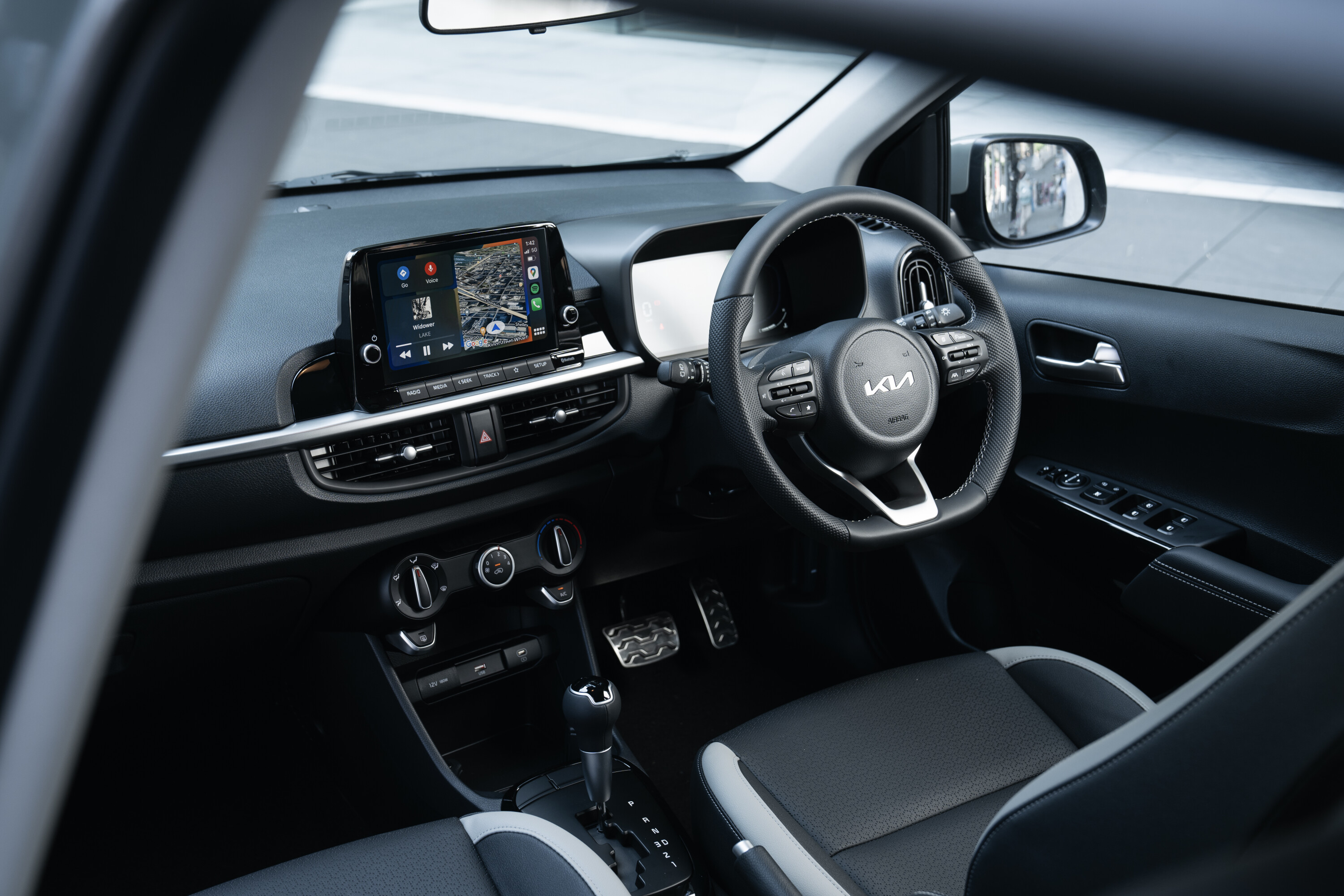
Lane-keep assist, lane departure warning, blind-spot alert, rear cross-traffic alert, a 4.2-inch semi-digital instrument cluster, a leather-accented steering wheel and gear shifter, power-folding side mirrors, and a rear fog light are new additions for the Sport.
The existing vehicle-only autonomous emergency braking system is expected to be updated with pedestrian, cyclist and intersection detection. Adaptive cruise control is not offered in Australia.
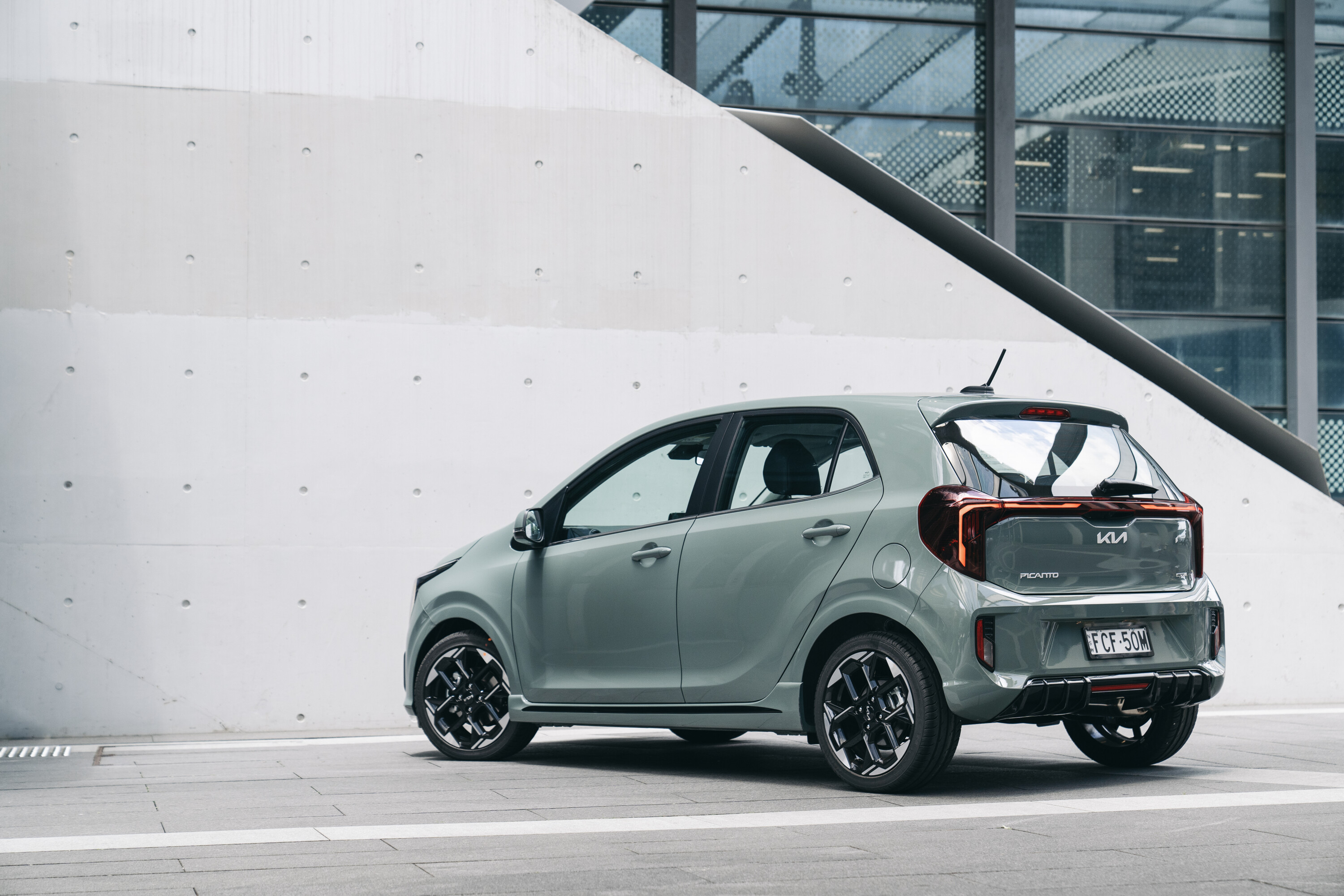
The GT-Line offers the same safety tech improvements and semi-digital cluster, along with rear USB-C charge ports, a D-cut steering wheel, and LED headlights replacing halogen units – joining already standard LED daytime running lamps.
It is priced at $19,340 before on-road costs for the GT-Line manual, rising to $21,290 plus on-roads for the GT-Line auto – more than the now-axed $20,790 1.0-litre three-cylinder turbo GT manual.
New colours include sporty blue and adventurous green, joining existing aurora black, astro grey, signal red, sparkling silver and clear white options.
All Picanto variants remain powered by a 62kW/122Nm 1.2-litre naturally-aspirated four-cylinder petrol, matched to a five-speed manual or a four-speed torque-converter automatic sending power to the front wheels.
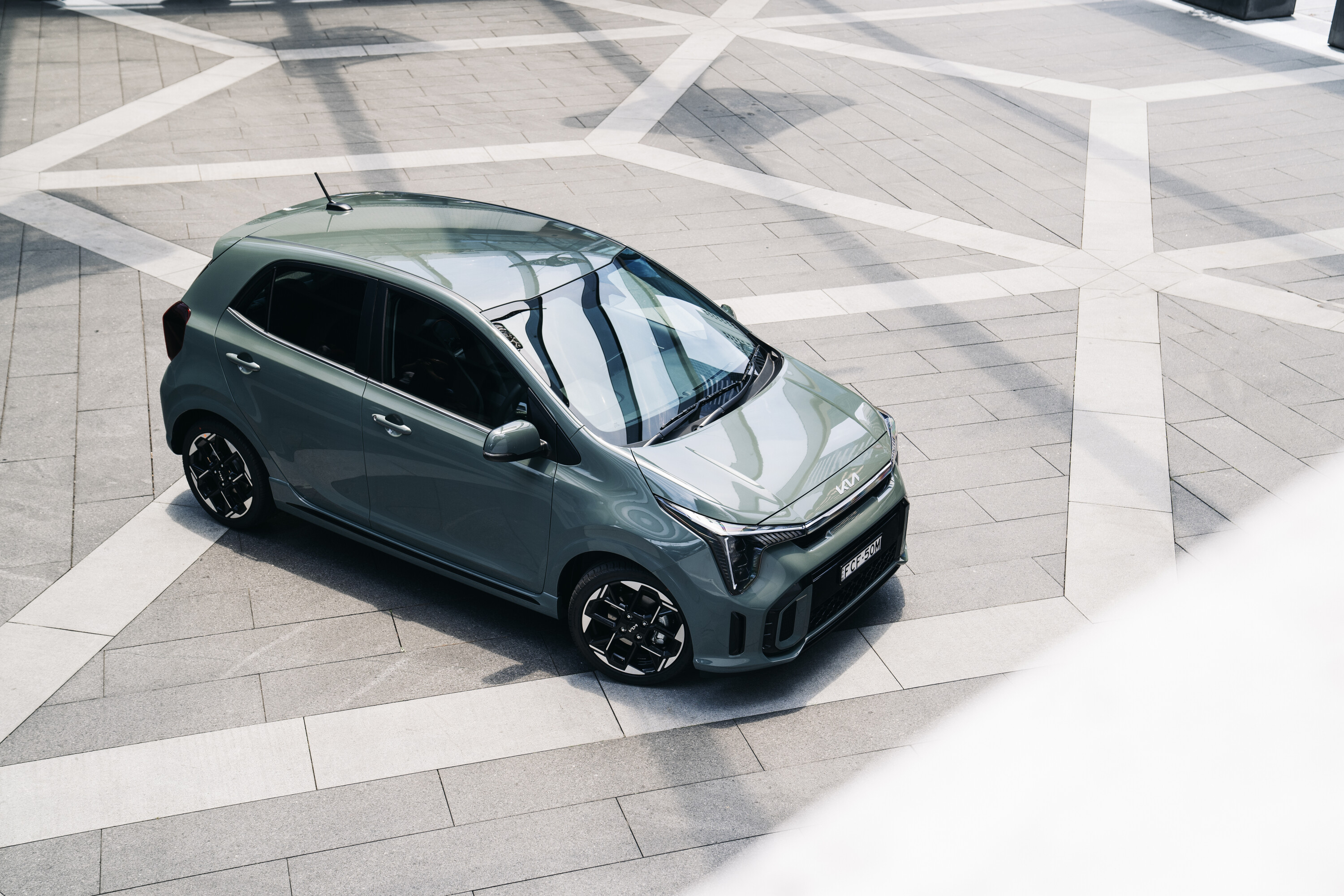
As detailed in July, the facelifted Picanto features an EV9-inspired ‘digital tiger nose’ front fascia with a slimmer bar, vertical headlights, and a revised lower bumper design.
The rear features revised tail-lights connected by a full-width strip, an updated lower bumper, and new badging. The GT-Line also receives new-look 16-inch alloy wheels.
The Kia Connect vehicle service or built-in satellite navigation will not be offered in local versions of the updated Picanto.
All prices exclude on-road costs.
| Model | Pricing | Change |
|---|---|---|
| Picanto Sport manual | $17,890 | up $1600 (Picanto S) |
| Picanto Sport auto | $19,490 | up $1600 (Picanto S) |
| Picanto GT-Line manual | $19,690 | up $1950 |
| Picanto GT-Line auto | $21,290 | up $1950 |
| 2024 Kia Picanto Sport features | |
|---|---|
| 14-inch alloy wheels (new) | Power-folding side mirror (new) |
| 4.2-inch semi-digital instrument cluster (new)u00a0 | 8-inch infotainment system |
| Lane-keep assist (new) | Wireless Apple CarPlay and Android Auto |
| Lane departure warning (new) | Four-speaker audio system |
| Blind-spot alert (new) | Manual air conditioning |
| Rear cross-traffic alert (new) | Rear fog light |
| Safe exit assist (new) | Autonomous emergency brakingu00a0 |
| Passive rear occupant alert (new) | Halogen exterior lighting |
| Lead vehicle departure alert (new) | Four-way manual-adjustable driveru2019s seat |
| High-beam assist (new) | Rear-view camera |
| Leather-accented steering wheel and gear shifter (new) | Reverse parking sensors |
| In addition to Sport | |
|---|---|
| Reflector LED headlights (new) | Heated side mirrors |
| Rear USB-C charge ports (new) | Six-way manual-adjustable driveru2019s seat |
| D-cut sports steering wheel (new) | Leather-accented upholstery |
| GT-Line bodykit | Alloy sports pedals |
| 16-inch alloy wheelsu00a0 | Height-adjustable seatbelts |
Due to launch in North America early next year, the UX receives the ‘fifth-generation’ hybrid system from the related Toyota Corolla Cross, with a new UX300h badge to replace the UX250h.
Retaining the current 2.0-litre non-turbo four-cylinder and electric motor, total system power for the UX300h is up from 131kW to 146kW with a “new hybrid transaxle” and a lighter lithium-ion battery pack replacing nickel-metal hydride to provide “more responsive performance”.
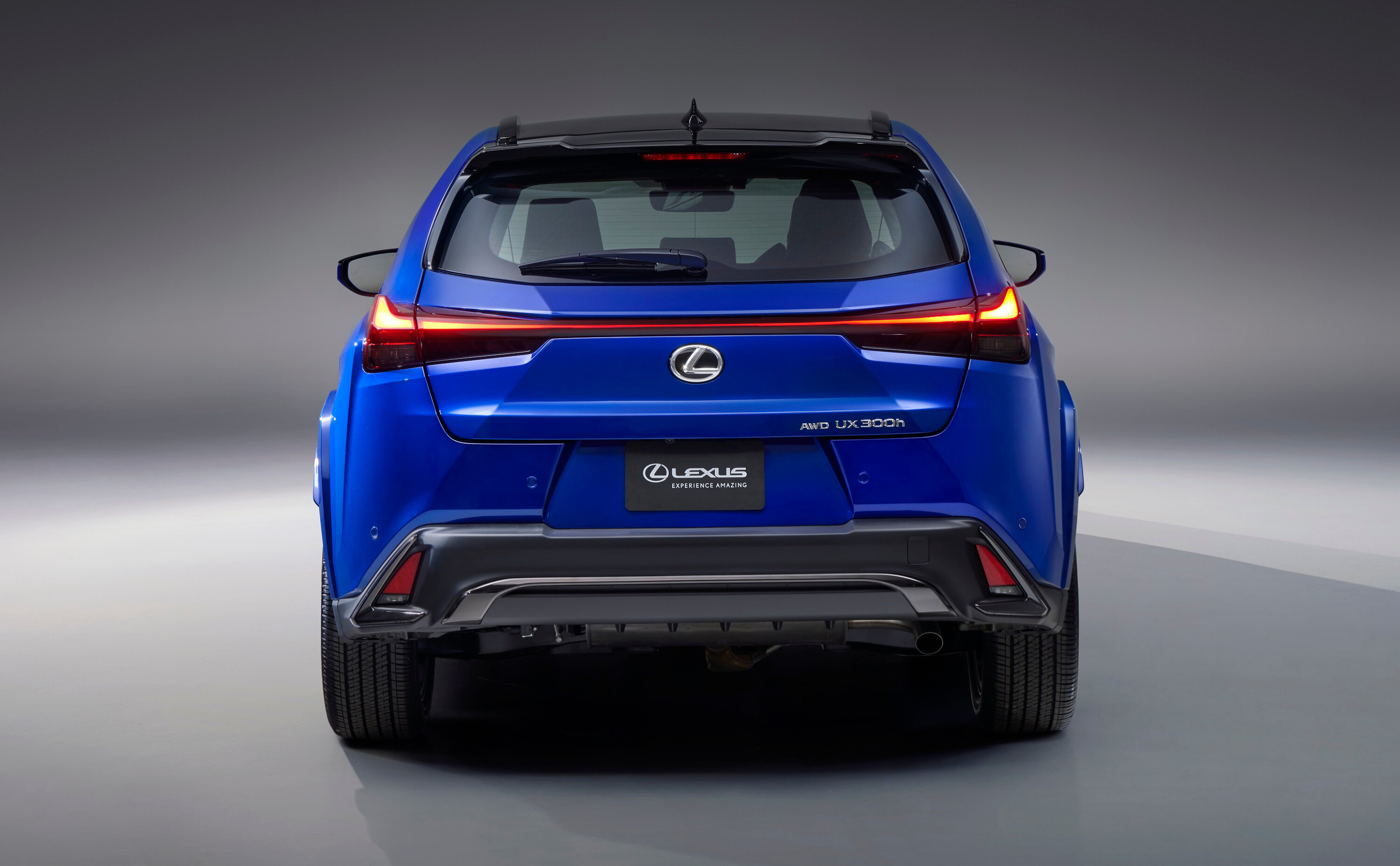
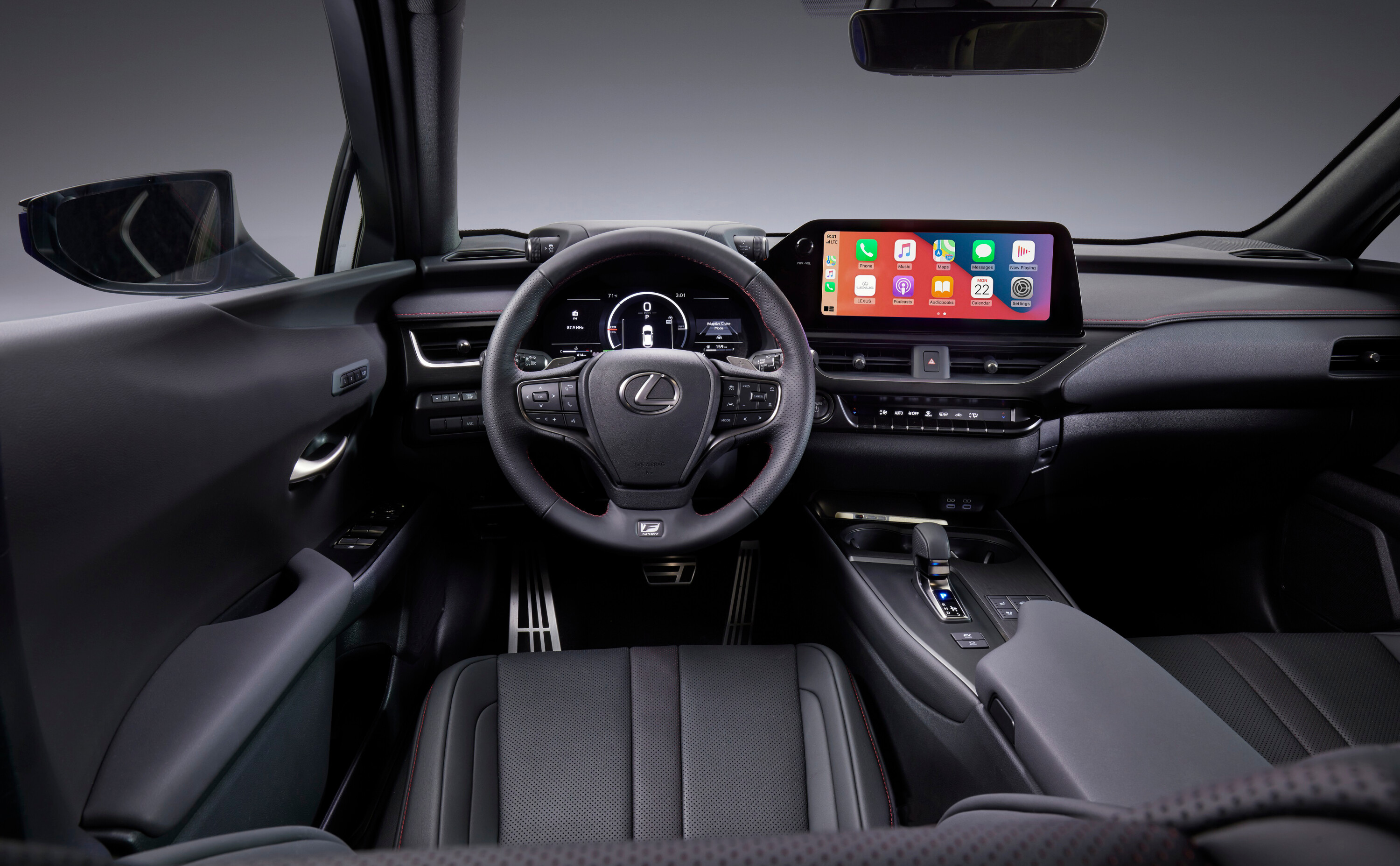
Other changes include a larger 12.3-inch full-digital instrument cluster – up from 8 inches – a shift-by-wire gear shifter, a new copper crest exterior colour, and revised door panel switches.
It also adds an updated active safety suite with “risk avoidance” emergency steering assist, daytime left-turn oncoming vehicle braking, and proactive driving assist to “support driving tasks such as distance control between the vehicle and a preceding vehicle, pedestrian or bicyclist”.
While the US-market UX line-up is limited to the hybrid UX300h, it is also offered in petrol-only UX200 and all-electric UX300e forms in Australia.
A Lexus Australia spokesperson said the brand could not comment on the updated UX “at this time”, adding that “different markets have different product cycles”.
VFACTS new-car sales data reveals 2245 units of the Lexus UX have been sold in Australia to the end of November, compared to 4269 BMW X1s, 4254 Audi Q3s, and 2713 examples of the Mercedes-Benz GLA and EQA twins.
The last update for the Lexus UX launched in Australia in mid-2022 with a new infotainment system, wireless smartphone mirroring, Lexus Connected Services, an improved stop-start system for the petrol model, and improved rigidity for F Sport variants.
An example of arguably the most advanced, mature and globally fresh designs to emerge from Australia, only three Torana GTR-Xs were built, with one destroyed leaving two in existence more than fifty years after its scheduled production was cancelled.
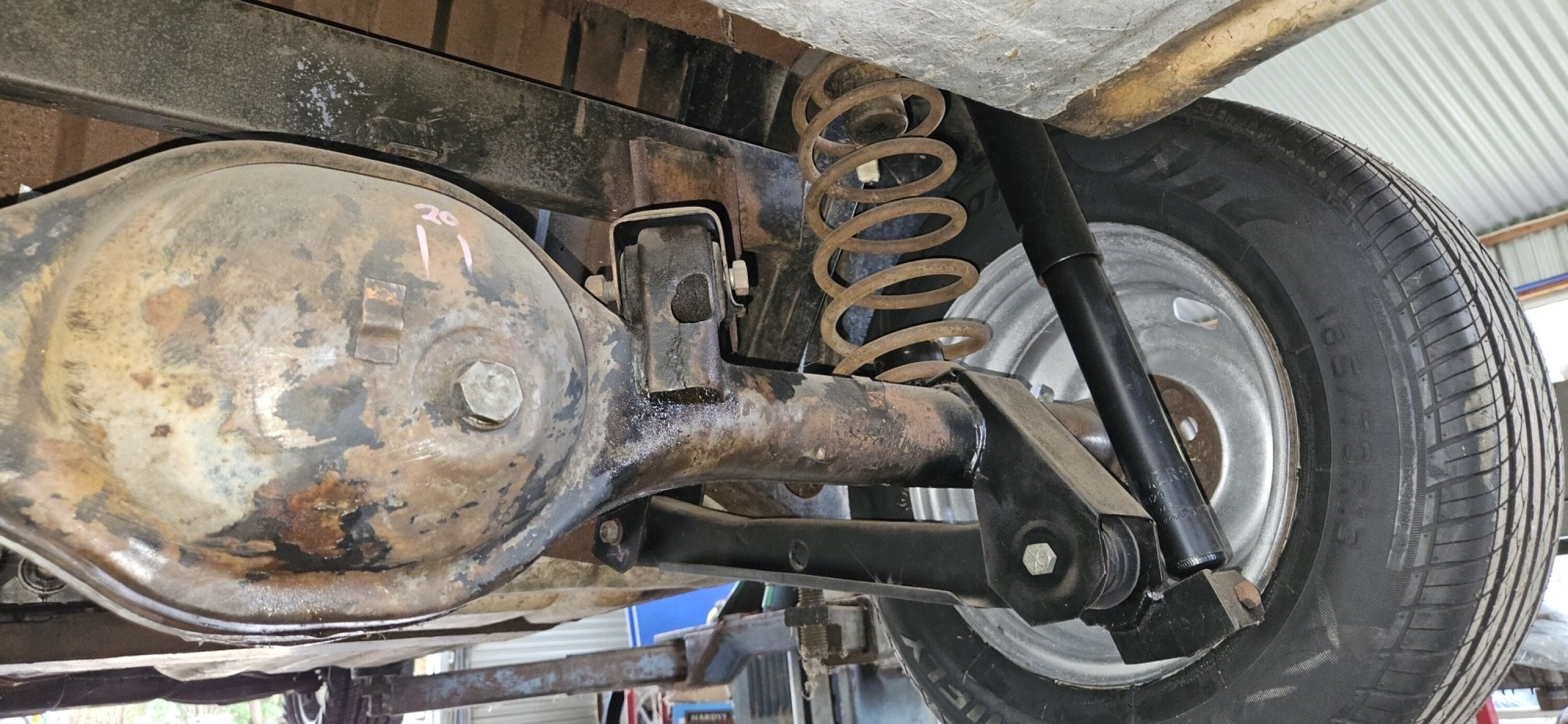
The Queensland-based Bowden family, who own some of Australia’s rarest and most collectable production and race cars as well as a car care products company, have put the third GTR-X built [↗] – so named Lone O’Ranger for its orange paintwork – up for sale.
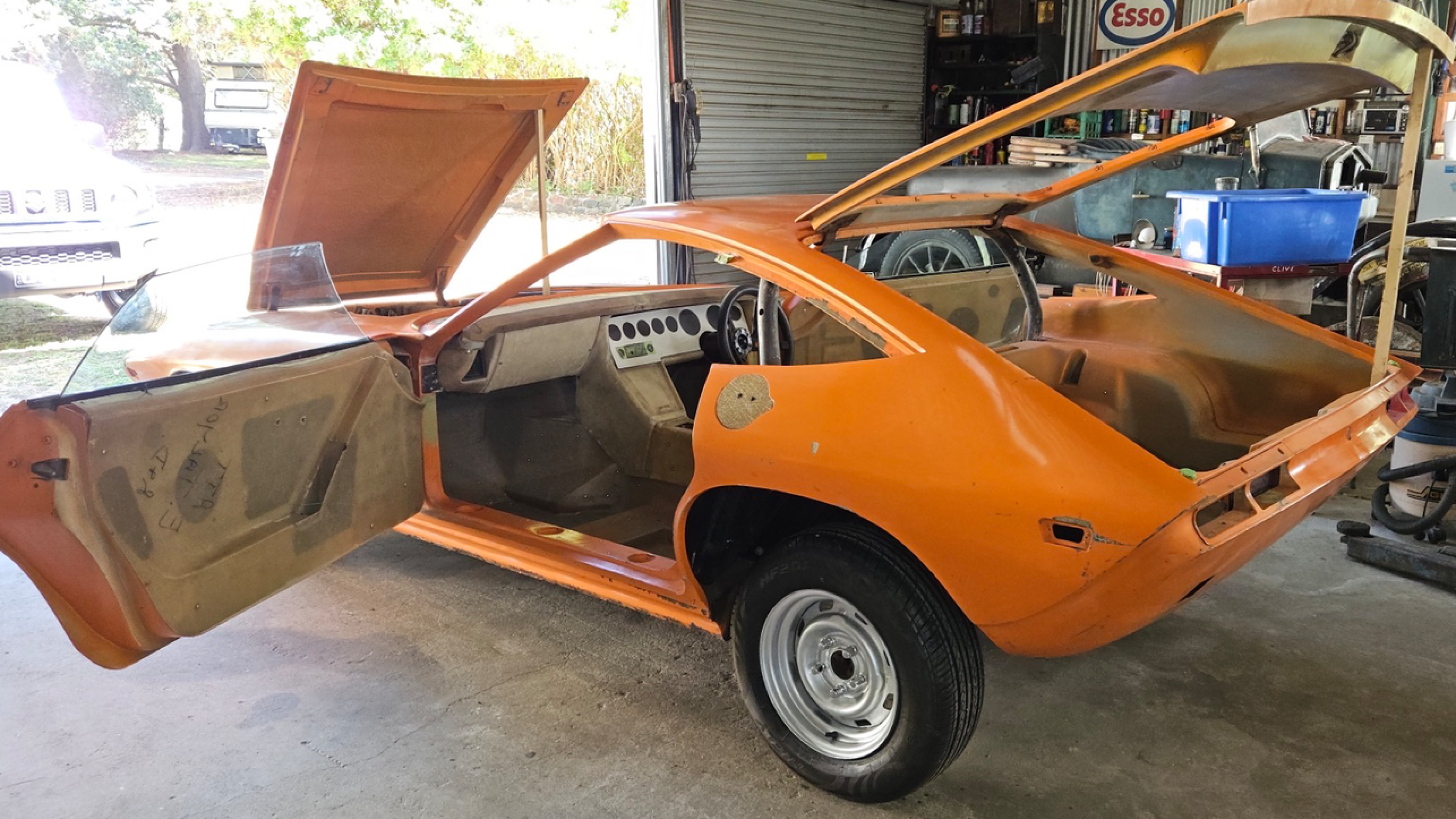
The vehicle was being restored last decade in Melbourne before the Bowden family acquired it, with the rare machine being offered in its current incomplete state.
The only other GTR-X remaining is currently on display at the National Motor Museum, alongside landmark Holdens across the car maker’s 1948-2017 manufacturing era, at Birdwood in South Australia [↗].
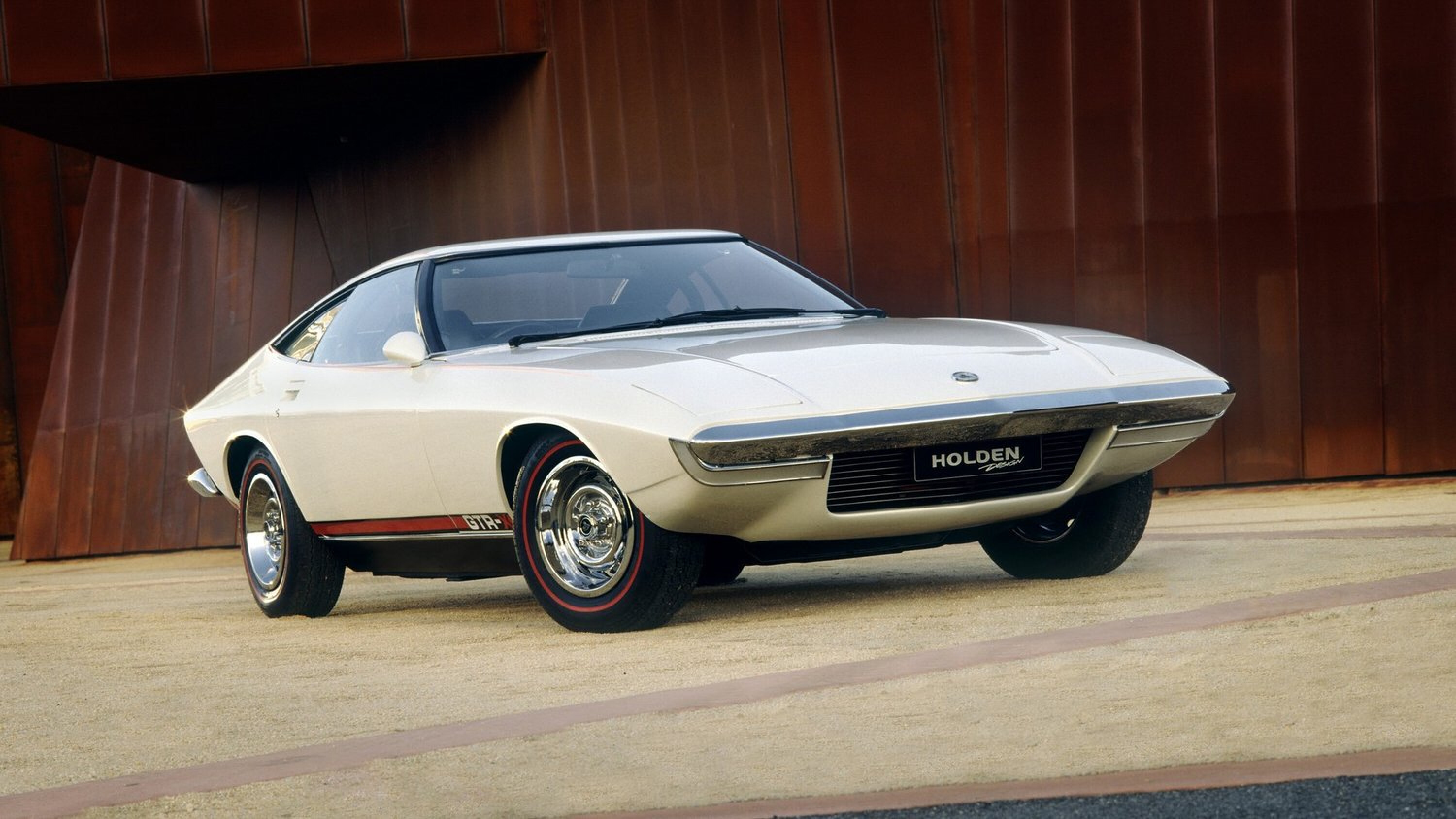
In hindsight, it looks contemporary against supercars and sports cars of the era, including the Ferrari 308 GT4, particularly if the Holden concept’s steel bumpers evolved.
Penned by a young Phil Zmood, who later became the first Australian to be appointed head of Holden design, the GTR-X body wrapped LC Torana GT-R XU-1 mechanicals that Holden was using in rally and road racing as its Bathurst rivalry with Ford and Chrysler became more intense.
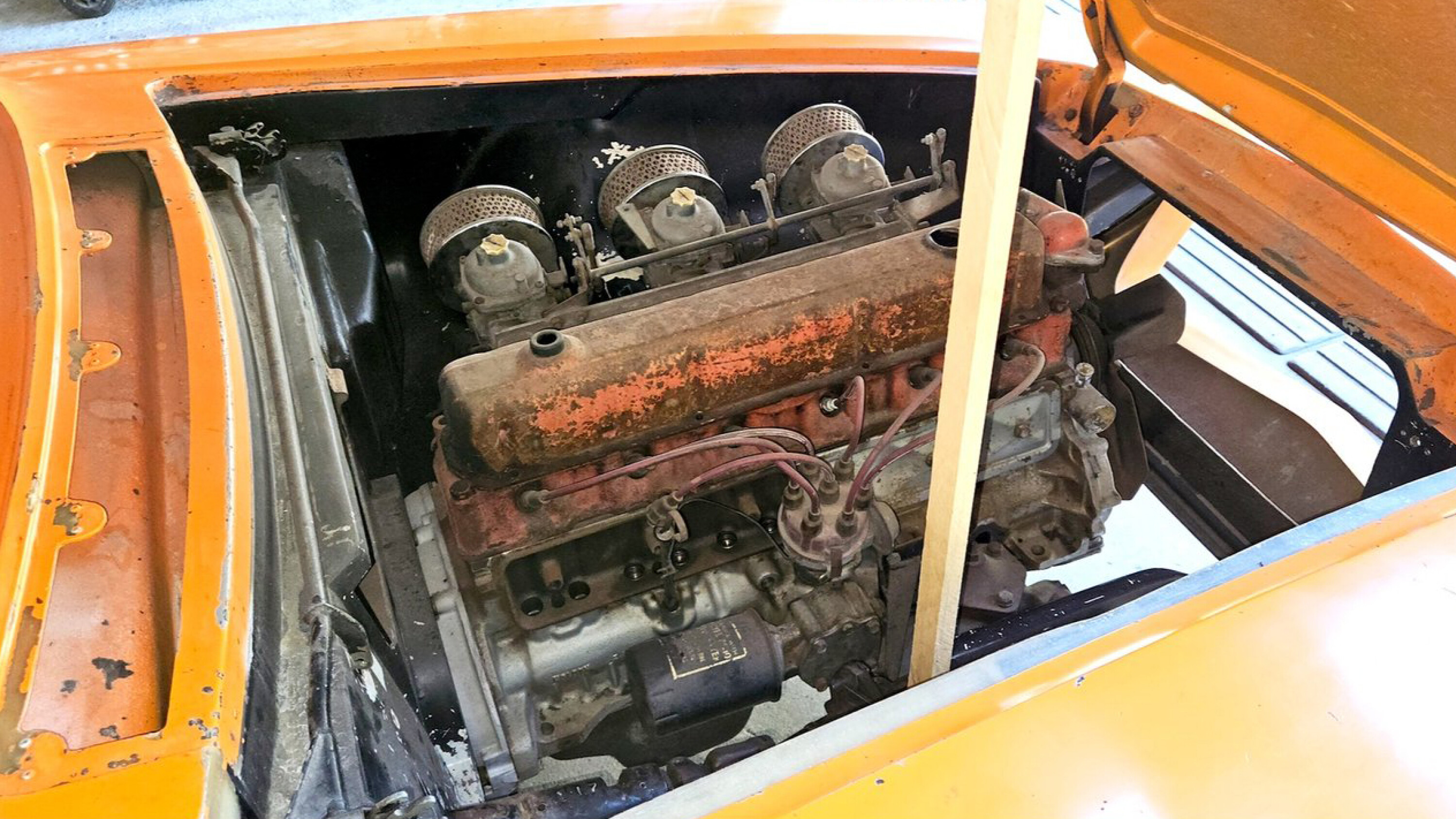
The LC GTR XU-1 endowed the GTR-X with a capable powertrain – Holden’s 186-cube inline six with triple Stromberg carburettor, and a four-speed gearbox driving the rear wheels – with estimates of an 8.5-second 0-100km/h sprint and an estimated 210km/h v-max – in 1970, remember.
The stunning elegant design came courtesy of a lighter body than the steel two-door XU-1.
Zmood was inspired by a thriving design department, with Holden’s first dedicated design studio opening at Fishermans Bend in 1964.
While tending to road-going machinery for Holden and other GM global brands, GM Australia Design pumped out the wild 1969 Holden Hurricane concept car – only a year after it wheeled out all-new HK range and the same year Australia had its first local V8 engine.
The striking metallic orange two-seat Hurricane was made of fibreglass, with a hydraulic struts raising a Perspex canopy to access its cabin where there was sat-nav and, in the centre console, a monitor replaced a rear-vision mirror – a forerunner to today’s reversing camera.
That captured Zmood’s imagination – fibreglass construction and all – and after convincing Holden heavyweights, development of a production Torana GTR-X began.
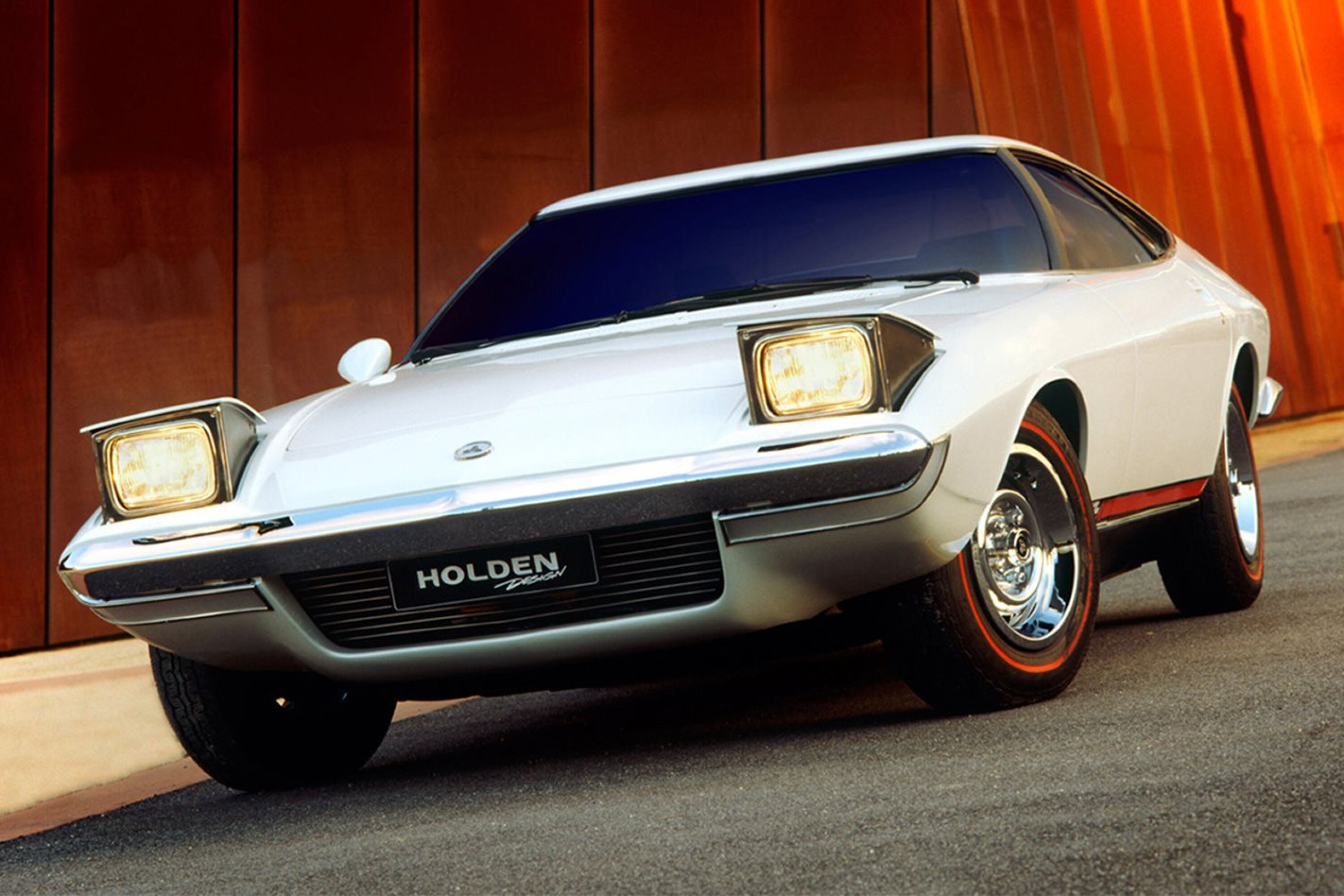
With production slated for 1973, the GTR-X was cancelled – perhaps in part due to the ‘supercar scare’ but most point the finger as a more convincing package, the 1970 Datsun 240Z, arrived in showrooms.
Regardless, the GTR-X is a star of local design, but one of Australia’s most influential and masterful designers in Zmood.
Whatever it fetches, this Torana GTR-X will be worth it.
“Production of Yaris Cross petrol variants for global markets ended this month (December 2023) in response to overwhelming demand for hybrid-electric variants,” said a Toyota Australia spokesperson.
“As a result, Toyota Australia stopped taking orders on petrol variants. We have sufficient stock of petrol variants in dealer hands and in transit to meet current orders.”
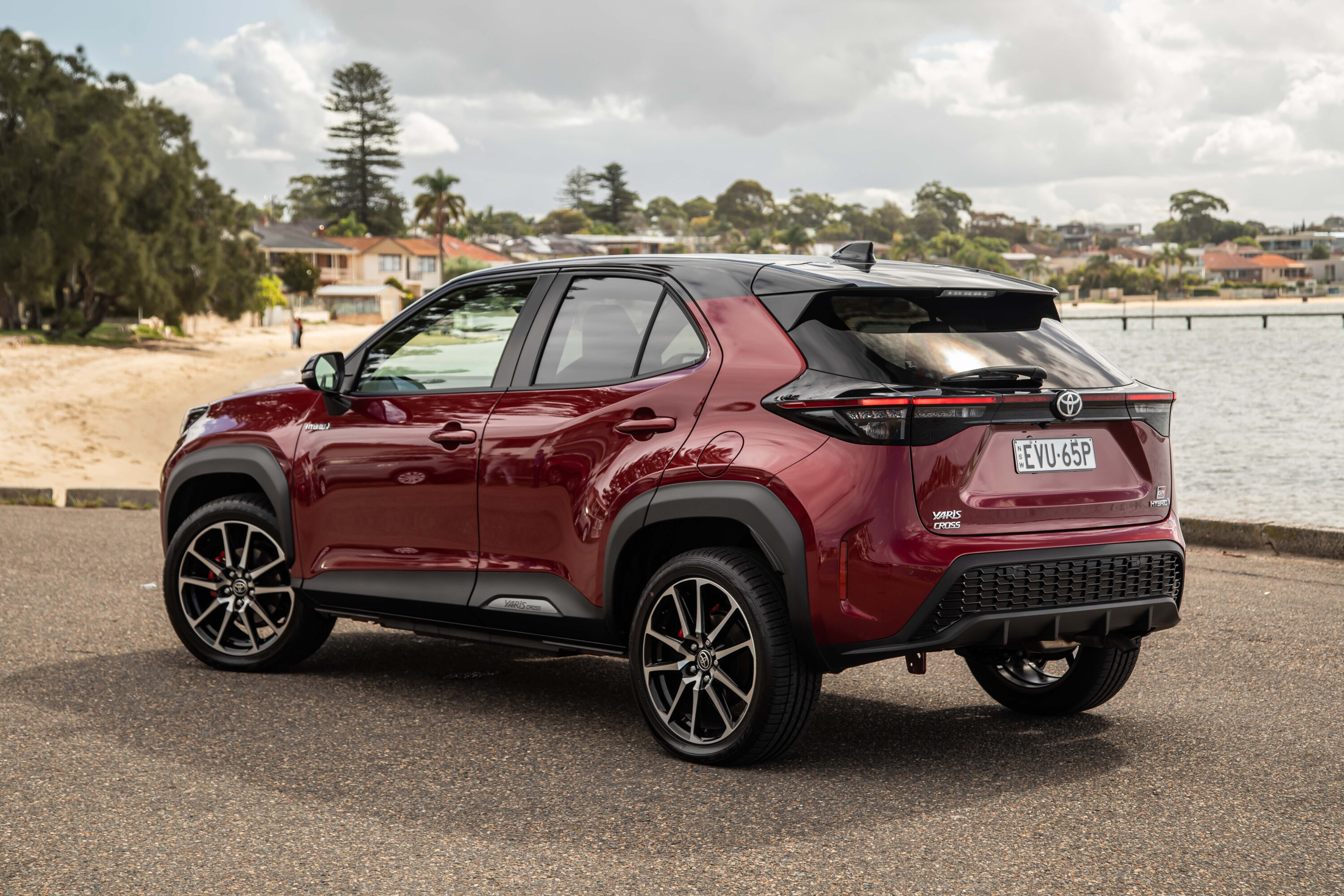
The Yaris Cross line-up now starts from $30,000 before on-road costs for the GX FWD hybrid, rising to $39,000 plus on-roads for the Urban AWD hybrid.
GX, GXL and Urban grades are available with front- or all-wheel drive, while the GR Sport variant – added in 2022 – is FWD-only.
Front-drive hybrids use a 67kW/120Nm 1.5-litre Atkinson cycle petrol engine paired with two electric motors, for a maximum combined 85kW power output.
All-wheel-drive versions use the same hybrid engine and battery set-up as the 2WD hybrid, but add an electric motor to the rear axle.
This variant can send up to 100 per cent of the power to the front wheels, or split delivery 40 per cent to the front and 60 per cent to the rear.
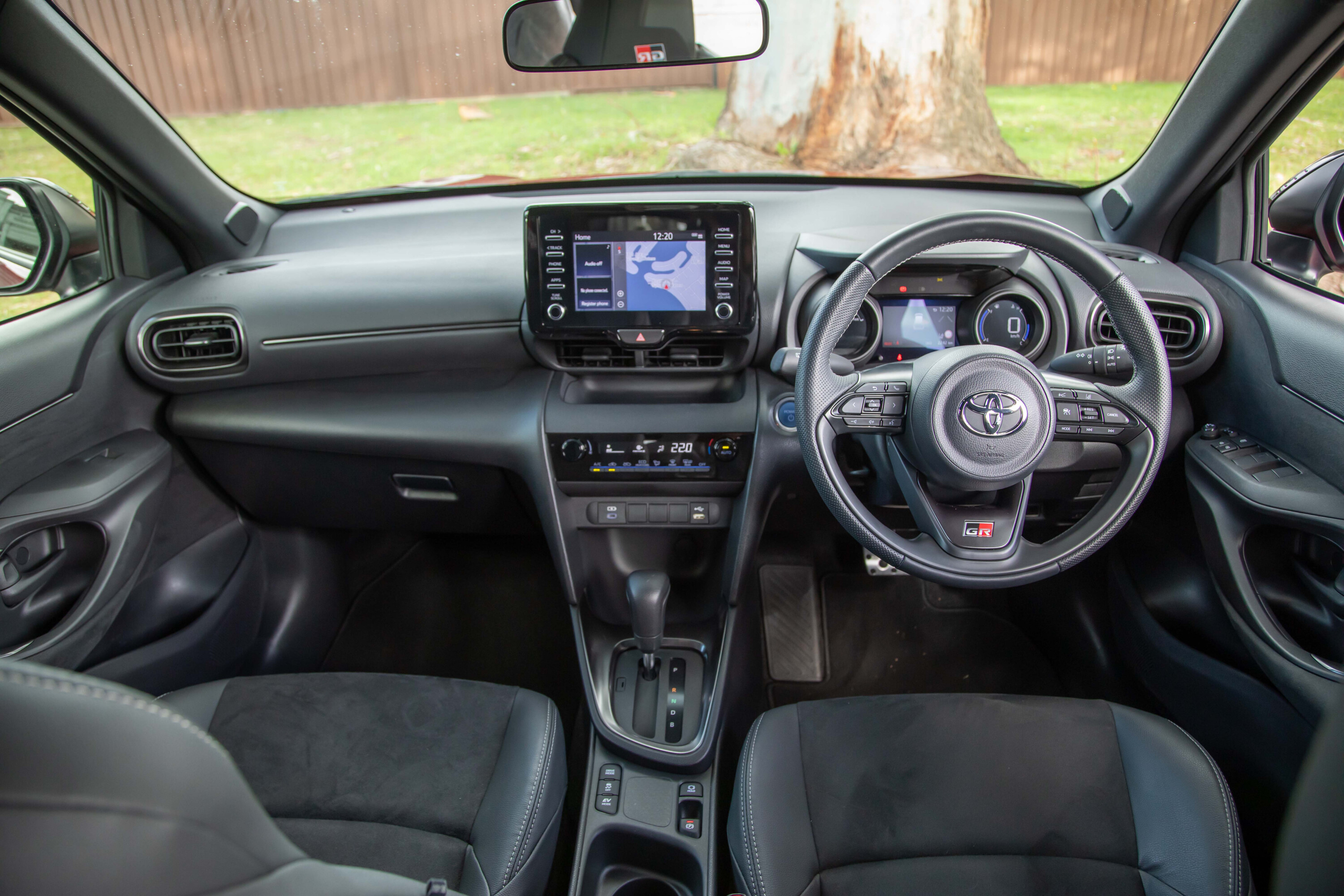
The deletion of non-hybrid variants sees the Yaris Cross become the third Toyota nameplate on sale in Australia to feature hybrid-only powertrains, following the new-generation C-HR and Camry models due locally in 2024.
All prices exclude on-road costs.
| Model | Pricing |
|---|---|
| GX FWD hybrid | $30,000 |
| GX AWD hybrid | $33,000 |
| GXL FWD hybrid | $33,000 |
| GXL AWD hybrid | $36,000 |
| GR Sport FWD hybrid | $36,000 |
| Urban FWD hybrid | $36,000 |
| Urban AWD hybrid | $39,000 |
The new chargers, located at George Street, Victoria Street, Cliff Road, the Austinmer Tennis Courts and Railway Parade in Thirroul, are dual-22kW units that can be accessed with an RFID card or through an app on the user’s phone.
The units use a ‘BYO’ approach, requiring EV owners to use the cable supplied with their vehicle. For the service provider, NSW-based EVX, this means less replacement of damaged or vandalised cables, and a wider capacity for serving different charging port types.
EVX says that by using AC power, its chargers “have a low impact on the local electricity grid while they can also be installed on the existing utility pole infrastructure, negating the need for disruptive civil works and ensuring a speedy rollout”.
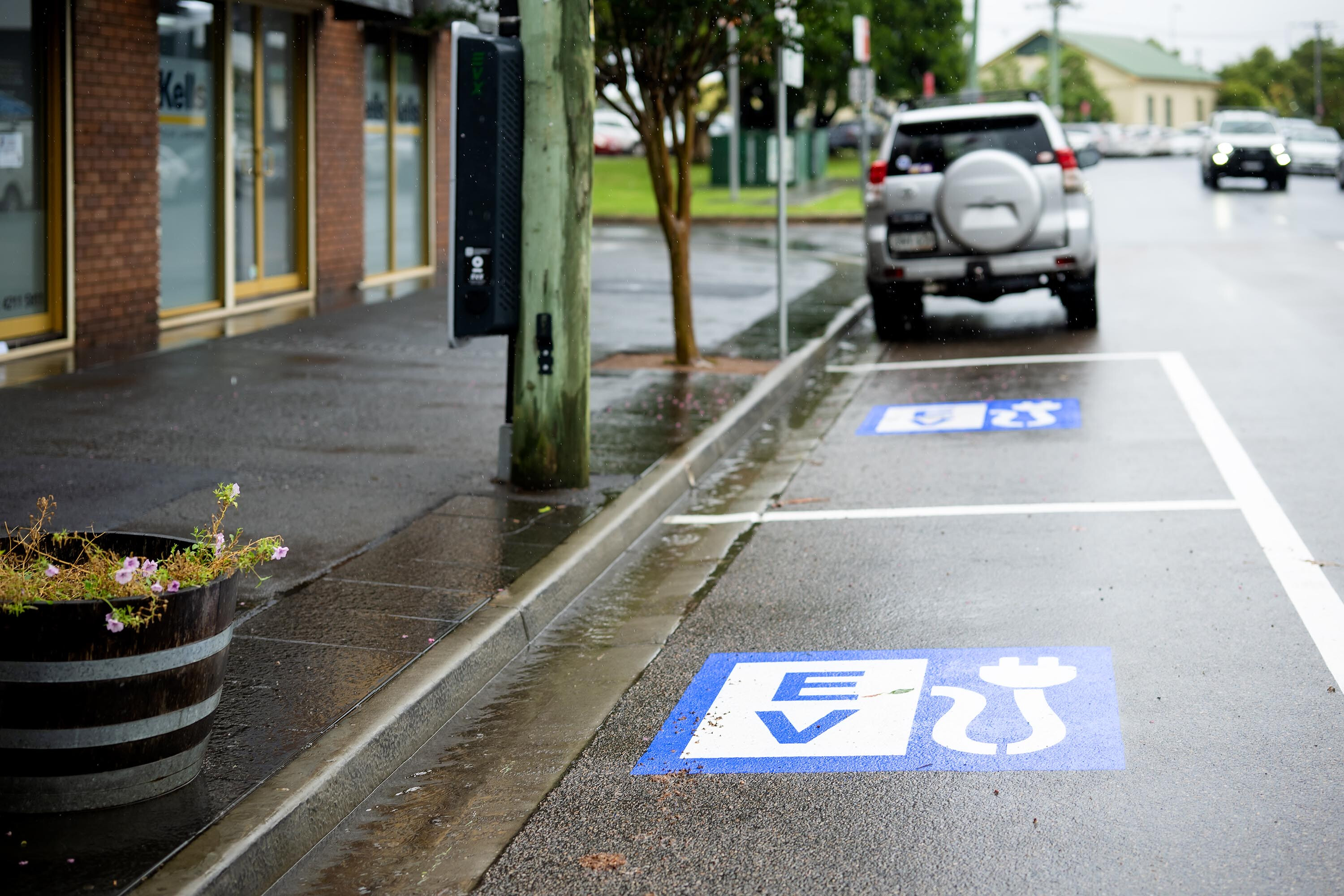
“By repurposing existing infrastructure and using the electricity network’s capacity for additional services, we can exert downward pressure on electricity prices for all customers,” Endeavour Energy’s Colin Crisafulli said.
“Our projections indicate that by 2030, there will be over 300,000 electric vehicles within the Endeavour Energy network, and we are committed to ensuring that all our customers can actively participate in and lead this significant energy transition.”
Wollongong’s new charger launch follows the rollout of an identical Ausigrid-powered EVX charger in Glebe, launched in March.
At $0.50 per kWh, the EVX chargers compare poorly against faster DC chargers. For reference, an ultra-rapid Chargefox, Ampol or Evie location costs $0.60/kWh, and a Tesla Supercharger $0.52/kWh. The average cost per kWh in NSW is $0.28.
it’s still a good deal more affordable than petrol – and in the case of the Glebe location, it’s cheaper than the parking you won’t be paying for while using the charger. Just barely.
As John Law noted in his March story, an hour of charging an EV that accepts current at 7kW will cost you $3.50, whereas 60 minutes of metered parking costs $3.90.
In August, he former Andrews Government (although still a Labor government under his successor Jacinta Allan) announced funding for 100 roadside chargers [↗] to be installed by Intellihub Assets.
It’s a slow mover, however, with the wealthy inner-Melbourne cities of Port Phillip [↗] and Stonnington [↗] still surveying their communities ahead of works to begin at a “TBC” date in 2024.
The brands said to be signed up for the new CarPlay program included Ford, Lincoln, Mercedes-Benz, Infiniti, Honda, Acura, Jaguar, Land Rover, Audi, Nissan, Renault, Volvo, Polestar and Porsche – with a target of “late 2023” for announcing which of those would launch first.
Well, true to its word, it is now late 2023 and Apple has confirmed the first brands to integrate its big and very polarising new CarPlay will be Porsche and Aston Martin.
Not so clear is just how the new system will integrate with these cars, and exactly which models – and when – it’ll first appear with. Sometime in 2024 appears to be all that’s been promised for now.
Today’s news is accompanied by images of the system running in the dash of both models, filling not only the main infotainment views but also the driver display behind the steering wheel – a completely new position for CarPlay.
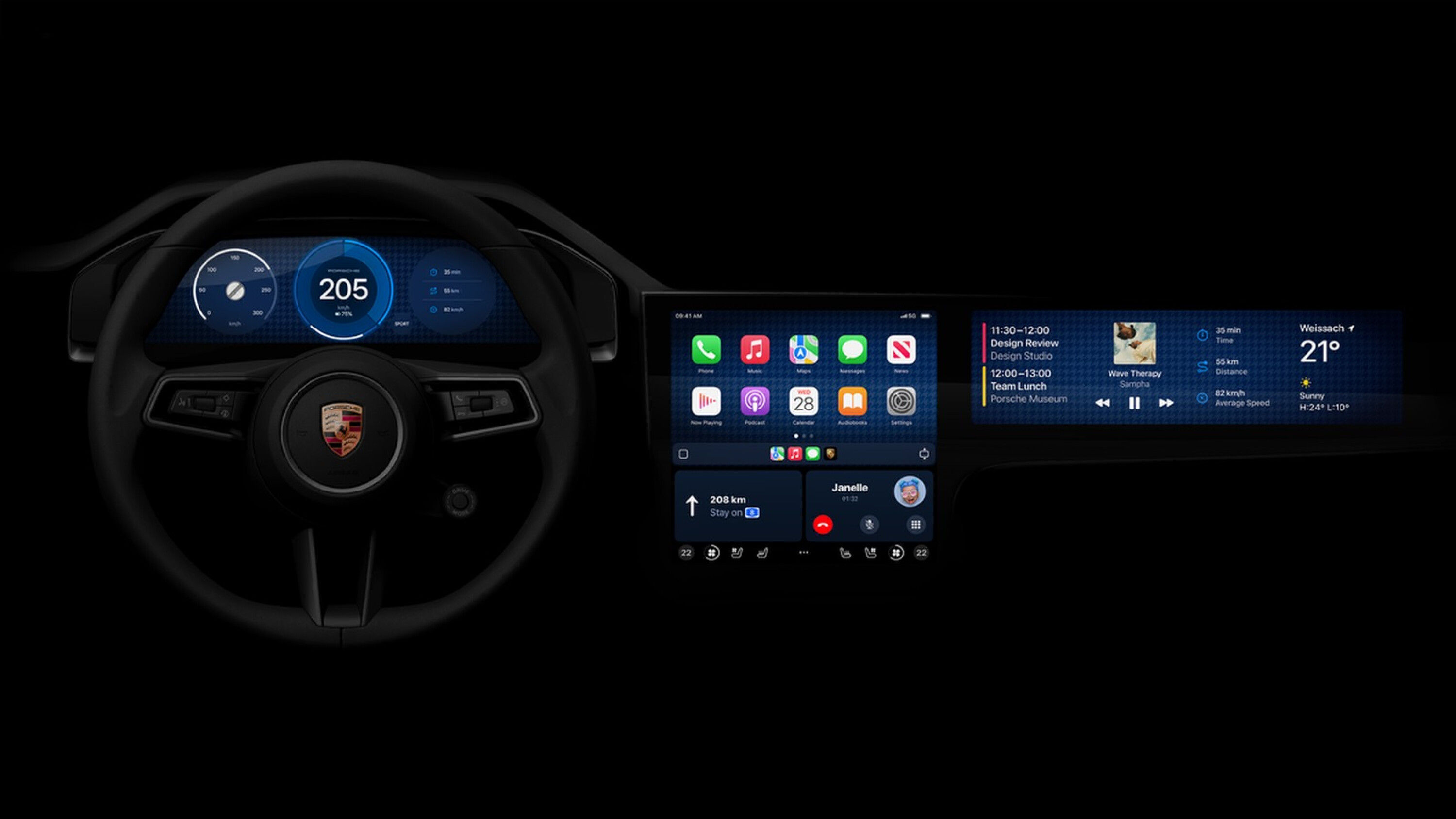
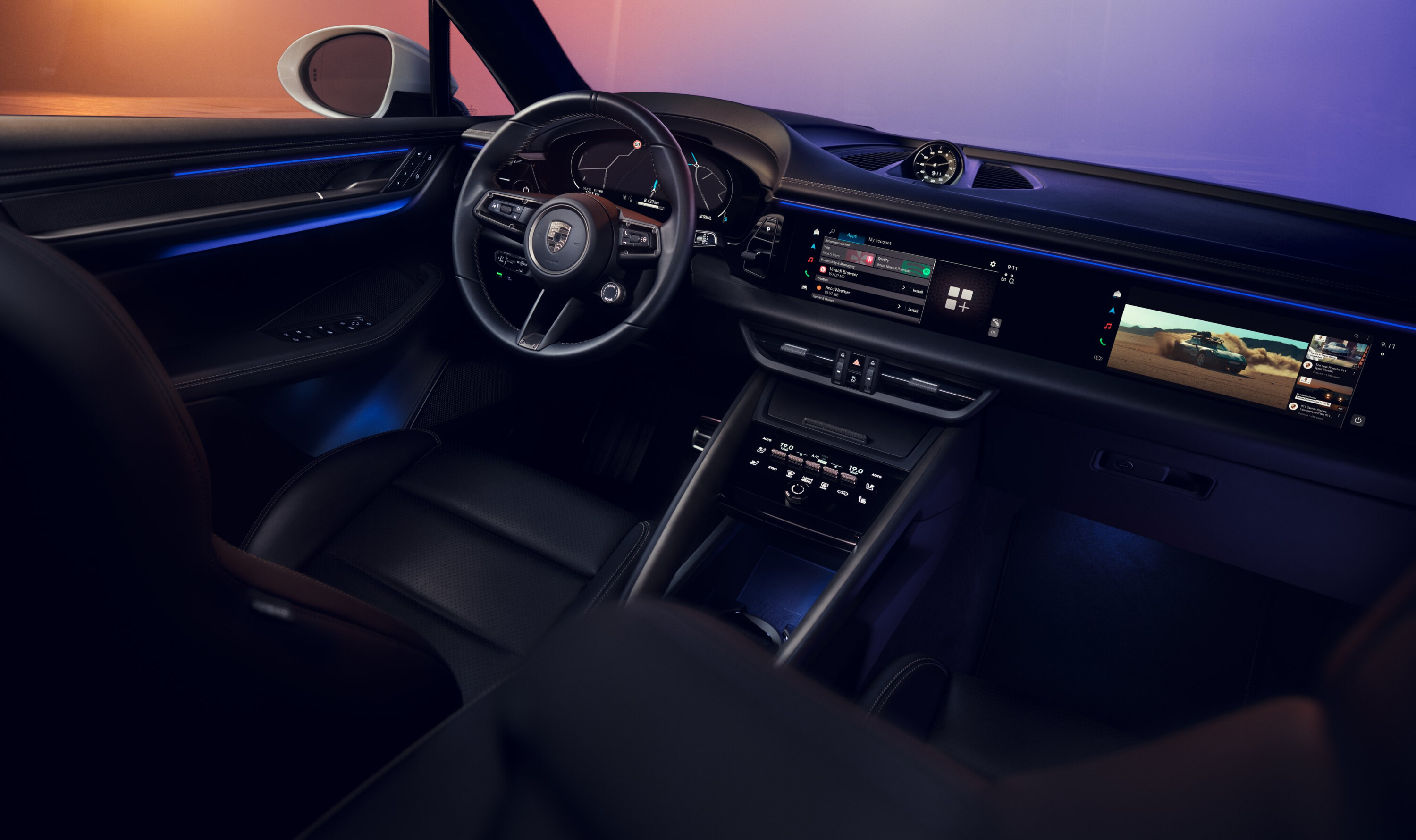
All current Porsche models, and indeed the upcoming new-generation Macan and heavily updated Panamera, use a long letterboxed centre display – whereas the image above features a tall portrait display.
The instrument display of Apple’s Porsche dash shows three dials – as with the current Macan – but the on-screen graphics don’t exactly scream Stuttgart, apart from the houndstooth background. It will be interesting to see if CarPlay’s Porsche interface will have the option of a properly Porsche-styled style…
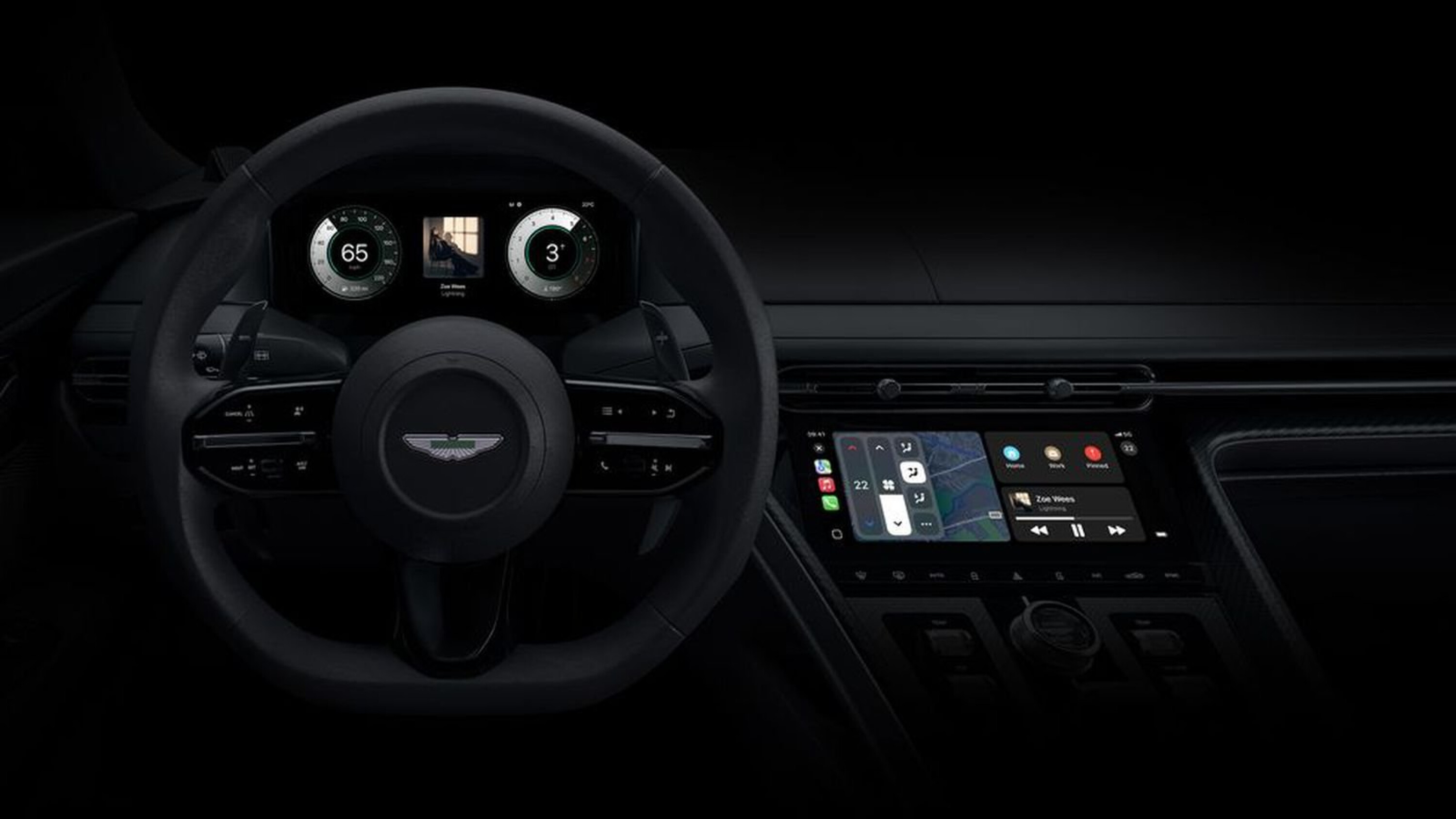
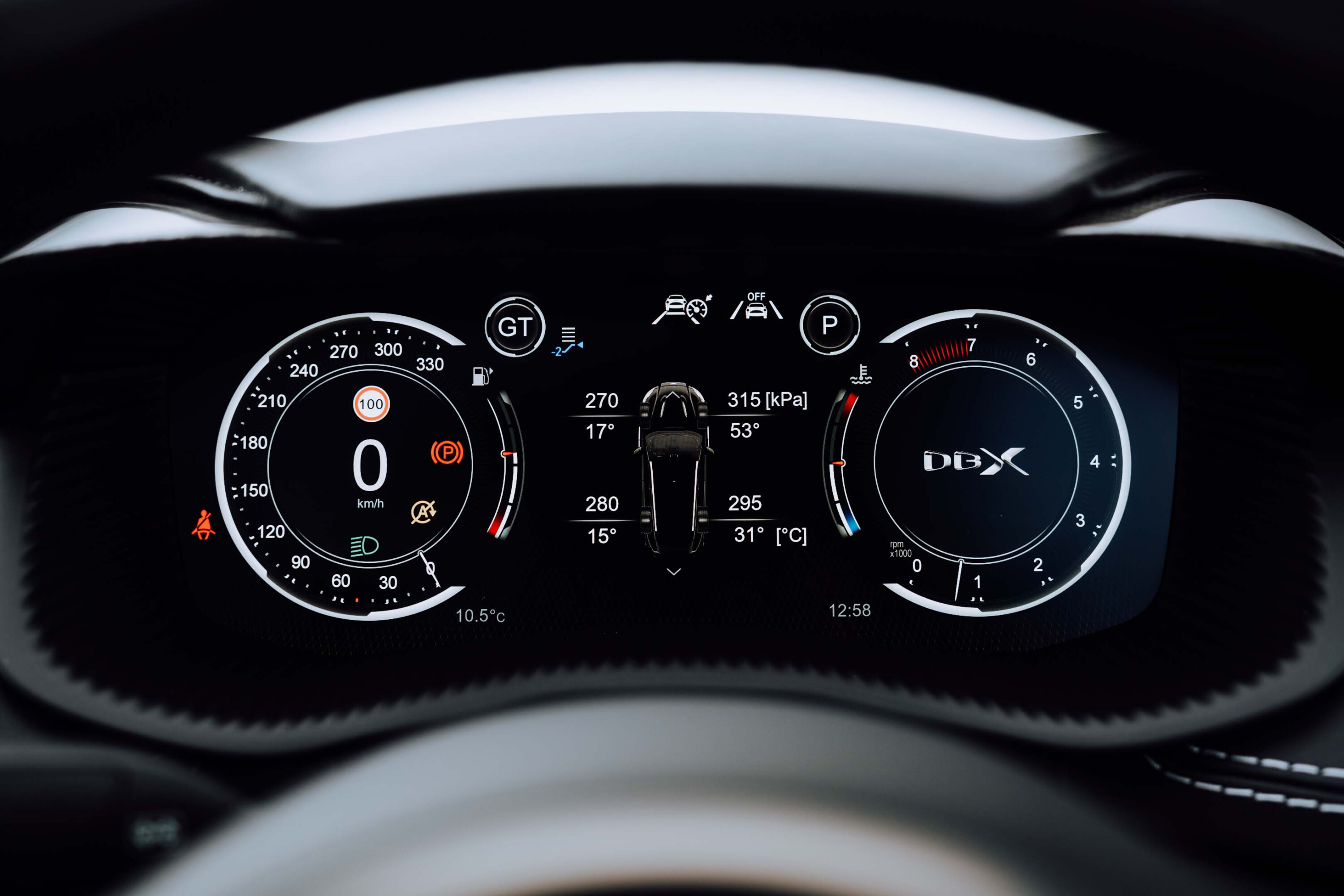
The instrument cluster, however, shows speed and rev meters that have a little more Aston-feeling flair – or a little less Apple gloss – but nothing that specifically stands out as an Aston design hallmark.
Below that, a more conventional screen is shown running CarPlay in a more familiar view.
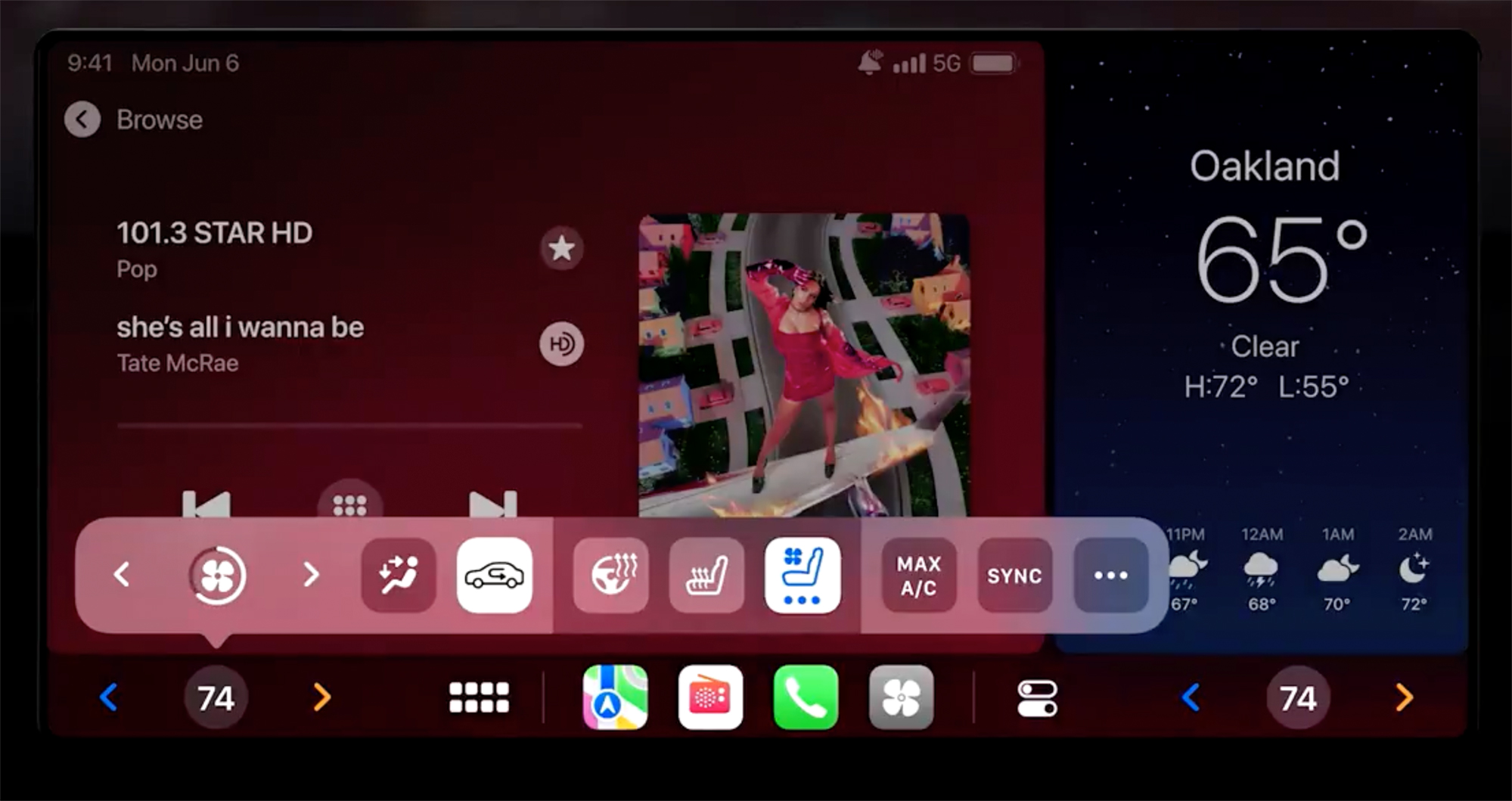
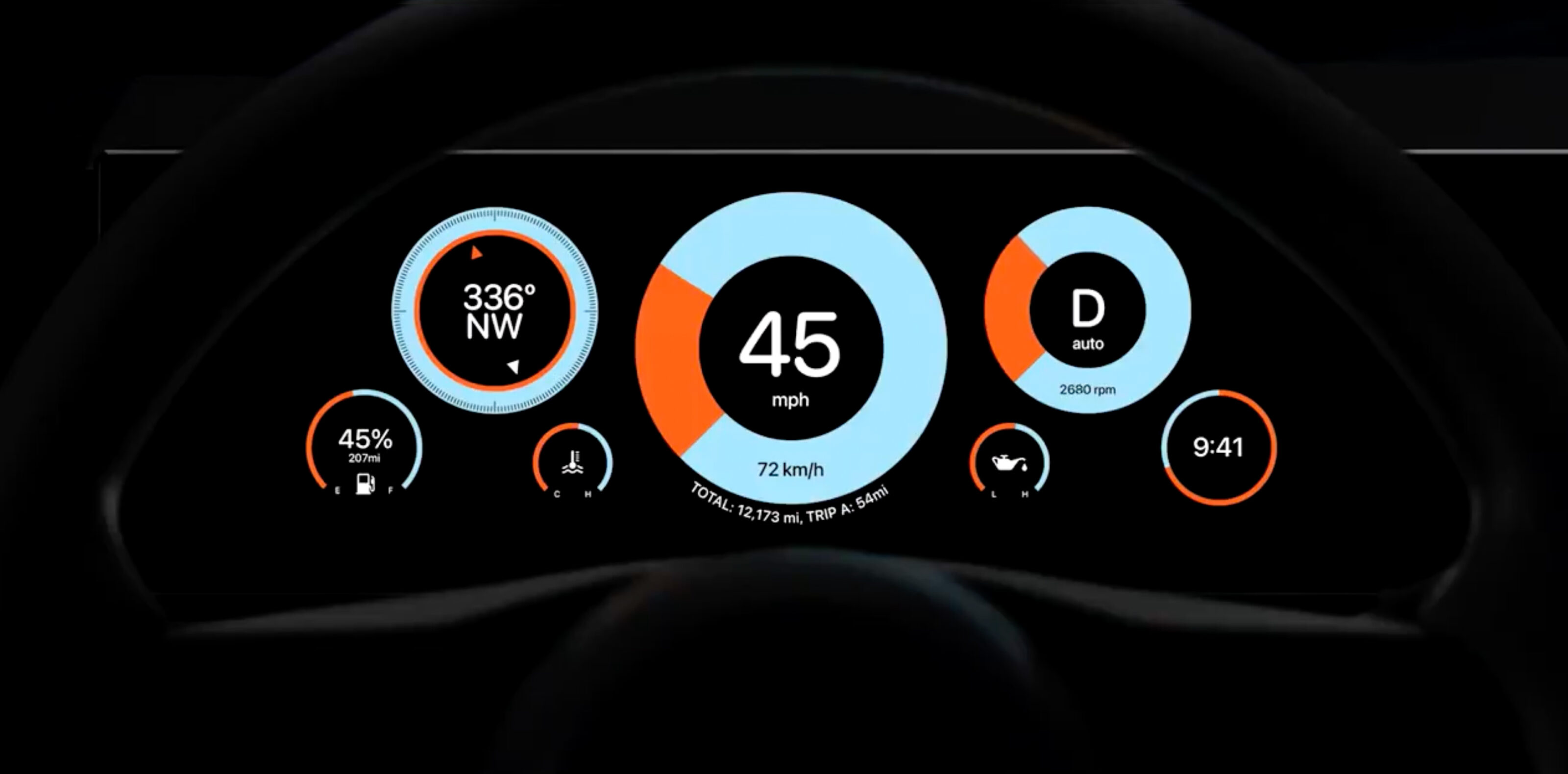
Running every aspect of the vehicle’s interactive systems, the new CarPlay shows on-screen, iPhone-styled controls and displays for heating and cooling – right through to the speedometer, fuel and temperature gauges in the ‘cluster’ behind the steering wheel.
A video released by Apple (see the embedded tweet below) shows the CarPlay update will also offer widgets for your calendar, home controls (integrating with gadgets compatible with Apple’s Home platform), weather forecasts and air quality.
Will this new version of CarPlay stand as the vehicle’s actual operating system, in the same way that Android Automotive does with the likes of Volvo and Polestar – and soon BMW (sorta kinda) – or will it continue as a mere overlay like the current CarPlay and Android Auto, simply projecting information from the driver’s phone?
Time will tell, although it will obviously require at least some data from the car, such as speed, fuel/battery details, tyre pressure and so forth.
Whether the user will sign into the car with their Apple ID, or if the car will simply pull data from the user’s phone, is unclear.
Almost a year since Apple’s new-generation CarPlay announcement, General Motors made a shock announcement that it will not offer Apple CarPlay or Android Auto with its future models.
Pick your poison, I suppose.
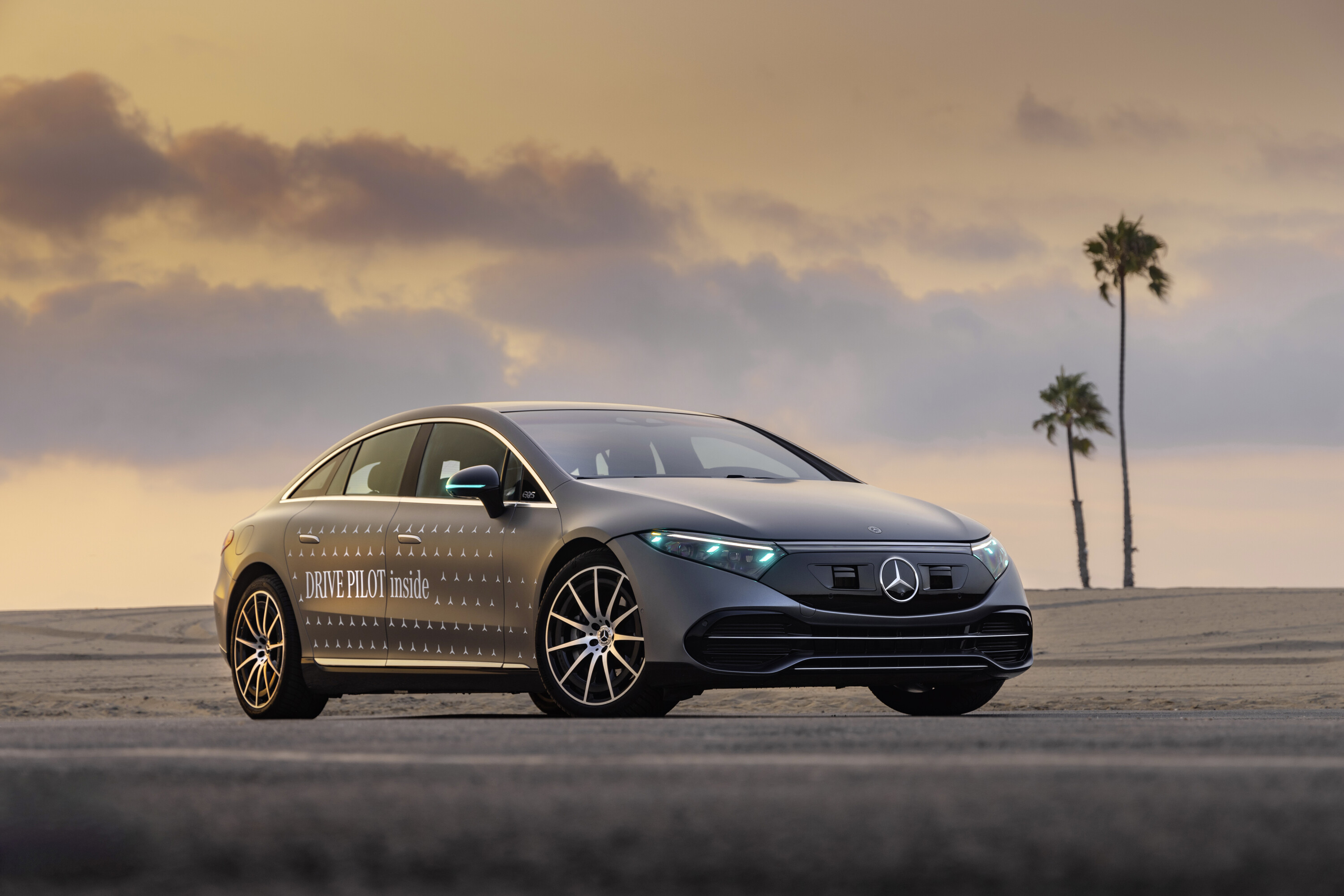
California and Nevada state regulators have granted approval for the German car makers’ autonomous development program – which uses its Drive Pilot feature – to run industry-standard turquoise external lighting making them instantly recognisable as Level 3 autonomous vehicles.
Permitted for use on 2026 model-year Mercedes EQS and S-Class sedans, the car maker said in a statement: “The inclusion of marker lights is poised to substantially enhance public acceptance of automated driving and contribute to road safety, as the lights make the automated driving system’s status clearly visible from the exterior.”
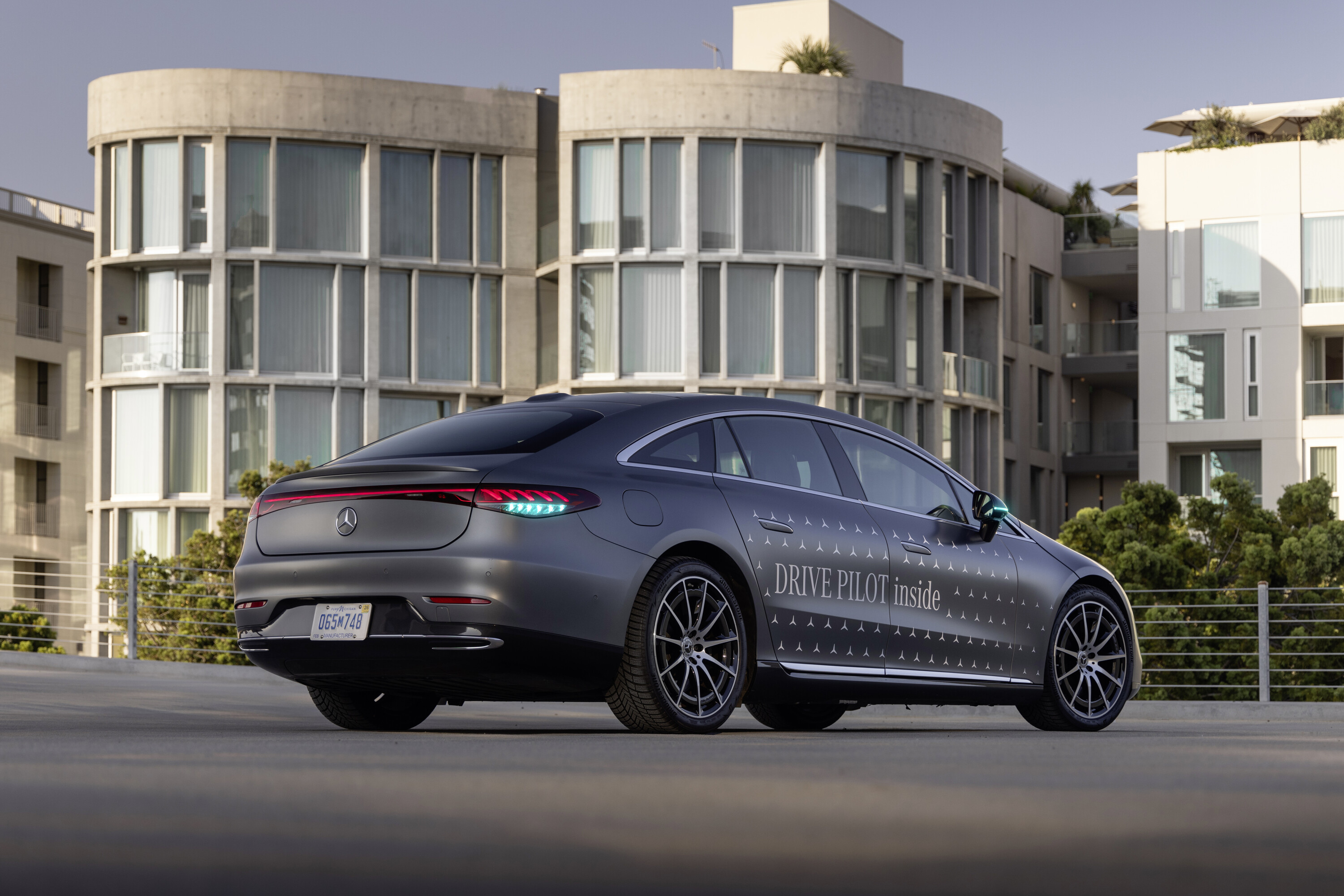
“This also allows traffic law enforcement and police officers to identify the system’s status and determine whether drivers are permitted to engage in secondary activities during the conditionally automated journey,” according to Mercedes.
Assessed in terms of psychological and physiological factors, with consideration of ethical and compliance issues as well as input from engineers, turquoise is the industry-recommended ‘SAE J3134 ADS Marker Lamp’ practice.
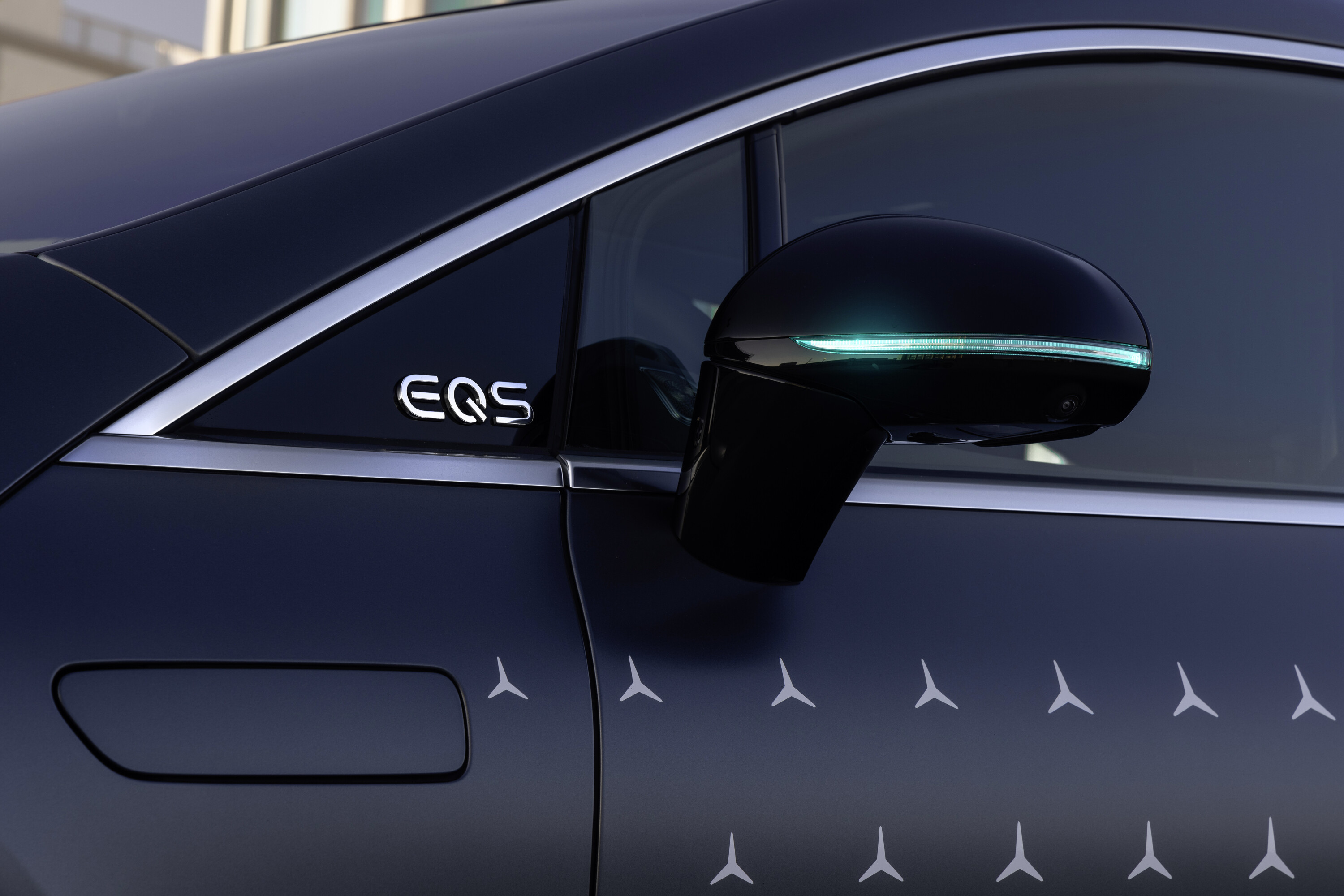
A fleet of EQS sedans were the first Level 3-equipped autonomous vehicles legally driven on US public roads.
Level 3 autonomous vehicle testing was made legal in Germany in 2021.
The news comes as other car makers continue legal and ethical challenges in testing autonomous vehicle systems on public roads, which is currently not legal in Australia.
General Motors has also recently gutted its high-level staff at its Cruise autonomous sub-brand, which operated Level 2 autonomous Chevrolet Bolt EVs.
It also cancelled a collaboration with Honda to build several affordable electric vehicle, with General Motors reinstating the cancelled Chevrolet Bolt for 2025.
The details of each recall, as published, are posted below.
The tyres fitted to vehicles within this production range do not meet the Australian Design Rule 81/02 (ADR 81/02) requirements and may result in increased fuel consumption than is indicated on the fuel consumption label.
There is no safety hazard and the defect will not affect the performance of the vehicle. The vehicles are not compliant with ADR 81/02 – Fuel Consumption Labelling for Light Vehicles.
Toyota will contact affected owners in writing, requesting they make an appointment at their preferred Toyota dealer who will replace all four tyres, free of charge.
To find a local dealer visit, https://www.toyota.com.au/find-a-dealer [↗] or to make an appointment visit, https://www.toyota.com.au/owners/service/online-service-booking [↗].
For further information, consumers should contact the Toyota Recall Assist helpline on 1800 987 366 (Monday to Friday, 8am – 6pm AEDT).
TOYOTA MOTOR CORPORATION AUSTRALIA LIMITED
Toyota Recall Assist Support Line
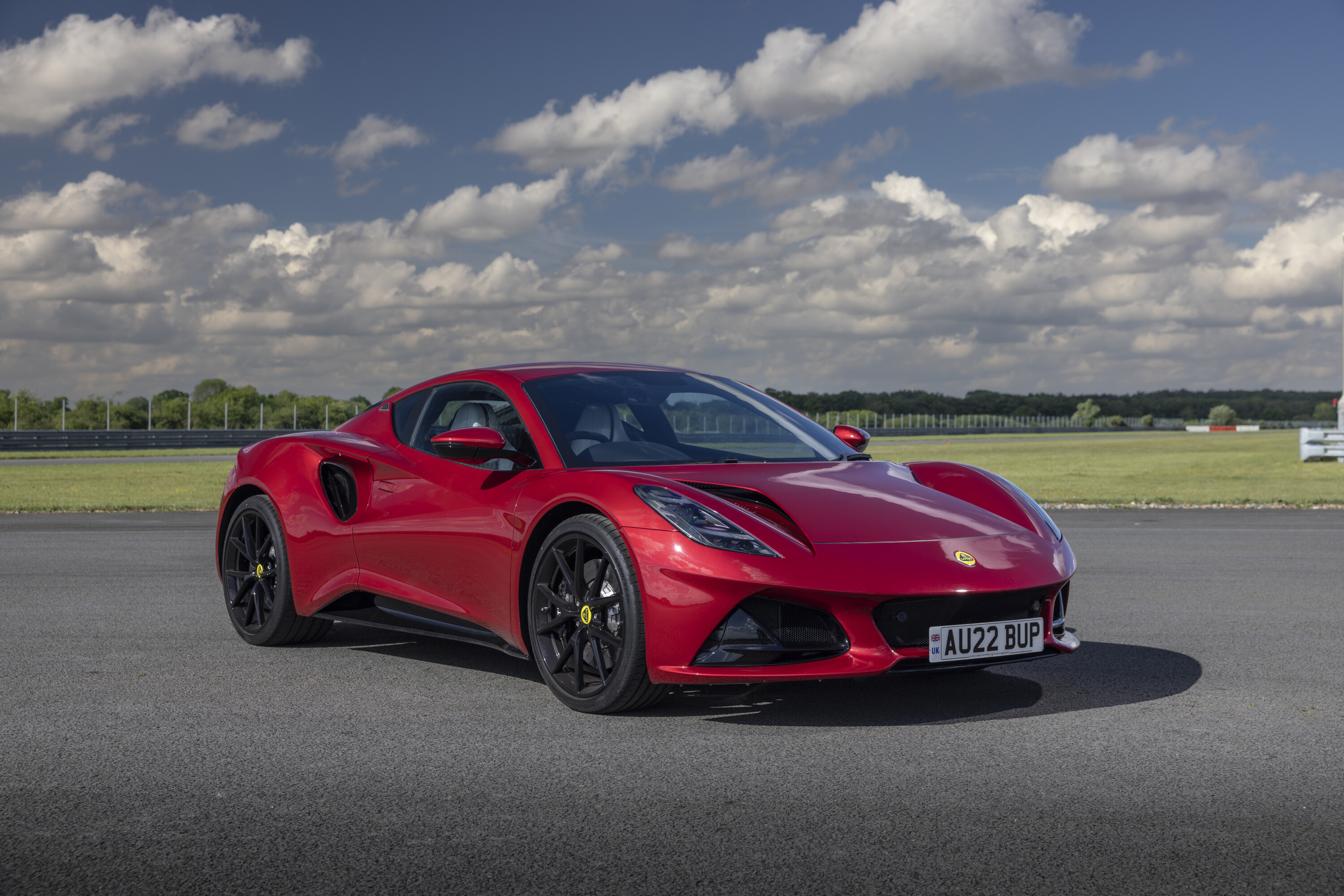
Recalls: 2022-23 Lotus Emira
Due to a manufacturing defect, the driver and passenger side A-pillar trims may have been fitted incorrectly. As a result, in an event of the side curtain airbags deployment the force from the airbag could cause the A-pillars cover to detach.
If the A-pillar trim detaches, plastic fragments may be propelled towards the vehicle occupants causing serious injury or death.
Owners of affected vehicles will be contacted directly by their Lotus dealer to arrange for replacement of the vehicle A-pillar trim assembly, free of charge.
For further information, contact Lotus Cars Australia Customer Care by email at [email protected] [↗].
Lotus Cars Limited
Lotus Cars Limited
Recalls: 2022-23 Lotus Emira
Due to a software issue, the windscreen wipers may operate at half the required speed. In the event of heavy rain this may lead to poor visibility for the driver.
Poor visibility will potentially increase the risk of an accident, causing serious injury or death to vehicle occupants and other road users.
Owners of affected vehicles will be contacted directly by their Lotus dealer to arrange for replacement of the windscreen wipers motor assembly, free of charge.
For further information, contact Lotus Cars Australia Customer Care by email at [email protected] [↗].
Lotus Cars Limited
Lotus Cars Limited
Recalls: 2022 Lotus Emira
Due to a defect during assembly, the driver and passenger’s seatbelt locking mechanism may engage at the incorrect point. As a result, the seatbelt could engage tightly across the chest and waist and limit movements which may lead to restricted visibility. Additionally, the seatbelt could require increased effort to unbuckle.
Limited movement and restricted visibility for the driver may increase the risk of an accident causing serious injury or death to vehicle occupants and other road users. In the event of an emergency exit from the vehicle an increased effort to unbuckle the seatbelt could increase the risk of serious injury or death to vehicle occupants.
Owners of affected vehicles will be contacted directly by their Lotus dealer to arrange a service date for replacement of the seatbelts, free of charge.
For further information, contact Lotus Cars Australia Customer Care by email at [email protected] [↗].
Lotus Cars Limited
Lotus Cars Limited
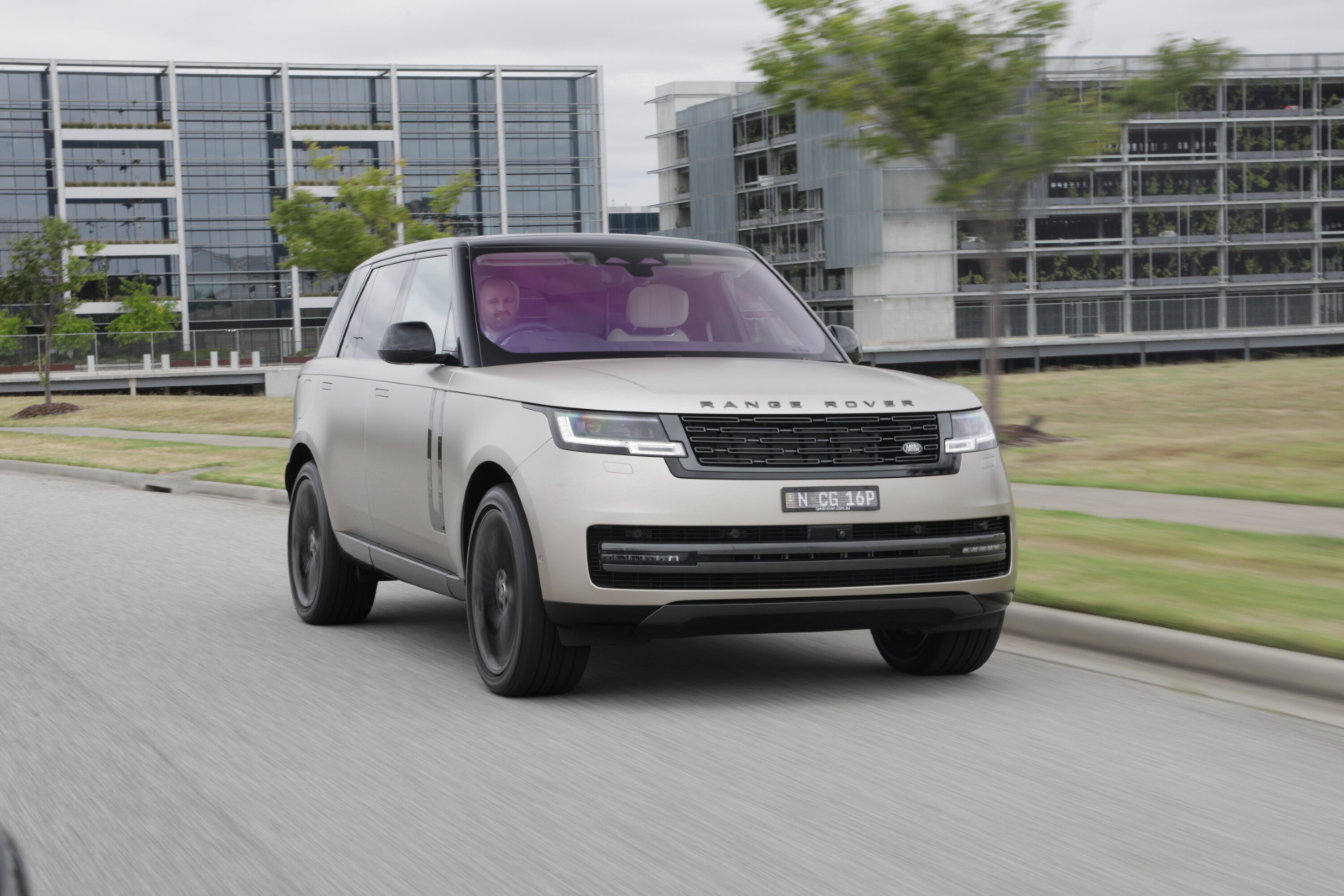
Recalls: 2023 Range Rover & Range Rover Sport
Due to a manufacturing defect, the threaded nut securing the engine oil cooler hose may not have been tightened sufficiently. As a result, the cooler hose could become loose and detach. If this occurs, engine oil could leak into the engine bay and accumulate in the presence of an ignition source resulting in a vehicle fire.
A vehicle fire could increase the risk of injury or death to vehicle occupants, other road users and bystanders, and/or damage to property.
Owners of affected vehicles should contact their preferred Jaguar Land Rover authorised dealer to have the engine oil cooler hose fixings inspected and replaced if required, free of charge.
JAGUAR LAND ROVER AUSTRALIA PTY LTD
Land Rover Customer Relations Center
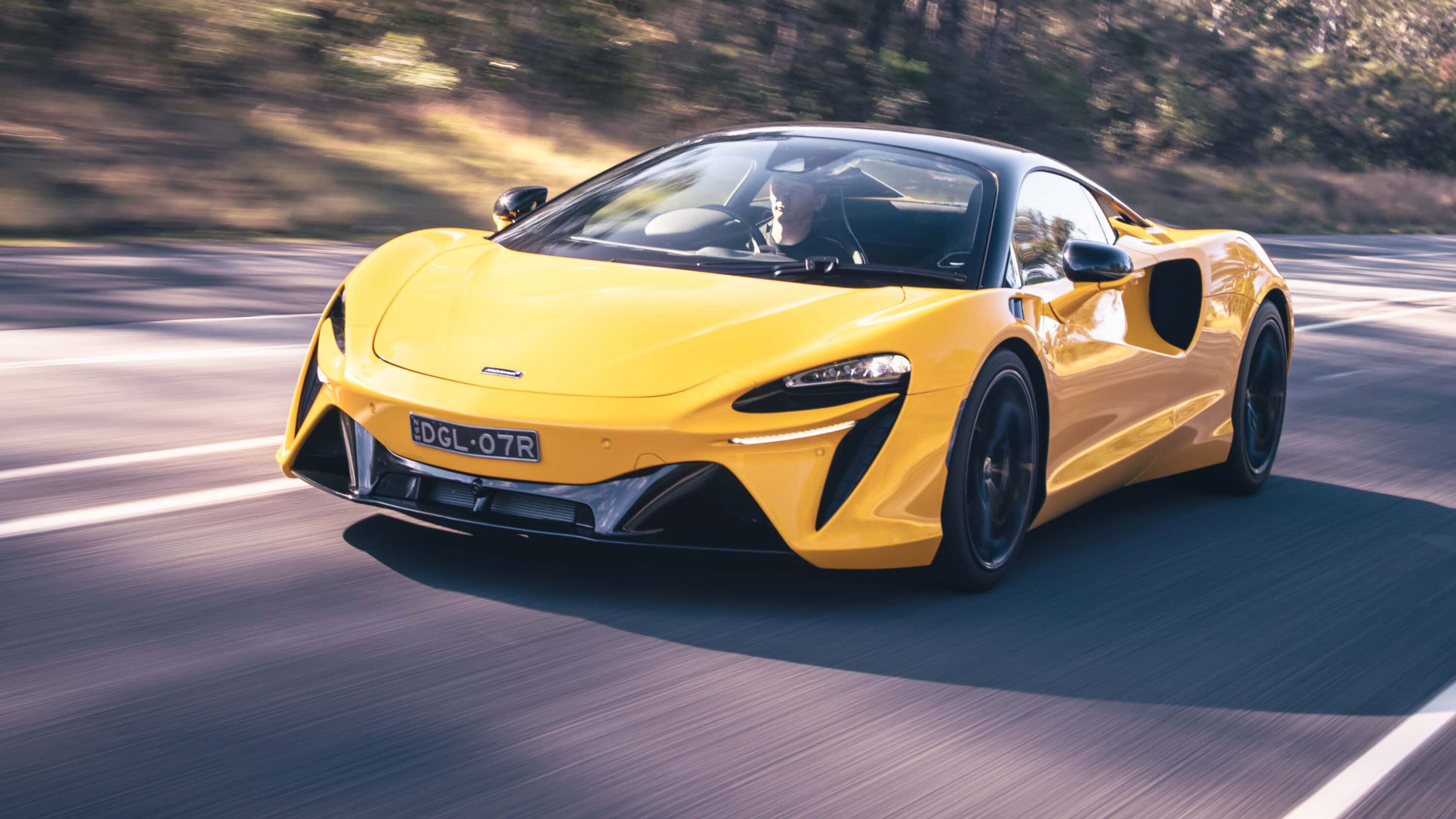
Recalls: 2022-23 McLaren Artura
Due to a manufacturing defect, the low pressure fuel pipe assembly may detach. If this occurs, fuel may leak in the presence of an external ignition source resulting in a vehicle fire.
A vehicle fire could increase the risk of causing serious injury or death to vehicle occupants, other road users or bystanders and/or damage property.
McLaren will contact affected owners in writing requesting they make an appointment with their preferred authorised McLaren Dealer to have the rectification work carried out. This will be free of charge.
Affected vehicles should not be driven until this repair is complete.
McLaren Automotive Ltd
McLaren Client Services
More links to help you with your car recall
